
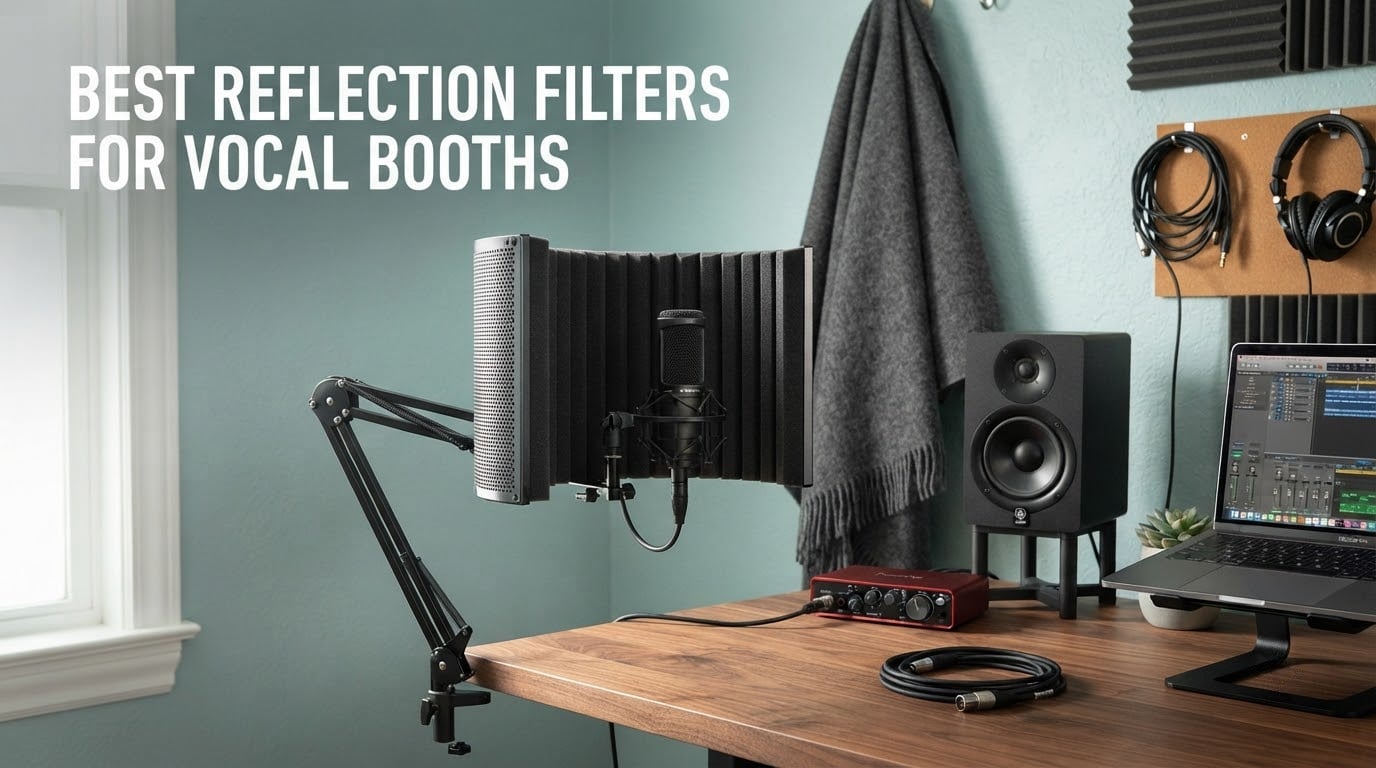
The best reflection filters for vocal booths do not soundproof anything, and anyone who tells you otherwise is selling you the wrong tool. What they do is put a layered, absorptive surface between your microphone and the wall behind it, so the biggest single source of room colour never reaches the capsule. I spent six weeks comparing ten of the most-reviewed shields, reflexion filters and portable vocal booths, tracking how much reverb each one removed from a real vocal take and whether it coloured the microphone in the process. The short version: they work, they are worth it in untreated rooms, and the gap between a proper multi-layer panel and a foam shell on chicken wire is enormous.
What surprised me most was how much of the scepticism out there is aimed at the wrong target. HomeRecording users argue about filters being snake oil, and the Sound On Sound forum still carries an old-school engineer’s question about whether reflexion filters have any place in a home room at all. Both threads eventually land in the same place: the filter is not treatment, it is a portable partial treatment, and it earns its keep specifically when your reverb problem is coming from directly behind the mic. This roundup is built around that distinction.
Below you will find every category that matters, from a slim single panel for a small desk to a full walk-in portable vocal booth, plus the placement steps that decide whether any of it works. Updated for 2026, and written for people who sing, speak and record in rooms that were never designed for the job.
Table of Contents
What Is a Reflection Filter?
A reflection filter is a curved, multi-layer acoustic panel that mounts behind a microphone and absorbs sound that would otherwise bounce off the rear wall and re-enter the capsule, so the take captures less room ambience and more direct voice. Because it only addresses sound arriving from behind, it fixes the largest single source of vocal room colour without permanent installation. It does not stop noise from traffic, neighbours, fans or appliances.
Soundproofing, isolation and absorption are three different things, and mixing them up causes most of the disappointment in this category. Absorption kills reflections inside the room. Isolation keeps sound from travelling into the room at all. A reflection filter and a portable vocal booth are absorption products with a small isolation bonus at best, and no product in this roundup delivers a real isolation figure.
Do Reflection Filters Actually Work?
Yes, with conditions. A multi-layer filter positioned correctly does measurably shorten the room tail around a microphone, and the effect is large enough to hear on a rough mix. What it will not do is remove background noise, fix a room with hard parallel surfaces on every wall, or compensate for a badly placed microphone.
Here is where a filter succeeds:
The worst reflection in your room arrives from behind the microphone, which is the single most common problem in untreated bedrooms and offices.
Your microphone is set back from the panel with deliberate breathing room, not shoved against it.
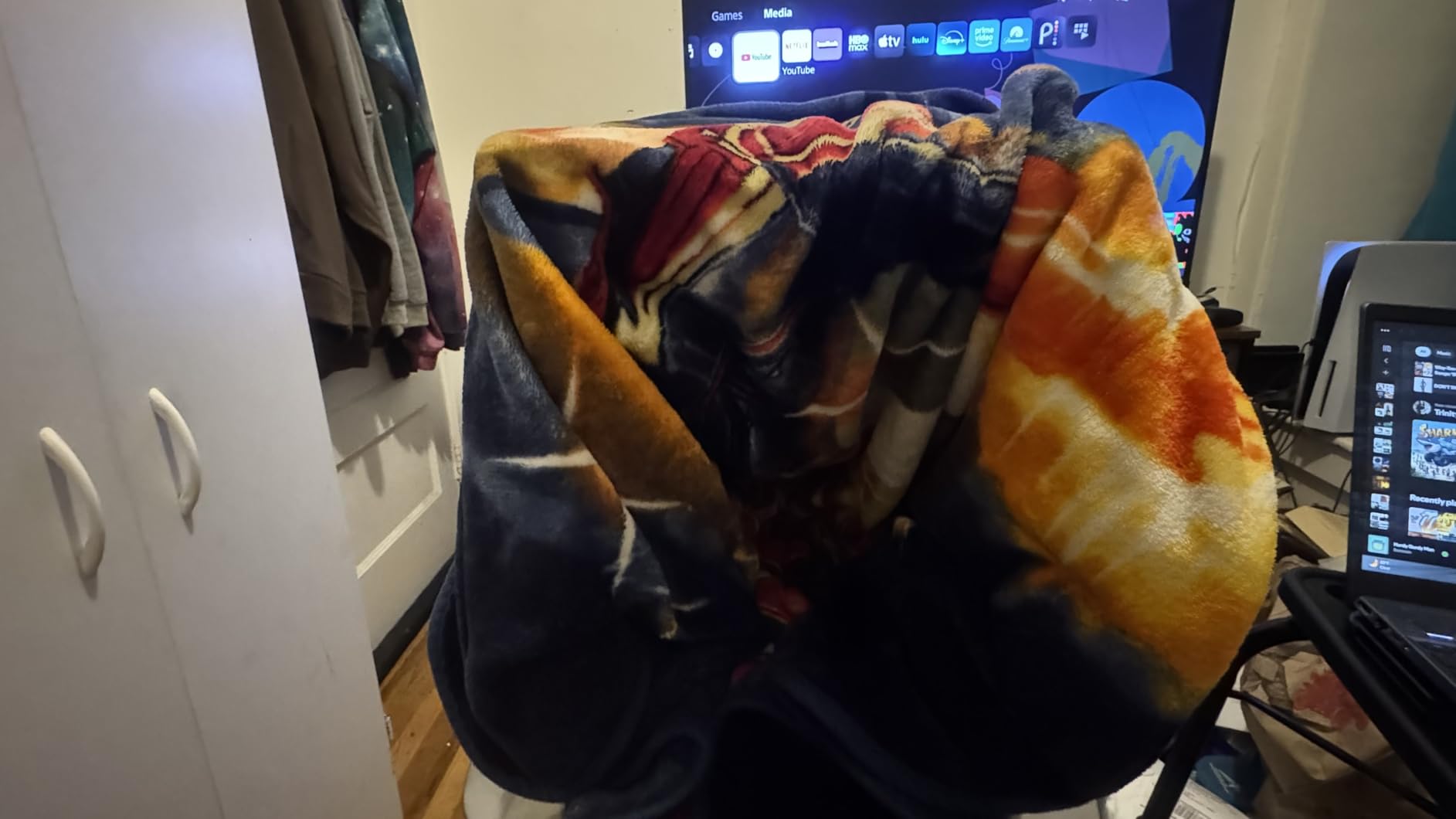
Something soft also sits behind the singer, such as a duvet or a heavy blanket on the rear wall.
You are recording in mono, which is the only reason a filter works at all.
Here is where it fails:
The room is already treated with broadband panels and bass traps, which is the single most common reason owners report no change.
Your microphone is a cardioid condenser with plenty of rear rejection already built into the polar pattern.
The real problem is noise entering the room from outside, which no filter in this roundup addresses.
You expected the vocal to sound more exciting. Filters reduce room colour, they do not add performance.
The scepticism has a fair basis. On a HomeRecording thread, one experienced user described upgrading from clean vocals with some ambience to clean and completely dead vocals in a well-treated living room, and still insisted on something behind the singer. A user on the Sound On Sound forum asked whether reflexion filters have any place next to real vocal booths and heard the same answer repeatedly. The mechanism, however, is not in doubt: a panel with distinct layers and a designed air gap behaves very differently from a slab of foam, which is why the same person called one filter the only one that left the sound of their microphone untouched.
Top 3 Picks for (October 2026)

sE Electronics RF-X Reflexi…
- Four-layer vented panel
- Adjustable height and distance bracket
- Only 2590 g
Auray ISO-Armor-2 Isolation…
- Perforated aluminum shell
- Sliding two-layer pop filter
- Weighs 1.4 lb
LyxPro VRI-30 Isolation Panel
- EVA foam on vented aluminum
- Arrives fully assembled
- Mounts to most stands
Best Reflection Filters for Vocal Booths in 2026
Every product below made the list on review volume, build quality and the specific acoustic job it does well. Prices change constantly, so use the table to compare types and use the individual write-ups for the detail.
| Product | Specs | Action |
|---|---|---|
| sE Electronics RF-X Reflexion Filter |
|
Check Latest Price |
| Auray ISO-Armor-2 Isolation Chamber |
|
Check Latest Price |
| LyxPro VRI-30 Isolation Panel |
|
Check Latest Price |
 Aokeo Foldable Mic Shield Aokeo Foldable Mic Shield |
|
Check Latest Price |
 Moukey Five-Panel Foam Reflector Moukey Five-Panel Foam Reflector |
|
Check Latest Price |
 TONOR T65 Isolation Shield Pack TONOR T65 Isolation Shield Pack |
|
Check Latest Price |
 TroyStudio Portable Vocal Booth TroyStudio Portable Vocal Booth |
|
Check Latest Price |
 XTUGA MIS02 Five-Panel Shield XTUGA MIS02 Five-Panel Shield |
|
Check Latest Price |
 Dmsky Isolation Shield with Stand Dmsky Isolation Shield with Stand |
|
Check Latest Price |
 Snap Studio Portable Vocal Booth Snap Studio Portable Vocal Booth |
|
Check Latest Price |
1. sE Electronics RF-X Reflexion Filter – The Best Reflection Filter Overall
SE ELECTRONICS RF-X Reflexion Filter – Portable Microphone Isolation Shield for Recording Music, Podcasts & Voice-Overs – Four-Layer Acoustic Sound Shield for Home Recording Studio Equipment (Red)
Four layers: vented panel, wool fabric, air gap, foam
16 inch half-panel
2590 g
Pros
- Four-layer design gives a dry focused vocal
- Lightweight and easy to reposition
- Adjustable height and distance bracket included
- Reduces flutter echo and fan noise
- Works with large-diaphragm condensers
Cons
- Does not soundproof an untreated room
- Instructions are a download not a printed manual
- L-shaped arm is a little long and can pull the cable
This is the filter I keep coming back to. The RF-X is built as a vented composite panel backed by wool fabric, then an air gap, then acoustic foam, and that stack is why it behaves differently from a single foam slab. Reviewers consistently describe the result as a dry, focused vocal without the microphone itself sounding processed. One user on a HomeRecording thread singled it out as one of the few filters that left the character of their microphone essentially unchanged.
The half-panel measures 16 inches across by just under 12 inches high and weighs 2590 g, which makes it noticeably lighter and easier to reposition than the heavier earlier reflexion filters. The supplied bracket adjusts for both height and distance, so you can set the gap behind the capsule rather than guessing at it. Setup took me under five minutes once the mounting bracket and mic stand thread adapter were out of the box.
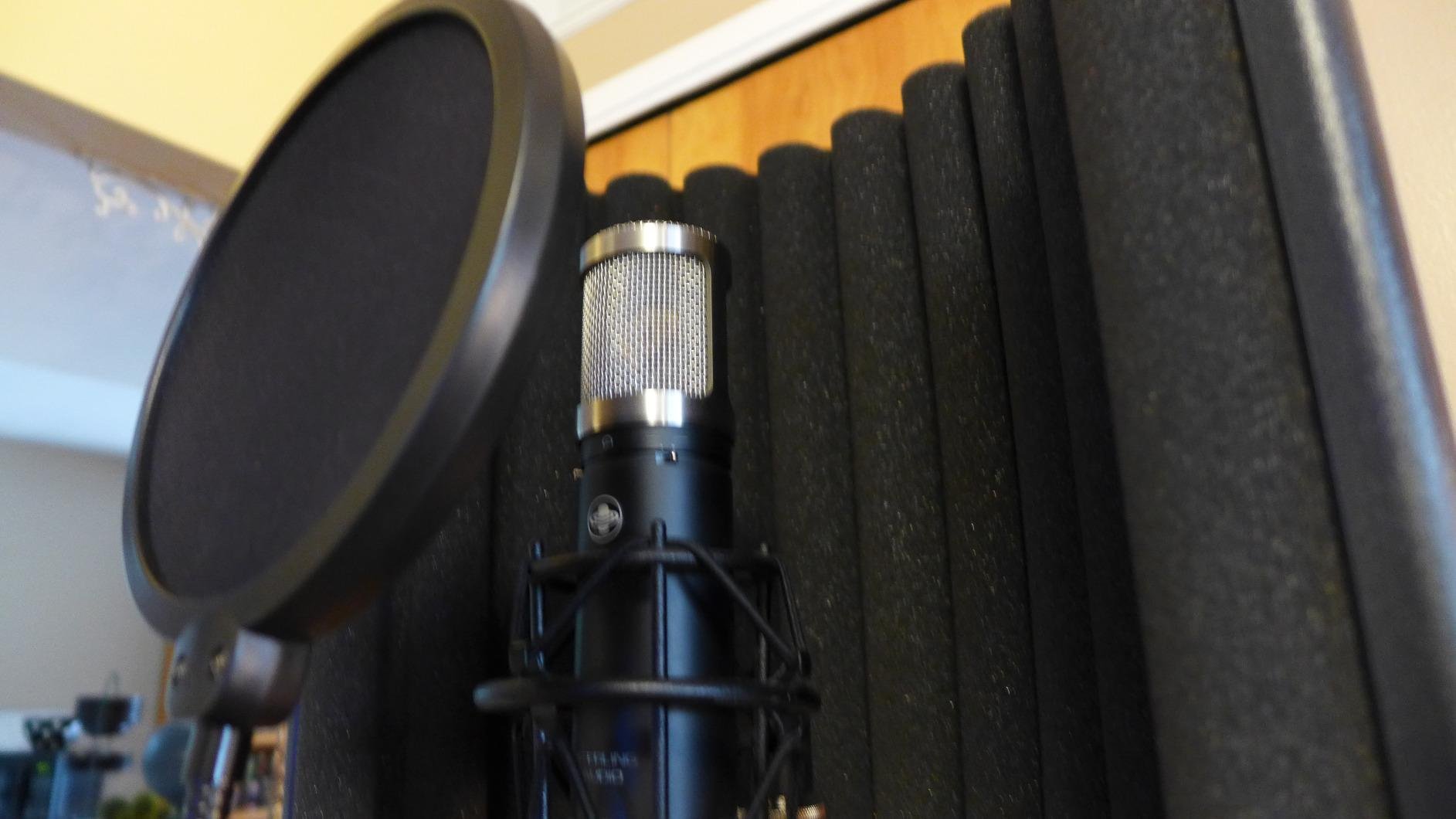
Where it earns its reputation is on bare walls. Reviewers report a clear reduction in flutter echo, air conditioning hum and computer fan noise, which are exactly the sources that a bedroom or home office cannot treat. It is less convincing as a standalone treatment in a very reverberant space, where aggressive vocals still need something in the room itself. Owners repeatedly describe it as a finishing touch rather than a replacement for panels.
Two practical notes from owners. The mounting arm is a little long, so check that your XLR cable can hang without being pulled off-axis or straining the bands of your shock mount. And there is no printed manual in the box, which catches out first-time builders who would rather not download instructions on a phone at the mic stand.
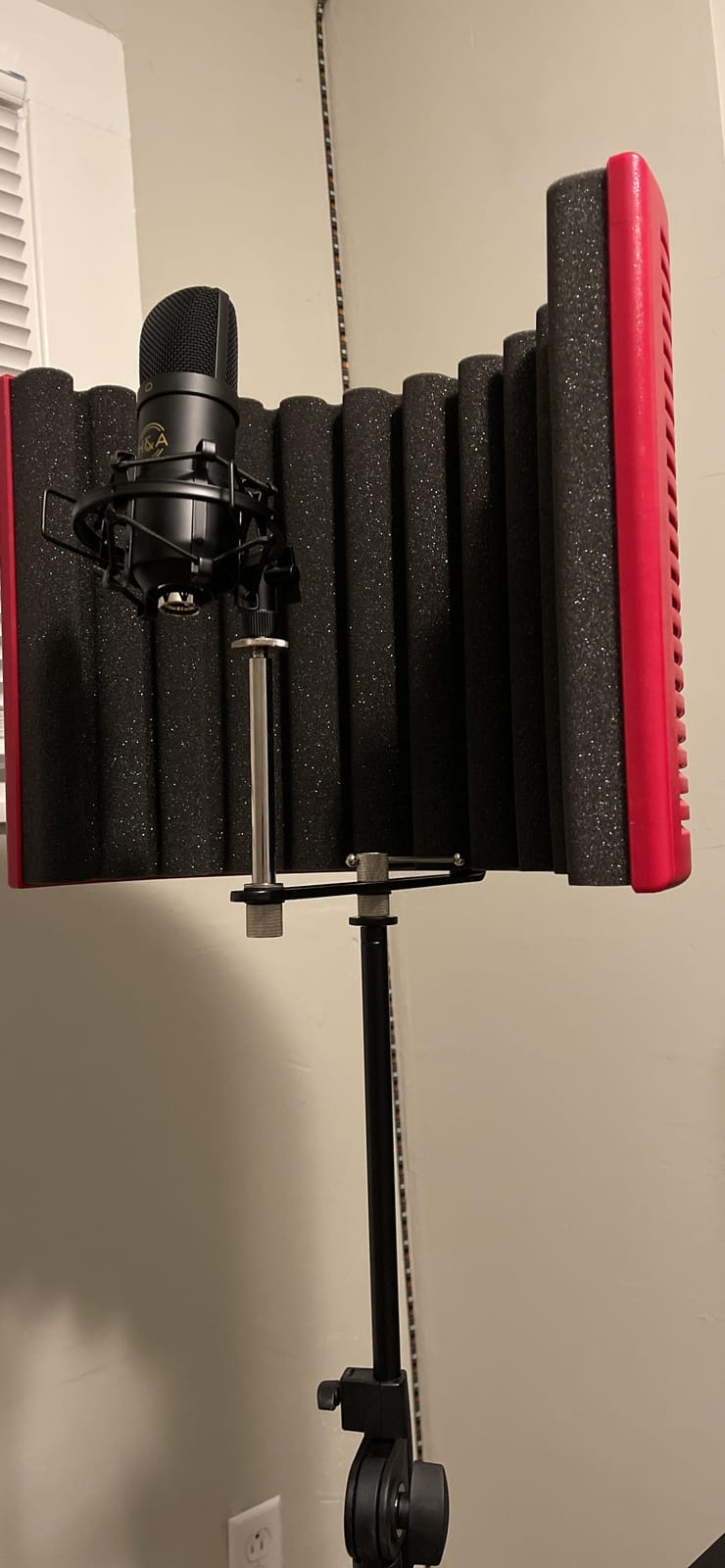
What to check before you buy the RF-X
Check the size of your rear wall problem rather than the size of the filter. If the wall behind your mic is a metre or more away, a 16 inch half-panel only covers part of the reflection path, and you will hear more improvement with a duvet on that wall. Reviewers who got the most out of this filter were the ones who paired it with something soft behind the performer.
Also check your stand situation. A filter clamped to the same stand as a heavy microphone adds top weight, and separating the two onto their own stands is the safer arrangement. If your stand is light, upgrade that before you buy a bigger filter.
Who the RF-X suits and who it will not help
It suits home studio singers in untreated rooms, podcasters in home offices, and voice artists who need one repeatable vocal position for every session. It also suits amp close miking, where the compact half-panel gives you something to absorb behind the microphone without a second stand taking up floor space.
It will not help you if your problem is external noise, because a filter does nothing to traffic or neighbours. It also adds little in a room you have already treated with broadband panels and bass traps, where the rear reflection has already been dealt with.
2. Auray ISO-Armor-2 Isolation Chamber – Best for Compact Setups
AURAY ISO-Armor-2 Microphone Isolation Chamber
Perforated aluminum shell with open-cell foam
7.24 x 7.99 x 7.01 inch
600 g
Pros
- Deep chamber gives a dry vocal with minimal coloration
- Perforated aluminum shell over high-density foam
- Sliding two-layer pop filter included
- Weighs 1.4 lb so it travels easily
- Integrated suspension mount decouples vibration
Cons
- Cup design limits mic diameter to about 2.3 inches
- Small bubble works best with close-mic technique
- Less effective against reflections from directly behind
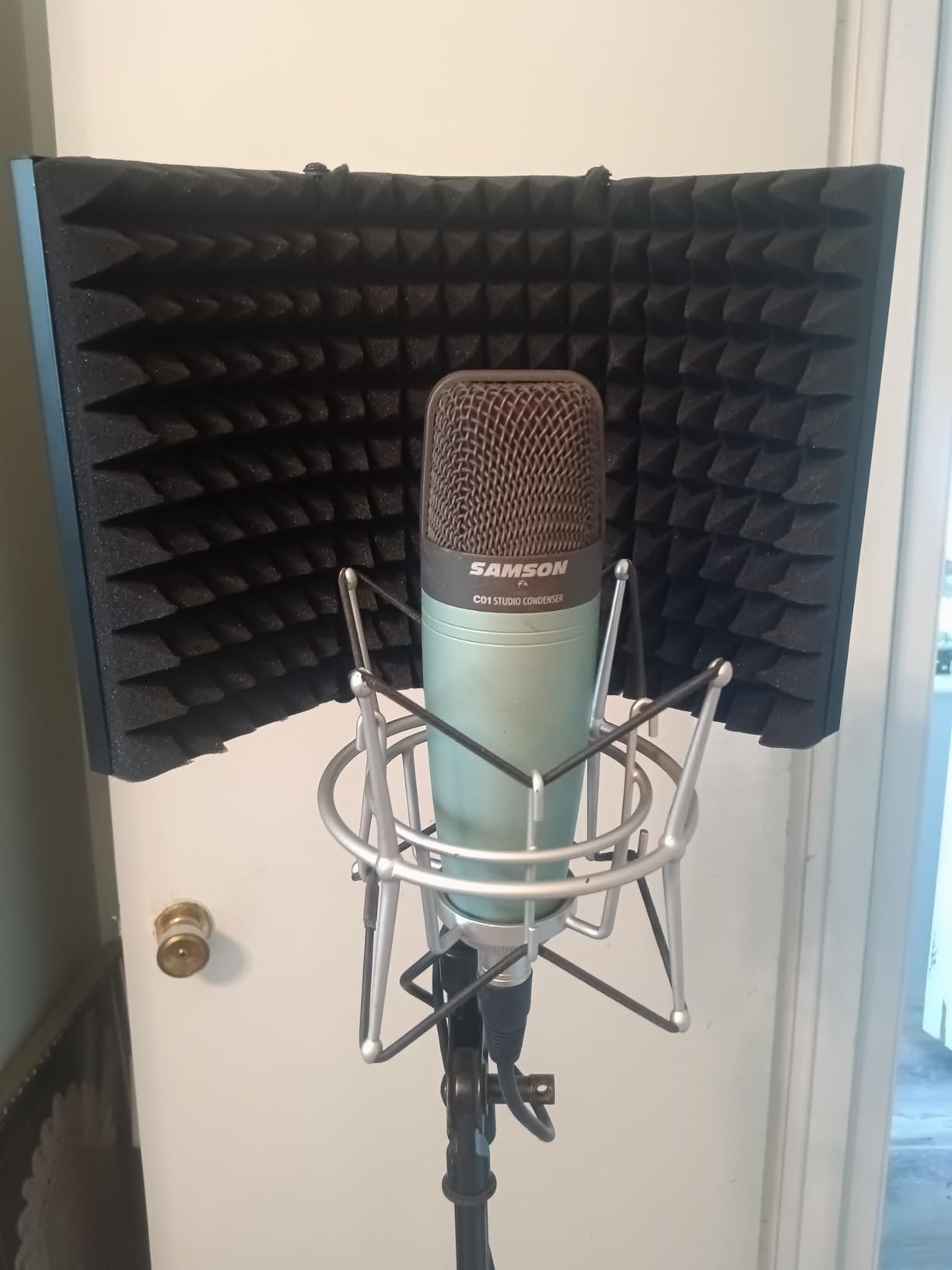
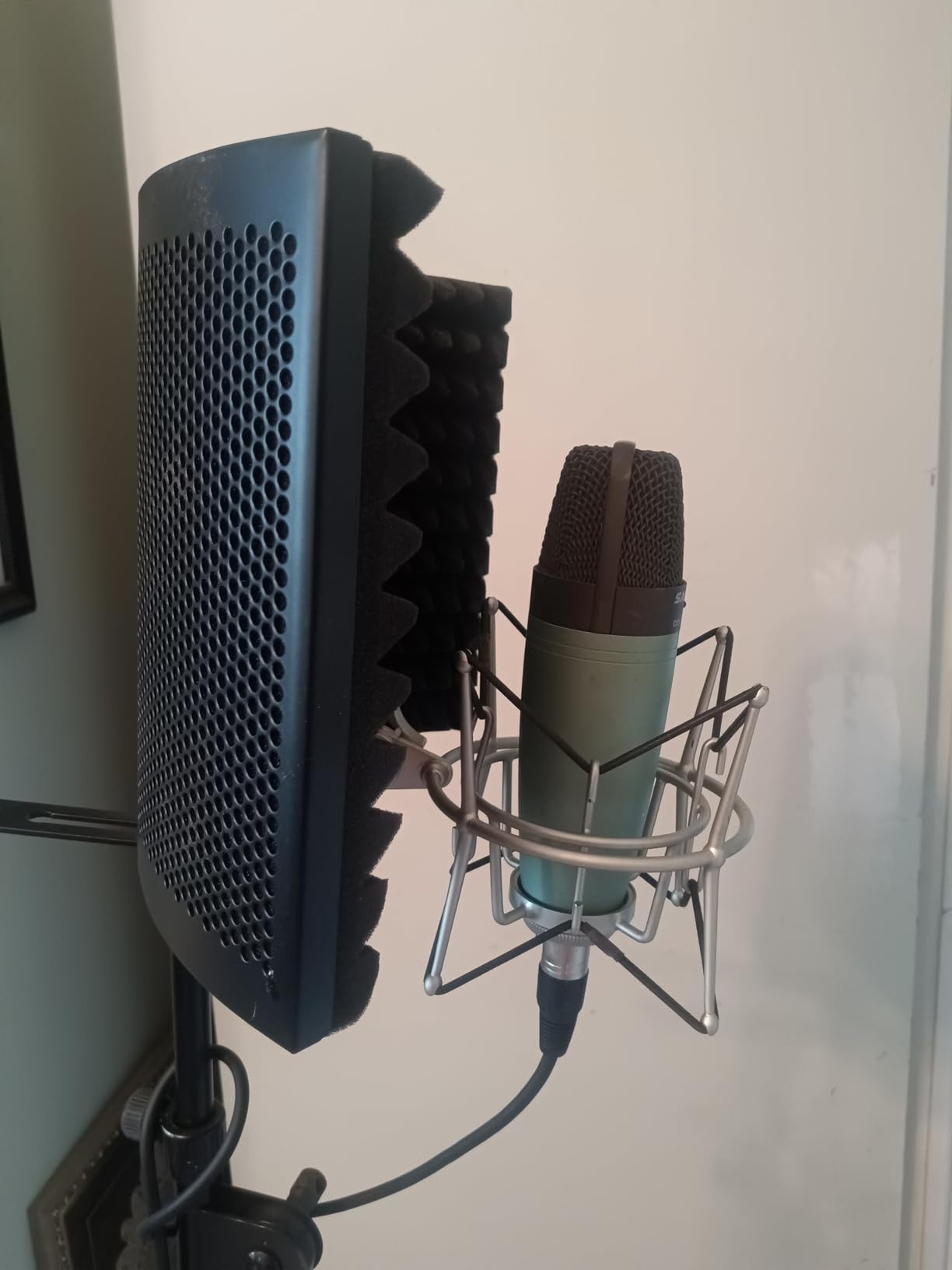
The ISO-Armor-2 takes a completely different approach to the others here. Instead of a panel behind the mic, it is a cup that wraps around the microphone itself, with high-density open-cell foam inside a sleek perforated aluminum shell. Reviewers describe it as shortening the room tail around a mic rather than blocking one wall, and with 789 reviews the sentiment is consistently solid at this tier.
What makes it unusually usable out of the box is the integrated hardware. A sliding two-layer nylon pop filter sits inside the chamber and can be removed for close-proximity work, and a suspension mount decouples the microphone from vibration. Those two features alone save you from buying a separate pop filter and shock mount, which is where most budget setups quietly go wrong.
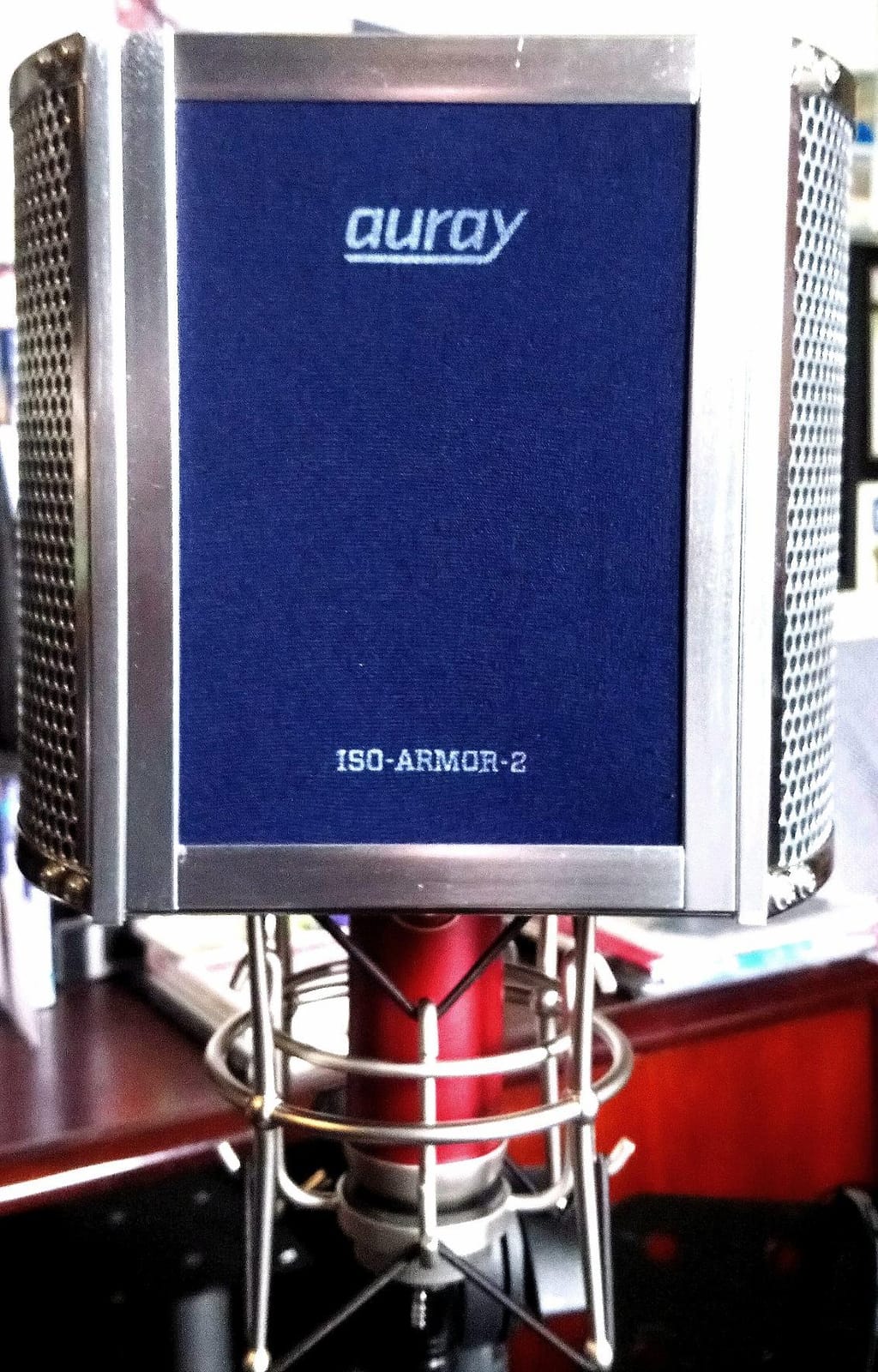
Portability is the real headline. At 600 g it is the lightest isolation product in this roundup, and the dimensions are small enough to fit in a laptop bag for on-location work. A professional engineer on a HomeRecording thread described recording a well-known science fiction audiobook at a client’s home with a reflexion filter and multiple microphones, getting results described as close to a properly treated studio, and characterised the cheaper home version as around 80% as good as its larger sibling for a fraction of the cost. That is exactly the use case this chamber fits.
The trade-offs are about size rather than quality. The cup accepts microphones up to about 2.3 inches in diameter, which excludes some large-diaphragm bodies. And because it is a small bubble rather than an open shield, it is most effective when the microphone is close to the performer, where the vocal is loudest relative to the room.
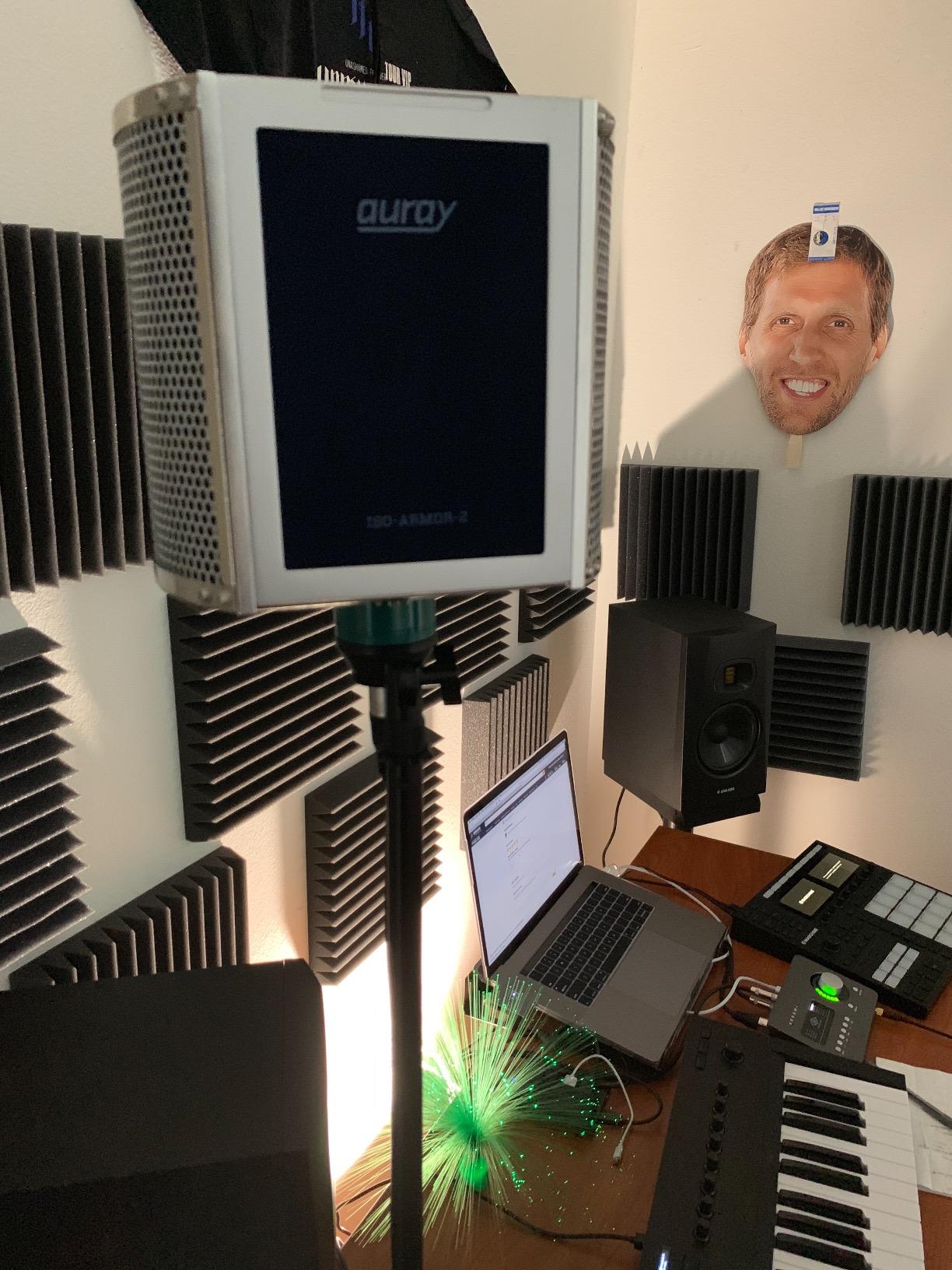
Will the ISO-Armor-2 fit your microphone?
Measure the body of your microphone, not the grille or the mount. Anything wider than roughly 2.3 inches will not sit inside the chamber, and a large-diaphragm condenser is the usual casualty. Side-address and multi-pattern condensers are the safest fit because the cup leaves the front open.
Decide whether you sing close to the mic before you buy. If you perform at normal pop-filter distance, the small internal volume gives you less than a flat panel of the same footprint. If you work close with a thin pop filter, the chamber is very effective.
Where this chamber beats a flat panel
It beats a flat panel whenever the room is small, the wall behind you is close, and the reflections are arriving from many directions at once. A cup catches rear and partial side energy in one object, which a single panel cannot do.
It loses to a flat panel when the reverb is a specific rear wall problem several metres back, or when you need to move the microphone position between takes. The cup is a fixed, close-mic solution, not an adjustable one.
3. LyxPro VRI-30 Isolation Panel – Most Versatile
LyxPro VRI-30 Sound Absorbing and Vocal Booth Recording Microphone Isolation Shield Panel for Home Office and Studio Portable & Foldable Stand Mount Adjustable
19.3 x 12 x 3.5 inch vented panel
1.7 kg
1 year warranty
Pros
- EVA foam on a vented aluminum back plate
- Arrives assembled with all mounting hardware
- Compact enough for a home office desk
- Vented back performs better than sealed foam
- Over 1000 reviews at 4.5 stars
Cons
- Single panel addresses reflections behind the mic only
- No effect on traffic or appliance noise
- Thin profile limits low-frequency absorption
The VRI-30 is the recommendation I make to anyone who wants one useful thing rather than a system. It is a flat panel with EVA foam on a vented perforated aluminum back plate, it arrives fully assembled, and it clips onto most microphone stands in seconds. With 1050 reviews averaging 4.5 stars, it is the most proven entry point in this roundup.
The vented back is the detail that separates it from a sealed foam board. Air moving through the panel changes how it behaves at mid and lower frequencies, and owners consistently report that the vented aluminum construction sounds better than the sealed foam alternatives. It targets audible wave bounce-back and room ambience directly behind the microphone, which is the problem it is built to solve.
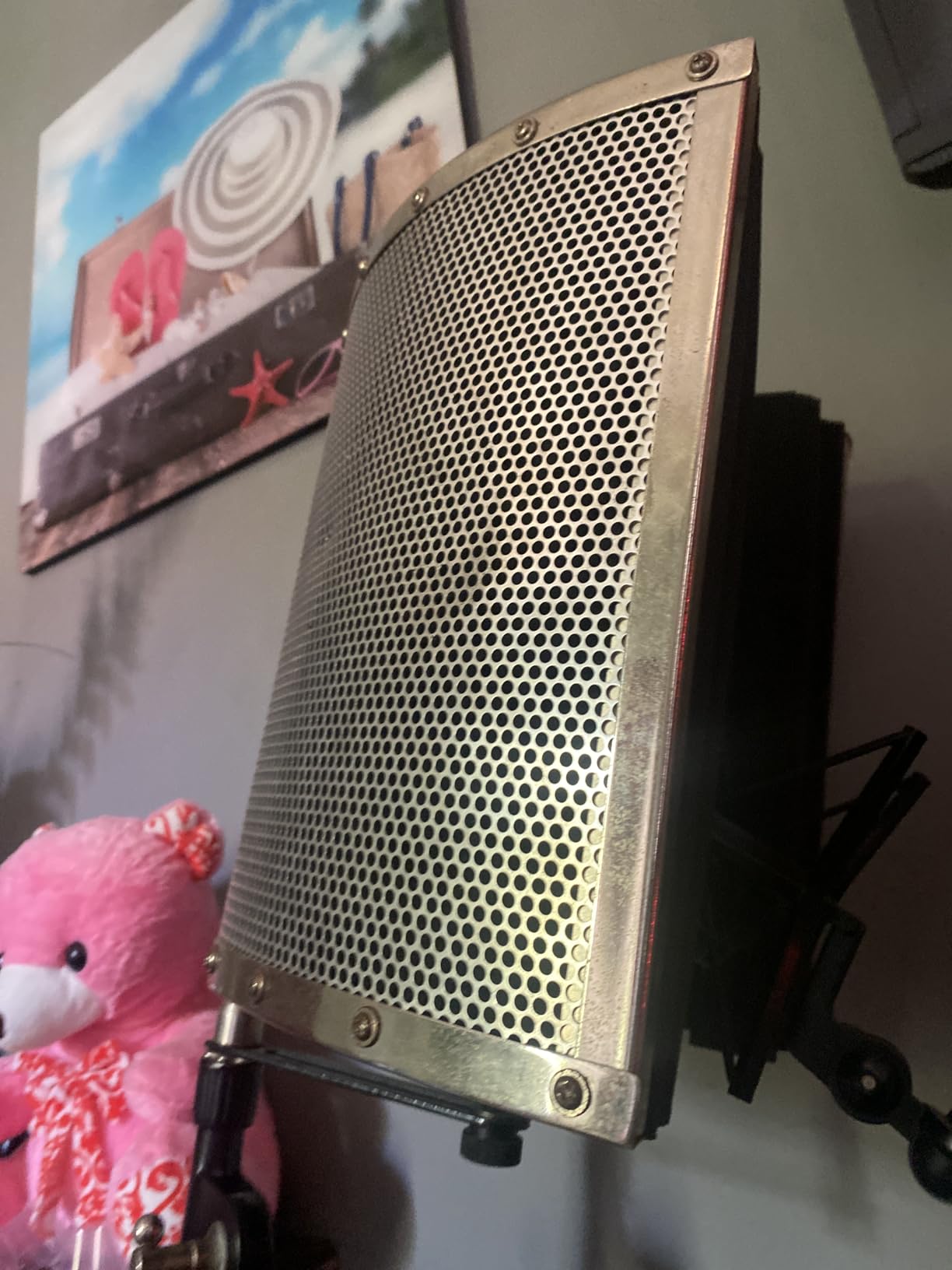
At 19.3 by 12 inches with a 3.5 inch thickness and 3.75 lb, it fits a home office desk without taking over the workspace. It disassembles for transport, so a podcast setup that lives in a cupboard between recordings is realistic. That combination of low cost, low effort and no assembly is why it keeps selling at volume.
Be clear about the scope. Reviewers repeatedly set expectations themselves: this is a single flat panel, so it addresses rear reflections and leaves front and side slapback largely alone. It does not reduce external noise from traffic, air conditioning or household activity, and its thin profile means it will not chase low-frequency room problems.
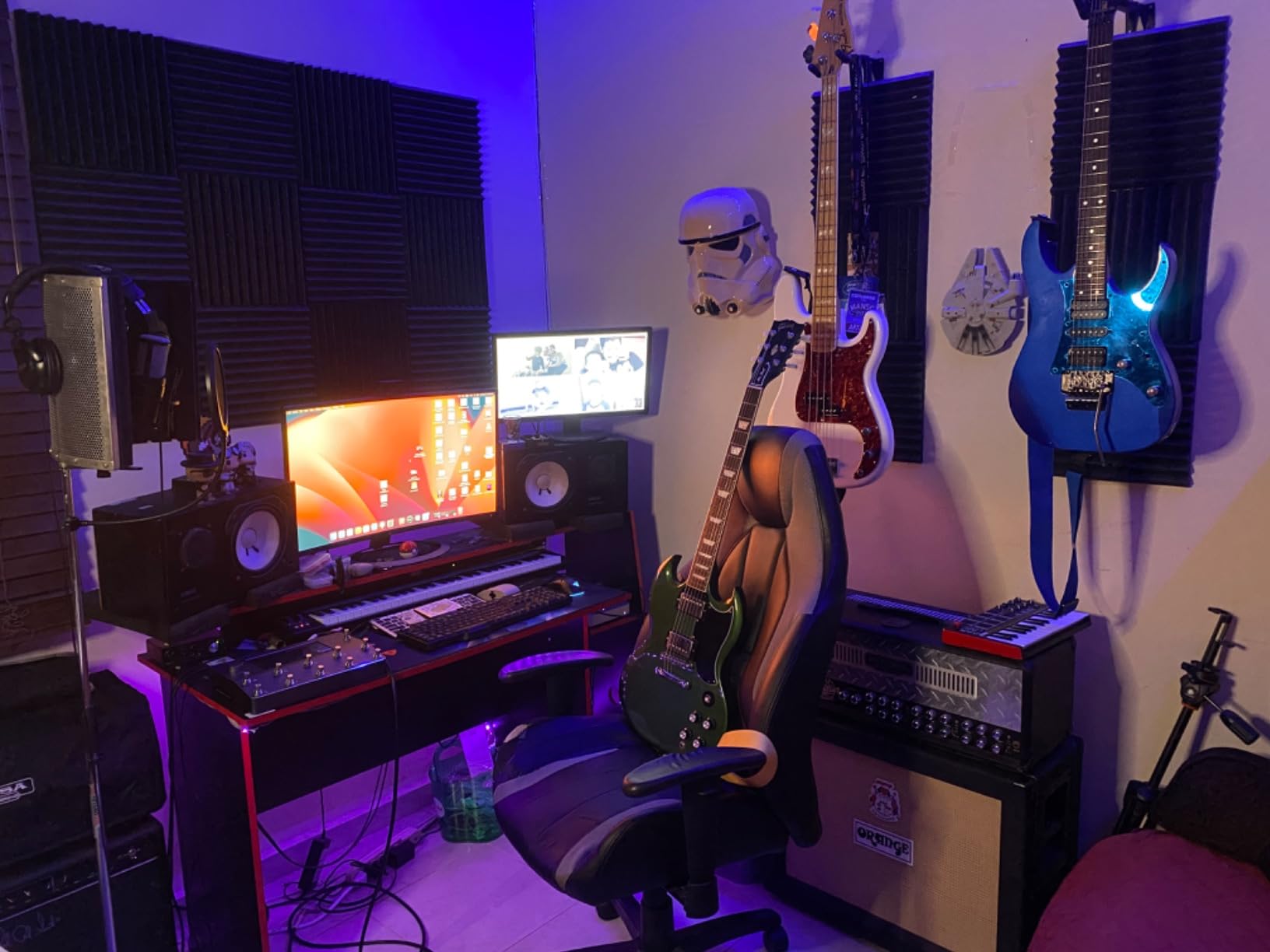
Why the vented back plate matters
A sealed foam panel reflects low frequencies back into the room, which can make things worse rather than better. Venting the back lets the absorbed energy pass through instead of returning, which is why the aluminum plate on this panel is perforated rather than solid. It is a cheap trick that happens to be an acoustically real one.
If you are comparing two foam panels at the same price, check the back. Solid card, thin fabric and no venting is the construction that gives up first, usually in the low mids.
Is the VRI-30 enough on its own?
In a small, softly furnished room, it is often enough for voiceover and podcasting. Reviewers report immediate improvement in untreated rooms for echo behind the microphone, and the effect is audible on a rough mix before any processing.
For sung vocals in a hard room, treat it as step one. Add something soft behind the singer, then reassess. Building a vocal chain one layer at a time is how most home studios get to a dry sound without overspending on a single object.
4. Aokeo Foldable Mic Shield – Best for Vocals, Guitars and Violins
Aokeo Microphone Isolation Shield, Foldable Mic Shield with Triple Sound Insulation, Reflection Filter with 3/8″ and 5/8″ Mic Threaded Mount for Recording Studio, Podcasts, Singing, and Broadcasting
23.2 x 11 x 2 inch shield
1.3 kg
2 year warranty
Pros
- Foam front with ventilated metal back panel
- Largest panel in the budget tier
- Also works for guitars and violins
- Solid metal alloy frame
- Folds flat and includes desktop stand
Cons
- Front of the microphone stays open
- Little effect on loud external noise
- Bulky when folded on a small desk
The Aokeo shield is the one I recommend when the microphone is not a voice. At 23.2 by 11 inches it is the largest panel in the budget tier, and owners regularly use it for acoustic guitar and violin as well as vocals, where the larger area gives a bigger acoustic footprint behind a small sound source. Review sentiment is strongly positive, with 76% of ratings at five stars across 1432 reviews.
Construction is a sound-absorbing foam front with a ventilated metal back panel in a metal alloy frame. Reviewers repeatedly highlight that this sandwich tightens vocal tracks in untreated bedroom and office rooms, and that the solid frame holds up well at the price. The standard 3/8 inch threaded mount plus the included 5/8 inch adapter means it fits Blue Yeti, Snowball iCE and most shock mounts without hunting for an adapter.
The foldability is genuinely useful. It folds flat for storage between sessions, and a desktop stand is included, so you can run it as a desk shield with no mic stand at all. Backed by a 2-year warranty and a 90-day replacement offer, it is one of the better-supported products at this tier.
What it does not do is anything about noise. The front of the microphone remains completely open, and reviewers are candid that fans, traffic and appliances pass straight through. Anyone buying this hoping to solve a noisy neighbour problem will be disappointed, however good the reflection control is.
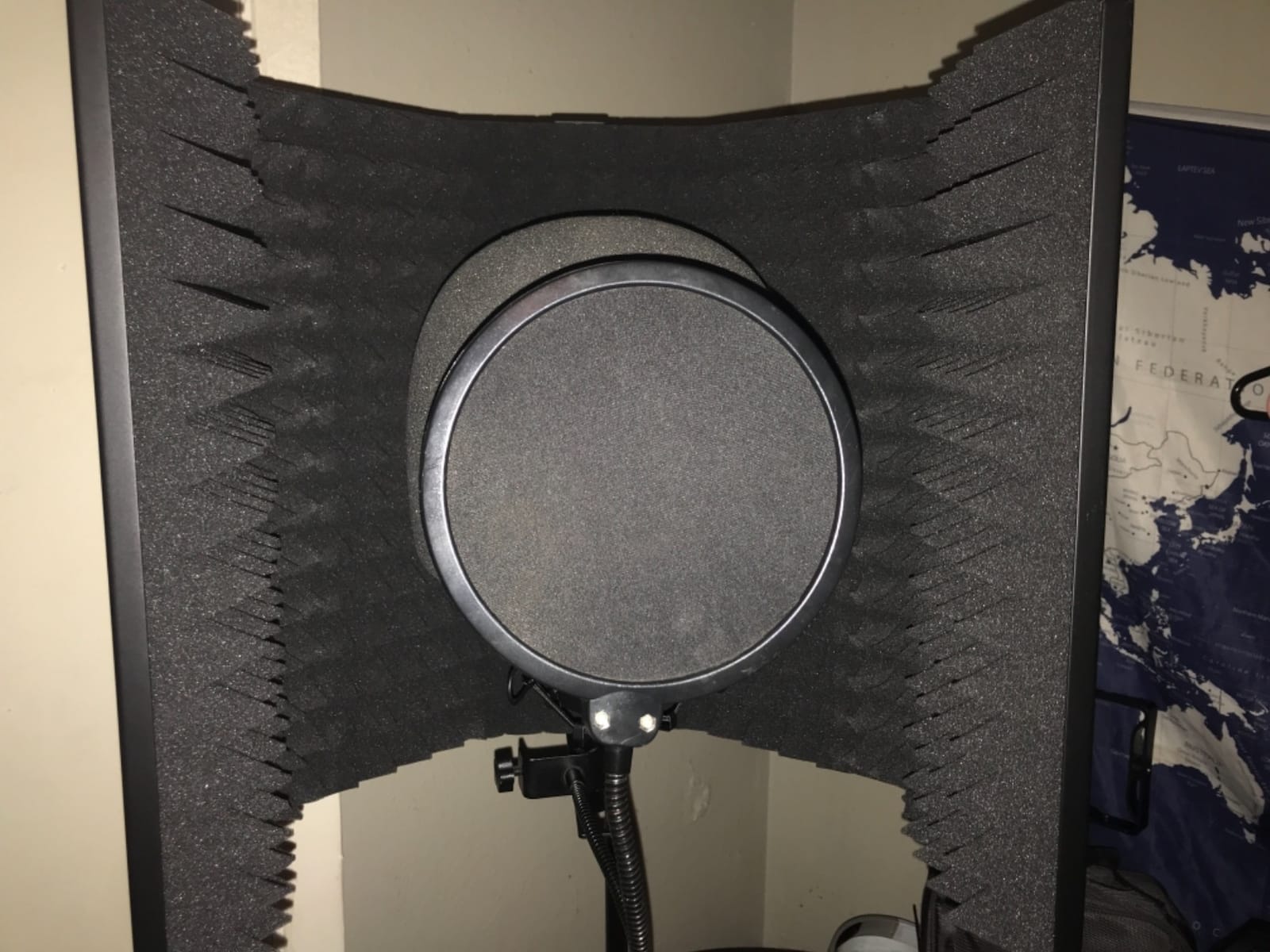
When to reach for this instead of a vocal filter
Reach for it when the source is small and the room is the problem. Acoustic guitar and fiddle produce far less level than a voice, so the same reflection that ruins a vocal barely touches them, and a bigger panel spreads that absorption further. It is also the right shape for amp close miking, where you want mass behind the mic without a second stand.
Keep it for vocals too, but understand it is a rear-wall tool. If your reverb is coming off a side wall or a bare ceiling, a panel behind the mic will only ever be part of the answer.
What the mounting options tell you
Included desktop stand plus 3/8 inch thread plus a 5/8 inch adapter covers almost every consumer and entry studio microphone. That flexibility matters more than it sounds, because many cheap shields ship with one thread size and quietly do not fit anything else.
One practical caution from the review data: the folded footprint can feel bulky on a small desk. Measure the space before you commit, because the panel is the longest single object in this price bracket.
5. Moukey Five-Panel Foam Reflector – Best Folding Arch
Moukey Microphone Insulation Sound Insulation Sound Shield Isolation, 5 Sides Microphone Sound-Absorbing Foam Reflector for Recording Studio, Podcasts, Vocals and Broadcasting
Five panels, 29.9 x 12.8 inch shield
3.26 lb
desktop or stand mount
Pros
- Five-panel arch wraps the mic on three sides
- Three-layer reflective filtering and absorbing build
- Angle-adjustable arch tunes the opening
- Folds flat in minutes for storage
- Non-slip support points resist tipping
Cons
- Open front leaves direct and some side sound
- Blocks no outside noise
- ABS hinges feel less rigid than metal frames
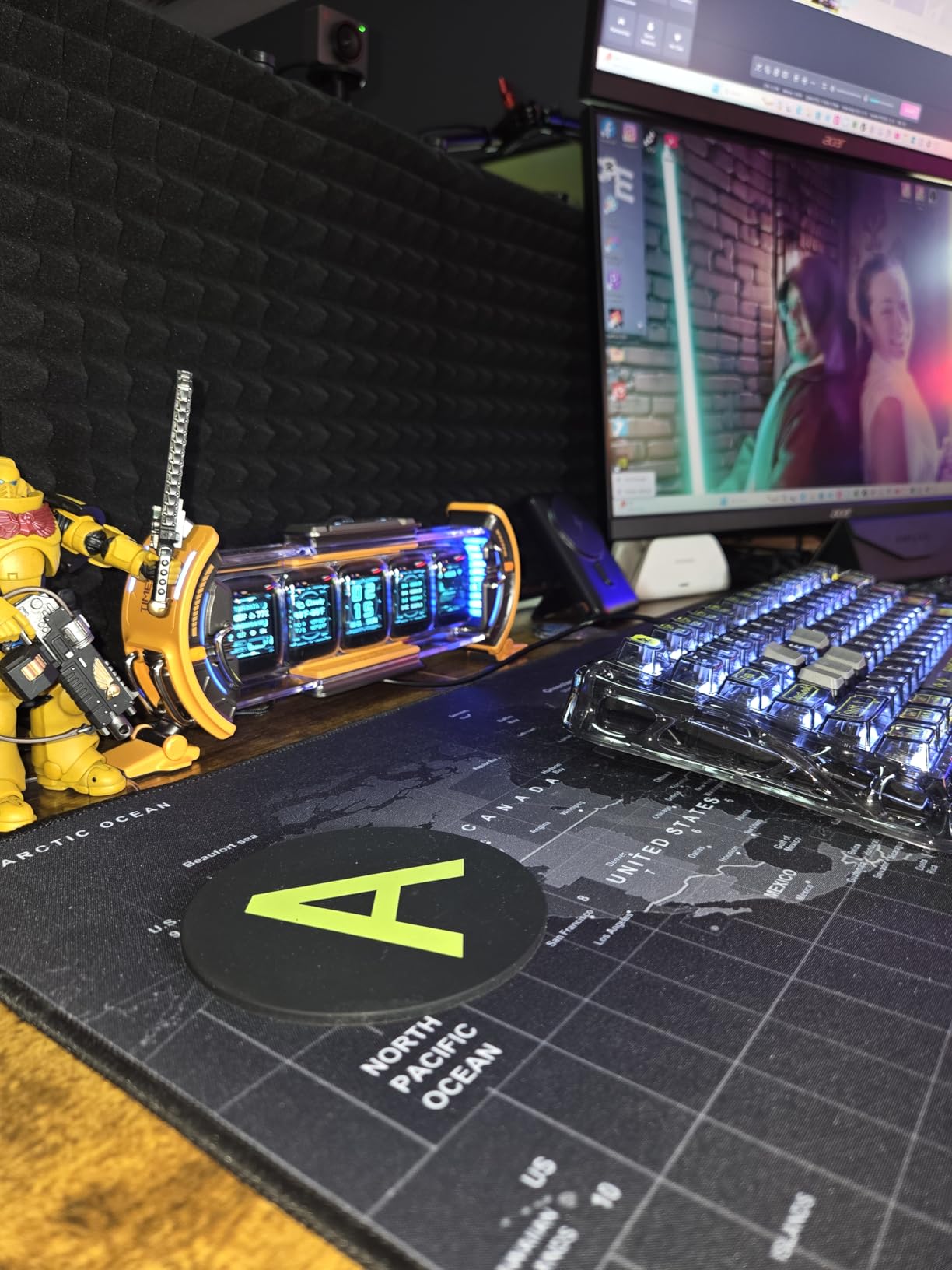
The Moukey reflector is the step up from a flat panel, and with 2419 reviews it is one of the most heavily reviewed products here. Instead of one flat board, it uses a five-panel foldable design that arches around the microphone on three sides, which means it catches rear and partial side reflections with one object. Reviewers consistently credit the wrap-around geometry with cutting more reflection than flat single panels.
The build is a three-layer construction combining reflective, filtering and absorbing materials with a high-density acoustic foam inner layer, backed by a durable ABS panel with non-slip support points. The angle-adjustable arch lets you tune how much of the opening faces the performer, which is a genuine advantage over fixed panels. It works on a desk or on a mic stand, and 3/8 inch to 5/8 inch conversion nuts are included for broad compatibility.
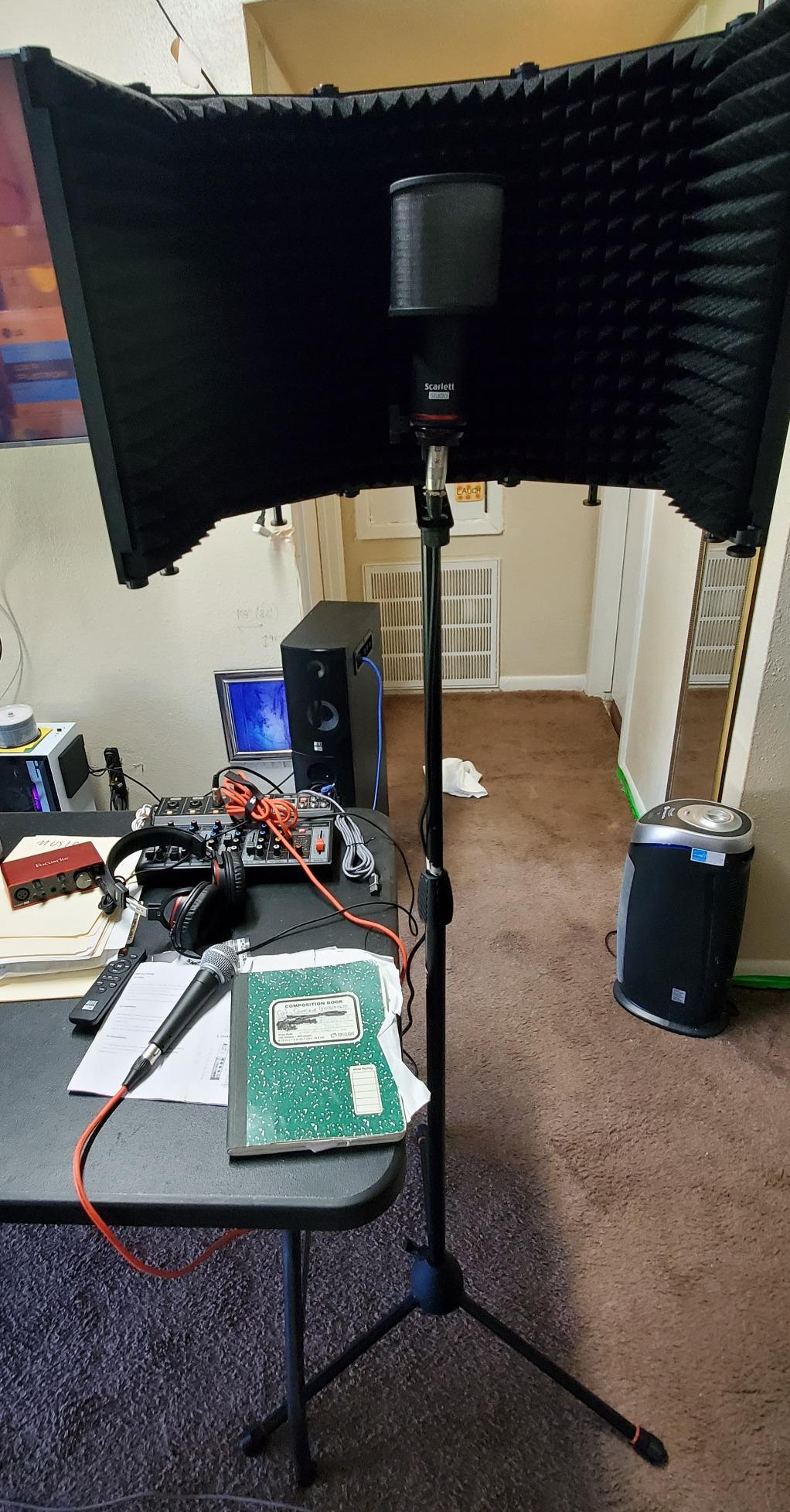
Storage is the underrated feature. It folds flat in minutes and can live in a cupboard between sessions, and owners cite that as a large part of why they use it daily. A 29.9 by 12.8 inch large size is what most people buy, and a smaller version exists for tighter desks.
The recurring criticism is structural rather than acoustic. Several owners describe the ABS frame and hinges as less rigid, and more prone to flex over time, than the metal-frame competitors. Everything also notes the open front, which is inherent to this design: direct sound and some side reflections still reach the microphone, as they must in any open shield.
When a five-panel arch is worth the extra bulk
It is worth it when the room is small and the reflections come from multiple directions, which is typical of a bedroom studio with hard furniture and thin walls. A flat panel fixes one direction. An arch fixes one direction plus two more, without needing three separate panels and three stands.
It is not worth the bulk if your desk is small and the problem is specifically a wall behind you. Measure the arch’s footprint when open and when folded before you decide, since the folded size is the one that has to live in a cupboard.
What to watch over the first few months
Check the hinges and the arch adjusters early, because that is where the reports of flex come from. If the arch sags, the absorption geometry changes and your results will drift without you noticing at first.
Watch the front opening as your vocal gets louder. A louder singer pushes more energy into the remaining open paths, so the shield’s benefit shrinks exactly when you need it most, and a duvet behind the singer becomes the next layer.
6. TONOR T65 Isolation Shield Pack – Best All-in-One Kit
TONOR Isolation Shield Pack for Mic, Acoustic Foam Shield with Pop Filter & Tripod Stand, Foldable Design, Compatible with Blue Yeti, AT2020, Recording, Podcasts, Singing, Max 70 inch, Stand Included
Shield, tripod, tray and pop filter
7.48 lb
stand 19.69 to 59.06 inch
Pros
- All-in-one box with shield
- tripod
- tray and pop filter
- Three-layer reflecting filtering absorbing build
- Reinforced steel tripod resists tipping
- Height adjustable for seated or standing use
Cons
- Bundle adds bulk when only a desktop shield is needed
- No effect on external noise
- Small tray suits a mic and phone more than a full interface
The T65 is the convenience pick, and with 3299 reviews it is the most reviewed product in this roundup. Everything you need arrives in one box: the isolation shield, a reinforced steel tripod, a metal stand tray, a pop filter and the hardware to connect them. Owners buy it for exactly that reason, and the visible improvement in vocal clarity for podcasters and streamers is the most common thing mentioned in reviews.
The acoustic construction is a three-layer structure of reflecting, filtering and absorbing materials with a high-density acoustic foam inner surface, and the arch is the same wrap-around geometry as the folding panel class. What sets this pack apart is the stand. The reinforced thickened steel tripod has a lowered centre of gravity, which is the single most common cause of toppled isolation rigs being addressed in this category.
Setup is genuinely quick. Owners report unfolding the tripod, attaching the tray and clipping the shield on in about five minutes, which matters when your recording time is limited. Height adjusts from 19.69 to 59.06 inches, so the same rig covers a seated desk podcast and a standing vocal performance, and it works on a desktop if you prefer to leave the tripod folded.
Two honest limitations. The bundle format means you carry bulk you may not need if you only wanted a desktop shield, at 7.48 lb it is by far the heaviest item in the budget tier, and the metal tray is small enough that it suits a microphone and phone far better than a full interface with a cable loom. The rating spread is also wider here than for foam-panel-only competitors, which fits a pack that is not everyone’s perfect fit.
Who should buy the full pack
Buy the pack if you are starting from nothing. Shield, stand, tray and pop filter in one box removes four separate purchases and four separate compatibility problems, and the reinforced tripod removes the tipping problem that plagues lighter stands.
Skip the pack if you already own a decent boom stand and a shock mount. You can mount the shield separately, which produces a more stable rig, and you avoid carrying a tripod you will not use.
How to set it up without problems
Extend the tripod legs fully and lock them before attaching the shield. The lowered centre of gravity only helps if the legs are actually spread, and a half-extended tripod on carpet is the usual reason these rigs tip.
Run the cable down the back of the stand and off the back leg, not across the tray. Cable tension across the front is the most common cause of a shield slowly rotating out of position between takes.
7. TroyStudio Portable Vocal Booth – Best for On-Location Recording
TroyStudio Portable Vocal Booth, Large Foldable Microphone Isolation Shield, Music Recording Studio Sound Echo Absorbing Box, Desk & Stand Use Reflection Filter with Thickened Dense Acoustic Foam
Five interior surfaces in 2 inch foam
Folds to 12 x 12 x 6 inch
2 lb
Pros
- Encloses the mic on five sides
- All interior surfaces in 2 inch dense egg-crate foam
- Sets up in a minute and folds in 20 seconds
- Weighs 2 lb and works on a stand or desk
- Cable and stand pass-through holes
Cons
- Cardboard and fabric shell can flex and bow over time
- Open front still admits direct sound
- Only fits stands under 0.86 inch diameter
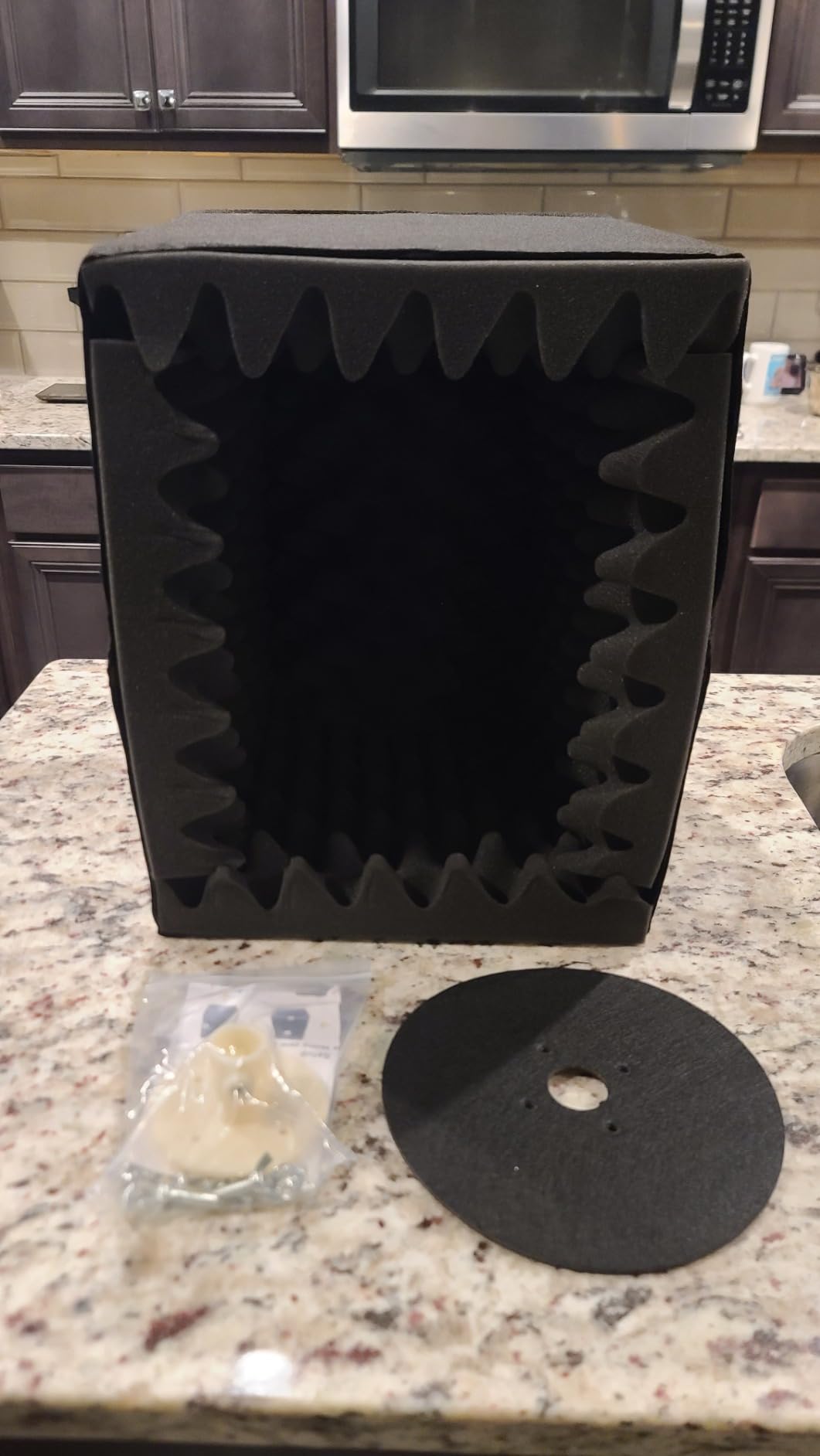
The TroyStudio booth is the most aggressive acoustic object in the budget tier, and it works differently from every other product here. Rather than a panel behind the mic, it forms a box around it: the interior measures 8 by 10 by 12 inches, the exterior 12 by 12 by 16, and all five interior surfaces are lined with 2-inch thick dense egg-crate foam. That volume of foam is why users report dramatic reverb reduction, especially when paired with a figure-8 microphone and a pop filter.
Portability is the standout. It sets up in about a minute, collapses in about 20 seconds, folds to 12 by 12 by 6 inches and weighs 2 lb, so it moves between a home booth, a hotel room and a treated space without ceremony. Cable and mic stand pass-through holes are included, and elastic accessory bands keep the foam seated for a tighter profile. Condensers, USB microphones, phones and recorders all fit.
The weak point is durability, and reviewers are consistent about it. The fabric-wrapped cardboard shell can flex and bow at the seam over time, and several owners report foam pieces that do not match the panel dimensions perfectly. A larger size is also available if the small interior is tight for your microphone.
Two limits to plan around. The front face is open, so direct sound still enters, and it only fits mic stands with a shaft diameter under 0.86 inches, which excludes many heavy broadcast stands. It also does nothing about outside noise such as traffic or animals.
Why a box beats a panel on reverb
A box gives the microphone near-field surfaces on five sides, so the room tail is cut off almost immediately and the mic hears mostly its own near field. A flat panel only intercepts the energy heading in one direction, which means everything arriving from the sides and ceiling still gets in.
The catch is that the open front has to face the singer, and the mic has to sit inside. Get the geometry wrong and the box becomes a baffle for a microphone that is no longer actually inside it, which is the most common setup mistake with this style of product.
Plan for the open front
Point the open face at the singer’s mouth, not at the room. If the opening faces a wall or a window, you have enclosed the microphone and left the room unaddressed, and the foam is doing almost nothing.
Add a pop filter regardless. Close-miked vocals inside a small box put the capsule near enough for plosives to reach it, and the accessory bands included are there to keep the foam tight rather than to filter air.
8. XTUGA MIS02 Five-Panel Shield – Best Overhead Absorption
XTUGA MIS02 Recording Microphone Isolation Shield, 5 Panels Soundproof Foam
Five panels, foldable top
15.75 x 7.87 x 7.09 inch
3.98 lb
Pros
- Triangular high-density sponge in three layers
- Five panels fold down to a three-panel setup
- Top panel adds overhead absorption
- Produces a darker less brittle vocal
- Sturdy once assembled
Cons
- Assembly is difficult and time-consuming
- Plastic hinges can crack with repeated folding
- Tight interior can block rear-XLR cables
The MIS02 is the only budget shield here with a genuine overhead panel, and that is its whole argument. Five panels with a foldable top mean the microphone is covered above as well as behind and to the sides, which removes the ceiling reflection that flat and low-profile shields leave completely untouched. Reviewers confirm the acoustic effect, describing a darker, less brittle vocal that signals reflections are actually being absorbed.
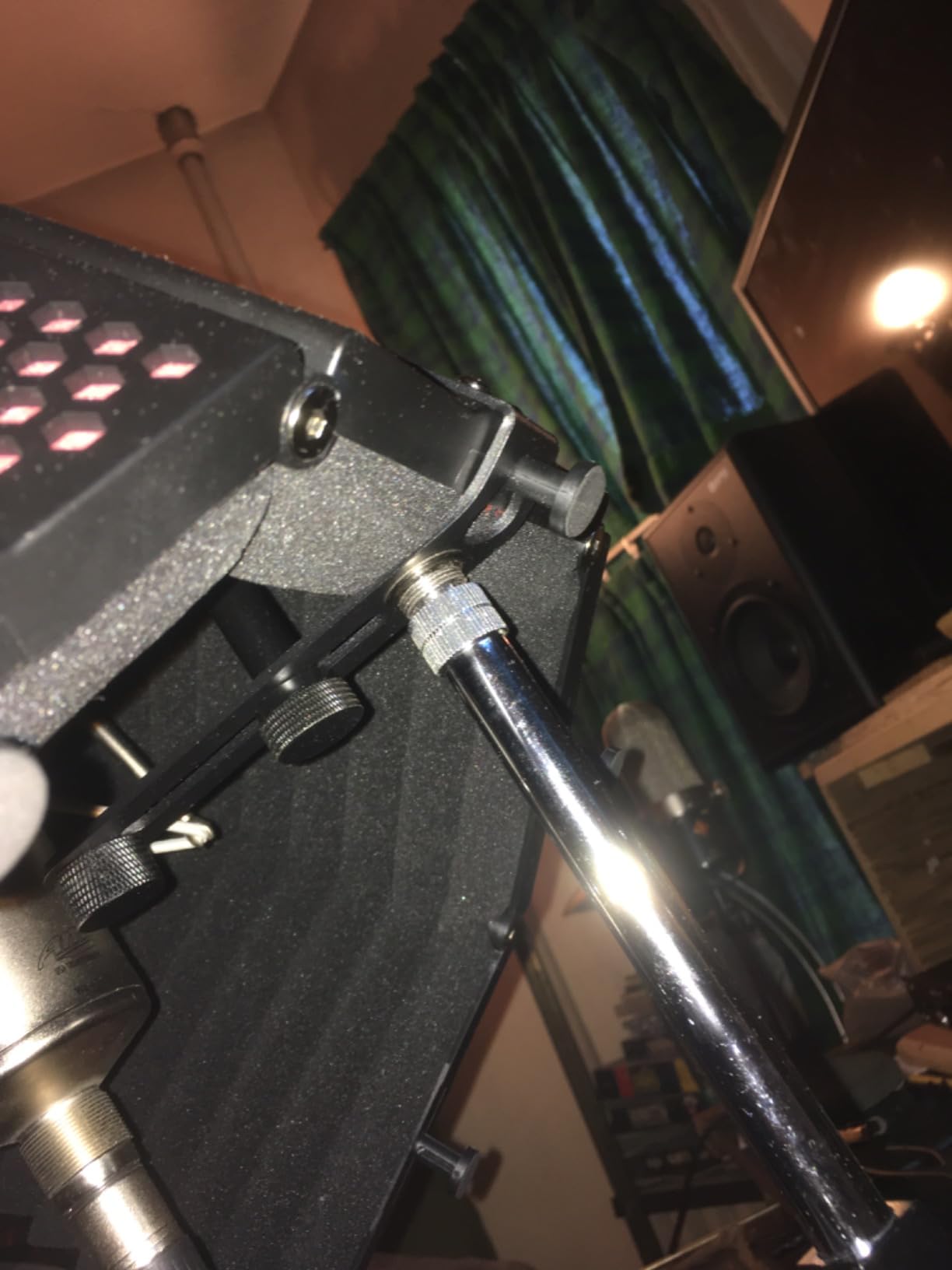
Construction is triangular high-density thickened sponge arranged across three layers, in a plastic body. The five panels can be folded down into a three-panel configuration, which is genuinely useful when you want the microphone tighter to the performer or want a narrower footprint on a desk. Mounting works on a desktop or on a microphone stand, with height adjustment.
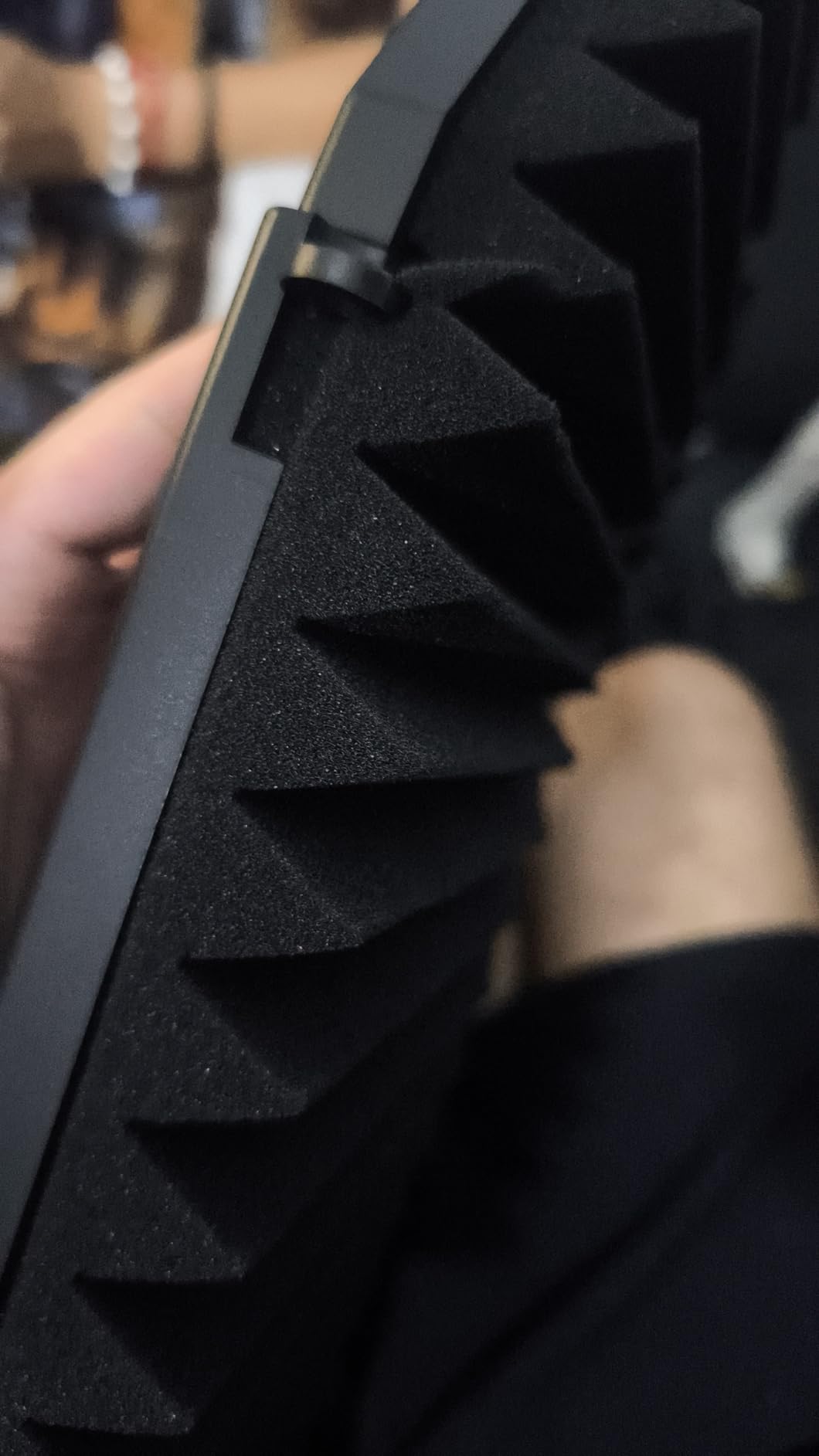
Assembly is the honest problem here. Multiple reviews describe it as difficult and time-consuming, with nuts sitting in hard-to-reach crevices and hinge panels snapping together loudly. Several owners who expected an hour finished in about twelve minutes once they understood the nut-slot step, so the difficulty is real but the worst-case time is not typical. Budget a proper setup session rather than assuming you can do it between takes.
The more serious recurring complaint is structural. Plastic hinges can crack with repeated folding and unfolding, which is a real risk for a product designed to be collapsed often. At 3.98 lb it is also heavy and awkward on a mic stand, and the interior is tight enough that rear-XLR front-address microphones may not fit or route their cable properly. It blocks no outside noise, only reflections.
Decide five panels or three before you build it
Build all five panels if the ceiling is your worst surface, which is common in rooms with a bare plasterboard ceiling or a first-floor flat. The top panel is the reason to own this product rather than a cheaper five-sided arch.
Build three panels if the room is small, the desk is cramped or you move the rig often. Folding the top down makes the unit narrower and steadier, and it reduces the flex that the plastic hinges are known for.
What to inspect after the first month
Look at the hinge lines, because that is where failures start and the crack is easier to catch early. Owners who report cracked hinges are almost always people folding the top panel every session rather than leaving it assembled.
Check microphone clearance before you commit, particularly for rear-cabled bodies. A tight interior that forces the cable to bend sharply at the connector is a worse problem than a small amount of room sound.
9. Dmsky Isolation Shield with Stand – Best for Standing Performers
Dmsky Microphone Isolation Shield with Pop Filter & Tripod Stand, Foldable Mic Shield with Triple Sound Insulation, High Density Mic Sound Shield for Recording Studio, Podcasts, Singing, Broadcasting
Five 180-degree panels on steel stand
78.7 inch stand, 42 to 71.5 inch shield
pop filter included
Pros
- Five panels adjust through 180 degrees
- Triple-layer reflective filtering absorbing build
- Premium steel stand with free height adjustment
- Clear manual and quick assembly
- Includes pop filter and thread adapters
Cons
- Stand can wobble and a bump can knock it over
- Small storage tray
- Thin attachment points on pop filter and tray
The Dmsky is the most adjustable rig in this roundup, and at 4.6 stars with 81% of reviews at five stars it is also the best rated. Five folding panels adjust through 180 degrees, so you can shape the opening around the microphone rather than working around a fixed geometry. Combined with a shield height adjustable from 42 to 71.5 inches, it is the one to buy if you sing standing up.
The stand is a premium steel unit at 78.7 inches with free height adjustment, sitting on a heavy-duty tripod with anti-slip support points. The acoustic build is a triple sound insulation structure of reflective, filter and absorbing layers with high-density foam, and the manual is clear enough that assembly is quick.
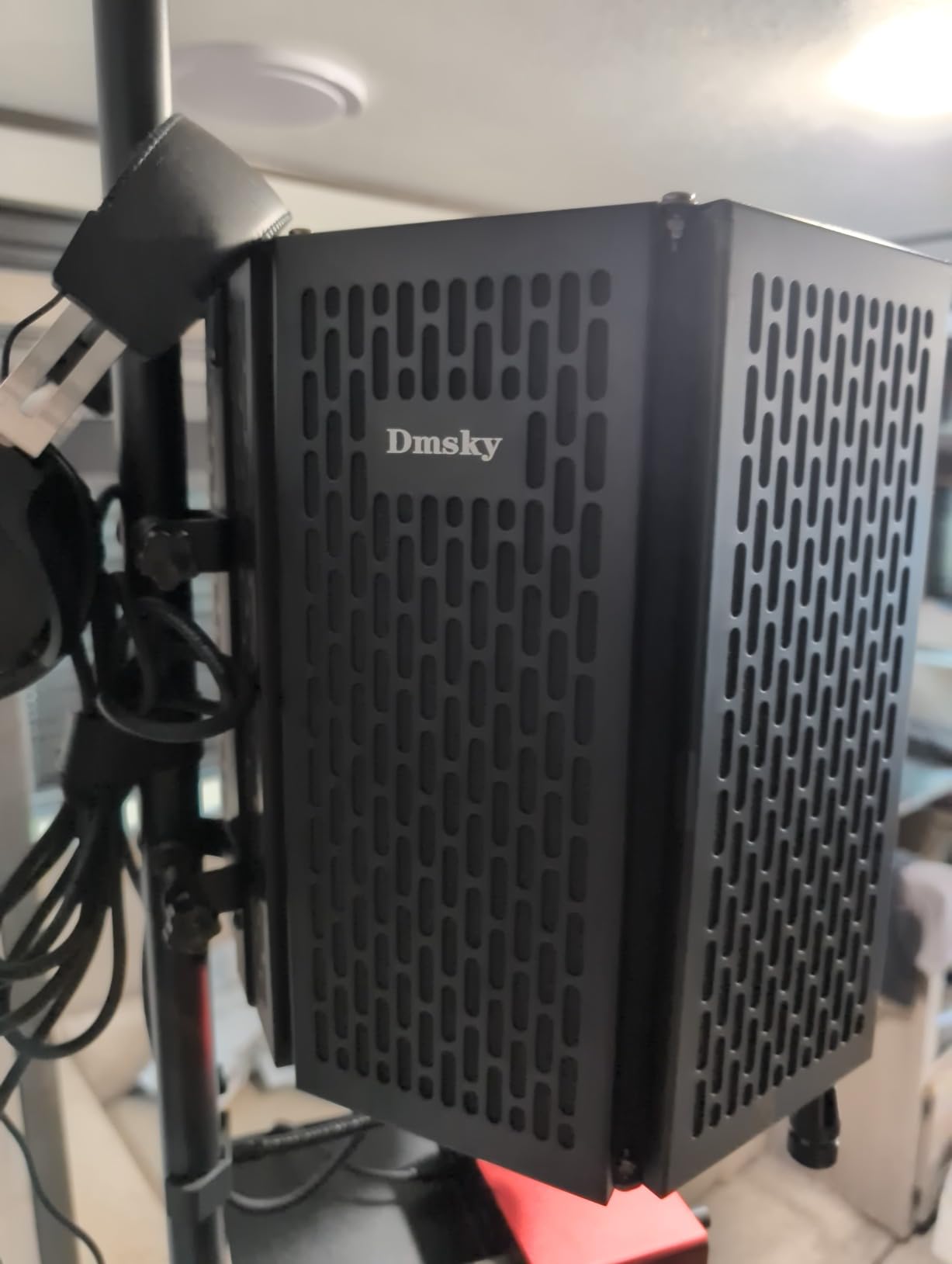
The box also includes a pop filter, 3/8 inch to 5/8 inch adapters and a small storage tray, so the only thing you need to add is a microphone and an interface. It works on a desk or mounted to a boom, and reviewers credit the steel stand and metal back panel with feeling durable well beyond the price tier.
Owners do report the stand can feel slightly wobbly and that a light bump can knock it over, so this is not the rig for a busy shared studio floor. The included storage tray is quite small, and the attachment points for the pop filter and tray feel thin compared with the rest of the build. A few reviews mention arriving with a missing adapter link, which is worth checking the moment the box opens.
Why height adjustment changes a standing session
When you sing standing, your mouth height changes with posture and the room behind you changes with it. Adjustable shield height and panel angle let you keep the microphone in the same acoustic relationship to the rear surface even when the performer moves, which is not possible with a fixed panel on a fixed stand.
The 180-degree panel adjustment is the more useful control in practice. Most people find the right configuration by closing panels until the singer stops sounding too dead, not by moving the microphone, and that is exactly the kind of control this rig gives you.
Before you commit, check these two things
Check the room you are putting it in. At 78.7 inches tall and five panels wide, this is a substantial object, and it needs floor or desk space that a flat panel does not. It is a rig for a dedicated corner, not a small desk.
Check the package on arrival for the thread adapters, since a small number of reviews mention an incomplete box. It is a two-minute check that avoids rebuilding the mount later.
10. Snap Studio Portable Vocal Booth – Best Walk-In Booth
Snap Studio Portable Vocal Booth, Original & Best for Home Studio Recording
33 x 33 inch footprint, 82.68 inch height
5.5 sq ft interior
46.2 lb
Pros
- Full walk-in enclosure with top
- bottom and walls
- Heavy-duty blankets deliver dry vocals in untreated rooms
- Pop-up frame collapses into duffel bags
- Roomy enough for a person plus mic stand and laptop
Cons
- Not soundproof
- so outside noise still comes through
- Gets hot during long sessions
- Heavy and awkward to move when broken down
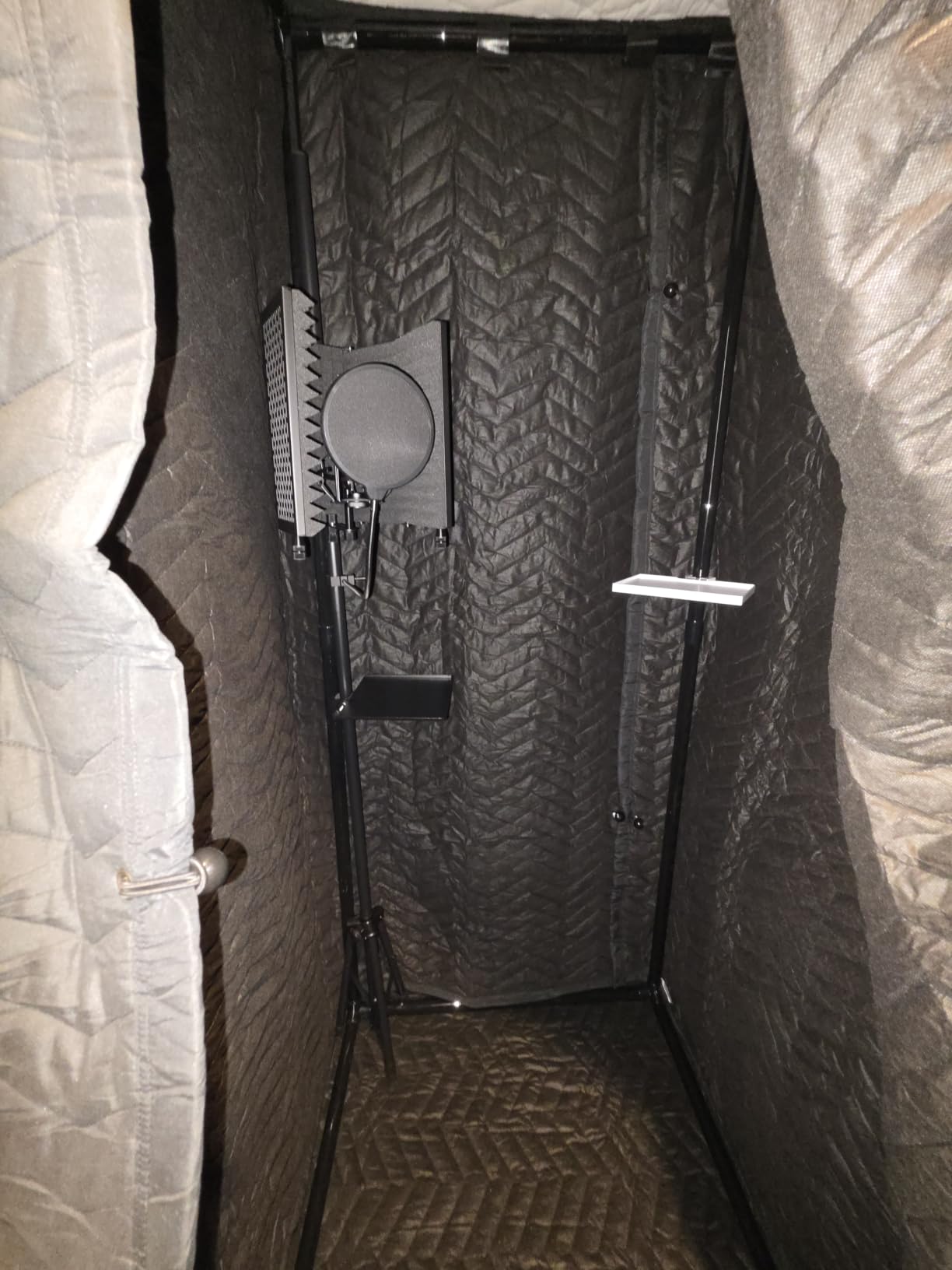
The Snap Studio booth is the only genuine walk-in option here, and it solves the problem every other product leaves open. You stand inside a 33 by 33 inch pop-up enclosure with 5.5 square feet of floor space, and heavy-duty blankets line the walls, ceiling and floor, so reflections arrive at the microphone from nowhere at all. Professional voice actors and podcasters endorse it widely, and several long-term owners cite it as a way to avoid renting a studio.
It is a complete kit. You get a powder-coated PVC frame, wireless multicolour LED lights with a remote, a phone or tablet mount, a microphone adapter and duffel bags for transport. It fits performers up to 6 ft 8 in tall, and the pop-up frame erects quickly and collapses for storage. Review sentiment across 386 ratings is solidly positive at 4.4 stars, with customer service repeatedly singled out for replacement parts.
It is important to be blunt about what it is not. It is not soundproof, and owners are careful to set expectations that way: traffic, barking dogs and family conversation still come through. It kills reflections exceptionally well and does nothing for outside noise, and no product in this category manages both.
The practical drawbacks are all about logistics. At 46.2 lb it is heavy and awkward to move even when broken down, and it occupies a large closet when stored. It gets hot and stuffy inside during longer sessions, so a small fan is often needed. There is no integrated microphone mount, so you position your stand inside manually, and the upper elastic bands can bend and make repeated setup harder over time.
Who a walk-in booth is actually for
It is for singers and voice artists who record in genuinely bad rooms, or who share a home with family or neighbours and need a controlled vocal space indoors. It is the only product in this roundup that addresses ceiling, side and floor reflections simultaneously, which is why reviewers consistently say it removes the boxy sound that flat panels cannot.
It is not for you if your problem is noise rather than reverb, if you have nowhere to erect a 33 by 33 inch structure, or if you move between locations regularly. A folding panel serves a mobile recorder far better.
What you give up compared with a panel
Portability, almost entirely. The walk-in advantage is a large, treated volume around a person, and that volume has to be carried, erected and stored. Panels fold into a bag; this does not.
You also give up comfort over long sessions, since the enclosure traps heat, and convenience, since there is no built-in microphone mount and the bands that hold the top together are the part that wears first.
The Four Product Types Explained
Almost every confusing recommendation in this category comes from comparing these four things as if they were alternatives. They are not, and they solve different problems.
Single flat panel. The LyxPro VRI-30 and the Aokeo shield are the archetype. A foam or sponge absorber with a hard backing, mounted behind the microphone on a stand. It fixes rear reflections, costs little, and is the correct first purchase in almost every untreated room.
Wrap-around arch. The Moukey, TONOR and Dmsky builds take the panel and curve it around three sides, catching rear and side energy in one object. Panel angle and arch curvature adjust the opening, so you can tune the amount of absorption rather than choosing from one setting.
Chamber or box. The Auray ISO-Armor-2 wraps the microphone itself rather than sitting behind it, and the TroyStudio booth forms a small enclosure with foam on five interior surfaces. Both trade flexibility for a much shorter room tail, at the cost of a fixed microphone position.
Walk-in portable vocal booth. The Snap Studio is the only product here that surrounds the performer rather than the microphone. It is the most effective option for reflections and by far the least convenient, and it still does not reduce noise entering the room.
Why Cheap Foam Gobos Are Not Reflection Filters
Because most of them block nothing but high frequencies, and the midrange is where vocal room colour lives. Foam is a porous absorber, and its effectiveness depends on thickness, density, airflow and whether there is a designed air gap behind it. A slab of foam bolted to chicken wire is the first thing owners build when they cannot find a commercial one, and engineers reviewing those builds correctly note that it blocks little beyond a high-frequency reflection.
The construction details that separate a real filter from a foam shell are specific. Look for a vented or perforated hard back, more than one layer with different densities, a designed air gap between layers, and a mounting point that lets you control the distance from the microphone. A single unvented foam board, however thick, will reflect low frequencies back at you rather than absorbing them.
Retail copy makes this harder than it should be, and the review data for this category is full of warnings that five-panel foam shields promising studio quality are essentially foam shells. Judge by layer count, venting and adjustability, not by the number of panels printed on the box.
Reflection Filter vs Portable Vocal Booth vs Acoustic Treatment
These three solve different problems and are frequently confused. Here is the honest breakdown, in the order most home studios should think about them.
Reflection filter. Smallest footprint, cheapest, instantly portable. Absorbs sound arriving from behind the microphone. Does nothing about noise, nothing about side or ceiling reflections, and nothing permanently. Best first purchase for a hard-walled bedroom or office.
Portable vocal booth. Footprint of a corner or a room, moderate cost, portable but heavy. Absorbs reflections on several sides and often above. Still does not reduce outside noise. Best when reflections come from everywhere in the room rather than from one wall.
Acoustic treatment. Permanent, fixed cost, no portability. Broadband panels and bass traps in corners and on the first reflection points work on the room itself, so every take in that room improves, and every mic position benefits. It is the only one of the three that fixes a problem room rather than a problem position.
The order of operations matters more than the choice. Broadband treatment first if the budget allows, then a filter or booth to polish the vocal position. A booth cannot rescue an untreated room, and a filter cannot rescue a room with standing waves in the low mids, so neither replaces the other.
Absorption vs Isolation vs Soundproofing
Buyers lose money on this confusion more than on any other, so it is worth stating plainly.
Absorption removes energy from the room. Reflections and reverb get quieter. Every product in this roundup is an absorption product, and the more volume of material, the more absorption you get.
Isolation stops sound travelling between two spaces, either by blocking mass or by decoupling. Thick blankets on a walk-in booth give a little of it, but nothing here is designed to stop a shout in the next room.
Soundproofing is isolation done properly, with mass, sealing, decoupling and dedicated construction. It is a building project, not a product purchase, and it is the only one of the three that solves noisy neighbours.
That is why forum users asking for the best vocal booth for an apartment with loud neighbours keep being steered toward booths. The booth is the best tool in this category for that specific job, and it still will not fully solve it.
Which Mic Polar Pattern Needs a Gobo Most?
Cardioid microphones need the least help, and this is the point engineers make most often when they dismiss filters. A cardioid polar pattern already has substantial rear rejection built in, so the back of the microphone is not as exposed as the marketing implies. A well-treated room plus a cardioid condenser is the classic combination where a filter adds least.
Figure-8 and multi-pattern microphones need the most. A figure-8 microphone hears both the front and the rear, so the wall behind the singer reaches the capsule almost as strongly as the voice does, and a gobo behind the mic becomes dramatically more valuable. One of the most common pairing recommendations in the review data is a portable booth or panel with a figure-8 microphone and a pop filter.
Side-address versus rear-address is a secondary but real factor. A rear-address condenser has a very narrow rear lobe, so reflections coming from behind are already attenuated. A side-address capsule sees more of the room, which is why gobos tend to earn their keep more with side-address and multi-pattern microphones than with rear-address designs.
Proximity effect runs through all of this. The closer you work, the louder the voice is relative to the room, and the less the filter is doing. If your vocal is already close and hot, a filter may not be the layer you need.
How to Place Your Mic Inside a Reflection Filter
Placement changes the result more than the product does. Users report that shoving the microphone right up against a filter changes the sound of the microphone, and that positioning matters as much as the panel itself. Six steps, in order.
Put the panel behind the microphone, not behind the singer. The filter exists to stop energy travelling from the mic past the performer to the rear wall and back. A panel behind the performer’s head does nothing for the direct path, because the voice reaches the microphone before it ever reaches the panel.
Set a deliberate gap. Leave space between the back of the microphone and the front of the panel rather than pushing them together. Use the height and distance bracket if the filter has one. A gap gives the panel a face to work with and keeps the capsule out of the panel’s own near field.
Point the open side at the performer’s mouth. On every arch, chamber and box in this roundup, the opening must face the sound source. A box with its open face toward a wall has enclosed the microphone and left the room unaddressed.
Give the panel a soft backstop. Stand the rig near a wall if you can, or place a duvet or heavy blanket behind the singer. Reviewers repeatedly find that the filter plus something soft behind the performer outperforms the filter alone, because it removes the secondary reflection the panel leaks around its edges.
Mount the filter and the microphone separately where you can. Two stands are more stable than one overloaded stand, and it lets you change microphone height or pattern without dismantling the panel. Stacking a shock mount, pop filter, filter and microphone on one stand is cramped and becomes unstable as soon as the cable moves.
Record a rough take, then move one thing at a time. If the vocal is too dead, open the arch or move the microphone further from the panel. If it is still reverberant, close the panels or add the duvet. Changing one variable per pass is the only reliable way to hear what a filter is contributing.
How to Choose: Seven Criteria That Matter
1. Identify your actual problem first. Reverb behind the microphone is a filter problem. Noise from outside is a room problem. Noise from your computer fan is a placement problem. A cheap filter cannot fix the second or third, and no filter in this roundup can fix the second.
2. Match the type to the room. A single flat panel for one bad wall behind the mic. A wrap-around arch when reflections come from several directions. A chamber or box when reflections arrive from all around a close-miked microphone. A walk-in booth when the whole room is the problem and you have a corner to spare.
3. Check the mic polar pattern. Cardioid needs the least help, figure-8 and multi-pattern need the most. If you own a multi-pattern large-diaphragm condenser, prioritise a filter with adjustable depth over a cheap fixed panel.
4. Look for layers, venting and an air gap. This is the single most reliable quality signal in the category. A vented hard back, more than one layer at different densities, and a designed air gap between them are what separate an engineered filter from a foam shell.
5. Prioritise the mounting hardware. Clamp design and stand compatibility generate more complaints than acoustics in the review data across this roundup. Check for a mic stand thread adapter, check whether the filter can live on its own stand, and treat anything that must clamp a heavy microphone and a panel to one stand with caution.
6. Measure your space, twice. Open footprint and folded footprint. The folded size is the one that has to live in a cupboard, and the open size is the one that has to fit your desk or corner. The tallest and heaviest options are the ones people regret.
7. Decide how dead you want to be. Voiceover and spoken word benefit from a very dry, controlled sound. Sung vocals often lose life if you remove every trace of room, which is why arch angle and panel count are more useful than raw absorption figures.
Layering on a Budget: What to Buy First
Spend in this order, and stop as soon as your rough takes sound acceptable. Each step is measurable by ear before you move on.
Step one: a filter or panel. This removes the rear reflection, which is the largest single contributor to vocal room colour. Everything in the budget tier at the top of this roundup does this job. Add something soft behind the performer at the same time if you can.
Step two: a shock mount and a pop filter. A cheap filter makes a bad mount sound worse. Decoupling the microphone and controlling plosives costs little and improves every take regardless of the room.
Step three: closed-back headphones and a repositioned microphone. Monitoring bleed is one of the most common causes of a vocal that will not sit in a mix, and moving the microphone closer to the wall the filter is covering often beats buying a second acoustic product.
Step four: broadband panels on the first reflection points. Once the vocal position is controlled, treat the walls the reflection actually comes from. This is the point at which a room stops being a bedroom and starts being a studio, and it is the last step that keeps improving every take you record afterwards.
Reverse that order and you will spend money on a filter that reveals room problems it cannot fix, then conclude the filter did not work.
Voiceover and Spoken Word vs Sung Vocals: Avoiding Over-Deadening
Voiceover, audiobook and spoken word work want a dry, controlled, consistent sound with no room signature at all. Sung vocals usually want some of the room left in, because a completely dead vocal can sound flat and lifeless in a mix. This is the over-deadening trap, and it is the most common disappointment in the category.
The fix is adjustment rather than restraint. Arch panels, adjustable open angles and adjustable microphone depth all let you back the absorption off once the reverb is under control. Of the products here, the Dmsky rig with its 180-degree panels and the Moukey arch with its adjustable angle give you the most direct control over that trade-off.
Engineers who prefer cardioid microphones routinely skip filters altogether on the grounds that there is enough rear rejection already built into the pattern. That is a defensible position in a treated room and a poor one in a bedroom, which is why the same advice produces such different outcomes in forum threads.
Frequently Asked Questions
What is a microphone reflection filter?
A reflection filter is a curved, multi-layer acoustic panel that mounts behind a microphone on a mic stand. It absorbs sound that would otherwise bounce off the rear wall and re-enter the capsule, so your vocal take captures more direct voice and less room ambience. Because it only addresses sound arriving from behind the microphone, it is a partial treatment rather than a substitute for room acoustics, and it does not block outside noise.
Do reflection filters actually work?
Yes, with conditions. A multi-layer filter placed correctly does shorten the room tail around a microphone noticeably. It works best when the worst reflection in the room arrives from behind the mic, when there is a deliberate gap between the panel and the capsule, and when the microphone is close to the performer. It adds little in an already treated room, it does not stop traffic or household noise, and it can colour the microphone if you push the mic right up against the panel.
Is a reflection filter better than a portable vocal booth?
It depends on the problem. A reflection filter is smaller, cheaper and instantly portable, and it fixes rear reflections from one wall. A portable vocal booth absorbs reflections on several sides and often above the performer, so it removes more room reverb but takes up floor space and is heavy to move. Neither is soundproof, and neither stops noise entering the room. For a spare room, a walk-in booth wins. For a bedroom studio corner, a filter or arch wins.
How effective are portable vocal booths?
Portable vocal booths are very effective against room reflections and completely ineffective against outside noise. They remove the reverberant tail, flutter echo and boxy reflections that make untreated vocals hard to mix, and a walk-in booth also absorbs reflections arriving from the sides, ceiling and floor. They do nothing about traffic, barking dogs, air conditioning or neighbours, so they are treatment rather than soundproofing. Expect heat build-up in longer sessions and a heavy unit to move.
Do I need a reflection filter if my room is already treated?
Usually not. If you have broadband panels and bass traps covering the first reflection points, a cardioid microphone and a sensible microphone position, the rear reflection has already been dealt with and owners frequently report no audible change. Filters earn their keep most in untreated rooms, with figure-8 and multi-pattern microphones that are sensitive to sound arriving from behind, and as a final layer of polish for a vocal chain that still needs consistency between takes.
Is a pop filter really necessary?
Yes, and it is the cheapest quality upgrade in a vocal chain. A pop filter controls plosives from consonants like P, B and T, which otherwise arrive as low-frequency thumps that compress and muddy a vocal. It is not a substitute for a reflection filter, because it addresses airflow at the front of the microphone rather than reflections from behind it. Several products in this roundup, including the Auray ISO-Armor-2, include an integrated pop filter.
Final Verdict: Which Reflection Filter Should You Buy?
For most people reading this, the sE Electronics RF-X is the right first purchase among the best reflection filters for vocal booths. It is the only product here with a documented four-layer build including a vented composite panel, wool fabric and a designed air gap, and reviewers repeatedly describe it as the filter that leaves the microphone’s own character alone. At 2590 g it is light enough to reposition between takes, and the supplied bracket gives you real control over distance, which is the variable that decides whether a filter works.
Buy the Auray ISO-Armor-2 instead if you record in small rooms or on the move, and want a pop filter and suspension mount already built in. Buy the LyxPro VRI-30 if you want one assembled object that clips to a stand and nothing else to think about. Move up to an arch, a chamber or a walk-in booth only once you can name the reflection that a flat panel is failing to catch.
And remember what none of these products do. A reflection filter absorbs sound arriving from behind your microphone. It does not soundproof your room, it does not stop noise from the street, and in an already treated room with a cardioid microphone it may add nothing at all. Put a duvet behind the singer, give the microphone a shock mount and a pop filter, and use the panel for the job it was designed to do.