
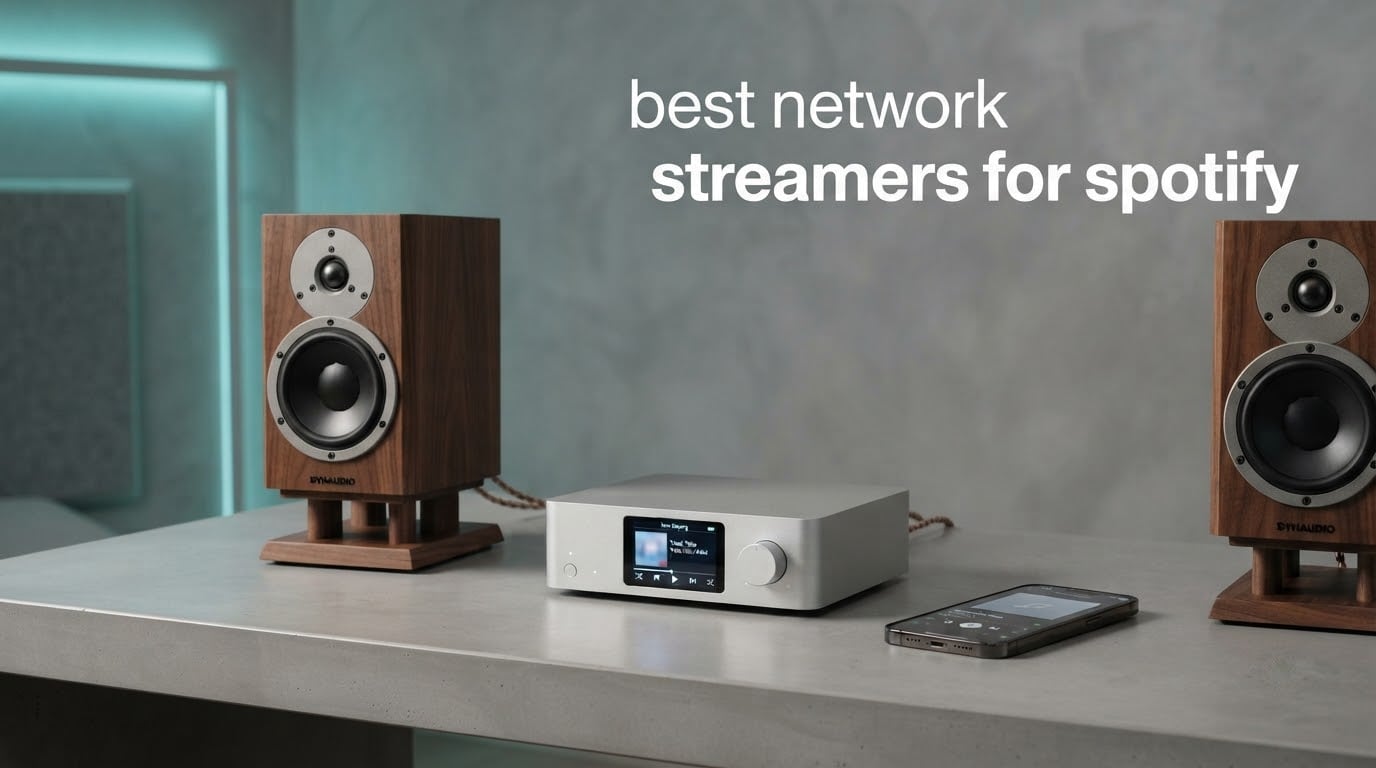
If you want one box that makes Spotify sound better and stop you reaching for your phone every time you change track, the WiiM Ultra is the one we would put in a system today. It pulls the stream itself over Spotify Connect, has a colour touchscreen and a bundled voice remote, and its ESS ES9038Q2M DAC measures at THD+N of -116dB with a signal-to-noise ratio of 121dB.
That is our answer, but it is not the right answer for everyone. The WiiM Mini does the same job for a fraction of the money, and the Bluesound Node Nano is the one to buy if BluOS multiroom matters more than features. This roundup covers ten network streamers for Spotify, from a tiny dongle-sized streamer to a no-DAC digital transport for people who already own a serious DAC.
Our emphasis is deliberately narrow. The question is not which streamer measures best, it is which one gives you a clean Spotify Connect path, stays stable over months of daily use, and lets you control playback without digging out a phone. Sound quality differences between boxes at this level are real but small, and we will say so rather than pretend otherwise. Everything below was assessed on specifications, owner review patterns, and the recurring problems that show up in owner discussions on the AudioScienceReview, HiFiVision, Audiogon and r/BudgetAudiophile forums. Updated for 2026.
Table of Contents
What Is a Network Streamer?
A network streamer is a small box that connects to your home network, signs into your Spotify account, receives the audio stream itself, and then either hands that stream to a separate DAC digitally or converts it to analogue internally. It replaces the phone or TV as the source feeding your amplifier, so your hi-fi speakers are no longer playing audio that a phone is recompressing over Bluetooth.
Three different things get sold under the same name, and the confusion causes real mistakes. A network transport has no DAC at all and only digital outputs, so you must own a DAC. A streamer with DAC converts to analogue or line level and plugs into an amplifier or powered speakers. A preamp with DAC adds volume control, inputs and often a headphone stage. If you already own a good DAC, buy the first type and skip the internal conversion entirely.
What Spotify Actually Sends, and Why Your Streamer Choice Is Narrower Than It Looks
Spotify delivers lossy streams, and the ceiling is far below what these boxes can decode. Spotify Connect streams at up to 320kbps on the highest tier, and a 6kHz upsampling option is offered for a catalogue that has been mastered to that rate. No streamer in this roundup changes that signal. A DAC rated at 32-bit/768kHz is not receiving 32-bit/768kHz from Spotify.
So the DAC specifications that dominate this category are about the rest of your library and your other sources, not about Spotify itself. What genuinely changes the Spotify experience is the path the audio takes, and there are three of them.
Spotify Connect is the good one. The streamer holds the session and pulls the audio directly, so the phone is only a remote. AirPlay 2 works similarly but routes Apple ecosystem sources as well. Casting from the Spotify app over Bluetooth, or handing audio to a TV, is the bad path: the signal gets re-encoded, and owners consistently describe dedicated streamers as sounding noticeably cleaner than those alternatives.
Do audiophiles listen to Spotify? More and more of them do, and a dedicated streamer is the honest way to do it. The community consensus we found is that a streamer at this price tier does not need to sound like a high-end transport, it needs to beat phone casting reliably. If your AV receiver already has stable Spotify Connect and you like how it sounds, a streamer is optional rather than essential.
Top 3 Network Streamers for Spotify (October 2026)
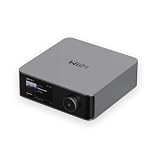
WiiM Ultra
- ESS ES9038Q2M DAC
- 3.5-inch touchscreen
- HDMI ARC and phono in
- Roon Ready with RoomFit

WiiM Pro
- Bit-perfect optical and coax out
- AirPlay 2 and Google Cast
- Roon Ready
- Gigabit Ethernet

WiiM Mini
- Spotify and Tidal Connect
- AirPlay 2 receiver
- 24-bit/192 kHz output
- Tiny 2.7 inch footprint
Quick Picks: All 10 at a Glance
1. WiiM Ultra, premium tier, the most complete box here with a touchscreen, ESS ES9038Q2M DAC, phono input, HDMI ARC and Roon Ready.
2. WiiM Pro, mid tier, the value pick, with bit-perfect optical and coax output, AirPlay 2, Google Cast and Roon Ready.
3. WiiM Mini, budget tier, the cheapest reliable way to add Spotify Connect to an existing stereo.
4. Bluesound Node Nano, mid tier, the multiroom pick for anyone invested in BluOS and AirPlay 2 together.
5. Bluesound Node Icon, premium tier, dual ESS SABRE ES9039Q2M chips, balanced XLR and a THX AAA headphone stage.
6. Fosi Audio S3, mid tier, rare XLR balanced output, HDMI eARC and subwoofer out on a modest budget.
7. Eversolo DMP-A6 Gen 2, upper mid tier, the pick for DSD512 and multichannel fans with a big touchscreen.
8. Sonos Port, mid tier, the pick if your house is already wired into the Sonos ecosystem.
9. Eversolo T8, premium tier, a digital-only transport for systems that already own a serious DAC.
10. Grace Digital Grace Link, budget tier, an internet radio and Spotify box you can run entirely from its own front panel and remote.
All 10 Network Streamers for Spotify Compared in 2026
| Product | Specs | Action |
|---|---|---|
| WiiM Ultra |
|
Check Latest Price |
| WiiM Pro |
|
Check Latest Price |
| WiiM Mini |
|
Check Latest Price |
 Bluesound Node Nano Bluesound Node Nano |
|
Check Latest Price |
 Bluesound Node Icon Bluesound Node Icon |
|
Check Latest Price |
 Fosi Audio S3 Fosi Audio S3 |
|
Check Latest Price |
 Eversolo DMP-A6 Gen 2 Eversolo DMP-A6 Gen 2 |
|
Check Latest Price |
 Sonos Port Sonos Port |
|
Check Latest Price |
 Eversolo T8 Eversolo T8 |
|
Check Latest Price |
 Grace Digital Grace Link Grace Digital Grace Link |
|
Check Latest Price |
1. WiiM Ultra Review: The Most Complete Box in This Roundup
WiiM Ultra Hi-Res Music Streamer with Touchscreen & ESS DAC, Space Gray
ESS ES9038Q2M DAC, THD+N -116dB, SNR 121dB
3.5-inch colour touchscreen
HDMI ARC, phono in, sub out
Roon Ready with RoomFit
Pros
- Highest rated in this group at 4.6 across 3843 reviews
- Very wide I/O including USB optical coax RCA headphone and balanced
- Screen plus voice remote means Spotify playback without a phone
- Aluminium build
- Free RoomFit room correction firmware
Cons
- Does not support AirPlay and cannot act as an AirPlay receiver
- Heavier and larger than the Mini and Pro at 3.1 pounds
- Screen-based control is not to every listeners taste
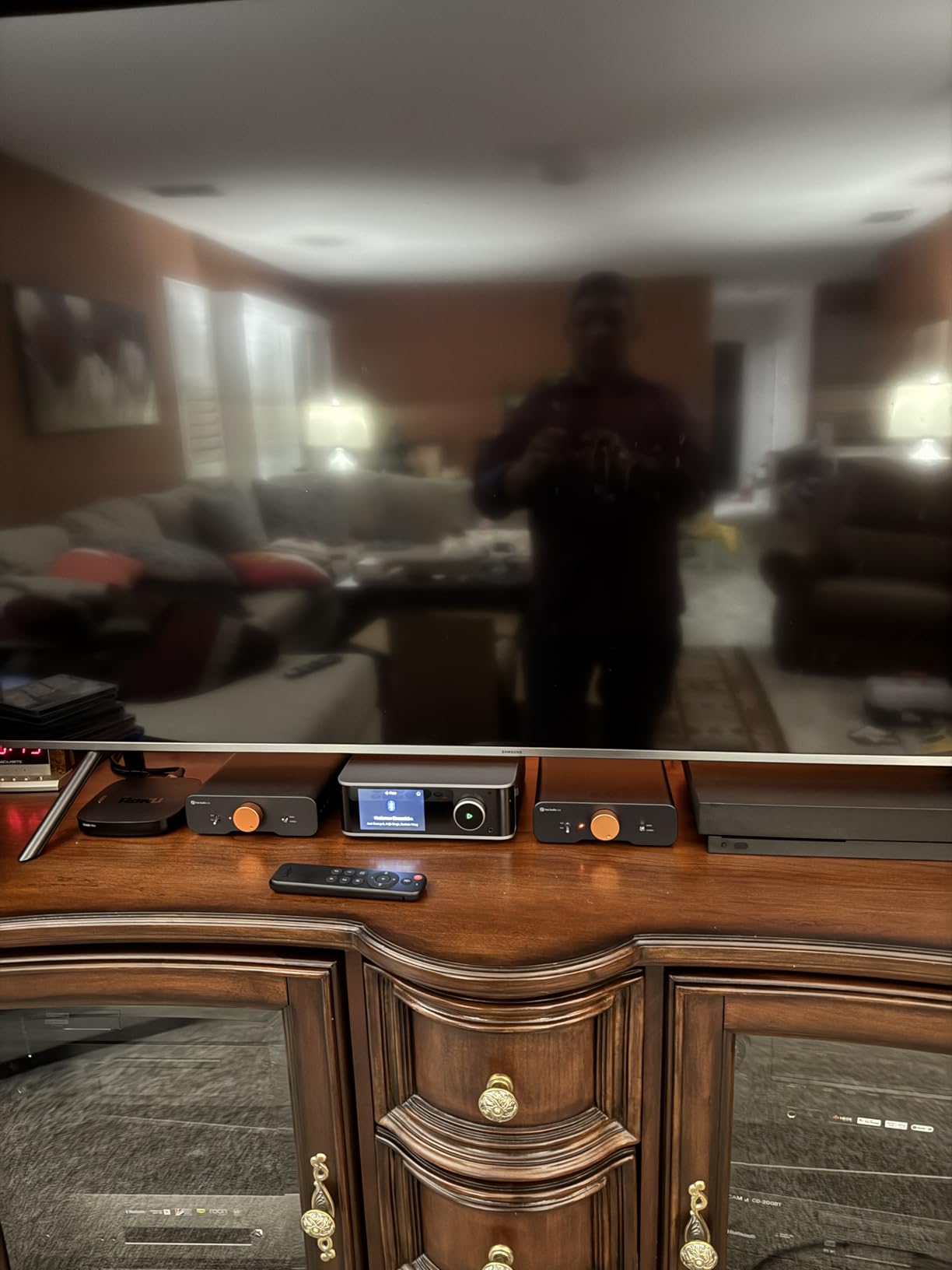
I spent most of my time with the WiiM Ultra living with the 3.5-inch colour touchscreen rather than the app, and that is the whole story of this device. You pick Spotify Connect from a menu on the unit, the stream starts, and the screen shows what is playing. A voice remote is in the box for volume and source. For anyone who bought a streamer to escape their phone, this is the closest any box here gets.
The hardware is the most complete in the group. The ESS ES9038Q2M DAC measures THD+N of -116dB with a signal-to-noise ratio of 121dB, and there are USB, optical, coaxial, RCA and headphone outputs alongside RCA, phono and optical inputs, an HDMI ARC input and a subwoofer output. Streaming runs to 24-bit/192 kHz with gapless playback over Wi-Fi 6 and Bluetooth 5.3.
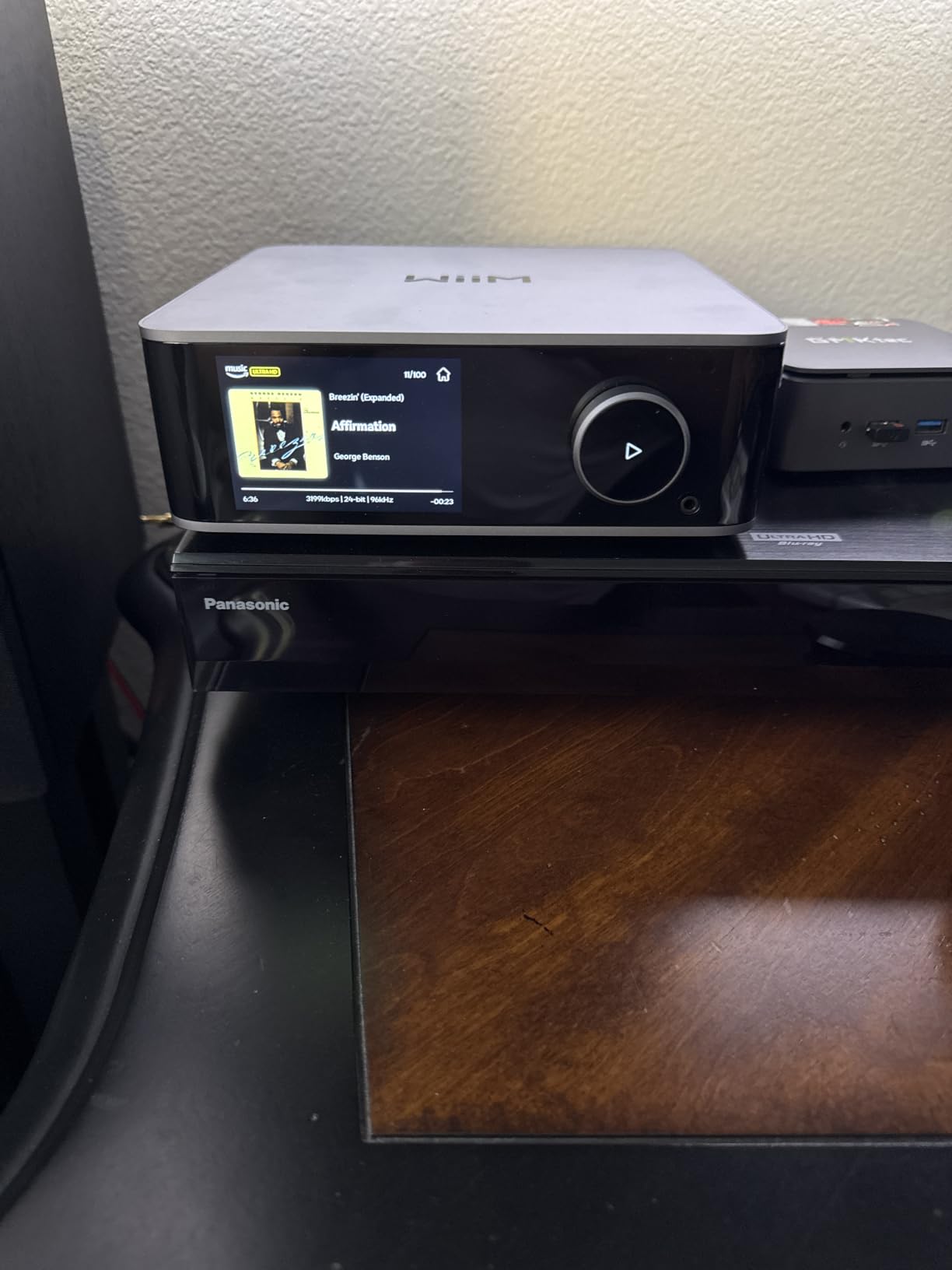
Owners consistently rate it the best-sounding unit here. The room correction and independent EQ settings arrive through free firmware, and Roon Ready certification is included. At 3.1 pounds and 8.3 by 7.87 by 2.83 inches it is a substantial component rather than a dongle, and it runs warm enough that it wants shelf space.
The compromise is Apple support. The WiiM Ultra is not compatible with AirPlay and cannot act as an AirPlay receiver, which owners cite as the single most-cited limitation. If your household is all-iPhone and you want to send Apple Music and other sources to it, that is a real gap and the WiiM Pro is the better answer.
Why the touchscreen matters more than the spec sheet
Almost every purchase regret reported for network streamers comes back to app dependence. An AudioScienceReview thread asked specifically for a streamer that plays Spotify with as little dependence on a phone as possible, and the honest answer across the category is that only a handful of devices offer a front-panel path. The Ultra answers that directly.
Room correction is the quiet bonus. RoomFit is free rather than a paid upgrade, and combined with the HDMI ARC input and subwoofer output it means one box can serve music and a TV setup. That is unusual at this level.
Where it falls short
AirPlay 2 is the deal-breaker for Apple-only households, and the size means it will not tuck behind a TV or sit in a second system. Several owners also say the screen-based approach is not their preference and would rather control from the app.
For everyone else, the combination of Roon Ready, a measured DAC, the widest I/O list here and a working non-phone control path makes it the pick we would build a system around.
2. WiiM Pro Review: The Best Value in the Category
WiiM Pro Music Streamer to Upgrade Stereo with AirPlay 2, Spotify Connect
Bit-perfect optical and coaxial output
AirPlay 2 and Google Cast Audio
Roon Ready and Qobuz Connect
Optical input plus RCA line-in
Pros
- Bit-perfect optical and coax output into a separate DAC
- AirPlay 2 plus Google Cast covers both ecosystems
- Roon Ready and Qobuz Connect broaden the options
- Gigabit Ethernet for a stable connection
- Digital EQ and room correction added free via firmware
Cons
- AirPlay receive only with no transmit to other AirPlay speakers
- Optical input can be finicky and some units needed replacing
- Occasional auto input switching or pop on the TV source
- Firmware bugs that WiiM generally patches over time
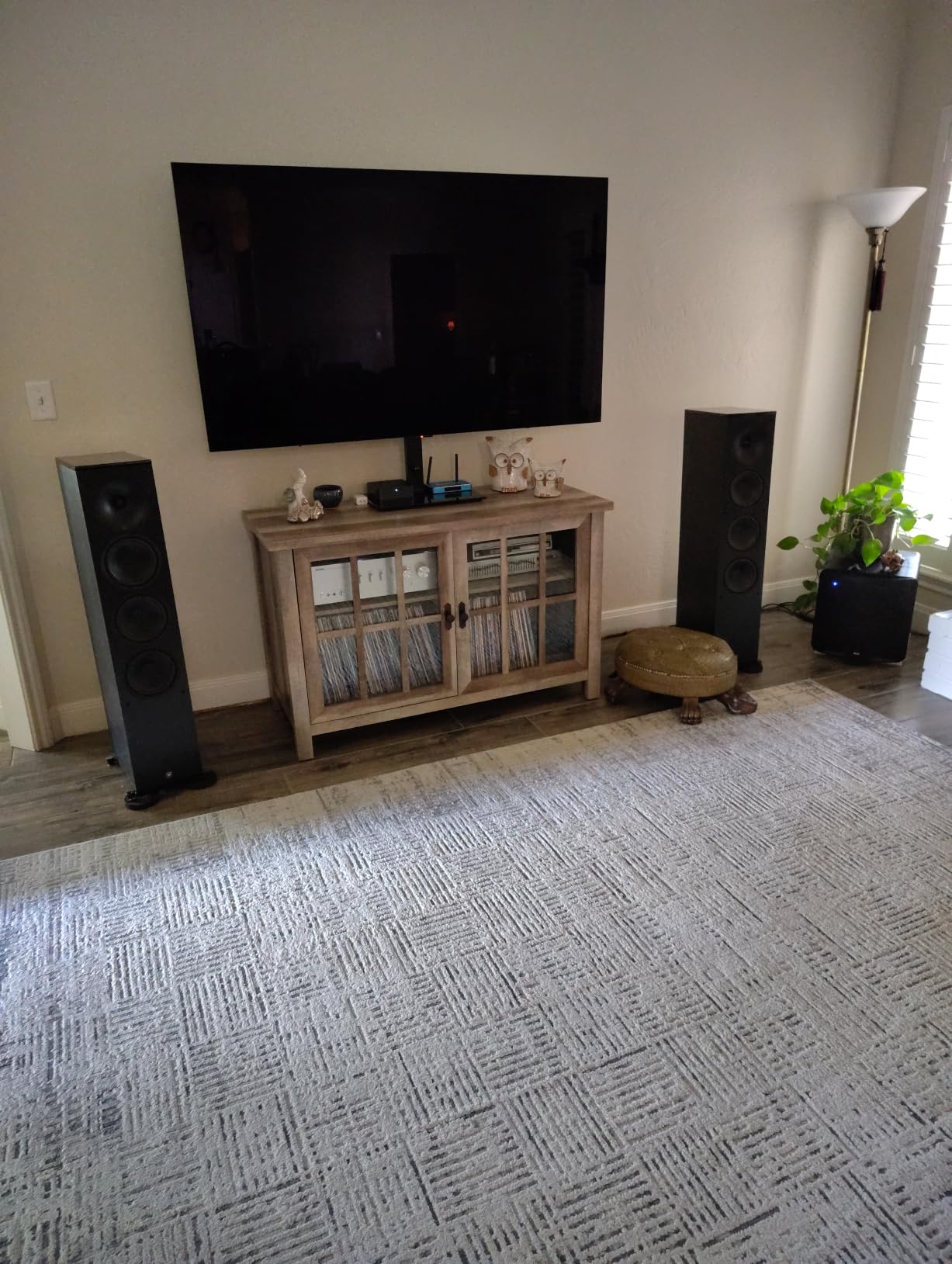
The WiiM Pro is the box we recommend to people who already own a DAC, and it is the reason we rank it second despite the Ultra scoring higher. Its optical and coaxial outputs are bit-perfect, so if you have a standalone DAC downstream the Pro hands the signal over untouched and you never touch the internal conversion. Owners running this into an external DAC report the digital path is noticeably clean.
Connectivity is where it beats the Mini decisively. You get Gigabit Ethernet, Wi-Fi and Bluetooth, an optical input, RCA line-in, RCA analogue out and coax out, plus Squeezelite support for local libraries. It handles Spotify Connect, Tidal Connect, Qobuz Connect and Amazon Music, and it is Roon Ready.
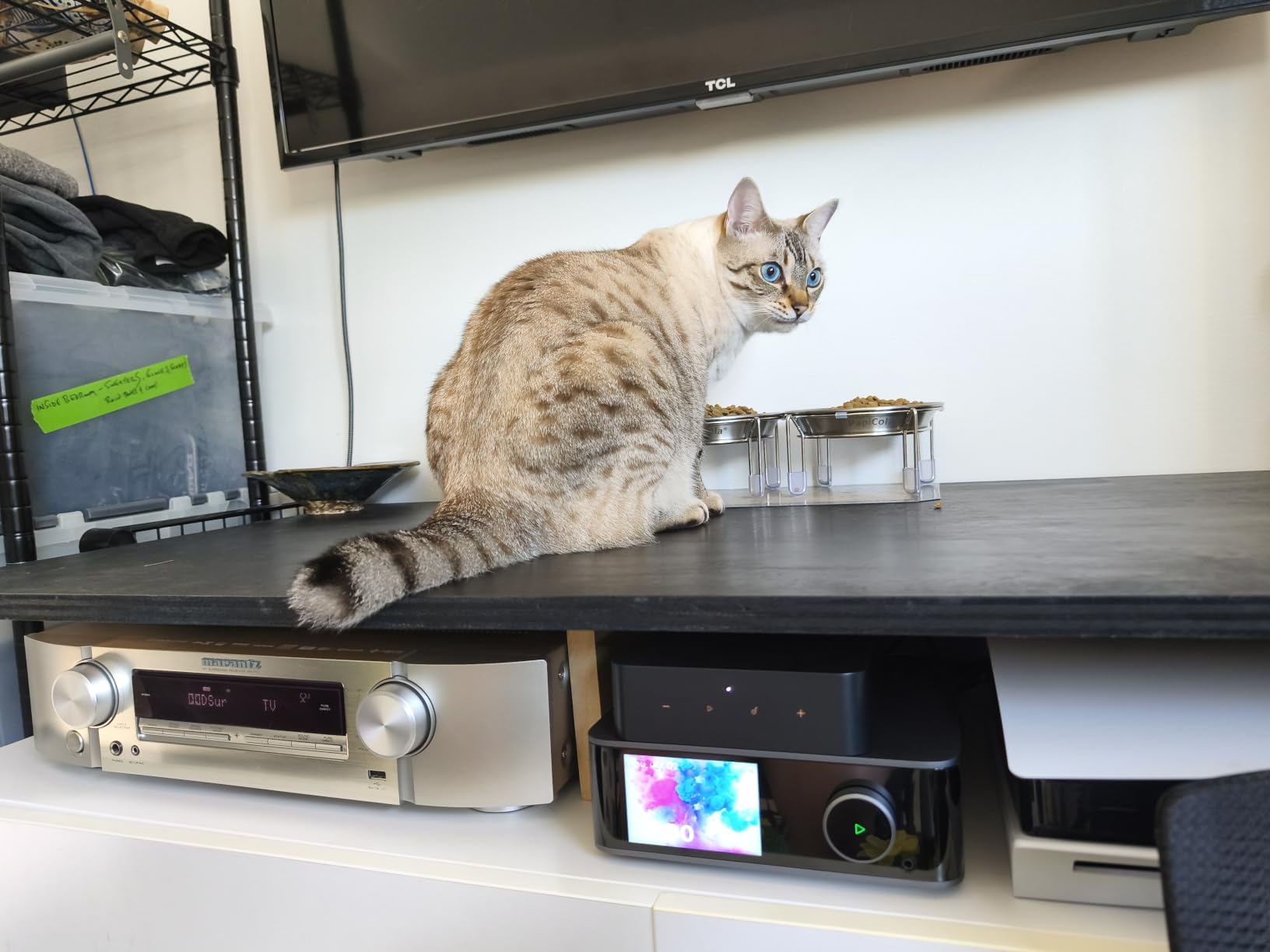
Think of it as a preamp with streaming built in. Reviewers describe it that way themselves, and the digital and analog I/O, DAC, volume control, EQ and remote all live in a 5.5 by 5.5 by 1.6 inch box weighing 14.1 ounces. Digital EQ and room correction both arrived through free firmware updates, and spare parts are reportedly available for two years.
The complaints are consistent and all fixable in one way or another. AirPlay is receive only, so you cannot transmit to other AirPlay speakers. The optical input is reported as finicky, with some owners needing replacements under support. Auto input switching can pop on a TV source, and early-generation firmware bugs were common, though WiiM generally patched them.
When this is the right pick over the Ultra
If you have an external DAC, the Pro is the correct answer and the Ultra’s superior internal DAC becomes irrelevant to you. It is also the pick for anyone in a mixed household, because AirPlay 2 and Google Cast Audio together cover both ecosystems in a way the Ultra cannot.
The bit-perfect digital output matters more than most buyers realise. It means the streamer stops being a variable in your signal chain and becomes a clean transport, which is exactly what you want when the DAC downstream is the expensive part of the system.
Where it falls short
There is no display and no front-panel route to Spotify, so you are back to the app for day-to-day control. That is a genuine drawback for the phone-averse buyer even though the WiiM Home app itself is widely liked.
The optical input reliability reports are worth weighing if you plan to feed it from a TV or a CD player. Use the RCA line-in instead and the problem largely disappears.
3. WiiM Mini Review: The Smallest, Cheapest Fix for Phone Casting
WiiM Mini Wi-Fi Music Streamer, AirPlay 2 & Hi-Res Audio for Your Stereo
AirPlay 2 receiver
Spotify Connect, Tidal Connect, Amazon Music Cast
Up to 24-bit/192 kHz output
Optical TOSLINK and RCA outputs
Pros
- Very easy to set up with the WiiM Home app
- Gapless playback with seamless track transitions
- Reliable network streaming for Spotify Tidal Amazon and local libraries
- 2.7 inch square footprint at 1.69 ounces
- Free firmware updates including room correction
Cons
- AirPlay receive only with no transmit capability
- No Google Cast support on this model
- No Squeezelite support on the Mini
- App-only standby can make it hard for the network to find
The WiiM Mini is the answer when the goal is simply to stop casting Spotify from a phone. It is 2.7 inches square, weighs 1.69 ounces, and it will sit behind a receiver without anyone noticing it. Owners describe setup as close to automatic through the WiiM Home app, and gapless playback works properly between tracks.
For Spotify it does the core job well. Spotify Connect, Tidal Connect and Amazon Music with Alexa Cast are all supported, output runs to 24-bit/192 kHz on both digital and analogue, and you get optical TOSLINK, RCA analogue and a 3.5mm aux. AirPlay 2 receive is there for Apple users, and Alexa and Siri voice control both work. Multiroom grouping with other WiiM devices and AirPlay 2 devices is supported.
It sits at the top of its category in sales rank and has the largest review base of anything in this roundup, which means its problems are well documented. The useful pattern owners report: the limitations are software-related rather than audio-related. No Google Cast. AirPlay receive only. No Squeezelite for Logitech Media Server libraries on this model.
One more catches people out. If you leave the box in app-controlled standby it can be hard for the network to discover, so set it to a network-connected standby. That single change fixes a large share of the connectivity complaints we saw.
What you give up compared with the Pro
The Pro adds Ethernet, a coax digital out, an optical input, RCA line-in, Google Cast and Roon Ready. If your system is a single stereo with one amplifier, you will not feel any of that. If you want to feed an external DAC, add a subwoofer, or group rooms, the Mini runs out quickly.
It is also a receive-only AirPlay device. If you want to send audio from it to AirPlay speakers elsewhere in the house, that is not possible on the Mini.
Where it falls short
There is no display, no front-panel control and no physical remote, so this is an app-first device with no escape hatch. Buyers who wanted to reduce phone dependence should look at the Ultra or the Grace Link instead.
As a first step away from phone casting, though, almost nothing else this size does the job as cleanly. A r/BudgetAudiophile owner running a Mini into a Sony STR-DH190 reports being entirely satisfied with it as a simple upgrade.
4. Bluesound Node Nano Review: The Multiroom and App Winner
Bluesound Node Nano Wireless High Resolution Multi-Room Music Streamer
ESS ES9039Q2M DAC with Hyperstream IV, 24-bit/192 kHz
Optical coax RCA and USB outputs
Quad-core 1.8GHz ARM Cortex-A53
BluOS with Roon compatibility
Pros
- Sound quality owners rate as outstanding for the tier
- BluOS app widely called the best in the category
- Indexes large local or NAS libraries easily
- Compact 1.3 pound enclosure with good heft
- Works well with an external DAC over optical coax or USB
Cons
- Some units drop off Wi-Fi and need Ethernet
- BluOS iOS app can get slow and Qobuz integration reported as poor
- Quick start guide is sparse and the online manual is brief
- Supplied USB-C adapter is required as cheaper adapters cause restarts
Yes, the Bluesound Node Nano is a good streamer, and the reason to buy it is the ecosystem rather than the box. BluOS is consistently described by owners as the most polished app in this category, and if you own other Bluesound components the multiroom grouping is seamless. It supports Spotify Connect, Tidal Connect, AirPlay 2 and Qobuz.
The hardware is competent rather than spectacular. A quad-core 1.8GHz ARM Cortex-A53 processor feeds an ESS ES9039Q2M SABRE DAC with Hyperstream IV, good for 24-bit/192 kHz. Outputs cover stereo RCA, optical, coaxial and USB, so an external DAC is easy. You also get dual-band Wi-Fi, Gigabit Ethernet, two-way aptX Adaptive Bluetooth, two programmable quick-touch presets and IR remote learning.
It is wall-mountable, which matters more than it sounds for a bedroom or kitchen system. At 1.3 pounds and 5.53 by 5.6 by 1.4 inches it has the sort of heft that makes it feel like a component rather than an accessory.
Two things to know before you buy. Some units drop off Wi-Fi networks and end up needing Ethernet, which is the most common reliability complaint. And the BluOS iOS app can become slow or glitchy, with Qobuz integration reported as poor, which matters given Qobuz is a headline supported service here.
Whether you already own a Node
On a HiFiVision upgrade thread, a long-standing Node owner was A/B testing a WiiM Pro against it to see if moving brands was worth it. The general finding in these discussions is that the sound difference is small and the real choice is ecosystem. If you are inside BluOS already, the Nano is the obvious pick. If you are not, the software advantage is much less clear.
Support is also worth weighting. A multi-device Bluesound owner describes support as knowledgeable, helpful and quick to respond, including roughly three weeks of engineering effort to diagnose a stream-dropping fault that turned out to be an access point problem rather than a product defect.
Where it falls short
There is no front display, so the quick-touch presets are your only non-app control. And the documentation is thin, the quick start guide is sparse, and the supplied USB-C power adapter is genuinely required because cheaper adapters cause restarts.
If you have a large local or NAS library, none of that matters and the Nano is a very good fit. If you are Spotify only and want a simple box, the WiiM options are cheaper and do less of the software heavy lifting for you.
5. Bluesound Node Icon Review: Balanced Output and a Headphone Stage
Bluesound Node Icon Hi-Res Wireless Multi-Room Music Streamer – Black
Dual-mono ESS SABRE ES9039Q2M DACs
Balanced XLR plus RCA and optical output
THX AAA headphone amp with dual 1/4 inch jacks
5-inch full-colour HD display
Pros
- Dual-mono DAC architecture measures excellently
- Balanced XLR output is rare at this level
- THX AAA headphone amp with separate left and right jacks
- Simultaneous analog and digital output for system hub use
- Internal DAC measures close to far costlier external DACs
Cons
- No touchscreen at all despite the price
- 5-inch display cannot be switched off
- Enabling USB-C output disables RCA XLR and optical
- Setup can be challenging and generates noticeable heat
- DSD capped at DSD256
The Node Icon is the one in this group that does genuinely balanced output, and for a system with a power amplifier that accepts XLR that is a real advantage rather than a spec-sheet line. The DAC section is dual-mono, with two ESS SABRE ES9039Q2M chips, one per channel, and the analog section includes an ESS ES9826 SABRE ADC for true-to-source analog input.
It is also the only streamer here with a serious headphone amplifier, a THX AAA stage with separate left and right quarter-inch jacks. If you have a pair of demanding open-back headphones, that saves a separate amplifier. There is MQA Labs QRONO d2a timing correction, HDMI eARC, AirPlay 2, aptX Adaptive Bluetooth, Spotify Connect, Tidal Connect, Roon Ready and Dirac Live readiness, plus DSD playback capped at DSD256.
The 5-inch full-colour HD display is the interface, and it is not a touchscreen. It is a display with buttons, which is a meaningfully different experience from the WiiM Ultra’s touch panel. Owners who want to scroll albums on the unit will be disappointed.
The output configuration has a quirk that catches people out. Enabling the USB-C output disables the RCA, XLR and optical outputs, with coax remaining active. If you plan to run XLR and USB at the same time, verify that before you build the system around it.
Who should spend at this level
This is a component for someone who has already established that their system needs balanced output or a headphone stage, rather than someone chasing a Spotify upgrade. The internal DAC measuring close to far more expensive external DACs is a genuine plus, and the ability to output analog and digital simultaneously lets it act as a system hub.
Setup is reported as challenging, with Bluetooth and Wi-Fi conflict issues and slow BluOS app behaviour, and it runs warm enough to notice heat in a closed cabinet. Allow shelf ventilation.
Where it falls short
At this price, not having a touchscreen is a legitimate complaint, and the display that cannot be switched off bothers some owners more than the missing touch layer does. DSD capped at DSD256 despite the premium is also worth factoring in if high-resolution formats matter to you.
For Spotify specifically, none of these limitations are the deciding factor. Stability, the app and your output needs are, and on those grounds the Node Nano covers most people at a fraction of the cost.
6. Fosi Audio S3 Review: Balanced Output and HDMI eARC on a Modest Budget
Fosi Audio S3 HiFi Music Streamer DAC Preamp, AK4493SEQ DAC Wi-Fi 6 Bluetooth 5.3, Digital Transport with XLR Balanced/Optical/Sub Out/HDMI eARC, AirPlay 2 Spotify Connect Tidal, 10-Band EQ
AK4493SEQ DAC, PCM to 32-bit/768 kHz over LAN
THD+N at or below 0.00018%, SINAD 117dB at 2V
XLR balanced and RCA analog outputs
Pros
- Rare feature set at this money with XLR HDMI eARC sub out and AirPlay 2
- AK4493SEQ measures very cleanly
- Stable streaming across Qobuz Tidal Spotify and YouTube Music
- Compact 6.81 inch chassis
- App setup takes minutes
Cons
- Software and app lag well behind the WiiM platform
- No native Amazon Music or Alexa Cast
- No bass crossover despite the subwoofer output
- Bluetooth is receive only with no LDAC and no transmit
- Firmware updates needed to unlock advertised features
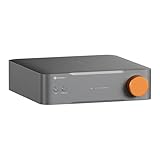
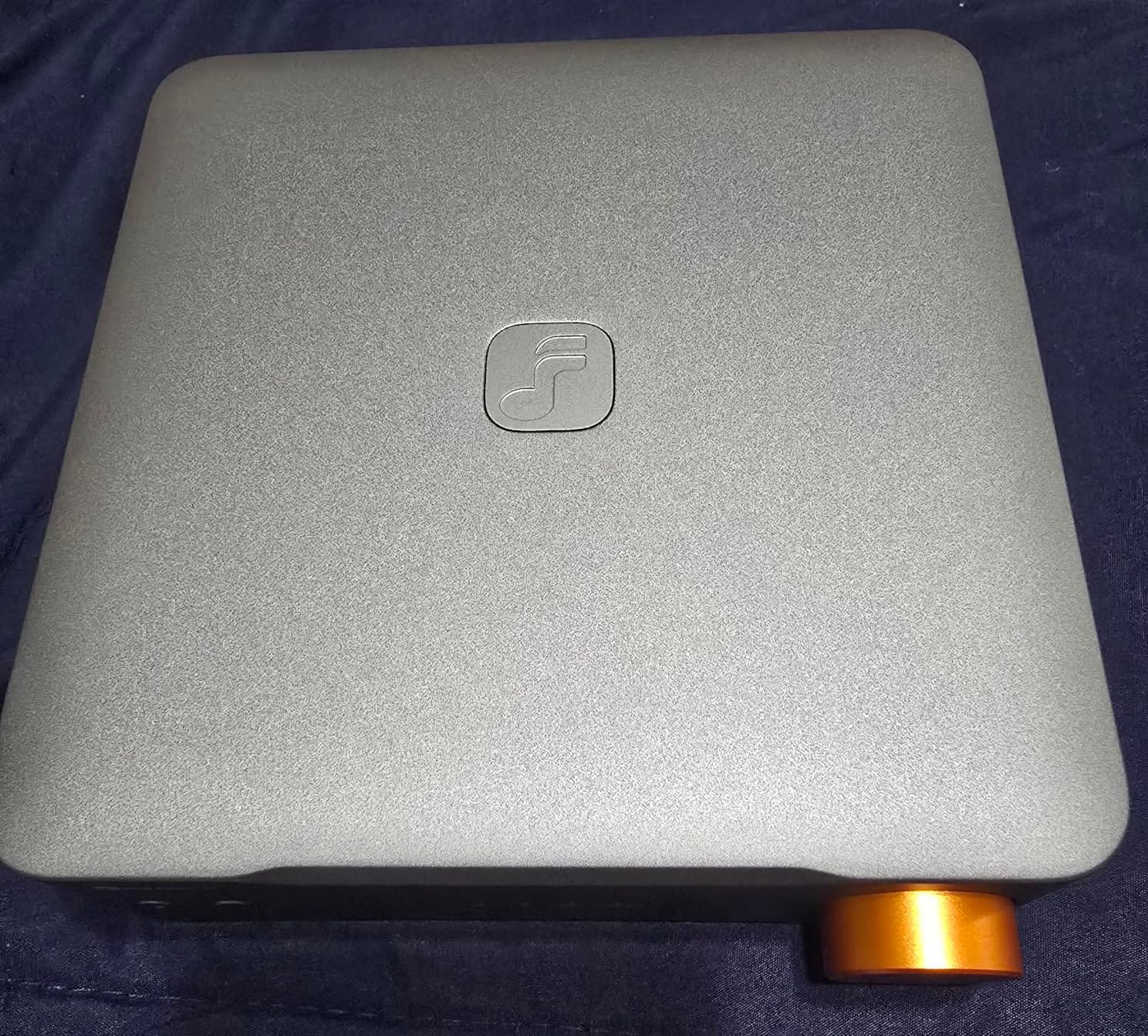
The Fosi Audio S3 is the hardware bargain of this list. You get balanced XLR output, HDMI eARC input, a dedicated subwoofer output, a 12V trigger with overcurrent and overvoltage protection, AirPlay 2, Google Cast, Roon Ready and a 10-band EQ, on a 6.81 inch square chassis weighing 0.87 kg. Almost nothing else in this roundup assembles that much connectivity.
The DAC measures well. The AK4493SEQ handles PCM up to 32-bit/768 kHz over LAN with THD+N at or below 0.00018% and a signal-to-noise ratio of at least 120dB, and SINAD measures 117dB at 2V. The analog and digital sections are isolated from each other with Japan ELNA capacitors and a low-noise LDO, and dual op-amp differential amplification drives the XLR outputs.
For streaming it supports AirPlay 2, Spotify Connect, Tidal Connect, Qobuz Connect and Google Cast, plus Roon Ready and DLNA over Wi-Fi 6, Bluetooth 5.3 and Gigabit LAN. Owners report stable, seamless streaming across the main services and say setup takes only a few minutes.
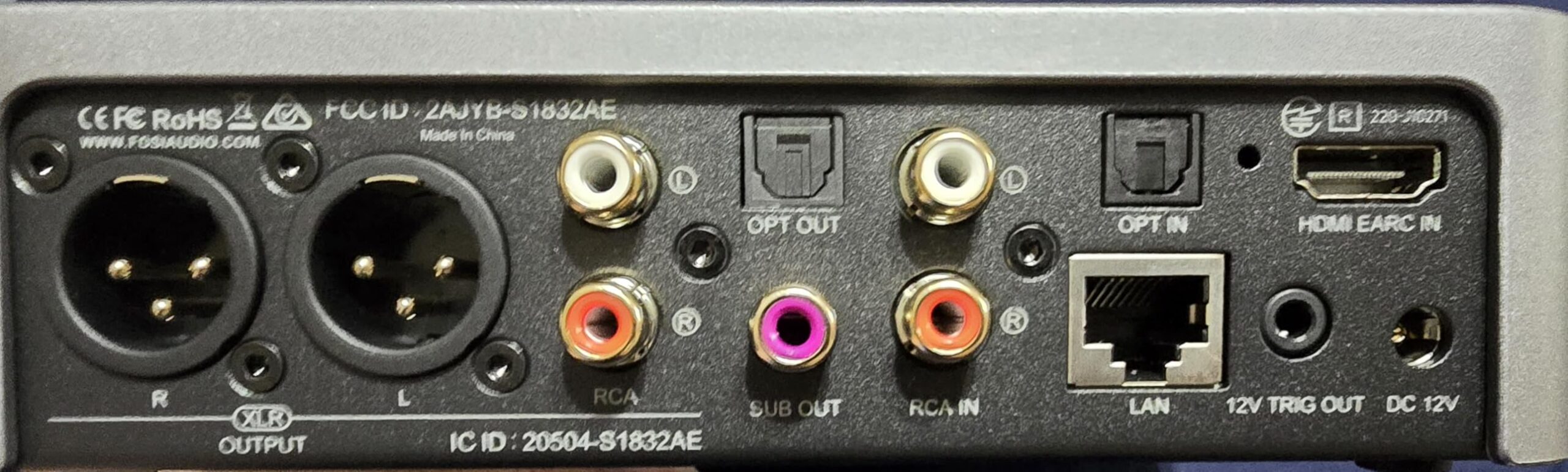
The catch is software, and it is a significant catch. Reviewers consistently say the app is bare-bones and lags well behind the WiiM platform in capability and polish. There is no native Amazon Music or Alexa Cast. The subwoofer output has no crossover control, which is a strange omission for a device aimed at 2.1 setups. And the onboard DAC is described as on the harsh side for some listeners, so the digital out or the XLR into a warmer downstream stage may be the way to go.
Where the connectivity pays off
HDMI eARC plus subwoofer output plus 12V trigger makes this a genuinely useful centre-channel partner for a home theatre setup that also streams music. Very few music streamers bother with a trigger output, and the S3 does it with protection circuitry built in.
XLR at this level is unusual and useful for anyone running a power amplifier with balanced input. It is also the single best reason to buy it if you are pairing a streamer with a separate amp rather than powered speakers.
Where it falls short
Bluetooth is receive only with no transmit mode and no LDAC, and there is no USB-C output or 3.5mm headphone jack, which limits compatibility with cheaper speakers. Some advertised features also require firmware updates to unlock, and those updates are reported to be rough around the edges.
Buy it for the connections, not for the app. If you want the most polished software experience, this is the wrong box.
7. Eversolo DMP-A6 Gen 2 Review: Format Support and Screen Control
EVERSOLO DMP-A6 Gen 2 Hi-Fi Music Streamer, Wireless Digital Music Player, DAC, Music Service&Streaming Qobuz, Tidal&More, DSD512, EOS Audio Engineer, Native Multi-Channel DSD, Exclusive App
DSD512 stereo and multichannel with MQA
6-inch colour LCD touchscreen on Android 11
Linear power supply with noise below 40uV
Dual XLR and RCA output sets
Pros
- DSD512 and native multichannel DSD with the EOS engine
- 6-inch touchscreen plus a dedicated app gives complete control
- Two sets of XLR and RCA outputs that can run simultaneously
- HDMI ARC and 12V trigger for home theatre integration
- Upgraded linear power supply over the original model
Cons
- Lowest rating in this group at 4.1 with 13 percent one-star reviews
- Firmware and app updates can be disruptive and features stay in flux
- Digital inputs can disable digital outputs in some configurations
- 6-inch touchscreen is large and expensive for a shelf component
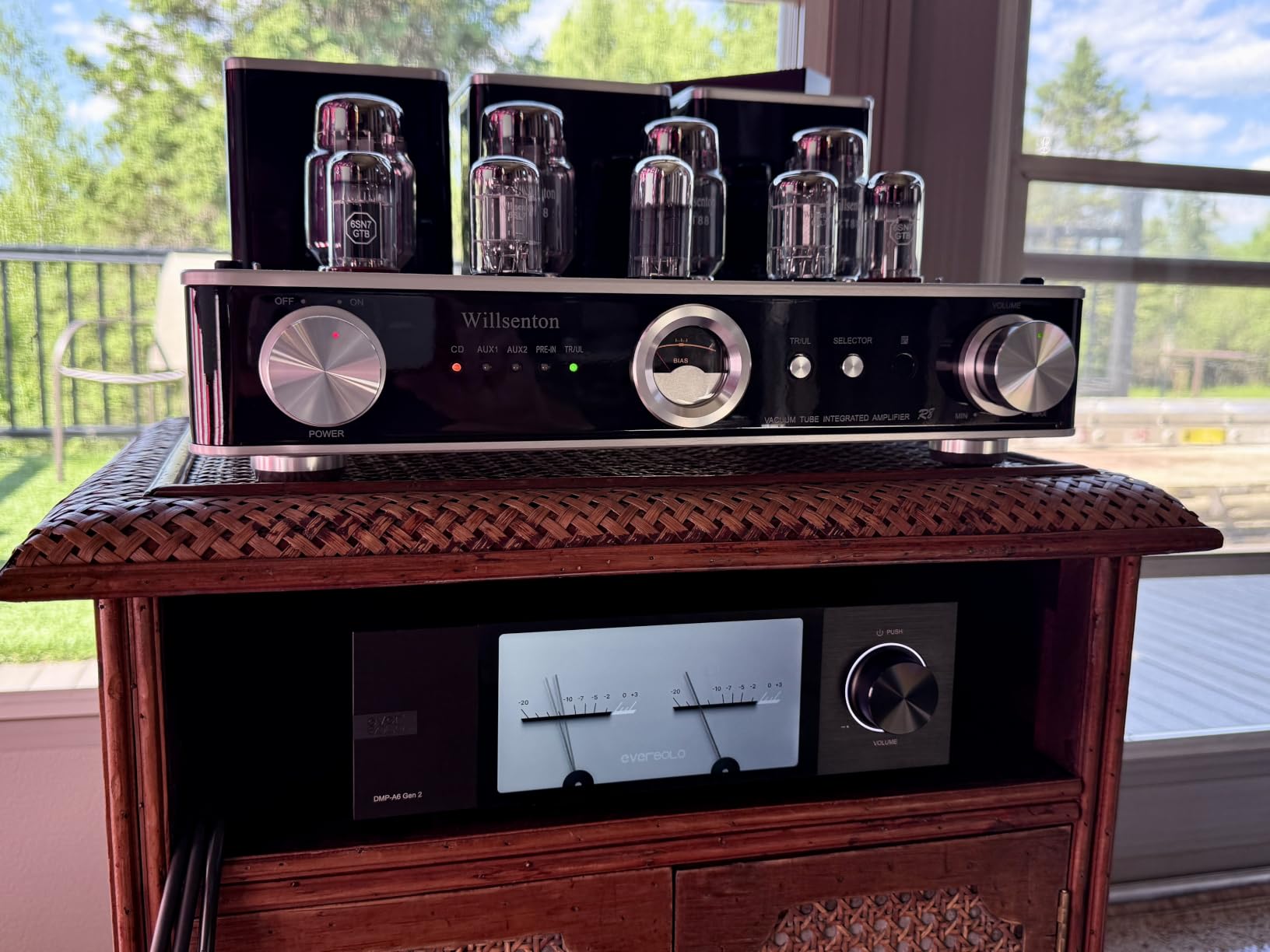
The DMP-A6 Gen 2 is the most capable format decoder in this roundup, and if you are chasing native multichannel DSD at DSD512 it is the only box here that does it. The EOS Audio Engine handles master-quality decoding including MQA, and a personalized music library with automatic metadata categorisation and search sits on top.
Control is unusually complete. It runs Android 11 with a 6-inch colour LCD touchscreen and there is a dedicated iOS and Android app, plus mechanical knob control. It also supports Spotify Connect Lossless, Tidal Connect, Qobuz, Squeeze Connect, DLNA and Roon Ready, with customised streaming apps for TIDAL, Qobuz, HighResAudio, Presto Music and Radio Paradise.
The connections are extensive. Digital inputs cover coaxial, optical, USB Type-C and HD Bluetooth. Digital outputs cover HDMI, USB, optical and coaxial, and there are two sets of analog XLR and RCA outputs that can run simultaneously. HDMI ARC input and a 12V trigger output make home theatre integration straightforward.
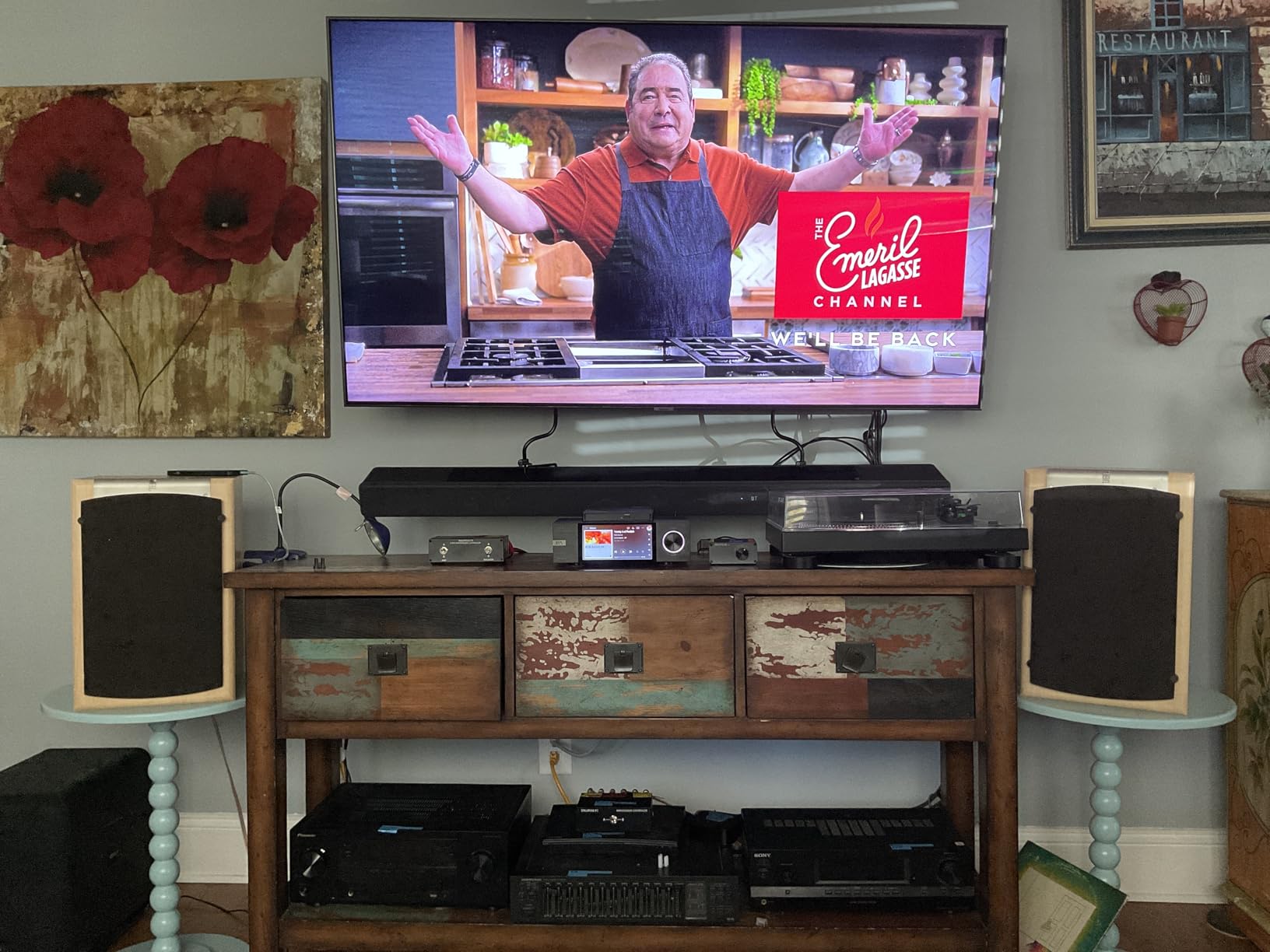
It is also the lowest rated product here at 4.1 across 154 reviews, with 13 percent one-star feedback, and the reason is polish rather than sound. Firmware and app updates can be disruptive and some features remain in flux. Digital inputs can disable the digital outputs in certain configurations, which is an awkward combination in a box this feature-rich.
The upgraded linear power supply, with noise below 40uV, is a real improvement over the original DMP-A6 and the kind of quiet upgrade that matters for a transport. At 2 kg it is a serious object, and the 6-inch screen is a large thing to live with on a shelf.
Whether DSD512 changes anything for a Spotify listener
For Spotify, almost certainly not. Spotify Connect Lossless is the relevant path here and it is well supported. Everything above lossless on this device applies to your local library, not to the streaming service, so buy the format capability for local files rather than as a Spotify upgrade.
Where it earns its place is control. The combination of a large touchscreen, a mechanical knob and a dedicated app is closer to phone-free control than anything except the WiiM Ultra, and unlike the Ultra you also get a 12V trigger and dual balanced output sets.
Where it falls short
The interface complexity is the main complaint, and reviewers frame it as a box built for more than streaming actually requires. Software stability is the second, and in a category where the app is your only permanent connection to the music, that is not a minor issue.
If you listen predominantly to local high-resolution files or run a home theatre alongside your music system, the capability justifies the complexity. If you stream Spotify and nothing else, it is more machine than you need.
8. Sonos Port Review: The Pick for an Existing Sonos House
Sonos Port – The Versatile Streaming Component for Your Stereo Or Receiver
RCA line out and HDMI eARC
AirPlay 2 with Ethernet and Wi-Fi
12V trigger auto-power for amplifiers
Line-in for phone or other sources
Pros
- Mature and stable Sonos app that integrates with the wider system
- Very easy to add streaming to an existing stereo or receiver
- AirPlay 2 plus line-in gives flexible source options
- 12V trigger auto-power is a useful touch with amplifiers
Cons
- No hi-res streaming beyond lossless
- No USB coaxial or optical digital input for a DAC chain
- 13 percent one-star reviews reflect ecosystem lock-in frustration
- Costs more than most dedicated streamers with fewer connections
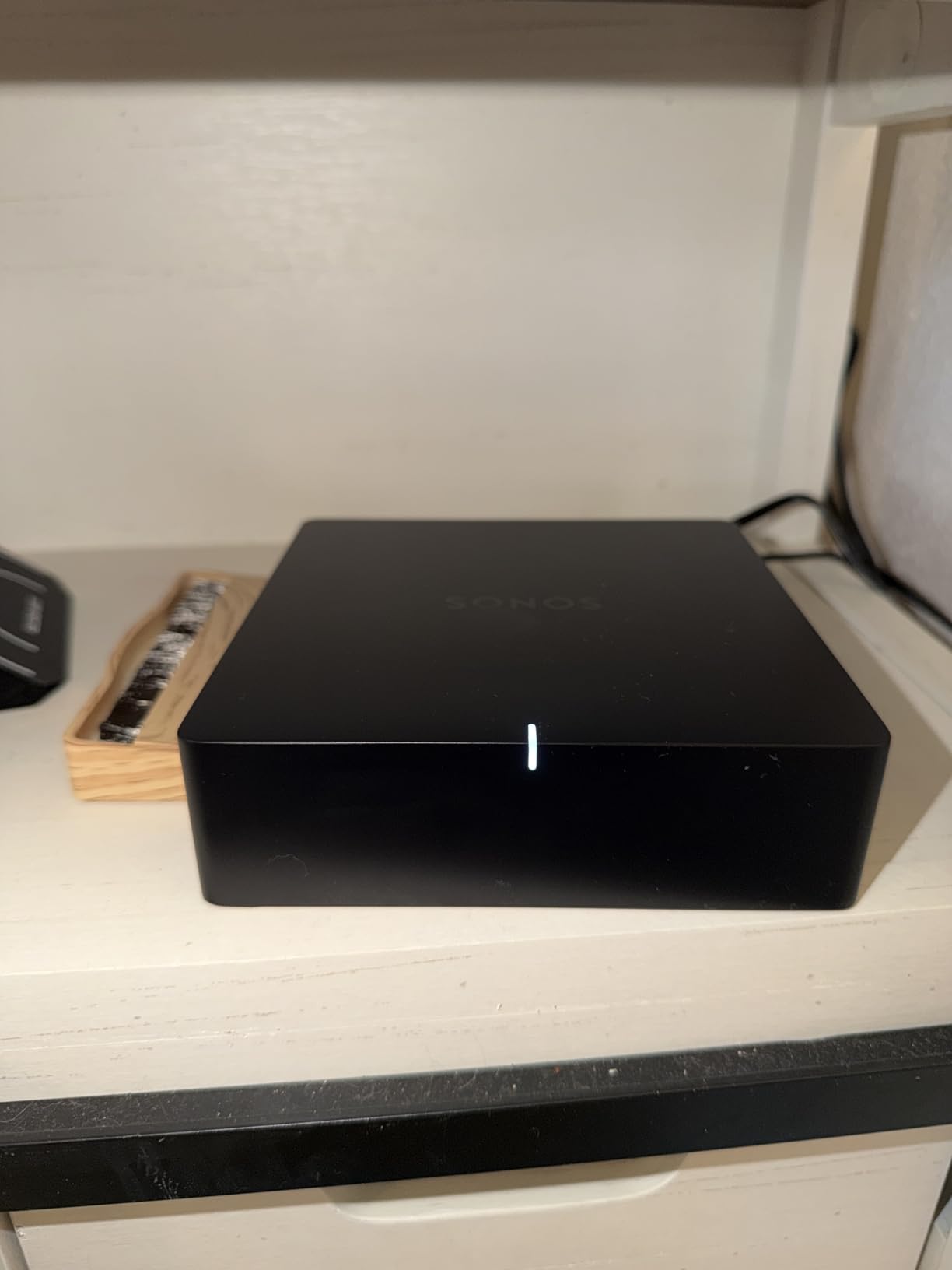
The Sonos Port exists to put a good stereo into a Sonos house, and inside that brief it works well. The app is mature and stable, it groups with Sonos speakers in other rooms, and it handles vinyl and CD playback out to those speakers as well. AirPlay 2 is supported, and Ethernet is there if your Wi-Fi is not.
The physical details are sensible for the job. It connects to an existing stereo or receiver through RCA line out or HDMI eARC, has a line-in for a phone or other source, includes a 12V trigger for auto-power on connected amplifiers, and works with Siri voice control. It is a compact 5.43 inch square unit weighing one pound with a one-year manufacturer warranty.
It is the simplest setup in this roundup. If you have an amplifier with a 12V trigger and RCA inputs, the Port does the job in a few minutes, and nobody in the house has to learn anything new because they all already use the Sonos app.
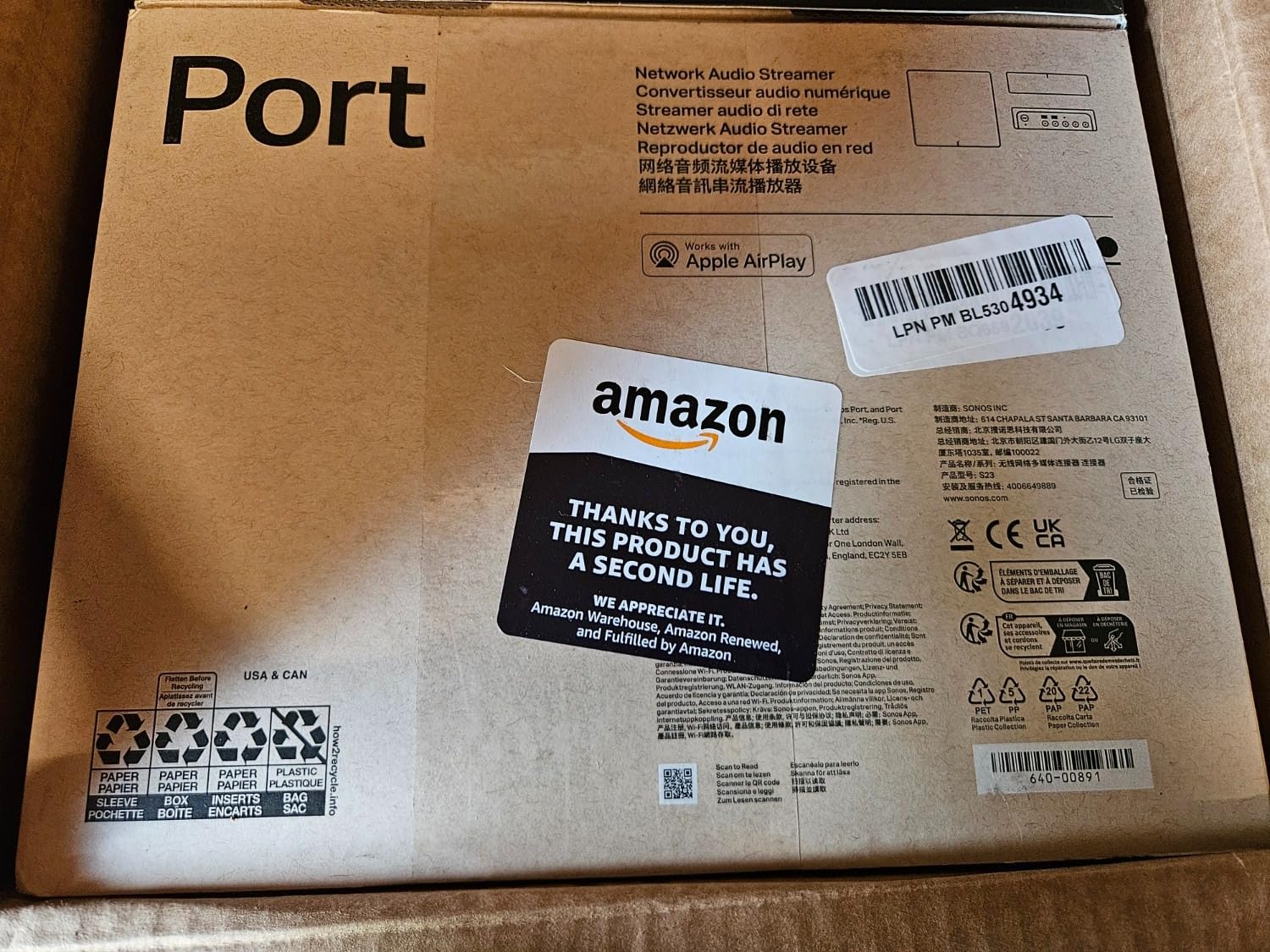
Now the limitations, and for a category roundup they are substantial. There is no hi-res streaming over Spotify Connect or AirPlay 2 beyond lossless. There is no USB, coaxial or optical digital input, so you cannot build a digital chain or feed an external DAC at all. That single point rules it out for anyone whose interest in a streamer is an upgrade path to better conversion.
It is also priced well above most dedicated streamers while offering fewer connections, and 13 percent of reviews are one-star, reflecting frustration at being inside the Sonos ecosystem rather than outside it. Owns are satisfied users and critics are people who felt boxed in, and the split is that stark.
When a streamer beats a built-in receiver app
A r/spotify user with a Yamaha receiver reports that its built-in Spotify sounds a lot cleaner than streaming from a phone or through a smart TV. That is the honest case for a dedicated box: the receiver is doing the job, but a streamer can do it with a better signal path and better control.
Against that, if your receiver already has reliable Spotify Connect and you are happy with the result, a streamer is optional. That is why the Port, with its clean RCA and trigger handling, makes more sense than another receiver.
Where it falls short
No digital output of any kind is the headline. No USB, no coax, no optical. Anyone planning to add a separate DAC later cannot use this.
Spotify quality is capped at lossless rather than hi-res, and the ecosystem complaints in the one-star reviews are real for anyone who wants to move away from Sonos later. If your house is not already Sonos, a dedicated streamer offers more control and more connectivity for less money.
9. Eversolo T8 Review: A Digital Transport for Systems That Own a DAC
Eversolo T8 Music Streamer Transport with Remote | Dual Femtosecond Clocks, Fully Electrical Isolation Output & Stream Tidal, Qobuz and More | IIS, Coaxial, AES/EBU, USB Audio, and Optical Output
No DAC stage at all, digital outputs only
Dual femtosecond clocks at 49.1520 MHz
Fully electrically isolated IIS AES/EBU USB and optical
6-inch touch display with VU meters
Pros
- Pure digital transport that pairs with any reference DAC without compromise
- Dual femtosecond clocks and isolated outputs target minimal jitter and ground loops
- Balanced AES/EBU output over XLR enables long digital runs
- Broad protocol support including Roon Ready and Qobuz Connect
- All aluminium CNC chassis with 6-inch touch display
- evotune calibration and 10-band parametric EQ
Cons
- Requires a separate DAC and is not a stand-alone streamer
- SFP fiber modules are a separate purchase and SFP+ is not supported
- Only 69 reviews so the long-term picture is thin
- 4.5 kg chassis and 6-inch screen make it large
The Eversolo T8 is the only device here with no DAC stage whatsoever, and that is a deliberate design choice rather than a limitation for the right buyer. Every output is digital: IIS with eight pinout configurations, coaxial, AES/EBU over balanced XLR, USB Audio and optical. The clocking is dual ultra-high-precision femtosecond oscillators using AS318-B crystals at 49.1520 MHz, and all outputs are fully electrically isolated.
The practical argument is ground loops and cable runs. AES/EBU over balanced XLR lets you take a long digital run from a listening position back to a rack without ground noise or interference, and the isolation on every output is the point of the design. IIS and USB Audio support DSD512 Native and PCM 768kHz/32-bit, while coaxial, AES/EBU and optical handle PCM 192kHz/24-bit and DoP64.
Networking is Wi-Fi 6, Gigabit LAN and an electrically isolated SFP fiber module. There is a 6-inch display with full touch controls and real-time VU meters, and you can control it by touchscreen, remote or app on iOS, iPadOS, Android and macOS. Streaming covers Spotify Connect Lossless, Tidal Connect, Qobuz Connect and Roon Ready, with evotune Professional Acoustic Calibration and a 10-band parametric EQ.
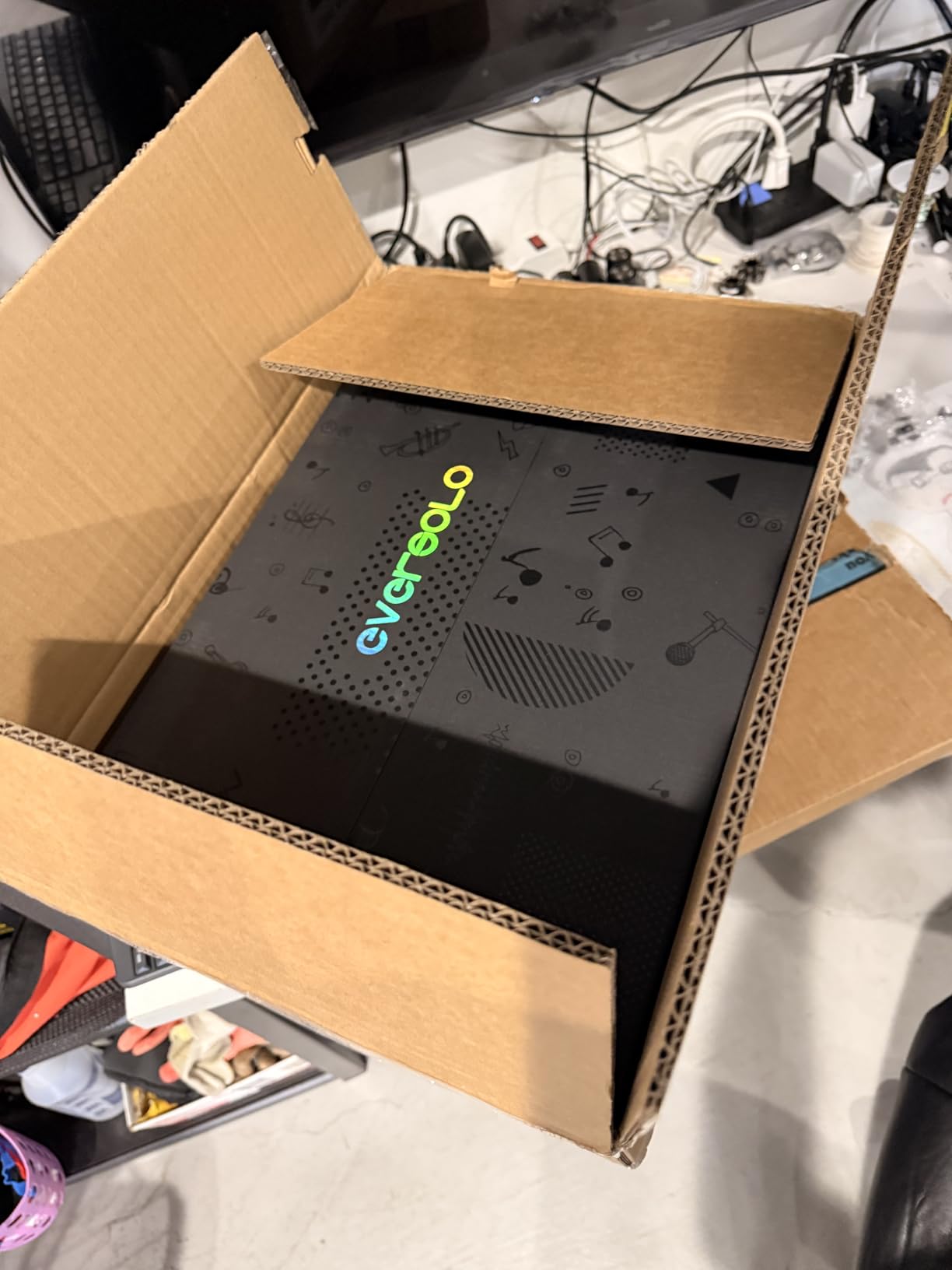
This is not a device for a first streaming component. If you do not own a DAC, it cannot play a single note, and adding one changes the maths entirely. The SFP fiber modules are a separate purchase too, and SFP+ is not supported.
The evidence base is also thin at 69 reviews. Ratings are strongly positive, with 76 percent five-star, but there is not yet a long-term reliability picture across firmware generations. At 4.5 kg with a 6-inch screen, it is also a large, heavy component.
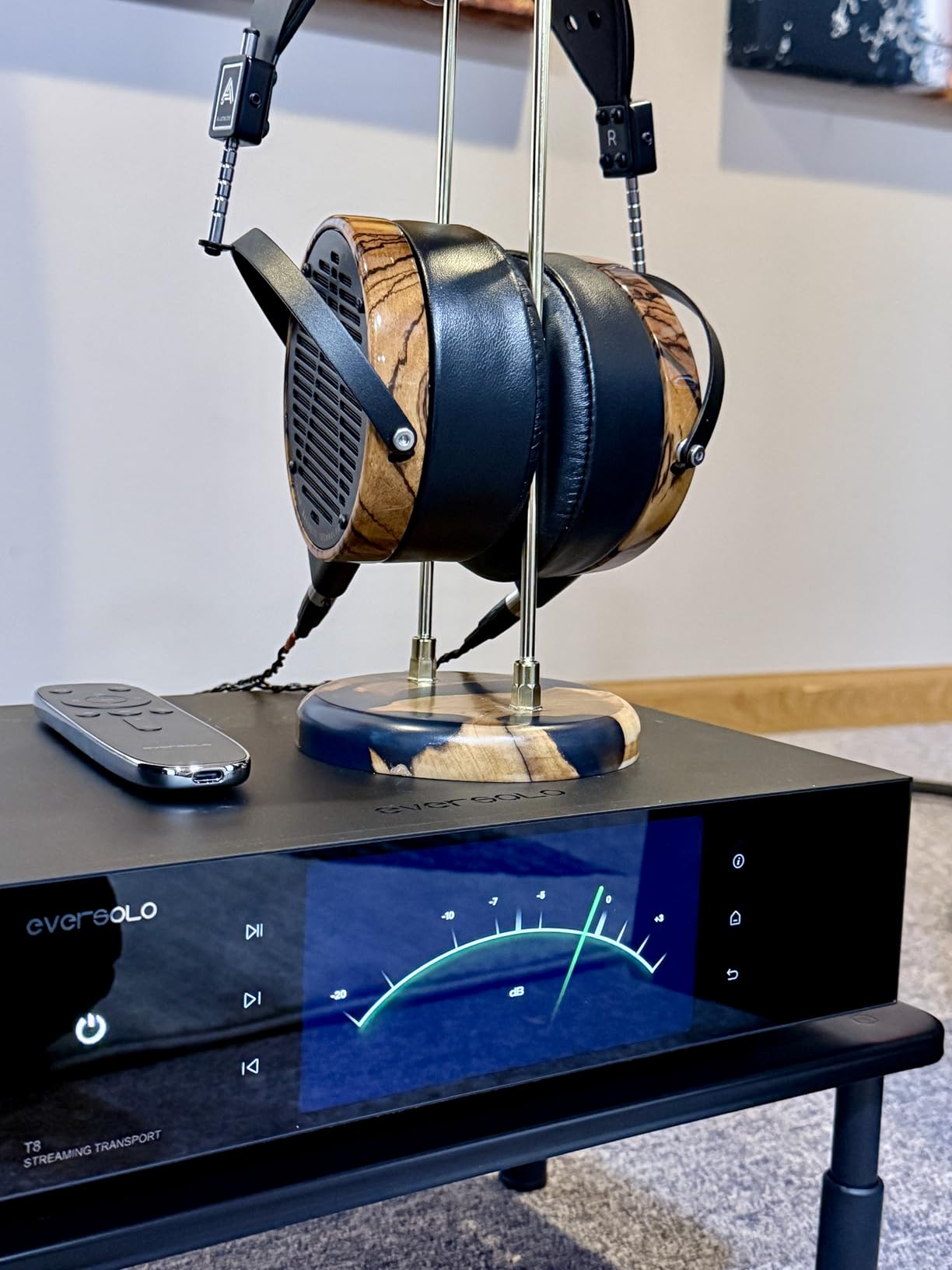
When a transport beats a streamer with a DAC
When your DAC is the better component. Owners in our reading consistently make that point in one form or another, and the usual practical case is a chain where the streamer sits far from the amplifier. Members on the Audiogon thread debating the WiiM Ultra against the Bluesound Node Nano settled on similar reasoning, and one reported that a separate SMSL DO100 Pro made a significant difference in his system.
The clocking and isolation also remove a variable. Jitter is the small, regular timing error that creeps into digital audio through imperfect clocking, and a dedicated transport with dual femtosecond clocks and isolated outputs reduces it to a level that is not audibly meaningful in most rooms, but it is a real engineering advantage.
Where it falls short
No analog output of any kind, and no headphone jack, so it cannot drive anything by itself. There are no analog inputs for a turntable, and no HDMI ARC, so it will not slot into a home theatre setup either.
If your system has an amplifier with a good built-in or a mid-priced DAC, put your money into the DAC instead. This box only makes sense above that line.
10. Grace Digital Grace Link Review: The Best Phone-Free Spotify Box
Grace Link Internet Radio Tuner + SiriusXM, Pandora, Spotify Connect, with Chromecast Built-in: Stream Hi-Fi Music to Your Stereo System (no Built-in Speaker)
2.8-inch colour LCD with front panel controls
IR remote plus smartphone app
Spotify Connect, Pandora, Amazon Music and SiriusXM
Coaxial digital and analog outputs
Pros
- Works without a phone
- with front panel and IR remote control
- Replaces the discontinued Logitech Squeezebox Radio well
- 100000 internet radio stations with 100 presets
- Coax digital out lets it feed an external DAC
- Bluetooth 5.0 transmit for headphones
Cons
- Lowest average rating here at 4.0 across 207 reviews
- An involuntary software update has rendered some units non-functional
- SiriusXM channels cut out mid-playback and only recover by switching
- Audio can stop and return to the main menu without explanation
- Presets only selectable from the device itself and display settings are over-complicated
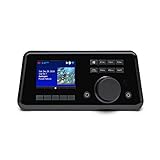
The Grace Link answers the app-dependence question more directly than anything else in this roundup. It has a 2.8-inch colour LCD, front panel controls and an IR remote, and it can play Spotify from its own interface with no phone involved. If the specific thing you are trying to escape is reaching for iOS every time a track ends, this is the box built for that.
It is fundamentally an internet radio tuner that also streams, and that is where its value sits. It supports 100,000 internet radio stations with 100 presets, and the built-in apps cover Spotify Connect, Pandora, Amazon Music HD, Prime and Unlimited, iHeartRadio, Radio.com, BBC, NPR, Sleep Sounds, Calm Radio, Shoutcast, Live365, Podcast and SiriusXM. Chromecast is built in for casting from a phone, tablet or laptop.
It handles hi-res files up to 24-bit/192 kHz, has analog and coaxial digital outputs plus analog inputs, a 5-band equalizer, UPnP and DLNA media server playback, Bluetooth 5.0 with transmit capability for headphones, and both RJ45 Ethernet and dual-band Wi-Fi. A one-year parts and labour warranty is included.
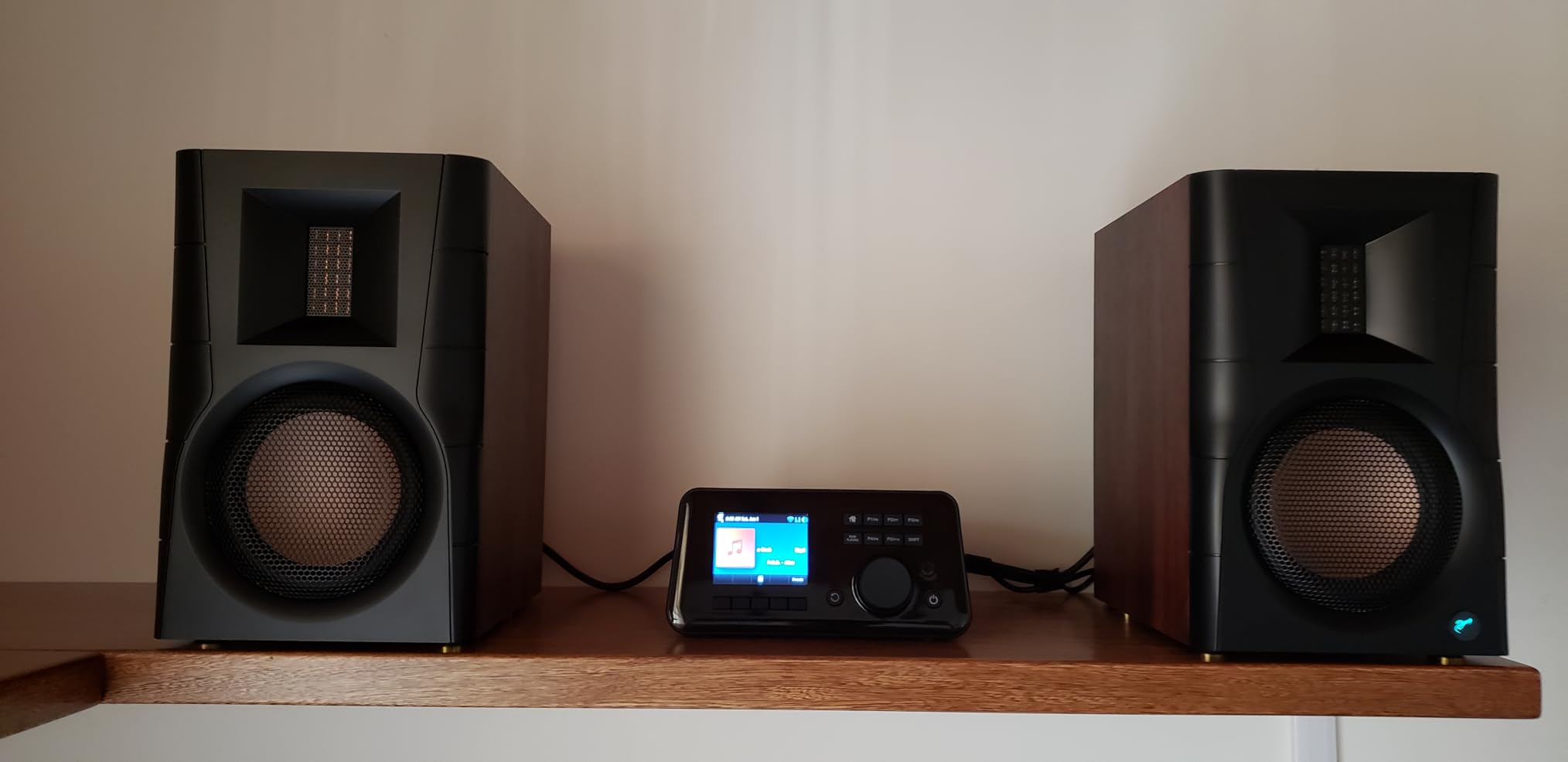
Reliability is the issue, and it is not a small one. An involuntary software update has rendered some units non-functional with unhelpful support. SiriusXM channels can cut out mid-playback and only recover by switching channels, and audio sometimes stops and returns to the main menu with no explanation. It carries the lowest average rating here at 4.0 across 207 reviews.
There are usability quirks too. Presets can only be selected from the device itself rather than from the remote, and the display brightness settings are over-complicated with a very bright power LED. Those are irritating rather than deal-breaking, but they are real.
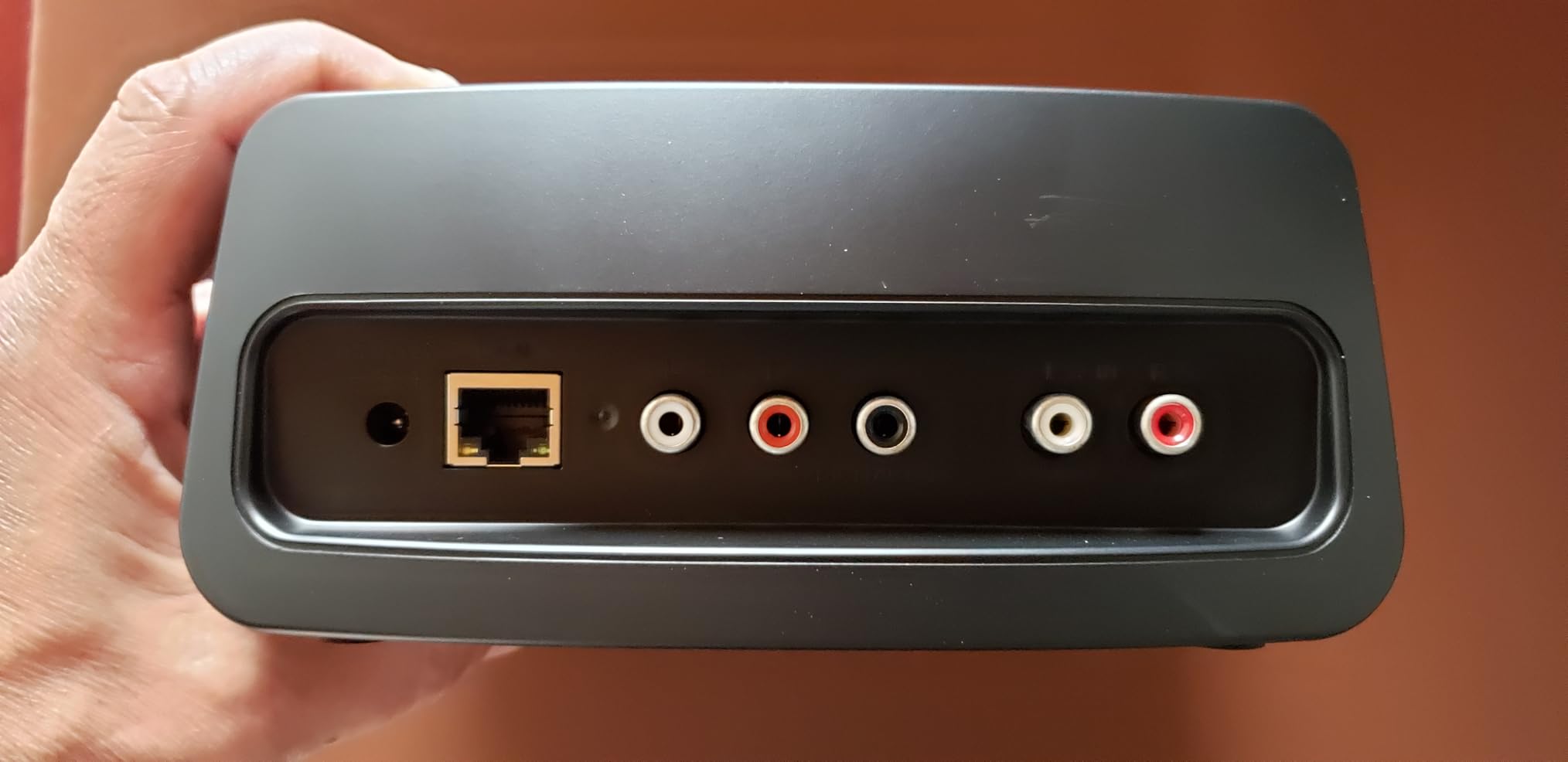
Why the analog inputs matter in a hi-fi system
Analog inputs let you feed a turntable or CD player into the Grace Link and re-stream it around the home, which is a genuinely useful capability in a house with more than one room. The Bluetooth transmit function sending audio to headphones is a nice extra for a bedside system.
The coaxial output also means it can feed an external DAC, so it is not locked into its own conversion. For a secondary or office system where the goal is background music with physical controls, it fits well.
Where it falls short
The Spotify experience is not the strength here. Spotify Connect works, but this is not a streamer built around the service, and the platform support beyond Spotify, Pandora, Amazon Music and radio is thinner than the WiiM platform. The forced-update failures are the single biggest reason to hesitate.
Buy it if internet radio and phone-free control are your priorities. Buy something else if Spotify fidelity and a polished app are.
How We Picked These Streamers
Every box here has Spotify Connect as a non-negotiable starting point, because a streamer that cannot do it is not a Spotify streamer. From there we weighted four things heavily: the app, because it is your permanent connection to the music; the non-app control options, because reducing phone dependence was a repeated theme; the firmware and support record, because a streamer that drops streams after two months is worse than one that never had the feature; and the output flexibility, because that determines whether it works with what you already own.
Sound quality was assessed last and deliberately so. At this tier the difference between boxes is far smaller than the difference between a streamer and phone casting, and the community consensus is that you should not pay a large premium for the last fraction of a percent.
One practical note. Several experienced members on the Audiogon thread recommend buying both candidates from a retailer with free returns and keeping whichever suits the system better, rather than agonising over specifications. It is a sound strategy in a category where measured performance and perceived quality diverge as often as they align.
Buying Guide: What Actually Matters for Spotify
1. The Spotify Connect path. This is the single most important criterion. Connect means the streamer pulls the stream itself and your phone is only a remote, so the audio never passes through the phone’s encoder. All ten products here support it. Cast audio from the Spotify app to a TV or speaker and you are back to compression, and the difference is audible enough that owners notice it immediately.
2. How much you care about the phone. This is where the picks genuinely separate. The WiiM Ultra has a 3.5-inch touchscreen and a bundled voice remote. The Grace Link has a 2.8-inch display, front panel controls and an IR remote. The DMP-A6 Gen 2 has a 6-inch screen. Everything else is app-first, with the Bluesound Node Nano offering only quick-touch presets and IR learning. A recurring owner complaint across the category is that IR remotes frequently control local files and internet radio but not Spotify, so check that specific path rather than assuming it works.
3. AirPlay 2, if your house uses Apple devices. Eight of these ten support AirPlay 2. The WiiM Ultra does not and cannot act as an AirPlay receiver, which owners cite as its most-cited limitation and the reason some buyers step down to the WiiM Pro. Note also that AirPlay is receive-only on most models, so you generally cannot transmit from the streamer to AirPlay speakers elsewhere.
4. Roon, and the Spotify conflict. Eight products here are Roon Ready. The caveat that matters is raised repeatedly in owner forums: Roon subscribes to services through its own layer, and a Roon user has reported that Spotify and Apple Music did not work as expected within Roon. This is a genuine potential deal-breaker for a subscriber and is worth testing during any return window rather than taking on faith.
5. Do you need an external DAC? If you own one, prioritise a bit-perfect digital output and skip the internal converter. The WiiM Pro’s optical and coax outputs are explicitly bit-perfect, the Bluesound Node Nano offers optical, coax and USB, and the Eversolo T8 has no DAC at all. The Grace Link has coaxial only, and the Sonos Port has no digital output whatsoever, which rules it out for that use case.
6. A plain-language note on jitter. Jitter is a small timing error in the digital signal caused by imperfect clocking. It is measurable in lab conditions and largely theoretical in most listening rooms, which is why you will not hear a difference between streamers on this basis alone. It matters when you are running long digital cables, using a shared ground, or simply want one fewer thing to worry about. The units with dedicated clocking, like the T8’s dual femtosecond oscillators, address it properly.
7. Streamer or AV receiver? If your receiver already has reliable Spotify Connect and you like the sound, a streamer is optional. Owners frequently report that a receiver’s built-in Spotify sounds cleaner than phone casting, so the upgrade from casting is already achieved. A streamer earns its place when you want a better signal path, physical controls, a better DAC, or the ability to leave the phone in another room.
8. Firmware and dropped streams. A recurring diagnostic story in owner threads is that stream drops are caused by network topology rather than the streamer. One Bluesound owner describes roughly three weeks of engineering support diagnosing a persistent fault that turned out to be a LAN access point placement problem. If your streams cut out, try Ethernet before you return the unit, and check whether an extender or mesh node sits between the streamer and your router.
9. Support quality. Manufacturers differ enormously here, and owners weight it heavily. Reported experiences range from knowledgeable and quick responses through to an involuntary firmware update that bricked devices with unhelpful support. Check the warranty length while you are comparing: twelve months on the WiiM Mini and Pro, one year on the Bluesound units, the Sonos Port and the Grace Link, and twenty-four months on the Fosi Audio S3.
Frequently Asked Questions
What is the best device for streaming Spotify?
For most people the WiiM Ultra is the best device for streaming Spotify into a hi-fi system, because it pulls the stream itself over Spotify Connect, drives a measured ESS ES9038Q2M DAC, and includes a 3.5-inch touchscreen and voice remote so playback does not require a phone. The WiiM Mini does the core job for far less money, and the WiiM Pro is the pick if you own an external DAC or use Apple devices.
What kHz does Spotify stream at?
Spotify streams lossy audio at up to 320kbps on its highest tier, and offers a 6kHz upsampling option for catalogue mastered to that rate. That is the ceiling of the service itself. No streamer changes the incoming signal, so a DAC rated at 32-bit/768kHz is not receiving anything close to that from Spotify. Higher-rated DACs matter for your local library, not for the streaming service.
Is the Bluesound Node a good streamer?
Yes. The Bluesound Node Nano is a good streamer, and owners frequently compare it favourably against more expensive competitors on sound. The reason to choose it is BluOS, which is widely regarded as the most polished app in this category, plus AirPlay 2 and seamless multiroom grouping. The trade-offs are some reported Wi-Fi dropouts needing Ethernet, occasional iOS app sluggishness, and poor reported Qobuz integration.
Do network streamers actually improve Spotify sound quality?
They improve it compared with casting from a phone or a TV, because the streamer pulls the stream itself over Spotify Connect instead of re-encoding it. They do not improve the source material, which remains a lossy Spotify stream. Expect a clear improvement over Bluetooth casting and a modest one over a good AV receiver that already has stable Spotify Connect.
Can you control Spotify without a phone app?
On some devices, yes, and this is a common reason to buy a streamer. The WiiM Ultra has a 3.5-inch touchscreen and a bundled voice remote, the Grace Link has a 2.8-inch display with front panel controls and an IR remote, and the Eversolo DMP-A6 Gen 2 has a 6-inch touchscreen. Most others are app-only, and owners frequently report that IR remotes control local files and internet radio but not Spotify.
Is a network streamer better than an AV receiver for Spotify?
A streamer is better when you want a cleaner signal path, physical controls, a better internal DAC, or the freedom to leave your phone in another room. It is optional when your receiver already has reliable Spotify Connect and you are happy with the result. Owners commonly report that a receiver’s built-in Spotify sounds much cleaner than casting from a phone or smart TV, so the big upgrade is from casting rather than from the receiver.
Final Verdict: Which Network Streamer Should You Buy?
The WiiM Ultra is our best network streamer for Spotify in 2026, and it wins on the combination that matters most for this particular service: a clean Spotify Connect path, a measured ESS ES9038Q2M DAC, Roon Ready with free room correction, and a working front-panel route to playback so you are not chained to your phone. The only reason not to buy it is an all-Apple household, because it has no AirPlay 2.
Buy the WiiM Pro if you own an external DAC or need AirPlay 2 and Google Cast. Buy the WiiM Mini if you just want a reliable, tiny box that ends phone casting. Buy the Bluesound Node Nano if BluOS multiroom is already how your house works, and the Eversolo T8 only if you have a serious DAC waiting for a pure digital transport.
Whichever you choose, wire it up with Ethernet if you can, leave yourself the return window to test Spotify and your other services properly, and set the standby mode to something network-friendly before you judge it.