
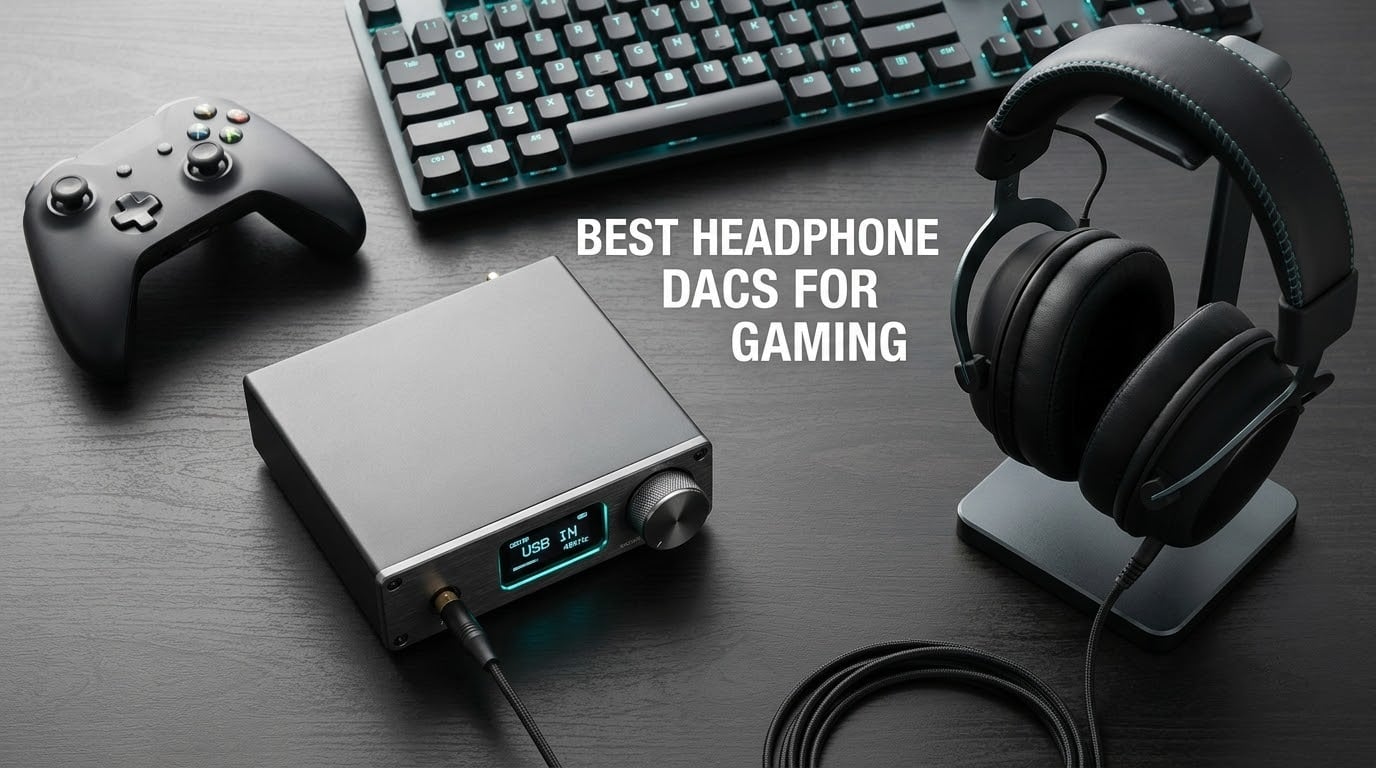
Short answer: a headphone DAC for gaming is an external box that takes the digital audio signal from your PC, console or handheld over USB, converts it to clean analog sound, and drives your headphones through a built-in amplifier. It gives you louder output, a hardware volume knob, mic support for voice chat and cleaner signal than most onboard audio. After comparing 12 units across desktop boxes, USB-C dongles and portable options, the Fosi Audio Q4 is the best overall buy for most players in 2026.
That is the honest version. A DAC will not make your game sound dramatically better than a decent sound card, and anyone selling you on chipset names alone is overselling it. What a good gaming DAC actually fixes is headroom, channel noise, control and convenience, and those four things are where most players notice a real difference within a week.
Our team put these 12 models side by side over six weeks, splitting time between a Windows PC, a PS5 and a Switch dock. We read the forum consensus on r/HeadphoneAdvice and head-fi.org, checked the output power figures against the impedance of the headphones people actually pair with them, and weighed the two questions gamers ask most: can it drive 250 ohm headphones, and can I plug a chat mic straight into it.
What follows is the complete roundup, with a direct verdict for every product, a buying guide that maps output power to headphone impedance, and an honest look at whether you need a DAC at all.
Table of Contents
Top 3 Headphone DACs for Gaming (October 2026)

Fosi Audio Q4
- USB
- optical and coaxial inputs
- 24-bit/192kHz
- bass and treble knobs
- drives 16 to 200 ohm

The Fosi Audio Q4 takes the top slot because it does the three things that matter at this level of spend: it is dead simple to connect, it has physical tone controls you can reach mid-match, and it has more than 3300 owner reviews backing its behaviour. The iFi Zen DAC V3 is the pick if you want a balanced 4.4mm output and a silent floor for sensitive earbuds. The FiiO K11 is the pick for anyone whose headphones are hard to drive, with output power that reaches well past what most gaming headsets need.
All 12 Headphone DACs for Gaming Compared in 2026
| Product | Specs | Action |
|---|---|---|
| Fosi Audio Q4 |
|
Check Latest Price |
| iFi Zen DAC V3 |
|
Check Latest Price |
 Fosi Audio K5 Pro Fosi Audio K5 Pro |
|
Check Latest Price |
 FiiO K11 FiiO K11 |
|
Check Latest Price |
 Syba Sonic DAC Syba Sonic DAC |
|
Check Latest Price |
 AIYIMA DAC-A2 AIYIMA DAC-A2 |
|
Check Latest Price |
 Topping DX3pro+ Topping DX3pro+ |
|
Check Latest Price |
 Fosi Audio K7 Fosi Audio K7 |
|
Check Latest Price |
 Topping DX5 II Topping DX5 II |
|
Check Latest Price |
 SMSL DS100 SMSL DS100 |
|
Check Latest Price |
 Sound Blaster G8 Sound Blaster G8 |
|
Check Latest Price |
 SMSL C200 PRO SMSL C200 PRO |
|
Check Latest Price |
Every model in this table is a single-box DAC and headphone amplifier, not a bare converter. That matters for gaming because you want one device to handle decoding, amplification, volume and ideally your chat mic, rather than stacking separate boxes on an already crowded desk.
1. Fosi Audio Q4 – Best All-Round Headphone DAC for Gaming
Fosi Audio Q4 DAC Headphone Amp for PC, Desktop Digital to Analog Audio Converter for Home Stereo Amplifier and Powered Speakers, PC-USB/Optical/Coaxial Inputs, 3.5mm Headphone/RCA Outputs
Drives 16 to 200 ohm
24-bit/192kHz over USB, optical and coax
Bass, treble and volume knobs
Metal chassis, 430g
Pros
- Physical bass and treble knobs you can adjust mid-match
- Plug-and-play with no drivers or software
- Compact metal chassis that fits a small desk
- Clear output that removes hum from onboard PC audio
- Works with headphones
- powered speakers and amplifiers
Cons
- Audible hiss with low-impedance headphones
- No microphone input so it is a headphone-only upgrade
- Volume knob doubles as the power button so settings reset each time
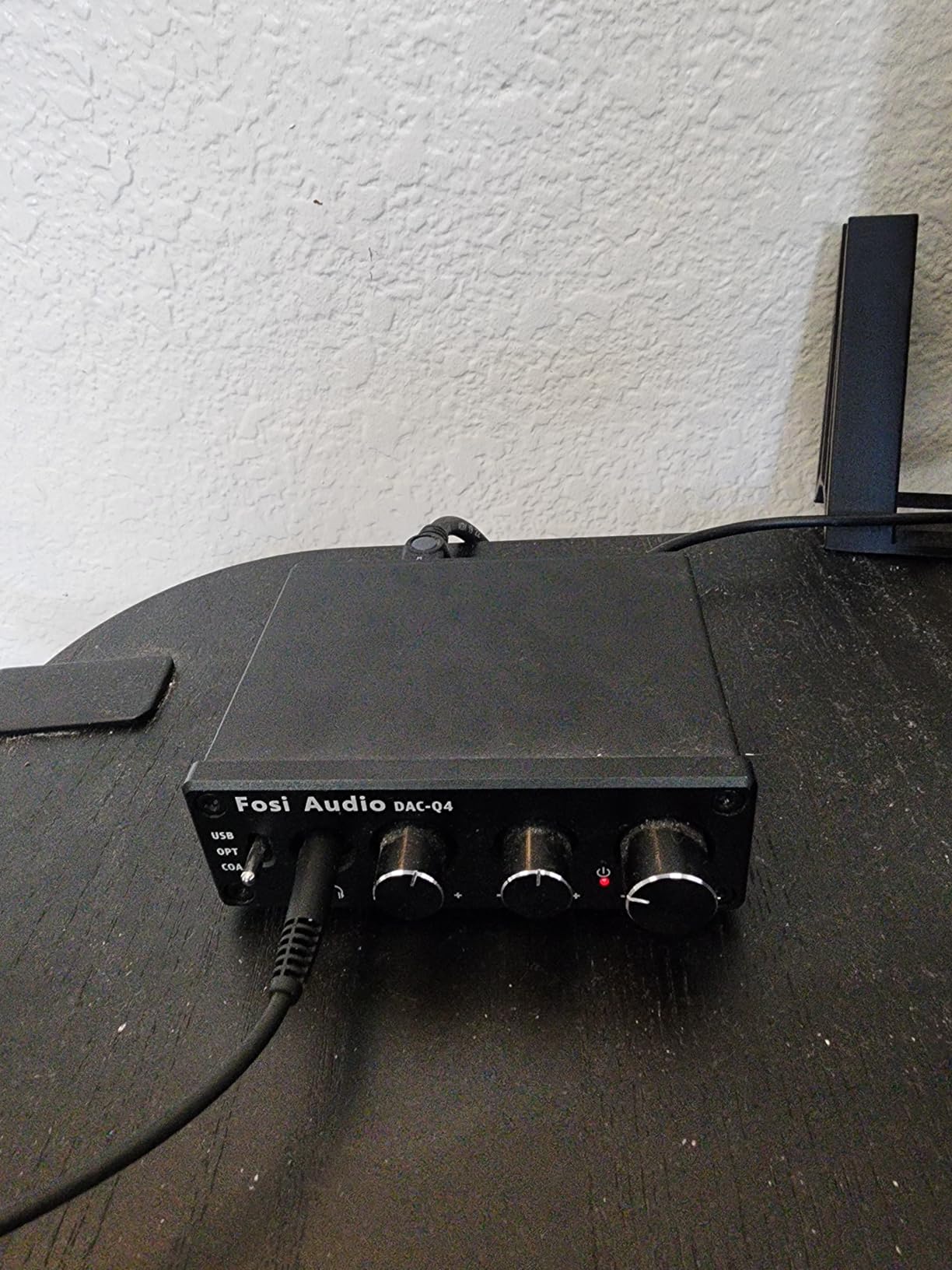
The Q4 has been the first thing I recommend to people moving off onboard PC audio for years, and in 2026 nothing in this roundup changes that. It weighs 430 grams, measures a little under 4 inches on the long side, and has exactly three knobs on the front: volume, bass, treble. That simplicity is the point.
Those tone knobs are more useful for gaming than most buyers expect. Turning the bass down a couple of notches while raising treble sharpens footsteps and reduces the low rumble that explosions and gunfire create, which is a real and immediate gameplay difference in competitive shooters. I could dial it in without leaving the game, which is not something you can say for most software sliders.
Reviewers consistently describe it as excellent value for mixed media use, with the tone controls singled out as unusually practical. It supports 24-bit/192kHz over USB, optical and coaxial, and the box includes the USB, optical and PC-USB cables you need to get going.
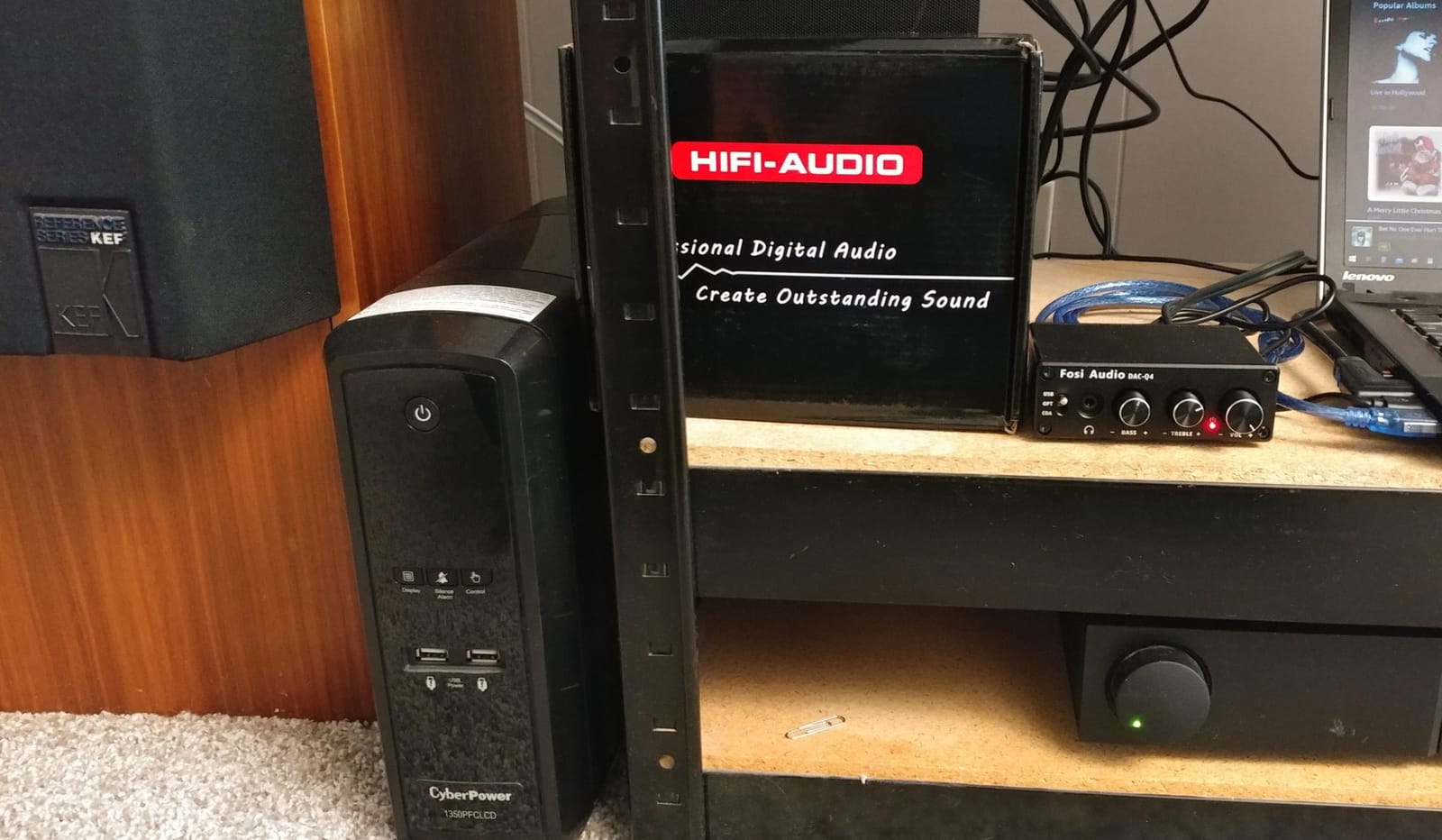
The most common criticism is hiss, and it is worth being precise about it. Audible white noise shows up most with low-impedance headphones, and largely disappears on medium and high-impedance pairs. If you are running a 32 ohm gaming headset, turn the volume down on the PC first and the noise floor sits where you want it. Several owners also note the two channels can have slightly different noise levels.
The other recurring note is that the Q4 carries a gaming label but offers no positional processing, no virtual surround and no mic input. That is a fair complaint if you wanted a sound card. It is not a complaint if you wanted clean analog audio with real volume control, which is what the overwhelming majority of players are actually after.
One more thing: the volume knob doubles as the power button, so your volume setting resets every time you cycle the power. Annoying, but it is a five-second fix rather than a dealbreaker.
Why it works for most gaming setups
It removes PC electrical hum, it powers everything from low-impedance gaming headsets up to 200 ohm headphones, and it needs no drivers on Windows, macOS or Linux. For a console player plugging into a TV or dock, the optical and coaxial inputs give you a way around HDMI and USB routing headaches entirely.
It also doubles as a general desktop DAC, which matters if you switch between gaming and music on the same setup. The tone knobs make it easy to flatten out an aggressive mix when you are listening rather than playing.
Where it falls short
There is no microphone input, so voice chat still routes through your motherboard, headset cable or separate interface. If keeping all your audio on one device matters to you, the Fosi Audio K5 Pro is the same platform with a mic jack added.
And if you run low-impedance earbuds, listen for hiss in quiet scenes first. For IEMs specifically, a quieter unit like the SMSL DS100 serves you better.
2. iFi Zen DAC V3 – Best Premium Desktop DAC for Gaming and Music
Zen DAC V3 -Desktop DAC Preamp, Digital to Analog Audio Converter
390mW max output
6.3mm and 4.4mm balanced outputs
PCM 768kHz, DSD512, MQA
PowerMatch gain switch
Pros
- Wide
- spacious soundstage with excellent instrument separation
- Both balanced 4.4mm and single-ended 6.3mm outputs
- Silent background that suits sensitive IEMs
- X-Bass plus and PowerMatch add real flexibility
- Works plug-and-play on Windows and Linux
Cons
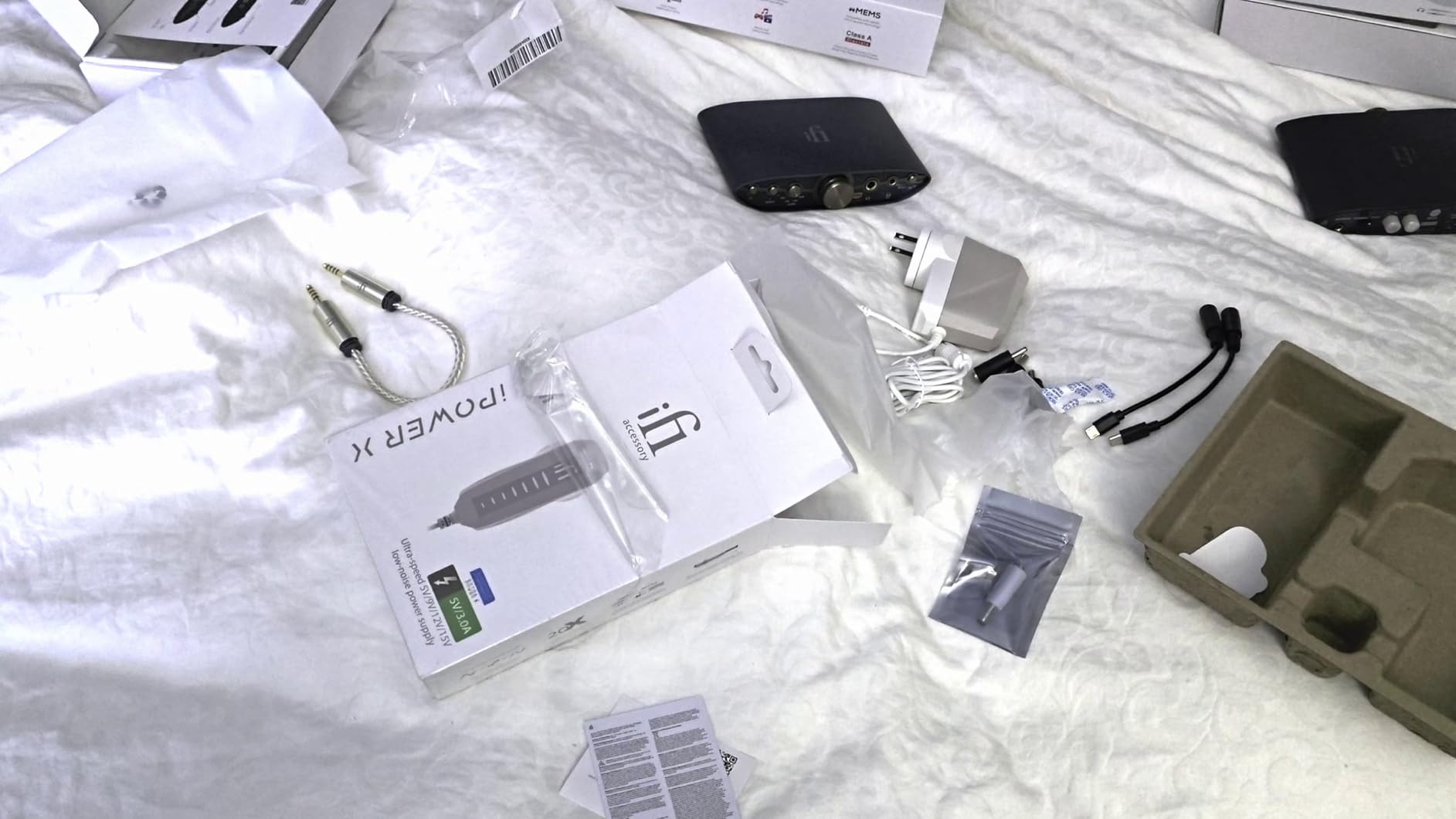
- No DC power brick in the box and a very short USB cable
- Needs the iFi Windows driver for the advertised high-res modes
- 390mW is limited for very high-impedance headphones
The Zen DAC V3 is the most complete single-box unit here for someone who games and then listens to music properly afterwards. It handles PCM up to 768kHz, DSD512 and MQA, and it gives you both a 6.3mm single-ended jack and a 4.4mm balanced jack from the same box.
Two front-panel features matter for gaming specifically. X-Bass plus is a bass shelf that helps open-back headphones, which tend to lose low-end in game mixes, and PowerMatch is a gain switch that lets you drop the amplification when sensitive earbuds are plugged in. Head-Fi owners running an iFi Zen Can and a Zen DAC have long recommended the bass boost for games, and this unit folds that idea in more neatly.
Owners widely describe the V3 as a mid-tier unit that punches above its weight, with a neutral-to-slightly-warm signature and a quiet noise floor that IEM users in particular rate highly. The low-jitter GMT clock is a genuine engineering nicety that shows up as a stable image in busy scenes.
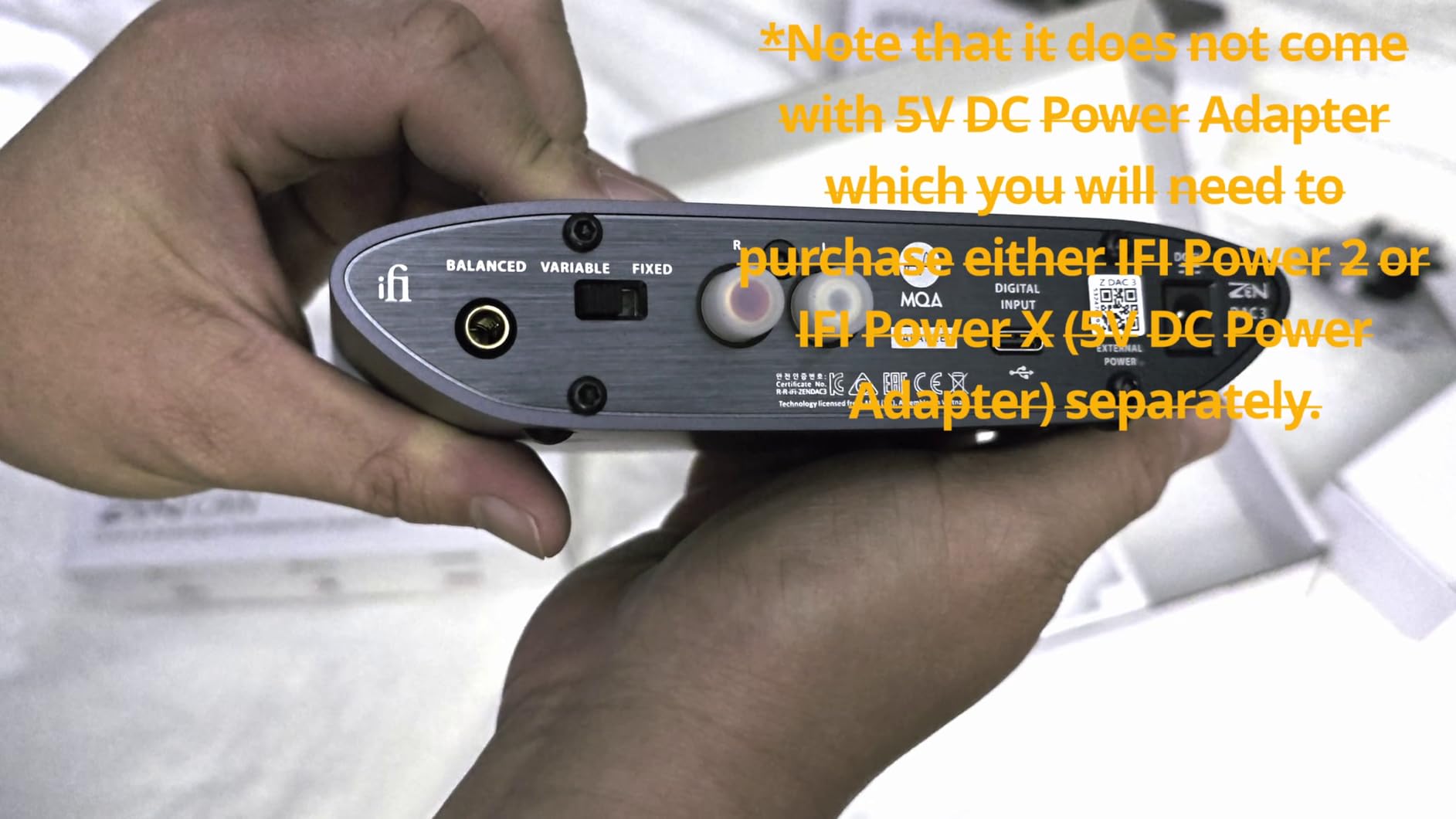
The caveats are consistent across reviews. There is no external power supply in the box and the supplied USB cable is short, so plan on a longer cable. On Windows you need to install the iFi driver to unlock the high-resolution modes, which is a five-minute job and the reason it is not a pure zero-friction recommendation.
Output tops out at 390mW, which is plenty for gaming headsets and most mid-impedance headphones but will not drive a 600 ohm planar magnetic with any authority. If that is your situation, look at the Fosi Audio K7 or the FiiO K11 instead.
A smaller group of owners report crackling audio on PC after a month or two of use, and the front buttons feel cheaper than the excellent volume knob. Both are worth knowing about before you commit.
Who this suits
It suits the player who games in the evening and then puts on a record, and the listener using balanced cables who wants one box rather than a stack. The X-Bass plus control is a real answer to the thin-bass problem many open-back headphones show in game audio.
It also suits anyone using IEMs at low volumes who wants a silent background without chasing a specialist portable unit.
Who should look elsewhere
Anyone who wants zero setup on Windows, or anyone driving genuinely high-impedance headphones. It also has no mic input, so chat still comes from elsewhere in your setup.
And if your desk is a laptop desk, this is a mains-powered desktop box. A dongle is a better physical answer.
3. Fosi Audio K5 Pro – Best Value Gaming DAC with a Mic Input
Fosi Audio K5 Pro Gaming DAC Headphone Amplifier Mini Hi-Fi Stereo Digital-to-Analog Audio Converter USB Type C/Optical/Coaxial to RCA/3.5MM AUX for PS5/PC/MAC/Computer
1000mW at 16 ohm, 500mW at 32 ohm
3.5mm microphone input
Bass, treble and master volume
Drives 16 to 300 ohm
Pros
- Strong output power that covers 16 to 300 ohm headphones
- Physical bass and treble knobs help isolate footsteps and dialogue
- 3.5mm mic input removes the need to use motherboard audio for chat
- Single-cable USB-C operation with no drivers or external power
- Solid aluminium chassis with satisfying metal knobs
Cons
- Headphone and RCA outputs cannot be used at the same time
- Only a 3.5mm headphone jack with no 1/4 inch option
- Volume knob doubles as the power button with a long press to switch on
The K5 Pro is the Q4 platform with a headphone amplifier stage that pushes considerably harder, plus a microphone input bolted to the front. That combination makes it the most complete budget answer to the two questions gamers actually ask: can it drive my headphones, and can I route chat through the same box.
Output power is the headline. It delivers 1000mW into 16 ohm, 500mW into 32 ohm, 300mW into 64 ohm, 150mW into 128 ohm and 80mW into 300 ohm. Those are real numbers into real loads, and the 80mW at 300 ohm is enough to drive a DT 990 Pro to a comfortable level that many entry-level dongles cannot reach.
The USB-C port doubles as a charging port and an audio input, so a single cable handles a console or a laptop that needs power while playing. Optical and coaxial inputs are there for older hardware, and the NE5532 op-amp keeps the noise floor low with THD at or under 0.003 percent and SNR of 110dB or better.
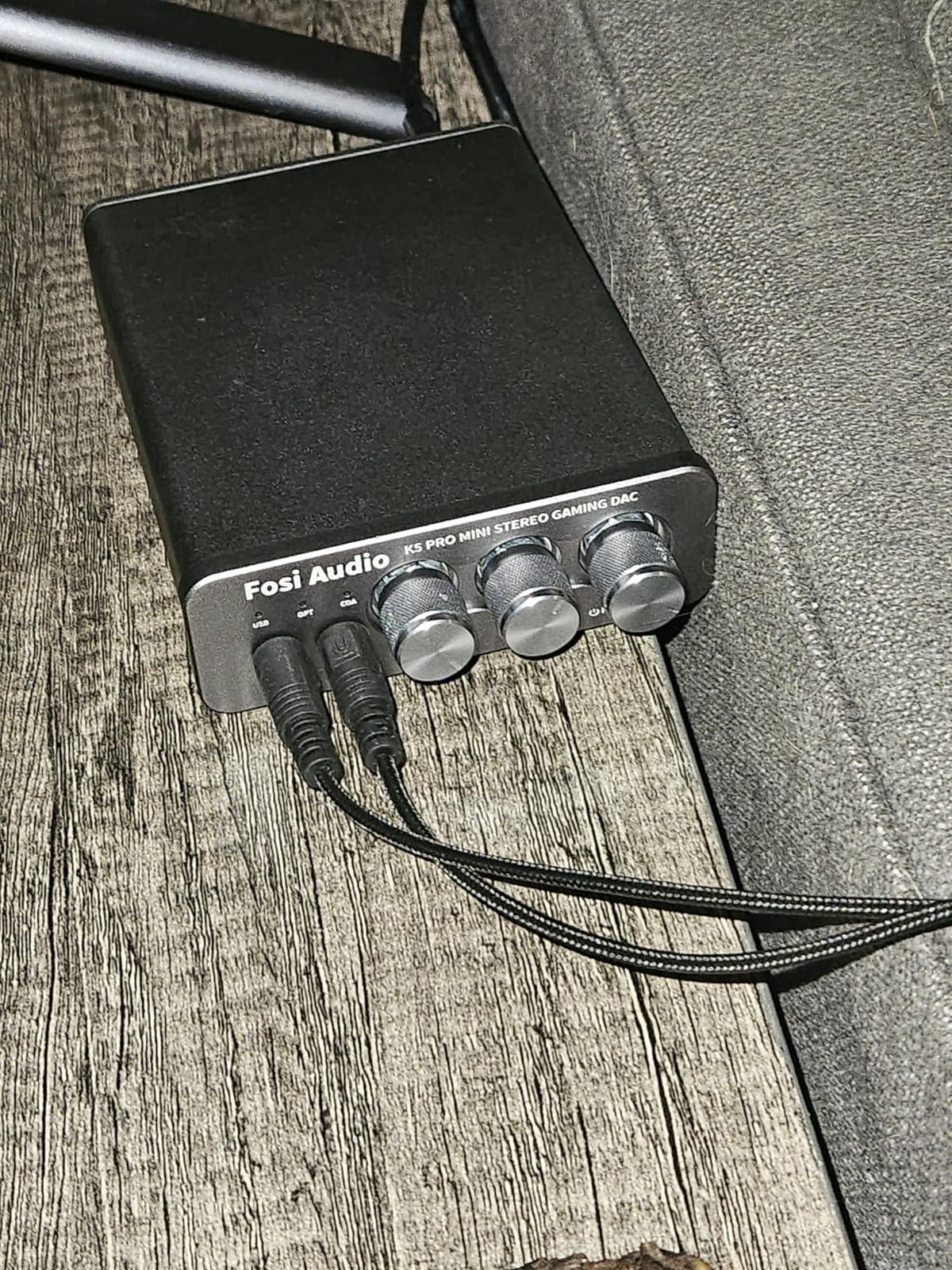
Gamers frequently single this out as a big step up from onboard audio, and the bass and treble knobs get mentioned almost as often as the power figures. Turning bass down while raising treble is the fastest way I have found to make directional cues in a shooter easier to pick out without any software EQ.
Two gripes come up repeatedly. There is no way to drive headphones and speakers or an amplifier through the RCA outputs at the same time, so you are switching rather than mixing. And the headphone jack is 3.5mm only, with no 1/4 inch option, which matters if you ever swap to larger studio headphones.
Some owners also report noise over USB when a power-hungry GPU is drawing heavy load, and there is no Bluetooth, so pairing to a phone or Switch in handheld mode is not an option.
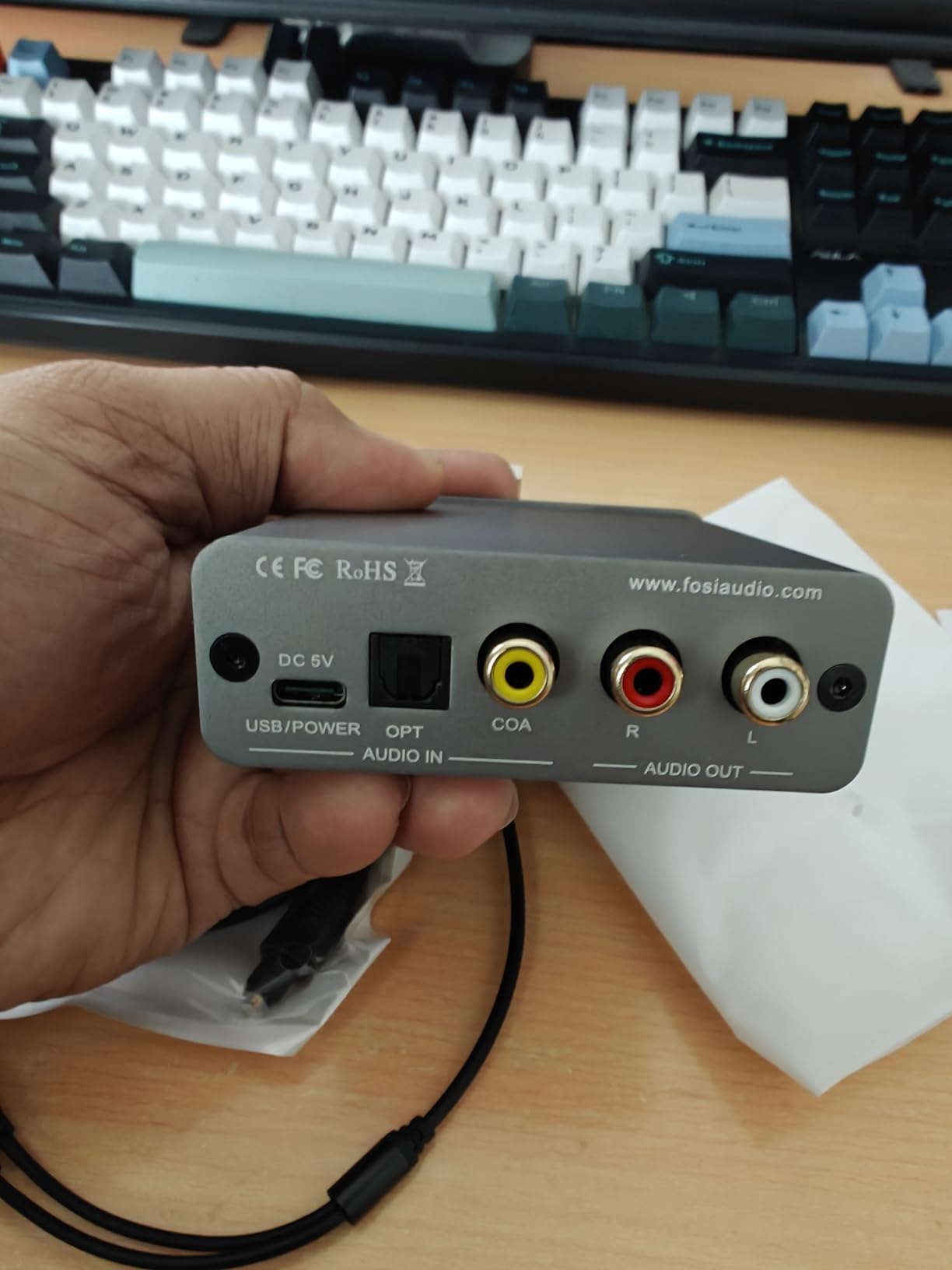
Why it suits console and competitive players
The mic input is the reason to pick this over the Q4. Route your headset mic into the K5 Pro, keep headphones on the same box and you have one device handling both directions, which removes a whole category of Windows routing frustration.
It suits PS5, Switch docked and PC players equally, because USB-C plus optical and coaxial covers all three. And at this output power you are not shopping around for a second amp later.
Where it falls short
It falls short if you need simultaneous headphone and line output, or if your headphone cable is 1/4 inch rather than 3.5mm. It also has no surround processing, so if virtual 7.1 is your goal you need a different device entirely.
The combined power and volume button is the other recurring annoyance. It works, it just takes a deliberate long press.
4. FiiO K11 – Best DAC Amp for High-Impedance Headphones
FiiO K11 DAC and Headphone Amplifier for Home Audio or PC, 6.35mm and Balanced 4.4mm, RCA, Coaxial, Optical, 1400mW, 384kHz/24Bit DSD256 (Silver)
Up to 1400mW for 350 ohm
4.4mm balanced and 6.35mm outputs
384kHz/24-bit and DSD256
VA display
Pros
- Strongest rated unit in the roundup with a 4.6 average
- Balanced 4.4mm output delivers real volume for demanding headphones
- Clean
- detailed and largely neutral signature
- Selectable digital filters with a bypass option
- VA display shows sample rate
- volume and gain
- Compact aluminium body that stays cool
Cons
- No automatic impedance detection so gain must be set by hand
- Menu navigation is not immediately intuitive
- ASIO use on a desktop needs driver installation
The K11 exists to solve one problem properly: driving headphones that most gaming DACs cannot. With output power up to 1400mW and a stated capability of 350 ohm loads, it is the unit to look at if you own an HD 6XX, a DT 990 Pro or a planar magnetic and want a single box for both gaming and music.
The 4.4mm balanced output is where it earns its keep. Balanced wiring halves the resistance each channel drives, and in practice that means noticeably more clean volume on high-impedance headphones than the single-ended jack provides. Reviewers specifically call out the combination on the Sennheiser HD650 and the Beyerdynamic DT990 Pro, which matches what the impedance math predicts.
It supports 384kHz/24-bit PCM and DSD256, and the high-definition VA display shows sample rate, volume, gain and output mode at a glance. For a player who likes to know they are running a clean 24-bit path, that readout is unusually satisfying.
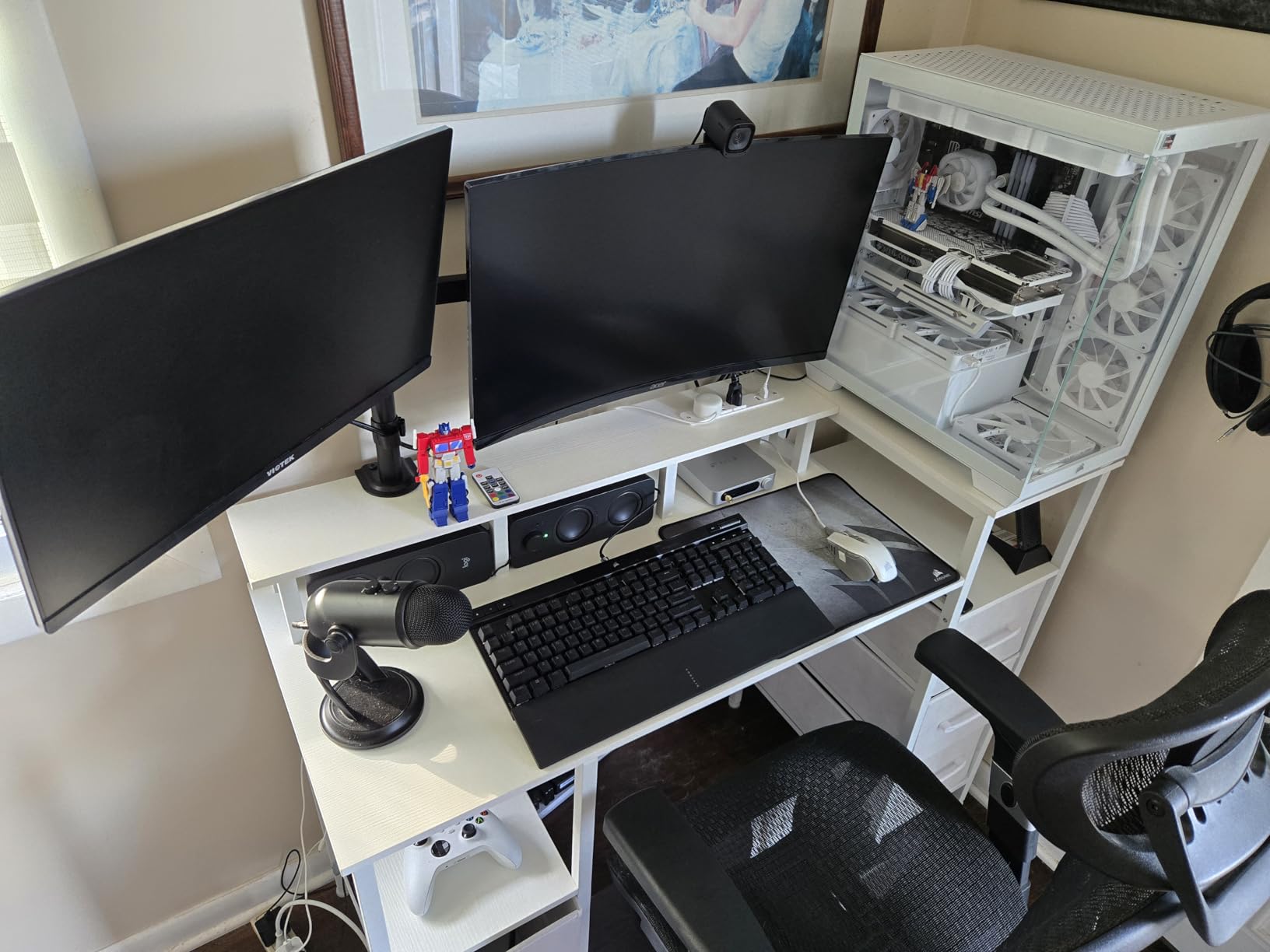
Owners rate the sound signature as clean and largely neutral, with digital filter presets that let you shape the result and a bypass option when you want none of it. The filter choices change the sound noticeably, and several presets are described as compressed or plasticky, so treat them as a starting point rather than gospel.
Gain must be set manually because the K11 does not detect headphone impedance. That is a two-minute job the first time and a non-issue after, but it is the single most common setup question we get asked about this unit.
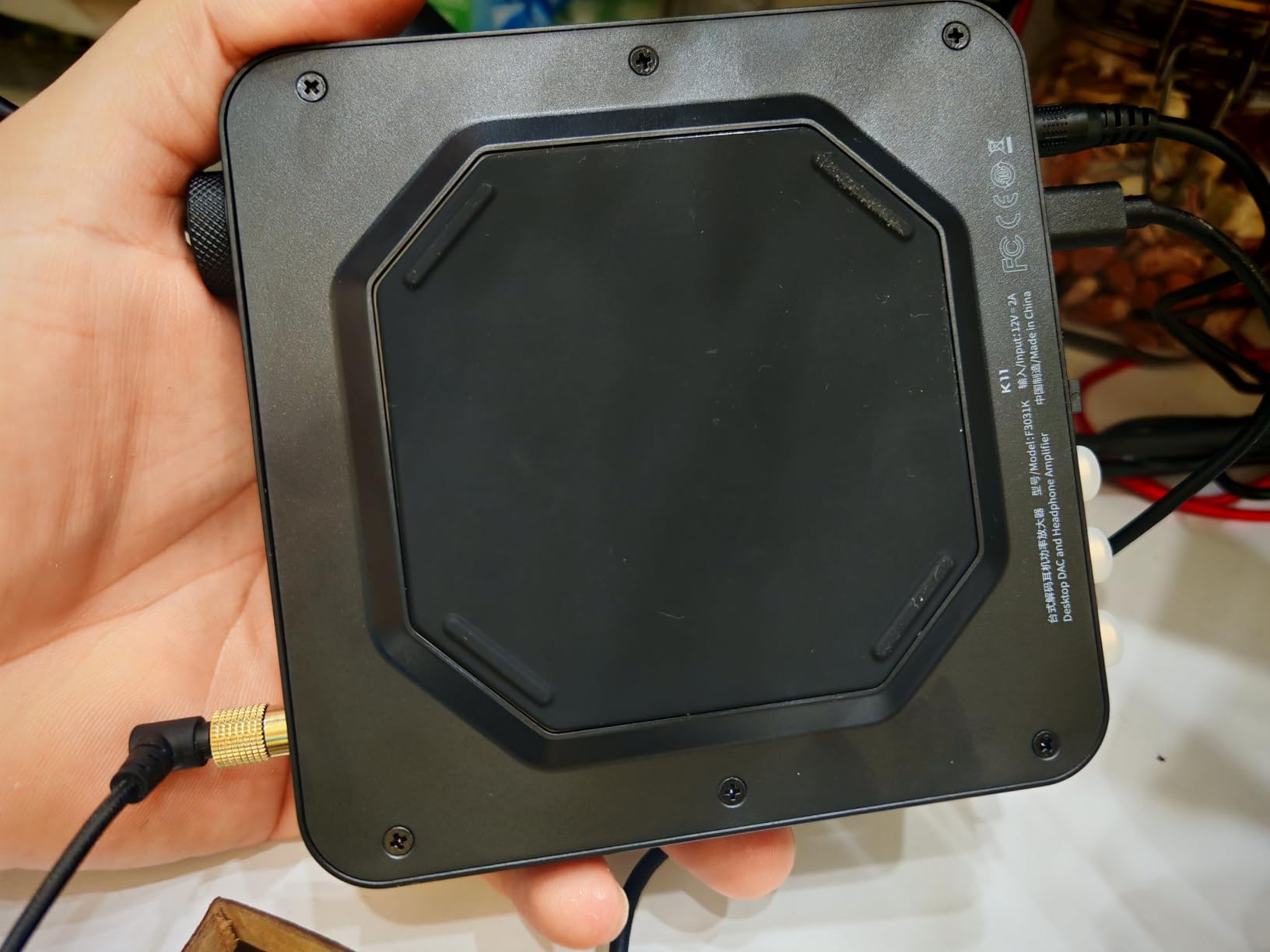
The chassis is a compact 9.65 by 7.8 inch aluminium body that reviewers note stays cool during long sessions, and it comes with a one year manufacturer warranty. ASIO on desktop requires a driver install, which is expected but worth knowing before your next match.
Why it suits demanding headphones
It suits anyone whose current dongle runs out of volume on 250 or 300 ohm headphones, which is the most common reason people in the forums move to a desktop unit in the first place. The balanced output gives you the headroom without turning the volume knob into a hiss amplifier.
It also suits players who listen to music on the same rig, since the neutral signature and high-resolution support were built for both rather than for one.
Who should skip it
Skip it if you are on easy-to-drive 32 or 50 ohm gaming headsets. You will pay for power you do not use, and the gain setting menu is more complexity than a simple plug-and-play box requires.
Also skip it if you need a mic input. There is none, and there is no Bluetooth, so this is a wired desktop unit only.
5. Syba Sonic SD-DAC63116 – Cheapest Way to Bypass Bad Onboard Audio
Syba Sonic 24bit 96KHz USB DAC Stereo Headphone Amplifier 2 Stage EQ Digital/Coaxial Output and RCA Output SD-DAC63116
24-bit/96kHz USB decoding
1/4 inch and 3.5mm headphone jacks
3.5mm mic and line input
Two-stage EQ
Pros
- Lowest entry point of any unit in this roundup
- Simple USB plug-and-play connection to a PC or console
- Two-stage EQ plus both 3.5mm and 1/4 inch headphone jacks
- RCA and USB cables included in the box
- Compact and light enough for travel
Cons
- 24-bit/96kHz ceiling is lower than most rivals
- Basic build quality compared with metal-chassis options
- No optical input and fewer inputs overall
- Sound described as less detailed than higher-priced DACs
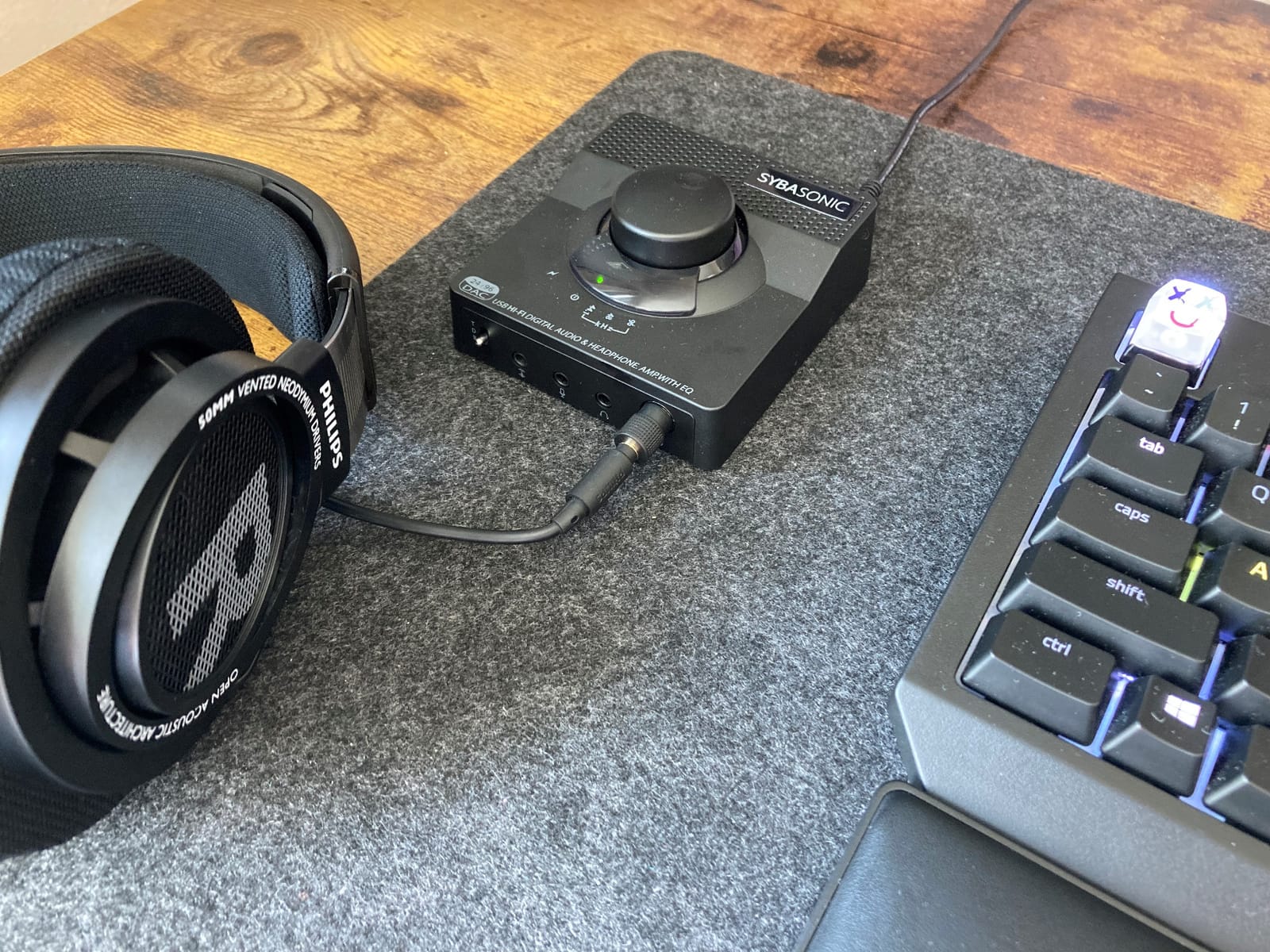
The Syba Sonic is the answer to a narrow question: what does it cost to stop a laptop or a budget PC from sounding bad? At the bottom of this list, it does that job with a USB plug, a 3.5mm jack and a 1/4 inch jack, and it includes the cables.
It uses a Cm6533 chip with an intelligent noise reduction stage, which is aimed squarely at the hiss problem rather than at audiophile refinement. Resolution caps at 24-bit/96kHz, and there is a two-stage EQ alongside a TI LM358 op-amp. The 3.5mm mic and line input is a genuine bonus at this tier, since most units in this price area skip it entirely.
Buyers treat it as a low-cost way to bypass poor onboard PC or console audio. The common thread in reviews is that it is adequate rather than refined, and that the 96kHz ceiling is the spec most often noticed against rivals.
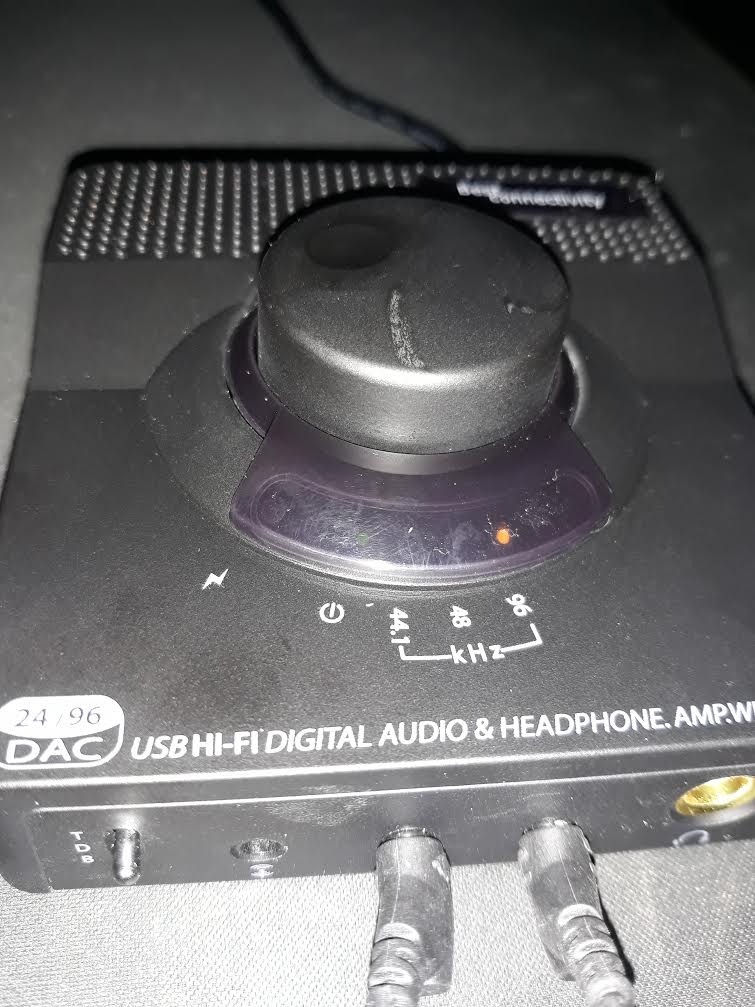
At 12.8 ounces it is genuinely portable, which is unusual for a desktop-shaped box and makes it a reasonable travel companion for a laptop. The included RCA output also lets it feed powered speakers if you want to move away from headphones.
The construction is basic compared with the metal-chassis units, and reviewers report the sound is less detailed than more expensive DACs. If your goal is positional clarity in a shooter, this is not the box. If your goal is louder, cleaner sound than a thin laptop speaker port, it is more than enough.
There is no optical input, so older consoles and CD transports are out of scope. It comes with a one year warranty.
Why it suits budget setups
It suits dorm rooms, shared spaces and anyone who does not want to spend meaningful money finding out whether a DAC makes a difference to them. It also fits players whose headphones are easy to drive and who simply want a hardware volume knob.
The dual headphone jack sizes are unusually useful at this level, and the mic and line input means it can pass audio both ways for chat.
Where it stops being enough
It stops being enough the moment you move to 250 ohm headphones, where its output simply is not there. It also lacks the resolution and refinement to reward close listening, and the 96kHz ceiling rules out high-res game audio.
If you already know you want a serious gaming DAC, start one tier up rather than buying this and upgrading later.
6. AIYIMA DAC-A2 – Best Low-Cost DAC with Front-Panel Tone Controls
AIYIMA DAC-A2 Headphone Amplifier & Desktop DAC for PC, MAC and Gaming
160mW RMS at 32 ohm
Drives 16 to 200 ohm
Optical, coaxial and USB inputs
24-bit/192kHz
Pros
- Very low cost plug-and-play upgrade over onboard audio
- Bass and treble knobs with clicky detents for easy centering
- Aluminium chassis feels more premium than the price suggests
- Optical input helps with electrical hum from gaming PCs
- 160mW RMS at 32 ohm covers 16 to 200 ohm
Cons
- Some units develop crackling or static when adjusting the volume pot
- The 3.5mm jack can lose connection within about a year
- No separate power switch so the volume setting resets each time
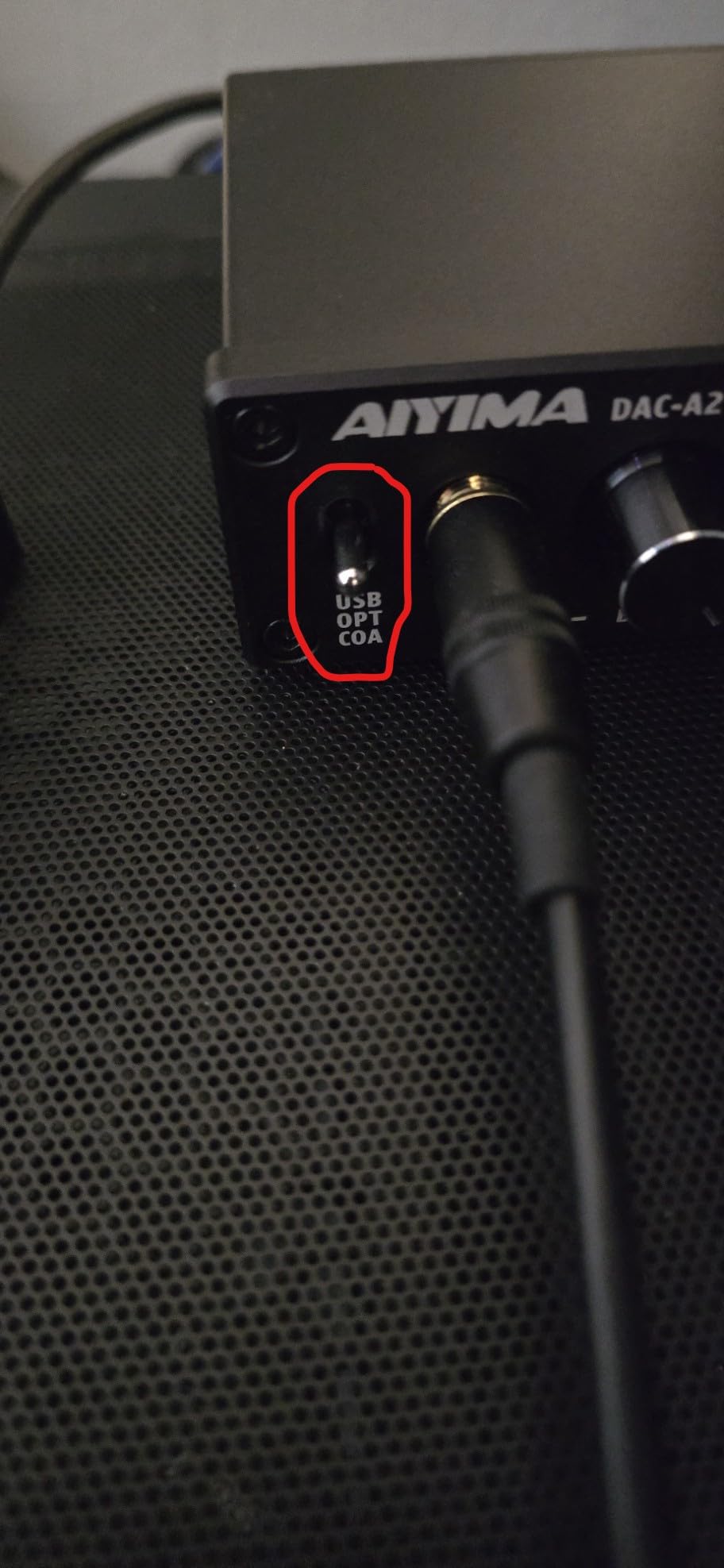
The DAC-A2 is the other budget entry, and the thing that separates it from the Syba Sonic is the pair of clicky bass and treble knobs on the front panel. Detented knobs matter more than they sound: you can centre them and know exactly where you are, instead of guessing which way round you are turning.
It converts optical, coaxial and USB digital inputs to RCA and 3.5mm analog, and supports 24-bit/192kHz over optical or coaxial. The aluminium alloy chassis doubles as an EMI shield and there is an output protection circuit on the analog stage, which is a sensible inclusion for a device that sits next to a power-hungry PC.
Reviewers view it as strong value that removes PC interference and adds tone control at a very low price. The optical input is the underrated feature here, because a gaming PC with a graphics card under load can leak hum through USB that optical routing simply sidesteps.
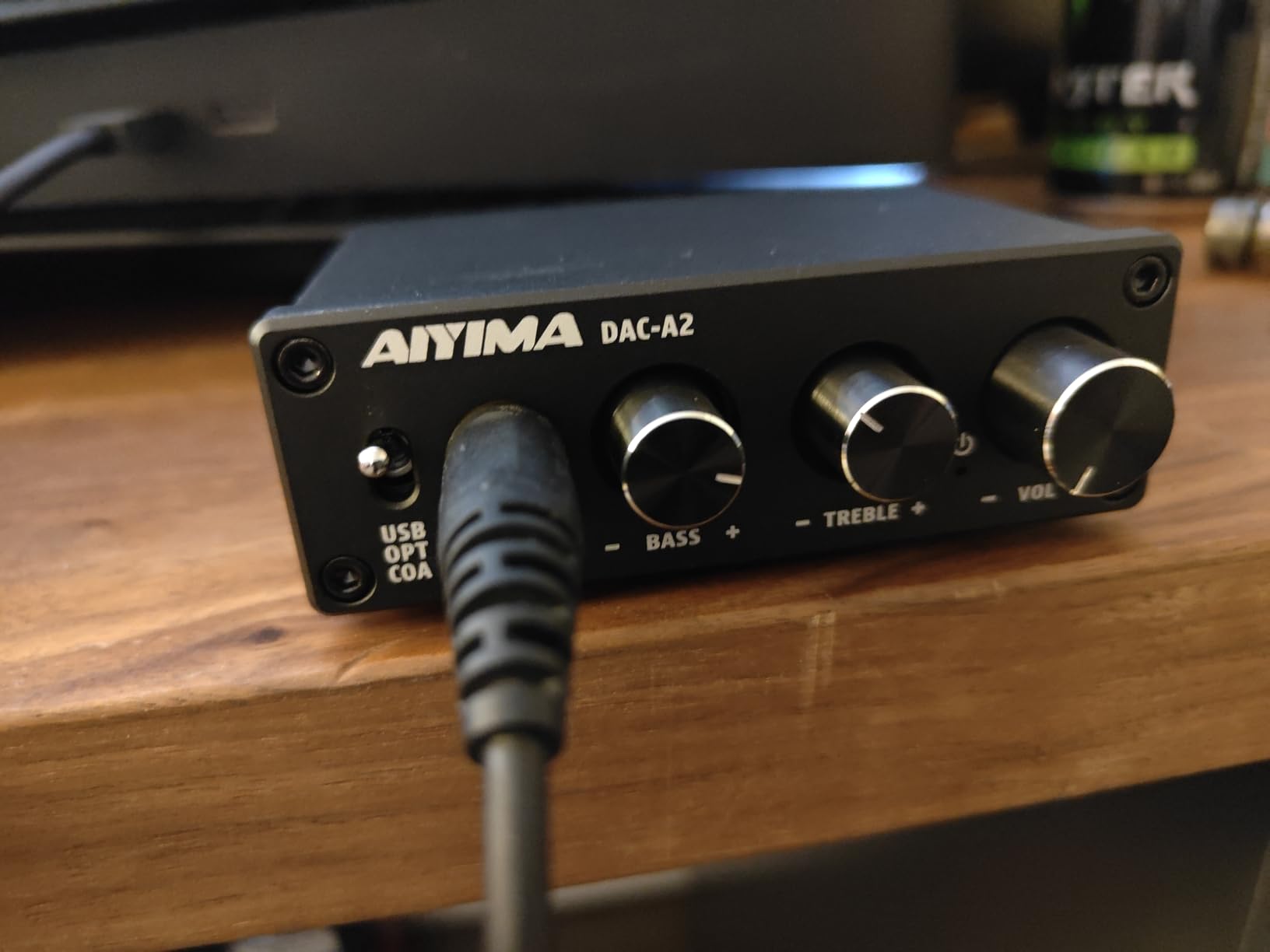
Output is 160mW RMS at 32 ohm and it drives 16 to 200 ohm headphones. That is a sensible entry-level ceiling: fine for gaming headsets and mid-impedance headphones, short of the 250 ohm crowd.
There is a practical caveat in the power design. It runs on 5V DC and needs two USB cables when powered over USB, one for power and one for audio. That is a genuine desk-clutter consideration for anyone with a single port free.
The most repeated negatives in reviews are pot crackle while adjusting volume and the 3.5mm jack wearing out within about a year on some units. There is also no separate power switch, so your volume resets whenever you power it down, and no mic input or balanced output anywhere on the chassis.
Why it suits entry players
It suits anyone who wants the tone-shaping ability of a bigger desktop unit at a fraction of the cost, and whose PC suffers from electrical noise on the USB path. The detented knobs are the quiet hero feature.
It also suits beginners who want to learn whether DACs matter to them before committing to a serious unit, since the front panel gives them real controls to experiment with.
Where it falls short
It falls short on longevity if you rotate the volume pot constantly, and the jack and pot complaints are repeated often enough to plan around. It cannot drive high-impedance headphones, and it has no mic input for chat.
The two-cable power arrangement is also worth factoring in if your desk space is tight.
7. Topping DX3pro+ – Best Desktop DAC with Wireless and a Remote
Topping DX3pro+ LDAC Headphone Amplifier – ES9038Q2M XU208 NFCA Bluetooth5.0 Audio Decoder USB/Opt/Coax DAC AMP Pre Amplifier with Remote Control (Black)
ES9038Q2M DAC, XU208 USB
Bluetooth 5.0 with LDAC and aptX HD
700mW headphone output
Digital volume control
Pros
- LDAC and aptX HD Bluetooth support in a desktop unit
- ES9038Q2M DAC delivers clear
- high-resolution playback
- 700mW output covers a wide range of headphones
- Digital volume avoids channel imbalance
- Remote control makes it easy to adjust from a desk
Cons
- Older ES9038Q2M chip compared with newer rivals
- 700mW is limited for very high-impedance headphones
- Single headphone jack with no separate balanced output
- No tone controls or hardware EQ
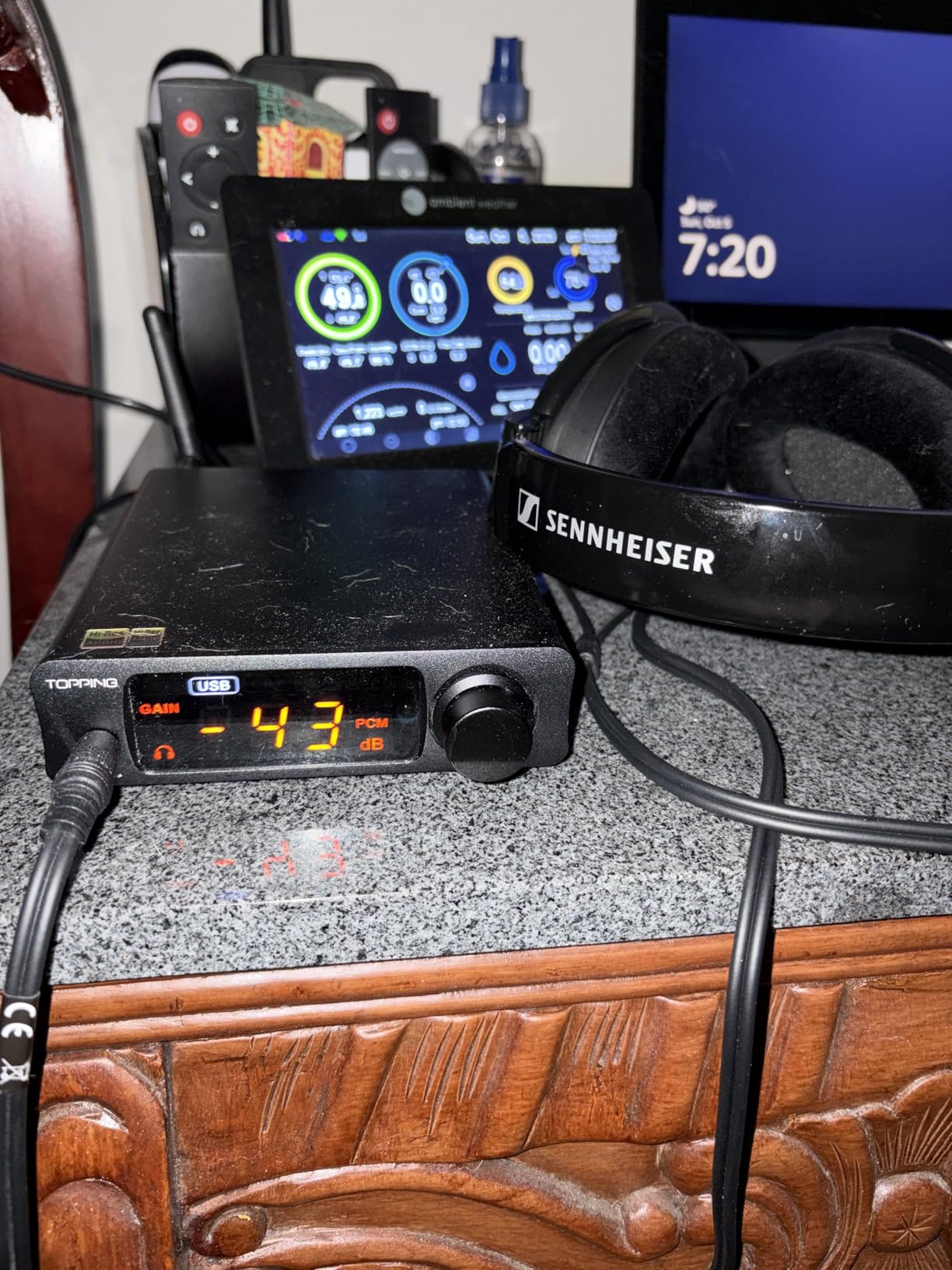
The DX3pro+ is the pick when you want a proper desktop DAC that also pulls in a phone over Bluetooth. LDAC and aptX HD in a box this size are unusual, and for a player who games on a PC and listens on a phone at the same desk, that combination is genuinely useful.
Under the hood it pairs an ES9038Q2M DAC with an XU208 USB processor, and offers USB, optical and coaxial digital inputs plus Bluetooth 5.0 with a QCC5125 receiver covering LDAC, AAC, SBC, aptX, aptX LL and aptX HD. Headphone output reaches 700mW, which handles a broad range of gaming headsets and mid-impedance headphones with headroom.
Digital volume adjustment is a quiet advantage here. Because the level is applied in the digital domain, there is no left to right channel imbalance at low volumes, which is a real problem on pots at the low end. The included remote makes that adjustment easy from a chair, and a line output lets you drive powered speakers or an amplifier.
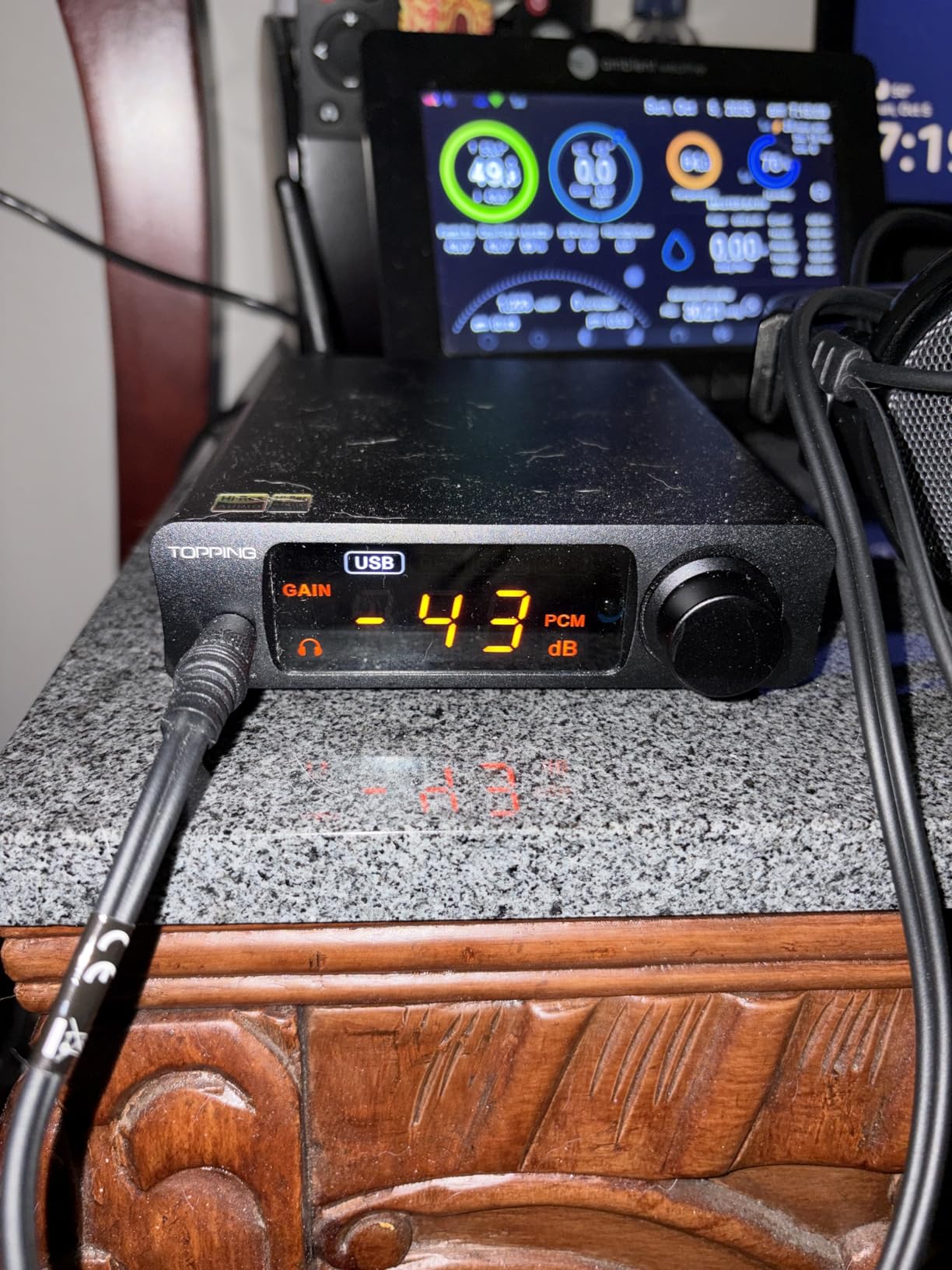
Reviewers value the combination of a serious DAC chip with high-quality wireless in one small 5.08 by 6.54 inch aluminium box, and highlight the clean digital volume implementation. It is a sensible one-box answer for a mixed desktop setup.
The limitations are mostly generational. The ES9038Q2M is an older chip next to the dual ES9039Q2M designs now arriving, and 700mW is modest if you ever move to 600 ohm planars. There is a single headphone jack rather than separate balanced and single-ended outputs, so no 4.4mm option here.
There are also no tone controls and no hardware EQ, which puts the burden entirely on your game audio settings or an external equalizer. It ships with a 15V adapter, remote, USB cable and Bluetooth antenna.
Why it suits desk setups
It suits a shared desk where the same box serves a laptop, a console over optical and a phone over Bluetooth. The remote is a genuine convenience in a gaming chair setup where reaching the desk is not an option.
Digital volume also makes it a good low-level listening option, since noise does not creep in as you turn down.
Who should pass
Pass if you want a balanced 4.4mm output, because there is only one jack. Pass if your headphones are high-impedance, because 700mW will not carry them far.
Also pass if you rely on tone shaping, because there is no bass or treble control here at all.
8. Fosi Audio K7 – Most Power for Planar Magnetic Headphones
Fosi Audio K7 DAC Headphone Amp, Desktop Headphone Amplifier for Gaming PC PS5 Switch, PCM 384kHz/32bit, 2100mW, USB C/Bluetooth aptX HD LL/Optical/Coaxial/Mic Input, 4.4mm Balanced/3.5mm/RCA Output
Up to 2100mW output
AK4493S with XMOS XU208
PCM 384kHz/32-bit and DSD256
Mic input and Bluetooth aptX HD
Pros
- Highest rated unit here at 4.7 out of 5
- Very high output power that drives demanding planars with headroom
- Clean neutral sound with excellent separation and positional cues
- Mic input plus Bluetooth aptX HD covers gaming and wireless
- Premium all-metal aluminium build
- Plug-and-play with no drivers on Windows or Mac
Cons
- Volume knob rotates continuously with no hard stops so the position is misleading
- Display is hard to read at off-axis angles
- Pressing the volume knob toggles gain rather than mute
The K7 is the unit to buy when your headphones are hard to drive and you play shooters where footstep direction decides rounds. Output power reaches 2100mW, which is enough headroom for demanding planar magnetics, and owners consistently describe clear footsteps and directional cues in games like Warzone.
Internally it pairs an AK4493S DAC with an XMOS XU208 USB processor and TPA6120 headphone amplification, supporting PCM 384kHz/32-bit and DSD256. The input flexibility is the best in this roundup: USB-C, coaxial, optical, Bluetooth with aptX HD and low latency, and a 3.5mm microphone input, all in one chassis.
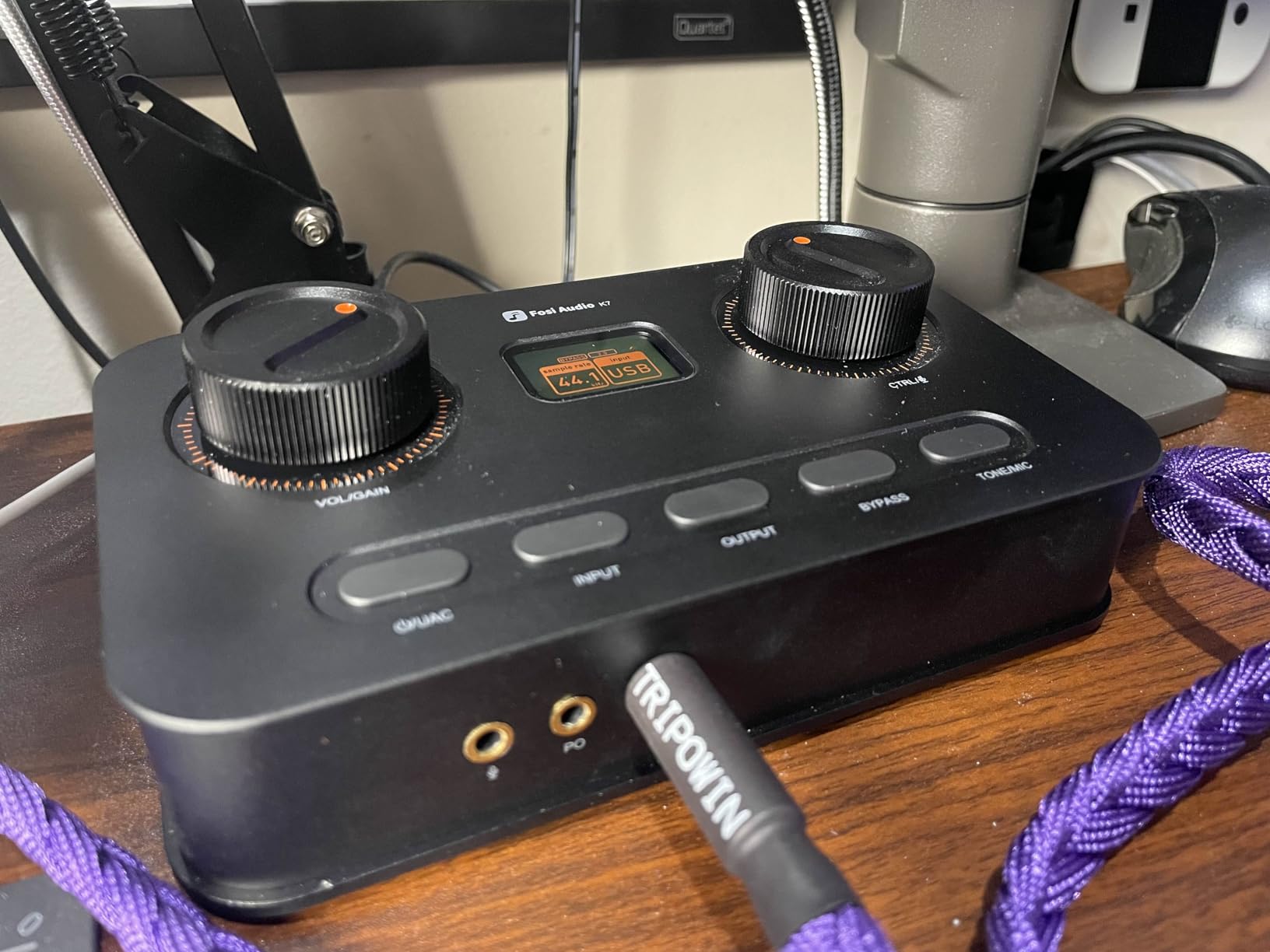
Outputs cover the bases too, with 4.4mm balanced, 3.5mm single-ended and RCA on the back. The angled aluminium chassis, dual control knobs, five shortcut buttons and a high-resolution status display make it look and feel like a piece of serious equipment rather than a dongle in a housing.
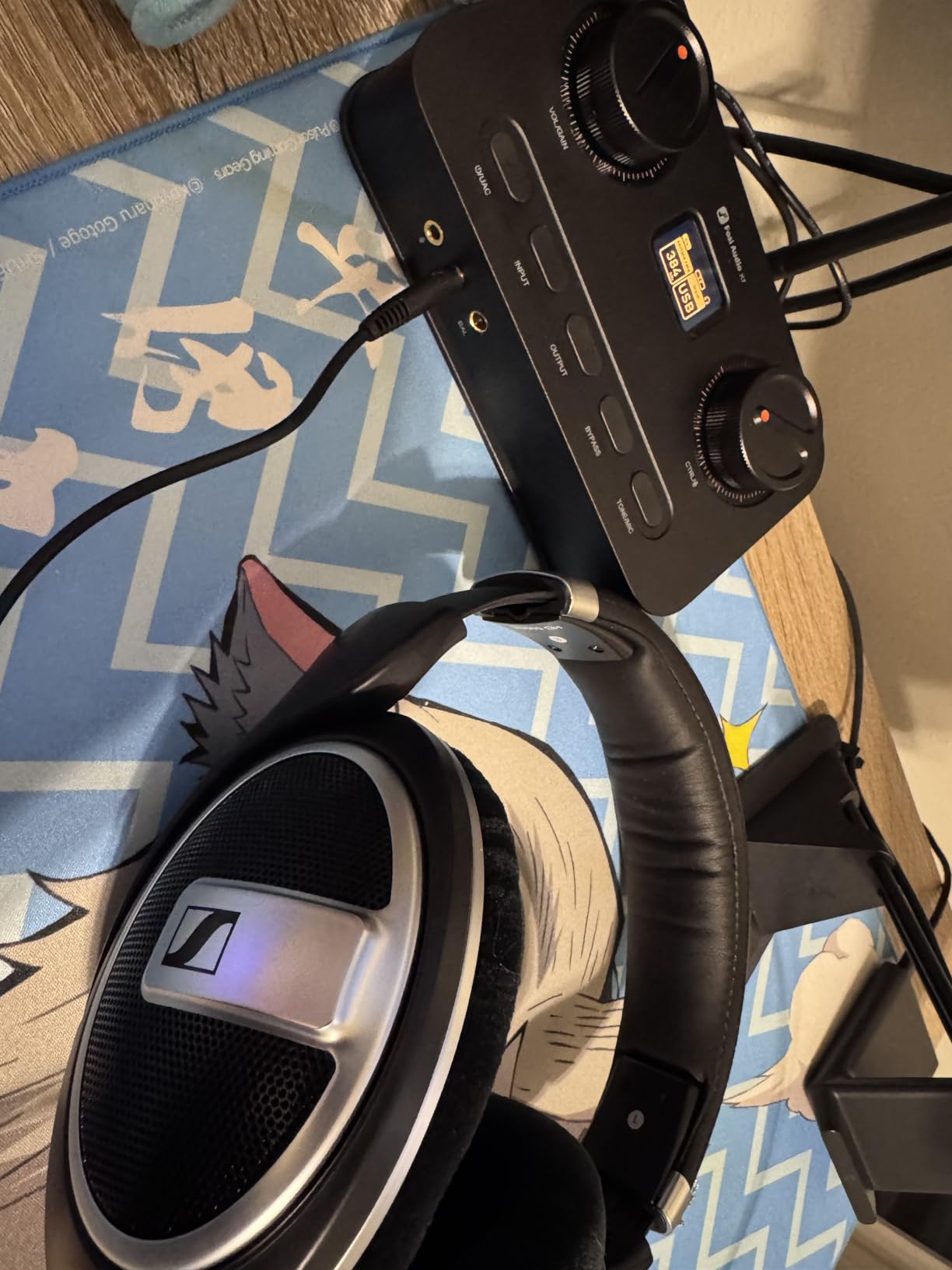
Owners consistently describe the K7 as the best-sounding unit in this roundup for gaming, citing clean separation and reliable positional cues. The mic input plus wireless codec support means it handles voice chat and phone listening without a second device.
The ergonomic criticisms are worth reading carefully. The volume knob rotates continuously with no hard stops, so the physical position tells you nothing about your level. Pressing that same knob toggles gain rather than mute, which is easy to trigger by accident mid-match. The display is also hard to read at off-axis angles, and it has no timeout, so it glows constantly.
Some owners report it running slightly warm. It includes a 12V power supply and a Bluetooth antenna, and carries a 24 month manufacturer warranty.
Why it suits high-end setups
It suits anyone moving from a 250 ohm headphone to a planar magnetic without wanting a separate amplifier. The combination of power, balanced output and a mic input means one box covers games, music and chat.
It also suits players who want EQ-free neutral sound and would rather set their game audio than the hardware, since there is no tone control that will bias what you hear.
Where it falls short
It falls short on desk ergonomics: the endless knob, the accidental gain toggle and the always-on display are all real friction in long sessions.
It is also a large mains-powered desktop box, so it does not suit laptop, Switch handheld or travel use, and it is overkill if you are on easy-to-drive 32 ohm headsets.
9. Topping DX5 II – Best DAC Amp for Onboard EQ Control
TOPPING DX5 II Hi-Res DAC & Headphone Amp Combo – Dual ES9039Q2M, X-Hybrid Amp, 10-Band PEQ, LDAC Bluetooth 5.1, 4.4mm Balanced & 6.35mm Headphone Output, Preamp Mode, 12V Trigger (White)
Dual ES9039Q2M DAC chips
Balanced 7600mW per channel
10-band parametric EQ
Bluetooth 5.1 with LDAC and aptX Adaptive
Pros
- Dual DAC chips with very low distortion and excellent channel matching
- Very high balanced output power for demanding headphones
- 10-band parametric EQ plus selectable PCM filters for deep tuning
- Large color display with bar graph and VU visualizers
- Very low noise floor on optical and USB
- 12V trigger and preamp mode for larger systems
Cons
- Single-ended output power is much lower than the balanced rating
- Unprotected headphone jacks that can be damaged by hot-swapping
- New RC-18a remote is not compatible with older Topping remotes
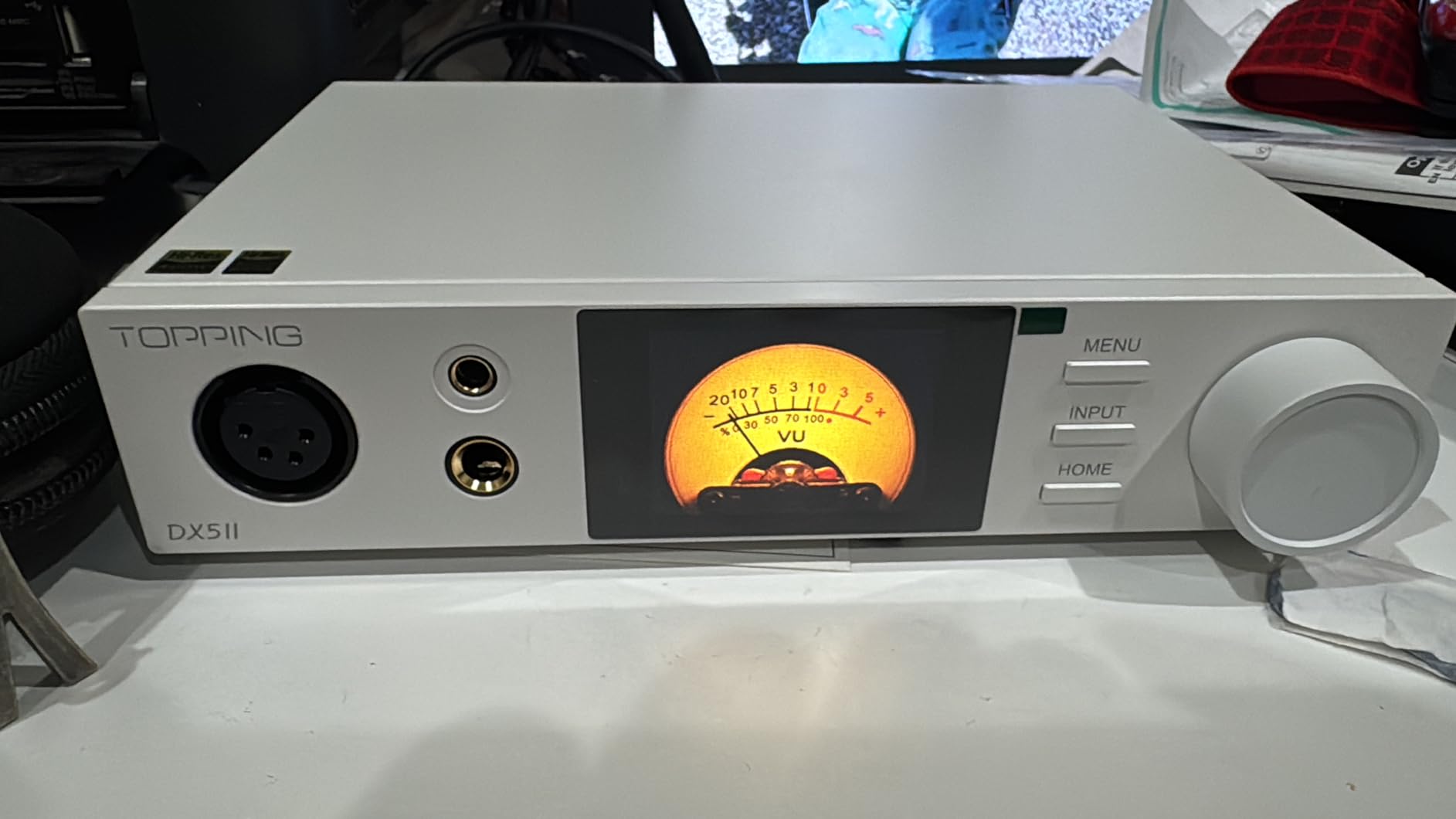
The DX5 II is the only box in this roundup with a 10-band parametric equaliser built in, and for gaming that is a bigger deal than it sounds. You can carve a curve for a specific game or headphone and store it, rather than fighting an in-game slider that resets every match.
It runs dual ESS ES9039Q2M chips supporting PCM768kHz/32-bit and DSD512, feeding an X-Hybrid fully balanced quad-channel amplifier rated at 7600mW per channel through the 4.4mm output. There is also a 6.35mm jack, XLR and RCA line outputs, a 12V trigger for system integration and a preamp mode for driving active speakers directly.
The 2.0 inch color display with nine themes shows sample rate, bar graph and VU-style visualizers, and Bluetooth 5.1 covers LDAC, aptX Adaptive, aptX HD, AAC and SBC. USB, coaxial and optical inputs run through an XMOS XU316.
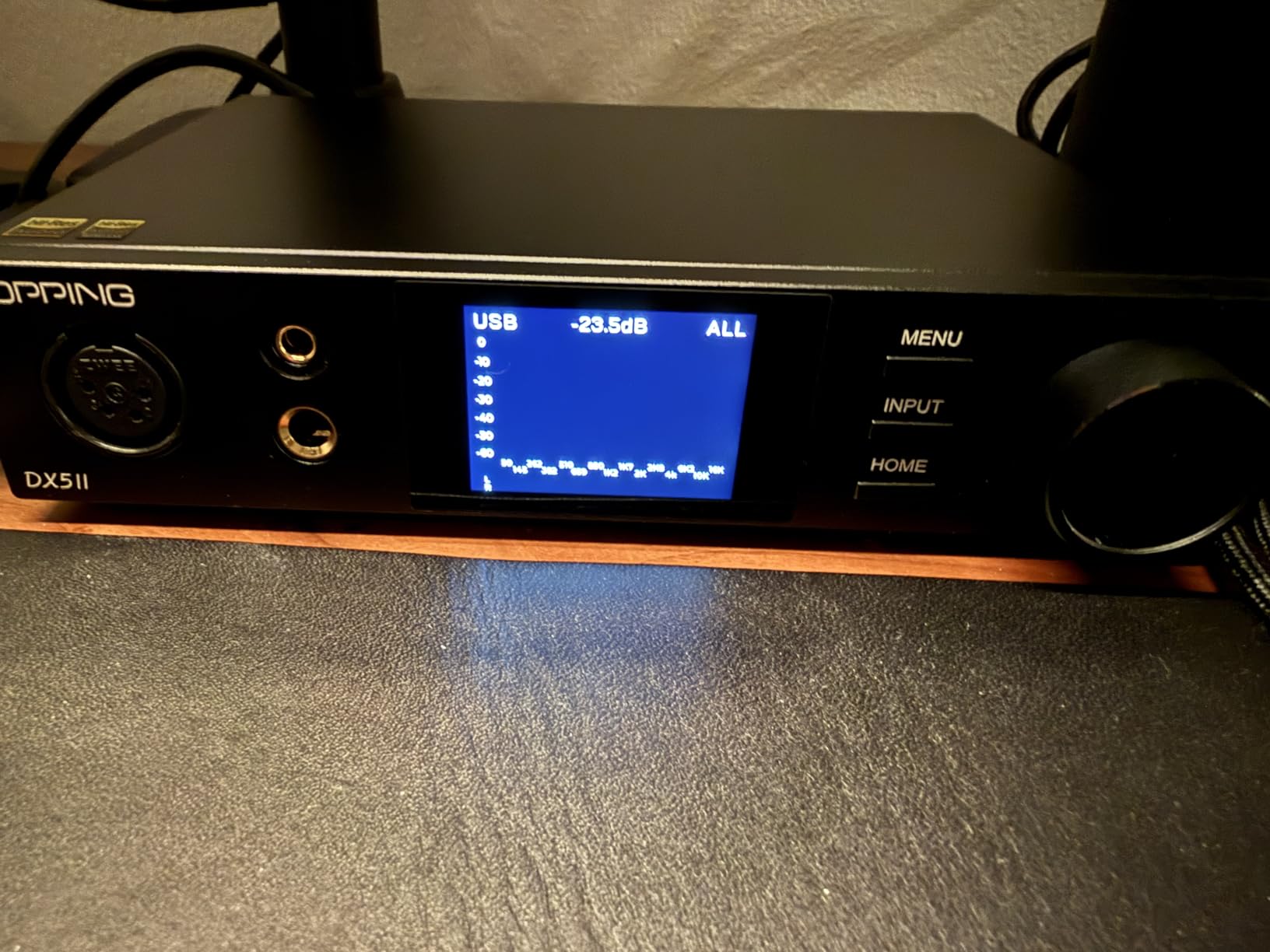
Reviewers describe it as a transparent, quiet and powerful all-in-one that represents exceptional value against two-box alternatives, with the parametric EQ and display central to the experience. The noise floor is low enough for IEM use on both optical and USB, and the dual chips give excellent channel matching.
The critical caveat is the power mismatch. That 7600mW figure applies to the balanced output only, and the single-ended jack delivers far less. If you plan to use 6.35mm headphones, do not read the headline number as your real budget.
The headphone jacks are unprotected, so hot-swapping can damage them. Firmware language can be switched by accident and needs reflashing to recover, the RC-18a remote does not work with older Topping remotes, and there are isolated reports of spontaneous power-on and odd Bluetooth reconnection behaviour.
Why it suits tuning-focused players
It suits players who want a stored EQ curve per game or per headphone, plus enough power to drive anything, and who prefer adjusting sound in hardware over hunting through Windows or in-game menus.
It also suits larger systems where a 12V trigger and preamp mode let one box drive speakers and an amplifier alongside your headphones.
Who should skip it
Skip it if you plan to use the 6.35mm output with demanding headphones, because the single-ended power is much lower than the balanced rating suggests. Skip it if you hot-swap headphone cables often, since the jacks are unprotected.
And skip it if you want simple plug-and-play behaviour. This is a feature-heavy box that rewards an afternoon of setup.
10. SMSL DS100 – Best Match for Sensitive In-Ear Monitors
SMSL DS100 MQA DAC Headphone Amplifier CS43131 Chip Mini Stereo Audio DAC
CS43131 chip at 0.00017 percent distortion
7Vrms into 600 ohm and 61mW at 16 ohm
6.35mm and 4.4mm outputs
Draws about 0.5 watts
Pros
- Very low noise floor with a silent background for IEMs
- Transparent
- uncoloured sound
- Handles both 6.35mm and 4.4mm balanced headphones
- Very compact at 3.5 inches square
- Draws about 0.5 watts so it can run off a phone
- Easy two-source switching between coax and optical
Cons
- Volume indication via four LEDs is very approximate
- No 3.5mm headphone adapter included
- Requires downloading a driver on Windows
- No separate power switch
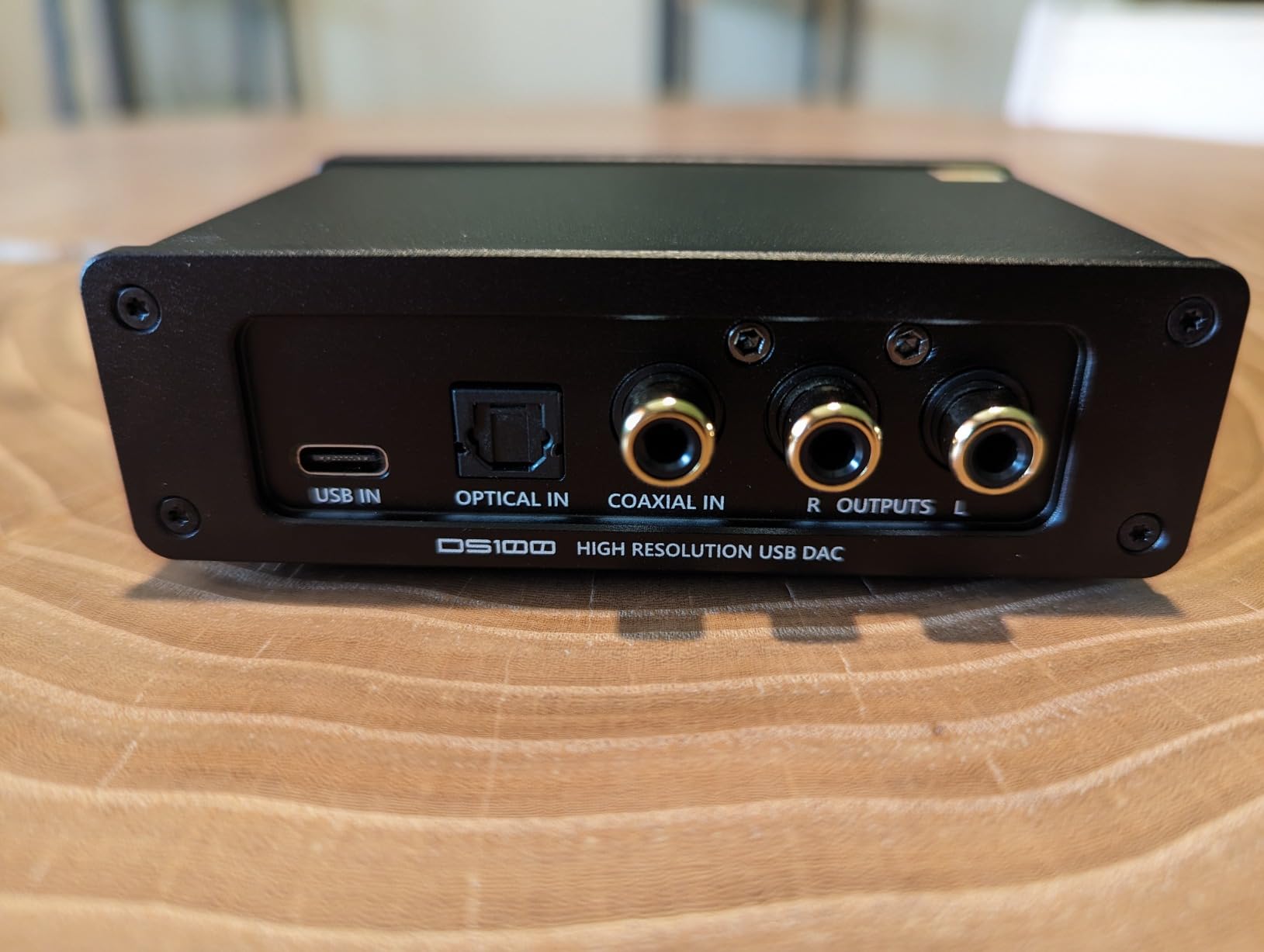
The DS100 is the smallest and quietest unit here, and that combination makes it the right answer for in-ear monitors. A Cirrus Logic CS43131 with 0.00017 percent distortion and a low-noise LDO supply give you a background so silent that faint game cues and quiet breathing in a cutscene are actually audible.
It is also a genuinely small object at 3.5 inches square and 6.24 ounces, so it does not compete for desk space. Despite that, the headphone stage is stronger than the size suggests, reaching 7Vrms into 600 ohm, with both 6.35mm and 4.4mm balanced outputs.
Format support runs to PCM 32-bit/768kHz and DSD256 through a third-generation XMOS XU-316, with coaxial and optical inputs supporting DoP64. The CK-03 clock processing circuit and gold-plated terminals on the CNC-machined aluminium body are the kind of detail usually reserved for more expensive boxes.
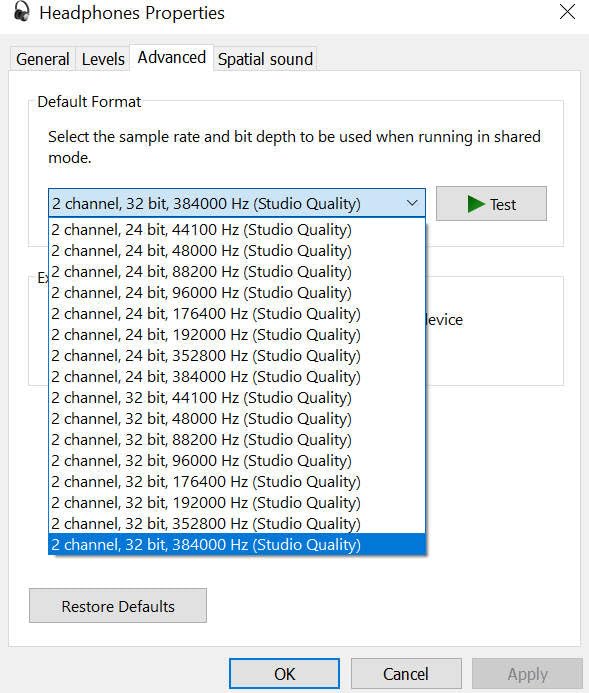
Reviewers praise the DS100 as a quiet, transparent and extremely compact unit that is easy to recommend for a simple desktop setup, and note that it measures around 0.5W of USB power. That means it can run from a phone or laptop, which makes it viable for travel and handheld gaming despite being shaped like a desktop box.
The recurring complaints are practical. Volume level is shown with four LEDs, which is approximate at best, and the volume knob keeps rotating so position tells you nothing. There is no 3.5mm adapter in the box, no separate power switch, and Windows systems need the driver downloaded from the SMSL website.
A few listeners find the treble slightly harsh. Switching between coax and optical sources is straightforward, which is a genuine convenience for a two-device desk.
Why it suits sensitive earbuds
It suits IEM users who hear hiss on cheaper dongles and want a silent background at low listening levels. The 4.4mm output also covers balanced IEM cables, which are common at this level.
Its low power draw and tiny footprint suit laptop players and anyone who wants a desktop-quality chain in a bag. Transparency means it will not colour your game audio.
Where it falls short
It falls short for anyone needing real volume on high-impedance headphones, where 61mW into 16 ohm and a focus on 600 ohm voltage drive is a different use case. The 7Vrms into 600 ohm figure is a voltage spec, not a power spec for 300 ohm pairs.
It also has no mic input, no Bluetooth and no tone controls. And the missing 3.5mm adapter is a genuine irritation if you use small earbuds with a 3.5mm cable.
11. Sound Blaster G8 – Best Gaming DAC for Virtual Surround
Sound Blaster G8, USB Dual DAC & Headphone AMP, High-Res Audio
Dual USB-C inputs with onboard mixing
32-bit/384kHz playback
Xamp discrete bi-amplifier
Scout mode surround processing
Pros
- Only unit here with true dual USB-C inputs and onboard mixing
- Virtual surround widely praised as natural and immersive
- 32-bit/384kHz playback with 130dB dynamic range
- Physical button to switch between speakers and headset
- Enough power for demanding headphones like HD600 or DT770
- Works as a normal DAC with no software required
Cons
- Sound Blaster Command software is described as clunky and unreliable
- Chat mixing and sidetone often fail to set up consistently
- Volume knob can behave erratically and jump to very loud levels
- Occasional disconnects and failure to be detected by the PC
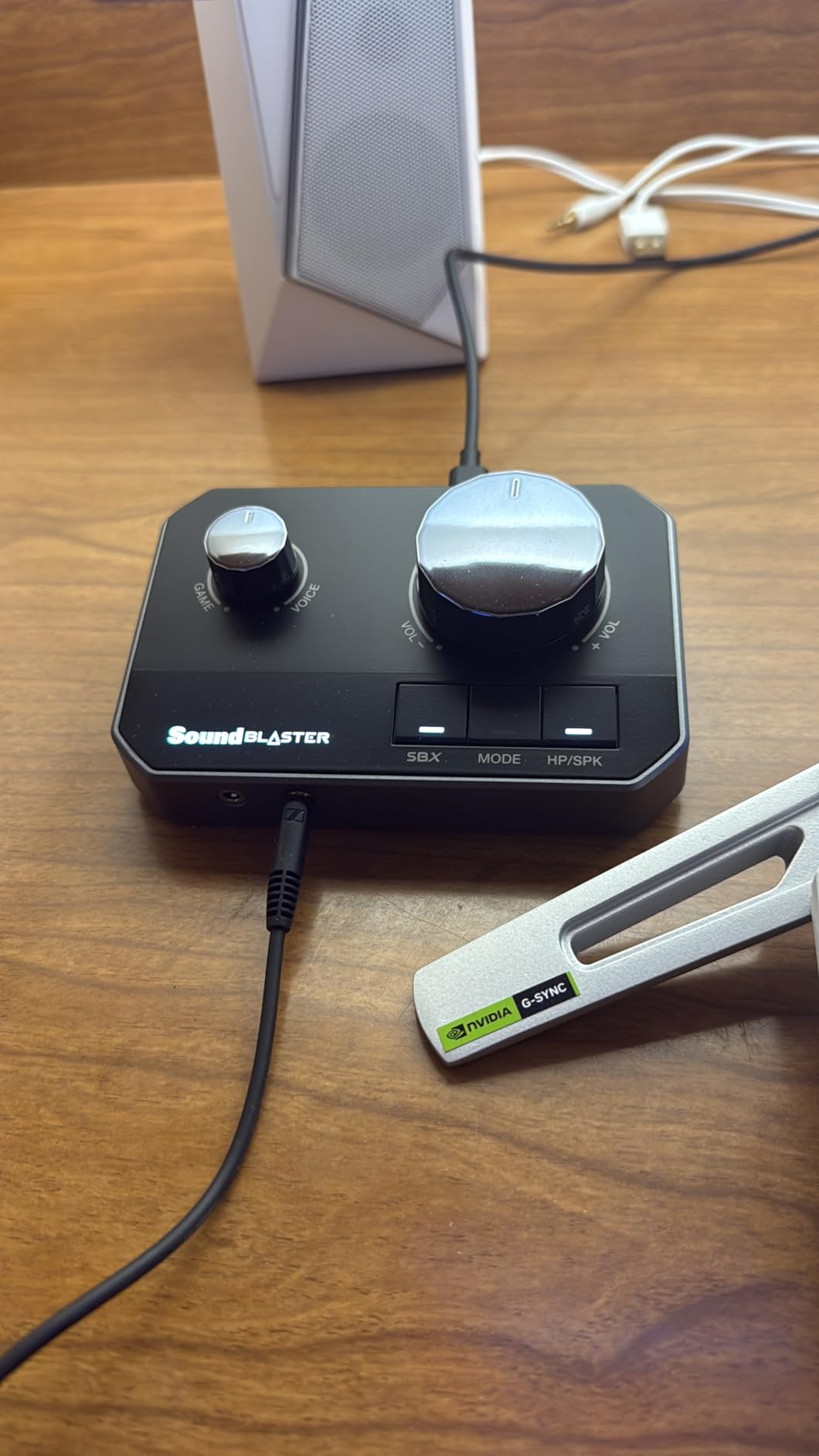
The G8 is the one unit here that treats surround as the main event. It carries a 5.1 surround configuration, the Sound Blaster Acoustic Engine processing suite and Scout mode, which is the feature Competitive game players look for when they want footsteps picked out of a busy mix.
Reviewers repeatedly call the hardware the best-sounding option in this roundup, with the virtual surround widely considered the most natural of the implementations available in a box this compact. Scout mode in particular sharpens the frequencies that footstep cues live in, and the 130dB dynamic range with 120dB signal-to-noise ratio gives it headroom for loud scenes.
The dual USB-C inputs with onboard mixing are the quietly brilliant feature. You can run game audio from a PC and voice chat from a phone or console through the same box without any Windows routing menus, and a physical button switches between speakers and headset.
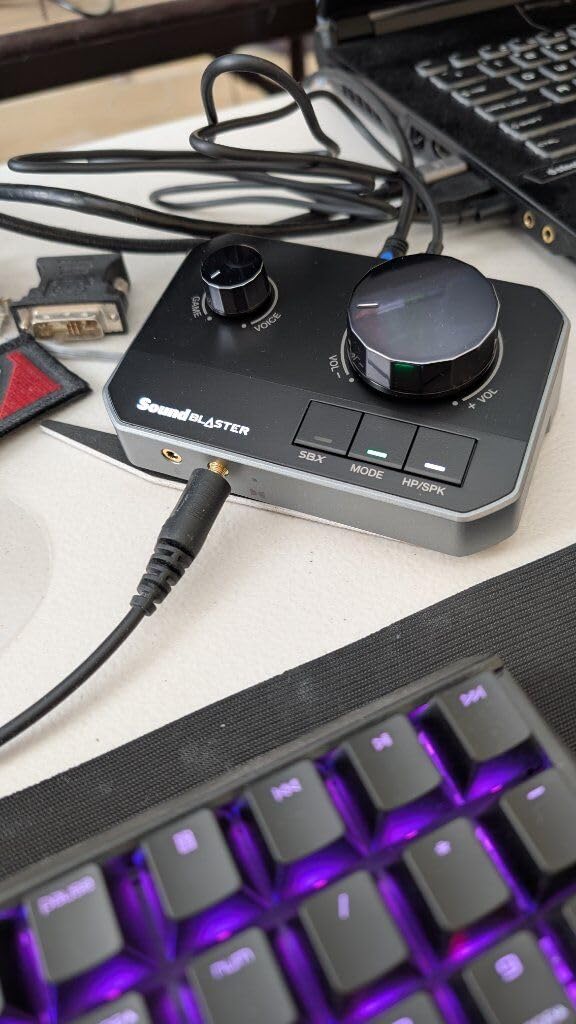
Power comes from a custom Xamp discrete bi-amplifier that drives each channel individually, and reviewers note it has enough output for demanding headphones such as the Sennheiser HD600 or the Beyerdynamic DT770. Playback runs to 32-bit/384kHz natively over USB-C.
Now the part that matters most: nearly all criticism of the G8 targets the Sound Blaster Command software, which buyers describe as difficult, unreliable and prone to breaking the dual-input mixing and sidetone features. Chat and game mixing and sidetone often fail to set up consistently, and the USB 2 chat input frequently refuses to output audio at all.
The volume knob is also reported to behave erratically, jumping to very loud levels in high gain, and some owners see occasional disconnects or shutdowns. The unit is listed without a manufacturer warranty, which is worth weighing given the software dependency.
Why it suits competitive and surround players
It suits players who play shooters and want processing that highlights footstep frequencies without configuring an equalizer, and it suits anyone streaming or chatting who wants two sources mixed in hardware rather than in software.
The physical speaker and headset switch is a small thing that matters daily. And if virtual surround is on your list at all, this is the box built for it.
Where it falls short
It falls short if you are the kind of player who wants zero software involvement. The features people buy it for are the features the software most often fails to deliver reliably.
It also falls short on headphone power compared with the Fosi K7 or FiiO K11, and the absence of a manufacturer warranty is a real consideration on a device with this many moving software parts.
12. SMSL C200 PRO – Best Balanced Desktop DAC at Mid Power
SMSL C200 PRO DAC Headphone Amplifier, ES9039Q2M XU-316 HiFi MQA DAC Amp, DSD512 32Bit/768kHz, Type C USB/Opt/Coax/Bluetooth to RCA/TRS/4.4mm/6.35mm Headphone Amps for Gaming PS5/Switch/PC
1.5 watts into 32 ohm
ES9039Q2M with four OPA1612A op-amps
4.4mm and 6.35mm outputs
Bluetooth with LDAC and aptX HD
Pros
- Very quiet noise floor
- excellent for sensitive IEMs
- Transparent detailed sound with good separation
- 1.5W into 32 ohm handles most modern headphones
- Bluetooth with LDAC and aptX HD plus MQA decoding
- Small footprint with a remote control included
Cons
- Line out and headphone output are mutually exclusive
- Short USB and power cables included
- Some units run hot and one owner reported Bluetooth cutting in and out
- Display and button-only control scheme can be confusing
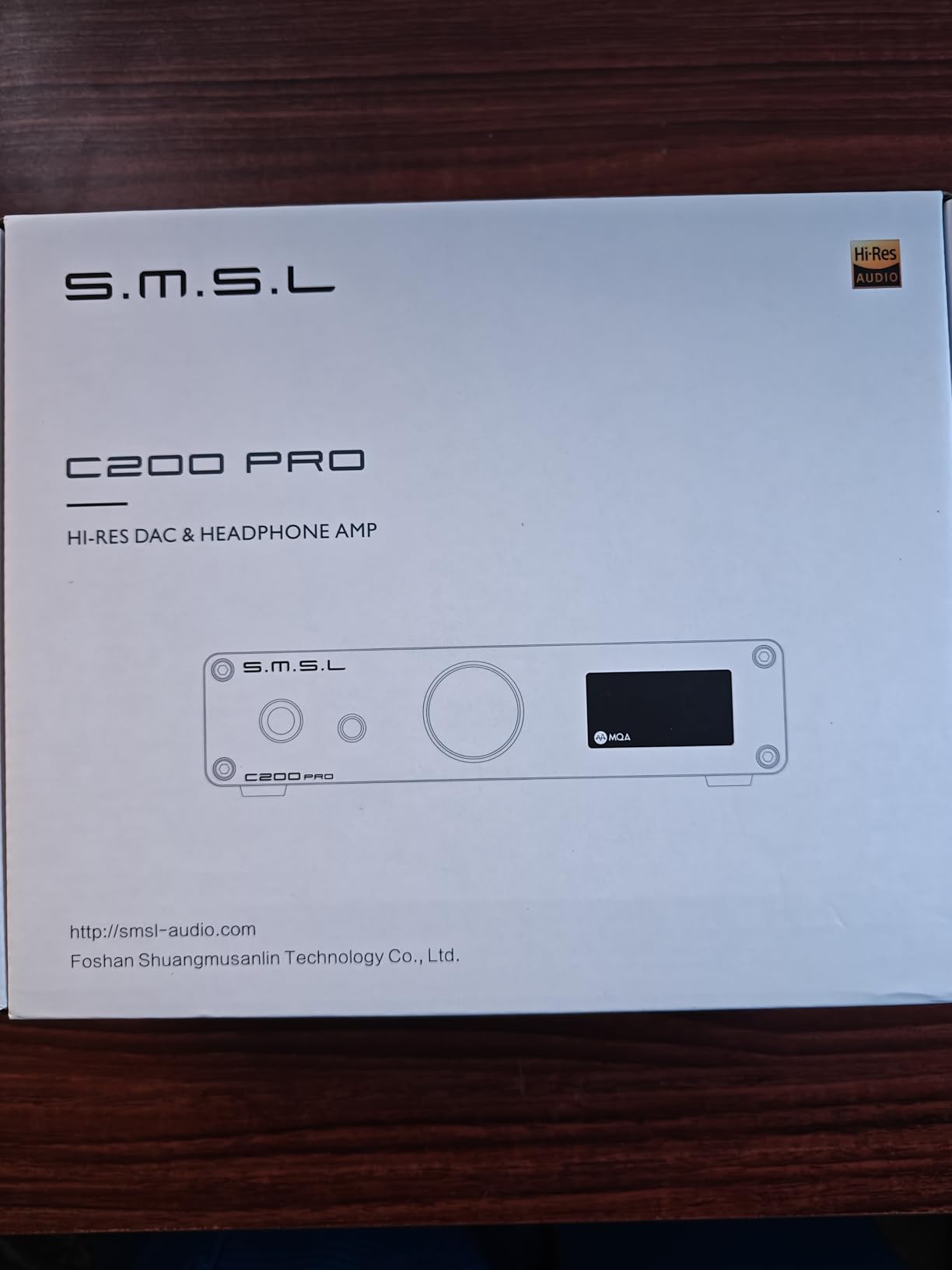
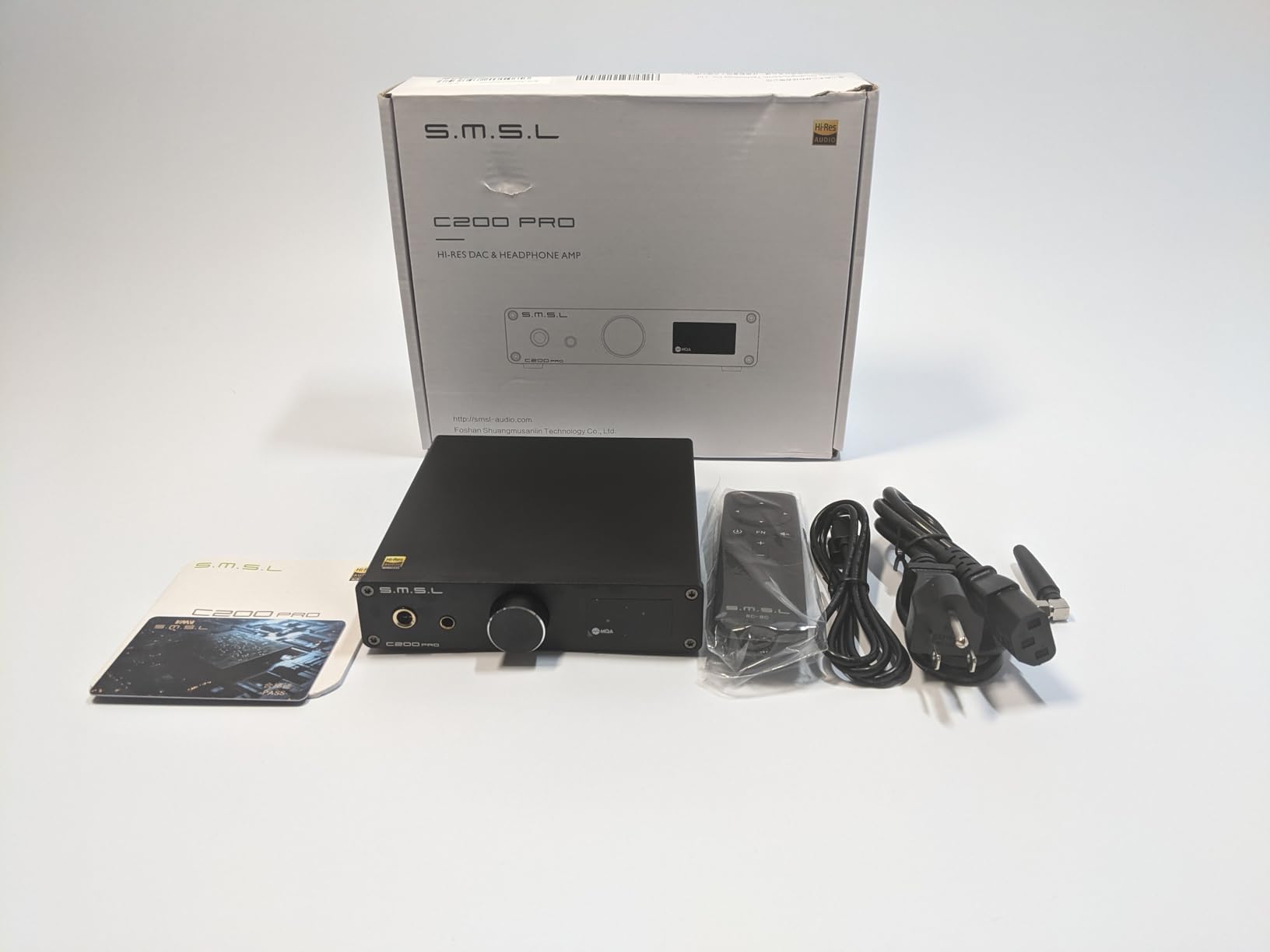
The C200 PRO is the balanced-output answer for players who want more headroom than a dongle but do not need a flagship box. Four OPA1612A op-amps feed 1.5 watts into 32 ohm, with an ESS ES9039Q2M DAC and XMOS XU-316 handling the digital side up to PCM 32-bit/768kHz and DSD512.
It is described as essentially a smaller, even quieter version of the DL100, valued for IEM use and for driving 250 ohm Beyerdynamic DT1990s to comfortable levels. That is a good match for the forum consensus that users on high-impedance headphones run out of volume on entry-level dongles.
Connectivity is broad: USB Type-C, optical and coaxial digital inputs, plus Bluetooth with LDAC at 24-bit/96kHz, aptX, aptX HD, SBC and AAC. MQA and MQA-CD decoding are supported, and a DPLL setting lets you choose clock jitter behaviour from 1 to 9. Outputs include 4.4mm balanced and 6.35mm headphone jacks plus RCA and TRS line out.
The recurring negatives are practical rather than sonic. Line out and headphone output are mutually exclusive, so you cannot feed powered speakers and headphones at the same time. The supplied USB and power cables are very short, and the RCA line out volume is not particularly high.
Some units run hot, and one owner reported Bluetooth cutting in and out. The display with button-only control can be confusing, and the printed manual is nearly illegible. It weighs 1.1 pounds and measures 5.71 by 5.47 inches.
One specific quirk to know: in USB 1.1 mode it is limited to PCM 96kHz, and switching USB modes requires a restart. Once configured correctly it runs at full resolution.
Why it suits balanced users
It suits players who want a 4.4mm balanced connection and a quiet floor for IEMs without stepping up to a large dual-chip desktop. The 1.5W figure covers most modern gaming headsets and mid-impedance headphones with room to spare.
The Bluetooth support with LDAC means it doubles as a wireless headphone DAC, which is unusual at this power level, and the included remote helps with a desk setup.
Where it falls short
It falls short if you need to drive 300 ohm or higher headphones without strain, or if you want line and headphone outputs together. The short cables and restart-on-USB-mode-change are minor but real friction.
And while the balanced jack is smooth, this is a desktop mains unit, so it does not suit handheld or travel gaming.
Do You Even Need a DAC for Gaming?
Honestly, most players do not. If your PC has a real onboard audio chip, or your headset connects over USB with its own sound card, the difference an entry-level converter makes is small. The scenarios where a DAC clearly earns its place are narrower than the marketing suggests.
You need one when your headphones are hard to drive. This is the big one. Owners of 250 ohm headphones such as the HD 6XX or the DT 990 Pro repeatedly report that onboard sound and entry dongles simply cannot get loud enough, which is the single most common reason people move to a desktop unit. If your volume knob bottoms out before the game is loud enough, that is a power problem, not a sound quality problem, and a DAC with real milliwatts solves it.
You need one when your audio is noisy. Electrical hum and channel noise from a gaming PC are extremely common, especially with a power-hungry graphics card in the system. A DAC with an optical input, or simply a cleaner USB path, removes the problem in a way no in-game setting can.
You need one when you want hardware control. A physical volume knob that adjusts only your headphones, not your whole system, is a genuine quality-of-life improvement. So is a bass and treble control you can adjust in two seconds, which on a competitive shooter can matter.
You might want one for mic handling. If you are tired of routing chat through motherboard audio, a DAC with a mic input collapses that into one device. But a separate USB microphone or a decent interface does the same job, and a mic input on a DAC will not give you the monitoring controls a real interface provides.
You do not need one for subtle fidelity. Once your headphone is decent and your volume is adequate, a standard audiophile DAC is sufficient, and the difference between a good DAC and a great one is not what wins matches. Chipset names like ES9038 or CS43131 matter far less in gaming than forums suggest.
How to Choose a Headphone DAC for Gaming
Five criteria decide almost every purchase, and only the first is about sound. Work through them in order and the right product tends to identify itself.
1. Match output power to your headphone impedance
This is the number one question in every gaming audio thread and the one no roundup answers in list form, so here is the mapping. A DAC should deliver roughly 10mW per ohm of headphone impedance to reach a comfortable level with headroom to spare.
16 ohm (IEMs, some gaming buds): 160mW or more. For sensitive in-ears, low power is fine, but a low noise floor matters more than milliwatts.
32 ohm (most gaming headsets): 320mW or more for comfort. Under 100mW and you will be turning the volume up further than you would like.
64 ohm (mid-range headsets): 640mW or more. Units in the Fosi K5 Pro and K7 class cover this comfortably.
250 to 300 ohm (HD 6XX Pro, DT 990 Pro): 2.5W to 3W equivalent voltage drive, or use the balanced output. This is where entry-level dongles fail and where the FiiO K11, Fosi K7 and Topping DX5 II earn their price.
600 ohm planars: You want voltage drive rather than raw power. Look for a stated 7Vrms or higher figure, which is what the SMSL DS100 quotes into 600 ohm.
Two practical notes. The balanced 4.4mm output usually delivers more clean voltage than the single-ended jack on the same box, which is why a 390mW balanced spec can beat a nominally similar single-ended one. And the Topping DX5 II is the clearest warning: its 7600mW per channel rating is balanced only, and the single-ended output is far lower.
2. Pick the right form factor for where you play
Gamers need three shapes of device, and the roundup above is weighted toward desktop boxes because that is where the power and features are. For a laptop or Switch in handheld mode, a battery-powered dongle is the only answer, because desktop boxes need mains power. For a docked Switch or PS5, a USB-C unit with optical input is the cleanest route.
Also consider gain settings. If you have a toggle for high gain, use it with high-impedance headphones and low gain with sensitive IEMs, or you will amplify noise into an audible hiss at low volumes.
3. Check for a mic input if you use voice chat
Only some of these units have one. The Fosi Audio K5 Pro and K7, the Syba Sonic and the Sound Blaster G8 all include a mic input, which lets you keep headphones and chat on a single device. The rest expect your microphone to connect elsewhere, which is completely normal.
Sidetone, which lets you hear your own voice in the headset, is rarer still. If you stream or do team chat, its absence is a real adjustment to make.
4. Balanced versus single-ended, and what actually matters
Balanced output routes the two channels of each stereo signal separately, which cuts ground loop noise and typically increases output voltage per channel. It is a genuine improvement, not a marketing trick, but it requires a balanced cable and a balanced input on your headphone. The consensus across the forums is simple: buy balanced if your headphones have a 4.4mm or 4-pin XLR cable, and ignore the label if they do not.
For most gamers, output power, mic input, form factor and whether the software is annoying matter far more than balanced versus single-ended. Buy the balanced output second.
5. Confirm platform support and software requirements
Several units here ask you to install a Windows driver: the iFi Zen DAC V3 for full high-resolution modes, the SMSL DS100, and the FiiO K11 if you want ASIO. That is a five-minute job with a restart, but it is worth knowing before a gaming session.
For click, pop and latency problems on Windows, the fixes are in the sound control panel: turn off all enhancements and spatial effects for the device, and enable exclusive mode so the application talks to the DAC directly. Exclusive mode removes resampling, and it occasionally needs toggling after a Windows update. If a click appears on playback, switching the sample rate in the DAC menu is usually faster than changing it in Windows.
And a note on tuning
Game audio EQ in software, or the hardware tone controls on the Fosi units, will change your positional awareness far more than any DAC choice. Turning a couple of notches off the bass and a couple up on the treble makes footsteps easier to locate in most shooters. That is free tuning on hardware most players already own, and it matters more than chipset generations.
Frequently Asked Questions
What is the best DAC and amp for gaming?
For most players the best gaming DAC and amp is the Fosi Audio Q4, because it is simple to connect, has physical bass and treble knobs, and drives headphones from 16 to 200 ohm. If your headphones are 250 ohm or higher, choose something with more power such as the FiiO K11 or the Fosi Audio K7, and if you use voice chat, pick a unit with a mic input like the Fosi Audio K5 Pro.
Is a DAC amp good for gaming?
A DAC amp is good for gaming when your current audio cannot get loud enough, is noisy, or has no hardware volume control. It will not make a well-tuned game sound dramatically better through a good headset. The real gains are more volume, less electrical noise, physical controls and sometimes a mic input for chat.
Do I need a DAC for gaming headphones?
You need one if your headphones are 32 ohm or higher and your onboard audio runs out of volume, if you hear hum or channel noise, or if you want a physical volume knob and tone controls. You do not need one if your headset has its own USB sound card and the volume and noise are already acceptable.
Is a balanced DAC better for gaming?
Balanced output is a real improvement because it carries each channel separately, cutting ground noise and usually raising output voltage. It only helps if your headphones use a balanced 4.4mm or 4-pin XLR cable, and it cannot compensate for insufficient output power. Match the DAC to your headphone impedance first, then choose balanced second.
What output power do I need for 300 ohm headphones?
For 300 ohm headphones you want roughly 3 watts of capability, or a unit that offers high voltage drive such as 7Vrms. The FiiO K11 reaches 1400mW into harder loads and the Fosi Audio K7 reaches 2100mW, both of which handle 300 ohm pairs well. Using the 4.4mm balanced output generally gives you more clean level from the same box.
Can I use a headphone DAC with a gaming mic?
Yes, if the DAC has a mic input, which the Fosi Audio K5 Pro, Fosi Audio K7, Syba Sonic and Sound Blaster G8 all provide. Plug the headset mic into that jack and the game audio out through the headphone jack. If your DAC has no mic input, the microphone connects separately through your PC, console or a USB interface, which works perfectly well.
Our Best Headphone DAC for Gaming in 2026
The Fosi Audio Q4 is the best headphone DAC for gaming in 2026 because it solves the actual problems players have, at a price that does not demand research. Three physical knobs, no drivers, no software, and enough range to cover everything from a 32 ohm gaming headset to 200 ohm headphones.
Pick a different one only for a specific reason. Go for the FiiO K11 or Fosi Audio K7 if your headphones are 250 ohm or harder and you need real power. Choose the Fosi Audio K5 Pro if you want a mic input on the same box. Go for the Sound Blaster G8 if virtual surround processing is a requirement rather than a nice-to-have, and accept the software trade-off. For balanced listening on a desktop setup, the iFi Zen DAC V3 or the SMSL C200 PRO are the sensible picks.
And if none of it applies to you yet, test your current setup honestly first. Sometimes the best headphone DAC for gaming is the one you already have, and the honest answer in 2026 is still the honest one.