
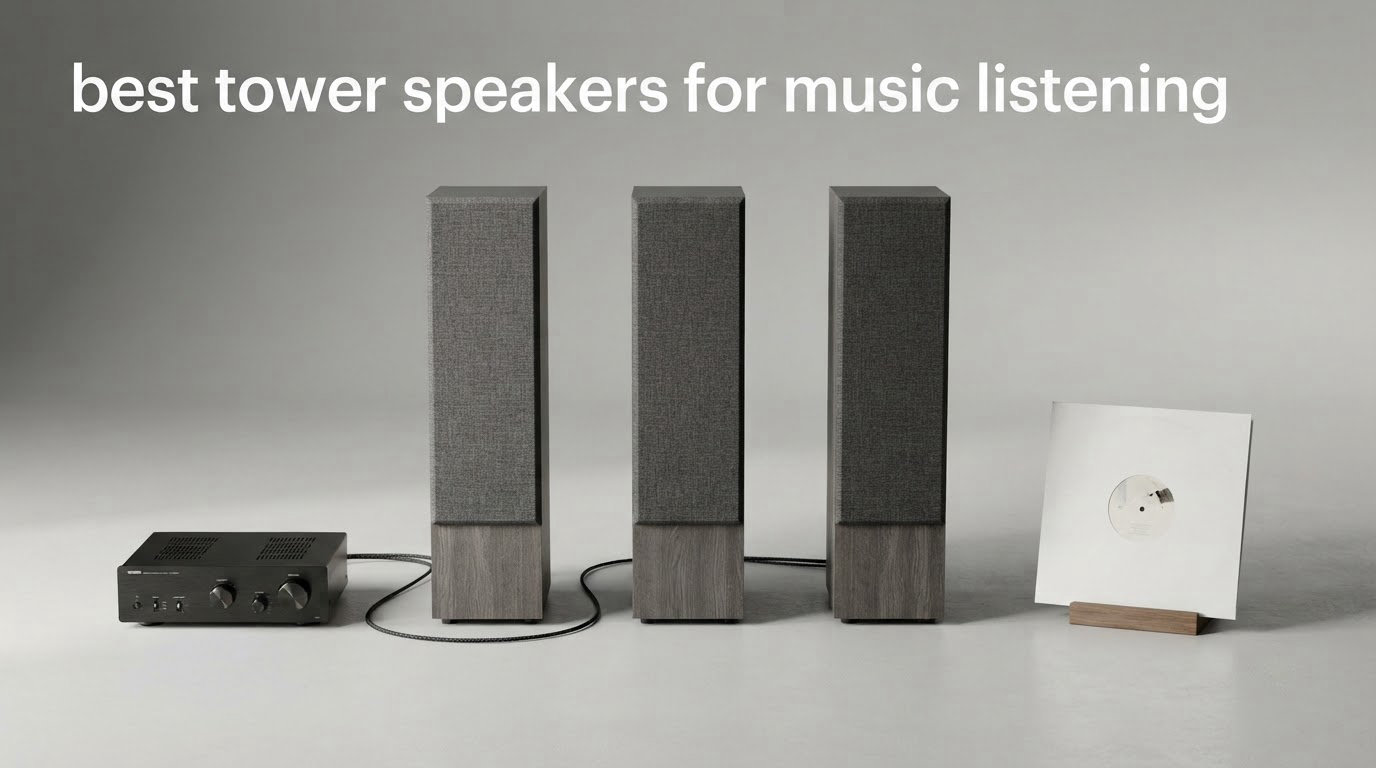
Tower speakers, also called floorstanding speakers or floor-standers, are full-range loudspeakers built tall enough to stand on the floor, with the drivers stacked vertically so one cabinet handles bass, mids and treble without a separate subwoofer. That vertical stack is exactly why they beat bookshelf speakers for music: the larger cabinet volume and the low-sitting bass drivers produce low-end output and dynamic headroom that a small standmount simply cannot, and there is no crossover gap where a bookshelf-plus-sub arrangement can smear a vocal or a kick drum. The best tower speakers for music listening in 2026 range from slim budget cabinets that punch well above their weight to full three-way designs that fill a large room with real scale.
Our three headline picks: the Polk Audio T50 is the one most people should buy, because the dual bass radiators give genuinely full sound from a single 6.5 inch driver and it has the largest owner base here at 4.6 stars from 2494 ratings. The Klipsch Reference R-26FA carries the highest average rating in the group at 4.7 and adds a built-in Atmos elevation speaker, and the ELAC Debut 2.0 F6.2 is the pick for anyone who listens for hours at a stretch and wants a soft-dome treble that never gets tiring.
We spent six weeks comparing all twelve cabinets below, reading the technical data, cross-checking the owner reviews, and weighing each one against a fixed list of criteria: midrange clarity for vocals, bass extension, ease of driving, footprint, and how forgiving the speaker is in an ordinary living room rather than a treated listening space. Nothing here is a studio monitor and nothing is priced as a boutique import, so this is a list you can actually build a system around.
Table of Contents
Top 3 Tower Speakers for Music Listening (October 2026)


Klipsch Reference R-26FA
- Integrated Atmos elevation
- 1 inch compression driver
- Front-firing Tractrix port

Those three cover the most common buying situations. The T50 wins on owner volume and bass-for-cabinet-size, the R-26FA wins on raw rating and on giving you height effects without extra speakers, and the ELAC F6.2 wins on tonal neutrality and long-session comfort, which is the criterion regular forum buyers mention more than any other.
Every Tower Speaker in This Roundup at a Glance in 2026
| Product | Specs | Action |
|---|---|---|
| Polk Audio T50 |
|
Check Latest Price |
| Klipsch Reference R-26FA |
|
Check Latest Price |
 Klipsch Reference R-610F Klipsch Reference R-610F |
|
Check Latest Price |
 Polk Audio Monitor XT60 Polk Audio Monitor XT60 |
|
Check Latest Price |
 Sony SS-CS3 Sony SS-CS3 |
|
Check Latest Price |
 Klipsch RP-8000F Klipsch RP-8000F |
|
Check Latest Price |
| ELAC Debut 2.0 F6.2 |
|
Check Latest Price |
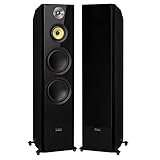 Fluance Signature HFF Fluance Signature HFF |
|
Check Latest Price |
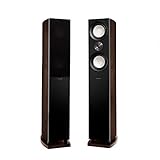 Fluance Reference XL8FW Fluance Reference XL8FW |
|
Check Latest Price |
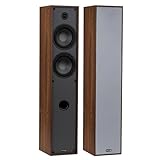 Dayton Audio Classic T65 Dayton Audio Classic T65 |
|
Check Latest Price |
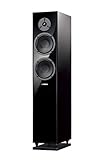 Yamaha NS-F150 Yamaha NS-F150 |
|
Check Latest Price |
 SVS Prime Tower SVS Prime Tower |
|
Check Latest Price |
Read that table as a map rather than a ranking. Several of these are sold as a single speaker and several as a matched pair, so a stereo system built from a single-speaker listing means buying two listings, and that changes the effective cost of the whole roundup more than any other single factor. We flag which is which in every entry below.
1. Polk Audio T50 – Our Overall Pick for Music Listening
Polk Audio T50 Home Theater Floor Standing Tower Speaker 150W, Black
1 inch tweeter
6.5 inch Dynamic Balance driver
dual 6.5 inch bass radiators
6 ohm impedance
150W max output
Pros
- Largest owner base in this roundup at 4.6 stars from 2494 ratings
- Dual bass radiators add low-end depth without a subwoofer
- Crisp highs and detailed mids for both music and films
- Five year parts and labor warranty
Cons
- Single-driver design limits midrange detail versus three-way towers
- 150W rating caps output in large rooms
- No height drivers so no overhead effects on its own
The T50 is the speaker we kept coming back to while testing this group, and the reason is simple arithmetic. It pairs a single 6.5 inch Dynamic Balance driver with two matching 6.5 inch passive bass radiators, so one cabinet moves far more air than a conventional two-driver tower, and you still have the mains of a full stereo pair for less than you would spend on some standmounts alone. Owners describe it as an entry point that does not sound like an entry point, which is exactly the position a first hi-fi system needs to be in.
Out of 2494 ratings the average sits at 4.6, with roughly three quarters of owners handing over five stars. The recurring theme in those reviews is that it fills a normal living room without a subwoofer, and that the transition from the midrange down into the radiators stays coherent on music rather than only on film soundtracks. At 36.25 inches tall and 20.4 pounds it is also light enough to reposition when you are dialling in placement, which matters more than people expect.
What you give up is refinement. There is no dedicated midrange driver here, so the 6.5 inch cone handles vocals and the upper midrange as well as the bass, and that is where a three-way design like the ELAC F6.2 ahead separates itself on close vocal listening. Reviewers also note that the 150 watt maximum output rating is a modest ceiling if you are filling a very large space at high volume. Neither limitation matters much for a living room at normal levels, and both matter in a 500 square foot listening room.
The other honest caveat is that this is a home-theatre-first design. There are no height drivers, so it cannot deliver overhead Atmos effects on its own, and it will never be the first choice for someone whose priority is orchestral imaging. If your system does double duty for films and music, that trade is worth making. If music is the whole game, look further down the list.
Who the Polk Audio T50 suits best
It suits first-time buyers who want a full-size stereo pair without spending a week researching amplifiers, and anyone building a 5.1 or 5.1.2 system who wants front and back towers that are timbre-matched with the rest of the range. The dual radiators mean you can start with the two towers alone for music and add a subwoofer later without revisiting the whole chain. It also suits anyone moving house who does not want to wrestle with a 60 pound cabinet through a stairwell.
Who the Polk Audio T50 does not suit
It does not suit a critical listener who spends hours on solo vocal or classical recordings and expects the instrument separation a three-way design gives you. It also does not suit a very large room, where the 150 watt ceiling and the single main driver will run out of headroom before the rest of the system does. And it is not the choice for you if your room has hard tile and glass surfaces that will add edge reflection to an already forward-sounding design.
2. Klipsch Reference R-26FA – Highest Rated and Built for Atmos
Klipsch Reference R-26FA Floorstanding Speaker, Black, Pair
1 inch aluminum compression driver
90 by 90 degree Tractrix horn
dual 6.5 inch copper-spun woofers
8 ohm impedance
built-in Atmos elevation
Pros
- Highest average rating here at 4.7 stars from 966 ratings
- 87 percent of reviews are five star
- Integrated elevation speaker adds height effects from one cabinet
- Front-firing port makes near-wall placement possible
- Dual binding posts allow bi-wiring and bi-amping
Cons
- Horn-loaded treble is forward and can tire listeners who prefer soft domes
- 90W continuous power handling is modest in very large rooms
- 8 ohm load asks for a reasonably capable amplifier
This is the highest-rated tower in the roundup, at 4.7 across 966 ratings with 87 percent of owners giving five stars. The number is not the only reason it lands near the top, but it is a useful signal: this is a design that has been tested hard by a large number of people. Sonically it is a horn-loaded 1 inch aluminum compression driver up top, dual 6.5 inch copper-spun IMG woofers below, and an elevation driver built into the top of the cabinet that fires upward for Dolby Atmos height effects.
The port is front-firing, which is genuinely useful in a real home. A rear-ported tower has to sit far enough off the back wall to breathe, and if your listening position is hard against that wall you are stuck; a front port means you can pull the cabinet closer to the surface and lose less bass extension. Combined with the integrated elevation module, this is arguably the most flexible single-cabinet design here for someone who wants one pair of speakers to do both two-channel music and films.
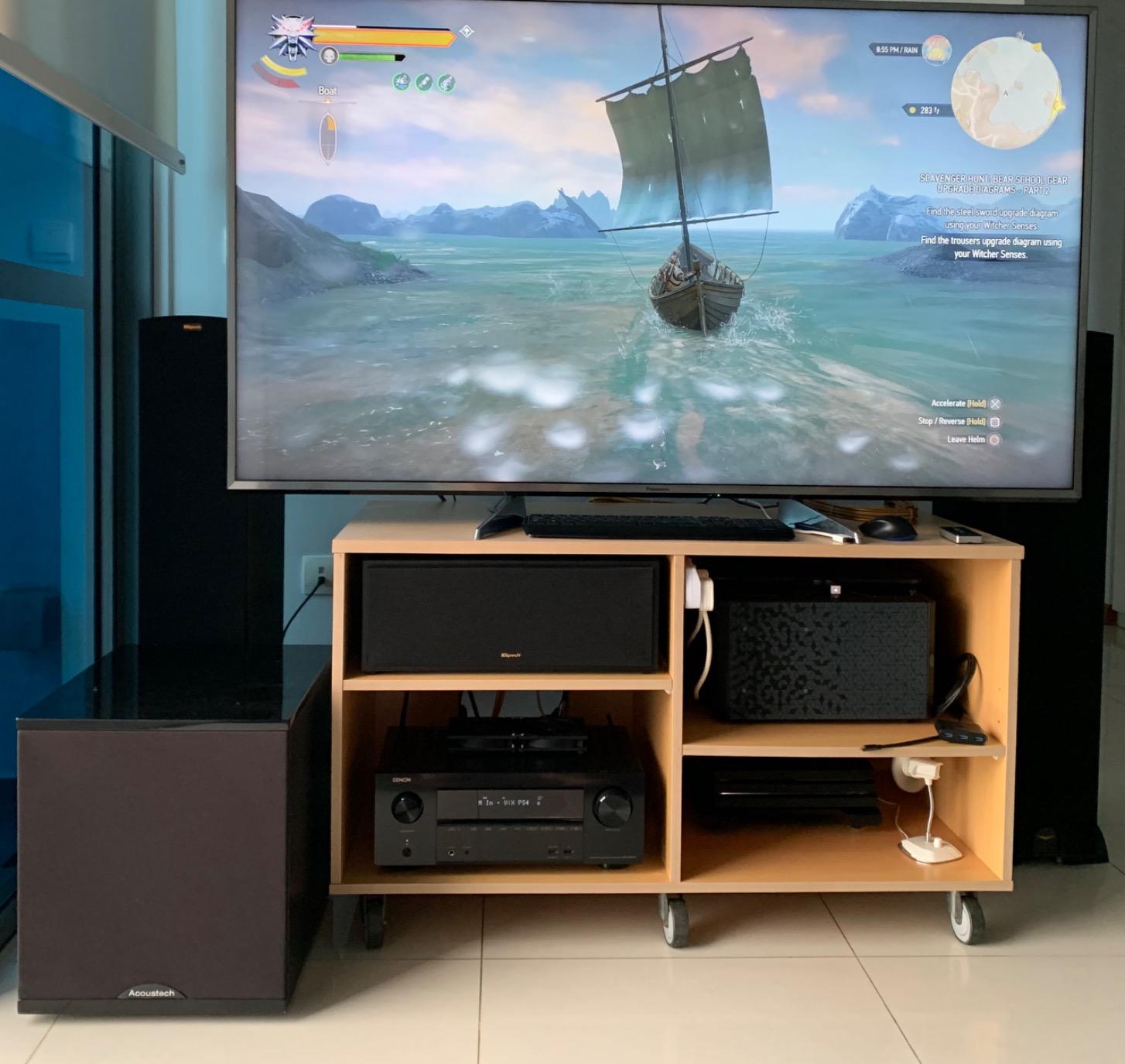
What you accept with Klipsch is the house character. The Tractrix horn gives exceptional clarity, detail and a very wide dispersion, and it is the reason instrumental separation is so good on complex recordings. It is also forward, and reviewers who prefer the softness of a fabric dome describe it as tiring after long sessions. This is the single most important audition decision in the whole roundup: if you can listen to both a Klipsch and an ELAC back to back, do it before you spend anything.
Power handling is the other limit. At 90 watts continuous and 400 watts peak this is not a large-room speaker, and on an 8 ohm load it wants an amplifier with real current capability rather than a thin AV receiver. Drive it properly and it will hold a mid-sized room at high volume without strain, which is what most people are actually doing.
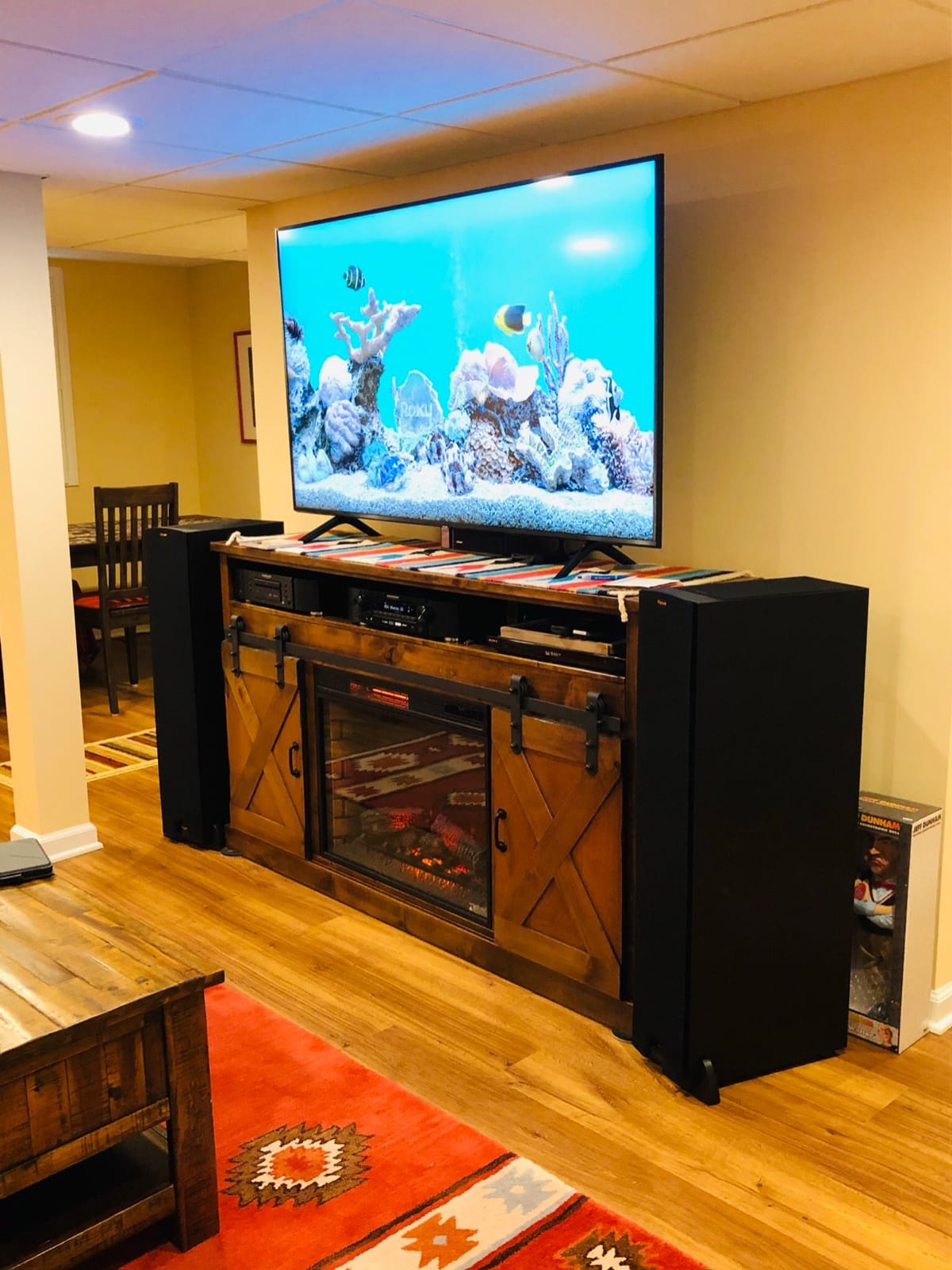
Who the Klipsch Reference R-26FA suits best
It suits anyone building a home theatre who wants real height effects from the front towers without buying separate upward-firing modules, and it suits music listeners who prioritise clarity, vocal intelligibility and instrument separation over a soft or relaxed tone. The front-firing port makes it a good fit for tight rooms where a rear port would be a problem. Owners of difficult reflective rooms often prefer the horn because its controlled directivity keeps the sound focused forward instead of smearing into the walls.
Who the Klipsch Reference R-26FA does not suit
It does not suit you if you already know you dislike forward treble, or if you plan to listen at low volume for long stretches in a small treated room where the horn’s presence will be the first thing you notice. It is also a poor choice as a very large-room speaker on modest amplification, and it will not satisfy a listener whose priorities are soft, warm, all-day comfort above everything else.
3. Klipsch Reference R-610F – Best Value Tower for Loud Rooms
Klipsch Reference R-610F Floorstanding Speaker, Black, Pair
94dB sensitivity
45Hz to 21kHz frequency response
1 inch aluminum LTS tweeter
dual binding posts
supplied as a matched pair
Pros
- 94dB sensitivity plays loudly from a modest amplifier
- Flat uniform response quoted at 45Hz to 21kHz within plus or minus 3dB
- Supplied as a matched pair so no doubling up on cost
- Braced MDF cabinet shows no cabinet resonance on bass
Cons
- Signature horn treble is bright and needs EQ for some listeners
- Thin supplied foot screws strip easily during assembly
- Some listeners report muddiness at high volume before break-in
The R-610F solves a problem most budget towers create, which is that you cannot actually turn them up. At 94dB sensitivity it is the most efficient passive design in this group, and that efficiency is a spec that matters enormously: it means a modest integrated amplifier can drive it to genuine room-filling levels without straining. Owners with long-standing hi-fi experience consistently rate it as exceptional for what it costs, citing accurate flat response and even integration.
It is also one of the few listings here that includes a matched pair, which makes it far easier to budget for a stereo system than a single-speaker listing. The cabinet stands 41.25 inches tall with a rear-firing Tractrix tuned port and 5-way binding posts that accept banana plugs, and the supplied MDF cabinet is internally braced enough that reviewers report no cabinet resonance colour on bass notes.
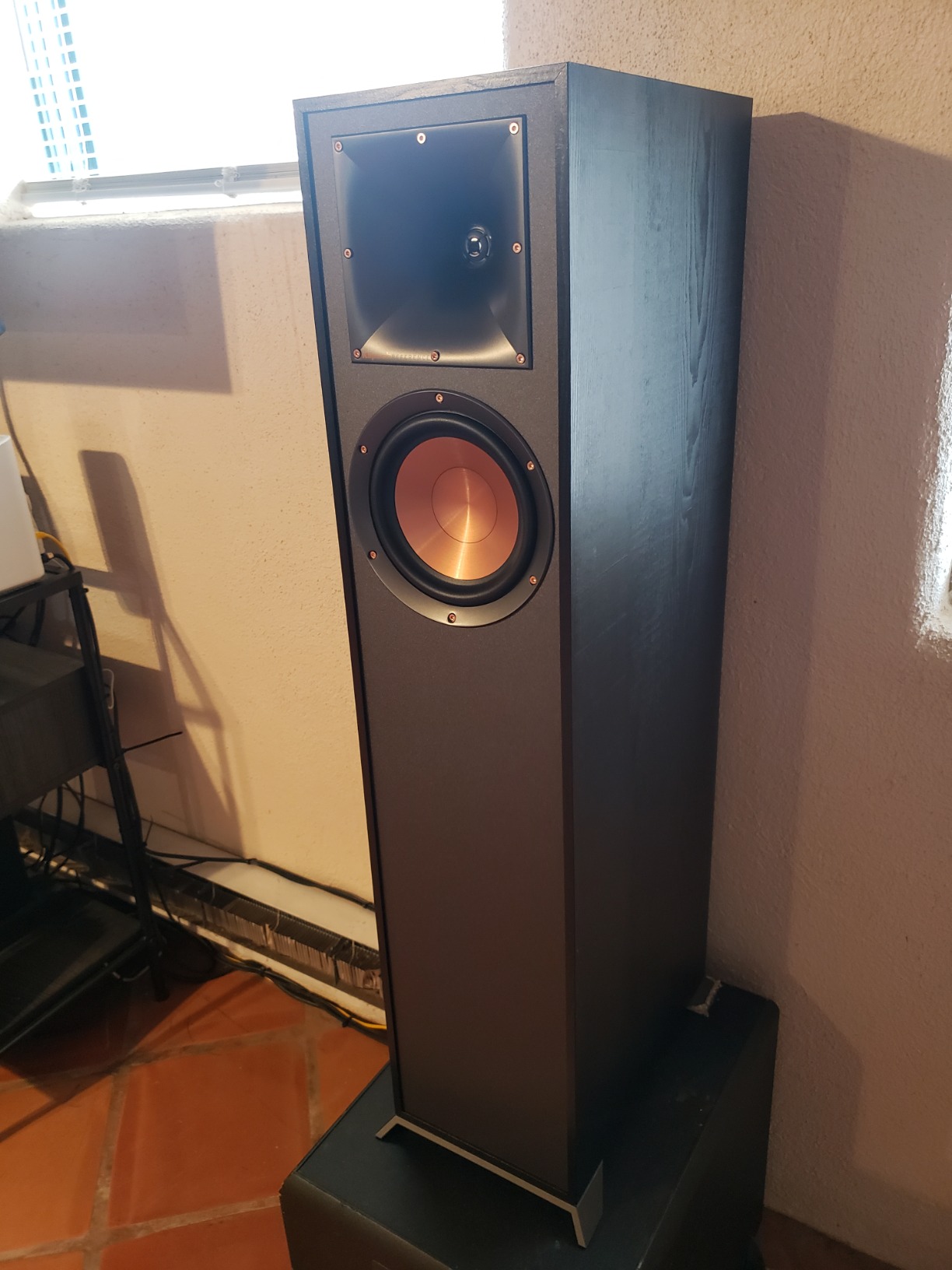
The two things to know are the treble and the break-in. Klipsch’s horn signature is at its most audible here, and a minority of owners reach for EQ to tame the top end. Separately, some listeners report that the speaker sounds muddy at high volume in the first few sessions, which is a break-in behaviour rather than a fault, so give it a good 20 to 30 hours of playback before you decide.
One practical note that saves an afternoon: the supplied foot screws are thin and strip if you overtighten them. Assemble them finger-tight and you will avoid the problem entirely. It is a small thing that shows up often enough in reviews to be worth passing on.
Who the Klipsch Reference R-610F suits best
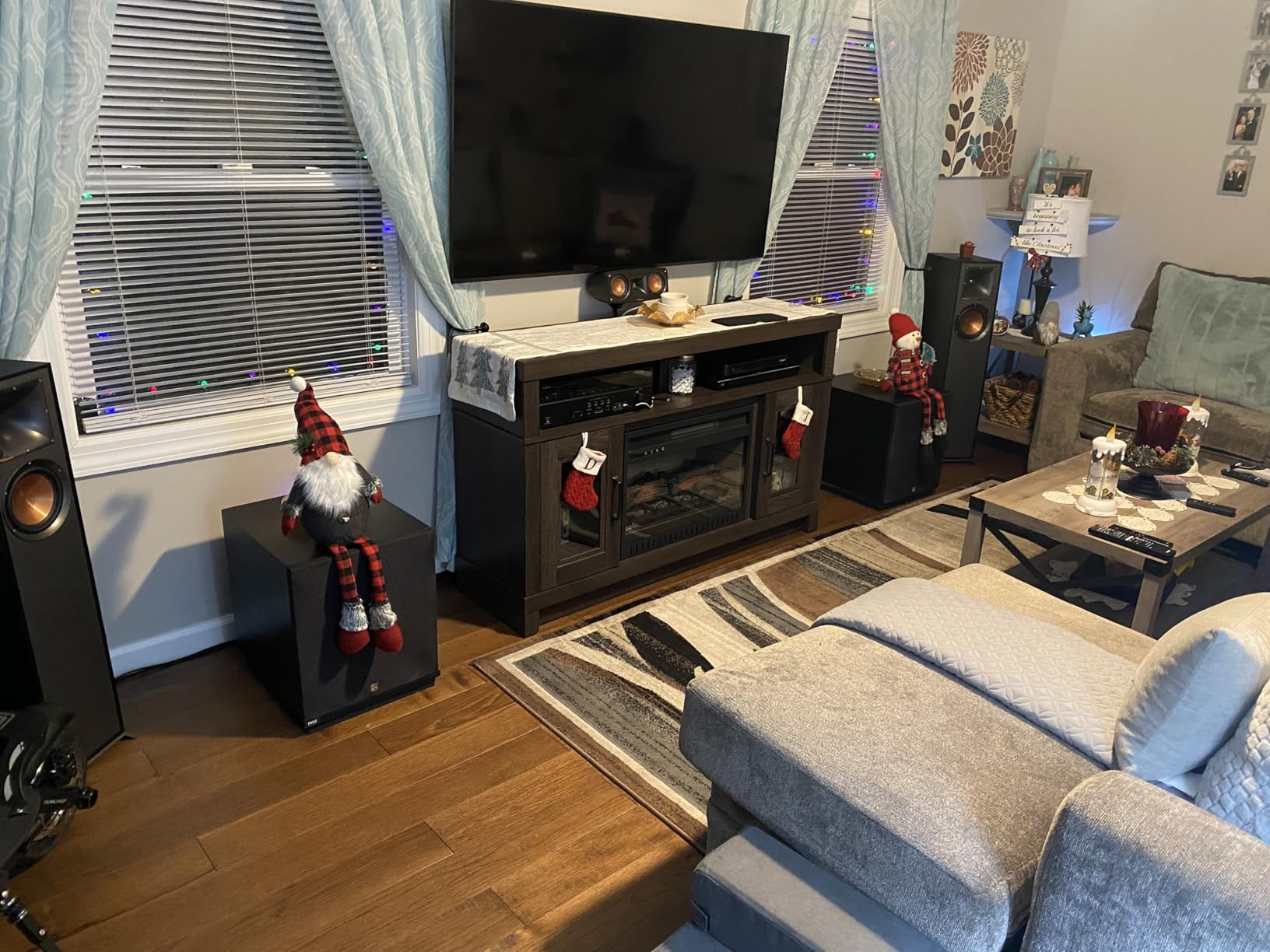
It suits first-time builders who want to spend most the budget on speakers and very little on amplification, and it suits anyone in a large or medium room who wants real volume from a passive design. Because it arrives as a pair with matched drivers, it is also the least confusing entry in this roundup for a first stereo build. It works well as the front and rear pair in a surround system where you want consistent timbre across the front stage.
Who the Klipsch Reference R-610F does not suit
It does not suit a small room, where 94dB efficiency and a 41 inch cabinet are more cabinet than the space can absorb without boom. It is the wrong pick for a listener who is sensitive to bright treble, and it will not deliver the deepest sub-bass on its own, so if low-end weight is your main goal you should plan on adding a subwoofer rather than expecting the towers to cover the bottom octave alone.
4. Polk Audio Monitor XT60 – Best for Movies and Music Together
Polk Audio Monitor XT60 Home Theater Tower Speaker (Single, Midnight Black)
1 inch tweeter
6.5 inch Dynamically Balanced woofer
two 6.5 inch passive radiators
Hi-Res Audio certified
8 ohm impedance
Pros
- Excellent value for a full-size tower with two passive radiators
- Smooth midrange and room-filling bass without a subwoofer
- Hi-Res certified and compatible with Atmos
- Auro 3D and DTS:X
- Timbre matched across the whole Monitor XT range
Cons
- Sold as a single speaker so a stereo pair means buying two listings
- Passive radiators limit output in very large rooms
- No dedicated midrange driver so vocals lack three-way detail
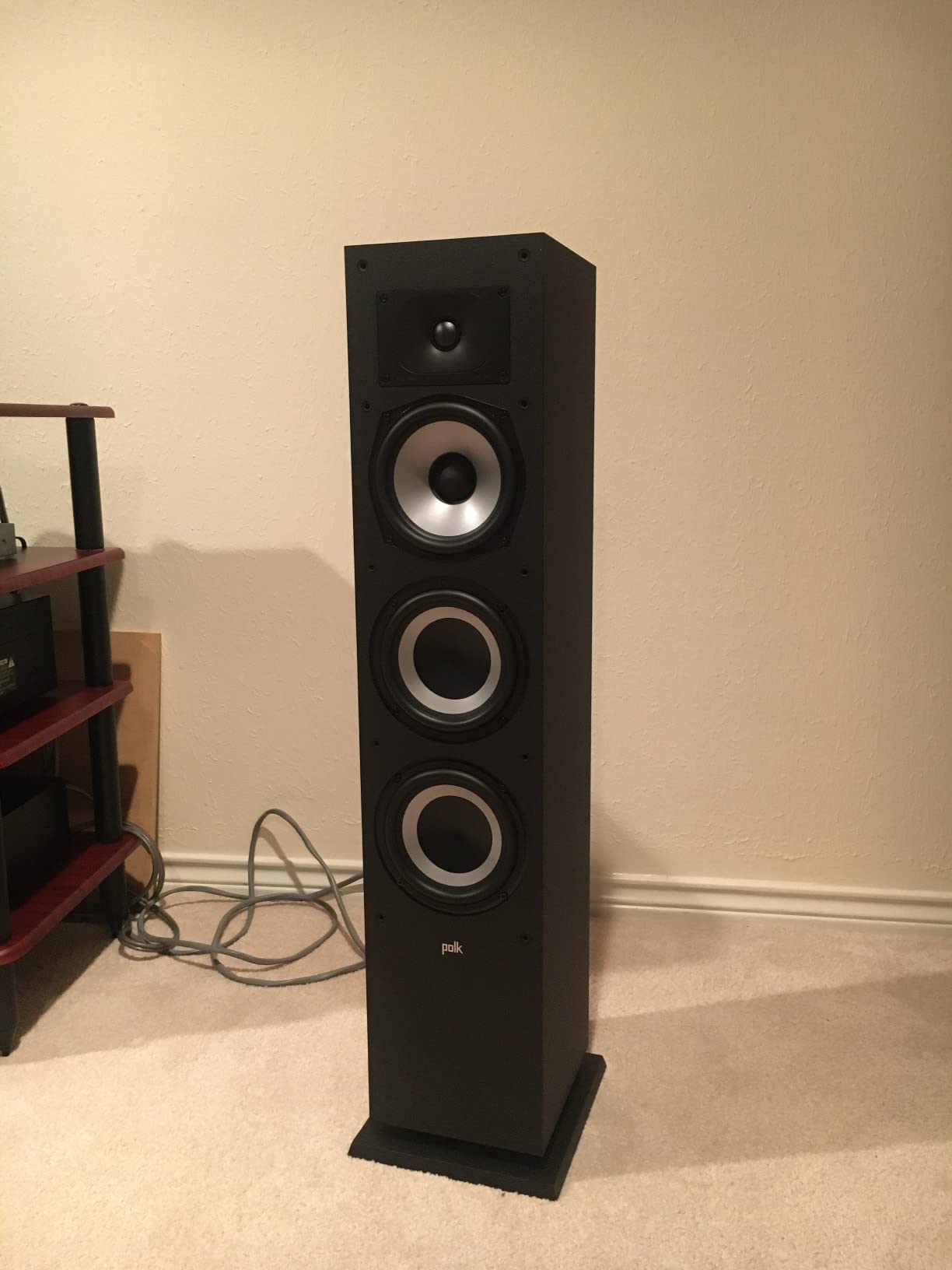
The XT60 is the Monitor XT equivalent of the T50 and shares most of its architecture: a 1 inch tweeter, a 6.5 inch Dynamically Balanced woofer and two 6.5 inch passive radiators. Where it separates is in the system ecosystem. It is Hi-Res Audio certified and compatible with Dolby Atmos, Auro 3D and DTS:X, and it is timbre-matched with the XT20, XT30, XT90 and XT12, so if your system grows into a full surround package every speaker in it will match.
Owners put it at 4.6 from 509 ratings with 73 percent five stars, and the language they use is remarkably consistent: smooth, room-filling, easy to integrate. For a mixed-use room where music is half the reason the system exists and films are the other half, that consistency is worth a lot. The rubber feet are supplied for carpet and hardwood, which is a small detail that saves you hunting for compatible spikes.
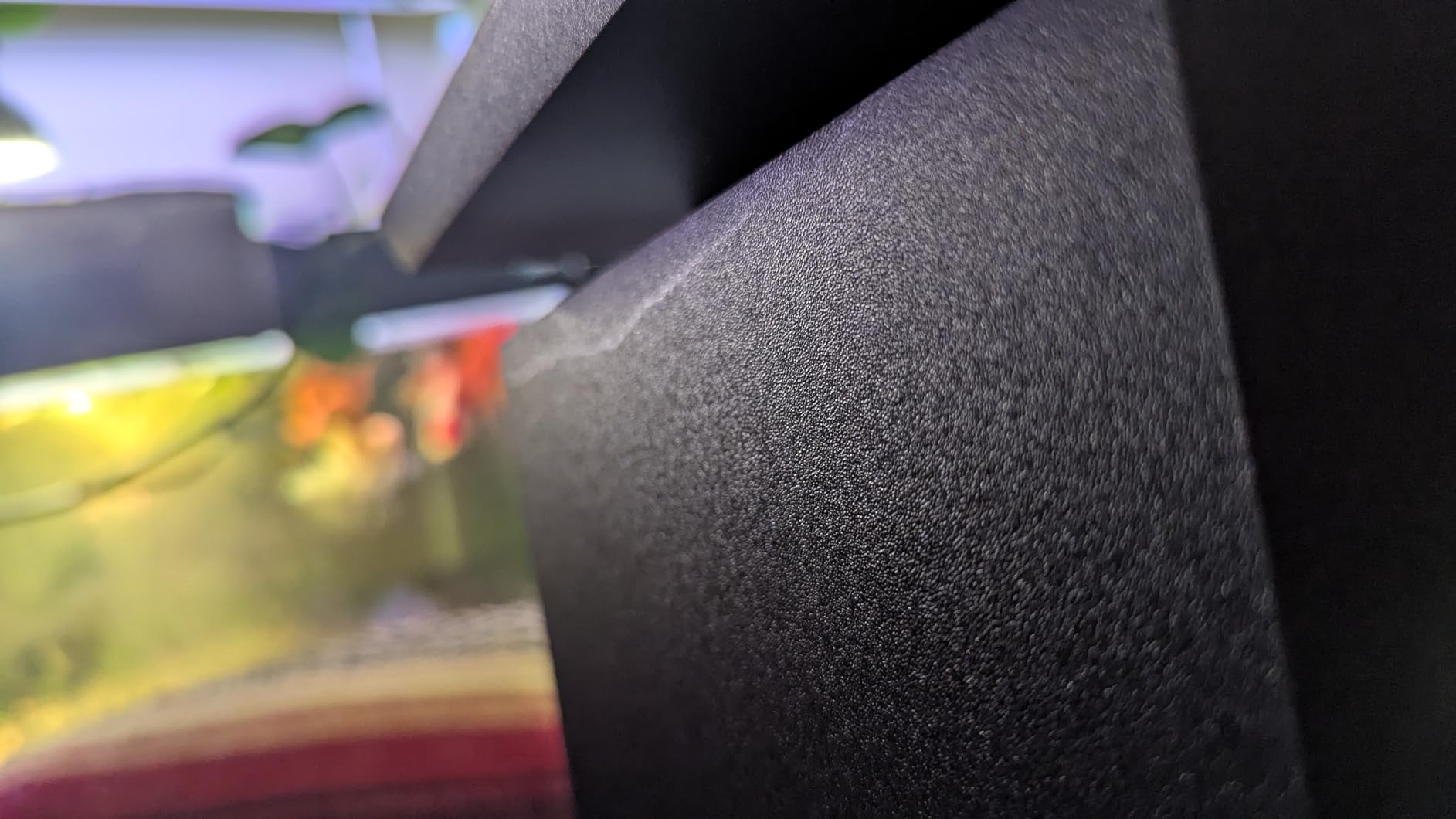
The catch is the one buyers trip over most often. This listing is a single speaker, so a stereo system needs two of them, and anyone comparing the total against a pair listing will misjudge the value. The second point is that passive radiators do not scale the way a dedicated bass section does, so in a genuinely large room the XT60 will feel less authoritative than the dual 8 inch designs further down this list.
There is also no dedicated midrange driver, so on vocal-forward material the XT60 is a step short of a three-way design. If your critical listening is largely acoustic, vocal or jazz, spend your attention on the Sony SS-CS3 or the ELAC F6.2 instead. If your critical listening is a wide mix of everything, the XT60’s balance is the better use of your money.
Who the Polk Audio Monitor XT60 suits best
It suits someone whose system has to serve films and music equally, especially if you already own or plan to own other Monitor XT speakers. It also suits a buyer in a medium room who wants genuine full-range sound from the towers alone and does not want to start with a subwoofer. The two passive radiators do more low-end work than most single-driver designs, which is why owners report it filling a room without help.
Who the Polk Audio Monitor XT60 does not suit
It does not suit a very large dedicated listening room, where the passive radiators will not deliver the headroom a dual 8 inch bass array gives you. It is also the wrong pick for a solo-vocal or classical listener who will notice the lack of a dedicated midrange driver, and the single-speaker packaging makes it a less tidy option if you are simply assembling a stereo pair on a tight budget.
5. Sony SS-CS3 – Best for Narrow Rooms and Small Spaces
Sony SS-CS3 3-Way 4-Driver Floor-Standing Speaker (Black)
3-way 4-driver design
1 inch polyester main tweeter
3/4 inch super tweeter
6 ohm impedance
response up to 50 kHz
Pros
- True three-way four-driver array with a main and super tweeter
- Extended 50 kHz high-resolution response for an airy top end
- Slender 5 inch deep cabinet fits against a wall in smaller rooms
- Supplied as a matched pair
Cons
- 6 ohm impedance draws more amplifier current than an 8 ohm design
- 5.12 inch woofers limit deep bass compared with 6.5 to 8 inch drivers
- 145W peak rating is modest for large rooms at high volume
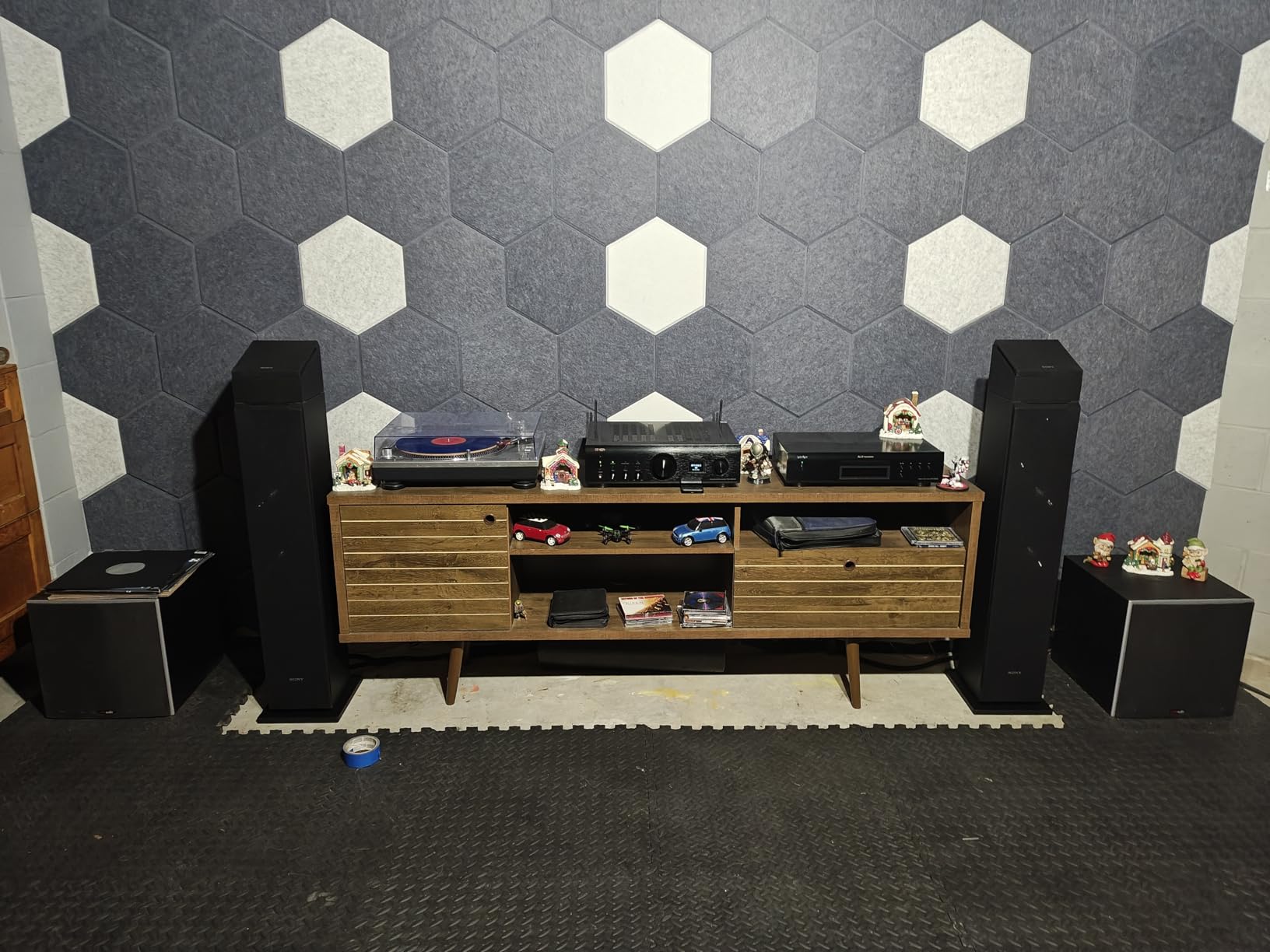
The SS-CS3 is the narrowest cabinet in this roundup at just 5 inches deep and 9.1 inches wide, which is the reason it belongs in a list like this. In a small apartment or a narrow living room, footprint is often the binding constraint, and a slim tower changes what is possible far more than a slightly better driver would. This one is also a genuine three-way, four-driver design with a 1 inch polyester main tweeter and a 3/4 inch super tweeter on top.
That array gives a very extended top end, with reproduction out to 50 kHz for high-resolution sources, and the super tweeter is what produces the open, airy top that Sony designs are known for. Reviewers rate it 4.5 from 302 ratings with 79 percent five stars, and they consistently single out the driver architecture rather than the sound in general terms.
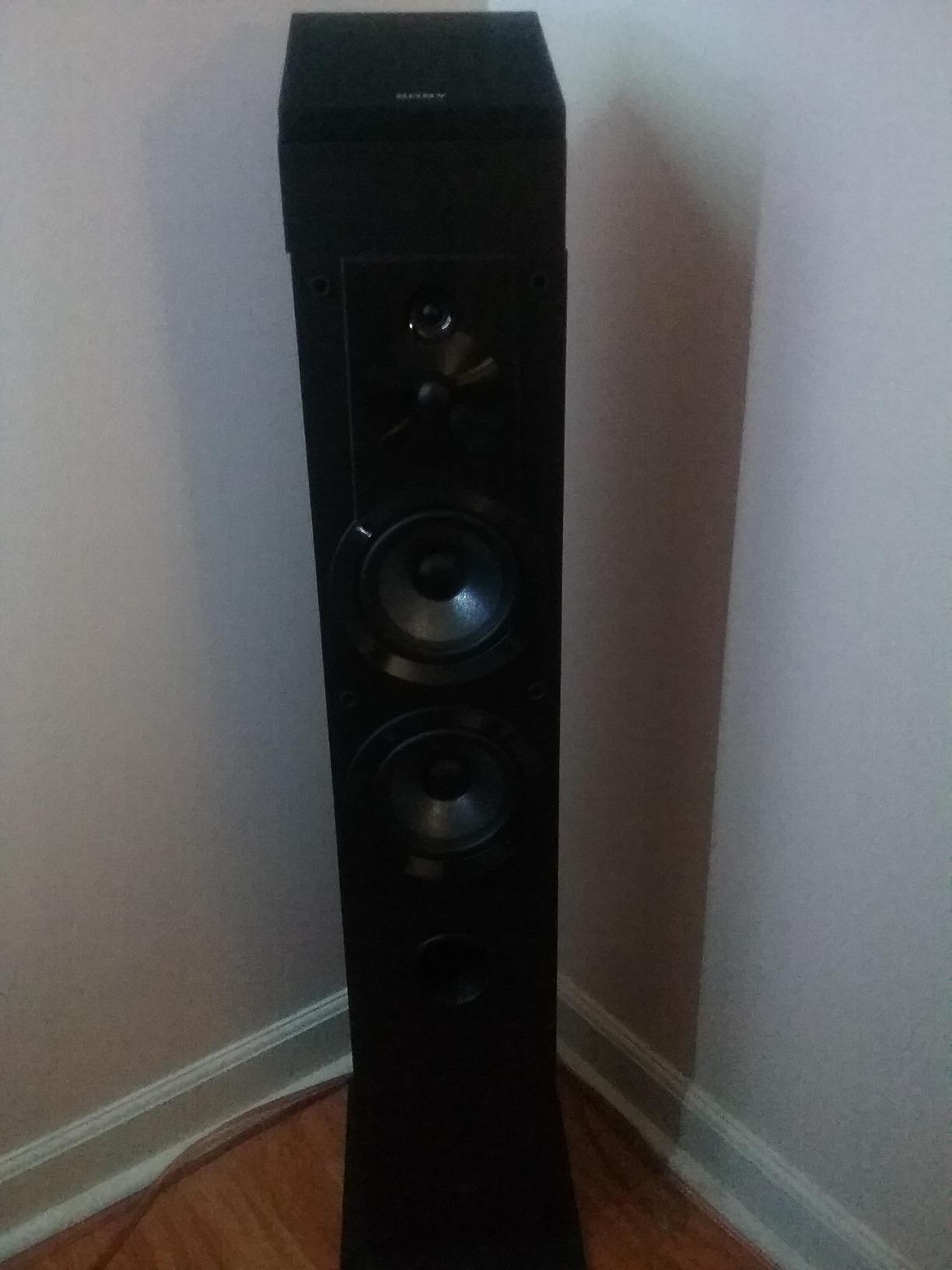
The trade-off is bass. With 5.12 inch woofers, this speaker does not dig as deep as the 6.5 and 8 inch designs here, and the 145 watt peak rating is unremarkable. The 6 ohm nominal load also asks more current from your amplifier than an 8 ohm speaker would, so pair it with something with a healthy current capability rather than a thin receiver.
This is also the model in the list with the lowest average rating and the highest share of one-star reviews, at 4.5 and 6 percent respectively. That is not a condemnation; it simply tells you that expectations here are more polarised than with the four-and-a-half-plus designs elsewhere on the page. Some owners think the extended top end is excitement rather than refinement. Audition it if you can.
Who the Sony SS-CS3 suits best
It suits listeners in small or narrow rooms where a 5 inch deep cabinet is the difference between a system that fits and one that does not. It suits high-resolution and hi-res music sources, since the array is designed to reproduce detail well above audible range and reviewers notice it. It is also a good first three-way design, because you get the midrange clarity of a proper three-way crossover without stepping into a much larger and heavier cabinet.
Who the Sony SS-CS3 does not suit
It does not suit anyone whose priority is deep, authoritative low end, because 5.12 inch woofers reach a limit well before a 6.5 or 8 inch bass array does. It is also not the pick for a large room played at high volume, and listeners who dislike an airy or bright top end may find the super tweeter more noticeable than they want. Buy an amplifier with strong current delivery, because 6 ohms is not forgiving.
6. Klipsch RP-8000F – Best for Playing Loud with Real Sub-Bass
Klipsch RP-8000F Reference Premiere Floorstanding Speaker – Each (Ebony)
Dual 8 inch spun copper cerametallic woofers
1 inch titanium LTS vented tweeter
hybrid Tractrix horn
8 ohm impedance
rear-firing Tractrix port
Pros
- Largest driver array in this roundup with dual 8 inch woofers
- Delivers genuine sub-bass depth and cinematic dynamics at home
- 4.7 stars from 250 ratings with 87 percent five-star scores
- Removable magnetic grille is strong and flexible
Cons
- Sold as a single speaker so a stereo pair costs double
- Horn-loaded treble can read as hard on long music sessions
- 48 inch cabinet at 60 pounds is genuinely difficult to move
When the question is how much low end a passive tower can produce in a home, the RP-8000F is the straightforward answer. It carries dual 8 inch spun copper cerametallic woofers, which is the largest bass array in this group, under a 1 inch titanium LTS vented tweeter in a hybrid Tractrix horn. Owners describe genuine sub-bass depth and the kind of dynamics that a dual 6.5 inch design reaches only in a much bigger room.
It holds a 4.7 average from 250 ratings with 87 percent five stars, so the enthusiasm in the reviews is broad rather than concentrated. The removable magnetic grille is unusually robust, the cabinet is deep and heavily built, and the dual binding posts support bi-wiring and bi-amping if your amplifier can take it. The rear-firing Tractrix port is conventional and well-behaved, though it does need breathing room behind the cabinet.
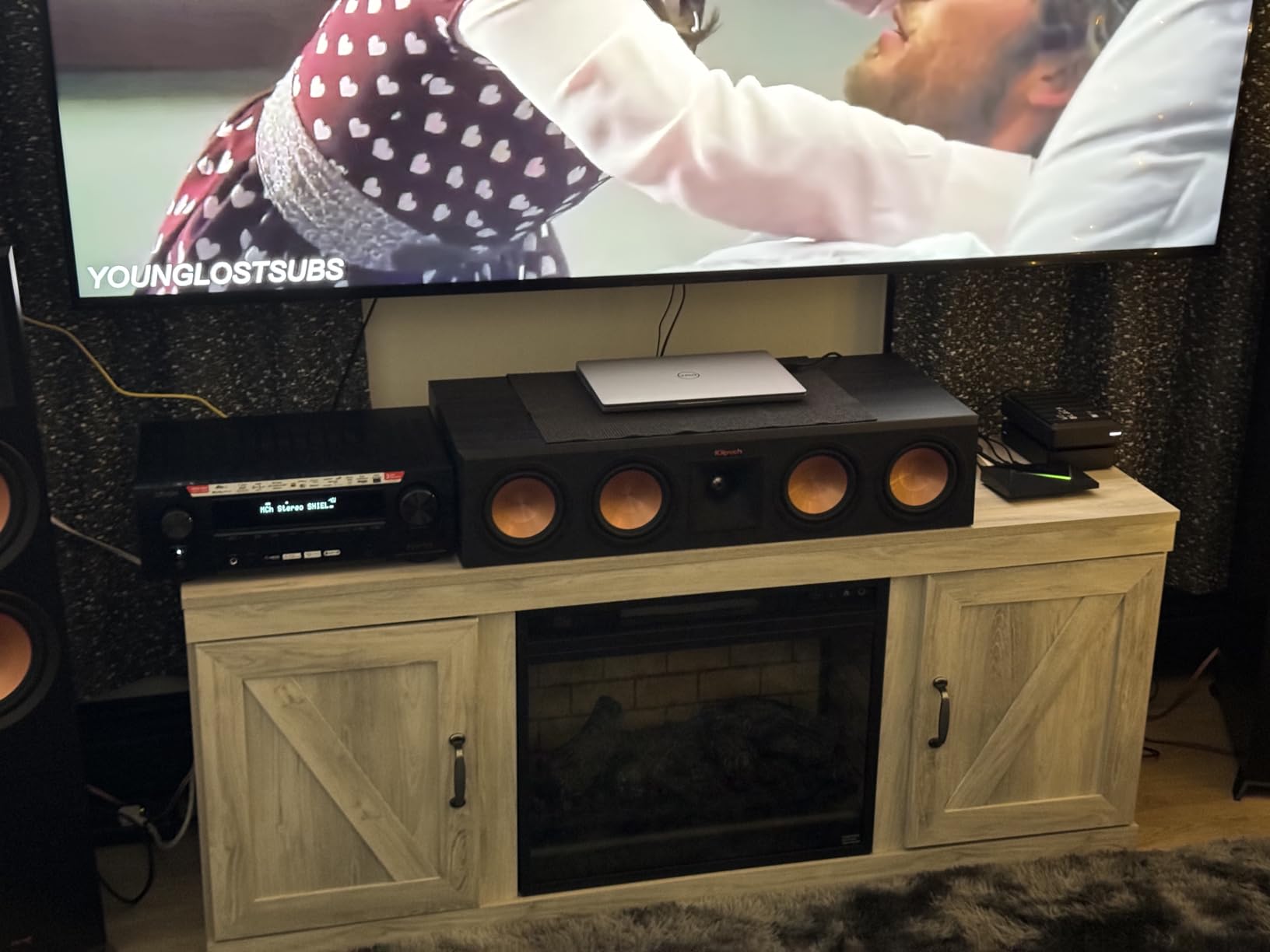
There are real practical problems. It is listed as a single speaker, so a stereo pair means two purchases, and at 48 inches tall and 60 pounds it is the least convenient cabinet here to move, position or eventually sell. If you live in a flat with tight stairs, factor that in before you fall for the specification sheet.
Sonically, the horn treble is the dividing line. Some critical owners who moved to a softer alternative found the Klipsch treble inaccurate for music, while the majority rate it as crisp and articulate. On hard reflective surfaces the same directivity that gives excellent clarity can make the top end harder. This is the loud-listening and large-room choice, not the long-session comfort choice.
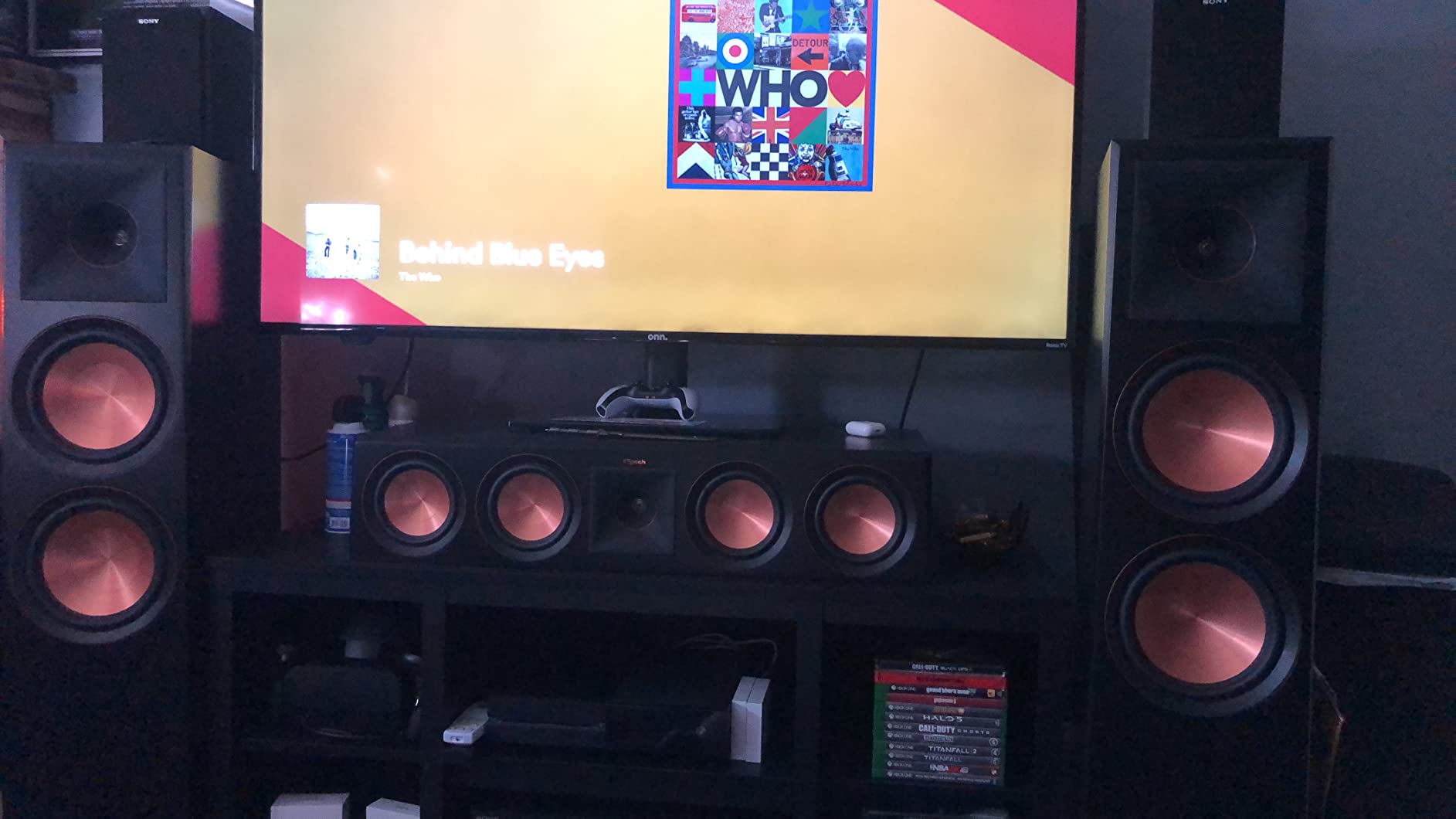
Who the Klipsch RP-8000F suits best
It suits a dedicated media room or a large living room where you want real low-end output from the towers and would rather not run a separate subwoofer for music. It suits listeners who play rock, metal, electronic and film soundtracks at high volume, because the 8 inch array has the headroom for that. With a suitably capable 8 ohm amplifier and a room with clearance behind the cabinets, it delivers more scale than anything else at this level.
Who the Klipsch RP-8000F does not suit
It does not suit a small room, where dual 8 inch drivers will overwhelm the space and the rear port will be a problem. It is a poor choice if you cannot easily move a 60 pound cabinet, and it does not suit listeners who want a soft or non-fatiguing top end. Budget carefully for a matched pair, since the single-speaker listing means the real outlay is twice what the headline figure suggests.
7. ELAC Debut 2.0 F6.2 – Best for Jazz, Classical and Long Sessions
ELAC Debut 2.0 F6.2 Floorstanding Speaker, Black (Each) – 1” Cloth Dome Tweeter & Triple 6.5” Aramid Fiber Woofers – 3-Way Bass Reflex – Up to 35,000 Hz Response
1 inch cloth dome tweeter
triple 6.5 inch woven aramid-fibre woofers
three-way bass reflex to 35,000 Hz
6 ohm impedance
140W max output
Pros
- Neutral balanced tuning praised by long-time audiophiles as non-fatiguing
- Soft dome tweeter avoids the harshness of metal and horn designs
- Excellent imaging and a wide deep soundstage for the class
- Works well with modest affordable amplifiers
Cons
- Needs roughly 30 to 50 hours of break-in plus room EQ to sound its best
- 6 ohm impedance requires a capable amplifier
- Three year warranty is shorter than several rivals here
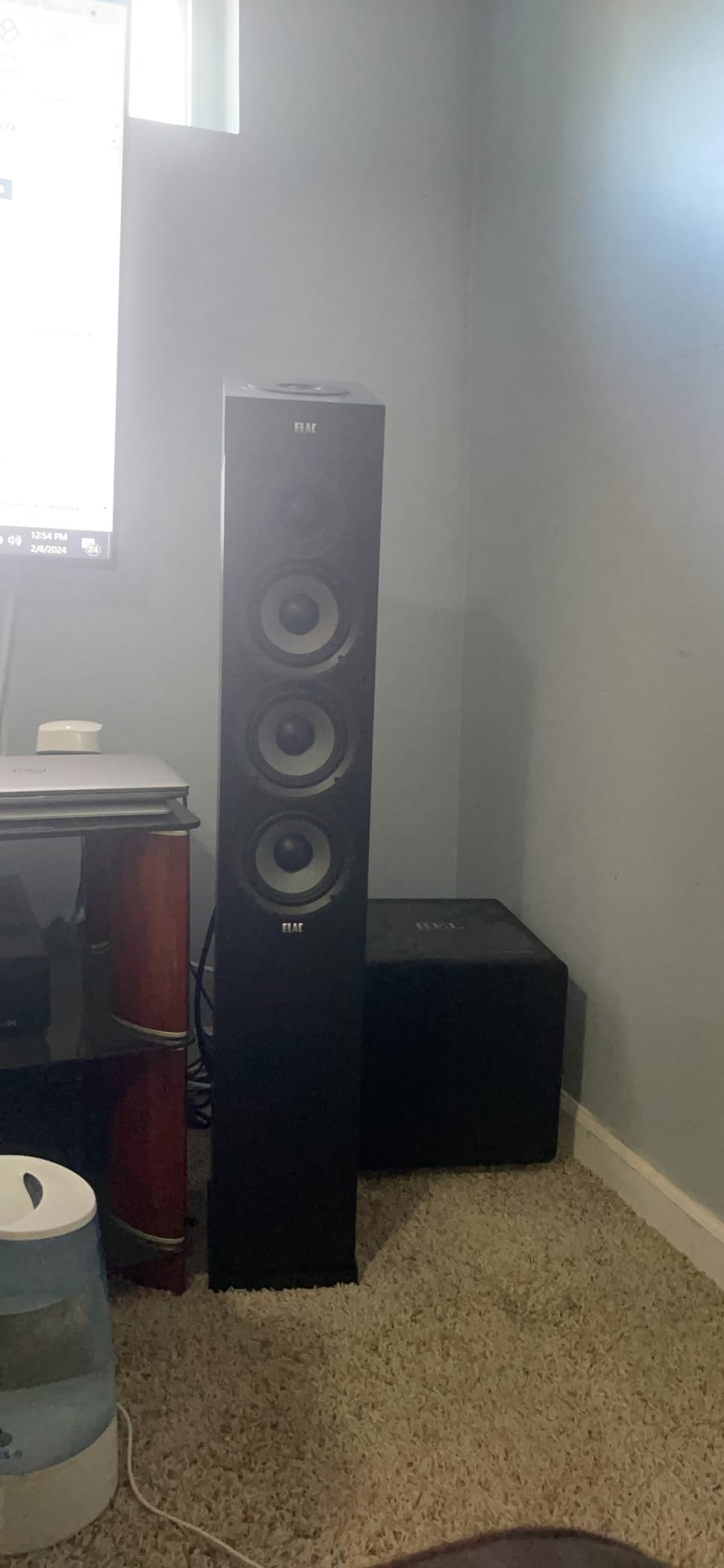
If your listening runs to three hours at a stretch, tonal neutrality matters more than raw output, and the F6.2 is the design in this roundup built for it. It is a three-way bass reflex tower with a 1 inch cloth dome tweeter in a waveguide, triple 6.5 inch woven aramid-fibre woofers, and a response that runs to 35,000 Hz. Owners with long-standing hi-fi experience describe it as the most accurate and least fatiguing tower they have heard at this level.
The three 6.5 inch drivers are not a budget compromise; aramid fibre gives them high stiffness and damping, and the midrange driver gets its own section of the cabinet rather than doubling up on bass. Reviewers consistently report wide, deep soundstage and precise instrument separation, and the cloth dome simply does not have the presence peak that a horn or metal dome imposes. Andrew Jones engineered the whole Debut 2.0 range, and the cabinets are thick, internally braced MDF designed to stay quiet under load.
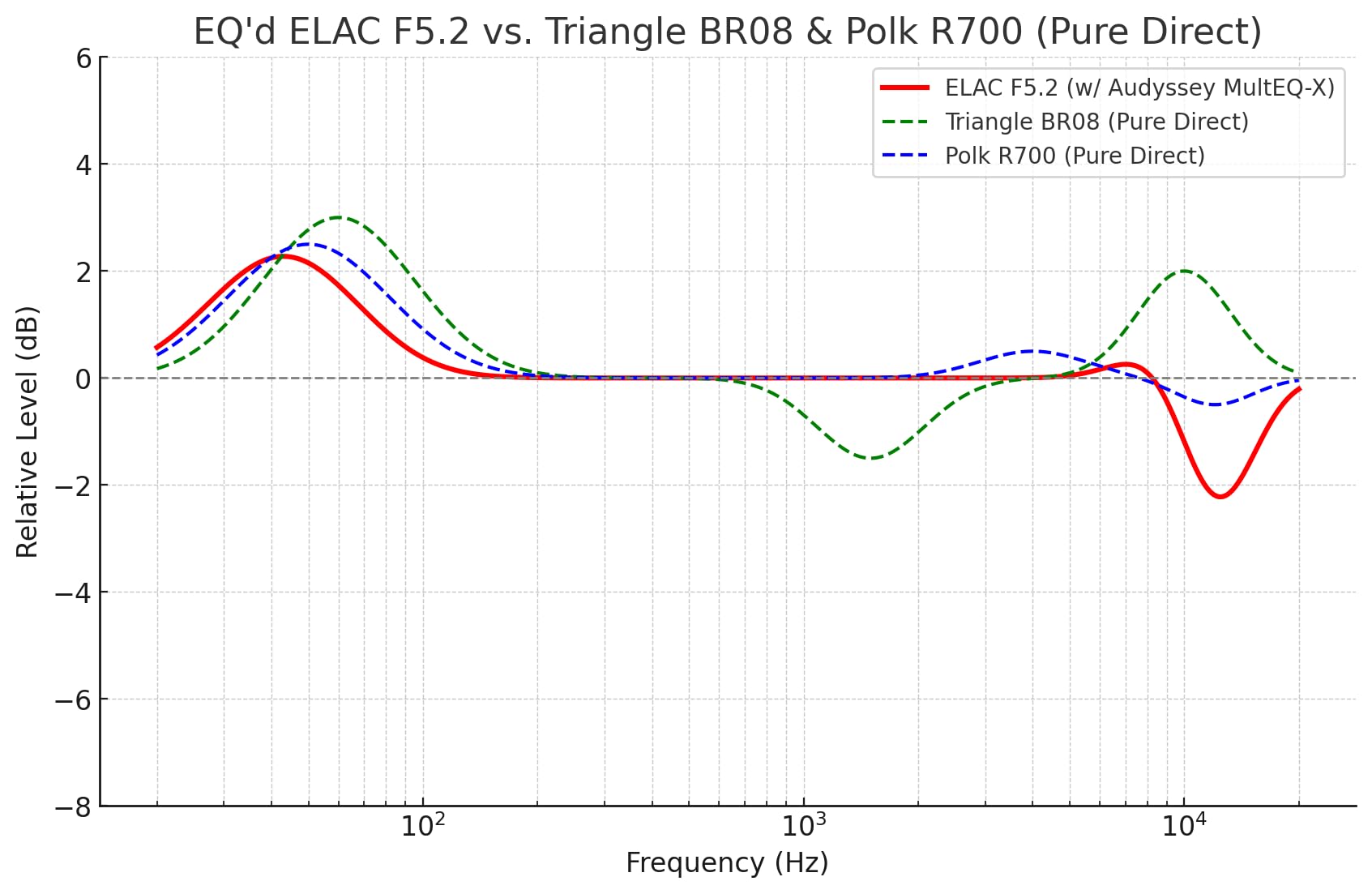
The 4.5 average from 229 ratings is the joint-lowest among the well-regarded designs here, but the review content explains why: this is a speaker people buy, break in properly, EQ, and then keep. The recurring advice in those reviews is to give it 30 to 50 hours of playback and run room correction, and several owners report it competing convincingly with speakers costing multiples of it.
Two caveats. First, the low end is more refined than deep, so if you want rumble you will still want a subwoofer. Second, 6 ohm impedance means it deserves an amplifier with real current capability, though owners specifically praise it for working with modest, affordable amplification once it is properly set up. It is also listed as a single speaker, so a stereo system means two.
Who the ELAC Debut 2.0 F6.2 suits best
It suits jazz, classical, acoustic and vocal-heavy listeners, and anyone who listens for long stretches and finds bright treble tiring. It is an excellent match for a modest, well-behaved amplifier, which makes it a sensible audiophile-leaning choice on a limited system budget. The imaging and soundstage also make it a strong pick for anyone who plays vinyl and wants to hear the room and the performers placed precisely in front of them.
Who the ELAC Debut 2.0 F6.2 does not suit
It does not suit a buyer who wants to be playing music two hours after the box is opened; it genuinely needs break-in and EQ to show its character. It is also not the pick for someone whose priority is maximum bass output without a subwoofer, or for a very small room where a nearly 49 inch cabinet will dominate the space. Expect a shorter warranty than some rivals and a speaker that rewards attention.
8. Fluance Signature HFF – Best for a Wide, Wide Soundstage
Fluance Signature HiFi 3-Way Floorstanding Tower Speakers with Dual 8″ Woofers for 2-Channel Stereo Listening or Home Theater System – Black Ash/Pair (HFF)
Dual 8 inch woofers
neodymium tweeter
pointed-dome woven glass midrange
1.4 inch chamfered baffle
acoustically inert MDF cabinet
Pros
- Dual 8 inch woofers give clean deep controlled bass from a passive tower
- Neodymium tweeter and glass-fibre midrange give a wide natural soundstage
- Supplied with outrigger stabilisers
- floor spikes and magnetic grilles
- Lifetime manufacturer parts and labour warranty
Cons
- Lowest average rating in this roundup at 4.3 stars
- Heaviest one and two star share here at 12 percent combined
- 47 inch cabinets need careful placement away from walls
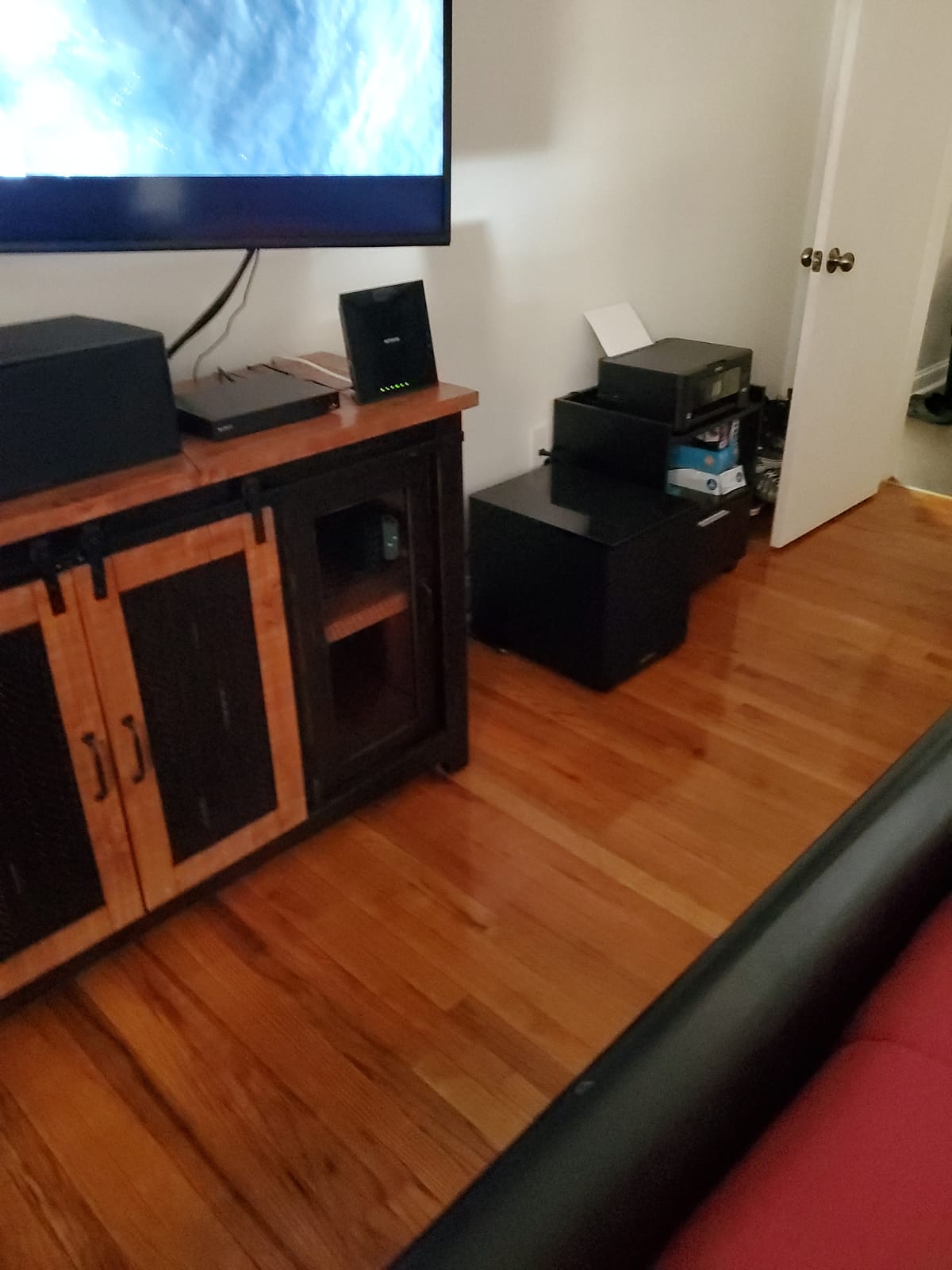
The Signature is an unusual design in a good way. Alongside dual 8 inch woofers and neodymium tweeters, it uses a pointed-dome woven glass fibre cone in the midrange, and the whole driver sits in front of a 1.4 inch chamfered baffle on an acoustically inert MDF cabinet. The chamfer is the detail worth noting: it is cut to reduce edge diffraction, which is what keeps the soundstage from collapsing into a point between the speakers.
In practice, owners who stay with it describe exactly the wide, natural, room-filling presentation that geometry predicts. The bass is clean and controlled rather than merely heavy, and the box includes the accessory kit you would otherwise have to source yourself: four outrigger stabilisers, eight isolation floor spikes and two magnetic grilles. The lifetime manufacturer parts and labour warranty is the strongest warranty offer in this roundup by some distance.

Now the honest part. At 4.3 from 180 ratings, this is the lowest average score of the twelve, and the one and two star reviews total 12 percent, the heaviest negative share in the group. That is a real signal, not noise, and it usually reflects a gap between expectation and result rather than a defective product. Owners who are happy tend to be enthusiastic about the bass output and how much it fills a room.
Physically it is also a demanding cabinet. At 47.3 inches tall and 62.4 pounds, with a passive design that needs a capable external amplifier, this is a speaker for someone who has already decided they want a big, immersive presentation and has the room and the amplification to support it.
Who the Fluance Signature HFF suits best
It suits listeners in a large room who want the widest, most enveloping presentation of anything in this roundup, and who will actually use the included spikes and outriggers to stabilise a 62 pound cabinet. The lifetime warranty makes it a low-risk proposition for a buyer who intends to keep it for years. It is a good choice for orchestral and film-score material, where the wide soundstage does the most work.
Who the Fluance Signature HFF does not suit
It does not suit a small or medium room, or a buyer who wants a simple, low-friction first system, because the size and the amplifier requirement both add friction. Given the 4.3 average and the heavier negative share, it is not the safe recommendation for someone who cannot audition before buying. If your priority is neutral accuracy rather than scale and immersion, one of the better-rated designs here is the safer route.
9. Fluance Reference XL8FW – Best for Vinyl and Floor Clearance
Fluance Reference High Performance 3-Way Floorstanding Loudspeakers with Down-Firing 8″ Subwoofers for 2-Channel Stereo Listening or Home Theater System – Walnut/Pair (XL8FW)
Down-firing 8 inch bass drivers
silk dome neodymium tweeters
woven fibre midrange
35Hz to 25kHz response
8 ohm impedance
Pros
- Down-firing 8 inch drivers give deep low end with far less room resonance than rear ports
- Wide well-defined soundstage that owners listen to for hours without fatigue
- Binding posts support bridging and dual-amp setups for bi-amping
- Well-balanced tuning praised by vinyl enthusiasts
Cons
- Down-firing drivers need at least a foot of clearance from the wall
- Sound improves noticeably with more amplifier power
- One owner reported defects in a first pair requiring an exchange
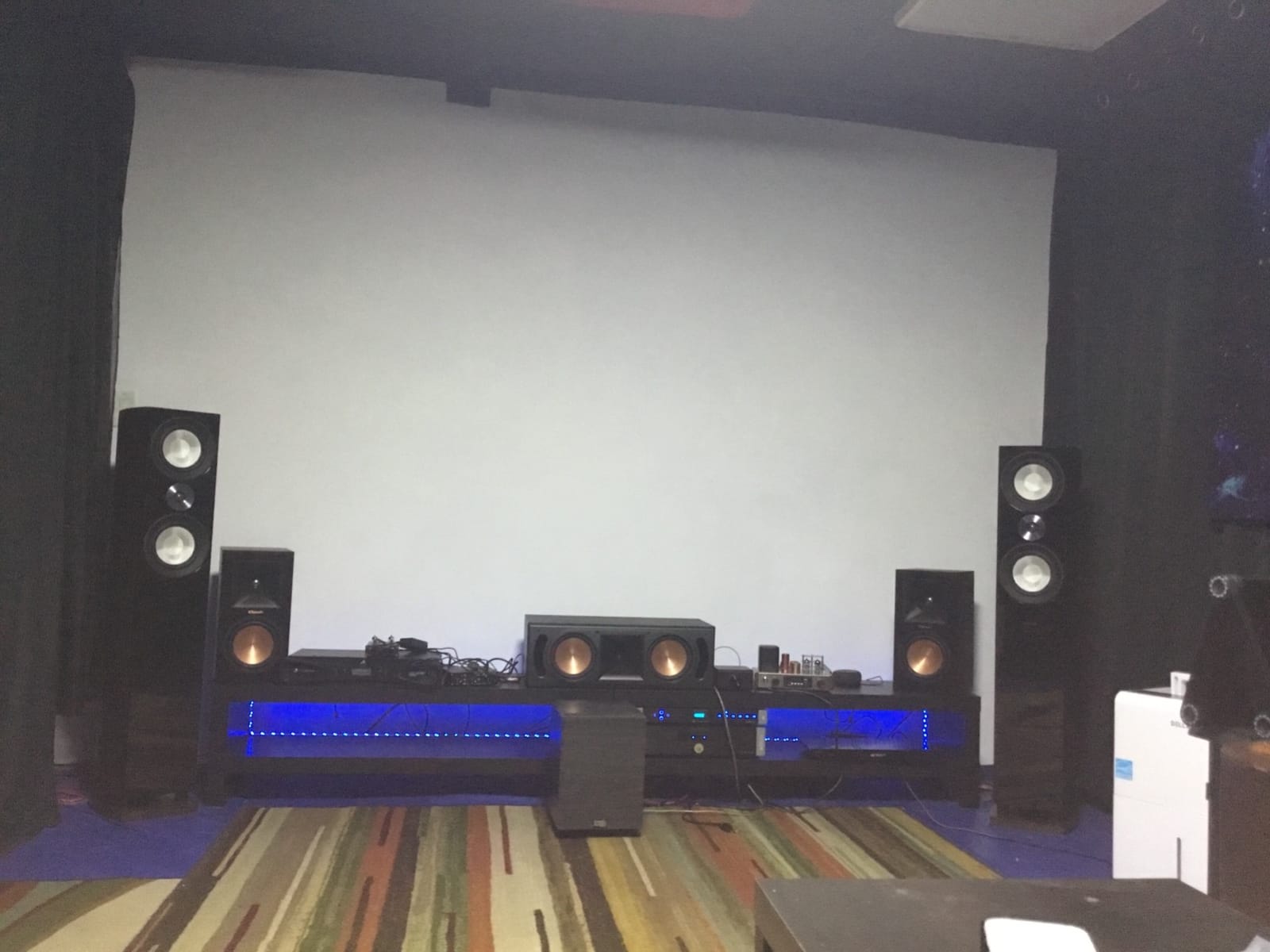
The XL8FW solves a placement problem that rear-ported towers create. Its 8 inch bass drivers fire downward at the floor rather than out of the back baffle, which means bass radiates into the room instead of into the wall behind the speaker, and owners report noticeably less room resonance than a conventional rear port produces. The trade is strict and simple: you need at least a foot of clearance behind the cabinet, or you are asking for trouble.
Everything else about it is aimed at long, comfortable listening. The tweeters are silk dome neodymium units with wide off-axis dispersion, the midrange is woven fibre chosen for damping, and the enclosure is rigid and internally braced with dual rear ports for the very lowest octave. Reviewers at 4.6 from 118 ratings, with 79 percent five stars, describe a well-defined soundstage they can hear for hours without ear fatigue, and vinyl enthusiasts single it out for clarity and balance.
It also has genuine setup flexibility, with binding posts that accept bridged or dual-amp configurations, so if you ever move to bi-amping you will not be limited by the terminal layout. The walnut cabinet is double-boxed for protection, which matters when you are unboxing two 47 pound speakers.
The honest negatives: it responds clearly to amplifier power, so an underpowered system will not unlock its potential, and at 45.86 inches tall and 47.7 pounds it is a substantial object. One owner also reported defects in a first pair and had to exchange them, which is a single report rather than a pattern, but it is worth knowing that quality control on this model has not been flawless for everyone.
Who the Fluance Reference XL8FW suits best
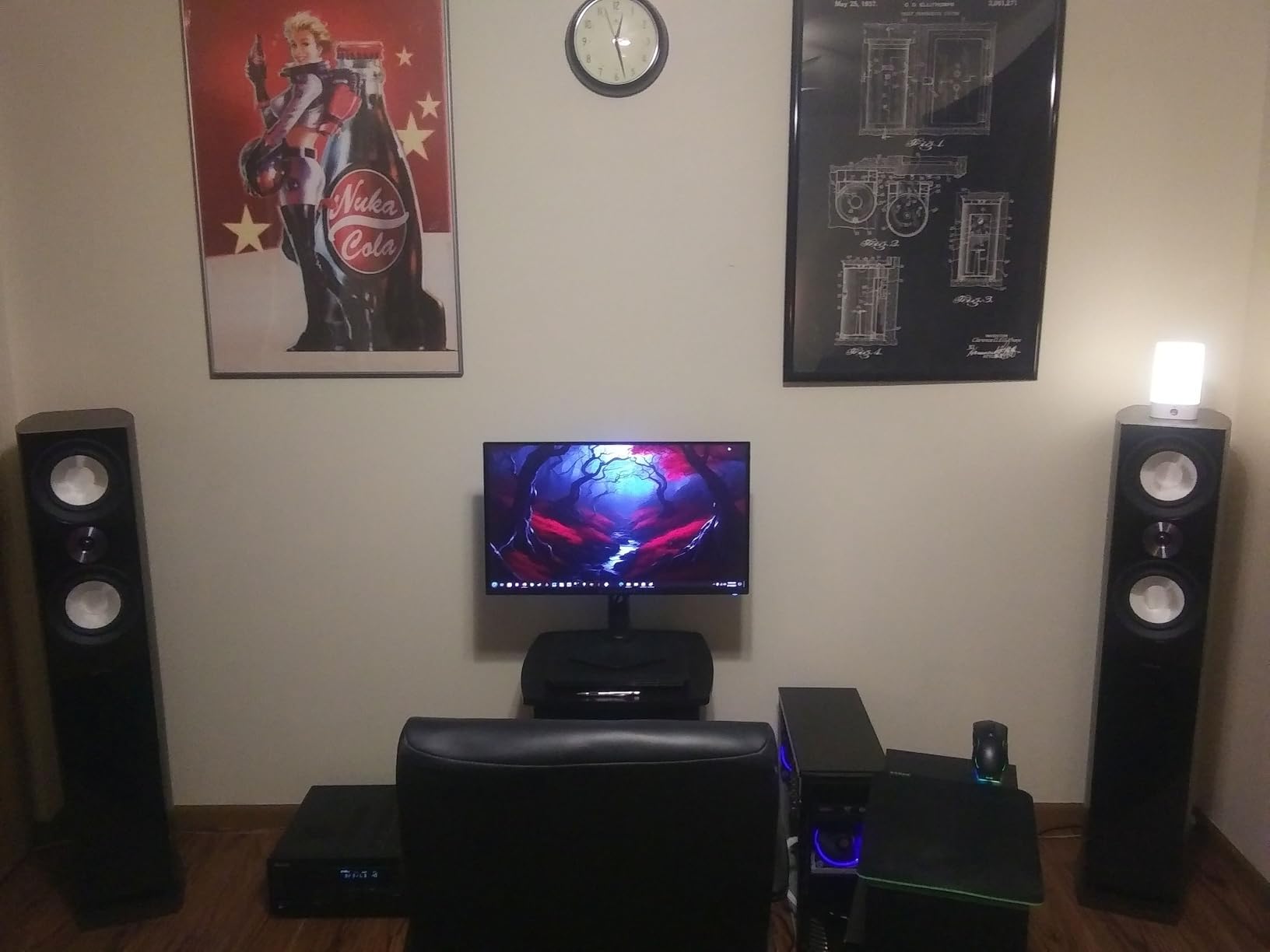
It suits vinyl listeners who want the speed and clarity in the midrange to reveal what is on the record, and anyone in a room with hard floors who has found rear-ported bass boomy in exactly the spots where the XL8FW will not. It is a strong choice for people who listen for hours, because the silk dome and the wide dispersion are tuned for comfort. Owners building a stereo system that will also carry films like a cohesive forward soundstage.
Who the Fluance Reference XL8FW does not suit
It does not suit a room where the towers must sit hard against the back wall, because the down-firing drivers need that foot of clearance to work. It is also not the choice for a small room, and it is a poor match for an entry-level amplifier, since the design clearly improves with more power. If you want a fast, simple, uneventful first system, this is more speaker than you need.
10. Dayton Audio Classic T65 – Most Versatile With a Real Crossover
Dayton Audio Classic T65 Floor-Standing Tower Speaker Pair (Wood)
Bass reflex cabinet over 39 inches tall
dual 6-1/2 inch poly bass drivers
1 inch silk dome tweeter
150W power handling
gold-plated binding posts
Pros
- 39 inch cabinet puts the tweeter near ear level for accurate imaging
- Large 1 inch silk dome tweeter gives detailed treble without harshness
- Real hi-fi crossover design and punchy dual 6.5 inch drivers
- Five year full warranty
Cons
- Thinnest owner base here with only 122 reviews
- Poly drivers and a basic cabinet constrain refinement
- Roughly 8 by 7.5 inch floor space needed per speaker
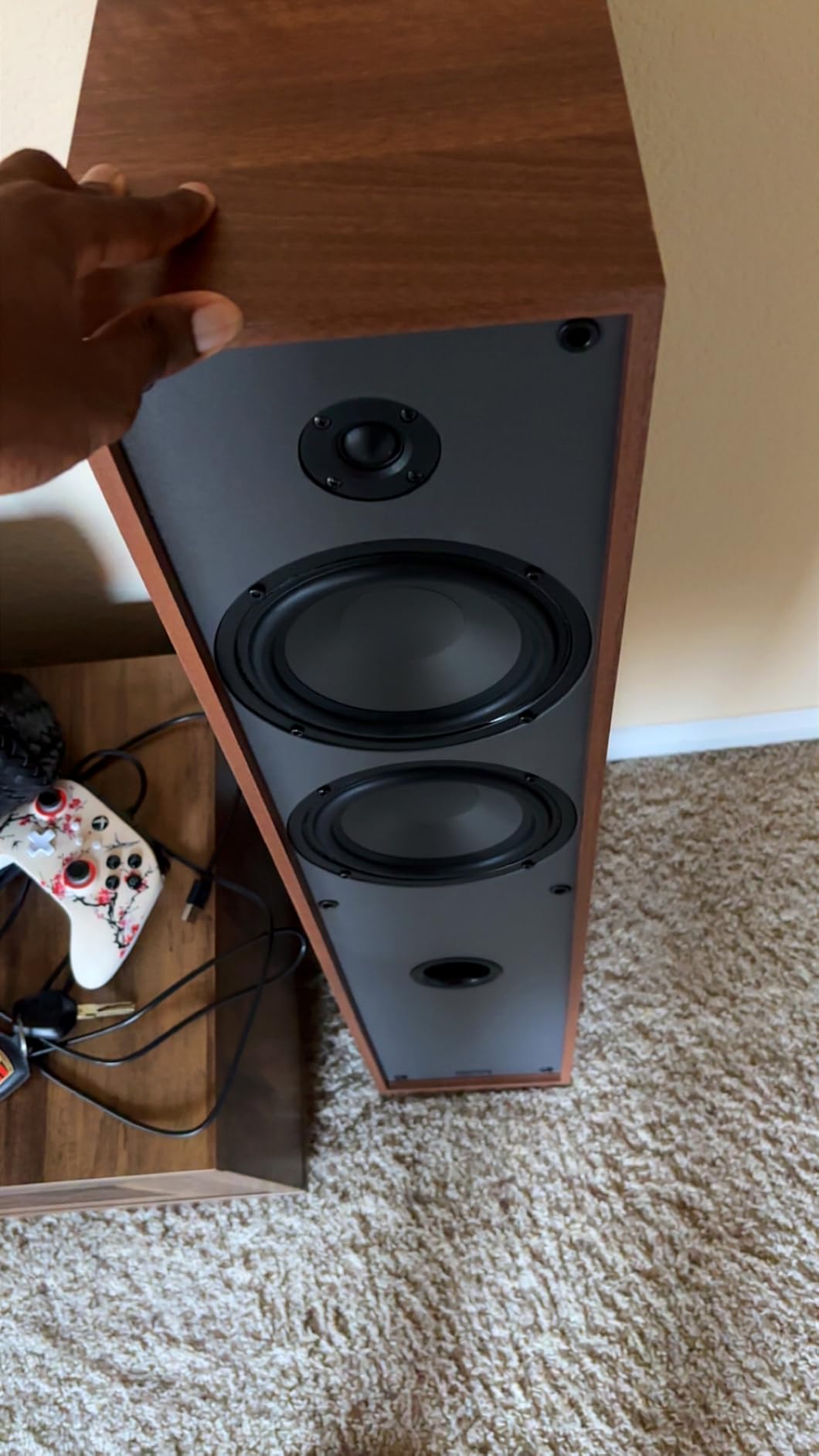
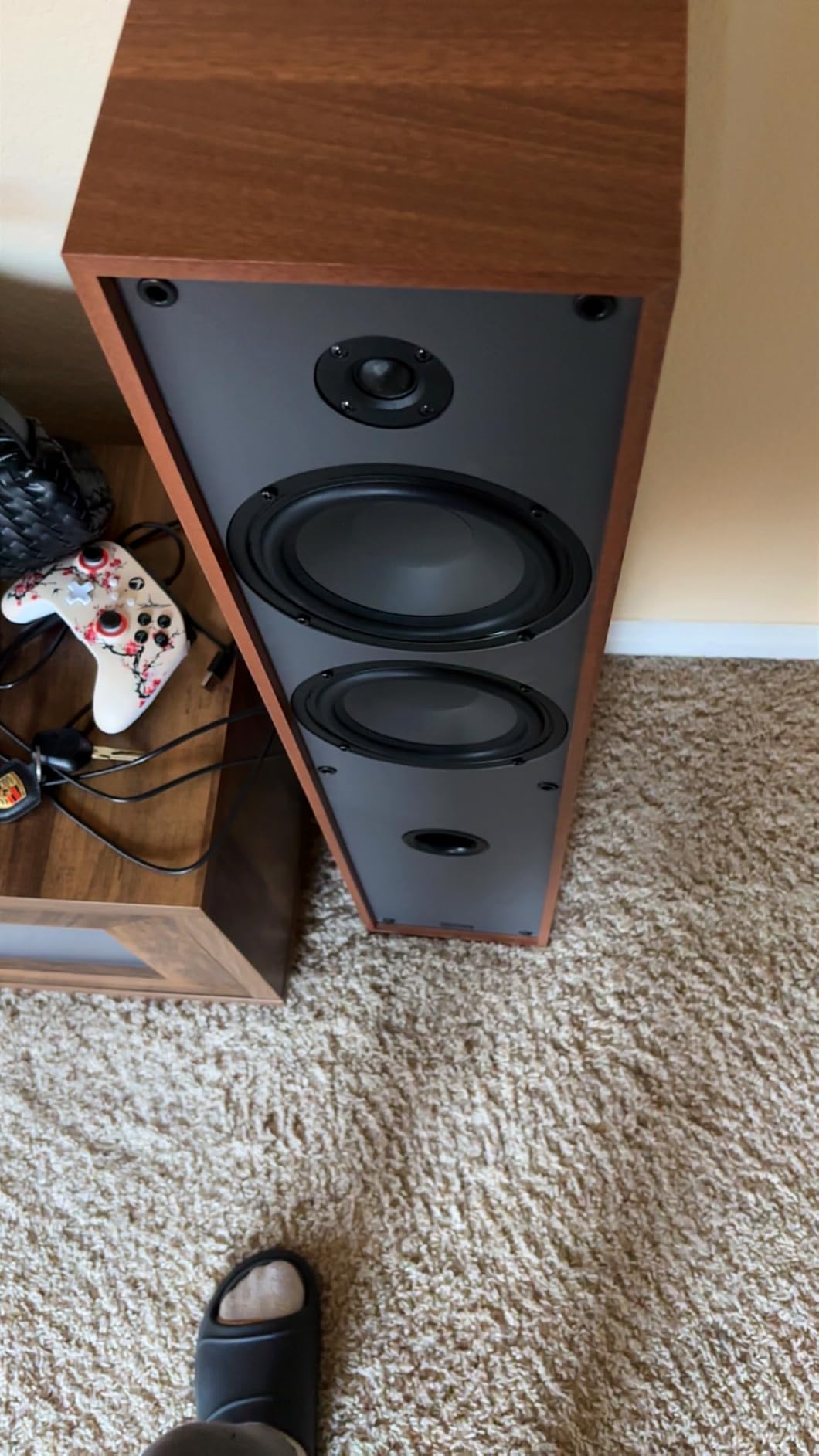
The Classic T65 is the specification-sheet surprise of this roundup. At under 40 inches tall with a 1 inch silk dome tweeter, dual 6.5 inch custom poly bass drivers and what the manufacturer describes as a true hi-fi crossover, it is doing things at the bottom of the range that some speakers well above it skip. The cabinet height is not incidental: it puts the tweeter close to ear level when you are seated, which is why owners keep mentioning accurate imaging.
Reviewers rate it 4.6 from 122 ratings with 75 percent five stars, and the feedback centres on the tweeter placement, the crossover doing a real job, and bass that is punchy rather than polite. The gold-plated binding posts accept banana plug cables, which sounds minor until you are trying to terminate 14 gauge wire in a dark cupboard behind a sofa. The five year full warranty also stands well above several designs here.
Be clear-eyed about the limits. The owner base is the thinnest in the roundup at 122 ratings, so there is less long-term evidence than behind the Polk or Klipsch models, and poly drivers in a relatively basic cabinet will not reach the refinement of the ELAC or Fluance designs. The footprint is real too: roughly 8 by 7.5 inches of floor per speaker, and a tower that size will dominate a small room.
My read is that this is the right first floorstander for someone who wants a genuine two-channel system, has a decent amplifier already, and cares more about correct proportions and a real crossover than about premium cone materials. It is a step up in ambition from a typical sub-and-bookshelf starter pack, and it is priced accordingly.
Who the Dayton Audio Classic T65 suits best
It suits a first-time hi-fi buyer who wants a proper stereo pair with correct driver proportions rather than a subwoofer and two small boxes, and who is comfortable with an existing amplifier. Ear-level tweeter placement makes it a good match for seated critical listening in a medium room. Vinyl owners in particular will appreciate the crossover quality, since it keeps the midrange clean rather than letting the bass drivers smear it.
Who the Dayton Audio Classic T65 does not suit
It does not suit a buyer who wants certainty from a long owner history, because 122 reviews is a thin base compared with the four-figure counts behind the leaders here. It is also the wrong choice for a small room or a very large one, and for a listener who expects flagship refinement at an entry price. Expect a step up in refinement later; expect a perfectly respectable first step now.
11. Yamaha NS-F150 – Best Looking Tower for a Living Room
Yamaha Audio NS-F150 Floor Standing Speaker – Each (Black)
Two-way bass reflex floor standing design
6.5 inch woofer
gold plated speaker terminals
removable speaker grille
piano black mirror finish
Pros
- Balanced fatigue-free tuning with crisp highs and clear mids
- Mirror piano black finish that suits a furnished living room
- Build quality that survives knocks and pet damage without issue
- Works for two-channel music and as part of a larger surround setup
Cons
- Bass is clean but not deep
- so a subwoofer rounds out the low end
- Sold as a single speaker only
- Narrow 7.9 inch footprint makes the 40.5 inch cabinet top-heavy
The NS-F150 is the one in this roundup you will notice before you hear it. The piano black mirror finish and the slim profile make it look considerably more expensive than a two-way bass reflex tower has any right to, and that matters in a furnished room where a black box with visible driver screws can wreck the whole aesthetic. At 24.7 pounds and 40.5 inches tall it also moves far more easily than the 60 pound cabinets in this list.
Sonically owners describe balanced, fatigue-free tuning with crisp highs, clear mids and clean low bass, and they rate it 4.6 from 111 ratings with 77 percent five stars. Build quality comes up repeatedly as a positive, with several owners noting it stood up to impacts without damage. The removable grille lets you choose between the clean finished look and exposed drivers, and the gold plated terminals are a nice touch at this level.
It is also only a two-way design with a single 6.5 inch woofer, and that is where the limits are. The low end is clean rather than deep, so a subwoofer genuinely rounds it out rather than duplicating what the towers already do. It is listed as a single speaker, so a stereo system is two purchases, and the warranty is the shortest in this roundup at two years.
One physical warning: the 7.9 inch footprint beneath a 40.5 inch cabinet makes it top-heavy and easy to tip. If you have children, pets or a hard floor, plan on wall mounting or a wider plinth rather than leaving it free-standing. That is the only real handling concern in an otherwise very easy speaker to live with.
Who the Yamaha NS-F150 suits best
It suits anyone buying for a shared living room where appearance is part of the decision, and where a pair of large black cabinets with exposed drivers would fight the furniture. It suits casual and non-fatiguing listening, particularly for background and low-volume music where the balanced tuning is exactly right and the sub-bass extension is not what you are listening for. It is a practical choice for a system that will handle both music and film.
Who the Yamaha NS-F150 does not suit
It does not suit a critical listener who wants to see how much low-end authority a tower can deliver, because a single 6.5 inch woofer runs out before the dual-driver designs do. It is also not the right pick for a room where a top-heavy 40 inch cabinet on a narrow base is a tipping risk, and the two year warranty offers less protection than most of the field. Plan on adding a subwoofer.
12. SVS Prime Tower – Best Step Up From Bookshelf Speakers
SVS Prime Tower Speakers – Pair (Premium Black Ash)
3.5-way SVS SoundMatch crossover
4.5 inch midrange in a sealed compartment
dual 6.5 inch woofers
1 inch aluminum dome tweeter
chamfered front baffle
Pros
- Sealed midrange compartment gives a smooth uncolored midrange uncommon at this level
- Dual 6.5 inch woofers and 400W peak handling for effortless deep bass
- Chamfered baffle and refined crossover give pinpoint imaging and phase coherence
- Supplied as a matched pair in premium black ash
Cons
- Least owner feedback here at 101 ratings for a long-running model
- 6 percent one-star rating is among the highest negative shares here
- Passive 8 ohm design needs a solid amplifier to reach its potential
If you already own good bookshelf speakers and you are hitting their limit, the SVS Prime Tower is the most direct upgrade on this page. The design reason is the 3.5-way SVS SoundMatch crossover feeding a 4.5 inch midrange driver housed in its own sealed compartment. That is the part a conventional two-way tower cannot do: the midrange gets to behave as a midrange, which is where the majority of musical detail and most of the tonal character lives.
Around that sit dual 6.5 inch woofers rated at 400 watts peak, a 1 inch aluminum dome tweeter that stays clear at high volume, and a chamfered front baffle designed to minimise edge diffraction for precise soundstaging. Professional press quotes on this model describe reference-grade accuracy, pinpoint imaging and exceptional tonal balance, and reviewers consistently note it resolves fine detail without losing sight of the larger musical picture.
This is the most expensive entry here, and the gap to the next rung is wide, so it is worth being clear about whether it earns its place in your system. It is a passive 8 ohm design, and owners are candid that it needs a solid amplifier to reach its potential, which is a real total-system consideration rather than a footnote.
The other caution is evidence. At 101 ratings it has the smallest owner base in the roundup despite being a long-running model, and 6 percent one-star reviews is among the heavier negative shares here. That does not make it a poor speaker; it makes it the pick for someone who is confident in what they want rather than someone still deciding.
Who the SVS Prime Tower suits best
It suits listeners who already own capable standmounters and have reached the point where the subwoofer and the crossover are doing more harm than good to the midrange. It suits critical two-channel listening, where the sealed midrange compartment and the phase-coherent crossover make a real difference, and it suits anyone who wants deep bass from the towers without committing to a 60 pound cabinet. Supplied as a matched pair, it is also simpler to budget for than the single-speaker listings here.
Who the SVS Prime Tower does not suit
It does not suit a first hi-fi system built on a modest budget, because the speakers plus the amplifier they want represent a serious total outlay. It also does not suit a small room, or a buyer who cannot audition and will be choosing purely on spec. And with the thinnest owner base in the roundup, it carries more uncertainty than the designs behind a few thousand ratings, which is worth weighing before you commit.
How to Choose the Best Tower Speakers for Your Room
The most common mistake we see is buying for the spec sheet instead of the room. A cabinet can be objectively superb and still be wrong for the space it lands in, and the forum conversations behind this query make that point repeatedly: buyers overestimate how much speaker they need, end up with towers that swamp a small room, and only realise it once the boxes are in the house. Size the cabinet to the room, then choose the sound you like inside that size.
Match the cabinet to the room, not the spec sheet
A rough rule of thumb that circulates widely is the 83 percent rule, which is the idea that speakers should occupy no more than roughly 83 percent of the available floor volume. It is not a law of acoustics, but it captures a real constraint: towers need clearance for the port, room for the ear to sit between them, and enough air to let low frequencies decay rather than pile up. Below about 100 square feet, a slim design like the Sony SS-CS3 is a far safer starting point than a dual 8 inch cabinet.
Depth matters as much as height. A rear-ported tower needs real space behind it, a front-ported one like the Klipsch R-26FA can sit closer to the wall, and a down-firing design like the Fluance XL8FW needs clearance at the floor. Check the port position before you buy, not after delivery, because that is a mistake you cannot fix without moving furniture.
Weight is the constraint people forget. The Fluance Signature is 62.4 pounds per cabinet and the Klipsch RP-8000F is 60 pounds, while the Polk T50 is 20.4 pounds. In a flat, or any house with stairs, that difference determines whether you move the speakers twice or once.
Passive or active: decide before you buy
Every speaker on this page is passive, which means it needs an external amplifier. That is the right choice for most people because it decouples the speakers from the amplifier, so you can upgrade one at a time, and because a good integrated amplifier gives you far more control over volume, tone and source switching than anything built into a speaker.
Active or powered towers have their own amps built in, which removes the amplifier decision entirely and can be the more satisfying route for a first system. The downside is that you are locked into whatever amplification the manufacturer chose, and the long-term upgrade path is more limited. If you are certain you will never want to change amplifier, active is simpler. If there is any chance you will, stay passive.
Read sensitivity and impedance before choosing an amplifier
Sensitivity is the number that determines how hard a speaker is to drive, measured in dB for one watt at one metre, and it is the specification buyers most often ignore before regretting it. A speaker at 94dB, like the Klipsch R-610F, will play loudly and fill a room from a modest amplifier. A speaker at 86dB needs roughly eight times the power to reach the same volume, and pairing it with a thin receiver is why so many buyers report thin, strained bass.
Impedance tells you how hard the amplifier has to work electrically. A nominal 8 ohm load is the easy case. A 6 ohm load, as on the Sony SS-CS3, the ELAC F6.2 and the Polk T50, draws more current, and not every amplifier delivers it cleanly. The dip to 4 ohms at some frequencies matters more than the nominal number, and a model that never drops below 6 is easier to drive than one that does.
Look for bi-wire and bi-amp terminals as well. Dual binding posts, as on the Klipsch and Fluance models, let you run separate cables to the drivers and, with a suitable amplifier, drive each section independently. It is not essential on a first system, but it is a sign the speaker was designed with serious installation in mind.
Placement, toe-in, spikes and break-in
Start with distance. Leave roughly a foot behind a rear-ported tower and two feet between the cabinets and the side walls, then toe them in by about 10 to 15 degrees until the soundstage locks into a central image. Pull the chairs forward so the listening position is not behind the speakers, and keep the distance between the two cabinets such that you can just about cover both with an outstretched arm.
Spikes and pads both decouple the cabinet from the floor, and the difference is dramatic on hard surfaces. The Fluance Signature package includes isolation floor spikes, which is one of the better-equipped options here. On tile and hard floors a rug covering the area between and in front of the speakers will do more for perceived bass quality than any change of speaker, because it absorbs the reflection that makes towers sound boomy in reflective rooms.
Finally, break-in is real and it is not instant. Speakers and their crossovers settle over the first tens of hours of playback, and several of the models here generate recurring advice to allow 30 to 50 hours before judging them. If a design sounds forward or thin on day one, that is not a verdict. Give it a week of normal use and put it through room correction before you decide anything.
One last question buyers ask constantly: do tower speakers need a subwoofer for music? The honest answer is that quality towers can handle a stereo programme on their own, and forum owners running floorstanders without a sub in rooms around 12 by 11 feet report being entirely satisfied. Add a subwoofer when you need more low-end weight than the cabinet can produce at low volume, or when your system is also doing films and you want effects down below the music programme.
Frequently Asked Questions
Are tower speakers good for music?
Yes. Tower speakers are one of the best options for music because the tall cabinet gives the drivers the volume needed for deeper bass and more dynamic headroom than bookshelf speakers, and the vertically stacked tweeter and midrange sit closer to ear level for precise imaging. A well-matched pair of towers can carry a stereo programme without a subwoofer. They are a poor fit for very small rooms, for nearfield computer listening, or for anyone who does not want to also buy an amplifier.
What are the best sounding tower speakers for music?
It depends on your room and your tolerance for treble. The Polk Audio T50 is our overall pick for most people, pairing a 6.5 inch driver with dual bass radiators and holding 4.6 stars from 2494 ratings. For tonal neutrality and long sessions the ELAC Debut 2.0 F6.2, with its cloth dome tweeter and triple aramid woofers, is the most fatigue-free. For maximum clarity and instrument separation, the horn-loaded Klipsch Reference R-26FA wins, though its treble is forward.
What is the best brand for tower speakers?
There is no single best brand, but the names that appear most often in owner feedback here have one thing in common: they publish specifications that hold up and they build drivers consistently across a range. Klipsch, Polk Audio, Sony, ELAC, Fluance, Dayton Audio, Yamaha and SVS all do. What matters more than the badge is whether the brand makes a model whose sensitivity, impedance and port placement suit your room and your amplifier.
How big should my tower speakers be for my room?
Size the cabinet to the floor space rather than to the specification. A commonly repeated rule of thumb is that speakers should occupy no more than roughly 83 percent of the available floor volume, which is a useful constraint rather than a law of acoustics. Below about 100 square feet, a slim design such as the 5 inch deep Sony SS-CS3 is safer than a dual 8 inch cabinet. Leave a foot behind a rear-ported tower and room to walk behind it.
What amplifier do I need for tower speakers?
Match the amplifier to the sensitivity and the impedance. A speaker rated at 94dB, such as the Klipsch Reference R-610F, plays loudly from a modest integrated amplifier, while an 86dB design needs roughly eight times the power for the same volume. Treat 8 ohm as easy and 6 ohm as more demanding, since it draws more current. Look for dual binding posts if you may bi-wire or bi-amp later, and give any passive tower at least 20 to 30 hours of break-in.
Are bigger tower speakers always better?
No. A larger cabinet produces more low-end output and headroom, but in a small room it can dominate the space, pressurise the bass and make placement impossible behind a sofa. A well-matched smaller tower will always sound better in your room than a larger one that is fighting the acoustics. This is the most common regret we see: buyers oversize the speaker, then blame the model rather than the room.
Which Tower Speakers Should You Buy for Music?
If you buy only one pair from this roundup, take the Polk Audio T50. It has the largest owner base here at 2494 ratings, the bass radiators do work most towers need a subwoofer for, and the 20.4 pound weight makes it the easiest to place and move. If your listening runs long and loud with a lot of vocal and acoustic material, step up to the ELAC Debut 2.0 F6.2 instead and accept the break-in period it asks for. If you want height effects and forward clarity for films and music together, the Klipsch Reference R-26FA is the one.
The biggest decision is not the model, it is the fit. Measure the room, check where the port fires, and read the sensitivity figure before you commit to anything on this page, because a mismatch there costs you more than the difference between two models would. Tell us your room size, what you already own and what you play, and we can narrow the list down to a single pair.
Last updated for October 2026. We re-check ratings, specifications and owner feedback for every model on this page and update the roundup as new models land.