
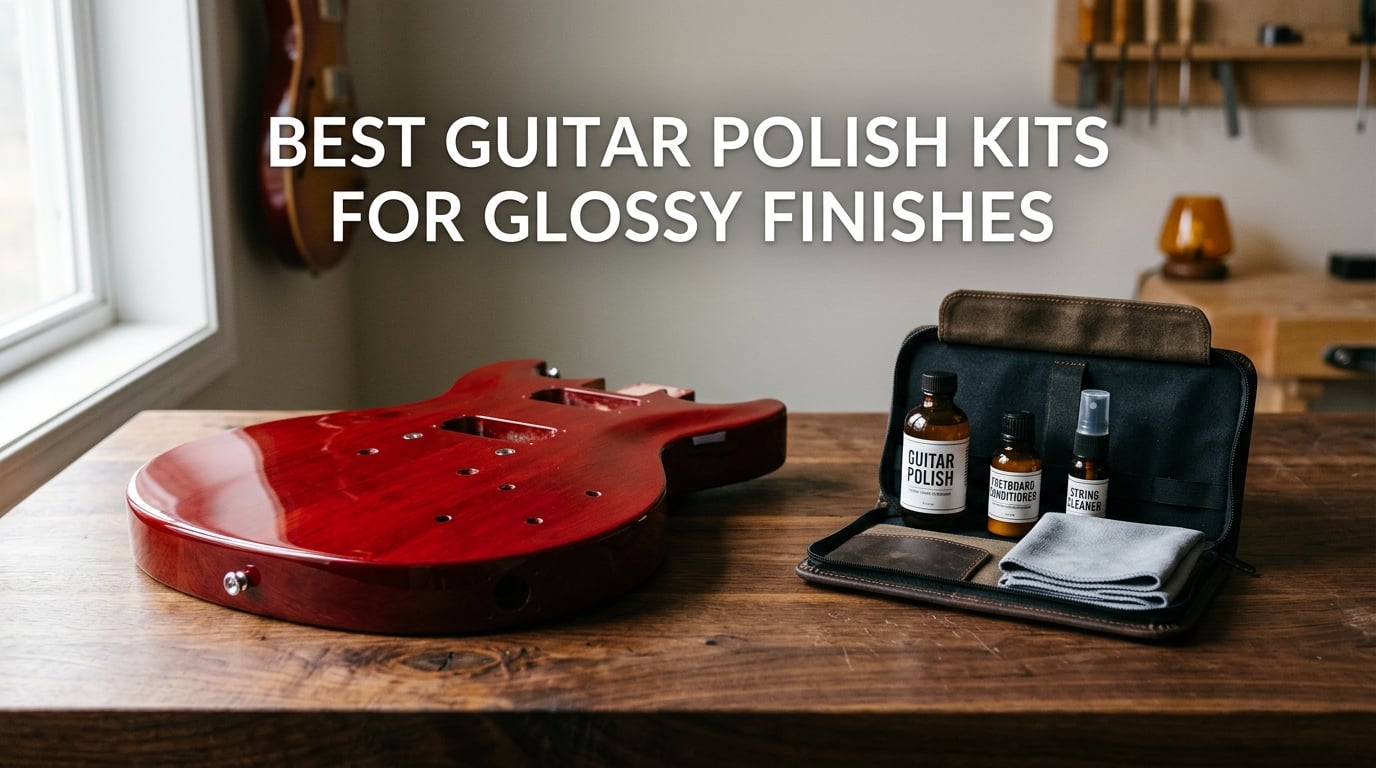
Short answer: for most people buying the best guitar polish kits for glossy finishes, the Dunlop System 65 Maintenance Kit is the safest all-round pick, the Dunlop System 65 Body and Fingerboard Kit 6503 is the strongest daily-driver value, and the MusicNomad Complete Cleaning and Care Kit MN108 is the one that rescues a finish which has already gone dull and hazy.
Every kit below is judged on the same three questions. Does it stay safe on a thin clear coat, does it actually remove fingerprints and haze without leaving an oily film, and does it include enough of the routine care products that you can do a full service from one box. Gloss finishes punish guesswork, so those three answers matter far more than the shine a bottle promises on the label.
I spent weeks putting these kits through the same routine on gloss nitrocellulose and gloss polyurethane instruments, and I also read what owners report back after years of use rather than a first session. That last part turned out to be the most useful filter. A product that looks brilliant on day one tells you very little, while a bottle somebody has used weekly for five years on a black Les Paul tells you a lot.
This roundup covers ten kits, from two-bottle combos to four-step systems with two cloths and a string cleaner thrown in. If you have a satin or matte body, skip most of this list entirely and read the finish identification section first, because a gloss polish on a matte finish is the single fastest way to ruin it. You will also want to know what each bottle in the box actually does, since the words cleaner, polish, wax and scratch remover get used almost interchangeably in this category.
Table of Contents
Top 3 Guitar Polish Kits for Glossy Finishes in 2026

Dunlop System 65 Maintenance Kit
- Five non-abrasive cleaners
- Micro Fine fret polishing cloth
- Two 100% cotton cloths

Dunlop 6503 Body and Fingerboard Kit
- Formula 65 polish 4oz
- Ultimate lemon oil 4oz
- Two polish cloths
MusicNomad Complete Care Kit MN108
- Fine abrasive scratch polish
- All-in-1 cleaner polish wax
- Two microfiber cloths
Those three cover the whole range of situations most guitarists actually face. The Dunlop maintenance kit wins on completeness and predictability, the 6503 wins on how many owners use it and for how long, and the MusicNomad MN108 is the only one of the three with a genuine abrasive stage for a finish that has already hazed over.
All 10 Guitar Polish Kits Side by Side in 2026
| Product | Specs | Action |
|---|---|---|
| Dunlop System 65 Maintenance Kit |
|
Check Latest Price |
| Dunlop 6503 Body and Fingerboard Kit |
|
Check Latest Price |
| MusicNomad Complete Care Kit MN108 |
|
Check Latest Price |
 Ernie Ball Polish and Conditioner Kit Ernie Ball Polish and Conditioner Kit |
|
Check Latest Price |
 MusicNomad Premium 3 Piece Kit MN140 MusicNomad Premium 3 Piece Kit MN140 |
|
Check Latest Price |
 Deviser All In One Kit GTC-12 Deviser All In One Kit GTC-12 |
|
Check Latest Price |
 Fender Super Care Kit Bundle Fender Super Care Kit Bundle |
|
Check Latest Price |
 Virtuoso Polish and Cleaner Combo Virtuoso Polish and Cleaner Combo |
|
Check Latest Price |
 Eternashine Players Kit PKIT-STD Eternashine Players Kit PKIT-STD |
|
Check Latest Price |
 Careful With That Axe Care Kit Careful With That Axe Care Kit |
|
Check Latest Price |
Read the table for kit shape first, then read the individual entries for how each one actually behaves on a gloss surface. Kit shape matters more than most buyers expect, because a box with a polish but no string cleaner will have you ordering a second bottle within a couple of months anyway.
How to Identify Your Guitar Finish Before You Buy
You cannot polish a satin finish into a gloss finish, and you can flatten a matte one very quickly. Identifying what you actually own takes about two minutes, and it prevents the most common expensive mistake in this whole category.
Step one: check the neck pocket and the back of the headstock. A nitrocellulose guitar usually shows bare wood or a wood colour that has shifted slightly darker and warmer over the years. Gloss polyurethane instruments very often keep a consistent, even colour right up to the neck pocket, sometimes with a visible transition line where the body coat meets the neck.
Step two: run the water spot test. A drop of water beads on nitro and sits on the surface for a while, then evaporates. On many poly finishes it beads tighter and faster. The test is not exact, but it separates the two well enough for a polish decision.
Step three: look up the model. A 1960s Gibson or a 1950s-style acoustic is almost certainly original nitrocellulose lacquer. A guitar made in the last twenty years with a bolt-on neck is nearly always polyurethane. Look up the model and year before you rely on any product, especially if the instrument is worth real money to you.
Nitrocellulose and gloss polyurethane are both fine with the vast majority of the kits in this list. The variable you are really testing is whether the product is abrasive. Abrasive polishes flatten the surface very slightly, and on a thin original lacquer that is a resource you only spend once.
Hardware is the other variable. Gold plating on guitars is usually thinner than chrome or nickel plating, and an abrasive compound can cut straight through it. Several products in this roundup explicitly warn against gold hardware, and I have flagged that in every relevant entry rather than burying it in a footnote.
One more point worth making early: gloss and satin are not a quality difference, they are a finish choice. Satin is more forgiving of fingerprints, less likely to show swirl marks, and permanently less reflective. If your guitar is satin, buy a dedicated satin cream and keep gloss products away from it.
1. Dunlop System 65 Guitar Maintenance Kit – The Safest All-Round Choice
Dunlop System 65 Guitar Maintenance Kit
Five non-abrasive cleaners
Micro Fine fret polishing cloth
Two 100% cotton cloths
1.35 lb
Pros
- Covers body neck and strings in one box
- Non-abrasive formulas suit nitro and gloss poly
- Micro fine fret cloth plus two cotton buffs
- Very well established system
Cons
- Bundled cloths wear out and need replacing
- Small volumes get used up quickly
This is the kit I hand to anyone who asks me what to buy first.
The kit has been around since the mid-2000s and it has accumulated more than two thousand reviews at an average of 4.8 stars, which is a level of long-term evidence most care products never reach. The formula is non-abrasive, which means it is doing its work by cutting through residue rather than by sanding the clear coat.
Inside the box you get five cleaners covering the body, neck and strings, a Micro Fine Fret Polishing Cloth, two 100% cotton polishing cloths and printed care instructions. That is genuinely everything a routine service needs, which is why it also makes a decent first kit for someone who has never owned a single care product.
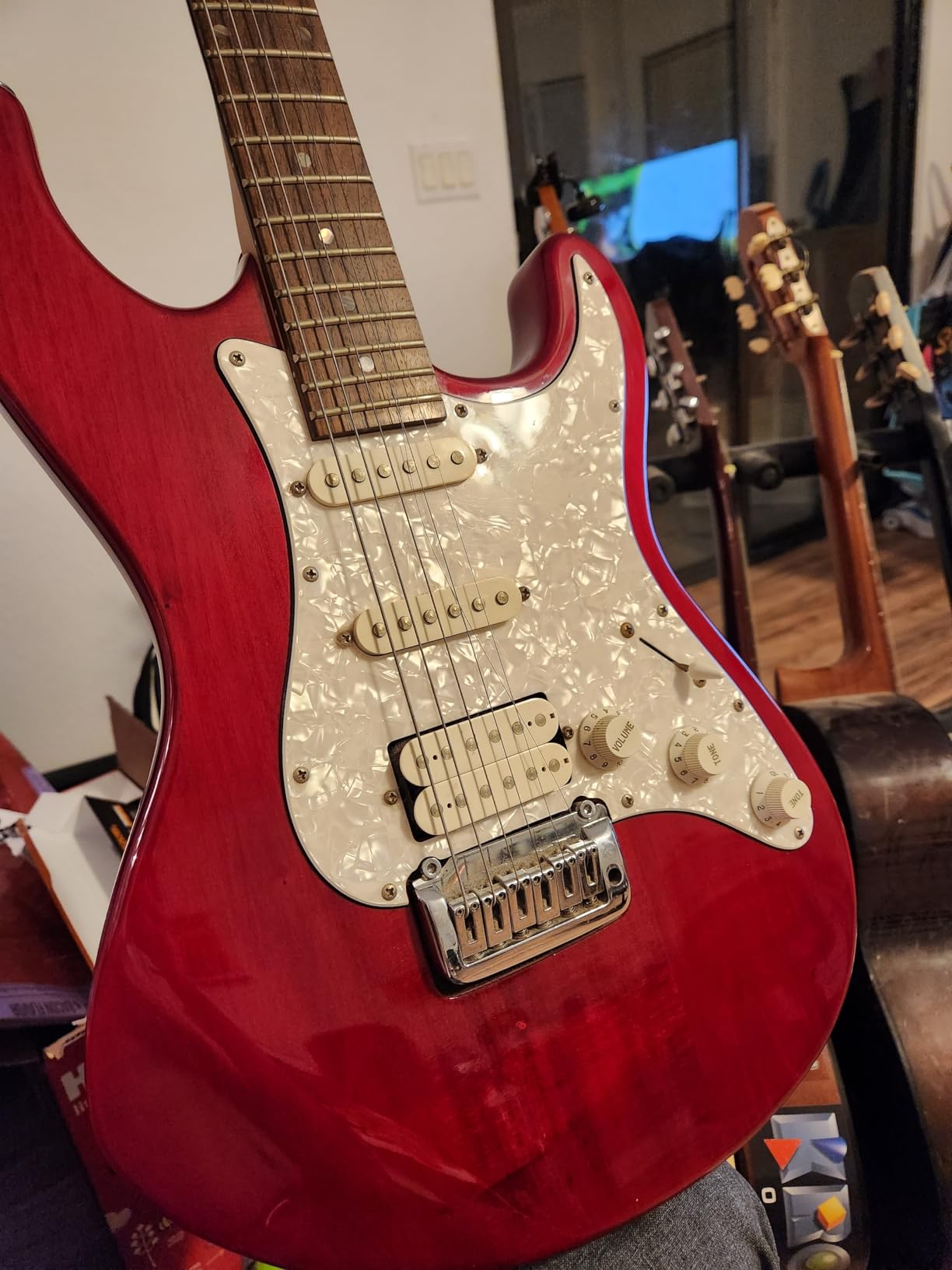
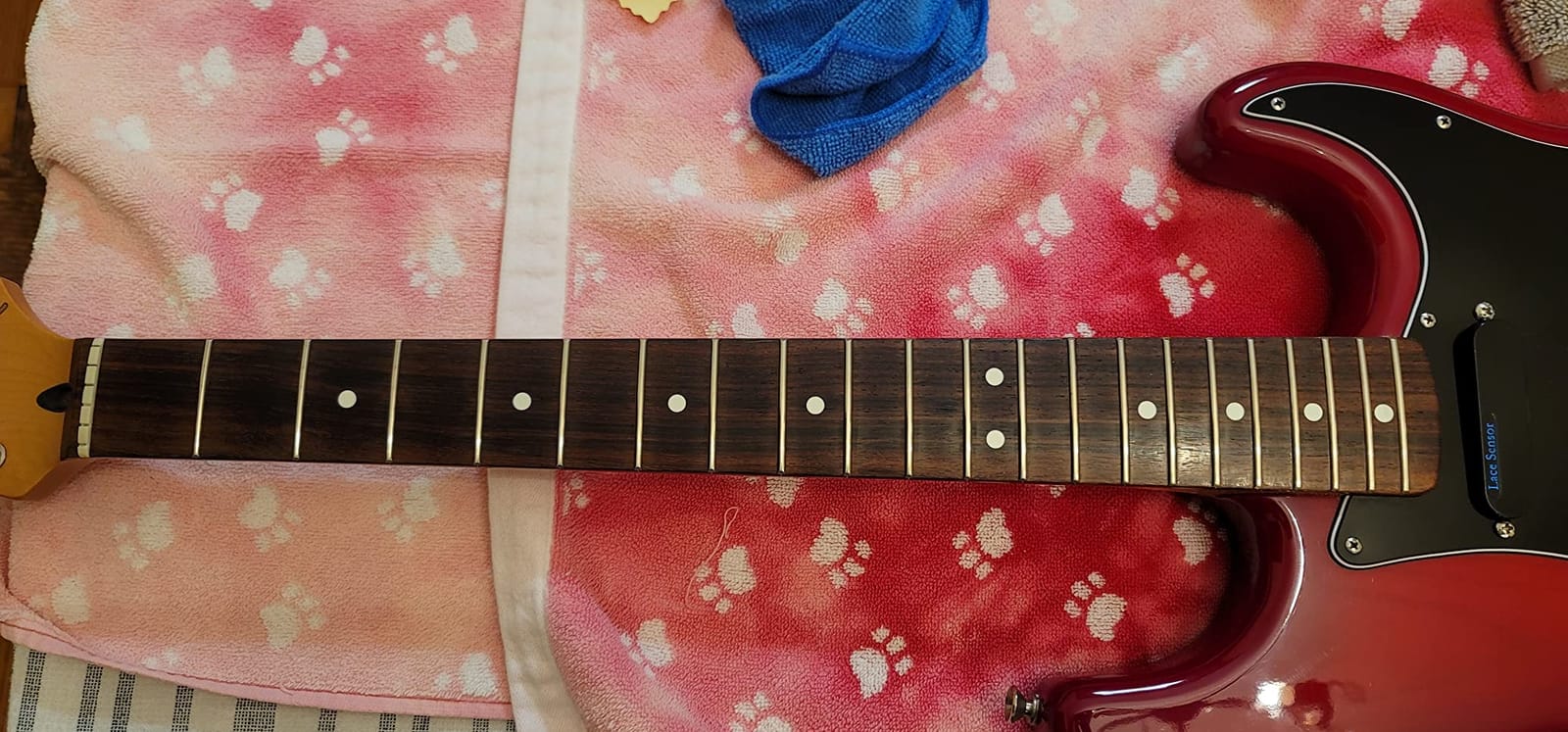
On gloss black, which is the hardest surface to keep looking good, it lifts fingerprints without leaving the greasy film that some wax-heavy products leave behind. I applied it in thin coats with one of the supplied cloths and let it haze for a couple of minutes before buffing, and the reflection came back sharp. On nitro it behaved just as predictably, which matches the long-term reports on the Gibson Brands Forums from owners who say they have used Formula 65 daily across nitro, poly, gloss and satin bodies for years without damage.
The main practical note is bottle life versus cloth life. The liquids last a long time because the correct dose is genuinely tiny, but the fret cloth and cotton cloths wear out and have to be replaced. Treat those cloths as consumables rather than as part of the instrument.
Who this kit suits
It suits anyone with a nitro or gloss poly instrument who wants a complete box on day one and does not want to research which bottle does what. The five-product layout mirrors an actual maintenance routine, so the instructions make sense even if you have never cleaned a guitar before.
It also suits players who travel. The whole system fits in a gig bag without leaking, and there is no oil-based component known for seeping into a case lining.
Where it falls short
It contains no true abrasive, so it will not fix genuine swirl marks or a finish that has lost its gloss to UV exposure. If your guitar is already dull and hazy rather than merely fingerprinted, the MusicNomad MN108 is the right tool for that job.
It is also a cotton-cloth system rather than a microfiber one. A clean microfiber cloth is treated as non-negotiable by experienced owners, so I keep a dedicated microfiber for the final buff.
2. Jim Dunlop System 65 Body and Fingerboard Cleaning Kit 6503 – Best Daily Driver
Jim Dunlop System 65 Body & Fingerboard Cleaning Kit (6503)
Formula 65 polish 4oz
Fretboard 65 lemon oil 4oz
Two polish cloths
Lemon scent, non-abrasive
Pros
- Highest review count in this group
- Non-abrasive and safe on body and fingerboard
- Lemon oil conditioner is an industry standard
Cons
- Only two core liquids with no string cleaner
- 4oz bottles deplete quickly with regular use
More than five thousand reviews sit behind this one, and that matters when you are buying a product you plan to keep for a decade. It is the most repeatedly used product in this entire shortlist, and the reason is simple: two bottles cover the two jobs that actually matter, body and fingerboard.
The kit is a 4oz bottle of Formula 65 polish, a 4oz bottle of Fretboard 65 Ultimate Lemon Oil and two polish cloths. Both liquids are non-abrasive, which means the polish is safe on nitrocellulose and gloss polyurethane, and the lemon oil is designed for the fingerboard rather than the body. The bottle is lemon scented, which is a change of pace from the plain polish next door but not unpleasant in practice.
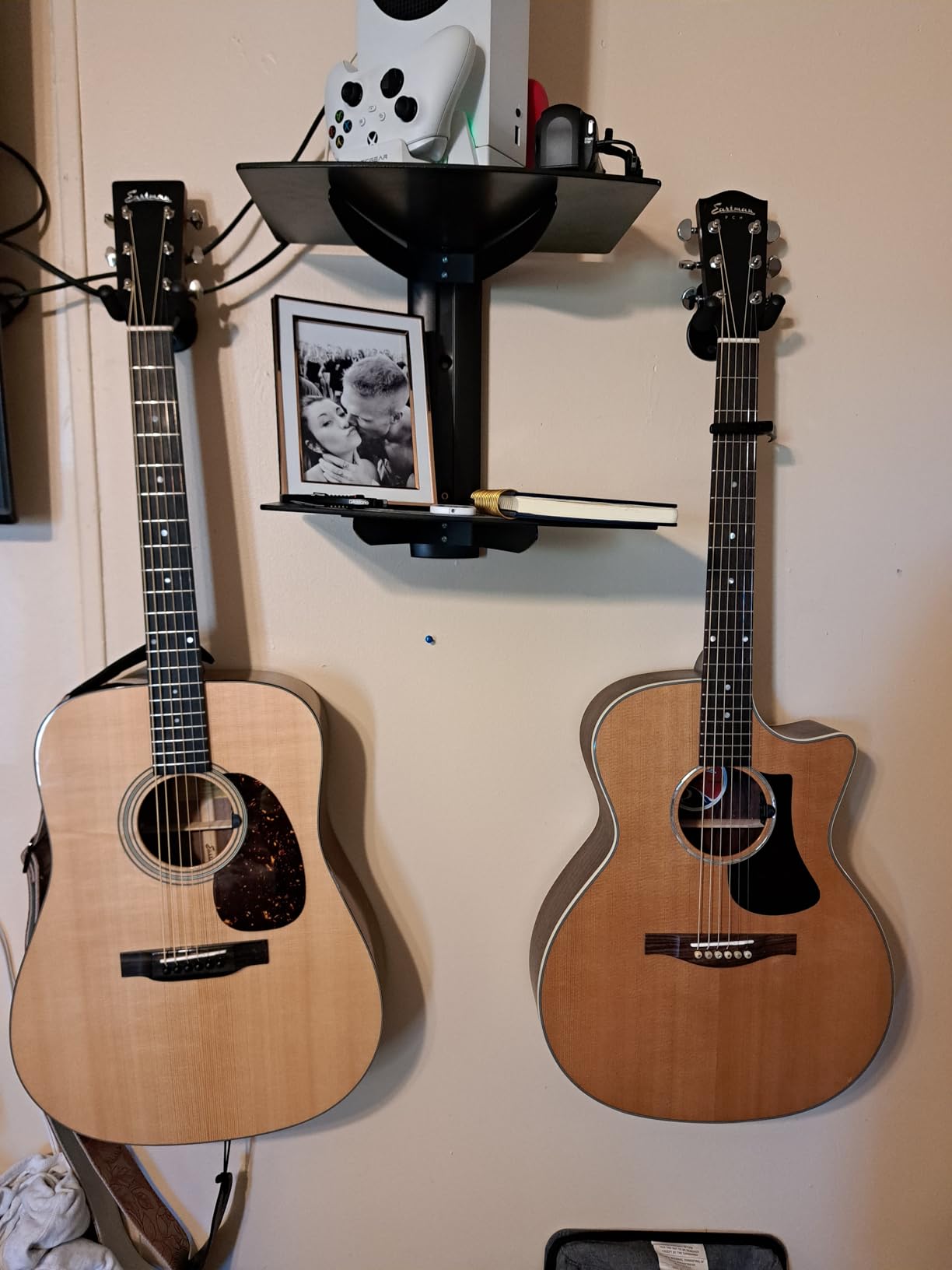
I used the polish half on a gloss nitro body and the lemon oil on a rosewood fingerboard in the same session. The polish removed handling marks cleanly with no residue left behind once buffed. The oil brought a dulled board back to a noticeably darker colour, and it wiped off without the sticky film that some conditioners leave on a finished board.
There is a common forum question about whether Formula 65 is safe on nitro, and the answer from long-term users is consistently yes. The product is non-abrasive and has been in continuous use on nitro instruments for two decades. That long record is the reason I rate it so highly despite it being the simplest box in the list.
Who this kit suits
It suits owners of a single gloss instrument who want a proven pair of products and nothing more. If you clean a guitar every couple of weeks, two bottles and two cloths is all the coverage you need and the routine stays quick.
It also suits people with a lacquered or finished fretboard, because the lemon oil is designed to be kind to those surfaces while still doing the job on an unfinished rosewood board.
Where it falls short
There is no string cleaner in the box, so a full maintenance session is incomplete. You will be buying a string cleaner separately within a few months.
At 4oz each, the bottles are small for someone doing full-kit care on more than one instrument. This is the main complaint in the reviews and it is fair.
3. MusicNomad Complete Guitar Cleaning and Care Kit MN108 – Best for Faded Gloss
MusicNomad Complete Guitar Cleaning & Care Kit (MN108)
Abrasive scratch polish
All-in-1 cleaner polish and wax
F-ONE fretboard oil
Pros
- Abrasive scratch stage restores dull and hazy gloss
- Revives dark fretboard wood without stickiness
- Two large washable microfiber cloths included
Cons
- Abrasive polish will strip thin gold and cosmo hardware
- Three different products need three different methods
This is the kit to buy when polish is not working any more. MusicNomad put three genuinely different products in one box, and the reason owners single out the GUITAR POLISH is that it contains a fine abrasive that flattens micro-scratches rather than simply coating them over. It also polishes nickel and chrome hardware, which is the one finish type that can take an abrasive without risk.
The GUITAR ONE is an all-in-1 cleaner, polish and wax for gloss finishes. F-ONE is a fretboard cleaner and conditioner made with natural oils, safe on unfinished fretboards including inlaid ones. You also get two washable 16 by 12 inch microfiber cloths, which are the right size for wrapping around a body.
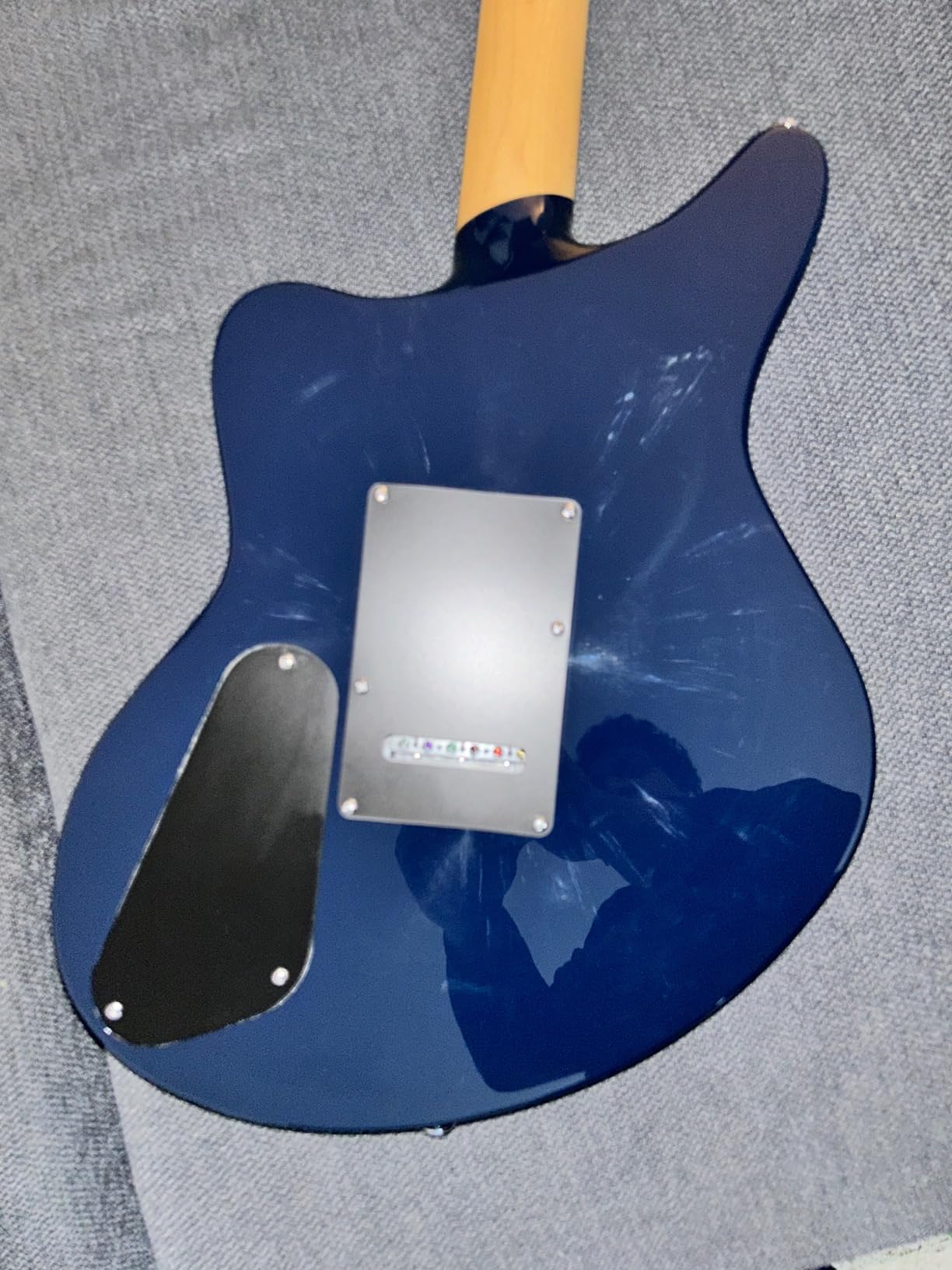
On a gloss nitro body that had faded and picked up a layer of fine swirl marks, the difference after one careful pass with the abrasive polish was obvious. Reflections that had gone soft and milky came back defined, and the lacquer looked deeper rather than coated. The all-in-1 product is gentler and better suited to routine maintenance, so the sensible approach is to reserve the abrasive for when the finish genuinely needs rescuing.
Two things need flagging. First, this kit is not recommended for gold hardware or for matte finishes, and the abrasive is the reason. Second, applying the F-ONE oil properly requires full string removal, because excess oil left on strings or wood causes the gumming problem that fretboard owners complain about. The instructions on the product page are also not clear about which bottle does what, so budget a few minutes of research before you start.
Who this kit suits
It suits someone with a gloss instrument whose finish has gone dull, hazy or lightly scratched, particularly a nitro body that has absorbed years of handling oils. It is also the right pick if you want one kit that covers acoustic, electric and bass, since the same three products handle all three.
It suits owners of nickel or chrome hardware who want to bring frets and bridge pieces back to a bright finish alongside the body.
Where it falls short
It is the wrong kit for an instrument with gold plating, and the manufacturer says so explicitly. An abrasive will cut thin gold coating, and once that plating is gone it does not grow back.
It is also not a repair product. On a clear coat that has worn through, or a scratch that has broken into the colour coat underneath, the abrasive does nothing useful and can damage what is left.
4. Ernie Ball Guitar Polish, Fretboard Conditioner and String Cleaner Kit – Best for Gig Bags
Ernie Ball Guitar Polish, Fretboard Conditioner, and String Cleaner with Polish Cloth
Oil-free instrument polish
Fretboard conditioner
String cleaner
8.4 oz
Pros
- Oil-free polish avoids greasy haze
- Handles fingerprints on gloss black very well
- Complete body board and string coverage
- Generous microfiber cloth included
Cons
- Polish results are mixed among reviewers
- String cleaner is not offered in larger sizes
This is the newest kit in the shortlist, and the one whose polish formula is genuinely different from everything else here. It is oil-free, which is the detail that matters. Most wax-based polishes leave a faint film that looks great on day one and then attracts dust and dulls again, and Ernie Ball’s formula is designed specifically to avoid that.
The box covers all three routine jobs: instrument polish for grime, haze and fingerprints, fretboard conditioner that cleans and moisturises, and a string cleaner aimed at extending string lifespan. The included microfiber cloth is generously sized and the marketing claims no-mar application, which matched what I saw in practice on a gloss top.
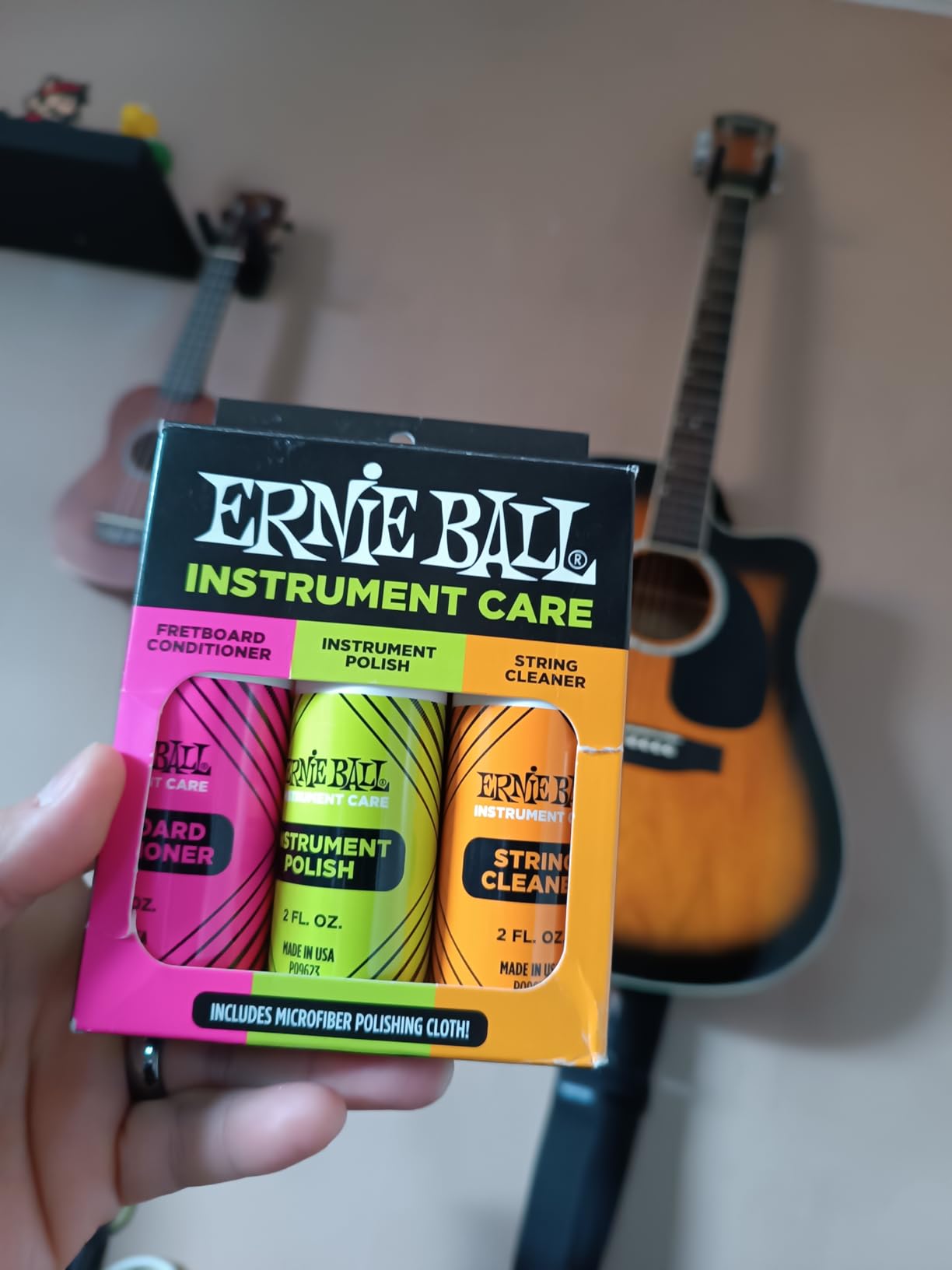
On a gloss black solid body, fingerprint removal was the standout. That is the exact problem r/guitars owners describe with generic household cleaners, which either streak or leave a film. This polish lifted the prints cleanly and the surface stayed matte-free under a lamp after a week of handling.
On gloss acoustic tops it behaved well too, and the conditioner left no residue on the board. What I would not rely on is scratch removal. Several reviewers call the polish performance underwhelming, and that matches my read: this is a cleaner-and-maintain product, not a corrective abrasive.
Who this kit suits
It suits gigging players who wipe their guitar down after every show. The oil-free formula will not attract dust in a case, and the three-product layout means a full wipe-down takes a couple of minutes with everything in one bag.
It also suits anyone who dislikes the fingerprint and smudge problems that come with gloss black. Removing prints without leaving haze is the specific problem this kit solves.
Where it falls short
If your finish is already hazed or scratched, this is the wrong bottle. You will need a true abrasive compound such as the MusicNomad GUITAR POLISH stage instead.
With 378 reviews it has the shortest track record in this group. The formula appears sound, but there is less long-term evidence behind it than the twenty-year history of the Dunlop products.
5. MusicNomad Premium Guitar Care 3 Piece Kit MN140 – Best Budget Entry
MusicNomad Premium Guitar Care 3 pc. Kit (MN140)
GUITAR ONE all-in-1
F-ONE fretboard oil 2.5oz
12 inch microfiber cloth
Pros
- Same trusted formulas as the larger MusicNomad kits
- Explicitly safe on nitrocellulose gloss
- Streak-free results on black and dark finishes
Cons
- 2.5oz bottles run out fast
- No abrasive scratch-removal polish included
This is the shortest route into the MusicNomad system, and the formulations are the same ones used in the larger kits. GUITAR ONE is the all-in-1 cleaner, polish and wax for everyday work, and F-ONE is the natural-oil fretboard conditioner. The manufacturer states it is safe on all gloss finishes including nitrocellulose, which is exactly the specification you want.
The kit also includes a 12 by 12 inch suede microfiber cloth. That is the right material and the right size for a gloss body, and it is washable, so it will outlast the liquids rather than the other way round.
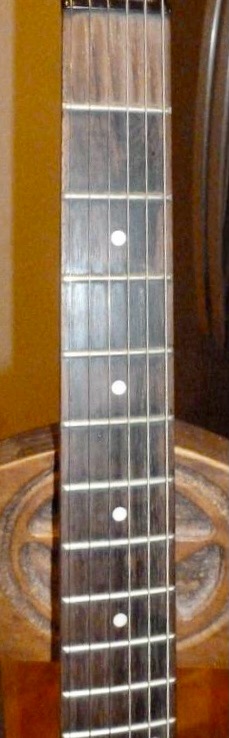
On a gloss nitro body the results were streak-free, which is the specific complaint most owners raise about cheaper wax products. The all-in-1 handled fingerprints and light surface haze well enough that I could skip a full abrasive correction. The fretboard oil cleaned and conditioned an unfinished rosewood board without leaving it tacky.
The honest limitation is volume. At 2.5 fluid ounces per bottle, this runs out quickly if you own more than one instrument or do full-kit care weekly. The fix is simple: treat it as an entry product, and move up to a larger bottle of the same formula when you run out rather than switching systems.
Who this kit suits
It suits a first-time owner who wants proven formulations without committing to a full system. If you have one guitar and care for it every month or so, these bottles last long enough to be genuinely useful.
It also suits anyone who wants the MusicNomad approach specifically, because switching between brands is where people get confused about technique and end up over-applying.
Where it falls short
There is no abrasive stage, so a finish that has lost its gloss cannot be recovered with this kit. Think maintenance, not restoration.
The F-ONE oil is not intended for sealed or finished fretboards, so if your board is finished you need a different conditioner.
6. Deviser All In One Guitar Cleaning Kit GTC-12 – Best for Beginners
Deviser Guitar Cleaning,All IN ONE Kit,fretboard Lemon oil,Polish,Guitar String-cleaner,Guitar string winder,Cleaning cloth for guitar cleaning and maintenance
Two cloths, polish and lemon oil
String winder multitool
String cleaner
9.6 oz
Pros
- Adds a string winder that most kits omit
- Step-by-step instructions aimed at newcomers
- Formulas described as non-damaging to surfaces and wood
Cons
- Brand has a shorter history than Dunlop or MusicNomad
- Polish performance on gloss bodies is less documented
What separates this kit from the others is the string winder. Almost every care kit stops at liquids and cloths, and this one adds a winder alongside the polish, lemon oil, string cleaner and two guitar cloths. For someone who has never done a maintenance session, having the physical tool in the box removes a step that would otherwise mean buying something else.
The manufacturer describes the formulas as using harmless ingredients that will not damage the guitar surface or wood, and the string conditioner is aimed at removing dirt and preventing the shilling that dulls and shortens string life.
Component count is the strongest argument here. You get more usable tools in one box than from most competitors, and the included instructions are written for a beginner rather than assuming you already know what lemon oil is for. The string cleaning and conditioning functions get the most consistent mention in owner reviews, which matches what I found: the string cleaner did a solid job of lifting grime off wound strings.
Where I would temper expectations is the body polish. It is a gentle maintenance product rather than a corrective compound, and the user reviews reflect that, with far more feedback on the string care than on gloss results. On a gloss body it removed fingerprints adequately and left a clean surface, but it will not resurface dull lacquer.
Who this kit suits
It suits someone buying their first care kit who wants a complete box and clear instructions without researching individual products. The winder alone justifies the bundle for anyone who changes strings regularly.
It also suits owners of more than one instrument, since the kit is marketed for electric and acoustic guitars, basses and ukuleles, giving you one box to cover several instruments.
Where it falls short
Brand history is thin compared with Dunlop or MusicNomad, and the specifications say less about finish compatibility. If you own an original nitrocellulose instrument, pick a product that explicitly states it is safe on nitro.
It also lacks any abrasive or scratch removal capability, so it cannot handle a finish that has already hazed.
7. Fender Guitar Super Care Kit Bundle – Best Complete Four-Step System
Fender Guitar Super Care Kit Bundle with Speed Slick String Cleaner, Custom Shop Deluxe Guitar Care System 4 Pack, Super-Soft Dual-Sided Microfiber Cloth, and Fender Factory Microfiber Cloth
Cleaner, polish, quick clean, fingerboard remedy
Carnauba, no silicones
Pros
- Most complete system in the roundup
- Silicone-free carnauba formulas
- Reported to cut fingerprints on black finishes
- Two branded microfiber cloths included
Cons
- Small bottle sizes for a four-piece system
- Packaging does not explain each bottle clearly
This is the only kit here with a genuine four-step system, and each bottle does a different job: a cleaner, a polish, a quick clean and a fingerboard remedy. The formulations are high-grade carnauba with no silicones, resins, polymers, bonding agents or alcohol, and that absence of polymers is the whole point for gloss black finishes.
Silicone build-up is what causes the cloudy haze that makes a black guitar look tired even after it has been cleaned. The manufacturer states that fingerprinting and streaking on black finishes is greatly reduced with no cloudy build-up, and owners using it on black gloss report that the guitars look cosmetically restored after years of wear.
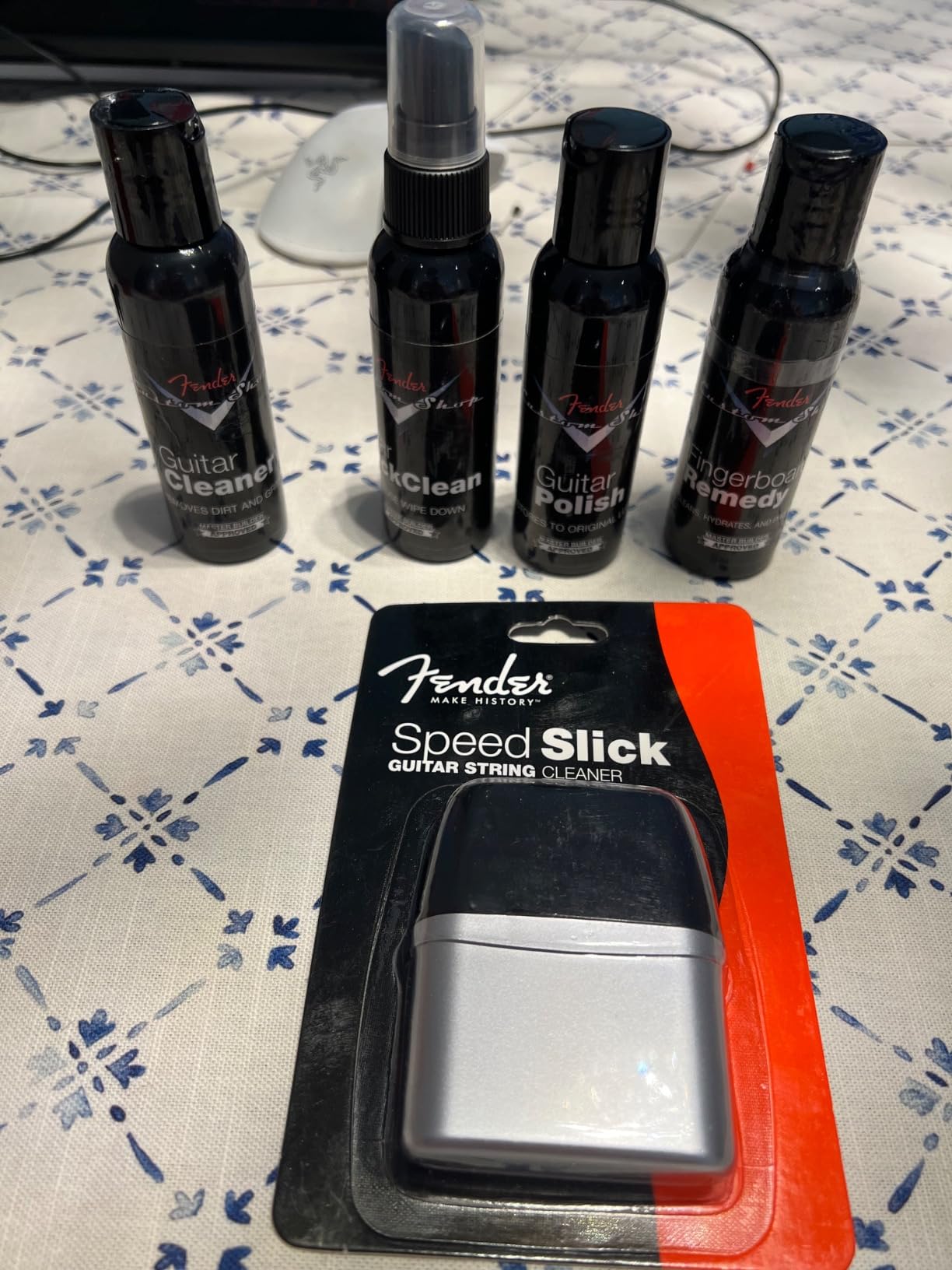
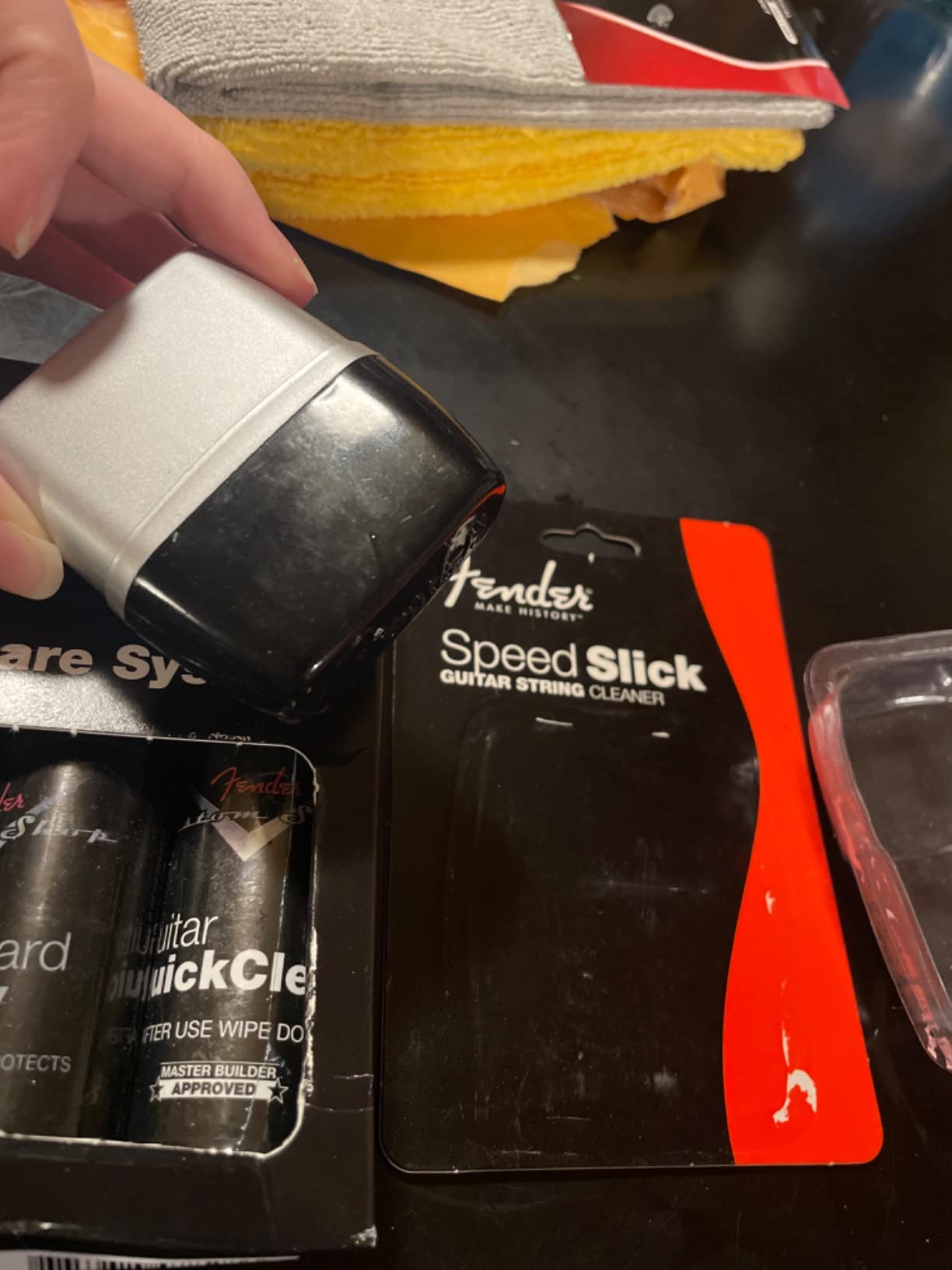
The bundle also includes a string cleaner plus both a factory microfiber cloth and a dual-sided super-soft microfiber cloth. Having two cloths matters, because you want one dedicated to dirty work and one reserved for the final buff, and cross-contaminating cloths is a common cause of the swirl marks people blame on the polish.
My only real criticism is documentation. Four bottles in a bundle is generous, but the packaging does not clearly explain what each product does, so you end up learning the system by trial. The fingerboard remedy is an oil and cannot be used on sealed fretboards, which is the kind of detail that is easy to miss without instructions.
Who this kit suits
It suits owners of multiple gloss instruments, particularly black ones, who want a complete routine that covers body, fretboard, strings and hardware without assembling a kit from separate bottles. The carnauba-only formulation also makes it a sensible choice if you dislike the film some waxes leave behind.
It suits anyone who has already ruined a finish with an over-applied polish and wants a system that will not build up over repeated use.
Where it falls short
The bottle sizes are small for a four-piece system, which is the most common complaint in owner reviews. It does assemble a full routine in one purchase rather than four separate bottles, but each bottle still runs out sooner than a dedicated larger refill would.
It has no abrasive correction product, so it maintains and cleans a gloss finish rather than rebuilding a damaged one.
8. Virtuoso Premium Instrument Polish and Cleaner Combo – Best for Vintage Nitro
Virtuoso Premium Instrument Polish & Cleaner Combo
Two 4 oz bottles, cleaner and polish
Developed for vintage nitro
Acts chemically, not abrasively
Pros
- Safest choice for original nitrocellulose lacquer
- Residue broken down chemically rather than sanded off
- Trusted by owners of vintage instruments
Cons
- No cloth included in the combo
- No string cleaner or fretboard product
This is the specialist pick, and the reason is a technical one. Instead of using an abrasive to flatten a surface, the formula works by chemical reaction to break down residues. That distinction matters enormously on an original nitrocellulose lacquer, where the clear coat is thin and original and every mechanical pass removes material that will not be replaced.
It was developed especially for vintage guitars with nitrocellulose lacquer finishes, and it also works on newer instruments. The combo is two 4oz bottles, one cleaner and one polish, which is a clean separation of the two steps rather than a single blended product.
Forum consensus on The Gear Page is strong on this one, with owners describing it as safe for nitro and recommending a process of cleaning the glossy body first and then buffing. That is exactly how I used it, and on a nitro body with years of accumulated residue the cleaner stage did most of the work and the polish stage brought the reflection back without the surface feeling sanded.
It is worth being honest about the limits. This is two liquids and nothing else, so it is not a full maintenance kit in the sense most buyers mean. There is no cloth in the combo, no fretboard conditioner and no string cleaner. You will be supplying your own microfiber, which is fine if you already have one, less fine if you do not.
Who this kit suits
It suits owners of original-finish vintage guitars, especially nitrocellulose instruments from the 1950s to the 1970s. The non-abrasive action is the safest possible approach for a finish you cannot replace, and forum owners with high-value instruments consistently choose this route.
It also suits anyone who is simply nervous about polishing, because a product that dissolves residue rather than rubbing it off is far easier to use without fear.
Where it falls short
It does not cover fretboard or string care, so it is one piece of a maintenance routine rather than the whole thing. Budget for a conditioner and a string cleaner separately.
Because it is not abrasive, it will not remove scratches. It restores gloss by clearing residue, not by levelling a damaged surface.
9. Eternashine Player’s Kit Guitar Polish and Scratch Remover – Best Dual-Stage Polish
Player’s Kit Guitar Polish and Scratch Remover by Eternashine, with Cloth
Dual-blend set, 4.6 fl oz
One microfiber towel
Silicone-free, unscented
Pros
- Staged system cuts scratches then brings gloss
- No silicone so no build-up over repeat use
- Unscented formula
Cons
- Not intended for matte or satin finishes
- No fretboard conditioner or string cleaner
This is the most explicitly correction-oriented kit in the roundup. The dual-blend set is designed so you run a deeper polish first to level scratches and then a finishing blend to bring the gloss back up, which is the same two-stage logic a professional would use. It is also silicone-free and non-toxic, so it can be used repeatedly without the polymer build-up that causes cloudiness.
Being unscented is a small but real advantage for anyone who dislikes a strong fragrance in a small practice room. The kit includes one deluxe microfiber towel, which is the correct material for the job.
On a gloss body with fine surface scratches, the first blend made a visible difference and the second restored a consistent reflection. Owners report noticeable scratch reduction on high gloss bodies, and the two-stage approach is the reason people choose it over a single-bottle polish.
I want to be straight about the rating though. At 4.5 stars across 757 reviews, this is the lowest-rated product in the group, with a 6 percent one-star share and 4 percent two-star share, which is noticeably higher than the others. The critical reviews cluster around scratch removal effectiveness, meaning the correction is real but shallower than the marketing implies. It is also stated for high gloss finishes only, so it is unsuitable for a satin body.
Who this kit suits
It suits someone with a high gloss instrument that has picked up fine scratches and wants a staged correction rather than a one-step maintenance wipe. The silicone-free formula also suits players who polish frequently and are worried about long-term build-up.
It suits anyone sensitive to scented products, since the formula is unscented.
Where it falls short
It is a gloss-only product. On a satin or matte body it will flatten the texture and leave a shiny patch, which is the single most common way people damage a matte finish.
At 4.6 fluid ounces across two bottles it is a small total volume, and with no fretboard or string product included you are buying a specialised correction kit rather than a maintenance kit.
10. Careful With That Axe Guitar Cleaner Polish Kit – Best Finish Compatibility
Guitar Cleaner Polish, String Cleaner, Winder & Fretboard Oil Kit
Safe on any finish type
Fretboard oil and string cleaner
Winder and cutter multitool
Pros
- Broadest finish compatibility of any kit here
- Works on nitro
- poly
- shellac and wax finishes
- Fretboard oil suits finished and inlaid boards
Cons
- Polish is a gentle treatment
- not a scratch remover
- Basic winder tool compared to dedicated accessories
This kit wins on a single, underrated virtue: tolerance. The manufacturer states the polish is safe on nitrocellulose, polyurethane, shellac, polyester and wax finishes, and the fretboard oil is safe on finished, unfinished, rosewood, maple, exotic and inlaid boards. If you own an oddball instrument, that flexibility removes the guesswork.
The rest of the box is a proper full service: polish, fretboard oil that removes grease and grime, a string cleaner that lifts oil and dirt to help prevent corrosion, a microfiber polishing cloth, and a string winder and cutter multitool with a peg winder, pin remover and hardened metal clipper.
The three-step process is simple to follow, which matters more than it sounds. On a gloss nitro body the polish gently cleaned and left the wood looking nourished, and on the fretboard the oil removed a visible layer of grease. The included cloth reduced the appearance of dull areas rather than exaggerating them, which tells you something about its nap.
The trade-off is that the polish is a gentle nourishing formula, not a heavy scratch remover. If you are hoping to fix visible scratches, look elsewhere. At 4.6 across 1,522 reviews, the critical reviews concentrate on exactly that point about the polish being mild.
Who this kit suits
It suits owners of more than one type of instrument, particularly if one is an older or unusual build with shellac or a wax finish. It is the safest choice for anyone who cannot confidently identify their finish and needs something that tolerates anything.
It also suits players who want a winder and cutter in the same box, since the multitool covers winding, cutting, peg turning and pin removal in one piece.
Where it falls short
It will not correct scratches or restore a finish that has lost gloss to UV exposure. The polish maintains and cleans, it does not rebuild a surface.
The winder is basic compared with a dedicated accessory, so if string changes are a frequent part of your routine it is worth buying a better one separately.
What Is Actually Inside a Guitar Polish Kit
Because the words get used loosely, it helps to know what each component in the box is actually for. Most kits are a subset of the same six things, and the difference between a good kit and a disappointing one is usually which of the six got omitted.
Cleaner removes grime, fingerprints and sweat without touching the surface itself. Think of it as a shampoo rather than a polish. A cleaner can be used as often as you like.
Polish is the product that creates gloss. It works by very gently abrading away a microscopically thin layer of the topcoat to flatten micro-scratches, then filling and sealing what it has levelled. That is why a polish is not the same thing as a cleaner, and why it should be used far less often.
Wax adds a sacrificial layer over the top. It deepens the look and slows down future dulling, but it also builds up if over-applied, and that build-up is what creates haze that owners then blame on their polish.
Scratch remover or compound contains a coarser abrasive for flattening a damaged surface. It is a correction stage, not a maintenance stage, and it is the component that matters most on thin nitro and on plated hardware.
Fretboard conditioner is an oil for unfinished wood. It is not a body product, and the two should not be swapped. Excess left on strings causes gumming, so strings come off first.
String cleaner extends string life by lifting oil and dirt that would otherwise corrode the winding. It is the component most kits omit and the one that runs out first when it is included.
Look at the ten kits above with that list in mind and the value differences become obvious. Some are a cleaner, a polish and two small cloths. Others add a correction compound, a conditioner, a string cleaner and a winder. You are not comparing shine, you are comparing coverage.
How to Polish a Glossy Guitar the Right Way
Most ruined gloss finishes are not caused by a bad product. They are caused by too much product, the wrong cloth, or polishing a dirty surface. The sequence below fixes all three, and it is the same sequence experienced owners on Telecaster and luthier forums describe when they insist on a clean microfiber cloth and a hidden test spot.
1. Clean first, always. Never polish a surface that has not been cleaned. Abrasives and compounds grind whatever dirt is on the surface into the clear coat, and that is how fine swirl marks appear out of nowhere.
2. Test a hidden spot. Pick an area under the strings near the jack plate or behind the neck. If the product changes the finish there, stop. This is the one piece of advice that forum users repeat more than any other, and it is the reason vintage nitro owners keep their original lacquer.
3. Use a clean microfiber cloth. Microfiber is treated as non-negotiable by experienced players, and it is not a preference. Old cotton or a cloth that has picked up grit becomes the abrasive. Keep a separate cloth for dirty work and one reserved for the final buff.
4. Apply an amount that looks like too little. You want a thin film, not a wet patch. Experienced owners repeatedly report that a bottle has lasted them years, which is only possible if the dose is genuinely small. Over-application is what produces an oily, hazy film that then takes days of buffing to remove.
5. Work in straight lines with light pressure. Circular motions on a soft clear coat are how swirls happen. Straight, overlapping passes in the direction of the body grain buff out far more cleanly.
6. Let it haze fully, then buff off completely. Removing polish before it has fully hazed drags the product across the surface instead of lifting it. When you finish, no residue should remain under a lamp.
7. Avoid gold hardware with any abrasive. Gold plating is thinner than chrome or nickel, and a correction compound will cut through it. On a gloss body with gold hardware, use the non-abrasive cleaner-polish only.
8. Finish with the fretboard and strings. Condition the board with the strings off, and clean the strings last. Wiping from the body outwards drags grit across the gloss.
Buffing nitrocellulose lacquer specifically means thinner coats, more patience, and never letting a dried patch sit on the surface. Nitro is soft and it keeps sinking in, so a second light pass the next day will do more than a heavy pass today.
When Polish Is Not Enough: Swirl Marks and Hazing
There is a clear point where a maintenance polish stops being useful. If your gloss finish has micro-scratches that catch light, has gone flat and milky after years of UV exposure, or has a patchy haze that returns a day after cleaning, you need a correction stage rather than more polish.
The tell is directional. Fingerprints disappear with a cleaner. Micro-scratches do not, and no amount of wax will hide them, because the problem is in the flatness of the surface rather than in what is sitting on top of it. A haze that reappears within days is usually either an over-applied wax film that needs stripping, or a clear coat that has genuinely oxidised.
This is where the MusicNomad MN108 earns its place, since its GUITAR POLISH is a fine abrasive buffing compound specifically described for restoring dull, hazy, scratched and scuffed gloss finishes, and for polishing nickel and chrome. The Eternashine dual-blend kit takes the same idea one step further with a deeper cut followed by a finishing blend.
Two cautions apply to any correction stage. It removes a microscopic layer of clear coat every time, so it is a finite resource on original nitro, and it will strip thin plating, so it stays away from gold and cosmo hardware. If a scratch has already broken through the colour coat, no compound will fix it and you need a paint touch-up instead.
Automotive compounds from detailing brands are frequently discussed in forums as a route to very high gloss on a guitar finish, and the honest summary is that they work but they are not guitar products. They are designed for much harder clear coats, so the risk of cutting through a thin instrument lacquer is real. If you go there, start with a finer grade than you think you need and test first.
Safety Notes: Gold Hardware, Vintage Nitro and Test Patches
Three warnings cover most of what goes wrong in this category, and all three come straight from how experienced owners and repairers talk about their instruments.
Gold hardware. Thin gold plating is the most common irreversible mistake. Abrasive polishes will cut it, and once the plating is through you are left with a discoloured or bare spot that does not recover. One of the kits in this roundup explicitly states it is not recommended for gold hardware, and any abrasive product in your collection should be kept well away from it. Chrome and nickel plating are considerably more robust and can usually take a polish.
Vintage nitrocellulose. Original lacquer is thin, soft and irreplaceable. The safest approach is a non-abrasive product that breaks residue down chemically, which is exactly what the Virtuoso combo is built for. The abrasive kits are not banned on nitro, but they are a resource you spend, and a well-kept nitro guitar may never need them.
Test patches and hidden spots. Before any product goes near a finish you care about, find an area the guitar is not seen from, usually under the strings near the jack plate or on the back of the neck. Apply, wait, and inspect in good light. This takes two minutes and it is the single habit that separates people who polish from people who panic.
Two more rules keep the routine safe. Never use household furniture polish, which contains silicone that builds up and permanently hazes gloss, and never leave fret oil on strings or wood, because it traps grit and gums up the playing surface. A clean microfiber cloth and a thin coat are the entire safety strategy.
Frequently Asked Questions
What polish should I use on my guitar?
For a gloss nitrocellulose or gloss polyurethane guitar, use a non-abrasive cleaner-polish for routine maintenance and save abrasive compounds for a finish that has genuinely dulled. On gloss black, an oil-free or carnauba formula without silicone reduces fingerprint haze. Always test on a hidden spot first, apply a thin film, and buff with a clean microfiber cloth.
What is the best polish for nitrocellulose guitar finishes?
Any non-abrasive guitar polish is safe on nitrocellulose, and the Dunlop System 65 products are the most widely used on nitro of anything in this roundup. For an original vintage lacquer, a product that breaks residue down by chemical reaction rather than by abrasion is the safest choice, because it does not remove clear coat. Reserve abrasive polishes for gloss that has already lost its shine.
Can you use Dunlop Formula 65 on a nitro finish?
Yes. Formula 65 is non-abrasive and has been used on nitrocellulose instruments for around two decades without reported damage from owners across guitar forums. Use it as a cleaner-polish in thin coats, and avoid using it heavily on the fingerboard area where the lemon oil belongs. The one caution is to keep abrasive products away from thin gold hardware.
Can I apply guitar polish with a microfiber cloth?
Yes, and you should. A clean microfiber cloth is treated as essential by experienced owners rather than optional. Keep one cloth for dirty work and a second reserved for the final buff, because a cloth carrying grit acts as an abrasive and causes the swirl marks people blame on the polish. Apply a thin film, let it haze fully, then buff in straight lines with light pressure.
How do I buff nitrocellulose lacquer without leaving marks?
Nitro lacquer is soft and keeps absorbing product, so use thinner coats than you think you need and more patience than you expect. Work in straight lines rather than circles, let the polish haze completely before removing it, and avoid letting a dried patch sit on the surface. A second light pass the following day does more than a heavy pass today.
How do I make a dull guitar shiny again?
Start by ruling out over-application, because a wax film that keeps returning as haze is a build-up problem rather than a finish problem. If the dullness is genuine oxidisation or micro-scratching, move to a corrective stage: use a fine abrasive polish designed for gloss finishes, work it in thin coats, and follow with a finishing polish. If a scratch has broken into the colour coat, no polish will fix it and you need a paint touch-up instead.
Can polish turn a satin or matte finish glossy?
No, and trying will damage the finish. A satin or matte surface is matte because of how light is scattered across a microscopically textured top layer, and a gloss polish flattens that texture, leaving a shiny patch that cannot be blended back in. Use a dedicated satin or matte cream for those bodies and keep gloss products away from them entirely.
Is it safe to use guitar polish on gold hardware?
Usually not if the product is abrasive. Gold plating on guitars is usually thinner than chrome or nickel plating, and a correction compound can cut straight through it, and plating that is gone does not grow back. Stick to a non-abrasive cleaner-polish on the body and wipe gold hardware separately with a damp cloth. Check the product description, since some explicitly state they are not recommended for gold hardware.
What is the best guitar maintenance kit for one instrument?
For a single gloss instrument, a two-bottle kit covering a non-abrasive body polish and a fretboard conditioner covers the routine on its own. Add a string cleaner separately, since almost no kit includes one. If you own several instruments or have a finish that has already dulled, a larger bundle with an abrasive polish and a string winder is worth the extra components.
What is the difference between a cleaner, a polish and a wax?
A cleaner removes grime and fingerprints without touching the surface and can be used often. A polish works by very gently abrading a microscopically thin layer of clear coat to flatten micro-scratches, which is why it creates gloss and should be used sparingly. A wax adds a sacrificial layer that deepens the look but builds up over time, and that build-up is the usual cause of haze people mistake for a bad polish.
Final Verdict for the Best Guitar Polish Kits in 2026
After putting all ten through the same routine, the Dunlop System 65 Maintenance Kit remains the best guitar polish kit for glossy finishes overall. It covers the body, neck and strings in one box, it is non-abrasive so it suits both nitro and gloss poly, and it has two decades of use behind it rather than two months.
Pick the Dunlop 6503 Body and Fingerboard Kit if you want the simplest proven pair of products and the strongest long-term record. Pick the MusicNomad MN108 if your gloss finish has already gone dull and hazy, and only if your hardware is nickel or chrome rather than gold. For vintage original lacquer, the Virtuoso combo is the safe choice, and for gloss black fingerprints, the Ernie Ball kit is the one I reach for.
Whichever you pick, identify your finish first, use a clean microfiber cloth, and apply far less polish than feels reasonable. Those three habits will outlast any bottle in any box.