
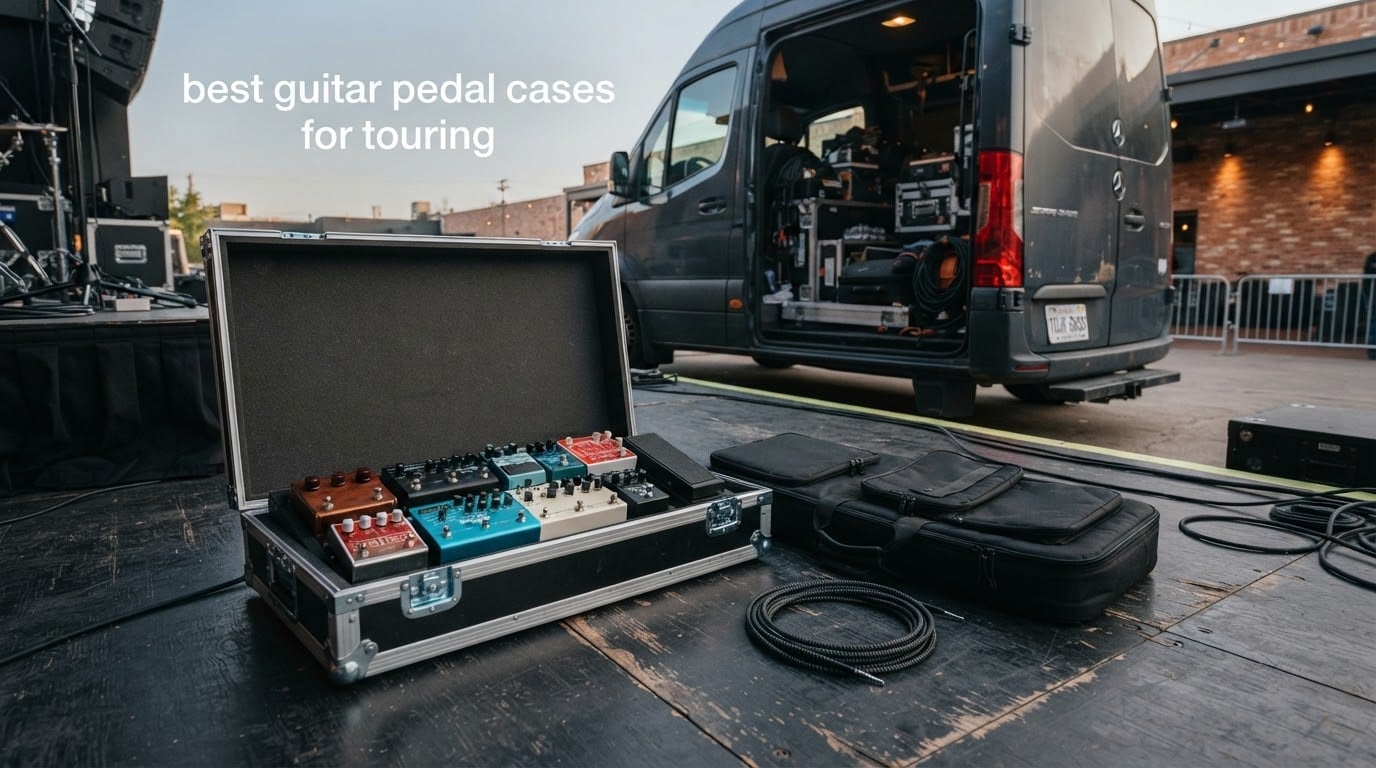
The whole argument about pedalboard cases comes down to one number: how many pounds you are willing to carry up a set of stairs by yourself. An r/guitarpedals thread put it plainly, describing the flight case as a “pretty reasonable premium” step up that is “HEAVY for normal lugging around.” That tension is the reason most players end up with the wrong case, and it is the reason this guide exists. We pulled 12 of the strongest touring cases on the market, read every owner review we could find, and sorted them by the kind of trip you actually take.
There is no single best guitar pedal case for touring. A plywood road case that a van band throws into the trailer every night will outlast anything else, but it will also end a career of shoulder problems. A padded soft gig bag is the opposite: light, quiet, and useless against a stack of amplifiers landing on it. The right answer depends on whether you are moving by bus, by van, by air, or on foot between stages.
What follows is a roundup of 12 cases covering the full range: soft gig bags, aluminium shells, plywood road cases, wheeled ATA-style cases, and complete board-plus-case packages. Every pick lists its published interior dimensions, its stated weight, and the trip type it suits, because those three facts decide nearly everything and almost no retailer page gives you all three at once.
How we picked: we filtered on stated interior dimensions, whether one person can realistically move the case, hardware that survives repeated load-ins, and whether your power supply and cables travel inside the case with the board. We did not rank on brand loyalty.
Table of Contents
Key takeaways
Most guitarists have no roadie, so case weight is a fatigue and safety issue, not a preference. Anything above roughly 25 lb should have wheels and a telescoping handle.
Measure your board first. Case sizes are named by board length, but the interior is always smaller than the number on the box once foam and walls are accounted for.
A soft gig bag is the right call for regional work, backline-less touring and air travel where you want to walk away from the gate in one hand. It protects against dust, scratches and knocks, not crushing.
Plywood road cases with ball corners and locking latches are the touring workhorse. They are heavier than aluminium but they do not flex when lifted by the handle.
On any flight, plan for checked baggage. A loaded pedalboard case is almost always too large for an overhead bin, and checked bags get thrown.
Watch the listing, not just the photos. A verified owner on The Gear Forum bought a 32 inch ATA case expecting the board to be included, only to find the description later changed to a note that the case alone was supplied.
Top 3 Picks for Touring Pedalboard Cases (October 2026)
A touring pedalboard case is a protective enclosure built to carry a fully assembled pedalboard, board, pedals, power supply and cables, through repeated load-ins, road transport and air travel without damage. The best one depends on your trip type: a plywood or aluminium road case with casters for bus and van touring, a hard ATA-style case with locking latches for flying, or a padded soft gig bag when you have to carry everything yourself.

These three cover the widest spread of real situations. The Gator bag is the case you can lift with one arm onto a coach. The 32 inch aluminum board is the answer for anyone running 11 to 16 pedals. The GHOSTFIRE shell sits in the middle and is the only one here that is both hard-shelled and light enough to carry solo.
All 12 Pedalboard Cases Compared in 2026
Every case below appears in the table with its type, its key specification and the trip type it was chosen for. Use it to narrow the list, then read the full review for the case that matches your rig.
| Product | Specs | Action |
|---|---|---|
 Gator GK-2110 Soft Gig Bag Gator GK-2110 Soft Gig Bag |
|
Check Latest Price |
 GHOSTFIRE T-EC14 Aluminum Shell GHOSTFIRE T-EC14 Aluminum Shell |
|
Check Latest Price |
| Gator 32 Inch Aluminum Board |
|
Check Latest Price |
 Harmony HCLUC 22 Inch Plywood Case Harmony HCLUC 22 Inch Plywood Case |
|
Check Latest Price |
 D’Addario XPND Two-Row Case D’Addario XPND Two-Row Case |
|
Check Latest Price |
 Pedaltrain Classic 1 With Tour Case Pedaltrain Classic 1 With Tour Case |
|
Check Latest Price |
 Harmony HCPEDAL32 Wheeled Case Harmony HCPEDAL32 Wheeled Case |
|
Check Latest Price |
 Fender Professional Medium Board Fender Professional Medium Board |
|
Check Latest Price |
 Gator G-TOUR XLGW ATA System Gator G-TOUR XLGW ATA System |
|
Check Latest Price |
 Seismic Audio SARPBC2 34 Inch Case Seismic Audio SARPBC2 34 Inch Case |
|
Check Latest Price |
 Odyssey FZGPEDAL32W Flight Case Odyssey FZGPEDAL32W Flight Case |
|
Check Latest Price |
 TUOREN Soft Gig Bag TUOREN Soft Gig Bag |
|
Check Latest Price |
1. Gator GK-2110 Soft Gig Bag – The One You Can Actually Carry
Gator Cases Gig Bag for Micro Controllers, Keyboards, and Multi-Effects Pedals, 23″ x 12.125″ x 3″ (GK-2110)
Soft nylon bag,23 x 12.125 x 3 inch interior,2 lb,Shoulder strap,Zip accessory pocket
Pros
- Snug padded fit for large floor models such as the Helix LT and Helix Pro
- Large zippered pocket for power supply and cables
- Durable nylon with solid zippers
- Fits an airline overhead bin for hand carry
- Side handle plus removable shoulder strap
Cons
- Soft shell will not survive stacking heavy gear on top
- Tight tolerance on the largest models
- Thin lid padding needs extra care with fragile gear
Two pounds is the headline number here, and it changes the conversation completely. Every other case in this roundup is measured in tens of pounds, and this one fits on your shoulder while you walk from a car park to a stage door with a guitar in the other hand. That is the whole pitch, and it is the reason we made it our top pick.
The interior measures 23 by 12.125 by 3 inches, which is a real specification rather than a “fits most boards” promise. Owners report that it holds large floor models like the Line 6 Helix LT, the Helix Pro, the Arturia MiniFreak, the Roland SPD-30 and small keyboards without forcing anything. With more than 2600 reviews behind it, this is the most thoroughly owner-tested soft case in the category.
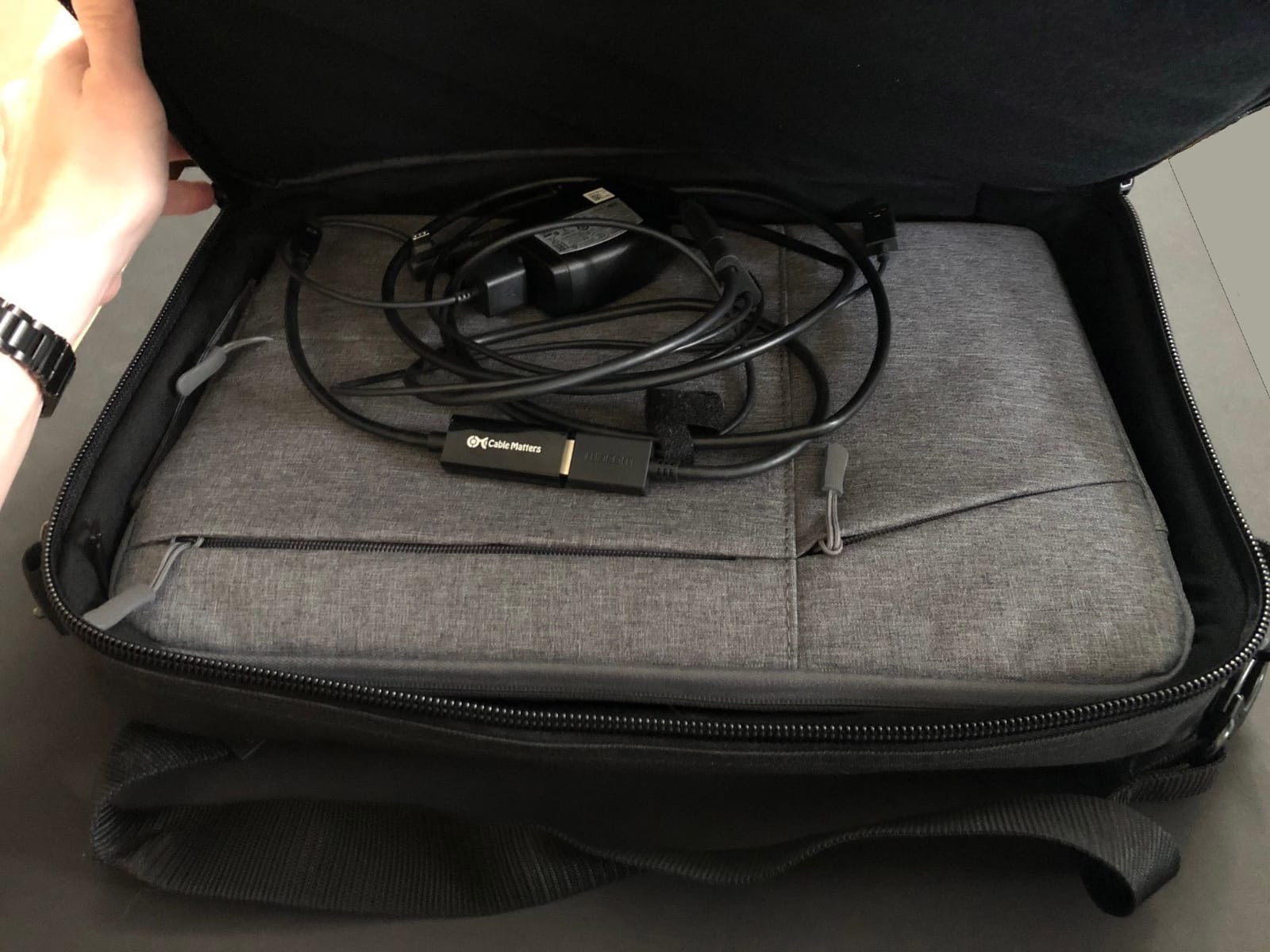
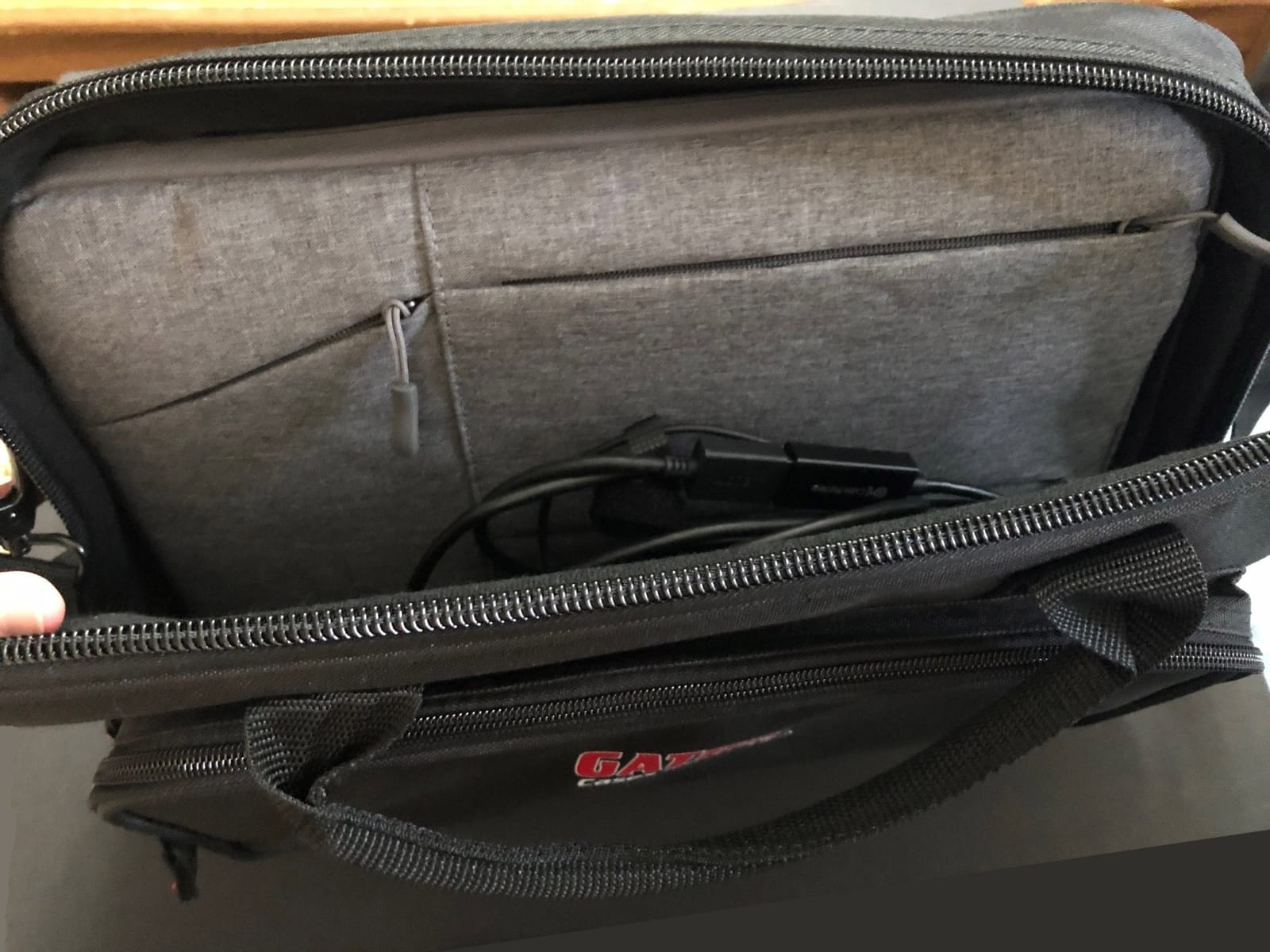
The construction is heavy-duty nylon with a padded soft nylon interior, a reinforced side carry handle and a detachable adjustable shoulder strap. A large zippered exterior pocket takes the power supply, the spare cable set and the patch leads, which is exactly the arrangement that makes packing quick at the end of a night.
Owners also point out that it goes into an overhead bin, which turns it into a genuine hand-luggage option on regional routes. That matters more than it sounds. A player who can walk off the plane with the board and not wait at oversized baggage is a player who still has his pedals in the right order when the van arrives.
When this bag is the right call
It is the right call for regional and weekend work, for anyone touring without a backline, and for anyone who flies. If your board is irreplaceable mid-run, the trade is that you accept scratch, dent and crush risk in exchange for a weight saving you can actually live with.
It is also the answer for multi-effects players whose “board” is a single large floor unit rather than a row of stompboxes. The padded interior is built around that shape.
When this bag is the wrong call
Do not put it in a stack. Nothing in a soft shell resists a road case landing on top of it, and a 3 inch interior will not take a stacked load without the frame distorting. If your board lives in a trailer under other cases, this is not the case for you.
It is also not a checked-baggage case. The protection ends the moment a conveyor system throws it, so if you are flying, treat it as hand luggage or upgrade before you fly.
2. GHOSTFIRE T-EC14 – Best Value Hard Shell for a Touring Board
GHOSTFIRE Guitar Multi Effect Pedal Case 27.5×11.6×4.2in, T-EC14
Aluminum alloy and fireproof board,8.1 lb,27.5 x 11.6 x 4.2 inch interior,Holds 10-12 pedals
Pros
- Very light for a hard shell
- Holds 10-12 pedals including large switchers
- Chrome plated locking latches and anti-slip pads
- Quick to set up straight from the case
Cons
- Not a true flight case
- minimal Velcro included
- Aluminum edge rails flex when lifted
- Needs right-angle patch cables which are not supplied
At 8.1 lb, this is the case we keep coming back to for gigging guitarists who want a hard shell without the shoulder-destroying mass of a plywood road case. It is roughly a third of the weight of the big wheeled ATA shells later in this list, and it still has latches and a fixed edge around the whole board.
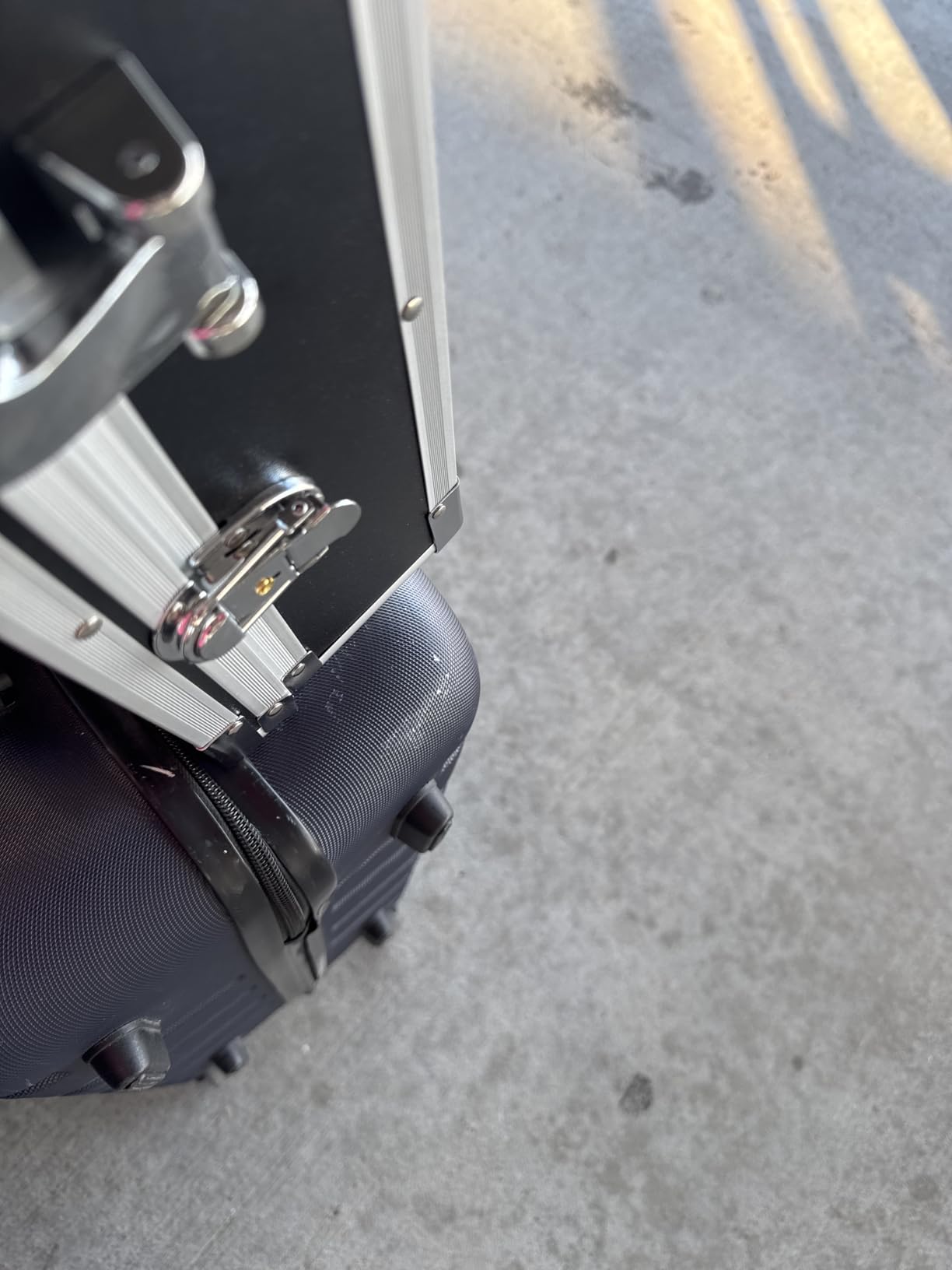
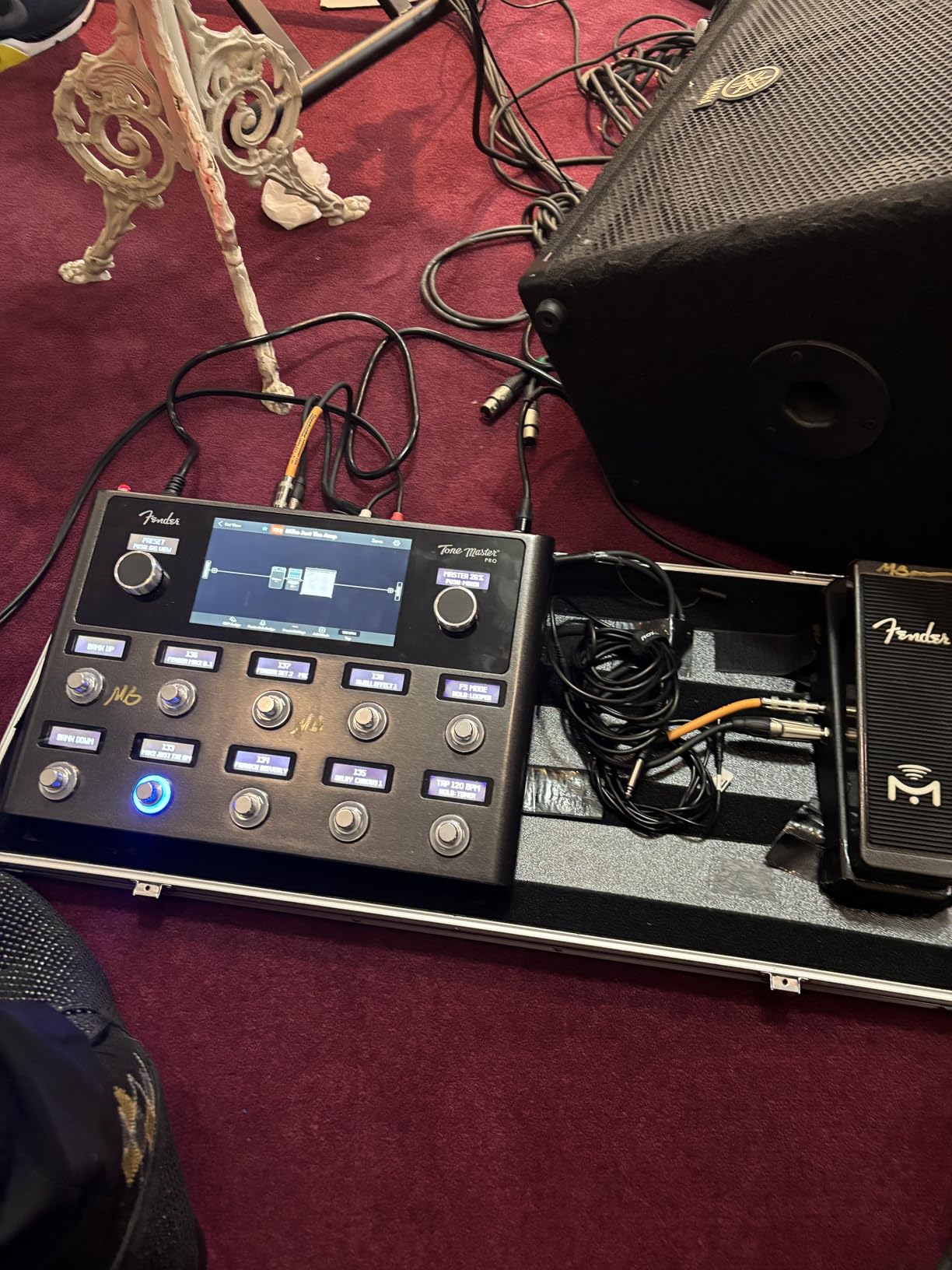
The body is aluminum alloy over a high density fireproof board, and the interior measures 27.5 by 11.6 by 4.2 inches. Owners fit 10 to 12 pedals in that space, including chunky switchers like the Mesa Roadking Bigfoot. Five anti-slip pads on the base plus side feet keep it planted on a stage.
A pre-fixed 3.8 cm strip of Velcro runs across the board, and hook tape is supplied so you can cut it to your layout. That is a thoughtful detail. Most cases in this price bracket ship with a single token strip and leave you to work out the rest, which is why several owners report buying extra mounting tape on day one.
The raised edges create a shallow perimeter channel around the pedals. Reviewers frequently point out that this means you need right-angle 1/4 inch patch cables, and those are not in the box. Budget for them.
What this case gets right for touring
Eight pounds is carryable up a flight of stairs, into a van, or onto a stage riser without a second pair of hands. Locking chrome latches mean it can be left in an unlocked van or a shared backline area without someone opening it and borrowing a pedal.
The one-piece open-and-play design also means no separate board to install. You open the lid and the rig is ready, which saves a few minutes at every load-in over a long run.
What it will not survive
Owners are consistent on this: it is not a true flight case. It is not designed to be checked, and it is not designed to have heavy gear stacked on the lid. Treat it as a gig bag with a hard shell and you will be happy for years.
The aluminum edge rails also flex when you lift by the handle, and the lid and base can sit very slightly out of alignment, which makes the latches fiddly if something inside has shifted.
3. Gator GPB-XBAK-1 – Best 32 Inch Aluminum Board With Carry Bag
Gator Cases Aluminum Guitar Pedal Board with Carry Bag; Extra Large: 32″ x 17″ | Stealth Black (GPB-XBAK-1)
32 x 17 inch aluminum surface,18 lb,Under-board power supply brackets,Deluxe carry bag included
Pros
- Rigid platform for large complex signal chains
- Under-board power supply mounting keeps the surface clean
- Aluminum holds Velcro grip for years
- Rear access holes tidy the cable routing
- Handle bars underneath for moving
Cons
- Heaviest board we found
- at about 18 lb
- Diagonal slot pattern creates awkward cable angles
- Some slots too narrow for thicker patch cables
- Included bag not for shoulder carrying a loaded board
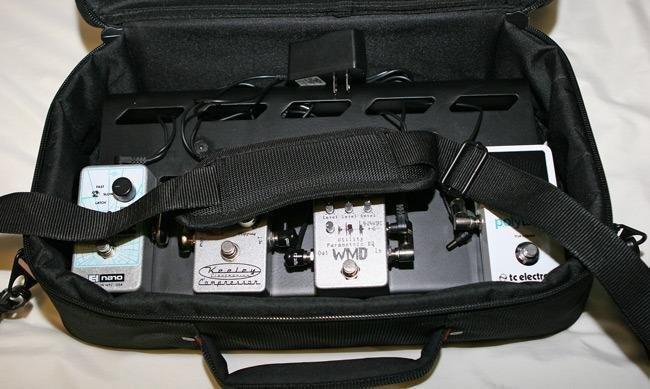
A 32 by 17 inch pedal surface is not a normal board. It is the size you use when you are running a double row, a large multi-effects unit alongside a row of drive pedals, or treating the board as a portable rig you take everywhere. If that is you, this is the board and the case are two separate things: you get the board plus a padded bag.
It is aluminum, which means it will not flex under a heavy signal chain and which holds hook-and-loop grip over years rather than months. Owners routinely fit 11 to 16 pedals on it. Two universal mounting brackets underneath take most common power supplies, which is the feature that turns a large board from a mess of patch leads into a clean, playable surface.
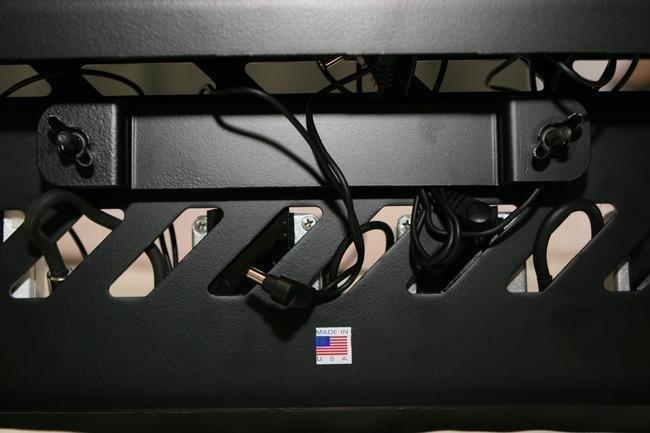
Large rear access holes route power cables underneath rather than across the pedals, so your patch leads can stay short. Two large metal handle bars under the board make it possible to lift the whole thing with two hands without digging your fingers into the pedal jacks.
At 18 lb empty, this is the heaviest board in the roundup, and we want to be straight about that. it is heavy for the class, and heavy in absolute terms too. If you have a backline crew this is a non-issue. If you are carrying everything yourself across a festival site, you will feel every pound of it.
Why this board suits a large touring rig
The under-board power supply mounting is the reason serious players gravitate to it. When your power supply is under the board, the surface is only pedals and patch leads, and the cable run across the stage is a single power cable instead of a dozen.
The included bag has a polyethylene reinforced top and bottom and a removable shoulder strap, so it takes the abuse of van transport even if it is not a shoulder-carry bag for a fully loaded board.
Where the compromises are
The diagonal slot pattern is functional but produces awkward angles for patch cables, and some slots are too narrow for thicker plugs, so you are constrained in how you lay the board out. The 18 lb weight is the other one, and it is a real constraint on stairs.
This is a board with a bag, not a board in a road case. If you need hard-case protection, budget for a separate case and check that the internal dimensions fit a 32 by 17 inch surface before you commit.
4. Harmony HCLUC 22 Inch Plywood Case – Best Road Case Build
Pick and Pluck Foam Utility Locking Case 22″ x 13″ x 5-3/8″ Harmony Cases
3/16 inch plywood,22 x 13 x 5-3/8 inch interior,Locking butterfly latches,Stackable
Pros
- Rock solid plywood panels with no flexing
- Locking butterfly latches keep hands clear of the lid
- Fits 22 by 13 inch boards with space for cables
- Foam layers can be cut to a custom fit
- Real road case protection at a lower price tier
Cons
- Listed interior does not account for the foam liner
- Foam must be cut by hand rather than plucked
- Heavy for its class
- Rear hinge pins are weaker than the latches
This is the case we would put in the back of a van for a year of two-a-night routing, and it is the closest thing to a no-nonsense pro road case in this roundup. The panels are 3/16 inch black laminated plywood with no visible flex when you lift it by the handle, which is exactly the failure mode that shakes pedal settings loose in cheaper shells.
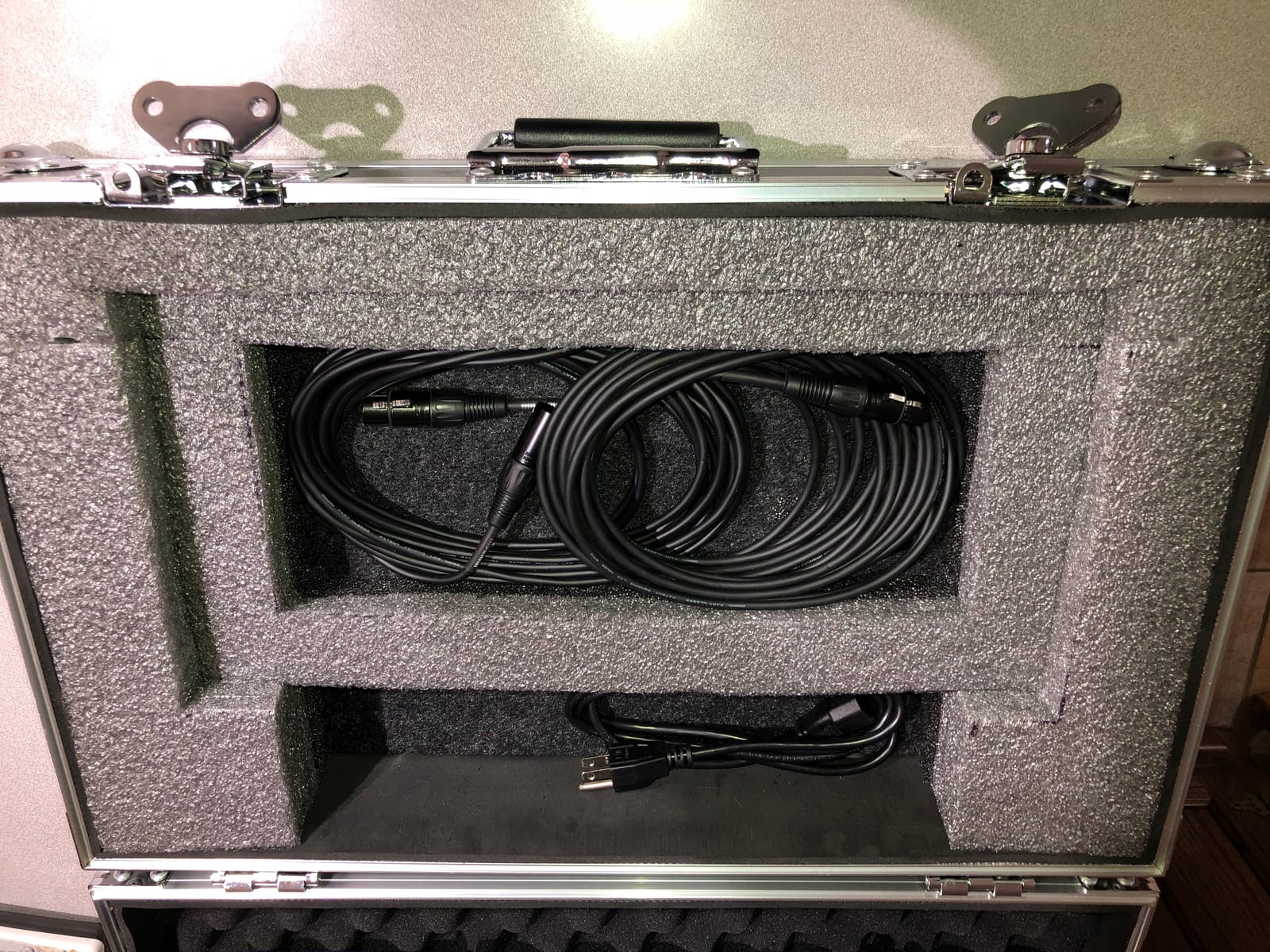
Inside, the published dimensions are 22 by 13 by 5-3/8 inches with a foam-lined carpeted interior. That will take a 22 by 13 inch pedalboard snugly and still have space for a wireless pack and a cable run. The exterior measures 23-3/4 by 15 by 7 inches.
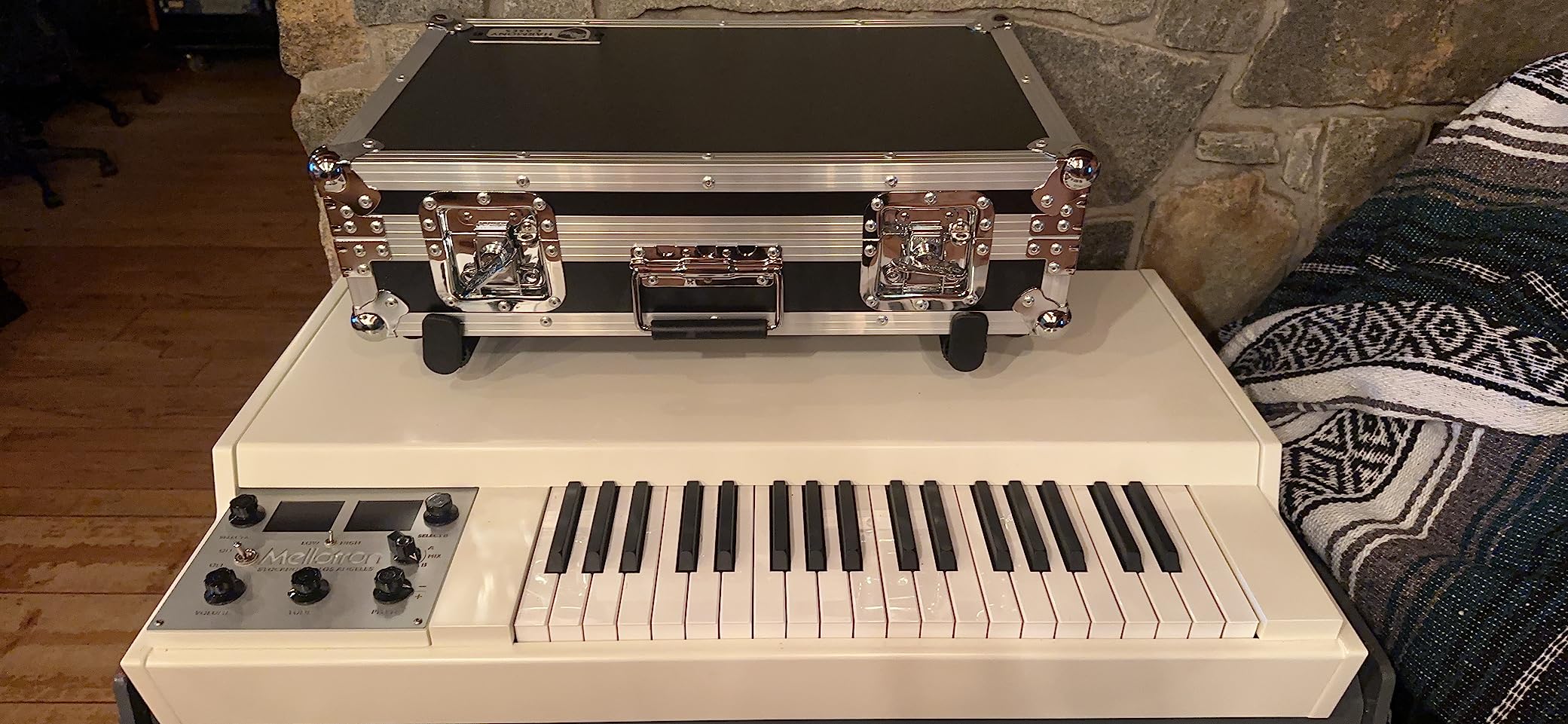
Hardware is where road cases earn their keep. Chrome-finished spring-loaded handle hardware, locking butterfly latches that hold the lid shut through a full tour, and heavy ball corners on every vulnerable edge. It is also stackable, so it goes into a trailer stack without becoming the thing that gets crushed.
Owners who are used to pro cases rate the construction as comparable to far more expensive plywood cases, and several bassists use them as a permanent home for a large board. The 4.7 rating across 159 reviews is well earned.
Why a plywood case beats an aluminum shell
Plywood does not flex. Lift a 22 inch case by its handle with a full board inside and the walls stay where they were, so nothing shifts and no jack takes a side load. The hard shell here is quieter and more rigid for the same job.
With butterfly latches and a hinged lid, you never have to put your hands near the closing edge, which matters when you are doing this in the dark at the side of a stage.
Check these two things before you buy
The listed interior dimensions do not account for the 1/4 inch foam liner, so usable space is roughly half an inch narrower on each side. Measure your board including the power supply before you order.
Despite the pick and pluck name, the foam arrives as layers you cut by hand rather than pre-plucked sections. Allow an evening with a knife, or plan to buy your own foam.
5. D’Addario XPND Two-Row Case – Best Padded Bag for Two-Row Boards
D’Addario XPND Pedalboard Case, XPND 2 & Double Row Boards
Padded soft case,32.5 x 13 inch interior,4 to 7 inch depth,Adjustable Velcro divider
Pros
- Adjustable dividers hold the board as the layout changes
- Solid stitching and heavy duty zippers
- Zip side pocket for cables and accessories
- Padded handle and air mesh shoulder strap
- Holds XPND and most other two-row boards
Cons
- Tight once the board is fully loaded with tall pedals
- Front pocket is small
- Thin zipper pulls for the money
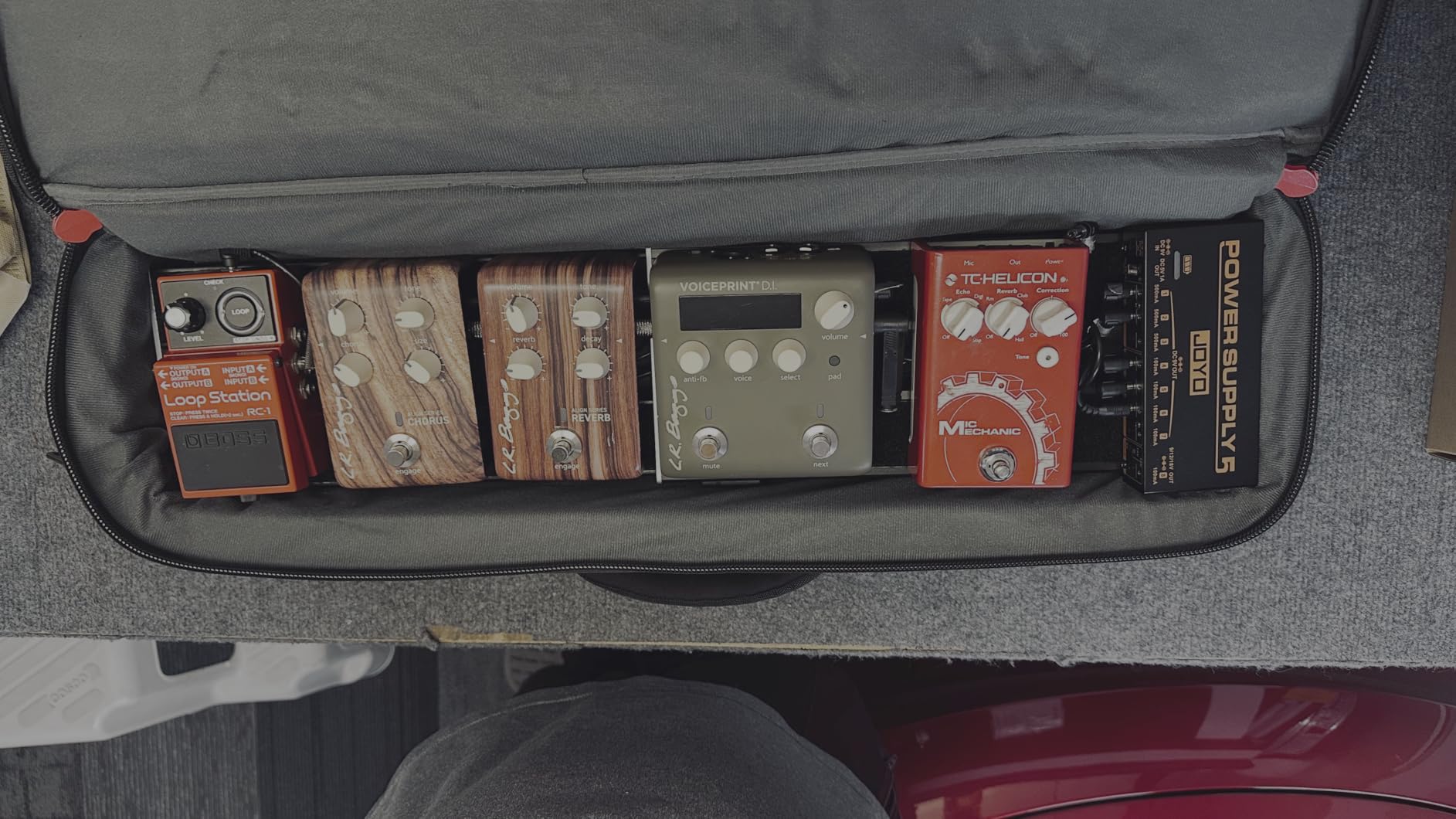
A two-row board is a different shape problem from a single row, and this bag is built around it. The interior measures 32.5 by 13 inches with a 4 to 7 inch depth range, which means a loaded two-row board with tall or wide pedals goes in without a fight.
The feature that separates it from every other soft bag in this roundup is the adjustable padded Velcro divider. Reconfigure your board between shows and the divider moves to keep everything snug instead of letting the pedals slide into each other. Owners who constantly change their layout single this out by name.
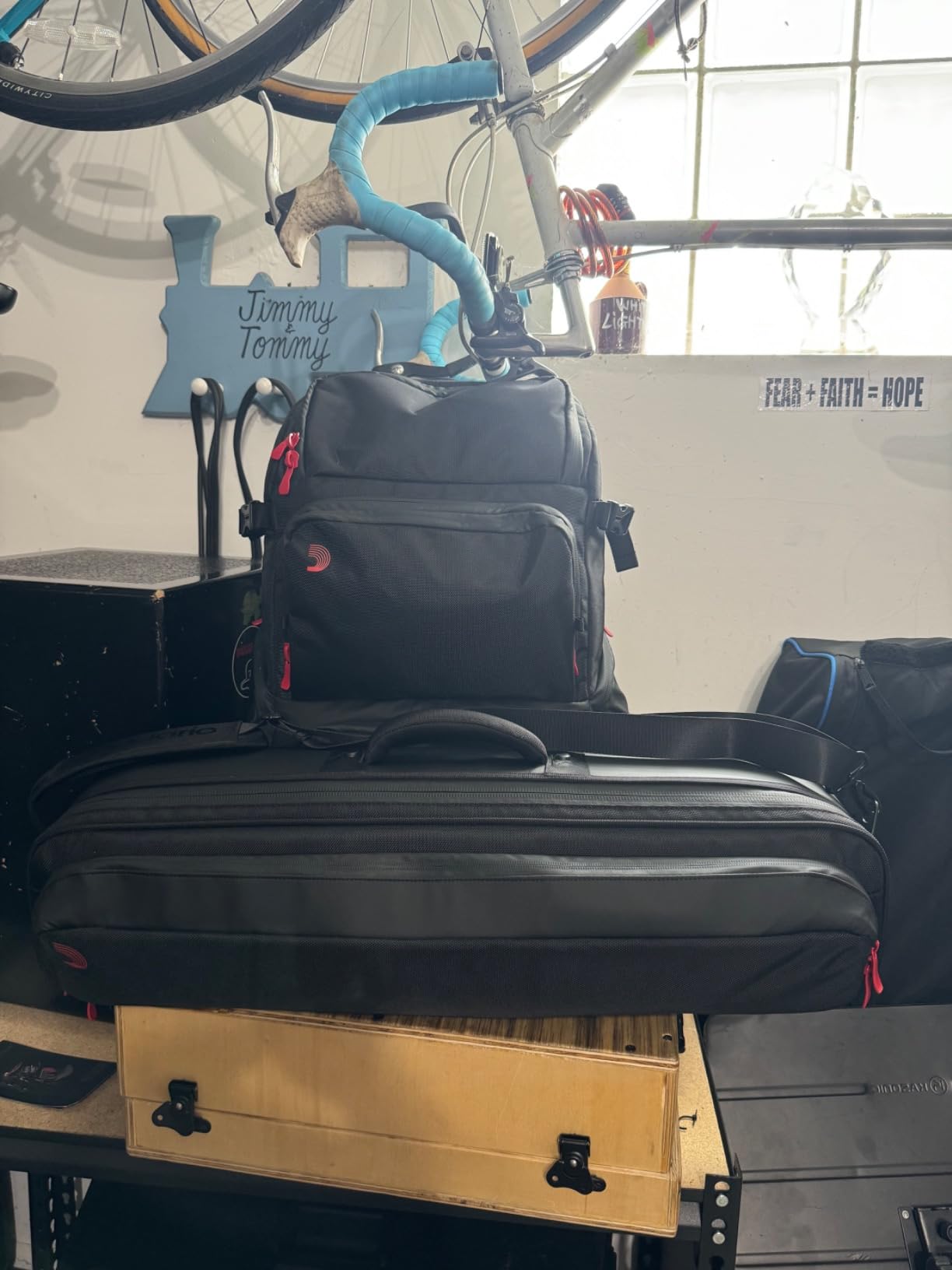
It is supplied as a case only, so if you are building a new rig you will need the board separately. The build quality is the point though: full padding, heavy duty zippers, a reinforced shoulder strap, an air mesh shoulder pad and a padded handle. Those are the parts that usually fail first on a cheaper bag.
A zip side pocket takes spare pedals, cables and accessories. It is not a large pocket, and reviewers note it holds only a modest cable run, so treat it as the overflow space rather than the main storage.
Why the dividers matter on the road
Changing a pedal order is normal, and a fixed soft bag with a loose interior lets everything migrate every time you set the board down. A padded divider that holds a physical edge against the board stops that, and it also stops the board from abrading the pedal finishes in transit.
For anyone on a two-row board with a full complement of pedals, this is a strong choice.
Where it falls short
Fully loaded, the fit is tight. Tall or large pedals eat the depth allowance, and several owners report needing to remove a pedal to close it comfortably. The listed item weight is also a soft measurement that does not tell you much once the board is inside.
Owners also comment that it is a lot of money for a semi-soft bag, particularly when the board itself is sold separately. Buy it for the dividers and the finish, not for the protection level.
6. Pedaltrain Classic 1 With Tour Case – Best Board and Case in One Box
Pedaltrain Classic 1 TC 22 X12.5 Inches Pedalboard with Tour Case
22 x 12.5 inch aluminum board with tour case,Rail style mounting,Two year warranty
Pros
- Rated 4.9 stars
- the highest in the roundup
- Tour grade flight case secures pedals in transit
- Board is light yet rigid
- Under-board mounting for power supplies
- Comfortably fits 9 to 11 Boss sized pedals
Cons
- Case fit is tight with little spare room
- Included Velcro reported as weak
- Power supply brackets not pre-installed
- Case may lack room for instrument cables
If you are buying a board and a case at the same time, this is the pick that removes the sizing problem entirely. The board and the case are designed as a pair, so you never have to measure one against the other. The rail-style surface is 22 by 12.5 inches, which is a comfortable step up from a small board, and it holds 9 to 11 Boss-sized stompboxes.
A 4.9 rating is joint highest in the roundup, and 90 percent of the 69 reviews sit at five stars. Owners consistently describe the aluminum board as surprisingly light while still feeling completely rigid, and praise the tour-grade case for keeping pedals secured rather than loose.
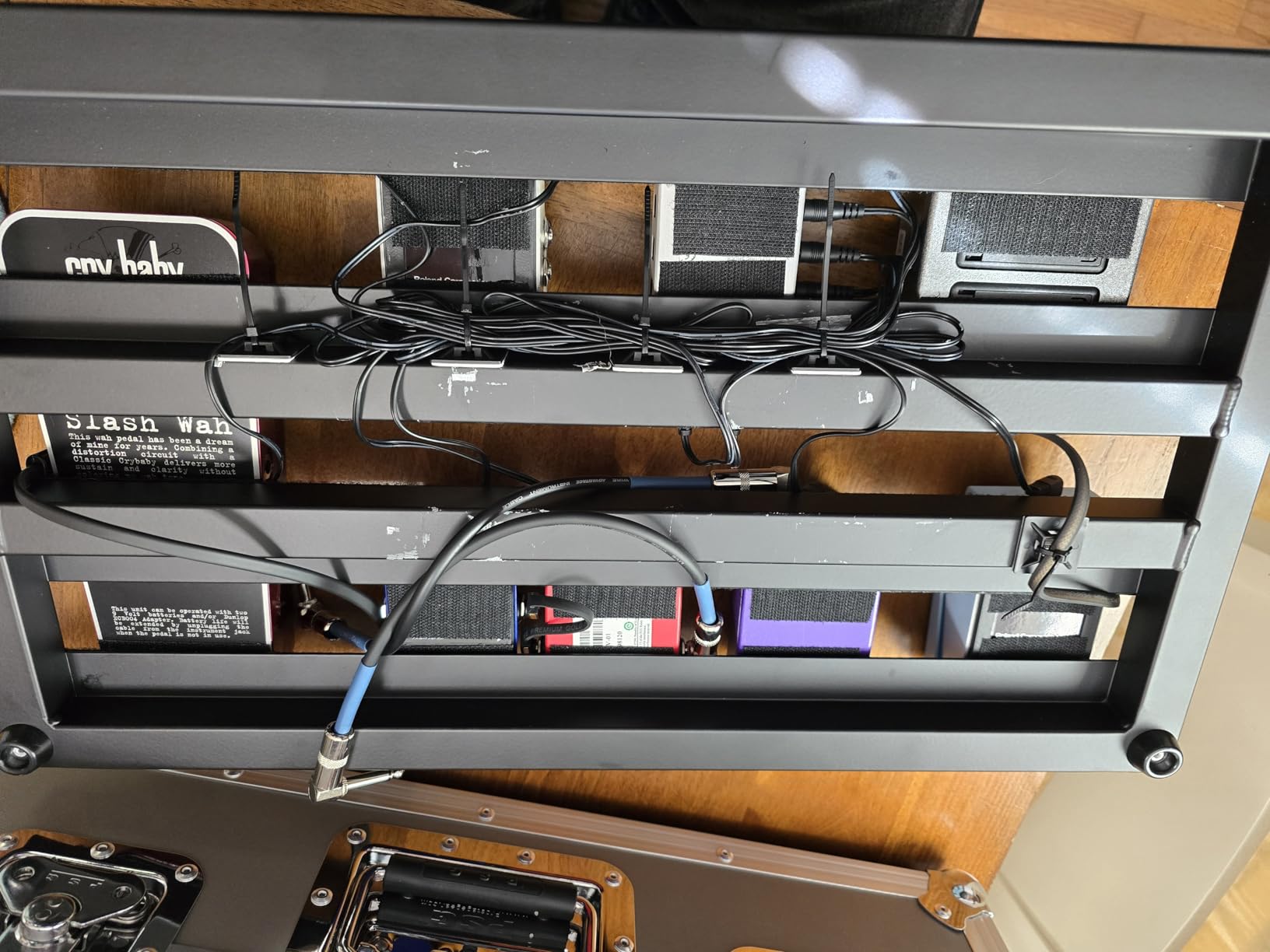
Power supplies and junction boxes mount underneath, which keeps the top surface pedal-only and your patch runs short. That is the whole reason rail-style boards became the touring default, and this one does it cleanly.
Overall package dimensions are 25.6 by 16.5 by 9.95 inches, and the board carries a two year warranty. The case itself adds real weight to the package, and the board-only weight listed on some pages is not what you will be lifting.
Why a matched pair beats assembling your own
Nearly every sizing problem we found in owner threads comes from mixing a board and a case that were never meant to fit each other. A matched pair removes that failure mode, and it removes the extra hour of cutting foam at the airport hotel before the first show.
For a player moving between regional gigs with one board, the rail surface and under-board mounting also make the rig quicker to set up and pack down, which is where the time actually goes.
What you will want to add
Several owners report the included hook-and-loop is weaker than expected and worth replacing on day one. Power supply brackets are not pre-installed, and depending on the listing they may not be included either, so check before the first run.
The case is tight, and owners note there may not be room for instrument cables alongside the board. If your rig is cable-heavy, budget for a separate cable bag or a case with a dedicated accessory space.
7. Harmony HCPEDAL32 – Best Wheeled Case for 32 Inch Boards
32″ Pedal Board Case – Hard ATA Flight Guitar Pedalboard – Harmony Cases
3/8 inch plywood,32.5 x 16.75 inch interior,Four wheels,Removable pedal platform
Pros
- Hard shell 3/8 inch plywood survives van loading and stacking
- Removable pedal platform with handles speeds up load-in
- Wheels and spring handle allow rolling a full board
- Deep side pocket keeps cables with the board
- Fits large 32 inch boards comfortably
Cons
- Bulky and heavy when fully loaded
- Interior drops to about 3.5 inch depth with the platform fitted
- Some hardware needs adjustment out of the box
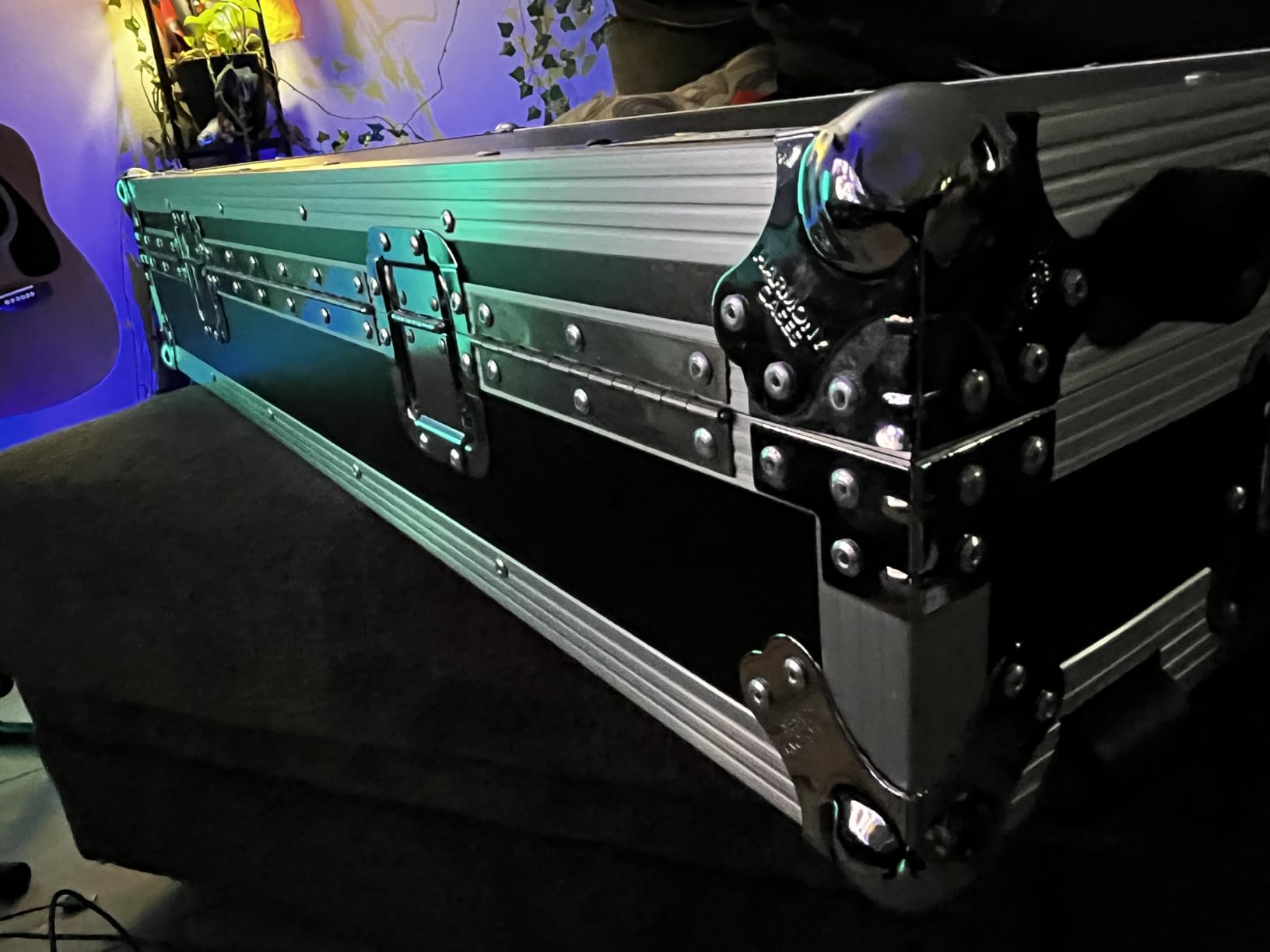
A 32 inch ATA-style case, a removable 32 inch pedal platform, four inline skate wheels and a spring-loaded handle. This is the case for a player who is moving a large fully populated board alone and does not want to carry it. The whole design is built around the rolling load rather than the lifting load.
The frame is laminated 3/8 inch plywood with heavy ball corners, chrome-finished hardware and a recessed toggle latch. Interior main space is 32-1/2 by 16-3/4 by 4-1/2 inches, which comfortably takes a 32 inch board or a large multi-effects unit.
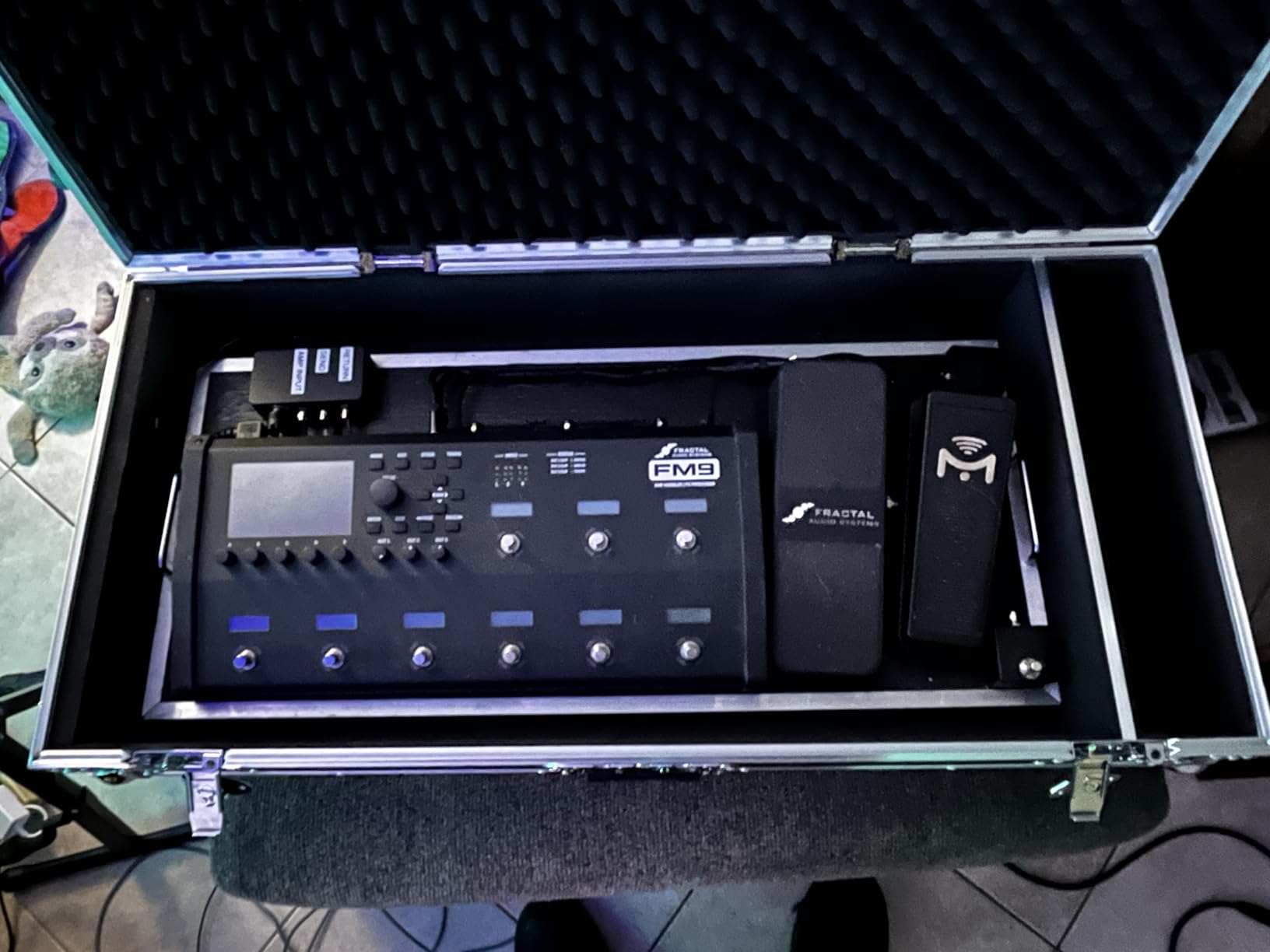
The removable pedal platform is 32 by 16 by 1 inch and has its own carry handles, so you lift the board out, set it on stage, and the empty half of the case becomes your cable and accessory space. A side storage pocket measuring 3-1/4 by 16-3/4 by 4-1/2 inches keeps the rest of the rig with the board.
A verified owner on The Gear Forum bought this case specifically to solve a touring weight problem, and praised the rubber spring-loaded handle and wheels precisely because they meant not carrying it. He also deliberately built his board to fit within the case, which tells you how much sizing matters here.
What the wheels and handle actually change
They change everything about a load-in. A large plywood case on four wheels and a spring handle rolls from the van to the stage in one continuous movement. The same case without them is a shoulder, a staircase and a second person. That is the entire argument for casters on a pedalboard case.
They are worth it on this case because the interior is big enough that you are always carrying something substantial. A castor on a small case is a gimmick.
Watch the interior depth and the listing
Fit the removable platform and usable depth drops to roughly 3-1/2 inches. That is fine for standard stompboxes and tight for anything tall, so check your tallest pedal before you commit to this size.
Also read the listing rather than the photos. The Gear Forum owner who bought this case found the product description later changed to a note that the case alone was supplied, even though every photo still showed the board. Check the box contents list carefully, and keep a screenshot of the listing at the time of purchase.
8. Fender Professional Medium Board – Best Low-Profile Board for Touring
Fender Professional Pedal Board with Case, Medium
Machined anodized aluminum,24 x 12.8 x 2.95 inch,Under-board cable management,Soft case included
Pros
- Precision machined anodized aluminum with a low profile
- Exceptionally lightweight for its size
- Holds around 10 full size pedals
- Excellent under-board cable management supplied with clips and ties
- Fits a Pedaltrain Classic 2 hard case
Cons
- Included soft case is not tough enough for touring
- Power supply bracket can be loose with slim power supplies
- Medium size reads larger than it sounds
- Premium pricing for a board with a soft bag
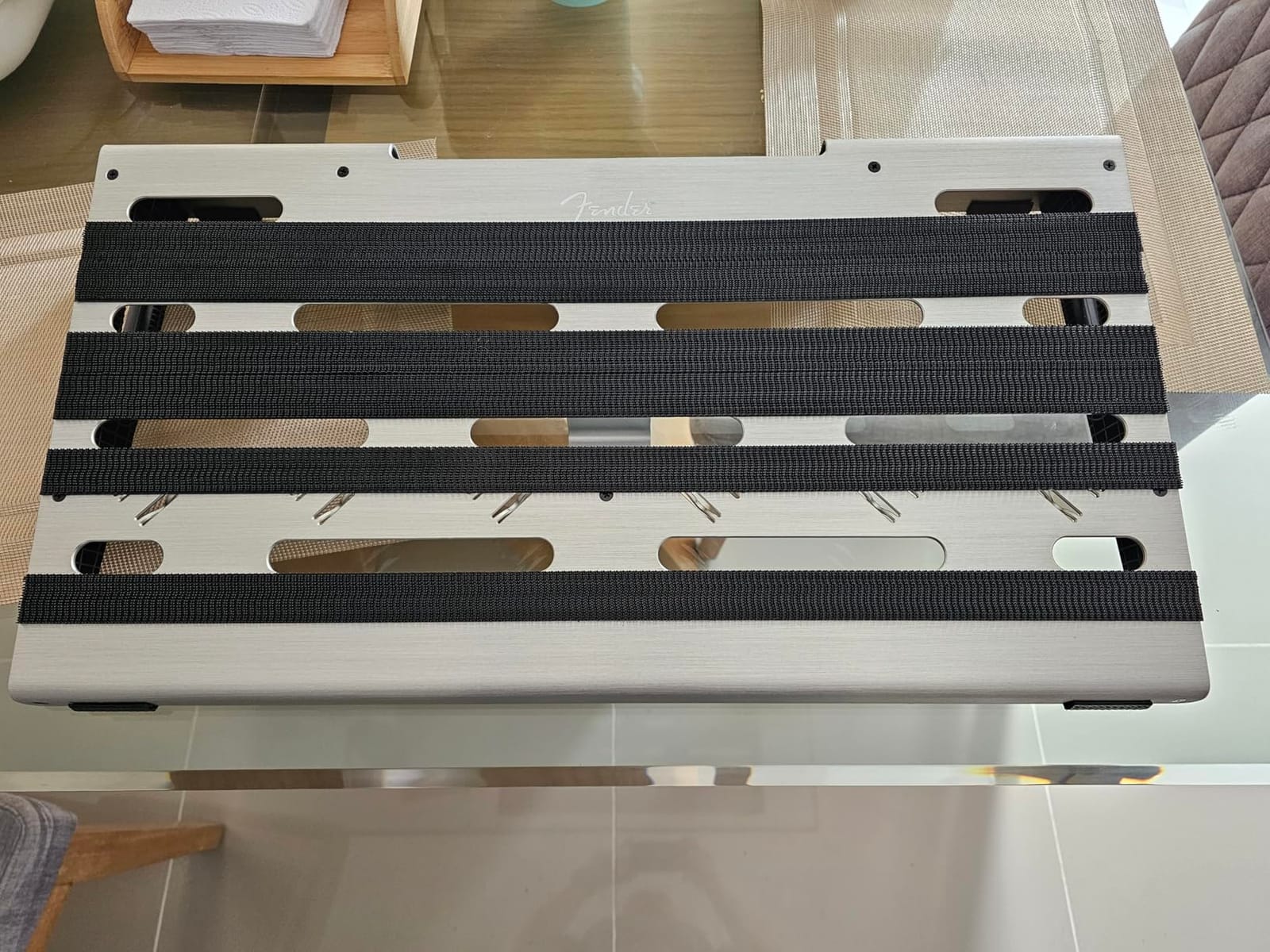
The height is 2.95 inches, and that is the feature. This is the lowest profile board here, which means a shorter stance, fewer knee knockers on a crowded stage, and a rig you can get under a low flight case lid without rearranging anything.
The chassis is precision-machined anodized aluminum at 24 by 12.8 inches. Owners report it holds around ten full-size Boss-sized pedals with room to spare, and reviewers switching from rail-style boards consistently praise the finish and the solidity of the plate.
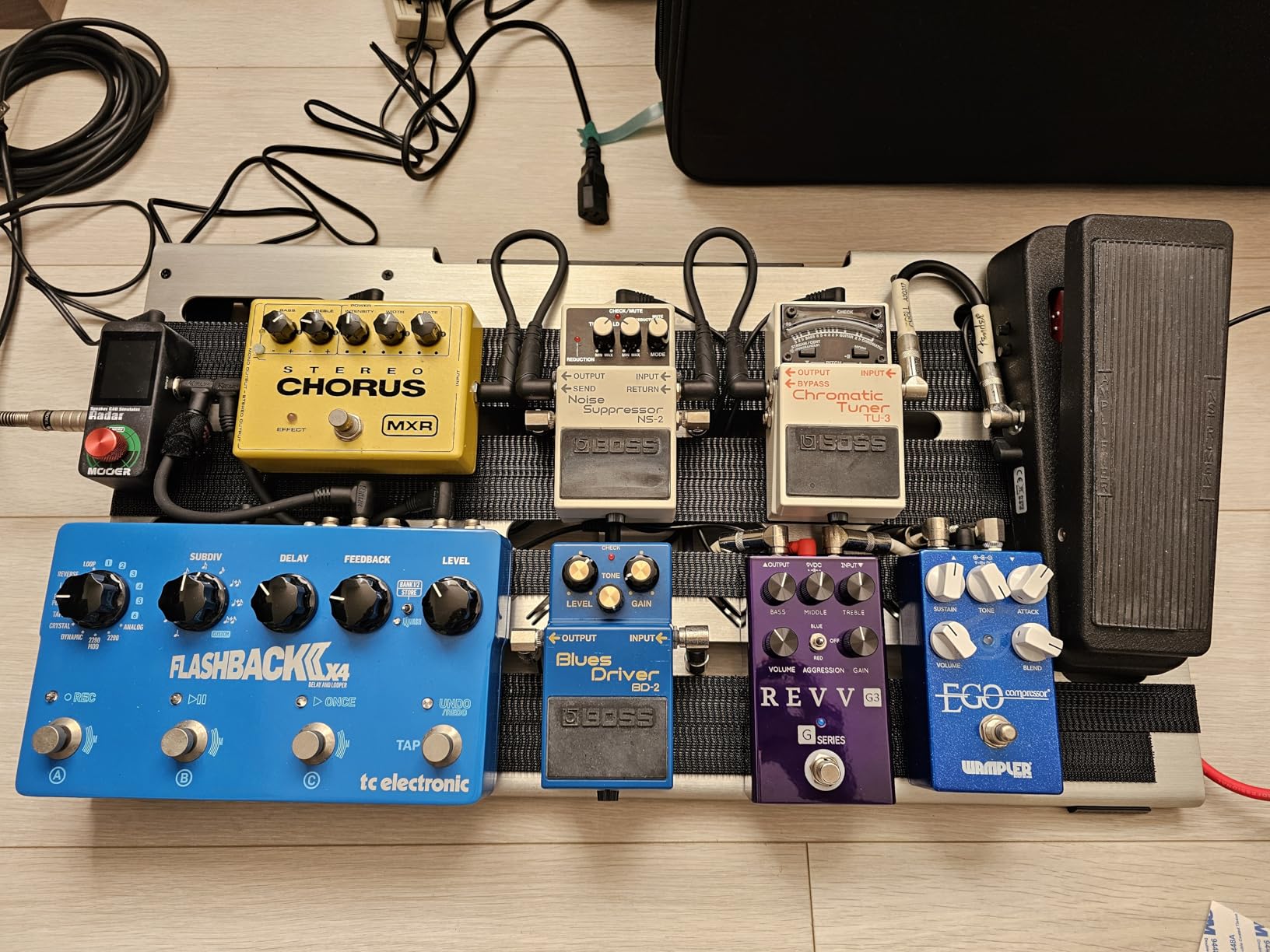
Cable management is genuinely good. Velcro, cable ties and management clips are supplied, and a universal mounting bracket underneath fits most popular pedal power supplies, including common units like the Voodoo Lab Pedal Power Plus 3. Patch leads stay short and off the pedal surface.
At roughly 1 lb listed, it is one of the lightest boards here, and owners describe it as noticeably light for its size rather than merely light for a pedalboard.
Why low profile matters live
A 3 inch board changes your stage footprint and your stance, and on a festival stage with a wedge monitor and a tight riser, that is worth more than another pedal slot. It also fits a Pedaltrain Classic 2 hard case, so you can upgrade protection later without changing boards.
For a player moving between a backline-less setup, a rental rehearsal room and a club gig, the weight is the headline. This is the easiest large-ish board to carry solo.
Where it falls short
The included soft case is the weak point, and owners say so directly. It is fine in a car and not fine in a trailer. There is no hard case option sold separately for this board, so if you tour you will need to source one.
The universal power supply bracket also holds some slim power supplies loosely enough that they can shift, and the medium size measures closer to a large board from other brands, so check the 24 by 12.8 inch dimensions against your existing case before buying.
9. Gator G-TOUR XLGW – Best Full Touring System With Casters
Gator Cases G-TOUR Series Guitar Pedal Board with ATA Road Case-with Wheels and Pull Handle, XL: 32″ x 17″ (G-TOUR PEDALBOARD-XLGW)
ATA road case with 32 inch board,Pro grade EVA foam,30 lb,Retractable tow handle,Lockable latches
Pros
- ATA road case build with ball corners and lockable latches
- Board lifts out on comfort grips and does not shift
- Shallow half of the case doubles as cable and accessory storage
- Wheels and pull handle move a large rig easily
- Tall enough for large multi-effects units
Cons
- Very heavy at about 30 lb empty and more when loaded
- No cable management holes on the board
- Small roll of hook-and-loop included
- Tow handle can feel short and awkward
This is the complete answer. Board, ATA-style road case, casters, retractable tow handle and lockable latches, in one system you can load into a van and roll to the stage. The 32 inch pedal surface is removable, and it comes out on comfort-grip handles with a piece of 3M Dual Lock included to secure it.
Protection comes from pro-grade EVA foam, protective ball corners and a heavy-duty wood and aluminum construction. The whole thing separates into three pieces: the top half, the bottom half and the pedalboard. The shallow half is not wasted space, it is where your cables, picks and accessories live.
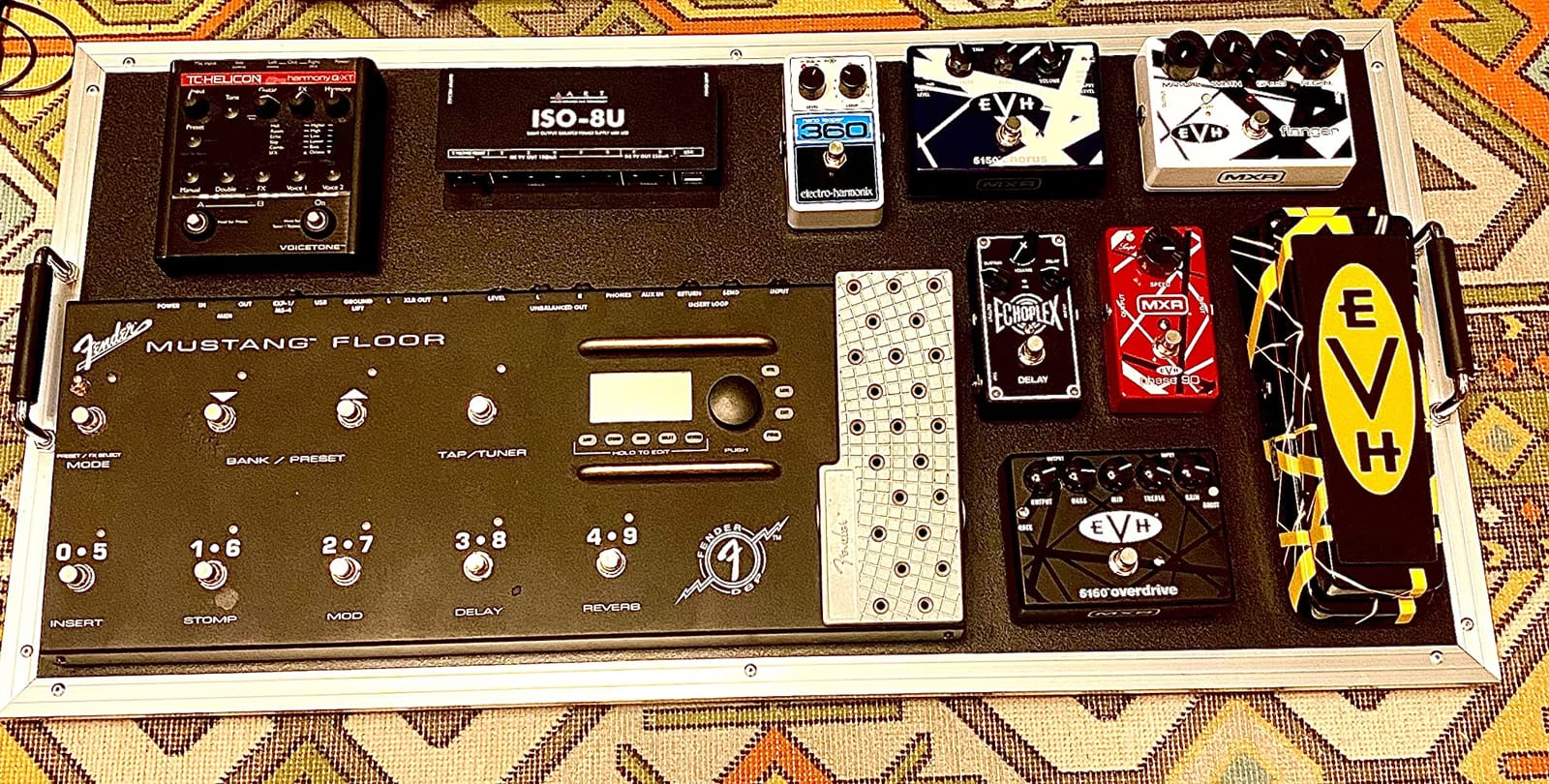
Lockable latches matter more than most buyers expect. Touring players consistently flag latch security in unlocked vans and shared backline areas, and this is one of the few cases here where the latch actually takes a padlock.
The depth is also generous enough that tall pedals and large multi-effects units sit without riding up into the lid, which is a common complaint about shallow cases.
What the three-piece design buys you
Because the board lifts out, the empty case is a proper storage box for the rest of the rig rather than an expensive lid. Touring owners treat it as a throw-it-in-the-van solution that protects an expensive board from stacking and impact, and they praise the removable board and roller mobility in the same breath.
It is also a two year warranty, and the case is designed and supported in the USA.
Where the 30 lb hurts
Thirty pounds is the empty weight, and it climbs the moment you add pedals. That is fine in a van with a flat load-in and genuinely difficult up a staircase or across a festival site. The wheels make the ground easy and the steps impossible.
The board also has no cable management holes, so patch leads sit on the surface and take up pedal space, and the included roll of hook-and-loop is far smaller than most boards need. Budget for more.
10. Seismic Audio SARPBC2 – Best Wide Case for Large Pedalboards
Seismic Audio – Pedal Board Case ATA 34″ Storage Rack
34 x 21 x 7 inch external,32 x 19.5 x 6 inch internal,3/8 inch plywood and aluminum rails,Removable lid
Pros
- Rugged plywood and aluminum build that tolerates a van
- Removable lid doubles as the board surface and a cable bay
- Dual steel link locks and handles on both sides
- 19.5 inch internal width fits boards smaller cases cannot
- 4.9 stars with no one or two star feedback
Cons
- Rubber feet are on the piece used as the top
- High lid lip means pedals cannot mount flat without modification
- 25 lb is heavy for a pedalboard case
- Some owners wanted more panel rigidity
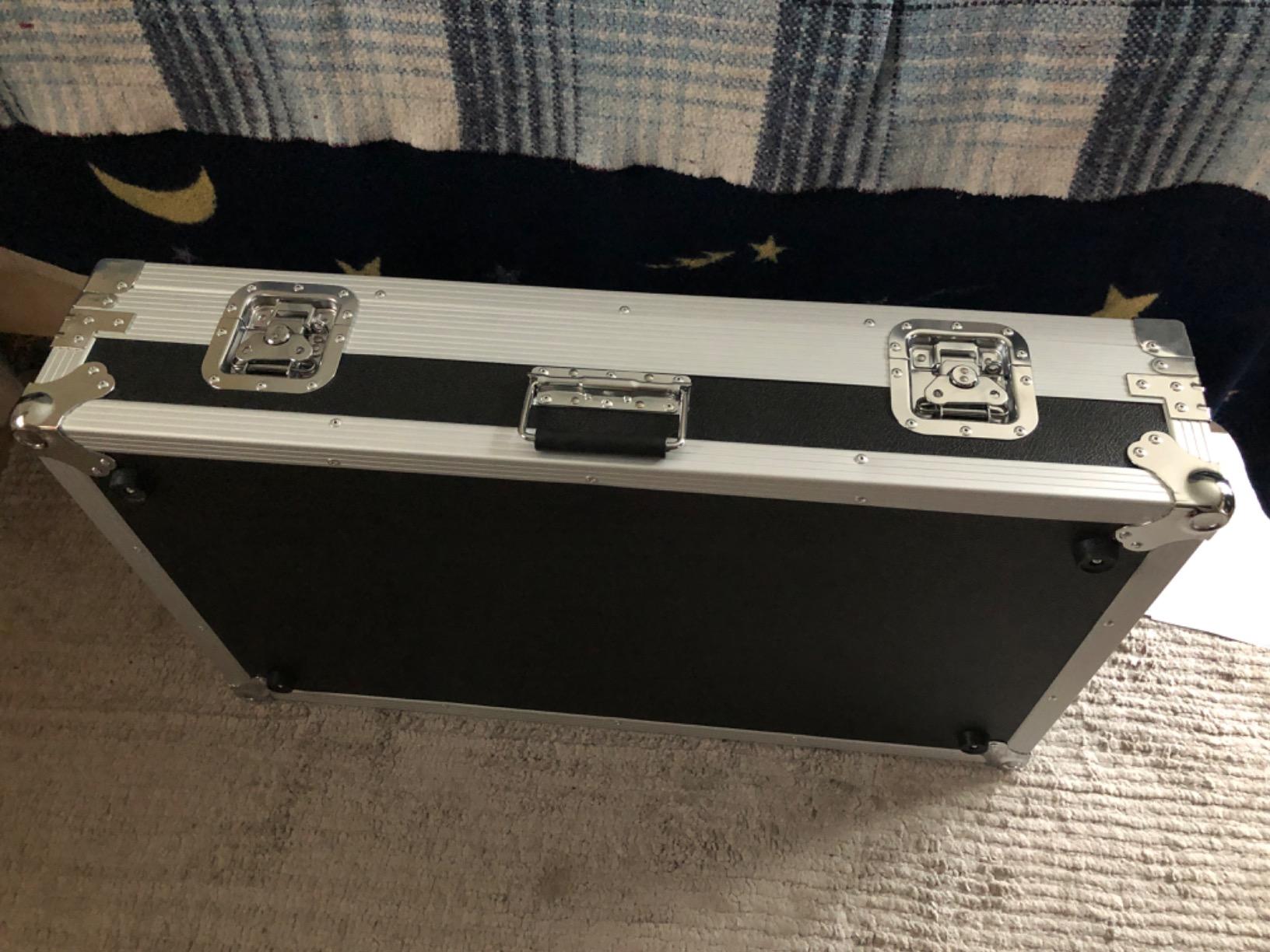
Look at the internal width: 32 by 19.5 by 6 inches. That is the widest internal footprint in this roundup, and it is the direct answer to the sizing problem that forum users keep hitting. On a Seymour Duncan thread, players report struggling to find a case for a large pedalboard, and a standard 22 inch train case is simply not going to be big enough. This one is.
Construction is black carpet over aluminum rails on 3/8 inch plywood, external 34 by 21 by 7 inches. Dual 4 inch steel link locks on both sides, a handle on each side and steel corners make it secure and liftable from any angle. It carries a one year manufacturer defect and labor warranty.
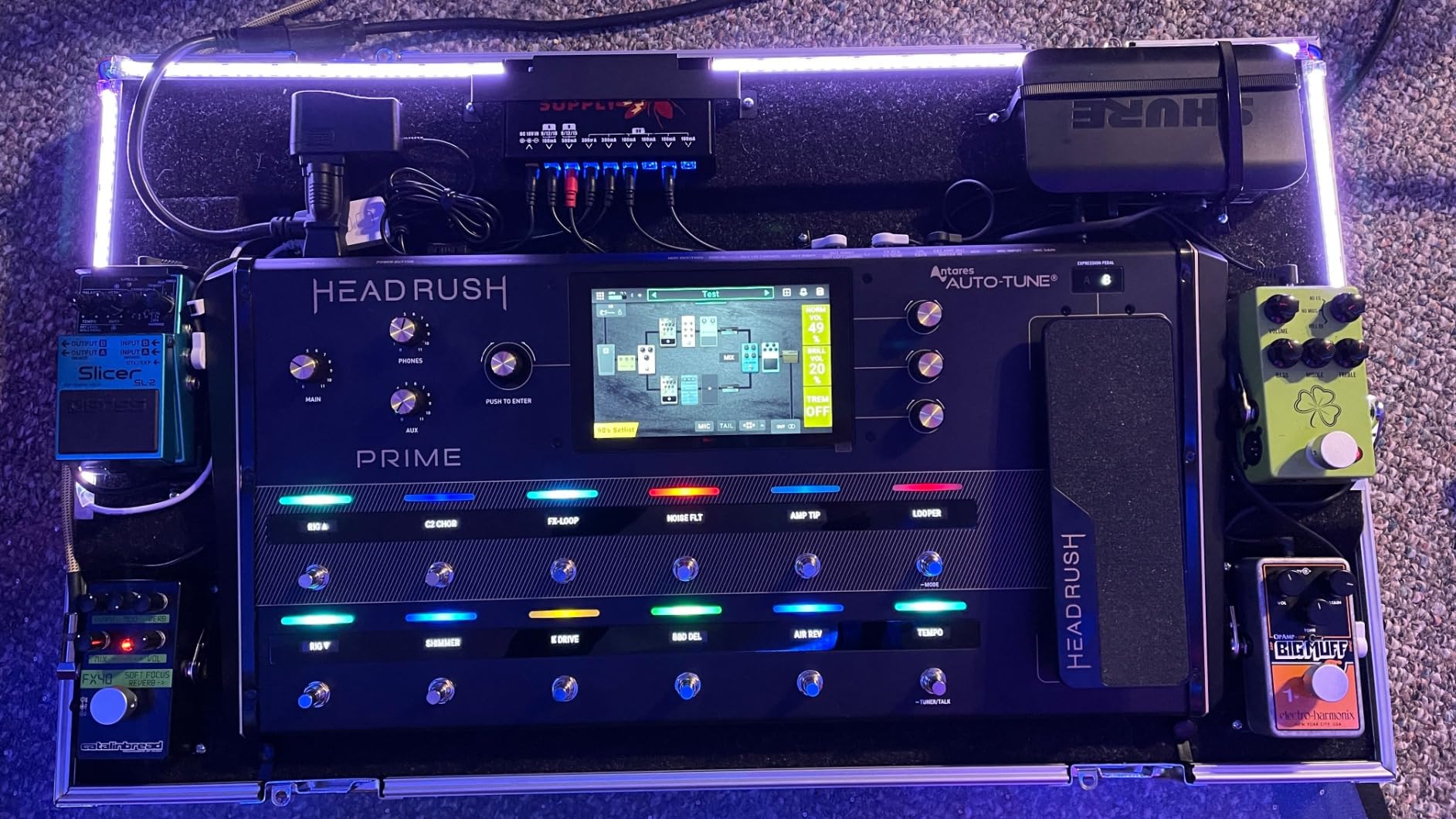
The design idea here is elegant: the removable top doubles as the pedalboard surface, so you lay your pedals onto the lid, lift it, and set it on the floor. The cavity underneath becomes your cable storage. Owners use this as the base of a custom build and rate it as exceptionally solid for the money.
At 25 lb it is not light, and the 4.9 rating across 44 reviews comes with no one or two star feedback at all, which is a genuine signal in a category where thin review counts are the norm.
Why the internal width is the real feature
If your board is wide, everything else becomes a compromise. A 32 by 19.5 inch interior means a 32 inch board fits with room at the sides for cable routing, and it means you are not trimming your rig to fit the case. Owners single out the width as the reason the case works where smaller ones do not.
Six inches of internal depth also means tall pedals and a power supply can travel with the board, which is the difference between a case and a lid.
Two design quirks to plan around
The rubber feet are mounted on the piece you are meant to use as the top, so the case is effectively stored on its lid. Fine in a van, odd in a rehearsal room. And the high lid lip means pedals cannot be mounted flat with hook-and-loop without modification.
At 25 lb with no wheels, this is a carry or a two-person lift, and a few owners would have liked stiffer panels. Plan the load-in accordingly.
11. Odyssey FZGPEDAL32W – Best Heavy-Duty ATA Shell With Wheels
Odyssey FZGPEDAL32W Flight Zone 32″ Guitar Pedal Board Ata Case With Wheels
ATA-style hard shell,30 lb,Wheels and handles,Side accessory compartment
Pros
- Extremely rugged heavily constructed shell
- Roomy enough for a large board plus a mixer or power supply
- Built-in accessory compartment for cables
- Hook-and-loop rolls included for securing pedals
- Wheels and handles help despite the weight
Cons
- Fully loaded weight can reach 50 to 70 lb
- Hard plastic wheels only work on smooth flat surfaces
- Very large and bulky
- Board is hard to remove once loaded
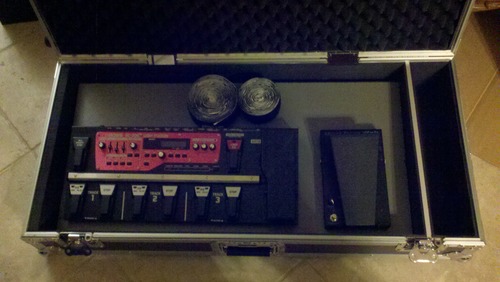
This is a heavy-duty shell by any measure, and the 4.1 rating reflects the case being rated far more favorably than the removable board that ships with it. Owners describe the build quality as comparable to much higher priced OEM hard cases, and others describe it as the most rugged pedalboard case available.
It is a 32 inch ATA-style case measuring 19.5 by 39.75 by 9.25 inches, listed at 30 lb, with wheels, metal latches and ball corners. There is a side accessory compartment for cables and extras, egg-crate foam padding in the lid, and rolls of hook-and-loop included to secure your pedals.
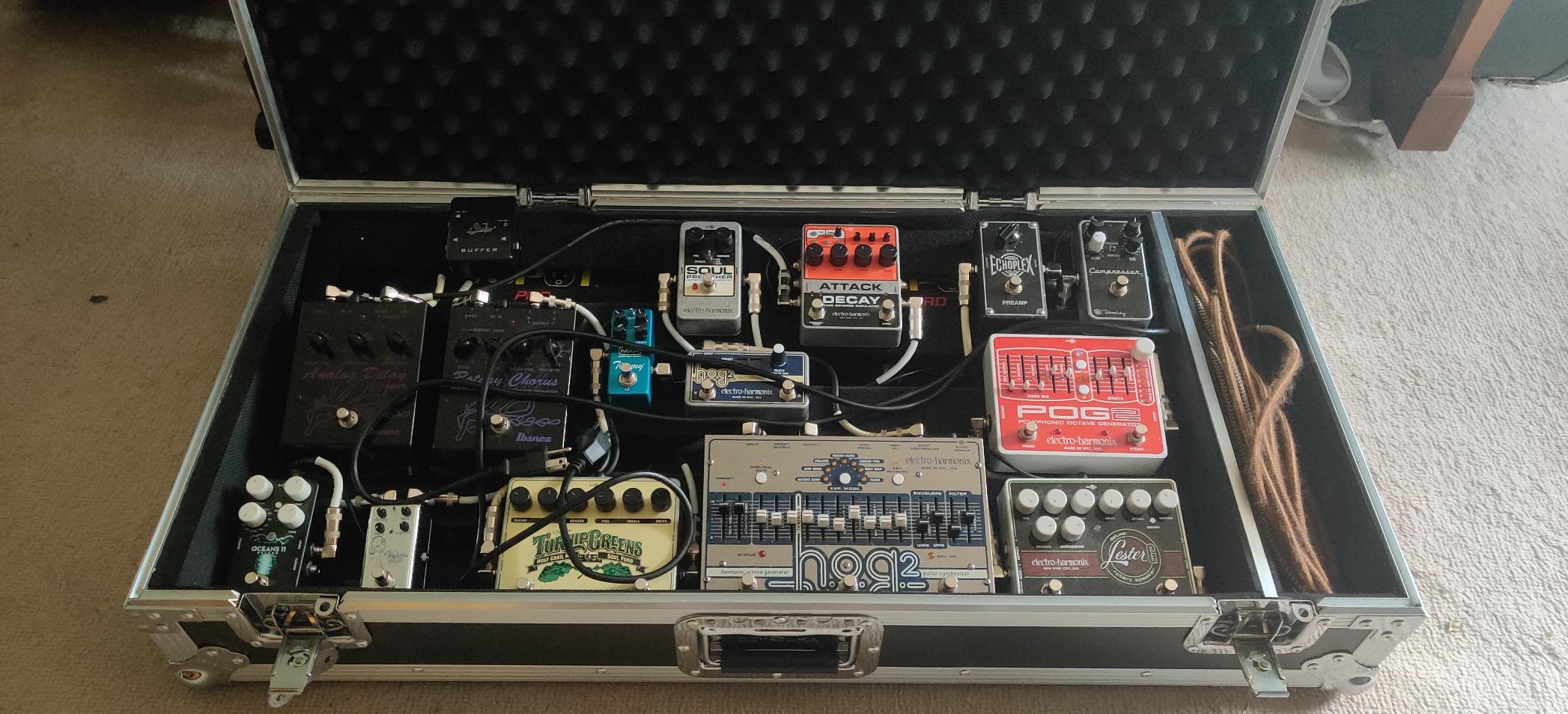
Space is the reason people buy something this size. Owners report fitting a large board plus a mixer, a multi-effects unit or a power supply, which is not something the compact cases in this list can do. If your rig is a small studio on wheels, this is the container for it.
The lid also does not hinge open enough to play the pedals while the board is seated, so this is a transport and storage case rather than a stage case. Set up happens outside it.
What you get that the smaller cases do not
Ruggedness at scale. Heavy ball corners, metal latches and a deep compartment mean this survives being thrown into a van with other gear on top of it, and the egg-crate lid foam stops pedals from rattling against the underside of the lid in transit.
It is the one case here that comfortably carries a board, a mixer and a power supply as one protected package, which matters if you are travelling as a two-person rig.
The honest problems
Weight is the whole story. A fully loaded board in this case can exceed 50 to 70 lb, and the included hard plastic wheels only roll on smooth flat surfaces before degrading on concrete and asphalt. Most venue floors are concrete.
It is also very bulky, and once loaded the board is difficult to remove without adding your own pull handles. Choose this only if you are rolling it on smooth surfaces and you have a second person or a cart.
12. TUOREN Soft Gig Bag – Best Budget Bag for Light Duty Touring
TUOREN Portable Gig Bag Guitar Effects Pedal Board Carry Bag 23.6 x 13 x 4inch Black
Oxford fabric soft bag,0.5 kg,23.6 x 13 x 4 inch,Shoulder strap and zip pocket
Pros
- Inexpensive way to carry a board between gigs
- Roomy enough for multi-effects units and expression pedals
- Large zip pocket for cables and power supply
- Lightweight with reinforced handle and shoulder strap
- Keeps dust and debris off the gear
Cons
- Little rigid padding
- essentially a dust cover in bad conditions
- Not strong enough to bear a fully loaded board
- Zippers are the first thing to fail
At half a kilogram, this is the lightest thing in the roundup by weight, and it costs very little. For rehearsal-room-to-gig transport, a club night or a player who refuses to put a hard shell on their back, it does the job honestly. It is a dust cover with padding, and buyers mostly know that going in.
The interior is 23.6 by 13 by 4 inches, which owners report fits larger-than-expected gear including the Line 6 Helix LT, the POD HD500X, a Numark Mixstream Pro and TC Electronic G-System units. A large zippered exterior pocket takes your cables and power supply.
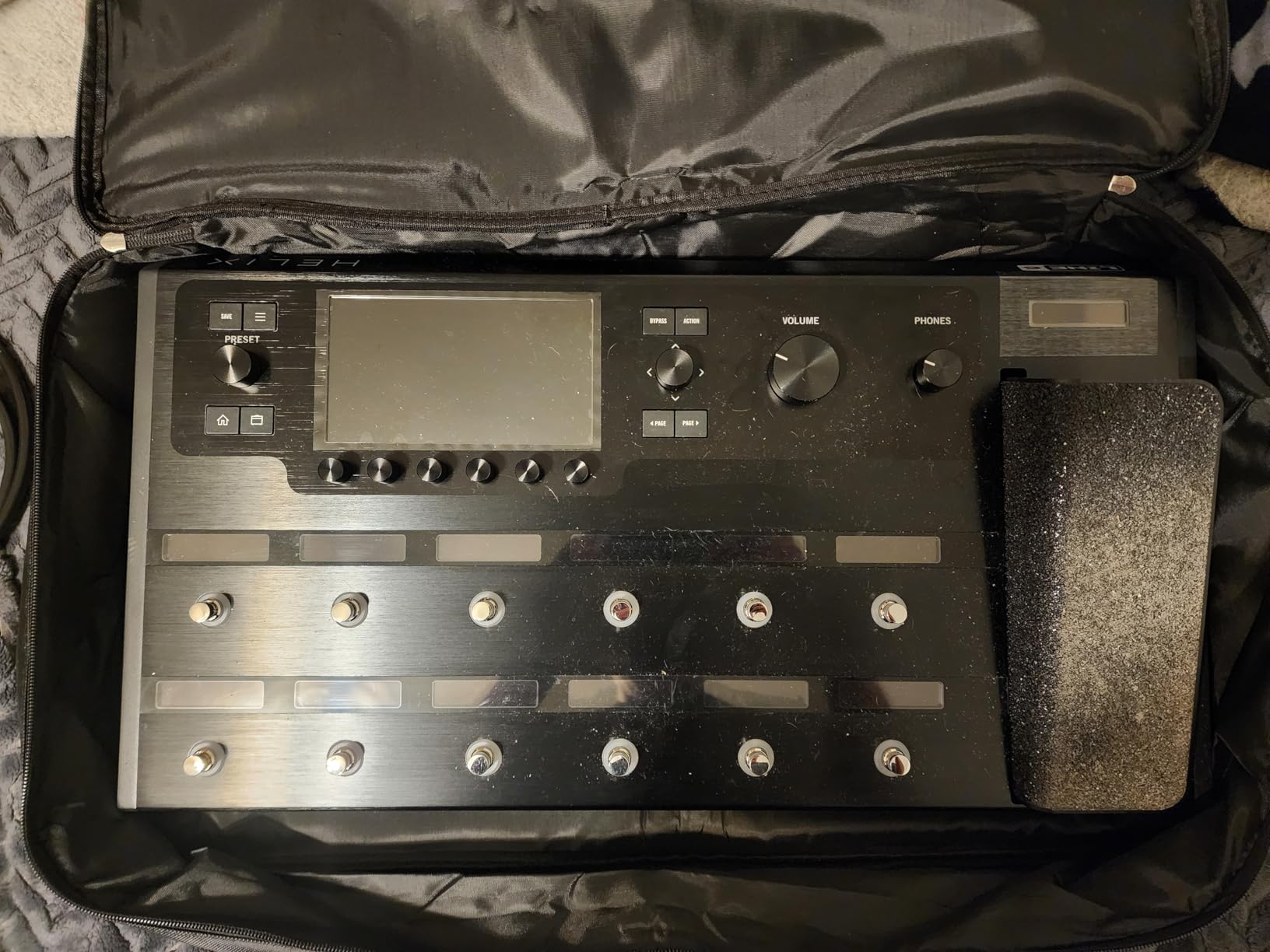
It is Oxford fabric with a reinforced comfort carry handle and a shoulder strap, closing with a zipper. That is the whole spec, and it is honest about what it is. The 4.4 rating comes with a distribution where 74 percent of reviews are five stars, and the complaints are consistent and predictable.
Several owners added their own padding, which is exactly the fix if you buy it. A folded towel or a layer of closed cell foam under the board takes it from dust cover to genuinely usable for a car and a rehearsal room.
Where a bag like this genuinely works
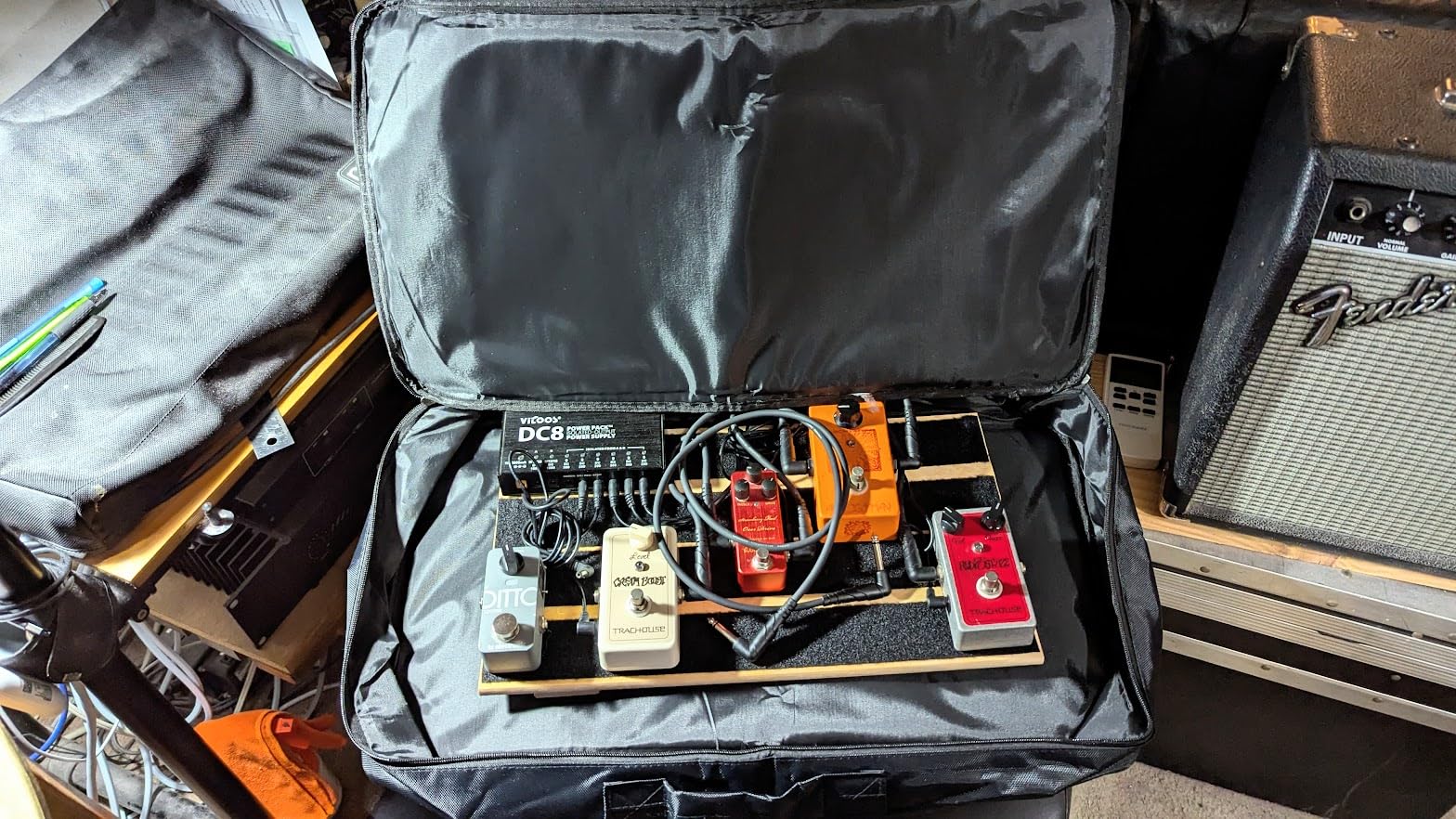
Short hops. Car to rehearsal, rehearsal to venue, venue back to the van, in dry weather, with a board that is not a life-changing investment. It keeps dust, grit and debris off the pedals, which sounds trivial until you have unpacked a dusty board on stage before.
It is also the case to keep in the rehearsal room permanently, so your board is always set up and ready instead of being packed away after every session.
When it is the wrong buy
Do not stack anything on it, do not check it as luggage, and do not put a fully loaded large board in it and expect the base to hold. Several owners report the fabric is thinner than they hoped and that zippers stop holding after extended regular gigging.
Protecting a board of boutique pedals in this bag is a false economy. Save it for a practice rig, and spend properly when the pedals on the board are ones you cannot replace before the tour ends.
How to Choose a Pedalboard Case for Touring in 2026
The six case types and where each belongs
There are six case families in this roundup, and they split cleanly on one axis: how much weight you carry versus how much abuse you absorb.
Soft gig bag: lightest, protects against dust, scratches and knocks. Right for regional work, backline-less touring and hand luggage.
Padded soft case with dividers: slightly heavier, holds a board in place as you reconfigure it. Right for two-row boards and frequent layout changes.
Aluminium shell case: hard, light, holds 10 to 12 pedals with locking latches. Right for hand-carrying a hard case daily.
Plywood road case: rigid, heavier, stackable, lockable. The touring workhorse for van and bus work.
Wheeled ATA-style case: plywood or heavy shell on casters with a tow handle. Right for large boards moved alone.
Board and case as a package: a matched set you assemble once and never re-measure. Right if you are buying both at the same time.
Match the case to your board size first
Measure the board, including the power supply and any cable bulge, before you look at case names. Case sizes are labelled by board length, but the interior is always smaller than the printed number once walls and foam are accounted for. The Harmony 22 inch case lists a 22 by 13 by 5-3/8 inch interior, and the foam liner eats roughly half an inch per side.
If your board is genuinely large, check internal width as well as length. The Seismic Audio case has a 32 by 19.5 inch interior, which is the widest here, and owners report smaller 22 inch cases simply cannot take their boards.
Also check depth. Tall pedals plus a power supply need real clearance, and a case that fits your board flat but crushes the knobs is not a fit.
The weight budget nobody publishes
Most guitarists have no roadie, which turns case weight into a fatigue and safety issue rather than an inconvenience. Two pounds and 8.1 lb are carryable indefinitely. Eighteen pounds is a two-hand job. Twenty-five pounds is a careful one. Thirty pounds empty, and 50 to 70 lb loaded as the Odyssey case can reach, is a two-person job with stairs in the middle.
Our rule of thumb: if a case runs above roughly 25 lb, it needs wheels and a telescoping handle or it will end up on a stage one time and on your back the next. Only three cases in this roundup clear that line with wheels fitted, and all three use inline skate-style wheels rather than swivel casters.
Budget against your rig, not in isolation. A touring player on r/Guitar described managing a full pedal setup, an Eleven Rack, a MIDI board and a case inside a 150 lb bus weight allowance, where the case is competing with amps for the same fixed number.
Foam, latches and hardware that decide survival
Foam does two jobs: it absorbs the hit, and it stops the pedals moving. Pick and pluck layers are convenient, layered foam you cut yourself is cheaper, and universal drop-in foam fits boards you do not own yet. A The Gear Page owner running a Thon case for a Line 6 Helix put cable capacity in the same sentence as build quality, which is a good reminder to check whether your power supply and cables travel inside the case.
Latches are the other thing. Locking butterfly latches and a recessed toggle latch keep a case shut in an unlocked van or a shared backline area, and stop a case opening mid-transit. Cheap latches are the first hardware to fail.
Look for ball corners on a plywood case, and for a handle that does not flex when you lift a loaded case by it. Aluminum edge rails on a lightweight shell will flex, and that flex is what shifts your pedal settings between shows.
Flying with a pedalboard
Plan for checked baggage. A loaded pedalboard case is almost always too large and too heavy for an overhead bin, and the exception is a small soft bag like the Gator GK-2110 that owners report fitting in a bin.
When you check a hard case, pack the board out if you can, wrap anything fragile separately, and put your power supply in the case rather than in a pocket where it can be thrown against a wall. A pedalboard case in checked baggage is a container, not a parachute, and the thing that saves you is the foam between the pedals and the shell.
Do not assume a handle and inline wheels help you at the carousel. They are for smooth airport floors and hotel corridors, not for belts. When you land, treat a checked pedalboard case like a suitcase and carry it.
How to spot a misleading case listing
Read the box contents line, not the photographs. A verified owner on The Gear Forum bought a 32 inch ATA case expecting a pedalboard to be included, then found the description later changed to a note that the case alone was supplied, while every product photo still showed the board. Support did not reply.
Three habits prevent this. Screenshot the listing at the moment of purchase so you can show what was promised. Check whether the weight listed is for the case alone or the package, because one page listed a board weight of under ten ounces next to a substantial case. And buy from a seller with a real return path, because a mismatched interior is much easier to return than to live with.
Finally, ask yourself whether an unknown brand bothers you. That same owner said outright that he had concerns about a highly-reviewed case coming through a marketplace before he bought it. That caution is reasonable, and it is also why we have put review counts in this roundup rather than just star ratings.
Frequently Asked Questions
What is the best pedalboard case?
There is no single best, because the trip type decides. For bus and van touring, the answer is a plywood or aluminium road case with ball corners, lockable latches and casters if it goes above 25 lb. For air travel, choose a hard ATA-style case with TSA-friendly locking latches and plan to check it. For regional and backline-less touring, a padded soft gig bag you can carry solo is often the right call despite offering less protection. Match the internal dimensions to your board before you buy anything.
Is a flight case overkill for a pedalboard?
It depends what you are protecting. Flight cases exist to survive stacking, drops and baggage handling, so if your board lives in a trailer under other cases or gets flown regularly, they are not overkill. If you are moving from a car to a rehearsal room to a club and carrying it all yourself, they are heavy for the job. The honest middle ground is a rigid aluminium shell around 8 lb, which gives you a hard enclosure without a 30 lb price in weight.
Should I get a hard case or a soft gig bag for my pedalboard?
Soft bags are fine for dry, short-hop, low-stakes transport, and what you accept in exchange is scratch, dent and crush risk in return for a weight saving you can actually carry. Hard cases pay for themselves the moment your board is a significant unrecoverable investment or travels in checked baggage. A good compromise is a padded soft case with adjustable dividers for a two-row board, since it holds pedals in place without adding hard-shell mass.
What size pedalboard case do I need for my board?
Measure the board including the power supply and any cable bulge, then check the case’s internal dimensions rather than its name. Most cases are labelled by board length, and the usable interior is always smaller than the printed figure once walls and foam are subtracted. You also need depth for tall pedals and width if your board is large, since a standard 22 inch case will not take a board that a 32 by 19.5 inch interior takes easily.
Are airlines okay with checking a pedalboard flight case?
Yes, a pedalboard case is normally accepted as checked baggage, and most will not fit an overhead bin once loaded. Pack the board out if you can, pad fragile items separately, and keep your power supply inside the case rather than in an outer pocket. Checked gear gets thrown, so treat the case as a container and plan on carrying it off the belt yourself. Small soft bags sized for a single multi-effects unit can sometimes travel as hand luggage instead.
Are casters and wheels worth it on a pedalboard case?
Worth it on large cases, pointless on small ones. A castor only pays off when the interior is big enough that you are always carrying something substantial, because a 30 lb plywood case on inline wheels turns a car-to-stage walk into one continuous movement instead of a shoulder and a staircase. On an 8 lb aluminium shell the added weight and bulk buy you very little, and inline wheels are still poor on concrete and asphalt compared with swivel casters.
The Verdict for Touring Guitarists in 2026
If you take one thing from this roundup of the best guitar pedal cases for touring, take the weight figures seriously. Two pounds, 8 lb and 18 lb are carryable. Twenty-five pounds is a careful lift. Thirty pounds empty, and up to 70 lb loaded, is a job for two people and a cart.
For a tour bus or van run, the Harmony 22 inch plywood case is the build we would trust with a board for a season, and the Gator G-TOUR system is the one to buy if you want board, case and casters handled as a single unit. For air travel, take the same rigidity and plan to check it. For regional work, backline-less touring or anything you carry solo, the Gator GK-2110 soft bag or the GHOSTFIRE aluminium shell will serve you better than a heavy case you resent every load-in.
Whichever you pick, measure your board first, read the interior dimensions rather than the size on the front, and check the box contents on the listing before you pay. That last habit would have saved a verified buyer on The Gear Forum the confusion of receiving a 32 inch case and no board, and it will save you the same twenty minutes of doubt.