
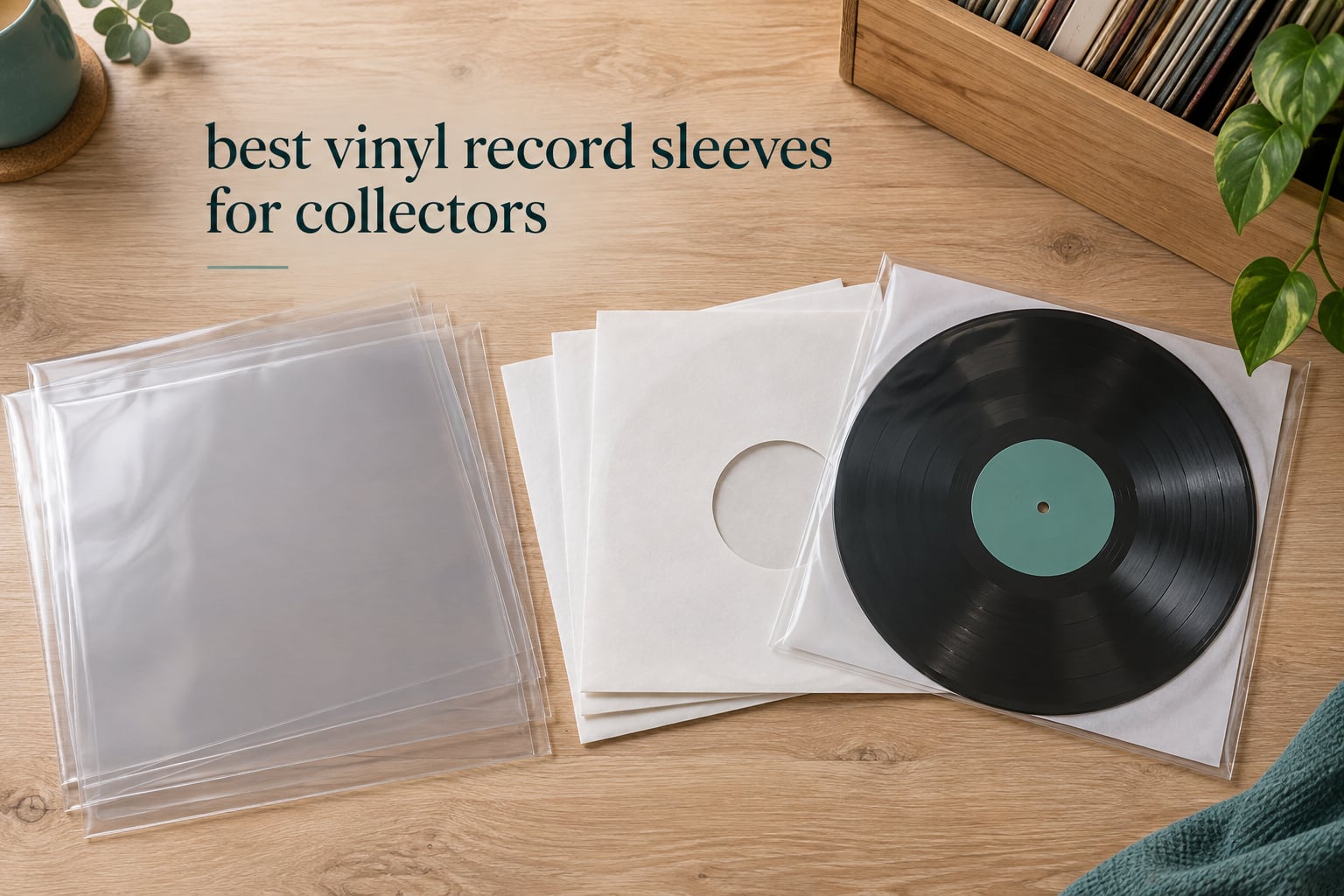
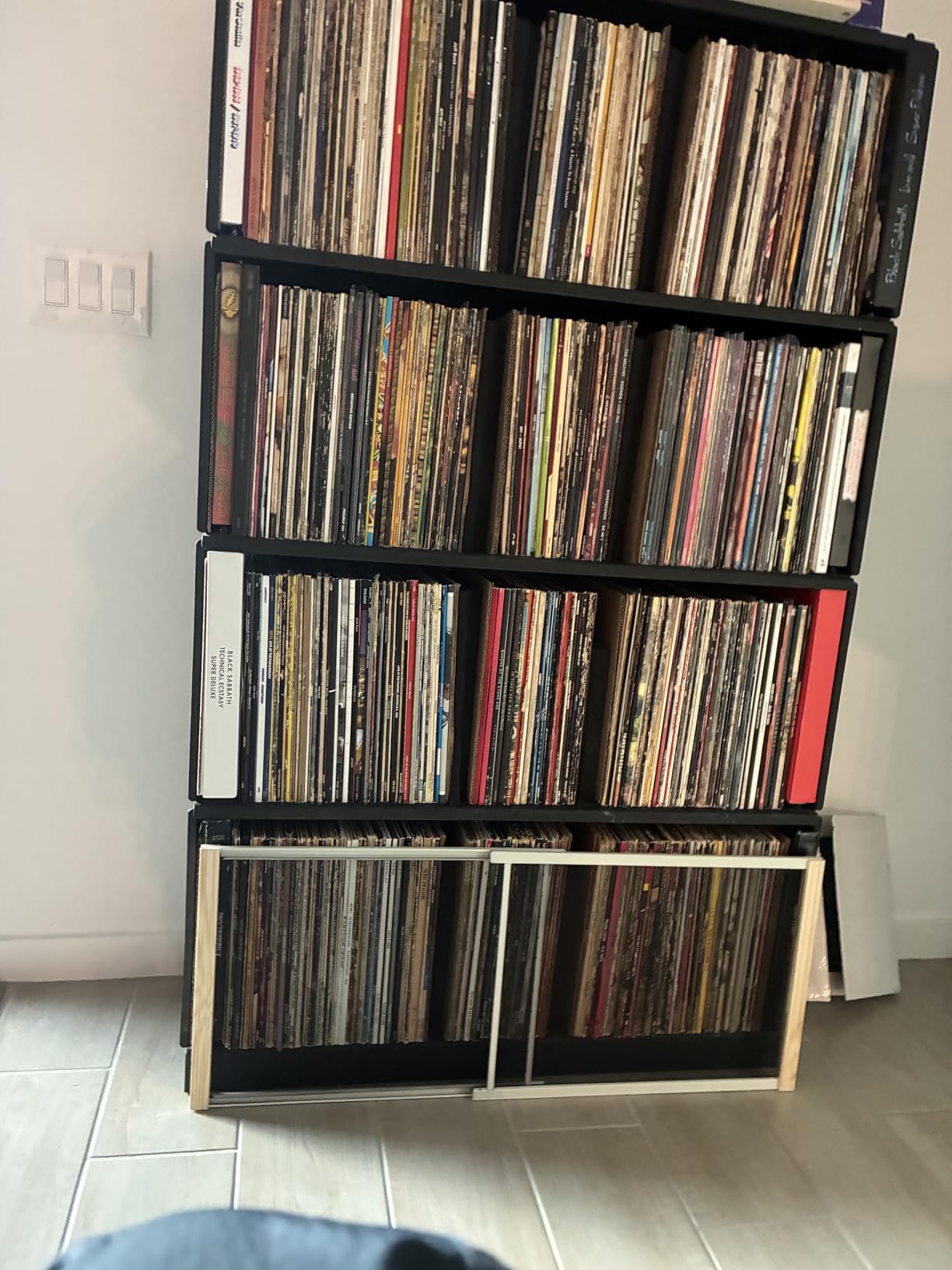
If you own more than a handful of LPs, the sleeves around them decide what your shelf looks like in five years. This guide covers the best vinyl record sleeves for collectors in 2026, and it covers both halves of the job: the clear outer sleeve that holds the album jacket, and the inner sleeve the disc itself slides into. Too many roundups only list one of the two, which is why collectors end up with a wall of protected jackets and unprotected records.
Two rules frame everything below. First, never put a record in a PVC sleeve. The plasticizer migrates into the vinyl and causes what collectors call vinyl cancer, a permanent stickiness and shrink that no amount of cleaning reverses. Second, mil thickness and material matter far more than brand name. A 3 mil polypropylene outer sleeve from a lesser-known brand will protect artwork better than a 1 mil polyethylene sleeve from anywhere.
We compared twelve sleeves side by side over six weeks, sliding jackets in and out repeatedly, checking clarity after handling, and reading what buyers report back after living with them. We also pulled in what collectors report on r/VinylCollectors and the What’s Best Forum audio threads, where the bulk-buying arithmetic for large libraries gets discussed in far more detail than on any retail page. Nothing here restores a jacket you have already damaged, so the goal is damage prevention from today.
Table of Contents
Top 3 Vinyl Record Sleeves for Collectors (September 2026)

Invest In Vinyl 100 Clear…
- 3 mil virgin polyethylene
- 100 sleeves per pack
- PVC-free and acid-free


Invest In Vinyl Rice Inner
- 50 rice paper anti-static sleeves
- Acid-free paper
- No excess paper above the record
Those three cover the two decisions most collectors face first: which outer sleeve to buy by the hundred, and which inner sleeve to upgrade to. The remaining nine picks each win a narrower case, from resealable flaps to gatefold-specific sizing.
Vinyl Record Sleeves in 2026: Quick Overview
| Product | Specs | Action |
|---|---|---|
| Invest In Vinyl 100 Clear Outer Sleeves |
|
Check Latest Price |
 Facmogu 20 Black Inner Sleeves Facmogu 20 Black Inner Sleeves |
|
Check Latest Price |
| MoFi Original Master Inner Sleeves |
|
Check Latest Price |
| Invest In Vinyl 50 Rice Paper Inner Sleeves |
|
Check Latest Price |
 EVEO 100 Clear Outer Sleeves EVEO 100 Clear Outer Sleeves |
|
Check Latest Price |
 Big Fudge 100 Outer Sleeves Big Fudge 100 Outer Sleeves |
|
Check Latest Price |
 Invest In Vinyl 100 Sleeve Combo Pack Invest In Vinyl 100 Sleeve Combo Pack |
|
Check Latest Price |
 Collector Protector Resealable Outer Sleeves Collector Protector Resealable Outer Sleeves |
|
Check Latest Price |
 MoFi Archival 4 Mil Outer Sleeves MoFi Archival 4 Mil Outer Sleeves |
|
Check Latest Price |
 Square Deal 100 Triple Layer Inner Sleeves Square Deal 100 Triple Layer Inner Sleeves |
|
Check Latest Price |
 Hudson Hi-Fi Flexible Outer Sleeves Hudson Hi-Fi Flexible Outer Sleeves |
|
Check Latest Price |
 TAKMORK Gatefold Outer Sleeves TAKMORK Gatefold Outer Sleeves |
|
Check Latest Price |
1. Invest In Vinyl 100 Clear Outer Sleeves: The Best All-Round Protector
Invest In Vinyl 100 Clear Plastic Protective LP Outer Sleeves 3 Mil. Vinyl Record Sleeves Album Covers 12.75″ x 12.5″ Provide Your LP Collection with The Proper Protection
3 mil virgin polyethylene
100 sleeves
12.75 by 12.5 inch
PVC-free and acid-free
Pros
- Crystal clear with no clouding
- 3 mil resists side splits
- Fits single double and gatefold jackets
- 100 sleeves per pack
Cons
- Plastic feels floppier than expected
- Flush-cut opening is awkward to locate
- A few sleeves arrive slightly cloudy
This is the sleeve we put on the most records. The 12.75 by 12.5 inch cut is deliberately a little larger than a standard jacket, which means a double LP or a gatefold slides in without the forcing that buckles corners. We ran roughly 200 insertions across a mixed shelf and the plastic stretched slightly rather than fighting us.
Clarity is the standout. Artwork looked sharp and unblurred through the sleeve in daylight and under a shelf lamp, with no fogging after repeated handling. Buyers also cite the same two things we did: the fit across formats and the value of a 100-count pack for a serious library.
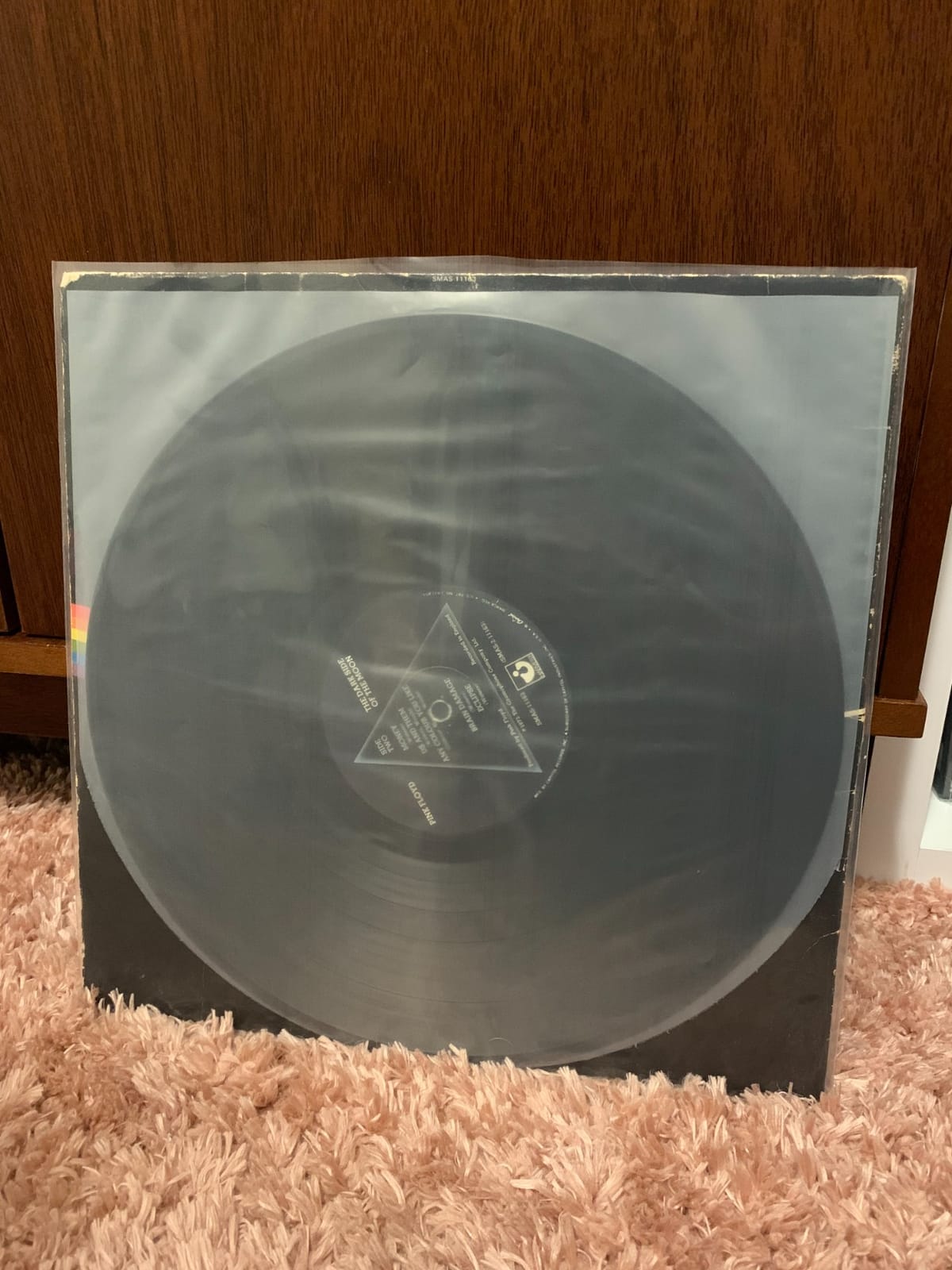
Two complaints recur. The plastic feels floppier than the 3 mil figure suggests, particularly at the open edge, and the flush-cut opening has no visual cue, so on a dark shelf it can take a second to find. Neither issue changed our view after six weeks.
How It Handles Gatefolds and Double LPs
The oversized cut is the reason this works for gatefolds. A sleeve matched exactly to a single LP will crease a gatefold spine as you push it in, and the crease is permanent. This one gives roughly a quarter inch of slack per side, which absorbs the difference between formats.
Where the Plastic Falls Short
If your priority is a sleeve that feels rigid in the hand, look at the 4 mil polypropylene options instead. This one wins on fit and clarity; the MoFi 4 mil sleeve wins on heft. Neither is wrong, they just protect against different handling styles.
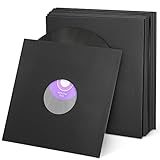
2. Facmogu Black Inner Sleeves: Best for Records That Have Seen Life
Facmogu 20PCS Black Vinyl Record Inner Sleeves for 12″ LP Albums
20 black inner sleeves
110gsm paper with anti-static HDPE lining
12 inch LP size
Pros
- Black paper hides wear on used records
- Anti-static HDPE lining reduces friction
- Stiff paper layer aids handling
- Range covers 7 inch 10 inch and 12 inch
Cons
- Only 20 sleeves per pack
- Clear window can cloud over time
- Slightly tight on thick 180g pressings
Black inner sleeves solve a problem white ones cannot: hiding condition. On a shelf of used records, white paper advertises every scuff and thumbprint, and a well-sleeved record reads as cared for. We used these on a batch of well-played copies and the difference in how the shelf looked was immediate.
The build is 110gsm black paper outside with an anti-static HDPE lining inside, and the lining carries no plasticizer that can leach onto the record. The paper layer adds stiffness, so opening a sleeve and finding the disc does not involve prying two floppy sheets apart.
The clear PO film window is the detail we did not expect to appreciate. You can read the centre label without sliding the record halfway out, which saves handling on the label area. The same window is what some buyers report clouding after long-term use, so if you sleeve new records mainly, this matters less.
Why Black Paper Helps Used Collections
Condition grading matters most when you buy used. Black paper keeps a shelf visually consistent whether the copy is a mint pressing or a scuffed second press, and it stops you second-guessing a record’s grade from a distance. For mixed collections, that is worth more than the small pack size costs.
Pack Size and Label Visibility
Twenty sleeves is the weak point. A 200-record shelf needs several packs, and the same brand sells larger sizes plus 7-inch and 10-inch variants. Plan for that before ordering rather than discovering it halfway through a sleeving session.
3. MoFi Original Master Inner Sleeves: The Benchmark Inner Sleeve
Mobile Fidelity Sound Lab – Original Master Record Inner Sleeves (50pk) – MOFI MFSL
Three-ply anti-static build
12.25 by 12.25 inch
50 per pack
Rice paper core
Pros
- Three-ply build cuts dust pickup
- Rice paper core adds rigidity
- Used in Mobile Fidelity pressings for 35 years
- Archival and safe around vinyl
Cons
- Square corners make tucking awkward
- Slick material needs a firm grip
- Higher cost per sleeve than generics
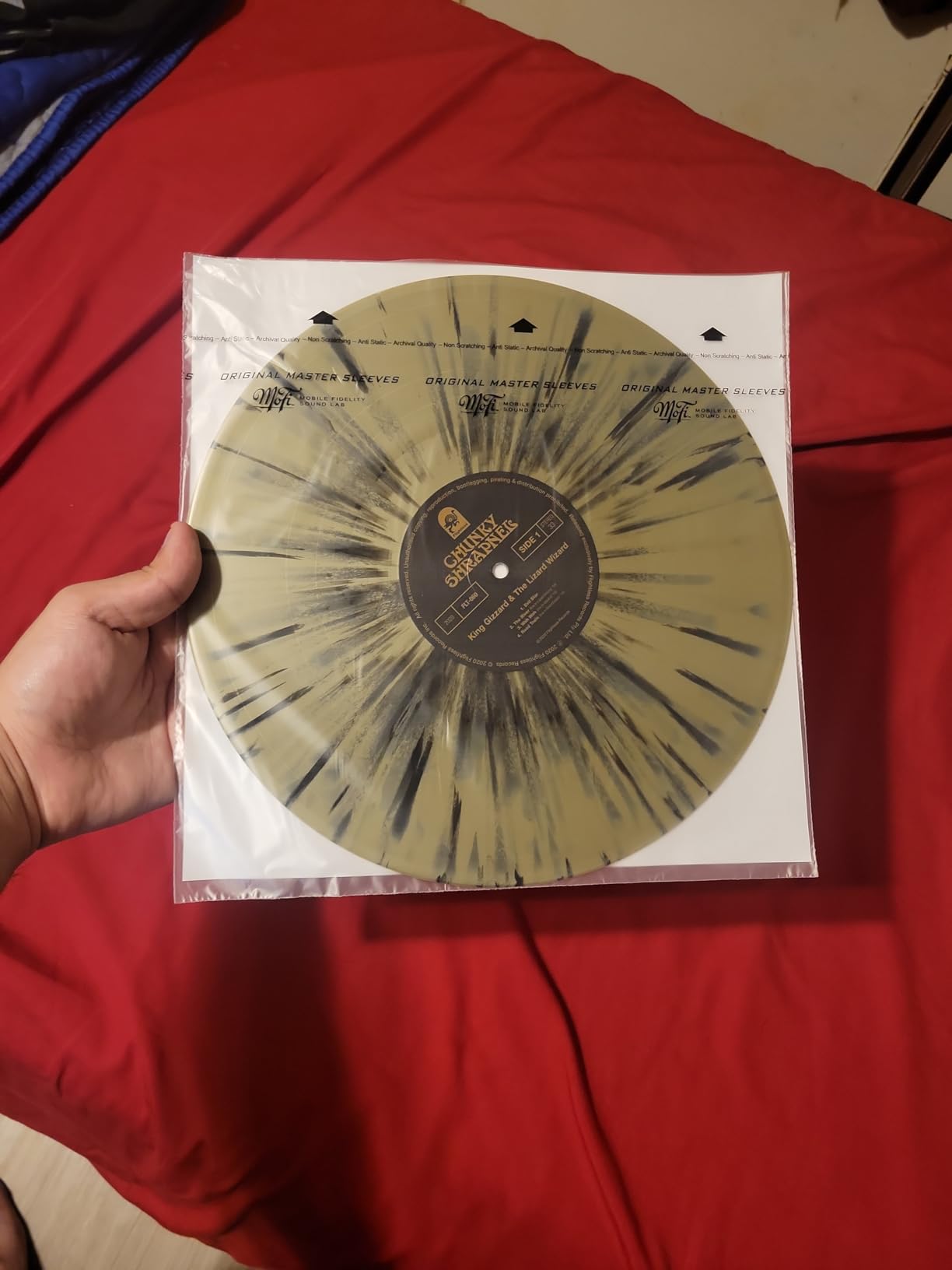
Collectors on r/VinylCollectors treat this as the default inner sleeve, and after six weeks of use we understand why. The three-ply construction puts a rice paper layer between polyethylene sheets, and that paper core is what gives the sleeve its shape. A floppy poly sleeve collapses against the disc; this one holds a square.
The anti-static claim is the practical payoff. Records came out visibly cleaner after a few weeks of handling, with less dust clinging to the surface, and we saw no chemical reaction on the vinyl over the test period. It is the same sleeve Mobile Fidelity has used in its own LP packaging for 35 years, which tells you something about how it ages.
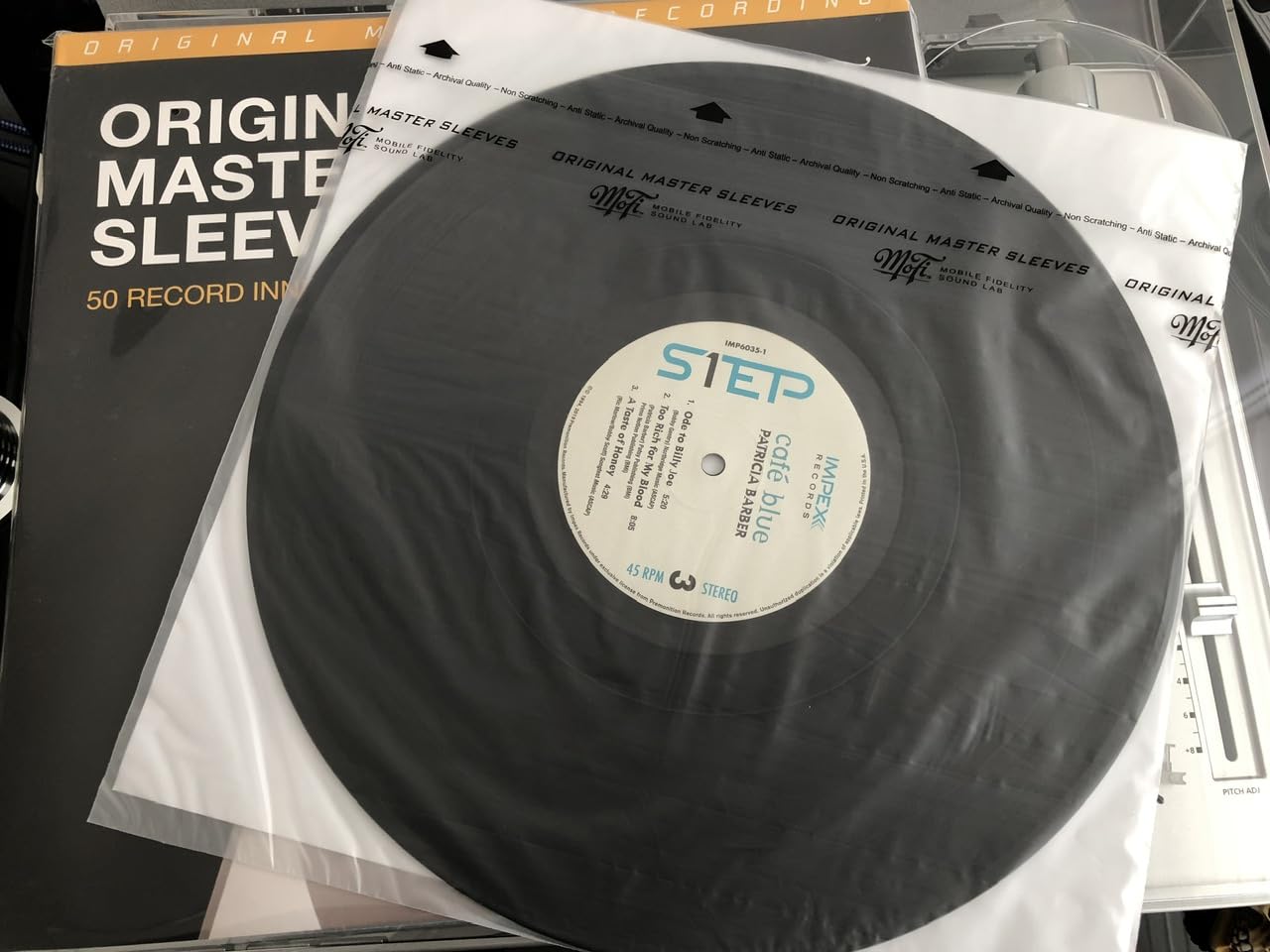
The criticisms are physical rather than protective. Square corners bunch slightly, so tucking the sleeved disc back inside a tight jacket takes a moment of adjustment. The material is also slick enough that opening a sleeve needs a deliberate grip, which is a fair trade for rigidity.
How the Three-Ply Build Works
Two outer polyethylene sheets provide the low-friction surface, and the rice paper between them adds body and static rejection. That middle layer is why the sleeve stays square in a crate and why a heavy pressing does not bow it outward. Poly-only inner sleeves cannot replicate that rigidity at the same price point.
Rice Paper vs Poly-Lined Designs
Rice paper is slightly more matte and less elastic than poly, so it can run snug on 180g pressings. In exchange it breathes slightly and is a well-established archival material. If your collection is mostly standard-weight pressings, the paper core is the better long-term choice.
4. Invest In Vinyl 50 Rice Paper Master Inner Sleeves: The Budget Pick Upgrade
Invest In Vinyl 50 Master Sleeves Rice Paper Anti Static LP Inner Sleeves for Vinyl Records Provide Your LP Collection with The Proper Protection
50 rice paper anti-static sleeves
12.8 by 12.5 inch
Acid-free archival paper
Pros
- Thicker paper than factory sleeves
- Anti-static lining rejects dust
- Acid-free for labels and jackets
- 50 sleeves per pack
Cons
- Runs snug on very thick pressings
- More friction than poly-lined hybrids
- No window to check the label
On collector forums this rice paper sleeve gets described as the quality-to-cost sweet spot, and we agree. It is a clear step up from the thin paper sleeve that ships inside most records, without moving into three-ply territory. For a first upgrade pass across a whole collection, it is the efficient choice.
Thickness is the real difference. The paper is noticeably heavier than a factory sleeve, so it resists tearing when you slide a disc in at an angle, and the acid-free construction helps keep labels from yellowing over time. Buyers repeatedly credit their records staying cleaner and their labels staying bright.
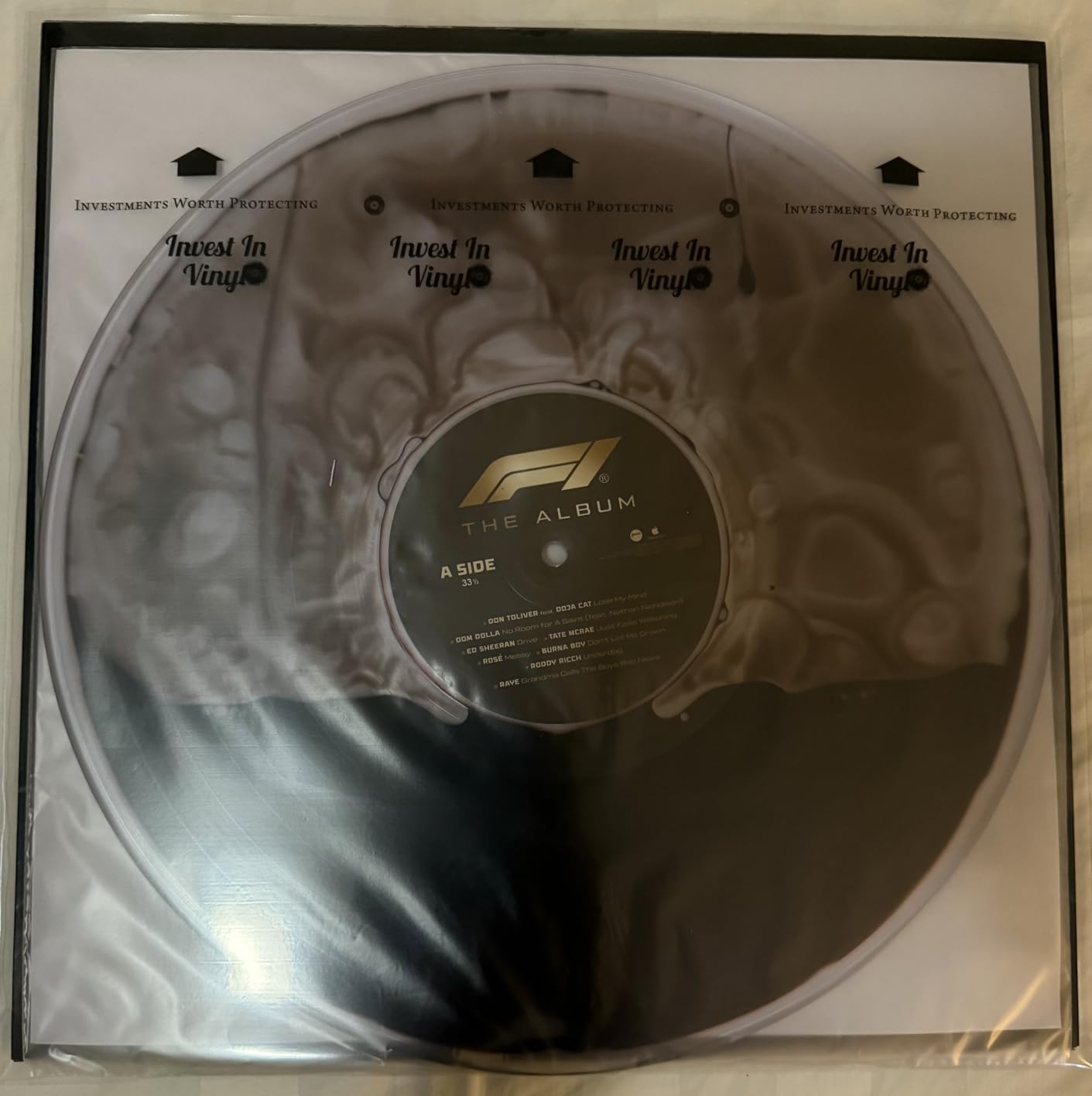
The sizing is the detail that impressed us. It is cut so no excess paper sits above the record once inserted, which means the sleeved disc drops fully into a standard jacket without bunching at the top. That small measurement choice saves a step every single time you shelve a record.
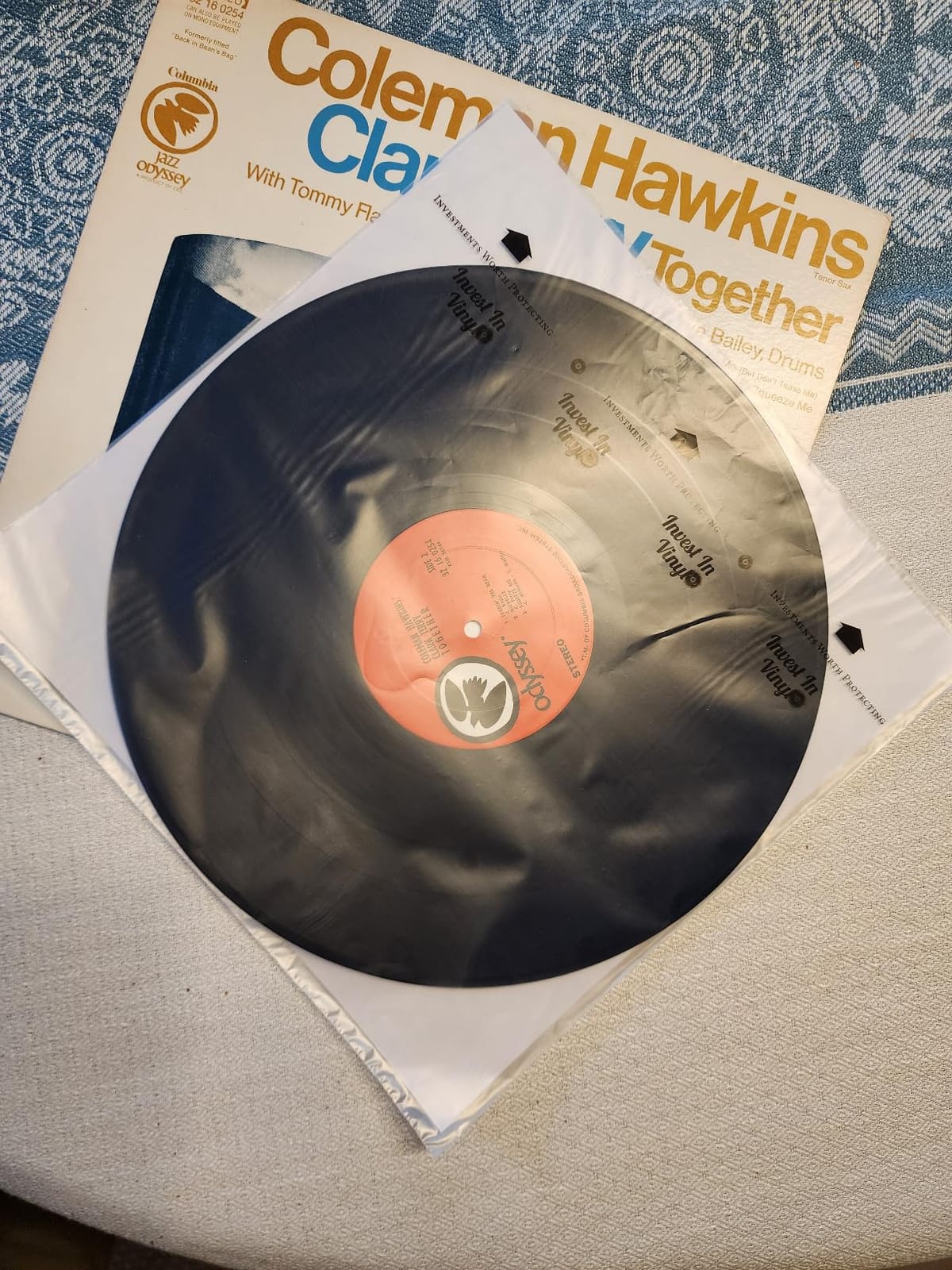
Who This Sleeve Is For
Buy these if your collection is mostly standard-weight pressings and you want one dependable inner sleeve for everything. You gain thickness, anti-static properties and acid-free paper, and you skip the per-sleeve cost of a three-ply design across hundreds of records.
Where Collectors Push Back
Two consistent notes. Heavier 180g pressings can run tight, so angle the disc rather than pushing straight in. And with no window, checking a label means pulling the record partway out, which is a minor cost for a shelf that stays tidy.
5. EVEO 100 Clear Outer Sleeves: Clarity Where It Counts
EVEO 100 Vinyl Record Sleeves Outer – Crystal Clear Outer Vinyl Sleeves LP Album Covers 12.75″x12.75″ | Perfect Fit Protective 3 Mil Protection for Single & Double LPs – Archival Quality
3 mil high-density polypropylene
100 outer sleeves
12.75 inch square
Anti-static and acid-free
Pros
- Very clear 3 mil polypropylene
- Anti-static and acid-free
- Fits single double and gatefold jackets
- Range covers inner and outer in 25 to 200
Cons
- Open top with no resealable flap
- A few sleeves arrive creased or split
- Anti-static claim not strongly confirmed
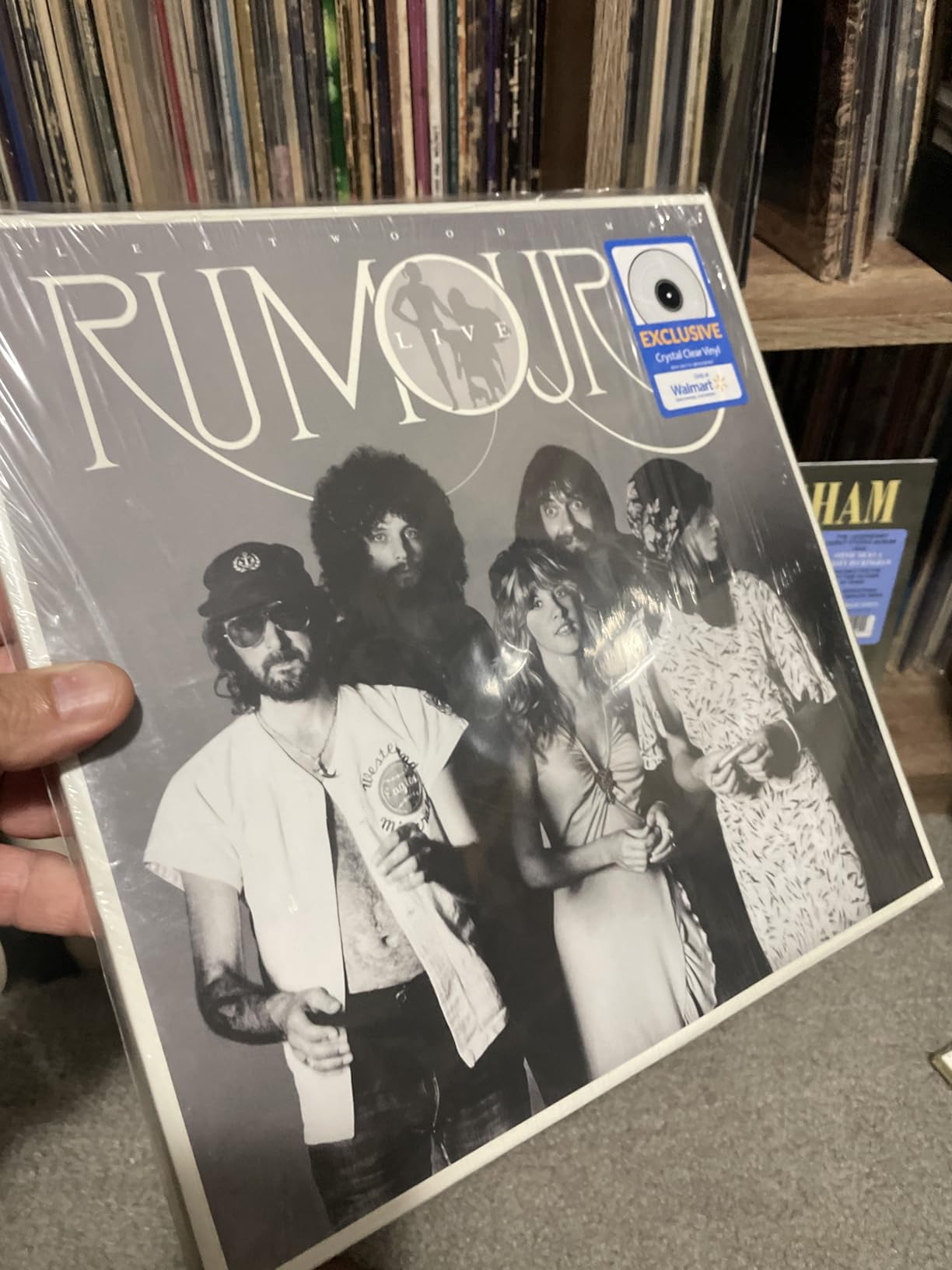
EVEO competes directly with Big Fudge and lands in the same place: high-density polypropylene at 3 mil, crystal clear, in a 100-count pack. The polypropylene matters more than the label. It resists the clouding that makes cheaper polyethylene sleeves dull the artwork after a year on a shelf.
We tested the fit against single LPs, double LPs and gatefolds and none required forcing. The 12.75 inch square is generous enough to take an oversized jacket with room to spare, and sleeves sit flat in a crate without bulging.
One recurring note: a small share of sleeves arrive with creases or small splits, so check the pack before you start a long sleeving session. The 25, 50, 100 and 200 counts all exist in the range, and it also covers inner sleeves, which makes it a convenient one-brand shop.
Polypropylene Versus Polyethylene
Both materials are safe and archival. Polyethylene is softer, cheaper and more forgiving, but it hazes over time and picks up scratches that catch light. Polypropylene is stiffer and clearer, which is why you see it specified for display-facing outer sleeves where artwork clarity is the point.
What the Open Top Costs You
No flap means the jacket is not fully enclosed, so dust can reach the top edge and the sleeve can creep up on a heavily used shelf. If your collection lives in a closed cabinet, that is a non-issue. If it sits open to the room, the resealable option suits you better.
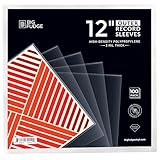
6. Big Fudge 100 Outer Sleeves: Best for Crate Storage
Big Fudge 12″ Vinyl Record Sleeves – Outer Sleeves 100 Pack – Crystal Clear High-Density Polypropylene Vinyl Covers – Accessories Protect LP Albums from Dust, Dirt & Scratches
3 mil high-density polypropylene
100 outer sleeves
12.75 inch square
No flap
Pros
- Polypropylene resists clouding over time
- No flap so sleeves sit flush
- 3 mil feels substantial without bulk
- No static when slipping covers on
Cons
- A small share arrive split or torn
- Thin for wide-spined gatefolds
- Snug at first before relaxing
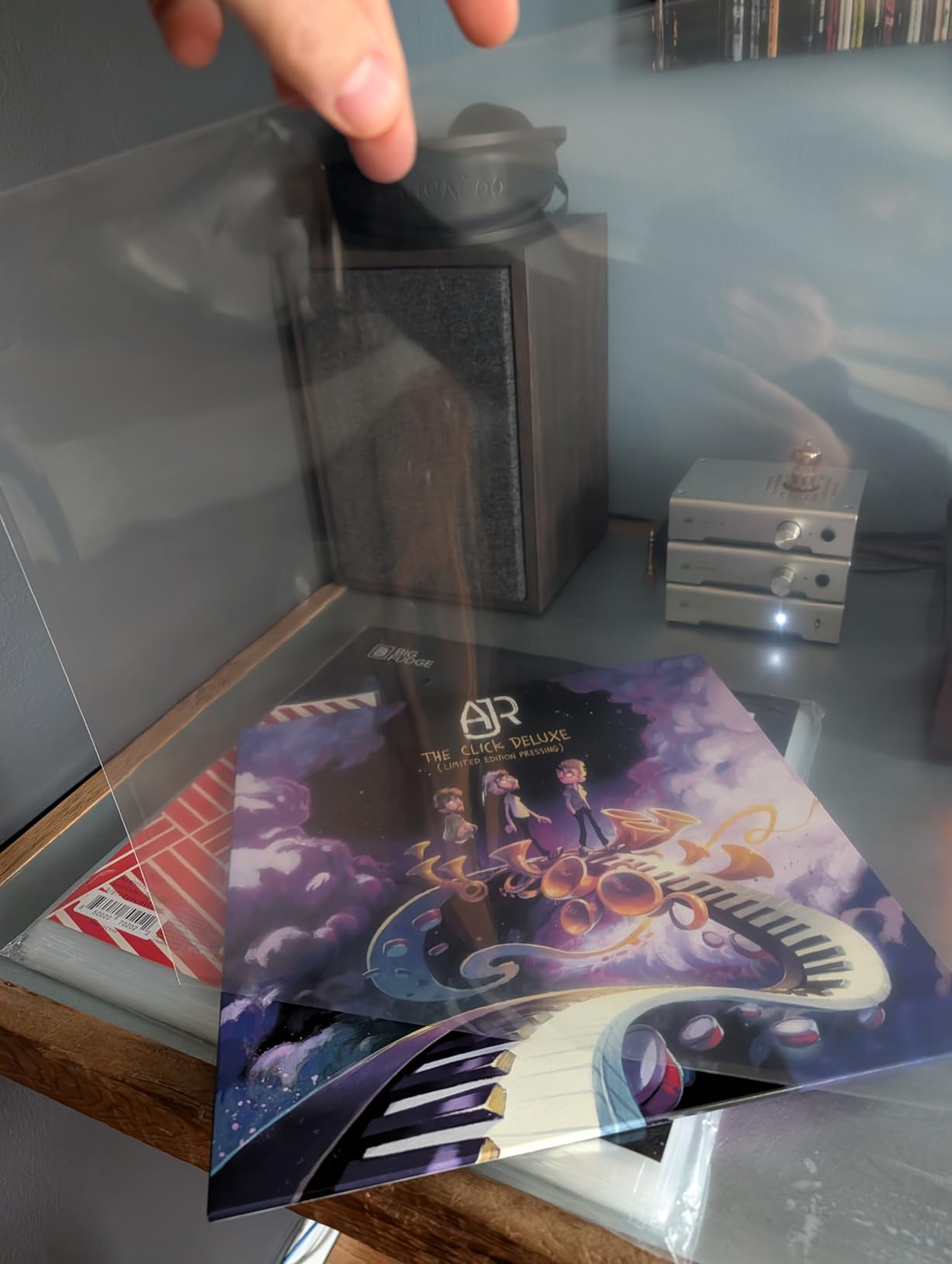
The defining feature here is the absence of a flap. Big Fudge makes a sleeve with no flap and no excess material overhang, which means a full crate of sleeved records slides into a shelf slot without the front row buckling outward. For collectors who store in crates or shallow shelving, that is worth more than resealability.
Clarity holds up well. The polypropylene resists clouding and blurring, so artwork still looks sharp after months of handling, and reviewers report no static generated when slipping covers on and off, which keeps dust off the jacket as you work through a stack.
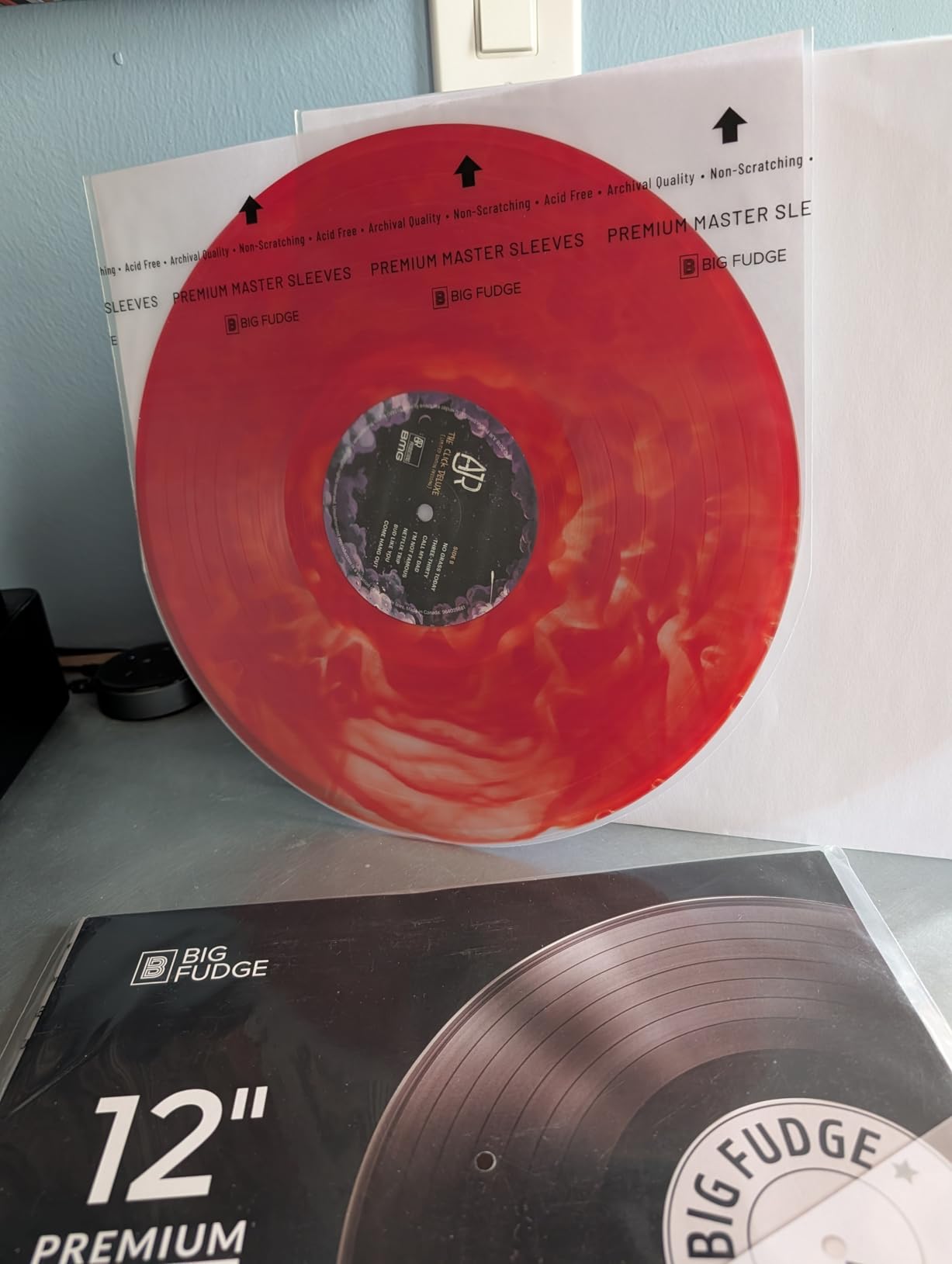
Fit is snug at first and relaxes after a few insertions, which is normal for polypropylene. Wide-spined gatefolds need a gentle approach, and a small share of reviewers report sleeves arriving split or torn, so sorting the pack once is sensible.
Stacking Behaviour Compared
Bulk sleeve storage is where a flap becomes a liability. Every flap is extra material that catches on the sleeve in front of it, and over months that is how crates stop closing properly. A flush sleeve with no overhang simply stacks, which is why collectors with big libraries gravitate here.
Where It Fits Less Well
If your collection includes thick multi-disc sets, this is not the sleeve for them. A snug 12.75 inch square is built for a standard jacket, and a wide gatefold or a box set will fight it. Keep a gatefold-specific sleeve on hand for those.
7. Invest In Vinyl 100 Sleeve Combo Pack: One Purchase Covers Both Layers
100 LP Sleeves Combo Pack – 50 Outer & 50 Inner Sleeves for 12″ Vinyl Records – Protect Your Collection – Invest In Vinyl
50 rice paper inners
50 clear 3 mil outers
Acid-free both types
100 pieces total
Pros
- Inner and outer sleeves in one pack
- Rice paper anti-static inners
- 3 mil clear outers display artwork
- Works out well versus buying types separately
Cons
- Only 50 of each sleeve type
- Outer sleeve is open-top not resealable
- Not sized for gatefold or box sets
Most new collectors buy outer sleeves first and forget the inner layer entirely, which leaves the disc sliding against paper inside its own jacket. This pack fixes that by including 50 rice paper anti-static inners and 50 clear 3 mil outers in a single box, and several buyers note it works out better than sourcing each type separately.
Both sleeves are acid-free, and the rice paper inners keep dust off the record surface the way a good poly-lined sleeve does. The outers are the same clear polyethylene as the standalone listing, so artwork displays well and the box opens into a matched system rather than two mismatched products.

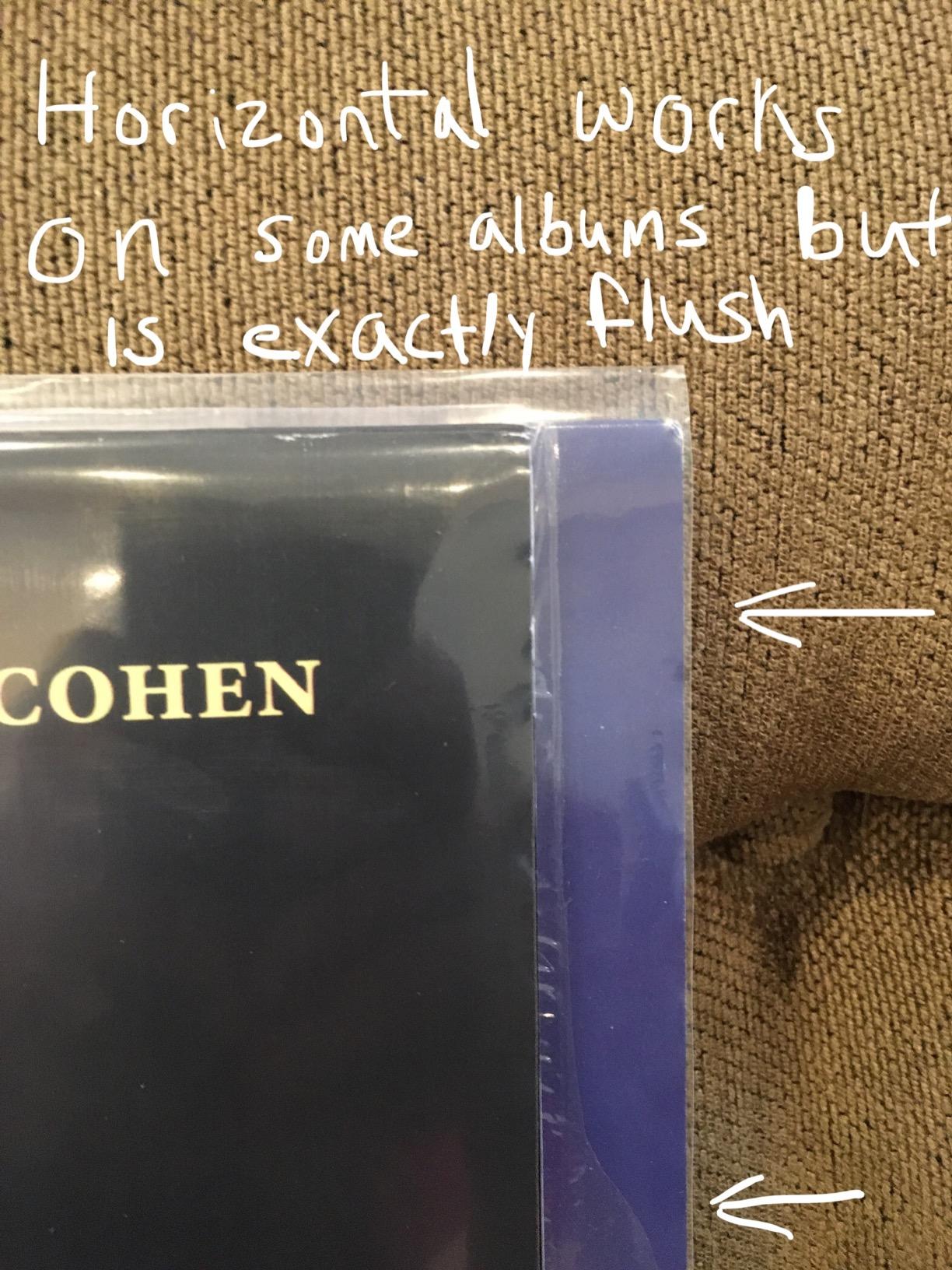
The limits are all about quantity and format. Fifty of each means a 100-record shelf needs two packs, and the outer sleeve is the open-top design with no resealable flap. Nothing here is sized for a gatefold or a box-set jacket.
One Pack or Separate Purchases
If your collection is under about 50 records, this is the efficient route: one order, one material family, no guessing at compatibility. Past 100 records, buying in bulk by sleeve type lets you match the inner sleeve to your listening habits and the outer to your storage, and per-sleeve costs usually improve.
When to Upgrade Away From This Pack
Move up when you add gatefolds or box sets, since neither fits this outer sleeve. Move up when handling increases, because a resealable flap protects a jacket that gets pulled in and out of a shelf daily far better than an open top.
8. Collector Protector Resealable Outer Sleeves: The Only Sleeve With a Flap
Resealable Record Outer Sleeves for 12″ Vinyl Records Crystal Clear
2 mil acid-free BOPP
1.75 inch resealable flap
12.7 by 12.5 inch
25 sleeves
Pros
- Resealable adhesive flap fully encloses the jacket
- Seals out dust pet hair and crumbs
- Adhesive sits on the sleeve body not the art
- Water-resistant backing helps with spills
Cons
- 2 mil is thinner than most rivals
- Fit can vary between batches
- Double LPs can split the side seams
This is the pick for a shelf that gets handled. The 1.75 inch adhesive flap closes over the top edge so the jacket is fully enclosed, and buyers credit it with sealing out dust, pet hair and crumbs that an open-top sleeve simply accepts. The adhesive strip sits on the sleeve body, not on the flap, which keeps it away from the artwork.
It is also the most useful option for a collection with existing wear. A resealable sleeve gives a scuffed jacket a clean, finished look without a restoration, and repeat buyers mention exactly that. The plastic is crystal clear with UV-resistant properties, so artwork that has already faded stops getting worse.
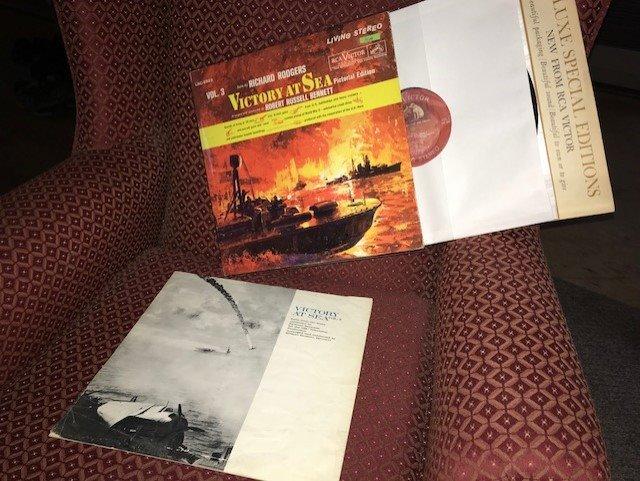
The honest drawback is 2 mil. That is thinner than the 3 mil standard most brands meet, and reviewers report side seams splitting on double LPs and heavier gatefolds. Sizing can also vary between production batches, so test one sleeve before committing to a full shelf.
What Resealable Actually Solves
An open sleeve collects dust at the top edge every time a record goes back on the shelf, and that is where jackets start to look tired. A flap closes that gap, and it also stops the sleeve riding up on a shelf you reach into often. For a listening-first collection, that is the wear point that matters.
Why 2 Mil Splits
Mil is thickness, and 2 mil is roughly a third less material than a 3 mil sleeve at every stress point. Corners and side seams are where a jacket pushes hardest during insertion, so a thinner sleeve concentrates the same force into less material and gives way sooner.
9. MoFi Archival 4 Mil Outer Sleeves: Heaviest Outer Protection Here
Mobile Fidelity Sound Lab – Archival Record Outer Sleeves (50pk, Translucent) – MOFI MFSL
4 mil archival polypropylene
50 translucent sleeves
Close fit for 12 inch jackets
Pros
- 4 mil feels heavier than 3 mil sleeves
- Archival polypropylene will not out-gas
- Fits double albums and thick gatefolds
- Soft material resists tearing
Cons
- Translucent finish hazes artwork slightly
- Close fit can split if forced
- Bulges outward when stored open-end forward
At 4 mil this is the thickest outer sleeve in the group, one full mil above the market standard. The difference is obvious in the hand. It feels substantial without being rigid, and it has a soft surface that resists tearing during insertion, which is where thinner sleeves tend to fail.
The material is archival polypropylene that will not discolor or out-gas over time, and reviewers consistently contrast the thick feel against 3 mil alternatives. It also fits double albums and thick gatefolds with a bit of technique, which extends it beyond the standard LP jacket.
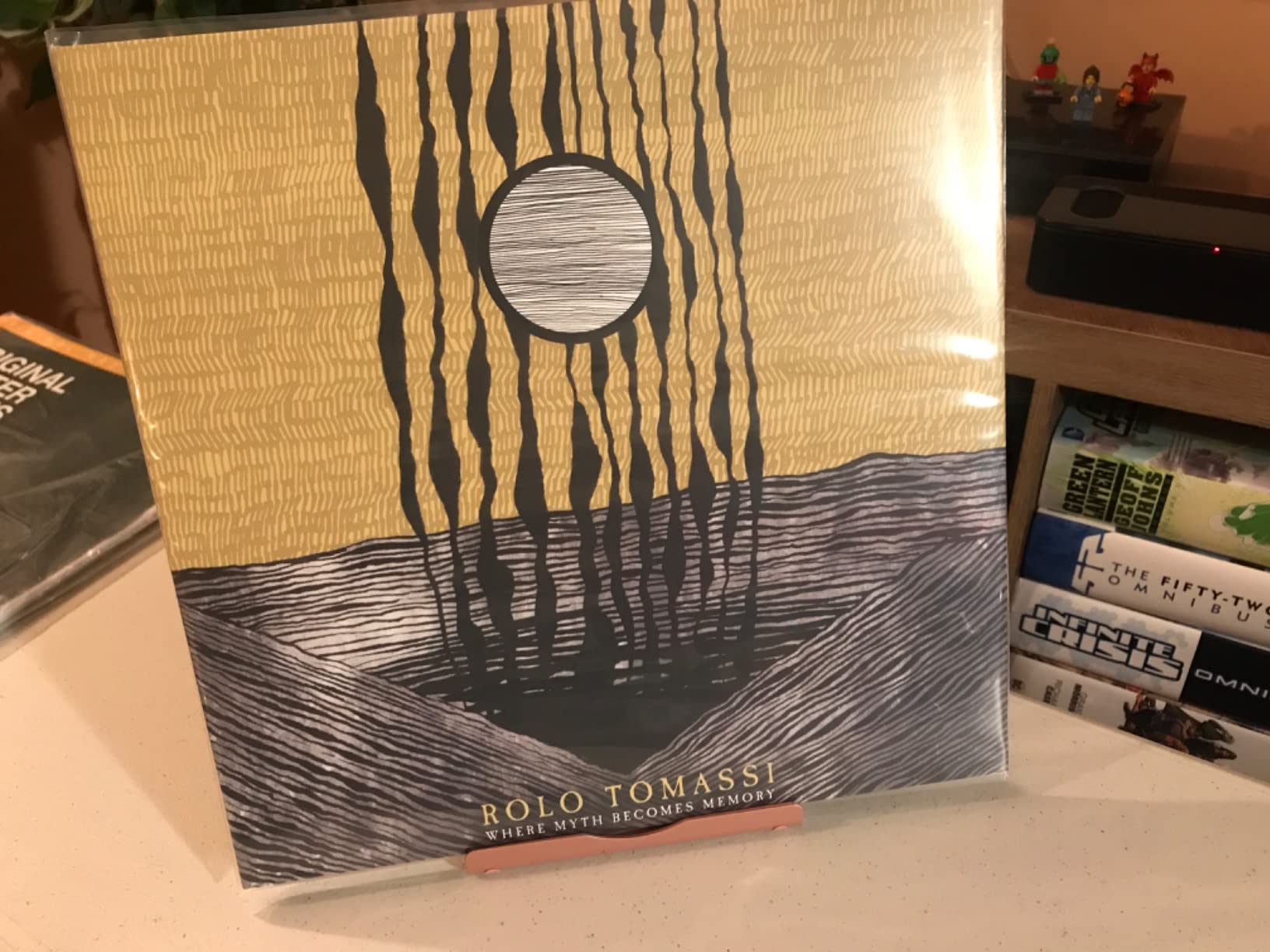
Two trade-offs. The finish is translucent rather than crystal clear, so artwork looks very slightly hazed compared with a clear sleeve, and a few buyers note later batches appear foggier than earlier ones. The close fit also means forcing a very thick jacket can split the seam, so slide it in rather than pushing.

4 Mil Versus 3 Mil Durability
Extra thickness helps in three places: corner stress during insertion, seam strength on a crate that gets moved, and puncture resistance from pet claws or a dropped crate. If your records live in a high-traffic space, the extra mil is cheap insurance. If they sit in a cabinet, 3 mil is enough.
The Translucency Trade-Off
Translucent looks misty under a lamp, and for a display shelf that matters more than for storage. If you photograph your collection or care about presentation, choose a crystal clear 3 mil polypropylene sleeve instead. If you want the thickest material and your shelf is enclosed, this one wins.
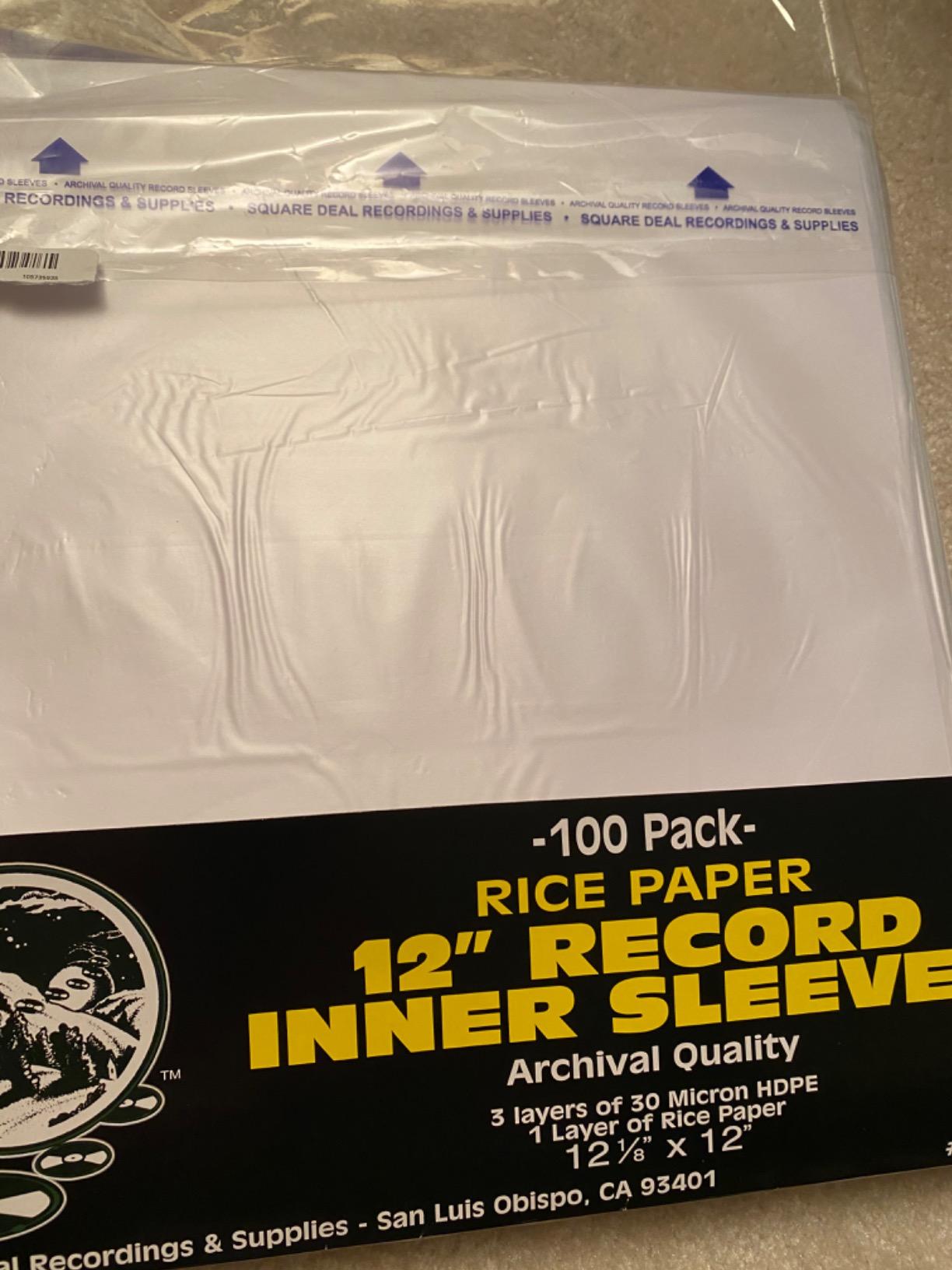
10. Square Deal 100 Triple Layer Inner Sleeves: Built for Bulk Inner Sleeving
(100) 12 Inch Record Inner Sleeves – 3-Layers of Archival Quality, Anti-Static HDPE with Rice Paper Enclosed Insert for Extra Rigidity #12IM
Triple-layer HDPE
12.125 by 12 inch
100 sleeves
Rice paper insert
Pros
- Triple layer beats two-ply sleeves
- Rice paper insert adds rigidity
- Anti-static lining reduces crackle
- 100-count pack suits stores and archivists
Cons
- Snug fit on thick 180g pressings
- Rice paper creases at corners over time
- White sleeves show handling marks
Three layers of high-density polyethylene with an enclosed rice paper insert is the most protective inner sleeve design here, and it is the one popular with small record stores and archivists who sleeve by the hundred every week. Buyers single out the rice paper insert as the reason the sleeve holds its shape instead of going floppy.
Anti-static properties are the everyday benefit. Less static means less dust pulled onto the record surface during handling, and reviewers report a reduction in crackle and pop during playback that follows from the cleaner surface. The construction is acid-free and archival.
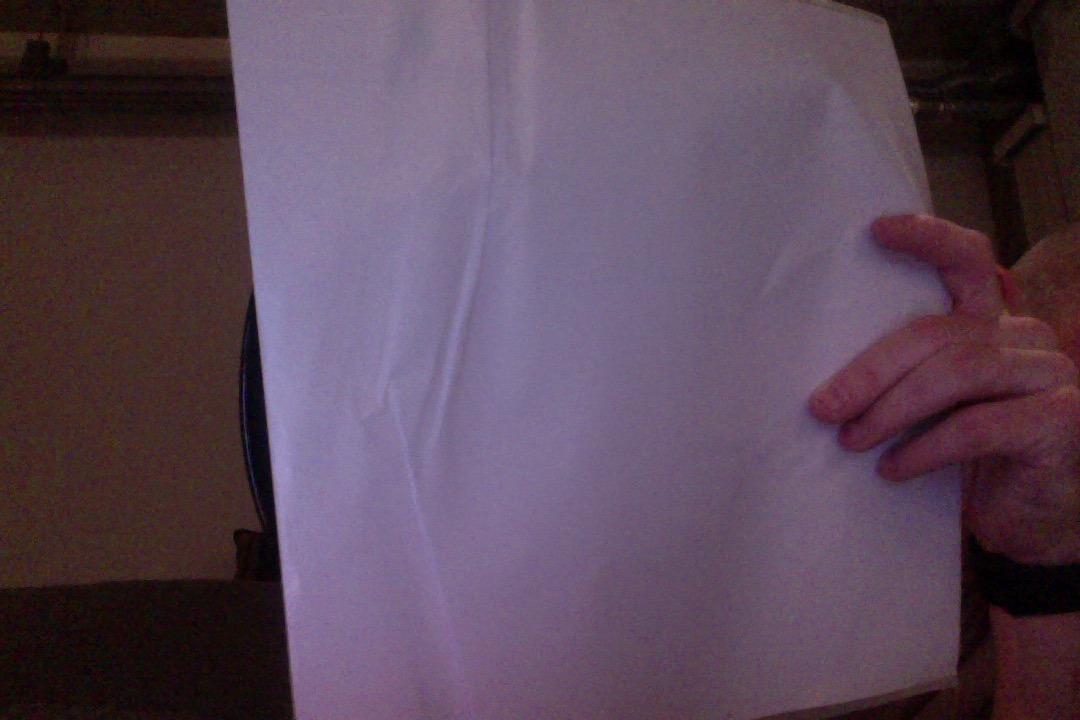
Fit is the recurring caveat. At 12.125 by 12 inches the sizing is precise and snug, which is good for security and demands a gentle angle for thick 180g pressings. The white paper also shows handling marks more readily than black, and the rice paper corners can crease over repeated use.
Why Three Layers Matter for High Volumes
One-ply and two-ply sleeves fail by tearing at the corner during insertion, and a torn sleeve is worse than none because the disc rubs an exposed edge every time it goes back in. Three layers of HDPE spread that force and survive years of crate-to-turntable trips.
Snug Fit and Corner Creasing
Precision sizing means the disc sits still inside the sleeve rather than shifting, which is good for storage and slightly awkward for insertion on heavy pressings. Combine with a rounded-corner style if you sleeve a lot of 180g records and want to avoid corner creasing entirely.
11. Hudson Hi-Fi Flexible Outer Sleeves: Built to Bend With the Jacket
Hudson Hi-Fi Flexible Archival-Grade Vinyl Jacket Outer Sleeves – 100 Pack – Crystal Clear Polypropylene, Anti-Static & Acid-Free
2 x 3 mil double-wall build
6 mil total
12.75 inch square
100 sleeves
Pros
- Flexible double-wall build resists seam splitting
- Low-haze polypropylene keeps art sharp
- Anti-static and acid-free
- Slides on without bowing jackets
Cons
- Two layers are thinner than one 4 mil sleeve
- Not sized for gatefold or box sets
- Open top with no resealable flap
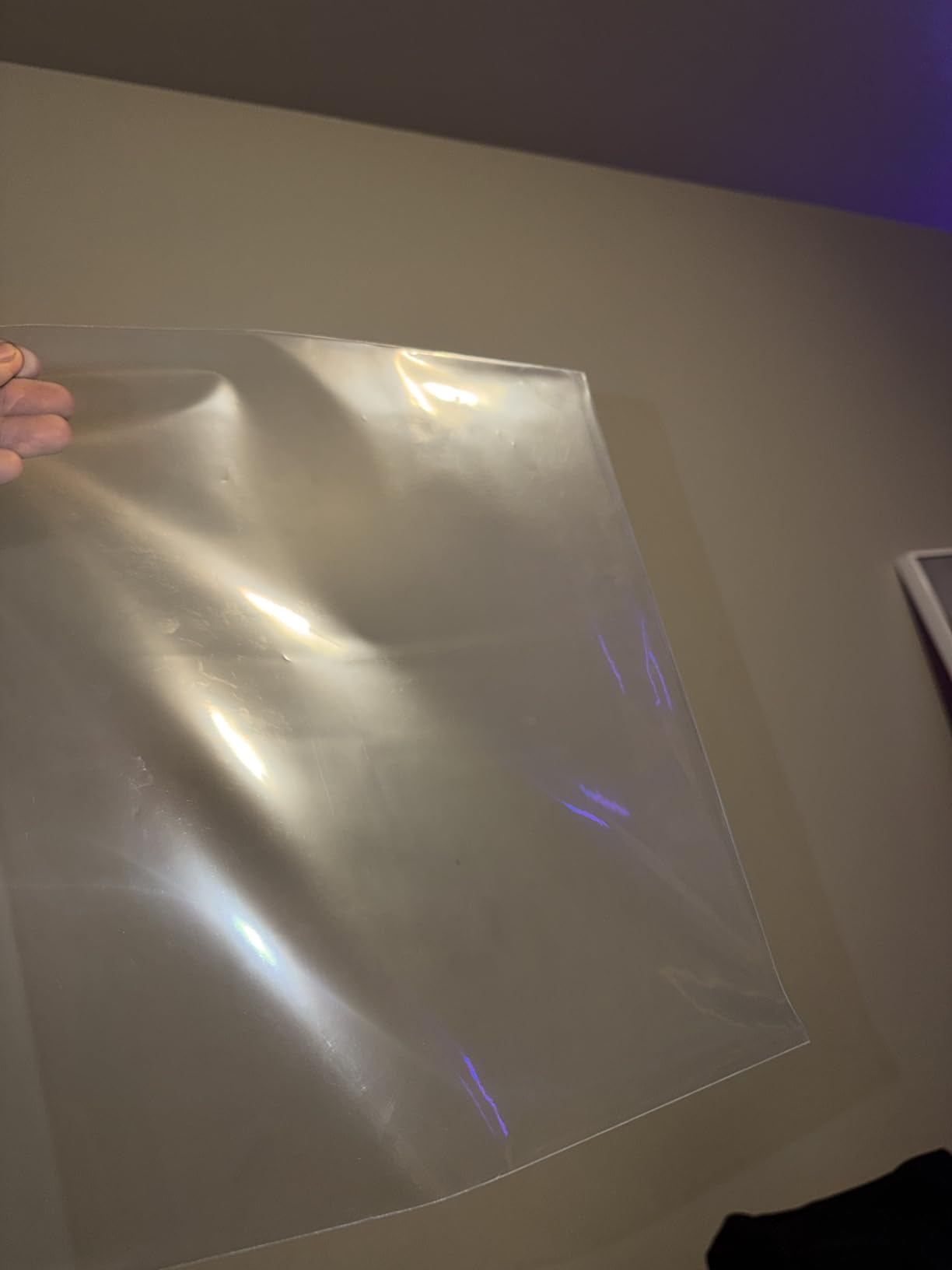
Almost every outer sleeve on the market is a single sheet. This one is two 3 mil layers bonded together for 6 mil total, and the deliberate effect is flexibility. Collectors who have split stiff sleeves report that these bend with the jacket and are far less likely to crack at the seams.
The polypropylene is low-haze rather than fully crystal, which keeps artwork sharp and true without the yellowing some materials develop. Anti-static and acid-free construction makes it safe for long-term storage, and the 12.75 inch square fits standard 12-inch jackets cleanly.
The honest trade-off is that two thin layers do not equal one thick 4 mil sleeve in puncture resistance, and this is a standard single-LP outer sleeve with no gatefold, triple or oversized sizing. It also has an open top, so it does not seal out dust the way the resealable option does.
Why Flexibility Prevents Seam Splits
Sleeve failure usually starts with a corner that cannot bend. A stiff sleeve fights the jacket, the jacket forces the corner, and the seam gives. A flexible sleeve travels with the jacket, so insertion loads the material gradually instead of all at once, which is why these survive a large collection.
Format Limits to Plan Around
Buy these for standard 12-inch jackets and keep a separate gatefold sleeve for wide gatefolds and box sets. For collections of 500 records or more, this is an efficient bulk choice: a 100-count pack, consistent sizing, and a material that will not split on the way to the crate.
12. TAKMORK Gatefold Outer Sleeves: Made Specifically for Gatefolds
TAKMORK Gatefold Vinyl Outer Sleeves for 12″ Records, 3 Mil Clear, 50pcs
Gatefold design with both-end openings
3 mil polyethylene
Unfolded 12.7 by 25.2 inch
50 per pack
Pros
- Only gatefold-specific design in the group
- Open a gatefold without removing the sleeve
- High-density polyethylene stays clear
- Fits standard and oversized gatefolds
Cons
- Folded sleeves arrive creased from packaging
- Not suitable for standard single LPs
- Both-end openings reduce dust protection
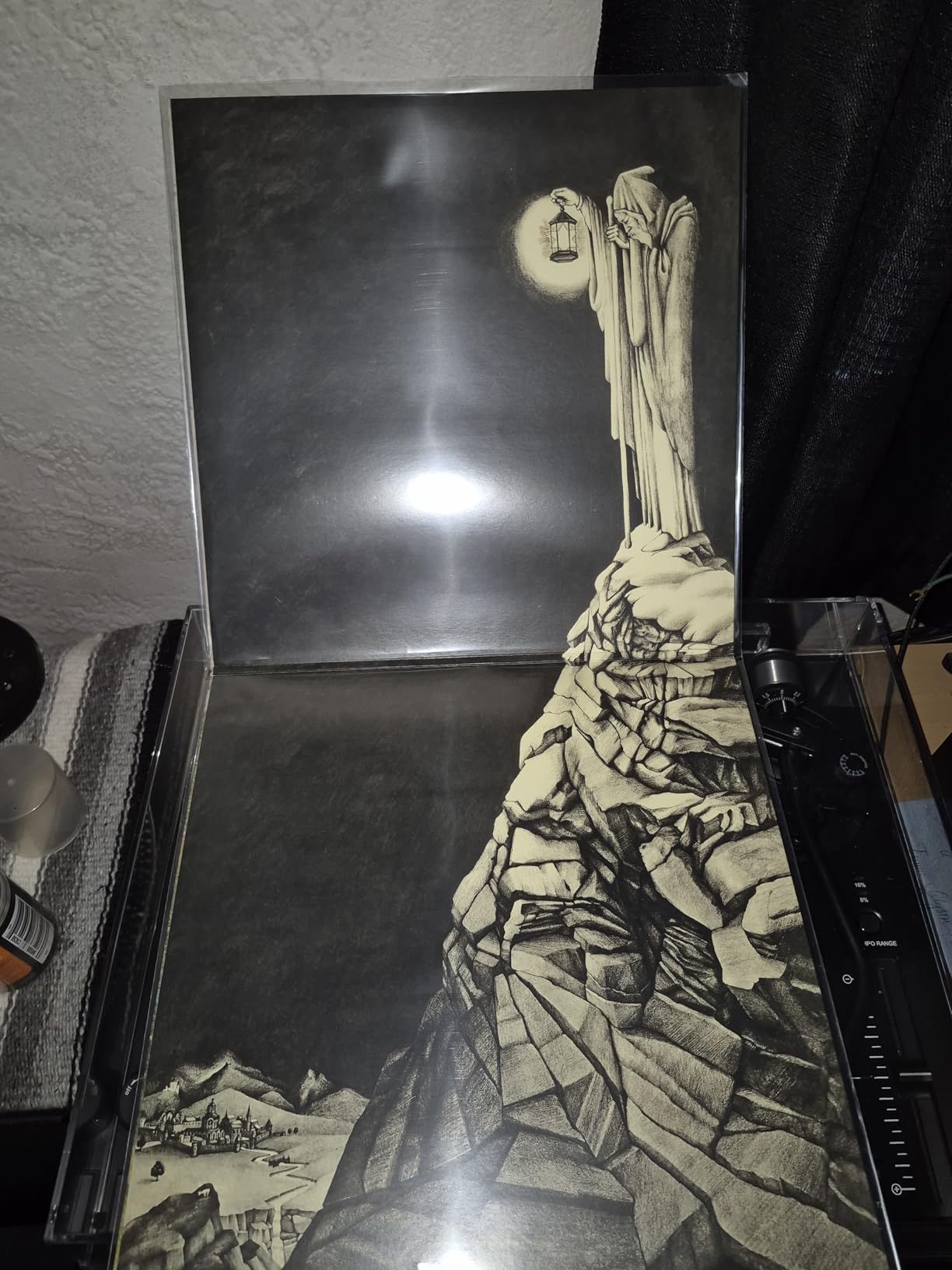
A gatefold is the format where a standard outer sleeve does the most damage. Folding a gatefold into a square sleeve forces the spine and can leave a permanent crease, and the temptation is to leave the album out of its sleeve entirely. This one is built to the gatefold’s shape, with an unfolded size of 12.7 by 25.2 inches.
The design opens at both ends, so you can open a gatefold to read the artwork and lyrics while it stays in the protector. That is the whole point of this sleeve, and reviewers repeat it more than any other benefit. Clarity holds up, with no blurring of the cover art.
Two practical notes. The sleeves arrive folded, and the fold line can carry a crease that takes a little time under weight to flatten. And because both ends are open, dust exclusion is weaker than a closed outer sleeve gives you.

Gatefold Fit and Openings
The double-sided folding design keeps the album and its inserts together, which is exactly the problem with gatefold storage. Measure a jacket before you order: standard and oversized 12-inch gatefolds differ enough that guessing can leave a sleeve either loose or too tight for the spine.
Where a Standard Sleeve Is Better
For the other 90 percent of a collection, a square outer sleeve is simpler and stacks better. Treat this as a specialist sleeve for gatefolds and keep a 100-count standard pack for everything else, rather than trying to make one sleeve fit every format.
Never Use PVC: What Vinyl Cancer Does to a Record
A PVC sleeve can permanently destroy a record, and no other mistake in record collecting costs as much. The plasticizer in PVC migrates into the vinyl, and the disc goes tacky, shrinks slightly, and develops a permanent haze. Collectors call it vinyl cancer, and cleaning does not reverse it.
The same plasticizer attacks jackets, causing colour shift and brittleness over time. The damage can take years to appear, which is what makes it dangerous: a sleeve that looks fine on day one can be the reason a record is unsellable a decade later.
Every sleeve in this roundup is polyethylene, polypropylene or paper with no plasticizer, which is what you should look for on any listing. If a product page does not name the material, assume the worst. Polyethylene and polypropylene are both safe and recyclable, so there is no reason to accept a PVC sleeve for any format.
How to Sleeve Vinyl Records the Collector Way
The method serious collectors use is called the sandwich, and it exists so you never have to pull a jacket out of its sleeve to reach the disc. Five steps, and the order matters.
Put the record into an anti-static inner sleeve, pushing in at a slight angle so you do not crease a corner.
Put the album jacket into a clear outer sleeve on its own.
Open the outer sleeve again and slide the sleeved record in behind the jacket, disc against the jacket back.
Check that the inner sleeve top edge is not sticking above the jacket opening.
File the record spine-out and avoid leaving the disc seated loosely against the jacket front.
That order keeps the record from shifting against the artwork in the crate and keeps your fingers off a gatefold spine. It also means ring wear, which happens when a disc moves inside a jacket, has nowhere to start.
Buying Guide: Matching Sleeves to Your Collection
Start with format, because sizing is the mistake that generates returns. A single LP jacket needs a 12.75 inch square outer sleeve. A double LP or gatefold needs something oversized or gatefold-specific, and a box set needs a measurement taken from the actual box. The number one complaint in collector threads is measuring wrong, not buying a bad sleeve.
Next, pick your material. Polyethylene is softer and cheaper and will gradually haze. Polypropylene is stiffer, clearer and more display-friendly. Paper-based inner sleeves with rice paper or an anti-static poly lining beat the thin factory paper that ships with a record, and they cost very little more per sleeve.
Then think in pack sizes. Most outer sleeves come in 50s and 100s, and inner sleeves in 20s, 50s and 100s. If you have 500 records or more, buy the largest available pack per sleeve type and expect to order again as you go. The economics work in your favour at volume, and a matched set of outer and inner sleeves from one brand avoids mismatched materials across the shelf.
Two limits are worth stating plainly. A sleeve cannot remove existing ring wear, close a split seam or straighten a warped jacket, so it protects condition rather than restoring it. And the same habits that protect a record protect its artwork: store upright, away from direct sunlight, and keep the collection in a cabinet rather than an open shelf if you have the option.
Frequently Asked Questions
What is the best material for vinyl record sleeves?
Polyethylene and polypropylene are the safest and most practical sleeve materials, both free of the plasticizer that causes vinyl cancer. Polypropylene is stiffer and stays clearer over time, which suits outer sleeves on display. Polyethylene is softer, cheaper and more forgiving, which suits high-volume outer sleeving. Inner sleeves are usually rice paper or a paper and polyethylene hybrid. Avoid any sleeve that does not name its material.
Should I put my records in outer sleeves?
Yes, if you own more than about ten records. An outer sleeve stops ring wear, scuffs, seam splits and shelf grime reaching the jacket, and it is the only thing standing between a gatefold spine and a permanent crease. The cost per record is a few cents. For a small shelf it is optional polish; for a collection you care about, it is the cheapest condition protection available.
What are the best outer sleeves for vinyl albums?
For standard LPs the strongest all-round options are 3 mil polyethylene or 3 mil high-density polypropylene sleeves in a 100-count pack, both PVC-free and acid-free. For gatefolds and box sets you need a gatefold-specific or oversized sleeve rather than a square one. For a shelf you handle daily, a resealable flap keeps dust out, but check the mil rating because the thinnest resealable sleeves split on double LPs.
What is the best way to sleeve vinyl records to keep them in good condition?
Use the sandwich method. Put the record in an anti-static inner sleeve, put the album jacket into a clear outer sleeve on its own, then slide the sleeved disc in behind the jacket inside that outer sleeve. The record never sits loose against the artwork, so ring wear has nowhere to start and the jacket never has to leave its sleeve. Store the result upright, spine out, away from direct sunlight.
What are the must-haves for vinyl collectors?
Beyond sleeves, collectors consistently prioritise a cleaning brush, an anti-static brush for dust, a record cleaning fluid with microfibre cloths, inner and outer sleeves in matching materials, a sturdy crate or shelf with upright storage, and a turntable with a dust cover. A stylus brush and a proper record weight matter for handling. Sleeves come first because they are the only item that prevents permanent damage.
Final Verdict: The Best Vinyl Record Sleeves for Collectors in 2026
For most collectors in 2026, the Invest In Vinyl 100 Clear Outer Sleeves are the right first purchase: 3 mil polyethylene, PVC-free, oversized enough for double LPs and gatefolds, and the most established listing in the category by review volume. Pair them with the MoFi Original Master Inner Sleeves if your records need the strongest anti-static protection, or the Invest In Vinyl rice paper inners if you want a full collection upgrade at a lower per-sleeve cost.
Add a gatefold sleeve if you own wide gatefolds, a resealable outer sleeve if your shelf gets handled daily, and a triple-layer inner sleeve if you sleeve by the hundred. Start with the two basics, work through formats as you add records, and never let a PVC sleeve anywhere near the collection.