
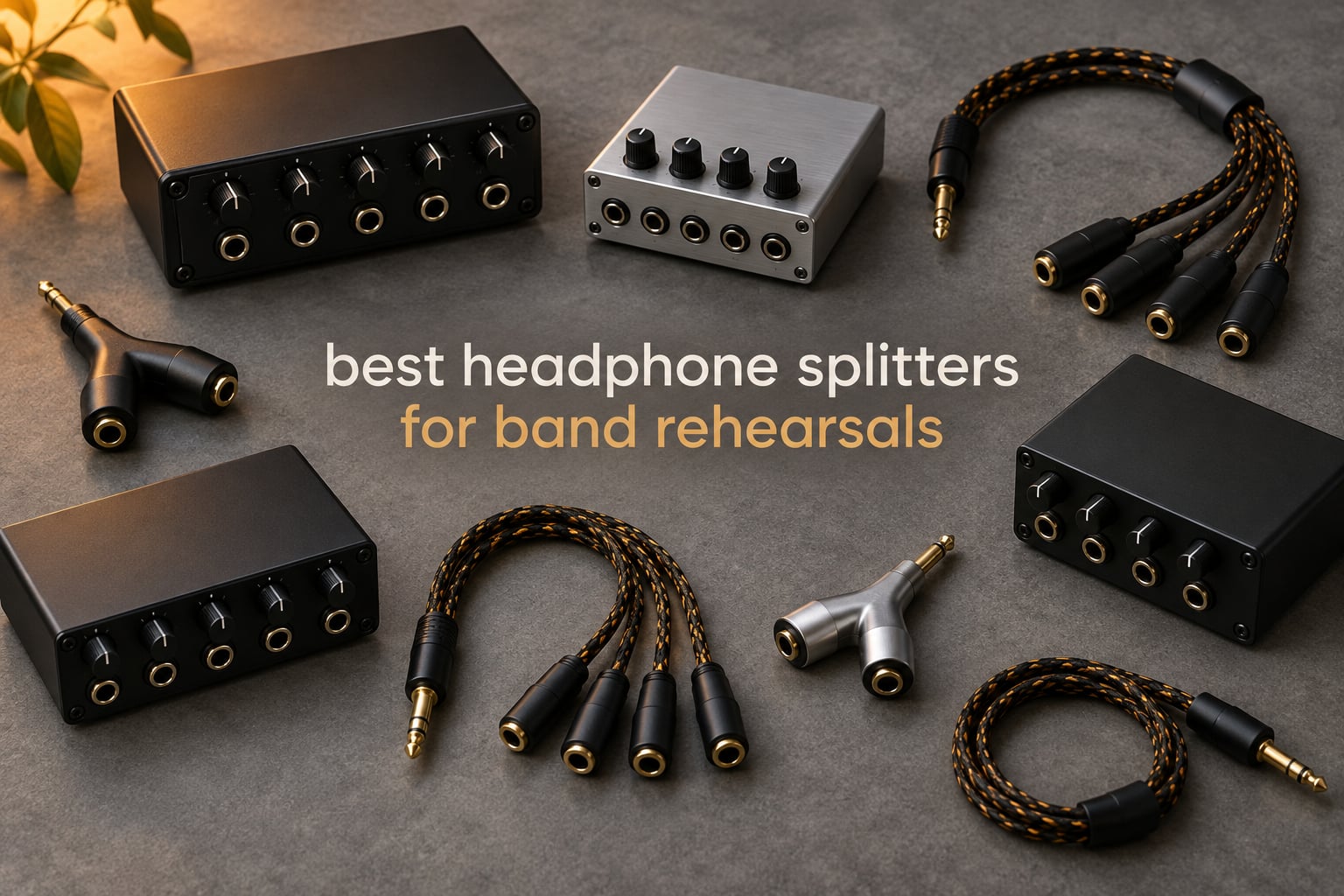
A headphone splitter takes one audio source output and divides it into two or more headphone outputs, so several musicians hear the same click track, backing tracks, or mix at once from a single laptop, mixer, or practice amp. In a rehearsal room that is the difference between everyone playing to the same click and one person shouting the count from behind a laptop.
That is why the best headphone splitter for band rehearsal work is not the one with the most ports. It is the one that holds level, gives each player their own volume control, and uses the same jack size as the headphones your band already owns. Get those three right and the rig is finished in an afternoon.
We assembled the units below around a single question a working band actually asks: how do we get one playback source into five pairs of headphones without the drummer complaining that the click vanished? Every product here was picked on published specifications, build materials, and the complaints real players report in rehearsal, not on how many sockets are crammed onto the faceplate.
Here is the short version before the detail:
A passive splitter wires one source to every output in parallel, so the level falls as headphones pile onto it. An active unit adds gain and buffers each output, which is why four-player bands usually want one.
Per-channel volume control is not a luxury. Without it, one person sets the level for everyone and the rest live with it.
Connector size decides compatibility more than brand does. Most studio headphones use 1/4 inch TRS, most phones and laptops use 3.5mm, and a few phone headsets use the 4-pole TRRS plug that a plain TRS splitter ignores.
Count one output per player plus one spare. A four-piece band should buy a 4-channel unit and treat the fifth player or the drummer’s in-ear monitors as the reason to size up.
On musician forums, the recurring question is not which brand is best but whether a headphone amp should be fed from a mixer headphone out or an aux send, and whether a passive box is worth the level loss at all.
Everything below was still current in 2026, and we have included both the 1/4 inch studio boxes and the 3.5mm consumer splitters, because rehearsal rooms mix both. If your source is a laptop or a phone, start with the 3.5mm section. If your source is a mixer, a silent practice amp, or a studio interface, start with the quarter-inch gear.
Table of Contents
Top 3 Headphone Splitters for Band Rehearsals (September 2026)

All 12 Splitters Compared Side by Side in 2026
1. Tisino TRS to Dual TS Breakout Cable – Our Pick for Clean Shared Signal
tisino 1/4 inch TRS Stereo to Dual 1/4 inch TS Mono Insert Cable Y-Splitter Stereo Breakout Cable Patch Cord – 3.3 feet
TRS to dual TS breakout
20 AWG 4N OFC wire
Triple shielding
Gold-plated 6.35mm
3.3 foot braided
Pros
- Highest rated unit in this roundup at 4.7 stars
- Heavily shielded 20 AWG oxygen-free copper
- Braided jacket survives gig-bag life
- Color coded ends stop mixup errors
Cons
- Splits into two outputs rather than four or five
- TS ends are mono so it is not a general stereo headphone split
- Fixed split point at about 7.5 inches
This is the cable we reach for first when a rehearsal rig needs to be boring in the best way. One 1/4 inch stereo feed goes in, two quarter-inch outputs come out, and there is no box to power, no level control to misunderstand, and nothing that hums when the lights dim.
The conductor is 20 AWG 4N oxygen-free copper with high-density and aluminium foil shielding, which is heavier cable than most people buy for a rehearsal room. In a space with a drum kit amplifier, a guitar amp, and a laptop charger all on one circuit, that shielding is the difference between a clean click and a click with buzz riding on top of it.
Our rule for a click rig is simple: if the source is mono, such as a click track or a mono playback feed, this cable splits it to two players cleanly with nothing to power and nothing to clip. If your feed is a stereo mix of backing tracks, keep reading, because a stereo source arriving at two mono ends is not what any player wants to hear.
The ends are colour coded, one black and one red, so you can wire the same box the same way every week. That matters more than it sounds, because the failure mode in a rehearsal room is never the cable degrading, it is someone plugging the wrong end into a player in a hurry before a gig.
What it does well for a rehearsal rig
The shielding and the conductor gauge are the standouts. Nothing about this cable invites hiss, hum, or crackle at normal listening levels, and the braided exterior takes being coiled, bagged, and uncoiled every week without complaint. At 3.3 feet it also lands at a workable length for a player sitting next to a laptop rather than across the room.
It is also the most flexible item in the lineup, because a breakout cable does not care whether it feeds headphones, a practice amp input, or a small monitor. Longer versions exist at 6.6 and 10 feet for players who need to sit further from the source.
Where it falls short
Two outputs is the ceiling here, and a four-piece band will need two of them or a different device. More importantly, the two ends are TS mono, so this is a mono split. Stereo material loses its channel separation, which is fine for a click and wrong for a stereo backing track mix.
The split point sits about 7.5 inches from the two mono ends, which fixes the geometry of your setup. Plan around that rather than expecting a symmetric Y, and check the wiring matches your source before you rely on it for a full rehearsal.
2. Mackie HM-4 Headphone Amplifier – The One Our Four-Piece Rehearsal Uses

Mackie HM-4 Headphone Amplifier (4-Channel), Compact Splitter, Black
4 channels
1/4 inch TRS jacks
Metal housing
2.3 x 4.3 x 2 inch
8 ounces
Pros
- Four outputs with independent volume per player
- Metal housing that survives a rehearsal room
- Handles high impedance headphones up to 250 ohm
- Accepts a 1/4 inch or 1/8 inch source
Cons
- No power switch so you unplug it every time
- Bright power LED in a dark room
- Weighs more than the plastic units
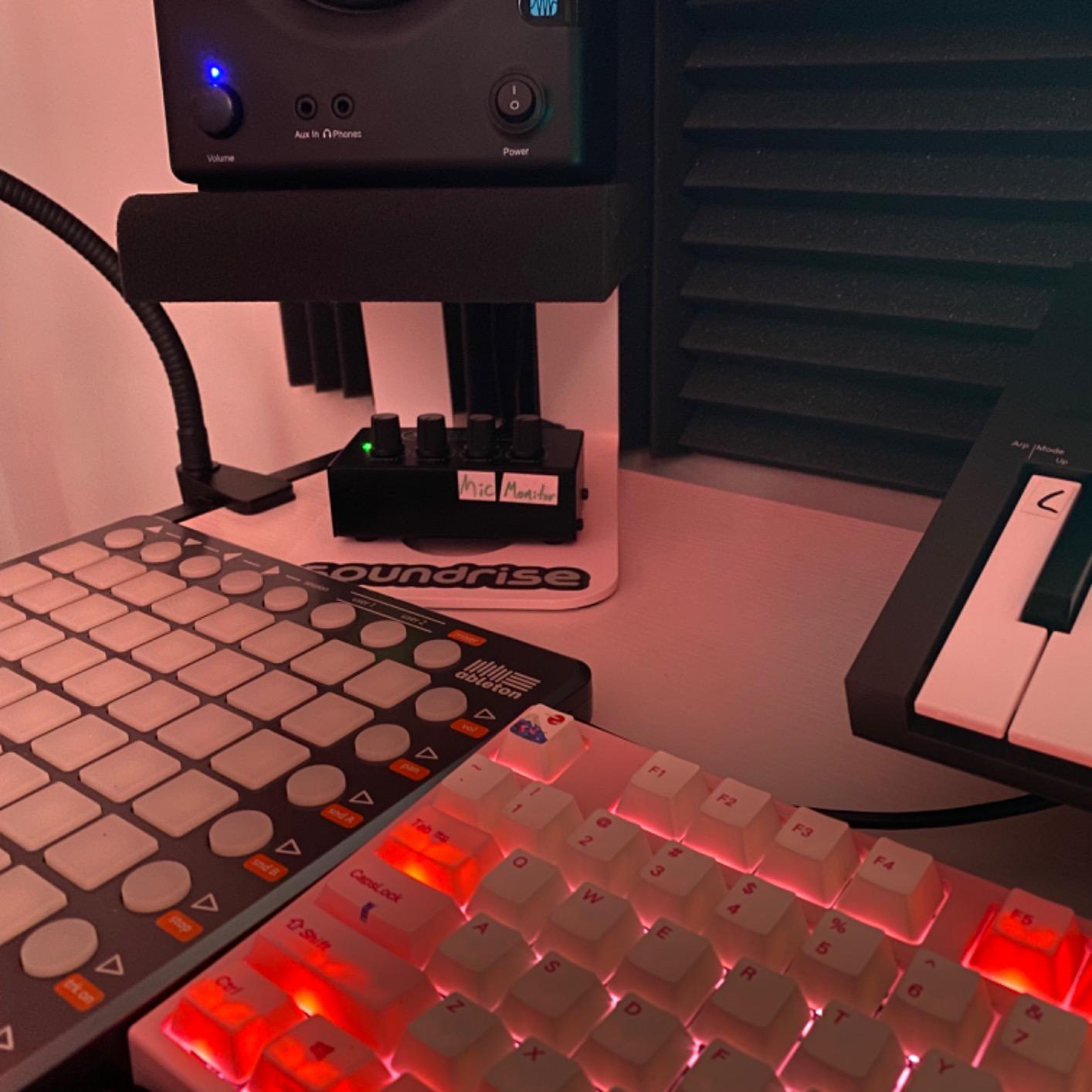
When the band is four people and the source is a mixer or a laptop, this is the box we actually run. Four outputs, four separate volume knobs, and a source input that accepts either a quarter-inch or an eighth-inch plug without an adapter in the middle of the chain.
Per-channel volume is the feature that changes rehearsal behaviour. The drummer can set the click high enough to hear over sticks, the bassist can pull theirs down a notch, and nobody has to negotiate with the person standing nearest the laptop. On a passive box you cannot do that, which is the single most common complaint we found from musicians building shared rigs.
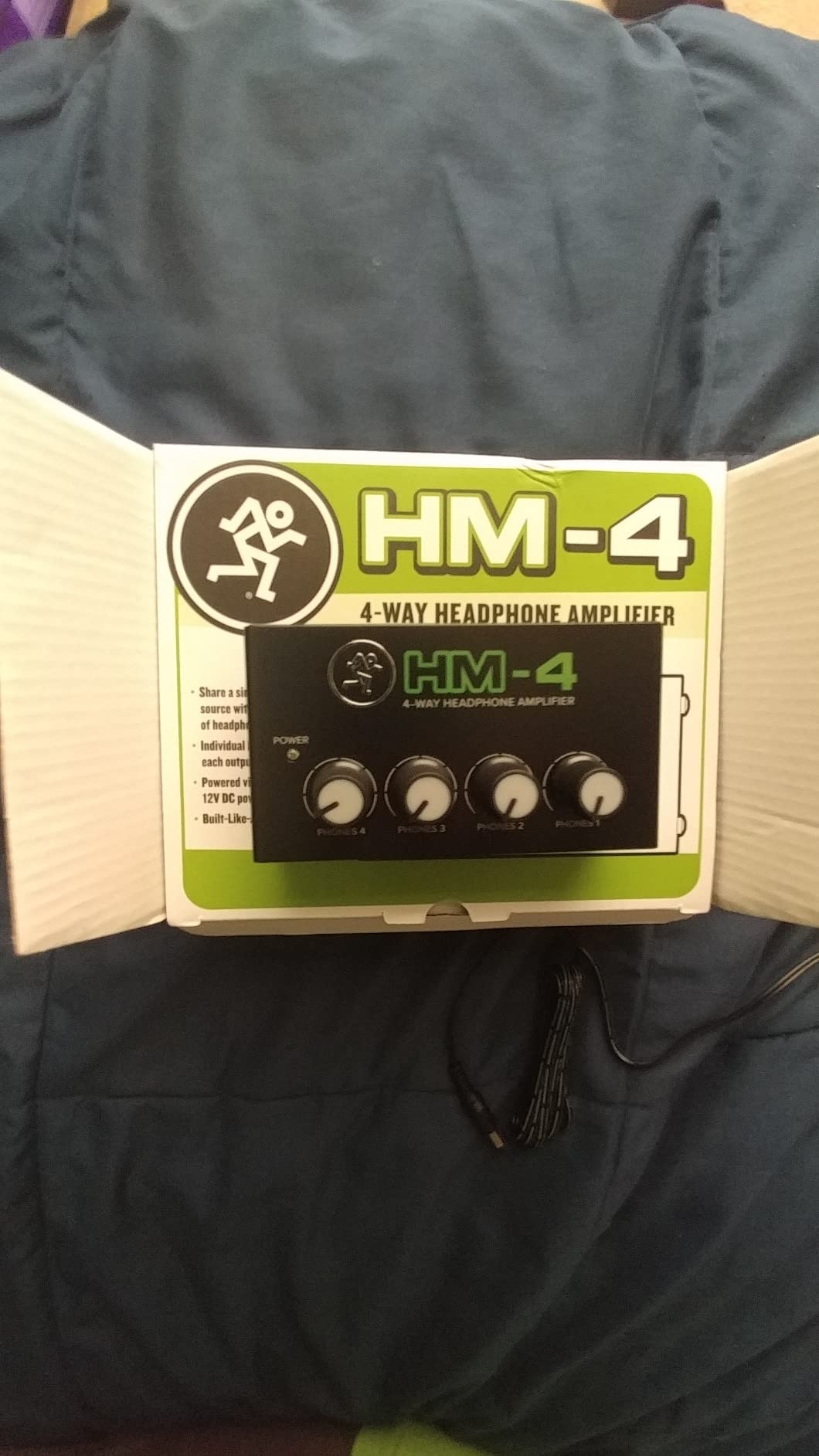
Build is a solid metal enclosure rather than plastic, and the size is genuinely small at 2.3 by 4.3 by 2 inches, so it can sit on a keyboard stand shelf or stick to the side of a mixer case. Mackie rates the warranty at one year all inclusive, and reviews consistently report no hum, crackle, or added noise at any volume setting.
Several users report it driving high-impedance headphones effectively, up to around 250 ohm, which covers the studio models many rehearsal players own. That is the other reason we prefer an active box over a passive Y when more than two pairs are connected: the level stays put instead of sagging.
What it does well for a rehearsal rig
It solves the two problems that ruin shared monitoring in one move: per-player level control and consistent output level with four headphones connected. Reviews also flag the volume knobs as smooth and weighted, which sounds minor until you are turning one down at the start of a run.
The source input flexibility is quietly valuable. Running from a mixer aux send, a practice amp headphone out, or a laptop through a single input means fewer adapters to lose in a rehearsal room bag.
Where it falls short
There is no power switch, so powering down means unplugging the supply from the wall. The power indicator LED is also bright enough to notice in a dim room, and a few users mention picking up interference when the unit sits next to certain other electronic gear.
It is a four-channel unit and nothing more, so a five-piece band or a band that also feeds in-ear monitors is already at capacity. Budget for a second unit rather than a passive expansion, because daisy-chaining a passive splitter onto an active box reintroduces exactly the level loss you paid to avoid.
3. Pyle PHA40 4-Channel Headphone Amplifier – Best Value for a First Rehearsal Rig

4-Channel Portable Stereo Headphone Amplifier – Professional Multi Channel Mini Earphone Splitter Amp w/ 4 ¼” Balanced TRS Headphones Output Jack and 1/4″ TRS Audio Input For Sound Mixer – Pyle PHA40 BLACK
4 channels
1/4 inch TRS in and out
Plastic body
2.44 x 4.09 x 1.77 inch
Pros
- Four headphone outputs with individual volume
- Clean and quiet at normal levels
- Handles 100 ohm and higher impedance headphones
- Compact and simple to set up
Cons
- 1/4 inch only so 3.5mm headphones need adapters
- Plastic chassis and a short power cord
- Reported output impedance limits low-impedance headphones
This is the sensible first purchase for a band splitting one laptop to four pairs of headphones on a limited budget. It does the same job as a four-channel box costing several times more, with a plastic body instead of a metal one.
The four outputs each have their own volume control, and a 1/4 inch TRS input takes the feed from a mixer, an interface, or a silent practice amp. A 12V DC adapter is included, so the only thing left to bring is your headphones and cables.
Reviews are consistent about the noise floor: at moderate levels players report clean sound and no white noise when nothing is playing. That idle silence matters more than it sounds, because a hissy floor is exactly what makes people turn a click up too loud.
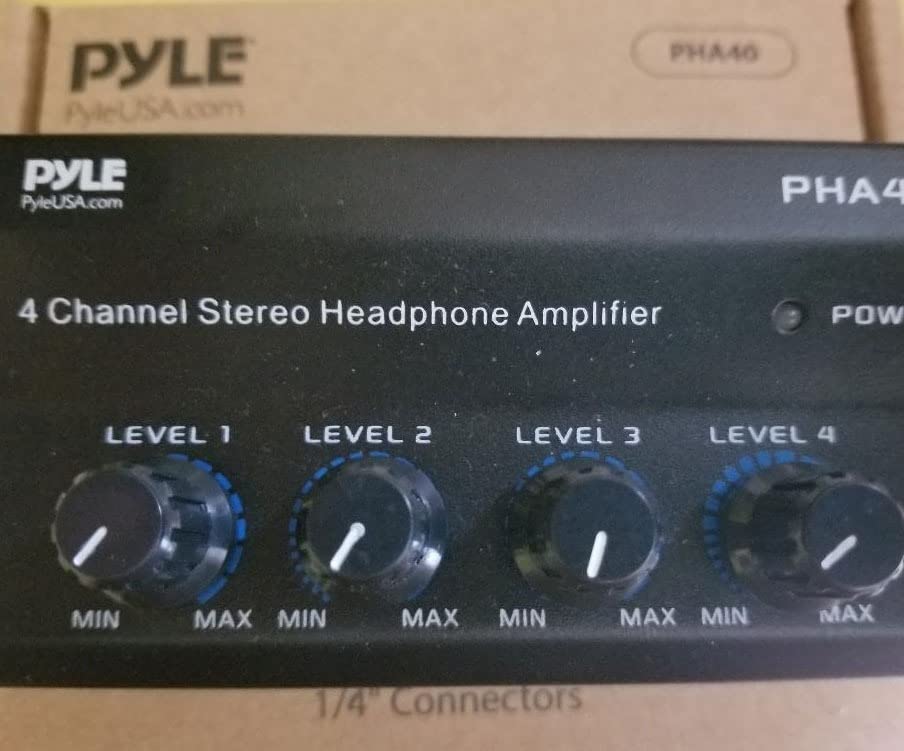
The one specification to read carefully is output impedance. Multiple reviewers report a figure around 470 ohms, which pairs well with 100 ohm and higher studio headphones but can disappoint anyone using very low-impedance in-ear monitors. Check your headphone impedance before you commit.
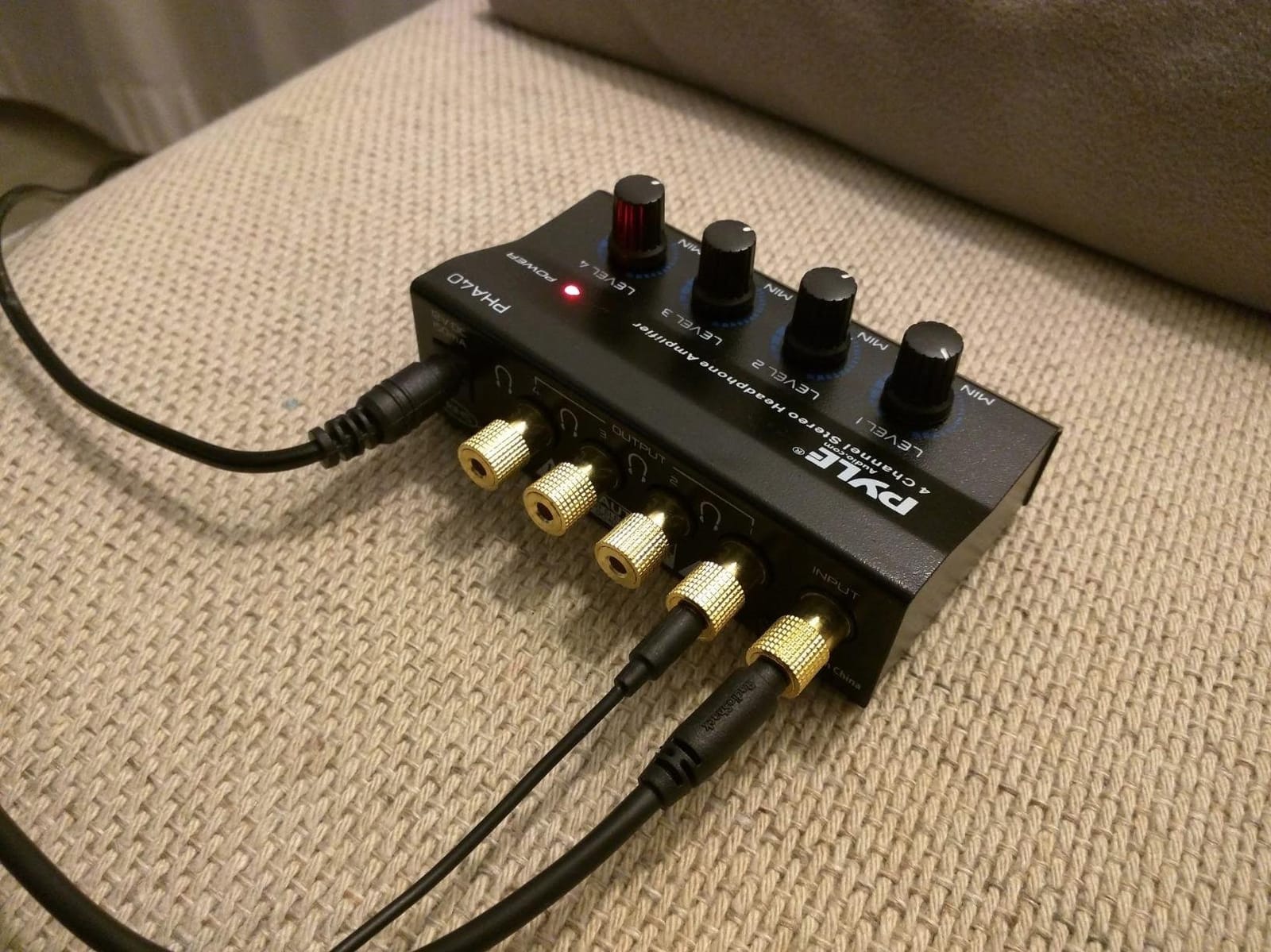
What it does well for a rehearsal rig
Per-channel volume and four real quarter-inch outputs are the whole point, and both are done without fuss. The compact footprint means it fits on a rehearsal room shelf or a small mixer stand without taking space a player needs for a music stand.
For a band that mostly uses over-ear headphones of 100 ohm and above, the reported performance is more than adequate, and the quiet idle behaviour keeps the click at a sane level.
Where it falls short
The jacks are 1/4 inch only. If half the band uses consumer headphones with 3.5mm plugs, you are buying adapters, and adapters are the part of a rehearsal rig that always goes missing.
The plastic enclosure will not survive being stepped on, the power cord is short at roughly three to four feet, and there is no power switch. If your band moves gear between rooms often, treat this as a rehearsal-room box that stays put rather than a portable one.
4. LZSIG 4-Channel Amp with Bass Boost – Best When Jack Sizes Are Mixed

LZSIG Headphone Amplifier with Bass Boost, 1‑IN Multi‑OUT, 12V, 4 Channel
4 channels
3.5mm and 6.35mm outputs
Bass boost
Metal chassis
4.13 x 2.95 x 0.98 inch
Pros
- Accepts 3.5mm and 1/4 inch headphones with no adapters
- Bass and presence boost for thin mixes
- Metal chassis with solid knobs
- Stereo or mono switch for flexible sources
Cons
- Boost circuits colour the sound so avoid it for critical mixing
- Bass boost covers wide bands rather than a surgical low shelf
- Slightly bright presentation
This is the unit we recommend when the band is not uniform about gear. Its outputs accept both 3.5mm and 6.35mm headphones, so the bassist on 3.5mm earbuds and the drummer on quarter-inch studio cans can plug into the same box without a bag full of adapters.
There is a bass boost that lifts the 400 to 600 Hz and 3000 to 7200 Hz bands, which does something practical in a rehearsal room: it makes a thin phone mix sound fuller at low volume. A click mixed on a laptop at half volume is often missing exactly that weight.
Internally it uses five ROHM low-noise operational amplifiers and an anti-crosstalk design, and the metal chassis with heavy-duty knobs feels like gear rather than an accessory. The stereo or mono switch lets you match the source, which matters when one player is feeding a mono click and another a stereo track.
It is the flattest box in the lineup at just under an inch thick and 12 ounces, so it disappears into a gig bag. Users also report it driving 250 ohm headphones despite a 100 ohm rating, which is welcome news for anyone with heavy studio cans.
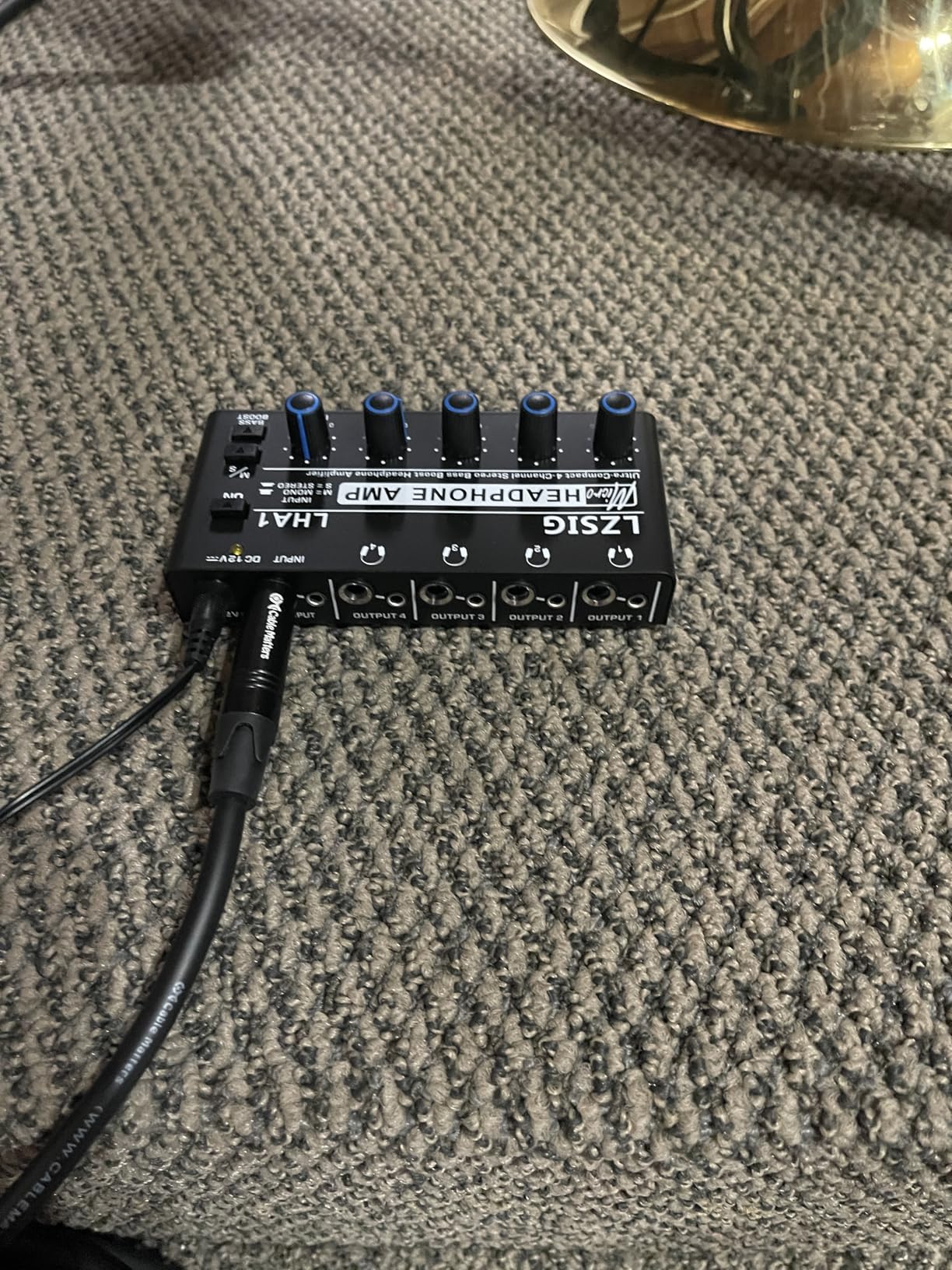
What it does well for a rehearsal rig
The mixed-jack support is the reason to buy it. One box serves a band whose players own three different headphone types, which is the normal state of most rehearsal rooms.
Independent volume per channel plus a stereo or mono switch gives more control than most boxes at this level. For click tracking, a slightly boosted low end means players can turn the source down and still hear it, which is the single best change most bands can make to a rehearsal setup.
Where it falls short
The tone shaping is not transparent. Reviewers describe the presentation as slightly bright and altered compared with a direct interface feed, which is fine for rehearsal and a poor choice for judging a mix. Leave the boost off when you are checking your own arrangements.
Several users also note the stereo or mono button feels loose and that the included cables are shorter than they would like. Treat the box as permanent in the rehearsal room and buy your own cable lengths.
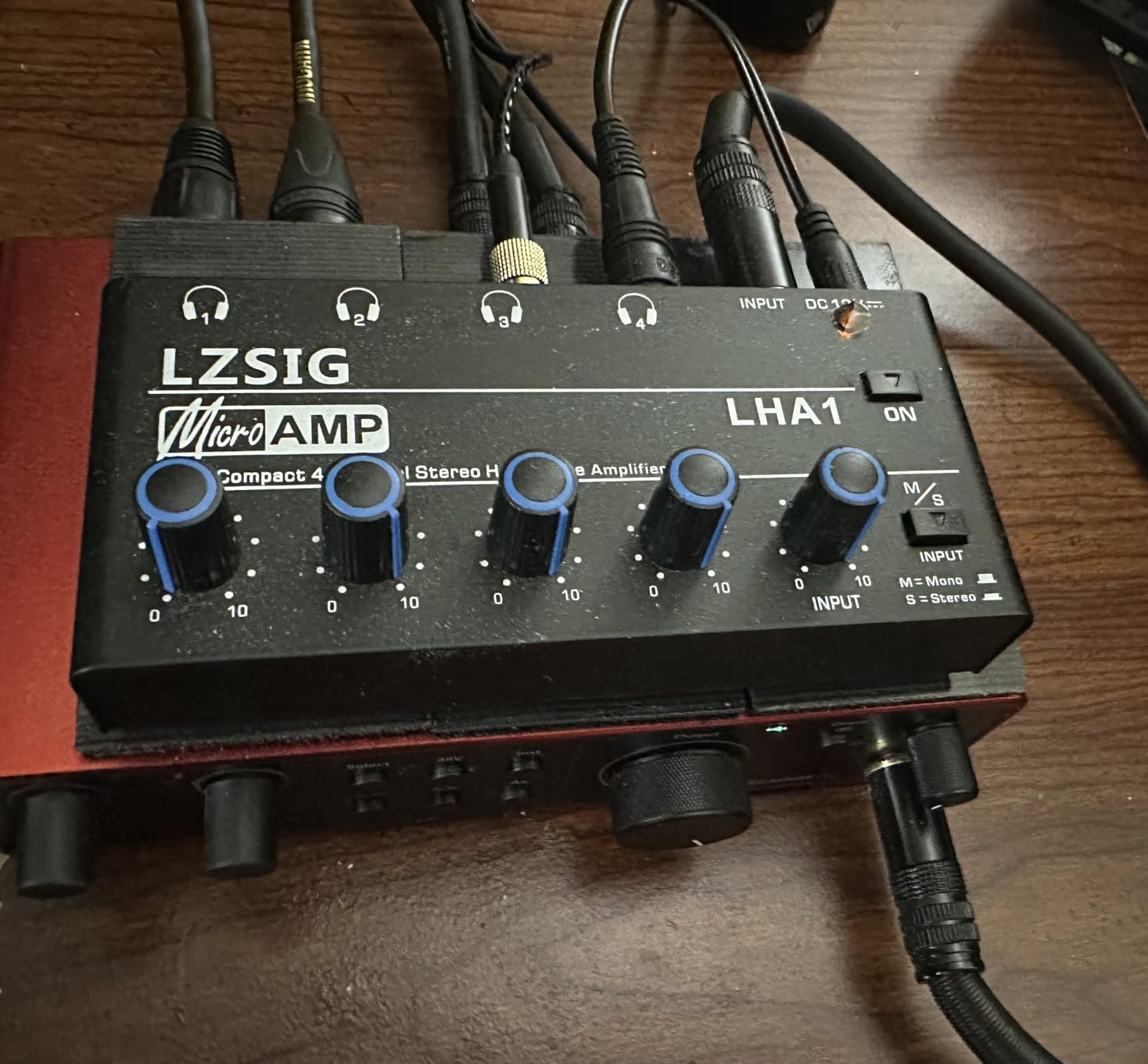
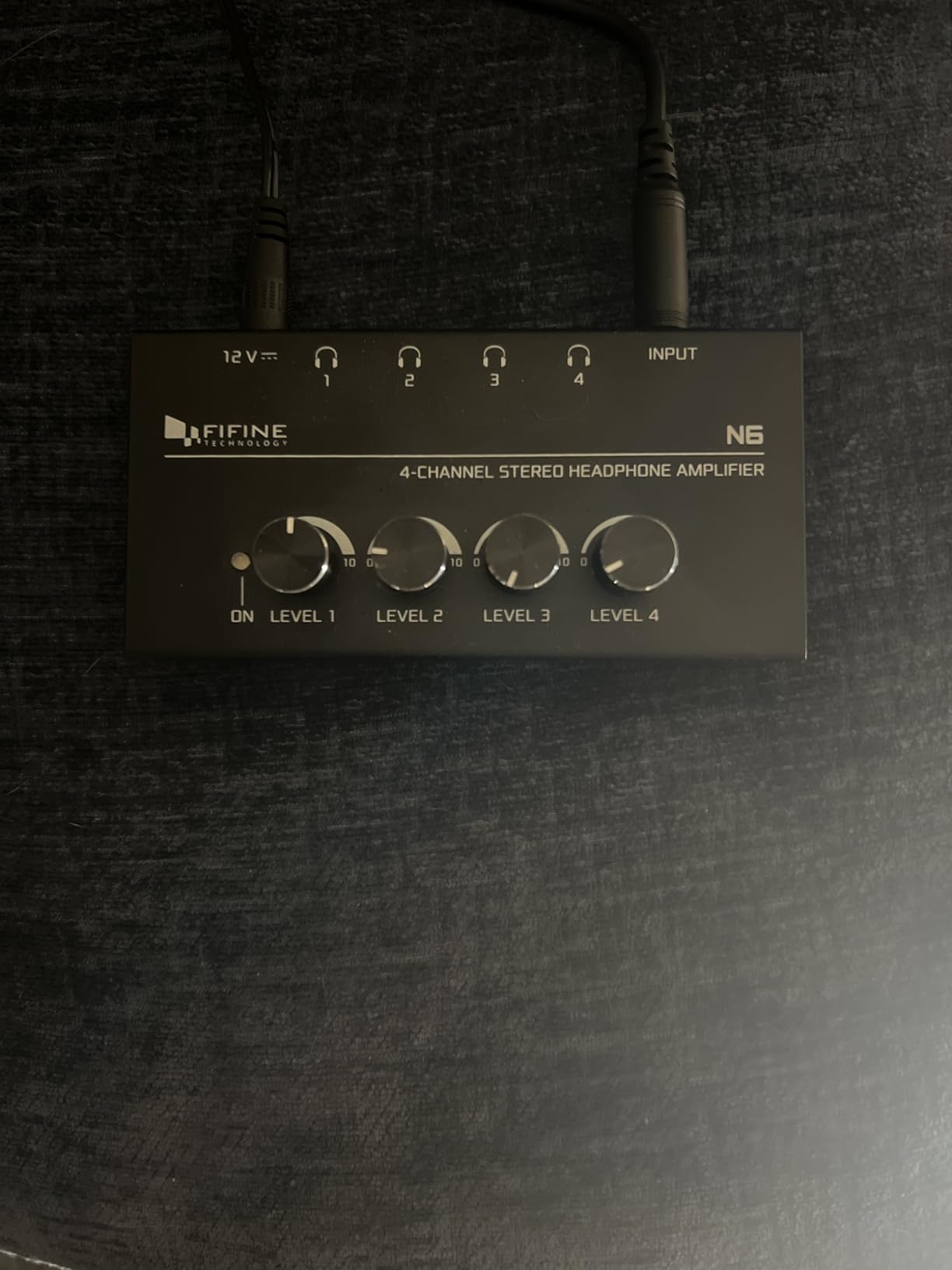
5. FIFINE N6 4-Channel Metal Headphone Amplifier – Best Metal Build on a Band Budget
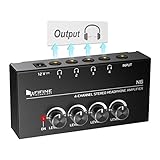
FIFINE N6 4 Channels Metal Stereo Headphone Amplifier for Audio Mixer
4 channels
4 x 1/4 inch TRS out
1/4 inch TRS input
Solid metal body
Pros
- Metal construction that tolerates hard use
- Separate volume knob per channel
- Reports no signal loss with all four outputs connected
- Clean at high volume with low distortion
Cons
- No TRS cables included so budget for them separately
- 1/4 inch jacks only for headphone outputs
- Power adapter cord is short
The FIFINE N6 answers a narrow question well: how do you get a metal four-channel box into a rehearsal room without spending a fortune. It has four quarter-inch TRS headphone outputs, a quarter-inch TRS source input, and a solid metal body.
Users consistently report no signal loss with all four outputs connected, which is the claim we care about most in a band setting. It means the click does not vanish into the noise floor just because the fourth player plugged in, and that is the whole reason to buy an amplified box over a cable.
Independent volume controls on each channel handle the usual problem of one loud player. Sound is reported as clean with no crackle or distortion even at high settings, and a 12V DC adapter with an indicator light is included.
Plan the cable budget before you order. Reviewers consistently flag that the TRS cables needed for input and output are not included, so a four-player rig needs four headphone extension cables plus one source cable, and those add up fast.
What it does well for a rehearsal rig
Durability and stable level with all four channels connected. Bands that move gear in and out of vans benefit from a metal body that shrugs off the knocks a plastic hub would crack from.
It is a splitter and amplifier, not a mixer: one input, four outputs, no level mixing. For a click and backing track feed that is exactly the right amount of complexity, and it keeps setup to a single cable from the source.
Where it falls short
All headphone outputs are quarter-inch, so any player on 3.5mm headphones needs an adapter. Adapters loosen, and a loose adapter in a rehearsal room produces intermittent crackle that people blame on the splitter.
Cables are not included and the power adapter cord is short, which means the box may not reach the shelf without an extension. It is also strictly one input, so you cannot blend a click from one source with tracks from another without a mixer ahead of it.
6. Cubilux Passive 5-Way 1/4 Inch Splitter – Best for Five or More Players Without Power

Cubilux Passive 6.35mm Headphones Splitter Box, 1/4” Stereo Multi Audio Distributor, Multiport Quarter Inch TRS TS Aux Splitter for Guitar Signal, Studio Recording, Live Performance, Monitors
5 outputs from 1 input
Passive, no power
Gold-plated 6.35mm
Aluminum case
Pros
- Five outputs with no power supply to carry
- Gold-plated jacks and an aluminum case
- Compact at 4.4 x 1.5 x 0.9 inch
- Anti-slip base keeps it steady on a stand
Cons
- Passive so level divides across outputs
- No volume control of any kind
- 1/4 inch only so 3.5mm headphones need adapters
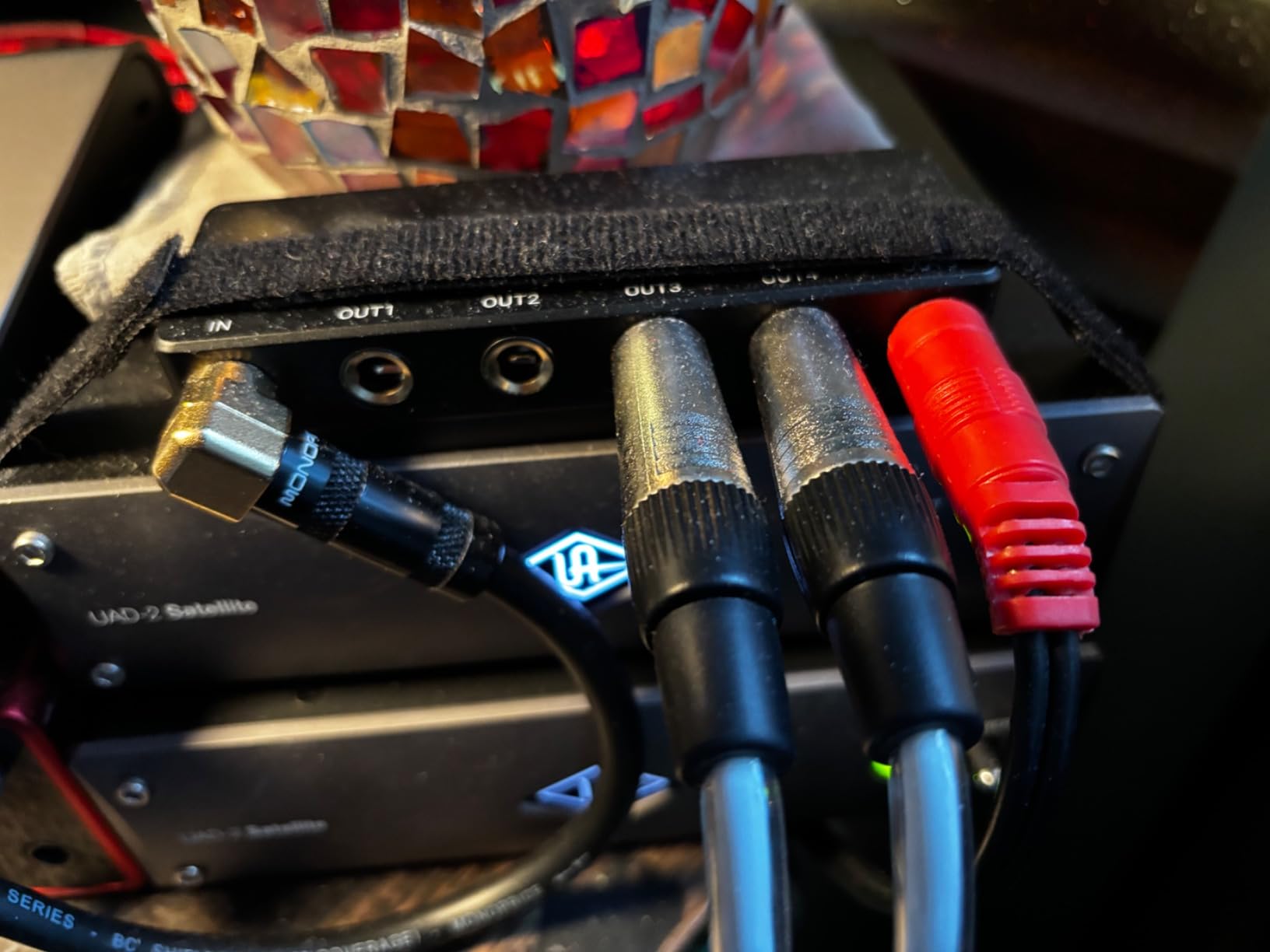
When a rehearsal room has no convenient power outlet near the mix position, a passive five-way box solves a real problem. One source feeds up to five 1/4 inch outputs, there is nothing to plug in, and the aluminum body and gold-plated jacks look and feel like stage hardware.
It measures 4.4 by 1.5 by 0.9 inches, so it fits on a stand or a shelf without a power brick taking up floor space. An anti-slip silicone mat on the bottom keeps it from walking across a mixing desk during a loud passage.
Reviewers report no added noise or distortion, and the gold plating on the jacks is a sensible touch for a box that will be plugged and unplugged every week. The listed warranty is a limited 12 months.
The tradeoff is the one that defines every passive device: the signal divides across the outputs, so the level falls as you connect more headphones. That is manageable when the source is a mixer bus with plenty of gain, and painful when the source is a phone.
What it does well for a rehearsal rig
Port count and no-power convenience together. Five quarter-inch outputs in a small aluminum box is a hard combination to find, and it is the right answer for a larger band playing from a mixer with a strong headphone or auxiliary feed.
The aluminum case also provides some shielding from interference, which matters in a room with multiple amplifiers. Users note it works beyond headphones, which makes it useful for feeding a spare monitor or a small speaker in a corner.
Where it falls short
There is no volume control at all, not per channel and not otherwise. The only level control is on the source, so every player hears exactly the same setting, and that is the compromise bands complain about most.
Because it is passive, expect a real level drop with three, four, and five headphones connected, and expect to push the source to its maximum to compensate. Jacks are 1/4 inch only, it cannot combine multiple inputs, and it does nothing with microphones.
7. ICESPRING 1/4 Inch Y Splitter Cable – Best Simple Split for a Duet
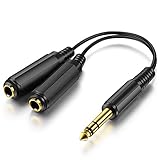
ICESPRING 1/4″ 6.35mm Stereo Plug Male to Dual 1/4″ Jack Female Cable
1/4 inch male to dual 1/4 inch female
Gold-plated
Shielded
0.6 foot length
Pros
- Plug and play with no box or power
- Gold-plated shielded connectors resist corrosion
- Rubber strain relief for repeated handling
- Suited to headphones and amps as well as karaoke gear
Cons
- Only two outputs
- Very short at 0.6 foot so placement is tight
- Passive so level divides between the two
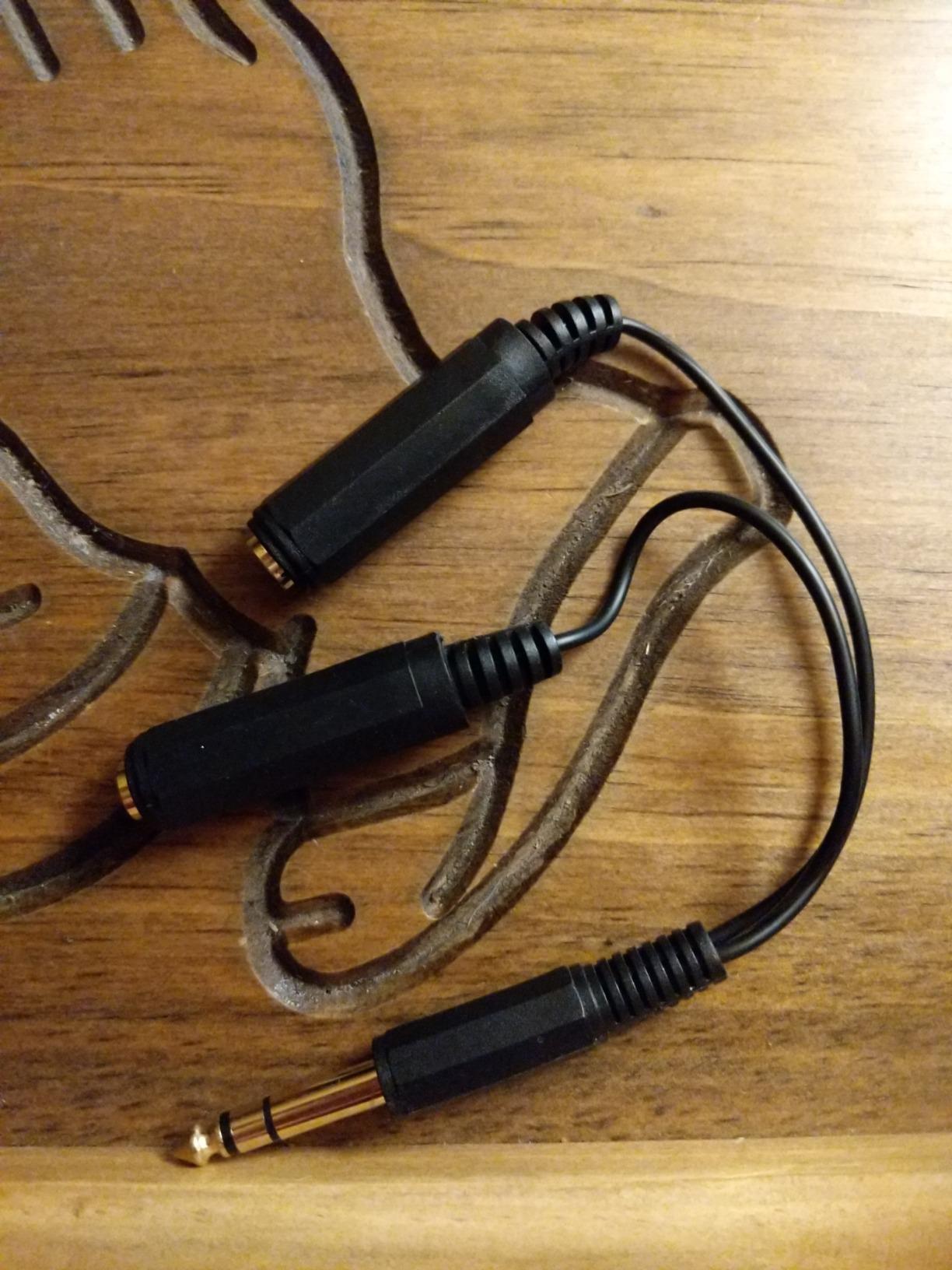
For two people sharing one source in the same seat area, a cable beats a box. This one takes a 1/4 inch stereo plug and splits it to two 1/4 inch female jacks, so a duo working on arrangements can both hear the loop without a device to install.
The connectors are gold-plated and the jacks are fully molded and shielded, which keeps EMI and RFI out. Rubber strain relief at the ends is the detail that matters for a cable that gets handled constantly, and reviewers point to solid contact with no crackle.
It is also more versatile than the name suggests, since it is listed as suitable for microphones, amplifiers, AV receivers, and karaoke equipment as well as headphones. The listed warranty type is extended, which is unusual for a cable at this level.
Be clear-eyed about the length. At 0.6 feet, about 7.2 inches, this is a desk cable. It suits a rehearsal setup where the two players sit close to the source and nothing else.
What it does well for a rehearsal rig
Simplicity. There is no setup step, nothing to power, and no way to get the wiring wrong. A guitarist and a singer sharing a loop from a laptop or a practice amp can have both pairs on in seconds.
Gold plating, shielding, and strain relief make it more durable than the loose splitters most bands keep in a cable drawer, and users report a clean stereo signal across both outputs.
Where it falls short
Two outputs, and the short cable length means both players must sit within a foot of the source. That rules it out for anything spread across a rehearsal room and rules it out for a four-piece band.
Because it is passive, the level divides between the two outputs, so the second player hears less than the first. The jacks are also 1/4 inch only, so 3.5mm headphones need an adapter.
8. SYNCWIRE 3.5mm Braided Y Splitter – Best for a Phone or Laptop Source
SYNCWIRE Headphone Splitter, 3.5mm Nylon-Braided Male to 2 Female Y Cable
3.5mm male to 2 female
24K gold-plated
Double shielded
Braided jacket
Pros
- Long record of owner reviews for a simple splitter
- 24K gold-plated connectors with double shielding
- Braided jacket rated past 15000 bend cycles
- Slim plug fits most phone cases
Cons
- Only two outputs
- Passive so the level drops between two headphones
- TRS only with no microphone pass-through
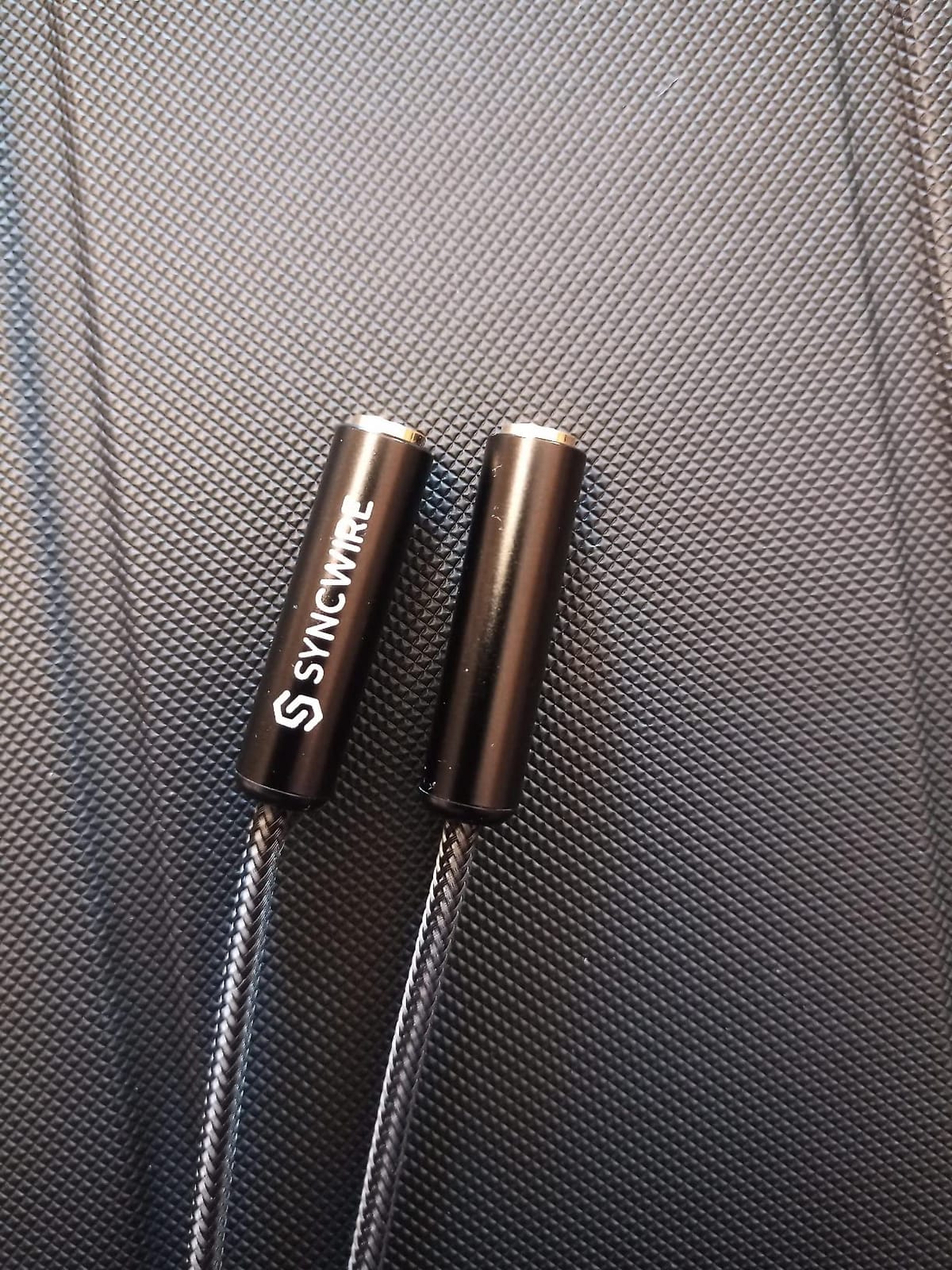
When the source is a phone or a laptop, the jack is 3.5mm and the argument for quarter-inch gear disappears. This braided Y cable is the dependable way to let two people hear a phone at once, and it is the unit we pack as a backup in every rehearsal bag.
Construction is where it earns its place. The connectors are 24K gold-plated, the cable is double shielded against interference, and the nylon-braided jacket is rated for more than 15000 ninety-degree bend cycles, which is a realistic description of how a cable lives in a gig bag.
It weighs 13.34 grams and the slim connector profile fits most phone cases, which matters when the source is a phone in a pocket. The warranty is three years with lifetime technical support, the longest cover in this roundup.
Reviews number in the tens of thousands, and the pattern is consistent: excellent build for a simple Y cable, with the usual passive caveat that the level is shared between the two outputs. There is no microphone pass-through, since it is a TRS splitter rather than a four-pole TRRS one.

What it does well for a rehearsal rig
Durability in a bag and reliability in a phone pocket. Braiding, gold plating, and a three-year warranty mean the cable that gets handled most is the one least likely to fail mid-rehearsal.
It is the right tool for a two-person check of a tricky arrangement, a headphone fit, or a click setting before the band arrives. It also works as an extension in a pinch.
Where it falls short
Two outputs is the hard limit, and the passive design means the volume divides between them. A band of three or more sharing one phone is not a job for this cable.
It is TRS only, so a headset with a microphone loses that microphone, and phones without a 3.5mm jack need a Lightning or USB-C adapter, which adds another failure point to the chain.
9. JSAUX 3.5mm Two-Port Splitter – Most Versatile for Sharing a Phone

JSAUX Headphone Splitter for 2 Headphones, 3.5mm Splitter (No Mic), Red
3.5mm male to dual female
Gold-plated with oxygen-free copper
0.9 foot braided nylon
Pros
- Gold-plated connectors with an oxygen-free copper core
- Double-braided nylon rated past 15000 bends
- Short 0.9 foot body is easy to keep with a laptop
- Consistent owner ratings across thousands of reviews
Cons
- No microphone support
- Passive so level divides between the two outputs
- No warranty offered on this variant
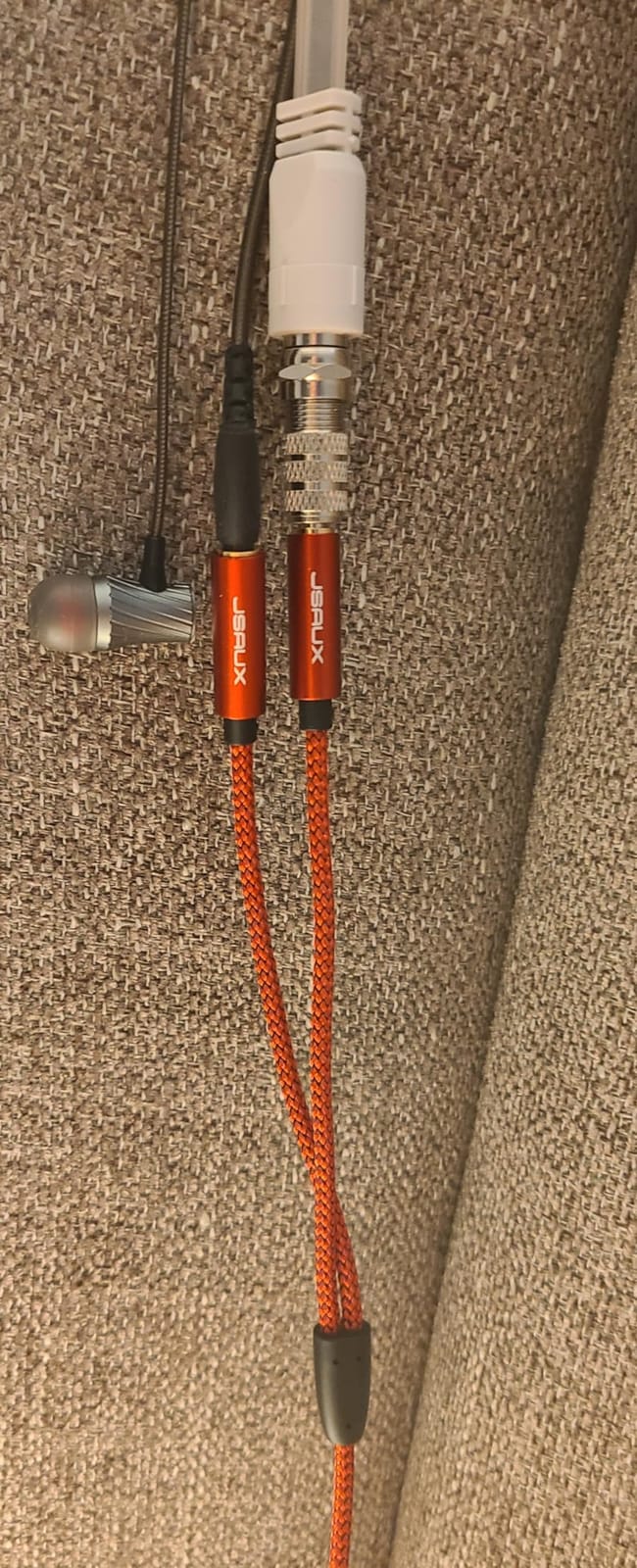
The JSAUX is one of the few low-cost cables here that still feels like a real cable rather than an accessory. Gold-plated connectors on an oxygen-free copper core, double-braided nylon, and a bend rating above 15000 cycles for very little money.
At 0.9 feet it is slightly longer than the shortest Y cables, which makes it marginally more forgiving when two players sit next to a laptop on a small table. The braid resists tangling, which is a small mercy in a bag full of instrument cables.
Owners report clean stereo on both outputs and good strain relief at the connectors. Review volume sits in the thousands, and the complaints are consistent and specific rather than random.
The limitation to know before buying: this is a TRS splitter with no microphone pass-through, so it is for sending music to two pairs of headphones rather than for sharing a headset with a mic. The listed warranty on this variant is none, which is the main reason we treat it as a backup cable rather than the backbone of a rig.
What it does well for a rehearsal rig
It is a backup cable. Bands lose cables constantly, and having a spare 3.5mm splitter that matches a phone source costs almost nothing and removes a common reason a rehearsal starts late.
The build is better than it needs to be at this price, with braided nylon and gold plating, and the short length keeps it from becoming a trip hazard between two players sitting together.
Where it falls short
No microphone support, two outputs, and a passive split that divides level between them. Any of those three rules it out as a main feed for a whole band.
There is no warranty on this variant, and the short length limits positioning if the two players are not sitting side by side. The red finish is also the only colour in this version.
10. onelinkmore 5-Jack 3.5mm Splitter – Most Outputs for a Small Group
Headphone Splitter, 5-Jack 3.5 mm Audio Headphone Stereo Headset Adapter
5 outputs from 1 input
Attached 3.5mm aux cable
ABS plastic body
9.07 grams
Pros
- Five outputs in one small adapter
- Attached male-to-male cable removes a separate purchase
- Jacks spaced to accept bulky plugs
- Useful for a full band listening back to a recording
Cons
- Significant level drop when several headphones connect
- Plastic build and an attached cable that cannot be replaced
- Jack contact issues reported by some owners
When the task is listening back rather than playing along, port count matters more than level. This adapter takes a 3.5mm source and offers five headphone outputs, with a hard-wired male-to-male cable attached so you can plug straight into a laptop.
That combination makes it a genuinely useful tool after a rehearsal: a band sitting down to hear the take they just played, all five of them on one small adapter. The jacks are spaced far enough apart to accept bulky plugs, which sounds trivial until four thick headphone cables arrive at once.
It weighs just 9 grams and has an ABS plastic body with a PVC cable, so it is a travel item rather than a fixture. Owners rate the build as adequate for the job and the affordability as the main draw.
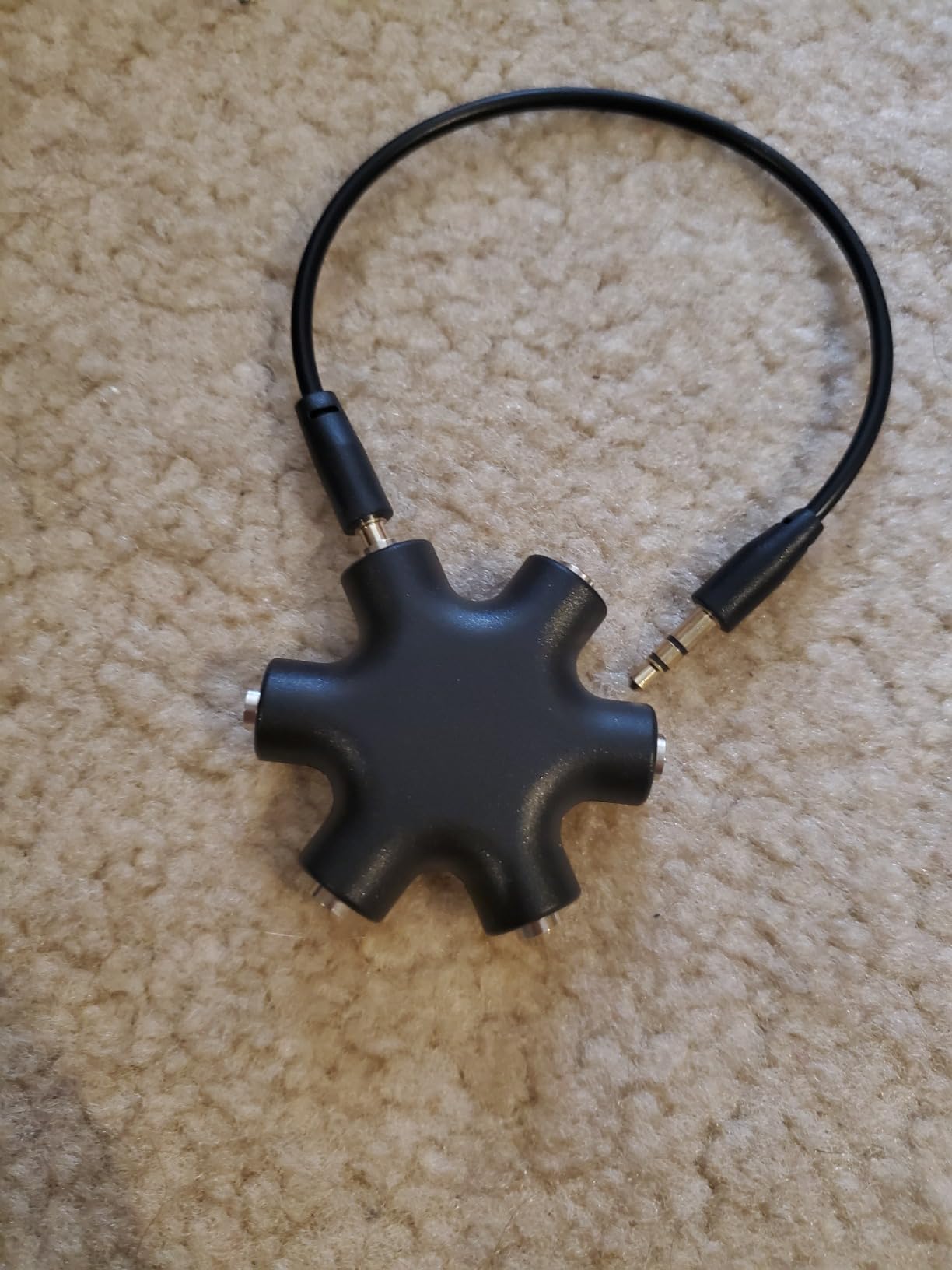
There are real complaints, and they cluster around one thing: some owners report jack contact problems that show up as mono sound until the plug is wiggled. Combined with the passive level drop across five outputs, that is why this is a listening-back tool and not a click-track feed.
What it does well for a rehearsal rig
Five outputs with no additional cable purchase. For a review session or for teaching a younger band a part, it removes the argument about who listens to the playback device.
The attached cable means one connection to the source rather than two, and the small size means it lives in a laptop sleeve instead of a rack.
Where it falls short
The level drop is significant with several headphones connected, and there is no amplification to recover it. Anyone trying to use this for a click track at volume will find the fifth player hears almost nothing.
Plastic is less durable than the metal or braided options, the attached cable cannot be replaced if it fails, and it does nothing for Lightning or USB-C devices without an adapter.
11. LP Nylon-Braided 3-Jack Splitter – Best Middle Ground for Three Players

LP Headphone Splitter, Nylon-Braided 3.5mm Audio Stereo Splitter, Male to 3 Female Ports for MacBook, Mac, iPad, iPhone(≤6), iPod, Tablet, Laptop, PC, Earphone, Kindle, MP3 Player, Speaker & More
3.5mm male to 3 female
Aluminum housing
Double-braided nylon
Copper core
Pros
- Three outputs is the sweet spot for a trio
- Aluminum housing resists impacts
- Step-down plug fits most phone cases
- Copper core and braiding for a clean signal
Cons
- Passive so level divides across three outputs
- No microphone support
- Matte finish shows wear over time
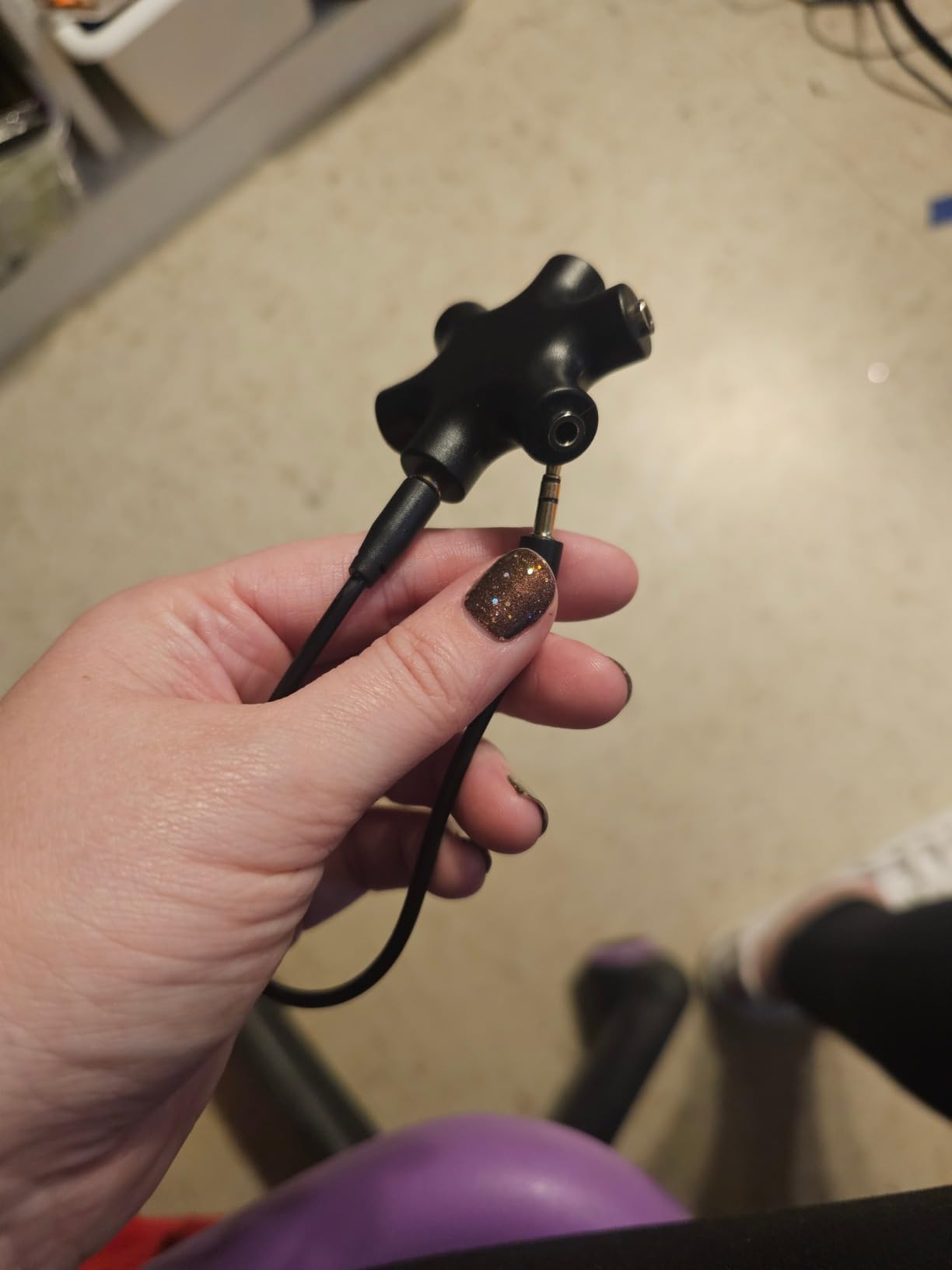
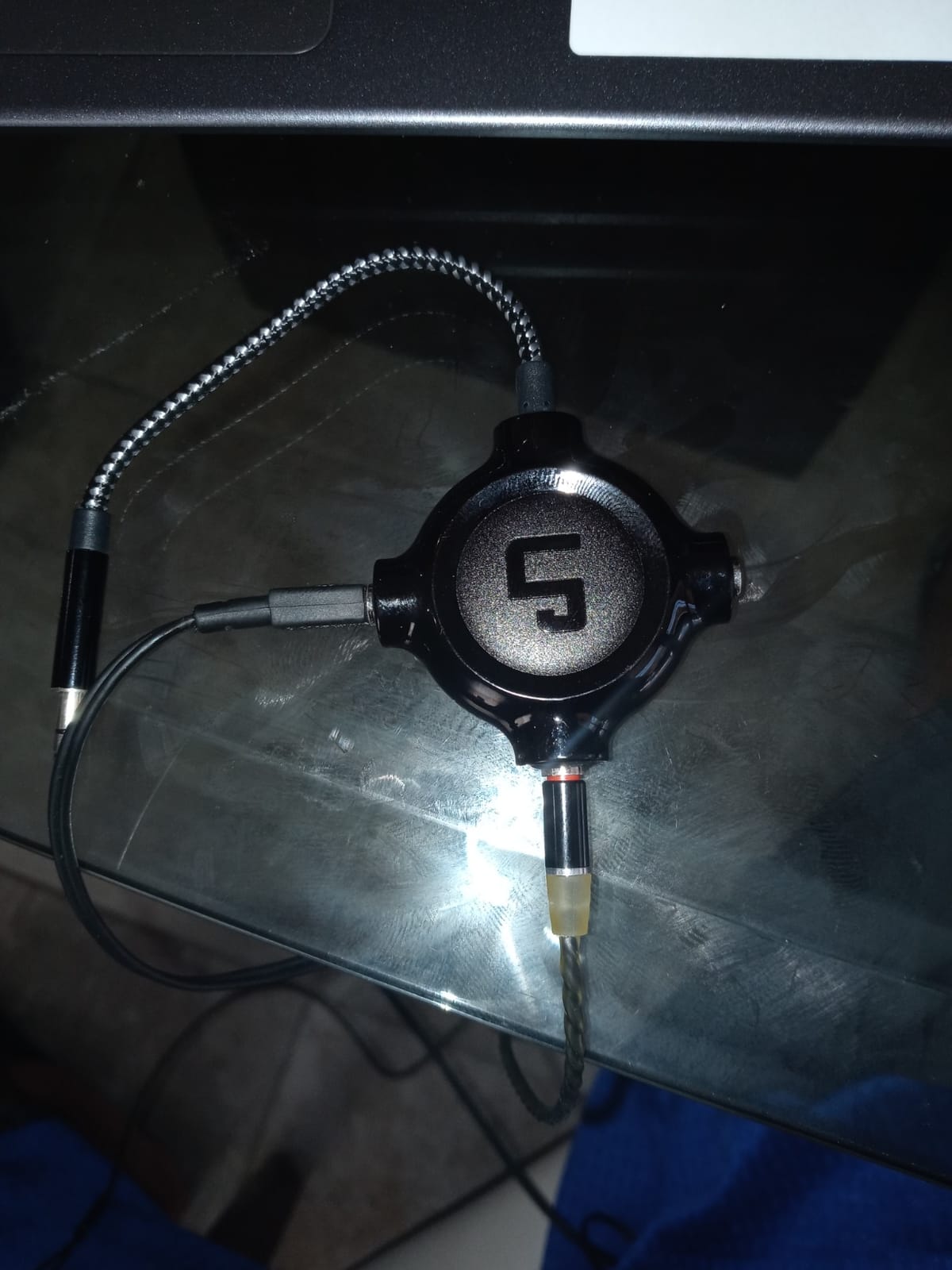
Three players is the awkward size that two-way and five-way splitters both miss. This adapter gives a 3.5mm source three outputs in an aluminum housing with a double-braided nylon cable, which is a better fit than a two-way cable extended with a second cable.
Owners like the step-down connector design, which fits most phone cases, and the copper core for a signal they describe as clean. It is a passive device, so level divides across the three outputs, but three is fewer than five and the drop is more manageable.
Support is unusually good for a cable at this level, with a 30-day refund, a one-year replacement, and lifetime service listed. For gear that lives in a rehearsal room bag, that matters more than the connector plating.
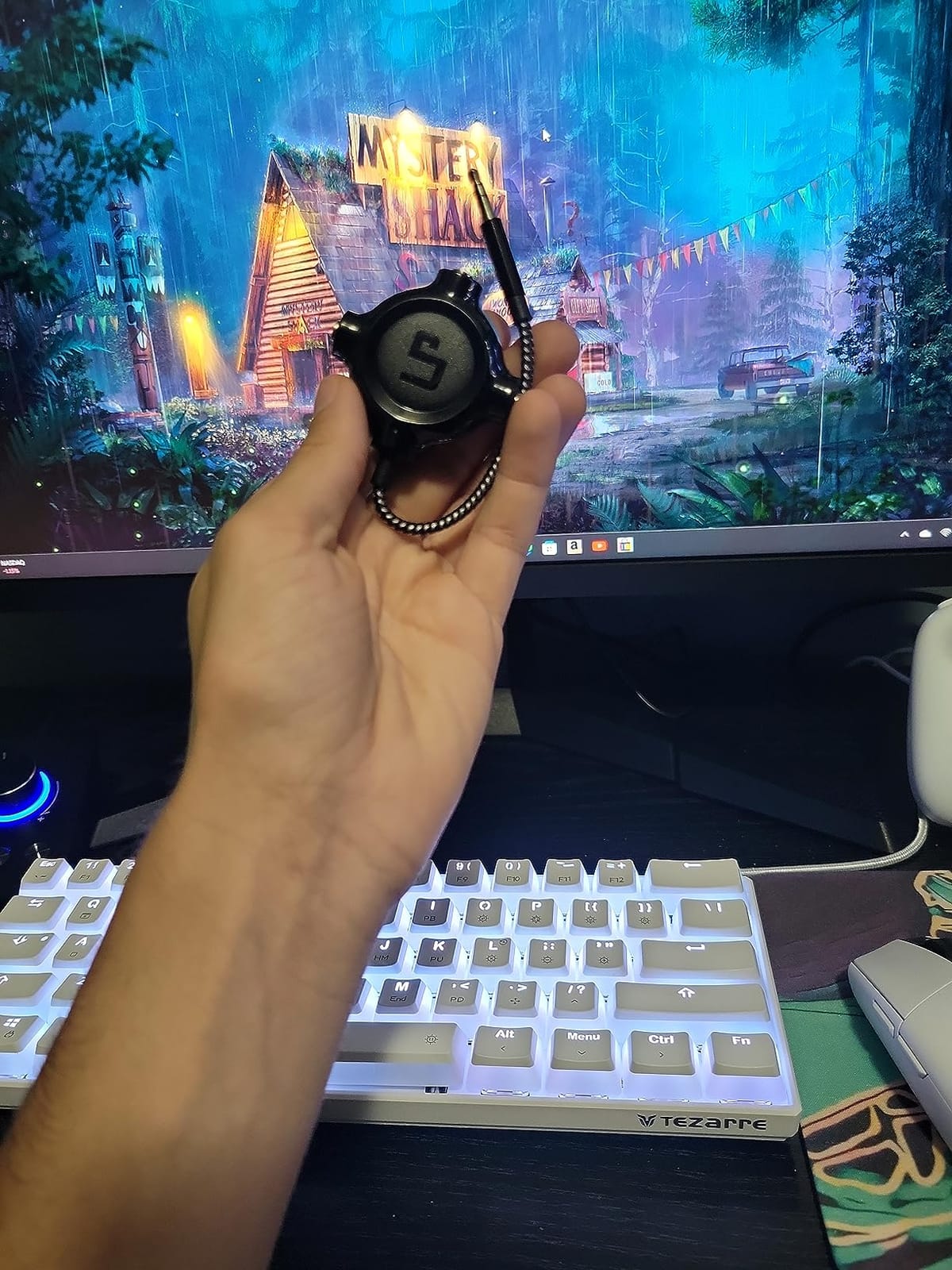
The aluminum housing is the reason we prefer this over a plastic three-way. Rehearsal rooms have guitar stands, mic stands, and cables being stepped over, and plastic hubs crack in exactly that environment.
What it does well for a rehearsal rig
It hits the size most bands start at. A trio or a four-piece band that only needs three players monitored can share one phone or laptop without daisy-chaining splitters and stacking passive losses.
Braided cable resists tangling, and the case-friendly plug means nobody has to remove a phone case to set up before a rehearsal.
Where it falls short
Still a passive split, so with three headphones connected everyone is listening quieter than they would alone, and there is no per-channel control to compensate.
Three outputs is the ceiling, there is no microphone support, and the matte finish shows handling marks over time. Devices without a 3.5mm jack need an adapter as well.
12. Cubilux 5-Way 3.5mm Aluminum Splitter – Best Compact Multi-Port for Travel

Cubilux Professional 5-Way 3.5mm AUX Splitter, Aluminum Case 5-Channel 1/8” Stereo Headphone Splitter, Multi-Port TRS Audio Share/Split Box/HUB for Speaker Earphones Laptop PC Smartphone Tablet
5 outputs from 1 input
Aluminum housing
6 inch attached cable
Passive, no power
Pros
- Five outputs in a 3.1 by 0.8 by 0.4 inch body
- Aluminum housing with shielding
- No power supply to carry anywhere
- Clean signal with no static or ground noise
Cons
- Passive so level drops with multiple headphones
- No microphone support and no mixing
- Attached 6 inch cable cannot be replaced
This is the same five-output idea as the plastic adapter, built properly. The housing is aluminum for shielding and durability, the whole hub is 3.1 by 0.8 by 0.4 inches, and it weighs 30 grams, so it disappears into a laptop sleeve.
Owners report a clean signal with no static or ground noise, which is the specific benefit of the aluminum case over a plastic equivalent. The six-inch integrated cable gives a little placement slack without dragging a long lead across a rehearsal room floor.
It is passive and needs no power, so it works anywhere, including practice rooms with no outlets and quiet rooms where a fan from a power brick would be unwelcome. Five 3.5mm outputs handle a full band listening back or a group of players on in-ear monitors with 3.5mm connectors.
It cannot combine or mix multiple inputs, so it only ever sends one source outward. Anyone expecting to blend a click with tracks through this box will be disappointed.
What it does well for a rehearsal rig
Port count in a genuinely small, well-shielded, power-free package. Bands that rehearse in different rooms and carry their gear between them get five clean outputs without a power supply or a laptop-specific adapter.
The aluminum case is genuinely better at rejecting interference than plastic, and owners specifically call out the absence of ground noise as the reason to prefer it over a cheap splitter.
Where it falls short
Passive, so the level drops significantly with multiple headphones connected and you have to turn the source up to compensate. It is a sharing tool, not a monitoring amplifier.
No microphone support, no mixing of multiple inputs, and the fixed six-inch cable cannot be replaced if it is damaged. The hub is also bulkier than a simple Y cable when you only need two outputs.
How to Choose a Headphone Splitter for a Rehearsal Room
Choose on four things: how many people are listening, whether the box adds gain, what jack size your headphones actually use, and how far the cables have to reach. Everything else is preference. Here is how each of those four actually changes your rehearsal.
Passive versus amplified: why the level drops
A passive splitter wires the source signal straight to every output in parallel. Nothing buffers the signal, so each headphone you add loads the source harder and the level everyone hears falls. That is the most common complaint from musicians building shared rigs, and it is not a fault in any particular cable, it is how parallel wiring behaves.
An active unit adds gain and buffers each output. The level stays where you set it no matter how many headphones are connected, and the buffered outputs do not fight each other. For three or more players in a room where the click has to be heard over a drum kit, an amplified box is not an upgrade, it is the minimum.
The practical test is simple. If you are splitting to two people sitting next to the source, a passive cable is fine. If you are splitting to three or more, or if anybody plays an instrument loudly enough that the click disappears, buy gain.
How many outputs your band actually needs
Count one output per player, plus one spare so you are not rebuilding the rig when a second guitarist turns up or a drummer decides to switch to in-ear monitors. In practice:
Two players sharing a laptop or a loop: a Y cable is enough.
A three-piece band: a three-output splitter covers it with a spare.
A four-piece band: a four-channel amplifier is the standard answer, and the Mackie HM-4 is the unit we run.
A five-piece band or four-piece band adding in-ear monitors: a five-output unit gives you the spare without a second box.
Six players or more, or a rehearsal room used by multiple bands: two four-channel amplifiers, or a single higher-channel distribution box, with independent volume per channel.
Avoid daisy-chaining a passive splitter off the output of an active box. The passive stage reintroduces the level loss the amplifier removed, and the players downstream of it will be the ones complaining.
Connector types: 3.5mm TRS, TRRS and 1/4 inch
Most studio and pro-audio headphones use 1/4 inch, also written as 6.35mm TRS. Most phones, laptops, and consumer headphones use 3.5mm. A growing number of phone headsets use a four-pole TRRS plug, which carries a microphone alongside the stereo signal, and a plain TRS splitter simply ignores the mic contacts.
That TRRS trap is the most common purchase mistake we see, and it usually reveals itself only when a player tries to use an in-ear mic or a headset remote. If anybody in the band uses a phone headset, buy a splitter that explicitly supports four-pole TRRS, or accept that they will use headphones with a separate mic.
Buying one device that accepts both jack sizes, as the LZSIG unit in this roundup does, removes the adapter problem entirely. Otherwise, buy adapters once, label them, and keep them in the same bag as the cable they belong to.
How to wire a click track to the whole band
Wire it in five steps, in this order:
Set the click and backing tracks on the source device, and confirm the output level is low before you connect anyone.
Connect the source output to the splitter or amplifier input, matching the jack size at both ends.
Connect each player one at a time, starting with the loudest instrument in the room, usually the drummer.
Set each player at roughly half their knob travel, then push the drummer up until the click is clearly audible over sticks.
Do a full run-through before the first song, and check that the level is still identical once every player is connected.
On feeding the box from a mixer, the question musicians argue about most is whether to use the headphone out or an aux send. A headphone out is convenient but can be affected by whatever else is on the desk, while an aux send gives a dedicated, predictable feed. On TheGearPage, musicians running a four-headphone rig off a digital mixer keep coming back to that same choice, and the practical answer is to use whichever one lets you set the level independently of the main mix.
One caution for live rigs: if you are splitting a console bus, check the phantom power settings on every channel in that bus. Phantom power on a line input is a real way to damage a distribution box, and it is easy to overlook on a small digital desk.
Cable length, snags, and the 60-60 rule
Cable length is a comfort decision more than a technical one, but it decides whether players sit still. Short cables force the band into a tight cluster, and tight clusters in a rehearsal room mean stands, chairs, and guitar necks in each other’s way. Longer cables let players spread out and hear the click without craning.
Run cables along the back wall rather than across the open floor, and prefer flat or braided jackets that lie down rather than round cables that roll. This is also the argument for a small distribution box with a long input cable and short output leads, rather than a daisy chain snaking across the room.
On levels, the widely used 60-60 rule is a sensible rehearsal default: keep the volume at or below 60 percent for no more than 60 minutes a day. A click track is easier to lose than it is to damage hearing, so players tend to push it, and setting a shared ceiling per channel stops the whole band drifting upward through a long rehearsal.
Finally, if your rehearsal source is a practice amp headphone out or a silent practice amp with its own headphone stage, check whether it already has enough outputs before you add anything. A single amp with four headphone channels can save a box, and a wireless personal mixer or in-ear system covers the case where players move around a stage instead of sitting in a room.
Frequently Asked Questions
What is the best splitter for headphones?
For band rehearsal, the best splitter for headphones is an amplified multi-channel unit with one volume control per output and quarter-inch TRS jacks, because studio headphones use 1/4 inch plugs and an active box keeps the level steady as more players connect. For two people on a phone or laptop, a braided 3.5mm Y cable is enough.
What is the best headphone audio splitter?
The best headphone audio splitter depends on how many people you are feeding. A passive Y cable suits two players near the source, a three-output adapter suits a trio sharing a phone, and four or more players need a per-channel headphone amplifier so each person can set their own level and the output does not drop as headphones are added.
Do splitters affect audio quality?
A quality passive splitter adds little audible distortion, but it loads the source, so the level falls as you connect more outputs and the source amp works harder, which can add noise at high settings. An amplified splitter adds gain and buffers each output, so level and clarity stay consistent. Gold-plated, well-shielded connectors also reduce interference in rooms with multiple amplifiers.
What are the disadvantages of audio splitters?
The main disadvantages are a level drop as more headphones are connected on a passive unit, no per-channel volume control so everyone hears the same setting, and a single point of failure where one bad cable silences the whole rig. Consumer 3.5mm splitters also ignore the microphone contacts on four-pole TRRS headsets, and cheap plastic splitters can crackle in a busy rehearsal room.
Does a 3.5 mm jack reduce sound quality?
A 3.5mm jack itself does not reduce sound quality. What matters is whether the splitter is passive or amplified, how well the contacts are shielded, and how many headphones you connect at once. A passive 3.5mm Y cable feeding two headphones is essentially transparent, while a five-way passive adapter divides the level noticeably.
How many headphone outputs do I need for a band?
Count one output per player and add one spare. Two players need a Y cable, a three-piece band needs three outputs, a four-piece band needs a four-channel amplifier, and five players or four-piece bands adding in-ear monitors need five outputs. Avoid daisy-chaining a passive splitter onto an active box, because it reintroduces the level loss the amplifier removes.
Do I need a powered splitter for band practice?
You need gain once you are feeding three or more headphones, or when the click has to be heard over a loud instrument. A passive cable is fine for two players sitting next to the source. If anyone plays drums, or the band is spread across the room, a powered headphone amplifier with per-channel volume is the version that removes the arguments.
What are the best headphones for drumming practice?
For drumming practice, closed-back over-ear headphones work best because they block enough of the kit to keep a click audible, and they protect hearing in a loud room. Choose a pair with a detachable cable so a damaged lead can be replaced, and note that high-impedance studio models around 250 ohm need an amplifier that can drive them rather than a passive splitter.
What is the 60-60 rule for headphones?
The 60-60 rule suggests listening at no more than 60 percent volume for no more than 60 minutes a day. It is a guideline rather than a clinical limit, but it works well as a rehearsal ceiling. With per-channel volume controls you can set a fixed level for the click once and stop the whole band drifting upward over a long rehearsal.
Final Verdicts for Every Band Size in 2026
The best headphone splitter for band rehearsal is not a single answer, because band sizes and sources differ. For a duo sharing a phone, the SYNCWIRE braided Y cable is the one to pack. For a trio, the LP three-output adapter covers the size without stacking passive losses. For a four-piece band, the Mackie HM-4 is the unit we would put in the rehearsal room, with a per-channel volume knob on every player and a metal body that survives the trip.
Our editor’s choice sits with the Tisino breakout cable because it is the highest-rated, most heavily shielded option here, and because a monitor feed that is quiet, clean, and free of surprises is worth more than extra sockets. Where you need a fifth or sixth player, or where a stereo mix matters more than a mono click, reach for an amplified four-channel box instead.
Whatever you choose, decide it once, write the wiring down, and set the level per channel at the start of rehearsal rather than arguing about the volume every week. The gear in this roundup is all current in 2026, and any of them will do the job properly once it is set up the way we described above.