

The hardest part of choosing the best studio headphones for drummers is not sound quality. Any decent closed-back monitor will tell you what is on the track, but most of them will not let you hear that track over your own acoustic kit at practice volume. That gap between what you want to monitor and what is blasting away from cymbals two feet from your head is the entire reason drummer-specific and isolation-rated headphones exist as a category.
A closed-back earcup physically seals around the ear and knocks down outside sound by a measurable number of decibels. That reduction is what lets a drummer turn the click or backing track down to a level where the hi-hat is not competing with it, which is the mechanism that actually protects hearing over years. Isolation is passive, comes from the seal and the cup volume, and needs no battery. Active noise cancellation is a different technology that works best on steady low-frequency noise like an aircraft cabin, and it barely touches a hi-hat.
We compared ten pairs across acoustic and electronic kit use, tracking and practice, with a bias toward published attenuation figures, weight, and whether the cable and pads can be replaced when a gig room chews through them. Every pick below is wired. Bluetooth adds milliseconds of latency that you can feel during a fast fill on an electronic kit, and not one of the ten is worth the timing risk. Start with the quick picks, then read the individual reviews and the buying guide if you are still undecided.
Table of Contents
Top 3 Picks for Studio Headphones for Drummers (September 2026)

Audio-Technica ATH-M50x
- 45mm rare earth drivers
- 45mm circumaural seal
- 90-degree swiveling cups
- Detachable cable


Beyerdynamic DT 770 Pro 80 Ohm
- 5 Hz to 35 kHz response
- Velour ear pads
- 80 ohm impedance
- Replaceable parts
All 10 Picks at a Glance in 2026
Every product in the table is wired, closed-back and over-ear, with a replaceable-or-fixed cable noted in the review. The dB figures are published manufacturer attenuation values where one exists, which is why some rows have a number and others do not.
| Product | Specs | Action |
|---|---|---|
| Audio-Technica ATH-M50x |
|
Check Latest Price |
| Sony MDR-7506 |
|
Check Latest Price |
| Beyerdynamic DT 770 Pro 80 Ohm |
|
Check Latest Price |
 Vic Firth SIH3 Vic Firth SIH3 |
|
Check Latest Price |
 Audio-Technica ATH-M40x Audio-Technica ATH-M40x |
|
Check Latest Price |
 Audio-Technica ATH-M30x Audio-Technica ATH-M30x |
|
Check Latest Price |
 Sony MDR-M1 Sony MDR-M1 |
|
Check Latest Price |
 Alesis DRP100 Alesis DRP100 |
|
Check Latest Price |
 KAT Percussion KTUI26 KAT Percussion KTUI26 |
|
Check Latest Price |
 Roland RH-5 Roland RH-5 |
|
Check Latest Price |
1. Audio-Technica ATH-M50x – the best overall pick for drummers
Audio-Technica ATH-M50X Professional Studio Monitor Headphones, Black, Professional Grade, Critically Acclaimed, with Detachable Cable
45mm rare earth drivers
38 ohm impedance
20 Hz to 28 kHz
0.29 kg
Detachable cable
Pros
- Exceptional clarity across an extended frequency range
- Critically acclaimed monitoring reference
- Strong circumaural seal in loud rooms
- 90-degree swiveling cups for one-ear monitoring
- Detachable cable with pro-grade pads
Cons
- Deep bass emphasis is less flat than a dedicated mixing reference
- Heavier than some closed-back alternatives over long sessions
- Cable replacement varies by variant
I used the ATH-M50x for a full acoustic rehearsal cycle and for tracking a kit in a treated room, and it is the pair I would hand to a drummer who wants one headphone for playing and mixing. The 45mm drivers with rare earth magnets and copper-clad aluminum voice coils keep cymbal wash and kick fundamental separate instead of smearing them together, which is the specific failure mode that makes cheaper cans useless for monitoring.
Players on r/Drumming pick it for a reason that shows up in every long thread on the subject: closed-back cups cut the raw volume of the acoustic kit while practising. You are not blasting the track to fight the drums, you are turning it down and hearing the cymbals soften into the background, which is far easier on the ears over a two-hour room session.
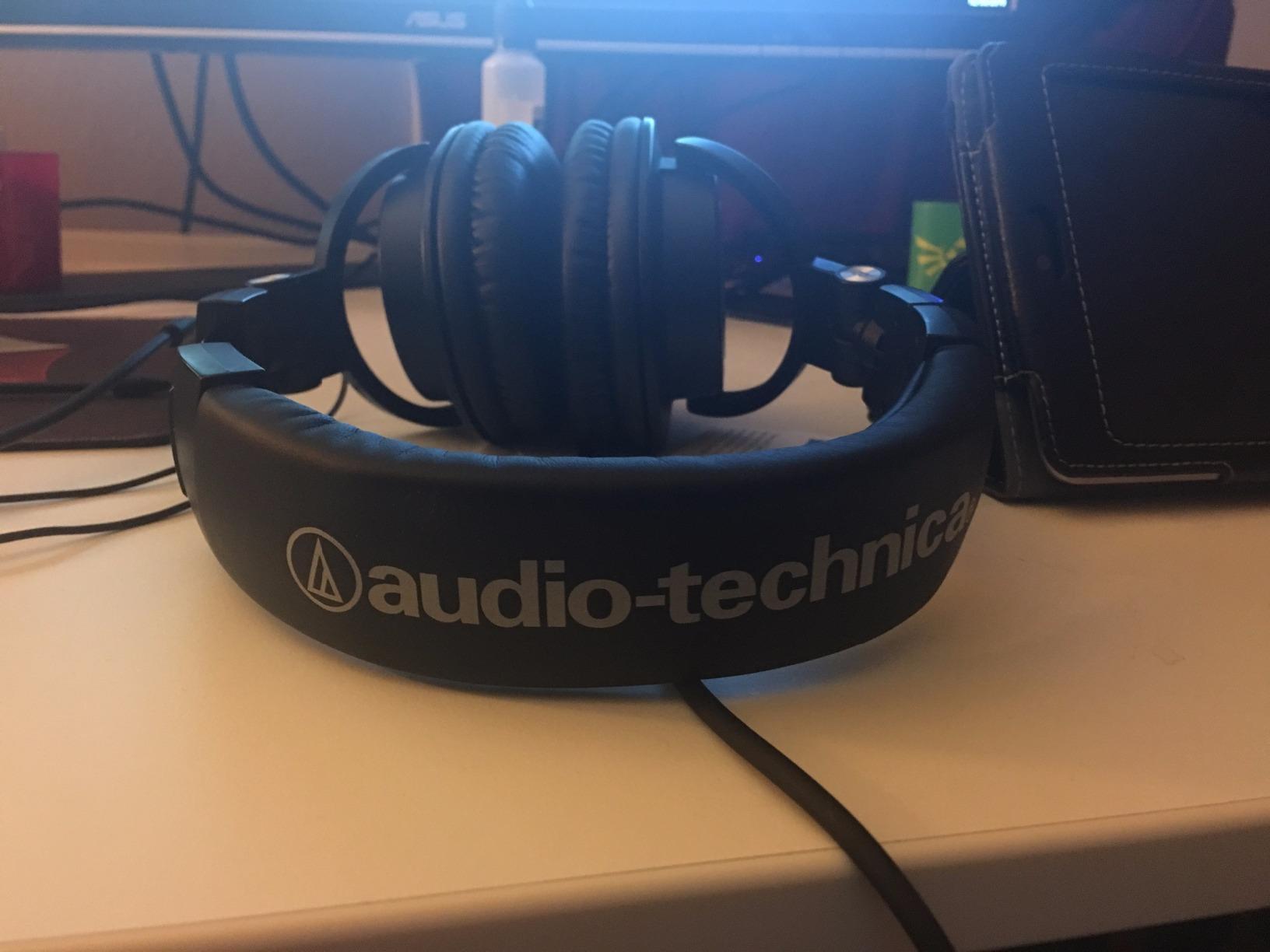
Specs worth knowing before you commit: 38 ohm impedance, 99 dB sensitivity, 20 Hz to 28,000 Hz response, and a circumaural design that contours around the ear rather than sitting on it. The 90-degree swiveling earcups let you fold one cup back and hear the room, which matters when you are counting in a band rather than playing to a loop.
It is not a flat mixing reference. Bass is emphasised and deep, so if you are mastering a mix on these you will make low-end decisions that sound fatter on headphones than they do on speakers. That is a deliberate trade for a headphone that still has to punch through a loud room, and reviewers generally treat it as the right side of that trade for drummers.
What you get for the money
At 4.7 stars across more than 33k reviews, this is the most heavily reviewed headphone in the roundup and the safest recommendation we can make. The build is the part that matters for drumming: pro-grade earpad and headband material, a detachable cable, and a two-year parts and labour warranty that covers the failure mode drummers actually hit.
If you also mix at home, you get a headphone that sits in a very large share of professional sessions, so the sound is one you will keep recognising as your ears get more trained.
Where it falls short
Weight is the honest drawback. At 0.29 kg it is one of the heavier cans here, and players doing back-to-back three-hour sessions report fatigue that lighter closed-backs do not produce. If you are on your head from a morning lesson to a late-night practice, that is worth weighing against the isolation and clarity you gain.
Cable replacement is also not fully uniform across variants, so check that the connector matches the spare cables you already own before you count on a swap.
2. Sony MDR-7506 – the neutral reference for tracking
Sony MDR7506 Professional Large Diaphragm Headphone
40mm neodymium drivers
63 ohm impedance
10 Hz to 20 kHz
8 oz weight
Fixed 9.8 ft cord
Pros
- Extremely neutral and revealing monitoring sound
- Very light for long sessions
- Closed design gives strong external noise reduction
- Rugged folding build with soft case
- Partially coiled cable stays out of the way
Cons
- Fixed non-detachable cable that cannot be replaced
- Supplied synthetic leather pads can crack over time
- Modest deep low bass for players wanting more weight
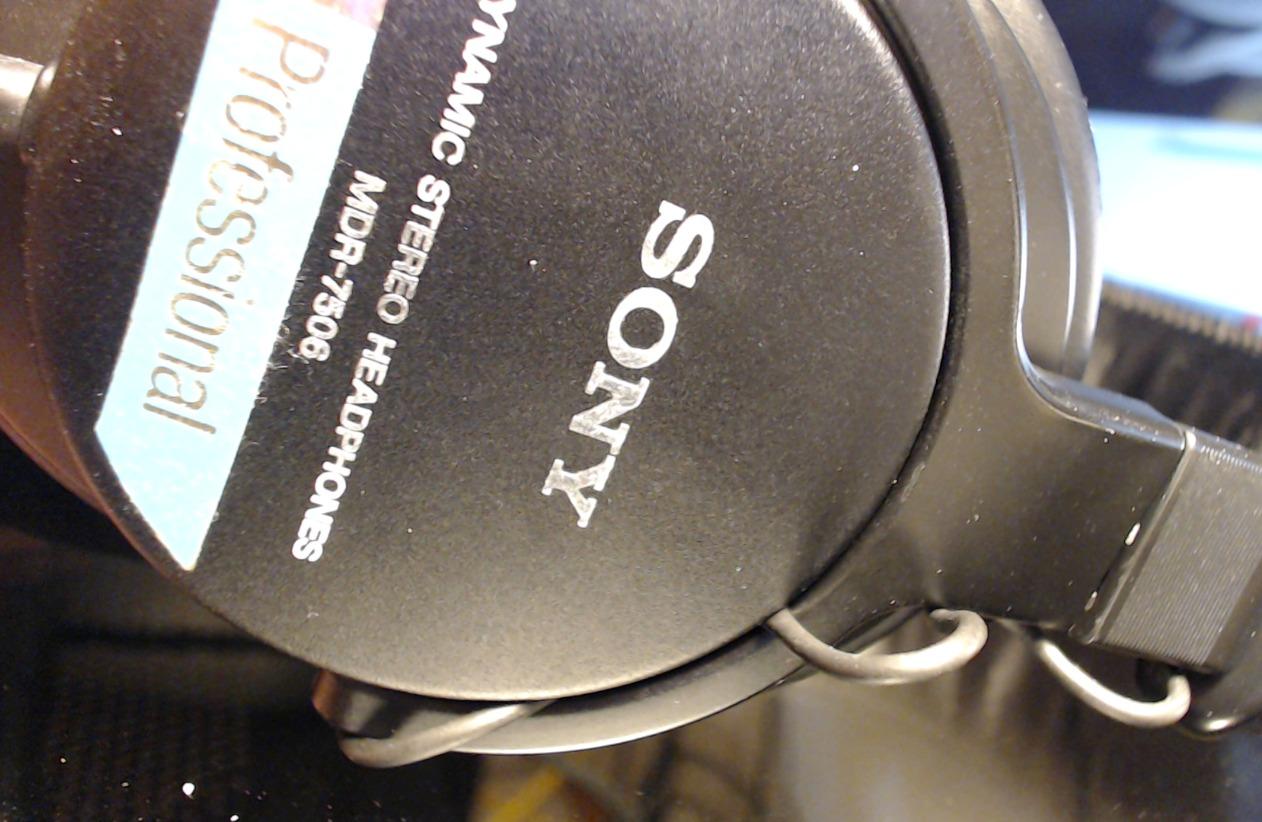
The MDR-7506 is the other half of the answer to which headphones are the best studio headphones for drummers, and it wins on a different axis: it is the most neutral thing here. Across a loud rehearsal room, with the kit playing and a click in the cans, nothing on your head colours the timing or the tone of what you are hearing.
It is also absurdly light at 8 ounces, which is the quiet reason a lot of engineers keep one on a stand for twelve-hour days. For a drummer doing a full evening rehearsal that is a real difference in how the last hour feels.
Spec sheet: 40mm neodymium drivers, 63 ohm impedance, 10 Hz to 20,000 Hz response, closed-ear design rated for strong external noise reduction, and a 9.8 foot partially coiled cord with a gold-plated plug. A one-quarter inch adapter and a soft case are in the box, and the whole thing folds flat for transport.
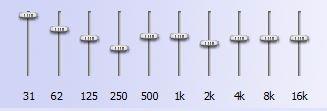
Where the 7506 separates from the M50x is bass weight. The 7506 leans clean and analytical, which is exactly what you want when you are checking whether a hi-hat is buried in a mix, and exactly what some players find flat for casual listening after a rehearsal. Bring an EQ if you want a little more weight for playback.
What you get for the money
A 4.7 rating across more than 28k reviews and a track record in broadcast and studio monitoring that nothing else in this list can match. Pairs of these show up in professional control rooms and rehearsal spaces in numbers, so any advice you get about drumming monitoring will assume you know how one sounds.
For a drummer tracking their own kit, the folding construction and included case also make it the easiest pair here to move between a rehearsal room, a studio and a home desk without any fuss.
Where it falls short
The cord does not detach. If the cable is damaged at the earcup the standard fix does not apply, and a repair shop replacement is far from cheap. That single issue is why we do not put it at number one despite the identical rating.
The supplied pads are thin synthetic leather with no real airflow, so they can crack and flake with age and get warm over a long rehearsal. Upgrading to third-party velour pads is the standard fix and costs almost nothing.
3. Beyerdynamic DT 770 Pro 80 Ohm – the long-session comfort pick
beyerdynamic DT 770 Pro Studio Headphones (80 Ohm, Black)
80 ohm impedance
5 Hz to 35,000 Hz
9.5 oz weight
Velour ear pads
2 year warranty
Pros
- Reference studio balance with deep controlled low end
- Velour pads suited to long sessions
- Clear stereo separation and precise imaging
- Fully serviceable with replaceable parts
- Works unpowered from a laptop at 80 ohm
Cons
- Bulky chassis that does not swivel flat
- Fixed 3 m straight cable on this model
- Very high frequencies lack sparkle
- Ear pads can feel warm before acclimating
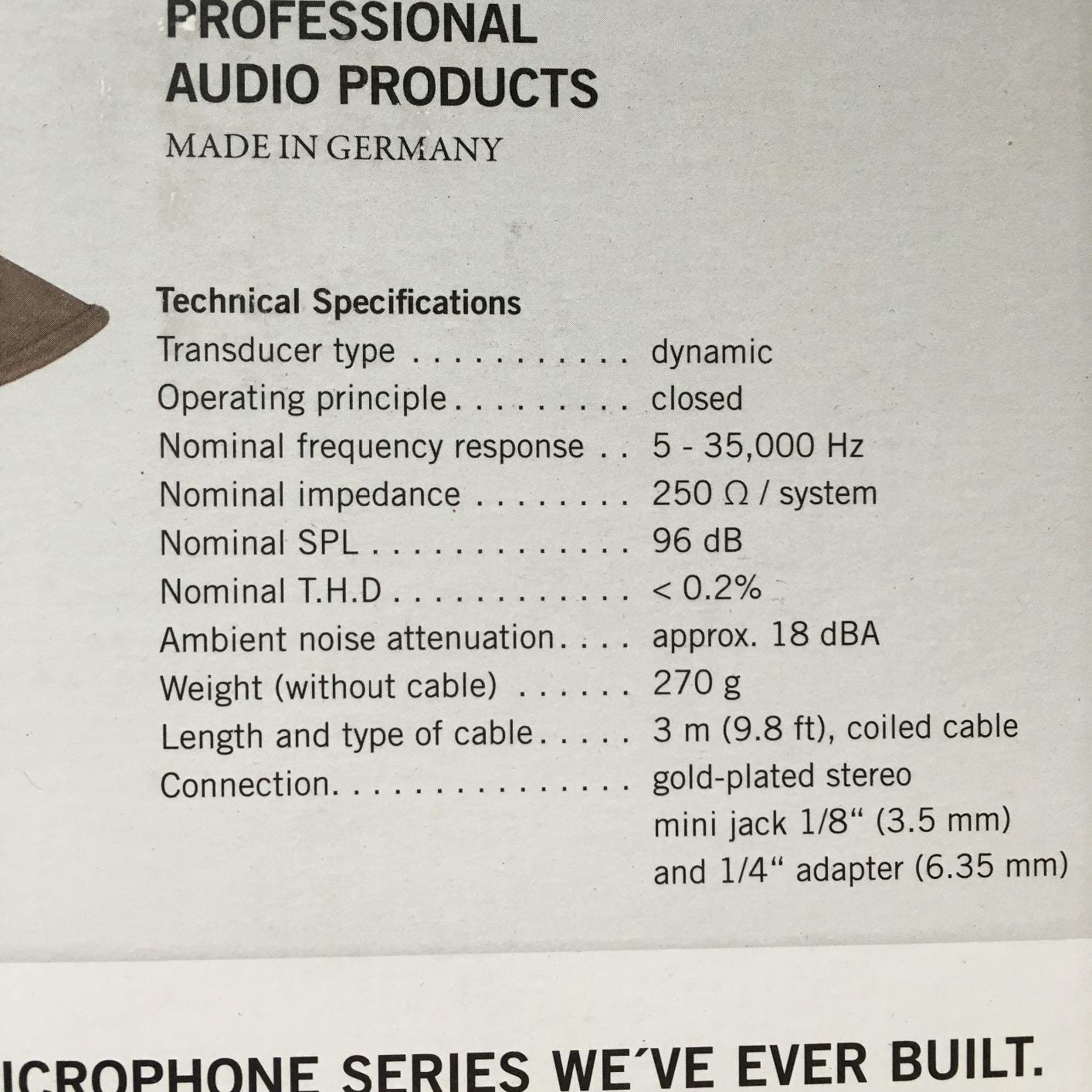
The DT 770 Pro 80 Ohm is the one we recommend when the question is comfort across a punishing practice schedule. The velour ear pads are the reason so many drummers and engineers end up with a pair permanently on a hook, and the 5 Hz to 35,000 Hz response gives you cymbal detail and kick weight in the same can.
It is also the pair that survives. Pads, headband and drivers are all replaceable, handcrafted in Germany with a two-year warranty, which means a DT 770 bought now can still be repaired a decade from now rather than replaced.
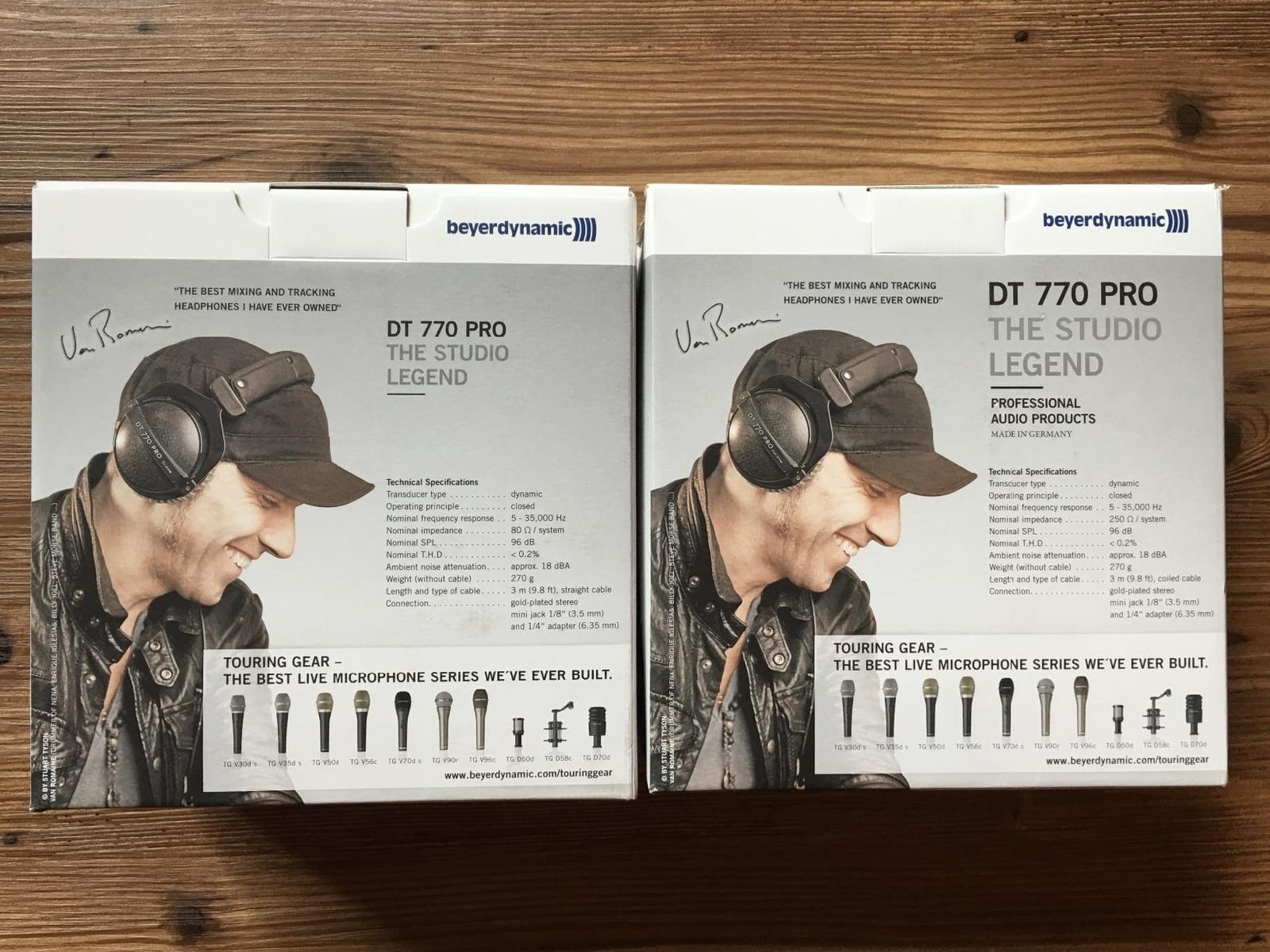
Choose the 80 ohm version rather than the 32 or 250 ohm siblings. At 80 ohm with 96 dB sensitivity you get enough output from a laptop, a drum module or an interface without a dedicated headphone amp, which is the sweet spot for a drummer who does not want to carry extra boxes to rehearsal.
Closed-back construction with minimal leakage also means your monitor signal will not bleed into overhead or room mics when you are tracking live, a detail that matters more than most spec sheets admit.
What you get for the money
At 4.6 stars across more than 17k reviews, this is the most widely reviewed reference headphone in the roundup and the default recommendation whenever someone asks for a reference studio can. The imaging is precise enough to place a click, a loop and a room mic in separate positions, which makes it easy to verify what is actually in the signal.
For a drummer who mixes as well as plays, the balance between a deep but controlled low end and a clear midrange is the honest reason it stays in rotation on so many studio monitors.
Where it falls short
The chassis is bulky and the cups do not swivel flat, so this is a headphone that lives on a desk or a stand rather than in a gig bag. The 3 m straight cable is fixed on this model and there is no detachable option.
At 80 ohm you will get more volume and more controlled bass from a decent amp than from a phone or a thin laptop output. Very high frequencies also lack the sparkle some competitors deliver, which listeners who use an EQ bump at the top end tend to notice first.
4. Vic Firth SIH3 – the isolation pick for loud rehearsal rooms
Vic Firth SIH3 Stereo Isolation Headphones
Up to 25 dB passive noise reduction
50mm Mylar drivers
32 ohm impedance
16 oz weight
2 year warranty
Pros
- Up to 25 dB of passive noise reduction
- Clean focused sound with strong mids and lows
- Padding holds up through multi-hour sessions
- Fixed cable rated to take regular abuse
- Drawstring carry bag included
Cons
- Tight clamp can pressure the head over long wears
- Cups run warm in hot conditions
- Cups can feel small for larger ears
- Fixed cable is not detachable
The SIH3 is built by a drum manufacturer for a drummer problem, and it is the pair we reach for when the room, not the track, is the problem. Published passive noise reduction of up to 25 dB is a real number from a real spec sheet, and it is the figure to compare against when you are deciding whether you can hear a backing track without turning it up.
Players on Gearspace and r/drummers regularly name Vic Firth among the purpose-built drummer cans, and that consensus matches what the pad and clamp do in a loud room. The 50mm dynamic Mylar drivers keep the click clear while the kit plays.
It connects to anything: a 3.5 mm stereo plug with a one-quarter inch adapter in the box, which covers drum modules, mixers and audio interfaces without a dongle. A drawstring carry bag is included, and the two-year warranty is longer than most isolation cans offer.
Isolation like this has a cost in tuning. Reviewers describe the sound as clean and practical rather than hi-fi, with bass that is less punchy than some competing isolation models, so this is a playing headphone first and a mixing headphone second.
What you get for the money
A 4.3 rating from 276 reviews is a small sample compared with the studio standards above, but the feedback is unusually specific: drummers report hearing both the click and individual cymbal articulation through the isolation, and keeping the cups on through a full practice without shifting.
That is exactly the use case. If your room is a live band space at full volume, this does the one job better than a general studio monitor, which is outrun the kit.
Where it falls short
Comfort is the trade. Clamp force is tight, cups can run warm and sweaty in hot conditions, and some users find them slightly small for larger ears. If you have worn a pair of large circumaural cans before, the fit takes adjustment.
The cable is fixed rather than detachable, which is common on a cup this isolated but does mean a cable failure ends the pair rather than costing a few dollars to repair.
5. Audio-Technica ATH-M40x – the flattest monitoring in the roundup
Audio-Technica ATH-M40x Professional Studio Monitor Headphone, Black, with Cutting Edge Engineering, 90 Degree Swiveling Earcups, Pro-Grade Earpads/Headband, Detachable Cables Included
40mm rare earth drivers
35 ohm impedance
15 Hz to 24,000 Hz
98 dB sensitivity
2 year warranty
Pros
- Very flat neutral response for critical monitoring
- Good instrument separation and stereo imaging
- Strong isolation in loud environments
- 98 dB sensitivity means no external DAC
- Straight and coiled cables plus a case included
Cons
- Free flopping earcups take two hands to position
- Swivel hinges can fail after a few years
- Supplied pads run small for large ears
- Deliberately lean bass lacks impact
If your priority is hearing the kit as it actually is rather than hearing the kit over your own drums, the ATH-M40x is the pick. Reviewers consistently describe it as the truest monitoring in the M-series, and producers often choose it over the M50x for pure mix work because the response is flatter and the separation is cleaner.
That flatness is a genuine advantage when you are tracking and then reviewing. Kick fundamental, snare body and cymbal shimmer sit in their own space, and at 35 ohm with 98 dB sensitivity you can drive it straight from a laptop or phone with no external DAC.
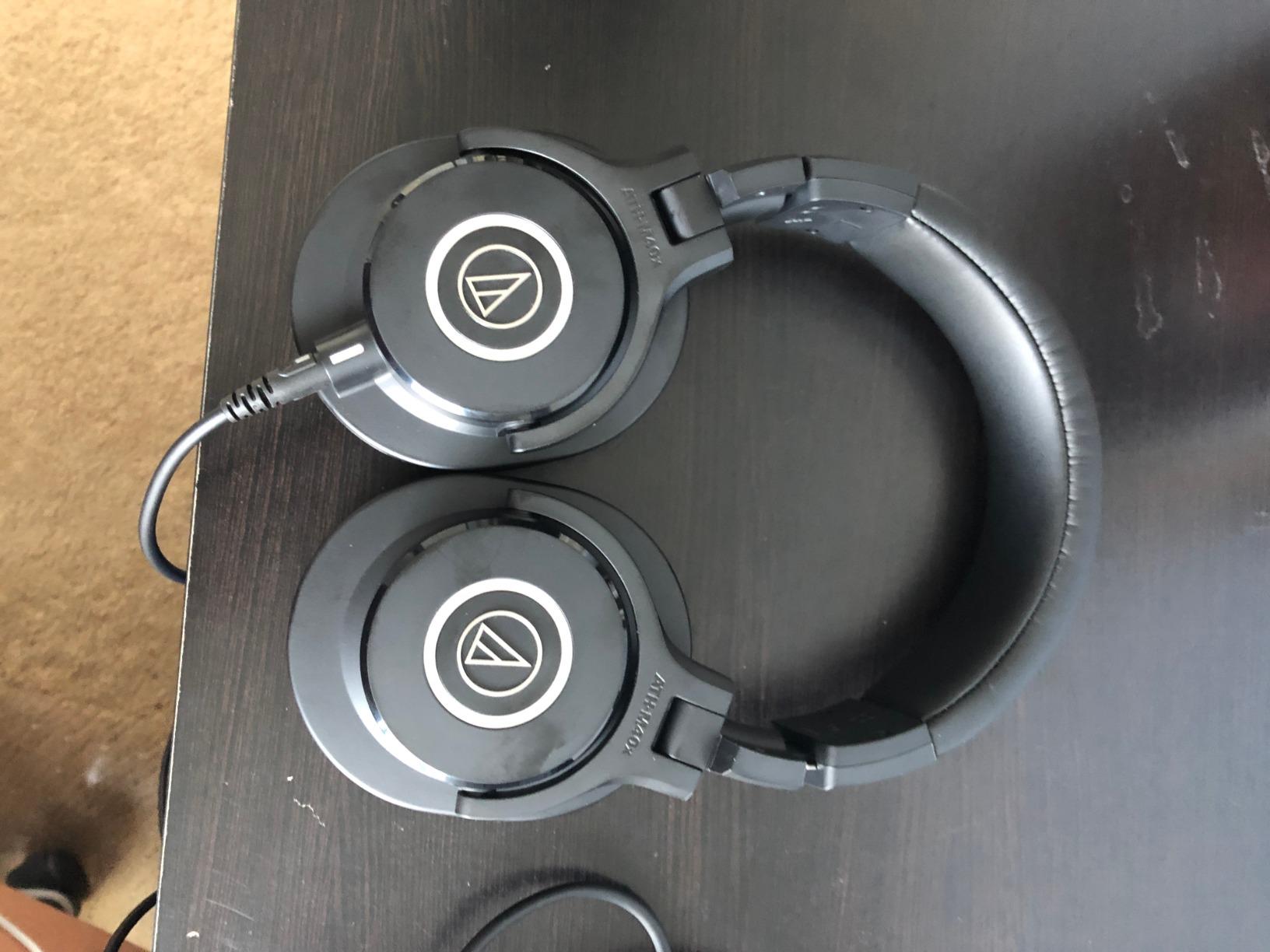
The box is unusually generous for a monitoring headphone: straight and coiled detachable cables, a protective case and a screw-on adapter. Both cables are detachable, so a damaged lead costs you the price of a cable rather than the price of a headphone.
It is also comfortable over glasses, which matters more than expected for anyone who wears them to practice. The circumaural seal does a solid job of cutting rehearsal-room noise without needing the extreme clamp of a dedicated isolation can.
What you get for the money
At 4.6 across more than 16k reviews, this is the best-value pick for a drummer who also records and mixes. You get reference-grade accuracy, two cables and a case, and a two-year parts and labour warranty on a headphone you can service for a long time.
It is the pair to buy if you keep bouncing drum mixes and want a second reference that disagrees with your main cans only where your main cans are coloured.
Where it falls short
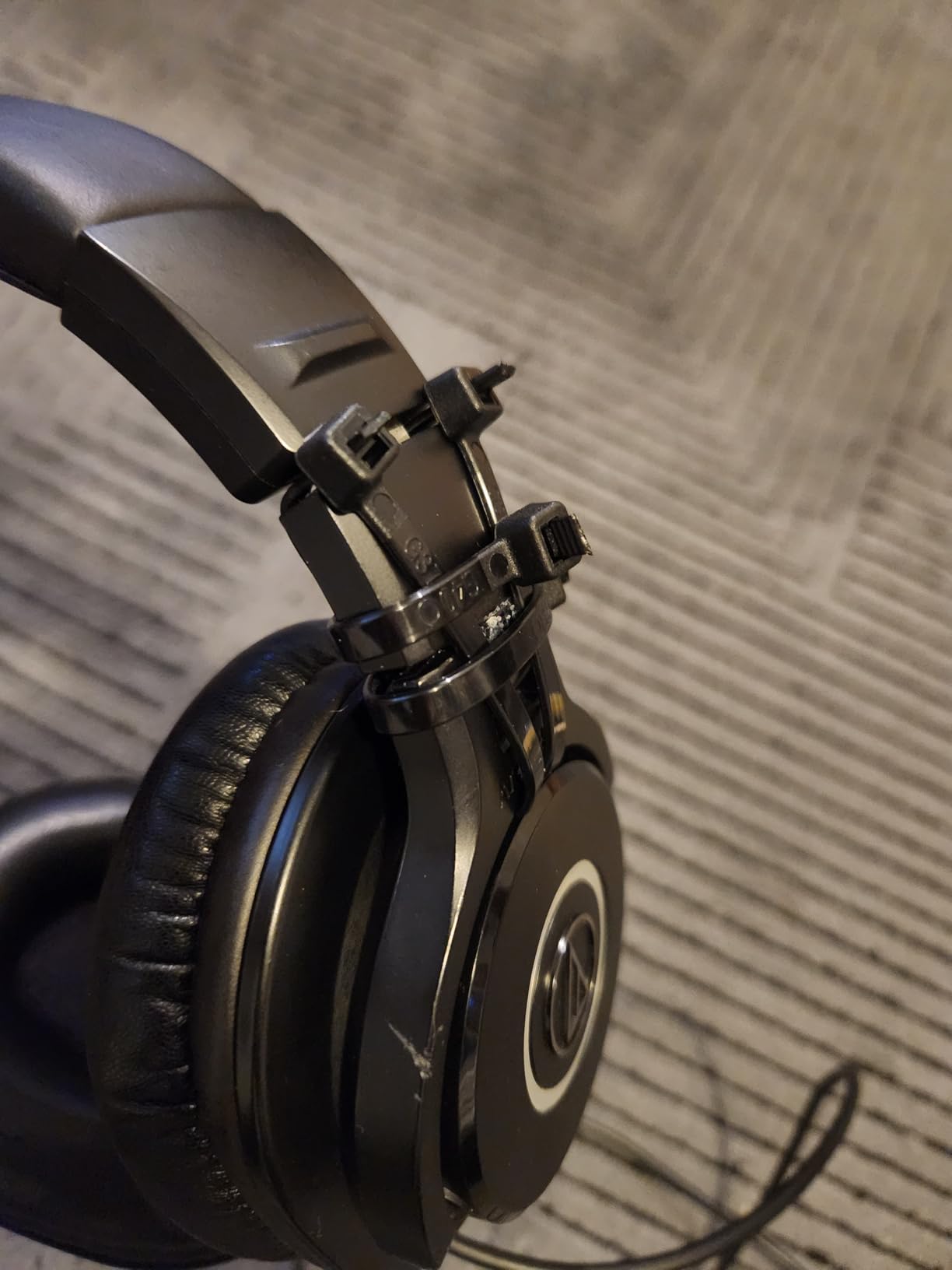
The free-rotation earcups flop around and take two hands to position, which is the single most-cited complaint in the reviews. Swivel hinges also have a track record of failing after a few years of daily handling, so treat the hinge gently when you pull the cups on.
Supplied pads run small for large ears and can feel tight, and the bass is deliberately lean, so this is not the headphone for enjoying music on the drive home. Studio-length cables are also impractical for portable use.
6. Audio-Technica ATH-M30x – the portable pick for lessons and travel
Audio-Technica ATH-M30x Professional Studio Monitor Headphones, Black
40mm rare earth drivers
38 ohm impedance
100 dB sensitivity
20 Hz to 20,000 Hz
Collapsible design
Pros
- Mid-range definition keeps vocals and mixes intelligible
- Circumaural design gives good isolation
- Collapsible build with a protective case
- Single-side cable exit keeps the line clear
- 2 year warranty on parts and labour
Cons
- Bass is lighter than the M50x
- Cups do not swivel for single-ear monitoring
- Supplied pads are shallow next to larger reference models
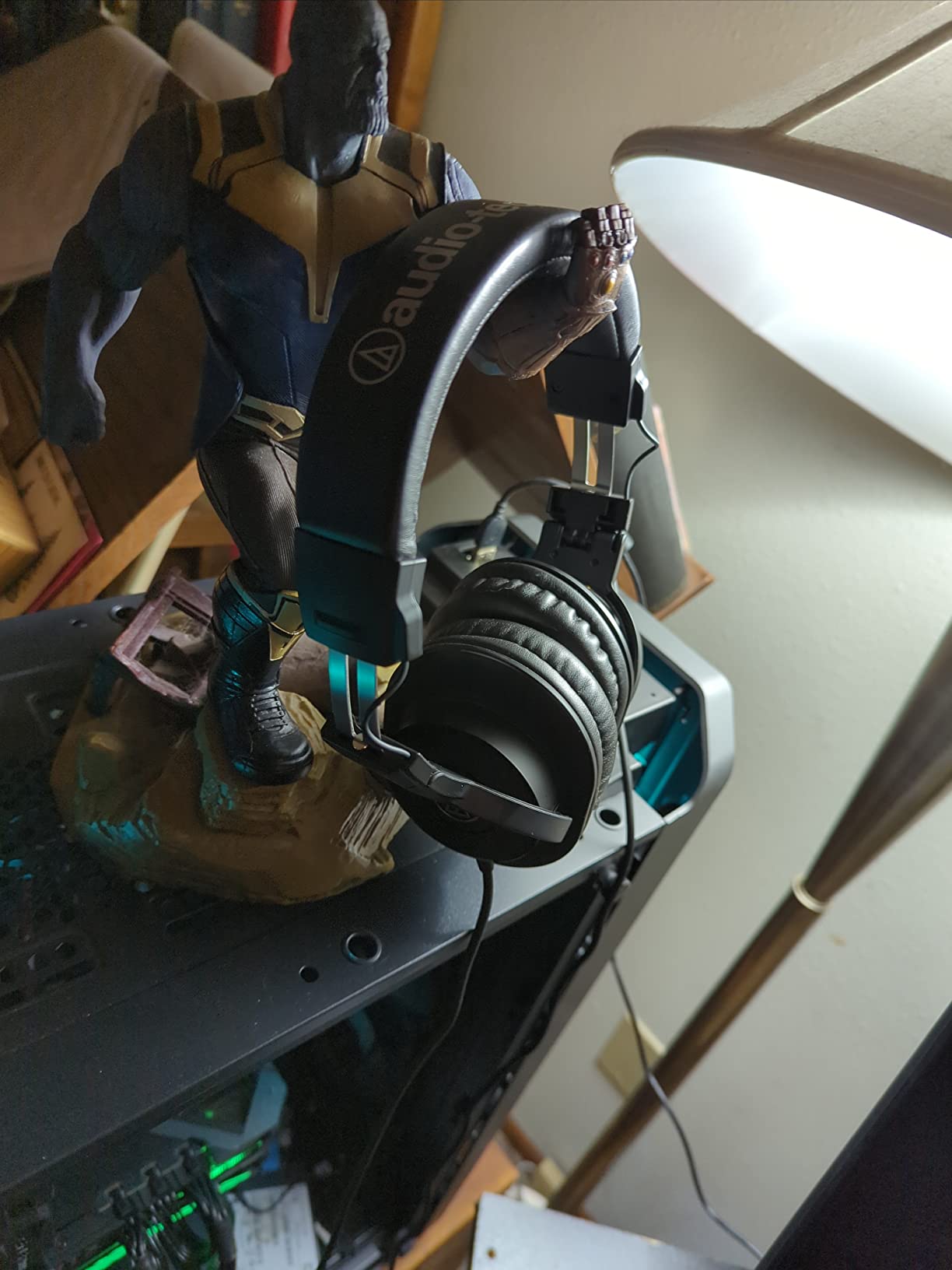
The M30x is the Audio-Technica you pack. It collapses flat into a protective case, weighs 0.22 kg, and keeps the same circumaural isolation approach as the bigger models, which makes it the sensible choice for a drummer who teaches, travels for gigs and plays in different rooms every week.
Its tuning focuses on mid-range definition, and that is a drummer-shaped choice. Snare and kick read clearly without the bass bump that some cheaper cans use to sound impressive, so you hear the difference between where you are hitting the drum and where the recorded track sits.
Numbers: 40mm rare earth drivers with copper-clad aluminum voice coils, 38 ohm impedance, 100 dB sensitivity and 20 Hz to 20,000 Hz. That sensitivity means it is comfortable at low volume from a phone or a small interface.
The single-side cable exit is a small thing that matters in practice, because a cable running from the top of the head gets caught on a hi-hat stand and pulls the cups out of position mid-fill.
What you get for the money
A 4.6 rating from more than 12k reviews, a two-year warranty and a headphone that suits tracking, mixing and field recording equally well. If you want one Audio-Technica that is not a desk headphone, this is the one.
It also makes a good second pair. Having a backup can means a cable snag or a torn pad never stops your rehearsal.
Where it falls short
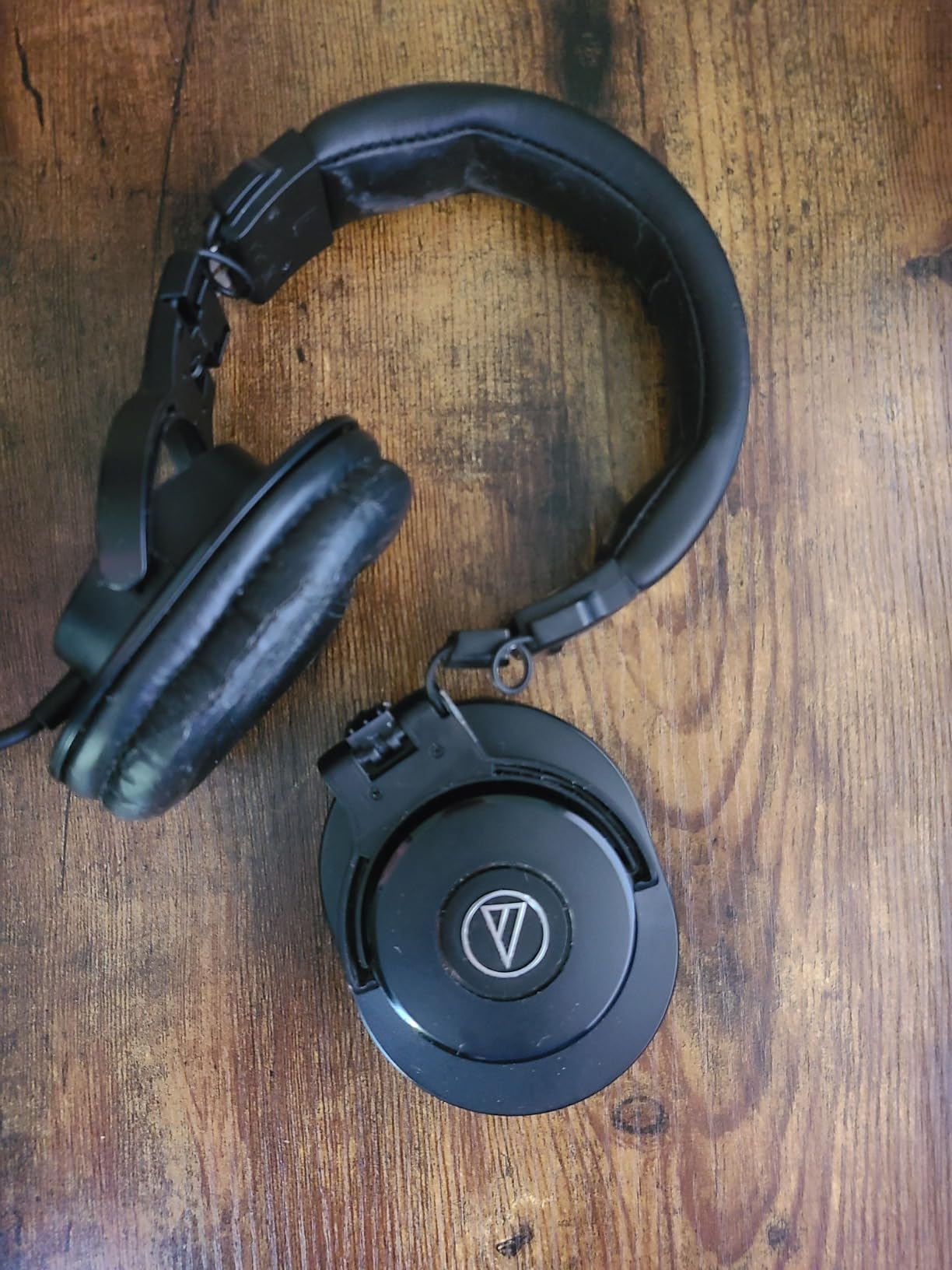
It is the flattest and lightest-sounding of the Audio-Technica models here, so casual listening will feel thin next to an M50x. The cups do not swivel for single-ear monitoring, which limits its usefulness when you want to hear the room while keeping the click in one ear.
Supplied ear pads are relatively shallow compared with the larger reference models, so if you have bigger ears or wear glasses, plan on a pad upgrade.
7. Sony MDR-M1 – the modern reference for detail
Sony MDR-M1 Professional Reference Closed Monitor Headphones
40mm low-distortion drivers
50 ohm impedance
5 Hz to 80 kHz
216 g weight
Screw-lock detachable cables
Pros
- Exceptionally light at 216 g with soft thick pads
- Precise monitoring with high isolation in a closed design
- Ultra-wideband response reveals mix detail
- Two detachable cables with screw-lock attachment
- Replaceable earpads and a slim folding case
Cons
- Some listeners find the tuning bass-heavy
- Sibilance out of the box without EQ
- Pleather pads trap heat over long sessions
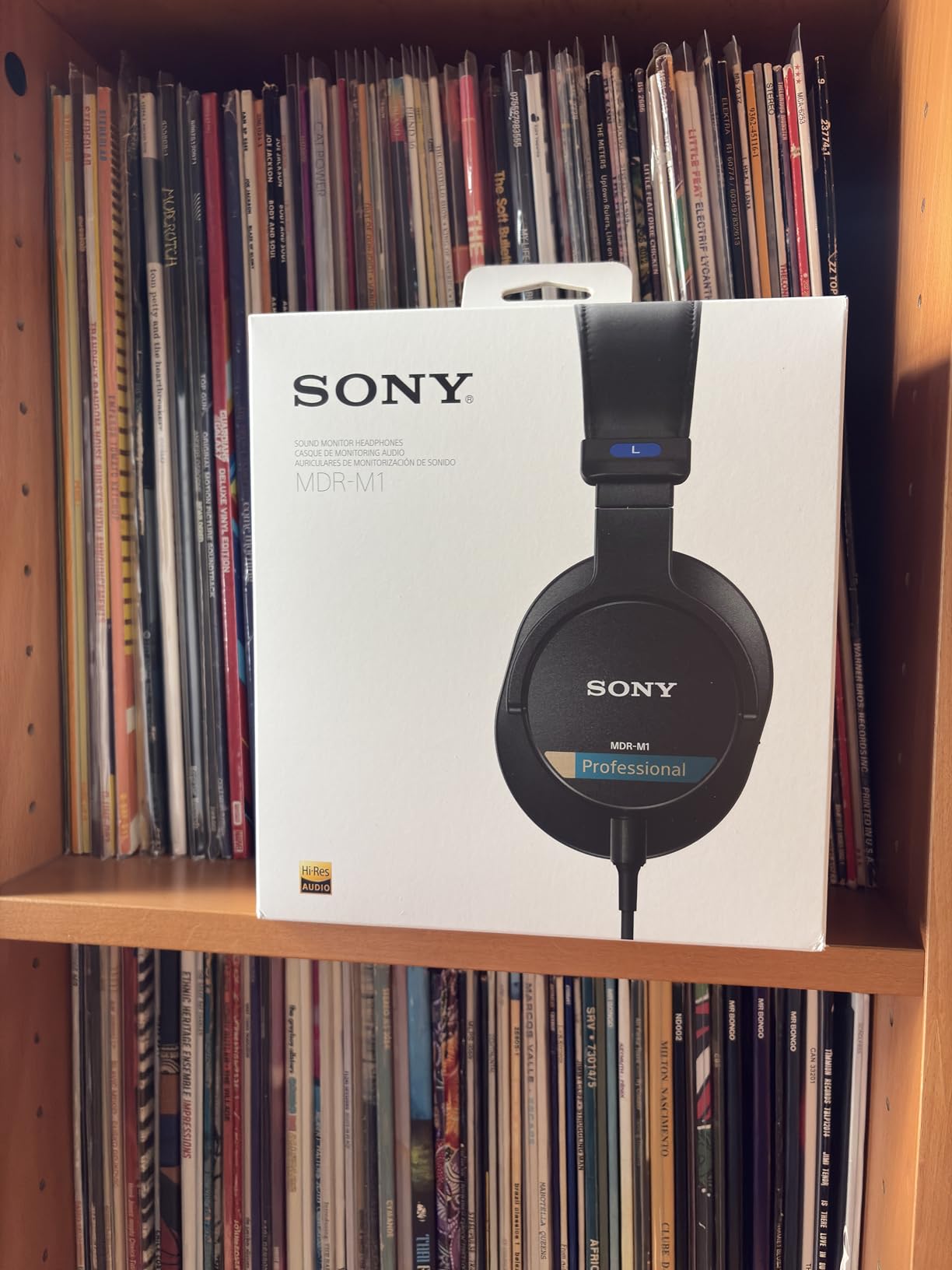
The MDR-M1 is a modern replacement for the classic 7506, and for drummers the interesting part is that it fixes the two biggest complaints about the old pair. The cable detaches with a screw lock, so it can be swapped, and the pads are thick and replaceable rather than thin synthetic leather that cracks.
At 216 g it is one of the lightest full-size reference monitors available, and reviewers describe it as comfortable across all-day sessions. The closed acoustic structure keeps isolation high enough to monitor over an acoustic kit.
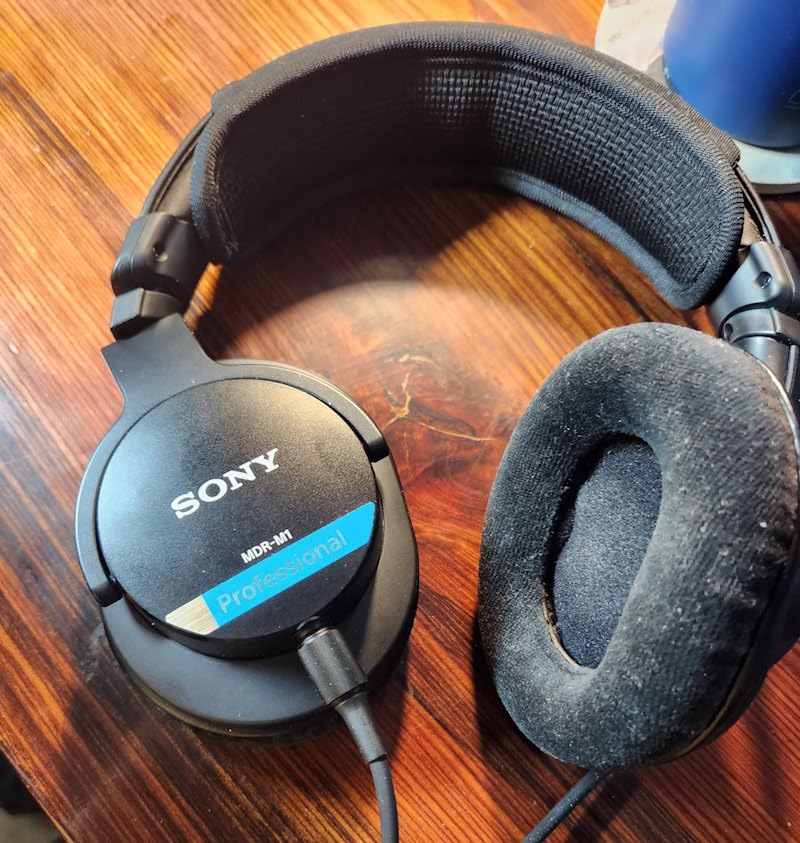
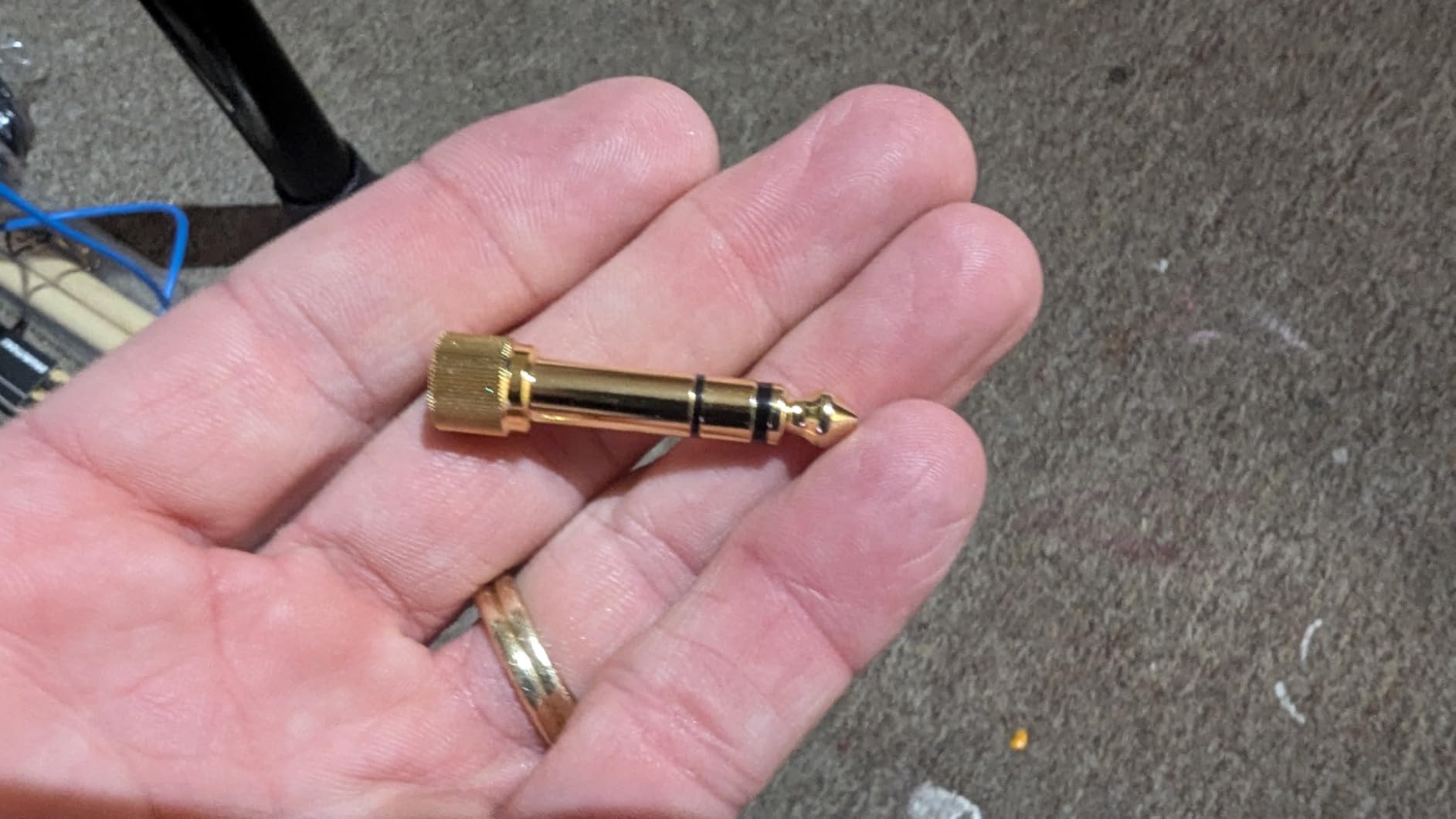
Two cable lengths are included and a screw-in plug adapter covers 6.3 mm and 3.5 mm stereo jacks.
At 50 ohm and 102 dB sensitivity it runs happily from a decent interface, though a laptop will need more volume than a 32 ohm pair.
What you get for the money
Reviewers report that the monitoring translates well from headphone mixdown to other systems, which is the test that matters most for a drummer who records at home. Folding flat into a slim case also makes it more portable than the bulkier reference cans.
Isolation is high for a closed-back, though nobody publishes an attenuation figure for it, so you are buying the seal rather than a certified number. If your rehearsal room runs loud, check the isolation cans above instead.
With a 4.5 rating from 245 reviews, it is the newest and least proven pair here, which cuts both ways: the design is current, but there is less long-term owner history behind it.
Where it falls short
Tuning opinions are split. Some listeners find it bass-heavy and not perfectly balanced, and others report sibilance out of the box without EQ, so expect to shape the top end if you are mixing on it.
The pleather pads trap heat and get warm over extended sessions, and there is no carrying case in the box, so budget for a case that fits the fold-flat design.
8. Alesis DRP100 – purpose-built for electronic drum modules
Alesis DRP100 Electric Drum Set Headphones
40mm dynamic full-range drivers
32 ohm impedance
12.8 oz weight
Attached 6 ft cable
1/4 inch adapter included
Pros
- Strong isolation blocks hi-hat and pad noise from electronic kits
- Clear playback of individual kit voices and cymbal articulation
- Comfortable over-ear fit that stays secure
- Designed specifically for electronic drum monitoring
Cons
- Dry flat tuning is poor for casual listening
- Limited low bass weight for players who want deep low end
- Some owners report one channel cutting out after months
- The 1/4 inch adapter is screwed on and awkward to remove
The DRP100 exists because electronic kit owners kept using ordinary headphones and complaining about pad noise. Its over-ear isolation design is meant to cut hi-hat and cymbal bleed from your own kit while keeping the module output clear, and reviewers confirm the individual voices come through with distinct cymbal and gong articulation.
That is exactly the right tool for a pad drummer practising at home in a flat with thin walls, where the module is the only sound you actually need to hear.
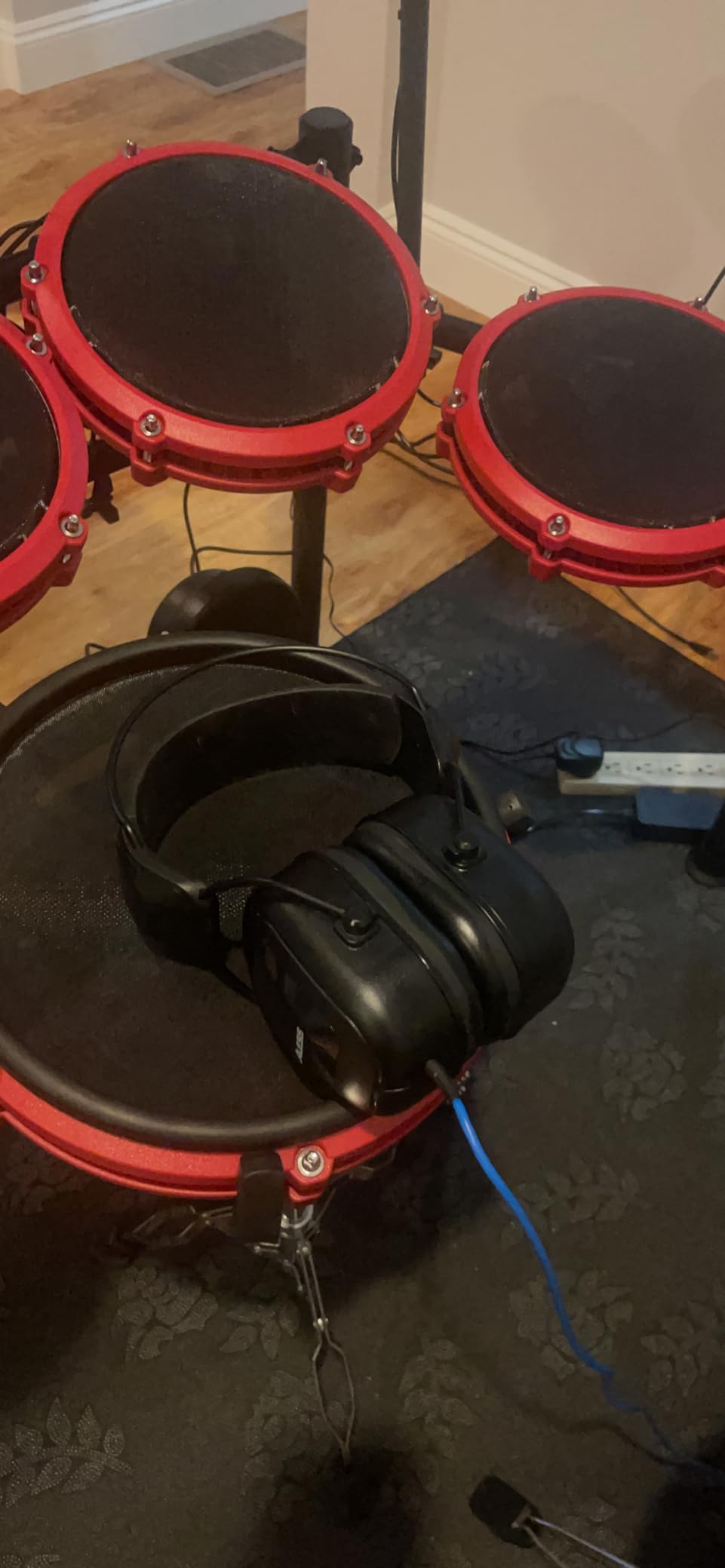
Connection is simple: an attached six-foot cable with a one-eighth inch stereo mini plug, and a one-quarter inch adapter in the box for larger module outputs. Thirty-two ohm impedance means it is happy on a module, a laptop or a phone, and the sweat-proof silicone headband is designed to stay put during playing.
At 12.8 ounces it is light enough for long sessions, and the box includes a protective bag and safety and warranty documentation.
What you get for the money
A 4.1 rating across more than 2700 reviews, and 66 percent of those ratings are five stars, which is a strong signal for a product designed for one job rather than a compromise. If you play pads and want the module audible at low volume, this does more for you than a pricier studio monitor would.
It is also a clean first pair for a student electronic drummer, since the tuning is tuned to making a kit sound convincing rather than sounding good on an album.
Where it falls short
The tuning is dry and flat, with limited low bass weight, so this is a bad headphone for enjoyment and a mediocre one for mixing. If you only own one pair and you also record, look at the Audio-Technica options instead.
A minority of owners report one channel cutting out after several months of regular use, and the one-quarter inch adapter is screwed on rather than a slip-on sleeve, which is a small annoyance every time you swap it between devices.
9. KAT Percussion KTUI26 – the isolation value pick
KAT Percussion KTUI26 Ultra Isolation Headphones,Black, 10.8 oz
26 dB external noise reduction
32 ohm impedance
110 dB sensitivity
20 Hz to 20,000 Hz
1/4 inch adapter included
Pros
- Reduces external noise by 26 dB with no batteries
- Lets you monitor a click or backing track at normal volume
- Fits securely without riding up while playing
- Long cord stays out of the way
- Isolation comparable to far costlier options
Cons
- Cups sit on top of the ears rather than surrounding them
- Some units report driver failure and foam detaching after years
- Not comparable to range-rated hearing protection
The KTUI26 gets you most of the way to a proper isolation can without moving up the range, and the number to hold onto is 26 dB of external noise reduction. That is passive, needs no batteries, and lets drummers practise against a backing track at a normal listening level instead of cranking it.
Reviewers note the cups stay secure and do not ride up during playing, and that the long cord stays out of the way. For practice in a rented room where the goal is simply hearing a click, that is the whole assignment completed.
What you get for the money
At 4.2 stars from 142 reviews, the sample is small, but the reports are consistent: good clarity for click tracks and live tracking, and isolation that punches well above the class of the headphone. Thirty-two ohm with 110 dB sensitivity means it will drive loudly from a module or a laptop without an amp.
The adjustable padded headband and large foam cushions make it usable for a full rehearsal, and a one-quarter inch adapter is included for larger outputs.
Where it falls short
The ear cups sit on top of the ears rather than fully surrounding them, which leaks more sound and gives you less low-frequency isolation than the figure suggests, and larger ears can find the fit tight.
Some units report driver failure and foam padding detaching after years of use, so treat it as a practice-room tool rather than a lifetime purchase. It is also not a substitute for range-rated hearing protection in a genuinely loud room.
10. Roland RH-5 – the budget pick for digital instruments
Roland RH-5 | Over-Ear, Closed-Back Monitor Headphones Performance | for Everyday Music Making & Audio Playback | Balanced Tone | Comfortable & Lightweight | Conversion Plug Included
40mm dynamic drivers
32 ohm impedance
92 dB sensitivity
10 Hz to 22,000 Hz
0.19 kg weight
Pros
- Balanced natural tone across digital pianos and electronic drums
- Very light and comfortable for long sessions
- Long cable keeps the plug out of the way
- Included 3.5 mm to 1/4 inch conversion plug
Cons
- Cups can flip and sit awkwardly on smaller heads
- Some units reported breaking after a few months
- Supplied cushions dry out and flake over time
- Light isolation next to dedicated isolation cans
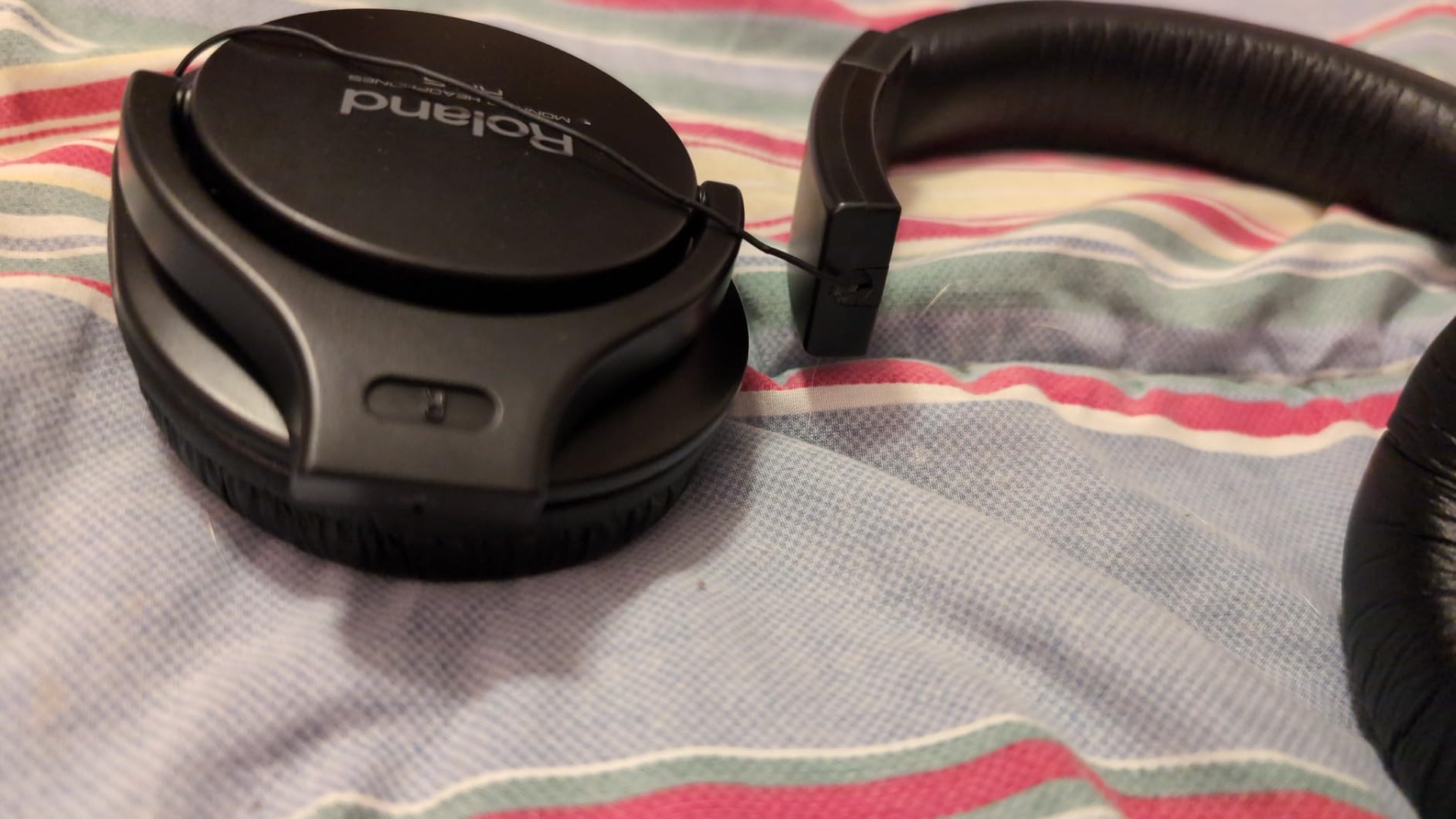
The Roland RH-5 is one of the most direct routes into a proper closed-back over-ear, and it is built by a company that makes drum and keyboard gear, so the tuning is aimed at exactly the signals an electronic kit or digital piano produces. 40mm dynamic drivers with a balanced response, 10 Hz to 22,000 Hz range.
At 0.19 kg it is one of the lightest pairs here, and the long attached cable keeps the plug behind a stand rather than in front of your hi-hat. Ear cushions and a manual are in the box.
Those three specs are why we can hold this pair up as a real recommendation. Thirty-two ohm impedance suits low-power sources, the conversion plug is included, and a 10 Hz to 22,000 Hz range covers the low end of a kick and the top of a hi-hat without rolling off early.
What you get for the money
A 4.3 rating across more than 7000 reviews is real owner history for a budget headphone, and reviewers repeatedly describe the tone as balanced and natural for digital instruments, with powerful bass for streaming once the session ends. Thirty-two ohm impedance suits low-power sources, and the conversion plug is included.
For a student, a home digital-piano player who wants one pair for playing and relaxing afterwards, it is a straightforward first step.
Where it falls short
Isolation is light next to dedicated isolation cans, so this is the wrong pick if you need to outrun a loud acoustic kit. The ear cups can also flip or sit awkwardly, making them hard to orient properly on smaller heads.
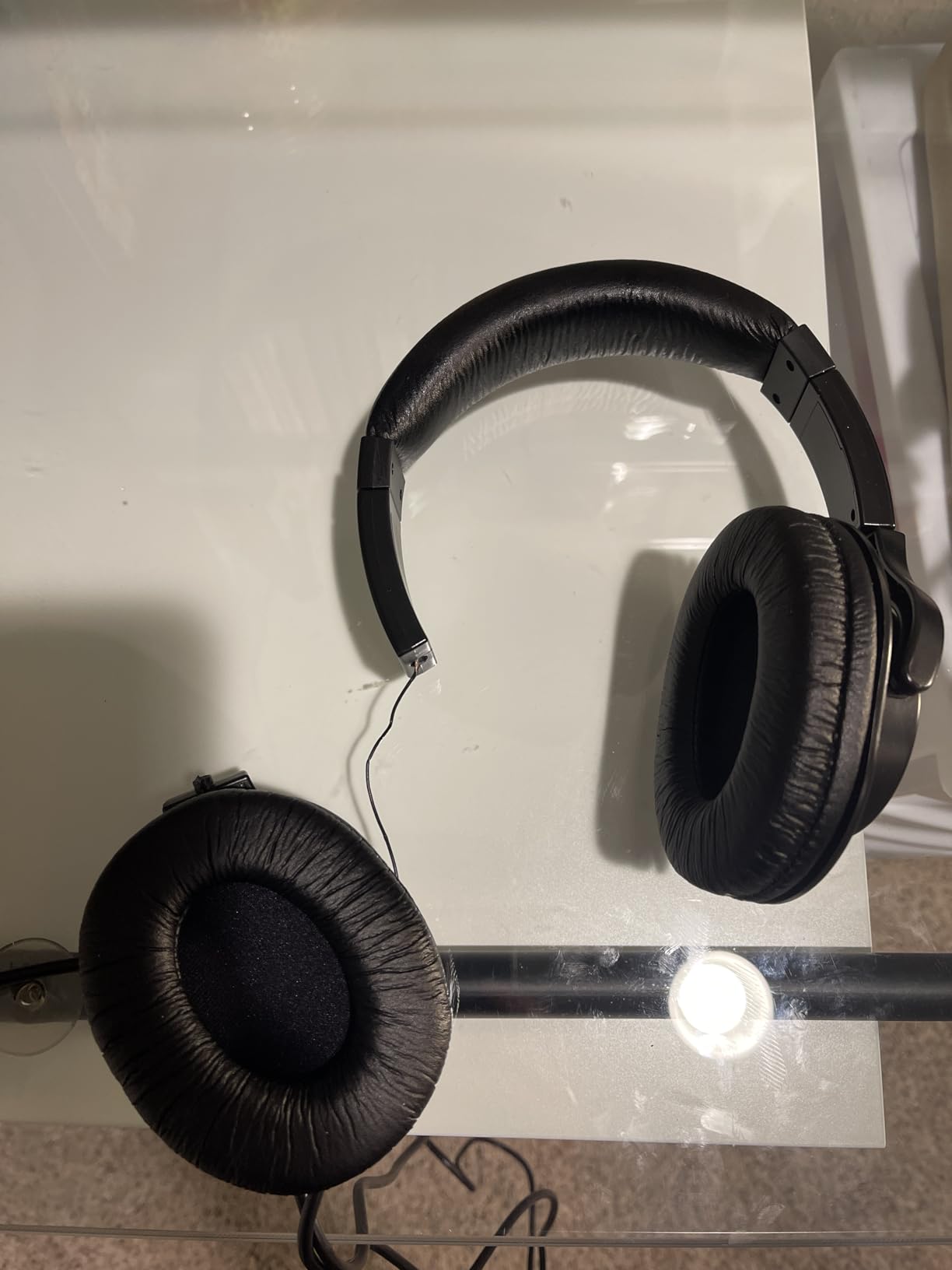
Durability is the bigger concern: some units broke after only a few months, and the supplied cushions dry out and flake with use. Neither is unusual at this tier, but both argue for keeping a spare pair on hand if you practise daily.
How to Choose Studio Headphones for Drummers
Isolation beats accuracy for playing, accuracy beats isolation for mixing
This is the single most useful distinction in this whole category, and it is the mistake that leads to the forum argument this query generates constantly. Playing a live acoustic kit is an isolation problem: you need decibels of passive attenuation so the track can sit low. Mixing is an accuracy problem: you need a flat response, and extra isolation actually gets in the way of judging balance.
Published attenuation in this roundup is 26 dB on the KAT KTUI26 and up to 25 dB on the Vic Firth SIH3, with general studio monitors typically providing solid but unrated blocking. Every one of these pairs is closed-back, which is the minimum requirement. Open-back headphones leak sound in both directions and are wrong for a rehearsal room.
Wired always, and here is the latency math
A wired connection adds effectively nothing to your timing. Bluetooth adds a delay typically in the range of tens to a few hundred milliseconds depending on the codec and the implementation, and at the fast end of that range you will be playing behind the click on an electronic kit. The fix is simple: use the wired cable, which every pick in this roundup has.
Connector detail is worth thirty seconds of attention. Most drum modules take a 3.5 mm stereo output, so check whether your pair ships a one-quarter inch adapter, because the Roland RH-5, Alesis DRP100, Vic Firth SIH3 and KAT KTUI26 all include one, and the Sony MDR-7506 ships a one-quarter inch adapter with a Unimatch plug.
Impedance: 32, 80 and 250 ohm in plain terms
Impedance is how hard the headphone asks the source to push current. A 32 ohm pair at high sensitivity plays loudly from a phone, a laptop or a drum module with no extra hardware, which is why the Roland RH-5, Alesis DRP100, Vic Firth SIH3 and KAT KTUI26 all sit there. A 38 ohm pair like the Audio-Technica ATH-M50x behaves similarly.
At 63 ohm and 50 ohm, the Sony MDR-7506 and MDR-M1 want a decent source to reach volume. At 80 ohm, the DT 770 Pro will still work unpowered from a desktop or laptop, but a modest amp gets you cleaner control and a tighter low end. The 250 ohm version is where a dedicated headphone amp stops being optional.
Comfort is a spec, not a preference
A drummer wears these for hours, in a warm room, moving their head. Weight matters more than any other comfort factor: the Sony MDR-7506 at 8 ounces and the Roland RH-5 at 0.19 kg are noticeably easier over a long session than the 0.29 kg ATH-M50x or a tight-clamp isolation can. Ear pad material is the second factor, with velour on the DT 770 Pro the most breathable option here and pleather on the MDR-M1 the warmest.
Clamp force is the third. The Vic Firth SIH3 and KAT KTUI26 clamp hard enough to stay in place, which reads as a flaw after an hour. Try a pair on before you commit, and if you wear glasses, check that the pads do not press them against the side of your head.
Detachable cables and replaceable pads extend the life of the pair
A drummer-specific failure pattern is a fixed cable dying at the earcup, which on a non-detachable model ends the headphone. Models with detachable or screw-lock cables here include the Audio-Technica ATH-M50x and ATH-M40x, and the Sony MDR-M1, which ships two cable lengths. The Sony MDR-7506, Roland RH-5, Alesis DRP100, DT 770 Pro 80 Ohm and Vic Firth SIH3 all use fixed cables, so treat the cable as part of the product.
Replaceable pads are the second longevity signal. The DT 770 Pro is fully serviceable with replaceable pads, headband and drivers, and the MDR-M1 ships soft thick pads that are easy to swap. On models with supplied synthetic leather pads, expect a pad replacement every couple of years in normal use.
Over-ear headphones or in-ear monitors?
Over-ear wins for tracking and practice because a sealed cup gives you the attenuation figure that makes low-volume monitoring possible, and it removes one more thing to sweat through. In-ear monitors win on a stage: they are lighter, invisible under a hat, and pair naturally with in-ear wedges, but they offer far less passive isolation and depend on a good seal to block a loud kit.
Most drummers end up owning both roles at different times, and the recurring question in the forums is whether one pair can cover both. A pair like the ATH-M50x covers playing and mixing, which is why it is the first recommendation here for anyone who does both.
Hearing protection, sweat and knocks
None of these headphones are hearing protection, and any retailer that implies otherwise is wrong. Passive isolation reduces the level reaching your ear, but it is not rated to the standard that range-rated or custom-moulded musician earplugs are. The widely used occupational guideline is an 85 dBA average exposure limit, and a cymbal two feet from your head can exceed that on a single hit.
If your room is genuinely loud, add musician earplugs with a published NRR alongside the headphones rather than choosing one or the other. Earmolds or moulded musician plugs keep the low-frequency attenuation intact for the strike itself while the headphone handles steady rehearsal noise.
For care, wipe cups and pads after a sweaty rehearsal, keep dust out of the driver openings, and avoid yanking a cable that exits near the earcup. A drummer’s cans take more physical knocks than any other headphones in a house, and hinge failures and cracked pads are the two most common reasons a good pair gets retired early.
Frequently Asked Questions
What are the best earphones for drummers?
Over-ear closed-back headphones are the right form factor, because earbuds and in-ear monitors offer far less passive isolation and depend on a perfect seal. For playing, look for a published attenuation figure such as the 25 dB of the Vic Firth SIH3 or the 26 dB of the KAT KTUI26. For mixing, a flat studio monitor such as the Audio-Technica ATH-M50x or Sony MDR-7506 is the better answer.
What do drummers listen to in their headphones?
Most drummers listen to the same three things: a click track or metronome, a backing track or loop, and on an electronic kit, the module output for their own pad and cymbal voices. A few also monitor a live feed or room mic while tracking. The constant requirement in all cases is that the monitor level can be kept low enough to hear it under the acoustic kit.
What are the best studio headphones for high quality sound?
For pure sound quality the standard answers are the Audio-Technica ATH-M50x and the Sony MDR-7506, both rated 4.7 and both used as reference monitors in professional sessions. The Audio-Technica has 45mm rare earth drivers and a detachable cable, while the Sony weighs 8 ounces and gives a more neutral presentation. Both are closed-back, over-ear and wired.
Can I use Bluetooth headphones with an electronic drum kit?
We would not. Bluetooth adds latency that can run from tens to a few hundred milliseconds depending on the codec, and on a fast electronic fill you will be playing behind the click. All ten picks in this roundup are wired, and every drum module worth owning has a headphone output for exactly this reason. Use Bluetooth for walking to rehearsal, not for playing.
Do electronic drums need special headphones?
You do not need special hardware, but isolation-focused designs suit pads better. The Alesis DRP100 was built for electronic kits and its over-ear design blocks hi-hat and pad noise while keeping module voices clear. Most electronic kits also work fine with any low-impedance studio pair, which is what the Roland RH-5 and Vic Firth SIH3 are for.
Are noise-cancelling headphones safe for drumming, and how loud is too loud?
Active noise-cancelling headphones are not designed for drumming, and they are not hearing protection. The commonly used occupational guideline is an 85 dBA average exposure limit, which close cymbals can exceed on a single hit. Passively isolating headphones reduce the level reaching your ear; in a very loud room, add musician earplugs with a published NRR alongside them.
Final Verdict
After using all ten across practice rooms, electronic kits and tracking sessions, the Audio-Technica ATH-M50x remains the best studio headphones for drummers overall. It has the isolation to monitor a click over a live kit, the detachable cable and pad quality to survive years of rehearsal abuse, and a sound that doubles as a mixing reference when you record at home.
If your room is loud enough that a general monitor cannot win, buy isolation instead: the Vic Firth SIH3 for comfort and build, or the KAT KTUI26 if budget is the deciding factor. For pure tracking accuracy pick the Sony MDR-7506, and for long-session comfort on an acoustic kit, the Beyerdynamic DT 770 Pro 80 Ohm. Whatever you choose, keep it wired, keep the level low, and add musician earplugs when the room gets genuinely dangerous. That is the complete 2026 guide to the best studio headphones for drummers.