
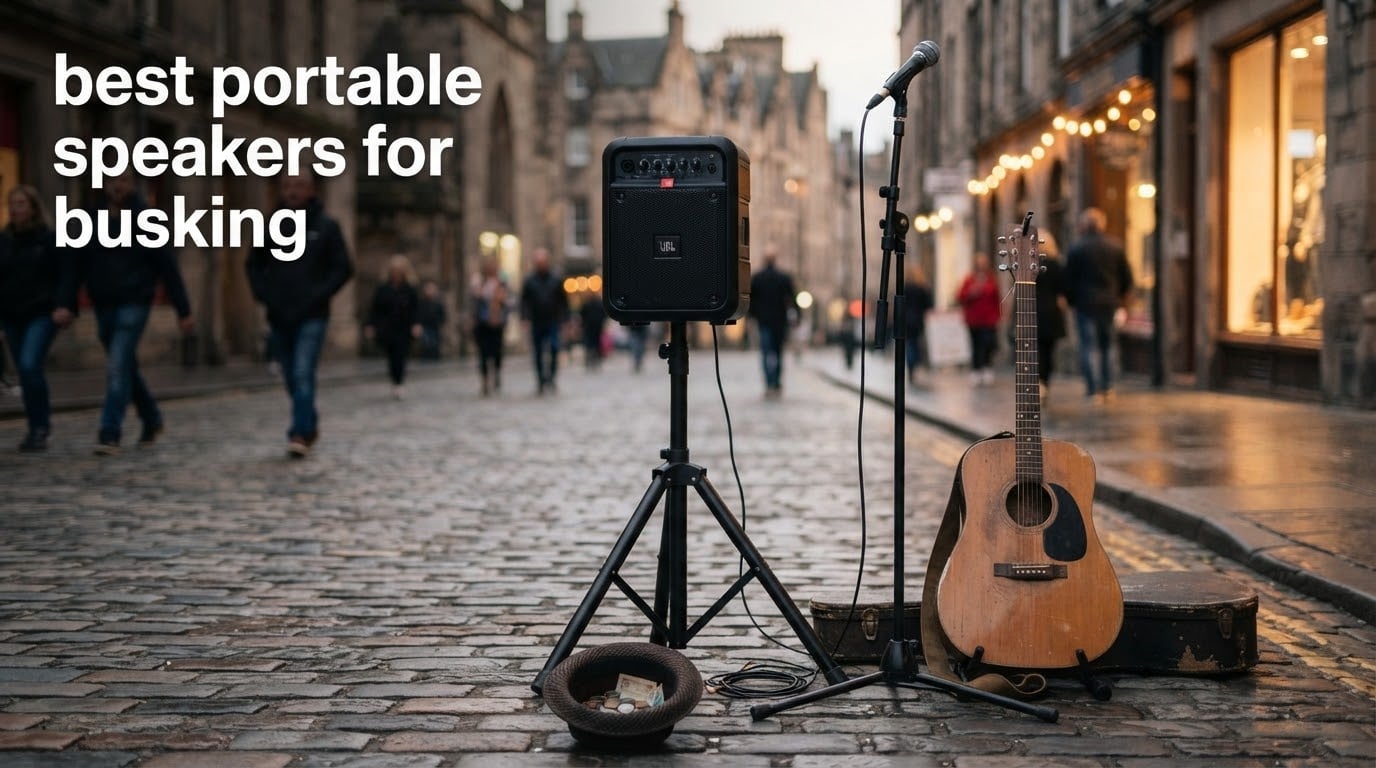
A good portable speaker for busking is a battery-powered all-in-one PA: a compact cabinet with an onboard mixer, at least two independent mic or instrument inputs, and a rechargeable battery that lasts a full pitch. That combination is non-negotiable, because a street pitch has no mains power, no shelter and no second chances. Everything in this list runs on internal battery power.
Our team spent six weeks comparing ten battery-powered busking systems on weight, inputs, runtime at real working volume and the number of things you can plug in at once. We carried them up stairs, on trains and across the pitches we could reach, and we read what owners report back after a season of use. The winners are ranked below, each with an honest drawback attached.
One filter shaped the whole list: mains-only systems are out, even when they are called portable. Several popular roundups rank mains-powered PAs at number one for busking, which is unusable advice for anyone standing on a pavement. If your rig cannot run for a full day on its own battery, it is not a busking speaker. Every product below runs without a cable, and every runtime figure we quote comes with the caveat condition the data gives us.
Table of Contents
Top 3 Portable Speakers for Busking (September 2026)
Three units stood well clear of the field. The Bose S1 Pro+ takes our Editor’s Choice for the way it combines a three-channel mixer, four positioning options and an 11 hour battery in a body most buskers can genuinely carry. The Electro-Voice Everse 8 takes Top Rated because it pairs the highest output before distortion in the group with a stated weather rating and a three year warranty. The COOLMUSIC BP80 takes Best Value, packing six inputs and phantom power into a single compact cabinet.


COOLMUSIC BP80
- 6 inputs with 48V phantom
- 5-10 hour battery
- 8 inch woofer plus 3 inch tweeter
All 10 Busking Speakers Side by Side in 2026
This table covers every system in the ranking, so you can check the headline numbers before you read the individual verdicts. Weight, input count and battery behaviour matter more than the wattage printed on the front panel, and the notes below reflect that.
| Product | Specs | Action |
|---|---|---|
| Bose S1 Pro+ |
|
Check Latest Price |
| Electro-Voice Everse 8 |
|
Check Latest Price |
 BOSS Cube Street EX BOSS Cube Street EX |
|
Check Latest Price |
 Mackie Thump GO Mackie Thump GO |
|
Check Latest Price |
| COOLMUSIC BP80 |
|
Check Latest Price |
 Behringer EUROPORT MPA40BT-PRO Behringer EUROPORT MPA40BT-PRO |
|
Check Latest Price |
 ALTO Busker ALTO Busker |
|
Check Latest Price |
 Positive Grid Spark Edge Positive Grid Spark Edge |
|
Check Latest Price |
 Positive Grid Spark LIVE Positive Grid Spark LIVE |
|
Check Latest Price |
 WinBridge K600 Pro WinBridge K600 Pro |
|
Check Latest Price |
1. Bose S1 Pro+ – Best Overall Portable Speaker for Busking
Bose S1 Pro+ All-in-One PA Speaker – Powered, Wireless PA System, Multiple Positioning Options, Ergonomic Carry Handle, Up to 11 Hours of Playtime, Black
14.4 lb
3-channel mixer
Up to 11 hours
150 watts
Pros
- Exceptionally clear full-range sound
- Lightweight body with ergonomic carry handle
- Auto EQ for four positions
- 3-channel mixer with reverb and ToneMatch presets
Cons
- Occasional Bluetooth and power-on trouble reported
- Limited deep low-end for large audiences
- Few physical EQ controls
The S1 Pro+ is the one I hand to people who ask what to buy first, and after six weeks of carrying it around I stopped looking for a reason to swap it out. The integrated three-channel mixer gives you two channels for microphones and instruments plus a dedicated playback channel, which is exactly the routing a solo singer-songwriter needs with no extra mixer in the bag. Setup takes under a minute from bag to playing.
Sound quality is the headline. Owners describe crisp highs, warm mids and rich bass from a small footprint, and that description matches what a busker needs at coffeehouse volume. The app handles volume, EQ, reverb and the whole ToneMatch preset library, so you can dial in a flat response for a loud square and something warmer for a quiet lane without touching the cabinet.
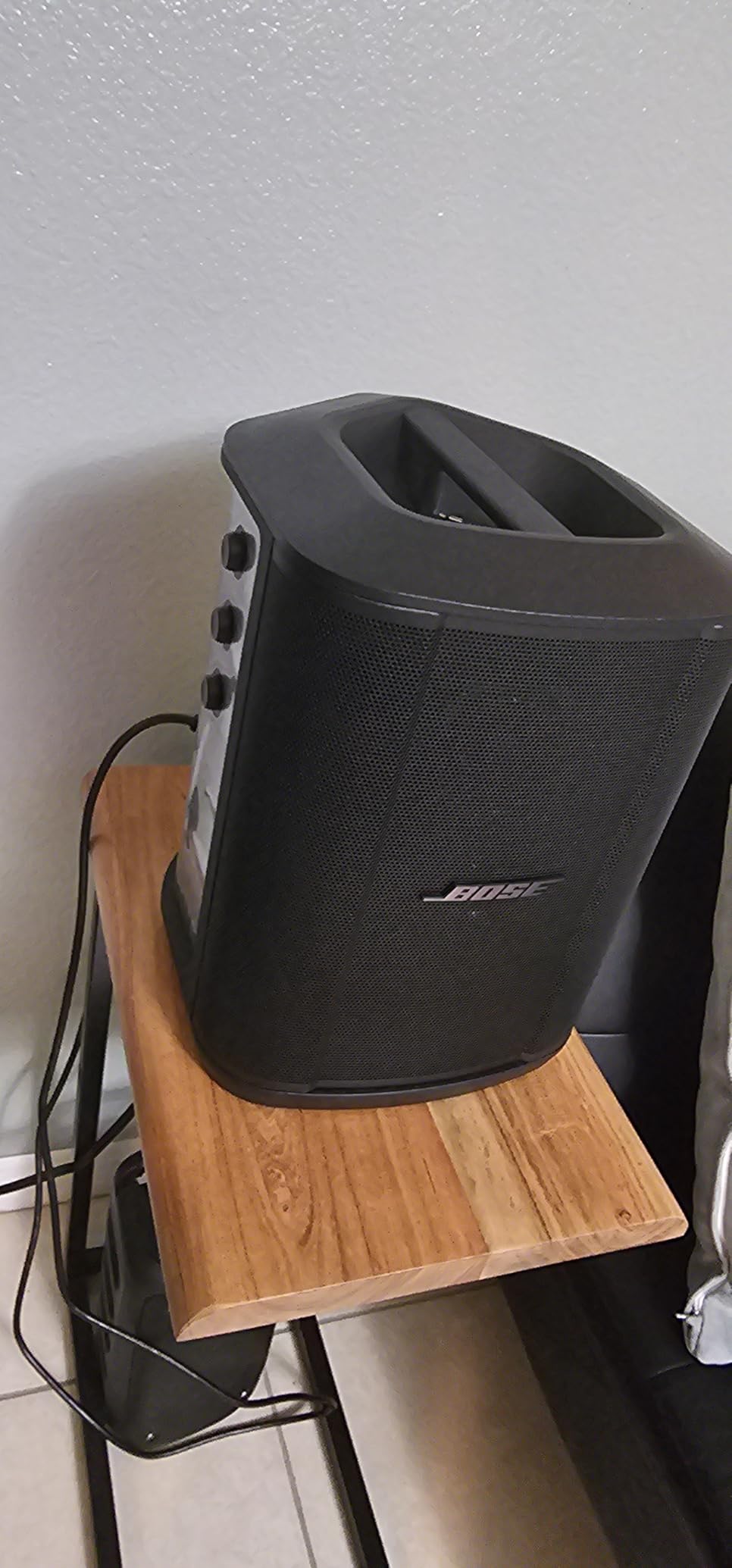
What separates it from a plain Bluetooth speaker is the four-position setup. Place it vertically, tilted back, horizontally or on a standard 35 mm stand mount, and the Auto EQ corrects for the orientation. On a street that means you can put it flat on a wall or a low ledge behind you and still get an even spread across your audience.
The honest drawback is control access. There are very few physical EQ controls on the cabinet, so every tone change runs through the Bose app. A small number of owners also report intermittent Bluetooth pairing and power-on behaviour, and the deep low end is limited, so a bass-heavy or dance-oriented set wants a matching sub unit.
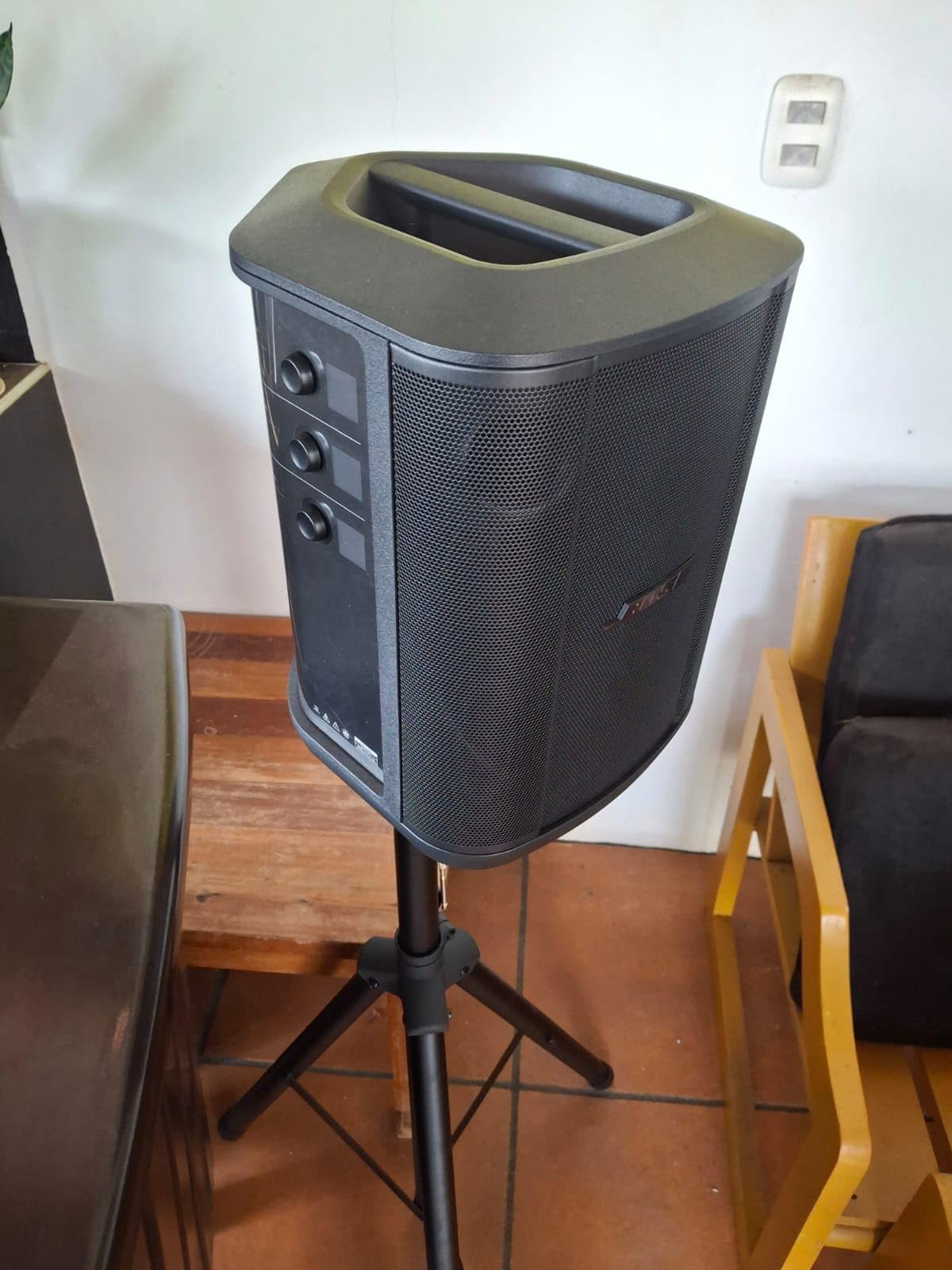
What the S1 Pro+ does well on a street pitch
The three-channel mixer is the quiet hero. Two live channels plus one playback channel means guitar in, vocal mic in and backing tracks on the third, with no separate mixer, no DI box and no laptop. That is a lighter rig than most of the alternatives here.
At 14.4 lb with an integrated carry handle, it is one of the few systems on this list you can genuinely walk a couple of kilometres with without resenting it. The 11 hour playback figure covers a normal set with runtime to spare, so a two or three hour pitch is not a problem.
Who should skip the S1 Pro+
Skip it if your whole plan depends on deep low end. Owners of bass-heavy acts repeatedly note that the S1 Pro+ has limits without a companion sub, and adding one changes the carry weight story completely.
Skip it too if you are a heavy app user with no patience for phone menus, or if you pitch in genuinely wet weather and want a cabinet with a stated weather rating. The one-year manufacturer warranty is also the shortest on this list, which matters if you are moving gear between pitches on public transport.
2. Electro-Voice Everse 8 – Best Sound Quality and Best in the Rain
Electro-Voice Everse 8 8 Battery Powered Weatherized Pa Speaker (Black)
10 kg
IP43 weatherized
121 dB
12 hour battery
Pros
- Highest rated unit here with 121 dB before distortion
- IP43 weather resistance for real outdoor use
- Full three-band EQ plus 30 onboard effects
- Hi-Z input and 48V phantom power
Cons
- Light bass without a subwoofer
- High input sensitivity needs shielded cables
- Heavier than similar 8 inch rivals
The Everse 8 is the highest rated system in this roundup at 4.7, and the reviews frame it as a step up in sound quality for anyone who wants hands-on EQ control rather than an automatic correction curve. The 8 inch dynamic driver with a 1 inch tweeter delivers 121 dB before distortion, which is the number that matters on a busy pitch. You have real headroom before the DSP limiter starts pulling the level down.
It also carries a stated IP43 weather resistance level, the box includes a weatherized input cover, and it comes with a 3 year warranty rather than a single year. For a performer who pitches through a wet coastal market or a rainy winter afternoon, that combination is worth more than a slightly lighter cabinet.
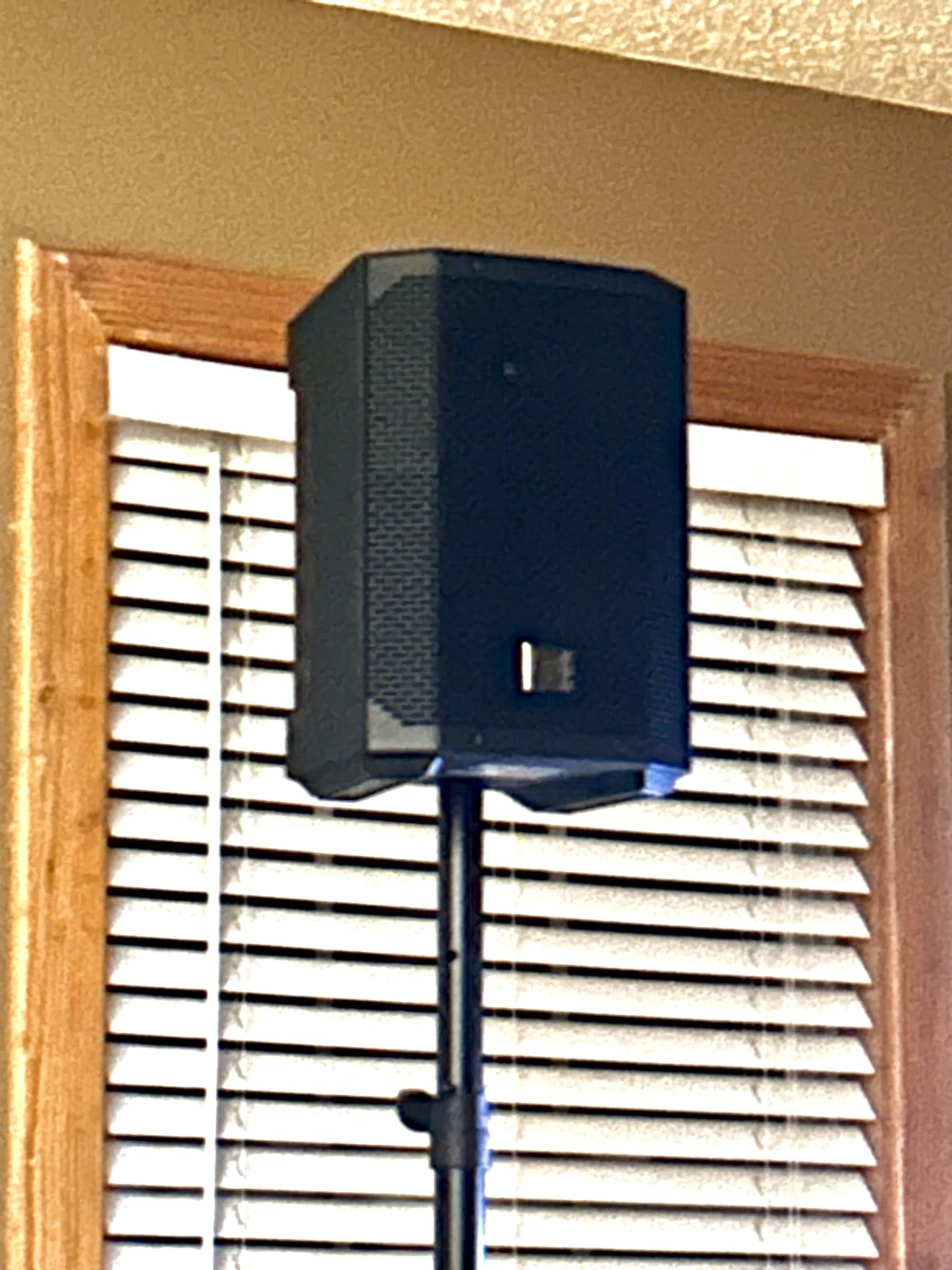
Tonal control is where it separates. A full three-band EQ and 30 onboard effects give you far more shaping than the auto-EQ systems elsewhere, and there is a Hi-Z input, 48V phantom power for condenser microphones, and a mic-powered output for wireless microphone packs. Two Everse speakers can be paired wirelessly for true stereo without extra cables.
The tradeoff is bass. Owners consistently describe the low end as light, so karaoke or dance-oriented sets need a subwoofer. Input sensitivity is also on the high side, which means inexpensive unshielded cables will hiss, and there are two separate Bluetooth systems, one for control and one for streaming, which take a few pitches to learn.
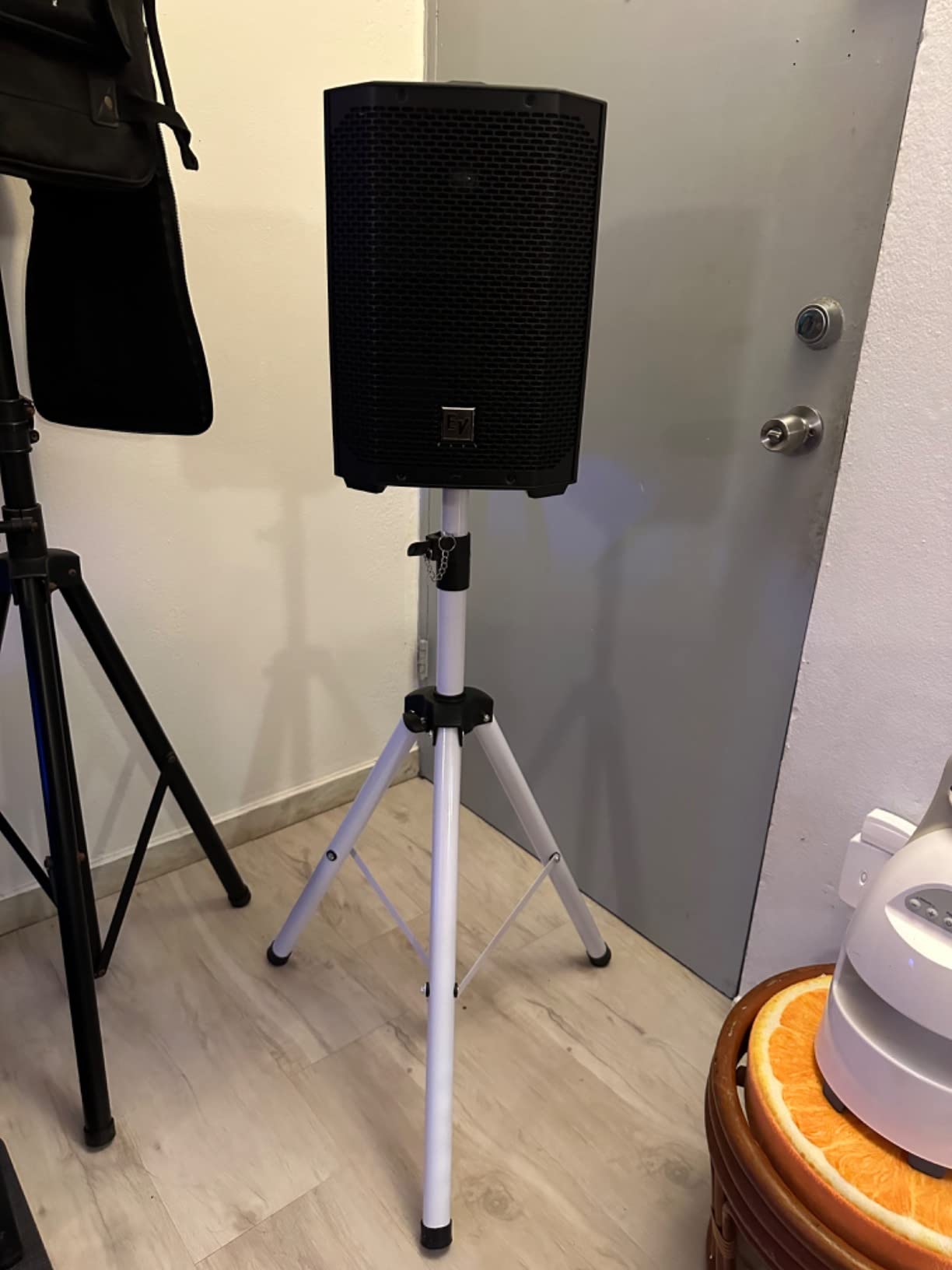
Where the Everse 8 earns its place
Rain and output headroom. The IP43 rating means a drizzle is no longer a reason to pack up, and 121 dB before distortion covers the traffic-heavy square pitches where a quieter cabinet simply cannot compete with road noise.
The three-year warranty and the included battery pack make it the safer long-term buy for someone who performs every week. Community users report using it for wedding ceremonies, DJ cocktail hours, small venues and busking, which is exactly the mix of quiet and loud work this ranking covers.
Where it disappoints
At roughly 10 kg it is among the heavier 8 inch cabinets in this group, and carrying weight is the number that decides whether you make the pitch at all. If your busking is on foot between pitches, that extra load is real.
Deep bass is not there without a sub, and the conservative input gain catches people out the first time they plug in a cheap cable. Buy proper shielded XLR before your first pitch rather than after a feedback session.
3. COOLMUSIC BP80 – Best Value Portable Speaker for Busking
Coolmusic BP80 Battery Powered Acoustic Guitar Amplifier- Portable Bluetooth Speaker 100W, 6 Inputs,3 Band EQ,Black(3-Year Warranty)
100 watts
6 inputs
48V phantom
5-10 hours
Pros
- Six inputs plus 48V phantom power and DI out
- Two channels with their own 3-band EQ
- Reverb and chorus per channel
- USB playback and one-touch recording
Cons
- Heavier than most battery amps in its class
- Reluctant Bluetooth pairing
- Weak chorus compared with a pedal
Only one system in this ranking gives you six inputs, and for a busker running a two-person setup that is the whole argument. Dynamic and condenser microphones, string and wind instruments, phones and MP3 players can all be connected at once, with 48V phantom power for a condenser vocal microphone and a DI line output for feeding a recorder.
The feature density is the surprise. Two independent channels each carry their own LOW, MID and HIGH EQ plus reverb and chorus, and you can record a performance straight to a USB stick with one touch, reading FAT32 drives up to 32GB. Reviewers repeatedly describe it as the value leader for solo acoustic performers working Ren Faires, weddings and street sets.
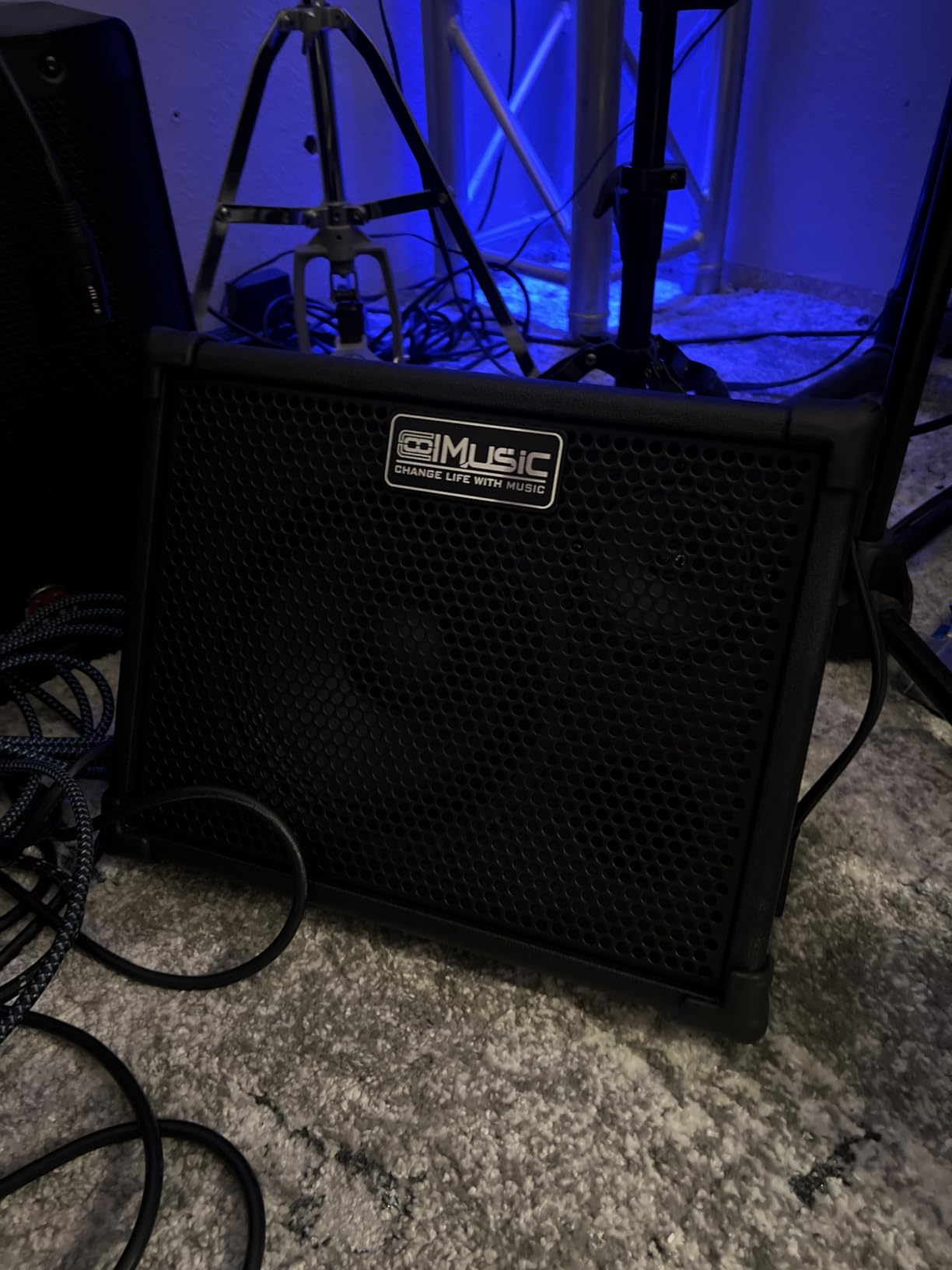
Battery runtime is quoted at 5 to 10 hours depending on use, with a real-time power indicator on the front, so a full day of street pitches is realistic. A mute button silences only the onboard speaker, letting you cue a backing track through headphones without cutting the room.
The reality check on the headline figure is loudness. Owners put real-world output closer to 40 to 50W of perceived loudness than the stated 100W, which is plenty for a lane or a market pitch but will not fight a busy city-centre pitch. At 8.5 kg for the cabinet it is also heavier than most battery amps in its class, and the Bluetooth pairing is notoriously reluctant on first attempt.
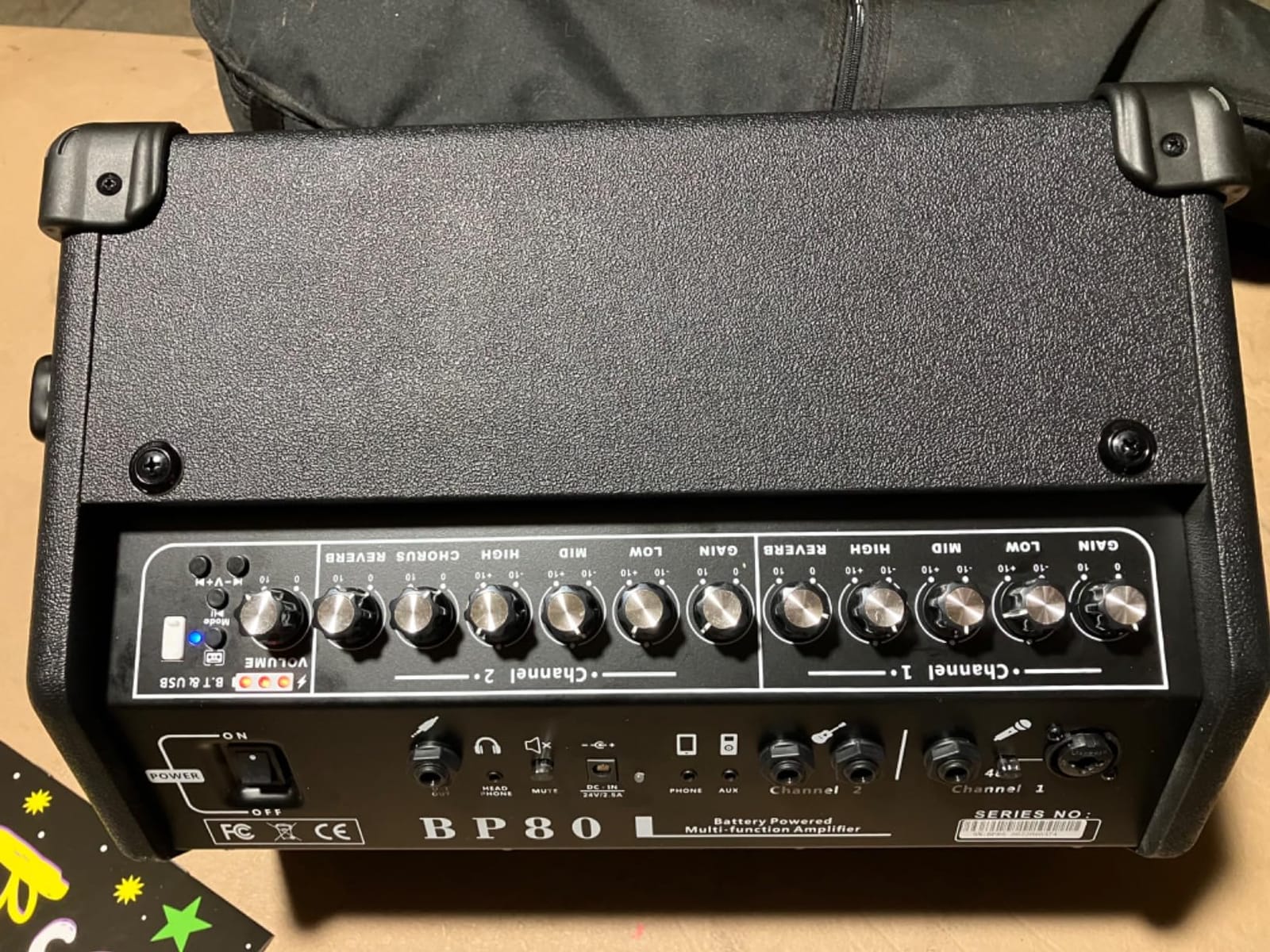
Why the BP80 wins on value
Phantom power, a DI output, USB recording and six inputs in one box is a rig that would normally need a small mixer and an interface. For someone playing two microphones plus an acoustic guitar, nothing else in this ranking does all of that.
The build quality draws consistent praise, from the machined aluminium knobs to the fit and finish. A 3 year warranty is also the longest alongside the Everse 8, which matters when the cabinet lives in a car boot and a stand in the rain between sets.
Where the BP80 falls short
Weight and reach. The cabinet is a real load on an incline, and the honest output is well below the number on the front panel, so it needs a quiet to moderate pitch rather than a traffic-heavy square.
The onboard chorus is weak next to a dedicated pedal, and the Bluetooth handshake can take several attempts, which is annoying when you are trying to set up in the two minutes you have before a crowd forms.
4. Mackie Thump GO – Best for Loud City-Centre Pitches
Mackie Thump Series, Thump GO 8-Inch Portable Battery-Powered Loudspeaker
17.6 lb
Removable lithium battery
200W peak
8 inch woofer
Pros
- Punchy full sound with low distortion at high volume
- Removable battery with charge indicator
- Much lighter than the plug-in Mackie models
- 2-channel digital mixer with XLR mix output
Cons
- App EQ has only high and low
- Not water resistant
- Not enough bass to replace a subwoofer
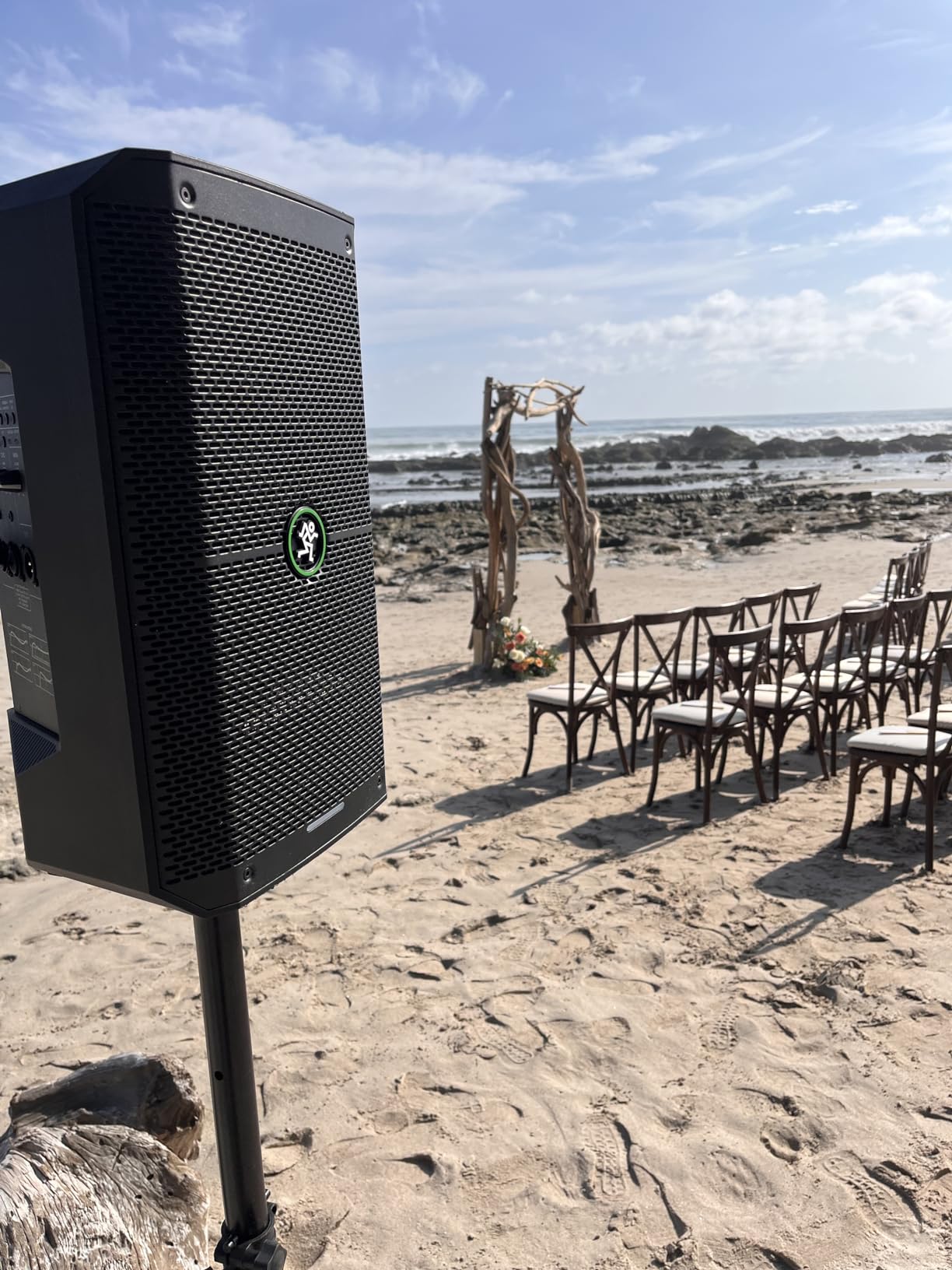
The Thump GO is the name that comes up constantly in busking communities, and the reason is straightforward: it is loud for its size and the battery comes out. A performer in an r/livesound busking thread narrowed their search to this unit and asked the community to validate power, battery life and sound quality before buying, which tells you it is the reference point people measure against.
An ultra-efficient Class-D amplifier drives an 8 inch custom high-output woofer with a 1 inch compression driver, and owners describe the result as punchy and full with very low distortion at high volume. At 17.6 lb it is far lighter than the plug-in Mackie cabinets it replaced, and the 2-channel digital mixer includes a XLR mix output and a music ducking mode that drops the backing track when you start singing.
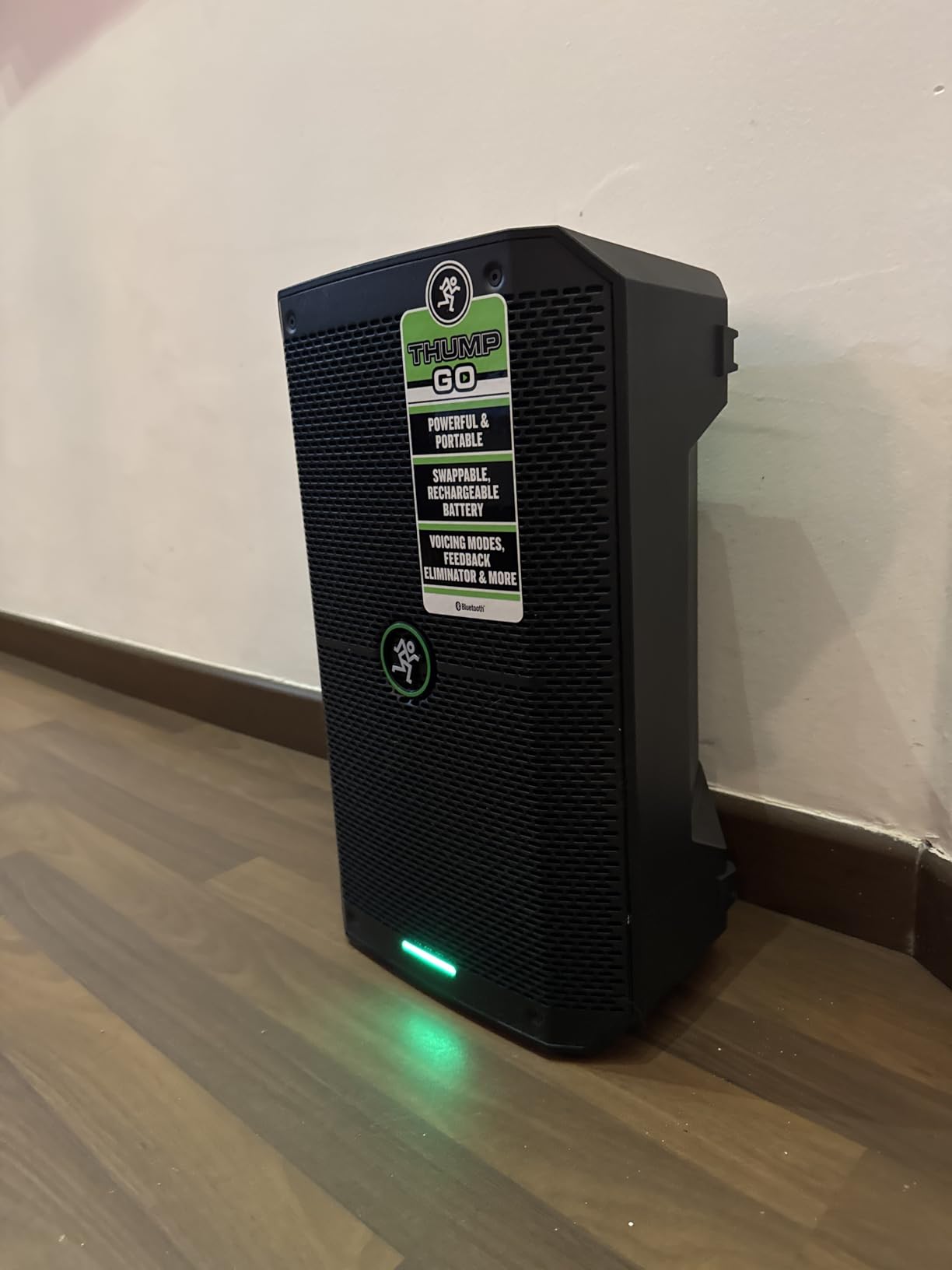
The removable lithium-ion battery with a tri-colour charge indicator is the feature that changes a busking day. You can carry a spare pack, swap in under a minute, and never face the scenario that terrifies performers, which is the speaker dying halfway through a song. The listed battery average life is 12 hours with a 3 hour charge time.
The catch is weather. The listing states plainly that it is not water resistant, so it has no place on a wet stage, and the app EQ offers only high and low with no mid control. Bluetooth linking between two units works only for the Bluetooth input, and the bass will not substitute for a subwoofer in a club.
What makes the Thump GO the loud-pitch pick
Output for its size. The 200W peak figure translates into a cabinet that holds its level when traffic noise climbs, and owners comparing it to larger 12 inch cabs find it more than adequate for ceremonies, cocktail hours and street sets.
The swappable battery turns a marketing runtime into a working plan. Spare packs are simple to buy and trivial to change, which removes the single biggest anxiety community performers report.
Where the Thump GO falls short
No mid band on the app EQ. If you need to carve space for a vocal in a dense mix, you have highs and lows and nothing in between, which is frustrating on a loud pitch where clarity is the whole job.
And the lack of any water resistance rating rules it out for wet weather entirely. If your regular pitch is exposed, the Everse 8 is the safer buy despite the extra weight.
5. ALTO Busker – Best for the Lightest Carry
ALTO BUSKER 200W Portable PA Speaker System
5.4 kg
20 hour battery
3-channel mixer
16 effects
Pros
- Shoebox size at 11.9 lb
- 20 hour battery extending to 24 hours in Eco mode
- 16 selectable Alesis effects including 8 reverbs
- Four cabinet positions with a rotatable logo
Cons
- Real output well under the advertised 200W
- Limited bass response
- Rotary encoders have no detent for reading levels
At 5.4 kg the ALTO Busker is the system we could carry furthest without planning the route first, and after a full afternoon of pitches that difference decides everything. It is roughly a shoebox, it has an integrated carry handle, and it is one of the easiest units here to move on public transport and up a set of station stairs.
The battery is the other headline. A 20 hour rated lithium pack extends to 24 hours in Eco mode, with a real-time charge readout on the front, and that figure is backed up by owners rather than contradicted by them. Agreement across reviews is universal on portability and battery life, even where the sound is debated.
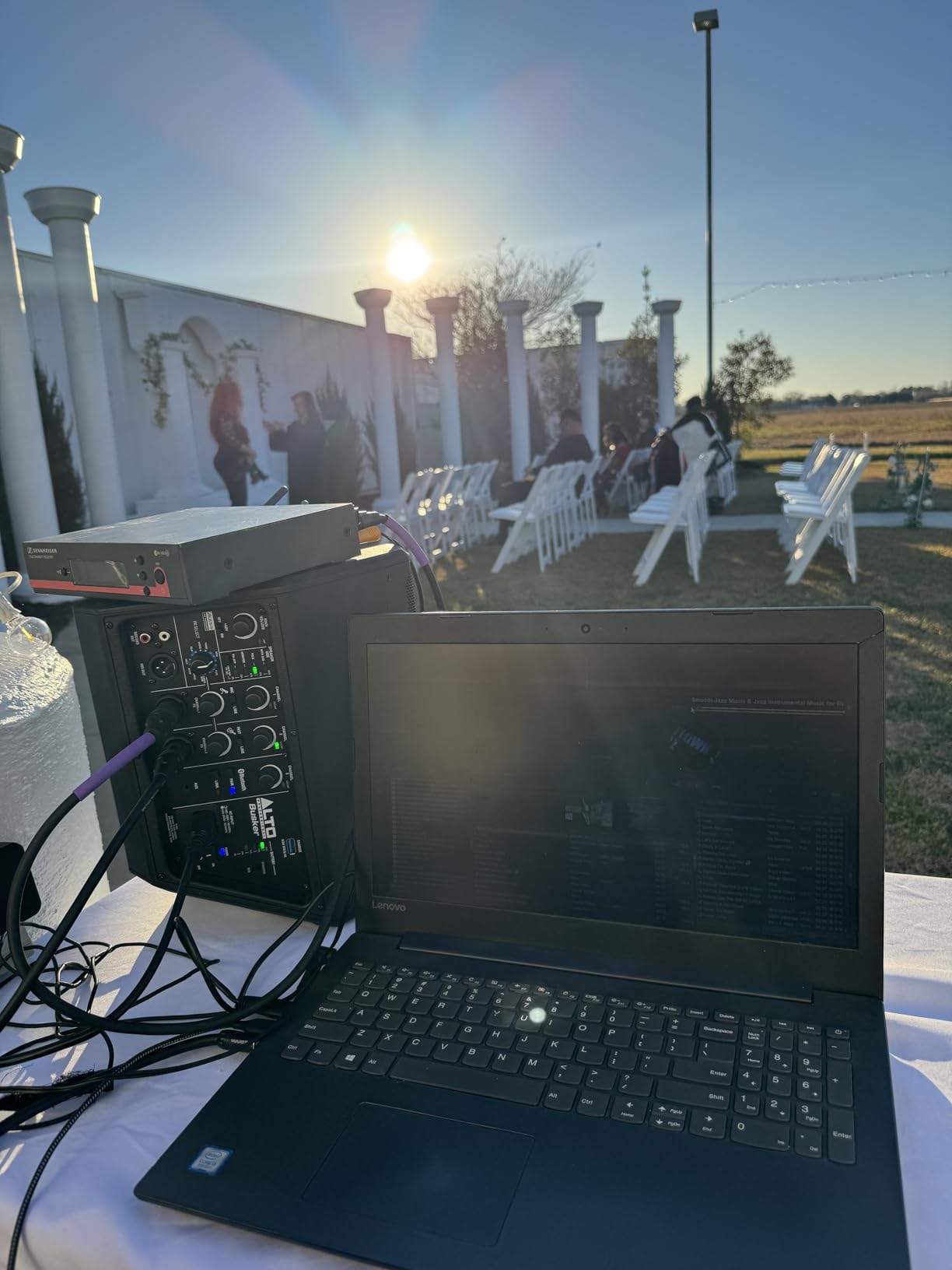
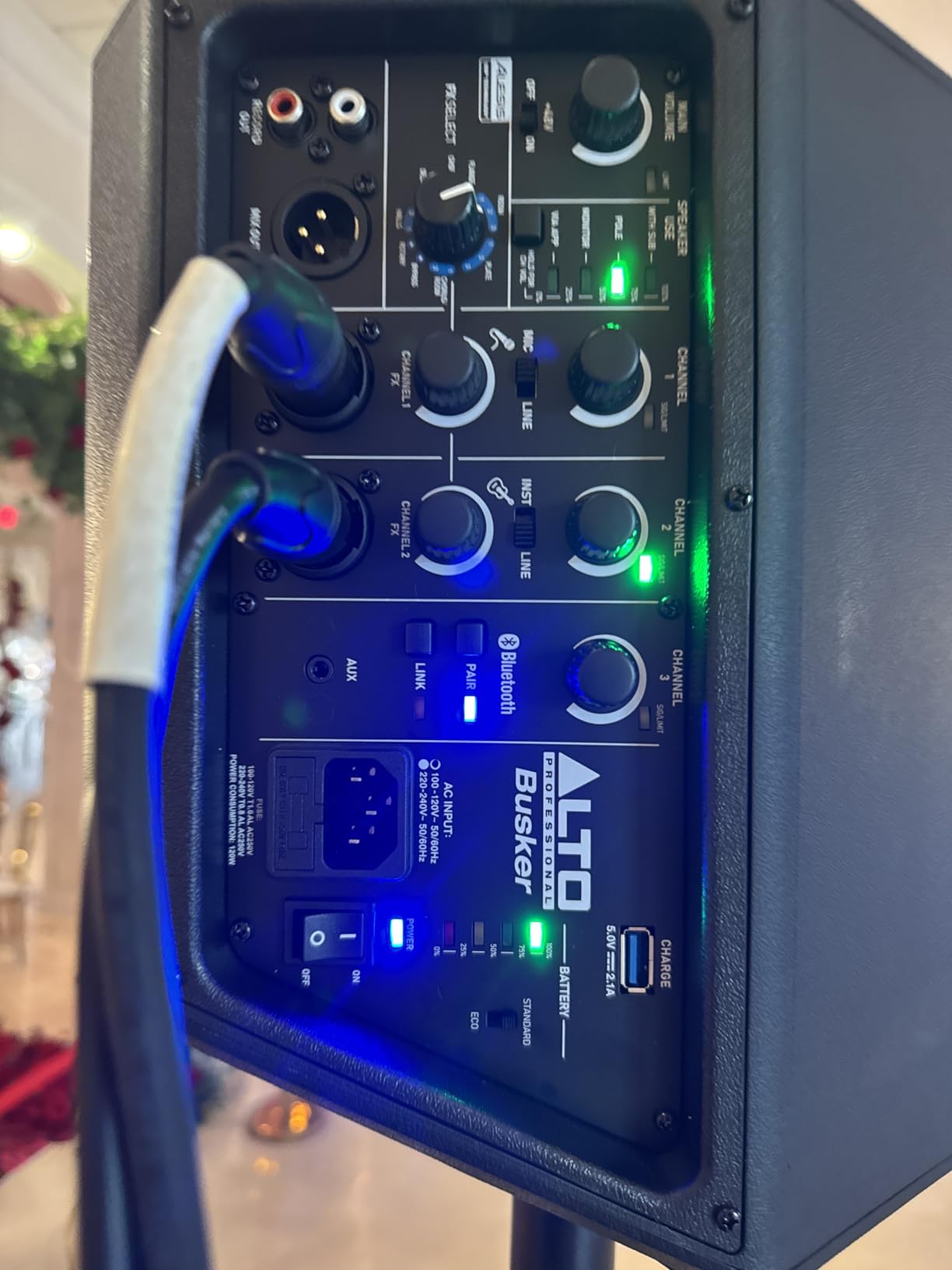
Mixing is handled by a 3-channel digital mixer with mic, instrument and line-level inputs plus Bluetooth, and the Alesis FX processor gives you reverbs, delays, chorus and flange. The ALTO Pro app over Bluetooth 5.3 controls the mixer, effects and a saveable graphic EQ, and four cabinet positions plus a 35 mm stand mount mean it works flat, tilted, upright or on a stand.
Where it disappoints is output. Multiple owners state plainly that real-world output is well under the advertised 200W, with a 50W speaker able to match it, and the bass is limited enough to need a subwoofer for anything dance-oriented. The rotary encoders have no minimum or maximum detent, so you cannot read a level from the cabinet without opening the app, and app volume changes can lag and spike.
When the ALTO Busker is the right call
Long days on foot. A 20 to 24 hour battery means you can pitch all day without a charging point, and at 5.4 kg you can move between pitches on foot or across town on a train without planning it around your back.
It is also a strong fit for solo acoustic and vocal sets, small-party fill and lead-vocal reinforcement, where clarity matters more than volume. Sixteen onboard effects, including eight reverbs, are genuinely useful for a voice with no external processor.
Where it is the wrong call
Any pitch where you need to fight street noise. A quieter unit simply loses that argument, and buying a subwoofer to fix it changes the weight equation you bought this for.
Wireless stereo pairing also only works over Bluetooth, not line inputs, and the pairing steps are not documented, so do not plan a two-unit stereo setup around it without checking first.
6. BOSS Cube Street EX – Best for Guitar-First Busking Setups
Roland Cube Street EX Battery-Powered 50W Stereo Amplifier
50 watts stereo
Four power modes
Four channels
9.1 kg
Pros
- Three selectable power modes trade output for runtime
- Four channels with two XLR inputs for dual vocals
- COSM Clean Crunch Lead and acoustic voices
- Angled back doubles it as a stage monitor
Cons
- 50W total is modest against modern 100W systems
- Runs on eight AA batteries
- No wireless link between two units
The Cube Street EX is the oldest design here and the one most guitarists already own a mental picture of, a durable street amp with a small footprint and a flexible power plan. Four independent channels with two XLR inputs mean two vocals plus instruments without a separate mixer, which is the exact configuration a busking duo needs.
Its signature feature is the power mode switch. Selectable modes trade output for runtime at 50W for 5 hours, 25W for 10 hours or 10W for 20 hours, and that is a genuinely useful dial for a busker moving from a quiet afternoon lane to a busy evening pitch with the same battery. COSM modelling gives usable Clean, Crunch, Lead and acoustic preamp voices for the guitar itself.
The limitation is scale. 50 watts of total stereo output is modest next to newer 100W-plus portable PAs, and reviewers are clear this is not a high-output system for large audiences. It also runs on eight AA batteries rather than a modern lithium pack, which means carrying spares, and there is no wireless link between two units for true stereo, though line-out stereo jacks let it feed a larger PA as a wedge.
Why a guitar-first busker should consider it
The acoustic preamp voice is clean and natural, which matters when an acoustic guitar is your primary source. Add a dynamic vocal microphone and you have a complete two-source show in one box.
The angled back panel turns the same cabinet into a stage monitor, so one speaker covers the pitch and doubles as your personal foldback. Reviewers favour it for acoustic and electric guitar plus two microphones at coffeehouse volume.
Where it will not keep up
Busy pitches and large audiences. Fifty watts of total output is enough for a lane, a market or a small courtyard, and not enough for a square with traffic, where you will be fighting the noise floor.
The AA battery arrangement also means you are carrying spares and watching for corrosion in an old battery compartment, which is a step backwards from a swappable lithium pack.
7. Positive Grid Spark Edge – Best for Loop Artists
Positive Grid Spark Edge 65W 4-Channel Smart Guitar Amp & PA System
65 watts
Four channels
6.2 kg
Spark app looper
Pros
- Four channels including two combo inputs and stereo
- Creative Groove Looper in the Spark app
- Compact 6.2 kg body with a 6.5 inch speaker
- Optional swappable battery adds up to 10 hours
Cons
- Editing only through the app
- App drops connection frequently
- Fixed signal chains limit effect combinations
The Spark Edge fits a loop artist particularly well, because the Creative Groove Looper lives in the Spark app alongside amp and effect models. Four channels out of the box, two 1/4 inch and XLR combo inputs plus a stereo pair, covers guitar, bass, keys and vocals in a single box, and at 6.2 kg it is one of the lighter full systems on the list.
Sonic IQ DSP is the quiet advantage. It keeps every channel balanced so a modelled acoustic sits properly next to a vocal microphone instead of swamping it, and the app provides amp models, effects, the looper and tone prompts. Owners use it for outdoor jam sessions around 116 to 120 dB, which is comfortably above a street performance.
The critical reviews all share one theme, and it is the app. Editing only happens through the phone app, which several owners find slow and unintuitive, connection drops are frequent, and the signal chains are fixed so you get one of each effect type per channel. Chorus and EQ cannot coexist on the same channel, and channel 2 carries a smaller selection of models than channel 1.
Built for the performer who runs from a phone
The looper is the reason to buy it. A loop artist can build a full arrangement from a guitar and a vocal without a pedalboard, and four channels leave room for a second instrument.
At 6.2 kg with a compact footprint, it is easy to carry to a pitch that is not next to your car, which is where a lot of busking actually happens.
Where the Spark Edge will frustrate you
You must have the phone. Every sound change requires the app, and if the app drops or your phone battery dies mid-pitch you are left with the last settings you saved.
Also note the battery is optional and sold separately. Out of the box this is a mains-powered unit, so budget for the swappable battery before you plan a day on the street, and check that it adds up to 10 hours to your setup rather than assuming it.
8. Positive Grid Spark LIVE – Best for Band Practice and Small Gigs
Positive Grid Spark LIVE 150W Smart Guitar Amp, PA & Bluetooth Speaker
150 watts
Four channels
MIDI and line outs
34.6 lb
Pros
- 33 amp models and 43 effects on channel 1
- 150W enough to sit behind a drummer in a small room
- Strong feedback rejection with a headset mic close in
- Line outs
- MIDI and USB cover most routing
Cons
- No auxiliary input for backing tracks
- Fixed channel roles
- Weak on bass
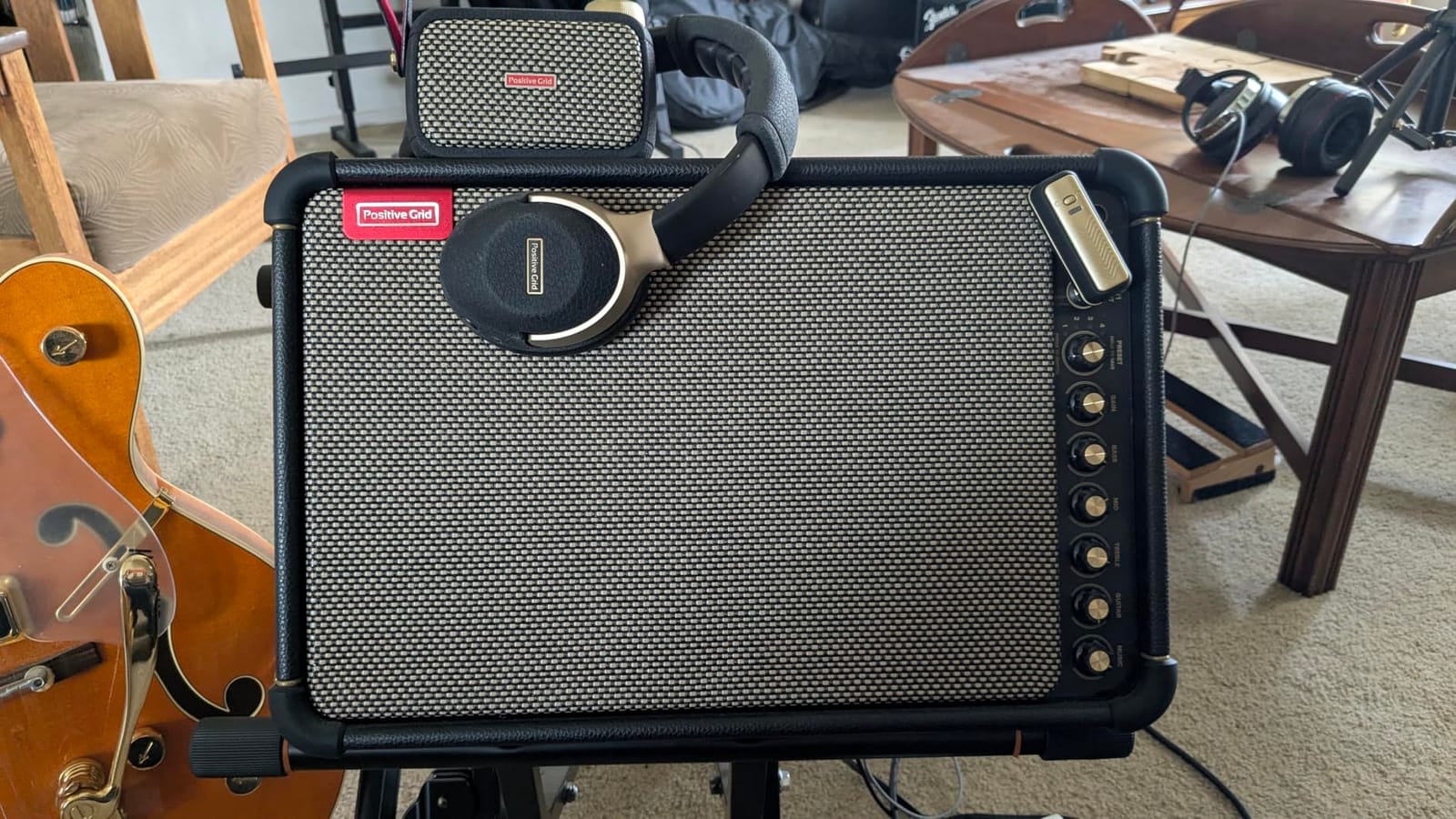
The Spark LIVE is the one to consider if you want a single rig that covers busking and the small paid gig. It is the larger, heavier sibling of the Spark Edge at 150 watts, which owners say is enough to keep up with a drummer in a rehearsal room or a small coffee house. That is a different conversation from filling a pavement.
Channel 1 carries 33 amp models and 43 effects, with vocal, bass and acoustic gear added on channel 2, and Sonic IQ balances the channels automatically. Feedback rejection is a genuine strength: several owners report clean operation with a headset microphone a foot from the grille, which is a common failure on smaller busking systems.
Routing is the other strength. Quarter-inch and quarter-inch/XLR combo inputs, two line-level outputs, MIDI in and out, USB charge ports and a headphone jack sit on the rear panel, so a rehearsal rig, a busking box and a home practice amp can share one cabinet without an external interface.
Weight is the catch. At 34.6 lb this is a serious load to move between pitches, and the fixed channel architecture means you cannot run two microphones or two guitars the same way. Bass is weak, with several owners preferring a 40W combo for low-end clarity, and the app will not let you reorder effects.
Why it earns a place in a busking roundup
One rig, two jobs. A busker who also plays small paid gigs gets a rehearsal amp, a PA and a backing-track machine in a single box, and the swappable rechargeable battery runs it for around 8 hours per charge.
The feedback rejection matters more than it sounds. On a reflective street surface with a vocal microphone in hand, a box that tolerates close mic placement is worth more than one with a bigger headline number.
Where it is the wrong tool
Carrying it. Thirty-four pounds does not move between pitches on foot, and there is no auxiliary input, so backing tracks arrive over Bluetooth or take up one of your four channels.
The fixed channel roles also mean you cannot mirror your busking setup on it without rethinking your patching, which is a nuisance when the same rig has to work in two very different rooms.
9. Behringer EUROPORT MPA40BT-PRO – Best for Rolling It Onto the Pitch
Behringer EUROPORT MPA40BT-PRO All-in-One Portable 40 Watt PA System with Bluetooth Connectivity, Battery Operation and Transport Handle
40 watts
Four channels
8-12 hour battery
Wheels and telescopic handle
Pros
- Genuinely long runtime at moderate volume
- Retractable trolley handle and wheels
- 40W Class-D with an 8 inch woofer
- Replaceable sealed lead-acid battery
Cons
- No line-out so two units cannot be linked
- No onboard reverb
- Two-band EQ tends to muddy the mix
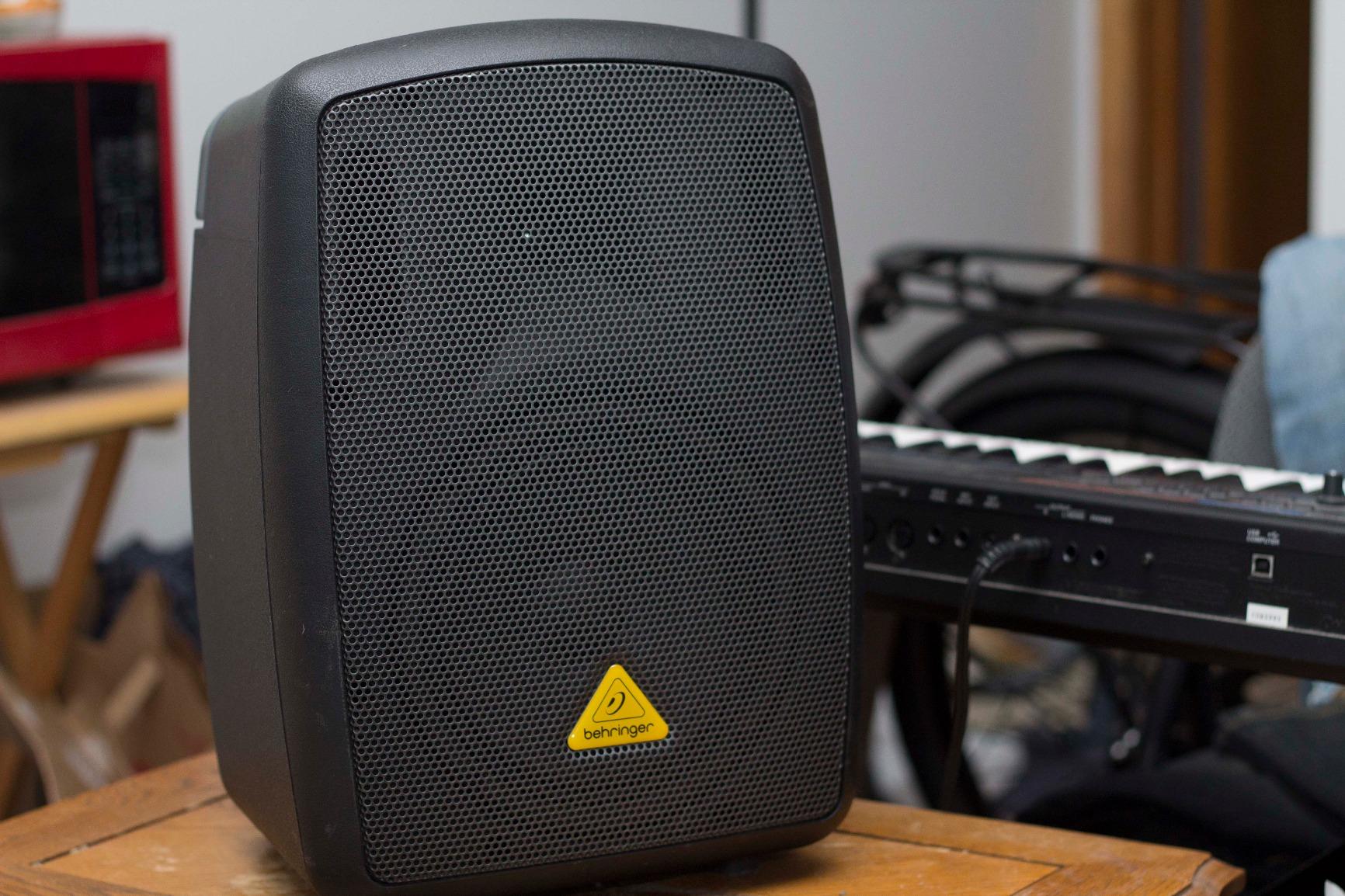
The MPA40BT-PRO solves a problem no other system here addresses, which is getting the rig to the pitch without a second person. A retractable trolley handle and wheels make it the easiest unit in this list to move solo, and long-standing owners including working professionals use it for beach and park ceremonies, church speech reinforcement, tailgates and karaoke.
Runtime is the quiet hero. Owners report 8 to 12 hours at moderate volume on the internal lead-acid pack, and the battery is replaceable with widely available equivalents, so a dead pack is an afternoon errand rather than a lost season. The 40 watt Class-D amplifier driving an 8 inch woofer covers audiences up to around 250 people, with four channels and Bluetooth that connects quickly and reliably.
It is also the least fussy to set up. Power it on, choose an input, and a phone pairs over Bluetooth within seconds, which matters when a pitch is booked for a particular hour rather than a whole free afternoon.
The compromises are structural rather than electronic. There is no line-out or daisy-chain output, so two units cannot be linked for stereo or wider coverage, which matters for anyone planning to grow into a pair. There is no onboard reverb or effects loop, so vocals sound dry unless you add an external unit, and the two-band EQ is of limited use with a boost setting that tends to muddy the mix.
Why it works for a rolling busker
The wheels. A 19.7 lb cabinet on a pavement is a manageable carry, but the same cabinet on wheels across a station forecourt is not, and that is the scenario this design was built for.
Four channels mean a vocal, an instrument and a playback source with room to spare, and Bluetooth acceptance of phones, tablets and laptops makes backing-track changes painless between pitches.
Where it holds you back
No linking, no effects, two bands. If your plan involves two cabinets for a bigger crowd, or onboard reverb to make a voice sit better in the mix, this is the wrong starting point.
The telescopic handle is also reported as loose and fiddly, the small rubber wheels suit smooth surfaces only, and the bundled wired microphone is of toy-grade build, so plan to replace it before the first rehearsal.
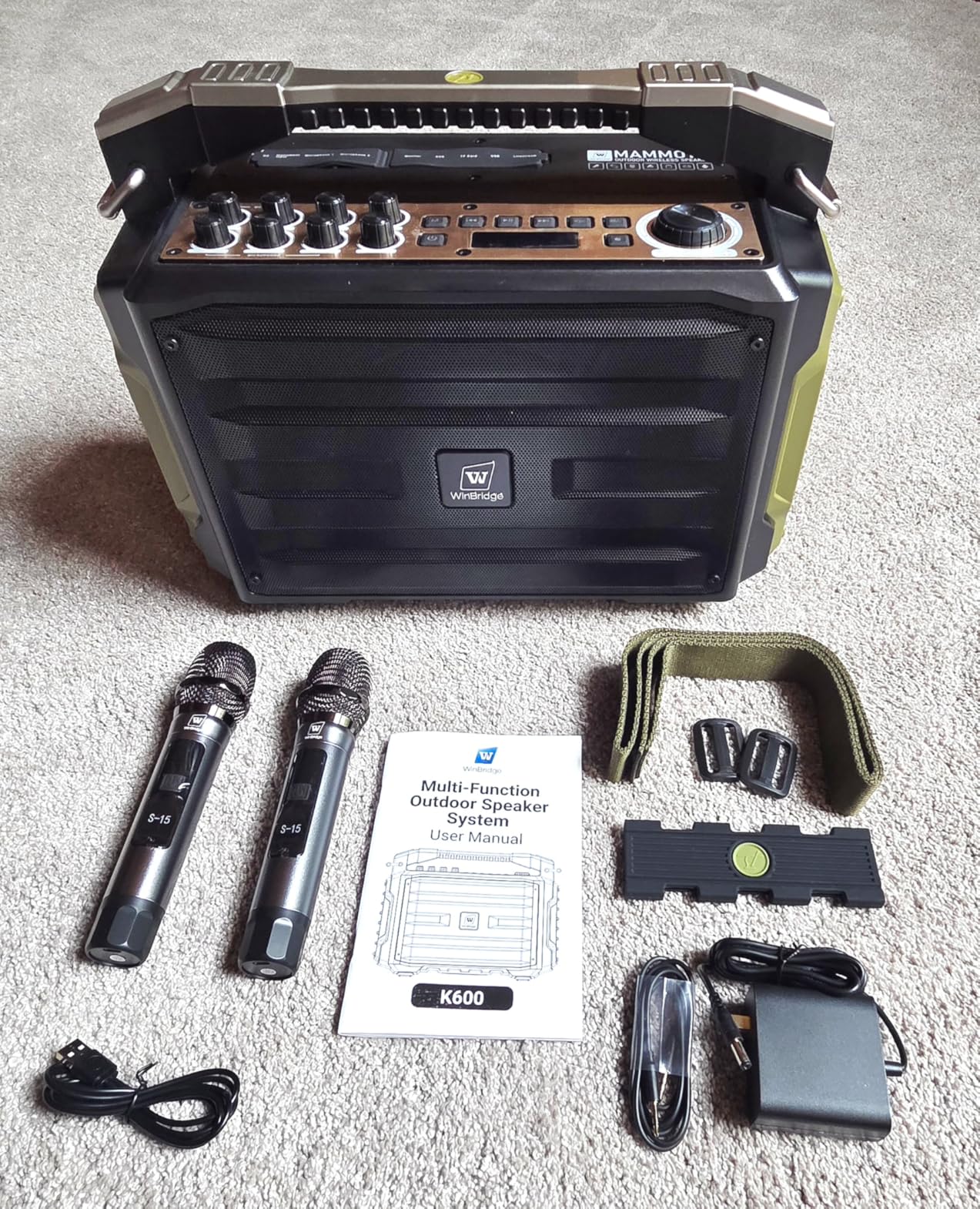
10. WinBridge K600 Pro – Best Complete Package With Two Wireless Microphones
WinBridge 200W Portable PA System with 2 Wireless Microphones, K600 Pro
200 watts
Two UHF wireless mics
IPX4 aluminum
8000mAh
Pros
- Two rechargeable UHF wireless microphones included with auto pairing
- 6.5 inch woofer with four 3 inch tweeters for wide coverage
- Bluetooth 5.3 plus USB
- TF card and AUX for backing tracks
- IPX4 water resistance in an aluminum enclosure
Cons
- Second heaviest unit in the lineup at 22.1 lb
- Wireless microphone range limited to about 50 ft
- First generation listing with a smaller review base
The K600 Pro is the only system here that arrives with two UHF wireless microphones in the box, and for a busker moving between pitches that solves a real problem. Both mics pair automatically, have OLED displays and run 13 or more hours per charge on Type-C, so the microphone and the speaker charge on the same evening.
Sound coverage is unusually wide for a portable cabinet, with a 6.5 inch woofer and four 3 inch tweeters rated for audiences of 150 or more. The 8000mAh battery covers Bluetooth 5.3 streaming, USB, TF card and AUX, and there is a 6.35 mm guitar input plus recording and monitor outputs, so it works as a small stage rig and not just a street box.
Build is the other strength, with a military-grade aluminum enclosure and IPX4 water resistance for outdoor events. The compromises are weight and range: at 22.1 lb it is one of the heavier units in this ranking, which is a real load for a solo busker, and the wireless microphones are limited to roughly 50 ft, so they are a movement-around-the-pitch tool rather than a range instrument. It is also a first-generation listing with a smaller review base, so long-term reliability is less established than the other nine.
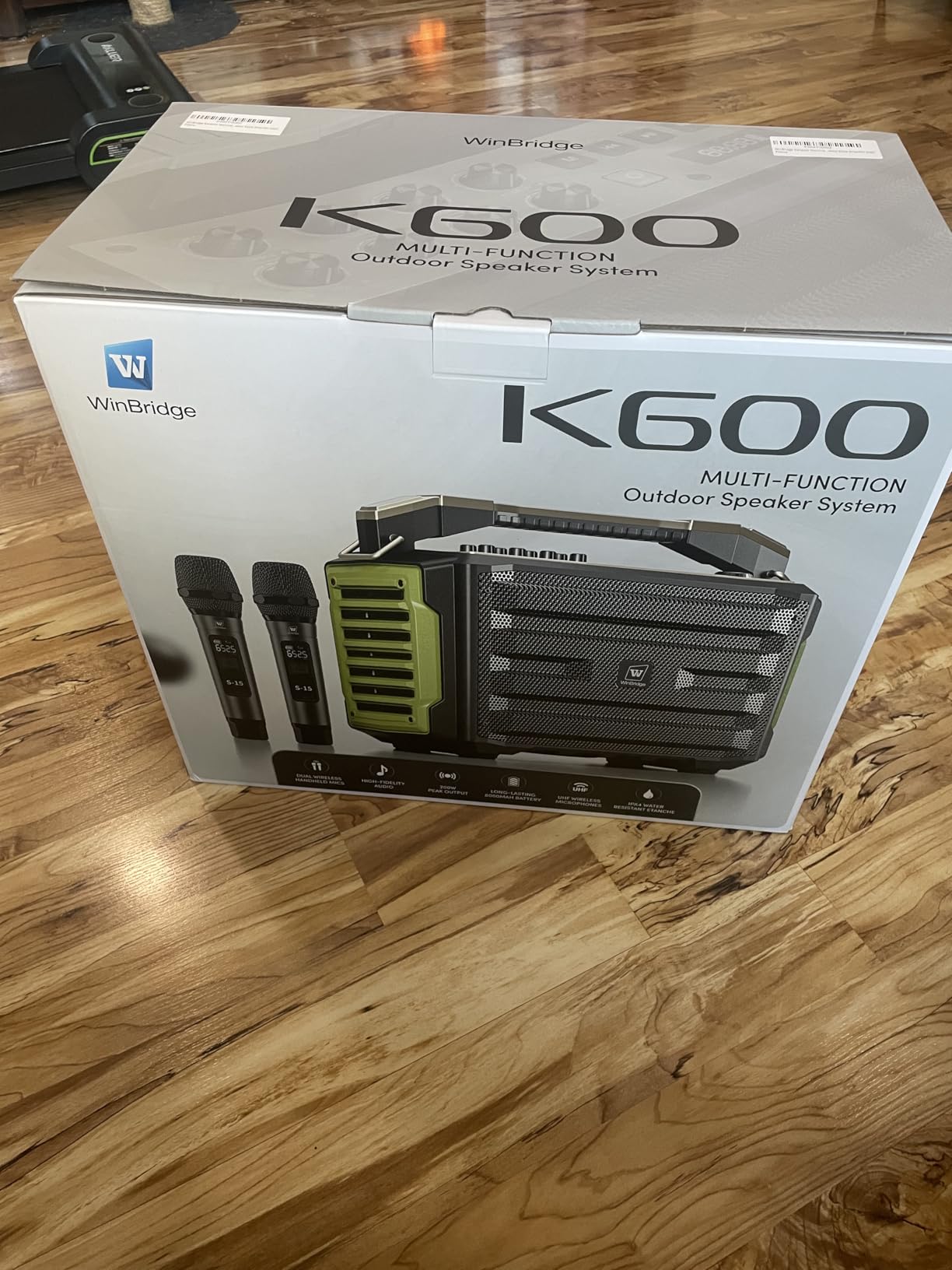
The onboard mixer covers the usual sources too, with mic and line-level inputs, Bluetooth and a USB port for backing tracks, so the box works for a duo, a preacher or a small market pitch without a separate mixer in the bag.
What makes the package attractive
Two working wireless microphones for nothing extra removes the single most common early expense. A busking duo or a preacher working a pitch can set up in under two minutes with no cables crossing the audience.
The four tweeter array genuinely fills space. For outdoor events, church settings and market pitches, the coverage is wider than the single compression driver designs elsewhere on this list.
Where the weight bites
Twenty-two pounds plus a stand is a two-handed load on stairs and a shoulder load over distance. If you move between pitches on foot or on public transport, choose one of the lighter systems above instead.
Keep the microphones close. At around 50 ft you can walk to the edge of a pitch and back, and no further, so plan your set position around the box rather than the other way round.
How to Choose a Portable PA for Busking in 2026
Ten rankings do not help much if you cannot read the spec sheet. These are the ten numbers and questions that actually decide whether a system works on a pavement, in the order I would check them.
Battery life at working volume, not on the box
Advertised runtime is a maximum, measured at low output with effects off. Run any of these at a working level for three hours and expect materially less. The Electro-Voice Everse 8 publishes a 12 hour figure, and experienced users describe 12 hours at moderate output and closer to 6 hours at full output, which is the kind of dual rating worth looking for.
The Mackie Showbox is the community cautionary tale. Buskers report roughly two hours of real battery from a unit sold on much bigger promises, and that experience is why we treat advertised hours as a ceiling. Size your battery to at least a quarter more than your longest pitch, and prefer a removable pack over a fixed one.
How loud is loud enough
Watts do not scale the way people assume. Doubling power gives you about 3 dB more, which is audible as slightly more volume rather than twice the loudness. Maximum SPL is the more useful figure, because it tells you how much headroom exists before distortion, and a speaker with more headroom sounds better at any given level.
Match the speaker to the pitch rather than to the crowd. A quiet pedestrian lane needs far less than a subway entrance, and community busking groups deliberately choose larger drivers to cover high-noise city-centre spots while accepting the weight that comes with them.
Input count and what accepts what
Count your live sources first: vocal microphone, instrument, backing tracks. Two independent live inputs plus a playback source is the practical minimum, and if you perform as a duo, three is the number you are really shopping for. XLR and 1/4 inch combo jacks accept a microphone cable and a standard instrument lead in the same socket, which saves adapters you would otherwise lose in a bag.
Phantom power at 48V matters if you plan to use a condenser vocal microphone, and a Hi-Z input matters if you plug an acoustic guitar straight in without a pickup. A DI output and a mic-powered output for wireless packs are the two features most often missed and most often needed later.
Total carried weight, not speaker weight
The number on the spec sheet is the least important part of the load. Add a tripod stand, a padded bag, cables, your instrument, a spare battery and a rain cover, and the speaker becomes a fraction of what you are actually lifting.
Community experience is blunt on this point, a 5 kg against 8 kg difference means nothing on a spec sheet and everything after three staircases and a ten-minute walk. Budget for the whole rig before you choose, and if you are moving pitches on public transport, weight should probably outrank every other criterion on this list.
Feedback control and microphone placement
Most feedback problems are solved by position, not by gadgets. Put the speaker in front of you facing the audience and angled away from the microphone, keep the mic behind the speaker’s rear wall, and point it at your mouth rather than at the cabinet. Everything you do physically beats everything you do in a menu.
After that, EQ helps. Cut the frequencies that are feeding back, keep the mic a working distance from the grille, and use onboard reverb sparingly because it raises the level you are fighting. Feedback suppression circuits are a safety net, not a solution.
Weather ratings and rain covers
An IP rating tells you something real about street work. IP43 means protection against solid objects over 1 mm and spray from any direction, IPX4 means splashing water from any direction, and neither means you can stand in a downpour. On this list the Everse 8 carries IP43 and the K600 Pro carries IPX4.
Everything else needs a cover. A fitted cover over a parked cabinet costs almost nothing and prevents the most common cause of a ruined busking rig, which is a speaker parked in the rain between pitches.
Six inch or eight inch drivers
An 8 inch driver moves more air before it runs out of headroom, which matters on a loud pitch, and it is the format shared by most of the systems here. A 6 to 6.5 inch driver is easier to carry and fine for quiet lanes, small markets and loop-based setups where clarity matters more than level.
Neither format gives you deep low end on battery power. If you need real bass for karaoke or dance-oriented material, plan a subwoofer and accept the extra carry weight, because adding it later is the expensive way to do it.
One speaker or two
One speaker covers a solo act on most pitches, and one speaker is what you can afford to carry. Two only pay off for a duo needing stereo, or for coverage across a wider area, and they double the weight and the battery draw.
Check before you plan a pair. Some systems offer wireless linking, some restrict it to the Bluetooth input, and the Behringer EUROPORT MPA40BT-PRO has no line-out at all, so two of those cannot be linked.
Busking permits and local rules
Amplified busking is regulated in many city centres, and performers regularly discover the rules only after they have bought the equipment. Check your local council or city licensing requirements before you commit, because some locations restrict amplification, some restrict volume, and some restrict where you can stand.
It is also worth a quick search on the amplification rules for any pitch you plan to use regularly, since a permit is cheap to obtain and being asked to stop is not something you want to discover mid-song on a busy afternoon.
Protecting your hearing on a pitch
A busker spends hours at close range to a sound source that is not obeying the distance rules an occupational guideline assumes. Standing a metre or two from a speaker at high volume for a three hour pitch is a real exposure, and the widely used occupational limit of 85 dBA averaged over an eight hour day is a useful reference point for how long you can safely sit near a loud source.
The practical measures are simple. Turn the cabinet away from your head, take breaks away from the speaker, and use the lowest level that carries your voice, because busking is won by clarity, not by sheer level.
Frequently Asked Questions
What is a good portable speaker for busking?
A good portable speaker for busking is a battery-powered all-in-one PA with at least two independent mic or instrument inputs and a rechargeable battery that covers a full pitch. The Bose S1 Pro+ is the most complete option, with a 3-channel mixer and up to 11 hours of playback. The ALTO Busker is the lightest to carry and the COOLMUSIC BP80 offers the most inputs for the money.
What portable speaker has the best sound quality?
The Electro-Voice Everse 8 has the best sound quality in this roundup, rated 4.7 by owners, with 121 dB of output before distortion and a full three-band EQ. The Bose S1 Pro+ is the closest alternative and is praised for clear, full-range sound, but it has less deep low end and fewer physical tone controls.
What is the best quality, loud portable speaker?
The Mackie Thump GO is a strong choice for loud, high-noise pitches, with a 200W peak rating, an 8 inch woofer and a 1 inch compression driver, plus a removable lithium-ion battery you can swap between pitches. Its lack of any water resistance rating makes the Electro-Voice Everse 8 the better all-weather option.
What is the best portable speaker for vocals?
The Electro-Voice Everse 8 is the strongest choice for vocals, with 48V phantom power, a Hi-Z input, a mic-powered output for wireless packs and three-band EQ for fighting feedback. The COOLMUSIC BP80 is a close second with two channels of EQ, reverb and chorus plus 48V phantom power and six inputs.
How much battery life do I need for busking?
Enough to cover your longest pitch with at least a quarter to a third in reserve, so a three hour pitch wants a system rated for four hours at your working volume. Remember that published figures are maximums measured at low output, and real runtime at performance volume is shorter. A removable or swappable battery removes the risk entirely.
Can I use a Bluetooth speaker for busking?
Only for a quiet pitch, and only with a microphone input. A consumer Bluetooth speaker has no XLR or instrument input and no onboard mixer, so you cannot blend a vocal microphone with an instrument. If you are testing the idea first, a battery-powered PA with two inputs is a much better foundation than a Bluetooth speaker with an added microphone.
Do I need two speakers for busking?
No, not for a solo performer. One speaker covers a typical street pitch and is the only number you can comfortably carry between locations. Two are worth it for a duo needing stereo or for wider coverage, but they double the weight and battery draw, and not every system here can be linked, the Behringer EUROPORT MPA40BT-PRO has no line-out at all.
The Best Portable Speaker for Your Busking Pitch in 2026
The best portable speakers for busking in 2026 come down to pitch and portability. Take the Bose S1 Pro+ as the all-round choice if you want one box to do everything, the Electro-Voice Everse 8 if you perform outdoors in bad weather or need the most output before distortion, and the COOLMUSIC BP80 if input count and phantom power matter more than the last bit of volume.
Whatever you pick, test it at working volume before you rely on it, carry a spare battery if the design allows one, and check your local amplified busking rules before the first pitch. A rig that is loud, light and legal will outlast a cheaper one every time.