

A soundhole pickup is a removable device that clips into an acoustic guitar’s soundhole and turns the string vibration into an electrical signal, with no drilling, no glue and no permanent modification to the instrument. Because it senses the steel strings magnetically rather than through a microphone, it produces a direct signal that resists stage feedback and needs far less gain. That makes it the easiest way to put one steel-string acoustic into a rehearsal room, a PA, or a home studio without routing it through a mic stand.
We spent weeks putting ten of the most popular soundhole pickups through the same routine: install, dial, strum, fingerpick, and push the gain until they either stayed clean or gave up. The list below covers everything from a low-cost clip-on unit to a wireless hybrid system with a built-in condenser mic, so you can match a pickup to your guitar, your room and your playing style instead of guessing.
If you already know how the technology works and just want the shortlist, jump to the comparison table below. If you are still working out whether a magnetic coil or a mic suits you, the section on magnetic, mic or hybrid systems explains the difference in plain terms.
Table of Contents
Top 3 Soundhole Pickup Picks for (September 2026)
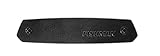
Fishman Neo D Single Coil
- Passive neodymium single coil
- Battery-free
- 4.2 stars from 1124 reviews

Seymour Duncan Woody HC
- Passive humbucker in walnut
- Double potted
- 4.4 stars from 939 reviews
Best Soundhole Pickups for Acoustic Guitars in 2026: Quick Picks and Full Comparison
Here is the short version before the full write-ups. The Fishman Neo D is the most dependable all-rounder, the Seymour Duncan Woody HC is the strongest hum-canceler on the list, and the AMUMU SP30 is the one to buy if the main question is how much tone you get per pound spent on practice amps. Our full verdict on all ten sits at the bottom of the page.
Best overall: Fishman Neo D Single Coil – the most reviewed pickup here, balanced output and zero battery fuss.
Best hum-canceler: Seymour Duncan Woody HC – double-potted humbucking coil in a walnut housing.
Best budget: AMUMU SP30 Woody – rare earth magnet, hand-wound copper coil, detachable cable.
Best for a bright strumming voice: Seymour Duncan Woody Single Coil in maple.
Best for recording and layering: SUNYIN Wireless Hybrid – magnetic plus a built-in condenser mic with phase control.
Best with real onboard tone control: Donner DSS-6 – passive humbucker with a volume wheel and tone control.
Best for stage volume: L.R. Baggs M1 Active – active output, adjustable pole pieces, 1000 hours on one coin cell.
| Product | Specs | Action |
|---|---|---|
| Fishman Neo D Single Coil |
|
Check Latest Price |
 AMUMU SP30 Woody AMUMU SP30 Woody |
|
Check Latest Price |
| Seymour Duncan Woody HC |
|
Check Latest Price |
 TraderPlus 12 TraderPlus 12 |
|
Check Latest Price |
 Donner DSS-6 Donner DSS-6 |
|
Check Latest Price |
 Seymour Duncan Woody Single Coil Seymour Duncan Woody Single Coil |
|
Check Latest Price |
 SUNYIN Wireless Hybrid SUNYIN Wireless Hybrid |
|
Check Latest Price |
 L.R. Baggs M1 Active L.R. Baggs M1 Active |
|
Check Latest Price |
 Fishman Rare Earth Humbucker Fishman Rare Earth Humbucker |
|
Check Latest Price |
 AMUMU SP60 Humbucker AMUMU SP60 Humbucker |
|
Check Latest Price |
1. Fishman Neo D Single Coil: The All-Rounder That Gets Out of the Way
Fishman Neo D Single Coil Magnetic Soundhole Pickup,PRONEOD01
Neodymium single coil
Passive, no battery
4.2 stars, 1124 reviews
Pros
- Balanced string-to-string response
- No battery to fail mid-set
- Quick two-screw no-drill install
- Cork pads protect the soundhole edge
Cons
- Single-coil hum in noisy rooms
- Long attached cable is awkward to pack
- Low output needs a preamp for stage volume
The Neo D is the unit I kept reaching for. It weighs 4 ounces, measures 0.5 by 2 by 3 inches, and drops into the soundhole in seconds without touching a screwdriver. That matters more than it sounds: a pickup you install in ten seconds is one you will actually use in rehearsals instead of leaving in a case.
Owners consistently describe the tone as rich and natural, with a balance that works whether you are strumming or picking single notes. There is enough low end that it does not sound thin through a small practice amp, and enough top that fingerstyle detail survives without reaching for the treble knob.
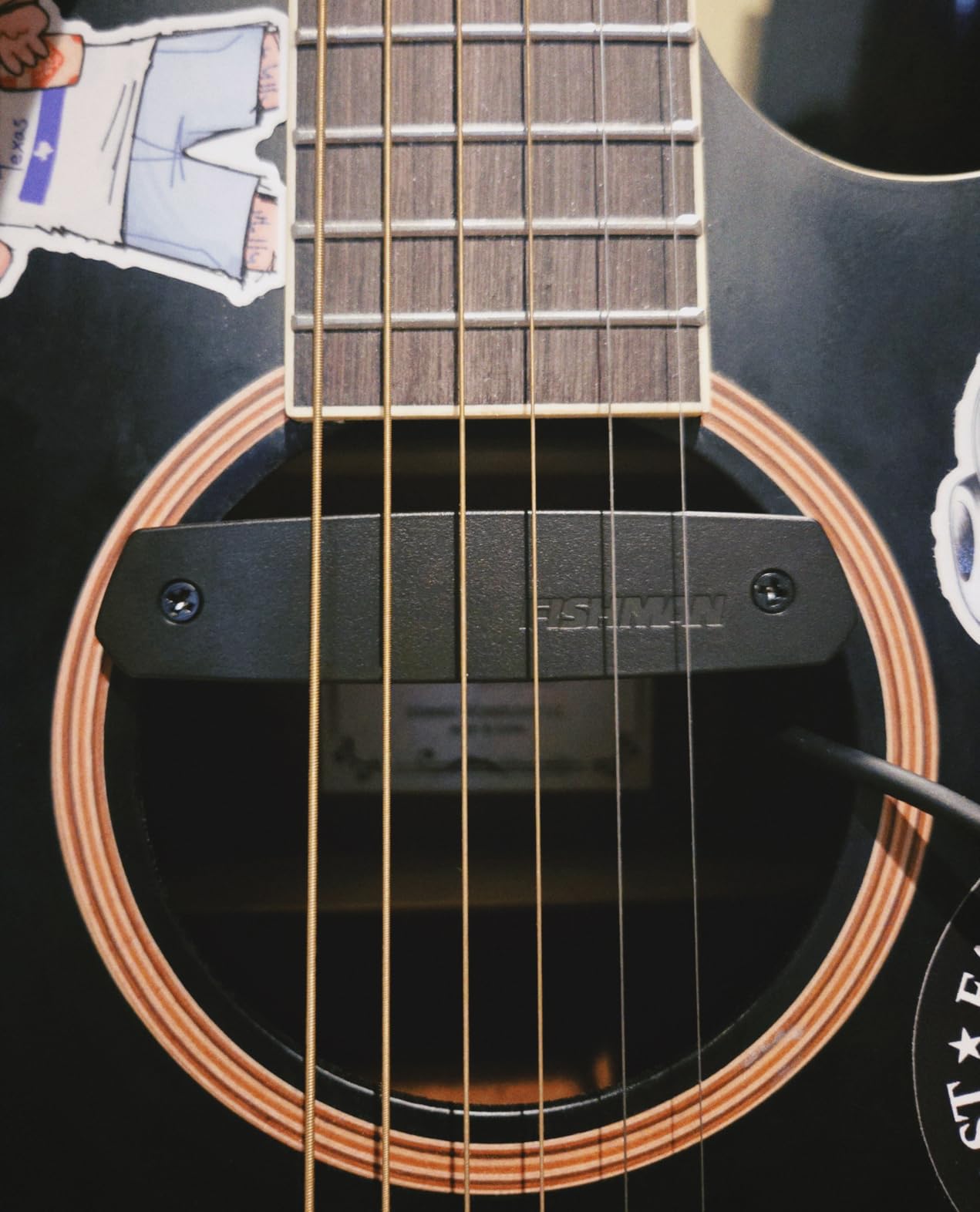
Because it is fully passive, there is no battery to forget and no active electronics to fail. The output is low, which is normal for this class of pickup, so a preamp or a mixer channel with gain does the work of getting you to stage volume. Any decent small DI or the acoustic channel of a digital mixer will handle it.
The honest trade-off is hum. A single coil with no hum-cancelling winding picks up whatever electrical noise is nearby, and reviewers report grounding noise that gets worse when the cable is moved. Stage venues with dimmers and old power runs are exactly where that shows up first.
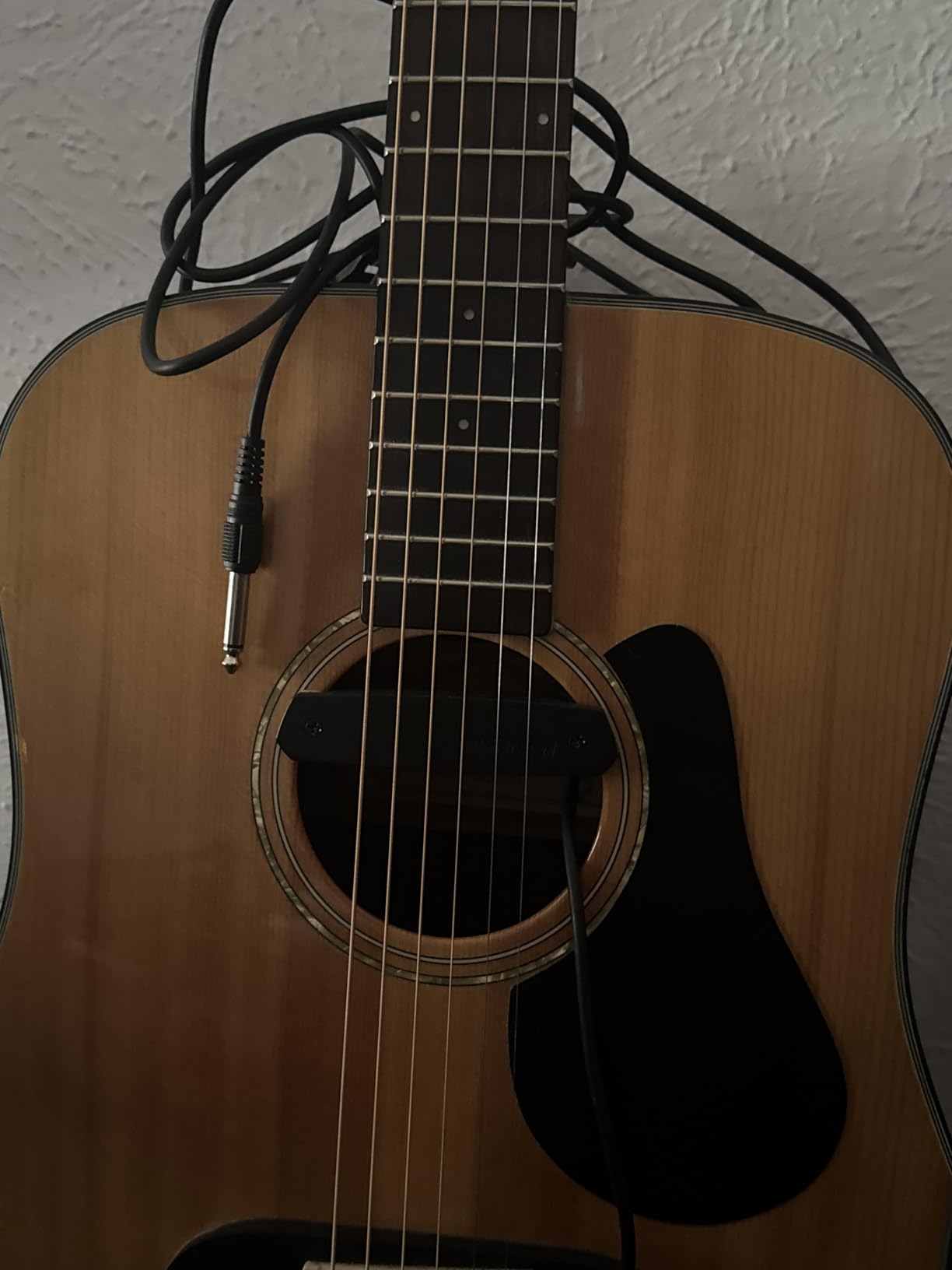
The attached cable is long and permanently fixed, so packing the guitar away takes a moment of coiling. The Neo D is also the kind of unit that can be tight in very small soundholes. If your guitar is a slim-bodied instrument with a narrow rosette, check the diameter before you commit.
When the Neo D is the right fit
Choose it if your guitar is a standard steel-string dreadnought or orchestra model with a full-size soundhole, you play mostly fingerstyle or light strumming, and you want a signal that needs no power source. It is also the safest first pickup for anyone who wants to try amplification without altering a guitar they care about.
It is equally good as a practice and recording source plugged straight into an interface, because the balance between strings stays consistent when you are layering parts. You are not fighting a hot signal that swamps the mix.
When the Neo D is the wrong fit
Skip it for band work in electrically noisy rooms, or for classical and nylon-string guitars, which have no steel strings for a magnetic coil to sense. If you need a headphone amp or a full PA level without any extra gear, the passive level is not enough on its own.
Small-body acoustics are also a risk. The clamp needs a little room to sit squarely, and a tight fit can buzz or reduce the clarity of the low strings.
2. AMUMU SP30 Woody: The Most Versatile That Disappoints Nobody
AMUMU SP30 Woody Magnetic Soundhole Pickup with Rare Earth Neodymium Magnet for Steel String Acoustic Guitars – Single Coil, Passive, Battery-Free, Clear & Balanced Acoustic Tone
Rare earth neodymium magnet
Hand-wound copper coil
4.1 stars, 1093 reviews
Pros
- Clear balanced tone for the money
- Detachable 10 foot cable
- Installs in under a minute with no drilling
- No batteries to manage
Cons
- Some pickups ship with foam pads reversed
- No spare foam pads in the box
- Will not fit nylon-string or 3/4 size guitars
The SP30 is the pickup I recommend to anyone who wants to try a soundhole system on a spare instrument. The build is a beech wood housing with a rare earth neodymium magnet and a hand-wound oxygen-free copper coil, and the tone lands somewhere between clear and balanced rather than harsh.
Installation took me under a minute. The unit sits on the edge of the soundhole, the 10 foot cable plugs in rather than being soldered on, and nothing touches the finish. Owners like that the pickup can stay installed while the cable comes off, so you are not unwinding wire every time you pack the guitar away.
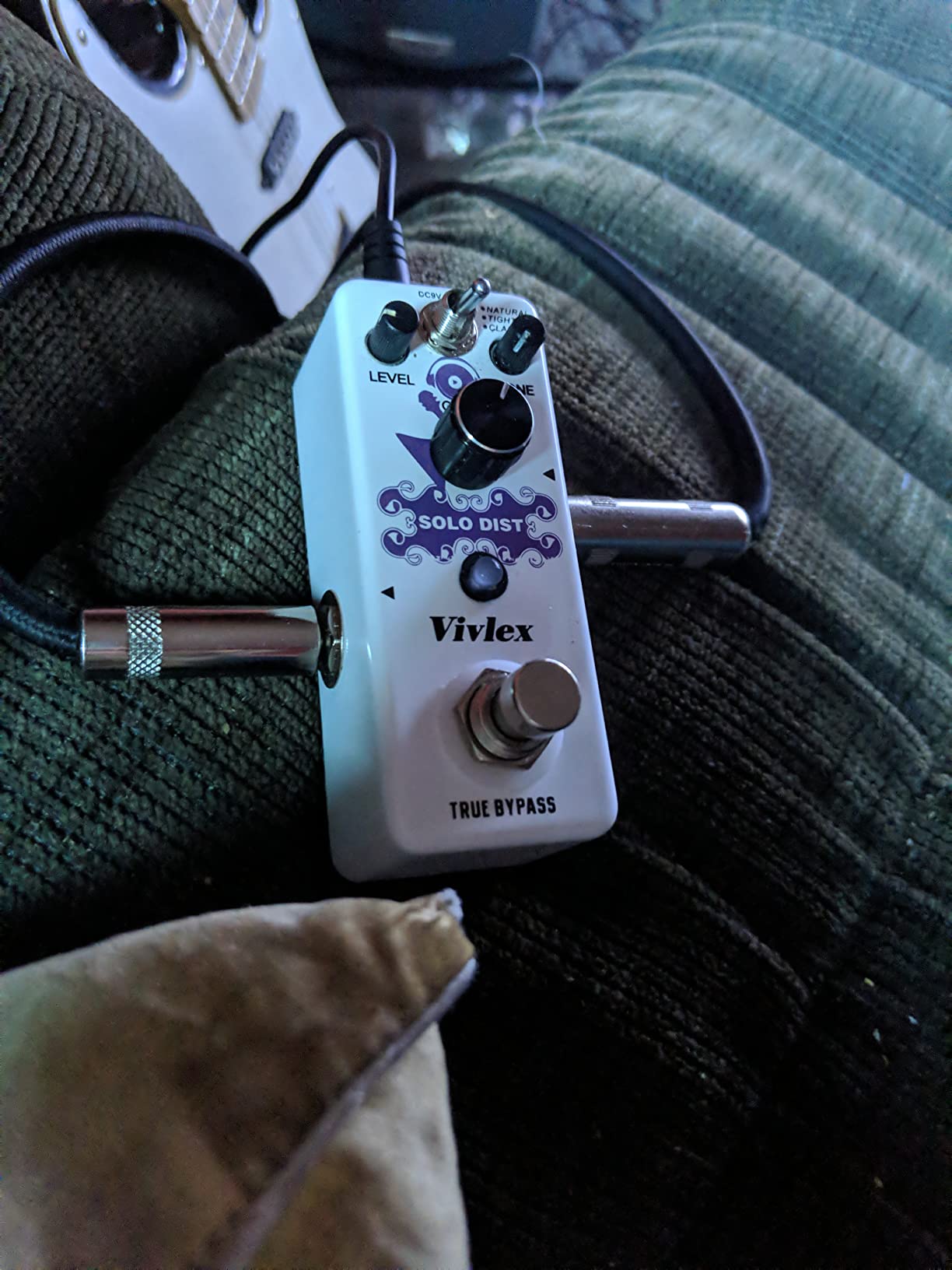
Two practical notes from user feedback are worth repeating. Some pickups arrive with the foam mounting pads fitted back to front, which causes string buzz until you pull and refit them, and the box does not include spares, so keep the ones that come out. A second report mentions a jack that fitted poorly and failed early, so check the plug before you rely on it for a rehearsal.
Output is passive and modest, which is the same story as most coils in this class. A boost pedal or a preamp is what turns it into a gigging signal. The included lead terminates in a 1/4 inch male plug, and the pickup also accepts a 1/8 inch jack if you are feeding headphones or a small interface.

The fit range is stated as 3.82 to 4.33 inch soundholes. That is a wide band for a budget unit, but it rules out nylon-string instruments and 3/4 size guitars such as small-bodied travel models. If you own one of those, this is the wrong pickup regardless of how good the tone is.
Who should buy the SP30
This suits students, beginners, and anyone with a practice amp that has a built-in preamp but no acoustic input shaping. It also works for players who gig coffee shops and small rooms where feedback is not a problem and tone clarity matters more than raw volume.
Because the cable detaches, it is a good travel companion. You can leave the pickup sitting in the soundhole of a guitar you are not using and move the whole system to the instrument you are playing.
Who should look elsewhere
If you play in loud bands with dimmer racks and old amplifiers, the lack of hum-cancelling windings will cost you. If your guitar is nylon-string or a small 3/4 size body, the clamp simply will not seat properly. And if you want onboard volume and tone controls, this unit has neither.
It is also not the choice for someone chasing a specific reference tone. It is a very good general-purpose magnetic voice, and buyers expecting a designed studio signature should look at the higher-tier units instead.
3. Seymour Duncan Woody HC: The Hum-Canceler That Handles a Noisy Stage
Seymour Duncan Woody Hc Hum Canceling – Walnut – Acoustic Guitar Pickup
Walnut humbucking housing
Double potted coil
4.4 stars, 939 reviews
Pros
- Warm tone suited to strumming and fingerstyle
- Humbucking design cuts 60-cycle hum
- Includes a 14 foot studio cable
- Looks like part of the instrument
Cons
- Moderate output
- some want a boost pedal
- High strings can sit louder than the low
- Attached cable cannot be detached
The Woody HC is the one I reach for when the room has bad wiring. Two coils wired in humbucking configuration cancel the 60-cycle buzz that single coils gather, and a double-potted winding adds another layer of shielding against hum. At 4.4 stars it sits near the top of the ratings in this roundup, which matches how owners describe it.
Tone is warm and rich, and it is equally at home with heavy strumming and delicate fingerstyle work. That versatility is unusual in a soundhole pickup, and it is why players often describe it as the safest bet when they are not sure what an amplifier will do to the signal.
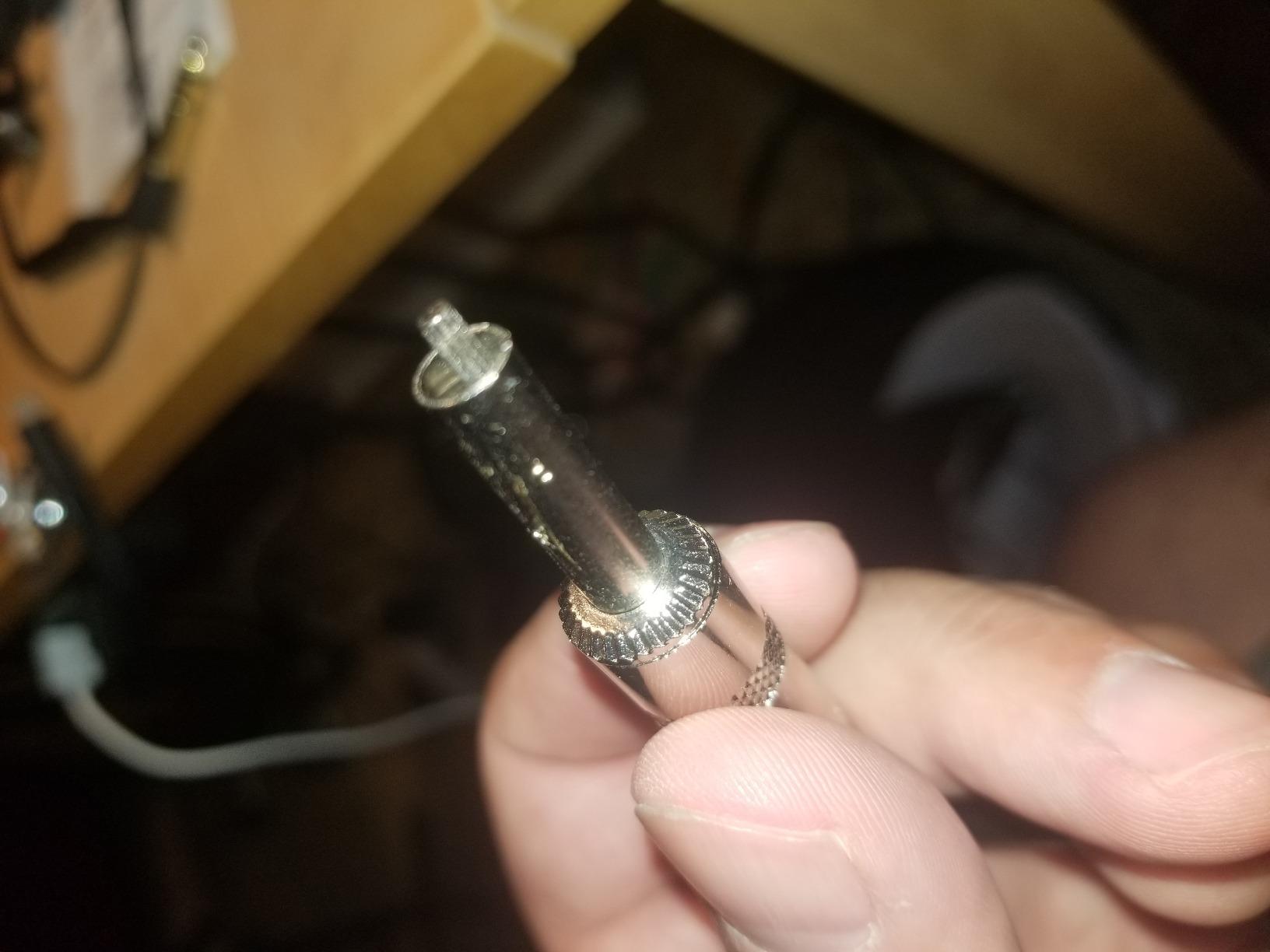
The housing is walnut, machined so that it sits in the soundhole without modification, and it looks deliberate rather than tacked on. If you care about how an instrument appears on stage, that is a real consideration. The 14 foot studio-quality cable in the box is long enough to reach a PA cabinet without an extension, and it plugs into an acoustic amp, a direct box, a mixer or a PA.
What the hum-cancelling coil does not solve is level. Owners commonly report moderate output and pair the pickup with a boost pedal for full band volume. It also is not perfectly even: several reviewers note the high strings reading louder than the low ones, which is a minor issue on a mixed signal and a more obvious one when you are recording.
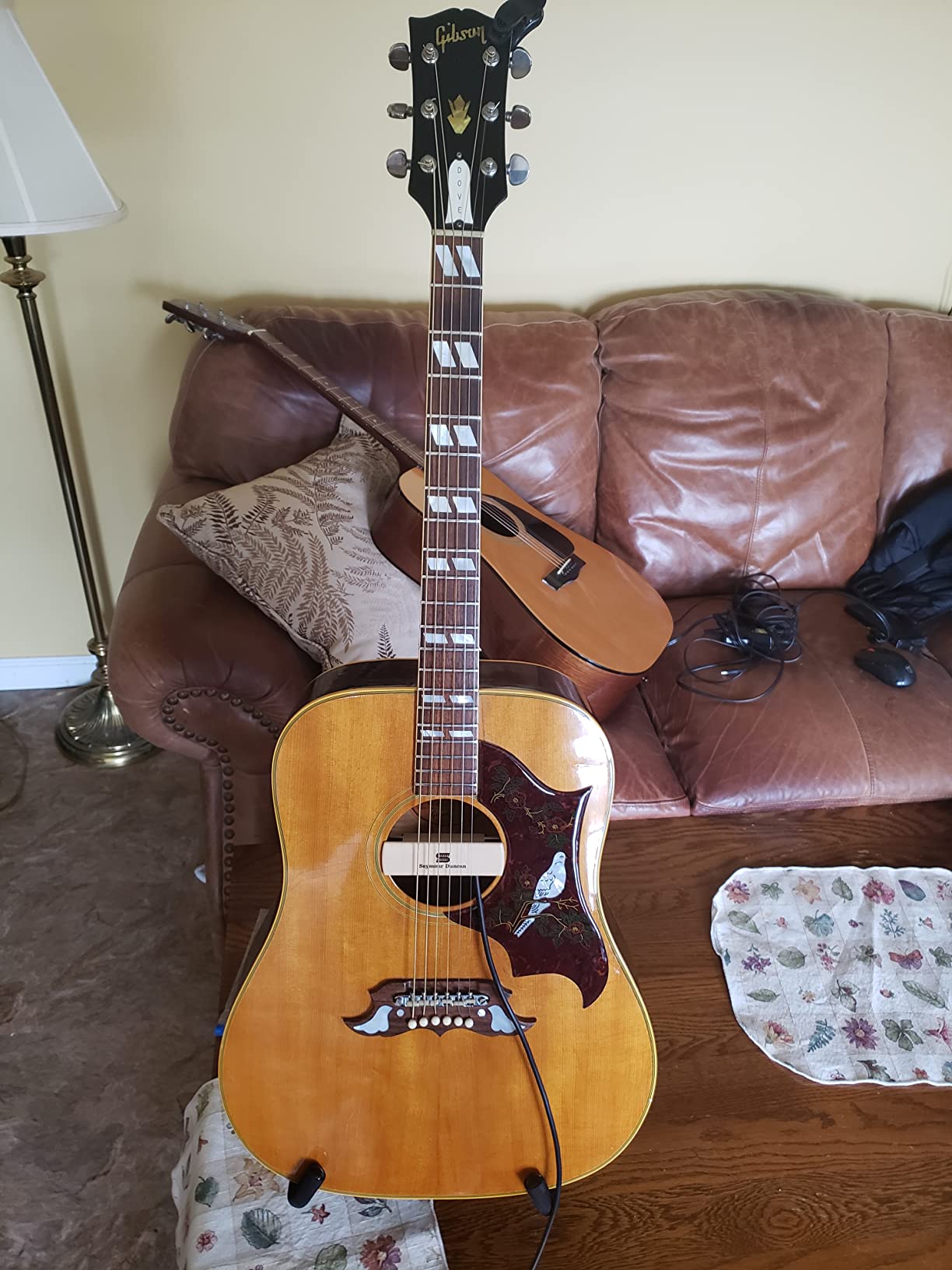
A minority of buyers report residual noise, especially when the plug is touched, and the body is bulkier than some competing units. The attached cable cannot be detached, so you coil it before every pack-down. None of that is a deal-breaker, but it is worth knowing before you buy.
Why the Woody HC suits band players
The hum-cancelling design is the reason to choose this one for a rehearsal room, a bar stage or a church service with older equipment. Players on forums consistently single out humbucking soundhole coils as the solution once a single coil starts picking up noise they cannot EQ out.
It also works as a front-of-house source without a mic stand, which frees up a mic position and keeps a small stage uncluttered. Warmth survives a loud PA in a way that thinner coils do not.
Where it falls short
Player response is less accurate than a piezo on rapid flatpicking, and a few buyers on Sound On Sound forums note that they choose magnetic snake-style units specifically to avoid the compressed quack of a contact pickup. If you need a preamp with tone shaping, this unit has none of its own, so shaping happens at the amplifier.
Owners of vintage instruments often leave a magnetic pickup installed permanently. Check the fit in a small soundhole before assuming it will work, and note that this model ships with a fixed cable rather than a detachable one.
4. TraderPlus 12: A Clip-On Pickup With Knobs That Mostly Do Nothing
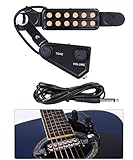
TraderPlus 12 SoundHole Guitar Pickup Acoustic Electric Transducer for Acoustic Guitar Magnetic Preamplifier with Tone and Volume Control, Cable Length 10 ft
Metal body with felt clip
Onboard volume and tone knobs
4 stars, 624 reviews
Pros
- Cheapest route into amplification
- Works on hollow-body basses and mandolins too
- Felt-backed clip protects the finish
- Low feedback for practice and small rooms
Cons
- Volume is closer to on and off than continuous
- Thin cable picks up noise
- Mount can slip and buzz until adjusted
The TraderPlus 12 exists because a lot of people want a soundhole pickup and want one that does not look like a piece of laboratory equipment. The metal body, the felt-backed clip and the two knobs read as a deliberate accessory, and it does clip onto any steel-string acoustic with a soundhole. Reviewers also use it on hollow-body basses and mandolins.
Tone is clean enough for practice, with low feedback in a bedroom or a small room, and owners treat it as a capable step up from the cheap factory preamps that are fitted to many beginner guitars. For rehearsal, silent practice and trying amplification out for the first time, it does the job.
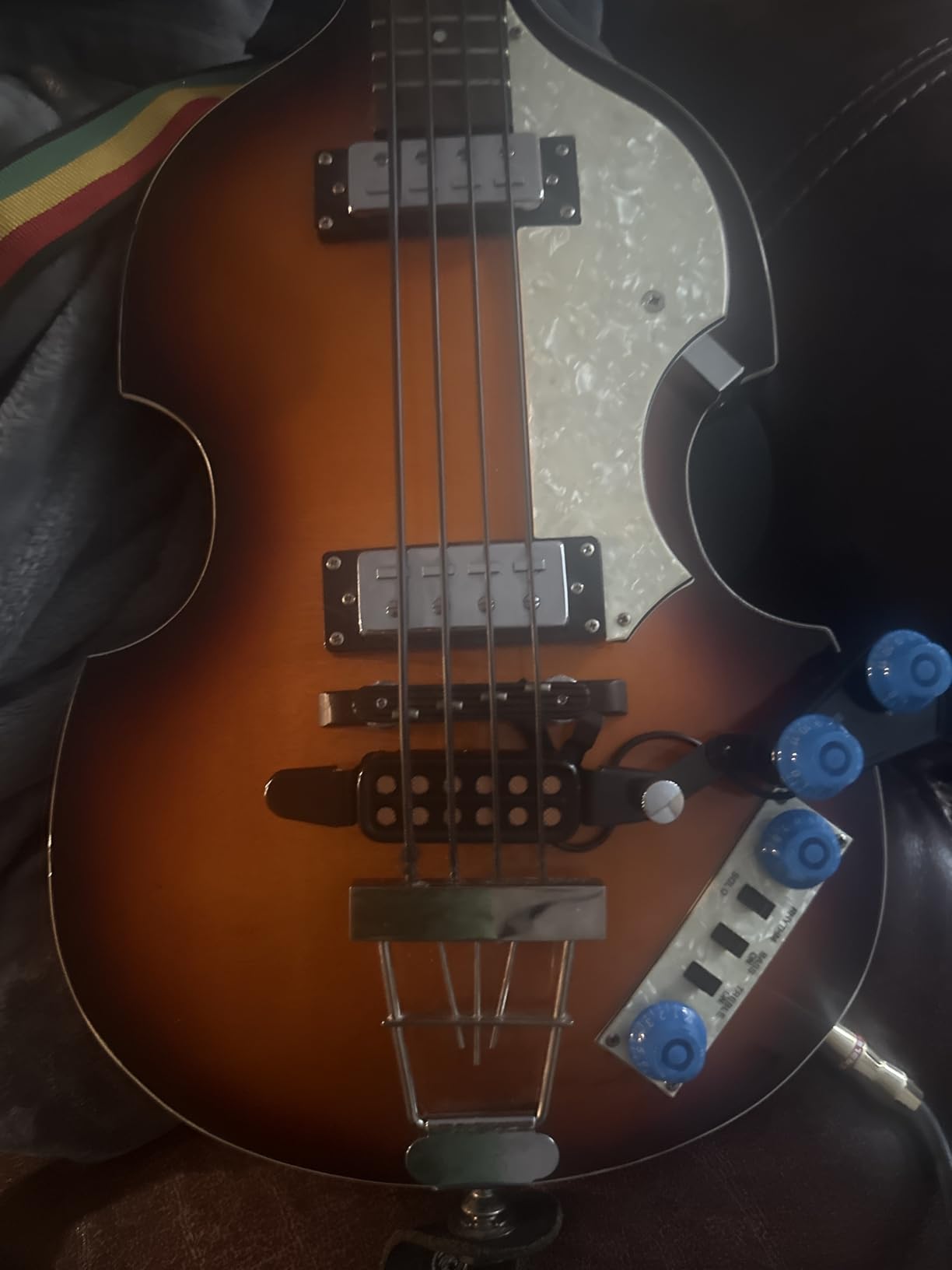
Now the honest part. The volume control is effectively an on and off switch rather than a continuous level, and the tone control has very little useful range. Owners who bought it hoping for onboard EQ are disappointed, and that disappointment is the most common theme in the reviews.
The included cable is thin and lightly shielded, which makes it prone to shorts and to picking up noise. A wrench is supplied for adjusting the clip, and that adjustment is worth doing carefully: if the mount is not seated squarely it can buzz, and it can slip out of position. Instructions are sparse, so plan on working it out yourself.

The output jack is 3.5mm, which is fine for a powered speaker or a small interface but means an adapter for a normal guitar cable into a full-size amplifier. The unit is listed at 0.21 kg, which is heavier than most of the wooden housings here, and it is the least refined build in the roundup.
Where the TraderPlus 12 earns its place
It is a good answer to a narrow question: how do I put an acoustic into a practice amp or a small powered speaker without spending real money or touching my guitar. The felt clip means nothing scratches, and the whole thing comes apart in seconds when you move to another instrument.
It also works for players of hollow-body electric bass and other steel-string instruments, which widens its reach beyond steel-string acoustics.
Where it will disappoint
Do not buy it for stage use. With no real volume control and a thin cable, the flexibility to ride a changing signal is missing. The tone knob is closer to a treble muffle than usable EQ, so any tonal shaping has to happen downstream.
It is also the pick to skip if you have a small soundhole or a nylon-string instrument. The clip needs room to grip, and the magnet has nothing metal to sense on a classical guitar.
5. Donner DSS-6: Real Onboard Tone Control in a Mahogany Shell
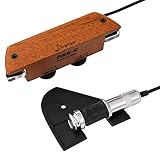
Donner Acoustic Guitar Pickup, Guitar Pickups Passive Mahogany Soundhole Pickup with Humbucker Volume Tone Control, Fits 3.8” to 3.94” Soundhole Diameter
Passive humbucker
Mahogany housing
4 stars, 620 reviews
Pros
- Clean hum-free output with no battery
- Vibration-friendly mahogany housing
- Real volume and tone controls
- No-drill installation
Cons
- Very low output
- needs a preamp in a band
- High strings can dominate the balance
- Occasional build quality slips
The Donner DSS-6 answers the request that shows up again and again on acoustic forums: a soundhole pickup with volume and tone controls that are actually usable. Several people ask for a non-invasive pickup with real onboard control, and this is one of the few affordable units that delivers it rather than a decorative knob.
Because it is a passive humbucking design, output is clean and free of external noise with no battery to manage. The custom rare earth neodymium magnet and the mahogany housing produce a sound profile the manufacturer describes as sweet and clear, and owners agree the tone is balanced and easy to listen to for long practice sessions.
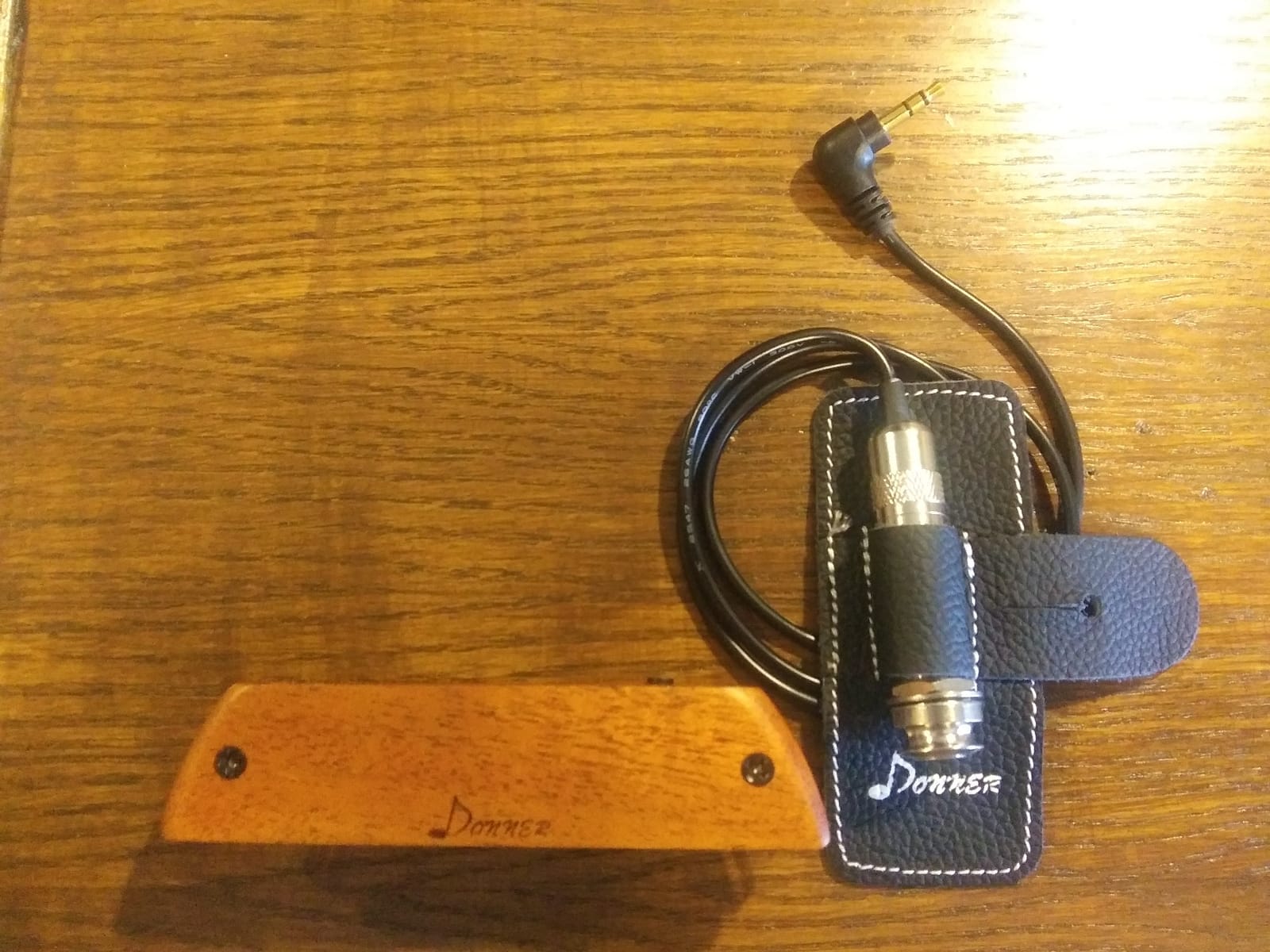
The housing is solid mahogany, which looks natural in the soundhole and transmits vibration well. Installation leaves the guitar unmarked, and there is a one year warranty behind it, which is unusual at this tier and reassuring for a first-time buyer.
The catch is level. Reviewers describe the output as low enough that a preamp is genuinely required in a band setting, and a few note that the balance favours the high strings, leaving the D, A and low E quiet. If you are recording, that shows up as a thin low end in the mix unless you shape it yourself.

The tone control behaves more like a treble muffle than a usable EQ, so treat it as a brightness control rather than a full tone stack. There are also isolated reports of crooked mounting screws or a glue line in the wood, so inspect the unit when it arrives. The output is a standard 6.35mm jack, and the endpin jack retainer can sit loose.
Who should choose the DSS-6
Pick this one if you want volume and tone in the guitar rather than in the amplifier, if you practise at home on a digital modeler or a small amp, and if you want a passive design with no charging in your life. The humbucking layout also makes it a sensible choice in rooms with fluorescent lighting or dimmer circuits.
It is a good match for a beater instrument or a practice guitar where the point is learning, not tone perfection. The mahogany looks good enough that leaving it installed is not an issue.
Who should skip it
It is not a stage-first pickup at its native level. Without a preamp, it will not carry a band. It is also a poor fit for very small soundholes, since the stated range is 3.8 to 3.94 inch diameter, which is a tighter window than several units in this roundup.
If you need per-string balance you can hear clearly, or you want a bright sparkly top end, the single-coil options here are worth comparing. And like every magnetic coil, it is not a solution for a classical guitar.
6. Seymour Duncan Woody Single Coil: Bright Top End in Maple
Seymour Duncan Woody Single Coil – Maple – Acoustic Guitar Pickup
Maple single-coil housing
14 foot low-capacitance cable
4.2 stars, 520 reviews
Pros
- Crisp chime that still reads as acoustic
- Slides under the strings in seconds
- Substantial wooden build
- Handles strumming and light fingerstyle
Cons
- Buzz at high gain near the interface
- Will not fit smaller parlor soundholes
- No onboard EQ
- Needs a preamp for live level
The maple Woody is the bright option in this roundup. Owners describe a crisp, chiming top end that still sounds like an acoustic rather than an electric guitar with a flatpick wound around the neck. It is the unit I would reach for on a flat-top dreadnought tuned bright, or for a player whose strumming has more attack than warmth.
Installation is genuinely seconds. It slides under the strings into the soundhole with no tools, and there is no clamp to tighten or bracket to align. At 3.2 ounces it adds nothing noticeable to the weight of the instrument.

The box includes a 14 foot low-capacitance cable and a drawstring storage bag, which is a generous pairing. A low-capacitance cable matters more than most buyers realise: a thick cable with high capacitance rolls off treble, and that works against exactly the brightness this pickup is built around. It runs to an amp, a direct box, a console or a PA.
It is hand built in Santa Barbara, California, and the housing is well finished maple with stainless steel hardware. It handles both heavy strumming and light fingerstyle, which is broader than many single-coil soundhole units manage.
Where the bright single coil works
It suits players who want sparkle and cut on top, such as a bluegrass rhythm player or a singer-songwriter who needs the acoustic to sit above a band. It is also a good recording source, because the top end stays present when the signal is buried in a mix.
Because it installs in seconds with no drilling, it is a good unit to move between two guitars in a home or rehearsal setup. A guitarist with a dreadnought and a smaller steel-string can cover both.
Where the bright single coil causes trouble
Single-coil windings mean buzz when the gain is turned up near the interface, and owners on acoustic forums call that out specifically. Low output volume also means a preamp or a powered mixer is needed for any live use.
It will not fit the smaller soundholes found on many parlor guitars, which is the most common complaint from people trying it on a slim-body instrument. There is also no onboard EQ, so shaping has to happen at the amplifier, and some players find the sound muddy at certain settings until they push the top end.
7. SUNYIN Wireless Hybrid: A Magnetic Coil and a Condenser Mic in One Box
Wireless Acoustic Guitar Pickup Rechargeable Magnetic And Microphone Soundhole Pickup For Acoustic Guitar Build-In Volume Control(Wood Grain)
Magnetic plus built-in mic
100ft wireless, 3.5mm wired out
4.3 stars, 434 reviews
Pros
- Wireless range with a stable link
- Blendable mic and magnetic sources
- Works wired or wireless
- Onboard mic volume
- timbre
- EQ and phase
Cons
- Both pickup and receiver need recharging
- EQ needs a small screwdriver
- Pair button breaks the link if bumped
This is the only unit in the roundup that puts a miniature condenser microphone inside the soundhole alongside a magnetic coil, and that changes what you can do with it. Owners are repeatedly surprised by how much of the guitar’s real character comes through, because the mic picks up the air and the body while the magnetic coil handles the string attack.
Transmission runs 100 feet on the 30 metre wireless link, and owners report a stable connection with no noticeable latency. The preamp gives you independent control over mic volume, mic tone, output volume, EQ and phase, plus a battery indicator, so you can dial the two sources to sit in whatever balance your mix needs.

It also works in a wired mode, which matters more than it first appears. The built-in rechargeable lithium battery runs up to 8 hours on wireless and more than 100 hours when wired, so a failed battery does not end a set. Output is a 3.5mm jack, and a cable is included.
Fit covers soundholes from 80mm to 120mm, the widest of the units with a mic, and the clamp sits snugly with no drilling. The package includes the receiver, a USB Type-C cable, a mini screwdriver, a leather sheath and cable clamps.
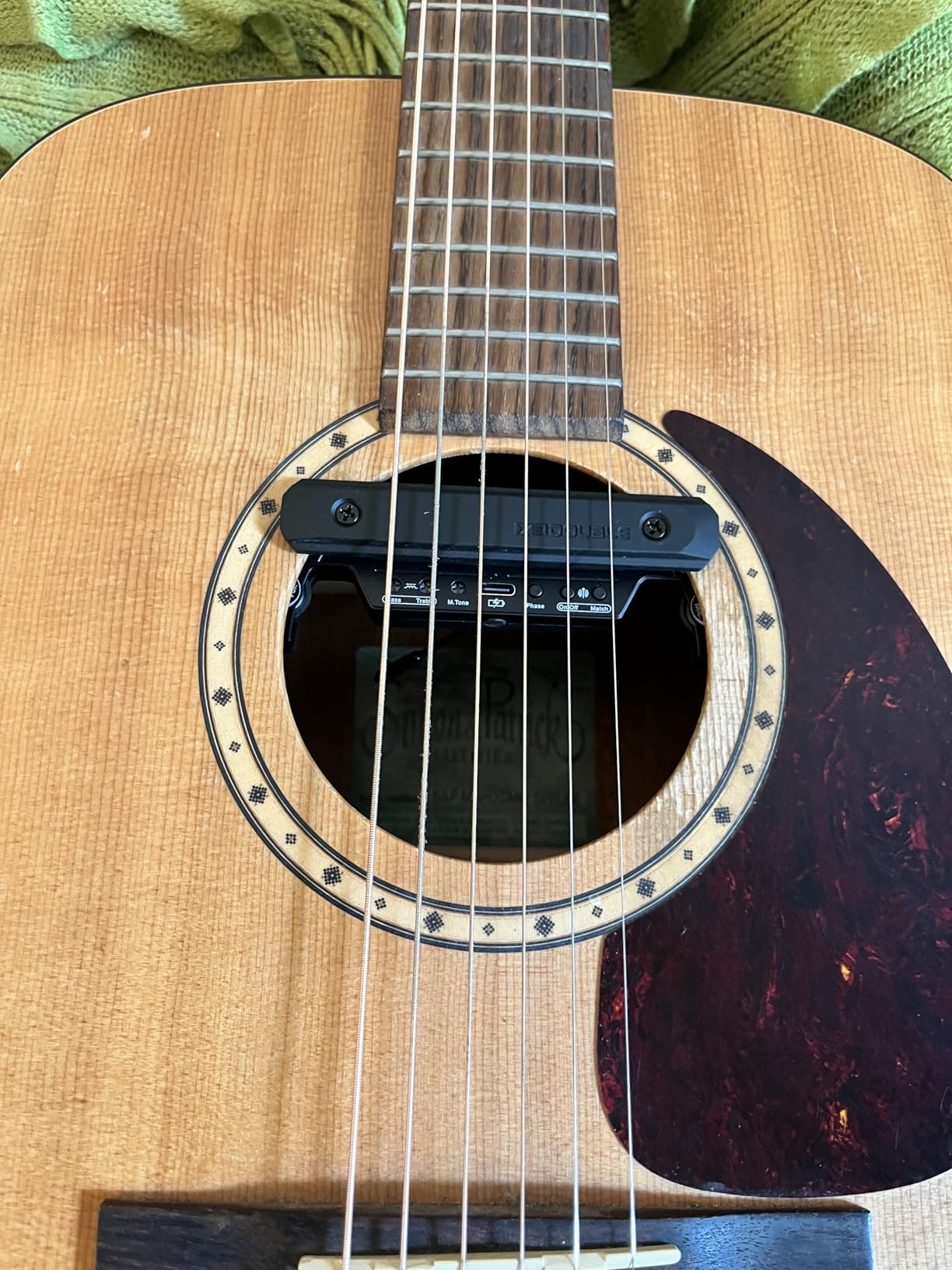
Now the warnings, because players on acoustic forums have real concerns about this category. Both the pickup and the receiver need regular recharging, the onboard EQ adjustments need the supplied screwdriver so they are not adjustable mid-song, and the pair button is easy to knock by accident and will break the link. One buyer reports a receiver failing within four months with no support response.
The humbucking source is slightly harsh on its own, which is exactly why the mic is there. Set the blend before you play rather than during a set.
Why a hybrid system is worth the extra effort
A magnetic coil alone gives you string clarity and a clean signal that resists feedback. A mic alone gives you the room and the wood. Blending them is the closest you get to capturing both, and the phase control on this unit lets you null out any comb filtering between the two sources.
For recording at home, the two-source output saves a second track and a second take. For a singer-songwriter playing to tracks, the wireless range means you can stand away from the guitar without a cable across the floor.
Where the hybrid falls short
If you play live in a venue with unpredictable power and you do not want a charging routine, the battery upkeep is a real cost. The screwdriver-only EQ means adjustments happen before and after, not during.
It is also heavier than the wooden passive units, at 13.4 ounces, and the reliability record of wireless soundhole products is uneven across the category. Buyers who distrust wireless hardware should use this in wired mode, where the battery life removes the concern entirely.
8. L.R. Baggs M1 Active: The Stage Pickup With Adjustable Poles
L.R. Baggs M1 Active Acoustic Guitar Magnetic Soundhole Pickup
Active output with volume control
Adjustable pole pieces
4.6 stars, 214 reviews
Pros
- Highly feedback-resistant in live settings
- Per-string pole adjustment for any gauge
- Onboard volume doubles as a mute
- Up to 1000 hours on one coin cell
Cons
- Endpin install can need a larger strap button hole
- Cable socket is awkward once mounted
- No cable included
- Can be bright without a DI
The M1 is the unit the long-running Gearspace thread keeps coming back to. Members there describe it as the most natural-sounding magnetic soundhole pickup, and that verdict has held up for years as more expensive alternatives came and went. Players also report leaving it installed permanently because, unlike some models, it does not dull the top end of the guitar acoustically.
It is an active design, and that is the whole point. Active electronics mean more output for the same pickup geometry, so it sits at a usable stage level without leaning on a boost pedal, and the feedback resistance is high enough to work cleanly into a PA or a mixing console.
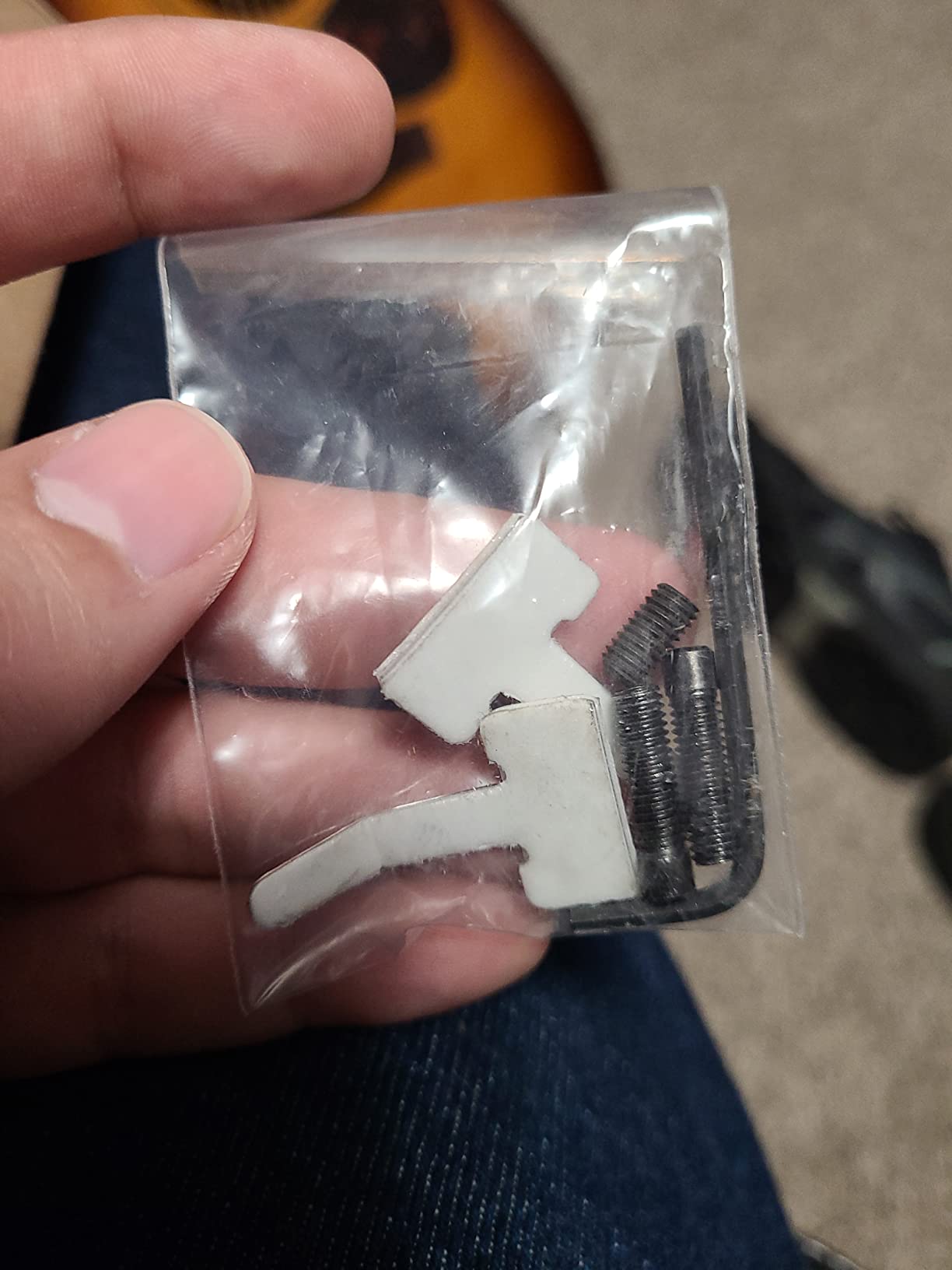
The adjustable pole pieces are the feature I would not give up. Each pole can be raised or lowered to balance string response, which means a 12-string set, a heavy gauge or a light gauge can all be made even. A passive coil gives you one fixed balance; the M1 gives you a screwdriver and a fix. It also picks up enough body sound that tapping on the top registers naturally, which is useful for percussion effects.
There is an onboard volume control that doubles as a practical mute between songs, and the battery is a single 3V lithium coin cell rated at up to 1000 hours. That is measured in years of ordinary use rather than gig cycles.
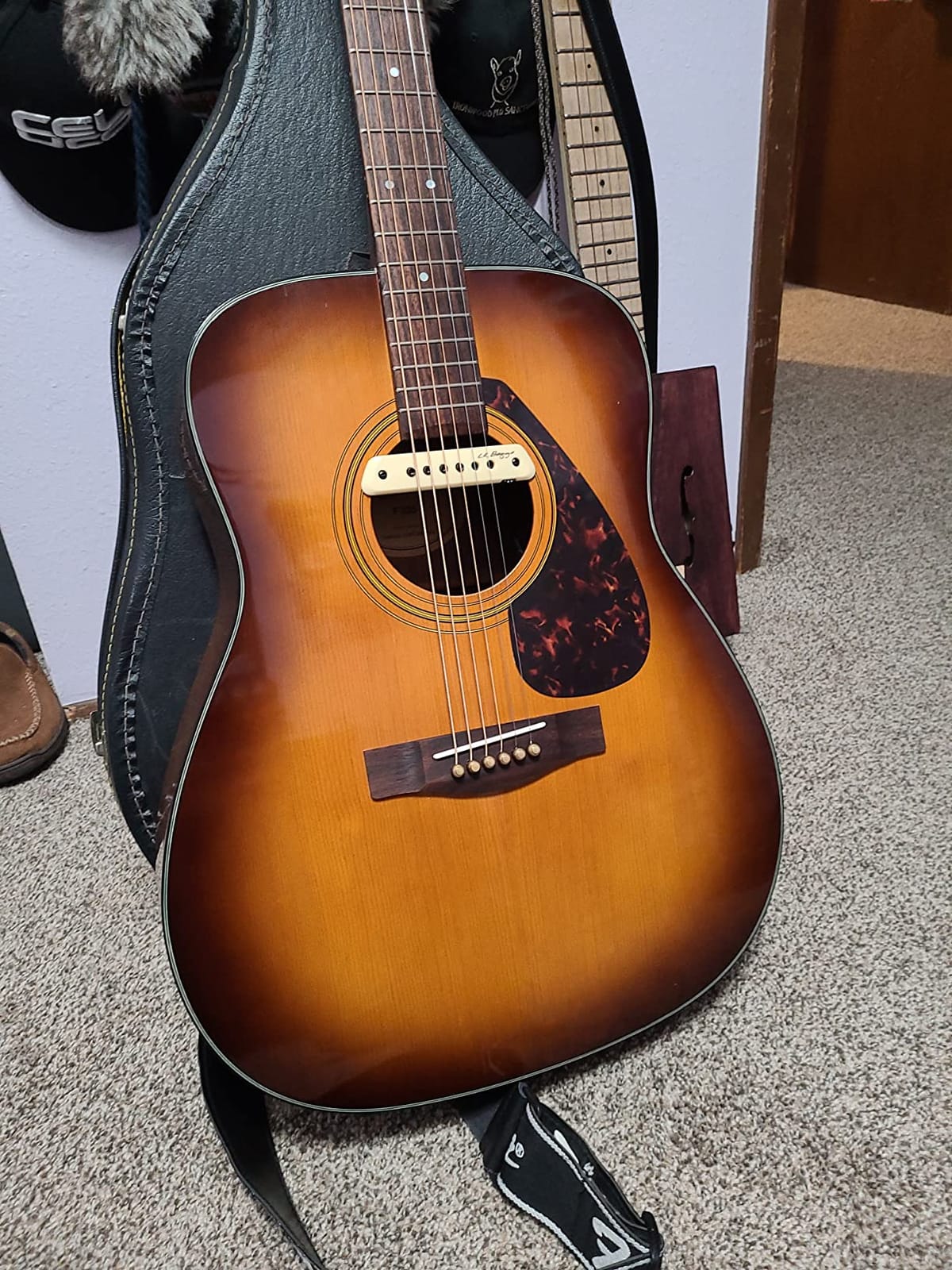
The compromises are installation-related. A permanent mount means enlarging the strap button hole and fitting a strapjack, which is real work on a guitar you care about. The cable socket position is awkward to reach once the unit is mounted, the coin cell sits in a hard-to-reach spot, and no suitable external cable is included, so you will need to source one.
Owners also note the output can be bright and needs a DI with some high-frequency control to tame it. A common live rig recipe from players is pickup plus a small condenser mic into an L.R. Baggs Para DI with the highs rolled off, which gives you both sources and a smoother top.
Why stage players choose the M1
Output level and feedback resistance together are what separate an active soundhole pickup from a passive one on a loud stage. The M1 is referenced constantly in forums as the answer to a magnetic pickup that behaves like an electric guitar, without the quack that a piezo unit produces.
The per-string pole adjustment also solves a problem most buyers do not realise they have. If your guitar has a mixed string set or unusual gauges, no fixed-pole passive coil will sit evenly under it.
Where the M1 is not the answer
If you refuse to modify your guitar at all, the temporary cable-in-soundhole method is fiddly and the socket placement is awkward. If you want a small, light unit that disappears into the rosette, the stainless steel body at 10.2 ounces is noticeably heavier than the wooden passive options.
It is also not a fit for classical or nylon-string guitars. And for a player who wants zero electronics and zero power source, the active design is more than they need.
9. Fishman Rare Earth Humbucker: Warm Accuracy With Flexible Mounting
Fishman Rare Earth Humbucker Magnetic Soundhole Acoustic Pickup
Neodymium humbucking coil
Re-voiced treble response
4.2 stars, 185 reviews
Pros
- Warm accurate tone true to the guitar
- Very low feedback at high control settings
- Onboard volume control
- Slim design that sits deep in the soundhole
Cons
- Can lean toward an electric character
- Nickel strings read louder than bronze
- Permanent fitting needs the endpin hole enlarged
The Rare Earth is the humbucking answer from a brand with a long record in acoustic electronics, and it has been re-voiced for a smoother treble response than earlier versions. Owners describe the result as warm, natural and accurate, with very little feedback even when the onboard control is turned up.
It can be fitted two ways. The cord can simply run out of the soundhole for a temporary setup, or the unit can be installed permanently through the endpin hole with the cable routed internally. That flexibility is what many owners like most, because it lets one pickup serve a touring rig and a guitar you leave at home.

The onboard volume control is genuinely useful in a live setting, and the slim profile sits low enough in the soundhole that it is not visually obvious to an audience. A microphone is included in the box, which lets you capture a second source when you want the blend.
Not everyone hears it as purely acoustic. A number of listeners describe the tone as leaning toward the electric side of the spectrum, which is a matter of taste rather than a defect. Another recurring comment is that nickel strings sound noticeably louder than phosphor bronze, so string choice interacts with the result more than it does with some other units.

Permanent installation means enlarging the strap button hole, which is the point at which many owners stop. One buyer reported arriving with shattered parts in the box, an isolated manufacturing issue but worth flagging. A one year limited manufacturer warranty covers the electronics. At 9.28 ounces and 7 by 5 by 3 inches, it is one of the larger units in the roundup.
Who the Rare Earth fits
It suits players who want more output than a passive single coil can give but do not need the extra headroom of a fully active system. The combination of onboard control, low noise and a slim profile makes it a strong live choice for a singer-songwriter working alone on a small stage.
It also works well as a second source alongside a microphone, since a mic is included and the two can be balanced at the console.
Who should choose something else
If your priority is sounding exactly like the guitar played acoustically, the reported electric lean makes this less obvious. Players on forums who specifically want to avoid an amplified, compressed character tend to prefer a different magnetic voice.
It is also a magnet-only design, so nylon-string and classical guitars are out. And if you will not enlarge a strap button hole, treat the temporary cord method as the only realistic option, which many players find awkward in a live setting.
10. AMUMU SP60 Humbucker: The Widest Soundhole Fit in the Roundup
AMUMU SP60 Acoustic Guitar Pickup Humbucker Magnetic Passive Soundhole Pickup for Acoustic guitar Black
Ceramic humbucker with volume wheel
Fits 3.82 to 5.1 inch
4.6 stars, 187 reviews
Pros
- Warm dynamic hum-free tone for the tier
- Passive
- so no batteries between sets
- Adjustable pole pieces
- Built-in volume wheel under one finger
Cons
- Needs an amp with a built-in preamp
- Tone can be muddy until poles are adjusted
- Less responsive for fingerstyle than a piezo
The SP60 solves a specific problem: a very wide fit range. The stated range runs from 3.82 inch up to 5.1 inch, which is wider than anything else in the roundup, and it means small parlors and large dreadnoughts can both be covered by the same pickup. That is the answer for anyone whose guitar sits at the awkward end of the size range.
Tone is described by the manufacturer as warm and dynamic, and the dual-coil ceramic magnet design keeps it hum-free while improving clarity and sustain. Owners are consistently surprised that a passive magnetic unit at this level delivers such a rich, low-noise result, and several compare it to systems that cost considerably more.
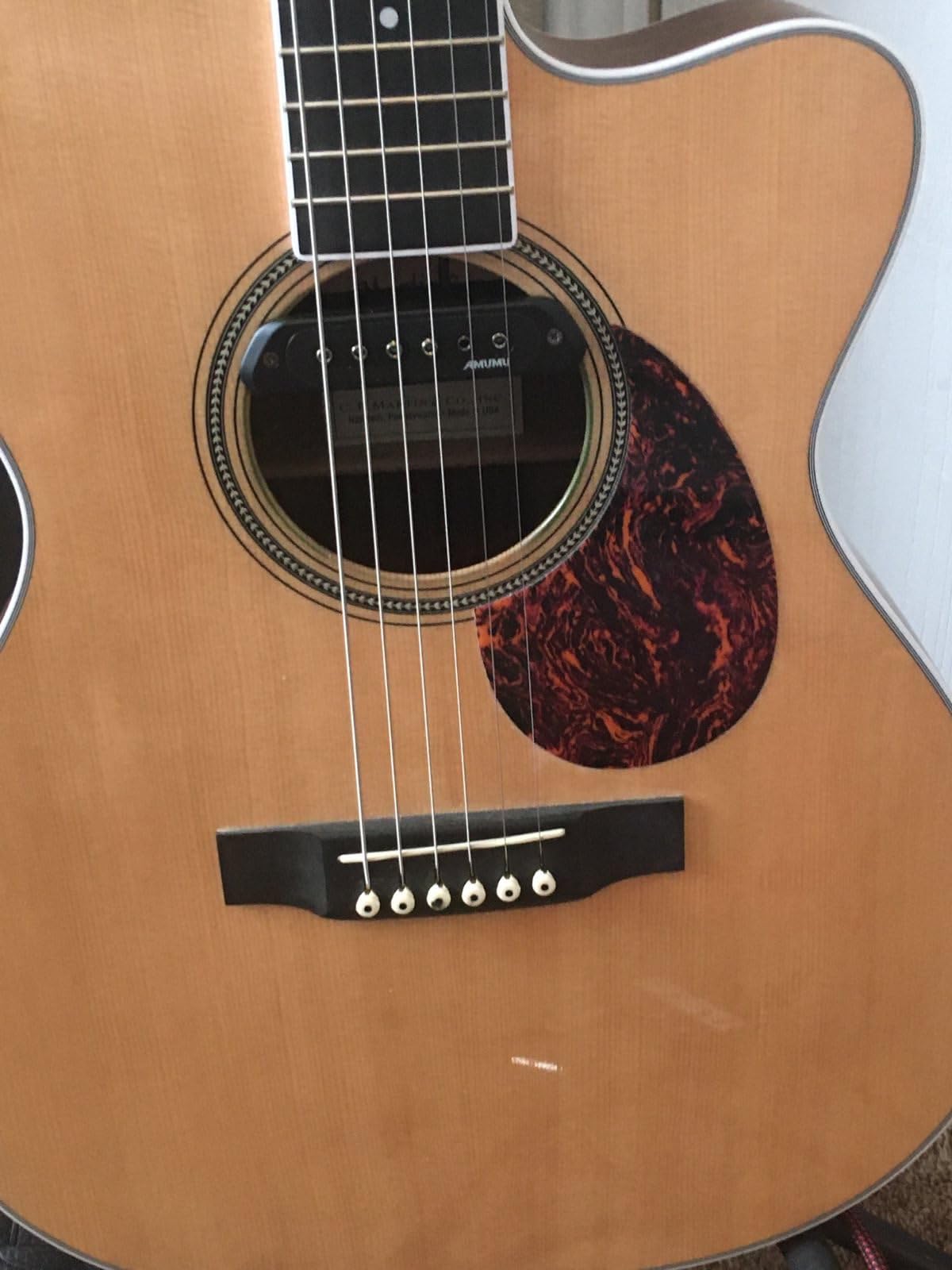
The volume wheel is built in and reachable with one finger, which makes it easy to pull the level down between songs without reaching for the amplifier. The adjustable pole pieces let you correct string balance, and the default centring of the outer strings over the coils is not quite right, so expect to spend a few minutes with a screwdriver the first time.
Output is passive, which means no batteries to change between sets and no charging routine. The trade-off is level: you need an amplifier with a built-in preamp to get proper volume, and without one the signal stays quiet.
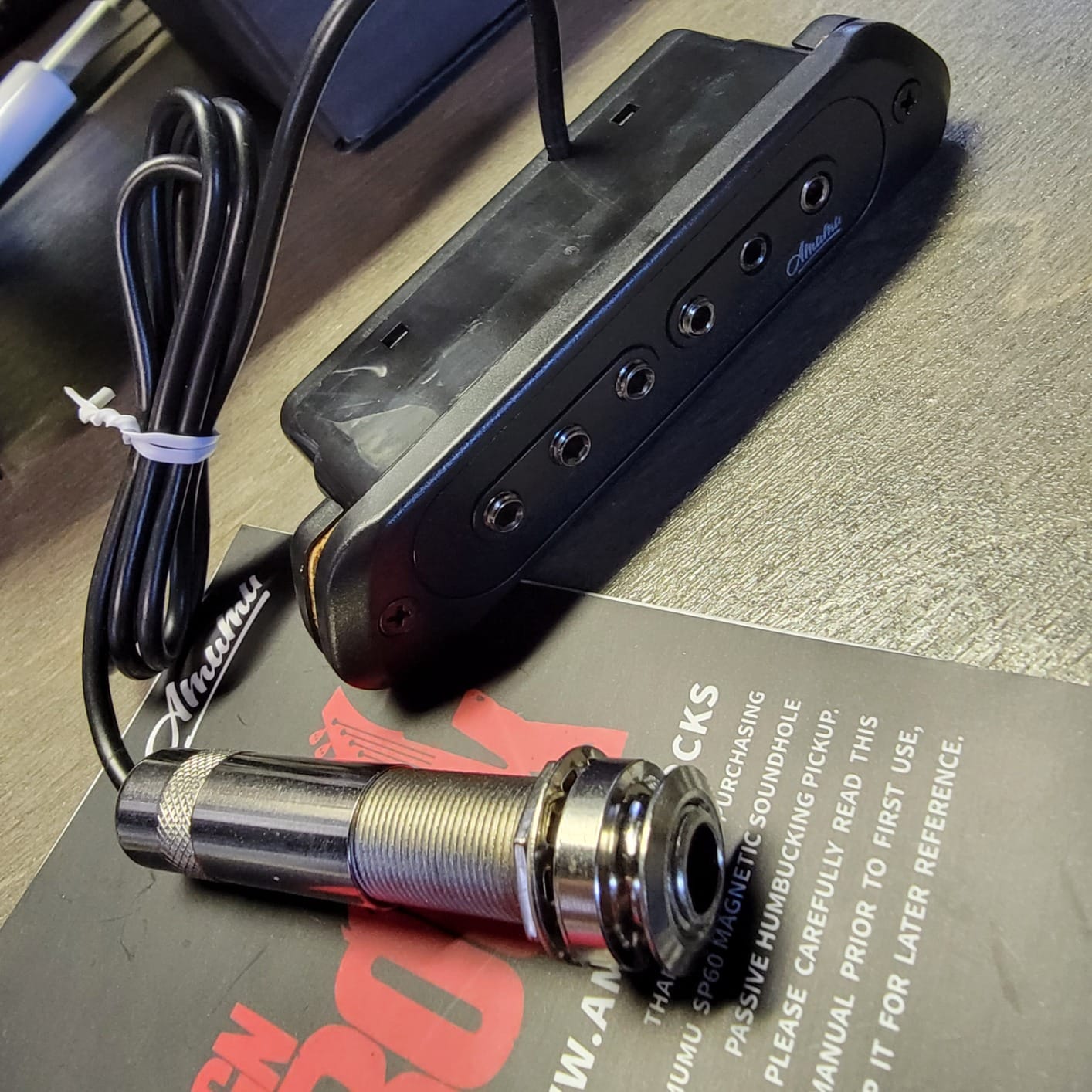
Two themes come up repeatedly. Players report muddy tone straight out of the box that improves substantially once the pole pieces are adjusted, so budget ten minutes for setup before judging it. Fingerstyle players also note the response differs from a piezo pickup and can feel less immediate, which is a normal characteristic of magnetic sensing rather than a fault.
Permanent installation again means enlarging the endpin hole for the jack, and the unit is designed for steel-string acoustics only.
Why the SP60 is worth considering
The fit range is the headline. Anyone with a 3 inch or even narrower soundhole, or one with a large rosette, has fewer options than with a standard coil, and this unit covers almost all of them in one body. That makes it the practical answer to the most common question we saw asked on forums about fitting a pickup to an unusual guitar.
The onboard volume wheel and passive operation also make it a good travel and rehearsal companion. Nothing to power, nothing to charge, and one control for the level.
Where the SP60 falls short
It is not a microphone. If you want the air and the body of a mic capture, a hybrid system will serve you better. Fingerstyle players who want the immediate percussive response of a contact pickup should know that magnetic coils respond differently by design.
And because the poles need setting, expect a first session of adjustment. Do that before you need the pickup rather than during a rehearsal.
Active vs Passive Soundhole Pickups: Which Do You Need?
Passive means the pickup is nothing but a magnet, a coil and a cable. It has no electronics and no power, so it outputs a low-level signal that a preamp boosts later. Active means a battery and a small circuit sit between the coil and the cable, which raises the output level without needing a very high gain setting.
Choose passive if you want nothing to charge or fail, you are feeding the signal into a preamp, an acoustic amplifier or a mixer that has gain, and you prefer the simplest possible signal path. Every passive unit in this roundup fits that description.
Choose active if you play into a PA or a mixing console with a flat signal, you want stage level without a boost pedal, or you play in a band where feedback control matters. The L.R. Baggs M1 is the active representative here, and the Fishman Rare Earth sits between the two with a modest internal boost.
There is a third pattern worth knowing. Several cheap units, including the TraderPlus 12 and the Donner DSS-6, put small knobs on the pickup body but remain passive. Those controls shape volume and tone after the coil rather than adding gain, which is a useful but limited tool. If you want onboard control, check that the knobs are real before buying rather than assuming from the photographs.
Magnetic, Mic or Hybrid: How Soundhole Systems Capture Sound
A magnetic soundhole pickup senses the steel strings through induction. It hears the string, not the room, which is why it is clean, quiet under high gain and slow to feedback. The trade-off is that it hears less of the guitar’s body and air, and it does nothing at all on a nylon-string instrument because there is no ferrous string to detect.
A mic-in-soundhole system does the opposite. A small condenser mic captures the top of the guitar, the body resonance and the air movement, which sounds natural and organic, but it feeds back readily, needs phantom power if the mic is an external condenser, and needs a lot of gain. Feedback can be tamed with a soundhole cover, but it is a constant fight in a loud room.
A hybrid does both. The magnetic element handles the attack and keeps the signal quiet, the mic handles the body, and a blend control sets the balance. Many players describe a pickup plus a small condenser mic into a DI with the highs rolled off as the most natural live rig, and a hybrid unit simply packages that arrangement.
One more option sits outside the soundhole entirely: a contact transducer clipped to the bridge plate. It captures the soundboard directly and is famously sensitive to knocks, so a hard tap can be heard. Players who want accurate low end sometimes prefer it, though it is not a soundhole product and we have not tested the options.
How to Install a Soundhole Pickup Without Drilling
Most soundhole pickups install in the same five steps, and none of them touch your finish. First, check the soundhole diameter against the stated fit range and measure before you buy. Second, loosen the strings a half turn or so, because a coil needs clearance under the strings to sit at the correct height. Third, feed the housing into the soundhole and position it so the coil sits under the string ends rather than the middle of the neck.
Fourth, tighten the strings back to pitch and set the height with the supplied screws, a screwdriver or the included wrench. Listen for buzz and move the housing a few millimetres until it clears. Fifth, route the cable out through the soundhole to the amplifier, and check that nothing is pinched between the coil and the top of the guitar.
Reversibility is the main argument for these products. Removing one takes seconds and leaves no mark, so the same pickup can move between instruments. That is the advantage over a bridge-plate installation, which needs a small hole drilled in the guitar’s underside.
Players do report one persistent worry, that a pickup left installed dulls the acoustic sound. Most magnetic units are thin enough to avoid this, and the L.R. Baggs M1 is specifically noted on forums as one that does not choke the top end when left in place. If your guitar is a vintage instrument, test the acoustic volume before and after fitting.
Buying Guide: Soundhole Diameter, Body Size and Feedback
Check the soundhole diameter first
This is the single most common reason a soundhole pickup gets returned. The stated ranges in this roundup run from 3.8 inch up to 5.1 inch, and the differences matter. A unit listed from 3.82 to 4.33 inch will not seat on a narrow parlor rosette, and a unit listed from 3.8 to 3.94 inch is the tightest window here.
Measure across the hole at the narrowest point, not the widest. Most guitars take a measurement at the top of the soundhole where the rosette narrows it, and a tape measure or a soundhole gauge both work. If you are between two sizes, the wider-range unit is the safer choice.
Match the pickup to your body size
Small parlors and orchestra models produce less low-frequency energy than a dreadnought, and a pickup voicing chosen for a big body can sound thin or honky in a small one. The reverse is less common, because extra body from a large guitar rarely causes complaints. Forum consensus is that a general-purpose voicing suits most instruments, while a pickup voiced to a known reference tends to flatter the body it was matched to.
Nylon-string and classical guitars need a different approach entirely. A magnetic coil has nothing to sense, so the realistic options are a dedicated piezo contact pickup, a mic in the soundhole with feedback control, or an internal pickup fitted by a luthier.
Kill feedback before you blame the pickup
Feedback in an acoustic setup usually comes from the acoustic guitar acting as a loudspeaker near a microphone or a poorly positioned speaker. Five things help more than swapping pickups: move the sound source away from the front of the guitar, keep the volume low until you are positioned, roll off frequencies around the resonant peak of the top, use a humbucking or hum-cancelling coil, and raise the signal before you raise the acoustic volume.
Soundhole covers work, and they work well, but they also cut volume and change the tone. A narrow feedback-reducing cover that sits over the treble side is a reasonable trade when a mic is your source. When a magnetic coil is your source, feedback is rarely the problem, because there is no microphone to create it in the first place.
Frequently Asked Questions
What is the best soundhole pickup for an acoustic guitar?
The Fishman Neo D Single Coil is the best all-round choice here, with balanced string-to-string response, no battery to manage and more than a thousand owner reviews behind it. Players on a noisy stage should choose a humbucking coil such as the Seymour Duncan Woody HC, and anyone who wants stage level without extra gear should look at the active L.R. Baggs M1.
Which is the best acoustic guitar pickup?
For a steel-string acoustic, the best pickups combine a magnetic coil with a body-sensitive response and low noise. Magnetic soundhole units are the most practical because they install without drilling and resist feedback. Contact transducers capture more low end but react to knocks, and mic systems sound the most natural while fighting feedback hardest.
Which LR Baggs acoustic pickup is best?
The M1 Active is the standout soundhole model, with adjustable pole pieces, onboard volume control and up to 1000 hours of battery life from a single coin cell. On a long-running Gearspace thread it is described most often as the most natural-sounding magnetic soundhole pickup, and players note it does not dull the top end of the guitar when left installed.
What is the best magnetic pickup for an acoustic guitar?
The Seymour Duncan Woody HC leads for hum rejection, while the Fishman Neo D is the most balanced single-coil option and the AMUMU SP60 covers the widest range of soundhole diameters. All three are passive, battery-free magnetic coils that install in the soundhole without modifying the guitar.
Do soundhole pickups affect sound?
Only slightly, and mostly through string height. A pickup sitting under the strings adds a small amount of mass and can damp high frequencies, so keep the housing as low as possible. Most magnetic units are thin enough to have no audible effect on acoustic playing volume.
Can you use a magnetic soundhole pickup on a classical guitar?
No, not usefully. A magnetic coil senses the steel in a string, and nylon strings have none, so a classical guitar will produce little or no signal. The alternatives are a piezo contact pickup fitted to the bridge or soundboard, or a small mic placed in the soundhole with a feedback-reducing cover.
The Best Soundhole Pickup for 2026: Our Final Verdict
After putting all ten through the same routine, the Fishman Neo D Single Coil comes out on top for the best soundhole pickups for acoustic guitars in 2026. It installs in seconds, needs no power, weighs 4 ounces and holds its balance across every style we tried. For a player who just wants their steel-string acoustic to go somewhere other than a mic stand, that is the least complicated answer available.
Two situations change the recommendation. On a stage with poor electrical conditions, the Seymour Duncan Woody HC wins, because a humbucking coil and double potting remove noise that no amount of EQ will fix. At the front of a band, the L.R. Baggs M1 wins, because active output and adjustable pole pieces give you stage level and a balanced response without a pedal in the chain.
Whatever you choose, measure your soundhole before you order, and check whether the unit has real onboard volume and tone controls rather than decorative ones. Those two checks prevent almost every complaint we found from owners. Browse the options above, plug one into a preamp, and give it a month before you decide.