
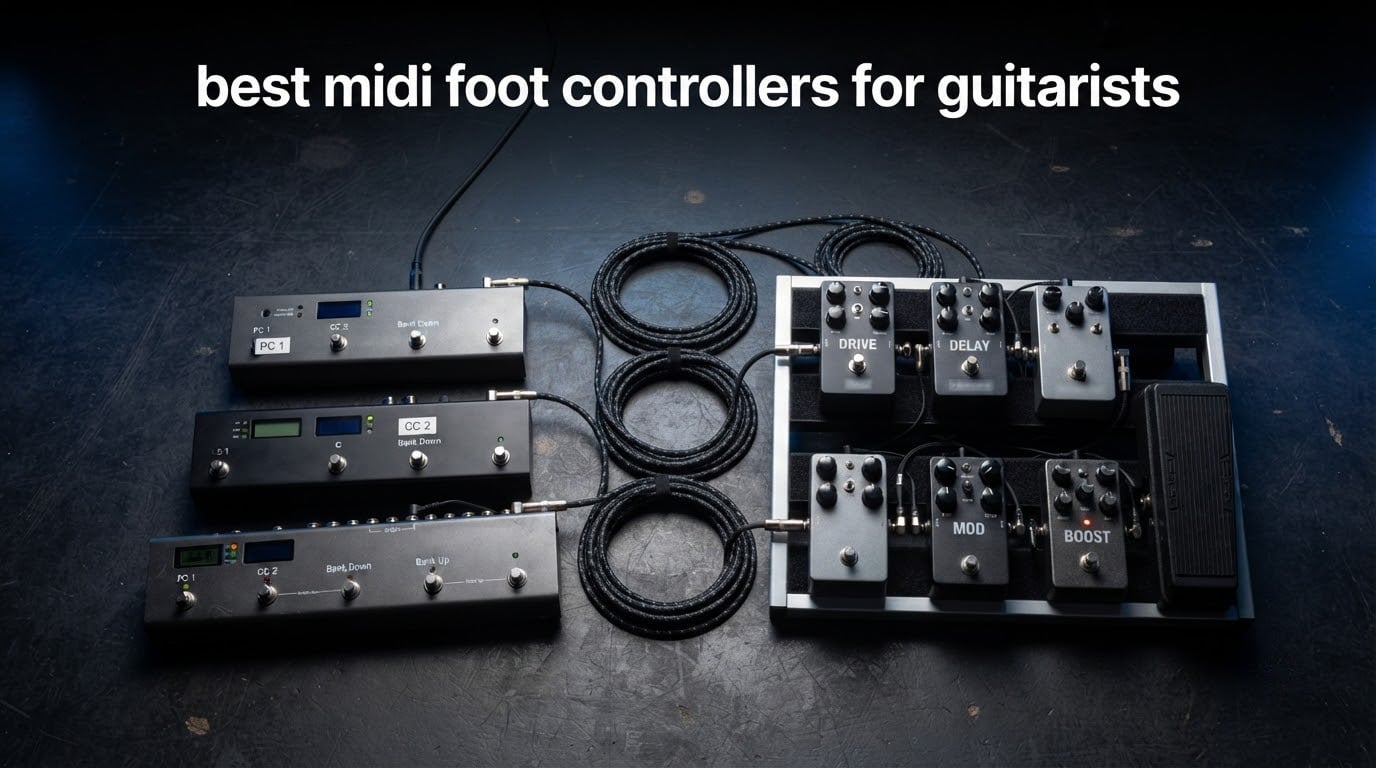
Nothing exposes a guitarist’s setup faster than a foot stompping the wrong switch two beats before a chorus. A MIDI foot controller fixes that by turning your whole rig into something you operate with your shoes instead of your hands. The best midi foot controllers for guitarists in 2026 range from tiny two-switch boxes that fit in a gig bag to ten-switch units with expression pedals, relay outputs and enough preset memory to run an entire worship set without touching a laptop.
That range matters because guitar MIDI gear is not one purchase. A Helix or HX Stomp player mostly wants program change and control change messages sent reliably. A Fractal Audio or Kemper player is usually chasing deep recall of complex presets. Someone with a looper wants note messages and tap tempo. And a player on a tube amp may not need MIDI at all, just two relay jacks to flip between channels.
We spent several weeks with the ten controllers below, programming them against amp modelers, multi-effects units and DAWs, and comparing switch feel, preset depth, connectivity and how much pedalboard space they eat. Our goal was simple: find the right midi foot controller for the rig you actually own, not the one with the longest feature list. Prices move constantly, so every box below links straight to the live listing rather than quoting a number that will be stale by next week.
Table of Contents
Top 3 MIDI Foot Controller Picks for Guitarists (September 2026)
Three units came out ahead on the balance of switch count, connection options and how much they do without a computer attached. Everything else in the list earned its place for a specific rig, not as a general-purpose floor controller.
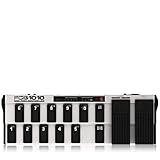
Behringer FCB1010
- 10 banks of 10 presets
- Two expression pedals
- MIDI merge plus two relay switch jacks

PAINTAUDIO MIDI Captain
- 10 customizable switches
- Time Engine automation
- PC CC and Note support

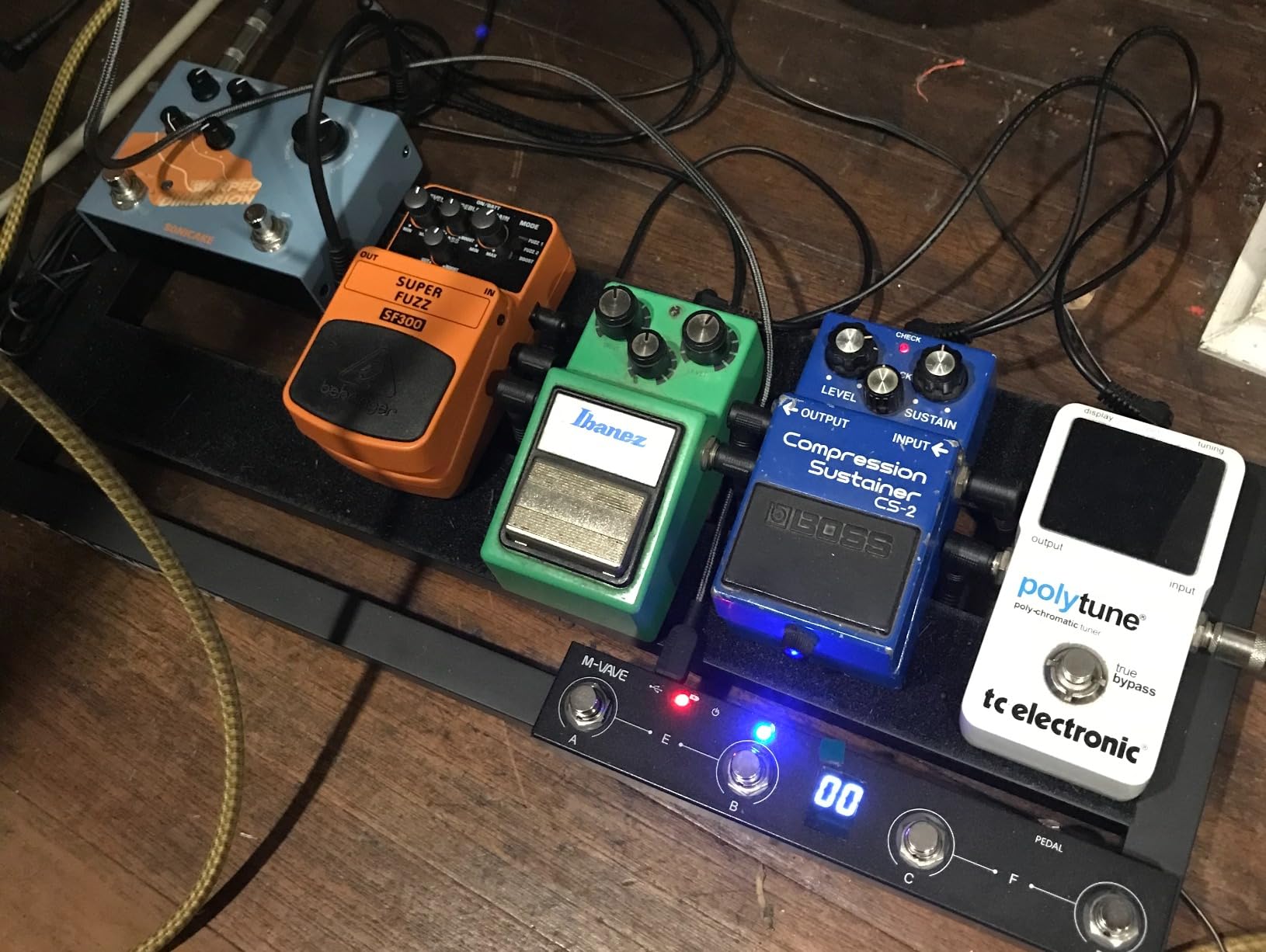
M-VAVE Chocolate Plus
- Wireless Bluetooth MIDI
- Four assignable buttons
- Rechargeable with 12 hour battery
What Is a MIDI Foot Controller?
A MIDI foot controller is a floor device that sends MIDI messages – program change, control change, note and SysEx – to your amp modeller, MIDI-enabled pedals or DAW, so you can switch presets, change channels and adjust parameters without using your hands.
Program change recalls a whole preset by number. Control change (CC) moves one parameter at a time, like a volume or delay mix. Note messages trigger things outright, which is how looper taps and track launches usually work. SysEx reaches deeper settings that plain program change cannot. Everything else on the market is packaging around those four message types.
Each switch is programmed in an editor to fire a chosen message on a chosen channel. Press it, the message goes out, and the receiving device reacts. Most units can stack several messages on a single press, and MIDI thru or omniports let one controller drive a chain of devices without a powered hub in the middle.
Quick Overview of All 10 Picks in (cy)
All ten controllers below, with the feature that decides each one’s place on the shortlist. Switch counts range from two to ten, and the connectivity story varies from wired USB only to Bluetooth with a twelve hour battery.
| Product | Specs | Action |
|---|---|---|
| Behringer FCB1010 |
|
Check Latest Price |
| PAINTAUDIO MIDI Captain |
|
Check Latest Price |
| M-VAVE Chocolate Plus |
|
Check Latest Price |
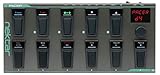 Nektar Pacer Nektar Pacer |
|
Check Latest Price |
 Btuty 4-Button Wireless Pedal Btuty 4-Button Wireless Pedal |
|
Check Latest Price |
 XSONIC Airstep XSONIC Airstep |
|
Check Latest Price |
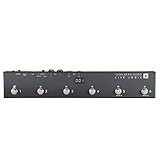 Blackstar Live Logic Blackstar Live Logic |
|
Check Latest Price |
 HOTONE Pulze Control EC-2 HOTONE Pulze Control EC-2 |
|
Check Latest Price |
 Disaster Area MIDI Baby 3 Disaster Area MIDI Baby 3 |
|
Check Latest Price |
 PAINTAUDIO MIDI Captain DUO PAINTAUDIO MIDI Captain DUO |
|
Check Latest Price |
How We Picked These Controllers
Every unit in this list was assessed against the same short list, and the list came first. Before testing anything we wrote down the failure modes guitarists actually complain about in pedalboard forums: switches that click audibly on quiet stages, screens you cannot read under club lighting, editors that need a laptop every time you change a preset, and firmware that stopped being updated years ago.
The first criterion was message depth. A controller that sends only program change is fine for one amp modeller, but it will not run a looper, control a delay mix or drive a DAW. We wanted note messages, CC and multi-message presses available.
The second was physical footprint, because a controller that eats a third of a board is a controller you will not deploy. Weight mattered too, since a pedalboard light enough to move on its own between sets survives more tours.
Third, we checked what happens when the editor, the app or the phone is not in the room. A stage device that needs a phone to remember a switch is a liability at the wrong moment.
Finally, we tracked how many switches, how much memory and what kind of ports each unit gave you per pound of board space. Ratings and review counts from buyers fed into the ordering, since a long history of stage use tells you something a bench test cannot.
1. Behringer FCB1010 – The One Most Guitarists Should Buy First
Behringer FCB1010 Ultra-Flexible MIDI Foot Controller with 2 Expression Pedals and MIDI Merge Function
10 banks of 10 presets
Two expression pedals
MIDI merge plus two relay switch jacks
Pros
- Deepest preset memory here at 10 banks of 10 presets
- Two expression pedals with assignable channel CC number and range
- Relay switch jacks can drive amp channel switching directly
- MIDI merge consolidates several devices onto one output
Cons
- Wide 27 inch chassis eats pedalboard space
- Legacy plastic build and dated styling
- Programming runs through an external editor not a modern app
The FCB1010 has been the reference midi foot controller for guitarists for close to two decades, and after all that time it is still the unit most working players have on the floor. We programmed it against a Helix, a Kemper and a tube amp with channel switching in the same session, and it handled all three without complaint.
Its real strength is memory. Ten banks of ten presets gives you a hundred recalls, and each preset can fire up to five program change commands plus two controller commands at the same time. That means one stomp can drop a delay, swap an amp channel and nudge a parameter in a single movement.
The two built-in expression pedals are the quiet hero feature. Because they sit inside the chassis, you get two more continuous controls without adding two floor pedals, and the FCB1010 also exposes two relay-controlled switch jacks for a tube amp that has no MIDI input at all.
The trade-offs are physical and practical. At 27.05 by 8.7 by 2.36 inches, it is one of the largest units here, and the moulded plastic feels dated next to metal competitors. There is no screen, so you are trusting memory rather than reading feedback, and the editor is a separate piece of software rather than a phone app.
When the FCB1010 earns its board space
This is the right pick when you run a modeller with a deep preset list, or when you want expression control and amp channel switching from one box. The hundred-preset capacity covers a full worship set or a cover band rotation with room to spare, and the relay jacks make a plain two-channel tube amp part of a MIDI workflow.
If you only need four program changes and nothing else, you are paying for capacity you will not use. Judge it on the preset count of your rig rather than the switch count on the box.
Where it frustrates players
Board real estate is the main complaint. On a crowded pedalboard the FCB1010 claims the same footprint as a row of four stompboxes, and bandmates notice the weight difference. Two expression pedals also means a taller chassis, which matters more on a board tilted toward the player.
No display means no visual confirmation of which bank you are on under low stage light. If your rig sends anything back to the controller, the FCB1010 will not show you, so pair it with a device that confirms changes audibly instead.
2. PAINTAUDIO MIDI Captain – Most Control Per Switch
PAINTAUDIO MIDI Captain Foot Controller Multi-Effects Keyboards Synthesizer USB-MIDI musical software Bias with Time Engine Function Support all PC/CC/Note commander 10 Foot Switches
10 customizable foot switches
Time Engine automation
PC CC and Note support
Pros
- Ten switches give a generous control surface for full rigs
- Time Engine records a sequence once and replays it
- Separate push and release functions on every switch
- 10 built-in presets including JamUP Bias AxFx and KMPA
Cons
- Programming is text and file based rather than a polished GUI
- Plugging a PD charger into the USB-C port can damage the unit
- Plastic body feels less premium than metal rivals
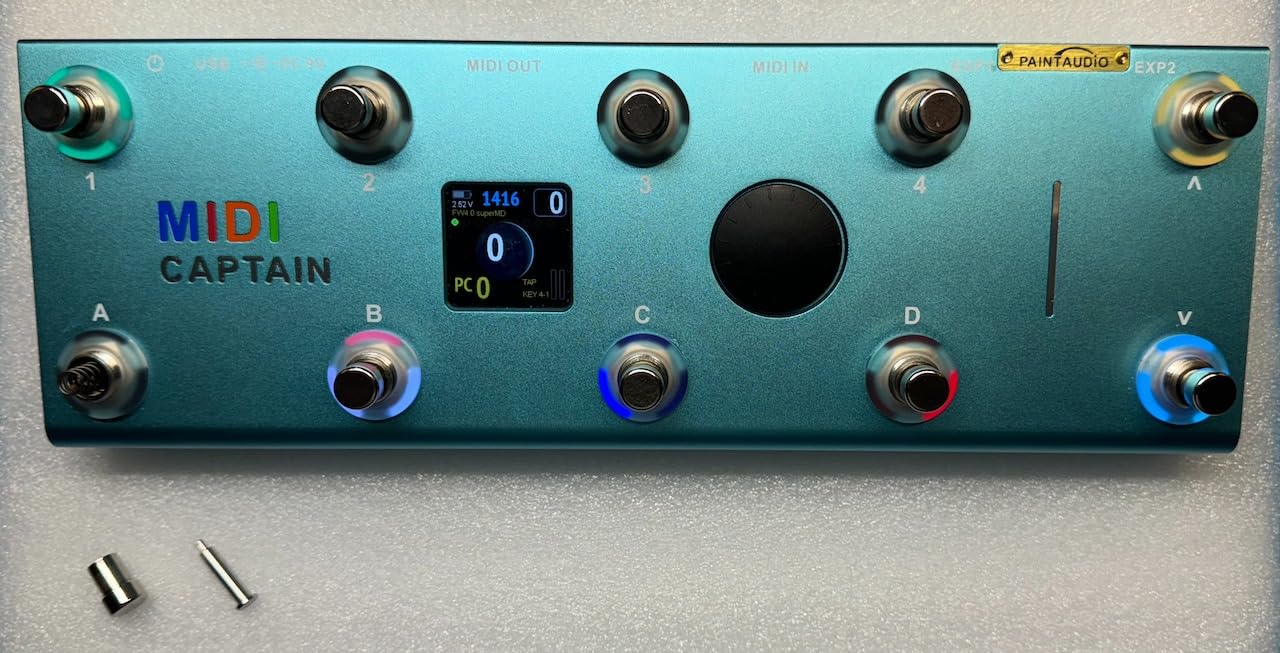
Where the FCB1010 wins on storage, the MIDI Captain wins on what a single switch can do. Ten customizable foot switches, each able to send program change, control change and note messages, and each able to fire different messages on push and release rather than one blanket action.
The Time Engine is the feature nobody else in this list offers. You record a sequence of switch actions once and the unit replays it automatically, which turns a complicated tone change into a single stomp. On a worship set that means one button moving from a quiet verse patch to a full chorus rig in the right order.
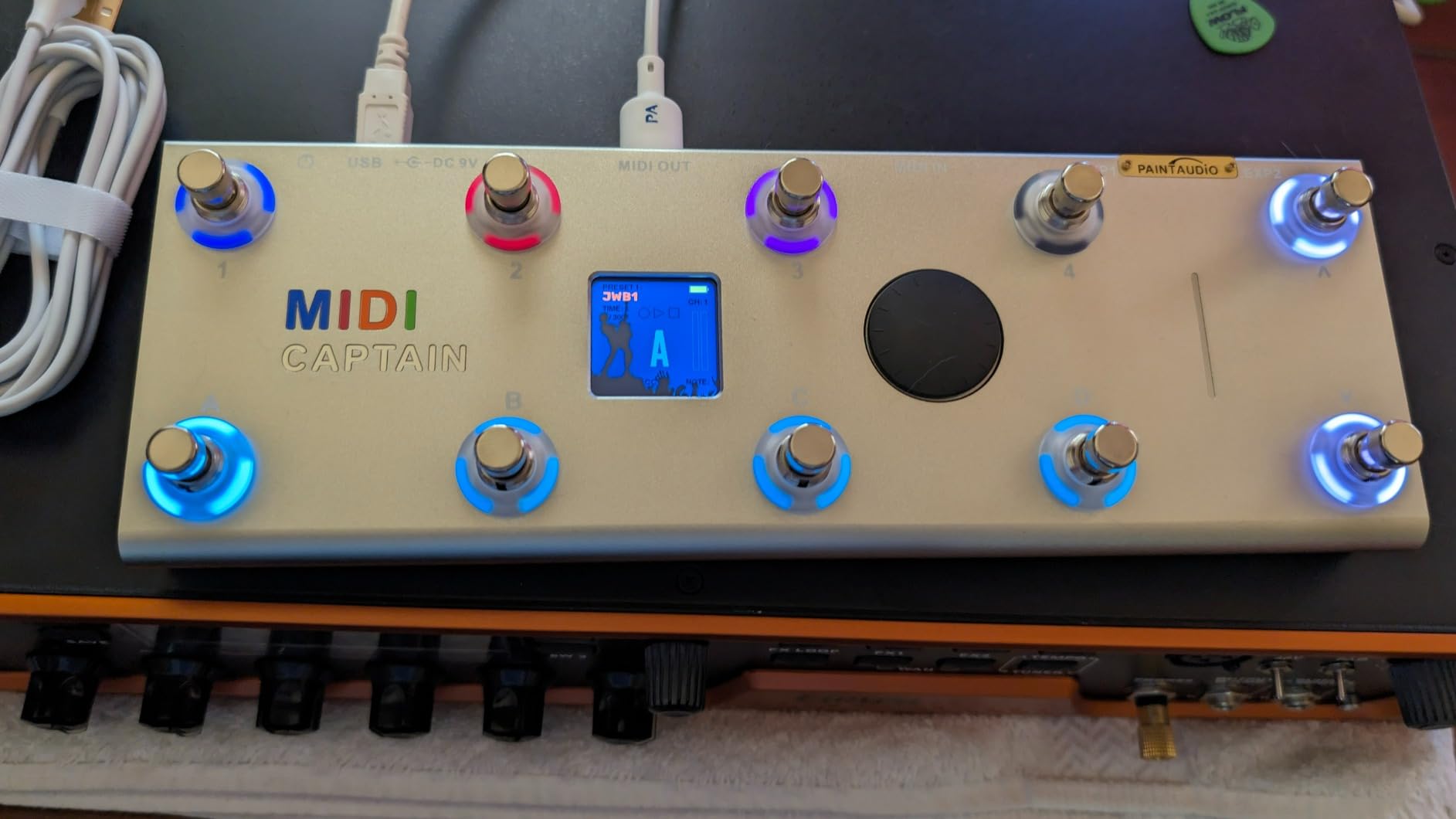
Ten factory presets cover common targets, including JamUP, Bias, AxFx and KMPA configurations, so you are not starting from a blank page. Powering works through 9V, USB or battery, and combining them keeps the unit alive for continuous use.
The programming story is the catch. Configuration happens through text and file editing rather than a graphical editor, and the documentation asks for patience. There is also a genuine hardware warning: powering it over USB while a PD charger is connected to the USB-C port can damage the unit, so pick your power source before the show, not during it.
When the MIDI Captain makes sense
Choose it when you want many switches and deep per-press behaviour rather than deep memory. Multi-state switching, push versus release control and message automation suit players who drive complex modeller states rather than simply stepping through a list.
The preset library makes it friendlier for beginners than the editing process suggests. Try one of the AxFx or Bias configurations first to learn the workflow before building your own banks.
Where the text-based setup bites
If you want a visual editor with drag and drop, this is not it. The learning curve is real, and mistakes in a config file are harder to spot than mistakes in a graphical interface.
The USB-C power caution deserves a line in your own notes. Guitarists who charge laptops and controllers from one cable should test that combination away from a show before relying on it.
3. M-VAVE Chocolate Plus – Best Entry Point to Wireless MIDI
M-VAVE Chocolate Plus Wireless MIDI Foot Controller 4 Buttons BT Rechargeable, APP Control
Bluetooth MIDI for four platforms
4 assignable buttons
12 hour rechargeable battery
Pros
- Compact metal construction for a mini pedalboard
- Bluetooth removes cable clutter on stage
- CubeSuite app handles settings and offline firmware
- 12 hours of use from a 2.5 hour charge
Cons
- Only four assignable buttons limits direct control
- Setup expects you to read the manual or watch a video
- No dedicated MIDI hardware output for controlling external gear
The Chocolate Plus is the simplest way to find out whether wireless MIDI suits your playing. At 0.2 kg and roughly 8 by 1.5 by 1.5 inches it takes up almost no board space, and Bluetooth MIDI reaches Windows, Mac, iOS and Android without a cable between the floor and the amp.
Four assignable buttons cover program change, control change, note on and off, and SysEx, which is enough to recall four patches, control a looper and trim a delay mix. Configuration happens in the CubeSuite app, which also handles firmware upgrades offline so you are not relying on a live update mid-show.
Battery life is the quiet win. A 2.5 hour charge gives up to 12 hours of use, so a full evening or a rehearsal block is covered comfortably, and a spare phone or tablet can act as a power source away from home.
Four buttons is the ceiling, though. If your rig needs more than a handful of recalls, you will outgrow this unit quickly, and its app-first workflow means configuration is a phone task rather than a laptop task. No dedicated MIDI output jack is listed, so treat it as a wireless endpoint rather than a hub.
When the Chocolate Plus is the right call
It suits a compact rig, a travel setup or a first controller. Four recalls on a small multi-effects unit is a genuinely complete solution, and the wireless connection keeps a stage free of floor cables running back to an amp.
It also works as a companion: a backline unit for backing tracks, or a spare controller for a rehearsal room where you would rather not run a long DIN cable.
Where four buttons is not enough
A worship leader stepping through twelve presets, or anyone running a full song-based set, needs more surfaces than this offers. Adding external pedals to reach more controls starts to defeat the compactness that made this attractive.
The app dependency is the other limitation. If your phone is flat at soundcheck, you are reconfiguring rather than playing, so keep the mappings written down somewhere you can reach without a screen.
4. Nektar Pacer – Best Blend of MIDI Rig and Studio Control
Nektar Pacer – USB MIDI Footswitch Controller with Nektar DAW Integration Dark Grey
10 MIDI switches plus 4 aux pedals
4 relay outputs
DAW transport over USB
Pros
- Ten MIDI-programmable switches with room for four optional pedals
- Four relay outputs and two expression inputs in one chassis
- Dual MIDI and USB for hardware and DAW control
- Includes a Bitwig Studio 8-Track licence and content
Cons
- Heaviest unit here at 3.5 kg adds real board load
- Wide 19.75 inch chassis takes significant space
- Legacy version has dated software and firmware support
The Pacer is the one controller here that treats the studio and the stage as the same job. Ten fully MIDI-programmable foot switches, up to four optional extra pedals, four relay outputs, two expression pedal inputs, and both MIDI and USB outputs in a single metal chassis.
That combination is unusual. Most floor units send MIDI and stop. The Pacer also does hands-free DAW transport and navigation, with support for Bitwig, Cubase and Reaper, and it includes a Bitwig Studio 8-Track licence in the box for players building a home recording setup.
Four relay outputs are the stage feature. They can flip a tube amp between channels, engage a boost or cut a pedal into the chain, doing the work of a switcher without a second box on the board.
The physical cost is real. At 3.5 kg and 19.75 inches wide, this is the heaviest and one of the widest controllers we tested, and it is a lot of board to ask someone to lift at the end of a night. The wider product line also has older software and firmware support, which is the main reason this sits below the FCB1010 in our ordering despite a strong feature set.
When the Pacer is the right tool
It is the pick for someone who records at home and gigs with the same rig, or for a player whose pedals include a couple of analog units that only respond to relays. Four relay outputs plus two expression inputs covers a lot of hybrid boards.
If your amp modeller is also your recording interface, the USB side means you can stop, start and navigate takes with your foot during a session.
Where the size becomes the issue
Board footprint is the honest objection. On a small board with three or four pedals already on it, the Pacer dominates the layout, and the weight is felt every time the board is packed.
Support longevity deserves a check before you commit. If a manufacturer has not updated editor software in years, plan to keep the current configuration and avoid building a rig that depends on a fix arriving later.
5. Btuty 4-Button Wireless Pedal – Rare Built-In Display on a Tiny Budget Unit
Btuty BT MIDI Foot Controller 4-Button Wireless Rechargeable Pedal
Built-in display for preset feedback
300mAh rechargeable battery
Four metal footswitches
Pros
- Integrated display gives visual feedback on preset and mode
- Metal construction at an entry price point
- 12 hours of use from a 2.5 hour charge
- Very thin and light for a four-button controller
Cons
- Only four buttons limits real-time control options
- Configuration runs through a phone app rather than desktop software
- Wireless only with no wired MIDI fallback mentioned
Most wireless controllers this size are a row of switches and nothing else. This one adds a small built-in display, and that changes how it feels on a dark stage. You can see which preset and mode are active instead of counting stomp positions in the dark.
The chassis is 212 by 36 by 17 mm, roughly 8.35 by 1.42 by 0.67 inches, with four responsive footswitches in a metal body. Bluetooth wireless MIDI works with Windows, iOS and Android, and configuration runs through the CubeSuite app alongside preset management.
The 300mAh rechargeable battery delivers up to 12 hours of use from a 2.5 hour charge, matching the endurance of larger wireless units at a fraction of the footprint. It travels well in a jacket pocket, which matters for a guitarist who moves between rigs.
Four buttons is still four buttons, and configuration happens on a phone rather than a desktop. The listed specs describe a wireless-only design with no wired MIDI fallback mentioned, so a flat battery mid-show means no floor control at all unless you carry a backup.
When the display earns its place
Visual feedback is the deciding factor here. Players who work in dim rooms, or who cannot memorise a long bank structure, get real value from seeing the active preset without guessing.
It is also a good fit for a small stage rig or a teaching setup where the amp is far from the player and a cable run is awkward.
Where the button count catches up with you
Four switches serve a simple rig well and a busy one badly. If you are running a looper, an amp modeller and a delay, you will find the mapping crowded quickly and start wanting a fifth and sixth action.
The missing wired fallback is worth weighing against your rehearsal habits. If you play the same setup every week and can charge before each session, wireless simplicity wins. If a connection dropping would stop the show, a wired unit is the safer architecture.
6. XSONIC Airstep – Wireless Control That Reaches Into Software
XSONIC Airstep Smart Multi Controller with MIDI, HID, 5 Footswitch, 2 Expression Pedal In, 300H Playtime, Support HX Stomp, Quad Cortex, DAW, Plugin, Youtube Video, Page, Atem, Hands Free Controller
MIDI and HID in one device
Up to 8 messages per press
Relay footswitch control output
Pros
- Handles MIDI and HID in one box for plug-in page and video control
- Relay output switches tube amps directly
- Up to eight messages from a single press
- Aluminium chassis with backlit switches and 30 m range
Cons
- Costs more than most comparable multi-function controllers
- Five switches is modest for a floor unit
- Configuration workflow less polished than app-first rivals
The Airstep is the only unit here that speaks both MIDI and HID without extra hardware. MIDI covers your modeller and pedals; HID covers the things MIDI cannot reach, like plug-in page scrolling, video cues and page turns in software. If you run tracks or a DAW alongside a guitar rig, that combination has real value.
It sends all message types over a 5-pin DIN port and over USB, with a maximum of eight messages from a single press. A footswitch control output gives you relay action for a tube amp, so a non-MIDI amplifier can sit inside the same workflow as your digital gear.
Wireless operation is rated at up to 300 hours between charges, and the aluminium chassis has backlit switches with a stated range of 30 meters. Support is listed for Ableton Live, Avid Pro Tools and FL Studio, with a package that includes a cable, adapter and quick start manual.
Two things keep it out of the top three. Five switches is modest for something you stand on, and the feature list is broad enough that setup can feel like a project. The configuration workflow is also less polished than the app-first wireless units, which is where most buyers start.
When the Airstep is worth the extra spend
It makes sense when your set involves software as much as guitar. Running backing tracks, triggering a video cue and recalling a patch from the same pedal removes three separate control surfaces from the stage.
The HID side is the differentiator. If you have tried to trigger plug-in pages with ordinary MIDI and given up, this is the category of tool that solves it.
Where the feature breadth works against you
Five switches against eight messages per press means you are compressing a lot into a small surface, and the mapping becomes harder to remember under pressure. Fewer buttons with clearer labels would serve a live set better.
Setup friction is the other factor. Budget an evening with the documentation before you rely on this in front of an audience.
7. Blackstar Live Logic – Built for Guitarists With a Tube Amp
Blackstar Live Logic 6-button MIDI Footcontroller
6-button USB MIDI controller
2 expression pedal inputs
LED patch and parameter display
Pros
- Heavy-duty stainless steel build with a slim profile
- Preconfigured control surface layouts for Ableton Live
- Two expression inputs work with third-party pedals after calibration
- Handles patch changes on a Line 6 Stomp out of the box
Cons
- Windows configuration app is basic and can crash
- Momentary to toggle mode changes sometimes fail to apply
- Weak customer support and forum responsiveness
Blackstar builds amps, so the Live Logic shows a guitarist’s priorities. Six buttons, MIDI over USB, two expression pedal inputs with trim calibration, and an LED display for patch and parameter feedback in a stainless steel body that measures 15.59 by 1.45 by 2.91 inches and weighs 1.2 kg.
Those expression inputs matter more than the switch count. A guitar rig usually has a volume pedal and a wah or a tremolo, and two calibrated inputs mean both can be assigned without adding a second expression pedal to the board.
The display is the feature that separates it from a bare four-switch box. Seeing the current patch and parameter state on a dark stage removes a lot of guesswork, and the control surface includes layouts aimed at Ableton Live for players who track at home.
It also sends program change, control change, note and clock messages, which covers a looper tap and a track launch as well as preset recall, and it handles patch changes on a Line 6 Stomp without extra configuration. The catch is software: a Windows configuration app for CC mode mapping that reviewers describe as basic and capable of crashing, plus a required firmware update before the unit works reliably. Support response is also a recurring weak point.
When the Live Logic suits your rig
This is the pick for a player with a tube amp, a couple of MIDI pedals and one expression pedal. The slim profile leaves room on a board, and the two expression inputs are unusual value at this size.
If visual confirmation matters to you, the LED display is the main reason to choose it over a similar switch count with no screen.
Where the software holds it back
An editor that crashes mid-edit is a bad feeling before a show, and switch mode changes that do not stick are worse. Test your mappings thoroughly and keep a written record of what each button does.
Windows-only configuration is a genuine limitation for Mac players. If your setup is Mac based, this belongs lower on your list.
8. HOTONE Pulze Control EC-2 – Deep Message Depth in a Travel-Sized Box
HOTONE Wireless MIDI Controller with Programmable Footswitches, Mobile App Ultra-Compact 12-Hour Battery Pulze Control EC-2(included 2 PCS Additional Footswitch Toppers)
Up to 16 MIDI messages per switch
Hold and double-tap actions
215 g wireless and wired body
Pros
- Exceptionally small and light at 215 g for a two-switch unit
- Each switch sends up to 16 MIDI messages with hold and double-tap options
- CTRL and MIDI TRS jacks accept expression pedals or direct MIDI out
- 12 hour battery in a body that fits a gig bag pocket
Cons
- Only two footswitches limits standalone control
- Some users report unreliable Bluetooth connection and latency
- Current firmware leaves advanced mapping options limited
The EC-2 does something unusual for a two-switch controller: depth rather than breadth. Each footswitch can send up to 16 MIDI messages, with configurable press, hold and double-tap actions, so a single stomp can behave like four separate ones depending on how you hit it.
It works wirelessly over Bluetooth or wired, and the CTRL and MIDI TRS jacks accept an expression pedal, an external switch or a direct MIDI output. That flexibility means the box can sit at the end of a chain or act as a small output interface in a pinch.
At 215 g and 4.02 by 2.5 by 1.85 inches, it is the most travel-friendly controller here, with a rechargeable battery rated for up to 12 hours. The package also includes two additional footswitch toppers, so you can resize the switch surface without tools.
Two footswitches is a hard limit on standalone control, and buyers should know the firmware is still maturing. Some users report unreliable Bluetooth connections and added latency, and the Android app connection asks for location services to be enabled, which is a small but real friction point.
When the EC-2 is the right size
It fits travelling players, rehearsal rooms and anyone who wants a backup control surface in a bag. Sixteen messages per press covers a looper tap, a preset recall and a parameter move in a single gesture.
Double-tap and hold actions map well onto a looper, where a long press might undo and a short press might record. That mapping is impossible on controllers that send one message per press.
Where the limitations bite
Two switches means every decision is compressed. If your set needs six distinct recalls, this will feel like solving a puzzle on stage rather than playing.
Wireless reliability is worth testing hard before you depend on it. Carry the wired option in your bag, and check the app requirements on whatever device you use for configuration.
9. Disaster Area MIDI Baby 3 – Smallest and Lightest Hub on the List
Disaster Area Midi Baby 3
Reconfigurable MultiJacks A and B
9V DC pedalboard power
USB host for compact multi-effects
Pros
- Very light at 0.31 kg with an extremely small footprint
- MultiJacks reconfigurable between expression footswitch and MIDI roles
- Acts as a USB host for common compact multi-effects units
- Works across Android Linux Windows iOS and macOS
Cons
- Tiny size means very few onboard switches
- No built-in expression pedal included
- Smallest review base of the group
- Setup assumes familiarity with MIDI routing and power budgeting
The MIDI Baby 3 is not a switch surface, it is a routing box, and that is exactly what makes it interesting next to a compact multi-effects unit. It sends standard MIDI over a 5-pin port, passes incoming data through a MIDI Y-cable, and can act as a USB host for the Zoom MultiStomp, Red Panda units and the Source Audio C4.
The two MultiJacks are reconfigurable. Each can be set as MIDI in or out, an expression pedal input, or a dual footswitch, which means the same small box handles whatever your pedalboard is short of this week.
Power runs from 9V DC with a 30mA minimum, so it fits the output of most pedalboard supplies alongside your pedals. At 0.31 kg it adds nothing to the weight of a board, and the operating system list covers Android, Linux, Windows, iOS and macOS.
Be clear about what this is not. There are very few onboard switches, no built-in expression pedal, and the smallest review base in the group, so the rating tells you less than the rating on a unit with hundreds of owners behind it. Setup also assumes you already understand MIDI routing and are budgeting current draw.
When the MIDI Baby 3 is worth adding
It is the right choice as a hub between a laptop, a compact multi-effects unit and the rest of your board. If your device needs a host rather than a plain controller, this solves a problem no footswitch on this list can.
The reconfigurable jacks also make it a tidy way to bring an expression pedal into a board that has no spare jack, without adding a dedicated expression pedal footprint.
Where expectations need resetting
If you are shopping for a midi foot controller with a row of switches, this is the wrong category. It is a small utility box, and expecting a full control surface from it will disappoint.
The small review base is the other caution. High average ratings from a handful of owners tell you owners are happy, not that a large community has tested it. Buy it for a specific routing job rather than as a first controller.
10. PAINTAUDIO MIDI Captain DUO – Programmable Depth in a Two-Switch Body
Paint Audio MIDI Captain DUO Foot Controller Multi-Effects Keyboards Synthesizer USB-MIDI DAW DSP Software USB-HID Support Multi-state Switch Cycling (MIDI Captain DUO)
Two multi-function switches
USB MIDI and USB HID
Blue 3-digit display with RGB LEDs
Pros
- Extraordinarily flexible per-button programming in a tiny two-switch body
- Works well for tricky rigs such as the Line 6 HX Stomp or Boss RC-5
- MIDI out on board plus HID emulation for software shortcuts
- Sturdy metal body with a 3-digit display and RGB LEDs
Cons
- Programming is done by editing text files with a steep learning curve
- Not a MIDI host so it cannot control USB-only pedals
- Support and community documentation are thin
- Some units arrive with an unusable USB cable
The DUO is the cheapest way to get a full midi foot controller feature set, including a display. Two multi-function switches sit under a blue three-digit readout with RGB LEDs around each one, in a metal body weighing 635 g, and both USB-MIDI and USB-HID are supported.
Each switch can send single or multiple commands, mixing program change, control change and note types across different MIDI channels. Trigger timing is configurable as press, release, hold or multiple timings, and multi-state cycling plus four mode configurations selected by DIP switches widen what two buttons can do.
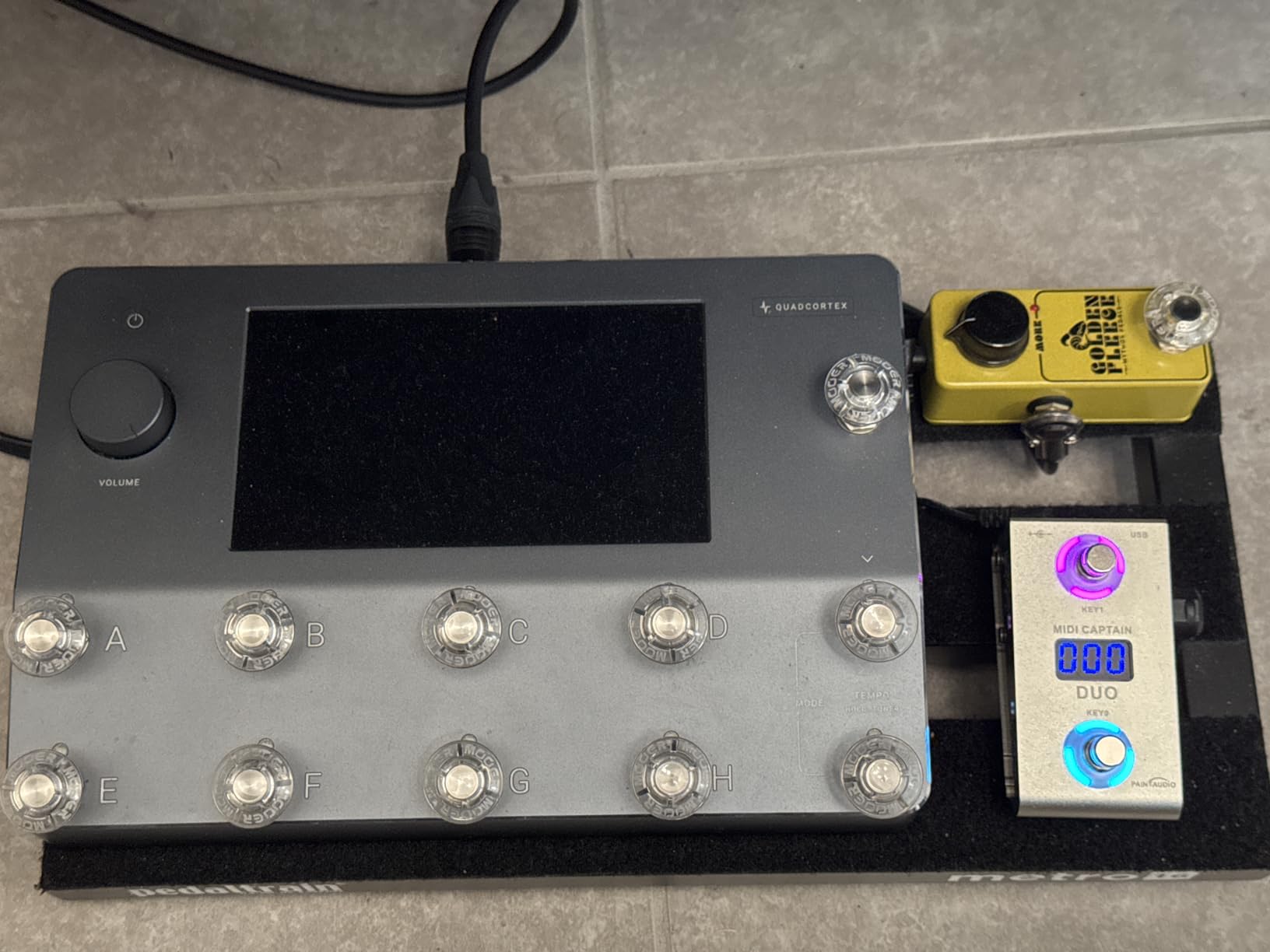
HID emulation is the underrated part. It lets the controller trigger software shortcuts and key presses that ordinary MIDI cannot, which is how it earns a place on a board driving an HX Stomp or a Boss RC-5.
The obstacles are real. Programming means editing text files, which carries a steep learning curve, and it is not a MIDI host, so it cannot control USB-only pedals such as the UAFX. Community documentation and support are thin, and a small number of units arrive with a cable that does not work, so check the accessory before a show.
When the DUO is the smarter buy
Pick it when you want programmability and feedback far more than switch count. Two switches with per-press timing control, multi-state cycling and HID support cover more ground than four basic switches on a simpler unit.
It also suits a small board where space is the binding constraint, and the display gives the visual feedback that bare switch boxes lack.
Where the file-based setup stops you
Text file configuration is the main barrier for anyone who does not enjoy editing config files. Budget real time for the first setup and write your mappings down, because there is no friendly screen to check them from later.
The lack of host mode closes off a category of USB-only pedals. Check what your devices need before committing.
Which MIDI Foot Controller Matches Your Rig?
Matching a controller to your equipment is a faster decision than comparing feature lists. Start with what sends and receives MIDI, then work outward from there.
Helix or HX Stomp: both speak MIDI over USB and accept program change and control change. The Behringer FCB1010 is the safest general answer because of its hundred presets and expression pedals, while the PAINTAUDIO MIDI Captain DUO suits a player who wants HID shortcuts alongside patch changes.
A Fractal Audio or Kemper rig: these units are hungry for preset recall and deep parameter control. The MIDI Captain’s ten switches and per-press timing give you room to build a state-based setup, and the FCB1010 covers straightforward program change stepping.
A multi-effects unit like the Zoom MultiStomp: a compact unit often needs a host rather than a controller, which is the Disaster Area MIDI Baby 3’s job, including USB host mode and reconfigurable MultiJacks.
A tube amp with two channels: you need relay outputs rather than MIDI messages. The Blackstar Live Logic and the Nektar Pacer both offer expression inputs alongside MIDI, and both report a slim or moderate footprint depending on your board.
A looper or backing track rig: note messages matter more than program change. The HOTONE EC-2 sends up to 16 messages per switch with hold and double-tap actions, which maps cleanly onto record, undo and overdub.
A studio setup with a DAW: the Nektar Pacer does transport and navigation as well as rig control, and the XSONIC Airstep adds HID so you can move plug-in pages and trigger cues from the same pedal.
MIDI Foot Controller or Plain Footswitch?
Not every guitarist needs a midi foot controller, and buying one for a simple setup is a common and expensive mistake.
A plain footswitch is a hardwired switch. Put it in line with your guitar and it toggles whatever is next in the signal chain, usually a boost or a channel switch. There is no memory, no mapping and no communication with anything.
A MIDI foot controller does not touch your audio signal at all. It sends messages to a device that is already MIDI capable, and that device decides what to do. That difference explains the two things people get wrong: a MIDI controller cannot switch a pedal with no MIDI input unless it has a relay output, and a MIDI controller cannot bypass or engage a pedal for a player who wants true bypass.
Guitarists building communities around this gear raise a version of the same question constantly, and the honest answer is that a whole controller is overkill if all you need is program change up and down. A simple box sending basic on and off messages handles that job. Buy the full controller when you have several MIDI devices, deep preset lists or relays to drive.
Phantom power is another term that confuses first-time buyers. Some pedals need a 5V supply on the pin that carries it, and some controllers can provide that from their own output so one power supply runs the whole board. If your pedal documentation mentions phantom power, check what your controller can deliver before you plan the power layout.
How to Choose a MIDI Foot Controller
Buy the controller that matches the job, and start by counting the things it has to control. Write down every device that speaks MIDI, how many presets each one holds, and how many of those presets you actually perform. That number, not the switch count on the box, tells you how much memory you need.
Then check message types. Program change recalls presets. Control change moves single parameters such as a delay mix or a wah position. Note messages trigger loopers and track launches. SysEx reaches deep settings. A controller that sends only program change will not run a looper, so if looping is part of your set, confirm note support before anything else.
Next comes board space, which is where most regrets come from. Look at width and height in the specifications, then add the two expression pedals most of these units carry, since they make the chassis taller. Weigh it too, because a board you cannot lift alone between sets is a board that stays at home. The FCB1010 and the Nektar Pacer are the two largest here; the HOTONE EC-2 and the M-VAVE Chocolate Plus are the two smallest.
Ports decide what happens next. MIDI out reaches a 5-pin device. MIDI thru passes data along to another device so you can avoid a powered hub, and omniports give every connected device its own isolated input. USB makes the controller usable with a laptop or a phone, and a class-compliant USB MIDI connection means it works without installing a driver. TRS MIDI output is compact but needs the right cable, and mixing TRS and plain expression cables is a common cause of pedals that simply do not respond.
Relay outputs are the underrated feature. They let the controller switch a tube amp channel or engage a pedal that has no MIDI input at all, which means a non-MIDI part of your board joins the same control scheme. Four relays on the Nektar Pacer is unusually generous.
Editing software deserves as much attention as the hardware. Ask whether the controller has a visual editor, whether it works on your operating system, and whether the manufacturer still updates it. Forum complaints about abandoned firmware are common in this category, and a device whose editor stopped being maintained will not gain new features later. If you dislike editing files, rule out text-based configuration before you buy.
Wireless versus wired is the last decision. Bluetooth removes a cable from the stage and is convenient for travel, but it adds a connection that can fail and, on some units, a phone as a configuration dependency. Wired USB is dull and dependable. If you change rooms often or play small stages where a cable run is awkward, wireless earns its place. If a dropped connection would end a song, stay wired.
Finally, look for visual feedback. A small display that shows the active patch or mode saves real guesswork in low light, and a unit with per-switch LEDs lets you find your controls without counting. The Blackstar Live Logic and the Btuty four-button unit both include one; several others do not.
Why Do MIDI Foot Controllers Cost What They Cost?
The price of a midi foot controller comes down to five things: switch quality, the number of ports, the editor software, research and development, and low production volumes. Metal enclosures, silent switches and machined relay jacks cost more than plastic, and a unit with ten switches and four expression inputs has far more to go wrong than a two-switch box. The editor is the hidden cost, since a good one is written and maintained by a small team and shipped free. Volumes are low because the market is small, and rock-solid hardware is made in runs of hundreds rather than tens of thousands. That is why a four-button unit can be very cheap and a ten-switch unit with relays and a display still costs real money.
Frequently Asked Questions
What is the best MIDI footswitch for guitars?
For most guitar rigs, the Behringer FCB1010 is the strongest all-rounder: 10 banks of 10 presets, two expression pedals, MIDI merge and two relay switch jacks for amp channel switching. If you want a display and visual feedback, look at the Blackstar Live Logic. If you want to travel light and play wireless, a four-button unit such as the M-VAVE Chocolate Plus covers a small rig well.
Why are MIDI foot controllers so expensive?
Five things drive the cost: switch quality, the number of ports and relays, the editor software, research and development, and low production volumes. Metal chassis, silent switches and machined relay jacks cost more than plastic, and a good editor is written and maintained by a small team. Low sales volumes mean hardware is made in runs of hundreds, not thousands.
Do I need a MIDI foot controller at all?
If you only need program change up and down on one device, a simple box sending basic on and off messages is enough. A full midi foot controller earns its place when you run several MIDI devices, have deep preset lists, need relays to switch a tube amp, or want note messages for a looper. Buying a large controller for a two-preset amp is the most common mistake.
Can a MIDI foot controller switch pedals that have no MIDI input?
Only if it has a relay output. Relay jacks physically close a contact pair, which is how the FCB1010, the Nektar Pacer and the XSONIC Airstep switch a tube amp channel. A controller without relays cannot engage a conventional pedal for true bypass, because MIDI messages are instructions, not electrical switching.
Is Bluetooth MIDI reliable enough for live use?
It depends on the unit. Compact wireless controllers such as the M-VAVE Chocolate Plus and the HOTONE EC-2 run for around 12 hours per charge, but some users report connection drops and latency. Wireless units also often depend on a phone app for configuration. If a dropped connection would end a song, use a wired model and keep the wireless one for travel or rehearsal.
What is the difference between a MIDI foot controller and a pedalboard switcher?
A midi foot controller sends instructions to devices that are already MIDI capable and does not touch your audio signal. A pedalboard switcher physically routes your guitar signal through loops, handling true bypass and buffered or unbuffered connections. The two are complementary, and a board with analog pedals often needs both.
Conclusion
For most guitarists the right first midi foot controller is the Behringer FCB1010, because a hundred presets, two expression pedals and relay outputs cover almost any rig and it has years of stage use behind it. Players who want more switches and automated sequences should look at the PAINTAUDIO MIDI Captain, and anyone working wireless on a small board will find a four-button unit such as the M-VAVE Chocolate Plus genuinely sufficient.
Match the controller to your equipment first and the features second. Count your MIDI devices, count your presets, decide whether you need relays for a tube amp, and check that the editor works on the computer you own. The best midi foot controllers for guitarists in 2026 are simply the ones that fit your rig without taking over the board.