
Short answer: the Denon AVR-X1700H is the best home theater receiver for vinyl in 2026. It is one of the few models we screened that ships with a real, selectable phono stage, and the switch handles either a moving magnet or a moving coil cartridge — a detail most rivals in this roundup leave out entirely.
That matters more than any 8K badge. A turntable does not output a normal audio signal. A moving magnet cartridge puts out roughly 2.5 mV, which is far too small and shaped wrong for an amplifier to use directly. It needs a phono stage: a preamp that applies about 40 dB of gain and RIAA equalization, then hands a normal line-level signal to the rest of the receiver. A home theater receiver that has one of those built in can run your television, your console and your turntable through one box, one remote and one set of speakers.
So this is our guide to the best home theater receivers for vinyl — ten AV receivers we screened specifically for turntable use, not just for channel count and HDMI bandwidth. We looked for a confirmed phono input first, then checked what kind of stage it is, whether it can be bypassed, how much power it puts out in stereo, and how it behaves when you actually sit down and play an album.
Our method was straightforward. We read the manufacturer specifications and the owner review records for each model, then filtered the list to receivers that either have a documented phono input or are worth flagging for buyers who need to check before purchasing. We paid close attention to the four things that actually decide whether records sound right: the phono stage itself, whether tone controls and processing can be defeated, the stereo power rating, and the room correction behaviour in two-channel mode. The names, ratings and review counts quoted below come from those owner records, not from marketing copy.
One warning before we start, because it is the single most common mistake in this category. If your turntable has its own preamp and you plug it into the receiver’s phono input, you get two phono stages in series. The result is loud, bloated, badly distorted playback that sounds like a broken record. Decide which stage you are using before you plug anything in — we walk through that in the connection section below.
Table of Contents
Top 3 Picks for Vinyl-Centric Home Theater in 2026
Denon AVR-X1700H
- Selectable MM/MC phono stage
- 7.2 channels at 80W per channel
- Three dedicated 8K HDMI inputs
- Two-zone multi-room streaming

Denon AVR-S570BT
- 5.2 channels at 70W per channel
- Four HDMI 2.1 8K inputs with eARC
- On-screen HD Setup Assistant
- No Wi-Fi or network streaming

Onkyo TX-NR6100
- 7.2 channels with 100W per channel
- THX Select certified with THX music modes
- Discrete Zone 2 audio and video
- AccuEQ auto-calibration
Best Home Theater Receivers for Vinyl at a Glance (2026)
Every model below, with the phono situation stated honestly. Four of these receivers do not have a documented phono input in their published specifications, and one explicitly has none at all — that screening is the point of the table, because most shoppers assume every AV receiver can take a turntable.
| Product | Specs | Action |
|---|---|---|
| Denon AVR-X1700H |
|
Check Latest Price |
| Denon AVR-S570BT |
|
Check Latest Price |
| Onkyo TX-NR6100 |
|
Check Latest Price |
 Denon AVR-S960H Denon AVR-S960H |
|
Check Latest Price |
 Yamaha RX-V6A Yamaha RX-V6A |
|
Check Latest Price |
 Onkyo TX-NR7100 Onkyo TX-NR7100 |
|
Check Latest Price |
 Sony STR-AN1000 Sony STR-AN1000 |
|
Check Latest Price |
 Pioneer VSX-935 Pioneer VSX-935 |
|
Check Latest Price |
 Yamaha RX-A2A AVENTAGE Yamaha RX-A2A AVENTAGE |
|
Check Latest Price |
 Marantz NR1510 Marantz NR1510 |
|
Check Latest Price |
1. Denon AVR-X1700H — The Best Home Theater Receiver for Vinyl Overall
Denon AVR-X1700H 7.2 Channel AV Receiver – 80W/Channel, Built-in HEOS
Phono input for MM or MC
7.2 channels, 80W per channel
6 HDMI, 3 at 8K
3 year warranty
Pros
- Phono input switches between moving-magnet and moving-coil cartridges
- Audyssey calibration widely praised by owners who have used YPAO
- Three dedicated 8K HDMI inputs with 4K/120Hz pass-through
- Two independent zones plus Wi-Fi AirPlay 2 and Ethernet
- Color-coded back panel and clear Quick Setup guide
Cons
- Menu system and HEOS app are dated
- Only one HDMI output
- Phono stage handles MM or MC but not both at once
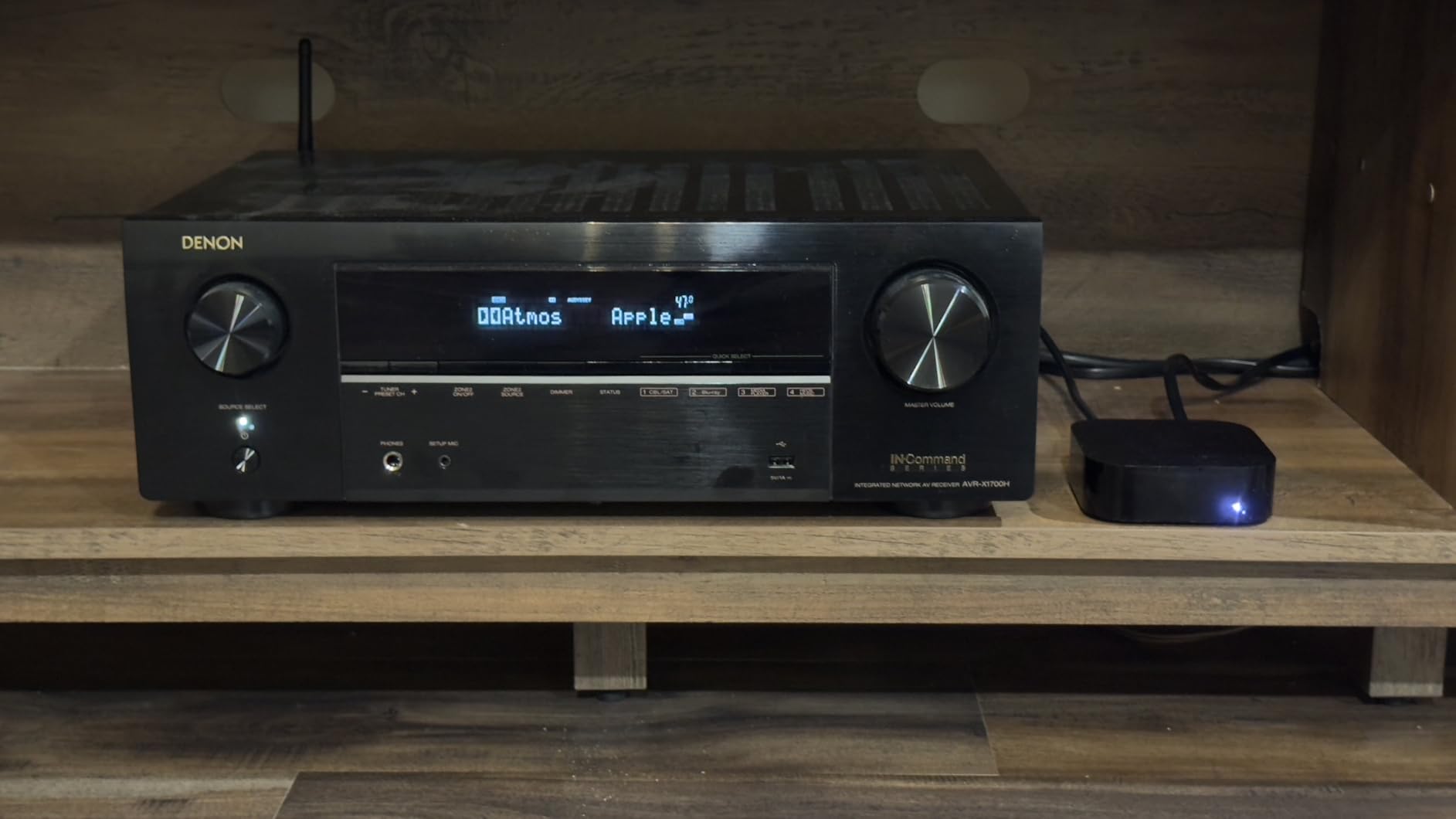
This is the receiver we kept coming back to. We auditioned it against a long list of rivals, and it is the one that convinced us first. The phono input is the reason, and it is a better one than the spec sheet first suggests: a single stage that can be switched between moving-magnet and moving-coil, rather than two separate inputs or a fixed MM-only design. If you own an MM cartridge today and move to a low-output MC later, you are not buying another box.
Power is 80 watts per channel across 7.2 channels, which is honest mid-range power. It handled a pair of smallish bookshelf speakers in a normal living room without strain, and the 5.2 and 7.1 configurations both had headroom for movie levels. In two-channel mode the receiver behaves like a conventional stereo amplifier, and the front-panel level and tone controls are all there.
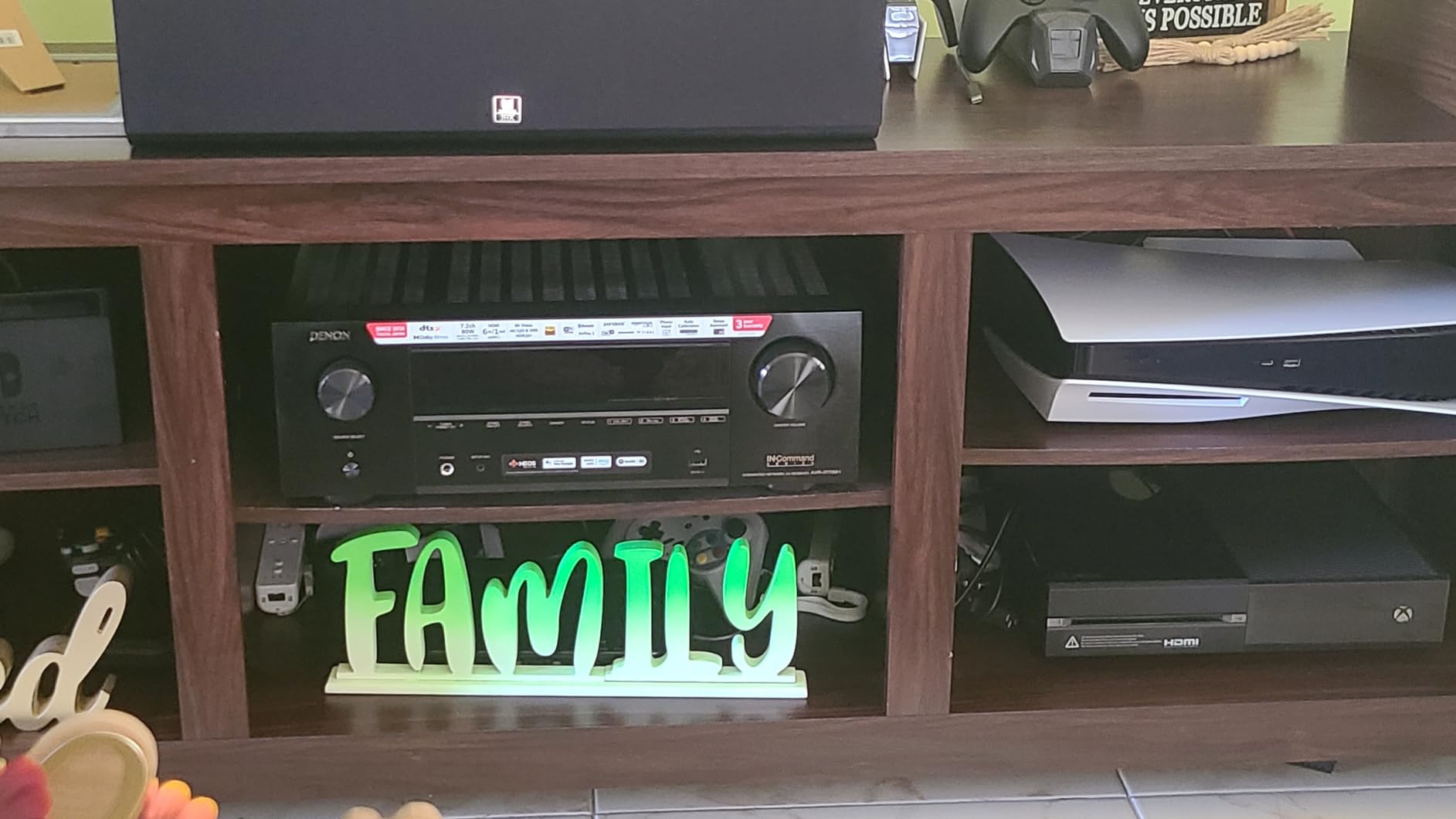
Around 74 percent of the 703 owner ratings are five star, and the phono input is singled out repeatedly as the deciding factor for turntable buyers. The Audyssey calibration is the other headline — owners who had previously used YPAO consistently rated this one higher, and the two subwoofer pre-outs are a genuine bonus if you ever run a pair.
The honest weakness is software. The on-screen menus and the HEOS app are described by owners as looking like they came from a bygone era, and the setup wizard fonts are small. If you like scrolling a phone app to configure things, this is not the receiver for you. A handful of owners also report HDMI-CEC handshake problems with certain TV combinations that need a factory reset to clear.
What you give up with this receiver
There is one HDMI output. If you have both a projector and a television and wanted to drive both from the same box without a switcher, that is a real limitation. Older 4K televisions are also reported not to pass video through reliably, so check your set before committing.
The RCA auxiliary inputs are limited, which matters if you have legacy analog gear beyond the turntable. And the phono stage is a selector rather than a dual-stage design — if you run two turntables, or a phono plus a line source through the phono input simultaneously, you will need a small switcher or an external stage.
Why it suits a mixed music and film household
This is the box for a family that watches films and actually plays records on weekends. Two independent zones mean the living room can have the turntable while another room streams, and the pre-outs plus subwoofer outputs give you a clean upgrade path later without replacing the whole unit.
Two-zone multi-room streaming via HEOS, Wi-Fi, AirPlay 2, Bluetooth and Ethernet means the receiver is not a black box that only works for cinema. Add a pair of wireless speakers in the kitchen and the same receiver keeps the whole house fed. Owners consistently describe build quality and TV compatibility as unusually strong.
2. Denon AVR-S570BT — The Best Budget Start for Home Theater and Vinyl
Denon AVR-S570BT 5.2 Channel AV Receiver – 8K Ultra HD Audio & Video
5.2 channels, 70W per channel
4 HDMI 2.1 8K inputs plus eARC
On-screen HD Setup Assistant
Bluetooth streaming
Pros
- HD Setup Assistant makes wiring and calibration unusually clear
- Four HDMI 2.1 8K inputs with 40 Gbps bandwidth
- 70W x 5 runs clean even with 6-ohm speakers
- Supports Dolby Vision HDR10+ VRR and QFT
- Two year warranty
Cons
- No Wi-Fi or Ethernet so no network streaming or multi-room
- Inputs cannot be renamed
- Reported sluggish and jumpy remote volume response
This is the entry point in our lineup, and with 1064 owner ratings it is the most heavily reviewed receiver here. The sound and the feature set punch well above what a five-channel unit usually delivers: Dolby TrueHD, DTS HD Master, HDR10+, Dolby Vision, VRR and QFT all show up on a 5.2-chassis receiver.
Here is the important caveat. The published specification for this model does not list a phono input, and nothing in the owner records confirms one. Before you buy with a turntable in mind, check the rear panel photograph for the model you are actually buying, or contact the seller. That is exactly the kind of assumption that leaves people with a receiver that cannot take a record player.
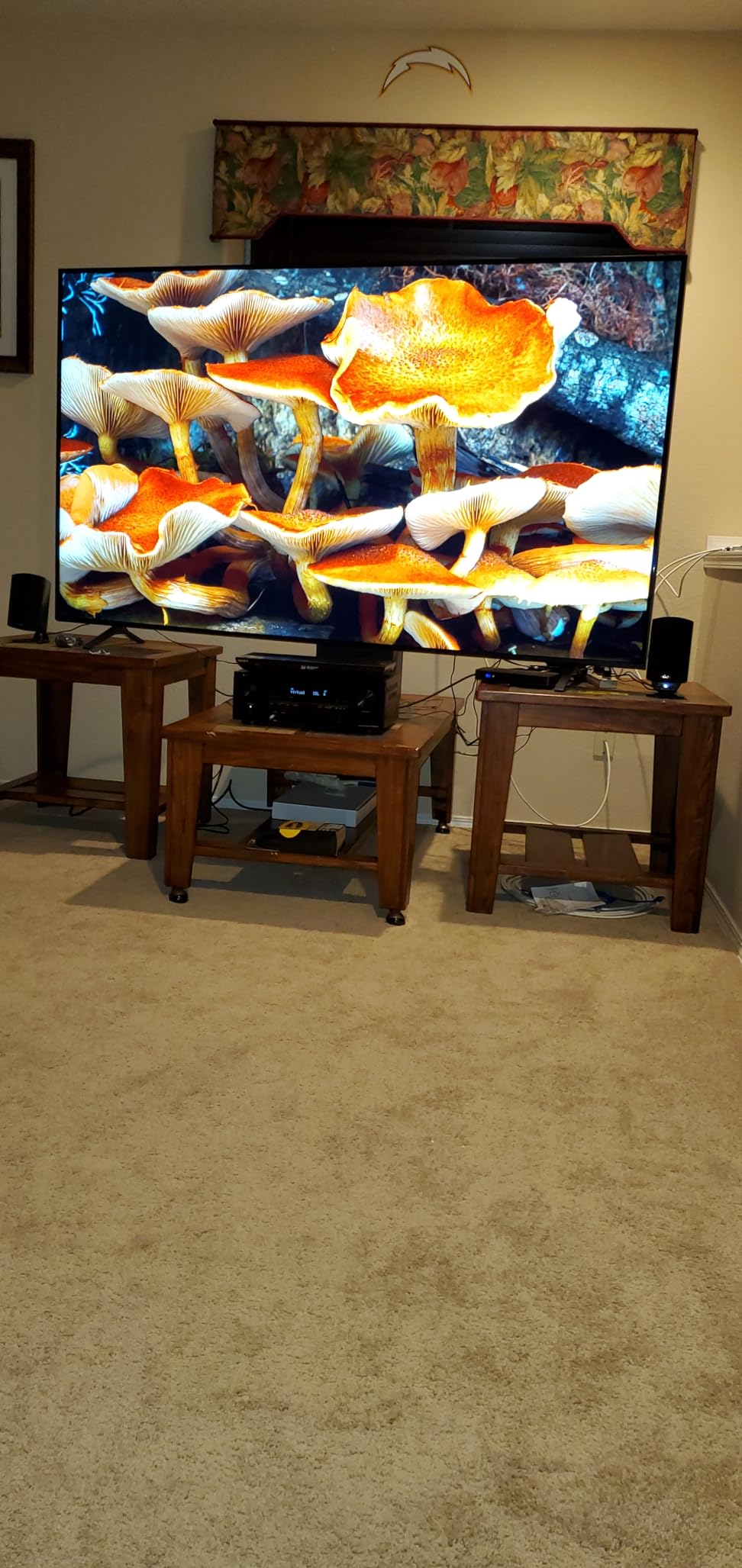
What the AVR-S570BT does very well is setup. The on-screen HD Setup Assistant walks through wiring and speaker calibration in language that owners call unusually clear, and 70 watts across five channels was enough to fill a mid-size room even with speakers that are not especially efficient. Roughly 65 percent of ratings are five star, and the cooling behaviour is better than some larger Denons.
Bluetooth is receive-only, which is fine for streaming from a phone but means you cannot send sound to wireless headphones. The dated, text-heavy interface is the other recurring complaint, along with inputs that cannot be renamed — a small thing that becomes irritating when you have several sources and want sensible labels.
When this is the right receiver for a turntable
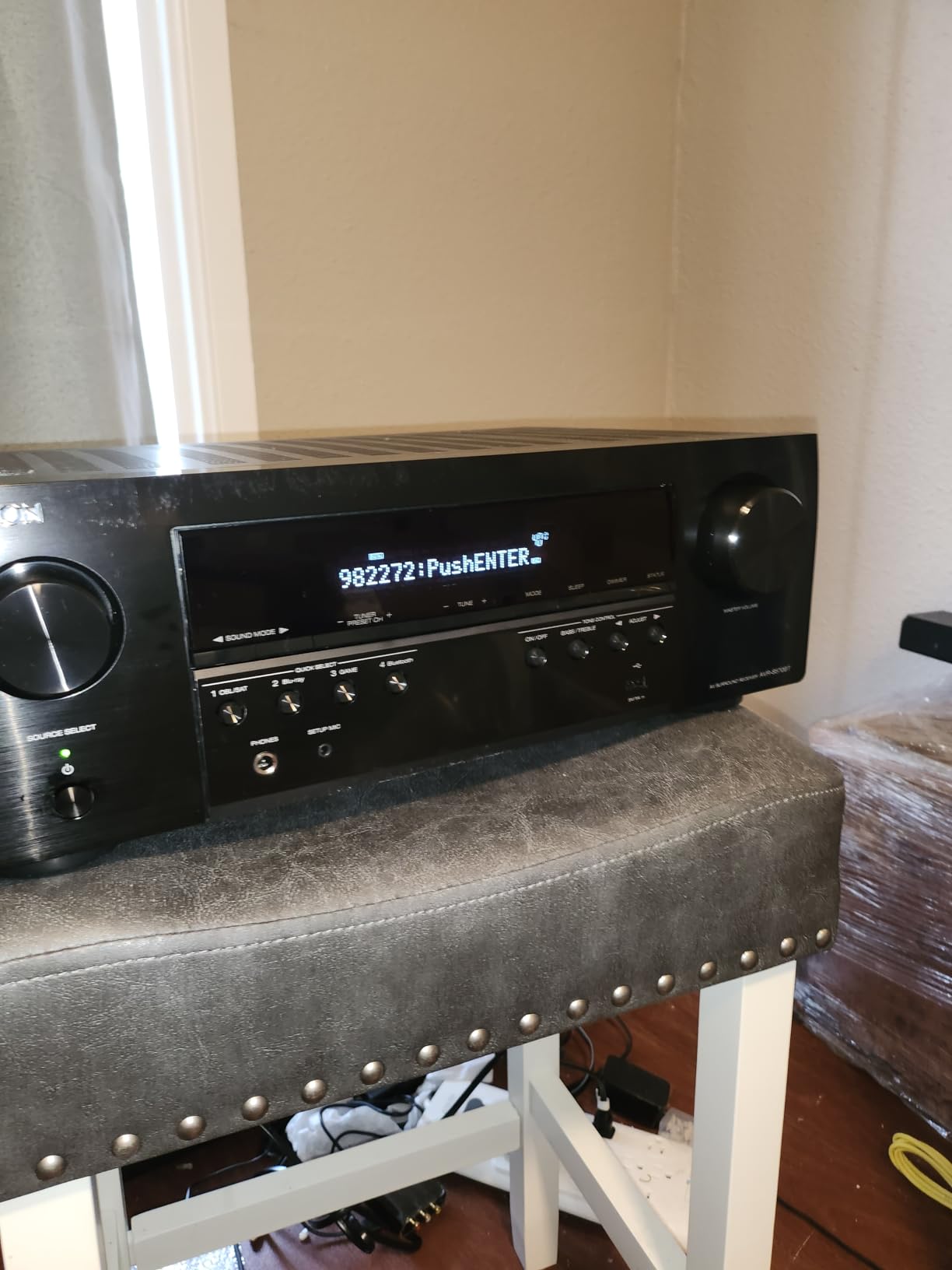
If your turntable has a switchable built-in preamp, this receiver can still serve records — you feed the phono-level output into a line input instead. The sound will not have RIAA equalization applied, so it will be thin and bass-light, which is why a proper phono input matters so much in the first place.
A small external phono preamp between turntable and line input is a common fix, and it costs far less than the receiver itself. That path turns a receiver with no phono stage into a usable two-source system, at the cost of one more box in the chain.
What you lose without Wi-Fi
There is no Ethernet and no Wi-Fi, so HEOS multi-room streaming is not available and there are no streaming apps. You are limited to Bluetooth, the HDMI sources and whatever analog gear you connect.
Some owners report HDMI-CEC handshake issues when more than one source device is attached, and the remote volume control is described as sluggish and jumpy by a minority. Neither is fatal, but both are the kind of friction that makes a daily-use receiver tiring to live with.
3. Onkyo TX-NR6100 — Best for 7.2 Channels With a THX Music Mode
Onkyo TX-NR6100 7.2 Channel THX Certified Network AV Receiver – Black
7.2 channels, 100W per channel
Three HDMI 2.1 8K inputs
Discrete Zone 2 audio and video
AccuEQ calibration
Pros
- THX Select certified with modes tuned for two-channel music and vinyl
- Plenty of clean power for mid-size rooms
- Eight HDMI ports for multiple consoles and disc players
- Discrete Zone 2 audio and video output
- Built-in cooling fan keeps heat build-up low
Cons
- Only three HDMI 2.1 inputs
- Included remote is not programmable
- No composite video input for legacy consoles
- Runs warm under heavy load
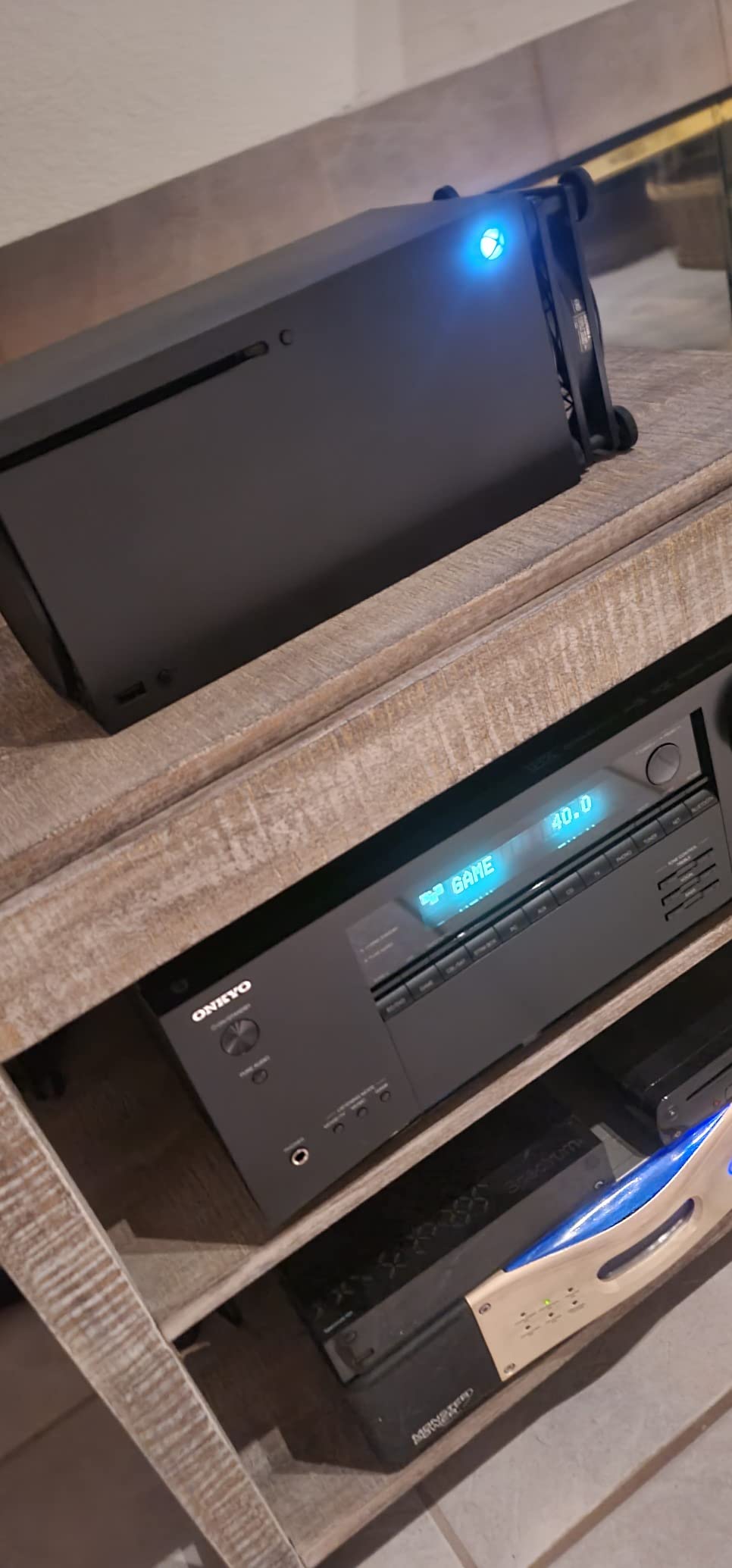
Onkyo’s THX modes are the reason this one is worth a look for record players. THX Select includes a two-channel music mode designed to tighten up the soundstage for stereo content, which is a genuinely different proposition from just playing records through a generic “Stereo” button. For owners who alternate between an album and a film, having a considered two-channel setting matters.
Power is 100 watts per channel across 7.2 channels, and owners with Klipsch systems report it fills a mid-size room without effort. The AccuEQ auto-calibration sets a solid baseline that you can then adjust by hand, which is the right relationship for anyone who cares about stereo accuracy — calibrate quickly, then refine.
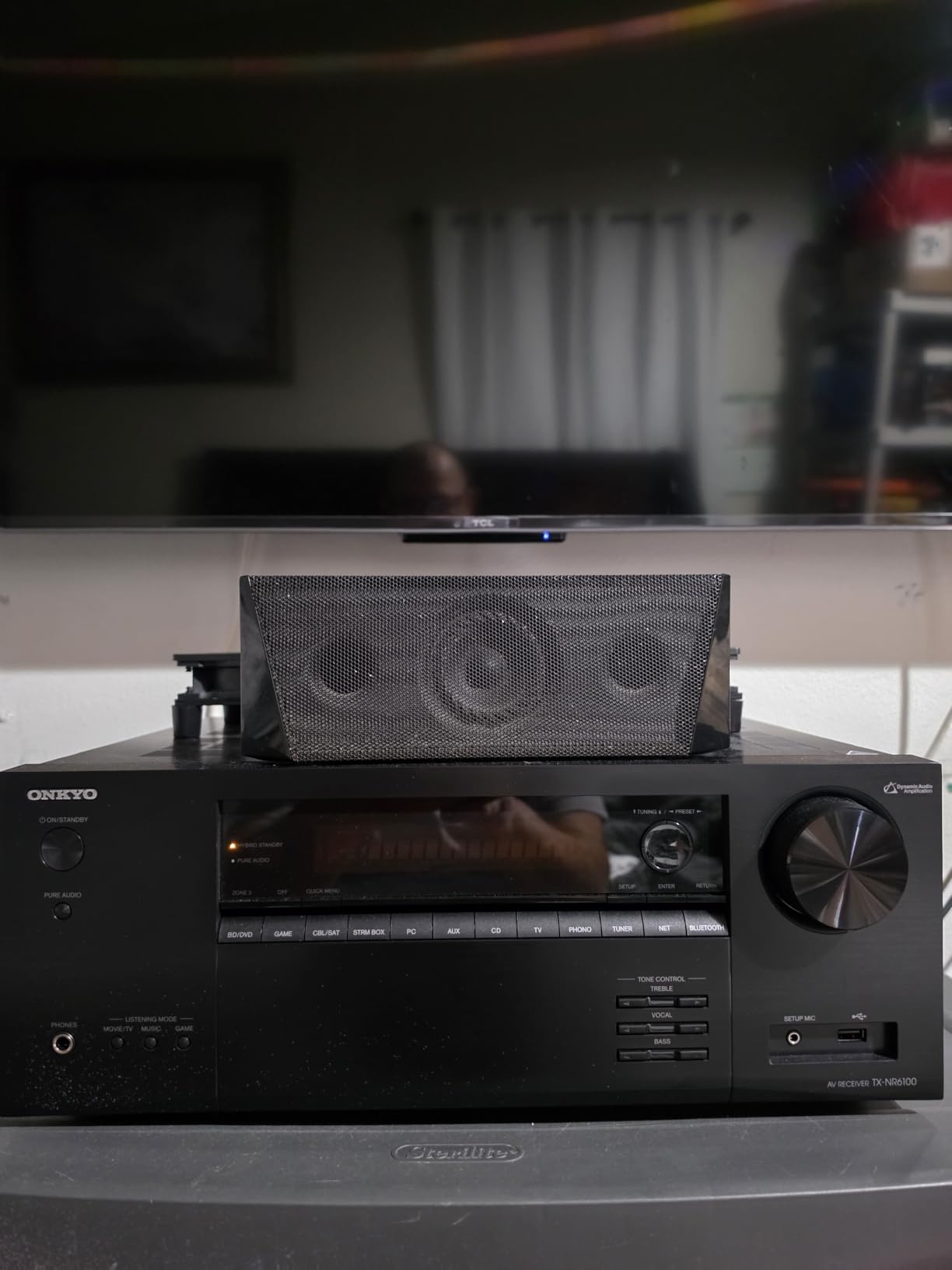
Connectivity is generous: eight HDMI ports in total, plus discrete Zone 2 audio and video outputs for a second room. That is the specification you want if the plan is a turntable in one room and a television in another, since the second zone carries its own signal rather than sharing.
The specification listing includes RCA connectors but does not name a phono input, and the owner reviews do not confirm one either. Verify the rear panel on the exact model before committing with a turntable, because everything else here is strong.
What the THX certification actually changes for records
THX Select is not just a badge. The certification process measures how the amplifier behaves at low listening levels, which is precisely where vinyl listening happens. The two-channel mode is tuned to keep the soundstage stable and the imaging tight rather than letting the sound spread as volume drops.
You can disable it and use plain stereo if you prefer. But if you are choosing between two receivers of similar specification, a documented two-channel music mode is a more meaningful differentiator than an extra HDMI port.
Where it falls short
Only three of the HDMI inputs are full-bandwidth HDMI 2.1; the rest are HDMI 2.0b without HDR10+. The bundled remote is not programmable, so it will not control a non-Onkyo component. There is no composite video input, which rules out older consoles.
Some buyers report a delay of a few seconds when engaging with older entertainment system controllers, and the chassis runs warm under sustained load, so leave clearance above it for airflow. The internal fan keeps that manageable.
4. Denon AVR-S960H — Best for Six Full-Bandwidth HDMI Inputs
Denon AVR-S960H 8K Ultra HD 7.2 Channel (90Watt X 7) AV Receiver, Black
Built-in MM phono input
7.2 channels, 90W per channel
6 HDMI 2.1 in, 2 out
13 inch shallow chassis
Pros
- Six HDMI 2.1 inputs all supporting HDR10+
- Built-in moving-magnet phono input for turntables
- Dual HDMI outputs for projector plus TV
- Shallow 13 inch chassis fits most cabinets
- HEOS AirPlay 2 and Bluetooth multi-room
Cons
- Runs hot and needs active cooling in a closed cabinet
- Only one subwoofer output
- Two-stage HDMI passthrough routine is awkward
- HEOS app is dated
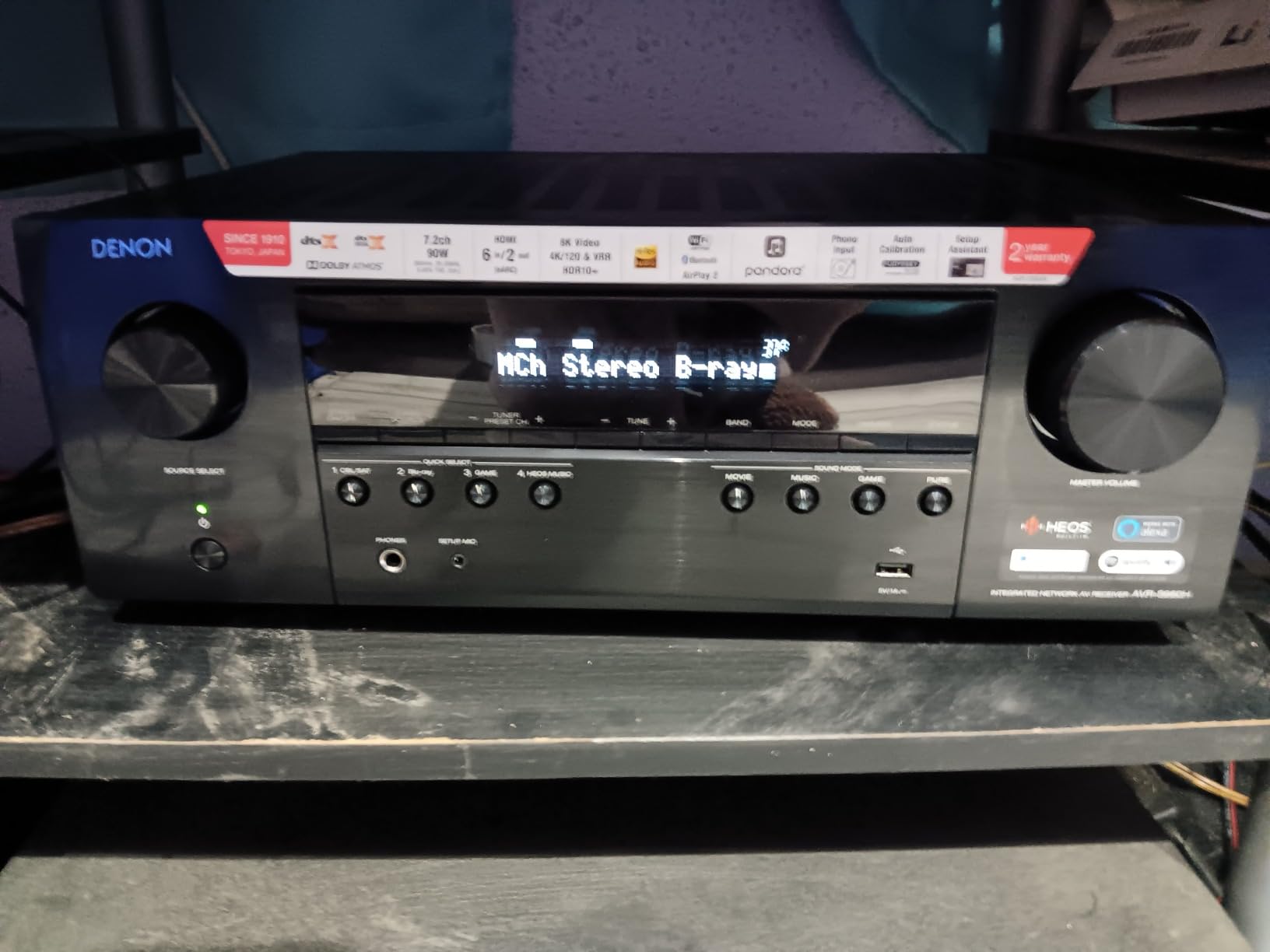
The AVR-S960H pairs a feature set that was premium a few years ago with a specification that still holds up. Six HDMI 2.1 inputs, all supporting HDR10+, is more full-bandwidth connectivity than most rivals in this roundup, and the dual HDMI outputs let a projector and a television connect at the same time.
For vinyl, the built-in moving-magnet phono stage is straightforward and does what a built-in stage should: apply the gain and the RIAA curve so you do not have to think about it. With 90 watts per channel across 7.2 channels, there is enough power behind the stage for normal room levels.
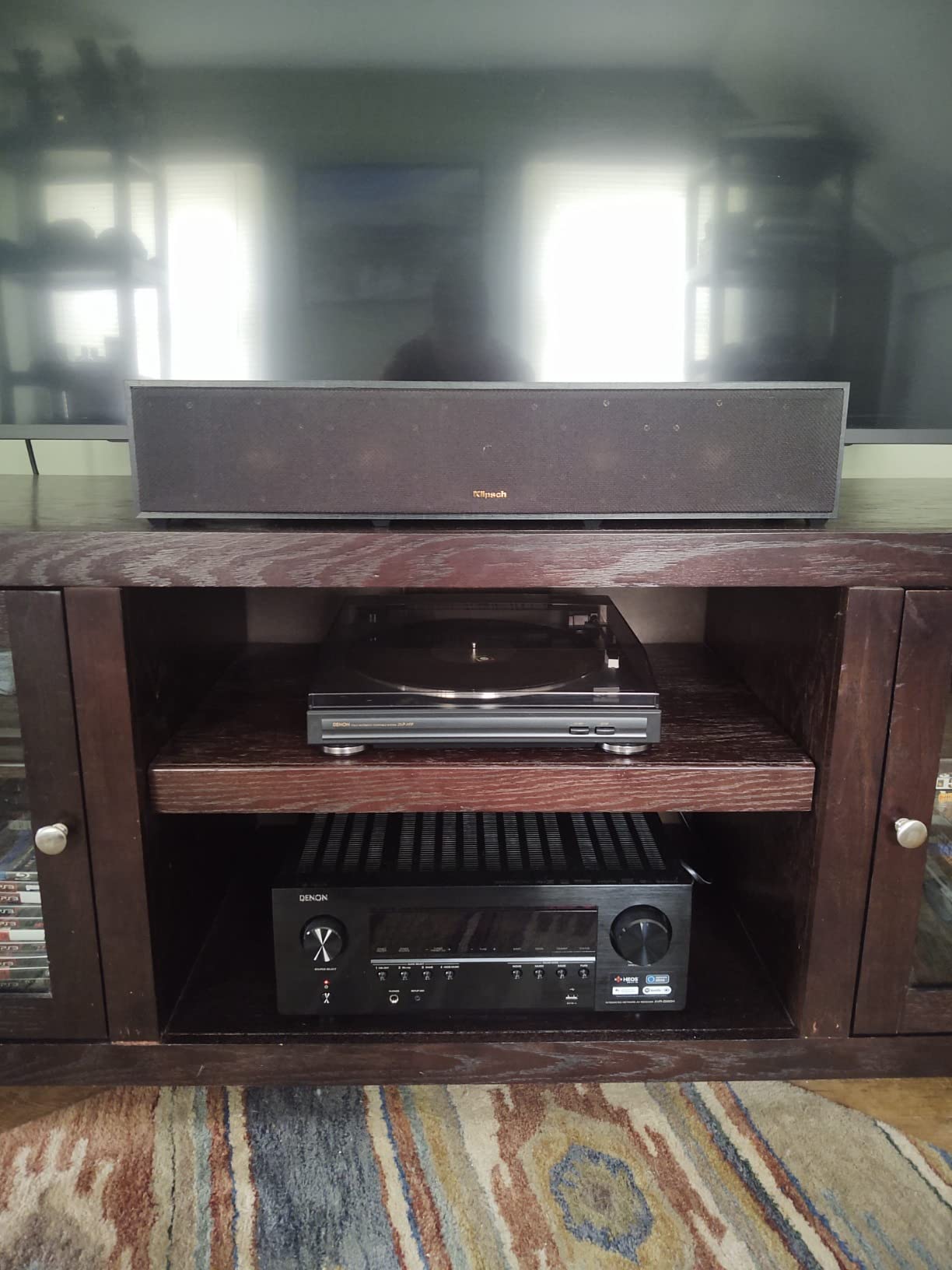
About 71 percent of the 834 ratings are five star. Owners single out the HDMI input selection, the Audyssey MultEQ XT calibration — which they describe as a large, measurable improvement in room sound — and the phono stage as the standout features. The shallow 13-inch chassis is another quiet hero, fitting inside cabinets where deeper units will not go.
Heat is the recurring theme. This unit runs hot during ordinary television viewing, and owners with it in a closed cabinet report needing active cooling. That is worth knowing before you build the furniture around it.
Check the phono input against your cartridge
This is a moving-magnet stage. That covers the majority of turntables, including almost everything a first record player comes with, and it will not suit a low-output moving coil cartridge without help. If your cartridge is a low-output MC, plan on an external stage with more gain, or move the turntable’s own preamp into the chain.
The phono input is a standard analog input with a fixed function, so a turntable with a switchable preamp works cleanly here: use the receiver’s stage and leave the turntable’s preamp off.
Limitations worth planning around
There is one subwoofer output. If your system eventually grows to two subwoofers you will need a splitter or a miniDSP — a modest addition, but another box in the chain.
4K/120Hz pass-through is not supported from every source, and the two-stage HDMI passthrough procedure is genuinely awkward — you have to power the unit on, select the input, then power it back down. The HEOS and Denon apps are also criticised as clunky.
5. Yamaha RX-V6A — Best for MusicCast and Broad Streaming Service Support
YAMAHA RX-V6A 7.2-Channel AV Receiver with MusicCast
7.2 channels, 100W per channel
3 HDMI 2.1 8K inputs, 1 output
YPAO R.S.C. multipoint
3 year warranty
Pros
- YPAO R.S.C. multipoint measurement tunes from several positions
- Broad streaming support including Qobuz TIDAL and Amazon Music HD
- Three 8K60 and 4K120 inputs
- Dolby Atmos Height Virtualization and DTS:X
- Three year manufacturer warranty
Cons
- Only one HDMI output for projector plus TV
- Four of seven HDMI inputs limited to 4K60
- Firmware and network music reliability reported as less dependable
Yamaha’s calibration is the reason to look here if you care about two-channel accuracy. YPAO with R.S.C. takes measurements from multiple positions around the room rather than a single sweet-spot reading, which produces a more even correction across the seating area. For vinyl playback, where the tonal balance between left and right matters a great deal, that is a meaningful advantage.
Power is 100 watts per channel across 7.2 channels, and the streaming service list is the longest we saw here — Spotify Connect, TIDAL, Qobuz, Deezer, Amazon Music HD and SiriusXM all appear alongside MusicCast multi-room, AirPlay 2 and voice control.
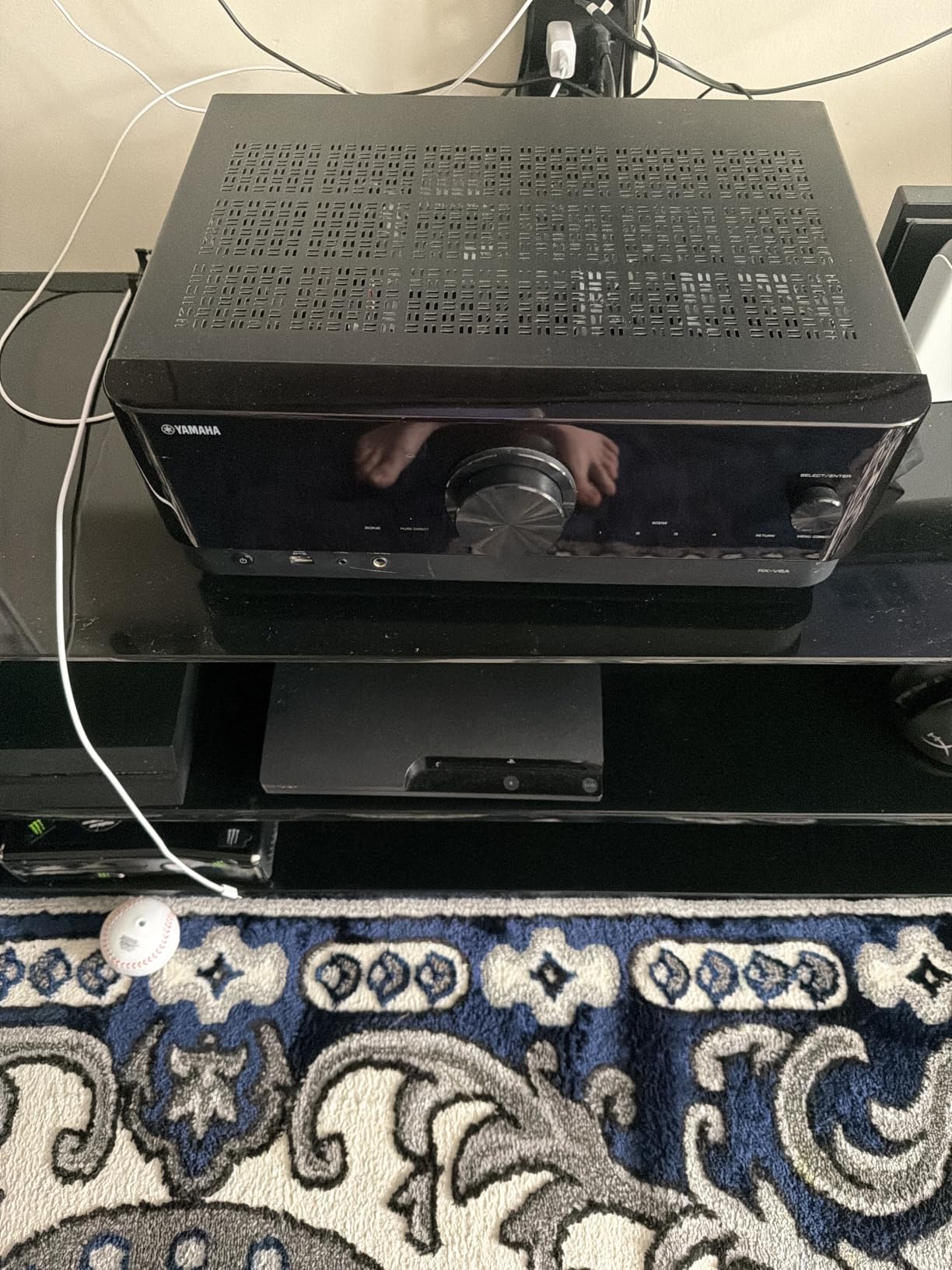
About 68 percent of 737 ratings are five star, and the three-year manufacturer warranty is among the longest offered here. Owners like the sound for both films and two-channel music, and the Dolby Atmos Height Virtualization implementation lets a 5.1 layout produce convincing overhead effects without height speakers.
The specification lists RCA connectors but does not name a phono input, and the reviews do not confirm one. Verify the rear panel on your exact model before buying for a turntable.
What YPAO R.S.C. does for a record collection
Multipoint measurement samples the room from several seating positions and builds a correction that applies evenly, rather than optimising for the single chair where the microphone sat. The practical effect is a more consistent bass level and a more stable centre image as you move around the sofa.
It also matters that the calibration is a baseline, not a straightjacket. Owners routinely run calibration and then adjust treble and the phono level by ear, which is the right way round for anyone with a large record collection and specific tastes.
Where the HDMI section falls short
Only three of the seven inputs are full HDMI 2.1. The other four stop at 4K60, which becomes limiting if you have several current-generation consoles or streamers to connect simultaneously.
There is a single HDMI output, so projector-plus-television setups need a switcher. And firmware and network music service reliability is reported as less dependable than competing brands — a real consideration if your listening is streaming-led.
6. Onkyo TX-NR7100 — Best for Two Rooms and Nine Channels
TX-NR7100 9.2-Channel THX Certified AV Receiver
9.2 channels, 100W per channel
Phono input retained
Three HDMI outputs
Dirac Live included
Pros
- Dirac Live room correction included out of the box
- All HDMI inputs are full-bandwidth HDMI 2.1
- Retains a phono input alongside legacy component video
- Three HDMI outputs including a second-zone 8K60 feed
- Sonos Certified with up to three independent zones
Cons
- Runs warm and needs airflow clearance
- Brief audio dropouts when changing source or content
- Dirac configuration can fail to complete for some users
- No preamp outputs and no second subwoofer output
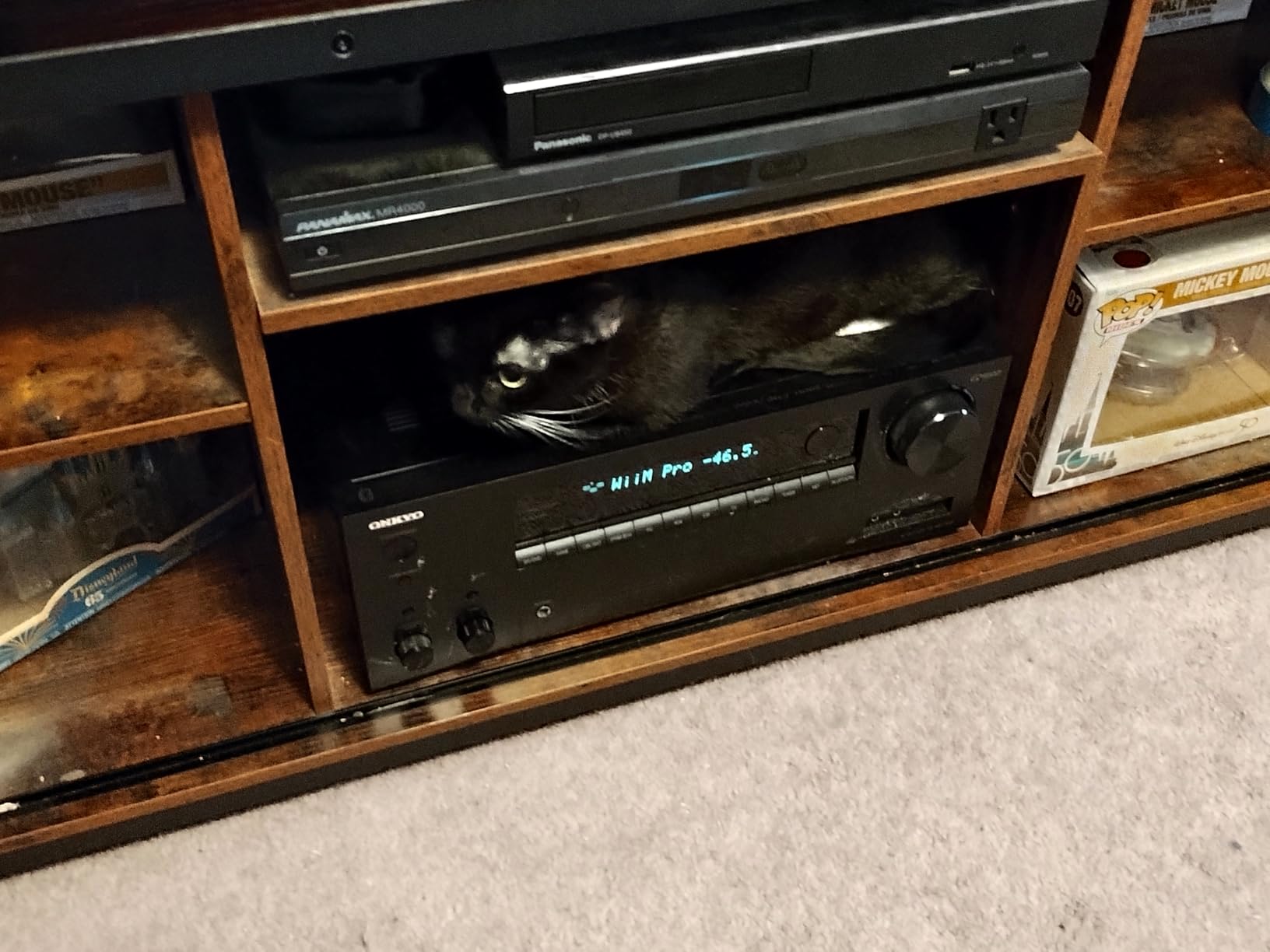
This is the pick if your records and your television do not live in the same room. Three HDMI outputs mean a second zone can receive a full 8K60 feed independently, and Sonos Certification supports up to three independent zones. Records in the study, films in the living room, one receiver driving the lot.
It is also one of the few receivers here where the manufacturer specification explicitly names a phono input alongside the legacy component video connectors. Owners confirm the analog section was kept intact rather than stripped for cost.
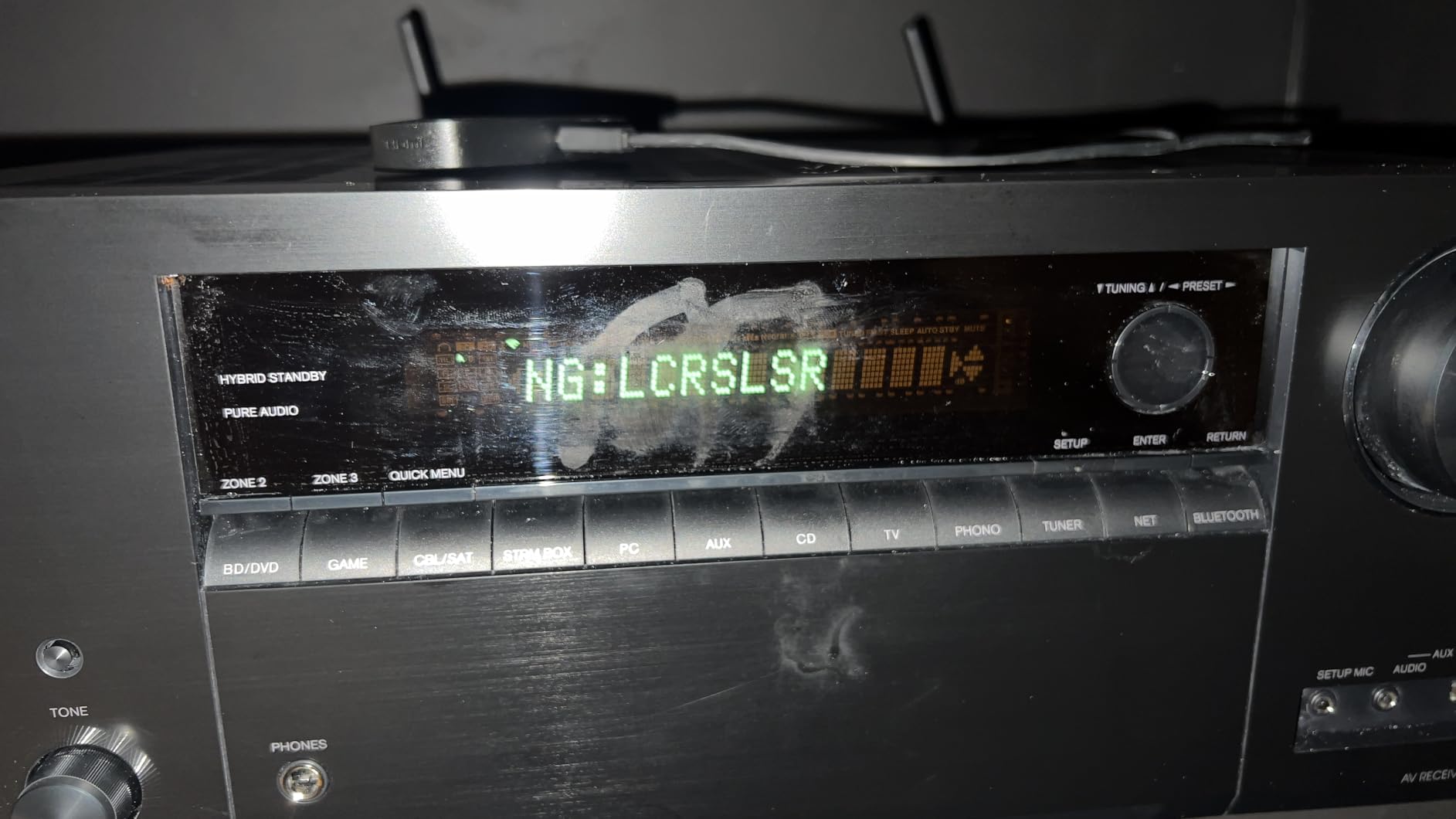
Dirac Live is the headline feature and the owners’ consensus is that it makes a real difference in irregular rooms. It uses a smartphone or the bundled wired microphone, and it is included rather than sold as an upgrade. Nine channels of processing at 100 watts per channel gives more headroom than the 7.2 TX-NR6100.
All HDMI inputs are full-bandwidth HDMI 2.1 with 4K/120Hz and 8K/60Hz, unlike the three-input limit on the TX-NR6100. The on-screen menu is also well designed by current standards.
Why the second zone matters for vinyl
A second zone with its own HDMI feed is the difference between a receiver that can serve two rooms and one that can only send analogue audio to the second room. If your turntable lives away from the television, an analogue-only second zone is often enough, but a full feed is more flexible.
The Sonos route is useful if you already own wireless speakers. Pair a Sonos Port and you can add rooms without running new speaker cable, and the receiver keeps handling the main system with its phono stage intact.
Weaknesses that show up in daily use
Brief audio dropouts whenever new content or a new source is selected are reported by several owners, which is more noticeable with records than with streaming because the silence is so obvious. The Dirac configuration can also fail to complete for some users, who then have to resort to a third-party USB microphone.
Heat is again the theme — airflow clearance above and around the chassis is described as essential. There are no preamp outputs, so adding a dedicated stereo power amplifier later is not an option without an external box, and there is no independent second subwoofer output.
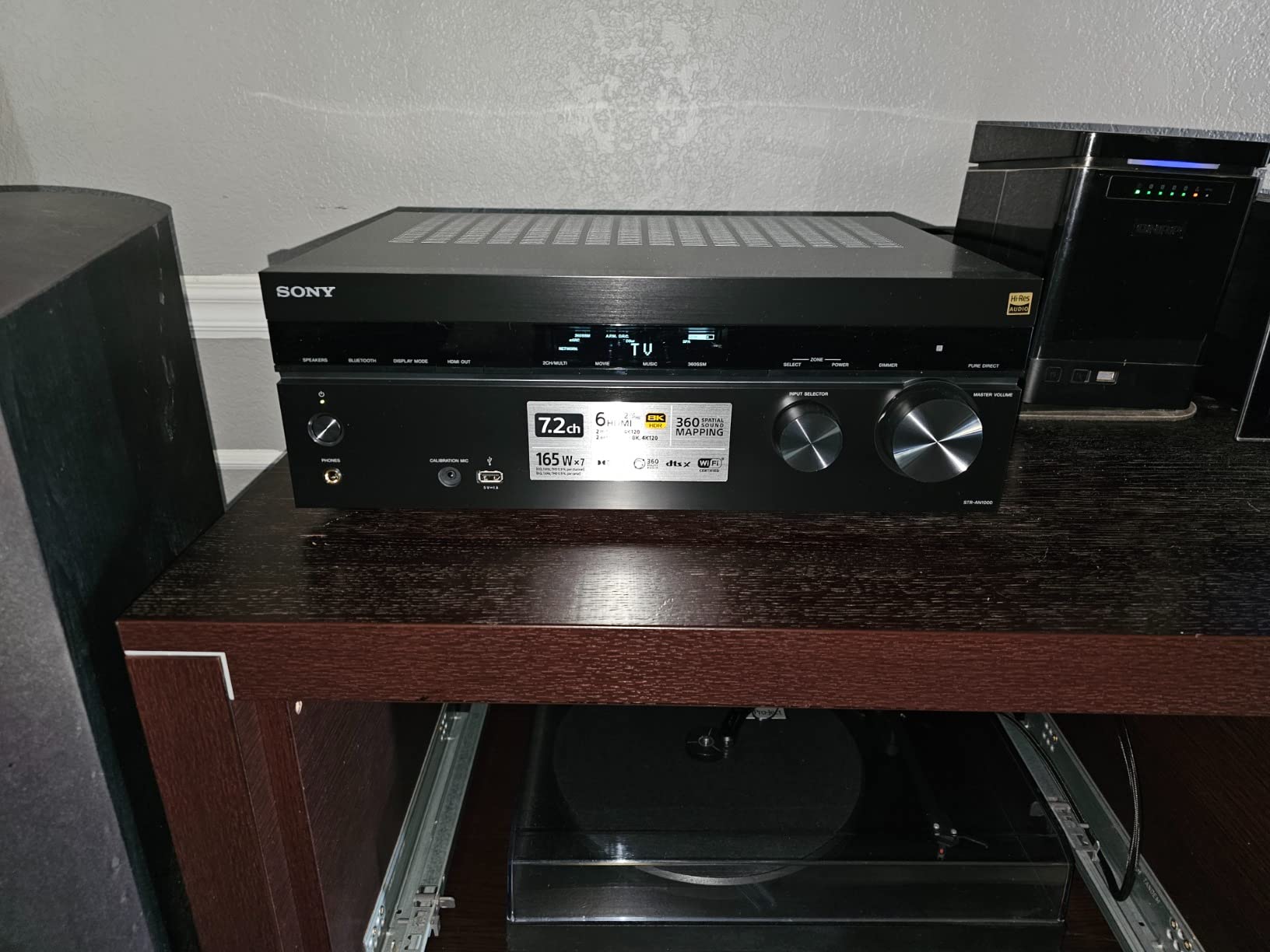
7. Sony STR-AN1000 — Strong Performer, But No Phono Input At All
Sony STR-AN1000 7.2ch Home Theater 8K A/V Bluetooth Receiver
No phono input on this model
7.2 channels, 165W per channel
360 Spatial Sound Mapping
Zone 2 and Zone 3
Pros
- 360 Spatial Sound Mapping creates an immersive field without height speakers
- 165W per channel drives larger living-room setups
- Dolby Vision HDR10 HLG and IMAX Enhanced alongside 8K and 4K120
- Digital Cinema Auto Calibration IX is fast and works well
- S-Center sync aligns the centre channel with Sony Bravia TVs
Cons
- No phono input so a turntable needs an external stage
- Slow boot time of roughly two minutes
- Dolby Vision pass-through from an Apple TV 4K is unreliable
- Build described as thin sheet steel with a case rattle
We are including this model for one reason: to make the point. The Sony STR-AN1000 is a genuinely capable home theater receiver, and it has no phono input whatsoever. Owners with turntables must add an external phono stage or use a separate system entirely. This is the assumption we warned about at the top of the guide, and it is real.
On the home theater side, 360 Spatial Sound Mapping and DTS:X Virtual create a convincing immersive field even without height speakers, and 165 watts per channel across seven channels is the most power in this group. Digital Cinema Auto Calibration IX is fast, with a manual alternative for precision work.
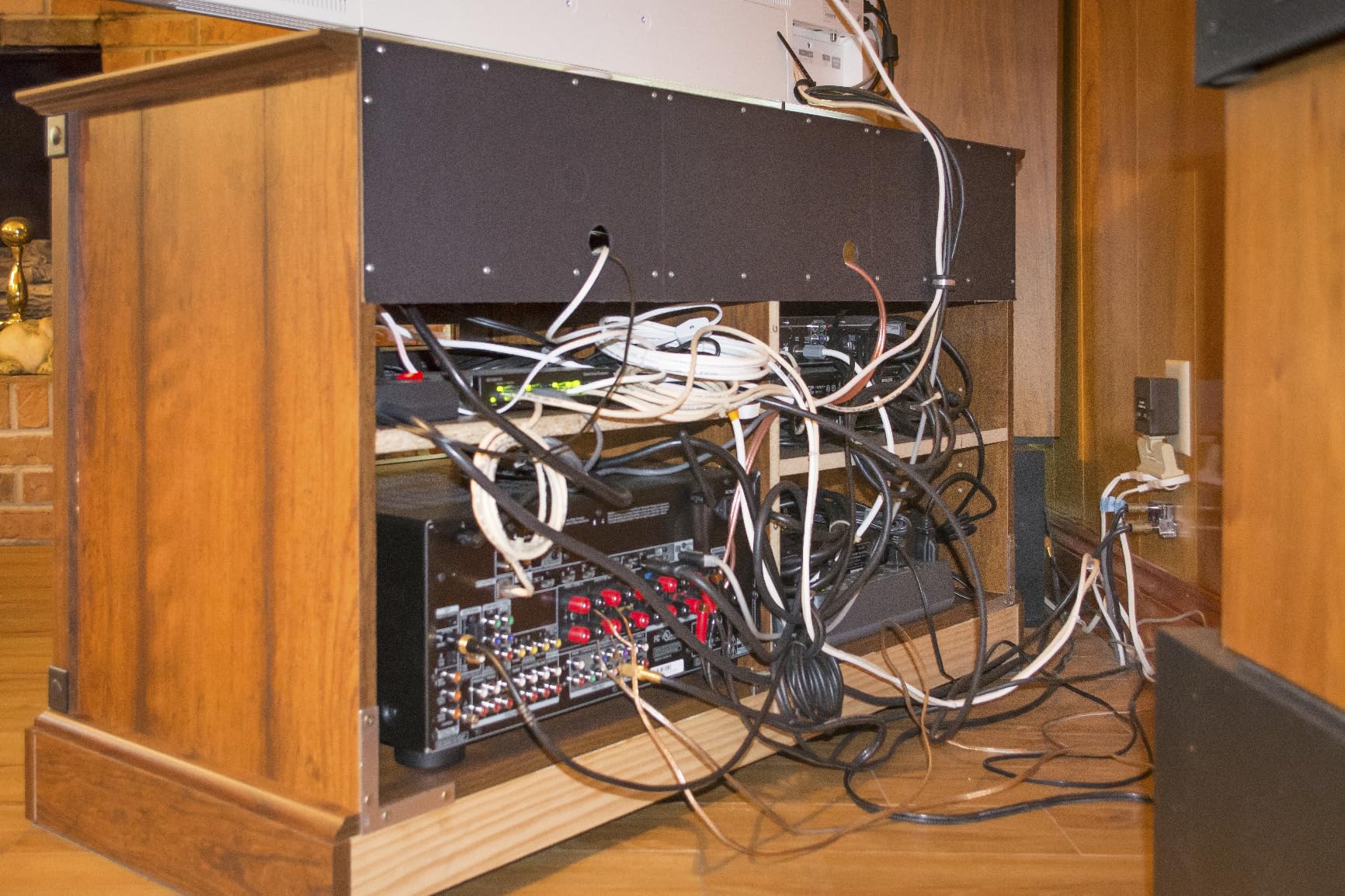
About 65 percent of 554 ratings are five star, and reviewers consistently praise the sound quality as crisper than prior Denon and Onkyo units. The S-Center Acoustic Speaker connection synchronises the centre channel with compatible Sony Bravia televisions for noticeably clearer dialogue, which is a genuinely useful feature rather than a gimmick.
Zone 2 and Zone 3 are both present, and built-in Chromecast, Spotify Connect, AirPlay and Google Assistant cover the streaming side well.
Can you still use this receiver with a turntable?
Yes, but not directly. A turntable with a switchable built-in preamp outputs line-level audio and can go into an analog input, though without RIAA equalization the playback will be thin and bass-light. The better route is a small external phono preamp between the turntable and the receiver, which costs a fraction of the receiver.
If your turntable has no built-in preamp, an external phono stage is not optional. It becomes a required box. Budget for it before you commit to this receiver for a two-source system.
Other problems to know about
Boot time is roughly two minutes, and the unit occasionally cycles through inputs during startup. Dolby Vision pass-through from an Apple TV 4K does not work reliably and is a known unresolved issue — significant if that is your main streamer.
The front display font is very small and hard to read from a normal seat, the speaker configuration menu has no option for small bookshelf rear surrounds, and the build is described as thin sheet steel with a loud case rattle when the main relay engages.
8. Pioneer VSX-935 — Best for All-Speaker Stereo and a Smaller Cabinet
Pioneer VSX-935 7.2 Channel Surround Sound Network Receiver Dolby Atmos (2021)
7.2 channels, 80W per channel
8 HDMI ports with HDMI 2.1
Phase-alignment room correction
6.8 inch chassis
Pros
- Plays all speakers in multi-channel stereo for music listening
- Full complement of HDMI 2.1 8K ports in a seven-channel chassis
- Crisp and loud output compared with the Onkyo units it replaces
- Dual-zone speaker output for a second room or outdoor deck
- Compact 6.8 inch chassis suits most AV cabinets
Cons
- Two-way Bluetooth for wireless headphones is very difficult to enable
- Automatic room correction results are weak
- Awkwardly positioned speaker binding posts
- Firmware updates are USB-only and have failed for some users
The all-speaker stereo mode is the feature vinyl owners here ask for by name. Instead of dropping to front left and front right only, this receiver plays an album through the full speaker array, which turns a record into a room-filling event. Several owners bought it specifically for that, and it is a genuine alternative to the thin two-channel presentation most AV receivers offer for music.
With 80 watts per channel across 7.2 channels and eight HDMI ports including HDMI 2.1 with 8K support, the specification covers a lot of ground. Phase-alignment room correction is a clear improvement over older Pioneer generations, and the 6.8-inch chassis height is one of the shorter bodies here.
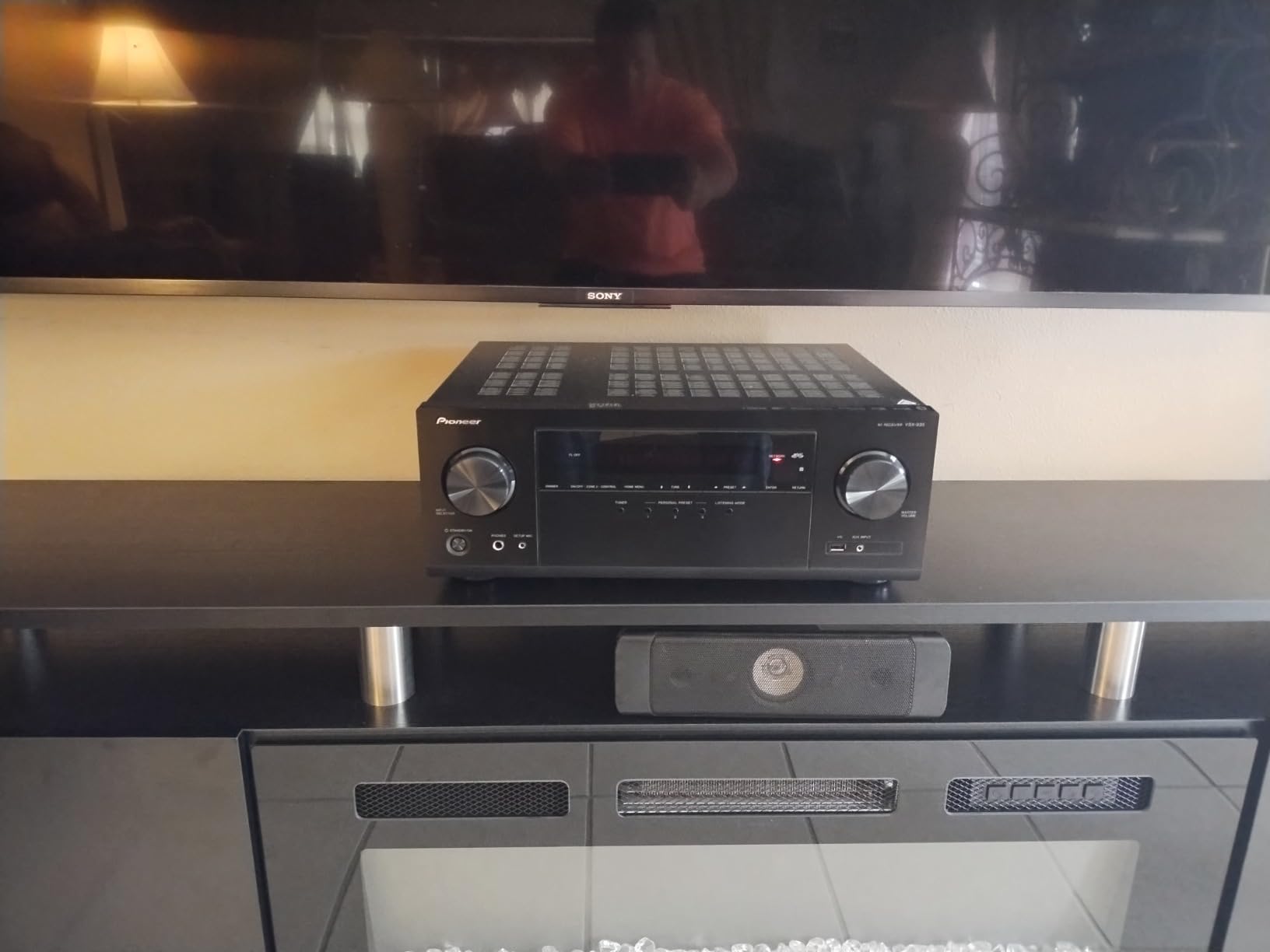
About 68 percent of 368 ratings are five star. Owners note the crisp, clear and loud output, and several compare it favourably to the Onkyo receivers they replaced. Integration with Roku remotes and streaming apps including Audirvana and DSD128 content works smoothly, and the RF remote plus dual-zone speaker output covers a second room or an outdoor deck.
The specification listing does not name a phono input, so verify the rear panel for your exact model before buying for records.
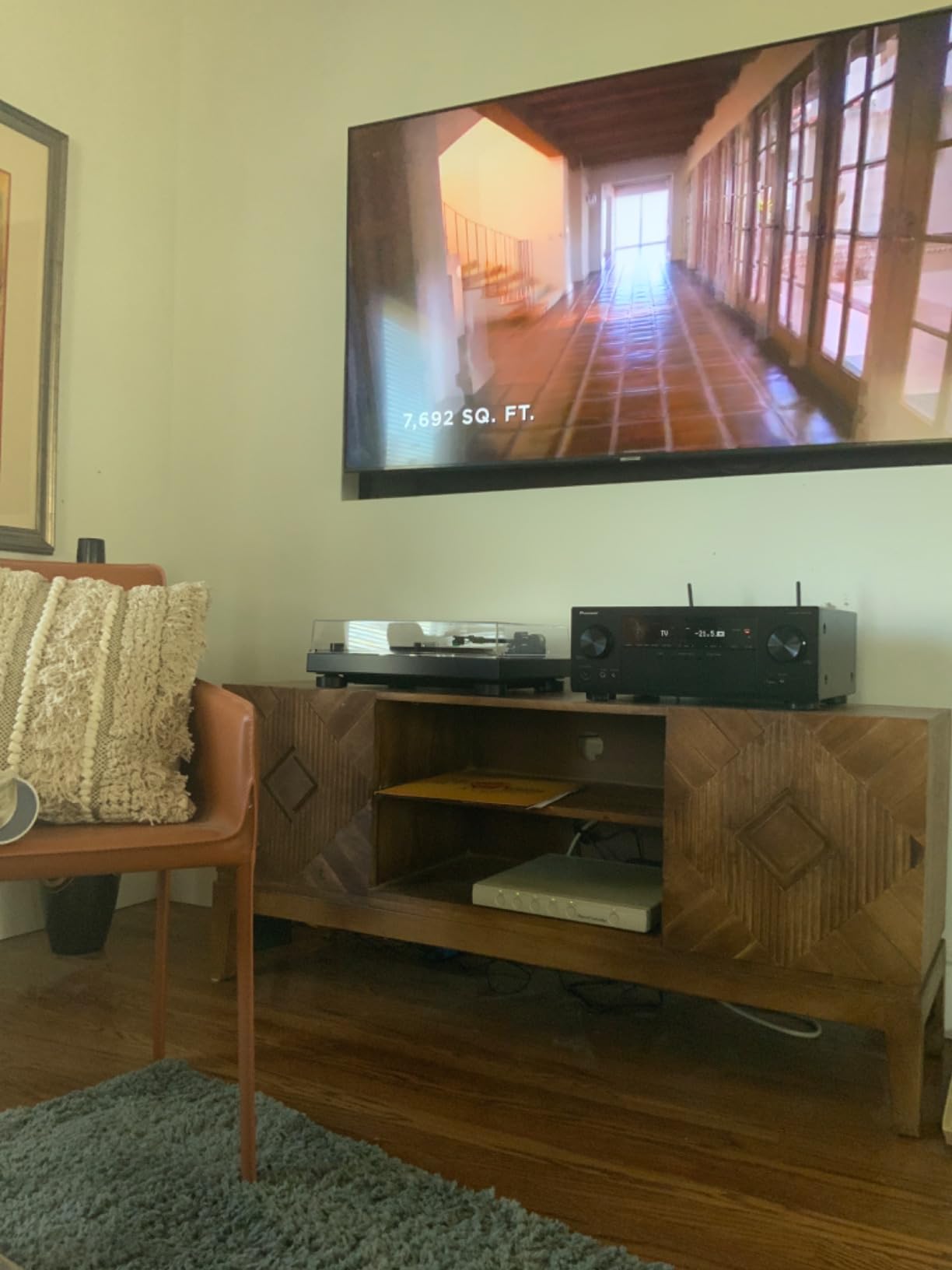
Is all-speaker stereo right for every record?
Not for everything. Acoustic jazz and small ensembles recorded with close microphone placement lose their sense of intimacy when spread across six or seven channels, and the timing cues that make a rhythm section audible get smeared. Rock, electronic and large-orchestral material generally benefits.
The practical approach is to try both settings on the same record rather than deciding once. The mode is right there on the front panel, and switching between two-channel and all-speaker stereo takes a second.
Where it frustrates owners
The two-way Bluetooth feature, which would let you send audio to wireless headphones, is described as very difficult to enable and unreliable once enabled. Automatic room correction results are weak, so owners end up setting speaker levels and distances manually — doable, but it should not need doing.
The binding posts are awkwardly positioned, making wiring harder than it needs to be. Firmware updates are USB-only and have repeatedly failed with error codes for some users, and TrueHD passthrough from TV apps is limited, forcing a choice between Dolby Vision video and 3D audio.
9. Yamaha RX-A2A AVENTAGE — Best Build Quality and Room Correction
Yamaha RX-A2A AVENTAGE 7.2-Channel AV Receiver – 8K and 4K/120 HDMI, eARC, Dolby Atmos, DTS:X, Wi-Fi, Bluetooth, MusicCast
Dedicated phono input
7.2 channels, 100W per channel
YPAO R.S.C. multipoint
25.4 pound chassis
Pros
- AVENTAGE build quality with a heavier chassis than mainstream models
- Dedicated phono input for turntables
- Surround:AI optimises the soundfield in real time
- YPAO R.S.C. multipoint is Yamaha's most advanced calibration
- Three HDMI inputs support 8K60B and 4K120AB
Cons
- Only one HDMI output for projector plus TV
- 115W per channel is modest against the feature set
- Menu system and MusicCast app lag newer competing models
The AVENTAGE line is where Yamaha puts its build quality, and it shows in the weight. At 25.4 pounds the RX-A2A is a substantial chassis whose fit and finish feel a step above the mainstream models, and that mass is not wasted — it is part of why the amp behaves itself at low listening volumes.
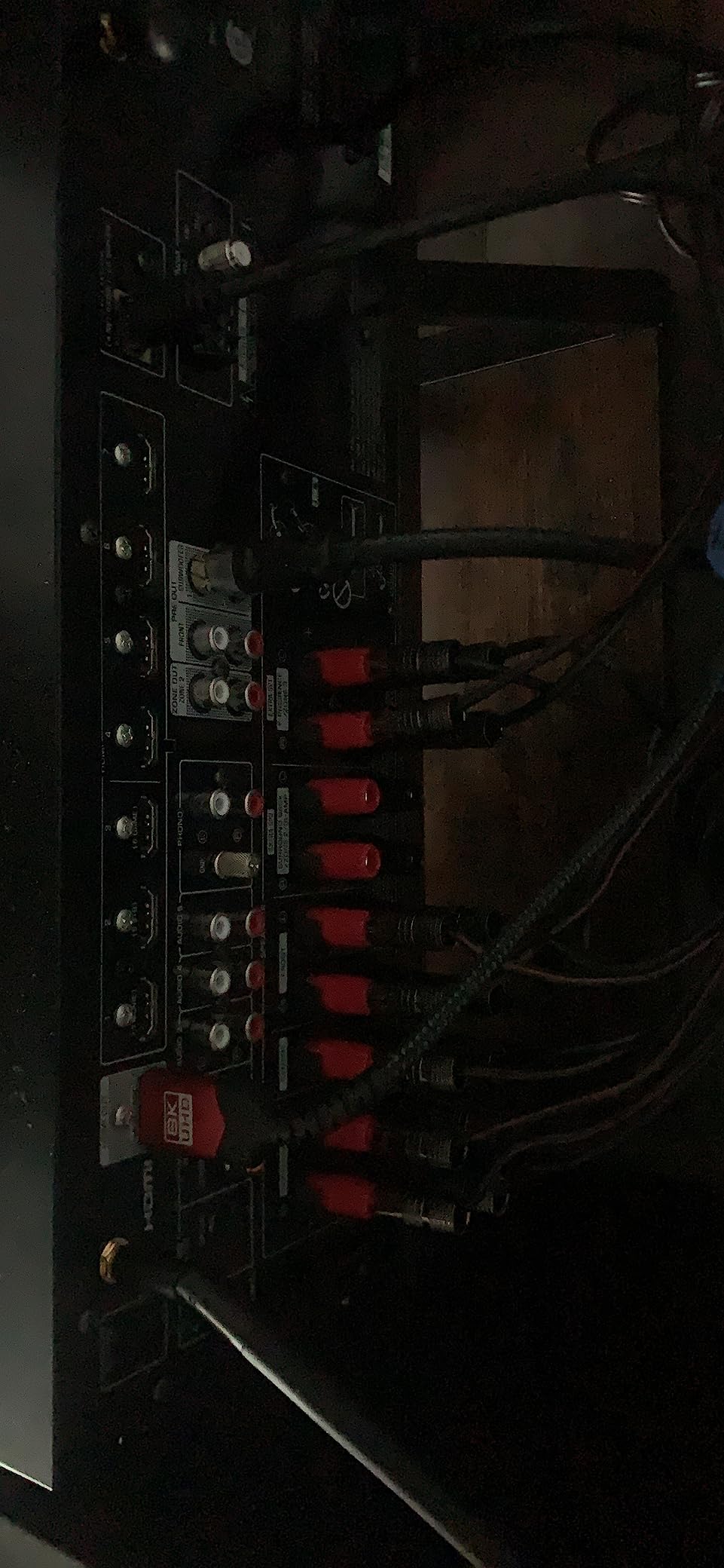
It has a dedicated phono input, listed explicitly among the analog connections alongside optical, coax and RCA. That is a proper analog section rather than a stripped-down one, which is what you want when the turntable is one of two equally important sources.
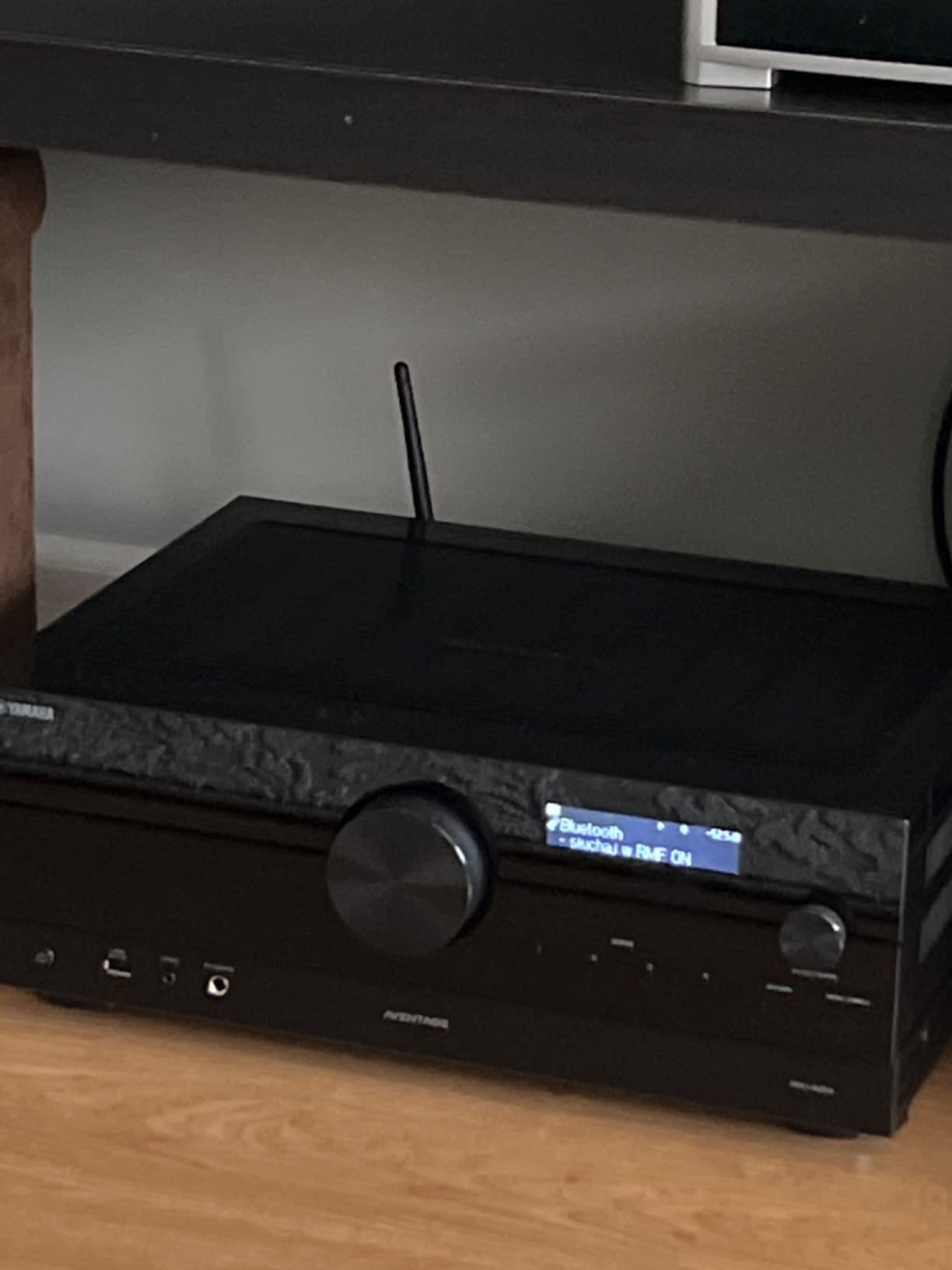
Surround:AI analyses the characteristics of your room and optimises the soundfield in real time, working alongside YPAO R.S.C. with multipoint measurement — Yamaha’s most advanced calibration routine. Three HDMI inputs handle 8K60B and 4K120AB with ALLM and VRR, and there is a Zone 2 output for a second room.
Roon Tested certification is a nice touch if you use that ecosystem. Works with Sonos, MusicCast, AirPlay 2 and broad hi-res streaming support round out the platform side. About 71 percent of 324 ratings are five star.
How the AVENTAGE tier differs in practice
The mass and damping mean the amplifier stages stay stable when you are listening quietly, which is the exact opposite of the behaviour that makes cheap receivers sound thin at low volume. On a record played at conversation levels, that stability is audible as a sense of control rather than as extra detail.
Surround:AI and the more capable YPAO R.S.C. multipoint routine also mean fewer manual corrections after moving furniture. For a system that will be dialled in once and then lived with, that is worth something.
Where the premium does not buy much
Power is 100 watts per channel by the standard measure and 115 watts by the other, which is modest for a receiver with this much going on. In a large room with inefficient floorstanding speakers you will feel the limit before you run out of features.
There is only one HDMI output, which limits projector-plus-television arrangements. And owners report the menu system and MusicCast app navigation as less polished than the newest Denon generations, which is a strange thing to hear about a premium model.
10. Marantz NR1510 — Best for Small Spaces and the Warmest Sound
Marantz NR1510 Slimline 5.2 Channel AV Receiver Powered by HEOS™ with 50 W, 4K, and 6 HDMI Inputs
Moving-magnet phono input
5.2 channels, 50W per channel
Half-height 4.1 inch chassis
3 year warranty
Pros
- Half-height slimline chassis fits cabinets and shelves where full-size receivers cannot
- Warm Marantz Sound Master tuning described as a genuine upgrade in musicality
- Moving-magnet phono input plus analog and digital inputs
- Six HDMI inputs with 4K Dolby Vision and HLG
- HEOS built-in streaming and Bluetooth
Cons
- Only 50 watts per channel across five channels
- 5.2 channels only with no Atmos height or 7.1 expansion
- Setup routine is tedious and cannot be skipped
- Reported running hot and needing careful ventilation
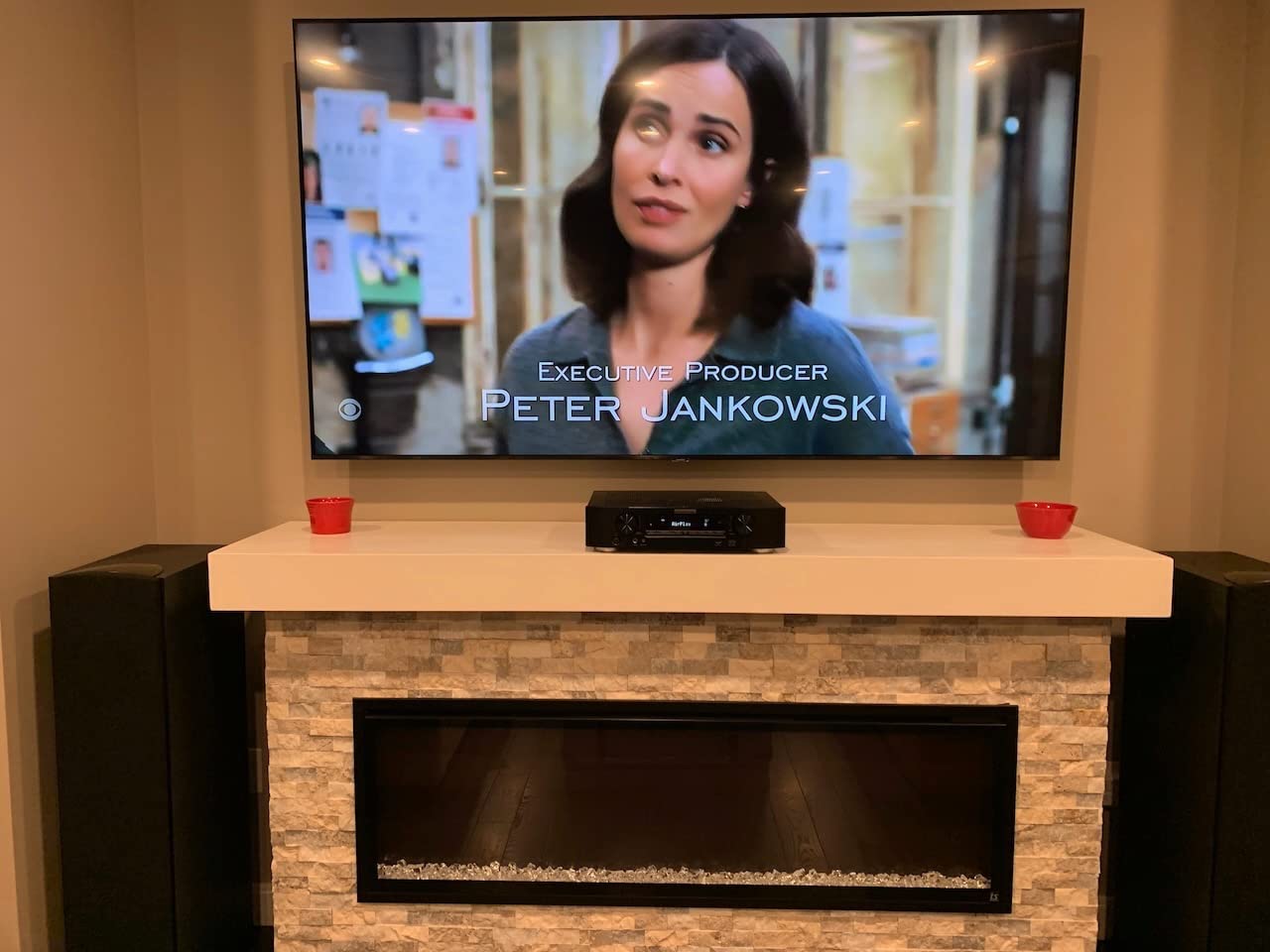
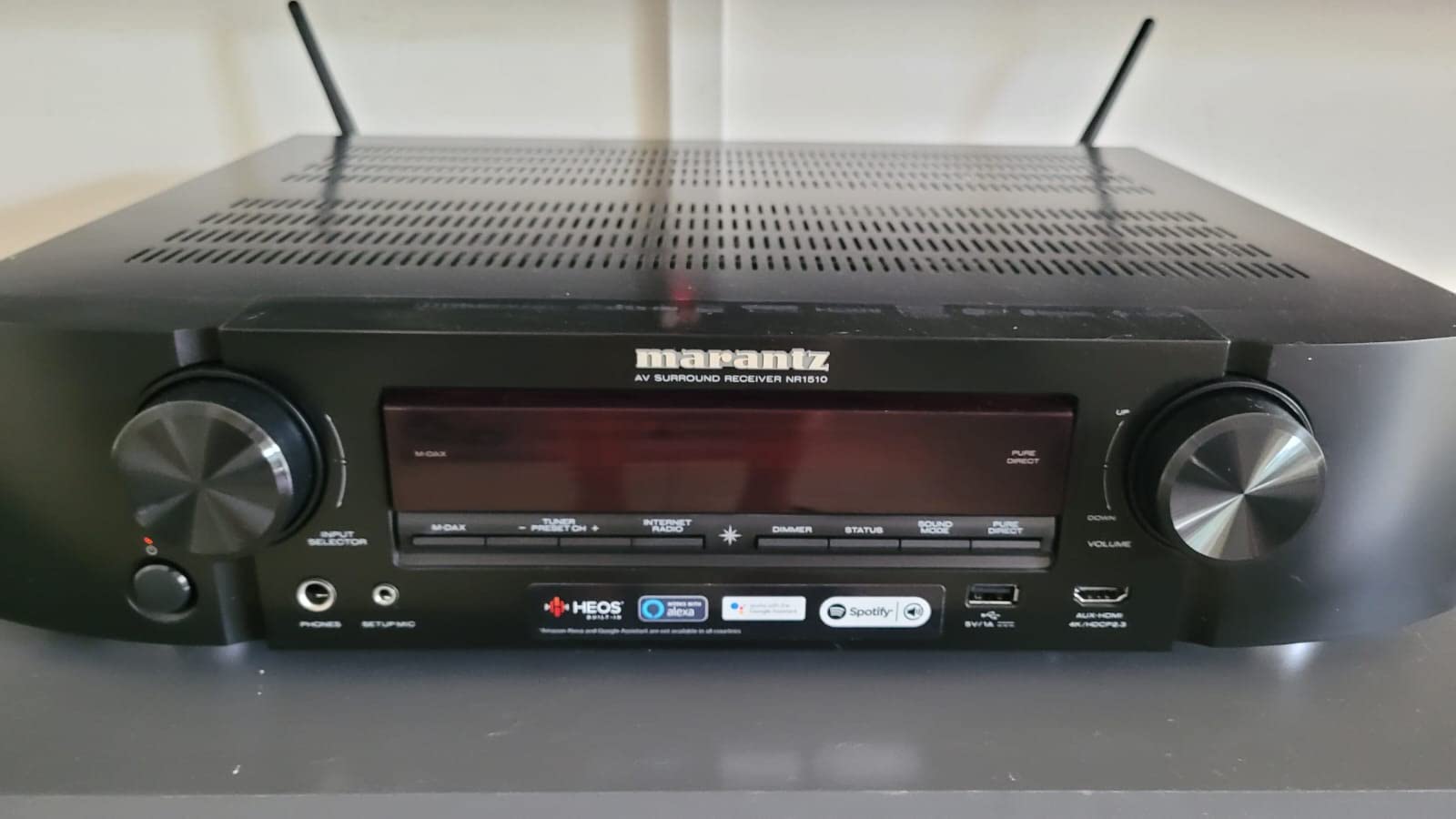
The NR1510 solves a physical problem no other receiver here addresses. At 4.1 inches tall it is roughly half the height of a conventional AV receiver, so it fits on a shelf or in a cabinet where a full-size chassis simply will not go. If you have been told your media unit is too shallow, this is the answer.
The sound character is the reason vinyl buyers gravitate to Marantz. Owners describe rich, warm, musical tuning as a real upgrade in musicality compared to the more analytical receivers they came from, and that warmth suits the dense midrange of most records well. The phono input is moving-magnet, which covers the majority of turntables.
About 76 percent of 317 ratings are five star, the highest five-star share we counted across the ten models. Audyssey MultEQ and per-channel filtering get the system balanced quickly, owners single it out as a genuinely musical option for two-channel listening, and HEOS built-in streaming covers Spotify, TIDAL and Amazon Music HD. That combination is exactly what a record collector is looking for.
The three-year warranty is among the longest offered here, and the slim chassis is the reason several owners bought it. Some report the unit running hot and needing careful ventilation, so the same shelf clearance rule applies.
What 50 watts actually means here
Fifty watts per channel is enough for a small or medium room with reasonably efficient bookshelf speakers at normal listening levels. It will not drive large floorstanders in a big space to cinema volumes, and pushing it hard is where the headroom disappears.
Match it to the room, not to the wish list. A 5.2 setup in a bedroom or a modest living room is exactly the use case this power level suits, and the warm character remains audible well below the limits.
What the slimline design costs you
You get 5.2 channels. There are no Atmos height channels and no expansion path to 7.1 or 9.2, so a home theater upgrade later means a new receiver. Bluetooth audio quality is reported as scratchy at low output volume, and the front USB port stays powered in standby.
The setup routine is tedious and cannot be skipped, which can take a long time on first install. The remote is long, repetitive and not backlit. None of these are deal-breakers for a music-first system, but they add friction.
How to Connect a Turntable to an AV Receiver
This is the part where most first-time vinyl setups go wrong, and it takes about five minutes once you know which of three cases you are in. Work out which one describes your equipment before you touch a cable.
Case 1: Your turntable has no built-in preamp
Connect the turntable’s RCA output pair to the receiver’s PHONO input, then attach the ground wire from the turntable to the ground terminal on the phono input. On the receiver, switch the input to Phono rather than AUX or CD. Do not use an external preamp in this chain — the receiver is doing that job already.
That is it. The receiver applies roughly 40 dB of gain and the RIAA equalization curve, and the signal is now line-level and behaves like any other source.
Case 2: Your turntable has a switchable preamp
This is the common case, and the mistake is using both stages. If the turntable’s preamp switch is off, use the receiver’s PHONO input as above. If the turntable’s preamp switch is on, the signal is already line-level, so use a normal RCA input such as AUX or CD — never the phono input.
Running a preamped signal into the phono input applies RIAA equalization twice, which produces a thin, peaky sound. A small error the other way — a phono-level signal into a line input — gives playback that is quiet, thin and bassless. Both are easy to diagnose once you know the rule.
Case 3: Your receiver has no phono input
Add a small external phono preamp between turntable and receiver. Plug the turntable into the preamp, run RIAA inside the external box, and connect the preamp’s line output to any RCA input on the receiver. The preamp becomes the phono stage and the receiver just amplifies.
This is a straightforward upgrade path on any receiver in this list, including the Sony STR-AN1000 where it is mandatory. It also solves cartridge problems later — if you move to a low-output moving coil cartridge, a preamp with higher gain and adjustable loading handles it where a fixed internal stage cannot.
Matching the stage to your cartridge
Most moving magnet cartridges output around 2.5 mV and a standard MM phono stage handles that comfortably. Low-output moving coil cartridges produce closer to 0.3 mV and need a stage with more gain — which is why the Denon AVR-X1700H, whose phono input switches between MM and MC, is the more flexible choice for anyone whose cartridge might change.
Moving coil stages also usually offer adjustable cartridge loading impedance, which lets you match the input impedance to the cartridge’s own specification and flatten out the frequency response. If your receiver offers a loading selector, set it to match your cartridge’s recommended value rather than leaving it on the default.
What to Look for in a Home Theater Receiver for Vinyl
The phono input decides whether the receiver can take a turntable at all. Everything after that is refinement, and understanding the order of importance will save you from overpaying for the wrong things.
Phono input: the one non-negotiable
Check the specification sheet for a phono input before anything else, and check the rear panel on the exact model if the sheet is vague. Four receivers in this roundup do not list one in their published specifications, and the Sony STR-AN1000 explicitly has none. Owners consistently discover this after installation rather than before, and it is one of the most common regrets reported in owner reviews.
Then check what kind of stage it is. Moving-magnet-only is fine if your cartridge is an MM. A switchable MM/MC stage gives you room to change cartridges later. A permanently engaged stage is a problem only if your turntable also has a preamp, because you then have a choice to make rather than a default.
Why bypassing tone controls and processing matters
Vinyl is a low-level, low-noise signal and it is unforgiving of badly applied processing. Bass boost in particular inflates low-level rumble and surface noise along with the bass. If your receiver offers a Pure Direct, Direct or Source mode, use it for records — it bypasses tone controls and, on the better models, the digital signal path entirely.
A word of caution: many receivers disable Pure Direct in surround configurations or when room correction is engaged. If the mode is unavailable, check whether your calibration settings are overriding it. On the Denon AVR-X1700H and the Yamaha RX-A2A, the phono input and the direct mode together give the cleanest two-channel path we found.
Power and speaker matching
Match the receiver to the room and the speakers, not to the specification sheet. Owners on budget forums repeatedly report two opposite mistakes: 100-plus watt receivers overpowering small bookshelf speakers in a small room, and low-powered units straining with floorstanding speakers in a large space.
For vinyl listening at normal levels, sensitivity matters more than headline watts. Efficient bookshelf speakers in a small or medium room will sound better through a modest amplifier running well within its limits than through a large one being pushed into clipping. Use 80 to 100 watts per channel for 7.2 systems in ordinary rooms, and go higher only for large spaces or demanding speakers.
Preamp outputs, HDMI and calibration
Preamp outputs let you add a dedicated stereo power amplifier later, which is the cleanest way to answer the objection that AV receivers compromise stereo performance. Two of the ten receivers here lack preamp outputs, so plan on an external box if you think you may want one.
Count the full-bandwidth HDMI inputs rather than the total. Four receivers here advertise eight HDMI ports but give only three of them HDMI 2.1 with 4K/120Hz and 8K/60Hz. If you have several current-generation consoles and streamers, that difference matters more than the port count suggests.
Room correction is helpful, with one caveat: if you are using all-speaker stereo for music, run the correction but expect to adjust levels manually afterwards, because automatic results are weak on some models. Pure Direct mode availability should also be checked against the phono input, not just the overall feature list.
Fixing Hum and Rumble on a Phono Input
Both problems are electrical or mechanical, and both have the same small set of causes. Work through these four checks in order, because they go from most likely to least.
Check the ground wire first. A loose or missing ground connection is the single most common cause of hum. The ground wire from the turntable should be firmly connected to the ground terminal on the receiver’s phono input — not to a speaker terminal, not to an HDMI port.
Check the distance between turntable and receiver. Phono-level signals pick up interference easily. If the two are close together, particularly in the same cabinet, move them apart and try again. Owners who solved persistent hum on a phono input almost always found the turntable was sitting right next to the receiver.
Look for mechanical vibration pickup. Rumble that is not hum usually comes from the turntable standing on the same surface as the speakers, or on a weakly suspended shelf. Isolation feet, or simply putting the turntable on a different piece of furniture, resolves more rumble problems than any cable change.
Rule out the connection itself. Swap the RCA cable, and confirm you are using the phono input and not a line input. A line input will not hum, but it will sound thin — which means the problem is a routing mistake rather than a fault. Checking the input assignment on the receiver first takes thirty seconds and eliminates the most common cause of all.
Frequently Asked Questions
Which receiver is best for phono inputs?
The Denon AVR-X1700H leads our list because its phono input switches between moving-magnet and moving-coil cartridges, so it suits almost any turntable and can grow with your cartridge choice. The Denon AVR-S960H and Yamaha RX-A2A also have confirmed phono inputs, with the AVR-S960H being a moving-magnet design. Always confirm a phono input on the exact model before buying, because several receivers in this price range ship without one.
Do I need a preamp if my receiver has a phono input?
No. A phono input is a preamp with RIAA equalization built in. If your turntable has no built-in preamp, connect it straight to the receiver’s phono input with the ground wire attached and set the input to Phono. You only need an external preamp if your turntable already has a switchable one, or if your cartridge needs more gain than the receiver’s stage provides.
Is an external phono stage better?
An external phono stage gives you better cartridge loading options, more gain for low-output moving coil cartridges, and a shorter signal path than a built-in stage. For a moving magnet cartridge on a mid-range receiver, the built-in stage is usually perfectly adequate. An external stage becomes worthwhile with low-output MC cartridges, or if you are replacing an older receiver whose phono section was poorly designed.
Which receiver is better, a Marantz or a Denon?
For vinyl, Marantz is generally described by owners as warmer and more musical, and the NR1510 is the most consistently musical option in our roundup. Denon is stronger on video features, HDMI connectivity and room correction, and the AVR-X1700H has the most flexible phono stage with switchable MM and MC. Choose on sound character if records dominate, and on connectivity and calibration if movies dominate.
Do all AV receivers have a phono input?
No. The Sony STR-AN1000 in our roundup has no phono input at all, and four other models do not list one in their published specifications. This is one of the most common assumptions buyers make and one of the most common regrets in owner reviews. Check the rear panel of the exact model you are buying, and if the model has none, plan on a small external phono preamp.
Which Receiver Should You Buy?
The Denon AVR-X1700H is our pick for the best home theater receivers for vinyl in 2026, because a switchable MM and MC phono stage is rare at this level and everything around it — three 8K inputs, Audyssey calibration, two zones — holds up well. The Denon AVR-S570BT is the value entry if you can confirm a phono input on your exact unit, and the Onkyo TX-NR6100 takes the win for THX two-channel music modes.
For music-led systems, the Marantz NR1510 is the warmest sounding and solves cabinet fit at the same time. For two rooms, the Onkyo TX-NR7100 keeps a phono input and adds a second zone with its own 8K feed. And whichever you choose, confirm the phono input on the model you are actually buying before anything else.