
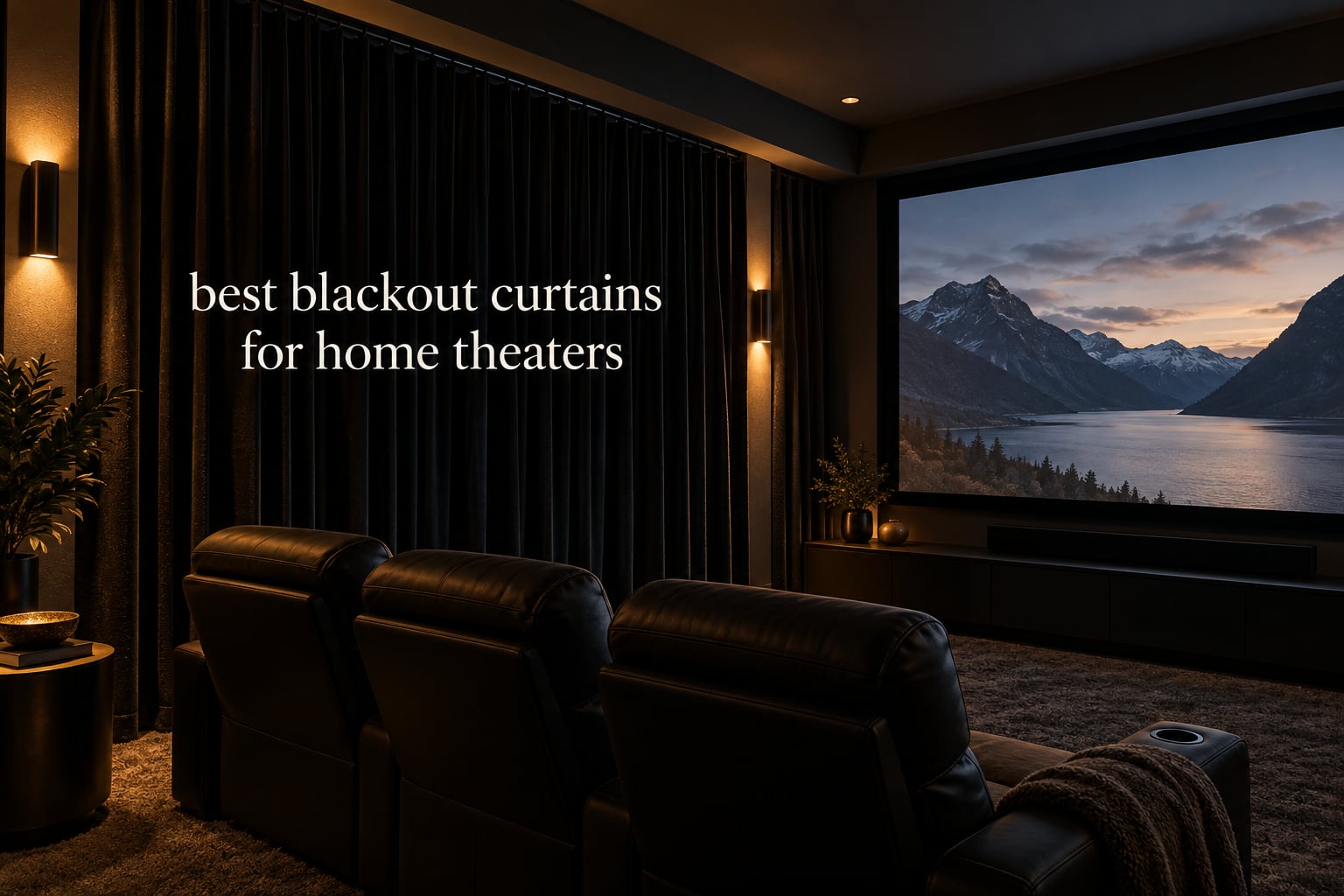
Most home theater problems are not the projector. They are the half inch of daylight leaking around a curtain edge, the gray wall bouncing light back at the screen, and the light patch above the rod that turns dark scenes gray. Those are the things the best blackout curtains for home theaters actually fix, and they are fixable without touching your display or your walls.
Here is the short answer, because it is the question almost everyone arrives with: what type of curtains are best for a home cinema room? Heavy, opaque or blackout-lined panels rated at 95-100% light blocking, hung floor to ceiling on a ceiling-mounted track, with 6-12 inches of side overlap and the stacked panels pushed outside your viewing cone. Black fabric if you want maximum light control, and any panel heavier than about 300 GSM if you want it to also eat reflections.
We went through twelve curtain lines that show up again and again in home theater forum threads and manufacturer catalogs, and read what owners actually report after hanging them rather than what the listing claims. The honest headline is that most of the failure in this category comes down to two mistakes: buying a room-darkening panel when the listing quietly means a true blackout, and hanging true blackout fabric in a geometry that leaks at the sides anyway.
What follows is the roundup first, then the buying logic behind it. If you want the coverage math and the leak troubleshooting, jump to the buying guide below the products.
Table of Contents
Top 3 Blackout Curtain Picks for Home Theaters (September 2026)

NICETOWN 100% Blackout…
- Black coating liner
- Full 100% light blocking
- 2 panels at 52 x 96 in
- 1.6 inch silver grommets

Sun Zero Nordic Theater…
- Theater grade extreme blackout
- 2 panels at 52 x 84 in
- Noise reducing heavyweight polyester
- 2.1 inch grommets

StangH Black Velvet Blackou…
- 300 GSM high-density velvet
- 65-85 percent light filtration
- 2 panels at 52 x 96 in
- OEKO-TEX certified
Blackout Curtains Compared in 2026
| Product | Specs | Action |
|---|---|---|
| NICETOWN 100% Blackout 96in 2-Pack |
|
Check Latest Price |
| Sun Zero Nordic Theater Grade Extreme 2-Pack |
|
Check Latest Price |
| StangH Black Velvet Blackout 2-Pack |
|
Check Latest Price |
 NICETOWN Black Blackout 42 x 84 2-Pack NICETOWN Black Blackout 42 x 84 2-Pack |
|
Check Latest Price |
 Jekeno Movie Theater Blackout 2-Panel Set Jekeno Movie Theater Blackout 2-Panel Set |
|
Check Latest Price |
 BGment Black Velvet Blackout 2-Pack BGment Black Velvet Blackout 2-Pack |
|
Check Latest Price |
 Joydeco Velvet Blackout 84in 2-Pack Joydeco Velvet Blackout 84in 2-Pack |
|
Check Latest Price |
 RYB HOME Extra Wide 100 x 132 Panel RYB HOME Extra Wide 100 x 132 Panel |
|
Check Latest Price |
 StangH Black Velvet 100 x 96 Single Panel StangH Black Velvet 100 x 96 Single Panel |
|
Check Latest Price |
 Cherry Home Velvet Blackout 96in 2-Pack Cherry Home Velvet Blackout 96in 2-Pack |
|
Check Latest Price |
 H.VERSAILTEX 100% Blackout 96in Panel H.VERSAILTEX 100% Blackout 96in Panel |
|
Check Latest Price |
 ChrisDowa 100% Blackout 42 x 63 2-Pack ChrisDowa 100% Blackout 42 x 63 2-Pack |
|
Check Latest Price |
How We Evaluated These Blackout Curtains
We are not going to pretend we put a light meter behind every one of these panels. What we did was cross-check three things: the blackout figure the manufacturer states, the weight and construction that figure implies, and the large body of owner reports that come with each of these listings, most of which run into the thousands.
Where a listing claims 100% or 99% blocking, we treat that as a manufacturer claim, not a measurement, and we flag it as such below. Where the fabric is unlined velvet with a stated 65-85% filtration range, we treat the number as the ceiling rather than the floor. We also looked hard at the boring details that decide whether a curtain works in a theater: header type, panel width against window width, how the panels stack when open, and whether the hardware is rated for heavy fabric.
One piece of community knowledge shaped our framing more than any spec sheet. On r/hometheater, the recurring explanation for why heavy blackout panels improve apparent contrast is that the inner lining is slightly reflective, so light from the screen bounces back toward the screen instead of dying in the pile. It is a small optical detail, but it explains why a dark room with lined curtains often looks better than a dark room with painted drywall.
1. NICETOWN 100% Blackout 96-Inch 2-Pack: Best Overall for Home Theaters
NICETOWN Full Blackout Curtains 96 inch Long for Home Theater, Grommet Energy Saving Room Darkening Window Treatment Thermal Curtains Portable Sun Shades for Living Room, W52 x L96, 2 Panels
100% polyester with black coating liner
2 panels at 52W x 96L
1.6 in silver grommets
Machine washable
Pros
- Black coating liner blocks nearly all light
- Soft silky polyester that feels substantial
- Grommets slide on standard rods
- Wrinkles release with a short tumble dry
Cons
- Some light bleed at top and side seams
- Packaging creases need steaming
- Lighter colorways darken less
This is the pair I would hand someone building a room this year, and the reason is unromantic: it is a genuine coating-backed blackout in a 96-inch length, sold as a pair, with a review history deep enough that the failure modes are well documented rather than theoretical. The black coating liner is the whole point. It is not a dark fabric pretending to be a blackout; it is a face fabric with an opaque layer behind it.
At 52 by 96 inches, the length is long enough to break the floor line in most rooms, which kills one of the three leak paths in a single move. Aesthetically it is a flat polyester blackout, closer to a hotel window than a stage drape, so it will not win any awards for texture.
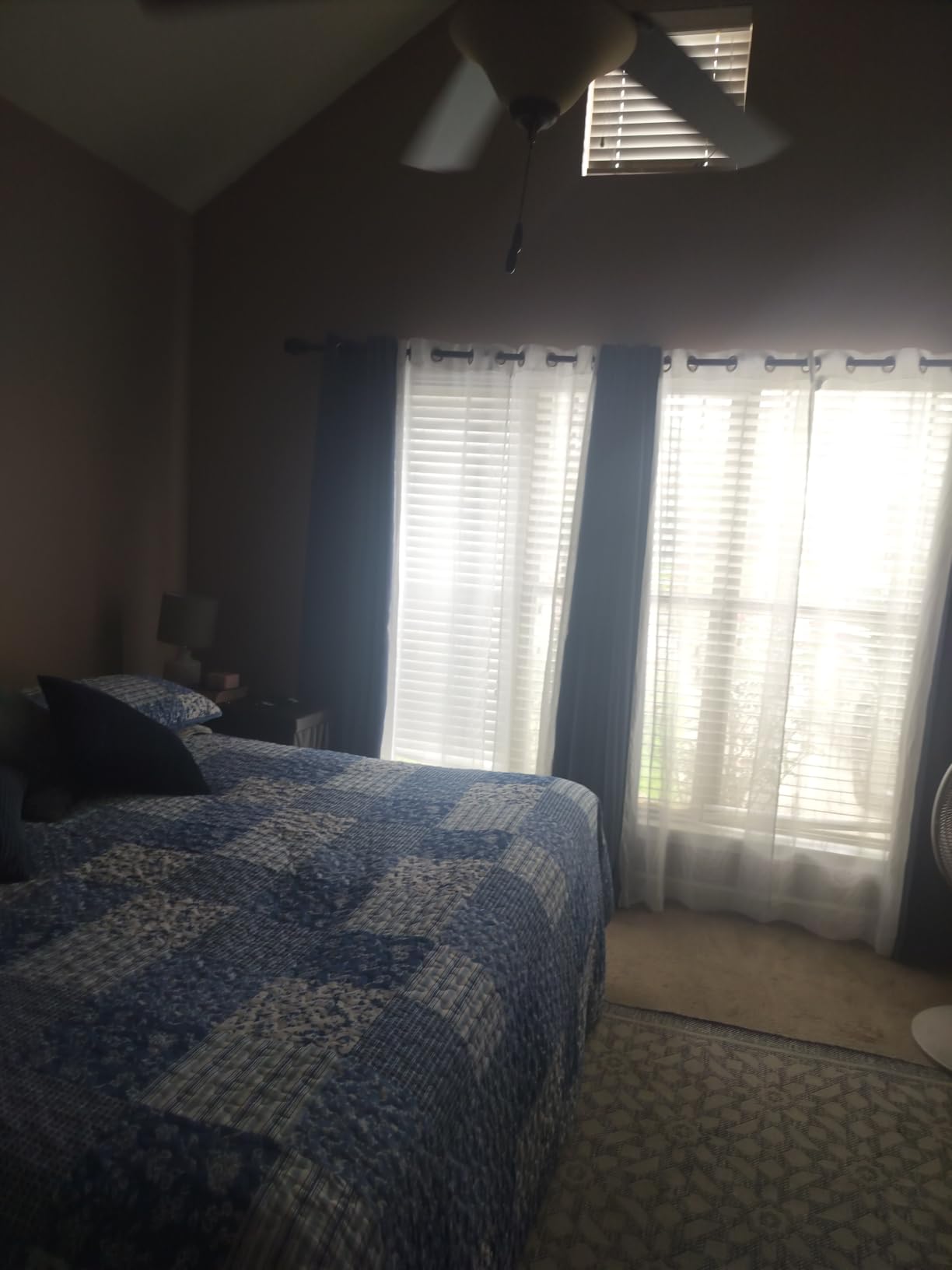
Owners consistently describe it as softer and more substantial than the price point suggests, and several note that the fabric folds compactly enough for travel or RV use, which is a small thing that tells you something about the weight-to-bulk ratio. The grommets take a 1.6-inch rod, which is the single most common curtain rod diameter and means you probably already own compatible hardware.
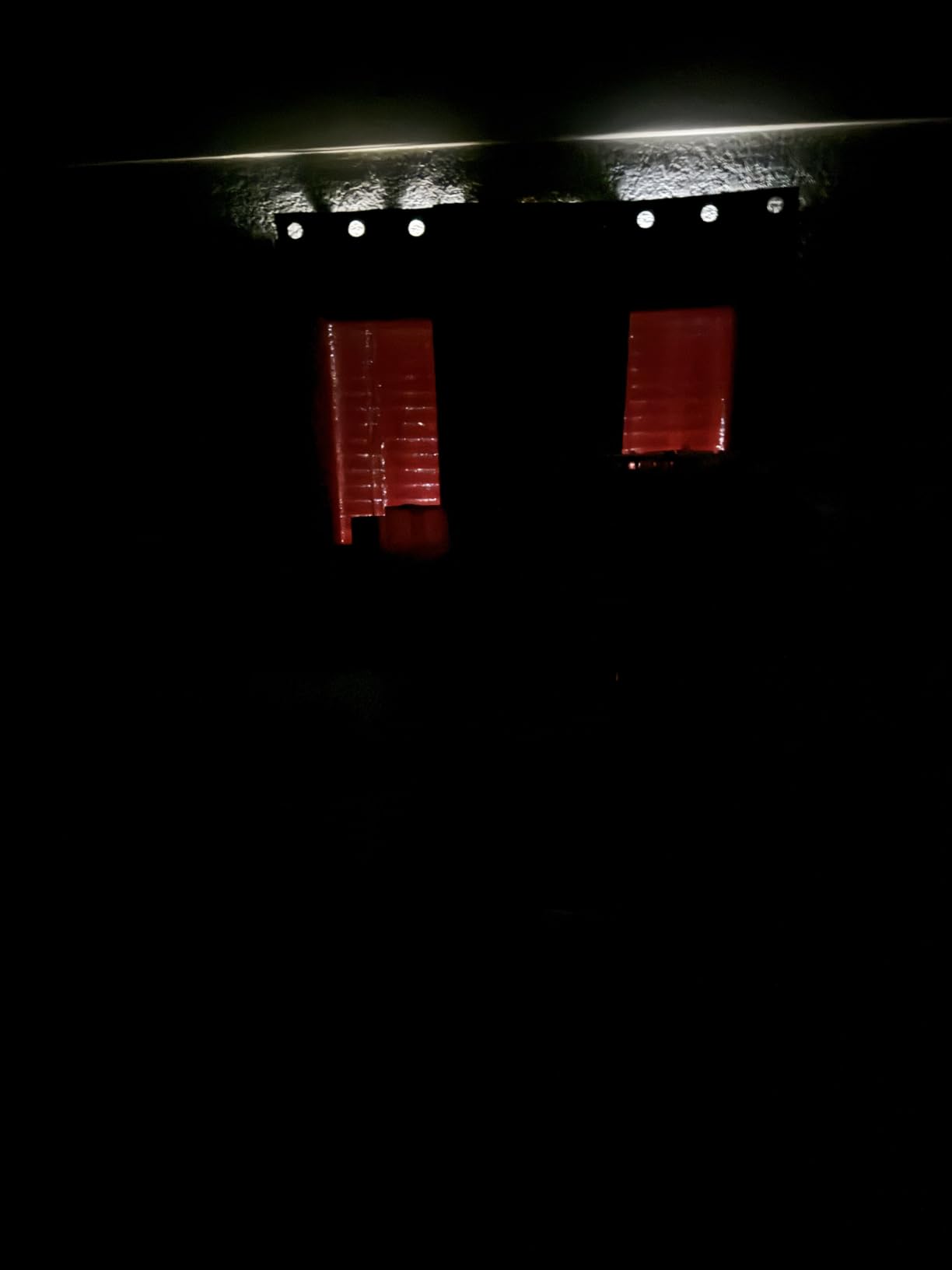
Real light does get through at the seams and top edge in some installations. That is a geometry problem more than a fabric problem: if you hang these with the panel top below the head of the window, the gap above the rod will glow. Mount high or add a valance and it disappears.
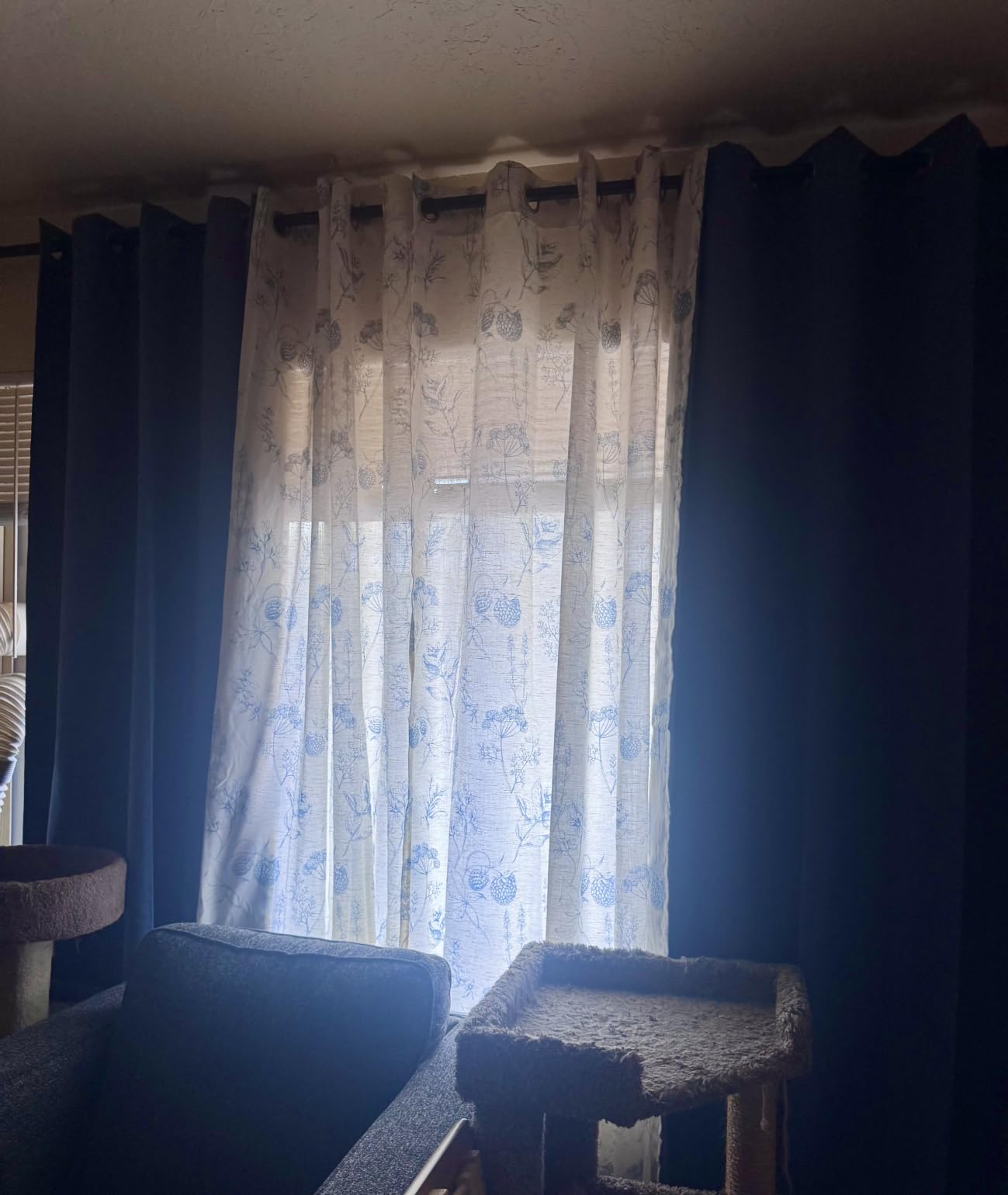
Check the light bleed before you commit
The most common owner complaint is a small amount of light at panel edges. Before you build a whole wall out of these, hang one pair in daylight with the lights off and look at the fabric body, not the gap. If you can read a newspaper through the center of the panel, this fabric is doing its job; if you can only see light around the edges, you have a hanging problem, and the buying guide below covers how to fix it with overlap and stack-back.
Because this is sold as a pair of 52-inch panels, you get 104 inches of coverage. Most single windows are 36 to 48 inches, so two panels comfortably cover one window when closed with overlap. For a wide opening you will want four, and for a wall you will want to measure before you order.
Who should skip it
Skip this if the room is a finished showpiece and texture is the point. This is a functional blackout with a plain hand-feel, and for a stage-look theater the velvet options lower down drape far more convincingly. Also skip it if you need panel colors other than black, since the black coating liner approach is tied to dark colorways.
2. Sun Zero Nordic Theater Grade Extreme 2-Pack: Best for Projector Rooms
Sun Zero Nordic 2-pack Theater Grade Extreme 100% Blackout Grommet Curtain Panel Pair, 52″ x 84″, Black
Theater grade extreme blackout
2 panels at 52W x 84L
2.1 in grommet fit
4.7 lb pair weight
Pros
- Blocks light on sun facing windows
- Heavy enough to reduce outside noise
- Consistent panel lengths in a pair
- Two heavyweight panels per pack
Cons
- Packed folded so steaming is needed
- Light enters above the rod if mounted low
- Seams can need a press after hanging
This is the panel line that comes up most often in theater forum threads when people name a specific model, and the reason is the word on the label: theater grade. Sun Zero built this as a blackout rather than adapting a bedroom drape, and the 2.1-inch grommet diameter is a step up from the 1.6-inch standard, which fits heavier-duty rods.
Owners report near-total darkness even against windows that get direct sun, which is the hard case. They also report that the weight does something to outside noise, though we will get into exactly how much later because the honest answer is that it is a mid and high frequency effect, not soundproofing.
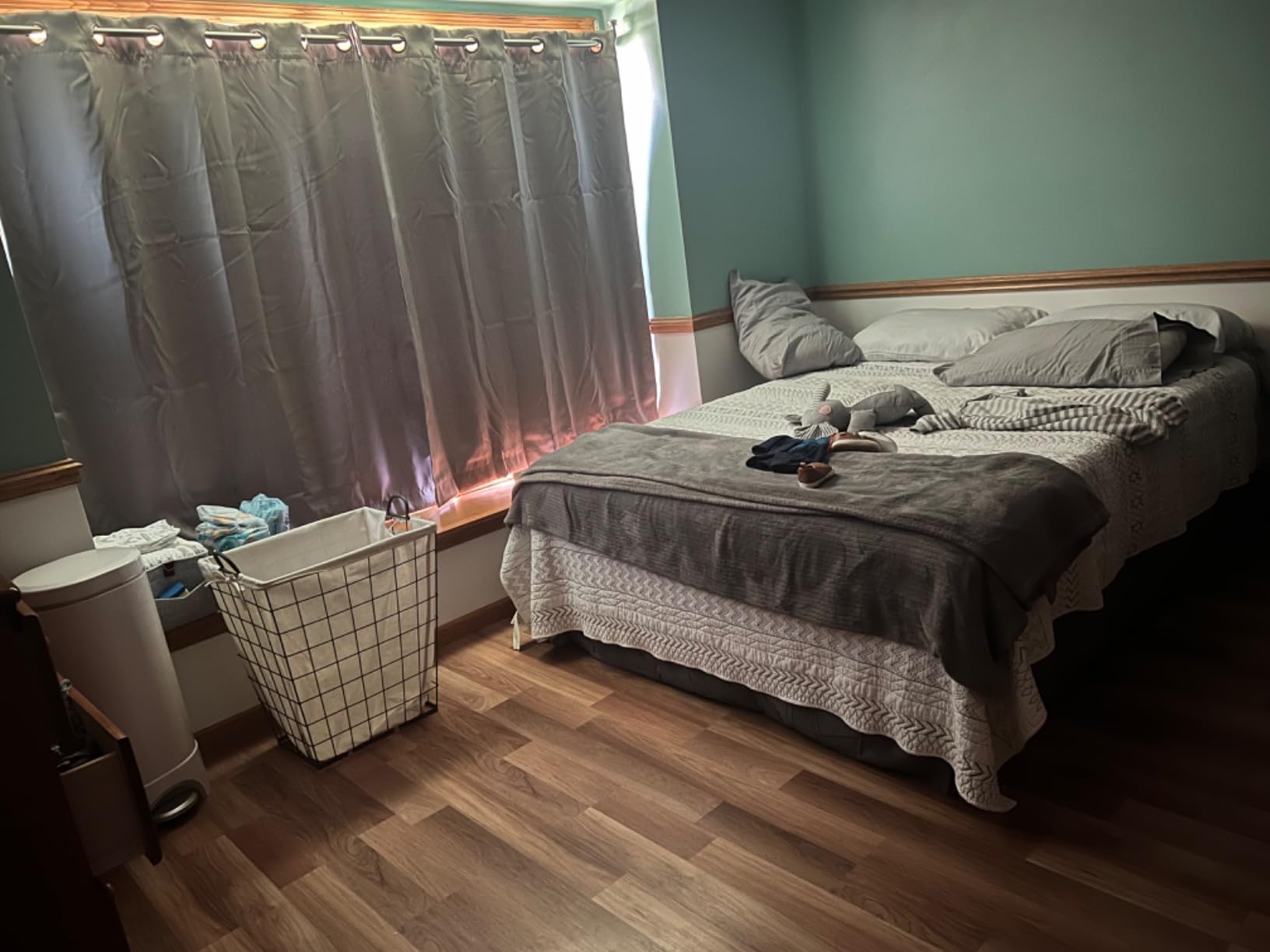
The pair weighs 4.7 pounds, and that number matters more than buyers expect. Fabric mass is the community’s proxy for quality in this category, and a panel that feels substantial also hangs straight, which means the stack forms cleanly and does not sag into the sightline after a month of use.
Two caveats are consistent. The panels arrive folded rather than rolled, so plan a steaming session before hanging. And light enters above the rod if you mount at normal window height, which is the geometry issue again rather than a fabric failure.
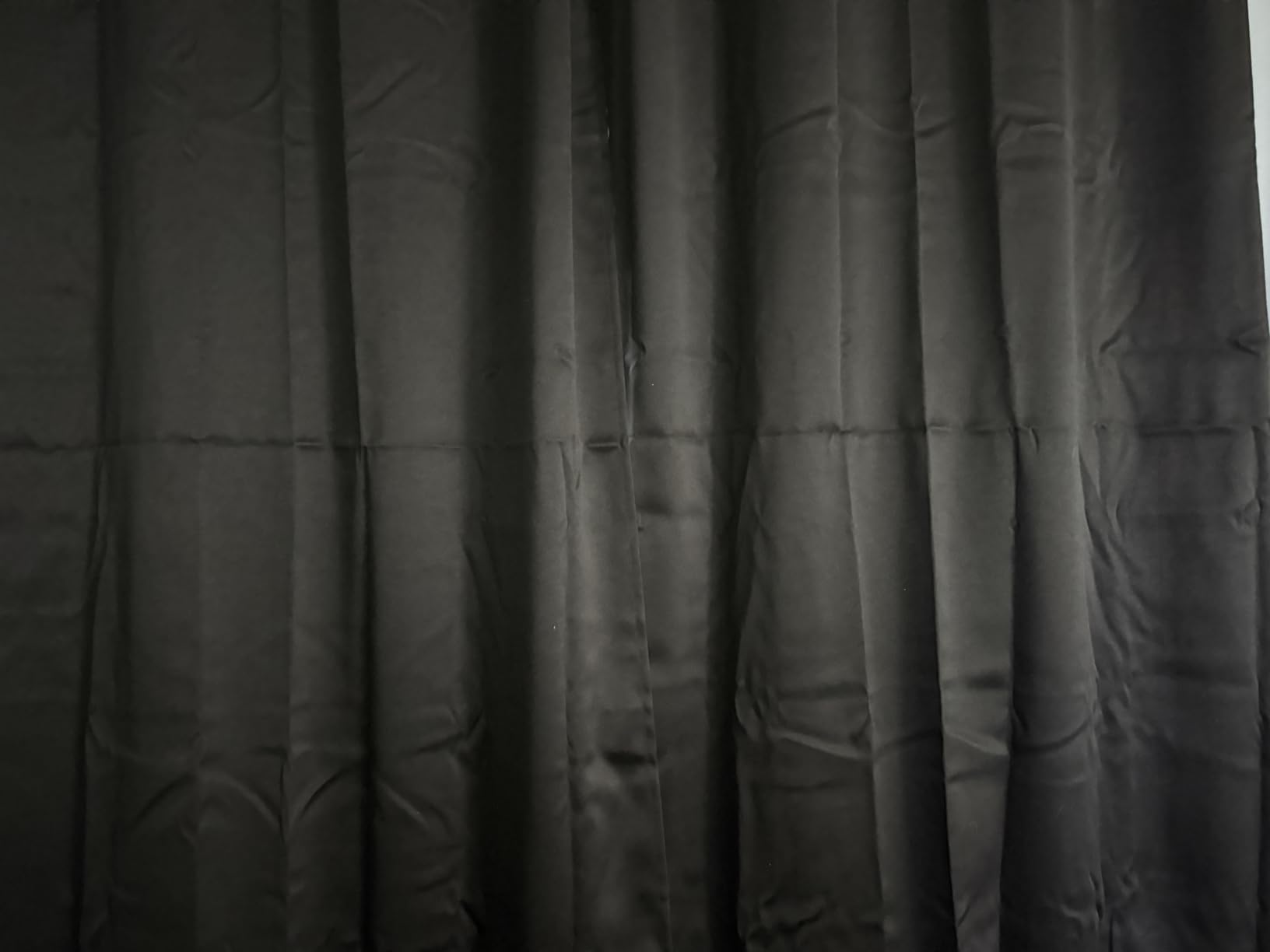
What 84 inches means for your room
At 84 inches, these stop at the top of a standard double-hung window or just below a taller one. That is fine above a raised seat line in a basement theater. It is a problem in a room with tall windows or in a two-story space where you wanted the curtain to run to the floor for the theater look.
If your windows are tall, the better move is a longer panel rather than a valance over an 84-inch panel, because a valance hides light rather than stopping it. Check the window height plus the mount height above the frame before you commit to this length.
Who should skip it
Skip it if you are on a strict 1.6-inch rod system, since the 2.1-inch grommets will not slide on the smaller rod. Skip it if you want fabric texture, because this is a matte polyester blackout rather than a velvet drape. And skip it if you need a color other than black.
3. StangH Black Velvet Blackout 2-Pack: Best Velvet Drape
StangH Black Velvet Blackout Curtains Grommet Thermal, W52 x L96, 2 Panels
300 GSM high-density velvet
2 panels at 52W x 96L
Blocks 65-85 percent of light
1.6 in grommets
Pros
- Rich 300 GSM velvet with a heavy fall
- Highest average rating in this group at 4.8
- Fade protection and cooling benefit
- Holds color and softness over many washes
Cons
- Room darkening rather than true blackout
- Velvet pile shows a faint silver sheen
- Packaging creases need hanging or steaming
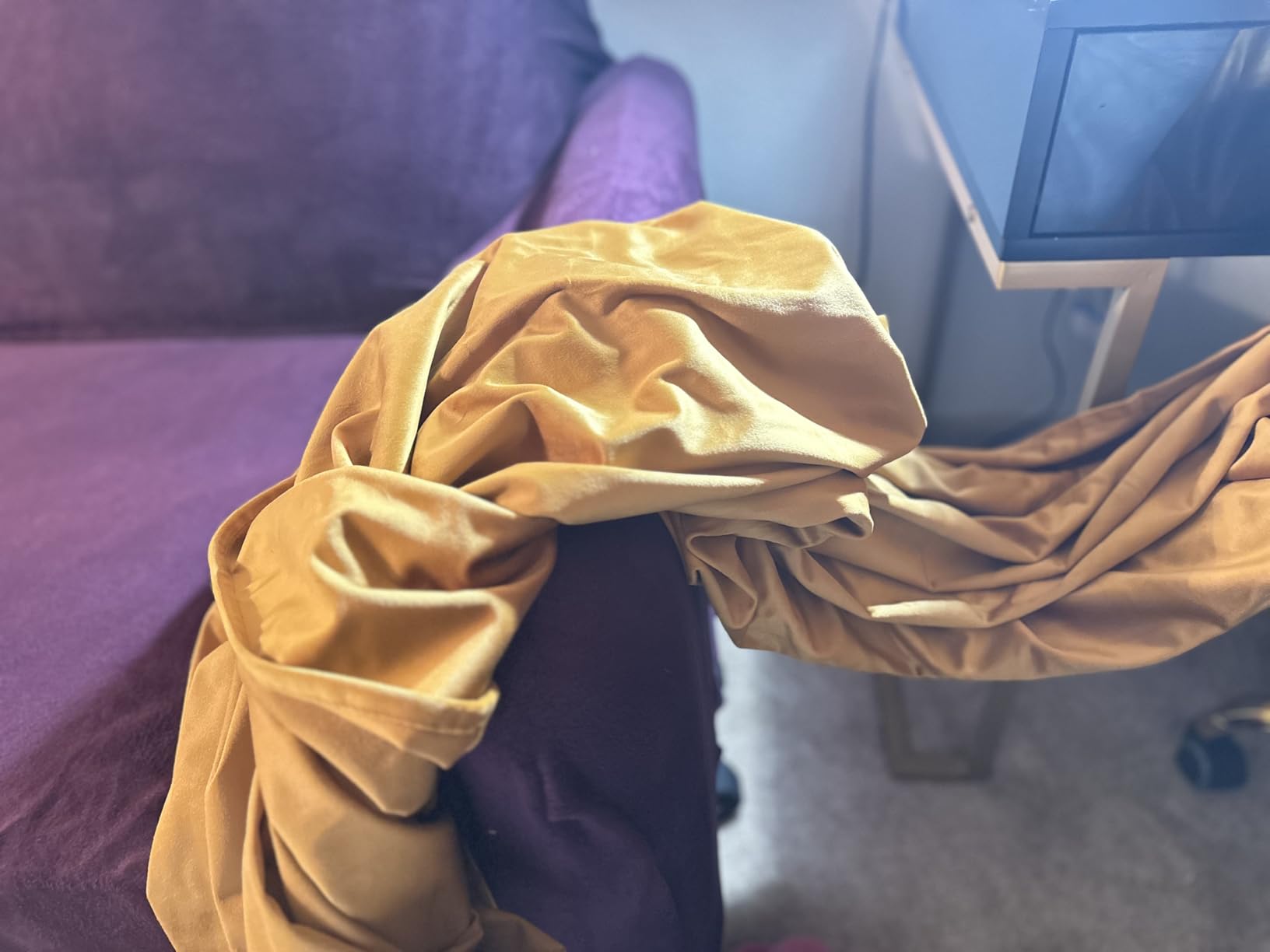
If the goal is a room that looks like a screening room rather than a living room with a television, this is the fabric. At 300 GSM, the velvet is thick enough to break into deep folds and hang with the heavy vertical fall that makes side drapes read as theater drapes instead of window coverings.
Be clear-eyed about the light number though. The listing states 65-85% filtration of sunlight and UV, which is a room-darkening rating, not a projector-grade blackout. In a room where the windows are covered and nothing else is leaking, that is plenty. In a room with a west-facing window and a projector, it is not enough on its own.
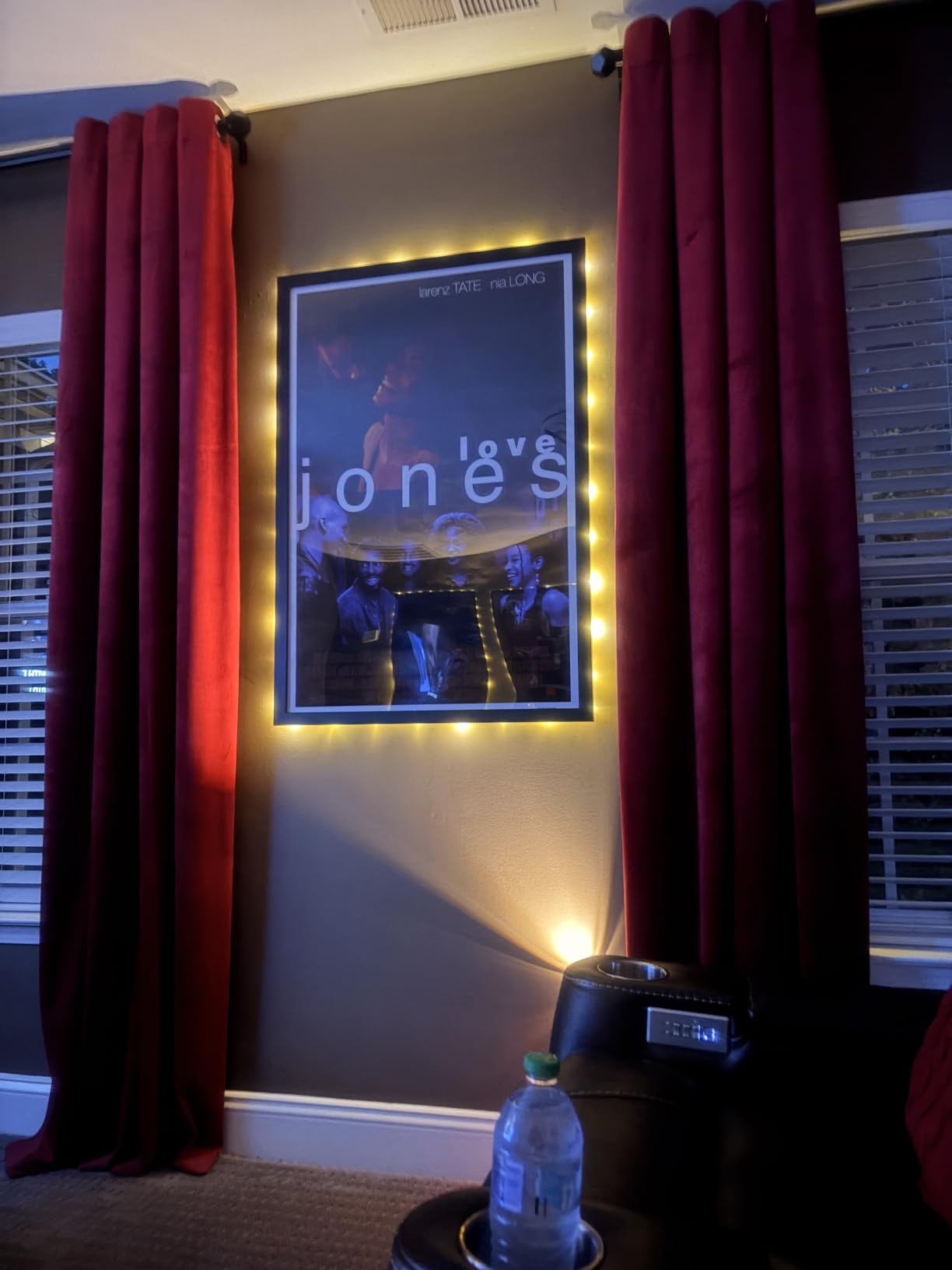
What you get instead is the highest average rating of any panel here, sitting above 4.8 across more than eight thousand owner reviews. That number reflects the hand-feel and the look more than the light performance, and buyers repeatedly mention the plush weight and how much the room reads as a finished space.
The fabric is unlined, and 300 GSM is the community’s practical threshold for theater-grade drape weight. It is OEKO-TEX and GRS certified, which matters if anyone in the house is sensitive to fabric finishes.
Pairing velvet with a real blackout layer
If you want the velvet look and the light control, the practical move is to treat these as the outer drape and put a coated blackout panel behind or beside them rather than hoping the velvet does both jobs. The AVS Forum consensus on screen walls is essentially this: black velvet on the wall makes the display appear to float, because the wall stops competing with the image.
Be aware of one inherent trait: velvet pile has a faint reflective sheen that changes with viewing angle and lamp placement. It is most visible when a light source sits behind the seating and throws light up at the panel from below.
Who should skip it
Skip it if you need true blackout from a single layer, because 65-85% will not get you there. Skip it if you have a very sunny room and no interest in a second layer. And skip it if anyone in the house has strong opinions about velvet’s tendency to gather dust in the pile, which is real and permanent.
4. NICETOWN Black Blackout 42 x 84 2-Pack: Budget Pick at Volume
NICETOWN Black Blackout Curtains for Living Room 42 x 84 inches 2 Panels
85-99 percent light blocking
Triple weave construction
2 panels at 42W x 84L
6 grommets per panel
Pros
- Impresses 85-99 percent of light and UV
- Soft heavy-feeling fabric at a low price point
- Triple weave dampens sound
- Machine washable and durable
- 6 grommets spread the weight
Cons
- 42 inch width is narrow for theater coverage
- Performance varies by colorway
- Grommets need care when washing
This is the most-reviewed panel in the entire set, and for a specific reason: the triple weave fabric blocks 85-99% of light and UV across the color range. That number is the best claimed performance per dollar in this roundup, and it holds up in owner reports more often than the price suggests it should.
It is also the panel most people in theater forums quietly recommend. The complaint pattern is not about darkness. It is about width.
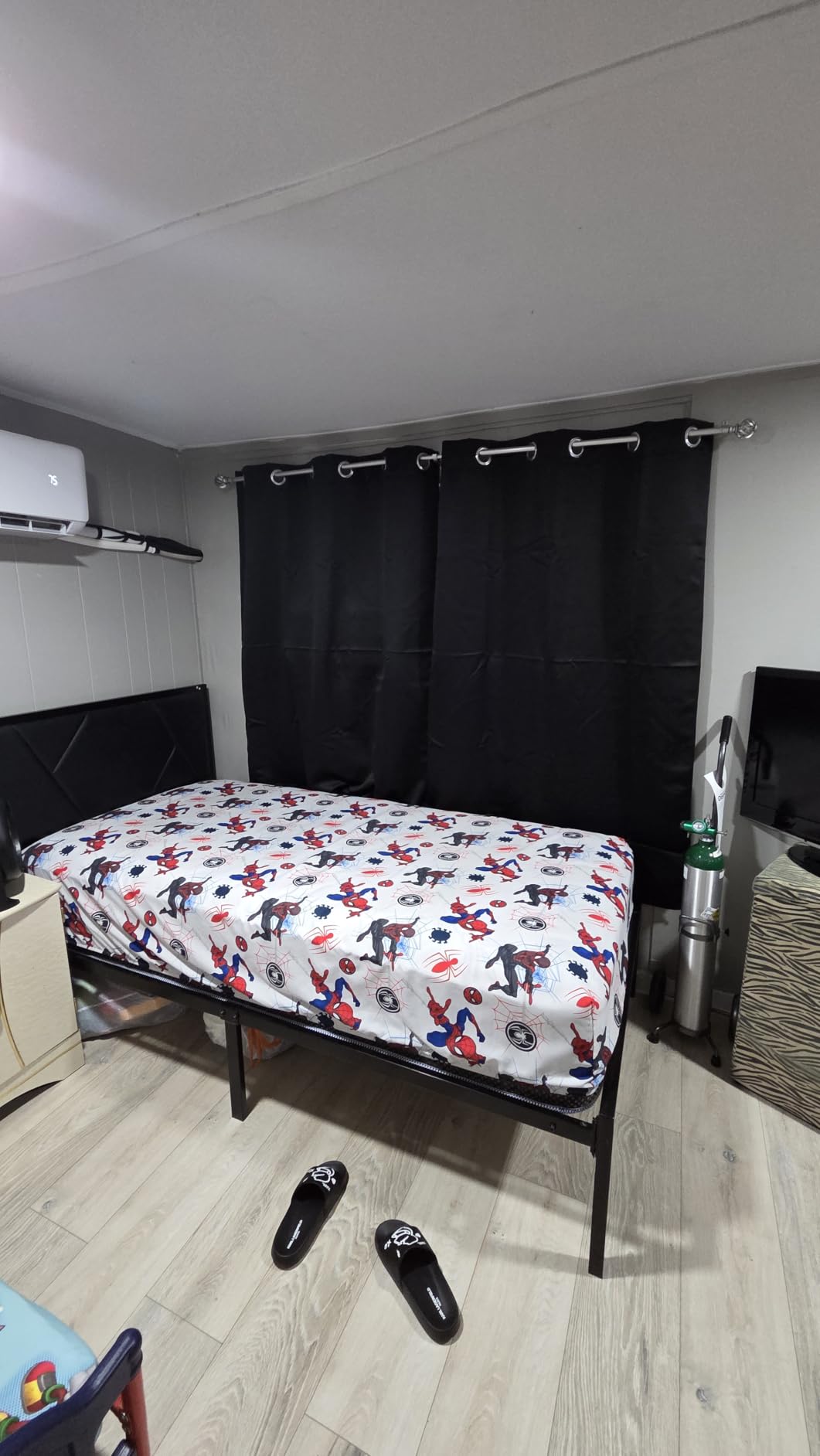
At 42 inches wide per panel, a pair covers 84 inches total, which suits a single standard window. For a theater you are usually covering something larger than that, so the practical buy is two or three sets. That is not a flaw so much as a sizing fact, and it is worth knowing before you order one and find yourself short.
Six grommets per panel matter more than they sound like they should. Spreading the load across six points keeps the top of the panel from bowing, which keeps the light-blocking overlap flat and consistent along the full width.
When 42 inches is the right answer
42-inch panels are right when you are covering a standard window in a media room where the seating is a few feet back, or when you are building a two-stage treatment with a narrow blackout behind a wider velvet drape. Six grommets and a 1.6-inch fit also mean it drops onto hardware you already have.
It is the wrong answer when you are covering a sliding glass door or a wall. For those, look at the extra-wide single panels further down this list, which are built for exactly that span.
Who should skip it
Skip it if you want velvet texture, since this is a flat weave polyester. Skip it if you need a one-and-done solution for a large opening, because the narrow width multiplies into multiple sets. And check the colorway carefully, because owners consistently report that lighter shades in the same line block noticeably less light.
5. Jekeno Movie Theater Blackout 2-Panel Set: Best for Kids and Play Rooms
Jekeno Movie Theater Blackout Curtains 2 Panel Set, 52″x84″
Movie themed printed fabric
70 percent blackout rating
2 panels at 52W x 84L
8 metal grommets total
Pros
- Themed print makes a room feel intentional
- Three layer fabric with full privacy
- Fade resistant and washable
- Grommets glide on standard rods
Cons
- 70 percent blocking is weaker than true blackout
- Bold pattern limits where it works
- Packaging creases need ironing
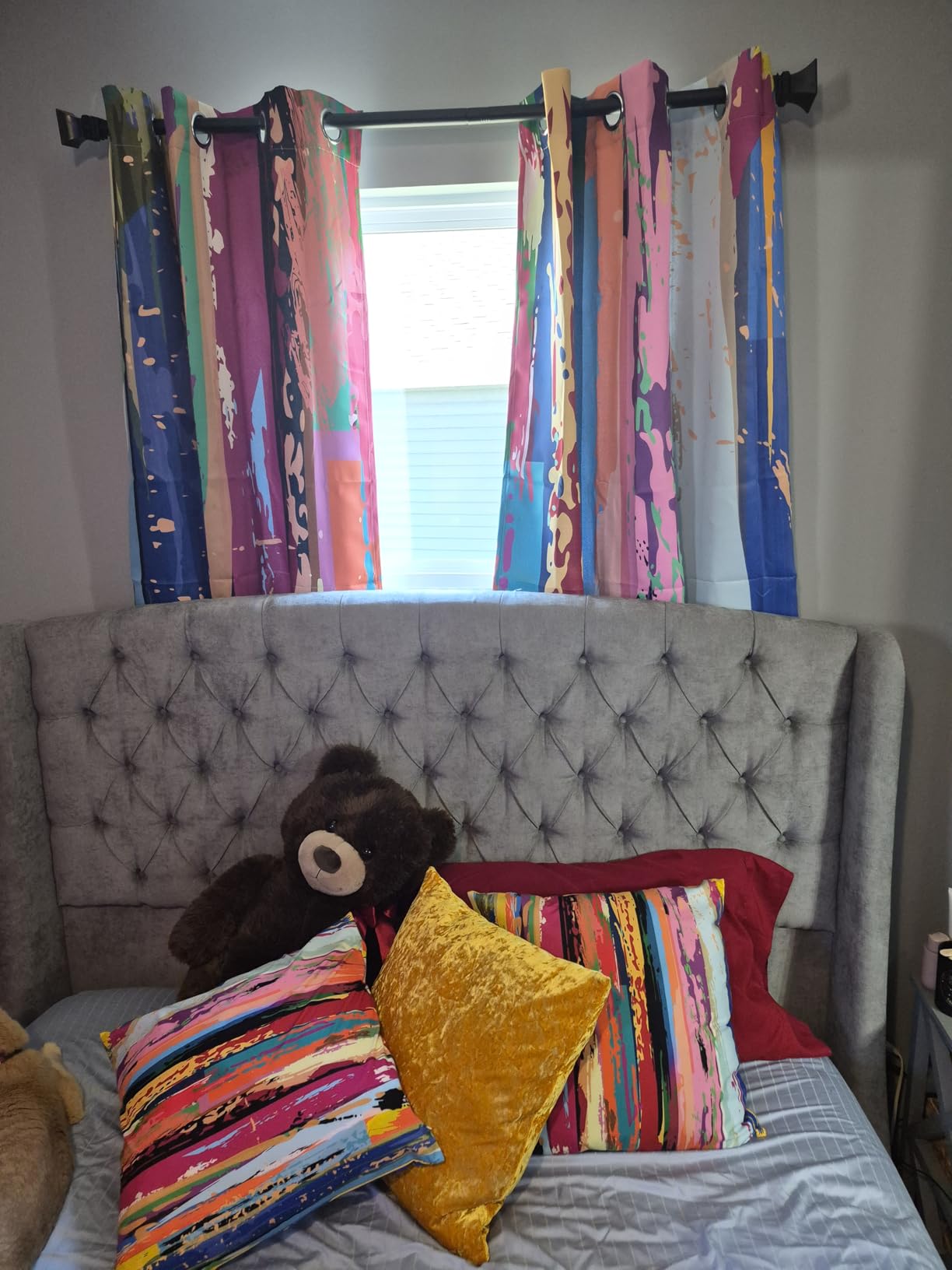
This set exists for a room that has to work as a play space on a Tuesday and a screening room on a Saturday. The printed movie theme is the point, and owners say it succeeds at making a corner of a house feel intentionally designed rather than improvised.
The performance number is 70% blocking with full privacy, and we want to be direct that this is a room-darkening rating. It will dim a lit room substantially. It will not produce a dark image on a projector with the lights on.
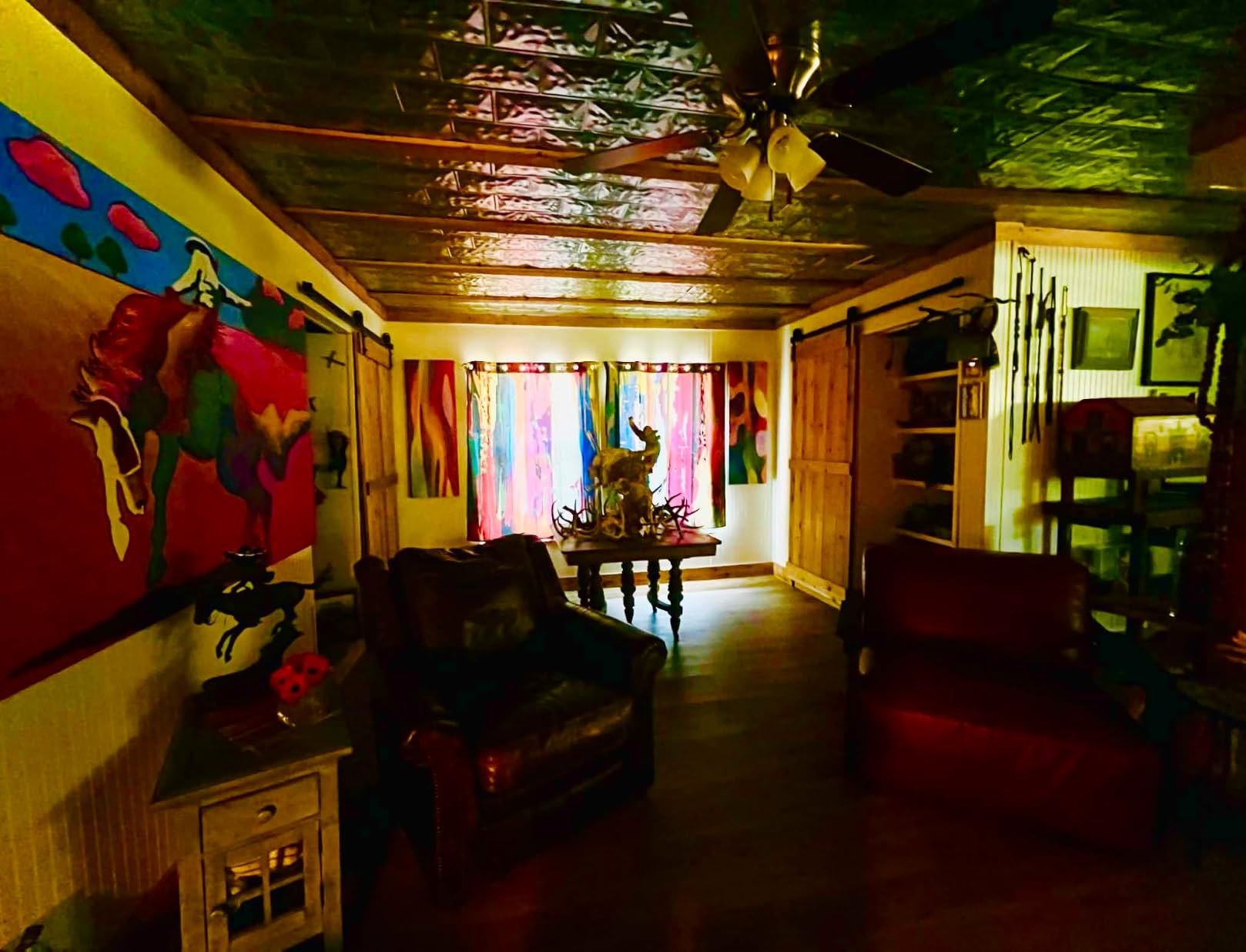
Three layers of polyester with a blackout lining do a respectable job of cutting glare from a wall-mounted display in a room that mostly gets used at night. Owners also like that the fabric survives repeated washing without fading, which matters in a room where the curtains get handled constantly.
Eight metal grommets across the pair take a 1.6-inch rod, so installation is a matter of threading and hanging rather than measuring twice.
Best paired with a second treatment
If you want to pair this with real light control, run a coated blackout panel behind it on the same track. The themed panel becomes the visible face and the blackout does the work, which is a pattern a lot of theater builders use when the room is a shared family space.
Keep in mind that a 70% panel still lets a visible glow through the fabric body. In a dark room with the screen as the only light source, that glow is almost invisible. In a daylit room, it is not.
Who should skip it
Skip it if the primary room is a dedicated cinema, because a printed pattern behind a projector is a distraction you do not need. Skip it if you need 95-100% blocking. And skip it if you want something that can move between rooms, since the theme commits the fabric to one use.
6. BGment Black Velvet Blackout 2-Pack: Best for Backdrops and Stage Looks
BGment Halloween Black Velvet Blackout Curtains 84 inch for Bedroom, Thermal Room Darkening Curtains Back Tab Privacy Panels for Living Room/Backdrop/Movie Theater, 2 Panels, 52 x 84 Inch
Heavy black velvet
Blocks 65-85 percent of light
2 panels at 52W x 84L
Back tab, rod pocket, clip rings
Pros
- Thick velvet that looks more expensive
- Three hanging styles for existing hardware
- Visible cooling and darkening
- True to color in photographs
Cons
- Not a true blackout
- Heavy enough to need sturdy rods
- Some panels run slightly short at the hem
This is the backdrop pick. The fabric is thick black velvet with a heavy texture that photographs well and reads as a stage element, and the same weight that makes it look substantial also makes it hang well as a fixed drape.
It blocks 65-85% of sunlight, which again puts it in the room-darkening tier rather than the projector tier. For a backdrop wall, a side drape, or a room with no window behind the seating, that is the correct trade because the visual job matters more than the optical one.
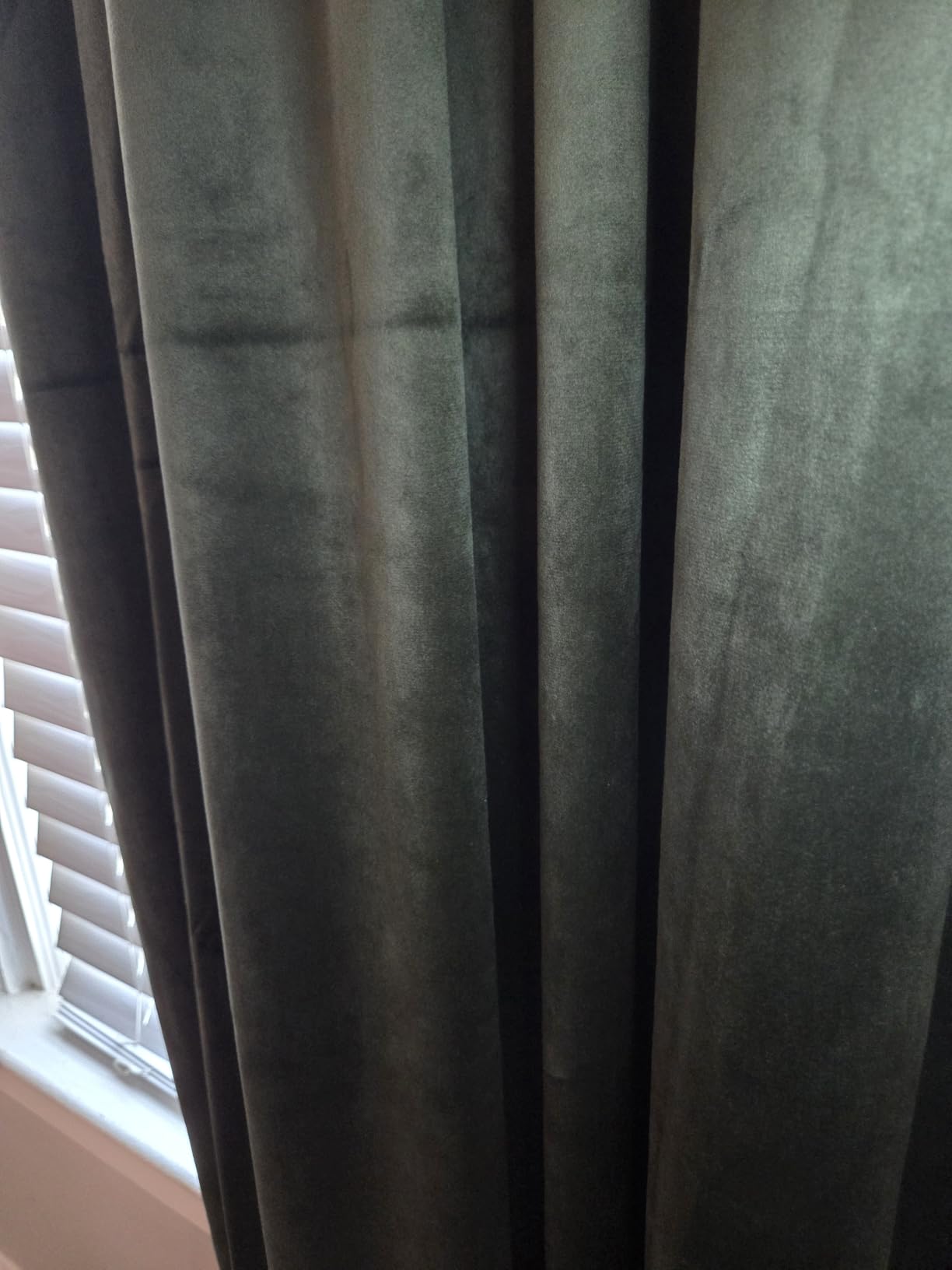
The three hanging styles are the underrated feature. Back tabs give you a clean pleated look, the rod pocket works with a standard rod, and clip rings let you shorten an overlong panel without hemming it. That flexibility matters when you are working around existing hardware in a finished room.
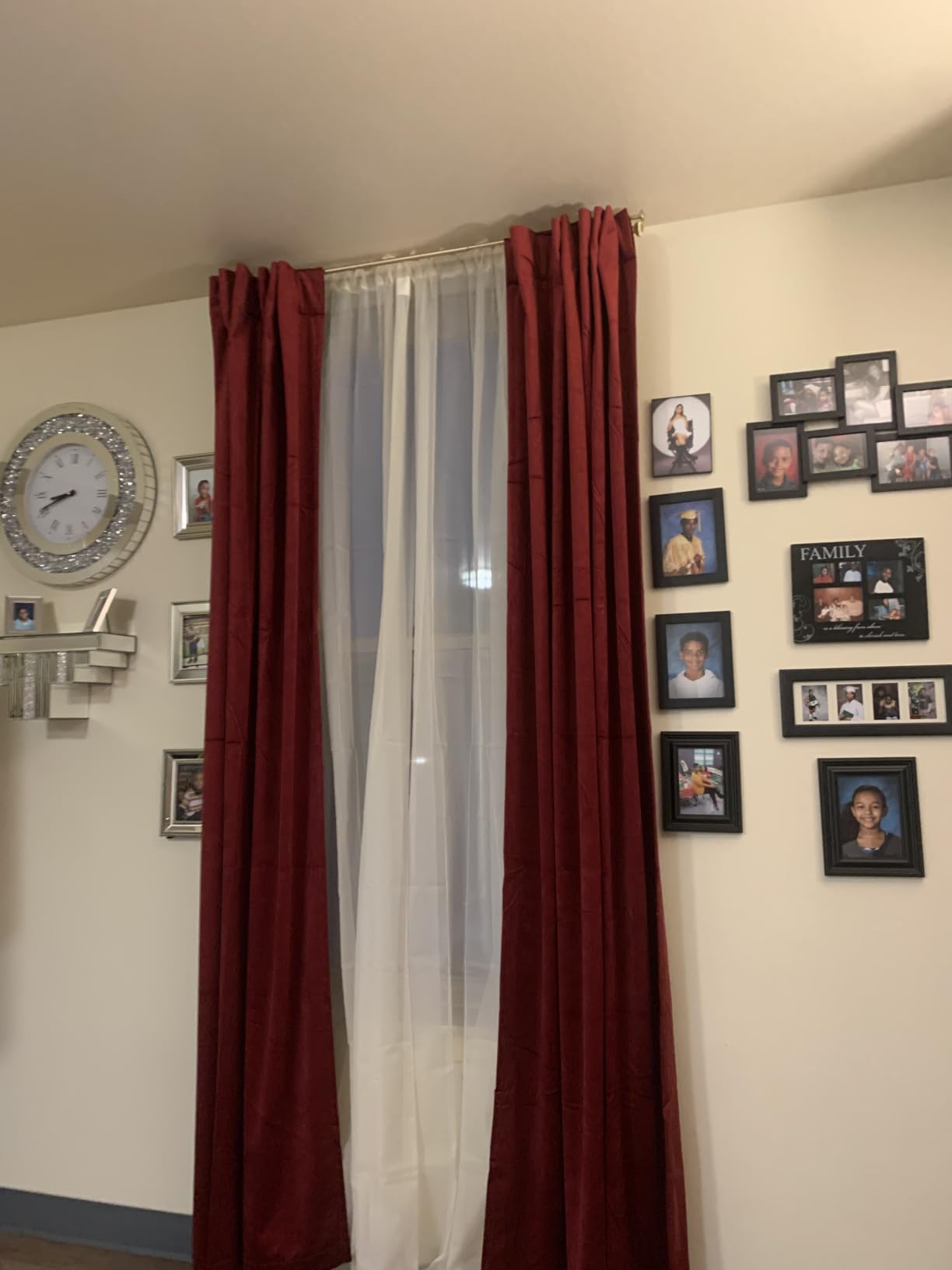
Owners do report that the fabric is heavier than typical curtain cloth, so the rod needs to be rated for it. A light-duty tension rod in a window recess will bow under two of these.
Why the header matters more than the fabric
Forum discussion about theater curtains keeps coming back to grommets as an aesthetic liability. A row of metal rings across the top of a black drape is the first thing your eye catches in a finished room, and it is the reason many builders move to a track with hidden gliders or a rod pocket.
These panels give you all three options, which means you can pick the header that hides hardware instead of the header that is easiest. The back tab also adds no hardware at all, so the panel top reads as a clean fabric line.
Who should skip it
Skip it if you need true blackout from the fabric itself. Skip it if you are hanging on a light tension rod. And skip it if your room needs panels longer than 84 inches, because this is a fixed size rather than a length range.
7. Joydeco Velvet Blackout 84-Inch 2-Pack: Best for a Finished Media Room
Joydeco Velvet Blackout Curtains 84 Inch Length 2 Panels, Black Out Curtains for Bedroom Living Room, Thermal Insulated Luxury Heavy Duty Drapes, Heat & Light Blocking, Back Tab&Rod Pocket,52″W x 84″L
Three layer velvet with shading layer
2 panels at 52W x 84L
Rod pocket and back tab
Machine washable
Pros
- Three layer build marketed as true blackout
- Soft lustrous velvet for the money
- Helps hold room temperature
- Two hanging methods included
Cons
- Velvet shows a silver reflection at angles
- Wrinkles need a steamer not an iron
- Smaller review base than the leaders
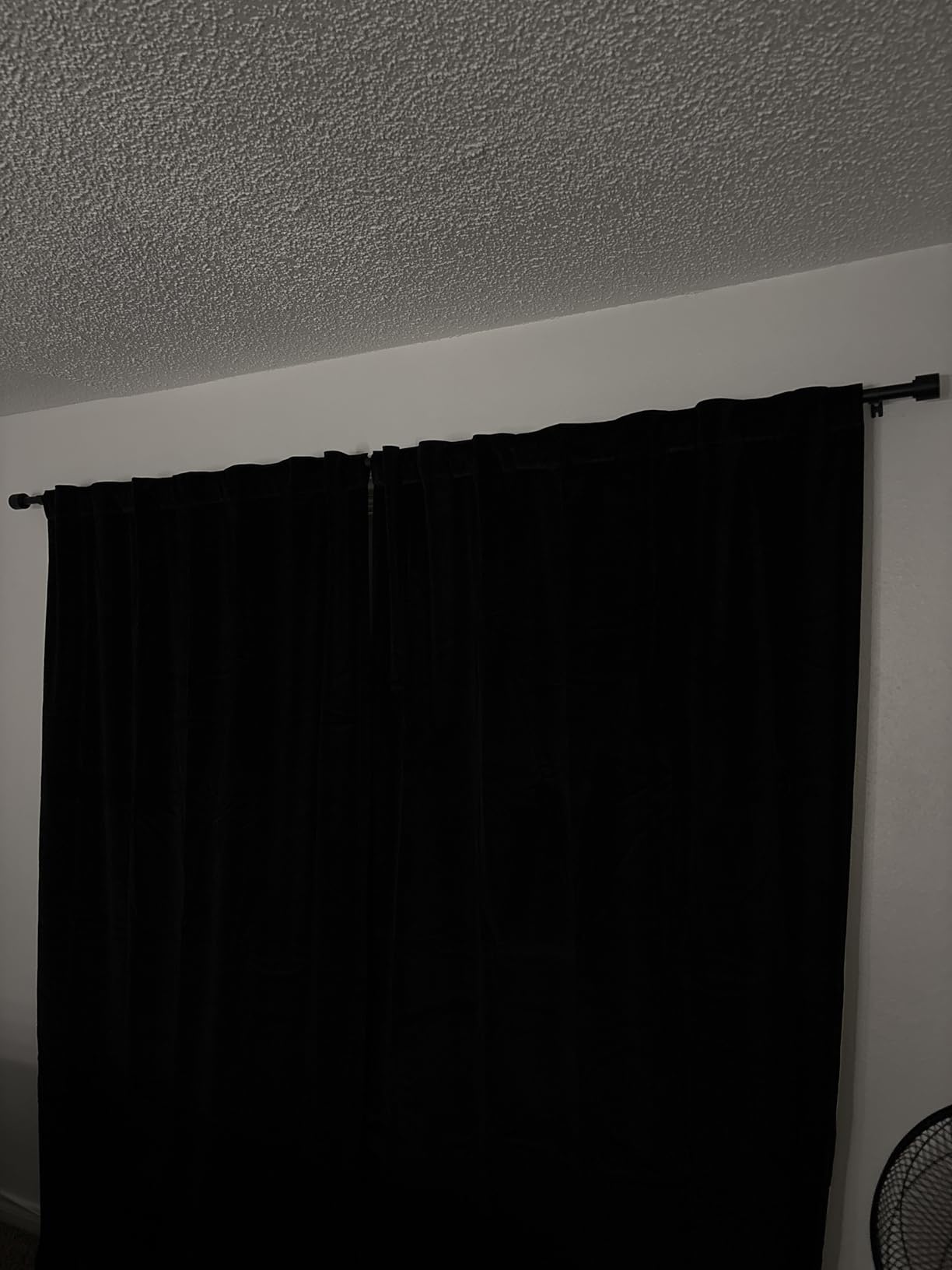
The interesting thing about this pair is the construction claim. It is a three layer soft fabric with a solid shading layer, which is a physical blackout approach rather than a chemical coating on a single cloth. In practice owners report genuine darkening rather than just dimming.
It is also velvet, which is rare at three layers. Most triple-layer panels at this level are flat polyester, so you are paying for a textured face and an opaque core in one panel.
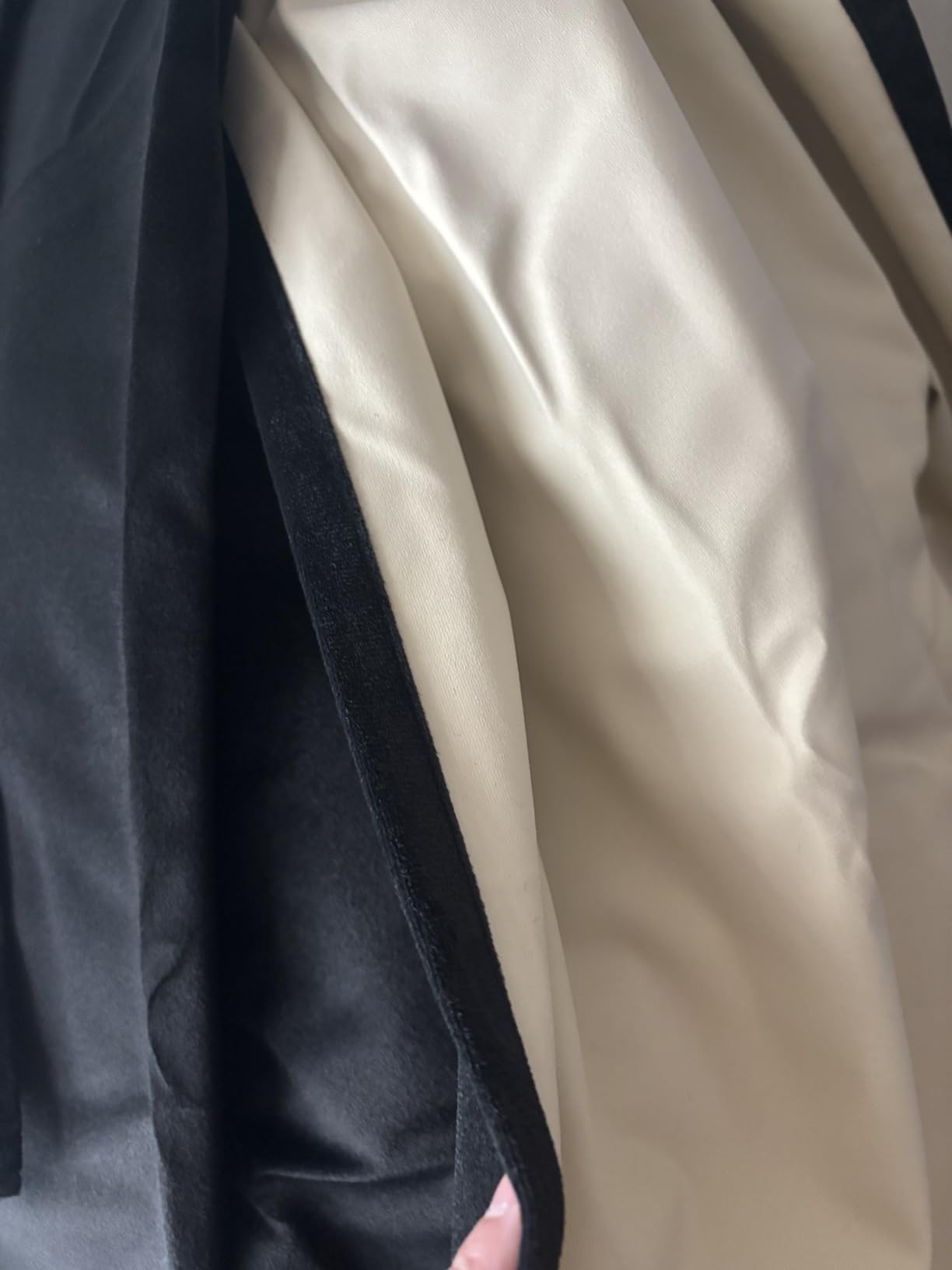
The room-temperature claim is not marketing fluff. A shading layer in the middle of a panel slows heat transfer in both directions, and buyers in warm rooms report a measurable difference in how the space feels during an afternoon showing.
It hangs by rod pocket or back tab, and it is machine washable, which is a genuine advantage in a shared family room. The wrinkle caveat is normal for velvet of this weight: steam it, do not iron the face.
Read the review base before you rely on it
This is a newer listing with a high satisfaction average, and the honest framing is that a smaller review base tells you less about long-term durability than a large one does. If you are covering a window you will never touch again, that matters little. If these will be washed regularly, look at how a higher-volume option ages first.
For planning, a pair at 52 by 84 inches gives you 104 inches of coverage. Add 12 to 20 percent of that number for fullness, or the panels will hang flat and read as sheets rather than drapes.
Who should skip it
Skip it if you need a panel longer than 84 inches or wider than 52 inches, since this is a single size. Skip it if you are sensitive to velvet’s pile sheen under angled light. And skip it if you want the longest possible track record of wash durability in this category.
8. RYB HOME Extra Wide 100 x 132 Panel: Best for Sliding Glass Doors
RYB HOME Extra Long Curtains for Home Theater Office Backdrop Dining Room
Single 100W x 132L panel
Blocks 85-90 percent in black
OEKO-TEX certified polyester
1.6 in rust resistant grommets
Pros
- One panel covers a whole wide opening
- Strong black light blocking that cools the room
- Substantial fabric that resists pulling
- Doubles as a room divider
Cons
- Does little for noise
- Rod not included
- Blocking drops to around 50 percent in light shades
A 100-inch-wide single panel is the rarest thing in this category, and it solves the problem most people hit immediately: a sliding glass door or a wide opening that two 52-inch panels barely cover. One panel, one drop, done.
Black and grey block roughly 85-90% of light according to the manufacturer, which sits at the top of the room-darkening band and comfortably in the range where owners describe a genuinely dark room. Light shades in the same line block around 50%, so the color choice here is a performance decision, not a decor decision.
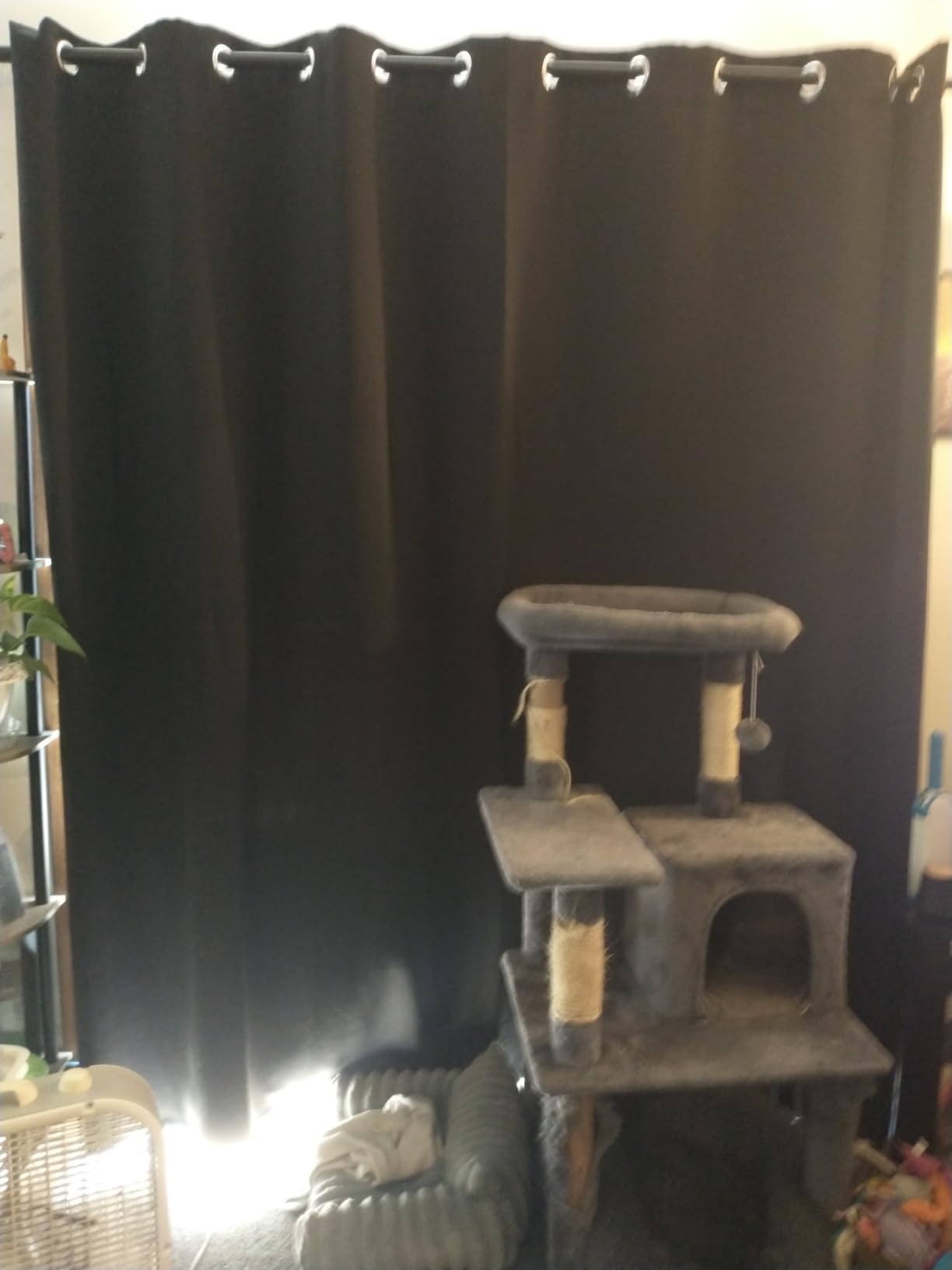
At 132 inches long, this is one of the few panels here that can break the floor line on a tall opening. That single detail eliminates the most common leak path in a theater, because most light that reaches a screen edge has traveled across a floor, a ceiling, or a side wall rather than straight through the glass.
It is OEKO-TEX certified and described as free of chemical coatings, which is worth noting because coating-based blackouts are the ones that sometimes carry a noticeable odor in a sealed room.
Where this panel outperforms curtains
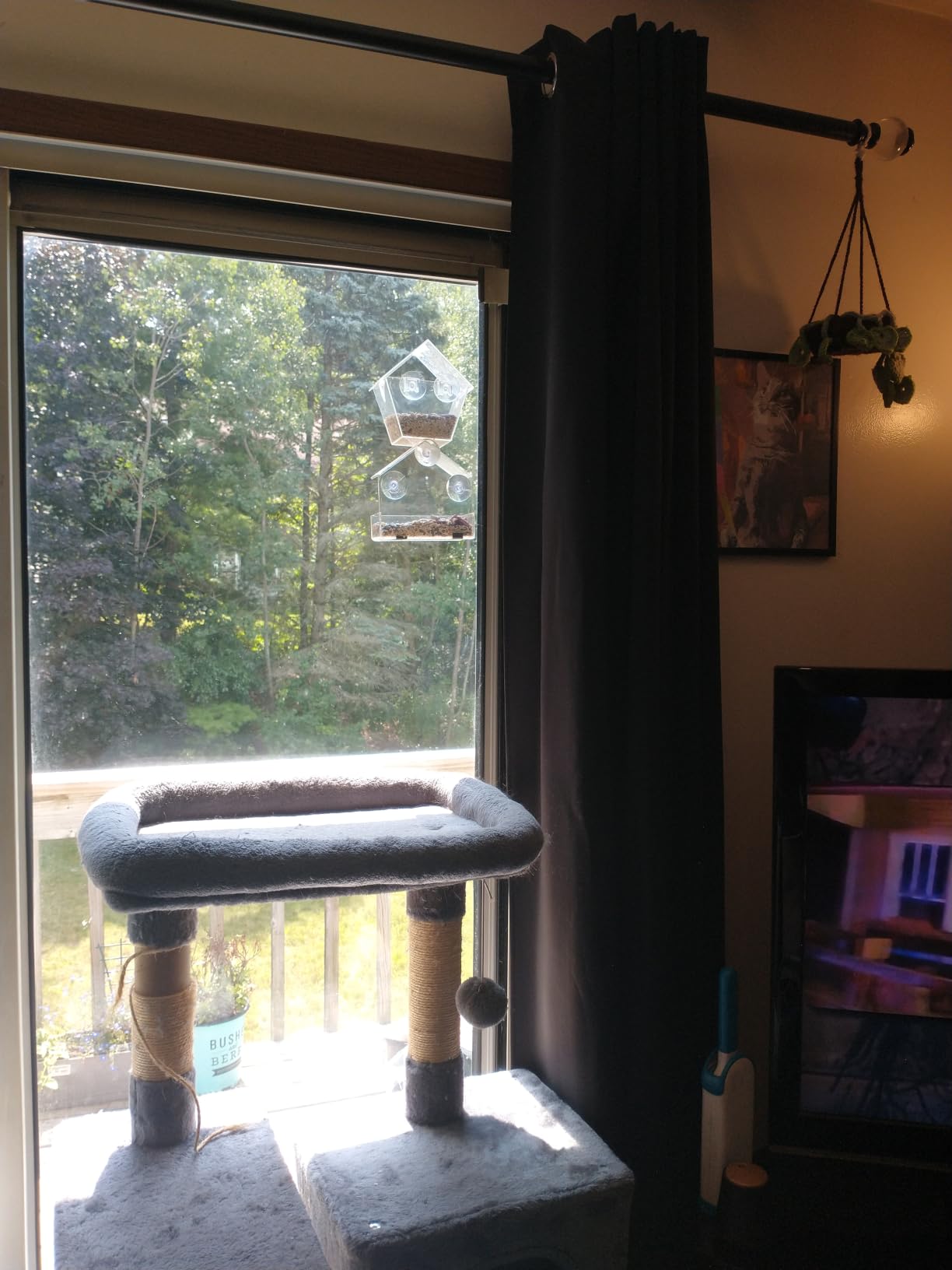
For a wide single opening, this is simpler than draping. You get one continuous surface with no center gap, no two-panel overlap seam, and one set of grommets to align. In a room where a window sits directly behind the seating, that continuity is worth more than drape texture.
It also works as a room divider, which makes it useful in a basement or a loft where you want to close off a space without a wall. Owners in studios and offices use it the same way.
Who should skip it
Skip it if you need velvet texture, since this is a flat polyester. Skip it if your opening is a standard window, where a 100-inch panel is overkill and bunches badly when stacked. And note that the rod is not included, so you are buying hardware separately.
9. StangH Black Velvet 100 x 96 Single Panel: Best Extra-Wide Velvet
StangH Black Velvet Curtains for Sliding Door, W100 x L96, 1 Panel
300 GSM plush velvet
Single 100W x 96L panel
Back tab and 3.3 in rod pocket
Blocks 65-85 percent of light
Pros
- Plush heavy velvet at an extra wide cut
- Dual hanging options in one panel
- Suits sliding doors and patio openings
- Works as a room divider too
Cons
- Unlined
- so it darkens rather than blacks out
- 65-85 percent is below full blackout
- Velvet sheen under angled light
- One panel per package
This is the velvet version of the extra-wide problem, and it shares the same 100-inch width in a single panel. If you have a wide opening and you care about how the room looks more than about squeezing the last few percent of light blocking, this is the panel.
The fabric is the same 300 GSM plush velvet as the two-pack version in this roundup, with the heavy vertical drape that makes a side panel look intentional. It comes with both a back loop tab and a 3.3-inch rod pocket, so it works on a curtain track or a rod without modification.
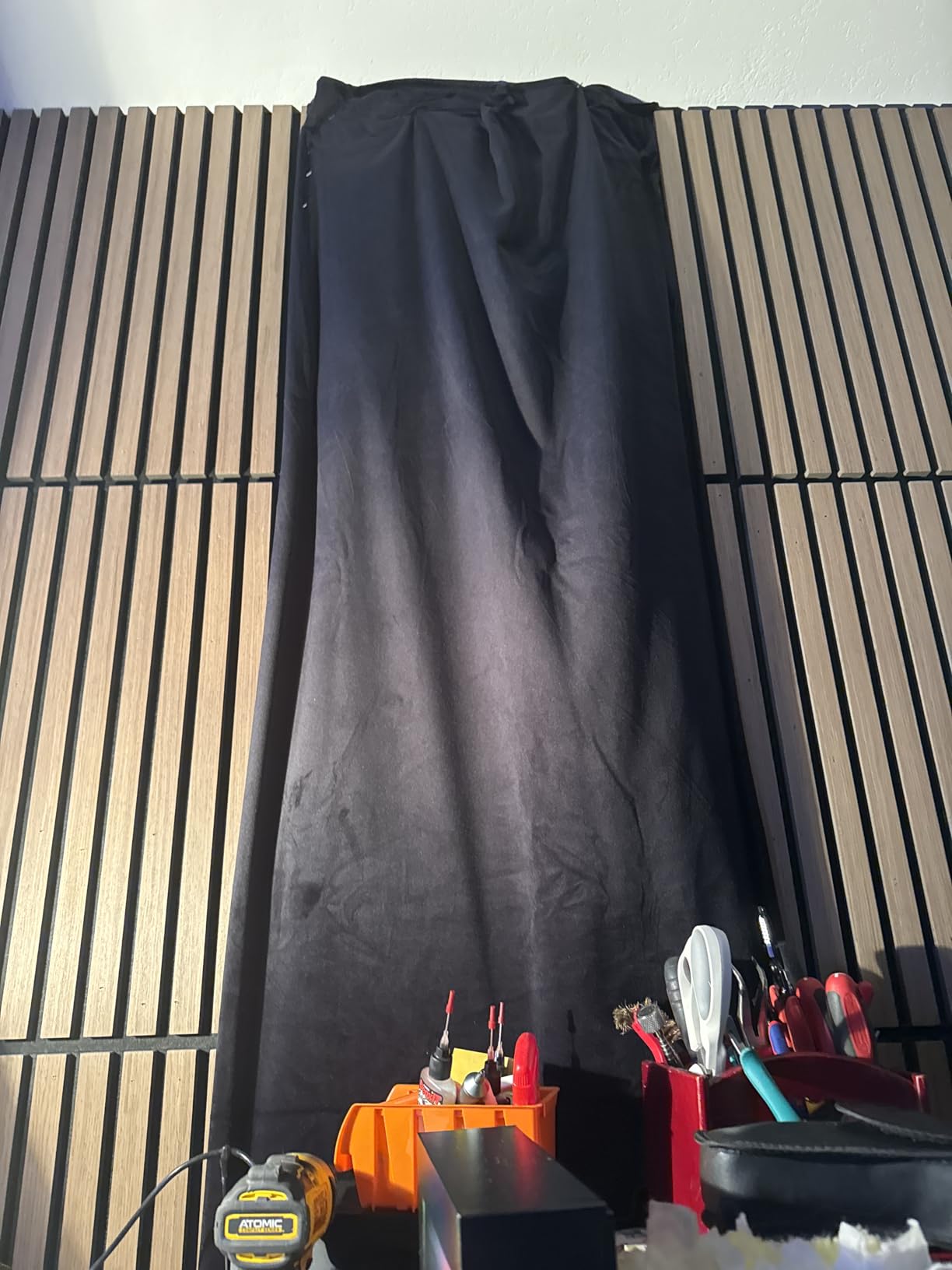
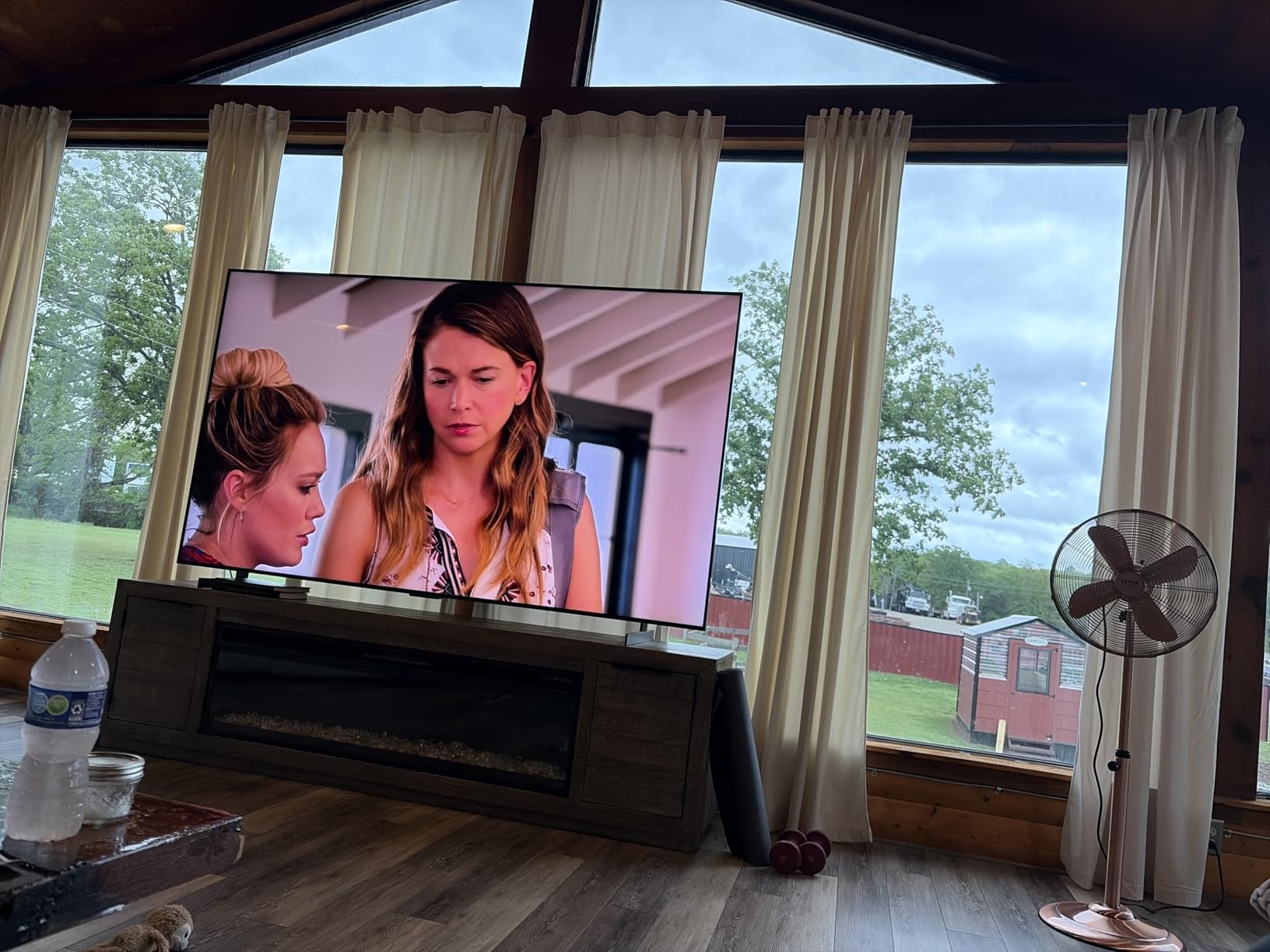
Owners highlight the width repeatedly as the reason to buy, particularly for sliding doors where a pair of 52-inch panels leaves a visible gap in the middle. A single 100-inch panel has no center gap by definition.
The rating distribution on this listing runs high, with the large majority of five-star reports, and the recurring notes are about softness, weight, and how the black reads as genuinely deep rather than flat gray.
Planning for a single panel
One panel per package means you are buying two to get a pair, and for a sliding door you often want three or four to get proper overlap and stack-back on each side. Budget the count before you order, because the single-panel packaging makes it easy to end up with an odd number.
The 96-inch length is short for a floor-to-ceiling look. On a standard door opening it works well. On a two-story or vaulted opening you will want a longer panel, and combining a long velvet with a shorter one looks like an error rather than a design choice.
Who should skip it
Skip it if you need true blackout, because the unlined construction tops out at 65-85% filtration. Skip it if a single 96-inch length will not cover your opening. And skip it if you are covering a doorway where you need light control more than drape quality, because this is a room-darkening panel.
10. Cherry Home Velvet Blackout 96-Inch 2-Pack: Best for Color
Cherry Home Set of 2 Blackout Velvet Energy Efficient Grommet Curtain Panel Drapes Lavender Purple 52Wx96L(2 Panels) Theater| Bedroom| Living Room| Hotel
280 gsm heavyweight velvet
2 panels at 52W x 96L
85-99 percent claimed blocking
Stainless steel grommets
Pros
- Soft heavy velvet that looks expensive
- Jewel toned colors read accurately
- Good darkening and privacy
- Easy to hang
- Works for doorways and dividers
Cons
- Reported as room darkening not true blackout
- Unlined so little thermal gain
- Velvet is noticeably shiny
- Panel count descriptions have confused some buyers
Every other panel on this list is black. This one is listed here in a lavender purple, and the reason is the demand forum research turned up: dark green, navy, plum, and brown velvet are consistently requested for theater rooms because people want a finished look that is not a black box.
It is 280 gsm polyester boutique velvet, which is a real weight but sits below the 300 GSM that community members treat as the theater threshold. The listing claims 85-99% light blocking, though owner reports describe it more often as strong darkening than total blackout.
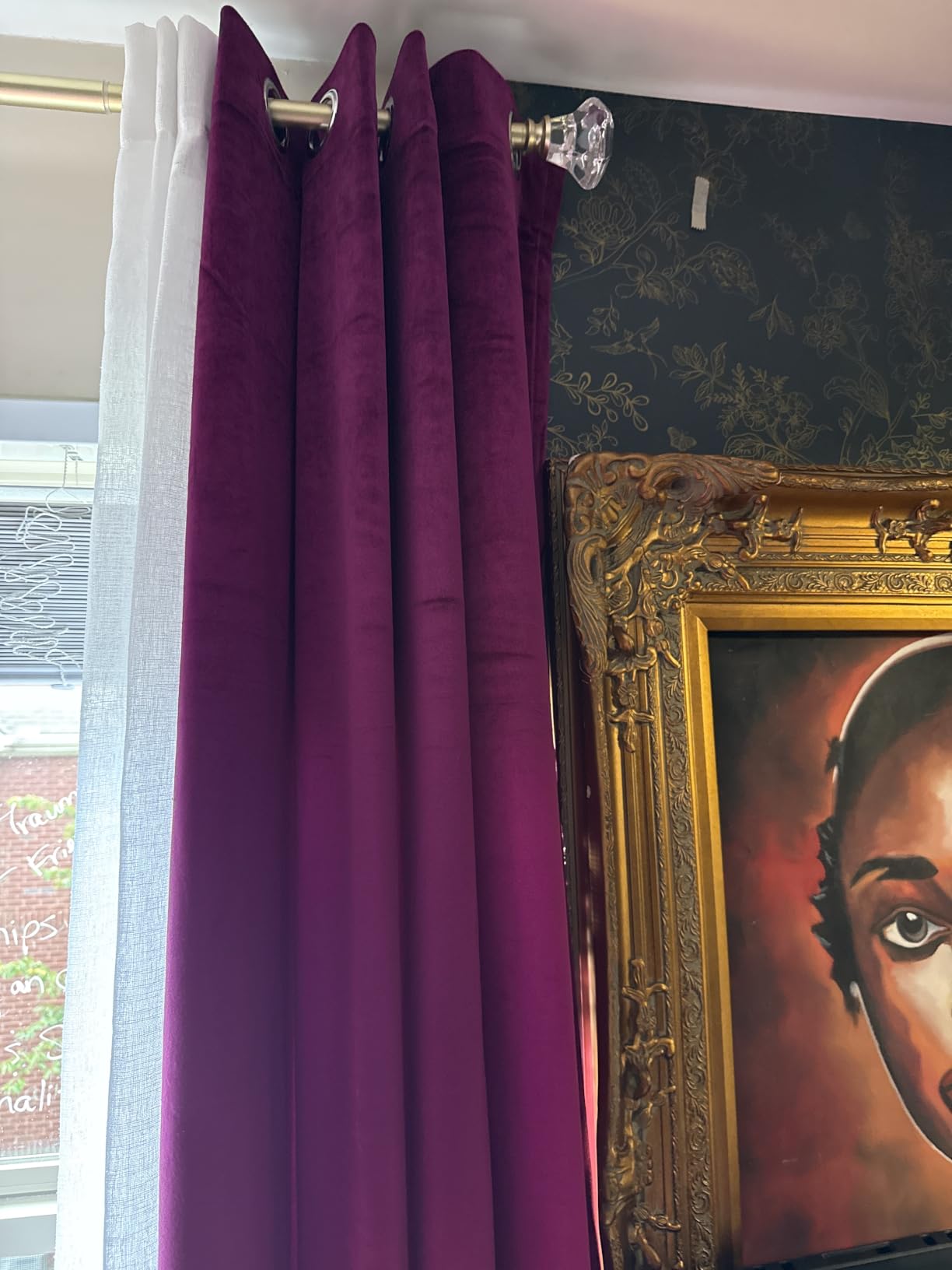
Coverage is 104 inches across the pair at 52 by 96 inches each, with stainless steel 1.6-inch grommets. The fabric hangs smoothly and often does not need ironing after unpacking, which is a small quality-of-life difference when you are hanging four panels.
Reviewers call out the depth of the color and how the panels photograph well, which matters if you are posting room builds. The shine of velvet is the most common aesthetic complaint, and it is inherent to the fabric rather than a defect.
How color affects your light control
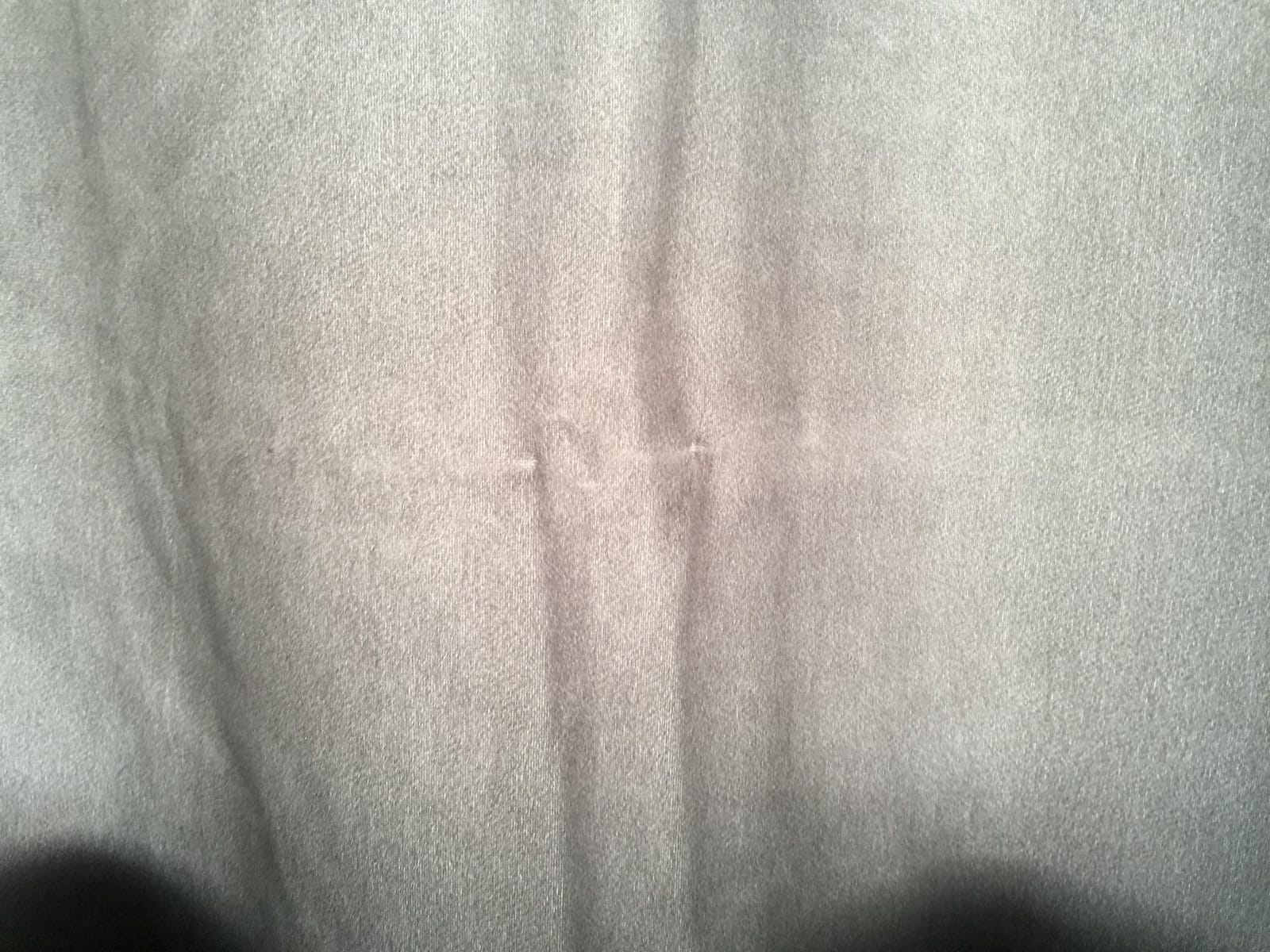
Darker colorways block more light in the same fabric, and the same is true across this whole category. A deep plum or navy is closer to black than a lavender is, so if you are choosing a color for a room with daylight, pick the darkest version of the color you actually want rather than the mid-tone.
The real question to ask yourself is whether you want a media room that disappears or a media room that looks like a room. If it is the first, black is not a preference, it is the correct answer. If it is the second, a dark jewel tone at 280 gsm gives you the look and you accept slightly less blocking.
Who should skip it
Skip it if you need a guaranteed projector-grade blackout in a daylit room, because owner reports describe darkening rather than full blocking. Skip it if you are ordering large quantities and the panel count in the listing has confused you, so confirm what ships in the box. And skip it if the shine of velvet bothers you in raking light.
11. H.VERSAILTEX 100% Blackout 96-Inch Panel: Best Value for Long Walls
H.VERSAILTEX 100% Blackout Curtains for Bedroom Black Out Curtains 96 inch Thermal Insulated Long Blackout Curtains for Living Room, Energy Saving Curtains for Patio Door Grommet (1 Panel, Jet Black)
Single 52W x 96L microfiber panel
99 percent claimed light blocking
8 metal grommets per panel
Thermal and PVC free
Pros
- Strong claimed light blocking
- Thermal insulation and noise reduction in one panel
- PVC free and vinyl free construction
- Machine washable
- Very wide size range
Cons
- Single panel per package
- Microfiber lacks a luxe hand-feel
- Packaging creases may need ironing
- Can trap heat in very warm rooms
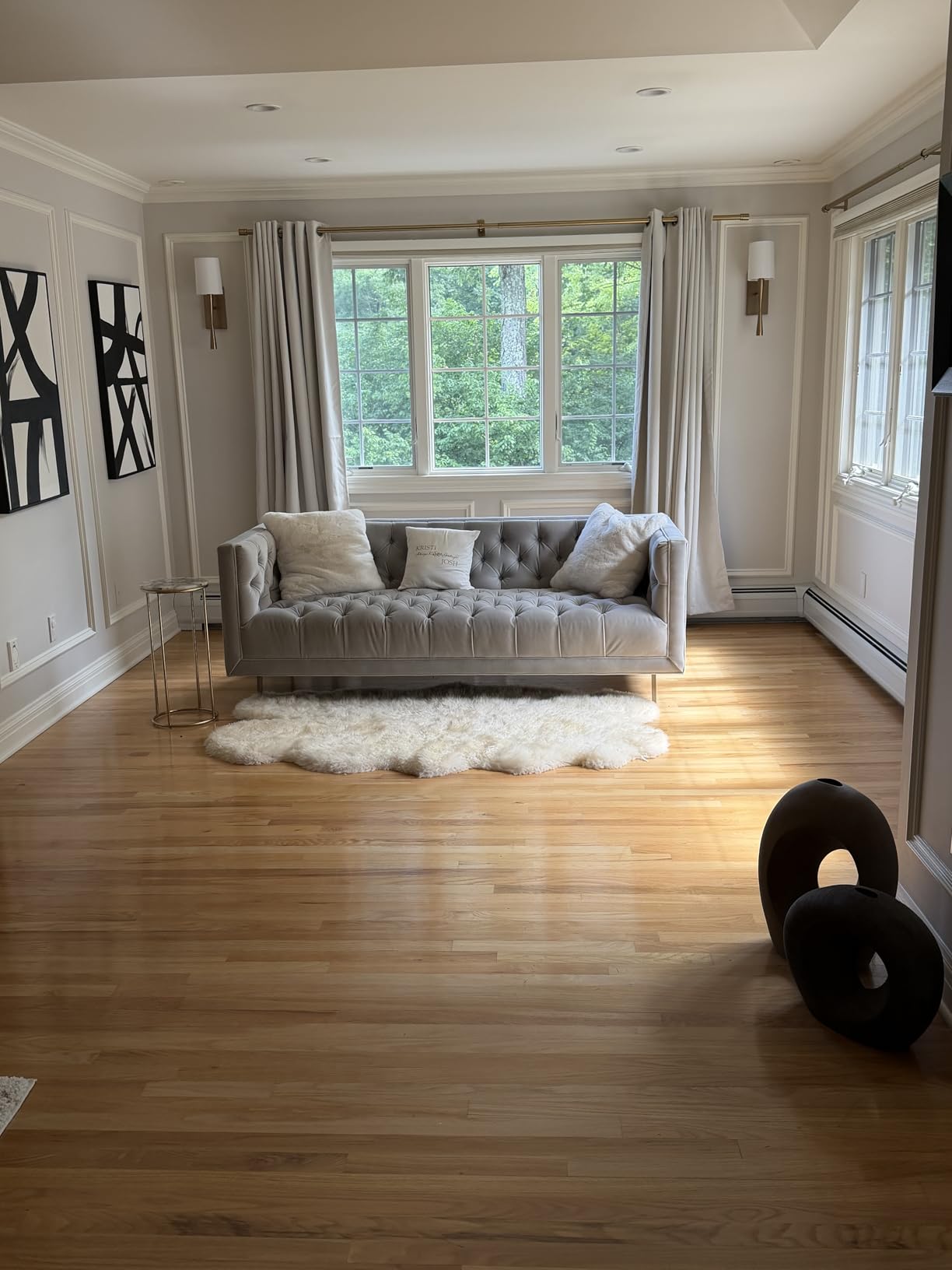
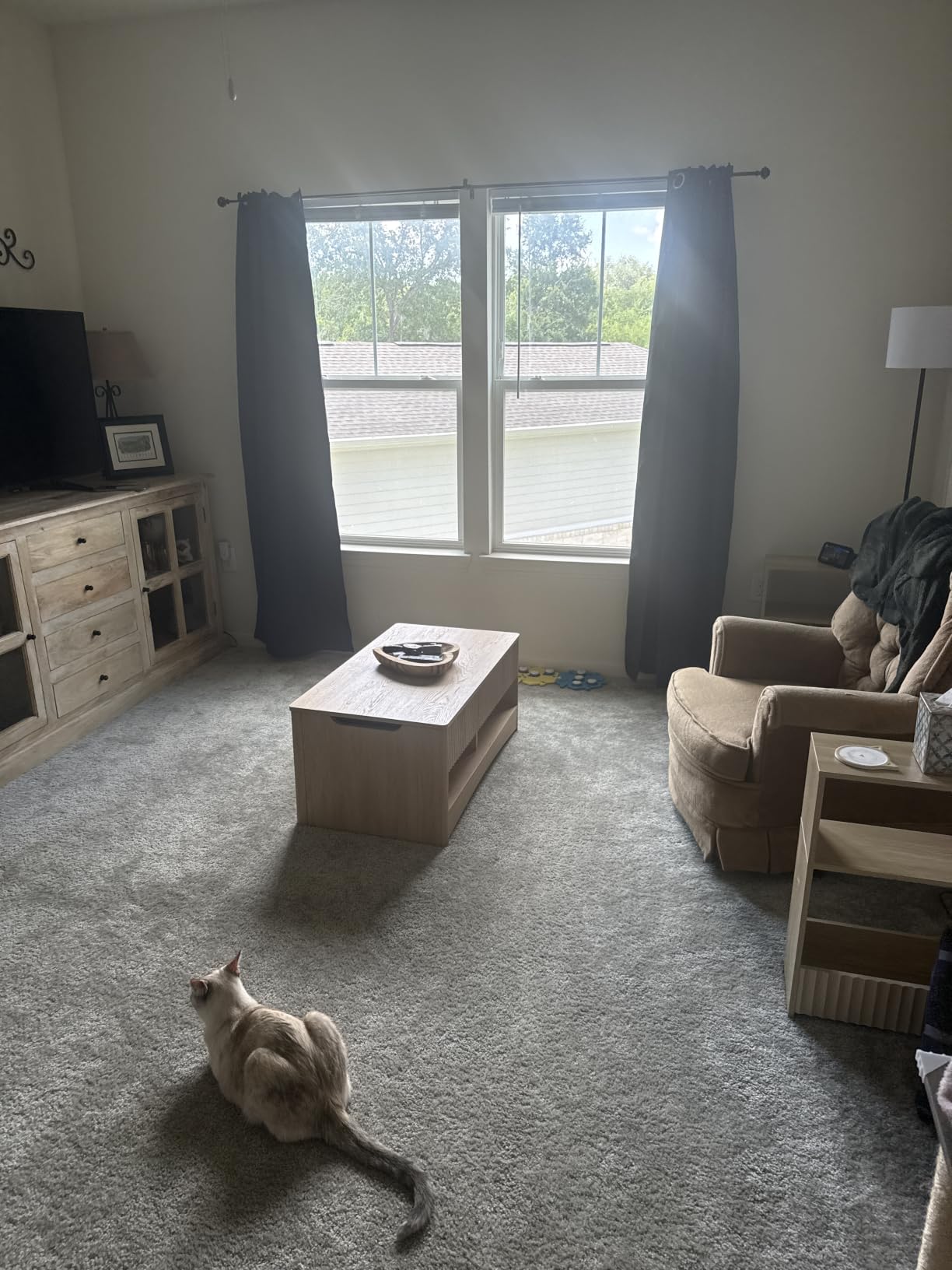
With more than 31,000 owner reviews averaging 4.6, this is the most statistically reliable blackout panel in the roundup. The manufacturer claims 99% of sunlight and 100% of UV blocked, lab tested, and buyers confirm the room genuinely darkens.
The trade is hand-feel. This is blackout microfiber polyester, not velvet, so it hangs flat and functional. In a dedicated dark room where nobody looks at the fabric, that is exactly what you want.
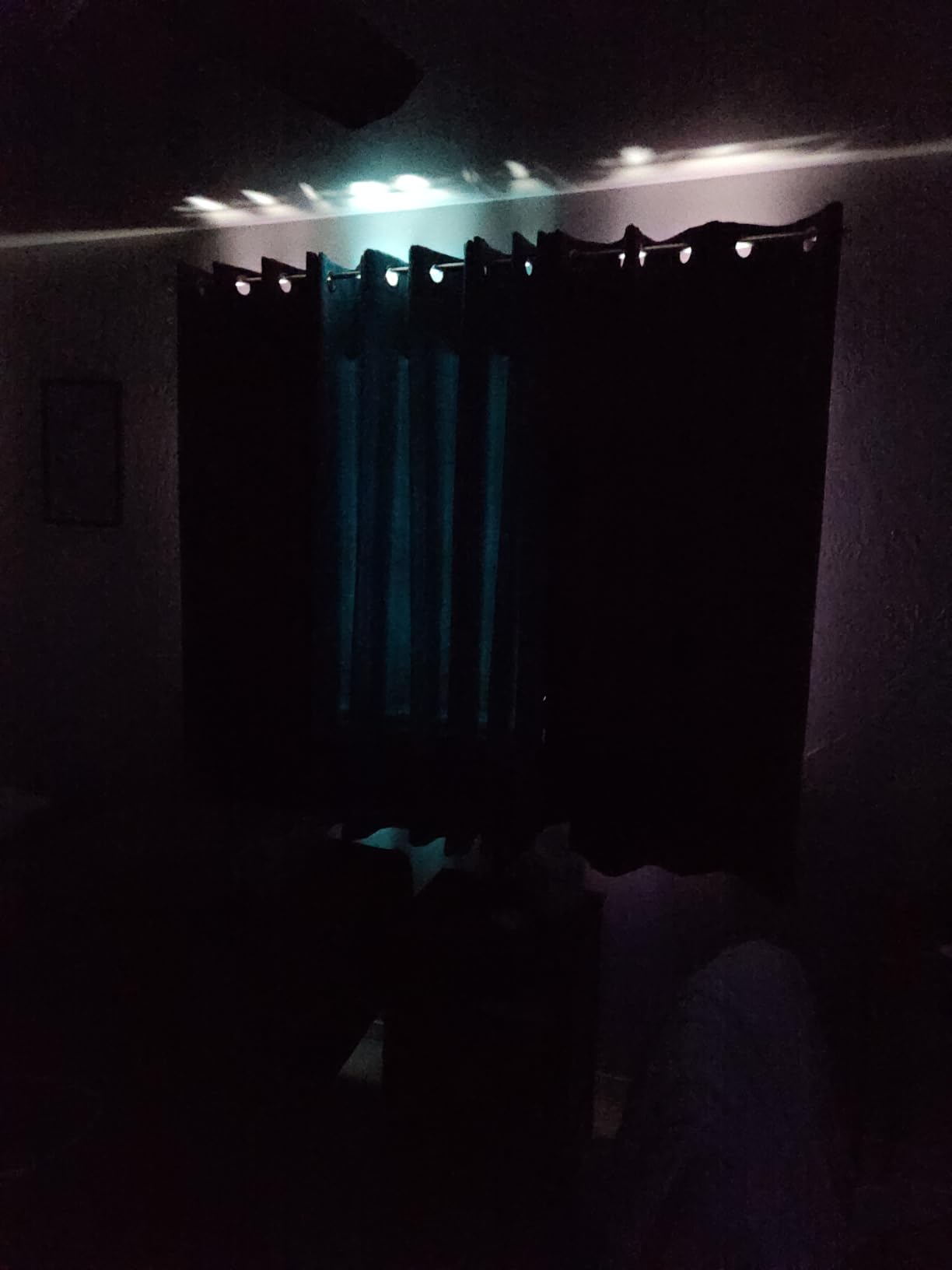
It is sold as a single panel, which is why owners most often note that full window coverage means ordering several. For a wall you want to black out, that packaging is actually convenient, because you can buy exactly the width you need instead of rounding up to a pair.
Eight grommets per panel spread the load across a 52-inch span, and the construction is PVC and vinyl free with Global Recycled Standard certification, which matters in a room where you do not want a chemical off-gassing under closed conditions.
Where it fits in a cost-ordered treatment plan
This is the pick if your goal is darkness first and you have a lot of wall to cover. Curtains are the cheapest first step in an acoustic and light treatment plan, and the same logic applies to a whole-room blackout: get the light handled with an efficient panel before spending on anything else.
Owners report noticeable energy savings, which follows from the same shading layer that handles light. Be aware that a sealed blackout fabric can trap heat, so in a room without ventilation the thermal benefit reverses in deep summer.
Who should skip it
Skip it if the aesthetic of the room matters, because microfiber reads as a utility fabric. Skip it if you want a one-package window solution, since it is a single panel. And skip it if the room is very warm and poorly ventilated, where a full blackout can hold heat in rather than keep it out.
12. ChrisDowa 100% Blackout 42 x 63 2-Pack: Best for Smaller Rooms
ChrisDowa 100% Blackout Curtains for Bedroom 63 Inch Long with Black Liner
Double layer with black liner backing
2 panels at 42W x 63L
6 grommets per panel
No chemical odor reported
Pros
- Effective full room darkening
- Highest average rating among the budget pairs
- Noticeable noise reduction
- Soft fabric suitable for nurseries
- Two panels included
Cons
- Fixed 42 x 63 size limits coverage
- Light grey exterior suits a casual room
- Polyester creases and needs steaming
- Grommet-only hanging
This pair is the sleeper of the roundup. Double layer construction with a black liner backing does a genuine room-darkening job, and across more than 4,400 reviews it holds the highest average rating of the multi-panel budget options.
Buyers are also pleasantly surprised by the thickness, which is heavier than the fabric suggests from a distance. That mass is doing acoustic work at the mid and high end, even if it is not doing anything to bass.
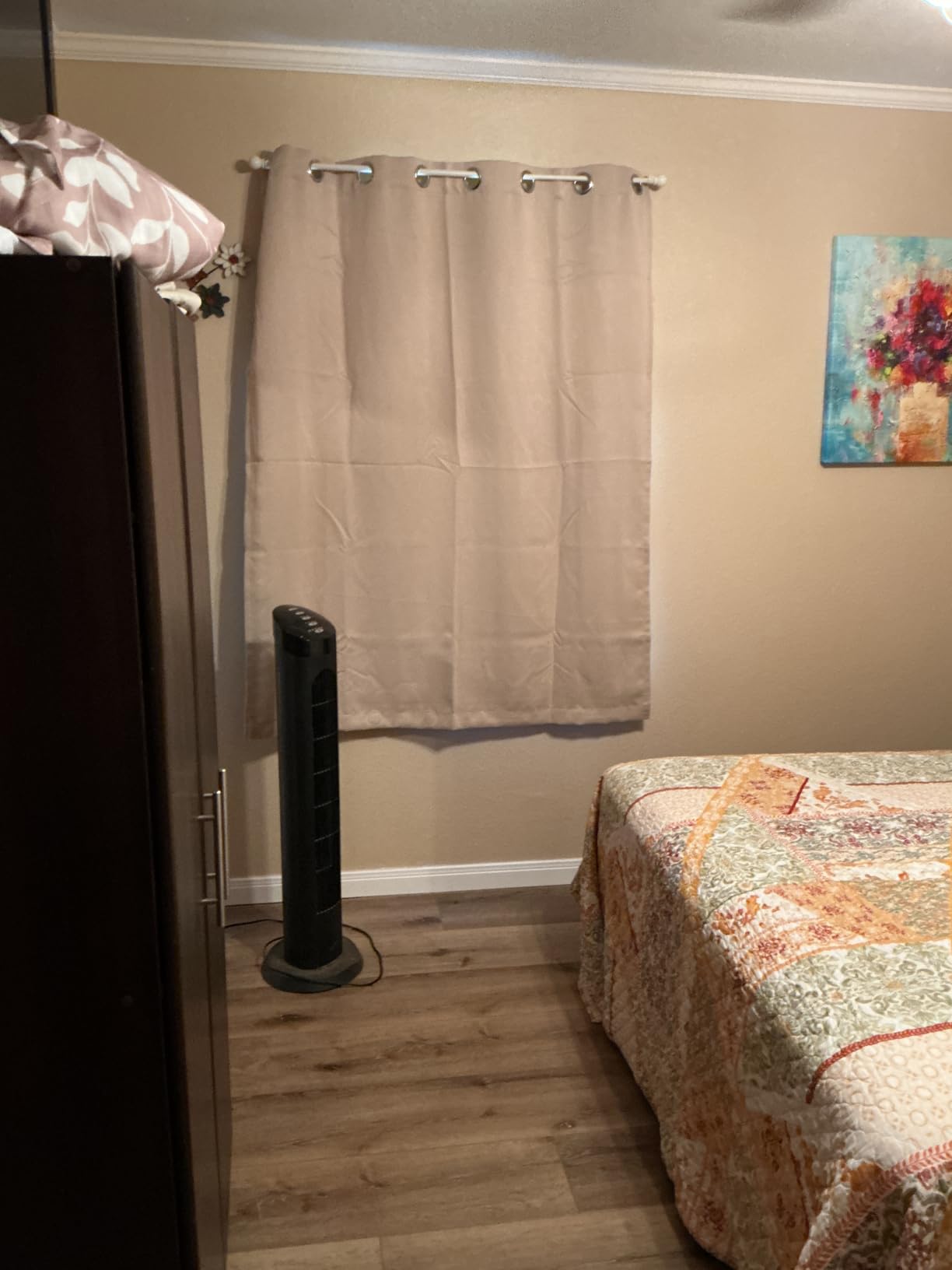
The listed colorway here is light grey, and that is the single biggest reason not to use it in a dedicated theater. A light exterior is a deliberate nursery and kids room choice, and owners consistently praise that it works well in those spaces without a chemical smell.
Each panel has six silver grommets with a 1.6-inch inner diameter, so it mounts on standard rods. The black liner behind the grey is what does the blocking, which is the standard construction for this tier of curtain.
Where 42 by 63 actually works
At 63 inches long, this is a short panel. It suits a half window, a basement egress window, a small office, or a window behind a raised bench seat in a media room. It is a poor choice for anything floor-to-ceiling, because the gap under the panel becomes a light path along the floor.
For a small room the coverage math is easy: a 42-inch panel covers a narrow window well, and the pair gives 84 inches total, so most standard windows are covered by the set with overlap.
Who should skip it
Skip it if you want a black, stage-look theater, because the listed exterior is light grey. Skip it if you need a long panel, since 63 inches is short by design. And skip it if you want flexibility in hanging hardware, because this listing is grommet only.
How to Choose Blackout Curtains for a Home Theater
What blackout percentage do you actually need?
Three tiers cover almost everything, and only one of them is right for a projector. Anything at 50-70% is a dimmer, useful for a daylit living room and useless behind a screen. The 70-90% band is a genuine room darkener and works for a TV in a room you watch at night. The 95-100% band is the only tier that produces a dark image in a lit room, and that is the one to buy for a dedicated cinema.
Read the number carefully, because retailers use the word blackout loosely. A listing that says only blackout with no percentage is telling you nothing. Treat unlined velvet at 65-85% as room darkening no matter what the product name says.
Which fabric blocks the most light?
Three constructions appear in this roundup. A coated blackout is a single face fabric with an opaque coating behind it, which is why the NICETOWN pair blocks so thoroughly at a modest weight. A triple weave or three layer build is a physical construction that does the same job without a chemical finish, and it tends to wash better. An unlined velvet is the third option, and it is the one that blocks least, typically 65-85%.
Add fabric weight to the decision. Around 300 GSM is the practical threshold where velvet stops feeling like a window treatment and starts hanging like a drape. Below that it looks thin on a wide span, which is the moment a theater starts to look temporary.
How many panels and how wide?
Cover the opening plus 6-12 inches of overlap on each side, and the practical rule from the forum community is to make the curtain assembly at least 1.5 to 2 times the window width. Add 12-20% on top of that for fullness, because a flat-hung panel reads as a sheet.
So a 48-inch window wants roughly 96 inches of curtain width, which is four 24-inch-equivalent spans of fabric, or two 52-inch panels with heavy overlap. Going wider is cheap insurance: the stack-back also needs room, and a panel that has to be crammed off the end of the rod will sit in your viewing cone.
Which header style hides hardware?
Grommets are visible, work on any standard rod, and are what most people buy by default. Rod pockets hide hardware completely and suit a track or a decorative rod. Back tabs give a clean pleated look with no hardware visible at all, which is the finish most theater builders want. A wide 3-inch rod pocket is the most forgiving option because it accepts tracks, poles, and hooks.
If you are hanging on a ceiling-mounted track, pick panels with a rod pocket or back tabs. Anything grommet-only limits your options and forces the stack to gather unevenly at the track end.
How do you kill the starry sky light leak?
The starry sky effect is what you get when light gets around the edges instead of through the fabric, and it is the most common theater complaint there is. Five fixes handle almost every case. Mount the track as high as practical, above the window head, so the top gap is above your sightline. Overlap the panels by 6-12 inches in the center so there is no gap between them. Push the open stack outside the viewing cone rather than letting it sit at the edge of the screen. Extend past the window frame on both sides so side light is not reaching you around the wall. And use a side return or a valance to close the vertical channel beside the stack.
Test before you decorate. Hang the panels, turn off the lights, and look from your normal seat. The fix is nearly always geometry, not fabric, and you cannot diagnose geometry with a panel in a bag.
What blackout curtains do for sound, and what they do not
Curtains absorb mid and high frequency reflections inside the room, which is genuinely useful. Hard bare walls and ceilings produce flutter echo, and heavy fabric with air-filled fullness damps it. Owners describe the same effect, reporting that traffic and neighbor noise drop noticeably in the room.
What curtains cannot do is stop sound leaving or entering. Bass travels through structure, and no fabric changes that. The honest order of operations is curtains first because they are cheap and easy, then soft furnishings and seating, then absorption panels at the first reflection points, then bass traps in the corners. Expect a mid and high frequency improvement, not a soundproofed room, and skip any listing that claims otherwise.
Should curtains be black, or can another color work?
Black is the right default for light control, and it is not purely aesthetic. A darker face fabric and a darker lining block more light, and a black room gives a projector or an OLED display a black level to work against that no amount of light blocking alone can create. Making the screen wall black is the most repeated piece of advice on the theater forums for exactly this reason.
A color is still viable, with two conditions. Pick the darkest version of the color you want, because mid-tones block measurably less. And keep the blackout layer, usually a coating or liner, doing the work rather than the face fabric, so the color is a surface treatment over an opaque core rather than a colored cloth you are hoping is dark enough.
Blackout curtains or motorized blackout roller shades?
A motorized roller shade is the better answer when the opening is a standard window, the room is not a showpiece, and you want remote or voice control. It retracts into a cassette, takes almost no visual space, and integrates into a movie mode scene cleanly.
Curtains win when you want a stage look, when the opening is very wide, or when you are covering a non-window surface like a wall, a doorway, or a hallway. A drape you can stack and hide outside the frame simply has no equivalent in a shade. If the doorway is your leak, hanging a heavy panel across it is the standard forum fix, because installing a proper door there is usually not practical.
Frequently Asked Questions
What type of curtains are best for a home cinema room?
Heavy, opaque or blackout-lined panels rated at 95-100% light blocking, hung floor to ceiling, with 6-12 inches of side overlap and the stacked panels pushed outside your viewing cone. Mount the track above the window head on a ceiling mount so the top gap sits above the frame. Black fabric gives the best light control, and anything above 300 GSM hangs like a proper drape.
What brand has the best blackout curtains?
There is no single winner, because panel width and length decide more than the brand does. In this roundup, NICETOWN offers the strongest combination of a true coating-backed blackout and pair packaging in a 96-inch length, Sun Zero builds a purpose-made theater grade line with heavier grommets, and H.VERSAILTEX has the largest review base at a low entry point. Match the panel width to your opening first, then the brand.
What are the downsides of using velvet curtains?
Velvet blocks less light than a coated or triple layer blackout, typically 65-85% rather than 95-100%, and the pile shows a faint reflective sheen that changes with viewing angle and lamp position. It is also unlined in most retail panels, so the thermal benefit is small. On the positive side, velvet above 300 GSM drapes heavily and gives a room the stage look that flat polyester cannot.
What are the best blackout curtains for reducing noise?
The heaviest multi-layer and triple weave panels in this roundup do the most, because mass and air-filled fullness absorb mid and high frequency reflections and soften flutter echo. Panels with a coating liner, a triple weave, or 280-300 GSM velvet perform best. Curtains do nothing for bass and cannot soundproof a room, so bass traps and wall panels remain necessary for low frequency control.
What is the downside of blackout curtains?
The main downside is that heavy fabric is hard to hang, hard to wash, and unforgiving of bad geometry. Panels arrive with packaging creases that need steaming, hardware can bow if it is not rated for the weight, and grommets are visible in a finished room. A covered panel that does not overlap or does not stack outside your sightline leaks light no matter how good the fabric is.
The Verdict: Best Blackout Curtains for Home Theaters in 2026
Take the NICETOWN 52 by 96 pair as the default answer in 2026. It is a real coating-backed blackout, the length reaches most theater floor lines, and the pair packaging means one order covers a standard window with room for proper overlap. That combination of verified darkness, workable dimensions, and a deep owner record is why it is our top pick among the best blackout curtains for home theaters.
Pick differently for a different room. A projector room with a hard sun-facing window wants the Sun Zero theater grade line or a coated panel like the H.VERSAILTEX rather than anything velvet. A wide sliding door or a wall to black out is what the RYB HOME extra-wide panel was made for. A showpiece room where the drape is the point wants the StangH 300 GSM velvet, paired with a coated layer behind it if light control matters. And a kids room that doubles as a screening space is exactly what the Jekeno themed set is for.
Whichever you pick, spend your remaining effort on geometry rather than fabric. Mount high, overlap generously, and stack outside the sightline. The curtain is the cheapest and fastest upgrade in a media room, and most of the disappointing results we found in owner reports came down to hanging a good panel badly.