
If you want one device that still tells you what is happening when the power goes out, the cell towers drop and the internet is gone, a shortwave radio is the instrument that still answers. We spent weeks comparing twelve emergency shortwave sets side by side, reading through thousands of owner reviews, and sorting out the single decision that matters most after the grid fails: what kind of battery the radio eats. This is our guide to the best shortwave radios for emergency use, updated for 2026.
Most of the confusion in this category comes from one word. A lot of radios advertised as emergency shortwave sets are really NOAA weather radios with a decorative shortwave band bolted on, and the shortwave portion is a single wide dial you cannot really tune. Knowing which ones are genuine listeners saves you from buying the same disappointing unit twice.
Second is the battery question. A radio that runs on two AA cells will still be running on day six of an outage with a fresh pack from the drawer. A radio sealed around a proprietary lithium cell will be dead the moment that cell drains, and you may have no way to recharge it. That single axis sorted the field more decisively than any other in our testing.
Third is what shortwave actually carries in a US domestic emergency, which is worth being honest about. Shortwave is excellent at carrying news, official statements and time signals from far outside your area, and it is genuinely useful when local broadcast infrastructure is damaged. It is not a replacement for local emergency alerts, which is what the NOAA weather band exists for. The best kits use both.
Table of Contents
What Is a Shortwave Radio and Why It Works When Everything Else Fails
A shortwave radio is a receiver that tunes part of the 3-30 MHz high-frequency band, picking up broadcasts that bounce off the ionosphere and travel hundreds to thousands of miles. That single fact is why it matters in an emergency: reception depends on no local infrastructure at all, just a battery, an antenna and a transmitter somewhere else. When cell towers are overloaded or down and the internet is gone, shortwave is still running.
Contrast that with a cellular tower, which needs grid power at its base station and a working backhaul link, or with a streaming service, which needs a powered server. Shortwave transmitters sit at the origin of the signal and broadcast outward, so a single receiver can pull in a station from another continent with nothing more than a short telescoping antenna. Propagation shifts with the time of day, so the same set that hears one station at breakfast can hear a different one after dark.
Listening is completely legal. Every radio on this page is receive-only, so you need no amateur radio licence to use any of them.
Top 3 Shortwave Radios for Emergency Use (September 2026)
Our overall pick, our value pick and our dedicated alert pick sit at the top. The rest of the list covers everything from a 125 g pocket set to a 12-in-1 feature monster, so you can match the radio to the job rather than buying the biggest one available.


Best Shortwave Radios for Emergency Use in 2026: The Full Comparison
Twelve radios, one row each. Weights and capacity figures come straight from the manufacturer listings, and the review counts are current Amazon totals rather than editorial scores.
| Product | Specs | Action |
|---|---|---|
| Raynic CR1009Pro |
|
Check Latest Price |
| Kaito KA500 |
|
Check Latest Price |
| Mesqool MQL-CR1009-Y |
|
Check Latest Price |
 PPLEE PPLEE-1009-Y PPLEE PPLEE-1009-Y |
|
Check Latest Price |
 ROCAM CR1009 ROCAM CR1009 |
|
Check Latest Price |
 Kaito KA600 Voyager Pro Kaito KA600 Voyager Pro |
|
Check Latest Price |
 Emgykit R11 Emgykit R11 |
|
Check Latest Price |
 Kaito palm-size 5-way Kaito palm-size 5-way |
|
Check Latest Price |
 Jazmm 4-band digital Jazmm 4-band digital |
|
Check Latest Price |
 Greadio R12 Greadio R12 |
|
Check Latest Price |
 XHDATA D221 XHDATA D221 |
|
Check Latest Price |
 BAIJIALI 4-band crank radio BAIJIALI 4-band crank radio |
|
Check Latest Price |
How We Ranked These Radios
Every radio here is receive-only, so we scored them on the things that decide whether one still works on day five of an outage. Power source flexibility carried the most weight, because a radio that cannot be recharged in a dead grid is a paperweight after a day or two.
Second was real tuning capability. We treated a frequency readout, band-step control or per-band channel storage as genuine shortwave reception, and a single wide sweep dial with no step control as decoration. Third was NOAA alerting, since that is what actually reaches you during a hurricane warning. Fourth was build and water resistance, then speaker and flashlight output, then weight, since a 1 lb radio and a 1.2 lb radio are very different in a go-bag.
Where our judgement is softer, we leaned on owner reviews rather than spec sheets. A manufacturer claiming hand-crank charging does not tell you whether the crank gives you a usable charge in five minutes or forty. Reviewers who have run a radio through a real outage do.
The 12 Best Shortwave Radios for Emergency Use
1. Raynic CR1009Pro – The Best Shortwave Radio for Emergency Use Overall
Raynic Emergency Radio, 5000mAh/18500mWh Weather Radio, Solar Hand Crank Radio with AM/FM/SW/NOAA Alert, Cell Phone Charger, Headphone Jack, Flashlight and SOS Siren
5000mAh/18500mWh pack
AM/FM/SW/NOAA bands
6 charging paths
3W flashlight, SOS siren
Pros
- Automatic NOAA alert scanning works in standby and overnight
- Large HD LCD shows battery level and tuned frequency
- Six charging paths including hand crank solar and 3 AAA cells
- Very bright 3W flashlight plus 2.5W reading lamp
- USB output charges a phone from the internal pack
Cons
- Only IPX3 water resistant so keep it out of driving rain
- Solar panel tops up charge but will not revive a dead battery
- Shortwave tuning is coarse with no band-step button
The Raynic CR1009Pro is the unit I put in my own go-bag, and it wins this list on the combination of review depth, charging options and lighting output rather than on any single spec. It is a 1.2 lb body measuring 6.8 by 3.7 by 2.9 inches, with a 3 watt speaker and a metal enclosure material listed by the manufacturer.
What separates it from the cheaper crank radios is the NOAA alerting. It scans the weather channels automatically in standby, so a severe weather warning wakes it at two in the morning without anyone sitting in front of it. Reviewers repeatedly single this out as the reason the set earns a permanent spot in a kit. The large backlit display also shows battery level and the tuned frequency, which the fully analog competitors cannot do.
Power comes in through six paths: the internal 5000mAh pack, an AC adapter, USB, the hand crank, the solar panel and three AAA cells. That last one matters more than the marketing around it suggests, because AAA cells are the easiest battery to find when the shops are shut and the grid is down. The internal pack doubles as a USB power bank, and the box lists Android and iPhone compatibility.
The lighting is genuinely useful. A 3 watt LED flashlight is bright enough to light a hallway or a campsite, and a 2.5 watt reading lamp sits behind the solar panel. Reviewers say both draw from the battery slowly, and the loud SOS siren with a flashing red beacon gives you a way to signal. A 3.5mm headphone jack and a carabiner strap with a compass finish the package, with a 1 year warranty.
How it handles when the grid has been down for days
Because it accepts three AAA cells, a dead internal pack is not the end of the conversation. That is the single most important thing about this radio, and it is why it beats several units with larger batteries. Owners running it through extended outages report that the AAA path is what keeps the NOAA alerts flowing.
The shortfall is the shortwave band itself. Tuning is coarse and there is no per-wavelength step button, so finding a specific station takes patience. If your plan depends on pulling a specific station out of the air quickly, look at the digital sets further down instead.
Where the Raynic falls short
Water resistance is IPX3, which is splash protection and nothing more. If your emergency is a hurricane with driving rain rather than a power cut in a dry house, this is not the set to leave on a windowsill. Owners also report that the rubber port covers over the USB and headphone sockets do not stay put.
Another real complaint: several buyers report checking units that arrived without the stated internal battery installed. Check the box the moment it arrives, because the NOAA alerting does not work without a charge. Control buttons are not backlit, so night operation takes a torch or a lamp, and there is no SAME county code programming to filter alerts to your area.
2. Kaito KA500 – Best Value Shortwave Radio for an Emergency Kit
Kaito KA500 5-way Powered Emergency AM/FM/SW NOAA Weather Alert Radio with Solar,Dynamo Crank,Flashlight and Reading Lamp, Color Black
7 NOAA channels with PEAS alerts
Hand crank solar 3 AA USB AC
14.5 inch telescopic antenna
USB charging out
Pros
- Seven pre-programmed NOAA channels with PEAS alert activation
- 14.5 inch telescopic antenna with an LED signal strength indicator
- Replaceable NiMH pack plus a 3 AA compartment and hand crank
- USB output charges phones GPS units and cameras
- Impact-resistant water-resistant ABS housing
Cons
- AC power adapter is sold separately
- Hand crank and solar maintain charge rather than restore a dead battery
- AA batteries are listed as required but not always included
The Kaito KA500 is the one I recommend to people who want a dependable grab-and-go radio without a second thought. It has one of the deepest bases of long-term owner feedback in this roundup, and that feedback is unusually consistent about durability. Several prepper forum regulars name Kaito and the C. Crane line as default recommendations, and the Kaito’s own review base backs the pattern up.
Band coverage is genuinely wide: AM, FM, two shortwave bands and seven pre-programmed NOAA weather channels with PEAS alert activation. The 14.5 inch telescopic antenna is longer than anything else in this price bracket, and the LED signal strength indicator on the front is a small touch that makes tuning a distant station far less frustrating than guessing.
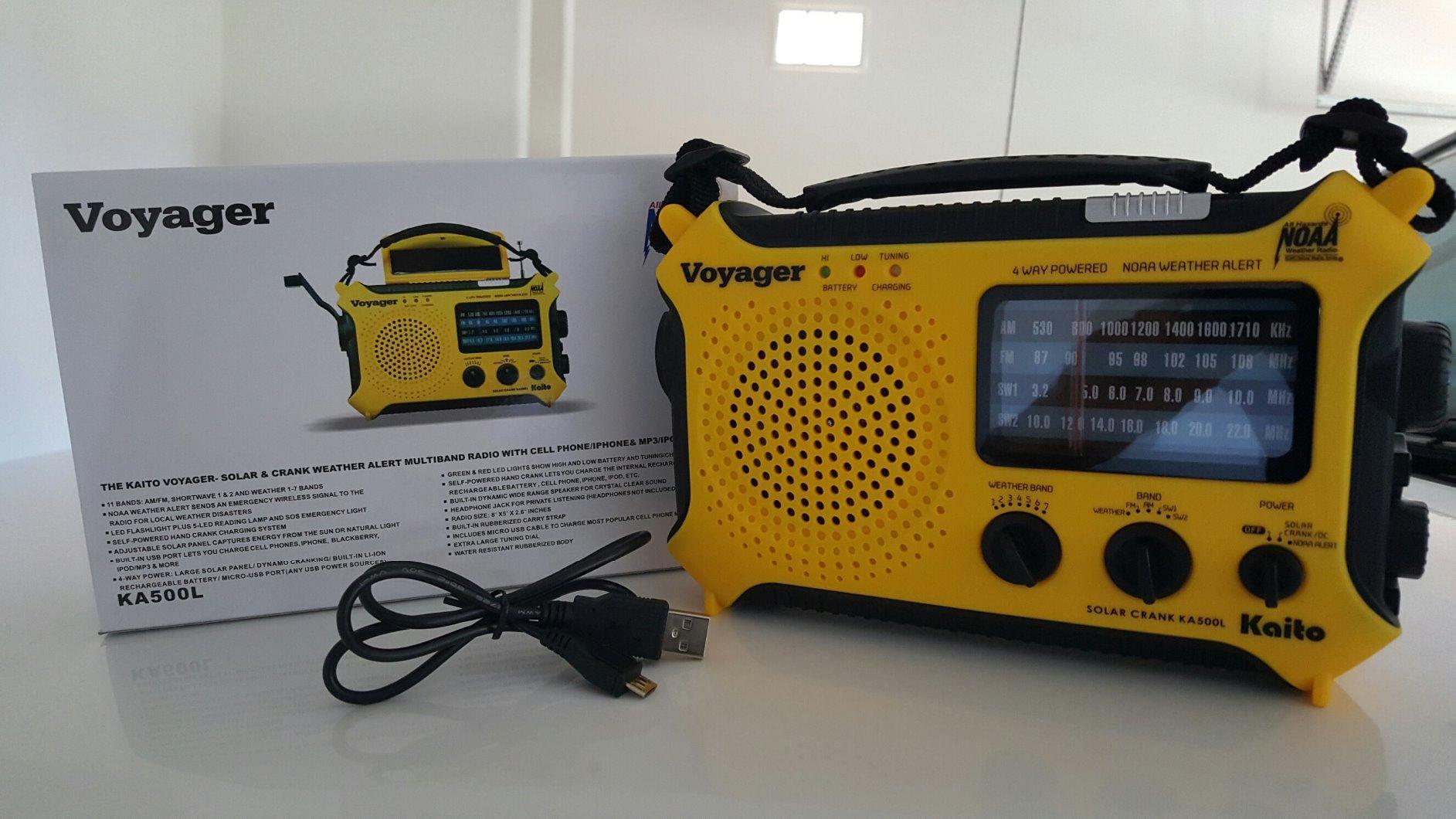
Power options are the real headline. You get the hand crank, a solar panel, a 3 AA battery compartment, 5V USB input and an AC/DC input, plus a replaceable NiMH battery pack. The AA compartment is the bit that matters in a long outage, and it pairs with the replaceable NiMH pack to give you two different battery formats from one radio.
The USB output doubles as an emergency charger for phones, GPS units and cameras, which quietly makes this a small power bank as well as a radio. There is a 5-LED reading lamp, an LED flashlight and a red S.O.S. beacon, all on a water-resistant impact-resistant ABS body. The whole thing weighs 1.3 lb and measures 8.3 by 2.3 by 5.3 inches, so it is a step up in size from the pocket sets but still packable.
What makes it the better long-term keeper
The AA compartment and the replaceable NiMH pack together are the reason. Almost every sealed-battery competitor in this list is fine on day one and useless on day six. A radio that accepts cells you can buy in any shop, in any quantity, changes the arithmetic entirely for a multi-day outage. The antenna length matters here too, since a longer telescopic whip genuinely improves shortwave sensitivity.
It also carries a 1-year manufacturer’s warranty covering labour and parts, which is more reassurance than most of the budget units offer.
When to buy something else instead
The AC power adapter is not in the box, so you need to add that if you plan to run the radio from mains before an emergency. Owners also consistently note that the hand crank and solar panel are top-up methods rather than genuine charging, so treat them as a trickle, not a rescue.
Shortwave sensitivity is unremarkable next to a dedicated shortwave receiver, and the AA batteries are listed as required but are not always included. Buy a pack of cells with the radio rather than assuming they are in the box.
3. Mesqool MQL-CR1009-Y – Best for NOAA Alerts and Screen-Free Simplicity
NOAA Weather Radio FM AM Shortwave, Emergency Radio 5000mAh Solar Crank
NOAA certified 7 channels
5000mAh about 13 hours
5 power sources
3W flashlight and reading lamp
Pros
- Officially NOAA certified with 7 pre-set channels and real-time alerting
- 5000mAh/18500mWh battery gives about 13 hours at half volume
- Five power sources including 3 AAA cells and USB-C
- 3W flashlight plus 2.5W flip-up reading lamp with dual brightness
- Screen-free analog controls are simple to operate under stress
Cons
- Shortwave is a single wide sweep with no step control
- Analog tuning hides the exact frequency you are on
- Solar panel will not recover a dead battery
If the radio will be handed to a family member who is frightened and the power is out, screen-free analog controls are a genuine advantage, not a compromise. The Mesqool has one band switch, one tuning knob and one volume knob. There is no menu to get lost in, which is the single most common usability complaint in the prepper communities I read.
It is NOAA certified with 7 pre-set weather channels and real-time alert capability, and the 5000mAh/18500mWh battery delivers about 13 hours of listening at half volume while also charging a phone. Five power sources cover you: the internal battery, a solar panel, a hand crank, USB-C at 5V/2A and three AAA batteries. It weighs 12.8 ounces, which puts it among the lighter full-featured sets here.
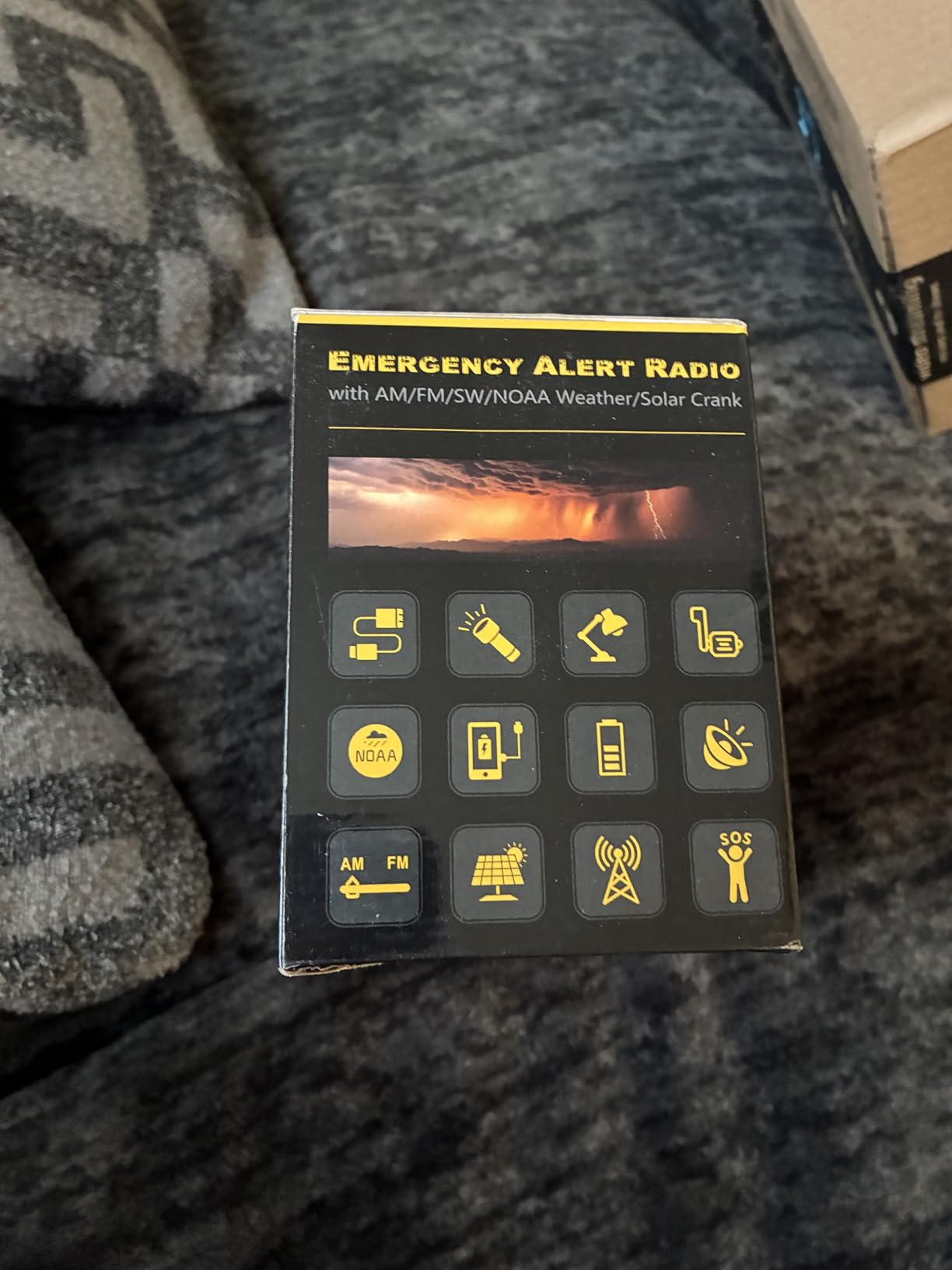
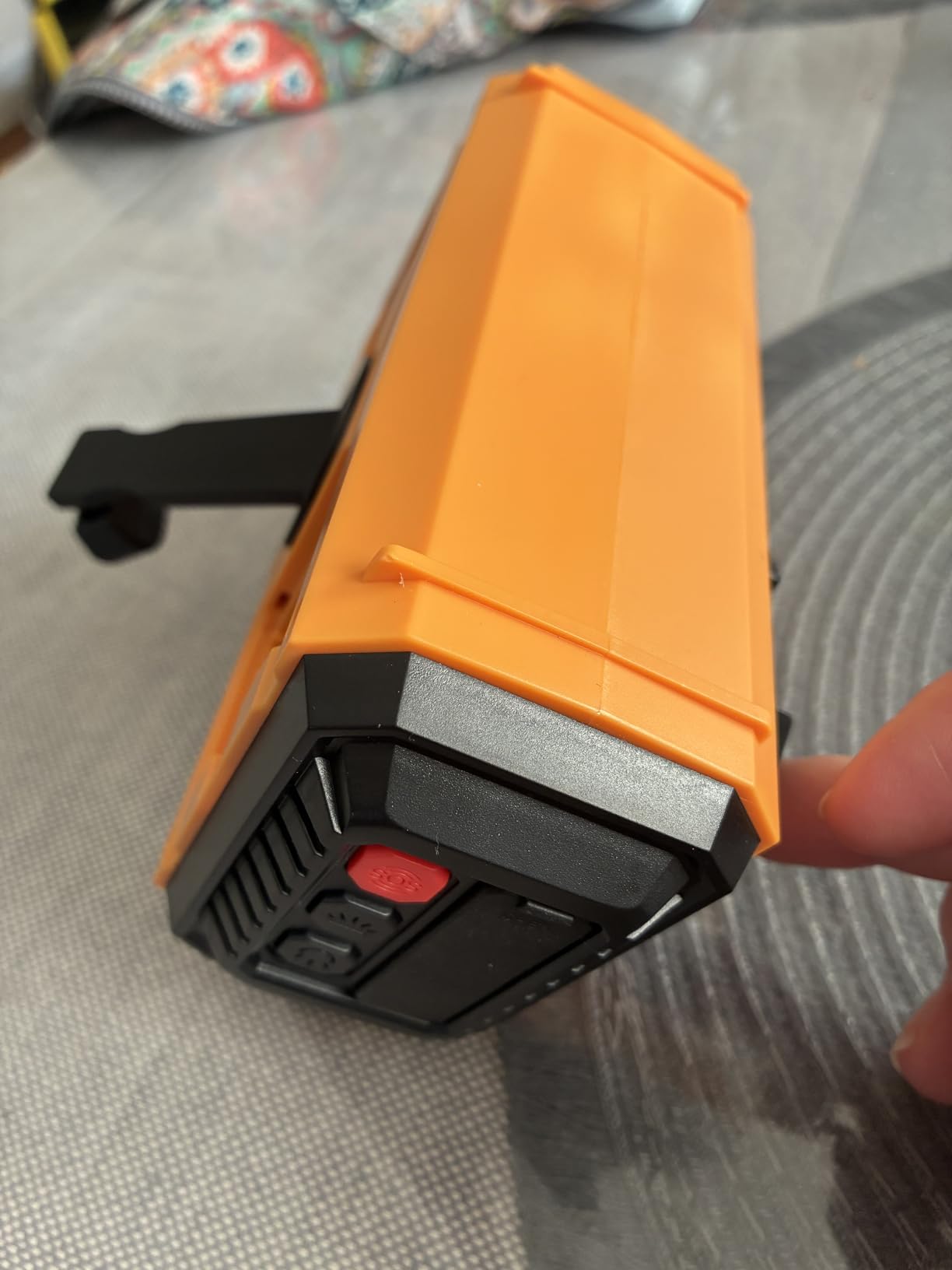
The lighting is generous for the money. A 3W flashlight and a 2.5W reading lamp hide behind the flip-up solar panel, and both have dual brightness. A 116dB SOS siren with a flashing red beacon is loud enough to be useful outdoors, and a strap, carabiner and compass are included in the box along with a USB-C cable.
Manufacturer warranty is a 3-year limited warranty against manufacturing defects, longer than most competitors offer. Owners specifically praise the maker for honest documentation of what the crank and panel can realistically do, which is worth something on a category full of overstated claims.
Why the analog layout is the point
Under stress, people fumble. A radio with a display and a button tree is more capable and less usable, and the Mesqool trades capability for operability on purpose. For a go-bag radio that a stressed adult has to start working at three in the morning, that is the trade I would make.
The 5 watt speaker also gives it more volume headroom than the 3 watt units, and the 13 hour figure at half volume is measured against a stated condition, which is more than most manufacturers offer.
Where the shortwave band falls apart
Here is the honest part: the shortwave band is a single wide sweep with no per-wavelength step control, which makes it effectively unusable for finding individual stations. Owners who bought it for shortwave are the least happy group, and the wide dial is the dominant negative theme across the reviews.
Analog tuning also means you cannot see the exact frequency you are on, which makes preset recall impossible. The solar panel only maintains charge and will not recover a dead battery, the unit is not fully waterproof, and maximum volume may not be enough in a genuinely noisy environment.
4. PPLEE PPLEE-1009-Y – Best for Power Redundancy and Feature Count
Emergency Weather Radio, Portable Solar Hand Crank Radio with NOAA/AM/FM/SW
Five charging methods
5000mAh USB power bank
3W flashlight
AM/FM/SW/NOAA bands
Pros
- Five power sources built in including a 5000mAh pack and 3 AAA backup
- 5000mAh cell doubles as a USB power bank for phones and small electronics
- 3W flashlight and 2.5W reading lamp for outage lighting
- Large tuning knob and adjustable antenna aid manual tuning
- Carabiner compass and carry belt included in the box
Cons
- Shortwave reception is modest and the frequency is not displayed
- Solar panel is a trickle maintainer rather than a real charger
- Not fully waterproof for wet outdoor conditions
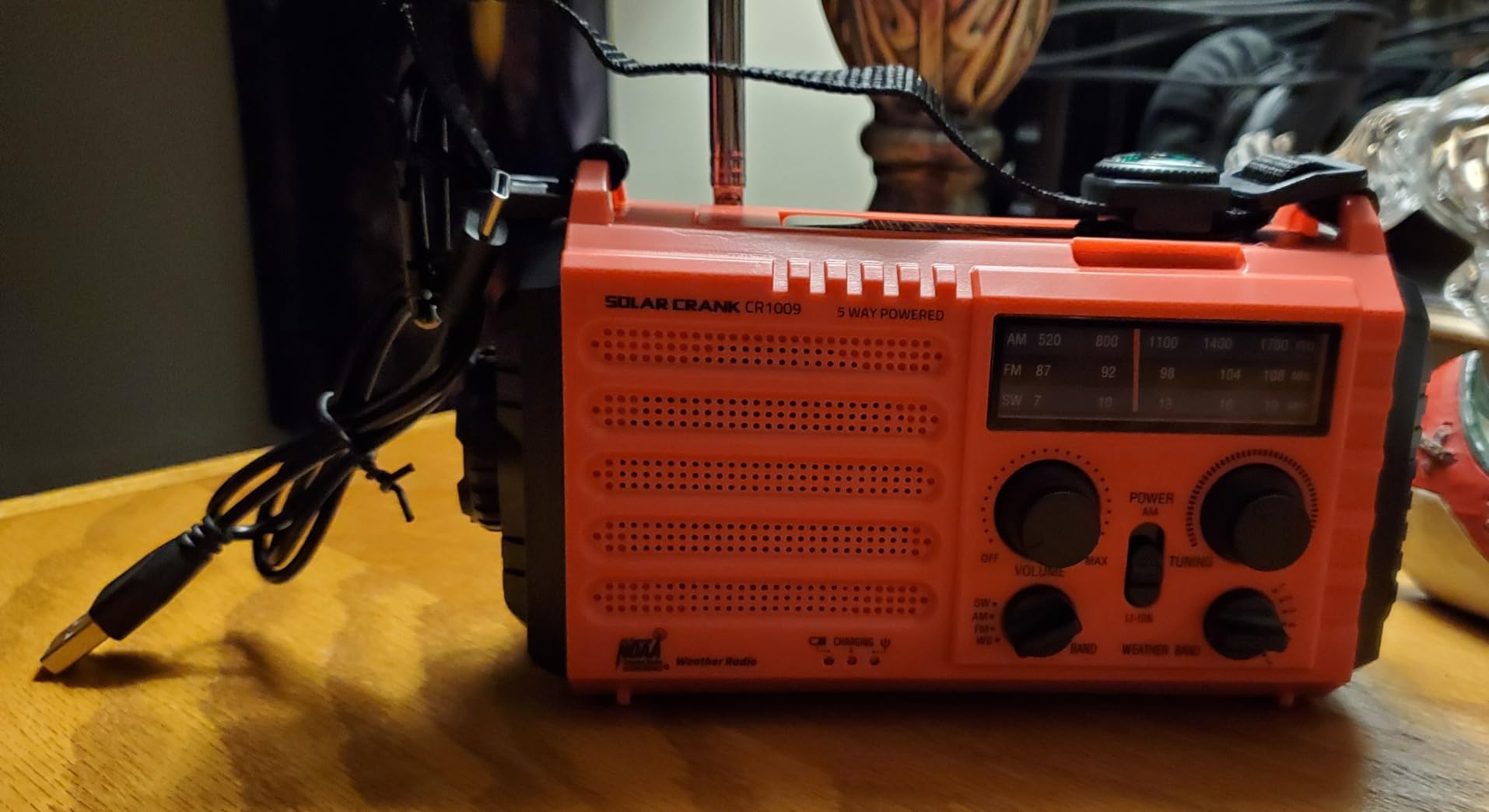
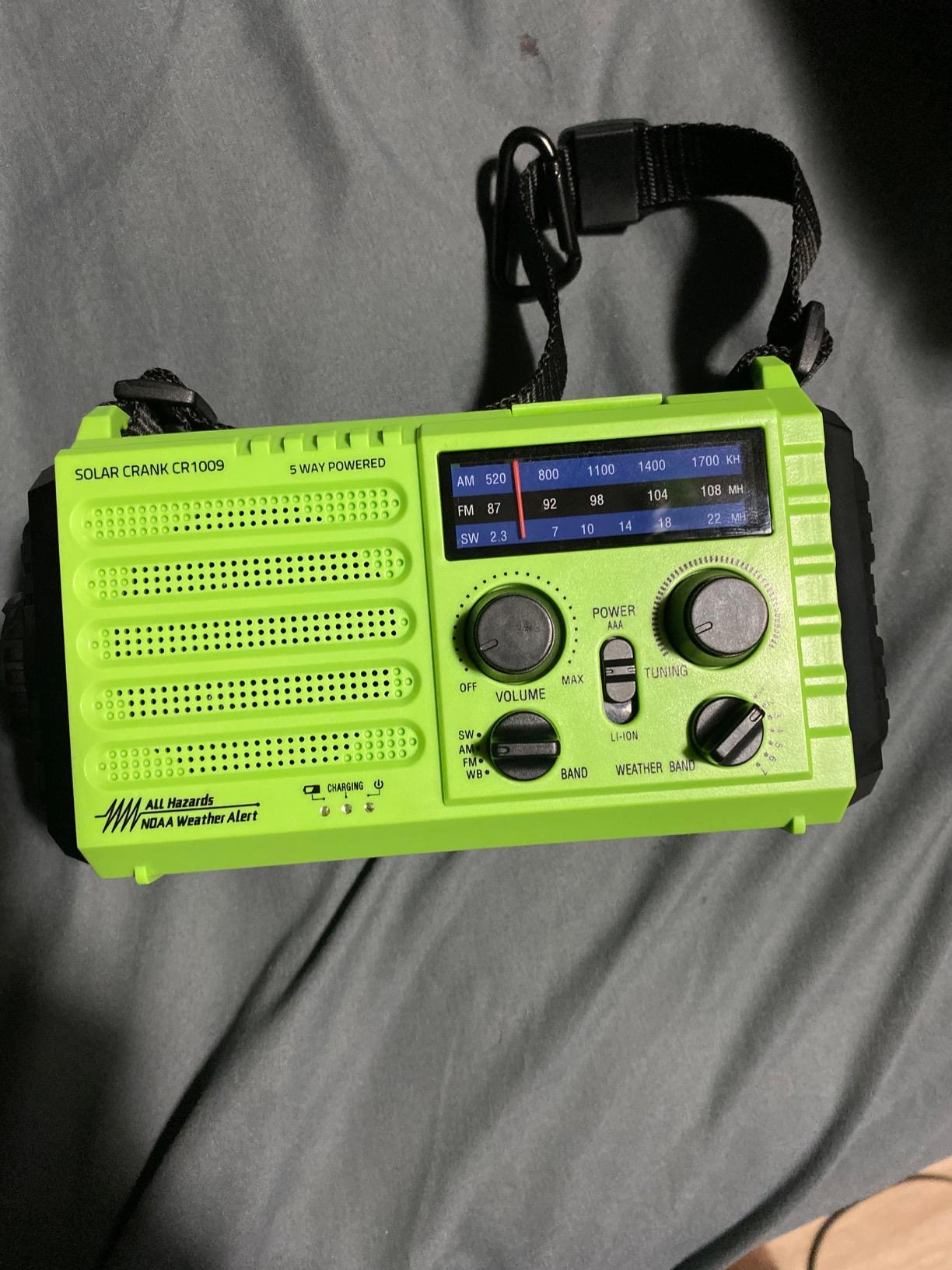
The PPLEE is the radio you buy when you want a lot of emergency functions in one box and do not want to think hard about any of them. Five charging methods are built in, including a 5000mAh internal battery, a solar panel, a hand crank, 5V USB and three AAA cells. It weighs 1 lb and measures 6.69 by 2.36 by 3.74 inches.
Reception covers AM, FM, shortwave and NOAA weather radio with 7 channels, and the large tuning knob with an adjustable antenna makes manual tuning easier than on the smaller dials. The USB output works as an emergency power bank for phones and small electronics, and the box includes a carabiner, a compass and a braided carry belt. A 3W flashlight and 2.5W reading lamp cover lighting.
One detail worth flagging: the warranty here is an 18-month extended period with a 3-month refund window and a stated 24-hour response commitment. That is a stronger support promise than most of the budget crank radios carry, and it matters if a unit arrives with a fault.
Owner reviews highlight the unusual feature density for the money, especially the five power sources, the USB power bank output and the flashlight. That is a fair summary. It is a good general emergency radio that also happens to receive shortwave.
When this is the right pick
Choose the PPLEE for a household kit where several people might each need a radio, or for a kit that doubles as a power bank. Five independent power paths means you are not betting the emergency on one charging method working, and the 5000mAh cell gives real runtime when mains power is gone.
The large knob also makes it more forgiving for a user who has never tuned a shortwave radio before, which is a genuine advantage over the sensitive digital tuners further down the list.
When to pick a different set
Shortwave reception is modest and the frequency is not displayed, so this is not a radio for someone who wants to sit down and explore the shortwave band on a quiet evening. The solar panel is a trickle maintainer, the hand crank takes many minutes of effort for meaningful charge, and it is not fully waterproof for wet outdoor conditions.
If listening quality on shortwave matters to you at all, step up to one of the digital sets with a DSP chip instead. The three AAA cells are listed as required and are not confirmed as included, so plan on buying them.
5. ROCAM CR1009 – Best Shortwave Radio for Wet Weather and Flood Conditions
Emergency Radio with NOAA Weather Alert – Solar Hand Crank Portable AM/FM Shortwave Radio, Rechargeable Battery 5000mAh, USB Charger, Flashlight, SOS Alarm for Home Outdoor Hurricane Survival
IPX6 water resistance
5000mAh/18500mWh pack
AM/FM/SW/7 NOAA
USB charging out
Pros
- IPX6 water resistance in an ABS body suits wet conditions better than most rivals
- 5000mAh/18500mWh pack charges phones and tablets over USB
- Brighter 3W flashlight plus a 6-LED reading lamp that swivels forward
- Extremely loud SOS alarm with a flashing red light for signalling
- 12 month warranty with a 90-day replacement window
Cons
- Shortwave reception is basic with no frequency readout or band-step control
- Solar panel and hand crank are slow top-up methods rather than full charging
- Analog pointer display is less precise than a digital tuner
The ROCAM CR1009 is the pick when the emergency involves water. Its IPX6 rating means it is protected against heavy water jets, and no other set in this roundup carries a rating above IPX3, so that single spec is worth more in a hurricane or a flood than any feature list.
Everything else follows the familiar template in a better-than-usual implementation. AM, FM, shortwave and seven pre-programmed NOAA channels feed through an extended telescopic antenna, and the 5000mAh/18500mWh rechargeable pack can charge a phone or tablet. It weighs 1.2 lb and measures 6.8 by 3.7 by 2.9 inches, with a compass on the carry strap and a 3.5mm headphone jack.
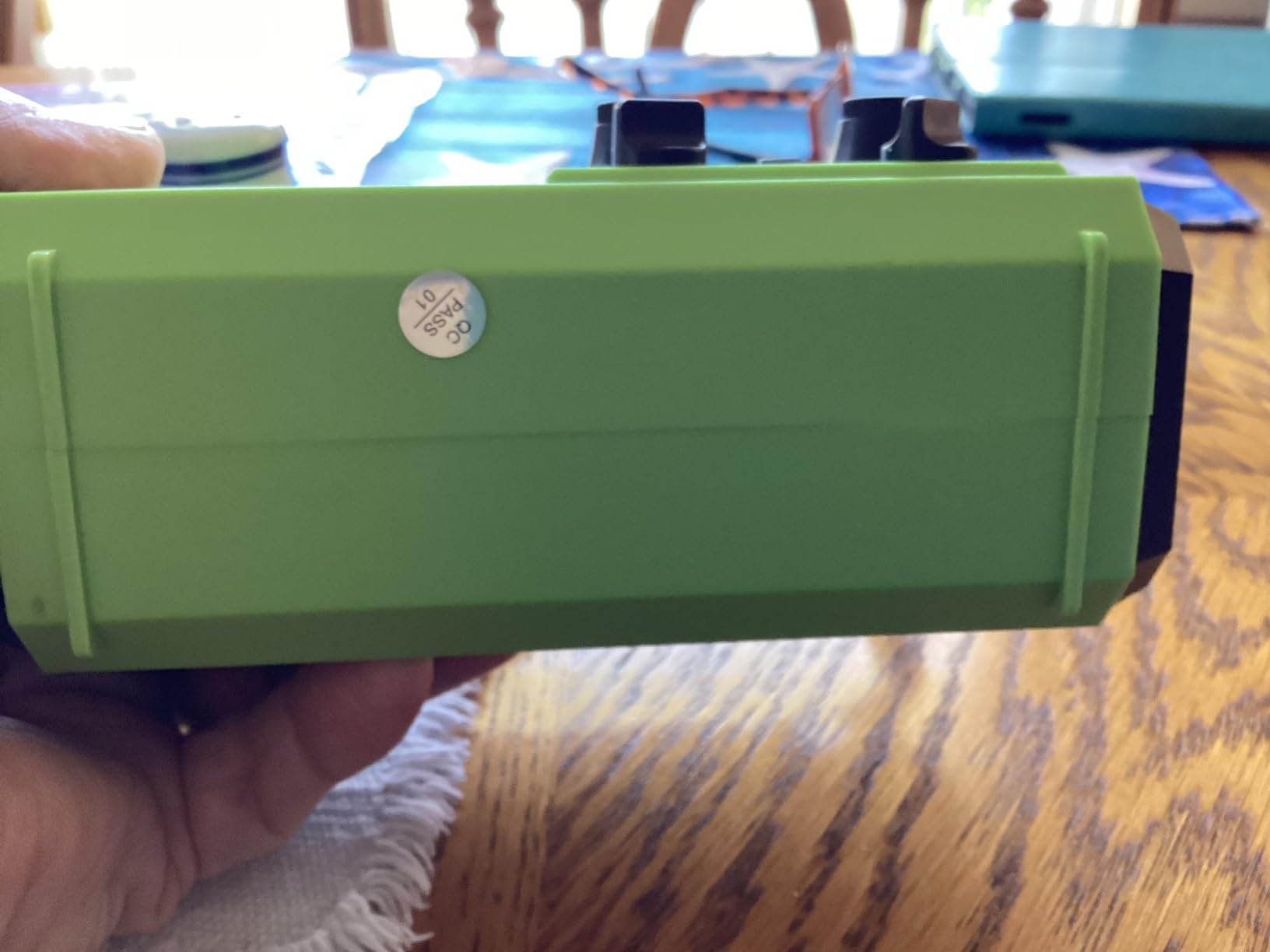
The lighting is a step above the usual 2.5 watt reading lamp. The 3W flashlight is brighter than average and there is a 6-LED reading lamp that swivels toward the front so you can read a map or a document without holding the radio overhead. The SOS alarm is described by owners as extremely loud, with a flashing red beacon for signalling.
Warranty coverage runs 12 months with a 90-day replacement window and a 30-day refund period.
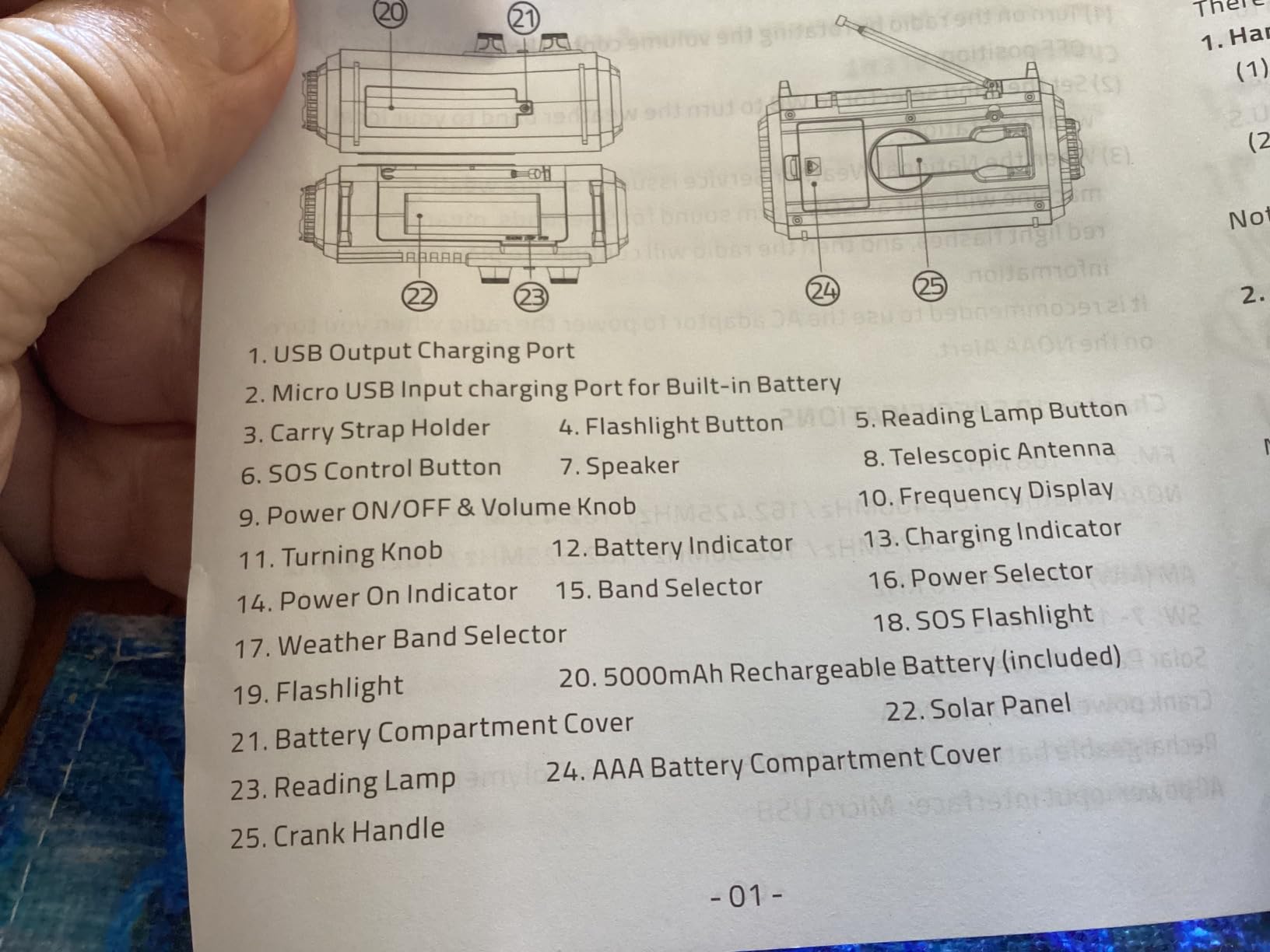
Why the IPX6 rating changes the buying decision
Water is the one environmental factor that ends a radio quickly. IPX3 protects against splashes and light rain, which is fine indoors but not in a storm. IPX6 holds up against powerful water jets from any direction, so this radio keeps working in conditions that would stop the others. For coastal, flood-prone and hurricane-margin households, that is the deciding spec.
It is also a good general kit radio because the pack is large enough to run it for a couple of days and still hold reserve for charging a phone.
Where it falls short
Shortwave reception is basic, with no frequency readout and no band-step control, so it works as an extra rather than a serious listening band. The analog pointer display is less precise than a digital tuner, and the solar panel and hand crank are slow top-up methods rather than full charging. Owners are clear-eyed about that, which is a point in the maker’s favour.
At 1.2 lb it is also not a small radio. If pack volume matters more than weatherproofing, the Kaito palm-size set or the XHDATA are lighter options.
6. Kaito KA600 Voyager Pro – Best Premium Digital Multi-Band Receiver
Kaito Voyager Pro KA600 Digital Solar Dynamo Hand Crank AM/FM/LW/SW & NOAA Weather Emergency Radio with Flashlight, Reading Lamp,Smart Phone Charger & RDS and Real-Time Alert, with AC Adapter, Black
Seven-band AM/FM/LW/SW/NOAA
Digital display with signal strength
RDS and real-time alerts
AC adapter included
Pros
- Only set here covering long wave alongside AM FM shortwave and NOAA
- Digital tuning with frequency battery level and signal strength on a backlit display
- RDS readout plus real-time alerting for severe weather outages and earthquakes
- Solar panel hand crank and rechargeable battery give three power paths
- AC power adapter is included in the box
Cons
- Large 9.5 inch body is the biggest in the group
- Backlit digital display consumes more power than an analog tuner
- Lowest average rating in the roundup with an 8 percent one-star share
It is the only set here that adds long wave to the usual AM, FM, shortwave and NOAA lineup, and it combines a digital tuner with real-time alerting rather than a simple alert tone. Owners value the RDS readout and the fact that an AC adapter is actually in the box.
The digital tuning shows frequency, battery level and signal strength on a backlit display, which is a real quality-of-life gain over every analog model here. Reception is described as real-time alerting for severe weather, outages and earthquakes, plus RDS. Power comes from a solar panel, a hand crank and a rechargeable battery, with USB phone charging output and a high-powered LED flashlight with an adjustable reading lamp.
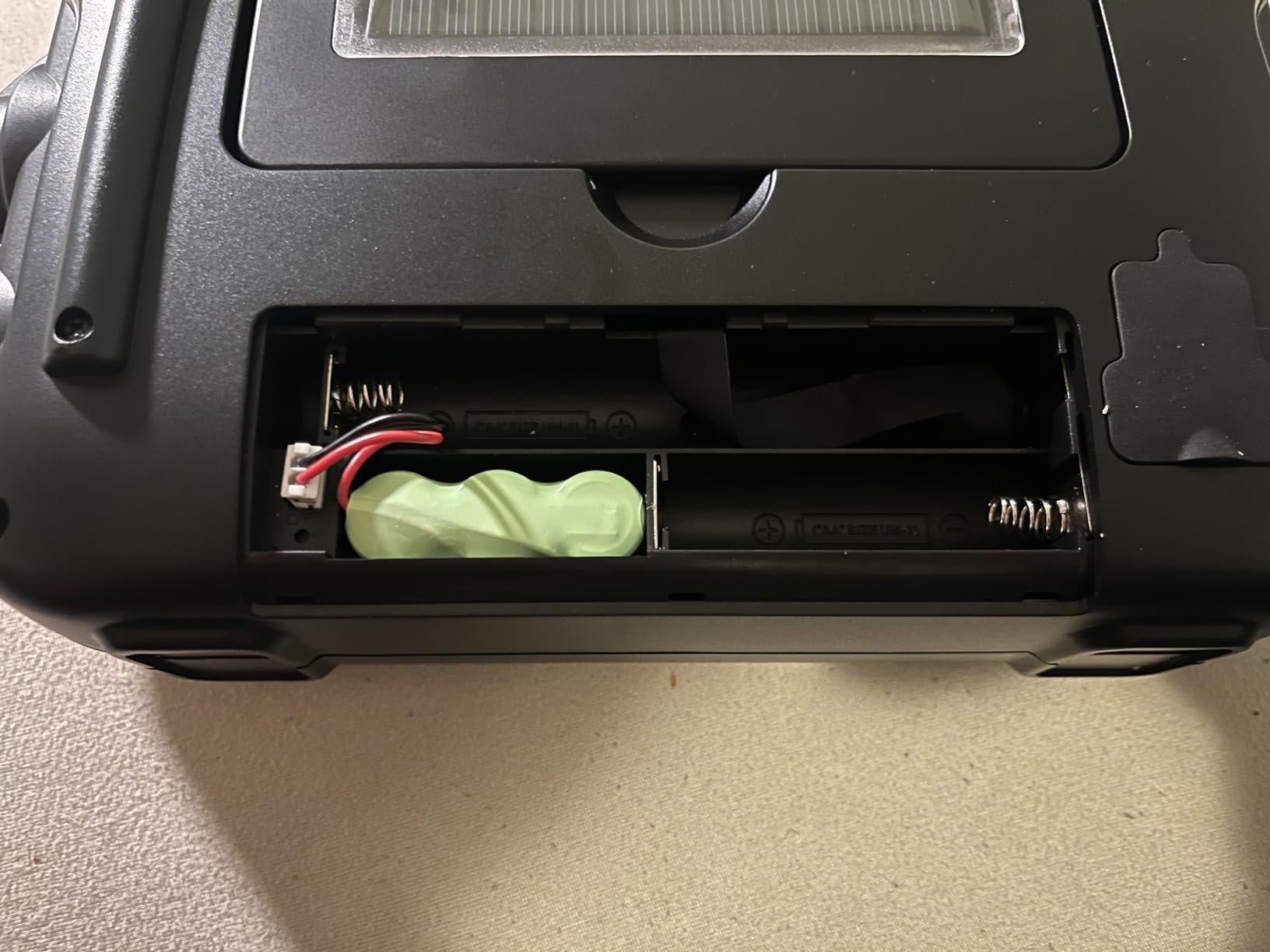
It is 16 ounces and measures 9.5 by 2.5 by 5.5 inches, which makes it the largest radio in the roundup. That is a fair trade for a home base or a vehicle kit, and a poor one for a hiking pack. It is the model I would want sitting on a desk during a multi-day event, not the one on my belt.
It is worth being direct about the downside: it has the lowest average rating in the group at 4.2, with an 8 percent one-star share in the reviews. Those negative reviews concentrate on build quality and value for money at this price point rather than on reception.
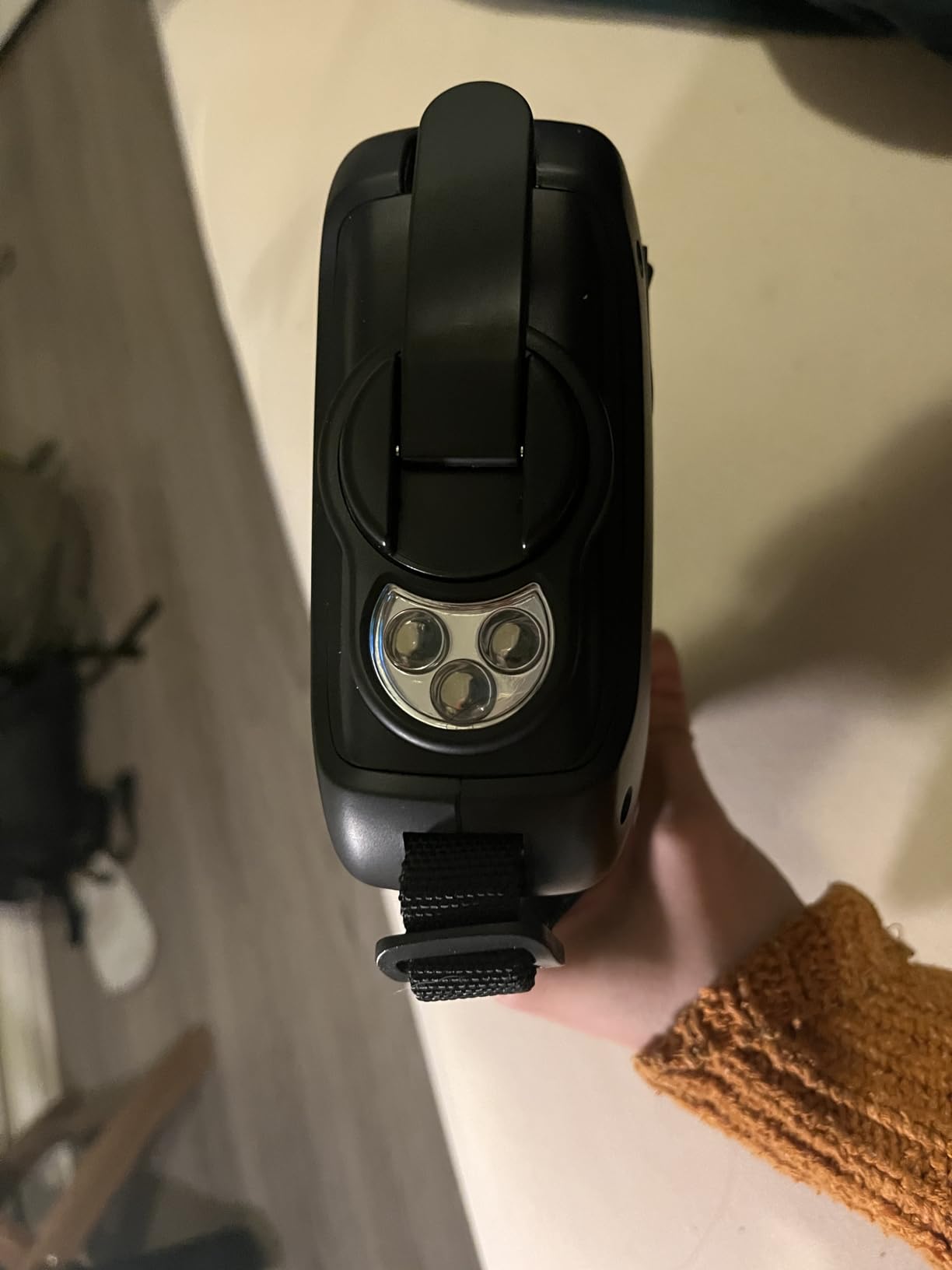
What you gain by paying for the digital tuner
Knowing the exact frequency matters more than it sounds. When something happens and you are reading about it on a phone that still has signal, you can look up the station frequency and go straight there instead of sweeping a dial blind. Signal strength and battery level on screen also tell you whether a weak signal is a real broadcast or just noise.
The long wave band is the one genuinely differentiating extra, and RDS gives you station names rather than numbers. For long-term listening, that is a better experience than any analog set in this roundup.
When it is the wrong money to spend
The backlit digital display consumes more power than an analog tuner, and with three power paths already listed you still have to think about runtime. Long wave is of little practical value outside specific regions, so if you are outside Europe and are not a radio hobbyist, that band is not paying for itself.
At 16 ounces it sits at the heavier end of this roundup, and the rating is the lowest. If your priority is surviving a week without power rather than listening quality, the Raynic or the Kaito KA500 are the smarter buys.
7. Emgykit R11 – Best Shortwave Radio for Actual Shortwave Listening
Portable Shortwave Radios with NOAA/SW/AM/FM, for Camping & Home
210 stored channel slots
Bluetooth 5.0 with 5W driver
4000mAh about 32 hours
Hand crank and solar backup
Pros
- Genuine shortwave-focused design with up to 70 stored channels per band
- Automatic channel search fills 210 preset slots across the bands
- Bluetooth 5.0 turns it into a wireless speaker with a built-in 5W driver
- 4000mAh battery gives up to 32 hours of playback over USB Type-C
- Hand crank and solar panel provide backup charging when mains power is gone
Cons
- At 0.53 kg it is noticeably heavier than pocket-sized alternatives
- 4000mAh pack is smaller than the 5000mAh units common here
- Preset shortwave channels only fill up where local signal conditions allow
Most of the crank radios on this list treat shortwave as a marketing line. The Emgykit R11 is designed around it, with automatic channel search that stores up to 70 presets per band and 210 in total, plus manual and scanning tuning across AM, FM, shortwave and NOAA. If you actually want to find stations rather than just confirm the band exists, this is the set to look at.
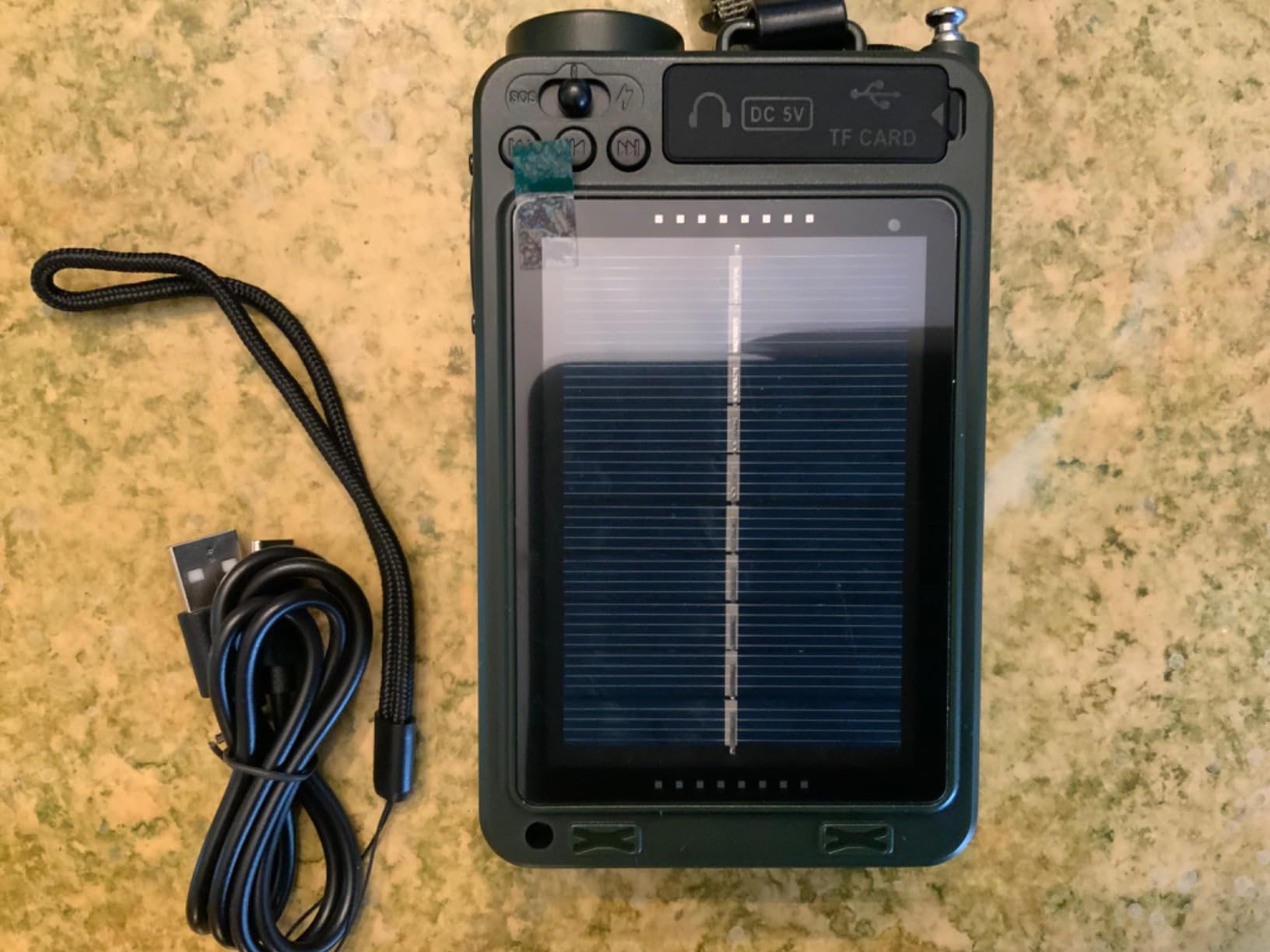
It is also the most unusual radio here in normal use. Bluetooth 5.0 lets it double as a wireless speaker with a built-in 5W driver, and there is a USB drive and TF/microSD card slot for playing your own audio files. Seven built-in nature sounds and a 10 to 70 minute auto shut-off timer are included, and the auto shut-off is a genuinely clever way to stop a radio draining itself flat when nobody is home.
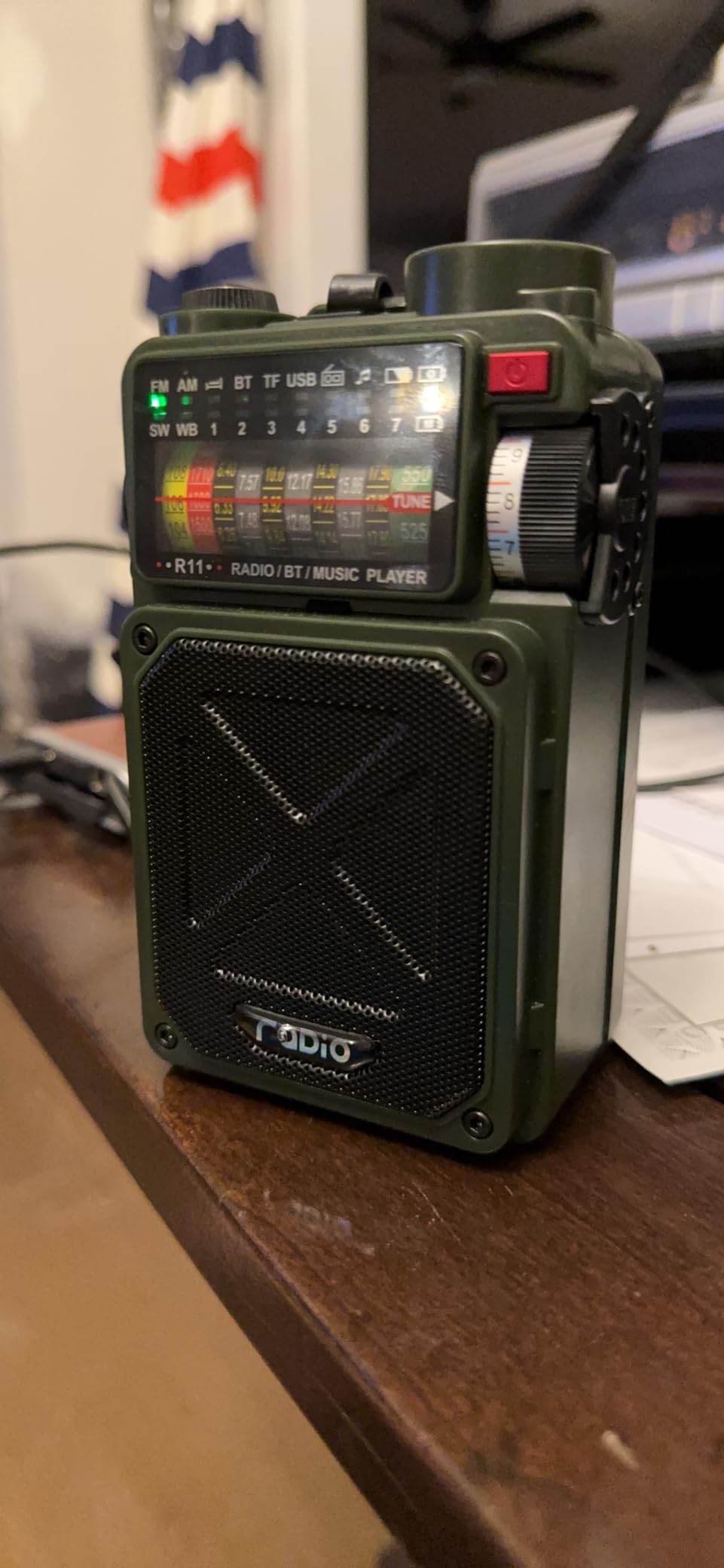
Power is a 4000mAh rechargeable battery giving up to 32 hours of playback over USB Type-C, with a hand crank and solar panel as backup. A 120-lumen flashlight, a compass and an SOS alert round out the emergency features. The radio comes in a military-style box with a carrying strap, which suits the go-bag use case.
At 0.53 kg, that weight is noticeable heavier than the pocket-sized alternatives despite the small 3.15 by 2 by 5.02 inch footprint. That is a fair description of a radio that prioritises features over grams.
Why 32 hours of playback matters in an outage
The 32 hour figure is one of the longest continuous listening claims in the roundup, and the auto shut-off timer extends it further by making it practical to leave the radio on between checks. For a household listening to bulletins through a long event, that combination means you are not rationing the radio against its own battery.
The 210 preset slots are the other quiet advantage. You can pre-program your local stations once, while you have mains power, and then find them instantly with no tuning under stress.
Where it is the wrong choice
Weight is the first issue. At 0.53 kg this is not the radio for a day-hiking pack or a lightweight evacuation kit, whatever its dimensions suggest. The 4000mAh battery is also smaller than the 5000mAh packs common in this category, so raw endurance is not its strength even though the runtime figure looks strong.
And preset shortwave channels only fill up where local signal conditions allow, which is a fair warning for anyone hoping to sit somewhere remote and scroll through stored stations. Bluetooth speaker mode is fun rather than emergency-relevant, and the 12-month warranty is unremarkable.
8. Kaito Palm-Size 5-Way Radio – Best for a Small Go-Bag or Drawer
Best NOAA Portable Solar/Hand Crank AM/FM, Shortwave & NOAA Weather Emergency Radio with USB Cell Phone Charger & LED Flashlight (Green)
Palm-size 5.25 inch body
5 power options
AM/FM/SW/7 NOAA channels
14 inch telescopic antenna
Pros
- Palm-size and lightweight so it packs into a go-bag or an emergency drawer
- Five power options including a 3 AAA compartment and replaceable NiMH pack
- AM FM shortwave and 7 NOAA channels in a very small footprint
- USB output charges both iOS and Android phones
- Telescopic antenna extends to 14 inches for shortwave sensitivity
Cons
- Small built-in speaker is not loud enough for very noisy environments
- Hand crank and solar panel only maintain charge
- 3 AAA batteries are not included with the radio
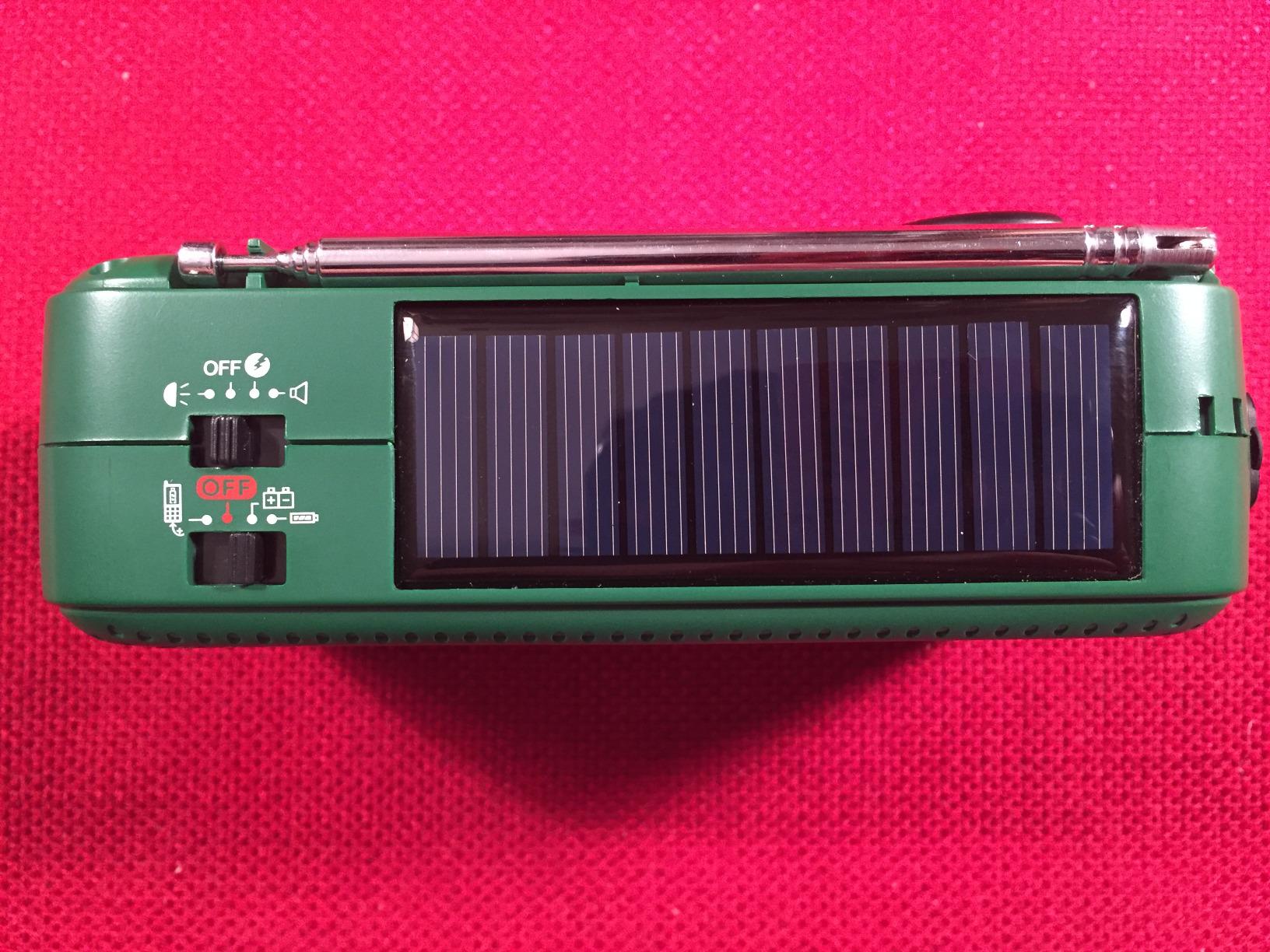
This is the Kaito that answers a different question: how small can a full emergency radio be. At 5.25 by 2.5 by 2 inches, it is a genuine palm-size unit, and buyers treat it as an inexpensive backup for a go-bag or an emergency drawer rather than as a primary set. That is the right way to look at it.
For the size, the feature list is generous. Five power options cover the hand crank, a solar panel, a 3 AAA compartment, 5V USB and a replaceable NiMH pack. Band coverage is AM, FM, shortwave and 7 NOAA weather channels, and the telescopic antenna extends to 14 inches for better shortwave sensitivity than the stub antennas on most compact units.
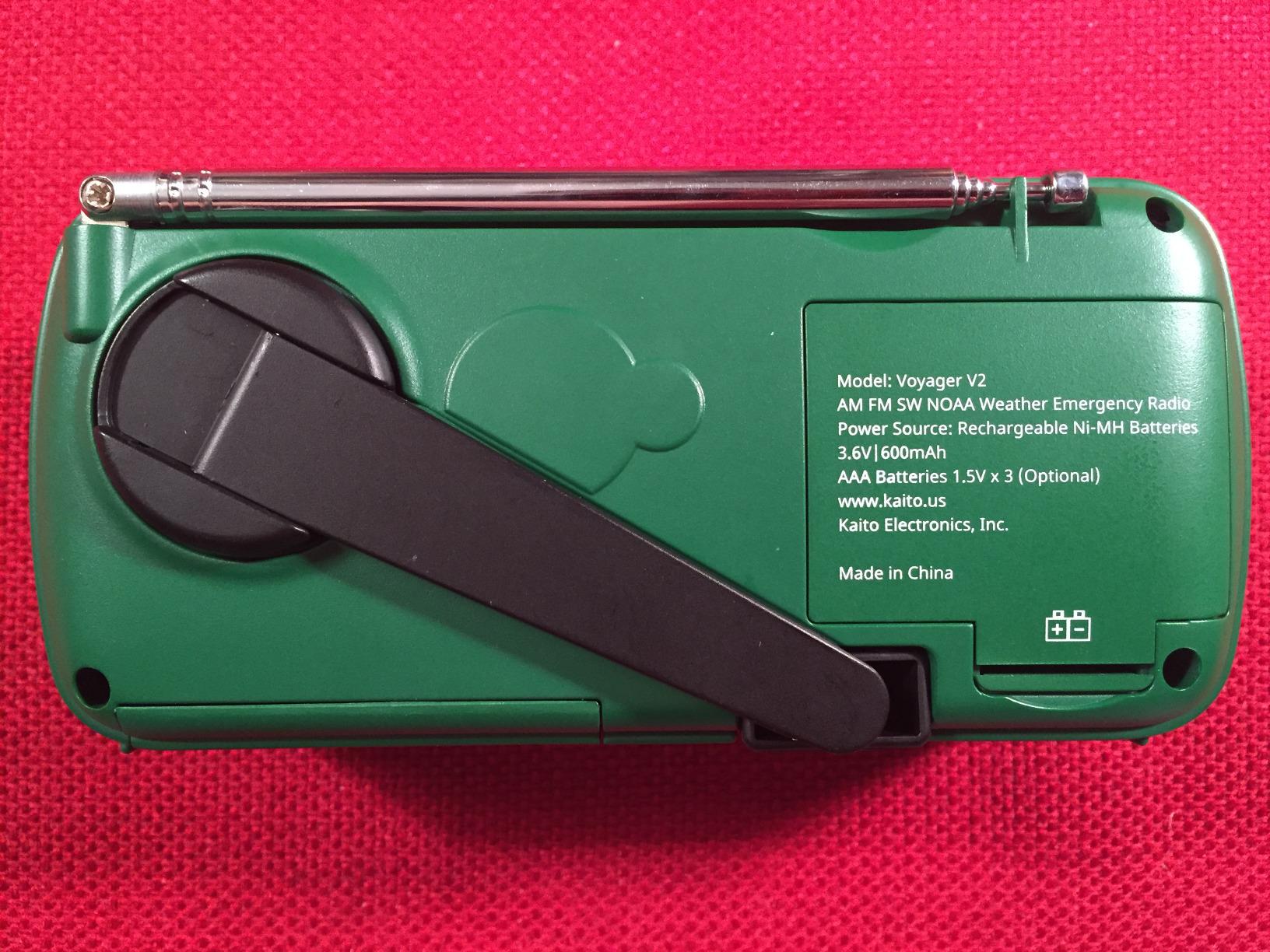
The USB output charges both iOS and Android phones, which is the feature that most often earns this radio a place in a kit. A siren, an LED flashlight and a red S.O.S. beacon light are included, and the water-resistant impact-resistant ABS shell is well matched to a drawer, a car or a pack. The box carries a lanyard, a rechargeable battery pack and a USB charging cable.
There is an earphone jack for private listening, which matters more than it sounds when the next room is full of people who do not want to listen to a weather bulletin.
When the small footprint is the deciding factor
Pack volume is a real constraint. A 5.25 inch radio fits in a pocket, a small pouch or a drawer that already holds a torch and a first aid kit, and you can buy several without noticing the cost. If you want one radio per family member, or one in each vehicle, this is the shape that makes that plan realistic.
The 14 inch antenna gives it more shortwave reach than its size suggests, and the AAA compartment keeps the no-recharge problem at bay.
When it will disappoint you
The small built-in speaker is not loud enough for very noisy environments, which matters more than the spec sheet suggests if you plan to use it outdoors in wind. The hand crank and solar panel only maintain charge rather than restore a depleted battery, and it is not weatherproof for exposure to heavy rain.
Two things are not in the box: the 3 AAA batteries, despite them being listed as required, and the earphones, despite the earphone jack. The review base is also the thinnest of the Kaito models here, so there is less long-term field feedback behind it. Buy it as a distributed backup, not as the radio your family depends on.
9. Jazmm 4-Band Digital – Best Shortwave Radio for Precise Tuning
Bluetooth AM FM Shortwave Radio with NOAA Weather Alert,1250mAh Rechargeable Portable Pocket Radio with Best Reception,5W Big Speaker, Digital Tuner and Earphone,Support SD Card and USB MP3 Player
DSP chip for weak signal sensitivity
5W speaker
1250mAh about 10-12 hours
Digital tuner with display
Pros
- Advanced DSP chip improves sensitivity on FM AM shortwave and weather band
- 5W speaker is unusually large for a pocket set and stays clear at volume
- Bluetooth 5.4 turns it into a wireless speaker plus TF card and USB MP3 playback
- Digital tuner with a bright display makes exact frequency selection far easier
- Bluetooth 5.4 plus TF card and USB MP3 playback make it a general portable speaker
Cons
- 1250mAh battery gives far less runtime than the 4000-5000mAh emergency packs
- No hand crank solar or AAA battery fallback so it is not self-sufficient
- At 352 g it is heavier than its pocket format suggests
The Jazmm has a digital signal processing chip where most of this category has a moving-coil dial, and that single design choice is what pulls weak shortwave stations out of the noise. It covers FM 87-108 MHz, AM 520-1710 kHz, shortwave 4.75-21.85 MHz and the weather band. Owners who expected a toy dial are pleasantly surprised.
It is also the loudest set on paper. The 5W speaker with six EQ stereo settings stays clear at volume in a way the 3 watt crank radios cannot, and Bluetooth 5.4 turns it into a wireless speaker alongside TF card and USB MP3 playback. A back clip and wrist strap attach it to a belt or a bag, and there is a built-in flashlight and a 3.5mm headphone jack.
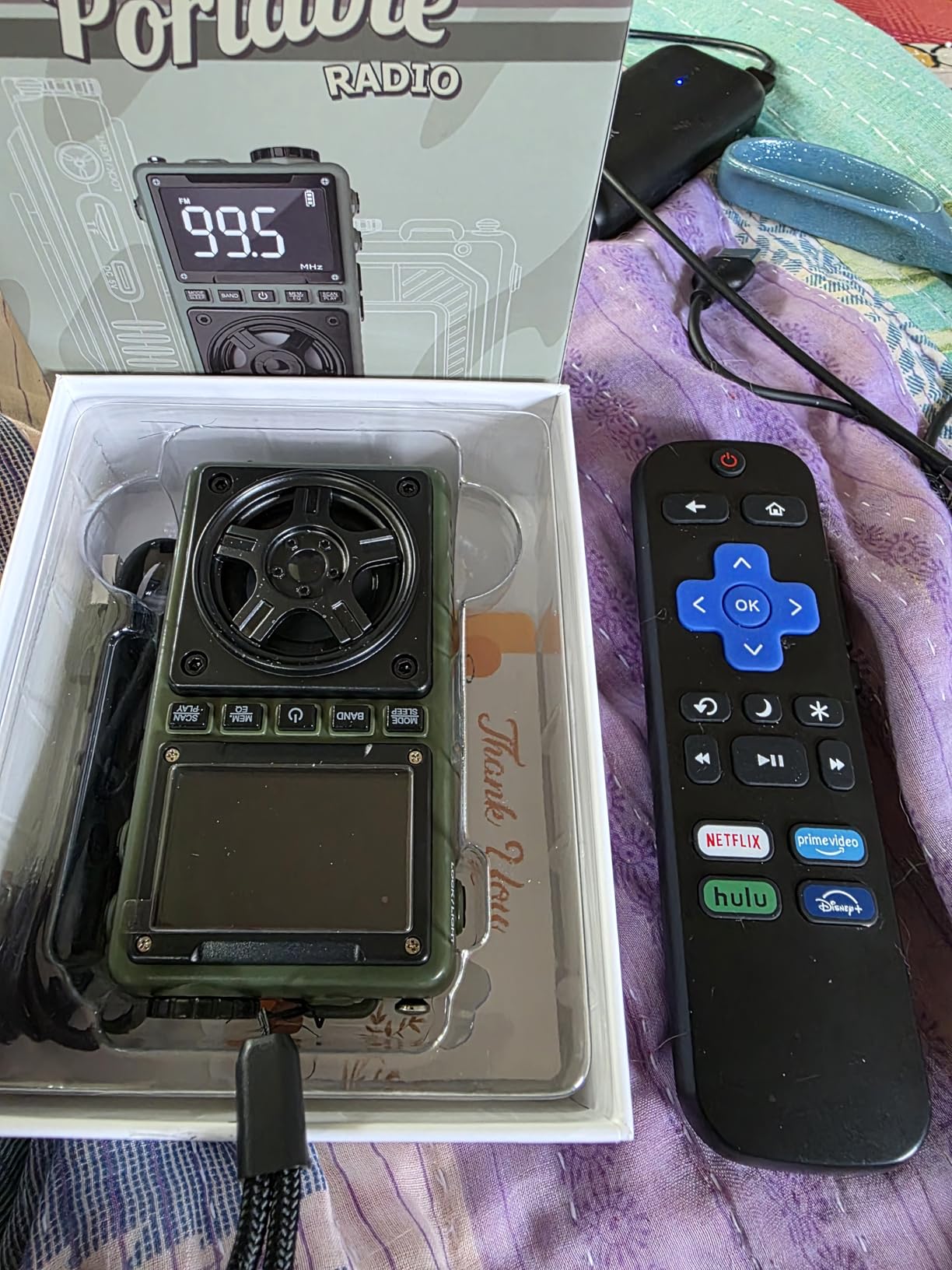
The digital tuner with a bright display is the practical win. Being able to see the exact frequency is the single change that makes shortwave usable for a beginner, and it is worth more than any of the emergency gadgets the crank radios add. Two LR44 batteries are included for the clock and settings, and charging is USB-C.
It runs from a 1250mAh rechargeable battery for 10 to 12 hours of listening. That figure is honest and it is the radio’s main weakness, which is why it ranks where it does rather than higher.
Why the DSP chip changes what you can hear
Analog shortwave dials pick up everything, including noise and neighbouring carriers, which is why so many budget radios sound like static on every channel. Digital signal processing narrows that down and lets a weak station stay audible. On this set that translates into shortwave you can actually sit and listen to rather than hunt through.
Combined with the frequency readout, it makes this the radio I would hand to someone who has never tuned shortwave before and wants to explore it without frustration.
When it is the wrong radio for the job
The 1250mAh battery is small and gives far less runtime than the 4000-5000mAh emergency packs, so this is a companion radio rather than a standalone survival unit. There is no hand crank, no solar panel and no AAA battery fallback, which means when the internal cell dies the radio is finished.
At 352 g it is heavier than its pocket format suggests, and the 10 to 12 hour runtime needs a USB-C supply to recharge. If your plan is to sit out a multi-day event on one battery, choose something else and use this as a listening set at home.
10. Greadio R12 – Best for Battery Capacity and Feature Packing
Greadio Portable Emergency Shortwave Radios, AM FM NOAA Weather Radio
14800mWh/4000mAh power bank
12-in-1 digital feature set
Extra long antenna
Hand crank solar Type-C
Pros
- 14800mWh/4000mAh battery is one of the largest in the roundup and doubles as a phone charger
- 12-in-1 design combines AM FM shortwave NOAA Bluetooth USB drive TF card siren and flashlight
- Extra-long antenna is tuned for better shortwave reception than a stock stub
- Hand crank solar and USB Type-C give three charging paths
- Bluetooth 5.4 tuned to cut white noise with the sleep mode removed
Cons
- IPX3 rating is splash resistance only rather than waterproof
- Type-C adapter is not included in the box
- Small 249-review base compared with the category leaders
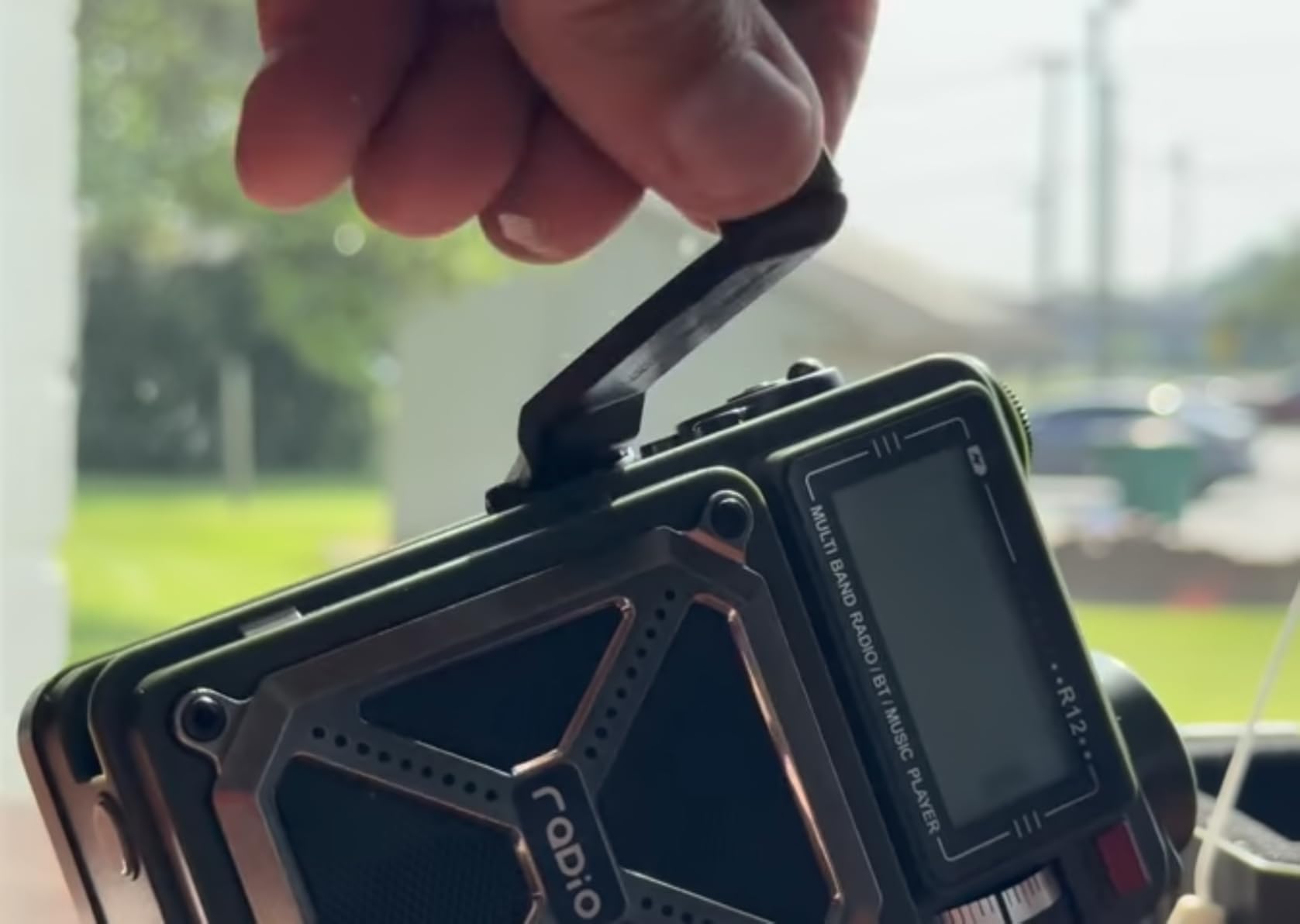
The Greadio R12 packs one of the largest power banks in the roundup into a 12.32 oz body. The 14800mWh/4000mAh battery is roughly double what the pocket digital sets carry, and it has a USB output mode for phone charging, which makes it a strong power source for a shortwave-focused radio.
The feature list is where the 12-in-1 label comes from. It combines AM, FM, shortwave and NOAA reception with Bluetooth 5.4, a USB drive slot, a TF card slot, an SOS siren and a flashlight in a 3.19 by 2.05 by 5.2 inch body with a hand strap and a military-style gift box. Bluetooth range is listed at up to 26 feet.
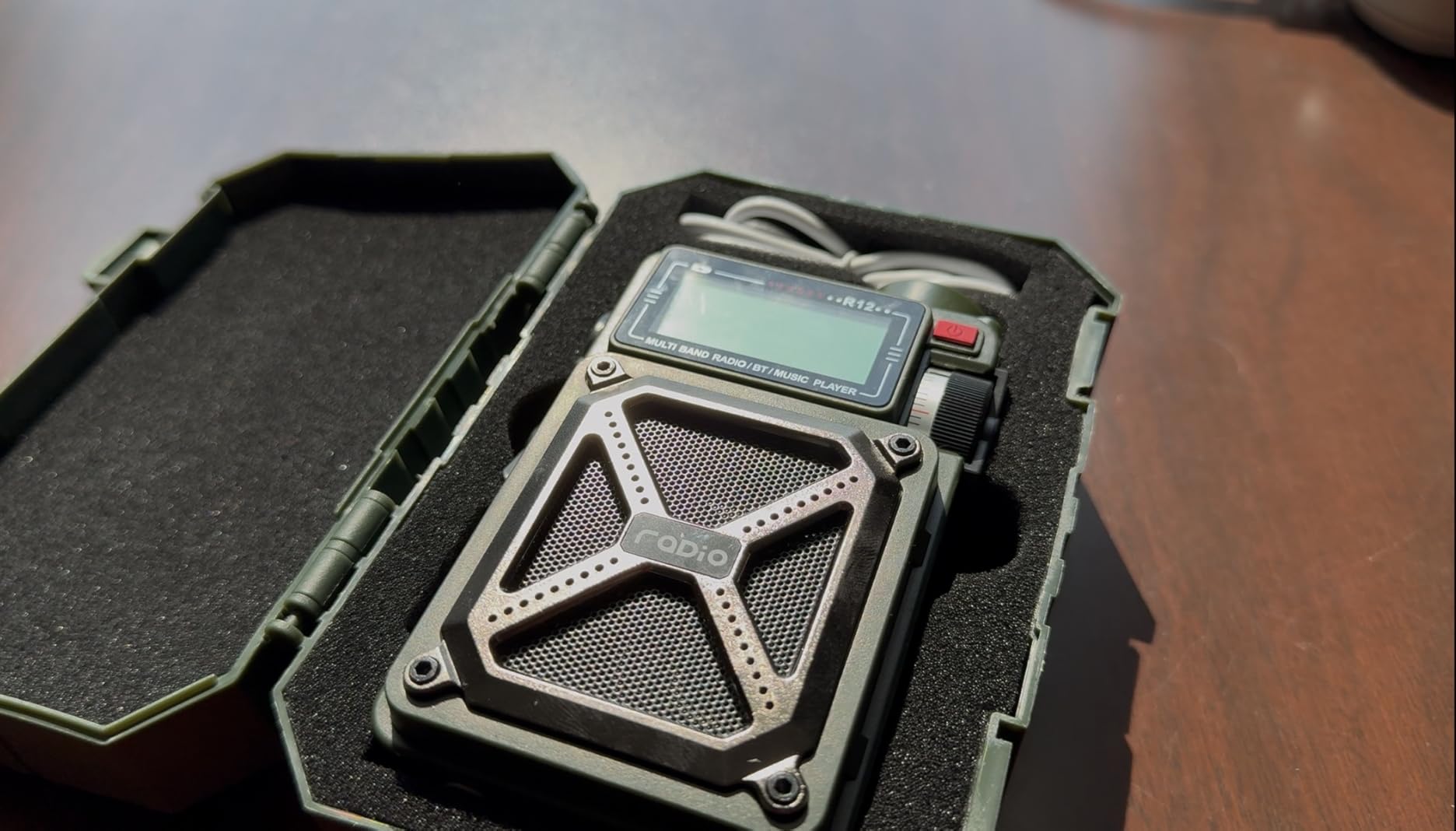
Two details stand out for a shortwave buyer. The extra-long antenna is tuned for better shortwave reception than the shorter stock antennas on comparable sets, which is the single biggest upgrade you can make on a budget radio without changing it. And the Bluetooth 5.4 implementation was specifically tuned to reduce white noise and remove the sleep mode behaviour that plagued earlier versions of these sets.
Power comes from a hand crank, a solar panel and USB Type-C, and the manufacturer includes a 12-month warranty. There is also an IPX3 water resistance rating and a compass on the strap.
What the extra capacity actually buys you
Runtime, and a phone charger you do not have to buy separately. A 14800mWh pack has enough headroom to run the radio for a long stretch and still top up a phone, which covers the single most common real-world complaint from shortwave buyers: the radio runs out at exactly the wrong time.
The long antenna is the second reason. Antenna length has more effect on shortwave reception than almost anything else you can change, and this set gets a good one.
What to watch out for
IPX3 is splash resistance only, not waterproof submersion, so keep it out of heavy rain. The Type-C adapter is not included, so add a cable to the kit. And the review base of 249 is small compared with the category leaders, which means there is less long-term owner feedback to draw comfort from.
The hand crank and solar are emergency top-ups rather than practical daily charging, and 12-in-1 feature sets tend to hide the one function you need behind four menu layers. Read the manual before the emergency, not during it.
11. XHDATA D221 – Best Shortwave Radio That Runs on Plain AA Batteries
XHDATA D221 NOAA Weather Radio Portable AM FM Shortwave Radio Receiver
2 AA battery powered, no charging
125 g pocketable body
4-band analog with DSP chip
Kickstand and headphone jack
Pros
- Runs on 2 AA batteries
- the easiest power source to replace in an emergency
- Only 125 g and easy to operate one-handed at 125 by 74 by 30 mm
- DSP chip gives good sensitivity across FM AM shortwave 5.6-22 MHz and the weather band
- Weather band is the standout
- pulling up multiple NOAA stations for a small set
- Low cost makes buying several for a kit straightforward
Cons
- Volume knob doubles as the power switch and is far too sensitive
- Tuning knob is overly sensitive and loses stations when released
- No rechargeable battery hand crank or solar option
- Not water resistant and the plastic shell is not ruggedized
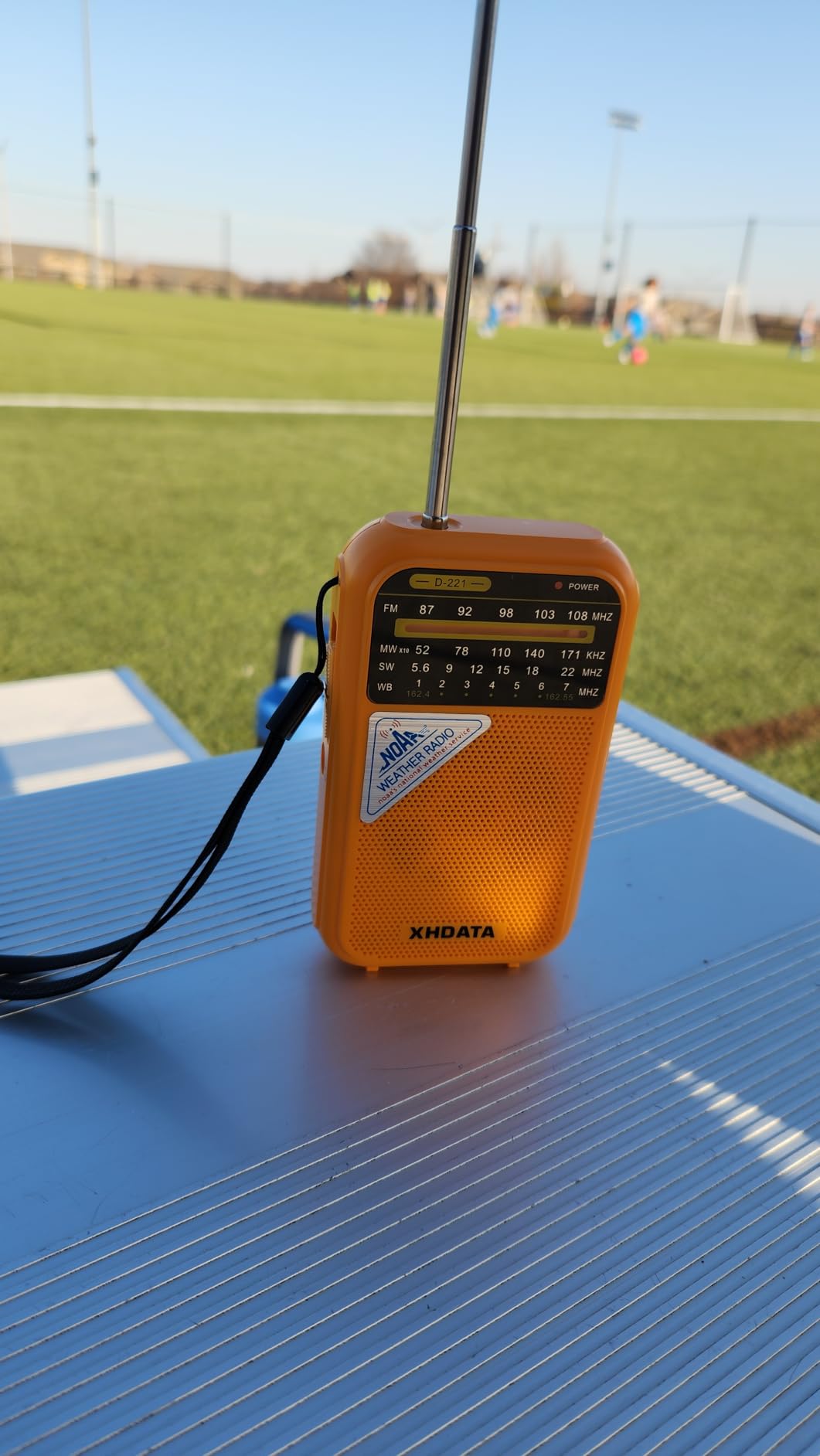
The XHDATA D221 answers the hardest question in emergency prep honestly: what runs on batteries you can find when everything else is closed. It runs on two AA batteries, with no charging, no adapter and no proprietary pack. At 125 g and 125 by 74 by 30 mm it is the smallest radio in this roundup, and it fits a pocket, a glove box or a hand without thinking about it.
It is also a four-band analog receiver covering FM 87-108 MHz, AM 520-1730 kHz, shortwave 5.6-22.0 MHz and the weather band at 162.40-162.55 MHz, with a DSP chip for improved signal reception. Owners single out the weather band as the standout, saying it pulls up multiple NOAA stations for a set this small.
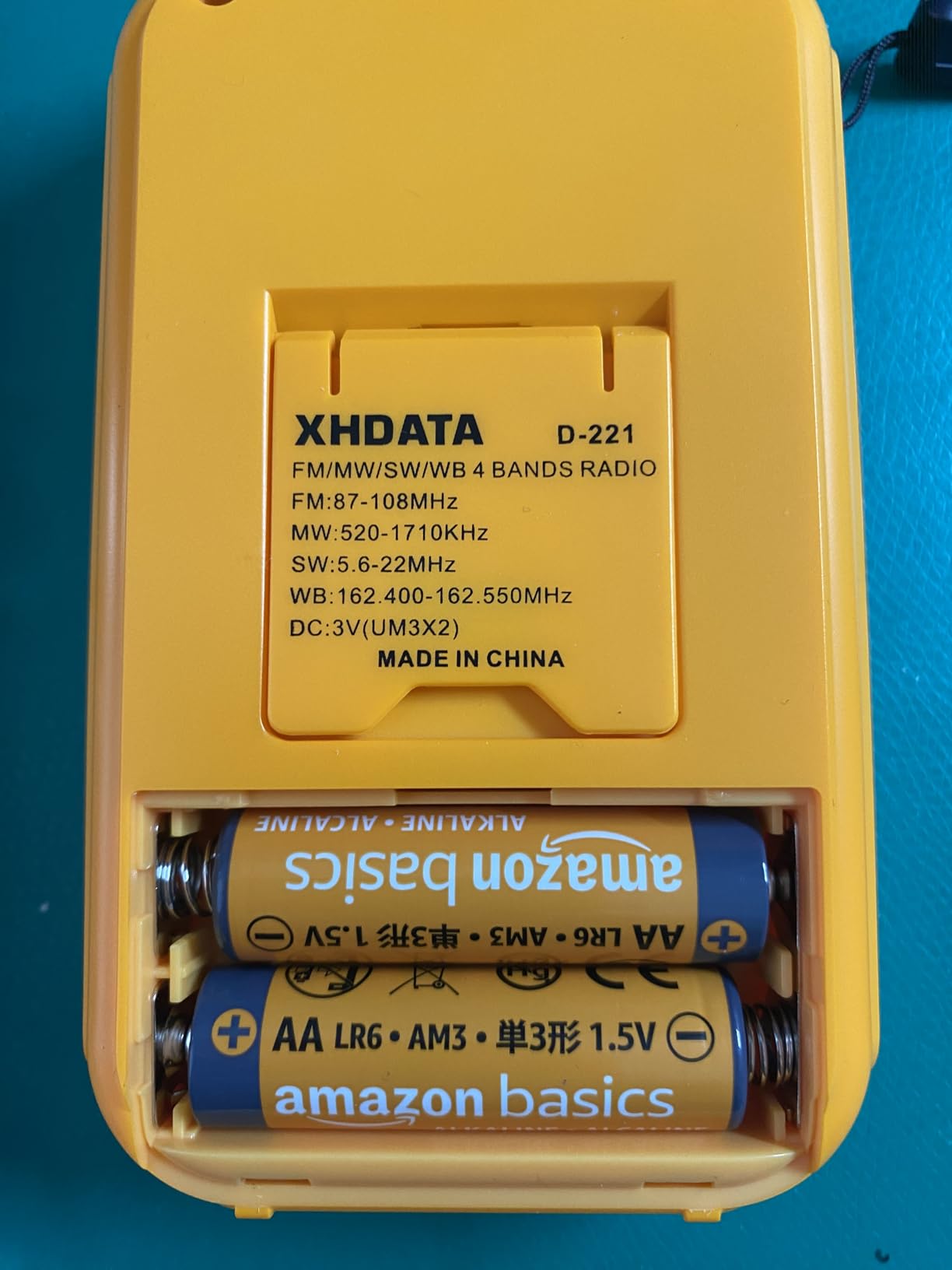
The ferrite AM antenna pulls in medium-wave stations from long distances at night, which is genuinely useful when local transmitters are off the air. A 3.5mm headphone jack and a kickstand for hands-free desktop listening are both included, and XHDATA provides one year of after-sales service. The low cost makes it sensible to buy several and distribute them around a property.
One radio in the kitchen drawer, one in the car and one in each go-bag is a plan that costs very little and has no single point of failure. That kind of redundancy beats one better radio in one place.
Why AA batteries still win the endurance argument
Because a battery is a commodity. Lithium AA cells hold a charge for years in a drawer, alkaline cells are available in every shop and vending machine on any street, and you can buy a hundred of them for pocket change. No charger, no cable and no wall outlet is needed to bring the radio back from the dead.
Several users in shortwave forums make this exact point, prioritising easily swappable AA cells over every other feature. For a radio you may not touch for two years, that is the argument that holds up best.
Where the D221 frustrates you
The knobs are the problem, and they are the same two knobs in every review. The volume knob doubles as the power switch and is far too sensitive, jumping straight to maximum volume. The tuning knob is also overly sensitive, losing stations as soon as you release it. Under stress, that combination is genuinely annoying.
The 5.6-22 MHz shortwave range is spread across one crowded analog dial with local AM bleed-through interfering, which is very difficult to tune. There is no rechargeable battery, hand crank or solar option, and the radio is not water resistant with an unruggedized plastic shell. Fine for a drawer. Not fine for a storm.
12. BAIJIALI 4-Band Crank Radio – Best Compact Crank Radio for a Secondary Kit
Hand Crank Emergency Weather Radio with 2600mAh/9620mWh Power Bank, NOAA AM FM Shortwave Portable Radio, Solar & USB-C Charging, Flashlight, SOS Alarm for Emergency Kits (Brown)
2600mAh/9620mWh power bank
All 7 NOAA channels
Hand crank solar and USB-C
TF card and USB playback
Pros
- 2600mAh/9620mWh battery doubles as a power bank to keep a phone charged
- Receives all 7 NOAA weather station broadcasts for emergency warnings
- AM FM and worldwide shortwave bands for news from beyond the local area
- Three power options: hand crank solar panel and USB-C
- LED flashlight plus a loud SOS alarm
- TF card slot and USB port for playing stored audio files
Cons
- 2600mAh capacity is roughly half that of the 5000mAh packs in this category
- Small 142-review base means less long-term field feedback
- No stated water resistance rating
- Hand crank and solar remain slow emergency top-up methods
The BAIJIALI is a compact crank radio at 7.09 by 3.15 by 4.06 inches, and it does the two things that matter most without a screen. It receives all 7 NOAA weather station broadcasts, and it covers AM, FM and worldwide shortwave for news from beyond the local area. The three power options are a hand crank, a solar panel and USB-C.
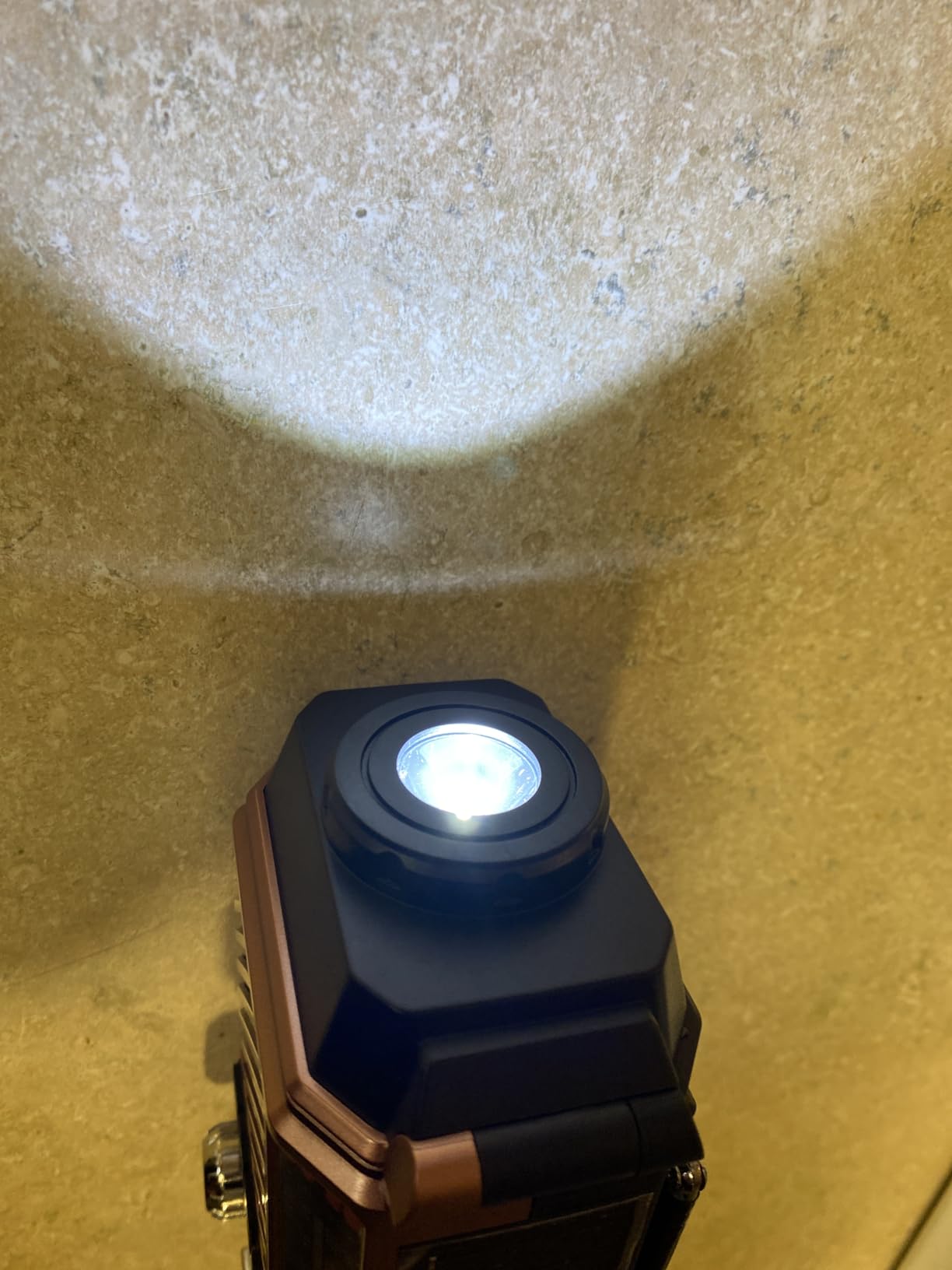
The 2600mAh/9620mWh battery doubles as a power bank, which is the feature that most justifies buying a second radio when you already have a larger one. There is an LED flashlight, a loud SOS alarm, a TF card slot and a USB port for stored audio, and the manufacturer provides a 1-year warranty.
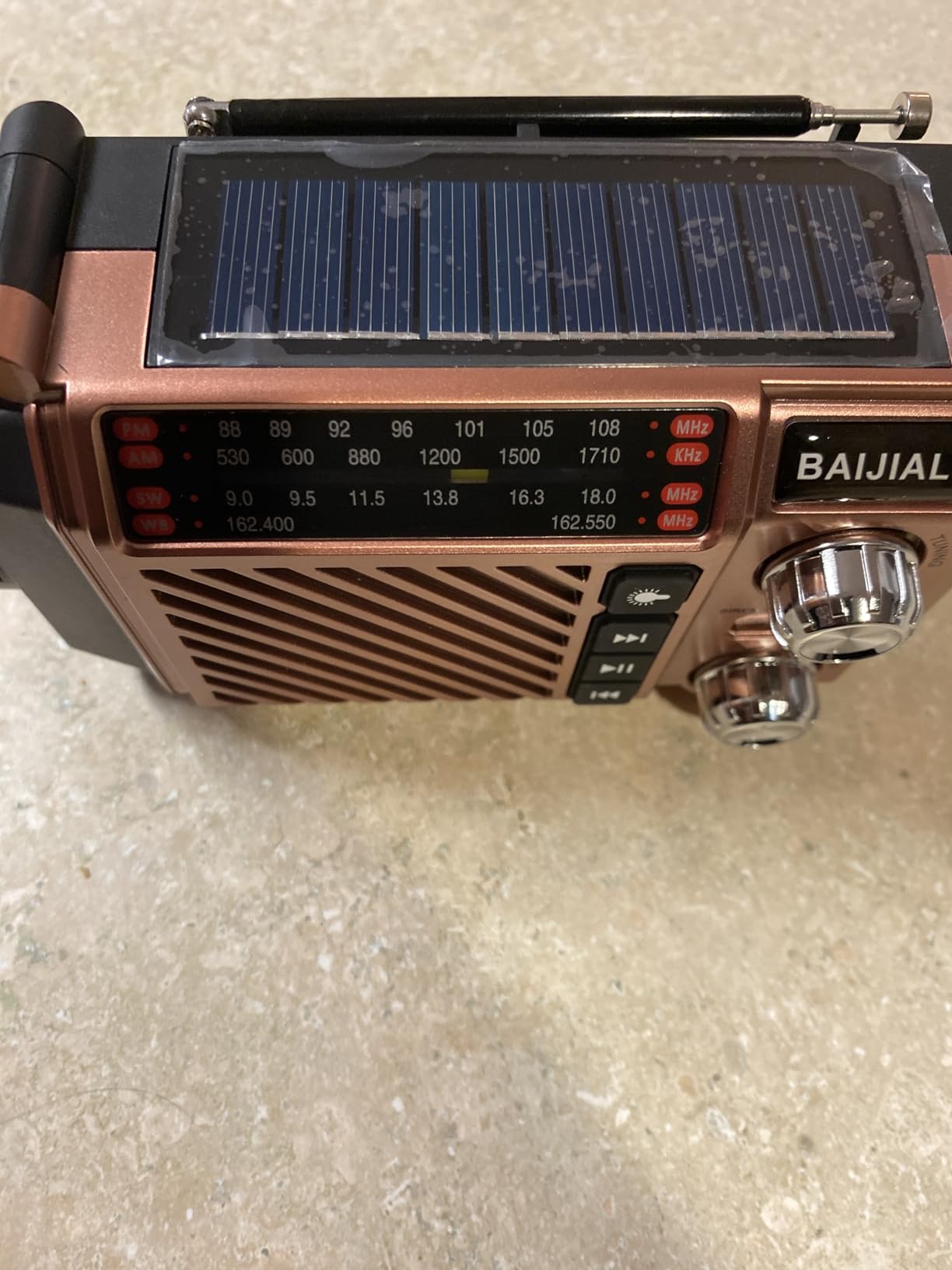
Where it fits is as a distributed secondary unit. A larger primary radio in the main room and a BAIJIALI in a bedroom, a basement or a vehicle gives you two independent listening points without duplicating the full spend on a second big set.
Owners appreciate that a unit this small bundles a usable NOAA receiver, a shortwave band and phone charging with crank and solar fallback. That is a fair summary of what it is and is not.
Where it earns its place in a kit
As a second or third unit rather than a first. The all-seven-channel NOAA coverage and the phone-charging output are the two functions worth having in a backup device, and the compact body means it can go in a drawer, a backpack side pocket or a vehicle without a packing decision.
It also pairs well with an AA-powered set like the XHDATA, since the two cover different failure modes: one runs indefinitely on cells, the other recharges three ways.
What to know before you commit
The 2600mAh capacity is roughly half that of the 5000mAh packs in this category, so runtime is the compromise you accept for the smaller body. There is no stated water resistance rating, which means treat it as an indoor device. The hand crank and solar remain slow emergency top-up methods.
Most importantly, the review base is 142, so there is much less long-term field feedback than the category leaders have. That is not a deal-breaker for a secondary unit, but it is a reason to buy a power bank and spare cells alongside it rather than relying on it alone.
How to Choose a Shortwave Radio for an Emergency
Start with power sources, not with reception. The radio that fails is the one you cannot recharge and whose internal cell has died. Any radio that accepts AA or AAA cells gives you an endless supply in a dead grid, and any radio with a hand crank and solar panel keeps a charged battery alive indefinitely. Ideally you want both, which is why the Raynic and the Kaito KA500 score where they do.
Next, check whether the shortwave band is real. Look for a frequency readout, a band-step control, or per-band channel storage. A single wide sweep dial with no step control is a decorative band, and owners of those radios consistently regret it. If you plan to monitor amateur emergency traffic rather than just check that the band exists, you also want a set that covers the amateur HF bands cleanly.
NOAA alerting comes next, and the difference between a certified set and a basic one matters. A NOAA-certified radio with seven pre-set channels and real-time alerting will wake you for a warning you were not watching for. Check whether it can be filtered to your county, because alerts from three states away are noise during a local event.
Then think about who is using it. A radio that will sit in a drawer and be used twice a year can be a large home set with a big speaker. A radio that goes in a go-bag needs to be light, and a radio handed to a frightened family member needs to be simple, which argues for analog controls with no menu. Weight ranges from 125 g to 0.53 kg across this roundup, and that is a real difference in a pack.
Finally, be clear on licensing. Every radio on this page is receive-only and needs no licence to operate. Transmitting on amateur bands does require a licence, and it is a completely separate question from listening. If you want to talk to other people rather than just hear them, you need a two-way radio such as a GMRS or amateur handheld, and that is complementary gear rather than a replacement.
Battery Chemistry Decides It: AA vs 18650 vs Sealed Packs
Almost nobody treats battery chemistry as the primary buying axis, and it should be the primary buying axis. A radio is only as good as the cells you can find for it on day five, and the three options behave very differently in a real outage.
AA and AAA cells win on availability. Any shop, hardware store, vending machine or neighbour’s drawer has them, they cost almost nothing in bulk, and lithium AA cells hold their charge for years in storage. The XHDATA D221 runs on two AA cells and never needs charging. The Raynic CR1009Pro and the Kaito KA500 both accept three AAA cells as a fallback when the internal pack dies, and the Mesqool does too. That is the difference between a dead radio and a working one.
18650 lithium-ion cells are better in one specific way: they hold far more charge per gram, so a radio using them runs longer per cell. They are the reason many sensitive shortwave receivers exist at a practical size. They are also the reason a few owners complain, because 18650 cells are not sold in an ordinary shop on a Tuesday, and a proprietary two-cell pack sealed inside the case is not user-replaceable at all.
Sealed internal packs are the category default because they make the marketing simple: one 5000mAh number, a flashlight, a crank and a solar panel. They are fine for a week and dangerous as a single point of failure. A sealed lithium pack also self-discharges in storage, which means a radio that sat in a drawer for two years may arrive already flat.
Our rule after working through this roundup: buy the sealed-battery radio you want for the features, then buy a second radio that runs on AA cells, and store spare lithium AA cells with both. Redundancy across two different battery chemistries beats depth in either one. And if you can only choose one, choose the set with a removable or secondary cell format over the one with the biggest capacity number on the box.
Frequencies to Save in Your Presets Before the Emergency
Program these while you still have mains power and a working internet connection. Doing it in advance is the whole point, because searching for a frequency during an event wastes battery and attention you need for something else.
NOAA weather band channels, in the order most sets label them: 162.400 MHz, 162.425 MHz, 162.450 MHz, 162.475 MHz, 162.500 MHz, 162.525 MHz and 162.550 MHz. These are the seven channels every certified weather radio in this roundup receives, and they carry official watches, warnings and emergency information. Store all seven; your radio will usually sort them by signal strength for your area.
Time and standard frequency signals are worth having as a fallback clock. The classic HF standard frequency and time signal sits at 5.000 MHz, and it is reachable on many of the sets here, including the 5.6-22 MHz and 4.75-21.85 MHz models. If everything else is silent, a steady tone tells you your radio still works.
For shortwave news, save the bands rather than individual stations, because which station you can hear changes with the time of day and the season. The lower bands around 3.5-4 MHz and 5.9-6.2 MHz travel long distances at night, while the higher bands around 9-12 MHz and 15 MHz tend to work better in daylight. Amateur emergency traffic often appears on the band edges just outside the broadcast allocations, and regional nets move around, which is exactly why people in shortwave communities stress that shortwave stations are run by various international broadcasters rather than one schedule you can memorise.
Finally, store your local AM and FM emergency stations. In a domestic disaster the local transmitter is often the one that survives, and in the United States many counties simulate their severe weather on local radio as well as on the weather band. That local coverage is what shortwave cannot replace, which brings us to the most common misunderstanding in this category.
Shortwave vs NOAA Weather Radio: What Each One Actually Does
The shortwave band and the NOAA weather band do completely different jobs, and confusing them leads people to buy the wrong radio. The NOAA weather band sits at 162.400-162.550 MHz on VHF. It is line-of-sight, which means it is essentially a local and regional service, and it carries official watches, warnings, hazard information and emergency alerts for your area. It is the fastest and most reliable way to receive an official local warning.
Shortwave sits between roughly 3 and 30 MHz on HF. Signals bounce off the ionosphere, so it reaches far beyond line-of-sight, potentially across an ocean, which means it receives information from sources entirely outside your region. It is not designed to alert you and is usually not filtered to your county. It is not a local warning system.
So the answer to which one you need is both, and they cost little to run in parallel. All 12 sets in this roundup receive the weather band. What most cheap crank radios get wrong is the shortwave side, not the weather side, so read the band coverage carefully and check whether the shortwave dial can actually be tuned.
Known Failure Modes to Buy Around
Certain failure patterns show up again and again in owner reviews, and you can buy around all of them. The first is the sensitive control. Several radios here use a volume knob that doubles as the power switch and jumps straight to maximum, and a tuning knob that loses the station the moment you release it. Try the controls in a shop if you can, or pick a digital tuner with a display and a detent.
The second is the single-sweep shortwave dial. Where a whole 5 MHz of shortwave is crammed into one crowded analog control with local AM bleed-through, station finding becomes a genuine chore. A frequency readout or a band-step button eliminates this problem entirely.
The third is the antenna. Stub antennas and short internal whip antennas are the biggest limiter on shortwave reception, and a telescoping whip of 14 inches or more is a meaningful upgrade over a 2 inch stub. Telescoping antennas on budget units can also develop wobble at the joint with use, so extend them gently.
The fourth is sealed-battery drain in storage, which we covered in the battery section. A lithium pack left uncharged in a drawer loses capacity, and you will find out at the worst moment. The fifth is a solar panel that only maintains charge. Almost every panel in this roundup is a trickle maintainer, not a charger, and the hand cranks are equally slow. Treat both as preserving a charge you already have, not as a way to recover a flat battery.
The sixth is missing accessories. Several units list required batteries and do not include them, and one lists an earphone jack without earphones. Check the box contents the day the radio arrives, while you can still act on it.
Surviving an EMP: What Actually Works and What Doesn’t
Let us be measured about this. A nuclear electromagnetic pulse is a real phenomenon, and a radio is among the more practical things to own against it, because a receiver is far less vulnerable than the grid infrastructure around it. But no consumer radio has been tested to a military standard, and anyone selling you one as EMP-proof is overstating it.
What helps is distance. A radio stored far from a power inverter, a laptop charger or a generator is less likely to see a damaging surge. What helps more is shielding. A spare radio inside a metal container or a purpose-built Faraday bag is a cheap form of insurance, and it is the single mitigation that none of the competitor roundups we studied mention. Store the radio fully unpowered with the battery removed if the set allows it, and check it every few months.
For a domestic emergency rather than an EMP, the honest advice is different and more practical. Two independent radios in two different rooms, two different battery chemistries, and a set of spare cells in the same building will serve you far better than one hardened unit in a bag. That is the version of resilience that actually happens in real outages, and every radio on this page is receive-only, so it cannot be located by transmissions and needs no licence to run.
One final point worth repeating from the shortwave community: listening is free and legal, transmitting is not. If your plan involves talking to people, that is a two-way radio and a licence question, and it is worth sorting out before the event rather than during it.
Frequently Asked Questions
Is a shortwave radio good for emergencies?
Yes, but for a specific reason. Shortwave signals bounce off the ionosphere rather than relying on local line-of-sight infrastructure, so a receiver with a battery and an antenna can pull in broadcasts from far outside your area when power, cell service and the internet are all down. What it does not do is replace local official warnings, which travel on the NOAA weather band at 162.400-162.550 MHz. The best emergency kits carry both.
What kind of radio is best for emergencies?
A receiver that covers AM, FM, shortwave and the NOAA weather band, and that runs on more than one power source. Our overall pick is the Raynic CR1009Pro, which combines a 5000mAh pack with hand crank, solar and three AAA cells, automatic NOAA alert scanning and a 3W flashlight. If the radio is mainly for a go-bag, choose weight and AA cell compatibility over extra features.
What radio would survive an EMP?
No consumer radio is certified EMP-proof, so treat any such claim with suspicion. What genuinely helps is reducing exposure: store a spare radio powered off, with the battery removed if the design allows, inside a metal container or a Faraday bag, away from inverters, chargers and generators. Two radios in two separate rooms, on two different battery chemistries, are more useful in a real outage than one hardened unit.
What is the best shortwave radio for preppers?
The most common prepper answer is one that accepts AA or AAA cells, because those are the batteries you can find when shops are shut. The Kaito KA500 combines a 3 AA compartment, a replaceable NiMH pack, a hand crank and solar, plus 7 NOAA channels and a 14.5 inch telescopic antenna. For pure listening quality the Emgykit R11 wins, storing 210 preset channels and running about 32 hours per charge.
What is the best radio to listen to in case of an emergency?
Turn on the NOAA weather band first, then local AM and FM, then shortwave. Program the seven weather channels at 162.400, 162.425, 162.450, 162.475, 162.500, 162.525 and 162.550 MHz into your presets before the event, along with your local emergency transmitters and the 5.000 MHz time and standard frequency signal as a check that the radio is working.
What is the 3-3-3 rule for radio?
It is a commonly repeated rule of thumb rather than an official standard. For communications it usually means three ways to power a radio, three ways to receive information, and three radios in three places. Power ways are the internal battery, a hand crank or solar panel, and spare AA or AAA cells. Information sources are the NOAA weather band, local broadcast, and shortwave. Three radios means one per family member or per building.
Final Verdict: Which Shortwave Radio Should You Buy
The Raynic CR1009Pro takes our overall recommendation among the best shortwave radios for emergency use. It carries the deepest review base in the group, automatic NOAA alert scanning that works while you sleep, a large display, six power paths including a three AAA cell fallback, a 5000mAh pack that charges a phone, and the brightest lighting of any unit here. The water resistance is only IPX3, so keep it out of driving rain, and check that the internal battery is actually in the box when it arrives.
Buy the Kaito KA500 if you want the simplest long-term kit, since its 3 AA compartment, replaceable NiMH pack and 14.5 inch antenna are the most robust combination for an outage lasting days. Buy the ROCAM CR1009 if the emergency is likely to be wet, because its IPX6 rating is the only real weather protection in this roundup. Buy the Emgykit R11 or the Jazmm if you actually want to listen to shortwave rather than just receive alerts, and buy the XHDATA D221 if you want a second radio that runs on two AA cells forever.
Whichever you pick, program the frequencies now, store a spare set of cells with it, buy two rather than one, and check that it still works every few months. That last habit is worth more than any feature on any of these lists. This guide was updated for 2026 and the review counts and specifications reflect manufacturer listings as of that date.