
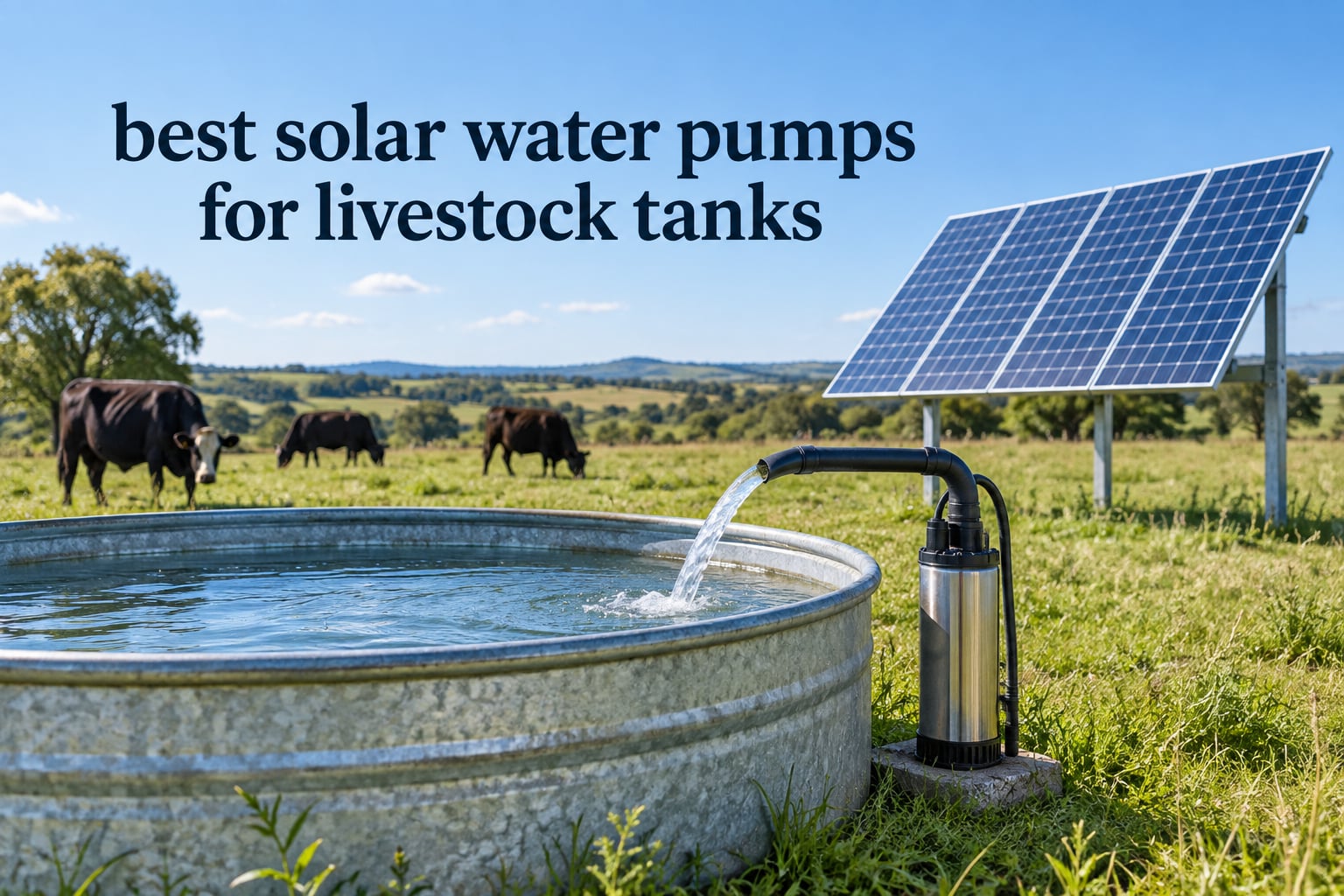
A solar water pump for livestock tanks is a pump that runs on electricity generated by photovoltaic panels instead of grid power or fuel, moving water from a well, pond, spring or existing storage tank up into the troughs and tanks where cattle, horses and goats drink. A controller matched to the pump keeps output steady as light changes, and a float switch stops the pump when the tank is full.
That single sentence hides most of the buying decision. Where the water comes from, how far it has to climb, and how many gallons your herd drinks in a bad week determine almost everything else. Get those three right and the pump choice narrows to a handful of options; get them wrong and no pump on this list will save you.
We spent the last several weeks comparing the ten solar pumps that actually show up for this query, reading the spec sheets against the review data rather than the marketing copy. No vendor paid for a placement here, and the ranking follows the evidence. The keyword we optimised for, best solar water pumps for livestock tanks, is a market split almost cleanly in two: cheap 12V submersibles that fill a trough from a shallow pond, and serious helical well pumps that push water three hundred feet out of a casing. Most buyers only need the first group.
Table of Contents
Who This Is For, and Who Should Skip It
This roundup fits ranchers and small farmers whose water source sits more than about half a mile from grid power, anyone hauling water by truck, and anyone replacing a windmill that has already failed. It also covers the smallholder end that most guides ignore, where a dozen goats, some chickens or a few alpaca need a tank topped up rather than a full irrigation system.
Skip it if you are watering a large dairy herd through a deep well and need household pressure at the same time, because that is a different class of machine. Skip it if your winters are hard and you have no plan for freeze protection, since a solar pump produces nothing at night, which is exactly when the trough is coldest. And skip it if you are on grid power within a few hundred feet, because trenching a line will cost you less than the panels.
One more disqualification: these are all DC solar pumps, not pumps that run off an inverter. If you already own a good AC submersible and a generator, running that pump through an inverter on a large array is a legitimate path, and it is a different comparison than the one below.
Top 3 Solar Water Pumps for Livestock Tanks (October 2026)
The three below cover the widest range of real jobs. The editor’s choice is the one with the deepest review history here, which matters more than a perfect spec sheet when you are about to leave a pump running unattended in a pasture.

ECO-WORTHY 12V 3.2GPM 230ft Pump
- 230ft max head at 3.2 GPM
- 304 stainless with IP65 sealing
- Fits a standard 4 inch well casing
PWS 0.3HP 24V 260ft Solar Kit
- 7.7 GPM with 260ft max head
- MPPT controller with water shortage sensors
- 3-year warranty

BACOENG 12V 20GPM 26ft Pump
- 20 GPM from a 1 inch outlet
- 26ft maximum lift
- Stainless steel body
All 10 Solar Water Pumps Compared Side by Side in 2026
Every pump below is a 12V or 24V DC unit, which means any of them can run from panels, from a battery bank, or from both through a charge controller. The differences that matter are flow rate, maximum lift, and whether the panel and controller come in the box.
| Product | Specs | Action |
|---|---|---|
| ECO-WORTHY 12V 3.2GPM 230ft Submersible |
|
Check Latest Price |
| PWS 24V 0.3HP 260ft MPPT Kit |
|
Check Latest Price |
| BACOENG 12V 20GPM 26ft Submersible |
|
Check Latest Price |
 ECO-WORTHY 2x100W Panel Pump Kit ECO-WORTHY 2x100W Panel Pump Kit |
|
Check Latest Price |
 ECO-WORTHY 100W 1.6GPM Kit ECO-WORTHY 100W 1.6GPM Kit |
|
Check Latest Price |
 JENENSERIES 12V 396GPH 98ft Pump JENENSERIES 12V 396GPH 98ft Pump |
|
Check Latest Price |
 QUSKLISU 12V 180W 65ft Pump QUSKLISU 12V 180W 65ft Pump |
|
Check Latest Price |
 FLYHERO 24V 270W 100m MPPT Pump FLYHERO 24V 270W 100m MPPT Pump |
|
Check Latest Price |
 SHYLIYU 12V 200W 10GPM Pump SHYLIYU 12V 200W 10GPM Pump |
|
Check Latest Price |
 JENENSERIES 12V 26GPM 20ft Pump JENENSERIES 12V 26GPM 20ft Pump |
|
Check Latest Price |
Read that table as a map, not a verdict. The fastest pumps all have short lift ratings and the deepest-reaching pumps all deliver modest volume, because moving water against gravity is expensive and these are small arrays. You are choosing a point on that curve, not a winner.
1. ECO-WORTHY 12V 3.2GPM 230ft Submersible Pump for Deep Wells
ECO-WORTHY 12V DC Submersible Deep Well Pump, IP65 Waterproof, MAX Flow 3.2GPM, Max Head 230ft, Water Pump Powered by Solar or Battery for Irrigation, Deep Well Water Extraction, Off-Grid Use
Max head 230ft
Flow 3.2 GPM
304 stainless steel, IP65
Pros
- Highest review volume in the roundup at 246 reviews
- Compact 3.86 inch body fits a standard 4 inch well casing
- IP65 sealing and Class F copper motor
- Listed for livestock trough and tank filling
Cons
- 20 percent of reviews are one-star
- 3.2 GPM is slow for filling large tanks
- 10ft power cord is short for deep installs
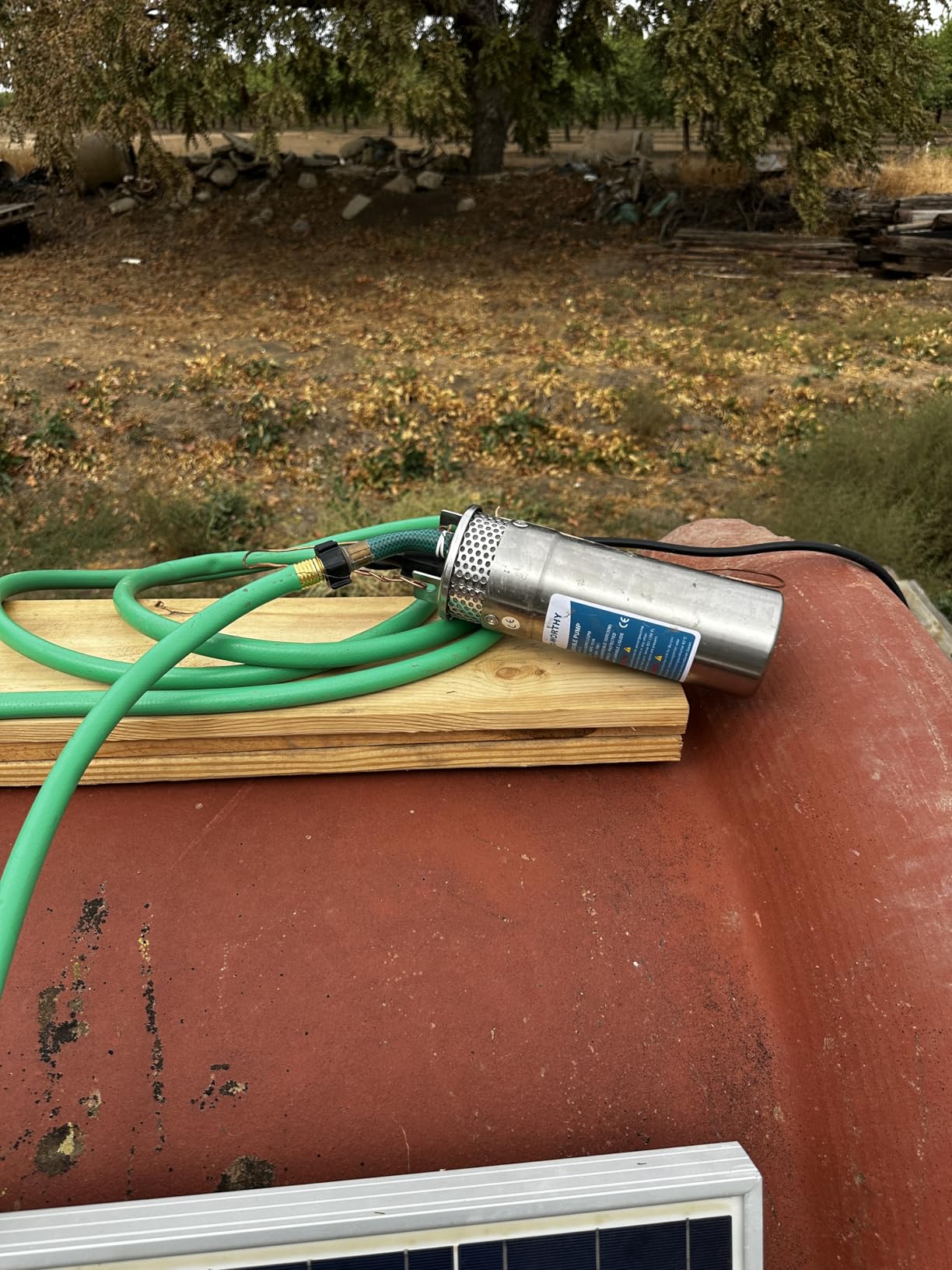
This is the pump we come back to for most cattle applications. It holds 3.2 GPM at a rated 230ft of head, which covers the majority of rural well depths in dry country, and at 3.86 inches across it drops into a standard 4-inch casing without any reaming or specialist work.
The 304 stainless housing and IP65 sealing matter more than they sound like they should. Pumps that sit in a well for years in silty water fail at the seal first, and this body is specified for permanent submersion rather than intermittent pond duty.
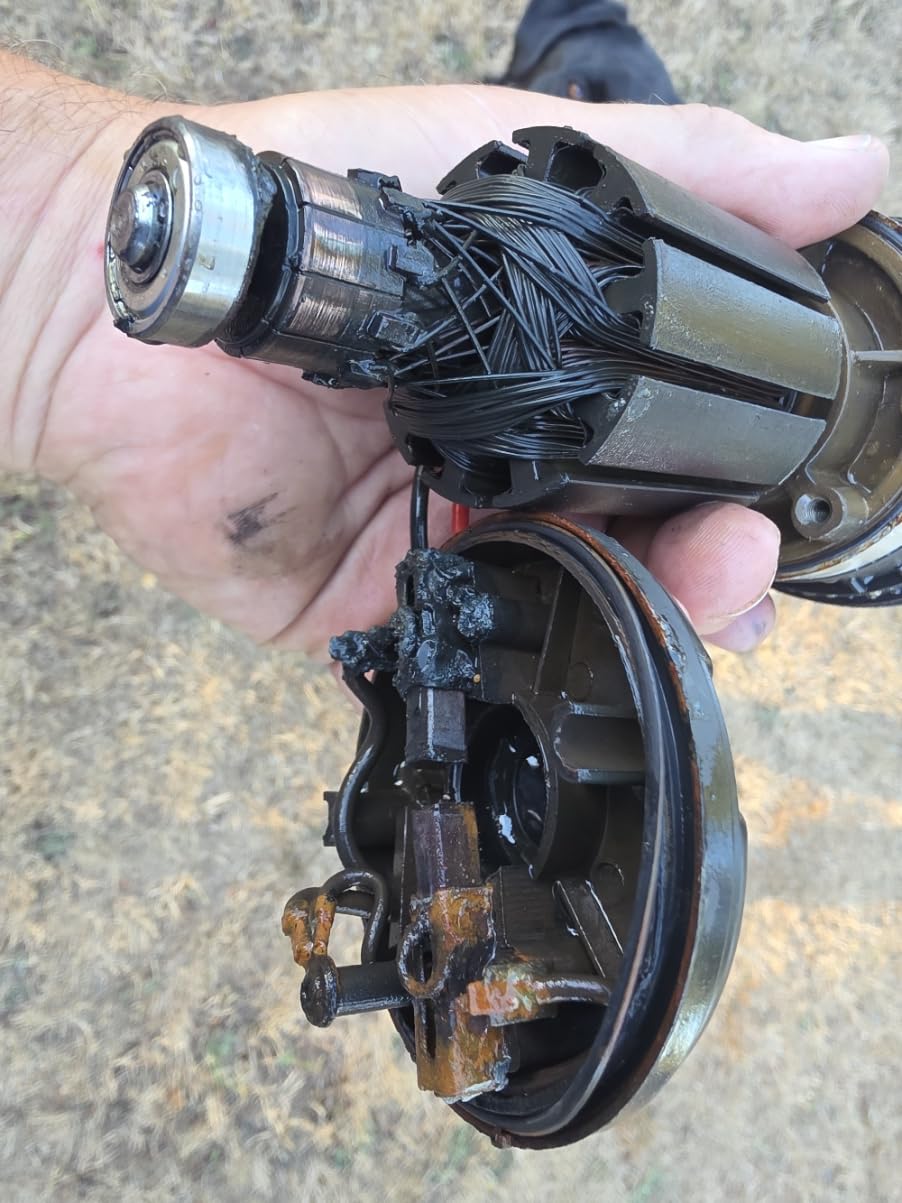
The honest drawback is the 3.2 GPM figure. At full sun that is roughly 190 gallons an hour, so a 1000-gallon trough takes a little over five hours on a bright day and considerably longer through a cloudy week. If you have fifty or more head, size your storage above the pump and let the tank do the buffering.
It is also a pump, not a kit. You need panels, a charge controller and a tank high-level shutoff of your own. Buyers who have already got an array and just need something that will go down the hole will find this the least complicated option in the list.
What you should check before buying
Measure your static water level and total dynamic head before ordering, because 230ft is the rated maximum at zero flow and real-world delivery drops as lift climbs. If your well is deeper than that or your trough sits on high ground, step up to a bigger pump and array rather than expecting this one to stretch.
Confirm the wiring run. A 10ft cord is fine for a shallow tank or a pond, and short for a deep casing, so budget for extra spliced cable and a proper well seal assembly rather than planning a quick swap later.
Who this pump suits and who it does not
It suits a mixed herd of cattle, horses or goats on a well that is not a deep well, run by someone who wants a component they can replace rather than a sealed system. It is also the easiest of the deep options to install yourself, since the body fits existing casing and there is no large surface assembly to plumb.
It does not suit someone who needs to fill a trough quickly and repeatedly, or who has no patience for a float switch, well seal and controller build. Buy the kit version below if you want one order instead of four.
2. PWS 24V 0.3HP 260ft Solar Pump Kit with MPPT Controller
3-Year Warranty Solar Water Pump Kit – Stainless 316 Solar-Powered Submersible Pump for Ponds & Borehole Wells, MPPT Controller Included | PWS High-Efficiency Design,JS3-1.8-80
0.3HP, 24V DC
260ft max head
7.7 GPM flow
Pros
- 7.7 GPM with a 260ft rated lift
- MPPT controller for brushless DC motor
- Water shortage sensors give automatic shutoff
- 3-year warranty with spare part availability
- Reviewers report running two units for 24 head since 2020
Cons
- Solar panel is not included in the kit
- Some buyers report short runs then stop
- Impeller wear is an observed long-term failure
This is the only pump here that combines a genuine 24V brushless system with an MPPT controller in the box, and it is the closest thing in this roundup to what a professional livestock installer would actually recommend. At 7.7 GPM and 260ft of rated head, it fills fast and reaches deep, which no other unit here manages at once.
The water shortage sensors are the feature we care about most. They shut the pump down when the header tank is full and when the intake is exposed, which is exactly the dry-run condition that kills pumps on a hot July afternoon when a creek drops or a pond gets drawn down.
Reviewers running cattle operations report real output. One describes moving about 1000 litres into a 10000 litre tank every 45 minutes, and another has run two units to carry 24 head since 2020. That is the use case this pump was built for.
The panel is not included, so treat the listed figure as a pump and controller package, not a complete system. Budget for a proper 24V array sized to your peak sun hours, and pair it with a deep-cycle battery bank if you need on-demand pumping outside full sun.
What you should check before buying
Match the array to the pump voltage. A 24V pump wants a 24V nominal array, and undersizing the panels is the single most common reason a buyer reports that the pump stops after a few minutes and then seems dead.
Look at the warranty terms rather than the length. A three-year warranty is meaningful only if you can get a replacement rotor or stator, so confirm that spare parts are actually listed for the model and available in your region before you commit to a remote install.
Who this pump suits and who it does not
It suits a working ranch with a real herd, a well deeper than most, and an owner who wants the pump to start and stop without supervision through a dry spell. Two of these on a header tank will carry a large operation comfortably.
It does not suit a first-time builder on a tight budget who wants one box that does everything. The 24V system is more expensive to build out, and troubleshooting a controller fault without a spare on hand is a bad afternoon a long way from anywhere.
3. BACOENG 12V 20GPM 26ft Submersible Pump for Pond and Surface Lift
BACOENG DC 12V Farm & Ranch Solar Water Pump Submersible Well Pump 26ft Lift
20 GPM flow
26ft maximum lift
120W at 12V
Pros
- 20 GPM moves water fast
- Simple structure with few parts to service
- Stainless steel with strong anti-corrosion performance
- Works with panels or 12V battery systems
Cons
- 1 inch outlet is narrow for large tanks
- 16 percent of reviews are one-star
- 26ft head rules out any deep well
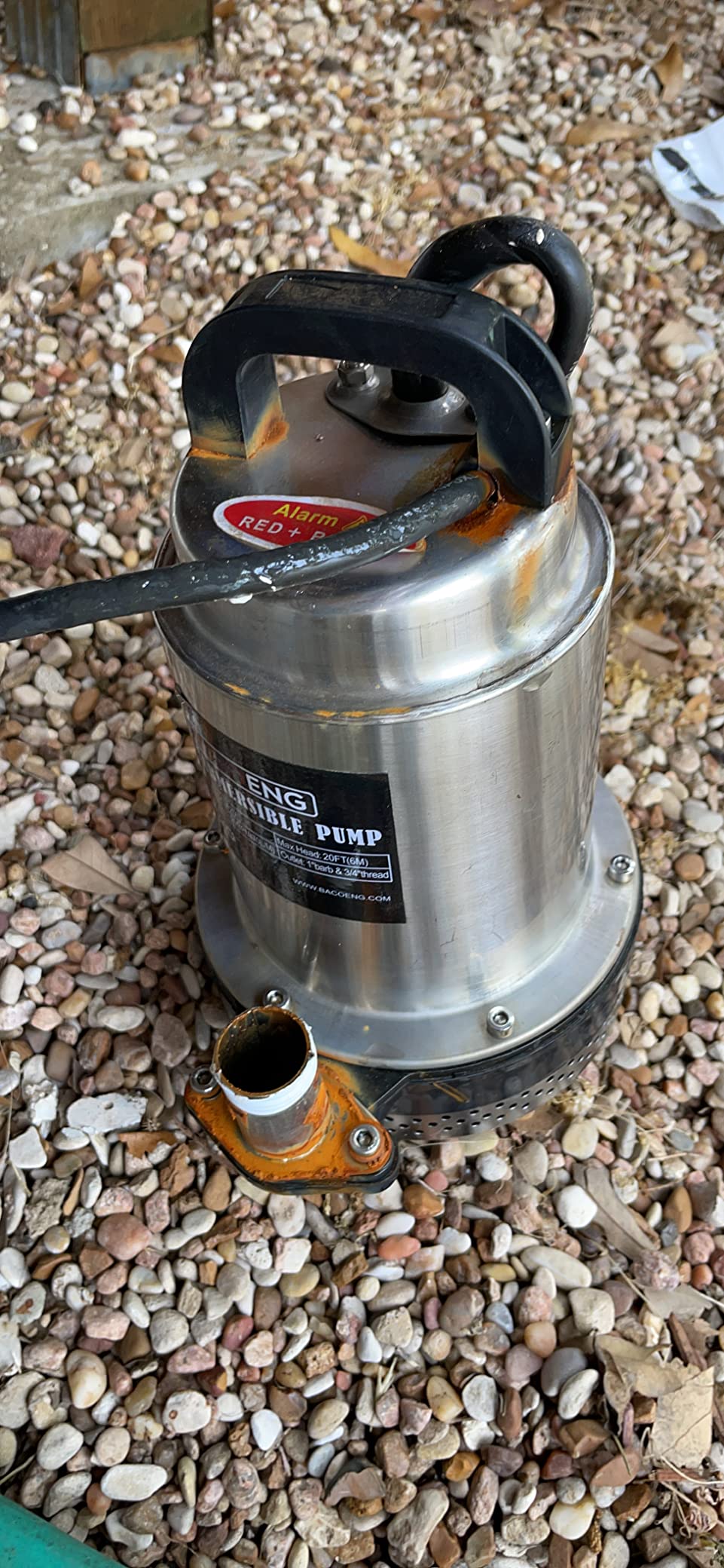
Everything about this pump points at surface water. Twenty gallons a minute from a pond, creek or shallow spring, with a 26ft maximum lift, is a genuinely useful rate for filling a big trough before the animals finish their morning drink.
The design is deliberately plain. Fewer components means less to fail and easier field repair, and at 120W on 12V it is one of the least demanding loads here, so a single mid-size panel or a small battery bank will run it for a couple of hours a day.
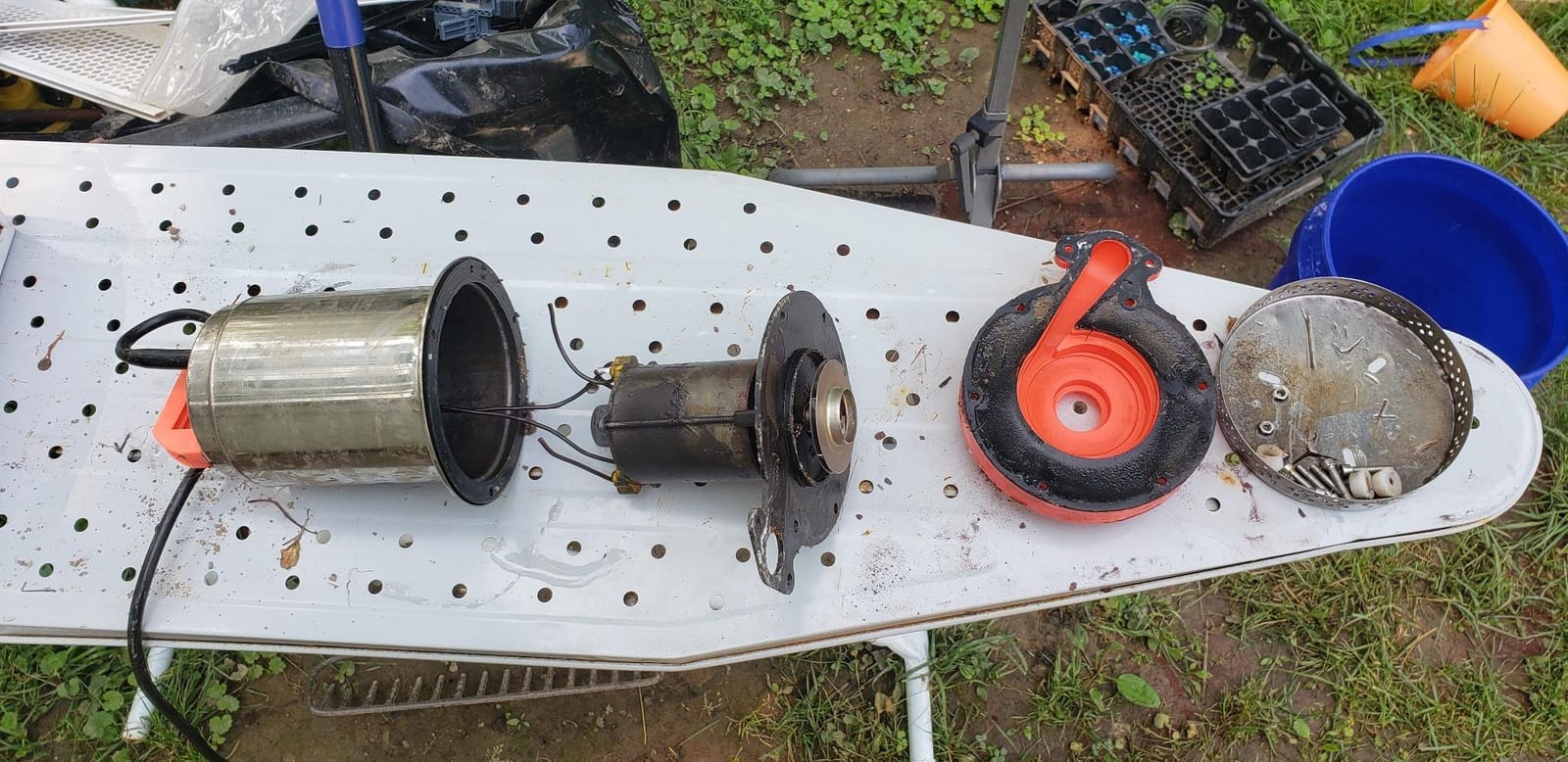
What you give up is depth and outlet size. The 25mm fitting is modest, and on a wide tank you will feel the restriction during a fill, particularly on longer horizontal runs where friction loss eats into the little head you have to spend.
The 3.8 average across 210 reviews is honest rather than alarming, but the one-star share of 16 percent is worth taking seriously on any pump you cannot easily reach. Put it somewhere you can look at it without a four-hour round trip.
What you should check before buying
Measure the vertical distance from your water surface to the tank rim, and add friction for the pipe run. With only 26ft of head to spend, a long horizontal line can eat most of the budget before the water ever reaches the tank.
Check silt. Pond and creek sources carry fine sediment that will chew through a pump running continuously, so if your source is silty you need a screened inlet and a plan for pulling and cleaning the impeller every season.
Who this pump suits and who it does not
It suits a small herd on a pond, a spring or a shallow stream, or a backup pump for a ranch that already has a well system and wants a second way to fill the trough. It also works as the pump on a portable trailer rig for rotational grazing.
It does not suit anyone with a well deeper than a shallow hand-dug bore, and it is a poor match for silt-heavy water. If you have a proper casing and a static level below 20ft, choose one of the deep-well units instead.
4. ECO-WORTHY 2x100W Panel Solar Well Pump Kit
ECO-WORTHY 3.2GPM Solar Well Pump Kit for Watering- 1pc Submersible 12V Solar Water Pump + 2pcs 100W Mono Solar Panel + 20A Charge Controller for well, off-grid living, Irrigation
3.2 GPM at 230ft head
2x100W panels
20A charge controller
Pros
- Panels and controller included in one order
- Two 100W modules give real margin for a fill cycle
- Stainless steel body rated for continuous submersion
- Controller offers four working modes
Cons
- 3.7 average leaves it behind the better-reviewed kits
- 3.2 GPM is slow for large tanks
- 18 percent of reviews are one-star
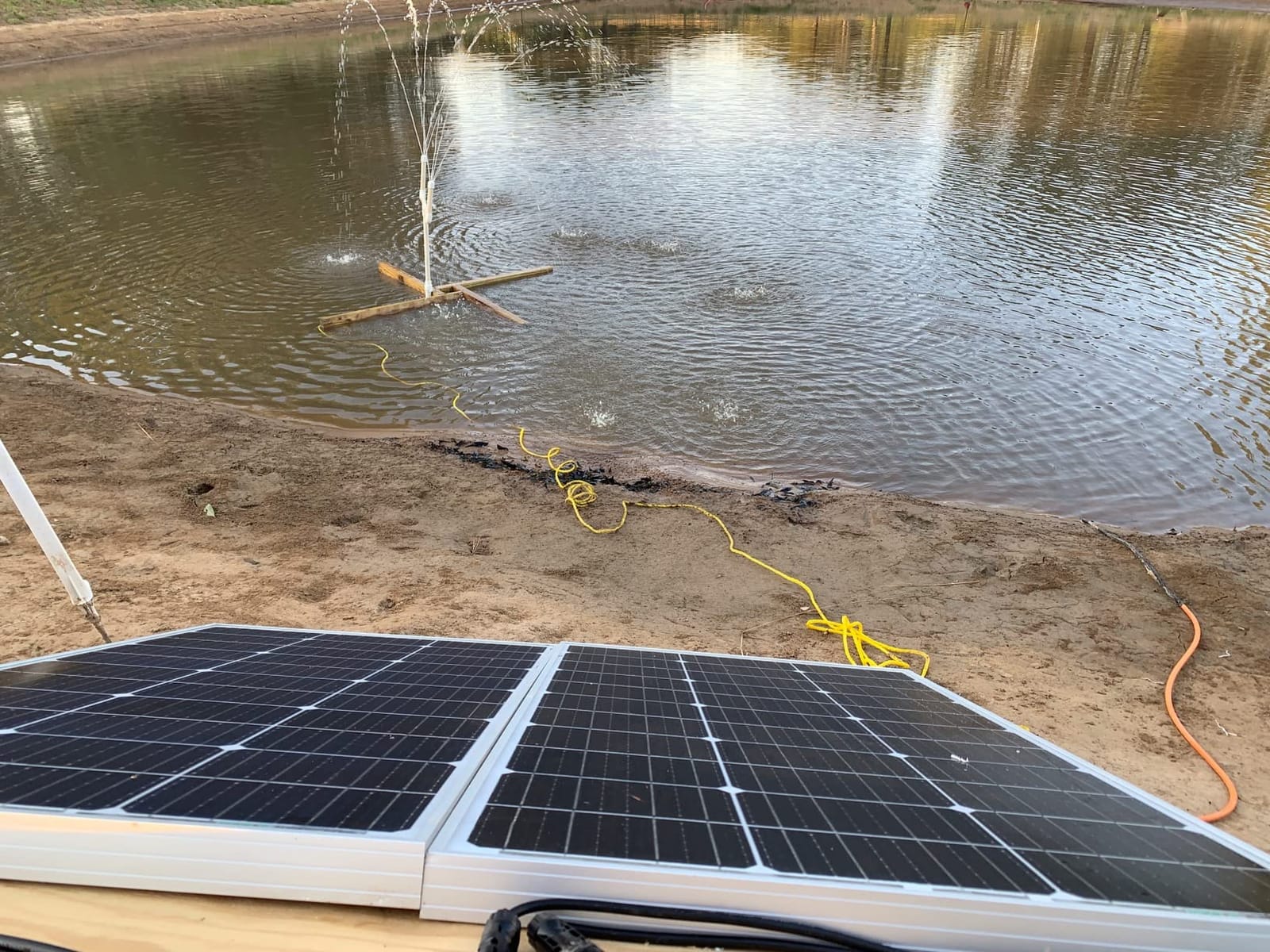
If you want one order rather than four, this is the most complete package in the roundup. You get a submersible solar pump, two 100W monocrystalline panels and a 20A charge controller, which is everything a small stock tank system needs on day one.
Open flow is 720 litres an hour and the pump is rated to 230ft of lift, so the reach is genuinely deep even though the volume is modest. For a herd of twenty or so on a modest well, that combination is usually enough if you size the storage tank above it.
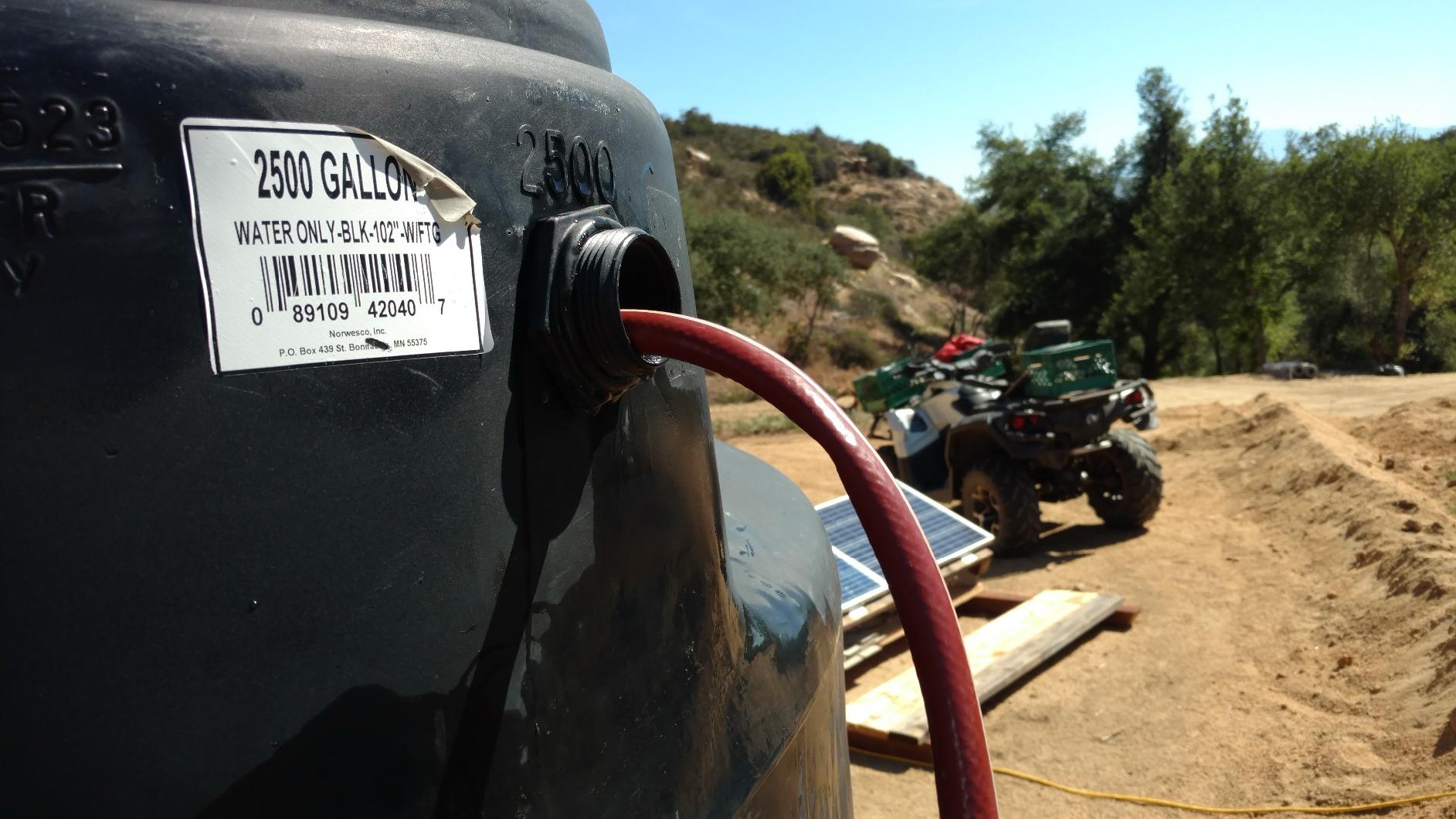
The four controller modes are worth understanding before you install. They change how aggressively the pump runs in low light, and matching the mode to your panel count is the difference between a pump that starts reliably at dawn and one that sits and does nothing.
This is also the weakest average rating of the ten at 3.7, with an 18 percent one-star share. The complaints cluster around setup and durability rather than outright failure of the concept, and the bundle convenience is what you are really paying for.
What you should check before buying
Work out whether two panels will be enough in your worst month, not your best. Winter output at low sun angles drops sharply, and if you are in a cloudy-season region you will want a third module or a battery bank to bridge the gap.
Check the panel and controller ratings against your wiring. The included 20A controller has no low-water or tank-full sensor, so add a float switch or a high-level cutout or you will eventually fill a trough and lose it to overflow.
Who this pump suits and who it does not
It suits a first-time buyer with a shallow-to-medium well who wants a working system this weekend without sourcing parts from three suppliers. It also suits anyone who values having panel, controller and pump on compatible settings out of the box.
It does not suit a high-volume operation or someone with a deep well and a long pipeline, where 3.2 GPM will not keep up. If your troughs are far from the well, budget for storage at the well and let gravity do the work downhill.
5. ECO-WORTHY 100W Solar Pump Kit for Small Herds and Backyard Livestock
ECO-WORTHY Solar Submersible Pump Kit, 100W Solar Panle Kit and 12V DC Deep Well Pump-100ft/30m
1.6 GPM
100W panel included
12V DC system
Pros
- 4.2 average is the best of the kit options
- Only 6 percent one-star reviews
- All-in-one package for tank filling and livestock use
- Very little ongoing maintenance once installed
Cons
- 1.6 GPM is a slow fill rate
- The listed model is the 50ft depth variant
- Only a 16.4 inch cable included
This is the smallholder option that almost every solar pump guide skips. If you are watering goats, sheep, chickens or a handful of alpaca, or topping up a garden reservoir on a homestead, this kit covers it at the lowest ongoing effort of anything on the list.
Its 4.2 average and 6 percent one-star share are the cleanest rating profile among the kit options here, though the sample is only 36 reviews. The package includes a 100W panel, a controller and a 12V pump, which is enough to move water on a sunny day and keep a small tank full.
The catch is that the listing corresponds to the shallower depth variant, and 1.6 GPM is the slowest flow in this roundup. On a fifty-gallon trough that is a little under two hours of good sun per full tank, which is fine for small stock and slow for anything heavier.
What you should check before buying
Confirm which depth variant you are actually ordering, because the same kit family appears in 50ft and 100ft versions and they are not interchangeable. Getting this wrong means a pump that will not reach your water.
Plan for extension. The included cable is short, so if your tank is more than a few metres from the panel you will be adding cable and a well seal from the start rather than after a leak.
Who this pump suits and who it does not
It suits a backyard or smallholding setup with fewer than about ten head, an off-grid homestead user, or anyone who wants a demonstration system they can install in an afternoon. It is also a sensible first build before committing to a heavier pump.
It does not suit cattle, and it will not keep up with evaporation on a wide trough in hot weather. It is also a poor choice if your well is deep, since the listed configuration is the shallowest in the family.
6. JENENSERIES 12V 396GPH Pump with 98ft Lift for Mid-Depth Wells
JENENSERIES 12V Deep Well Submersible Pump solar DC 250W Electric Powered Water Pump kits with 1″ Outlet Screw Pump max.98ft Lift,396GPH Flow, for Irrigation Agricultural Garden Home
396 GPH flow
98ft max head
32.8ft cable included
Pros
- 396 GPH with 98ft of head is a useful middle ground
- 32.8ft cable is long for a kit at this level
- Pure copper motor and copper wiring for heat handling
- Listed for pastures
- farms
- ponds and orchards
Cons
- 22 percent of reviews are one-star
- 9A running current needs a heavy panel and battery bank
- No panel or controller included
Ninety-eight feet of lift with nearly 400 gallons an hour sits in the gap between the shallow pond pumps and the deep well units, and that gap covers a lot of real ranch wells. This pump is a bare pump, so you are sourcing the array, controller and storage yourself.
The screw impeller design raises head compared with a flat impeller of the same size, which is how it manages 98ft in a body only 13.4 inches tall. The included 32.8ft cable is longer than most kits at this level, which saves a real job on a mid-depth install.
The 9A working current is the part people underestimate. That draw means a serious panel and a battery bank that can carry it, and if you size the array for the pump nameplate rather than for the light you actually have, the pump will simply stop.
What you should check before buying
Size the electrical side from the current, not the wattage label. A 9A load at 12V needs headroom in both the controller and the wiring, and the manufacturer recommends a breaker rated at no less than 11A on the circuit.
Check the casing diameter against your well. At 3 inches across, this body needs a bore at least that wide, and forcing it into a narrower casing is the most common install mistake with mid-depth submersibles.
Who this pump suits and who it does not
It suits a rancher with a mid-depth well, a moderate herd and a willingness to build the electrical side carefully. It is also a good match for someone who already owns panels and a controller from another system.
It does not suit a first build with no electrical experience, and the 22 percent one-star share makes it a less safe bet for an unattended remote install. For a first remote system, a pump with integrated dry-run protection is a calmer choice.
7. QUSKLISU 12V 180W Stainless Pump for Budget Livestock Tank Filling
Deep Well Submersible Pump, 12V Stainless Steel High Pressure Water Pump 180W DC Solar for Livestock Drinking or Tank Filling Farm
1.2 cubic m/h flow
65.62ft max head
180W at 12V
Pros
- Lowest entry point in the roundup
- Listed specifically for livestock drinking and tank filling
- Stainless steel strainer blocks debris
- Runs quietly near livestock and housing
- Battery option for cloudy days and night
Cons
- 4.0 average rests on just 4 reviews
- 65.62ft head is modest for a well
- Lowest category rank of the ten
As the entry-level unit in this roundup, this pump does one thing: it lifts water 65ft at a modest rate for a small tank. That is a real job, and if the job is a trough for a handful of stock rather than a system for a herd, it is enough.
The stainless body and the stainless strainer are the details that matter at this price. The strainer stops debris entering the impeller, which is the main way cheap pond pumps destroy themselves in the first season.
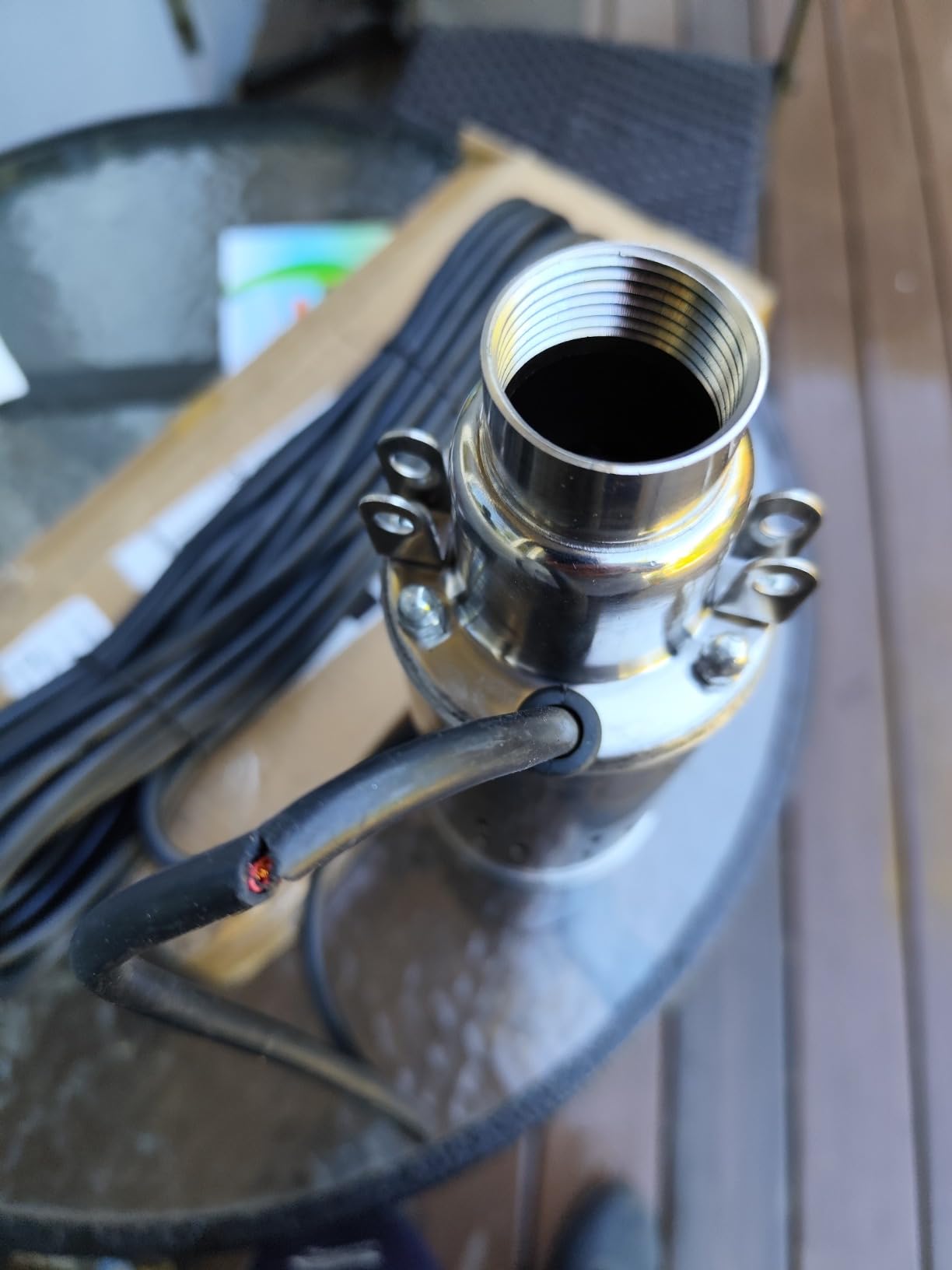
Be honest about the evidence though. Four reviews produce a 4.0 rating, and four reviews prove very little. We would not hang an unattended remote install on this, but as a supervised pump at a homestead or a trial unit before a bigger build, it is a reasonable way to start.
Quiet operation is an underrated benefit here. A pump near a house, a trailer or a calving barn that runs without a mechanical growl is easier to live with than one that does not.
What you should check before buying
Confirm the 65ft of head against your actual lift, including any rise to the tank. Adding a long horizontal run on top of a modest head budget is how a pump that works fine in a test ends up barely trickling in the field.
Buy a controller with a proper low-water cutout. The pump itself has no dry-run protection listed, and running a screw pump dry is the fastest way to destroy one.
Who this pump suits and who it does not
It suits a smallholder, a market garden with a livestock corner, or anyone who wants to learn how a solar pumping system behaves before committing to a larger install. It is also a sensible second pump for redundancy.
It does not suit a remote unattended install with no one to hear a failure, and it will not serve a well that is deeper than about 60ft. Treat the rating as unproven rather than excellent.
8. FLYHERO 24V 270W Borehole Pump with MPPT for Severe Lift
3 Inch Solar Water Pump Submersible Well Deep Bore Screw Well Garden Irrigation Kit with MPPT Controller (24V 270W)
270W at 24V
100m max lift
1800 litres per hour
Pros
- Handles 100m of lift
- MPPT controller with a brushless DC motor
- Automatic restart 15-30 minutes after dry-run trips
- Listed for livestock watering and tank filling
Cons
- Only 2 reviews
- so the rating is not meaningful
- 24V 270W needs a large array and battery bank
- No customer photos to verify build quality
At 100 metres of maximum lift this is the deepest-reaching pump in the roundup, and the intelligent water shortage protection is the feature that makes it viable at that depth. When the bore runs dry it stops, then restarts on its own 15 to 30 minutes later.
That restart behaviour matters more than the headline number. A deep bore in dry country can run dry repeatedly, and a pump with no recovery logic will sit there burning impellers until somebody drives out to look at it.
The 4.5 rating here comes from two reviews, which makes it statistically meaningless. We are not recommending it on that number; we are recommending it on the specification, the MPPT control and the automatic protection, all of which are documented.
What you should check before buying
Budget the electrical system honestly. A 24V 270W load is a serious array, and on a small farm that electrical cost can exceed the pump cost several times over. The pump is the cheap part of a deep solar well.
Confirm your borehole diameter. A 3-inch borehole kit needs a matching casing, and enlarging an existing bore costs far more than the pump ever will.
Who this pump suits and who it does not
It suits an operation with a genuinely deep bore, high flow requirements and someone comfortable sizing a large array. The electrical side of a system at this depth is a larger project than the pump itself, and that is the real decision.
It does not suit a first-time solar buyer or a shallow well, and it is not a sensible purchase on the strength of two reviews alone. Buy it because the depth rating matches your well, not because of the star average.
9. SHYLIYU 12V 200W Stainless Screw Pump for High-Flow Surface Work
SHYLIYU Solar Submersible Well Pump DC 12V 200W Deep Well Pump 3″Tube Stainless Steel Screw Pumps 2300L/H 1″ Outlet High Lift 40M Irrigation Pumps Agricultural Garden Home
10 GPM
131ft max head
200W at 12V
Pros
- 2300 litres an hour with 131ft of head
- Stainless body with SS304 outlet and oil-filled motor
- Lightweight at 2.65 kg and simple to service
- Listed for ranch
- pond and aquaculture work
Cons
- 26 percent one-star reviews signal uneven durability
- Must stay fully submerged at all times
- 1 inch outlet restricts large tanks
On paper this is a strong combination: 10 GPM from a 200W 12V pump with 131ft of rated head, in a stainless body with an oil-filled motor. The screw rotor design is efficient at moderate head, and the light weight makes it easy to handle in and out of a casing.
Then the reviews get involved. A 3.4 average with 26 percent one-star is the weakest reliability profile of the ten, and no other unit here sits that low. Multiple owners report the pump running for a short time and stopping.
That does not make it a bad pump, and the good reviews describe sustained performance. It does mean you should not buy it as your only source of water for a herd you care about, and you should confirm your warranty terms carefully before installing it remotely.
What you should check before buying
Read the warranty conditions closely, because a pump that must be professionally installed by an approved party can lose cover in a way that is easy to miss in the small print. Ask directly before ordering.
Protect the inlet. The pump must stay fully submerged and must never run dry, so a low-water cutout is not optional here, it is the difference between a pump and a repair bill.
Who this pump suits and who it does not
It suits someone moving a lot of water from a pond or into an aquaculture system, who can get to the pump easily and wants a serviceable body with few parts. The oil-filled motor and stainless outlet are good choices for wet, corrosive sites.
It does not suit an unattended remote install, and the rating record is the reason. If you want this flow rate and this reach with a better reliability story, step up to the PWS kit instead.
10. JENENSERIES 12V 150W 26GPM Pump for Shallow Ponds and Creek Edges
JENENSERIES 150W 12V DC Solar Submersible Pumps, 2inch solar deep well water pump ,Max head 20ft, 26GPM Flow for pond or livestock (update-12V)
26 GPM flow
20ft max head
2 inch outlet at 12V
Pros
- Fastest listed flow rate in this roundup at 26 GPM
- 2 inch outlet with three pipe types included
- Updated pure copper motor and stainless impeller
- Marketed for livestock and pond duty
Cons
- 20ft head suits only shallow sources
- 37 percent one-star across a very small sample
- High draw demands a large panel and battery bank
Twenty-six gallons a minute is the highest flow figure in this roundup, and with a 2-inch outlet it fills a large trough faster than anything else here. For a ranch drawing from a shallow pond or a creek edge, that speed is the whole point.
Twenty feet of maximum head is the constraint that keeps it at the bottom of the ranking. It is a surface pump with a surface pump’s limits, and the moment you need to lift water out of a proper well, it is the wrong tool.
Its 3.5 rating rests on three reviews, and the one-star share of 37 percent in that tiny sample is the least reliable evidence base here. We include it because the flow capability is genuinely differentiated, not because the reviews back it.
What you should check before buying
Measure the lift from your water surface to the tank rim, and remember that a 2-inch outlet does not help if you are running 1-inch pipe the whole way. Match the pipe to the outlet or you will throttle the pump you just paid to move water fast.
Account for the draw on your array. This is a 150W load, which means the panel and battery bank need to be sized for it or the pump will cycle instead of running.
Who this pump suits and who it does not
It suits a small-to-medium herd on a shallow pond, spring or creek, particularly where the tank is close to the water and the run is short. It is also a good match for a portable rig moved between paddocks.
It does not suit anyone with a well, and the thin review history means you should keep a backup plan. If reliability under long service matters more than fill speed, pick a pump with a deeper review record even at half the flow.
How to Size a Solar Water Pump for Your Herd
Almost every disappointing solar pumping system we read about failed at the sizing step rather than the hardware. The pump worked; it just never made enough water in the week it mattered. Work through these five steps before you compare models.
Step one, count your head and their daily demand. A mature beef animal drinks roughly 10 to 20 gallons a day, a dairy cow 20 to 40, a horse 8 to 15, and a sheep or goat 2 to 4. Lactating cows in July sit at the top of the range, and that is the number you size for, not the annual average.
Step two, convert daily gallons into a flow rate. Divide your daily total by the number of peak sun hours you can count on in your worst month, not your best. If you need 1000 gallons a day and can rely on five good hours, you are looking for a pump that can average around 200 gallons an hour, and you need storage above that rate to cover the bad days.
Step three, measure your head honestly. Total dynamic head is the vertical distance from the water surface to the tank overflow, plus friction loss through the pipe, fittings and any horizontal run. Long horizontal runs are where sizing goes wrong, and one rancher in the forum research was moving water 2200 feet before it ever reached a trough.
Step four, pick the pump type to match the water source. A surface or pond source with a shallow lift calls for a high-flow pump with a short head rating. A well calls for a deep submersible, and anything past roughly 300 to 500 feet changes the economics enough that you should get a professional design rather than a kit.
Step five, size the array and the storage for a bad week, not a good day. Most small stock systems run on two to six modules. Set the array voltage to match the pump, and plan to store more water above the pump rather than storing more electricity below it.
On that last point, the evidence is consistent. Extension guidance from Nebraska and technical publications both land in the same place, and the technical note from USDA NRCS on small photovoltaic pumping systems is the reference worth reading before you commit. A larger tank costs money once. Batteries cost money every time you charge them, and a controller running in battery charging mode gives up a meaningful slice of your generation.
Batteries make sense in three situations. The first is a system that must pump on demand rather than only when the sun is up. The second is a site with a long winter where you need guaranteed delivery for several cloudy days. The third is any install where losing water means losing animals. Everywhere else, a taller tank is the better buy.
Seven Ways to Keep a Livestock Tank From Freezing Without Grid Power
Freezing is the number one worry in every ranch forum we read, and it is the question that should decide your design before you pick a pump. A solar pump produces nothing at night, which is exactly when water is coldest, so freeze protection is a separate decision from pumping.
First, move the water. A small circulation pump or a solar aerator keeps a bubble of moving water at the surface, and moving water freezes last. This is the most effective single measure and it costs you a second small pump rather than a redesign.
Second, aerate deliberately. Bubbles rising through the tank bring warmer water up from the bottom and keep the surface moving, and the same aerator that prevents freezing also reduces the algae and odour problems in a warm trough.
Third, insulate. An insulated tank wall, or a fitted jacket around a rubber tire trough, slows the rate of heat loss considerably. Forum users report that the seal around a tire trough is the weak point, so treat the insulation as a system rather than a wrap.
Fourth, bury or berm part of the tank. Setting the trough into the ground and mounding soil around the sides uses the ground as insulation and works well in most climates. A half-buried tire with the top exposed is a common and effective arrangement.
Fifth, break the thermal path with a dark surface. A black tank or a black liner absorbs whatever solar heat reaches it on a cold day, and a painted interior does the same job without any electricity.
Sixth, cover most of the surface and leave drinking gaps. An insulated partial cover with cut-outs at drinking height keeps warmth in without blocking access, and a full cover is worse than none because it traps cold air and prevents drinking.
Seventh, run the waterline below the frost line into a pitless adapter, so the pipe never has a section exposed to the coldest air. Combine that with a geothermal loop and the tank draws warmth from the ground through the water itself, which is the approach technical publications describe for the coldest regions.
Two practical notes from the field. A motion-triggered approach works for low-traffic tanks where nobody wants a pump running all winter, and any heater you choose needs to be sized for the tank, not for the weather forecast. And if you seal a waterline penetration through a tire or a concrete tank, expanding foam tends to fail within a few years, so plan on a repairable fitting rather than a permanent seal.
Where Solar Falls Short: Honest Disadvantages
Solar pumping is a strong answer for remote livestock water and a poor answer for several other things, and the disadvantages are worth stating plainly before you spend anything.
There is no production at night. If your animals drink in the evening and overnight, you are entirely dependent on stored water, and a cloudy week can drain a small tank faster than you expect. Some owners in the forum research stopped running their pumps through winter entirely because short days made them nervous about exactly this.
Batteries cost efficiency. Charging a battery bank and then drawing from it wastes a meaningful share of the generated energy, and every degree of that loss is energy you paid for in panels. Deep-cycle batteries are the right type, and car batteries are not, but the efficiency penalty still applies.
Deep and high-volume systems get expensive fast. The further you have to lift and the more you need to move, the larger the array and controller become, and the pump becomes a smaller share of the bill. Past a few hundred feet, professional design is worth paying for.
Panels need attention. Snow, dust, bird droppings and leaf litter each cost output, and in dusty range country a dirty array can lose a noticeable slice of its yield between cleanings. Expect to clean them a few times a year.
Winter output drops twice over. Days are shorter and the sun sits lower, so a fixed-tilt array set for summer collects considerably less in December. Owners who set their array for the low winter sun report that it still over-performs in summer, which is the safer setting for year-round livestock use.
One more, and it is the one buyers complain about most. Installation is a genuine combination of electrical work, plumbing and trenching. Vendors advertise high self-install rates, while technical publications describe it as a complex task, and both are right depending on the system. A kit with an integrated controller and a shallow pump is a weekend. A 24V deep-well array with a battery bank is a project.
Solar vs Windmill vs Generator for Remote Livestock Water
Solar is not automatically the best answer, and a rancher replacing a working windmill may find that the old approach still wins. The comparison is worth doing honestly.
A windmill runs on mechanical energy, so it needs no panels, no controller, no batteries and no electronics to fail. In a consistently windy region with a good well, a windmill with a tail-bearing pump can deliver water for decades. Its weaknesses are that it is slow to start, it stops in low wind, and it delivers water at a rate the tank has to absorb over many hours.
A diesel or propane generator delivers any volume you want on demand, which is why it stays the fallback. Its costs are fuel, servicing, noise and the fact that someone has to be there. In the forum research, a Montana rancher clips a portable generator into the panel switch box for cloudy spells, which is the cheapest version of this strategy and a good one.
Grid power is the quiet winner when it is available. If a line extension is affordable, no solar system will beat the operating cost of a wire, and the payback case for solar weakens sharply as the distance shrinks. Past roughly half a mile from the grid, the comparison flips.
Solar wins on the combination of no fuel, no moving wear parts, no noise and unattended operation, and it wins decisively when the site is sunny rather than windy. Where you are replacing a failed windmill, a windmill-to-solar conversion kit is worth investigating, with one hard constraint: check the inside diameter of your existing casing, because a deeper helical pump needs a minimum bore and a narrower old casing may rule the conversion out.
What Ranchers Actually Report in the Forums
The most useful part of this research came from people who have already installed something, and their reports are more concrete than any spec sheet.
One Montana rancher specified a 6-panel array at 190W per panel driving a Grundfos pump, lifting water 300ft and running it 2200 feet to dual troughs in two pastures. He and a friend installed it with no professional help, it has run for four years, and it fills both troughs in about an hour of summer sun, with a portable generator as cloudy-weather backup.
That same rancher never changes the panel angle. It is set permanently for the low winter sun, and he reports it still over-performs in summer, which matches what the technical guidance says about fixed tilt for year-round use.
A user on the OffGridLiving forum ran a 220V pump off half of a 500W array through a 3000W inverter and filled supply tanks in 30 to 40 minutes in good sun, while a SolarDIY user built a larger off-grid livestock setup on roughly a 2000 dollar budget using a 2.4kW solar generator feeding 240V AC.
The recurring problems are just as consistent. Posters report disappointing flow after install and needing a period of adjustment, several sized for average summer demand rather than a cloudy week, and most of them worried about short winter days. Those are all sizing errors, not pump failures.
On hardware, the pattern is that brushed motors and flimsy plastic diaphragm pumps are the things buyers regret, along with unknown brands whose warranty turns out to mean nothing. Field-replaceable wear parts and a real phone number for technical questions are what buyers say earn their trust, and warranty length on its own means very little.
Frequently Asked Questions
What are the best solar pumps for livestock watering?
The best solar pumps for livestock watering depend on your water source and lift. For a well with modest depth, the ECO-WORTHY 3.2GPM 230ft unit is the strongest all-round choice. For a deep well with a large herd, the PWS 24V 0.3HP MPPT kit delivers 7.7 GPM at 260ft. For a shallow pond or creek, a high-flow surface pump like the BACOENG 20GPM fills a trough fastest. Size by gallons per head per day, then match head to your lift.
Which solar water pump is best?
There is no single best pump because three variables decide it: where the water comes from, how far it has to be lifted, and how many gallons your herd needs on the worst day of the year. Match the pump to the water source first, then confirm the rated head covers your total dynamic head, then check the flow rate against your daily demand divided by your reliable sun hours. Everything else is preference.
What are the disadvantages of a solar water pump?
The main disadvantages are that it produces nothing at night, so water must be stored; battery charging wastes a meaningful share of generated energy; deep and high-volume systems get expensive as the array grows; panels need periodic cleaning; and winter output falls because days are shorter and the sun sits lower. Installation also mixes electrical, plumbing and trenching work, which some buyers underestimate.
How many solar panels do I need to run a water pump?
Match the array voltage to the pump first, then size the wattage for your peak sun hours and your seasonal cloud allowance. Most small stock tank systems run on two to six modules, and a 100W panel will drive a low-wattage 12V pump for a few hours a day. Size for your worst month rather than your best, and add a module or a battery bank if you need delivery through a cloudy week.
How can I prevent livestock water from freezing without electricity?
Circulation and aeration are the most effective measures, because moving water resists freezing and a bubbler also brings warmer water up from the tank bottom. Add insulation, berm or partially bury the tank, use a dark tank surface, fit an insulated partial cover with drinking gaps, and run the waterline below the frost line into a pitless adapter. A geothermal loop beneath the tank adds further protection in the coldest regions.
What is the best way to prevent a water trough from freezing?
Keep the water moving. A small solar circulation pump or aerator is the single most effective measure, followed by insulating the tank walls and berming or partially burying the trough. A dark tank surface absorbs what heat there is, and an insulated partial cover with openings at drinking height keeps warmth in without blocking access. Heavy-equipment tires work well because they are easy to insulate and easy to move.
Is there a solar stock tank heater?
Yes. Solar stock tank heaters, de-icers and circulators are a separate product class from pumps, and retailers typically list them alongside pumping kits. Small battery-powered circulation units handle a single tank, while larger turnkey systems handle bigger tanks and multiple waterers. They are also the cheapest way to solve the freezing problem, because they add moving water rather than heat and you can size them to a single trough.
How deep can a solar water pump draw water from?
Depth capability is a pump and array decision rather than a pump-only decision, because a deeper well needs more panels and a larger controller. The pumps in this roundup reach from 20ft to 100 metres of rated lift, and the deeper ones are helical or screw designs that stay efficient at low volume. Past roughly 300 to 500ft the economics shift hard enough that a professionally designed system is worth the engineering.
Which Solar Water Pump to Buy for Livestock Tanks
Our pick for the best solar water pumps for livestock tanks is the ECO-WORTHY 3.2GPM 230ft submersible, because it has the deepest review history here and the construction to match, and it suits the largest share of real installations. If you have a bigger herd and a deeper well, move up to the PWS 24V MPPT kit. If you are pulling from a shallow pond, a high-flow surface pump will save you hours per fill.
Before you order anything, measure your head, work out your worst-week daily demand, and decide how you are going to store water above the pump. Those three answers pick the right machine out of the ten, and they matter far more than the difference between two spec sheets.