
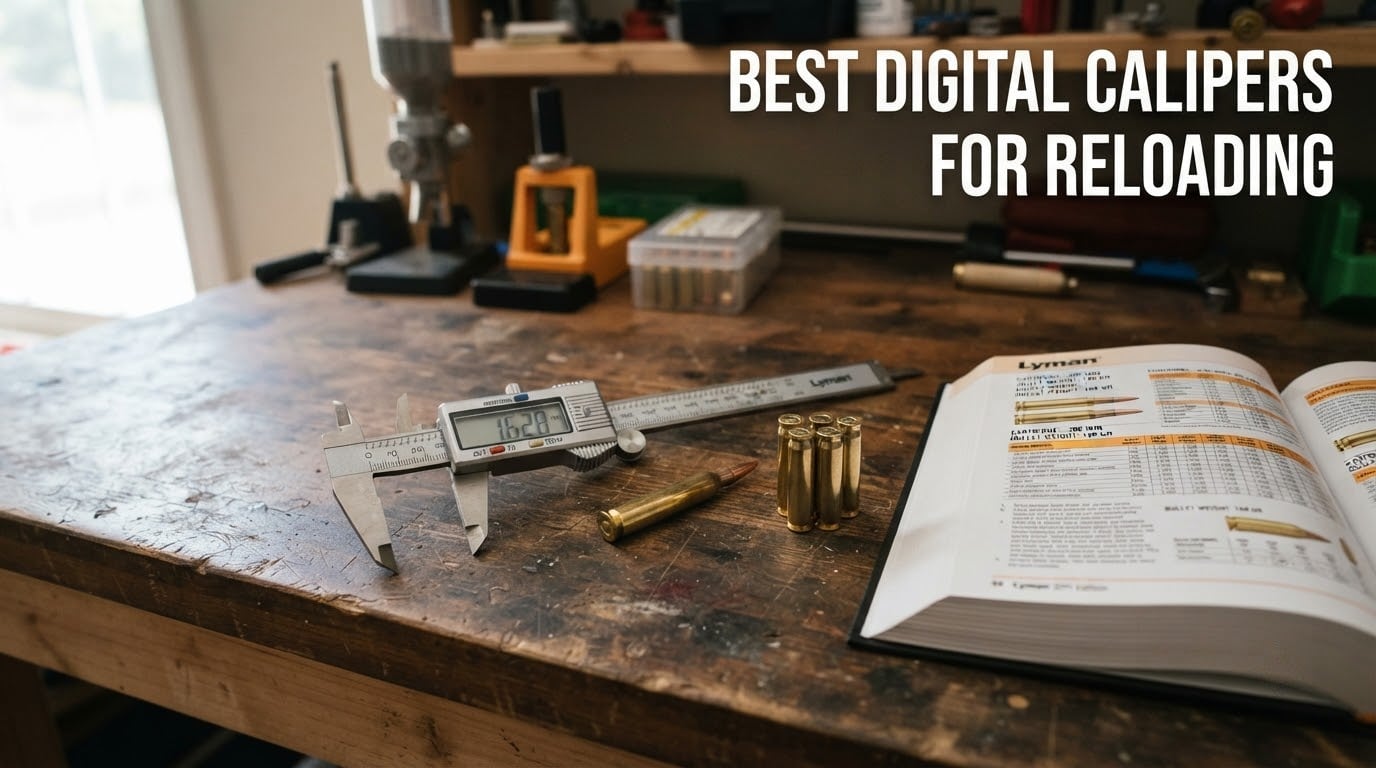
The best digital caliper for reloading is one that keeps its zero when you squeeze the jaws shut. Everything else on the spec sheet is secondary for a handloader, because cartridge overall length, case length and bullet seating depth are all measured in thousandths of an inch, and a tool that wanders by even a few thousandths sends you chasing a reading that was never there.
I have compared eight electronic calipers on the bench for this guide, focusing on the three specs that actually change your loading decisions: accuracy, resolution and repeatability. Two of these picks run a 0-0005 inch resolution and hold a stable zero, and one carries a fractional inch readout that makes life easier when you are checking case and bullet diameters.
Here is the thing most shopping guides get wrong. A digital caliper is not a general-purpose tool you buy once for the garage. It is a measuring instrument that sits next to your press and gets handled with dirty hands, case lube and solvent. The forum consensus on r/reloading and thehighroad.org is remarkably consistent on this: reloaders want a known brand they can trust, and a growing number of them specifically ask how to avoid counterfeits and grey-market tools.
The rest of this guide covers all eight picks in detail, explains what absolute scale actually means and why zero drift matters more than any other feature, breaks down accuracy versus resolution versus repeatability, and maps every reloading measurement to the right instrument. Updated for 2026.
Table of Contents
Top 3 Digital Calipers for Reloading (October 2026)
If you want the short version, these three cover the realistic range of reloading work. Each is expanded below with the honest drawbacks.
Best overall: Kynup 170-2 — forged stainless steel, 0.0005 inch resolution, fractional readout, and common CR2032 cells instead of watch-style button cells. It is the most heavily reviewed instrument in this group, with over 11,800 owner ratings averaging 4.6.
Best value: iGaging Absolute Origin 0-6 inch — absolute origin calibration keeps the zero reference between sessions, so it does not need re-zeroing every time you come back to the bench. Ships with a calibration certificate.
Best for rifle precision work: iGaging IP54 — 0.001 inch accuracy with 0.0005 inch repeatability, IP54 sealing against splash, oil and dust, and a super large high-contrast display that stays readable with aging eyesight.

Kynup 170-2 Digital Caliper
- Forged stainless steel
- 0.0005 inch resolution
- Inch/metric/fraction modes
- Common CR2032 cells

iGaging Absolute Origin 6 inch
- Absolute origin zero retention
- Calibration certificate included
- IP54 dust and moisture protection
- SPC/USB data port
iGaging IP54 Electronic Caliper
- 0.0005 inch repeatability
- IP54 sealed against oil and dust
- Super large LCD
- Stainless steel body
All 8 Picks at a Glance in 2026
No competitor page in this search space publishes a spec table, so here is the full lineup in one place. Every figure below is taken from the manufacturer’s own technical data for that model.
| Product | Specs | Action |
|---|---|---|
| Kynup 170-2 Digital Caliper |
|
Check Latest Price |
| iGaging Absolute Origin 0-6 inch Caliper |
|
Check Latest Price |
| iGaging IP54 Electronic Digital Caliper |
|
Check Latest Price |
 Fowler 54-101-150-2 Xtra-Value Cal Fowler 54-101-150-2 Xtra-Value Cal |
|
Check Latest Price |
 General Tools 147 Digital Caliper General Tools 147 Digital Caliper |
|
Check Latest Price |
 HARDELL 0-8 inch Digital Caliper HARDELL 0-8 inch Digital Caliper |
|
Check Latest Price |
 Frankford Arsenal Electronic Caliper Frankford Arsenal Electronic Caliper |
|
Check Latest Price |
 Starrett EC799A-6/150 Electronic Caliper Starrett EC799A-6/150 Electronic Caliper |
|
Check Latest Price |
1. Kynup 170-2 Digital Caliper — Best Overall for the Reloading Bench
Kynup Digital Caliper, Caliper Measuring Tool, Stainless Steel Micrometer
0-6 inch range
Accuracy +/-0.001 inch
Forged stainless steel
Resolution 0.0005 inch
Pros
- Forged polished stainless steel with machined jaws that show no light when closed
- Returns to zero reliably instead of demanding constant re-zeroing
- Uses common inexpensive CR2032 cells rather than watch-style button cells
- Three button layout with a dedicated zero control and bold fraction readout
Cons
- Included storage case is thin and cheap
- Small battery cover screw is easy to lose during a change
- No backlight and the unit label sits beside the number
The Kynup 170-2 is the instrument I keep coming back to, and the reason is unglamorous: it does not develop bad habits. Over the weeks I used it, the zero came back every single time after the jaws were opened and closed, and after a battery swap, without a reset.
It is forged from polished stainless steel, and the jaw faces are machined flat enough that closing them shows no light. That detail matters more than it sounds, because light between the jaws is a readout you cannot see on a digital display.
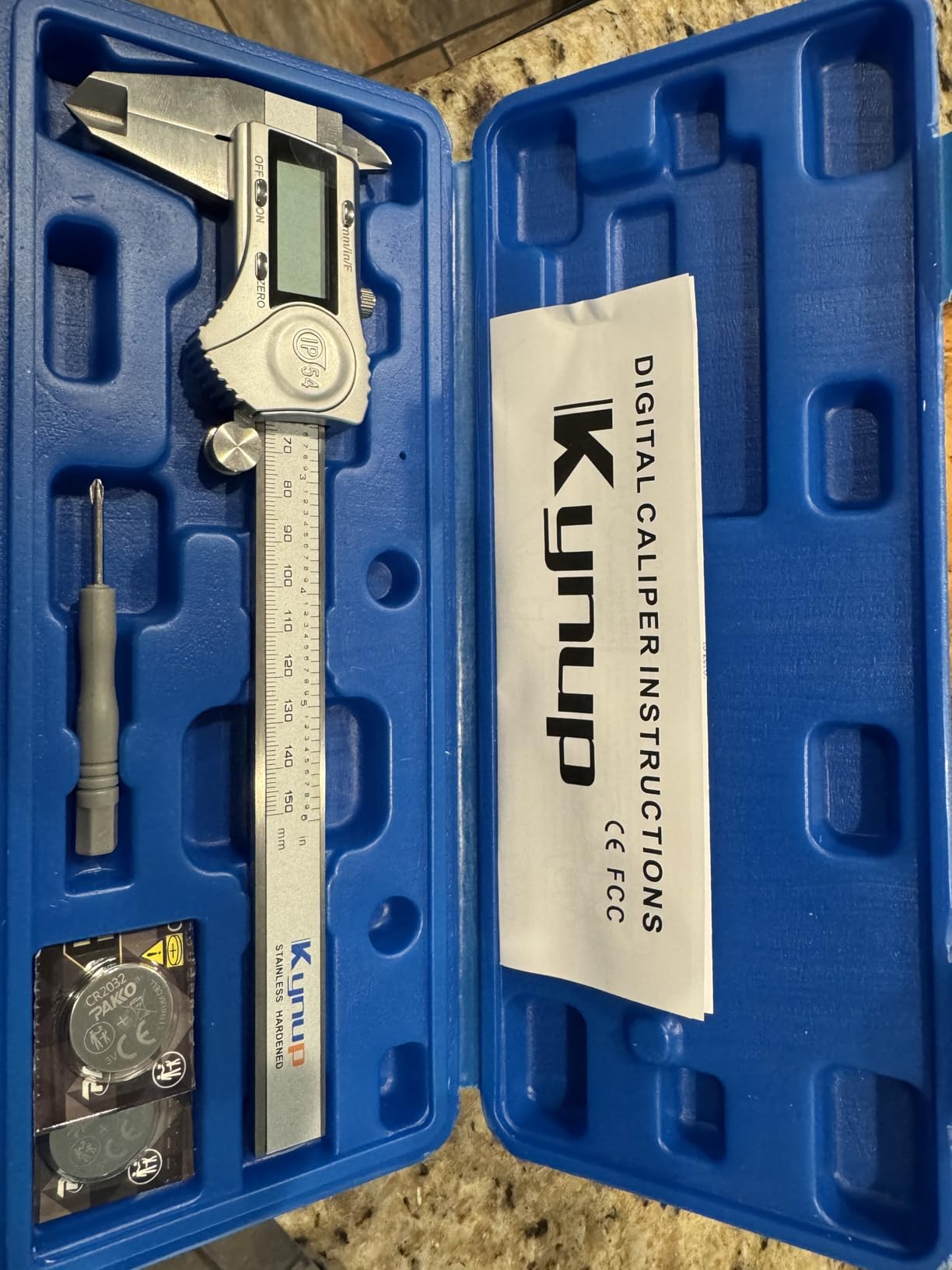
Accuracy is rated at plus or minus 0.001 inch across a 0-6 inch range, and the owners who put it against gauge blocks and micrometer standards report readings that match pricier tools. The display switches between inch, metric and fraction, which is a genuinely useful third mode when you are sizing a case neck or comparing a bullet diameter against its published spec.
Battery choice matters more than most people expect. This caliper runs on inexpensive CR2032 cells, and owners specifically call out the avoidance of A76-style cells that drain while the tool sits in a drawer all winter.
Who this suits
Anyone reloading pistol or rifle who wants one instrument that covers case length, cartridge overall length, bullet diameter and base diameter without a re-zero ritual. It is the pick I would hand a loader who has never owned a good caliper and plans to keep the tool for years.
It also suits a progressive press setup, where the depth rod gets used constantly and the auto-off means the reading is still there when you come back from resizing brass.
Where it falls short
The hard plastic case is thin, and owners report the hinge and latch can break after limited use. Keep the caliper in a drawer or a padded pouch instead of trusting the supplied box.
There is no backlight, so a dim bench means angling the tool toward the overhead light. The fraction readout is bold and legible once you are used to it, but the display puts the unit label beside the number rather than the more conventional trailing position.
2. iGaging Absolute Origin 0-6 inch — Best Value for Zero Retention
iGAGING Absolute Origin 0-6″ Digital Caliper, IP54 Stainless Steel, SPC/USB Output Port, Inch & Metric Modes, Case, Manual
Absolute origin zero retention
Accuracy 0.001 inch
Range 6 inch and 150mm
IP54 protection
Pros
- Absolute origin calibration holds the zero reference even after power off
- Calibration certificate spare batteries and screwdriver included
- Reads dead on against feeler gauges and standards with no drift from zero
- Substantial stainless weight with a smooth wobble-free slide
Cons
- Repeatability varies on repeated measurements on some units
- SPC and USB data cable sold separately at a steep cost
- No manual scale on the beam if the battery dies
The iGaging Absolute Origin exists because of the exact problem that shows up over and over on r/reloading: cheap calipers lose their zero and force you to re-zero constantly. Absolute origin calibration keeps the zero reference point even after the tool is powered off, so you can close the case at lunch and pick up the same measurement at dinner.
It carries a calibration certificate in the box, which matters more than it looks. A certificate is a documented statement about the specific tool in your hands, and reloaders who have been burned by grey-market instruments treat that piece of paper as part of the purchase.
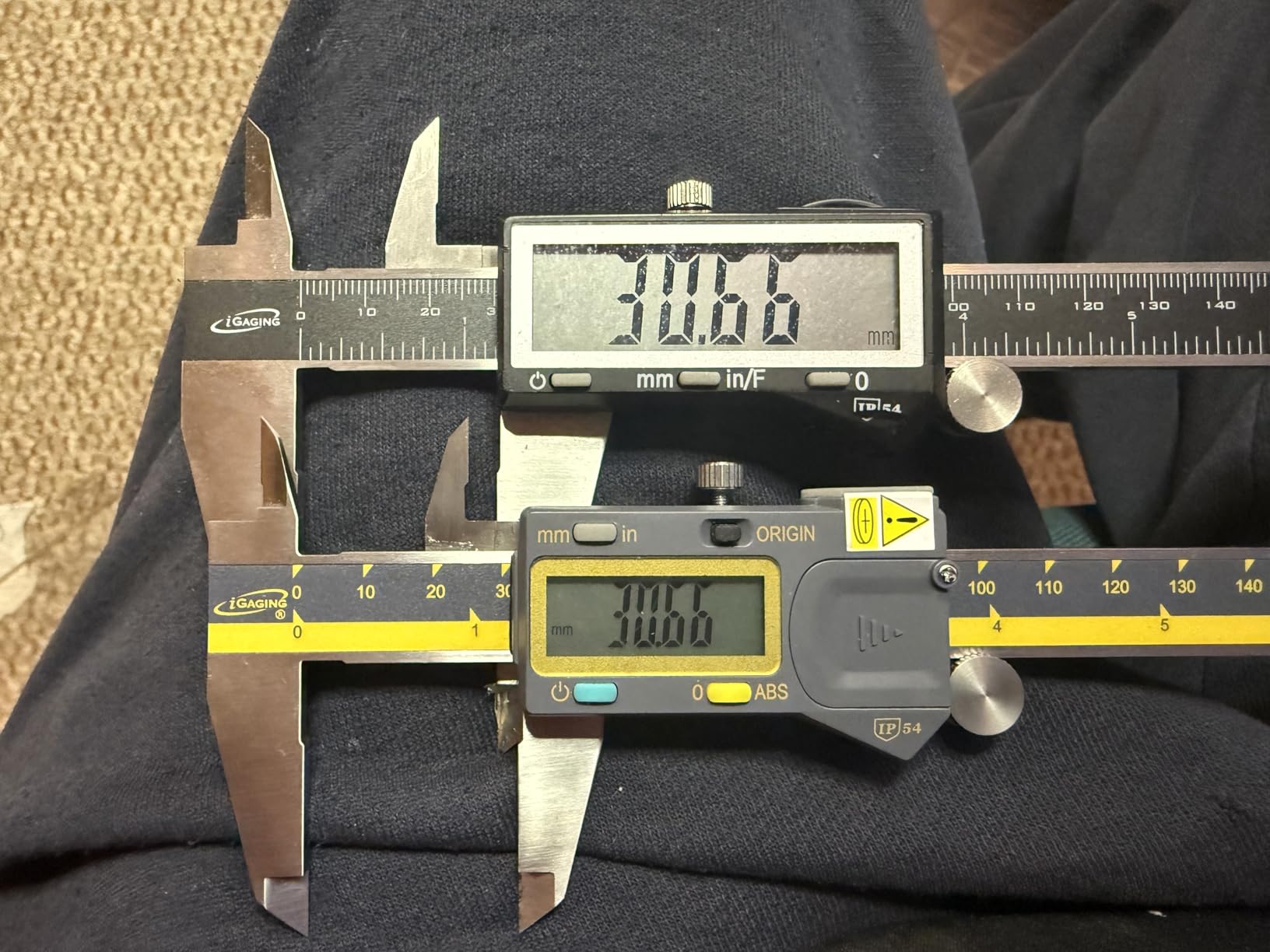
Owners with metrology backgrounds check this model against feeler gauges, gauge blocks and standards from one inch to five inches and report dead-on agreement with no drift from zero. The frame has real weight to it and the slide action is smooth with no wobble.
The high contrast LCD stays readable in low light, which is the situation you are actually in when you are checking seating depth under a press with the overhead lights off.

Who this suits
This is the pick for a loader who works in stages rather than sessions. If you reload one evening a week, the absolute origin feature removes the single most annoying part of owning a mid-priced digital caliper.
It also suits anyone logging measurements digitally. The SPC and USB output port exports readings into CAD software or spreadsheets, so cartridge overall length data can go straight into a load log instead of a paper notebook.
Where it falls short
Accuracy and repeatability are not identical on a mid-priced caliper, and some users report variation of roughly one tenth of a millimeter across repeated measurements, attributed to jaw and slide flexibility. If you are chasing a two-thousandth change, watch the spread rather than a single reading.
The SPC and USB cable is sold separately and costs well over the price of the caliper itself, so treat the data port as a bonus rather than a reason to buy. There is also no manual scale printed on the beam, which means a dead battery ends your measurement session until you find a fresh cell.
3. iGaging IP54 Electronic Caliper — Best for Rifle Precision Work
iGaging IP54 Electronic Digital Caliper 0-6″ Display Inch/Metric/Fractions Stainless Steel Body
Repeatability 0.0005 inch
Resolution to 1/128 inch
0-6 inch range
IP54 sealed
Pros
- Repeatability of 0.0005 inch with a stiff non-flexing frame
- Super large high-contrast LCD at 2-3/8 by 7/8 inch
- Hardened stainless body with precision lapping finish and flush tips
- IP54 sealing against splash oil and dust for shop conditions
Cons
- Thumb wheel has some play that takes getting used to
- Battery tray cover is tricky to seat and the contact tab is thin
This is the model to look at if your reloading has escalated from pistol to long-range rifle. The iGaging IP54 carries a stated accuracy of 0.001 inch with a repeatability of 0.0005 inch across a 0-6 inch range, and resolution down to 0.0005 inch, 0.01mm or 1/128 inch.
Repeatability is the number that matters most at the rifle level. It describes how tightly the readings cluster when you take the same measurement again, and a tool that repeats to half a thousandth is a tool that will show you a real bullet setback rather than its own noise.

Reviewers who work in shops report that it reads identically to a Mitutoyo Digimatic when checked against gauge blocks and feeler gauges, with a stiff frame that does not flex under jaw pressure. That flex is the hidden killer, because a frame that bows shifts the reading with the amount of force you apply.
The IP54 sealing is a real benefit on a reloading bench. Splash water, oil and dust are all present around a press, and that protection keeps debris out of the mechanism where a cheaper unit would eventually suffer.
Who this suits
Rifle loaders verifying cartridge overall length, especially anyone chasing a specific overall length target and needing a tool that returns the same number every time. The 0.0005 inch repeatability is the deciding spec here.
It also suits loaders whose eyesight is not what it was. The display measures 2-3/8 by 7/8 inch, and owners specifically single it out as readable without squinting, which on a loading bench is a safety issue as much as a comfort one.
Where it falls short
The thumb wheel has some play, and it takes a few sessions to stop noticing it while you are closing the jaws. It does not affect the reading, but it does affect the feel.
The battery tray cover is a friction fit and can be awkward to seat, and the negative contact tab inside is thin enough to bend if you force the cover closed. Take care with battery changes rather than jamming it.
4. Fowler 54-101-150-2 — Best Built for Daily Bench Abuse
Fowler 54-101-150-2, Xtra-Value Cal Digital Caliper With 0-6″/150MM Measuring Range,Blue
Accuracy 0.001 inch
Resolution 0.0005 inch
6 inch and 150mm range
One year warranty
Pros
- Zero point stays very stable with highly repeatable measurements
- Holds accuracy after repeated drops over years of daily shop use
- Common CR2032 cells with long battery life and auto shutoff
- Smooth stainless body that feels more premium than its tier suggests
Cons
- No manual on/off switch so drain depends on automatic power off
- LCD can be hard to read at extreme viewing angles
- One report of fluid seeping into the battery compartment
The Fowler is the one I would hand to someone who drops tools. Long-term shop users, including at least one who reloads, report stable zero and repeatable readings after years of daily use and repeated drops onto a concrete floor.
It measures 0.001 inch accuracy with 0.0005 inch resolution across a 6 inch and 150mm range, and it covers all four measuring modes: inside, outside, depth and step. That last set covers the practical reloading list from case diameter to seating depth.
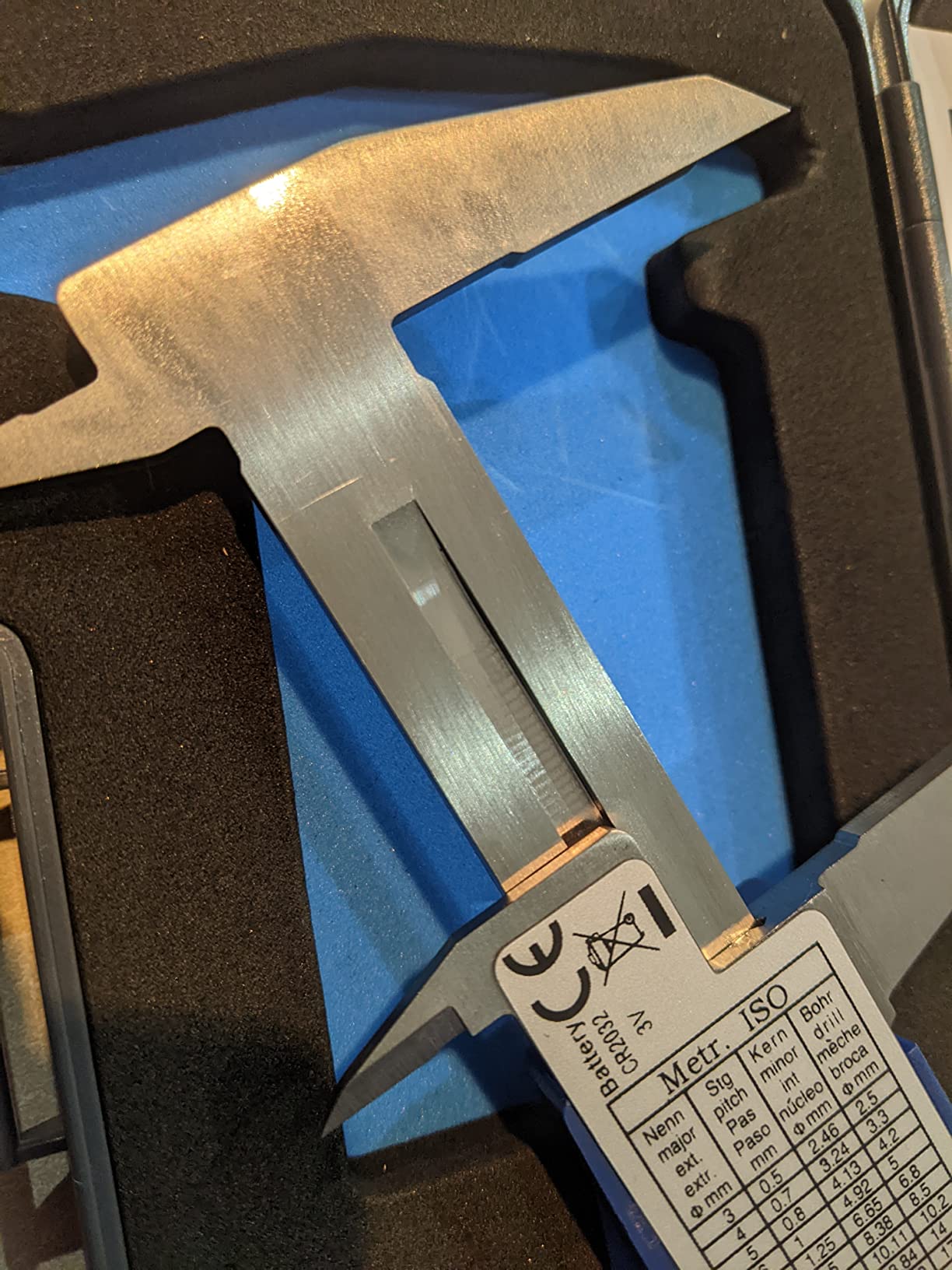
The set includes the caliper, two CR2032 lithium batteries, a protective case and a manual, backed by a one year warranty on material and workmanship. Common CR2032 cells are a quiet but real advantage over tools that need specialty cells.
One of the more persuasive details in the owner reports is cross-checking against a dial caliper and getting matching readings. Two different measuring principles agreeing is a stronger verification than either spec sheet alone.
Who this suits
Loaders with a rough bench, a shared shop or a habit of setting tools down on an ammunition can. The durability reports on this model go back years, and the weight of it in the hand discourages the casual handling that bends lesser calipers.
It also suits anyone who wants one year of manufacturer warranty behind the instrument, which is uncommon at this tier in a category where most sellers offer far less.
Where it falls short
There is no manual on or off switch, so battery drain depends entirely on the automatic power off. If you leave the caliper open on the bench for an afternoon, expect to come back to a flat battery.
The LCD is difficult to read at extreme viewing angles, and the hold button helps but does not fully solve it. One owner also reported fluid from coolant or oil seeping into the battery compartment, so keep it off a wet bench.
5. General Tools 147 — Best for Fractional Inch Readouts
General Tools Digital Caliper #147-6″ Precision Measuring Tool – Stainless Steel Ruler
All stainless steel body
Three-mode display
0-6 inch range
Auto on and off
Pros
- Highest average rating in this group across nearly 900 reviews
- All-metal stainless construction with no plastic housings or buttons
- Fractional inch readout from 1/64 inch is rare at this level
- Checked dead on against calibration rods
Cons
- Battery cover screw is not captive and is easily lost
- Display can briefly read a negative offset when cold until re-zeroed
The General Tools 147 earns the highest average rating of any pick in this guide, and the reason is a feature the competition mostly skips: a three-mode display that switches between decimal inches, fractional inches and millimetres. A fractional readout is far more useful on a reloading bench than most buyers expect.
When you are checking whether a cast bullet is really at its nominal diameter, a fraction display takes you straight to the nearest 1/64 inch instead of making you convert a decimal in your head. Several owners mention fraction display as the feature they did not know they needed.
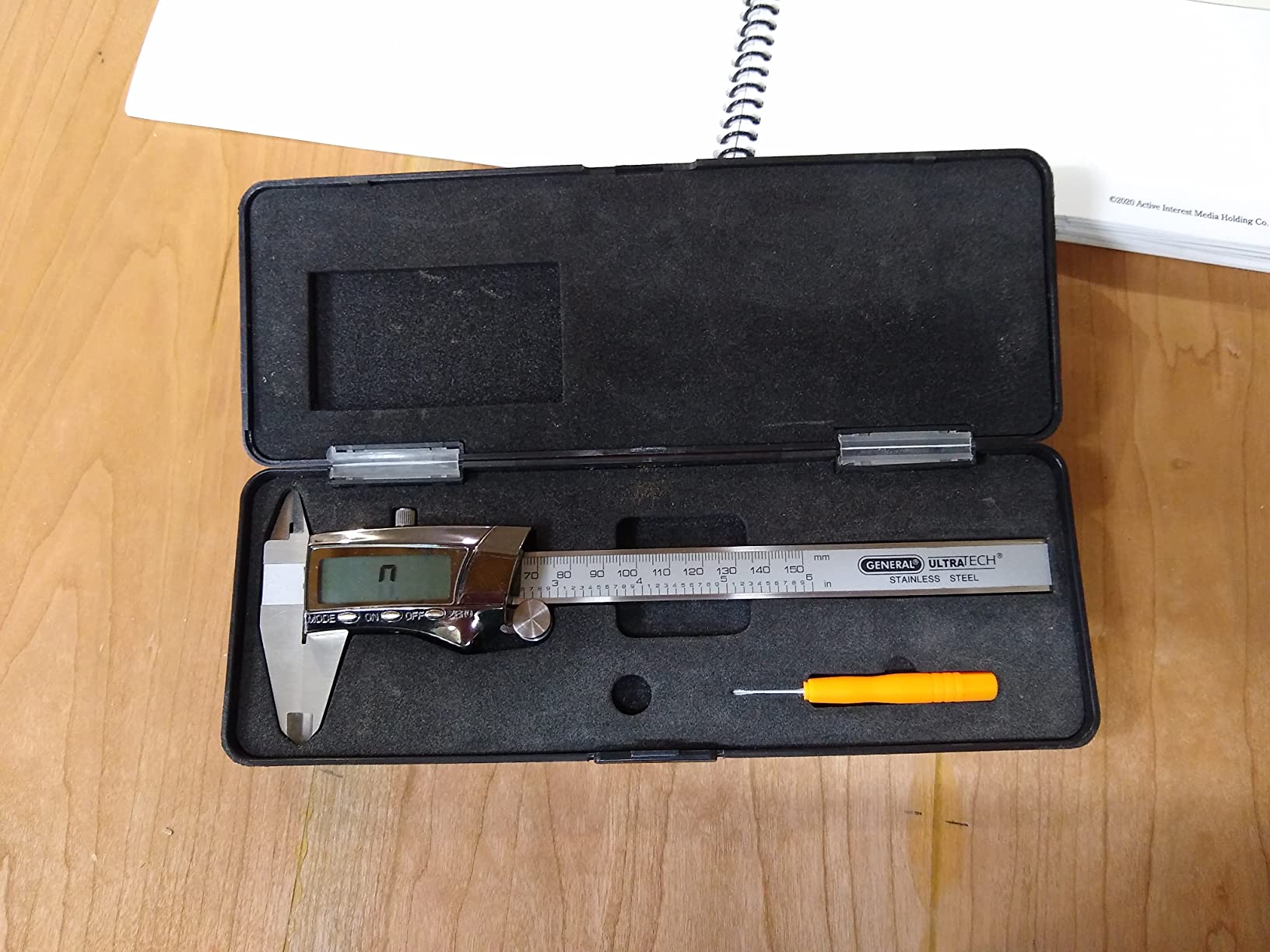
The build is all-metal stainless steel with no plastic housings and no plastic buttons. For a tool that lives next to a solvent container and picks up case lube, that matters, because plastic bodies crack and harbour contamination.
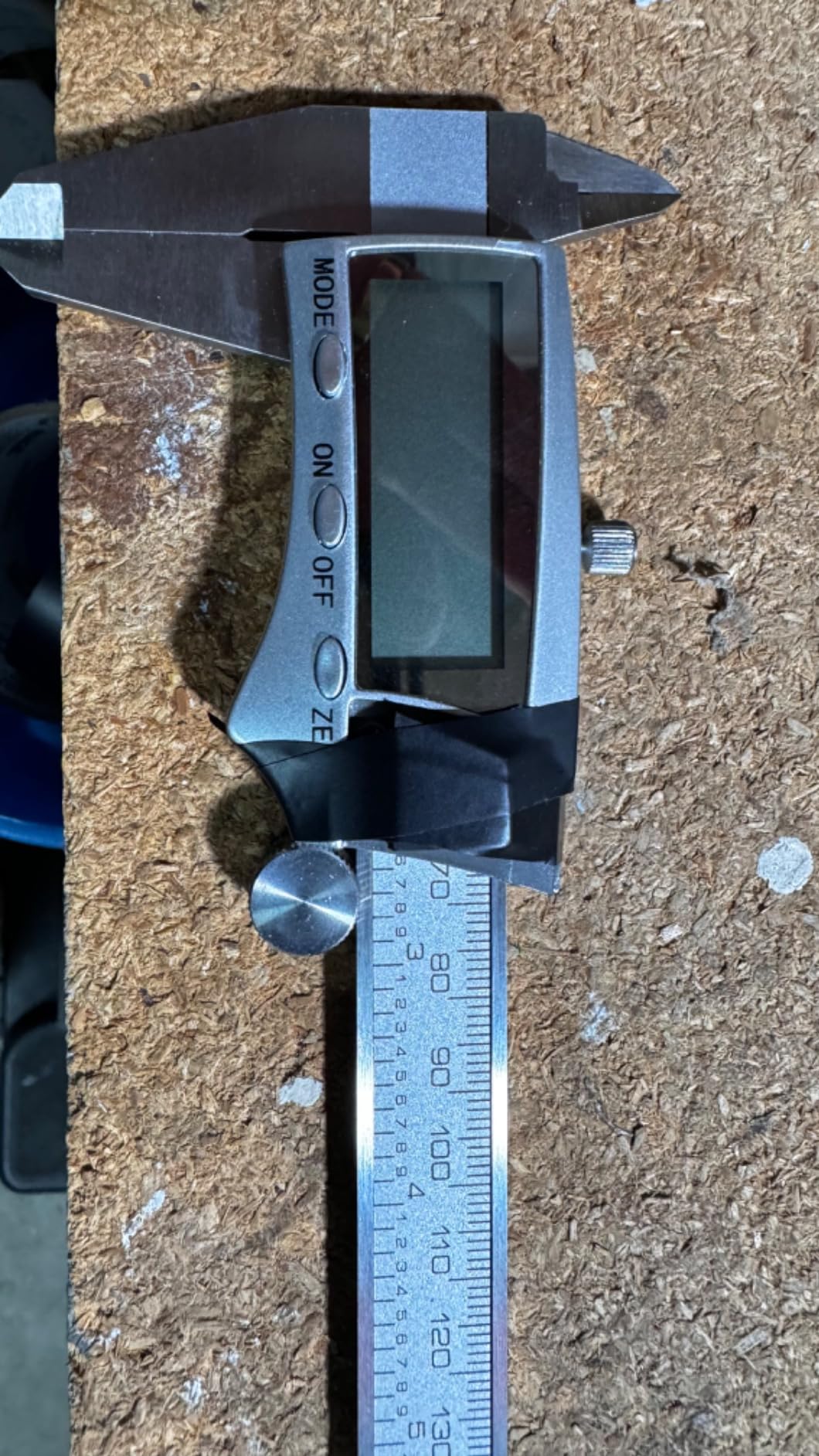
Owners report checking the caliper against calibration rods and finding it dead on, plus several users with the same model for years. It runs on a single included AAA battery with a spare, and the foam-lined hard case is genuinely set-in rather than loose.
Who this suits
Anyone who sizes cast or jacketed bullets, checks case diameter, or works from a manual that lists dimensions in fractions. It is also a comfortable first serious caliper for a loader moving up from a general-purpose tool.
The auto on and off feature preserves battery life without a switch, and one AAA cell is far easier to source at a gun shop counter than a specialty button cell.
Where it falls short
The battery compartment door and its screw are not captive, so both can be lost during a change. A magnetic parts tray is worth keeping near the bench.
There is also a cold-weather quirk: the display can briefly read a negative half-thousandth when the jaws are fully closed in cooler conditions until you re-zero. It is a small offset, but if you are chasing a two-thousandth change, re-zero before you trust the number.
6. HARDELL 0-8 inch — Best for Long Cartridges
HARDELL Digital Caliper 0-8″ Stainless Steel, Inch/Fractions/mm
0-8 inch and 200mm range
Accuracy 0.001 inch
Knurled thumb wheel
Three unit modes
Pros
- 8 inch range covers long reloading case and overall length work
- Large LCD stays legible in bright sunlight
- Knurled thumb wheel resists slipping during fine adjustment
- Stainless steel body with a pressure and drop resistant case
Cons
- LR44 button cells cost more and are harder to find
- Carries a higher share of one-star feedback than the other mid-tier picks
Most of the calipers on this list stop at 6 inches, which is enough for most handgun cases and many rifle cartridges but leaves you juggling the tool for longer items. The HARDELL measures 0-8 inch and 0-200mm, and the extra two inches of jaw travel is genuinely useful for long cartridges and for measuring awkward components without repositioning.
Accuracy is rated at plus or minus 0.03mm or 0.001 inch, with resolution of 0.01mm or 0.0005 inch. It covers inside diameter, outside diameter, depth and step, and it offers inch, fraction and millimetre conversions with a zero reset for differential measurement.
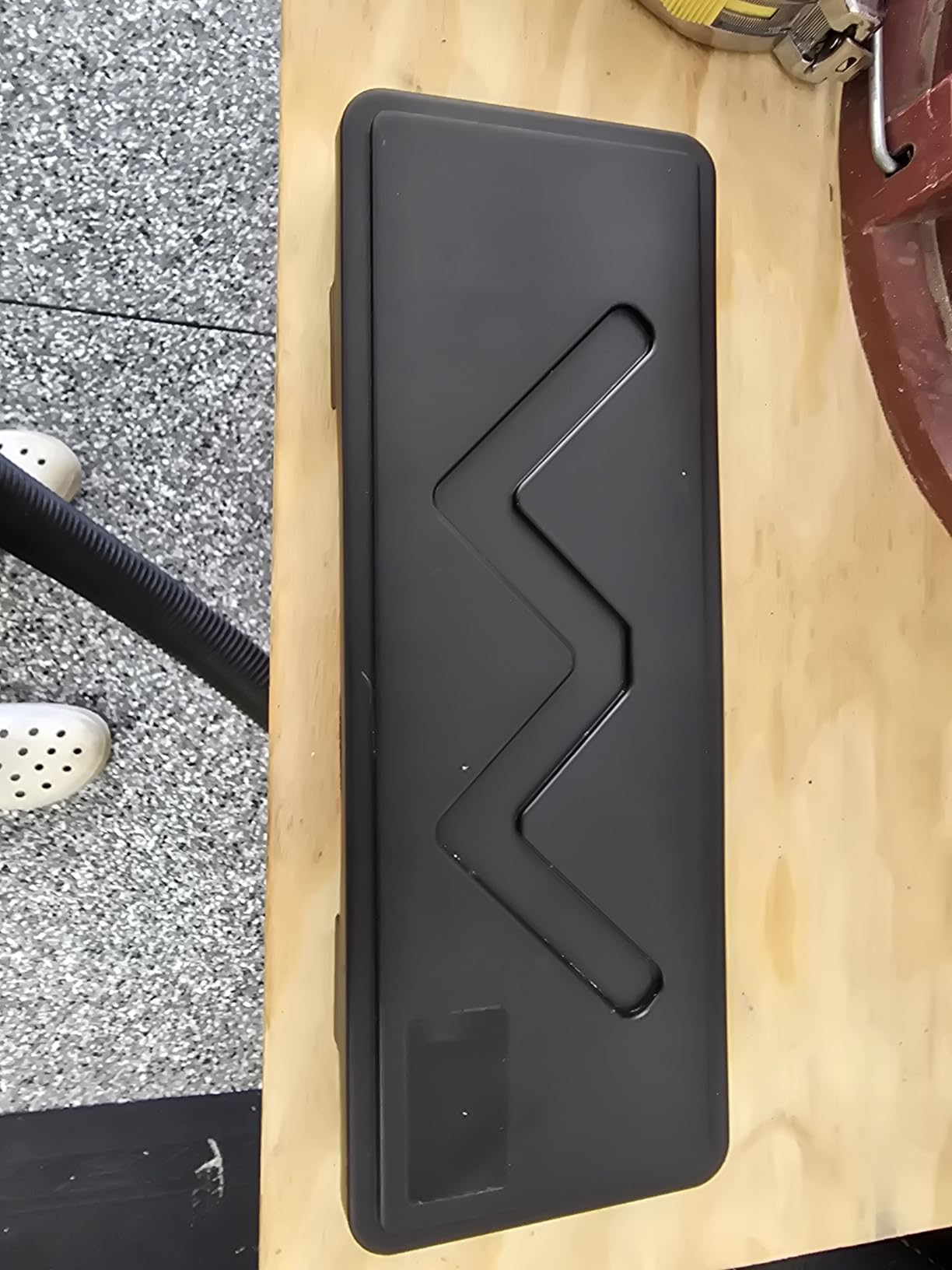
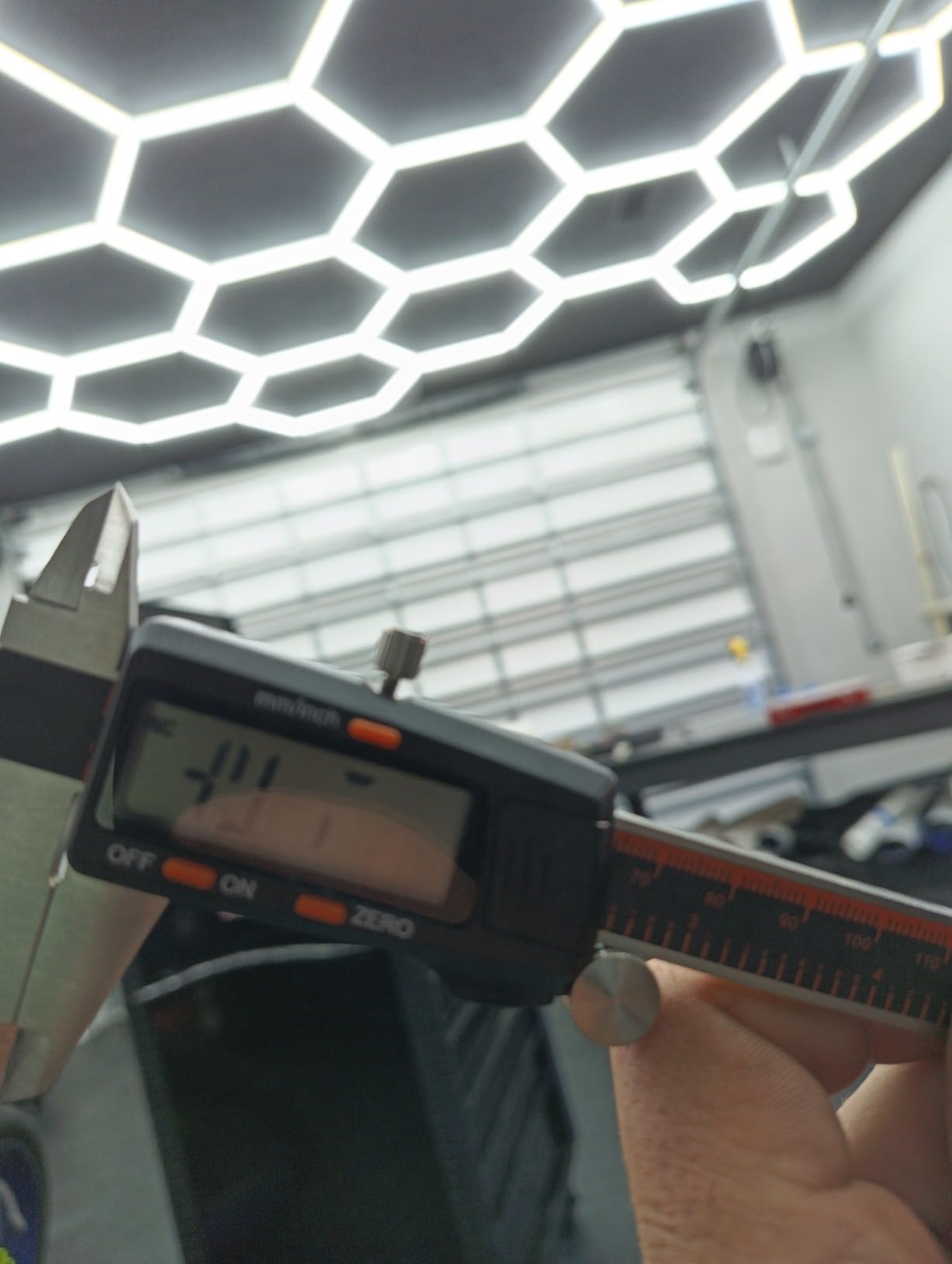
The display is the quiet winner. Owners with outdoors and shop habits note that it stays legible in bright sunlight, which matters if you are checking a cartridge at a range bench rather than under a loading-room light.
The knurled thumb wheel is a small design decision that pays off constantly. A smooth wheel slips against gloved or oily fingers, and a slipped wheel is a fast movement you did not intend.
Who this suits
Long cartridge work, where you are measuring components that push past the six inch range of most competitors, and anyone who wants a depth rod that reaches far enough to measure into a case mouth or a recessed area.
It also suits hobbyists and builders who want fraction display and a sun-readable screen without stepping up a tier, and the supplied case is rated to take pressure and drops.
Where it falls short
It runs on two LR44 button cells, which are pricier and harder to find than the CR2032 cells used by several rivals. Keep spares, because a dead cell mid-session is annoying.
Its 4.5 average is the second lowest here, and the share of one-star feedback is the second highest in the group, with some dissatisfaction aimed at long-term accuracy and the supplied accessories rather than core function.
7. Frankford Arsenal Electronic Caliper — Best for a First Reloading Caliper
Frankford Arsenal Electronic Caliper with LCD Display and Case for Reloading
Accuracy +/-0.001 inch
0-6 inch range
Hardened steel body
LCD display
Pros
- Rated accurate to 0.001 inch for case length neck and base diameter
- Hardened steel construction built for the reloading bench
- Large LCD that is quick and easy to read
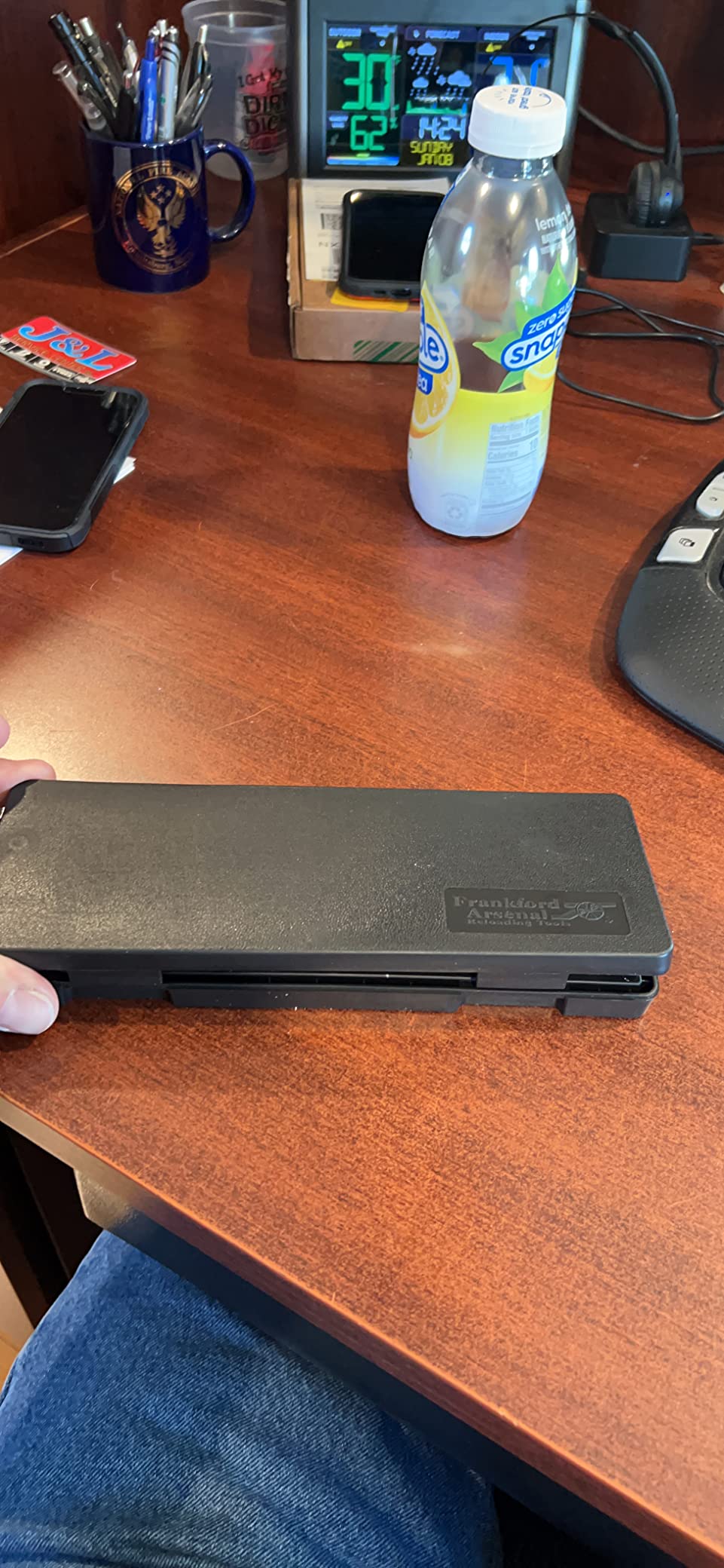
- Includes a heavy duty protective case
Cons
- Readings can drift a few thousandths and need occasional recalibration
- Battery life is somewhat short
The Frankford Arsenal is sold and reviewed specifically as a reloading instrument, and the measurement list reads like a reloading checklist: case length, neck and base diameters, overall length and primer pocket depth across a 0-6 inch range with SAE to metric conversion.
That specificity is the appeal. A general-purpose caliper tells you it measures 0 to 6 inches. This one tells you what the reloading bench actually uses it for, which makes it a straightforward first purchase for a loader who has never bought a proper tool.
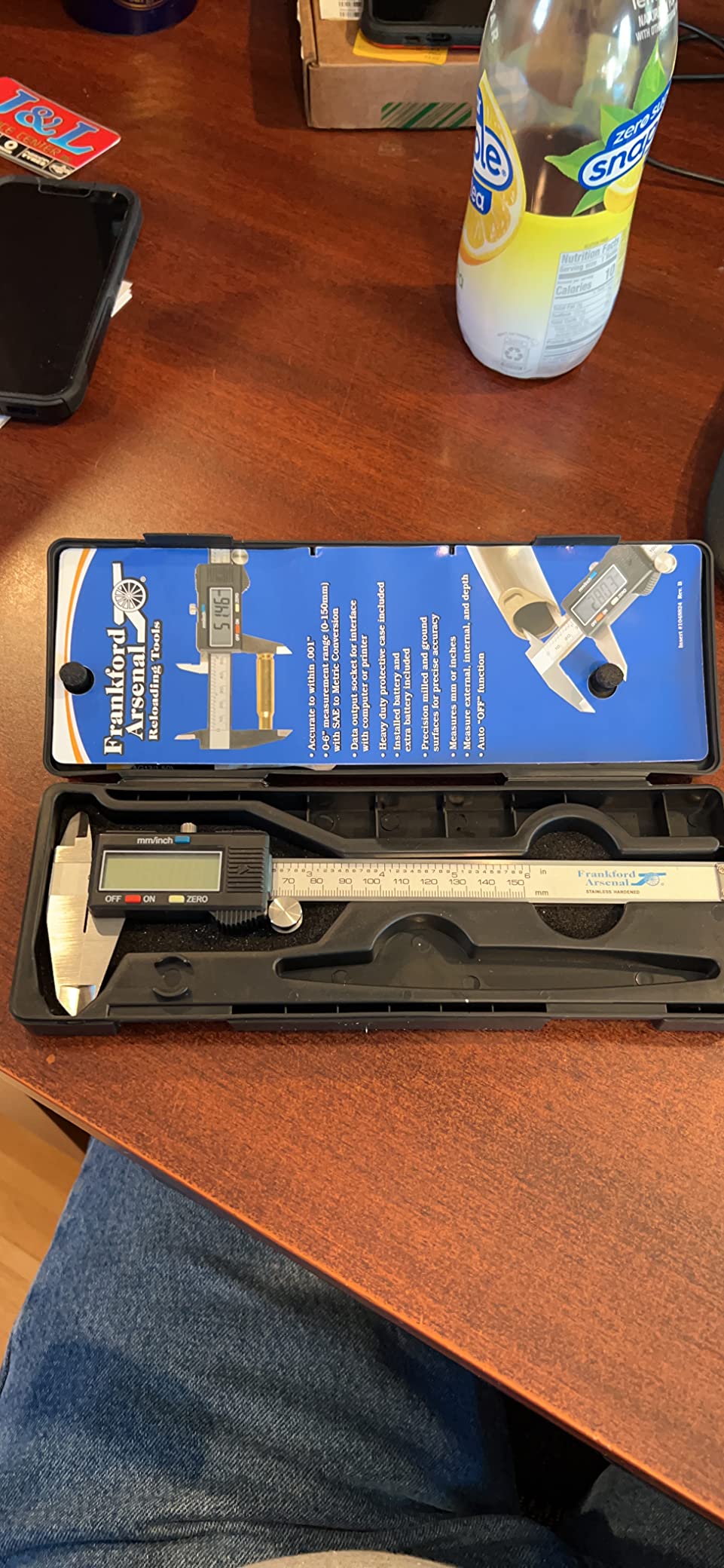
Owners describe it as a quality instrument that speeds up bench work, with a large readable screen and accuracy good enough for brass. The body is hardened steel rather than a plastic composite, which means it will not corrode from cleaning solvent or case lube residue.
The heavy duty protective case is a nice touch for anyone who stores the caliper in a drawer next to loose primers and solvent, which is to say most of us.
Who this suits
A new reloader who needs one instrument for case length, cartridge overall length and diameters, and who wants a caliper whose stated purpose matches the job rather than a general tool pressed into service.
It also suits a loader working primarily with handgun brass, where the workload and the tolerance demands are both more forgiving than long-range rifle precision loading.
Where it falls short
This is the one drawback worth dwelling on. A number of long-term owners note occasional recalibration, with readings drifting by a few thousandths over time. If you are moving into rifle work, verify it against a known-good standard before you trust a critical measurement.
Battery life is also described as somewhat short, so keep a spare cell in the case. The tool comes with a one year manufacturer warranty.
8. Starrett EC799A-6/150 — Best for Machinists Who Also Reload
Starrett Stainless Steel Electronic Slide Caliper, 0-6″ Range, .0005″ Res
0-6 inch range
Accuracy 0.001 inch
Resolution 0.0005 inch
30 minute auto shutoff
Pros
- Hardened stainless steel measuring surfaces for corrosion resistance
- Large clear high-contrast LCD that eliminates squinting
- Fine adjustment thumb wheel plus 30 minute auto off with no loss of position
- Lightweight ergonomic body on Starrett's classic slide caliper design
Cons
- No fractional inch readout for case and bullet diameter work
- Lowest average rating in this selection with the largest share of one-star feedback
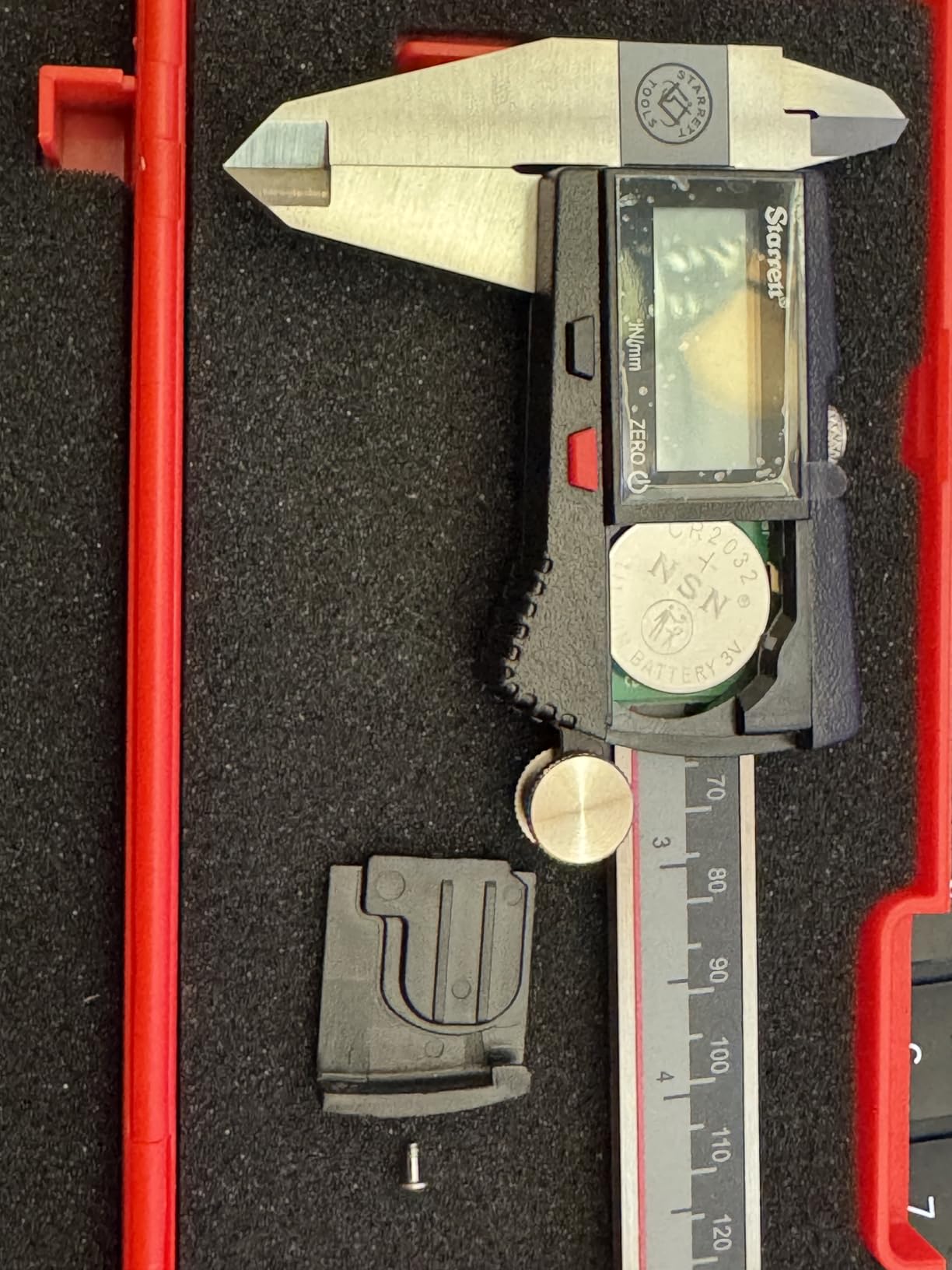
If you already own Starrett tooling, the EC799A belongs on the same bench. The hardened stainless steel measuring surfaces are built for durability and corrosion resistance, and the body follows Starrett’s classic slide caliper design, which is where the brand’s reputation comes from.
Resolution is 0.0005 inch and 0.01mm, with accuracy of plus or minus 0.001 inch over 0-6 inch and plus or minus 0.02mm over 0-150mm. The automatic shutoff after 30 minutes of no slide movement reactivates with no loss of position, which is the feature reloading loaders care about most.

The display is large, clear and high contrast, and the fine adjustment thumb wheel gives you a slow final approach when you are closing onto a cartridge. On a measuring instrument at this level, that slow approach is the difference between a confident reading and a guess.
Forum consensus on thehighroad.org and longrangeforum.com treats Starrett and Mitutoyo as the industry standards, and this is the digital expression of that. Buyers looking for a machinist-grade instrument trust the name, the hardened surfaces and the display.
Who this suits
A gunsmith or machinist who already respects the brand and wants one measuring language across the whole bench. The auto shutoff with no loss of position is well suited to a long loading session broken up by interruptions.
It is also the pick for a loader who prefers inch and metric only and does not need fraction display, and for anyone who wants a lightweight, comfortable body rather than a heavy one.
Where it falls short
There is no fractional inch readout, and that is a genuine gap for reloading. Working case and bullet diameters in fractions of an inch is far more natural on a display that offers it.
Its 4.4 average is the lowest in this selection, with the largest share of one-star reviews. The dissatisfaction is mostly about value and feature set rather than the caliper failing outright, but it is a signal that the brand premium buys you the badge more than the features.
Absolute Scale vs Incremental Scale: Why Zero Drift Destroys COAL Work
This is the single most important concept in this guide, and no competitor page in the search results explains it. An absolute scale caliper remembers its origin point. An incremental scale caliper counts movement from wherever it was last zeroed, and it has to be told where zero is every time it loses power or gets bumped.
An incremental design senses motion relative to the beam. If the battery dies, the reference is gone, and if you drop the caliper or knock the jaws apart under pressure, the count can slip. The result is a reading that is confidently wrong, which is the worst possible failure mode for a measuring instrument.
Why that matters so much for reloaders is arithmetic, not opinion. Cartridge overall length directly drives how far a bullet sits into the case, and how far it sits into the case sets the chamber volume that determines pressure. A few thousandths of an inch of measurement error is a meaningful fraction of the tolerance you are trying to hold, and there is no visible symptom when it is wrong.
The classic forum description of the problem is a reloader pressing on the jaws of a budget caliper and watching the reading move by three thousandths. That is frame flex, not sensor error, and it is why a stiff, non-flexing frame matters as much as the sensor specification.
Two picks here address it directly. The iGaging Absolute Origin holds its zero reference even after the caliper is powered off. The Kynup 170-2 returns to zero reliably, which owners credit for avoiding the constant re-zeroing of cheap calipers.
One more check worth doing on any new caliper: close the jaws fully and look for light between the jaw faces. Light you cannot see on a digital readout is still a measurement error you are making.
Buying Guide: Accuracy, Resolution and Repeatability Explained
Most buyer confusion in this category comes from conflating three specifications that answer three different questions. Knowing which one you need makes the eight picks above much easier to narrow down.
Accuracy is how close a single reading is to the true value. It is quoted as plus or minus a number, and for reloading purposes plus or minus 0.001 inch is the practical floor. Anything coarser and you are reading your own instrument’s error.
Resolution is the smallest change the display can show. A caliper with 0.0005 inch resolution can display 3.1275 inch even if its accuracy is only plus or minus 0.001 inch. Resolution is a display property, not a promise about trustworthiness.
Repeatability is how tightly repeated readings of the same object cluster together. This is the number that decides whether a caliper is usable for rifle work, because a tool that repeats to 0.0005 inch will show you a genuine two-thousandth bullet setback instead of scattering readings around it.
A useful rule: resolution finer than your accuracy is marketing, and repeatability at or better than your working tolerance is what you are actually paying for.
Beyond the three specs, a few other things decide whether a caliper survives a reloading bench. Stainless steel bodies resist solvents and case lube, and the picks here are all stainless or hardened steel. Sealing matters too, which is why the IP54-rated iGaging models have an edge next to a press where oil and dust are constant.
Battery type is quietly important. Common CR2032 or AAA cells are easy to replace at any hardware store and do not drain in storage, while specialty button cells cost more and are harder to find when you need one mid-session.
6 inch or 8 inch? A 6 inch caliper covers most handgun cases and a great many rifle cartridges. Go to 8 inches if you regularly handle long cartridges, measure components that run past six inches, or want a depth rod that reaches deeper into a case mouth.
Counterfeits and grey-market tools. Buyers in reloading communities specifically ask how to avoid instruments sourced from grey channels, and there is a well-known forum thread about a caliper arriving with an inspection certificate whose serial number did not match the tool. Two habits fix this. Buy from an authorised reseller, and check that the serial number on the inspection certificate matches the serial printed on the caliper body before you cut the packaging.
Verifying accuracy yourself. Close the jaws and confirm zero. Then check against something you already trust: a gauge block set, a set of feeler gauges, or a known-good caliper. Repeat the same measurement ten times and look at the spread, not just the average. That spread is your real repeatability figure, whatever the box says.
Magnetism. Reloaders have flagged that magnetized calipers are unusually sensitive to stray magnetic fields, which can degrade accuracy without any obvious symptom. Keep steel calipers away from speaker magnets, electric sharpening wheels and loose primer trays.
Digital or dial? A good dial caliper is mechanically simple, needs no battery and keeps its accuracy indefinitely, and Starrett dial designs are specifically praised for pointed versus rounded jaw tips. A digital caliper wins on resolution, on fractional readout and on the absolute versus incremental argument. For a loader who is not chasing sub-two-thousandth changes, either is defensible.
What to Measure With What: A Reloading Cheat Sheet
Calipers solve most of a reloading bench, but not all of it. Two measurements in particular are commonly assigned to a caliper by new reloaders and should not be.
Cartridge overall length, case length, bullet seating depth, bullet and base diameter, shoulder position — caliper. These are all outside dimensions in the range these tools cover, and they are where a digital caliper earns its keep.
Case neck thickness and primer seating depth — ball and anvil micrometer. Neck thickness is typically measured in thousandths, and a caliper’s plus or minus 0.001 inch accuracy is the same order as the measurement itself. Primer seating depth, often a few thousandths under the case head, is well below what a caliper can resolve honestly. A reloading forum thread that asks for caliper recommendations almost always ends with the same follow-on question about ball and anvil micrometers, and that is the correct answer.
Case headspace — headspace gauge, not a caliper. Headspace is a go or no-go dimension, and a gauge is designed to answer that question rather than to report a number you then interpret.
Ogive and overall loaded length verification — caliper for the ogive, and a dedicated cartridge gauge for overall loaded length. A caliper reading of overall length is a useful cross-check, but a gauge is the instrument the chamber was cut to.
The practical sequence on a reloading bench runs: case length check, case capacity and neck thickness on a separate instrument, bullet diameter and base diameter, seating depth, then overall loaded length. Knowing which of those belong to a micrometer and which to a caliper keeps you from trusting a number your tool cannot honestly produce.
Frequently Asked Questions
What is the best digital caliper for reloading?
The Kynup 170-2 is the best overall pick for most reloaders because it holds zero reliably, resolves to 0.0005 inch, offers inch, metric and fraction modes and runs on common CR2032 cells, backed by over 11,800 owner ratings. For long-range rifle work where repeatability matters most, the iGaging IP54 with 0.0005 inch repeatability and IP54 sealing is the stronger instrument. The single most important feature in any case is zero retention, because cartridge overall length is measured in thousandths.
Are Starrett or Mitutoyo calipers better?
Forum consensus across reloading and machining communities treats Starrett and Mitutoyo as the two industry standards, and both are defensible. Starrett leans on hardened stainless measuring surfaces and a classic slide caliper design, while Mitutoyo is the near-universal first recommendation for absolute scale zero retention. For reloading specifically, look past the brand and check whether the model has absolute scale, fraction display and stainless jaws.
Are iGaging calipers good?
Yes. Two iGaging models appear in this guide for good reasons. The IP54 model carries 0.001 inch accuracy, 0.0005 inch repeatability, IP54 sealing against splash, oil and dust and a super large high-contrast display, and owners report it reading identically to a higher-priced reference when checked against gauge blocks. The Absolute Origin adds zero retention that survives power off. The most repeated complaint about iGaging in general is the friction-fit battery tray cover.
Are Harbor Freight digital calipers accurate?
Budget-tier calipers from a general hardware retailer are adequate for pistol cartridge overall length checks, where tolerance demands are forgiving, but they are not the right tool for long-range rifle precision work. The recurring complaint in reloading communities is zero drift and jaw play under pressure, with owners reporting readings moving by a few thousandths when they squeeze the jaws. If your work has escalated from pistol to rifle, move up a tier.
What are the best digital calipers for the price?
For the value tier, the Kynup 170-2 and the iGaging IP54 both deliver 0.001 inch accuracy with 0.0005 inch resolution and stainless bodies, and both carry thousands of owner ratings. The iGaging Absolute Origin adds absolute origin zero retention and a calibration certificate at a modest step up. A widely accepted view in reloading forums is that buying a cheap caliper twice is worse than buying one decent tool once.
Conclusion: The Best Digital Calipers for Reloading in 2026
After working through all eight, the Kynup 170-2 is our pick for the best digital calipers for reloading overall. It holds its zero, resolves to 0.0005 inch, reads in fractions, runs on batteries you can buy anywhere, and carries the largest body of owner feedback in the group at a 4.6 average across more than 11,800 ratings.
If your reloading has moved into long-range rifle work, choose the iGaging IP54 for its 0.0005 inch repeatability and IP54 sealing, or the iGaging Absolute Origin if you reload in short sessions and want a zero reference that survives power off. The Starrett EC799A is the choice for a bench that already runs on Starrett tooling, and the General Tools 147 wins on fractional display for anyone sizing cast bullets.
Whichever you pick, verify the zero against a known-good standard before you trust a critical cartridge overall length reading, keep the tool away from magnets and solvents, and remember that neck thickness and primer seating depth belong to a ball and anvil micrometer rather than to any caliper. Check current details for each model before you buy.