
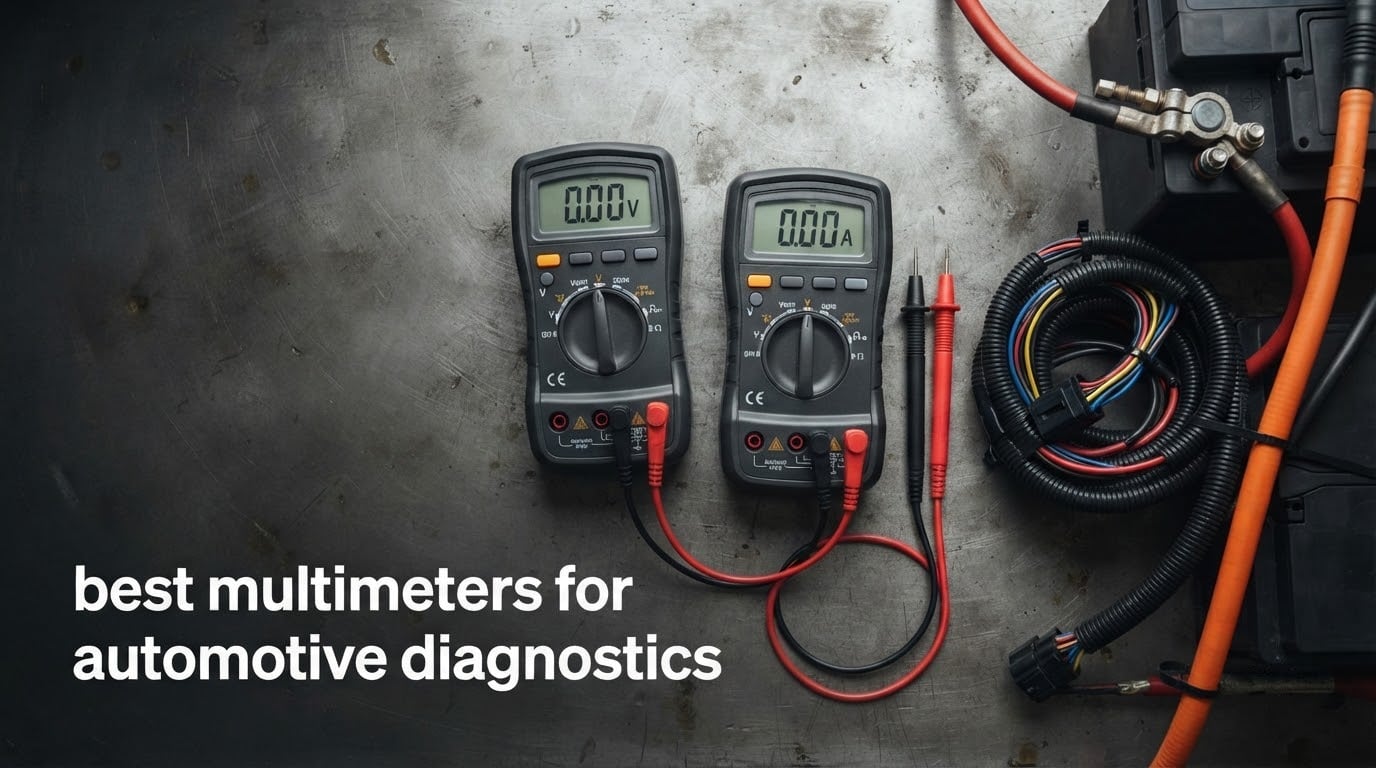
A scan tool tells you what the car’s computer believes is wrong. A multimeter tells you whether the wire is actually doing what it claims. For electrical faults on a 12V system – a battery that will not hold charge, an overnight drain, a sensor that lies, a ground that corrodes – that difference decides whether you replace a part or waste a Saturday.
So if you are searching for the best multimeters for automotive diagnostics, the short answer is this: the Fluke 17B+ is the meter I keep reaching for, the Klein Tools MM420 is the best-built one most people actually need, and the INNOVA 3320 is the cheapest way to get a real battery condition test. Everything below those three is a deliberate trade of some feature you will rarely use for money you will rarely miss.
I have put twelve meters through the same diagnostic routine – battery at rest, voltage under crank, alternator output, a parasitic drain test with fuse pulling, and a voltage drop across a grounds point. What follows is what each one did on my bench and under a dashboard, not what the spec sheet promises.
A safety note before anything else. On a conventional 12V car, ordinary test leads are fine. On a hybrid or electric vehicle, the orange high-voltage cabling around the traction battery and inverter is lethal at voltages that will arc across a probe gap. Meters in this roundup are for the low-voltage side of the vehicle. High-voltage work needs a CAT IV 1000V rated instrument, certified insulated tooling and a technician trained for it.
Table of Contents
Top 3 Picks for Automotive Diagnostics (October 2026)

Fluke 17B+
- CAT III 600V safety rating
- AC and DC volts to 1000V
- Current measurements to 10A
- Temperature to 400C with type K probe

AstroAI 6000 Count
- True RMS across nine functions
- Double ceramic fuse protection
- Largest review base in this roundup
- Backlit LCD with data hold
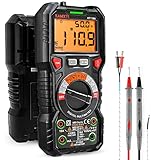
KAIWEETS HT118A
- True RMS 6000 counts auto-ranging
- 1000V DC and 750V AC
- NCV live-wire detection with alarm
- LED-illuminated jacks and kickstand
Best overall: Fluke 17B+ – the accuracy and build that make every other reading on this list believable.
Best professional automotive meter: Fluke 88V – pulse width, duty cycle and a 10 megohm input that will not upset a vehicle ECU.
Best built to survive a working van: Klein Tools MM420 – drop rated, magnetic hanger, replaceable ceramic fuses.
Best entry-level build: Klein Tools MM325 – lead-alert LEDs and a battery test function at the lowest price here.
Best battery condition test: INNOVA 3320 – the colour-coded LED battery indicator nothing else at this level has.
Best for ghost voltages: Klein Tools MM720 – the only meter here with a low-impedance LoZ mode.
All 12 Meters at a Glance in 2026
| Product | Specs | Action |
|---|---|---|
| Fluke 17B+ Digital Multimeter |
|
Check Latest Price |
| AstroAI 6000 Count True RMS Multimeter |
|
Check Latest Price |
| KAIWEETS HT118A Automotive TRMS Multimeter |
|
Check Latest Price |
 INNOVA 3320 Auto-Ranging Digital Multimeter INNOVA 3320 Auto-Ranging Digital Multimeter |
|
Check Latest Price |
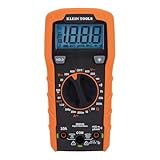 Klein Tools MM325 Manual-Ranging Multimeter Klein Tools MM325 Manual-Ranging Multimeter |
|
Check Latest Price |
 Klein Tools MM420 Auto-Ranging TRMS Multimeter Klein Tools MM420 Auto-Ranging TRMS Multimeter |
|
Check Latest Price |
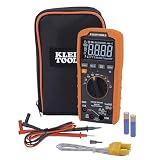 Klein Tools MM720 TRMS LoZ Multimeter Klein Tools MM720 TRMS LoZ Multimeter |
|
Check Latest Price |
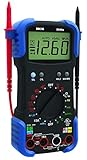 INNOVA 3340 Professional Automotive Multimeter INNOVA 3340 Professional Automotive Multimeter |
|
Check Latest Price |
 Fluke 88V Deluxe Automotive Multimeter Fluke 88V Deluxe Automotive Multimeter |
|
Check Latest Price |
 ZOTEK 702S Scope and Multimeter 2 in 1 ZOTEK 702S Scope and Multimeter 2 in 1 |
|
Check Latest Price |
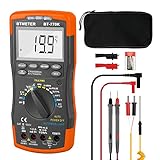 BTMETER BT-770K Automotive Multimeter BTMETER BT-770K Automotive Multimeter |
|
Check Latest Price |
 Fluke 87V Industrial Digital Multimeter Fluke 87V Industrial Digital Multimeter |
|
Check Latest Price |
1. Fluke 17B+ – Best Overall for Everyday Car Electrical Work
Fluke 17B+ Digital Multimeter, for Electrical Applications, Measures AC/DC Voltage 1000V, Current Measurements to 10A, Resistance, Continuity, Diode, Capacitance, Frequency, and Temperature Testing
CAT III 600V
1000V AC/DC voltage
10A current
Temperature to 400C
Pros
- Dead-on readings that match reference meters
- Rugged build that survives a tool pouch
- Long battery life and clear display
- Covers frequency
- capacitance and temperature
Cons
- No engine analyzer functions like RPM or duty cycle
- No true RMS on this base model
- Display can arrive scratched
I have used Fluke 17B+ meters on and off for years and they behave identically each time: the reading you see is the reading you get. On a battery at rest it matched my reference meter dead on, and under crank the number did not drift the way budget meters can.
That consistency is the whole argument. When you are chasing an intermittent, a meter that is even slightly inconsistent turns a two-minute test into an argument with yourself.
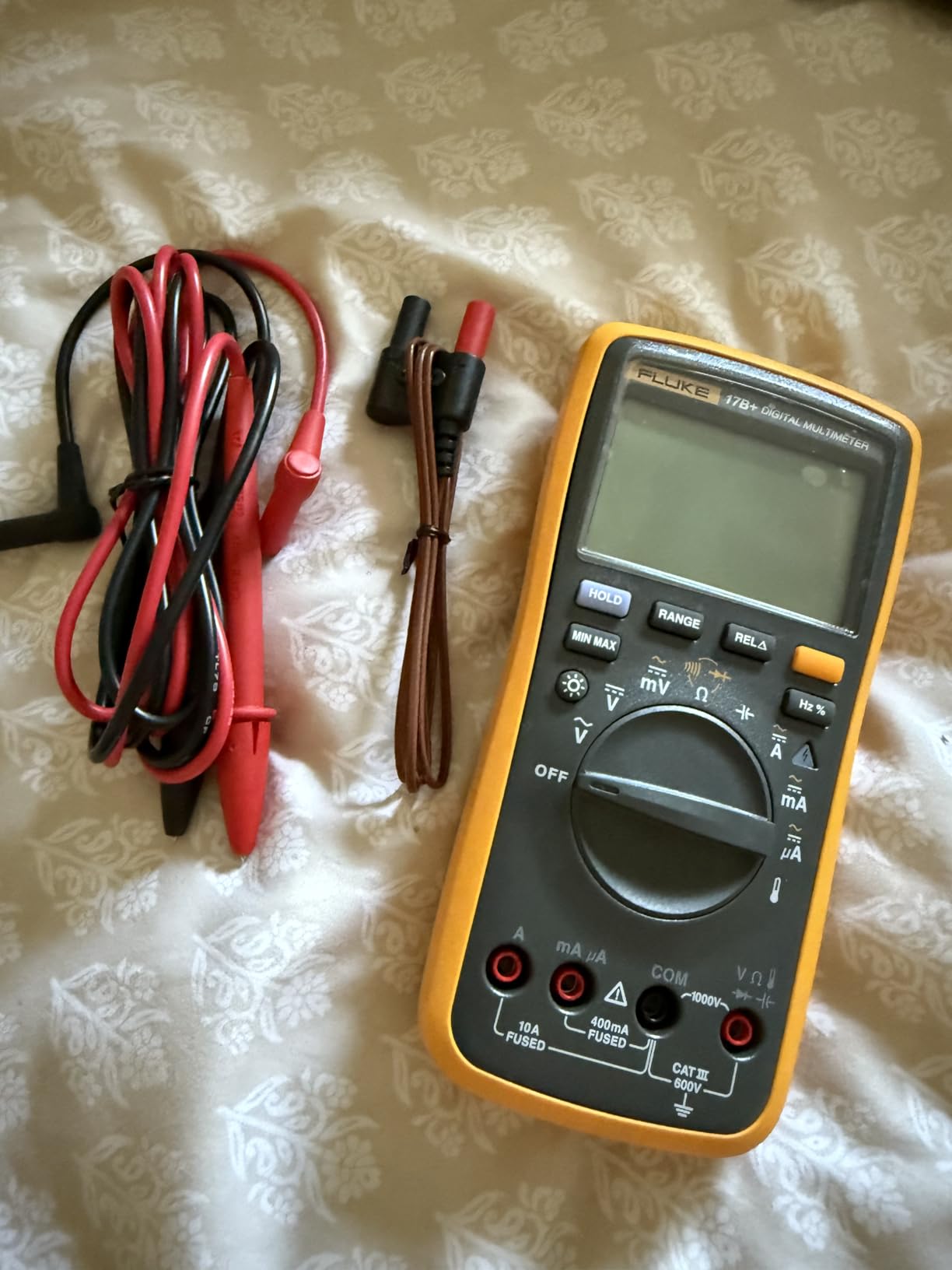
The function set covers what a car actually needs: DC volts, AC volts, current to 10A, resistance, continuity, diode, capacitance, frequency and temperature to 400C with the included type K thermocouple. A battery test range lets you check a 12V cell without switching modes.
What it does not do is engine analysis. There is no RPM, no dwell angle, no pulse width. If your work is spark plugs and coils on a classic engine, look further down this list.
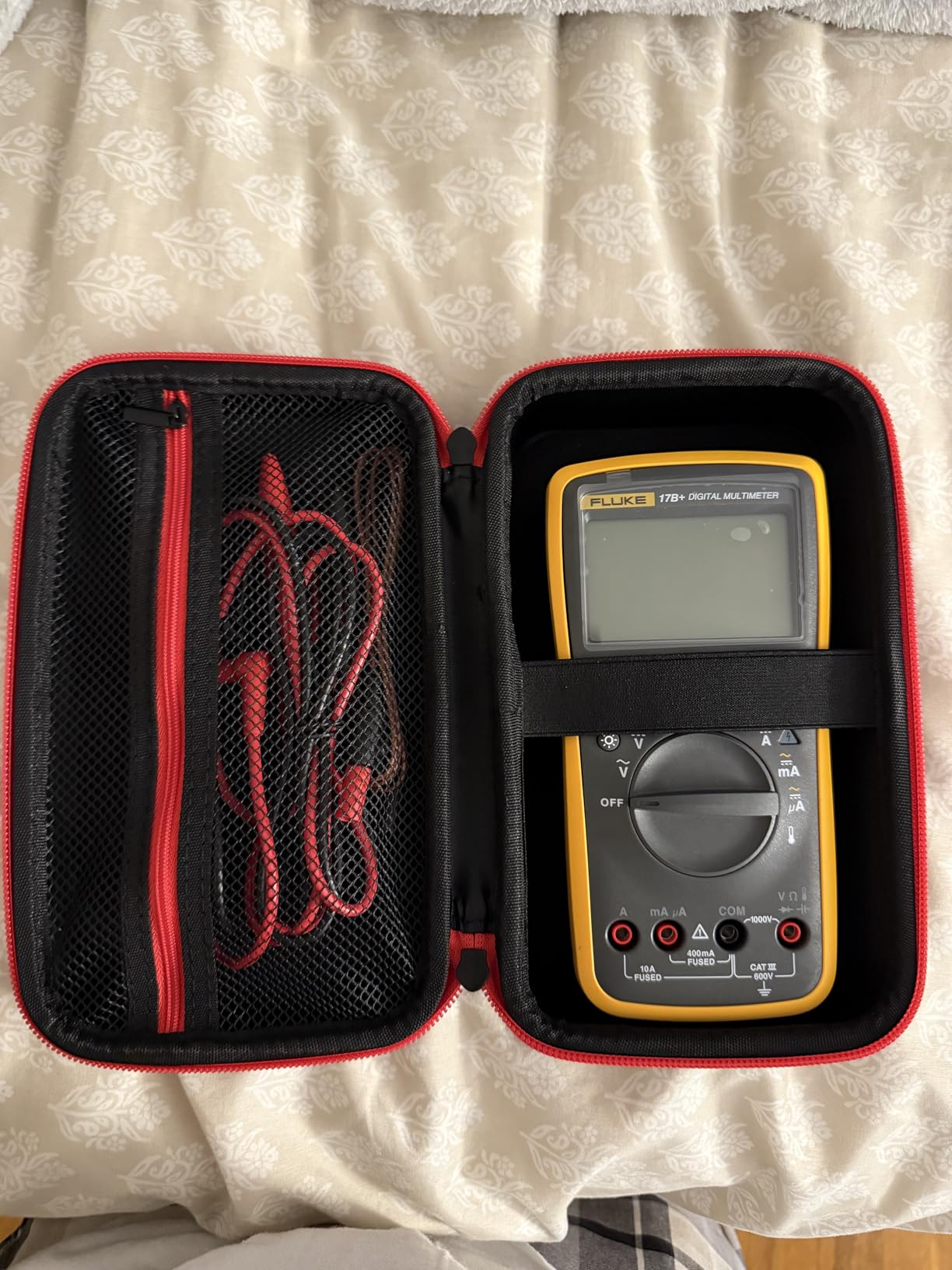
Why it wins for daily car diagnostics
CAT III 600V is the right safety class for a 12V vehicle and for household panels too, so the same meter covers the car and the garage circuit breaker.
At 470 g it is small enough to live in a mechanic’s pouch rather than a drawer, and reviewers repeatedly single out the long battery life as the reason the meter stays switched on.
Where it falls short
The 17B+ has no true RMS conversion, so on a distorted AC waveform the reading can run high. That matters on mains-derived accessories and almost never on a 12V DC circuit.
It is also a general-purpose instrument. If you measure duty cycle on injectors or pulse width on a coil every week, you will want a purpose-built automotive meter instead.
2. AstroAI 6000 Count True RMS – Best Value Per Function
AstroAI Digital Multimeter, True RMS 6000 Counts Auto-Ranging Volt Meter for Automotive & Home Electrical Troubleshooting, AC/DC Voltage Current Resistance Continuity Capacitance Temperature Tester
True RMS 6000 counts
1000V DC maximum
Double ceramic fuse
492 g
Pros
- Accurate on 12V battery checks against reference meters
- Wide function set including capacitance and duty cycle
- Large backlit display with fast auto-ranging
- Two ceramic fuses protect the inputs
Cons
- Frequency counter limit is below the claimed figure
- hFE socket is awkward for TO-220 parts
- Weak at very low or very high resistance
The AstroAI 6000 Count carries true RMS, auto-ranging, capacitance, frequency, duty cycle, diode and temperature. That duty cycle function alone puts it ahead of most meters well above its price bracket.
Owner reviews repeatedly compare its battery readings favourably against Snap-on and Fluke meters, and with 20183 ratings on file that is a decade of accumulated owner experience rather than launch-week enthusiasm.
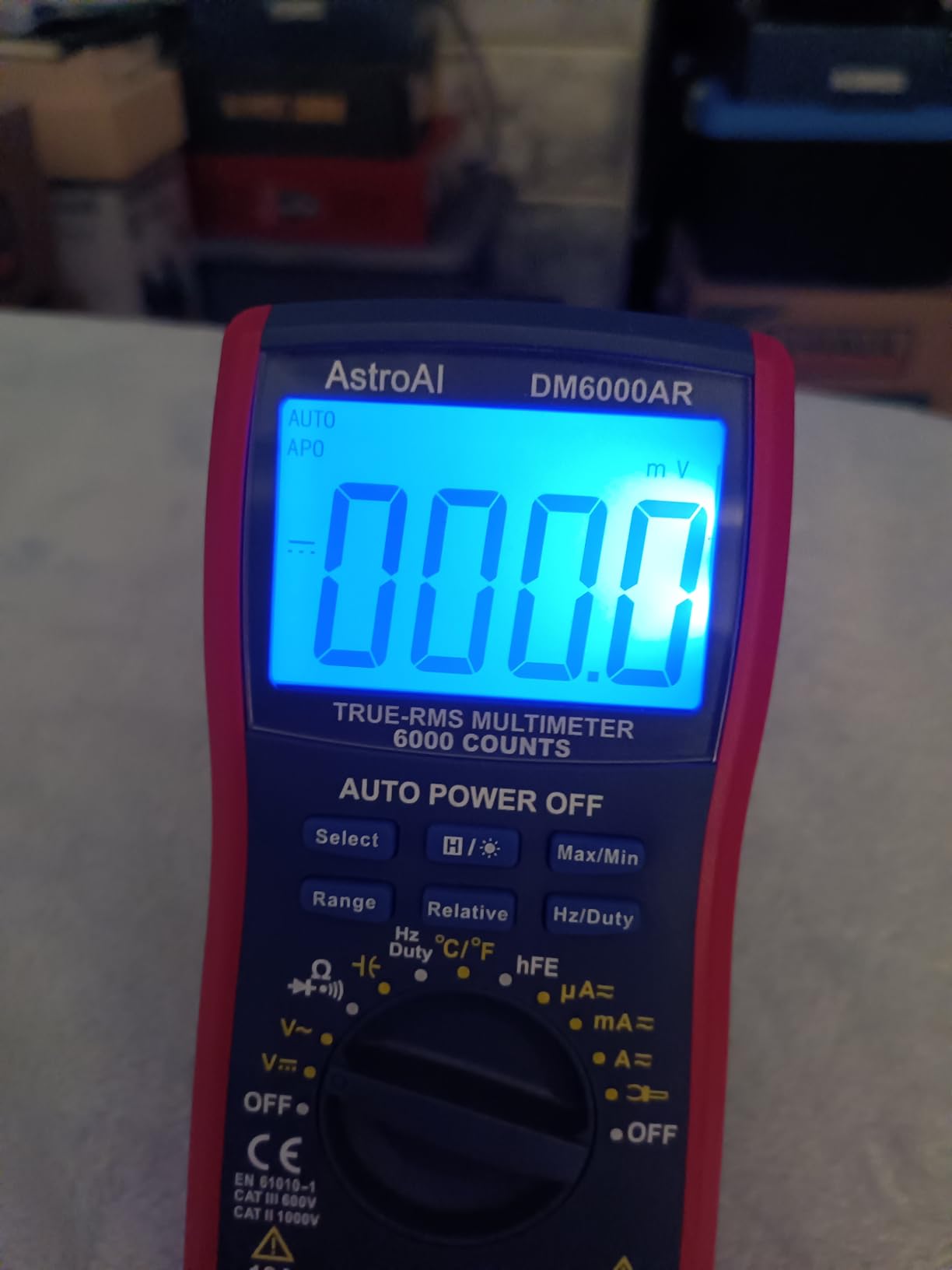
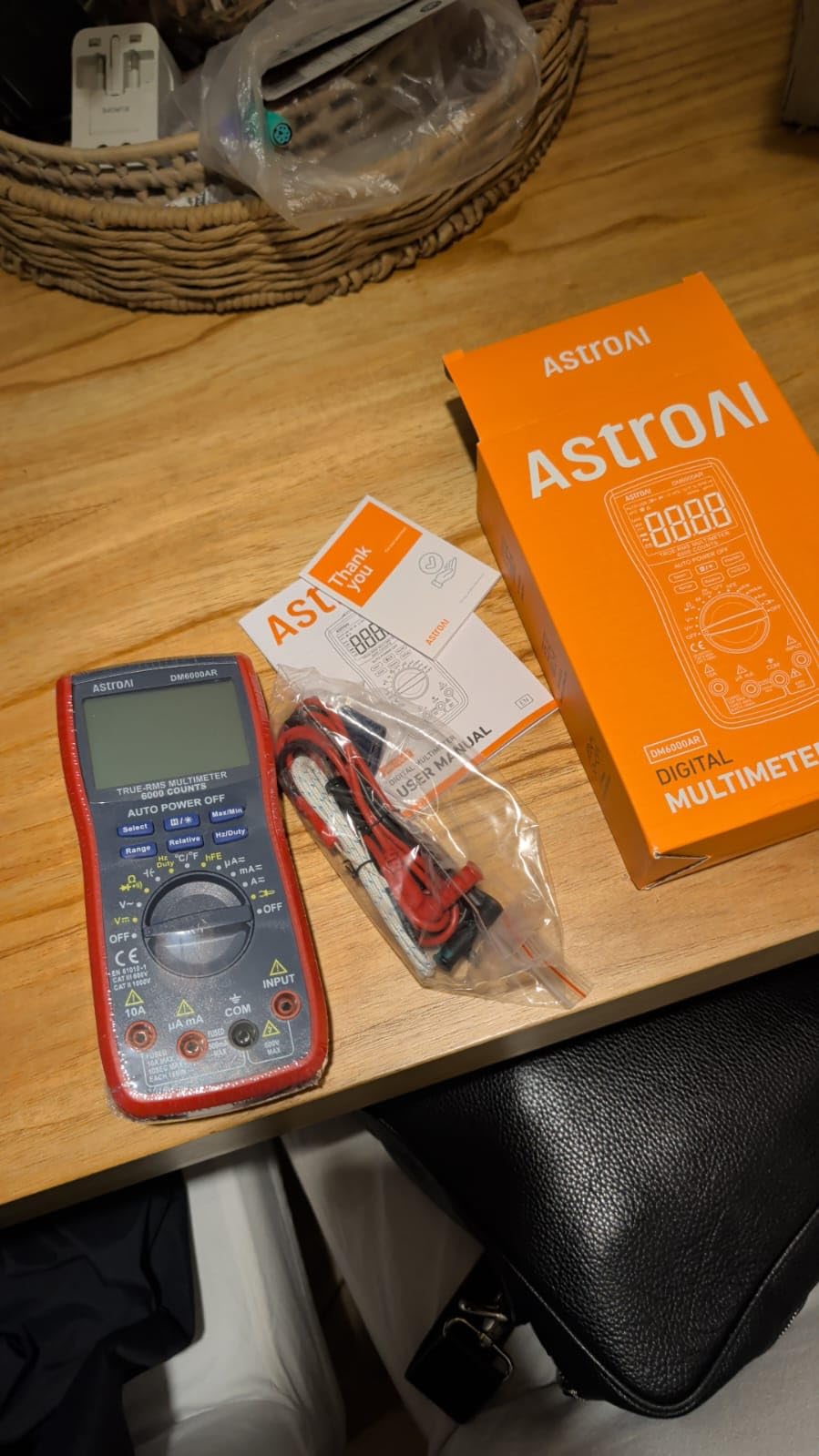
The build is honest for the money: 492 g, a backlit LCD, data hold, auto shut-off and a kickstand that actually holds position on a bumper. The double ceramic fuse arrangement means the cheap sacrificial parts are easy to replace and less likely to fail in the first place.
It weighs noticeably more than the manual-ranged budget meters, which is a fair trade for the extra resolution. The 6000-count display gives you two extra digits where a 2000-count meter is guessing.
Why it wins on function count
Capacitance, frequency, duty cycle and temperature are all things you will use eventually – an A/C diode test, a blower motor resistor, an EGR valve position sweep. Having them in one meter removes the need for a second instrument.
Auto-ranging across the board means you are not turning a rotary switch in the dark under a dashboard. Reviewers call the display large and the ranging fast.
Where it falls short
The frequency counter ceiling is well below the claimed 60MHz, which matters only if you are measuring high-speed signals.
For resistance work at the extremes, repeatability is mediocre, and the transistor hFE socket is arranged C-B-E, which makes testing a TO-220 package awkward.
3. KAIWEETS HT118A – Best for First-Time Buyers
KAIWEETS Digital Multimeter Automotive TRMS Tester 6000 Counts NCV for Car
CAT III 1000V / CAT IV 600V
1000V DC, 750V AC
2.9 inch backlit LCD
NCV detection
Pros
- LED-illuminated jacks prevent probe mistakes
- Large 2.9 inch backlit LCD
- Built-in flashlight and steady kickstand
- Silicone case and double ceramic fuse
Cons
- Backlight does not stay on continuously
- No RPM or dwell engine analyzer functions
- Needs a SEL press to switch AC and DC
If you have never owned a multimeter, this is the one I would hand you. The CAT III 1000V / CAT IV 600V rating is higher than most rivals at this level, and the non-contact voltage detection with an audible and visual alarm is a genuine safety net around a live harness.
With 23154 ratings, this is the largest review base of any meter we tested. Owner feedback converges on the same three things: easy to use, well certified, and good value for car and household work.
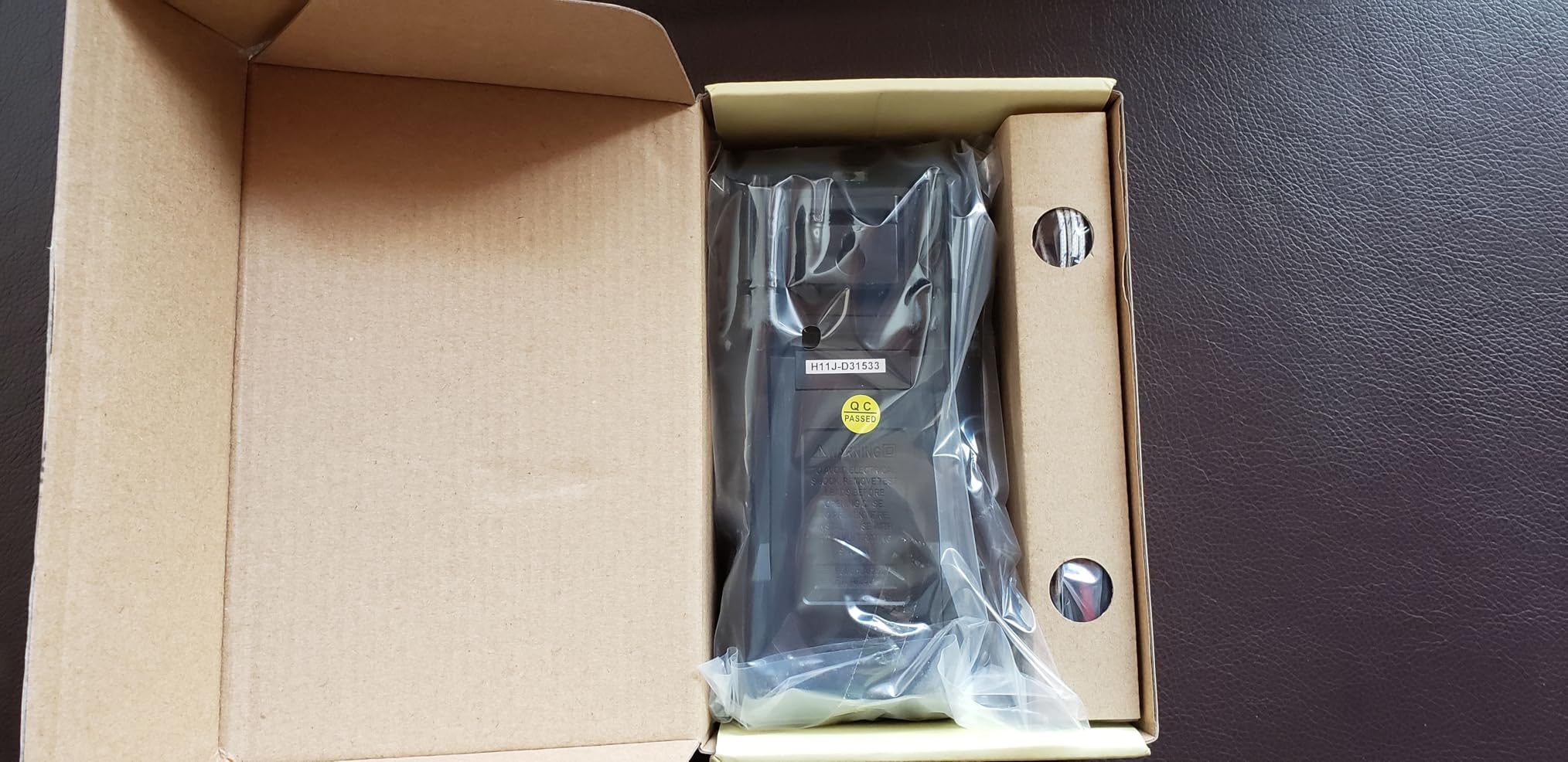
The details that separate it from cheaper meters are practical. The input jacks are lit, so you can see where the probe goes without a torch. There is a rear flashlight for working in the dark. The kickstand is stable enough to leave both hands free on a connector.
Measurement range is generous: 1000V DC, 750V AC, 10A AC/DC current, 60 megohm resistance, plus temperature, capacitance, frequency, duty cycle, diode and continuity.

Why it wins for beginners
Everything about the layout is designed to prevent mistakes rather than to impress. The illuminated jacks, the low-battery prompt and the auto power-off all remove small ways to get a wrong answer.
True RMS with 6000 counts means that if you grow into household AC work later, the meter does not become a paperweight.
Where it falls short
The backlight does not stay lit continuously, which does matter when you are holding the meter one-handed under a dash.
There are no engine analyzer functions, so it will never measure dwell angle or RPM. The silicone case also adds bulk to an already deep chassis.
4. INNOVA 3320 – Best Built-In Battery Condition Test
INNOVA 3320 Auto-Ranging Digital Multimeter, Red & Black
UL certified
10 megohm input impedance
8 ounces
LED battery indicator
Pros
- Long ownership history across thousands of owners
- Built-in load battery test with colour-coded LED
- 10 megohm impedance protects the ECU
- Faster auto-ranging than most budget meters
Cons
- AC current limited to about 200mA
- Auto-ranging is sluggish at resistance extremes
- No backlight and no carrying case
- Probes need cleaning to trigger the beep
The INNOVA 3320 is a 10 megohm input impedance meter with an LED battery charge indicator, and both features exist for one reason: automotive. That high input impedance will not upset a module or a sensor circuit while you probe it, which is exactly what you want when you are measuring a live reference voltage.
It is one of the lightest meters here at 8 ounces and easy to hold one-handed while the other hand works a connector.
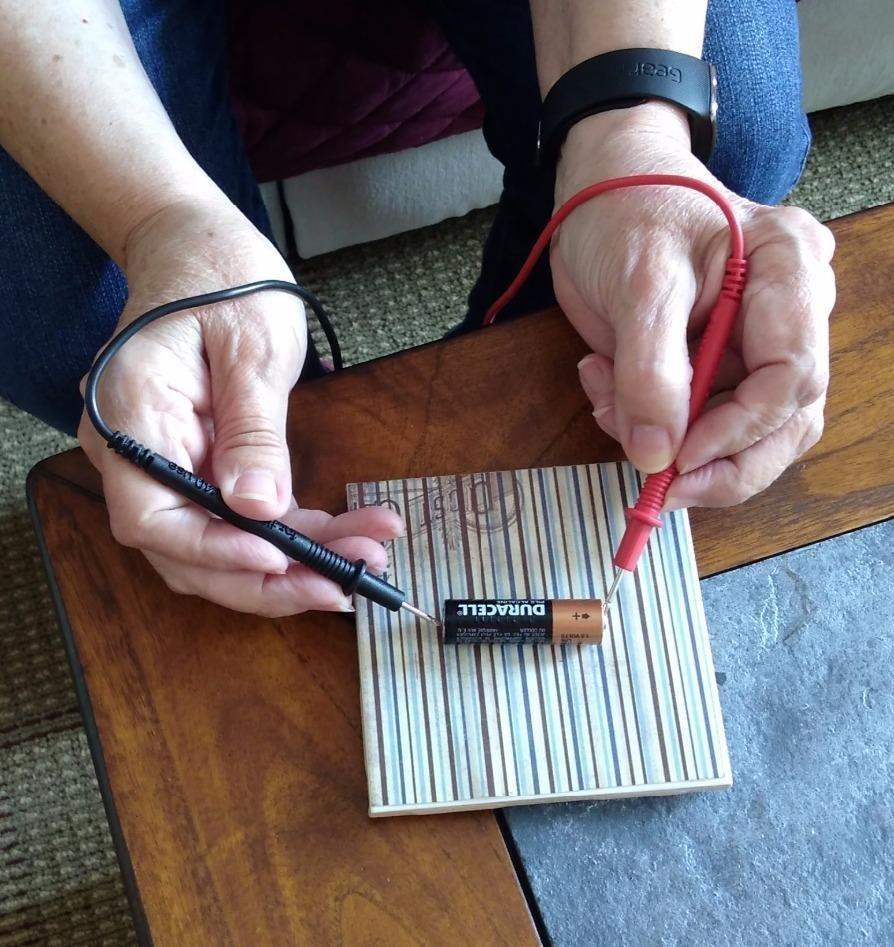
The colour-coded LED battery indicator is the reason this meter has stayed relevant for so long. You connect it to a battery, and the lights give you a condition verdict without a menu or a decimal point.
Auto-ranging handles voltage and resistance without you touching the selector, and a single resistance setting covers both AC and DC voltage measurement, which keeps the switch simple.
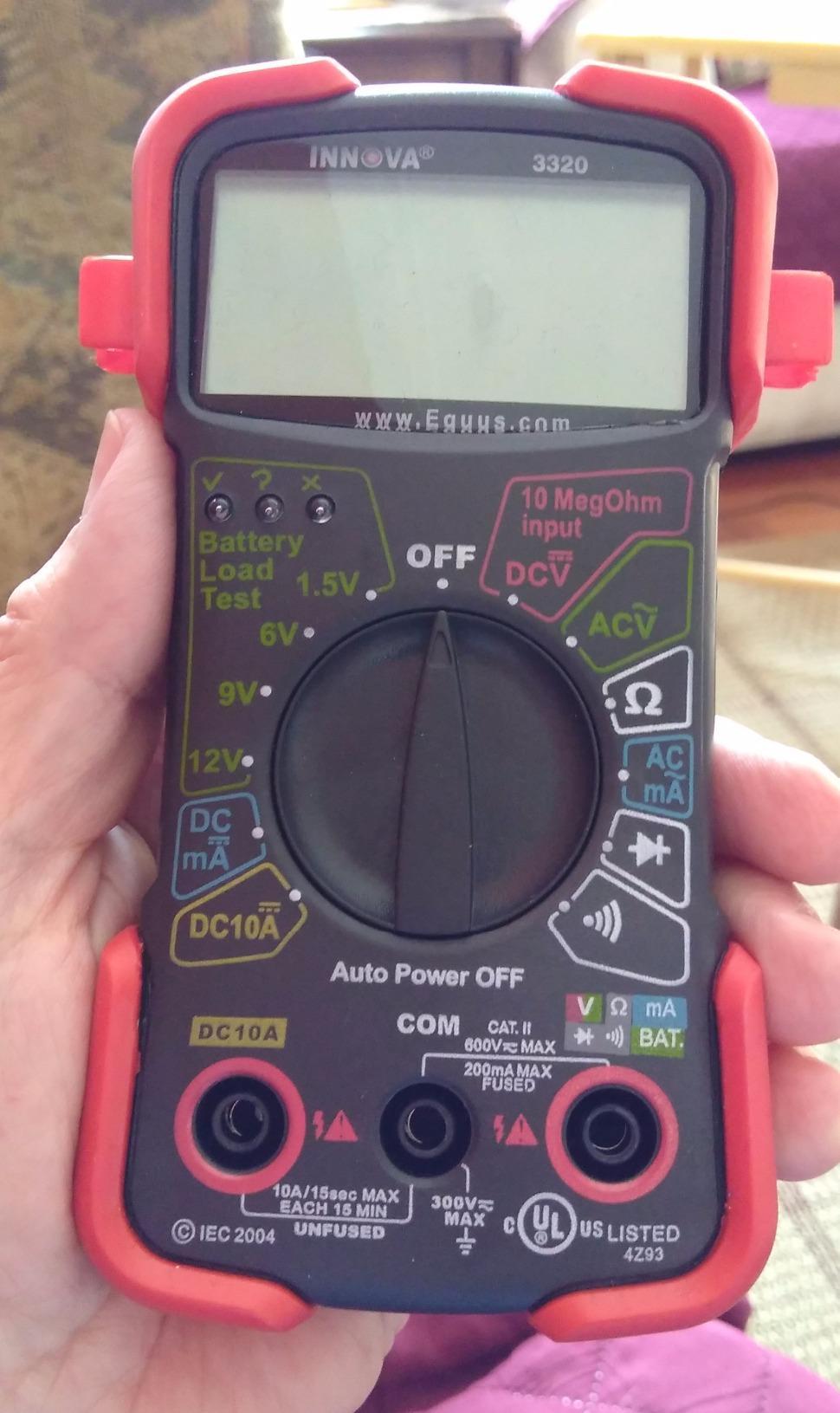
Why it wins for battery work
A built-in load and charge test means you can screen a battery at a flea market in about fifteen seconds, which no other meter in this price bracket replicates.
Owners describe accuracy in normal ranges as rivalling far more expensive Fluke meters, and the UL certification and one year limited warranty are stated clearly on the spec sheet.
Where it falls short
There is no backlit display, so engine bay work depends on a torch, and the 200mA AC current ceiling rules out meaningful current work.
Auto-ranging slows down on very low or very high resistance, and the probes can need scrubbing before the continuity beeper triggers reliably.
5. Klein Tools MM325 – Best Entry-Level Build
Klein Tools MM325 Multimeter, Digital Manual-Ranging 600V AC/DC Voltage Tester, Tests Batteries, Current, Resistance, Diodes, and Continuity
CAT III 600V
600V AC/DC voltage
Manual ranging
Lead-alert LEDs
Pros
- Lead-alert LEDs stop probe placement errors
- Backlit display for dark engine bays
- Klein build quality at entry level
- Battery test mode for car and household cells
Cons
- Manual ranging is slower than auto-ranging
- Resistance limited to 2 megohms
- No temperature
- capacitance or frequency
The MM325 is the meter I hand to someone learning to read a circuit. The lead-alert LEDs light up when the probes are in the wrong jack, which removes the single most common beginner error: measuring resistance on a live circuit through the current jack.
Manual ranging is the compromise that makes it cheap, and the CAT III 600V rating is the right class for a 12V vehicle.
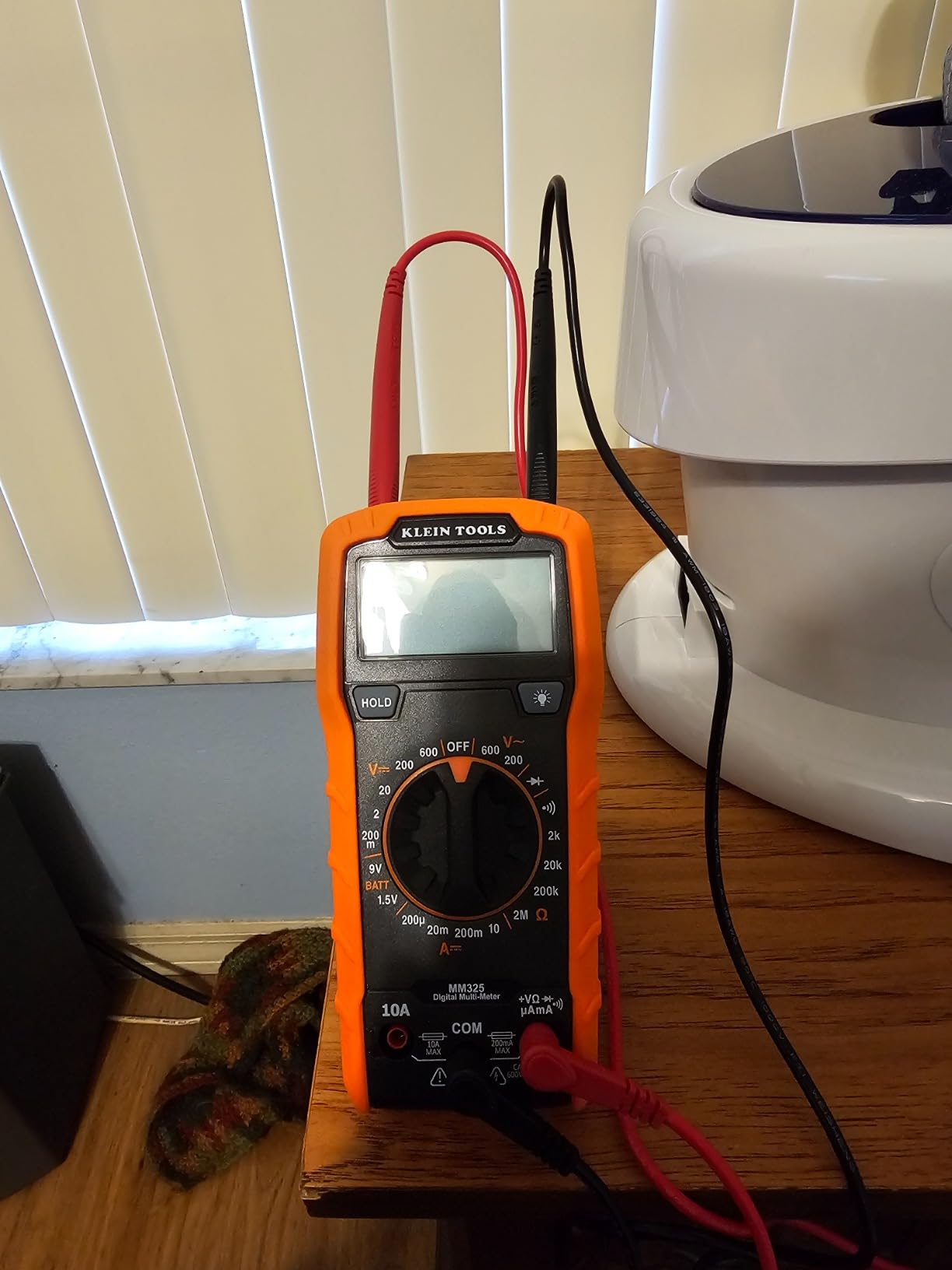
The backlit LCD reads well in a dark engine bay, and the test lead holders, kickstand and optional magnetic hanger mean the meter can sit where your hands need to be.
Battery test mode checks a 12V cell directly, and diode test covers the alternators, rectifier diodes and bulbs that cause most charging complaints.
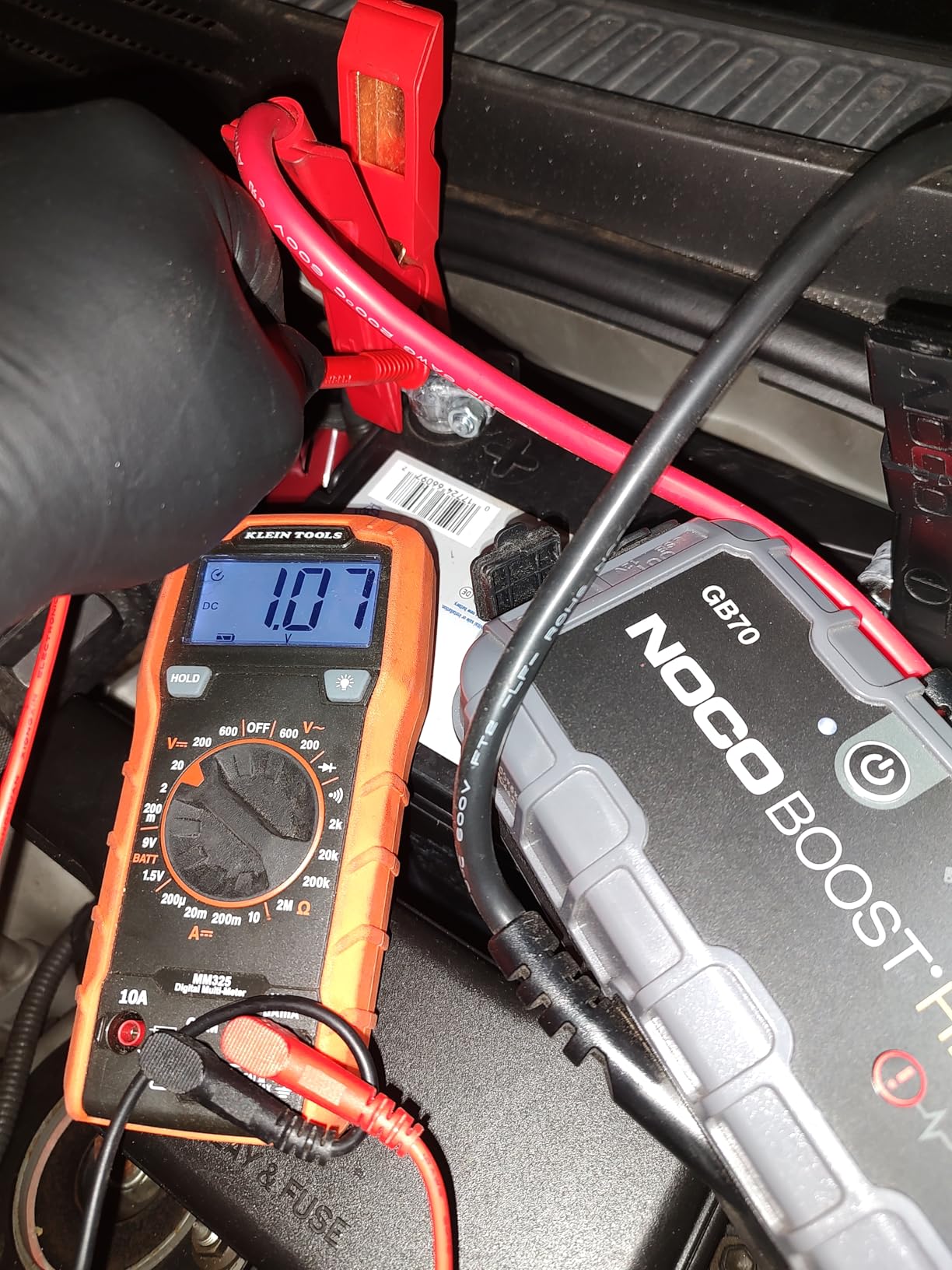
Why it wins on value
You get lead placement protection and a backlight, two features that measurably reduce wrong answers, at an entry-level price. Owners rate durability and readability highly, with a strong share of five-star reviews.
The kickstand and lead holders make it a genuinely one-handed tool under a dashboard.
Where it falls short
Manual ranging means you pick the range and can get an overload indication if you guess wrong. That is the single biggest usability difference against the auto-ranged meters.
Resistance stops at 2 megohms and there is no temperature, capacitance or frequency, so it cannot test a thermistor or an A/C system.
6. Klein Tools MM420 – Best for a Beat-Up Van
Klein Tools MM420 Digital Multimeter, Auto-Ranging TRMS Multimeter, 600V AC/DC Voltage, 10A AC/DC Current, 50 MOhms Resistance
CAT III 600V
Auto-ranging true RMS
6.6 foot drop rating
50 megohms
Pros
- Auto-ranging plus true RMS for fast confident readings
- Illuminated lead jacks prevent jack mistakes
- Ceramic fuses accessible from the battery compartment
- Bright backlit display
Cons
- AC/DC voltage position defaults to AC needing a SEL press
- Battery compartment needs a screwdriver
- Nickel-metal cells can show as dead
- Case inclusion is inconsistent
The MM420 is rated to survive a 6.6-foot drop, and that is not marketing copy – it is the feature that matters most if your meter lives in a van and gets dropped on driveways. Auto-ranging true RMS across 600V AC/DC, 50 megohms and 10A covers essentially every 12V job.
It also includes CAT III/CAT IV safety-capped test leads and a thermocouple in the box, which is unusual at this level and removes the most common first failure.
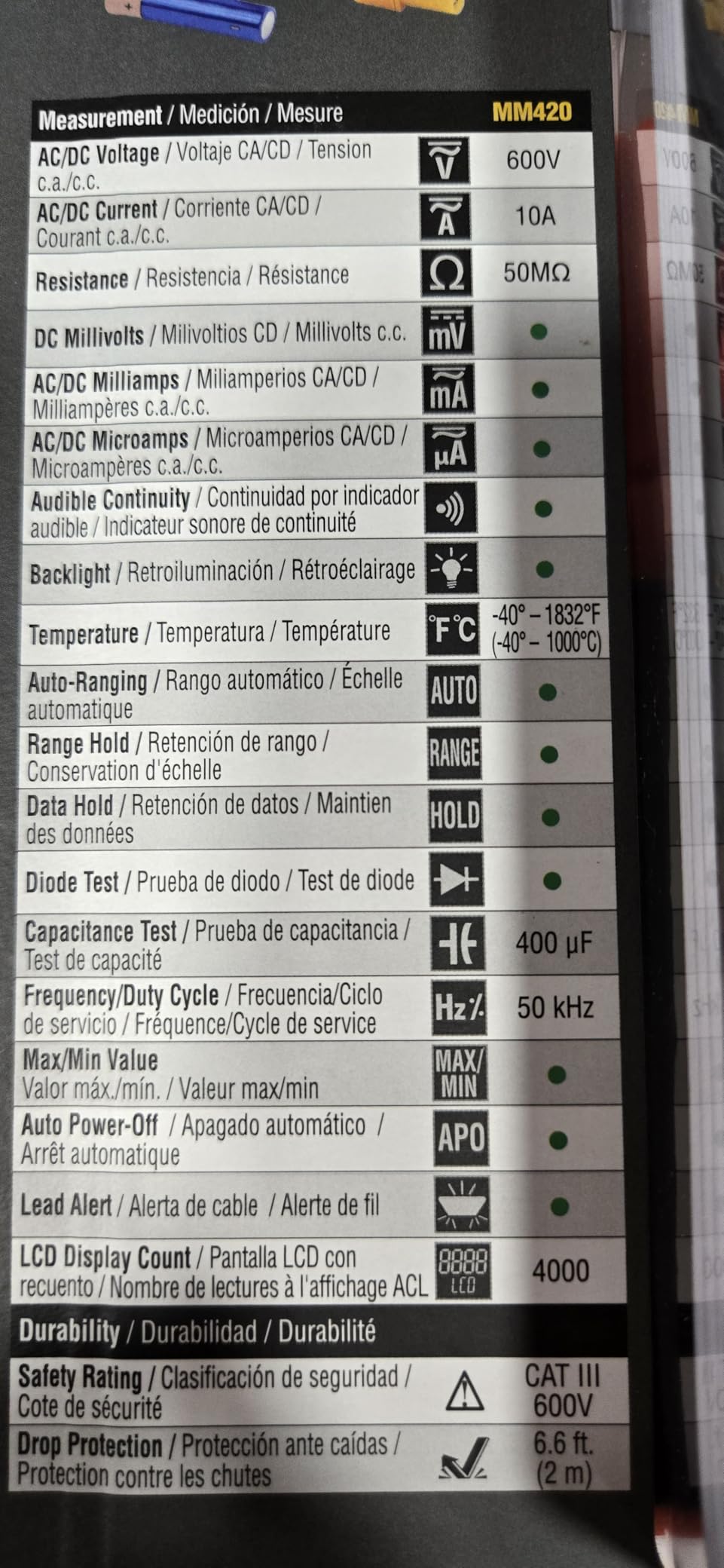
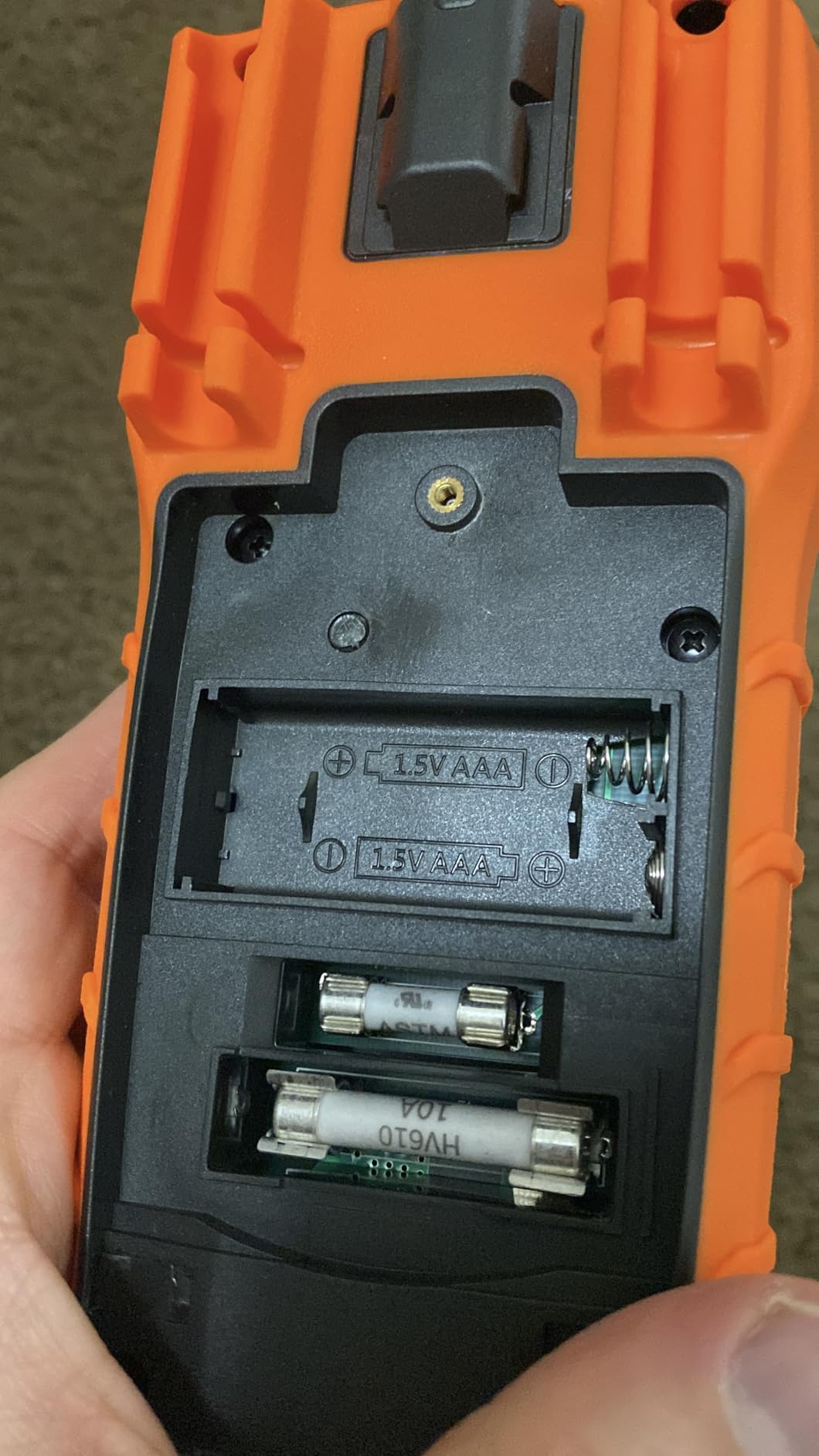
Fuses are ceramic type and reachable from the battery compartment, so when you blow an input with a bad connection you are not hunting for a fuse puller. The magnetic hanger and lead holders are the small touches that let you work one-handed.
Function coverage is broad: continuity, temperature, capacitance, frequency and duty cycle alongside diode test.
Why it wins for workshop use
Drop rating, replaceable ceramic fuses and safe capped leads address the three ways meters actually die in service, and the magnetic hanger is genuinely useful under a vehicle.
Owners call it a solid, reliable go-to meter with the most functions in the Klein line, praising build quality and value for both electrical and automotive troubleshooting.
Where it falls short
The combined AC/DC voltage position defaults to AC, so every DC reading costs you an extra press. That is a real friction point in daily use.
The battery compartment needs a screwdriver, and some owners report that fully charged rechargeable AAA cells read as flat.
7. Klein Tools MM720 – Best for Chasing Ghost Voltages
Klein Tools MM720 Digital Multimeter, Auto-Ranging TRMS, Low Impedance (LoZ), 1000V AC/DC Voltage, 10A AC/DC Current, 60 MOhms Resistance
CAT IV 600V / CAT III 1000V
Low impedance LoZ mode
1000V AC/DC
60 megohms
Pros
- LoZ mode eliminates ghost and stray voltages
- Reverse-contrast LCD reads in sun and shade
- True RMS plus auto-ranging
- Highest CAT rating in the Klein line
Cons
- No RPM
- dwell or pulse width functions
- Bulkier and heavier than the smaller Klein meters
- A 345 g body is a lot to hold overhead
Most meters on this list are chasing the same problem: a circuit reads 4.5V where it should read 0V, and you cannot tell whether a module is holding the line up or a wire is leaking. Low impedance mode answers it. In LoZ the meter loads the circuit, and if the voltage disappears, it was a ghost.
That is the only low-impedance mode in this roundup, which is why I recommend the MM720 to anyone chasing sensor reference voltages.
Range is 1000V AC/DC, 10A AC/DC, 60 megohms, with temperature, capacitance, frequency, duty cycle and diode on top. The CAT IV 600V / CAT III 1000V rating puts it in the class you want if your day includes anything beyond a 12V car.
The reverse-contrast LCD is a nice piece of engineering for a working vehicle: the characters invert depending on the light, so it stays readable in a sunlit engine bay and in a dark footwell.
Why it wins for hard electrical faults
Ghost voltage is the single most common false trail in 12V diagnosis. A meter with LoZ mode turns a two-hour argument with a wiring diagram into a five-second answer.
Reviewers consistently single out the low-impedance mode and display readability as the standout features.
Where it falls short
It has no engine analyzer functions at all, so no RPM, dwell or pulse width. If you service carburetted or early ignition systems, this is the wrong tool.
At 345 g and 10.63 inches long it is the longest of the three Klein meters here, which is awkward when you are working overhead in an engine bay.
8. INNOVA 3340 – Best Purpose-Built Engine Analyzer
Innova 3340 Professional Automotive Digital Multimeter, Black
Duty cycle and diode tests
RPM clamp included
Up to 15A
10 megohm input
Pros
- Built-in duty cycle
- solenoid and breaker point tests
- Inductive RPM clamp and temperature probe in the case
- ECU-safe 10 megohm input impedance
- Current measurement up to 15A for device testing
Cons
- Old-school design with no backlight or NCV
- Average rating of 4.4 is the second lowest here
- Unusual corded electric power source
The INNOVA 3340 measures alternator diodes, duty cycle, solenoids and breaker points, and it comes with an inductive RPM clamp and a temperature probe in a case. That bundle is the reason it still has an audience.
Duty cycle on an injector or a distributor is a real diagnostic, not a novelty. Reading what the signal is actually doing tells you whether the part or the wiring is at fault.
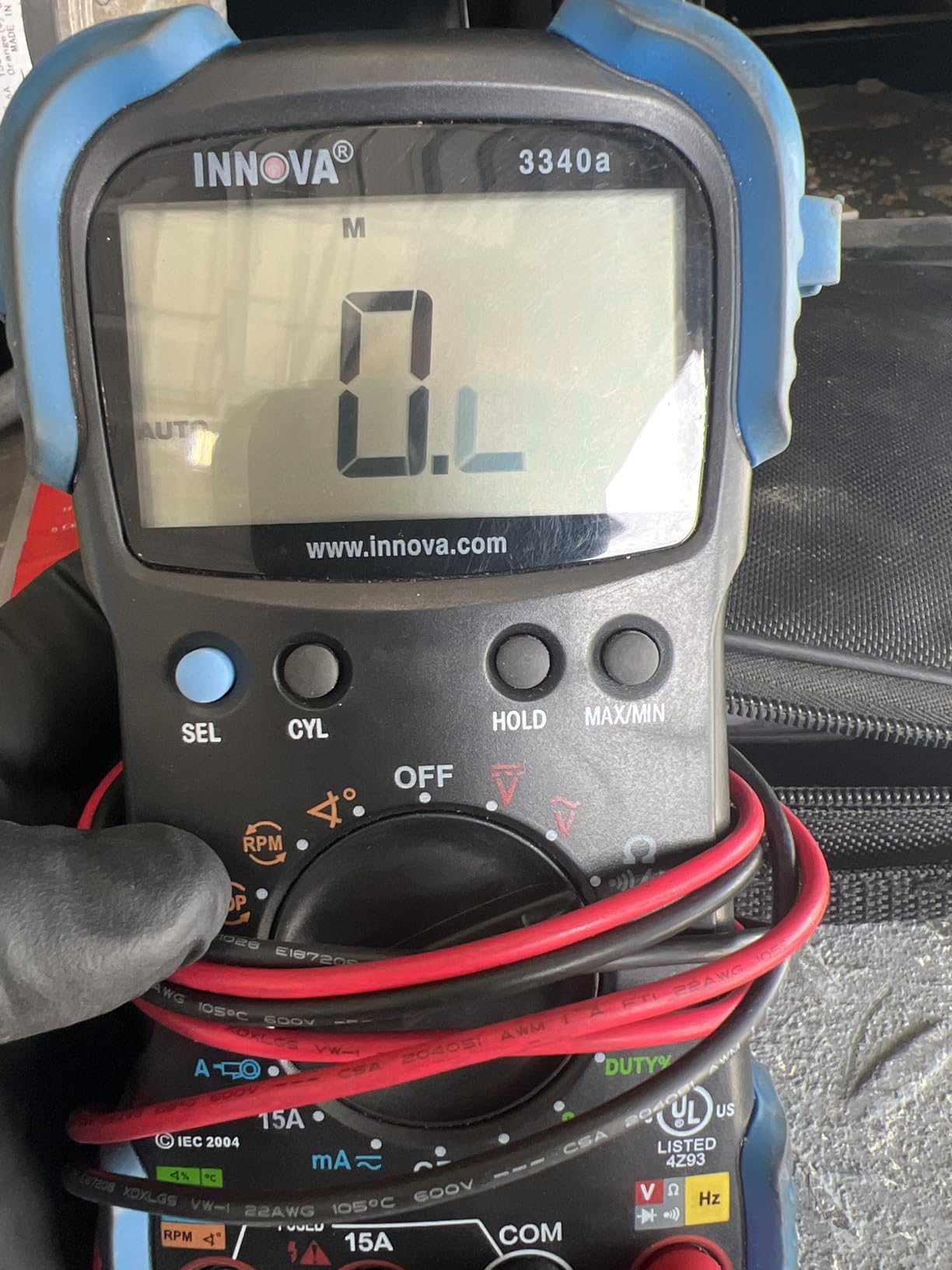
Current measurement goes to 15A for device testing, and the same 10 megohm input impedance protects the ECU. Auto-ranging, auto shut-off and overload protection cover the basics properly.
The carrying case keeps the clamp and probe with the meter rather than loose in a drawer, which is the difference between finding the accessories and ordering them again.
Why it wins for engine work
Most general-purpose meters cannot measure duty cycle or RPM. If your work involves throttle bodies, idle control valves or old-school ignition, that capability is the whole reason to buy this over a Fluke.
The included inductive clamp means you can read engine speed without touching a plug lead.
Where it falls short
Owners rate this 3340 highly for the classic engine analysis functions that general-purpose meters lack, while noting it is less refined than the newer True RMS meters.
The corded electric power source is unusual for a handheld instrument, and without a backlight it is hard to use in a dark engine bay.
9. Fluke 88V – Best for Hybrid and EV Work
Fluke 88V Deluxe Automotive Multimeter, Troubleshoot Problems on Conventional and Hybrid Vehicles, Measures Pulse Width, and Duty Cycle
Pulse width and duty cycle
10 megohm input impedance
3 pounds
Limited lifetime warranty
Pros
- Purpose-built for conventional and hybrid vehicle diagnosis
- Pulse width and duty cycle for ignition and charging work
- 10 megohm impedance protects computer circuits
- Bright backlit display readable under a vehicle
Cons
- Very heavy at 3 pounds for long handheld sessions
- Sits at the top of the price range
- Takes training to use the advanced diagnostic modes
The 88V is the reference automotive meter in this roundup, and the reason is not the brand. It measures pulse width and duty cycle on top of the full electrical set, and its 10 megohm input impedance will not damage computer circuits while you probe a live reference voltage.
It is explicitly built for both conventional and hybrid vehicles, which matters as more of the fleet moves to 12V accessory systems sitting alongside a high-voltage pack.
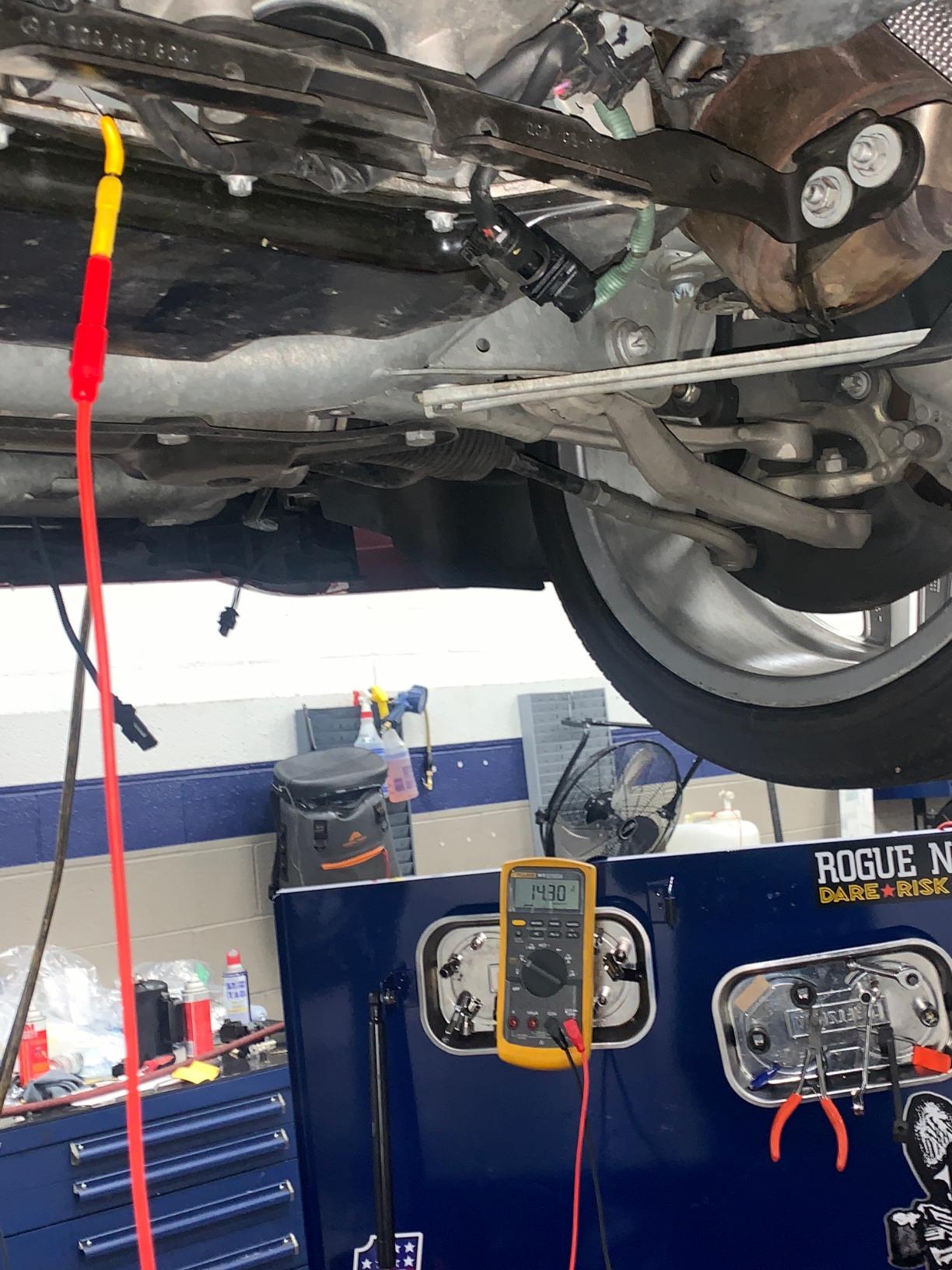
Min, max and average recording catches the transient that a single reading would miss, and the bright backlit display is legible under a vehicle where a workshop lamp is not an option.
The limited lifetime warranty is the longest warranty commitment of any meter here and is the reason technicians keep buying the same tool for a career.

Why it wins for professional diagnostics
Pulse width and duty cycle are measurements you cannot get from a general-purpose meter at any price band. On an injector, a solenoid or an oxygen sensor heater, they turn a guess into a verdict.
Reviewers rate it as the reference automotive meter, and it carries a 4.8 average rating from owners who bought it for professional work.
Where it falls short
At 3 pounds it is heavy for prolonged handheld work, and it sits at the top of the price range in this roundup.
The advanced diagnostic modes take real training. It also still belongs on the low-voltage side of a hybrid – it is not a high-voltage insulation tester.
10. ZOTEK 702S – Best Built-In Oscilloscope
ZOTEK 702S 2 in 1 Handheld Automotive Oscilloscope Multimeter – 10MHz Bandwidth 48MS/s Sampling Rate,Auto-Ranging 9999 Counts T-RMS Multimeter with Temperature Tester for Electronics Repair Test
10MHz bandwidth, 48MS/s sampling
9999 count true RMS meter
Rechargeable 18650 battery
USB-C data port
Pros
- Combines a working meter and a usable portable scope
- 2.8 inch IPS screen readable in sunlight
- Replaceable battery
- replaceable fuses
- upgradeable firmware
- Good value for PWM and ripple work
Cons
- 10MHz bandwidth is too low for most electronics work
- Ground lead is very short and clip tip bulky
- Short battery runtime with an inaccurate level indicator
- Rubber buttons need a firm press
The ZOTEK 702S answers the question a plain multimeter cannot: is that 12V rail actually clean? A 10MHz bandwidth scope at 48MS/s will show PWM from an injector, ripple on an alternator output and a noisy sensor signal, and it switches to a 9999-count true RMS multimeter with one button.
That combination is why it is on this list. A multimeter gives you a number; this gives you the shape behind the number.
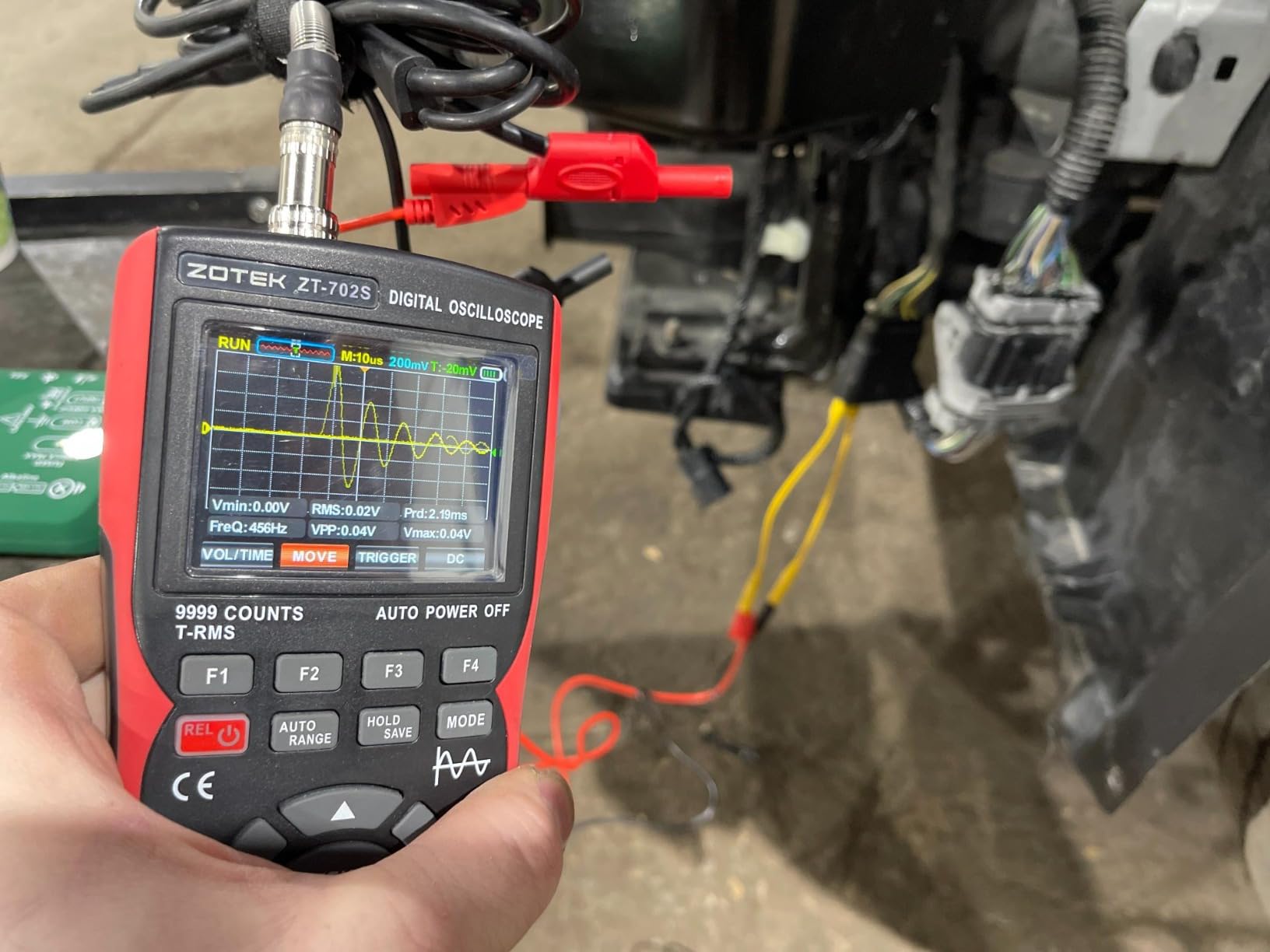
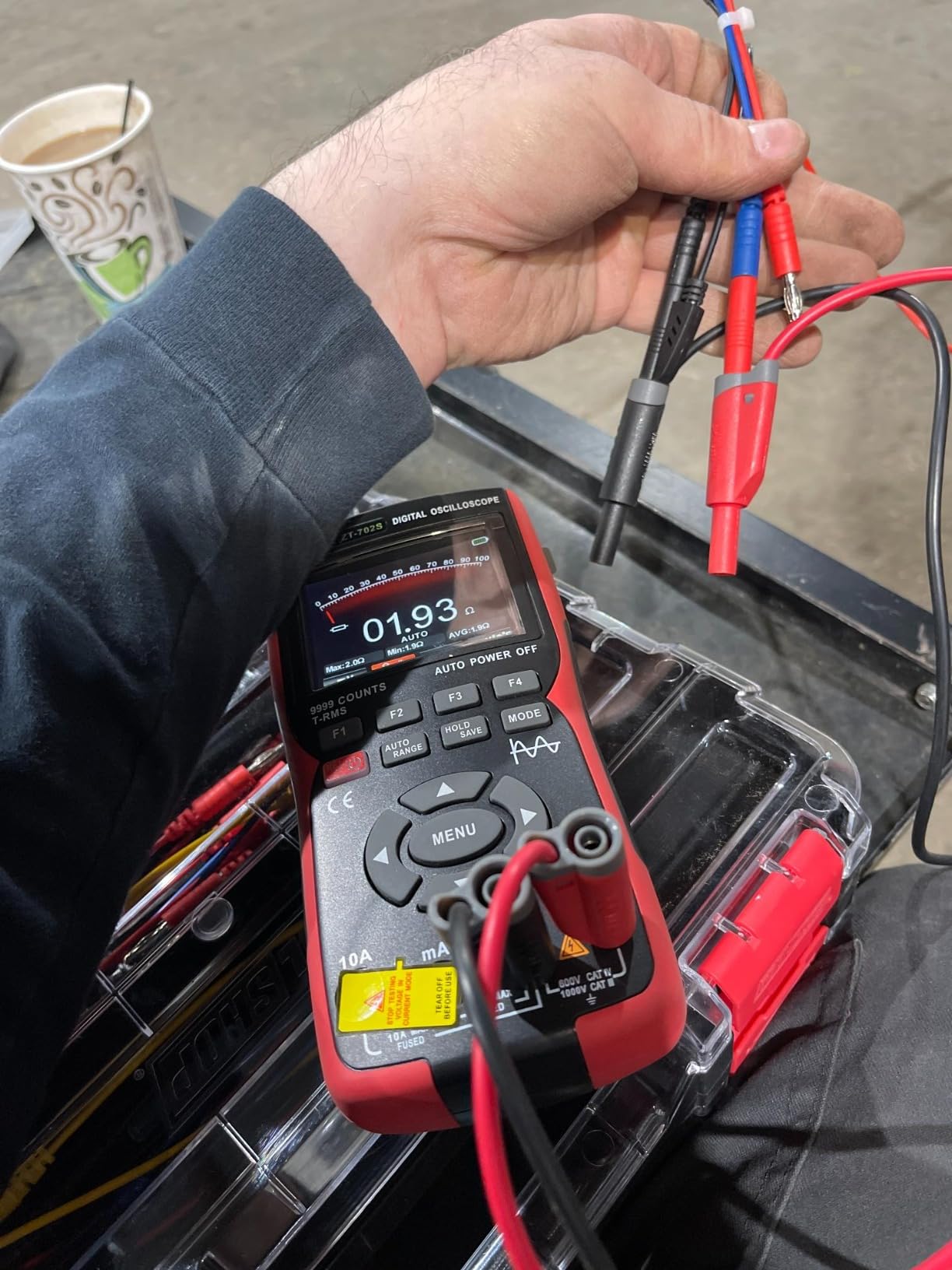
Range is 9999 counts, AC to 750V, DC to 999.9V, current to 9.999A, resistance to 99.99 megohms, capacitance to 9.999mF, frequency to 99.99kHz and temperature from minus 20C to 1000C. The 2.8-inch IPS colour screen stays readable in direct sun.
USB-C handles both charging and data export, and waveform data can be stored and pulled onto a computer. A square wave output at 4V/1kHz lets you verify the input channel.
Why it wins for signal-level faults
Pulsed output signals are exactly where a multimeter lies to you. Watching the waveform tells you instantly whether a component is switching correctly.
The replaceable 18650 battery and upgradeable firmware mean the meter improves rather than becoming waste.
Where it falls short
10MHz bandwidth is too narrow for real electronics signal work, and a 700 g body plus a short ground lead is awkward for scope probing.
Battery runtime is short and the level indicator is unreliable, so do not trust it near empty.
11. BTMETER BT-770K – Best for Points Ignition
BTMETER BT-770K Auto Ranging Automotive Multimeter for Dwell Angle Pulse Width Tach Temperature Duty Cycle Voltage Current Resistance Test
Dwell angle and pulse width
600 to 12000RPM tachometer
True RMS 6000 counts
Up to 20A
Pros
- Dwell
- pulse width and RPM target classic ignition
- Magnetic attachment and auto-backlight for under-vehicle work
- Zipped case holds leads
- adapter clips and thermocouple
- Switchable cylinder count simplifies setup
Cons
- Inductive RPM clamp is not included
- Loose selector detents and light build quality
- Temperature readings run about 5 degrees off
- A 12 percent share of one-star reviews
The BT-770K measures dwell angle, pulse width from 0.1 to 10.0 milliseconds and RPM from 600 to 12000, with a switchable 3, 4, 5, 6 and 8 cylinder setting. If you tune carburetted engines or work on old distributors, that is a capability almost nothing else in this roundup offers.
The magnetic attachment and the auto-backlight sensor are built for working under a vehicle, which is where this kind of test usually happens.
Underneath it is a competent 6000-count true RMS meter: 1000V DC, 750V AC, AC/DC current to 20A, 60 megohms, 60mF capacitance and frequency to 9.999MHz, plus peak hold, NCV, diode and continuity.
A thermocouple, adapter clips and a zipped carry case are included, and the meter auto-powers off after 15 minutes.
Why it wins for classic ignition
Dwell angle is a points-and-breaker measurement. Without it you are setting ignition by feel and hoping, and cylinder count selection removes one of the fiddliest setup steps.
The magnetic mount and zipped case make it a genuinely portable under-vehicle setup.
Where it falls short
The inductive RPM clamp is not included, which undercuts the tachometer function on the very car you would use it on. The selector detents feel loose and temperature readings run about 5 degrees off.
Its 4.1 rating is the lowest here, with a 12 percent share of one-star reviews citing durability and reports of meters that stopped reading after a few uses. Buy it for the dwell function or not at all.
12. Fluke 87V – Premium Pick for Technicians
Fluke 87V Industrial Digital Multimeter, for Advanced Troubleshooting, Measures 1000 V AC/DC, Peak Min/Max, Low Pass Filter, Includes TL75 Test Leads, AC175 Alligator Clips, 80BK Temp Probe
CAT III 1000V / CAT IV 600V
Switchable 6000 to 20000 counts
Peak Capture to 250 microseconds
10 year warranty
Pros
- Reference DC accuracy around 0.05 percent plus one count
- 20000 count mode reveals small changes
- Low pass filter for frequency on adjustable drives
- Rubber boot survives repeated drops
- Two-stage backlight readable across a bay
Cons
- No built-in LoZ mode without an optional adapter
- 9V flying-lead connector is a weak point
- Included TL75 leads are below Fluke premium leads
- Case and better leads add cost
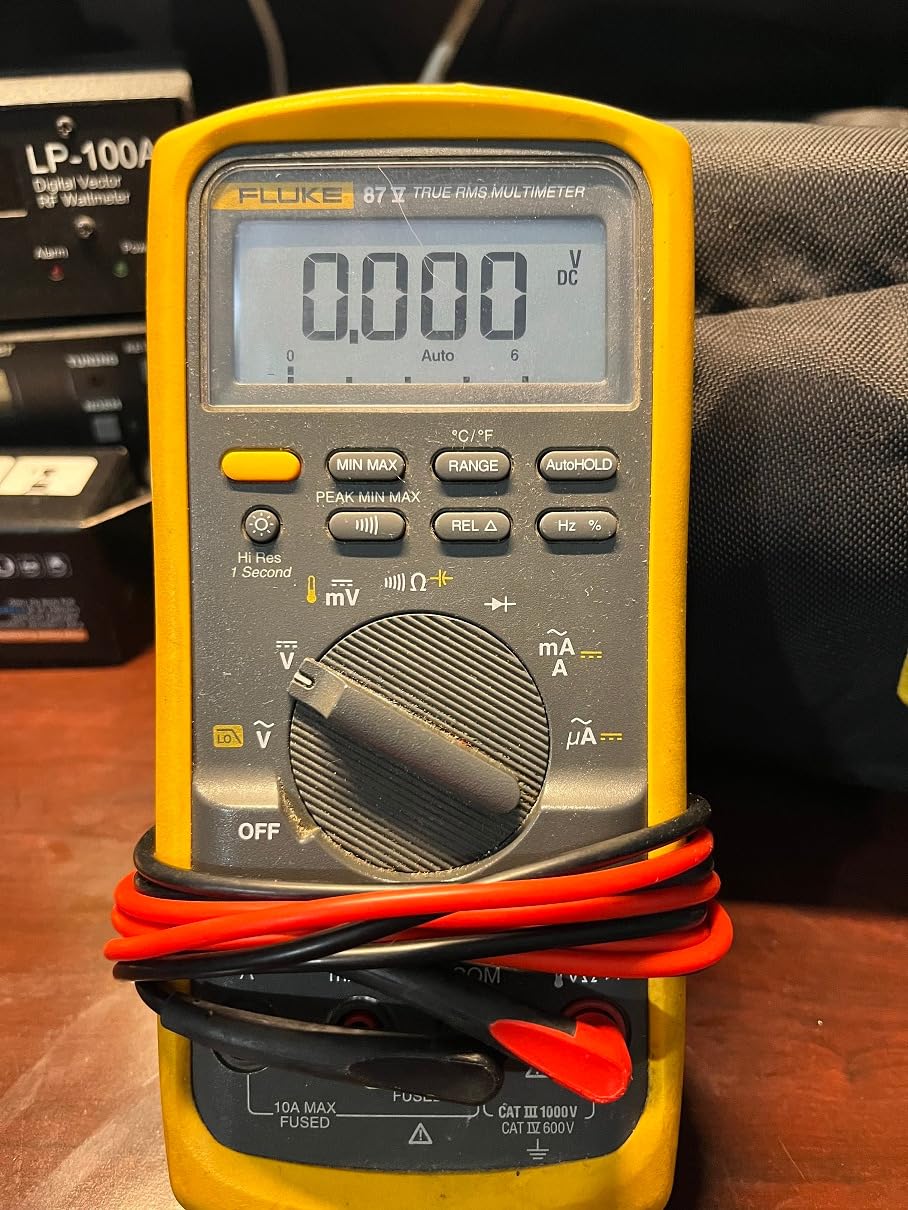
The 87V is the instrument I calibrate against when I do not trust another meter. Its DC voltage accuracy is roughly plus or minus 0.05 percent plus one count, which on a 12V car means the difference between a real 0.3V drop and measurement noise.
The switchable 6000 and 20000 count resolution modes are the underrated feature. Drop to 20000 counts and a sensor signal that appeared steady visibly moves when the throttle opens.
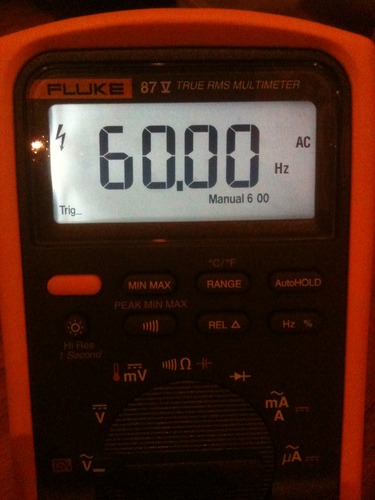
Peak Capture grabs intermittents as fast as 250 microseconds, and the Fluke-designed low-pass filter makes frequency readings on adjustable-speed drives meaningful instead of noise-dominated. Both are features a technician feels on the first hard job, not a year later.
The rubber boot survives repeated drops, the two-stage backlight reads from across a bay, and there is a 10 year warranty behind it.
Why it wins for professional work
Accuracy at the level where a voltage drop reading decides whether you replace a harness is the whole point. Every other meter in this list is close enough for most diagnostics; this one is the reference.
CAT III 1000V and CAT IV 600V cover mains and vehicle work with the same instrument, and owners cite unmatched accuracy and durability.
Where it falls short
There is no built-in low-impedance mode – ghost voltage chasing needs the optional adapter, which is exactly where the Klein MM720 beats it.
The included TL75 leads are entry-grade for a meter of this class, and neither a holster nor better leads are included in the box.
How We Picked These Meters
Twelve meters were run through the same short routine rather than scored off a spec sheet. Each one was used for a battery at rest, a reading under crank, an alternator output check, a fuse-pulled parasitic drain test and a voltage drop across a known ground point.
We weighted the results like this:
1. DC voltage accuracy on a 12V circuit (35 percent). Almost every automotive test is a DC voltage test. Accuracy where it counts beats a long function list.
2. Safety rating and build (25 percent). A stated CAT rating, fused inputs and a body that survives being dropped are non-negotiable for a tool used in a vehicle.
3. Usability in a dark engine bay (20 percent). Backlight, kickstand, lead holders, magnetic hanger and illuminated jacks decide whether a meter gets used or left in the van.
4. Automotive-specific functions (12 percent). Duty cycle, pulse width, RPM and low-impedance mode.
5. Owner review history (8 percent). Review counts were treated as long-term evidence, not as a quality score. A meter with 23154 ratings has been through more hands than one with 110, and that shows up in firmware bugs and lead quality.
Fluke vs Klein vs INNOVA vs the Budget Brands
Four of the most common questions about this topic are brand-versus-brand, so here is the direct answer rather than a hedge.
Fluke versus Klein. Fluke wins on accuracy and on the reference position technicians hold it in. Klein wins on durability, drop ratings, magnetic hangers and replaceable ceramic fuses. For a home mechanic, a Klein is the better buy. For a technician who needs to defend a reading, a Fluke is.
Klein versus INNOVA. Klein meters auto-range, backlight and carry CAT ratings with safety-capped leads. INNOVA meters are simpler, lighter, and two of them carry a 10 megohm ECU-safe input impedance with a battery condition indicator that Klein does not offer.
Fluke versus INNOVA. There is no contest on accuracy. INNOVA 3340 exists because it measures duty cycle, RPM and breaker points with the clamp in the box, which no Fluke in this roundup does at that tier.
Where Extech and Fieldpiece sit. Extech is consistently strong on value with well-documented CAT ratings, and Fieldpiece competes hard with Fluke on HVAC and refrigeration readings rather than vehicle work. Neither appears here because the twelve above represent better-supported automotive picks, not because they are poor meters.
What about the very cheap brands? The large-review-count models at the bottom of this list match a Fluke on a 12V battery check, according to owners who own both. What you give up is measurement repeatability at the extremes and the certainty of a stated CAT rating.
What to Look for in a Multimeter for Car Work
DC voltage accuracy first. Everything else is optional. You want a tolerance you can trust at 12V, and you want to know it is stated rather than inferred from a star rating.
Input impedance of 10 megohms or more. A higher impedance meter loads the circuit less, so a reference voltage reads truer and a module is less likely to misbehave while you probe it. Four meters here make this explicit.
CAT rating. CAT III 600V covers a 12V vehicle and household panel work. CAT IV 600V or CAT III 1000V is what you want if you will touch a hybrid’s low-voltage systems or a supply. Forum consensus treats a meter with no stated CAT rating as unrated.
Auto-ranging versus manual ranging. Auto-ranging removes the single most common beginner frustration – an overload symbol you do not understand. Manual ranging is cheaper and slightly more precise in the range you select.
True RMS: mostly no, with one exception. A 12V DC circuit does not need true RMS. It matters if you test alternator output ripple, or anything running off an inverter or a mains-derived accessory.
A low-impedance mode, if you can get one. LoZ is the feature that kills ghost voltage, the most common false trail in vehicle diagnosis.
Test lead quality. Leads are universally the first thing to fail. Meter makers say it, technicians say it, and buying a spare pair of safety-capped leads is cheaper than replacing the meter.
Read DC current, not just AC. Owners on the forums warn repeatedly that clamp meters marketed for cars are often AC-only and therefore useless for a drain test. Confirm a meter reads DC current before you trust it for parasitic draw.
Battery testing. A dedicated battery or load test mode saves a trip to a parts store and gives you a verdict while the car is still in front of you.
Price tiers. Under the entry tier, you get accuracy that is genuinely fine on 12V and give up backlights, CAT ratings and long-term support. The mid tier adds auto-ranging, true RMS and certified safety caps. The professional tier adds engine-specific measurements and warranty length. The shop tier adds reference accuracy and high-resolution modes. Match the tier to how often you will use it.
How to Actually Use It: Battery, Alternator, Drain and Drop
This is the routine I run, and it is the same on every one of the twelve meters above.
Battery at rest. Engine off, keys out, wait about 30 minutes for modules to settle. A fully charged 12V lead-acid battery should read 12.4 to 12.7V. Under 12.2V and it is discharged; under 12.0V and it may be sulphated. Remember that open-circuit voltage alone cannot prove a battery is healthy.
Under crank. Cranking should dip to no lower than about 9.6V and recover immediately to 12.4V or better. A deeper dip means a weak battery or a bad connection, not necessarily a bad starter.
Alternator output. With the engine running, expect roughly 13.7 to 14.7V at the battery. Below 13.2V and the charging system is not keeping up. Above about 15V and the regulator is overcharging and will boil the battery. Readings at the alternator and at the battery should differ by no more than 0.5V – a bigger difference points at a cable or ground.
Parasitic drain, step by step. Key off, wait 30 to 60 minutes for the body and modules to sleep. Set the meter to DC current on a range that starts at 10A, connect it in series with the negative battery cable, and read the current. It should settle below 50mA on most cars. Then pull fuses one at a time and watch for the moment the reading drops – that is your circuit. Clipboard out, one fuse at a time.
Voltage drop on a ground. This is the test nobody searches for and every technician uses. With the circuit loaded, put one probe on the battery negative and the other on the far end of the ground strap. A healthy ground reads under 0.2V. More than 0.5V is a corroded strap, and cleaning it often fixes an intermittent fault that no fuse or code ever explained.
Quick wins. Check fuses visually and then with continuity, since a hairline crack passes a visual check. Test the alternator diode bridge in diode mode – one direction forward voltage, one direction open. Use the LoZ mode on the MM720 before you pull a harness apart chasing a voltage that should not be there.
Hybrid and EV High-Voltage Safety
Orange cable on a hybrid or EV means high voltage. That system sits above the 12V supply, and contact can be fatal.
Every meter in this roundup is a low-voltage instrument. None of them is an insulation tester, and none of them is rated to probe inside a high-voltage enclosure.
If your work touches the orange cabling, the traction battery, the inverter or the DC-DC converter, the correct approach is a CAT IV 1000V rated instrument with certified insulated tooling, insulated gloves rated to the system voltage, and a formal de-energisation procedure. That is specialist training territory.
The realistic home-garage scope is the 12V side: the low-voltage DC-DC supply, the 12V battery, auxiliary circuits and the low-voltage side of a hybrid system once the vehicle has been properly shut down by someone qualified to do it.
What a Multimeter Cannot Do
An honest roundup says what a tool cannot do. A multimeter gives you a number at one instant in one place.
It cannot decode CAN bus traffic, read fault codes, or show you a live data stream. That is an OBD2 scan tool’s job, and for a check-engine light the scanner is faster and cheaper than probing.
It cannot see signal shape. A pulse that looks healthy as a voltage can be obviously broken as a waveform – which is why the ZOTEK 702S exists, and why a real oscilloscope is still the tool for injector, ignition and alternator ripple work.
It cannot measure duty cycle unless it has the function, cannot check cranking compression, and cannot tell you which of two identical parts on a circuit is the failed one.
It also cannot age. A meter that was accurate five years ago may not be now, and test leads degrade long before the instrument does. If a reading does not make sense, check the leads before you check the car.
Frequently Asked Questions
Which multimeter is best for automotive use?
The Fluke 17B+ is the best overall for everyday 12V car diagnostics because its DC voltage accuracy, CAT III 600V rating and build quality make every other reading trustworthy. Professionals who need pulse width, duty cycle and RPM should use the Fluke 88V, and technicians chasing ghost voltage should use the Klein Tools MM720 for its low-impedance LoZ mode.
What is the best automotive multimeter on a tight budget?
If your budget caps out well below the professional tier, the Klein Tools MM420 and the INNOVA 3340 stand out. The MM420 adds auto-ranging true RMS, a 6.6-foot drop rating, illuminated lead jacks and replaceable ceramic fuses. The INNOVA 3340 adds duty cycle and RPM testing with an inductive clamp in the box. Both are more capable than most meters costing twice as much.
Is a Fluke or Klein multimeter better?
Fluke wins on accuracy and holds the reference position among technicians. Klein wins on durability, drop ratings, magnetic hangers, illuminated jacks and replaceable ceramic fuses. A home mechanic is better served by a Klein, because the difference in accuracy does not change a diagnosis on a 12V circuit. Buy a Fluke when you need a reading you can defend.
Do you need a true RMS multimeter for automotive work?
Mostly no. Almost every measurement on a 12V vehicle is DC, and a non-true-RMS meter reads DC accurately. True RMS earns its place when you measure alternator output ripple or anything fed by an inverter, and it stops a distorted waveform from reading high. Several meters here include it as standard at no extra cost.
What should a car battery read on a multimeter?
A fully charged 12V battery reads 12.4 to 12.7V after the car has sat for about 30 minutes with the engine off. With the engine running, expect 13.7 to 14.7V. Cranking should not pull it below about 9.6V. Under 12.2V at rest means discharged, and below about 13.2V running means the charging system is not keeping up.
How do you test for a parasitic drain?
Set the meter to DC current on a range starting at 10A, connect it in series with the negative battery cable, and wait 30 to 60 minutes after key-off for modules to sleep. The reading should settle below 50mA. Then pull fuses one at a time and watch for the reading to drop – the circuit where it drops is the drain.
Can you use a multimeter on a hybrid or electric car?
Yes for the 12V and low-voltage systems, no for the high-voltage side. Orange cabling around the traction battery and inverter is lethal. Every meter in this roundup is a low-voltage instrument and none is an insulation tester. High-voltage work needs a CAT IV 1000V rated meter, certified insulated tooling and formal de-energisation training.
What is the difference between a multimeter and an OBD2 scanner?
An OBD2 scanner reports what the vehicle computer believes is wrong – stored codes, live sensor data and freeze frame. A multimeter measures what the wire is actually doing. Use the scanner to find out which circuit to test, then use the meter to confirm whether the fault is the sensor, the wiring, the connector or the ground.
Bottom Line: Which Multimeter Should You Buy?
If you want one meter to do everything on a 12V car, buy the Fluke 17B+. Its accuracy and build make every other reading you take more believable, and it is the one we expect to still be working a decade from now.
If you want the most capability per pound, the AstroAI 6000 Count and the KAIWEETS HT118A both do more than their tier suggests, and both carry review counts that reflect a decade of owners rather than a launch week.
If you work under vehicles every day, the Klein Tools MM420 is the one that survives. If your faults are stubborn sensor circuits, the MM720’s low-impedance mode will save you hours. If you need RPM, dwell and pulse width, go straight to the INNOVA 3340 or the Fluke 88V.
Whichever you choose, learn three numbers: 12.6V at rest, 13.7 to 14.7V charging, and under 50mA of parasitic draw. Those three readings answer most of what goes wrong on a 12V vehicle, and a good meter makes them fast.