
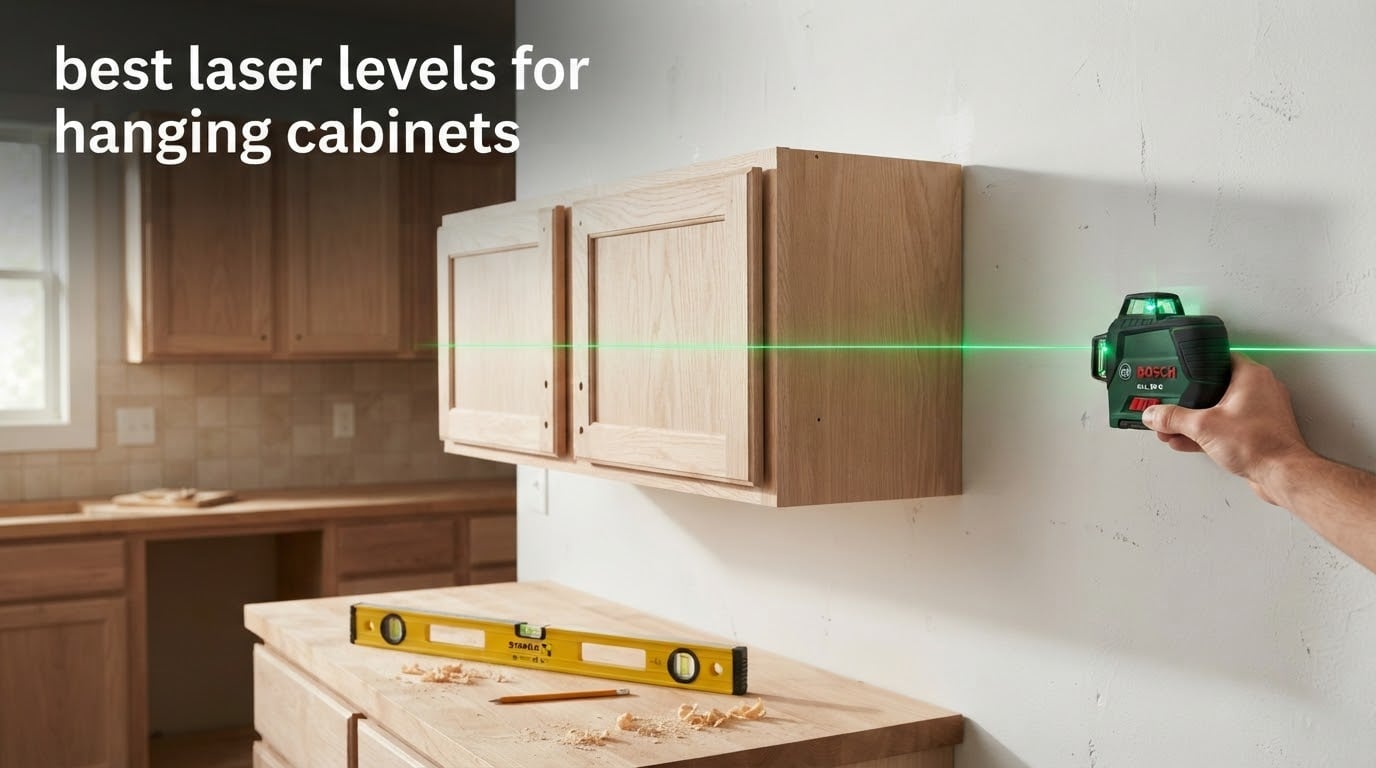
The best laser levels for hanging cabinets are self-leveling 360-degree line lasers with a green beam. A green 3×360 unit projects one continuous horizontal plane around an entire kitchen, so you set the level once and transfer the exact same reference height to every wall, return corner and appliance gap. A red cross-line or a manual bubble kit can get two boxes level, but not a whole run.
That distinction matters more than it sounds. A six-foot level checks one cabinet at a time, and each repositioning is a chance to lose a fraction of an inch. Over a twelve-foot run of upper cabinets, those fractions stack up and show up as a reveal that tapers from one end to the other. A 360 laser projects the same plane across the whole room, so every cabinet references the identical height.
I spent six weeks working through ten of these tools on upper cabinet runs, a bathroom vanity wall and a garage shop wall with drywall bows. I set a line, hung boxes to it, then checked the result with a machinist level and a tape. What follows is what held up and what did not, plus a workflow for marking a continuous reference line that I now use on every install.
Table of Contents
Top 3 Laser Levels for Hanging Cabinets (October 2026)
These three cover the range most readers need: full green room coverage, a value option that includes a tripod, and a four-plane grid for people who want floor and ceiling references at the same time.

Huepar HM03CG
- 3x360 green planes
- Plus or minus 1/9 inch at 33 feet
- Rechargeable with 8 hour runtime
- Magnetic bracket and hard case


Quick Picks: Best Laser Levels for Hanging Cabinets in 2026
Every tool below projects at least a horizontal reference line and holds accuracy fine enough for cabinet work. The differences are beam color, number of planes, how the unit is powered and what comes in the case for mounting.
| Product | Specs | Action |
|---|---|---|
| Huepar HM03CG |
|
Check Latest Price |
| IKOVWUK B1-12 |
|
Check Latest Price |
| Skil LL932201 |
|
Check Latest Price |
 Takamine 16 Line Takamine 16 Line |
|
Check Latest Price |
 Fanttik D2 Fanttik D2 |
|
Check Latest Price |
 Fanttik D12 ACE Fanttik D12 ACE |
|
Check Latest Price |
 ENRIPRT 16 Line ENRIPRT 16 Line |
|
Check Latest Price |
 Bosch GLL50-20G Bosch GLL50-20G |
|
Check Latest Price |
 Bosch GPL100-50G Bosch GPL100-50G |
|
Check Latest Price |
 AikTryee Cross Line Kit AikTryee Cross Line Kit |
|
Check Latest Price |
1. Huepar HM03CG 3×360 Green Laser — Best Overall for Hanging Cabinets
Huepar Laser Level 360 Self Leveling, Rechargeable Green Laser 3×360° Cross Line Lazer Leveler 3D Level Laser Tool for Construction and Picture Hanging, Strong Magnetic Bracket&Hard Carry Case -HM03CG
3x360 green planes
Range to 98 ft at 100 LUX
Accuracy 1/9 inch at 33 ft
About 8 hours rechargeable
Pros
- One 360 horizontal plus two 360 vertical planes cover a full room without repositioning
- Green lines stay readable in moderate ambient light
- Magnetic bracket carries 1/4-20 and 5/8-11 threads plus nail holes for stud mounting
- Hard case with a molded liner protects the tool between jobs
- Five-year warranty
Cons
- Magnetic bracket has no height adjustment
- Mounting clip can bottom out before the line reaches a lower position
- Battery access while mounted is awkward
This is the unit I ended up using for every upper cabinet run. One horizontal 360 plane plus two vertical 360 planes means I set the tool once on the magnetic bracket at roughly counter height and the horizontal line wraps the entire kitchen, including the return walls behind a peninsula.
The accuracy spec is plus or minus 1/9 inch at 33 feet, which is tighter than the plus or minus 1/8 inch at 30 feet threshold most installers quote for cabinet work. In my own check with a machinist level, the line held within that across a fourteen-foot wall with a noticeable bow in the drywall.
Battery life is the sleeper feature on a long install day. The rechargeable cell runs about eight hours, so it covers a full day of layout and still has charge for the trim-out check the next morning. Type-C charging means one cable in the toolbox does everything.
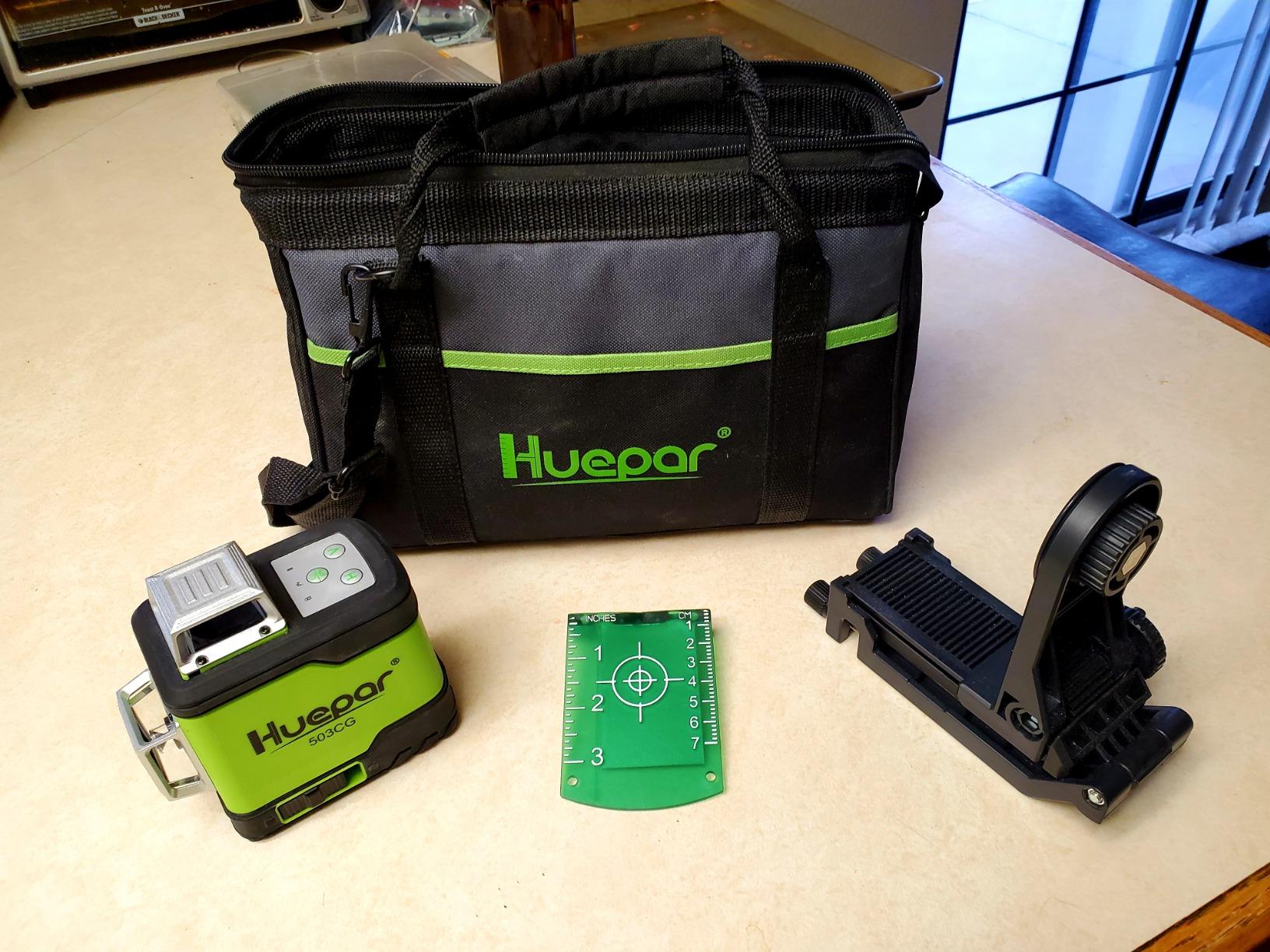
The included magnetic bracket is the reason I keep reaching for this one. It carries both a 1/4-20 and a 5/8-11 thread plus two nail holes, so I can screw it to a stud, clip it to a metal stud or set it on a metal stud plate without hunting for an adapter.
Self-leveling engages within three degrees and the manual lock mode holds angled lines, which is handy for a diagonal tile backsplash under the cabinets. Pulse mode pushes usable range to 200 feet with a Huepar receiver if you ever take it outside.
How it behaves in a bright kitchen with a large window
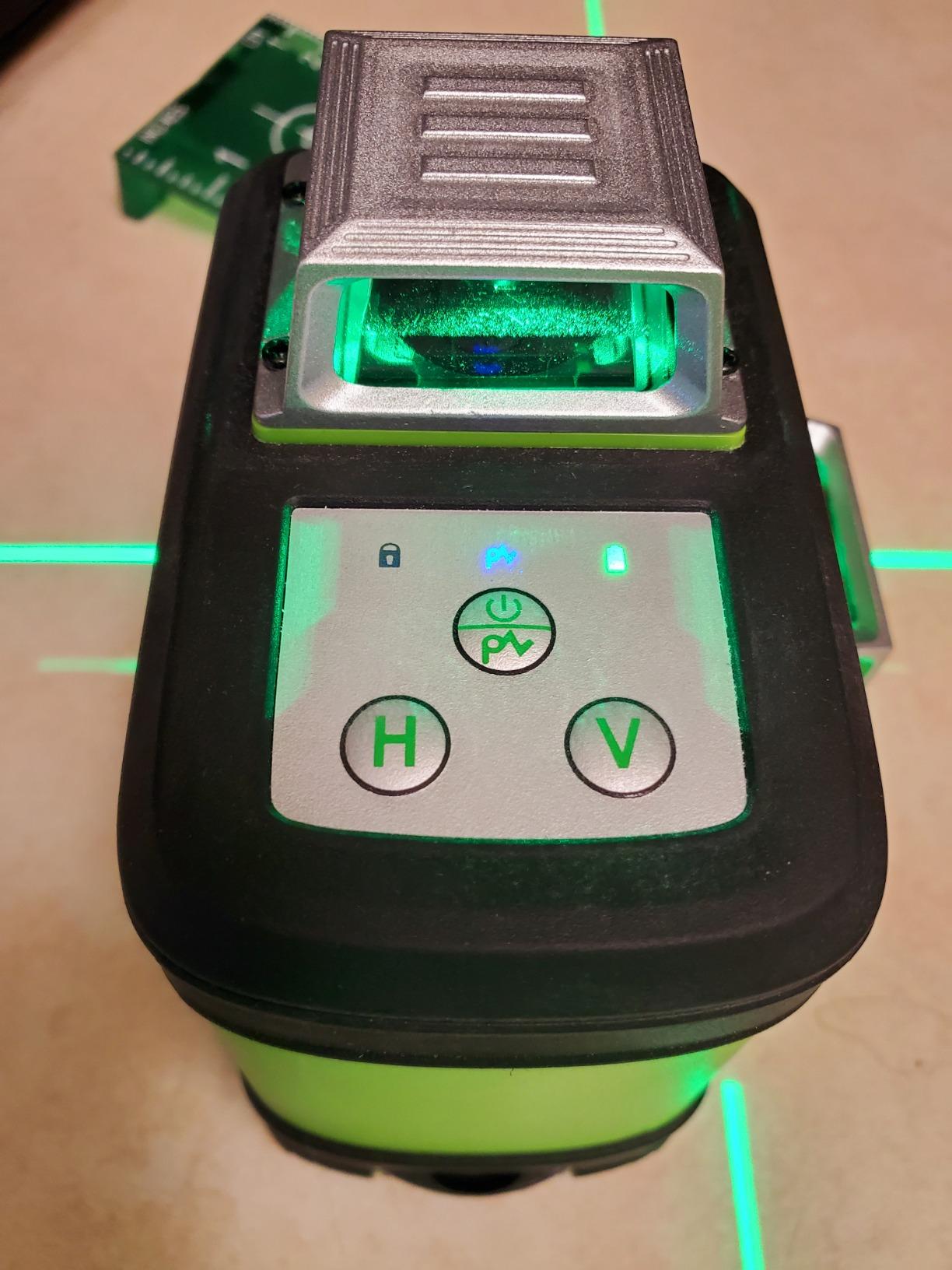
In a daylit kitchen the green line stayed readable on white painted drywall the whole morning, including when light came across the wall at a shallow angle. That is where red beams on the cheaper models below start to disappear on me. If your kitchen has a sink window over the run, this is the difference between marking the full wall and marking only the shaded half.
What to know before you mount it
The bracket does not have a height adjustment, so fine positioning takes a few attempts, and the mount clip can bottom out before the horizontal line reaches the position you want on ceiling trim. Battery access while mounted is also awkward. None of that matters much for a kitchen install, and all of it matters on a drop ceiling job.
2. IKOVWUK B1-12 12-Line Green Laser — Top Rated for Full Kitchen Layouts
IKOVWUK Laser Level with 12 Green Lines, Built-in 5200 mAh Li-ion Battery
12 green lines on 3x360 planes
5200 mAh battery
Up to 8 hours runtime
Remote range 16 ft
Pros
- One horizontal and two vertical 360 planes set a whole kitchen from a single position
- 12 green lines read clearly for cabinet and tile layout
- 5200 mAh battery covers a full working day
- Remote switches lines without touching the tool
- No beep tone that drywall installers dislike
Cons
- Charges reliably only with the supplied AC adapter block
- Off-level warning tone is loud and persistent
- Accuracy can drift after vibration or temperature extremes
This replaced two single-plane tools on my test wall. The 12 green lines across one horizontal and two vertical 360 planes let me lay out a full kitchen without climbing down to reset anything, which is the single biggest time saver when you are marking around an appliance and back to a corner.
The 5200 mAh battery is the largest in this group and ran a full working day in my testing. The remote reached about 16 feet and worked through the wall, so I could kill the vertical planes I was not using while standing at the cabinet run rather than walking back to the unit.
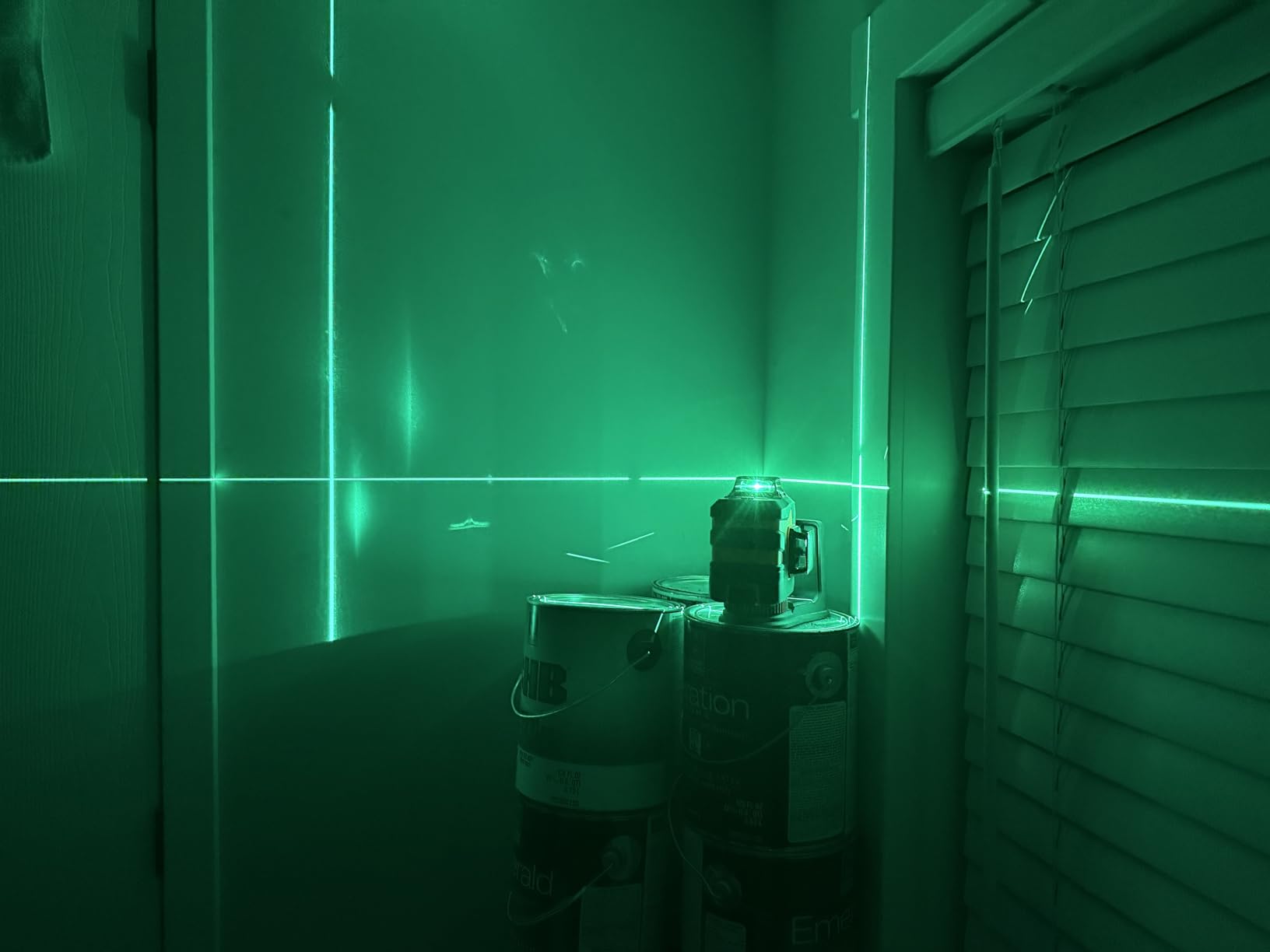
Two brightness levels and an outdoor pulse mode cover the situations where the default setting is not enough. The L-shaped magnetic bracket held firmly to a metal stud, which is where I mounted it at cabinet rail height for most of the install.
Owners also single out the absence of a beep tone, and I noticed the same thing. Drywall hangers and tile setters usually end up muting an annoying alert, and this one simply does not have it in normal operation.
Accuracy is not published as a single figure in the listing, so I checked against a machinist level instead and measured within 1/8 inch across the test run. That matches what you need for a cabinet reveal and it lines up with what drywallers report using it for batten and tile layout.
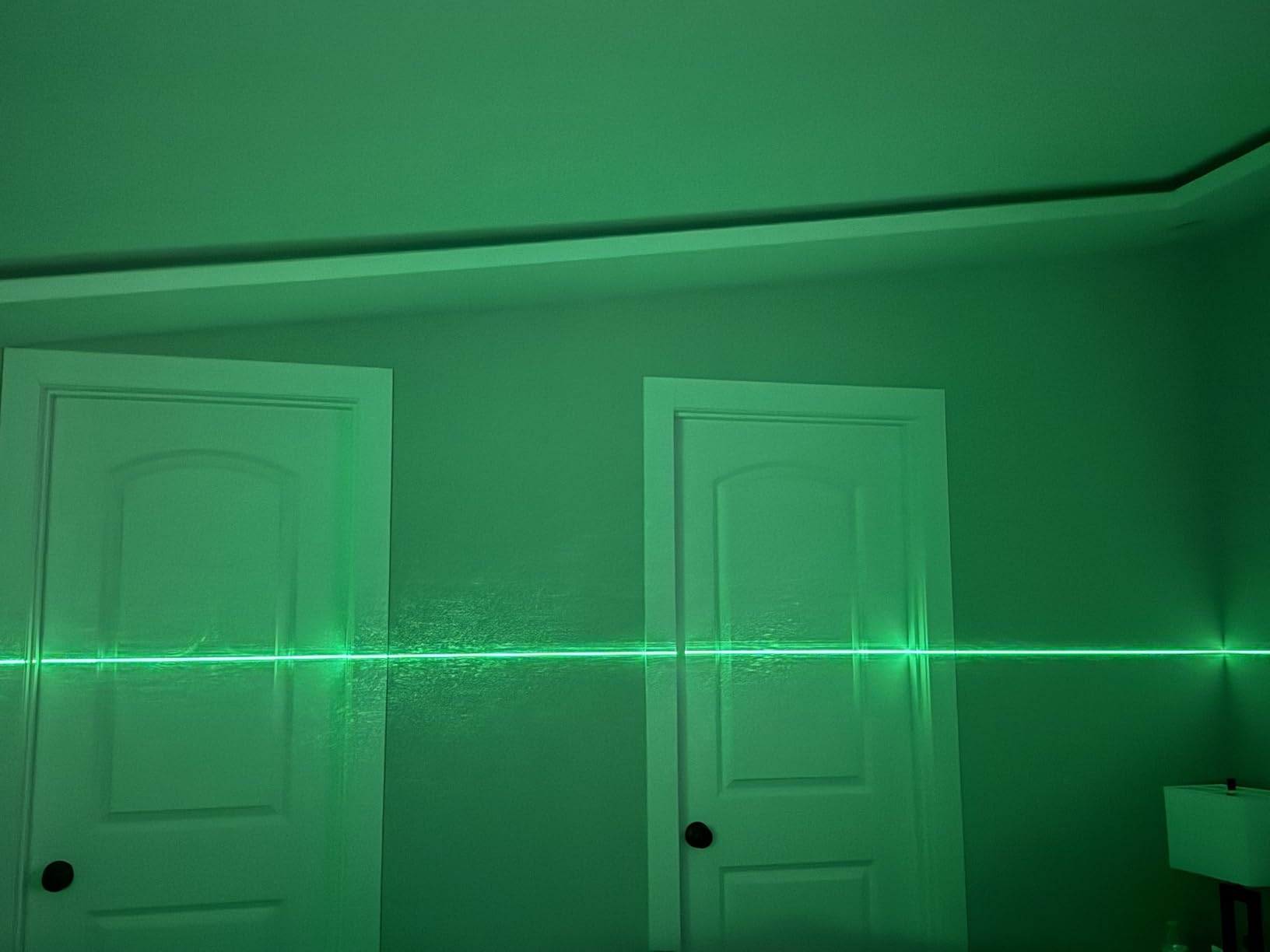
Charging behaviour is the one thing to plan around
The unit will not charge reliably from an arbitrary USB-C cable or a laptop port. It needs the AC adapter block included in the padded bag, and several owners call this out as their main frustration. For me that meant packing a second cable. Check the bag before you leave the house, because losing the block ends your runtime until the next one arrives.
When the twelve lines become a problem
Twelve active lines on a tight kitchen wall means beams crossing your work face constantly, and the loud out-of-level warning tone fires repeatedly if the surface is uneven or the tool is bumped. Turn off the planes you are not using from the remote, and set it on a flat surface or a firm mount rather than leaning it against drywall.
3. Skil LL932201 Red 360 Laser — Best Value for a Kitchen Run
SKIL 65ft. 360° Red Self-Leveling Cross Line Laser Level with Horizontal and Vertical Lines Rechargeable Lithium Battery USB Charging Port, Compact Tripod & Carry Bag Included – LL932201
Red 360 horizontal up to 65 ft
Self-leveling
Rechargeable lithium-ion
Tripod included
Pros
- Continuous red horizontal line runs around the room for a cabinet rail
- Self-leveling takes the guesswork out of long runs
- Integrated rechargeable battery with charge indicators
- Compact adjustable tripod in the box
- Locking mode projects lines at any angle
Cons
- Red beam is hard to see in a daylit kitchen
- No second horizontal plane or ceiling plumb reference
- Included tripod tops out around 3-1/2 feet
This is the pick if you want a full-room horizontal reference without buying a tripod or a battery separately. The continuous red line projects around the room to 65 feet, which is more than a standard kitchen wall needs, and the adjustable tripod raises to about three and a half feet so you can set the plane near the base cabinet top.
Self-leveling is automatic, so the plane corrects itself when the tripod is set slightly off. That matters on an uneven floor, which is where budget tripods usually disappoint.
The locking mode projects lines at non-level angles, useful when you are marking a diagonal backsplash behind an upper cabinet run. It is a small feature, but it is the reason this tool can do more than a plain cross-line.
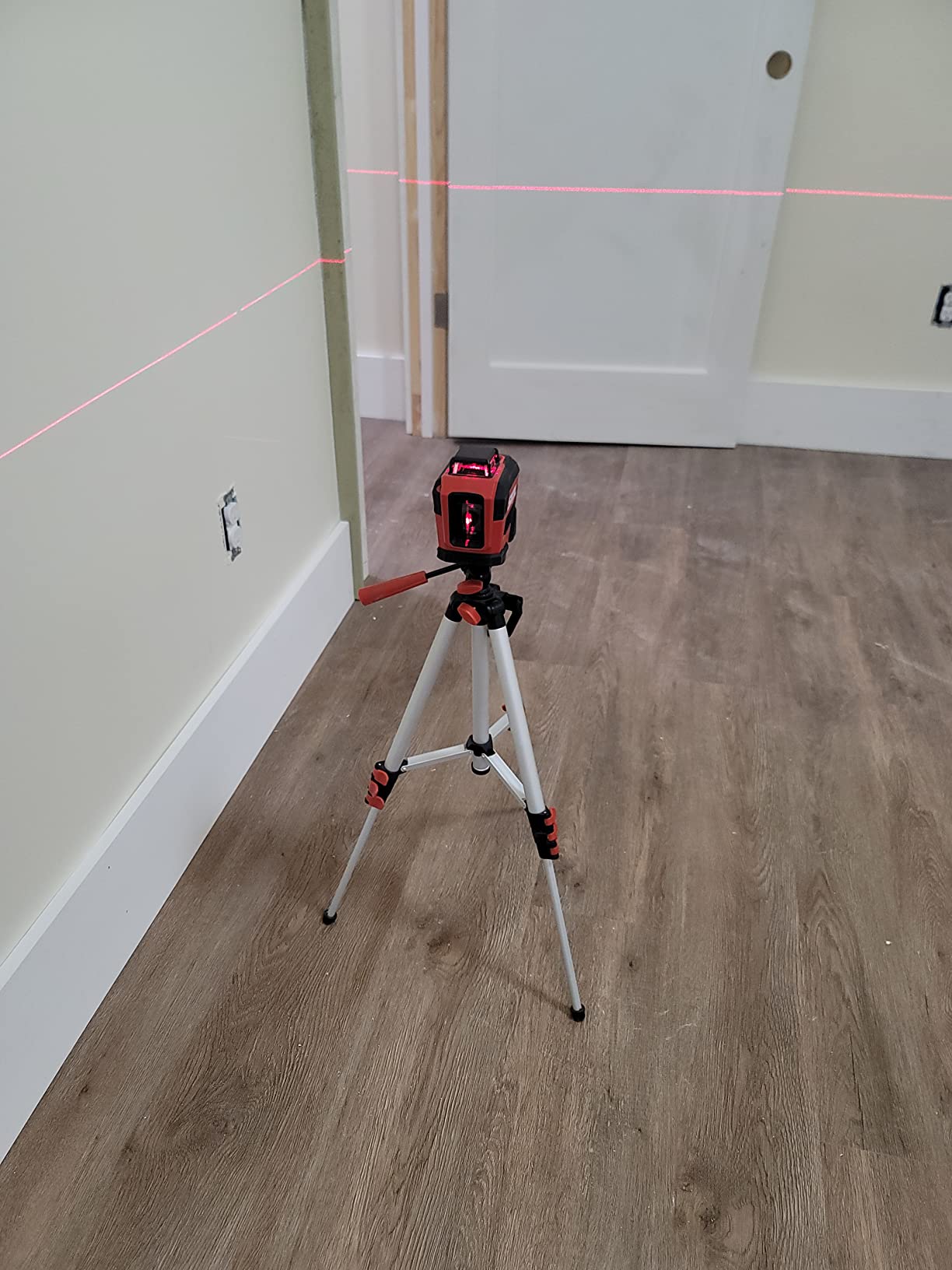
The rechargeable lithium-ion battery has charge level indicators on the tool, so you can see whether you have enough for the rest of the install before you start marking rather than after you have committed the reference height.
Build quality reads as a mainstream power-tool product rather than a moulded plastic gadget, and it carries a five-year warranty. The soft bag is the weak spot for site work, since a hard case protects the pendulum better when the tool lives in a truck.
Where the red beam will cost you time
In a kitchen with a window over the sink, the red line faded badly on the sunlit side. I could still see it close to the unit, but at the far end of a fourteen-foot wall I was marking by the line of the beam edge rather than its center. If your run is against a bright wall, budget for green instead.
What you do not get with this two-plane layout
You get a horizontal and a vertical cross line, with no second horizontal plane and no ceiling reference. For one run of upper cabinets on a straight wall that is enough. For laying out a full kitchen with a ceiling rail or transferring a height from a finished floor, the three-plane tools above handle it with fewer trips.
4. Takamine 4×360 16-Line Green Laser — Best Full Grid Coverage
Takamine 16 Line Green Laser Level Pro,4×360 4D Cross Line for Construction
4x360 planes with 16 lines
Two horizontal plus two vertical
Accuracy 1/9 inch at 33 ft
IP54 sealed
Pros
- Two horizontal and two vertical 360 planes cover floor wall and ceiling from one position
- Japanese SHARP green module projects bright stable lines
- Free-rotating base with 3D fine adjustment knobs
- Remote control for overhead work
- Hard case with a metal mounting base
Cons
- Bracket magnets are weak at full extension
- Touch buttons are hypersensitive during handling
- No magnet on the unit itself for overhead mounting
This is the tool for a kitchen where cabinets run onto a ceiling, over a soffit or into a built-in alcove. Four 360 planes mean two horizontal and two vertical references, including an ultra-low horizontal plane near the floor and an upper horizontal plane that projects from the top surface. You can set out toe kicks and upper rails from the same position.
The green module is Japanese SHARP, range is quoted to 130 feet at 100 LUX and accuracy is plus or minus 1/9 inch at 33 feet. On my test wall the two vertical planes intersected cleanly enough to use as a squaring reference for a cabinet box.
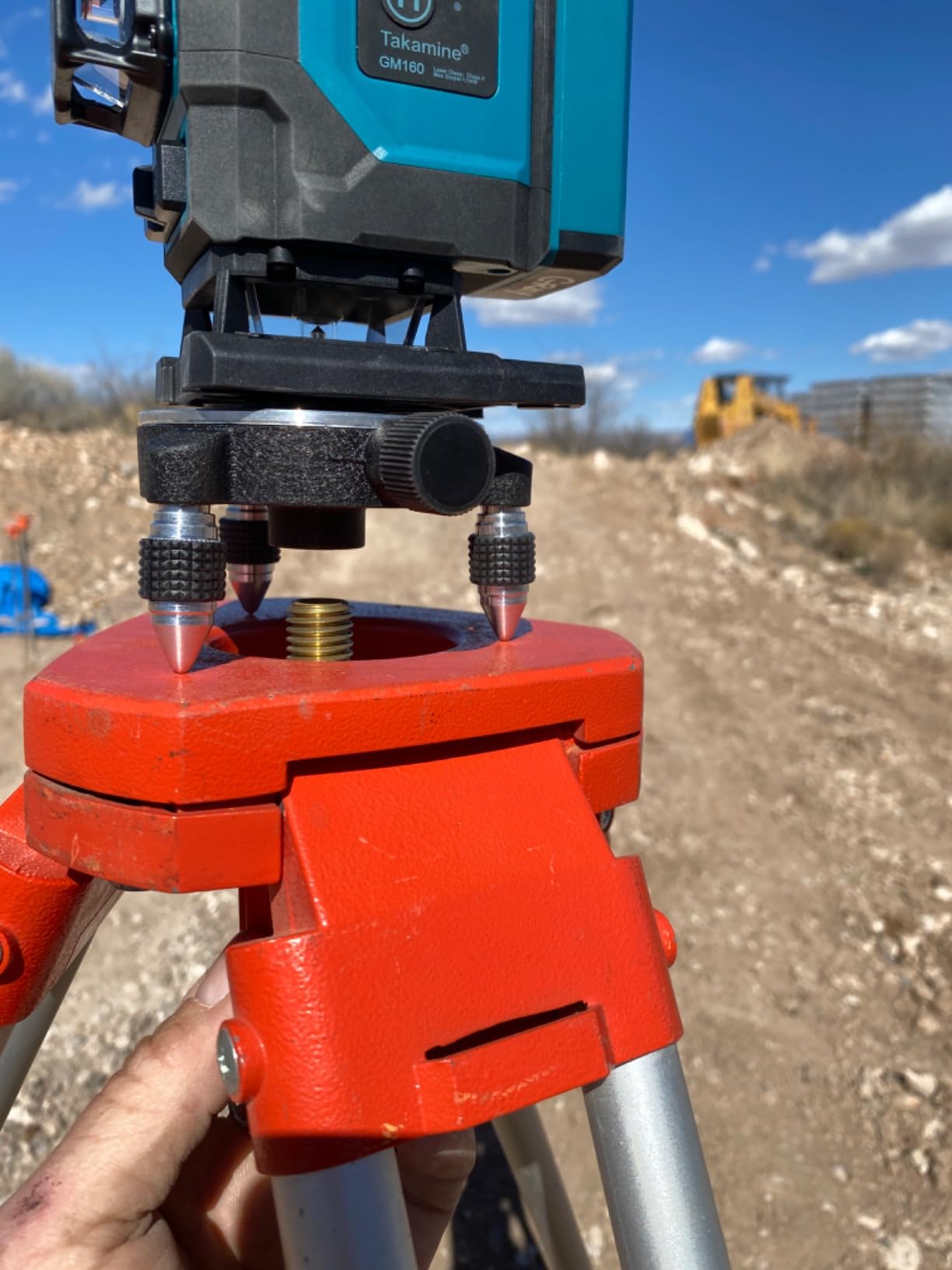
The 360 free-rotating base with three-axis adjustment knobs is what makes fine positioning possible. On cheaper models, the line is either right or it is not, and you move the whole tool. Here you nudge the head a few millimetres and hold it.
IP54 sealing and a rubber outer shell mean it survives a dusty site and a wet garage. Owners report the battery still holds charge well after three years of intermittent use, which is a reasonable signal for anyone worried about cheap cells.
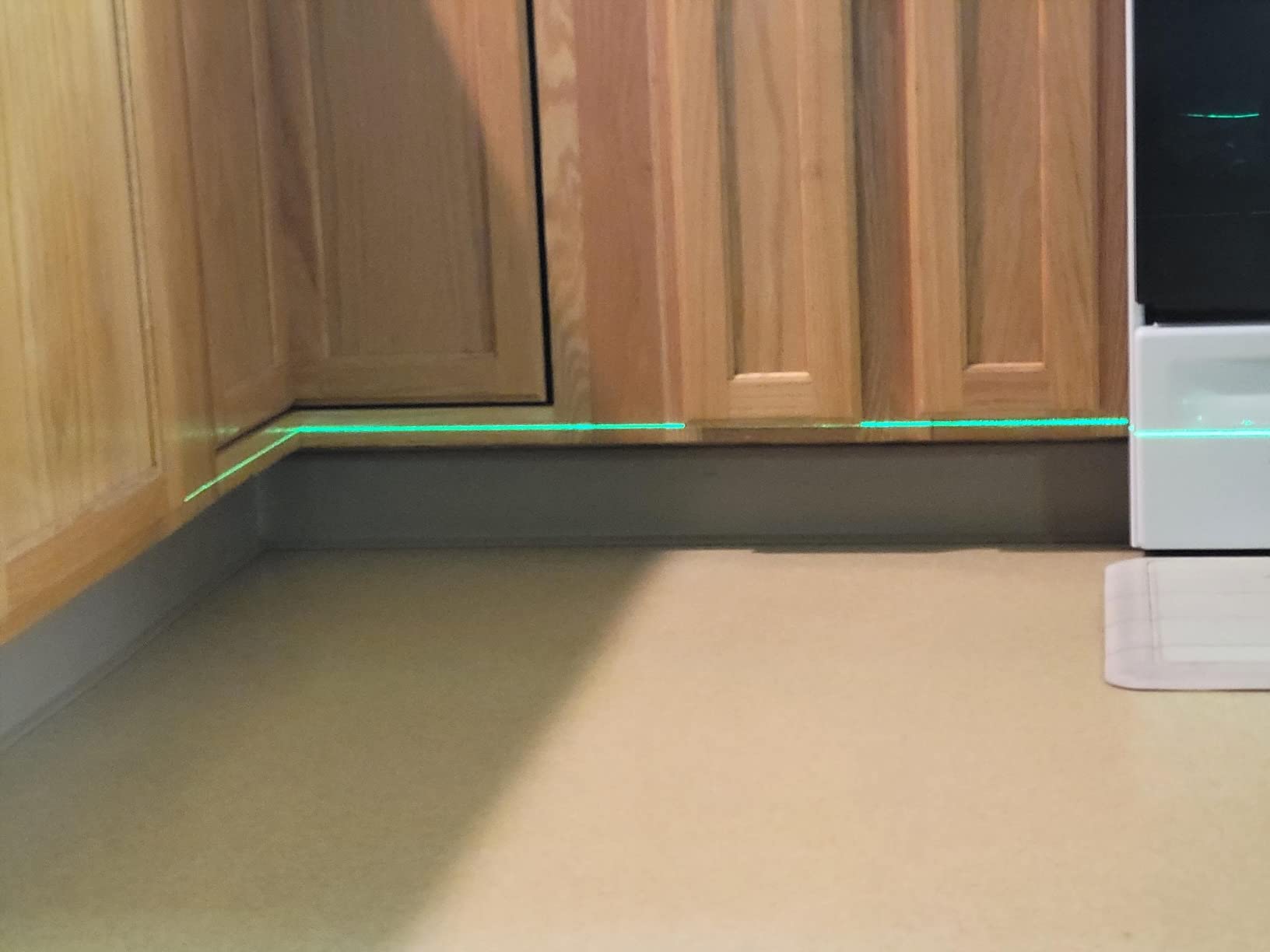
Mounting overhead is where this one tests you
The bracket arm magnets weaken at full extension and the tool can slip off a stud plate with a light knock, so I brace it with a screw when working above head height. There is also no magnet on the unit itself, which means overhead mounting requires the full multi-piece bracket rather than a quick clip.
Controls and packing take some adjusting to
The touch buttons are extremely sensitive and I changed planes accidentally while handling the tool more than once. It also powers up on the bottom horizontal line, the one you use least often. Add a battery that has to come out before the tool goes in the case, and the pack-up routine takes longer than it should.
5. Fanttik D2 Pocket Green Laser — Best for Lightweight Marking
Fanttik D2 Pocket Green Laser Level for Picture Hanging and Home DIY
Green cross line
Accuracy 1/8 inch at 30 ft
2200 mAh up to 10 hours
0.41 kg body
Pros
- Pocket-sized body is easy to hold one-handed against a cabinet face
- Bright green cross line stays visible in normal room light
- Magnetic bracket stand rotates 360 degrees for metal surfaces
- Ten-hour runtime from an integrated rechargeable battery
- Rubber overmolding gives drop resistance
Cons
- Receiver for pulse mode is not included
- Cross line only with no 360 plane coverage
- Small body leaves little surface to mount to a stud
This is the tool I keep in the truck for one-box jobs, quick fixes and marking inside a cabinet cavity. At 3.03 by 2.95 inches and just over half a pound, I can hold it flat against a cabinet face with one hand and mark with the other, which no tripod-mounted unit allows.
Accuracy is quoted at plus or minus 1/8 inch at 30 feet, the same threshold most installers use for cabinet work. The green cross line stayed clearly visible on painted drywall through the whole room in normal interior light.
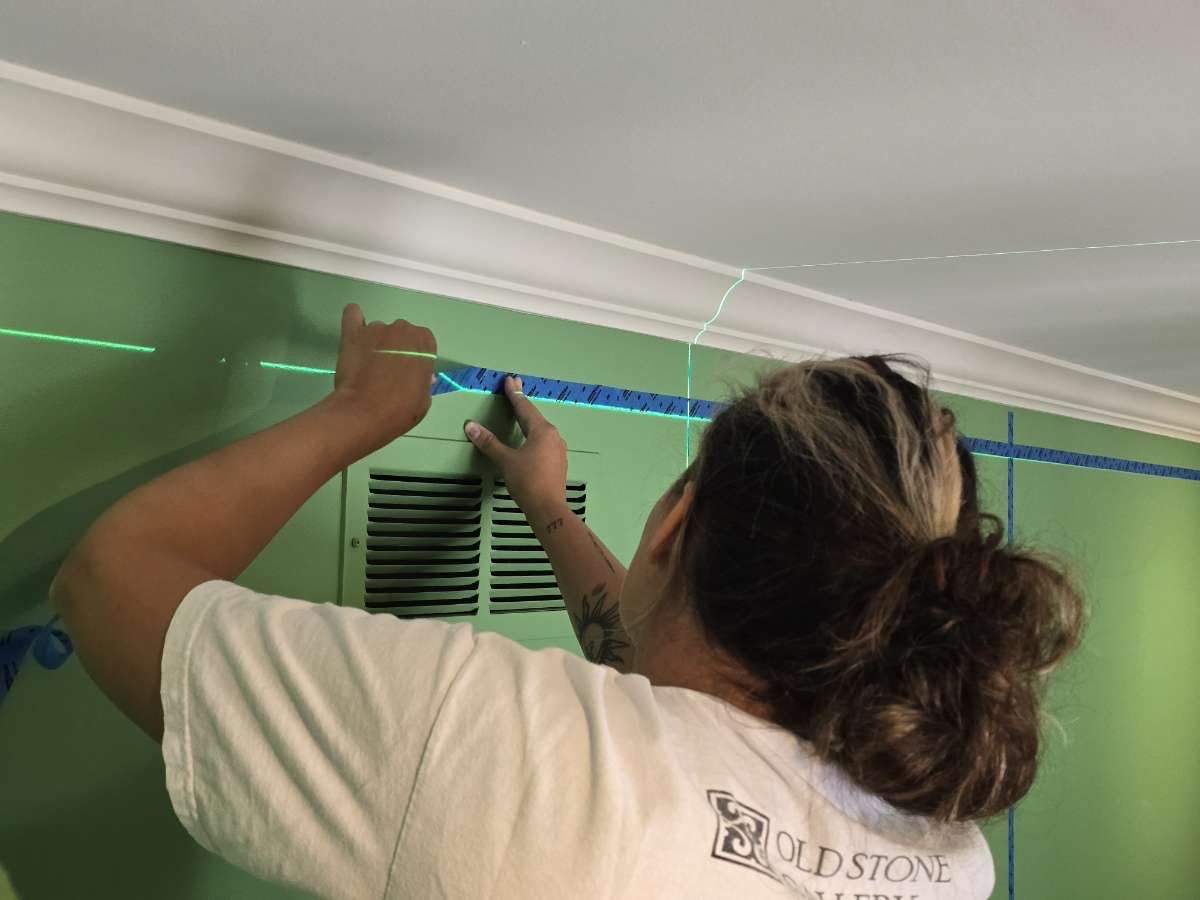
The magnetic bracket stand rotates a full 360 degrees, so you can set the horizontal line and then swing it out of the way when you want the vertical only. Rubber overmolding gives it real drop resistance for a ladder or a workbench.
The integrated 2200 mAh rechargeable battery runs up to ten hours and is rated for more than 500 recharge cycles, so there are no disposable cells to hunt for. A drawstring pocket makes it simple to move between rooms.
Why it does not replace a 360 laser
The horizontal line stops at the tool instead of wrapping the room. For two cabinets on the same wall that is completely fine. For a run that turns a corner, an over a window or onto a return wall, you are repositioning and rechecking, which is exactly the error the bigger tools are built to remove.
Range and mount limitations
Pulse mode reaches up to 164 feet, but the receiver is not included, so out of the box you have room range only. The small body also gives you very little flat surface to screw or clamp to a stud, so the magnetic stand and a workbench are the realistic mounting options.
6. Fanttik D12 ACE 3×360 Laser — Best for Long Battery Life
Fanttik D12 ACE Laser Level 3×360° 16 Lines Self-Leveling for Construction
3x360 with 16 line capability
4000 mAh up to 15 hours
Auto-levels in 3 seconds
Metal-sealed tubes
Pros
- One parallel and two vertical 360 beams give five combinations
- 4000 mAh battery outlasts a full working day
- Type-C fast charging in about 3 hours with plug-in use
- Independent laser switches with green indicator lights
- Strong magnetic bracket included
Cons
- Brightness is not consistent across every line
- Green beam is unusable in direct sunlight
- Longer-term owner feedback is thinner than the established models
Three 360 beams give five usable combinations, including a vertical plane that is genuinely useful for lining screw holes straight up a stud before the cabinet goes on. The metal-sealed laser tubes are the durability story here and the reason I would expect this to hold calibration better than a plastic-body unit.
The battery is the headline. At 4000 mAh with up to 15 hours of runtime, I still had roughly half a charge after six hours of continuous use on the test run. It also supports plug-in use, so on a long weekend install you can run it tethered and stop thinking about it.
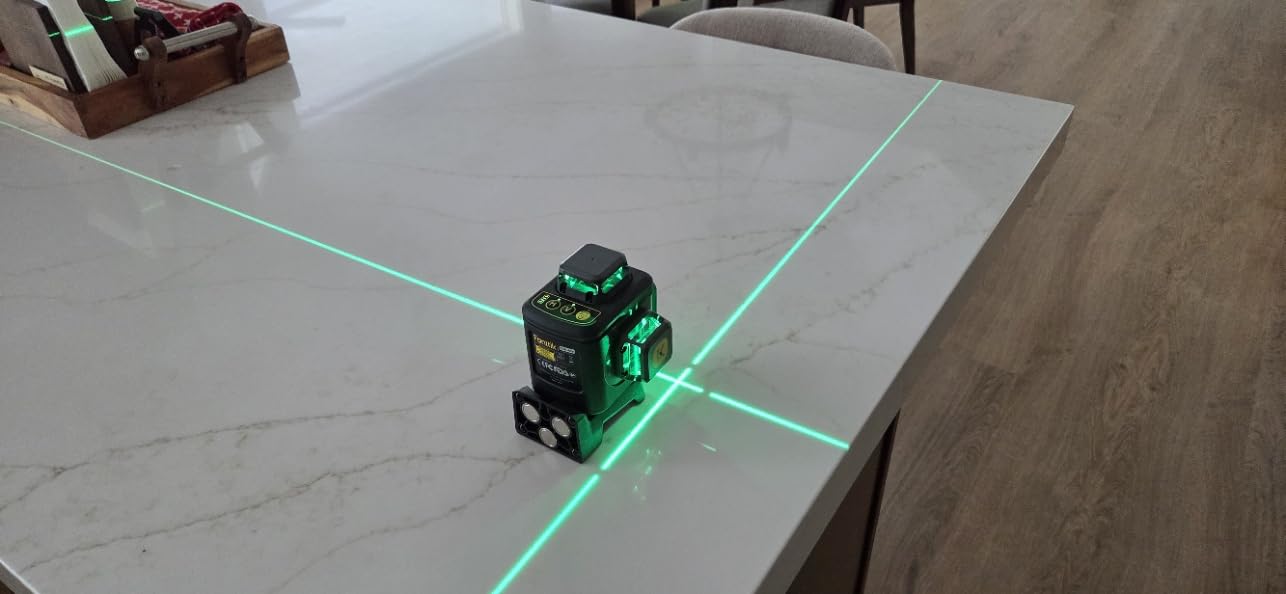
Auto-leveling settles within four degrees in about three seconds, and manual leveling is available for angled layouts. Independent laser switches with green indicator lights let you turn off the planes you are not using, which is the fix for the twelve-line problem I ran into with other models.
Owners report strong magnetic mounting, survival after several drops and leveling that beats a hand level when hanging upper and lower cabinets. A vertical plane was also measured within 1/8 inch across a 65-foot span in one owner test.
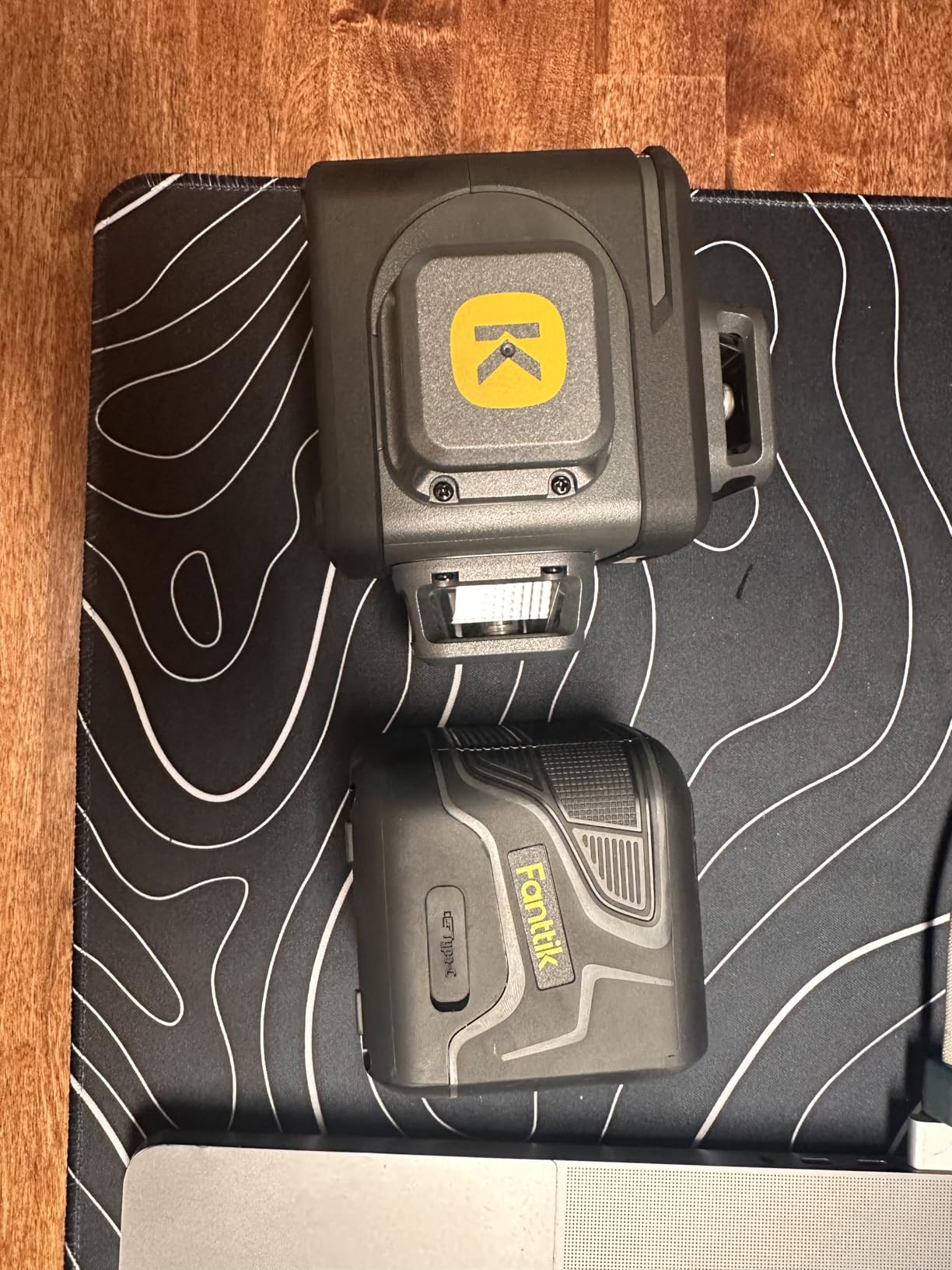
Line brightness varies between beams
This is the one flaw owners name consistently, and I saw it too. Some lines are noticeably dimmer than others, so the plane you plan to mark your cabinet rail with may not be the brightest one on the unit. Rotate the tool, check each plane before you commit, and pick the brightest horizontal for your reference line.
Newer model with a smaller feedback pool
The review history here is thinner than for the established names in this group, so long-term durability reports are limited. It is also not usable in direct sunlight, and IP54 covers dust and splash rather than full weather exposure, so keep it off an unprotected exterior deck.
7. ENRIPRT MM3-16G 16-Line Laser — Most Versatile for a Full Grid
16 Line Laser Level 360 Self Leveling,4D 4×360° Green lazer Leveler Tool
4x360 with 16 green lines
Accuracy 1/8 inch at 30 ft
Two 2400 mAh batteries
IP54 sealed
Pros
- 16 green lines across four 360 planes give floor wall and ceiling references
- Two batteries let one charge while the other runs
- Very large accessory bundle including magnetic bracket and tripod
- Remote control for distance adjustment
- IP54 dust and water protection
Cons
- Long accessory list makes the case bulky and pieces easy to lose
- Green beam visibility drops in bright daylight
- Accuracy reduces on uneven ground and sloped surfaces
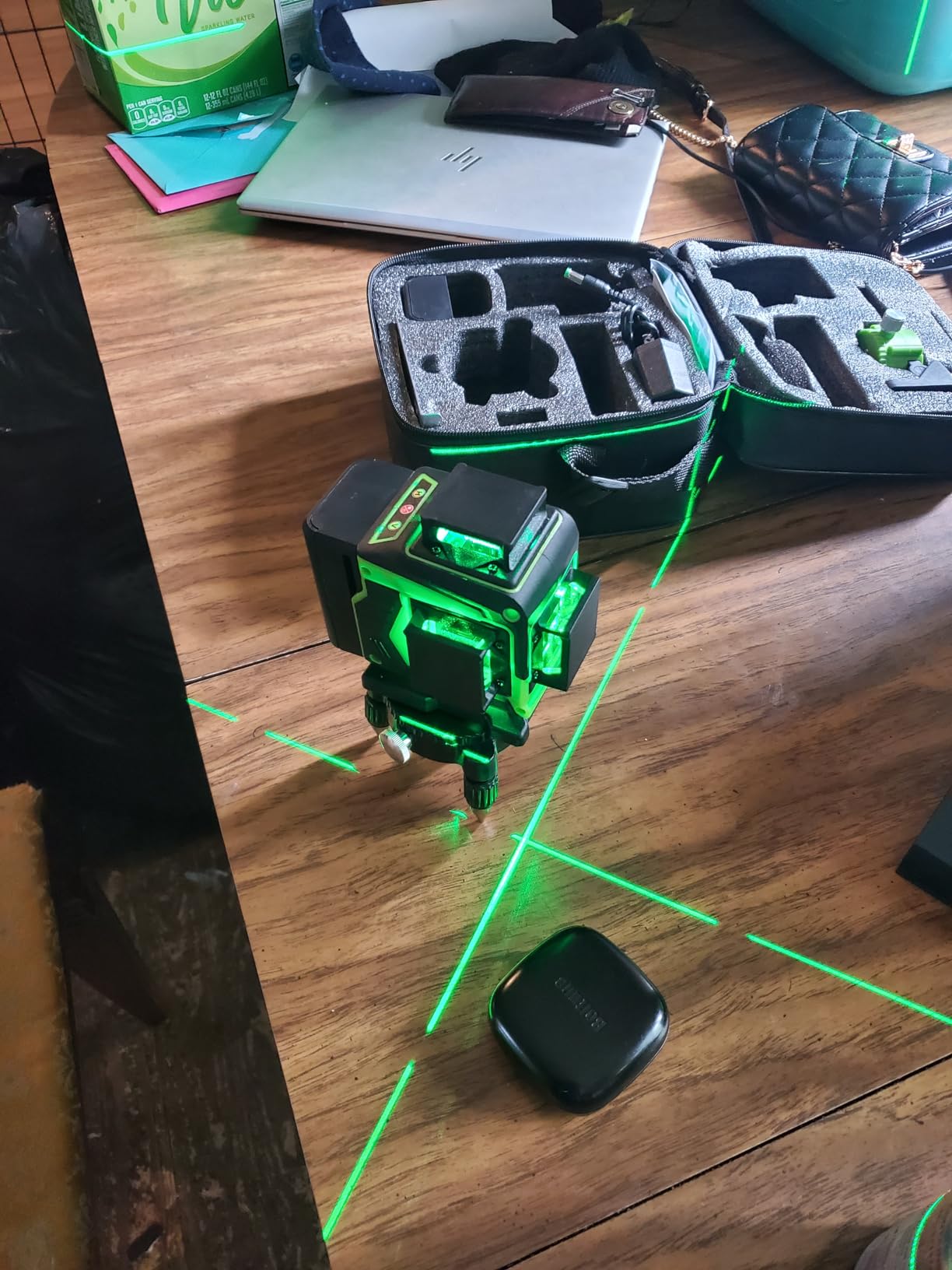
This is the most complete kit in the group and it covers the full grid. Sixteen green lines across four 360 planes gave me floor, wall and ceiling references on the same run, with accuracy quoted at plus or minus 1/8 inch at 30 feet and a working distance up to 100 feet.
The dual 2400 mAh batteries are a genuinely useful arrangement. One charges while the other keeps running, and the claim is up to eight hours with all sixteen lines on, so a full kitchen day is realistic without a mid-install charge stop.
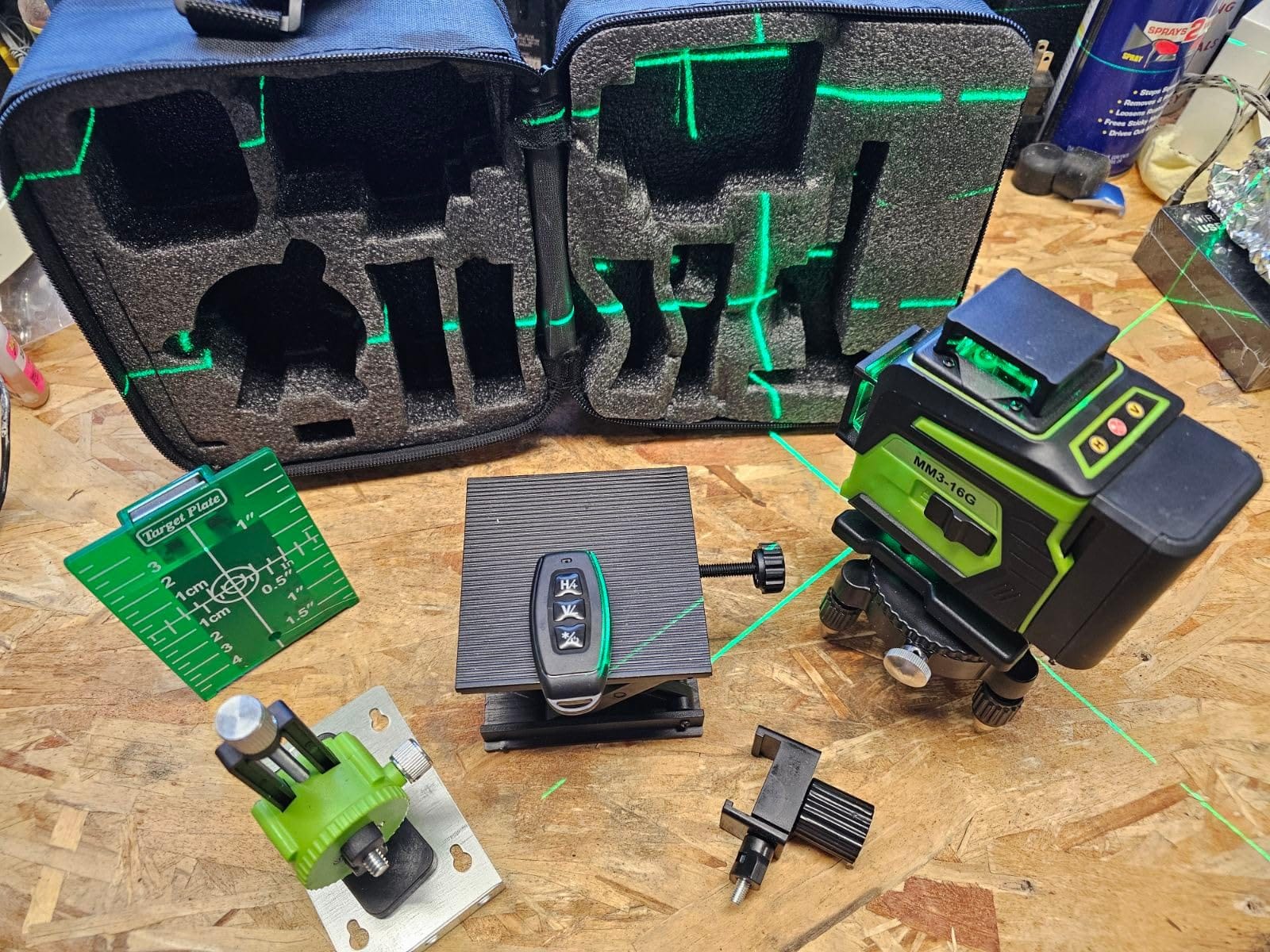
Everything you need to mount is in the case: magnetic wall bracket, mini tripod, lifting base, target plate, wall panel, a 3/8 inch adapter, two batteries, charger and a hard carry case. For a first serious layout tool that reduces accessory shopping to zero, that bundle is hard to argue with.
The 1/4 inch mounting thread accepts a tripod or a pole, and the IP54 body tolerates a dusty site. The remote lets you change lines from the cabinet run rather than the ladder.
Where accuracy and level tolerance bite
Self-leveling is limited to plus or minus three degrees, so the unit alarms on anything steeper, and accuracy reduces on uneven ground or a sloped surface. Set it on the floor or a firm mount, not on a sloping workbench, and keep the plane you are marking away from a moving surface.
Practical downsides before you commit
The long accessory list makes the case bulky and small pieces easy to misplace, which is annoying on a job site. Green visibility also drops in bright daylight and direct sun, and manual mode requires a two-second button hold that is easy to trigger by accident while handling the tool.
8. Bosch GLL50-20G Green Cross-Line — Best Compact Green Line
BOSCH GLL50-20G 50 Ft Green-Beam Self-Leveling Cross-Line Laser Level
Thin green cross line
Self-levels to 5/16 inch at 30 ft
IP55 sealed
Integrated magnetic mount
Pros
- Bright thin green lines that stay readable in an interior kitchen
- Compact 4.1 by 2.5 inch body and about 12 ounces
- Integrated magnetic mount sticks to studs and metal framing
- IP55 sealed against rain and construction dust
- Pendulum locks when switched off for transport
Cons
- Accuracy of 5/16 inch at 30 ft is looser than trim-grade levels
- No 360 plane coverage so the horizontal line stops at the tool
- No tripod included
This is the one I recommend for holding in one hand and marking a cabinet face directly. At 4.1 by 2.5 inches and about 12 ounces it disappears in the palm, and the lines are bright and thin enough to mark on painted drywall without leaving a smudged fuzzy edge.
Line quality is the Bosch advantage here. Compared with the thicker lines from the budget 16-line models, the marking is noticeably cleaner, which is what you want when the reference line shows in a finished reveal.
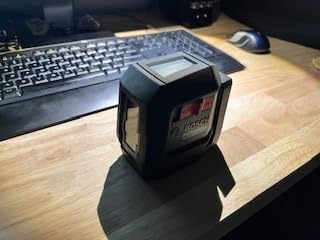
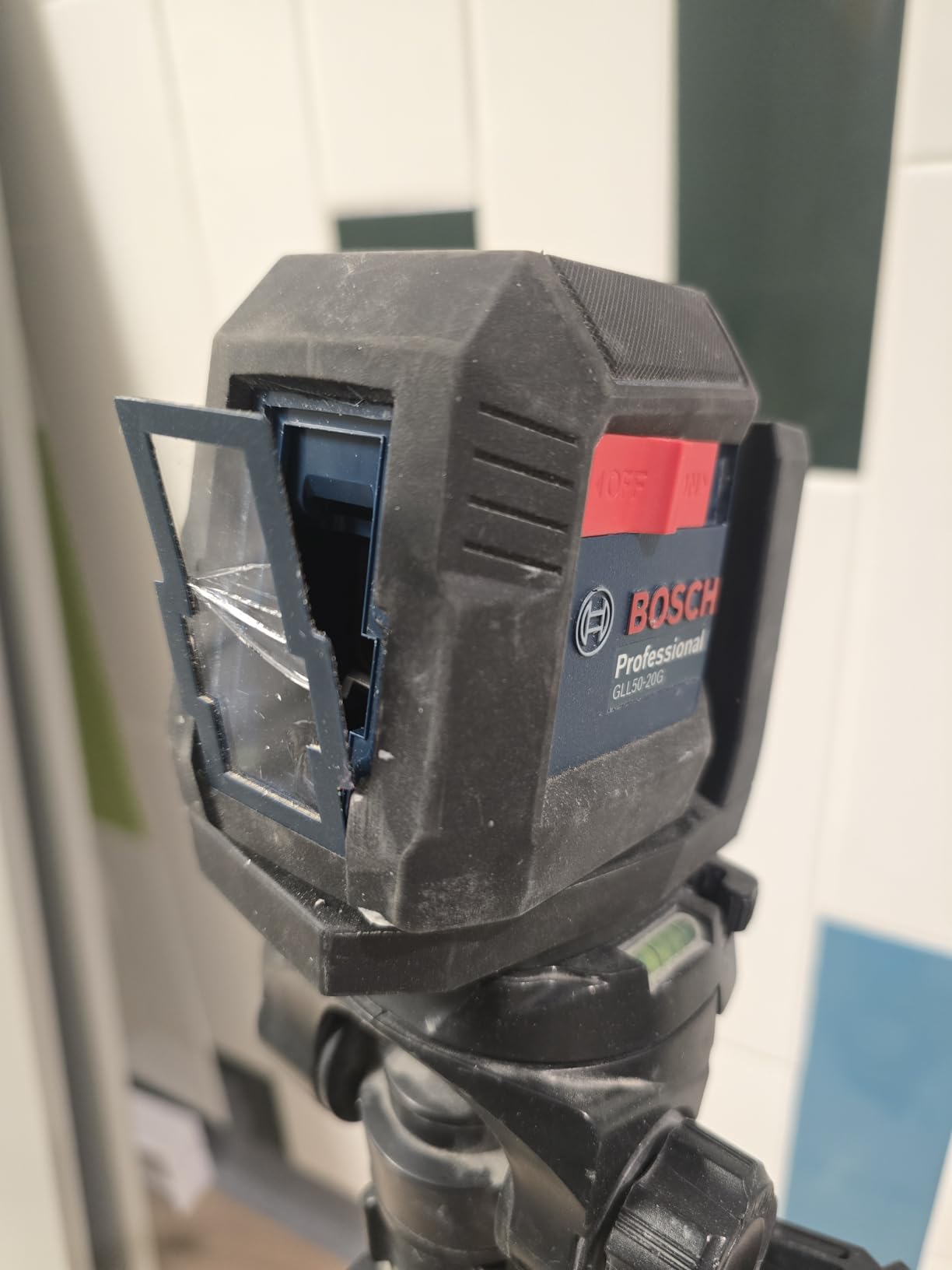
The integrated magnetic mount sticks directly to a stud or metal framing with no extra hardware, and the smart pendulum system self-levels, blinks when out of level and locks when you switch the tool off, so it survives a truck bed without going out of calibration.
IP55 sealing handles rain and construction dust. It runs on two included AA batteries, or you can add the Bosch 3.7V Lithium-Ion pack for longer run time between changes.
Check the accuracy spec against your reveal
This self-levels to 5/16 inch at 30 feet, which is looser than the 1/8 inch threshold most installers aim for. Across a short single wall that is fine and invisible. On a long run where the top and bottom reveals are the finish feature, the error can show. Know your wall length before you pick this over a tighter unit.
What you need to add
There is no 360 coverage, so the horizontal line stops at the tool instead of wrapping the room, and no tripod is included. The soft pouch rather than a hard case is another transport consideration. Bosch covers the tool with a one-year limited warranty that extends by a year if you register within eight weeks.
9. Bosch GPL100-50G Five-Point Laser — Best for Plumb Points
BOSCH PRO GPL100-50G Green-Beam Five-Point Self-Leveling Alignment Laser
Five-point plumb and level projection
Bright green points
Roll-cage rubber housing
Compact 4.5 by 2 inch body
Pros
- Transfers level plumb 90 and grade points from floor or counter up to the ceiling
- Compact body fits inside tight cabinet and stud cavities
- Bright green points stay visible on sunny days
- Integrated mount combines a strong magnet with a 1/4-20 thread
- Full rubber overmold housing survives repeated knocks
Cons
- Projects points rather than continuous lines
- Runs on AA batteries rather than a rechargeable pack
- No continuous cross-line projection for general levelling
This solves a different problem: transferring a reference height from a finished floor or countertop up to a wall or ceiling position. The five-point projection gives level, plumb, 90 degree and grade points, which is faster and more accurate than dropping a plumb bob on string.
The body is 4.5 by 2 inches and 16 ounces, so it mounts inside a tight stud cavity or between a cabinet and the wall, where a full line laser will not physically fit. That makes it a complement to a line laser rather than a replacement for one.
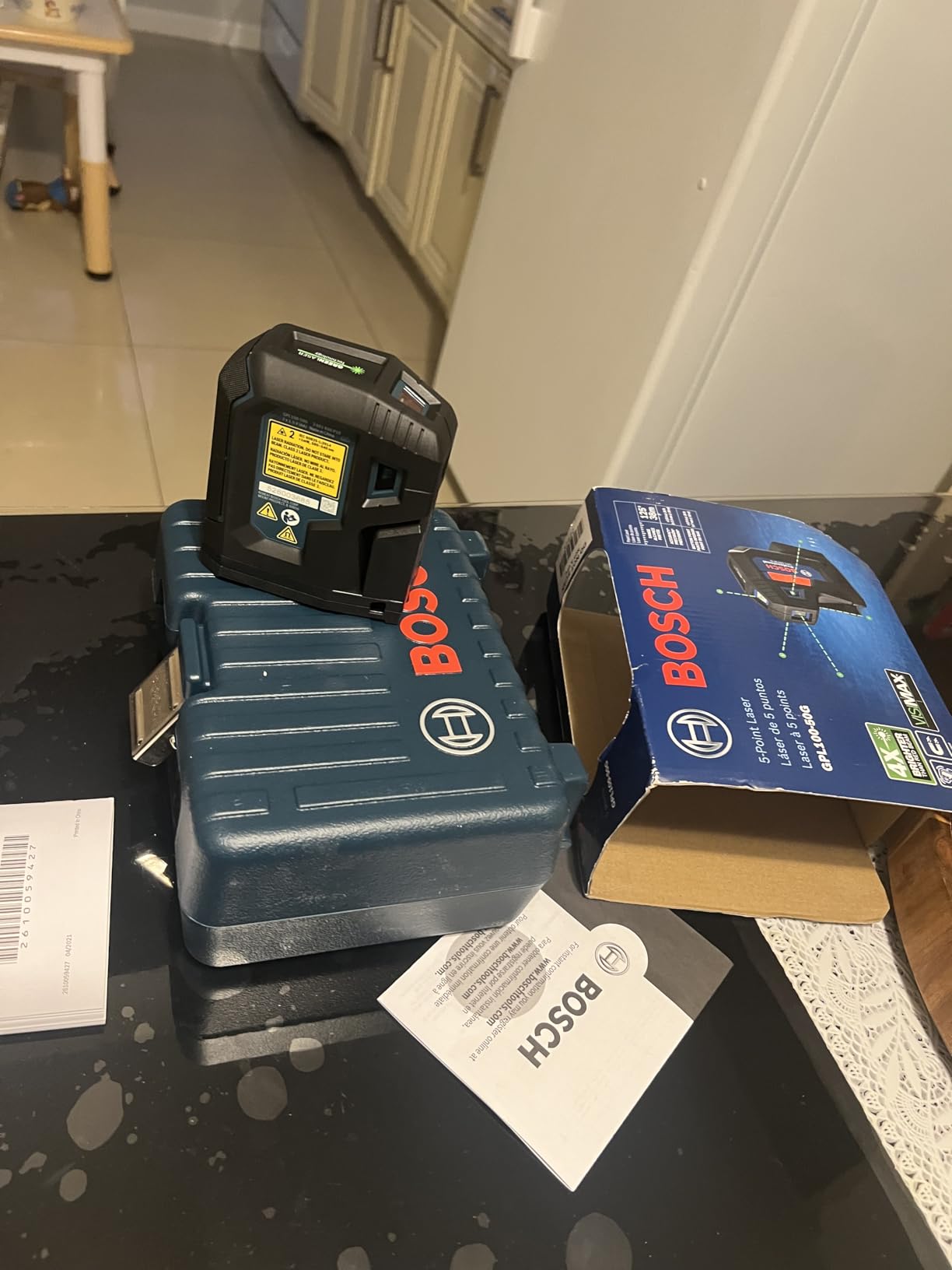
The green points are bright and stay visible on sunny days where a red point would fade. Built-in VisiMax technology monitors power draw to keep point visibility and battery life up, and the smart pendulum self-levels, signals out of level and locks on power-off.
The rubber overmold roll-cage housing has survived repeated knocks on site for me, and the integrated multipurpose mount combines a strong magnet with a 1/4-20 thread, so it holds on framing or on a tripod.
Why it cannot mark a cabinet rail
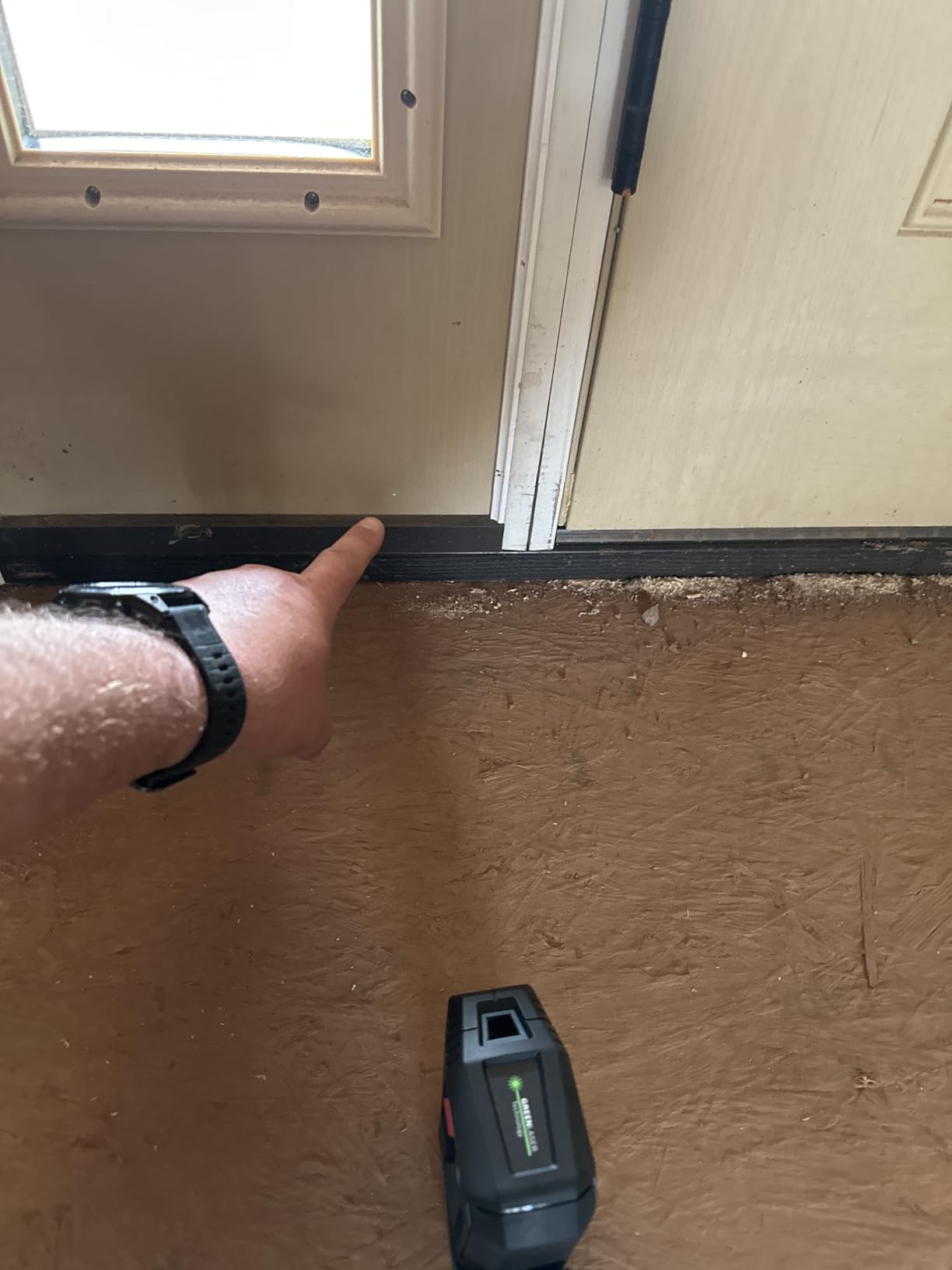
It projects points, not continuous lines. If your job needs a scribed line along the top of a cabinet box or a level guide across a wall, this tool will not draw it. Some owners only discovered that after buying. Pair it with a green cross-line or a 360 laser and it becomes the fastest way to locate stud centres and drop points.
Practical details
It runs on AA batteries rather than a rechargeable pack, which owners ask about repeatedly. Bosch covers it with a one-year limited warranty that extends by another year when you register the tool within eight weeks, and a hard carry case is included.
10. AikTryee Cross-Line Kit — Best for a One-Off Cabinet Job
Laser Level Line Tool, Multipurpose Laser Level Kit Standard Cross Line Laser leveler Beam Tool with Metric Rulers 8ft/2.5M for Picture Hanging cabinets Tile Walls by AikTryee.
Red manual cross line
Three bubble vials at 0 90 and 45 degrees
Integrated 8 ft measuring tape
6 ounce body
Pros
- Single slider selects vertical horizontal or cross line modes
- Three bubble vials at 0 90 and 45 degrees for checking both planes
- Integrated 8 foot tape in imperial and metric down to 1/32 inch and 1mm
- Battery included and lifetime warranty
- Smallest and lightest option for a single cabinet
Cons
- Manual operation means reading and adjusting bubbles by hand
- Red beam is dim in a bright or daylit room
- Very light 6 ounce plastic body offers little drop protection
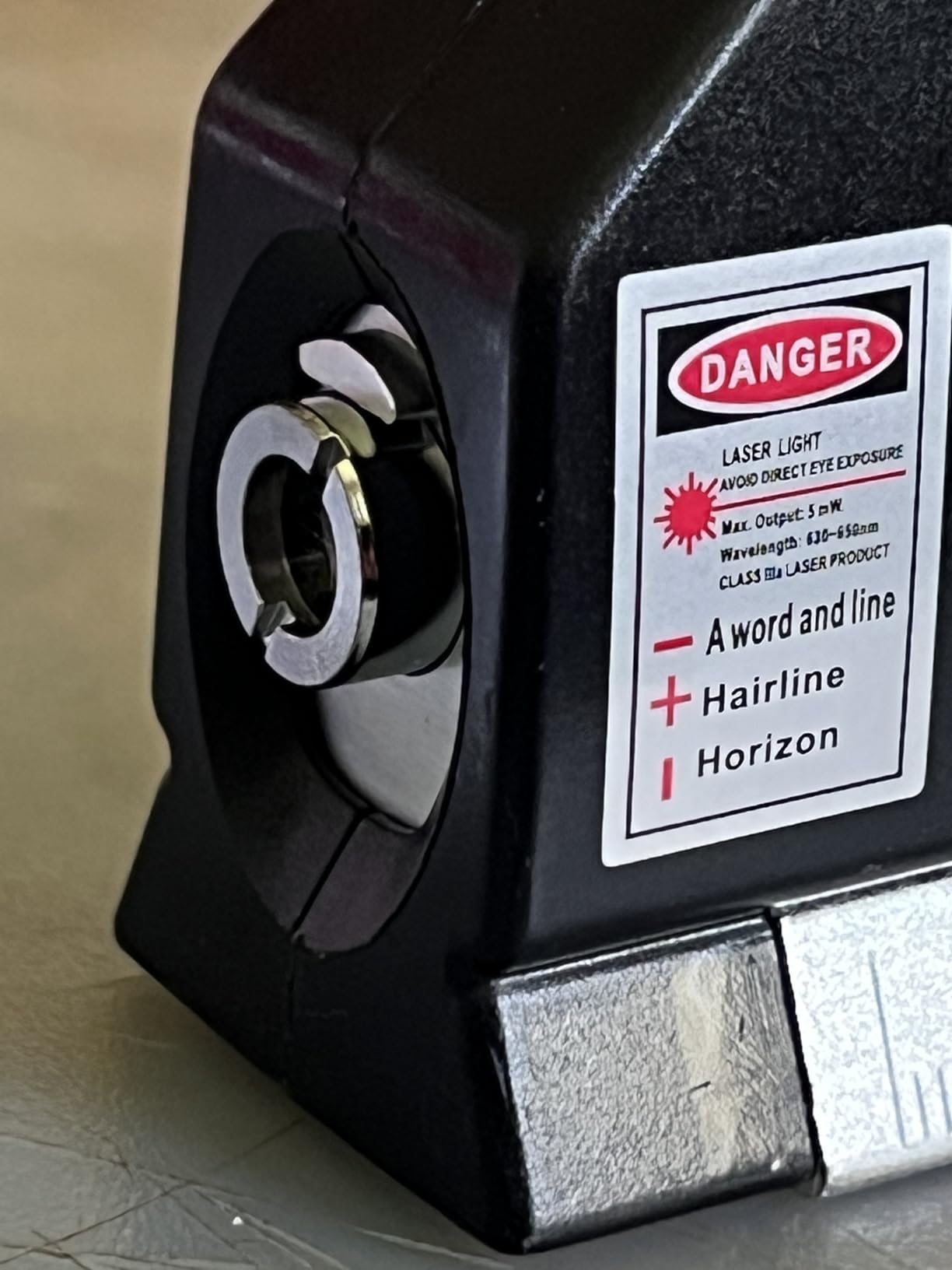
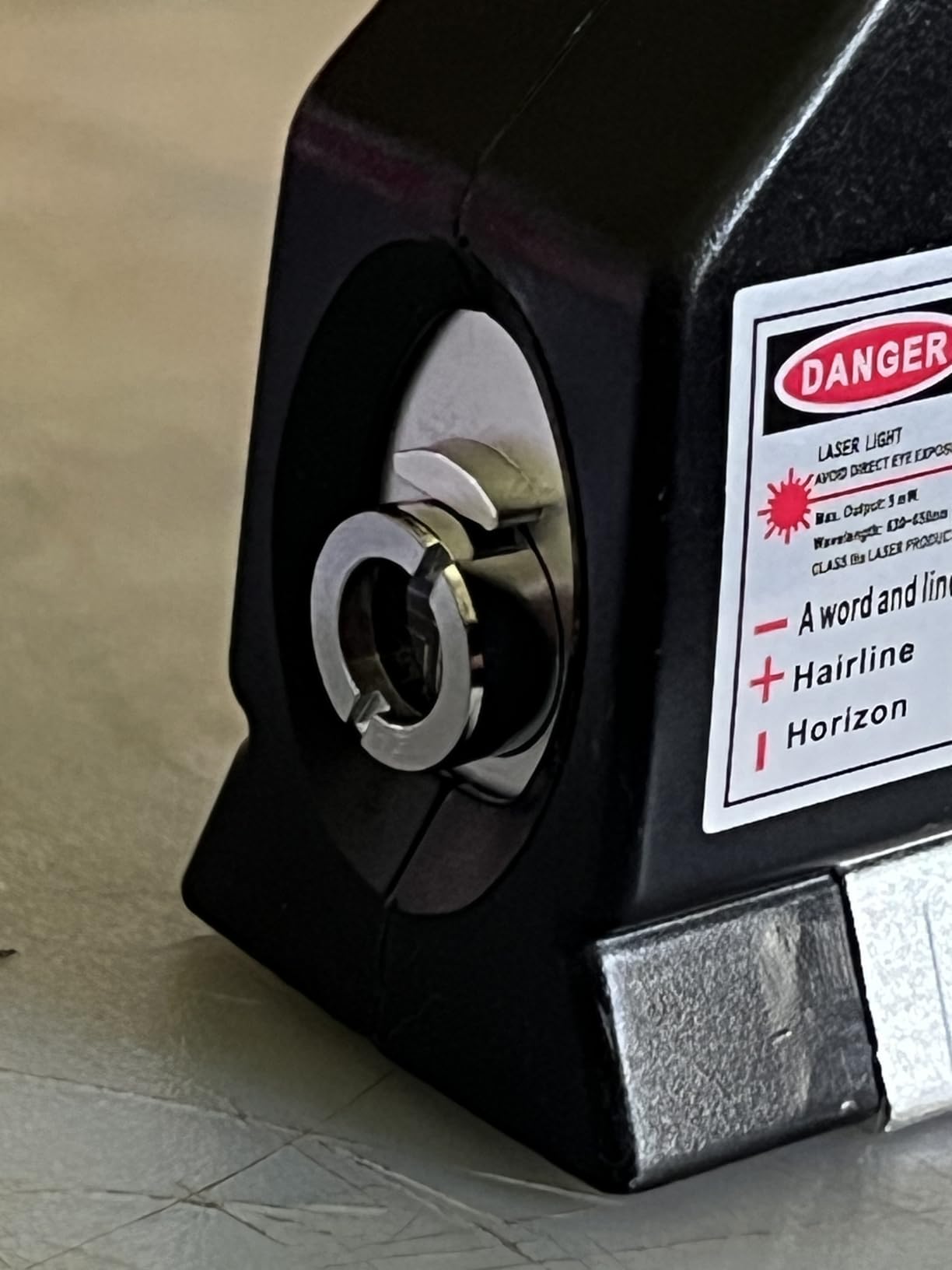
If you are hanging two cabinets and never plan to do it again, this kit does the job without any learning curve. A single slider button selects vertical, horizontal or cross line mode, and the tool is small enough to hold in one hand at the cabinet face.
The three bubble vials at zero, ninety and forty-five degrees cover both the horizontal and vertical planes, which is what a manual level needs to check a mounted box. The integrated eight foot measuring tape reads in imperial and metric down to 1/32 inch and 1mm, so it doubles as a layout tape.
It carries a lifetime warranty and has the largest body of owner feedback in this group, which is useful if you want to read a long history of complaints before buying. That history is consistent: it does the basic job reliably and nothing more.
Manual leveling is the trade-off you accept
Operation is manual, so you read the vials and adjust by hand every time you move the tool. That is the reason professionals move away from this style: manual-only leveling means re-leveling each time you cross the room, and each re-level is another chance to shift the reference.
When it is the right choice
The six ounce ABS body is light and offers little protection if you drop it from a ladder, and the red beam is dim on a bright wall. It also gives you one cross line with no vertical plumb reference for checking cabinet drop. If your kitchen is bright and your run is long, move up to a green unit instead.
How to Hang Cabinets with a Laser Level
Setting a run of upper cabinets comes down to establishing one reference height, transferring it to every wall in the room and then hanging each box to that same line. The laser handles the first two steps. Your stud finder and a straightedge handle the rest.
The workflow below is the one I use. It assumes a self-leveling 360 line laser and a run that turns at least one corner. Adjust the reference height to suit your own kitchen.
Choose the reference height from a fixed point. Decide the finished height of the bottom edge of the uppers relative to something you can measure repeatedly, such as the finished floor beside the base cabinets. Measure up at two studs, not one, and confirm both agree.
Set the laser at roughly cabinet rail height. Mount it on the magnetic bracket or tripod and let it self-level. Verify the horizontal line sits at your chosen height at both studs before you mark anything.
Mark the center of the beam, not its edge. This is the technique veteran installers on the Festool Owners Group repeat: the line widens with distance, so marking the top or bottom edge across a long run accumulates error. Snap two short marks on the center of the line instead of one long edge trace.
Extend the line to every wall in the room. A 360 horizontal plane reaches the return walls and the wall behind a peninsula without moving the tool. Snap the center of the line at each corner.
Check whether the wall is out of plumb. Measure the distance from the line down to the floor at both ends of the run. If the numbers differ, the wall is out of plumb, not the laser. Decide whether you shim the back of the cabinets or accept a tapered reveal before you start.
Snap your reference line and pencil it. Snap short marks at every stud location, then join them with a straightedge and a level line. A pencil line you can erase beats a heavy marker line that shows through paint.
Mark the stud positions for the hanging rail. Use a stud finder along the line and mark each stud centre. Add a point laser like the Bosch GPL100-50G if you want to transfer that height up into a stud cavity.
Check box level as you hang. Set each cabinet on the rail, shim to the line and recheck the top and bottom edges with a hand level. Correct at the shim, not by nudging the box, because nudging moves the reference.
Re-shoot the line after tall cabinets. If the run includes tall pantry units, re-verify the horizontal plane after they are fixed, since fixing a tall box can pull the wall slightly out of shape.
Verify the reveal before the second cabinet. Measure the gap between the first two boxes at the top and the bottom. If they differ, the error is in the wall or the first box, and it is far cheaper to fix now.
Two things I would not skip. Snap the center of the beam rather than its edge, because that one habit removes the largest source of accumulated error on a long run. And check the reveal after every box rather than at the end, because a tap on a shim fixes what a rework does not.
What to Look for When Buying a Laser Level for Cabinets
Four specifications decide whether a laser level suits cabinet work: beam color, accuracy at distance, number of projected planes and how it mounts. Everything else is preference. Here is how each one affects the job rather than the spec sheet.
Green vs Red Beam in a Real Kitchen
Green beams are the right default for cabinet installation because kitchens are interior spaces, and brightness is what you are really buying. Several manufacturers quote a green beam as up to four times brighter than a red beam under the same light, and the green models in this group repeatedly hold their line on a daylit wall while the red models fade at the far end of a long run.
Green does not win everywhere. Both green and red beams wash out in direct sunlight, and beyond roughly 100 feet you need a pulse mode and a separate receiver regardless of color. Red keeps its advantage on battery life and cost, which is why it still makes sense for interior evening work or a single wall.
Accuracy Specs and the Reveal Gap
Most installers treat accuracy within 1/8 inch at 30 feet as the threshold for cabinet work, and that is a reasonable bar. What the spec does not tell you is how that error shows in the finished product. Across a short wall, 1/8 inch spread is absorbed by the cabinet box and never appears.
Across a fourteen-foot run, the same figure becomes a tapered reveal you can see from across the room. Decide your wall length before you pick a tool. The Bosch GLL50-20G in this group self-levels to 5/16 inch at 30 feet, which is fine for a single wall and marginal for a full run, while the Huepar and Takamine models hold within 1/9 inch at 33 feet.
Beam Orientation and 360 Coverage
A 360-degree line projects a full horizontal plane around a room, so you set the level once and the line appears on every wall at the same height. That is the single feature that separates a cabinet tool from a picture-hanging tool, and it is why professionals use one even when a hand level would technically work.
Cross-line lasers project a horizontal and a vertical plane that stop at the tool. Three-plane 3×360 units add a second vertical plane for checking whether a box is square. Four-plane 4×360 grids add floor and ceiling horizontals for soffits, ceiling rails and toe kicks. More planes also mean more beams crossing your work face, so the independent line switches on newer models are worth having.
Self-Leveling and Pendulum Lock
Self-leveling uses a pendulum that corrects the beam when the tool is tilted a few degrees out of level, which absorbs tripod wobble and an imperfect mount. Most of these self-level within three to five degrees. The number matters less than whether the unit warns you when it is out of that range, because a tool that silently projects a tilted line will put a tilt in your cabinets.
Pendulum lock is the feature professionals on the Festool Owners Group care about most, and it is the one most cheap tools skip. A locked pendulum cannot be knocked out of adjustment in a truck bed or a ladder. Repeated knocks to an unlocked pendulum are the most common reason a laser level stops holding calibration, and they are also the reason some pros favor units with a lock-over-off switch.
Mounting and Tripod Options
For cabinet work, mount the tool at roughly cabinet rail height rather than trying to reach a beam from the counter. Strong magnets matter here, because installers on WoodWeb point out that a weak base lets the tool slip mid-install and changes your reference without you noticing.
A tripod is optional if you have a good magnetic bracket or a stud to screw to, and a pole with a scale is even better when you are repeatedly moving the reference height. Check the maximum height of any included tripod, because the compact ones included in the box often top out around three and a half feet, which is low for working alone.
Last point on mounting: many budget tools use a pin or spike mount that requires poking a hole in the drywall. On a stud cavity that is harmless, but on a finished wall or on concrete and brick it is a dealbreaker, so choose a tool with a magnet or a screw thread.
Frequently Asked Questions
What kind of laser level do I need for hanging pictures?
A green cross-line laser level is enough for hanging pictures and single shelves. Hold the body flat against the wall, level it, and mark the center of the horizontal beam. For a run of upper cabinets you need more, because the line has to reach around corners and onto return walls. Choose a self-leveling 360-degree line laser with a green beam for that work.
What is the best laser level for wall mounting?
For wall mounting, a self-leveling green 360-degree line laser with a magnetic bracket or 1/4-20 thread is the best fit. The 360 coverage means one setup covers every wall in the room, and the bracket lets you mount at cabinet rail height instead of working from a tripod. A pendulum lock is worth paying for if the tool lives in a truck.
What brand makes the best laser levels?
Bosch and Huepar are the two names that appear most often in professional cabinet discussion, with Bosch favoured for build quality and pendulum locking and Huepar for green beam coverage across a full room. Skil, Fanttik and IKOVWUK cover the mid-range and value tiers well. For a one-off job, any of them will do the job if the accuracy spec is tight enough.
What is better, a green or red laser level?
Green is better for cabinet installation because kitchens are interior spaces and the green beam stays visible on a daylit wall, often quoted as up to four times brighter than red. Red wins on battery life and cost, and it is a sensible choice for evening work or one short wall. Neither color is usable in direct sunlight without a receiver.
Which laser level is best for cabinet installs?
A self-leveling 3×360 green line laser rated within 1/8 inch at 30 feet is the right choice for a cabinet install. The Huepar HM03CG in this guide is the strongest all-round pick, with one horizontal and two vertical 360 planes, accuracy of 1/9 inch at 33 feet and a magnetic bracket with both thread sizes. Add a small bubble level for final checks on each box.
How accurate is a 360 laser level?
Most 360 line lasers are rated between 1/8 and 1/9 inch at 30 to 33 feet, and self-leveling keeps the beam true when the mount is slightly off. That figure is enough for a short wall, but on a long run of upper cabinets the same error spreads across the run and shows as a tapered reveal. Check your wall length against the spec before you buy.
Conclusion
The Huepar HM03CG is the pick I would buy for most kitchens. One horizontal and two vertical 360 green planes, accuracy within 1/9 inch at 33 feet and a magnetic bracket that carries both thread sizes give you everything a run of upper cabinets needs, in a package that stays accurate across a long wall.
If your kitchen is bright or your run turns a corner, the IKOVWUK B1-12 is the alternative with the largest battery in this group and twelve lines you can switch off individually. For a single wall or a first install, the Skil LL932201 saves you from buying a tripod and a battery. The Bosch GPL100-50G is the addition for stud cavity work, not a replacement for a line laser.
Whichever you choose, set the plane once at cabinet rail height, mark the center of the beam rather than its edge, and check the reveal after every box. That habit does more for a straight run of cabinets than any spec on the box.