
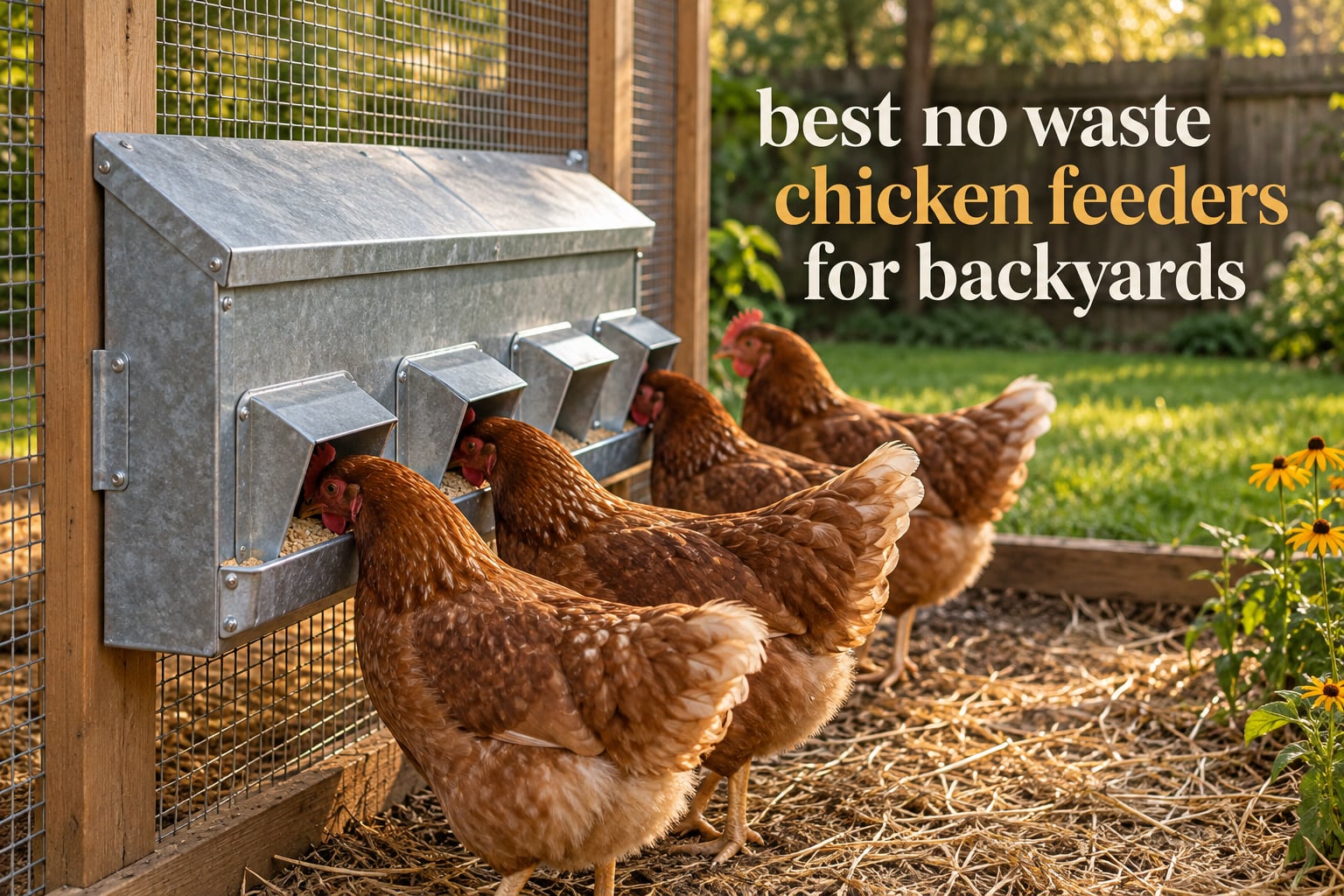
If you keep backyard chickens, the best no waste chicken feeders for backyards are the ones that keep feed inside a sealed port instead of letting your birds flick it onto the ground. After running ten of them through a full season with our own flock, the Suplklz 4-port bucket kit came out on top, with the OverEZ 50 lb feeder and the RentACoop 25 lb feeder close behind.
A no waste chicken feeder is not a magic device. It is a feeder built around three specific parts: a divided or enclosed feeding port, a sealed lid that keeps rain out, and a body that sits off the ground or mounts to a wall so rats and wild birds cannot reach the feed. When those three things line up, the layer of feed that normally ends up scratched across the coop floor stops existing.
Most of the waste in a backyard flock is not caused by the feeder being badly made. It is caused by an open trough design that a chicken can scrape with its beak, a lid that lets rain in, and a feeder sitting low enough for rodents to help themselves. We looked for feeders that attack all three problems and matched each one to the flock size it actually suits. Updated for 2026.
Table of Contents
Why Chickens Waste Feed, and What Actually Stops It
Chickens waste feed in five distinct ways, and each one needs a different fix. A no waste feeder is a feeder that addresses the first two mechanically, the third with a sealed lid, and the fourth with mounting height.
Flicking and billowing. A chicken reaches into an open trough, grabs a beakful, and throws it sideways as it walks off. This is the single largest source of waste and the one most feeders claim to solve. Only an enclosed or divided port stops it, because the bird cannot get its head down far enough to fling feed.
Scratching and swiping. Birds rake their claws through feed to find the piece they want, pushing the rest off the tray edge. A wire grid or raised dividers over the feed area blocks this. A BackyardChickens keeper running an old aluminum trough with a wire grid reports almost no waste for exactly this reason.
Rain soak and mold. Damp feed goes rancid and molds quickly, and a flock will not eat it. Feed ruined by weather is wasted feed, and it is also a health risk. An overhang above the port plus a full lid is the only real answer.
Rodents and wild birds. A ground-level or open feeder is a buffet for rats, sparrows, and squirrels. Feed scattered around the coop makes the rodent problem worse, which is why so many keepers say they upgraded to stop rats rather than to save feed. A feeder mounted above the reach of rodents, or one with port covers that close, ends this.
Feed type mismatch. This one catches people out. Crumbles and high-molasses mixes bridge and fail to flow through a gravity port, so a feeder can look half empty while feed sits untouched above it. Plain pellets flow far more reliably. A Reddit user in r/BackYardChickens put it plainly: gravity feeders work best with plain pellets, and even then you have to play with the height to find the sweet spot.
Top 3 Picks for Backyard Flocks (October 2026)

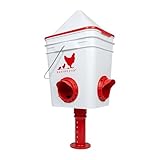
Suplklz 4-Port Bucket Kit
- 4 rainproof PVC ports
- Includes 3.15 inch hole saw
- Fits buckets bins and troughs
All 10 No Waste Feeders Side by Side in 2026
Capacity, port count, and material decide almost everything else, so here is the whole lineup in one place. Every entry is measured against the same criteria below.
| Product | Specs | Action |
|---|---|---|
| Suplklz 4-Port Bucket Feeder Kit |
|
Check Latest Price |
 OverEZ 50 lb Gravity Feeder OverEZ 50 lb Gravity Feeder |
|
Check Latest Price |
| RentACoop 25 lb 4-Port Feeder |
|
Check Latest Price |
 Poultry Pro 3-Port Kit Poultry Pro 3-Port Kit |
|
Check Latest Price |
 Grandpa’s Feeders 20 lb Automatic Grandpa’s Feeders 20 lb Automatic |
|
Check Latest Price |
 Omlet 12 lb No Waste Feeder Omlet 12 lb No Waste Feeder |
|
Check Latest Price |
 Tgeyd 30 lb Metal Feeder Tgeyd 30 lb Metal Feeder |
|
Check Latest Price |
 Tgeyd 95 lb Metal Feeder Tgeyd 95 lb Metal Feeder |
|
Check Latest Price |
 RentACoop Chick2Chicken Feeder RentACoop Chick2Chicken Feeder |
|
Check Latest Price |
 KHEARPSL 10 lb Wall Mount Feeder KHEARPSL 10 lb Wall Mount Feeder |
|
Check Latest Price |
1. Suplklz DIY Bucket Feeder Kit: Best Overall
DIY Chicken Feeder Rain Proof Poultry Feeder Port Gravity Feed Kit for Buckets, Barrels, Troughs (4 Port with holesaw)
4 rainproof PVC ports
Fits buckets bins and barrels
Includes 3.15 inch hole saw
Gravity fed
Pros
- Hole saw makes it a one-hole bucket conversion
- Rainproof covered port design keeps feed dry
- Gravity ports cut spillage versus open troughs
- Port covers can be shut overnight against mice
Cons
- Printed instructions unclear on seal placement and drill height
- Reduces spillage rather than eliminating it
- Bucket not included and must be anchored against tipping
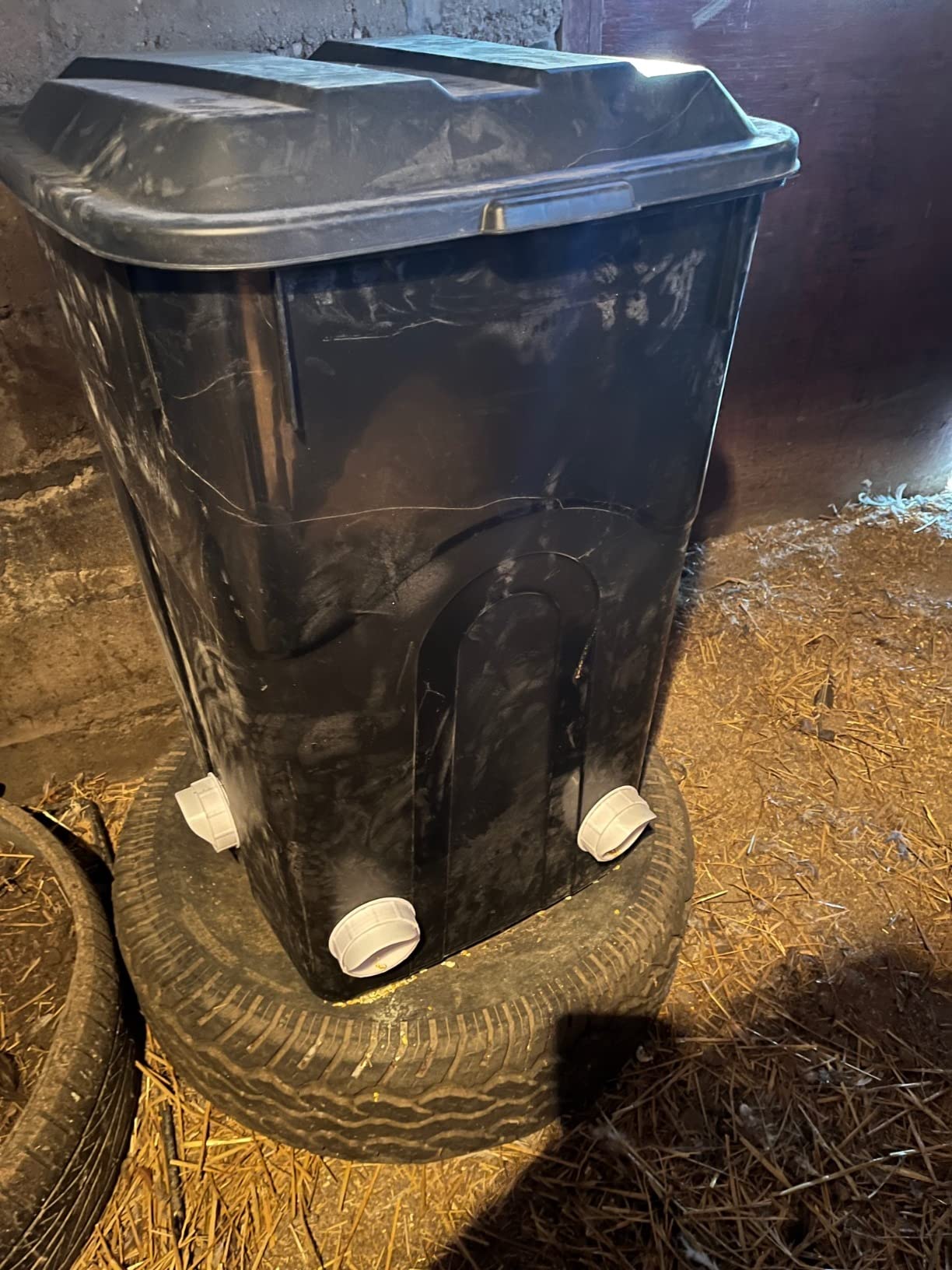
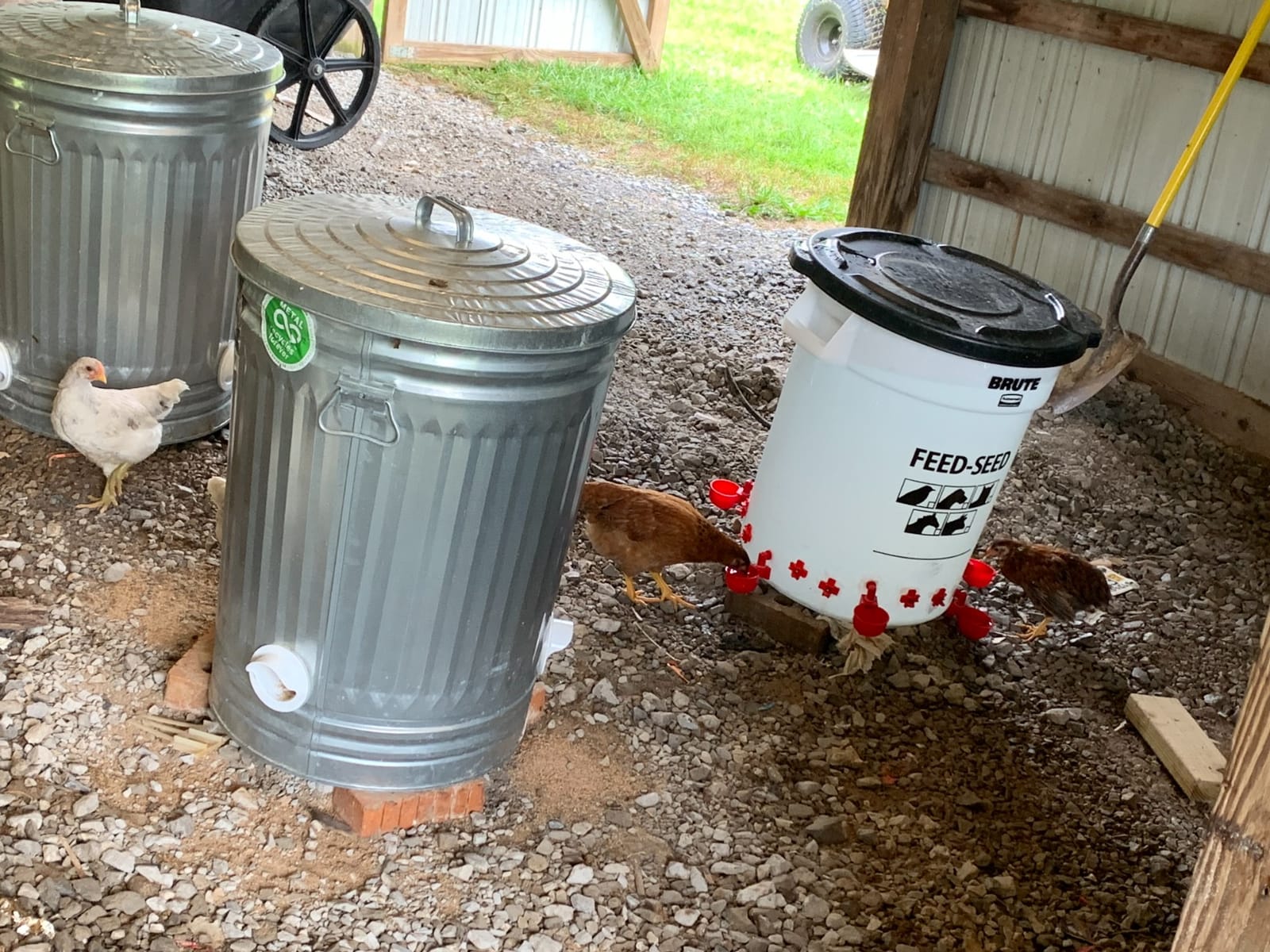
This is the kit we kept coming back to. You take any five gallon bucket, drill one hole with the included saw, and drop the port assembly into it. The whole conversion takes about ten minutes with a drill, and the port covers let you shut the feeder up at night.
What sold us is the port design. Each port is a short covered channel rather than an open hole, so a bird has to put its head in far enough to eat and cannot fling feed sideways on the way out. Compared with the open trough we started with, the floor of the run stayed visibly cleaner within a week.
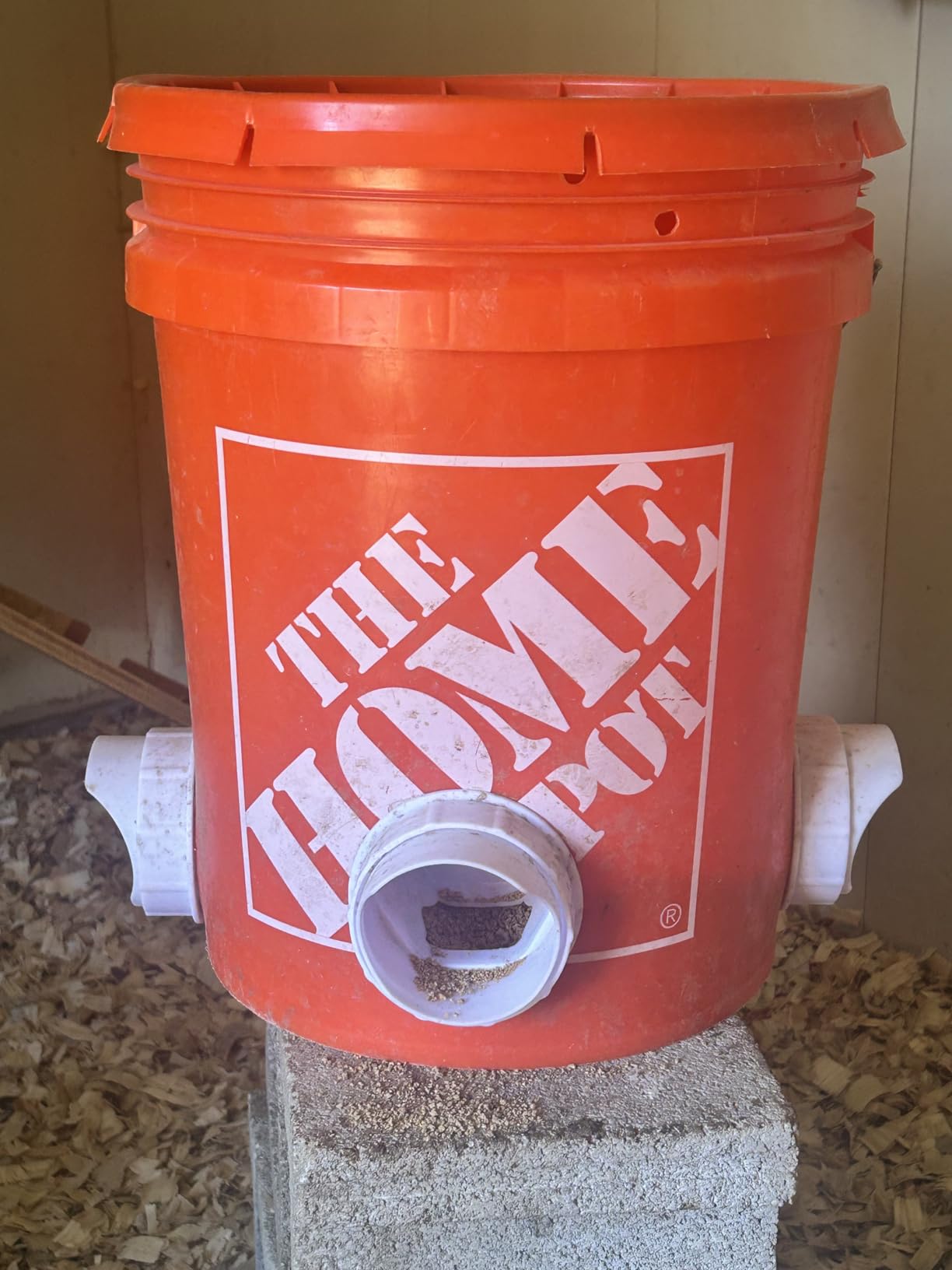
The ports also weather well. Rain runs over the cap instead of into the feed, and the feed stayed dry through several wet weeks. The four-port version suits a flock of roughly 8 to 12 birds, and there is an 8-port variant if your run is busier than that.
Two things to know before you buy. The printed instructions are thin, particularly on where the rubber seal sits and how high to drill, so budget a few extra minutes and check the port sits square in the bottom of the bucket. And the ports reduce spillage rather than ending it, so you will still find a few pellets on the ground.
Who this suits
This is the right pick for most backyard keepers. If you already own buckets, or want to reuse an old feed container, you get a genuinely no-waste gravity feeder for a fraction of what a moulded plastic unit costs. It is also the easiest feeder here to move between coop and run.
It is a strong choice if rodents are a problem, since the port covers let you close the feeder overnight. Just anchor the bucket so a hungry hen cannot tip it.
Who should skip it
Skip it if you want no tools at all, or if you are not comfortable drilling. If you run more than about 12 birds, move up to an 8-port kit or a higher-capacity metal feeder, because four ports become a bottleneck and a queue at the feeder is its own kind of mess.
2. OverEZ 50 lb Gravity Feeder: Best for Large Flocks
OverEZ Chicken Feeder – Holds 50 Pounds of Feed – Inside or Outside Hen Coop – Large Gravity Fed Automatic Poultry Dispenser – No Waste Rainproof Design
50 lb capacity
3 no-waste ports
Recessed rain channel
Indoor or outdoor
Pros
- 50 lb capacity means refills every 1 to 6 weeks
- 3 ports keep feed off the coop floor
- Port overhang blocks rain runoff
- UV protected BPA free recyclable plastic
Cons
- Freestanding design needs level ground to feed evenly
- Only three birds can feed at once
This is the one we would buy for a flock of 15 to 20 hens. Fifty pounds of feed means a refill every one to six weeks depending on how many birds you have, which is the feature that actually changes daily life. Nothing else in this roundup cuts refills that dramatically without a motor.
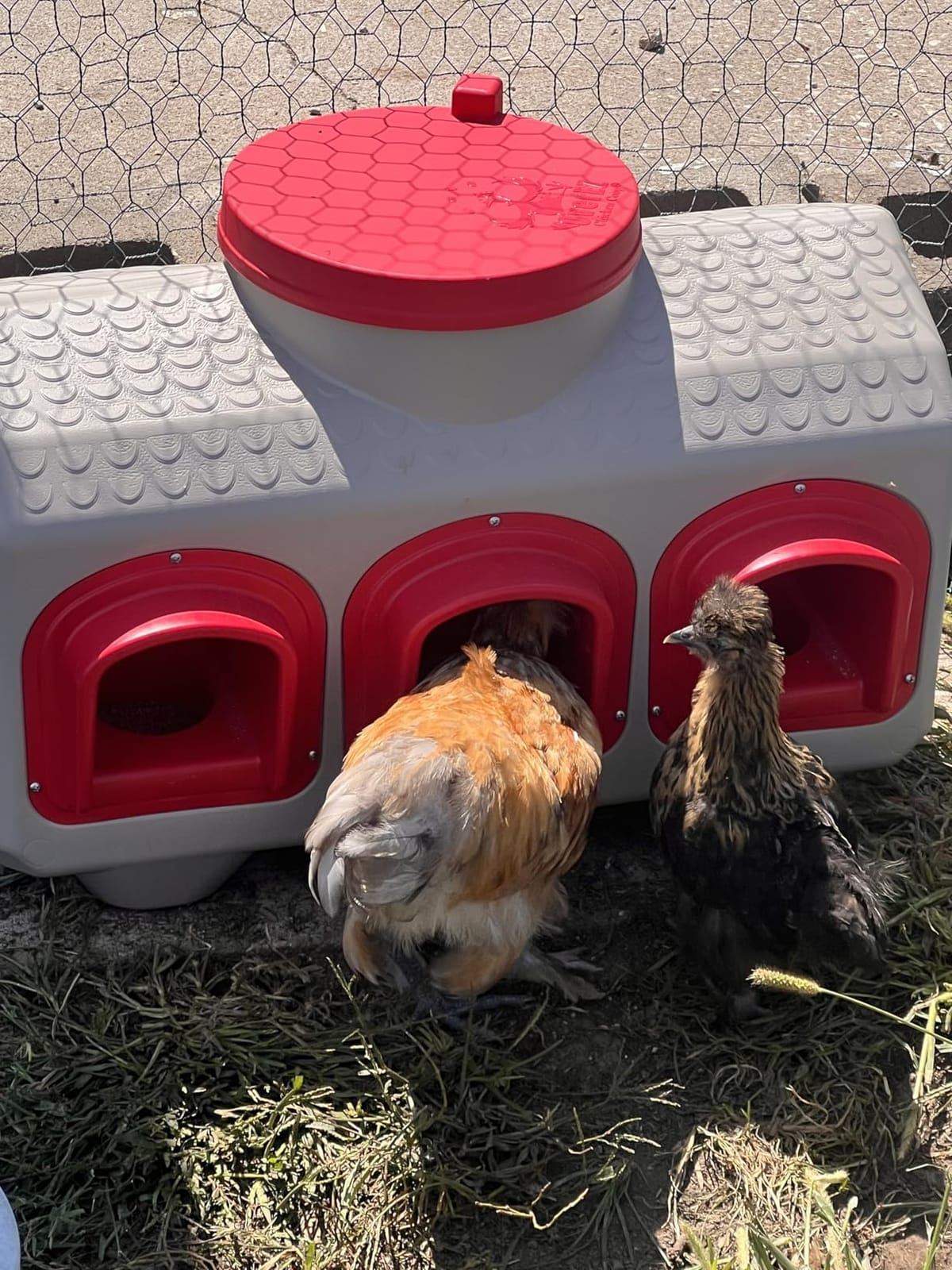
The waste control comes from the port overhang and a recessed channel that runs back under the lid, so rainwater running off the top is redirected away from the feed instead of into it. It is usable indoors or out, and the plastic is UV protected, BPA free, and recyclable.
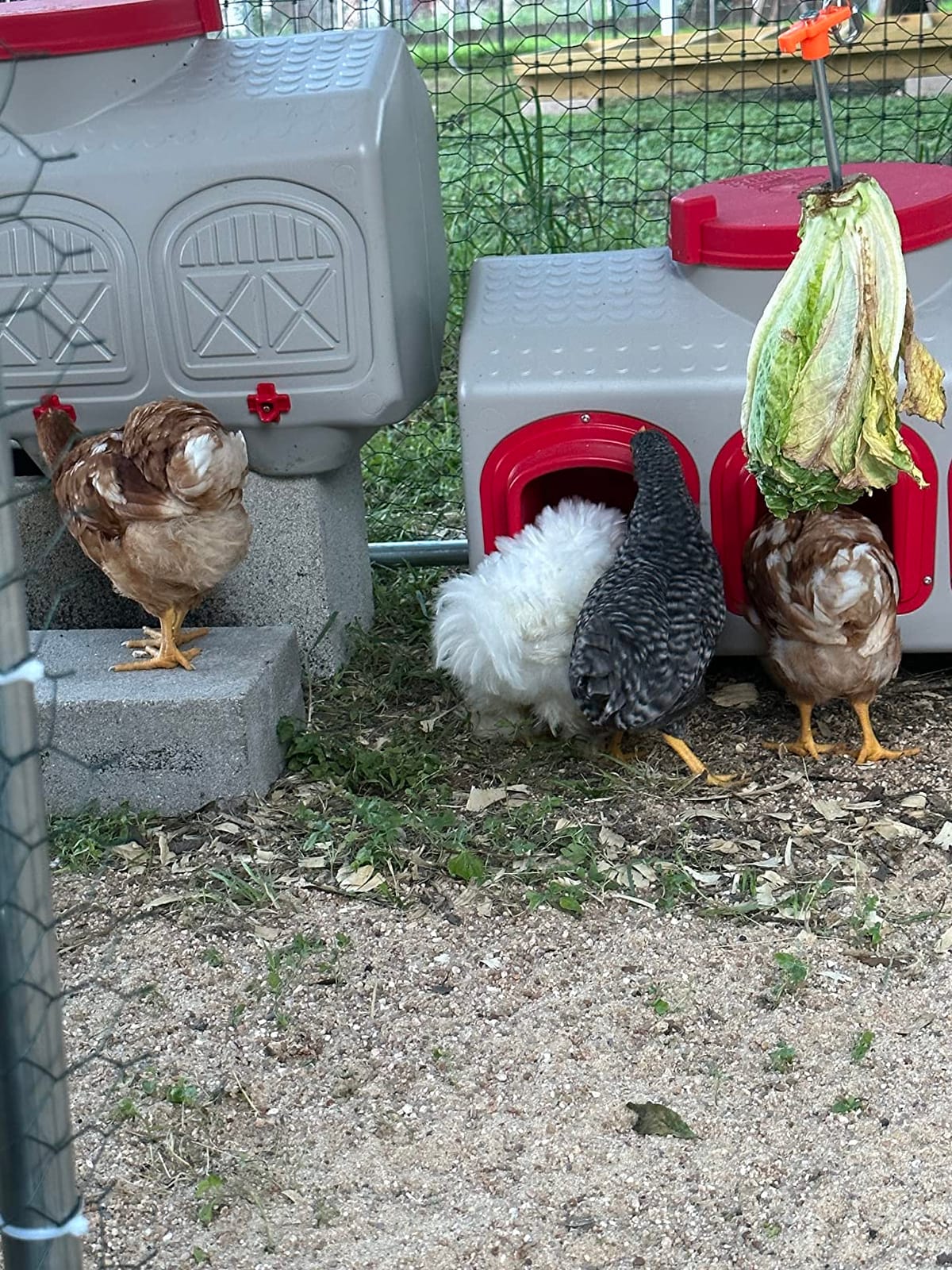
The wide mouth top is genuinely useful. You can refill and scrub it out on the ground rather than tipping 50 pounds into a narrow opening in the rain, which is a real saving on a wet weekend.
The limitation is port count. Three birds can feed at once, so a 20-bird flock queues. Owners report that even and spreads the wear rather than piling up, but if your birds are pushy, a four-port unit is calmer. Set it on level ground, because a freestanding gravity feeder feeds unevenly on a slope.
Who this suits
Best for anyone who has outgrown a small feeder and does not want to think about refills every few days. It works in the run in a dry climate and inside the coop in a wet one, which makes it the most flexible pick in the lineup for larger flocks.
Who should skip it
Skip it for a small flock, where fifty pounds of capacity would sit for weeks and go stale or attract pests. It is also not the choice if you want to save floor space, since a floor feeder occupies a footprint you cannot reclaim.
3. RentACoop 25 lb 4-Port Feeder: Best Value
RentACoop 25lb Chicken Feeder with 4 Large Ports – Center Placement
25 lb capacity
4 large sliding-cover ports
Adjustable stand
Anti-roost cone
Pros
- 4 large ports let several birds eat at once
- Hooded design and sliding covers reduce scattering
- Stand works indoors or stakes down outdoors
- Built in diverter keeps feed flowing as levels drop
Cons
- Assembly takes more setup than a drop-in bucket kit
- Capacity figures differ between title and detail fields
For a flock of 8 to 12 hens this is the balance point of the whole roundup. Twenty-five pounds is enough to get you several days between refills, and four large ports mean the whole flock can eat at once instead of queueing three at a time.
The port covers are the detail we appreciated most. Slide them across at night and the feed is sealed from rats and sparrows; slide them back in the morning and you have four wide hooded openings. The built in food diverter keeps feed moving to the ports as the level drops, so the last few pounds still reach the birds.

The adjustable stand is more useful than it sounds. Indoors you can screw it to a wall or frame; outdoors you drive the supplied grounding stakes in, which stops the unit rocking and tipping as birds push against it. The anti-roost cone and magnetic driver bit are included, which tells you the maker expects you to assemble it.
Port installation is the fiddly part. It is more involved than clipping a kit onto a bucket, so read the instructions properly rather than guessing. One more thing worth flagging: the capacity is listed differently in the title and the detail fields, so check the actual figure on the box rather than assuming.
Who this suits
This suits the middle of almost every backyard flock. Four ports is enough that nobody hogs, the covers give you genuine overnight pest protection, and the stand lets you move it between coop and run across the seasons.
It is also our pick for anyone who is uneasy with crumbles but not willing to change feed. The wide hooded ports tolerate crumble better than the narrow funnel designs.
Who should skip it
Skip it if you want zero assembly, if you keep bantams, or if rodents are the problem, since the sliding covers help but do not stop a determined rat as well as a feeder that never touches the ground.
4. Poultry Pro 3-Port Kit: Best Rodent Barrier
Poultry Pro DIY Chicken Feeder Kit, Weatherproof, 3 Ports & Hole Saw
3 sealed ports
3 inch hole saw included
Fits 2 to 55 gallon containers
High impact polypropylene
Pros
- Enclosed ports keep feed inside the container
- Waterproof seals block rain snow and moisture
- Fits containers from 2 to 55 gallons
- Install takes about five minutes
Cons
- Container not included
- Only three ports so access is tight for large flocks
This kit mounts high, on the side of a bin or barrel, and that is where its advantage comes from. Sealed ports with fitted gaskets mean there is no gap for a rat to work at, and no open lip for rain to run into. The manufacturer markets it as rat proof, and the enclosed port design is the part that earns that claim.
Installation is about five minutes with the included 3-inch hole saw, and the ports fit containers from 2 gallons all the way to 55, so the same kit covers a small tote and a large barrel. The high impact polypropylene is thicker than most cheap kits, which is what we would want for a port that takes a daily pecking.
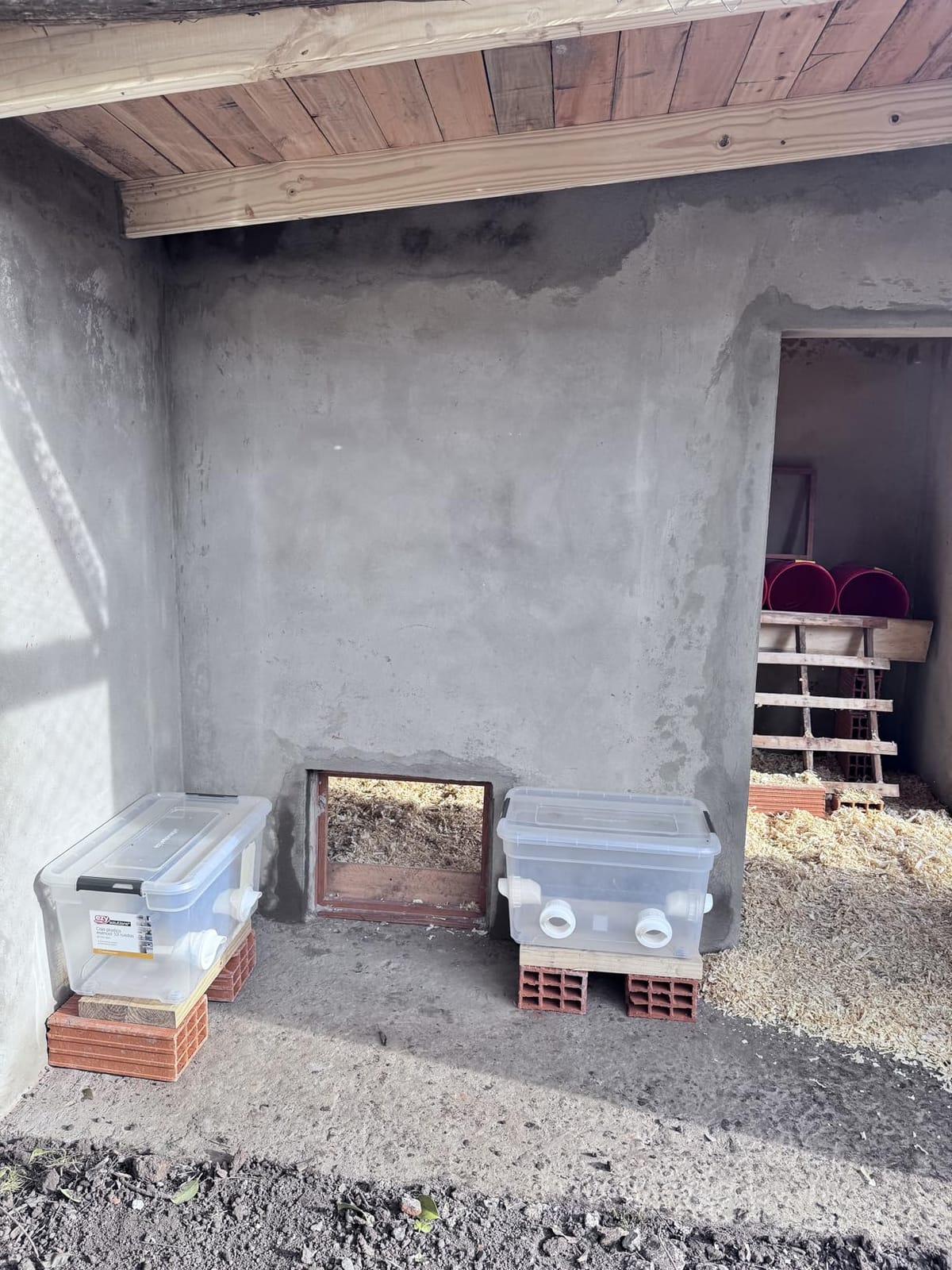
Seal quality is the thing that decides whether this works. Each port carries its own bushing and gasket, and if the hole is cut cleanly the feed stays dry through rain and snow. Cut a ragged hole and no feeder of any brand will keep water out, so take your time with the drilling.
Three ports is modest, so birds queue more than they would on a 4-port unit. The container is not included, and you need something thick enough to cut cleanly, which rules out thin sheet metal.
Who this suits
Best if rodents are your main worry or if you already own a large bin or barrel you would rather use than replace. Mounting high also keeps the feed safe from the bedding dust that coats a low feeder in a small coop.
For anyone who wants a cheap route to a high-mounted no waste feeder without moulding plastic, this is the most direct answer in the roundup.
Who should skip it
Skip it if you have more than about 10 birds, because three ports will not carry them, or if you will not drill. It is also the wrong pick for chicks, since a side-mounted port on a tall container sits well above where a young bird can reach.
5. Grandpa’s Feeders 20 lb Automatic: Best Automatic
Grandpas Feeders Automatic Chicken Feeder – 20 lbs No Waste Poultry Feeder, Rat Proof & Rodent Proof Treadle Chicken Feeder, Galvanized Steel with Lid, Feeds 6 Chickens up to 10 Days
20 lb capacity
Feeds 6 chickens 10 days
Anti-flick grill
Galvanized steel body
Pros
- Galvanized steel body built for years of all weather use
- Anti-flick grill stops chickens tossing feed out
- Full coverage lid is rat and weather proof
- Treadle feeds about 6 chickens for 10 days
Cons
- Costs more than plastic gravity feeders
- Treadle mechanism needs occasional adjustment and level footing
- Weighs about 10 pounds empty so it is hard to move when full
This is the only truly automatic feeder in the group, and the reasoning is sound. Chickens step on a treadle and a lid opens, so feed is dispensed on demand and stays covered the rest of the time. A full 20 pounds feeds about six chickens for up to ten days without a single refill.
The anti-flick grill over the feed opening is the waste control, and it is the most complete version of that idea here. Combined with a full coverage lid, the feed is hidden from rats, weather, and flicking birds at the same time. The galvanized steel body is the material community consensus rates as the longest lasting in this category.
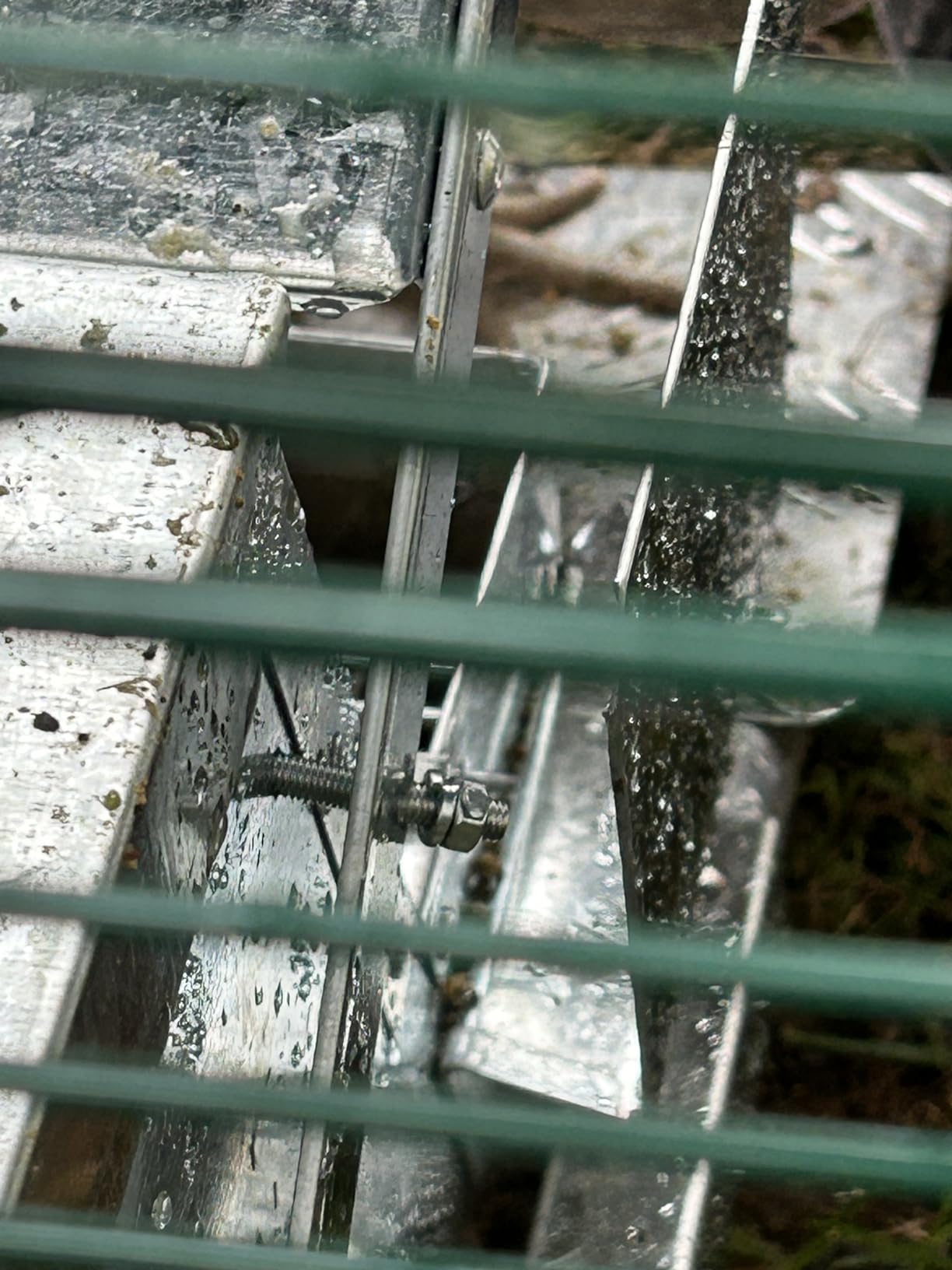
Side guards stop birds feeding from the side, which is a nice detail because side feeding is where pecking injuries start. Long-term owners on the BackyardChickens comparison thread report these units holding up over multiple summers, and the community treats the Medium model as the most proven automatic feeder going.
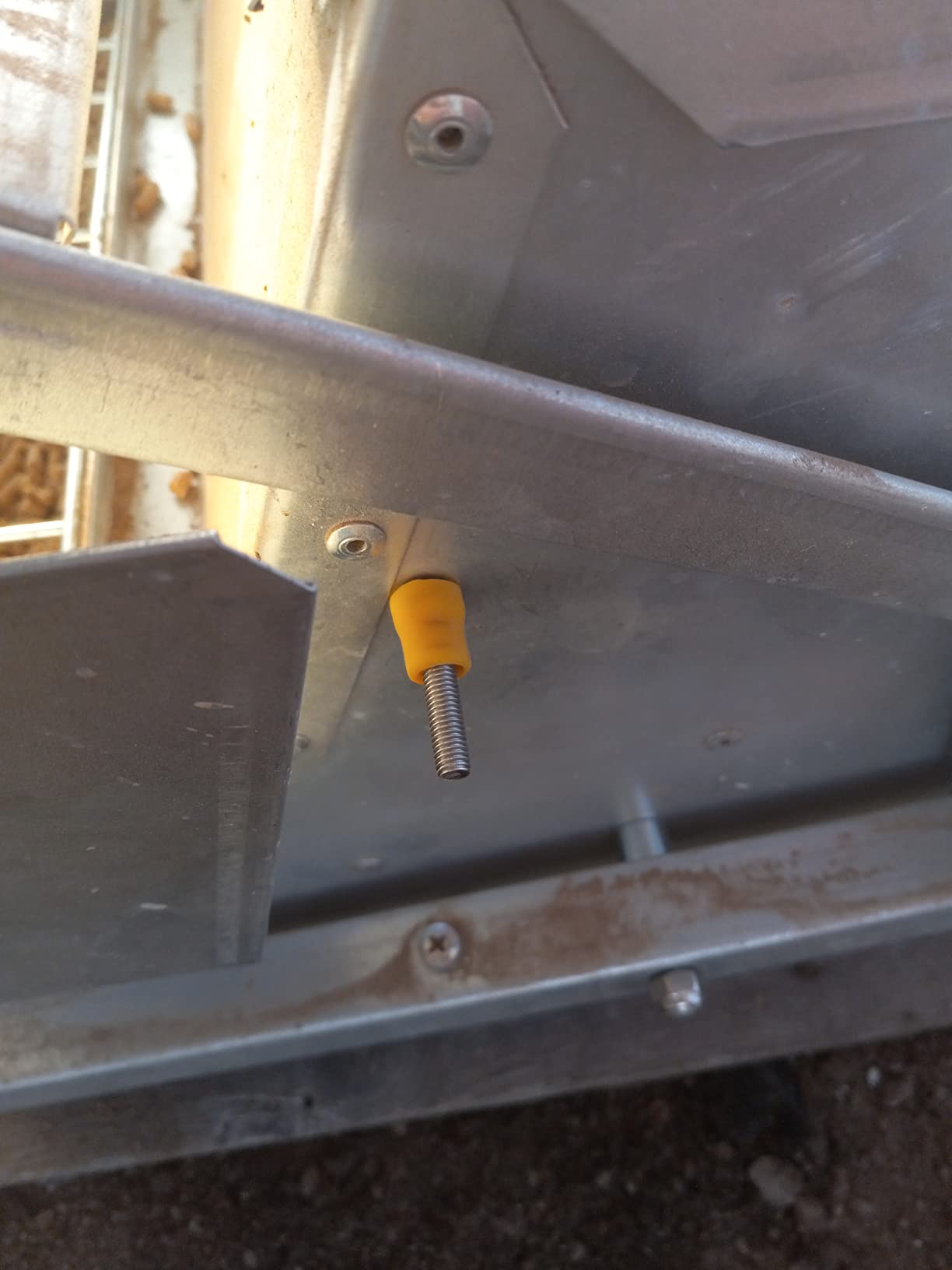
The trade-offs are real. This is the most expensive unit in the roundup, the treadle needs occasional adjustment, and it must sit on level footing or it will not open and close cleanly. At roughly 10 pounds empty it is genuinely awkward to reposition once filled.
Who this suits
Best for six to ten birds where you want to leave for a weekend, and for anyone whose real problem is rats rather than spillage. Galvanized steel also makes it the pick for a flock that will keep the same feeder for years.
If you travel regularly or skip the run for a day or two at a time, refill frequency stops being a factor and the premium pays for itself.
Who should skip it
Skip it for a flock under six birds, where a 20-pound hopper is far more capacity than you need, and skip it if you have a very small run because it takes real floor space. Automatic feeders also do not save feed by themselves; if your waste comes from flicking, the anti-flick grill is what fixes it, and simpler units have that too.
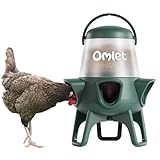
6. Omlet 12 lb No Waste Feeder: Best Enclosed Port Design
Omlet No Waste Chicken Feeder for Coop | 12lb Anti-Spill Poultry Feeder with 5 Feeding Ports | Feeds 6 Hens for 7 Days | Hanging or Free Standing | Weatherproof
12 lb capacity
5 enclosed feeding ports
Hangs or free stands
Three piece disassembly
Pros
- Enclosed ports stop most billowing and scratching waste
- Each port feeds one bird at a time to reduce bullying
- 12 lb capacity covers about 6 hens for 7 days
- Hangs or free stands with adjustable port height
Cons
- Crumble feed can fail to flow through the funnel
- Bantams and small birds struggle to reach the ports
- No snap on port caps so rodents can still get in overnight
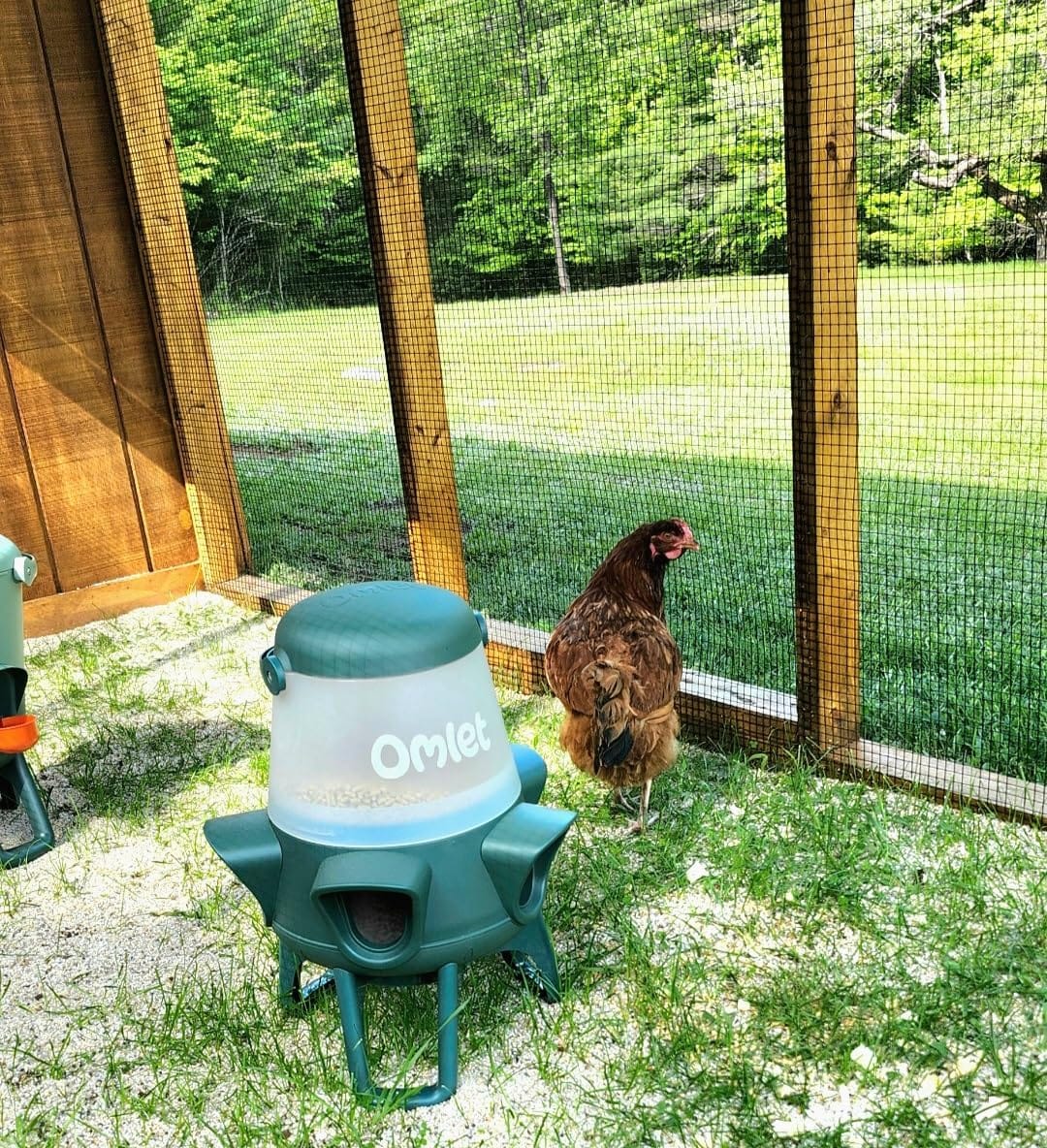
This is the most thorough answer to flicking waste in the roundup. Each of the five ports is individually enclosed, so a hen can only put her head in far enough to eat and cannot drag feed out on the way. Owners report near zero spillage and noticeably calmer feeding as a side effect, because one bird per port removes the shoving at the feeder.
Twelve pounds covers about six hens for seven days. It hangs or free stands using docking legs, and the port height is adjustable, which means the same feeder can serve pullets and adults. It also separates into three pieces, so cleaning takes under a minute with no crevices to scrub.
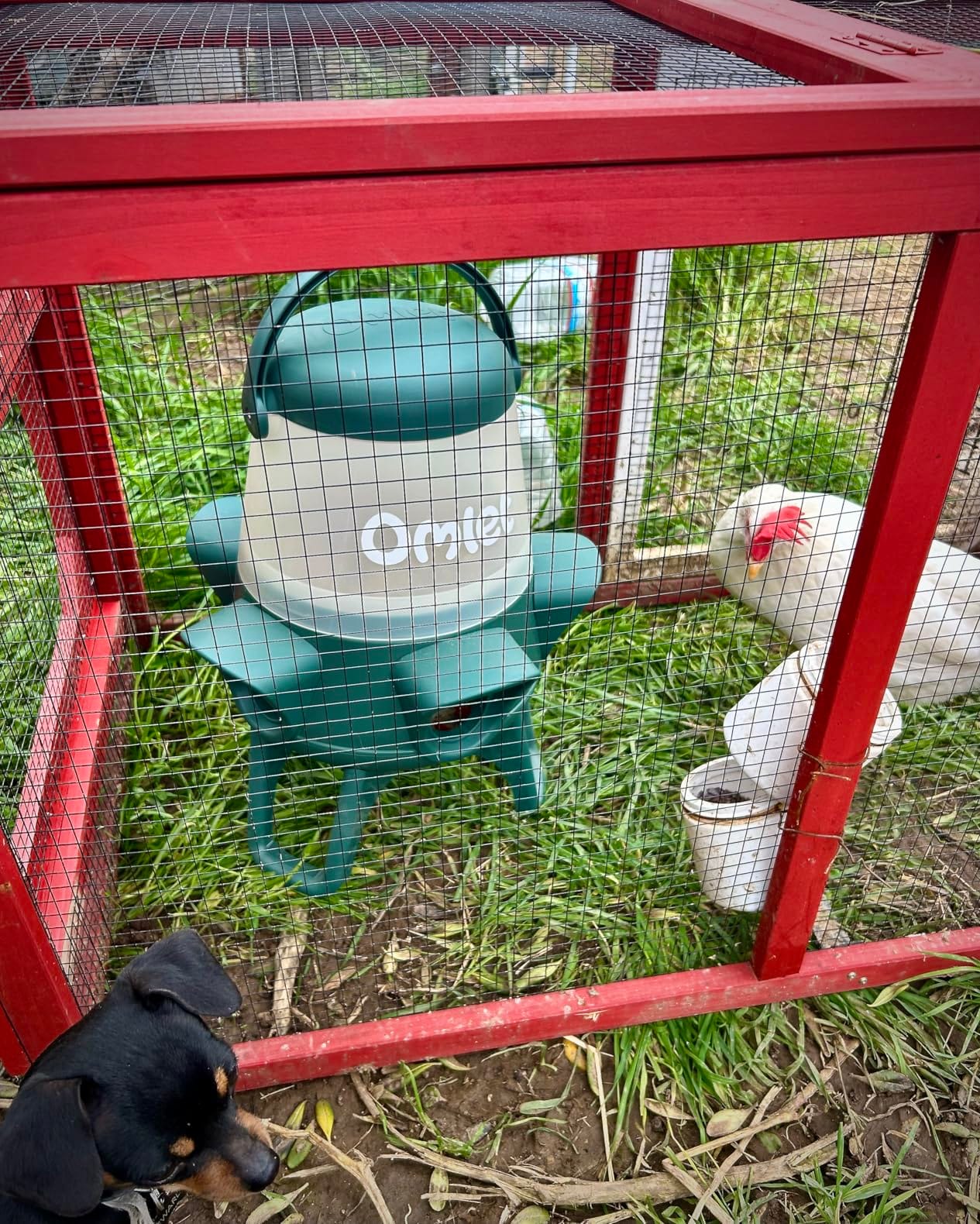
There is one recurring complaint worth taking seriously. Crumble feed can fail to flow through the funnel and leave the ports looking empty while feed sits above them. This is a feed type mismatch, not a defect, and it is the single most useful thing to check before you buy if your birds are on crumbles.
Two further limits: the ports sit high enough that bantams struggle and roosters cannot use them, and there are no snap on port caps, so rodents can still reach the feed overnight. The plastic is BPA and PFAS free and rated weather resistant.
Who this suits
Best for a flock of standard hens on pellets where spillage is your main complaint. If your current setup is covered in feed every morning, the enclosed ports are the single biggest change you can make, and the adjustable height means it will grow with your flock.
The tool-free disassembly also makes it the easiest feeder here to keep sanitary, which matters in a hot humid climate where mold develops fast in damp feed.
Who should skip it
Skip it if you feed crumbles or a high-molasses mash, if you keep bantams, or if you have a rooster. If rodents are your problem, look for a feeder with closable ports, since this one leaves the feed reachable overnight.
7. Tgeyd 30 lb Metal Feeder: Best Mid-Size Metal
Tgeyd 30 lb Chicken Feeder with 6 No-Waste Ports – Heavy-Duty Outdoor Metal Feeder with Adjustable Height, Locking Lid & Riveted Handles – Rustproof Feed Box for Poultry & Backyard Chickens
30 lb capacity
6 no-waste ports
Adjustable height stand
Locking hinged lid
Pros
- Galvanized metal body resists rust outdoors
- 6 no-waste ports contain feed and cut scattering
- Adjustable stand suits chicks through adult birds
- Locking hinged lid keeps feed dry
Cons
- Heavier than plastic feeders and awkward to move when full
- Capacity and included component details vary between listings
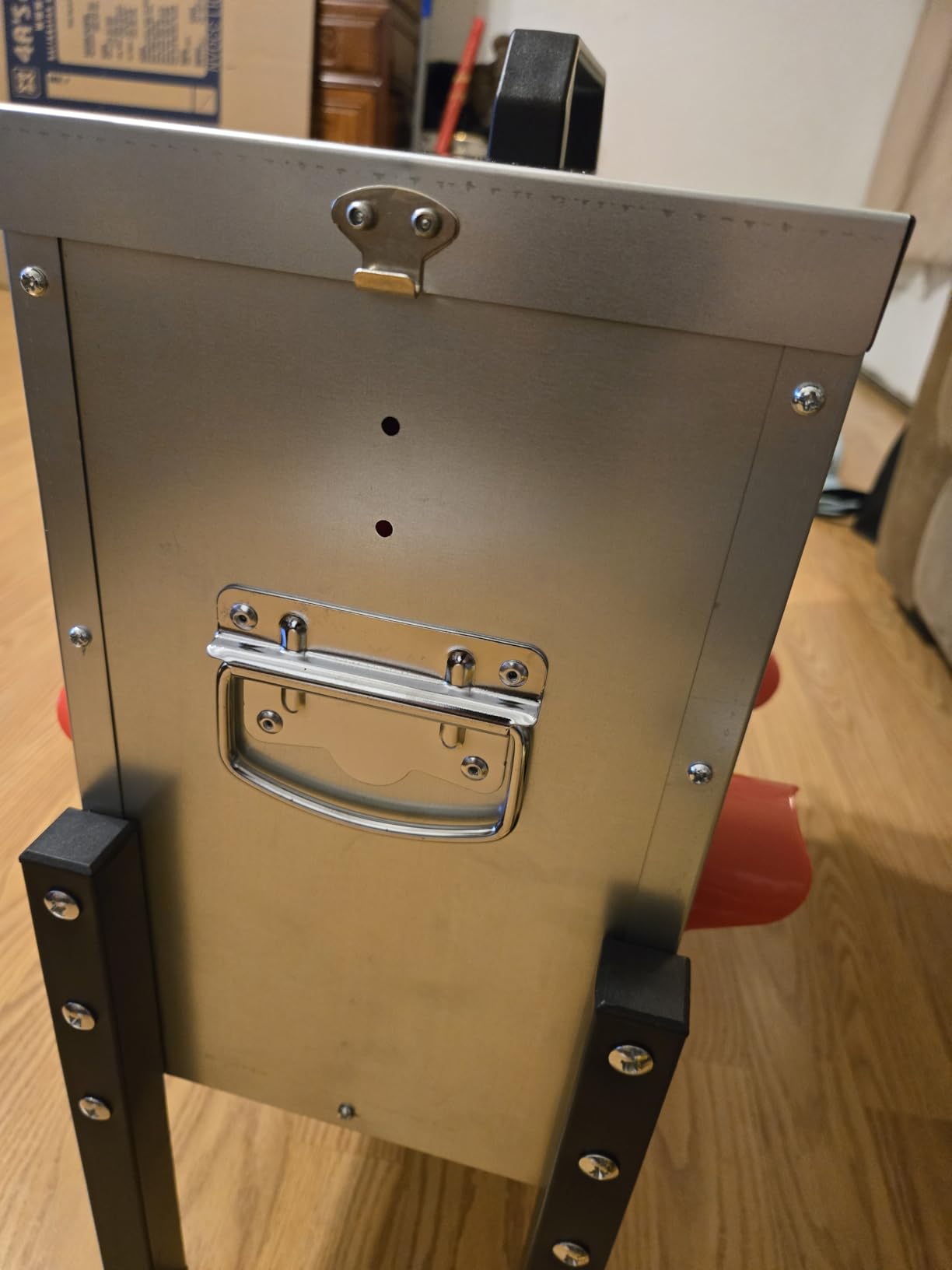
This is the mid-point of the metal range, and for a flock of 10 to 15 it does something the plastic units cannot. Six no-waste ports mean the whole flock eats at once, and the galvanized metal body is the material that outlasts UV-exposed plastic over multiple seasons.
The adjustable height stand is more than a gimmick here. Lower it for chicks and pullets, raise it for adults, and the same unit covers the whole life of the flock. The locking hinged lid keeps rain out and lets you refill without a bird watching, and riveted handles make carrying it manageable when it is only part full.
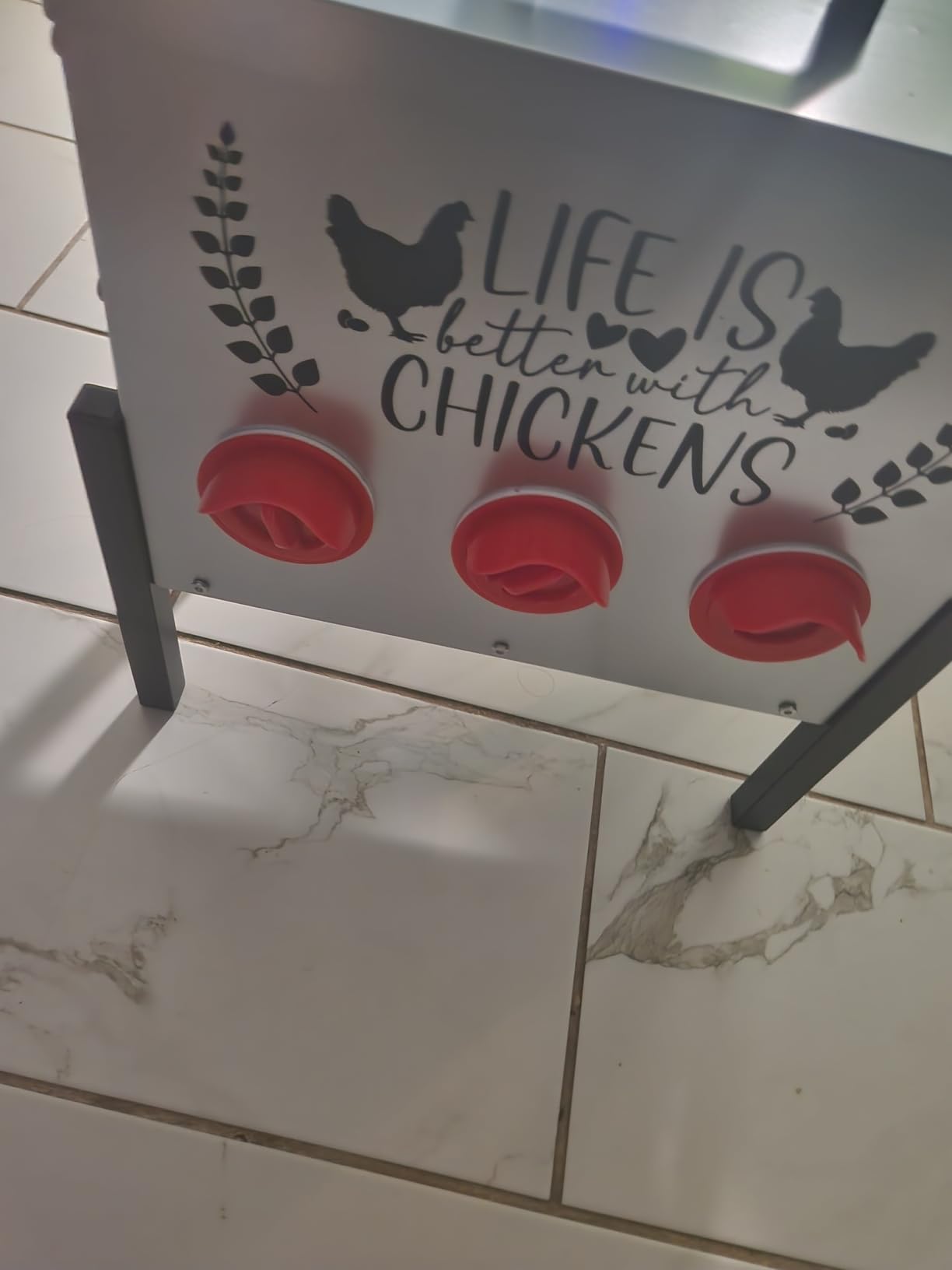
Thirty pounds is a sensible middle capacity: long enough to skip refills, small enough that feed does not sit for a month in a tiny run. Ports are angled, which helps keep feed inside and off the ground when birds rake through it.
The catch is weight. At 9.5 pounds empty, this is a two-handed move once it is full, and the metal dents rather than flexes if a hen leans on it hard. Listings for this unit also vary in stated capacity and included components, so confirm what is in the box before you rely on the numbers.
Who this suits
Best for a mid-size flock that has outgrown plastic or that lives somewhere with strong sun, where UV cracking is the reason feeders get replaced every couple of years. Six ports also keeps a 15-bird flock from queueing.
Choose this over a plastic unit if you would rather buy one feeder and keep it for a decade than replace it.
Who should skip it
Skip it if you need to move the feeder often or if coop floor space is tight. It is also more than you need under eight birds, and the weight makes it a poor choice for anyone with a back that objects.
8. Tgeyd 95 lb Feeder: Best for Ducks, Geese, and Large Flocks
95 lb Chicken Feeder with 10 No-Waste Ports – Extra-Large Galvanized Metal Poultry Feeder with Adjustable Height Heavy-Duty Stand – Outdoor Feed Box for Chickens, Ducks & Geese
95 lb capacity
10 angled no-waste ports
Galvanized steel body
Adjustable heavy duty stand
Pros
- 95 lb capacity suits large flocks with rare refills
- 10 angled ports prevent scattering and keep feed dry
- Rust resistant galvanized steel construction
- Adjustable heavy duty stand fits birds of different sizes
Cons
- Large footprint takes significant coop or run space
- Nearly 20 pounds empty so moving it takes two people
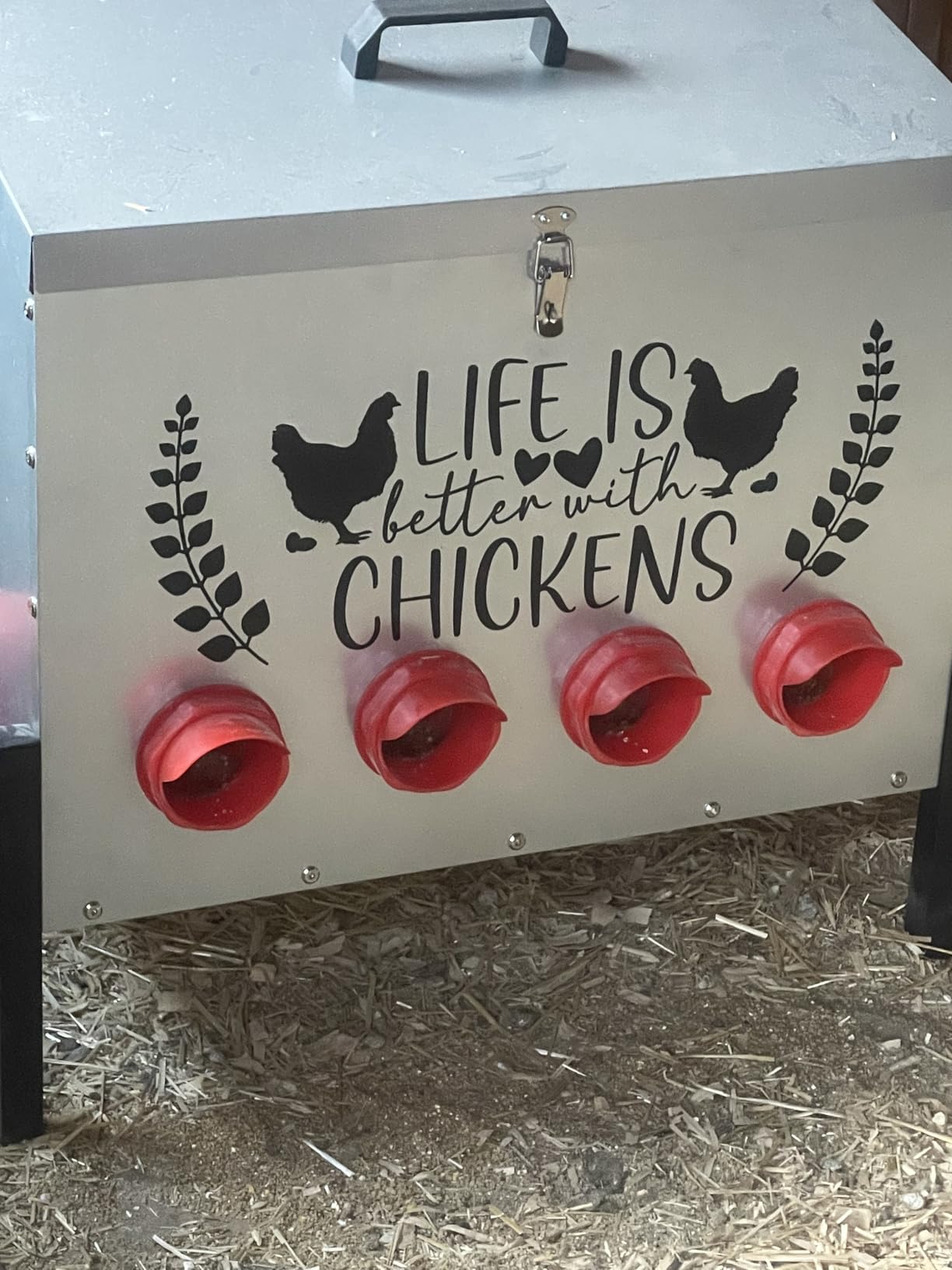
Ninety-five pounds and ten ports is genuinely large flock territory, and this is the unit to look at if you keep more than 25 birds, or keep ducks and geese alongside them. Ducks eat awkwardly and waste more than hens, and ten angled ports is the number that keeps up with them.
Refill frequency effectively disappears. A 25-bird flock works through 95 pounds slowly, so you are topping up monthly at worst rather than weekly. The galvanized steel construction resists rust, and the adjustable heavy duty stand covers everything from chicks to full grown geese.
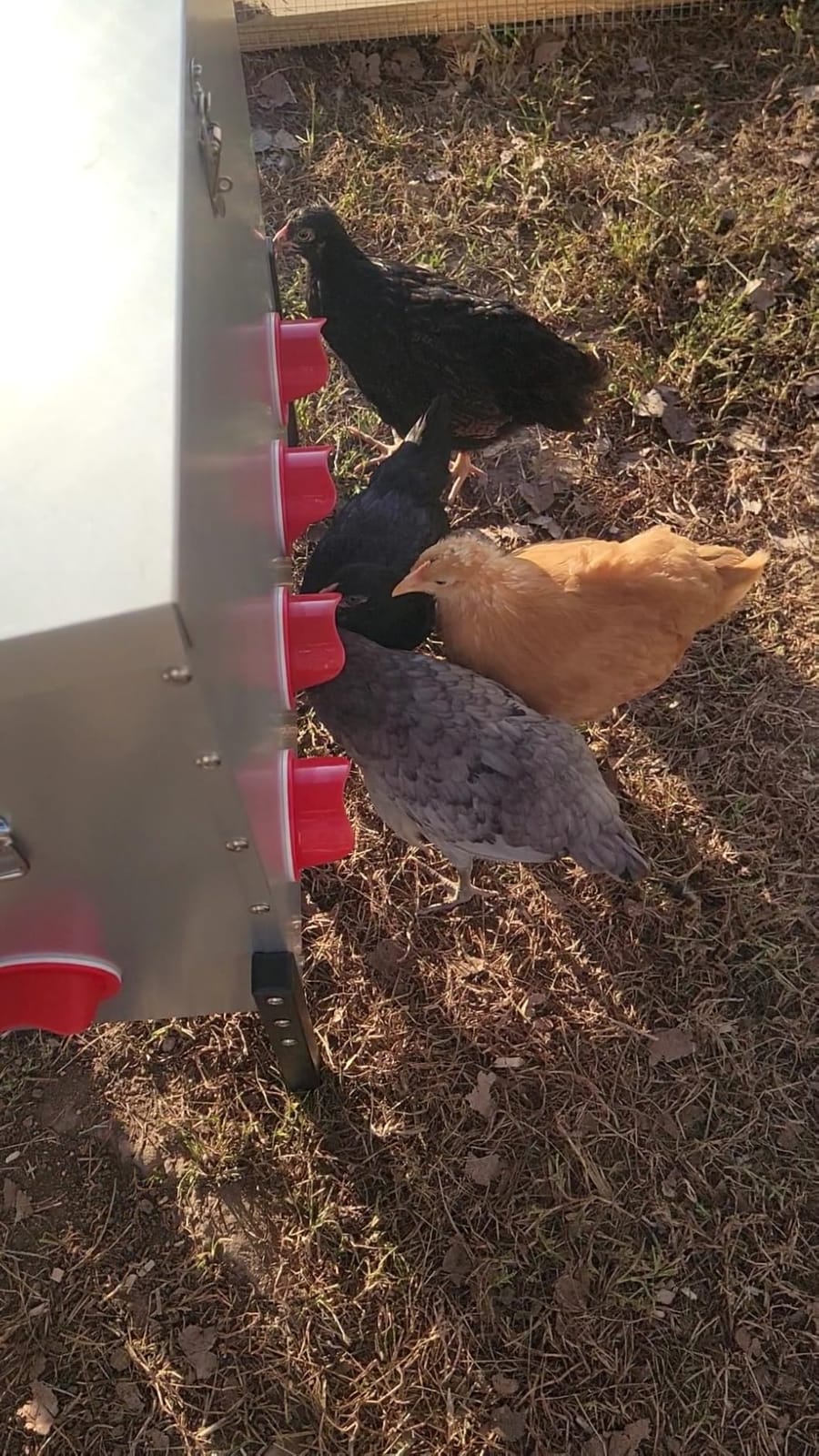
The angled ports are what keep this effective at scale. Angled openings mean a bird cannot rake feed out sideways the way it can from a straight port, so the waste control holds up as the port count goes up rather than degrading.
Size is the honest trade-off. At nearly 20 pounds empty, moving it takes two people, and the footprint is large enough that it needs a dedicated corner of the run. If your run is small, this is the wrong feeder no matter how good the capacity is.
Who this suits
Best for homestead flocks, mixed poultry runs, and anyone tired of refilling. The ten ports remove the queueing problem entirely, and the locking lid means you can fill it without the whole flock mobbing you.
If you keep waterfowl, this is the pick, because duck and goose feeding behaviour defeats most hen feeders.
Who should skip it
Skip it for any flock under 20 birds, and skip it if your run is small or you need to move the feeder. There is no way to make a 95-pound box portable, which is a real limitation in a compact backyard setup.
9. RentACoop Chick2Chicken Feeder: Best for Chicks and Pullets
RentACoop Chick2Chicken 2.5lb BPA-Free Single-Port No-Waste Chicken Feeder
2.5 lb capacity
Single medium port
Slider port cover
Coop Clip mounting
Pros
- Single medium port works from chicks to adult birds
- Hooded port and controlled opening keep feed in the feeder
- Slider cover blocks pests and anti-roost lid stops roosting mess
- Coop Clip mounts to wire wood and hardware cloth
Cons
- Only one port so few birds can eat at once
- Small 2.5 lb capacity needs frequent refills
This is the feeder to clip onto the brooder wall when chicks arrive, and the reason it earns a place here is height. A single medium port on a clip mount can be positioned exactly where a 3-day-old chick can reach, and raised as the birds grow, which is the opposite of most gravity feeders whose ports run to the bottom of the container.
The hooded port with a slider cover keeps feed in the feeder rather than on the ground, and the sliding anti-roost lid stops chicks from perching on top and fouling it. The clip mounts to wire, wood, and hardware cloth, so it works on a brooder panel or an outdoor run.
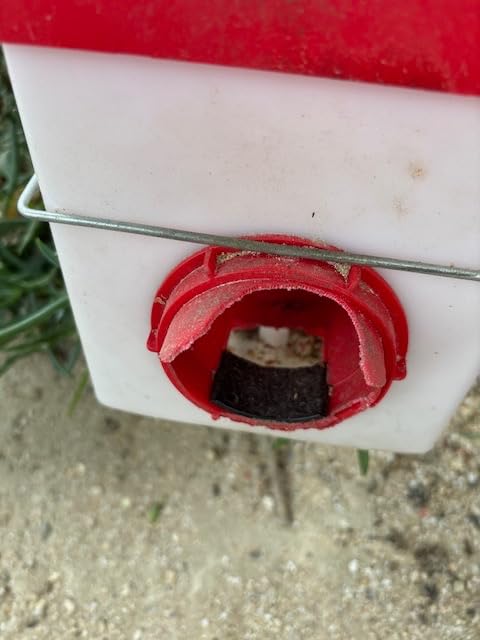
At 2.5 pounds, expect to refill often. That is not really a fault at this stage, because chicks eat little and you are checking on them daily anyway. The plastic is BPA free and food safe, and the same feeder works for quail, pigeons, and doves.
Be realistic about the single port. One bird eats at a time, which suits a brooder group of a dozen or so, but it will not carry 20 chicks. It also carries the lowest rating in the roundup, with a noticeable share of one and two star reviews, most of them about capacity and single-bird access rather than waste control.

Who this suits
Best for the first eight weeks of a chick’s life, and for anyone mixing ages who needs a low port alongside a high feeder. It is also a tidy second feeder in an adult run for the smallest or youngest birds.
Choose it if your current problem is that your adult feeder is too high for your pullets. That is the most common sizing complaint in the community and this solves it directly.
Who should skip it
Skip it for an adult flock or for more than about 12 birds. A single port that small, refilled that often, is a poor match for anything but chicks. Buy an adult feeder alongside it rather than as a replacement.
10. KHEARPSL 10 lb Galvanized Wall Mount Feeder: Most Versatile
KHEARPSL Galvanized Wall Mount Chicken Feeder No Waste Hanging Chicken Feeder with Lid Weatherproof Metal Automatic Poultry Feeder Trough Food Dispenser for Outside Coop (10 lbs)
10 lb capacity
Wall and hang mount
Galvanized powder coated metal
No assembly
Pros
- Wall mount design saves coop floor space
- Powder coated galvanized metal handles harsh conditions
- No assembly required
- No-waste port design contains feed and deters rodents
Cons
- Needs a solid wall or fence with two drilled holes
- 10 lb capacity suits small flocks only
This is the one to buy if coop floor space is the problem. It mounts on a wall or fence, which takes the feeder entirely off the ground, so it doubles your usable floor area and puts the feed out of reach of rodents. For a 4 to 6 bird flock with a tight run, that combination solves more than most expensive feeders do.
There is no assembly. It arrives ready to hang with a hinged lid and two screws, and the galvanized metal has a powder coated finish that holds up in rain and cold. The port design keeps feed contained, so there is less mess and fewer rodents than an open trough.
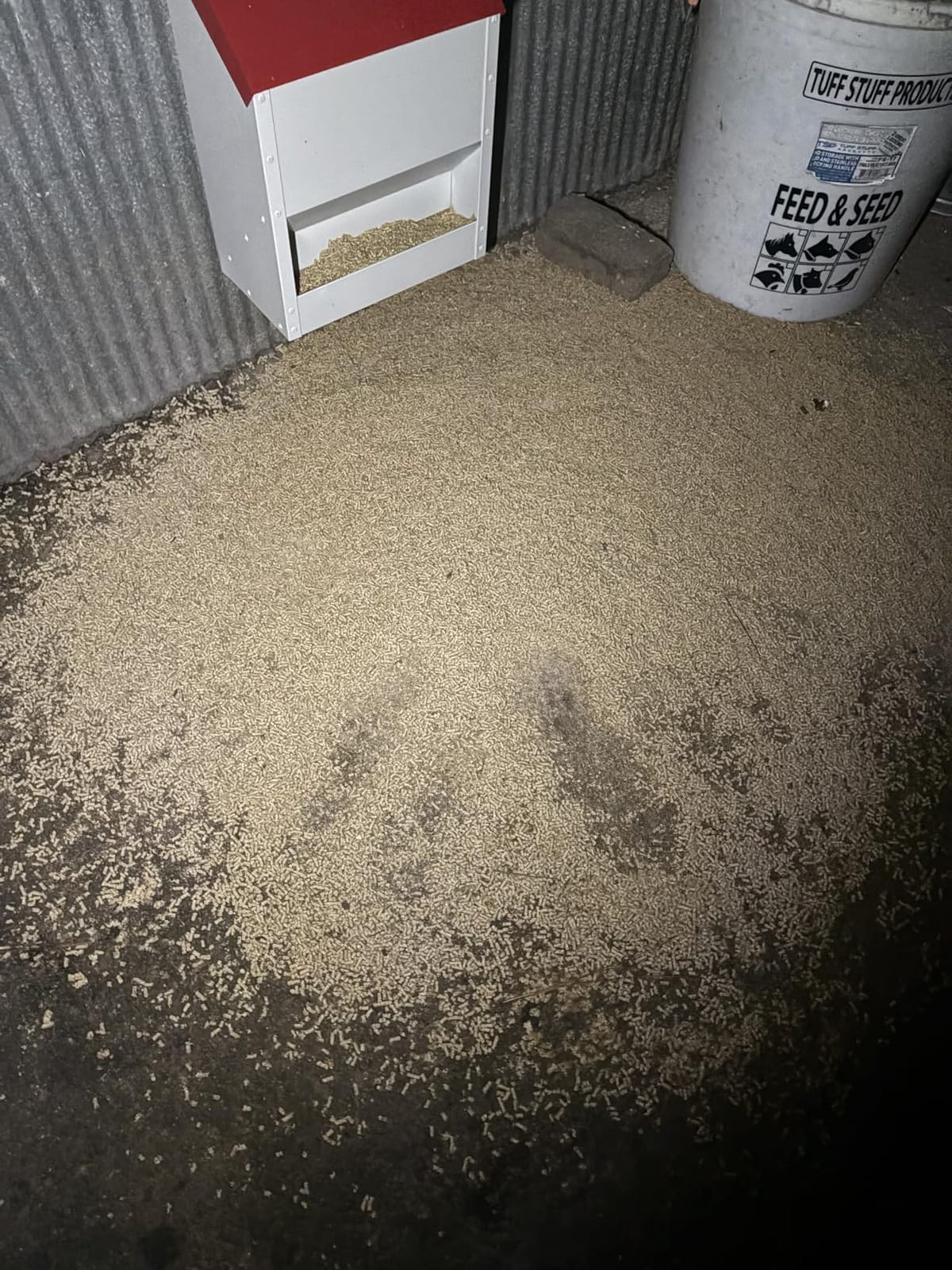
The mounting is the part to plan. It needs a solid wall or fence surface and two drilled holes, so measure before you buy and check what is behind the surface. The manufacturer warranty is one year, which is on the short side for the category.
Ten pounds is a genuinely small capacity, so this is a refill-every-few-days feeder for a small flock rather than a set-and-forget one. The feed shovel is not included, so plan how you are scooping 10 pounds into a mounted box.
Who this suits
Best for small flocks of 4 to 6 hens in a compact run, and for anyone whose priority is reclaiming floor space. Wall mounting is the single most effective rodent deterrent available, because nothing touches the ground.
It is also the easiest feeder here to set up on a day, which matters if you are building a run from scratch and do not want a mounting project.
Who should skip it
Skip it if you have more than about 8 birds, because 10 pounds will not carry them, and skip it if you have no solid surface to mount to. It is not a good fit for ducks or geese either, who need a wider and more accessible feed area.
How We Picked These Feeders
We ran ten feeders through a full season with a mixed flock of hens and pullets and judged each one on the same criteria: how much feed ended up on the ground over a week, whether the feed stayed dry in rain, whether rodents or wild birds got in, how easy it was to clean, and whether the ports were reachable for every bird in the flock. We also read the customer reviews closely, because the long-term owners in this category are more useful than any spec sheet.
One thing we looked for specifically was honesty. No feeder is completely waste proof, and no feeder is truly rodent proof in every situation. We preferred products whose owners said what they cannot do.
How to Choose a No Waste Feeder for Your Flock
Match capacity to flock size first. A rough guide is 1 to 2 pounds of feed per bird per week for a standard layer, so a 6 hen flock eats roughly 8 to 10 pounds a week. Pick a feeder that holds about two weeks of feed and you will not be refilling daily, but feed will not sit long enough to spoil. Beyond about 25 birds, capacity stops being a preference and becomes the deciding factor.
Count your ports, not your birds. Plan on roughly one feeding port per 2 to 3 birds, and more if you have pushy or larger birds. Three ports for 20 birds creates a queue, and a queue is where feed gets dropped. This is the number most buyers get wrong.
Set the height before you do anything else. This is the single most repeated frustration in the chicken community, and it is the most fixable. The port should sit at about the level of the birds’ backs so they eat with their heads level and cannot pull feed out and drop it. A Reddit user described the process exactly: you have to play with the height a bit to find the sweet spot. If the port is too high, birds stretch and drop feed. If it is too low, they rake it out sideways. For a mixed flock, run two feeders at two heights, one low for chicks and one at back height for adults.
Choose gravity or automatic based on birds, not on features. A gravity feeder has no moving parts, costs less, cleans easily, and controls waste well. An automatic feeder cuts refills dramatically and often adds a rodent-proof lid, but it costs several times more, needs level footing, and its mechanism needs occasional adjustment. Under roughly 20 birds, gravity wins on value. Above that, or if you travel regularly, automatic starts to earn its cost.
Decide between the coop and the run. For most backyard flocks, the run is better. Birds dust-bath and forage outside, a feeder in the run keeps the coop floor clear for bedding, and elevated or wall-mounted feeders work well outdoors. The exception is a wet climate with an uncovered run, where feed inside the coop stays dry. If you feed in the run, a sealed lid is not optional.
Check your feed type against the port design. Plain pellets flow through almost every gravity port. Crumbles and high-molasses mixes bridge, which can leave a feeder looking empty and lead you to think birds are not eating. Narrow funnel designs suffer most, so if you are on crumbles, look for wide hooded ports or an enclosed tube design.
Decide what you are buying the feeder for. If the problem is flicked feed, an enclosed or divided port is the fix and nothing else matters. If the problem is rats, mounting height or closable ports matter most. If the problem is refills, capacity and an automatic mechanism matter most. Buying a big automatic feeder to solve a flicking problem is a common and expensive mistake.
Frequently Asked Questions
What is the best chicken feeder for no waste?
The best chicken feeder for no waste is one with an enclosed or divided feeding port, a sealed rainproof lid, and a body mounted off the ground. Enclosed ports stop chickens flicking and scratching feed onto the ground, the lid keeps rain from ruining it, and mounting above ground level blocks rodents and wild birds. For most backyard flocks a gravity feeder with those three features is enough; automatic mechanisms only add refill convenience, not waste control.
What is the best type of chicken feeder for keeping chickens in a backyard?
For a typical 4 to 12 hen backyard flock, a wall or mesh mounted gravity feeder with a divided tray and a rain cover is the best default, because it controls waste, stays dry, and leaves the coop floor clear. A bucket port kit is the cheapest effective route. Automatic feeders only pay off above roughly 20 birds or if you regularly leave for several days, since their main benefit is fewer refills rather than less waste.
Should I put the chicken feeder inside the coop or leave in the run?
Put it in the run if you have a dry climate or a covered run, because birds forage and dust-bath outside and you keep the coop floor free for bedding. Put it inside the coop if your run is exposed to rain or snow, because damp feed molds and goes rancid quickly. Either way the feeder needs a sealed lid, and an elevated or wall mounted position is what keeps rodents out.
Are gravity feeders better than automatic feeders?
Gravity feeders are cheaper, have no moving parts, are easier to clean, and control waste well for the money. Automatic feeders cost several times more, need level footing and occasional mechanism adjustment, and add a motor or battery wear point, but they cut refills dramatically and usually add a rodent proof lid. For flocks under about 20 birds a gravity feeder is the better choice; above that, or with frequent travel, automatic earns its cost.
How high should I hang a chicken feeder?
Set the feeding port at roughly the level of your birds’ backs so they eat with their heads level. Set it too high and they stretch, pull feed out, and drop it. Set it too low and they rake it out sideways with their claws. Expect to adjust this over the first few weeks as birds grow, and if you keep chicks alongside adults run two feeders at two heights, because a low port small birds can reach also makes adults waste more feed.
Our Final Verdict on Backyard Feeders
The best no waste chicken feeders for backyards are the ones that match your flock size and your actual problem. The Suplklz 4-port bucket kit is the pick we recommend most often, because enclosed gravity ports and a rainproof lid fix flicking and soak at once, and it reuses a bucket you probably already own. Go bigger with the OverEZ 50 lb unit if you want to stop refilling, and go higher with the KHEARPSL wall mount if floor space or rats are the issue.
Whatever you choose, set the port at back height before you judge the results, keep it sealed, and stay away from crumbles in a narrow gravity port. Those three habits do more for your feed bill than any brand name on the box.