

If you own more than an acre of grass, the mowing math changes completely. A walk-behind mower that covers half an acre in well under an hour will eat a large part of a working day on a three-acre property. The best robot lawn mowers for large lawns are the ones that combine wide cutting decks, all-wheel drive or tracks, and navigation that does not depend on you trenching a boundary wire around the whole property.
Here is the short version. The Mammotion LUBA 2 AWD 5000HX is the most proven machine in this group for large suburban lawns, covering up to about 1.48 acres with 50 separate mowing areas and an 80% slope rating.
The YARBO Robot Lawn Mower Pro is the only machine here rated for six acres, and its track chassis handles mud, roots and stony ground. The Lymow One Plus climbs 45-degree hills and mows up to 1.73 acres in a day on a 15000mAh battery. Those three cover very different kinds of acreage, and the other nine fill in the gaps.
We compared twelve robot mowers against each other on coverage rating, navigation method, drivetrain, slope capability, cutting width, battery runtime and what owners actually say after living with them. Everything below reflects specifications listed by the manufacturers and patterns that show up repeatedly in owner reviews and in the r/roboticLawnmowers community. Updated for 2026.
Table of Contents
Top 3 Robot Lawn Mowers for Large Lawns (October 2026)

Mammotion LUBA 2 AWD 5000HX
- Covers up to 1.48 acres
- 80% slope climbing
- AI vision plus RTK
- 50 mowing areas
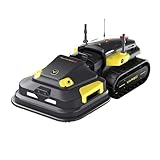
YARBO Robot Lawn Mower Pro
- Rated for 6 acres
- Tracked chassis with steel skid shoes
- 20 inch cutting width
- 70% slope

Quick Comparison of All 12 Robot Mowers for Large Lawns in 2026
The table below covers every machine in this roundup. Coverage figures come from the manufacturers, and the acreage numbers are rated conditions, not measured performance on rough ground.
| Product | Specs | Action |
|---|---|---|
| Mammotion LUBA 2 AWD 5000HX |
|
Check Latest Price |
| YARBO Robot Lawn Mower Pro |
|
Check Latest Price |
 Mammotion LUBA 3 AWD 3000 Mammotion LUBA 3 AWD 3000 |
|
Check Latest Price |
 ECOVACS GOAT A3000 LiDAR ECOVACS GOAT A3000 LiDAR |
|
Check Latest Price |
 WORX Landroid L WR155E WORX Landroid L WR155E |
|
Check Latest Price |
 ANTHBOT Genie 3000 ANTHBOT Genie 3000 |
|
Check Latest Price |
 WORX Landroid WR344 4WD WORX Landroid WR344 4WD |
|
Check Latest Price |
| Lymow One Plus |
|
Check Latest Price |
 Sunseeker X5 AWD Sunseeker X5 AWD |
|
Check Latest Price |
 Husqvarna 410iQ Husqvarna 410iQ |
|
Check Latest Price |
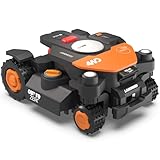 WORX Landroid WR342 4WD WORX Landroid WR342 4WD |
|
Check Latest Price |
 MOVA LiDAX Ultra 2000 AWD MOVA LiDAX Ultra 2000 AWD |
|
Check Latest Price |
1. Mammotion LUBA 2 AWD 5000HX for Multi-Acre Suburban Lawns
Mammotion LUBA 2 AWD 5000HX Robot Lawn Mower with 4G, Reception 1.25 Acres, Max. 1.48 Acres, All-Wheel-Drive for 80% Slope, UltraSense AI Vision & RTK Automatic Edge Mapping, 2.2″-4.0″ Cutting Height
Up to 1.48 acres
80% (38 degree) slope
15.7 inch cut
13000 sq ft per charge
Pros
- All-wheel drive handles 80% slopes
- ditches and rough ground
- UltraSense AI vision mows under trees without satellite signal
- Up to 50 mowing areas with no-go zones
- Very clean striping patterns
- Quick 30 minute assembly for most owners
Cons
- Narrow 15.7 inch cutting width means long run times
- 4G subscription required after the first free year
- Razor-style blades cannot chop fallen leaves
Out of everything we looked at, the LUBA 2 AWD 5000HX has the deepest owner history of any machine here, with 481 ratings behind it.
That matters more than any spec sheet on a property where a mower getting stuck at 9pm on a Saturday means walking out in the dark with a flashlight. It is the one we would put on a two-acre suburban lot with a mix of flat lawn, a couple of slopes and a line of mature trees.
The drivetrain is the story here. A 165W four-wheel motor with all-wheel drive climbs 80% gradients, which is a 38-degree slope, and owners consistently report it crossing ditches, culverts and uneven ground that stops two-wheel-drive machines dead. Combined with adaptive behaviour on soft ground, it keeps working where a lighter chassis bogs down.
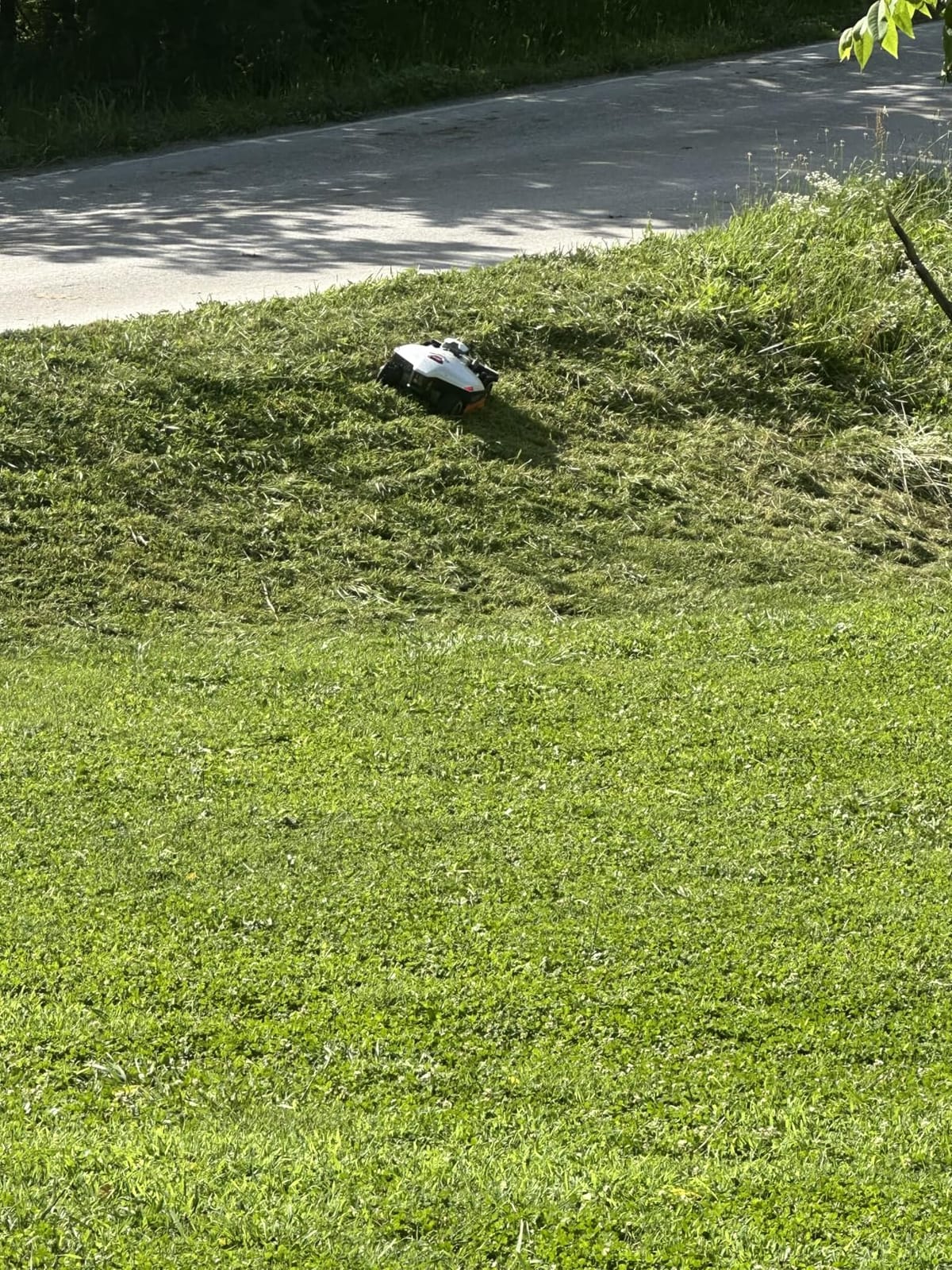
What separates this machine from cheaper RTK mowers is the UltraSense AI vision layer working alongside RTK. On a lawn with a big oak in the middle of it, the mower keeps its line instead of stopping and spinning. That same sensor stack recognises more than 200 object types, so a garden hose or a fallen branch changes the mower’s route rather than ending the session.
Coverage is rated at 1.25 acres of reliable reception with a maximum of 1.48 acres, and the battery handles up to 13000 sq ft per charge before it heads back to the dock. With 50 mowing areas available, you can split a two-acre property into a front lawn, a back lawn and a side strip, each with its own schedule and cut height.

Why the LUBA 2 AWD 5000HX suits a large suburban lot
The 165W four-wheel motor and 80% slope rating mean you are not confined to flat ground. A property with a rise from the street to the back fence, a couple of drainage swales and a slope behind the shed is exactly where this machine earns its place.
Multi-zone scheduling is genuinely useful at this size. Rather than one endless loop, you get independent areas, each with its own pattern, so the area the dog uses gets mowed more often and the strip by the road gets done twice a week. No-go zones keep it out of flower beds and under the deck without digging a single trench.
The 4G, Bluetooth and WiFi connectivity through the Mammotion app also includes 3D lawn printing patterns such as parallel, checkerboard and diamond grid, which is how the clean striping that owners photograph actually gets produced.
Where the LUBA 2 AWD 5000HX falls short
The 15.7 inch cutting width is the single biggest limitation at acreage scale. Compared with the 20 inch deck on the YARBO Pro or the 16 inch dual rotary on the Lymow One Plus, a full-yard mow on rough ground takes multiple charge cycles and a good part of a day.
Two costs sit outside the purchase. The 4G cellular plan is included for the first year and then becomes a subscription, and the separately sold roof or edge RTK mount is frequently needed for accurate positioning in buildings and tree lines. Owners also note that three-point turns can tear turf because the wheels counter-rotate, and that razor-style blades will not mulch leaves.
2. YARBO Robot Lawn Mower Pro for 6-Acre Properties
YARBO Y40 Core Robot Lawn Mower Pro, Wire-Free, 6-Acres, Four-Season Care
Rated for 6 acres
Patented multi-terrain tracks
70% (35 degree) slope
20 inch cutting width
Pros
- Only machine here rated for 6 acres
- Track chassis and all-steel skid shoes handle muddy and stony ground
- 300W dual motor cuts thick wet overgrown grass
- Dual blade options for cool and warm season grass
- IPX6 water resistance with auto-charge base
Cons
- Steep learning curve mapping a large property with trees
- Map drift under dense tree cover needs manual rescue
- Heavy at 215 pounds with a cobalt-based battery
Everything else in this roundup tops out at about 1.5 acres. The YARBO Pro is rated for six, and it gets there with a completely different chassis philosophy from everything else on this page.
Instead of wheels, it runs on patented multi-terrain tracks with all-steel skid shoes, which spreads its weight across soft ground and lets it cross stony, muddy and uneven yards without digging in.
Owners of rough acreage describe this as the machine that holds up. The 300W dual-motor cutting system with an optimized disc handles thick, wet, overgrown grass without the clipping buildup that chokes narrower decks.
Several owners describe the finished cut as comparable to a zero-turn riding mower.
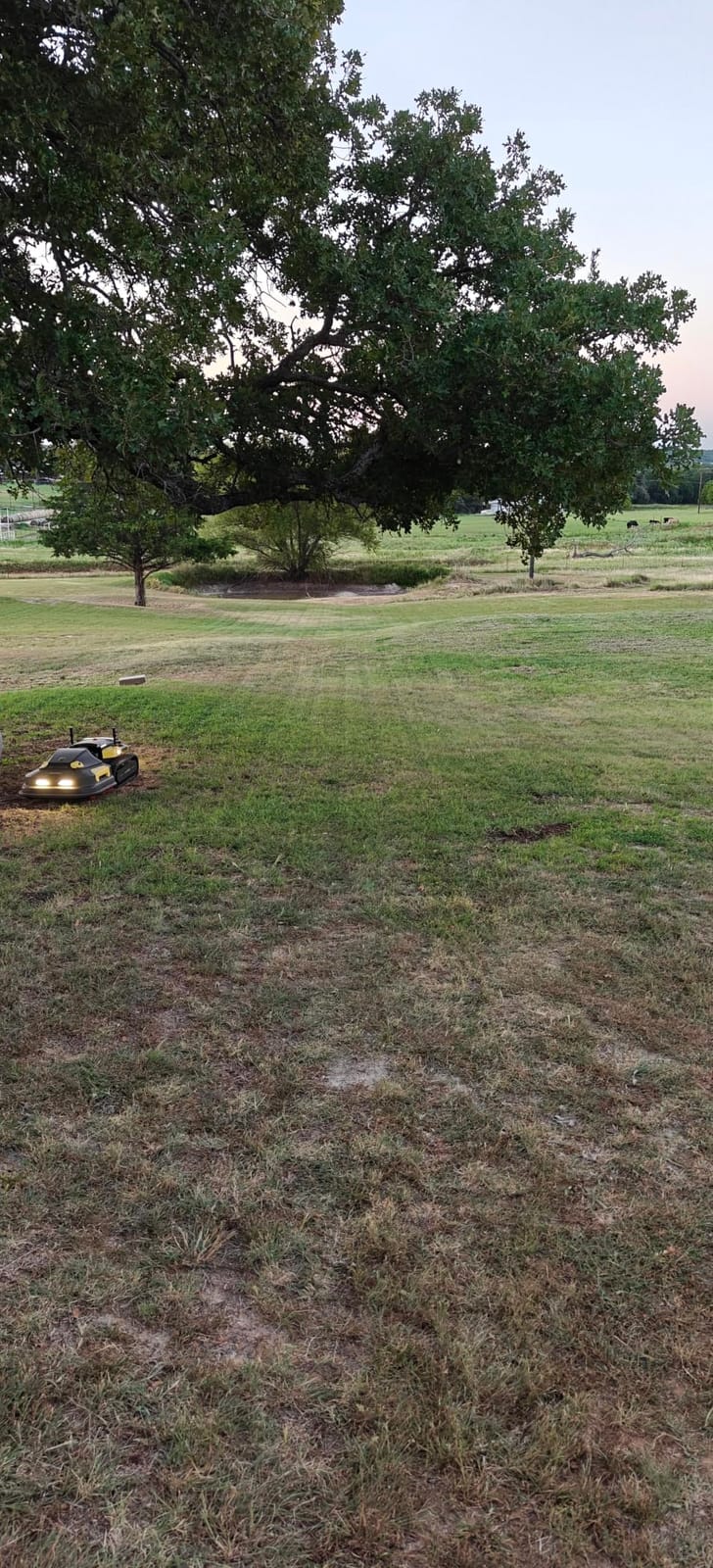
Navigation here is called triple-fusion: RTK-GPS, binocular vision and a multi-sensor PPVS array working together. Binocular cameras and ultrasonic sensors detect obstacles including suspended ones, which is unusual, and the machine holds position on a slope better than most wheeled competitors. The climbing gradient is 70%, or 35 degrees.
The 20 inch cutting width is the widest deck in this group, and the cutting height adjusts from 0.8 to 4.0 inches. Two blade options ship with the machine, razor blades and straight blades, so the same mower can handle cool-season and warm-season grass across a four-season property.
The chassis is IPX6 rated and returns to a wireless charging base automatically.
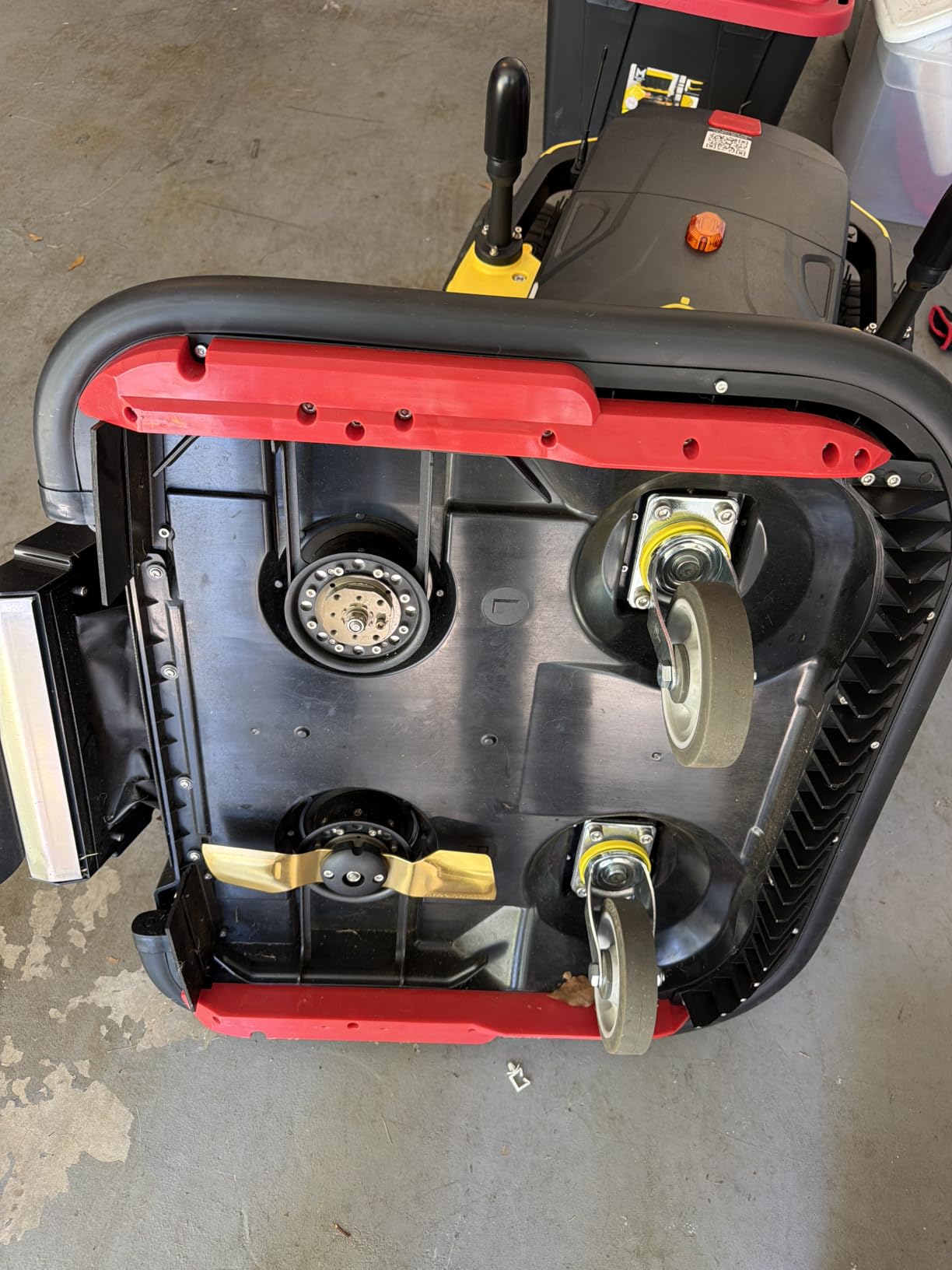
Who gets the most out of the YARBO Pro
Rural properties with mixed terrain, gravel margins, orchard rows and open pasture-like areas. The tracks and skid shoes are the reason it keeps moving where a wheeled mower would be stuck within a week. At 215 pounds, you will want two adults for assembly, and it shipped in four boxes.
It also suits owners who want attachment-based expansion rather than replacing the machine. The modular core supports expandable attachments, and the multiple mowing zone, pathway and no-go zone controls are detailed enough to run a multi-part property from one schedule. Cut quality on owners’ lawns is consistently reported as high.
Customer service is a genuine strength for this model. Some owners had defective modules replaced, and multiple mowing zones with pathways work reliably once configured through the app.
Who should not buy the YARBO Pro
Anyone who wants a set-and-forget machine. The initial mapping process on a large property with trees can take many hours, and owners report that map drift and RTK signal loss under dense canopy still require manual rescue and reconfiguration. Firmware and app updates arrive frequently enough that settings need revisiting.
Two hardware details work against it. The battery uses cobalt-based lithium chemistry rather than LiFePO4, which owners flag as having limited cycle life and a high replacement cost. The data centre mount is also described as unstable in high wind, and the rectangular body is vulnerable to being knocked around on uneven ground. Struggles slightly with large overgrown weeds and dense woody growth.
3. Lymow One Plus for Steep Hills and Wet Ground
Lymow One Plus Robot Lawn Mower, Wire-Free RTK+Vision Navigation, 1.73 Acres Daily Coverage, 100% Slope (45°) Climbing, 1.2″-4″ Cut Height, AWD All-Terrain Automatic Robotic Mower, App Control
45 degree (100%) climbing
1.73 acres daily coverage
16 inch dual rotary
15000mAh LiFePO4
Pros
- 1.73 acres of daily coverage across up to three charge cycles
- Track drive climbs 45 degree slopes and soft swampy ground
- Real SK5 steel blades cut through weeds that stall razor discs
- 15000mAh LiFePO4 rated for 2000+ cycles
- Self-lifting deck and single-side discharge
Cons
- Heat management is a real weakness in hot weather
- Community reports of loose decks and failing wheel springs
- App map editing is not intuitive
If your large lawn is also a steep or wet lawn, the Lymow One Plus is the machine the forums keep coming back to. On r/roboticLawnmowers, Lymow and YARBO are repeatedly named as the consumer-grade options that hold up on rough multi-acre terrain without moving up to commercial equipment. The One Plus is the one built around a track drive system and a genuinely large battery.
Its headline number is 1.73 acres of daily coverage. That comes from a 15000mAh LiFePO4 battery rated for more than 2000 cycles, where three hours of charging covers 0.57 acre and the machine can work through up to three charge cycles in a day. Long-term owners describe the LiFePO4 chemistry as a real advantage over the cobalt packs used elsewhere in this category.

The track drive handles 45 degree slopes and 2.8 inch obstacle crossings, and owners specifically praise it on soft, swampy ground where a riding mower would rut the lawn. The cutting system is Lycut 2.0 with dual SK5 tool-steel blades at 50 HRC, driven by a motor peaking at 1785W and turning at up to 6000 RPM, with cyclone airflow that lifts flattened grass and mulches leaves into fine particles.
That matters for large properties in autumn. The 16 inch dual rotary blades run at up to 3.3 ft/s, and the self-lifting deck plus single-side discharge keep the yard cleaner than machines that discharge to both sides. One owner reports handling 18000 sq m across uneven terrain, and another measures roughly 300 sq m per hour in practice.
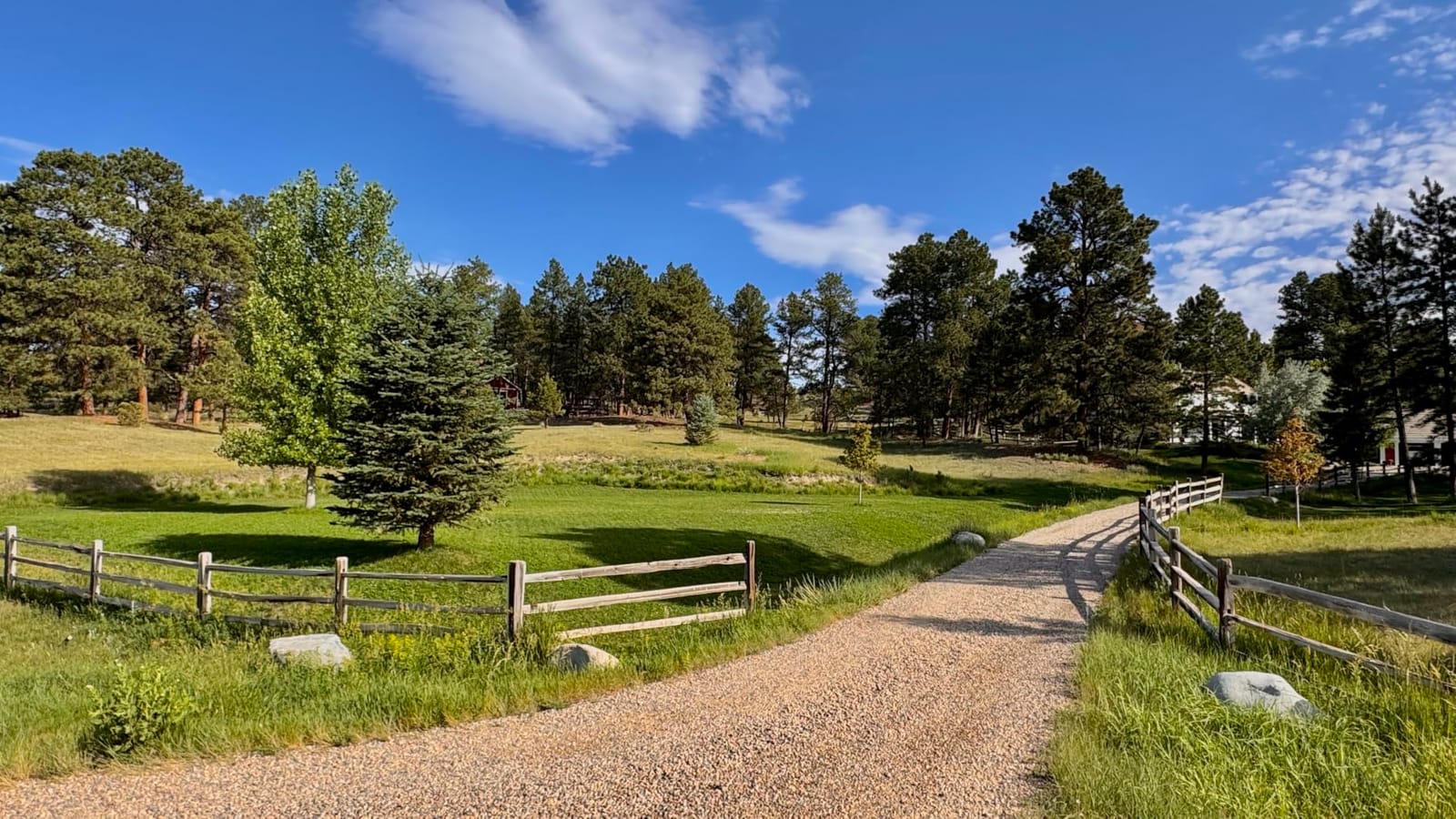
What makes the Lymow One Plus different on a slope
Two things. First, the track drivetrain, which is why owners report it crossing wet, uneven and soft ground without bogging down or tearing the turf the way wheels do. Second, the combination of a 1785W peak motor with real steel blades rather than razor discs, so a patch of tougher grass slows the blade instead of stalling it.
Per-zone control is unusually granular. You can set blade speed, travel speed and cut height separately for each of up to 80 zones, with no-go areas on top. Navigation is RTK plus V-SLAM visual mapping, wire-free, with AI vision and ultrasonic obstacle detection, and the frame is A380 automotive-grade with IPX6 waterproofing.
For acreage owners who mow near ditches, tree roots and gravel margins, this combination is the most complete in the roundup.
Where owners report problems
Heat is the clear weak point. One owner had the battery refuse to charge when hot and the blades stop mid-cut until a firmware update addressed it. Community reports also describe loose cutting decks, broken front wheel springs and failing motor bottom bearings, and one owner spent months unable to cut the programmed areas correctly.
Satellite communication was reported as spotty by another owner, who also found manufacturer support effectively absent. The app is the other weak spot: map editing is not intuitive and docking charge confirmation is unclear. Long-term owners are candid that this is a product still under development rather than a finished appliance, and on the r/roboticLawnmowers community the Lymow is praised for capability while being described as not quite install-and-forget.
4. WORX Landroid WR344 4WD for a Clean Cut-to-Zero Finish
WORX Robot Lawn Mower 4WD for 1 Acre, No Perimeter Wire, WR344
Mows up to 1 acre
RTK Cloud navigation
84% (40 degree) slope
8.7 inch offset blade
Pros
- RTK Cloud accuracy with no antenna and no recurring service fee
- 4WD traction up to 84% slopes on a terrain-adaptive chassis
- True front-wheel steering turns without tearing turf
- Cut-to-Zero offset blade minimizes edge trimming
- V-SLAM takes over in shaded areas
Cons
- 8.7 inch disc at walking pace means large lawns can take two days
- Connectivity and RTK activation failures reported by several owners
- Support limited to weekday business hours
The WR344 is interesting because of what it does not ask of you. RTK is delivered from the cloud, so there is no antenna to mount on the roof and no recurring cloud service fee, which removes two of the costs that quietly recur on most RTK machines in this roundup. The Cut-to-Zero offset blade is positioned so the wheel runs on grass the blade has already cut, and that is why the finished edge needs so little rework.
Drive-wise it is a 4WD chassis with a terrain-adaptive body, rated for 84% slopes, or about 40 degrees. The true front-wheel steering is the detail owners single out most: the machine turns without counter-rotating, so it does not tear turf in the way three-point turning chassis do.
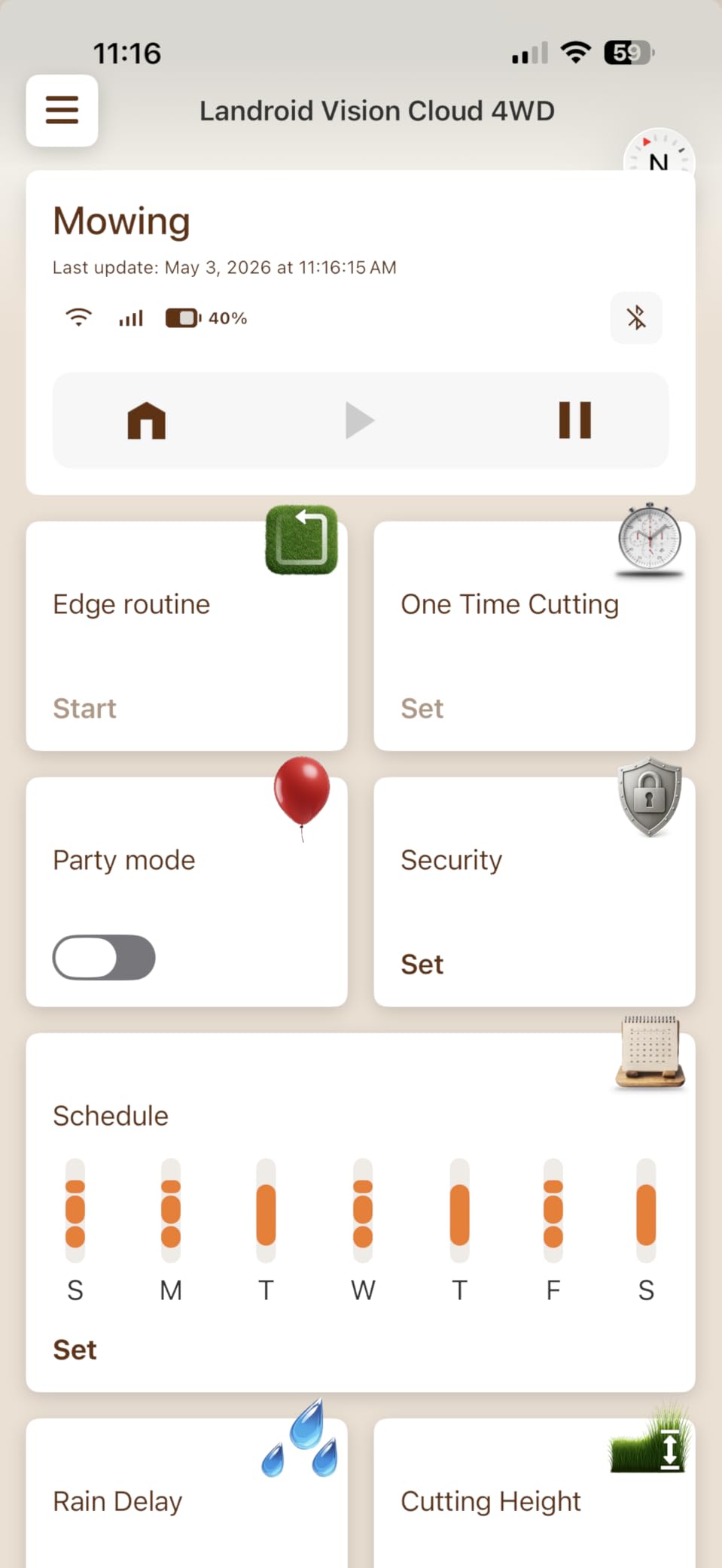
Vision AI auto mapping with edge-following builds the map, and V-SLAM sensor fusion takes over in shaded or partially covered areas where satellites are blocked. Obstacle avoidance runs on a neural network quoted at up to 10 trillion operations per second. Security comes through Find My Landroid GPS tracking with a remote lock, and FiatLux night lighting lets it work in the dark.
Four mowing patterns are available, parallel, checkerboard, diamond and natural, and the machine comes with a 3-year manufacturer warranty. Owners also like that the battery pack is widely available and easily replaceable.
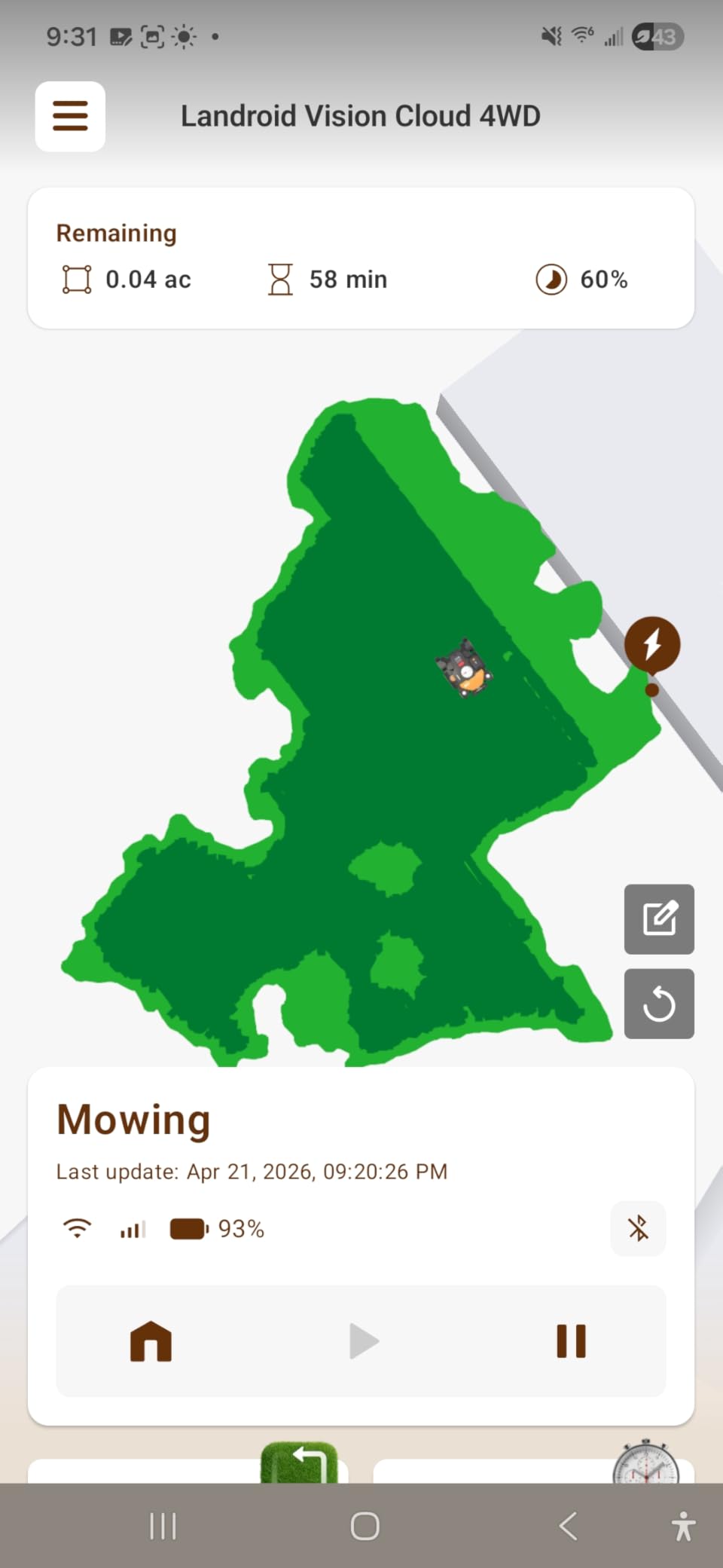
Why the WR344 appeals to a large suburban lawn
Cut quality is the most common theme in the reviews. Owners consistently praise the finish over faster dual-disc competitors, and the combination of front-wheel steering and the offset blade means fewer strips of uncut edge grass around the perimeter. For anyone who has been trimming a wide border with a string trimmer every week, that is the feature that matters.
The absence of a local antenna is a practical win on a large property. Mounting and aligning an RTK beacon on a two-storey house with mature trees nearby is a real chore, and this machine simply removes that step. Software has improved substantially since launch through over-the-atmosphere updates, and one owner reports needing attention only once in two months.
Why the WR344 is a risky recommendation
This is the lowest-rated machine in the roundup at 3.3, with roughly 40% of reviews at one star. The complaints are consistently about connectivity rather than mowing: an NTRIP and RTK connection error that support could not clear, forcing a return, WiFi and SIM activation problems that stopped another owner mowing entirely, and one report of the mower getting lost travelling between front and back lawns.
The 8.7 inch cutting disc at walking pace is the other limitation on acreage. Owners describe a large lawn taking up to two full days with this machine. Support is limited to weekday business hours, which matters if a mower stalls on a Sunday.
5. Sunseeker X5 AWD for Yards With Narrow Passages
Sunseeker X5 AWD Robot Lawn Mower, RTK, Vision AI, 0.5 Acre, Wire-Free
0.5 acre coverage
Passages as narrow as 31.5 inch
60 dB operating noise
30 degree slope
Pros
- Holds its line under trees and shaded areas without circling
- Very uniform cut between shaded and open lawn
- Near-silent with a 60 dB rating
- Handles passages as narrow as 31.5 inch
- Two-year warranty with US-based support
Cons
- Smallest coverage here at 0.5 acre
- Treats tall grass as an obstacle and needs frequent scheduling
- WiFi extenders may be needed to reach all corners
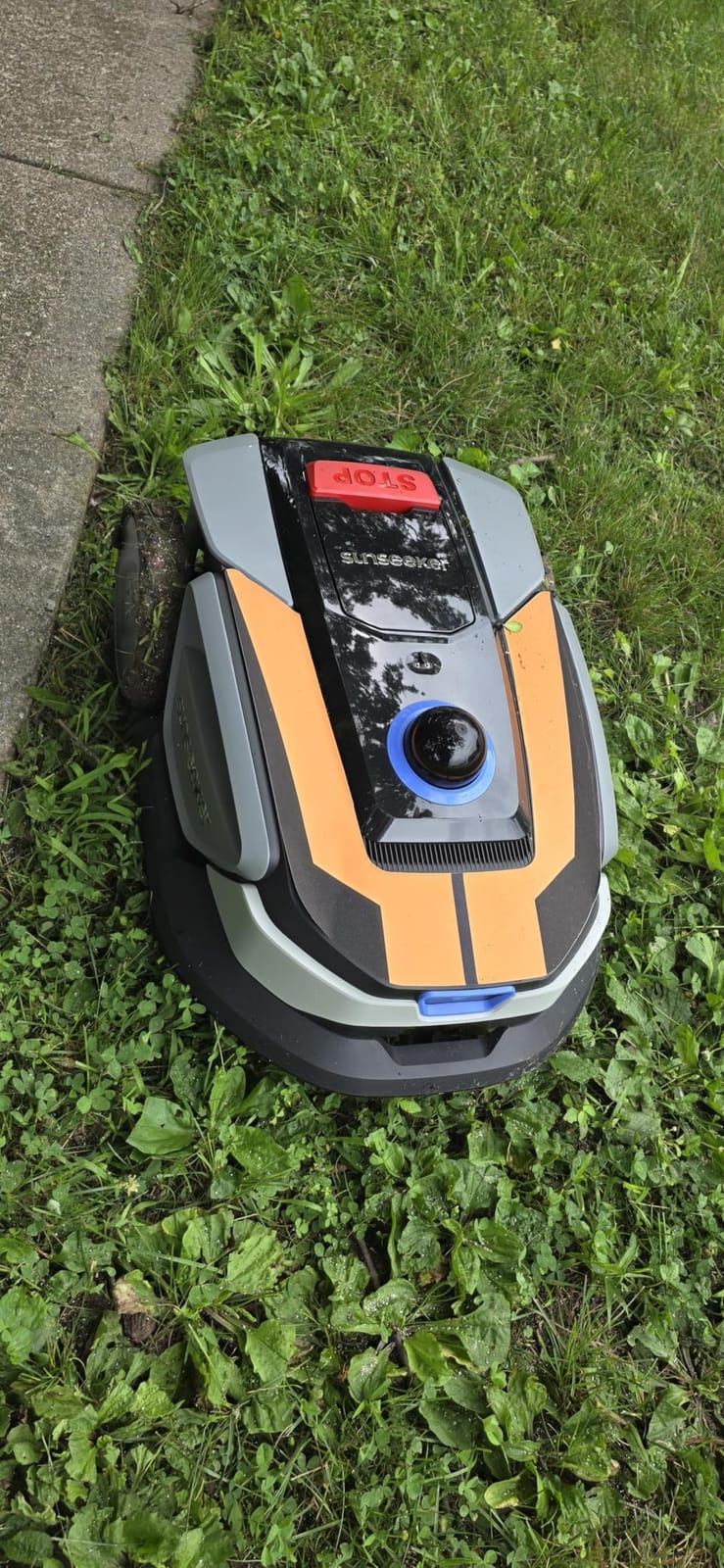
The Sunseeker X5 AWD has the highest average rating of the twelve at 4.4, and its owners describe it as dependable and quiet in the conditions that break other robots.
It is not the biggest mower here, and it is not trying to be. It is a half-acre machine that works extremely well under heavy tree cover, in shade, and on a yard threaded with narrow access points.
Navigation combines RTK, VSLAM and Vision AI, working day or night. That three-way stack is why owners report it holding a straight path under trees and shaded areas without stopping or circling. The all-wheel drive platform uses independent front suspension and all-terrain tires to handle 30 degree slopes, or 60%.

The chassis is 26 inches wide overall but is specified to handle passages as narrow as 31.5 inches. That single number decides whether it works on a property split by a fence with a 32-inch gate, a bed border or a row of boxwoods. The 8.7 inch floating cut adjusts from 1.6 to 3.2 inches, and up to 5 maps can be stored with smart zones, no-go areas and wire-free virtual boundaries.
At 60 dB it is among the quietest machines here. Owners describe the loudest sound as the plastic body creaking, which is a far cry from a gas mower at the 90 to 100 dB range.
Where the Sunseeker X5 earns its rating
Owners report very uniform cut quality, with shaded and open areas looking nearly identical afterward, and straight clean stripes that hold their line when pattern and direction are changed in the app. On a lawn dominated by trees, that consistency is the whole game, and this machine needs far less babysitting than RTK-only competitors.
It is also the right shape for a complicated small yard. The 31.5 inch passage rating, the 26-pound weight and the two-year warranty with US-based support make it a low-risk first robot purchase for a property where a bigger machine simply will not fit through the gate.
Where the Sunseeker X5 falls short
Coverage is capped at 0.5 acre, and owners note that even a 0.2 acre backyard still needs two recharges. For a true large lawn this machine is a single-zone solution, not a multi-acre one.
Its most interesting flaw is behavioural: it avoids tall grass as though it were an obstacle, so it has to be sent out several times a week during peak growth. Related, a two-wheel-drive sibling variant gets caught on small humps and dips and can require wide boundary offsets plus 18 inches of manual weed trimming. WiFi extenders may be needed to reach every corner of a large yard, and a few owners report programming issues and an unintuitive app.
6. Mammotion LUBA 3 AWD 3000 for the Longest Single Charge
Mammotion LUBA 3 AWD 3000 Robot Lawn Mower for 0.75 Acre, 360° LiDAR+NetRTK+AI Vision Tri-Fusion Positioning, All-Wheel-Drive for 80% Slopes, 30 Multi-Zone Management, Cutting Height 1.0″-2.7″
0.75 acre coverage
175 minutes per charge
360 degree LiDAR plus NetRTK
80% slope
Pros
- Tri-fusion LiDAR
- NetRTK and dual-camera navigation
- Four independent motors with 80% slope climbing
- Adaptive suspension crosses curbs and roots up to 50 mm
- Identifies more than 300 obstacle types
- 12Ah battery with 175 minutes runtime
Cons
- Newer model with a smaller body of owner reviews
- Cutting height tops out at 2.7 inches
- Coverage limited to about 0.75 acre
The LUBA 3 AWD 3000 is the most advanced positioning stack in this roundup and the current number one best seller in Robotic Lawn Mowers on Amazon. Where the LUBA 2 relies on AI vision plus RTK, the 3 adds a full 360 degree LiDAR unit to the mix, tri-fusing LiDAR, NetRTK and dual-camera AI vision.
That LiDAR head has a 360 degree horizontal and 59 degree vertical field of view with a range of up to 230 feet, which is what lets it build an accurate map under tree cover. Four independent motors handle 80% slopes, or 38.6 degrees, and adaptive suspension steps over curbs, roots and thresholds up to 50 mm high. The AI processor identifies more than 300 obstacle types.
Why the runtime figure matters on a bigger lawn
The 12Ah battery delivers 175 minutes of runtime per charge and up to 500 sq m per hour of coverage, which is the longest single-charge runtime in this group. On a 0.75 acre property that means fewer return trips to the dock and less of the day spent shuttling between the lawn and the charger.
The cutting side uses two 165W high-torque motors driving 6-blade discs, with automatic speed and power adjustment based on grass density. Up to 30 mowing zones are supported with no-go areas, and perimeter, zigzag, checkerboard and adaptive zigzag patterns are all available.
The box includes the mower, a charging station, accessories, a product guide and an extra set of blades. Dimensions are 27.2 by 21 by 11 inches.
Where the LUBA 3 AWD 3000 falls short
Coverage is limited to about 0.75 acre, well below the largest machines here, so this is a two-acre lawn solution at best. The cutting height range runs from 1.0 to 2.7 inches, which is narrower than several competitors and limits how high you can set the cut.
It is also a newer model with a smaller body of owner reviews than the LUBA 2 series. That means less long-term data on battery ageing and firmware stability, which is exactly the kind of information you want when planning to keep a machine for five seasons.
7. ECOVACS GOAT A3000 LiDAR for the Simplest Setup
ECOVACS Goat A3000 LiDAR Robot Lawn Mower, Wire-Free Dual LiDAR Navigation, AI Obstacle Avoidance, 32V Power Platform, Smart App Control, Automatic Mapping, for Lawns Up to 3/4 Acre
0.75 acre coverage
Dual LiDAR with 2 cm precision
No wire and no RTK station
IPX6 rinse-clean
Pros
- No wires and no RTK base station needed
- Very quiet with even carpet-like cut quality
- IPX6 waterproof and hose-rinseable
- Simple app setup with automatic return to the dock
- Backed by an established brand with warranty support
Cons
- Map drift of up to a foot reported by one owner
- Digs trenches with its wheels when stuck rather than waiting
- Only 6 owner reviews so far
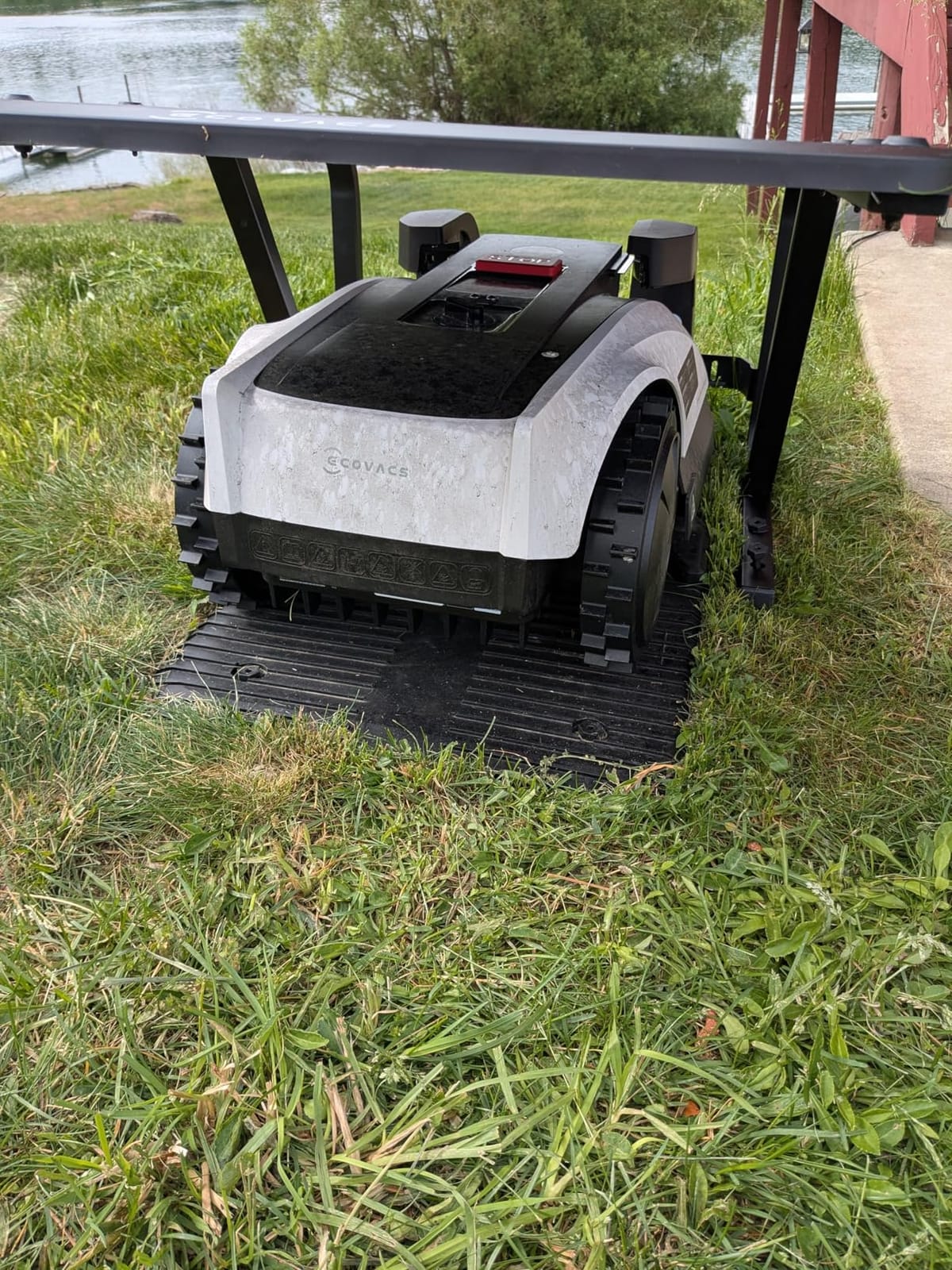
The GOAT A3000 LiDAR does the least setup work of any wire-free machine here. There is no perimeter wire, no RTK base station and no antenna. You set it down, connect it, and it builds a 3D map of the lawn itself using dual LiDAR with up to 2 cm-level precision. On a simple property with clear sightlines, that is a genuinely pleasant first experience.
The platform is a 32V system with dual cutting discs, mowing up to 400 sq m per hour across a 13 inch cutting path. Obstacle handling combines AI Vision with 3D time-of-flight LiDAR, recognising more than 200 garden obstacles including pets, toys and trees. Maximum slope climbing is 50%, or 27 degrees, and it will cross small barriers.
What owners like about the GOAT A3000
Quiet operation and an even, carpet-like cut are the two things mentioned most. The IPX6 waterproof rating means you can hose it down rather than scraping clippings off with a brush, which is a real time saver if you have dogs or a lot of leaf drop. Automatic return to the charging station and a simple app with adjustable cutting height handle the rest.
Owners also report it coping with St. Augustine-style lawns and sloped lots without trouble, and the ECOVACS brand gives it warranty support that newer brands cannot always match.
The dual LiDAR head builds the 3D lawn map with up to 2 cm precision, which is why the cut lines come out straight on an open property. Battery life and charge time are unremarkable but adequate for the coverage it is rated for.
Where the GOAT A3000 is risky
LiDAR-only boundary tracking is weaker than the RTK machines in this group, and the review data reflects that. One owner documented map drift of up to a foot, which sent the mower wandering into landscaping.
The same owner describes it digging trenches with its wheels when stuck rather than stopping and waiting for recovery, and that report ended with a wheel motor failure after about a year.
Coverage is capped at roughly 0.75 acre, and the entire rating rests on six owner reviews. That is a very small sample, and it is worth weighing before committing to a machine you will rely on for several seasons.

8. WORX Landroid L WR155E for Straightforward Flat Lawns on a Budget
WORX Landroid L WR155E Robotic Lawnmower for Large Gardens/Self-Propelled Lawnmower for Clean Lawn Cutting in No Time at All, Orange, 2000 m2
Up to 2000 sq m
250 m boundary wire included
120 minute battery
Cut-to-edge function
Pros
- Least expensive boundary-wire route into robotic mowing here
- Cut-to-edge function leaves very little border rework
- 120 minute battery on a shared 20V PowerShare pack
- Quiet and simple to install on an open lawn
- Long track record with hundreds of owner reviews
Cons
- Requires laying 250 m of boundary wire with 340 pegs before use
- No spare batteries sold for this model in the US
- Tilt and lift sensor failures reported after a few weeks
The WR155E is the only boundary-wire machine in this roundup, and the contrast is instructive. Every other mower here works out where the lawn ends by satellite, LiDAR or cameras.
This one needs 250 m of wire pegged around the perimeter with 340 pegs before it will run at all. In exchange, you get a machine that is not affected by GPS quality, tree cover or satellite signal loss of any kind.
For a flat, open, uncomplicated lawn, that trade can be a good one. It cuts to the edge by design, so the border rework is minimal, and the 20V PowerShare battery is interchangeable with other WORX tool batteries, which is a practical advantage if you already own the ecosystem.
What the WR155E does well
Coverage is up to 2000 sq m, roughly half an acre, with 120 minutes of battery life. It handles gradients up to 35%, corners, edges and quiet operation without complaint, and four cutting height positions from 30 mm to 60 mm cover most lawns. WiFi app control covers scheduling.
With 394 owner reviews behind it, this is one of the most reviewed machines in the roundup, and the feedback pattern is consistent. Owners like it on open, relatively flat lawns where the wire goes in easily, and they are relaxed about the price for a first robotic mower.
What the WR155E is not for
It is not for a large, complex, tree-covered property. Installing wire around obstacles, garden beds and multiple lawn areas on acreage is a significant weekend job, and reviews consistently point to the 22 cm cutting width meaning long run times on anything bigger.
There are two service issues worth flagging. No spare batteries are sold for this model in the US, which leaves owners dependent on a single pack, and tilt or lift sensor failures have been reported after a few weeks with unhelpful support responses. Software updates require a USB stick, and the app controls are basic by current standards. It is best suited to lawns without heavy tree cover.
9. ANTHBOT Genie 3000 for the Cheapest Wire-Free Setup
Robot Lawn Mower NO Wire – 0.9 Acre, Full Band RTK+4-Eye Vision Robotic Lawnmower, Automatic Mapping, 30 Multi-Zone Management, Accurate Obstacle Avoidance, Intelligent Anti-Theft, APP Control
0.9 acre coverage
Full band RTK plus 4-eye vision
No perimeter wire
30+ mowing zones
Pros
- Least expensive wire-free mower here with genuine RTK plus 4-eye vision
- Very easy setup by driving the perimeter with a phone
- Cuts straight clean lines with an LED headlight
- Handles tall fescue and Bermuda grass plus weed patches
- Longer battery life than an equivalent model at a higher price
Cons
- Battery degradation and missed strips reported after a season
- RTK antenna pole breaks easily at the spike joint
- 4G connectivity unreliable even in the free first year
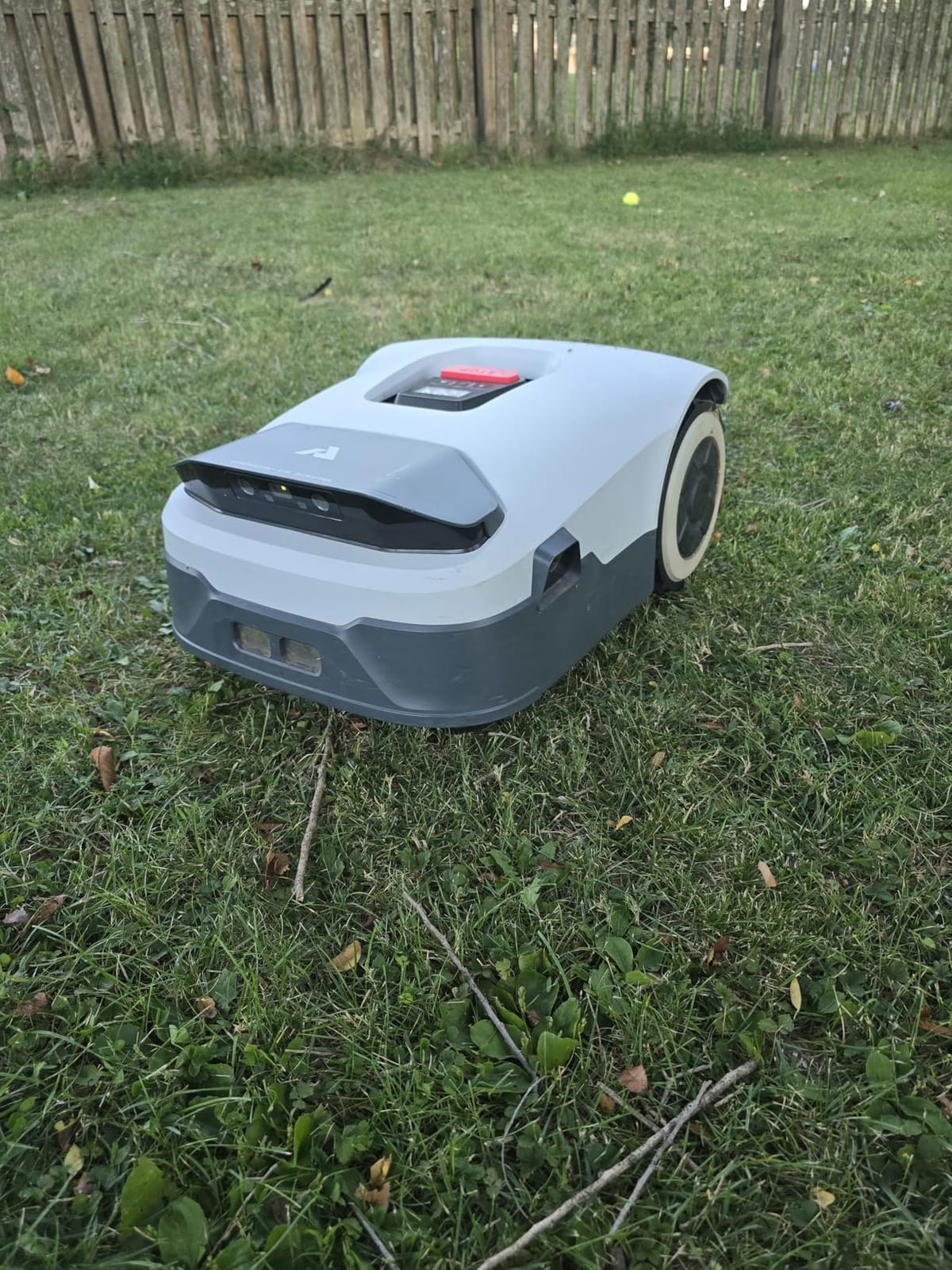
The Genie 3000 covers up to 0.9 acre, or 3600 sq m, and it does it with genuine RTK and a 4-eye 3D vision system without a perimeter cable. Full Band RTK handles the open lawn, and the four-eye vision array is what carries it into GPS-poor areas, which is the pairing you want on a property with buildings and mature trees close together.
Setup is where it wins. ACC hands-free auto mapping with adaptive edge-following means you unbox it, drive the perimeter with your phone, and it maps itself. Owners report straight, clean mowing lines and a bright LED headlight for evening work, and the aluminum and plastic chassis weighs 46 pounds.
Where the Genie 3000 makes sense
It is the cheapest way into a wire-free RTK plus vision machine, and for a lawn under an acre that is open enough to map easily, it does the job. The 300-degree field-of-view camera detects more than 1000 object types, and 30 or more mowing zones with no-go areas are configurable through the app, along with anti-theft protection and 4G connectivity.
Owners also report it handling mixed tall fescue, Bermuda grass and weed patches as well as steep ditches, which is more than a lot of machines in this class can claim. Battery life is reported as longer than a competing equivalent at a higher price point.
Where the Genie 3000 becomes a problem
Long-term reliability is the concern, and the reviews are sharply split. One owner reports severe battery degradation and random uncut strips after the first season. Another reports the mower stopping and spinning in circles mid-lawn with no obstacle present. A different owner found it refuses to pass through an open gate between zones and needs manual driving each time.
Hardware details are also flagged: the RTK antenna pole breaks easily at the spike joint, and 4G connectivity is unreliable even with a free first year of service. The app’s map viewing and editing are difficult, with online support often unresponsive.
For a one-season trial on a simple lawn it is a fair proposition. For a property you depend on every week, the support picture is thinner than you would like.
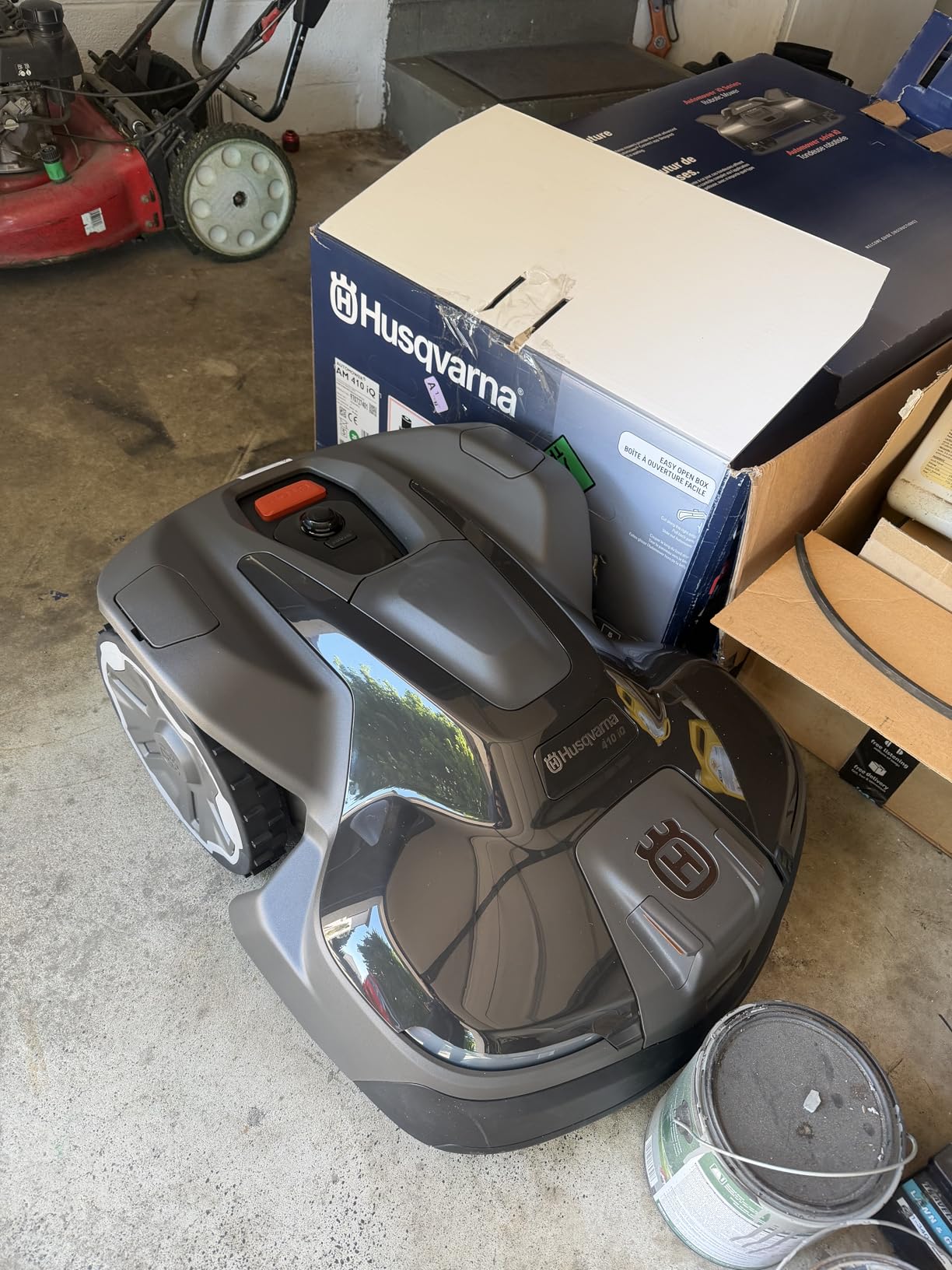
10. Husqvarna 410iQ for Buyers Who Want the Longest Warranty
Husqvarna 410iQ ½ Acre Wire-Free, 45% Slope, app Based, Robot Lawn Mower
0.5 acre coverage
EPOS positioning with radar
4 year warranty
1 to 4 inch cut height
Pros
- Strongest brand pedigree and warranty in this roundup
- Wire-free setup with virtual mowing areas and stay-out zones
- Widest adjustable cut height range at 1 to 4 inches
- EPOS positioning plus onboard radar for reliable navigation
- Hose-washable chassis with a year of free blades
Cons
- Second-lowest rated model here at 3.6 with 24% of reviews at one star
- Covers only half an acre
- Only 4 cutting height positions via physical adjustment
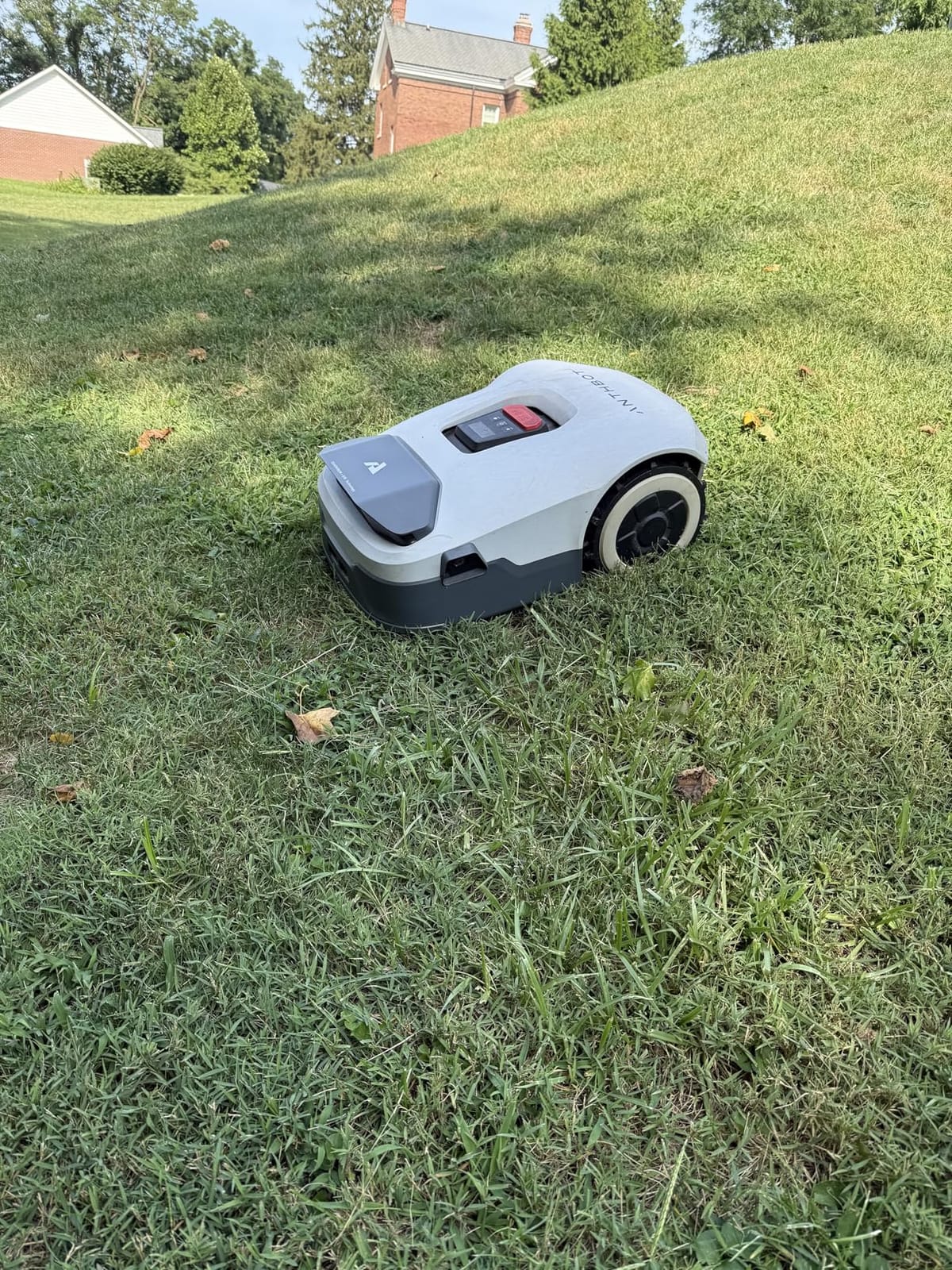
Husqvarna is the established name in robotic mowing, and the 410iQ is the machine to consider if warranty length and brand support matter more to you than maximum capability. It comes with a 4-year warranty, one year of free replacement blades and US-based support, which is the strongest package in this group on paper.
Navigation runs on EPOS, the Exact Positioning Operating System, for centimetre-accurate location data, paired with onboard radar for obstacle avoidance. Installation is wire-free and driven entirely from the Husqvarna Connect app, with virtual mowing areas and stay-out zones you draw yourself. There is no antenna and no base station to install.

Where the 410iQ earns its place
The cutting height range of 1 to 4 inches is the widest here, which matters if you let grass get long between visits or want a tall summer setting. Larger wheels and a durable bumper are designed specifically to cross paths, driveways and landscaping without tearing grass or leaving tracks, and that is a well-documented strength in owner reviews.
The chassis is hose-washable. The app controls height, schedule and mowing pattern with random, striped and checkerboard options, and an anti-theft alarm with GPS tracking covers the security side.
Where the 410iQ falls behind
Coverage is half an acre, the joint-smallest in this roundup, and it rates 3.6 with 24% of reviews at one star. That puts it second from the bottom on rating, behind the WORX Landroid WR344 at 3.3.
It also has only 4 cutting height positions through the physical adjustment, even though the app range is wide. Against the RTK and LiDAR competitors here, the feature list is noticeably narrower.
If your priority is a large lawn, this machine is not built for it. If your priority is a half-acre property with a 4-year warranty behind it, it is a sensible, well-supported choice.
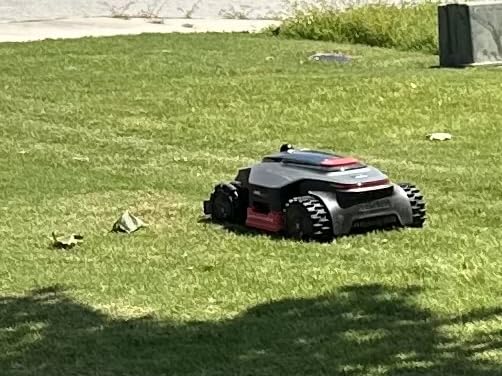
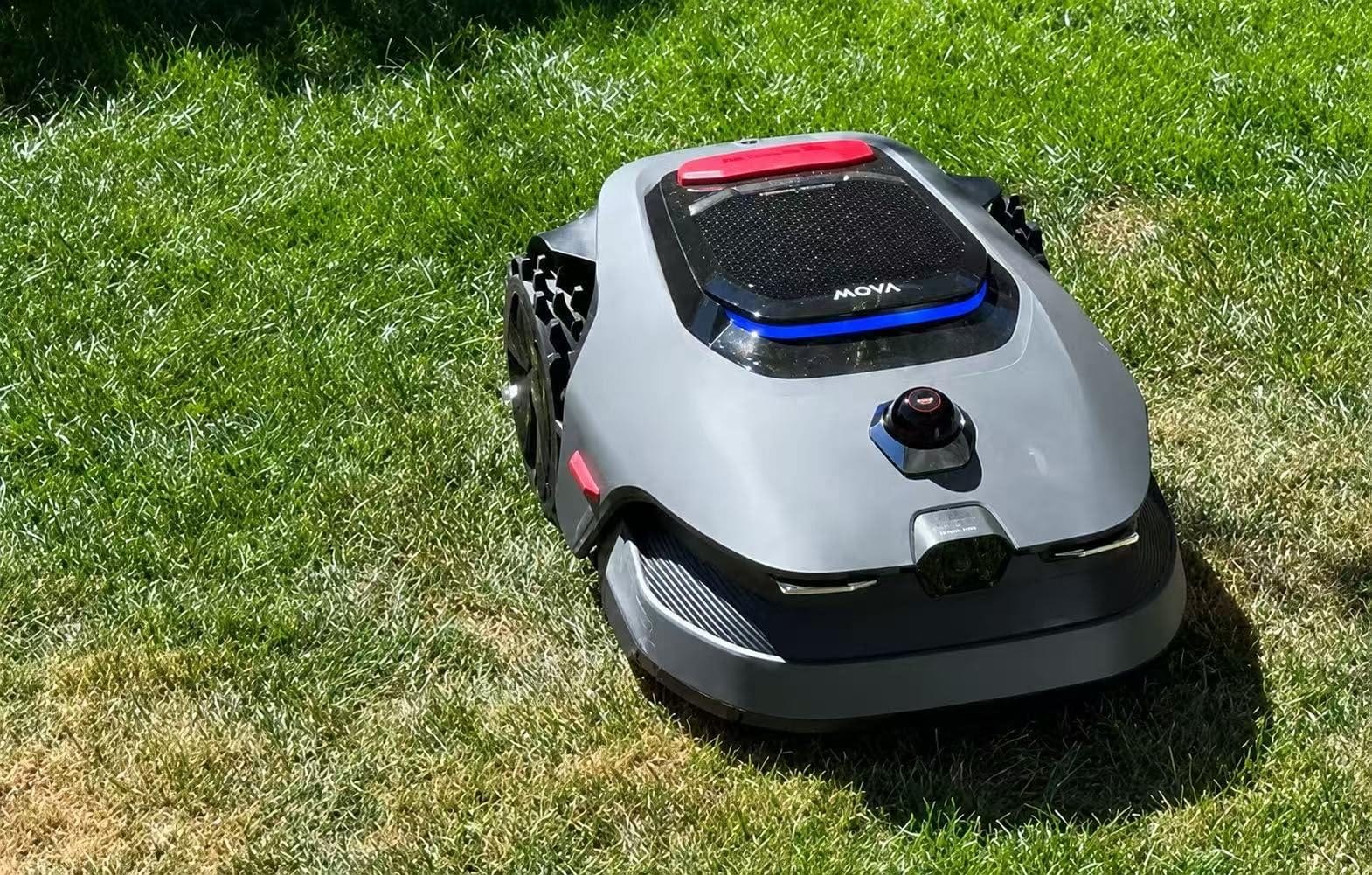
11. MOVA LiDAX Ultra 2000 AWD for Three Years of Included Connectivity
MOVA LiDAX Ultra 2000 AWD Robot Lawn Mower Wire Free RTK Free for up to 0.5 Acre*Dual Maps, 360° 3D LiDAR & AI Dual Vision Mapping, Robotic Mower with 4G, for 80% Slopes, Cutting Height 1.2”–3.9“
0.5 acre coverage
RTK-free 360 degree 3D LiDAR
15.8 inch dual disc
3 years free 4G
Pros
- RTK-free and wire-free with no antenna or base station
- Four 116W hub motors handle 80% slopes and 2.4 inch obstacles
- 15.8 inch dual disc with 12 blades covers up to 0.25 acre per charge
- UltraTrim 2.0 leaves about 1.2 inches of edge grass
- Three years of free 4G with PIN lock and TrueGuard
Cons
- Half-acre maximum ties for the smallest coverage here
- 3.8 rating with 24% of reviews at one star
- Very small review base of 14 ratings
The MOVA LiDAX Ultra 2000 AWD is the most generous machine here on connectivity. Three years of free 4G is included, which removes the subscription question entirely for the first three seasons.
A 3-year warranty plus 24/7 after-sales service come with it. That is a real difference in ongoing cost against machines where the cellular plan starts after year one.
Navigation is RTK-free, using 360 degree 3D LiDAR plus AI dual vision for centimetre-level 3D mapping with no antenna, no base station and no wire. Obstacle avoidance combines a 3D point cloud with dual vision and recognises more than 300 objects.
What stands out on the MOVA
Four 116W high-torque hub motors give 80% slope capability and 2.4 inch obstacle crossing, with advanced suspension that prevents tipping and floating cutting discs that adapt to uneven ground. The 36V 243Wh battery runs up to 165 minutes with a dual-disc system and 12 blades across a 15.8 inch cutting width.
UltraTrim 2.0 edge-riding technology is the detail most relevant to large-property owners tired of edge work, leaving roughly 1.2 inches of uncut edge grass. Dual maps, multi-zone scheduling and a 1.2 to 3.9 inch cut height round out a well-equipped package. Other variants cover 0.2, 0.25 and 0.75 acre.
Where the MOVA is a gamble
It rates 3.8, with 24% of reviews at one star, and the whole rating rests on 14 reviews. That is a very thin evidence base for a machine with this wide a feature set, and long-term reliability is simply not yet established.
Coverage of half an acre also ties for the smallest here, which is a strange place for a 15.8 inch cutting width to land. The wide deck is genuinely good for speed on whatever it can cover, but it does not extend the property size this machine can handle.
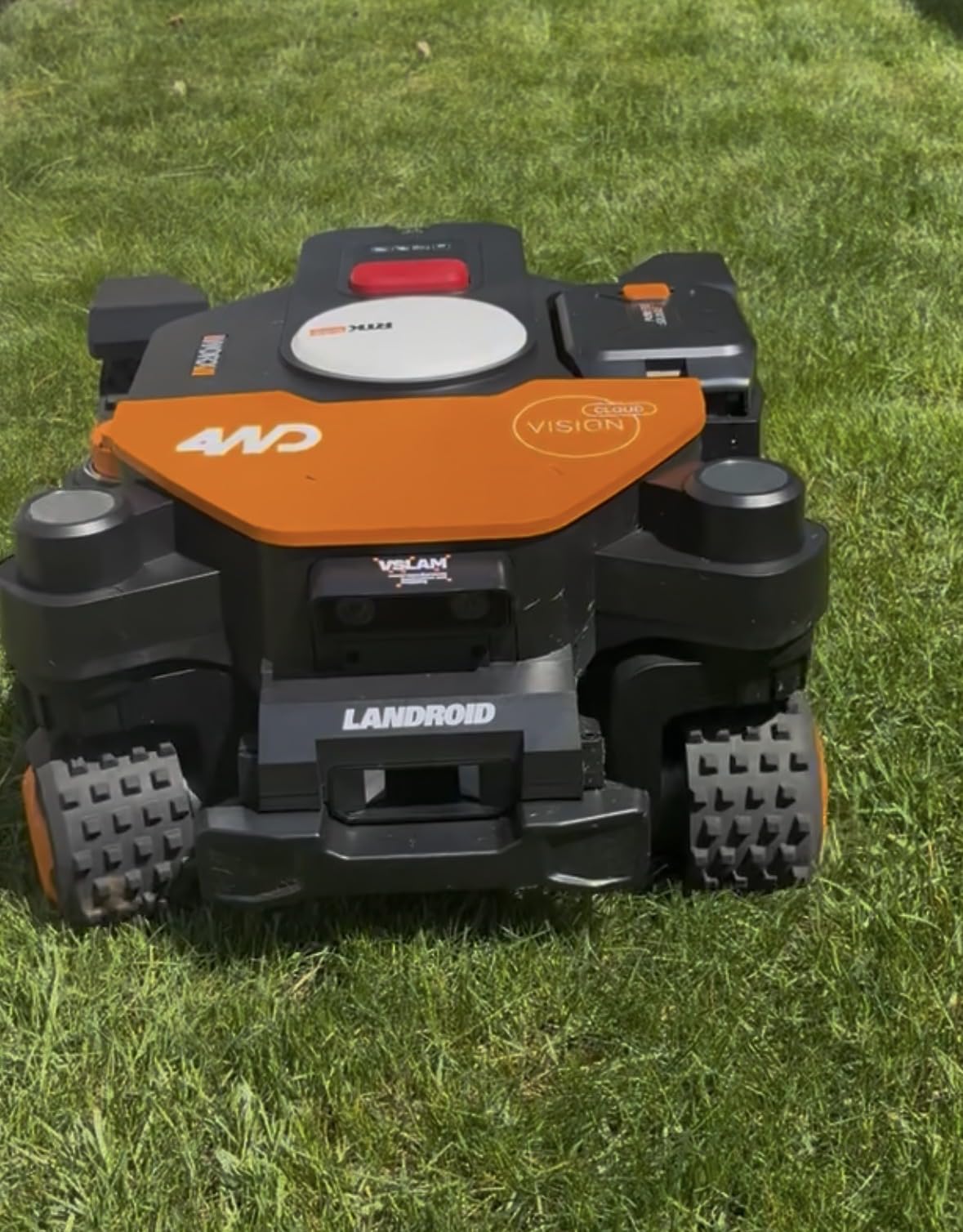
12. WORX Landroid WR342 4WD for Complex Multi-Zone Layouts
WORX Robot Lawn Mower 4WD for 1/2 Acre, No Perimeter Wire, WR342
0.5 acre coverage
RTK Cloud with no antenna or fees
Unlimited mowing zones
Cut-to-Zero blade
Pros
- RTK Cloud navigation with no antenna install and no recurring fee
- Unlimited mowing zones with custom pathways
- 4WD traction up to 84% slopes
- Whisper quiet with roughly an hour of runtime per charge
- 3 year manufacturer warranty
Cons
- App is the weak point with limited map editing
- Goes around tall dandelions rather than cutting them
- Light sensor blocks evening mowing without a headlight
The WR342 is the half-acre companion to the WR344, and it is the one that appeals to owners with a lawn divided into many separate areas. It supports unlimited mowing zones with custom pathways, which no other machine in this roundup offers, and the other WR344 strengths carry over: cloud RTK with no antenna and no recurring cloud service fee, 4WD traction to 84% slopes, and true front-wheel steering for turf-friendly turns.
Coverage is half an acre and battery life is around 41 minutes, or roughly an hour of runtime on a full charge.
It is whisper quiet, and parallel, checkerboard, diamond and natural mowing patterns are all available alongside V-SLAM sensor fusion for shaded areas and a Cut-to-Zero offset blade.
What owners report about the WR342
Once configured, enthusiasm is high. One owner went from multiple daily interventions to zero within a week, another replaced 18 years of riding a lawn tractor on hilly ground and no longer deals with rollover risk or dog toys. All-wheel drive handles 30 degree slopes and St. Augustine grass, and auto mapping works very well where sidewalks and driveways provide clear boundaries.
Find My Landroid GPS tracking with cellular connectivity and a remote lock handle security, and the 3-year manufacturer warranty is longer than most of the field.
Where the WR342 disappoints
The app is the recurring complaint. Limited map editing, clunky manual controls and no way to set per-zone patterns are all mentioned. Initial setup is more confusing than expected, including 2.4 GHz WiFi and SIM activation hurdles, and one owner had a second firmware update never pushed by the app at all.
It also goes around tall dandelions and other weeds rather than over them, leaving circles of uncut grass. No headlight is included in the US, and the light sensor declares darkness well before sunset, which blocks evening mowing entirely. It cannot be stored upright without a separate stand, and the support knowledge base is thin with little human assistance available.
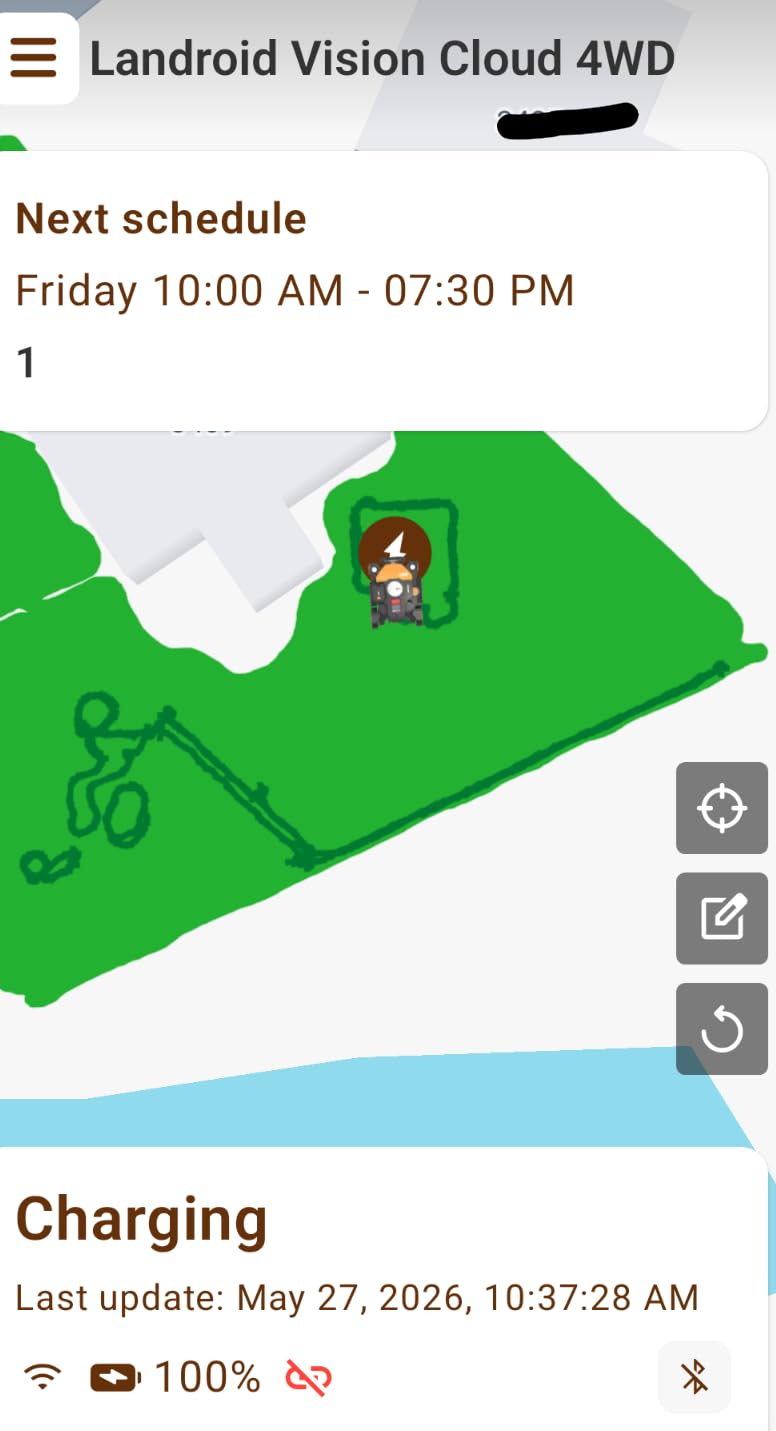
How Robot Lawn Mowers Know Where Your Lawn Ends
Navigation is the single decision that determines whether a robot mower works on your property, and it is the one buyers most often get wrong. There are four approaches in this roundup, and they fail in completely different ways.
Boundary wire is the oldest and the most predictable. A wire is pegged around the perimeter, and the mower follows its signal. The WORX Landroid L WR155E is the only one here that uses it. It is immune to satellite problems, tree cover and buildings, which is a genuine advantage on a wooded lot. The cost is installation: 250 m of wire and 340 pegs, and on a large property with multiple lawn areas that is a full weekend. Edges also tend to be cleaner because the wire defines a physical limit.
RTK positioning uses satellite signals corrected to centimetre accuracy, and it is the standard on most of the wire-free machines here. It needs a clear view of the sky, a cellular or network connection for the correction data, and often a roof-mounted antenna or base station to tighten the fix. The Mammotion LUBA 2 AWD 5000HX, the ANTHBOT Genie 3000 and the two WORX Landroid models all use it. The critical point is that RTK alone fails under heavy tree cover, and that is the number one real-world failure mode owners report.
LiDAR builds a 3D map by spinning a sensor and measuring distances, which is why it does not care what the sky looks like. The ECOVACS GOAT A3000, the Mammotion LUBA 3 and the MOVA LiDAX Ultra 2000 use it, and the MOVA pairs it with dual vision with no antenna at all. LiDAR removes the antenna and the GPS dependency in one move, but reviews report that LiDAR-only boundary tracking is somewhat weaker than RTK over long distances, which shows up as map drift.
Vision and VSLAM use cameras to build and follow a visual map, sometimes fused with LiDAR or RTK as a fallback. The newest and best machines combine all three, which is why tri-fusion and sensor-fusion language appears so often in the feature lists above. The LUBA 3 combines 360 degree LiDAR, NetRTK and dual cameras; the Lymow One Plus pairs RTK with V-SLAM; the WR342 and WR344 add V-SLAM for shaded areas.
For a large property, our rule of thumb is simple. Heavy tree cover or buildings blocking the sky means start with a LiDAR or tri-fusion model. Open ground with a clear southern view means RTK is cheaper and more accurate. Multiple disconnected lawn areas that you do not want to rewire each time means wire-free, whatever the technology underneath.
Matching a Robot Mower to Your Acreage
Coverage ratings are the most quoted spec and the most misleading. A manufacturer rating assumes flat, open, well-maintained turf.
Add tree roots, ditches, narrow passages, steep grades and a lawn that has been allowed to grow, and real coverage drops well short of the headline number. This is the most common complaint across owner reviews in this category, and the forums describe manufacturer acreage claims as overstated on complex terrain.
Here is how to size up. The table below uses the rated figures from the machines above as a starting point, not as a promise.
Half an acre or less. The Sunseeker X5 AWD, Husqvarna 410iQ, MOVA LiDAX Ultra 2000 AWD and WORX Landroid WR342 all sit here. Choose on navigation quality and passage width rather than deck size. If your lawn is shaded or narrow, the Sunseeker is the strongest fit in the group.
Three quarters to one acre. The Mammotion LUBA 3 AWD 3000, ECOVACS GOAT A3000, ANTHBOT Genie 3000 and WORX Landroid WR344 cover this range. This is where cutting width starts to matter, because you are no longer finishing within a morning.
One to one and a half acres. The Mammotion LUBA 2 AWD 5000HX, rated at 1.25 acres with a maximum of 1.48, is the most proven option and handles the largest number of separate mowing areas. The Lymow One Plus overlaps here and stretches further, reaching 1.73 acres per day across up to three charge cycles.
Two acres and above. This is where no single consumer machine in this roundup is a clean answer. The YARBO Pro is the only one rated for anything approaching this, at six acres. Otherwise, owners of very large properties in the community report running two machines in parallel, splitting the lawn into two areas and running one robot in each. Nobody in this roundup is a genuine commercial unit.
On the question of one big mower versus two smaller ones, the community answer is fairly consistent. Two machines on separate areas finish the property faster, act as a backup for each other when one is charging or being serviced, and let you run one zone while troubleshooting the other. The practical limit is whether you are willing to install two docks and map two boundaries.
For the acres-per-hour question, the numbers worth knowing come from the machines themselves. The LUBA 3 AWD 3000 is quoted at up to 500 sq m per hour, the ECOVACS GOAT A3000 at up to 400 sq m per hour, and Lymow owners report roughly 300 sq m per hour in practice for the One Plus. Multiply by the hours available in a day and you get a realistic finish time. A one-acre lawn is roughly 4000 sq m, so at 300 sq m per hour you are looking at well over an hour of actual mowing, before accounting for obstacle stops, perimeter passes and charge cycles.
On the same grounds, the narrow-deck machines are the ones that force a full extra day. The WR344’s 8.7 inch disc at walking pace is the extreme case, with owners describing up to two full days for a large lawn. The wide-deck machines finish dramatically faster, which is why cutting width is often the deciding factor on acreage.
Slope, Terrain and Grass Conditions That Decide the Purchase
Slope ratings are the most inflated specification in the category, so read them carefully. A published 80% grade is a maximum on a short ramp in ideal conditions, not a promise about a 40 degree bank behind your house with wet clay under it. What actually matters is the drivetrain behind the number.
Three categories of traction appear here. All-wheel drive appears on the Mammotion LUBA 2 and LUBA 3, the Sunseeker X5, the MOVA and the two WORX Landroid 4WD models, and gives good results on moderate grades and uneven ground. Track drive appears on the YARBO Pro and the Lymow One Plus, and it is the most capable option on steep, wet, soft or stony ground, spreading weight and crossing obstacles that stop wheels. Two-wheel drive mowers will bog on anything challenging.
Yarbo and Lymow are repeatedly named in forums as the only consumer-grade machines that hold up on rough multi-acre terrain, and the track drivetrain is the reason. Owners describe the Lymow crossing soft, swampy ground without rutting the lawn the way a riding mower would.
All-wheel drive does not rescue a mower on long grass or loose scree, and track models are heavier and harder to reposition by hand.
Grass conditions matter as much as terrain. Owners report that robot mowers maintain short turf; they do not cut down an overgrown lawn, and most cannot handle heavy brush.
Several machines treat tall grass as an obstacle and go around it, the Sunseeker X5 and the WR342 both being reported to do this, which means you may end up with circles of uncut grass around dandelions. If your lot has been neglected for a season, mow it down once with a conventional mower before the robot takes over.
Exposed tree roots are the most commonly reported physical failure. Mowers get stuck and some do not recover on their own, requiring a manual carry back to the dock. Tracked machines handle roots best, and a wide chassis with a terrain-adaptive suspension is your second line of defence. The LUBA 3 uses adaptive suspension designed to step over roots, curbs and thresholds up to 50 mm.
Rocks and stony ground are a similar story. The YARBO Pro ships with all-steel skid shoes specifically for this, and it is the machine most often recommended for rural, stony acreage.
GPS Dead Zones, Multi-Zone Schedules and Running Two Robots
GPS signal loss is the number one real-world failure mode reported across this entire category, and it deserves its own section. The pattern is consistent: a mower that navigates perfectly on open lawn stops mid-yard under a large tree, circles, and then sits there.
The usual causes are mature canopy, buildings and barns blocking the sky, and valley or terrain geometry.
There are three ways to manage it. The first is choosing a model with a vision or LiDAR fallback, which is the direct fix. Every machine above that combines RTK with a camera or LiDAR sensor can keep working when satellites drop, and the LUBA 3, Lymow One Plus and Sunseeker X5 are the most complete examples. The second is improving the RTK fix itself with a roof-mounted antenna or a properly placed beacon away from obstructions, which is what the separately sold Mammotion RTK mount is for. The third is editing the map to exclude the problem area and adding it back as a separately scheduled zone.
Expect some map drift on any RTK machine. The YARBO Pro and the ECOVACS GOAT A3000 both have documented drift reports, and the recovery in each case was manual. On a large property this is a normal part of ownership, not a defect to be surprised by later.
Multi-zone scheduling is what makes a large lawn practical, and the ceiling varies enormously. The Lymow One Plus supports up to 80 zones with no-go areas and per-zone blade speed, travel speed and cut height. The Mammotion LUBA 2 AWD 5000HX supports up to 50 areas, and the LUBA 3 supports 30. The Sunseeker X5 stores up to 5 maps, the MOVA supports dual maps, and the WR342 is the outlier with unlimited zones and custom pathways.
The practical way to use zones on a big property is to split by need rather than by geography alone. A front lawn visible from the road gets mowed on a short schedule, a back area behind the house less often, and a strip along the fence rarely.
No-go zones handle beds, trees and hardscape. This is what turns one endless pass into a schedule you can live with.
For properties above three acres, two robots is the arrangement owners actually use. The approach is straightforward: divide the property into two roughly equal areas, install a dock in each, and let each machine run its own schedule. Over on r/roboticLawnmowers, owners of very large lots report that a single consumer mower is not enough and that running two in parallel is the common workaround. Nobody in this roundup is a true commercial unit, and the community consensus is that above roughly four or five acres, two machines are the practical answer.
What Robot Mowers Still Cannot Do
Set expectations honestly, because this is where most disappointed buyers come from. A robot lawn mower is a turf maintenance tool, not a brush cutter, and several things remain outside its scope.
It will not cut down long grass. Every machine here maintains short turf. If the lawn is overgrown, cut it once conventionally first.
You will still need a string trimmer for edges. Most models leave a band of uncut grass along borders. The best performers in this roundup are the WR344 and WR342 with their Cut-to-Zero offset blade, and the MOVA with UltraTrim 2.0 leaving about 1.2 inches, but the trimmer does not disappear from the shed.
It will not solve a GPS problem. If your lawn is walled in by mature trees and buildings, choose LiDAR or tri-fusion navigation or plan on adding a beacon.
It needs a clear-ish lawn. Small objects, hoses, toys and pinecones get run over or wrapped around the deck. Owners who pre-clear the lawn report dramatically fewer incidents, and obstacle avoidance is a safety net rather than a substitute for tidying up.
It still has running costs. Cellular subscriptions after the trial period are the most common recurring charge, with the Mammotion LUBA 2 AWD 5000HX requiring a 4G plan after the first free year. Replacement blades, battery packs and occasional repairs add to that. The machines that avoid it entirely are the WORX Landroid RTK Cloud models, which have no recurring cloud service fee, and the MOVA, which includes three years of 4G.
On noise, the comparison is decisive. A gas mower runs in the 90 to 100 dB range, which is loud enough to disturb neighbours across a boundary.
Most of the mowers here run in the 55 to 65 dB range, and the Sunseeker X5 is rated at 60 dB with owners describing the loudest sound as the plastic body creaking. Several of them run at night, which is only possible at that noise level.
Frequently Asked Questions
Are there robotic mowers that can mow large areas?
Yes. The YARBO Robot Lawn Mower Pro is rated for up to 6 acres, and the Lymow One Plus covers up to 1.73 acres per day across three charge cycles. For properties in the 1 to 1.5 acre range, the Mammotion LUBA 2 AWD 5000HX is rated at up to 1.48 acres with 50 mowing areas. Above about 4 acres, most owners run two machines on separate zones.
What is the largest area a robot lawn mower can mow?
The largest consumer-rated machine in this roundup is the YARBO Robot Lawn Mower Pro at 6 acres, using a tracked chassis and a 20 inch cutting deck. The next tier sits at 1.73 acres per day for the Lymow One Plus and 1.48 acres for the Mammotion LUBA 2 AWD 5000HX. These are manufacturer ratings on ideal turf, so real coverage on rough ground is lower.
What is the best robot lawn mower for an acreage property?
For a rough multi-acre property, the tracked machines lead. The YARBO Pro handles up to 6 acres with steel skid shoes for stony and muddy ground, and the Lymow One Plus climbs 45 degree slopes on a 15000mAh battery. For a large suburban lot with trees, the Mammotion LUBA 2 AWD 5000HX pairs AI vision with RTK so it keeps working under canopy.
How big of a yard can a robot mower do?
Most machines here are rated between half an acre and three quarters of an acre, with the Mammotion LUBA 2 AWD 5000HX reaching 1.25 to 1.48 acres and the Lymow One Plus covering 1.73 acres in a day. Coverage depends heavily on cutting width and slope. Narrow 8.7 inch decks at walking pace can take two full days on a large lawn.
Do robot lawn mowers need a boundary wire?
Most no longer do. Only the WORX Landroid L WR155E in this roundup still requires 250 m of perimeter wire and 340 pegs, which is a meaningful weekend job on a large property. The rest navigate by RTK satellite positioning, 360 degree LiDAR, camera mapping, or a combination of all three, with virtual boundaries drawn in the app.
Our Recommendation by Lawn Size for 2026
For a one to one-and-a-half acre suburban property with trees, the Mammotion LUBA 2 AWD 5000HX is the pick. It has the deepest owner history in the group, AI vision that keeps working under canopy, 50 mowing areas and an 80% slope rating. For a rough multi-acre property with mud, roots or stone, the YARBO Robot Lawn Mower Pro is the pick, and the Lymow One Plus is the better answer when the ground is steep or wet.
For most people buying a first robot, the best robot lawn mowers for large lawns question is really a question about how much property you actually have. Half an acre and a shaded or complicated yard points to the Sunseeker X5 AWD. A flat open lawn where you would rather not dig trenches points to the WORX Landroid L WR155E. Anything above three acres realistically means two machines. Check the current details for any of these before you commit, and give the demo a week of patience before you judge it.