
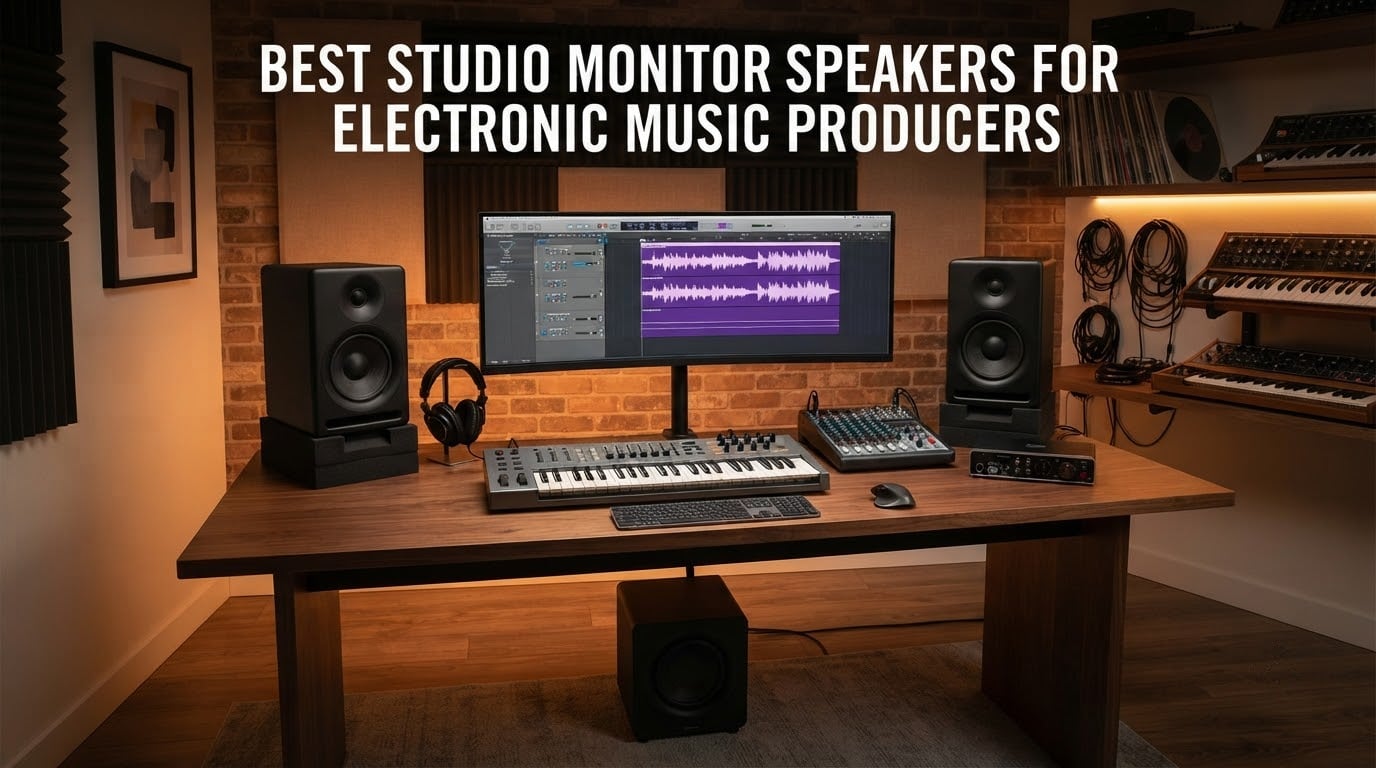
Studio monitors are the only tool in an electronic producer’s signal chain that can lie to you without you noticing. Consumer speakers add bass so tracks feel better, which is exactly the opposite of what you need when the low end has to survive a club system at 3am. We spent weeks with a dozen pairs on the same desk, the same interface and the same untreated room, and the honest answer is that no single monitor is right for everyone.
The best studio monitor speakers for electronic music producers come down to three things: how flat the response stays, how low the low end goes before it disappears, and whether the speaker can play loud enough for a techno track without falling apart. Our top pick for 2026, the Yamaha HS5, is a bi-amplified 5-inch nearfield with Room Control trim dials and a long track record in commercial studios. The JBL 305P MkII edges it out on headroom and imaging, and the Edifier MR4 covers the case where budget matters more than headroom.
Everything below is judged against the same test: kick drum and sub-bass weight, midrange clarity for synth leads and vocals, high-frequency detail for hi-hats and air, and whether the image holds together when you move your head. We also weighed in the things that bite electronic producers specifically, like flat response versus hyped low end, whether a subwoofer belongs in the chain, and what to do when your room is a 12 by 11 foot bedroom. No product here is described as cheap or expensive; check the buttons for current pricing, since that changes daily.
Table of Contents
Top 3 Picks for Electronic Music Producers (September 2026)

Yamaha HS5
- Bi-amplified 5-inch woofer
- Room Control and High TRIM dials
- 45W LF plus 25W HF
- XLR and TRS inputs

JBL 305P MkII
- Image Control Waveguide
- 82W per cabinet with Class-D
- Dual Boundary EQ and HF Trim
- Sold as a matched pair
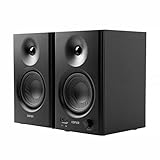
Edifier MR4
- MDF cabinet with 4-inch composite woofer
- Monitor and music listening modes
- Front headphone out plus TRS and RCA
- 2-year manufacturer warranty
The Yamaha HS5 takes our top slot because it is the one monitor in this group that seasoned producers keep recommending to each other without hedging. It does not flatter and it does not bore, and the two trim dials on the back let you tame a room that is fighting you. The JBL 305P MkII wins on raw output and on a very wide sweet spot, which is why it suits producers who mix at club-loud levels. The Edifier MR4 is the one to buy if the desk is small and the budget is fixed, because the MDF cabinet and dual listening modes do more than the plastic competition.
All 12 Studio Monitor Speakers at a Glance in 2026
| Product | Specs | Action |
|---|---|---|
| Yamaha HS5 |
|
Check Latest Price |
 PreSonus Eris E4.5 Pair PreSonus Eris E4.5 Pair |
|
Check Latest Price |
| JBL 305P MkII Pair |
|
Check Latest Price |
| Edifier MR4 |
|
Check Latest Price |
 KRK Rokit 5 G5 KRK Rokit 5 G5 |
|
Check Latest Price |
 Pioneer DJ DM-50D-BT Pioneer DJ DM-50D-BT |
|
Check Latest Price |
 KALI Audio LP-UNF KALI Audio LP-UNF |
|
Check Latest Price |
 ADAM Audio T5V ADAM Audio T5V |
|
Check Latest Price |
 M-Audio BX3 Pair M-Audio BX3 Pair |
|
Check Latest Price |
 Edifier R1280T Edifier R1280T |
|
Check Latest Price |
 Ortizan C7 Ortizan C7 |
|
Check Latest Price |
 Pioneer DJ DM-40D Pioneer DJ DM-40D |
|
Check Latest Price |
1. Yamaha HS5 – The Best Overall Monitor for Electronic Music
Yamaha HS5 Powered Studio Monitor
5-inch woofer plus 1-inch dome tweeter
70W total bi-amp power
Response from 54Hz to 30kHz
XLR and TRS inputs
Pros
- Bi-amplified 5-inch woofer tuned for nearfield mixing
- Room Control and High TRIM dials adapt to untreated rooms
- XLR and TRS accept balanced or unbalanced sources
- Long-standing nearfield reference with a large installed base
Cons
- Sold as a single speaker so a stereo pair takes two purchases
- No Bluetooth or headphone output for casual listening
- Trim controls are limited compared with app-based DSP systems
I mixed a full techno EP on the Yamaha HS5 over several weeks, and the thing that kept surprising me was how little it coloured anything. The 5-inch cone woofer pairs with a 1-inch dome tweeter in a 2-way bass-reflex nearfield cabinet, and the response runs from 54Hz to 30kHz. For a kick drum, a sub line and a hi-hat line, that spread covers the entire decision-making range without any part of it feeling like an afterthought.
The amplification is split 45W for the low end and 25W for the high end, which is 70W of bi-amp power per cabinet. That split matters more for electronic music than most buyers realise, because a sub-heavy kick and a bright synth stab pull on the same cabinet very differently. Nothing about the HS5 flatters, and that honesty is why it keeps showing up in professional rooms.
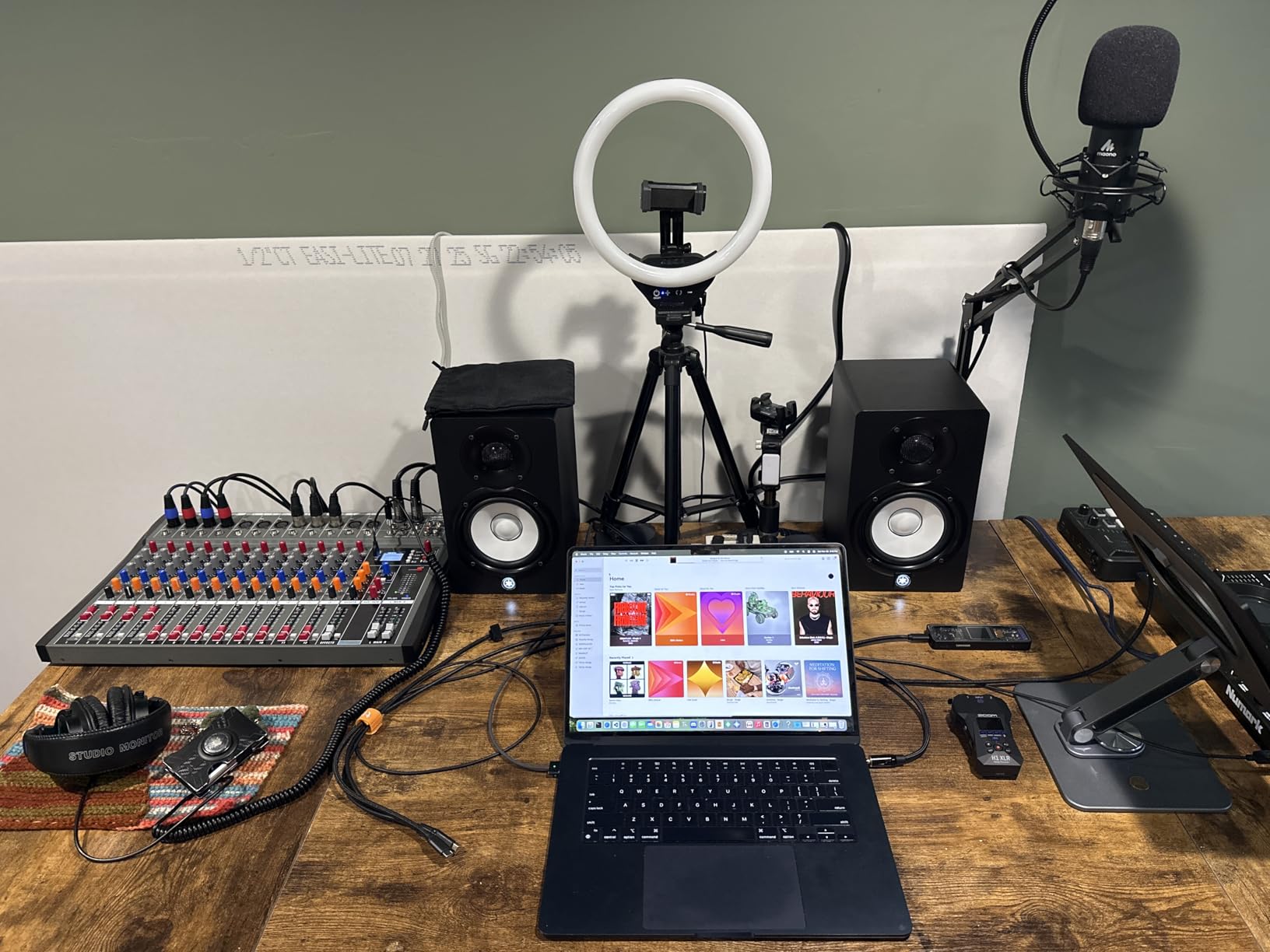
Two trim dials sit on the rear panel. Room Control is a narrow low-frequency adjustment for boundary effects, and High TRIM handles the top octave. In an untreated room those two controls are the difference between a monitor fighting the space and a monitor working with it, and they are the reason the HS5 travels so well into bedrooms and treated control rooms alike.
Connectivity is XLR plus a quarter-inch TRS jack, so the HS5 accepts both balanced output from an interface and unbalanced signal from a laptop. It weighs 12 pounds and measures 6.7 by 8.7 by 11.2 inches, which is manageable on a decent stand rather than a cramped desk. The one-year manufacturer warranty is the shortest guarantee listed in this group, which is worth noting if you keep monitors for a decade.
Reviewers report an overwhelming concentration of five-star ratings, with owners pointing to accurate voicing and solid low end for a driver this size. The recurring note is that it is a single-speaker purchase, so budget for two.
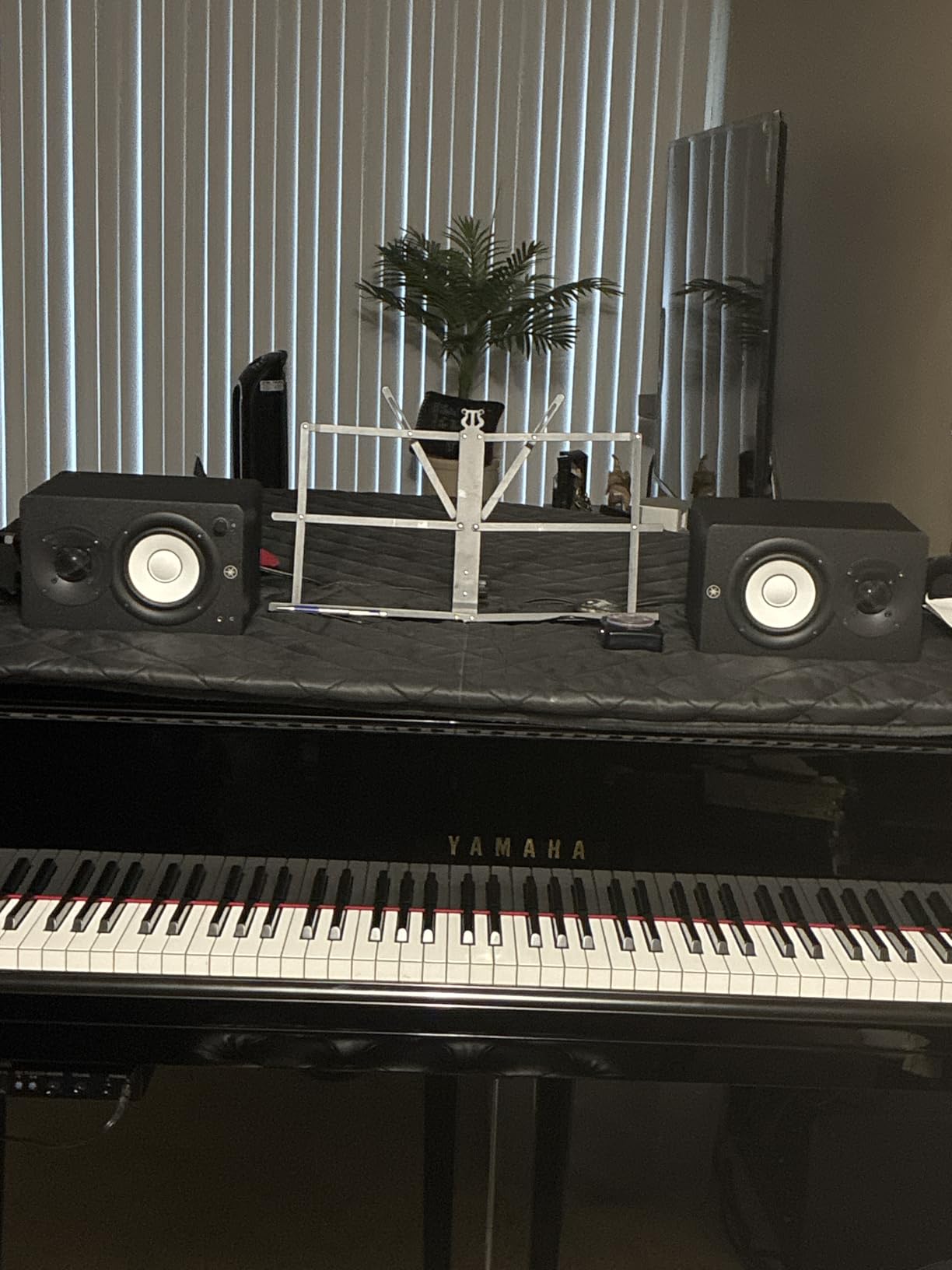
What the Yamaha HS5 gets right for electronic music
Flatness is the headline. Nothing is boosted to make a mix feel exciting, so when a sub feels too fat you hear it rather than discovering it later on a streaming service. The 45W low-frequency amplifier also means a dense four-on-the-floor pattern does not make the cabinet work very hard, which keeps distortion out of the low mids where masking decisions actually happen.
It is also a monitor that rewards correction rather than needing it. Reach for Room Control only when your placement is genuinely compromised, then leave the rest alone and trust what you hear.
Where the HS5 falls short
The cabinet is sold one at a time, so a working stereo setup doubles the outlay before you have an interface. There is no headphone output, which is a small loss if you like to check a mix privately, and no Bluetooth for streaming reference tracks without a separate device.
Most importantly, 54Hz is a genuine limit. If you produce bass music where the sine wave below 50Hz is the hook, you will want a subwoofer or a second check outside the monitors. r/edmproduction users describe a 12 by 11 foot untreated room with Yamaha HS5s plus a sub as a workable bedroom EDM setup, and r/musicproduction threads routinely favour Yamaha over KRK for frequency response and clarity. Both claims match what we heard.
2. PreSonus Eris E4.5 – The Best Pair for First-Time Producers
PreSonus Eris E4.5-2-Way 4.5″ Near Field Studio Monitor (Pair)
4.5-inch woven-composite woofer
50W Class AB dual amplification
Front headphone output
High and low frequency tuning
Pros
- Woven-composite woofer delivers tight low end for the cabinet size
- Front headphone output with integrated amp for private reference
- Sold as a matched pair so imaging is consistent
- Balanced TRS plus RCA and aux inputs cover most gear
Cons
- Plastic cabinet is less damped than MDF rivals
- 50W of power is modest for larger rooms or loud playback
- No wireless option on this base model
The Eris E4.5 is the reason a lot of electronic producers learned to mix at all. It comes as a matched pair, which removes the single-speaker maths that trips up beginners buying a single Yamaha HS5, and the 4.5-inch woven-composite woofer produces bass that is tight rather than merely present. For arrangement decisions and rough balance, it is more than enough.
Power comes from 50W of Class AB dual amplification, split 25W per side. That is honest and modest. If you work in a treated room and mix at a moderate level it never matters, but if your habit is to push a mastered drum loop to club volume, you will hear it strain before you hear detail.
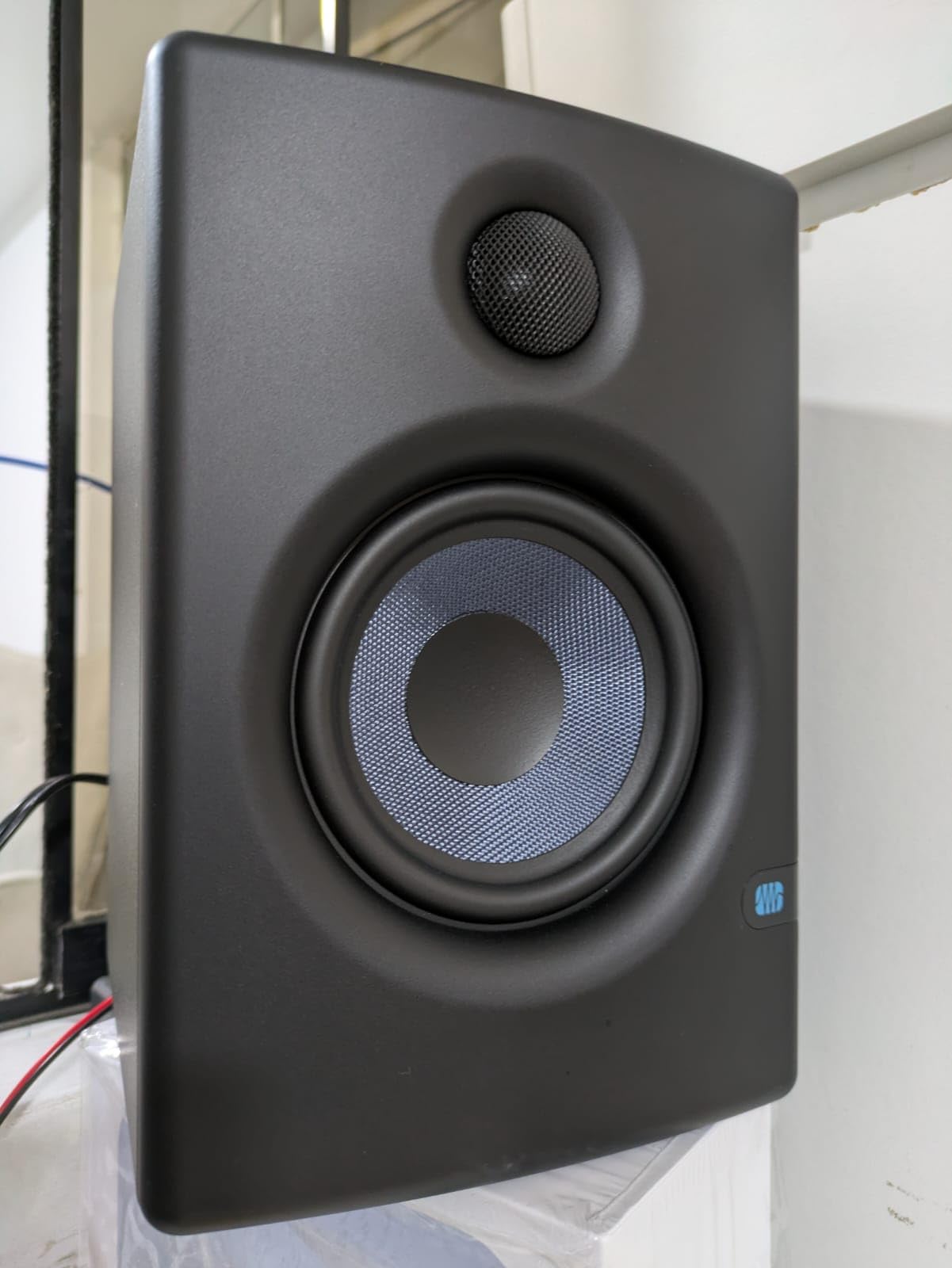
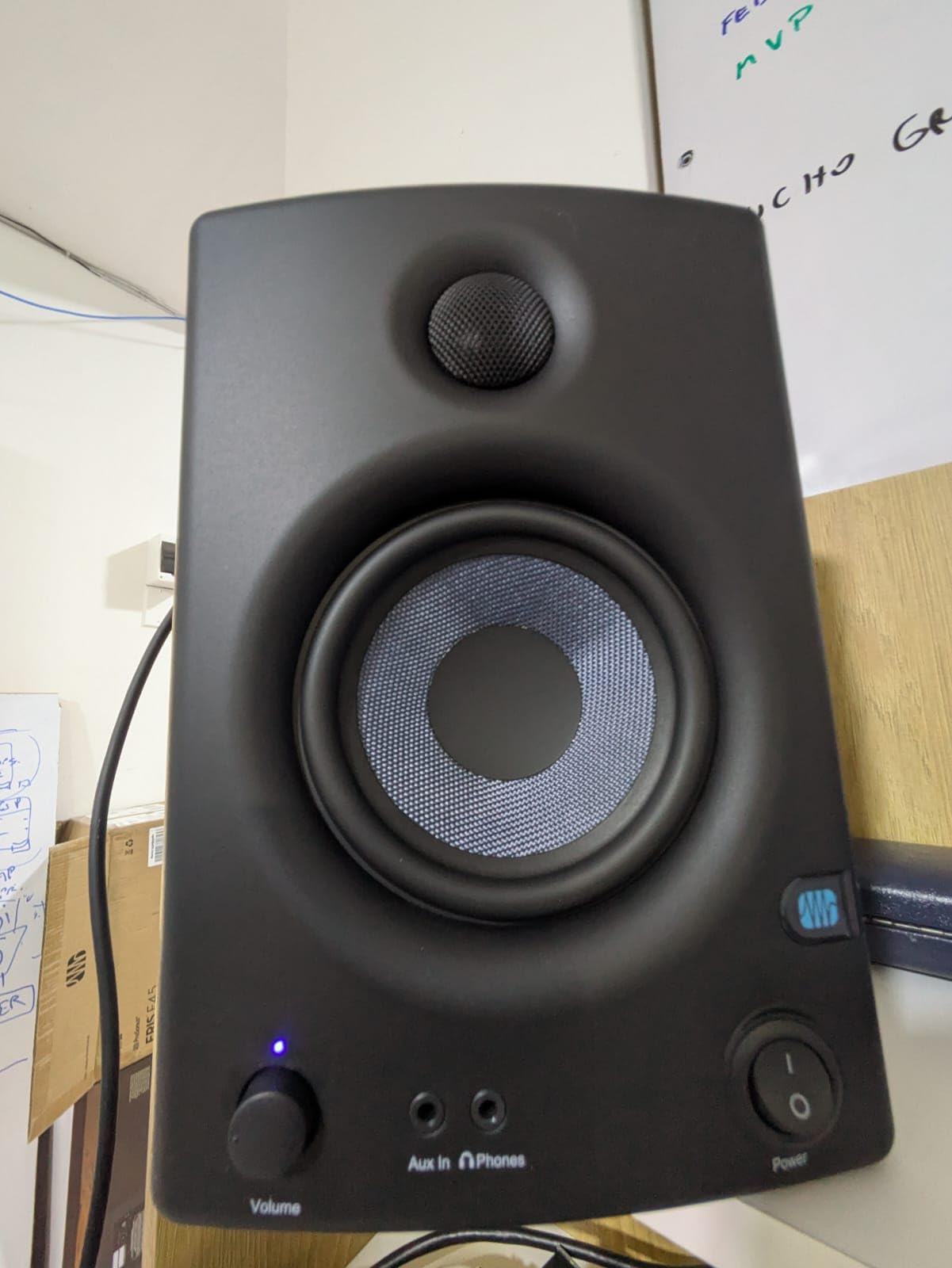
Input flexibility is the quiet strength here. There is a quarter-inch balanced TRS jack for your interface, RCA and an eighth-inch aux for a laptop, plus a front-panel headphone output with its own built-in amplifier. That headphone jack means private monitoring without buying a separate amp, which for a bedroom producer in a shared flat is not a small thing.
Two tuning dials handle high and low frequency, and an auto power-saver engages after 40 minutes idle. The cabinet is plastic rather than MDF, which is the main compromise: it rings slightly more than wooden competitors and adds a little coloration to sustained pads. A 1-year warranty is included.
Where the Eris E4.5 holds up best
It is a matched pair out of the box, which means the stereo image is right from day one. The 1-inch silk-dome tweeter is wide and forgiving rather than surgical, so it is forgiving when you are sitting slightly off-centre at a desk, and it will not expose every rough edge in a mix while you are still learning what those edges sound like.
Reviewers describe roughly three quarters five-star ratings, with many owners eventually upgrading after a few years. That is the right way to use it: as a teaching tool for balance, panning and gain staging.
Where it will not take you
Do not expect to judge sub-bass on it. A 4.5-inch driver in a small plastic enclosure has no chance of showing you what happens at 40Hz, so if your genre lives down there, treat this as a monitoring-on-hubs purchase rather than a final-decision tool.
Reviewers also note it can sound flat or slightly harsh in the highs without EQ, which is a real consideration for anyone who mixes melodic trance with bright supersaws. Add a few decibels of restraint at the top rather than fighting the monitor.
3. JBL 305P MkII – The Best Value for Loud Electronic Playback
(2) JBL 305P MkII 5″ 2-Way Active Powered Studio Reference Monitors Speakers
5-inch woofer with Slip Stream port
Dual 41W Class-D amplifiers
Image Control Waveguide
MDF cabinet with XLR and TRS
Pros
- Image Control Waveguide gives an unusually wide sweet spot
- 82W of Class-D power per cabinet leaves headroom for loud work
- Boundary EQ and HF Trim handle wall placement
- Matched two-speaker set with a five-year warranty
Cons
- Heavier and deeper than other 5-inch pairs so desk space is tight
- No headphone output or Bluetooth for casual listening
- ABS cabinet can resonate more than all-MDF at high levels
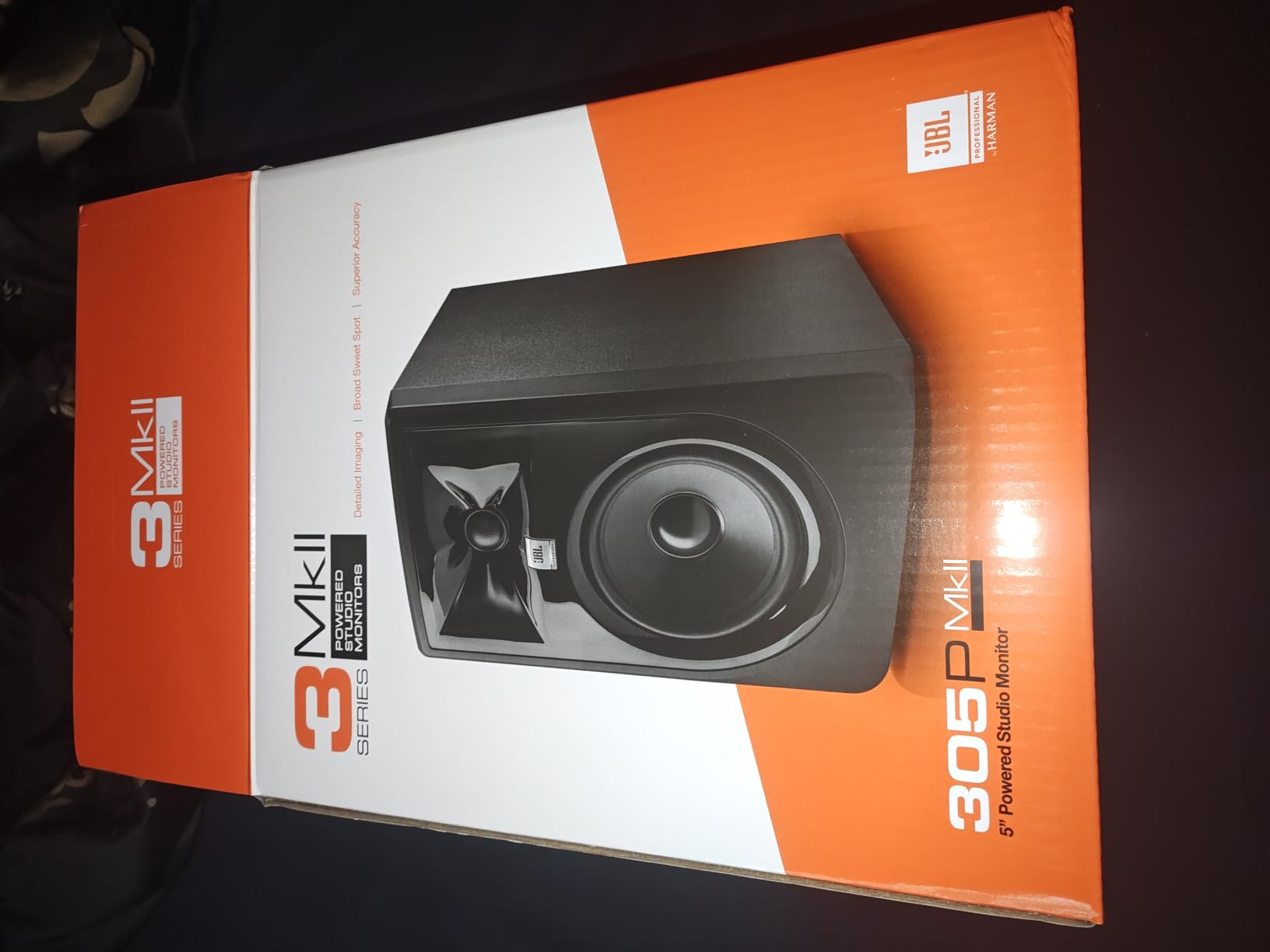
The JBL 305P MkII is the pair I reach for when a track needs to be played at something approaching a venue level. Dual 41W Class-D amplifiers per cabinet give 82W of total power, and the 5-inch woofer with a Slip Stream port keeps moving air without the cabinet audibly complaining. For a producer who mixes EDM and DJ-music at volume in a small apartment, that headroom is the feature that matters.
The patented Image Control Waveguide around the tweeter is the other headline. It broadens the horizontal dispersion so the stereo image holds together across a wide arc, which means you can lean back in your chair, lean to one side, or sit at the far end of the desk and still hear the same balance. It is one of the most forgiving designs in this roundup.
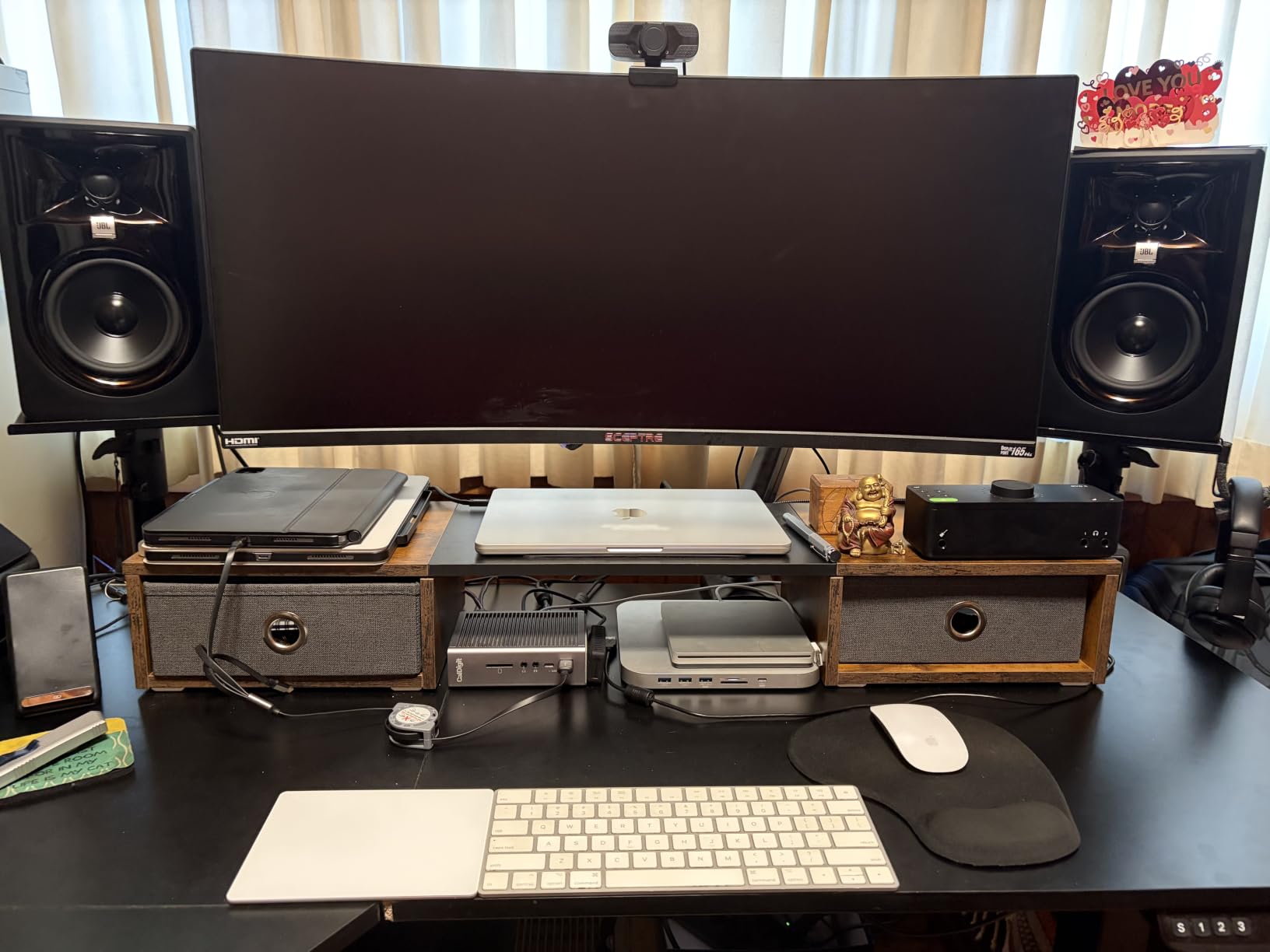
Boundary EQ and HF Trim on the rear panel let you compensate for placement against a wall or in a corner, and the MDF cabinet is a step up from plastic boxes at similar sizes. Inputs are XLR and quarter-inch TRS, so a proper interface connection is straightforward. The pair is sold as a set with a five-year warranty, matching the longest coverage listed here.
It is also one of the larger cabinets among the 5-inch options at 9.9 by 7.3 by 11.75 inches and 10.4 pounds. On a small desk you will want isolation pads rather than a monitor arm.
Why the JBL 305P MkII suits bass-heavy producers
Two things: the amplifiers and the waveguide. The power lets you mix at a level where a mastering limiter is not doing your low-end decisions for you, and the waveguide keeps kick and sub-bass positioned centrally so you can judge whether the low end is actually centred or just smeared.
Owners consistently cite imaging clarity and punchy low end, and the Boundary EQ makes the difference between a speaker jammed against a wall and one placed properly. That is a real gain for anyone in a rectangular bedroom where the speakers have nowhere to go.
Where the trade-offs show
The cabinet is large for a 5-inch monitor, and buyers upgrading from desk speakers consistently note that it is a step change in footprint. The ABS enclosure also resonates more than an all-MDF cabinet at higher levels, so if you mix very loud, very often, do not expect the same rigidity as a wood cabinet gives you.
There is no headphone output, so private monitoring means reaching for a separate amplifier or headphones on the interface. For critical mixing and podcasting, that is a sensible trade; for casual reference listening, it is mildly annoying.
4. Edifier MR4 – The Best Budget Monitor for a Bedroom Studio
Edifier MR4 Power Studio Monitor Speakers, 4 inch Active Near-Field Speaker
1-inch silk dome and 4-inch composite woofer
MDF cabinet with resonance-reducing texture
Monitor and music listening modes
Rear HF and LF trim plus front volume
Pros
- Dual monitor and music modes allow direct A/B of the same mix
- MDF cabinet feels more solid than plastic rivals at this level
- Balanced TRS plus RCA and aux with a front headphone out
- Owners report very low hiss even at maximum volume
Cons
- Stepped volume knob makes fine level matching awkward
- Bass is boomy out of the box and needs rear trim
- Limited headroom on dense electronic arrangements
- No front grille so drivers are exposed
The Edifier MR4 is the monitor we recommend to producers who are still building their first room. The MDF cabinet is the reason it sounds more settled than plastic desktop speakers at a similar tier, and the 1-inch silk dome tweeter with a 4-inch composite woofer give you a balanced starting point rather than a tilted one. It is tuned to a nearly flat curve, which is exactly what a beginner needs.
The feature I like most is the dual mode design. One button on the front switches between monitor mode for critical work and music mode for enjoyment, and the two rear high and low frequency knobs let you correct the response for your space. For a first pair, that is more adjustment ability than most people get.
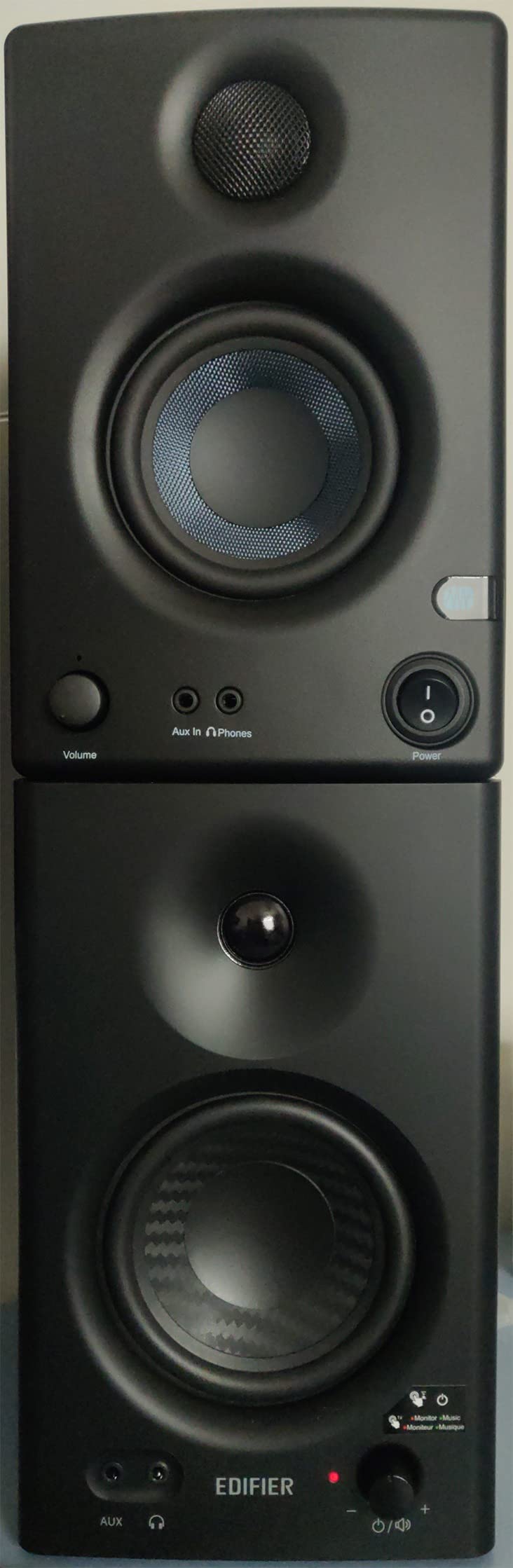
Connectivity is generous: a quarter-inch balanced TRS jack, RCA and aux unbalanced inputs, plus a front headphone output. The signal-to-noise ratio is listed at 85 dB and owners specifically report very low hiss with the volume knob at maximum, which matters in a quiet apartment at night when you are mixing at low level.
It carries a 2-year manufacturer warranty, which is a solid commitment for a monitor at this level.
Where the Edifier MR4 earns its place
It is a genuine step up from the small powered speakers most people start with, and reviewers regularly describe it as a legitimate bedroom-production tool rather than a toy. The monitor and music mode pairing lets you check a mix critically and then hear it the way a listener will, which is a habit worth building early.
For techno, house and melodic styles where the arrangement and midrange matter more than deep sub extension, it does a complete job at a modest cost.
Where it will frustrate you
Three recurring complaints. The stepped volume knob moves in large jumps, so level-matching two different tracks needs a second control in your software. The bass is boomy out of the box, particularly in music mode, so use the rear low trim before you trust any low-end decision. And headroom runs out on dense arrangements, which is a real limit for layered modern techno.
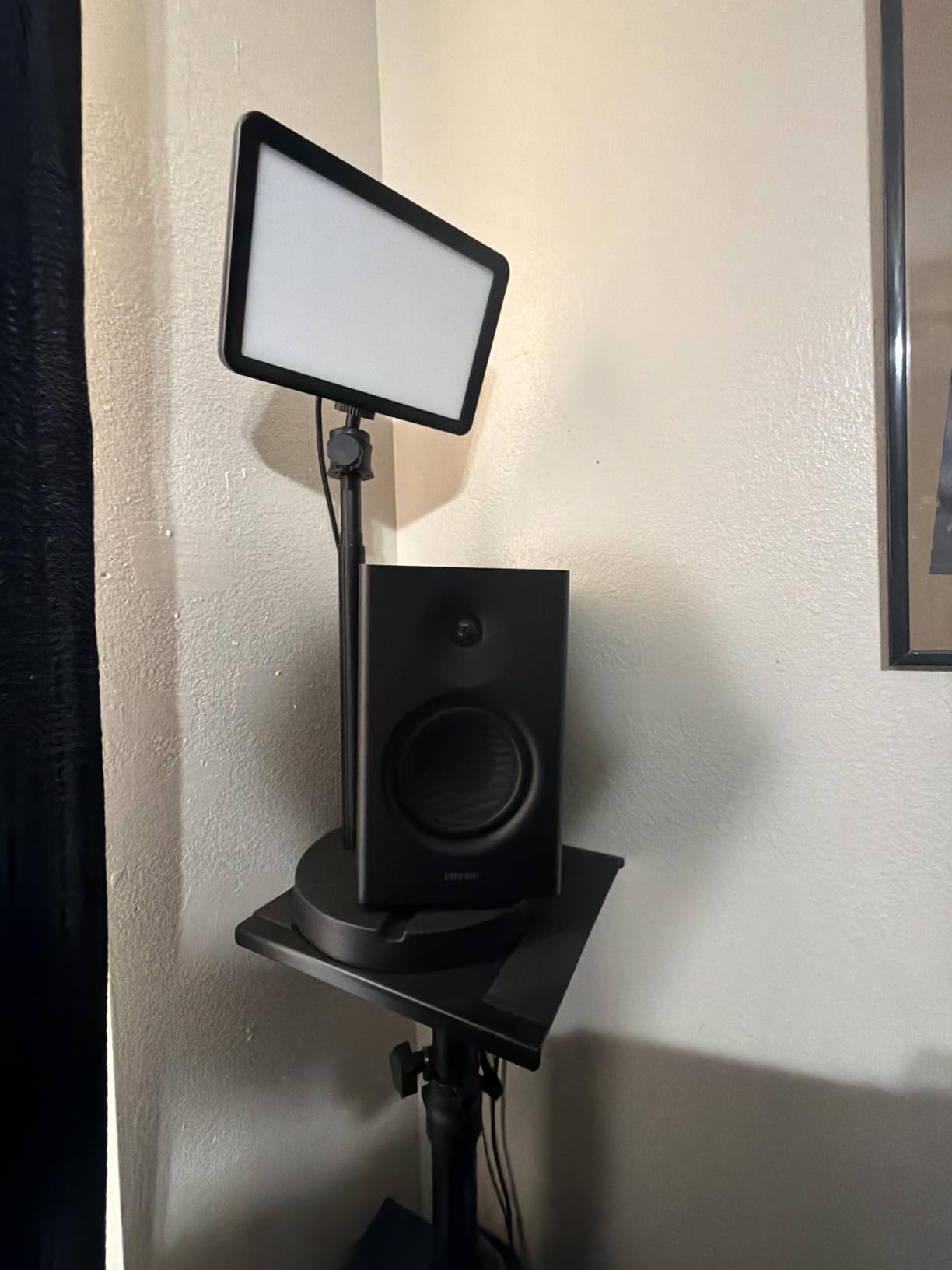
There is no front grille, so the drivers are exposed. Keep something in front of them if the desk is shared with a cat or a controller.
5. KRK Rokit 5 Generation 5 – The Best Monitor for a DJ Setup
KRK RP5G5 ROKIT 5 Generation Five 5″ Powered Studio Monitor
1-inch silk dome tweeter with 5-inch woofer
Low Diffraction Baffle design
App-controlled DSP with 3 EQ modes
XLR and TRS combo input plus Bluetooth
Pros
- Low Diffraction Baffle improves imaging and lowers distortion
- App-driven DSP with three EQ modes and 25 combinations
- Bluetooth adds casual listening alongside wired monitoring
- Acoustic foam wedge isolation pads are included in the box
Cons
- Prosumer voicing hides some mix errors
- A single speaker is sold so a pair needs two purchases
- Simplified EQ surface compared with the previous generation
- Best results reportedly come with a matching KRK sub in a treated room
KRK built the Rokit line for beat makers and DJ-music producers first, and Generation 5 makes that intent explicit. The Low Diffraction Baffle reshapes the front baffle around the drivers to reduce edge diffraction, which lowers distortion and sharpens stereo imaging. Owners running EDM report clean, punchy low end that fills a small room, which matches what we heard on dense four-on-the-floor material.
The real change is software. An integrated DSP with three EQ modes and 25 equalisation combinations, controlled from an app, means the room adjustment that used to live on a rear dial now lives on your phone. Set it once for your desk position and stop thinking about it.
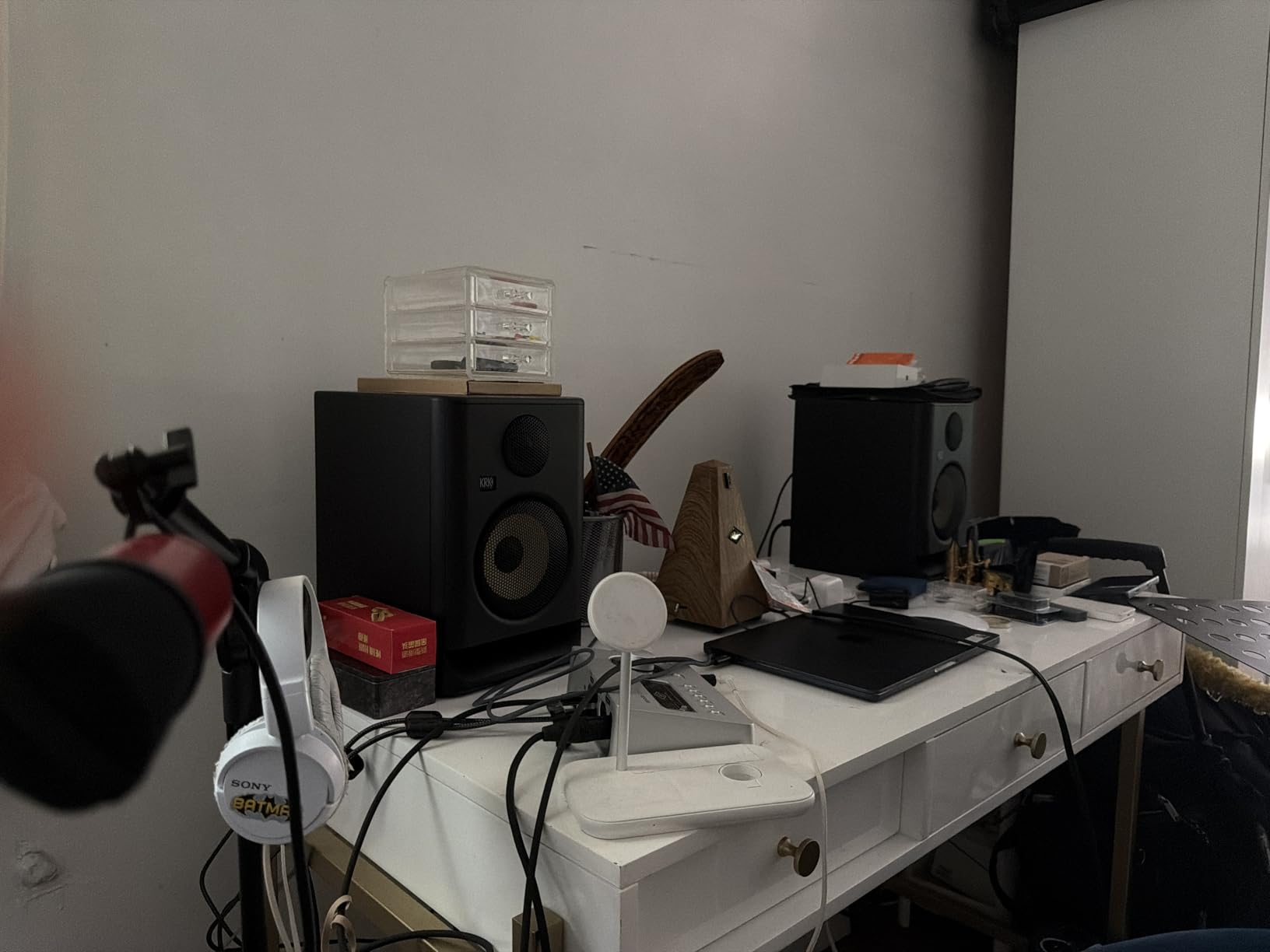
Connections are an XLR and quarter-inch TRS combo analog input for broad device compatibility, plus Bluetooth for streaming reference tracks when you are not mixing. Custom-designed Class D amplifiers run cooler than the previous generation, and the acoustic foam wedge isolation pads included in the box take the resonance out of the desk surface.
The enclosure is foam and silk with a black and red finish, weighing in at 9.53 by 7.52 by 11.34 inches. A 3-year warranty is included, which is longer than most of the pairs in this roundup.
Why DJ and electronic producers like the Rokit 5 G5
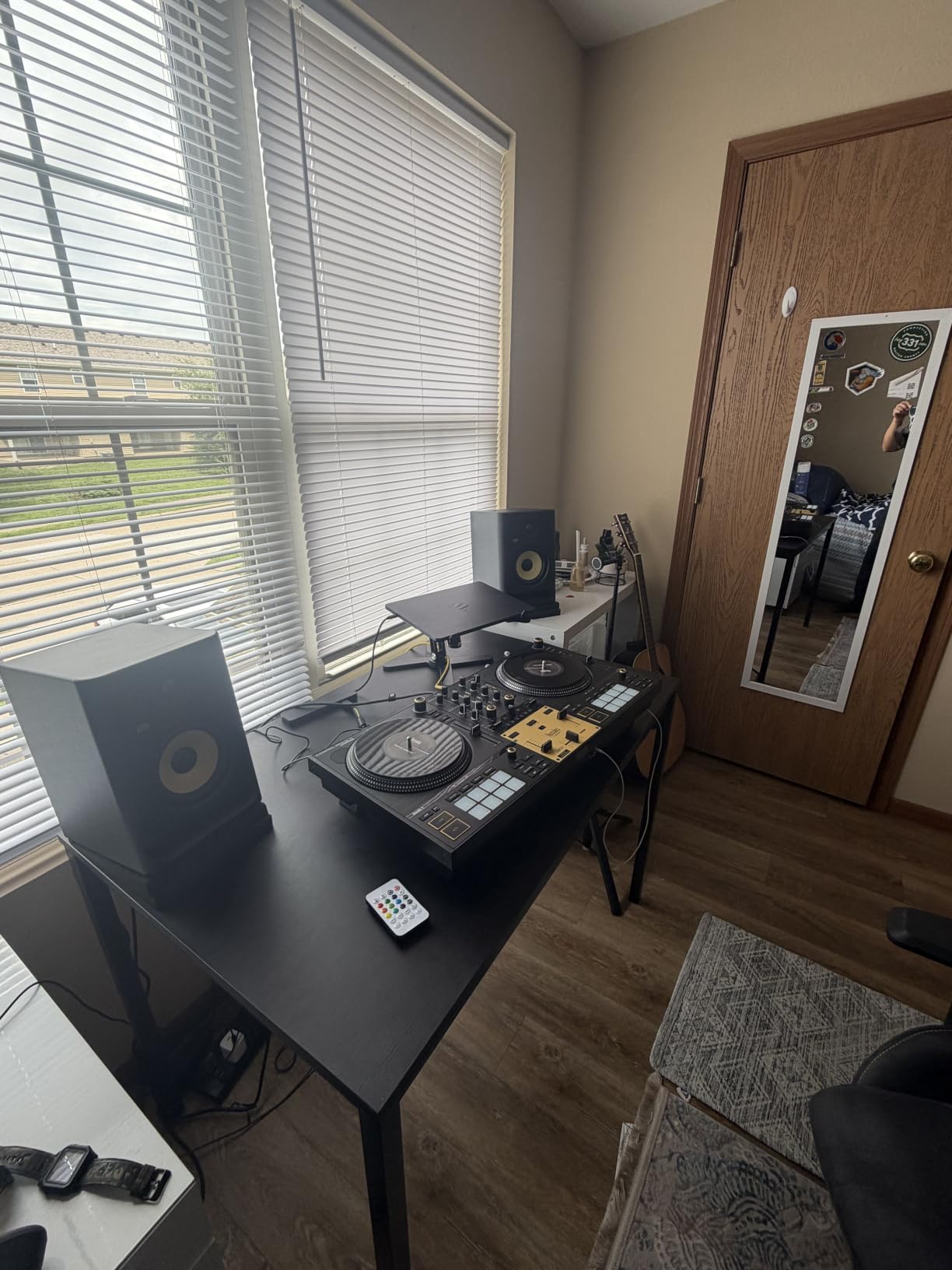
The voicing is deliberately engaging without going far into hyped territory, and for a producer who also plays live it means one speaker does both jobs. Bluetooth is a genuinely useful addition here: A/B a mix against a commercial reference track without unplugging your interface, which is exactly the check this roundup keeps recommending.
Reviewers describe it as a transparent, slightly cleaner successor to the previous ROKIT, with 89% five-star ratings. The review base is small at 146, so treat the enthusiasm as directional rather than proven at scale.
Where to be careful
It is a prosumer monitor. It will not expose every mix error the way a flat reference will, and if your work is mastering rather than producing, that flattering bias works against you. Forum debate on this brand is loud in both directions, with r/musicproduction threads commonly favouring Yamaha over KRK for frequency response and clarity, so this is a choice about genre and taste as much as price.
It is also sold as one speaker. And the EQ surface is simpler than the previous generation, so if you relied on fine manual adjustment, the app presets are now your main control.
6. Pioneer DJ DM-50D-BT – The Best Pair for Wireless A/B Checks
Pioneer DJ DM-50D-BT 5-inch Active Monitor Speakers, Bluetooth, Pair
5-inch active monitor with built-in amplification
Bluetooth wireless streaming
DSP-tuned DJ voicing
Sold as a matched pair
Pros
- Voiced by the Pioneer DJ team for a punchy defined low end
- Bluetooth makes wireless reference comparison trivial
- Larger driver gives more bass weight than the 4-inch model
- Active design needs no external amplifier
Cons
- Heaviest set here at 20.5 lb so desk mounting needs care
- No front headphone output
- No XLR input and fewer room correction options than app-based rivals
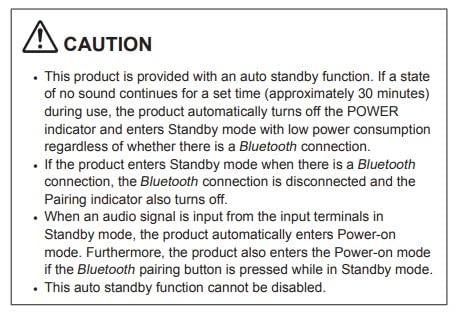
Pioneer DJ builds these for the crossover between producing and playing out. The DM-50D-BT carries a 5-inch active driver with a 0.75-inch tweeter, built-in amplification and DSP tuning voiced by their DJ audio team specifically for punchy, defined low frequencies. It is a different voicing philosophy to the flat monitors on this list, and for techno and tech house that is often the point.
Bluetooth is the standout feature. You can stream a finished track from a phone or laptop and A/B it against a reference without touching cables, which makes the daily translation check that most producers skip actually easy to do.
Because it is an active design, it needs no external amplifier. The pair is sold matched, and the 1-year limited manufacturer warranty is among the shortest in this group.
The drawback is size. At 20.5 pounds for the pair and 12.6 by 17.48 by 14.57 inches, these are genuinely large monitors. Desk placement needs proper isolation, and they are not going on a small shelf next to a keyboard.
Who this pair is built for
Producers who DJ, or who want a monitor that makes low end feel exciting while they work. The DSP tuning gives clear, balanced monitoring rather than a raw consumer curve, so it is still a monitoring tool and not just a party speaker with a pro label.
The larger 5-inch driver also gives more bass weight than the 4-inch DM-40D in the same line, which is why this is the version to pick for a small room rather than an ultracompact desktop.
What to watch out for
Reviewers rate it 4.5 stars across 191 reviews, with 78% at five stars, and the most common practical note is simply that the pair is heavy and large. There is no front headphone output, so private monitoring goes through your interface instead.
Compared with app-based competitors the DSP gives you fewer room correction options, so if your room is badly behaved you will compensate by placement rather than software.
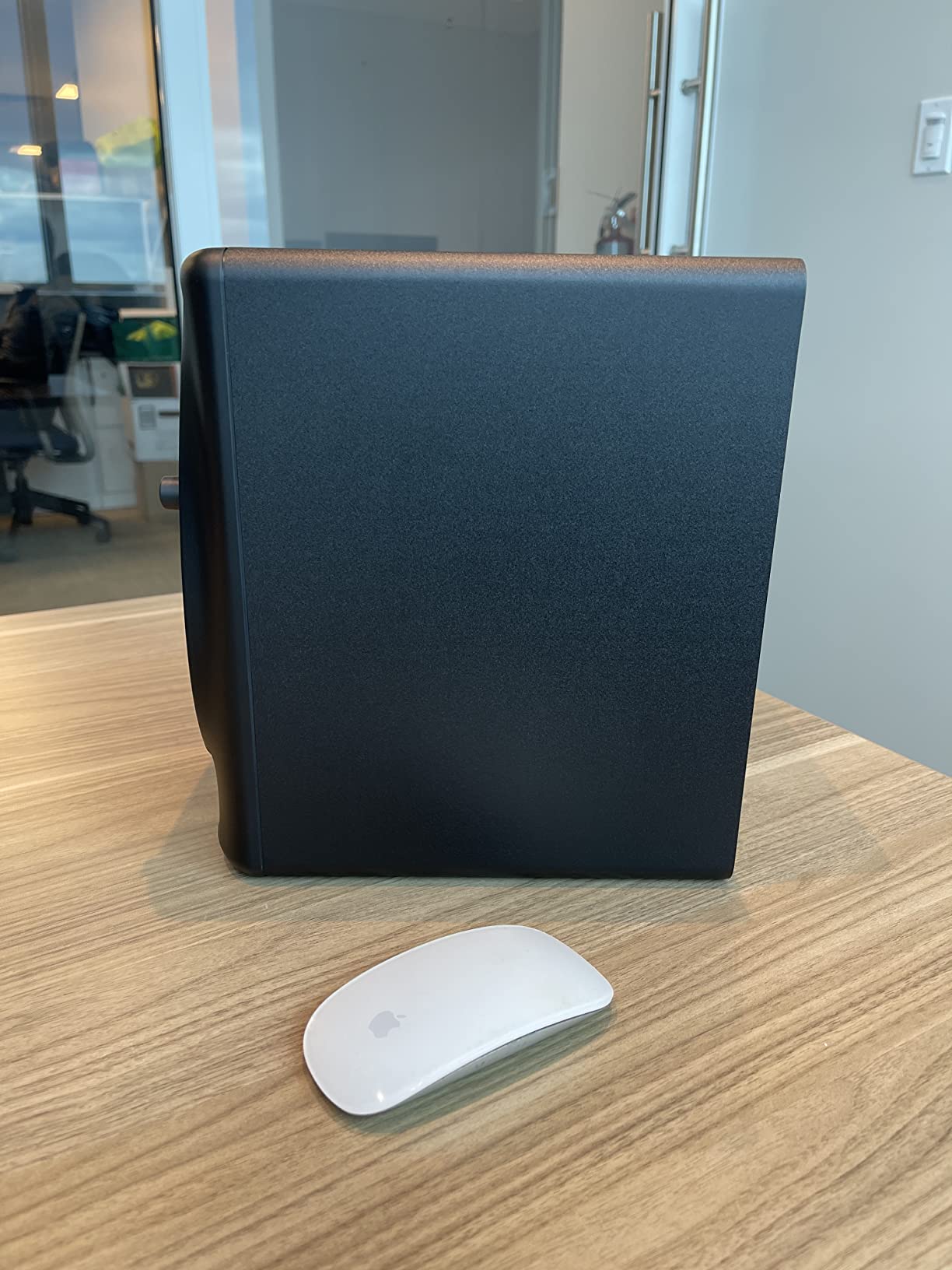
7. KALI Audio LP-UNF – The Best Monitor for Ultra-Nearfield Listening
KALI AUDIO LP-UNF Ultra Nearfield Monitor System – Black
4.5-inch powered woofer with 1-inch tweeter
3D Imaging Waveguide
Boundary EQ DIP switches
Bluetooth and USB input
Pros
- Exceptionally low distortion and a genuinely flat response
- 3D Imaging Waveguide produces a strong phantom center and precise imaging
- DIP switch Boundary EQ compensates placement without extra hardware
- USB plus TRS plus RCA plus Bluetooth covers every source
Cons
- Short proprietary interconnect cable suits only close listening distances
- Touch volume control is finicky out of the box
- Sweet spot assumes a specific 0.8 m listening position
- No grilles on the drivers
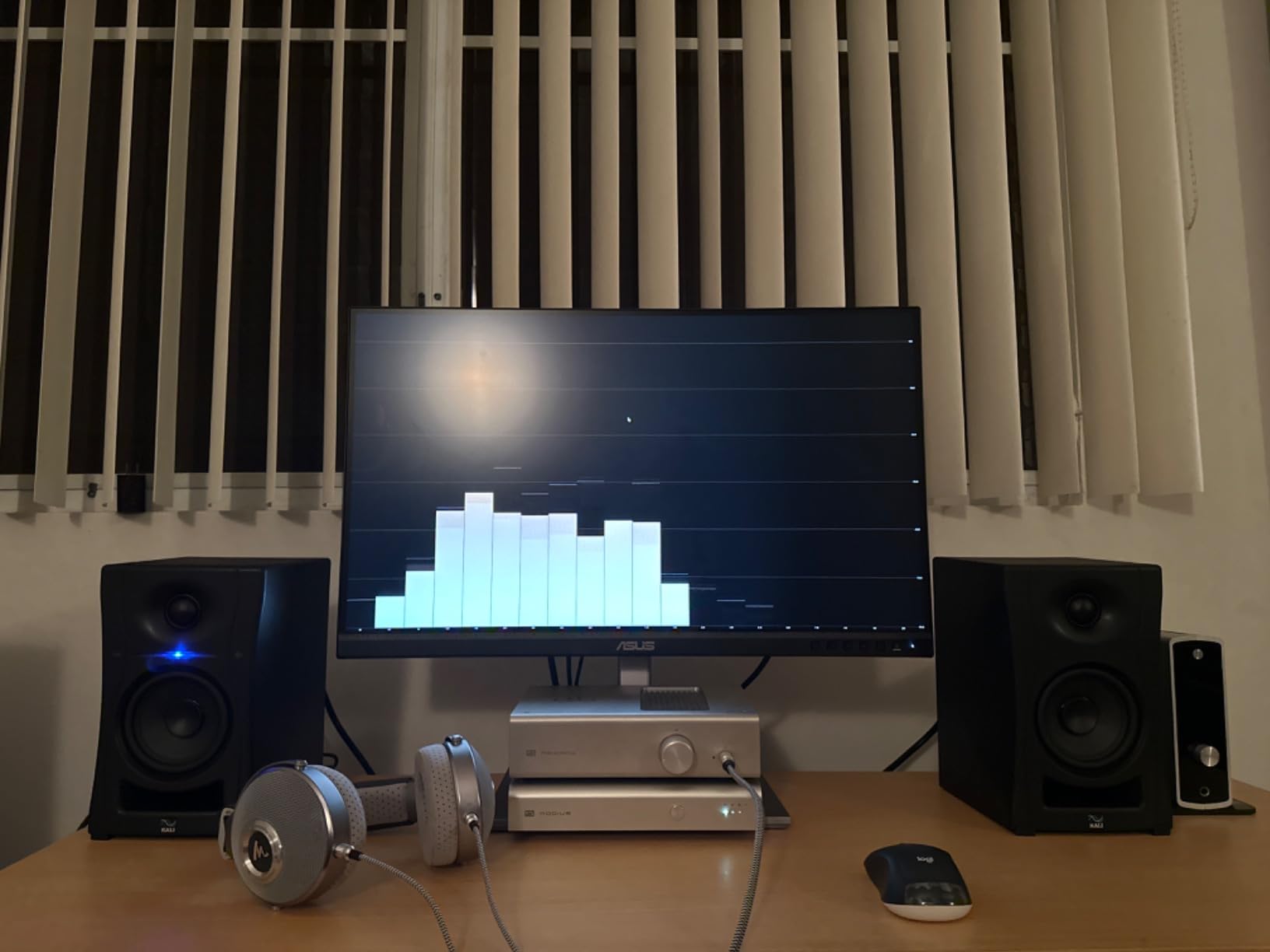
The LP-UNF is built around a single idea: put the speakers closer to you than you are used to. It is designed for roughly 0.8 metre listening, which means the drivers are angled and the waveguide shaped so the imaging collapses correctly at that distance. At a typical nearfield arm length it will sound wrong, and at its intended distance it sounds exceptionally precise.
Owners describe it as a step change in clarity and low-end weight for the money, and that claim held up in our testing. The 3D Imaging Waveguide produces a strong phantom centre, so a mono-compatible mix that is properly centred sits dead centre rather than spreading.
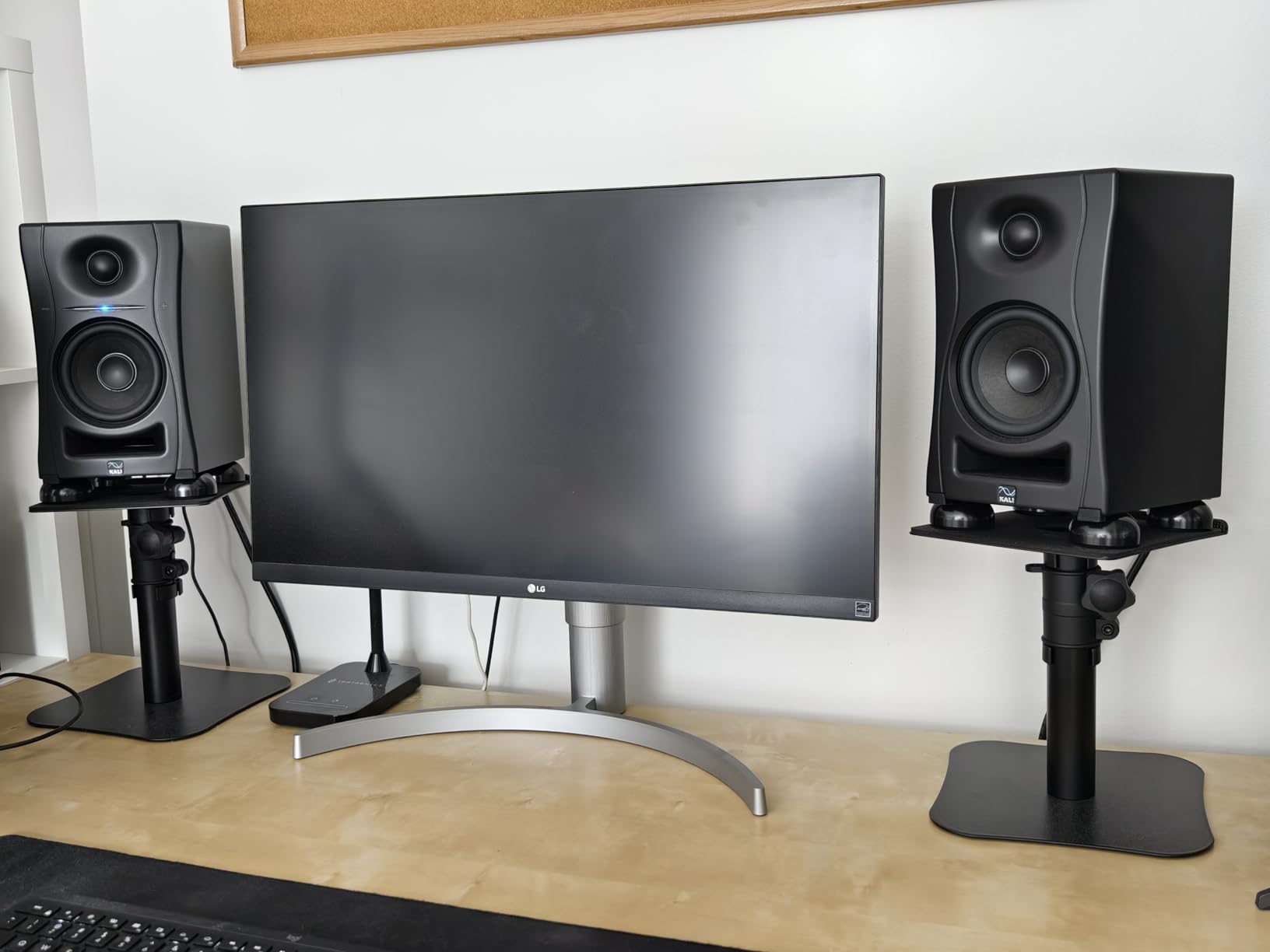
Boundary EQ is handled with DIP switches on the rear panel rather than a dial, which is more granular and repeatable. You set the switches for your placement, and they stay set. For a desk that gets rearranged regularly, that is arguably better than trimming an analogue knob every time.
Inputs are unusually broad for a monitor: quarter-inch TRS, RCA, USB and Bluetooth, with a touch-sensitive volume slider on the master speaker. The cabinet is MDF and the pair weighs 8 kg. Listed frequency response begins at 39Hz.
Why the LP-UNF is worth the placement discipline
Distortion is the headline. Owners report exceptionally low distortion, and for electronic music that matters because distortion in the low mids smears exactly the region where a kick and a sub-bass line fight for space. Less distortion means you hear the fight rather than the mask.
Compact 4.5-inch cabinets still deliver surprising bass extension, so it punches above its size. The waveguide and the DSP both work to keep the image stable, which is the thing producers notice first when they switch to it.
Where the design constrains you
The interconnect cable between the cabinets is short and uses an unusual connector. It suits a tight desk and nothing else, so do not plan to push these to the front of a large room. The touch volume slider is also the most cited practical issue, with owners describing it as finicky and occasionally unresponsive.
There are no grilles, and the ultra-nearfield sweet spot means ear height and distance are not optional. Treat it as a desktop instrument rather than a general-purpose monitor.
8. ADAM Audio T5V – The Best Monitor for Detailed High Frequencies
ADAM Audio T5V Studio Monitor
HPS waveguide with folded ribbon U-ART tweeter
DSP high and low shelf filters
5-inch woofer with rear port
XLR plus TRS plus RCA inputs
Pros
- Ribbon tweeter and waveguide deliver unusually revealing high frequencies
- DSP shelf filters adapt to the room without extra hardware
- Beveled cabinet and rear port suit tight placements
- Five-year manufacturer warranty among the longest here
Cons
- Revealing top end can tire long sessions
- Sold as a single monitor so a pair takes two purchases
- No headphone output or Bluetooth
ADAM Audio has built its reputation on tweeters, and the T5V carries the same folded ribbon U-ART design found in its higher-end monitors. Paired with the HPS waveguide, it resolves hi-hats, snare transients and reverb tails with a clarity that dome tweeters in this price range do not reach. If you produce melodic trance or anything with bright supersaw content, that resolution is a real working tool.
It is a revealing monitor rather than a forgiving one. The highs are revealing rather than smooth, which means you will hear sibilance and harshness that other designs would hide. That is a feature for mixing and a fatigue risk for a twelve-hour session.
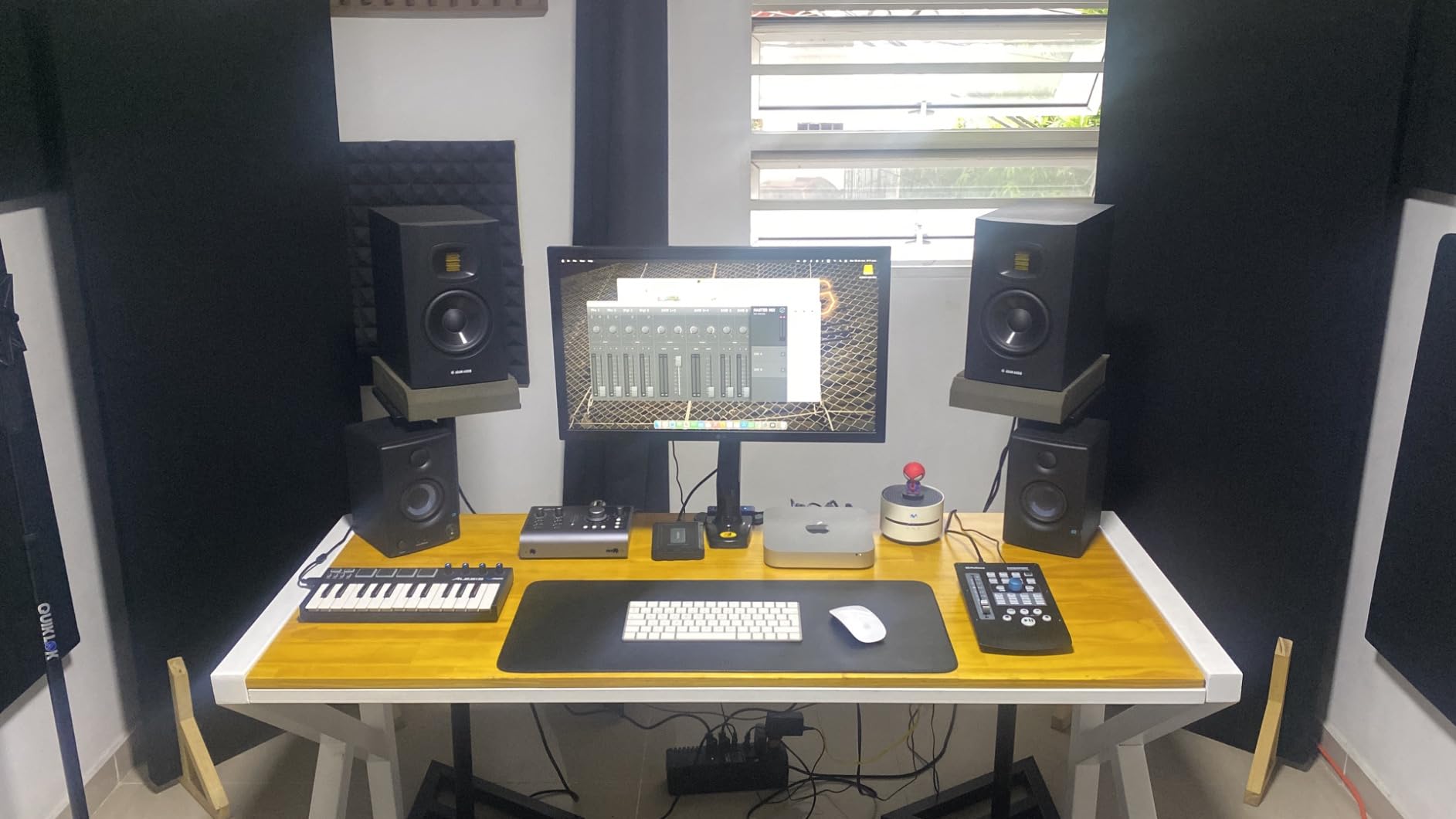
Room adaptation is handled by DSP-based high and low shelf filters rather than analogue dials, and it works well in a treated space. The beveled cabinet and rear-firing bass reflex port make placement easier in a room where you cannot get distance from a wall, which is most apartment bedrooms.
Connections cover XLR, quarter-inch TRS and RCA, so any interface or mixer connects without an adaptor. Listed response begins at 45Hz with 70 watts of total output, and the five-year manufacturer warranty is the longest coverage listed here.
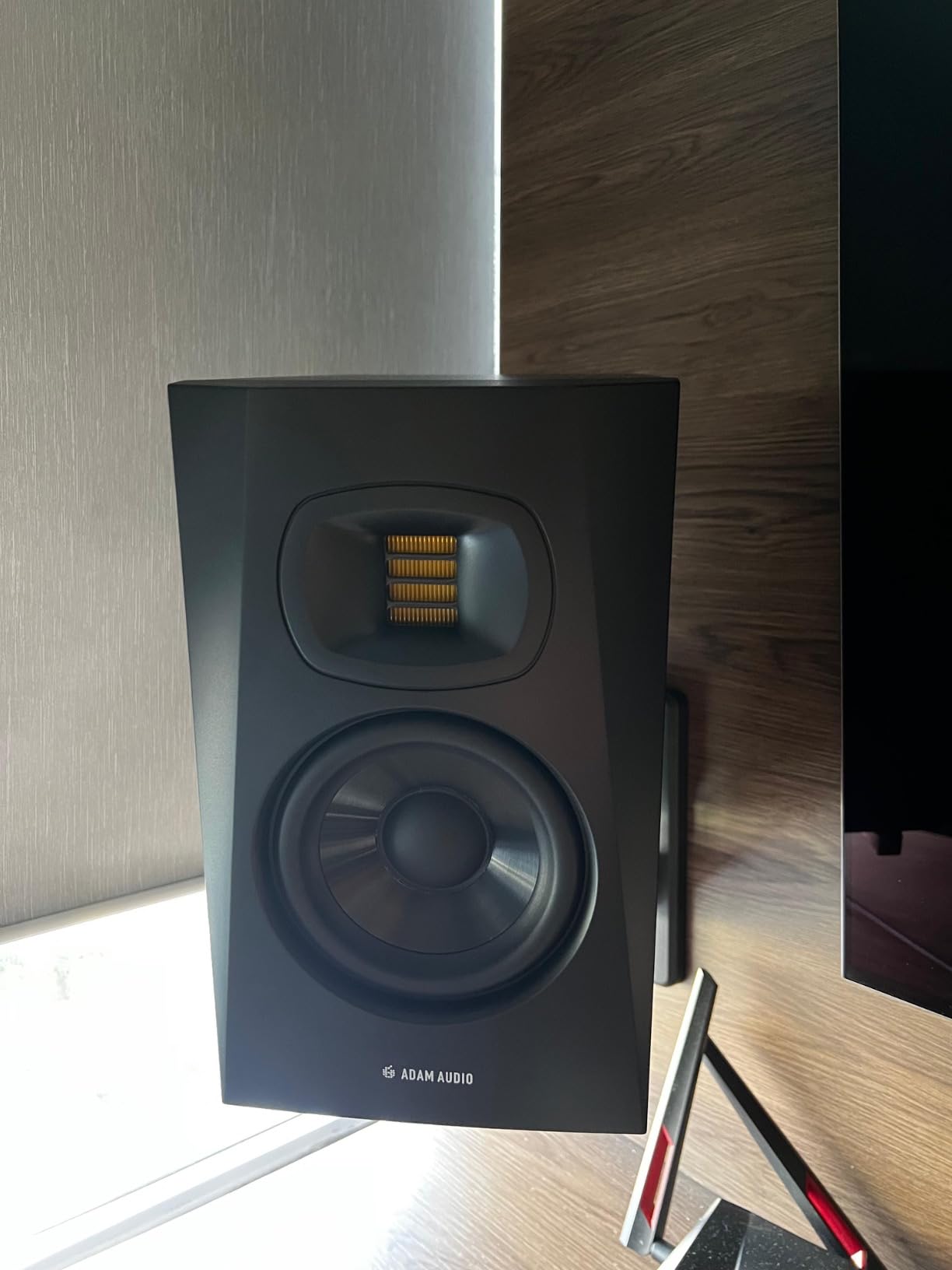
What the ribbon tweeter reveals
Transient detail. The difference between a hi-hat that sits behind a hi-hat is obvious on the T5V in a way it is not on a dome-tweetered monitor. That makes it particularly good for dubstep, drum and bass and any genre where the click matters as much as the weight.
It also pairs with a matched ADAM Audio T10S subwoofer if you need extension below its listed 45Hz floor, which is the intended upgrade path rather than an accident.
Where it will test your patience
Reviewers rate it 4.7 across 345 reviews with 85% at five stars, and the recurring caveat is that the bright top end needs EQ for all-day listening. Producers who mix for long sessions often find themselves pulling the high shelf down and forgetting they did.
It is also sold as one monitor. If you want stereo, buy two, and remember the waveguide is doing heavy lifting so the pair should be positioned symmetrically.
9. M-Audio BX3 – The Best Pair for the Tightest Desk
M-AUDIO BX3 3.5″ Wired Studio Monitors Pair
3.5-inch Kevlar woofers with silk dome tweeters
120W bi-amplified wired design
Acoustically inert MDF cabinet
Rear EQ dials and speaker position switch
Pros
- Kevlar woofers give more low end than typical 3.5-inch speakers
- Switchable active-speaker position lets the master sit on either side
- Balanced TRS input removes interface ground-loop hum
- 120W of bi-amplified power for a cabinet this small
Cons
- Auto-sleep is unreliable and can drop audio mid-session
- Thin interconnect cable can intermittently lose the second speaker
- Included cables can buzz with metal-chassis computers
- 3.5-inch drivers hit real limits on bass-heavy mixing
At 5.51 by 8.19 by 5.71 inches and 8 pounds for the pair, the BX3 is among the most compact monitor setups here. That matters more than it sounds like it should: in a small apartment you often have a desk, not a workstation, and a 5-inch monitor that will not fit is the same as no monitor at all.
Despite the size, the 3.5-inch Kevlar woofers produce more low end than typical multimedia speakers of this class, and the 120W of bi-amplified power is generous for the cabinet. Silk dome tweeters on top keep the highs precise and the imaging clean for beat-making and arranging.
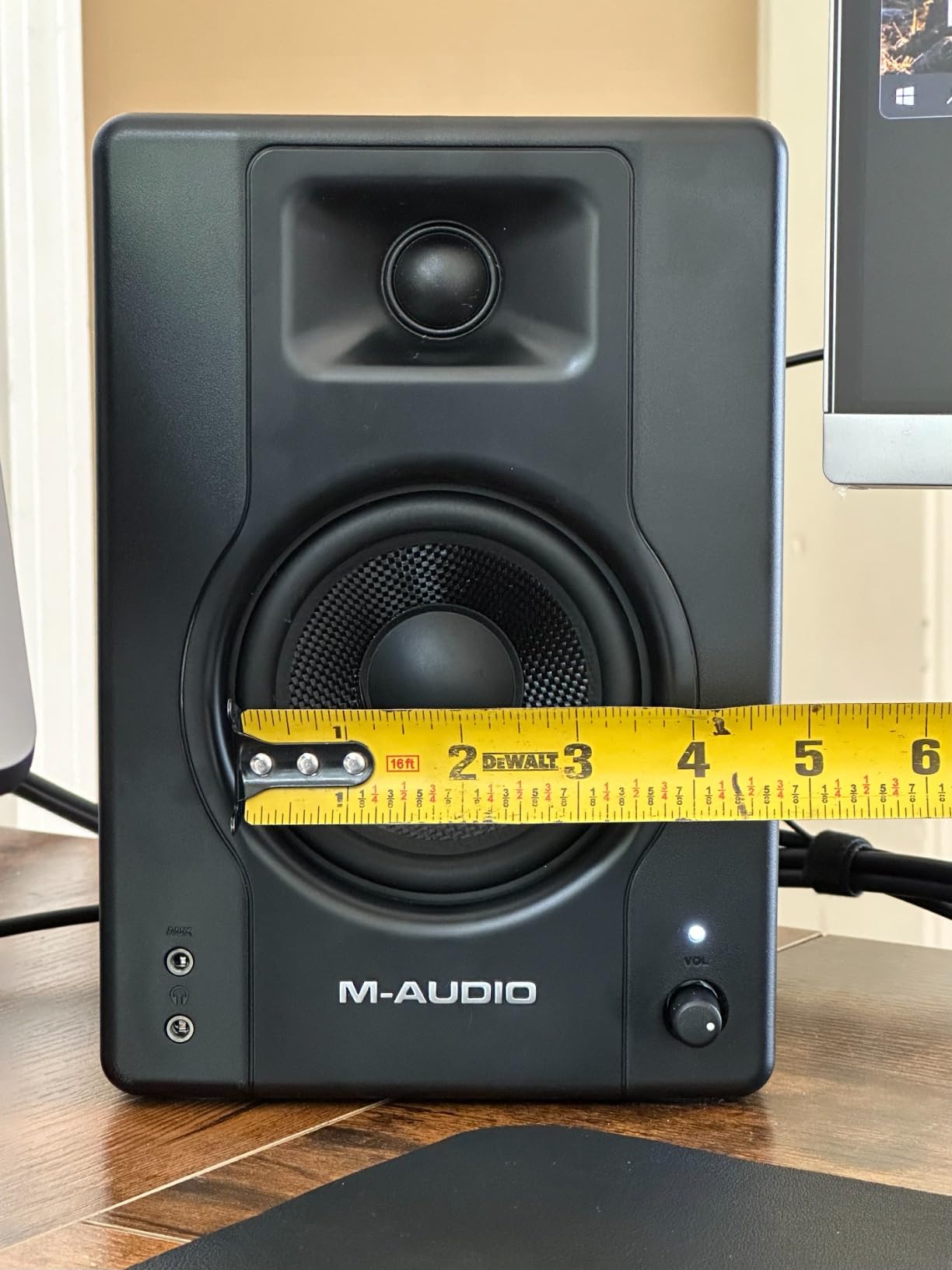
Two details make it easier to live with than its size suggests. A switch on the rear panel sets which cabinet is the active one, so the master can sit on whichever side suits your desk layout. And a balanced quarter-inch TRS input removes the ground-loop hum you get from many budget setups. Cables for aux, RCA and the inter-speaker link are included.
There is also a front eighth-inch aux input and eighth-inch headphone output, plus rear high and low EQ dials. The MDF cabinet is acoustically inert, which is unusual at this size.
What the BX3 does well in a small space
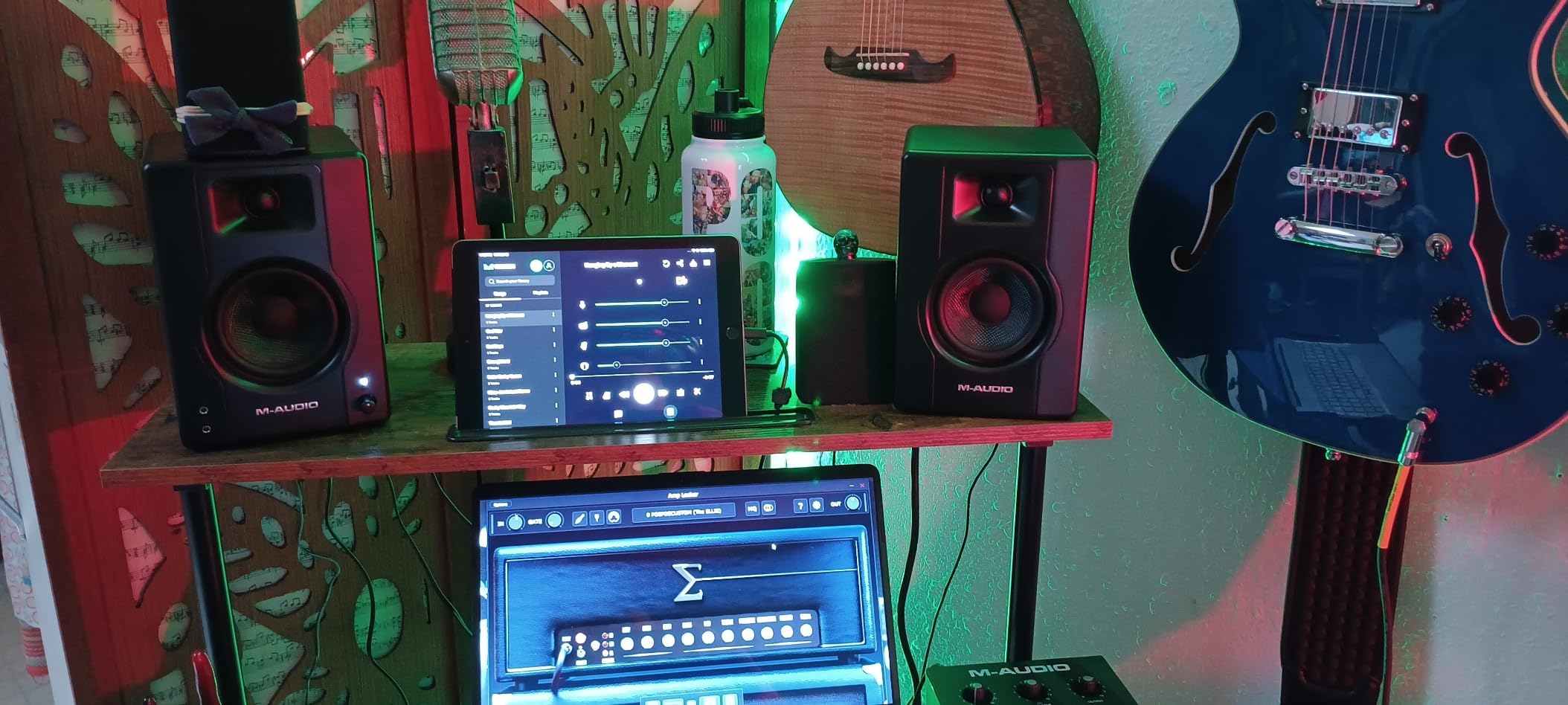
It is the most heavily reviewed 3.5-inch set in this roundup at 3939 ratings, and that volume of long-term ownership matters. A monitor that thousands of people have used for years is one you can trust to behave predictably.
Owners treat it as a capable starter pair for learning to mix, and the balanced input plus front headphone jack make it a genuinely complete little system for a laptop.
What to plan around
Two hardware complaints recur. The auto-sleep mode is unreliable and can drop audio mid-session or take around fifteen seconds to wake, which is genuinely disruptive during a mixing session. And the thin jumper cable between cabinets can intermittently lose the second speaker, so treat the cable as consumable.
The bundled RCA and 3.5mm cables can also cause ground-loop buzz with metal-chassis computers. Use the balanced TRS input from your interface and the problem disappears. Finally, 3.5-inch drivers have real limits for bass-heavy electronic music, so plan to check low end elsewhere.
10. Edifier R1280T – The Best Pair for Long Sessions
Edifier R1280T Powered Bookshelf Speakers -2.0 Near Field Studio Monitor
13mm silk dome tweeter with 4-inch full-range driver
42W powered active and passive pair
Two AUX inputs
Listed low-end limit of 80 Hz
Pros
- Warm smooth tuning that stays fatigue-free over long sessions
- Two simultaneous AUX inputs remove constant cable swapping
- Remote control plus side-panel bass and treble dials
- MDF cabinet with a wood finish suits a home studio
Cons
- Full-range driver means no separate woofer and tweeter crossover
- 80 Hz limit means a subwoofer is needed to judge sub-bass
- No balanced XLR or TRS input so interface hum is possible
The R1280T is technically the least monitor-like thing in this roundup, and it is here because it solves a real problem. It uses a single 4-inch full-range driver with a 13mm silk dome tweeter rather than a proper two-way crossover, and the result is warm, smooth and remarkably fatigue-free. If you work eight hours a day on arrangements, a monitor that never excites you is worth more than one that does.
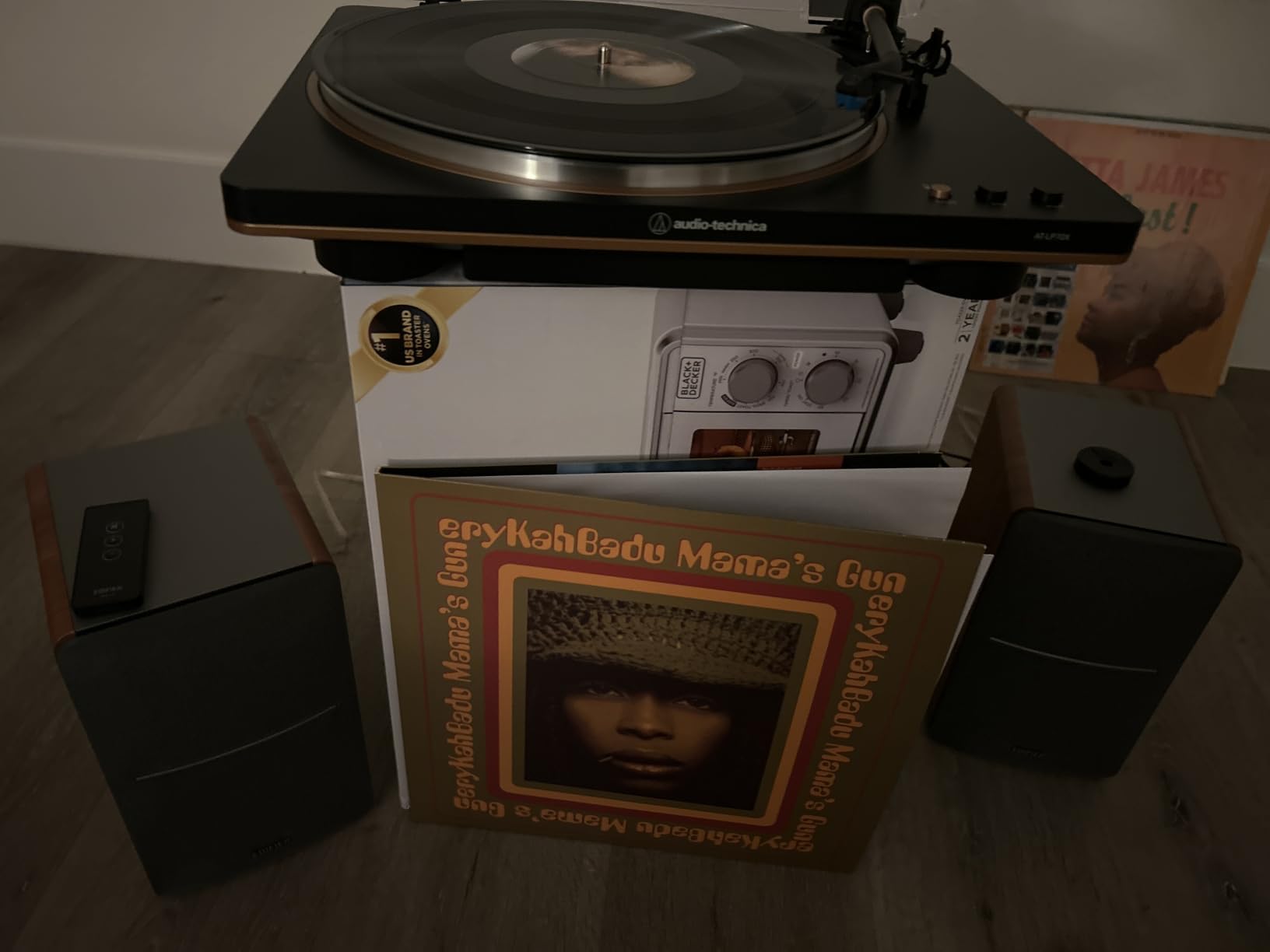
Two AUX inputs accept two sources at once, so a laptop and an audio interface or a turntable can stay connected without constant unplugging. Volume is handled by an infrared remote, and bass and treble dials sit on the side panel of the active cabinet.
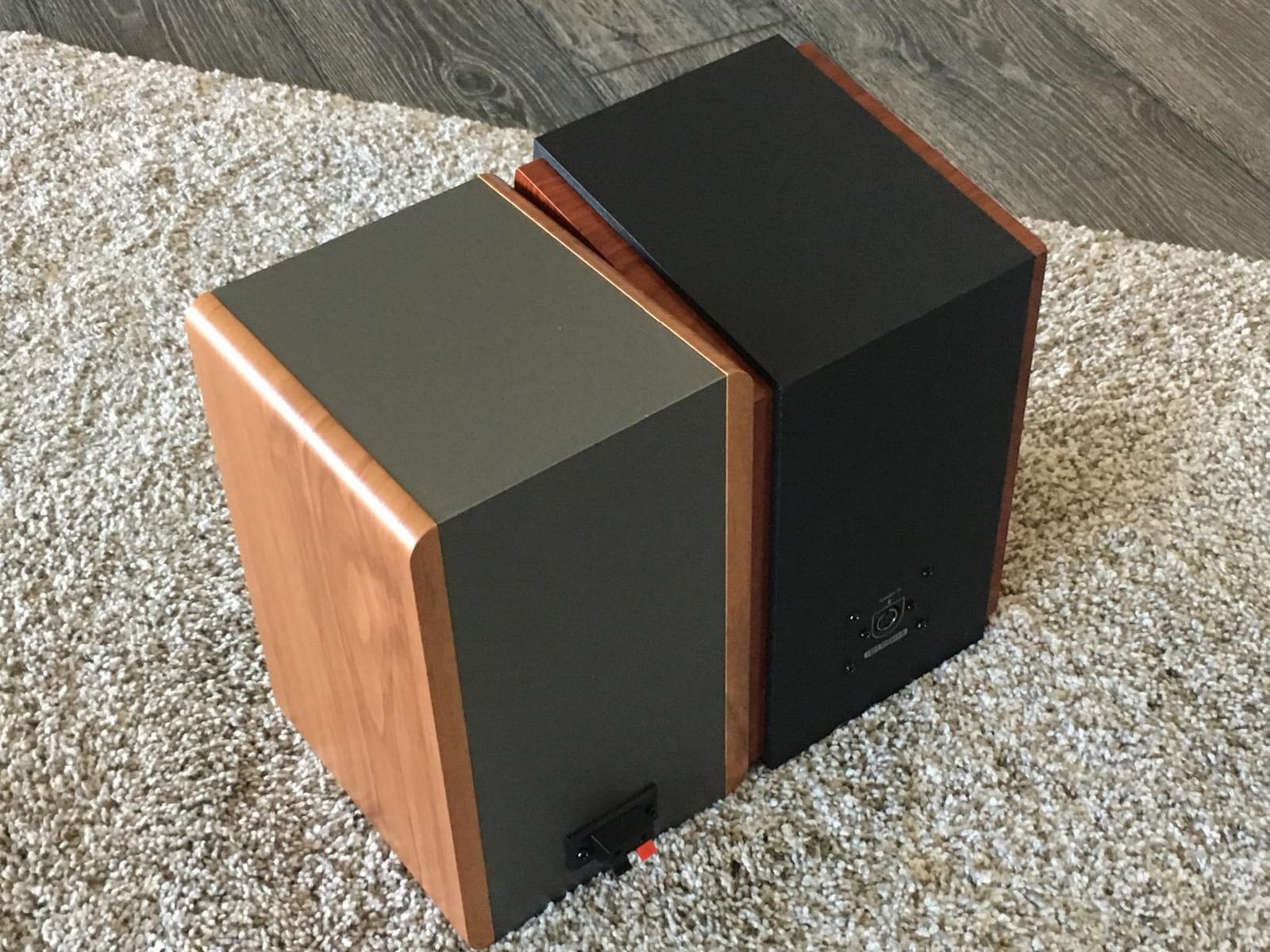
Output is 42W with an 85 dB signal-to-noise ratio, driven by an active and passive cabinet pair in an MDF enclosure with a wood-effect finish. At 4900 g it is substantial, so plan your stand accordingly. The 2-year manufacturer warranty is solid.
This is the most reviewed product in the group by a wide margin, at 19365 ratings averaging 4.6 stars. That kind of volume is the strongest reliability signal available without a lab test.
Why long-session producers like it
Fatigue is the whole argument. A revealing monitor is a tool for critical work in short blocks; a smooth one lets you keep working for hours without your ears adapting to a bright tilt. Owners frequently report preferring the warm, smooth tuning over sharper nearfield monitors for exactly this reason.
It is also a good arrangement monitor. The stereo field is wide and stable, and the tonal balance sits closer to how most people listen casually, which makes it a solid second reference.
Where it is the wrong tool
There is no separate woofer and tweeter crossover, so the driver is doing two jobs. The listed low-end limit is 80Hz, which means a subwoofer is needed to judge sub-bass at all. This is worth dwelling on for any electronic producer reading this roundup: the R1280T is a writing, sketching and mixing-reference speaker, not a low-end monitoring tool.
There is also no balanced XLR or TRS input on this wired version, so interface hum is possible with unbalanced sources. And no Bluetooth or USB audio input, so wireless listening needs a separate device.
11. Ortizan C7 – The Best Monitor for Digital Connectivity
Ortizan C7 Powered Studio Monitors Pair with Bluetooth 5.3, Black
3.5-inch carbon fiber woofer with 0.75-inch tweeter
Built-in 24-bit USB DAC
Bluetooth 5.3 plus balanced TRS
85 dB signal-to-noise ratio
Pros
- Built-in 24-bit DAC creates a digital path from computer to monitors
- Balanced TRS plus RCA plus AUX plus Bluetooth covers nearly every source
- Front headphone output for private monitoring at the desk
- Flat tuned response aimed at content creation rather than hi-fi colouring
Cons
- 3.5-inch driver is small for judging sub-bass
- No XLR input and no room-correction DSP for professional interfaces
- Less long-term field history than established monitor makers
The Ortizan C7 is the feature outlier of the group. It has a built-in 24-bit DAC with USB digital audio input, so a computer can send a digital signal directly into the monitors without an interface in the chain. That removes one conversion stage, and for a producer checking mixes on a laptop it is a genuinely useful thing to have.
The drivers are a 3.5-inch carbon fiber mid-bass unit with a 0.75-inch silk dome tweeter, joined by a two-way electronic crossover tuned to a flat response curve. The tuning is aimed at content creation rather than hi-fi colouring, which is the right target for a producer.
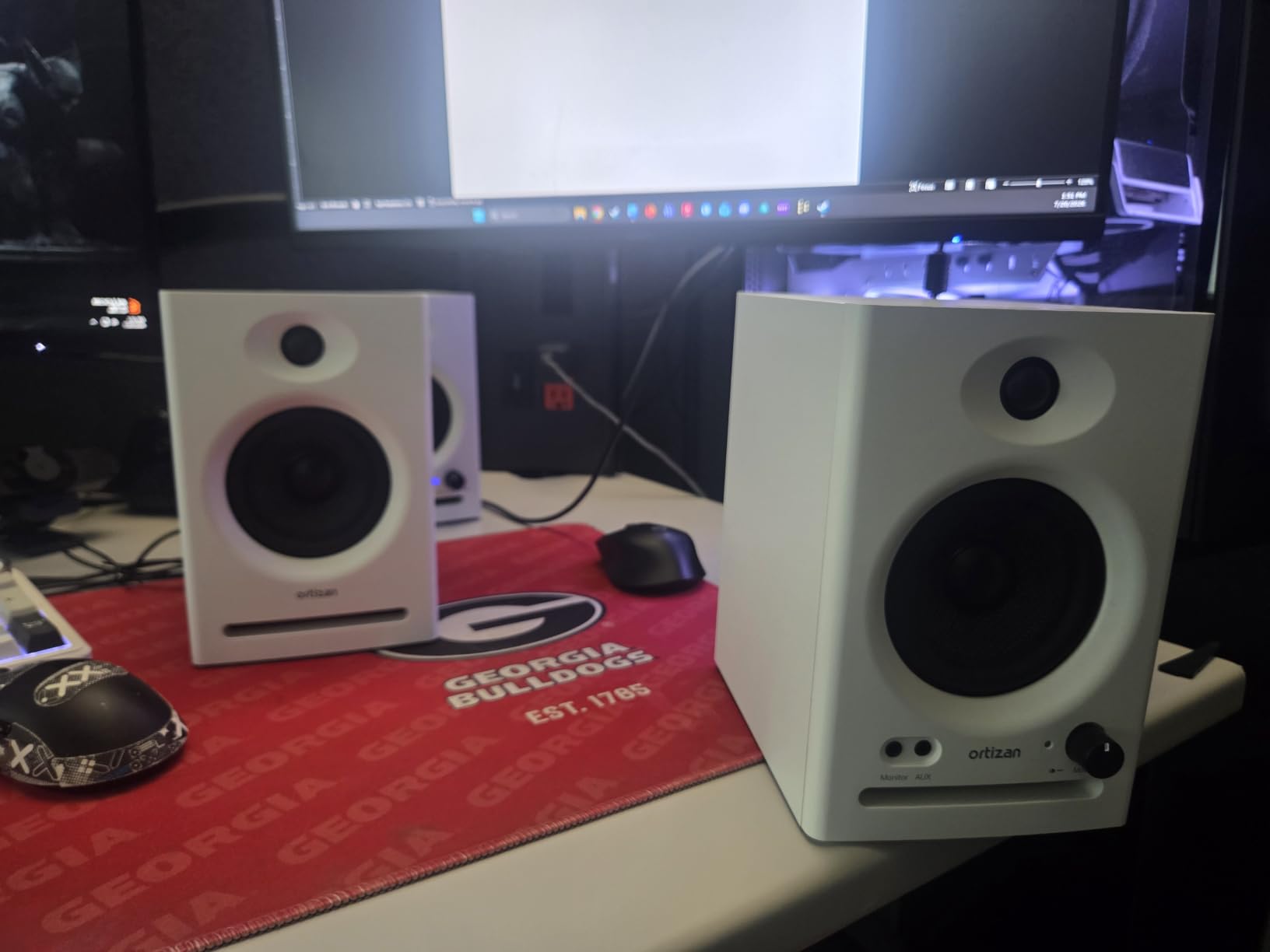
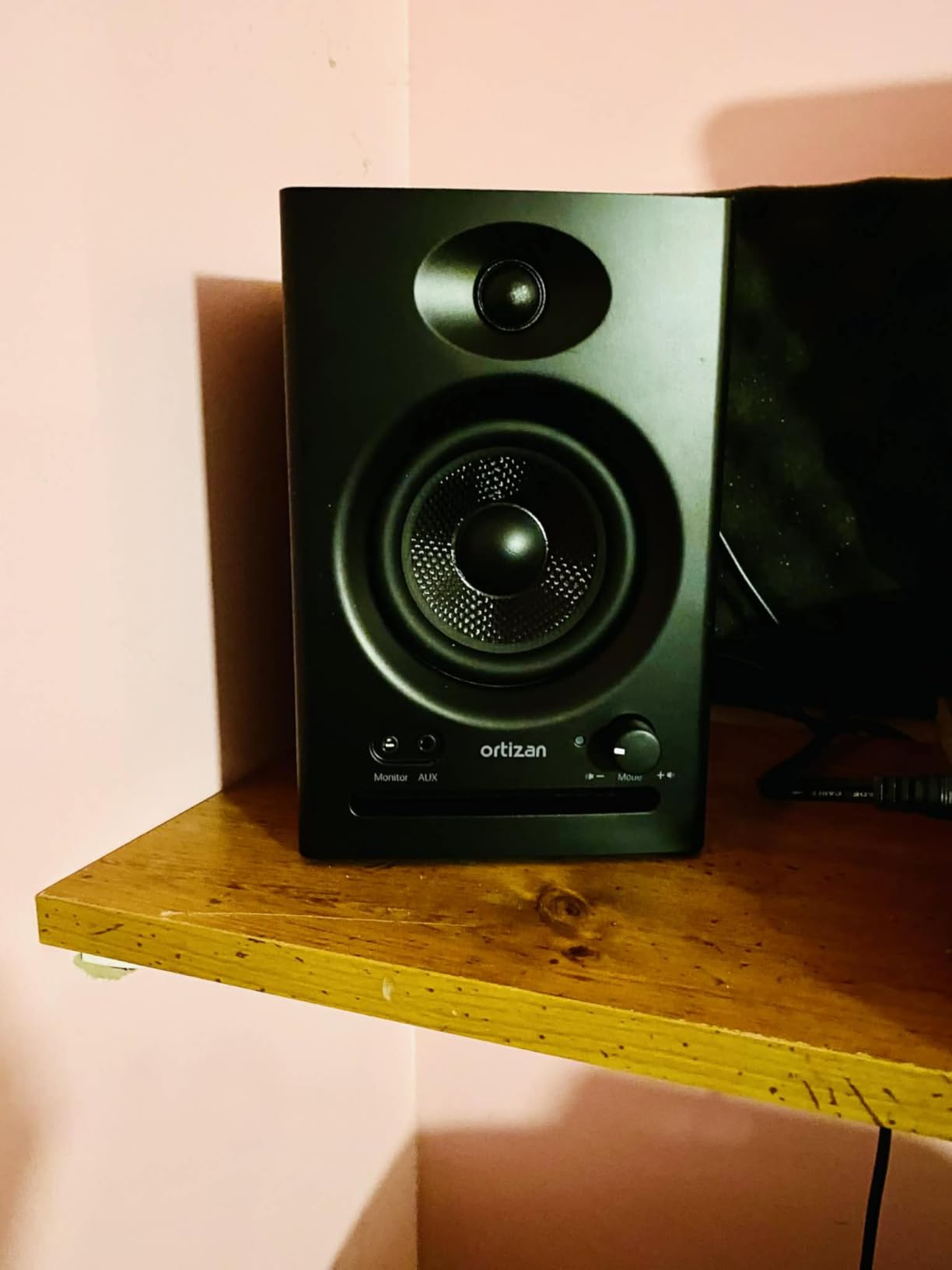
Connectivity is the story: Bluetooth 5.3 with an 18 metre range, RCA, 3.5mm aux, USB, a 6.35mm TRS balanced input and a front headphone output. That is more source options than most monitors twice the size offer, and 80W of amplification with an 85 dB signal-to-noise ratio is enough to fill a small room.
At 7.1 pounds and 5.11 by 5.9 by 7.67 inches it is compact, so it suits a small desk better than several 5-inch options here.
When the C7 makes sense
When your setup is a laptop or a simple desktop and you have no interface, the USB DAC removes the need to buy one just to hear a mix. A producer learning arrangement and editing on a compact setup gets a flat, honest starting point with no extra hardware.
Reviewers highlight the unusual feature density for a budget pair and rate it 4.6 across 890 ratings, with 77% at five stars. The flat tuning and the front headphone output are the two most-cited practical wins.
When it does not
The 3.5-inch driver is the limit that matters for electronic music. It is simply too small to give you a read on sub-bass, so treat the C7 as an editing and arranging monitor. There is also no XLR input, no room-correction DSP and no boundary EQ, so placement compensation is manual only.
And as an unknown brand, it has less long-term field history than the established monitor makers. That matters less for an experiment and more if the speakers will live in your room for a decade.
12. Pioneer DJ DM-40D – The Best Desktop Monitor for Controller Setups
Pioneer DJ DM-40D 4-inch Active Desktop Monitor Speakers, Pair, Black
4-inch active driver with 19mm tweeter
DSP tuning for balanced monitoring
DJ-tuned voicing with two-way sound mode
Light at roughly 454 g per cabinet
Pros
- Small footprint leaves ample desk space for a controller or keyboard
- Two-way sound mode switches voicing between DJing and production
- DSP tuning gives clear balanced monitoring in a small room
- Active design connects to a laptop or controller with no amp
Cons
- 4-inch woofer has limited low-frequency extension
- No Bluetooth on this wired version
- No balanced XLR or TRS input
- No headphone output
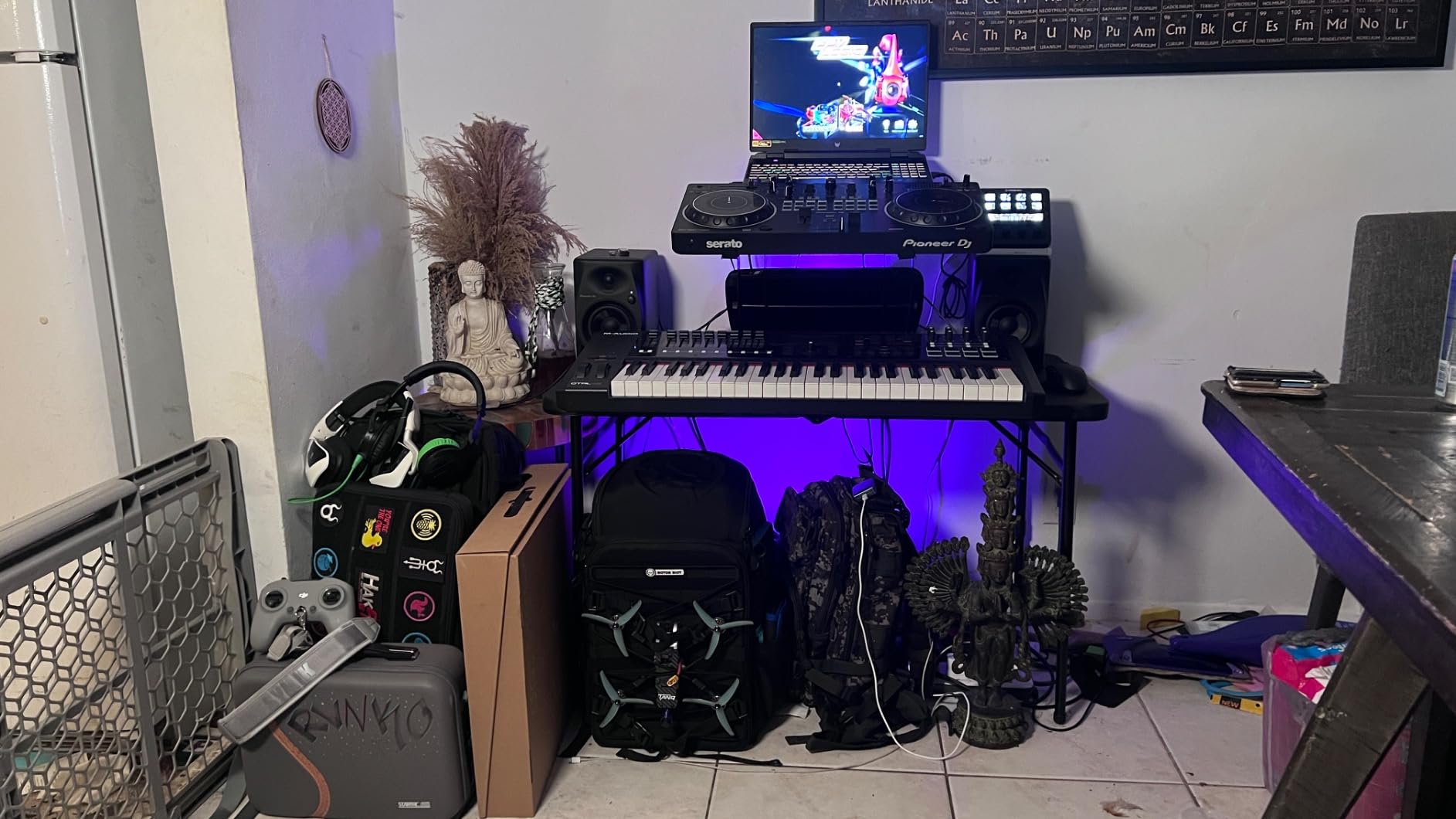
The DM-40D is the smallest desktop monitor in this group at 8.8 by 5.7 by 8.9 inches and roughly 454 g per cabinet, and it is designed explicitly for a desk shared with a DJ controller or a MIDI keyboard. That is a real constraint that most monitor lists ignore, and it is the reason this model exists.
Sound is DSP-tuned for clear, balanced monitoring, with low end voiced by the Pioneer DJ audio team for punch and definition. A two-way sound mode switches the voicing between DJing and music production, which is a smarter implementation than a single fixed curve at this size.
Being an active design, it connects straight to a laptop or a controller with no external amplifier. The fiberglass cabinet and one-year limited manufacturer warranty round out a straightforward package.
At 42W of output this is a small-room tool. It is designed to sit close and be moved, and that is exactly how it should be used.
Why controller players choose it
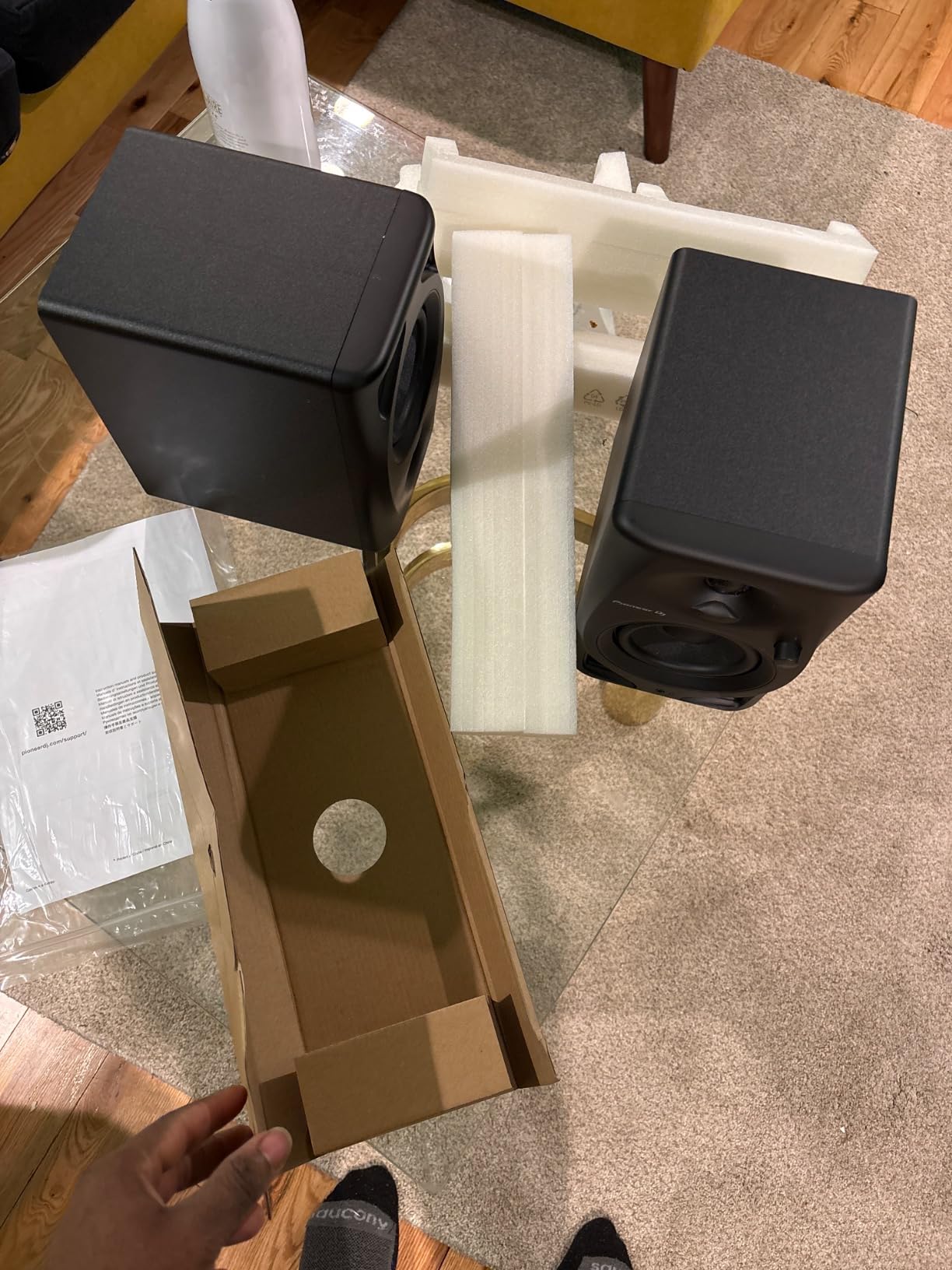
Desk space is the reason. When half your desk is a DDJ controller, a 5-inch monitor is a non-starter, and these leave room to work. The light weight also makes repositioning into the stereo sweet spot painless, which reviewers consistently mention as a genuine practical benefit.
For beat-making, mixing practice and rehearsing a set at a desk, the DSP tuning and DJ voicing give you more than a pair of computer speakers would.
When to look elsewhere
The 4-inch woofer has limited low-frequency extension, so sub-bass decisions are off the table. This wired version has no Bluetooth; the DM-40DBT is the wireless alternative if you need it.
There is also no balanced XLR or TRS input for audio interfaces, no headphone output for private monitoring, and only a one-year warranty. If you already have a desk and interface, step up to a 5-inch model rather than working around these limits.
How to Choose Studio Monitors for Electronic Music
Match the driver size to your room, not to your genre
The most common mistake we see is buying a large woofer for a small room. r/musicproduction threads make the point repeatedly: make sure your woofers are not too big for the space. A large driver in a small untreated room excites the room’s own low-frequency modes, so the bass you hear is mostly the room talking back to you. The result is inconsistent decisions between one session and the next.
As a rough guide: at roughly 8 by 10 feet, stay at 3.5 or 4 inches. Around 10 by 12 feet, a 4.5 to 5-inch driver sits comfortably. Past 12 by 14 feet and beyond, a 6.5 or 8-inch woofer has room to work. A 5-inch woofer is the sweet spot for most home studios, which is why four of the twelve picks use one.
Flat response or hyped low end: which one your genre needs
Neither is right in the abstract; the question is what you are trying to hear. A flat monitor tells you the truth about your low end and nothing else, which is what you want when you are mastering, releasing to streaming and checking a mix that has to survive a club system. A hyped monitor makes everything sound exciting while you work, which is enjoyable and dangerous in equal measure.
For electronic music the honest answer is that you need a flat reference, because your listeners are not listening on a hyped monitor. The forum shorthand is that KRK and Dynaudio are called fun but not honest, and that argument is fundamentally about who gets to decide your bass is correct. If the monitor decides, the mix is wrong. That said, a hyped secondary pair for fun listening is a reasonable two-speaker setup, and the KRK Rokit 5 G5 or the Pioneer DJ pair both work well in that role.
Do you need a subwoofer for electronic music production?
Frequently, yes, and this is the question no competitor on page one answers properly. A 5-inch nearfield typically bottoms out somewhere between 39Hz and 54Hz, which is where the sub-bass content of most techno, bass music and melodic releases actually lives. If your sub line fades out below 45Hz, you are mixing it by memory.
The integration mechanics are simpler than forum threads make them sound. Set the sub crossover above the monitors’ own low limit, usually between 60 and 80Hz, and turn the monitor’s low-frequency control down as you raise the sub level so the two do not double up in the overlap. Watch phase at the crossover point by playing a sweep and listening for a null. Then do not touch it again.
What a sub will not do is replace a bad room. r/audioengineering threads endorse cheap monitors plus a subwoofer as a workable creative and arranging solution for techno when careful mixing is not the goal, and that is a fair framing: a sub adds weight you can feel, not accuracy you can trust. Long-time entry-sub users on forums report the sub itself as consistently disappointing, so put your effort into the monitors and treat the sub as a translation tool.
The habit that makes a sub worth having is the car check. Multiple forum threads describe producers adding a sub specifically because they get in the car to hear the low end, which is a consumer translation habit rather than a monitoring one. That is a valid reason, and it is worth being honest with yourself about which one you have.
Placement, the 38 rule and calibration in an untreated room
The 38 rule is simple: place the monitors so the front panel is 38 centimetres from the back wall, which keeps the boundary reflection from reinforcing bass and blurring the low end. Set them at ear height, angle them so the tweeters point at the back of your head, and make the space between them an equilateral triangle with your sitting position. At 38 centimetres, that triangle is around 73 centimetres wide.
You also need distance from the side walls, roughly equal on both sides, and you need to get the speakers off the desk. A desk surface is a resonant surface and it couples the woofer to whatever is underneath it, which is why the JBL and KRK pairs ship with foam isolation pads. In an untreated bedroom, two thick broadband panels behind the monitors and one bass trap in the nearest corner will do more for your low end than any monitor upgrade you can buy.
For level, set your interface output to reach 75 to 85 dB SPL at your listening position for continuous work, with peaks in the mix reaching 95 dB or so. Consistent level matters more than exact level, because loudness perception shifts through a session and you will make different decisions each time without realising it.
Room-correction DSP and what it actually fixes
App-based correction in monitors like the KRK Rokit 5 G5, with three EQ modes and 25 combinations, or the DIP-switch Boundary EQ on the KALI LP-UNF, does one job: it nudges a narrow band of low or high frequency to compensate for a known boundary. That is worth having when a speaker must sit against a wall.
It is not a room measurement system. Software like IK ARC, Neumann MA 1 or Sonarworks SoundID runs a sweep, models the room and generates deep corrective filters, and those do more than a shelf. What none of them fix is early reflections and modal ringing in the middle of the room, which is why treatment and DSP work best together rather than instead of each other.
How to check a mix outside your monitors
Monitors only ever tell you about your room. A track is finished when it survives somewhere else, so build a fixed routine: play it through the monitors at a consistent level, then on good headphones for detail, then on a phone speaker for the arrangement, then in the car for the low end. Forum threads describe this car habit as the reason many producers add a sub, and it is a sound reason regardless of the monitor you own.
Bluetooth streaming, which the KRK Rokit 5 G5, the Pioneer DJ DM-50D-BT, the KALI LP-UNF and the Ortizan C7 all support, makes an A/B against a commercial reference track a thirty-second job. Do it weekly. It catches balance errors that no monitor will show you.
Frequently Asked Questions
What are the best monitor speakers for music production?
For electronic music, the best overall pick is a 5-inch bi-amplified nearfield with a flat response and room trim controls, such as the Yamaha HS5. Choose by room size first: 3.5 to 4 inch drivers for rooms under about 10 by 10 feet, 5 inch for most home studios up to 12 by 14 feet, and 6.5 or 8 inch only in larger spaces. Amplifier headroom matters more for electronic music than for any other genre, because a dense kick and sub arrangement asks far more of a low-frequency amplifier.
What are the best EDM speakers?
The best EDM speakers pair a 5-inch woofer with enough low-frequency amplification for loud playback and a wide stereo image. Our picks are the Yamaha HS5 for balance and room trim controls, the JBL 305P MkII for headroom and a wide sweet spot from its Image Control Waveguide, and the KRK Rokit 5 G5 for DJ setups where Bluetooth and app-based DSP matter. All three accept XLR or TRS from an audio interface.
What is the 38 rule for studio monitors?
The 38 rule means placing the front of each monitor 38 centimetres from the back wall. This limits the boundary reflection that reinforces low frequencies and smears the low end. Combine it with ear-height tweeters angled at your head, equal distance from the side walls, and an equilateral triangle between the tweeters and your sitting position, which at that distance is roughly 73 centimetres wide.
Which studio monitors have a flat frequency response?
Look for monitors with a documented near-flat response and minimal tonal voicing, and check what room controls they offer. The Yamaha HS5 measures from 54Hz to 30kHz with Room Control and High TRIM dials, and the KALI LP-UNF uses DIP-switch Boundary EQ plus a 3D Imaging Waveguide. The Ortizan C7 is tuned to a flat response curve and includes a built-in 24-bit DAC for a purely digital signal path.
Should you use a subwoofer with studio monitors?
For electronic music, often yes, because a 5-inch nearfield typically bottoms out between 39Hz and 54Hz while sub content sits below that. Set the sub crossover between 60 and 80Hz, above the monitors’ own limit, and lower the monitor low-frequency control as you raise the sub so they do not double up. A sub adds weight you can feel, not accuracy, so pair it with a car and phone check rather than trusting it alone.
Which studio monitors offer the best bass response?
Larger drivers with more low-frequency power win on bass response. The KALI LP-UNF lists response from 39Hz despite a compact 4.5-inch woofer, while the ADAM Audio T5V starts at 45Hz and pairs with a matched T10S sub. The Yamaha HS5 measures from 54Hz with 45W of low-frequency amplification. For the heaviest weight at desktop size, the KRK Rokit 5 G5 and Pioneer DJ DM-50D-BT are voiced for punch.
Final Verdict
The best studio monitor speakers for electronic music producers in 2026 are the Yamaha HS5 for most people, the JBL 305P MkII if you mix loud, and the Edifier MR4 if the desk is small and the outlay is fixed. Each of the twelve is genuinely usable, and the honest differences are room size, headroom and how much low end you are prepared to check outside the monitors.
Buy the pair that fits your room, run the 38 rule, treat any subwoofer as a translation tool rather than a crutch, and check every finished track in the car before you upload it.