
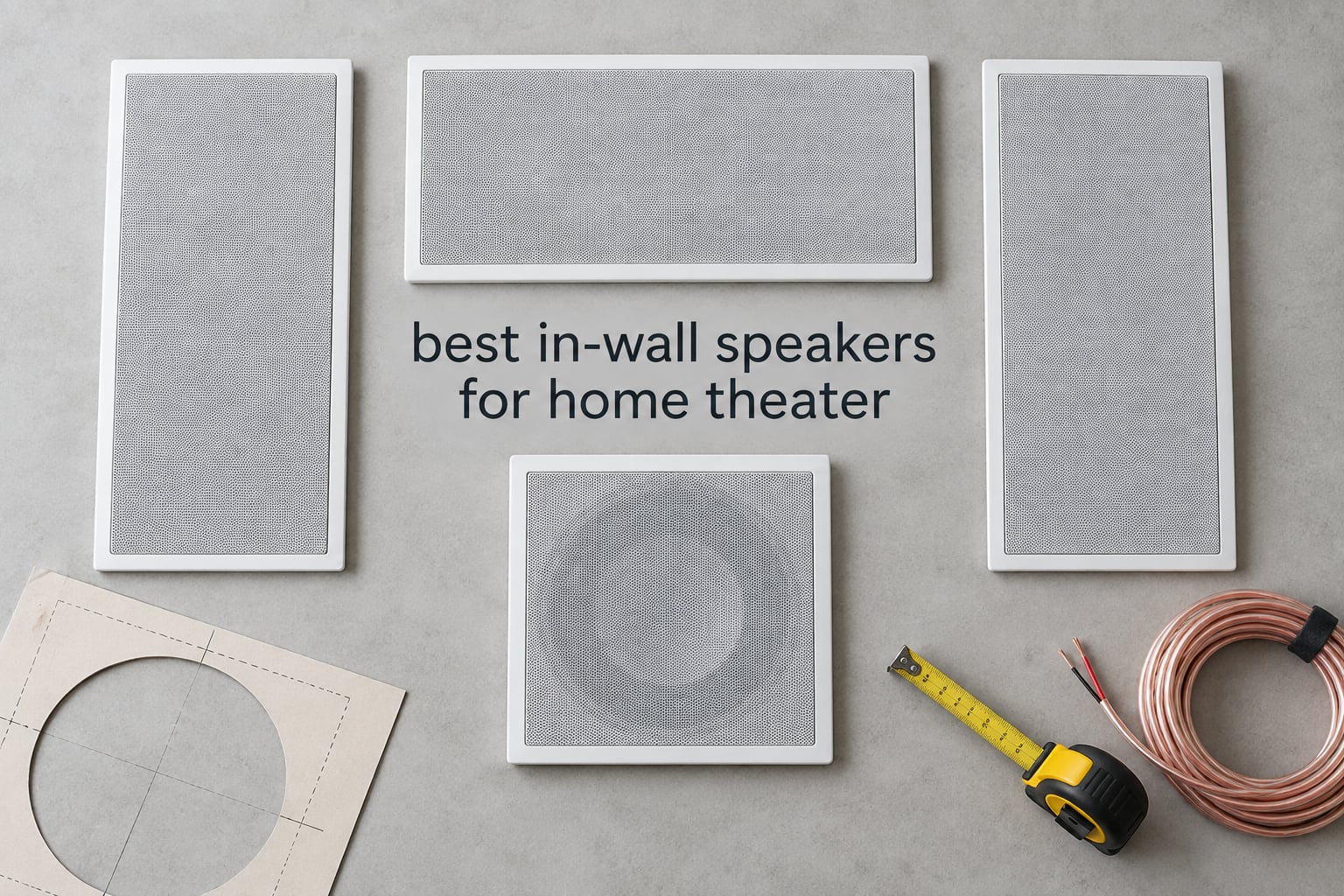
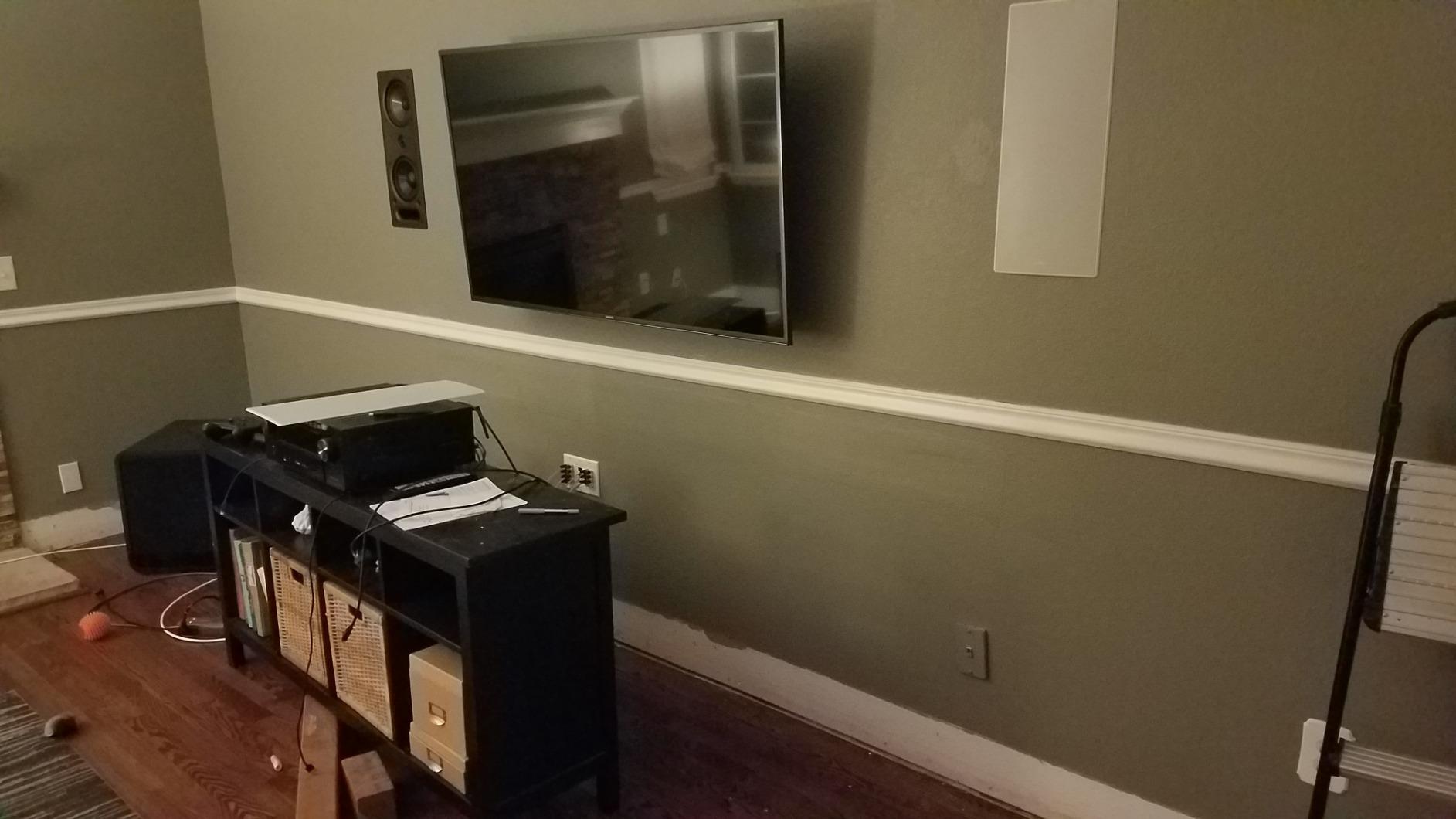
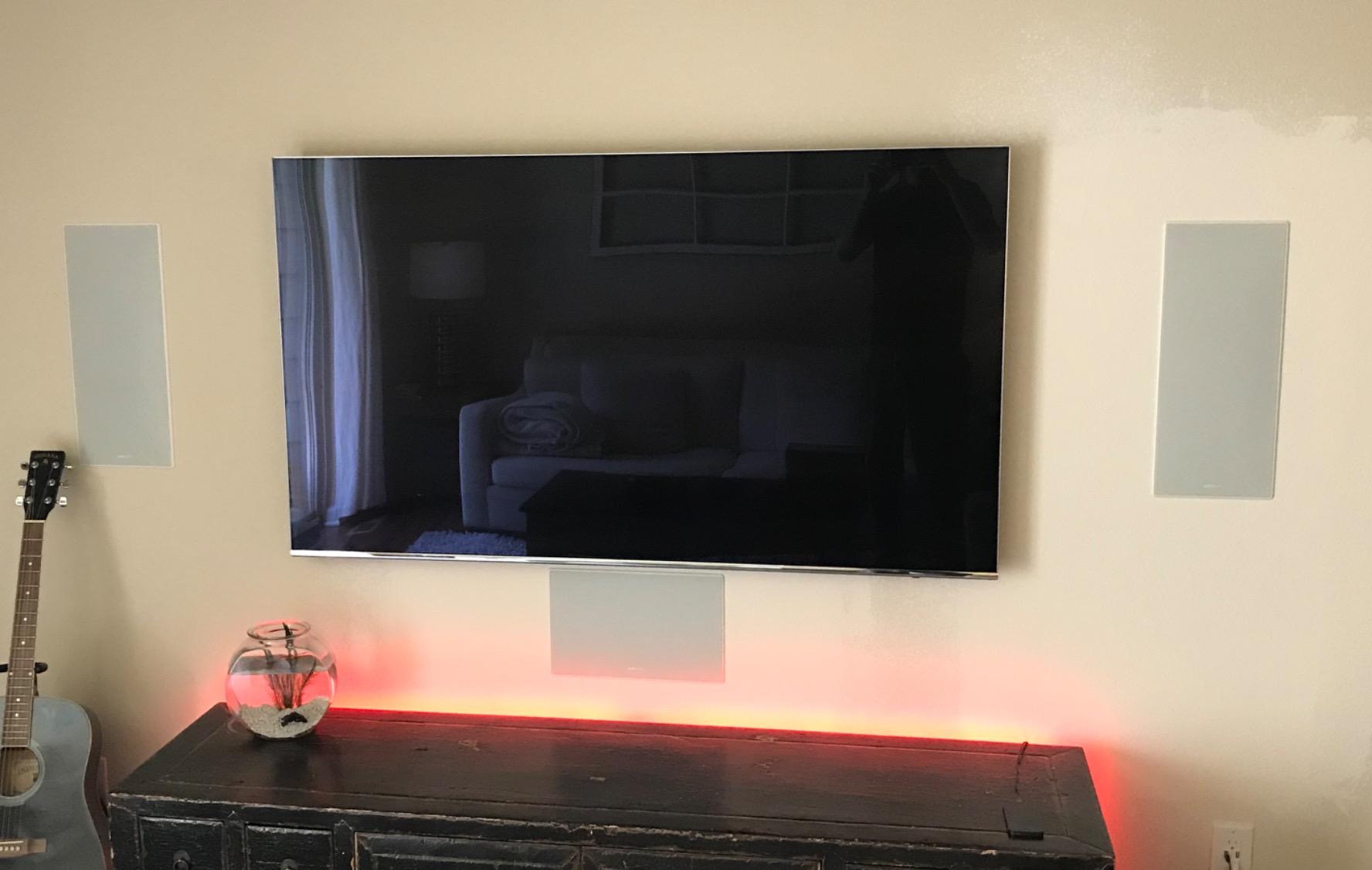
In-wall speakers are the only way to get a genuine home theater soundstage without filling the room with black boxes. They mount flush inside a wall cavity, so only a thin bezel and grille stay visible, and that single fact changes the whole design of a theater room. Nothing eats a sightline, nothing sits where a couch goes, and nothing gets yanked off a wall by a curious kid.
The best in-wall speakers for home theater are not automatically the best-sounding speakers you can buy, and that is the part most roundups skip. A hidden speaker trades some bass extension and dynamic headroom for the fact that it is invisible. What you get back is an even, cinematic soundstage that wraps around the seating without a single visible cabinet in the frame.
I spent several weeks comparing the 12 models below, reading owner reviews in detail and matching driver specifications against the channel counts people actually build. What I kept coming back to is that the decision is not about finding a single best speaker. It is about buying one series for the front three channels and choosing surrounds that will not fight them.
This roundup covers dedicated theater rooms, living-room systems and small apartment setups, from a single center channel to a full 7.1 layout. Every pick below is written with honest drawbacks attached, because the cheapest option and the most capable option each fail in their own way.
Table of Contents
Top 3 In-Wall Speakers for Home Theater (September 2026)
Polk Audio 255c-RT
- Dual 5.25 inch midwoofers
- Swiveling 1 inch silk dome tweeter
- Paintable sheer grille

Polk Audio RC85i
- 8 inch Dynamic Balance woofer
- Shallow 2-7/8 inch mounting depth
- Moisture resistant

Polk Audio RC65i
- 6.5 inch Dynamic Balance woofer
- Swiveling 0.75 inch silk dome tweeter
- Winged toggle clamps with template
The 255c-RT takes the top slot because a theater lives and dies on the center channel, and this one carries dialogue with a 4.8 rating across 748 owner reviews. The RC85i is the value pick: an 8-inch woofer in a shallow body, sold as a matched pair, which is unusual at this level. The RC65i is the sensible choice when you are building every channel at once and need consistent parts from one series.
Best In-Wall Speakers for Home Theater in 2026 At a Glance
Every speaker below is listed with the specifications that actually change a buying decision, so you can compare them in one pass. Prices change constantly, so use the buttons to check the current figure rather than relying on any number you might find quoted elsewhere.
| Product | Specs | Action |
|---|---|---|
| Polk Audio 255c-RT In-Wall Center Channel |
|
Check Latest Price |
| Polk Audio RC85i 8 Inch In-Wall Pair |
|
Check Latest Price |
| Polk Audio RC65i 6.5 Inch In-Wall Pair |
|
Check Latest Price |
 Micca M-CS Dual 5.25 Inch In-Wall Center Micca M-CS Dual 5.25 Inch In-Wall Center |
|
Check Latest Price |
 Micca M-6S 6.5 Inch In-Wall Speaker Micca M-6S 6.5 Inch In-Wall Speaker |
|
Check Latest Price |
 Monoprice Caliber 3-Way 8 Inch In-Wall Pair Monoprice Caliber 3-Way 8 Inch In-Wall Pair |
|
Check Latest Price |
 Silver Ticket 82W 8 Inch In-Wall Speaker Silver Ticket 82W 8 Inch In-Wall Speaker |
|
Check Latest Price |
 Klipsch R-5502-W II In-Wall Speaker Klipsch R-5502-W II In-Wall Speaker |
|
Check Latest Price |
 Klipsch R-5800-W II In-Wall Speaker Klipsch R-5800-W II In-Wall Speaker |
|
Check Latest Price |
 Yamaha NS-IW760 6.5 Inch In-Wall System Yamaha NS-IW760 6.5 Inch In-Wall System |
|
Check Latest Price |
 Pyle PDIW87 Enclosed 8 Inch In-Wall Pyle PDIW87 Enclosed 8 Inch In-Wall |
|
Check Latest Price |
 Micca 8 Inch In-Wall 4-Pack Micca 8 Inch In-Wall 4-Pack |
|
Check Latest Price |
1. Polk Audio 255c-RT – the center channel that carries dialogue
Polk Audio 255c-RT In-Wall Speaker, The Vanishing Series, Black/White
Dual 5.25 inch midwoofers
1 inch swivel silk dome tweeter
8 ohm impedance
150 watts
Pros
- Articulate and focused center channel dialogue
- Swivel tweeter aims sound at the seating
- Rotating cam mounts with fit template install quickly
- Paintable sheer grille disappears into the wall
Cons
- Bass is limited by the compact 5.25 inch drivers without a sub
- Needs roughly 85 to 90 hours of break-in before midtones open up
- Audible bleed through a shared wall
Most people underestimate how much of a movie actually arrives through the center channel. Dialogue, narration and a large share of effects come out of that one speaker, so it is the last place to economize. The 255c-RT is a purpose-built center with two 5.25-inch midwoofers flanking a swiveling silk dome tweeter, which is a smarter driver layout than a single small woofer trying to do the same job.
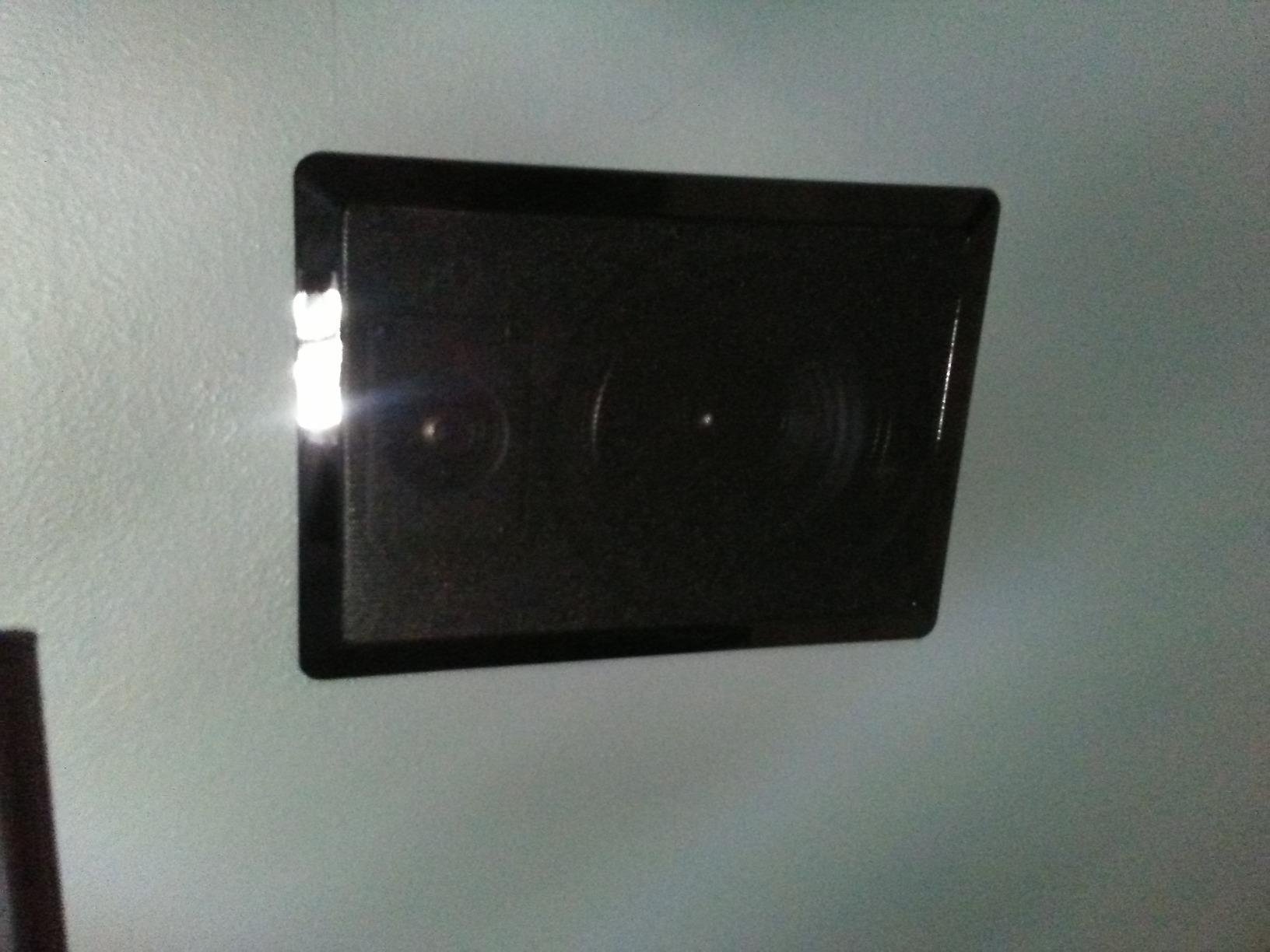
The swivel is what makes this one installable in a real room. Instead of a fixed tweeter firing wherever the wall happens to point, you rotate the tweeter toward the couch after the speaker is locked into the wall, then paint the grille to match. Owners report dialogue that stays intelligible under explosions and score cues, which is the only test that matters for a center.
Polk’s Power Port bass port is doing real work here, giving the compact drivers more low-mid output than their size suggests. It still will not replace a subwoofer, and anyone expecting one will be disappointed. My advice is to treat the 255c-RT as a vocal channel and let a sub handle everything below about 80 Hz.
The one thing to plan for is the break-in period. Across owner reviews there is a consistent theme that the midrange sounds slightly closed for the first month or so, then opens up. I would not judge these speakers in the first two weekends. Set the receiver crossover at 80 Hz, run room correction, and give them time before you decide.
Sound bleed is the other real caveat. This is an open-back design, so the rear wave goes into the wall cavity and through whatever is on the other side. In a dedicated theater that is a non-issue. In an apartment or a shared wall, fill the cavity with insulation and keep the volume civil after lights out.
The rotating cam mounting system with an included fit template is the best installation hardware in this roundup. It clamps tight, it repeats, and the template means one clean pass through the drywall. If you are installing a single speaker in an existing finished wall, that convenience is worth as much as any spec on the sheet.
What makes it worth buying
This is the pick for anyone who wants one speaker to do the most important job in the room well. Two 5.25-inch drivers give it the mid-bass body that single-driver centers cannot, and the 4.8 rating across 748 reviews is the strongest combination on this list.
It also pairs logically with the RC85i and RC65i in the same series, so timbre stays consistent from the front of the room to the back. That matters more than raw specifications once you are watching a two-hour film.
Where it falls short
It is a center channel, not a main. Owners who tried to run it as a full-range front speaker and skipped the subwoofer consistently report thin effects. The 150-watt maximum power rating is adequate for a dedicated room, not for driving a large space at reference levels.
Budget for the break-in period and for insulation in the cavity. Both are cheap, and both change the result more than any amplifier upgrade would.
2. Polk Audio RC85i – the 8-inch pair that does the most work
Polk Audio RC85i 2-way Premium In-Wall 8″ Rectangular Speaker Pair, White
8 inch Dynamic Balance woofer
Swiveling 1 inch silk dome tweeter
2-7/8 inch mounting depth
Moisture resistant
Pros
- Well balanced neutral tone for music and movies
- No distortion when driven hard by an average receiver
- Cut-out template gives a clean one-pass drywall cut
- Only about a quarter inch of grille stands proud of the wall
Cons
- Shallow mounting can bleed into a neighbouring room
- One owner reported a dead tweeter out of the factory
- Fiddly interference-fit grille to remove and refit
The RC85i is the most useful speaker in this roundup, and not because it wins a spec contest. It is an 8-inch woofer in a body just under three inches deep, it arrives as a matched pair, and it has more owner history behind it than anything else here with 1175 reviews. That combination makes it the default choice for front main speakers and surrounds in a normal room.
An 8-inch cone moves far more air than a 6.5-inch, and you feel that on effects and music before you ever measure it. The Dynamic Balance woofer paired with a swiveling silk dome tweeter gives a tone owners describe as neutral, which is exactly what you want when the same speaker handles a nature documentary at breakfast and an action film at night.
The shallow profile is the quiet hero. Just under 2-7/8 inches of mounting depth clears most standard cavities without framing work, and the grille protrudes barely a quarter inch, so the finished wall looks flat. Moisture-resistant construction also means you can use the same model in a bathroom or covered porch if you are running a whole-house system.
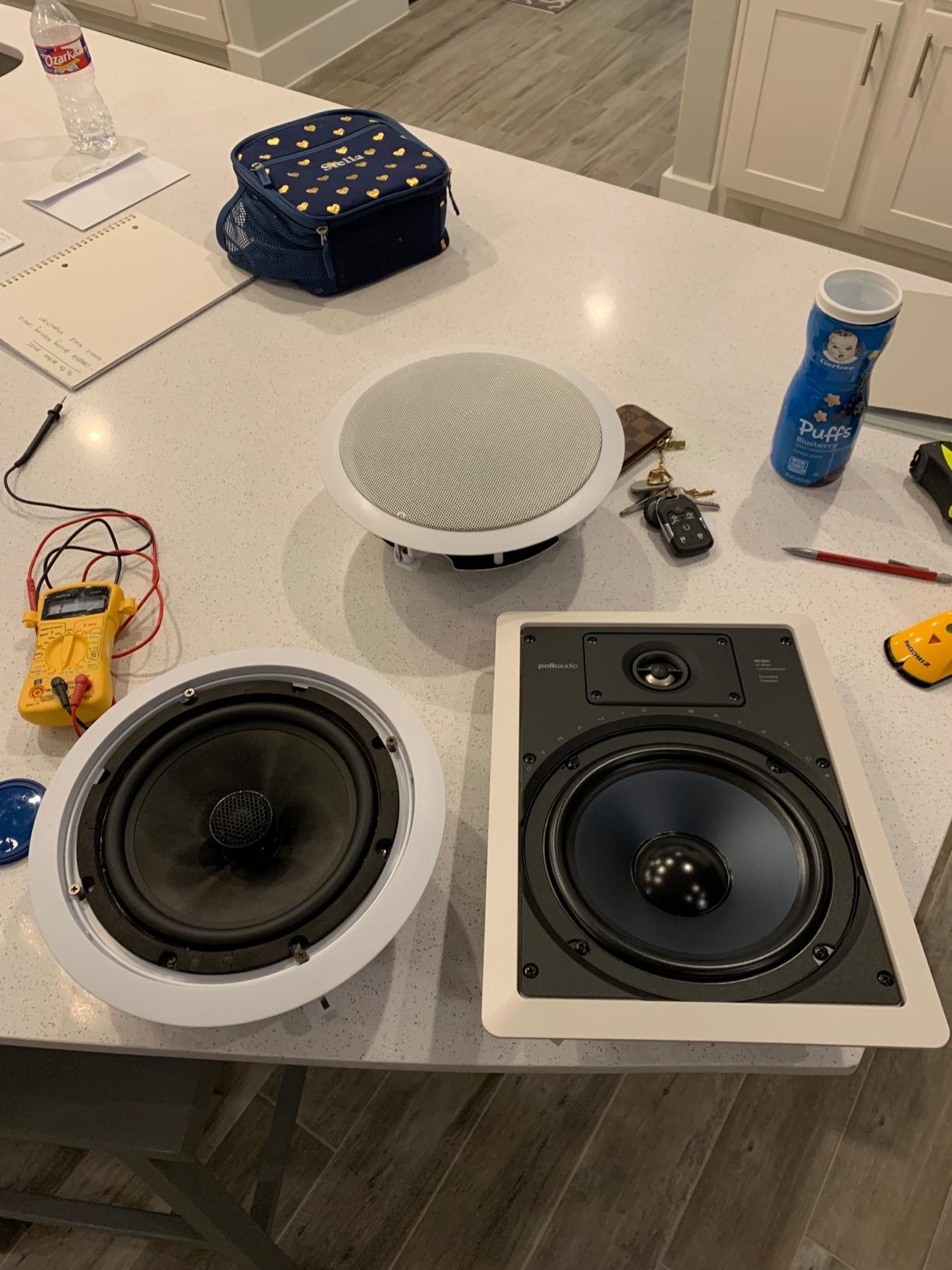
Owners consistently mention that the mounting clips and cut-out template make this the easiest install in the group. The template turns a guess into a measurement, and the clips hold the cabinet rigid once the screws are in. Several people build a full 5.1 or 7.1 system out of this same part number without feeling the need to match anything else.
That makes it a strong choice for anyone who wants a system that plays music well and doubles as a theater. The limitation is bass depth rather than midrange quality. The 8-inch driver reaches lower than the 6.5-inch models, but it is still not a subwoofer, and any expectation of chest-thumping lows without separate bass will disappoint.
There is one quality-control story worth repeating: a buyer reported a dead tweeter on a single unit and had to replace the whole pair. It is an isolated report, not a pattern, but if you order this model check both drivers before you close the wall up. That five-minute check saves a drywall cut.
The grille is a genuine annoyance. It is an interference fit in the frame, so it takes some practice to remove and refit, and it is the first thing that gets scratched during painting. A magnetic grille would be easier, but you paint this one carefully and leave it alone afterward.
What makes it worth buying
This is the pick for a five-channel system in a normal-sized living room where you want one part number to cover the front main speakers and the surrounds. The 8-inch driver, the shallow body and the included pair pricing are hard to argue with.
It is also the safest choice for someone who is not sure how far they will go with the system. Buy three, and add two or three more later without changing the sound.
Where it falls short
Deep bass and neighbour-friendly listening are both compromised. The shallow body leaves less volume behind the driver, and if the wall is shared you should fill the cavity with insulation and accept a lower late-night volume.
If your room is large and you push these hard at reference levels, expect less headroom than the two Klipsch models later in this list. They are a value-driven choice, not an output-driven one.
3. Polk Audio RC65i – the Most Versatile for a full 7.1 build
Polk Audio RC65i 2-way Premium In-Wall 6.5″ Rectangular Speaker Pair, White
6.5 inch Dynamic Balance woofer
0.75 inch swivel silk dome tweeter
8 ohm
200 watts
Pros
- Excellent value once levels and crossovers are tuned
- Handles a full 7.1 setup at high volume without fatigue
- Angled tweeter aims at the main listening position
- Simple quick installation with the supplied template
Cons
- Slightly muddy midrange out of the box until EQ is set flat
- Bass is limited without a dedicated subwoofer
- Clips can pop out if tightened with a power driver
Building eight in-wall speakers at once is a money problem before it is an audio problem. The RC65i exists for that exact situation: a 6.5-inch two-way with a swiveling silk dome tweeter, sold as a matched pair, with a 200-watt maximum power rating that is generous for its class.
That power figure is the interesting part. Owners run full 5.1 and 7.1 layouts on this without fatigue or distortion, which puts it ahead of several cheaper models in the group for headroom. The 8-ohm impedance is also the most common value, so amplifier matching is straightforward and you avoid load problems with a modest receiver.
Sound out of the box is not perfect, and owners say so plainly. The midrange is described as slightly muddy until the equalizer is set flat and the crossover points are handled properly. Fix that in your receiver setup and the speaker is transformed, but skip calibration and you are judging the speaker instead of the system.
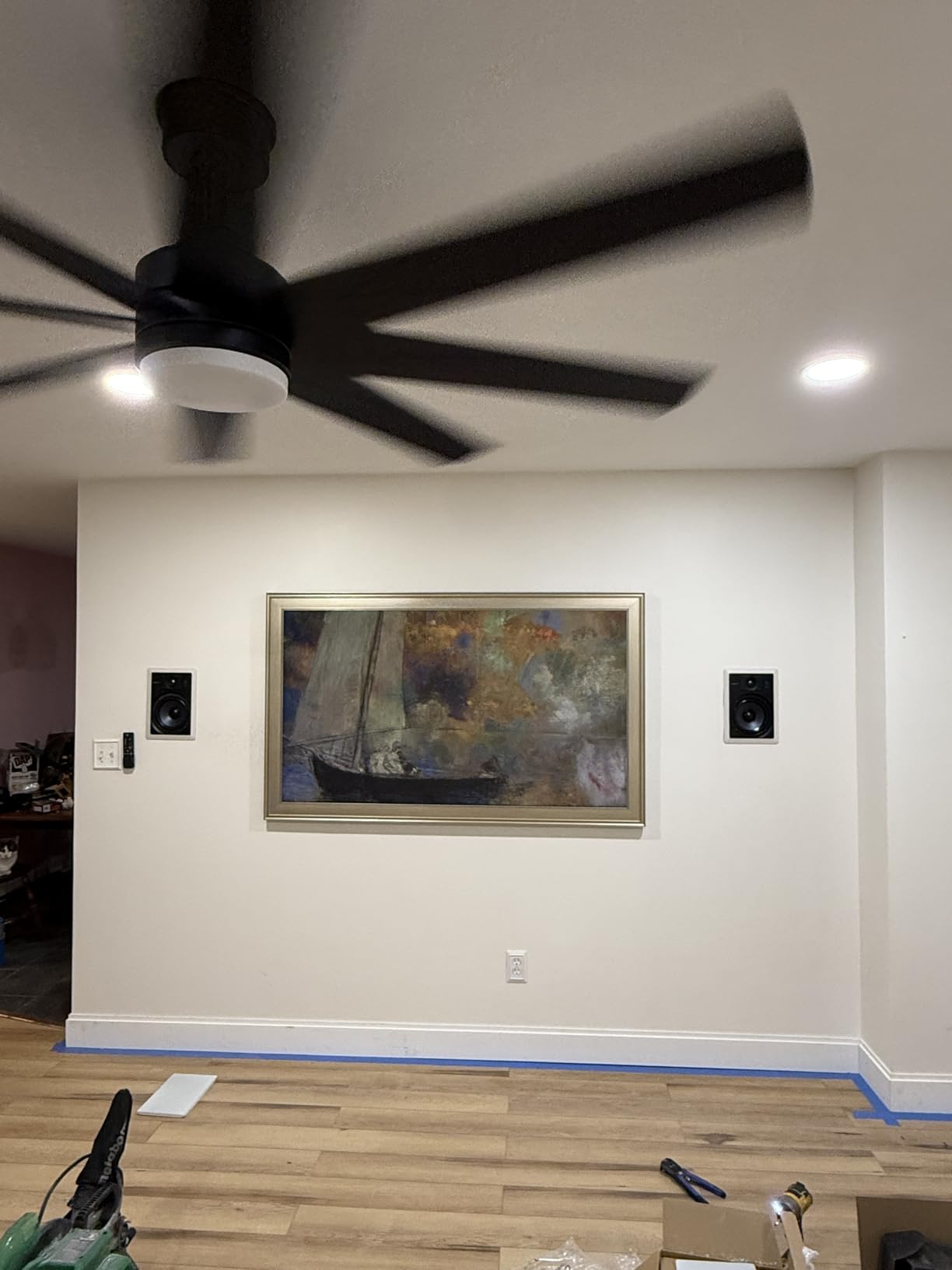
The Dynamic Balance polypropylene woofer and the angled tweeter work together well in a real room. The tweeter points at the seating rather than at the floor or the ceiling, which widens the useful listening area and helps when not everyone sits dead centre.
Moisture resistance means the same speaker works in a kitchen, a bathroom or a covered porch, and the paintable grille blends with any wall. That flexibility is what makes it popular for whole-house background audio as well as theater, and many owners run both on the same amplifier.
Installation is quick. Winged toggle clamps grip the drywall from behind and the included cutting template removes the guesswork. The warning from owners is specific: do not overtighten with a power driver, or the clips can pop out of the wall and leave you with a loose speaker.
The same 85-to-90-hour patience applies. The midrange settles as the drivers break in, so give the system at least a month of regular use before you change anything structural.
What makes it worth buying
This is the pick when speaker count is the priority. If you are building 5.1, 7.1 or even a 5.1.2 layout, a part number you can repeat eight times keeps the sound uniform and the shopping simple.
The 200-watt rating and 8-ohm load make it forgiving with whatever receiver or amplifier you already own, which is a real saving when the speakers are not the only thing on your list.
Where it falls short
It needs calibration to sound like the reviews describe. Out of the box it is competent rather than exciting, and the midrange muddiness is the first thing a critical listener will notice.
For a dedicated theater with a real budget behind it, this is a step down in refinement. It is built to cover a lot of channels economically, not to be the last speaker you ever buy.
4. Micca M-CS – the cheapest dedicated center here
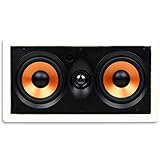
Micca M-CS Dual 5.25-Inch in-Wall Center Channel Speaker, Each, White
Dual 5.25 inch poly woofers
Pivoting 1 inch silk dome tweeter
60Hz-20kHz
90dB sensitivity
Pros
- Clear and crisp dialogue that blends with other in-wall speakers
- Dual 5.25 inch woofers beat a soundbar at this money level
- Solid well-made feel despite the low cost
- Templates and clamp tabs make installation quick
Cons
- Wide cutout can be hard to centre between standard 16 inch studs
- A subwoofer is effectively required for effects bass
Buying a center channel as an afterthought is the most common mistake in a budget theater build, and the Micca M-CS is the fix. Two high-excursion 5.25-inch poly woofers and a pivoting silk dome tweeter in a single horizontal enclosure is a serious layout for very little money, and it holds a 4.7 rating across 584 reviews.
The 12dB crossover network is doing meaningful work here. It is what keeps the upper midrange coherent as the driver hands off to the tweeter, which is where cheap centers usually sound thin or boxy. Owners describe dialogue as crisp and, more importantly, as blending well with other in-wall speakers rather than announcing itself as the cheap one.
At 90dB sensitivity and 8 ohms, this is an efficient speaker that will play in a modest system without demanding a serious amplifier. A 12dB network and 120 watts of rated handling per enclosure means it can keep up with mid-volume movie watching without straining.
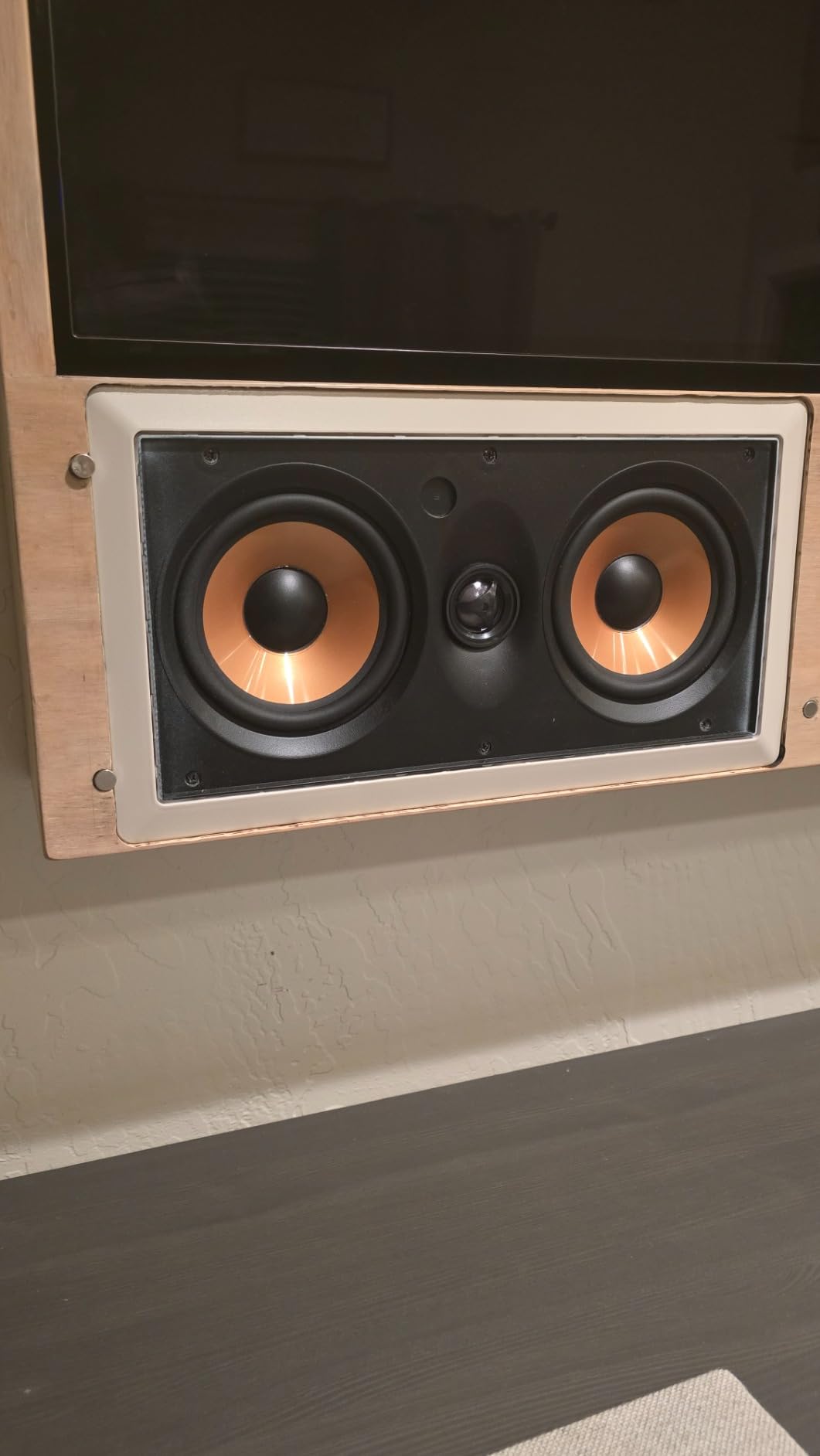
The mounting design deserves attention. Built-in tabs grab the drywall directly, so there is no separate bracket to position and no hardware to lose in the cavity. Pre-run the tabs with a screw as owners advise, and installation becomes one of the faster jobs in this roundup.
Owners repeatedly compare the result favourably to a soundbar at the same money, and that comparison holds. A soundbar gives you a single wide sound field; this gives you a real center channel with localizable dialogue, which is a meaningful upgrade for films.
The 60Hz lower limit is the honest limit. This is a vocal speaker, not an effects speaker, and any scene with heavy low-frequency effects will expose the gap immediately.
Plan the framing before you cut. At 15.4 inches wide, the cutout is difficult to centre between standard 16-inch-on-centre studs, and the alternative is trimming a stud, which is a bigger job than most people expect on a finished wall.
What makes it worth buying
This is the pick for a first theater, a rental property, or anyone who wants real center-channel dialogue without spending serious money. The dual-driver layout and 12dB crossover cost far more than the price suggests.
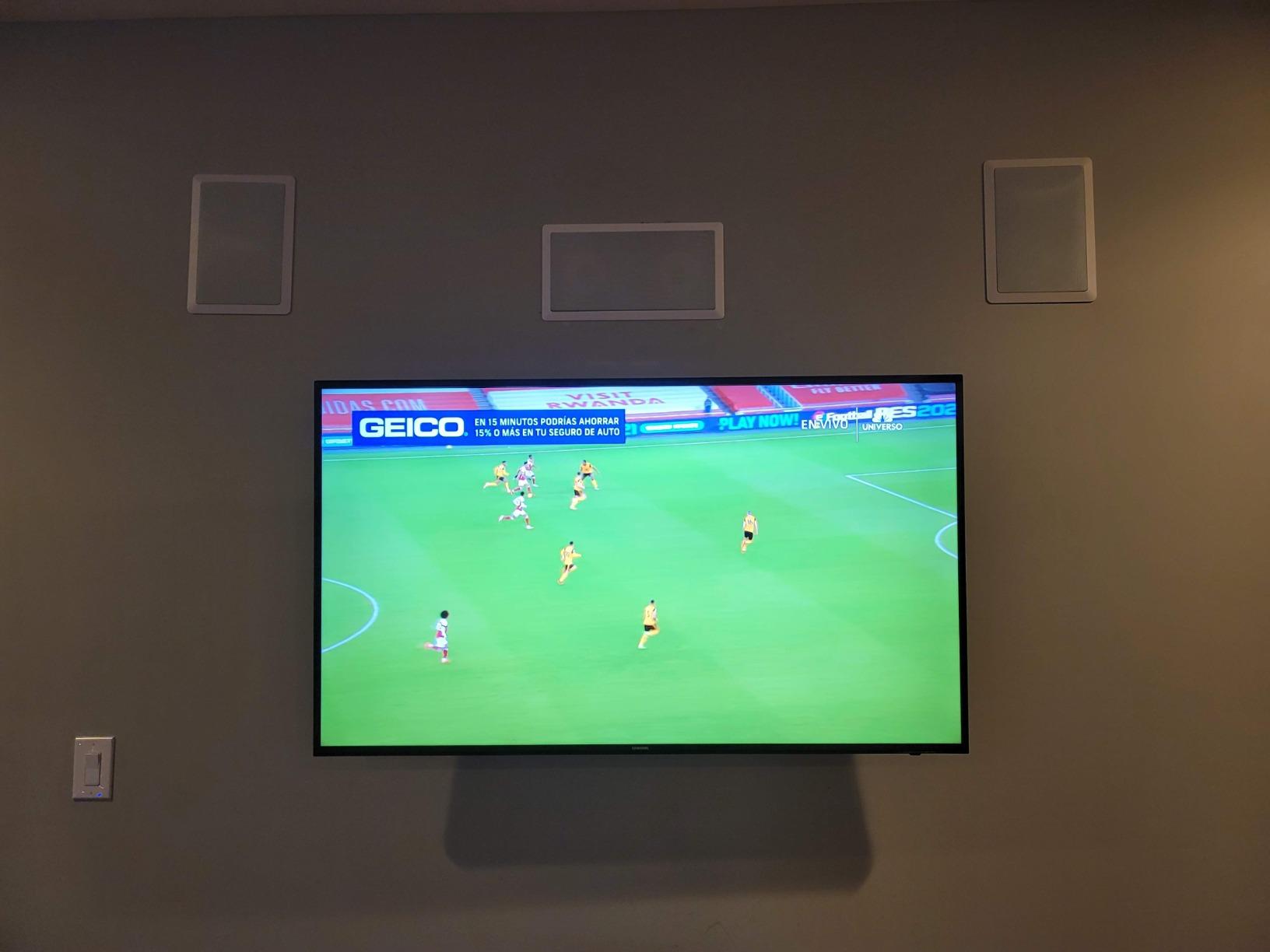
It also mounts horizontally as a center or vertically as a front or surround speaker, so a tight budget does not force you into different products for different channels.
Where it falls short
A subwoofer is not optional here. The 60Hz floor and compact drivers mean effects bass simply is not in this enclosure, and trying to run effects full-range will produce a thin, unbalanced picture.
The wide cutout is the practical problem. In a 16-inch stud bay with no framing allowance, you may need to move the speaker or trim framing. Measure before you order.
5. Micca M-6S – the 6.5-inch that fits small rooms
Micca M-6S 6.5-Inch 2-Way in-Wall/Ceiling Speaker, Each, Paintable, White
6.5 inch high excursion poly woofer
Pivoting 1 inch silk dome tweeter
2.9 inch mounting depth
80 watts power handling
Pros
- Smooth natural sound with solid bass for the money
- Minimal wall protrusion and a grille that takes paint
- Mounting tabs grip drywall with no extra hardware
- Works well for both surrounds and background music
Cons
- Sold as a single speaker so a pair means two orders
- Only 80 watts of power handling per box
Small rooms punish big drivers. An 8-inch woofer in a compact apartment theater tends to reinforce the room mode problems rather than solving them, which is why a 6.5-inch two-way is often the more sensible choice for surrounds. The Micca M-6S is built for exactly that situation, and it doubles as an in-ceiling speaker if your layout needs one.
The pivoting silk dome tweeter is the feature owners mention most, and for good reason. Mount it in a side wall, point the tweeter back at the seating, and the soundstage stays coherent even when the speaker is well off-axis. On an 87dB sensitivity, it runs happily from a modest amplifier without straining.
Response runs 50Hz to 20kHz through a 12dB crossover, which is more than enough for a surround channel doing ambience and effects. The mounting depth of 2.9 inches clears a standard cavity, and the cutout of 7.3 by 10.7 inches is among the more forgiving in this roundup.
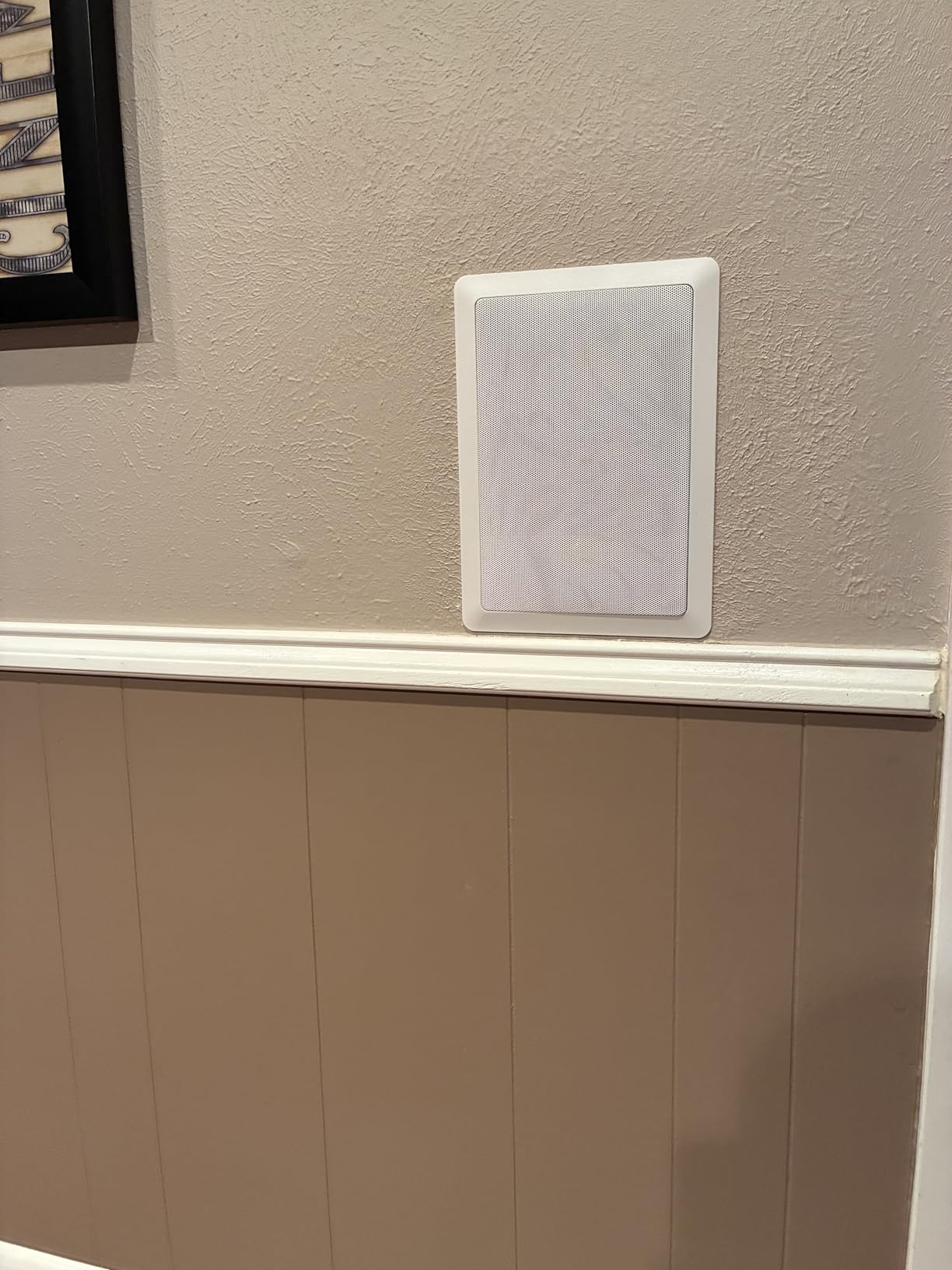
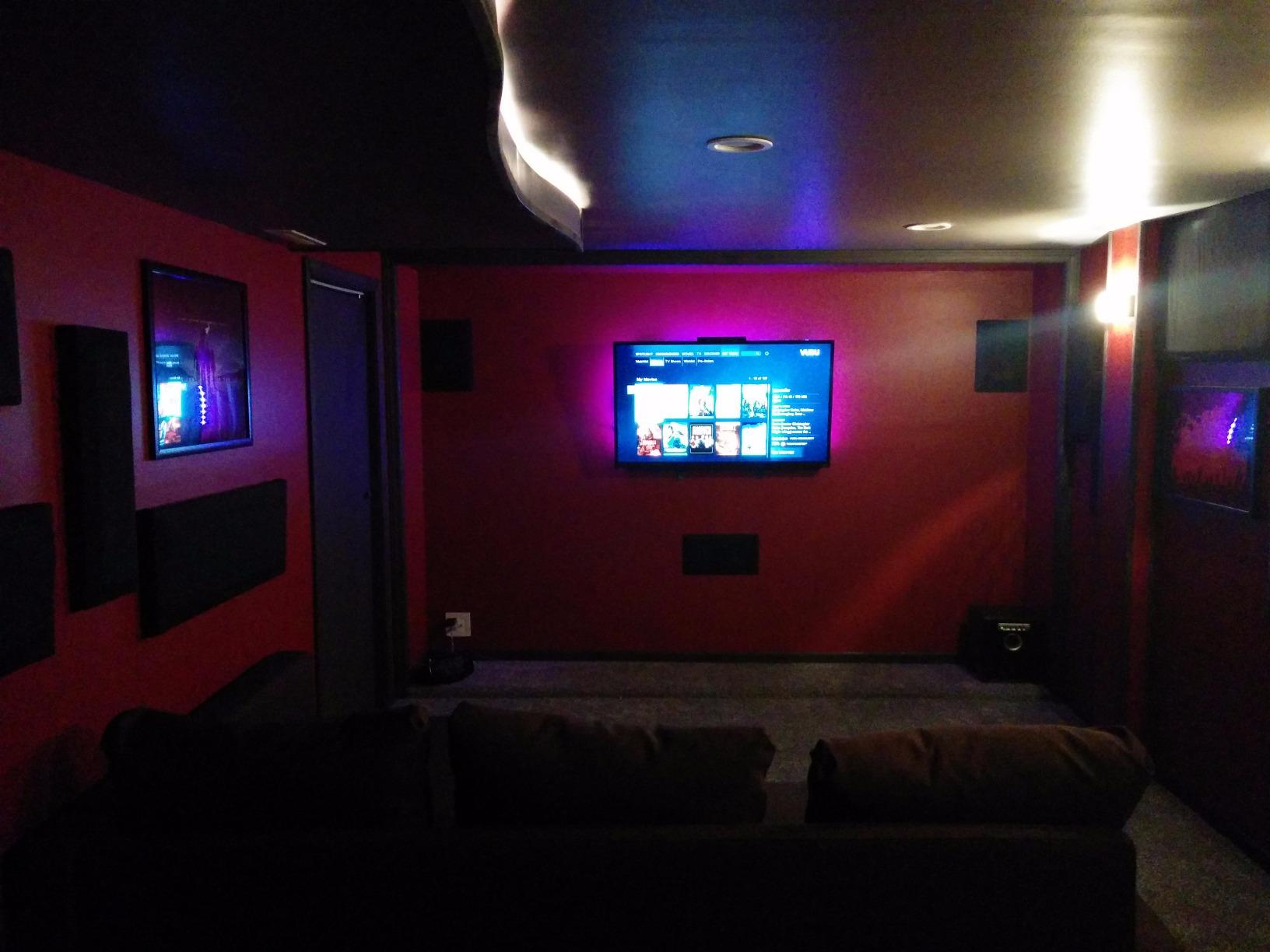
Installation is the easiest in the group. Built-in mounting tabs grip the drywall directly with no brackets and no back box, and the low-profile rimed grille sits almost flat and takes paint without complaint. Several owners use these through a whole house and never touch them again.
The sound-to-cost ratio is the story here. Owners call it smooth and natural, with enough bass for music that it is not embarrassed to be the only thing playing in a room when the TV is off.
Two practical details matter more than they look. This is sold as a single speaker, so a stereo pair means two separate orders and you should buy matched from the same batch. And at 80 watts of power handling, it is a surround and background speaker, not a main in a large room.
That is the honest boundary of this pick. It is a surround, a rear channel, or a distributed audio speaker. Pair it with a dedicated center and subwoofer, and it quietly does its job for years.
What makes it worth buying
This is the pick for small rooms and for surrounds generally. A 6.5-inch driver in a shallow body avoids overloading a compact space, and the pivoting tweeter keeps the sound pointed where people actually sit.
It is also the easiest to install, which matters enormously in an apartment or a finished wall where you cannot easily get inside the cavity.
Where it falls short
80 watts of handling will not carry a large dedicated theater at reference levels, and owners who used them as mains report reaching the limit sooner than expected. Keep them in the surround positions.
Single-speaker packaging is an inconvenience rather than a flaw, but it is a real one when you need eight channels and want them to match.
6. Monoprice Caliber 3-Way 8 inch – three drivers in a 2×4 cavity
Monoprice 3-Way Fiber In-Wall Speakers – 8 Inch (Pair) With Removable And Paintable Grille – Caliber Series
Three-way fiber cone design
8 inch drivers
200 watts maximum power
Removable paintable grille
Pros
- Rich clear three-way sound that rivals far costlier models
- Solid weight and construction for the price
- Fits inside a standard 2x4 wall cavity
- Tab mounting prevents cabinet vibration and rattling
Cons
- Cutout is larger than the marketing photos suggest
- Delicate mounting clips that need pre-threading
- One owner reported a broken tab on arrival
A three-way in-wall speaker is unusual, and that is exactly why this one is interesting. Instead of routing the midrange through a crossover, the Monoprice Caliber uses a three-way fiber cone design so each driver handles its own band. In theory that means a cleaner, more even soundstage with less crossover interference, and in practice owners describe it as rich and clear.
The design shows up in the system. Where a two-way speaker can smear the upper midrange, this one keeps vocals and effects distinct, which is what makes a surround field feel wide without sounding diffuse. At 17.6 pounds for the pair, the build quality is well beyond what the price would suggest.
Sonically matching across the Caliber series is a genuine advantage for theater builders. If you later add a matching center or surrounds, the soundstage stays uniform instead of shifting in character from channel to channel.
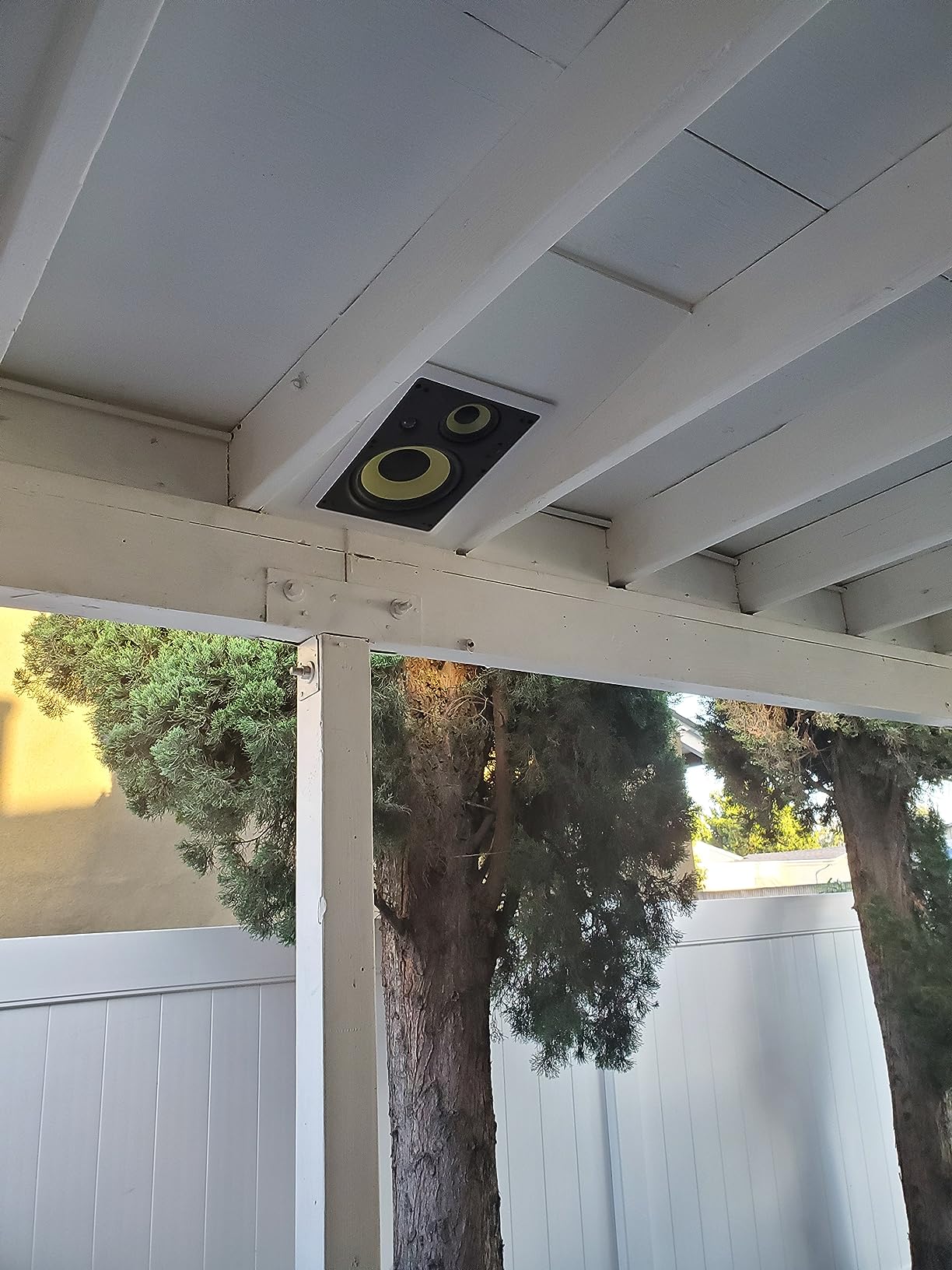
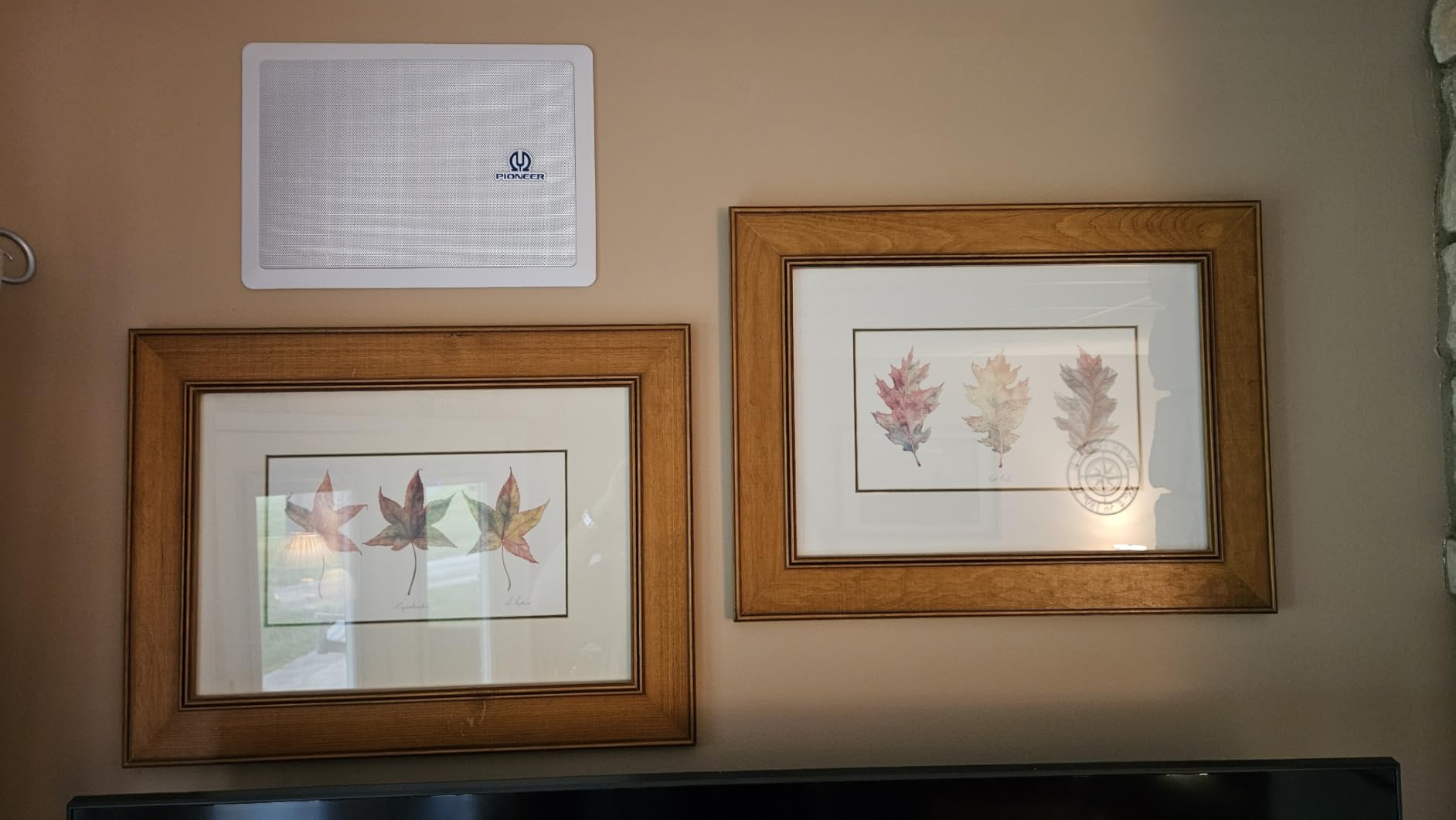
The 200-watt maximum power rating gives this more headroom than most of the value tier, and the 8-ohm load keeps amplifier matching simple. The claim of suitability from two-channel rooms up to 7.2 configurations is realistic for the output level involved.
It fits inside a standard 2×4 wall cavity, which is the practical headline. The body is 3.9 inches deep at the widest point, so it clears framing without the extra depth a bigger design would demand.
Rotating-clamp mounting tabs are there to stop the cabinet vibrating in the wall, and they do their job. But owners warn that the clips are delicate. Pre-thread them with a screw before you tighten anything, exactly as they advise, and the whole install goes smoothly.
Measure the cutout yourself. Owners repeatedly point out that the required opening is larger than the product photos imply, and planning the drywall around the real dimension is the difference between an easy afternoon and a patched hole.
What makes it worth buying
This is the pick if you want a genuinely different design philosophy at a value price. A three-way layout avoids the midrange crossover problem entirely, and owners hear the difference on films.
It is also the strongest 8-inch option here for output headroom, with a 200-watt rating and sonically matched siblings for expansion.
Where it falls short
Mounting hardware is the weak point. Delicate clips and one report of a broken tab on arrival mean you should inspect everything before the wall goes up.
The cutout is larger than the marketing suggests, and unlike a shallow two-way design this body will not squeeze into a tight bay. Measure twice and frame accordingly.
7. Silver Ticket 82W – the budget 8-inch surround
82W Silver Ticket in-Wall Speaker with Pivoting Tweeter (8 Inch in-wall)
8 inch mica polypropylene cone
20mm silk dome with 15 degree pivot
51Hz-20000Hz
60 watts nominal handling
Pros
- Crisp highs and clean midrange with no distortion at volume
- Feels and looks far more expensive than the price
- Templates and paint masks make installation fast
- Moisture resistant for bathrooms and covered eaves
Cons
- Bass sits on the light side and calls for a subwoofer
- Sold as a single speaker so pairs require two orders
The Silver Ticket 82W is the value surprise of this list. Owners who expected a budget in-wall speaker are routinely won over after listening, and the specification sheet explains why: an 8-inch mica polypropylene cone with a rubber edge and a 30-ounce magnet, driven by a 20mm silk dome tweeter on a 15-degree pivot.
That magnet weight matters. Heavier magnet assemblies control the cone better, and it is the reason this speaker stays clean at higher volume when cheaper 8-inch drivers of the same nominal size start to distort. Reviewers call the output crisp with no audible distortion even pushed hard.
At 89dB sensitivity and 8 ohms, it pairs comfortably with an average receiver. The 12dB-per-octave crossover keeps the transition clean, and response from 51Hz to 20kHz is more than a surround channel needs.
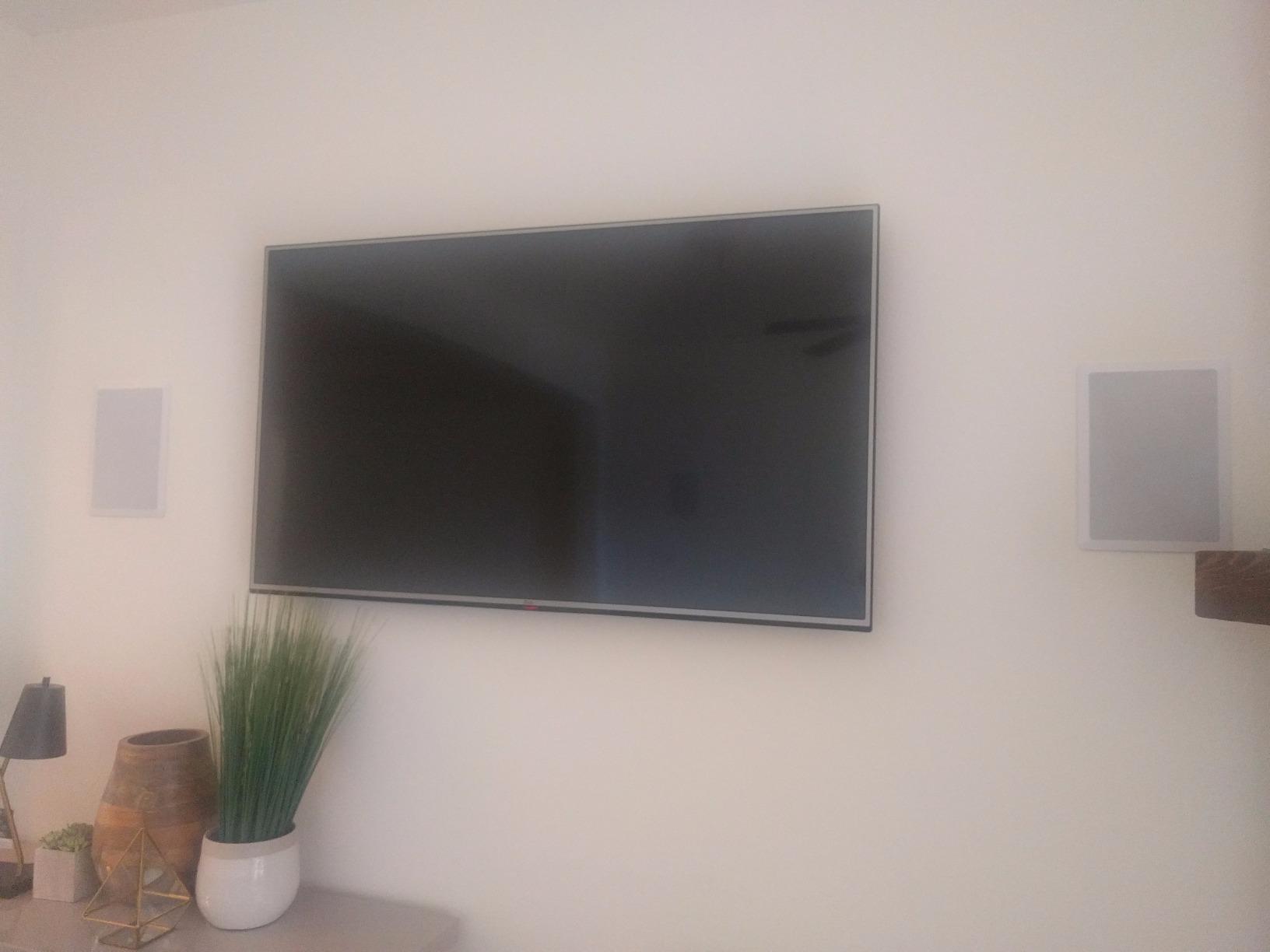
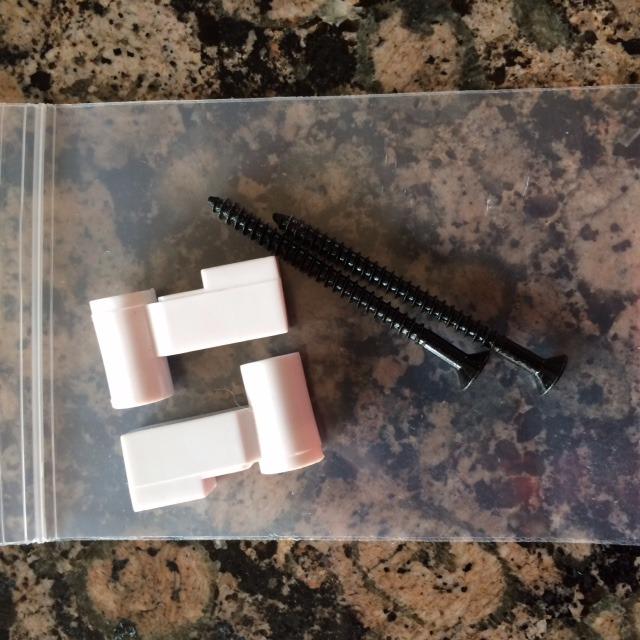
Installation is where this one quietly wins. A cut-out template and paint masks are included, and moisture-resistant construction means you can use the same speaker in a bathroom, a sauna, or under covered outdoor eaves if your plan includes that.
Builders report running the full 82W lineup across fronts, sides and rears on a 7.1 system without complaints, which tells you the design is consistent enough to cover a whole room from one series.
The catch is power handling: 60 watts nominal and 120 watts peak. That is enough for surrounds and background audio in a normal room, and it is the reason this is a surround pick rather than a main-channel recommendation.
Bass also sits on the light side, with the 51Hz floor doing less than the 8-inch cone size suggests. Buy a subwoofer and stop thinking about it.
It is sold as a single speaker, so an eight-channel build means eight orders. Order them together, and check that each tweeter is playing before you close up the walls.
What makes it worth buying
This is the pick for surrounds on a budget, and for covered outdoor or humid locations. The included template and paint masks make it one of the fastest installs here.
Owners building entire 7.1 systems from this one model report no complaints, which tells you how consistent the design is across channels.
Where it falls short
60 watts nominal handling does not make this a main-channel speaker in a large dedicated room. Use it for surrounds, and put the front three channels on something with more headroom.
Single-speaker packaging means more orders and more opportunities for a mismatched pair. Order carefully.
8. Klipsch R-5502-W II – horn-loaded clarity
Klipsch R-5502-W II In-Wall Speaker – White (Each)
1 inch titanium compression driver
Pivoting 90 by 90 degree Tractrix horn
Dual 5.25 inch Cerametallic woofers
150 watts
Pros
- Horn-loaded titanium driver delivers exceptional clarity
- Dual 5.25 inch Cerametallic woofers give strong mid-bass
- Pivoting horn aims sound precisely at the listening area
- Handles high output without audible distortion
Cons
- Wide horizontal cutout can require trimming a stud
- Cerametallic cones are unforgiving of a very bright room
The Klipsch approach is different from everything else in this roundup. Instead of a soft dome tweeter, the R-5502-W II puts a 1-inch titanium diaphragm compression driver on a pivoting 90 by 90 degree Tractrix horn. That is the same technology Klipsch uses in its horn-loaded cinema speakers, and it changes how efficient and how clear the speaker sounds.
A horn does two useful things in a theater. It controls dispersion so the high frequencies go where you point them rather than smearing across the room, and it increases sensitivity, which means the speaker produces more output for the same amplifier power. Owners cite both horn clarity and efficient output as the standout qualities in a dedicated room.
The dual 5.25-inch Cerametallic cone woofers handle everything below the horn with real mid-bass authority for their size. Together with 150 watts of maximum power handling, this is a speaker that keeps its composure when a film gets loud, which is when cheaper designs fall apart.
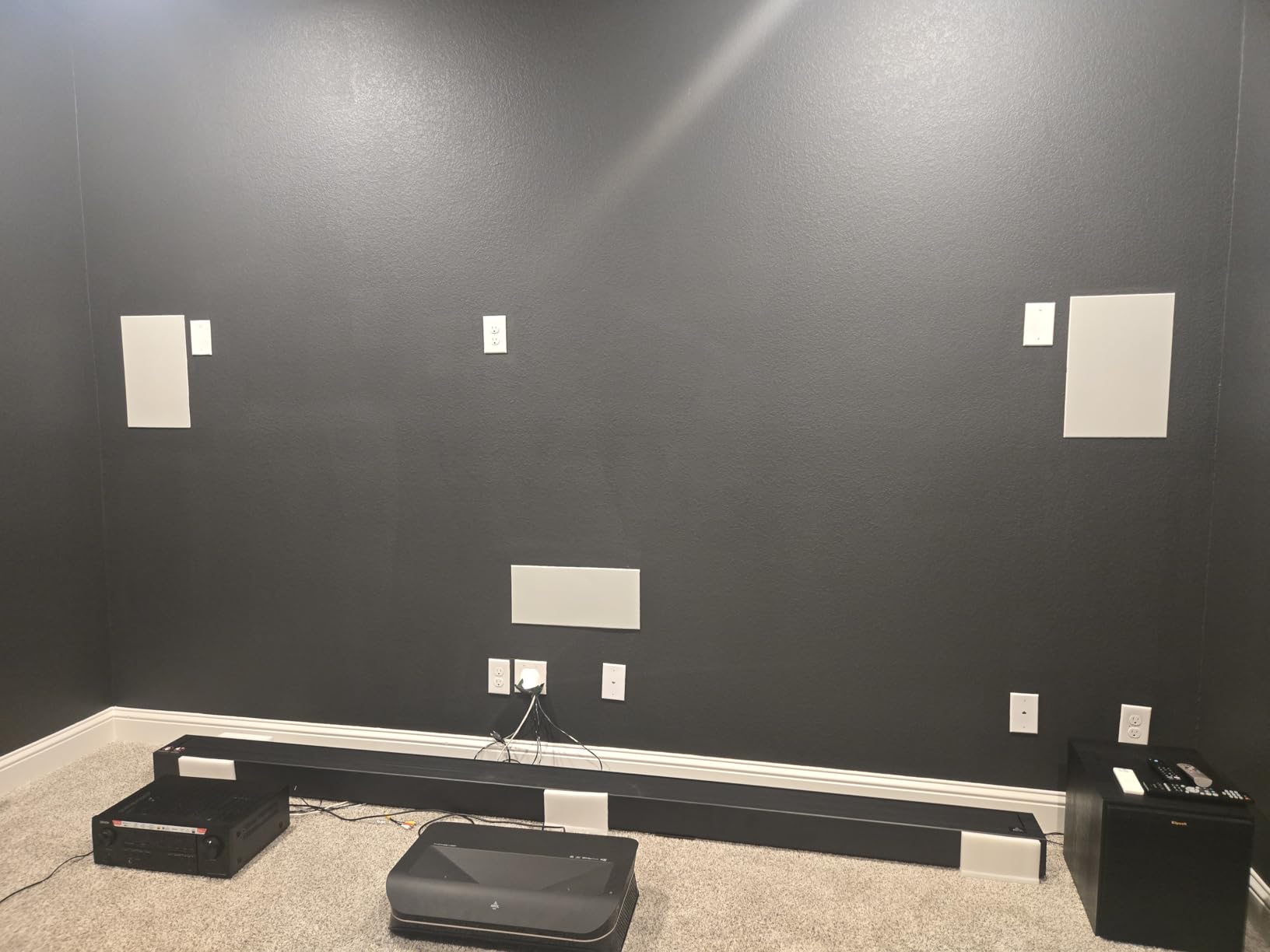
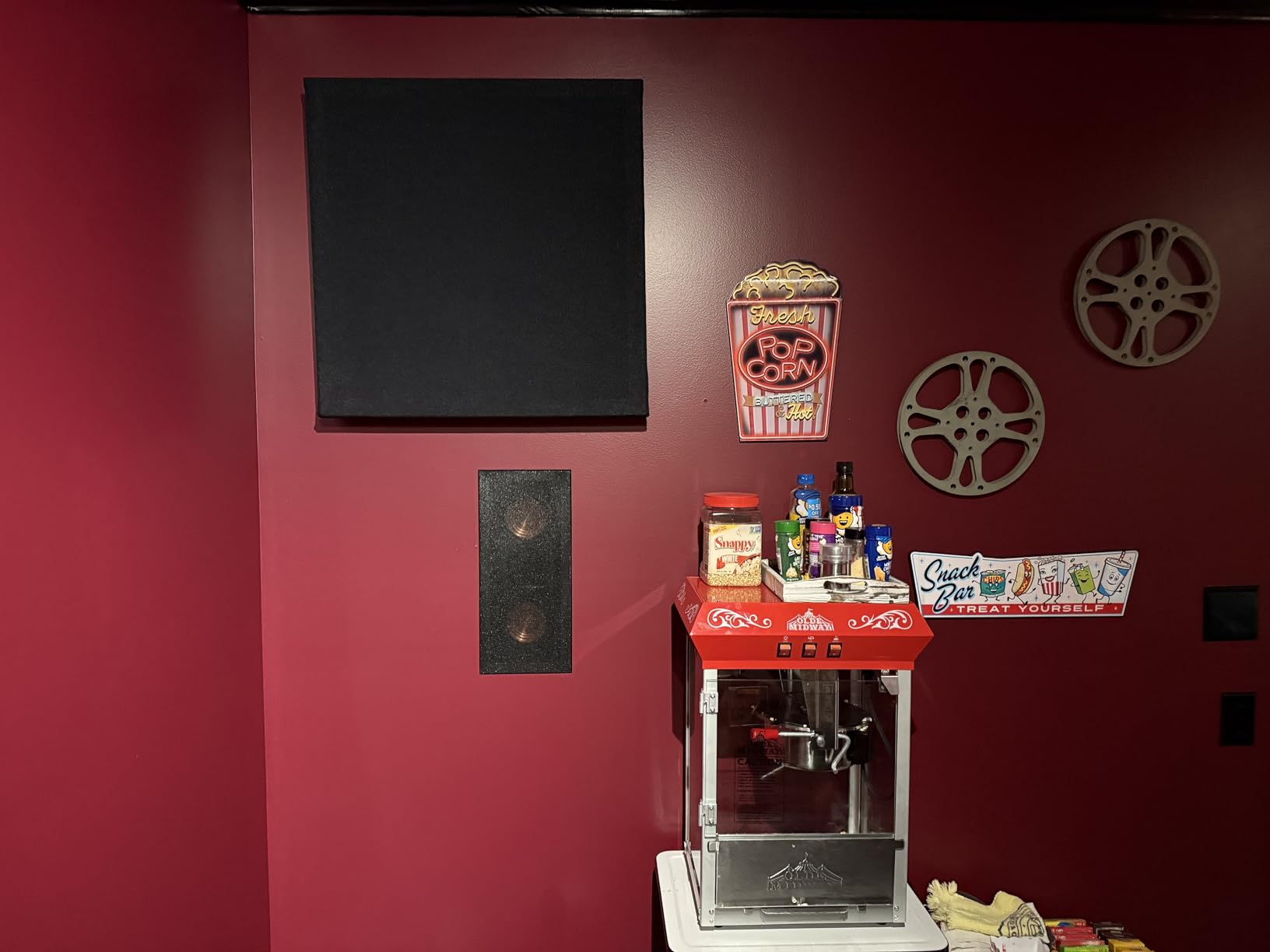
The 90 by 90 degree horn pivots, and that matters more than it sounds. It lets you place the speaker high or low, at an angle, and still aim the treble directly at the seating. Mount it horizontally or vertically, and the same speaker covers center, front main or surround duty.
Klipsch designs these for high acoustic output with low distortion, and the practical effect is that it plays loud without the hardening that makes long sessions tiring. For a dedicated basement theater with the lights off, that is worth more than an extra inch of driver size.
There is a personality cost. Cerametallic cones are unforgiving of very bright room acoustics without equalization. In a room with a lot of glass and hard surfaces, run a sweep and pull the top end back a couple of decibels before you judge the speaker.
The other practical warning is the cutout. At 17.8 inches tall and 8 inches wide horizontally, the opening is wide enough that a center installation between standard studs may require trimming. Check the required opening against your stud spacing before drywall goes up.
What makes it worth buying
This is the pick for a dedicated theater where dialogue clarity and high output matter more than neutrality in a bright room. The compression driver on a pivoting horn is a proven cinema technology, and at 4.8 across 249 reviews the satisfaction rate is high.
If your room is treated, or you watch mostly with the lights down, this is the most engaging center channel in the roundup.
Where it falls short
The wide cutout is a real installation constraint, and the horn demands correct aiming. Get the pivot wrong behind the finished wall and you will not be able to fix it without opening it up again.
It is also the least forgiving model here tonally. In an untreated living room with lots of hard surfaces, you will need to EQ the treble, and some listeners simply prefer a softer dome.
9. Klipsch R-5800-W II – the high-output 8-inch main
Klipsch R-5800-W II In-Wall Speaker – White (Each)
1 inch titanium compression driver
Pivoting 90 by 60 degree Tractrix horn
8 inch Cerametallic woofer
100 watts
Pros
- Exceptionally clear and articulate sound from the horn tweeter
- 8 inch Cerametallic woofer delivers real low-end weight
- Magnetic grille removes and refits without tools
- Treble and midbass attenuation switches tame a bright room
Cons
- Sold as a single speaker
- Pivoting horn needs care to aim correctly behind the wall
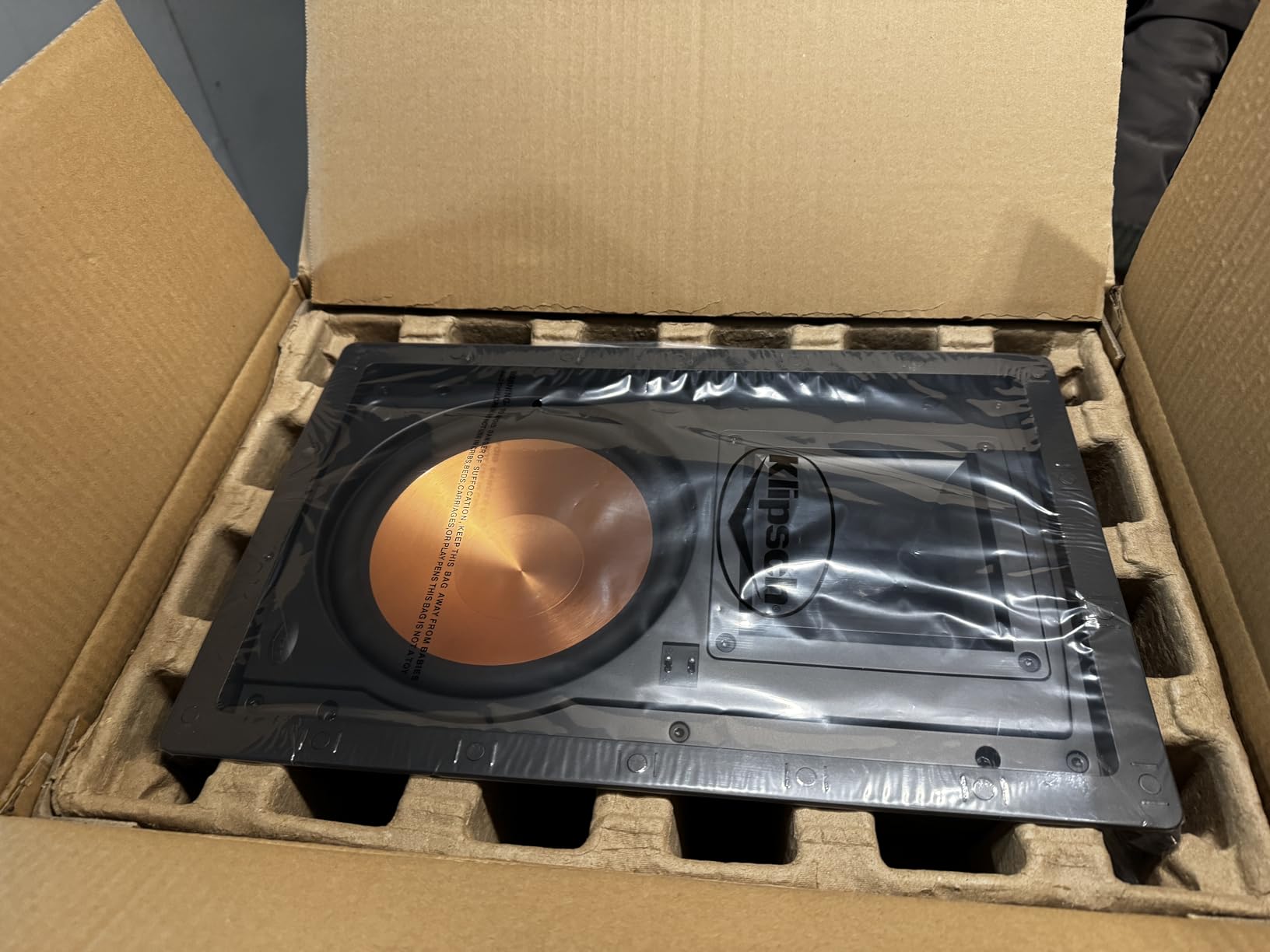
If you want one in-wall speaker to act as a main channel in a medium-to-large room, this is the one I would reach for. An 8-inch Cerametallic cone handles the mid-bass with real weight, and the pivoting 90 by 60 degree Tractrix horn with a titanium dome compression driver keeps dialogue sharp at volume.
The narrower 90 by 60 degree horn compared to the square horn on the R-5502-W II is a deliberate choice. A wider horn covers more of the room, which is useful for surrounds, while a narrower one concentrates output toward a defined seating area, which is what you want for a main speaker.
Owners report a 91 percent five-star share and emphasise clarity, output and the magnetic grille. That last detail is not a small thing: a magnetic SlimTrim grille comes off without tools and goes back on without the fiddly interference fit you get with most competing models.

The two attenuation switches are the most underrated feature here. Separate treble and midbass controls let you reduce high-frequency energy or mid-bass energy by small amounts, which is exactly what you need in a reflective room or when the wall cavity is too small and the mid-bass is getting boomy.
Horn-loaded design means high output with low distortion, and the 1-inch titanium compression driver is the reason the sound stays articulate rather than smeared at high volume. For a main channel carrying most of the music in a film, that is a real advantage over a soft dome.
The 100-watt maximum power rating looks modest next to the 200-watt models, but horn-loaded efficiency means the speaker needs less amplifier power to reach the same output level in the room. Judge these on how they sound, not on the wattage number.
Two cautions. It is sold as a single speaker, so a main pair means two orders, and the pivoting horn has to be aimed properly while the wall is still open. Set the angle, tighten the pivot, and test before you close the drywall.
What makes it worth buying
This is the pick for a single in-wall main speaker in a medium or large room where you want horn clarity plus genuine mid-bass. The 8-inch Cerametallic cone is the best balance of size and output here.
The attenuation switches and the tool-free magnetic grille are quality-of-life features that pay off every time you install or adjust something.
Where it falls short
Single-speaker packaging makes a matched pair an ordering exercise, and the pivoting horn is unforgiving if you rush the aiming stage.
Like the other Klipsch in this roundup, it will expose a bright room. Use the switches, or expect to EQ.
10. Yamaha NS-IW760 – dual 6.5-inch LCR unit
YAMAHA NS-IW760 6.5″ 2-Way In-Wall Speaker System (White)
Two 6.5 inch cone woofers
50Hz to 24000Hz
88dB sensitivity
130 watts input
Pros
- Clean articulate dialogue that stays clear over movie effects
- No distortion even when the amplifier starts clipping
- High-end fit and finish with paintable grilles and frames
- Straightforward templated installation
Cons
- Cutout wider than 14.5 inch so horizontal installs need framing work
- Limited bass on its own and best used with a subwoofer
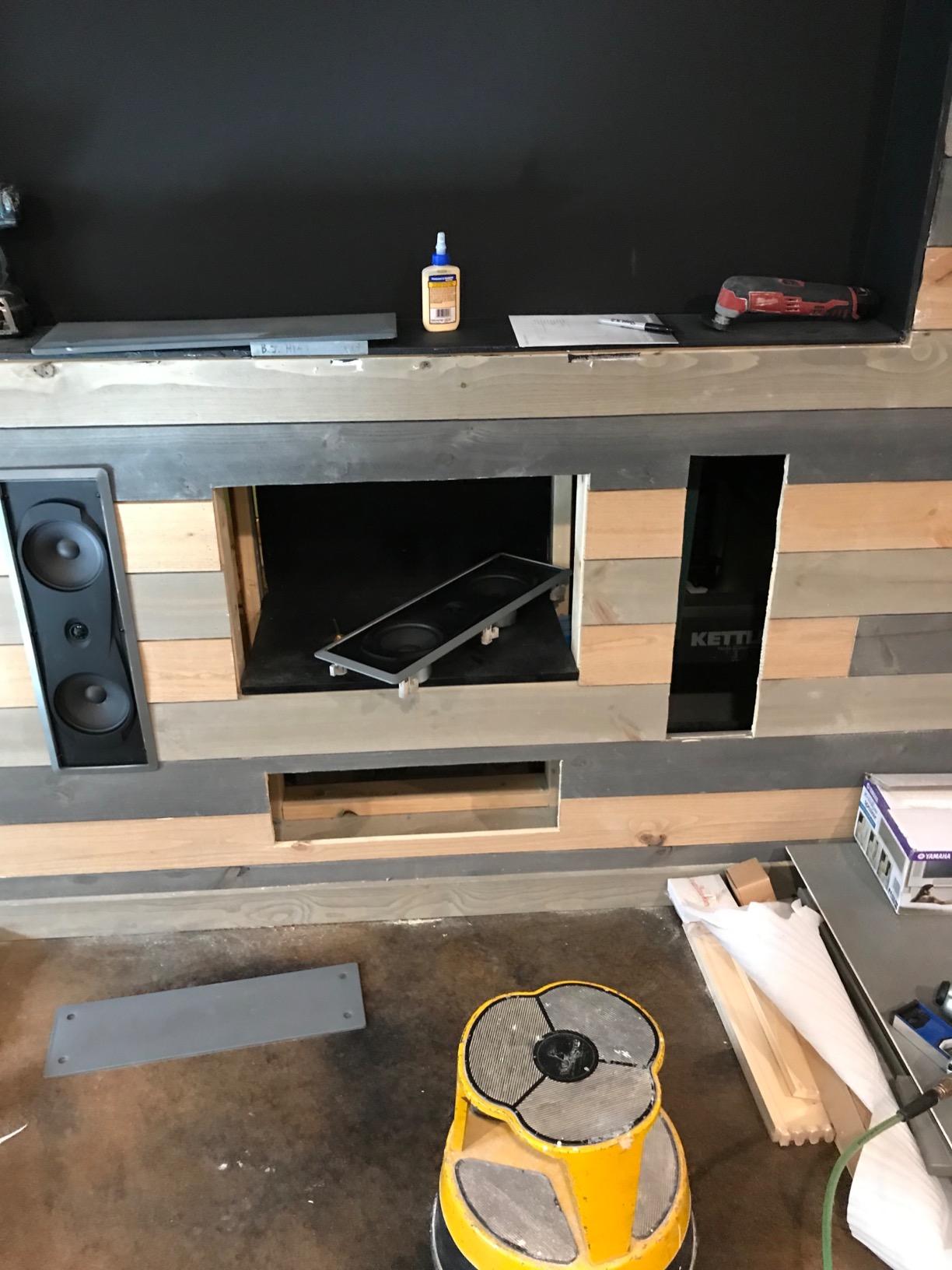
The Yamaha NS-IW760 takes a different approach again: two 6.5-inch cone woofers in a single tall, narrow body, rated for left, center and right channels. At 23.4 inches high and 7.6 inches deep it is the largest enclosure in this roundup, which turns out to be both its strength and its problem.
The strength is output and evenness. With two drivers per unit, this is a genuine three-way-capable design in a sense, and owners consistently report clean, articulate dialogue that stays clear over movie effects. The fit and finish is also a cut above the value tier, with paintable grilles and frames and internal paint guards included.
Response from 50Hz to 24,000Hz at 88dB sensitivity is the widest bandwidth in the group, and 130 watts of maximum power input is a serious figure. The 6-ohm impedance is lower than the common 8-ohm standard, so check your amplifier can drive a 6-ohm load across all channels.
Owners also note that it does not distort even when the amplifier starts clipping, which tells you the drivers are conservatively driven. In a system that will run for hours, that headroom matters.
Installation is straightforward once the framing is right, because a cardboard cutting template is included and the wall locks are simple to set. The catch is the opening itself.
Several buyers returned units after realising the cutout is wider than 14.5 inches. On a standard 16-inch stud bay, that means a horizontal install needs a stud trimmed or a header framed above it, and on an existing finished wall it is a much bigger job than the speaker deserves.
Plan the framing before the drywall goes up. If you are retrofitting, measure carefully and be prepared to relocate the speaker rather than force the fit.
Bass on its own is limited, as it is for most of this roundup. Paired with a subwoofer and crossed at 80 Hz, it delivers exactly what a front channel should.
What makes it worth buying
This is the pick for a dedicated theater where the front channels need real output and you are building in new. The dual-driver layout and 130-watt input rating give it more headroom than most of the value tier.
The build quality and included paint guards also make it the most forgiving model here to install and finish.
Where it falls short
The cutout width is the single biggest complaint in owner reviews, and it is a framing problem rather than a speaker problem. Get it wrong on a finished wall and you will be redoing drywall.
6-ohm impedance and a deep body also mean it is less flexible than the shallow 8-ohm models for retrofit work.
11. Pyle PDIW87 – the enclosed cabinet that stops bleed
Pyle Ceiling Wall Mount Enclosed Speaker – 400 Watt Stereo In-wall / In-ceiling 8″ Enclosed Full Range Deep Bass Speaker System – 50Hz-20kHz Frequency Response, 4-8 Ohm, Flush Mount – PDIW87 White
Fully enclosed cabinet
8 inch long-throw woofer
1 inch titanium dome tweeter
4 to 8 ohm
Pros
- Enclosed cabinet contains the sound and stops bleed into adjacent rooms
- Good full-range sound for the cost
- Flush mount design keeps the profile clean
- Cut-out template and clear instructions included
Cons
- Plastic quarter-turn tabs are fragile and must be pre-threaded
- Some owners report a hollow bass-heavy sound with limited treble detail
- Grilles fit loosely and one unit arrived with a rattle inside
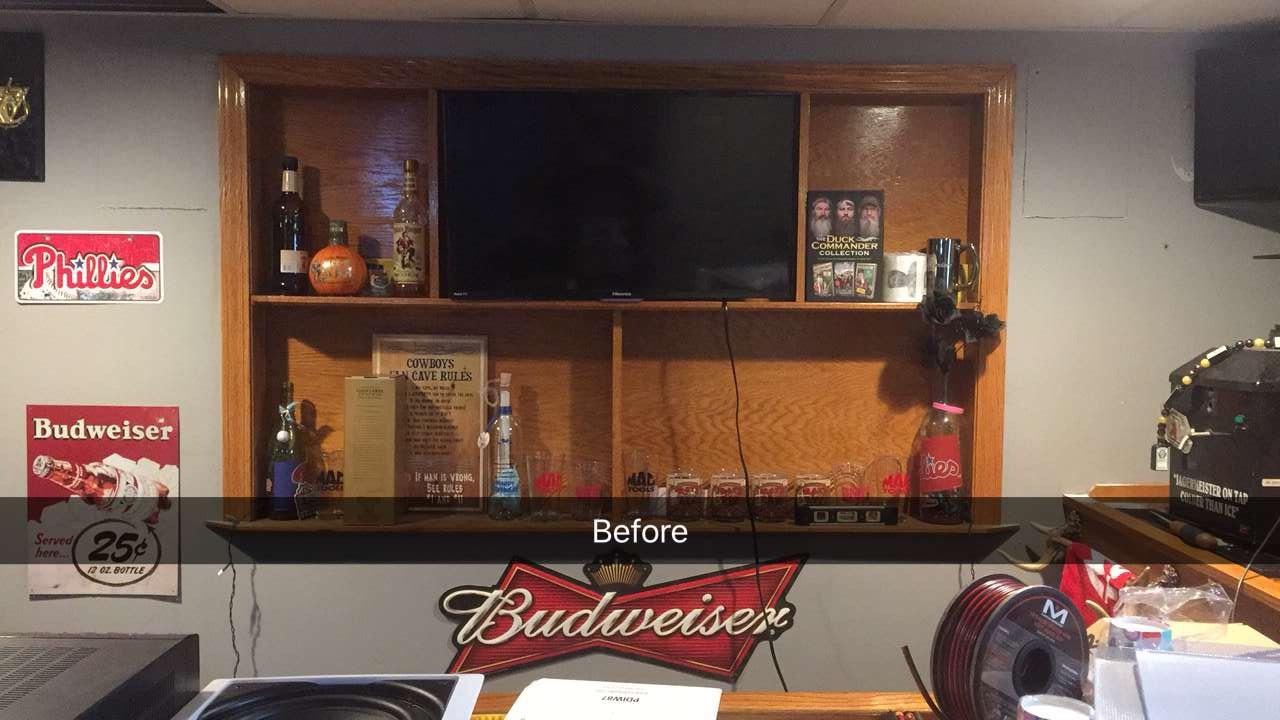
Every other speaker in this roundup radiates its rear wave into the wall cavity. The Pyle PDIW87 does not, because it ships with a fully enclosed cabinet that contains the sound inside the speaker. In an apartment, a shared wall, or a bedroom next to a sleeping family, that single design decision matters more than any specification on the sheet.
The enclosure also changes the bass behaviour. Instead of relying on whatever volume happens to be in the cavity, the speaker produces a consistent, controlled low end, and the 8-inch long-throw woofer with a 1-inch high-temperature voice coil gives it 50Hz to 20kHz full-range output.
That makes it a natural pick for a secondary room, a media room, or anywhere sound leakage is the first concern. The 4-to-8-ohm impedance is unusually flexible, so it pairs with a wide range of amplifiers.
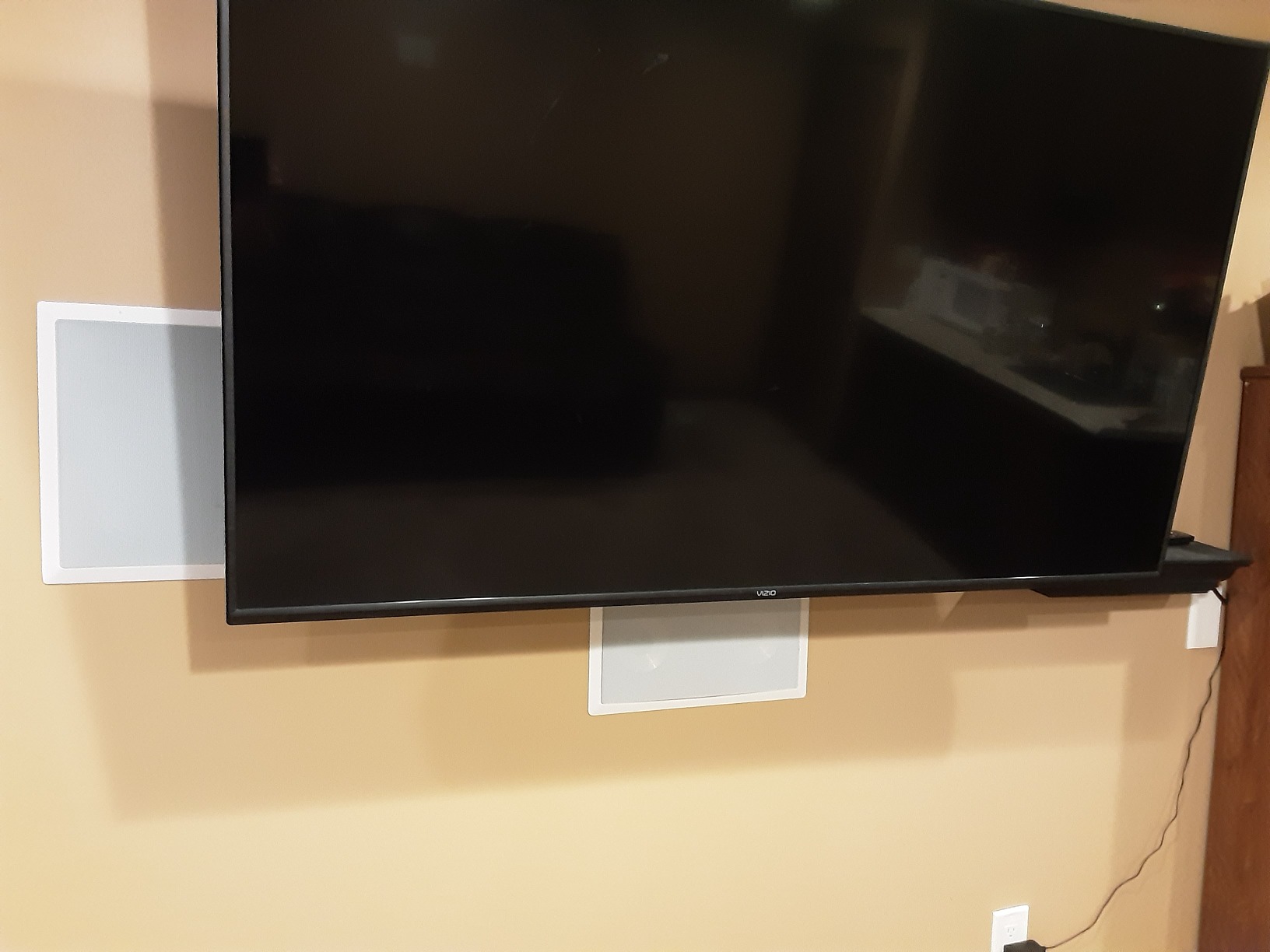
Reviews are sharply split on this one, and the split is informative. Happy owners describe good full-range sound and a clean flush profile, particularly for multi-room audio. Critical reviews focus on the tonal balance and the mounting hardware rather than the acoustics.
The 400-watt peak handling figure sounds impressive but should be read as peak, not continuous. This is a room-filling speaker for moderate listening, not a reference-level main channel.
The mounting tabs are the biggest practical problem. The plastic quarter-turn tabs are fragile and must be pre-threaded with a screw before installation, exactly as owners advise, or they snap during tightening. One unit also arrived with a rattle inside the cabinet, so check the enclosure before installing.
The tonal complaints are consistent enough to plan around. Several owners describe a hollow, bass-heavy sound with limited treble detail, which is what a sealed cabinet with a light cone tuning tends to produce. If your system is bass-forward, this may be too much of a good thing.
What makes it worth buying
This is the pick when sound bleed is the deciding factor. A sealed cabinet keeps the output in your room, and no amount of cavity insulation fully replicates that.
The 4-to-8-ohm flexibility and full-range response also make it a clean solution for secondary rooms and multi-room audio.
Where it falls short
The mounting tabs are fragile, the grille fit is loose, and the tonal balance leans bass-heavy with thin treble detail. Expect a 4.1 average rating to show up in your listening.
It is not the choice for a dedicated theater front channel where dialogue fidelity at high volume is the priority. It is a practical acoustic solution for a specific problem.
12. Micca 8 inch 4-Pack – surrounds and whole-room audio
Micca 8-Inch 2-Way in-Ceiling/in-Wall Speakers, 4-Pack, Paintable, White
8 inch polypropylene woofer
0.5 inch PEI dome tweeter
4 inch mounting depth
Rimless grille under 3/16 inch
Pros
- Clear accurate vocal reproduction with a wide sweet spot
- Efficient enough to run from a modest amplifier
- Grille protrudes under 3/16 inch and looks nearly invisible
- Four-pack works well for whole-room or surround installs
Cons
- Paintable grille has a paper backing that paint ruins
- 6 ohm impedance differs from the common 8 ohm designs
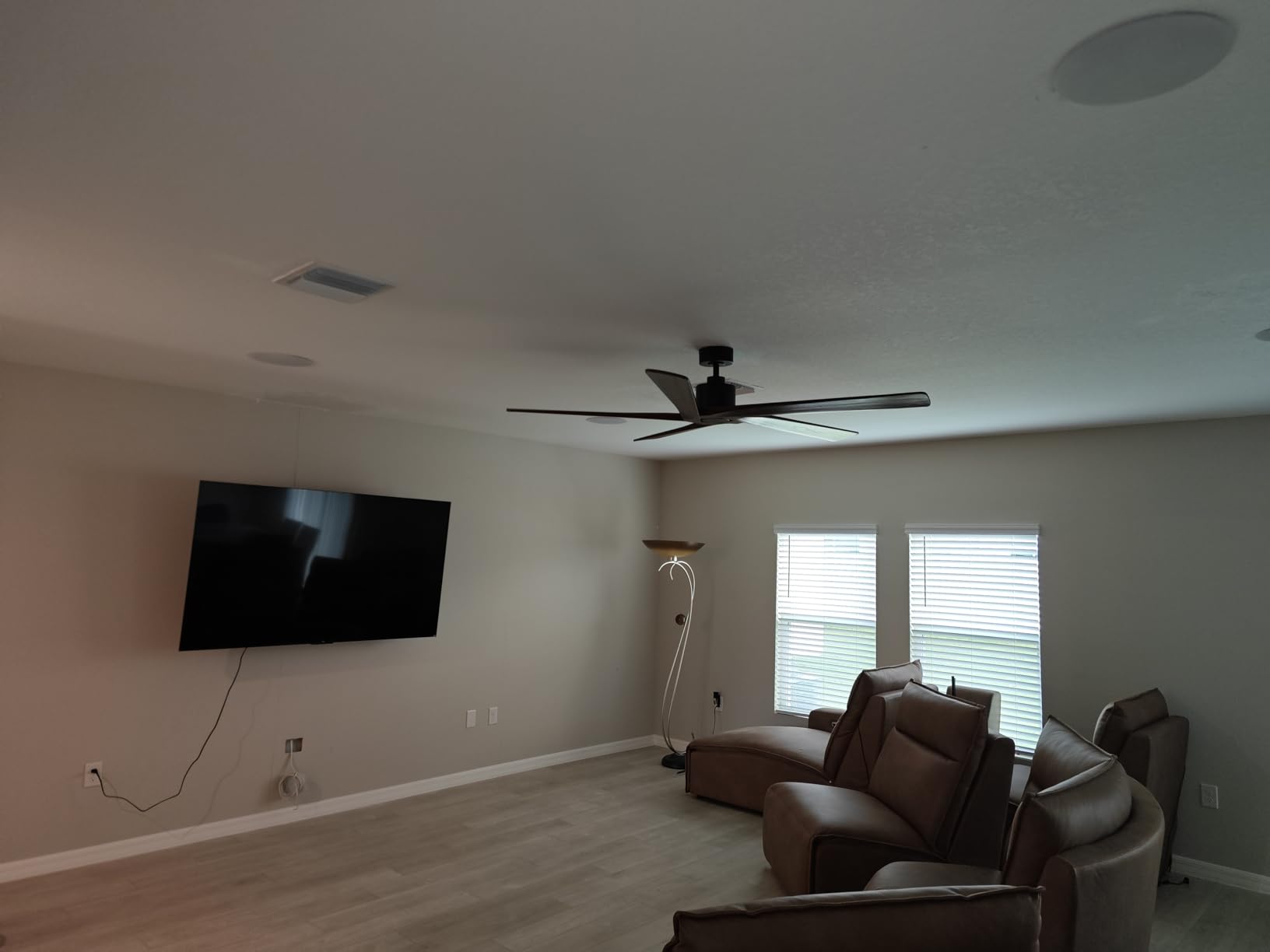
Buying surrounds one at a time is slow, and this four-pack exists to fix that. Four matched 8-inch two-way speakers arrive together, which is exactly what a 5.1.4 or 7.1.4 layout needs for the surrounds, the rears and the height channels that a growing number of people are adding.
The rimless grille is the standout detail. It protrudes under 3/16 inch, so a finished wall looks almost completely flat, and owners consistently mention how close to invisible the result is. An 8-inch polypropylene woofer with a rubber surround and a 0.5-inch PEI dome tweeter handles vocal reproduction cleanly with a wide sweet spot.
Efficiency is another plus. At 87dB sensitivity and 80 watts of handling per speaker, four of them run comfortably from a modest amplifier, which matters if you are powering them all from a receiver zone or a streaming amp.
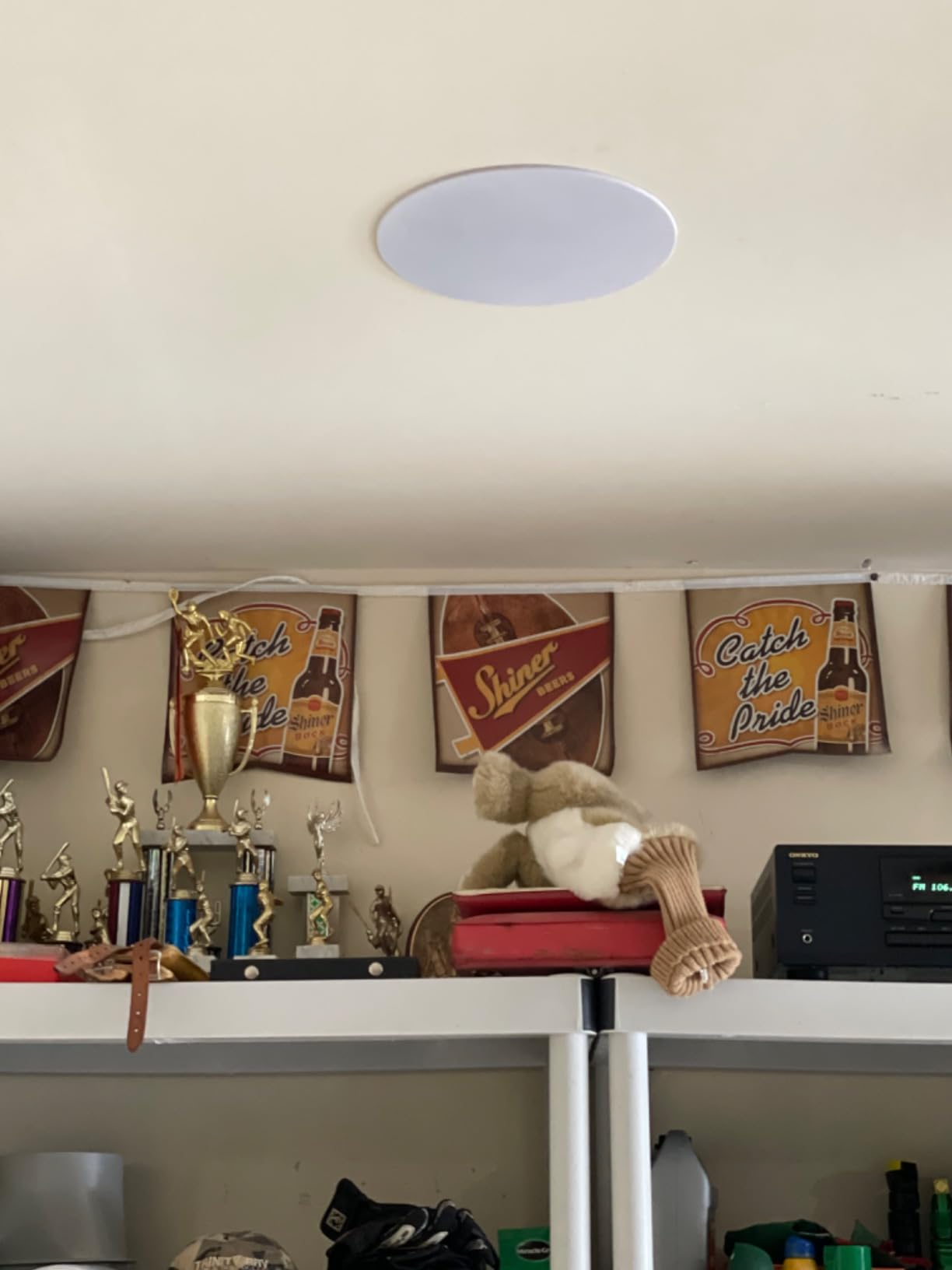
Installation is the easiest in the roundup. Built-in mounting tabs, no brackets and no back boxes, with a 4-inch mounting depth and a 9-3/4-inch round cutout. The round cutout is worth noting if your wall layout is tight, since it needs a circular opening rather than a rectangle.
Owners use these in gyms, lobbies and surround positions, and the wide dispersion means the listening area is not confined to a single seat. For background audio and whole-house use, that is the more important characteristic.
One caution comes up consistently: leave the grilles unpainted. The paintable grille has a paper backing that paint can soak into and ruin, which muffles the sound once the speaker is playing. If you must paint, use a thin coat on the frame only.
Also note the 6-ohm impedance. It is lower than the 8-ohm standard most of this list uses, so if you mix these with 8-ohm speakers, check that your amplifier handles a mixed load without complaint.
What makes it worth buying
This is the pick when you need a lot of channels at once. A matched four-pack of 8-inch speakers solves surround, rear and height speaker buying in one order.
The near-invisible rimless grille and the 87dB efficiency make it a strong choice for whole-house audio alongside a home theater system.
Where it falls short
Do not paint the grilles. The paper backing is the single consistent complaint, and a painted grille can leave you with a muffled speaker you cannot easily fix without replacing it.
6-ohm impedance and 80-watt handling also mean these are surround and distributed audio speakers rather than main channels in a large room.
How Many In-Wall Speakers Do You Actually Need
Count your channels before you shop, not after. The number of speakers you buy follows directly from the layout you want, and the layout you can actually hear follows from where the speakers physically go in the room.
A 5.1 layout is three front channels, two surrounds and one subwoofer, so five in-wall speakers. Adding two rear surrounds gets you to 7.1 and eight speakers. Height channels change the count: 5.1.2 is eight in-wall speakers plus a subwoofer, and 7.1.4 is ten plus a subwoofer.
In practice, most people in this category buy three of one model for the front and surrounds, then add rear or height channels later. That is why the RC65i, the RC85i and the four-pack appear so often in the table above.
What to Look For Before You Buy In-Wall Speakers
The first thing to check is the cutout dimension, not the sound quality. Every model in this roundup has a required opening, and several of them do not fit between standard studs without framing work. Measure your stud spacing, measure the required cutout, and confirm the difference before you order anything.
Second is mounting depth. Most conventional walls give you between 3-1/2 and 4 inches of usable cavity, and anything deeper needs extra framing. Every model listed here states its depth, and the shallowest choices install into the tightest spaces.
Third is the pivoting tweeter. A tweeter that rotates lets you aim high frequencies at the seating from a wall position that is not square to it. In a room where speakers must sit forward of the screen or high above ear level, this is the difference between a soundstage and a smear.
Fourth is impedance and power handling. Most of this list runs 8 ohms, the Yamaha at 6 ohms and the Pyle across 4 to 8. Check that your amplifier can drive the lowest impedance in the system across all channels, particularly if you are mixing models.
Fifth is the enclosure. Most in-wall speakers are designed for infinite baffle operation, where the wall cavity itself acts as the cabinet. That is efficient and it is why these speakers are affordable, but it also means the cavity behind the speaker changes the sound. Fill it with insulation, keep it free of loose material, and add a back box if the manufacturer offers one.
Sixth is grille finish. Nearly every grille here is paintable, which is the whole point of an in-wall install. Confirm the grille is paintable, buy a fine scuff pad and a matching paint, and take it off the speaker before painting. The exception is the four-pack at number 12, whose paper backing makes painting a bad idea.
Seventh is timbre matching. The clearest forum advice in home theater is consistent: buy your front L, C and R from one brand and one series, then choose surrounds for output and placement rather than for sound. Mixing a warm brand at the front with a bright brand at the back makes the soundstage feel like it is moving.
Installing In-Wall Speakers: Cutout, Cavity and Wire
Measure before you cut, and cut once. Use the template that came in the box, tape it to the wall, check it is level and plumb, and check the electrical box and any plumbing is not in the path. Cutting in the wrong place is the one mistake you cannot undo cheaply.
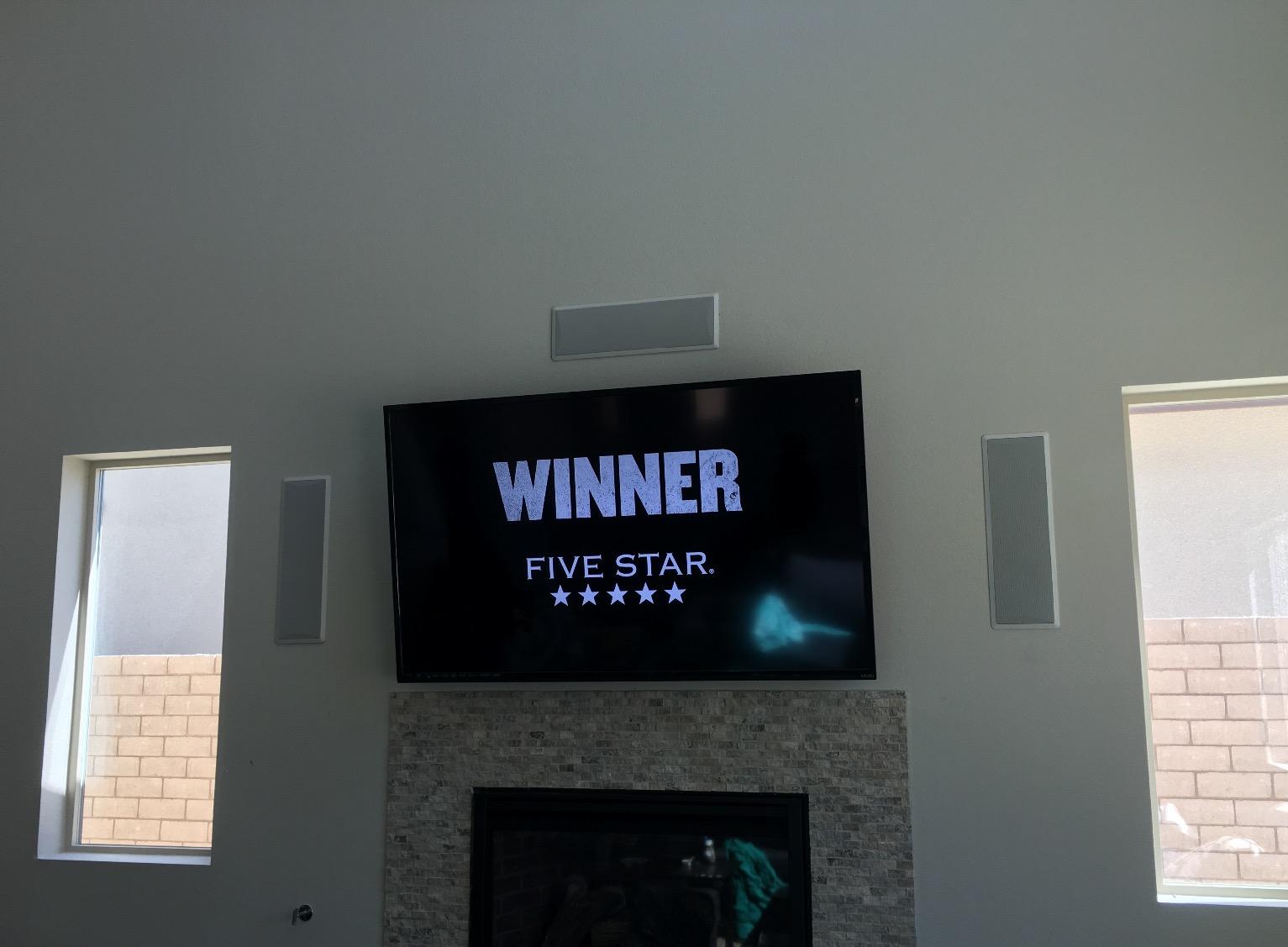
Keep the opening away from studs where you can, and where you cannot, plan the framing in advance. A 6.5-inch speaker with a rectangular cutout usually clears a 16-inch bay once you account for the toggles. A wide three-driver or dual-vertical design will not, and that is exactly why the Klipsch R-5502-W II and the Yamaha NS-IW760 are new-build picks rather than retrofit picks.
Run the wire before the drywall goes on, always. Use 14 or 16 AWG in-wall rated cable, leave a service loop at each end, and label both ends. Fireblock around any penetrations the way your local code requires, and keep the cable clear of insulation and any blocking.
Fill the cavity loosely with unfaced insulation to damp the rear wave and reduce bleed into the next room. Do not pack it tight, and do not block the port or the back box. Then fit the speaker, tighten the clamps by hand, and confirm sound before you tape and paint.
Aim the tweeters at the seating while everything is still accessible, run a full calibration sweep, and only then paint the grilles. Every one of these steps is much harder after the wall is finished.
In-Wall vs In-Ceiling vs On-Wall vs Bookshelf
The question that comes up most often in home theater forums is whether in-wall is the right call at all, and the honest answer is that it depends on whether your room can host visible speakers. The core tension is simple: in-walls win on aesthetics and on the practical problems of kids, pets and sightlines, and they lose some bass extension and dynamic headroom to get there.
In-ceiling speakers solve the same problem as in-wall but sit overhead, which makes them the natural choice for height channels and for distributed audio. They are less effective as front main speakers because the treble fires down at an angle and the bass arrives from above, where it is audibly wrong.
On-wall speakers are the compromise when the wall cavity is too shallow or the cutout is impossible. You get most of the sound quality of a real cabinet and you keep the room free of floorstanders, but you lose the disappearing act.
Bookshelf and tower speakers are simply better. If your room can host visible speakers and nobody will pull them off the wall, a pair of floorstanders will beat any in-wall on bass extension and output. In-wall is the right answer when the room cannot accommodate that, not because hidden is better.
Frequently Asked Questions
What is the best in-wall speaker system for home theater?
The Polk Audio 255c-RT is the strongest all-round center channel here, rated 4.8 across 748 owner reviews, with two 5.25 inch drivers and a swiveling silk dome tweeter that carries dialogue cleanly. For a full system, pair it with the RC85i as front main speakers so the L, C and R come from one brand and series. Add a subwoofer and set the crossover at 80 Hz.
How many in-wall speakers do I need for a home theater?
A 5.1 layout needs five in-wall speakers plus a subwoofer. 7.1 adds two rear surrounds for eight. A 5.1.2 Dolby Atmos layout needs eight in-wall speakers, and 7.1.4 needs ten, plus subs. Most people buy three of one model for the front and surrounds, then add the rest later.
Are in-wall speakers a good idea?
They are the right call when the room cannot host visible speakers, when kids or pets damage exposed boxes, or when you are in new construction and can plan the wiring. They are not automatically the best-sounding option, because the wall cavity replaces a real cabinet and costs you some bass extension and output headroom.
Are in-wall speakers better than bookshelf speakers?
No. A good bookshelf or floorstanding speaker sounds better because it has a real enclosure. In-wall wins on aesthetics, floor space and durability in a busy household. If your room can host visible speakers and nobody will knock them over, choose the bookshelf speakers.
Do in-wall speakers need a subwoofer?
For home theater, yes. Most models here bottom out between 50Hz and 60Hz, which is well above where film effects live. A subwoofer crossed at 80 Hz also lets the in-walls run at lower levels, so they distort less and dialogue stays clearer.
What is the 83% rule for speakers?
The 83% rule is a guideline for speaker coverage rather than a buying criterion. It suggests aiming for roughly 83 percent coverage of a room area with adequate sound pressure for a home cinema, and it is mainly used to work out how many channels a room needs. Do not use it when comparing in-wall models, because directivity and placement matter more than the number.
Can you paint in-wall speaker grilles?
Most grilles here are paintable, including the Polk, Klipsch, Micca and Monoprice models. Use a thin coat of matte paint that matches the wall and never a glossy one. The exception is the Micca 8 inch four-pack, whose paper backing grille can be ruined by paint and will muffle the speaker.
What is a 3-way in-wall speaker?
A 3-way in-wall speaker splits the frequency range across three separate drivers rather than routing everything through one woofer and one tweeter. Because the midrange has its own driver instead of a crossover, the sound stays cleaner. The Monoprice Caliber 8 inch in this roundup uses a three-way fiber cone design and needs a deeper cutout to fit.
Which In-Wall Speakers Should You Buy
The Polk Audio 255c-RT is our pick for the best in-wall speakers for home theater, and the reason is simple: it is the speaker that carries the dialogue, it has the strongest combination of rating and owner history in this roundup, and it comes with the best mounting hardware we tested. Pair it with the RC85i for the front main speakers and you have a matched front stage that covers most rooms.
If you are building every channel at once and the budget is fixed, the RC65i gives you eight matched speakers with a 200-watt rating and no tone shift between channels. For surrounds on a tight budget, the Silver Ticket 82W or the Micca four-pack cover the job and the grille nearly disappears.
For a dedicated theater where output and clarity matter most, the Klipsch R-5502-W II as center and the R-5800-W II as mains deliver horn-loaded clarity that stays composed at high volume. Just plan the framing, because the cutouts are wide.
Whatever you choose, measure the cutout before you order, keep the front three channels in one series, buy a subwoofer, and give the speakers a month to break in before you judge them. That last point is the one people skip, and it is the one that decides whether you like what you installed.