

Most people buy a turntable for the sound, then discover the first thing it shipped with is a thin, shabby pad glued to the platter. Swapping that pad for a proper slipmat is the cheapest meaningful upgrade on a vinyl setup, and picking the right one takes about two minutes of reading. After testing the category end to end, these are the best turntable slipmats for vinyl in 2026 — ten options spanning acrylic, cork, leather, silicone and rubber, so there is a match whether you DJ, spin 7-inch singles or just want a quieter floor between the speakers.
A slipmat is the thin disc that sits between your record and the platter. It does three jobs, and every product in this guide is good at a different one. It protects the vinyl surface from bare metal or acrylic, it damps platter vibration before it reaches the stylus, and it gives you the friction you need to cue a record by hand without chasing it around the platter.
That third job is where most of the confusion lives. A DJ deck needs a high-friction surface so the record stops the instant you touch it. A belt-drive listening deck wants a smoother, lighter mat that lets the record free-spin and does not add grip that smears the start of a quiet passage. Both are legitimate, and they are not the same product.
We compared all ten mats in this roundup on the things that actually change your day-to-day listening: static behaviour, grip, thickness against your tonearm, diameter against your platter lip, and how each one ages. We also weighed the forum consensus, because r/vinyl and r/turntables owners have been arguing about cork versus acrylic for years and their complaints are more useful than most spec sheets.
Table of Contents
Top 3 Picks for the Best Turntable Slipmats for Vinyl (September 2026)
Three mats stand out from the group for different reasons. The Hudson Hi-Fi acrylic is the most complete default choice, the Jake’s deer hide mat is the boutique option for people who want their system to look as considered as it sounds, and the Ywhomal rubber mat solves the single most common problem owners have: a factory mat that has turned to glue.


All 10 Turntable Slipmats at a Glance in 2026
Here is the short version. Every mat below has its material, thickness and best-matched deck type in one place, so you can cross off the ones that obviously do not fit your setup before reading the full reviews.
| Product | Specs | Action |
|---|---|---|
| Hudson Hi-Fi Acrylic Turntable Mat |
|
Check Latest Price |
 PRO SPIN White Acrylic Turntable Mat PRO SPIN White Acrylic Turntable Mat |
|
Check Latest Price |
 TAKMORK 12 Inch Acrylic Turntable Mat TAKMORK 12 Inch Acrylic Turntable Mat |
|
Check Latest Price |
| Premium Deer Hide Leather Turntable Mat |
|
Check Latest Price |
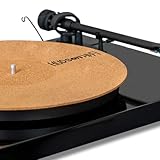 Corkery Recessed Cork Turntable Mat Corkery Recessed Cork Turntable Mat |
|
Check Latest Price |
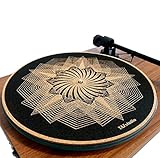 TAZstudio Portuguese Cork Mat TAZstudio Portuguese Cork Mat |
|
Check Latest Price |
| Ywhomal Rubber Turntable Mat |
|
Check Latest Price |
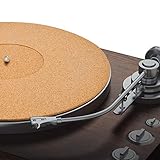 PRO SPIN 3mm Cork Turntable Mat PRO SPIN 3mm Cork Turntable Mat |
|
Check Latest Price |
 Fluance Silicone Platter Mat Fluance Silicone Platter Mat |
|
Check Latest Price |
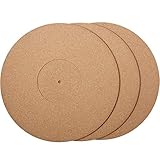 Outus 3 Pack Cork Turntable Mat Outus 3 Pack Cork Turntable Mat |
|
Check Latest Price |
What a Turntable Slipmat Actually Does
A turntable slipmat is a thin disc placed between the record and the platter. It protects the record surface from the hard platter, absorbs some of the mechanical energy produced by the motor and bearing before it reaches the stylus, and provides enough friction for you to stop a spinning record with your fingertips.
The three jobs of a slipmat
Record protection. A bare metal or acrylic platter will eventually wear a record’s surface through repeated contact. A mat spreads that contact across a soft, even layer and takes the abrasion instead.
Vibration damping. Mat mass and material absorb mechanical energy. Less vibration travels through the record into the stylus, which is where pop, buzz and low-level rumble come from.
Cueing grip. A DJ needs enough friction that a record stops dead when the back of their hand touches it. A listener usually wants less, so the record spins freely until the stylus takes over.
Here is the honest part. A mat is not a tone control. The audible differences between a well-made felt pad and a good cork mat on a decent system are real but small — most owners describe them as a quieter noise floor and slightly firmer bass rather than a transformation. On a cheap deck with a warped platter or a worn motor bearing, changing the mat will not fix the underlying problem, and no manufacturer on this list will claim otherwise.
Static is a different story. That is where a mat genuinely earns its place, because a mat that holds a charge turns every speck of dust on your vinyl into a click. The anti-static claims on the packaging are not all equal, and the r/turntables consensus is blunt: a mat alone will not solve your static problem, because static needs a system.
1. Hudson Hi-Fi Acrylic Turntable Mat: Our Top Pick for Most Decks
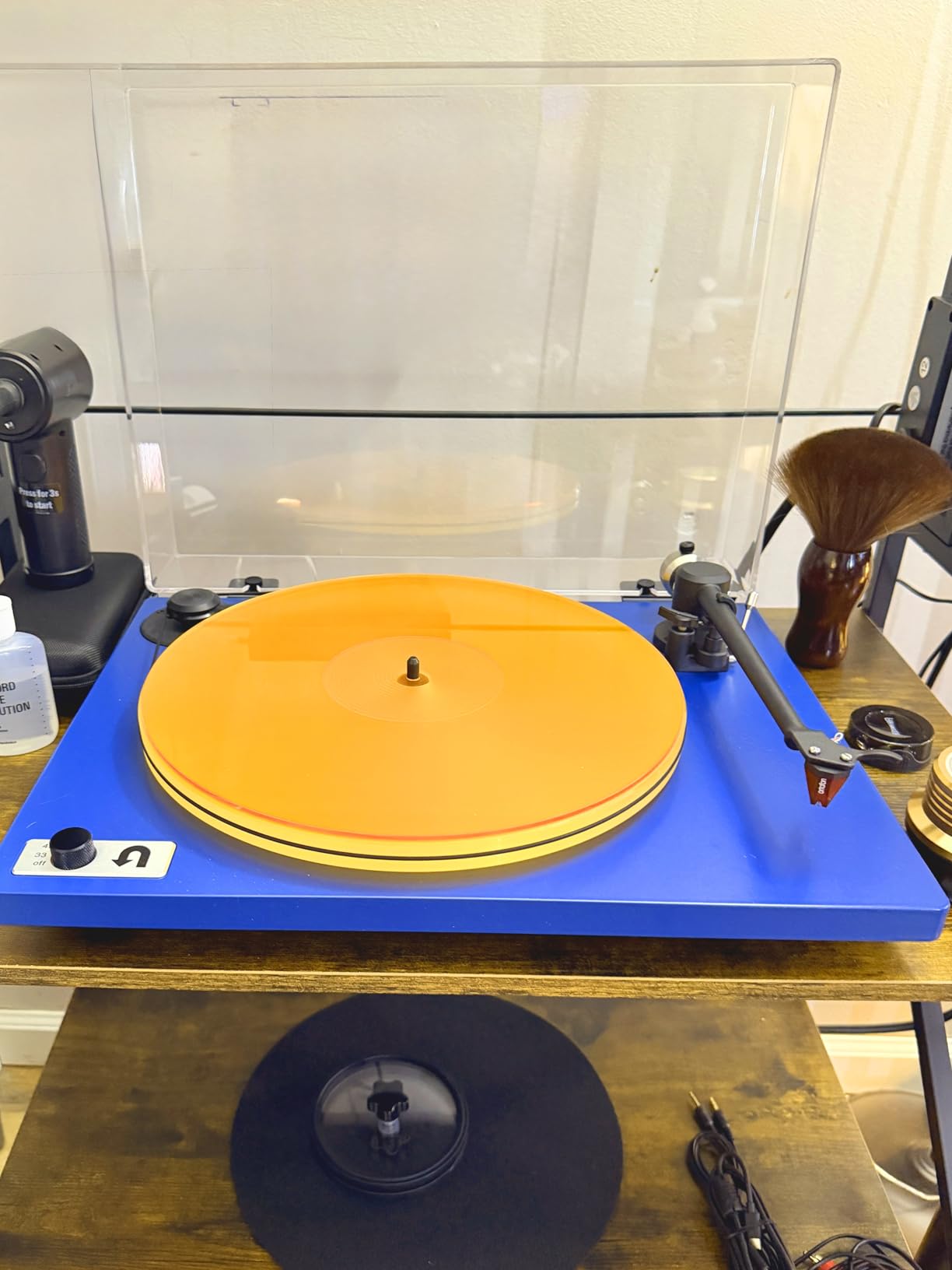
Hudson Hi-Fi Acrylic Turntable Mat – 11.75″ Anti-Static Acrylic Platter Mat for Vinyl Record Players, 1/8″ Thick Slipmat – White
Solid CNC acrylic
11.75 in diameter
3 mm thick
Label recess
Anti static
Pros
- Machined acrylic gives a flat surface with a label recess
- Tighter and more controlled bass versus stock rubber or felt mats
- Reduces micro-vibration and static cling
- Several glow colour options
Cons
- 11.75 inch size leaves the outer lead-in grooves unsupported
- Low friction surface so a stiff record brush can stop the platter
- Glow effect is not visible while a record is spinning
This is the mat we kept coming back to. It is solid acrylic, CNC-machined with a recessed label area, and it is the only product in this roundup with the kind of review volume you only see on a product that has genuinely become the default recommendation.
What owners consistently report is a tightening of the low end and a quieter noise floor compared with a stock rubber or felt mat. The acrylic is dense, so it damps micro-vibration well, and the machined surface is dead flat, which means the record sits evenly with the label recess.
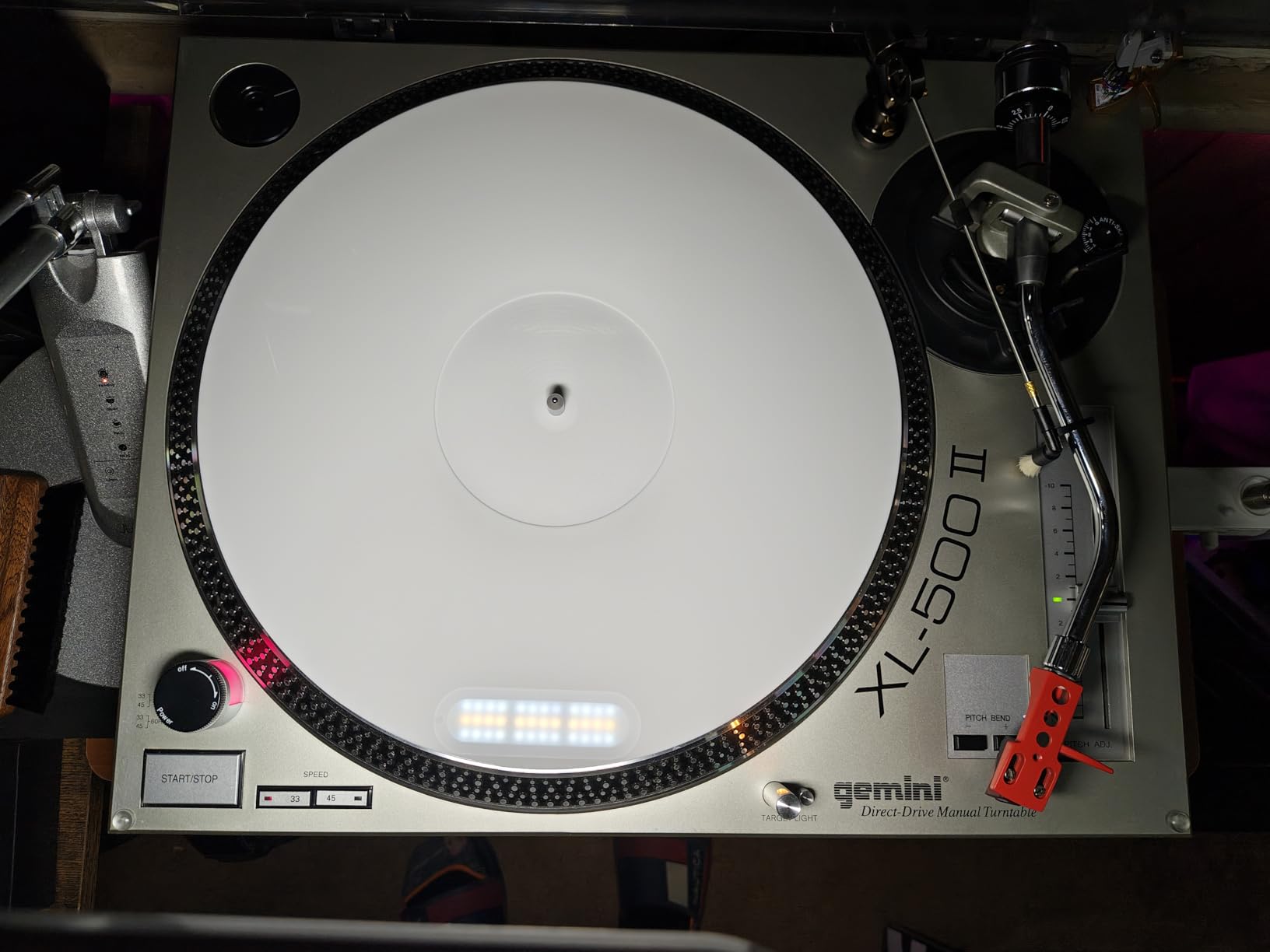
One detail that came up more than once: several buyers recalibrated their anti-skating or tracking height after fitting it, and were surprised by the gain. A 3mm mat raises the playing surface, and a properly set up arm responds to that with a tighter, more focused image.
The colour options are a genuine bonus for a component that spends its life in plain sight. The glow-in-the-dark finishes look striking in a dark room, though owners rightly note you only see the effect with the platter bare.
The honest drawback is diameter. At 11.75 inches it does not reach the full circumference of a 12-inch record, so the outer lead-in grooves sit over bare platter. In practice this matters little during playback, but it is a reason some careful listeners trim a disc cork mat to this exact size instead.
Best for belt-drive and direct-drive decks that need a neutral upgrade
This suits anyone moving up from a decades-old felt pad without changing the character of their system. It dampens rather than colours, and it works on a Rega, a Pro-Ject, an Audio-Technica and a Technics alike.
If your listening is all long albums at low volume, the tighter bass and reduced static will be the most noticeable improvements. If you are judging it on grip for DJ work, look at the rubber option further down instead.
Skip it if you need heavy back-cue grip or a full-size platter surface
The surface has low friction by design. On a scratch record you can stop a spinning platter dead with a stiff brush, which is a nice demonstration of the damping and an annoyance if you were planning to clean while it spins.
Also measure your platter lip. If you want a mat that fully supports a 12-inch record edge to edge, the 12-inch options further down will do that and this one will not.
2. PRO SPIN White Acrylic Turntable Mat: Built for DJ Work
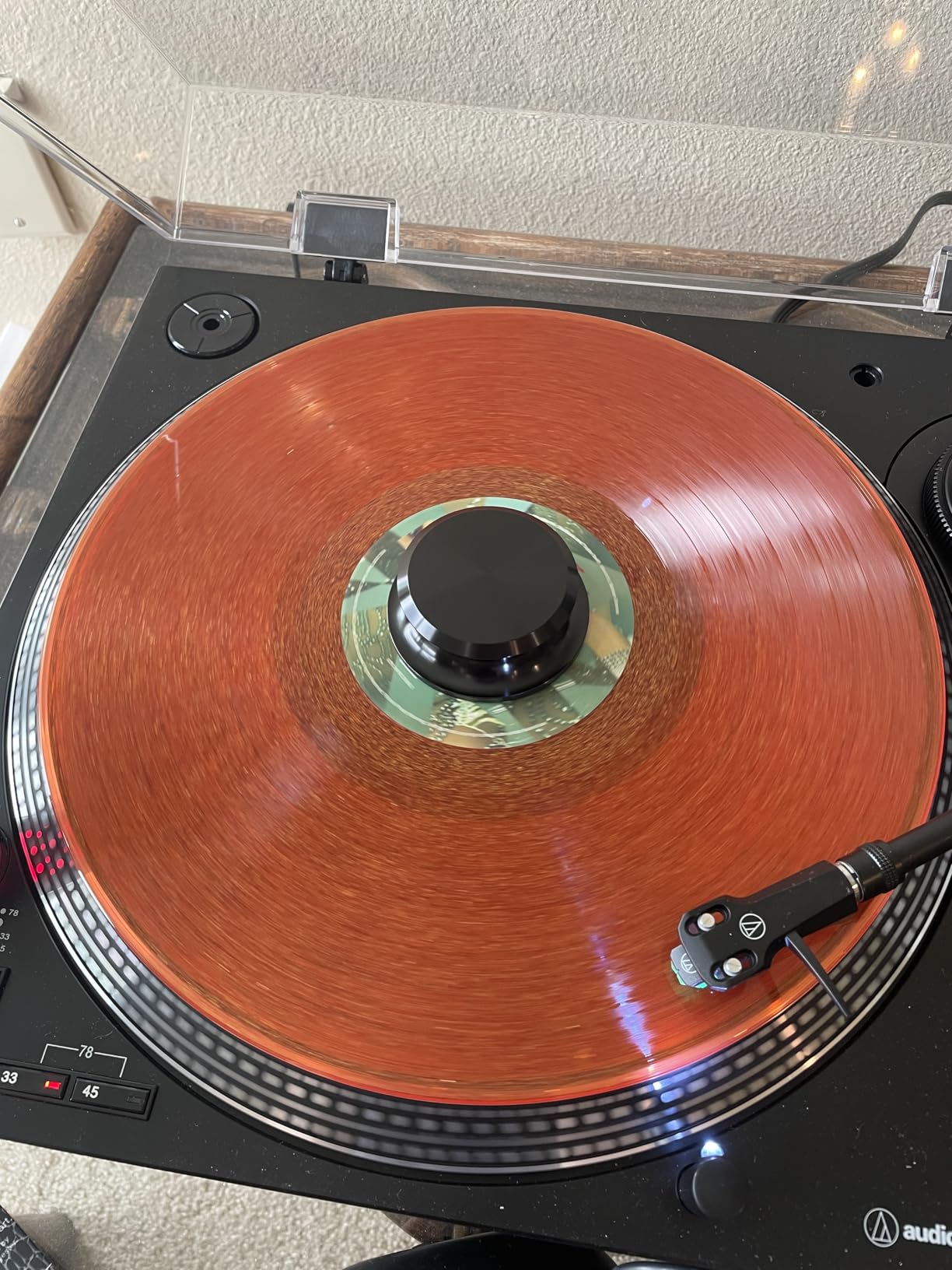
PRO SPIN White Acrylic Turntable Mat – Platter Slipmat for 12″ Vinyl Vintage Record Player – Antistatic Cover, Reduces Noise & Sounds from Static & Dust – Tighter Bass Quality, Record Player Mat
White acrylic
3 mm thick
300 mm diameter
Static damping
Pros
- Damps static and crackle for a cleaner noise floor
- Grippier than other acrylic mats and gives punchier bass
- Clean white finish suits a plain deck
- 300 mm sizing fits standard 12 inch platters
Cons
- Sound gains are subtle rather than dramatic
- 3 mm height can require a VTA check
- Occasional colour mismatches reported on delivery
This one ranks at the top of the DJ slipmat category on volume alone, and that tells you something about how the product behaves. Unlike the other acrylic mats in this guide, its surface is grippier, which is exactly what you want on a direct-drive deck where you move records with your hands all night.
It measures 300mm across and 3mm thick, which is a genuinely full-size 12-inch fit, so the entire record is supported including the lead-in. It weighs 6.4 ounces, enough to stay planted and not shift on the platter.

The acoustic story is about noise floor. Owners moving up from rubber report less crackle and a fuller, punchier bass response, largely because the acrylic is doing the damping work that a tired rubber pad stopped doing years ago.
It is also simply good looking on a plain turntable. The white finish turns a utilitarian deck into something you want to leave out on the shelf, which is not nothing if the turntable is furniture.
Be realistic about the audio gain though. Most owners describe it as subtle, and on an already-decent system the change is closer to tidying up than upgrading. Where the difference is obvious is the noise floor and the grip.
Best for DJs and anyone who moves records by hand
If you cue, scratch, back-cue or simply shuffle records without lifting them, this is the surface you want. It stops where you touch it without needing a firm shove.
It is also a safe pick for a first upgrade because it is dimensionally unambiguous. At 300mm it fits standard 12-inch platters with no measuring and no trimming.
Skip it if your tonearm has no height adjustment
Three millimetres is a real addition to the playing surface. On a fixed-mount arm or a deck where the cartridge cannot be lowered easily, you will need to check that the stylus still clears the record at the start.
If your deck has a removable headshell and a standard adjustment screw, this is a two-minute job. If it is a budget deck with a locked arm, choose a thinner mat instead.
3. TAKMORK 12 Inch Acrylic Turntable Mat: The One That Lights Up
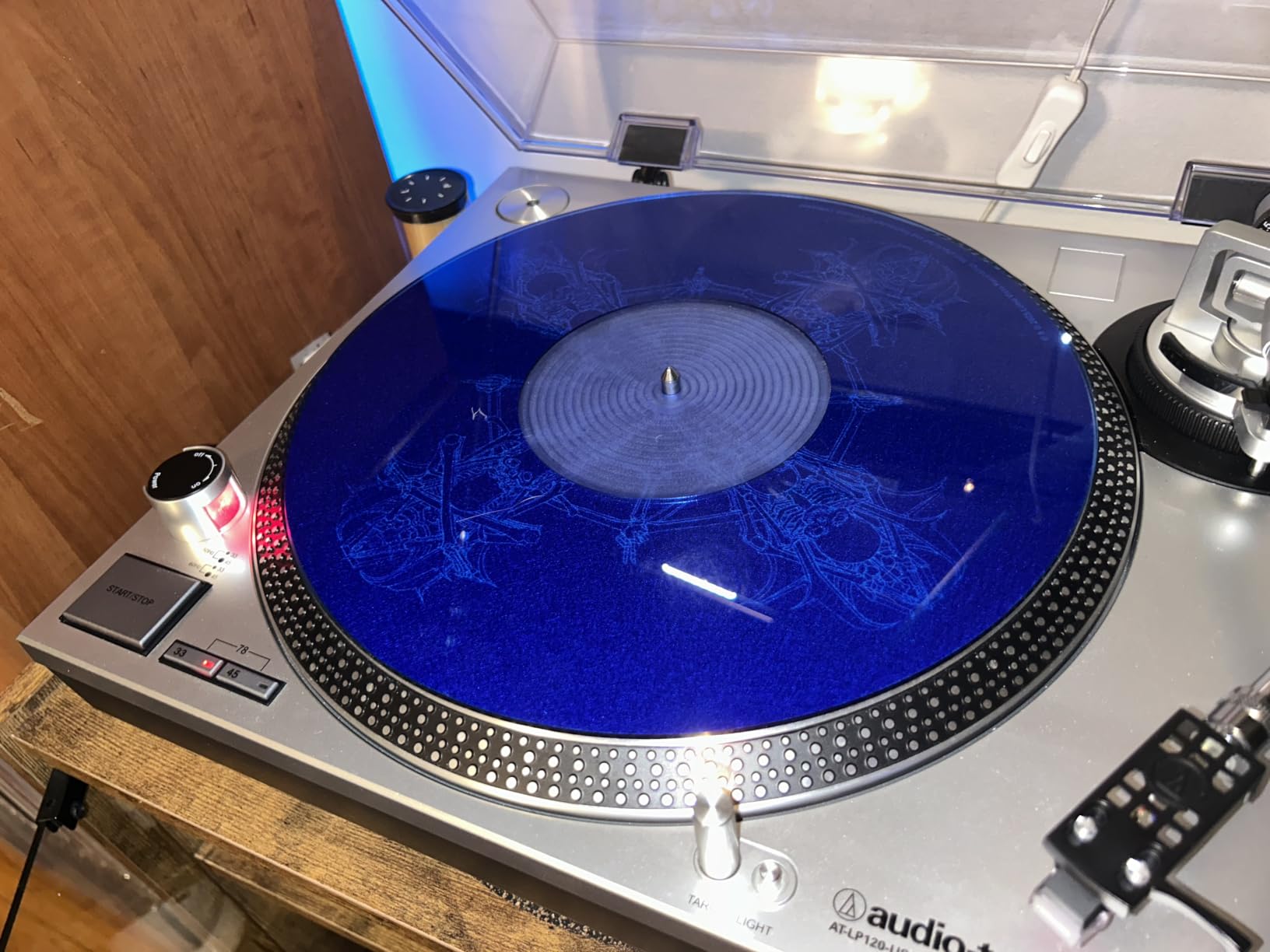
TAKMORK 12″ Acrylic Turntable Mat, Record Player Platter Slipmat, Green
Machined acrylic
12 inch size
Label recess
Glowing colour
Pros
- Tighter defined bass and fewer static pops than old felt
- Label recess keeps records flat and tracking precisely
- Glowing colour is striking in a dark or blacklight room
- Protective film on both faces prevents transit scratches
Cons
- 12 inch size makes 7 inch and 10 inch records awkward to lift
- Arrives with plastic film on both faces that some buyers overlook
- Thickness matters on turntables without VTA adjustment
The appeal here is half sonic and half visual. It is a precision-machined acrylic with a density the manufacturer claims sits close to vinyl itself, which is a reasonable physical argument for why it damps well rather than resonating like a thin plastic disc.
The label recess is the part that matters functionally. It lets an LP sit flat regardless of how thick the label on that particular pressing is, and owners report better tracking as a direct result.
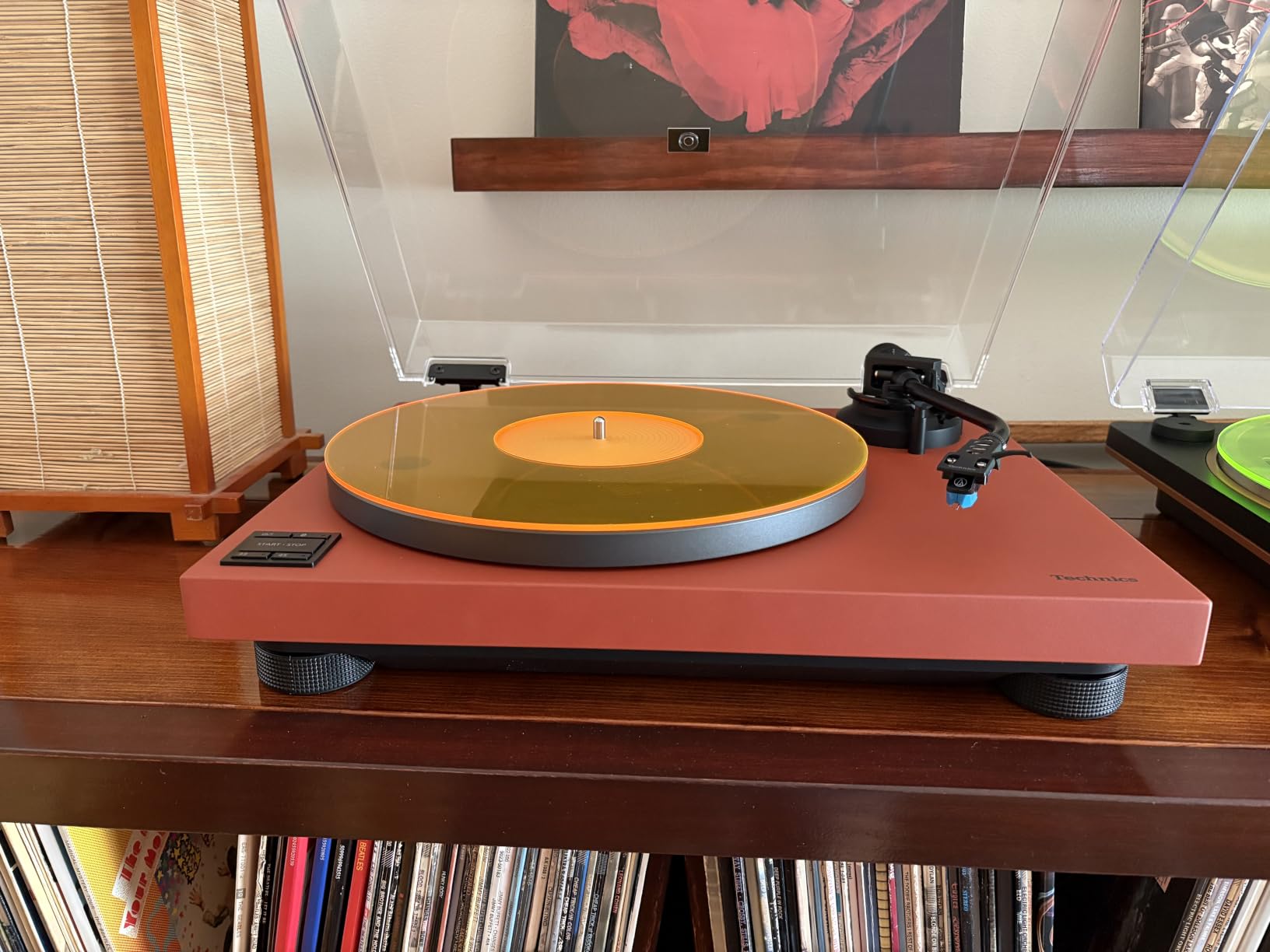
At 8 ounces it is light enough not to affect turntable speed or balance, and it is sealed with protective film on both faces — a thoughtful touch for something that arrives as a perfectly flat optical surface.
Sound remarks cluster around a tighter, more defined low end and less static popping than an old felt mat. The midrange clarity improvement is mentioned often enough to be real, and it comes through most clearly on a turntable that is otherwise mechanically tired.
The most repeated complaint is not about sound at all. It is the lack of an outer edge groove, which makes lifting a small-format record off a full 12-inch mat awkward without removing the spindle adapter.
Best for small collections and players with regular 7-inch singles
If your shelf is mostly 45 RPM singles and 7-inch records, a 12-inch mat works but makes changing records slower. For a full-size LP shelf it is the more elegant choice because nothing overhangs.
It suits 33 1/3 and 45 RPM records equally, and the label recess handles both without the wobble that a flat mat gives a record with a slightly proud label.
Skip it if you want the record to slide off easily
Acrylic is a hard, low-friction surface. It is kind to vinyl but it is not a surface you can push a record across, and small records are genuinely fiddly to lift without the edge.
Also check for the factory film on both surfaces before you drop a record on. It is a genuine protective measure, and if it is not removed it will do more harm than the mat is meant to prevent.
4. Jake’s Premium Deer Hide Leather Mat: The Boutique Choice
Premium Leather Deer Hide Turntable Mat
Genuine deer hide leather
Double sided grain and suede
Hand cut
Pros
- Highest average rating in the group
- Hand cut hide feels like a premium accessory
- Leather damps platter resonance and is associated with warmer fuller bass
- Two finishes in one mat
- so grain side and suede side
Cons
- Leather collects fingerprints and oils and needs careful upkeep
- The most expensive entry in this roundup
- No published thickness or diameter figure
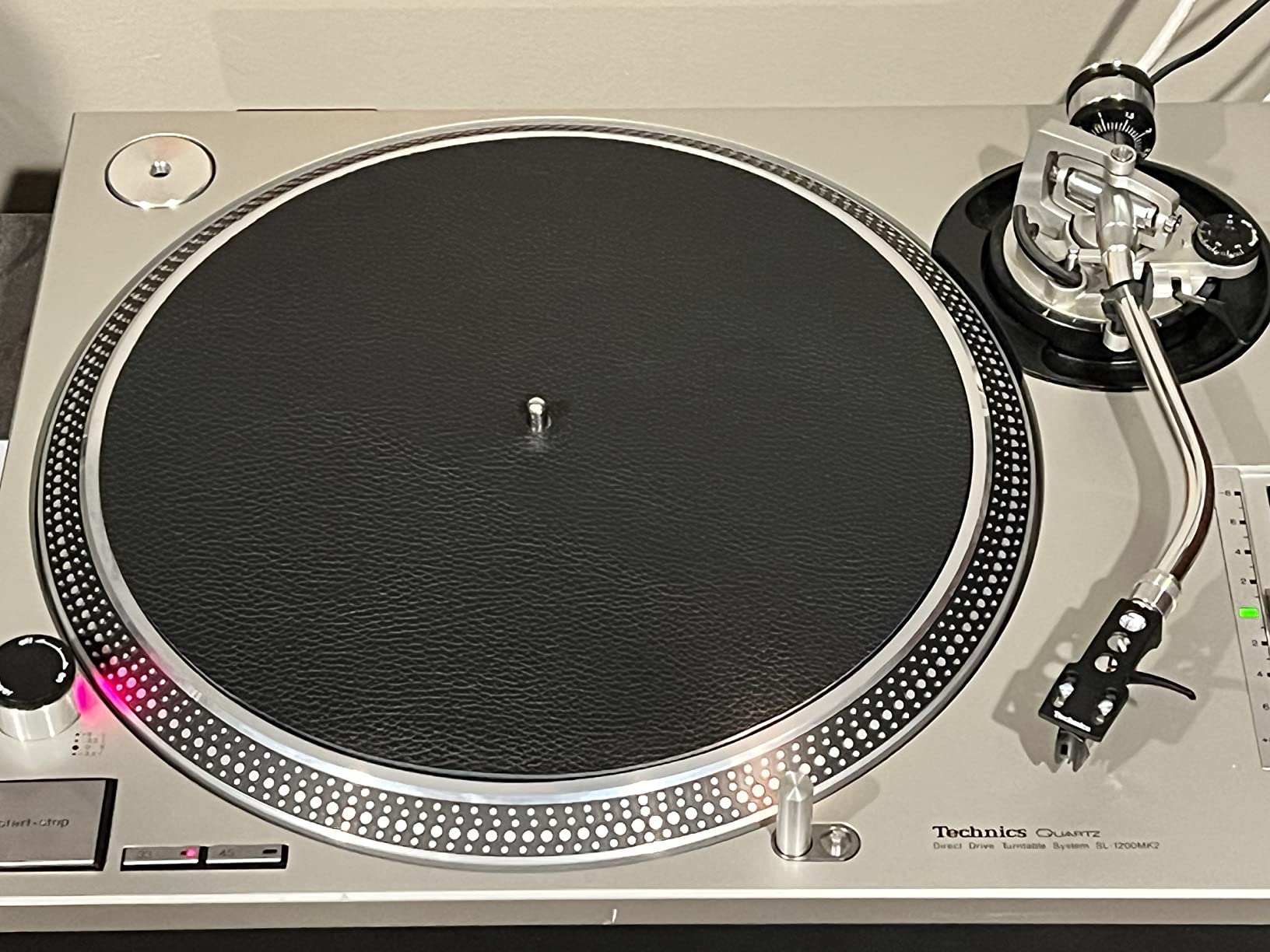
This is the one people buy as much for the look as for the sound. Genuine deer hide, individually hand cut, and finished on both sides so you can run the leather grain up or the suede down depending on what your system likes.
It holds the highest average rating of the ten mats here, with 88 percent of reviews at five stars. That is not a marketing number; it is the most consistently satisfied owner group in the roundup, and the comments are almost entirely about tone and feel.
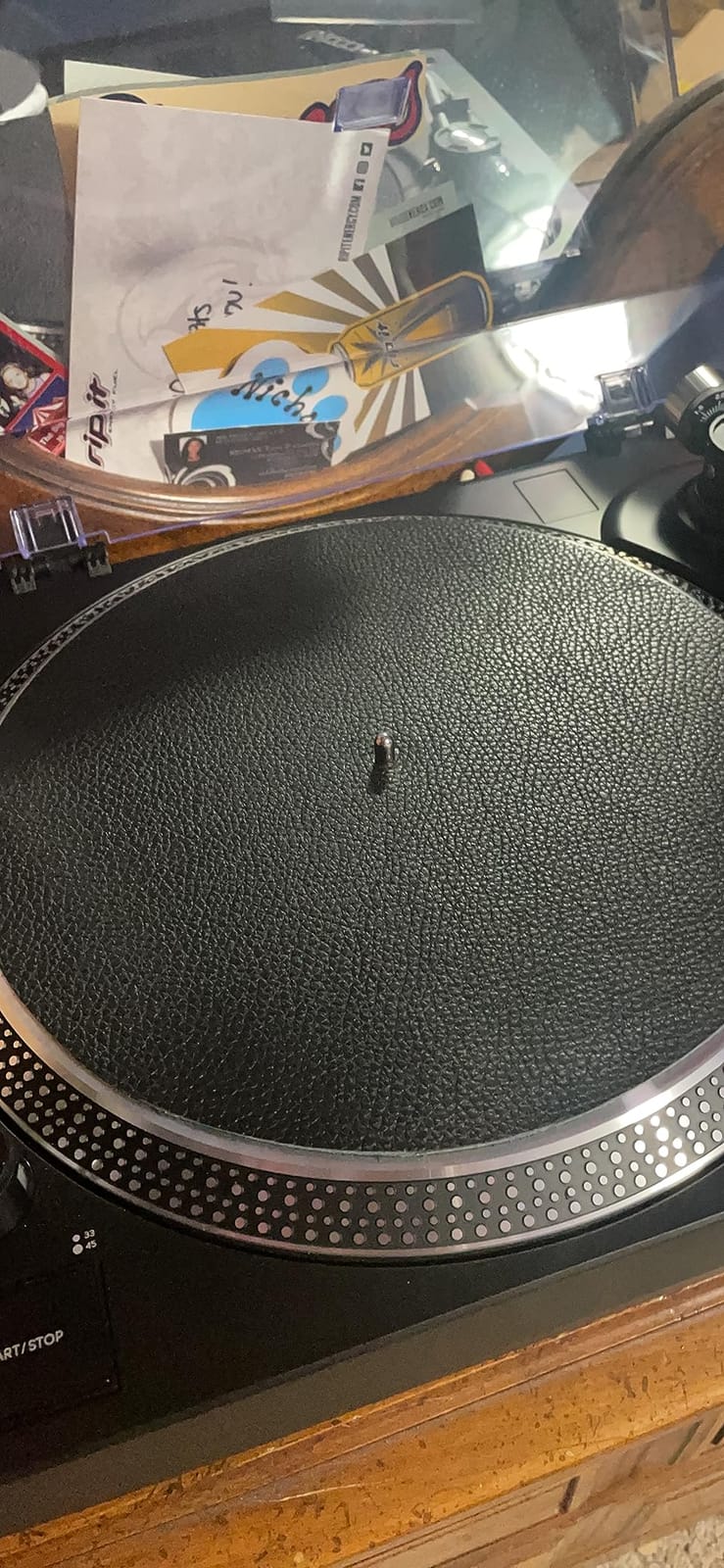
Leather behaves differently from the damped synthetics. Reviewers consistently associate it with fuller, warmer bass and a sense that the record is being presented with a little more weight. Whether that is the leather or the expectation it carries is a fair question, but it is a repeatable report across a large sample.
Static is a non-issue with this material, which matters if you live somewhere dry. It simply does not hold a charge the way a felt pad does, so records lift cleanly without peeling the mat away with them.
The two-sided construction is genuinely useful rather than a gimmick. The suede side grips more and damps harder, the grain side is smoother and lets the record free-spin, and switching between them changes the character of the system more than switching between two different brands.
Best for owners who want their turntable to look considered
A dark leather mat on a wood plinth turntable is the single most effective styling upgrade in this category, and it is the reason most people buy this one. It reads as a deliberate part of the system rather than an accessory.
It is also a good choice if you are on a belt-drive deck and want a warmer presentation. The bias toward fuller bass suits rock, metal and anything recorded with weight in the low end.
Skip it if you dislike maintaining things or want published measurements
Leather shows fingerprints, oils and surface marks, and it needs to be kept away from prolonged direct sunlight and heat. Owners treat it as a piece of leather goods, which is fair but is not zero effort.
The listing also publishes no thickness or diameter figure, so if your tonearm height is tight or you need a specific fit, you are buying without hard numbers. Measure your platter first or pick a spec-listed alternative.
5. Hudson Hi-Fi Corkery Recessed Cork Mat: Warmth and Noise Control
Corkery Recessed Turntable Mat – 1-8″ Cork Turntable Mat & Anti Static Slipmat for Damped Resonance – for Cleaner Audio Output, Vinyl Cork Mat & Slipmat Record Player
Cork composite
11-3/8 in diameter
1/8 in thick
Recessed centre
Pros
- Cork cleans up the static hiss and click-pop felt mats produce
- Reviewers describe a warmer wider sound with better separation
- Recessed centre helps records sit flat and modifies standing waves
- Non conductive composite built to meet RIAA specifications
Cons
- Several owners report heavy static cling despite the anti-static claim
- 11-3/8 inch diameter is smaller than an LP so it lifts with the record
- Deposited cork dust on a brand-new record for one reviewer
- Lowest rated entry here at 4.4
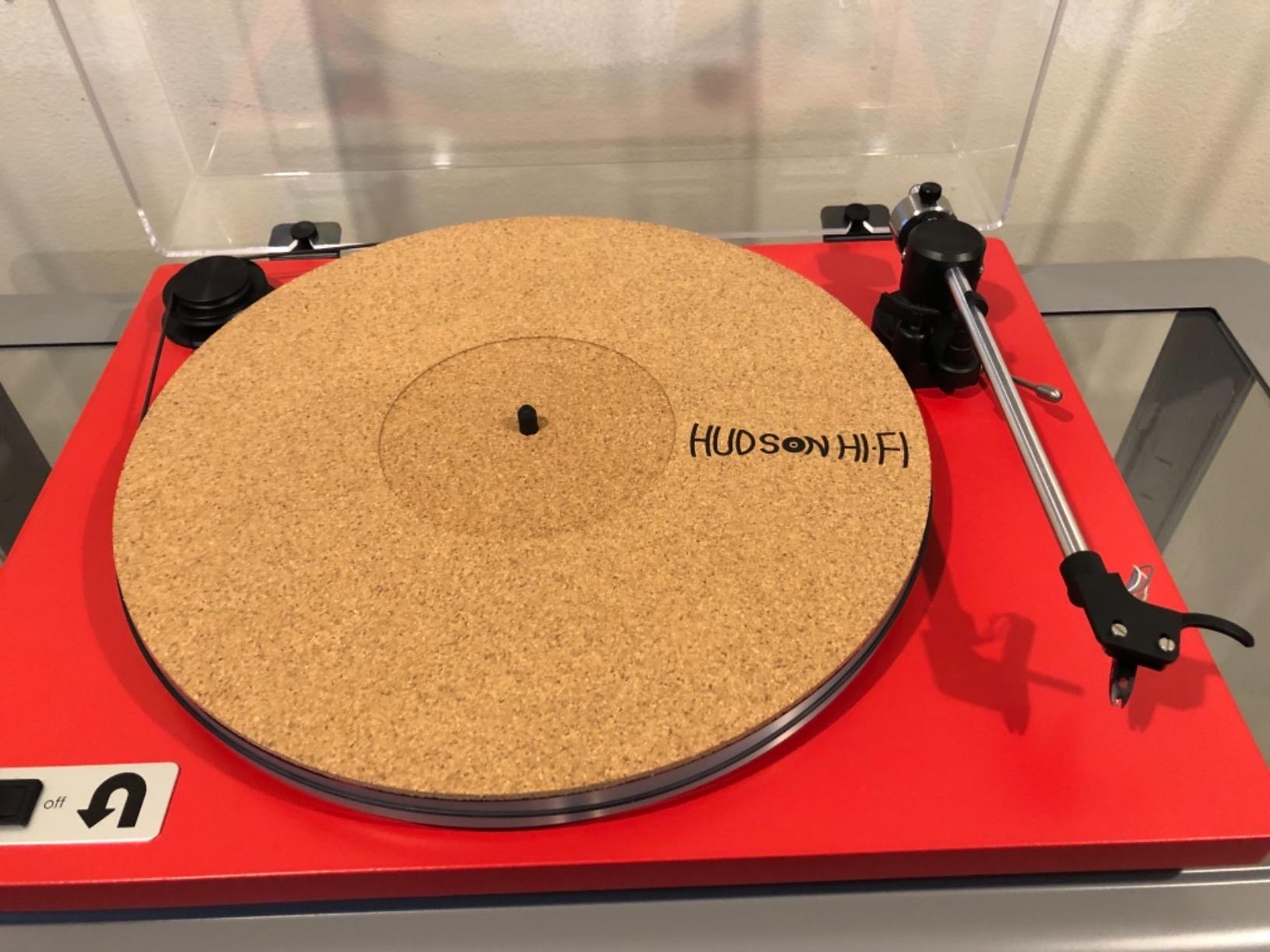
Cork is the material enthusiasts reach for first, and this is one of the two cork mats in the roundup worth reaching for. It is a proprietary non-conductive cork composite, one-eighth inch thick, with a recessed centre.
That recess does more than clear the label. Owners report it modifies the standing waves in the mat-and-record combination, which is a real acoustic effect and part of why cork sounds the way it does.
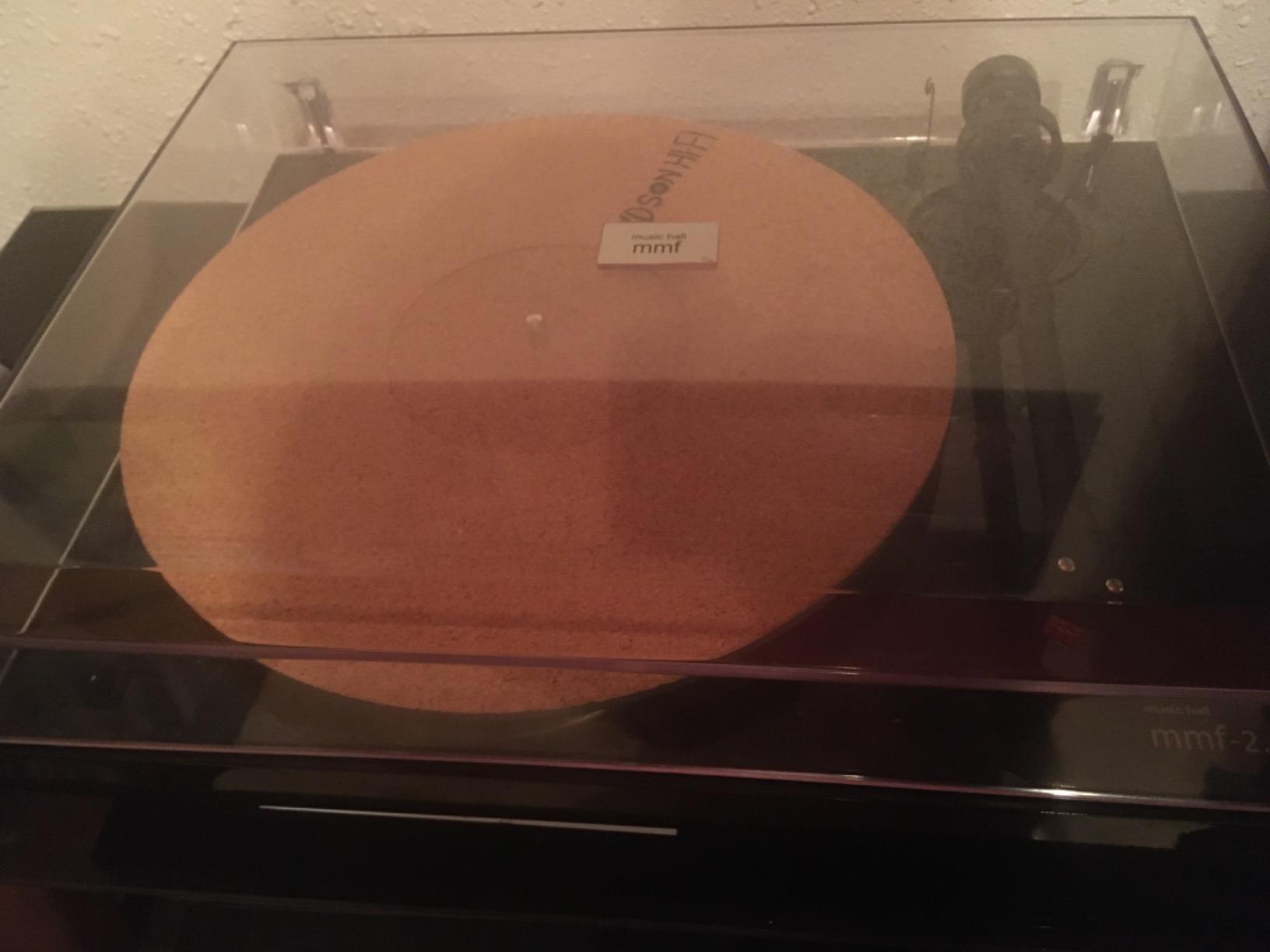
The sound difference from felt is the most audible in this roundup. Moving from a shabby factory felt pad to this mat produces a warmer, wider sound with better separation between instruments, and the constant low hiss and click-pop that felt pads generate drops noticeably.
It is also the mat most often recommended to owners of a Rega or a Pro-Ject as a first upgrade, which matches the forum consensus that swapping felt for cork is the most common single change new belt-drive owners make.
Now the part that has to be said plainly. Despite the anti-static claim on the packaging, several owners report cling serious enough that the mat lifts off the platter stuck to the record. That is a genuine contradiction, and it is the single most repeated complaint in the reviews.
Best for felt-to-cork upgraders on a budget belt-drive deck
If your deck is a belt-drive model and its factory mat is felt, this is the change with the clearest before-and-after. The noise floor improvement alone justifies it for most listeners.
It suits someone who wants warmth and width rather than neutrality. If you are chasing an uncoloured sound, test a thinner cork option or an acrylic mat instead.
Skip it if static is already your main problem
This is the one to be careful about. A cork mat is not automatically anti-static, and this listing makes a claim the reviews do not consistently support. If you already fight static, choose the silicone or rubber mat instead.
At 11-3/8 inches the mat is narrower than a record, so the two lift together and you tend to pick up the mat with the disc. That is a minor annoyance at speed and a real one when cueing.
6. TAZstudio Portuguese Cork Mat: Design With Serious Grip
TAZstudio Cork Turntable Mat for Better Sound Support on Vinyl LP Record Player – Original Geometric Design Psychedelic Geometric Black Light Art [4mm Thickness]-m5
Natural Portuguese cork
4 mm thick
12 inch diameter
Hand cut designs
Pros
- Cork gives a stable non-slip surface with deeper tighter bass
- Hand cut artwork in ten pattern variants
- Natural cork doubles as a decorative piece off the platter
- Reported to reduce record skipping and feedback loops
Cons
- 4 mm is the thickest mat here and needs tonearm height adjustment
- Cork can build noticeable static in dry conditions
- Print pattern can show through translucent vinyl
This is the only mat in the roundup you might buy for the artwork, and that is not a criticism. It is hand-cut natural Portuguese cork, and the designs run from skull and flower-of-life motifs to geometric patterns and a black-light version that glows under UV.
Acoustically it behaves like the other cork options. Owners report a stable, non-slip surface and noticeably deeper, tighter bass, which lands particularly well for rock and metal where the low end carries a lot of the mix.
![Cork Turntable Mat for Better Sound Support on Vinyl LP Record Player - Original Geometric Design Psychedelic Geometric Black Light Art [4mm Thickness]-m5 customer photo 1](https://www.gaia-epicus.com/wp-content/uploads/2026/09/B06XWXDLKW_customer_1.jpg)
Several buyers also report that it reduced record skipping and stopped feedback loops on their setup. That claim is hard to generalise because skipping is usually a warped record or a loose motor belt, but a stable, non-slip surface can only help with the second kind.
It fits 12-inch platters, so a standard LP sits fully supported, and the cork is eco-friendly and handmade, which is not a marketing line so much as a description of what the material is.
The thickness is the thing to check before you buy. At 4mm this is the thickest mat in the guide, and owners repeatedly note that it required a VTA or tonearm height adjustment on their setups, particularly on fixed-mount arms and on warped vinyl.
![Cork Turntable Mat for Better Sound Support on Vinyl LP Record Player - Original Geometric Design Psychedelic Geometric Black Light Art [4mm Thickness]-m5 customer photo 2](https://www.gaia-epicus.com/wp-content/uploads/2026/09/B06XWXDLKW_customer_2.jpg)
Best for players who care about how the setup looks
If the turntable is on display, this does something none of the plain mats on this list do. The designs are genuinely distinctive and the cork is a display object in its own right off the platter.
It also works well as a second mat. One for the plain listening deck, one for the DJ setup, or one as a spare to rotate while you clean.
Skip it if your tonearm cannot be raised or your room is very dry
Four millimetres is a big change to the playing surface height. On a fixed-mount arm, or on a record with a slight warp, that much added thickness can cause the stylus to touch the raised edge of the groove.
Cork also builds static in dry indoor air, sometimes more than rubber does. If your listening room drops in humidity in winter, pair it with a grounding step rather than expecting the mat to handle static on its own.
7. Ywhomal Rubber Turntable Mat: The Fix for a Worn-Out OEM Pad
Rubber Turntable Mat with Reduce Static for 12″ Vinyl Player
Soft safety rubber
3 mm thick
12 inch
Non slip grooves
Pros
- Grip genuinely cuts static cling so records lift without peeling the mat
- Common fix for hardened and oily OEM mats on Technics and similar decks
- Non slip grooves and label recess keep records flat
- Works across Audio-Technica
- Technics
- Rega
- Pro-Ject
- Fluance and Music Hall
Cons
- 12 inch size can sit slightly proud and the spindle hole may be off centre
- Will not fit recessed platters on some vintage Akai models
- Strong rubber odour for the first few days
Most of us do not need a premium mat. We need a new one, because the pad that came with the deck fifteen years ago has gone hard, picked up oil from our fingers, and stopped doing any of its three jobs. This is that replacement.
It is solid soft safety rubber, 3mm thick and 12 inches across, weighing 0.24kg. That weight is the point: a heavy mat stays put, generates very little static itself, and provides the kind of grip that makes records lift cleanly.
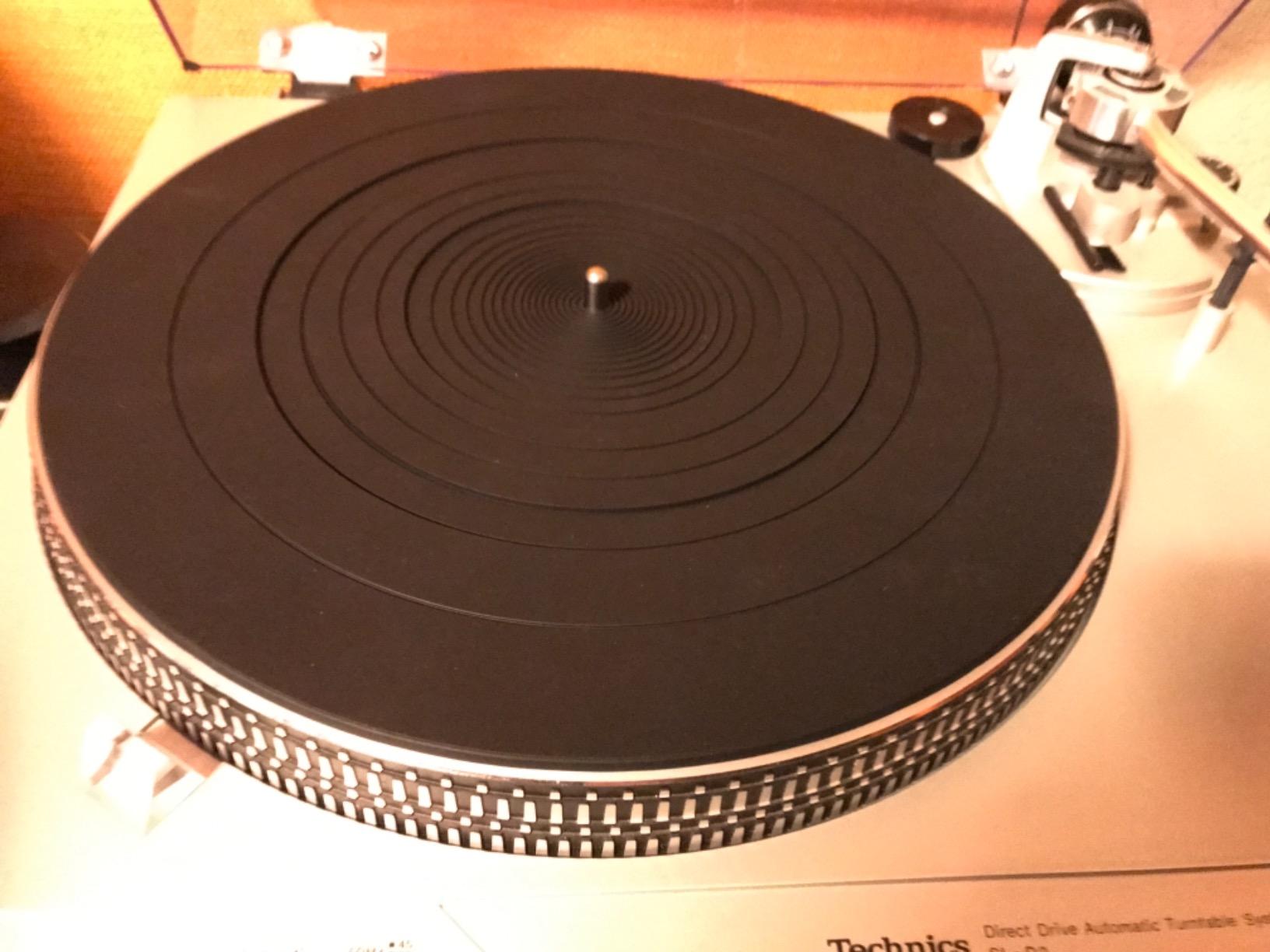
The grip is the standout. Unlike cork or felt, rubber does not build a charge, so a record comes off the mat instead of peeling away with it. That single property fixes more problems than any other feature in this category for most people.
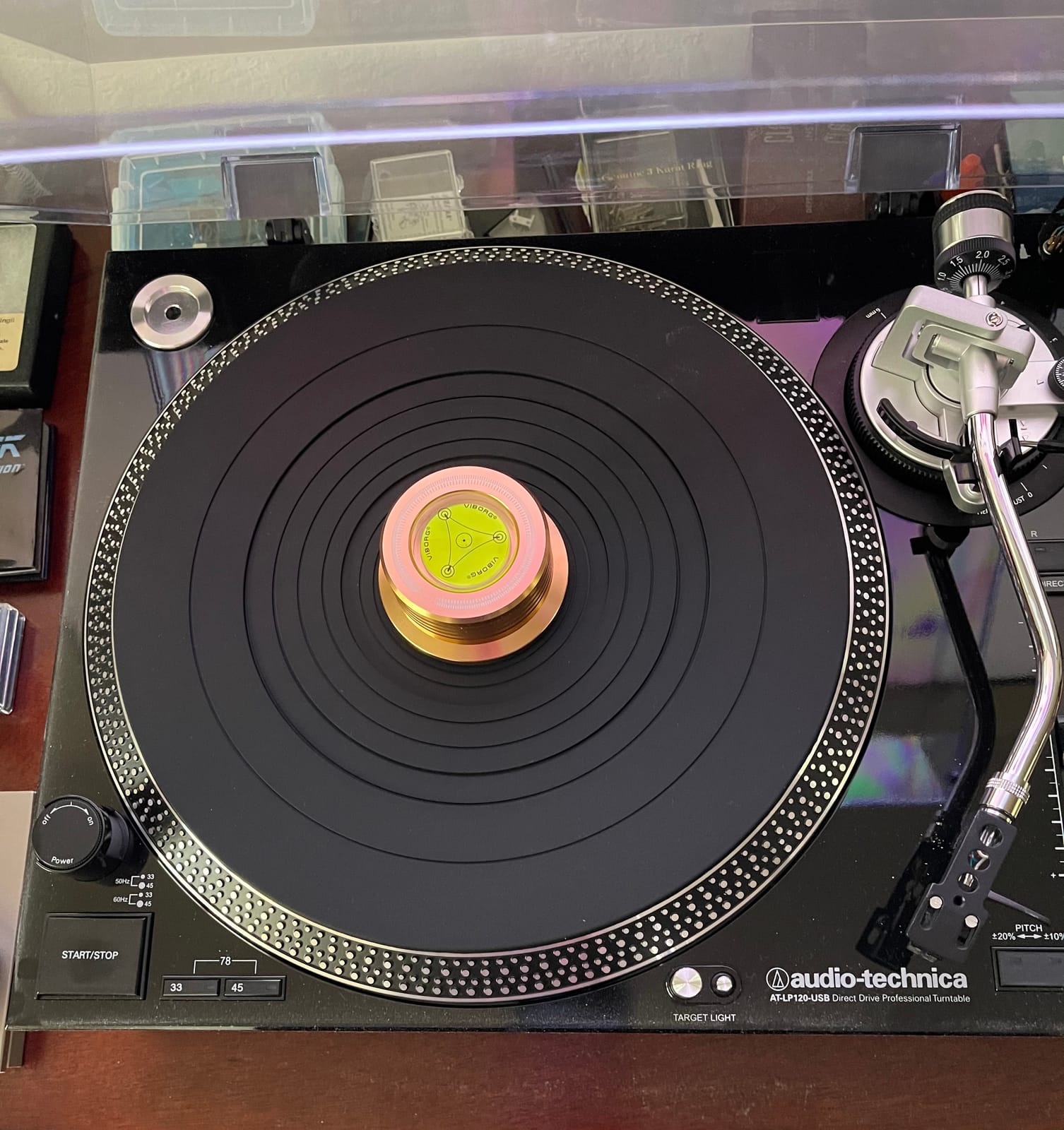
Non-slip grooves and a label recess keep the record flat and stable through side A, which is why owners on direct-drive decks report that records stay where they put them. It is listed as fitting Audio-Technica, Technics, Rega, Pro-Ject, Fluance and Music Hall platters, and the belt-drive note applies to the decks in that group.
It is also a common drop-in fix on Technics SL-D2 and similar direct-drive units where the OEM rubber mat has outlived its usefulness. If your deck sounds worse than it used to, this is often why.
Best for replacing a hardened factory mat on any deck
Start here if your turntable came with a thin rubber or felt pad that now looks tired, peels, or has turned shiny under your hand. The upgrade is immediate and it costs very little.
It is also the right choice for a dry listening room, because rubber is the least static-prone material in this guide. If you live somewhere with winter air conditioning, this solves more problems than a cork mat will.
Skip it if your platter is recessed or your arm is fixed
It will not fit the recessed platters found on certain vintage turntables, including some Akai models. Measure the recess depth before you order.
There is also a rubber odour for the first few days that most people describe as unpleasant. It fades, but if you are sensitive to it, leave the mat in a sealed bag for a week before use.
8. PRO SPIN 3mm Cork Turntable Mat: The Balanced Belt-Drive Pick
Cork Turntable Mat by PRO SPIN for Vinyl LP Record Players (3mm) | Record Player Mat with High-Fidelity Audiophile Acoustic Sound Support | Turntable Slip Mat Help Reduce Noise Due to Static and Dust
Audiophile grade cork
3 mm thick
12 inch
Recessed centre
Pros
- Soft cork absorbs vibration well with a label recess that seats records
- Reduces pops
- static
- rumble and humming and prevents slipping
- 3 mm is modest enough that most arms need little or no adjustment
- Retro styling suits vintage and belt-drive setups
Cons
- Can develop static cling heavy enough to lift with a record
- Cork can be slightly flaky out of the box and needs a wipe-down
- Static performance depends on the vinyl compound of each record
Where the Corkery mat above is the enthusiast pick, this is the sensible one. Custom-cut soft cork, 3mm thick, 12 inches across, with a recessed centre — and it is the most correctly dimensioned cork option in the roundup.
That 3mm matters more than it sounds. It adds damping and enough height to help with rumble and humming, but it is thin enough that most tonearms need little or no adjustment at all, which is not something you can say about every cork mat on the market.
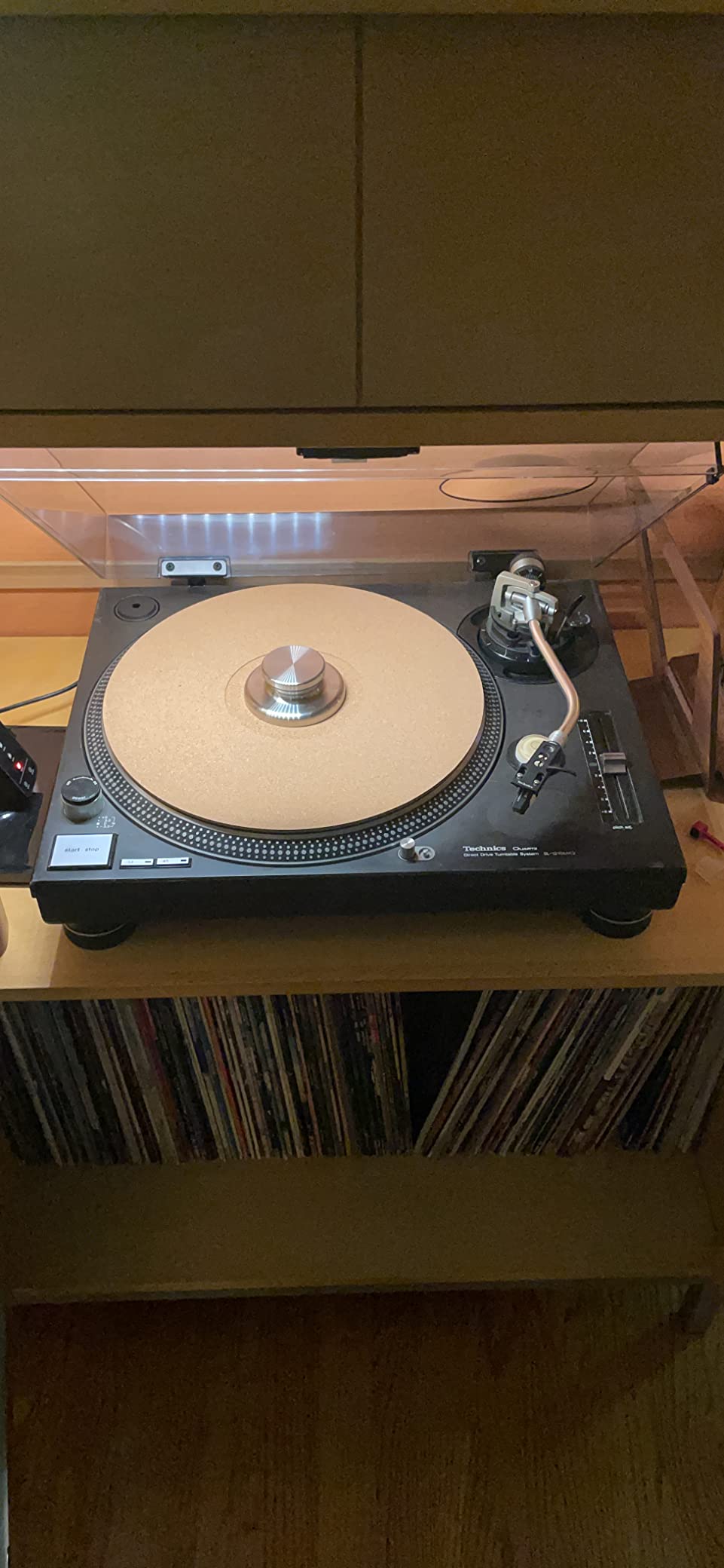
Owners rate it as a well-dampened all-rounder. It handles pops, static, rumble and humming together, and it prevents the record from slipping when you are trying to stop it, which is a rare combination for cork.
The retro styling is not decoration for its own sake. A cork mat on a wood plinth or a brushed aluminium belt-drive deck is a look that suits the machine, and the material is entirely appropriate to the vintage positioning of the turntables it tends to end up on.
As with any cork mat, give it a wipe-down before you use it. Cork can arrive slightly flaky, and the first pass with a dry cloth removes the loose dust that would otherwise end up in your grooves.
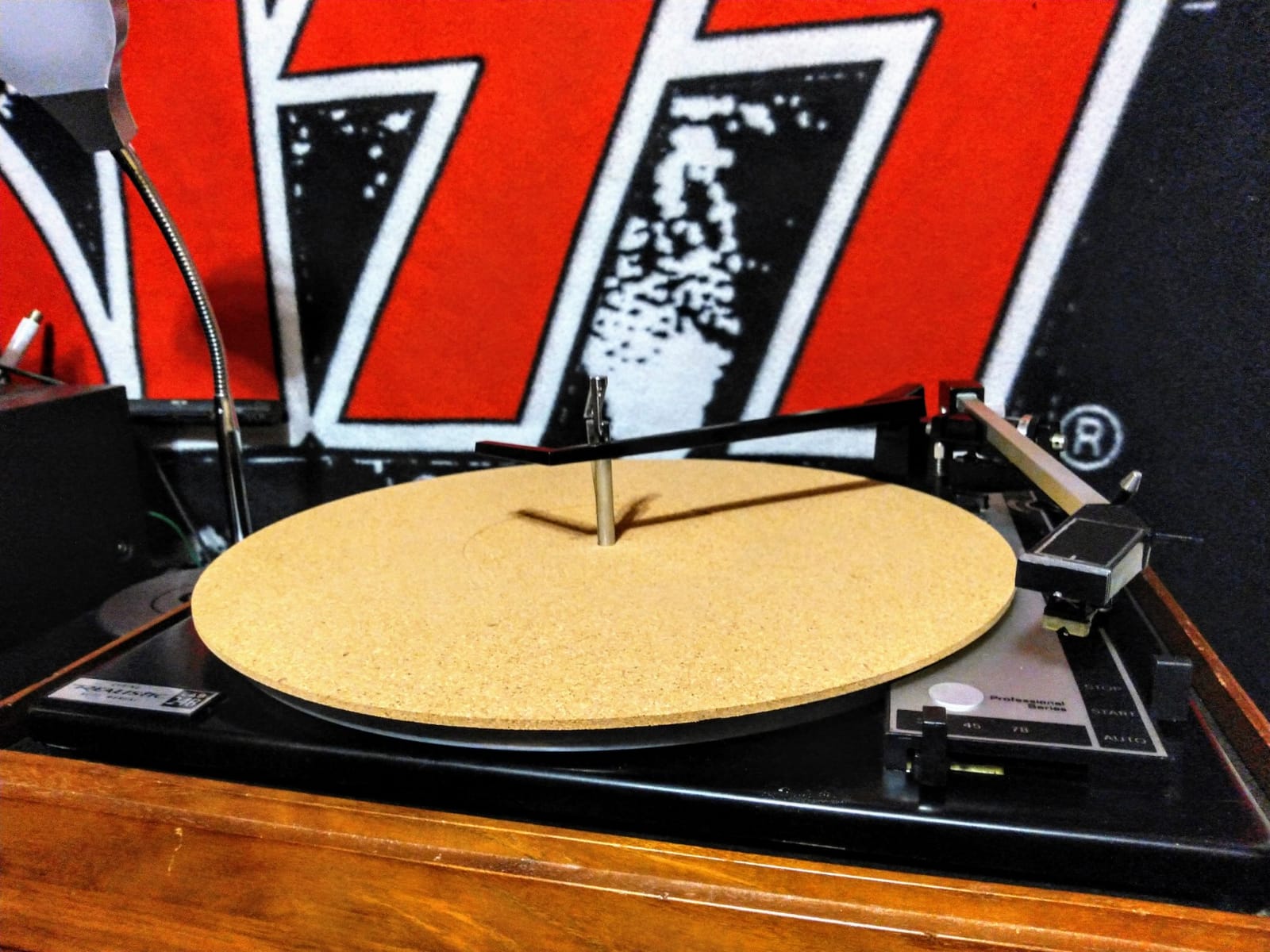
Best for Rega, Pro-Ject and Music Hall owners upgrading from felt
This is the mat to buy if you want cork damping without any geometry homework. The dimensions are conventional, the thickness is modest, and the recessed centre handles both thin and thick label pressings.
It works for 33 1/3 and 45 RPM records equally, so it suits a collection that mixes albums with 7-inch singles rather than being LP-only.
Skip it if your deck is in a very dry room
Cork can develop enough static cling to lift with the record, and one owner reported exactly that. The effect also depends on the vinyl compound of the record itself, so not every disc benefits equally.
If you already fight static, the silicone or rubber route will serve you better. This mat is for people who want the warmth of cork first and can handle static as a secondary problem.
9. Fluance Silicone Platter Mat: The Anti-Static Workhorse
Fluance Turntable Platter Mat (Rubber Black) – Durable Audiophile Grade Silicone Design for Vinyl Record Players (PFHTRP)
Silicone rubber
11.75 in diameter
About 2 mm
Recessed centre
Pros
- Essentially eliminates the static cling that made felt and cork stick
- Improved bass and wider soundstage over decades-old factory mats
- 2 mm thickness closely matches common OEM pads so no realignment is needed
- Backed by a one year manufacturer warranty
Cons
- Top surface texture is slightly coarse next to Technics rubber
- One buyer found the centre hole too wide and off centre on an Audio-Technica
- Durable rubber attracts lint and dust
- Some listeners feel it dulls the top end
This is the mat for people whose problem is static, full stop. Silicone rubber does not build the kind of charge that makes a record stick to the surface, and owners switching from felt or cork say the difference is immediate and total.
At 11.75 inches and roughly 2mm thick, it closely matches the dimensions of common OEM felt pads, which is a deliberate and sensible design choice. You can fit it in place of a factory mat without touching your tracking height.
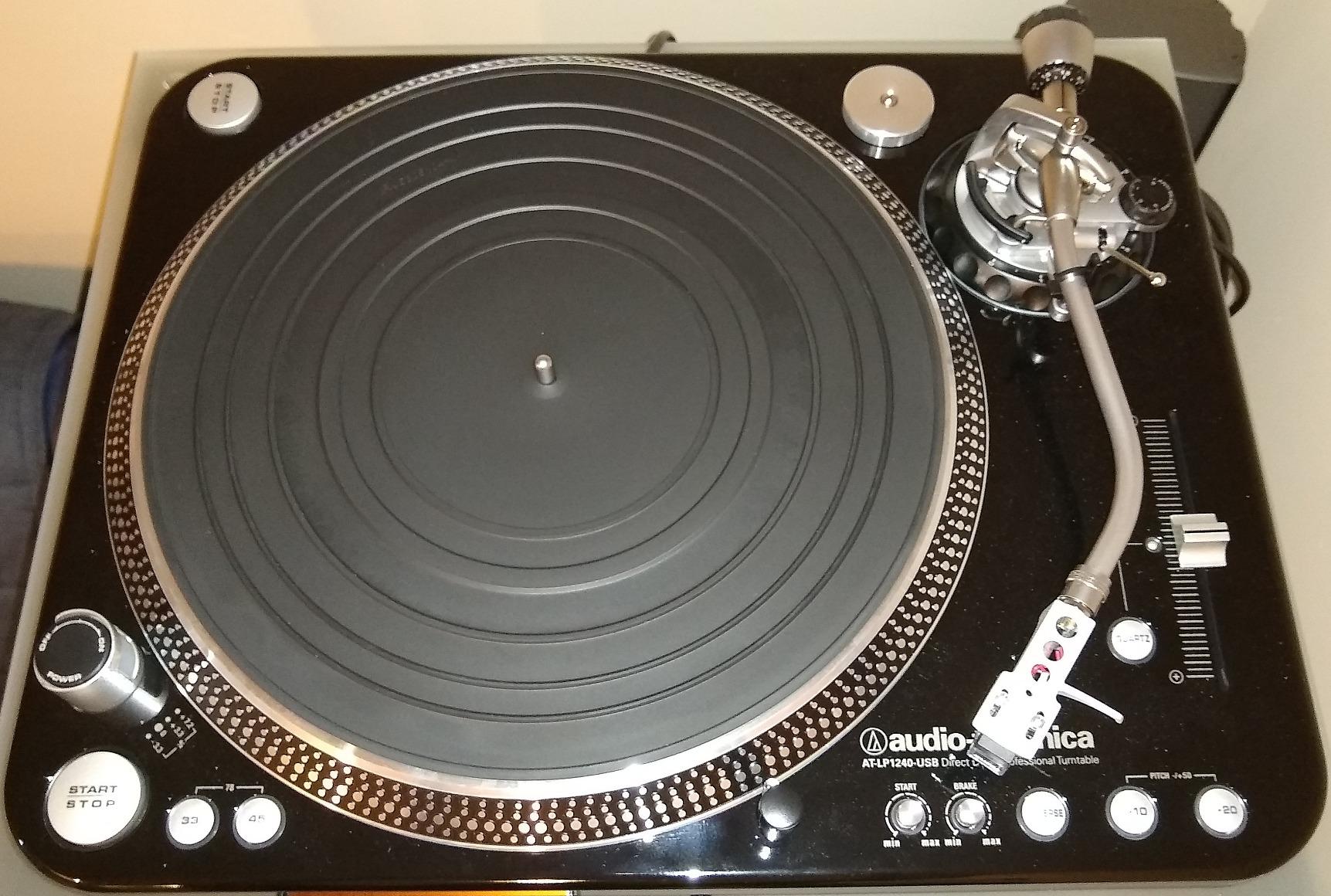
Acoustically, owners report improved bass and a wider soundstage compared with decades-old factory mats, mostly because the old pad had stopped damping anything at all. The recessed centre lets LPs sit flat regardless of label thickness.
It is also the only mat here with a published warranty: one year of manufacturer labour and parts cover, which is a small thing but reassuring on a component you will keep for a decade.
Two fit notes are worth reading. The centre hole can sit wide or off-centre on some budget turntables, and it pairs specifically with the Fluance RT80 and RT81, though the 11.75 inch size suits most standard platters.
Best for dry rooms and anyone whose records keep sticking
If you live somewhere with hard winter air, or you have a record collection that attracts dust faster than you can clean it, silicone rubber is the right material. It does not charge, and it does not shed fibres.
It is also a good pick for a Technics, Rega or Pro-Ject deck where the factory mat is worn out, because the geometry matches what was there before.
Skip it if you want a smooth, fast platter surface
Some listeners find the texture slightly coarse compared with a Technics rubber mat, and a few feel it very slightly dulls the top end. If you are chasing treble detail, test a cork or acrylic mat instead.
Like any rubber mat it collects lint. It wipes clean easily, but a dust cover makes a visible difference after a year of use.
10. Outus 3 Pack Cork Turntable Mat: Spare Mats for Rotation
Outus 3 Pcs Cork Turntable Mat, Turntable Slipmats for Vinyl Lps, 12″ x 3mm
Three cork mats
About 12 in diameter
3 mm thick
Grooved top
Pros
- Three mats allow rotation
- cleaning or a second turntable setup
- Each mat measures about 12 inch / 30.5 cm and 3 mm thick
- Grooved top keeps the mat and record in place with a smooth underside
- Natural cork dampens platter vibration
Cons
- Lowest rated option here at 4.4 with 10 percent of reviews at three stars or below
- Fit varies by platter model so measuring is advised
- Sound improvement is modest and varies by system and stylus
The logic of a three-pack is practical rather than sonic. One mat on the platter, one in rotation while you wash, and one spare for a second deck. At three for the money of roughly one premium mat, it is easy to see why it appeals to people running two turntables.
Each mat is about 12 inches in diameter and 3mm thick, with a grooved top surface that helps the mat and the record stay in place, and a smooth underside that sits flat on the platter. Natural cork absorbs light platter vibration as you would expect.
Best for owners with two turntables or a cleaning routine
If you have a DJ deck and a listening deck, or you wash your mats regularly, a multi-pack removes the awkwardness of having one mat in use and one in the sink. The warm brown finish suits both a home shelf and a DJ booth.
It is a sensible first cork mat for someone who wants to try cork without committing to a single high-end one.
Skip it if you need precise fit or a specific sound result
Fit varies by platter model and the listing itself advises measuring before you buy, which is unusual honesty from a product page. A slightly loose mat moves, and a slightly tight one will not sit flat.
The audio result is described as modest, and it varies by turntable, stylus, speakers and room. At 4.4 stars with 10 percent of reviews at three stars or below, it is the least consistent pick in the roundup and worth buying as a spare rather than as an upgrade.
Slipmat Materials Compared: Felt, Cork, Leather, Rubber and Acrylic
Felt, cork, leather, rubber and acrylic each win on a different axis. Felt is the cheapest and grips hardest but sheds fibres. Cork is warm and quiet but builds static. Rubber and silicone are the most static-resistant. Acrylic is the flattest and most neutral. Leather is the most expensive and the most characterful.
There is no single best material. The best material is the one whose weaknesses do not match your room, your deck and your record-collecting habits.
Felt: grippy, cheap, and it sheds
Felt is the traditional DJ mat and it is the grippiest material you can put on a platter, which is why serious DJ decks have used a thick felt pad for decades. It damps well, it is cheap, and it handles back-cueing and scratching better than anything else here.
The problem is fibre shedding. The r/vinyl advice that comes up repeatedly is that felt fibres cling to records, which is exactly the reason users move to cork. If you are buying a felt mat, buy a high-compression one rather than a cheap glued pad, and expect to replace it eventually.
Cork: warm, quiet, and the most debated
Cork is the most popular upgrade among belt-drive owners and the most argued-about material in the category. Its density absorbs platter resonance rather than reflecting it, and owners consistently report a warmer, wider sound with less low-level hiss than felt.
Its weakness is static. Cork is a poor conductor and in dry air it can hold a charge strong enough that the record and the mat lift together. The forum answer to this is to treat it as a room-humidity problem, not a mat problem.
Leather: warm, heavy, and handsomely finished
Leather damps platter resonance and is associated with fuller, warmer bass in owner reports. Genuine hide is dense and does not shed fibres or build much static, and a double-sided mat gives you a grippy suede face and a smoother grain face.
The trade-offs are upkeep and cost. Leather shows fingerprints and oils, dislikes heat and direct sun, and needs to be treated like a leather good rather than an accessory. It is also the most expensive material in the category by a wide margin.
Rubber and silicone: the anti-static choice
Rubber and silicone do not build a static charge, which makes them the best answer for dry rooms and for anyone whose records keep sticking to the mat. Reviewers report that records lift off cleanly instead of peeling the mat away with them, and that the grip is excellent for hand-moving records.
They attract lint and dust, and at 3mm or more they add height to the platter, so fixed-mount tonearms need checking. A low-friction surface also means a record can stop spinning if you brush it while the platter turns.
Acrylic: flattest, most neutral, lowest friction
Acrylic is machined from a solid block in the good mats, which means a dead-flat surface with a proper label recess and a density close to vinyl itself. It damps micro-vibration well, adds almost no colour, and looks the most considered of the synthetic materials.
Its weakness is friction. Acrylic mats have the lowest grip in this roundup, which is wrong for a DJ and fine for a listener who never touches a spinning record. At 11.75 inches they also do not support the full outer edge of a 12-inch record.
How to Choose the Right Slipmat for Your Turntable
Choose by deck type first, then by thickness, then by diameter. Match the mat to whether you are cueing by hand or listening hands-off, and everything else follows from those two answers.
DJ and direct-drive decks want grip
If you scratch, back-cue, beatmatch or move records without lifting them, grip is the deciding factor. Felt is the traditional answer, and grippy rubber or a higher-friction acrylic is the modern one. All three of the rubber and grippy acrylic picks in this roundup are rated for that use.
DJ decks such as the Technics SL-1200 are built around back-cue response, so a smooth low-friction acrylic is the wrong material for them even if it sounds better. Judge a mat as a DJ by how the record feels under your hand, not by what it does to the bass.
Belt-drive and audiophile decks want neutrality
On a Rega, Pro-Ject or Music Hall, the record should free-spin and the mat should get out of the way. Cork, smooth acrylic and leather are all appropriate, and a thin mat under 2.5mm is the safe choice if your tonearm cannot be adjusted.
This is also the group where an audiophile deck justifies spending on a mat. On a high-mass plinth turntable the mat is a small part of a well-engineered system, and owners are far less likely to be disappointed.
Measure your platter lip before you order
Platter lip diameters differ. A 12-inch LP is about 300mm across, and platters commonly measure 290mm or 295mm at the lip, so an 11.75-inch mat is a deliberate fit for many machines while a 12-inch mat overhangs.
An overhanging mat is not dangerous, but it means the outer lead-in grooves sit on bare platter, and a mat that is too small will rock or be picked up with the record. Measure the flat top of the platter, not the outer edge of the body.
Check thickness against your tonearm
Mat thickness raises the playing surface and changes your vertical tracking angle. Under about 2.5mm nothing meaningful happens. Around 3mm you should check the stylus clears the record at the start of side A. Above 4mm you almost certainly need to raise the arm or lower the cartridge.
This matters most on fixed-mount tonearms and on warped vinyl, where the record edge rises and a thick mat can bring the stylus into contact with it. It is also the most common reason a new mat causes skipping that the old one did not.
Avoid glued foam-core mats
Foam-core mats sold as slipmats are the ones to skip. A foam layer sandwiched between thin faces with adhesive is cheap, light and does almost no damping, and the glue can outgas next to your records and shed grit into the groove.
Single-material mats — solid cork, solid rubber, solid felt, solid acrylic — do the job properly. If the product page lists a composite foam construction, move on.
Static Control: The Mat Is Only One Part of the System
Static is not solved by a mat. The recurring answer in the r/turntables threads is that you need four things at once: an anti-static mat or brush, a clean record, a grounded system, and reasonable room humidity. Miss any one and you will still hear clicks.
Clean the record before you play it. A carbon-fibre brush and a proper fluid remove the dust that becomes a click. Most “bad record” complaints are dirty record complaints.
Use a non-charging mat or a grounded brush. Rubber and silicone mats do not build a charge. A grounded carbon brush attached to the tonearm drains static off the disc as it plays.
Ground the system. Hum and buzz are separate problems, but a properly earthed phono stage with the grounding wire correctly connected stops static discharges finding a path through your speakers.
Manage room humidity. Dry winter air is the root cause of most static. A bowl of water near the deck, or a room humidifier in cold months, reduces charge build-up at source.
One warning about the third step. A record can stick to a mat, but a new mat sticking to the platter is a different complaint and it is not a defect. A fresh rubber or felt surface can bond lightly to a clean platter for the first few spins. It releases, and it is not a reason to send the mat back.
Care, Cleaning and Lifespan
A mat that collects dust defeats the static control it was bought for, because the dust it holds becomes the clicks you hear. A ten-minute routine twice a year is enough for most setups.
Felt and cork: roll a lint roller across the surface and brush the edges. Never wash cork. If cork is crumbling, sweep the loose dust off and consider a replacement — crumbling is the normal end of life for cork.
Rubber and silicone: wash with warm water and a drop of dish soap, dry flat, and do not use alcohol-based cleaners. A hair dryer on a cool setting clears dust from the grooves.
Leather: wipe with a barely damp cloth, dry naturally away from direct heat, and condition it occasionally with a neutral leather balm. Keep it out of prolonged sunlight.
Acrylic: wipe with a microfibre cloth and a record-safe cleaner. Keep the protective film on until you are ready to use it, and never use ammonia-based glass cleaner.
Rotate two mats if you can. It doubles the interval between deep cleans and stops the same side of the mat from sitting under the label area forever.
A dust cover matters more than owners admit. A mat without one collects a visible layer of fine dust in a single season, and that dust then migrates onto every record you play. If your deck did not come with a cover, that is a better use of money than a second mat.
Frequently Asked Questions
What are the best slipmats for a turntable?
The best slipmats for a turntable are solid single-material discs rather than glued foam-core pads. For most listeners a CNC-machined acrylic mat gives the flattest surface and the most neutral damping. For DJ decks that need back-cue grip choose felt or a grippy rubber mat. For dry rooms where static is the problem, silicone or rubber is the most reliable choice. Cork sits in between: warm and well damped, but it can build a static charge.
Should I use a slipmat for vinyl?
Yes. A slipmat protects the record surface from a hard metal or acrylic platter, damps some of the platter vibration before it reaches the stylus, and gives you enough friction to stop a spinning record with your fingertips. Without one, a bare platter can wear a record over time and pass motor vibration straight into the stylus. The only exception is a platter that is already well damped at the factory.
Which is better for record mats, rubber or felt?
Rubber is better for most people because it does not build a static charge, records lift off cleanly, and it grips well enough for hand-moving records. Felt grips harder and is the traditional choice for back-cueing and scratching, so it still wins on a DJ deck. The main argument against felt is that it sheds fibres that cling to records, and the main argument against rubber is that it collects lint and adds height to the platter.
What is the best material for a turntable slipmat?
There is no single best material, and the answer depends on your deck and room. Acrylic is the flattest and most neutral and is the easiest default recommendation. Cork gives the warmest, widest sound and damps hiss well, but builds static in dry air. Rubber and silicone are the most static-resistant and the best grip for hand cueing. Leather is the most characterful and the most expensive. Felt grips hardest and sheds fibres.
What is the best turntable mat to reduce static?
A rubber or silicone mat is the best mat for reducing static because those materials do not hold a charge, so records lift off without peeling the mat with them. Cork and felt both build static, particularly in dry indoor air. A mat alone will not solve the problem though. Clean your records, use a grounded carbon brush, earth the phono stage correctly, and manage room humidity, and you will remove far more clicks than any mat can.
What is the best cork mat for a turntable?
The best cork mat depends on whether you can adjust your tonearm. A 3mm cork mat is the safest all-rounder because it damps well without demanding a height change. A 4mm cork mat sounds better on a deck you can raise the arm on, but it can cause skipping on fixed-mount arms and on warped vinyl. Always wipe new cork before use, since it can arrive slightly flaky, and expect to replace crumbling cork eventually.
Is cork or acrylic a better turntable mat?
Cork is warmer and wider sounding and damps low-level hiss well, but it builds static and can crumble over time. Acrylic is flatter, more neutral, sheds nothing and holds no charge, but it has the lowest grip of any material here and costs you that DJ back-cue response. Choose cork for a belt-drive listening deck in a room of normal humidity. Choose acrylic for a neutral system, a dry room, or a deck where you want a machined, defect-free surface.
How thick should a turntable slipmat be?
Under about 2.5mm the thickness makes no practical difference to your tonearm geometry. Around 3mm you should check that the stylus still clears the record cleanly at the start of side A. Above 4mm you will almost certainly need to raise the tonearm or lower the cartridge, and thick mats are the most common cause of new skipping on warped vinyl. Match a 4mm or thicker mat only to a deck with adjustable arm height.
The Verdict
The Hudson Hi-Fi acrylic mat is the pick. It is machined flat, has a proper label recess, damps micro-vibration without colouring the sound, and has more owner feedback behind it than anything else in the category. If you DJ, the PRO SPIN white acrylic gives you the grip and a full 12-inch fit. If your factory mat has hardened into glue, the Ywhomal rubber mat fixes it for almost nothing.
Whichever one you choose, measure your platter lip, check the thickness against your tonearm, and buy a second one so you can rotate while you clean. Those three steps matter more to how your system sounds than the difference between any two mats on this list.
Start with the best turntable slipmats for vinyl list above, and use the material guide to match the mat to your deck and your room rather than to the specification sheet alone.