

A turntable dust cover is not essential, but it is the cheapest insurance you can buy against the two things that ruin a listening room: settled dust on a record groove and dust packed into the tonearm pivot. If your deck sits in an open-plan living space, a pet household or anywhere with visible dust on other surfaces, a cover pays for itself within a month. If your turntable lives inside a closed cabinet with a door, you can skip it.
We spent several weeks going through the covers people actually buy for the best turntable dust covers in 2026 — the OEM replacements, the rigid moulded lids, the sewn fabric slipcovers and the stretch sleeves sold for specific decks. Ten picks survived the cut, and they fall into three very different groups that solve different problems.
Rigid covers protect a deck and look the part during playback. Fabric covers block more airborne dust, wash or wipe clean, and cost less, but they must come off before you drop the needle. Soft fleece sleeves are cosmetic first and dust protection second, and they are built around one exact deck model. Knowing which of those three you need is the whole buying decision, so we start there.
We also went looking for the downsides. The honest answer is that acrylic builds a static charge that pulls dust onto the surface you were trying to protect, and a closed lid can pass vibration into the plinth. Both are real, both come up repeatedly on r/turntables, Audiogon and VinylEngine, and neither is written down on any listing we found. Our reviews say so product by product.
Table of Contents
Top 3 Turntable Dust Covers (September 2026)

Reloop Cover for RP7000 and RP8000
- Molded polycarbonate rigid lid
- Spring-loaded hinges
- Adapts to many brands with hinge mods

Decksaver Cover for Technics SL-1200
- Highest rated in the group
- Snug fit across many SL-1200 variants
- No hinges to loosen

DigitalDeckCovers Technics Fabric Cover
- Model-specific sizing
- 600D nylon with PVC lining
- Wipes clean and folds flat
The 10 Best Turntable Dust Covers at a Glance in 2026
Every cover below is sized for a real deck or a clearly stated footprint, and every rating shown is the rating and review count from its listing. Read the table first, then jump to the full review for the two or three that match your model.
1. Reloop Dust Cover for RP7000 and RP8000 – Best All-Round Replacement
Reloop Dust Cover for RP7000 and RP 8000 Turntables
Molded polycarbonate
Spring-loaded hinges
0.92 kg
44.2 x 34.8 x 6.86 cm
Pros
- Rigid moulded polycarbonate that feels solid
- Rigid hinged design keeps the lid out of the way
- Holds position once the hinges are set
- Large review base across many deck brands
Cons
- Off-label fits need hinge drilling or trimming
- On the RP7000MK2 the counterweight can touch the lid closed
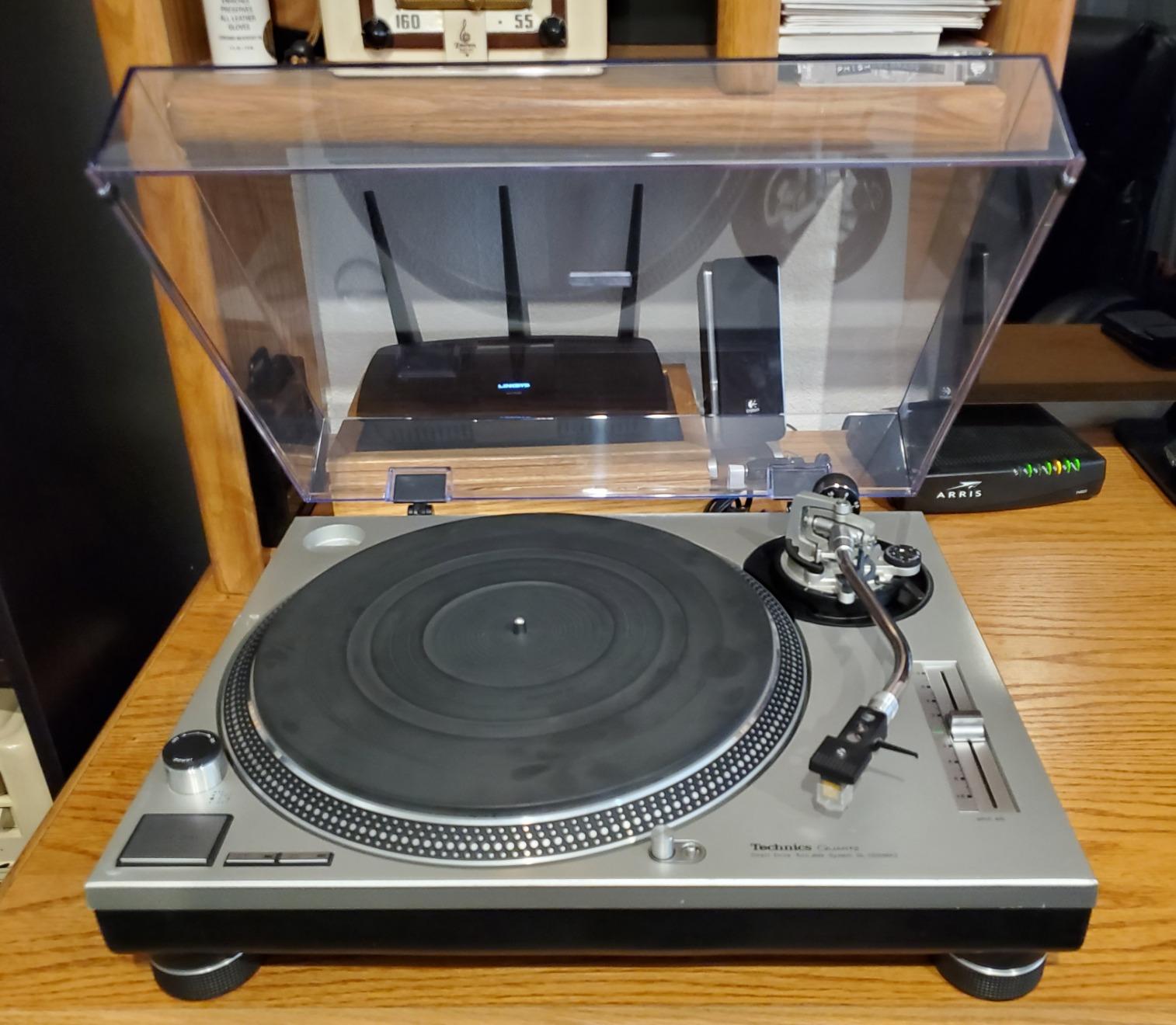
This is the cover that turned us on to the whole category. Reloop built a proper hinged lid for its own RP7000 and RP8000 decks, and it arrives as a rigid moulded polycarbonate shell rather than a floppy bag of cloth. On the decks it was designed for, it drops into the existing hinge positions and stays put.
What surprised us was how much of its review base comes from people adapting it to something else. Owners of Technics SL-1200, SL-1300 and SL-1600 decks buy it, drill out the hinge holes, trim the tabs and end up with a rigid smoked lid on a deck that never had a good replacement available. Reviewers rate that result highly because the cover costs a fraction of an OEM replacement.
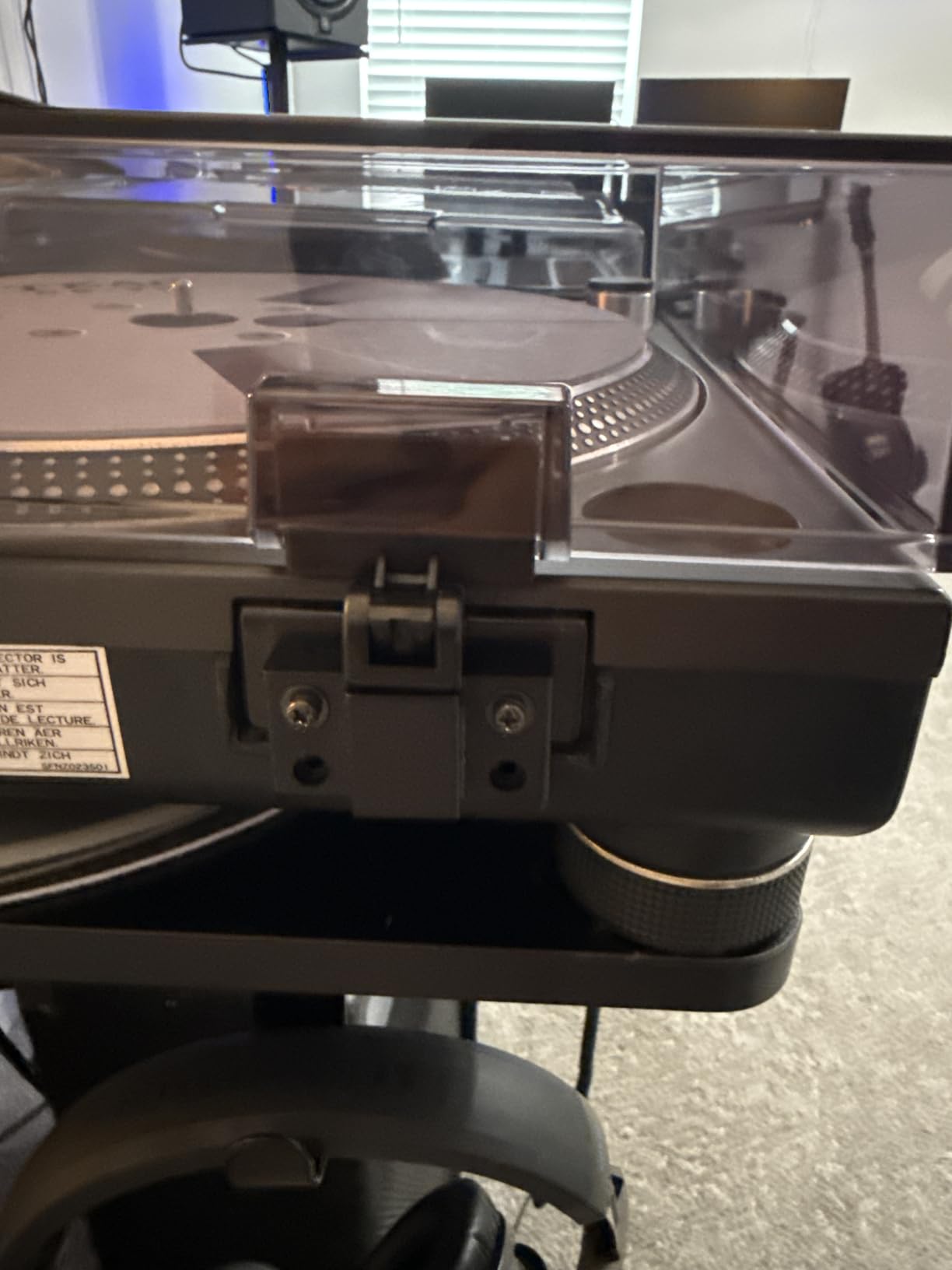
Construction is the main strength. The moulded polycarbonate feels rigid in the hand, the spring-loaded hinges hold their position once adjusted, and the smoked tint looks more modern than the clear plastic lids most decks shipped with in the nineties. It also does the job people buying a cover actually want: dust, dirt and knocks stay off the deck surface.
Two caveats sit behind every other review comment. First, off-label adaptation is real work, not a five-minute job, and the box contains no installation instructions. Second, on an RP7000MK2 the tonearm counterweight can contact the cover when it is closed, so the deck has to be played with the lid up.
Who should buy the Reloop dust cover
Buy it if you own an RP7000 or RP8000, or if you own a Technics DJ deck and you are comfortable with a small drill. It is also the only rigid hinged cover in this roundup sold for a normal home listener rather than a specialist fabricator.
It is worth checking whether your OEM lid actually needs replacing. If the original plastic is still clear and unscratched, the money is better spent elsewhere.
Who should skip it
Skip it if you want zero modifications, if your deck sits somewhere that will not tolerate an open lid during playback, or if you need impact protection rather than dust protection. It is a dust cover, not a flight case.
Skip it too if you plan to pair it with a hard acrylic OEM lid. Stacking a hinged lid over another lid is where fit problems start.
2. Decksaver Protective Cover for Technics SL-1200/1210 and Pioneer PLX-1000 – Best Rigid Fit
Decksaver Protective Cover for Technics SL-1200/1210 and Pioneer PLX-1000
Rigid plastic shell
Smoked clear finish
0.63 kg
17.95 x 13.98 x 2.95 inch
Pros
- 4.8 stars from 755 ratings
- Exact fit across many SL-1200 and 1210 variants
- Thick plastic that survives transport
- No hinges to loosen or break
Cons
- Must be removed entirely for playback
- Considerably thinner than the OEM Technics lid
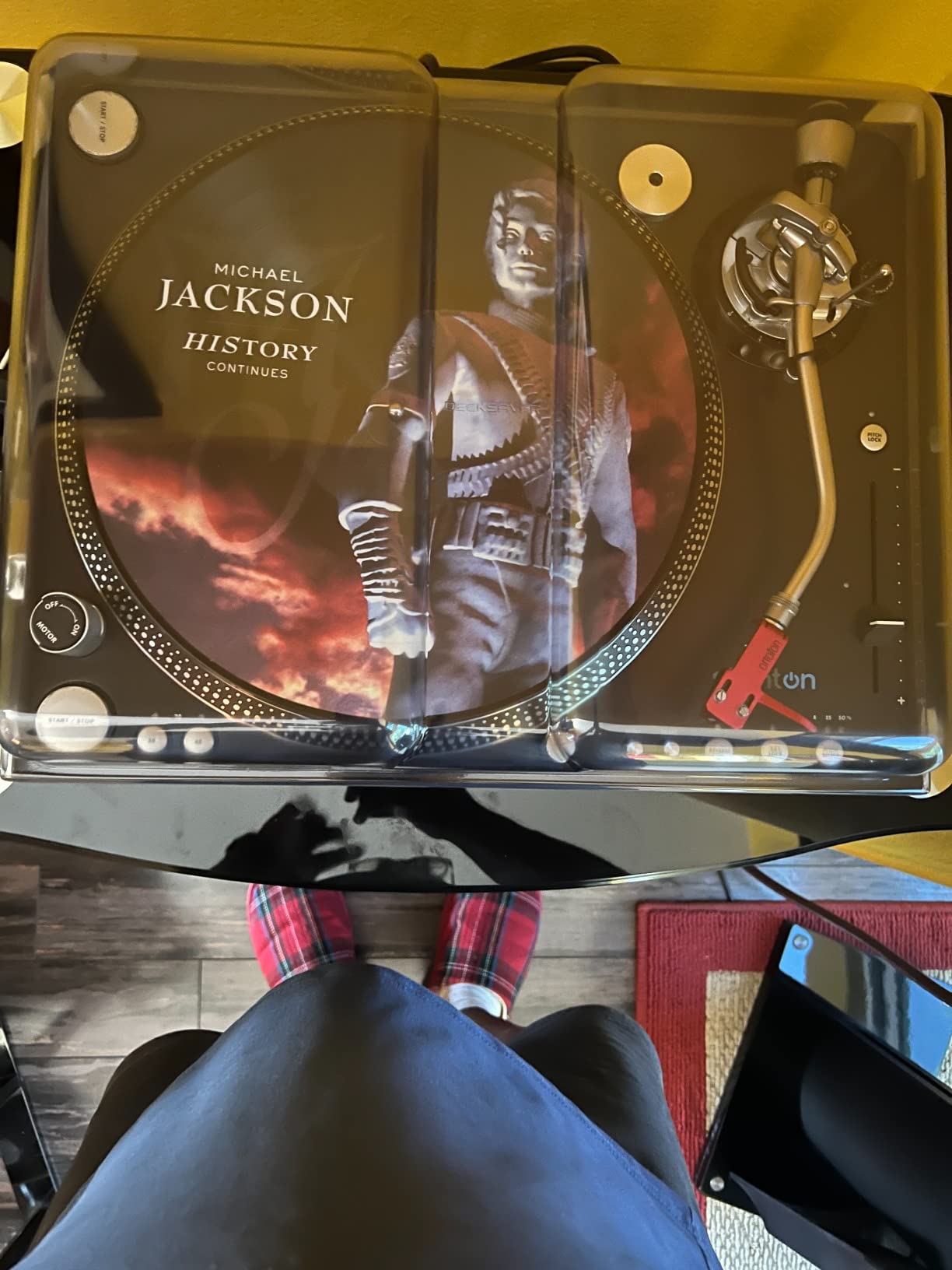
The Decksaver is the highest-rated cover we reviewed, at 4.8 across 755 ratings, and the reason is fit. It is a one-piece rigid shell that drops over the whole deck, and the moulding lines up with the plinth, faders and switches on a wide spread of Technics SL-1200 and SL-1210 variants plus the Pioneer PLX-1000.
Long-standing DJ owners in the reviews make the same point repeatedly. The OEM hinged lid is a nuisance to unhinge every time you want to listen, and it rattles in a road case. This cover removes that ritual entirely, which is why it also works as a transport protector.
At 0.63 kg it is light but not flimsy, and reviewers with decades of DJ experience describe the plastic as thick enough to take knocks from flight cases. The smoked translucent finish looks professional next to a DJ setup and hides fingerprints better than clear plastic. It blocks dust, pet hair and spills without any fuss.
The trade-off is that it comes off completely for playback, every single time. There is no hinge to swing up, and the centre dip of the shell can contact the stylus on some MK5-style decks if the cover stays in place. It is also thinner than the original Technics lid, which buyers comparing the two directly do notice.
Who should buy the Decksaver cover
Buy it if you have a Technics SL-1200 or 1210 and the phrase unhinge the dust cover has ever annoyed you. It is also the strongest choice for a deck that gets moved between rooms or lives near a busy hallway.
The listed fit covers a wide range of SL-1200 generations and the PLX-1000, so check the model list before you order anything else.
Who should skip it
Skip it if you like the ritual of closing the lid and prefer the deck to look complete when you walk into the room. A lift-off shell sitting next to the deck is the permanent trade-off you accept here.
Skip it if the OEM lid on your deck is in good condition and you only need something to stop dust settling on the plinth between sessions.
3. DigitalDeckCovers Cover for Technics SL-1200 and Pioneer PLX-1000 – Best Value Fabric Cover
TECHNICS Turntable Dust Cover for SL-1200/SL-1210 & Pioneer PLX-1000
600D nylon with PVC lining
18 x 14 x 6.75 inch
8 ounces
Hand-sewn in Denver
Pros
- Model-specific sizing means no measuring
- Thick 600D nylon blocks dust better than twill
- Wipes clean and folds flat
- Costs a fraction of a rigid lid
Cons
- No impact protection at all
- Must be removed to play a record
- Printed logo is prominent
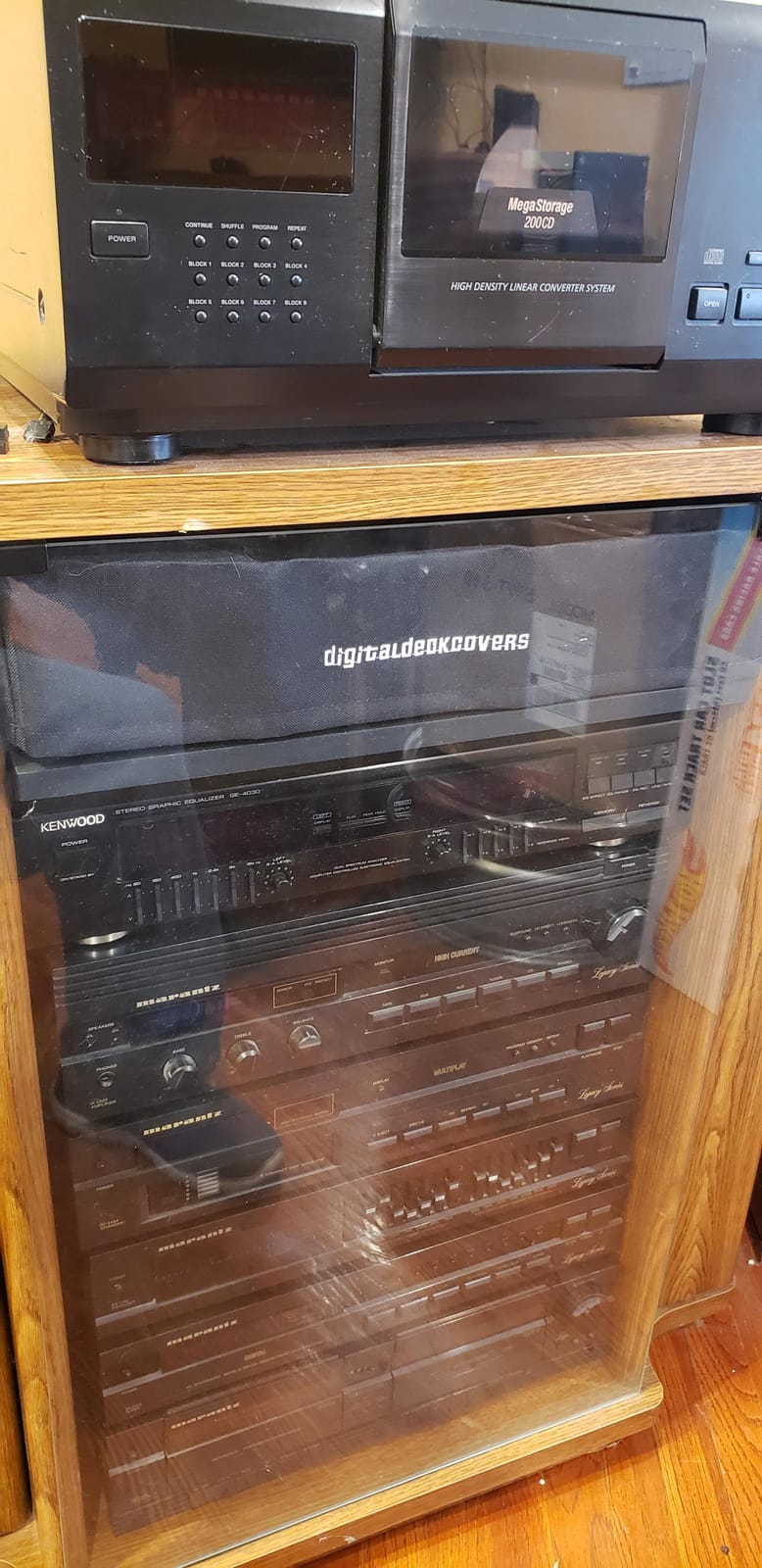
DigitalDeckCovers has been sewing covers in Denver for long enough that the reviews mention more than 100,000 covers sold, and this Technics model is their most repeated. It is a bag rather than a shell, built from 600D nylon with a PVC lining, and it is cut to the 18 x 14 x 6.75 inch footprint shared by the SL-1200, SL-1210, SL-1300 and PLX-1000.
The reason the fit is not a guess is that the dimensions were checked against the manufacturer spec for each model. Owners of decks that share that footprint, including the Audio-Technica AT-LP120 and the Stanton STR8-80, use it successfully, and the drawstring at the base takes up the slack.
Material is the story here. The 600D nylon with PVC lining filters dust rather than letting it through the weave, and it wipes clean with a damp cloth and folds flat when you are not using it. Reviewers who removed their original acrylic hinge assembly tend to do so precisely because the fabric cannot scratch or discolour the way a hard lid can.
What you give up is structure. A soft bag does nothing if the deck is knocked, and it has to come off before the tonearm comes down. Some buyers also wish the printed logo were smaller, and a few found the generic height slightly too tall for a non-standard deck.
Who should buy the DigitalDeckCovers Technics cover
Buy it if you have a Technics DJ deck with a missing, scratched or yellowed OEM lid and you would rather not pay OEM money. It is also the sensible pick for a deck in a dusty room where protection from airborne grit matters more than appearance.
Machine sewing and a double-hemmed base are the details that make this outlast cheaper cloth covers, and the washable lining means one wiped-down cover can run for years.
Who should skip it
Skip it if your deck sits on a shelf you bump, or if you want the setup to look finished while a record plays. A bag over a turntable reads as storage, not as equipment in use.
Skip it if you plan to leave it draped over a deck with the tonearm up for days. Removing a fabric cover over a delicate cantilever is exactly the moment people on Audiogon describe as nerve-racking.
4. House of Marley Dust Cover for the Stir it Up and Simmer Down Series – Best Factory Match

House of Marley Turntable Dust Cover – Eco-Friendly, Made from Recycled Plastic, Durable Protection, Compatible with Stir it Up & Simmer Down Series
Recycled plastic shell
0.67 kg
16.38 x 15.31 x 2.28 inch
2 year warranty
Pros
- Made from post-consumer recycled plastic
- Exact fit for five Marley models
- Rubber feet stop the cover sliding
- Noticeably improves how the deck looks
Cons
- Lift-off rather than hinged
- No hinge kit sold separately
- Only fits Marley decks
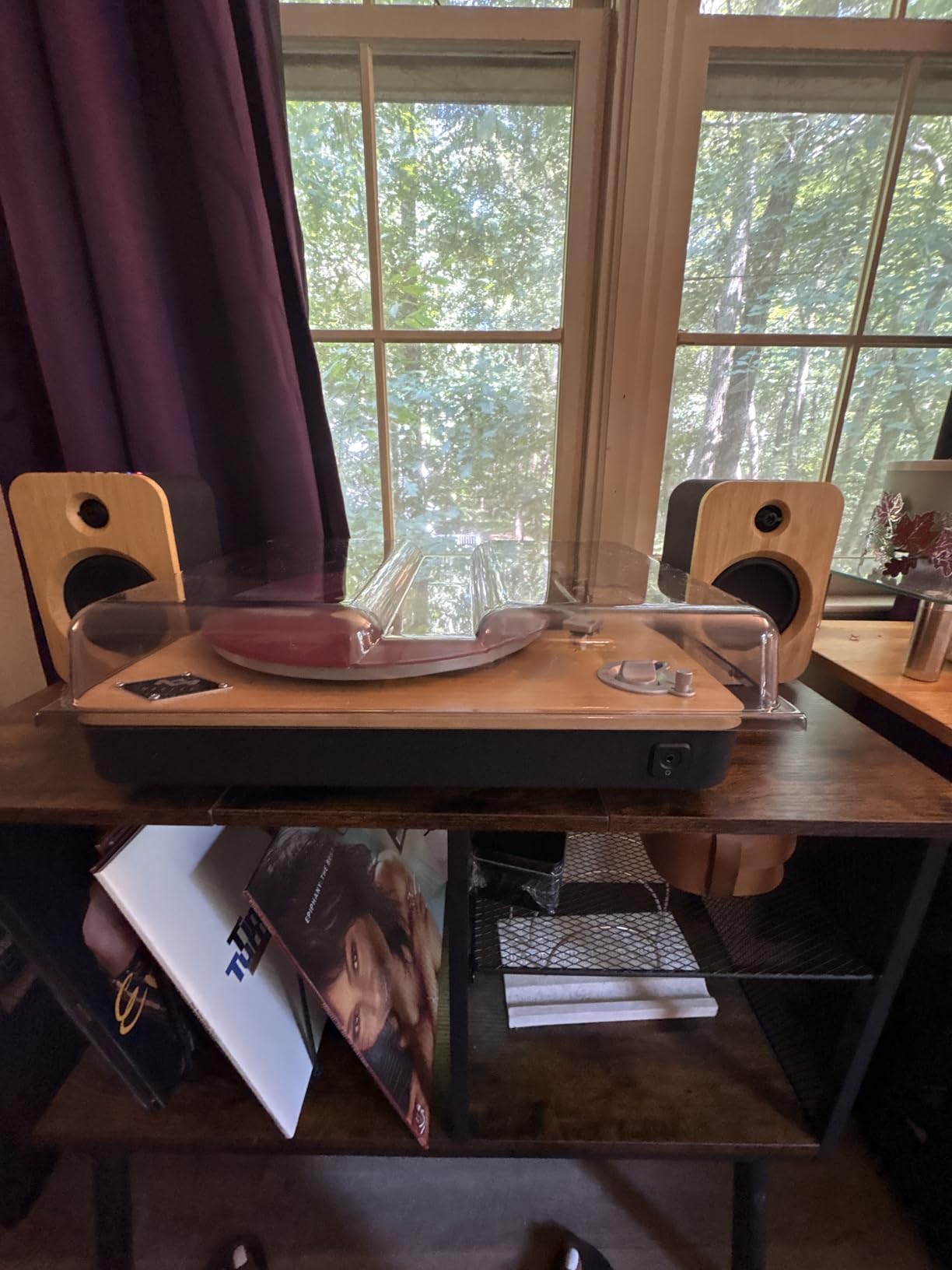
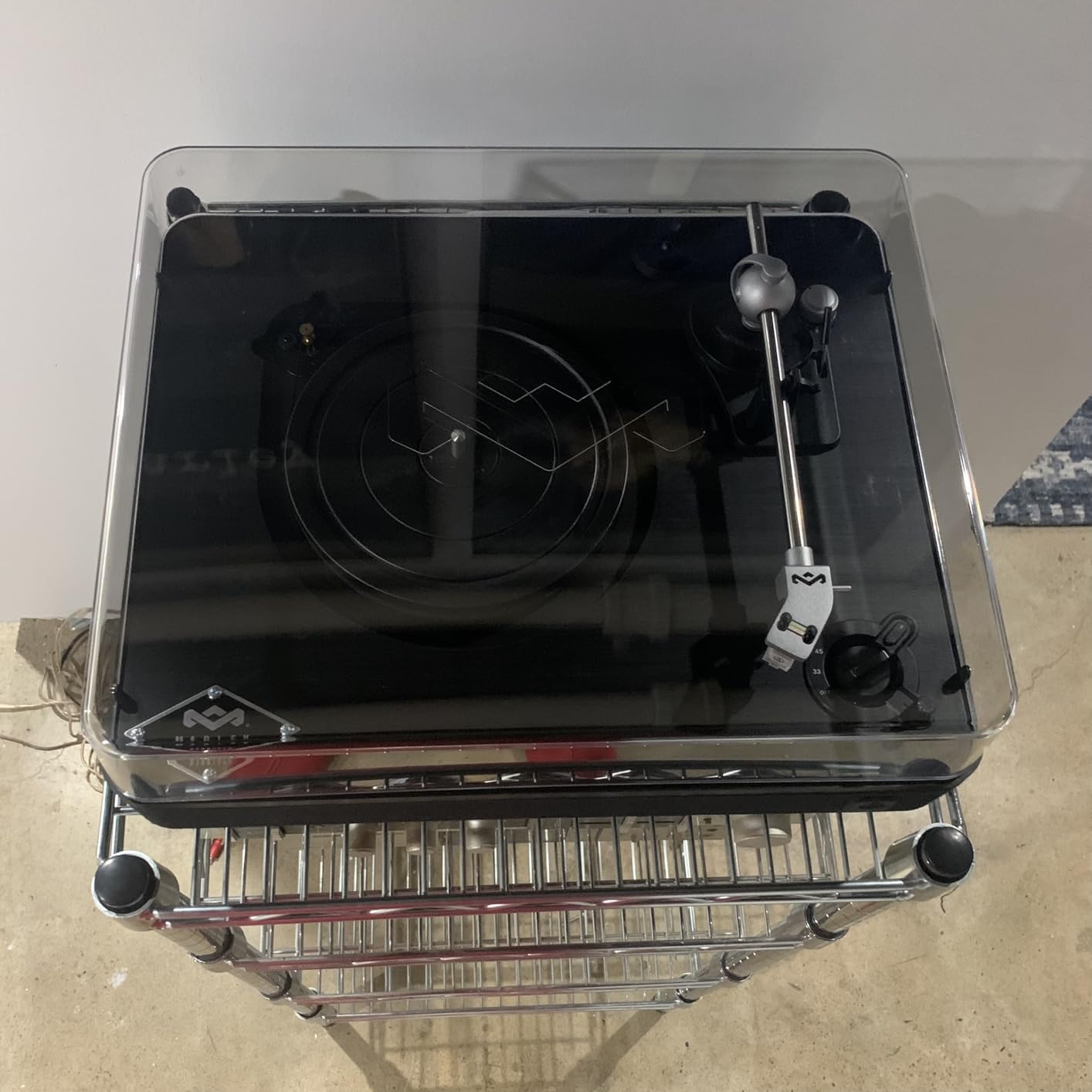
Most entry-level turntables ship with a thin cloth bag that does nothing for the look of the thing. The House of Marley cover is the replacement that fixes that, and the material story is part of the appeal: it is moulded from 100 percent post-consumer recycled plastic, including repurposed refrigerator drawers.
Fit is exact for the Stir it Up, Stir it Up Wireless, Stir it Up Lux Wireless, Simmer Down and Simmer Down Wireless. Owners in the reviews frequently describe putting it on instead of the factory fabric cover and finding the whole setup looks far more finished. Small rubber feet stop it sliding off the deck when you dust.

The moulding quality draws consistent praise, and it does the useful jobs a cover should: it blocks dust, absorbs bumps and keeps curious pets off the controls. The two year warranty and the plastic-free packaging are the sort of detail a recycled-plastic product has to earn.
Two gripes appear in almost every critical review. It is a lift-off cover with no hinges, and no separate hinge accessory is offered, so it comes off for every listening session. It also only fits Marley decks, which limits it if you ever change equipment.
Who should buy the House of Marley cover
Buy it if you own a Marley entry-level deck and the factory bag looks like an afterthought in your room. The recycled plastic means you get a rigid moulding rather than a slumped cloth bag, and the fit across the whole range means one purchase covers several models.
This is the single easiest upgrade in the roundup for a first record player, because the deck and cover are designed together.
Who should skip it
Skip it if your Marley deck lives in a cabinet, or if you plan to keep the deck for a decade and want a cover you could resell with a different turntable. The brand lock-in is real.
Skip it if you want the cover on during playback. Without hinges there is no halfway position, and the deck looks bare with the cover off.
5. DigitalDeckCovers Vintage Technics Dust Cover – Best for Older Decks
DigitalDeckCovers Vintage Technics Turntable Dust Cover (Specific Models)
17 x 15 x 4 inch profile
600D nylon with PVC lining
Wipe clean and folds flat
Pros
- Shorter profile suits many vintage decks
- Fits Rega Planar 3 and Marantz bodies
- Thick 600D fabric filters dust
- Washable and cheap to replace
Cons
- PVC lining can emboss into a plastic OEM lid
- Size varies across deck shapes
- No impact protection
Where the previous DigitalDeckCovers model is a deep bag for modern DJ decks, this one is a shallow 17 x 15 x 4 inch profile built for the smaller plinths of older machines. The listing names Pioneer PL-670 and Thorens TD124 as fits, and reviewers add Rega Planar 3, Marantz and Audio-Technica AT-LP120 bodies.
Same construction as the brand’s other covers: thick 600D nylon with a PVC lining, heavy duty thread, double-hemmed along the bottom, made in Denver. It wipes clean, folds flat, and costs a fraction of a rigid lid, which is why it is the common choice for a deck that has been in a cupboard since the eighties.
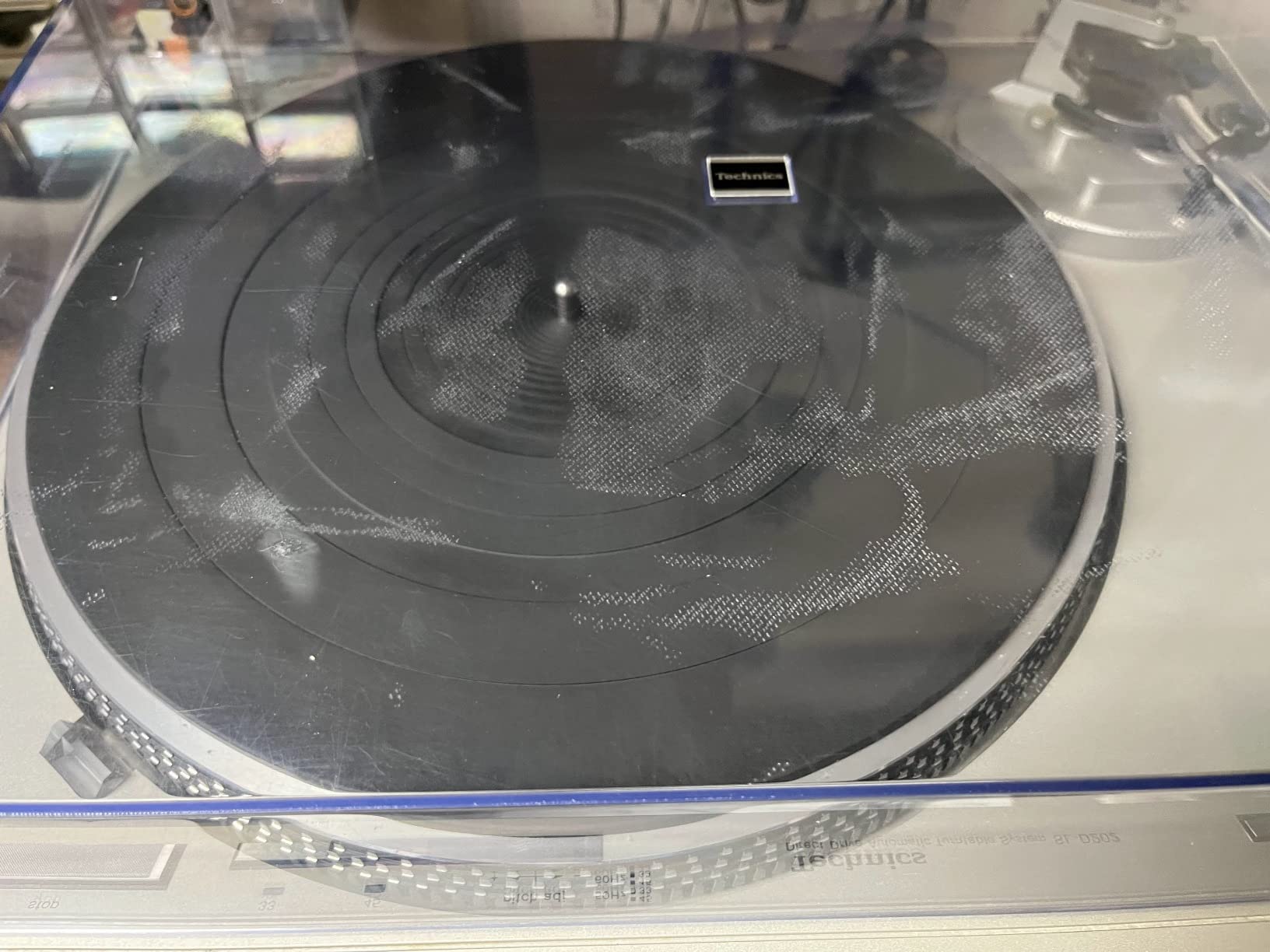
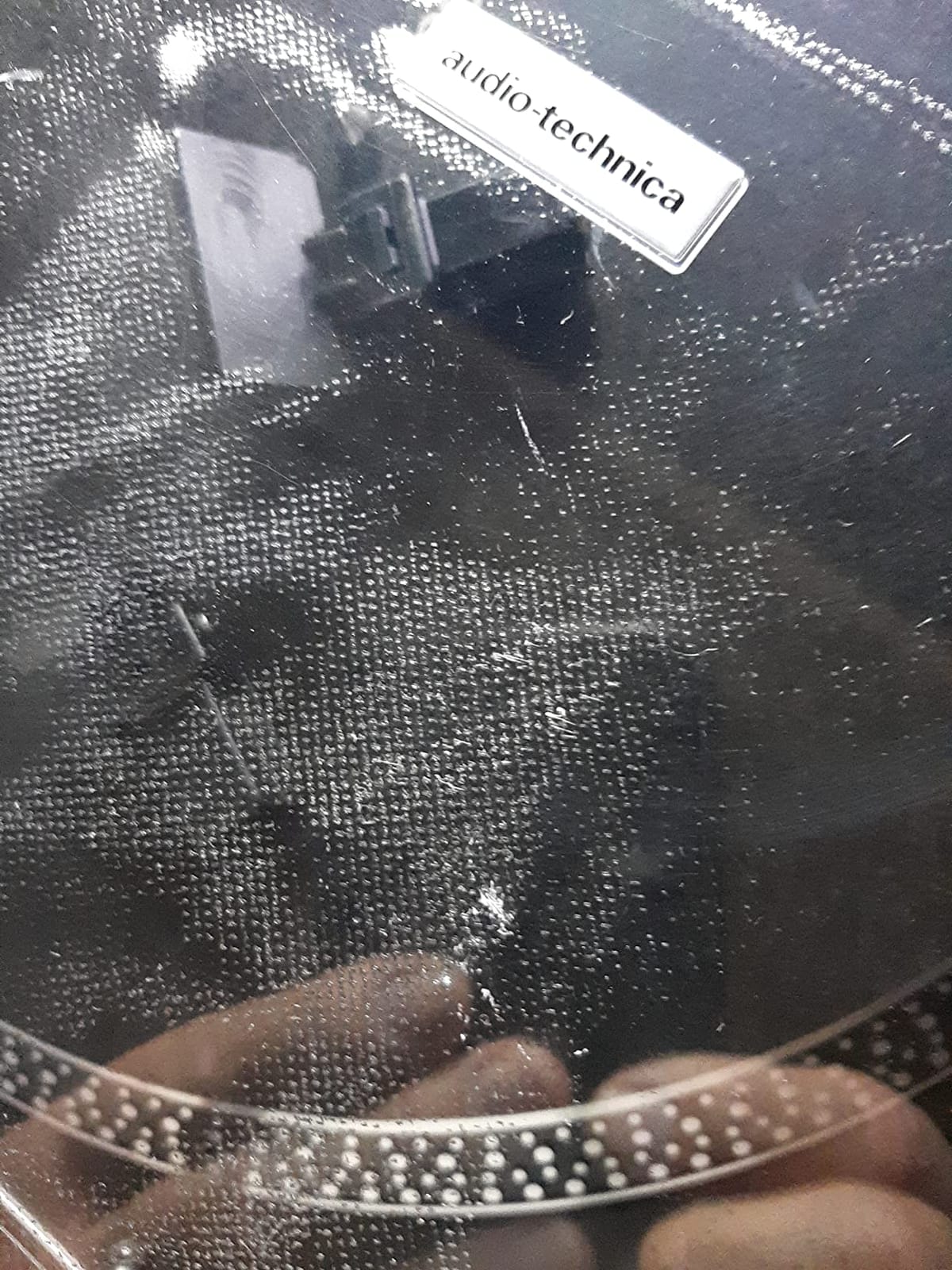
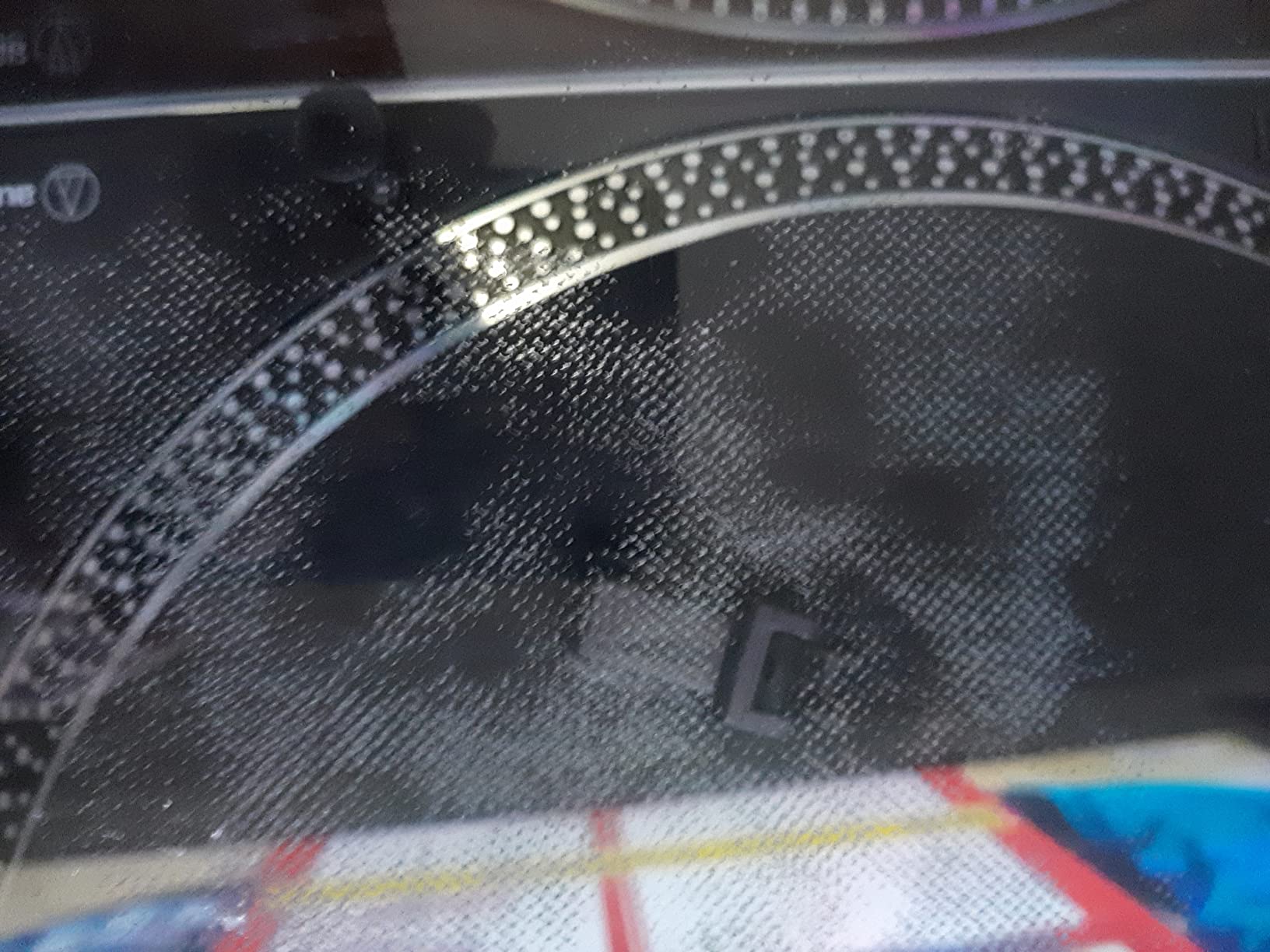
The important caveat here is one the reviews take seriously. Several buyers report that the PVC-backed fabric impressed a permanent woven pattern into the plastic lid of an Audio-Technica or similar turntable over weeks to a year of use, and one reviewer had to replace the lid because of it. If your deck still has a hard OEM lid, do not drape this over the top of it.
Two smaller issues: the lined fabric can be slow to settle and may not sit square straight out of the packet, and because the size is generic across a family of deck shapes, measure before you order. It is also soft-sided, so it does nothing if the deck is dropped.
Who should buy the vintage Technics dust cover
Buy it if you have a classic deck with a shallow profile and no working OEM lid, or if you want cheap dust protection for a turntable that lives in a storage room. The fabric filters dust rather than merely trapping the big stuff, and it can be laundered when it gets grubby.
It also works as a second cover. A spare you can wash while the other one dries is worth more than people expect.
Who should skip it
Skip it if you have a clear plastic OEM lid you plan to keep in place, because of the embossing reports. Skip it if the deck is a modern deep-plinth DJ machine, since the height will not match the body.
Skip it if appearance matters to you. A soft black bag over a beautiful vintage deck does not flatter it.
6. RuiHiSong Turntable Dust Cover for Technics SL-Q300 and SL-B Series – Best Budget Fit

Turntable Dust Cover,Record Player Turntable Cover,Suitable for Most Models of Record Player Turntables SL-Q300/SL-B250 /SL-B260 /SL-BD20 /SL-BD27 /SL-BD35 /SLD-20 /SL-PC11(Black)
18 x 15 x 5.5 inch
600D Oxford with silver lining
Drawstring base
Pros
- Low-cost dust protection for a working deck
- Drawstring tightens slack on odd shapes
- Wipes clean and reuses well
- Also covers receivers and mixers
Cons
- Slumps rather than standing on its own
- Generic sizing needs measuring
- Not waterproof despite some imagery
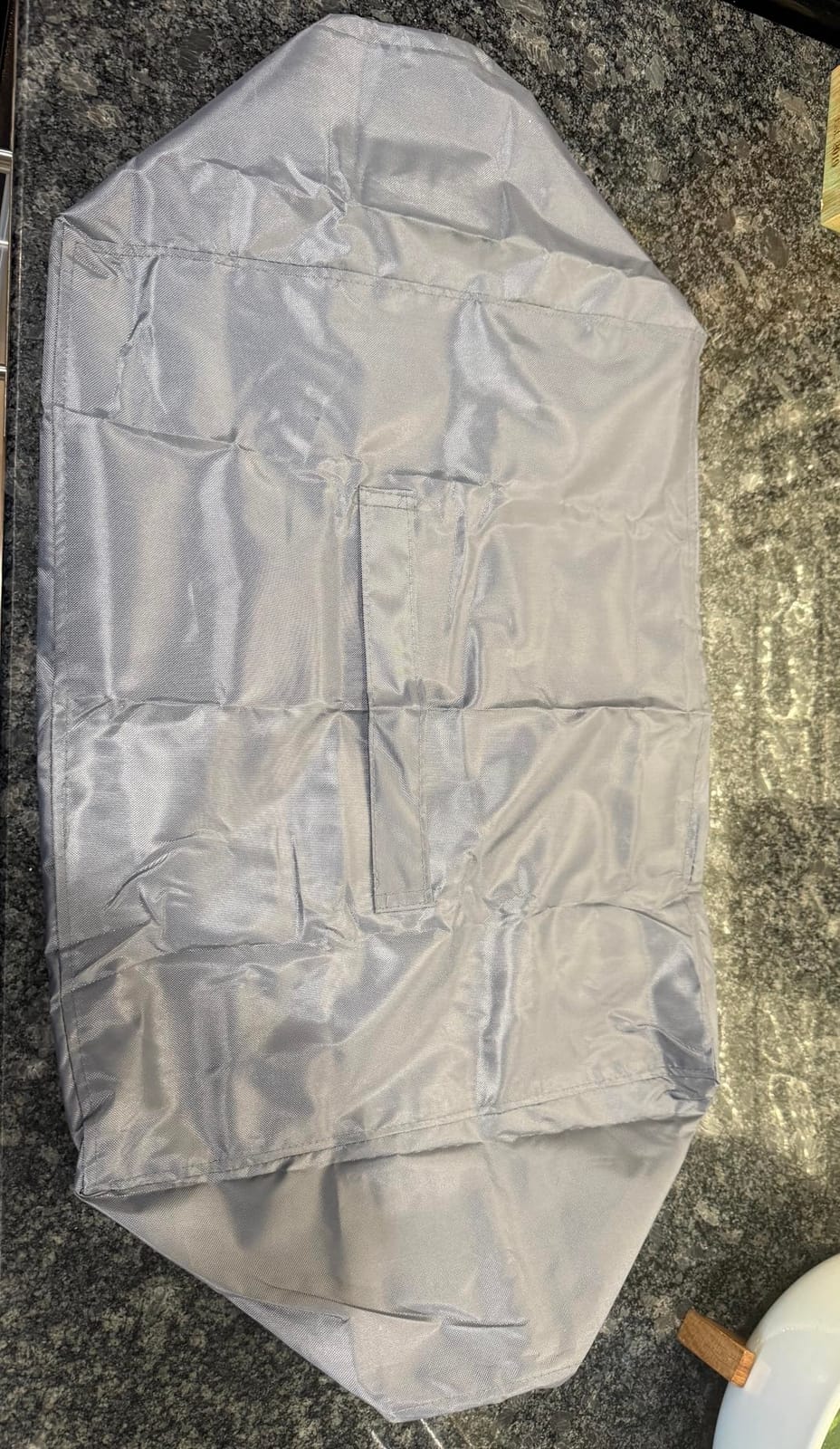
It is a fabric bag that still does the actual job rather than decorating the deck. It is a heavy duty 600D Oxford fabric bag with a silver lining, sized at 18 x 15 x 5.5 inches, and the listing names the Technics SL-Q300, the SL-B250, B260, BD20, BD27, BD35 and the SLD-20 and SL-PC11.
The adjustable drawstring at the bottom is the detail that makes it work on non-standard shapes. Rather than a fixed bag that either gapes or does not fit, you pull the string until the slack is gone. Several reviewers report it fitting Pioneer, Technics and Fluance machines, and a few use it on mixers and receivers instead.
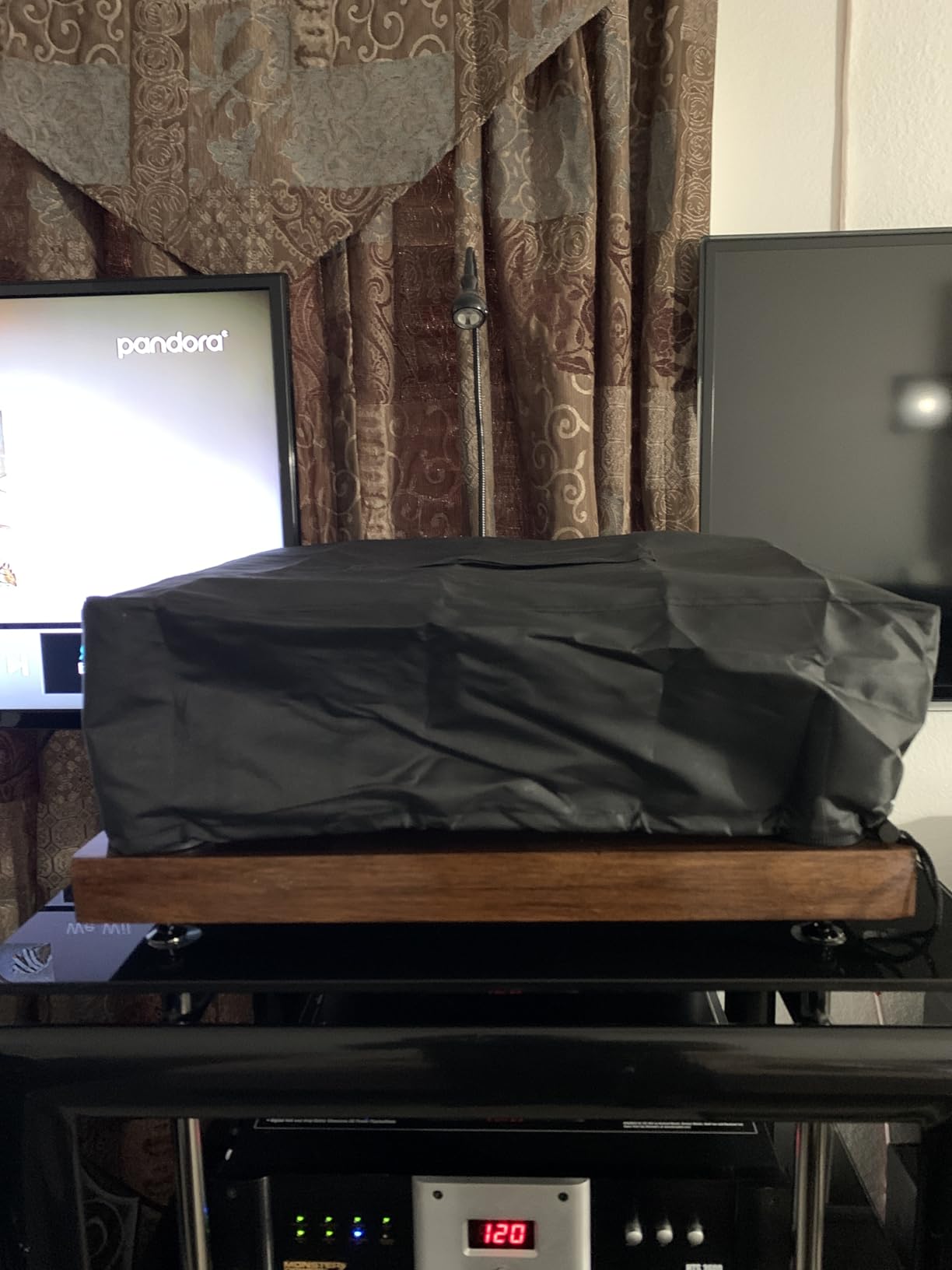
Wiping it with a damp cloth brings it back to new, and the fabric is light enough to fold into a drawer when the deck is not being used. For dust, hair and everyday spills on a shelf in a busy room, that is enough.
The recurring complaint is expectation, not quality. The cover is soft and unstructured, so it slumps instead of standing like a hard case, and some buyers expected a semi-rigid shell from the listing photographs. It is also not stretchable, so an oversized vintage receiver will not go in, and it is dust protection rather than waterproofing.
Who should buy the RuiHiSong cover
Buy it if you want the cheapest reasonable barrier between an open-shelf turntable and visible dust, and you are willing to measure your deck first. The drawstring gives it more range than the fixed-size bags above it.
It is also a genuinely useful multi-purpose cover for a receiver, a mixer or other equipment in the same rack.
Who should skip it
Skip it if you want the turntable to look like a display piece when it is not playing. A slumped bag reads as storage, and the photograph mismatch is a real source of buyer regret.
Skip it if the deck is in a damp room, since silver lining fabric is not a moisture barrier.
7. LU2000 Quilted Nylon Record Player Cover – Best for Storage and Budget Setups

Record Player Turntable Cover, Retro Stero Record Player Dirt Case, DJ CD Digital Turntable Dust Cover Displayer Sound System Protective Nylon Audio Technica Turnable Jacket
Quilted nylon
18 x 15 x 4 inch
2 ounces
Machine washable
Pros
- Low-cost dust barrier for a rarely used deck
- Machine washable and reusable
- Drawstring cinches excess fabric
- Doubles as cover for other gear
Cons
- Very thin fabric with no padding
- Plain appearance
- Runs large on compact decks
At the entry level of this roundup sits this quilted nylon jacket. It is a 18 x 15 x 4 inch sleeve with a lined interior and a drawstring at the base, and the whole point is that you can wash it. For a deck that lives in a garage shelf, a spare room or a collection you rotate through, that is worth more than rigidity.
Reviewers describe it as a no-frills cover that does the basic job well, and several mention repurposing it for VHS and DVD decks, stereo receivers and other equipment. The drawstring cinch lets you pull the excess fabric around a smaller device when the fit is loose.
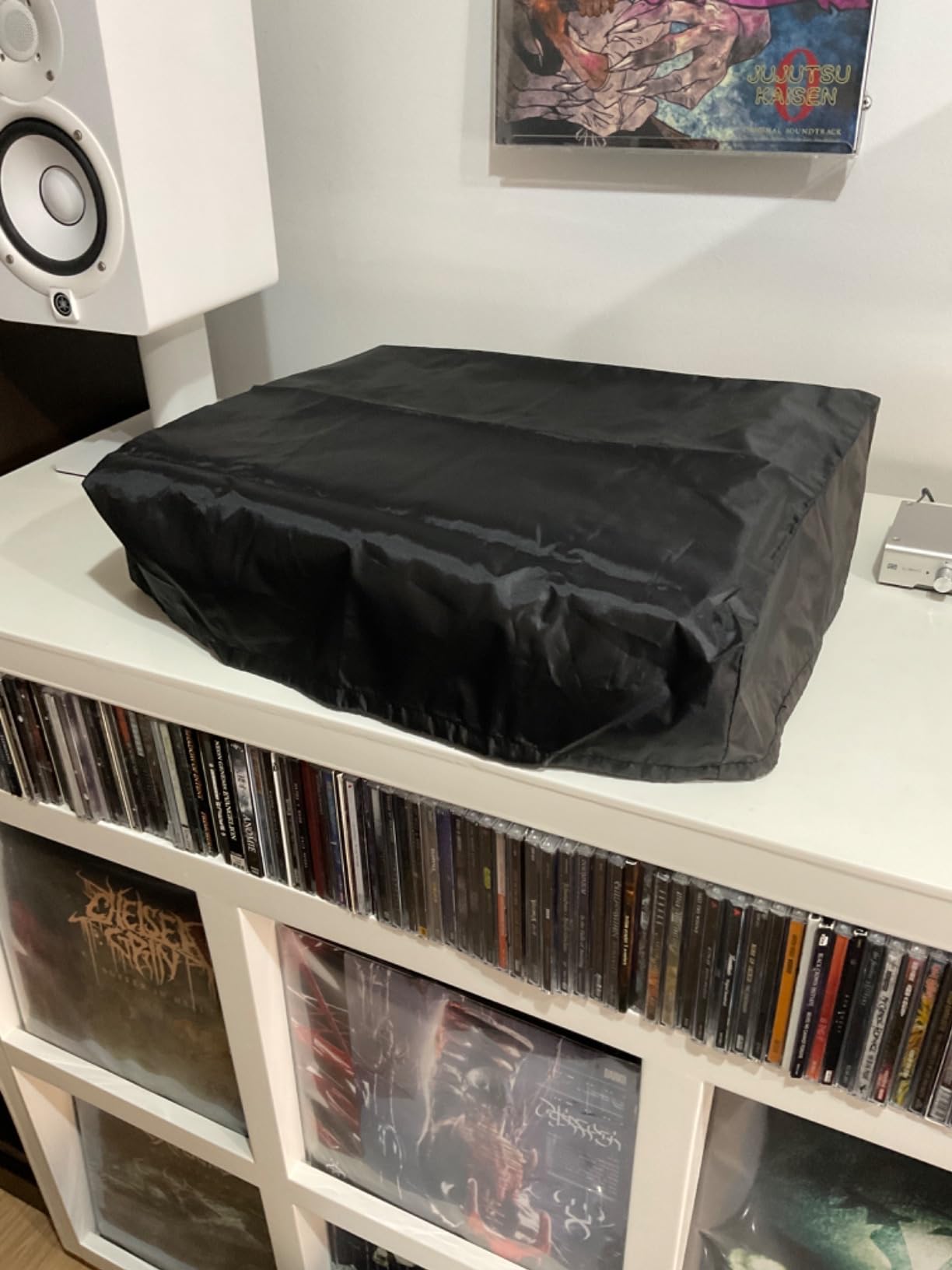
Machine washable is the headline here. That single property means a cover for a deck that lives in a dusty space can be cleaned without any ceremony at all, and the wash cycle means you can keep a spare in rotation.
It is also the thinnest item we reviewed, at two ounces, and buyers say so. There is no padding, so it offers no impact protection, the appearance is purely utilitarian, and the 18 x 15 x 4 inch size runs large on compact turntables such as the Fluance.
Who should buy the LU2000 cover
Buy it if your priority is stopping dust in a garage, a loft or a rarely-played setup, and you would rather wash the cover than wipe it. A washable sleeve is the only cover in this group you can genuinely clean back to new without special products.
It is a good second cover to keep on hand for a deck you move between rooms.
Who should skip it
Skip it if you have pets that will climb on the shelf, because thin fabric is no barrier to claws or spills left standing on the shelf. Skip it if you want anything that improves the look of the deck.
Skip it if your turntable is a compact model and you dislike slack fabric gathered with a string.
8. TXEsign Dust Cover for Audio-Technica AT-LP60XBT and AT-LP60X – Best for Compact Decks

TXEsign Dust Cover Compatible with Audio-Technica AT-LP60XBT and AT-LP60X Turntable, Stretch Fleece Dust Case Protective Case Turntable Protective Cover Soft Sleeve with Elastic Band
Stretch fleece fabric
Elastic base band
84 g
Machine washable
Pros
- Cut to the exact AT-LP60X body shape
- Soft fleece will not scratch the deck
- Elastic band keeps the sleeve in place
- Washable and folds into a drawer
Cons
- Only fits two Audio-Technica models
- No protection on the underside
- No spill or knock resistance
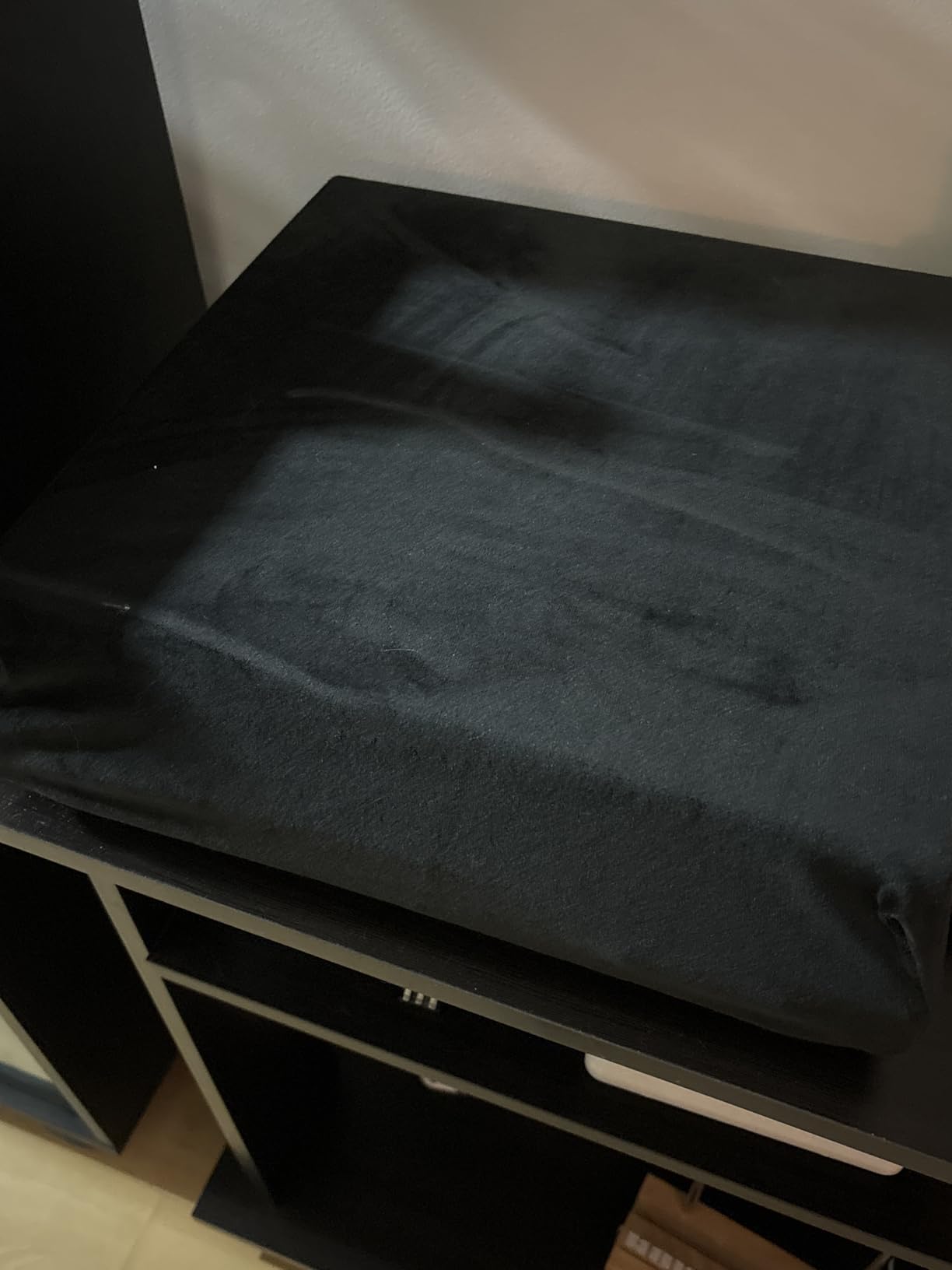
The AT-LP60X has no hinged lid at all, which leaves the deck permanently exposed. This sleeve is the answer for that specific problem: a one-piece stretch fleece cover cut to the body of the AT-LP60X and AT-LP60XBT, with an elastic band at the base and an open bottom.
With 88 ratings averaging 4.6, the reviews are heavily concentrated in five-star territory, and the tone is closer to satisfaction with an appearance upgrade than with a piece of protective equipment. Slipping the soft sleeve over an exposed deck makes the setup look tidy, and buyers describe it as pleasant to handle.
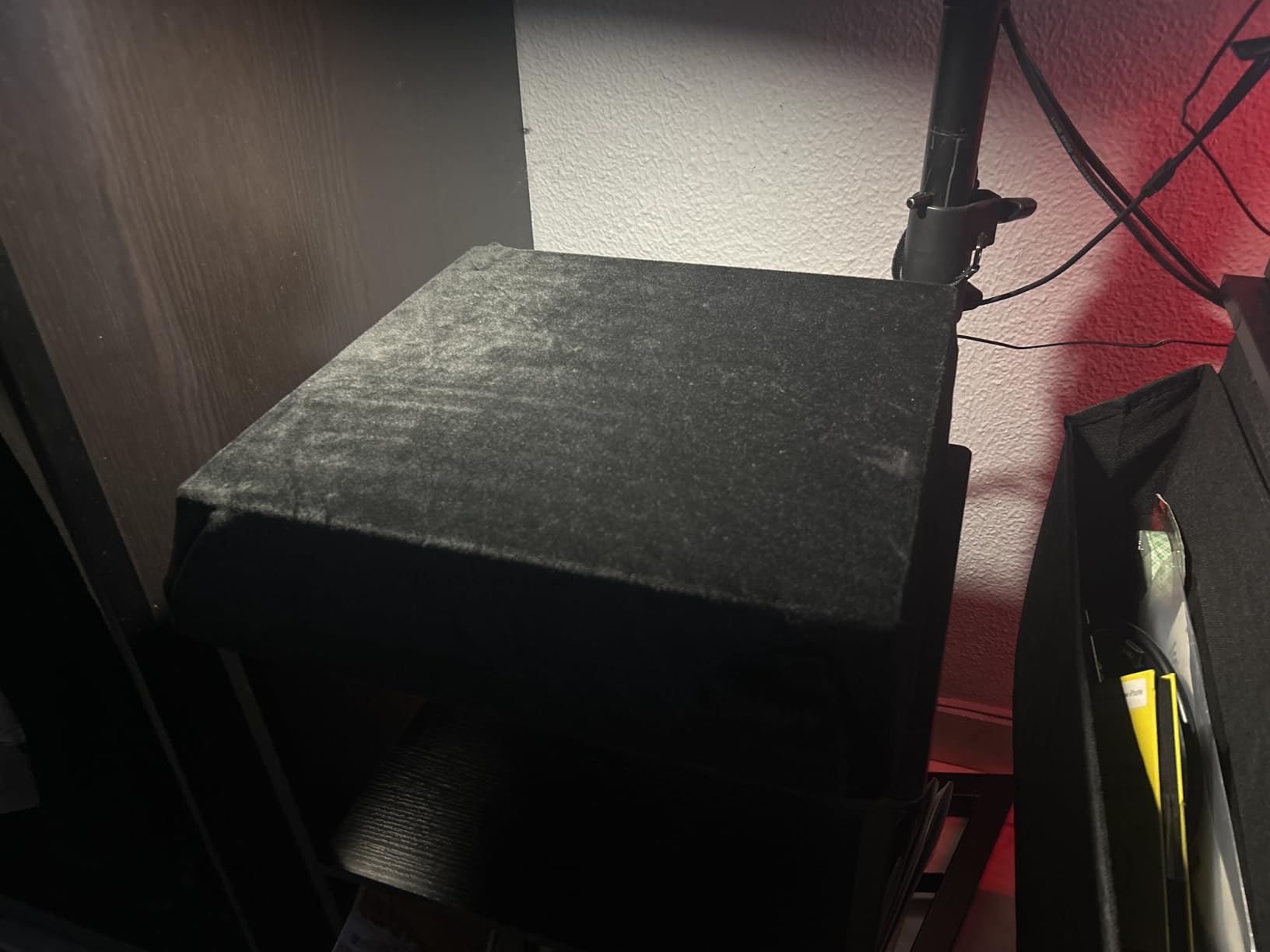
The fleece is genuinely soft, so it will not scratch a plastic lid or leave a weave pattern in one, which is exactly the problem we flagged on the PVC-backed vintage cover. The elastic band holds the sleeve at the base so it does not ride up, and the whole thing washes and folds flat at 84 grams.
The limits are obvious. It fits only the two listed Audio-Technica models, it does nothing for the underside of the deck, and a soft sleeve resists neither knocks nor spills. Black fleece can also attract lint, which defeats part of the purpose on a dusty shelf.
Who should buy the AT-LP60X dust cover
Buy it if you own one of the two listed Audio-Technica decks and want the setup to look finished in a living room. The exact cut is the appeal, and machine washing makes it easy to keep clean in a home with pets.
It is also a sensible gift accessory, since a coverless entry-level deck is otherwise fully exposed to hair and dust.
Who should skip it
Skip it if you want real dust protection in a genuinely dusty room, because a thin fleece sleeve is the weakest of the fabric options here. Skip it if your deck is anything other than the AT-LP60X or AT-LP60XBT.
Skip it if you store the deck on a high shelf where you will not want to wash the cover often.
9. SHTCSZBA Heavy Duty Cover for Technics and Pioneer Decks – Best Universal Size

Turntable Dust Cover, Vinyl Record Player Protector, Waterproof Scratch-resistant, Fits Technics SL-Q300/SL-B250 /SL-B260 /SL-BD20 /SL-BD27 /SL-BD35 /SLD-20 /SL-PC11 /SL1200 /SL1210 Pioneer PLX 1000
18.9 x 15.75 x 6.7 inch
600D nylon with PVC lining
Top strap hook
Pros
- Largest footprint in the roundup
- Heavy 600D fabric that dustproofs and waterproofs
- Top loop makes it easy to lift off
- Holds its shape better than lighter cloth
Cons
- Soft-sided rather than a hard shell
- Black only
- No impact or rigid protection
If you do not know your exact deck size, this is the generic cover with the most room in it. At 18.9 x 15.75 x 6.7 inches it is the largest footprint we reviewed, and the listing names Technics SL-Q300, the SL-B250, B260, BD20, BD27, BD35, SLD-20, SL-PC11, SL-1200 and SL-1210 along with the Pioneer PLX-1000.
The material is heavy duty 600D nylon with a PVC lining, described as dustproof, waterproof, UV-resistant, heat-resistant and scratch-resistant. That is a fabric bag rather than a shell, but reviewers say it holds its shape better than lighter cloth covers and does the dust job properly.
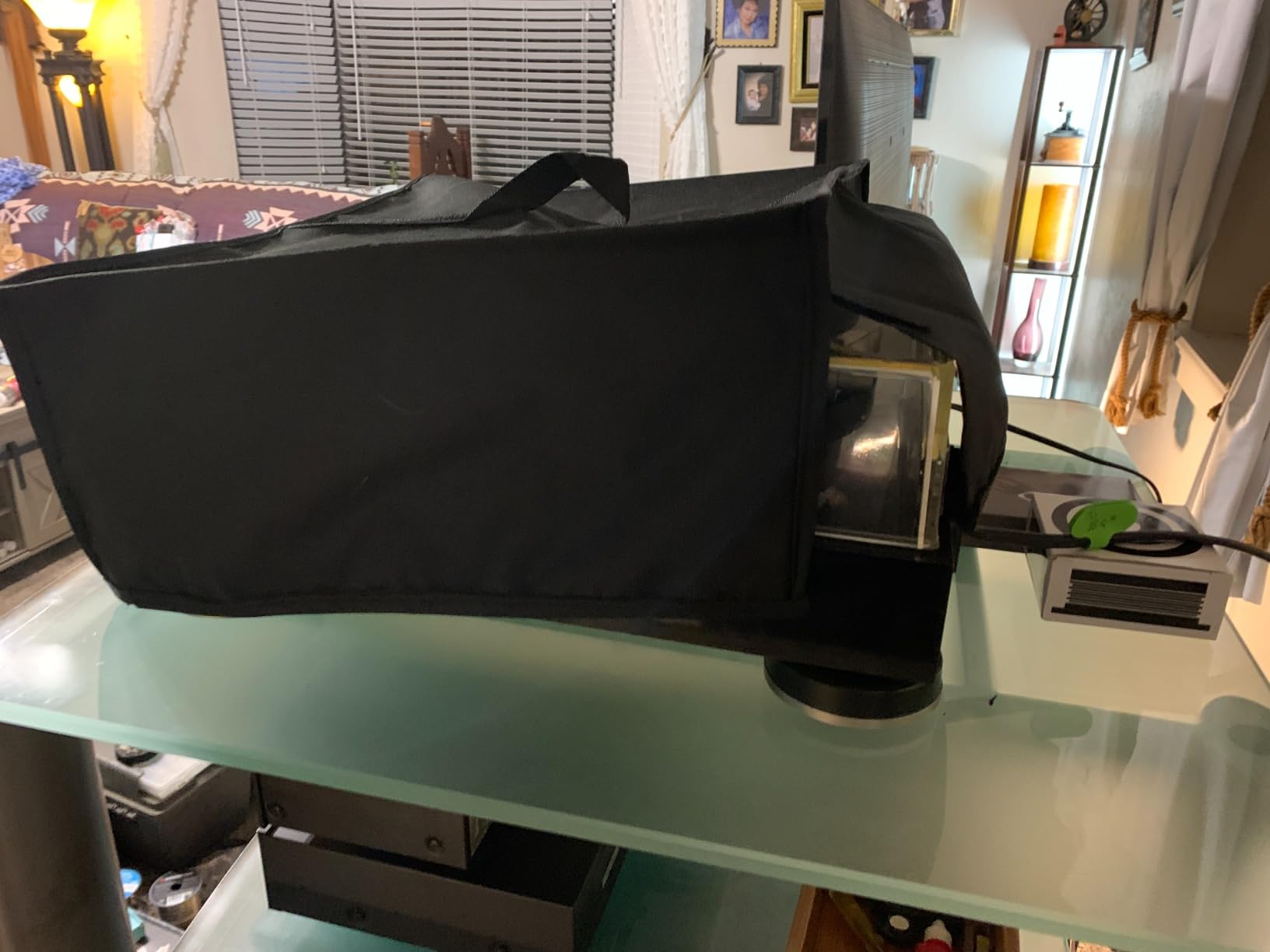
The top strap hook is the small touch people mention most. It means you can lift the cover off one-handed without scooping the whole bag, which matters when the deck is on a high shelf and you are holding a record in the other hand. It folds flat for storage when not in use.
The criticisms are consistent with the photos. Buyers who expected a hard shell are disappointed, and the cover is soft-sided with no rigid frame, so it handles dust and water but not impact. It comes in black only, and it is not hinged, so it comes off for playback.
Who should buy the SHTCSZBA cover
Buy it if you cannot pin down your deck dimensions or you own several different turntables and want one cover that handles them all. The roomy footprint and heavy fabric are the two things you are paying for.
It is a good default when you are covering a deck that lives in a garage or a room where dust settles visibly.
Who should skip it
Skip it if you care about how the deck looks, since a black fabric bag over an exposed turntable hides it entirely. Skip it if you need a hinged cover you can leave in the up position during playback.
Skip it if you are covering a premium deck where hiding the plinth feels wrong.
10. TXEsign Dust Cover for Audio-Technica AT-LP120XUSB and AT-LP120XBT-USB – Best Fit Fleece Cover

TXEsign Dust Cover Compatible with Audio-Technica AT-LP120XUSB and AT-LP120XBT-USB Turntable, Stretch Fleece Dust Case Turntable Protective Cover Soft Sleeve with Elastic Band (Black)
Stretch fleece fabric
Elastic base band
Machine washable
Cut to the AT-LP120X body
Pros
- 4.8 stars across 59 ratings
- Snug fit on the two listed XUSB decks
- Soft fleece avoids marking a plastic lid
- Machine washable and strong stitching
Cons
- Restricted to two Audio-Technica models
- No underside or impact protection
- Not water resistant
This is the same idea as the AT-LP60X sleeve, scaled up to the larger AT-LP120XUSB and AT-LP120XBT-USB, and it scores 4.8 across 59 ratings. The one-piece stretch fleece is cut to the real machine, with an elastic band and open bottom.
Fit is the whole story. Reviewers say the fleece stretches to a genuinely snug fit on both decks, and the fabric is soft enough that it will not scratch or mark a plastic lid. Strong stitching and the elastic base band stop the sleeve riding up, and it is machine washable.
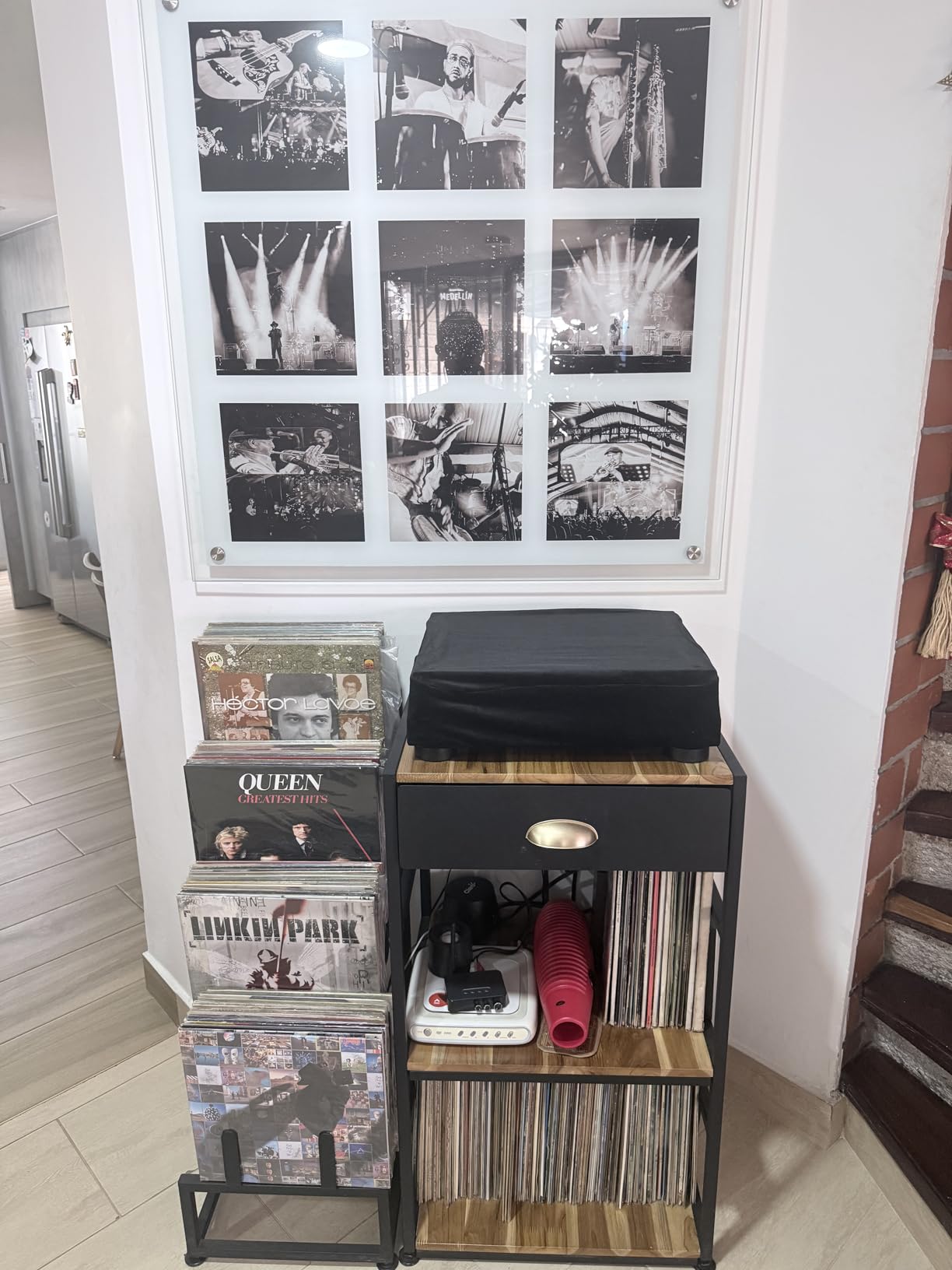
Buyers treat it as an appearance and tidy-up accessory that happens to keep dust and pet hair off the deck. The AT-LP120X is one of the most exposed entry-level turntables sold, with no lid at all, so covering it changes how the setup reads in a room more than almost any other cover in this roundup.
It is specified for the two XUSB decks only, although some buyers report success on the AT-LP5X and the Fluance RT85. It offers no underside protection or impact resistance, and it is not water resistant, so spills want wiping off promptly rather than later.
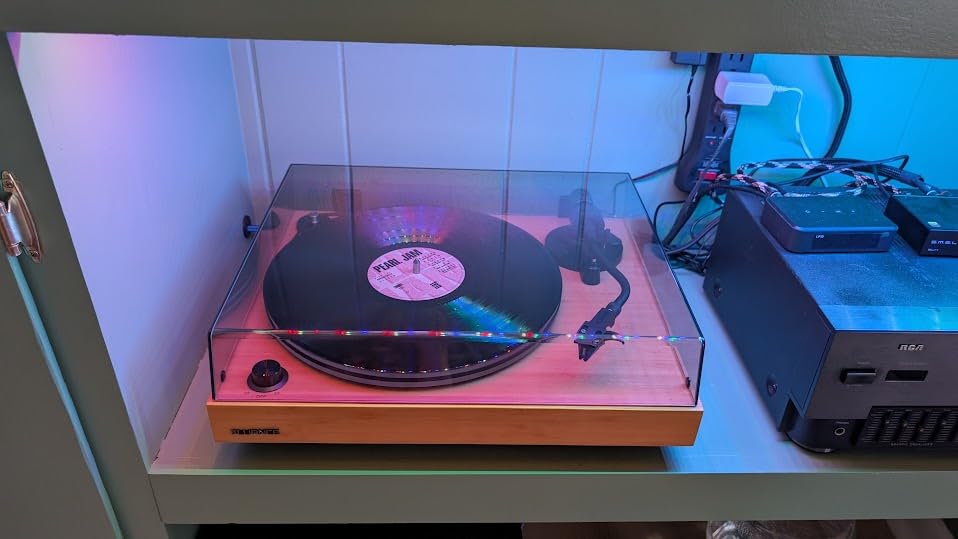
Who should buy the AT-LP120X dust cover
Buy it if you own an AT-LP120XUSB or AT-LP120XBT-USB and want the deck to look clean and to keep hair off it. The complaints are all about scope rather than quality.
Because it is soft rather than PVC-backed, it is also the safe choice to pair with a deck that still has a clear plastic lid, where a woven fabric imprint would be a problem.
Who should skip it
Skip it if your turntable is a different model, because the fit is deliberately tight and model-specific. Skip it if your room is genuinely dusty and you need a sealed barrier rather than a fitted sleeve.
Skip it if the deck lives somewhere with spills and damp, since fleece is not a moisture cover.
Do You Keep the Dust Cover On While Playing?
Leave it off, or in the up position, for every listening session. The cover protects a deck between records, not during them, and a cover left closed over a playing record is asking for trouble with the stylus and the tonearm assembly.
There is a second argument, and it is the one that ranks highest on r/turntables. An open lid can act as a resonance amplifier, and VinylEngine users argue that an acrylic dust cover can transmit unwanted vibration into the plinth loop in any configuration. If your system is sensitive to microphonic feedback, an open lid is the first thing to test.
The practical rule we use: close the cover when you finish playing, leave it open or set it aside when you start, and never drape fabric over a deck with the tonearm still over the record. That last point is the one people on Audiogon keep returning to, because a fabric edge can catch the cantilever during the lift.
Where to Find a Replacement Lid for Your Turntable
Most replacement lids come from one of four places, and in order of how well they tend to fit, that is: the manufacturer’s own parts catalogue, a model-specific aftermarket listing, a universal cover matched to your deck’s footprint, or a custom fabricator.
OEM parts. Search the brand and the exact model suffix, including the MK number. Technics, Reloop, Pro-Ject and Marley all publish dimensions, and an OEM lid will fit the hinge points that an aftermarket one may not.
Model-specific aftermarket covers. These are the easiest to buy and the reason most of the picks in this roundup exist. DigitalDeckCovers alone covers Technics, Marantz, Audio-Technica and Rega bodies.
Universal covers. These work when your deck is within the stated footprint. Match length, width and height, and add an inch of slack on the top dimension if the deck has a raised tonearm or a hinged OEM lid in place.
Custom fabrication. Audiogon owners with Linn, Rega, Thorens and Marantz decks regularly endorse custom acrylic covers from fabricators, and Stereo Squares testimonials emphasise that the finished cover lines up perfectly with the plinth. This is the right answer when no OEM part exists, and the most expensive one by a wide margin.
Before you spend anything, check whether the second-hand market has the part you need. Forum users note that used OEM lids are often already hazed or cracked at the back corners, so seeing one in person matters more than the listing photo suggests.
How to Measure Your Turntable for a Custom Cover
Model fitment is the number one reason a cover returns, and it is solved with a tape measure and ten minutes. Measure the plinth itself rather than the feet, and measure the tallest fixed point on the deck, which for most turntables is the raised lid hinge or the tonearm rest.
Length. Measure front to back across the widest part of the plinth, usually at the platter edge. Round up to the next half inch.
Width. Measure side to side at the widest point, which on DJ-style decks includes the pitch fader housing.
Height. Measure from the plinth surface to the top of the tallest fixed component, then add clearance for a hinged lid in the up position.
Footprint plus air. Add roughly one inch to the length and width. Custom fabricators size covers slightly larger than the deck so the fit is forgiving rather than exact.
Clearance checks. Confirm the cable exit is not pinched by a closed lid, that the spindle height clears when a record is on, and that the tonearm has room to travel fully without touching the cover.
If you are ordering a custom cut, send the fabricator all three measurements plus a photo of the deck from the front and the side, and tell them whether the cover must fit over an existing OEM lid. That last question changes the design more than anything else on the list.
Static, Haze and Other Acrylic Problems
Acrylic is the honest weakness of the rigid covers, and it is the reason we would not call any of them universally good. Vinyl surfaces carry a static charge and attract airborne dust, and acrylic builds charge itself, so a rigid lid can pull dust onto the outside of the surface it was meant to protect. Audiogon users put it plainly: acrylic becomes statically charged and can pull in more dust than it blocks.
The second problem is haze. AudioKarma threads describe OEM acrylic lids going cloudy over time, and cheap aftermarket lids yellow within a year or two under UV light. Haze is a sign the material is degrading, and once it starts there is no way to reverse it short of fabricating a new lid.
What actually helps is a fabric cover. A lined fabric bag blocks the same dust without generating charge, which is why most owners of a well-regarded rigid lid still keep a washable cover for the days the deck is not in use. For static on the records themselves, a carbon fibre brush used on the revolving platter and before every side is the routine most people on the forums land on.
Turntable isolation pads are the other accessory worth budgeting for. They sit under the feet and decouple the plinth from a resonant shelf, and they address the vibration question from a different angle than the dust cover does.
Frequently Asked Questions
Is a turntable dust cover necessary?
Not strictly, but it is the cheapest protection against the two things that spoil a listening room: settled dust on the record groove and dust packed into the tonearm pivot. If your turntable sits in an open living space, near pets or in a visibly dusty room, a cover pays for itself quickly. If the deck lives inside a closed cabinet, you can skip it and rely on a carbon fibre brush instead.
Should I play my records with the dust cover open or closed?
Leave it off, or hinged fully up, for every listening session. A closed cover sits over the tonearm and the spinning record, and an open lid can act as a resonance amplifier that feeds vibration back into the plinth. A rigid acrylic lid in particular is reported on forums to transmit vibration into the plinth loop. Close the cover when you finish playing, never drape fabric over a deck with the tonearm still over a record.
Where can I find replacement dust covers for my turntable?
Check the manufacturer’s parts catalogue first with your exact model suffix, since an OEM lid fits the original hinge points. Model-specific aftermarket covers are the easiest to buy, and universal covers work when your deck is within the stated footprint. For a high-end coverless deck with no OEM part, custom acrylic fabrication is the reliable option, and forum owners of Linn, Rega and Marantz decks regularly recommend it.
Are acrylic turntable dust covers bad for static?
They can be. Vinyl carries a static charge that attracts airborne dust, and acrylic builds charge itself, so a rigid lid may pull dust onto the surface it was meant to protect. Acrylic also hazes and yellows over time, which cannot be reversed. A lined fabric cover blocks the same dust without generating static, which is why many owners keep both.
What is the best turntable mat to reduce static?
For the records themselves, a carbon fibre brush used on the revolving platter and before every side is the routine most collectors recommend, because it removes charge rather than trapping it. A turntable isolation mat or pad under the feet addresses a different problem: it decouples the plinth from a resonant shelf and reduces vibration pickup, which protects tracking as much as it protects sound.
Will a dust cover damage my records?
Not if you use it properly. A cover only touches a record when it is closed over a playing deck, which is exactly what you should never do. The one genuine risk is fabric: a lined cover draped over a deck with the tonearm still in place can catch the cantilever, and a PVC-backed fabric cover can emboss a permanent woven pattern into a clear plastic OEM lid over time.
Final Verdict
The best turntable dust covers in 2026 come down to one question: do you need the deck to look complete while you listen, or protected while you do not? If it is the first, take the Reloop polycarbonate lid, the best all-round rigid cover here and the easiest to adapt to a Technics deck with a short drilling job. If it is the second, take the DigitalDeckCovers fabric cover, whose lined fabric filters dust instead of letting it settle on the plinth.
Buy a rigid cover when the deck stays in a public room and appearance matters. Buy a fabric cover when dust is the real problem and you are willing to lift the cover off each session. Buy a model-specific fleece sleeve when you want the cheapest cover that looks considered and nothing more, and skip covers entirely if your turntable lives in a closed cabinet.
Whatever you choose, put the cover on when the record is off the deck, and use a carbon fibre brush before every side.