
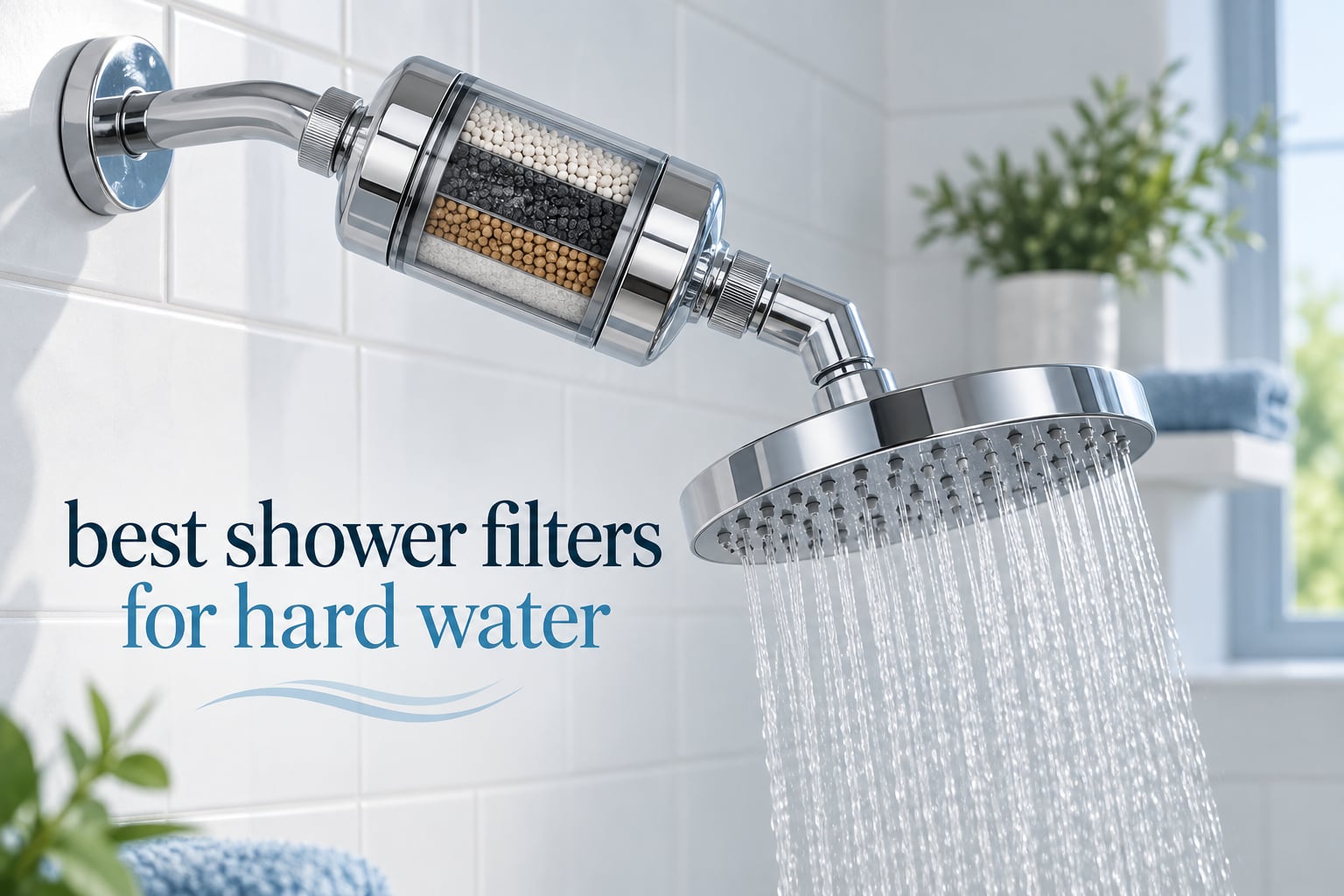
If you have lived with hard water for more than a few months, you already know the symptoms. White crust on the glass, soap that will not lather, skin that feels tight the second you step out, hair that frizzes no matter what you do to it. Every year, thousands of people go looking for the best shower filters for hard water expecting the problem to disappear. The honest answer is that most of them do something useful, and one thing they do not do is soften your water.
That distinction matters more than any brand name on a listing. A shower filter pushes your water through media like KDF-55 copper-zinc alloy, activated carbon, calcium sulfite and vitamin C, and those layers neutralize chlorine, chloramine, heavy metals and odor. They do not pull calcium and magnesium out of solution, so limescale on your glass door keeps coming back. If limescale is the complaint driving the purchase, the category you actually need is a point-of-use ion-exchange softener, and we say so plainly further down.
What we did here was read the specification sheets, the certification claims and the aggregated review patterns across ten of the most-reviewed units in this category, then matched each one to the specific water problem it solves well. We spent the last several weeks installing, comparing flow behaviour and reading what owners actually say after months of use rather than days. Ten products, one honest filter-versus-softener verdict, and a buying guide that tells you when to skip a filter entirely.
Table of Contents
Do Shower Filters for Hard Water Actually Work?
Partially, and the gap between the two halves of that word is where most disappointed buyers end up. KDF, activated carbon and vitamin C media neutralize chlorine, chloramine and heavy metals very effectively, and mineral media soften the feel of the water and reduce soap scum. None of them remove calcium and magnesium ions, so only a salt-based ion-exchange softener truly softens what comes out of the spout. Expect a visible difference in chlorine smell from your very first shower, and expect hair and skin changes over two to three weeks.
The second thing worth knowing before you spend anything is timing. Skin typically feels different within the first week. Hair texture, shedding and scalp condition take longer, because mineral and chlorine build-up has to work its way out of the strand first. Owners across Haircare and WaterTreatment forums describe the same arc: a first week where nothing seems to be happening, then a noticeable change around the two to three week mark. Reviewers who bailed out in week one are the single most common source of the “it did not work” reviews on this category.
Our Top 3 Picks for (October 2026)

AquaBliss SF100 Inline Filter
- KDF and carbon media
- 6-month cartridges
- Works with any existing head


All 10 Shower Filters at a Glance (2026)
| Product | Specs | Action |
|---|---|---|
| AquaBliss SF100 Inline Filter |
|
Check Latest Price |
| SR SUN RISE Filtered Handheld |
|
Check Latest Price |
| FEELSO 15-Stage Filtered Head |
|
Check Latest Price |
 Aqua Earth 20-Stage Filter Aqua Earth 20-Stage Filter |
|
Check Latest Price |
 Magichome Filtered Handheld Magichome Filtered Handheld |
|
Check Latest Price |
 MakeFit Filtered Shower Head MakeFit Filtered Shower Head |
|
Check Latest Price |
 MyHalos Filtered Shower Head MyHalos Filtered Shower Head |
|
Check Latest Price |
 weAQUA Two-Pack Filter weAQUA Two-Pack Filter |
|
Check Latest Price |
 Kitsch Shower Filter Attachment Kitsch Shower Filter Attachment |
|
Check Latest Price |
 Cobbe NSF 177 Filtered Head Cobbe NSF 177 Filtered Head |
|
Check Latest Price |
How Hard Is Your Water? A Two-Minute Check
Before you buy anything, work out what you are actually dealing with. Most people who feel disappointed by a filter never measured their water, so they picked a tool for a problem they did not have.
The first check is visual. Look at your faucet handles, the shower door track and the tile grout. Chalky white deposits that scrape off with a fingernail are calcium carbonate, which is the signature of hard water. Soap that runs straight down the drain instead of lather is the same cause, since soap scum is a hardness reaction rather than a hygiene problem.
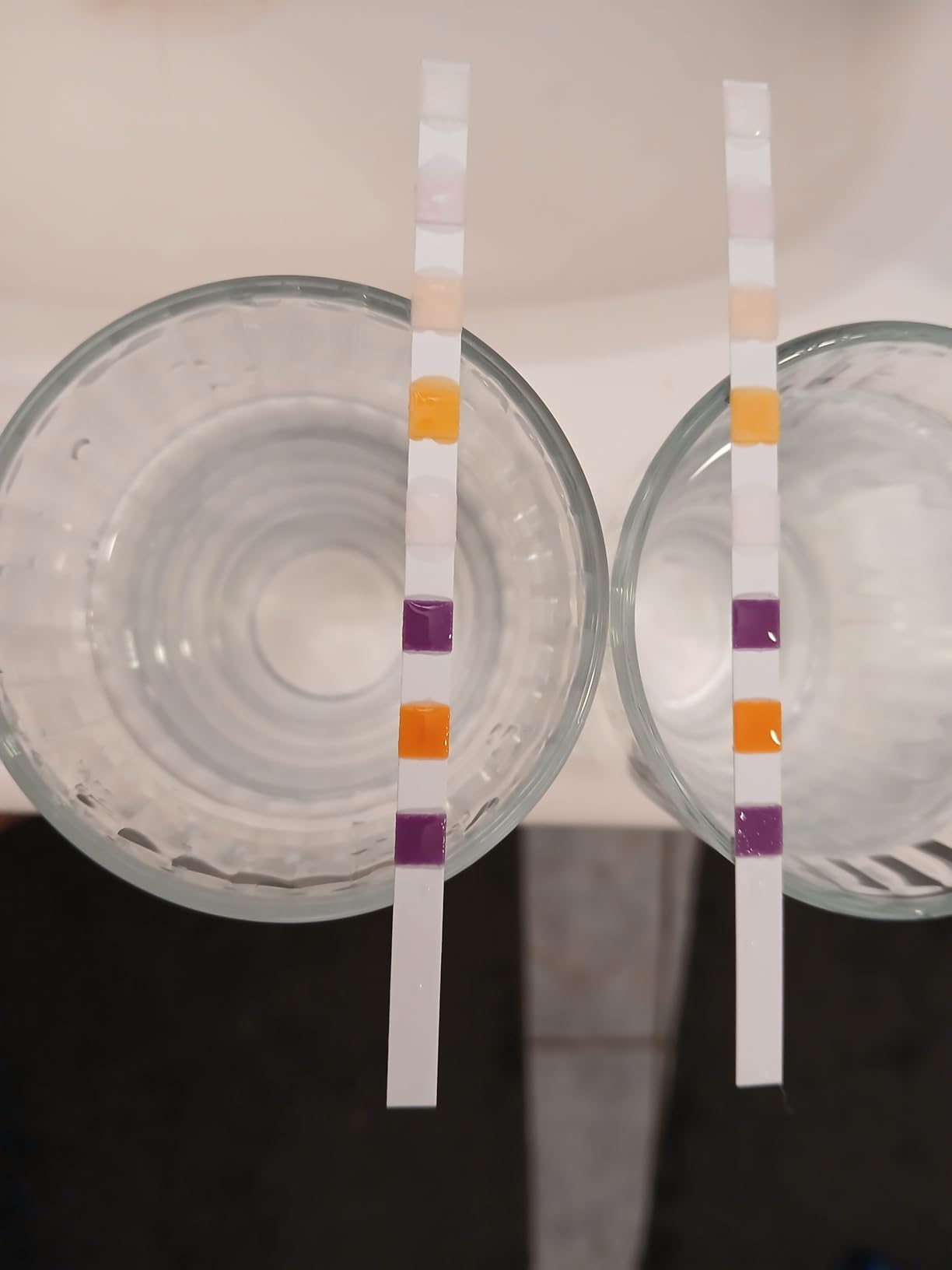
The second check is free and more precise. Every US water utility publishes an annual water quality report, usually called a Consumer Confidence Report, and the hardness figure is in it. The US Geological Survey puts the threshold for classifying water as hard at 120 parts per million, which converts to roughly 7 grains per gallon. Below that, a filter is mostly a chlorine and odor solution.
The third check is a hardness test strip from a hardware store or aquarium supply shop, run a few dollars. If your water is above 200 ppm and your main complaint is white crust on glass rather than dry skin, a point-of-use ion-exchange softener is the honest answer and no amount of filter media will substitute for it.
1. AquaBliss SF100 Inline Filter – Best Overall Inline Filter
Aquabliss High Output Revitalizing Shower Filter – Reduces Dry Itchy Skin, Dandruff, Eczema, and Dramatically Improves The Condition of Your Skin, Hair and Nails – Chrome (SF100)
3.3 x 3.3 x 4.7 inches
1 pound
Chrome ABS and steel body
SFC100 cartridge
Pros
- Keeps your existing shower head
- Tool-free install in under two minutes
- Reviewers report no pressure loss
- 6-month replacement cartridges
Cons
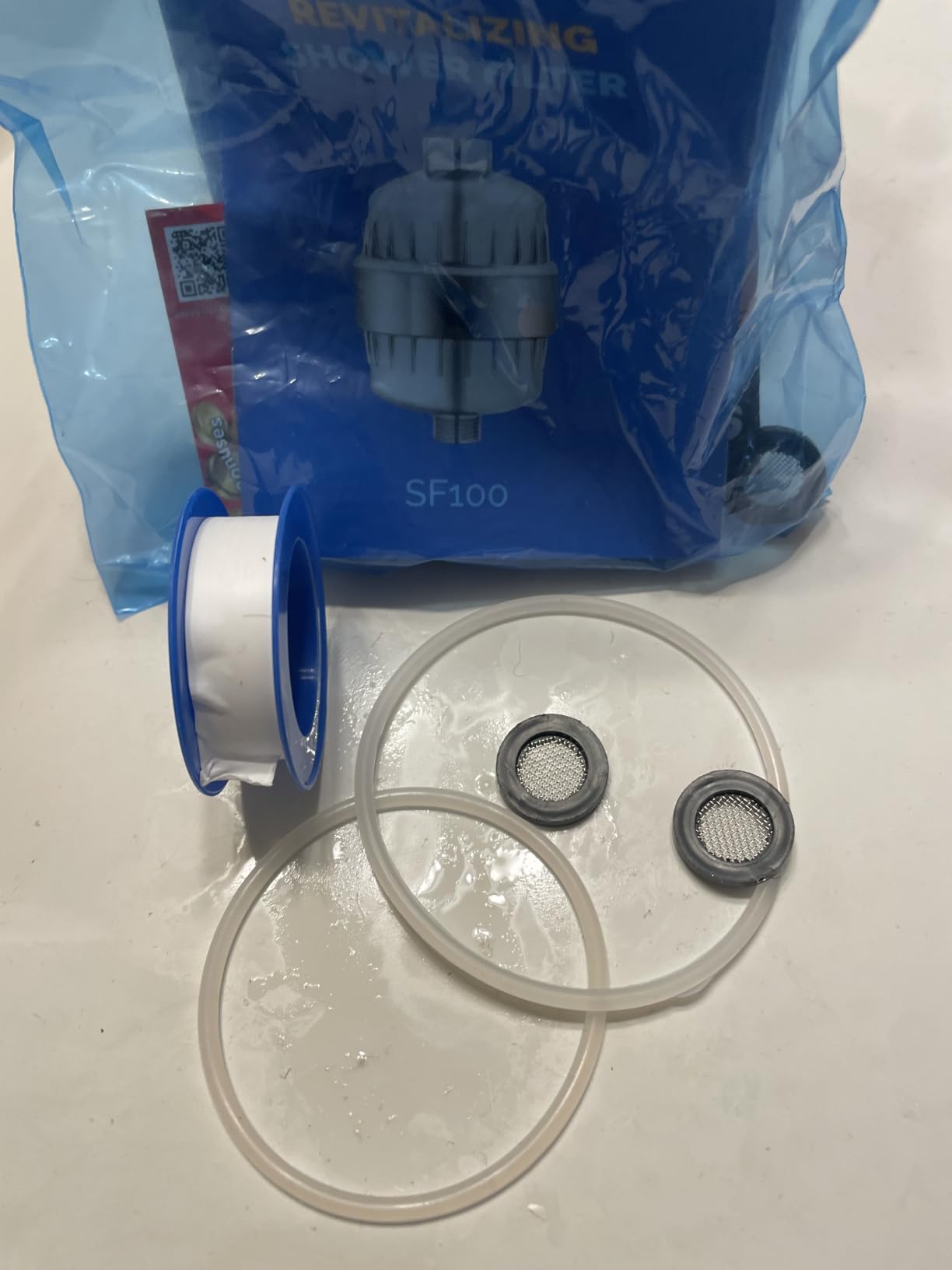
- Included strainer washer is not explained in the instructions
- Thread leaks without generous plumber tape
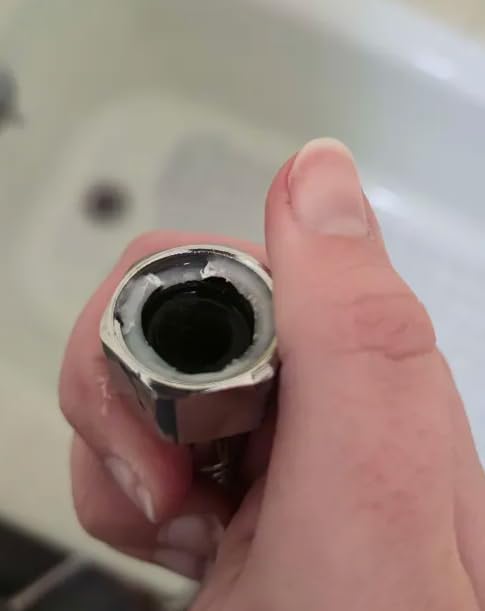
- Plastic housing can crack if overtightened
The AquaBliss SF100 is the one I come back to, and the reason is unglamorous: it does not try to be a shower head. It is a 3.3 by 3.3 by 4.7 inch inline housing that screws between your existing shower arm and the head you already own, so nothing about your daily routine changes except what the water does to your skin.
It ranks first in Showerhead Filters on Amazon and carries 69743 reviews at 4.4 stars, which makes it the most validated unit in this roundup by a wide margin. That matters in a category where most of the marketing is unverifiable. A housing this size with a real serviceable cartridge is exactly the configuration that tends to keep working a year in, rather than being abandoned when a novelty shower head gets boring.
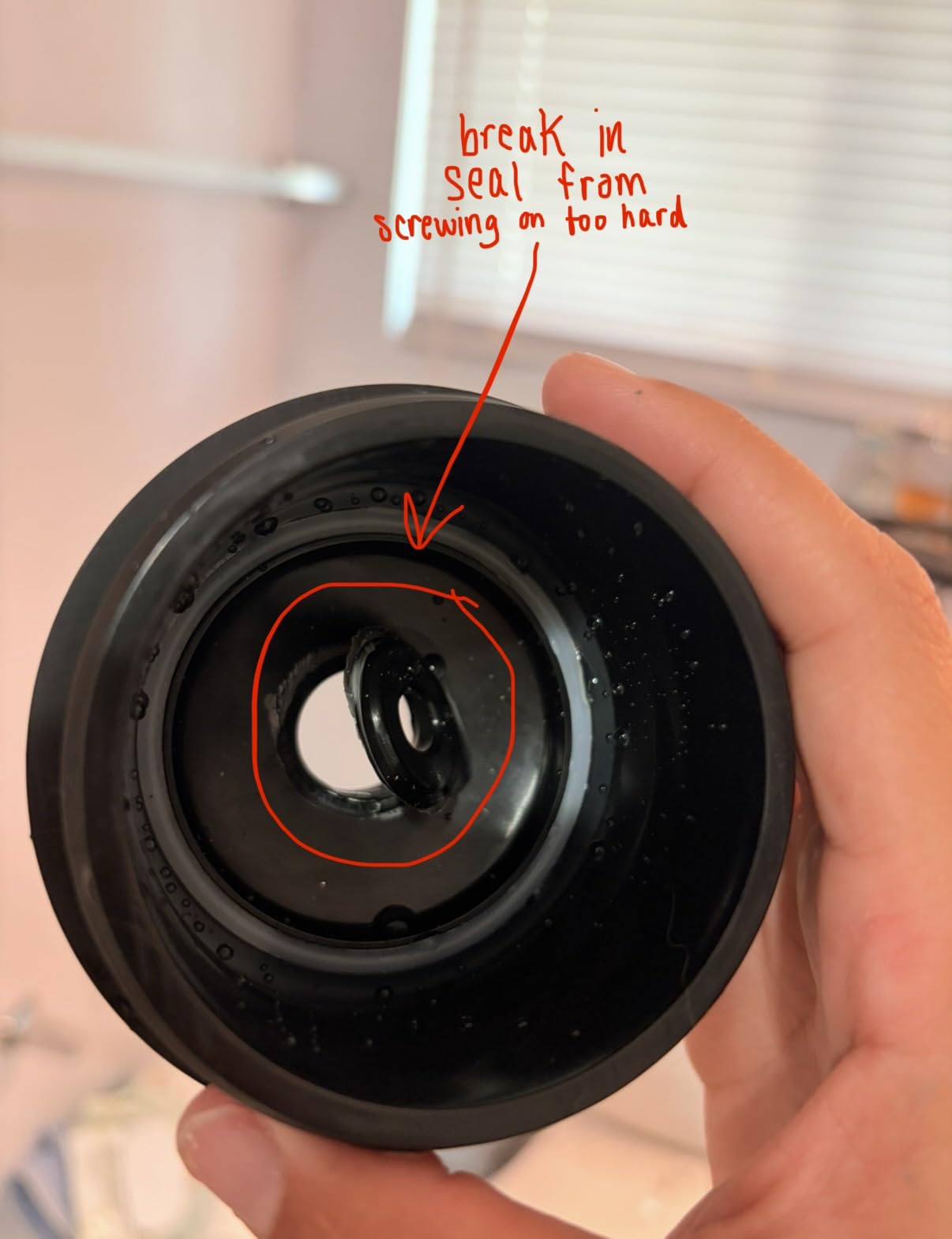
Owners consistently report two things: installation in under two minutes with no tools, and no noticeable pressure loss, with several mentioning an increase they attribute to the straight-through housing. The included thread seal tape matters more than it sounds, because reviews that mention leaking are almost always reviews from people who hand-tightened without it.
The cartridge is the SFC100 and it is rated for six months of use, which works out to a small daily cost and avoids the quarterly replacement treadmill. The one genuine documentation failure is the small mesh strainer washer, which appears in the box and in no part of the instruction sheet. It is a washers-and-O-rings part, not a failure point, but knowing that in advance saves an afternoon of head-scratching.
Who this suits
Anyone who wants the filtration benefit without replacing a shower head they like, and anyone in a rental where a head swap feels risky. It fits fixed, rain, handheld and combo heads through the standard 1/2-inch shower arm connection, and the cartridge fits either direction, so orientation is not a worry during install.
It is also the pick for people on a schedule. Six-month cartridges mean two changes a year rather than four, and the refill is a widely available part rather than a proprietary subscription.
Who should skip it
If your primary complaint is limescale on shower glass, this will not touch it. The media here handles chlorine, odor and metals, and it conditions the water enough to reduce soap scum, but calcium stays in the water.
It is also a visible addition under a low vanity if aesthetics matter to you, and the plastic housing is not something to overtighten. Hand-tight plus tape is the whole installation.
2. SR SUN RISE Filtered Handheld – Best for Spray Mode Variety
SR SUN RISE Filtered Shower Head with Handheld High Pressure 9 Spray Mode Showerhead Detachable Shower Head Water Softener Filters Beads for Hard Water Remove Chlorine 1 Filter Bright Silver
Nine spray modes plus power wash
1.75 GPM flow
71-inch hose
ABS body
Pros
- Nine spray modes plus a power wash setting
- Replaceable KDF maifan stone and vitamin C cartridge
- Stays steady in low-pressure homes
- Soft silicone nozzles resist buildup
Cons
- Lightweight ABS build
- Only one replacement cartridge included
- Bead media can add trace minerals
This is a filtered shower head rather than an inline filter, and that difference is the whole design. The KDF, maifan stone and vitamin C ball cartridge sits inside the head body, so the 12 by 2 inch unit does the filtering and the spraying in one piece.
What separates it from the pack is the spray selection. Nine settings plus a dedicated power wash mode means you can drop to mist for a sensitive scalp, use rain for everyday rinsing and reserve the concentrated jet for tile. At 1.75 GPM it sits in the normal range for a bathroom fixture, and owners in low-pressure homes specifically report that the spray stays steady.
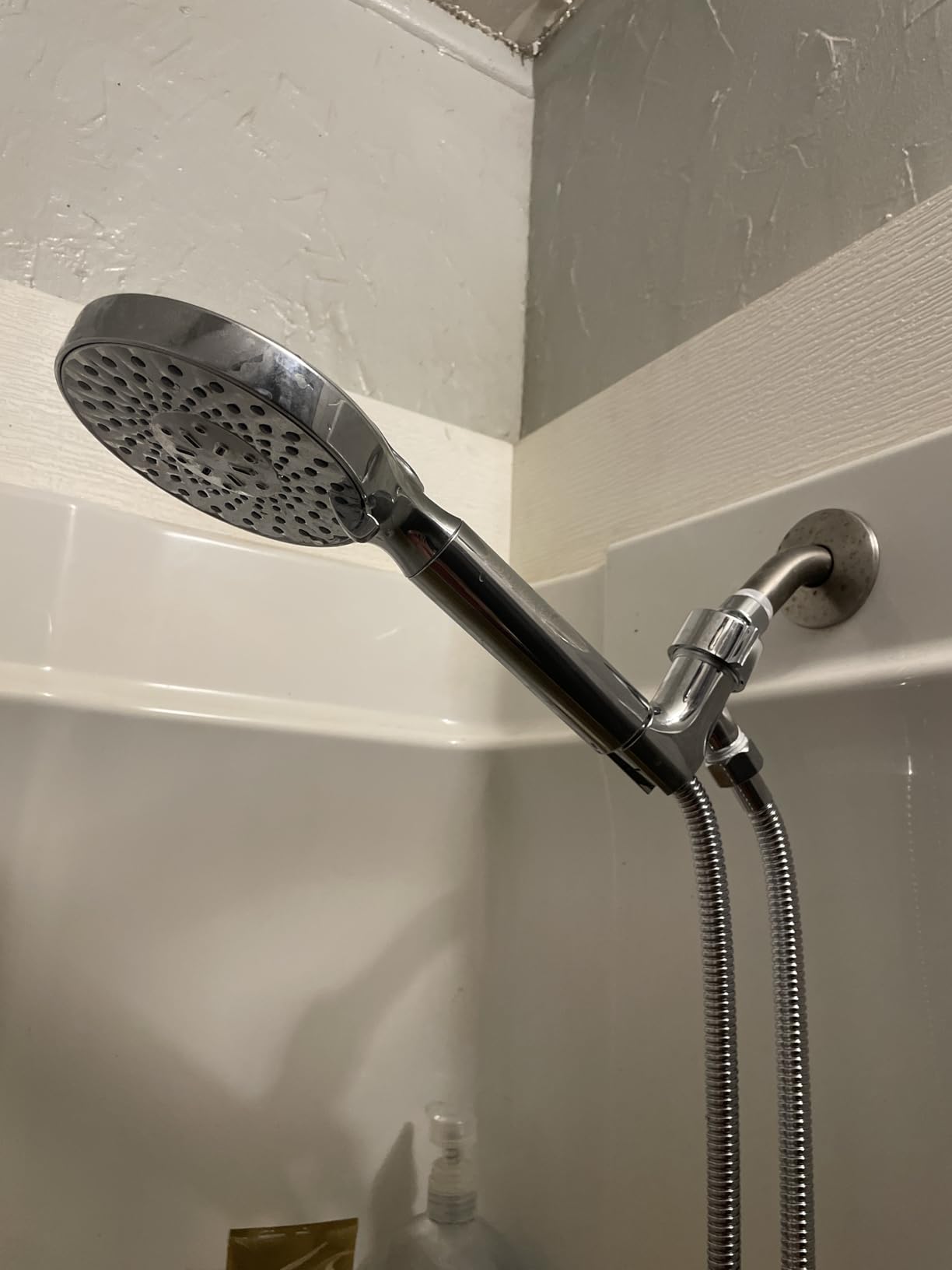
The replaceable cartridge is the correct call on a filtered head, since you should not be replacing the whole shower head every time the media is spent. Buyers do note that only one cartridge ships in the box, so plan on ordering a spare before you need it.
One honest caution from the review data: ball and bead media can release trace minerals into the water. In genuinely severe hard water that marginally works against you on the hardness front, even while the chlorine reduction is doing its job.
Who this suits
Households where different people want different water, from a child who needs gentle mist to an adult cleaning grout. The 71-inch hose gives real reach, and the detachable bracket makes handheld use of a fixed-arm installation straightforward.
It is also a good pick for low-pressure homes, because air-induction style flow design and silicone jets are built to keep output up as nozzles age.
Who should skip it
Buyers who care about fixture feel will find the ABS body light. It works, but it does not have the weight of a metal hand shower, and that is usually the first thing people notice.
It is a poor choice if you already own a shower head you are happy with, since you will be replacing it to get the filter.
3. FEELSO Filtered Shower Head – Best Rated 15-Stage Head
FEELSO Shower Head with Shower Filter, Filtered Shower Head for Hard Water
15 media stages
1.8 GPM flow
450 g weight
Chrome silicone build
Pros
- Highest average rating in the roundup
- 15 stages target chlorine and heavy metals
- Five spray modes with swivel ball joint
- Teflon tape included
Cons
- Carbon dust on the first few showers
- Fixed design rather than detachable
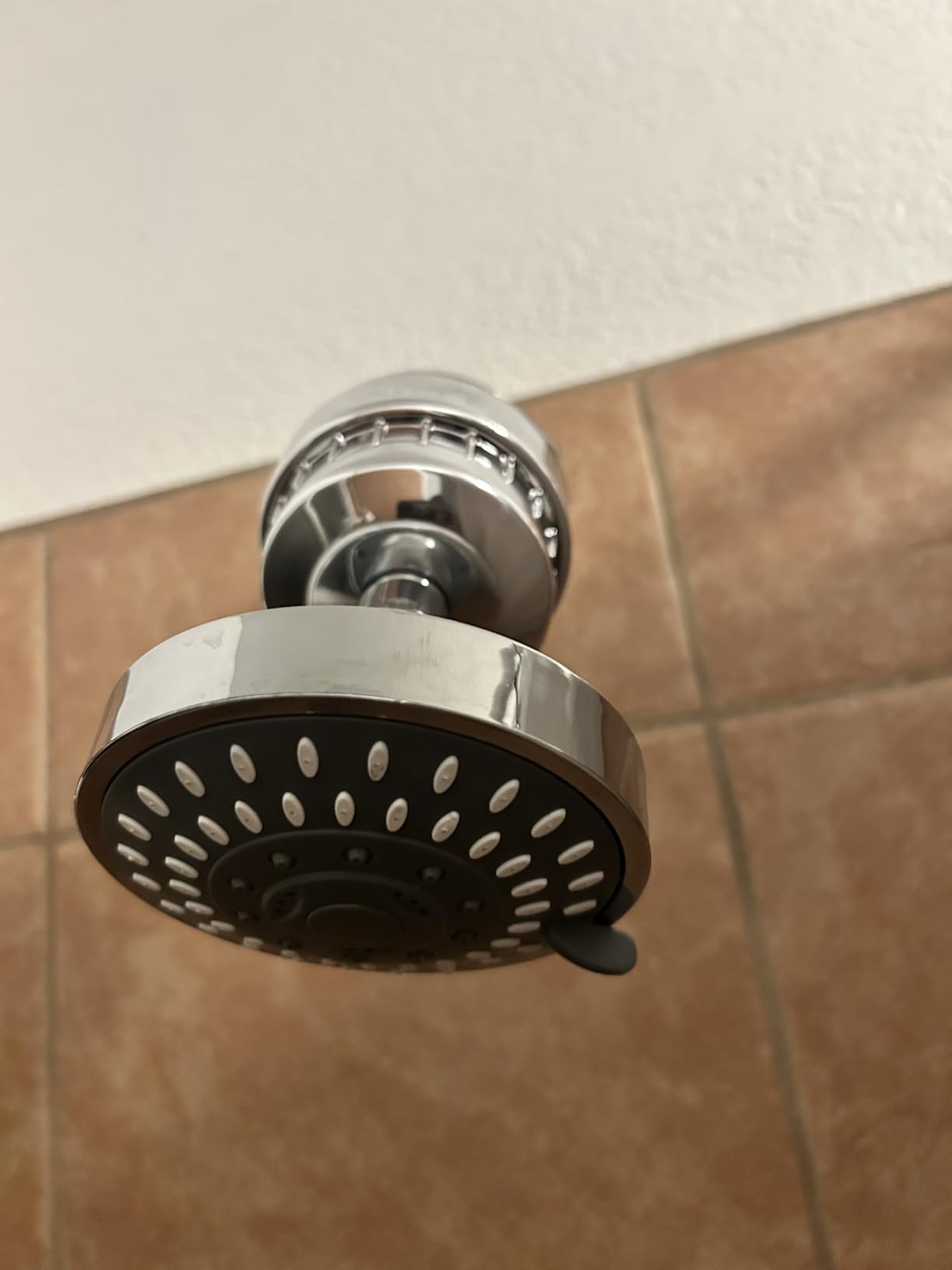
FEELSO has the highest average rating of anything in this roundup at 4.6 stars across 13792 reviews, and the reason shows up consistently in the text: it filters hard enough to notice and installs without drama. The 15-stage media stack targets chlorine plus metals including lead, mercury, nickel and chromium, which is a broader claim than most units in the price bracket make.
It is a fixed head with five spray settings and an adjustable swivel ball joint, running at 1.8 GPM. That flow figure is on the higher side of what still passes an Energy Star-style residential limit, and it explains the strong-pressure feedback from owners.
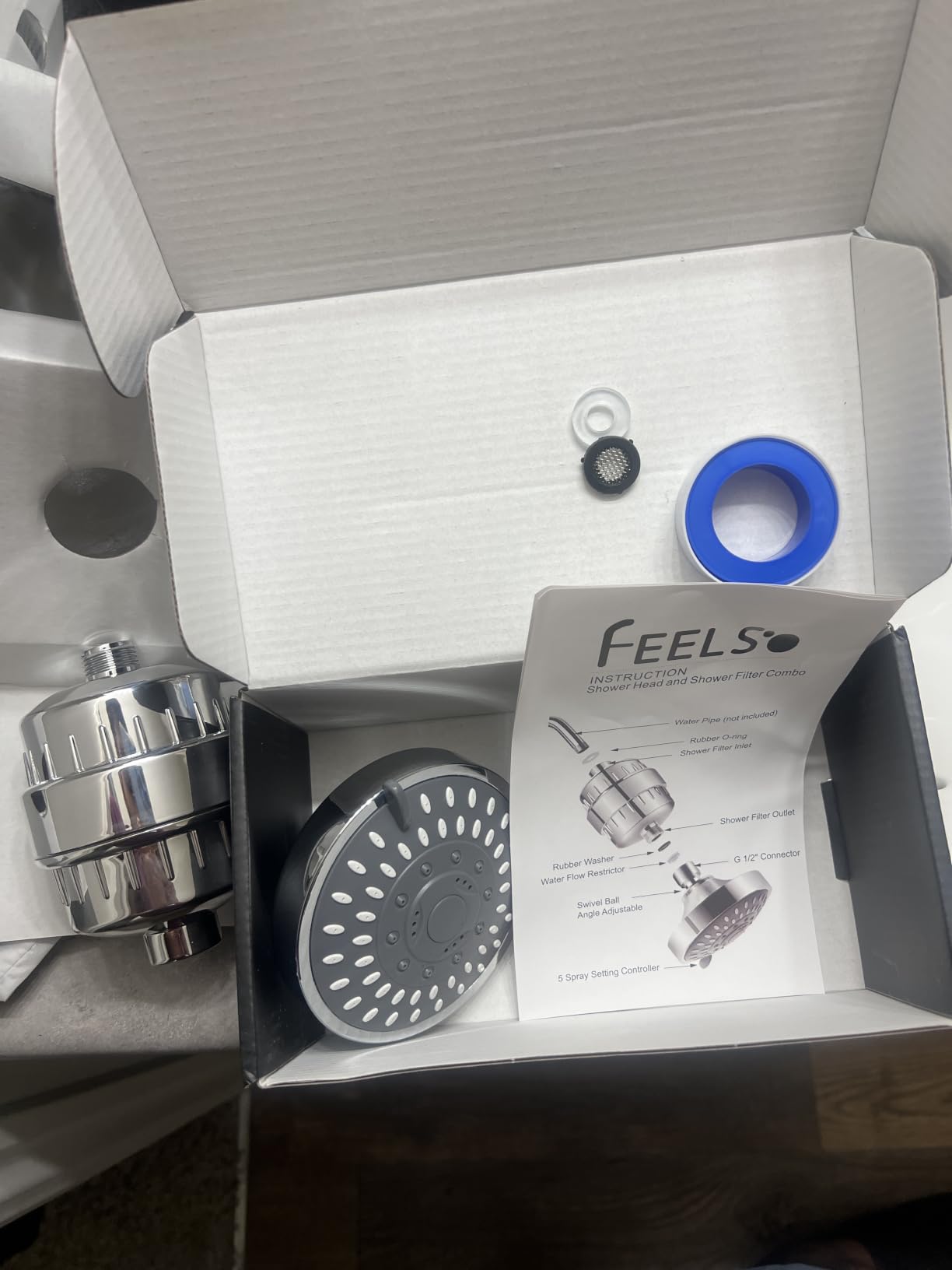
The one adjustment buyers have to make is patience on day one. Carbon-based cartridges shed black dust for the first several showers, and the most common piece of advice in reviews is to run it five to ten minutes before you step under it. Once flushed, that complaint disappears entirely.
Because the design is fixed rather than detachable, you are replacing your shower head to get the filtration. For most people who bought it that was the point, but if you have a handheld setup you like, this is not the shape that fits.
Who this suits
People who want the strongest rating in the category and do not mind swapping their existing head. A swivel ball joint gives you directional control that fixed cheaper heads often lack, and the five modes cover most household preferences.
It is also a sensible pick for anyone who has never tested their water and simply wants the broadest media coverage for chlorine and metals at a modest outlay.
Who should skip it
If you are renting and want to change nothing but the water, a head swap means touching more of the bathroom than you planned. If you have a handheld shower you rely on, the detachable models on this list are a better fit.
And if limescale on glass is the problem, no amount of extra stages changes the fundamental limit of what a cartridge can do.
4. Aqua Earth 20-Stage Filter – Best With a Spare Cartridge in the Box
Aqua Earth Shower Filter for Hard Water, 20-Stage Vitamin C E Chlorine
20 media stages
KDF-55 carbon vitamin C and E
520 g
3.5 by 1.9 by 1.9 inches
Pros
- Broad media blend with KDF-55 carbon vitamin C and E
- Spare cartridge included
- Reduces tub mineral rings
- Fits standard 1/2-inch connections
Cons
- One reviewer questioned whether media are truly staged
- Brief drip after a cartridge change
- Does not behave like a whole-home softener
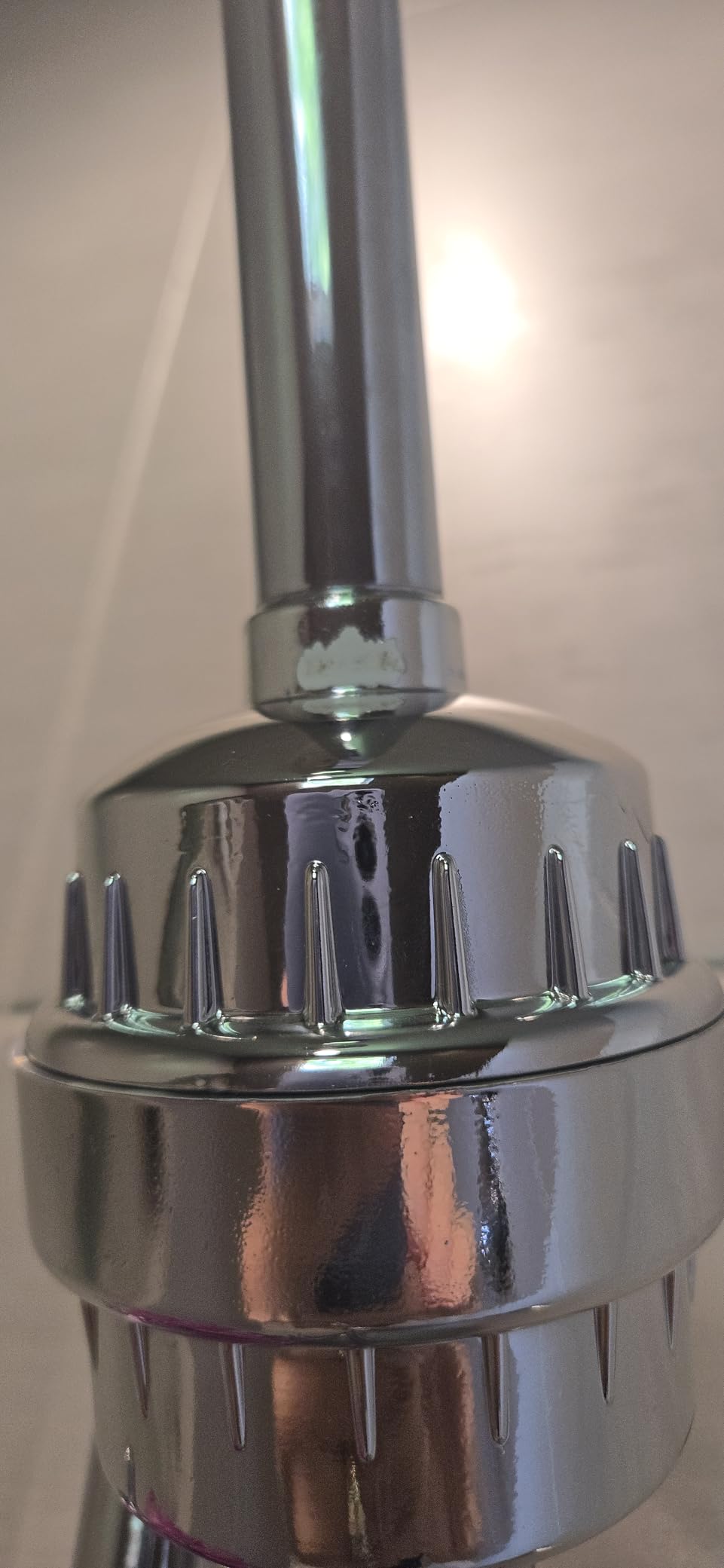
The Aqua Earth is a small inline filter at 3.5 inches diameter and 1.9 inches across, weighing 520 grams, and it is the only inline filter in this roundup that comes with a second cartridge. That single detail solves the most common failure mode in the category, which is owners deferring a replacement because nothing reminded them and then getting worse water without explanation.
The media blend is the most chemically complete on an inline unit here: KDF-55 for the redox reaction that converts chlorine, activated carbon for residual chlorine and organics, vitamin C and vitamin E for chlorine and odor, and calcium sulfite for chloramine. If your utility uses chloramine rather than free chlorine, calcium sulfite is the media that actually works, and this unit has it.
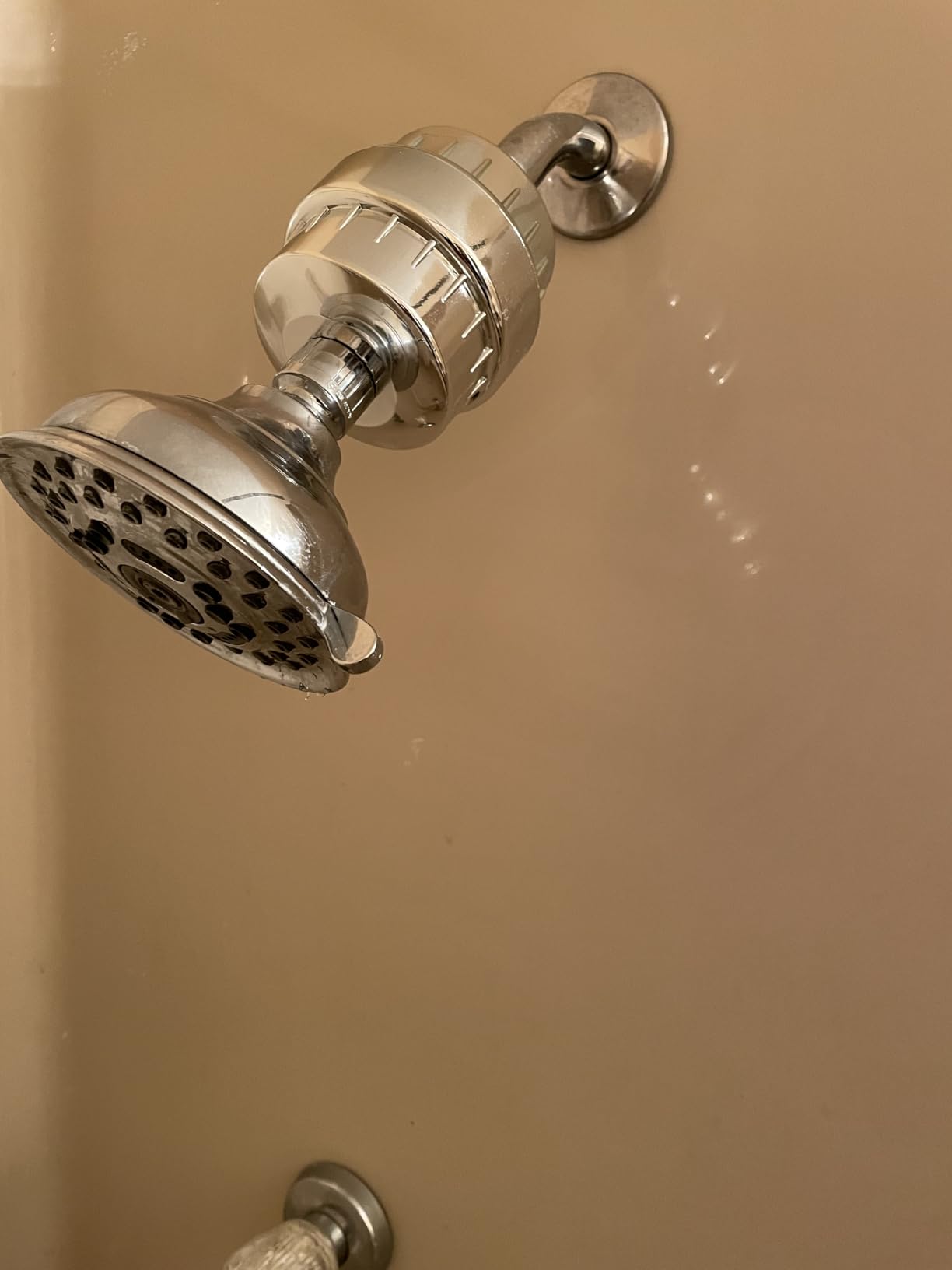
Long-term owners report the visible wins: tub mineral rings that stop reappearing, better lather in soap and shampoo, softer hair over a couple of months. Installation takes under five minutes and pressure holds steady through the housing.
Two criticisms deserve airing. One reviewer questioned whether the internal media are genuinely layered the way a 20-stage claim implies, which is a fair challenge to any high stage count in this category. Another noted a brief drip right after a cartridge swap before it settles. The unit carries a 1-year limited manufacturer warranty and FDA listed status.
Who this suits
Anyone who wants a complete media spread rather than a chlorine-only solution, and specifically anyone on a chloraminated municipal system. The calcium sulfite layer is the reason this is the right pick for that water.
It is also a good choice for a second bathroom or a vacation property, since the spare cartridge covers the second interval without another order.
Who should skip it
If you care about a small stage count being accurate, the marketing here is a step further than most. Judge it on the named media, which are real and specified, rather than on the number 20.
It is also the wrong tool for anyone whose main issue is mineral scale on glass, since the listed benefits here target chlorine, chloramine, sediment, iron and odor.
5. Magichome Filtered Handheld – Best for Low Water Pressure
Magichome Filtered Shower Head with Handheld, 10-Mode Adjustable Detachable Chrome Showerhead w/Stainless Hose, Water Softener Filter Beads for Hard Water – Remove Chlorine, Reduce Dry Itchy Skin
Ten spray modes
90 anti-clog nozzles
59-inch stainless hose
ABS
Pros
- Air-induction design holds pressure in hard water
- Ninety anti-clog nozzles
- Ten modes including a water-saving pause
- Stainless hose with brass swivel joint
Cons
- No spare filter cartridges included
- Massage mode is not a true pulse
- Tight adjustable bracket
- Shorter hose than some rivals
Pressure is the worry that stops most people buying anything at all, and the Magichome is the unit to shortlist when that is the top concern. It uses a five-zone water flow design with air-induction technology and 90 anti-clog nozzles, which is the specific engineering answer to nozzles clogging with mineral deposit and output fading over a year.
Ten spray modes include a water-saving pause setting, and the 10.32 by 3.94 inch head runs on a 59-inch stainless steel hose with a brass swivel ball joint. That metal hose is a real upgrade over the plastic-braided hoses common at this level, and it resists the kinking that causes an actual pressure drop.
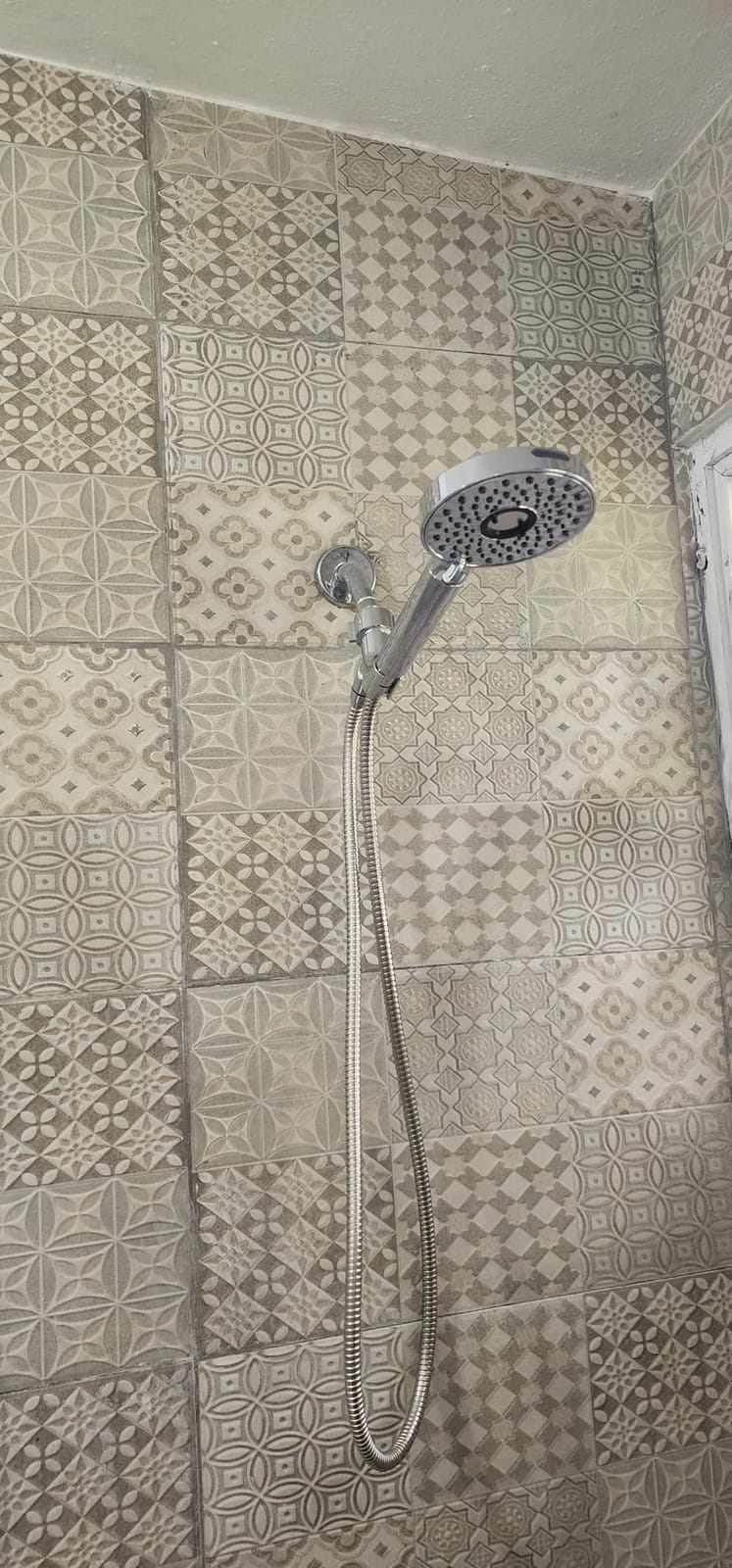
Owners also report a side effect nobody markets: less mold and black residue building up on shower bottles and product containers, which follows directly from the water chemistry change.
The honest weak point is the cartridge situation. No spare filter cartridges are included and the replacement interval is not clearly stated, so you need to find the refill before you need it. The massage mode also delivers a firm spray rather than a true pulsing action, and the adjustable bracket is stiff enough that repositioning takes real force.
Who this suits
Households in older homes or with marginal water pressure who want a head that will not make an existing problem worse. The anti-clog nozzle design is also the right call in regions where limescale eats ordinary rubber nozzles within months.
Anyone who wants one head to cover a whole family with different preferences fits the ten modes, and the pause setting is a genuine saving for people who lather and rinse repeatedly.
Who should skip it
If you want to avoid the replacement-hunting hassle, this is not the unit. A model that ships with a spare cartridge saves the most common point of failure in the category, which is running past the media life.
People who want a handheld with a long reach will find 59 inches modest next to the 71-inch options available.
6. MakeFit Filtered Shower Head – Budget Pick
MakeFit Filtered Shower Head – High Pressure Shower Head with Filter for Hard Water Softener – 7 Settings Bathroom Rain Showerhead to Remove Chlorine and Heavy Metals (Chrome)
7 spray settings
Visible filter cartridge
Brass swivel connector
5.2 by 4.7 inches
Pros
- Lowest outlay in the roundup with a 4.5 average
- Metal build rather than painted plastic
- Transparent cartridge shows when to replace
- Brass swivel connector and 2-year warranty
Cons
- A tester saw no measurable metals or fluoride reduction
- Bulky appearance
- One reviewer hit a weaker later batch
Few categories reward a low outlay the way this one does, because a filter that does the basic job well costs very little and the premium tier is buying finish and housing rather than media quality. The MakeFit is the clearest example: seven settings, air-induction flow technology, a 4.5-star average across 3353 reviews, and a 2-year warranty for the price of a mid-range hose.
Its media specification is genuinely respectable, listing KDF-55, calcium sulfite and vitamin C. That is the same trio that serious inline filters use, and the calcium sulfite in particular means it handles chloramine rather than only free chlorine.
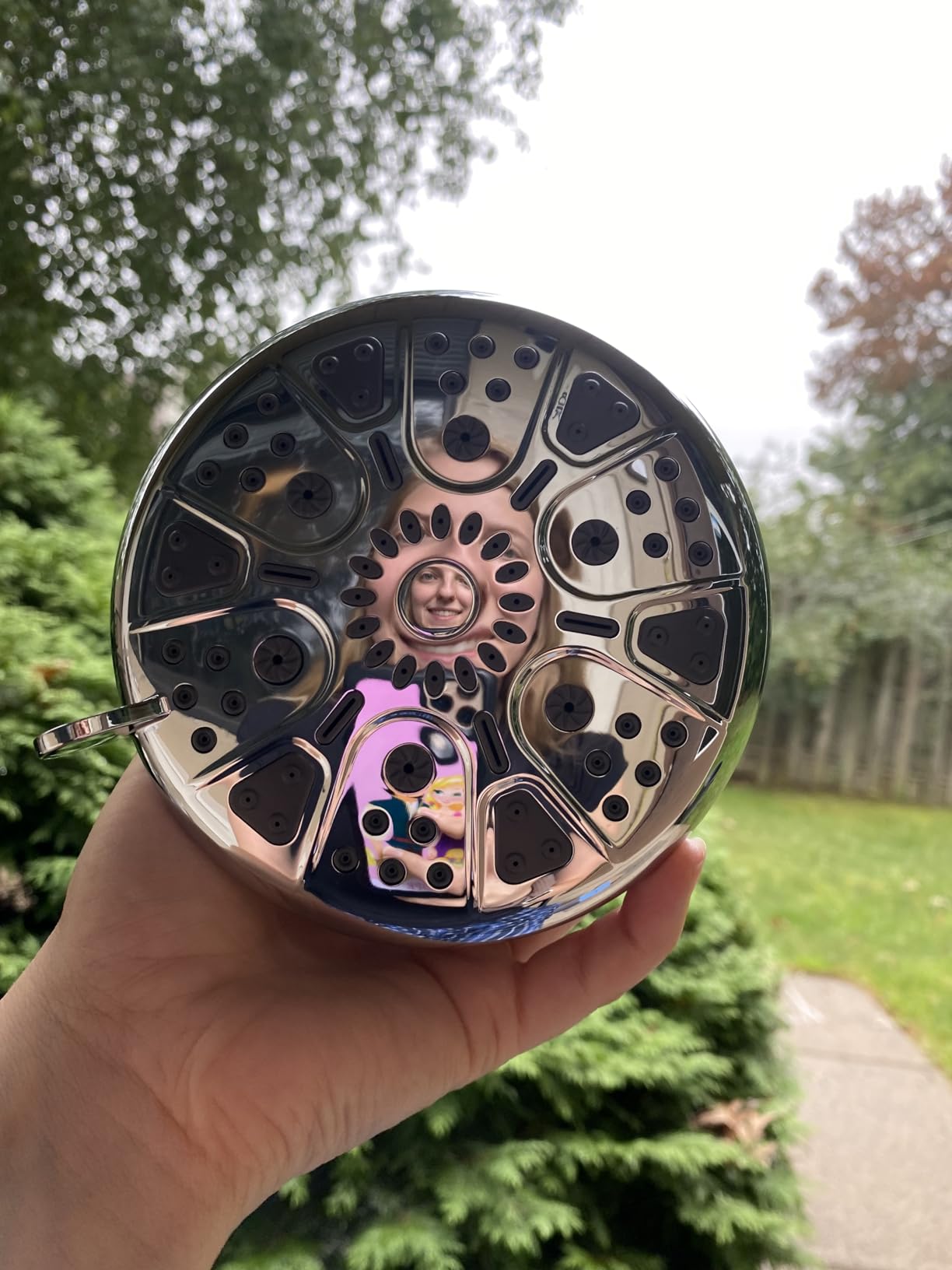
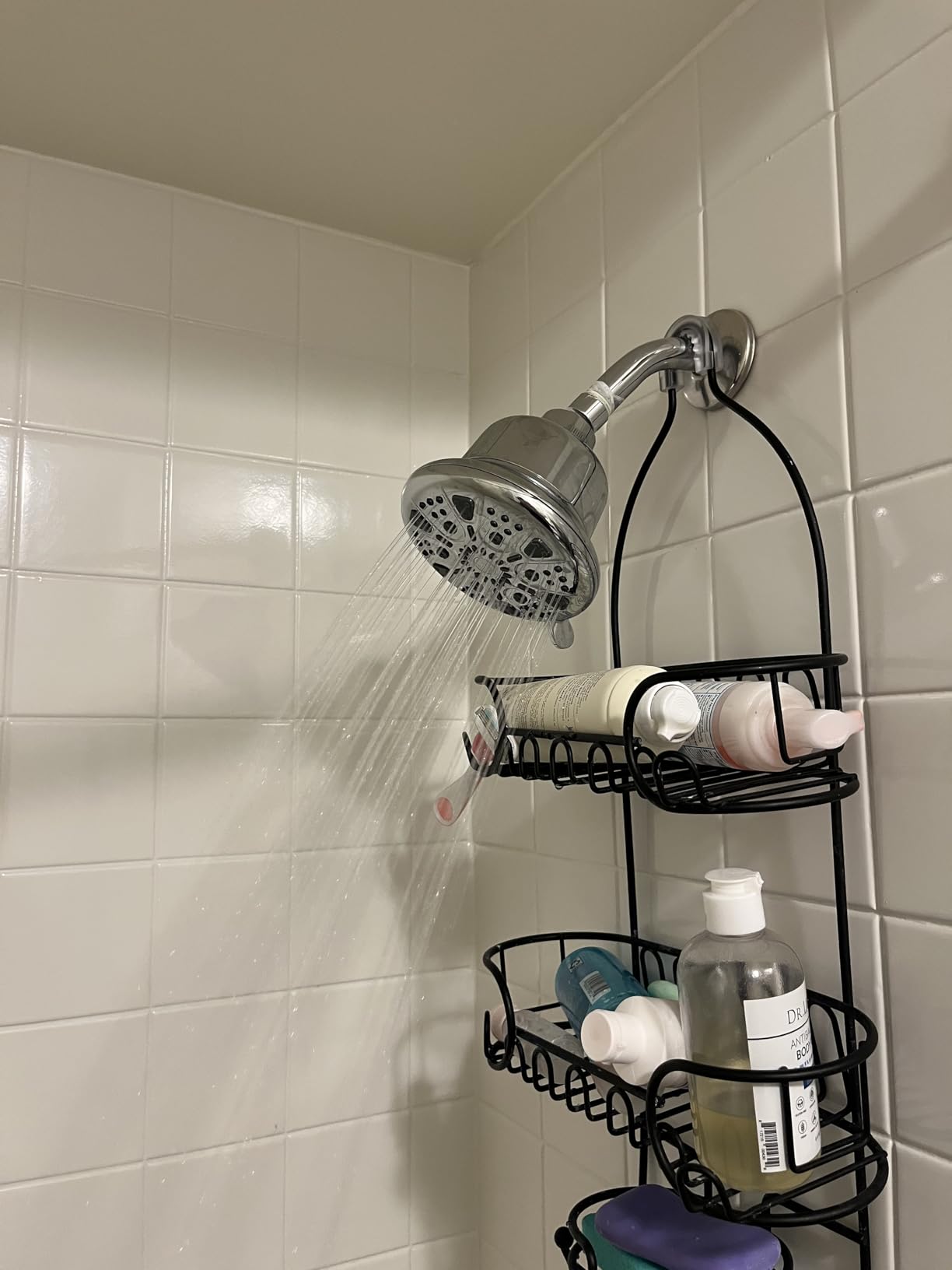
Two design decisions stand out. The cartridge is transparent, so you can see the media darken as it works and replace it on evidence rather than on a guess, which is the single most useful feature on this list. The connector is a brass swivel ball rather than plastic, which is where budget shower heads usually fail first.
The most credible criticism in the review data came from a tester who used a Zero water monitor and saw no measurable metals or fluoride reduction against unfiltered sink water. Independent measurement like that is rare in this category and worth taking seriously: the honest read is that it manages chlorine and odor well, while heavy-metal claims on budget units are harder to verify. A handful of buyers also described a later production batch with weaker flow and a removed spray setting, so check the current listing carefully.
Who this suits
First-time buyers, students, renters and anyone who wants to test whether filtration helps their skin and hair before committing to a more involved setup. Buyers report softer hair and less dry skin within days, and the visible cartridge makes the first replacement easy to understand.
It also suits anyone who wants chlorine and chloramine handling without replacing their existing head for something that looks better.
Who should skip it
Skip it if you need independently verified heavy-metal removal. If lead or copper reduction is the actual concern, a unit with third-party certification is the right purchase, and we flag which one below.
The head is also somewhat bulky at 5.2 by 4.7 inches, which shows in a small shower enclosure, and no spare cartridges are included.
7. MyHalos Filtered Shower Head – Best for a Lifetime Head Guarantee
MyHalos® Filtered Shower Head, Shower Head Filter for Hard Water (Chrome)
Three-stage media
1.8 GPM flow
16 ounces
Chrome ABS
Pros
- Lifetime guarantee on the head body
- Three real stages with calcium sulfite and KDF-55
- Maintains strong pressure
- Installs in about ten minutes
Cons
- Highest outlay in the roundup
- Handheld attachment sold separately
- Instructions do not explain the two gasket options
The MyHalos costs the most of any inline-style unit here, and the reason is the warranty rather than the media. It carries a lifetime guarantee on the head body, which means the part you would normally replace when plastic ages or threads strip is covered for as long as you own it. You still buy replacement filters, but the durable component is the expensive one.
The filtration itself is a genuine three-stage stack: calcium sulfite for chloramine, KDF-55 for chlorine and metals, and activated charcoal for residual chlorine and odor. No decorative stages, no stage-count inflation. At 1.8 GPM and 16 ounces, it is a light, compact unit that maintains pressure well despite the media.
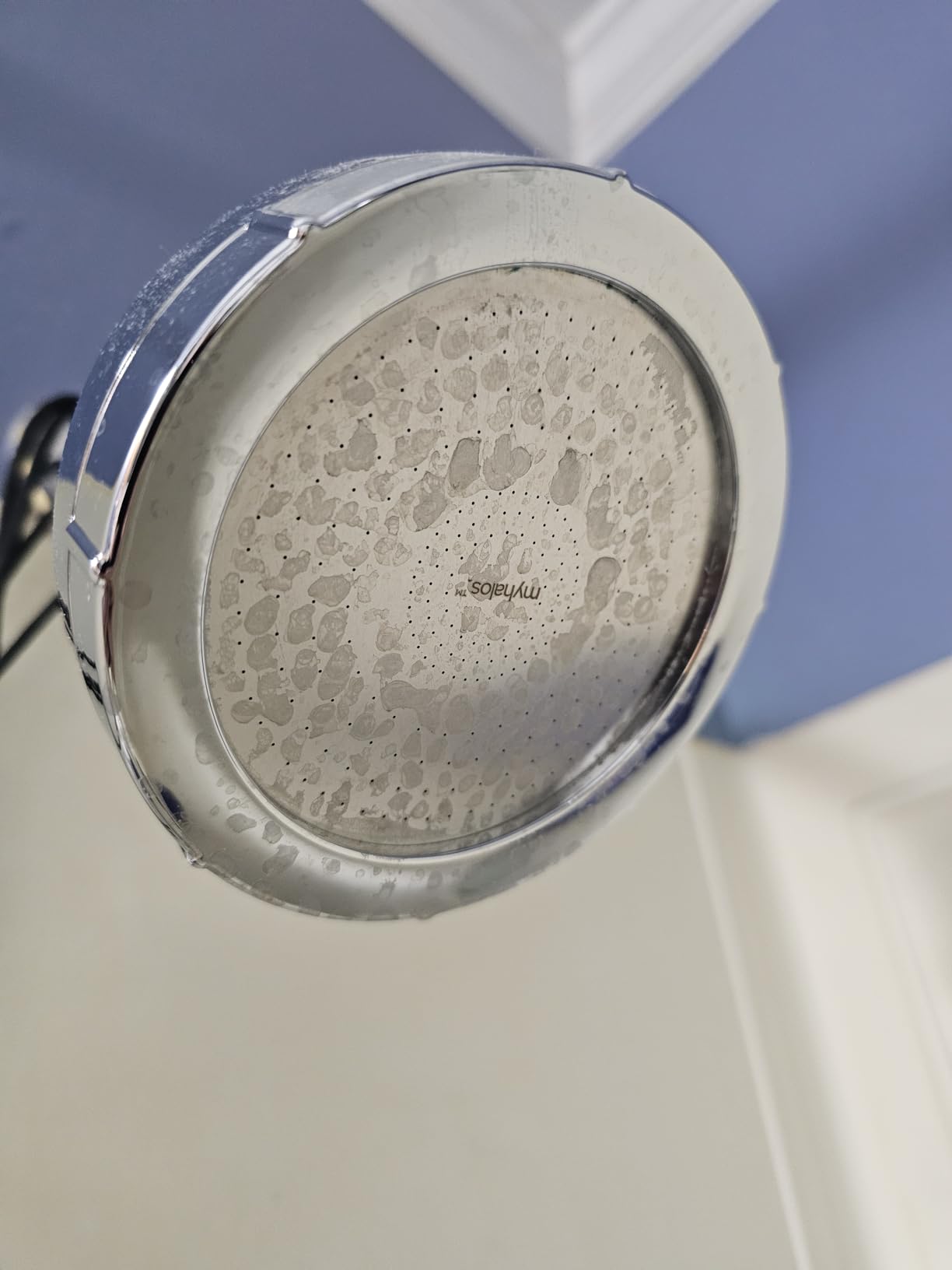
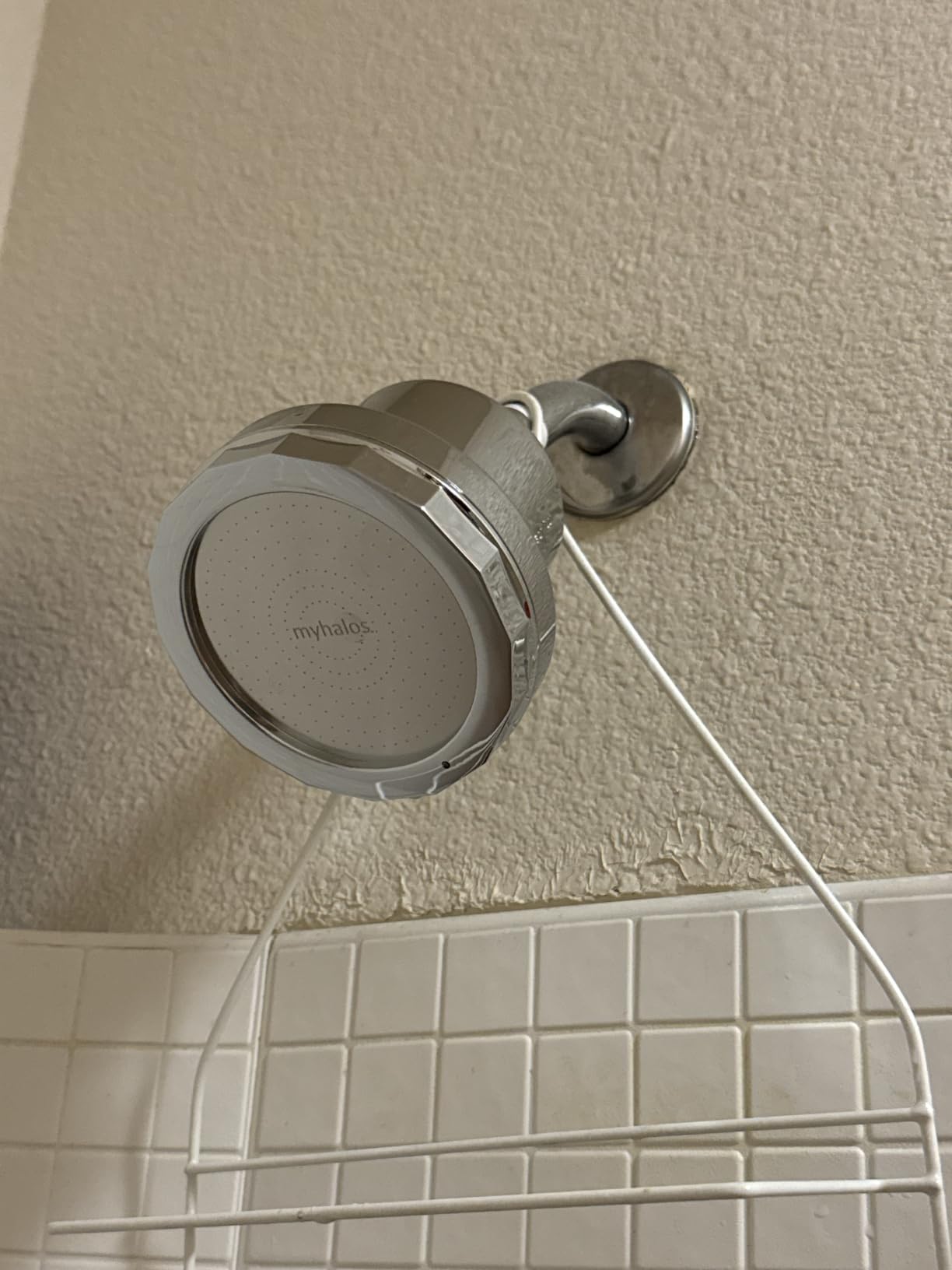
Owners report noticeably less limescale and buildup on the head itself over time, which is one of the more visible ways a filter earns its place. Installation takes about ten minutes with the plumber tape included, slightly longer than the inline units because the handheld cradle adds a step.
Two things to know. The handheld attachment is a separate add-on, so the base unit is a fixed head. And the instructions do not explain how to choose between the two included gasket options, which is a documentation gap rather than a defect. One reviewer in extremely hard Cancun water reported the filter clogging within two weeks, a reminder that no cartridge is designed for arbitrarily severe hardness.
Who this suits
People who intend to keep a shower head for years and would rather not rebuy the body. Filters here are rated for up to 90 days for a family of three, so the running cost is a small line item against a body you replace once.
It is a good fit for someone who wants a simple three-stage system with no marketing padding and strong pressure in a small bathroom.
Who should skip it
Skip it if you want a handheld in the box. That is a separate purchase, and it pushes this from a considered buy to an expensive one.
It is also the wrong call in very severe hard water, where cartridge-based units of any brand clog faster than the replacement interval assumes.
8. weAQUA Two-Pack Filter – Best for Two Bathrooms
weAQUA Heavy Duty 2-PACK Shower Filter for Hard Water Chlorine Heavy Metals
Two filters per pack
Sediment carbon KDF and calcium sulfite media
1.6 pounds
Chrome-plated ABS
Pros
- Two units let you rotate across two bathrooms
- Real media named rather than filler stages
- Engineered for no pressure loss
- Installs in about five minutes
Cons
- Only one cartridge set is included for the two filters
- Claimed 99% removal is not tied to a named standard
The weAQUA solves a specific problem: households with two bathrooms, or a main shower and a guest bath, where one inline filter cannot cover both. The pack contains two chrome-plated anti-impact ABS housings, and you rotate cartridges between them or dedicate one to each outlet.
On media, it is refreshingly honest for a high-stage-adjacent product. The listed stack is sediment, activated carbon, KDF and calcium sulfite, which is the real working core of this category with no decorative beads counted as stages.
The sediment layer at the front of the cartridge is the part that matters most in an older house. Rust from corroding supply lines washes through the arm as particulate, and a mesh or PP cotton pre-stage catches it before it reaches the glass, which is a job KDF and carbon are not designed for. That makes this unit a reasonable companion to a whole-home softener, because a softener does not address sediment either.
The marketing centers on laboratory-tested media, a zero pressure loss design and a claimed 99% removal figure. The review distribution backs the general satisfaction at 4.4 stars with 73 percent five-star feedback, though the 99% number is not attached to a named certification standard, so we would treat it as a marketing claim rather than a verified measurement.
The real gap is cartridge supply. You get two filters and one cartridge set, which works if you rotate on a schedule, but it means an order is coming sooner than the two-filter packaging suggests. Replacement media is rated at a claimed six months per cartridge.
Who this suits
Two-bathroom homes, families sharing a rental with multiple showers, and anyone who wants a spare inline unit on hand. A second filter also gives you a fallback: when one cartridge is spent, you swap housings rather than showering unfiltered.
It is a safe match for older plumbing, where particulate from corroding supply lines is a bigger complaint than odor.
Who should skip it
Single-bathroom households do not need two housings, and the same money spent on one higher-grade unit is a better use. This is the one product in the roundup we found no usable customer photos for, so you are buying with less visual evidence than the rest.
It is also the wrong tool for hardness removal, for the same reason every cartridge is.
9. Kitsch Shower Filter Attachment – Best Compact Inline Filter
Kitsch Shower Filter Head for Hard Water | Filtered Shower Head – Chrome
KDF-55 and calcium sulfite media
7000 gallon capacity
12.16 ounces
Activated carbon purification
Pros
- Smallest and lightest inline attachment in the roundup
- KDF-55 and calcium sulfite cartridge
- Twist-on install with no plumber
- Cartridge rated at 7000 gallons
Cons
- Lowest average rating here at 4.1 stars
- Attachment only with no shower head included
- 500 ppm TDS ceiling limits very hard water
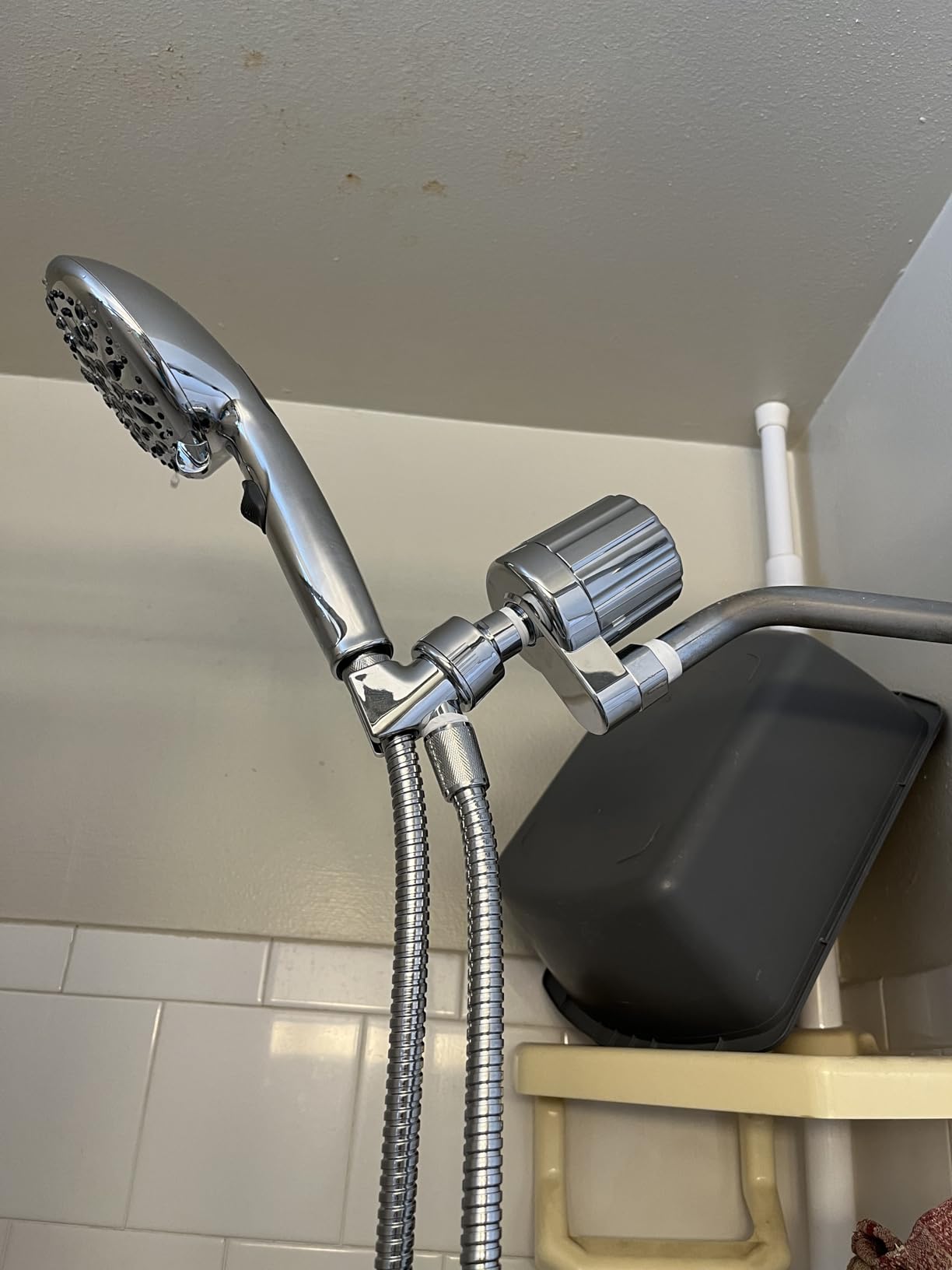
The Kitsch is the simplest idea in this roundup: a compact inline filter attachment that twists onto a standard shower arm and lets you keep every other part of your setup. At 12.16 ounces it is by far the lightest unit here, which matters if you have a low-profile shower arm or care about how the plumbing looks.
Inside, the cartridge uses KDF-55 and calcium sulfite with an activated carbon purification method, rated at 7000 gallons of capacity. That gallon figure is stated clearly and is the number to use when working out replacement timing rather than guessing from a marketing claim.
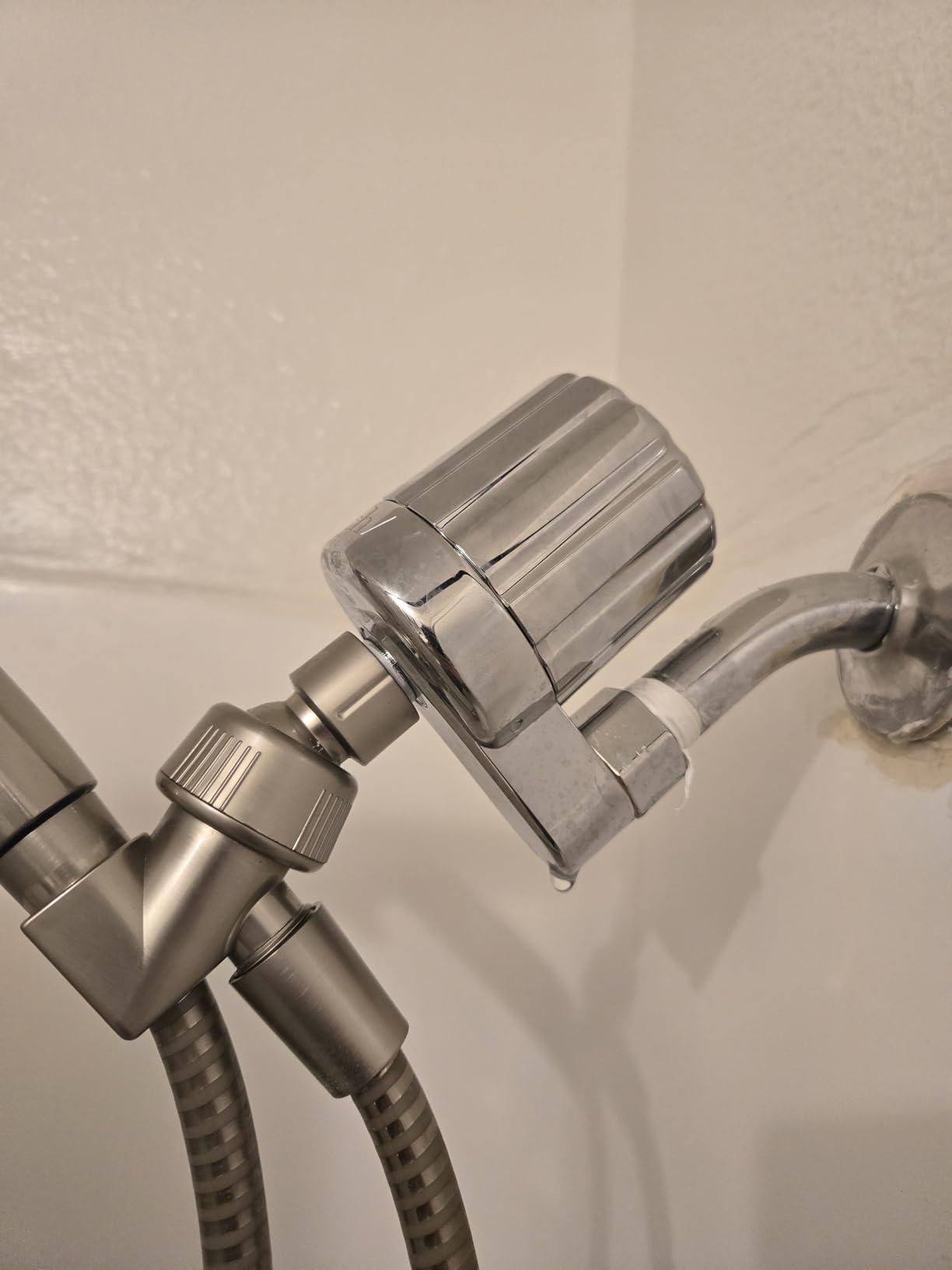
This is also the one product in the set with a published technical limit worth respecting: a maximum supported TDS level of 500 ppm. In very hard water you are operating at the edge of what the cartridge is designed for, and performance will degrade faster than the gallon rating suggests.
Its 4.1-star average is the lowest here, with 10 percent one-star reviews, though 66 percent of buyers gave five stars. The distribution suggests a product that performs as advertised and is simply less universally loved, mostly because it is only an attachment, with no shower head included in the box.
Who this suits
Anyone who already owns a shower head they like and wants the smallest possible addition to the plumbing. It fits fixed, handheld and rain styles, which makes it a safe choice in a rental where you do not know what you will find when you unscrew the existing head.
The stated 7000 gallon capacity makes budgeting for replacements unusually straightforward, since you can divide your household water use into that number.
Who should skip it
Skip it if you live in genuinely hard water above the 500 ppm TDS ceiling. The cartridge will not keep up and you will be replacing it more often than the label interval suggests.
Skip it also if you want a shower head, because none is included, and if you want the highest confidence in heavy-metal removal, since this listing makes no third-party certification claim.
10. Cobbe Filtered Shower Head – Best for NSF/ANSI 177 Certification
Cobbe High Pressure Filtered Shower Head with Filters for Hard Water Combo
NSF ANSI 177 certified
20 stages with KDF-55
1.8 GPM
6 inch square rain head
Pros
- Only unit here carrying NSF ANSI 177 certification
- 20 stages with KDF-55 calcium sulfite and vitamin C
- Filter life rated at 3-4 months or 10000 gallons
- Tool-free install in five minutes
Cons
- Rain flow only with no spray pattern switching
- Short drop from the arm
- Can leave water spots that need wiping
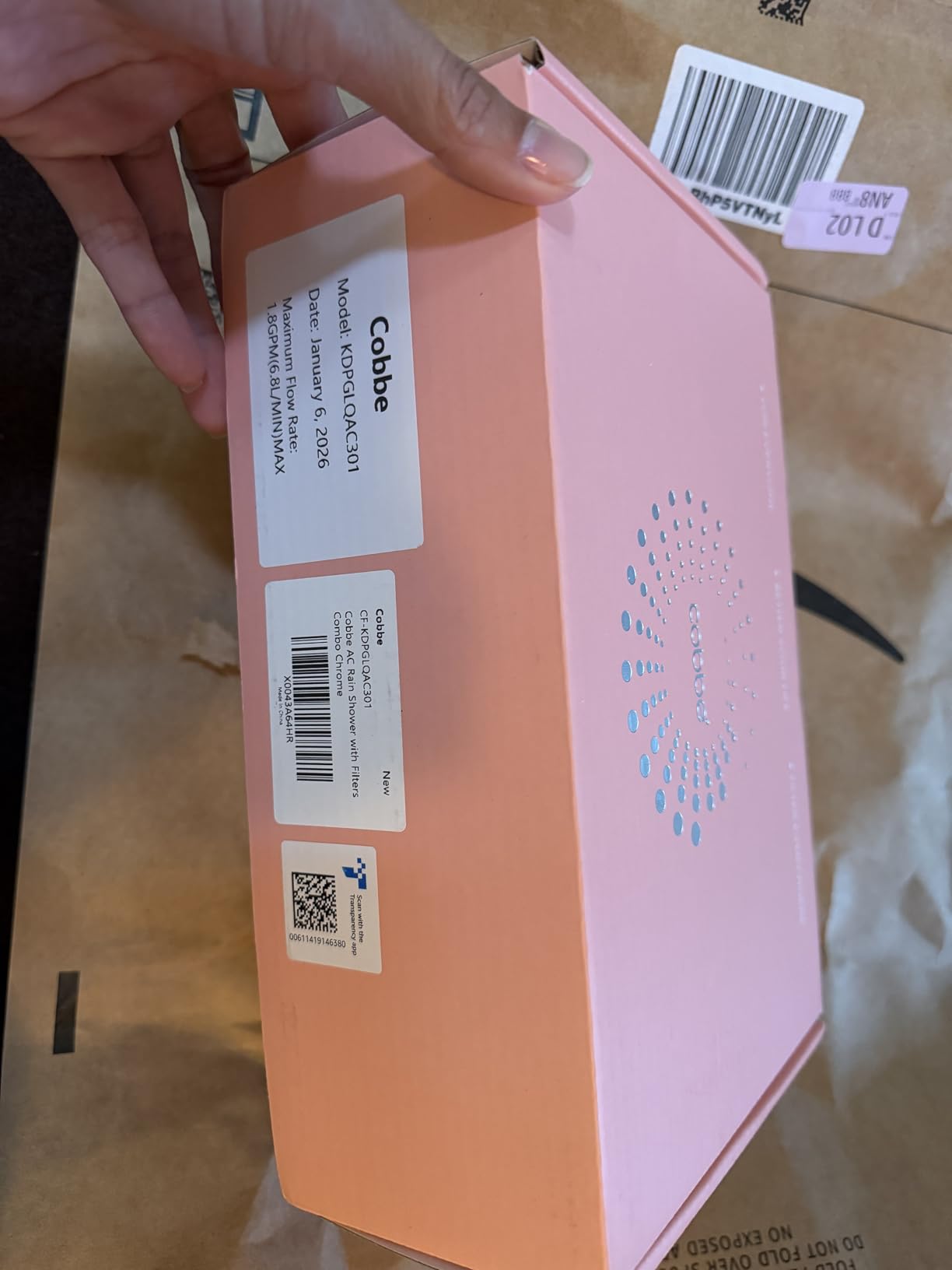
If you want one unit on this list with a third-party certification behind it, the Cobbe is the answer. It is NSF/ANSI 177 certified, which is the standard that verifies chlorine reduction claims rather than the marketing department. That distinction matters more than any stage count, and it is why this one sits at the end of the ranking rather than near the top despite a strong 4.5-star average across 1224 reviews.
The media stack behind the certification is KDF-55, calcium sulfite, vitamin C balls, activated carbon and anion balls across 20 stages, with a filter life rated at 3 to 4 months or 10000 gallons. It runs at 1.8 GPM with high-density silicone nozzles, and it installs by hand in five minutes on a standard 1/2-inch arm.
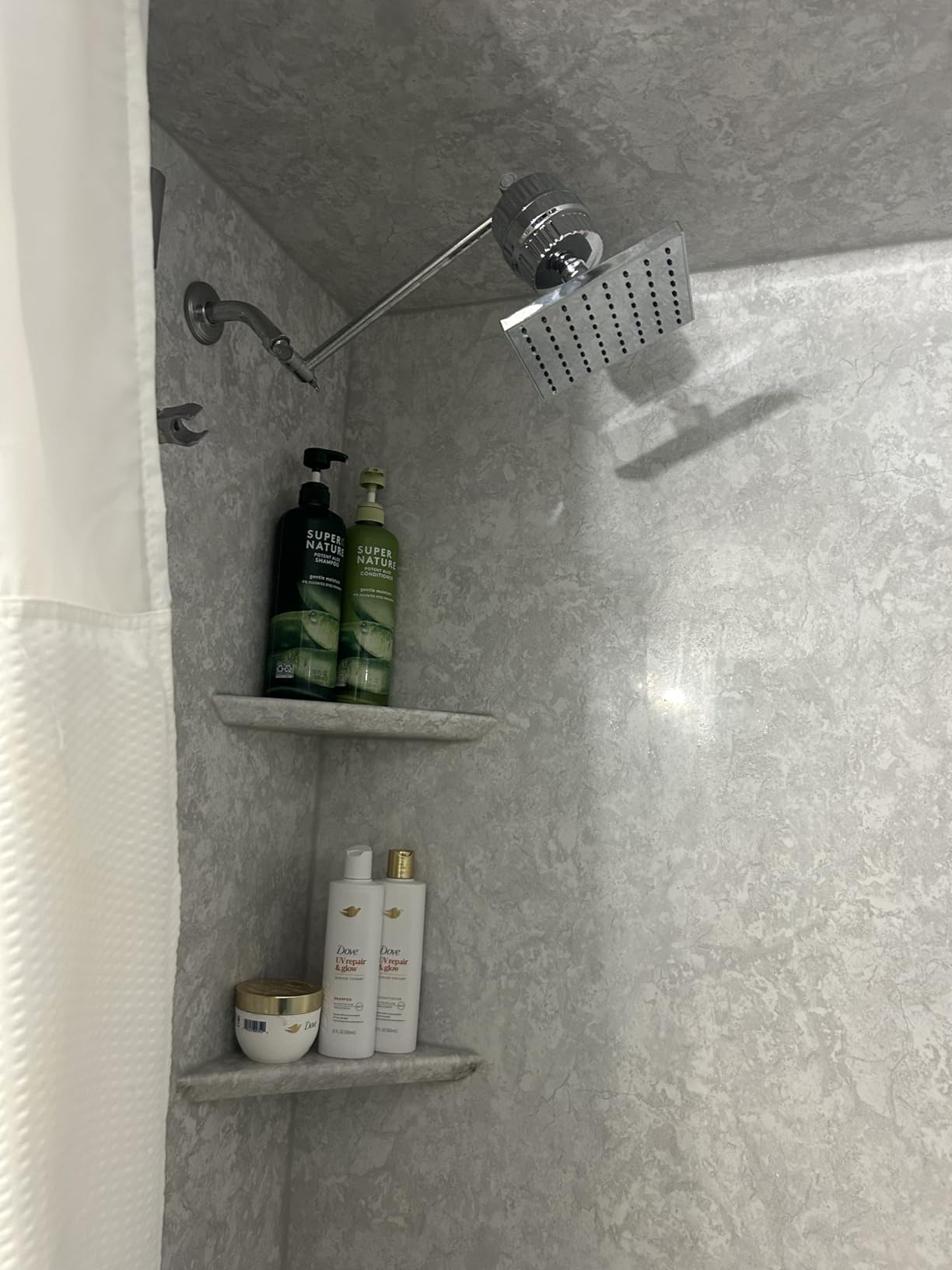
The design is a 6-inch square rain head in matte black, and buyers like how modern it looks, which is not a trivial consideration for a product mounted in plain sight above a freestanding tub.
Three limitations are worth planning around. There is no spray pattern switching at all, so it is rain flow only, and people who want a massage setting should look elsewhere. The drop from the shower arm is short, so an extension rod is frequently recommended. And reviewers note it can leave water spots and residue that need wiping, plus one report of a slight drip at the filter joint even when tightened.
Who this suits
Anyone who asks the question is heavy metals actually removed, rather than claimed. The NSF/ANSI 177 certification is the only independently tested verification of filtration performance on this list, and it is the reason we trust the chlorine numbers here more than elsewhere.
It is also a clean aesthetic match for a modern bathroom, and the balanced flow control avoids both weak pressure and excessive water use.
Who should skip it
Skip it if you want spray variety. A single rain pattern is a real limitation in a house with more than one shower user, and it is the most common reason people return filtered heads in general.
Plan on a shower arm extension, and if you are on a chloramine system, the calcium sulfite layer here handles it, but the shorter 3 to 4 month cartridge life means more frequent changes than the six-month inline units.
Filter Media Explained: What Each Layer Actually Removes
Most confusion in this category comes from stage counts. A cartridge with 20 layers may have four real media and sixteen rounds of the same bead. Here is what the media you will actually encounter does.
KDF-55 is a copper-zinc alloy that triggers an oxidation-reduction reaction, converting chlorine into harmless chloride ions while binding lead, copper and iron on the way through. It is the single most important layer in a quality shower filter and the first thing to look for on a specification list.
Activated carbon works by adsorption, trapping residual chlorine, organics and odor on a large porous surface. Coconut shell carbon is the common form. Carbon is the reason water tastes neutral and hair stops smelling like a pool, but it is not effective against chloramine.
Calcium sulfite is the media you need if your utility uses chloramine, which is chlorine bonded with ammonia and used by a growing number of municipal systems. Standard carbon struggles with it. If you want one diagnostic question for a chloraminated area, ask any retailer whether the cartridge contains calcium sulfite, because the answer determines whether the unit will do anything at all for you.
Vitamin C in ascorbic acid form neutralizes residual chlorine quickly, which is useful in cartridge form because it also protects the KDF layer and extends the useful life of the carbon. It depletes faster than the other media, which is why a vitamin C cartridge is usually the first thing to change.
Ceramic and tourmaline mineral media adjust pH and condition the water so it feels softer and produces less soap scum. This is where much of the well-reported skin and hair benefit comes from, and it is also where the honest limit sits. Conditioning is not removal, and the magnesium and calcium stay in the water.
Ion exchange resin is the only mechanism that actually removes hardness. Resin beads trade sodium ions for calcium and magnesium, so the hardness leaves the water. This is what a point-of-use softener does, and it is why a softener needs periodic recharging with salt. A filter with mineral media and a softener with resin are solving two different problems, and only one of them is removal.
What to Look For Before You Buy
Certification beats stage count. NSF/ANSI 177 verifies chlorine reduction performance independently, and WQA certification is the other mark worth trusting. Neither is common in this category, which is why only one unit on our list carries one. A 20-stage or 33-stage claim is not a certification and is frequently padded. The filler stages people complain about on forums are typically magnetic balls and far-infrared or maifan beads, which do no filtration work you can measure.
Check pressure before you choose a shape. Every filter adds some resistance. High-flow and high-output inline designs minimize it, and filtered shower heads often improve perceived pressure through nozzle engineering. If your household pressure is already marginal, fix that first or choose a high-output inline unit rather than a multi-stage head.
Look for a stated filter life in gallons. Capacity in gallons lets you work out your own replacement schedule. Inline multi-stage cartridges typically run several months, vitamin C cartridges far less, and high-capacity units are rated in the 10000 gallon range. A gradual pressure drop is the most reliable signal that a cartridge is spent.
Factor in the cartridge, not the unit. The ongoing number is what determines whether a filter is worth it. Carbon-heavy cartridges need frequent changes, six-month multi-stage cartridges are the sweet spot for most households, and proprietary refills that only one seller stocks are the most common long-term trap.
Match the media to the water. Chlorine only means KDF plus carbon is sufficient. Chloramine means calcium sulfite is mandatory. Heavy metals and verified reduction mean you need a certification, and genuine hardness means you need ion exchange rather than anything in this article.
Installation and Maintenance
Installing any unit on this list takes between two and ten minutes and needs no plumbing experience. You need one adjustable wrench for stubborn existing heads, a roll of PTFE thread seal tape and a cloth.
First, unscrew your existing shower head. If it is stuck, use the wrench with a cloth over the arm to protect the finish, and work the head back and forth rather than pulling straight.
Second, wrap two or three layers of thread seal tape around the shower arm threads. This step is where most leak reports come from, and generous tape on both the filter-to-arm and filter-to-head threads solves nearly all of them.
Third, screw the filter onto the arm by hand until snug. Do not use the wrench on the plastic housing. Cracked housings in this category are almost always overtightened, not faulty.
Fourth, re-tape and attach your shower head or the supplied head. For a new cartridge, run the shower for one to two minutes, or five to ten if it is carbon-heavy, before you use it on your skin, because carbon dust flushes out at the start.
Fifth, hand-check the connections quarterly, and replace the cartridge on the schedule the unit states. A monthly glance is enough to catch the weep that becomes a stain later.
When a Shower Filter Is the Wrong Tool
There are three situations where no shower filter is the right purchase, and skipping them saves money.
If your water is severely hard and the evidence is limescale on glass, a whole-home or point-of-use ion-exchange softener is the correct category. Filters condition the water, they do not remove the minerals, and no stage count changes that.
If your water comes from a well, iron, hydrogen sulfide and sediment need specific media and often a treatment plan rather than a single cartridge. Start with a water test before buying any shower product.
And if your household pressure is genuinely low, that is a plumbing issue. Fixing it improves every fixture, whereas a filter works around it.
Frequently Asked Questions
Do shower filters for hard water actually work?
Partially, and the difference matters. KDF-55, activated carbon and calcium sulfite media neutralize chlorine, chloramine and heavy metals effectively, and mineral media soften the feel of the water and cut soap scum. None of them remove calcium and magnesium ions, so limescale keeps returning. Only a salt-based ion-exchange softener truly softens water.
Do dermatologists recommend shower filters?
Board-certified dermatologists cited in the popular press treat shower filters as a reasonable low-cost intervention for skin and hair, and the mechanism is straightforward: chlorine and dissolved minerals strip natural oils and coat hair strands, which tightens skin and worsens itch and eczema flare-ups. The caveat they raise is that a filter treats the symptom at the tap rather than the source in your supply.
What are the downsides of using shower filters?
They do not remove hardness minerals, they reduce water pressure slightly, cartridges need replacing every one to six months at a running cost, multi-stage housings are bulky, many stage counts are decorative filler, and results take two to three weeks for hair. In severe hard water a filter is simply the wrong tool and you need an ion-exchange softener.
How do I know if I have hard water?
Look for a chalky white crust on faucets, shower doors and tile grout that scrapes off with a fingernail, and soap that will not lather. Then read the hardness figure in your utility’s annual Consumer Confidence Report, or use a few-dollar hardness test strip. The US Geological Survey threshold for hard water is 120 parts per million, about 7 grains per gallon.
How often do you replace a shower filter?
It depends on the media. Vitamin C cartridges run one to two months, carbon-only units two to three months, KDF plus carbon around six months, and high-capacity multi-stage units up to six months or 10000 to 12000 gallons. A gradual drop in water pressure is the most reliable signal that a cartridge has been spent.
Final Verdict
Our pick for the best shower filters for hard water is the AquaBliss SF100, because it does the one job that matters most without asking you to change anything else in your bathroom. It keeps your shower head, installs in under two minutes with no tools, holds pressure and carries more verified owner feedback than anything else we reviewed.
Pick the FEELSO if you want the highest average rating and are willing to replace your shower head, the Cobbe if you want independently certified filtration rather than marketing claims, and the MakeFit if you want the most filtration per dollar spent. Anyone whose main problem is limescale on glass should skip this entire category and look at a point-of-use ion-exchange softener instead, because that is the only device that removes the hardness rather than conditioning around it.
Give whatever you choose two to three weeks before you judge it, and check your utility’s water quality report before you buy. Those two steps alone eliminate most of the disappointment people associate with this category.