
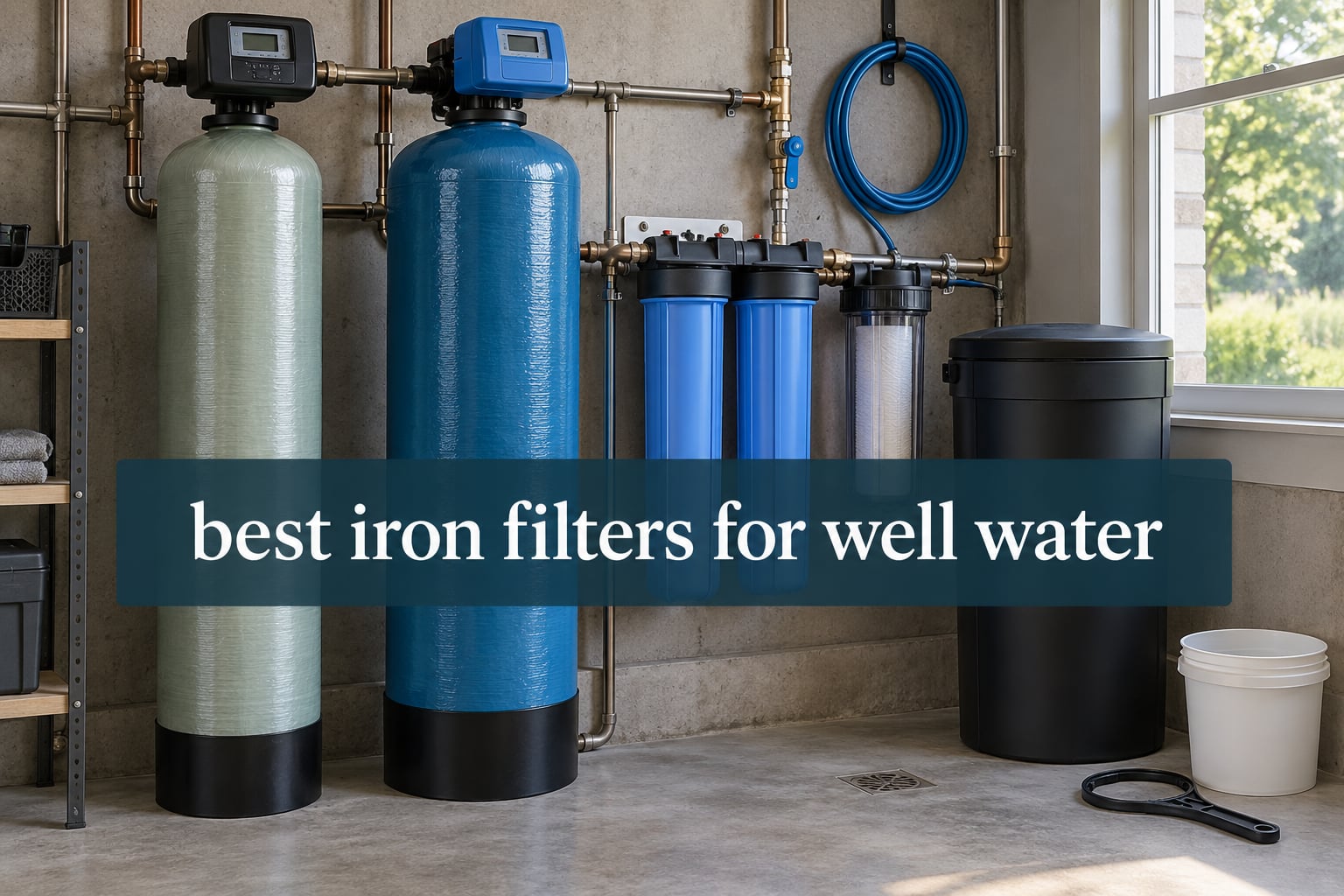
An iron filter for well water is a point-of-entry treatment unit that oxidizes dissolved ferrous iron into solid particles and traps them, protecting fixtures, laundry, and appliances from orange staining and metallic taste. Most systems run on air injection oxidation (AIO), which needs no chemicals, while others rely on replaceable cartridges. Picking the wrong one is the reason so many well owners end up buying twice.
That is the honest problem with searching for the best iron filters for well water: the category mixes single replacement cartridges, three-stage plastic housings, backwashing media tanks, and combination softener systems under one search. They are not interchangeable, and the honest answer depends on your measured iron level, your well pump flow rate, and whether your water carries sulfur or bacteria.
Our team read through the review histories on all ten systems below and compared the published specifications side by side. We weighted the things that decide whether a filter works three years from now: rated iron capacity, flow rate, whether the media is proprietary, and how the system fails when your water is worse than the manual claims.
One warning before you start. If your well has iron bacteria rather than plain dissolved iron, no filter on this list will hold up, and a new tank will plug with red-brown sludge within weeks. We cover that failure mode, plus control valve selection and install order, in the buying guide below.
Table of Contents
Top 3 Picks for Well Water Iron Filtration (October 2026)
Our three headline picks cover three different situations. The Express Water system takes the overall slot on review volume and flow rating, the iSpring WGB32BM gives you the most filtration per dollar spent on media, and the iSpring WGB22BM is the lighter two-stage option if you do not need a sediment stage.
Express Water 3-Stage Iron…
- Iron and manganese 3-stage cartridge system
- 17 gpm flow
- Stainless steel free-standing stand

iSpring WGB32BM Iron Filter
- Iron up to 3.0 ppm and manganese to 1.0 ppm
- Three stages including 5 micron sediment
- 100000 gallon capacity

iSpring WGB22BM Two-Stage…
- Two stages
- no power required
- Reduces iron to 3.0 ppm
- 40 pound shipping weight
Quick Overview of All Ten Systems in 2026
Every system below is a point-of-entry unit sized for a private well. The cartridge systems top out around 3 ppm iron and need scheduled changes, while the media tanks backwash on their own and handle far higher loads.
| Product | Specs | Action |
|---|---|---|
| Express Water 3-Stage Iron and Manganese System |
|
Check Latest Price |
| iSpring WGB32BM Iron and Manganese Filter |
|
Check Latest Price |
| iSpring WGB22BM Two-Stage Iron Filter |
|
Check Latest Price |
 Pentek RFFE20-BB Iron Reduction Cartridge Pentek RFFE20-BB Iron Reduction Cartridge |
|
Check Latest Price |
 AFWFilters Iron Pro 2 Softener and Iron Combo AFWFilters Iron Pro 2 Softener and Iron Combo |
|
Check Latest Price |
 PRO+AQUA Heavy Duty Well Water Filter PRO+AQUA Heavy Duty Well Water Filter |
|
Check Latest Price |
 DuraWater Fleck 5600 SXT Air Injection Iron Eater DuraWater Fleck 5600 SXT Air Injection Iron Eater |
|
Check Latest Price |
 iSpring WCFM400K Air Injection Central System iSpring WCFM400K Air Injection Central System |
|
Check Latest Price |
 Home Master Three Stage Well Water Filter Home Master Three Stage Well Water Filter |
|
Check Latest Price |
 Waterdrop WHF3T-FG 3-Stage Well Water Filter Waterdrop WHF3T-FG 3-Stage Well Water Filter |
|
Check Latest Price |
What Is an Iron Filter and Does It Work on Well Water?
Yes, iron filters work on well water, and they are the standard treatment for dissolved iron above the EPA secondary drinking water guideline of 0.3 mg/L. Iron is not a health hazard at household levels, but it stains everything it touches.
The two forms matter. Ferrous iron is dissolved in the water, roughly clear when you fill a glass, and it is what most well water carries. Ferric iron is already an oxidized particle, which is why it shows up as orange flecks and sediment.
Ferrous iron is the problem, because it passes straight through a standard sediment filter. It has to be oxidized first into a solid particle, then strained out. That oxidation step is what separates an iron filter from a spin-down sediment housing.
How an iron filter works, step by step:
Raw well water enters the treatment tank through the top of the tank.
Air is injected into the water, either by a compressor-driven control valve or by drawing air down a dedicated line.
The injected oxygen converts ferrous iron into ferric iron, changing it from a dissolved particle into a solid one.
Solid iron particles become trapped in the media bed of greensand, catalytic media such as Katalox Light, Birm, or a manganese-coated carbon.
On a backwash cycle, the tank reverses flow and flushes the captured iron to the drain, then returns to service.
Cartridge systems skip steps three through five. They strain already-oxidized iron out of the water, which is faster and simpler but caps out at a much lower iron level and requires manual changes every few months.
Which Iron Filter Matches Your Test Result?
Match the system to your measured result, not to the marketing. Your lab report gives you an iron number in mg/L, which is numerically the same as ppm for water, and that number decides which technology you need.
0 to 3 ppm iron: a cartridge system handles this range comfortably. The Pentek RFFE20-BB, the Home Master three-stage unit, and the Waterdrop WHF3T-FG all sit in this band, and the iSpring models are rated to 3.0 ppm with manganese to 1.0 ppm.
3 to 7 ppm iron: a backwashing media tank is the safer bet, because cartridges at their rated ceiling give you no margin. Owners on wells in this band commonly report staining returning within weeks on a cartridge-only setup.
7 to 15 ppm iron: you want a dedicated air injection or catalytic media tank with a real control valve. The DuraWater Fleck 5600 SXT unit sits here, and reviewers on 14 ppm wells report test readings of 0 ppm after installation.
15 ppm and above: stop and talk to a water treatment professional. The capacity claims in this category are manufacturer figures, and a well that swings seasonally with the water table can exceed them in a single dry month.
Manganese is the number people miss. The EPA secondary guideline is 0.05 mg/L, and the iSpring systems here are rated to 1.0 ppm manganese, which is a meaningful margin. Ask your lab for both numbers in the same report.
1. Express Water 3-Stage Iron and Manganese System
Express Water Whole House Water Filter System, Iron & Manganese, 3-Stage
Max flow 17 gpm
Operating pressure 20-80 psi
Weight 57 pounds
Filter life 6 months
Pros
- Targets iron and manganese directly
- Heavy-duty stainless steel stand and frame
- Pressure gauges and release buttons on each housing
- 17 gpm rating covers whole-house demand
- NSF-certified cartridges are easy to source
Cons
- Does not reduce TDS
- Three stages means three cartridges to track
This is the system we would put in a house with heavy well usage and iron in the low single digits, mostly because of the review volume behind it. At over 2700 ratings it holds an average of 4.5 stars with 80% of buyers giving five stars, which is the deepest field history in this group by a wide margin.
Technically it is a freestanding stainless steel system with three cartridge housings, a 17 gpm maximum flow rating, and a working pressure range of 20 to 80 psi. It is rated to 100000 gallons of capacity and runs on manual operation with no control valve to program.
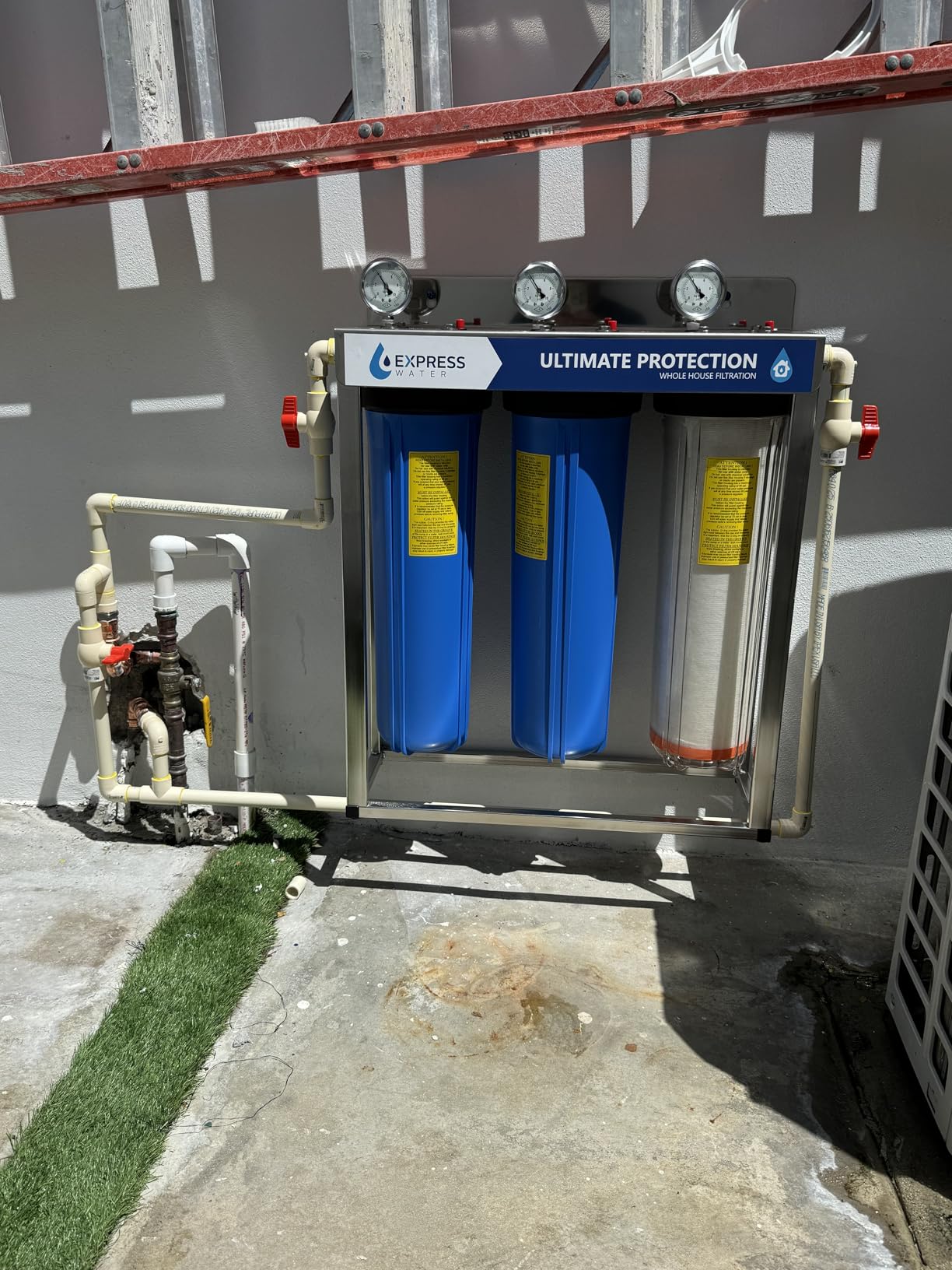
Buyers report strong stain and odor reduction on well water, and the gauges plus pressure release buttons on each housing make filter changes less of a guessing game. The stainless stand is what separates it visually from the plastic bracket systems, and it holds up in a mechanical room.
The two things to know before you commit. First, all three stages need replacement on a schedule, and the listed filter life cycle is 6 months, so you are managing more than one cartridge at a time. Second, it does not reduce total dissolved solids, so anyone chasing TDS still needs a separate reverse osmosis unit.
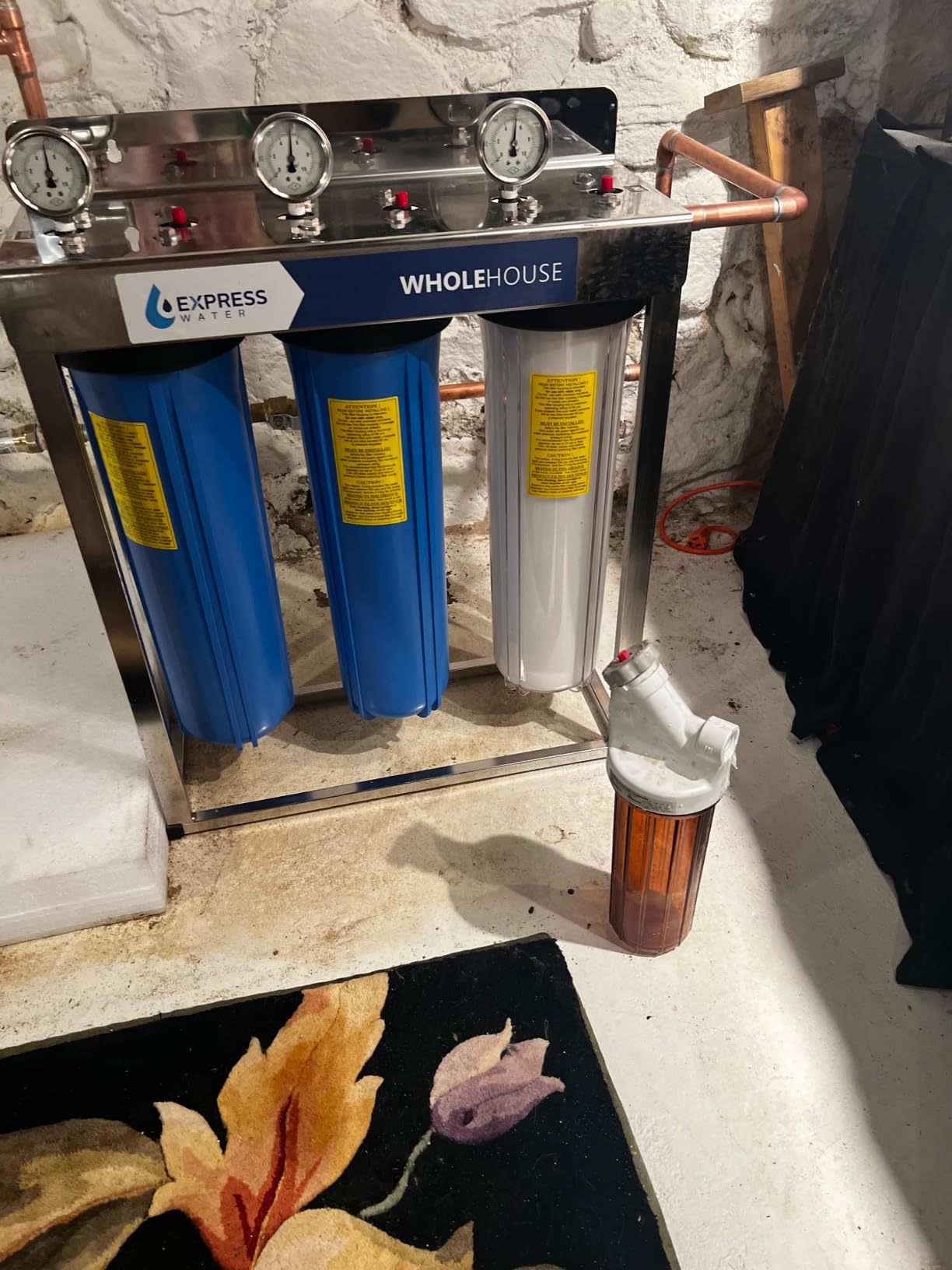
Check the flow rating against your pump
A 17 gpm ceiling gives you real headroom, which matters more than most buyers realize. If your well pump pushes 12 gpm and two showers plus a laundry cycle start at once, you want headroom above your instantaneous demand rather than at your average.
Know what it will not do for you
This is a cartridge system, so it is capped near 3 ppm iron and does nothing for hydrogen sulfide. If your water smells like rotten eggs, or your test report reads above 3 ppm, a backwashing media tank is the correct purchase instead.
2. iSpring WGB32BM Iron and Manganese Filter
iSpring WGB32BM Iron, Manganese Whole House Water Filter System
Max flow 15 gpm
Iron to 3.0 ppm
Manganese to 1.0 ppm
1 year limited warranty
Pros
- Catalytic iron media outlasts greensand
- 100000 gallon capacity
- Documented DIY installation
- 15 gpm flow drop suits busy whole-house use
- Responsive technical support
Cons
- Blue housings can seep at the top if not tightened firmly
- Non-sediment cartridges are very heavy with no way to drain them
- Does not reduce TDS
The WGB32BM is the most complete cartridge system here, and at a 4.6 average across 1401 ratings it also has the highest rating in the group. Owners on well water report immediate clarity and taste improvements, and 82% of reviews are five stars.
The stage order runs a 5-micron polypropylene sediment filter, then a coconut shell carbon block, then an FM25B iron and manganese cartridge rated to 3.0 ppm iron and 1.0 ppm manganese. Housings use 1 inch NPT inlet and outlet, rated flow is 15 gpm, and the operating range is 25 to 80 psi.
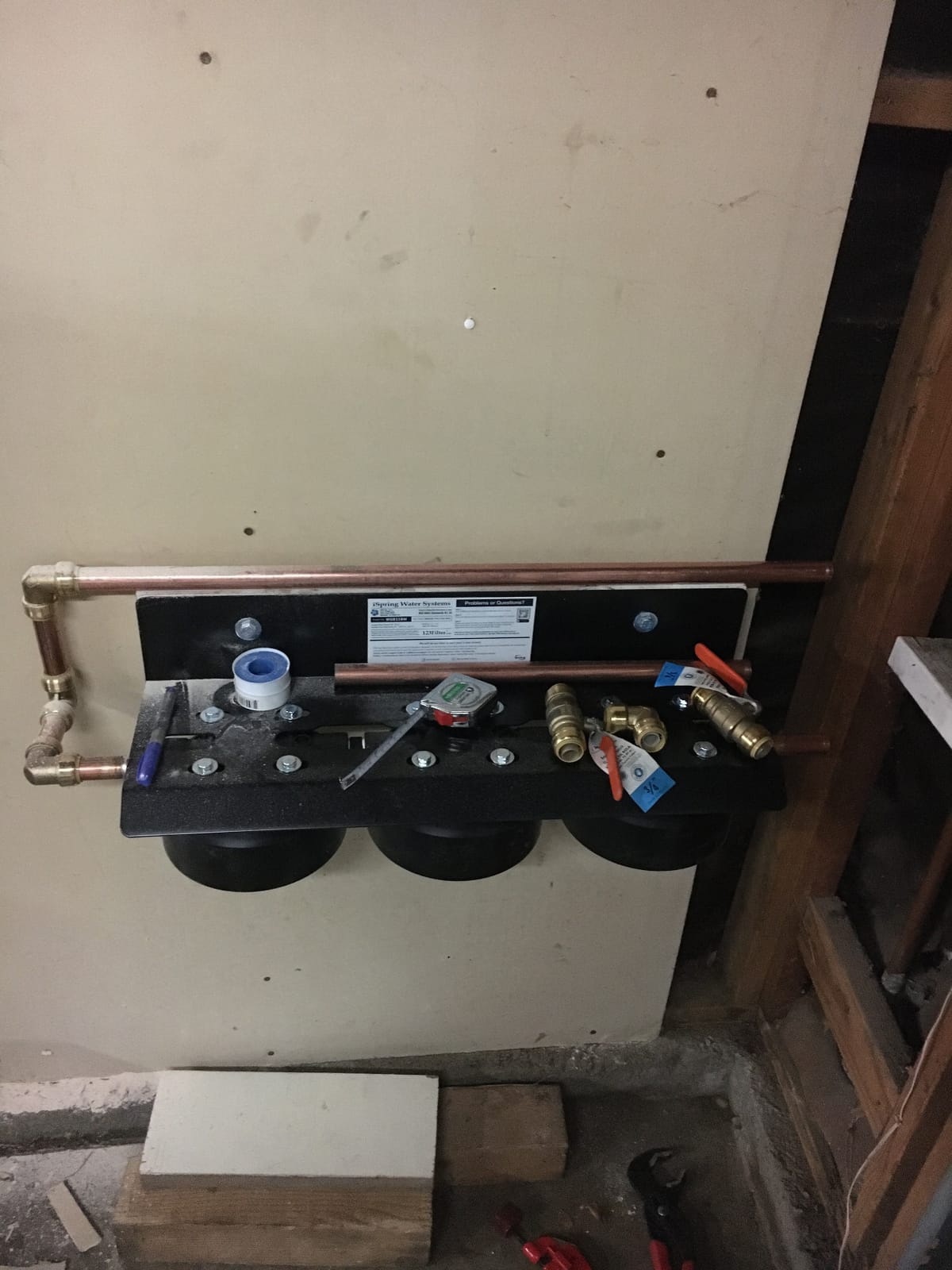
The catalytic media is the technical story worth understanding. Because the media itself is not consumed by oxidation the way greensand is, owners report service life up to three times longer than a greensand equivalent, which changes the real cost per year even though the cartridges still need changing.
The recurring complaints are mechanical rather than filtration related. The blue polycarbonate housings can weep at the top seam if they are not tightened firmly, and the instructions warn against over-tightening without telling you how far to go. The non-sediment cartridges are also heavy and hold water that cannot be drained out before disposal.
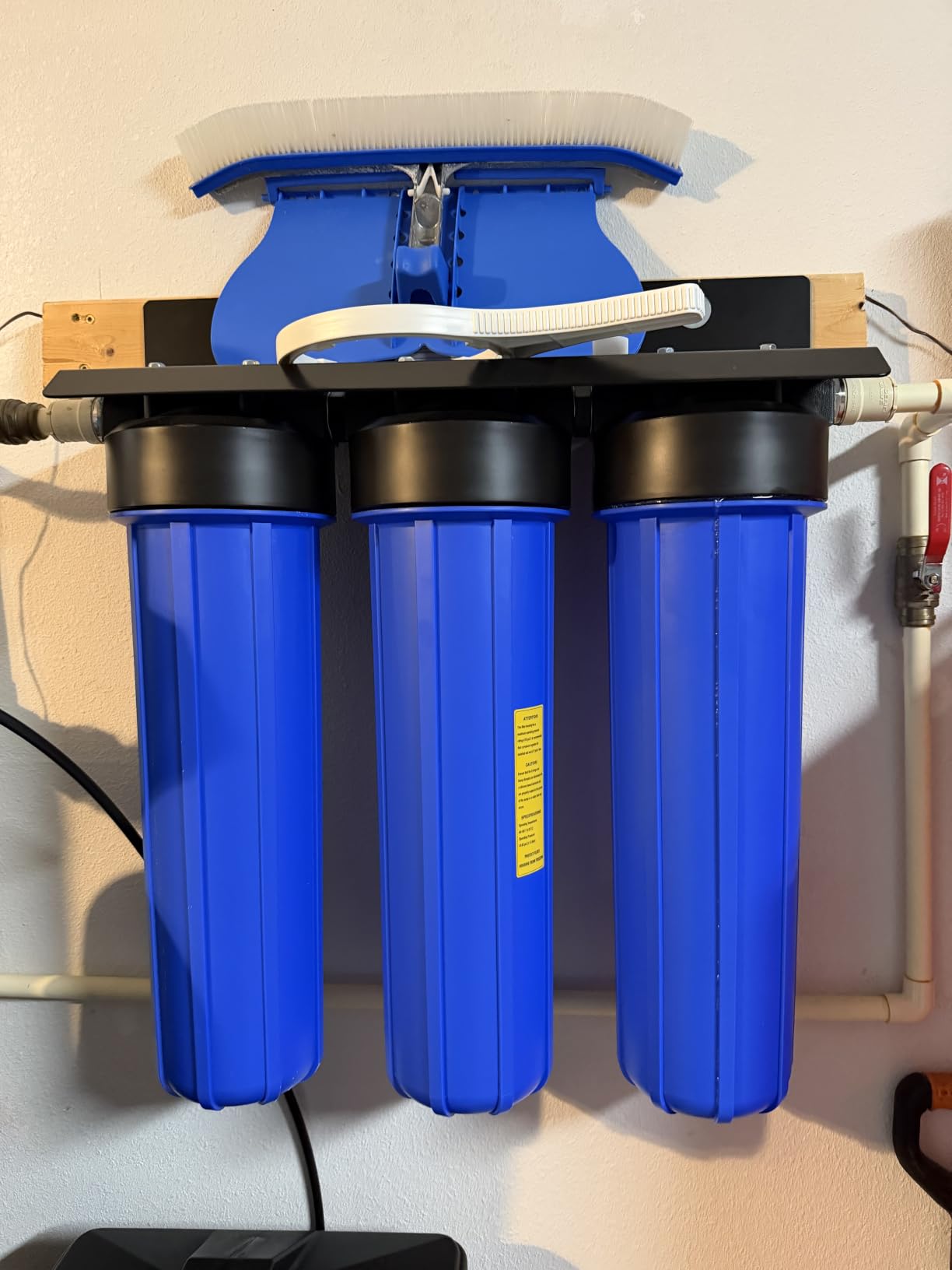
Follow the documented install order
This system is meant to sit upstream of a water softener, and the manual reflects that. Put it ahead of any softener and ahead of a UV unit so the iron is already out of the water before either stage sees it.
Plan for the PEX and torque reality
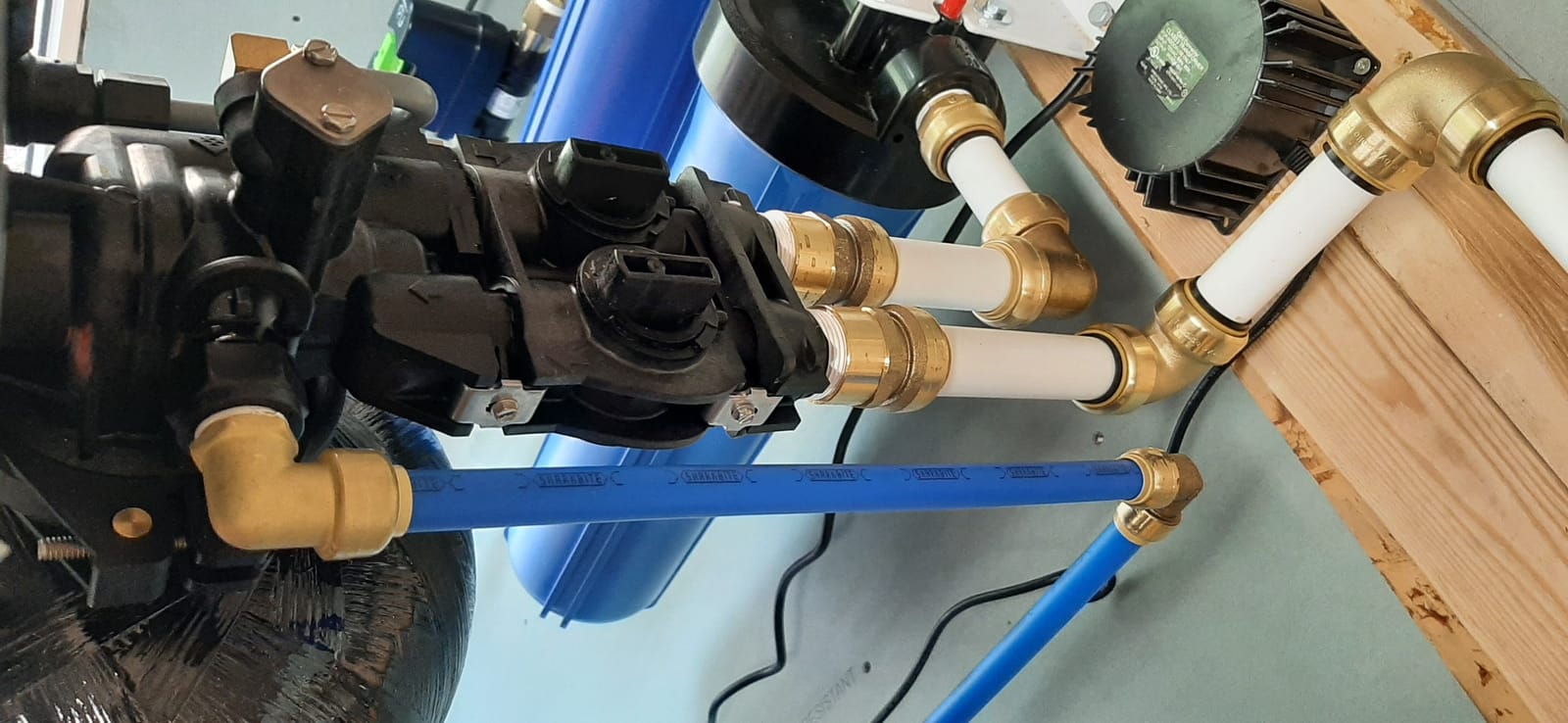
Many owners report leak-free hookups with PEX, but the housing seam issue is a tightening problem, not a fitting problem. If you are comfortable with PEX crimping and have a wrench, this is a reasonable weekend project. If not, budget for a plumber.
3. iSpring WGB22BM Two-Stage Iron and Manganese Filter
iSpring Iron, Mangaese Whole House Water Filter System Also Eliminates Chlorine, Taste, and Odor, 2-Stage Commercial-Grade 20″ x 4.5″ Industry Standard-Sized Filters, 1″ Inlet/Outlet, Model: WGB22BM
Max flow 15 gpm
Two stages
Weight 40 pounds
1 year warranty
Pros
- Two stages covering carbon taste odor and iron
- Iron to 3.0 ppm and manganese to 1.0 ppm
- No electricity required
- Reduces up to 99 percent of chlorine
- US-based lifetime technical support
Cons
- Iron removal capped at 3.0 ppm
- No dedicated sediment stage so a spin-down prefilter helps on dirty wells
- Does not reduce TDS
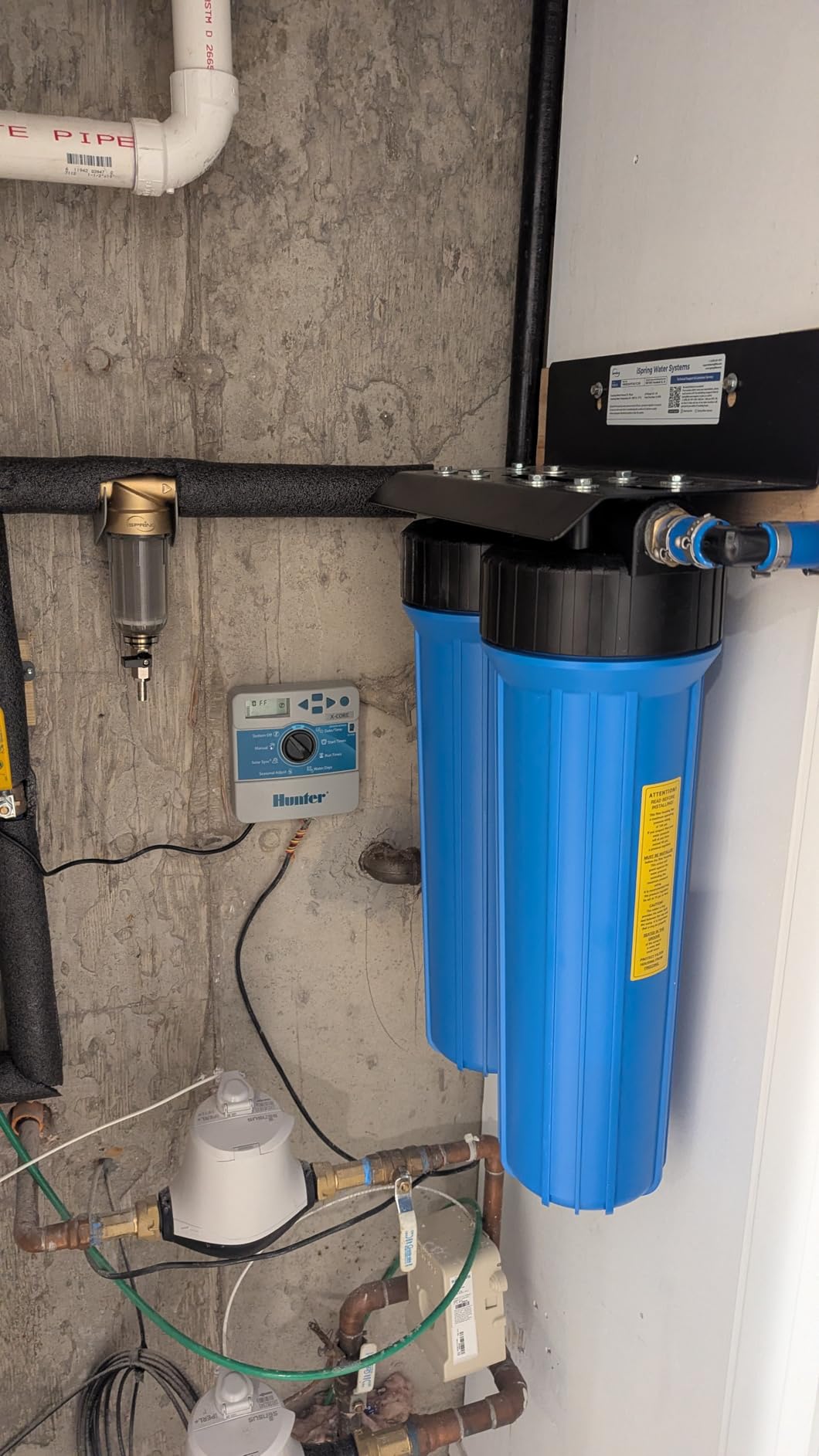
The WGB22BM is the same iron-and-manganese performance as the three-stage model with one less housing and 15 pounds less weight. It also holds a 4.6 average across 820 ratings, with 83% five stars, so you are not giving up owner satisfaction to get the simpler footprint.
Stages are a CTO coconut shell carbon block followed by the FM25B iron and manganese cartridge. The carbon block reduces up to 99% of chlorine, which is the reason most buyers pick it over a bare iron cartridge.
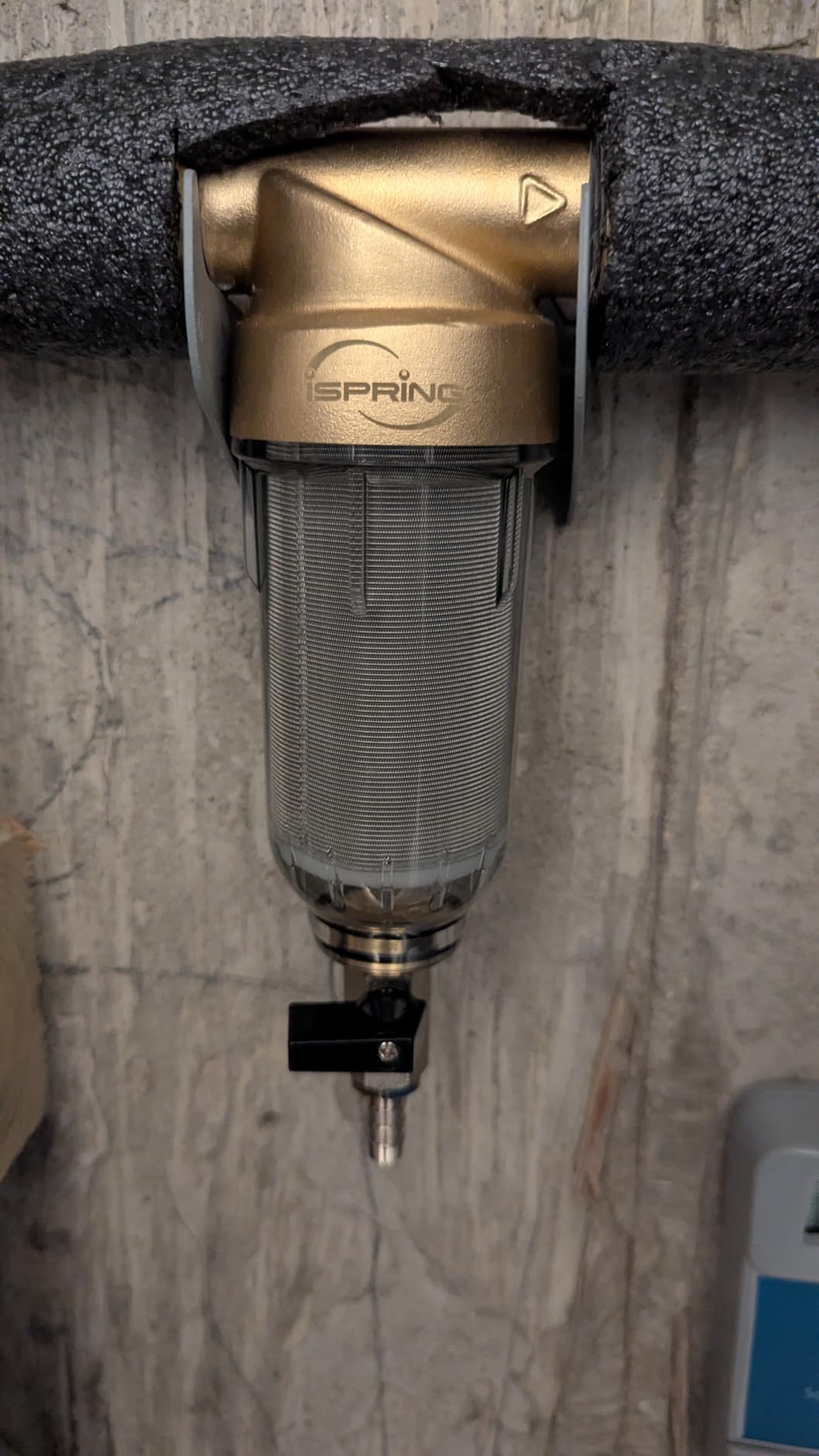
It needs no power at all, and the manual and video guides cover a straightforward DIY install. The manufacturer offers a 1-year warranty plus lifetime technical support from a US-based team, which is more than most systems in this category offer.
There is no dedicated sediment stage, so on a well with any sediment load you should put a spin-down prefilter ahead of it. Reviewers are also directed toward the WCFM500K or WCFM400K systems when iron runs past 3.0 ppm, which is the honest limit of this design.
Pick this one when space is the constraint
At 40 pounds and 16 by 8 by 28 inches, it is the easiest of the whole-house systems here to maneuver into a tight mechanical room or a cottage utility closet. Two housings also means two change-outs instead of three.
Do not skip the prefilter on a silty well
Without a sediment stage ahead of it, the carbon block becomes the first thing iron particles and sand hit. On clear water that is fine. On a well that clouds after heavy rain, add the spin-down.
4. Pentek RFFE20-BB Iron Reduction Cartridge
Pentair Pentek RFFE20-BB Big Blue Water Filter, 20-Inch, Whole House Radial Flow Iron Reduction Replacement Cartridge, 20″ x 4.5″, White
Iron to 3 ppm
About 26000 gallon life
3 to 4 month service life
20 inch x 4.5 inch
Pros
- Manganese activated zeolite media
- Chemical-free and safe for drinking water
- NSF externally tested
- Fits all 20 inch Big Blue and heavy-duty housings
- Helps clear orange and brown fixture staining
Cons
- Single purpose with no carbon or sediment stage
- Only rated to 3 ppm iron
- Needs a sediment prefilter and carbon postfilter for best results
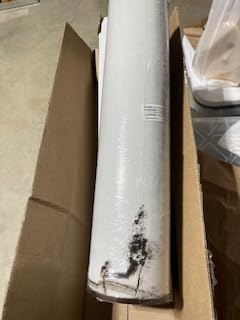
This is a cartridge, not a system, and that distinction matters for how you should read this review. If you already own a 20-inch Big Blue housing on your main cold-water line, this is the cheapest way to add iron reduction to a setup you own.
It is rated for up to 3 ppm dissolved iron across roughly 26000 gallons, and the estimated service life is 3 to 4 months for a household of four at that level. It is longer at lower iron, and the media adds no chemicals and is safe for drinking water.
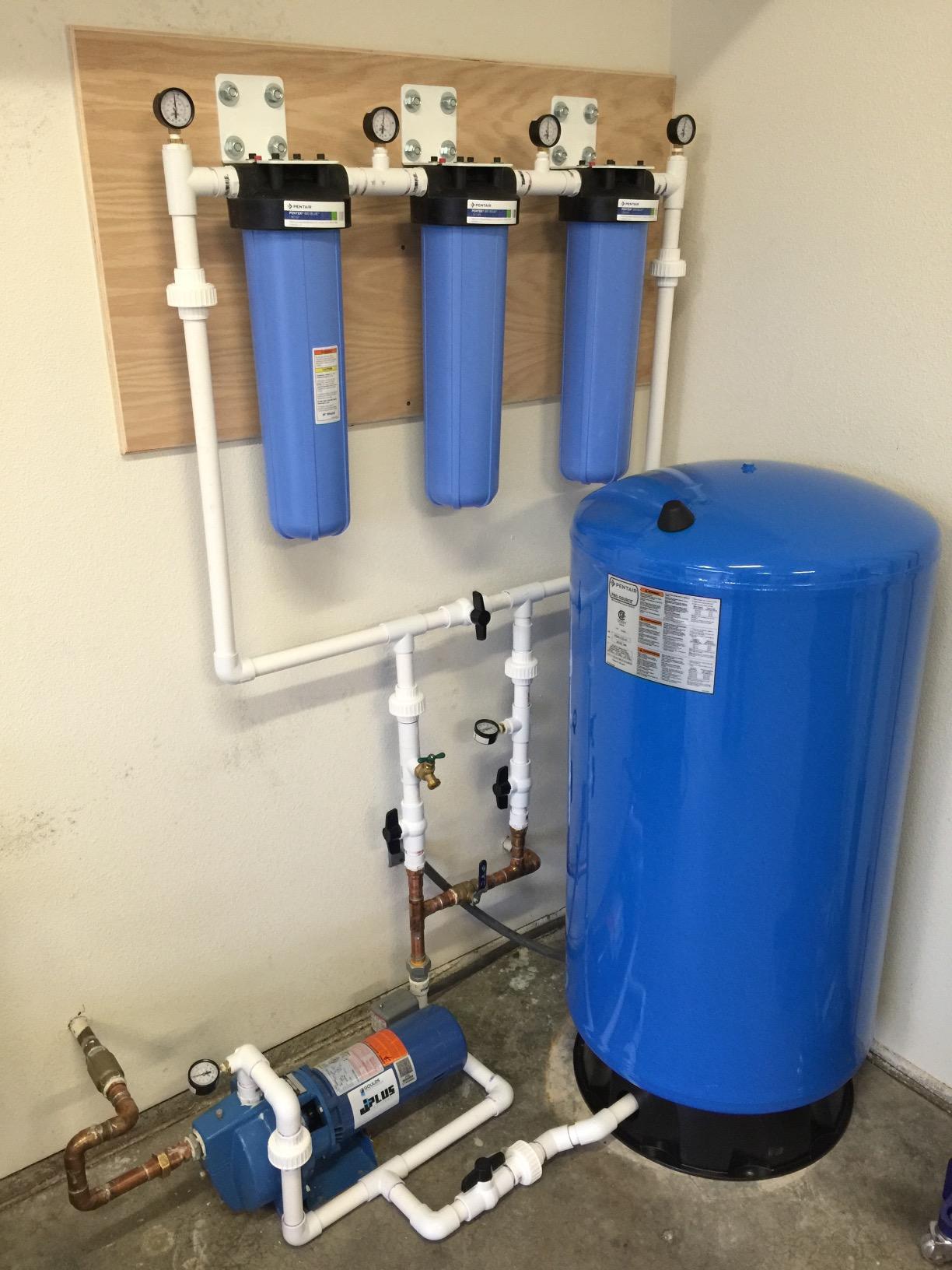
At a 4.6 average across 565 ratings with 80% five stars, it has a long and consistent record. Owners use it as the iron-reduction component inside a larger plumbed train, which is exactly what it is designed for.
It does nothing about sediment, carbon, chlorine, or total dissolved solids. Users who get good results typically pair a spin-down sediment prefilter ahead of it and a carbon stage behind it, and skipping that pairing is where complaints about residual staining come from.
Confirm your housing size first
It fits all 20-inch Big Blue units and other 20 by 4.5 inch heavy-duty housings. If your existing housing is a 10-inch slimline, this cartridge will not fit and you need the RFFE10BB equivalent instead.
Budget for four change-outs a year
At 3 to 4 months of service life for a family of four, you are setting up a recurring calendar reminder. That is the trade for a very low-effort install, and it is the reason this ranks as a stopgap rather than a whole-home answer.
5. AFWFilters Iron Pro 2 Softener and Iron Combo
AFWFilters Iron Pro 2 Combination Water Softener Iron Filter Fleck 5600SXT Digital Metered Valve 64,000 Grain – High Flow for Whole House Use – Removes Hardness, Iron, Manganese, Sediment, Rust
Fleck 5600SXT digital metered valve
64000 grain tank
Iron to 6 ppm
Weight 119.2 pounds
Pros
- Softens and removes iron in one tank
- Iron and manganese rated to 6 ppm each
- Digital metered valve tracks usage and flags leaks
- 5 year warranty with responsive support
Cons
- Setup and programming instructions are thin
- Resin tank arrives very heavy and needs two people
- Does not reduce TDS on its own
This is the only system in the roundup that softens and filters iron in the same tank, which answers the most common buyer question in the forums: whether you need a separate iron filter or a softener with iron capability built in. The answer depends on your hardness and your iron number, and this covers both at once.
It uses a Fleck 5600SXT digital metered control valve on a 64000 grain tank, removing hardness plus iron up to 6 ppm and manganese up to 6 ppm, along with rust and sediment. The valve meters usage and can detect leaks, and the tank ships preloaded with resin.
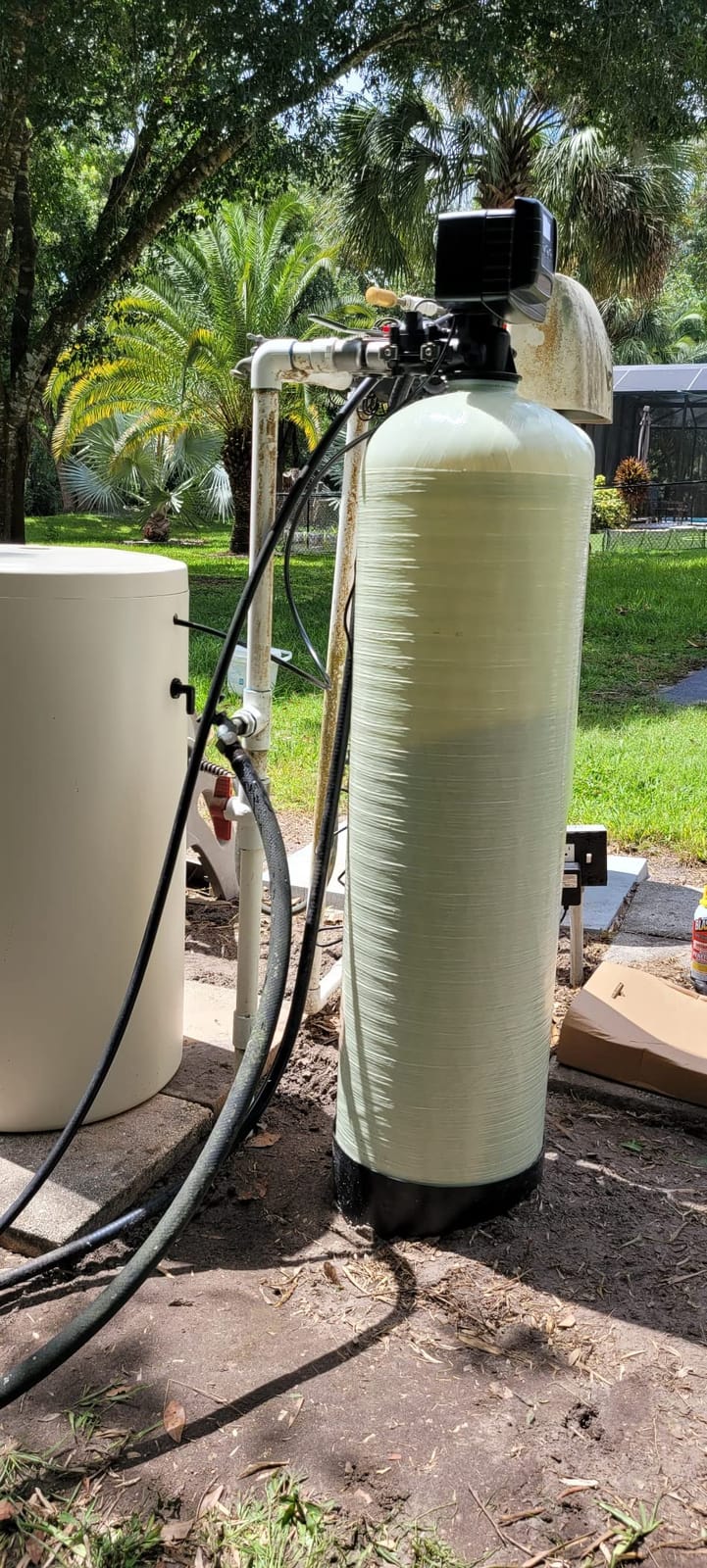
Owners on badly ironed well water report dramatic improvement within days, including drinking water straight from the tap. Reviewers consistently confirm it clears orange water, rotten-egg odor, and rust staining while softening at the same time, which is the whole argument for this layout.
The practical problem is installation. The setup and programming documentation is thin enough that owners look for outside resources, and the resin tank arrives weighing over 119 pounds, so you need a dolly and at least two people. You also need to understand the drain line and bypass connections.
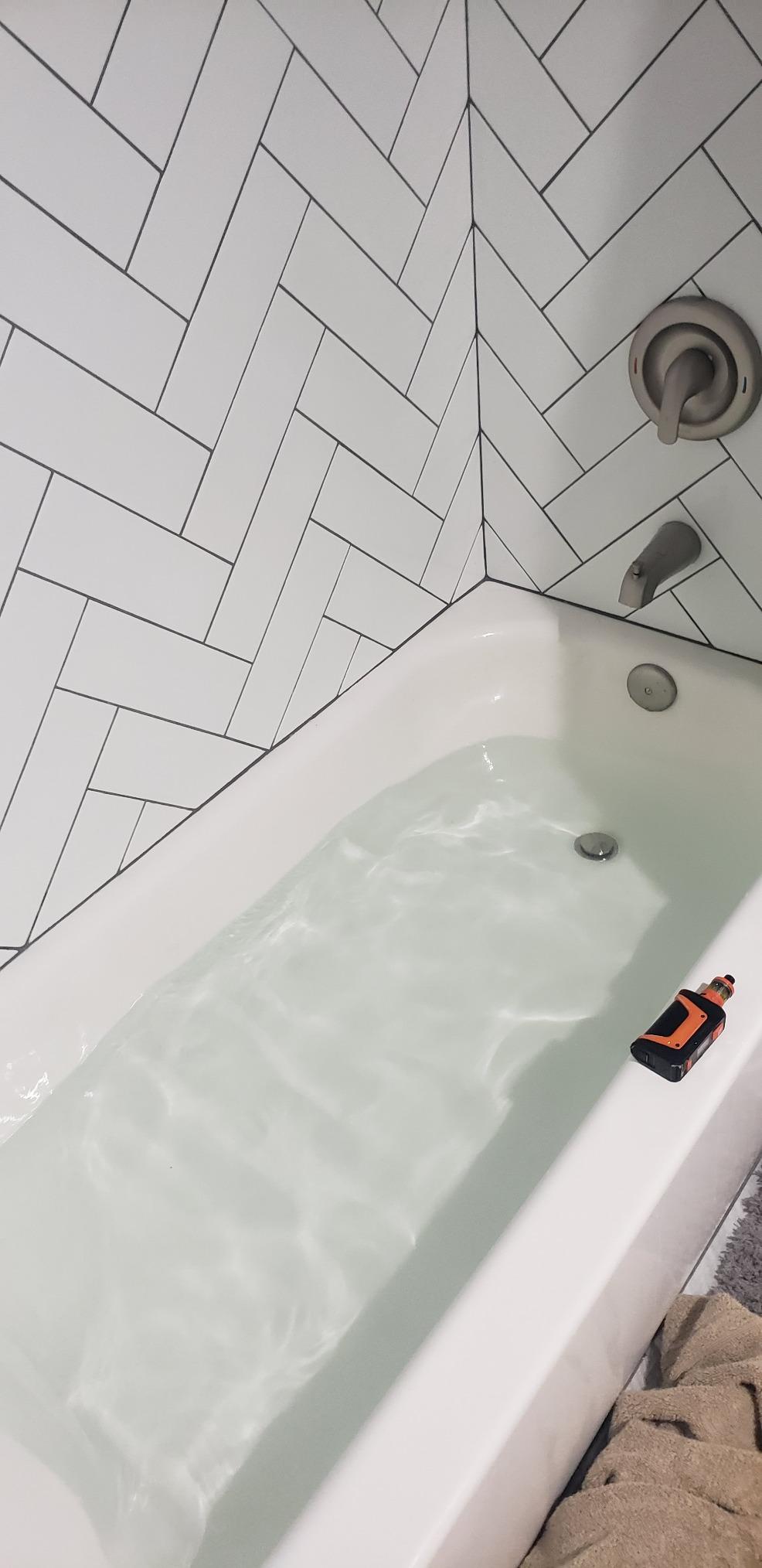
Check the Fleck 5600 valve against your water
The Fleck 5600 is the most widely recommended valve in the generalist world, and it is not always the right one. Experienced plumbers on r/WaterTreatment repeatedly argue the Fleck 2510 is the better choice on rough, iron-heavy water, and a Terry Love thread notes the 5600 SXT is very heavy while leaving only about an inch of media. That is a discussion to have before you commit.
Know when one tank is the wrong answer
A single vessel means one regeneration cycle serves two jobs, so on a house with serious hardness and serious iron at the same time, throughput suffers. Two dedicated tanks sized individually is often the better long-term architecture, even though it costs more space.
6. PRO+AQUA Heavy Duty Well Water Filter
PRO+AQUA Heavy Duty Whole House Well Water Filter System
1 cubic foot media tank
10 gpm rated flow
Height 57 inches
1 or 3 year registered warranty
Pros
- Widest contaminant claims in this group
- Programmable auto-flush intervals
- 57 inch tall and narrow footprint
- Built in the USA with commercial-grade components
Cons
- Lowest average rating here at 4.1 stars
- 10 gpm rated flow is the lowest in the group
- Does not reduce TDS
This system makes the broadest contaminant claims of anything we reviewed, naming iron, manganese, hydrogen sulfide, heavy metals, VOCs, pesticides, lead, uranium, radium, and radionuclides in a one cubic foot media tank. Whether that breadth holds up on your water is the question to answer with a test, not a claim.
Mechanically it is a fiberglass-lined polyethylene tank with a programmable backlit digital display, adjustable auto-flush intervals, a durable bypass valve, and prefilled resin. It is built in the USA with commercial-grade components, and the warranty is 1 year standard or 3 years with registration.
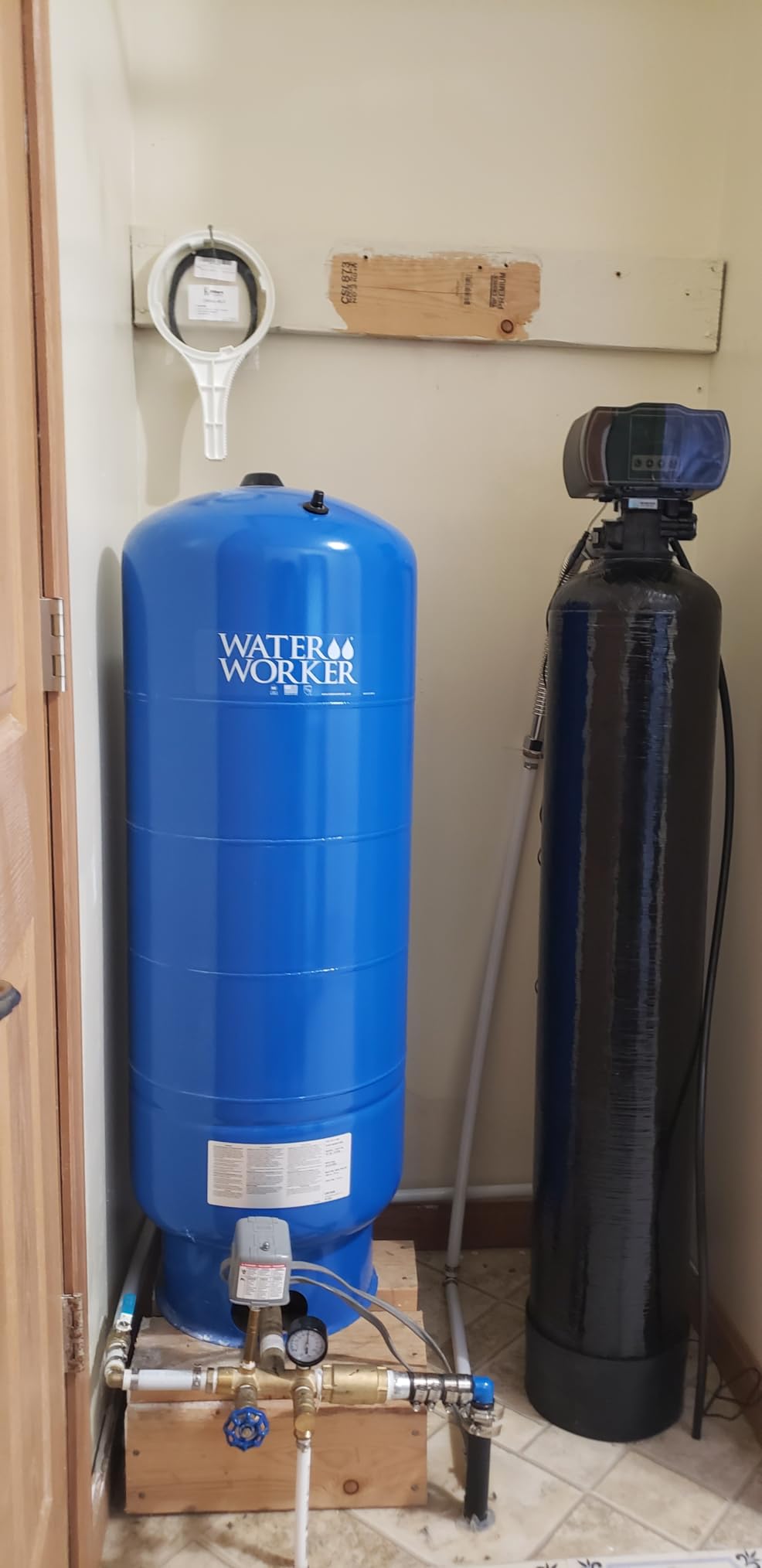
Programmability is the real feature. Being able to tune the auto-flush interval to your own water quality and usage pattern is not something the cartridge systems in this roundup offer at all, and on a well with a seasonal water table it is genuinely useful.
It also carries the lowest average rating here at 4.1 stars with 13% one-star reviews, and the 10 gpm rated flow is the lowest in the group. Owners in larger homes with several bathrooms notice that ceiling. The manufacturer claims 99% contaminant removal without the third-party certification data that competitors publish, and that gap is worth weighing.
Check the contaminant list against your test report
Only buy this if your lab results show a contaminant on that list. If your water simply has iron and manganese under 3 ppm, a simpler cartridge system does the same job with more independent data behind it.
Measure the ceiling height first
At 57 inches tall and 9.5 inches wide, the tank is narrow and suits a tight mechanical room, but it will not fit under a standard low-ceiling crawlspace. Measure before you order.
7. DuraWater Fleck 5600 SXT Air Injection Iron Eater
DuraWater Fleck 5600 SXT Air Injection Iron Eater Filter 1.5 cu ft, Black
1.5 cubic feet media in 10x54 tank
Fleck 5600 SXT valve
Weight 65 pounds
10x54 mineral tank
Pros
- Air injection oxidizes iron with no chemical feed
- Owners on 14 ppm wells report 0 ppm readings
- Handles H2S rotten-egg odor as well as iron
- Catalytic carbon media in a full 1.5 cubic feet tank
Cons
- Daily 15 minute default backwash can overload a septic drain field
- Air injection cone can weep a small amount of water
- Needs a sediment prefilter upstream
This is the closest thing to a textbook air injection oxidation system in the roundup, and it is the right answer for a well reading above 7 ppm. It holds a 4.5 average across 364 ratings with 78% five stars, and owners on 14 ppm iron report test readings of 0 ppm after installation.
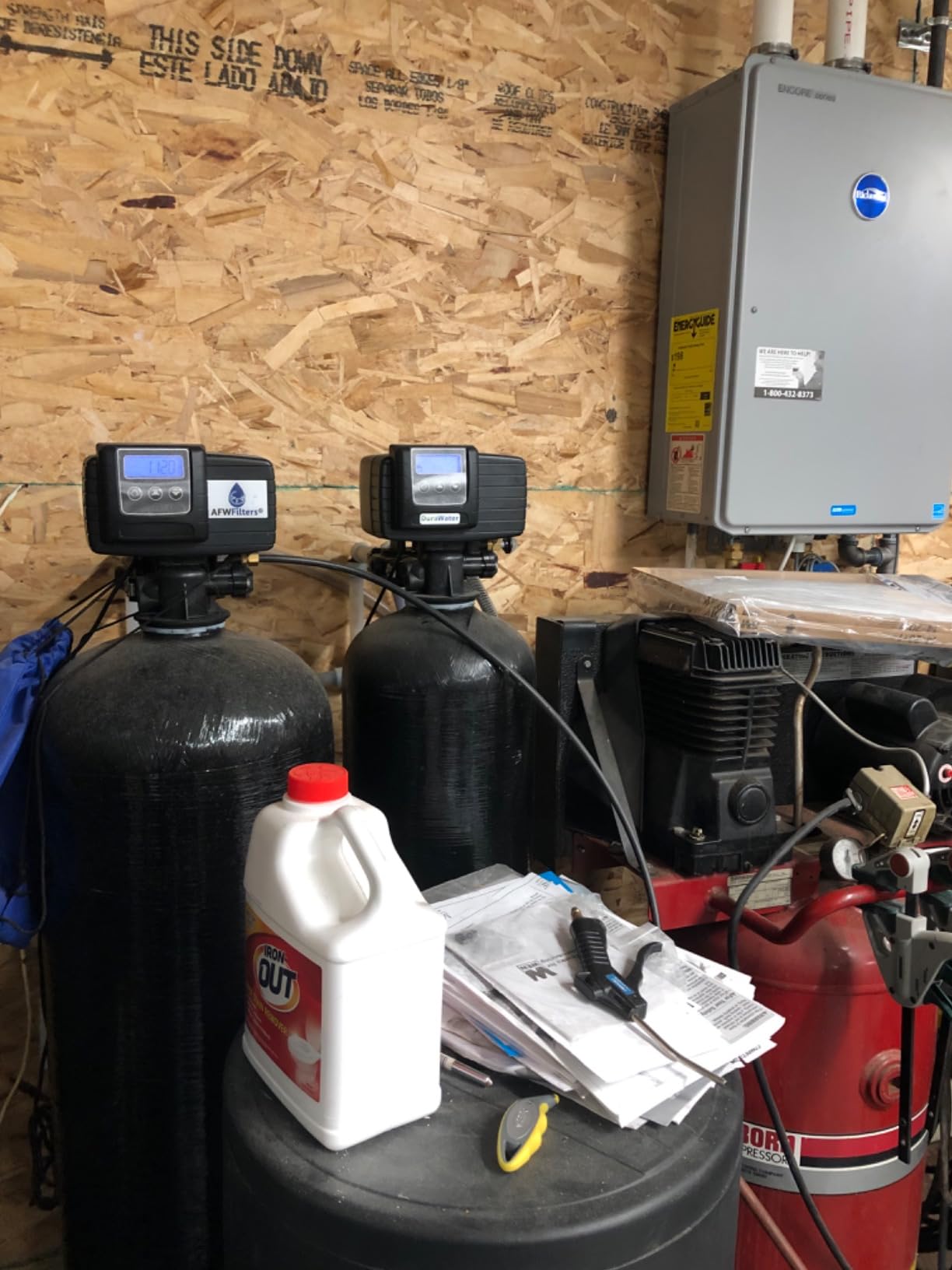
The tank holds 1.5 cubic feet of Centaur catalytic carbon media in a 10×54 mineral tank, controlled by a Fleck 5600 SXT digital valve with a 1 inch plastic bypass valve included. The valve runs a daily automatic backwash that cleans the media and flushes accumulated contaminants to drain.
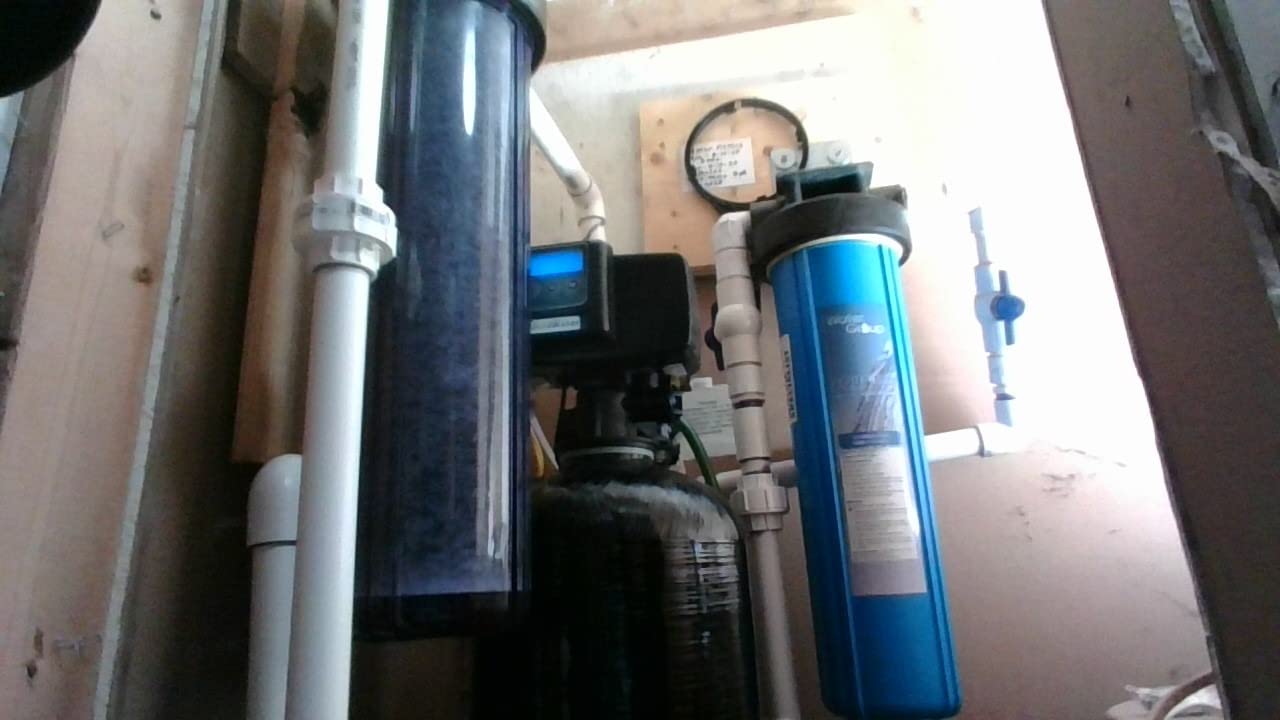
Two things make it stand out. It is genuinely chemical free, so there is no peroxide or oxidant cost and nothing to store, and it handles hydrogen sulfide alongside iron, which covers the two complaints most well owners have at the same time. One owner replaced a carbon stage entirely once this system took over odor control.
Also worth knowing: the air injection cone can weep a small amount of water when it draws air in, and there are no instructions on draining the tank or how much media to add when you recharge. Put a sediment or spin-down prefilter upstream so flakes stay out of the valve.
Change the default backwash schedule if you are on septic
The factory setting is a daily 15-minute backwash, which is more water than a septic drain field should receive on a routine basis. Set a longer interval before you start, and confirm the drain route with whoever services your septic.
Set regeneration for a time nobody is home
Owners in the forums treat cycle timing as the single most useful thing to adjust on any backwashing valve. A schedule that runs at 2 a.m. keeps the drain demand off your peak usage window and stops the noise complaint you would otherwise get.
8. iSpring WCFM400K Air Injection Central System
iSpring WCFM400K Whole House Iron and Manganese Water Filter System, Digital Control with Automatic Regeneration & Air Injection, Set & Forget Design
12 gpm max flow
Height 66.8 inches
NSF ANSI Standard 61 media
1 year warranty
Pros
- Air-only automatic regeneration with no chemicals
- Set and forget with no routine cartridge swapping
- One owner reports five years of flawless service
- Compact footprint versus a three-stage stack
Cons
- Does not remove hydrogen sulfide and can be damaged by it
- 12 gpm flow rating is below the cartridge systems
- Heavy at 104 pounds and nearly 67 inches tall
The WCFM400K trades a lower flow rating for a single tall tank that regenerates itself using nothing but air. It holds a 4.5 average across 202 ratings, and owners describe night-and-day water quality improvement after installation with strong support response from the manufacturer.
Regeneration runs on water pressure rather than electricity, using oxidation reduction potential with air injection and catalytic media, with customizable auto-flush intervals on a digital control valve. The media is NSF/ANSI Standard 61 certified, the listed capacity is 400000 gallons, and the temperature rating reaches 140 degrees F.
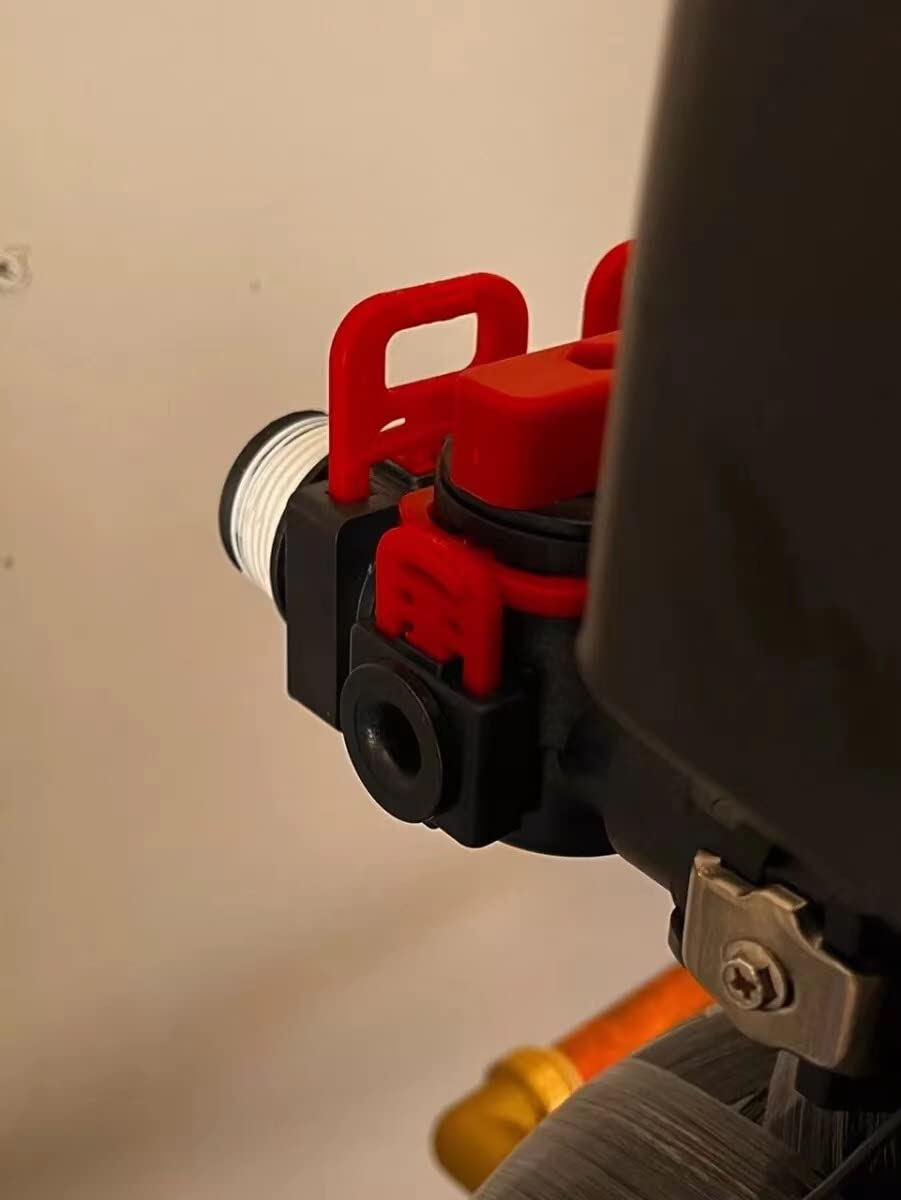
The set-and-forget appeal is genuine. One owner reports five years of flawless service on a well setup, and support staff have shipped replacements for a faulty head unit and a cracked head thread rather than making owners hunt for parts.
The hard limitation is hydrogen sulfide. This system does not remove H2S, and the manufacturer states that H2S-contaminated water can damage it, directing owners to the WCFM500K for that case. There are also isolated reports of a digital head failing after two days and another unit cracking at 2.5 years, so warranty terms matter here.
Test for sulfur before you order
If your water has a rotten egg smell at the tap, stop and choose a system specified for H2S instead. Installing a system that cannot handle it wastes money and can damage the head unit you just paid for.
Check that 66.8 inch height will clear your ceiling
The tank stands taller than a standard counter and weighs 104 pounds. Measure the vertical clearance and confirm the floor can take a loaded vessel before this one goes in.
9. Home Master Three Stage Well Water Filter
Home Master Whole House Three Stage Water Filtration System with Fine Sediment, Iron and Carbon, Blue
15 gpm max flow
Iron and manganese to 3 ppm combined
2 year parts warranty
Weight 48 pounds
Pros
- Engineered for well water
- 15 gpm on 1 inch ports improves pressure
- Long-term owners report 6 to 11 month filter life
- Fine 1 micron stage visibly polishes water
- Manufacturer follows up annually
Cons
- Housing O-rings can pop out of the groove and leak
- Plastic connectors on copper can leak
- Cartridge identification is confusing
The Home Master system is engineered specifically for well water and pairs a fine sediment stage with iron reduction and carbon. It holds a 4.4 average across 207 ratings, and multiple detailed long-term reviews confirm dramatic iron reduction alongside better pressure than smaller systems.
Rated removal is up to 95% of iron, manganese, sediment, and taste and odor chemicals at up to 3 ppm combined load, across a 100000 gallon capacity. The sediment cartridge is a 4-layer 25-10-5-1 micron replaceable unit with high dirt holding capacity, in radial flow housings with 1-inch ports.
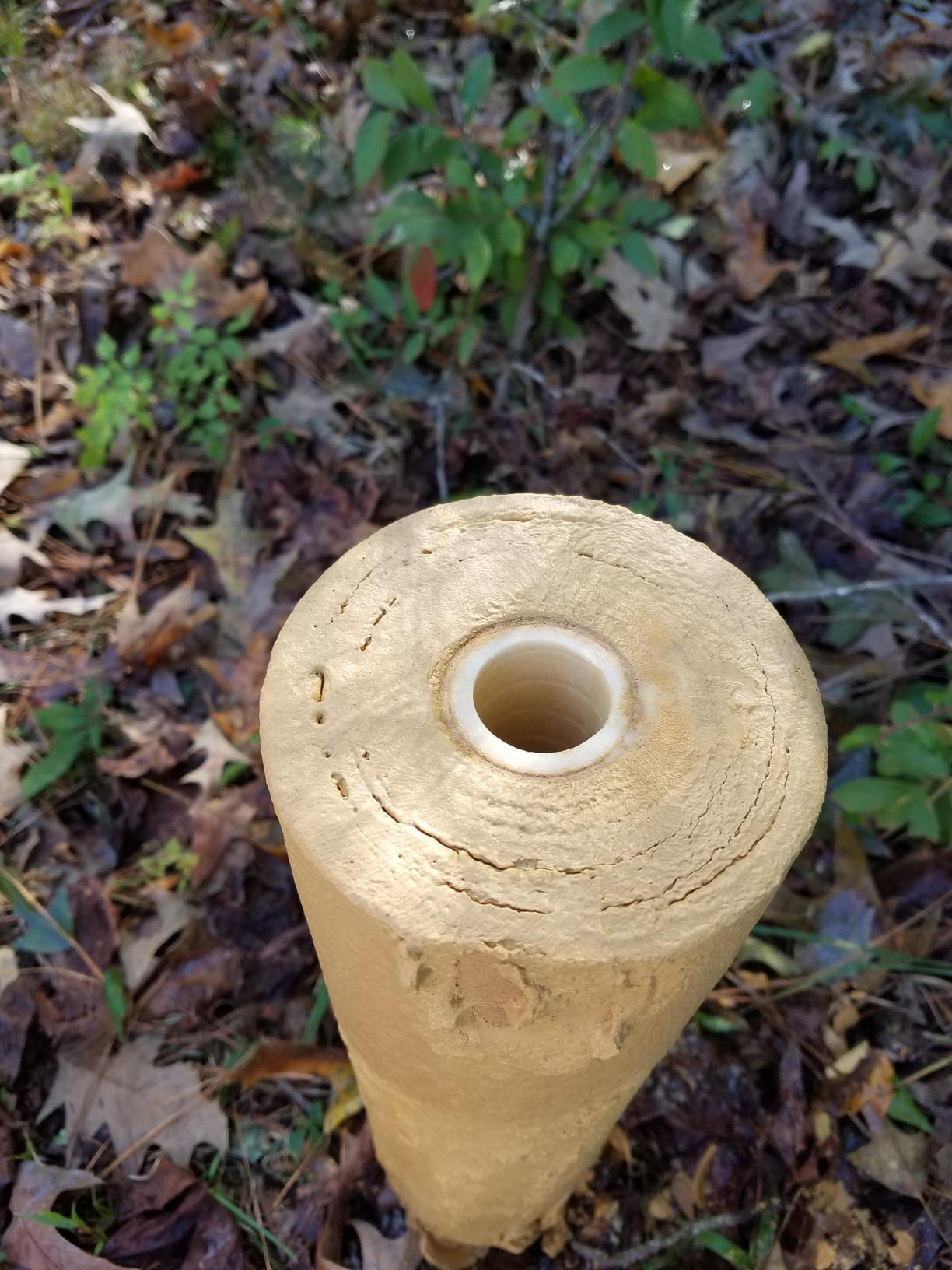
Long-term owners report filter life of 6 to 11 months depending on usage, and one reviewer has bought repeat systems for two homes. The 15 gpm rating on 1-inch ports is a real advantage in a house where two fixtures run at once.
The complaints are about sealing, not filtration. Housing O-rings lose diameter after use and pop out of the groove, producing leaks that are hard to spot, and plastic connectors on copper fittings have leaked for some buyers, with replacement parts potentially requiring a Home Master-certified plumber at your expense. Effectiveness also depends on the stages being ordered correctly.
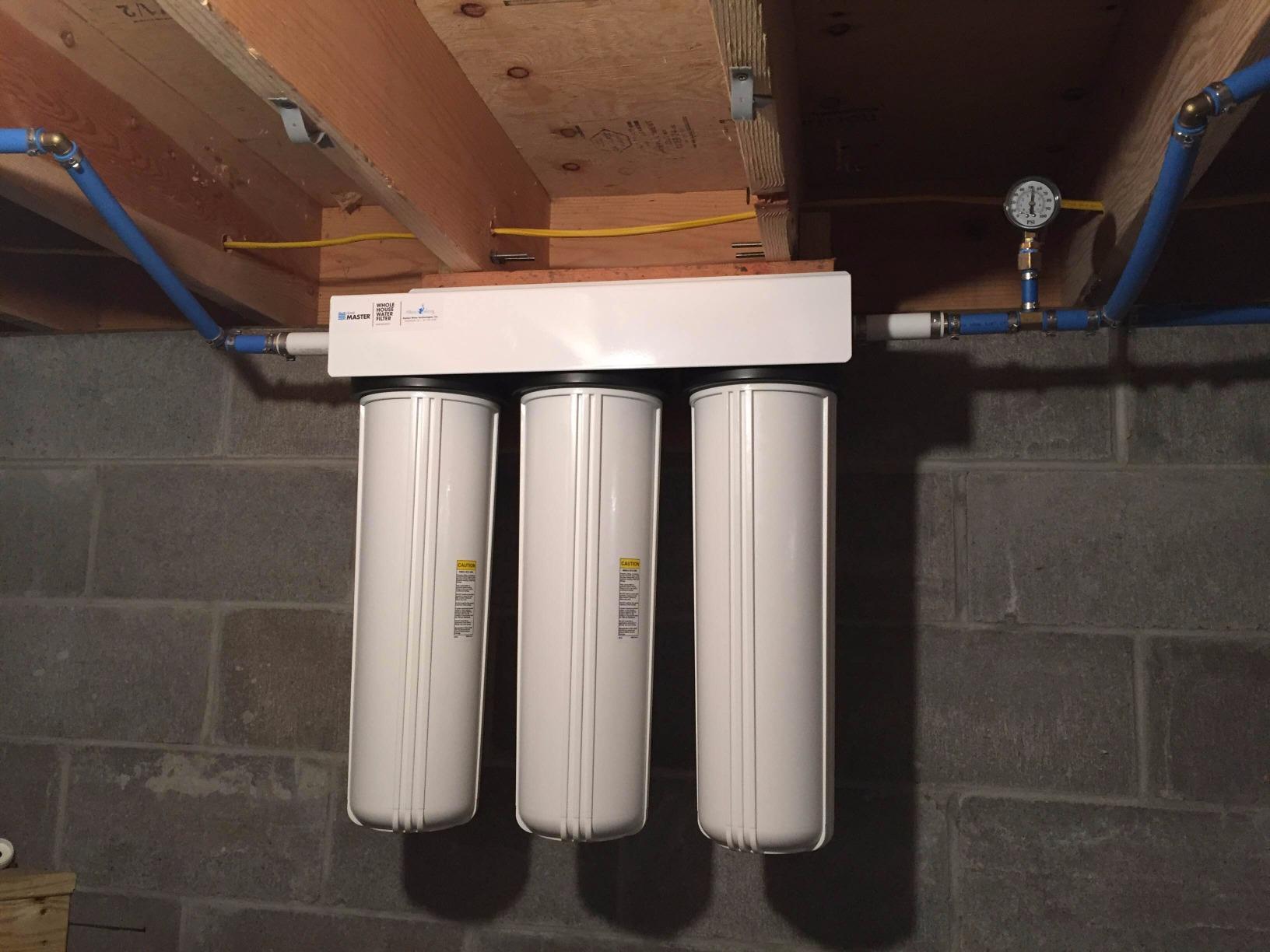
Ask the manufacturer which cartridge goes in which housing
Owners report that identifying the correct replacement cartridge is confusing, and the system only performs as designed when the stages sit in the right order. Confirm the sequence with the manufacturer before your first change-out.
Know the TDS ceiling
The listed maximum is 2000 ppm TDS, which is the highest figure in this roundup, and the removal spec is stated at up to 3 ppm combined iron and manganese. Above that combined load, you are past what this design handles.
10. Waterdrop WHF3T-FG 3-Stage Well Water Filter
Waterdrop WHF3T-FG 3-Stage Whole House Water Filter System for Well Water
15 gpm max flow
300 ppm max TDS
SGS tested at 95.9 percent iron reduction
49 pounds
Pros
- SGS tested with published iron and manganese reduction figures
- NSF ANSI 372 certified for lead-free materials
- 15 gpm supports multiple simultaneous fixtures
- 3 stage system with a 7 stage filtration path
Cons
- Lowest review count here at 88
- Maximum TDS of 300 ppm is lower than several competitors
- Two of three stages still need scheduled replacement
The Waterdrop WHF3T-FG is the newest listing in this group with 88 reviews at a 4.5 average and 74% five stars, so there is less long-term field history than the others. What it does have is the strongest independent testing data in the roundup.
It is SGS tested at 95.9% iron reduction and 99.7% manganese reduction, NSF/ANSI 372 certified for lead-free materials, and pressure tested against more than 100000 water hammer cycles. Rated flow is 15 gpm on 1-inch inlet and outlet across a 100000 gallon capacity.

The double iron and manganese cartridge staged with a carbon fiber layer creates a 7-stage filtration path, and it handles iron, manganese, lead, chlorine, smell, odor, sediment, rust, and sand. Supports both well and municipal water sources.
Two of the three stages still need scheduled replacement, with iron and manganese cartridge changes every 6 to 12 months and granular activated carbon every 12 months, so it is not set-and-forget. Maximum supported TDS is 300 ppm, the lowest listed figure among the multi-stage systems here, and well water above roughly 3 ppm iron may exceed the cartridges without pretreatment.

Ask for third-party numbers, not percentages
The published SGS figures are the reason this earns a place. Forum owners repeatedly say they trust peer-reported test numbers over brand claims, and a named lab with a stated percentage is more useful than a self-reported removal rate.
Watch the TDS ceiling on a high-mineral well
At 300 ppm maximum TDS, this is the lowest ceiling in the roundup. If your lab report shows total dissolved solids above that, choose a different system even if the iron number is fine.
Does an Iron Filter Remove Sulfur?
Only some of them. Hydrogen sulfide is the gas behind the rotten egg smell, and it is chemically different from iron, so media chosen only for iron oxidation will leave the odor in place.
Media that handles both include greensand, greensand plus, and catalytic carbon such as the Centaur media in the DuraWater Fleck 5600 SXT unit. Owners of that system report the H2S odor disappearing alongside the iron, and one removed a separate carbon stage entirely afterward.
Check the specification rather than the category. The iSpring WCFM400K explicitly does not remove hydrogen sulfide and can be damaged by H2S-contaminated water, with the manufacturer directing those buyers to the WCFM500K. A system sold for iron is not automatically a system sold for sulfur.
How to Choose the Right Iron Filter for Your Well
Choosing in the right order saves you from buying twice. Test your water first, measure your flow second, and pick the technology third. Everything else in this guide follows from those three answers.
Step 1: test your water before you buy anything
Get a proper lab panel that includes iron, manganese, sulfur, pH, alkalinity, dissolved oxygen, iron bacteria, and total coliform. A strip test from a hardware store will not tell you whether the iron is ferrous or ferric, and that distinction changes which filter you need.
For reference, the EPA secondary drinking water guideline for iron is 0.3 mg/L and for manganese is 0.05 mg/L. On a private well these are aesthetic guidelines rather than health limits, but they are the thresholds most manufacturers reference in their capacity claims.
Step 2: measure your well pump flow rate with a bucket
Fill a 5-gallon bucket with a hose and time it. The well pump output in GPM equals 5 divided by the seconds it took to fill. Repeat three times and average, since the first draw often primes the pump and skews the result.
Then size for simultaneous demand, not average use. A household of four with two bathrooms and a laundry room can briefly need 10 to 12 GPM even though daily consumption suggests far less. Forum users who sized for average use and skipped this step are the ones who ended up with a system they could not peak through.
Step 3: choose air injection over chemical injection
Chemical-free air injection oxidation is the maintenance-light answer, and peer consensus in the forums favors it for long-term ownership provided service flow is adequate. It needs no potassium permanganate, no peroxide, and no salt, and there is nothing to store or dose.
Chemical injection systems with greensand or greensand plus and periodic potassium permanganate regeneration do work, but they carry a recurring consumable cost and a chemical handling step every time media needs recharging. On a private well, the AIO route is the one most owners end up satisfied with.
Cartridge systems are the third option and the least maintenance-intensive of all, because you do nothing except swap a cartridge. The ceiling is 3 ppm, and that is the whole trade.
The control valve matters more than buyers expect
The Fleck 5600 is the default recommendation almost everywhere, and experienced plumbers on r/WaterTreatment repeatedly argue it is the wrong choice as a backwashing filter on rough, iron-heavy well water. The Fleck 2510 is more commonly preferred for that application, and a r/WaterTreatment thread describes a Clack WS1 AIO control head with Katalox Light or greensand plus media as a common alternative configuration.
Control valve model specificity is a signal worth paying attention to. When a forum thread is arguing about 5600 versus 2510 versus Clack WS1, that is a sign the person knows what the valve does to cycle timing and backwash hydraulics, which is where a lot of iron filter failure actually starts.
Install order is not negotiable
Put a spin-down sediment filter first, then the iron filter, then the water softener, then the UV sterilizer. The typical stack owners assemble runs spin-down sediment ahead of any iron stage, then a Pentek RFFE20BB rated to 3 ppm, then a 1 micron polishing filter downstream.
The reasoning is straightforward. Silt and iron flakes destroy control valves and softener resin, and iron fouling shortens the life of a UV lamp and reverse osmosis membrane. Every stage downstream of the iron filter is cheaper to run and lasts longer because of what the iron filter catches.
Iron bacteria will defeat any of these filters
This is the failure mode that sends people back to buy a second system. Iron bacteria produce a slime that binds iron particles into a gelatinous mass, and a filter designed for dissolved iron will simply plug with red-brown sludge within weeks. A r/WaterTreatment thread titled “Friends water filter after 15 days and HOA hired plumbers” is that exact pattern, and a system failing in two weeks is the signature.
Sediment pre-filters filling with red sludge alarmingly fast is the tell. If that happens, stop buying filters and test specifically for iron bacteria. Treatment has to address the biology, and a new iron filter on the same water will fail the same way.
Run a new system on bypass after shocking the well
Well shock chlorination sends a heavy chlorine slug through the entire system, and that chlorine load damages oxidation media, which is the first thing most buyers learn about only after installing. Run a new iron filter on bypass for one to two weeks after any shock treatment, then put it into service and confirm your results.
Think about media life in years, not months
Media life is the number that separates these systems most clearly. One DoItYourself user reports iron media lasting about 5 to 7 years and softener media lasting 25 years, and a Terry Love thread notes a Fleck 5600 SXT leaving only about an inch of media for sulfur water, which is a sizing problem worth catching early.
That is the honest long-term comparison. A cartridge system gives you a very cheap install and a cartridge change every 3 to 12 months forever, while a backwashing media tank gives you an automatic system with multi-year media life. Buyers who switched from cartridge to media tanks generally describe the change as the point where the system stopped being a chore.
Frequently Asked Questions
Do iron filters work on well water?
Yes. An iron filter is the standard treatment for a private well with dissolved iron above the EPA secondary guideline of 0.3 mg/L. It oxidizes ferrous iron into solid particles that are then strained out, which stops orange staining on fixtures, metallic taste, and the damage iron does to water heaters, softener resin, and appliances.
What is the best whole house iron filter for well water?
For most wells reading under 3 ppm, a three-stage cartridge system is the most practical answer, and the Express Water unit leads our roundup on review volume and a 17 gpm flow rating. Above 7 ppm, choose a backwashing air injection or catalytic media tank such as the DuraWater Fleck 5600 SXT, which oxidizes iron without chemical feed and also handles sulfur odor.
What is the most effective way to remove iron from well water?
The most effective method is air injection oxidation into a backwashing media tank, which converts ferrous iron into ferric particles and flushes them to drain on an automatic cycle. Chemical injection with greensand and potassium permanganate also works but adds a consumable and handling step. Cartridges are simplest and cheapest, but only handle iron up to about 3 ppm.
Does an iron filter remove sulfur?
Only if the media is specified for it. Greensand, greensand plus, and catalytic carbon such as Katalox Light or Centaur media handle hydrogen sulfide as well as iron, which is why the DuraWater Fleck 5600 SXT covers both. A system sold only for iron will not remove the rotten egg smell, and some units are damaged outright by H2S-contaminated water.
Can a water softener remove iron, and do I need both?
A softener can handle a modest amount of ferrous iron, generally up to about 3 ppm, and fails on ferric iron because the particles foul the resin beads. Above that, or alongside significant hardness, you want a dedicated iron filter before the softener. A combination unit handles both in one tank, which is why the AFWFilters Iron Pro 2 exists.
Conclusion
The best iron filters for well water depend on one number from your lab report. Under 3 ppm and a cartridge stack is the sensible purchase, and the Express Water 3-Stage system is the one we would install today given its 17 gpm flow rating and the largest review base in this roundup. Above 7 ppm, or if your water also smells like rotten eggs, the choice narrows to a backwashing air injection or catalytic media tank, and the DuraWater Fleck 5600 SXT is the strongest of those on iron and sulfur together.
Test your water before you order, measure your pump with a 5-gallon bucket, and put the iron filter ahead of your softener and your UV unit. And if a filter you already own is plugging with red-brown sludge every few weeks, test for iron bacteria before you spend money on a replacement.