
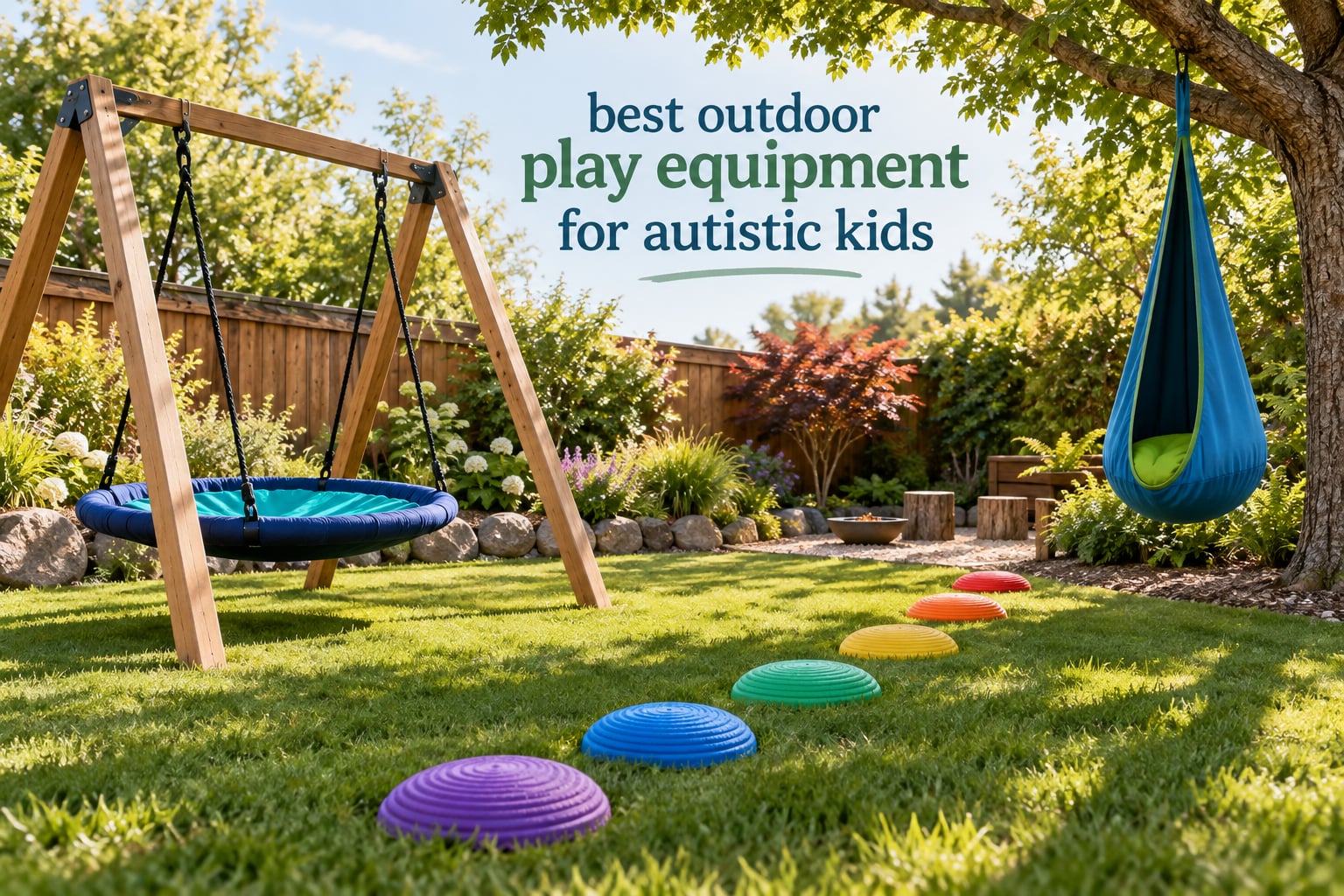
Most parents searching for the best outdoor play equipment for autistic kids are not really shopping for a swingset. They are shopping for equipment their child will actually use, for longer than two minutes, without melting down. That bar is higher than it sounds, because a crowded public playground is often exactly the sensory environment an autistic child struggles with.
A parent on r/Autism_Parenting put the problem plainly when asked for outdoor activity ideas: “I don’t [think] she’s ever done an activity for more than 10 minutes if we do it with her, 2 minutes solo.” Another thread noted that water tables, sprinklers and a standard swing set had all been tried without success.
That is why this roundup is outdoor-only. Every product below is equipment designed to be used outside, and each one is matched to a specific sensory need: vestibular input from swinging and spinning, proprioceptive input from climbing and heavy work, or tactile input from water, sand and textured surfaces. Specs, weight limits and age ranges are pulled directly from the manufacturer listings, and ratings come from verified reader reviews. We updated this guide for 2026, and several competitor roundups still carry stale price and spec data, so treat our numbers as the fresher set.
We are not occupational therapists, and none of this replaces an individualised OT plan. What we did was read the spec sheets, weigh the review patterns, and sort equipment by the sensory system it feeds. Where reviewers repeatedly hit the same problem, we say so, including the ones about weight limits and assembly.
Table of Contents
What is the best outdoor play equipment for an autistic child?
The best outdoor play equipment for an autistic child is sensory-focused gear chosen to match that specific child’s sensory profile: a cocoon swing for deep-pressure input, a balance course for proprioception, or a water table for tactile input. The right pick depends on whether your child seeks sensation or avoids it.
Start from the sensory system you want to feed, then narrow by age, weight and space:
Vestibular (movement, balance, spinning) – sensory swings, saucer swings, sensory swivel chairs and rocking seats.
Proprioception (heavy work, joint pressure) – climbing domes, balance beams, stepping stones and trampolines.
Tactile (texture, temperature, water) – rubber stepping surfaces, wobble disks and anything involving water or sand.
Self-regulation (calming, focus) – gliding rocking chairs and enclosed pod swings that reduce visual input.
One more principle runs through the whole list: the best equipment is the one your child can get into independently. A heavy frame that needs an adult every time will not hold attention, and neither will a piece that is visually loud or full of unpredictable motion for a child who is sensory-avoidant.
Top 3 outdoor play picks for autistic kids (October 2026)

edxeducation Step-a-Trail
- Six pieces at three stump heights
- Reconfigurable courses
- Non-slip rubber tops and bases
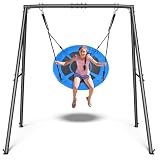
Trekassy Saucer Swing with Stand
- 440 lb A-frame rating
- 40 inch saucer seat
- UV-resistant Oxford fabric

Simplay3 Rock Around Wobble Disk
- Two-sided rocking and climbing
- No assembly needed
- Ages 24 months to 5 years
All 12 picks at a glance in 2026
| Product | Specs | Action |
|---|---|---|
| edxeducation Step-a-Trail Obstacle Course |
|
Check Latest Price |
| Trekassy 40 inch Saucer Swing with Stand |
|
Check Latest Price |
| Simplay3 Rock Around Wobble Disk and Dome |
|
Check Latest Price |
 VEVOR 36 inch Trampoline with Enclosure VEVOR 36 inch Trampoline with Enclosure |
|
Check Latest Price |
 OUTREE Kids Pod Swing Seat OUTREE Kids Pod Swing Seat |
|
Check Latest Price |
 HiCamer Double Layer Sensory Swing HiCamer Double Layer Sensory Swing |
|
Check Latest Price |
 G TALECO GEAR Sensory Swing Set with Stand G TALECO GEAR Sensory Swing Set with Stand |
|
Check Latest Price |
 Tiny Land Non-Slip Stepping Stones Tiny Land Non-Slip Stepping Stones |
|
Check Latest Price |
 Acorn Avenue Balance Beam and Stepping Stones Acorn Avenue Balance Beam and Stepping Stones |
|
Check Latest Price |
 Simplay3 Up and Down Teeter Totter Simplay3 Up and Down Teeter Totter |
|
Check Latest Price |
 Qusases Sensory Swivel Chair Qusases Sensory Swivel Chair |
|
Check Latest Price |
 PLATPORTS Calming Sensory Rocking Chair PLATPORTS Calming Sensory Rocking Chair |
|
Check Latest Price |
1. edxeducation Step-a-Trail obstacle course – the best all-round balance build
edxeducation Step-a-Trail – 6 Piece Backyard Obstacle Course for Kids – Indoor and Outdoor – Build Coordination and Confidence – Physical and Sensory Play
Six pieces
18 months and up
5 pounds
Non-slip rubber tops and bases
Pros
- Six pieces at three stump heights plus three logs
- Grippy rubber tops and bases reduce slipping
- Pieces nest and stack for compact storage
- Rated 4.8 across 3000+ reviews
Cons
- Tops out around 12.6 inches wide for older children
- Six pieces limit how elaborate a course can be
- Hard plastic benefits from softer ground cover underneath
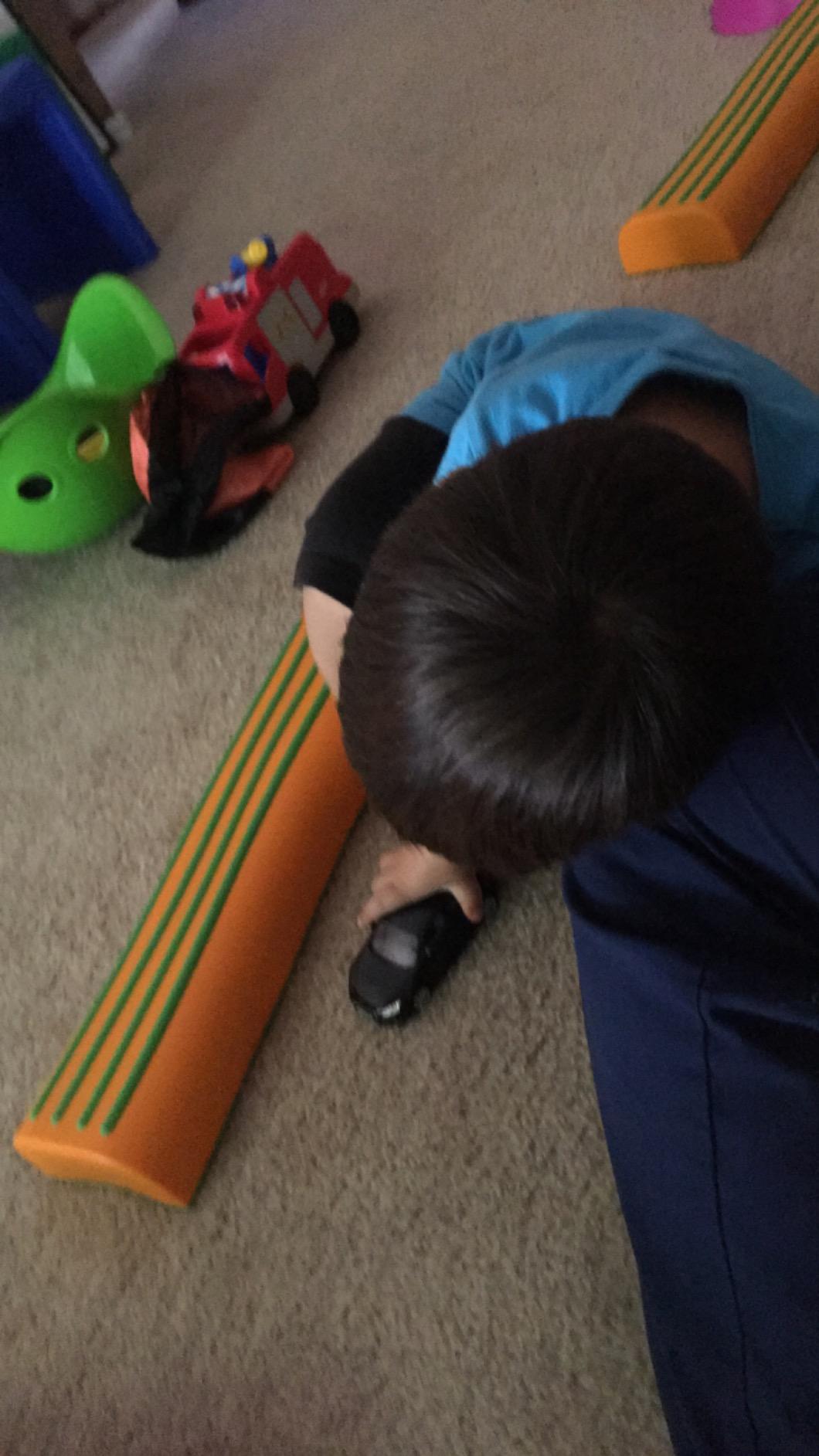
We used this one most because the same six pieces produced a different obstacle course almost every time. Three stumps at different heights plus three logs means a toddler can cross low and flat one day and a taller sibling can build a raised bridge the next.
The manufacturer lists it for 18 months and up, and the whole set weighs 5 pounds, which is why it doubles as indoor equipment on rainy days. Because the pieces nest together and the logs stack, storage is not the problem it usually is with plastic outdoor toys.
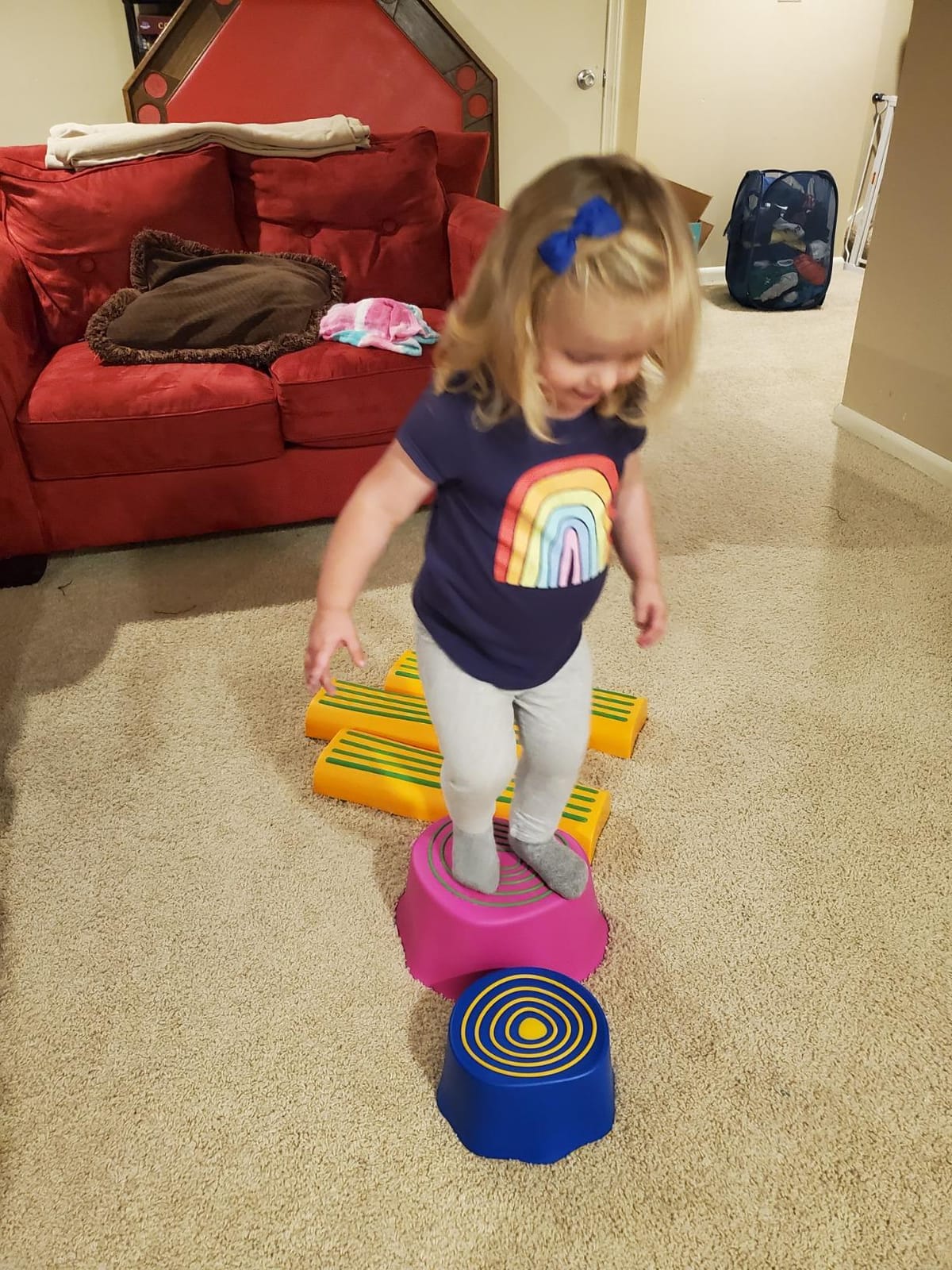
The detail that mattered most in reviews was the surface. The tops and bases are textured rubber rather than smooth plastic, and that grip is what makes a wobbly course feel safe to a child who is already cautious about balance. Reviewers repeatedly note that rearranging the pieces is what keeps children engaged over months rather than days.
Reviewers also describe it as a sensory tool in their own right. Stepping from stump to stump demands small postural corrections all over the body, which is proprioceptive work, and the rubber gives tactile feedback through the feet that a hard patio or concrete path would not.
Who this suits best
Families with mixed ages, because the same course can be made harder for an older child without buying anything new. It also works well for a sensory-seeking child who needs heavy work and balance practice in a small footprint, at 30.7 by 12.6 by 5.7 inches.
When it is the wrong choice
Skip it for a pre-teen who has outgrown the challenge. Reviewers flag that the set tops out at roughly 12.6 inches wide, so a larger child will find it easy within a week, and the hard plastic surfaces benefit from grass or rubber surfacing underneath if falls are likely.
2. Trekassy 40 inch saucer swing with stand – the best shared heavy-duty swing
Trekassy 40″ Saucer Swing with Stand, 440LBS Heavy Duty A-Frame
40 inch saucer
A-Frame rated to 440 lbs
81 inch footprint
44.1 pounds
Pros
- A-frame rated to 440 pounds with ground anchors
- 40 inch seat fits several children or an adult
- UV-resistant 900D Oxford fabric with PE webbing rope
- Weather-resistant with no painting needed
Cons
- 44.1 pounds is awkward to reposition once built
- 81 inch width takes real yard space
- Assembly still required
Weight capacity is the number that decides this one. The A-frame is rated to 440 pounds, which means an adult can sit in the saucer with a child, and it means a 15-year-old is not a risk case. A parent in the Ontario Autism Coalition group described the opposite problem with lighter gear: “My 15-year-old has autism and loves to swing. But he is a bigger boy (225#). We are having problems with the swings breaking on him midair.”
The saucer itself is a 40 inch steel frame with a 900D Oxford fabric seat, hung on UV-resistant PE webbing rope. That material choice is what makes it an outdoor product rather than a fair-weather toy, since both fabric and rope are the parts that usually fail first.
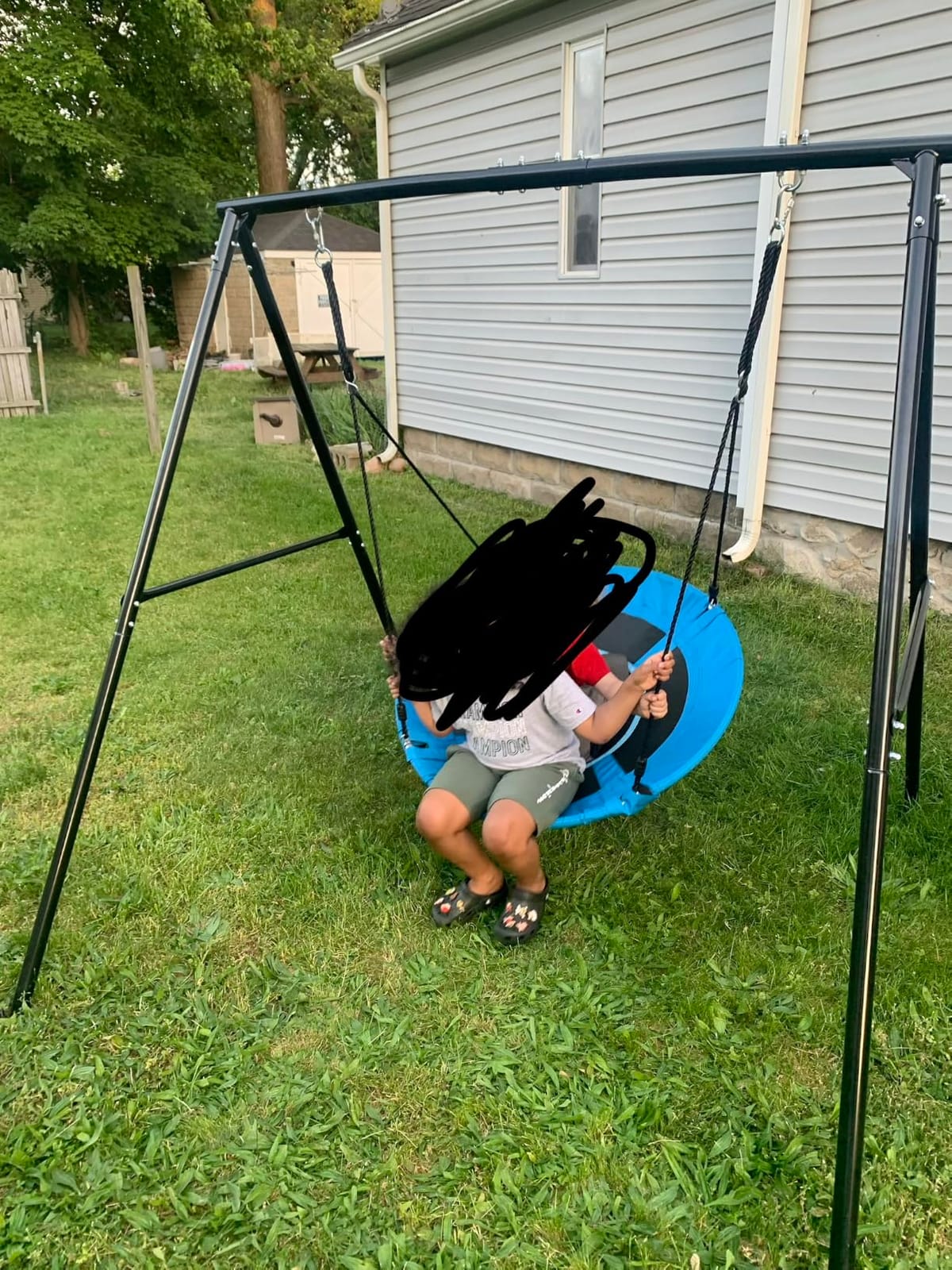
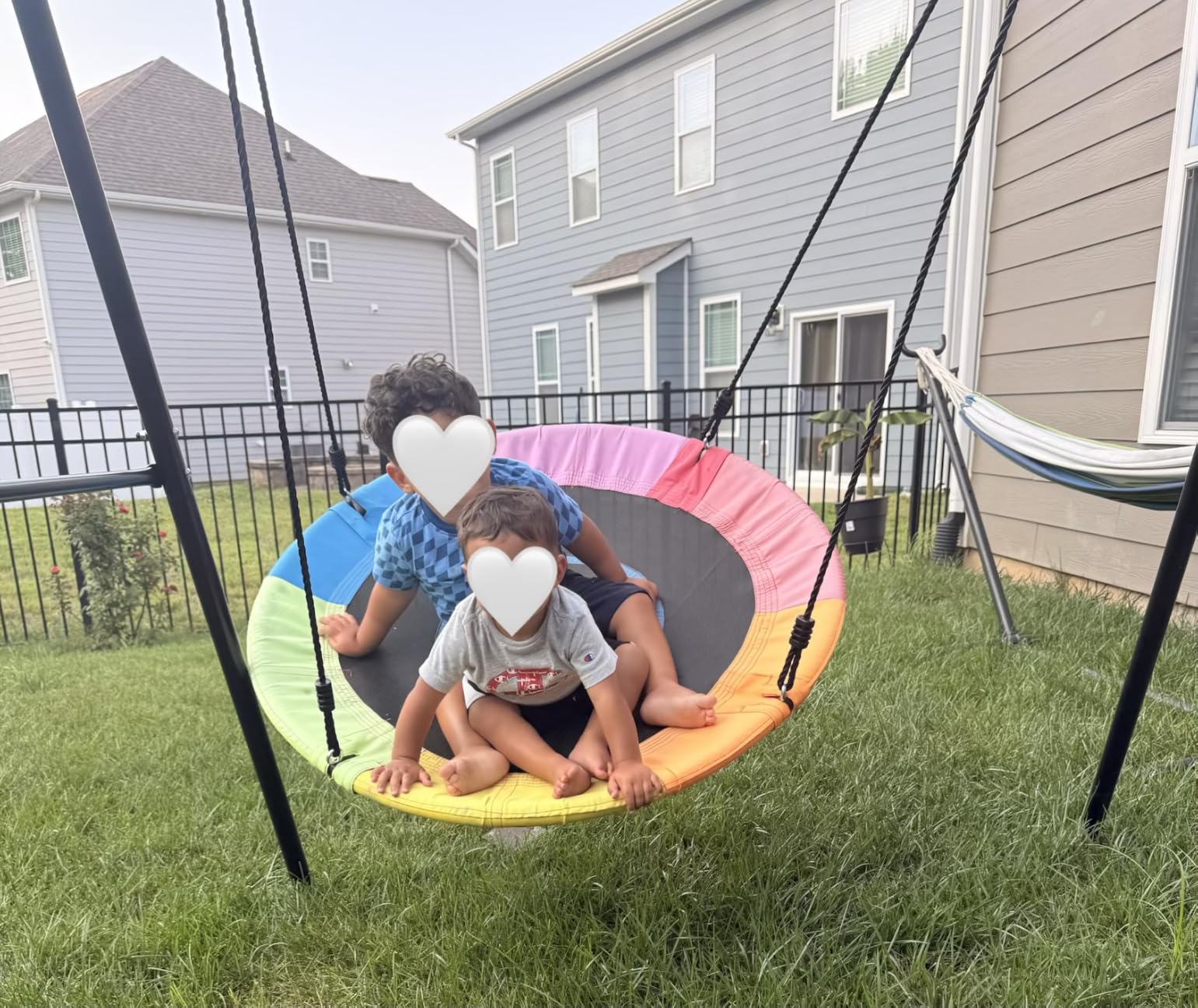
What reviewers like most is the roomy seat and the straightforward build. Buyers mention the sturdy frame, the space several kids can share, and quick assembly for both the frame and the seat itself. Roughly 77% of reviews sit at five stars.
Plan the footprint before you buy. At 81 inches wide and 67 inches deep, this is the largest single item in the roundup, and the anchor points matter more than the weight if you live somewhere with wind. The included ground anchors are not optional decoration in that setting.
Who this suits best
Tweens, teens and adults who swing, and families who want one piece of equipment that a sibling or parent can share. The 40 inch seat holds several children, and the listing allows up to four seats, so parallel play with peers works well here.
When it is the wrong choice
It is the wrong choice on a small patio or a narrow side yard. At 44.1 pounds and 81 inches across, moving it once assembled is a two-person job, and the biggest recurring reservation in reviews is that permanent footprint.
3. Simplay3 two-sided wobble disk and climbing dome – the best first climbing toy
Simplay3 Two Sided Rock Around Wobble Disk and Climbing Dome for Toddlers and Kids – Rocking and Climbing – Indoor/Outdoor – Yellow/Green, Made in USA (1 Pack)
Two-sided
Ages 24 months to 5 years
24.5 by 25 by 9.5 inches
One-piece plastic
Pros
- Flips from rocking bowl to climbing dome
- No assembly screws or parts to break off
- Molded grip handles build balance
- Light enough for toddlers to flip over
Cons
- 24.5 inch diameter suits small children only
- Bowl seat is not built for lounging
- Sits low so fall protection is limited on hard ground
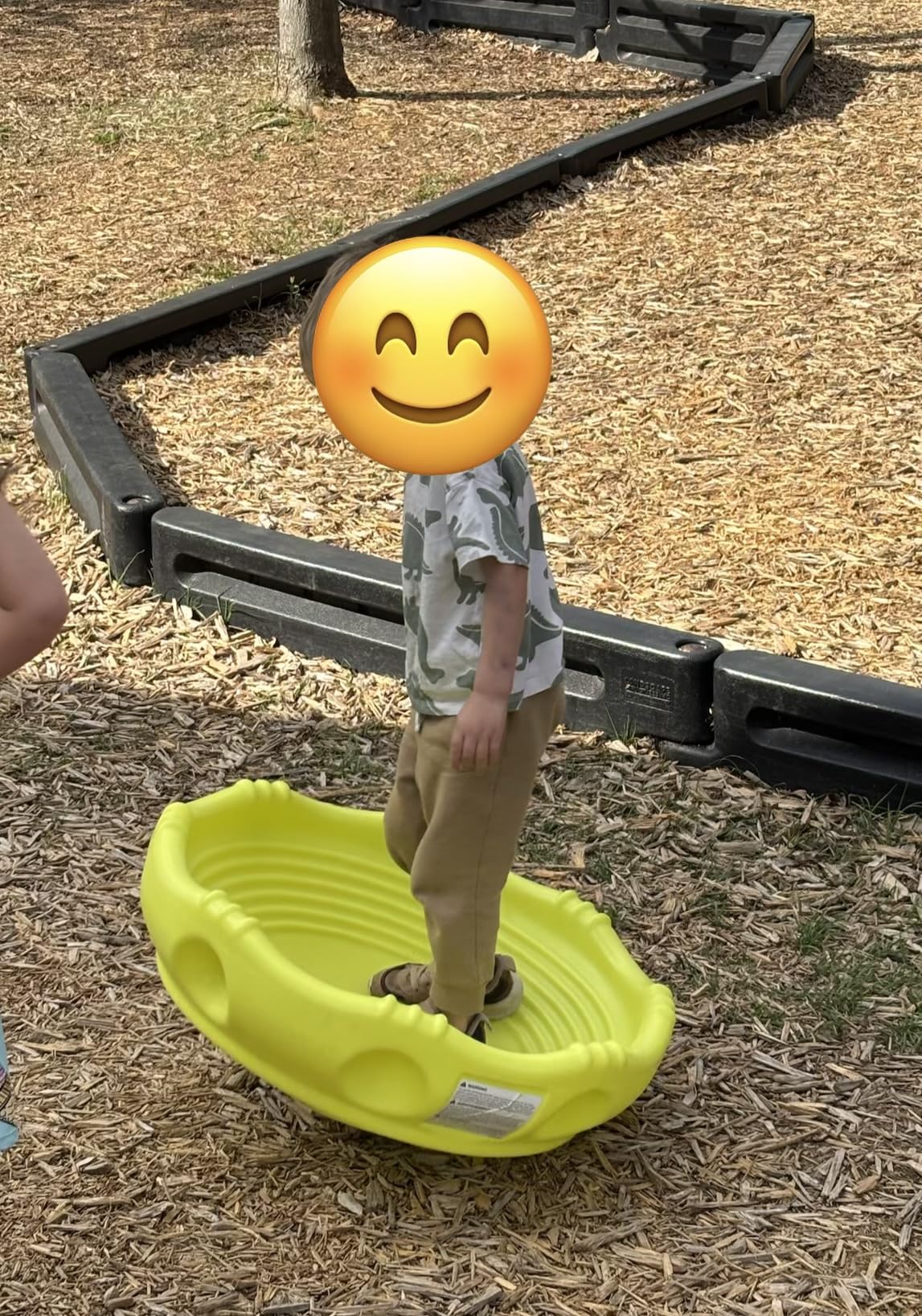
One object, three ways to play: a child sits and spins in the bowl, stands on it for balance work, or flips it over to use the dome as a climber or a jumping surface. That flexibility is why it holds attention, and reviewers describe it as a go-to toy that still looks new after a year of daily use.
The one-piece construction matters more than it sounds. There is no assembly and no screws, which also means there is nothing loose to swallow and nothing that loosens after a season outside. It is weatherproof and made in the USA.
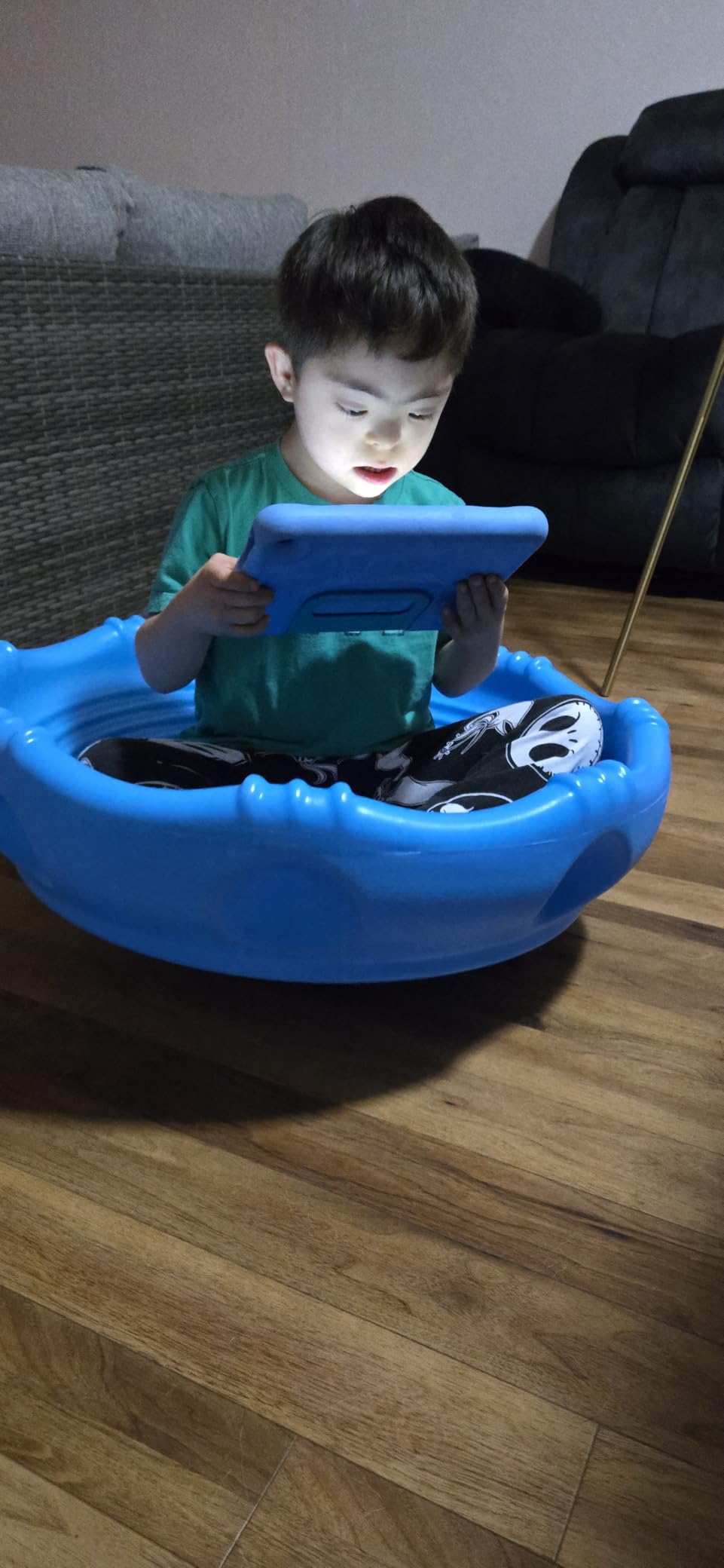
It moves indoors and outdoors without a second purchase, so it can live on the patio in summer and in the playroom in winter. The manufacturer age range is 24 months to 5 years, and it is built for two players.
Grip handles molded into the rim are the part children actually use. A small child with low postural tone can hold on while the disk rocks beneath them, which converts a wobble into supported movement rather than a fall.
Who this suits best
Toddlers and preschoolers who are sensory-seeking but not yet ready for a climbing frame. It delivers rotational and linear vestibular input in a package a two-year-old can manage alone, and the light weight makes it useful for small yards and patios.
When it is the wrong choice
It is outgrown quickly and it is not comfortable. The bowl is not a lounging seat, at 24.5 inches across it fits small children only, and because it sits low to the ground, a hard surface underneath offers little protection from a topple.
4. VEVOR 36 inch trampoline with enclosure net – the best foldable rebound option
VEVOR 3FT Trampoline for Kids, 36″ Trampolines Indoor/Outdoor Trampoline for Toddlers, Foldable Mini Baby Jump Toy with Foam Handle, Recreational Trampolines Birthday Gift for 3+ Years Kids
36 inch frame
Ages 3 and up
130 pound limit
Folds flat for storage
Pros
- All-steel frame with upgraded coating
- Foam handle gives small children a grip
- 28 bands plus 0.24 inch spring padding
- Folds flat in about three seconds
Cons
- 130 pound limit means one jumper at a time
- Not for children under 36 months
- Spring tension needs periodic checks
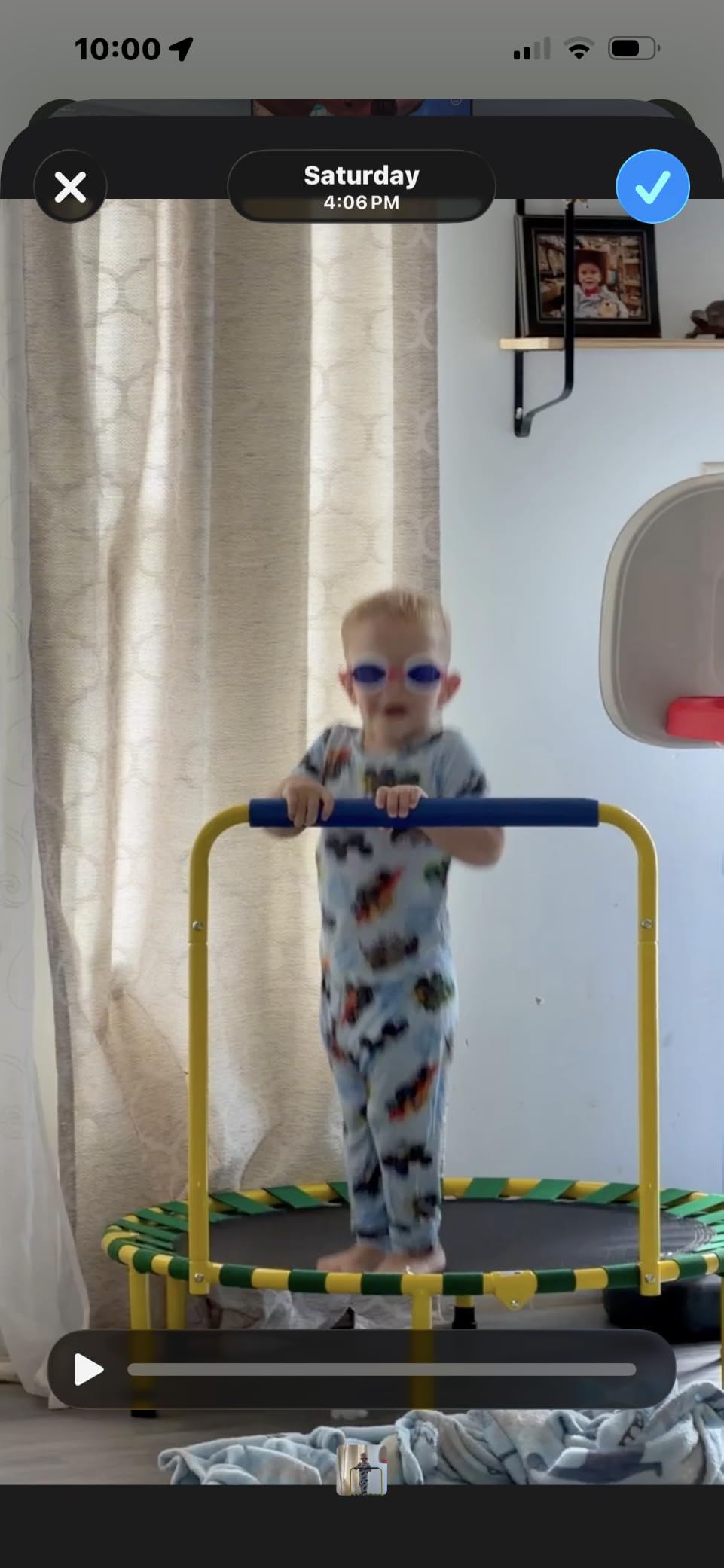
Parents on forums describe trampolines as one of the reliable big hits for working off energy and calming, and this is the version that suits a yard you actually use for other things. It folds flat in about three seconds, so it does not permanently claim the space the way a full-size trampoline does.
For younger children the details are the selling point: a foam handle that protects hands and gives a grip point, 28 elastic bands, and 0.24 inch thick spring foam padding. The waterproof PE mat wipes clean, and the rubber foot pads cut slipping and noise for the neighbours.
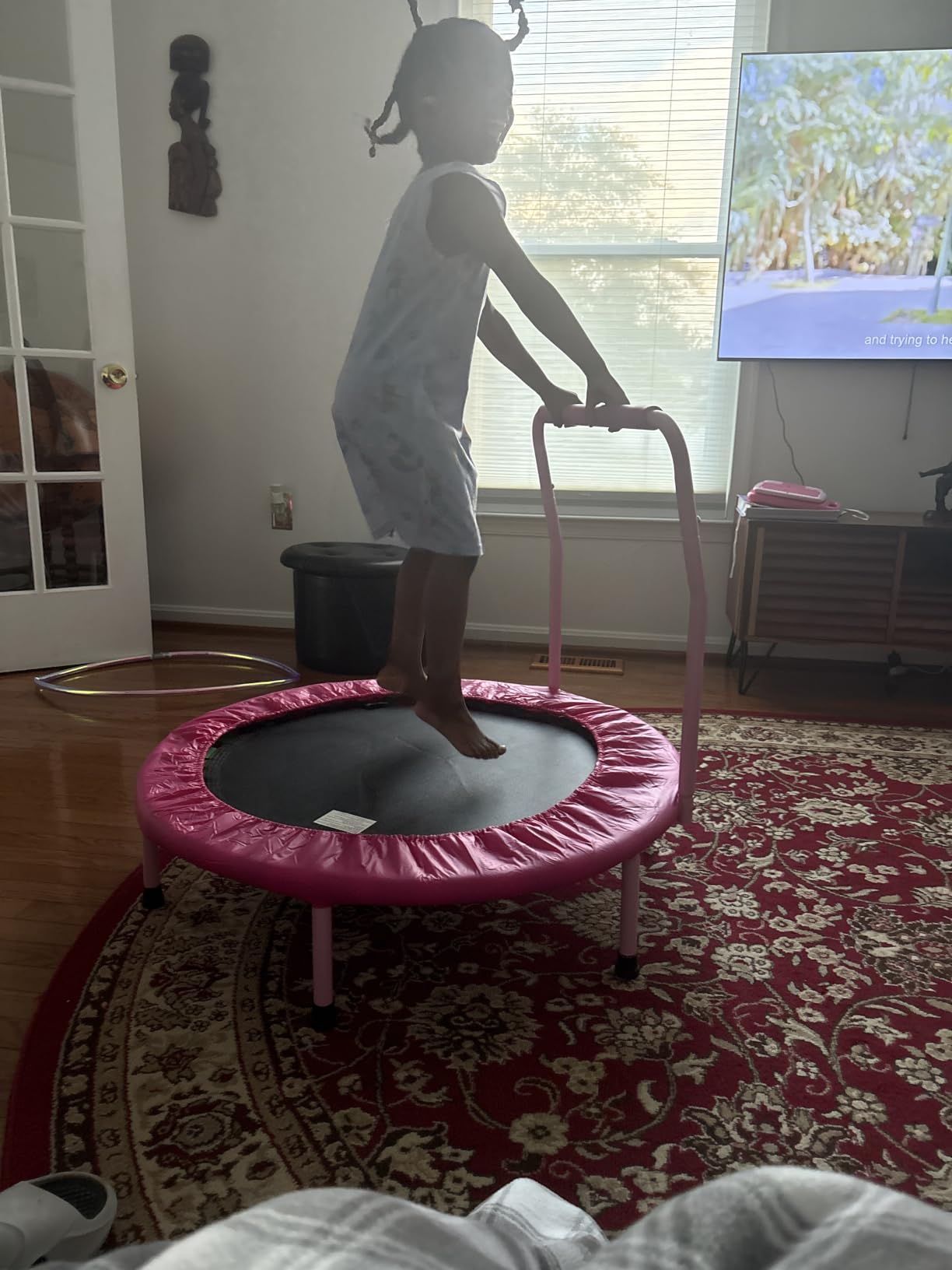
Set it on grass if you can. Rebound play is intense proprioceptive input, and a firm landing after a big bounce is where most minor injuries happen. The frame is all steel with an upgraded coating that resists bending, and it lists for ages 3 and up, not under 36 months.
The recurring complaint is the 130 pound maximum, which means one child at a time. It is not a shared family trampoline, and spring tension changes with use, so checking the springs periodically is part of owning it.
Who this suits best
Families with a small or shared yard, and sensory-seeking children aged 3 to about 8 who need a heavy output outlet. The fold-flat design also suits anyone who wants trampoline access without giving up patio or garden space in the off season.
When it is the wrong choice
It is the wrong choice for a teen or adult, for siblings who want to jump together, or for a child under three. The single-jumper weight limit is a hard stop, not a guideline.
5. OUTREE kids pod swing – the best enclosed calming seat
OUTREE Kids Pod Swing Seat, Cotton Sensory Swing for Indoor and Outdoor
100 pound limit
59 by 27.6 inches
2.2 pounds
Cotton canvas with nylon edging
Pros
- Soft breathable cotton canvas for quiet time
- Cocoon shape supports heavy-pressure input
- Reinforced nylon edging and double stitching
- Works from a ceiling hook or a tree
Cons
- Frame or hanging point not included
- 100 pound limit rules out older children
- PVC air cushion can degrade outdoors
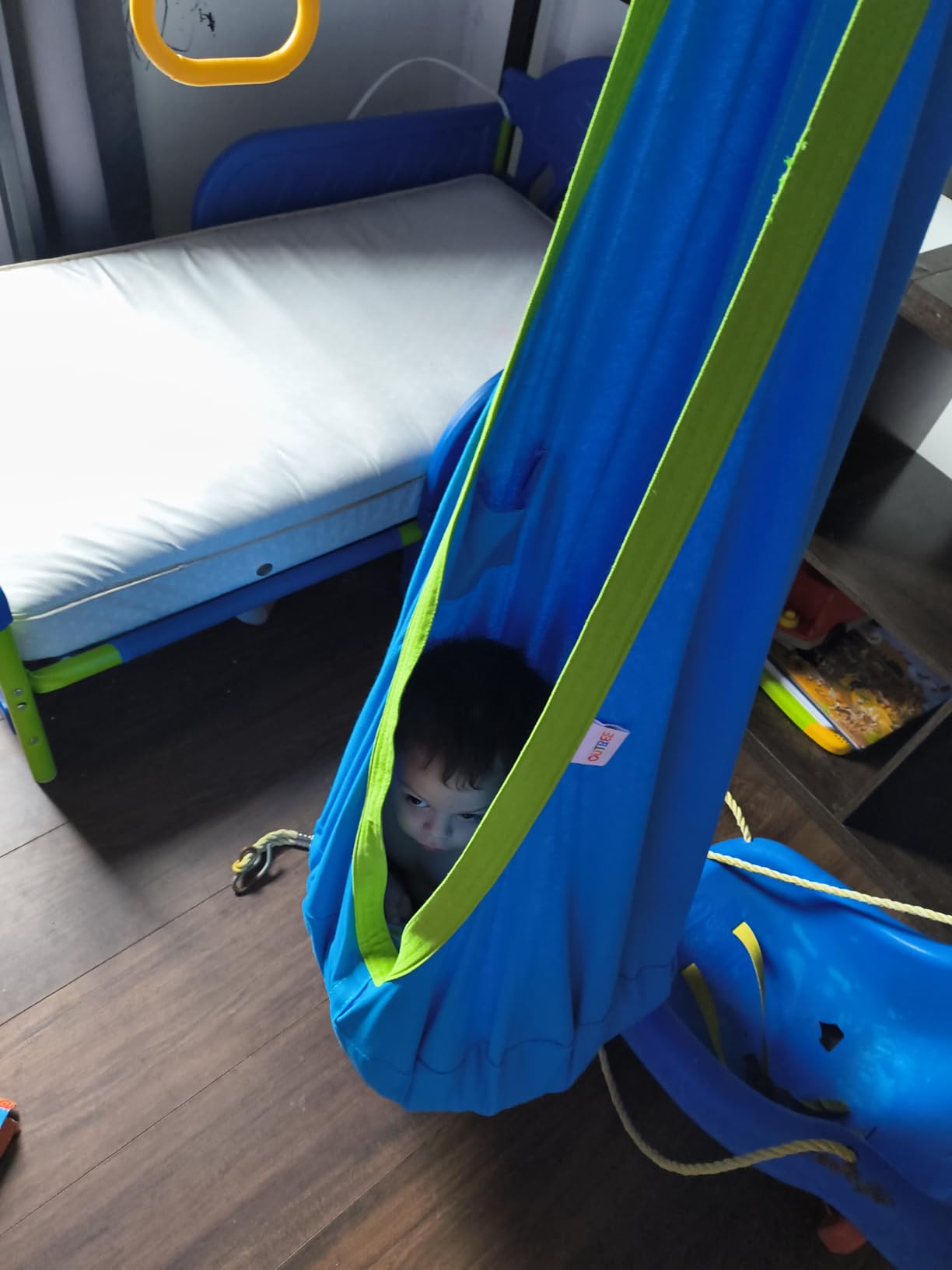
This is the most reviewed product we looked at, with 7394 ratings at 4.4 stars, and the reviews converge on one thing: children use it as a quiet retreat. Wrapped in soft cotton canvas, a child gets even, distributed pressure and a visual field narrowed to a small space, which many autistic children find genuinely settling.
It weighs 2.2 pounds and folds to 27.6 inches, so carrying it outside and hanging it from a suitable tree branch or an existing porch swing point takes no effort. All the mounting hardware is included, with an adjustable nylon belt and screws for both concrete and wood.
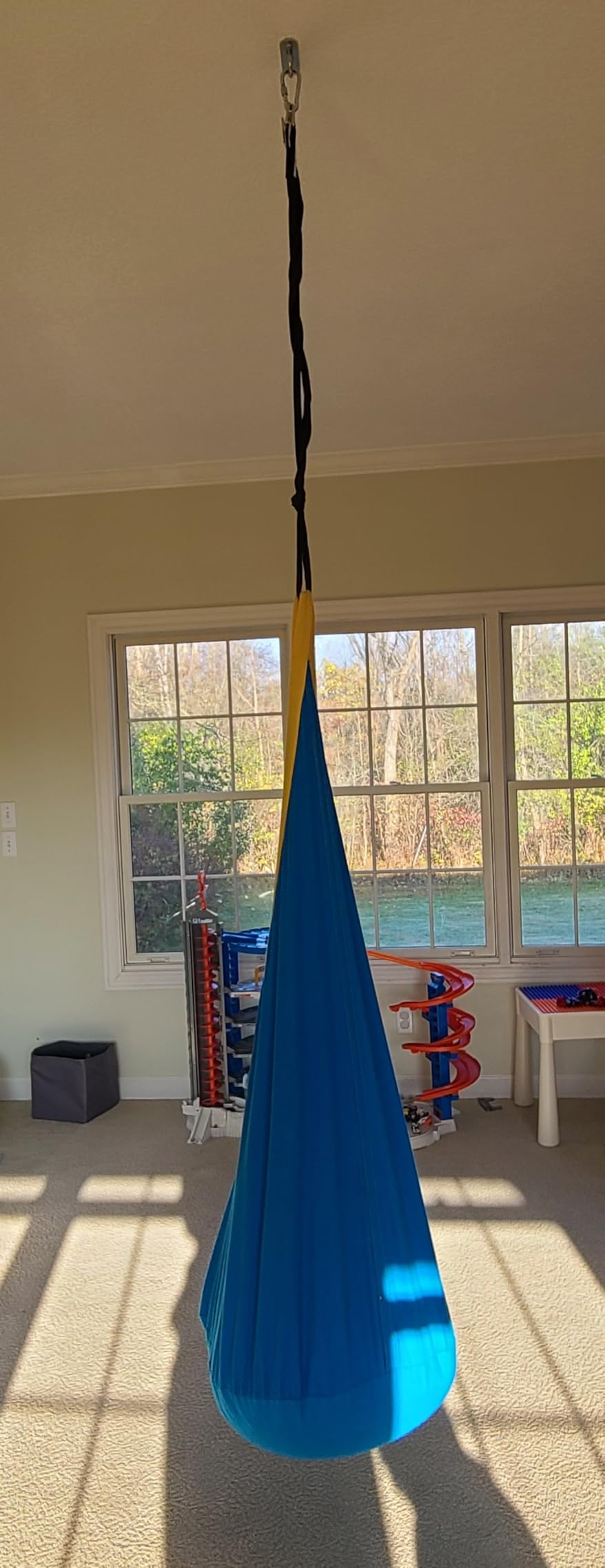
About 71% of reviews sit at five stars, and the small three-star band tends to be about sizing and fabric preference rather than function. Reviewers consistently praise the cocoon comfort and the calming effect for children who need weighted pressure input.
The limiting factor is the 100 pound maximum, which is what the manufacturer states and what reviewers confirm. That rules it out for most tweens and every teen, and for adults, so treat it as a younger-child tool rather than a family swing.
Who this suits best
Children under about 8 who need a low-arousal corner in a busy yard. It is also the easiest item here to pair with a shade sail or a pop-up tent so the retreat zone has its own enclosure, which is the design principle we borrow from sensory-friendly yard planning.
When it is the wrong choice
It is the wrong choice for a heavy child, and it is the wrong choice if you have nowhere safe to hang it. A separate frame or hanging point is not included, and the soft PVC air cushion can degrade with prolonged outdoor exposure.
6. HiCamer double layer sensory swing – the best rated capacity for teens and adults
HiCamer Double Layer Sensory Swing for Kids & Adults (Aurora Green)
Double layer polyester
Machine washable
59 inch seat
3.3 pounds
Pros
- Double layer stretch-resistant polyester for deep pressure
- Machine washable for shared equipment
- 360 degree rotating hanger
- Light enough to move between porch
- tree and therapy room
Cons
- Hanging point or frame sold separately
- Cocoon compresses over time with daily heavy use
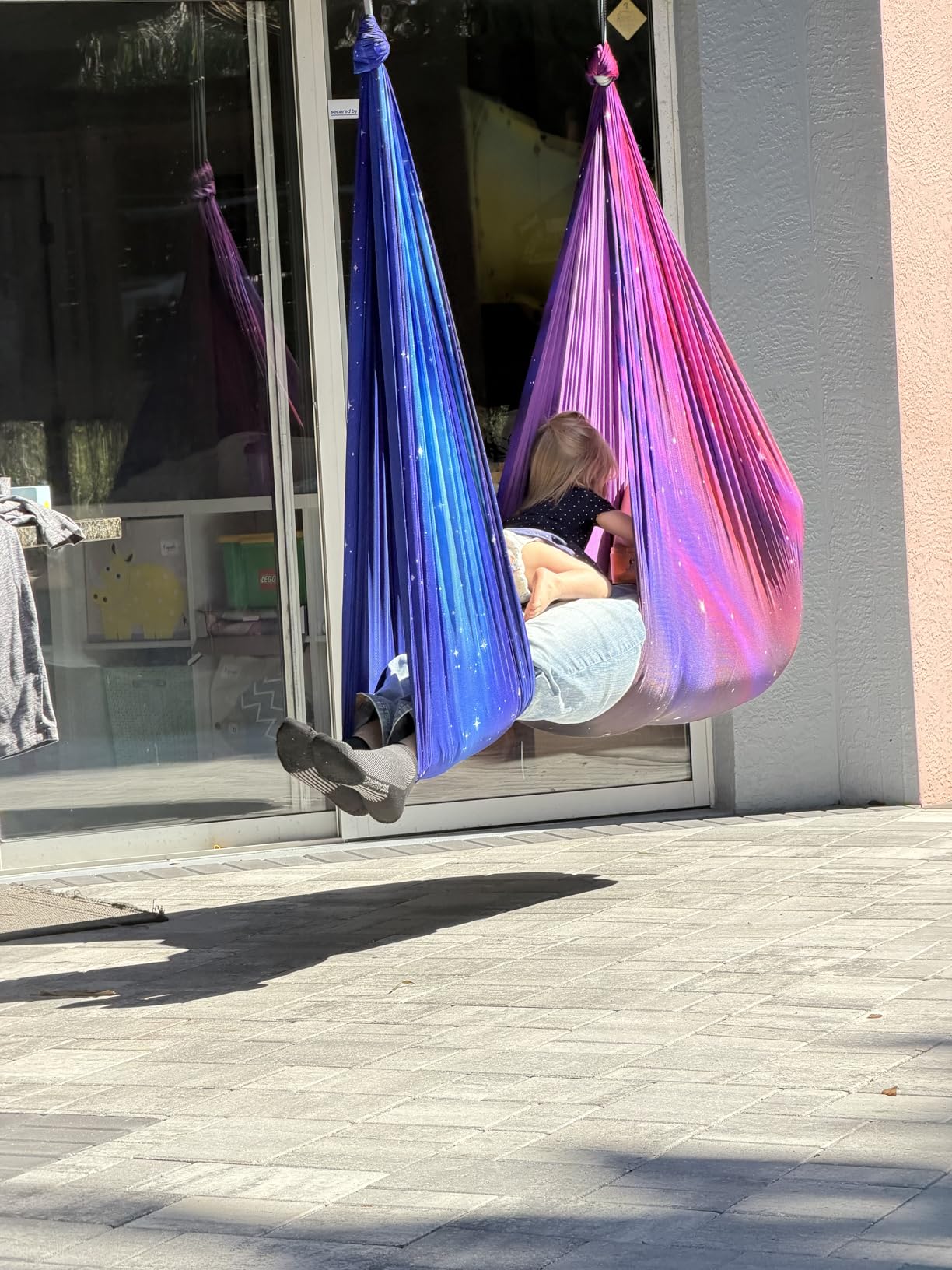
If your child is a teenager, this is the swing to look at first. It is a cocoon rather than an open seat, which means an adult can sit in with a child for co-regulation play, and it solves the mid-air breakage problem parents describe with lighter gear. Roughly 82% of its reviews are five stars.
The double layer of 59 by 59 inch polyester is the point of the design. It compresses around the body for deep-pressure input, which is the sensory profile most sought after in a therapy swing, and the fabric is machine washable, a real advantage when therapy equipment is shared between siblings.
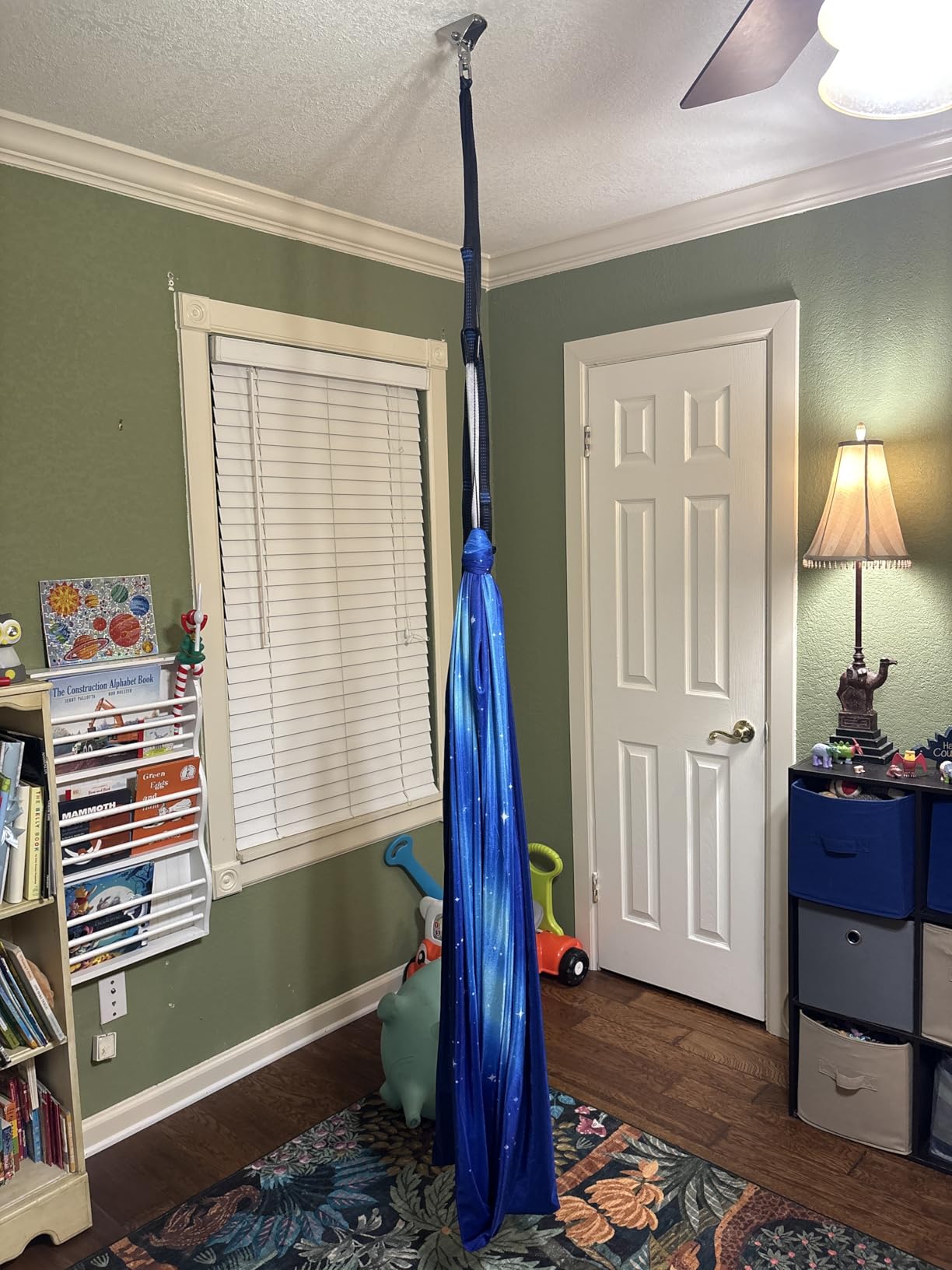
A 360 degree rotating hanger gives several ways to swing and play without changing equipment. The whole thing weighs 3.3 pounds, so it moves between a porch, a tree and a therapy room without a second purchase.
Mounting hardware is included, including an O-sling, U-hook, daisy chain, grommets, expansion screws and self-tapping screws, but you still need a frame or a hanging point. Check your tree or beam against the manufacturer load rating before you commit.
Who this suits best
Tweens, teens and adults who want a cocoon rather than an open seat. It suits a child who seeks deep pressure, and it suits siblings and parents who want to join in rather than supervise from a chair.
When it is the wrong choice
It is the wrong choice outdoors without a proper anchor, and it is the wrong choice if you need a low-stimulus retreat, since the 360 degree hanger invites rotation rather than stillness. Reviewers note the stretch fabric compresses over time with heavy daily use.
7. G TALECO GEAR sensory swing set with stand – the best all-in-one bundle
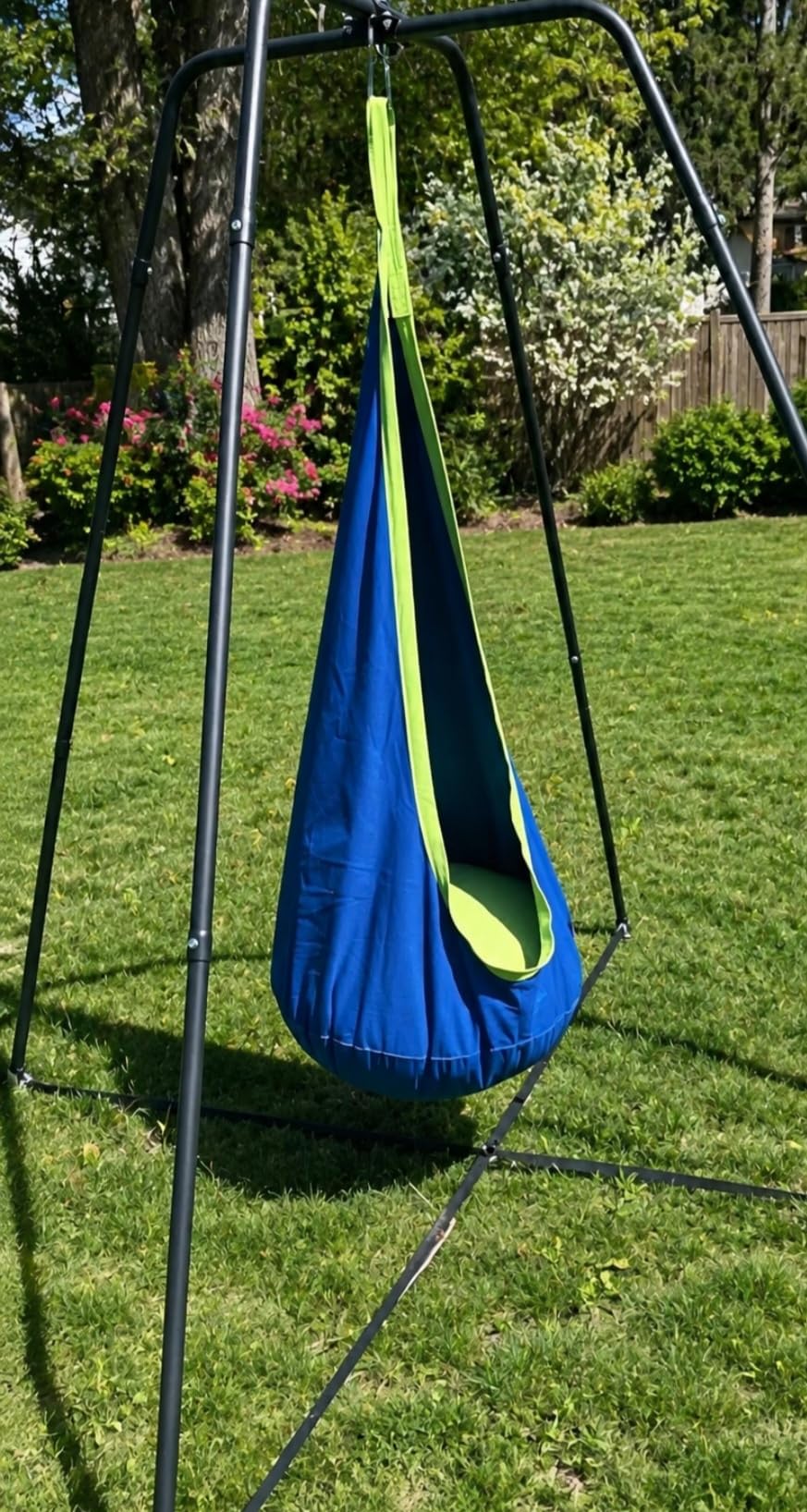
G TALECO GEAR Sensory Swing with Stand for Kids, Autism & Pod Swing
Sensory swing plus pod swing
Powder-coated steel
59.8 inch footprint
19 pounds
Pros
- Frame cocoon swing and pod swing in one package
- Powder-coated steel base with X-shape bracing
- 59.8 inch footprint gives swing and spin clearance
- Base straps reinforce the frame
Cons
- Lowest average rating here at 4.0
- Multi-piece build means a longer assembly
- Steel frame needs rust and hardware checks
Two swings in different modes, plus the frame. The sensory swing is a soft double-layer cocoon for bouncing, spinning or lying down, and the pod swing is durable cotton canvas with reinforced stitching for balance work. Having both means a child can move from high input to calmer input without going indoors.
The frame is powder-coated steel described as rust-proof and weather-resistant, with an X-shaped base and reinforced base straps. The 59.8 by 59.8 inch footprint gives real clearance for spinning, which narrower frames do not.
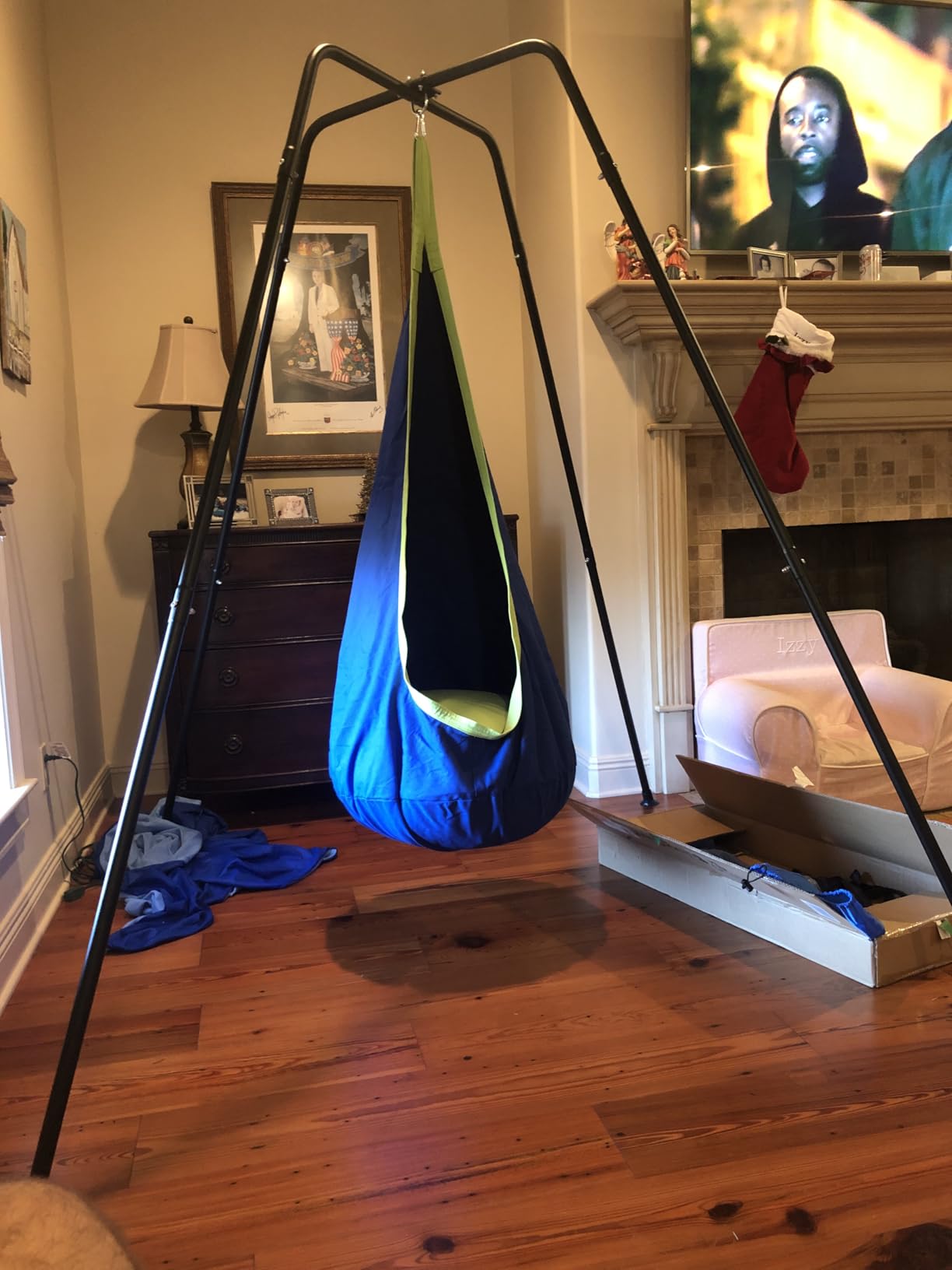
This is the lowest-rated product in the roundup at 4.0 stars, with 64% five-star reviews but a 13% one-star share, which is worth knowing before you buy. In practice, critical reviews concentrate on assembly complexity and on the swing fabrics rather than on the frame itself.
At 19 pounds and three pieces, it is a genuine multi-item build. Check the powder coating and hardware tightness every few months outdoors, and give it a level spot, because the whole stability story rests on the X-base sitting flat.
Who this suits best
Families who want one purchase rather than a swing plus a separate frame. It works for a child who wants both a cocoon and an open seat, and the sturdy frame also covers teen and adult-assisted play.
When it is the wrong choice
It is the wrong choice if assembly time is a problem or if your child is rough on fabric, since the swing material rather than the frame is where complaints land. Budget extra time for a three-piece build and periodic rust checks.
8. Tiny Land non-slip stepping stones – the best lightweight balance path
Tiny Land Stepping Stones for Kids, 5pcs Non-Slip Balance Toddler Toys
Five pieces
Rubber base
165 pound limit
3.7 pounds
Pros
- Textured top and non-slip rubber base for grip
- Light enough for children to rearrange
- Rated to 165 pounds so an adult can join in
- Animal themes support imaginative course play
Cons
- Flat stones offer less step-up challenge
- Listings vary on indoor versus outdoor use
- Only five pieces for a course
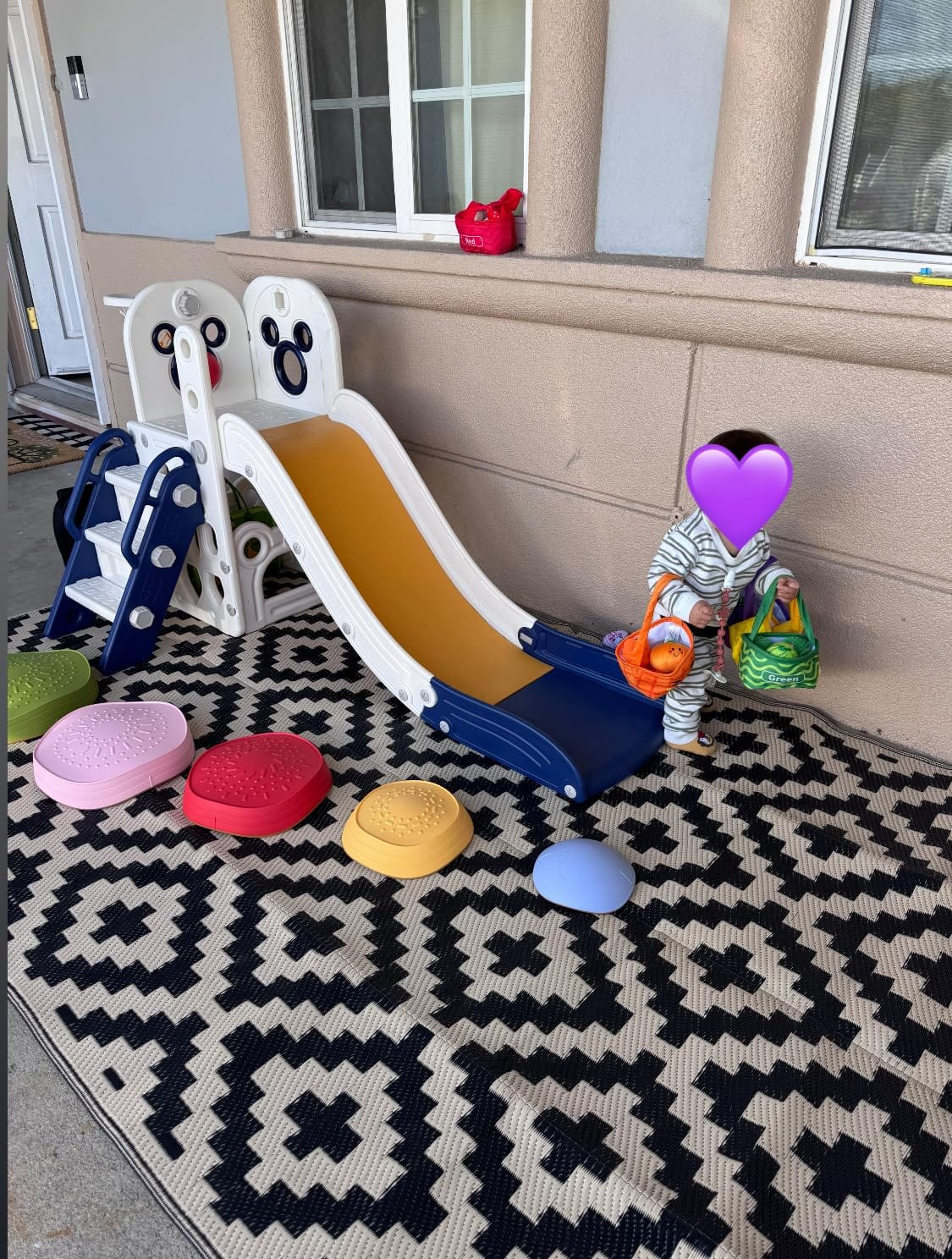
The defining feature is weight. At 3.7 pounds for all five stones, a child can pick them up, move them and rebuild the path on their own, and that independence is what extends a session from two minutes to something longer.
Laid out, the five stones cover 78 by 55 inches. That makes them a natural bridge between a patio and a garden path, or a route to a swing set, and each stone works as a stepping point or a balance beam segment on its own.
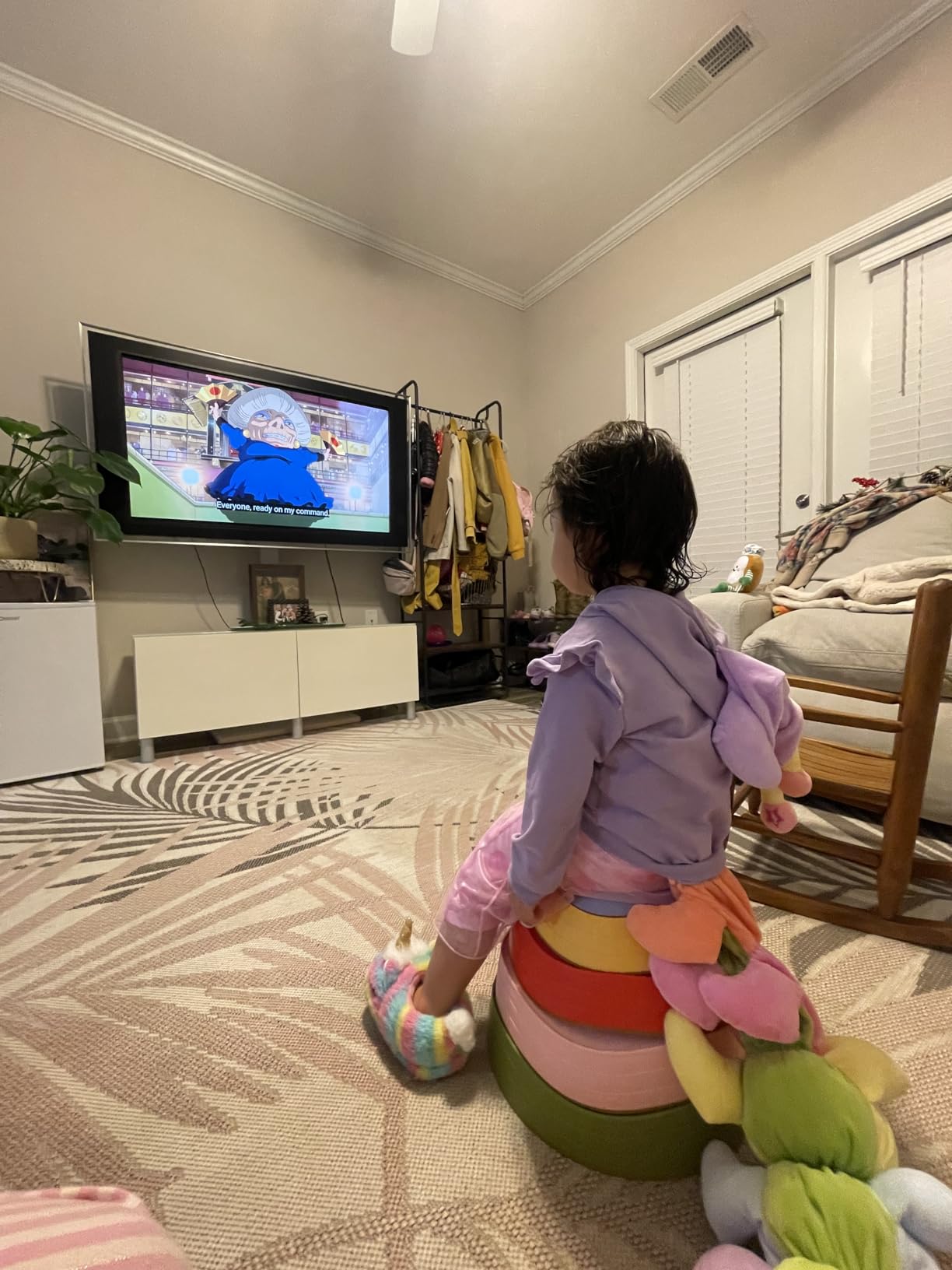
Grip is where the 4.8 rating comes from. Reviewers consistently praise the textured top surface and the non-slip rubber base, and there is effectively no one-star feedback in the mix. Because the stones are light, children treat them as construction pieces rather than fixed obstacles.
Two limits to know about. The manufacturer lists them for ages 3 and up, with a range of 24 months to 17 years, and the 165 pound figure means an adult can use the course with a child rather than doing it alone.
Who this suits best
Children working on balance and coordination who need to rearrange the challenge themselves, and families with a small patio or a path they want to make interesting. It also works as a low-cost add-on to a larger yard obstacle setup.
When it is the wrong choice
They are the wrong choice when you need a real step-up or step-down challenge, since these are flat mat-style stones about 0.55 inches high. Only five pieces also means a fairly short course, so build loops around them rather than a single line.
9. Acorn Avenue balance beam and stepping stones set – the best for the longest course
Acorn Avenue Balance Beam & Stepping Stones 13 Pc – Sensory – Toddler
Thirteen pieces
110 pound limit
Lightweight and portable
Textured stepping stones
Pros
- Thirteen pieces
- the largest set in this lineup
- Blocks rearrange into many layouts
- Portable enough for indoor or outdoor use
- Raised beams add a step-up challenge
Cons
- Lowest average rating among the balance sets at 4.5
- 110 pound limit sits below the frame swings
- Raised beams need soft ground beneath
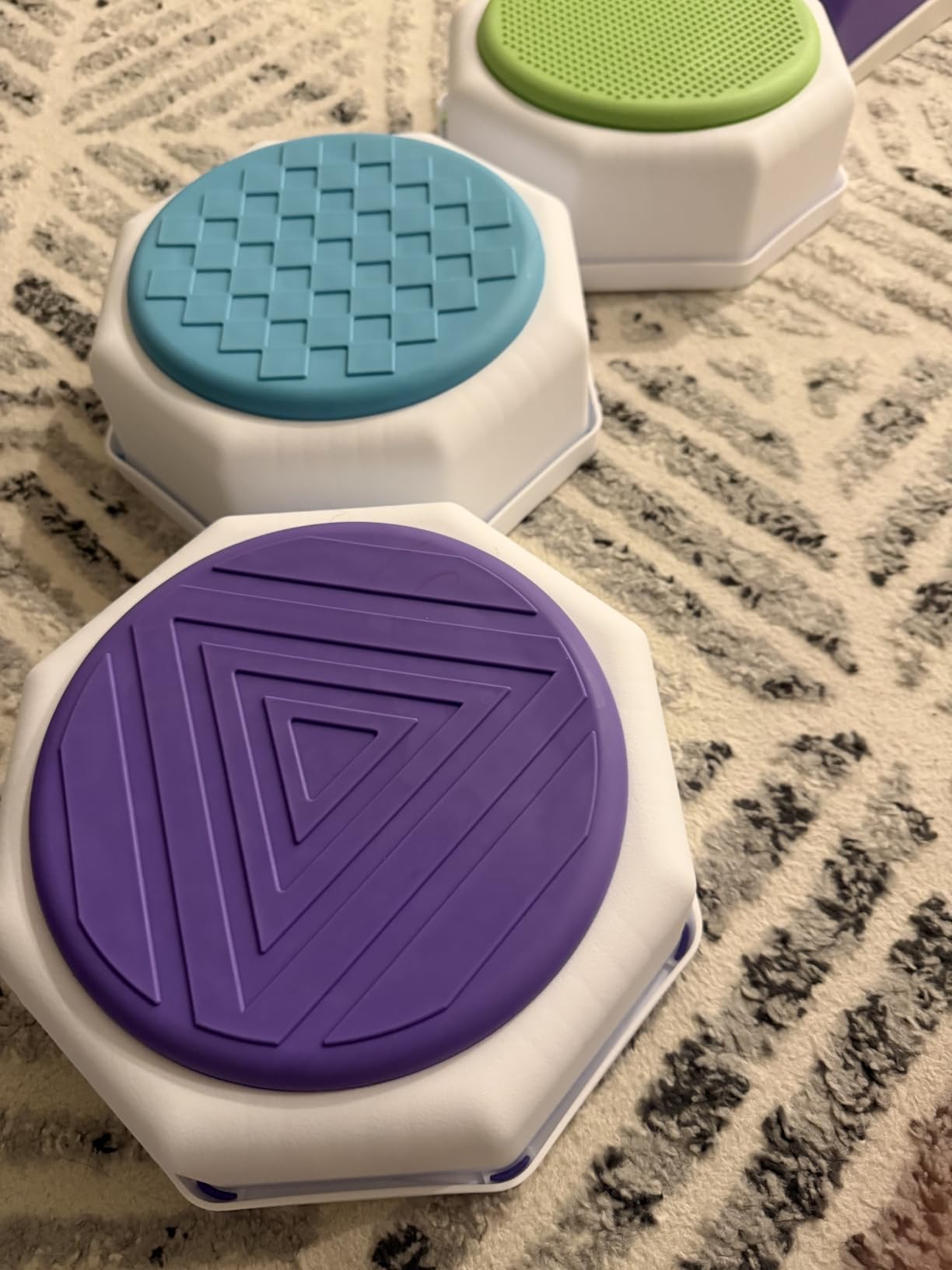
Five textured stepping stones plus eight balance blocks gives 13 pieces, the largest count in this roundup. More pieces mean more layouts, and for a child who disengages quickly, having a different route each day is often the difference between two minutes and twenty.
The age range is the widest of any balance set here, from 24 months to 10 years, and it is light and portable enough to move between an indoor room and an outdoor space in seconds.
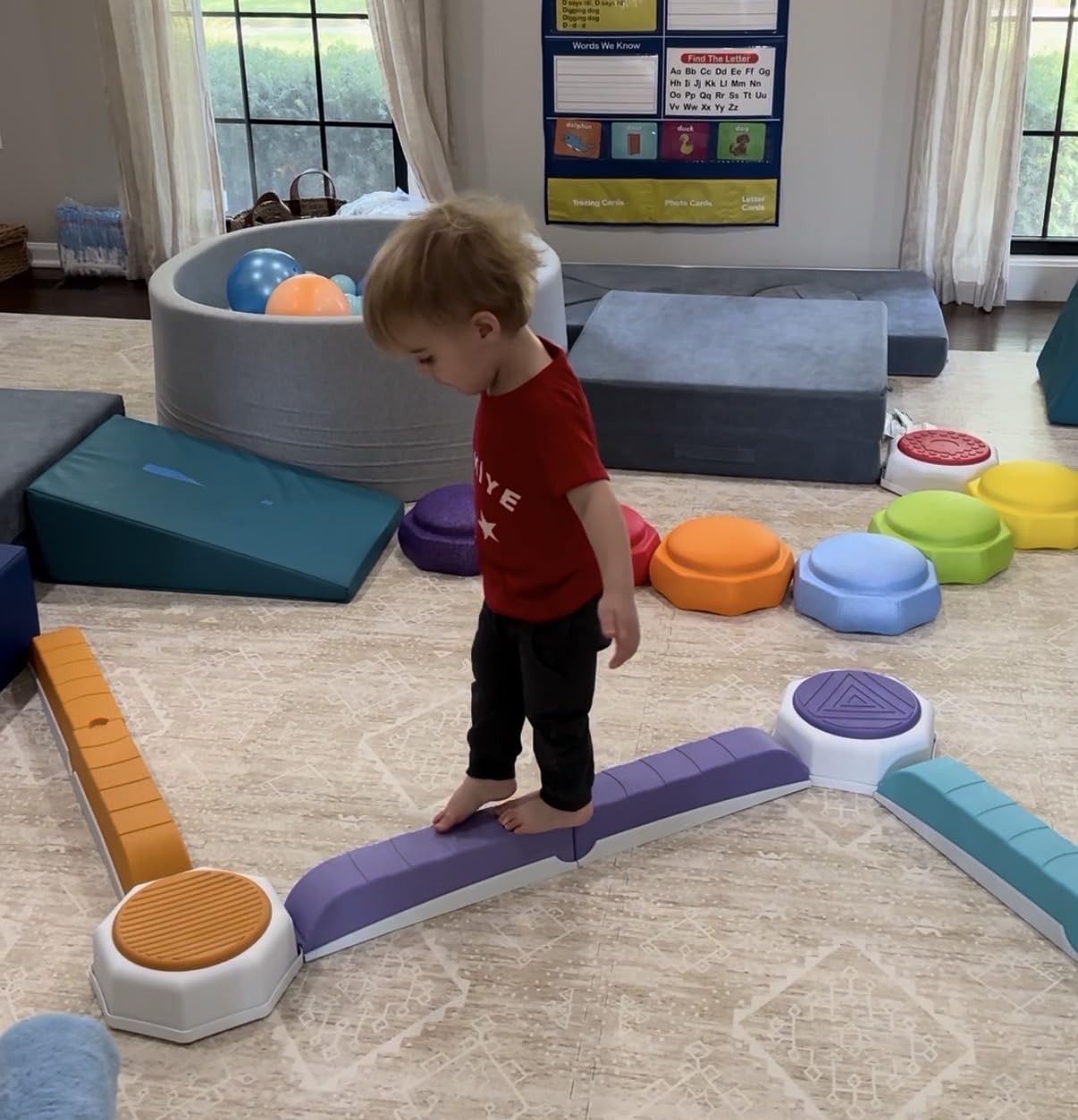
Reviewers like the piece count and the rearrangeability, which keeps a course fresh. It scores 4.5 with 76% five-star, slightly below the other balance sets here, and critical feedback tends to focus on plastic quality and on the height of the raised beams.
That height note is a safety point as much as a quality one. Place the raised beams over grass or rubber surfacing rather than concrete or decking, and check the listed 110 pound weight limit before an adult joins a child on the course.
Who this suits best
Children aged 3 to about 8 who need a bigger course and more variety than five pieces can give, including two-player layouts. It suits families who want one purchase that can move between a playroom and a garden.
When it is the wrong choice
It is the wrong choice for anyone heavier than 110 pounds, which is a real ceiling compared with the frame-based swings here, and it is the wrong choice on a hard patio if a raised beam will be used at full height.
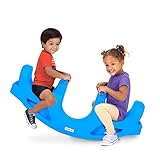
10. Simplay3 up and down teeter totter – the best two-child rocking
Simplay3 Up and Down Teeter Totter Seesaw – Rocking Fun for Two Toddlers or Kids Ages 18 Months to 5 Yrs- Sapphire, Made in USA
Two riders
18 months to 5 years
40.5 by 9 by 16.75 inches
8.9 pounds
Pros
- Rock and spin then flip for tunnel play
- One-piece build with nothing to loosen
- Light enough for toddlers to move themselves
- Seats two children with easy-grip handles
Cons
- Needs a smooth hard surface to work
- Grass or uneven ground makes it unsteady
- Rated for 18 months to 5 years only
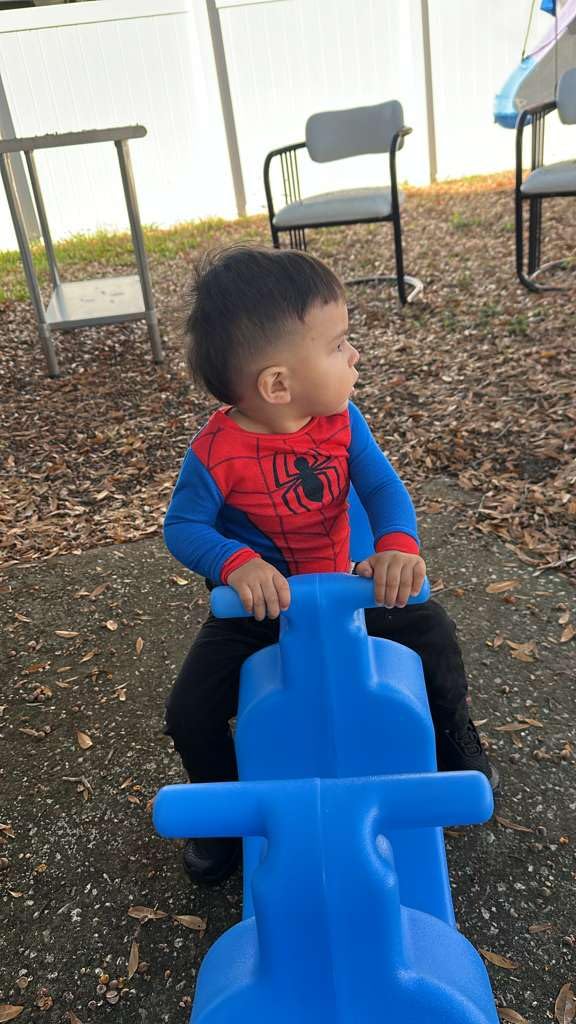
Rocking is predictable, rhythmic vestibular input, and for children who find spinning unpredictable this is the gentler option. It seats two, so it supports sibling or peer play rather than parallel play side by side, which is where most social interaction with equipment actually happens.
Flip it over and it becomes a crawl tunnel, which extends the value considerably. Reviews frequently describe children playing on it for unusually long stretches, and 86% of ratings sit at five stars, the strongest five-star share of any item here.
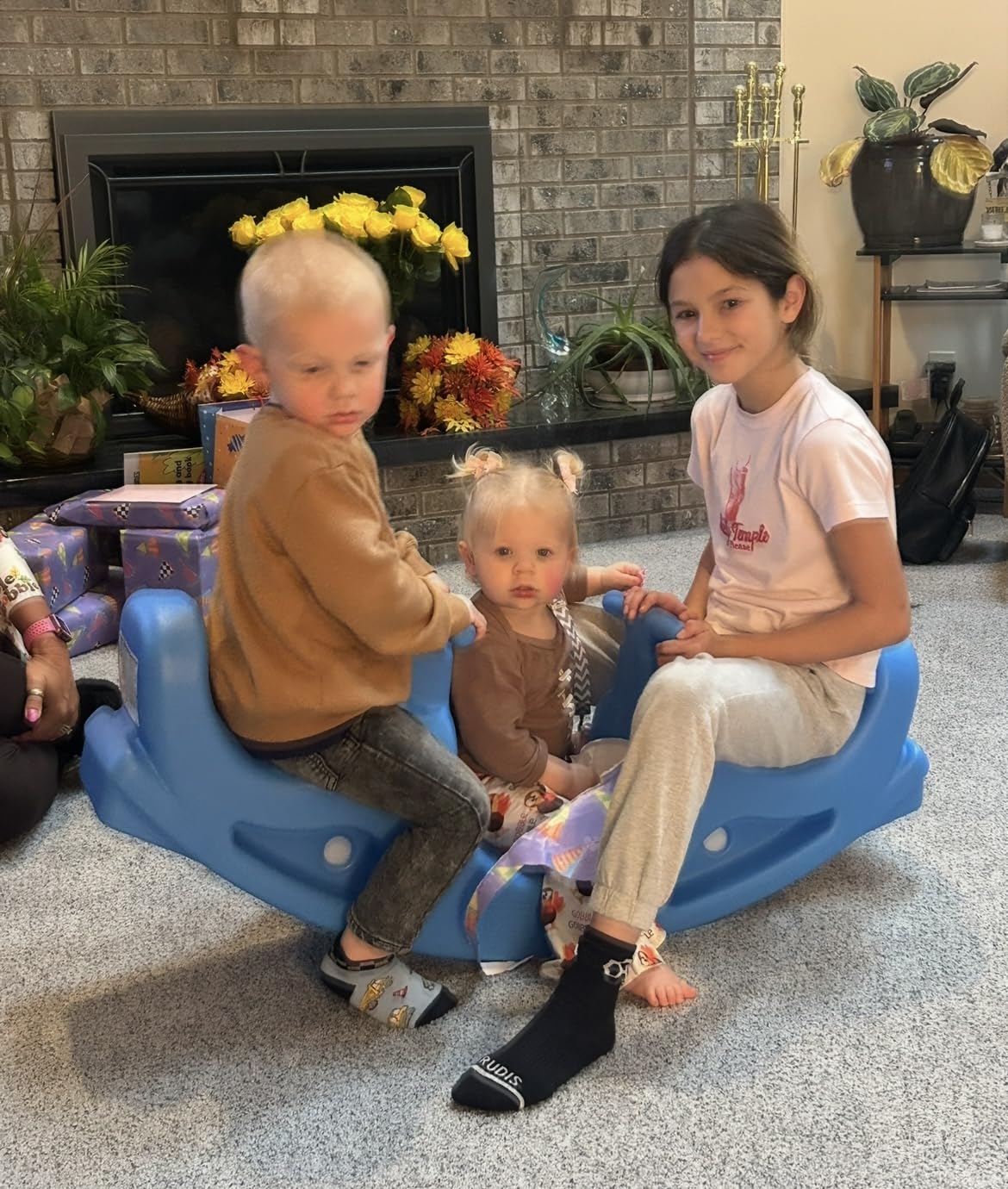
The one-piece build means there is nothing to loosen in the weather. At 8.9 pounds, toddlers can reposition it themselves, which keeps it useful when a sibling needs the patio space for something else.
Surface is the recurring caveat. On carpet or uneven ground the rocking becomes unpredictable, and that is the reason a few reviews drop to four stars. Set it on a flat patio, a deck or a smooth playroom floor, never on lawn.
Who this suits best
Children aged 18 months to 5 who want movement they can control, especially sensory-avoidant children who prefer linear rocking to spinning. Two riders make it the strongest parallel-play item in this list for siblings close in age.
When it is the wrong choice
It is the wrong choice for grass and gravel, where it becomes unsteady, and for a narrow base that can tip if children lean sideways to get off. It is also outgrown by about age five.
11. Qusases sensory swivel chair – the best child-controlled spinning
Qusases Sensory Swivel Chairs for Kids, Spinning Chair for Autistic Kids, Sit and Spin Sensory Toys, Training Body Coordination, Autism ADHD Chairs Indoor Outdoor Play Equipment (Red)
220 pound load
20.6 by 10 by 17.9 inches
9.9 pounds
Hard surface use
Pros
- Child starts and stops the spin themselves
- Quiet bearings on an inclined turntable
- Metal base with anti-slip feet rated to 220 pounds
- Sit kneel or lie on the stomach to play
Cons
- Hard plastic seat is uncomfortable over long sessions
- Will not spin on grass or sand
- One-star reviews focus on comfort and surfaces
The distinguishing feature is control. Unlike equipment an adult starts for a child, the child spins up and stops on their own, which supports autonomy and gives a sensory-seeking child a repeatable, self-managed input whenever they want it.
Several positions work: sitting, kneeling, or lying on the stomach. The inclined turntable and quiet smooth bearings produce a controlled spin rather than a jarring one, and the listing notes it as a way to build motion tolerance in children who get motion sickness easily.
It rates 4.3 with 76% five-star, but 10% one-star, so read the negative reviews before buying. They cluster around two things: comfort over long sessions on the hard plastic seat, and using it on anything other than a hard floor.
The stated load capacity is 220 pounds on a metal base with anti-slip rubber feet. At 9.9 pounds it is easy to bring outside, but only if you have a patio or driveway to put it on.
Who this suits best
Sensory-seeking children who want rotation they control, and families with a hard surface nearby. It is one of the few items here designed specifically for children on the autism spectrum rather than adapted for them.
When it is the wrong choice
It is the wrong choice on grass, sand or soil, where the turntable will not spin properly, and it is the wrong choice for a child who needs pressure rather than rotation. For comfort, plan short sessions rather than long ones.
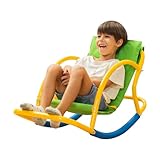
12. PLATPORTS calming sensory rocking chair – the best quiet focus seat
PLATPORTS Calming Sensory Rocking Chair for Kids – Balance Seat for Focus, Relaxation & Play | Indoor Outdoor Therapy Chair for Autism, ADHD & Active Kids
77 pounds per child
31.61 by 28.55 by 17.51 inches
7.7 pounds
Ages 3 to 5
Pros
- Gliding rocker with seesaw-style up and down motion
- 7.7 pounds with no assembly needed
- Powder-coated steel with rust-resistant finish
- Exceeds ASTM standards and is CE certified
Cons
- 77 pound per-child limit is well below the frame swings
- Marketed for ages 3 to 5 so it is outgrown fast
- 14.5 inch seat depth limits supported postures
This is the quiet option. Rather than a swing with a big arc, it glides on a seesaw-style path, and reviewers describe children using it to rock slowly for focus and calm rather than for high-energy play. In a yard with a loud zone nearby, that difference matters.
It weighs 7.7 pounds, needs no assembly, and moves between indoor and outdoor spaces easily, so it can sit under a shade canopy as the low-stimulation end of a two-zone yard.
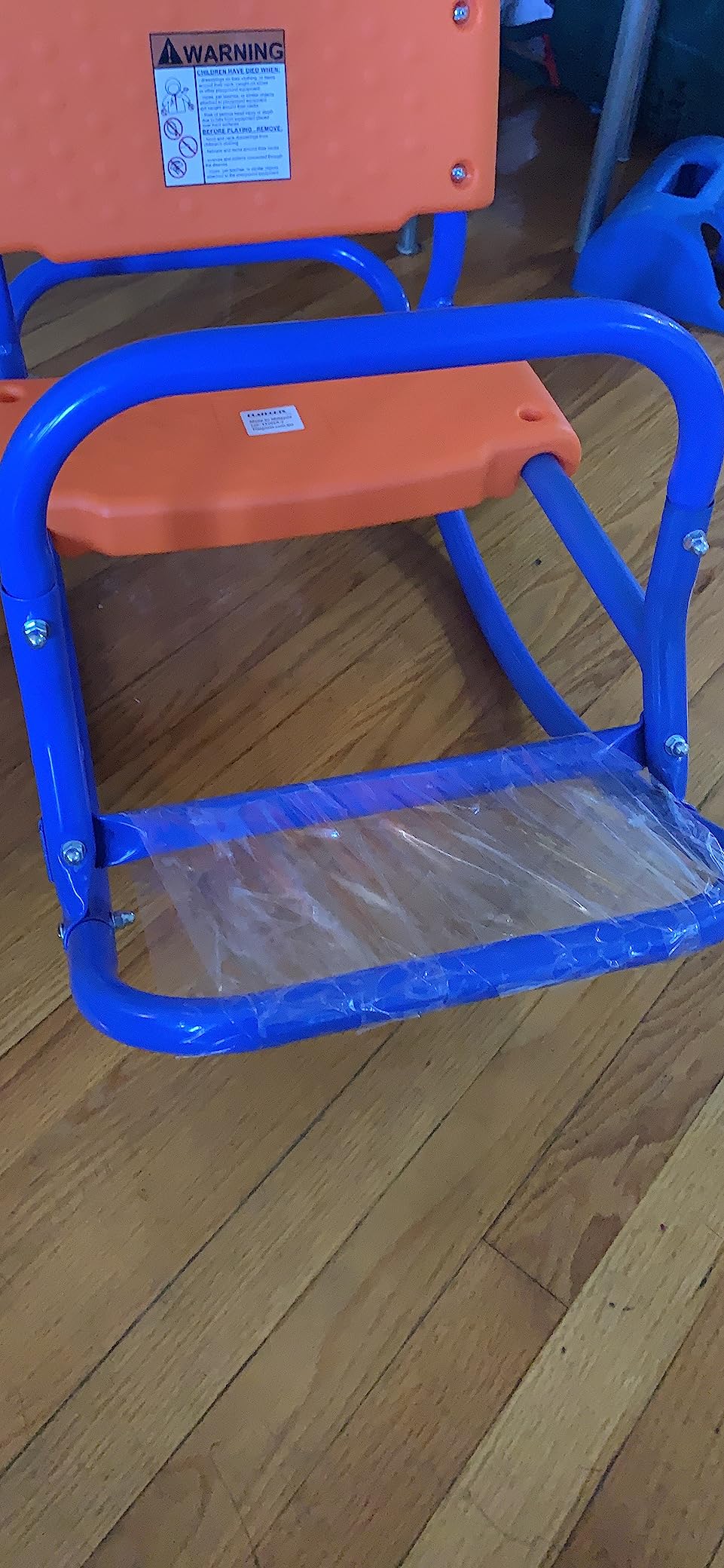
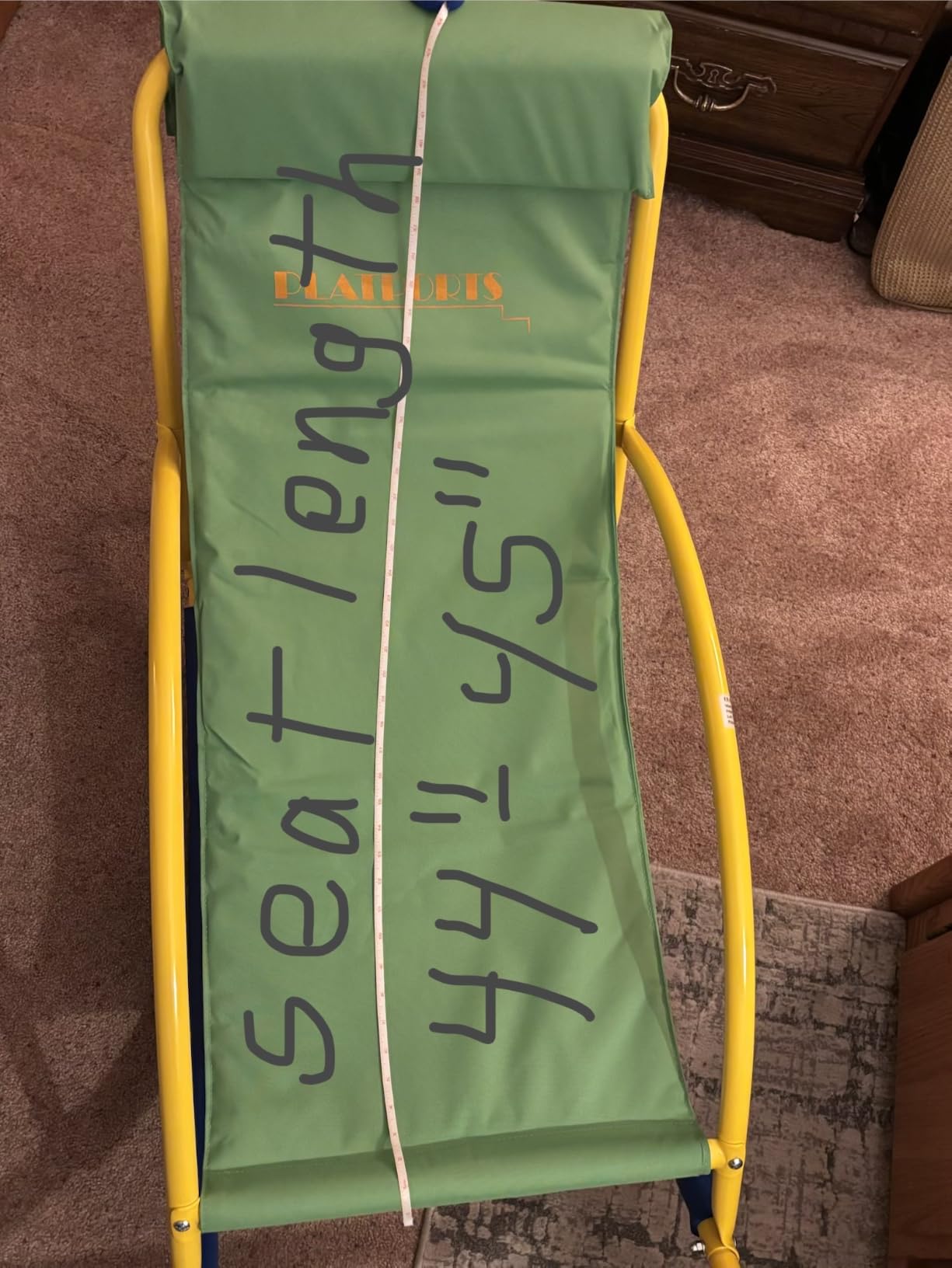
The build is a heavy-duty powder-coated steel frame with a rust-resistant finish, a molded plastic seat and back support, and it lists as exceeding ASTM safety standards with CE certification. For therapy-oriented equipment, that paperwork is part of the value.
Expect to move on within a year or two. It is listed for ages 3 to 5, with a 77 pound limit per child and a 14.5 inch seat depth, and those are the numbers most often cited as limitations in reviews.
Who this suits best
Young children who need calming, low-arousal movement after high-energy play, and families building a defined quiet zone into a larger active yard. The certification and no-assembly design suit households that want something portable and tidy.
When it is the wrong choice
It is the wrong choice for a child over 77 pounds or past about age five, and it is the wrong choice if the child needs pressure input rather than slow rocking. The narrow seat also limits how many postures it can support.
How to match outdoor equipment to your child’s sensory profile
Match the equipment to the behaviour you actually see at home, not to a diagnosis label. The split that matters most is sensory-seeking versus sensory-avoidant, and getting it backwards is the fastest way to buy something your child refuses to touch.
If your child seeks sensation: lead with rotational and heavy work. A sensory swing, saucer swing, trampoline or climbing course gives the vestibular and proprioceptive input that usually ends in a calmer state. Reddit parents describe trampolines, sensory swings and exercise balls as the reliable hits in that group, with sand and water play close behind.
If your child avoids sensation: choose predictability and enclosure. A gliding rocking chair, a pod swing or a shaded balance course gives controlled movement with a narrow visual field. Avoid open rotating equipment such as merry-go-rounds or spinning discs, and skip anything with flashing or bright moving lights.
If you are not sure which: start with one cheap item and watch. A set of stepping stones or a wobble disk tells you within a few sessions whether your child wants more input or less, and costs far less than a full setup built on a guess.
Age matters less than developmental level. The equipment listed for 18 months here suits many school-age children in terms of regulation goals, while a child with limited postural control needs a lower, wider and more supported item than their chronological age suggests. Check the weight limit before the age label every time.
Yard size, anchoring, weight limits and fall zones
Measure your space before you shop, and split it into two zones: an active movement zone and a shaded, enclosed quiet retreat. That two-zone layout is the most useful piece of sensory-friendly yard design advice available, and it also tells you which items you can pair together.
Patio or apartment terrace: wobble disks, teeter totters, swivel chairs and stepping stones. Everything here needs a hard, flat surface anyway, so a paved area is an advantage rather than a limitation.
Small yard: portable balance sets and a folding trampoline. Skip the large saucer swing, which needs 81 inches of width and cannot be moved once built.
Large backyard: frame-based swings and anything with anchors, provided you have clearance in every direction for the fall zone.
Anchor anything with a stand. Heavily rated frames are only as safe as the ground under them, and wind is the common failure mode. For any swing over 6 feet of fall height, put safety surfacing underneath rather than grass alone.
Two safety habits go a long way. Check weight limits honestly, because the biggest risk in this roundup comes from a child outgrowing a seat rather than from a manufacturing fault. And supervise raised beams and swings that take a 110 pound child into a 200 pound range, because the equipment is not designed for that combination.
Finally, plan for the exit. Know in advance where your child can go to be alone, and watch for the signs of overload: covering the ears, hand-flapping, withdrawal, or a refusal to keep going. When those appear, ending play early and moving to a quiet spot works better than any equipment change.
Frequently Asked Questions
What is the best outdoor play equipment for people with autism?
Sensory-focused outdoor equipment, matched to the child’s sensory profile. Sensory-seeking children usually do best with swings, climbing courses and trampolines for vestibular and proprioceptive input, while sensory-avoidant children need quieter, more predictable equipment such as rocking chairs and enclosed pod swings.
What kind of outdoor play equipment is suitable for an autistic child?
Match the equipment to the sensory system you want to feed. Swings, saucer swings and swivel chairs give vestibular input; climbing domes, balance beams and stepping stones give proprioceptive input; water, sand and textured rubber give tactile input. Then check the weight limit and the manufacturer’s age range before you buy.
Do sensory swings actually work?
Parents and therapists report that sensory swings do help many autistic children regulate, particularly for deep-pressure input, and the reviews for the swings in this roundup are largely positive. Results vary, and the swing works best as one part of a wider sensory diet rather than as a single solution. Weight capacity matters more than parents expect.
Is a trampoline good for autistic kids?
A trampoline is often an effective outlet for sensory-seeking children because bouncing delivers repeated proprioceptive input in a controlled way, and forum parents frequently describe it as one of the most reliable pieces of outdoor equipment they own. Choose a small enclosed model with padding and a handle for younger children, place it on grass, and check the weight limit, since most are rated for one jumper.
How do I set up a sensory-friendly backyard?
Divide the space into an active movement zone and a shaded, enclosed quiet retreat. Put swings, climbers and water play in the active zone, and give the retreat zone a seat, shade and visual screening so a child can decompress. Anchor all frames, keep surfacing under fall zones, and add a step-free path so the quiet corner is genuinely reachable.
The bottom line: pick by profile, not by popularity
For most families the best outdoor play equipment for autistic kids is the edxeducation Step-a-Trail, because it feeds proprioception, reconfigures into a new course each time, and works for a wide age span in a small footprint. If your child is a teen or adult, the HiCamer swing is the sturdier cocoon option and solves the weight problem that lighter swings create. If your child is sensory-avoidant, the PLATPORTS rocking chair or an OUTREE pod swing gives calm without escalating.
The pattern across all 12 picks is worth remembering: independence beats size. Equipment a child can climb into, start and stop on their own will outlast anything an adult has to set up for them, and that is the difference between two minutes of engagement and twenty. Updated for 2026, and worth re-reading when your child outgrows a weight limit or a height range.