
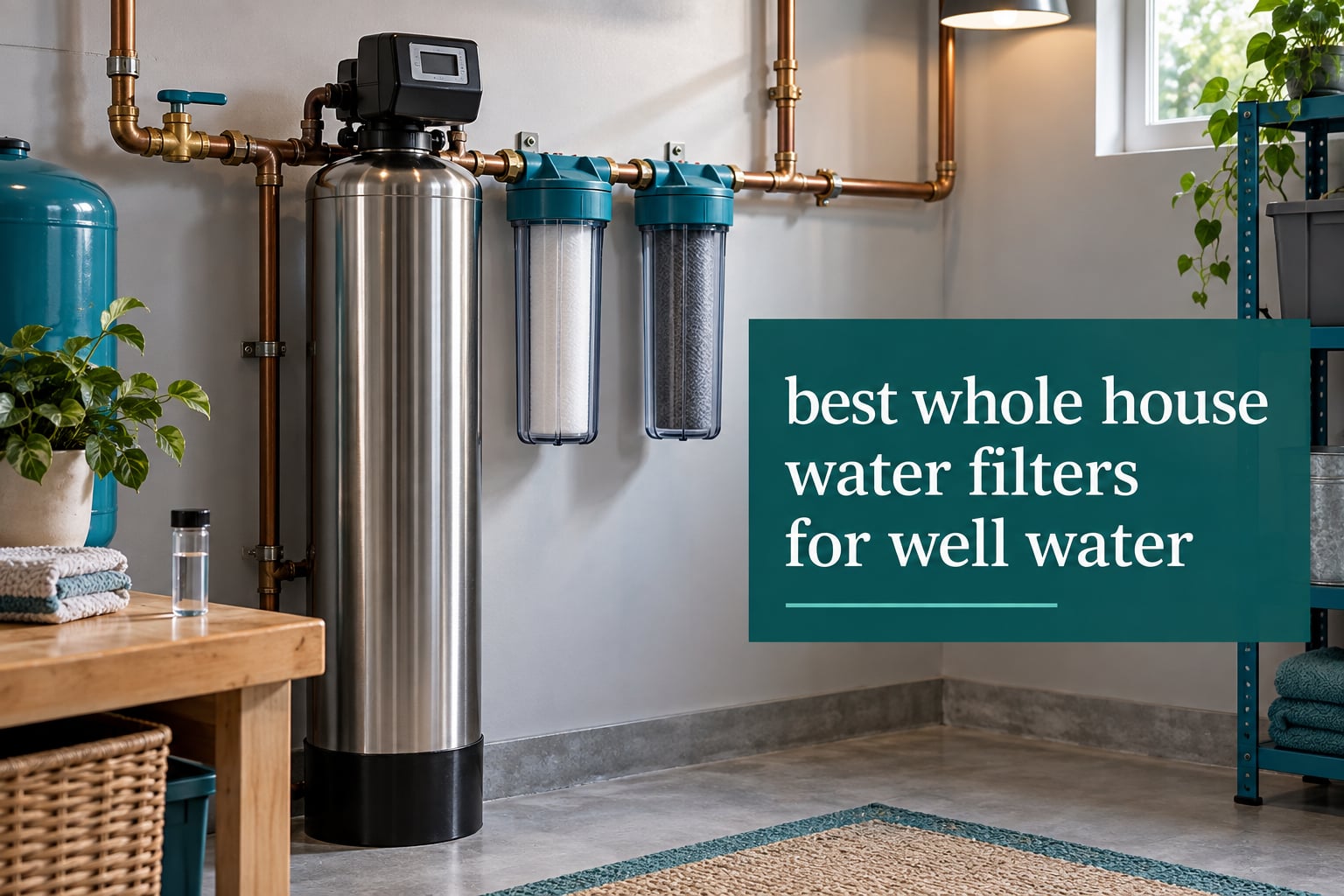
Test your well water before you buy anything. That single rule decides more than any brand name, filter wattage or flow number, and it is the step most roundups skip. Municipal water arrives pre-treated and disinfected; a private well does not, so what comes out of your tap depends on the geology, the septic field three hundred feet away and how high the water table sat after the last heavy rain. The best whole house water filters for well water are the ones matched to the contaminants your own lab report lists, not the ones with the longest spec sheet.
That is why this roundup starts with what your water actually contains. Iron above about 3 ppm, manganese, hydrogen sulfide, coliform and hardness each need a different media, and a cartridge sold as a well water filter handles almost none of them. We compared eight point-of-entry systems on the same five questions: what contaminant class each one actually targets, how much flow it passes, how much media capacity it holds, what the ongoing media cost looks like, and whether the certification claim names a real standard.
Every product below sits on the main cold-water line, so one system treats drinking, bathing, laundry and appliance water. We also flag what each unit will not do. Several of these systems will not reduce total dissolved solids, and a few will not touch sulfur at all, no matter how the listing is worded.
Table of Contents
Top 3 Whole House Water Filters for Well Water (October 2026)
Three systems came out ahead across the criteria that matter on a well: contaminant coverage, flow rating, media life and the volume of real owner feedback behind them.

iSpring WGB21BM 2-Stage
- 15 gpm max flow
- Iron and manganese to 0.01 ppm
- 50000 gallon capacity
Fleck 5600 SXT Air Injection
- Air injection oxidation
- 1.5 cu ft catalytic carbon
- Daily backwash
The 8 Best Whole House Water Filters for Well Water in 2026
Every entry below carries a flow rating, a capacity figure and the contaminant class it was built for. Use the Check Latest Price buttons to compare current figures directly.
| Product | Specs | Action |
|---|---|---|
| iSpring WGB21BM 2-Stage |
|
Check Latest Price |
| Express Water 3-Stage |
|
Check Latest Price |
| Fleck 5600 SXT Air Injection |
|
Check Latest Price |
 iSpring WGB32BM 3-Stage iSpring WGB32BM 3-Stage |
|
Check Latest Price |
 Aquasana WH-WELL-CT-UVS Aquasana WH-WELL-CT-UVS |
|
Check Latest Price |
 Waterdrop WHF3T-FG 3-Stage Waterdrop WHF3T-FG 3-Stage |
|
Check Latest Price |
 PRO+AQUA PRO-WELL-1E PRO+AQUA PRO-WELL-1E |
|
Check Latest Price |
 PUREPLUS 1-Stage PUREPLUS 1-Stage |
|
Check Latest Price |
1. iSpring WGB21BM 2-Stage: best overall for most well water homes
iSpring WGB21BM 2-Stage Whole House Water Filtration System, 10” x 4.5” Carbon Block and Iron & Manganese Reducing Filters, 1″ Ports
15 gpm max flow
50,000 gallon capacity
10 in x 4.5 in cartridges
Iron down to 0.01 ppm
Pros
- Largest review pool in this group at 4.6 stars from 4270 owners
- Two stages cover sediment taste and odor plus iron and manganese
- Catalytic iron media rated for up to three times the life of greensand
- Pre-assembled bracket and filter wrench included
- Handles up to 15 gpm for larger homes
Cons
- Plastic NPT ports need several wraps of Teflon tape to seal
- Replacement carbon and iron cartridges are sold separately
- Does not reduce total dissolved solids
This is the system I keep coming back to for readers who have a moderate iron problem and a normal household. The WGB21BM pairs a 10 inch by 4.5 inch coconut shell carbon block with a second-stage iron and manganese reducing cartridge, and it carries a 4.6 average across 4,270 ratings, the largest owner pool of any system in this roundup.
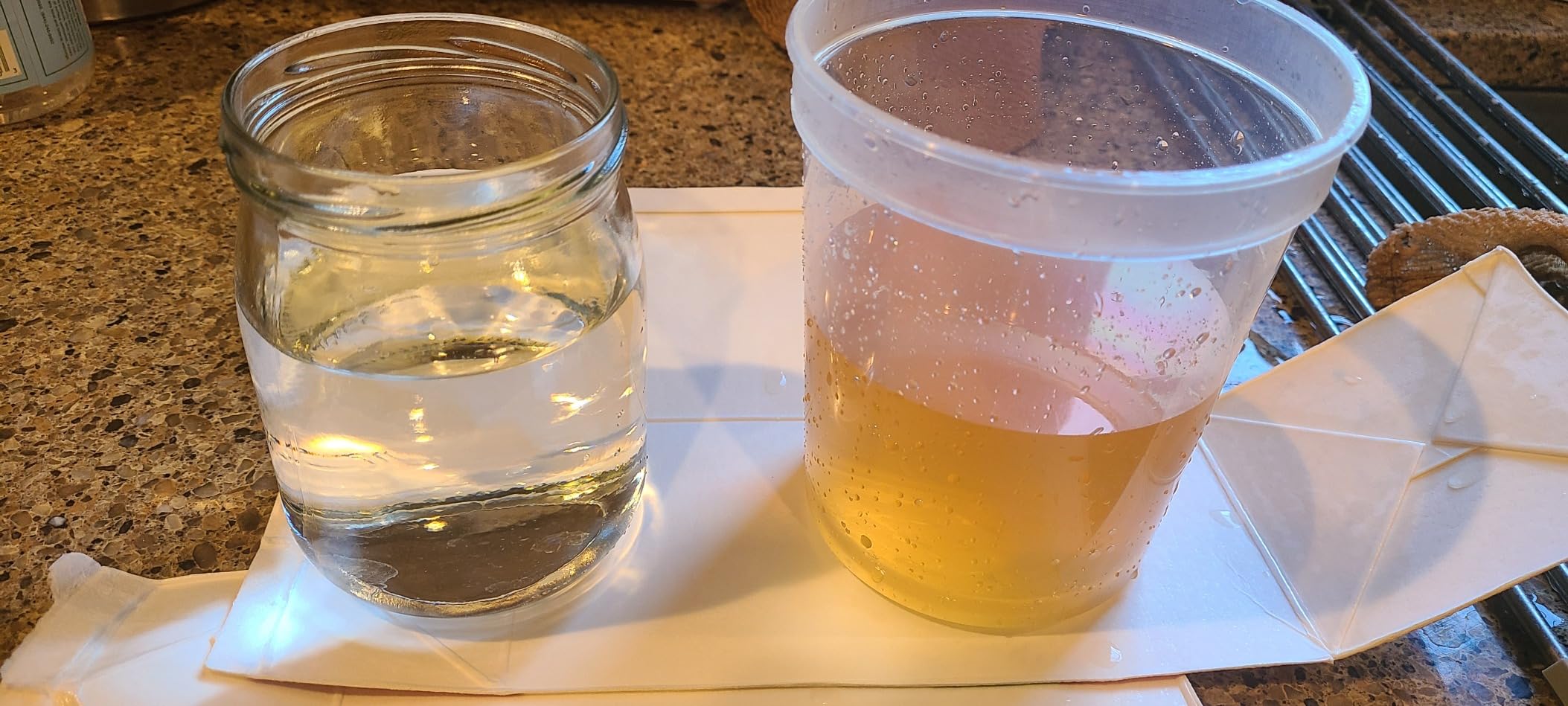
Most of those owners are on wells, and the reports cluster around the same outcome: orange staining in toilets and tubs fades within weeks, and metallic taste goes with it. The carbon block stage is specified at over 90 percent chlorine removal and is effective against VOCs such as herbicides and industrial solvents, which matters on rural acreage near farmland.
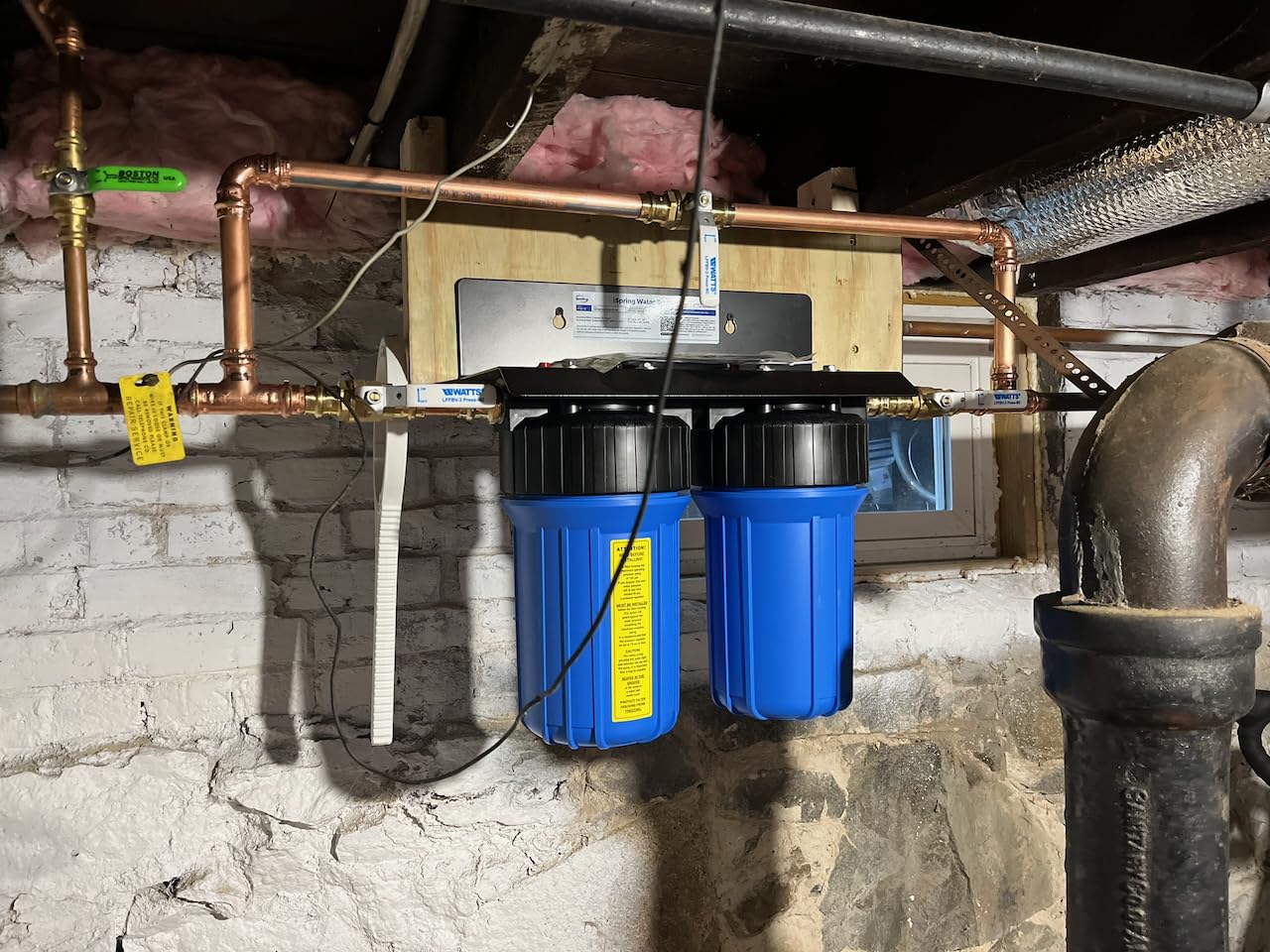
The iron stage is rated for iron up to 3.0 ppm reduced to 0.01 ppm, and manganese up to 1.0 ppm reduced to 0.01 ppm. Because the media is catalytic rather than consumed greensand, the manufacturer rates its service life at up to three times longer, which is the single biggest reason the ongoing cost stays predictable on an ironed well.
One detail catches new owners out. The housings use plastic 1 inch NPT ports, and reviewers repeatedly describe needing several wraps of Teflon tape and careful, restrained tightening to stop weeping. Several also note that the iron cartridge performs better in the first position in the series, so plan the plumbing order before you buy.
What flow rate means for a three bathroom home
At 15 gpm this system has room to spare for a family of four to five with three bathrooms, as long as you are not running a whole house filtration plant alongside two irrigation zones. The manual gives a working range of 1 inch connections rated to 15 gpm, and the housing diameter is what makes that number achievable without a pressure drop at the taps.
When this is the wrong pick
Skip it if your lab report shows iron above 3 ppm, if you have a hydrogen sulfide odor, or if you need bacterial disinfection. This is a cartridge system, and cartridges do not oxidize dissolved iron or hydrogen sulfide, which is the correction homeowners hear most often on plumbing forums. If your report is clean apart from light sediment and moderate iron, it is a strong match.
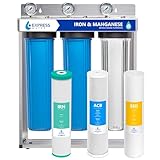
2. Express Water 3-Stage: best for high flow and larger homes
Express Water Whole House Water Filter System, Iron & Manganese, 3-Stage
17 gpm max flow
100,000 gallon capacity
3 stages on a steel frame
20 to 80 psi range
Pros
- Highest flow rating in the group at 17 gpm
- Three filter stages plus a stainless steel free-standing frame
- Pressure gauges and pressure release buttons on every housing
- NSF certified replacement cartridges that are easy to source
- Handles inlet water up to 800 ppm total dissolved solids
Cons
- Three cartridges on a 6 to 12 month replacement cycle
- Freestanding frame needs floor space rather than a wall bracket
- Does not reduce total dissolved solids
The Express Water system is the one to look at when fixture pressure matters more than footprint. Its 17 gpm maximum flow rate is the highest figure across these eight systems, and the 100,000 gallon capacity rating outlasts the cartridge life claim, which puts it ahead for larger homes on high daily use.
Owners on iron-stained wells describe the same progression: the reddish-brown color in glassware and laundry clears, and the metallic taste fades along with it. The system is explicitly built for iron and manganese, and the listing calls out reddish-brown staining on porcelain, fixtures and laundry as the problem it targets, which is a more honest framing than a generic whole house claim.
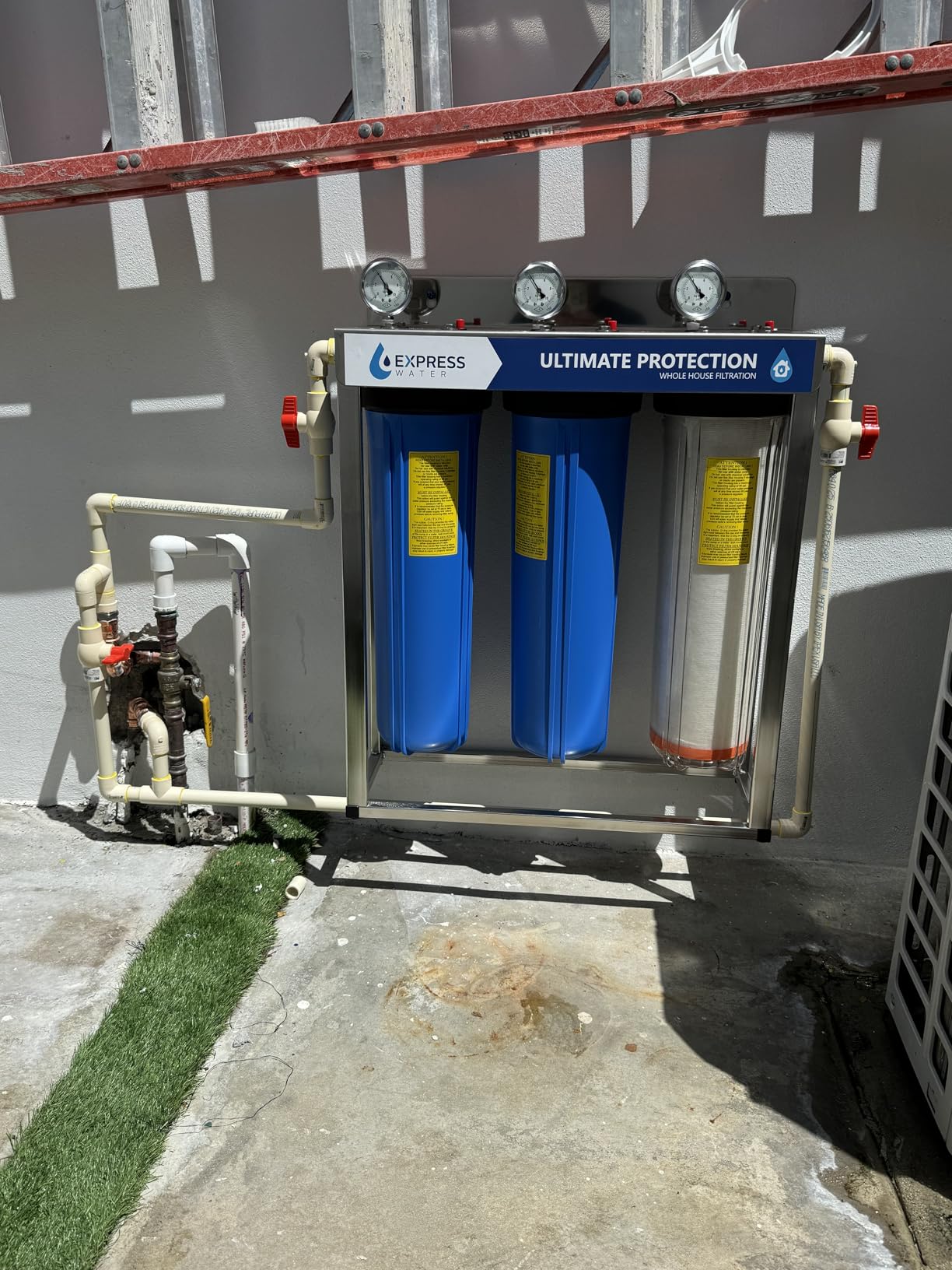
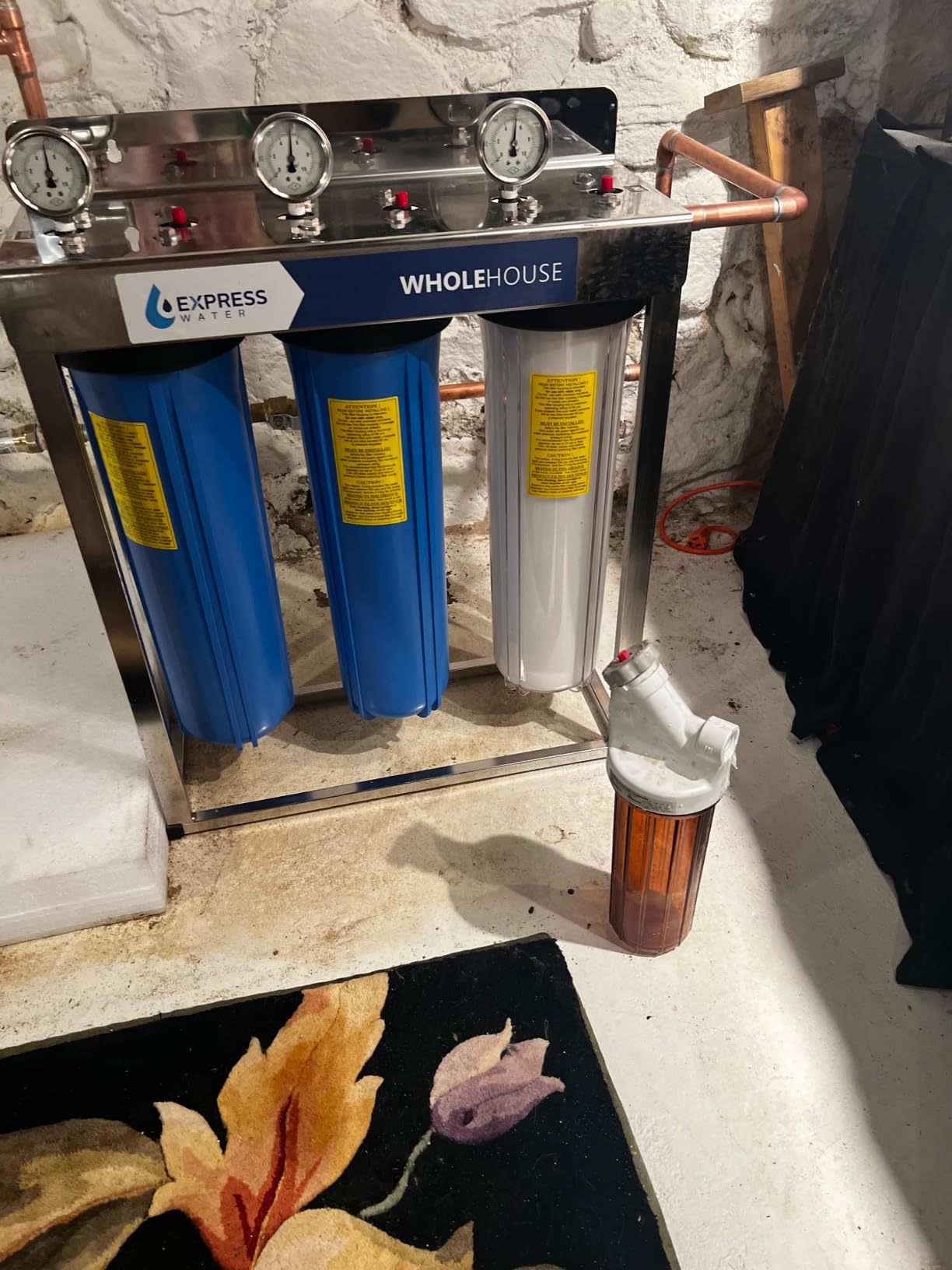
Build quality is the quiet strength here. It comes on a heavy duty stainless steel free-standing frame rather than a wall bracket, and every housing gets its own pressure release button and gauge, so you can see pressure drop building before a filter is fully spent. The filters are NSF certified and sold under a searchable model number, which makes replacements simple to source.
Operating pressure is rated 20 to 80 psi and temperatures 40 to 100 degrees Fahrenheit, and the manufacturer caps supported inlet water at 800 ppm. Note the wording: that is a maximum inlet level the system tolerates, not a reduction claim, and the technical sheet states plainly that total dissolved solids are not reduced.
How the stainless steel frame changes daily service
A free-standing frame means you slide a full cartridge out over a floor rather than fighting a wall bracket, which matters when three stages need changing at once. The trade-off is footprint, at 23.5 inches long by 8.5 inches wide by 29.25 inches high you need real floor area in the mechanical room, not a gap beside a softener.
What the 6 to 12 month cycle costs you over time
Owners filtering a family of four through a moderate well usually land near the 100,000 gallon figure, but heavily ironed wells push toward the 6 month mark. That is the running cost question most roundups skip, and it is the reason we rank a higher capacity system ahead of a cheaper one when the water is hard on media.
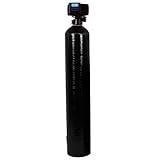
3. Fleck 5600 SXT Air Injection: best value for iron and sulfur together
DuraWater Fleck 5600 SXT Air Injection Iron Eater Filter 1.5 cu ft, Black
1.5 cu ft catalytic carbon media
Fleck 5600 SXT digital valve
10x54 mineral tank
Daily automatic backwash
Pros
- Air injection oxidation targets dissolved iron and hydrogen sulfide in one tank
- 1.5 cubic feet of Centaur catalytic carbon media included
- Daily automatic backwash replaces the cartridge habit
- Serviceable valve with seals and nozzles that pop out for cleaning
- Mineral tank and 1 inch plastic bypass both included
Cons
- Air injection cone can weep a small amount of water while drawing air
- Default daily backwash uses a lot of water and can load a septic field
- Digital valve programming is confusing without a support call
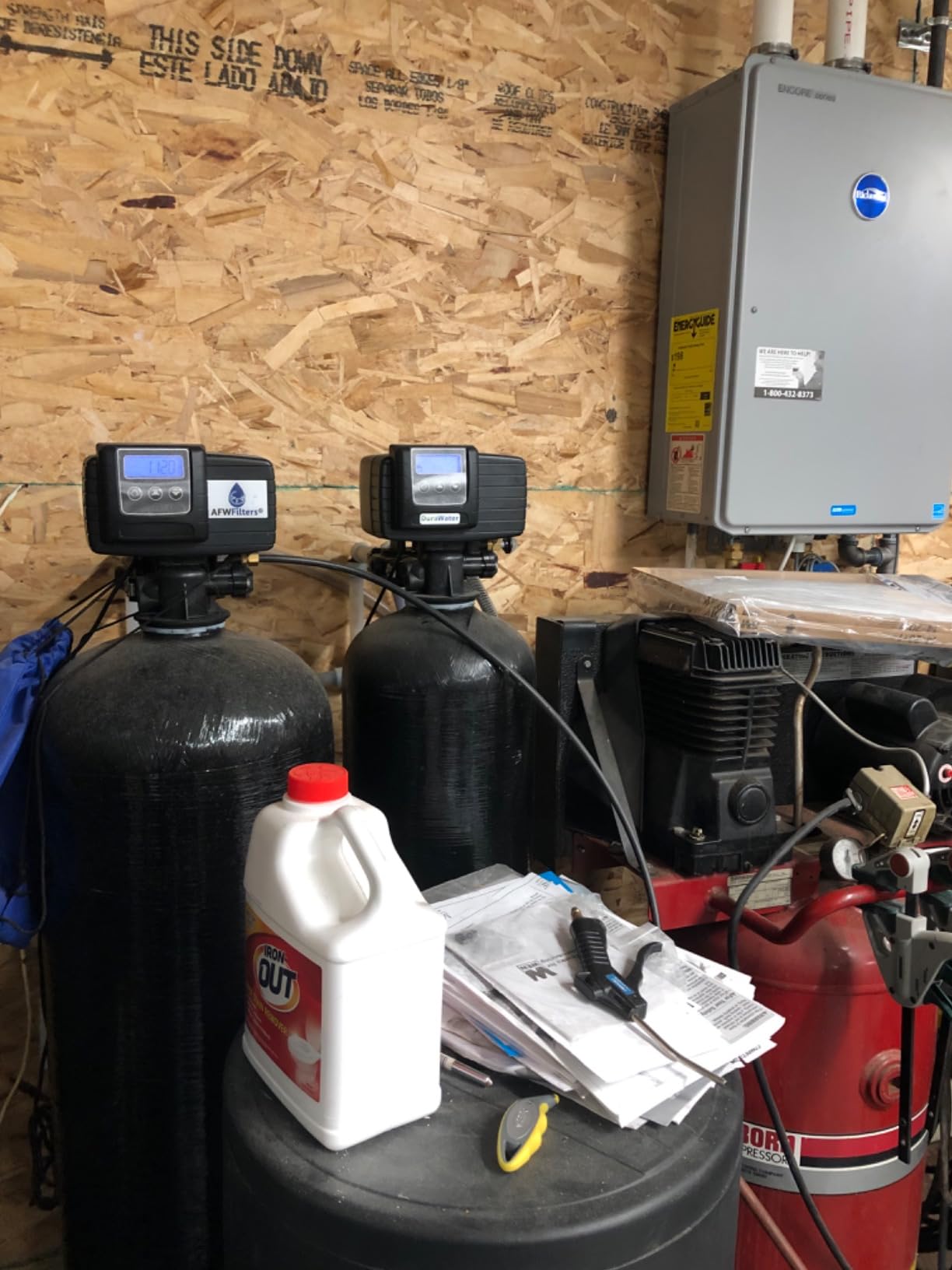
Iron and sulfur are the combination that ends most cartridge systems, and the Fleck 5600 SXT is the only oxidation-based tank in this group. Air injection creates a pocket of air inside the tank that oxidizes dissolved iron and sulfur, and a daily automatic backwash flushes the accumulated solids to the drain instead of holding them until a cartridge is unusable.
Owners with severe problems report the most dramatic results in this roundup, including one well dropping from 14 ppm iron to zero and fixtures staying rust-free for years. The included 1.5 cubic feet of Centaur catalytic carbon is sized for a serious load, and several reviewers point out that it costs a fraction of what they were quoted for a commercial iron and sulfur installation.
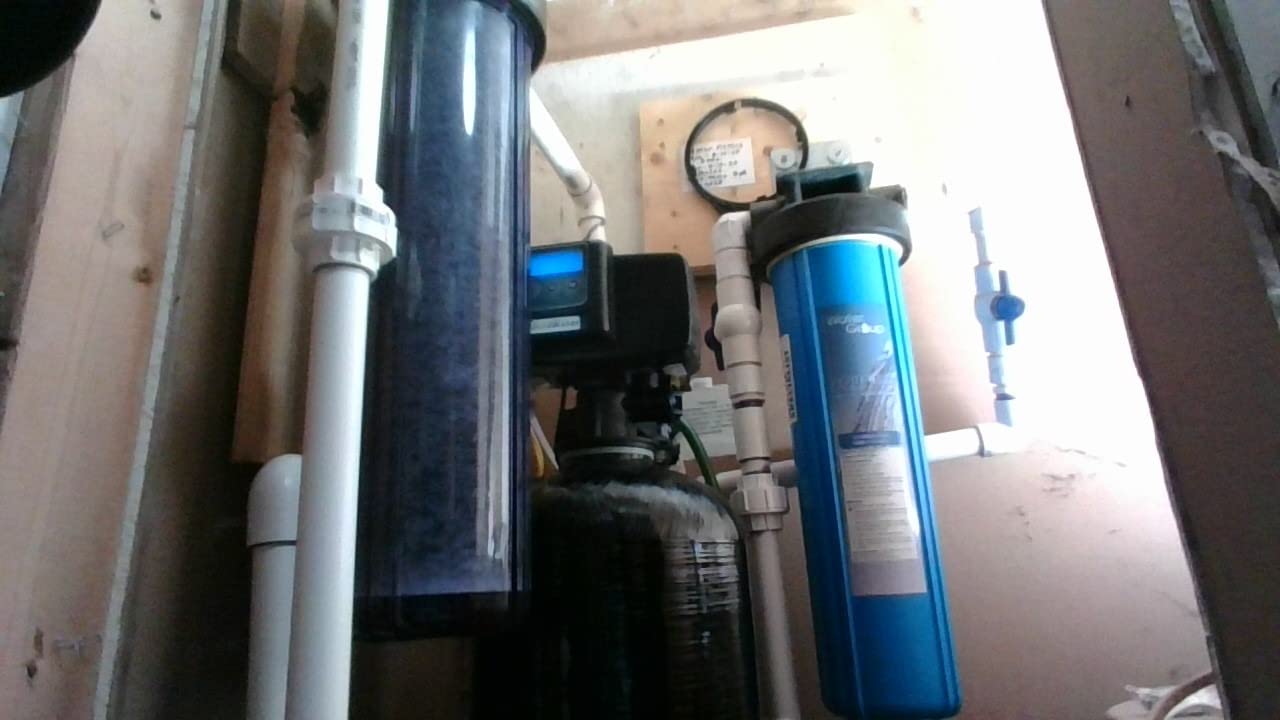
Two practical points deserve attention before you buy. The air injection cone can weep a small amount of water while it draws air, which is normal for this design but alarming if you are not expecting it. And the default regeneration setting runs daily at a length of time that can overwhelm a septic drain field, so most owners dial it back to every two or three days once they see how their water responds.
Programming the Fleck 5600 SXT digital valve is the part reviewers most often need help with. Customer support is repeatedly praised for walking first-time owners through it by phone, so budget a call rather than a lost afternoon. The 10×54 mineral tank, 1.5 cubic feet of media and a 1 inch plastic bypass are all included in the box.
Why oxidation beats a cartridge on sulfur
Hydrogen sulfide is dissolved gas, not a particle. A cartridge physically traps particles, so it has nothing to hold onto, and the smell comes back the moment the element is swapped. Oxidation converts the dissolved species into a solid that the backwash can carry away, which is why dedicated oxidation tanks handle rotten egg odor and cartridge units never do.
Where this system will not help
It is a treatment tank, not a disinfection device. It will not inactivate coliform or E. coli, and it does not address hardness, so you would still pair it with a softener or salt-free conditioner and with UV if your lab report shows bacteria. It also needs floor space, at 12 by 12 by 48 inches, and 65 pounds to move into position.
4. iSpring WGB32BM 3-Stage: best 20 inch housing for long well runs
iSpring WGB32BM Iron, Manganese Whole House Water Filter System
15 gpm max flow
100,000 gallon capacity
20 in x 4.5 in big blue housings
5 micron first stage
Pros
- 20 inch commercial-style housings hold far more media than 10 inch models
- Three stages in one bracket covering sediment chlorine and VOCs plus iron
- 100000 gallons is roughly a year for a family of four
- US-based technical support that ships parts and filters quickly
Cons
- 55 pounds empty and heavy when the housings are full of water
- No bottom drain fittings on the housings
- Does not reduce total dissolved solids
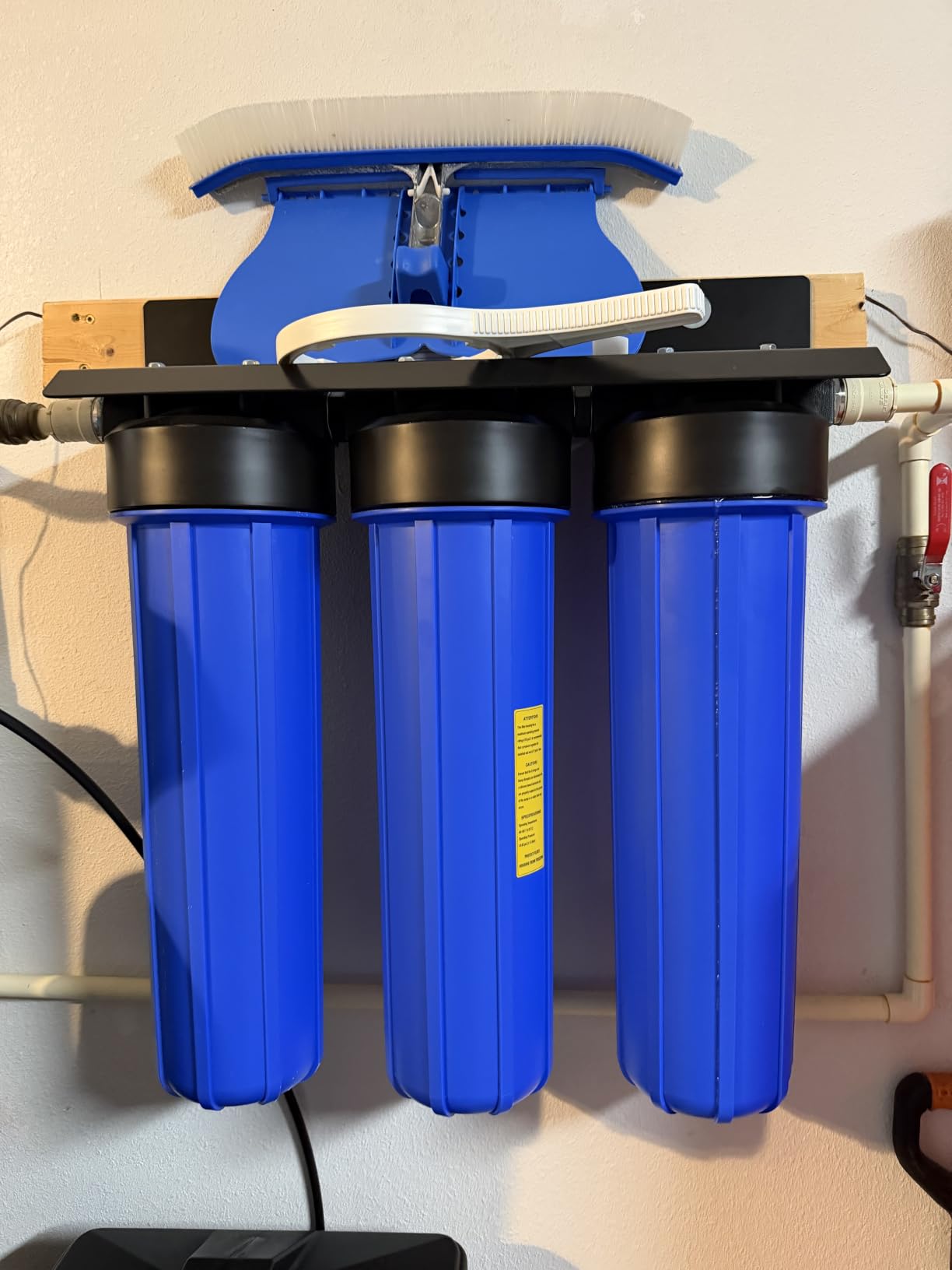
The WGB32BM is the WGB21BM idea scaled up, and the difference is housing diameter. Twenty inch by 4.5 inch big blue cartridges hold considerably more media than 10 inch models, which is what gets you to a 100,000 gallon combined capacity and a rated 15 gpm without shrinking the pipe or adding a booster pump.
Stage one is a 5 micron polypropylene sediment filter, stage two is a coconut shell carbon block for chlorine, taste, odor and VOCs, and stage three is an iron and manganese reducing cartridge rated for iron up to 3.0 ppm and manganese up to 1.0 ppm. Well owners describe rust-colored water turning clear and odor-free within weeks, with orange staining in sinks and toilets stopping.
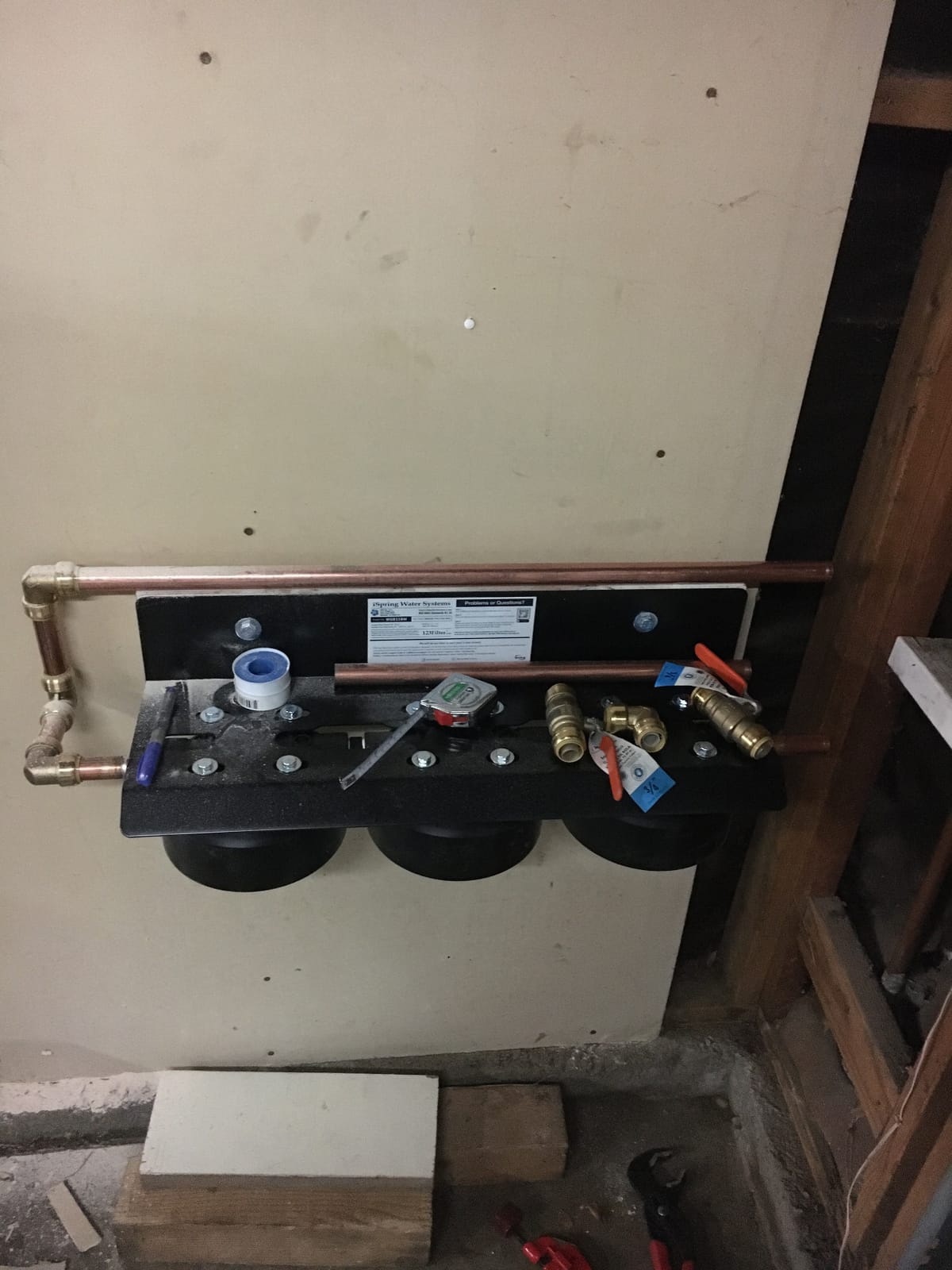
Support is a real strength. iSpring staff are repeatedly credited with fixing fitting and media problems over the phone and sending replacement parts quickly, including after a downstream UV bulb and quartz tube failed. The warranty is a one-year limited manufacturer term, activated by registering online, and it covers the system rather than the media.
The physical drawbacks show up on service day. At 55 pounds empty, and heavier with water inside, these housings are awkward to lift, and there are no bottom drain fittings or pressure relief ports, so a change means catching the water in a bench and bucket. The instruction sheet’s advice against overtightening is also described as vague, which is where most install leaks originate.
When 20 inch housings are worth the weight
Go bigger when your daily use is high, your well runs sand, or you would rather change media once a year than every six months. The 5 micron first stage also buys you protection for the ice maker, the washing machine and the water heater, which are the fixtures that actually suffer when sediment gets downstream.
How to weigh it against the 2-stage model
The extra stage and the extra media cost you working space and 55 pounds of lifting. If your report shows only moderate iron and no chlorine concerns, the 2-stage WGB21BM handles the same contaminant classes with less hardware. Choose the 3-stage when you want sediment, carbon and iron covered in one bracket without planning three separate housings.
5. Aquasana WH-WELL-CT-UVS: best for bacteria, viruses and long media life
Aquasana Whole House Well Water Filter | 500K-Gallon | UV | WH-Well-CT-UVS
14.7 gpm max flow
500,000 gallon and 5 year life
UV certified to NSF/ANSI 55 Class B
Salt-free scale control
Pros
- Only system in the group with certified UV disinfection for bacteria and viruses
- 500000 gallon and 5 year media life under one cent per gallon
- Salt-free scale control needs no salt bags and no backwashing
- 5-year limited warranty is the longest here
- Reduces 97 percent of chlorine while leaving healthy minerals in place
Cons
- All-plastic threaded connections leak on first install for many owners
- Self-installation voids the warranty
- Rated for iron under 0.3 ppm and moderate hardness only
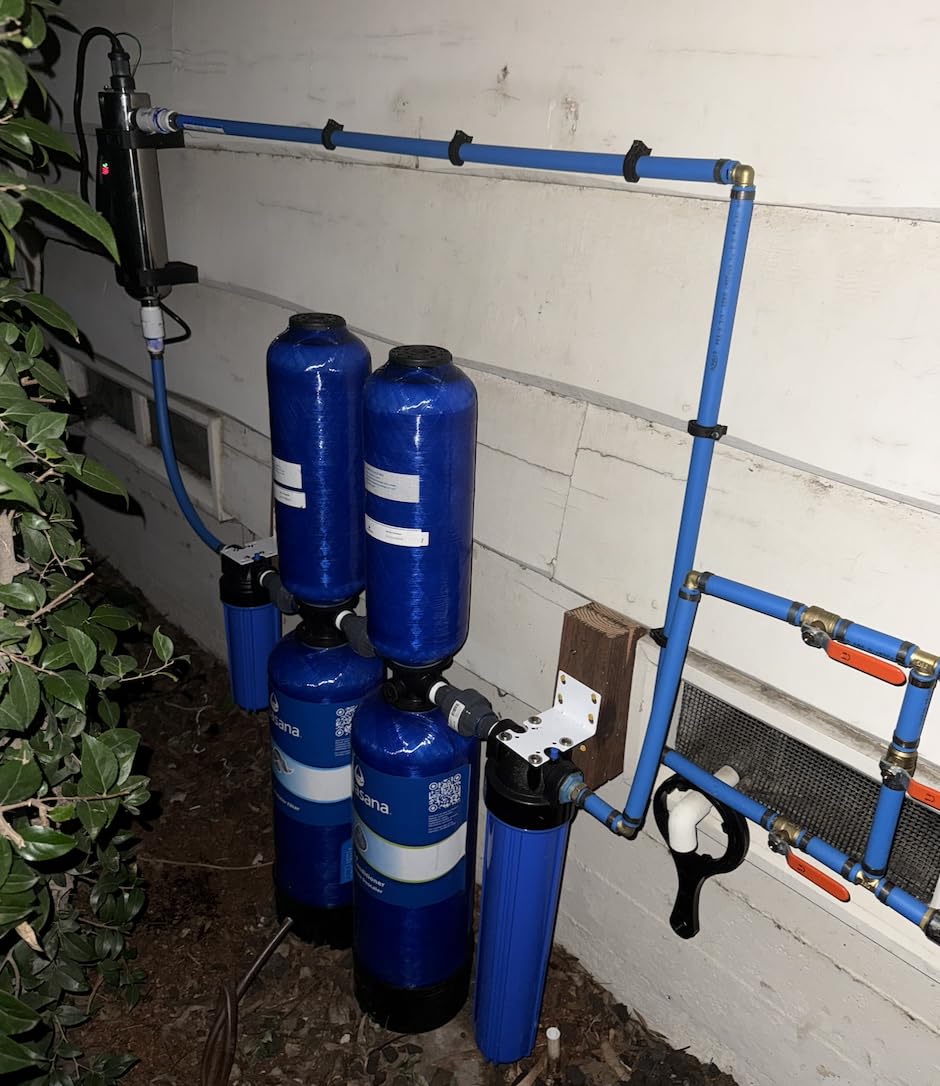
Disinfection is the gap no other system in this roundup fills. The UV chamber is tested and certified to NSF/ANSI Standard 55, Class B, which is a different and more demanding claim than a taste and odor certification, and it is the reason this system belongs on any list of well water filters where coliform has shown up in a test.
The stack is unusually complete for one footprint: a 20 inch pre-filter, a filter tank with copper-zinc KDF and carbon media, a salt-free conditioner, a 10 inch post-filter and the UV stage. Media life is rated at 500,000 gallons or five years, and the manufacturer puts the running figure at under one cent per gallon filtered.
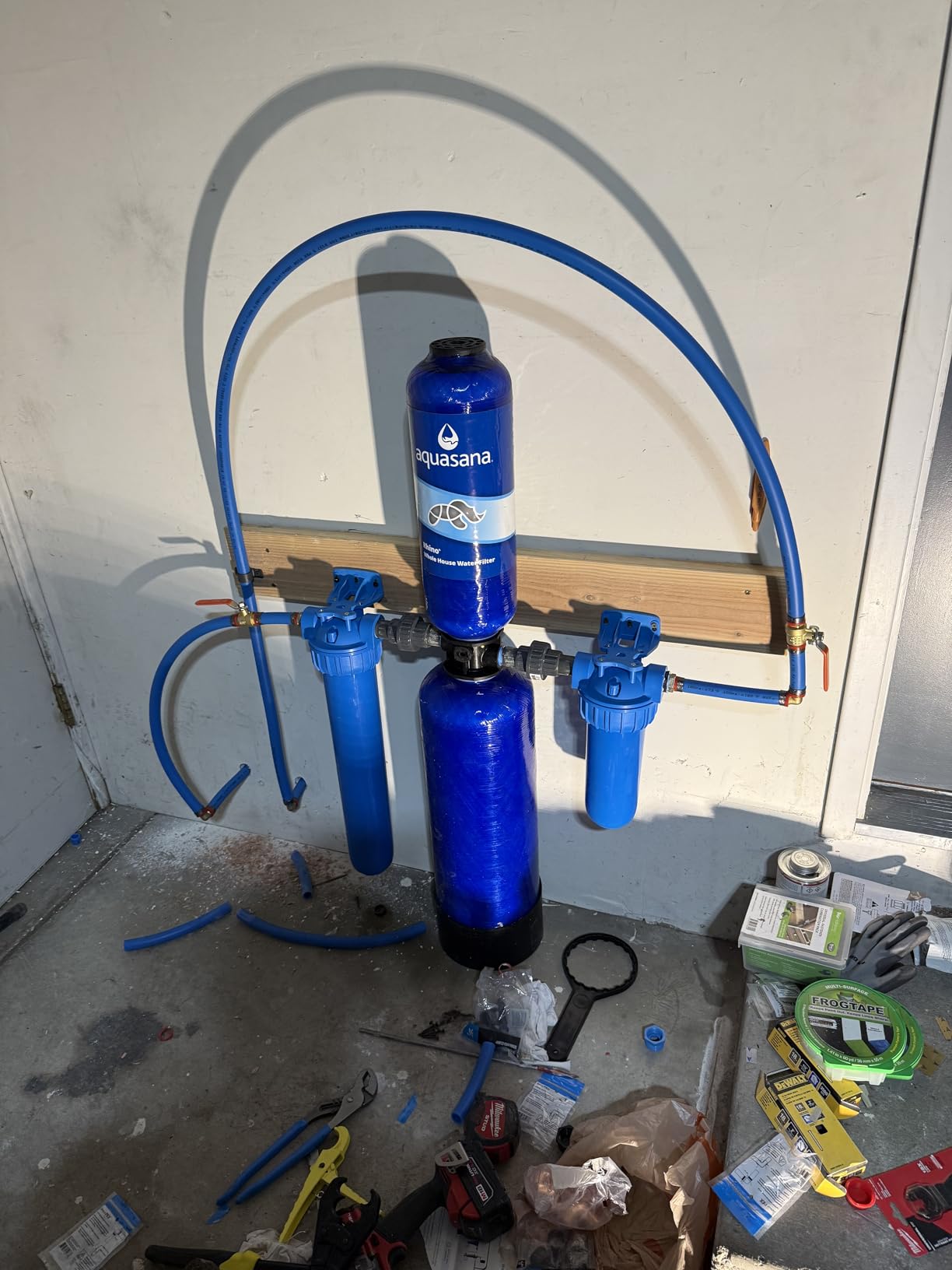
Installation is the weak point, and reviews are unusually detailed about it. Multiple owners describe plastic-to-plastic threads that kept leaking even with heavy Teflon tape, prompting them to buy replacement brass fittings and different housings, which added cost and time. Because the warranty is voided by self-installation, this is the one system on the list we would not install without a plumber.
Read the water-quality limits carefully too. The design is optimized for water under 15 gpg hardness, 250 mg/L alkalinity, pH below 8.3 and iron under 0.3 ppm. On a heavily ironed or very hard well, the UV lamp fouling and scale control media both suffer, and you would want an oxidation stage upstream first.
What pre-treatment UV actually needs
UV light inactivates organisms as water passes through the quartz sleeve, so anything that clouds that sleeve shields the organisms from the light. Iron, manganese, hardness scale and heavy sediment all do that. On a well with iron above 0.3 ppm, put a sediment filter and an oxidation stage ahead of the UV chamber or the lamp fouls and the dose drops.
Who should pay for this one
It suits households that have had a coliform or E. coli positive test, or a shallow well near a septic system where contamination after heavy rain is a recurring worry. It also makes sense for anyone who wants a single long-life installation instead of cartridge changes. For a clean well with no bacteria history, the money is better spent on iron removal.
6. Waterdrop WHF3T-FG 3-Stage: best third-party tested metal reduction
Waterdrop WHF3T-FG 3-Stage Whole House Water Filter System for Well Water
15 gpm steady flow
95.9 percent iron and 99.7 percent manganese
100,000 gallon capacity
NSF/ANSI 372 lead free
Pros
- SGS tested at 95.9 percent iron and 99.7 percent manganese reduction
- Dual iron and manganese cartridges wrapped in carbon fiber media
- NSF/ANSI 372 certified for lead-free materials
- 15 gpm steady flow without a noticeable pressure drop
- Wrench and expansion screws included for a straightforward install
Cons
- Smallest review pool in the group at just 88 ratings
- Iron and manganese cartridges need changing every 6 to 12 months
- Does not reduce total dissolved solids
What separates this system is the paperwork. It was tested by SGS at 95.9 percent iron and 99.7 percent manganese reduction, and it carries NSF/ANSI 372 certification for lead-free materials. When a product names the lab and the percentage, you can check the claim instead of taking it on faith, and very few systems in this category do that.
The design uses two iron and manganese cartridges wrapped in high-quality carbon fiber media, which the manufacturer says doubles the filtration area and also handles smell, chlorine, sediment, rust and sand. Flow is rated at a steady 15 gpm through a 1 inch inlet and outlet at 5 micron, with a combined 100,000 gallon capacity.

Owners like the single-bracket three-stage footprint, which avoids the manifold of extra fittings that leak on some competing systems, and they report the well staining and metallic taste resolving at a middle price point. The unit has also passed more than 100,000 water hammer tests, which is the kind of durability claim that matters on a well with a pump cycling hard.
The honest limitation is thin data. With 88 ratings, this is the smallest review pool here, so you are buying on certification and design rather than on years of field reports. Cartridge changes every 6 to 12 months also mean total cost climbs noticeably on a heavily ironed well, and at 49 pounds the assembled system is awkward to wall-mount alone.

How to read a percentage reduction claim
A reduction percentage tells you what the media removed, not what entered your house. SGS tested 95.9 percent iron reduction means a high percentage of the incoming iron, so if your well runs 10 ppm you still need an oxidation stage rather than a cartridge. Check the concentration limit next to the percentage, and treat any listing that only gives a percentage as incomplete.
Where the lead-free rating matters
NSF/ANSI 372 covers lead content in drinking water contact materials, not contaminant removal. On a well it is a straightforward sign of modern materials in wetted parts, and it is the one certification here that maps cleanly to a health concern on plumbing components. It still tells you nothing about what the media removes.
7. PRO+AQUA PRO-WELL-1E: best for programmable auto-flush control
PRO+AQUA Heavy Duty Whole House Well Water Filter System
10 gpm max flow
1 cubic foot media capacity
Programmable digital auto-flush
Fiberglass-lined polyethylene tank
Pros
- Programmable backlit digital display lets you tune the auto-flush interval
- Explicitly engineered for well contaminants including hydrogen sulfide and manganese
- Fiberglass-lined polyethylene tank and prefilled resin built in the USA
- 1 cubic foot of media suits homes of four or more with multiple bathrooms
- Three connection options for retrofitting existing plumbing
Cons
- 10 gpm is the lowest flow rating of the eight systems here
- 91 pounds makes the tank awkward to position
- Full warranty term requires online registration within 60 days
The distinguishing feature here is control. A backlit digital display with automatic controls lets you set the auto-flush interval to match your own water quality and household use, which matters on a well where the correct interval is not a fixed number. It is a genuine advantage over fixed-cycle tanks when your iron load fluctuates with the seasons.
The contaminant list is the most ambitious in the roundup, naming iron, hydrogen sulfide, manganese, lead, uranium, radium, radionuclides, pesticides and VOCs among others. Owners generally confirm cleaner, better-tasting well water, and the 1 cubic foot of prefilled premium resin is built around households of four or more with multiple bathrooms.
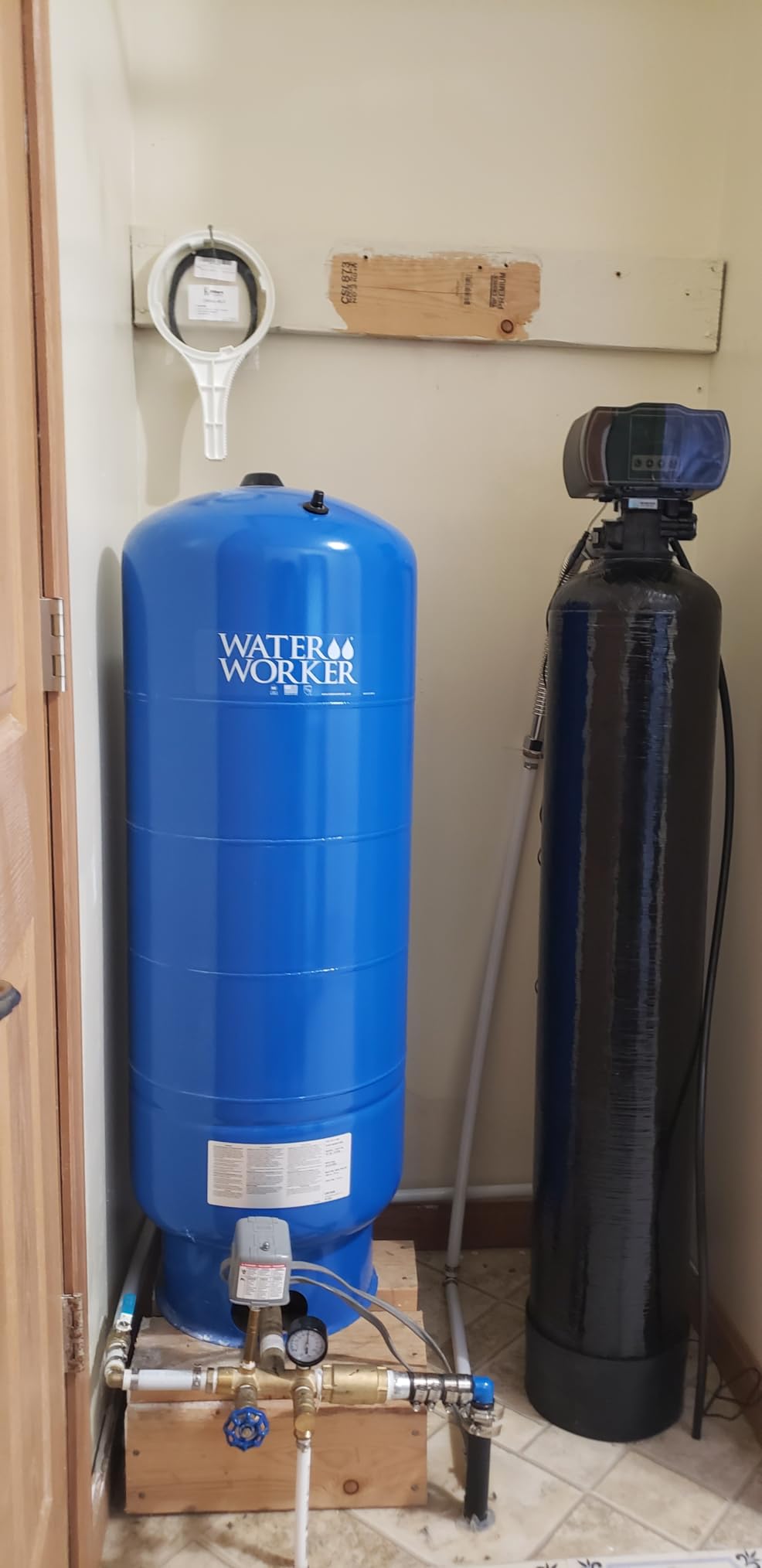
The 4.1 average is the lowest here, and the critical reviews point to a consistent set of reasons. At 10 gpm the flow rating is the smallest of the eight, which can feel restrictive in a larger home running several fixtures at once. The tank weighs 91 pounds, and reviewers also flag that the long contaminant list does not always match real world results for sulfur, iron and radionuclides.
One procedural detail catches people out. The listing describes a five-year warranty and lifetime support, but the full term is only unlocked by registering the product online within 60 days of purchase. Set a reminder, because that registration is the difference between the headline warranty and the shorter standard term.
What a 10 gpm rating looks like in practice
Ten gpm is enough for a family of four with two or three bathrooms if you are not running a shower and a laundry cycle at the same moment while irrigating. Where it gets tight is a four-plus bathroom home or acreage with a barn, outbuilding and irrigation. If your household size is ambiguous, step up to a system rated 15 gpm or higher.
How to treat the long contaminant list
A list that names uranium, radium and radionuclides is a marketing statement about media capability, not a test result for your well. If a radionuclide or arsenic result comes back high on your lab report, a household filter is not the answer and you need a treatment professional. Use the list to shortlist, then verify against your own report.
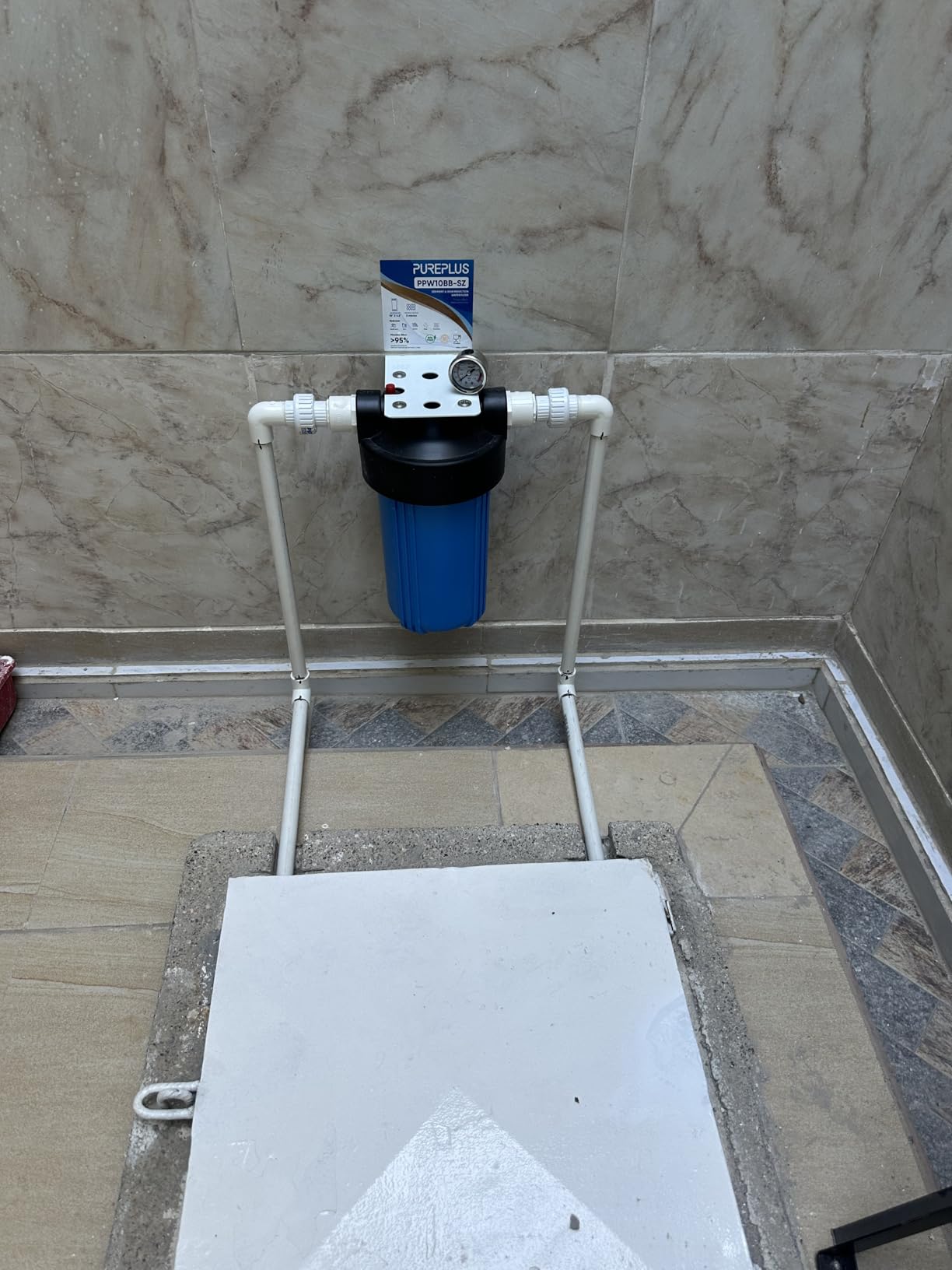
8. PUREPLUS 1-Stage: budget pick for sediment and light iron
PUREPLUS 1-Stage Whole House Water Filter, for Well Water
Single 10 in x 4.5 in housing
Iron and manganese cartridge
1 in NPT port
Bracket and wrench included
Pros
- Simplest single-stage entry point of the eight systems
- Universal housing accepts standard 10 in x 4.5 in cartridges from many brands
- All mounting hardware included with bracket wrench screws and O-ring
- Cartridge swaps take about ten minutes once you learn the release valve
Cons
- One housing only with no multi-stage protection for other contaminants
- Opaque canister gives no visual cue for when the filter is spent
- Threaded seal adapters are the trickiest part of installation
Not every well needs a stack. If your lab report comes back with light sediment and modest iron, a single universal housing with an iron and manganese reducing cartridge handles the problem and leaves room in the budget for testing. This is the entry point most owners on a low budget actually need.
The practical advantage is the housing itself. It accepts standard 10 inch by 4.5 inch cartridges, so you can move between sediment, sediment plus carbon, pleated and carbon blocks from many brands without replacing the housing. All the mounting hardware is included in the box, including a heavy-duty steel bracket, wrench, screws and an O-ring.
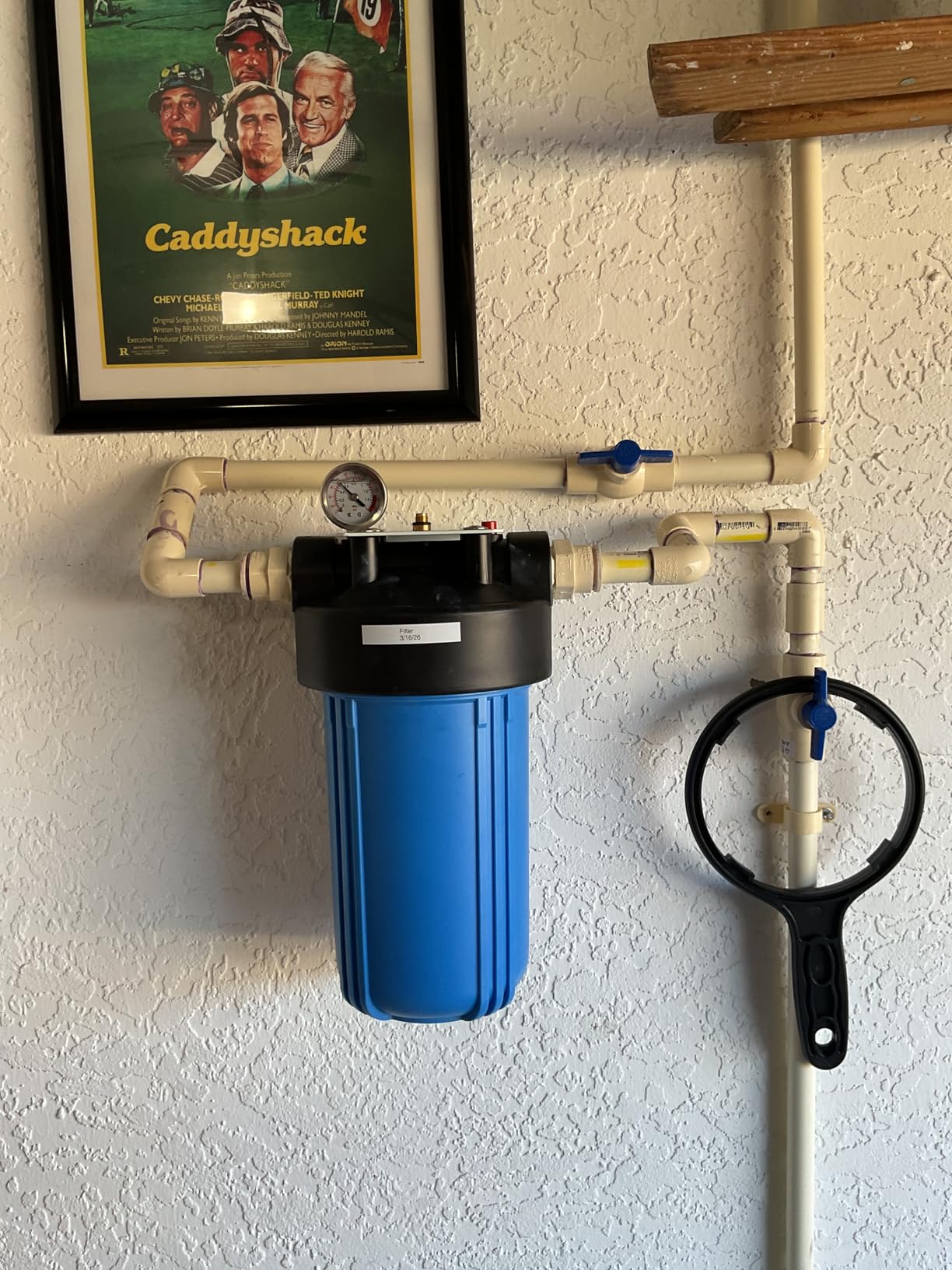
Owners include a 91-year-old buyer still swapping cartridges herself, and the reported experience is that the unit removes well water iron, sediment and odor as described. A string-wound cartridge in this housing is reported to last roughly three months for a two-person household, which is a useful way to think about running cost on a small home.
Two cautions. The advertising around the inner filter is misleading in practice, because you need the complete two-part replacement cartridge rather than a cheap sediment sleeve, and there is no visual indication through the opaque canister that a filter is spent, so mark the change date. A handful of buyers also received canisters with a cracked thread, which customer service resolved.
When one stage is genuinely enough
Look at your report first. Below roughly 3 ppm iron, no sulfur odor, no bacteria flag and no hardness above about 7 gpg, a single housing with a catalytic iron cartridge plus a carbon block in the second position covers it. The moment iron, manganese or hydrogen sulfide appears, one cartridge stops being enough and you need oxidation or multiple stages.
What it will not do
A single housing gives you one point of failure and one contaminant class. It will not remove total dissolved solids, it will not treat hydrogen sulfide, and it will not disinfect. The inlet and outlet seal adapters are also described as the hardest part of the install, so budget time and tape, and consider having a plumber set it if you have never plumbed a main line.
How to size a whole house filter for your household
Size on flow rate, not on filter capacity. Capacity tells you how much water passes before the media needs service; flow rate tells you whether your house can run two showers and a laundry cycle at once without a pressure drop. Buyers underestimate this constantly, and the fix is usually a larger housing rather than a larger pump.
A useful rule: 1 inch plumbing comfortably supports around 8 to 10 gpm, and each additional bathroom adds roughly 2 to 3 gpm of simultaneous demand. A two-bath household can usually run on a 10 gpm system. Three bathrooms with a family of four or five wants 15 gpm, which is why four of the systems here are rated there. Five or more bathrooms, a barndominium with outbuildings, or acreage with irrigation should target 15 gpm or higher and be sized with a plumber.
Housing diameter is the second half of the equation. A 10 inch by 4.5 inch housing at 10 gpm is comfortable, but pushing the same housing to 15 gpm creates pressure drop. Moving to 20 inch big blue housings is how the larger systems in this roundup hold their rated flow, and it is the difference between a system that works and one that starves your shower.
Which filter media handles which contaminant
Each problem needs a different mechanism, and matching them is most of the work. A 5 micron polypropylene or pleated cartridge catches sediment, rust flecks and sand. A carbon block removes chlorine, taste, odor and many VOCs, and a KDF copper-zinc stage adds oxidation of iron and sulfur at the surface. Greensand and catalytic media precipitate dissolved iron, manganese and hydrogen sulfide, but only inside a backwashing tank. Salt-free scale control media reduce hardness scale without removing hardness, while ion exchange softeners actually remove it.
Backwashing versus cartridge is the line that matters most. A cartridge physically strains particles out of the water, so dissolved iron, manganese and hydrogen sulfide pass straight through. An oxidation tank converts those dissolved species into solids and flushes them to the drain. That is why the cartridge systems here are described as working on moderate iron, and why the air injection tank is the one people buy for sulfur.
The conventional well stack runs in a fixed order for a reason. Sediment first, so the next stage stays clean. Then iron, manganese and sulfur removal, because those will foul everything downstream. Then a softener or salt-free conditioner for hardness. Then UV, positioned last so nothing has already scaled or clouded the quartz sleeve. Skipping the order is the most common self-inflicted installation error we see.
One caution on carbon. Forum discussion among well owners keeps returning to bacteria growth inside whole house carbon housings, more than in sediment-only housings, because carbon gives organisms a surface to colonize. Carbon is a taste and odor stage, not a disinfection stage, and it should sit downstream of sediment and upstream of UV, never instead of it.
Certification standards and what they actually mean
NSF/ANSI 42 covers aesthetic claims: taste, odor, chlorine and sediment. It is a real certification and worth having, but it says nothing about health contaminants. NSF/ANSI 53 is the one that matters for iron, manganese, sulfur and similar reductions on a well, because it certifies contaminant reduction rather than appearance. NSF/ANSI 55 covers UV systems specifically, and Class B is the standard class for residential UV.
NSF/ANSI 58 applies to reverse osmosis membrane systems, and none of the eight systems here is one. NSF/ANSI 372 certifies lead content in wetted materials rather than removal.
Watch the phrasing. A listing that says its media is tested to NSF standards without naming a standard number and a contaminant is telling you nothing verifiable. Look for the specific number, the specific contaminant and a rating figure, as the Waterdrop system does with its SGS iron and manganese results. WQA certification is a comparable third-party mark, and the Fleck valve carries a long service history in that ecosystem.
Running costs, maintenance and installation
Be clear about what each unit sends down the drain. Cartridge systems are cheap to buy and predictable to run, with two or three changes a year at 6 to 12 months per set. Media are included with the tank, so the media itself is a one-time part of the purchase rather than an annual line item. Greensand systems need periodic regenerant on top of that. UV adds a lamp replacement on roughly a one-year cycle and a transformer that eventually fails. The honest comparison is cost per gallon over five years, and on a high-use home the cartridge systems usually win that arithmetic even when the sticker price looks worse.
Set the maintenance calendar when you install. Monthly, walk the gauges and look for a pressure delta across the system. Every six months, change or backwash. Annually, test the water again, especially after a dry season or heavy rain, because a shallow well can change character with the water table. Every three to five years, expect media replacement on the tank systems.
Buy, do not rent. The recurring advice on plumbing and home improvement forums is consistent: owners report better results owning the housings outright, and rental agreements carry service calls you do not control. Forum consensus also favors buying the housing separately from the media so you are never locked into one supplier for replacement parts.
On installation, be honest about the line. Inline cartridge systems on 1 inch connections are within reach of a competent DIY owner, and the PUREPLUS and iSpring brackets arrive pre-assembled for exactly that reason. Tank systems with drain lines, air gaps and control valves are a plumber job. A leaking drain line or a failed air gap floods the mechanical room, and self-installation voids the warranty on the Aquasana system outright. Where you are unsure, hire the licensed plumber and ask for a written quote with the housing size and valve model named on it.
Frequently Asked Questions
What is the best well water filter system for home use?
The best system is the one that matches your lab report. A two-stage carbon and iron system such as the iSpring WGB21BM covers sediment, chlorine, taste and iron up to 3 ppm for most homes. Add an oxidation tank like the Fleck 5600 SXT if you have sulfur or heavy iron, and add UV only if bacteria appear in a test.
What is the best whole house sediment filter for well water?
For sediment alone, a spin-down or pleated whole house cartridge in a 10 inch by 4.5 inch housing handles typical well sand and rust flecks. Keep the housing large enough for your flow rate, because an undersized sediment filter is the usual cause of a shower pressure drop. On a well with iron, put an iron stage after the sediment stage.
How do I get rid of iron and sulfur in well water?
Iron and hydrogen sulfide are dissolved, so a cartridge cannot remove them. Use a backwashing oxidation system with catalytic media or greensand, such as an air injection tank, and place a sediment filter ahead of it to keep the media clean. Expect a drain line, an air gap and periodic backwash, and confirm the media is rated above the concentrations in your report.
Is it okay to drink well water if it smells like sulfur?
Hydrogen sulfide at the levels that produce a rotten egg smell is generally considered a nuisance contaminant rather than a toxic one, and the odor usually appears at low concentrations. That is not a substitute for testing. Any well water should be tested annually for coliform and E. coli, and disinfection such as UV is the standard response if bacteria are found.
Can sulfur be removed from well water?
Yes. Sulfur is removed with oxidation, not filtration, so look for an air injection or catalytic media tank that backwashes on a schedule. It has to be sized so the contact time is long enough to oxidize the load in your water, and it needs a proper drain line with an air gap. Household filters in cartridge housings will not do it, whatever the listing claims.
Conclusion
Test first, then match the media to the number on your report. For most well water households the iSpring WGB21BM is the best whole house water filter for well water in 2026 on the balance of coverage, flow rating and owner feedback, with the Express Water 3-Stage for higher flow and the Fleck 5600 SXT when iron and sulfur are the problem. Add UV only when bacteria are real, and remember that no cartridge system handles hydrogen sulfide.
Then size the housing to your household, budget for the media you will replace every year, and have a licensed plumber handle the drain line. Check the current figures for each system using the buttons above.