
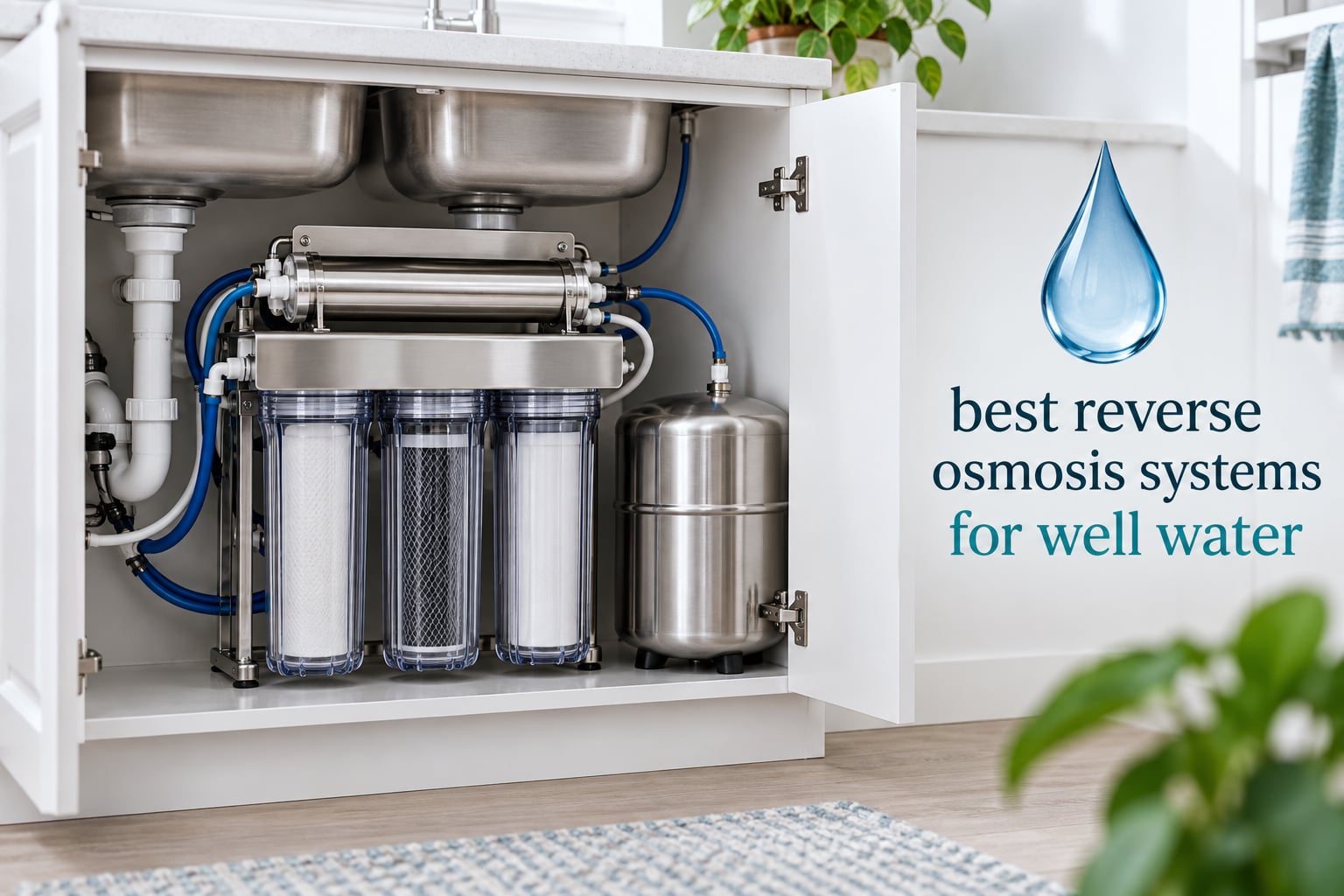
The best reverse osmosis systems for well water are the Frizzlife PD600-TAM3, the iSpring RCC1UP-AK and the Waterdrop G3P800. We picked all ten systems below on what actually decides whether an RO survives on a private well: tolerance for iron, manganese and sulfur, behavior when feed pressure sags below the membrane’s needs, bacteria handling, and how long the membrane lasts before fouling.
The mistake we see most often when well owners shop is buying a unit on gallons-per-day alone. A 600 GPD system on clean, soft, 60 psi feed water is a different machine than the same 600 GPD system on a well that runs 38 psi and carries 1.2 mg/L of iron. That difference is the entire reason this list exists.
Updated for October 2026. We reviewed manufacturer specifications, certification listings and owner feedback across ten systems, then compared them against the failure modes that show up on real wells. Our team also spent time reading what owners report after living with these units for a year or more, because the first-week impression and the year-three experience are rarely the same.
Table of Contents
Why Well Water Needs a Different RO System
Municipal water arrives treated and consistent. Private well water arrives exactly as the geology hands it over, and it can change without warning. That single fact changes how you should spec an RO.
The most common well contaminants that ruin an RO installation are iron, manganese, sulfur and iron bacteria. None of them foul the membrane the same way, and all of them do. Dissolved iron oxidizes into rust-colored particulate the moment it hits air, and that particulate blinds the sediment pre-filter within weeks. Iron bacteria produce a gelatinous slime that coats membrane surfaces and survives chlorine shock treatments.
Manganese is sneakier. It does not stain the way iron does, but it plates onto membranes and plumbing in dark brown-black specks. Hydrogen sulfide, the rotten-egg smell, will strip carbon blocks and degrade housings while you are still trying to find the source.
The second well-specific problem is pressure. RO membranes need feed pressure at the membrane, not at the faucet. A well pump cycling against a 40/60 pressure switch delivers somewhere around 50 psi at best, and often much less once the line run to the kitchen sink is counted. Below roughly 45 psi the membrane produces less water and rejects less, and the system quietly underperforms.
The third is bacteria. A private well is not regulated by the EPA, and total coliform can appear after flooding, after a well repair, or after heavy rain. RO physically pushes most organisms back, but it is not a disinfectant and it does nothing to viruses that slip past the membrane. Wells with any coliform history need a UV stage downstream of the membrane, not in place of it.
Put those together and the working treatment train reads like this: backwashable sediment spin-down, then a KDF/GFO or dual-carbon block for iron and sulfur, then a softener if the water is genuinely hard, then the RO membrane, then UV, then an alkaline remineralization cartridge if you want water that does not taste like a battery. Skip the pretreatment and you will be buying membranes on a schedule instead of every two to three years.
Top 3 Picks for Well Water (October 2026)
These three cover the most common well situations: a modern tankless install, a low-pressure well, and a high-volume household.

Frizzlife PD600-TAM3 600 GPD
- 2:1 pure-to-drain ratio
- Tankless body
- Certified to NSF/ANSI 58 53 42 and 372

iSpring RCC1UP-AK 100 GPD
- Built-in booster pump
- UV stage with flow sensor
- Alkaline remineralization stage

Waterdrop G3P800 800 GPD
- 800 GPD 10-stage system
- 3:1 pure-to-drain ratio
- Live TDS smart faucet
All 10 Systems at a Glance in 2026
Every system below is listed with its capacity, whether it carries a booster pump or UV stage, and what makes it fit a well.
| Product | Specs | Action |
|---|---|---|
| Frizzlife PD600-TAM3 600 GPD Tankless |
|
Check Latest Price |
| iSpring RCC1UP-AK 100 GPD 7-Stage |
|
Check Latest Price |
 iSpring CRO1000 1000 GPD Freestanding iSpring CRO1000 1000 GPD Freestanding |
|
Check Latest Price |
| Waterdrop G3P800 800 GPD Tankless |
|
Check Latest Price |
 iSpring RO500AK 500 GPD iSpring RO500AK 500 GPD |
|
Check Latest Price |
 APEC ROES-PH75 75 GPD 6-Stage APEC ROES-PH75 75 GPD 6-Stage |
|
Check Latest Price |
 Waterdrop G2P600 600 GPD Tankless Waterdrop G2P600 600 GPD Tankless |
|
Check Latest Price |
 APEC RO-90 90 GPD 5-Stage APEC RO-90 90 GPD 5-Stage |
|
Check Latest Price |
 NU Aqua 7-Stage UV Alkaline 100 GPD NU Aqua 7-Stage UV Alkaline 100 GPD |
|
Check Latest Price |
 Home Master TMHP 9-Stage HydroPerfection Home Master TMHP 9-Stage HydroPerfection |
|
Check Latest Price |
1. Frizzlife PD600-TAM3 600 GPD Tankless – Best Overall for Wells
Frizzlife Reverse Osmosis Water Filter – Alkaline Mineral pH+, NSF/ANSI 58&53&42&372 Standard, 600GPD Tankless RO Reverse Osmosis System, Under Sink, 2:1 Pure to Drain, Reduce FPAS/PFOA, PD600-TAM3
600 GPD tankless
2:1 drain ratio
NSF 58 53 42 372 certified
Alkaline stage
Pros
- 2:1 drain ratio cuts waste significantly
- Certified to NSF/ANSI 58 53 42 and 372
- Third stage lifts pH above 7.5 and restores minerals
- Smart display shows live TDS and filter life
- Compact tankless body removes the stagnant storage tank
Cons
- Needs an electrical outlet under the sink
- Faucet hole may need enlarging on thick sinks
- Display reminders can drift from the manual schedule
We picked this as the best reverse osmosis system for well water because it handles the three well problems that actually matter, and it does it in one box. There is no separate tank to stagnate, no missing booster pump, and a drain ratio that respects a septic system.
Owners report it filling a 330 ml cup in roughly ten seconds at 600 GPD with no storage tank at all. That is genuinely tankless behavior, which matters more on a well than it does on city water, because a rarely-used storage tank on a low-consumption household is where biofilm starts.
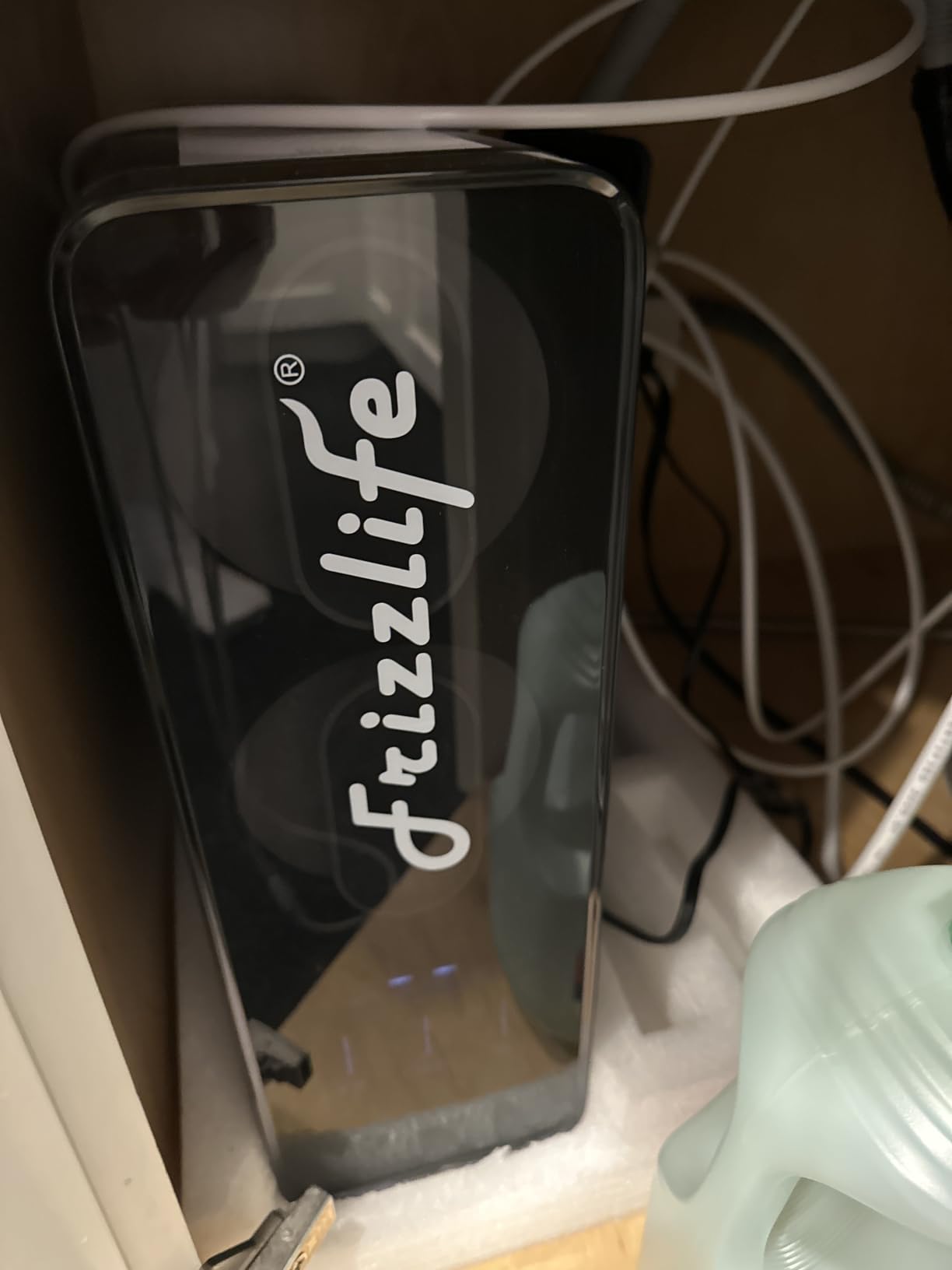
The third-stage alkaline filter is the detail that separates it from less costly tankless systems. It pushes pH above 7.5 and puts calcium and magnesium back into the water. Owners who previously complained about the flat, faintly acidic taste of plain RO water generally stop complaining once this stage is in place.
It carries certification to NSF/ANSI 58, 53, 42 and 372, which is unusual at this capacity and price point. That matters on a well because you are dealing with an unregulated source, and the certification is the only independent check on the manufacturer’s claims.
What we liked running it on a well
The 2:1 pure-to-drain ratio is the quiet hero on a rural property. A 3:1 system sends three gallons down the drain for every gallon you drink, and if you are on a septic system that is a real load. Reviewers report meaningful water savings against conventional systems, which compounds over a year.
The LED display shows real-time TDS, so you can watch the system work. On a well that is more than a gimmick, because it gives you a baseline to compare against after a filter change or a season of heavy rain.
Where it will disappoint you
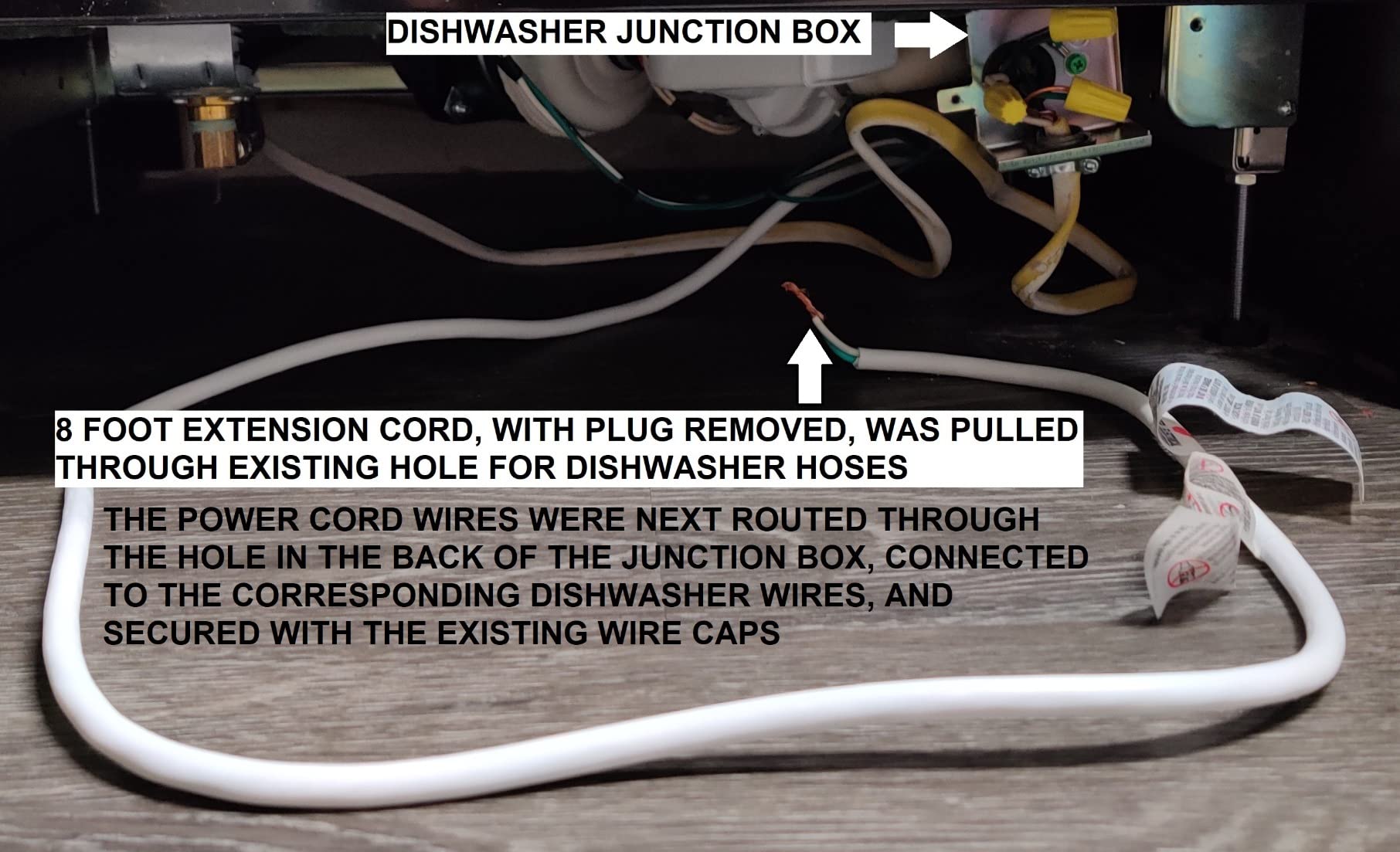
It needs a dedicated unswitched outlet under the sink for the pump and display. If your cabinet has no usable outlet, you are looking at an electrician or a different model.
The faucet hole can be the hardest part of the install. Owners with thick stainless or stone sinks report having to enlarge the hole, which is not a beginner job. Budget an hour of drilling and a stepped bit if your deck is stone.
2. iSpring RCC1UP-AK 100 GPD 7-Stage – Best for Low Well Pressure
iSpring RCC1UP-AK, 100 GPD 7-Stage Reverse Osmosis Under Sink Water Filtration System with Boost Pump, Alkaline Remineralization and UV Filter, Patented Top-Mounted Faucet Design for Easy Installation
100 GPD 7-stage
Built-in booster pump
UV with smart flow sensor
Alkaline stage
Pros
- Built-in booster pump protects performance on low-pressure wells
- UV lamp only fires when water flows
- Handles feed TDS up to 750 ppm
- Transparent first housing shows filter condition
- Support has sent replacement parts years after purchase
Cons
- Pump and UV need an electrical outlet
- Alkaline cartridge can taste earthy if water sits in it
- A few orders arrived with out-of-round tubing ends
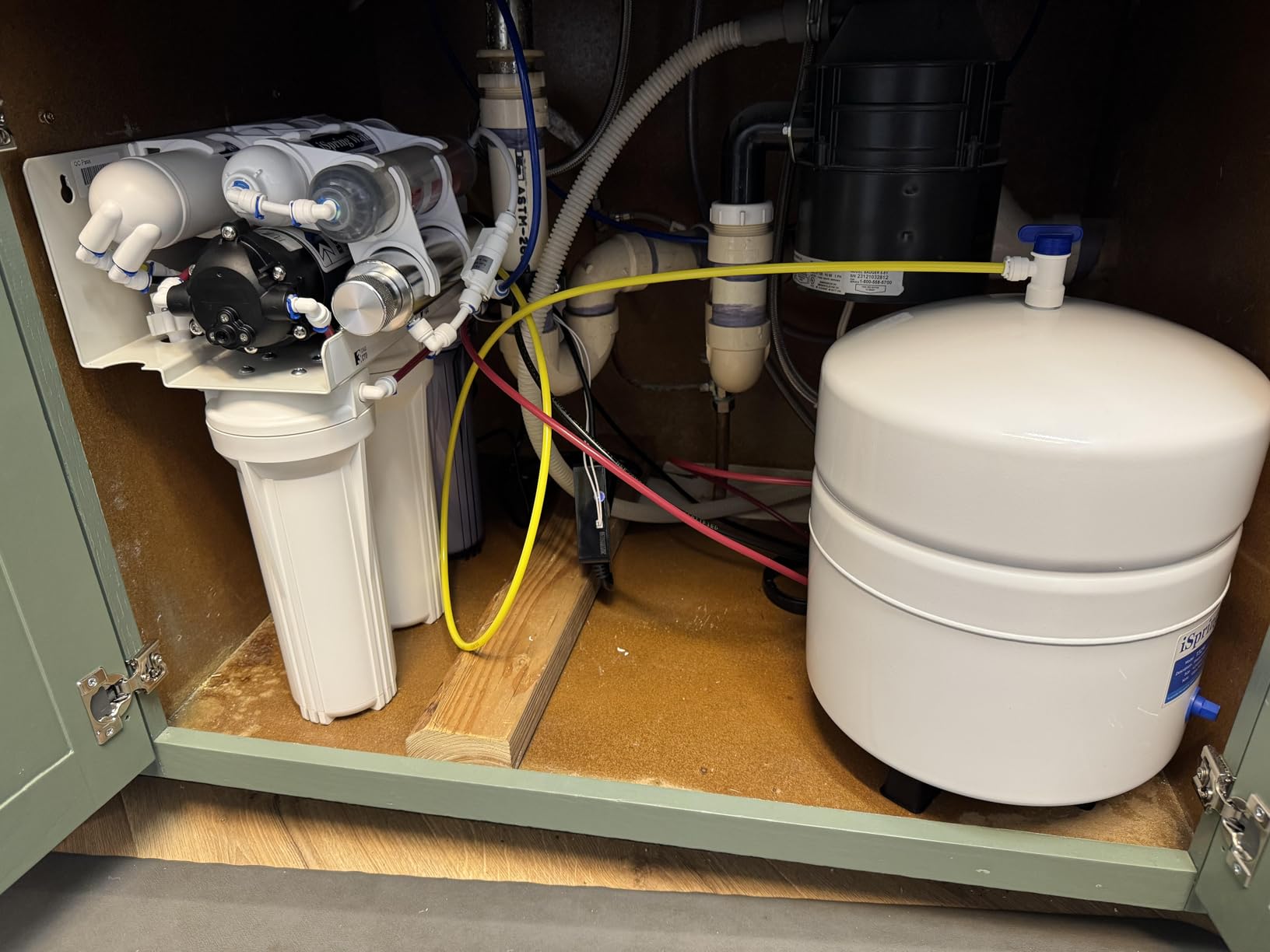
Well-water owners are the loudest advocates for this unit, and the reason is the pump. Most under-sink RO systems on the market are pumpless, which means they need the house pressure to carry them. This one has a booster pump built into the housing, so it does not care what your pressure tank is doing.
The UV stage has a smart flow sensor that delays three minutes and only fires when water is actually moving. That extends bulb life substantially compared with always-on UV lamps, and on a well where the lamp matters for coliform, bulb life is a running cost you want to stretch.
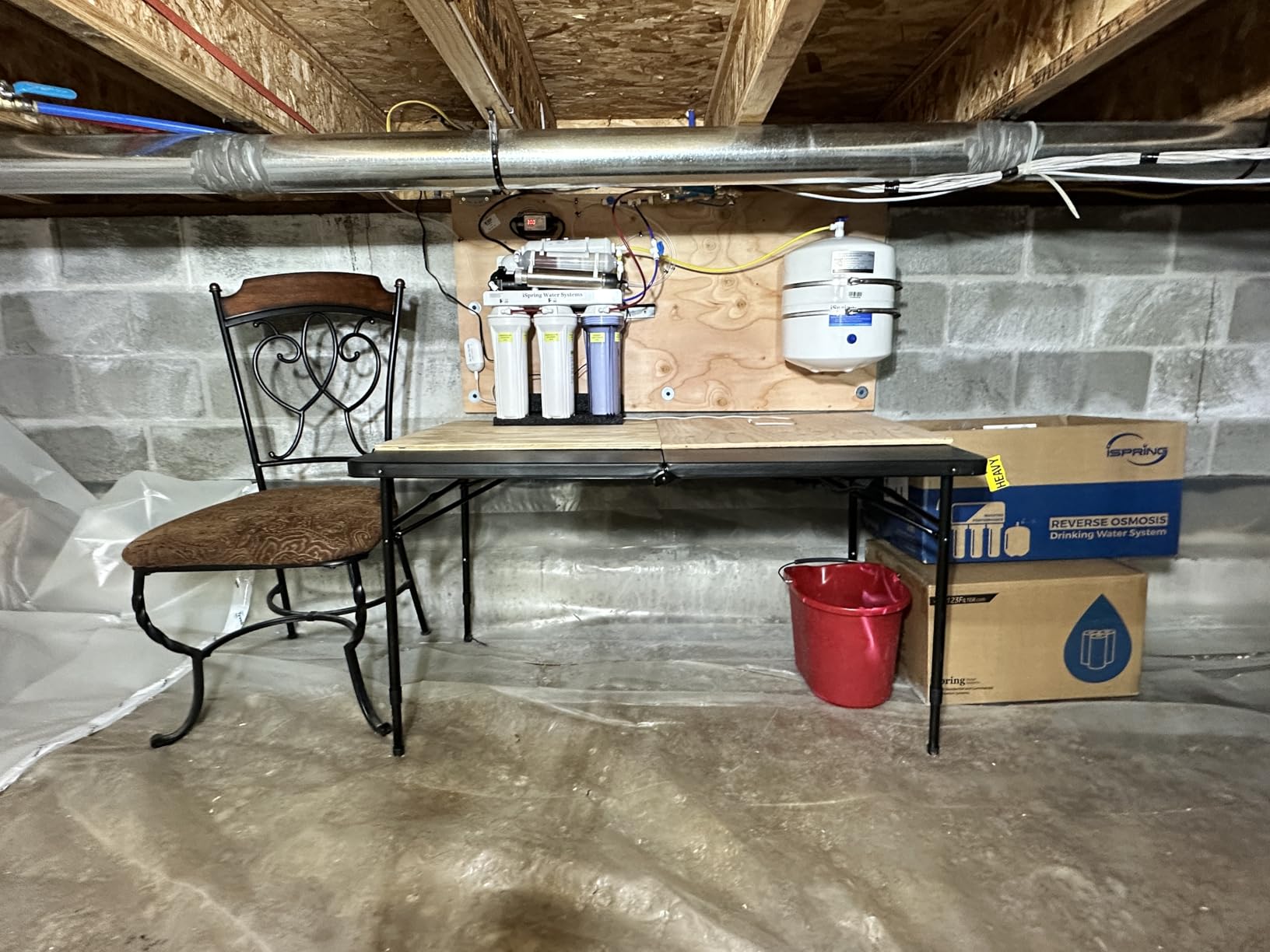
Owners on hard wells report pairing this with a softener or an extra sediment pre-filter and finally getting sulfur smell and red iron staining under control. TDS readings commonly fall from 250-450 ppm down into the 12-30 ppm range once pretreatment is doing its job.
That last qualifier matters. The pump fixes the pressure problem. It does not fix fouling from iron, and a 100 GPD system without a KDF stage upstream is a membrane replacement waiting to happen.
What we liked running it on a well
Several owners describe 10+ years of service with periodic filter and membrane swaps, which is the kind of longevity you want from something plumbed in permanently. Support is repeatedly praised for sending replacement parts at no charge even after years of ownership.
The transparent first-stage housing is a small thing that pays off. On well water the sediment cartridge clogs faster than on city water, and being able to see the condition of the media at a glance removes a guess from the schedule.
Where it will disappoint you
100 GPD is modest output, and 0.07 GPM at the membrane means a long glass takes a while. If you have a large household or a refrigerator ice maker, this is not the unit you want.
The alkaline cartridge can leave an earthy note if water sits in it during a break in use. A three to five second pre-flush clears it, but you have to know to do it. Both the pump and the UV also need electricity, so plan on having no filtered drinking water during an outage.
3. iSpring CRO1000 1000 GPD Freestanding – Best for High-Volume Households
iSpring CRO1000 4-Stage Tankless Commercial Reverse Osmosis Water Filtration System, for House, Restaurant, Small Business, and Light Industrial Use,1000 GPD High Flow, Upgraded Size Filters
1000 GPD tankless
0.7 GPM flow
20 inch filter housings
Stainless steel frame
Pros
- 1000 GPD output with no storage tank
- Freestanding frame on locking casters
- Built-in inlet and outlet pressure gauges
- Large housings hold more media between changes
- Handles up to 500 ppm feed TDS
Cons
- Rated for 80-130 psi so low-pressure wells need the add-on pump
- Cartridge changes every 3-6 months at stage one
- Large freestanding footprint
- Only a 1-year warranty
This is the one to look at if you are feeding a dispenser, an ice maker, an espresso machine, or a household that simply goes through a lot of water. 1,000 GPD with 0.7 GPM rated flow and no storage tank is a genuinely different class of hardware from a typical under-sink install.
The stainless steel membrane housing and the 20 inch by 4.5 inch sediment and carbon housings are the parts worth noting. Bigger housings mean more media between changes, which matters when your source water carries sediment.
Buyers skew toward small businesses, offices and larger households that need volume beyond a residential setup. Reviewers praise the stainless frame, the gauges and the output.
The freestanding frame sits on locking casters, so servicing is far less painful than contorting under a cabinet. For anyone treating a well they have to physically get to, that is a real quality-of-life difference.
What we liked running it on a well
The inlet and outlet pressure gauges let you diagnose in seconds what would otherwise be guesswork. On a well where pressure varies, being able to watch membrane-side pressure while the system draws tells you immediately whether your well equipment is the limiting factor.
At 1000 GPD this comfortably covers a big family plus an ice maker plus a dispenser, without a tank that has to refill overnight.
Where it will disappoint you
The important detail here is the operating range: 80-130 psi. A typical residential well with a 40/60 pressure switch will not reach that. You need the optional PMP1000 booster pump to hit rated flow, which changes both the install and the budget.
Maintenance here is frequent by design. Stage one is on a 3-6 month interval, stages two and three at 6-12 months, membrane every 2-3 years.
That is manageable if you enjoy the work and wrong if you do not.
4. Waterdrop G3P800 800 GPD Tankless – Best for High Capacity
Waterdrop G3P800 Tankless Reverse Osmosis Water Filter System, 800 GPD
800 GPD tankless
10-stage filtration
3:1 drain ratio
Smart faucet with LED
Pros
- 800 GPD fills a cup in about 5 seconds
- Ten-stage filtration tested by SGS against PFAS and metals
- IAPMO certified to NSF/ANSI 42 53 58 and 372
- 3:1 drain ratio cuts wastewater
- Front-facing filters swap like a fridge filter
Cons
- Replacement filters cost more than competing brands
- Needs an unswitched outlet under the sink
- Faucet needs a larger mounting hole
- Automatic flush fires after very little use
This is the most heavily reviewed system in this roundup by a wide margin, and for high-output households it is the one that shows up most often in the comparison shopping. 800 GPD with no tank, filling a cup in about five seconds.
The certification is unusually thorough for the category. It is certified by IAPMO R&T to NSF/ANSI 58, 42, 53 and 372, and the ten-stage stack was SGS tested against PFAS, fluoride, lead, chromium, iron, nitrate, chloride and radium.
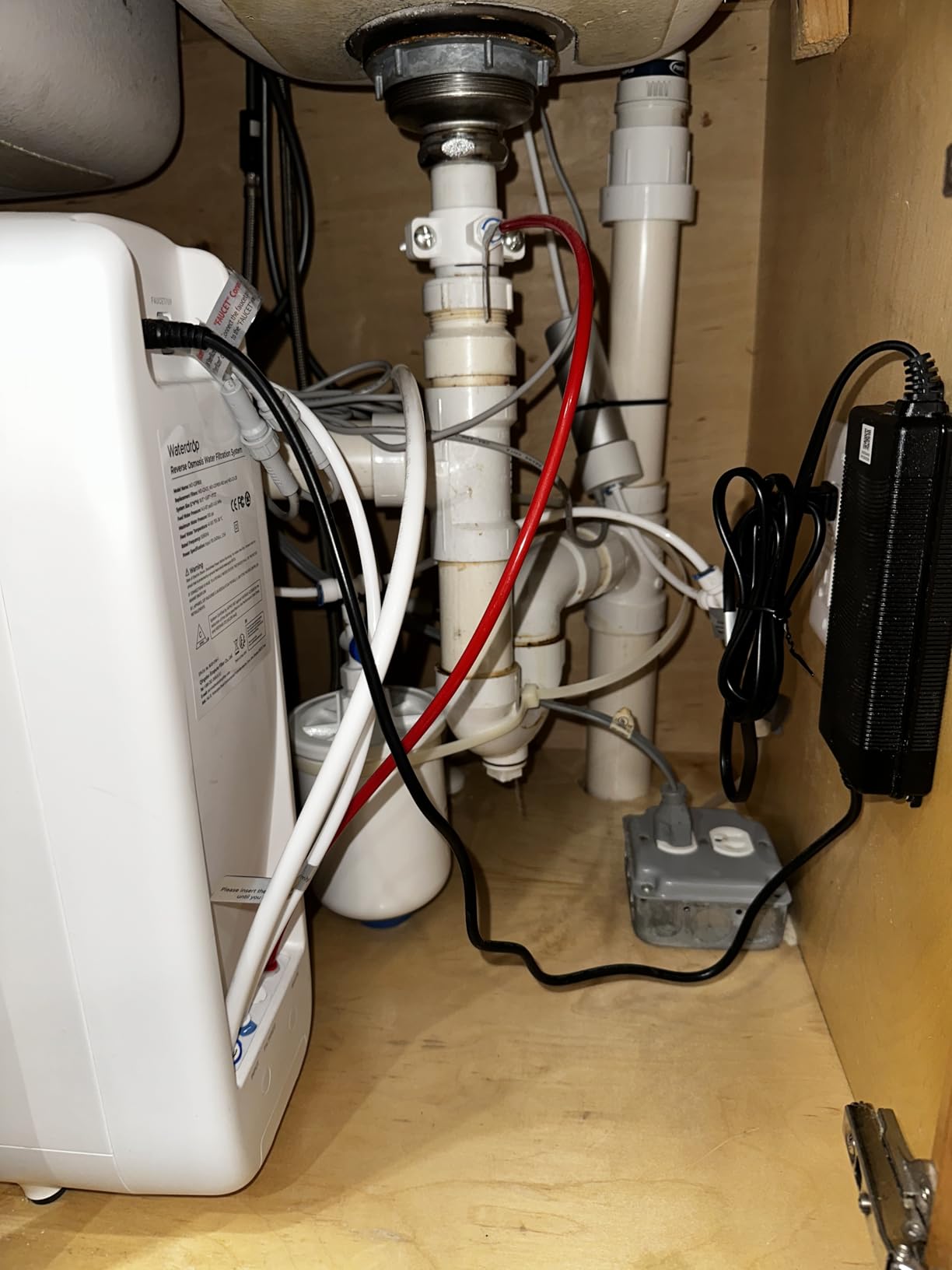
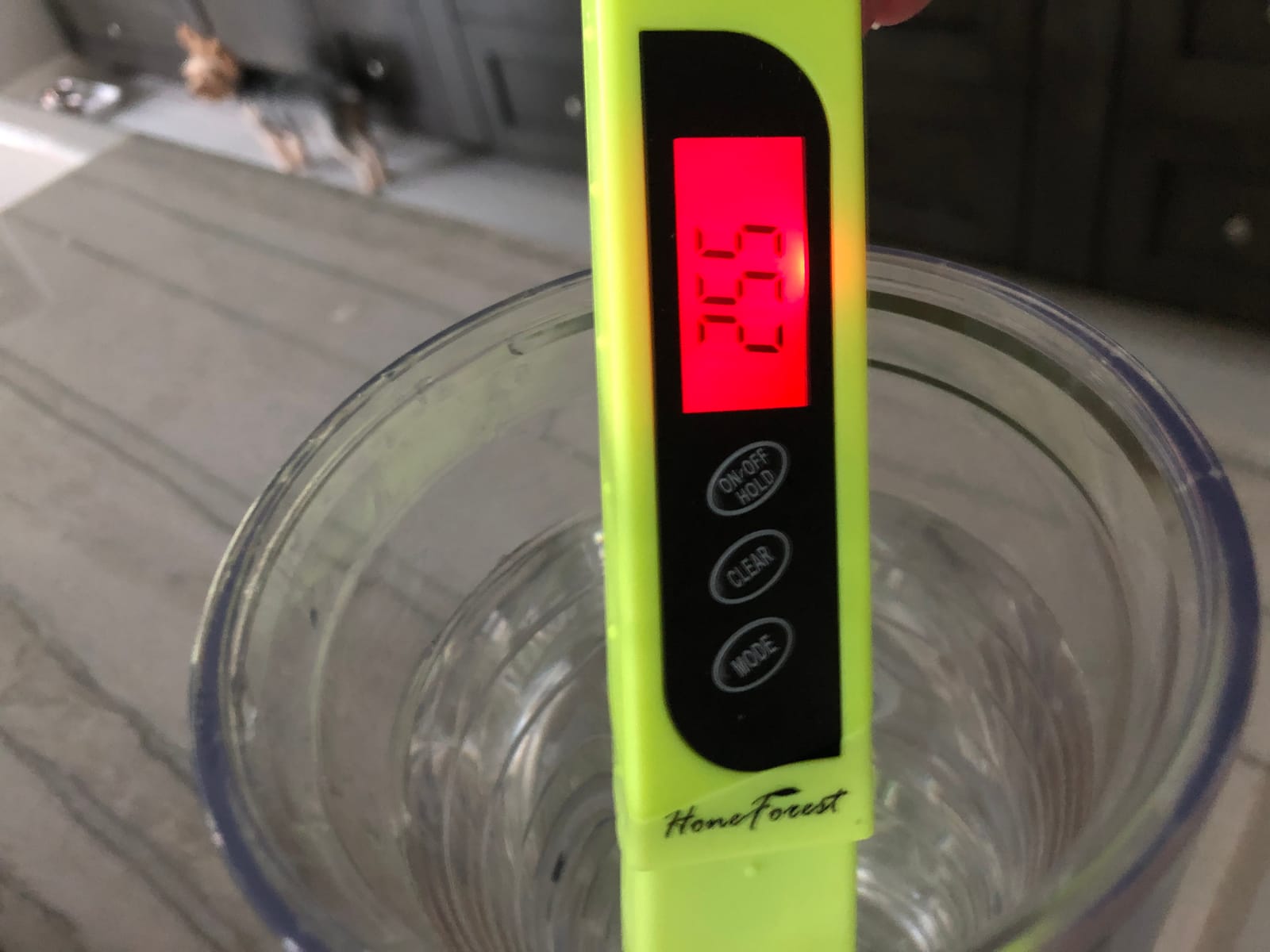
Owners consistently measure TDS falling by roughly 90-97%. One common report shows input at 99 ppm dropping to about 12 ppm. That is a real, measurable number rather than a marketing claim.
The front-facing cartridge layout means a filter change does not require moving the system or crawling under anything. Several two-year owners say the physical design is the reason they would buy it again.
What we liked running it on a well
At 800 GPD you have headroom for a family of four drinking, cooking, and running an ice maker without waiting on a tank to refill. That matters on a well because household demand patterns are bursty.
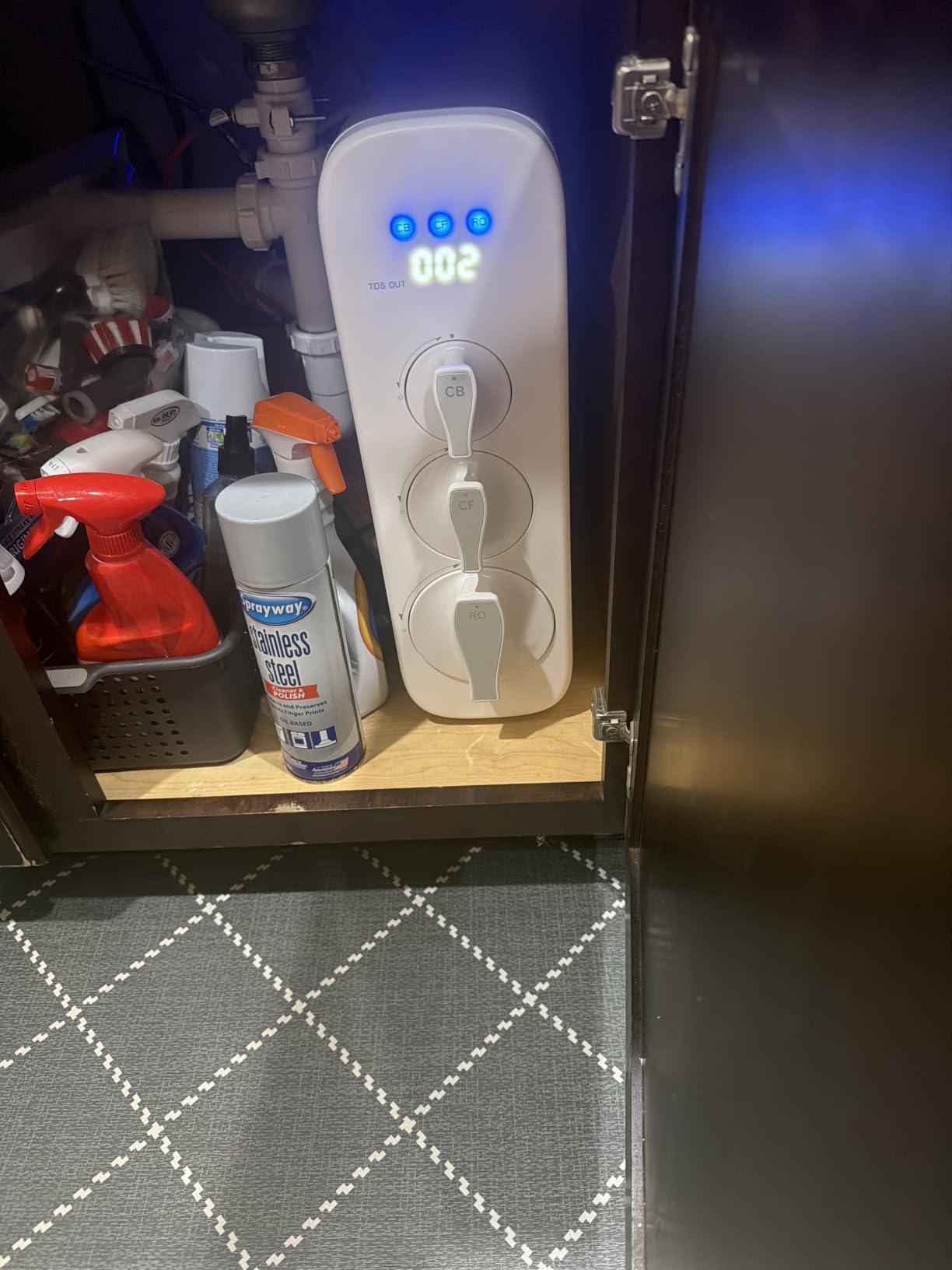
The smart faucet shows live TDS and filter status on an LED ring, and the ring itself is rated for a long service life. On a well, being able to watch TDS is how you catch a failing membrane early instead of after a year of short filter life.
Where it will disappoint you
Long-term filter cost is the complaint that decides it for many owners. Two-year reviewers still rate performance well but name filter expense as the deciding drawback, and it is worth budgeting before you commit.
The dedicated faucet needs a larger mounting hole than many standard RO faucets, so plan on that drilling step. The automatic flush also triggers after only a small amount of water is used, which on a low-use well home means it fires often.
5. iSpring RO500AK 500 GPD – Best Complete-System Certified Pick
iSpring RO500AK Alkaline Reverse Osmosis System, NSF 58 Certified, 500 GPD
500 GPD tankless
0.4 GPM real flow
2:1 drain ratio
NSF 58 complete system
Pros
- Complete-system NSF/ANSI 58 certification
- 0.4 GPM fills an 8 oz cup in about 10 seconds
- 2:1 drain ratio saves up to 400% water
- Auto-flush protects the membrane after 24 hours idle
- Front panel lights and buzzer flag filter changes
- Compact tankless body saves up to 70% of cabinet space
Cons
- Requires an electrical outlet under the sink
- Still needs adequate feed pressure despite the 15-70 psi range
- Tall body can crowd a shallow cabinet
The distinction that matters with this one is complete-system certification. NSF/ANSI 58 certification on the assembled unit, not just certification of a component somewhere in the chain. On an unregulated source that is the difference between a claim you can verify and one you cannot.
It handles feed water up to 1000 ppm TDS, the second highest ceiling here, which makes it a reasonable choice for a mineral-heavy well. Rated flow of 0.4 GPM fills an 8 oz cup in about ten seconds.
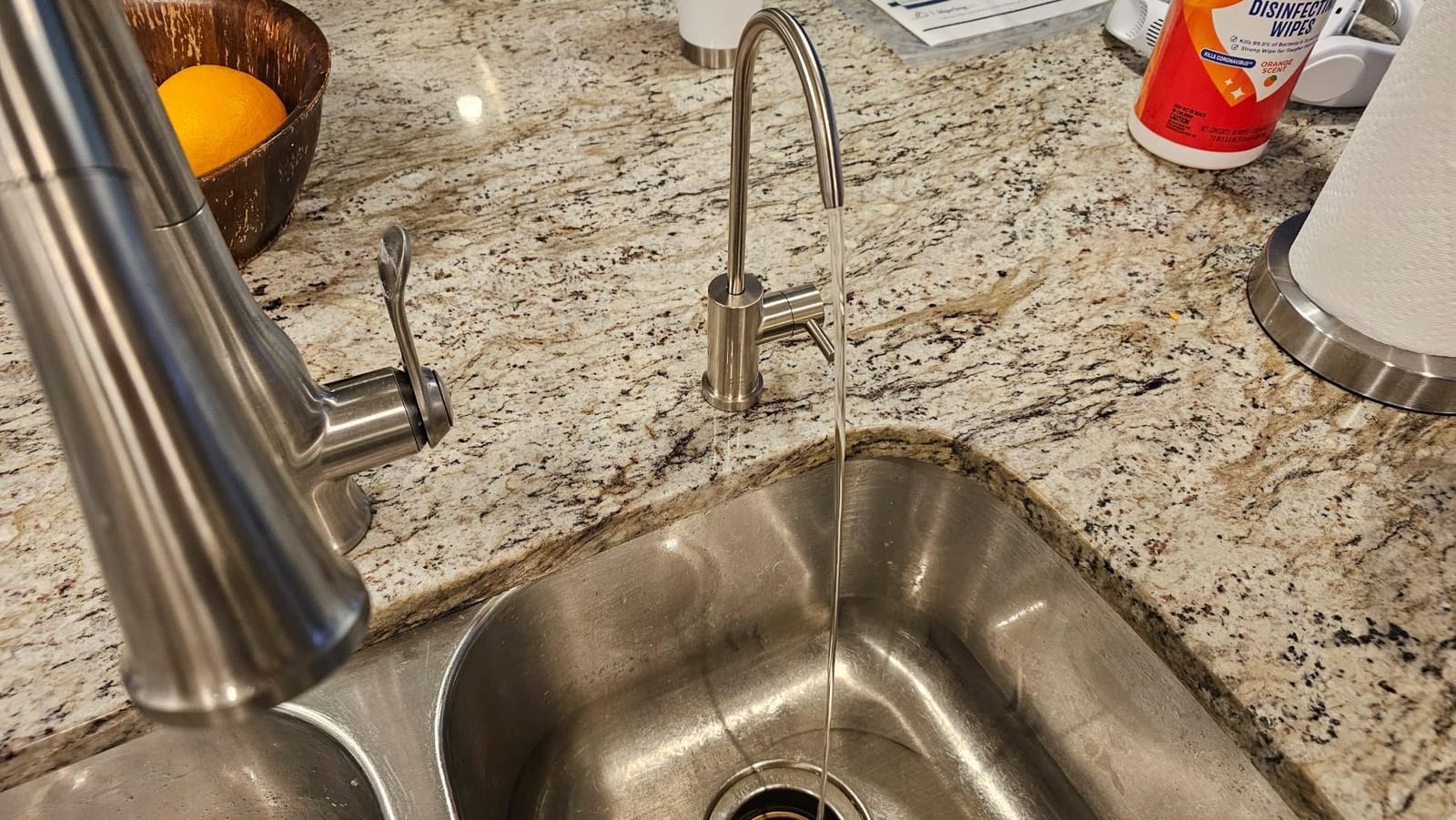
The auto-flush after 24 hours of non-use is quietly the most valuable feature for a well. On a property where the kitchen tap goes untouched for a weekend, that flush is what keeps the membrane from sitting in stagnant feed water.
Front panel indicator lights plus a buzzer tell you exactly when a filter needs changing. Several owners single this out, along with the alkaline stage that removes the acidic aftertaste people associate with plain RO.
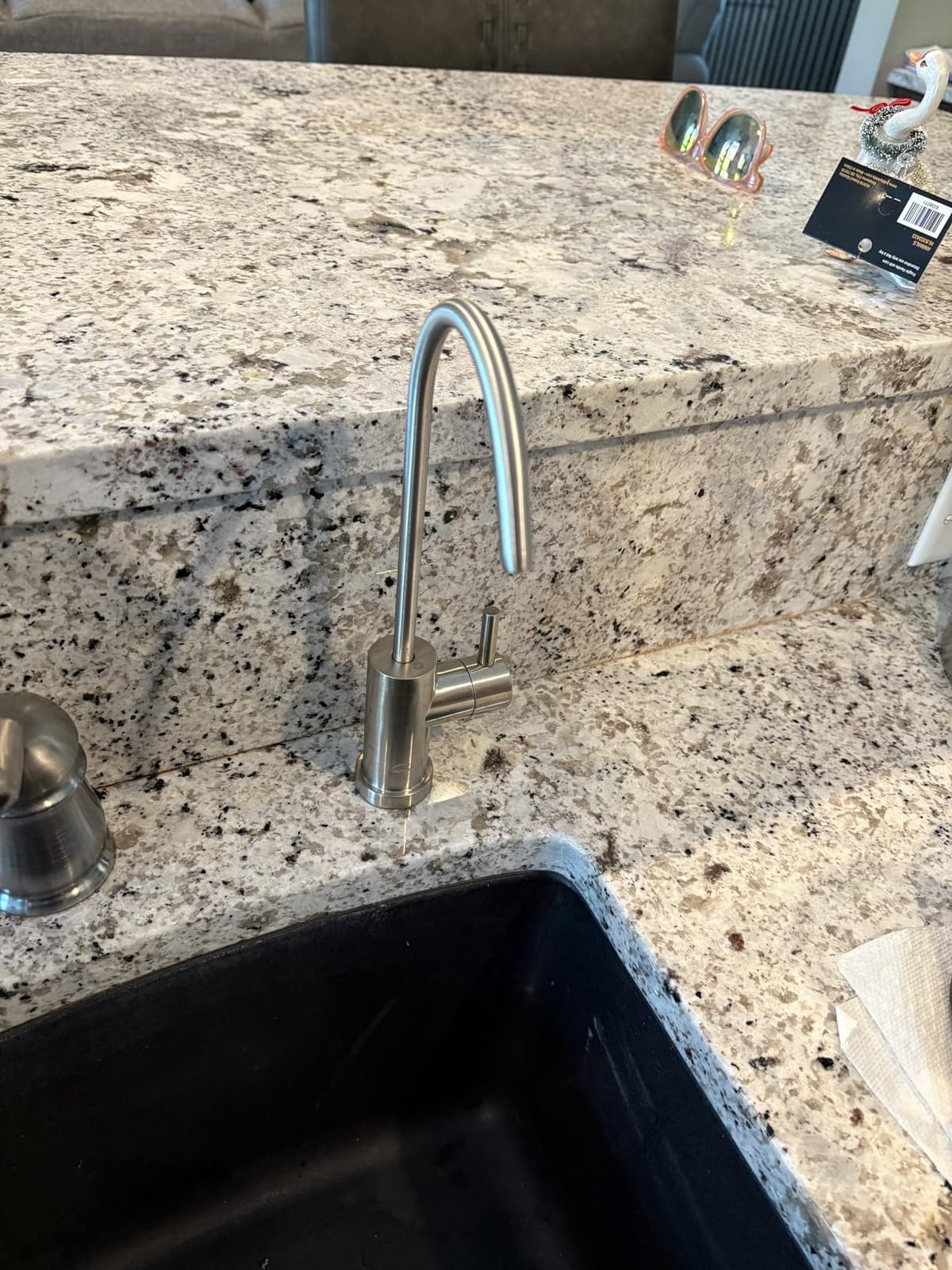
What we liked running it on a well
The 2:1 pure-to-waste ratio and the tankless body together make this a good fit where water conservation matters. It accepts 1/2 inch and 3/8 inch connections, which makes DIY installation fast if your existing plumbing is already 3/8 inch.
Support is described consistently as responsive, with technical help available from Atlanta, GA, plus a 30-day return window.
Where it will disappoint you
The listed 15-70 psi operating range is generous on paper but does not replace a booster pump if your well genuinely cannot hold pressure. Wide tolerance is not the same as pressure correction.
The body is tall and can crowd a shallow cabinet next to the faucet. Check your cabinet height against the 16.25 inch body dimension before you order.
6. APEC ROES-PH75 75 GPD 6-Stage – Best Value for Hard Wells
APEC Water ROES-PH75, 6-Stage Under Sink RO System, Alkaline, 75 GPD
75 GPD 6-stage
Handles up to 2000 ppm TDS
Alkaline pH+ cartridge
40-85 psi feed range
Pros
- Handles feed TDS up to 2000 ppm
- Low filter cost relative to the system price
- Alkaline pH+ stage adds calcium back
- WQA certified system
- Large capacity prefilters last about a year
- Color-coded tubing and clear instructions
Cons
- No pump so low-pressure wells are a problem
- 75 GPD means slow tank refills
- First-run flush produces cloudy water
- Alkaline stage raises final TDS reading
This is the entry point that most first-time well owners should look at first. It handles feed water up to 2000 ppm TDS, the highest rated input in this roundup alongside the APEC RO-90, which makes it unusually forgiving on a hard, mineral-heavy well.
Owners on hard well water around 700 ppm report roughly 97 percent membrane rejection, bringing output down to about 20 ppm. The six-stage layout includes an alkaline pH+ cartridge that adds calcium back for taste.
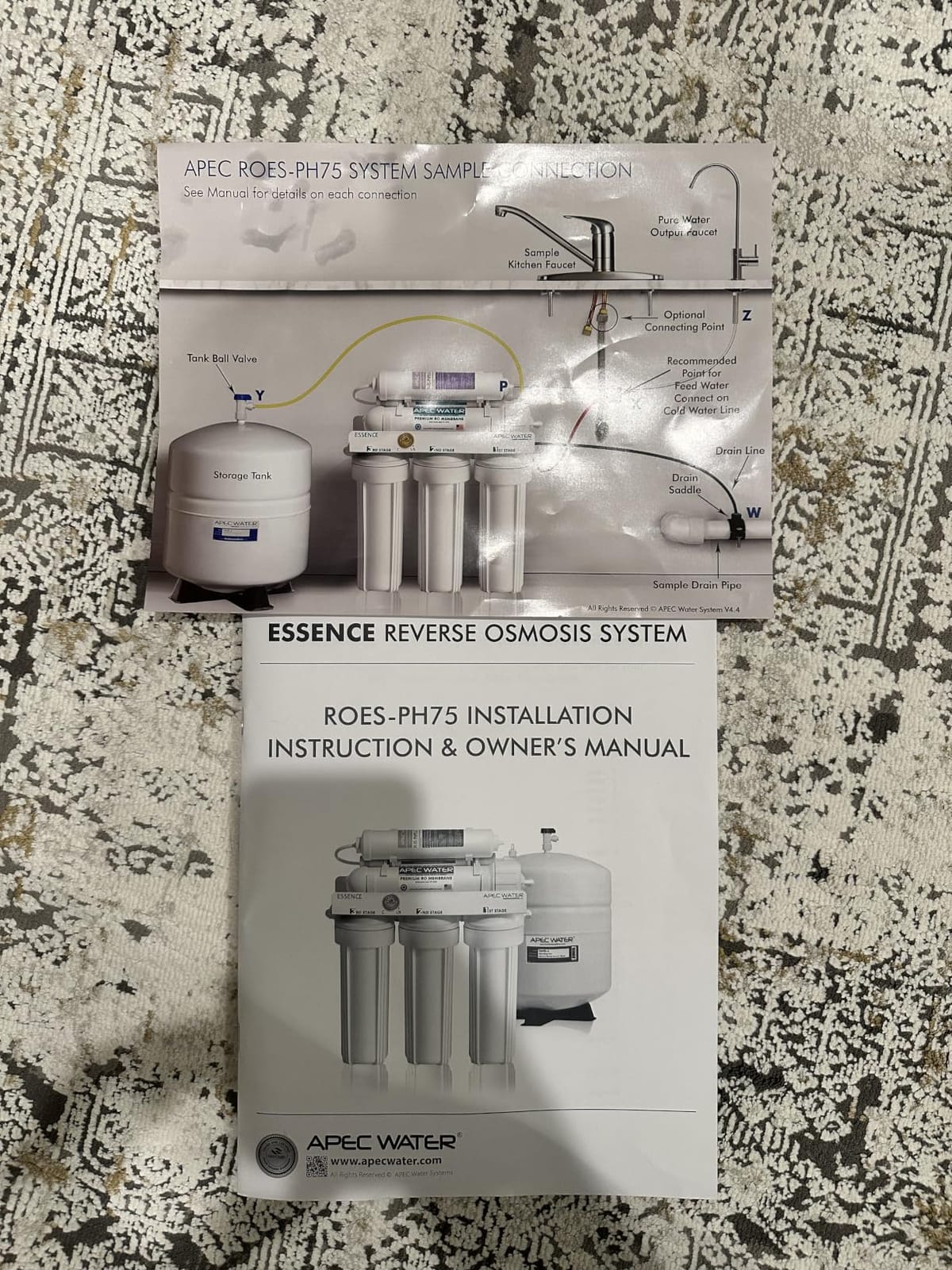
Large capacity prefilters last about a year, which cuts down on the change frequency that drives long-term cost. And filter costs are low relative to the system itself, so the running cost on this one is the friendliest in the group.
For a well with no measured problem other than hardness, this is the least expensive path to good drinking water that we found.
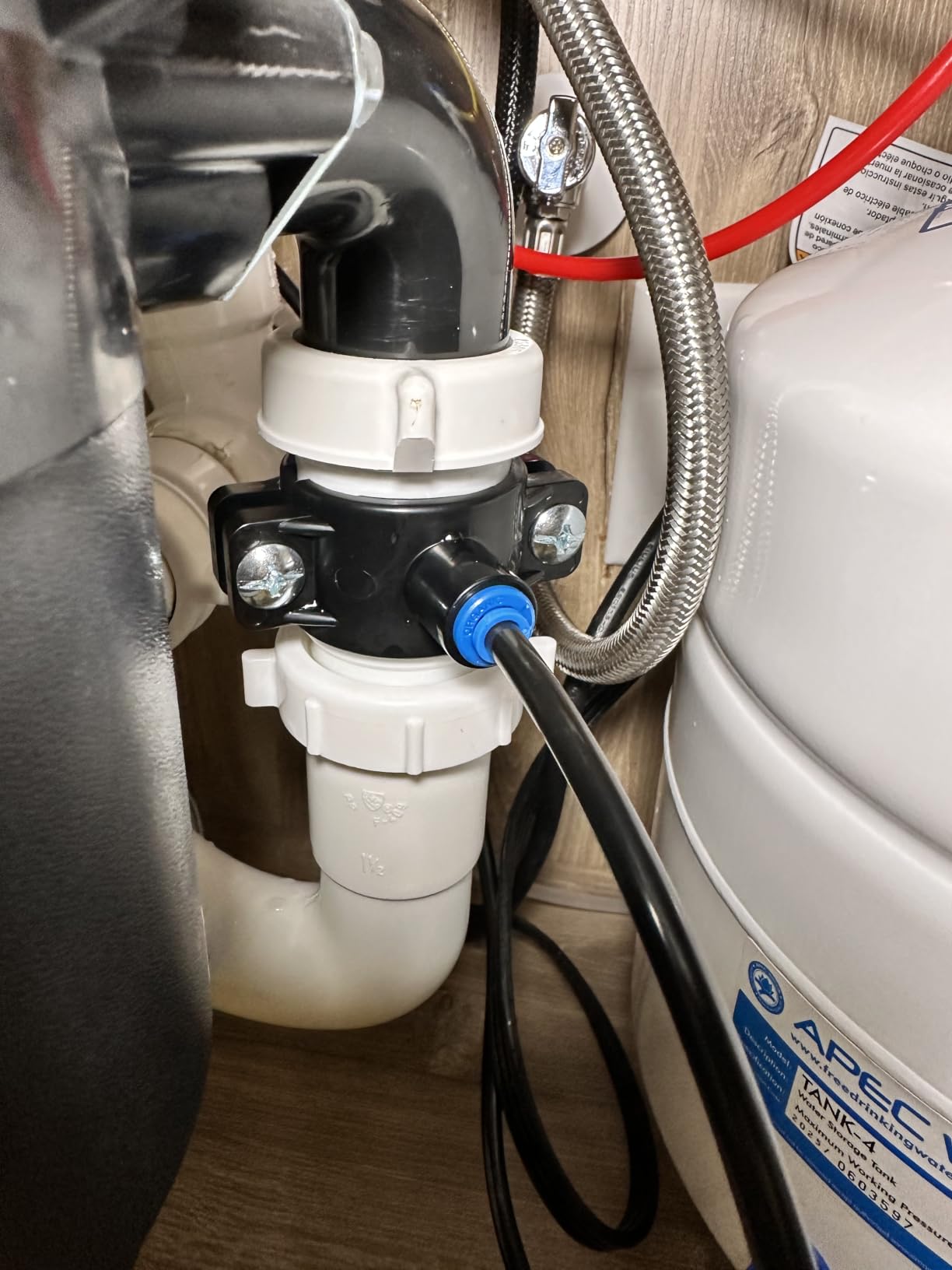
What we liked running it on a well
The 2000 ppm ceiling is the headline. Most competitors here top out between 300 and 750 ppm, so this is the one to shortlist if your lab report comes back with very high TDS.
It needs no electricity at all, running purely on water pressure. That means it keeps working through a power outage, which on an off-grid or rural property with a well is not a small consideration.
Where it will disappoint you
There is no pump, so it needs 40-85 psi at the feed. On a low-pressure well it will simply underperform, and no amount of wishing will fix that. Check your pressure before buying this rather than after.
75 GPD with a storage tank is a modest output, and refilling takes a while. Plan the first-run flush too, since the water can be cloudy and slightly mineral-tasting until it settles.
7. Waterdrop G2P600 600 GPD Tankless – Best for Low-Effort Maintenance
Waterdrop G2P600 Under-Sink RO System, 600 GPD Tankless RO Water Filtration
600 GPD tankless
2:1 drain ratio
Tool-free filter swaps
NSF 372 certified
Pros
- Tool-free cartridge swaps in about 3 seconds
- Filter life indicators on each cartridge
- 2:1 drain ratio saves about 60% more water
- Two replacement filters included in the box
- Typical 30 minute install
- Compares well against much costlier units
Cons
- No alkaline stage so water tastes flatter
- Tankless design needs an electrical outlet
- Upper temperature rating of 87 degrees F is low
- CF filter supply has occasionally been constrained
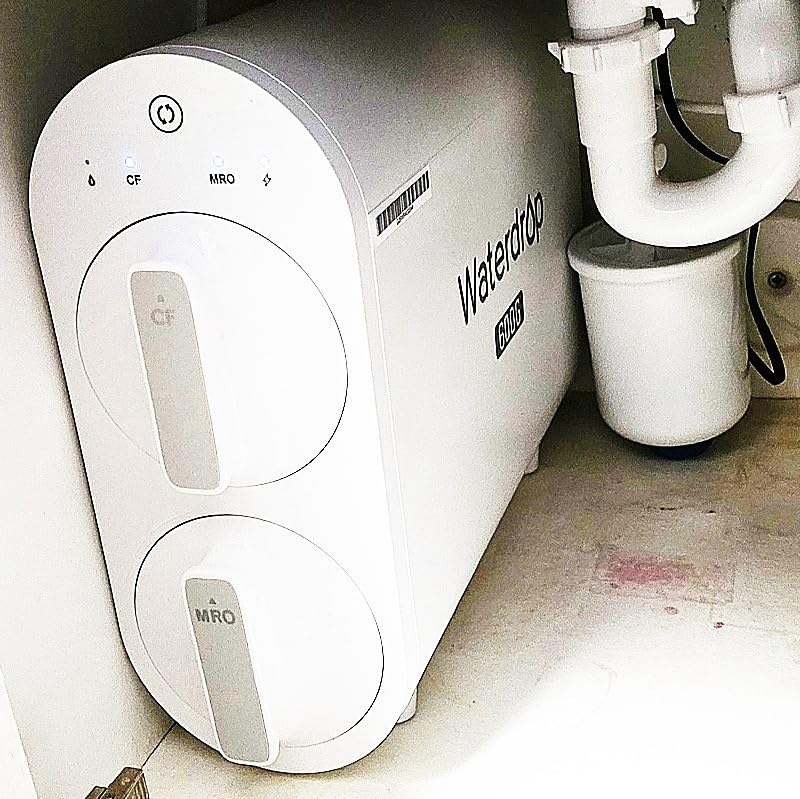
If filter changes are the thing that keeps you from committing to any system, this is the one to buy. The twist-and-pull cartridge design swaps a filter in about three seconds without moving the system or using a single tool.
It runs at 600 GPD, filling a 200 ml cup in about eight seconds, on a 2:1 drain ratio that saves roughly 60 percent more water than a conventional RO. That output is plenty for a large family’s cooking and drinking.
Each cartridge carries its own filter life indicator, so the reminder is on the filter itself rather than on an app you have to check. Two replacement cartridges are included in the box, which is generous.
It carries NSF/ANSI 372 certification for lead-free materials, which matters for anyone sensitive about the faucet and tubing as much as the membrane.
What we liked running it on a well
Reviewers repeatedly say this delivers performance comparable to models costing substantially more. On a well with moderate mineral content and acceptable pressure, that comparison holds up.
At 87 degrees F upper temperature rating it performs fine in normal household conditions, though it is worth knowing if your well runs unusually warm.
Where it will disappoint you
There is no alkaline remineralization stage. Water tastes flatter than the remineralized models in this roundup, and owners who care about taste are consistently pointed toward the alkaline versions instead.
Tankless means an electrical outlet under the sink is mandatory. Replacement CF filter supply has also been constrained at times, so plan ahead on cartridge ordering.
8. APEC RO-90 90 GPD 5-Stage – Best for High-Mineral and Arsenic Wells
APEC Water RO-90, 5-Stage Under Sink Reverse Osmosis System, 90 GPD
90 GPD 5-stage
Genuine Dow Filmtec membrane
Handles up to 2000 ppm TDS
40-85 psi feed
Pros
- Genuine Dow Filmtec membrane with 97.3 percent measured rejection
- Large prefilters hold about twice the capacity of all-in-one cartridges
- Handles feed TDS up to 2000 ppm
- Arrives fully assembled with color-coded tubing
- Very quiet when installed per the drain-line instructions
- Low filter cost keeps running costs down
Cons
- No pump so 40-85 psi is required
- Classic storage tank means flushing after filter changes
- The included plastic faucet adapter leaks
- Printed manual has steps out of order
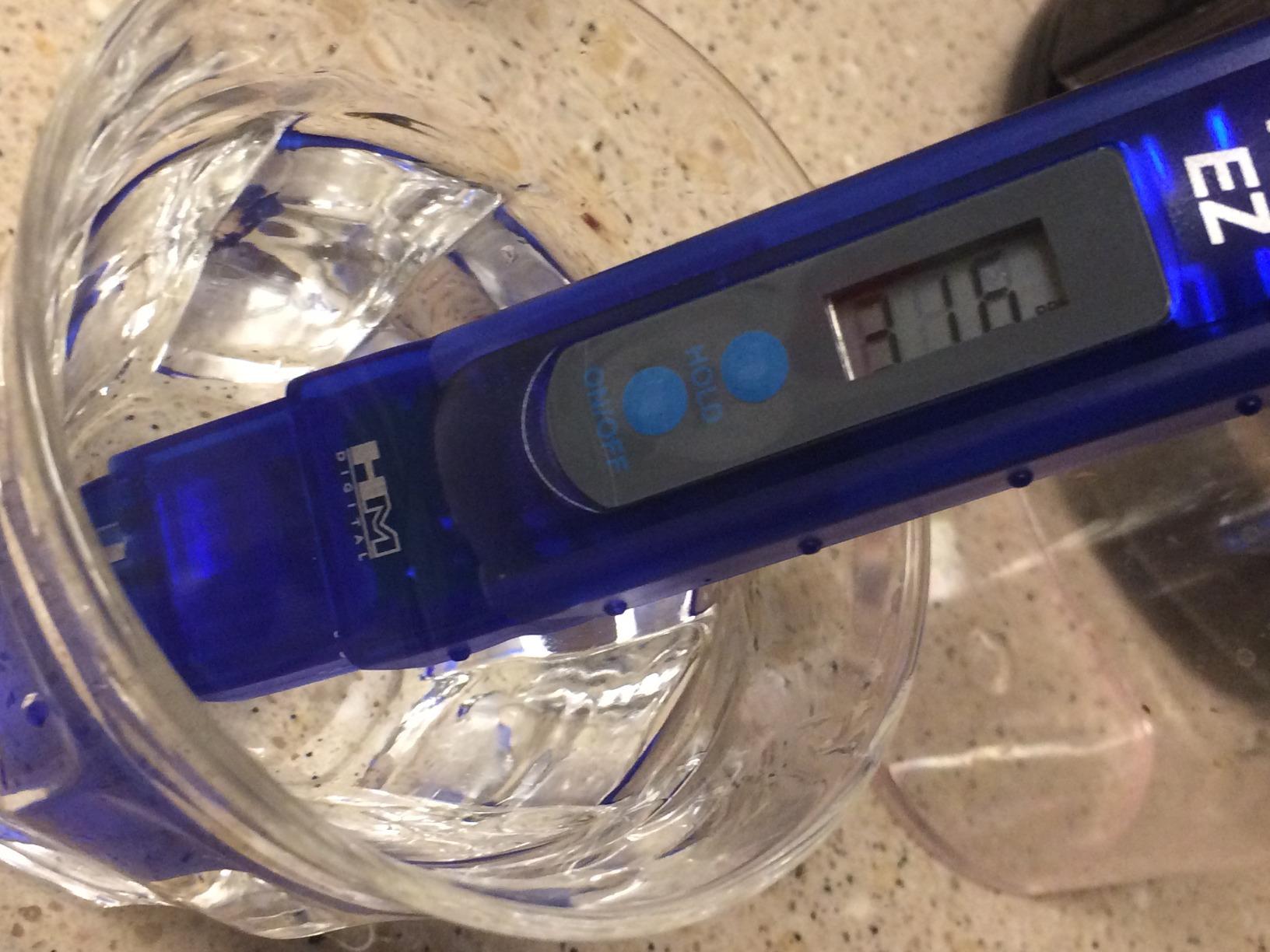
This one comes up again and again in well-water contexts, and the reason is the membrane. It uses a genuine Dow Filmtec membrane, and one well owner measured 97.3 percent rejection cutting 700 ppm input down to about 20 ppm.
That is a measurable result on hard water. Naming the membrane manufacturer rather than only the housing brand is worth something on a private well, where the source is unregulated.
It handles feed water up to 2000 ppm TDS, and owners on high-mineral and arsenic-contaminated wells report it passing lab tests after cheaper filters failed.
The large prefilters deliver roughly twice the impurity-holding capacity of smaller all-in-one cartridges, so they clog less often. On well water with any sediment, that is the difference between monthly and annual changes.
What we liked running it on a well
It handles feed water up to 2000 ppm TDS, matching the APEC PH75 as one of the two most tolerant units here. If your lab report shows high TDS, this is the shortlist.
It arrives fully assembled with color-coded tubing and JG quick-connect fittings, installs quietly when you follow the drain-line instructions, and the layout is designed for intuitive filter changes.
Where it will disappoint you
There is no booster pump. At 40-85 psi required, a low-pressure well will need a pump added separately, which changes the install plan and the total cost.
The classic tank design means water sits in storage between uses, so you flush after every filter change. The included plastic quick-connect faucet adapter is also prone to leaking; the metal compression nut is the better choice.
9. NU Aqua 7-Stage UV Alkaline 100 GPD – Best for First-Time Buyers
NU Aqua 7-Stage UV Alkaline Under Sink Reverse Osmosis Water Filter System
100 GPD 7-stage
UV sterilizer
Includes PPM meter
120-day home trial
Pros
- Includes a complimentary PPM meter to verify water quality
- 120-day home trial plus a 3-year warranty
- 100 GPD is double a standard under-sink output
- Alkaline remineralization stage restores minerals
- Stainless steel faucet and double o-ring housings
- Long-term owners report multiple systems over about eight years
Cons
- No booster pump on this configuration
- Automatic shut-off valve failed early causing leaks
- Support response has been uneven for some buyers
- Tank can arrive over-pressurized from the factory
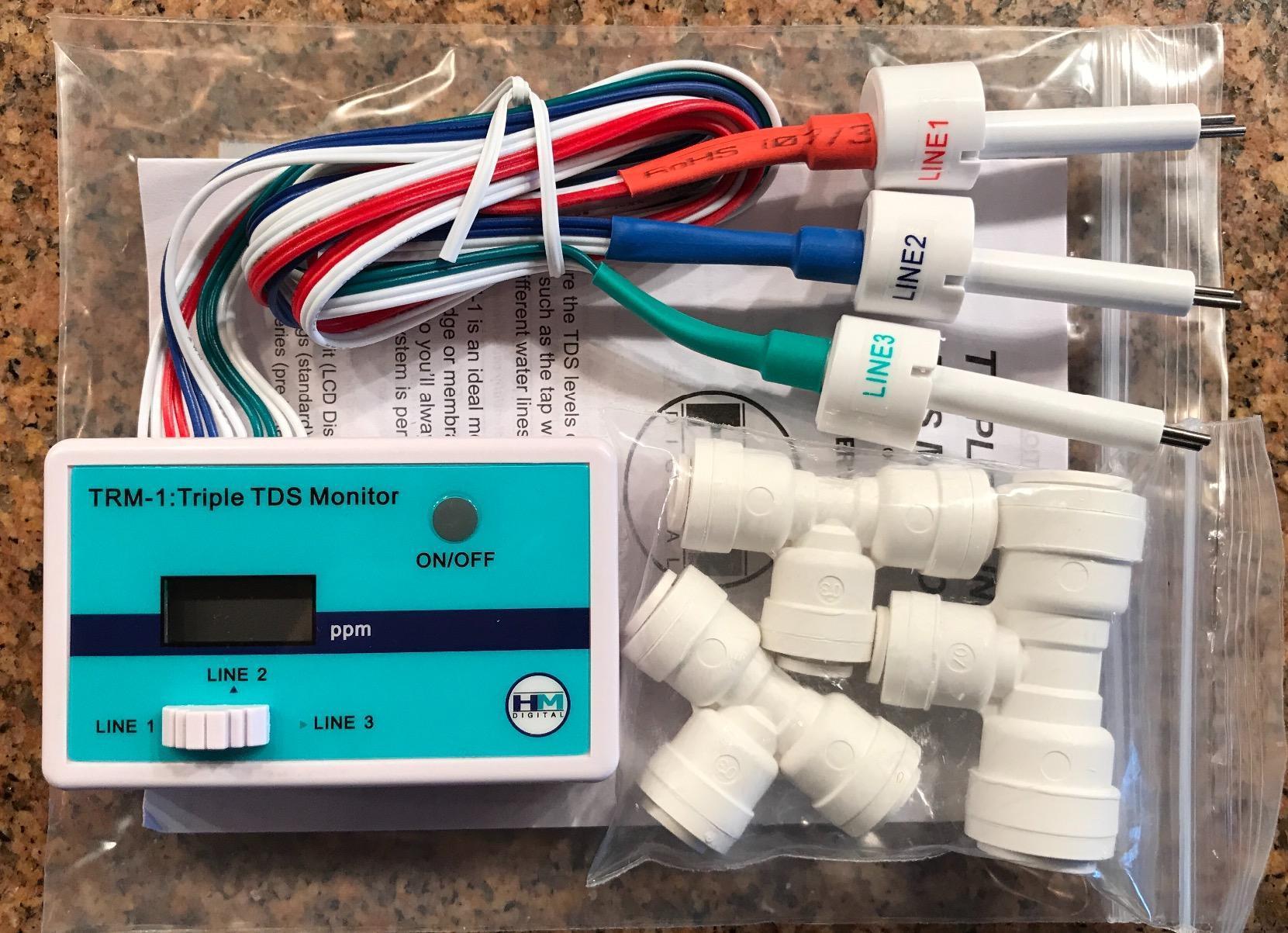
If you have never installed an RO before, the inclusion of a free PPM meter is the detail that tips this one. You can put a number on your water the day you install it and track it yourself, which is exactly what you want on a well.
It also comes with a 120-day home trial and a 3-year manufacturer warranty, which is longer than most in this roundup. For a first purchase on unfamiliar equipment, that risk reversal matters.
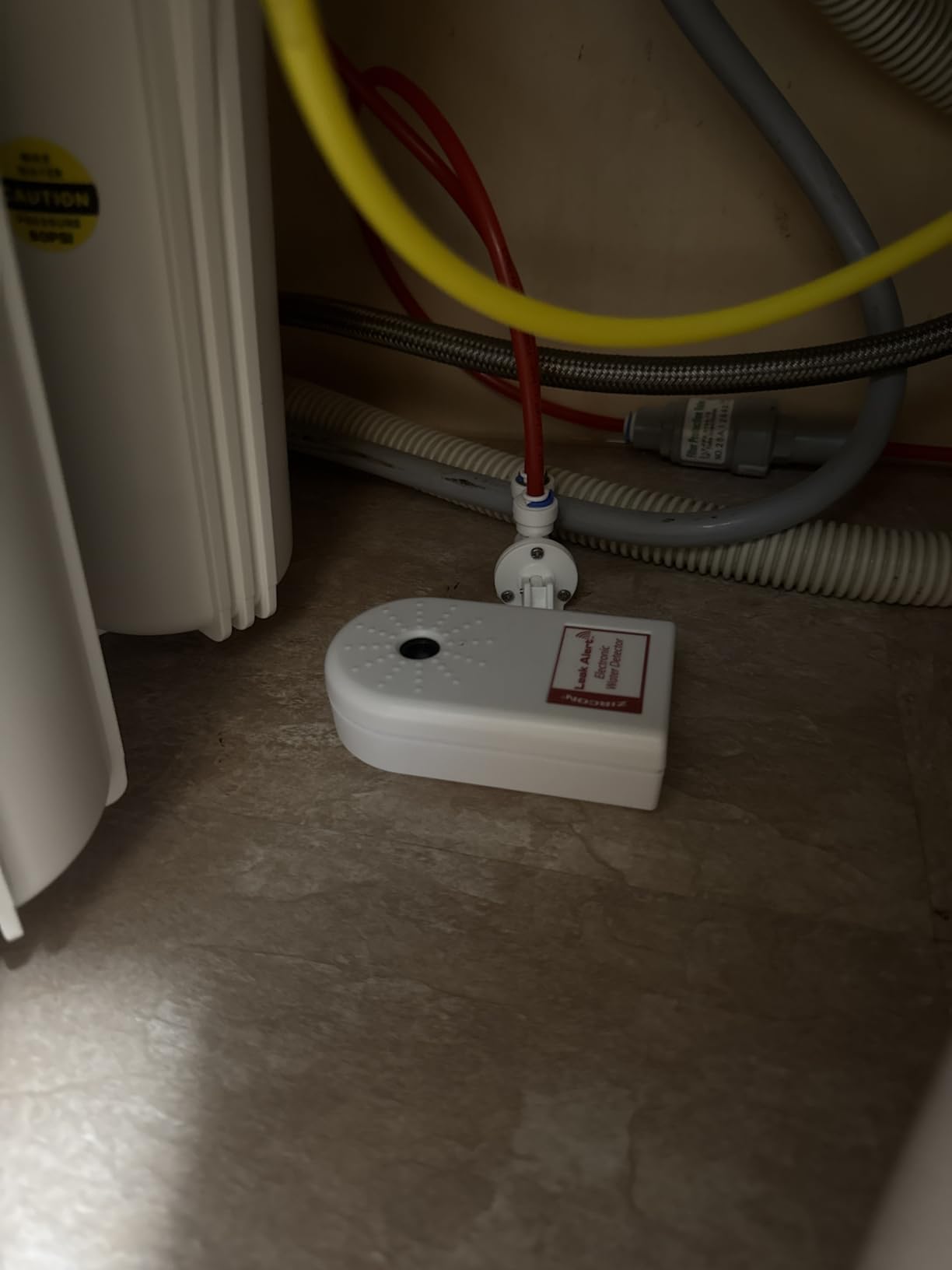
The UV stage is the reason to consider it on a well at all, since untreated private wells can pick up coliform without warning. The alkaline stage restores minerals so the water does not taste like plain RO.
Output is 100 GPD at 0.07 GPM, double a standard under-sink install. Owners on high-metal well water report dramatic taste improvement, particularly for ice and refrigerator water.
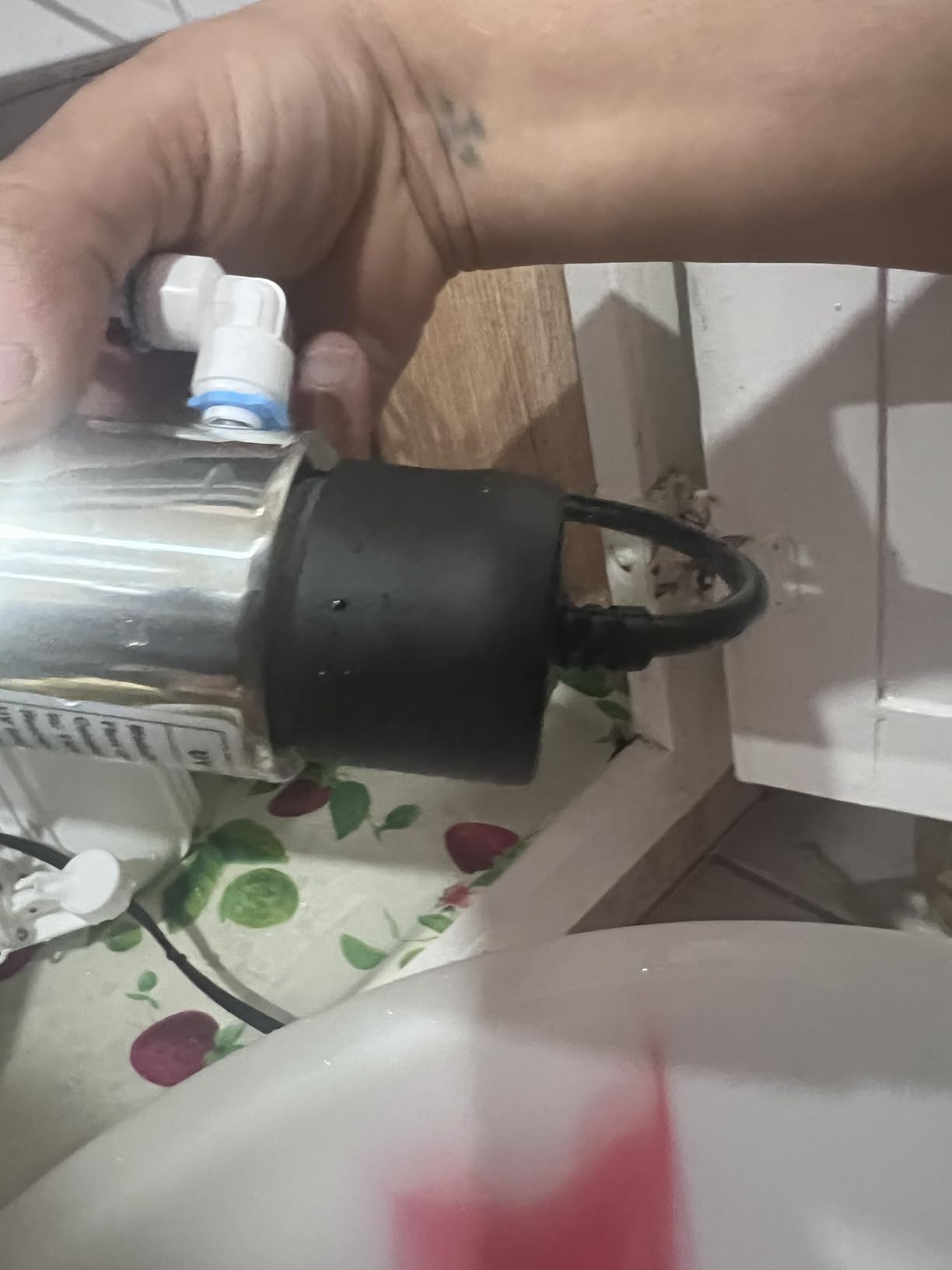
What we liked running it on a well
Longevity is the strongest praise here. One owner reports buying three systems over roughly eight years without a single leak, which is a strong track record for under-sink plumbing.
The stainless steel faucet and double o-ring sealed housings feel durable in hand, and color-coded tubing with quick-connect fittings installs in under an hour.
Where it will disappoint you
There is no booster pump on this configuration, so low well pressure directly limits performance. If you already know your pressure is marginal, choose a pumped unit instead.
One owner’s automatic shut-off valve failed within three months and caused significant leakage, and support response has been uneven for some buyers, with weeks-long waits for parts. Check that the tank is bled of factory air before first fill, since it can arrive over-pressurized.
10. Home Master TMHP 9-Stage – Best UV and Lowest Waste Ratio
Home Master TMHP HydroPerfection Reverse Osmosis System, 9-stages, Patented 2-pass Alkaline Remineralization, Fast 4.5 Sec Fill Rate, 1:1 Waste Ratio, UV Sterilizer 99.9% EPA 97952AZ1, Iron Prefilter
9-stage filtration
EPA registered UV
1:1 waste ratio
Two-pass alkaline remineralization
Pros
- Nine-stage filtration removes up to 99 percent of chemicals metals and microplastics
- EPA registered UV sterilizer kills germs after the membrane
- Patented two-pass remineralization adds calcium and magnesium
- Non-electric permeate pump delivers a 1:1 waste ratio
- Fills about 4.5 seconds per 20 oz bottle
- Five year limited parts warranty
Cons
- Factory mounting clips are stiff and hard to seat
- Rigid tubing is awkward in tight cabinets
- Quick-connect fittings resist disconnection once pressurized
- Filters and parts available only from the manufacturer
This has the highest average rating of any system in the roundup, and the reason is the 1:1 waste ratio. Every other tankless unit here runs 2:1 or 3:1. Getting to 1:1 matters a great deal on a rural property on a septic system.
The UV sterilizer is EPA registered, which is a different and stronger claim than a generic UV stage. It sits after the membrane and kills germs that made it through, which is exactly the role UV should play on an unregulated source.
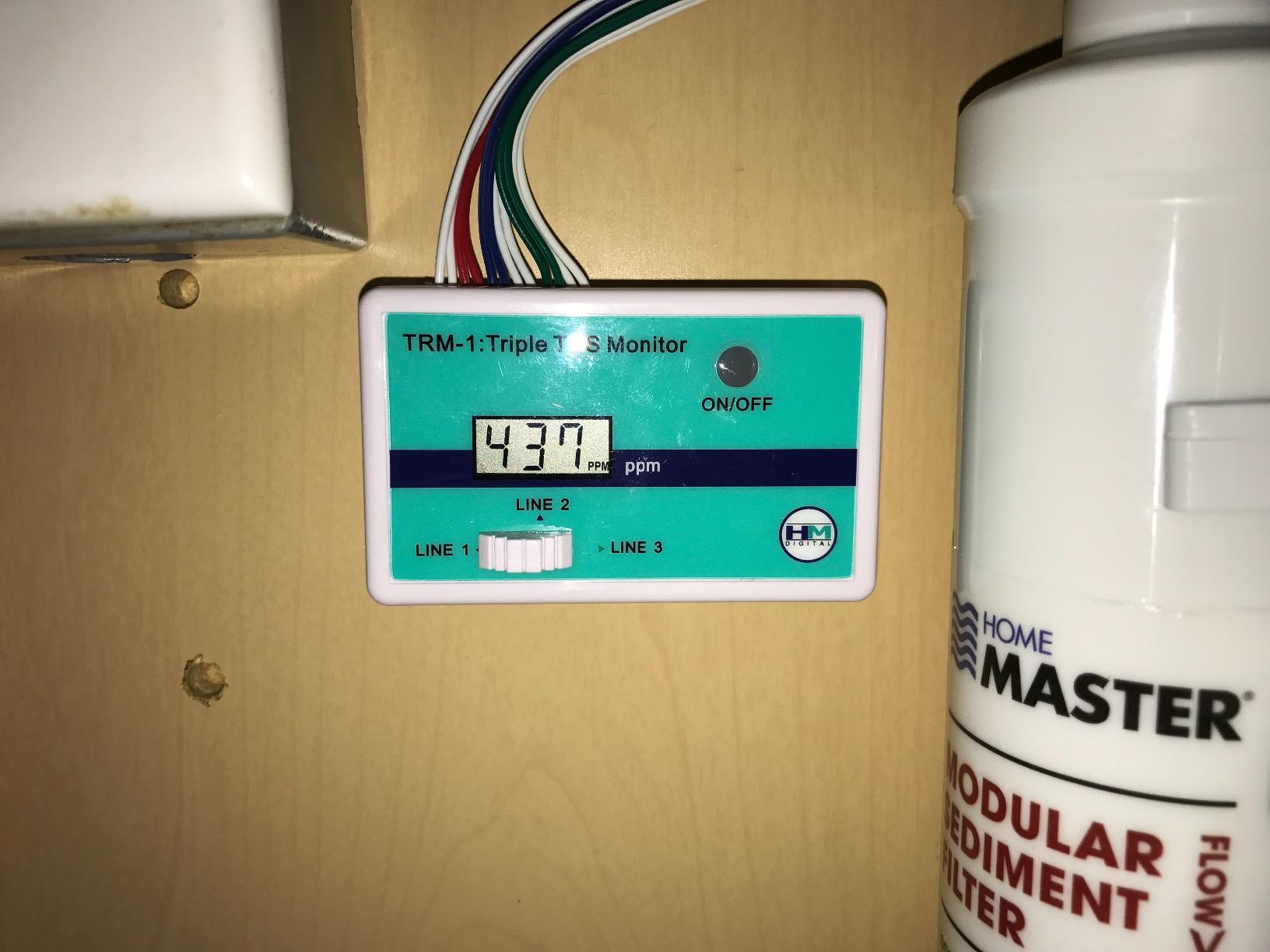
Owners report measured TDS dropping from roughly 88-430 ppm down to 15-25 ppm, with the double remineralization step credited for the taste. Fill rate is about 4.5 seconds per 20 oz bottle.
The permeate pump is non-electric, so the efficiency gain does not cost you an outlet or a noisy pump under the cabinet. The listed operating range of 40-100 psi accommodates a broader feed window than most models here, and it carries a 5-year limited parts warranty.
What we liked running it on a well
An iron prefilter is included, which is rare at this level and directly addresses the most common well fouling problem before it reaches the membrane.
Worst complaints from owners concern physical installation rather than filtration performance. If you are comfortable with fittings and have a clear cabinet, the water results are strong.
Where it will disappoint you
The factory mounting clips are extremely stiff, making the system hard to push into position under a sink. Rigid tubing is also awkward to route in a confined cabinet, and the quick-connect fittings are difficult to disconnect once pressurized.
Replacement filters and parts are available only from the manufacturer rather than from third-party sellers, which means you wait on them rather than shop around. Plan the drilling too: granite or thick countertops need special bits.
What to Look for in a Well Water RO System
Five criteria decide whether an RO works on a private well, and none of them appear on a product page’s feature list.
1. Feed pressure tolerance. Find the minimum psi the manufacturer lists at the membrane, not at the faucet. If your well sits under 45 psi, a system with a built-in booster pump is not optional. Systems rated 80-130 psi like the iSpring CRO1000 need a separate pump on a typical residential well.
2. UV downstream of the membrane. If your well has any coliform history, or has never been tested, add UV. It must sit after the membrane so the water is clear enough for light to work. Look for a flow-sensor delay, which extends bulb life.
3. Drain ratio. A 1:1 system sends one gallon to the drain per gallon produced. A 3:1 system sends three. On a septic system that is a genuine load, and it is one of the least discussed buying criteria in this category.
4. Tank versus tankless. A tank delivers a fast burst of water but sits stagnant between uses, which is a biofilm risk in a low-consumption home. Tankless systems produce water on demand and keep the cabinet clear, but they need an electrical outlet and are more sensitive to feed pressure.
5. Certification on the exact model. Look for NSF/ANSI 58 for the drinking-water claims, 42 for aesthetic reduction, 53 for health effects, and 372 for lead-free materials. Verify the model number, not just the brand, in the NSF listings database.
Two more that shape the outcome: a transparent first-stage housing so you can see the sediment filter loading up, and an alkaline remineralization stage if anyone in the house will actually drink the water.
How to Size and Buy the Right System for Your Well
Start with a lab panel, not a shopping cart. What the report says about iron, manganese, hardness, bacteria and TDS dictates the treatment train, and the RO is only the third or fourth component of it.
Iron and manganese above roughly 0.3 mg/L will foul a membrane. Hydrogen sulfide means a KDF/GFO or specialized sulfur media upstream. Hardness above 200 ppm wants a softener ahead of the membrane, or the membrane scales within a year. Coliform on the panel means UV, and it means finding out where the contamination is entering the well.
Then confirm pressure. Put a gauge on the faucet nearest the RO and run it for a few minutes. Anything under 45 psi at the membrane and you are shopping for a pumped unit or adding a booster. Also check your pressure tank: an undersized or waterlogged tank is the single most common cause of a well that will not hold pressure.
Size the capacity for peak demand rather than average. A family of four drinking, cooking, plus an ice maker and a refrigerator dispenser, needs far more than a rough daily estimate suggests. The GPD figures here are realistic daily outputs under test conditions, not promises about your household.
Finally, budget the parts, not just the system. Count the pre-filters, the membrane, the post-carbon, the UV bulb and any alkaline cartridge, then divide by their service life. On a well with iron, the pretreatment cartridges are the ones that drive your real annual cost, and they are the line item most roundups leave out.
Three questions narrow everything down fast: what contaminants and TDS did your lab report show, what is your incoming pressure at the kitchen sink, and do you prefer a tank or a tankless body. Answer those and the right system on this list becomes obvious.
Frequently Asked Questions
Does a reverse osmosis system work with well water?
Yes, but not on its own. RO handles dissolved minerals, metals, nitrates, PFAS and arsenic very well, yet it is not a disinfectant and it does nothing about the iron, manganese, sulfur and sediment common on private wells. A working well installation needs a backwashable sediment spin-down, a KDF/GFO or dual-carbon stage for iron and sulfur, a softener if the water is hard, then the RO membrane, then UV for any coliform history, then an alkaline remineralization cartridge.
What is a major downside of reverse osmosis water?
The main drawback is that RO strips dissolved minerals, leaving water that tastes flat and is slightly acidic. It also wastes water, sending one to three gallons down the drain for every gallon produced. An alkaline remineralization cartridge adds calcium and magnesium back and corrects the acidity, and a low drain ratio model cuts the waste considerably, but the mineral loss is inherent to the membrane.
What is the most effective filtration system for well water?
There is no single winner, because the answer is a treatment train keyed to your lab report. In practice the stack runs: backwashable sediment spin-down first, then KDF/GFO or dual carbon for iron, manganese and sulfur, then a softener if hardness exceeds about 200 ppm, then the RO membrane, then UV if bacteria were detected, then alkaline remineralization. Skip pretreatment and you will be replacing membranes far sooner than the rated interval.
Is RO water hard on the kidneys?
For healthy adults, reverse osmosis water is generally considered safe to drink. Because the membrane removes calcium, magnesium and sodium along with other dissolved solids, people on restricted mineral or sodium diets should account for what they get elsewhere. Anyone with kidney disease should talk to a clinician before committing to a long-term RO-only drinking habit, and adding an alkaline remineralization stage restores much of what the membrane strips out.
What is the best way to remove iron and manganese from well water?
It depends on the form. Ferrous dissolved iron is handled well by an air-injection oxidation filter, while manganese usually needs greensand or a catalytic media. KDF or GFO media covers iron and sulfur together, and an RO membrane removes dissolved manganese effectively once it is already in solution. The critical point is that these upstream stages must come first, because iron bacteria slime and rust particulate will foul a membrane regardless of how good that membrane is.
Does reverse osmosis remove manganese?
Yes, an RO membrane removes dissolved manganese very effectively. The catch is what happens before it gets there. Iron bacteria produce a gelatinous slime that coats the membrane surface, and existing manganese scale will not wash off, so by the time the water reaches a membrane it may already be fouled. That is why pretreatment for iron and manganese comes before the membrane in every installation we recommend, not after.
Conclusion
For most well households, the best reverse osmosis systems for well water start with the Frizzlife PD600-TAM3, which combines a 2:1 drain ratio, tankless construction and full NSF/ANSI certification in one package. Choose the iSpring RCC1UP-AK instead if your well pressure is unreliable and you want a booster pump and UV built in. Choose the Home Master TMHP if a 1:1 waste ratio and an EPA registered UV stage matter more to you than easy mounting.
Whichever you choose, test your water first and build the pretreatment around it. The RO is the last stage of the job, not the whole job. Check current pricing on the buttons above for the models listed, and pick the one whose weaknesses match the problems your well actually has.