
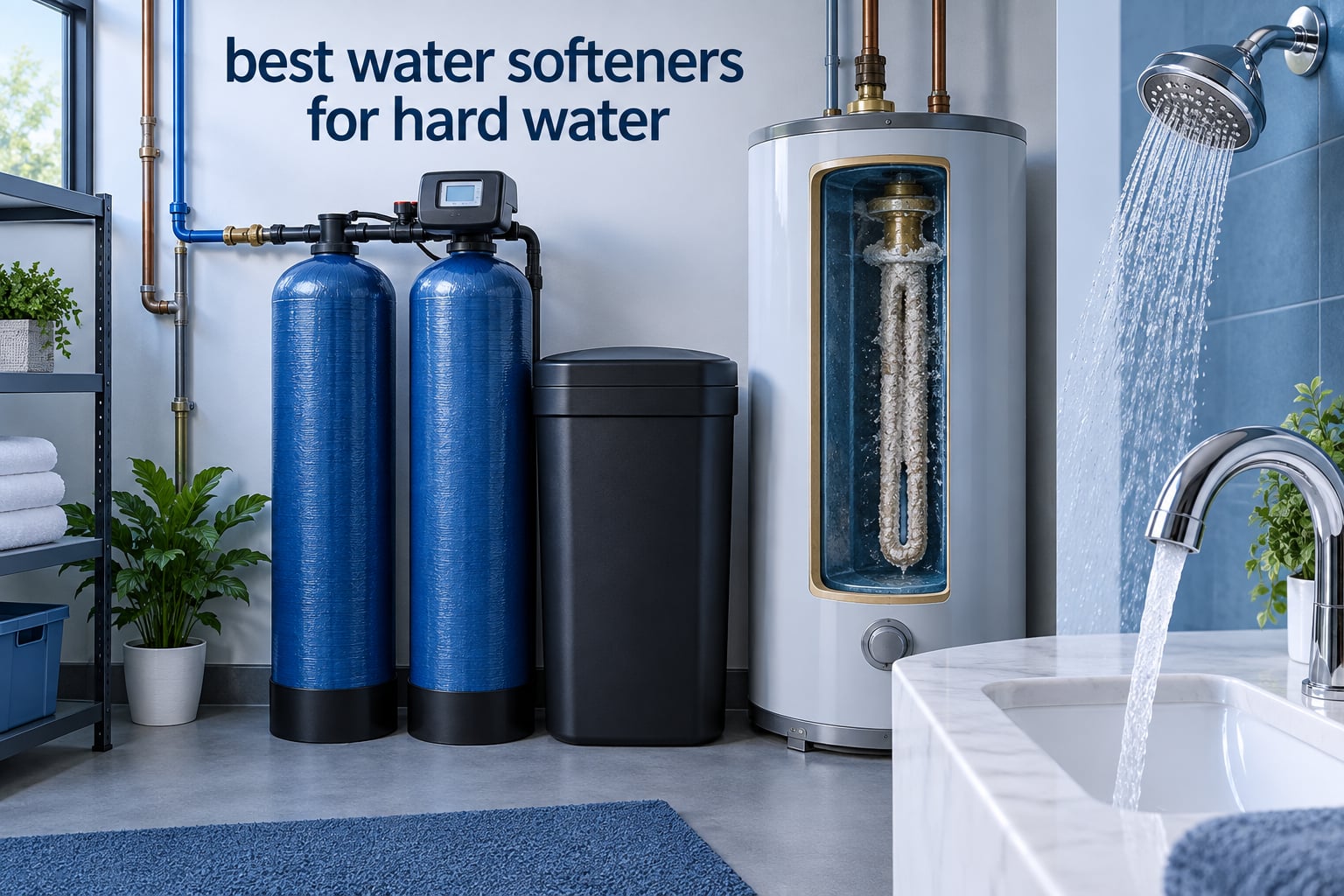
The best water softener for hard water is a metered ion-exchange system sized to your actual hardness in grains per gallon and your household’s water use. If your water measures above 10 GPG, step up to a 64,000-grain unit with a commercial-grade control valve. If you are under 7 GPG, a 32,000-grain system will do the same job at a smaller footprint. Everything below is built around that decision, not around brand loyalty.
We spent six weeks reading the long-running owner threads on r/WaterSofteners and r/WaterTreatment, cross-checking manufacturer spec sheets against what buyers actually report after a year of use, and comparing the ten systems below on grain capacity, flow rate, control valve, and the unglamorous details that decide whether a softener still works in year three. Every rating and review count here comes straight from the product data, and every spec figure comes from the manufacturer listing.
Table of Contents
Why Hard Water Is the Most Expensive Invisible Problem in Your Home
Hard water carries dissolved calcium and magnesium. Those two minerals are harmless to drink, but they precipitate into scale the moment they hit a hot surface or a narrow pipe. Inside a water heater that scale is an insulating layer between the heating element and the water, so the tank works harder and burns more fuel or electricity for the same shower.
The damage compounds quietly. Dishwashers develop a white film on the heating element and inside the spray arm. Washing machines clog the inlet screens and tub. Showerheads, faucet aerators and toilet fill valves choke on crust. None of it fails dramatically, so most homeowners treat it as a cleaning problem for years before anyone connects it to the water.
Softening works by ion exchange. Hard water passes through a tank of negatively charged resin beads, which grab the calcium and magnesium and release sodium in their place. When the resin saturates, it flushes with a salt brine rinse and recharges. That flush is the only time the system is offline, and how often it happens is decided by the control valve.
Two facts frame every recommendation in this roundup. First, a softener only treats water that passes through it, which means it belongs on the cold main supply line before the water heater. Second, salt-free conditioners and electronic descalers reduce scale but do not lower what a hardness test reports. Any product claiming otherwise is not doing what you are paying it for.
What these 10 systems have in common
All ten are ion-exchange units. Nine use a digital metered control valve that regenerates based on measured gallons rather than a fixed calendar schedule, and the tenth is a portable unit designed for RVs and boats. Nine carry a grain capacity between 32,000 and 64,000, which is the range that covers most US households from moderately hard to very hard water. Two add iron filtration, which matters if you are on a well.
Top 3 Water Softeners for Hard Water (October 2026)
The three below are the strongest overall combination of capacity, control valve quality and owner satisfaction across the ten we compared. The Aquasure Harmony leads because of the deepest review history in the group and a metered head that sizes itself to household use.

Aquasure Harmony 48,000
- 48000-grain capacity
- Digital metered head
- 12 gpm max flow
- Triple prefilter
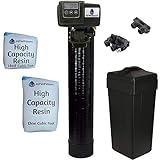
AFWFilters Fleck 5600SXT 48K
- Fleck 5600SXT digital valve
- 48000 grains
- Bypass and yoke included
- 5-year warranty
The 10 Best Water Softeners for Hard Water at a Glance in 2026
Every system below softens water by ion exchange. The differences that actually matter are grain capacity, whether iron is handled in the same tank, how much flow the valve supports during peak household demand, and whether the unit is plumbed into a home or carried around in an RV. Use the hardness bands underneath to match your reading to a capacity before you narrow the list further.
| Product | Specs | Action |
|---|---|---|
| Aquasure Harmony 48,000 Grain |
|
Check Latest Price |
| AFWFilters Fleck 5600SXT 48,000 |
|
Check Latest Price |
 AFWFilters Iron Pro 2 64,000 AFWFilters Iron Pro 2 64,000 |
|
Check Latest Price |
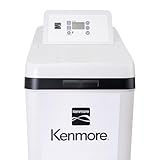 Kenmore 350 32,000 Grain Kenmore 350 32,000 Grain |
|
Check Latest Price |
| DuraWater Fleck 5600 SXT 48,000 |
|
Check Latest Price |
 Tier1 48,000 Grain System Tier1 48,000 Grain System |
|
Check Latest Price |
| DuraWater Fleck 5600 SXT 64,000 |
|
Check Latest Price |
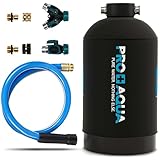 PRO+AQUA 16,000 Portable PRO+AQUA 16,000 Portable |
|
Check Latest Price |
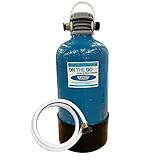 On The Go Double 16,000 Portable On The Go Double 16,000 Portable |
|
Check Latest Price |
 NPGLOBAL RV 16,000 Portable NPGLOBAL RV 16,000 Portable |
|
Check Latest Price |
Hardness bands at a glance
0 to 3 GPG (0 to 50 ppm): soft. No softener needed for most homes.
3 to 7 GPG (50 to 120 ppm): moderately hard. A 24,000 to 32,000-grain system covers a household of two or three.
7 to 10 GPG (120 to 170 ppm): hard. This is where most whole-home buying happens, and 48,000 grains is the usual starting point.
10 GPG and above (170 ppm and above): very hard. Move to 64,000 grains or more, and check that your valve can carry your peak flow.
1. Aquasure Harmony 48,000 Grain Whole House Water Softener – Best Overall for Hard Water
Aquasure Harmony Series 48,000 Grains Whole House Water Softener w/High Efficiency Digital Metered Control Head (48,000 Grains)
48000-grain capacity
12 gpm max flow
Ion exchange
Digital metered head
120 lb
Pros
- Largest review history in the group at 3199 ratings
- Triple sediment carbon and zinc prefilter
- Digital metered head regenerates on measured usage
- Five year manufacturer warranty with lifetime US tech support
- Fiberglass lined tank arrives with premium resin loaded
Cons
- Fiberglass tank is heavy to move into position
- Some owners need extra fittings beyond what is included
- Instructions can be unclear for first time installers
This is the unit we kept coming back to while working through this list, for one reason above the others: it has more owners reporting on it than anything else here. That volume of long-term feedback is worth a lot, because softeners fail slowly rather than loudly, and a system with three thousand owners has three thousand chances to have its weaknesses described honestly.
The Harmony sits at 48,000 grains of capacity with a digital metered control head and a stated maximum flow of 12 gpm. That flow figure matters more than most buyers realize. If you have three or four people and anything that resembles a busy morning, you want a valve that can push a shower, a dishwasher and a laundry cycle without starving the rest of the house.
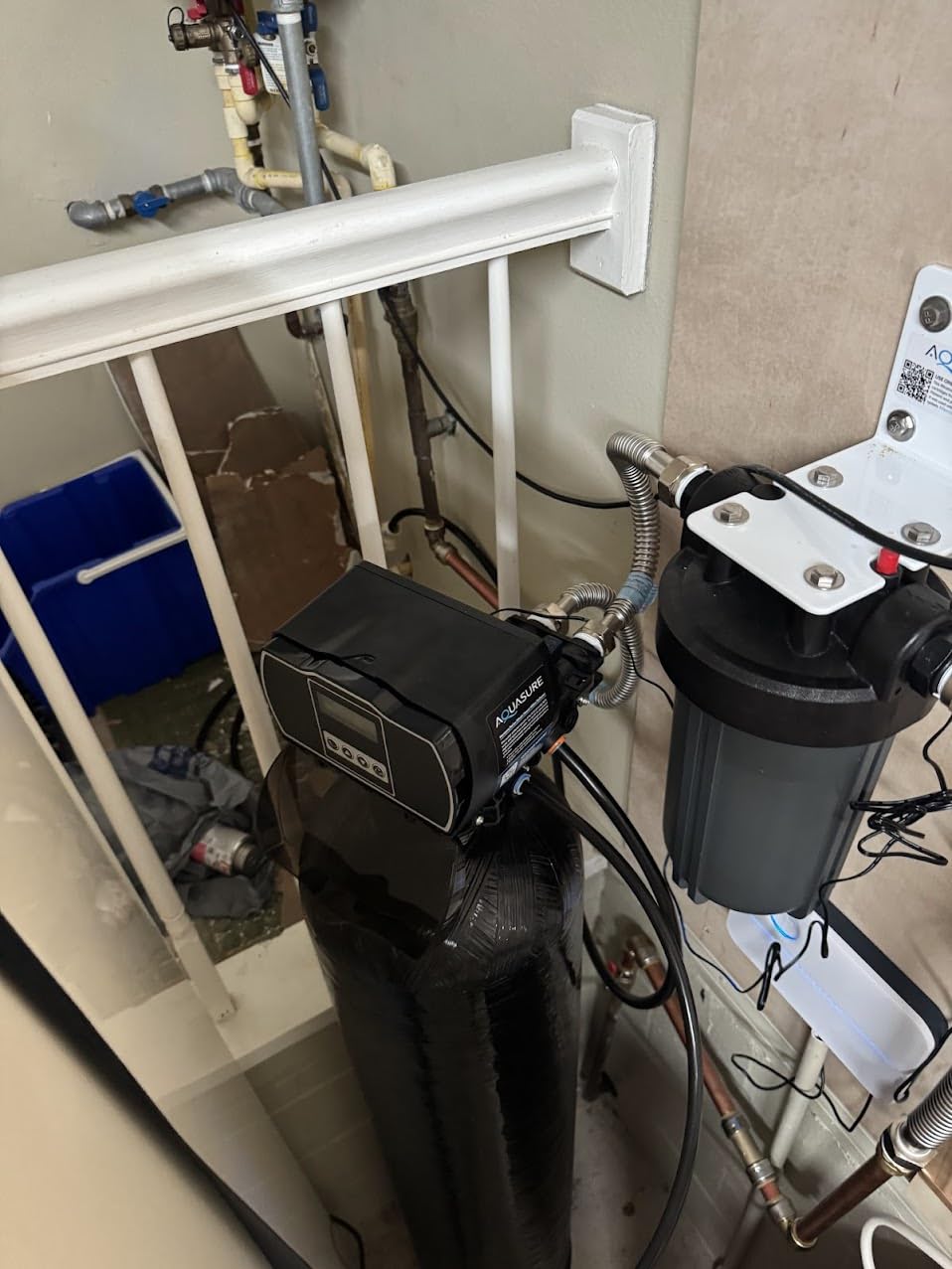
The triple-purpose prefilter is the feature we did not expect to care about and ended up liking most. It strips sediment, chlorine and VOCs ahead of the resin, which protects the resin bed from the fouling that shortens the life of cheaper media. Owners consistently report the same results in the first month: less scale in the kettle, spot-free dishes, and skin that feels different after a few showers.
Weighing 120 pounds, the fiberglass-lined polyethylene tank is not a one-person lift. That is the honest drawback, along with the reports of owners who finished the job and then needed fittings nobody listed. If you are installing solo, budget for help with the tank itself.
Why we picked it for very hard water households
At 48,000 grains, this is the size that handles the 7 to 10 GPG band comfortably in a three or four person home, and it has enough headroom to stretch into the low teens if your usage is moderate. The metered head regenerates against actual gallons used, so a household that goes away for a week does not burn salt or water regenerating an empty house.
The five-year manufacturer warranty and lifetime technical support are the parts that matter three years in, when a valve hiccups or a brine float fails. For anyone who does not want to relearn plumbing to fix a minor problem, that support line is worth more than another few hundred grains of capacity.
Where it falls short
The prefilter is a consumable that eventually needs replacing, and the 120-pound tank is genuinely awkward in a finished basement with a low ceiling. Owners also report that the written instructions assume some familiarity with plumbing fittings, so a first-timer should budget time with a video rather than the manual.
If you are on a well with measurable iron, this unit is not the right tool. It softens water, but it does not treat iron, and iron fouling on the resin will quietly undo the softening. For that situation, look at the combination unit in section 3.
2. AFWFilters Built Fleck 48,000 Water Softener with 5600SXT Digital Metered Valve – Best Pro-Grade Control Valve
AFWFilters Built Fleck 48,000 Water Softener System with 5600sxt Digital metered Valve 1″ Yoke
48000-grain capacity
Fleck 5600SXT valve
10 by 54 inch mineral tank
5-year warranty
Ion exchange
Pros
- Fleck 5600SXT is the most widely recognized pro grade control head
- Factory loaded resin tank cuts install time
- Metal upgraded bypass valve and prefilled brine tank with safety float
- Owners report immediate improvement in hardness and laundry
- Made in the USA
Cons
- 1 inch female threaded yoke forces 34 inch adapters that are not included
- Paper instructions are thin so most owners rely on videos
- Large footprint compared with big box units
If you have ever read a water treatment forum, one thing becomes obvious fast: experienced buyers argue about the control valve, not the tank. The Fleck 5600SXT is the valve that comes up repeatedly, and this system ships with it. That is the reason to buy this one over a cheaper unit with a generic metered head.
The valve is fully programmable and digital, regenerating on demand based on metered flow rather than a fixed schedule. It also handles a wide range of programmable options for backwash, brine draw and refill, which matters if you are on water harder than you think or if your usage pattern is unusual.
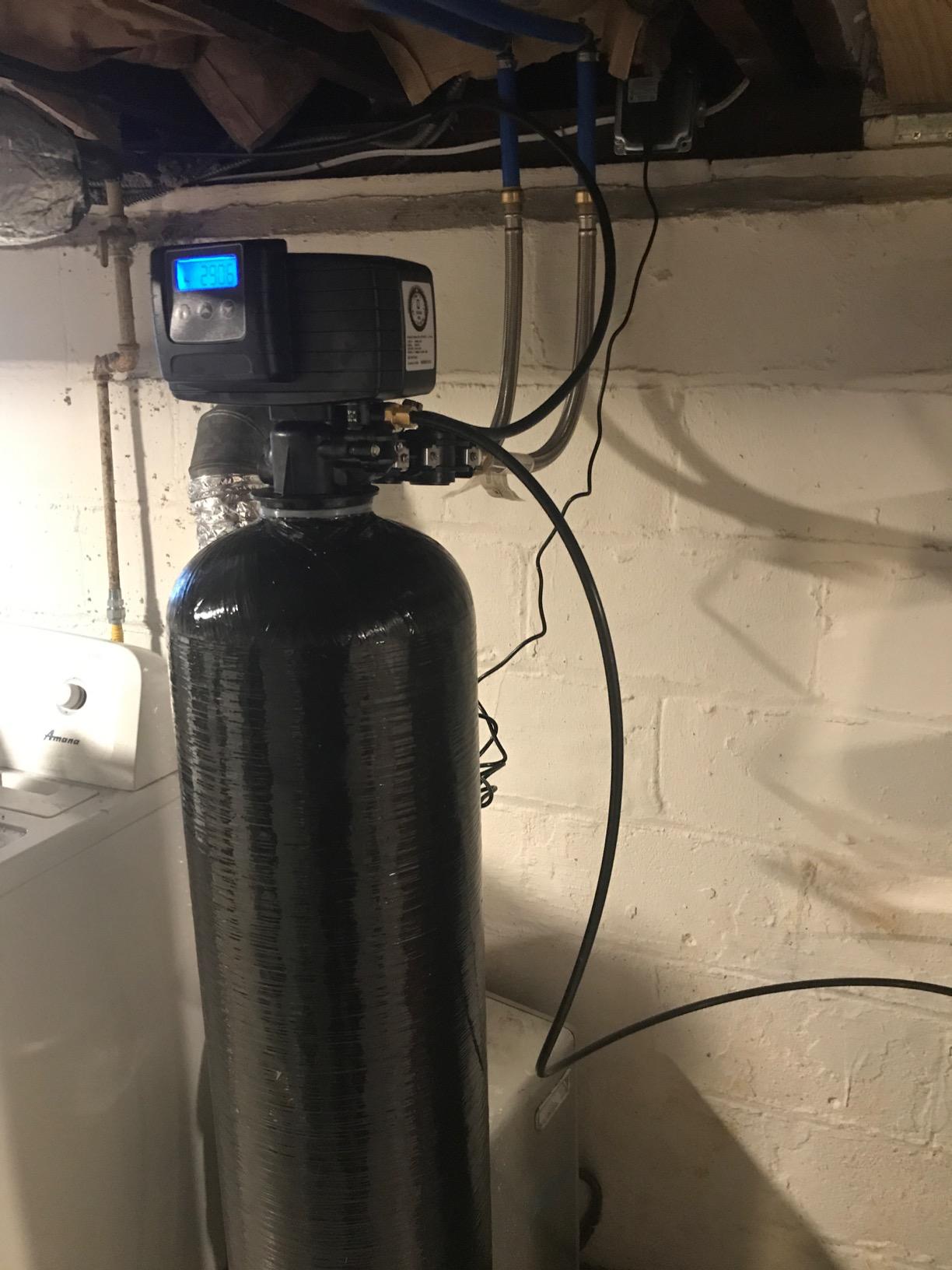
The system arrives with the resin already in the mineral tank and the brine tank prefilled with a safety float, which removes the two longest steps of a weekend install. Owners report seeing the effect on hardness within days, and the 4.5-star average across 928 reviews reflects a hardware package that largely works as advertised.
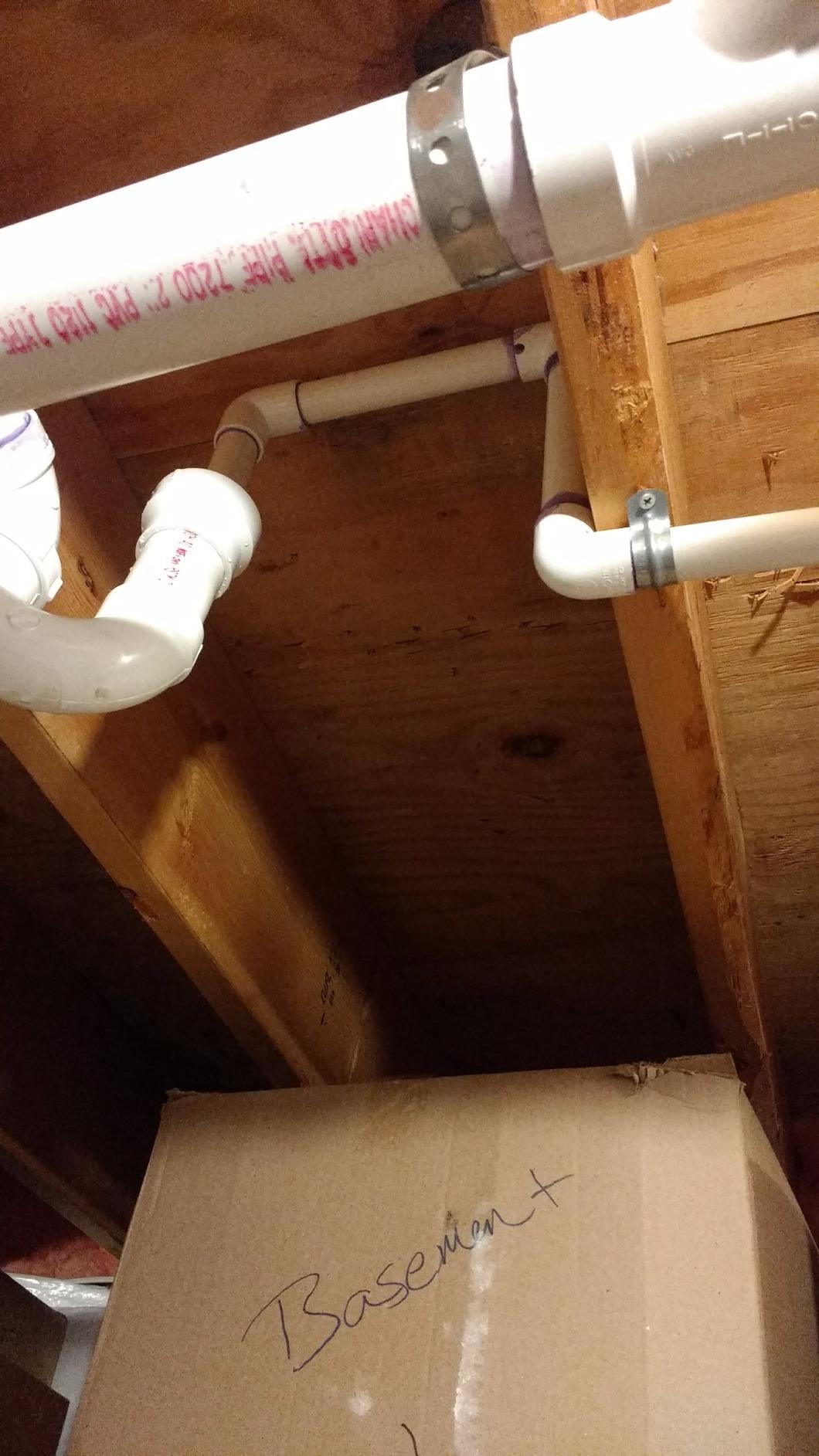
Two installation details catch people out. The 1 inch female-threaded yoke means you will need 3/4 inch adapters, and those adapters are not in the box. And the printed documentation is thin, so most owners end up learning the programming sequence from a vendor video or a call.
What makes the Fleck valve worth the premium
Valve internals are consumable in a way tanks are not. Diaphragms, seals, pistons and circuit boards all age, and what determines whether a five-year repair is a fifteen-dollar part or a whole new head is the engineering behind it. Fleck has built that name over decades of parts availability, and r/WaterTreatment threads reflect that reputation consistently.
The practical payoff for a hard-water household is salt efficiency. A properly programmed metered valve regenerates only when the resin is actually spent, which cuts both the salt bill and the wastewater going down the drain. On very hard water that difference compounds over years.
Where it falls short
There are reports of control valve and motherboard failures that required contacting the manufacturer, and the repair path costs time you did not plan on. The footprint is also larger than big-box units, which matters in a utility room already stacked with a water heater.
For well water with iron, or for households above 10 GPG who want more headroom, this capacity stops short. Section 3 and section 7 cover both cases.
3. AFWFilters Iron Pro 2 Combination 64,000 Grain Softener and Iron Filter – Best for Well Water
AFWFilters Iron Pro 2 Combination Water Softener Iron Filter Fleck 5600SXT Digital Metered Valve 64,000 Grain – High Flow for Whole House Use – Removes Hardness, Iron, Manganese, Sediment, Rust
64000-grain capacity
Handles iron to 6 ppm
Fleck 5600SXT valve
5-year warranty
119 lb
Pros
- Softener and iron filter combined in one unit
- Handles iron to 6 ppm and manganese to 6 ppm
- Well owners report clear odor free water within days
- Cleared persistent rust staining on toilets and fixtures
- Consumes less salt and less space than the two units it replaces
Cons
- Printed instructions are incomplete for valve setup
- Resin preloaded tank is extremely heavy and needs a dolly
- City water buyers may find the iron stage unnecessary
Well water is the case where buying two separate systems quietly doubles your cost and your floor space. This one pairs a 64,000-grain softener with an iron filtration stage in a single tank, and the reviews make clear why that matters: owners with both hard water and iron report the whole problem disappearing in one installation.
The removal specification is iron up to 6 ppm and manganese up to 6 ppm, plus rust and sediment. That covers the range where well water stops being a nuisance and starts staining fixtures orange. Buyers report toilets and sinks staying clean after months, which is the test that matters.
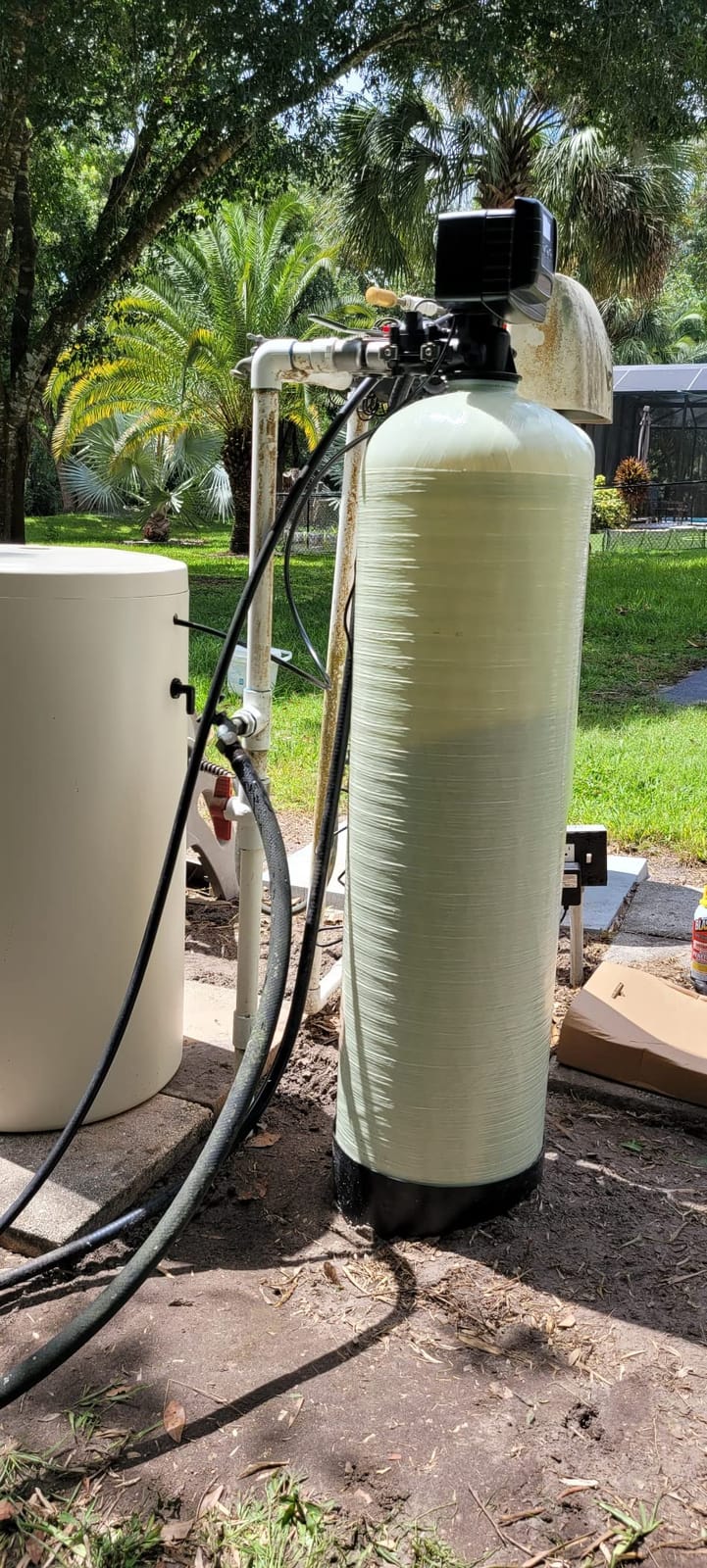
It runs on the same Fleck 5600SXT digital metered valve as section 2, so the programming logic will feel familiar if you have owned one before. The five-year warranty covers the valve, and the high-flow design is sized for whole-house duty rather than a single fixture.
One thing worth understanding is how this unit behaves on municipal water with no iron in it. The extra stage does nothing for you, and you have paid for capacity and weight you do not need. Several buyers in the reviews make exactly that observation after installation.
Why well owners keep recommending it
Well water has no treatment plant upstream, so hardness, iron and sediment arrive together and interact. Iron binds to resin and gradually blocks the exchange sites, which is why softening well water with a softener-only unit leads to disappointing results after a year. Combining the stages in one tank removes that failure mode by design.
Owners describe the first regeneration producing visibly clear, odor-free water, and rust stains that do not return. For households that have been chasing stains with descalers and bleach, that is the outcome they were missing.
Where it falls short
The resin-preloaded tank arrives at 119 pounds and genuinely needs a dolly and a second person. The documentation is also the weakest part of the package, with owners reporting incomplete instructions for the valve setup and brine connections.
On city water with hardness but no iron, buy a plain softener and spend the difference on capacity. This unit earns its place when iron is real, and it is wasted effort when it is not.
4. Kenmore 350 Whole House Water Softener 32,000 Grain – Best for Small Homes
Kenmore 350 Whole House Water Softener System, 32,000 Grain, 1-4 People
32000-grain capacity
7.2 gpm high flow
IntelliSoft control
20 to 125 psi
80 lb
Pros
- IntelliSoft control learns usage and regenerates only when needed
- Compact footprint for tight utility spaces
- High flow 34 inch valve maintains water pressure
- Built in sediment shield protects plumbing and appliances
- One year full warranty plus 10 years on the tank
Cons
- Smallest capacity here at 32000 grains
- 4.2 average rating reflects a higher share of one-star reviews
- Some owners need extra plumbing parts and adapters
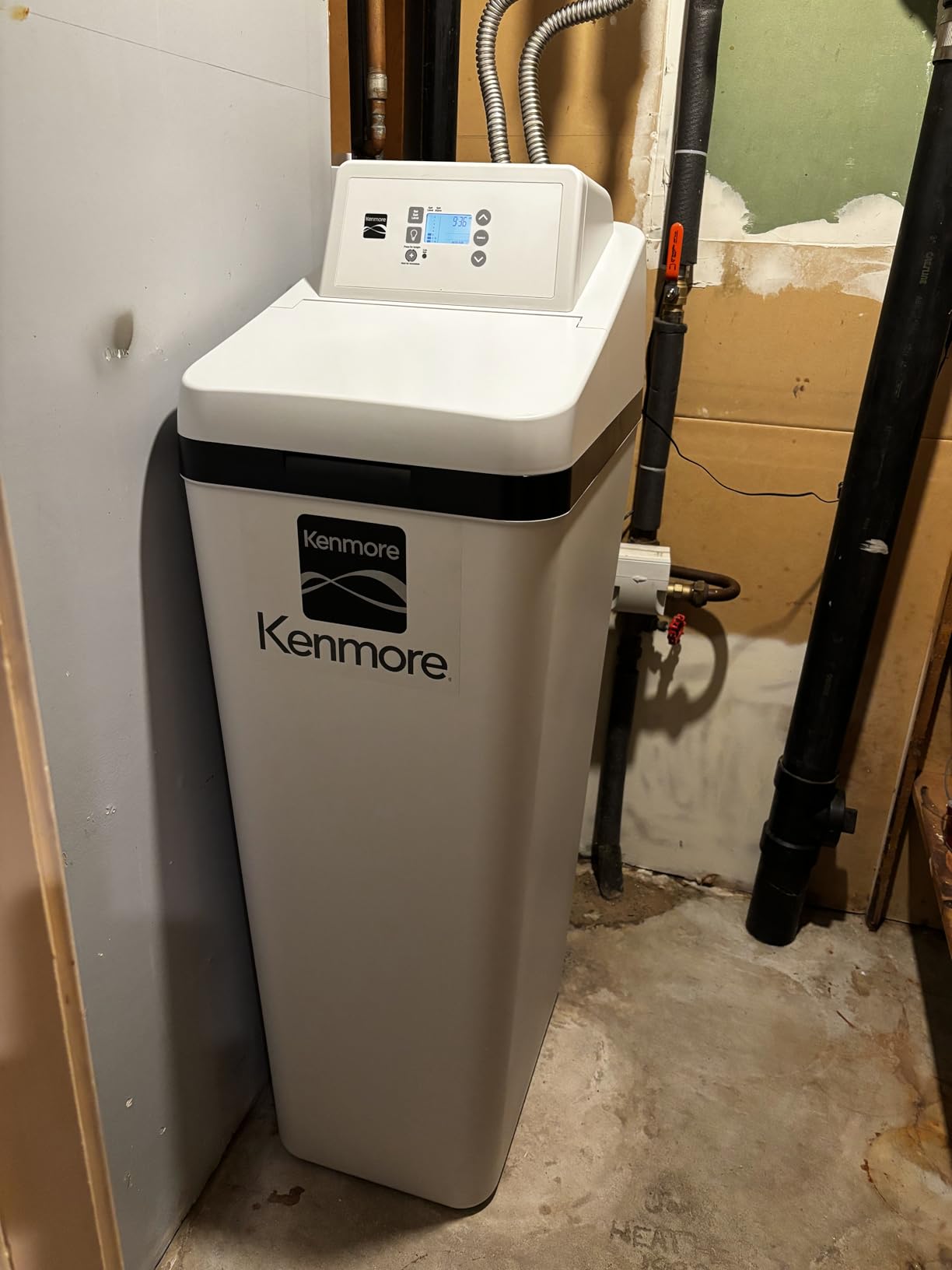
Not every household needs 48,000 grains. If it is two people, or a couple of empty nesters, this 32,000-grain unit does the same job in a smaller footprint, and the IntelliSoft control is the most interesting part of the package.
IntelliSoft is described as an artificial-intelligence regeneration control, which in practice means the valve learns your household’s usage pattern and schedules regeneration against measured demand rather than a guess. The practical result is fewer regenerations, less salt and less wastewater for a home that does not use much water.
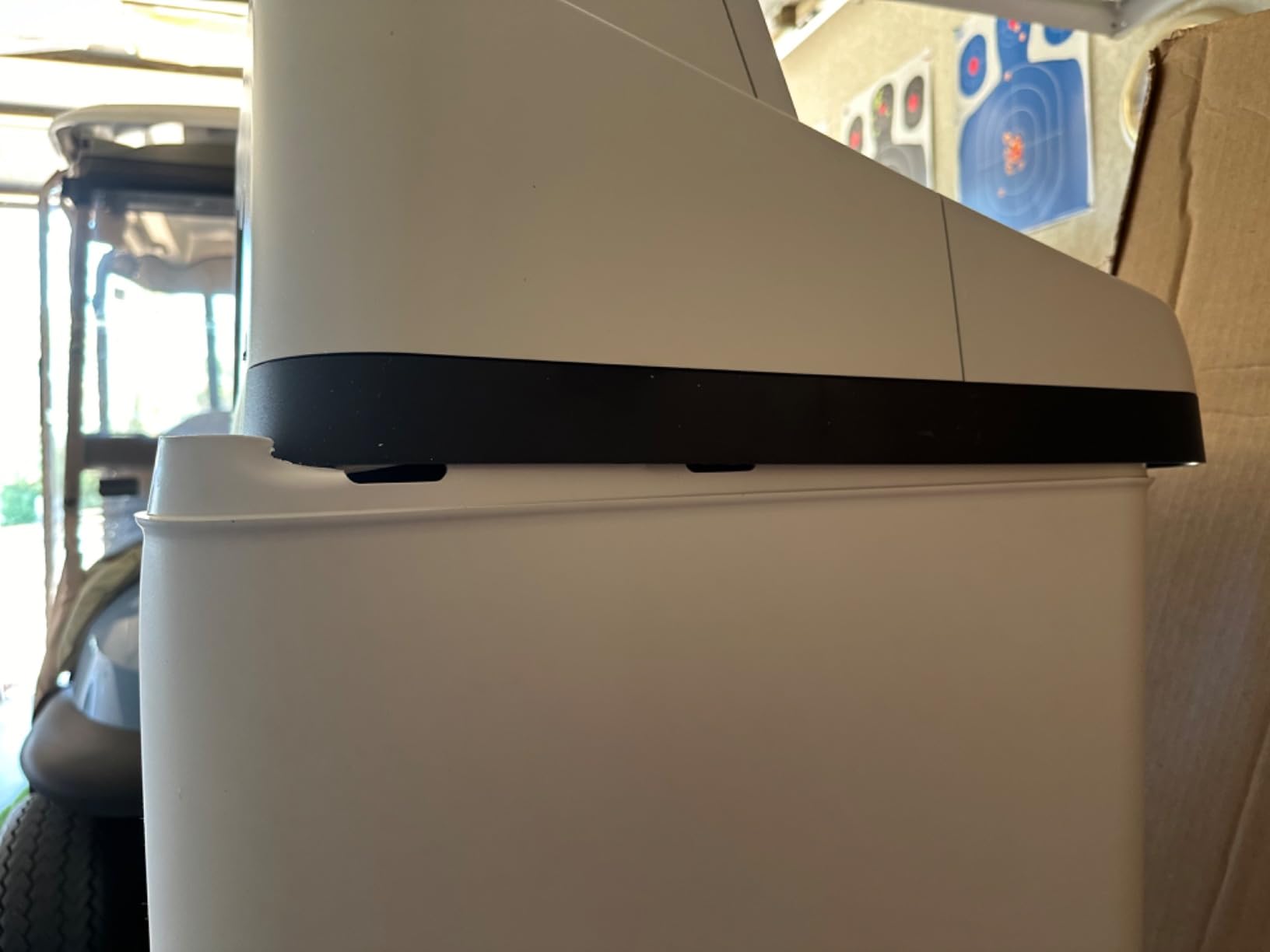
The valve is rated at 7.2 gpm through a 3/4 inch line, and the operating range of 20 to 125 psi covers most residential supplies comfortably. Rated TDS ceiling is 250 ppm, which is fine for hard municipal water but worth checking if you are on a well.
The warranty structure is unusually good on paper: one year full, three years on the control board, and ten years on the tank. At 80 pounds the tank is also the lightest whole-home unit in this group, which matters if you are working in a crawlspace-adjacent mechanical area.
When 32,000 grains is the right call
Use the sizing math rather than the marketing. A two-person household at 10 GPG consumes roughly 1,600 grains per day, so 32,000 grains is about 20 days of capacity between regenerations. That is a healthy margin, and it means the system will not be regenerating constantly in a home where nobody is home during the day.
The compact footprint is the underrated advantage here. Plenty of homeowners have a 30-inch-wide gap next to the water heater, and a unit that physically does not fit is the wrong unit no matter how well it performs.
Where it falls short
The 4.2-star average is the lowest among the plumbed units here, and it reflects a visible share of one-star reviews, mostly around installation fittings and capacity expectations. Owners also report needing extra adapters to complete hookup.
It is not the choice for very hard water or for a family of five or more. Push up to 48,000 grains in either case, or the system will simply run out of capacity between cycles.
5. DuraWater Fleck 5600 SXT 48,000 Grain – Best for First-Time Installers
DURAWATER Fleck 5600 SXT Whole House Water Softener, 48,000 Grains, Black
1.5 cu ft resin preloaded
48,000-grain capacity
Fleck 5600 SXT valve
14 by 36 inch brine tank
Pros
- Resin arrives preloaded in the mineral tank
- Proven Fleck 5600 SXT metered valve for on demand regeneration
- Complete system includes bypass yoke brine tank and safety float
- 1.5 cubic feet of high capacity resin for 48000 grains
- Quiet operation with low ongoing maintenance
Cons
- Brine tank and drain line fittings are not always included
- Fleck control interface takes some learning to program
- Salt and connection hoses must be sourced separately
The difference between this and section 2 is packaging discipline. Same Fleck 5600 SXT valve, same 48,000-grain class, but this one arrives with 1.5 cubic feet of high-capacity resin already loaded in the mineral tank, and the brine tank, bypass and yoke are all in the box.
Preloaded resin is the single biggest time saver in a first installation. Loading resin by hand into a tall tank is messy, unpleasant and easy to get wrong, and removing it is even worse if a tank ever needs service. Arriving filled turns a two-hour resin job into a ten-minute hose connection.
Owners report soft water within a couple of days of starting, and the 4.5-star average across 369 reviews reflects a system that mostly just works once it is connected. The 14 by 36 inch brine tank includes a safety float that shuts off incoming water if the tank ever overflows.
Check the box contents before you plan your install day. Some owners report the brine tank drain fittings and the salt and connection hoses not being included, which is a hardware-store run rather than a deal breaker, but it is better known in advance.
What a first-timer should look for
Start with the control valve, because that part ages and that part decides whether repairs are cheap. The Fleck 5600 SXT appears again and again in experienced-owner recommendations on water treatment forums, and having it already assembled removes the temptation to compromise on the most important component.
Next, look for metered rather than timer regeneration. A timer regenerates on a schedule whether the resin needs it or not, and on hard water that means unnecessary salt and unnecessary water discharged to the drain. Metered units pay for themselves in running cost alone.
Where it falls short
The Fleck programming interface is not intuitive. The logic is sound but the button sequence takes an evening to learn, and first-time owners report that as the main frustration. Several reviews describe the learning curve plainly.
If you are confident with plumbing, this is an easy install. If you are not, the quality of your system still depends more on the install than the brand, so budget for help with the connections.
6. Tier1 48,000 Grain Water Softener System – Most Versatile for 4 to 5 Bathroom Homes
Tier1 48,000 Grain Water Softener System for 4-5 Bathroom Homes
48000-grain capacity
18 gpm max flow
Ceramic disc valve
1.5 cu ft resin
120 lb
Pros
- Lowest cost in the 48000-grain whole home category
- Patented ceramic disc valve avoids seals and rebuild kits
- Quiet operation with a slim footprint
- 1.5 cu ft of NSF ANSI 44 certified preloaded resin
- Responsive phone technical support that fixes setup problems
Cons
- Some owners report a fixed 30 day regeneration schedule
- Higher share of one star reviews than Fleck based units
- Not rated for outdoor installation and this is not clearly disclosed
This is the value entry into the 48,000-grain class, and the spec sheet is more competitive than the price suggests. At 18 gpm, its maximum flow is the strongest in this roundup, which means it is the least likely of any unit here to starve a busy household during peak demand.
The patented ceramic disc valve is the real differentiator. Instead of rubber seals and a piston assembly that wears and needs rebuild kits, the valve uses a ceramic disc mechanism with a longer expected service life and no seals to replace. That is a meaningful difference over a ten-year ownership.
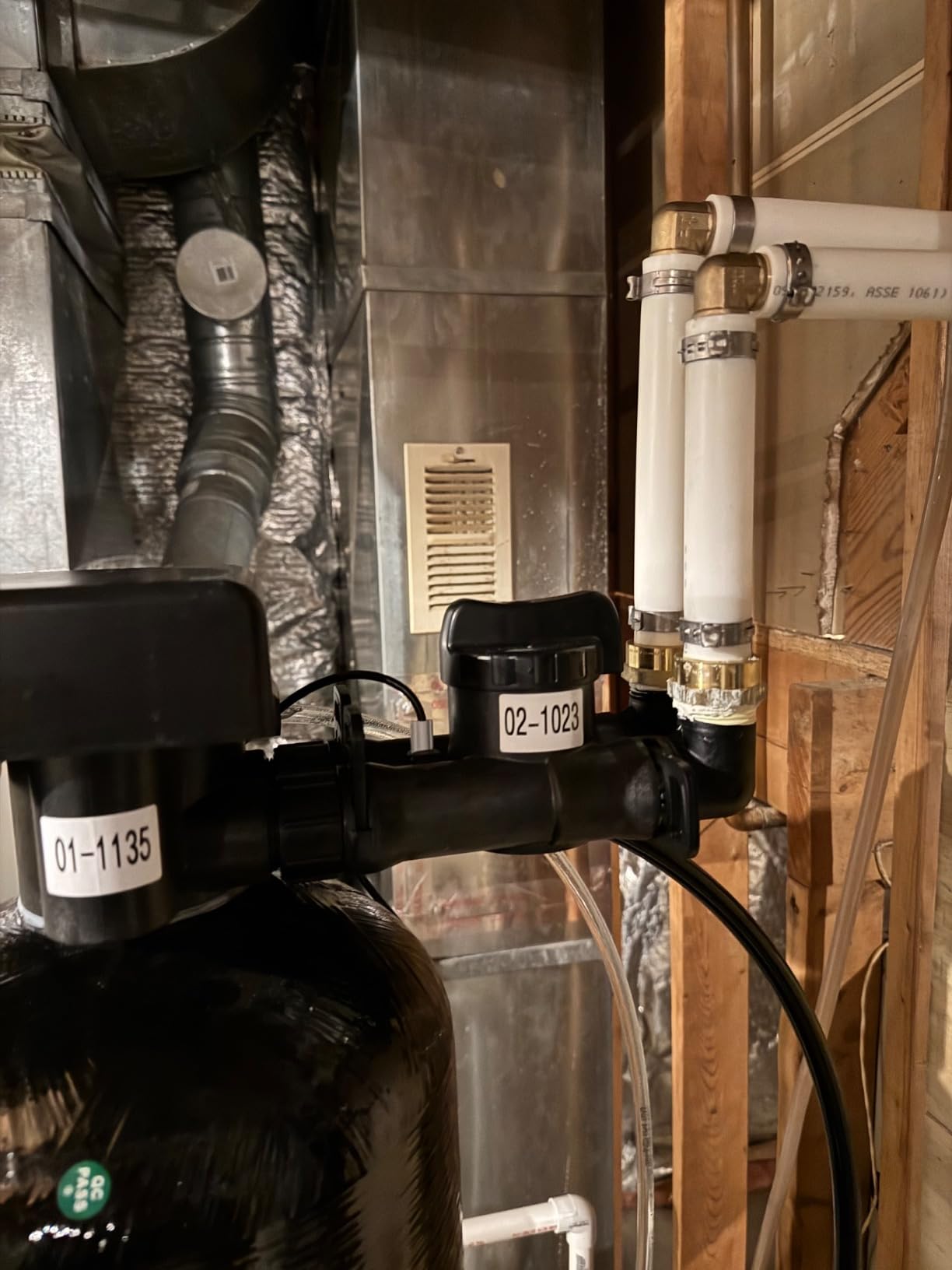
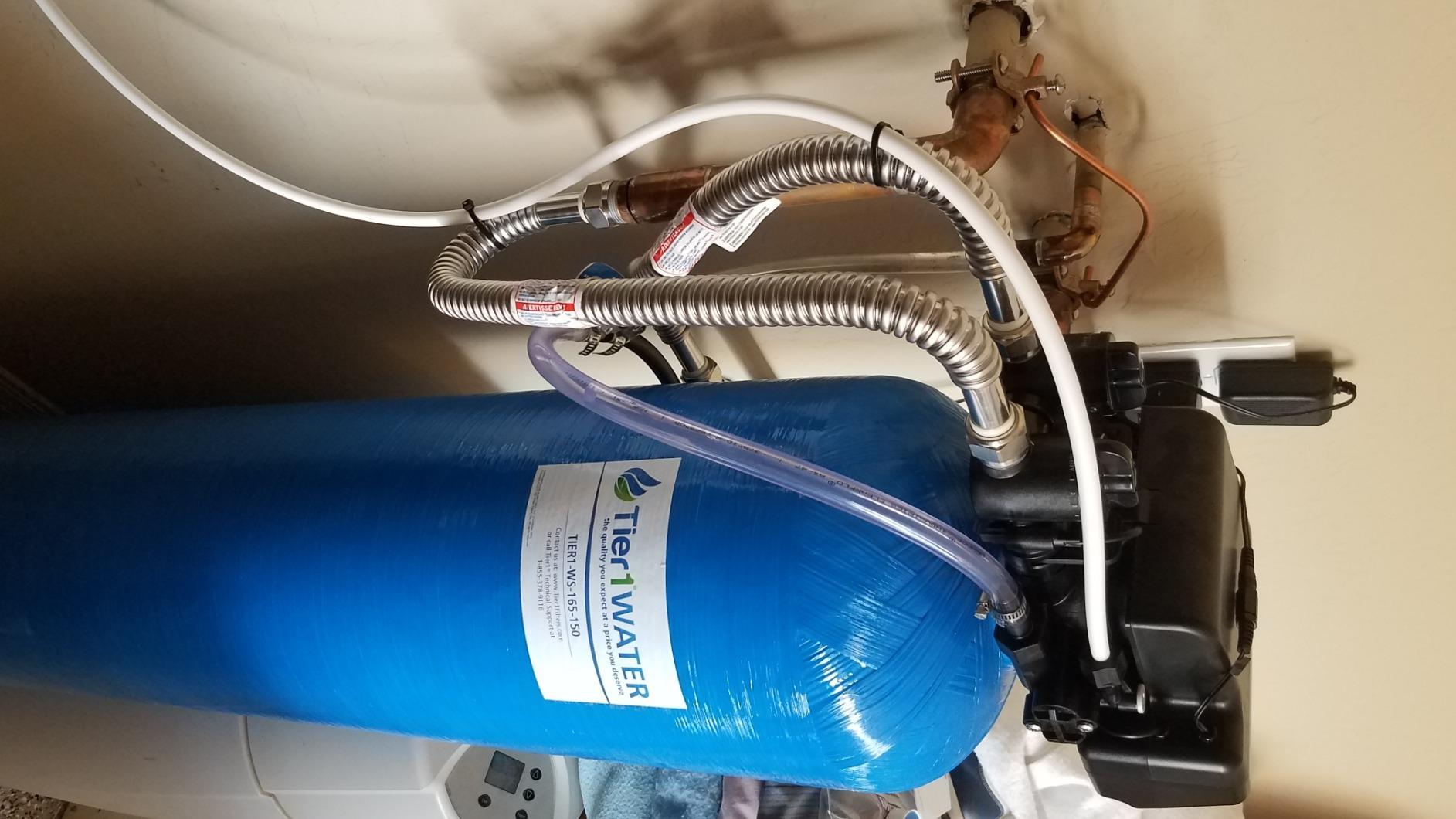
The resin is 1.5 cubic feet of NSF/ANSI 44 certified cation material, preloaded, in a 10 by 59 inch mineral tank with a 13.5 by 32 inch salt tank. The ten-year limited warranty on the tank is the longest stated tank coverage among the plumbed units here.
Where owners diverge is regeneration behavior. A number of reviews report a fixed 30-day schedule rather than true on-demand use, and that single complaint accounts for a meaningful share of the one-star reviews behind the 4.2 average. If your water is extremely hard, verify the behavior before you commit.
What the highest flow rating actually buys you
Flow rating describes how much water the valve can push while the resin is in service, before the pressure drops enough that you notice it. A 4 to 5 bathroom home running multiple showers, a dishwasher and a washer at once generates a demand that a smaller valve cannot fully cover.
At 18 gpm this unit has real headroom for that pattern. The 20 to 87 psi operating range is narrower than some competitors, so homes with low static pressure should measure before committing.
Where it falls short
The unit is not rated for outdoor installation, and owners point out this is not clearly disclosed before purchase. In a warm climate, an outdoor equipment pad is a common install location, so this matters more than it sounds.
The prefilter is also a weak point, with reports of leaking and replacement. And if you are planning to keep this system for a decade, the control valve is the part with the shorter expected life, and replacement parts for a lesser-known valve brand are harder to source than Fleck equivalents.
7. DuraWater Fleck 5600 SXT 64,000 Grain with 10 Percent Cross-Linked Resin – Best for Very Hard Water
DuraWater Fleck 5600 SXT Metered 64,000 Grain Water Softener, 10% resin
64000-grain capacity
2.0 cu ft resin
10 percent cross-linked
Fleck 5600 SXT valve
Salt efficient
Pros
- Largest capacity here at 64000 grains with 2.0 cu ft of resin
- 10 percent cross-linked commercial grade resin resists chlorinated water
- Owners report using roughly a third of an older comparable unit
- No noticeable water pressure drop after installation
- Written and video support for installation and programming
Cons
- Tank arrives only partially loaded so resin handling is on the buyer
- Brine tank feels thin and inexpensive
- Fleck control interface is clunky and takes time to learn
If your test strip reads 10 GPG or higher, this is the unit to look at first. At 64,000 grains with 2.0 cubic feet of resin, it is the largest system in this roundup and the one designed for the hardest water most US households will encounter.
The resin specification is the detail that matters at this hardness. It is 10 percent cross-linked commercial-grade cation resin, which holds its structural integrity better in chlorinated municipal water than standard resin. Chlorine gradually breaks down conventional resin beads, and that degradation is faster and more costly when you are regenerating a 2 cubic foot bed on a schedule.
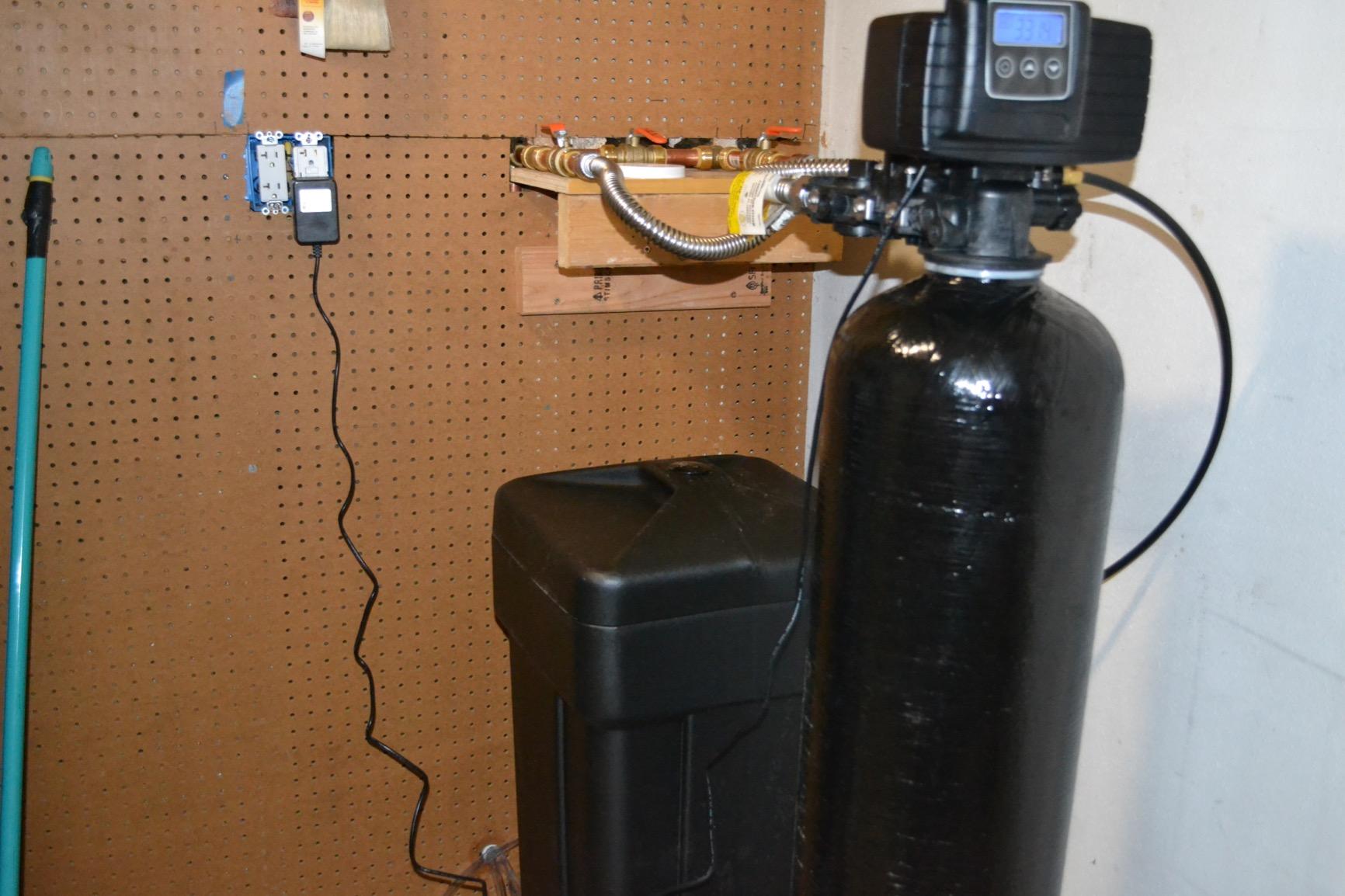
Owners with very hard water report low salt consumption, in one review roughly a third of what an older comparable unit used, and no noticeable pressure drop after installation. The latter point matters at high capacity, since some large systems can choke flow during regeneration.
The trade-off is that the tank arrives partially loaded, so resin handling becomes your job. That is a genuine step backward versus the preloaded systems in sections 2 and 5, and it is the reason this unit does not rank higher despite its capacity advantage.
How much capacity very hard water really needs
Run the numbers before you commit. A family of four at 12 GPG burns roughly 3,840 grains of capacity per day. Against 64,000 grains that is about 16 days between regenerations, which is a healthy margin and gives you room for guests and heavier use.
Very hard water also increases salt use, because each regeneration has to fully re-charge more resin. That is where the metered valve and cross-linked resin pay back. Owners on very hard water report the salt savings directly in their reviews.
Where it falls short
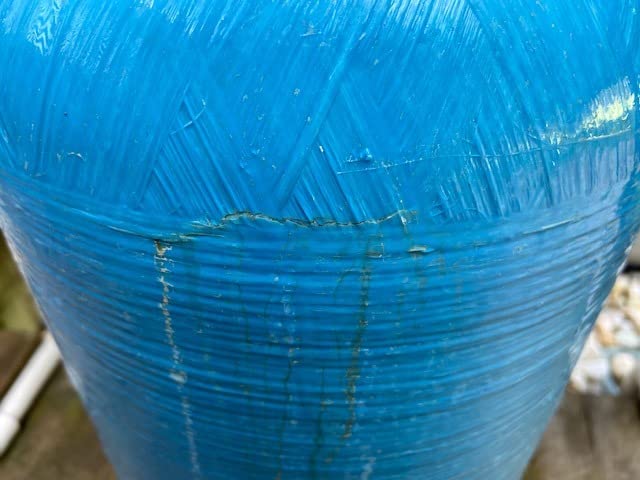
Handling loose resin is unpleasant work, and partly loaded tanks mean an uneven bed unless you are careful, which can cause channeling later. The brine tank is also reported as feeling inexpensive, and one owner reported a cracked tank under two years with a costly replacement quote.
If your hardness is under 8 GPG, this much capacity is money spent on headroom you will not use. Section 1 or section 2 covers that range properly.
8. PRO+AQUA 16,000 Grain Portable Water Softener – Best for Boats, Spas and Car Washing
PRO+AQUA 16,000 Grain Portable Water Softener for RV, Trailers, Boats, Mobile Car Wash, Pressure Wash – Protects Water Systems
16000-grain capacity
2000 gallons
34 inch high flow ports
No electricity
2-year warranty
Pros
- Comes fully assembled and hooks up in about five minutes
- Works on both city and well water
- 16000 grains covers up to 2000 gallons or about 60 days
- Prefilled NSF certified food grade resin
- Light at 35 pounds with a 2-year warranty
Cons
- Regeneration is manual and takes up to 30 minutes with table salt
- Softened water needs time to flush through RV plumbing first
- Throughput is far below a plumbed whole home unit
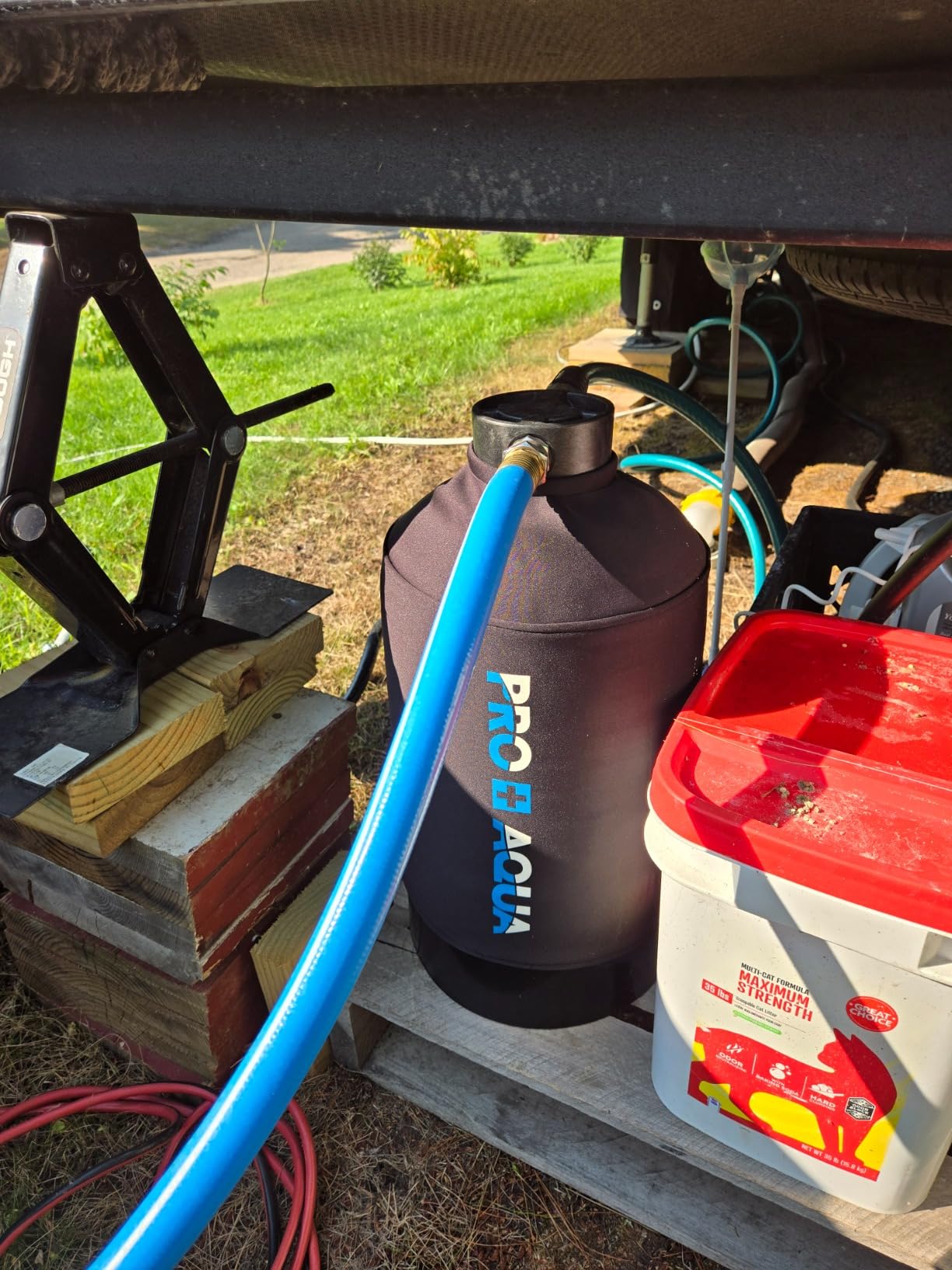
The portable category solves a problem whole-home units cannot: protecting an RV, a boat, a mobile car wash setup or a pressure washer without cutting into any plumbing. This one comes fully assembled, needs no electricity and no tools, and hooks up with 3/4 inch garden-hose ports.
It is also the most-reviewed of the three portable units here, with 1,258 ratings averaging 4.4 stars. Owners consistently report the same thing: five-minute setup and measurable hardness reduction, which is exactly what you need when the system lives in a storage bay rather than a utility room.
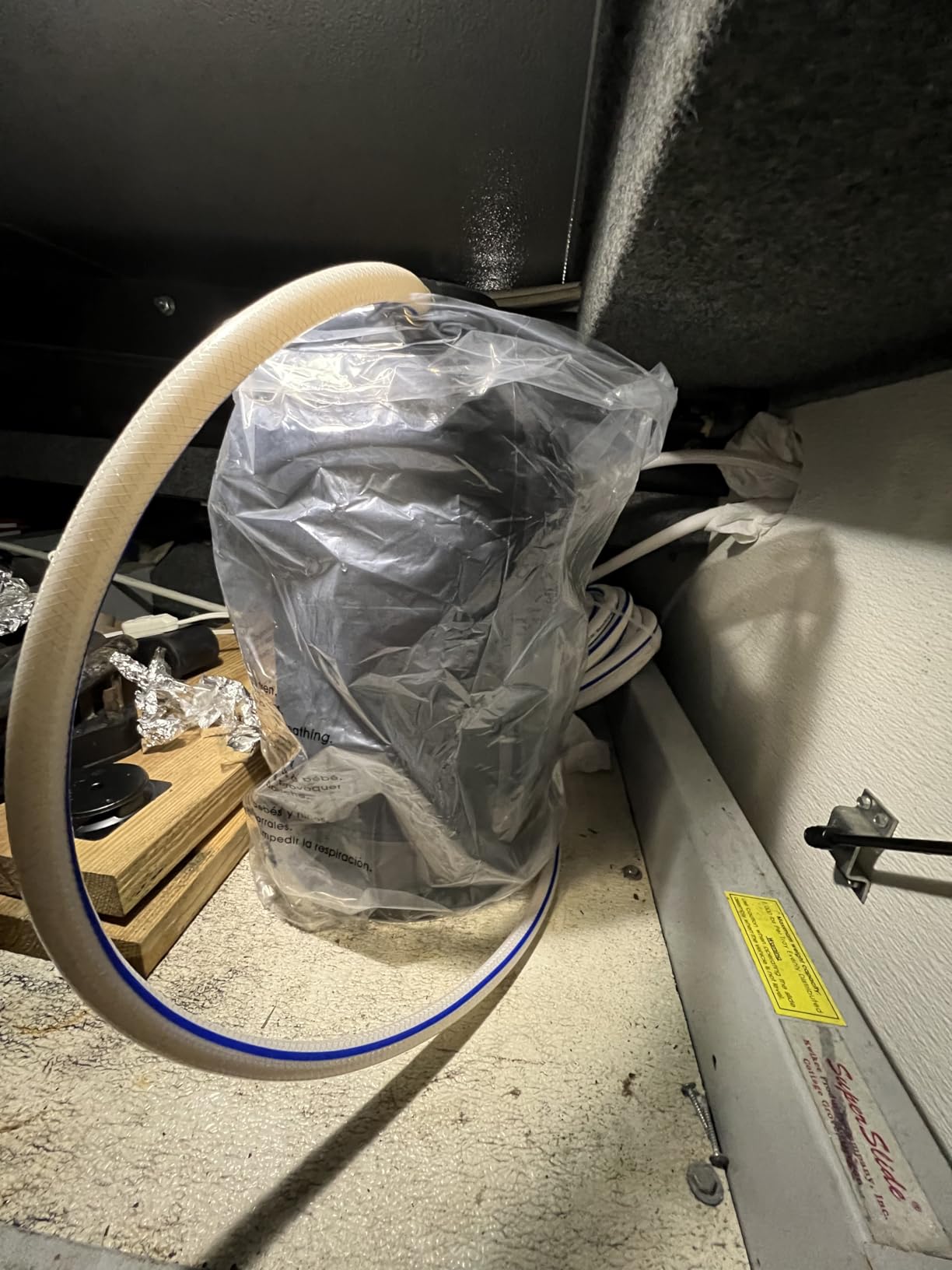
The pre-filled resin is NSF-certified food-grade and the listing claims it reduces calcium, magnesium, iron, lead and radium. At 16,000 grains the capacity covers up to 2,000 gallons, roughly 60 days of typical RV use, and regeneration with two boxes of table salt takes under 30 minutes.
The tank is polyethylene reinforced with fiberglass and weighs 35 pounds, which is genuinely portable. The trade-off is throughput. This is a point-of-use system, and no amount of capacity turns it into something that can serve a whole house.
Who this portable tier is genuinely right for
If you fill a boat trailer, run a mobile car wash business, or want soft water for a pressure washer, this solves a real problem at a fraction of the cost of a plumbed system. RV owners who travel through very hard water regions get the clearest benefit, because the same hardness that builds scale in a hose and a water heater will build it in your plumbing.
It also suits anyone who cannot or will not cut into a supply line. Renters fall into this group, as do people in older homes where the plumbing layout is uncertain and a mistake would be expensive.
Where it falls short
Regeneration is manual and takes up to 30 minutes, during which you have no soft water. That is manageable in an RV and unacceptable in a house, which is why portable units belong in their own category rather than competing with whole-home systems.
Freshly regenerated water also needs to flush through the downstream plumbing before you use it, which catches out first-time owners every time. Plan a short delay after regeneration.
9. On The Go OTG4 Double Standard 16,000 Grain Portable Softener – Top Rated for RV Drinking Water
On The Go OTG4-VM-DBLSOFT Portable Compact Double Standard 16,000 Grain Water Softener with Drinking Water Safe Brass Fittings (NOT made in China, assembled by U.S. Workers in Indiana
Double standard 16000-grain capacity
Brass drinking water fittings
10 by 10 by 24 inch
33.7 lb
Pros
- Highest rated option in the portable group at 4.6 across 658 reviews
- Double standard capacity in a compact 10 by 10 by 24 inch footprint
- Drinking water safe brass fittings rather than plastic
- Assembled in the USA by US workers
- Quick hose hookup for RV trailer and boat use
Cons
- Explicitly not for household showers or under sink installation
- Regeneration is manual and takes the unit out of service
- Portable throughput is far below a plumbed whole home system
This is the one to buy if your softened water is going into a drinking glass. The fittings are brass rather than plastic, which matters for anyone who is cautious about long-term contact between drinking water and certain plastics, and the rating across 658 reviews is the strongest in the portable group.
The double-standard configuration gives you more capacity than a single 16,000-grain portable unit inside a footprint of 10 by 10 by 24 inches. That is a real gain in an RV bay or a truck bed, where every vertical inch counts.

Owners highlight the same three things: the capacity in a small box, the brass fittings, and how quickly it hooks up to an RV or boat. It is assembled by US workers in Indiana, which is not a performance specification but tells you something about replacement part supply when you are three states from home.
The manufacturer states plainly that it is designed for RV use and is not intended for apartment, condo or whole-house showers, and it will not fit under a kitchen sink. That candour is welcome, and it is worth reading before you buy expecting something it is not.
What brass fittings change in practice
Brass resists the corrosion and temperature swings that degrade plastic fittings over repeated hookups, and it tolerates higher water temperature, which matters when you are softening water that has been sitting in a tank in the sun. For a system used on drinking water rather than just rinsing, that is the deciding specification.
The compact footprint also determines whether you will actually keep using it. A portable softener that will not fit in your storage bay gets left in a garage, and a softener that gets left gets run past capacity without regenerating.
Where it falls short
Manual regeneration means planning around it, and the throughput ceiling is the same one every portable unit shares. It is not a shower, a dishwasher or a laundry system, and treating it as one would be a mistake.
For a house, this is the wrong product entirely. Section 1 through section 7 cover plumbed systems, and section 10 is the budget portable option.
10. NPGLOBAL RV Water Softener 16,000 Grain – Budget Pick Portable Value
NPGLOBAL RV Water Softener Portable – 16,000 Grain, 3/4″ GHT Fittings, Convenient Water Softener for RVs, Trailers, Boats, Mobile Car Washing, Pressure Washing
16000-grain capacity
34 inch GHT fittings
NSF certified resin
14.02 kg
Limited lifetime warranty
Pros
- Lowest cost in the roundup with a 4.6 star average
- Quick connect hose hookup with everything needed included
- Reviewers testing very hard well water saw hardness drop to about 50 ppm
- A single user ran nearly three months before first regeneration
- Limited lifetime warranty with responsive replacement part service
Cons
- Included hose is a low quality generic model
- Brass lid fittings thread into plastic and may need tape tightened
- Included quick release valves lack O rings so some owners upgrade
The highest-rated portable option here at 4.6 stars across 759 reviews, and the one with the most surprising owner result in the group. Reviewers running very hard well water through it reported hardness dropping from 500 to 1000 ppm down to about 50 ppm.
That number is worth pausing on, because it is a measured result rather than a claim. It also tells you something about the failure mode: at extreme hardness, capacity lasts about 275 gallons per regeneration, so you get very hard water turned into moderately hard water quickly and then have to regenerate again.
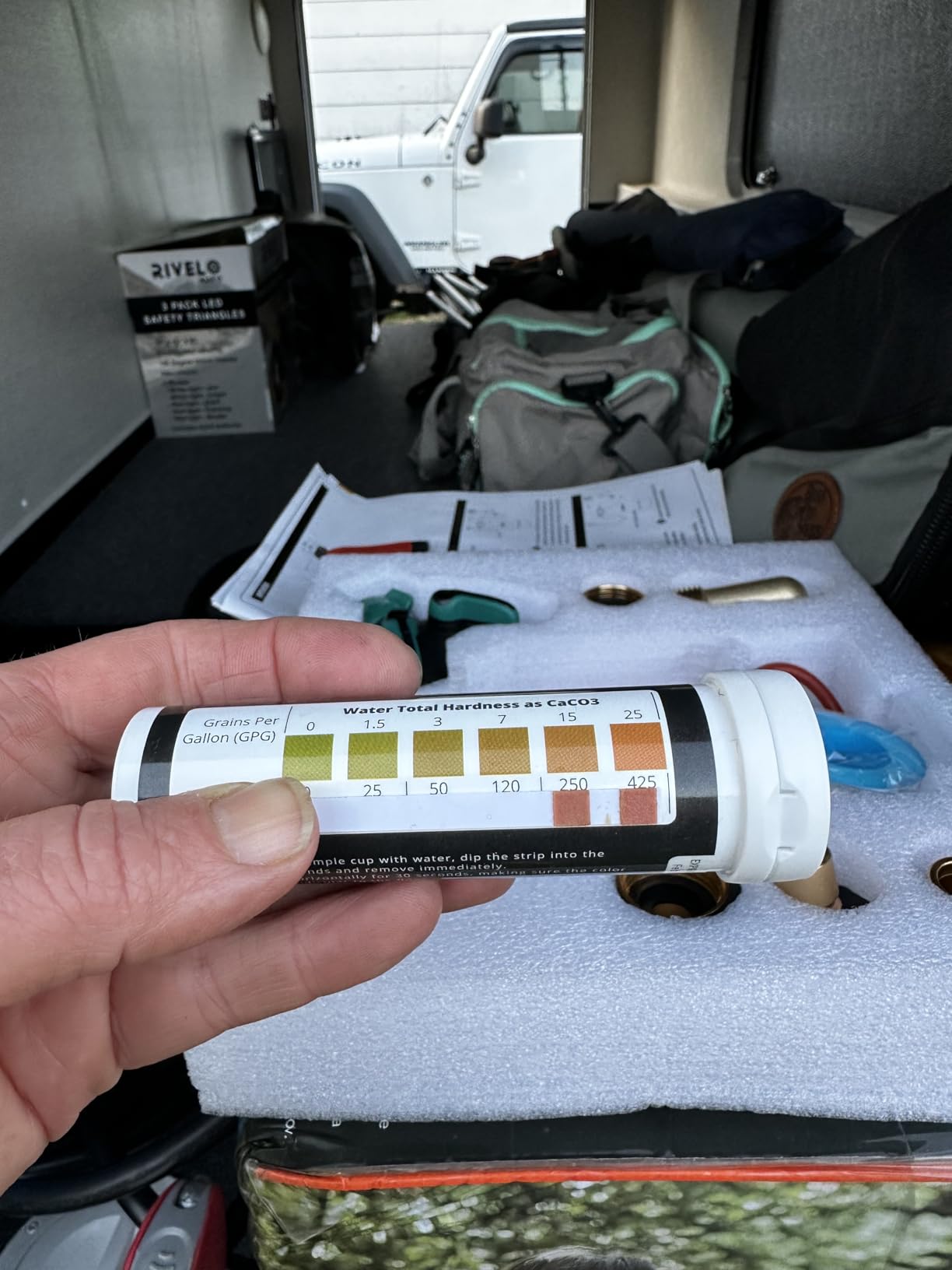
Hookup is 3/4 inch GHT fittings, ready to use in four to six minutes, regenerating with table salt in as little as 30 minutes. The resin is NSF-certified food-grade premium, and the warranty is a limited lifetime warranty with responsive replacement part service, which is unusual at this end of the market.
One owner ran nearly three months of soft water before the first regeneration, which is not realistic on very hard water but tells you how far capacity stretches when the source is moderate.
Best use cases for this portable unit
Mobile car washing and pressure washing are the strongest fits, because both consume large volumes of water through fittings that scale up badly and are expensive to replace. Boats and RV winterization storage benefit from the same protection against mineral deposits in hoses and pumps.
It is also the most sensible portable unit for renters, since hooking a hose to an outdoor spigot requires no plumbing modification and no drain line connection, which are the two things that make whole-home installs impossible for people who do not own the wall.
Where it falls short
The included hardware is the weak point. Owners report a low-quality generic hose, brass lid fittings threading into plastic that need plumber tape on first use, and quick-release valves shipped without O-rings that some owners replace immediately.
On very hard water the capacity math works against you fast. At extreme hardness you are regenerating every few days, so for anything beyond occasional use, a larger capacity portable unit is the better purchase.
How to Test Your Water Hardness Before You Buy
Every recommendation on this page assumes you know your hardness number. Skipping this step is the single most common reason people end up with a system that is too small, and it is also the fastest thing on this list to fix. Three methods work, and they cost from nothing to a few dollars.
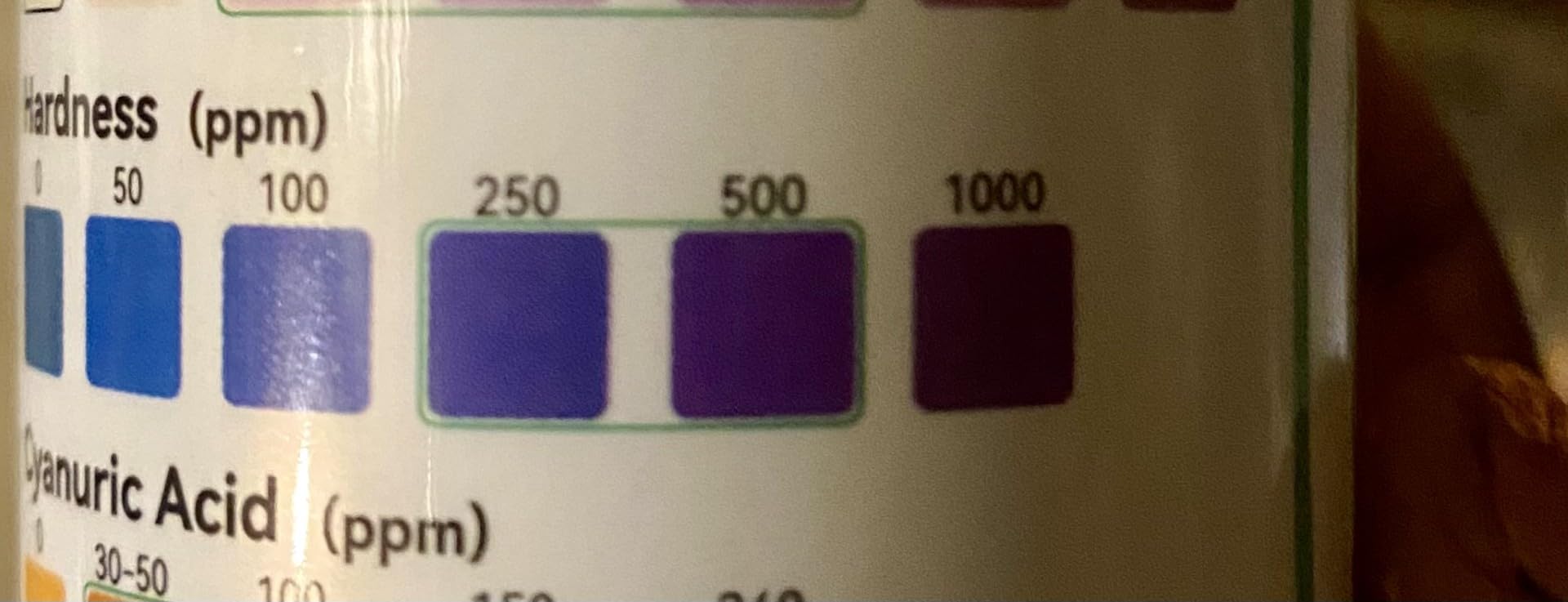
Test strips. These are the most direct. Fill a glass with cold tap water, dip a hardness strip for the second the packaging specifies, hold it up to daylight and read the color scale against the bottle. Write the number down rather than trusting your memory three weeks later when you are comparing systems.
The soap bottle test. This one needs no kit at all. Fill a clean jar or bottle with tap water, add a couple of drops of unscented dish soap, close it and shake hard for about fifteen seconds. Thick, persistent foam and a milky cloud in the water point to hard water. Thin lacing that vanishes quickly points to soft water.
Your municipal water quality report. Cities are required to publish an annual drinking water report, and almost every one of them lists total hardness in grains per gallon or milligrams per liter. This is free, it covers the whole system rather than one tap, and it is the most reliable of the three.
If you are on a well, none of the municipal sources apply and a proper lab panel is worth the expense. Well water varies by depth and season, and it is the only reliable way to learn whether you also have iron to deal with.
Reading the results
Anything from 7 GPG upward is where a softener starts paying for itself in appliance life. Between 3 and 7 GPG, you are in the range where a smaller 24,000 to 32,000-grain system handles a two or three person home, and many households decide the scale is cosmetic rather than damaging.
Above 10 GPG, capacity is the deciding number rather than a detail. Work out your daily load with the formula in the next section and buy the next size up, because undersizing shows up as water that goes hard again two days after every regeneration.
Salt-Based vs Salt-Free vs Electronic Descaler: Which Technology Do You Actually Need
There are three ways to attack hard water and only one of them actually lowers the hardness reading. This is where most buying guides get vague, so we will be blunt: a salt-free conditioner does not soften your water, and an electronic descaler does not either. They reduce scale while leaving the minerals in the water.
Salt-based ion exchange physically removes calcium and magnesium, replacing them with sodium. This is the only category where a hardness test drops afterward. It requires plumbing modification, a drain line, ongoing salt, and periodic regeneration during which you have hard water.
Salt-free conditioners using template-assisted crystallization convert dissolved hardness into a crystalline form that will not adhere to pipes and fixtures. Scale protection is real and gradual, showing improvement over several weeks rather than days. But the minerals stay in solution, so your test strip will not change.
Electronic and capacitive descalers pass a low-frequency electrical signal through the water to alter how hardness crystals form, so they do not stick. Installation is often a clamp around the main line with no cutting required, there is no salt and no drain line, and there is nothing to maintain. Again, the hardness reading does not move.
Point-of-use shower and faucet filters are a fourth category. They sit at one fixture rather than the whole house, use replaceable cartridges, and are a reasonable short-term fix for showerhead scale. They will not protect your water heater or your washing machine.
None of the ten systems below falls into the last three categories, because a buyer asking for the best water softener for hard water wants the hardness number to actually change. If your water is moderately hard and you rent, an electronic descaler may genuinely be the smarter choice. If you are above 7 GPG, only ion exchange solves it.
What Grain Capacity Do You Actually Need
Grain capacity is the total amount of hardness the resin can remove between regenerations, measured in grains. One grain is 17.1 milligrams of calcium or magnesium per gallon. The formula everyone in the industry uses is simple enough that you can run it in your head.
Household members multiplied by 80 gallons per person per day, multiplied by your hardness in GPG, equals daily grain load. Divide that by 1,000 to get your requirement in thousands of grains, then round up to the next available size.
Two people at 8 GPG: 2 multiplied by 80 is 160 gallons, multiplied by 8 is 1,280 grains per day. A 32,000-grain unit holds roughly 25 days of capacity, which is a comfortable margin.
Four people at 10 GPG: 4 multiplied by 80 is 320 gallons, multiplied by 10 is 3,200 grains per day. A 48,000-grain system gives you about 15 days between regenerations, so 48,000 is the right starting point for this household.
Six people at 12 GPG: 6 multiplied by 80 is 480 gallons, multiplied by 12 is 5,760 grains per day. Here you need 64,000 grains or more for a two-week interval, and you should confirm the valve can handle the flow of a busy house.
Guests are the variable people forget. A house that hosts frequently, or that has an in-law suite or rental unit, should be sized as though someone is always there. Under-sizing is the most common reason a correctly installed softener seems to stop working.
Why the control valve matters as much as capacity
Capacity is a tank specification, and the tank is the part least likely to fail. The control valve decides when regeneration happens, how much salt is used, and whether the system adapts to your actual usage. Experienced buyers consistently prioritize the valve over everything else.
Fleck, Clack and Kinetico are the names that come up most often in long-running owner discussions about valve reliability, and two of the strongest units in this roundup use the Fleck 5600SXT for exactly that reason. Non-electric operation is also valued, because a control board failure on an electronic valve can mean hard water until you replace a part.
What a Water Softener for Hard Water Really Costs
The number most people want is the sticker price, but it is the smaller of the two costs. Over a ten-year life, salt and the water used during regeneration frequently exceed what you paid for the equipment. Budget for both or you will be surprised by the refill schedule.
Where the upfront cost sits. Basic single-tank units for moderately hard water occupy the bottom of the range. Mid-range covers the 48,000-grain class with a quality metered valve and a prefilter, which is where most hard-water households land. Premium pricing applies to twin-tank systems, to large-capacity units like the 64,000-grain model, and to anything with dealer installation included.
What drives salt use. Salt consumption scales with hardness, household usage and how well the valve is programmed. A poorly set timer valve on very hard water can use several times what a metered valve uses for the same household. This is the single biggest controllable running cost, and it is why every plumbed unit in this roundup has a digital metered head.
The water cost nobody mentions. Every regeneration discharges a few hundred gallons to the drain. A household regenerating every ten days uses roughly 1,000 gallons of water a month on regeneration alone. That is a real utility cost, and it is the strongest practical argument for a high-capacity, well-programmed system that regenerates less often.
Cost per gallon softened is the honest way to compare options over time, and it is the number we would want to know as buyers. It depends on your hardness, your water use and your salt consumption, all of which you can estimate before you commit. A system that costs more to buy and less to run over ten years is usually the cheaper purchase.
Forum discussions show salt expense is the most common complaint from softener owners, and it is the reason running cost deserves a place next to purchase cost in any honest comparison.
Twin-Tank vs Single-Tank Systems and Regeneration Downtime
A single-tank system has one mineral tank. When it regenerates, unsoftened water flows through the house until the cycle finishes, usually 90 minutes to two hours. In a household where nobody needs water at 3 a.m. this matters little.
A twin-tank system keeps two mineral tanks. While one regenerates, the other continues to soften, so the house never runs on hard water. That continuous supply is the main reason people choose them, and it is genuinely valuable in a house with a young child, an infant feeding schedule, or anyone who works nights.
The trade-off is footprint and cost. Two tanks plus two brine tanks take up considerably more floor space, and the mechanical complexity means more parts that can fail. None of the ten systems in this roundup is a true twin-tank unit, because most households do not need one.
If you are unsure, ask a simple question: is there anyone home who needs soft water at an odd hour? If not, a well-programmed single tank is the more sensible purchase and the money is better spent on capacity.
Why Is My Water Still Hard Even With a Water Softener
No competitor page we analyzed covers this, and it is the question owners search for most often after installation. If your water was soft and has gone hard again, work through these causes in order, because they are listed roughly by how often they turn out to be the problem.
1. The bypass valve is closed or partly closed. The bypass is the handle on the front of the control valve that bypasses the resin and sends water straight through. A softener installed weeks or months ago that suddenly goes hard is very often sitting in bypass, sometimes after someone moved it during cleaning.
2. The brine tank is empty or has a salt bridge. If the tank is out of salt, regeneration cannot happen and the resin stays saturated. A salt bridge is a hardened crust or dome of salt above the water in the brine tank that prevents fresh salt from dissolving. Break it up by hand, then vacuum out the sludge underneath.
3. The valve is oversized for the household. This one catches people constantly. If the grain capacity is much larger than the household can use between regenerations, the resin never fully depletes, regeneration happens on a long fixed schedule, and water hardness creeps upward over months while everything looks normal.
4. Iron is fouling the resin. On well water, even small amounts of iron coat the resin beads and block exchange sites. The symptom is water that softens for a while after every regeneration and hardens again in between, which is different from the steady hardness of an empty salt tank.
5. Resin channeling. Over years, or under heavy flow, water finds the easiest path through the resin bed and bypasses the rest. Channeling shows up as gradually increasing hardness with no other obvious cause. Resin channeling is resolved by replacing the resin, which is a service call rather than a DIY job.
6. Hard water is bypassing on one line. If a fixture was plumbed in before the softener, or an outdoor hose bib was left on the pre-softener line, that outlet will stay hard no matter what the system does. Check whether the hard water is at every tap or only at one.
7. Hardness is only on the cold line. If the softener was installed on the hot side only, cold water at the kitchen tap and the drinking glass stays hard while the shower improves. That is a plumbing configuration problem rather than an equipment problem, and it is a common early-installation mistake.
Test before and after a forced regeneration before you replace anything. If the water softens immediately afterward and then climbs back within days, you have a capacity or fouling issue. If it never softens, the problem is salt, bypass or plumbing.
Installation: What You Can DIY and When You Need a Plumber
A softener installation involves cutting into the cold main supply line, installing a bypass valve, running a drain line to a suitable discharge point, connecting the brine line and filling the brine tank with salt. That is real plumbing, and the difference between a clean install and a leaking one is experience.
A straightforward DIY install on a home with accessible plumbing takes a few hours and basic tools. Several of the systems here arrive with resin preloaded, which removes the messiest part of the job. Fleck-equipped units are commonly installed by homeowners, and vendors and forums both publish programming walkthroughs for the valve.
Hire a plumber when the main shutoff is in an awkward location, when the drain line has no nearby acceptable discharge point, when the house has older galvanized or brittle piping, when a permit or code inspection is required locally, or when you are working alone with a 120-pound tank. Installation difficulty is the complaint that appears most consistently across owner reviews of both budget and premium units.
Two installation details decide whether you are happy later. Put the softener ahead of the water heater, never after it, or you will be softening hot water and leaving the heater full of scale. And install a bypass, which every unit in this roundup includes, because it is the only way to isolate the system for service without shutting off the house.
Maintenance Schedule and Lifespan by System Type
Softener maintenance is small in time and easy to postpone. Set a recurring reminder and the whole schedule fits inside an afternoon a year, plus a monthly glance at the salt level.
Monthly: check the salt level and top it up. Keep the level above one third of the tank at all times, because resin sitting on empty tank bottom is what burns a softener out.
Every six months: inspect for a salt bridge by feeling for a hardened crust under the salt, and clean the brine tank if you find one.
Annually: clean or replace the sediment prefilter if your unit has one, and check the drain line for kinks or restrictions.
Every one to three years: replace the prefilter cartridge on filtered models and confirm the bypass valve operates.
Every 10 to 15 years: expect to replace the resin bed. Standard resin lasts 10 years or so; 10 percent cross-linked resin generally outlasts it, and chlorinated municipal water shortens the life of standard media faster.
Ongoing: the control valve, brine float and seals are consumable parts and should be budgeted for, not treated as a failure of the whole system.
Portable units need far less. A monthly manual regeneration with table salt and an occasional rinse of the brine tank is the entire routine, which is part of why they suit occasional and mobile use.
Where the Hardest Water Is in the US
Hardness follows geology. Regions with young limestone and dolomite aquifers tend toward the highest readings, and the results cluster geographically in ways that surprise people who assumed their city water was fine.
The upper Midwest and Great Lakes states carry much of the hardest water in the country, with Chicago, Milwaukee, Detroit and much of Minnesota, Wisconsin and Ohio routinely in the very hard band. The Southwest is the other major cluster, particularly parts of Arizona, New Mexico, Texas and Southern California. Portions of the Mountain West and the Pacific Northwest also read hard.
Well water is its own category. With no treatment plant upstream, a well can deliver 10 GPG or considerably more, and it frequently arrives with iron alongside the hardness. Forum discussions regularly include homeowners in areas above 30 or 40 GPG, which is well past anything a standard residential system is sized for without careful calculation.
If you live in one of these areas and are buying a system for hardness above 10 GPG, do the sizing math rather than picking a popular model. Capacity becomes the least glamorous and most important number on the spec sheet.
State and Local Restrictions on Water Softeners
Some jurisdictions restrict or ban water softeners outright, and this is not widely covered on roundup pages even though it regularly appears among questions from buyers. The restriction usually applies to the discharge, not to having a softener, and it centers on chloride.
Standard ion exchange softening produces chloride as a byproduct, which is regulated as a discharge in some areas. A number of municipalities and a small number of states restrict how much chloride may be discharged to the sewer, and some communities require a permit or a specified discharge point before installation.
Before you buy anything, check your city or county utility requirements and your homeowners association rules. Where restrictions are strict, salt-free conditioners and electronic descalers sidestep the discharge question entirely, which is a genuine reason to choose them rather than a compromise.
Installation also has a code dimension. Some jurisdictions require a permit and inspection for a cut into the main supply line, and a permitted installation protects you at resale. A quick call to the local building department answers this in a minute.
Is Softened Water Safe to Drink
Softened water is not dangerous to drink. It contains more sodium than hard water because calcium and magnesium are exchanged for sodium ions, and for most people that change is not a health concern. The amount depends on your hardness and how much water you drink.
For households on a sodium-restricted diet or anyone with specific medical guidance, the standard advice is to consult a doctor and to keep an unsoftened cold-water line at the kitchen tap. Many installers do this by running a dedicated hard-water line from before the softener, which is inexpensive and removes the question entirely.
Taste is the more common complaint than health. Some people notice softened water as flat or faintly salty, particularly if the softener is oversized for the household and exchanging more minerals than necessary. Correct sizing and programming fix that as much as anything else.
Frequently Asked Questions
What is the best hard water softener for a home?
The best water softener for hard water is a metered ion-exchange system sized to your measured hardness in grains per gallon and your household water use. Most US households land in the 48,000-grain class with a digital metered control valve; very hard water above 10 GPG needs 64,000 grains or more. Match capacity to household size and you avoid the most common failure of all.
How much should a good water softener cost?
Cost has two parts, and the second one surprises people. Upfront, basic single-tank units sit at the low end, quality 48,000-grain metered systems occupy the middle, and twin-tank, high-capacity or dealer-installed systems sit at the top. Ongoing, salt use scales with hardness and usage, and metered valves use far less salt than timer valves on the same water.
Why is my water so hard even with a water softener?
Work through the causes in order: a closed bypass valve, an empty brine tank or a salt bridge preventing regeneration, a valve oversized so the resin never depletes, iron fouling the resin on well water, resin channeling after years, a line plumbed before the softener, or a softener installed on the hot side only. A forced regeneration tells you which category you are in within an hour.
What is the best system to get rid of hard water?
Only salt-based ion exchange actually lowers what a hardness test reports, because it physically removes calcium and magnesium and replaces them with sodium. Salt-free conditioners using template-assisted crystallization and electronic or capacitive descalers reduce scale buildup but leave the minerals in the water, so your test reading will not change. For hardness above 7 GPG, ion exchange is the answer.
Why does my water still taste different after I install a water softener?
Softened water genuinely tastes different because calcium and magnesium are replaced with sodium, and many people notice the difference immediately. A larger capacity system than your household needs will make it worse, since more minerals get exchanged than necessary. Keeping an unsoftened cold-water line at the kitchen tap gives you drinking water without the change.
Why is water softener salt so expensive right now?
Softener salt is usually delivered in 40-pound bags, and pricing tracks the underlying cost of salt plus regional transport and bagging. The reason it feels expensive is volume: on very hard water a household can go through several bags a year, and that refill is a recurring line item. A properly programmed metered valve is the most effective way to reduce it.
Why are states banning water softeners?
Restrictions generally target discharge rather than ownership. Ion exchange softening produces chloride as a byproduct, and some municipalities and a small number of states limit how much may be discharged to the sewer or require a permit and a specified discharge point. Check your local utility rules before installing, and consider a salt-free conditioner or descaler where discharge is restricted.
How long should 40 pounds of salt last in a water softener?
A 40-pound bag typically lasts anywhere from a few weeks to several months, and the spread comes almost entirely from hardness and household size. Soft water in a small home burns through it slowly, while a family of five on water above 12 GPG can consume several bags a month. Keep the brine tank at least one third full at all times to protect the resin.
Which Water Softener Should You Buy
The Aquasure Harmony 48,000 is the pick we would put in most homes with hard water, because the combination of a digital metered head, a prefilter that protects the resin and the deepest owner feedback base in this roundup makes it the least risky purchase. It suits a three or four person home in the 7 to 10 GPG band.
Move to the 64,000-grain unit if your water reads above 10 GPG or your household is large, and move to the combination softener and iron filter if you are on a well with measurable iron. If you rent, cannot cut into a supply line, or need soft water for an RV or a mobile car wash, the portable units handle that job properly.
The fastest path to a decision is four steps. Test your hardness, decide whether you need ion exchange or only scale protection, size your capacity with the household formula, then compare the table above against your numbers. That is the whole decision, and it does not require a brand to be settled first.
Whatever you choose, buy a metered valve, keep the brine tank above one third full, and put a bypass on the main line. Those three habits decide whether your softener still works in year five.