
A drum metronome has one job that no practice pad and no app can do for you: give you a pulse that stays perfectly steady while you play something that is not perfectly steady. The trouble is that almost every cheap unit fails at exactly the moment you need it, when the click is swallowed by a live kit, the phone battery dies halfway through a woodshedding session, or the tempo steps land on 96 when the track is actually 94.
The best metronomes for drummers share three traits: a click loud enough or different enough to survive an acoustic kit, a way to hear it privately through earphones or an in-ear monitor, and enough tempo range and subdivision control to survive a woodshedding routine instead of stopping at four beats per bar. The BOSS DB-90 Dr. Beat is the one that meets all three and adds 50 memory slots, so it takes the top spot in our 2026 roundup.
We spent weeks moving between these eight units on a practice pad, a 5-piece kit and a rehearsal room, and we judged them on the same four things: can you hear it, can you control it mid-drum, will it still be accurate in month three, and does it do anything without an app. Everything below is based on those sessions plus what owners report after living with the hardware.
Table of Contents
Top 3 Picks for the Best Metronomes for Drummers (September 2026)

BOSS DB-90 Dr. Beat
- Four click voices
- Note Mixing
- 50 memory slots
- Headphone out and MIDI in

All 8 Metronomes Compared Side by Side in 2026
All eight units below cover the same core job at a different level of sophistication. Four are digital and programmable, three are wind-up mechanical, and one is a vibrating wearable. The tempo ranges cluster tightly around 40 to 208 BPM on the mechanical and entry-level digital units, which is why subdivision control and memory matter more than top-end speed for a drummer.
| Product | Specs | Action |
|---|---|---|
| BOSS DB-90 Dr. Beat |
|
Check Latest Price |
| Soundbrenner Pulse |
|
Check Latest Price |
 Seiko SQ50-V Seiko SQ50-V |
|
Check Latest Price |
 Korg MA-2 Korg MA-2 |
|
Check Latest Price |
 Tempi Mechanical Metronome Tempi Mechanical Metronome |
|
Check Latest Price |
 Ueteto Mechanical Metronome Ueteto Mechanical Metronome |
|
Check Latest Price |
 Donner DPM-1 Donner DPM-1 |
|
Check Latest Price |
 Sondery Rechargeable Metronome Sondery Rechargeable Metronome |
|
Check Latest Price |
1. BOSS DB-90 Dr. Beat Review: Best Metronome for Drummers Overall
BOSS DB-90 Dr. Beat Portable Metronome (DB-90), BLACK
16 oz, 7.99 x 5.71 x 1.97 in
Four click voices
50 memory slots
Pros
- Four click voices including a spoken count
- Note Mixing for custom rhythms
- Dozens of play-along drum patterns
- 50 memory slots for tempos and settings
- Headphone out
- footswitch control and MIDI in
Cons
- Reports of electronics failing within a season or two
- Runs through 9V batteries quickly and loses memory when it dies
- No odd time signatures
The DB-90 is the unit other drummers actually tell you to buy. On drum forums it has been the most frequently named recommendation for years, and that consistency is the point: it is not the newest design, it is the one that has survived a decade of rehearsal rooms, marching percussion carts and drum line use.
Out of the box it does more than click. Note Mixing lets you build custom rhythms rather than picking from a fixed menu, there are dozens of built-in play-along drum patterns, and the subdivision options run accent, quarter, eighth, sixteenth and triplet. That last group is the reason it beats simpler digital units for a drummer, because you can raise the sixteenth above the eighth instead of trying to hear one blended tick.
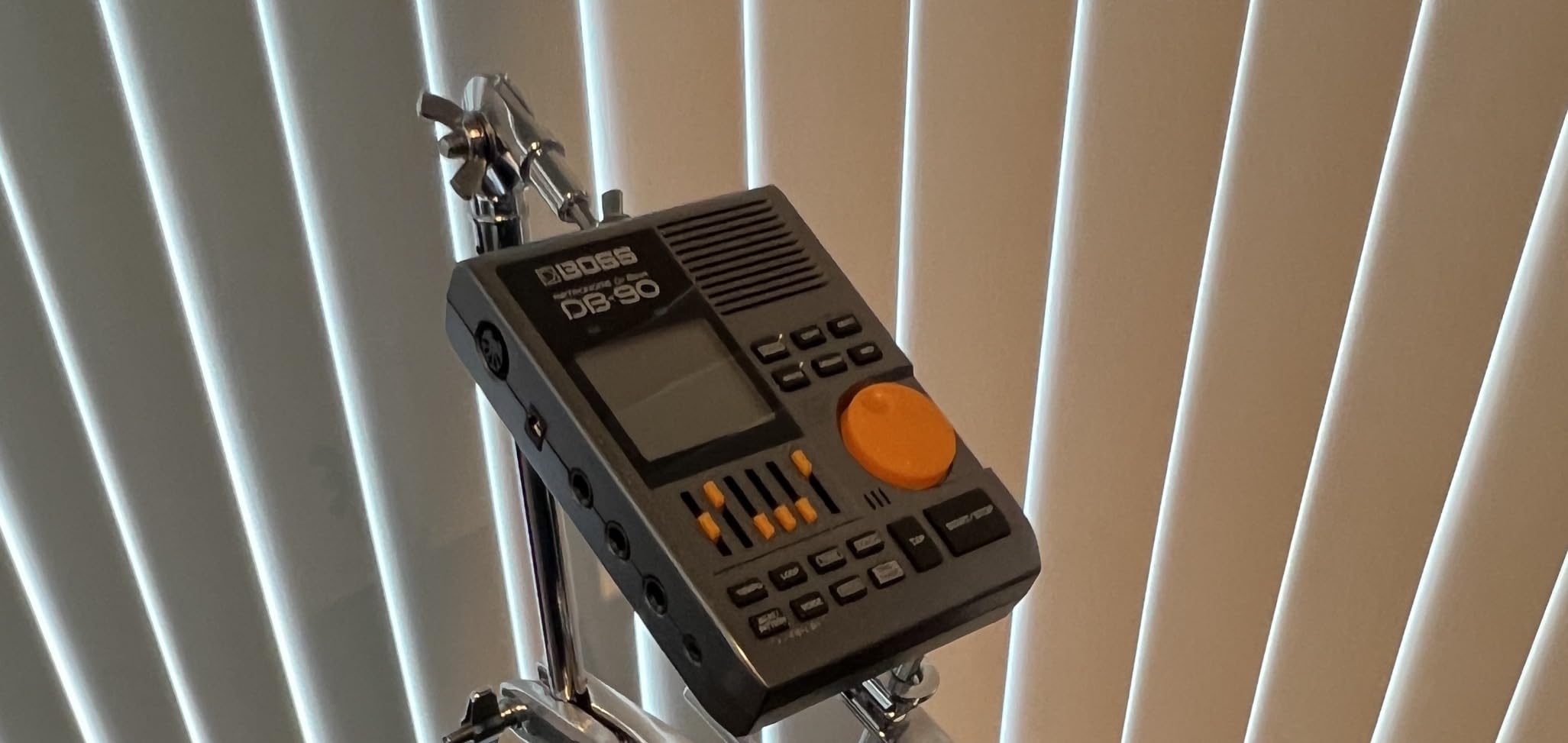
The four click voices include a spoken human voice count, which sounds gimmicky for about ten minutes and then becomes genuinely useful the first time a student loses the downbeat in a group exercise. Footswitch control gives you hands-free play and stop, which matters more than it sounds when both hands are on a snare.
Memory is the quiet hero. Fifty slots means you can store a tempo and its subdivision setup for every song in a set without deleting anything, which is the difference between a practice tool and a rehearsal-day tool. Headphone output and a direct input for guitar and bass both work, and MIDI input lets it sync to an external sequencer when you are tracking to an electronic kit.
What the DB-90 does that most practice metronomes cannot
Programmable note mixing and pattern playback are the two features no other unit in this list combines. Being able to play a click that sounds like a backbeat, or a 7/8 pattern built note by note, turns metronome practice into playing music at the tempo you are trying to internalise. For someone preparing for an audition or a tricky odd-meter gig, that is a real advantage rather than a spec-sheet nicety.
The MIDI input is the second one. If you own an electronic kit and record into a DAW, the DB-90 will drive or be driven by a sequencer, so your click and your recorded track can share one clock source instead of drifting against each other.
Where the DB-90 falls short
Durability is the honest weakness. Several owners report electronics failing after as little as one or two seasons of regular use, and the manufacturer support experience is described as weak. Treat it as a tool you might replace rather than a lifetime purchase.
It also runs through 9V batteries quickly, and your stored memory is lost when the battery dies, so a dead cell mid-lesson can cost you an entire set of tempos. There is no support for odd time signatures beyond standard meters, the kickstand is thin plastic that reviewers describe as fragile, and only one 3/4 drum pattern is included.
2. Soundbrenner Pulse Review: Best Wearable for Silent Practice
Soundbrenner Pulse, Vibrating Metronome for All Musicians and Instruments, Perfect for Drums, Guitar, Piano and More, Best in Show at NAMM
0.03 kg, 3.43 x 4.13 x 7.48 in
Six plus hours per charge
Up to 5 devices synced
Pros
- Vibration is felt not heard so you do not mix it with your playing
- Wearable on wrist or arm or ankle or thigh
- LEDs synced to the pulse and switchable off
- Syncs up to 5 wearables to one phone
Cons
- No display so the app is required to set an exact BPM
- Vibration too weak for some players in loud rooms
- Included strap is too short for leg wear and there is no volume control
This is the only pick in the roundup that removes the click from the audible mix entirely. The Pulse vibrates against your skin, roughly seven times stronger than a phone, so you feel the downbeat instead of hearing it compete with your cymbals. On an acoustic kit at full practice volume, that is the difference between a useful reference and a noise you are trying to outplay.
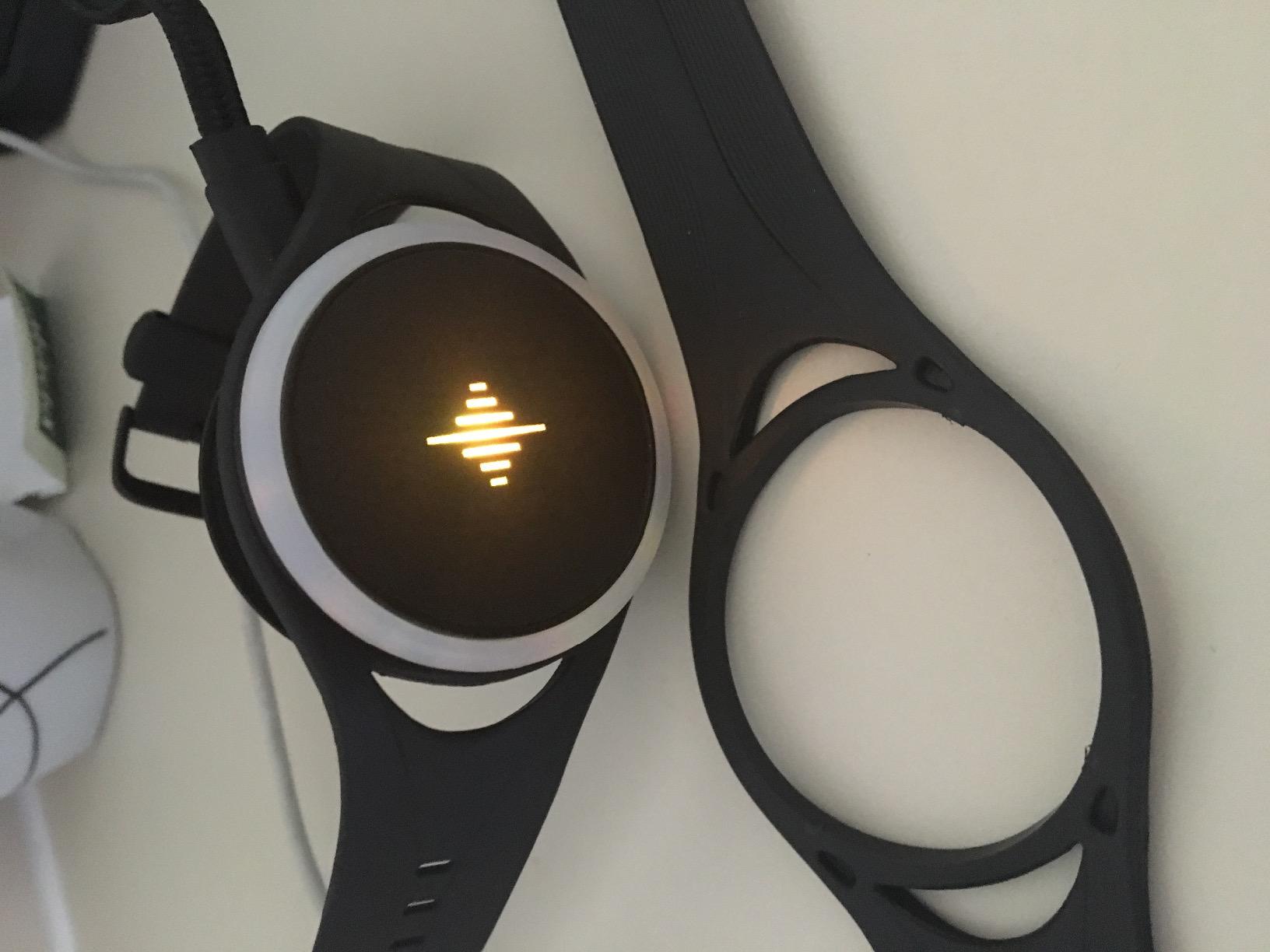
It is a small square unit that comes with wrist, arm and ankle bands. A separate body strap is sold separately for chest, shoulder or thigh wear, which is where most drummers end up putting it on a thigh. You tap the body twice to play or pause and twist the outer wheel for fine tempo changes, so basic operation does not require the phone at all.
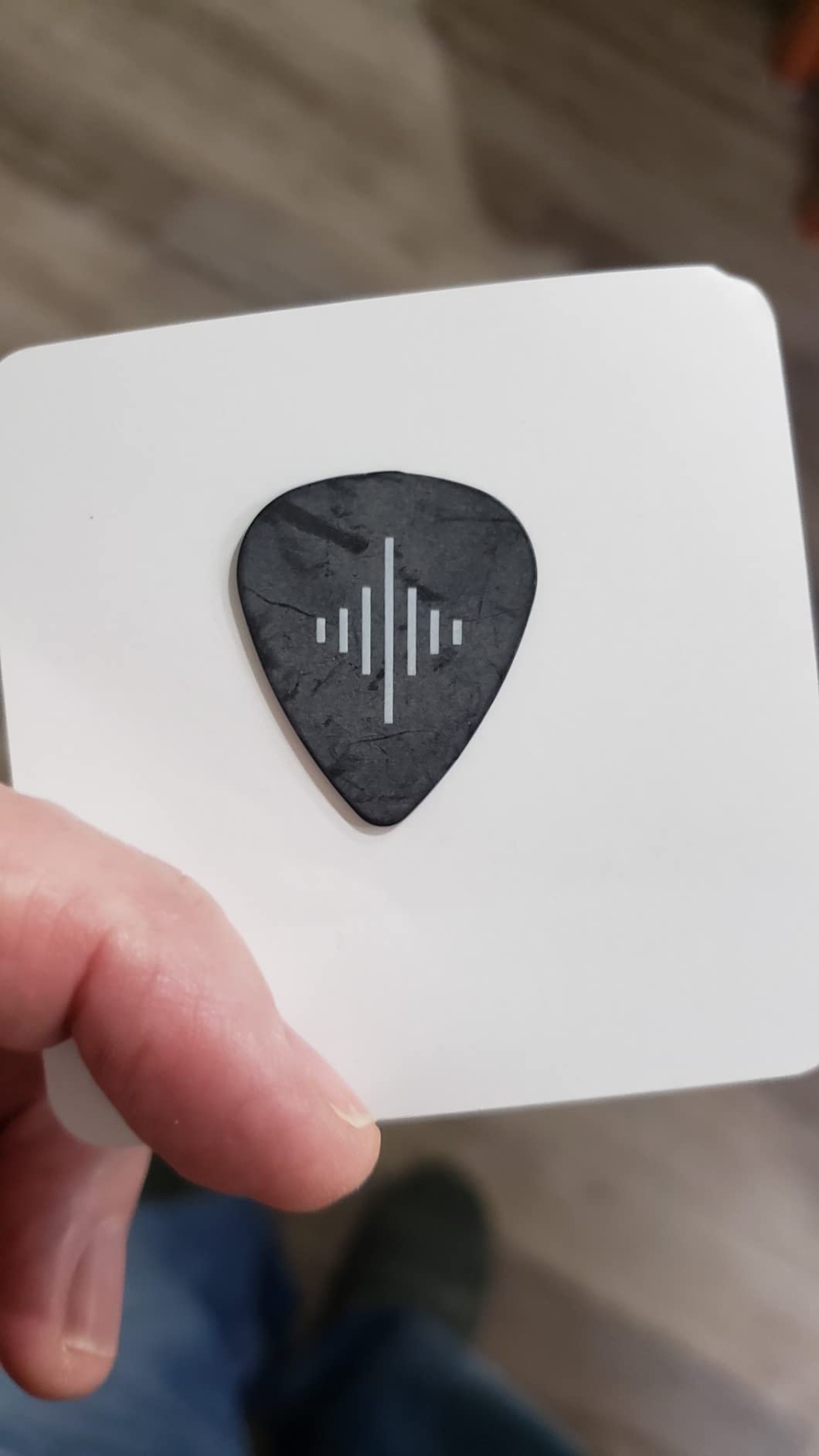
The app handles everything deeper: time signature, subdivisions, accents, presets and setlists, plus multi-player sync for up to five wearables connected to a single mobile device. That last feature is genuinely useful for a rehearsal where three people need the same tempo, and for anyone training internal timing, a wearable you forget about is hard to beat.
Connectivity is broad for a practice tool. Bluetooth, NFC and USB are all present, and MIDI Clock or Ableton Link tempo output is supported from most major DAWs. Battery life is six or more hours of metronome playback per charge, which is about the length of a long rehearsal.
Why a vibrating click changes practice
Hearing a click and playing a loud kit forces your ears to do two jobs at once, and most drummers solve that badly by simply turning the click up until it becomes fatiguing. A pulse on your thigh removes the masking problem entirely, and several owners report that the tactile signal locks in tricky sections faster than any audible click they have used.
The LEDs synced to the vibration add a visual layer, and they can be switched off or recoloured in the app. That matters on stage, where a glowing unit clipped to your calf can be more distracting than useful, and where you may want the vibration with nothing else visible.
Who should skip the wearable
Skip it if you play in loud rooms with a lot of low end, because the vibration is not strong enough for everyone. Owners also point out that the small plastic body is not water resistant and feels fragile, and that the magnetic charging cable is stiff and easy to dislodge at the wrong moment.
There is no display, so setting an exact BPM effectively requires the app, and many settings are buried in nested menus rather than obvious pop-ups. Bluetooth timing offset can need manual tuning to line the pulse up with app lights, the included strap is too short for leg wear, and the battery needs recharging between rehearsals.
3. Seiko SQ50-V Review: Best Metronome for Lessons and Study
Seiko SQ50-V Quartz Metronome Tuner
2.72 oz, 1.7 x 5.1 x 3 in
40-208 BPM rotary dial
A=440Hz and Bb tones
Pros
- Large tempo wheel changes BPM far faster than button-driven units
- True mechanical click tone is easier to lock onto
- LED beat light gives a silent visual option
- Built-in A and Bb tuner tones
- One-handed operation with a fold-out stand
Cons
- Tempo markings are printed very small for low light
- No clip or mount for a music stand
- Stepped BPM increments mean you cannot hit 94 exactly
- No downbeat accent or tap tempo or subdivisions
The Seiko is the metronome most people meet first, and after years of continuous use it is still the one that shows up on music stands in lesson rooms across the country. It is also, quietly, the best tool in this list for teaching. Nothing about it needs explaining, which is exactly what a student and a teacher need at the start of a lesson.
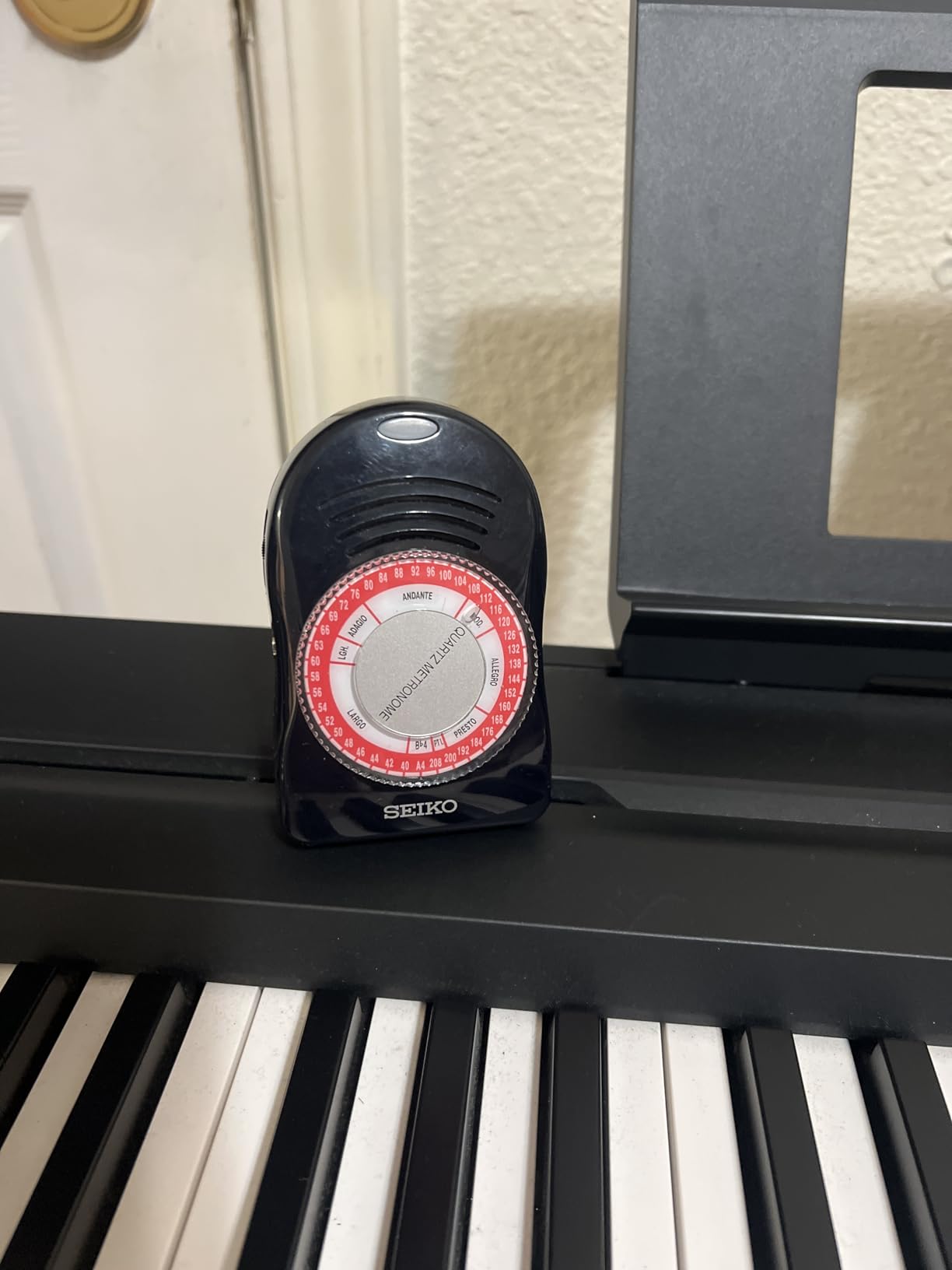
The 39-position rotary dial with engraved tempo markings is the feature that decides it for me. Turning a wheel moves you through tempos continuously, so you can follow a student up or down in the space of a second. Digital units with plus and minus buttons make you work for every two BPM, and that friction is real when a student is waiting.
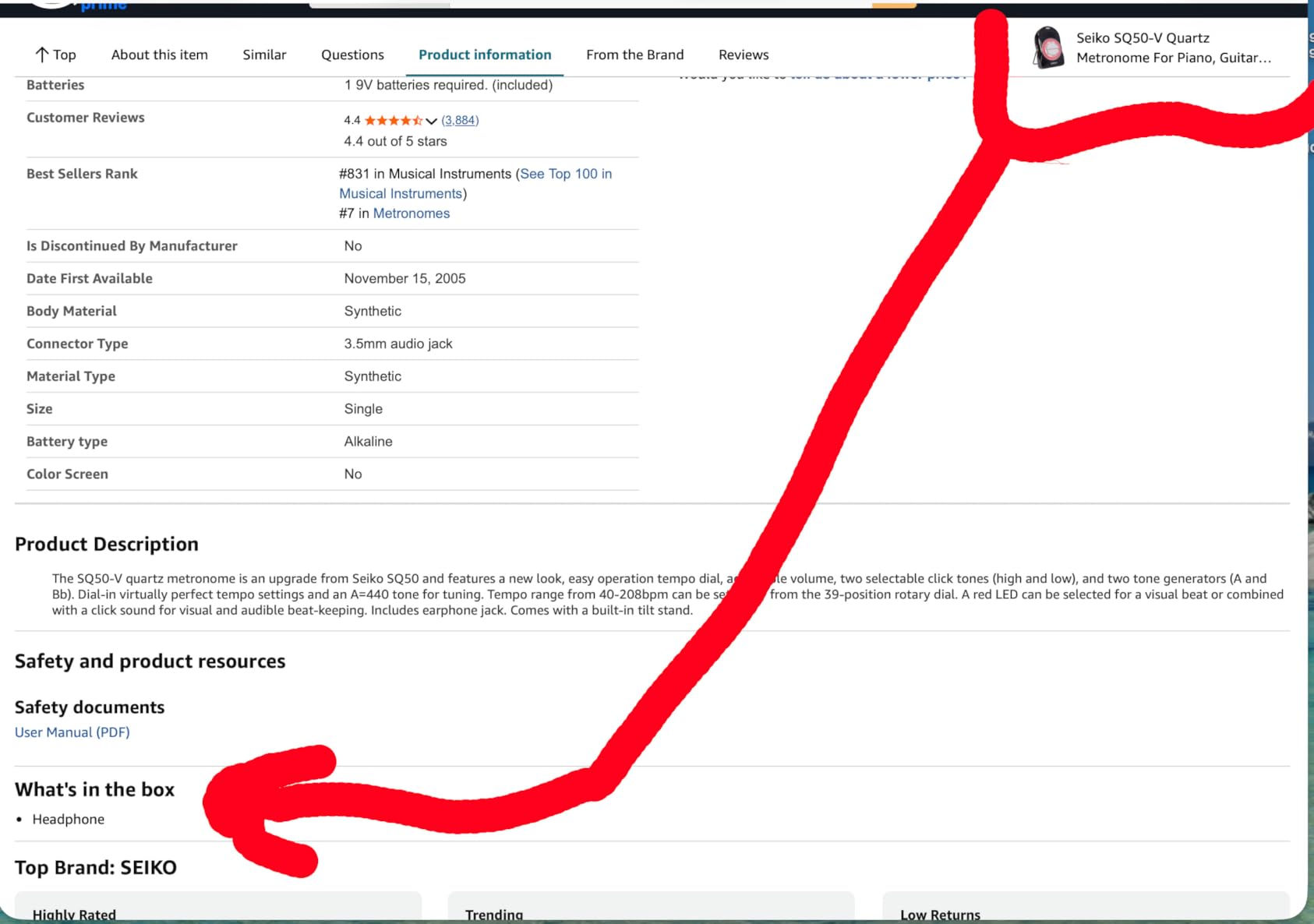
The click is a real wood block tone selected by a rocker switch between high and low, with adjustable volume, and it is easier to lock onto than a synthetic digital beep. A red LED beat light gives you a fully silent visual option, and the 3.5mm earphone jack covers the silent practice case where the room is shared.
It also doubles as a practice tuner. The built-in A=440Hz reference tone with an optional Bb gives you something to tune to without carrying a second device, and the fold-out wire stand on the back makes it stable on a desk. One 9V alkaline cell is included, and owners report close to a year of use from one battery.
What makes the dial-based approach work for students
One-handed operation matters more in a lesson than any feature list suggests. A student can hold sticks in one hand and move the tempo with the other, and the response is immediate rather than menu-driven. For younger players working on keeping a steady hand, that directness shortens the gap between intention and result.
The LED and earphone jack together give you a genuinely silent lesson. Sit the unit facing the student with the light only, or hand them the earphones and let them work on subdivisions with nobody else in the room hearing a tick. At 2.72 ounces it also disappears into a gig bag, which makes it a sensible second unit to keep as a backup.
Where the Seiko holds you back
There are no subdivisions, no tap tempo and no downbeat accent beyond the two tones. That is fine for a student learning to keep time, and it is the ceiling for a drummer woodshedding eighth and sixteenth notes, because you cannot isolate a subdivision that does not exist.
The dial printing is small and hard to read in low light, and there is no clip or mount for a music stand, so it sits on whatever flat surface is nearby. The tempo steps are coarse enough that you cannot land on an exact figure like 94 BPM, and the two click tones sound more similar than the high and low labels suggest.
4. Korg MA-2 Review: Best Budget Digital Metronome for Drummers
Korg MA-2 Digital Metronome for Orchestral Instruments – Blue/Black
2.36 x 0.63 x 3.94 in
0 to 9 beats and 8 patterns
400 hours on alkaline cells
Pros
- Buzzer is loud and crisp enough to cut through loud instruments
- Up to 400 hours of operation on alkaline batteries
- Compact body that fits a music stand or drum bag
- Pendulum and full step and tap tempo modes
- 0-9 beats supports odd meters
- Timer and sound-out modes
- Two-year warranty
Cons
- No spoken vocal count-in for group starts
- No built-in tuner
- Small screen is hard to read at a distance
The MA-2 is the metronome you will find in the most rehearsal rooms in the country, and it earns that position on loudness and battery life rather than features. The newly designed electronic buzzer is the point: it is a harder, clearer click than most cheap units produce, and it stays audible under a loud kit in a way a soft piezo tick does not.
Three tempo modes cover most practice styles. Pendulum mode gives the tick-tock feel of a mechanical unit electronically, full step gives you one click per beat, and tap tempo is there when you are learning a tempo by feel. Time signatures run from zero to nine beats, and eight selectable rhythm patterns add some variety for odd-meter work that entry-level digital units usually skip.
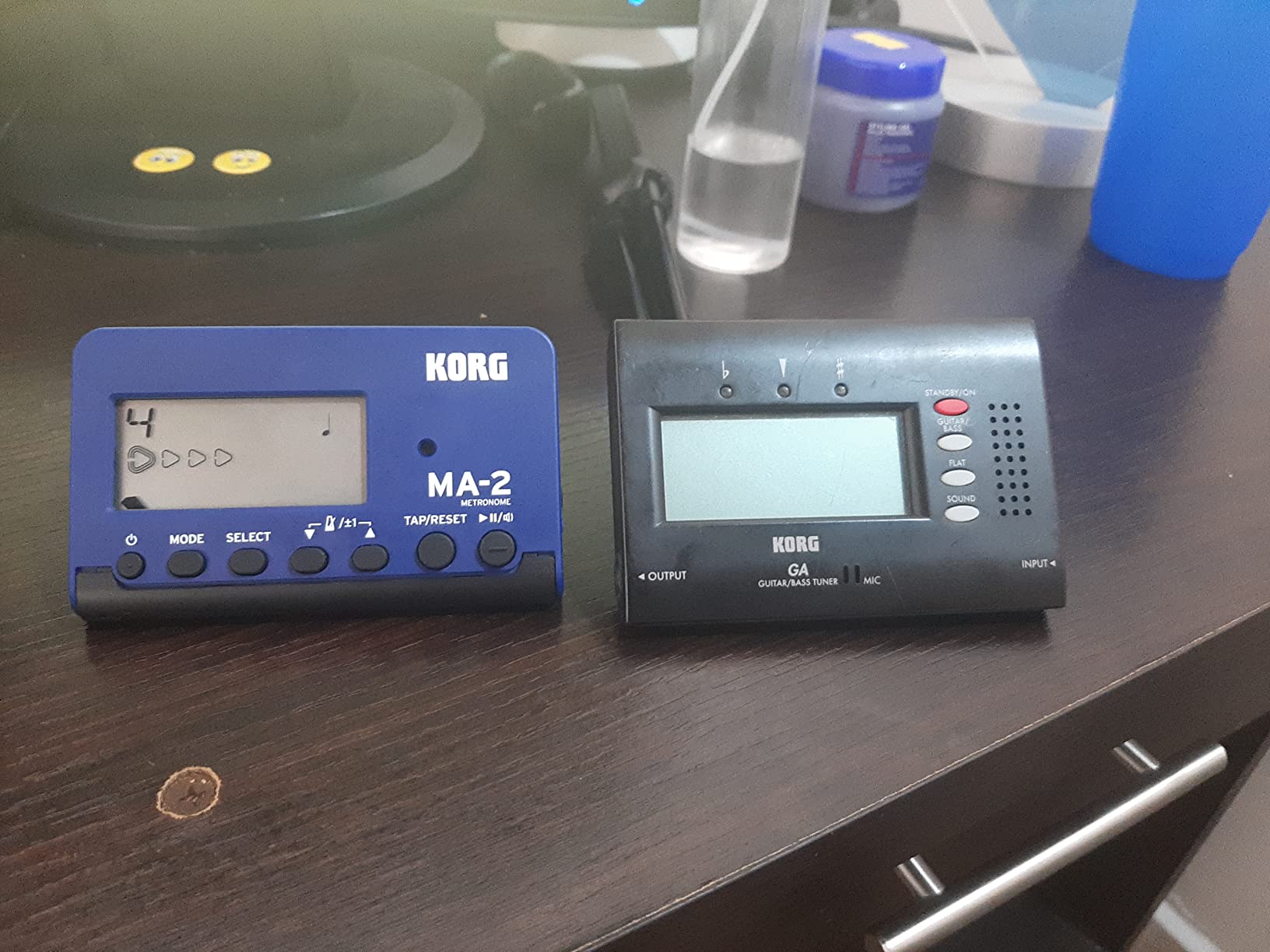
Timer mode and sound-out mode add practice structure beyond plain clicking, which is useful if you are the kind of player who needs the session to end rather than drift. The display is 30% larger than the previous model with beat visuals and a low-battery indicator, and the two-year warranty is longer than most competitors offer.
Battery life is the quiet headline. Up to 400 hours of continuous operation on alkaline cells removes the exact failure mode that forum users complain about most, a device that dies mid-practice, and it also means the unit can live permanently in a drum bag without becoming a battery expense.
Why the buzzer and battery life matter on a kit
Audibility is a spec, not a preference, when you are playing drums. A click you have to strain to hear trains you to play slightly quieter than you should, and at performance tempo the strain is worse. The MA-2 buzzer is specifically designed not to be buried by high-volume instruments, which is the failure that sends drummers back to their phones.
Rhythm patterns from zero to nine beats also make this a better fit for a working drummer than its price suggests. If you are rehearsing a tune in 7/8 or 5/4, you can set the meter without a workaround, and that alone separates it from the simplest pocket units.
Where the MA-2 stops short
There is no spoken vocal count-in, which some players want for starting a group together, and no built-in tuner on this model. Button-only controls are less tactile than a dial or a mechanical weight, so fast tempo changes take more effort than they should.
The screen is small and can be hard to read at a distance on a music stand, which is worth knowing if your practice spot is across the room from where the unit sits. There is no memory for song tempos, so you are re-entering figures between pieces, and there is no headphone output, so silent practice with earphones is not available.
5. Tempi Review: Best Wind-Up Mechanical Metronome for Timeless Practice
Tempi Metronome for Musicians – Mechanical Metronome for Piano, Metronome for Guitar/Violin or Metronome Music for Adults and Kids (Plastic Brown Grain Veneer)
8 oz, 4.8 x 4.8 x 9.5 in
About 20 minutes per wind
40-208 BPM
Pros
- Genuinely accurate wind-up movement
- Adjustable bell on any of 0 or 2 or 3 or 4 or 6 beats
- No batteries so nothing to forget before a lesson
- Loud enough to hear over an instrument
- Steel gears and a solid winder
- Mahogany-grain finish suits a piano or shelf
Cons
- Body is plastic with a wood-grain veneer rather than solid wood
- Packing foam inside the case must be removed before it will run
- No volume control so the click level is fixed
- Tick-tock sound is thinner than a wooden-box metronome
Most drummers skip mechanical metronomes, and for woodshedding that is the right call. But a wind-up unit trains something a digital one quietly does not: it makes you watch a moving pendulum, which is a physical picture of subdivision rather than an abstract number. If you have ever struggled to feel where the sixteenth notes sit inside a beat, watching the arm swing is a genuinely useful second reference.
This is a fully mechanical, battery-free movement with a 40-208 BPM range set by sliding the weight on the pendulum rod, and steel gears rather than the plastic stems used by budget models. One full wind gives you about 20 minutes of running time, which covers a focused practice block.
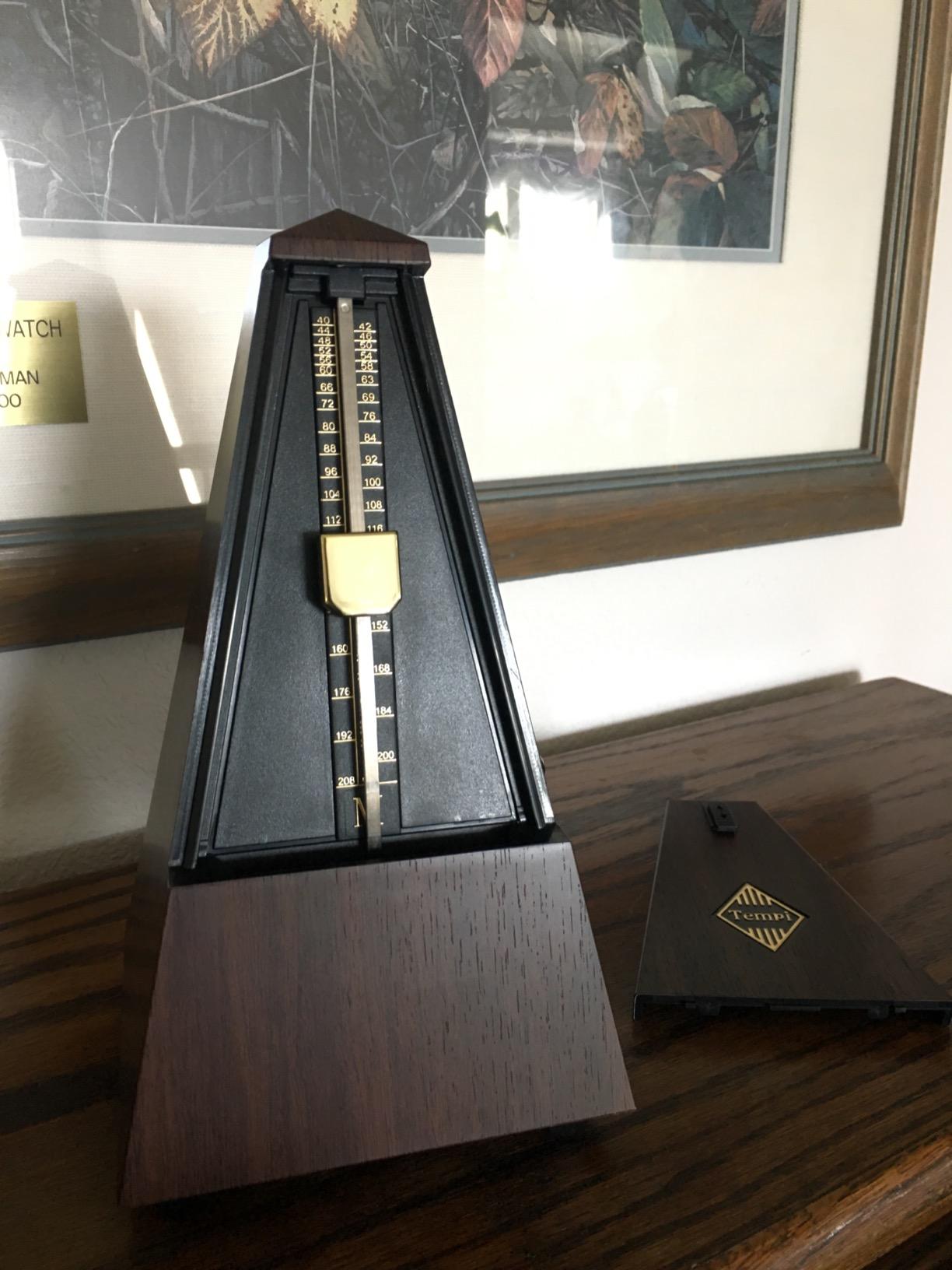
The adjustable bell is the feature that keeps it in a drummer’s kit bag. You can put it on zero, two, three, four or six beats, so the downbeat rings differently from the other beats in the bar and your ear can lock to bar one without watching. That is the same function an accent performs on a digital unit, delivered mechanically.
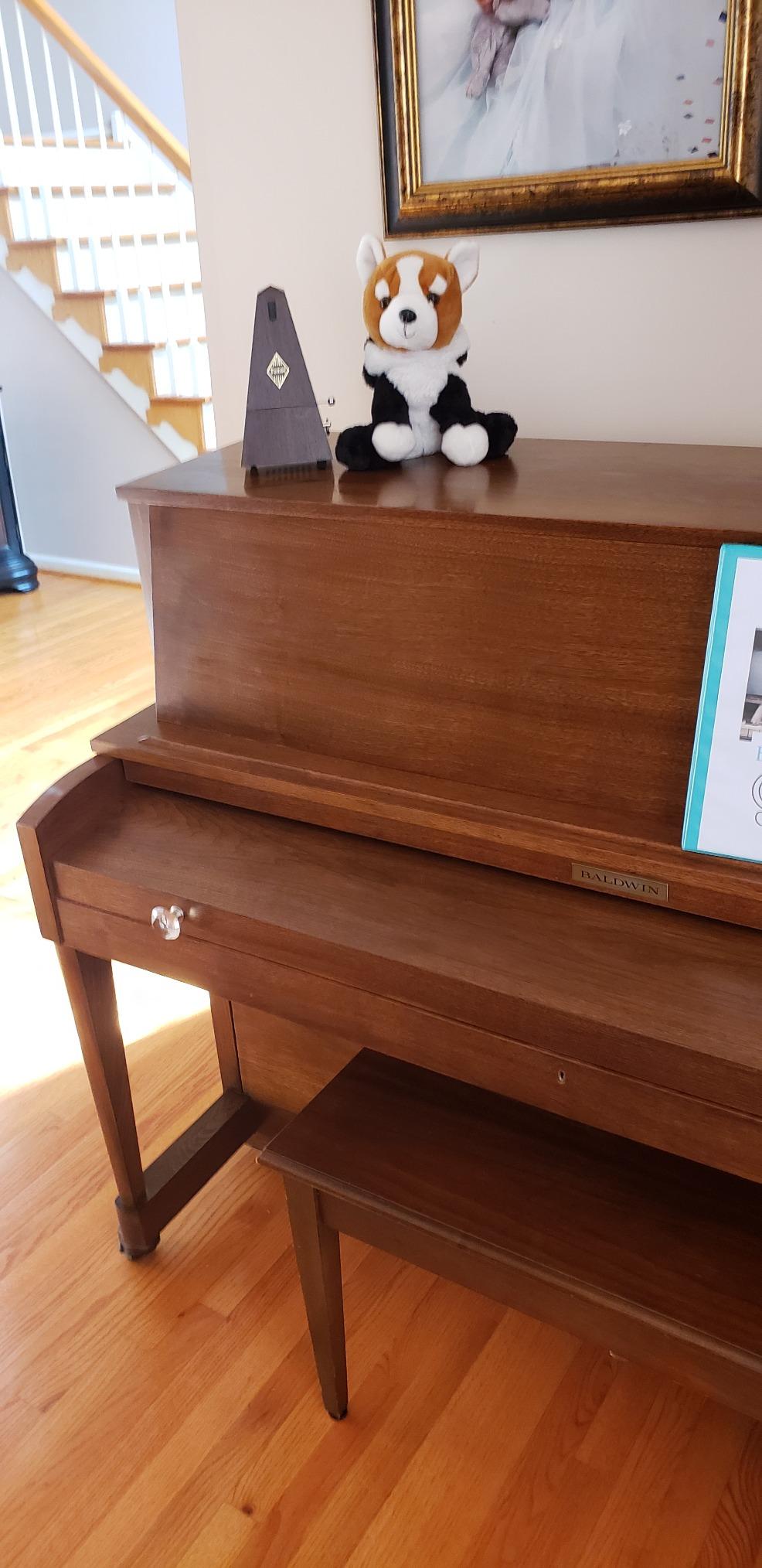
It runs quietly enough for a shared practice room, needs no charging and no spares, and the mahogany-grain finish looks like a piece of furniture on a piano lid or a shelf. A two-year warranty and a cleaning cloth are included.
What a mechanical movement trains that a digital one does not
Visual timing. A pendulum swing gives you a continuous, physical picture of where you are inside the beat, and it is the training tool that makes subdivisions click for players who find them invisible. The tempo is also genuinely physical, so setting a speed takes one continuous movement instead of a sequence of button presses.
There is a psychological benefit too. A wind-up metronome cannot receive a call, cannot run out of battery and cannot update, which for some players removes the temptation to check a screen mid-exercise. It asks for nothing except your attention.
Where the Tempi frustrates players
It is plastic with a wood-grain veneer rather than solid wood, and while the mechanism itself feels well made, the cabinet does not. There is no volume control at all, so you cannot soften the click for a shared room, and the tick-tock is thinner and lighter than a true wooden-box metronome.
You will need to rewind it during a long session, and there is a first-buyer trap worth flagging: shipping foam inside the case has to be removed before it will run at all. One owner also reported the delivered colour not matching the listing photos.
6. Ueteto Review: Best Loud Metal Metronome for Practice Rooms
Ueteto Mechanical Metronome Black/Loud Sound Piano Drum Violin Guitar
1.2 pounds, 9.49 x 4.96 x 4.41 in package
40-208 BPM
2160 clicks per wind
Pros
- Loud and penetrating click that carries over an acoustic instrument
- No batteries so it works anywhere with no charging or spares
- Metal construction feels sturdier than plastic wind-up units
- Bell on selectable beats helps students hear the downbeat
- Wide 40-208 BPM range covers slow practice through fast rudiment work
- Simple enough for a first-time owner to operate
Cons
- Fixed volume with no way to soften the click
- Needs periodic rewinding during a long session
- Tick sound is thinner than a wooden mechanical metronome
- No subdivision or accent options beyond the standard bell
The Ueteto is the loudest wind-up option here, and that is its entire argument. The click carries over an acoustic instrument without amplification, which matters in a shared practice room where a quiet mechanical tick simply disappears under a student practising scales next to you.
It is a fully mechanical, battery-free unit in a metal body, with a 40-208 BPM range, an audible click and a bell, and beat selection for zero, two, three, four or six beats. That covers the common time signatures, including the 3/4 that catches out beginners.
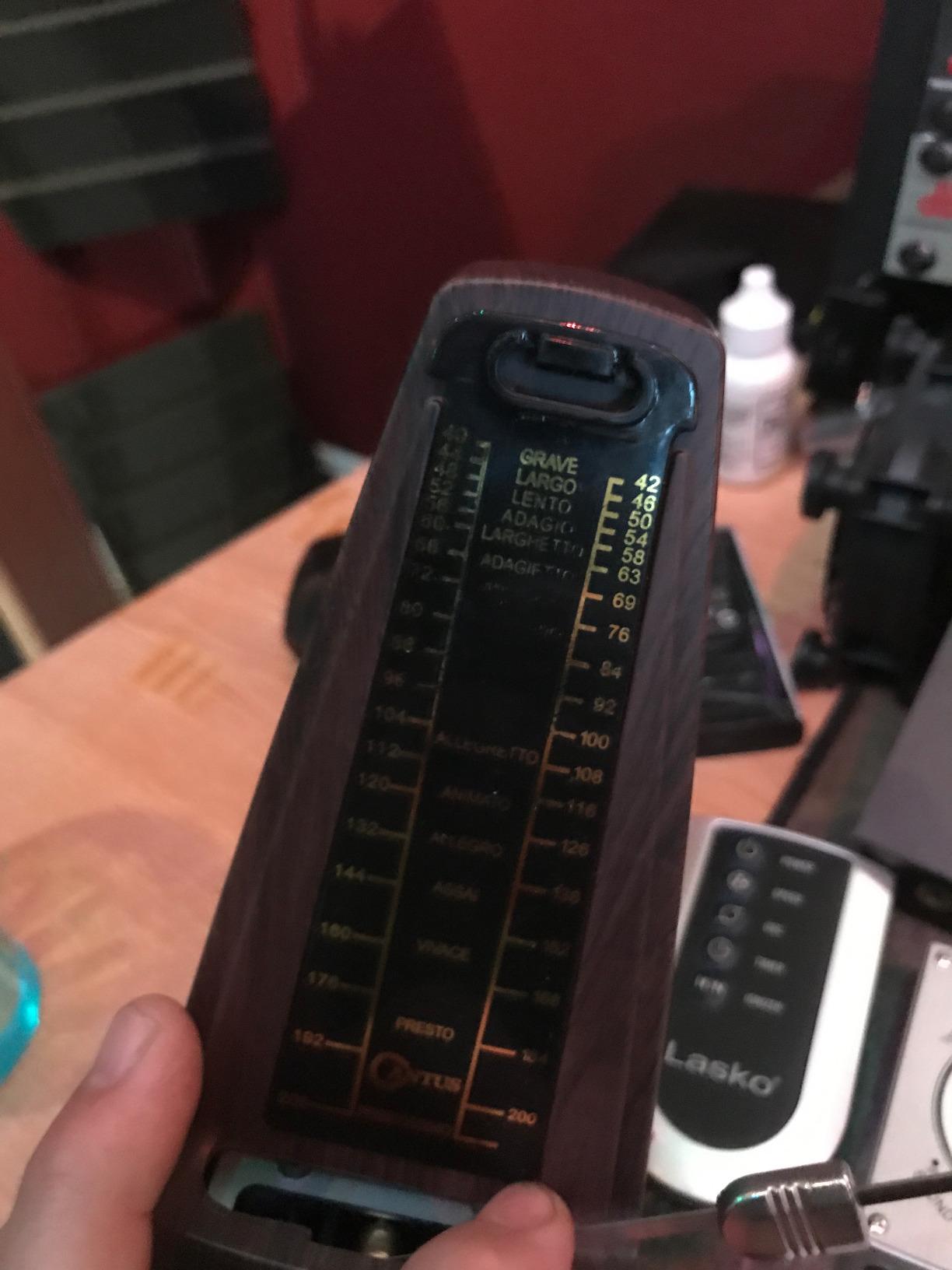
Setup is deliberately simple. Release the brake, pull off the cover, set the beat and tempo, and you are running. One full wind of 2160 clicks lasts at least 18 minutes depending on tempo, which is slightly less than the Tempi but more than enough for a focused block.
The metal construction is the reason it feels sturdier than the plastic wind-up alternatives, and the 1.2-pound body sits on a desk without sliding. For a child or a first-time metronome owner, there is nothing here to misunderstand.
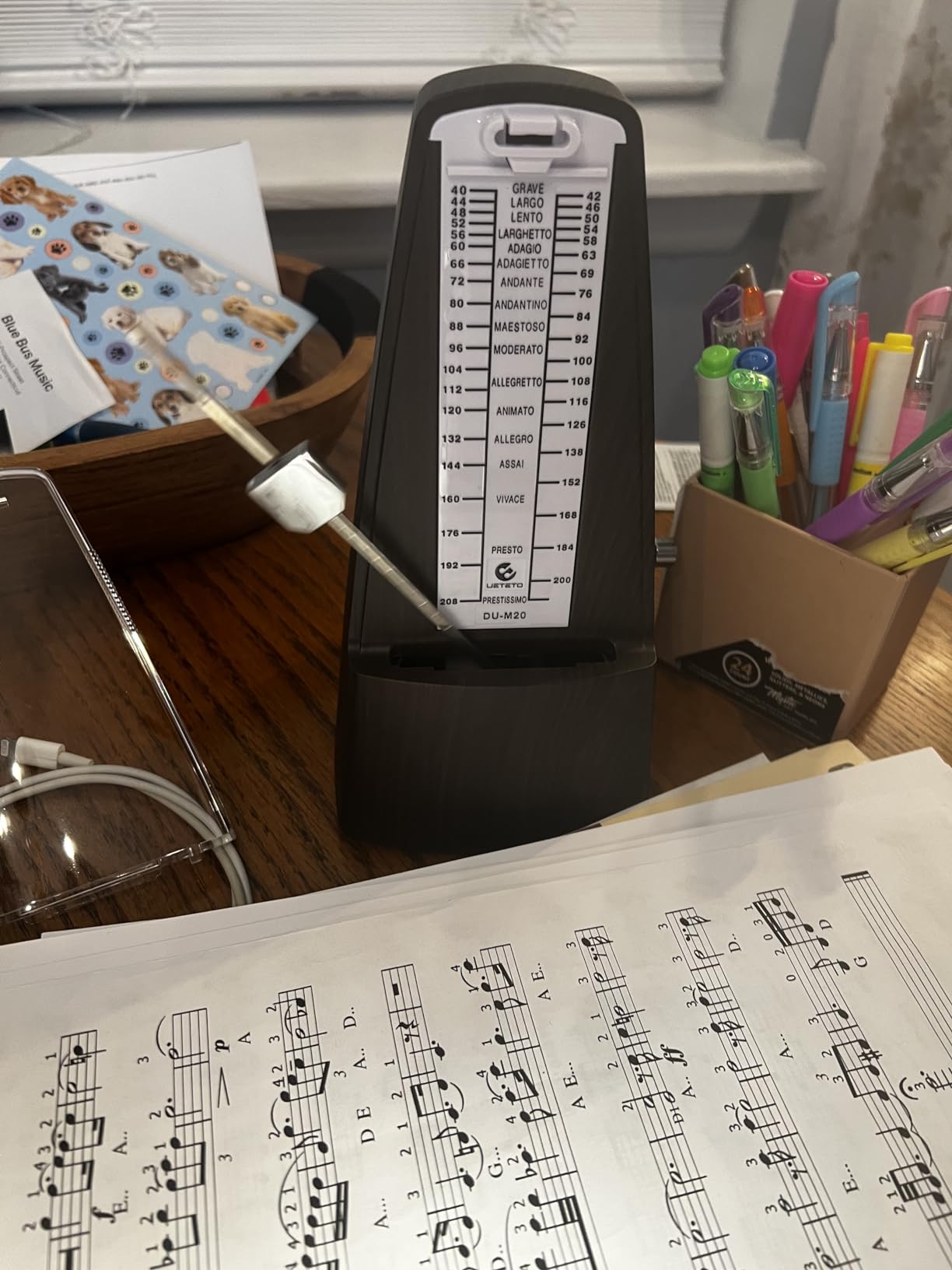
What the metal body and fixed tempo dial actually deliver
Loudness you cannot adjust is usually a flaw, but in a practice-room context it becomes a virtue. A penetrating tick that you can hear over an instrument without reaching for a volume control means fewer wasted minutes spent asking whether the metronome is on. For shared rooms and for playing along with another musician, that reliability is the point.
The wide tempo range also holds up for drumming specifically. Forty to 208 BPM spans slow warm-up grooves and fast rudiment sticking, so you are not swapping devices when you shift from a ballad to a double-time exercise.
Where the Ueteto falls behind
There is no volume adjustment at all, which is the single biggest limitation. In a quiet room with a soft-tipped practice pad, the click is louder than you want and you have no way to turn it down. You will also need to rewind it periodically during a long session, since it stops when the spring runs out.
The basic wind-up tick is thinner in tone than a wooden mechanical metronome, and there are no subdivision or accent options beyond the standard downbeat bell. If you want to isolate a sixteenth note, this unit simply cannot do it.
7. Donner DPM-1 Review: Best Decorative Metronome for a Home Music Room
Donner Mechanical Metronome for Piano Guitar Drum Violin Saxophone Musician, Track Beat and Tempo, Loud Sound, Steel Movement, DPM-1
1.32 pounds, 4.72 x 4.72 x 9.45 in
1 percent tempo tolerance
Four woodgrain finishes
Pros
- Very loud and penetrating tick audible alongside an instrument
- Steel movement and metal internals feel substantial
- Four woodgrain finishes to match a studio or music room
- Bell accent on 2 or 3 or 4 or 6 beats covers common meters
- Front cover lifts off for easy cleaning
Cons
- Fixed volume and a harsh tick with no tone control
- Reports of timing drift outside the stated 1 percent tolerance
- Some units ring the bell on the wrong beat
- Cabinet is wood-toned plastic that looks cheap up close
- Needs winding during long sessions
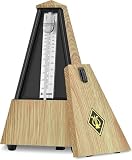
The DPM-1 is a classic pyramid cabinet in four woodgrain finishes, and it looks at home on a shelf next to a keyboard. If the metronome will live in a home music room where a plastic box would be an eyesore, that presentation is a real advantage over the digital units most people buy.
Underneath the cabinet is a steel movement with metal levers, pendulum and internals, which is why it feels more substantial than all-plastic competitors and survives being knocked off a shelf. The tempo range is 40-208 BPM set by sliding the weight on the pendulum rod, with a stated 1% tempo tolerance and a wood block click sound.
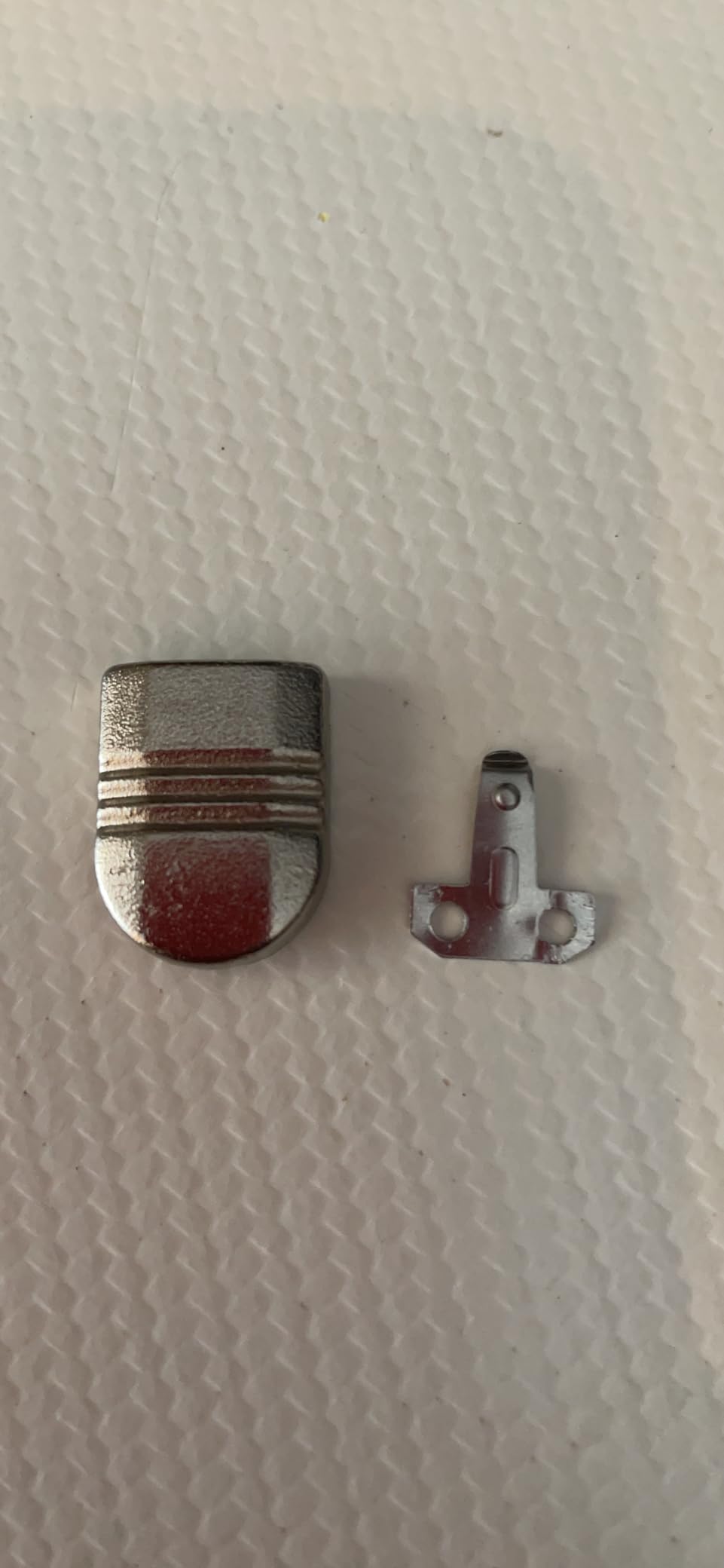
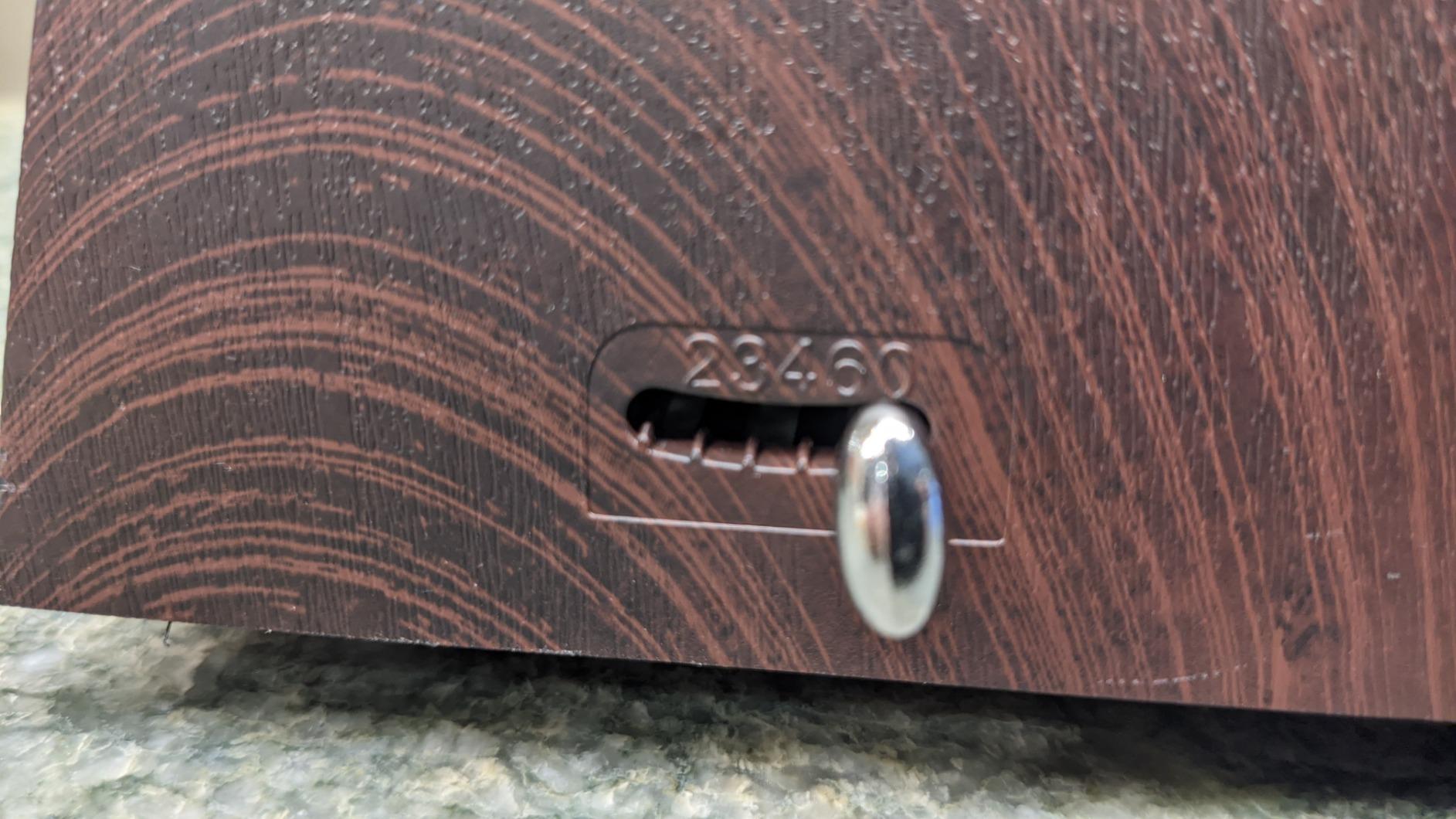
The bell accent is selectable on two, three, four or six beats via a side lever, and the front cover lifts off for cleaning. A removable plastic pendulum stopper makes it easier to transport, and the visual pendulum motion is easy to follow at a glance while your eyes stay on the kit.
There are no batteries, which is the whole appeal. Nothing to charge, nothing to lose, and it works the moment you pull off the cover.
What the steel movement buys you
Steel internals are the reason this unit outlasts plastic wind-ups in daily use. A heavier movement keeps a steadier swing, which is what you are actually training with, and the metal levers resist the wear that makes cheap mechanisms develop a limp over a few years.
It is also simply loud. Owners consistently describe the tick as clearly audible alongside an acoustic or amplified instrument, and for a drummer practising without in-ears that visibility matters more than any menu option would.
Where the DPM-1 quality complaints bite
There is no volume adjustment, and the tick is described as harsh with no pleasing tone, which is a real cost in a shared room. More seriously, a cluster of reviews reports timing drift outside the stated 1% tolerance, and several report the bell counter striking double the selected beat, for example six on the three setting. Check both immediately after purchase.
The cabinet is wood-toned plastic that looks cheap up close, some units arrived with loose parts and a movement that clunks, and one owner received a lower-spec version than pictured. You will also need to wind it down periodically during longer sessions.
8. Sondery Rechargeable Review: Best Value Digital Metronome for Drummers
Sondery Digital Metronome Rechargeable Vocal Counting for Piano Guitar Drum
4.3 oz, 3.35 x 1.14 x 4.96 in
40 to 208 BPM dial
10 beat patterns
Pros
- Spoken count-in helps younger students and beginners find beat one
- Physical tempo and volume dials are more tactile than a touchscreen
- Rechargeable battery removes disposable cells
- Speaker output is clear and loud over an acoustic instrument
- LED visual pulse with an option to mute audio
- Practice timer at 15 or 30 or 45 or 60 minutes
- Compact enough for a gig bag with a kickstand
Cons
- Tap tempo is unreliable on some units
- Timer and tap functions have returned essentially random tempos
- Maximum volume is not very loud for a live acoustic kit
- Dim yellow backlit screen in bright light
- Stiff kickstand and a voice count some players find distracting
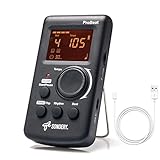
The Sondery is the highest-rated unit in this group, and the reason is unusual: it combines features usually reserved for more expensive hardware. Spoken vocal counting, a colour screen, ten beat patterns, a rechargeable battery and a practice timer, all with physical dials rather than a touchscreen.
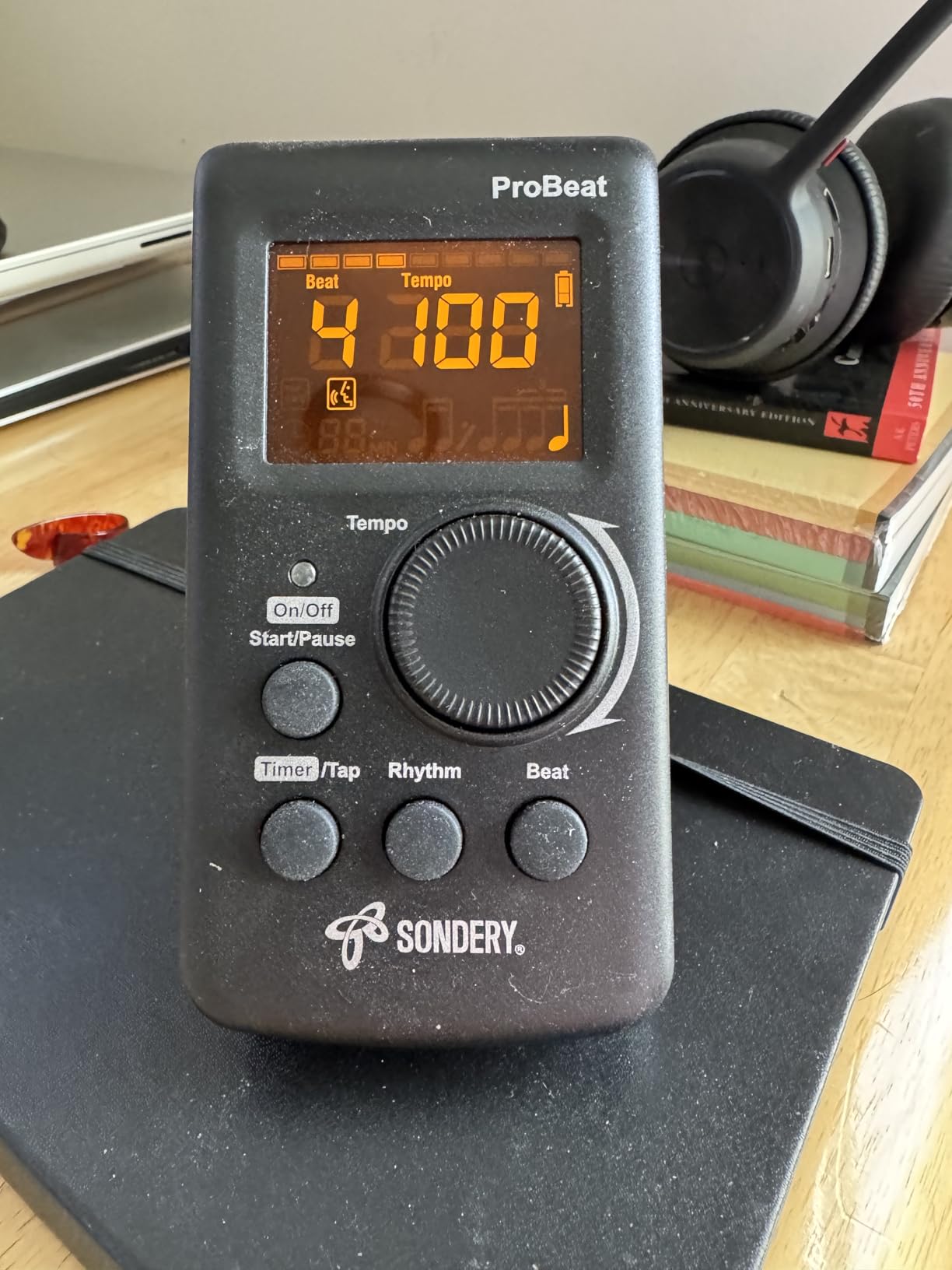
The tempo dial runs 40 to 208 BPM in single-BPM increments, which is a genuine step up from stepped dials that cannot land on an exact figure. Ten beat patterns cover zero through nine beats per measure, three selectable digital click sounds are on board, and independent tempo and volume dials sit on the top with a side button for switching sound type.
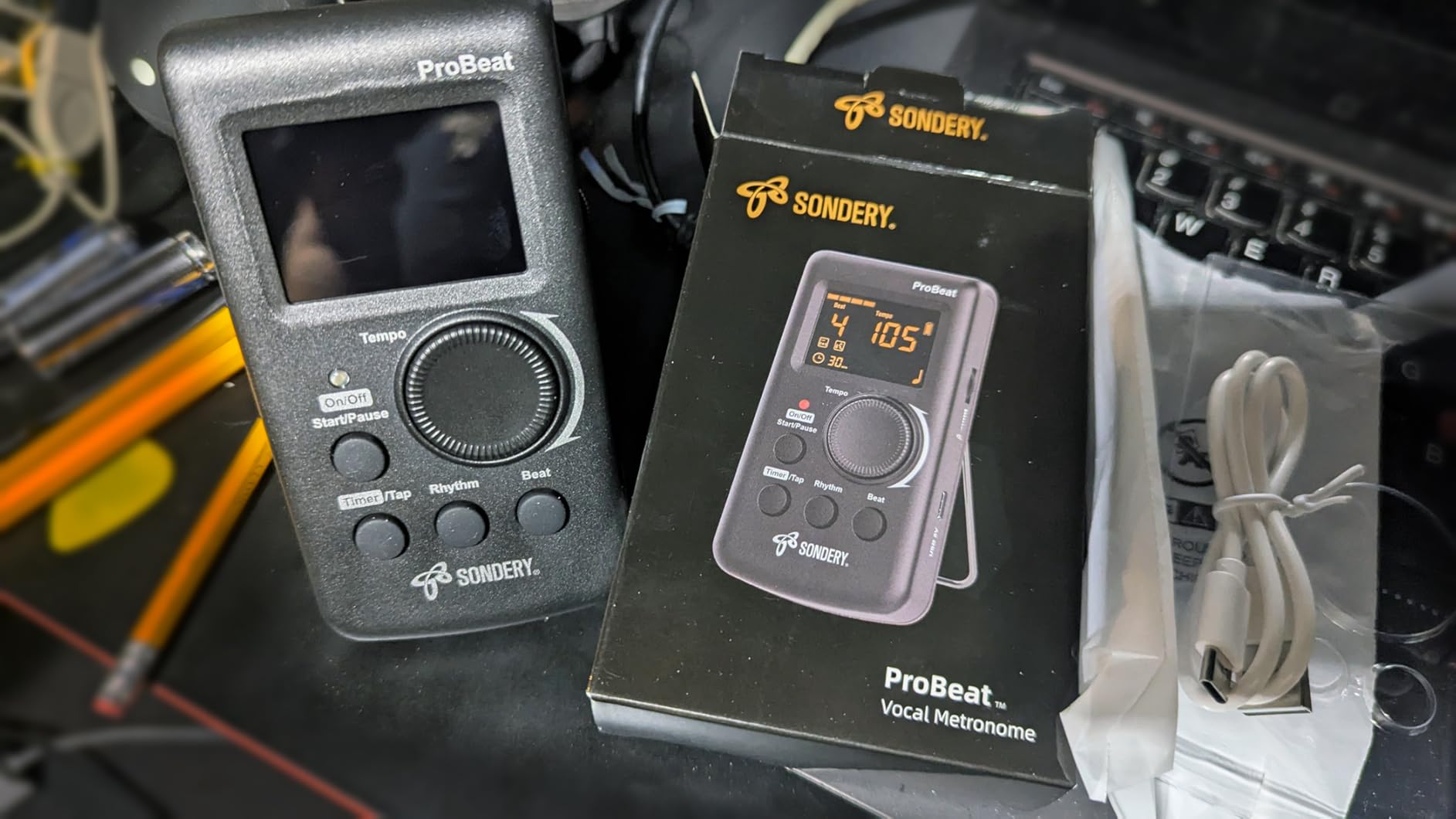
For a drummer, the most useful trick here is turning the audio off entirely and playing to the LED pulse, or to the spoken count, which makes it workable for working out the tempo of a recorded track without adding a click to the mix. The LED flashes red on beat one and green thereafter, so the downbeat is unmistakable even in a dim room.
It charges from any 5V USB source over USB-C, so there is a cell to forget or replace, and at 5 by 3 by 1 inches with a kickstand it fits a music stand or a gig bag. A 3.5mm earphone jack covers silent practice, and practice timers at 15, 30, 45 or 60 minutes give a practice session a boundary.
Why spoken counting and tactile dials help a drummer
The voice count-in is the feature that gets the most praise from younger players and beginners, because it removes the single biggest source of frustration in early drumming: not knowing where beat one is. Hearing one-two-three-four out loud lets a student start on the correct note instead of guessing.
Physical dials matter on a kit, where you are rarely holding the unit carefully. A tempo or volume change takes one twist, and nothing happens if a stick brushes the screen. There is no touch interface here at all, which is deliberate and, for a drummer, correct.
Where the Sondery needs testing before you rely on it
Test the tap tempo the moment it arrives. Several reviewers report it returning inconsistent readings, and some report the timer and tap functions returning essentially random tempos, which is a serious defect if you plan to set tempos by feel.
Maximum volume is not very loud for playing over a live acoustic instrument, which puts a ceiling on it for full-volume kit work. The yellow backlit screen is dim in bright light, the kickstand is stiff and hard to extend, and the spoken count can be distracting for players who prefer a plain tick.
How to Choose a Drum Metronome: 8 Criteria That Matter
Almost every buyer picks a metronome on price or appearance, then discovers the spec that mattered was the one nobody lists. These are the eight we check, in the order that decides most purchases.
1. How loud is loud enough for a live kit?
This is the problem that pushes drummers back to their phones and then back to forums asking for help. A click that is comfortable over a practice pad can vanish entirely under four cymbals at rehearsal tempo. Three solutions work, in descending order of our preference: a haptic wearable, in-ear monitors fed from a headphone output, and a speaker loud enough to punch through the kit. Buying for scenario rather than volume solves it.
2. Headphone and earphone output
A headphone output is the cheapest upgrade to your practice setup that exists. It lets you run the click in one ear and hear your own playing honestly, which is how you spot a rushing right hand that a louder speaker would simply hide. The BOSS DB-90 has full headphone output, the Seiko and Sondery have 3.5mm earphone jacks, and the Korg MA-2 has none.
3. Tempo range and subdivision control
Most units top out around 208 BPM, which is plenty for most grooves but thin for double-time sticking. The bigger gap is subdivisions. A drummer needs accent, quarter, eighth, sixteenth and triplet with independent volume per subdivision, because a blended tick teaches you nothing about where the sixteenth sits. Only the DB-90 in this list gives you that control, and it is why it wins.
4. Time signatures and odd meters
If you play anything beyond 4/4, check the beat range before buying. The Korg MA-2 runs from zero to nine beats and the Sondery offers ten patterns, while mechanical units cover the common meters through a bell on two, three, four or six beats. The DB-90 does not support odd signatures at all, which is the single feature that would most improve it.
5. Memory and presets
Memory only matters if you rehearse songs rather than exercises, and then it matters enormously. Fifty slots on the DB-90 means every song in a set keeps its own tempo and subdivision setup. Entry-level digital units re-enter figures between pieces, which quietly eats into practice time.
6. Display, backlight and readability
Read the screen from where you actually sit. Small displays are unreadable on a music stand from across a room, and dim yellow backlighting washes out in a bright practice space. The MA-2 has a 30% larger display with beat visuals, the Sondery has a colour screen, and the mechanical units need no power at all.
7. Power, charging and what happens when it dies
This is the deal breaker forum users name most often. A battery that dies mid-practice loses you the click and, on some units, the memory. On drum forums, buyers repeatedly single out rechargeable batteries and USB charging as the deciding feature between otherwise similar units. A single 9V cell that lasts close to a year, as on the Seiko, and alkaline cells rated for hundreds of hours, as on the Korg, are both better answers than a unit that needs weekly attention.
8. Mounting and stage-readiness
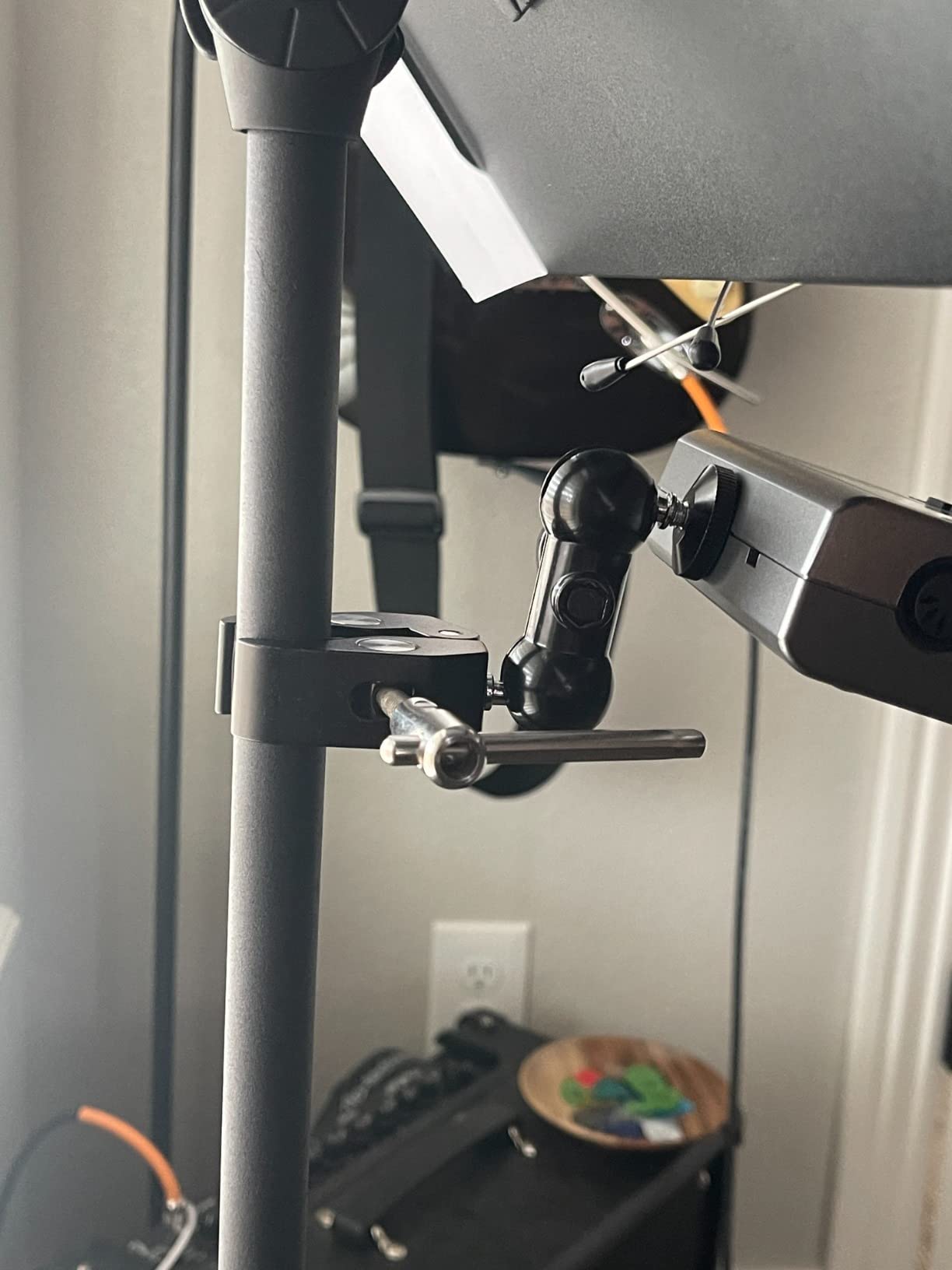
Where does the unit actually live while you play? A kickstand handles a desk. A music stand, a cymbal stand or a hi-hat clip handles a kit, and most digital units ship with only a kickstand. The Seiko has a fold-out wire stand, the Sondery has a kickstand, and if you need it on hardware while gigging, budget for a clamp.
One more practical note: setting a starting tempo. Most players should begin around 60 to 70 BPM, roughly half of a moderate groove, and build by moving up five or ten BPM at a time. Raise the click one subdivision at a time rather than the whole pattern at once, and drop back to a tempo where you can play perfectly before pushing again.
Hardware vs App: Which One Should You Practise With?
Both sides of this argument are right in different rooms. Phone apps are free, update instantly and can mute random bars to test your internal timing. Hardware costs money, needs batteries and cannot be reprogrammed mid-set. The forum consensus is that a phone can die mid-session from a call or a low battery, and that a standalone unit feels rock solid by comparison, and those are the deciding factors for anyone playing out.
Use a hardware unit for rehearsals, lessons, gigs and any session where you cannot afford an interruption. The loudness, memory and battery behaviour are all better, and you stop thinking about the device entirely.
Use an app for internal timing training and for working out the tempo of a recording. Gap Click is valued for exactly this, muting random bars so you find out whether you can hold time with no reference at all. A wearable occupies the middle ground: you feel the pulse instead of hearing it, which removes the masking problem without giving up the external reference.
If you take one habit from this roundup, make it running the click in one ear through in-ears. Every audibility problem we hit in testing became solvable the moment the click stopped sharing a room with the cymbals.
Frequently Asked Questions
What is the best metronome for drummers?
The best metronome for drummers is one with a click loud enough to survive an acoustic kit, an earphone or headphone output for silent practice, and real subdivision control with independent volume per subdivision. The BOSS DB-90 Dr. Beat meets all three and adds 50 memory slots, so it takes our top spot. For silent practice, the Soundbrenner Pulse replaces the click with a vibration you feel rather than hear.
Do drummers use a metronome?
Most working drummers do, and the ones who skip it are usually the ones already rushing. A metronome is the only reference that does not move with you, so it is the tool that fixes timing directly. Drummers also use them for recording, where a steady click track is what keeps a take usable. The objection that a click makes you play mechanically is a symptom of practising slowly enough to notice it.
What metronome speed should I use?
Start at about 60 to 70 BPM, which is roughly half the tempo of a moderate groove, and build from there. Raise the click one subdivision at a time rather than moving the whole pattern up at once. Move up five or ten BPM only when you can play the passage perfectly at the current tempo, and drop back whenever accuracy breaks down.
What is the best brand for metronomes?
BOSS leads for programmable features and is the most frequently recommended name on drum forums, with the DB-90 Dr. Beat as its standout model. Korg is the dependable budget and school option with a loud buzzer and very long battery life. Seiko makes the classic teaching metronome, and Soundbrenner leads the wearable and haptic category. Choose by scenario rather than brand loyalty.
Is a metronome bad for drummers?
No, but a badly chosen one can be. A click you can barely hear trains you to play quietly and imprecisely, and a click that dominates the mix trains you to play passively. Pick a unit with a headphone output or a vibration, set it to a tempo you can comfortably play, and raise the click gradually. Players who rush usually need a slower tempo and a louder reference, not no reference.
The Best Metronomes for Drummers: Final Verdict
After weeks with all eight, the BOSS DB-90 Dr. Beat remains the best metronome for drummers overall, because it is the only one that combines per-subdivision control, programmable rhythms, 50 memory slots and a headphone output without asking you to give anything up. Its durability complaints and hungry 9V batteries are real, but no other unit here replaces what it does.
Match the rest to your situation. Practise silently, or share a room with a loud kit, and take the Soundbrenner Pulse. Teach a student, or want the fastest possible tempo changes, and take the Seiko SQ50-V. Need odd meters and a battery you never think about on a tight budget, and take the Korg MA-2. Want the visual picture of a swinging pendulum, and take the Tempi. Want maximum wind-up volume in a shared room, take the Ueteto. Want a metronome that looks good on a shelf, and can accept timing drift risk, take the Donner DPM-1. Want spoken counting, a rechargeable cell and single-BPM steps, and test the tap function first on the Sondery.
Whichever you choose, run it through one ear. In 2026 the best metronome is the one that stays steady, stays audible and lets you stop thinking about it.