

Wood dust is the by-product nobody plans for. A table saw run for an afternoon will coat every surface in your shop, settle into your rafters, and follow you into the house in your clothes. The fix is a real extraction system, and picking the wrong one wastes both money and floor space.
That is why the best dust extractors for woodworking shops is a harder question than it looks. A collector built for a 20 by 40 foot building and a canister extractor for a miter saw in a one-car garage solve completely different problems, and the retailers use the same three words for all of them. I spent the last few months working through the specifications, the filter costs, and the owner complaints on these ten units so you can skip the guesswork.
Every pick below is measured against the same criteria: airflow in CFM, the static pressure it can push against, micron rating, noise, and how much floor or wall space it eats. I also flagged who should skip each one, because the most common buying mistake in this category is buying a large collector for a small shop. The short version: if you run one machine at a time in a tight space, go compact and quiet. If you run a planer and a table saw and hate emptying bags, go big.
Table of Contents
Top 3 Picks for Woodworking Dust Extractors (October 2026)

Bosch VAC090AH 9 Gal HEPA
- 150 CFM
- 99.97 percent HEPA at 0.3 microns
- auto filter clean every 15 seconds
- 60 dB
Those three cover the widest range of real shop situations: a quiet canister for fine dust, a premium portable unit you can leave running while you work, and a high-airflow mobile collector for machines that make real volume. The other seven fill in the gaps between them, from a wall-mounted 537 CFM unit to a 660 CFM budget starter.
Quick Overview: Best Dust Extractors for Woodworking Shops in 2026
| Product | Specs | Action |
|---|---|---|
| Bosch VAC090AH 9 Gallon HEPA Dust Extractor |
|
Check Latest Price |
 Fein Turbo I 5.8 Gallon Wet/Dry Dust Extractor Fein Turbo I 5.8 Gallon Wet/Dry Dust Extractor |
|
Check Latest Price |
| POWERTEC DC1081 1 HP 800 CFM Dust Collector |
|
Check Latest Price |
 JET DC-1100VX-CK 1.5 HP Vortex Cone JET DC-1100VX-CK 1.5 HP Vortex Cone |
|
Check Latest Price |
 DEWALT DWV010 8 Gallon HEPA Extractor DEWALT DWV010 8 Gallon HEPA Extractor |
|
Check Latest Price |
 Makita VC4210L 11 Gallon HEPA Extractor Makita VC4210L 11 Gallon HEPA Extractor |
|
Check Latest Price |
 Shop Fox W1826 Wall Dust Collector Shop Fox W1826 Wall Dust Collector |
|
Check Latest Price |
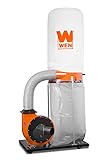 WEN DC1300 1300 CFM Dust Collector WEN DC1300 1300 CFM Dust Collector |
|
Check Latest Price |
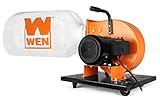 WEN DC3474 Induction Motor Dust Collector WEN DC3474 Induction Motor Dust Collector |
|
Check Latest Price |
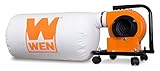 WEN DC3401 660 CFM Dust Collector WEN DC3401 660 CFM Dust Collector |
|
Check Latest Price |
Read that table as three separate tiers rather than one ranking. The top three rows are handheld and machine extractors that sit next to a tool and pull fine dust through a small hose. Rows four through ten are bulk collectors that take chips from a table saw, planer, or jointer through 4-inch ducting.
What a Dust Extractor Actually Is (And What It Is Not)
Retailers use extractor, collector, and shop vac interchangeably, and that confusion is the single biggest reason people buy the wrong machine. Here is the honest split.
Dust extractor means a portable or wall-mounted unit that pulls dust from one machine through a hose, with a filter or bag that captures the fine fraction. Bosch, DeWalt, Makita, and Fein all fall into this group. Airflow figures in the 148 to 151 CFM range are normal because the hose is small, typically around 1.25 to 1.5 inch.
Dust collector means a larger stationary or mobile unit with a 4-inch inlet and several hundred CFM or more, built to swallow chips from a table saw, planer, jointer, or bandsaw. POWERTEC, JET, Shop Fox, and all three WEN models are collectors. A collector plugged into a random orbital sander is overkill; a canister extractor hooked to a jointer will choke on shavings.
Shop vac means a wet/dry vacuum. It handles spills, cleanup, and bulky debris, and it is the right tool for the floor but the wrong tool for sustained fine-dust capture at a machine.
Cyclone separator is a third category that often gets bolted onto a collector. It spins heavy debris into a drum before air reaches the filter, which keeps the filter from clogging. Several of the collectors here work far better with one added, and forum owners consistently name that as the reason their filters last.
1. Bosch VAC090AH 9 Gallon HEPA Dust Extractor – Best Overall for Fine Dust
Bosch VAC090AH 9 Gallon Dust Extractor with Auto Filter for Grinder 1773AK
150 CFM max airflow
97 in static water lift
99.97 percent HEPA at 0.3 microns
9 gallon tank
60 dB
Pros
- Highest satisfaction in this roundup at 4.6 stars across 456 reviews
- Automatic filter cleaning every 15 seconds holds suction on long jobs
- HEPA capture of 99.97 percent of particles at 0.3 microns and larger
- Power Broker dial matches suction force to the application
- Tool activation starts and stops the unit with your tool
Cons
- Premium tier cost for a 9 gallon canister
- 9 gallon tank still fills quickly on heavy concrete and plaster dust
- Extractor class only so bulk chips need a separate collector
This is the unit I recommend to the most people. The Bosch VAC090AH pairs a 150 CFM airflow with a filter that cleans itself every 15 seconds, which sounds like a small detail until you spend an afternoon sanding a batch of cabinet doors and notice your suction never fades.
Owner satisfaction is the highest of anything on this list at 4.6 stars across 456 ratings, with 83 percent of those giving five stars. That is not a small sample either, which is the part that convinced me. When a unit holds that score across hundreds of owners, the design is doing something right rather than getting lucky.
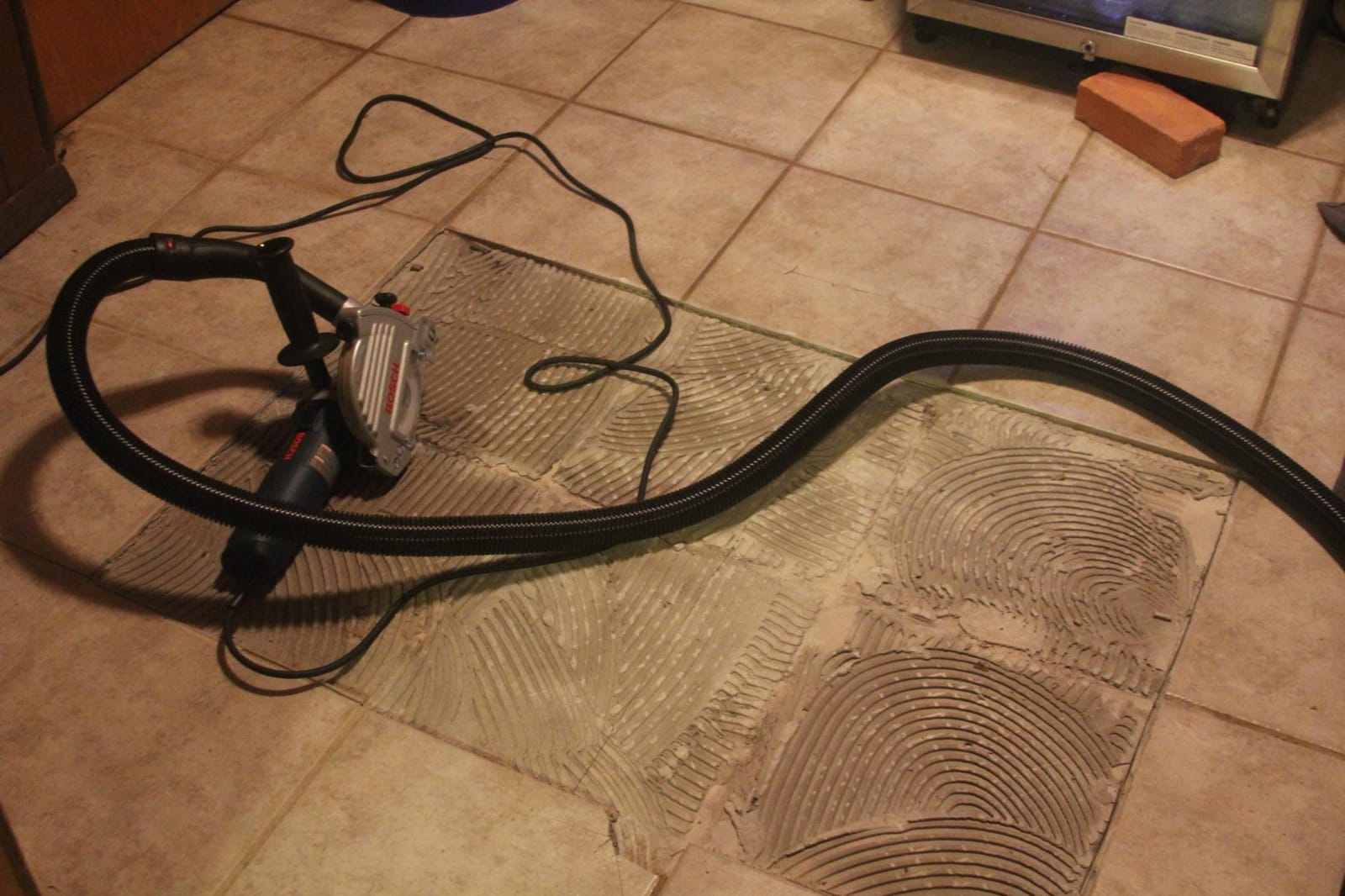
The filtration claim is the headline number: 99.97 percent of particles at 0.3 microns and larger. For wood dust that matters most when you are cutting MDF, melamine, or composite panels, where the airborne fraction is finer and stickier than plain hardwood dust. The included fleece bag sits upstream of the filter and takes the bulk of the load, so the expensive element lasts longer.
Three power settings on the Power Broker dial let you dial suction down for delicate work and up for grinding or heavy cleanup. Tool activation starts the extractor with your trigger and shuts it down afterward, which is the feature that keeps a canister from running all afternoon while you forget it.
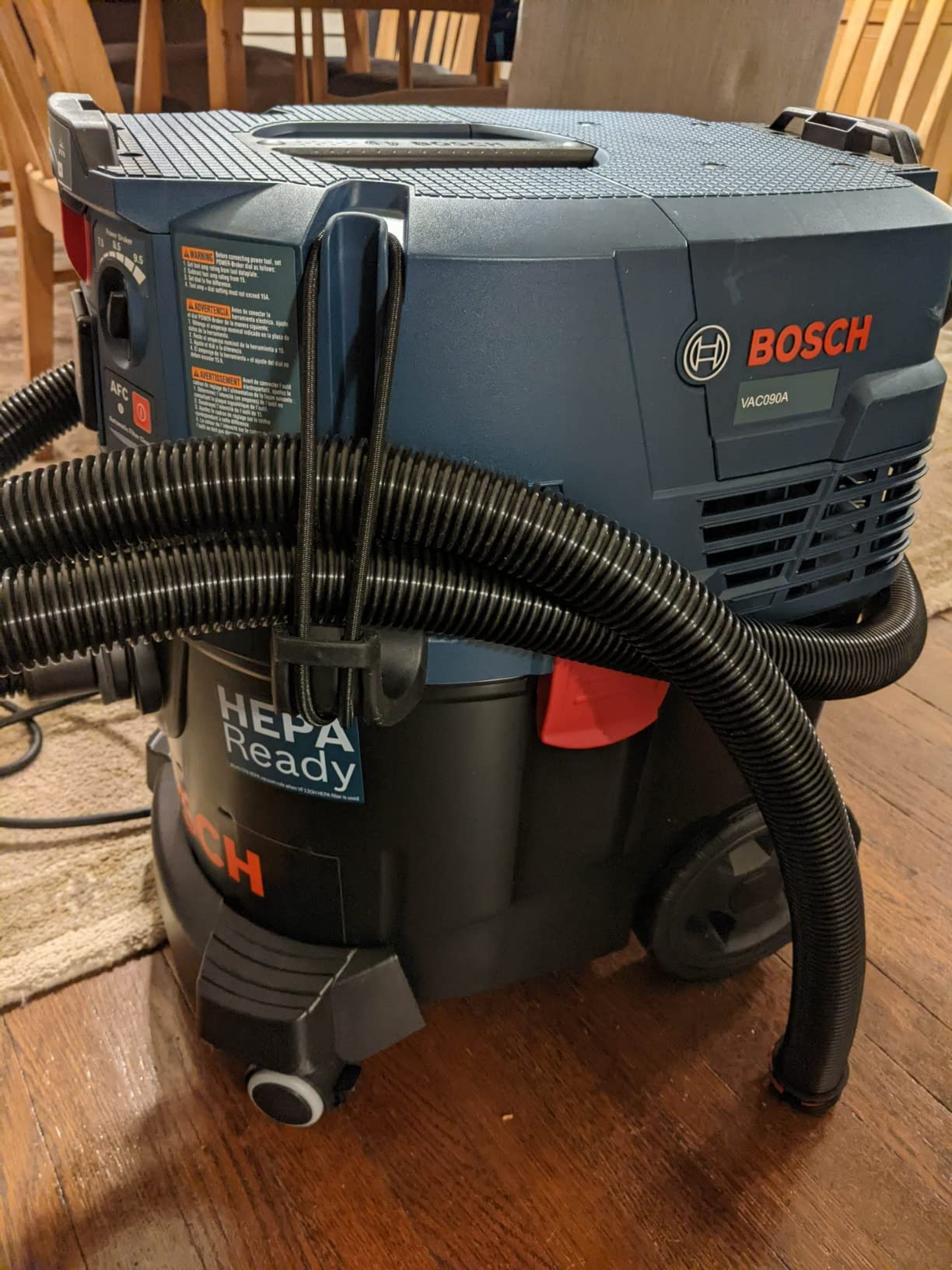
Who this extractor suits
It suits anyone whose dust problem is fine particles rather than bulk chips. Random orbital sanders, grinders, routers, and a miter saw with a proper dust hood are all handled well by 150 CFM through a small hose. If your shop is indoors or you share a wall with a neighbor, the 60 dB rating is the number that matters and it is a genuinely quiet machine.
Who should skip it
Skip it if your main machines are a table saw, planer, and jointer. Nine gallons is a small tank that fills fast on chip volume, and 150 CFM will not move air through 4-inch ducting with any real static pressure behind it. The cost also lands in the premium tier for what is a handheld-dust tool, so a buyer focused on bulk chip collection gets more for the money elsewhere on this list.
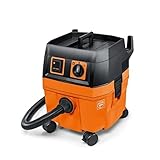
2. Fein Turbo I 5.8 Gallon Dust Extractor – Best for Quiet Indoor Shops
Fein Turbo I Set Wet/Dry Dust Extractor 5.8-Gallon Capacity
1100W turbine
151 CFM
98 in water lift
66 dB
5.8 gallon tank
Pros
- Very quiet at 66 dB for a machine with real suction
- 151 CFM and 98 in of water lift from a 1100W turbine
- 19 ft cord plus 13 ft hose covers a large working area
- Autostart outlet with power-on delay avoids current spikes
- Anti-static function and large 360 degree swivel wheels
Cons
- Smallest tank here at 5.8 gallons
- Extractor class only so large chip loads need a separate collector
- Hose and cord add cost when they eventually need replacing
The Fein Turbo I is the extractor I would put in a basement shop or a shared space, where noise matters more than tank size. At 66 dB it runs quietly while moving 151 CFM and 98 inches of water lift, which is a better balance than raw CFM figures alone suggest.
Owner feedback is consistent: 4.5 stars across 489 ratings with 76 percent at five stars. The phrase that keeps appearing is that it does not dominate the room. Owners also value the 19-foot cord and 13-foot hose, because you can set the unit in a corner and still reach a bench on the far wall without dragging it across the floor.
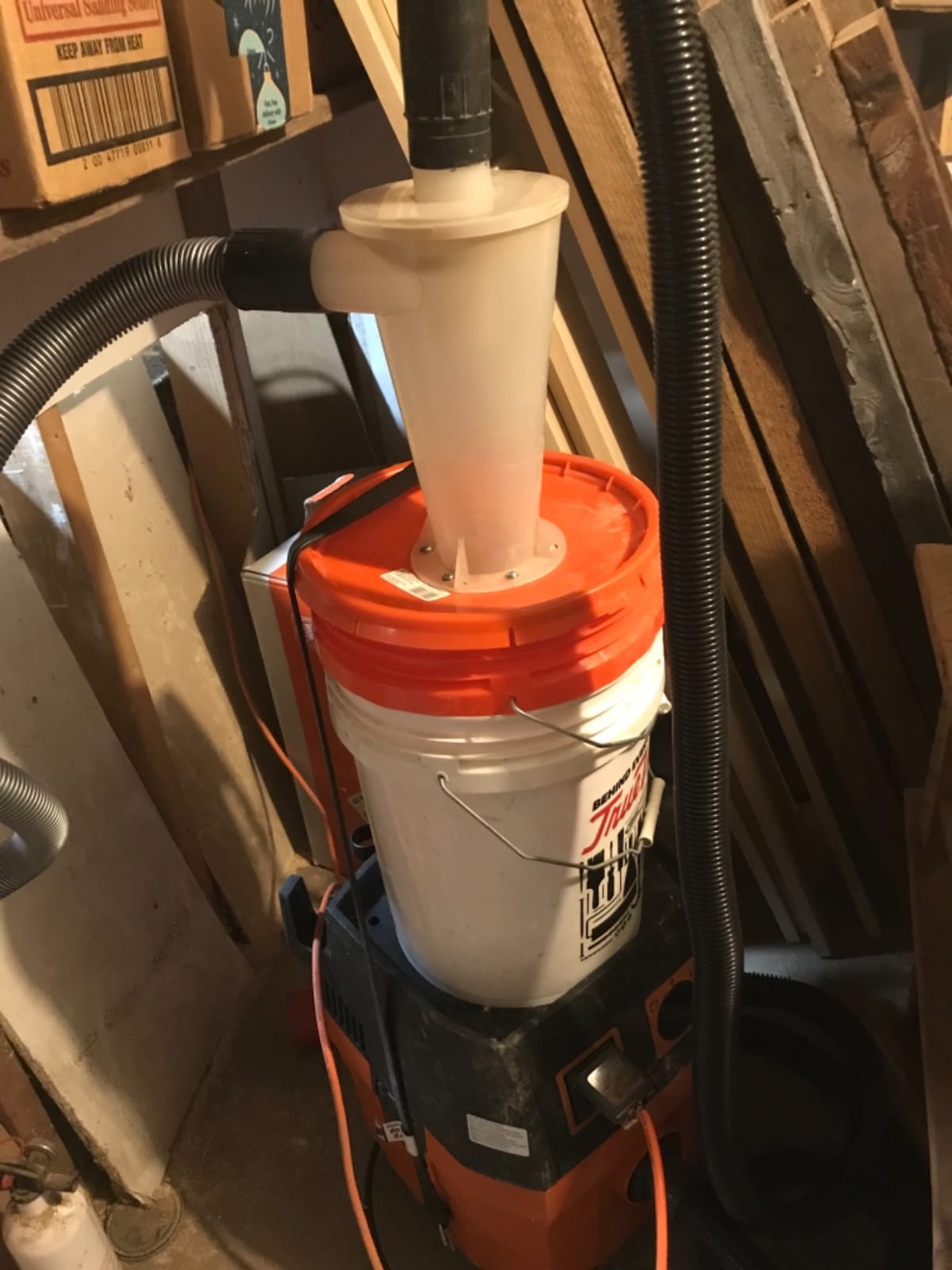
The autostart outlet with a built-in power-on delay is a detail worth noticing. Most tool-activated outlets slam the full load on at the same instant your sander starts, which can trip a residential circuit; the delay spreads that out. For anyone in a garage on a shared 15-amp circuit, that is a practical feature rather than a gimmick.
Three speed settings and an anti-static function round out the package, and the 360-degree swivel wheels make it easy to move around a tight bench layout. It is also the kind of unit that pairs naturally with a Festool or Bosch auto-fit hose, so if your tools already have a proprietary port, this is the least frustrating matchup.
Who this extractor suits
It suits fine dust work in a small, quiet space, particularly sanding, grinding, and routing. If noise is a live constraint because of neighbors or a household sharing the same wall, a 66 dB machine changes your workday more than any feature on the list. Owners of compact extractors like this often point out that it is technically a dust extractor rather than a collector, and that is exactly why it performs so well at the tool.
Who should skip it
Skip it if you generate a lot of debris. At 5.8 gallons, the smallest tank here, you will empty it often on heavy jobs, and there is no path to bulk chips through a 4-inch line. If your shop is already loud or your real problem is a table saw throwing shavings, this tier buys quiet rather than capacity.
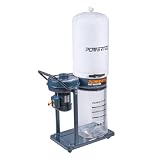
3. POWERTEC DC1081 1 HP Dust Collector – Best Value for Bulk Chip Collection
POWERTEC 1 HP Dust Collector with 1 Micron Dust Collector Bags and Mobile Base, Dust Collectors with 800 CFM for Woodworking Dust Collection System (DC1081)
800 CFM
1 HP 3450 RPM single phase motor
1 micron bags
55 pounds
15-1/4 x 25-1/2 in base
Pros
- 800 CFM covers a table saw
- planer
- or jointer with room to spare
- 1 micron bags capture a finer fraction than typical 5 micron fabric
- Quick-release clamps make bag swaps fast
- Caster base lets you move it between machines or mount it in one spot
- Can feed a centralized collection destination if you expand later
Cons
- Single-stage design so the bag is also the filter and airflow drops as it fills
- Assembly required on arrival
- 55 pound weight is heavy to move by hand
The POWERTEC DC1081 is the one I keep coming back to for anyone with a real machine and a normal amount of floor space. 800 CFM from a 1 HP single-phase motor is the sweet spot for a garage or a 20 by 40 shop, and the 1 micron bag is finer than the fabric bags most collectors at this size ship with.
It holds 4.4 stars across 494 ratings with 66 percent five stars and 86 percent at four stars or better. Buyers consistently call out adequate throughput for shop machines, casters that roll, and quick-release bag clamps that make emptying quick.
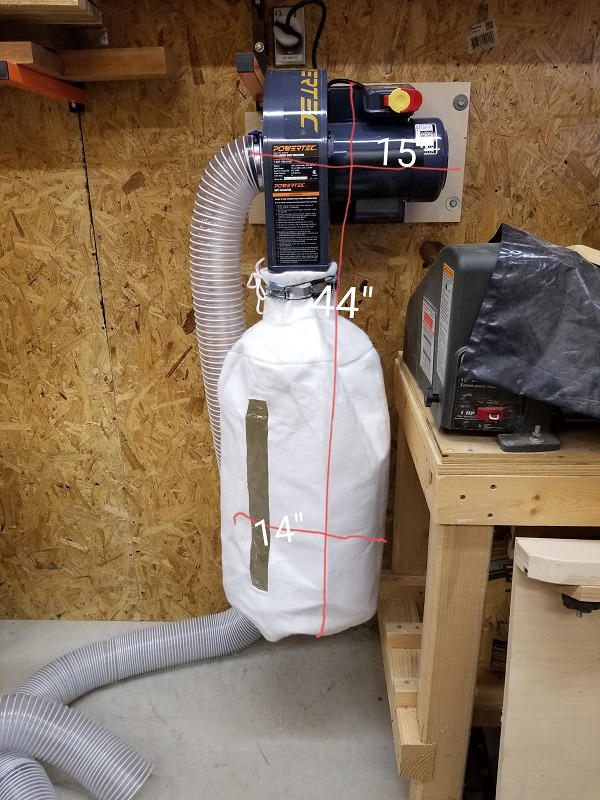
Two design choices matter more than the spec sheet. First, the single phase 120V/240V motor means you are not dealing with three-phase power, which rules out plenty of larger collectors for a residential shop. Second, the unit can feed a centralized collection destination later, so this is not a dead end if your shop grows.
The honest limitation is the single-stage layout. Because the collection bag is also the filter, airflow drops as it fills, and the 1 micron media is dense enough that this happens sooner than with a coarser bag. That is exactly the problem a cyclone separator solves, and adding one is the single upgrade I would make to this machine.
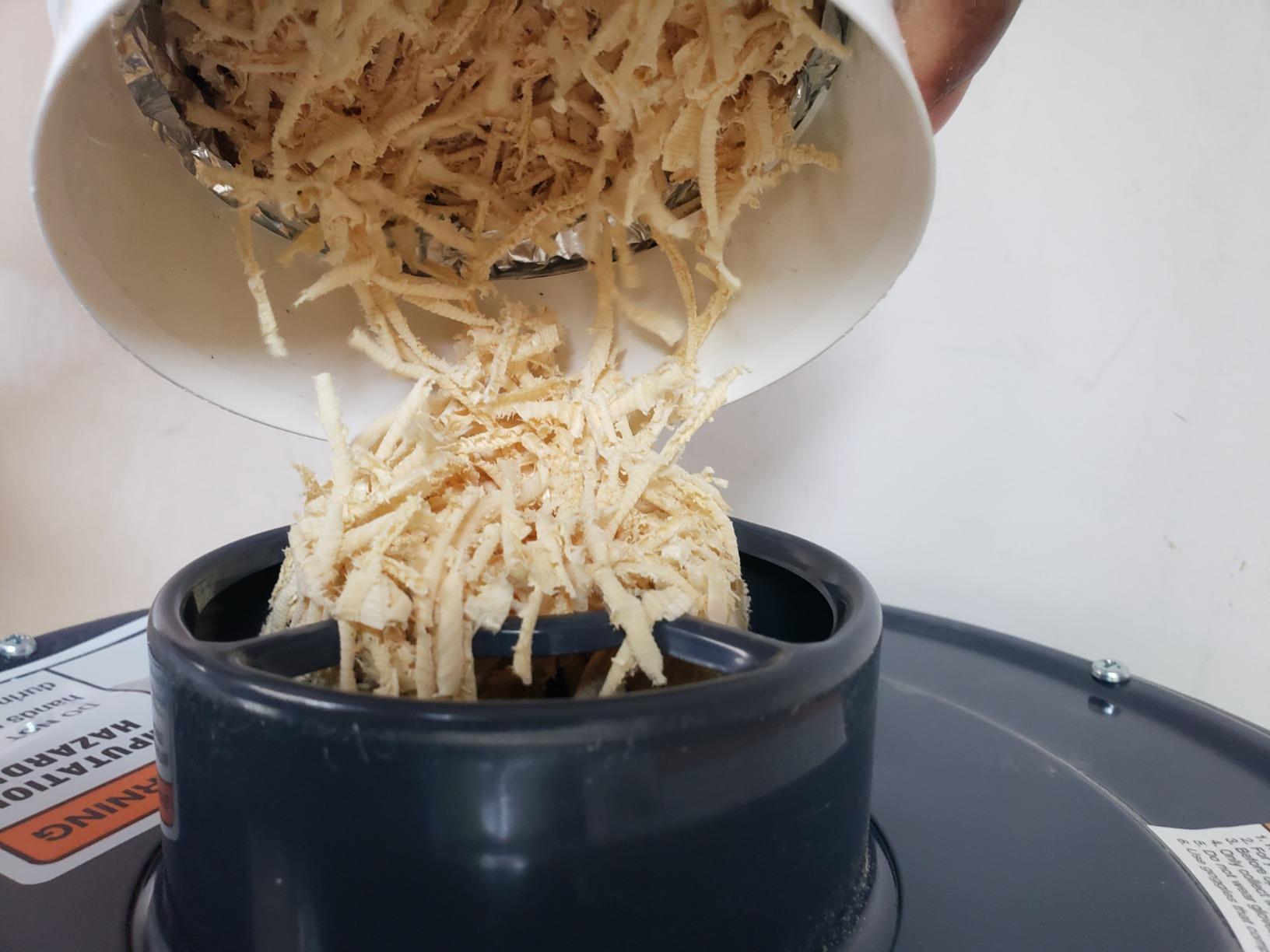
Who this collector suits
It suits hobbyists and serious part-time builders running a table saw, planer, or jointer in a garage or small shop on standard household power. At 800 CFM you have enough air to keep up with a planer through a 4-inch line, and 1 micron filtration is a step up for anyone working with MDF or fine sanding dust.
Who should skip it
Skip it if noise is your main concern. This is a 1 HP unit with no induction motor, and it is not quiet. Skip it if you only have a handful of hand tools, because 800 CFM and a 55-pound frame are overkill for a random orbital sander. And plan on a cyclone separator in your budget, because the single-stage bag is where the long-term running cost hides.
4. JET DC-1100VX-CK 1.5 HP Dust Collector – Best for Fine Dust at Volume
JET Vortex Cone Dust Collector with 2-Micron Canister Filter, 1-1/2 HP, 115/230V 1Ph (DC-1100VX-CK)
1-1/2 HP 115/230V single phase
2 micron canister filter
Vortex Cone separation
80 dB
continuous duty motor
Pros
- Continuous-duty totally-enclosed motor rated for long daily service
- 2 micron canister filter resists premature clogging
- Vortex Cone improves chip separation and packs bags more efficiently
- Quick-connect elastic-band bags change in seconds
- Single-stage design keeps noise and operating cost down
Cons
- Premium tier cost for a 1.5 HP single-stage unit
- Single-stage filtration trails a two-stage or cyclone setup on very fine dust
The JET DC-1100VX-CK is the pick for a shop where fine dust is the dominant problem and tank size is not. The 2 micron canister filter is a proper filtration element rather than a fabric bag, and the Vortex Cone sits upstream to improve chip separation so the bags pack more efficiently before the filter starts to suffer.
Owners rate it 4.5 stars across 195 ratings with 75 percent at five stars, the highest five-star share among the bulk collectors here. The recurring themes are the continuous-duty motor, the canister filter that resists clogging, and the quick-connect bags that use an elastic band instead of a clamp.
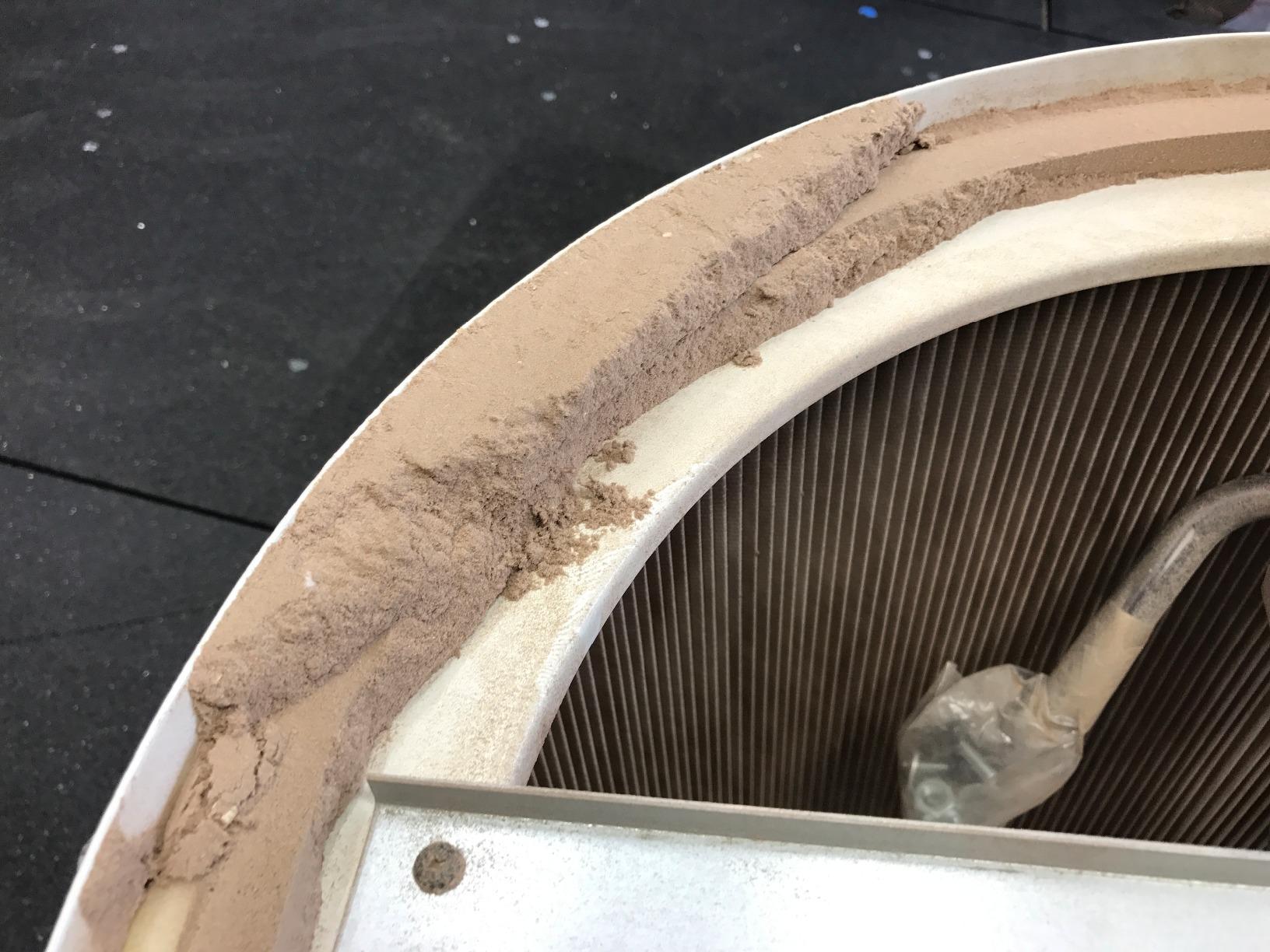
The motor specification is the real differentiator at this level. A permanently-lubricated, totally-enclosed, fan-cooled motor rated for continuous duty is a different class of part from the brushed motors in budget collectors, and it is why the warranty runs five years in residential use. JET also publishes that figure honestly, noting it drops to two years for commercial or industrial service.
At 80 dB it is not a quiet machine, but JET describes the single-stage layout as economical and quiet relative to two-stage designs, and at 1.5 HP on 115/230V single-phase power it still runs on ordinary residential circuits rather than requiring three-phase.
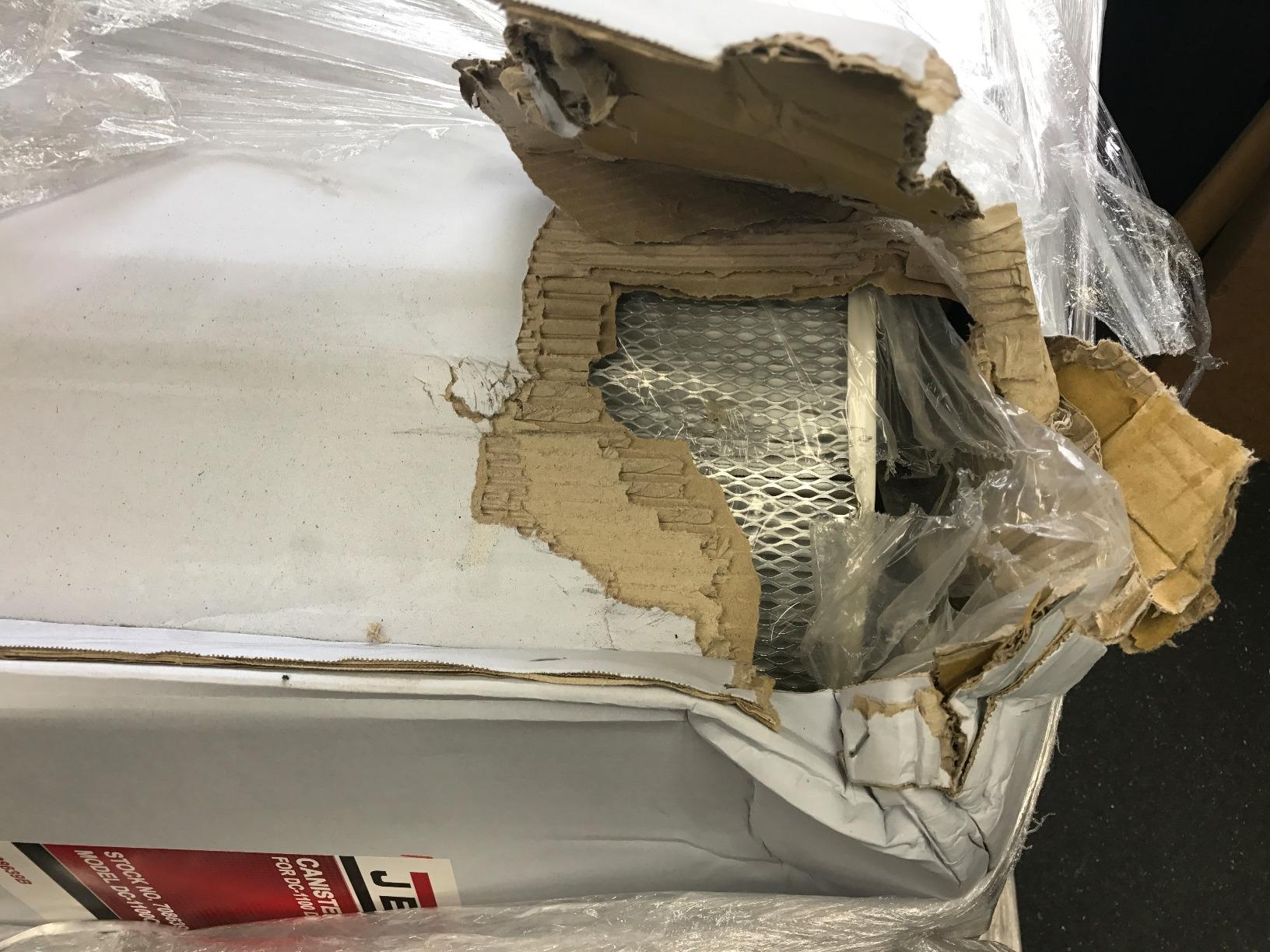
Who this collector suits
It suits a serious hobbyist or a small production shop that runs machines daily and cares about the air coming out of the collector. The canister filter is a good match for MDF, hard maple, and lots of finish sanding, and four casters make the full-size cabinet movable between machines. If you buy parts in this category once and want them to last a decade, the motor is the reason to look here.
Who should skip it
Skip it if your budget is modest. This is the premium-tier unit in the roundup, and the spend against a bag collector of similar airflow is the single complaint owners raise most often. It is also still single-stage, so a shopper who plans to grow into heavy fine-dust production is paying for a canister filter that a two-stage system would protect better.
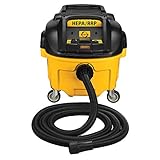
5. DEWALT DWV010 8 Gallon HEPA Extractor – Best for Auto-Start Convenience
DEWALT DWV010 HEPA Dust Extractor with Automatic Filter Cleaning, 8-Gallon
150 CFM airflow
HEPA with auto filter clean
8 gallon capacity
15 ft anti-static hose
22 pounds
Pros
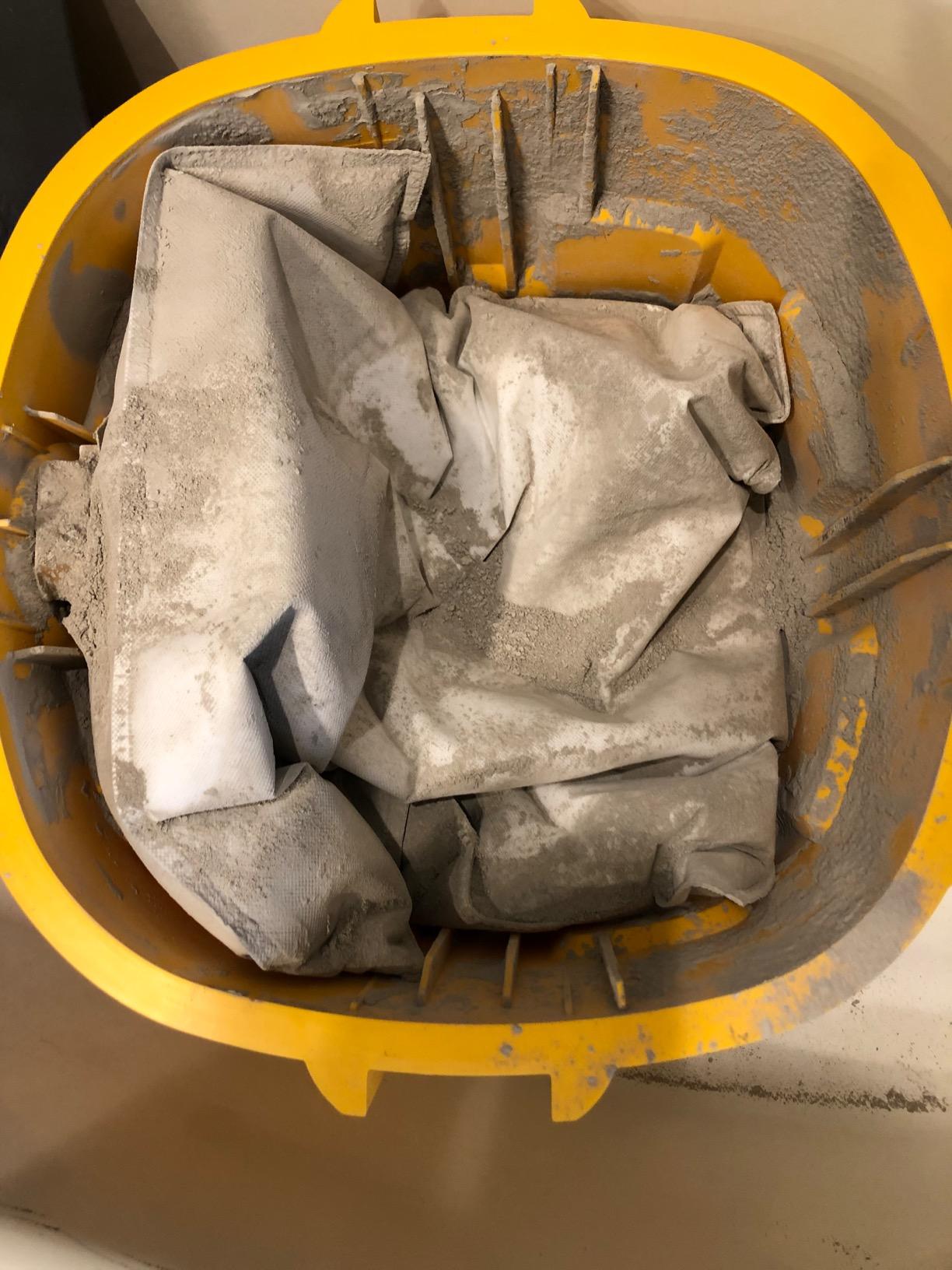
- Automatic filter clean pulses every 30 seconds so suction stays steady
- Dual filters allow hours of continuous fine dust work
- Tool-activated auto start is genuinely convenient with corded tools
- Performs comparably to a stationary collector for handheld tools
- Quick connect hose works directly with DeWalt tools
Cons
- High-pitched squeal and ear protection is advisable
- Heavy when empty and heavier when full
- Only the front wheels swivel while the rear wheels are fixed
- Stiff proprietary hose connection
The DEWALT DWV010 is the extractor I recommend to people who already own DeWalt tools and want the hose to just fit. The quick connect hose connection plus tool actuation means the unit starts when your sander starts and stops when you release the trigger, with no separate switch to remember.
It scores 4.4 stars across 452 ratings with 73 percent at five stars. Owners like the self-cleaning HEPA filter, the auto start, and the performance on fine dust from sanding and grinding. Several report that for handheld tool work it performs in a way they did not expect from something that looks like a shop vac.
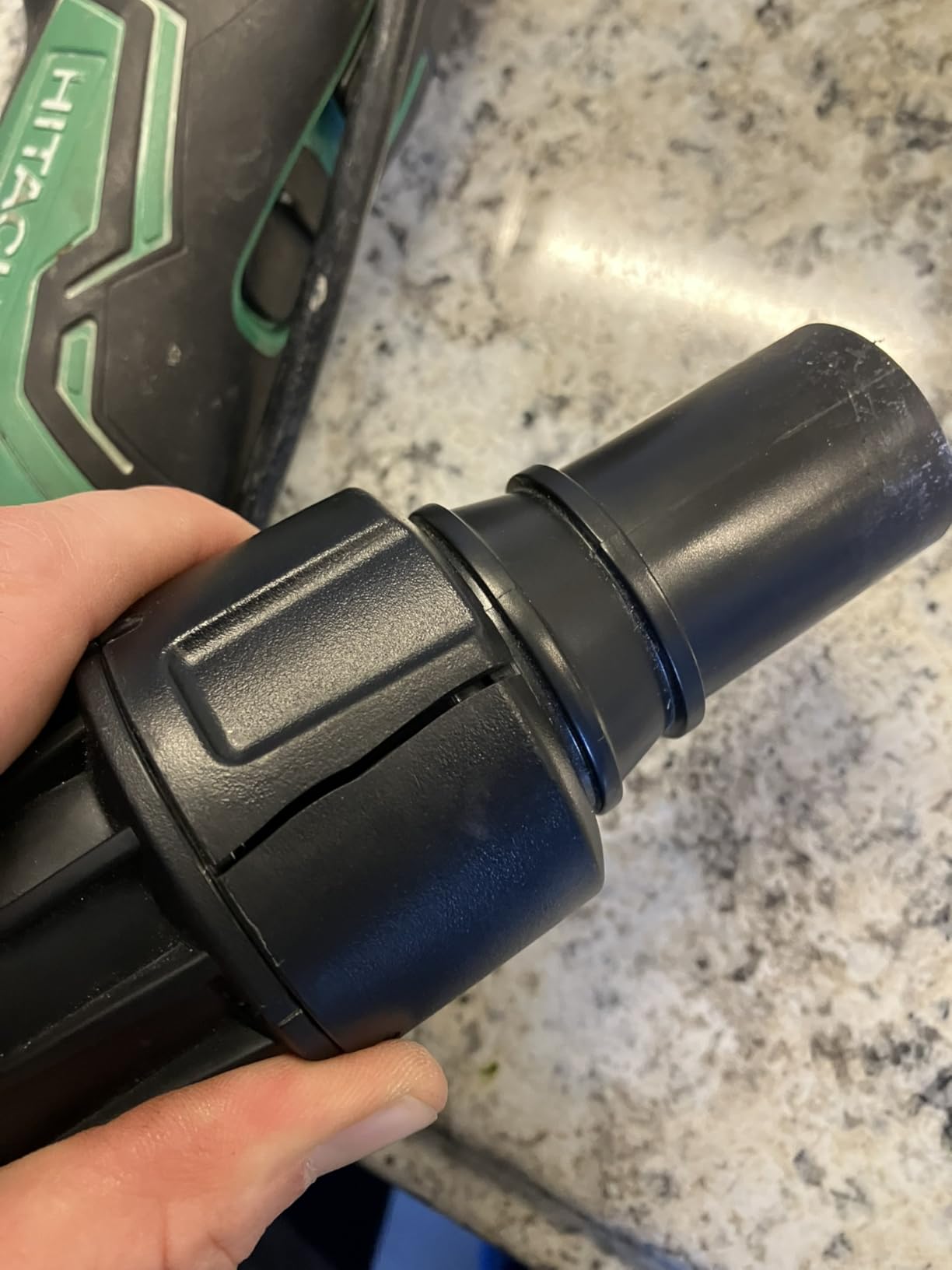
The filter cleaning pulse fires every 30 seconds, which is a slower and less frequent cycle than the Bosch unit. It is a gentler approach that spares the filter, but if you are grinding hard concrete or plaster for long stretches, the more frequent cycle on the Bosch holds suction better. Both cover the same basic need at 150 CFM.
One practical limitation to plan around: auto start only functions when the tool is plugged into the extractor, and a 15-amp saw on that circuit can trip a breaker. With a sander or a router, no issue. Check your tool’s draw before wiring it up.
Who this extractor suits
It suits someone whose work is dominated by a sander, a grinder, or a router and who wants zero friction between the tool and the vacuum. At 22 pounds it is portable enough to move between a bench and a floor cleanup, and the 15-foot anti-static hose reaches most of a garage without repositioning.
Who should skip it
Skip it if noise bothers you. The high-pitched squeal is the most common complaint in the reviews, and owners specifically recommend ear protection. It is also the wrong tool for bulk chips, the rear wheels do not swivel so it is awkward to roll sideways, and the proprietary hose and friction-fit attachments are frustrating if your tools are not DeWalt.
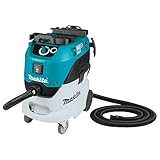
6. Makita VC4210L 11 Gallon HEPA Extractor – Best for Large Capacity
Makita VC4210L 11 Gallon Wet/Dry HEPA Filter Dust Extractor/Vacuum
148 CFM
92 in water lift
11 gallon capacity
HEPA at 0.3 microns
60 dB
Pros
- Largest canister tank here at 11 gallons which cuts emptying frequency
- Very quiet running compared with typical shop vacs
- Automatic filter cleaning every 20 seconds resists clogging
- Two-stage filtration keeps performance after hours of use
- Tool-activated outlet with a 10 second off delay clears the hose
Cons
- Auto filter cleaning produces a loud periodic thump that some find irritating
- Slightly less suction than a comparable wet/dry shop vac
- Hose is roughly 1.5 inches and will not pick up large wood chunks
At 11 gallons the Makita VC4210L is the biggest canister tank here, and capacity is the feature that changes your workflow. Fine dust work fills a small tank fast, and an 11 gallon tank means you empty it a fraction as often during a long finishing session.
Owners give it 4.4 stars across 233 ratings with 73 percent at five stars, citing the capacity, the quiet running, and the self-cleaning filter that resists clogging. The two-stage design uses a main flat filter that captures 99.95 percent of particles at 2 microns and larger, with the HEPA element on top.
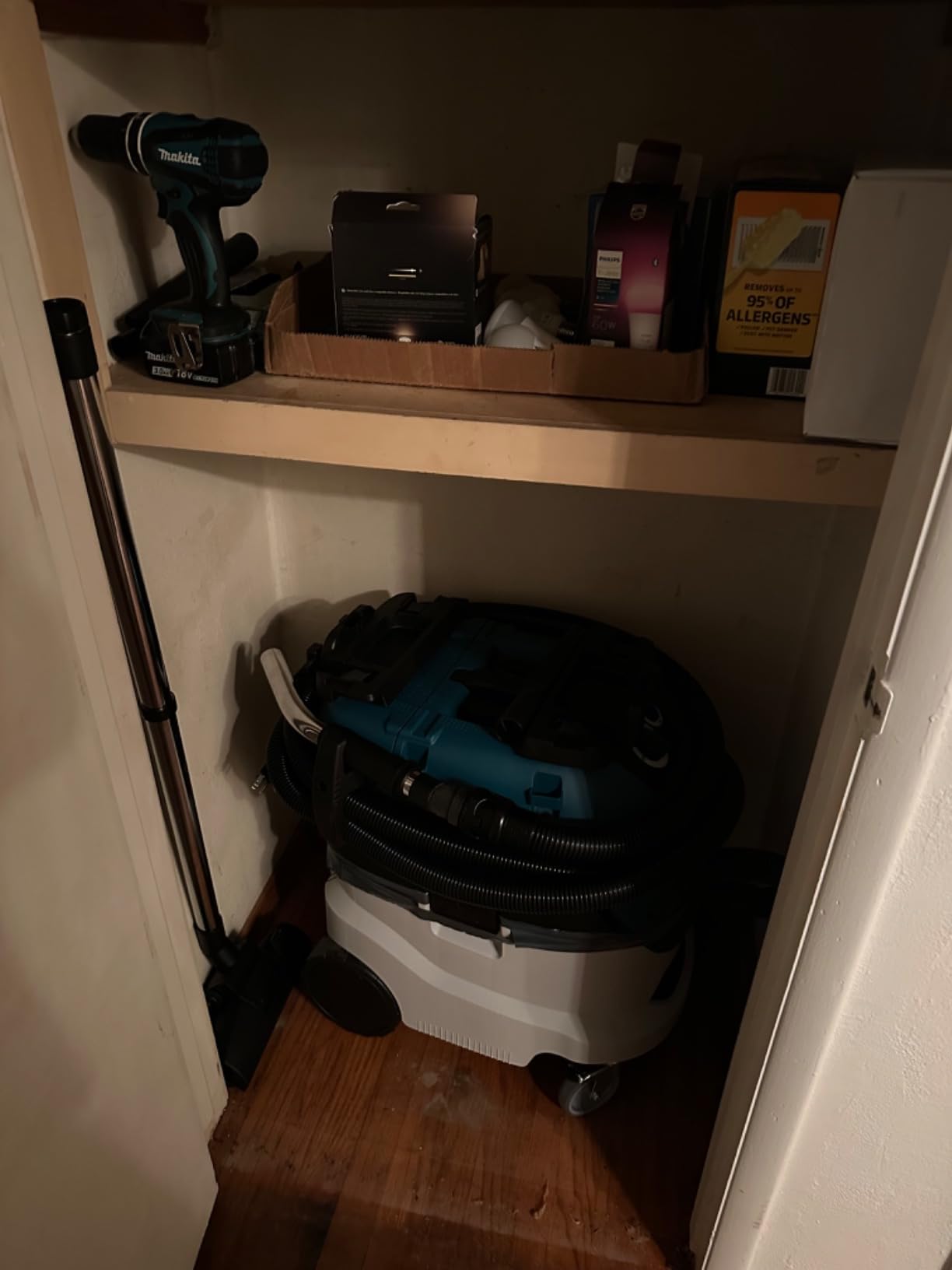
The 60 dB rating puts it alongside the Bosch as one of the quieter machines here, driven by a 12 amp motor producing 148 CFM and 92 inches of water lift. The tool-activated outlet has a 10 second off delay, which empties the hose rather than leaving your cut-off in the line until next time.
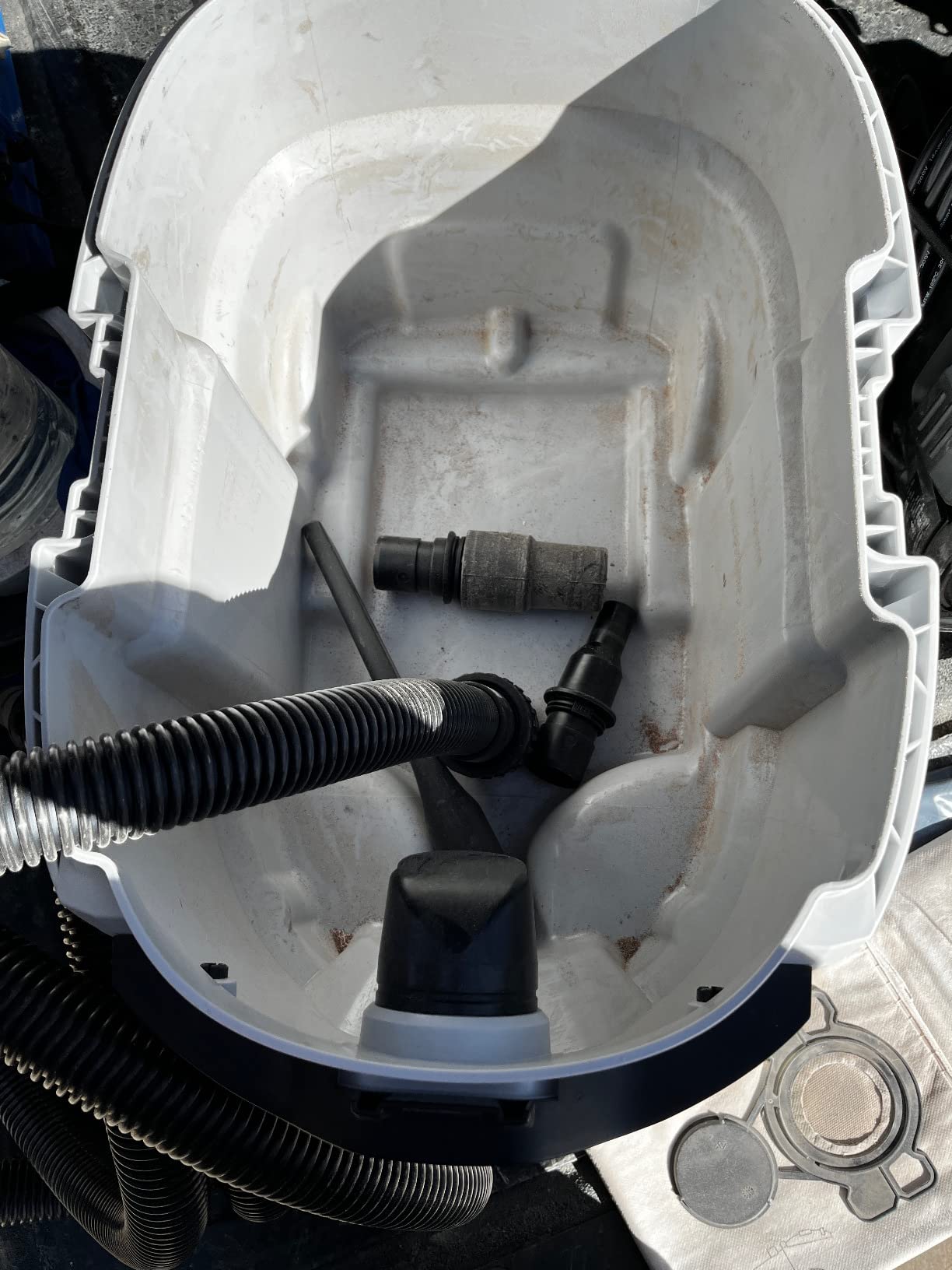
Large rubber wheels roll well on a shop floor, and the hose and cord store on the body. One owner trick worth repeating: switch it to wet mode if the periodic filter-clean thump gets on your nerves, since the cleaning cycle is disabled for liquid pickup.
Who this extractor suits
It suits a shop that does a lot of fine dust work in long sessions, or a contractor who moves between job sites and wants to empty as rarely as possible. Quiet running protects your hearing in an enclosed shop, and the 11-gallon tank is the deciding factor if you sand a lot of MDF or drywall compound between other jobs.
Who should skip it
Skip it if you need to pick up large debris. The hose is roughly 1.5 inches, so chips off the floor stay put and you will still need a broom or a shop vac for that. The auto filter cleaning thump is polarizing, fleece bags are pricey and harder to source outside the US, and pictorial-only instructions catch people out during setup.
7. Shop Fox W1826 Wall Dust Collector – Best Wall-Mounted Space Saver
Shop Fox W1826 Wall Dust Collector, 2.5 Micron Filtration,White
537 CFM
7.2 in static pressure
4 inch intake
85 dB
1 HP 110V prewired
Pros
- Much quieter than a shop vac for equivalent dust control
- Wall-mount design frees up floor space in a small shop
- All-steel construction
- Zippered bag bottom empties in place
- Pre-wired 120V and easily rewirable to 240V
Cons
- Inlet safety cage traps long shavings and clogs on jointers and planers
- Intake port inside diameter is not published so a fitting may need shaping
- Bag attachment clamp grips poorly
- Sheet metal sometimes arrives bent or dented
The Shop Fox W1826 solves a problem none of the other collectors here address: floor space. It hangs on the wall, which in a one-car garage or a basement shop with a low ceiling is the difference between having a place to put it and having nowhere to put it.
It holds 4.3 stars across 459 ratings with 64 percent at five stars. The recurring praise is for quiet operation relative to a shop vac, the floor space it gives back, and noticeably better airflow than a portable vacuum at the same 4-inch connection.
The numbers are honest for a wall unit: 537 CFM at 7.2 inches of static pressure through a 4 inch intake, driven by a 1 HP 110V/220V single-phase motor that comes prewired at 120V. The bag has a window for gauging how full it is and a zipper along the bottom so you can empty it without pulling it off the wall.
Two things to plan around. The published intake is a 4 inch hole rather than an inside diameter, and owners report needing to shape or fit a connector to match their hose. And the inlet safety cage that keeps large debris out of the impeller also catches long shavings from a jointer or planer, so expect to clear it.
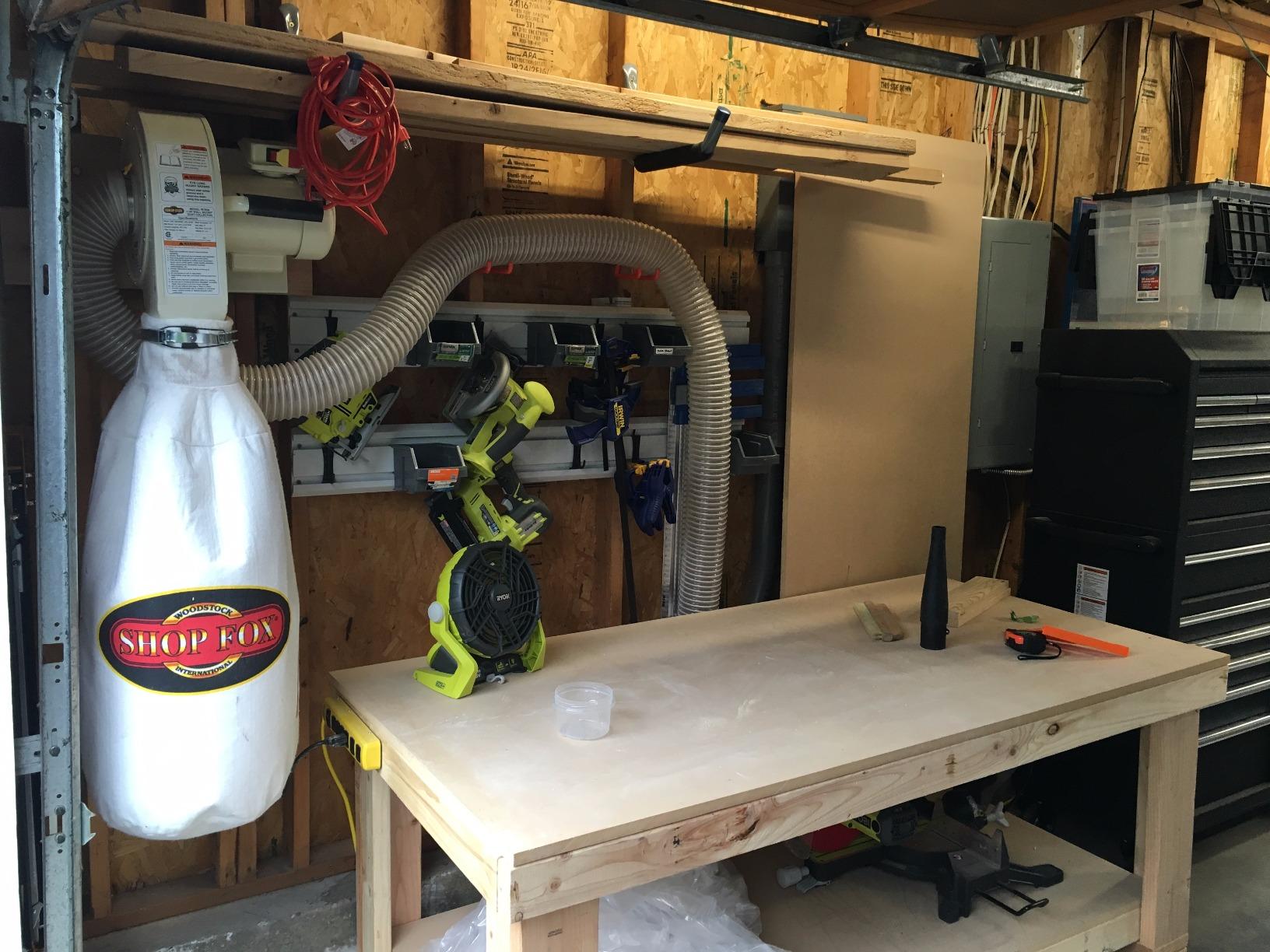
Who this collector suits
It suits a small shop where floor area is the binding constraint and only one machine runs at a time. Paired with a separate dust separator, it does a clean job of catching chips, and owners on woodworking forums recommend the wall-mount format for shops with low ceilings. At 85 dB it is not silent, but it is a different register from a shop vac running at full blast.
Who should skip it
Skip it if you want two machines running at once. 537 CFM is a one-tool number, and owners note the figure suits one machine at a time rather than multiple simultaneous tools. If you run a planer or jointer as your primary dust source, also budget time for the inlet cage, and inspect the sheet metal on arrival because packaging has caught people out.
8. WEN DC1300 1300 CFM Dust Collector – Best for Two Machines at Once
WEN DC1300 1,300 CFM 14-Amp 5-Micron Woodworking Dust Collector with 50-Gallon Collection Bag and Mobile Base , Black
1300 CFM
dual 4 inch inlets
50 gallon bag
10 inch steel impeller at 3450 RPM
14 amp
Pros
- Very high airflow removes the constant bag changing problem
- Dual 4 inch inlets let two tools run at once
- 50 gallon bag extends emptying intervals to a month or more
- Quiet compared with running multiple shop vacs
- Easy to assemble and easy to move on the caster base
Cons
- Bag support posts and the bag-holding arm feel light duty
- Bag hanger loop can slip off the upper post
- Instruction manual ordering is confusing
- Fine dust has been reported escaping the secondary outlet
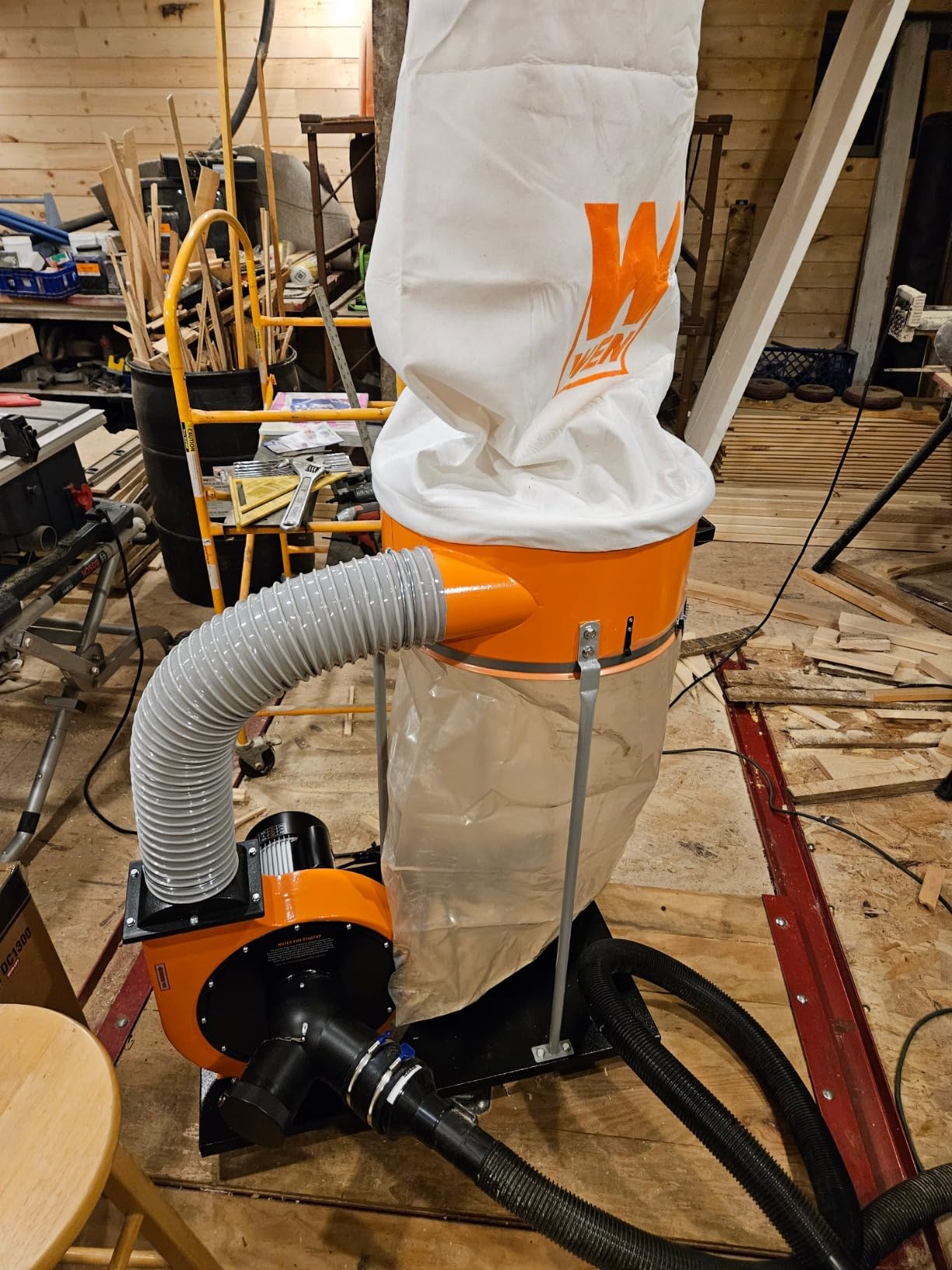
The WEN DC1300 is the pick when the number of machines you run matters more than the noise level. Dual 4-inch inlets let you connect two tools at once, and 1300 CFM gives you the headroom to keep a planer or table saw pulling properly through real duct lengths.
Owners rate it 4.5 stars across 233 ratings, with 71 percent at five stars and 92 percent at four stars or better. Buyers mention the throughput, the dual inlets, the large bag, quiet operation relative to multiple shop vacs, and simple assembly.
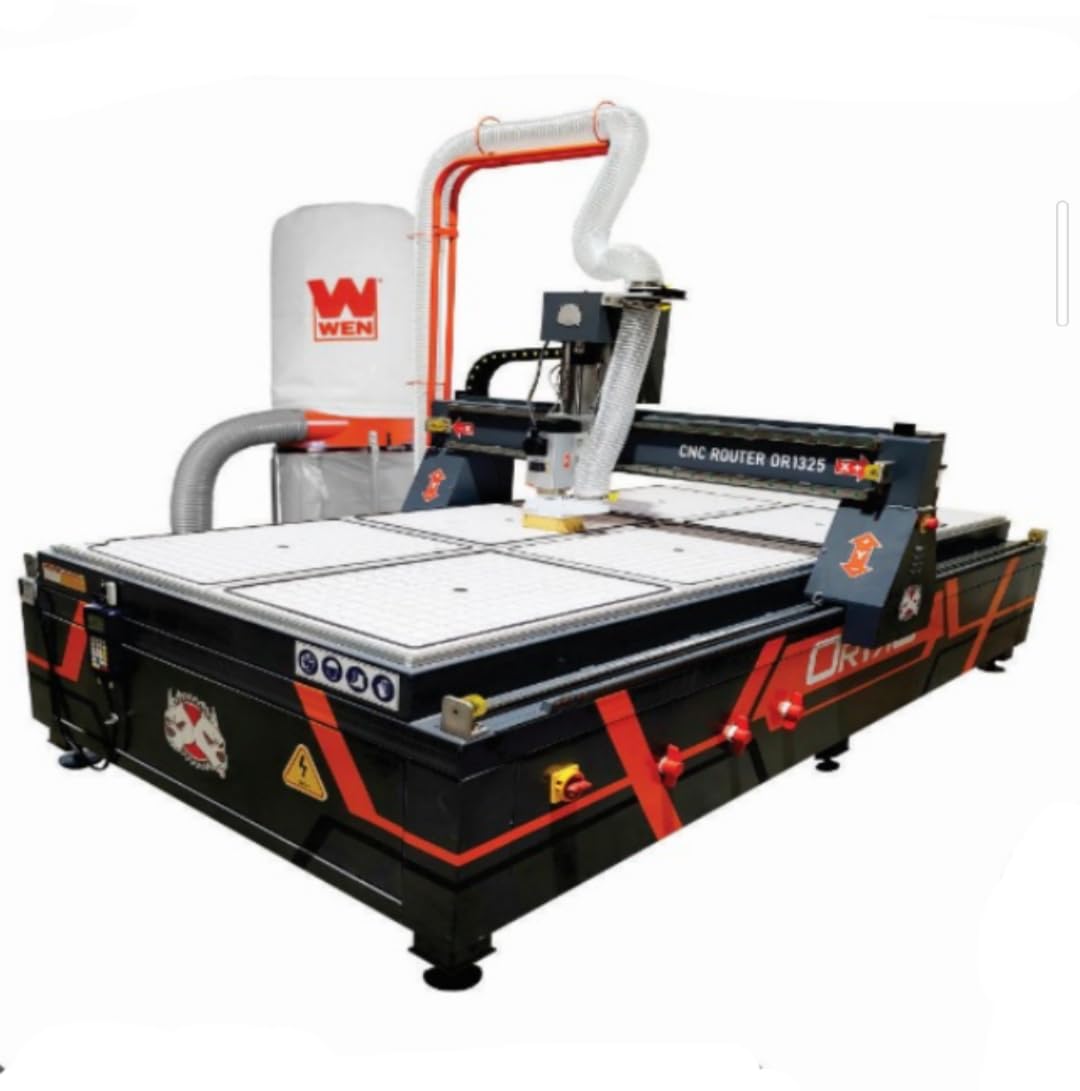
The 50 gallon vertical bag is the quiet hero here. Owners describe emptying intervals stretching to a month or more of normal shop use, which effectively removes bag changes from your workflow. The 14 amp motor driving a 10 inch steel impeller to 3450 RPM is also a solid mechanical package for the airflow it claims.
Assembly is straightforward but the manual ordering is not intuitive, and the handle appears late in the sequence, so budget an unhurried afternoon. Some listings also treat the fabric bag as an optional accessory, so read the contents list carefully before you commit.
Who this collector suits
It suits a working shop with two machines that generate dust at the same time, or one large machine that needs every CFM available. A 14 amp draw is high for a residential circuit, so plan a dedicated outlet. If your problem is a planer throwing shavings past its hood, this is the size of machine the unit was built for.
Who should skip it
Skip it if your shop is small or your circuits are tight. At 1300 CFM this is a large unit that needs floor space and a dedicated circuit, and it will overwhelm a handheld sander. The light-duty bag support posts and the loop that can slip off the upper post are the two hardware complaints worth knowing about before you buy.
9. WEN DC3474 Induction Motor Dust Collector – Best for Quiet Small Shops
WEN Woodworking Dust Collector, 7.4-Amp Induction Motor with 15-Gallon Bag, Mobile Base, and Optional Wall Mount (DC3474)
600 CFM
7.4 amp induction motor
9 inch impeller
4 inch port
41.1 pounds
wall mountable
Pros
- Induction motor is quieter and more efficient than a brushed motor at the same airflow
- Draws far less power while moving much more air than a shop vac
- Wall-mount option keeps the floor clear with casters still attached
- Pairs well with a jointer or bandsaw on one hose at a time
Cons
- Supplied 5 micron fabric bag is thin and lets fine dust escape as it fills
- Non-locking swivel casters let it roll when switched on
- Inlet guard tangles with long shavings
- Outlet orientation is fixed and not reversible
The WEN DC3474 is the quiet argument made in hardware. A 7.4 amp induction motor driving a 9 inch impeller moves up to 600 CFM while drawing less power than a shop vac, and the induction design is the reason owners single it out for being noticeably calmer under load.
That quiet advantage matches what forum owners report when they compare induction-motor collectors to shop vacs. The DC3474 also holds 4.3 stars across 195 ratings with 68 percent at five stars, and reviewers consistently highlight the motor efficiency plus the wall-mount flexibility.
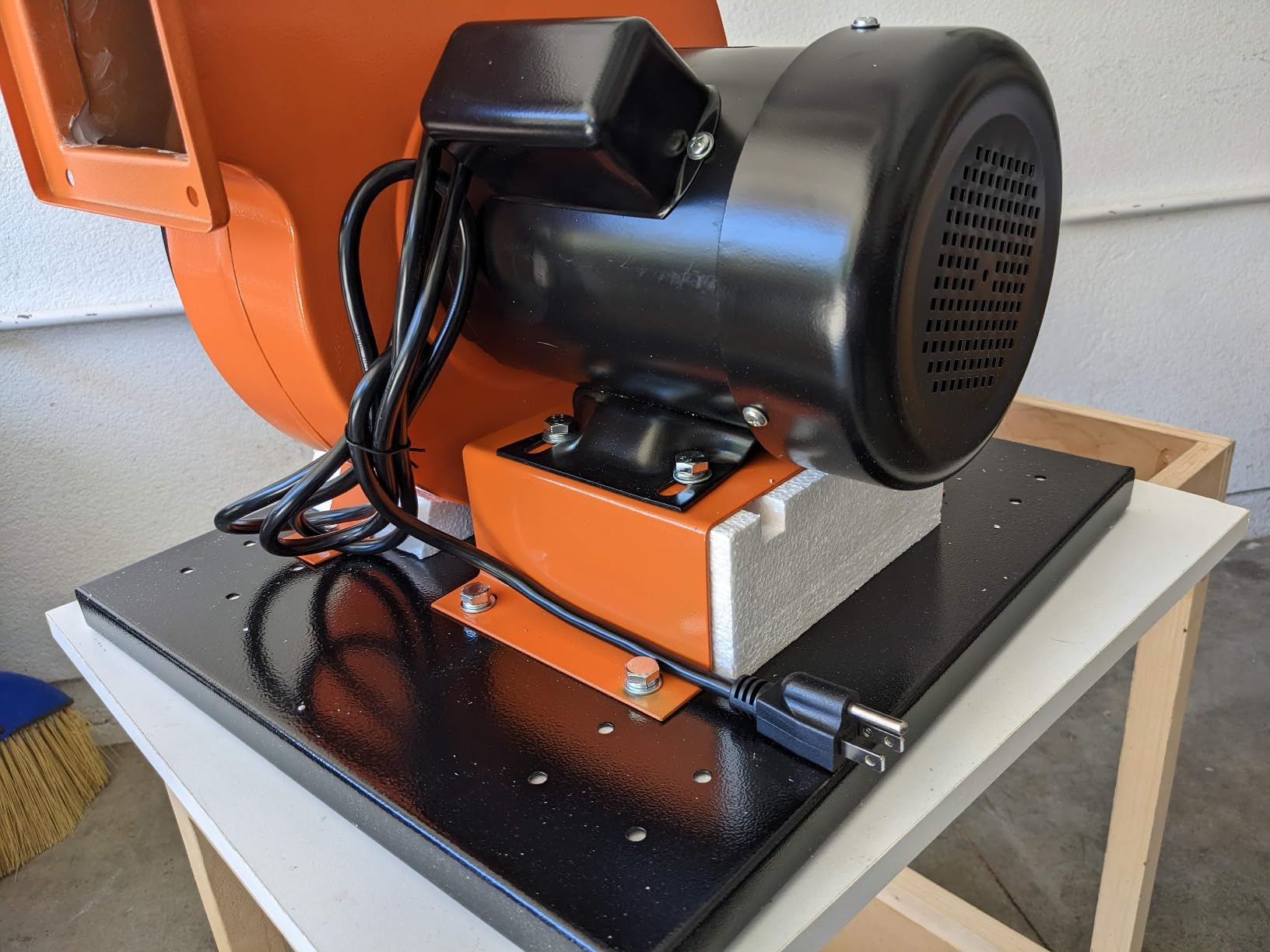
Mounting options are unusually flexible for a machine at this size. It rolls on swivel casters, it has an onboard carrying handle, and it can go on the wall when you want the floor back. At 43.3 by 17.7 by 20.1 inches and 41.1 pounds it is short enough for a low-ceiling shop where a taller cabinet will not go.
Be aware that the 7.4 amp draw means you can run it on an ordinary circuit without a dedicated line, which is a real advantage over the 14 amp DC1300. The 4-inch port connects directly to standard ducting, and a two-year warranty comes with it.
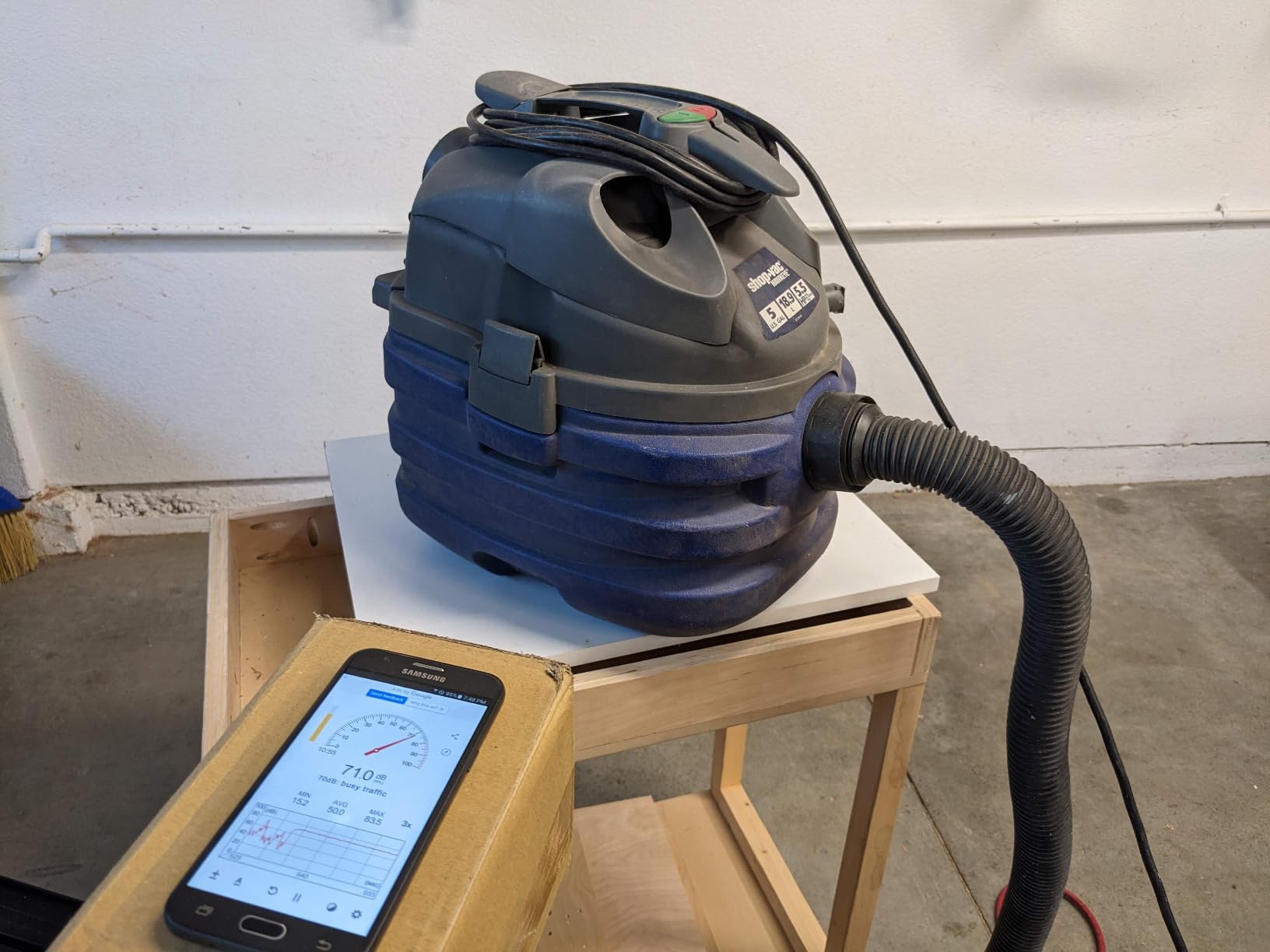
Who this collector suits
It suits small and mid-size shops where noise and power draw are the two things holding you back. An induction motor on a modest circuit means you can collect chips from a jointer, bandsaw, or table saw one tool at a time without rewiring anything. For a basement or garage where the unit sits a few feet from your head all day, motor type matters more than the CFM figure.
Who should skip it
Skip it if fine dust is your main problem. The supplied 5 micron fabric bag is thin, and owners report fine dust escaping as it fills, which is why many upgrade to a canister or a heavier bag straight away. The casters do not lock, so the unit can roll when switched on, and the outlet is fixed rather than reversible.
10. WEN DC3401 660 CFM Dust Collector – Best Budget Starter
WEN Woodworking Dust Collector, 5.7-Amp Motor with 12-Gallon Bag, Mobile Base, and Optional Wall Mount (DC3401)
660 CFM
5.7 amp brushed motor
6 inch impeller
12 gallon bag
17 pounds
wall mountable
Pros
- An affordable entry point into dedicated dust collection
- Compact 17 pound body is easy to carry and can be wall-mounted
- Moves far more air than a typical shop vac at the same hose size
- Lockable swivel casters hold it in place
- Most reviewed unit in the roundup at 4.1 stars from 676 ratings
Cons
- Inlet screen clogs quickly on shavings from a planer
- Suction drops sharply when hose diameter is reduced
- Brushed motor carbon bushings and bearing durability concerns
- Louder than some buyers expect
The WEN DC3401 is where most first dust collectors actually start, and the specification sheet makes a strong case for the tier it sits in. A 5.7 amp brushed motor with a 6 inch impeller moves up to 660 CFM through a standard 4 inch port, and the whole body weighs 17 pounds, so you can carry it to a machine instead of moving a machine to it.
It is the most reviewed unit in this roundup at 676 ratings, so the owner record here is deep enough to be useful. At 4.1 stars it is also the lowest rated of the ten, and the gap between 4.1 and 4.4 tells you where the compromises sit: motor durability and inlet clogging.
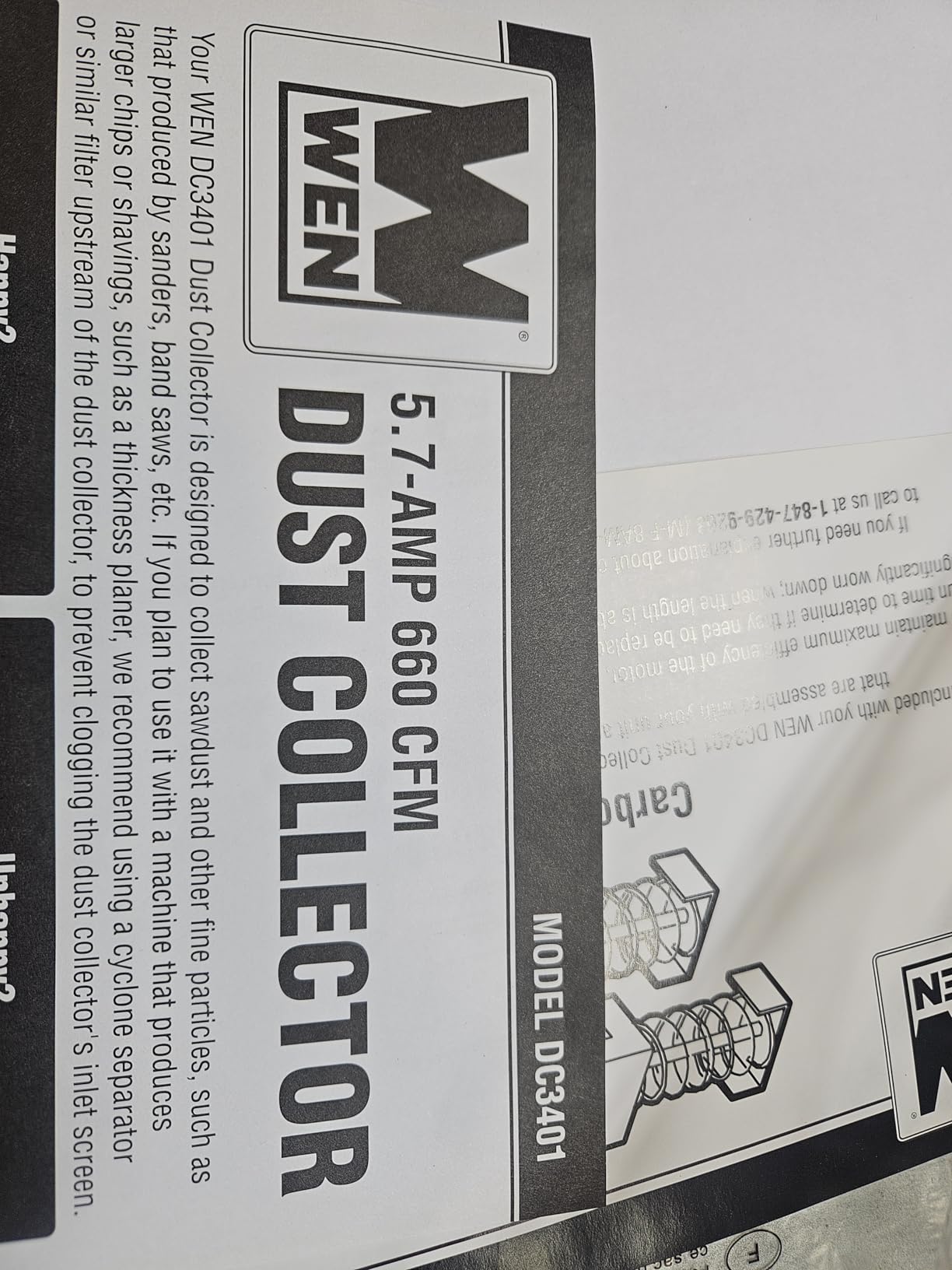
What the entry model delivers is real. It moves substantially more air than a portable shop vac at the same hose size, it can be wall-mounted to free the floor, the swivel casters actually lock, and there is a two-year warranty. Several owners run it happily with a table saw, band saw, router table, and sander when a cyclone separator is added.
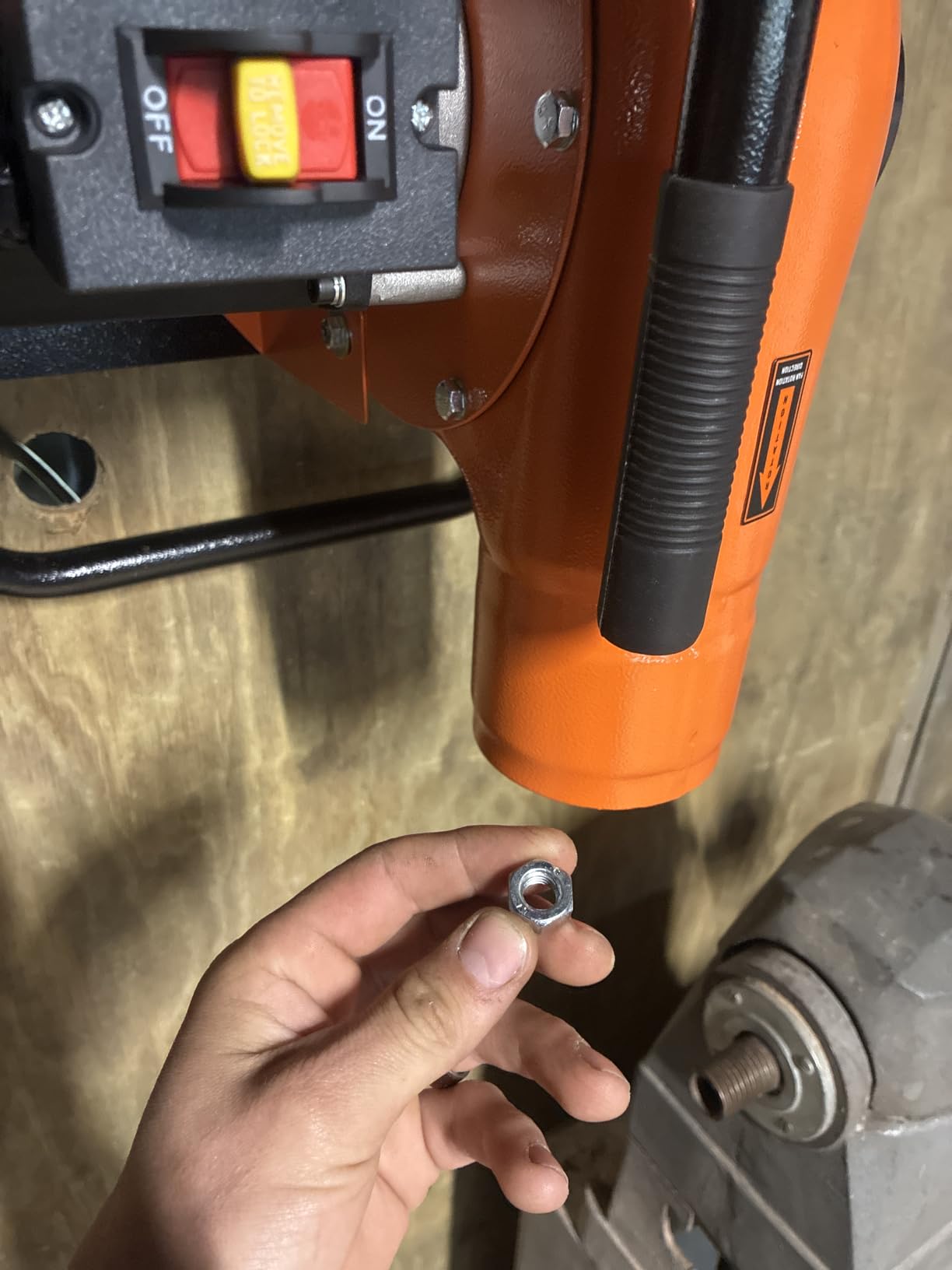
The inlet screen is the part to know about. On machines that produce shavings rather than fine dust, such as a planer, owners routinely remove it. Also be aware that unlike a shop vac, reducing hose diameter cuts suction sharply, so keep the line at 4 inches and use a reducer only at the machine end.
Who this collector suits
It suits a first-time buyer in a one-car garage or a small shed shop who wants dedicated collection without a large outlay or a wiring project. At 17 pounds and 34.25 by 13 by 14.2 inches it is the easiest unit on this list to store, and wall mounting makes the footprint effectively zero.
Who should skip it
Skip it if your planer is your main dust source, or if you plan to run it for years without upgrades. Owners report carbon bushing wear after a few hundred hours and a bearing failure around the nine-month mark in some cases, and the noise level runs higher than buyers expect from a small machine. Budget for a replacement bag and treat the motor as consumable rather than permanent.
How to Size a Dust Extractor for Your Shop?
Size to the number of machines and the length of your duct run, not to the size of your shop. A large shop with one bandsaw needs far less airflow than a small shop with a planer, jointer, and table saw all feeding one unit.
Start with the single-machine case. A handheld sander, router, or a miter saw with a dust hood needs roughly 150 to 200 CFM, which is what the Bosch, DeWalt, Makita, and Fein canisters deliver. Anything above that is wasted money on a tool that produces a trickle of dust.
Move up from there. One larger stationary machine such as a table saw, bandsaw, or jointer through a 4-inch line wants 500 to 700 CFM, which puts the Shop Fox W1826, the WEN DC3474, the WEN DC3401, and the POWERTEC DC1081 in range. Two machines running together push you to the dual-inlet WEN DC1300 at 1300 CFM.
Static pressure is the number people miss. It is the resistance the system must push air through, and every foot of flex hose and every elbow reduces it. The Shop Fox publishes 7.2 inches of static pressure, which is a rare and useful number; most manufacturers do not, and for a long duct run that omission makes comparison harder than it should be.
Finally, plan the power. The 5.7 and 7.4 amp collectors run on an ordinary household circuit, the 14 amp WEN DC1300 wants a dedicated line, and anything three-phase should be ruled out for a residential shop before you commit to it.
Filters Explained: Bags, Canisters, and What They Cost You
Filter media is where the running cost hides, and it is also what decides whether fine dust stays in your shop. Three formats appear on this list, and the difference between them is not marketing, it is airflow and capture.
Fabric bags are cheap and coarse. The 5 micron bags on the WEN DC3474 and DC3401 are thin, and owners report fine dust escaping as they fill. The 1 micron bag on the POWERTEC is finer and denser, which means better capture and faster airflow loss. Bags are the right choice when chips dominate and you are pairing the collector with a cyclone separator upstream.
Canister filters are the upgrade path. The JET DC-1100VX-CK uses a 2 micron canister, which resists clogging and is far less sensitive to a loaded face. Replacement cost is the tradeoff owners cite most often, alongside the canister handling a maintenance-only job rather than a user job.
HEPA canisters belong to the extractor class. The Bosch, DeWalt, and Makita all capture 99.97 percent of particles at 0.3 microns or larger, and the Bosch adds a fleece bag upstream to protect that expensive element. Makita owners note the fleece bags are pricey and awkward to source outside the US, which matters if your shop is not in that market.
Two maintenance habits matter more than the filter you choose. Clean the filter and the impeller on a schedule, and never run a collector with a loaded bag, because the airflow loss you are compensating for is what burns the motor.
Wall-Mount, Mobile Base, or Central System?
Layout is the decision forum owners agonise over, and it comes down to the physical constraints of your building rather than specs. Low ceilings, one-car garages, and basement shops with ducts overhead all change the answer.
Wall mounting reclaims floor space and works well in tight rooms. The Shop Fox W1826 is built for it, and the WEN DC3474 and DC3401 both offer an optional wall mount while keeping their casters attached. A wall-mounted unit also stays put, which means a single 4-inch line to the saw rather than a bundle of hoses.
A mobile base is the more flexible choice and the right default for most shops. The POWERTEC, the WEN DC1300, the JET, and the Bosch and Makita canisters all roll, so one unit can serve a table saw on Monday and a jointer on Wednesday without any rewiring.
A central system is a different purchase. It makes sense once you have three or more machines and a dedicated room for the collector, and it is where routing ducts to a fixed point beats dragging a machine around. Nothing on this list requires one, but every collector here can feed a central destination as your shop grows.
One more practical point that forum users raise constantly: quick-connect fittings at the machine end save more time than any collector upgrade. Whatever unit you pick, plan the blast gate and hose connection as part of the purchase rather than an afterthought.
Quiet Dust Extractors for Shops Where You Cannot Turn the Volume Up
Noise is a top practical complaint in woodworking forum threads about this category, and it is why motor type matters as much as CFM.
Induction motors are the clearest upgrade available. The WEN DC3474 pairs a 7.4 amp induction motor with a 600 CFM impeller, and owners consistently report it as quieter and more efficient than a brushed motor at the same airflow. Forum owners comparing induction units to shop vacs reach the same conclusion independently, which is why that motor type keeps coming up in recommendations.
Published decibel figures help you narrow the field. The Fein Turbo I runs at 66 dB and the Makita VC4210L at 60 dB, both of which are quiet enough for an indoor or basement shop. The Shop Fox W1826 is listed at 85 dB and the JET DC-1100VX-CK at 80 dB, so plan on hearing those two.
For the bulk collectors, treat noise as a function of size and speed rather than a spec you can shop for. The 3450 RPM impellers on the POWERTEC and the WEN DC1300 are the ones you will hear from across the shop, and there is no soft mode on either one.
Two mitigations work regardless of unit. A long duct run changes how the sound arrives at your ears, and running the machine a few feet from your head rather than beside you shifts the experience more than any purchase decision in this roundup.
Setup Mistakes That Ruin Extraction Performance
Most disappointing extractor performance is a setup problem, not a machine problem. These are the mistakes that show up repeatedly in owner reviews.
Undersized hose. A 4-inch collector loses significant airflow when you step down to a small hose for convenience. Keep the line at full diameter and use a reducer only at the machine connection.
Long, leaky duct runs. Every extra length and every loose fitting steals static pressure. Tape or clamp joints properly, and keep runs as short as your layout allows.
Skipping the cyclone. Single-stage collectors have no separation step, so chips go straight onto the filter face. A cyclone separator in front of the bag is the cheapest performance upgrade available and it extends filter life.
Running with a loaded bag. Once the bag is near full, airflow drops and the motor works harder. Empty on a schedule rather than waiting for a suction drop.
No blast gate at the machine. A blast gate lets you isolate a branch so one running tool does not pull air through every open line. It is a small part that makes a shared system behave like separate ones.
Connecting a small extractor to a big machine. A 150 CFM canister on a jointer will not clear shavings, and the inlet guard will simply clog. Match the unit class to the machine class.
Frequently Asked Questions
What is the best dust collection system for a woodworking shop?
For most hobby shops, a single 1 HP collector in the 500 to 800 CFM range feeding a table saw, planer, or jointer through a 4-inch line is the sweet spot. Add a cyclone separator to protect the filter, and pair it with a small canister extractor for handheld sanding. Larger shops running two machines at once step up to a dual-inlet unit.
How many CFM do I need for my wood shop?
About 150 to 200 CFM for a handheld sander, router, or miter saw. One larger stationary machine such as a table saw, bandsaw, or jointer wants 500 to 700 CFM. Two machines sharing one unit needs enough headroom to keep suction at the tool, which usually means 1300 CFM or close to it.
What is the best shop vac for woodshop dust collection?
A shop vac handles wet cleanup, bulk debris, and floor sweeping well, but it is the wrong tool for sustained fine dust at a machine. Its small hose and modest airflow lose quickly over duct length. Most owners use a shop vac for cleanup and a dedicated collector or canister for extraction at the tool.
Do I need a cyclone separator or a bag collector?
Buy both, because they solve different problems. The collector gives you airflow and chip capacity, and the cyclone in front of it drops heavy debris into a drum so fine dust does not load the filter. Skipping the cyclone is the most common reason a bag collector clogs faster than expected.
How loud is a dust collector realistically?
Induction-motor units are the quietest option and still move real air. Published figures range from 60 dB on the Makita canister to 85 dB on the Shop Fox wall unit, with the Fein at 66 dB. High-airflow collectors with 3450 RPM impellers are noticeably louder and have no quiet mode.
What size hose do I need for dust collection?
Use 4 inch hose for any collector in this roundup, all of which have 4-inch ports. Do not step down for convenience, because unlike a shop vac these units lose suction sharply as diameter drops. Use a reducer only at the machine end where the tool port is smaller.
Conclusion
Pick the Bosch VAC090AH if your dust problem is fine particles and noise is a factor, the Fein Turbo I if you need the quietest option with real suction, and the POWERTEC DC1081 if a table saw and a planer are the reason you are shopping at all. Those three cover the majority of shops I hear from.
Everything else on this list is a deliberate trade against one of those. The JET is for high-volume fine dust, the WEN DC1300 is for two machines at once, the Shop Fox is for shops where floor space is the constraint, and the WEN DC3401 is for a first collector on a small budget. Whichever you choose for the best dust extractors for woodworking shops, match the unit to the machine, add a cyclone, and size your duct run before you buy.