
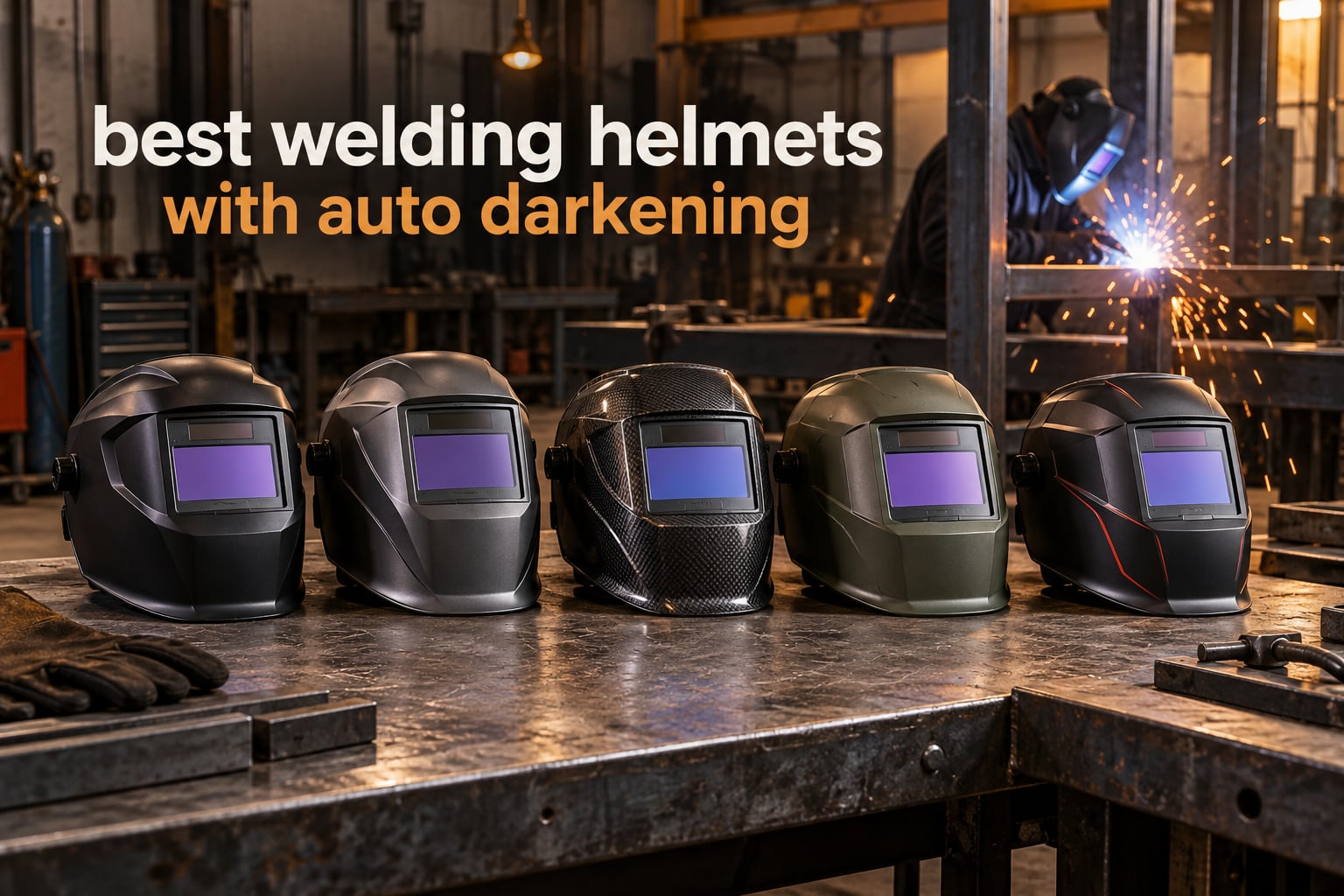
Arc flash does not care how much you spent on your machine. If you are choosing among the best welding helmets with auto darkening in 2026, the filter technology inside the lens matters far more than the badge on the shell.
An auto-darkening welding helmet holds an auto-darkening filter, or ADF, behind the cover lenses. Arc sensors watch for the strike of an arc, then the filter switches from a light DIN 3 or DIN 4 state to a welding shade between DIN 9 and DIN 13 in roughly 1/25,000 of a second. You keep your head down, your hands steady and your view on the puddle instead of flipping a hood up and down for every pass.
We put ten of them side by side, from an entry-level graphic shell to a professional panoramic hood, and weighed the things that actually show up in a shop: optical clarity, viewing area, sensor count, switching speed, headgear comfort and how long the warranty runs. Our team also spent time with each lens on MIG, stick and low-amp TIG work, because the specs on a box only tell you part of the story.
Short version: if you weld more than a few minutes a week, an ADF pays for itself in neck comfort alone. If you are brand new, the gap between the cheapest shell and the most expensive one is optics and headgear, not safety certification.
Table of Contents
Top 3 Picks for Welding Helmets With Auto Darkening (October 2026)


Quick Overview of the Best Auto Darkening Welding Helmets in 2026
The table below lists every helmet in this roundup with the specifications that separate them. We kept the wording short so you can scan it fast.
| Product | Specs | Action |
|---|---|---|
| Lincoln Electric VIKING 3350 |
|
Check Latest Price |
| YESWELDER LYG-L600A |
|
Check Latest Price |
| Hobart 770890 |
|
Check Latest Price |
 Jackson Safety Insight Jackson Safety Insight |
|
Check Latest Price |
 YESWELDER LYG-M800H YESWELDER LYG-M800H |
|
Check Latest Price |
 ARCCAPTAIN HSH-S800 ARCCAPTAIN HSH-S800 |
|
Check Latest Price |
 TOOLIOM TL-31800H TOOLIOM TL-31800H |
|
Check Latest Price |
 YESWELDER BW-10MAXTRI YESWELDER BW-10MAXTRI |
|
Check Latest Price |
 TGR Panoramic 180 TGR Panoramic 180 |
|
Check Latest Price |
 ARCCAPTAIN XK-LY800H ARCCAPTAIN XK-LY800H |
|
Check Latest Price |
1. Lincoln Electric VIKING 3350 – Best Overall Auto Darkening Welding Helmet
Lincoln Electric K3034-4 VIKING 3350 Auto Darkening Welding Helmet with 4C Lens Technology, Matte Black, extra large
12.5 sq inch viewing area
1/1/1/1 4C lens
1.4 lb shell
5 year warranty
Pros
- Best-in-class lens clarity
- 12.5 sq inch viewing area
- X6 headgear stays balanced on long sessions
- 5 year warranty with 5 year spare part availability
- Uses standard cover lenses
Cons
- Occasionally slow response at arc strike on certain sensitivity settings
- Internal shade switch needs correct setting on first use
- Headgear adjuster takes practice to learn
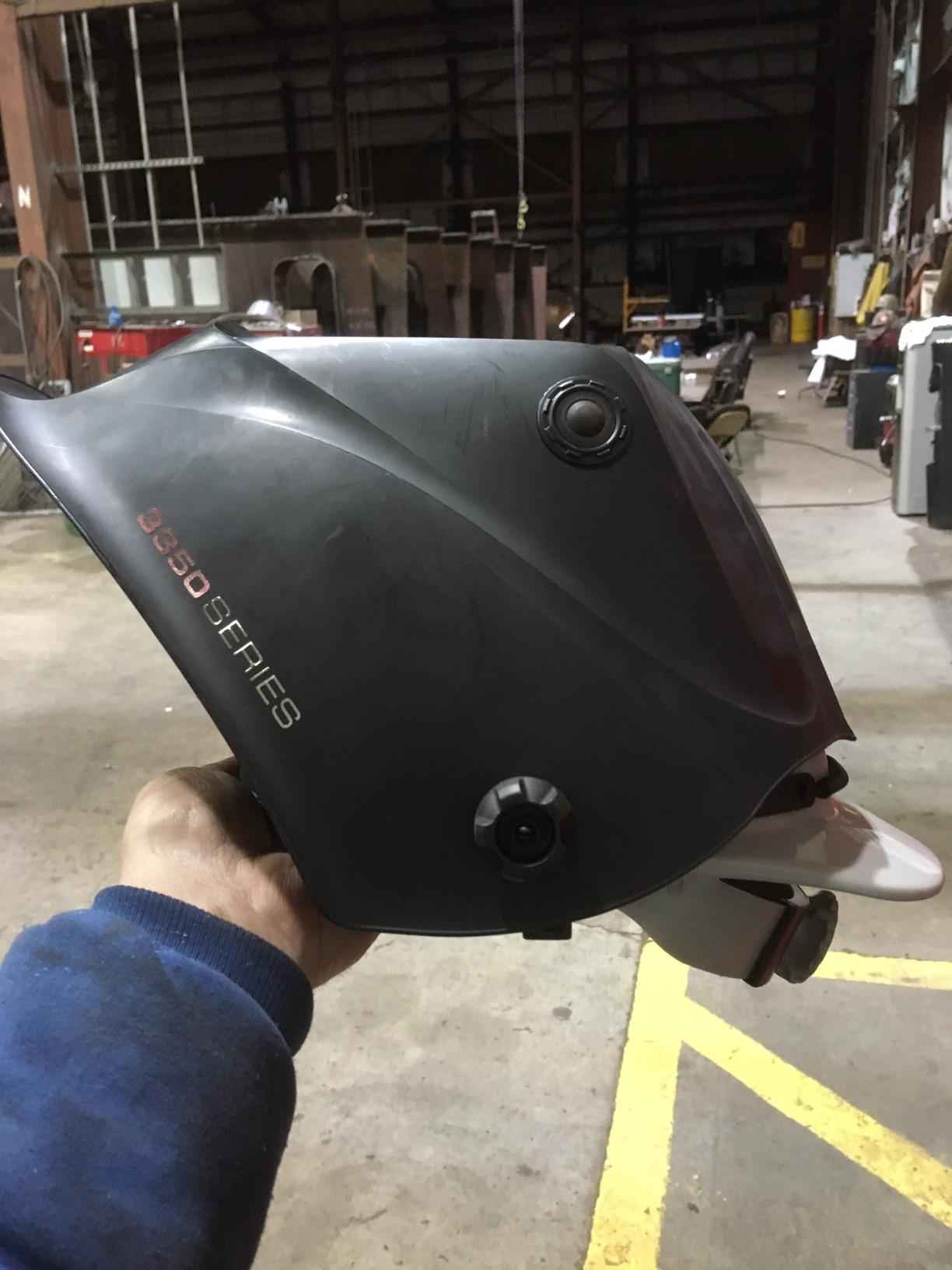
Of everything we tested, the Viking 3350 gave us the most confidence that we were reading a weld correctly rather than guessing. The 4C lens technology carries a 1/1/1/1 optical class rating, and at 4.8 stars across more than 3,000 reviews it is the highest-rated helmet in this group.
The viewing area is the standout number: 12.5 square inches. That is a genuinely large window compared with the small portrait lenses on most entry models, and it changed how we positioned our head on vertical fillets and on out-of-position work under a car.
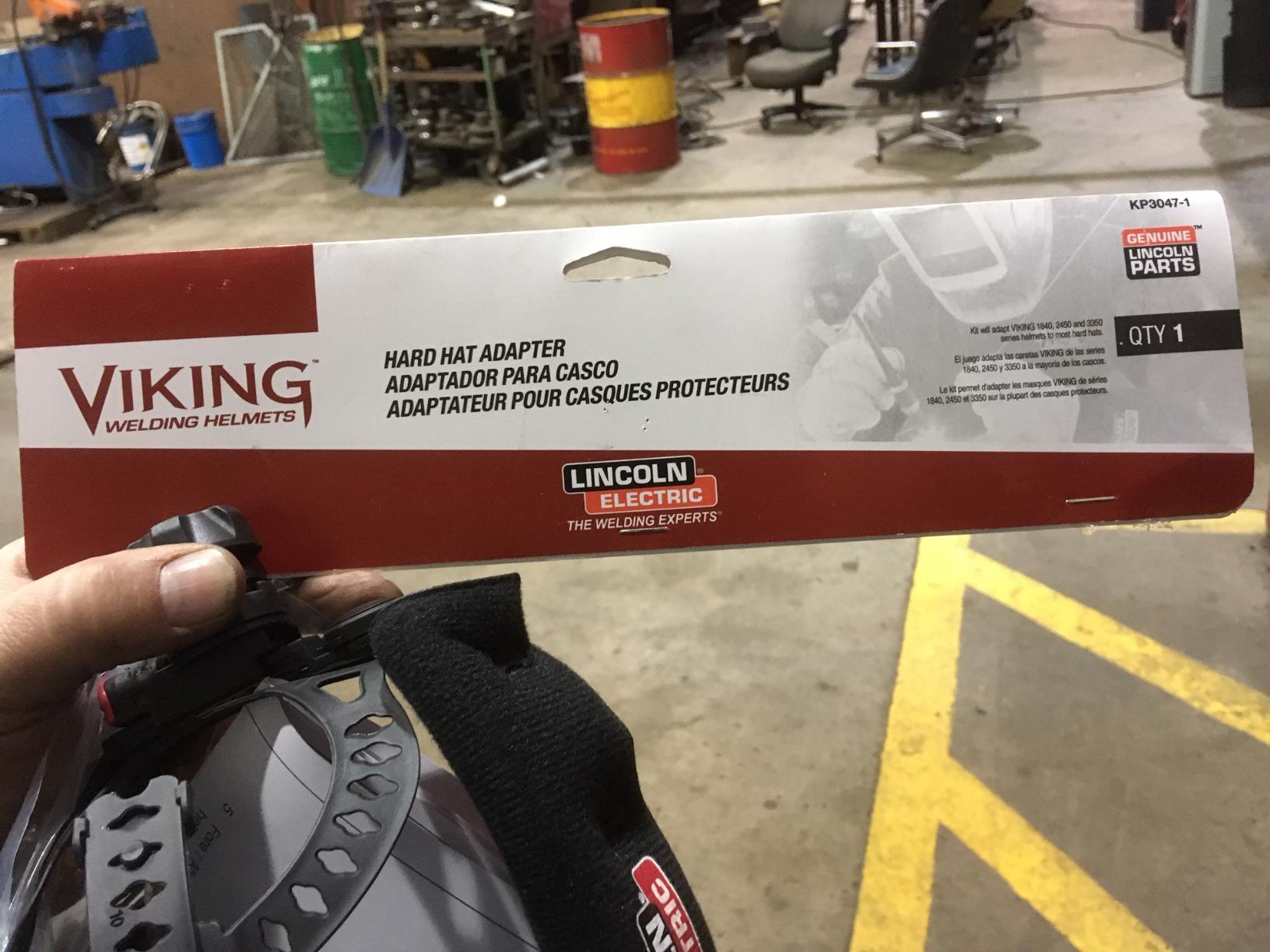
Lincoln’s X6 headgear distributes the 1.4 pound load across the crown instead of hanging it from the front strap. On a long pipe spool day that difference is not subtle, and the ratcheting rear knob adjusts for hat sizes 6 1/2 through 8.
A few long-term owners report slightly sluggish reaction at arc strike when sensitivity is turned up too high. That is a settings problem more than a hardware problem, and the generous supply of spare cover lenses plus the 5 year warranty mean the ownership math works in your favor.
How the 4C lens holds up on real work
Optics were the first thing we checked and the last thing we stopped noticing. The lens stays neutral in color while the arc is lit, so the puddle reads true and you can judge penetration and undercut without the green wash that older filters add. On our test coupons, edge placement was noticeably more consistent than with two of the budget lenses in this roundup.
Because it takes standard cover lenses rather than a proprietary cartridge, replacements are easy to source and cheap. For a shop that grinds and sands between welds, that matters more than any single feature on the spec sheet.
Who should pay for the pro tier
This is the pick for fabricators welding full shifts, pipefitters and anyone whose weld quality is inspected. It is also the right call if you have been fighting a cheap lens and cannot tell whether the problem is the shade or your technique.
The trade-off is cost and weight against the cheapest shells here, plus the fact that the internal shade switch catches people out the first time. Set it properly during your first session and it will not bother you again.
2. YESWELDER LYG-L600A – Best Value Auto Darkening Welding Helmet
YESWELDER Auto Darkening Welding Helmet 1/1/1/1 True Color, LYG-L600A
3.64 x 1.67 inch view
1/1/1/1 true color
2 arc sensors
1/30000s response
Pros
- 1/1/1/1 true color view at a low price
- 1/30000s switching speed
- Spare battery and spare lenses included
- External shade knob locks to clear for grinding
- ANSI Z87.1 and CSA Z94.3 certified
Cons
- Small viewing area next to panoramic models
- Shell and headgear feel light duty
- Included coin battery was drained on arrival for some units
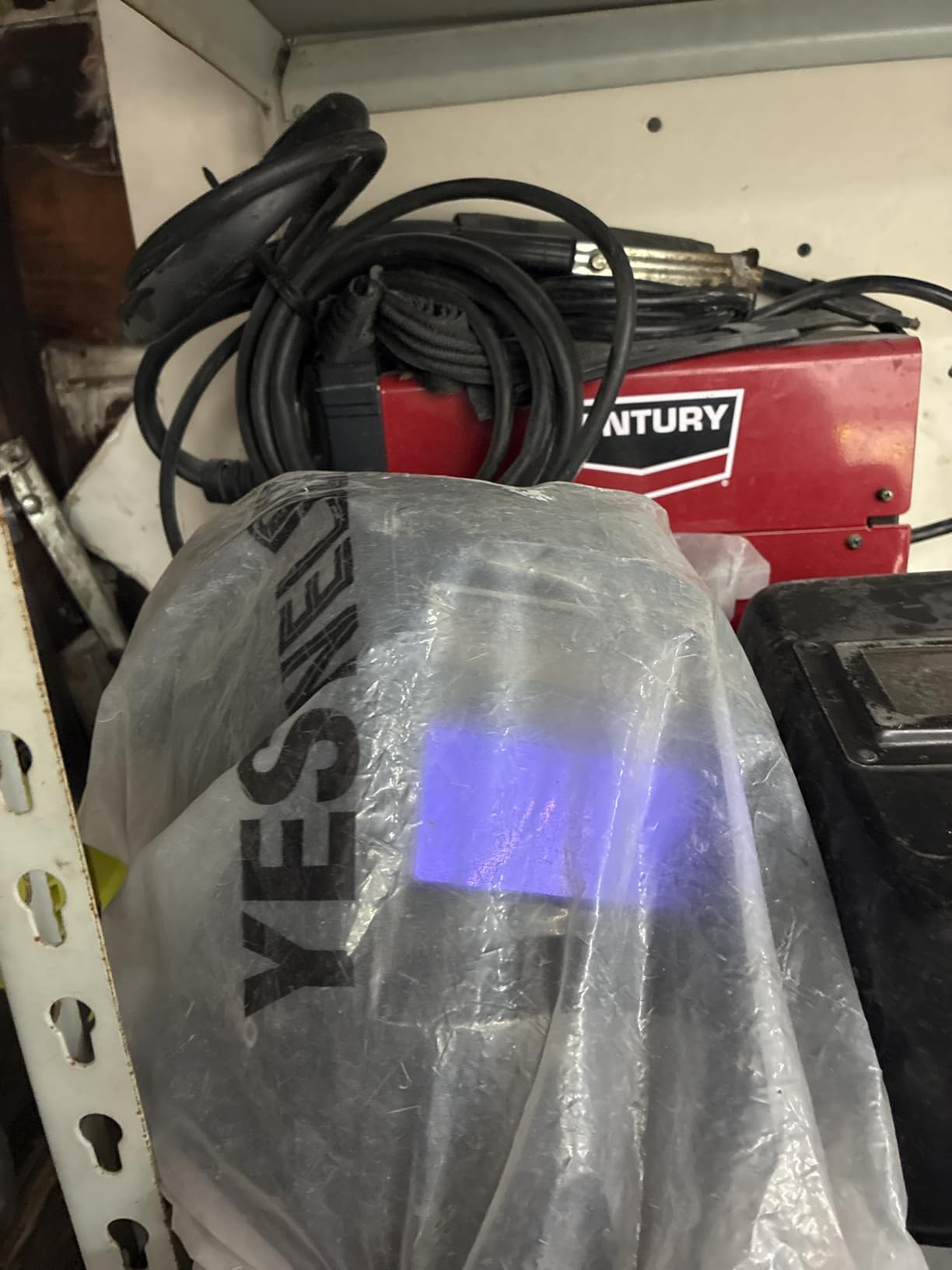
With close to 14,000 reviews and a 4.6 average, the LYG-L600A is the most-proven helmet we tested. It ranks first in welding helmet sales on Amazon, and the reason is simple: almost nothing else in this bracket gives you a 1/1/1/1 true color filter with a 1/30000 second switch.
It is the one we recommend to welding students in collision-repair classes. On r/Autobody, beginners are steered toward entry-level auto-darkening helmets and told to verify ANSI Z87.1 certification before anything else. This model meets ANSI Z87.1 and CSA Z94.3, and the box includes a CR2450 battery, a replacement inner lens and two outer lenses.
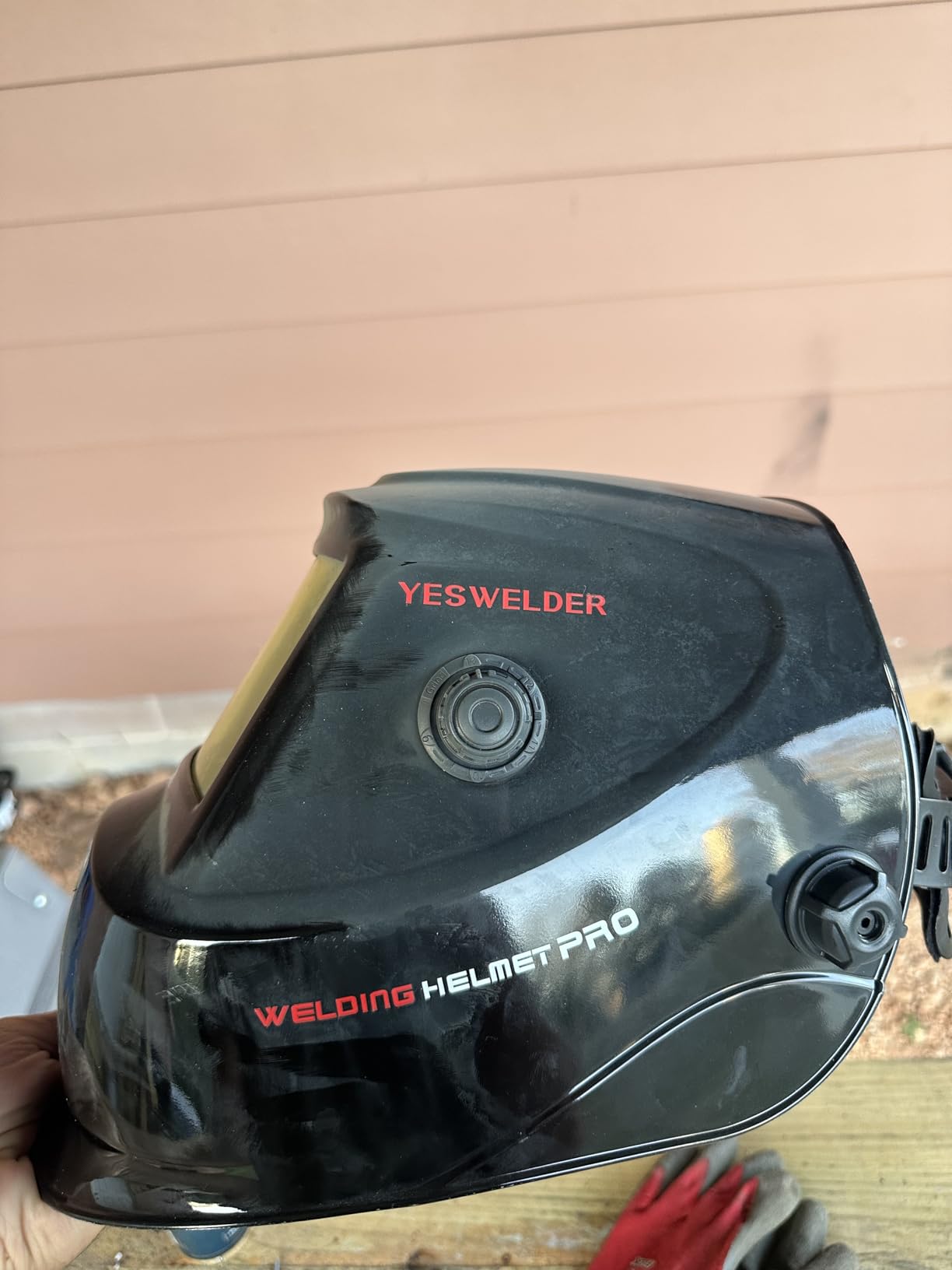
The shade range of 3/7-13 covers TIG, MIG, stick and grind modes, and the external knob lets you lock the filter to clear for grinding without taking the helmet off. Several reviewers also note enough internal clearance to wear a respirator underneath, which matters if you are grinding stainless.
The honest limit is sensor count. Two arc sensors can miss a strike when your torch is at an unusual angle to the helmet, and low-amp TIG is where that shows up first. If TIG is the bulk of your work, move up to a four-sensor model.
Where the 1/1/1/1 rating really pays off
That optical class number is the first thing, the clarity factor. A 1 there means the lens transmits light evenly across the viewing area with no blur at the edges, which is what lets you follow a puddle without a dark halo creeping in from the corners. The other three ones cover distortion, shade consistency and how quickly the view clears at an angle.
On bead-on-plate test welds, the L600A gave us a clean, colorless read of the joint. Compare that to a brown or green tinted lens, where the same joint looks flatter and it is much easier to mistake a good bead for a cold one.
Where it falls short for you
The 3.64 by 1.67 inch viewing window is small. It is fine for flat and horizontal work with the helmet squared up to the joint, and cramped for out-of-position work, overhead tacking or anything where you need to see around the arc.
Several owners also report the coin battery arriving already drained or installed backwards. It is a two-minute fix and the correct cell is a standard CR2450, but check it before your first weld.
3. Hobart 770890 – Best Mid-Tier True Color Helmet
Hobart 770890 Auto-Darkening Welding Helmet, Large, Black
9.3 inch widescreen view
PureColor lens
4 independent sensors
1.25 lb
Pros
- PureColor lens gives an accurate view of the weld and surroundings
- 9.3 inch widescreen area supports precision work
- 4 independent arc sensors for dependable detection
- Simple analog knobs for shade sensitivity and delay
- Auto-on/off power control at arc strike
Cons
- Analog controls only with no digital readout
- Limited 2 year manufacturer warranty
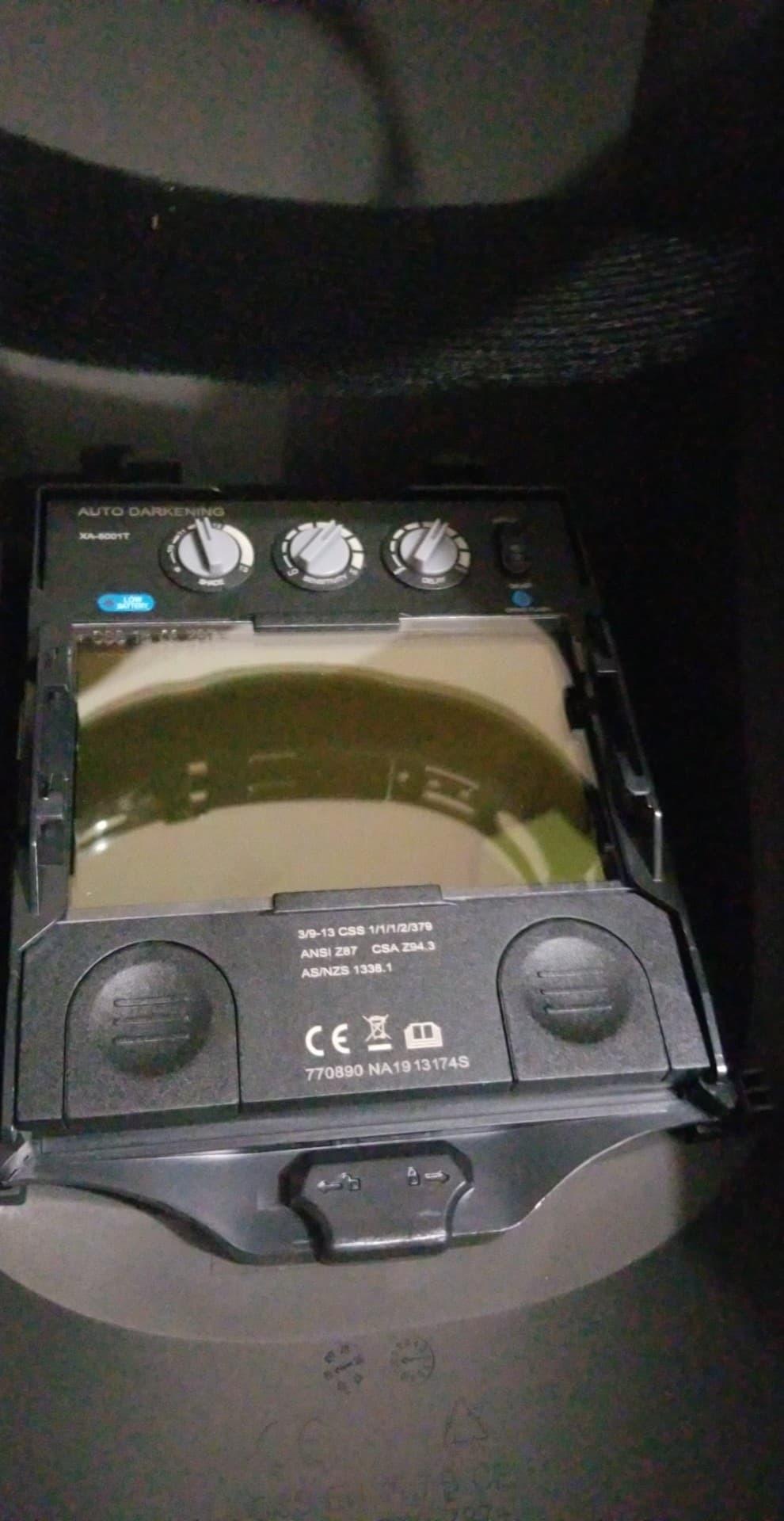
Hobart’s 770890 sits in the middle of this list and wins the middle ground. It pairs PureColor lens technology with a 9.3 inch widescreen viewing area and four independent arc sensors, and it does it without the digital menus that trip some people up.
At 4.7 stars from 880 reviews, it is a well-regarded pick for shops that want clean optics and simple operation. The polyamide nylon shell weighs 1.25 pounds and carries continuous UV and IR protection, so the passive filter still works if the electronics ever do not.
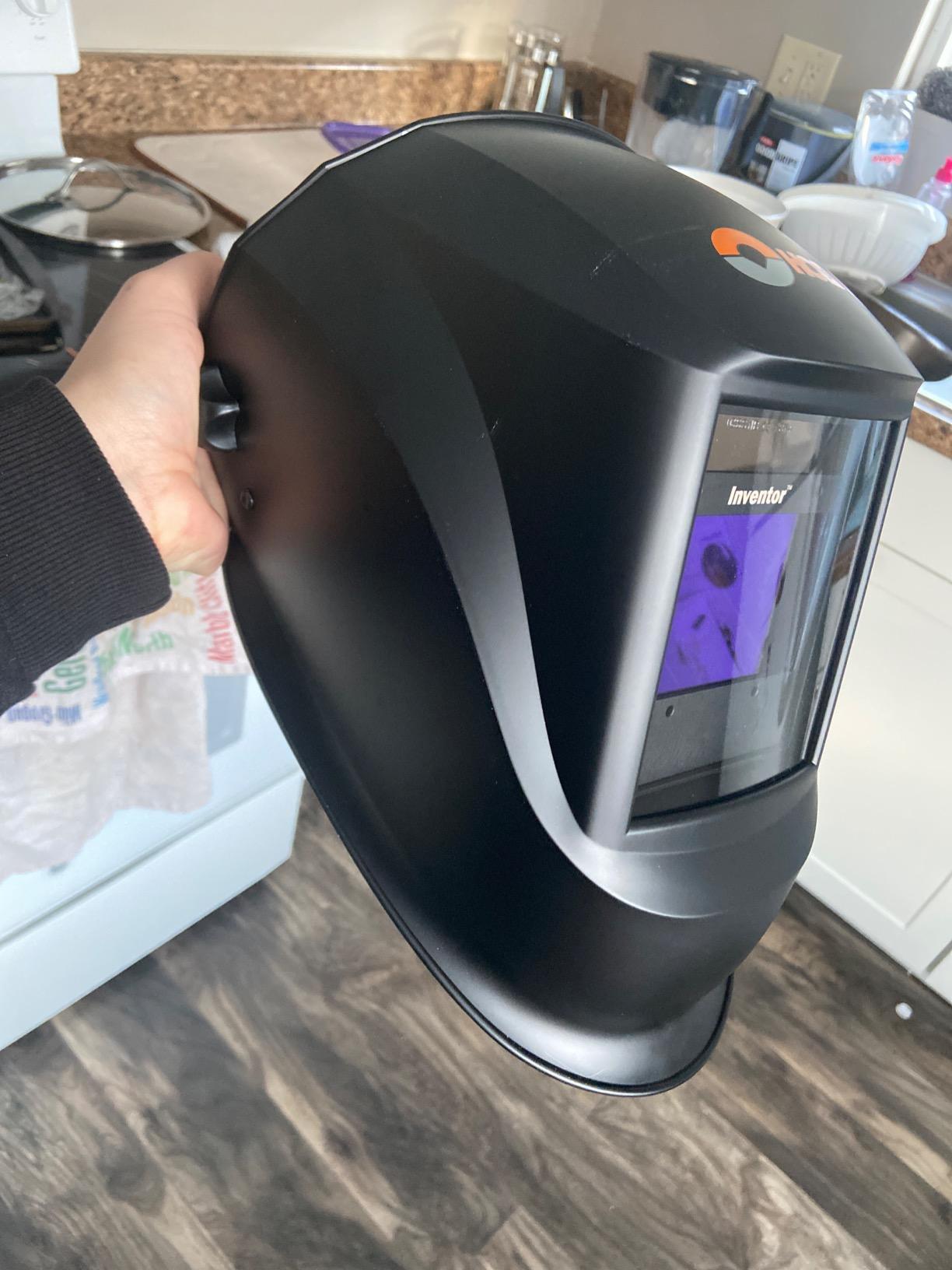
The analog knobs for shade, sensitivity and delay are a genuine advantage for a lot of welders. You can adjust them with a gloved hand, feel the detent, and get on with the job. Digital displays with menu navigation are impressive until you need to change a setting mid-pass.
Weld to Grind mode switching means you can drop a grinding wheel on the same bead without swapping helmets, which cuts a step out of most fab jobs.
Why four independent sensors matter
Arc sensors are tiny photocells that watch for the intense UV and IR flash of a strike. Two sensors can both sit on the same face of the lens, so when you rotate your head so the arc approaches from a low side angle, neither one sees it clearly and the lens stays light.
Four sensors spread across the shell cover more angles. That is the difference between a lens that darkens the instant you strike and one that flickers on the leading edge of a pass. It is also why we treat sensor count as a non-negotiable for anyone doing TIG.
Who should pick it over a pro model
Choose the 770890 if you want professional-level clarity without a professional-level invoice, or if you work in a shared shop where simpler controls survive better than feature-rich ones. An included CR2 battery means one less lithium cell to hunt down when the filter quits mid-project.
The 2 year warranty is the main compromise against the Lincoln’s 5 years, and the analog layout means you get no numeric readout of your current shade. If you weld stainless and care about color accuracy of the finished bead, note that no helmet gives you a true camera view of the workpiece.
4. Jackson Safety Insight – Best Helmet for Overhead and Field Work
Jackson Safety Insight Auto Darkening Welding Helmet, ADF Hood – ANSI Z87.1
6 ounce HLX shell
3.94 x 2.36 inch view
Shade 9-13
4 arc sensors
Pros
- Extremely light 6 ounce shell reduces neck fatigue
- True Color optics rated 1/1/1/1 with low eye strain
- 370 Speed Dial headgear with Qwik-Fit rear swivel band
- Reported durable through drops and heavy shop use
- Standard 4.5 x 5.25 inch clear cover lenses
Cons
- Light state can be darker than ideal in bright shops
- Sensitivity may be too high under reflective shop lighting
- Less rugged than premium shells
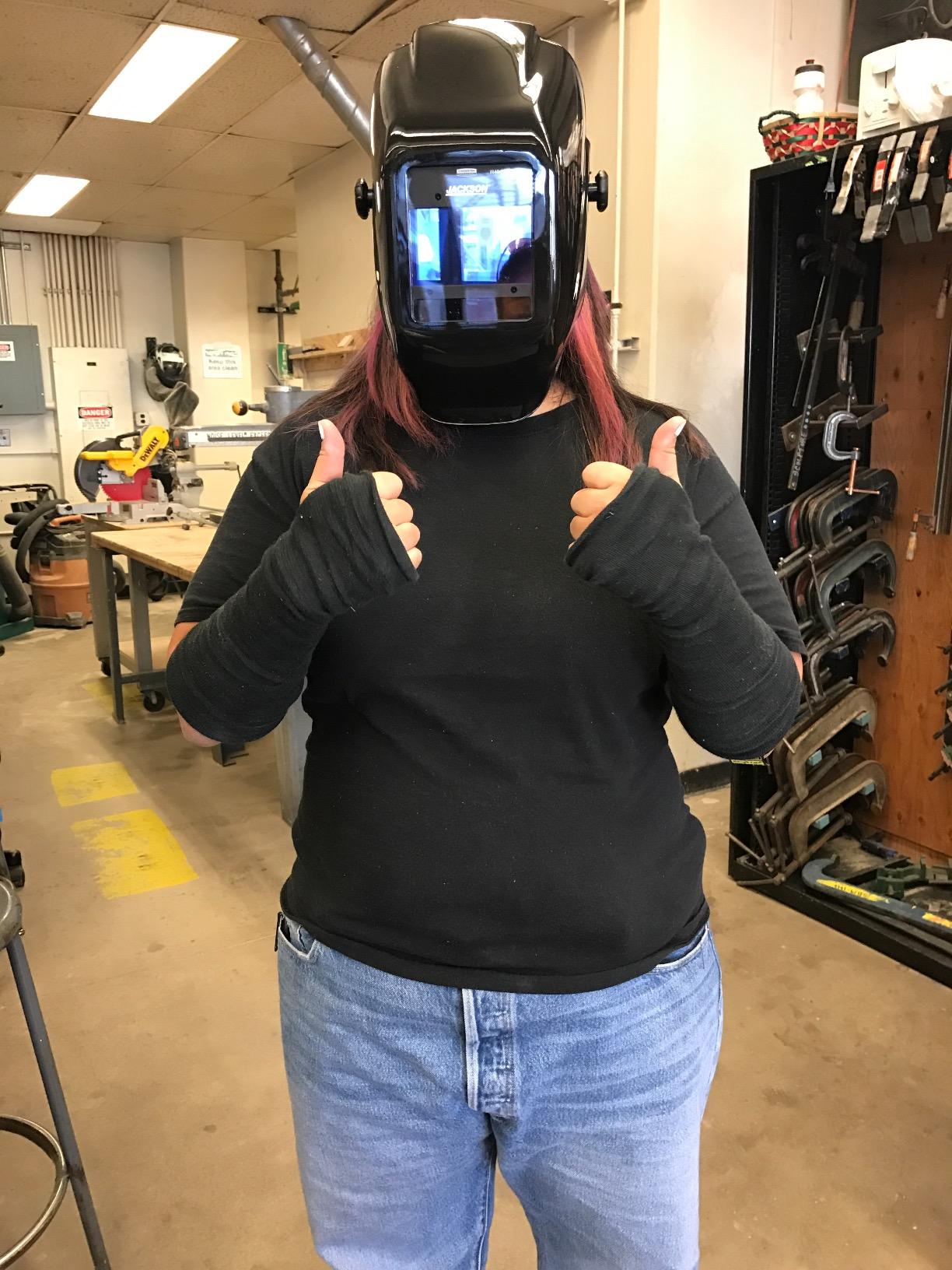
At six ounces, the Jackson Insight is the lightest shell in this group, and that weight is the whole point. When you are welding a hood frame over your head or lying under a truck, a heavy shell turns into neck pain within minutes. This one simply does not register.
It is not a stripped-down lens, though. You get variable shade 9 to 13, True Color optics rated 1/1/1/1, four arc sensors and digital controls for sensitivity and delay across Weld, Torch and Grind modes. Torch mode is a low-amp setting aimed squarely at TIG work.
Long-term owners report the hood staying reliable past five years on its original batteries, and it uses standard 4 1/2 by 5 1/4 inch cover lenses, so consumables cost nothing special. Several users also note it works with inverter machines that defeat some cheaper lenses.
The patented 370 Speed Dial headgear with the Qwik-Fit rear swivel band makes it easy to reach an adjustment with gloves on and to pull the band tight for a hard hat underneath.
When a light shell actually wins
Weight compounds. A helmet that is half a pound heavier than another feels like nothing for the first hour and like a mistake by hour six. For a fabricator doing out-of-position work, ladder work, duct work or vehicle repair, the six-ounce shell removes a whole category of fatigue that a heavier hood creates.
It also travels well. This is the model to keep in the truck for field service calls, because it is easy to grab, quick to dial in and does not punish you on a long drive to a job site.
Where you might want something heavier
The viewing area at 3.94 by 2.36 inches is mid-pack. It is not as generous as the Lincoln’s 12.5 square inches, so if you spend your day setting up large joints, the smaller window takes more head movement.
Reviewers also note the light state is not as bright as some competing lenses in a well-lit shop, and that sensitivity can trip under reflective lighting. If you work in a bright, open shop rather than a dim garage, expect to turn the sensitivity down.
5. YESWELDER LYG-M800H – Best Large-View Budget Helmet
YESWELDER Auto Darkening Welding Helmet, Large View, LYG-M800H
3.93 x 3.66 inch view
4 arc sensors
1/30000s response
1/1/1/1 true color
Pros
- Large viewing area greatly improves puddle and joint visibility
- 1/1/1/1 true color replaces the old green tint
- All controls sit outside the helmet for gloved use
- Cheater lens compatible
- Reliable 4 arc sensors on low-amperage hobby work
Cons
- Flip-up tension knobs feel flimsy
- Plastic shell and shroud feel thin
- Some users report headgear straps breaking early
The M800H answers the main complaint about budget helmets by making the window big. At 3.93 by 3.66 inches it gives you a near-square view, and the four arc sensors handle low-amperage work far better than the two-sensor bargain models.
Beginners tell us weld quality improves almost as soon as they move up to a lens this size. The 1/1/1/1 true color optics mean you are not squinting through a green filter to find the edge of your puddle, which cuts down rework on first projects.
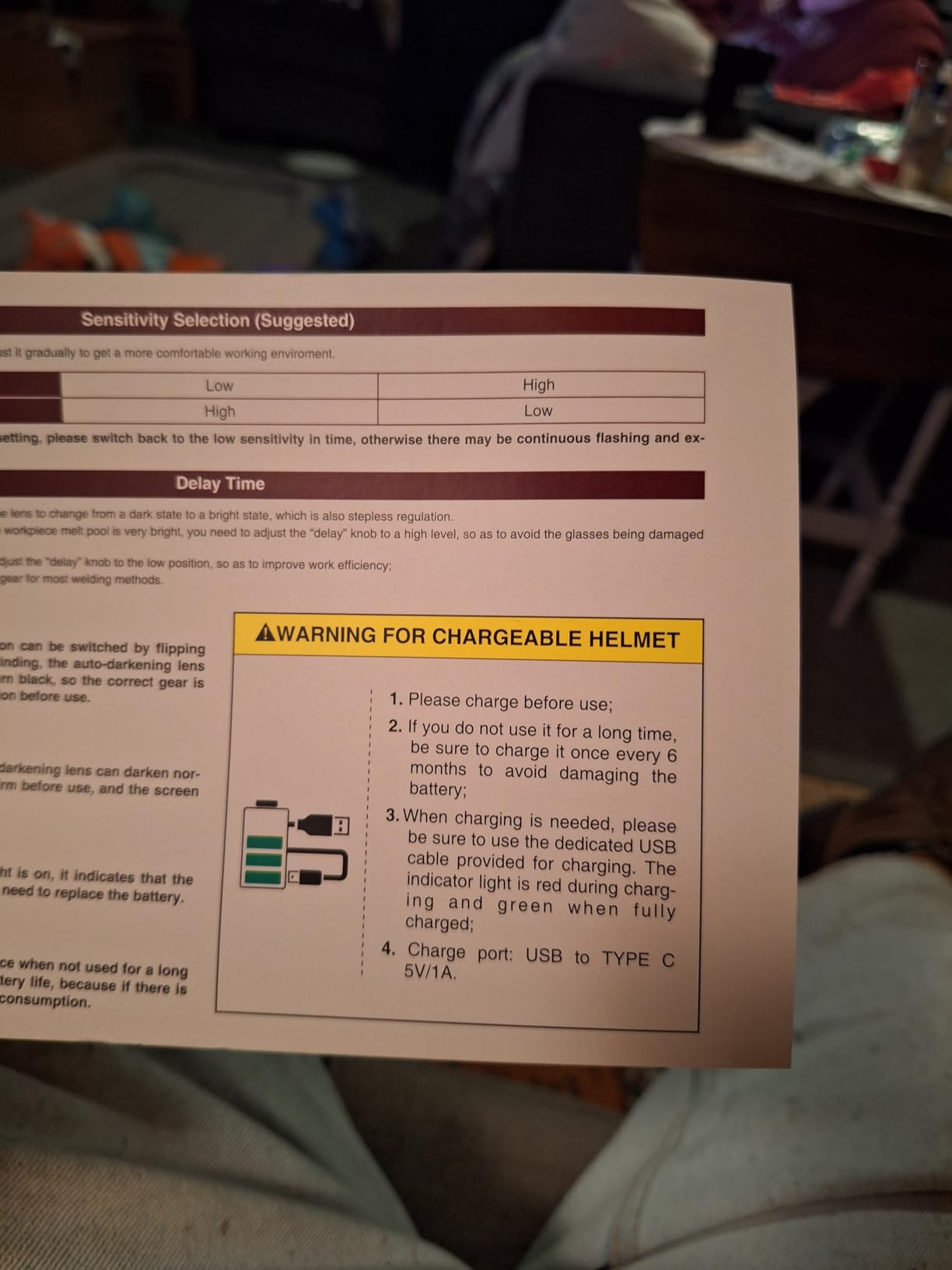
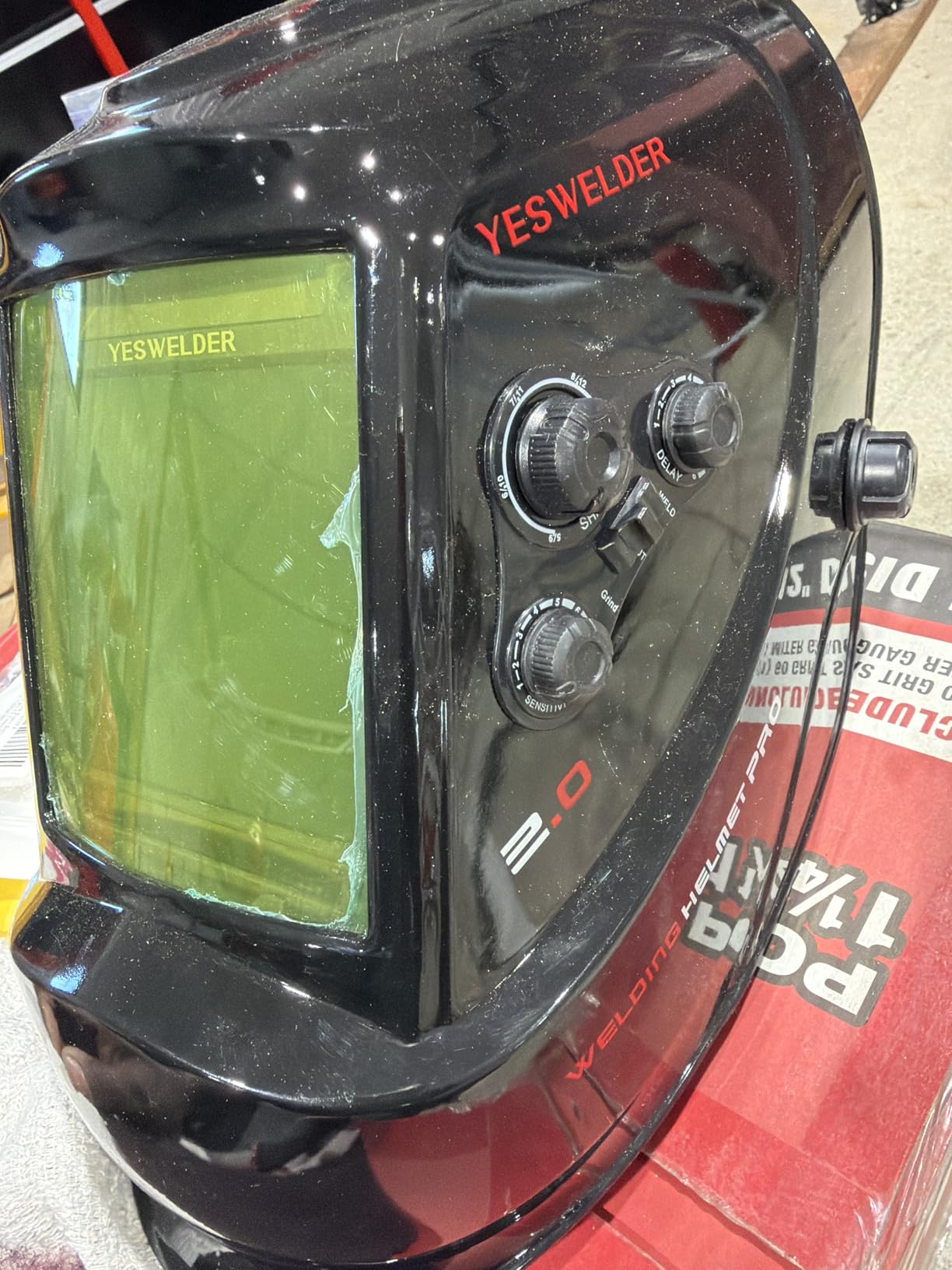
All the controls are on the outside of the shell, so shade and mode changes happen with gloves on. Shade 3/5-9 and 9-13 settings cover TIG, MIG, stick, cutting and grinding, and a cheater lens can be fitted for close-up work on thin material.
At 4.4 stars from more than 8,000 reviews, it is the second most-proven helmet here and the number two seller in welding helmets. The 6 percent one-star share is the highest negative ratio in this budget group, and the reason is almost always the same hardware.
What to tighten before your first weld
The most common complaint is the flip-up tension mechanism. The side knobs need to be tightened firmly or the front of the helmet drifts down as you move, and a loose helmet plus a misaligned arc is how you end up with a mark on your forehead guard. Give both knobs a solid quarter turn and check the position before you strike.
A replacement lithium battery, a storage bag, two outer lenses and an inner lens come in the box, so the consumables you will actually replace are all included.
Where the build quality shows
The shell and shroud are thin plastic, and a small number of owners report headgear straps or adjusting parts breaking after months of daily use. That is a fair warning if this is your only helmet and you weld every weekend.
It weighs about 1.32 pounds, which keeps it comfortable for long hobby sessions. If your work involves a hard hat, a respirator or constant grinding, budget for a replacement headgear or choose a heavier-duty model.
6. ARCCAPTAIN HSH-S800 – Best Entry Helmet With Four Certifications
ARCCAPTAIN Welding Helmet Auto Darkening, 1/25000s Response, Shade 4/9-13
4 arc sensors
1/25000s response
1/1/1/1 true color
180 day warranty
Pros
- Clear 1/1/1/1 true color lens reviewers call among the clearest
- Very light with a breathable padded headband
- Grind mode and adjustable darkness are easy to operate
- Wide range of graphic styles
- ANSI Z87.1 CSA Z94.3 EN 175 and EN 379 certified
Cons
- Shell can feel cheap on first inspection
- A small number report slow response or lens cutting out
- Viewing area is narrower than large-view models
ARCCAPTAIN’s Skeleton Knight model is the first helmet in this roundup we would put in front of a first-time welder without hesitation. It carries four certifications, including ANSI/ISEA Z87.1-2010, CSA Z94.3, DIN EN 175 and DIN EN 379, which is unusual at this tier.
The lens is rated 1/1/1/1 true color across a 3.86 by 1.69 inch viewing area, and reviewers repeatedly describe it as one of the clearest lenses they have used. Four arc sensors switch in 1/25,000 of a second, and the 12-in-1 smart filter provides automatic DIN 16 UV and IR protection.
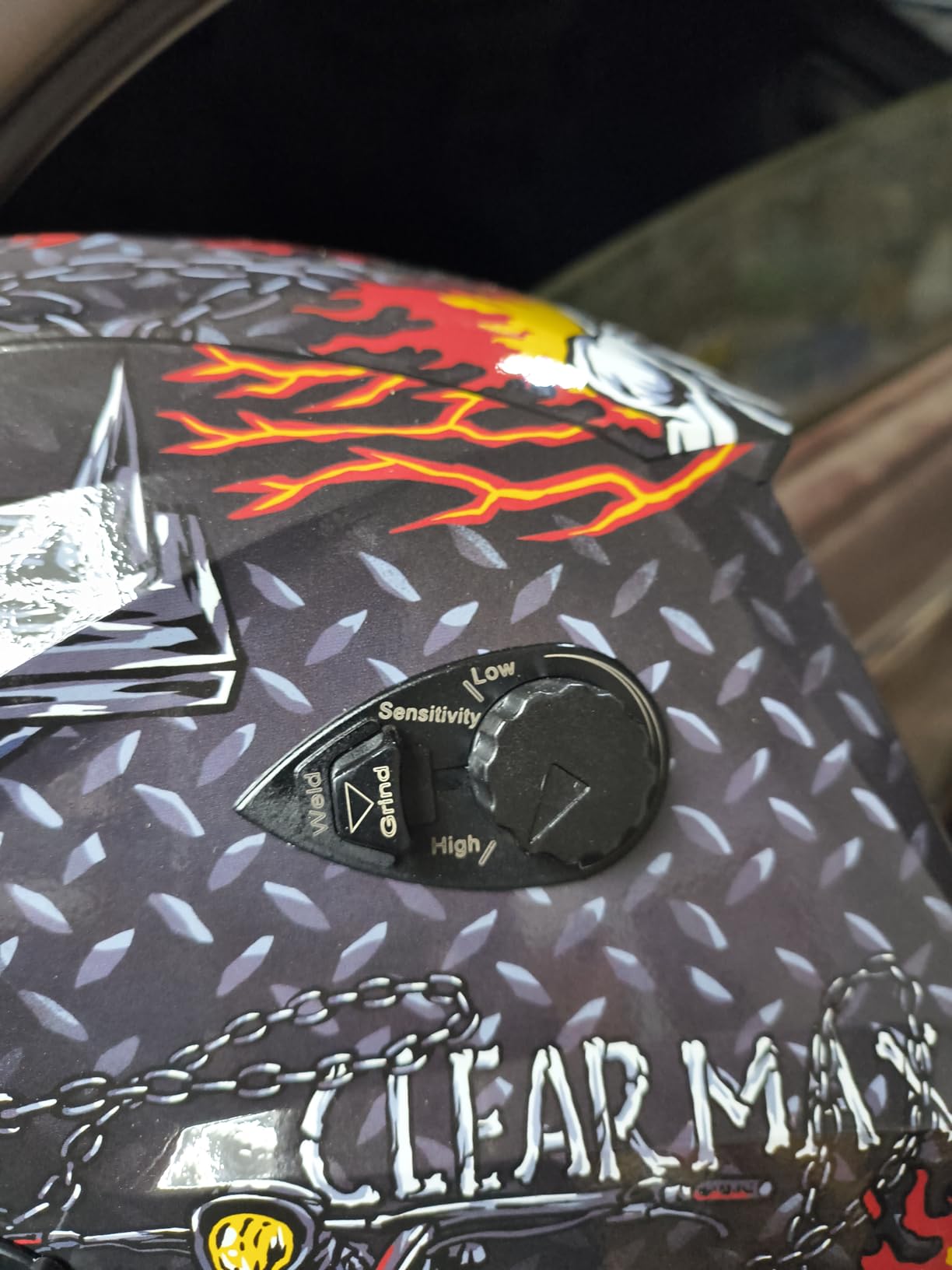
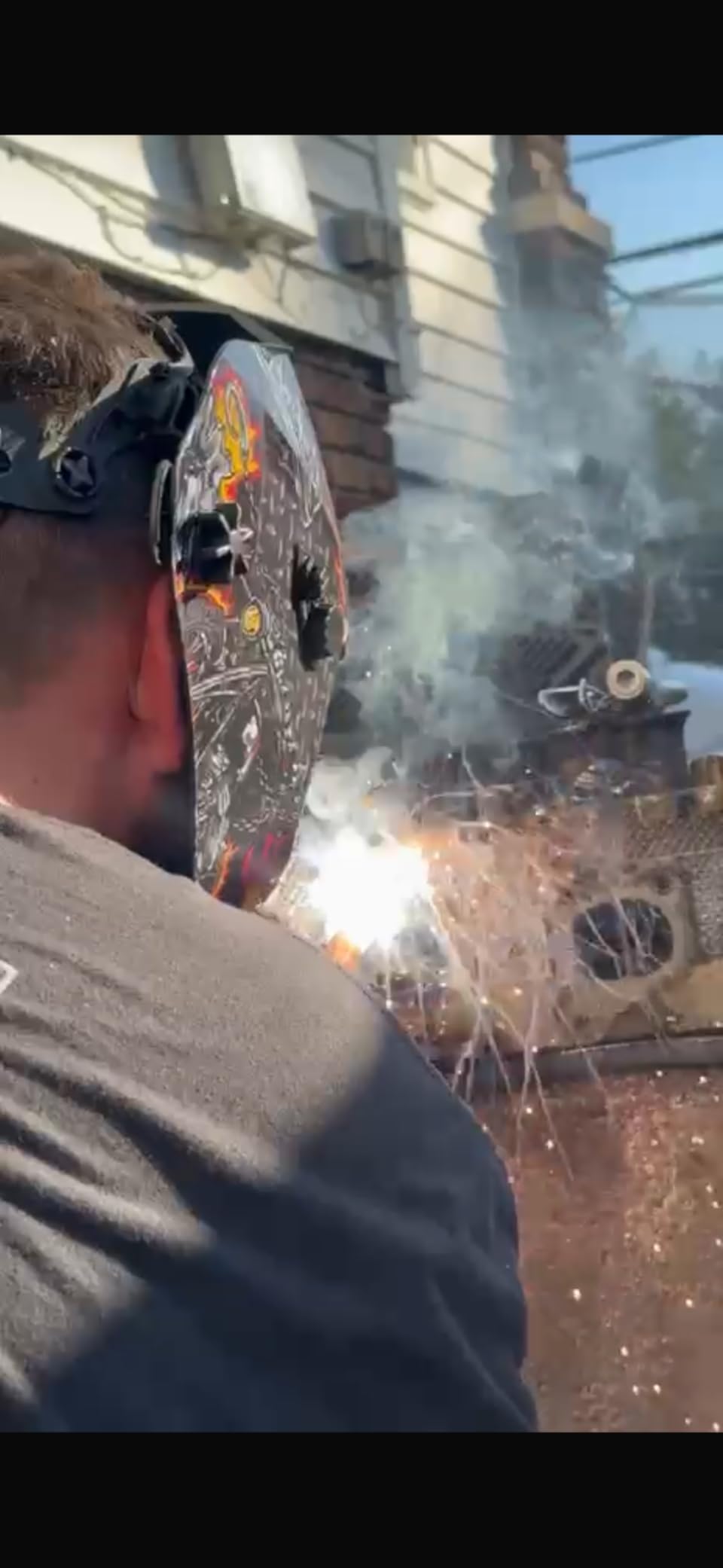
Lightness is a real feature here. At roughly one pound with a breathable padded adjustable headband, it stays comfortable through a long class session, and the range of graphic shells, from warrior and eagle designs to cyberpunk, makes it easy to find one that suits your taste.
Three replacement lenses and a manual come in the box. The solar panel charges the ADF and a replaceable CR2450 lithium cell backs it up, so a dim classroom does not leave you without protection.
What the 12-in-1 filter actually covers
That rating describes a single filter handling several processes and cutting tasks without a separate lens. Automatic DIN 16 UV and IR protection is the passive layer: it works with the electronics switched off, so even a total power failure leaves your eyes shielded from the arc.
For a student or a hobbyist moving between MIG, stick and occasional cutting, having one filter cover all of it removes the temptation to skip protection on a quick cut because the right shade is in another drawer.
What you accept at this level
The 180 day warranty is among the shortest we reviewed, and the shell can feel cheap when you first pick it up. A small number of buyers also report slow response or a lens that cuts out mid-weld, which points at a manufacturing variation rather than the design.
The viewing area is a portrait shape, so it is narrower than the large-view models. If you do a lot of pipework or overhead work, this is not the shape you want.
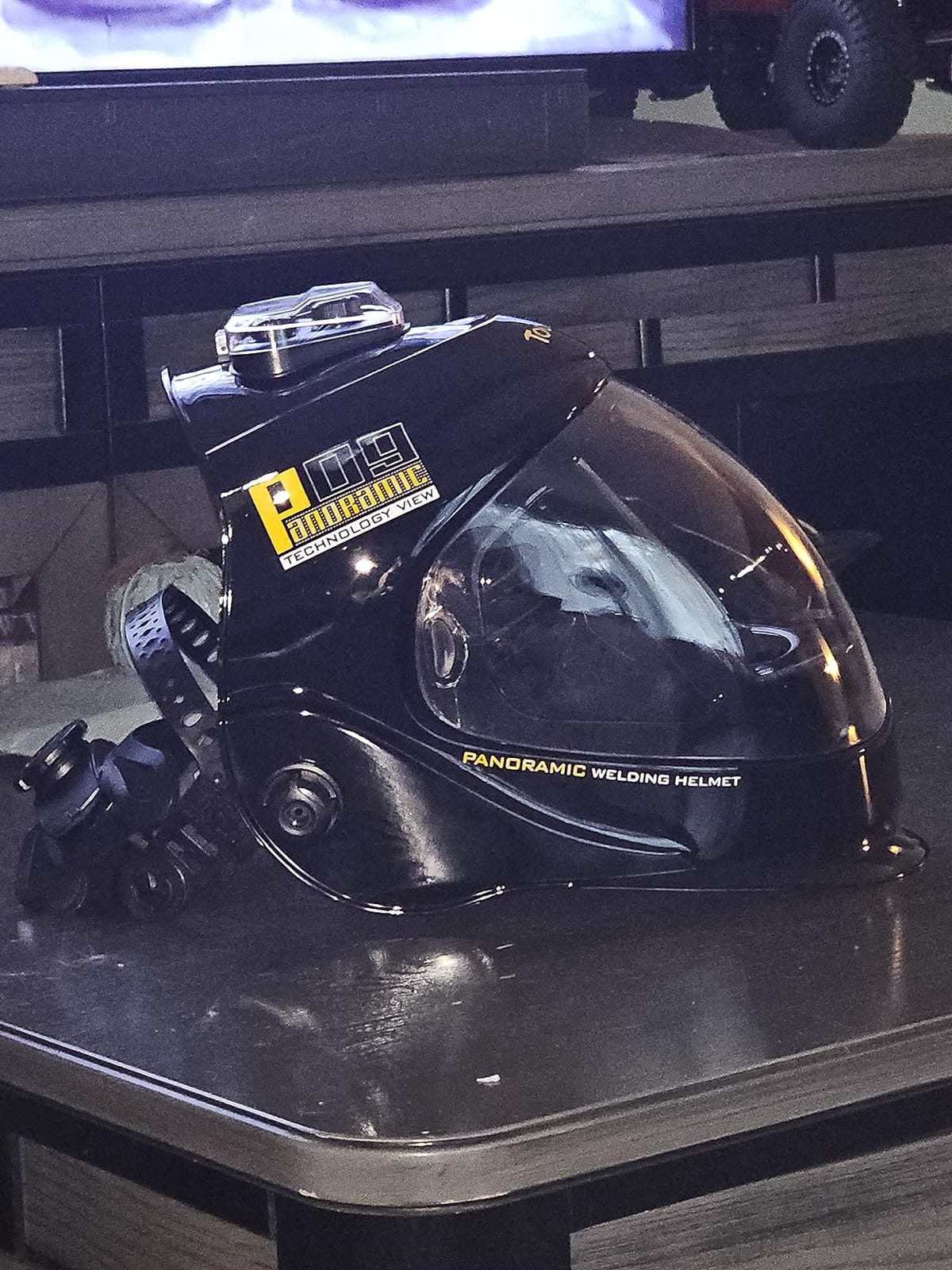
7. TOOLIOM TL-31800H – Best Big-View Starter Helmet
TOOLIOM Auto-Darkening True Color Welding Helmet with 3.94 x 3.66 View
14.4 sq inch view
1/1/1/1 true color
4 arc sensors
1/30000s response
Pros
- Very large 14.4 square inch viewing area
- True color 1/1/1/1 optics with a bright light state
- Very fast 1/30000s darkening response
- Dual solar and battery power
- Breathable butterfly headgear with multiple adjustment joints
Cons
- Bright light state can wash out thin material in a dark shop
- Plastic construction is basic
- Marked to ANSI Z89.1 rather than Z87.1
The TOOLIOM is the simplest spec sheet in this roundup to get behind: 14.4 square inches of true color viewing area, four arc sensors and a 1/30,000 second filter. Few helmets give you that much window at this tier.
Reviewers consistently talk about the combination of size and clarity rather than any single standout weakness, which is exactly what a first weld on thin material needs. A wide bright view makes it easier to see where your puddle is before it burns through.
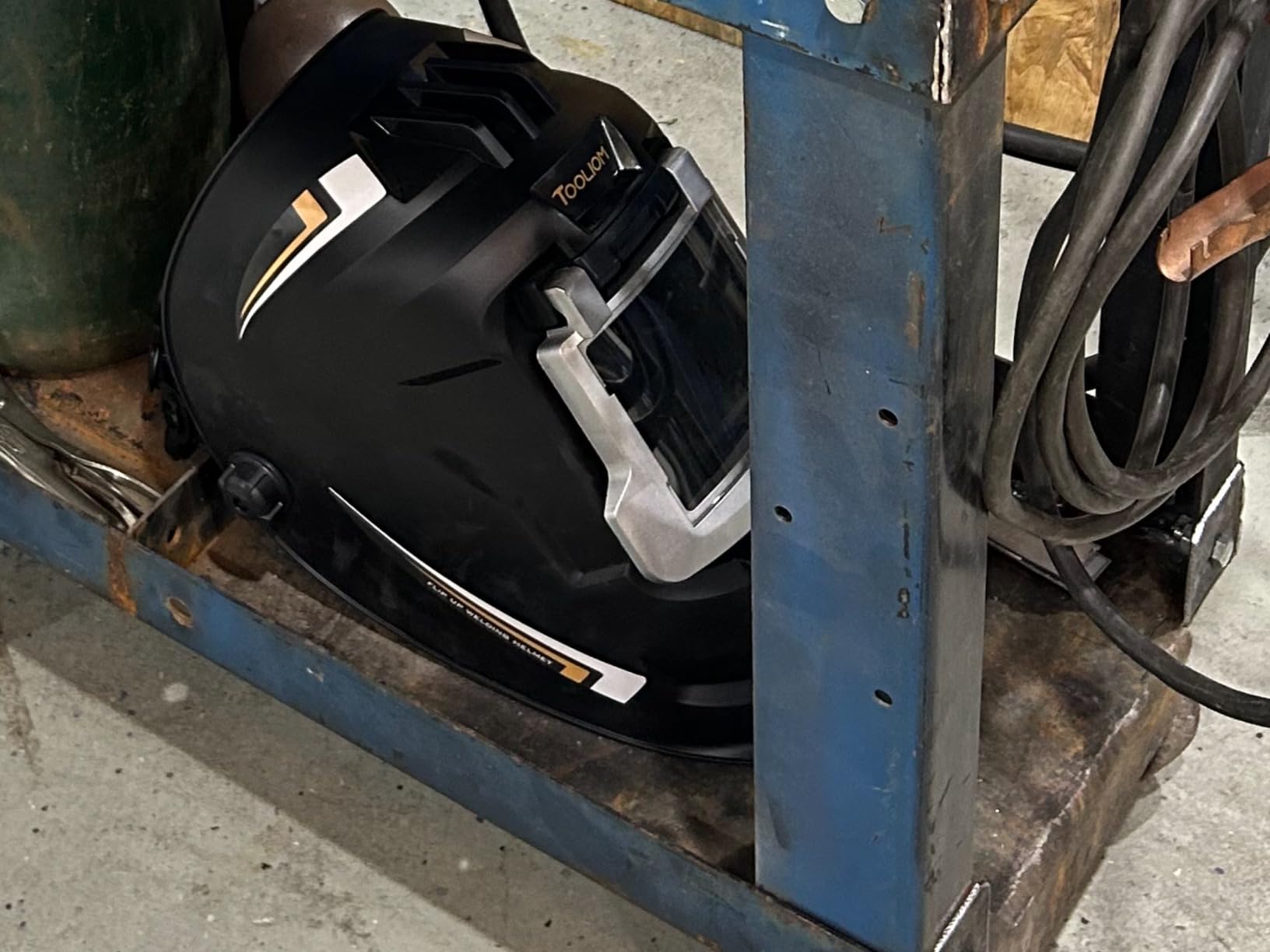
Power is dual: a solar cell with a replaceable lithium battery as backup. The dark state covers 5-9 and 9-13, and sensitivity, delay and shade all adjust across Weld, Cut and Grind modes. Two outer lenses, one inner lens and a battery are included.
The butterfly headgear with multiple adjustment joints spreads the load and lets you shorten the band, which helps if you are welding under a hard hat or wearing a respirator strap.
When a very bright light state helps
Some lenses sit at DIN 4 in the light state, some at DIN 3. A brighter state shows you more of the workpiece in a dim garage, which matters when you are doing butt joints on thin steel with a lot of gap control. In our testing, the brighter state made it easier to see the joint before striking.
That same brightness is the flip side. A few welders note the view washes out on thin material in a dark shop, where the glare off the bare metal can be distracting. If your shop is dim, a slightly darker light state is easier on the eyes.
Where the value comes apart
Construction is plain plastic and the shell is not the sturdiest in the group. For a welder who will treat a helmet like a tool and drop it, this is fine. For someone working on a truck bed or in a fabrication bay, expect to replace it sooner.
Check the listed specification standard before buying. This model is marked ANSI Z89.1 rather than Z87.1, and standards differ in what they cover, so confirm the marking on the physical helmet matches what your shop requires.
8. YESWELDER BW-10MAXTRI – Best Helmet With Internal Digital Setup
YESWELDER Auto-Shade Welding Helmet, Internal Digital Control, 180° View
5 arc sensors
8.89 x 3.23 inch view
Internal digital display
2.79 lb
Pros
- True color lens is dramatically clearer than older green lenses
- Internal display lets you tune settings without lifting the helmet
- 180 degree viewing with side panels
- Smart auto-adjustment reduces manual shade tweaking
- Shade range covers MIG TIG stick tack grind and cut
Cons
- Shell and band are average quality for the price
- Band can arrive misshapen
- Some users report a slight green tint
The BW-10MAXTRI is the only helmet here with five arc sensors and an internal display, and that combination changes how you work. Instead of guessing at a shade, you put the helmet on, look at the readouts, and make a numbered adjustment.
Reviewers single out the lens as the reason to buy, describing a night-and-day difference from older auto-darkening lenses. At 1,692 reviews and 4.5 stars, it has a solid track record for a feature-heavy design.
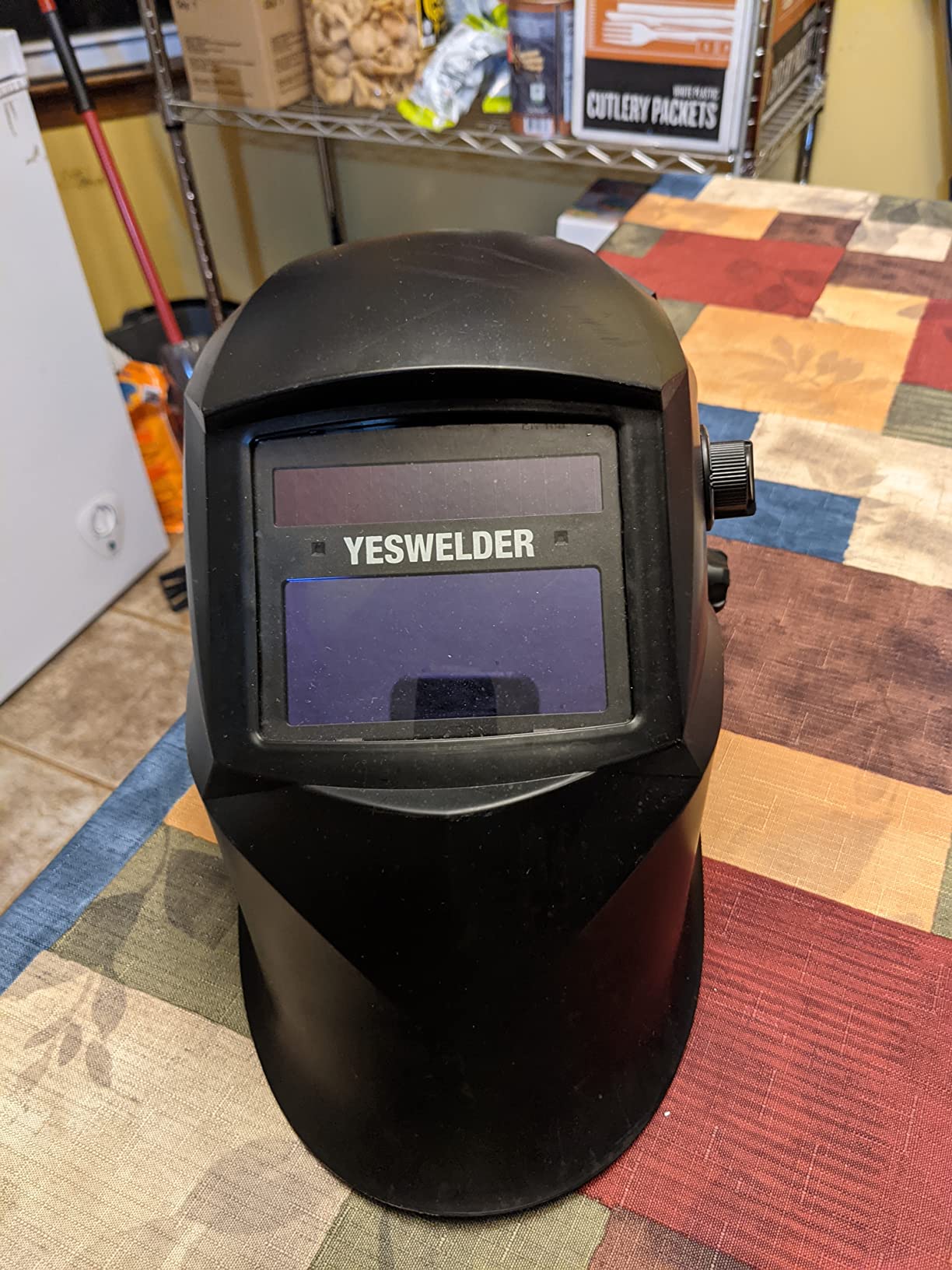
Intelligent auto-adjustment handles shade, sensitivity and delay based on arc brightness, with fine tuning across a plus or minus 9 level range. For someone who moves between thin and thick material all day, that removes a real chunk of trial and error.
Total viewing area is 8.89 by 3.23 inches, split into a 4.25 by 3.23 inch main view plus two 2.87 by 2.32 inch side panels. Shade range of 3/4-8 and 9-14 covers MIG, TIG, stick, tack, grind and cut with a gradient control for transitions.
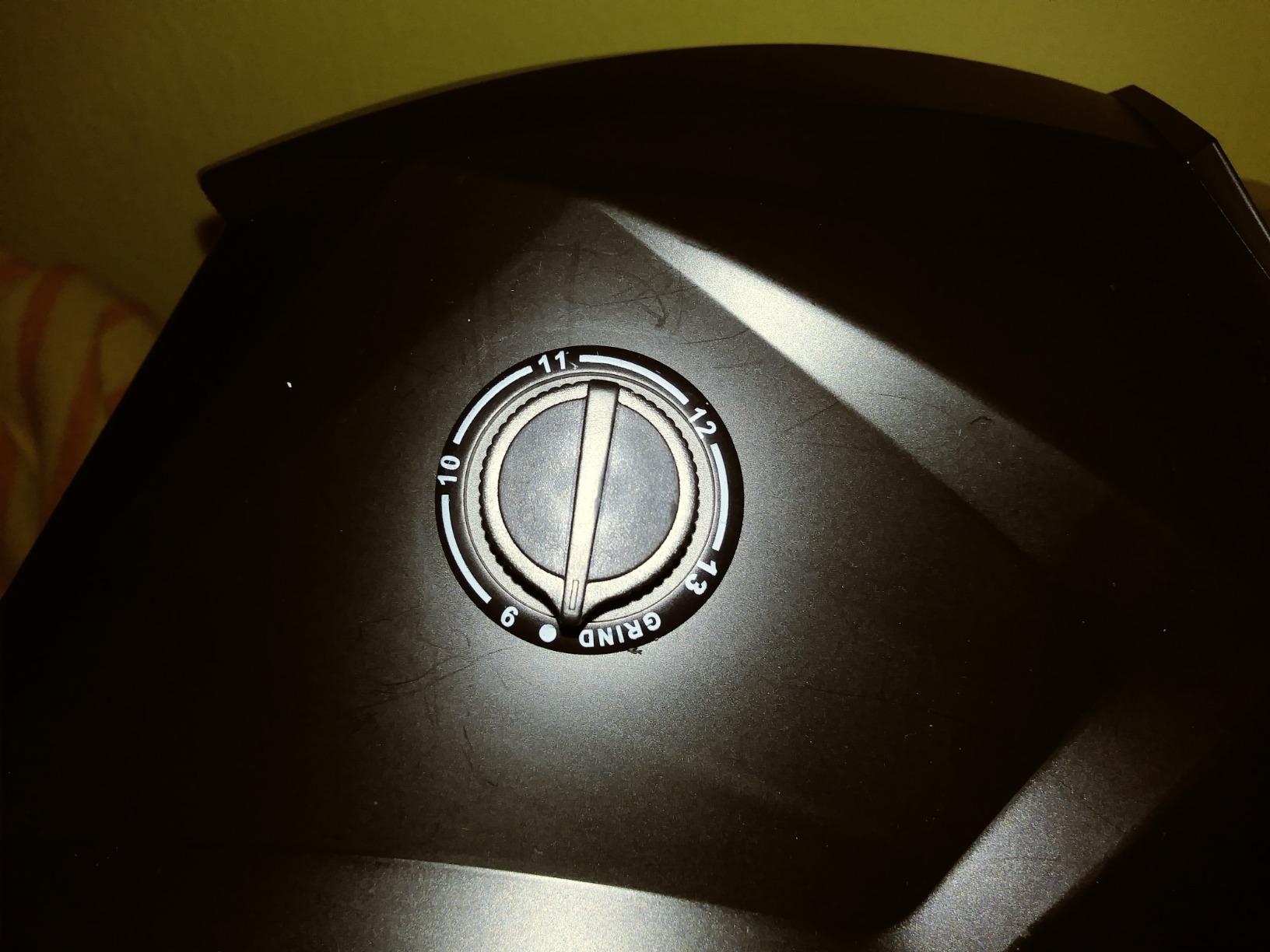
How five sensors change TIG work
Low-amp TIG is where sensor quality is proven. The arc is dim and narrow, and the strike often comes from an angle where a two-sensor lens is looking the wrong way. More sensors spread around the shell means more of those strikes land in a covered zone instead of being missed.
With a torch mode available on several of these helmets, and five sensors here, this is the roundup pick we would trust for pipe and tube work where amperage sits low and consistency matters more than speed.
Where you feel the budget
At 2.79 pounds this is among the heaviest shells in the group, and the headgear is described as adequate rather than good. If you work overhead, that weight shows up in your neck by the end of the afternoon. The band can also arrive misshapen, which takes a few minutes of adjusting to sort out.
A few owners mention a slight green tint, so if color accuracy of the finished bead is your deciding factor, look for a model that lists 1/1/1/1 without caveats.
9. TGR Panoramic 180 – Best Helmet for Peripheral Vision
TGR Panoramic 180 View Solar Powered Auto Darkening Welding Helmet – True Color (Carbon Fiber)
180 degree panoramic view
Optical class 1.1.1.2
1/10000s response
Solar powered
Pros
- Huge 180 degree field of view including side windows
- True color lenses stay bright in all DIN states
- Very fast 1/10000 second darkening
- Solar charging recharges quickly
- Visor design avoids contacting surfaces when set down
Cons
- Side windows are fixed at DIN 10 and not adjustable
- Headgear quality is modest under heavy use
- Only a 1 year manufacturer warranty
The 180 degree panoramic area includes side windows, so you can check your surroundings, line up a bracket or watch a helper without turning your head and losing the arc. It is the only helmet in this roundup with side viewing panels.
That is the whole argument for this model, and it is a real one for under-vehicle work, out-of-position passes and any setup where awareness beats raw darkness control. Four independent arc sensors with adjustable sensitivity and delay handle detection, and the lens darkens in 1/10,000 of a second.
Grind mode meets EN175B for protection against flying particles, and the visor is shaped so it does not contact a bench or truck bed when you set the helmet down. That design detail saves cover lenses in the long run.
Solar charging tops the cell up quickly, which cuts down on how often you think about batteries. True Color lenses stay bright and clear across DIN states, which is where a lot of panoramic lenses get criticized.
Reading the 1.1.1.2 rating
This model is rated 1.1.1.2 rather than 1/1/1/1. The first three ones match the top tier. The fourth one is the angle uniformity rating, and a 2 means the view shifts slightly when you look toward a side window compared with looking straight through the center.
In practice that is a small, localized difference you will notice only if you alternate between the center and the far edges repeatedly. For most welding positions, the peripheral coverage outweighs it.
Who should skip it
The side windows sit at a fixed DIN 10 and cannot be adjusted, so they do not follow your main shade setting. If you regularly switch between heavy cutting and light weld cleanup, that mismatch is a genuine limitation.
The headgear and harness are the modest part, and a few owners expect to replace them under heavy daily use. The 1 year warranty is shorter than most in the group. None of that matters much for an enthusiast who values the view, and all of it matters if this is a production tool.
10. ARCCAPTAIN XK-LY800H – Best Helmet With a Built-In Work Light
ARCCAPTAIN Auto Darkening Welding Helmet with Light, 3.94″X3.66″ Large View
USB-powered LED light
3.94 x 3.66 inch view
4 arc sensors
Dual solar power
Pros
- Top-mounted LED welding light is useful in dark or low-light settings
- Super large 3.94 x 3.66 inch true color viewing area
- Fast 1/25000s response from 4 arc sensors
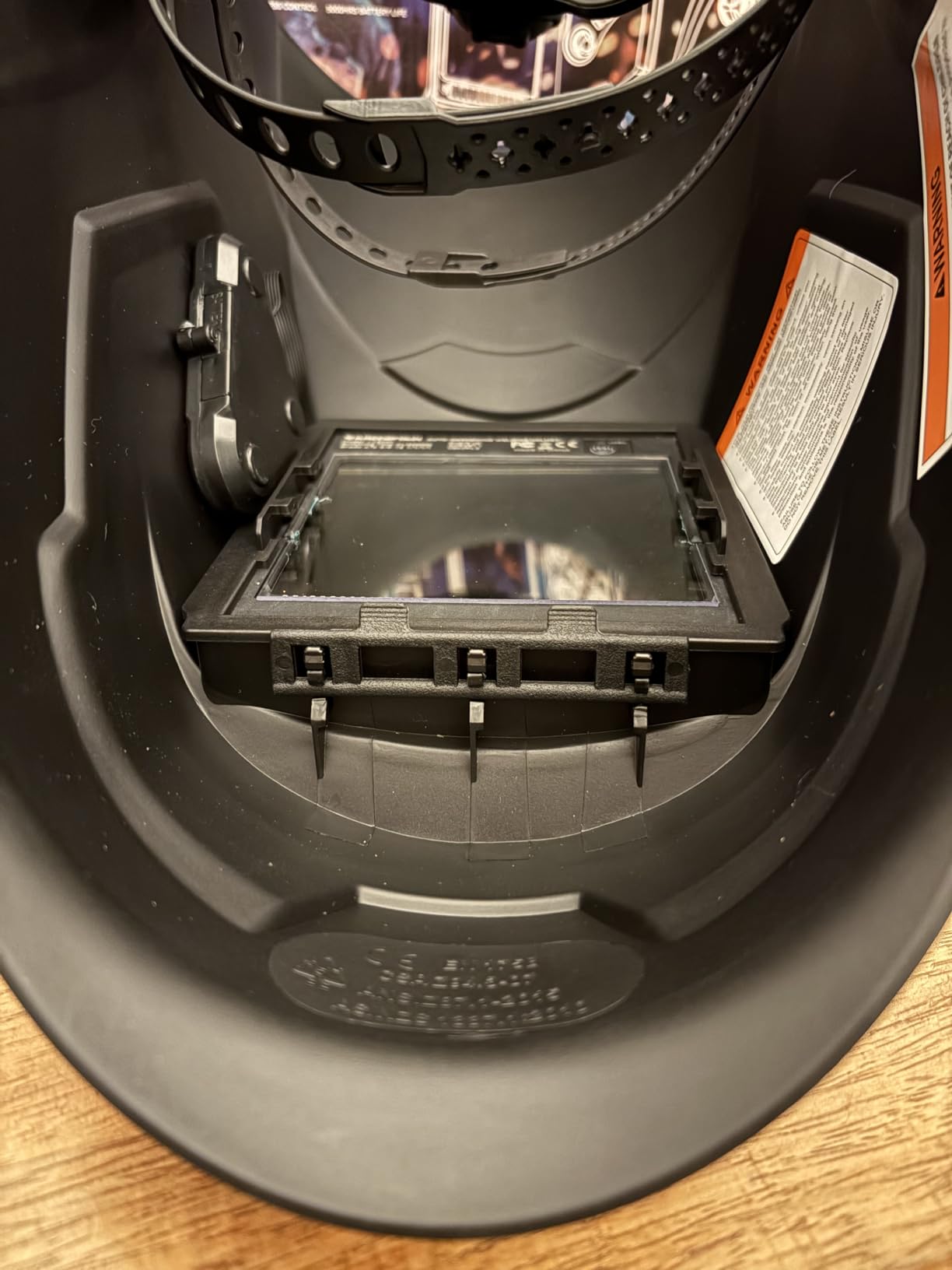
- Dual solar panels plus a CR2450 battery
- Lightweight shell with breathable padding
Cons
- Welding light arrives uninstalled and must be attached
- Short warranty at 180 days
- Lowest rating of the two ARCCAPTAIN models
A dim garage is the hardest place to set up a weld, because you cannot see the joint and the arc light only helps once you have already struck. This helmet has a USB-powered LED mounted on top with two brightness levels, aimed at the work instead of your face.
It also has a 3.94 by 3.66 inch true color viewing area with a 1/1/1/1 optical rating, four arc sensors switching in 1/25,000 of a second, and a dark state of 4/5-8/9-13 with adjustable sensitivity. That is a serious spec list for a budget shell.
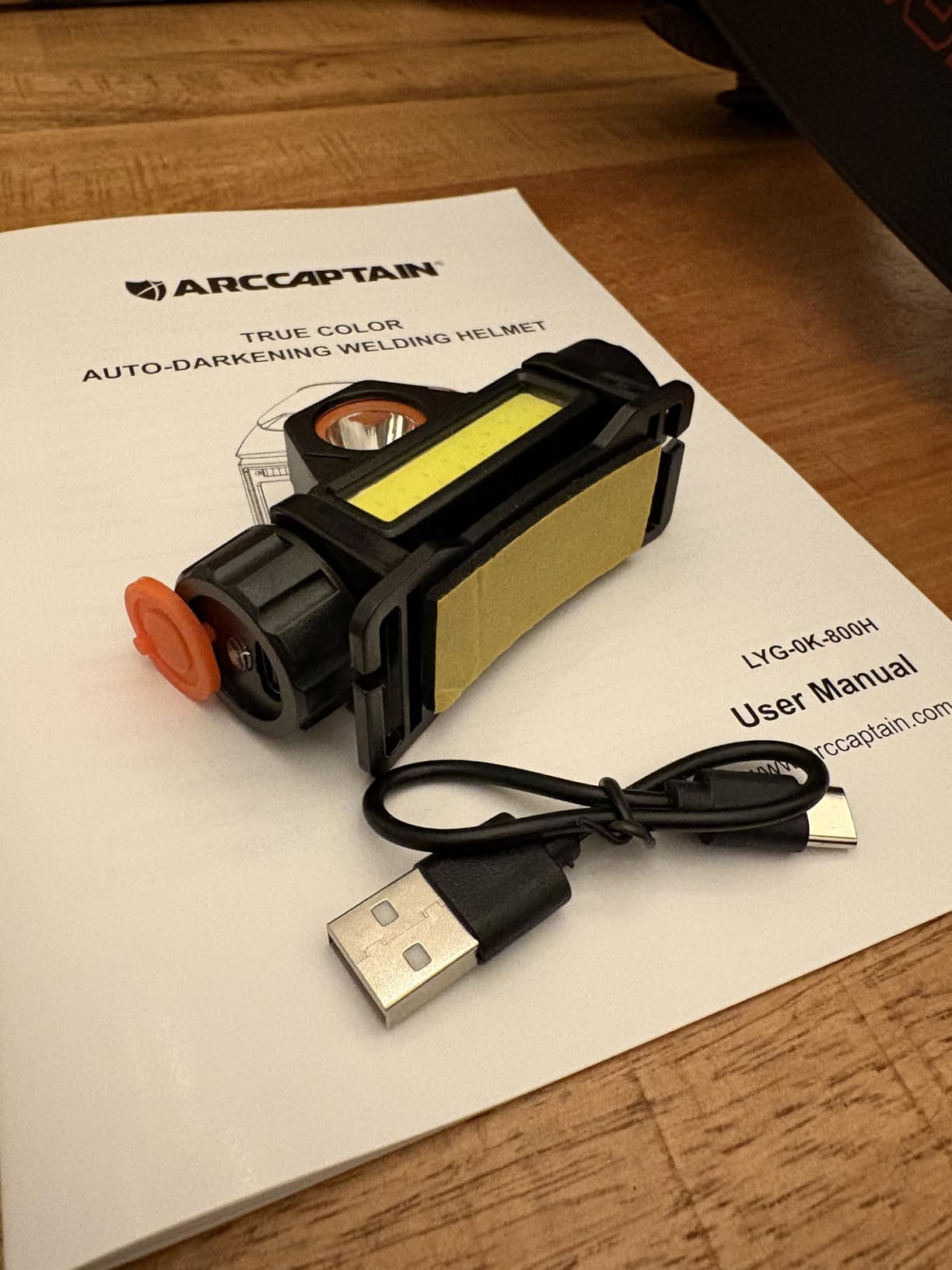
Two solar panels on the front and a CR2450 cell at the rear mean the filter and the light both have power options. The 12-in-1 smart filter provides automatic DIN 16 UV and IR protection, and the shell weighs about one pound with a padded adjustable headgear.
It is certified to ANSI Z89.1, CSA Z94.3 and DIN EN 379, which is a broader mark set than most shells at this level carry.
When a work light changes the job
The light matters most in a basement shop, a field repair after dark, or anywhere you would otherwise hold a flashlight in your teeth to see the joint before starting. Being able to look at your setup rather than guess at it cuts scrap, particularly on thin material where gap and alignment decide the outcome.
Two brightness levels keep it usable close to reflective work without blowing out your view of the puddle once the arc strikes.
What to know before ordering
The welding light arrives uninstalled and you attach it yourself, so plan ten minutes with the included hardware before your first session. Several buyers have discovered this after setting up in a hurry.
It carries one of the shortest warranties here at 180 days and the lowest rating of the two ARCCAPTAIN models, with a slightly higher share of critical reviews. It also lists ANSI Z89.1 rather than Z87.1, so confirm the marking suits your shop rules before you commit.
How to Choose an Auto Darkening Welding Helmet
Optical class is the number that changes your weld
Optical class is written as four numbers, most often 1/1/1/1. The first is the clarity factor, the second covers distortion, the third is shade consistency across the filter, and the fourth is how uniform the view stays at different angles. A 1 in every position is the best available, and most helmets in this roundup carry it.
True color technology is a separate thing. It means the filter does not shift your view green or brown, so the color of the workpiece and the arc look close to normal. That is a real advantage when you are cleaning stainless or brazing, where oxide color tells you the temperature.
Sensor count is a reliability decision, not a feature checkbox
Two sensors, four sensors, five sensors. The count tells you how many directions the lens is watching for an arc, and it matters most on low-amperage TIG and out-of-position work where the arc arrives from an angle. If a helmet is going to be your only one and you weld TIG, treat four sensors as the floor.
Sensor quality also determines false triggering. Bright sunlight and some fluorescent shop lighting can trigger a filter on its own, which is called interference. Adjustable sensitivity settings are how you tame that, and helmets with external controls are easier to adjust while wearing gloves.
Shade range, delay and the correct settings
DIN 9 is lighter and DIN 13 is darker; the number is a measure of how much light is filtered out. Most MIG work happens between 9 and 13, with 9-13 variable lenses covering the spread. Shade 10 versus 11 is a small step, and the right answer depends on your material, your amperage and how you read the puddle.
Delay controls how fast the lens returns to clear after the arc stops. A long delay is useful for a weld that ends and a follow pass that starts right away, because you do not have to wait for the filter to clear. A short delay makes setup work easier. Almost every helmet here lets you tune both shade and delay, and the ones with a grind or cut mode save you from guessing.
Viewing area, weight and headgear
Viewing area is measured in square inches and it changes how much you move your head. Small portrait lenses work fine on flat and horizontal work. Large rectangular or panoramic windows help on vertical fillets, pipe, and anything where you are not facing the arc head-on. The views in this roundup run from roughly 6 square inches up to 14.4.
Weight matters as much as area after hour six. A one pound shell is dramatically more comfortable than a three pound one when you are overhead, and the headgear design, ratcheting band versus a simple strap, spreads the load across your skull rather than your forehead. If you wear a hard hat, a respirator or glasses under the helmet, check that the band adjusts short enough to fit over them.
Power, standards and the dark storage question
Most solar helmets are really solar-plus-battery. The solar cell tops up the lithium cell during the day, and the battery covers you when there is no light. Forum discussion often claims a helmet stored in total darkness loses its battery and stops sensing, and the practical advice is simple: keep a fresh CR2450 or CR2032 cell in the helmet rather than trusting long storage.
On safety marking, look for ANSI Z87.1 specifically. A helmet marketed as ANSI approved is not the same claim as Z87.1 compliance, and Z87.1 is the standard most US shops and inspectors expect. Some models here also carry CSA Z94.3, DIN EN 175 or DIN EN 379, which is useful if you work internationally. Note that a couple of the budget models are marked to Z89.1 instead, so verify the marking on the unit you buy.
Five fixes if your auto-darkening lens stops working
First, replace the battery. A drained CR2450 is the single most common cause of a filter that will not respond, and it costs almost nothing. Second, clean the solar panel and the inside of the cover lens, because grime blocks both charging and light. Third, turn the sensitivity down if it is darkening on its own in bright light.
Fourth, check the shade setting. Several helmets here ship with an internal shade switch that has to be set correctly before first use, and a filter sitting in grind or torch mode will not respond to an arc. Fifth, remember that the passive UV and IR layer still protects you with the electronics off, so an unpowered filter will not hurt your eyes. That is a comfort, not a reason to keep welding on a dead lens.
Should you replace the lens instead of the helmet
If the shell and headgear are in good shape and only the filter has failed, a replacement auto-darkening lens often costs a fraction of a new helmet and fits the same shell. It is worth checking whether your helmet takes a standard cartridge. Buy a new helmet instead when the shell is cracked, the headgear is stripped, or you want features the current model does not have.
Miller or Lincoln, head to head
This is the most common question we see, so here is the honest answer based on what we tested. Among the ten helmets in this roundup, the Lincoln VIKING 3350 is the one that wins on optics, with 1/1/1/1 clarity, a 12.5 square inch viewing area and a 5 year warranty with 5 year spare part availability. That combination of clarity, size and warranty coverage is why it took our top slot.
The Miller side of the comparison deserves a note on reputation rather than specs. On Practical Machinist threads, the Optrel Vegaview 2.5 has long ranked first with the Miller Elite a close second, valued mainly for lens clarity, and the same general pattern shows up in the wider forum consensus: clarity is what separates the expensive hoods from the cheap ones. We did not test those two models in this roundup, so we are not going to invent a head-to-head result. If you can try both, put them on and look at a real arc.
Frequently Asked Questions
Can I trust an auto darkening welding helmet?
Yes, when the helmet is marked to a real safety standard. Look for ANSI Z87.1 specifically rather than vague wording like ANSI approved, and check for CSA Z94.3 or EN 379 as well. Every auto-darkening helmet we tested switched fast enough to prevent flash burn, and the passive UV and IR layer keeps working if the electronics fail. Buy from a brand that publishes optical class, switching speed and sensor count.
Can you look at the sun with an auto darkening welding helmet?
No. Wear the filter in its light state and you should never look at the sun, a laser or a very bright light source. Auto-darkening lenses are rated for arc light, not for direct solar or intense artificial light, and looking at the sun can damage the filter or your eyes. High-end lenses are much better at suppressing glare in daylight than cheap ones, but that is comfort, not permission.
What is the correct setting for an auto-darkening welding helmet?
Start at DIN 10 for MIG on mild steel, then adjust one step lighter or darker based on how well you can see the puddle. Use the lower end of the range for thin material and the higher end for thick sections. Set delay longer when you are doing a weld and a follow pass, and shorter when you are setting up. Most of the helmets in this roundup let you fine tune shade, sensitivity and delay externally or on an internal display.
Is shade 10 or 11 better?
Neither is better in general, it depends on your material and amperage. A higher shade number means more light is filtered out, so shade 11 suits thicker material or a hotter, larger arc, while shade 10 gives you a brighter view of thin material and short-circuiting welds. If your puddle detail looks washed out, step lighter. If you are still getting arc eye, step darker. A variable shade 9-13 lens covers the whole range in one helmet.
How many arc sensors do I need?
Four is the practical minimum for most welders, and five is better if you do a lot of TIG. Sensors watch for the arc from different directions, so a two-sensor lens can miss a strike when the arc is at an unusual angle to the helmet, which is common on out-of-position and low-amp TIG work. Two sensors are fine for flat MIG and stick work on a budget.
Our Final Picks for 2026
Buy the Lincoln VIKING 3350 if you weld full shifts and want the best combination of clarity, viewing area and warranty coverage in this group. Buy the YESWELDER LYG-L600A if you are a weekend hobbyist or a student who wants a certified true color lens without a big spend, and the Hobart 770890 if you want that clarity with a large window and simple knobs in the middle of the range.
For overhead and under-vehicle work, the Jackson Safety Insight at six ounces is hard to argue with. For peripheral vision, the TGR Panoramic 180 is the only one that sees around the corner. For a dim garage, the ARCCAPTAIN XK-LY800H with its top-mounted work light solves a problem the others leave to you.
Whatever you pick, check the certification marking on the unit itself, keep a spare lithium cell in the helmet, and set the shade and delay once before your first weld. That is still the best advice we can give across all ten of the best welding helmets with auto darkening in 2026.