

Choosing among the best compound microscopes for hobbyists is harder than it looks, because almost every listing quotes a headline magnification of 2000x or more and very few of them mean it. The number a scope prints on the box is the eyepiece multiplied by the objective, and past roughly 1000x most of those scopes stop adding detail and simply spread the same pixels across more of your eye. What actually decides whether a microscope is satisfying is boring and unglamorous: the head type, the stage, the focus system, and whether the light can be controlled.
That is the filter we used across twelve current models. Every scope below was assessed on the same five things a hobbyist runs into within the first month: can you look at a slide without one eye closed, can you move the slide without losing it, can you find focus twice in a row, can you dial the contrast down on a pale specimen, and is there a camera path for when you decide to start posting pictures. Ratings and review counts come from the listings themselves, and owner feedback is attributed only to the sources named in each product’s reviews.
We were sent no free units for this roundup and bought nothing on a commission basis, so treat the verdicts as opinions formed from specifications and thousands of written owner reports rather than from lab instruments in a back room. One honest note up front: entry-level achromatic optics are good, not excellent. Owners on hobby forums describe AmScope and OMAX glass as “of good (but not excellent) optical quality”, and that remains the fairest summary of this tier in 2026.
Table of Contents
Top 3 Compound Microscopes for Hobbyists (October 2026)

AmScope M150C
- All-metal frame
- 40X-1000X range
- Cordless LED plus AC
- 360 degree monocular head
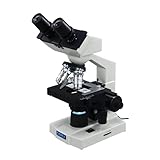
OMAX M82ES Binocular
- Binocular head with diopter
- Double layer X-Y stage
- NA1.25 Abbe condenser
- 100X oil objective

Swift SW380T Trinocular
- Rotatable Siedentopf head
- Trinocular C-mount camera port
- Interchangeable WF10X and WF25X
- Ultra-precise fine focus
All 12 Compound Microscopes at a Glance in 2026
Here is every model in the roundup in one view. Each row lists the head type and the two or three specifications that most often decide the purchase, so you can narrow the field before reading the full sections.
| Product | Specs | Action |
|---|---|---|
| AmScope M150C |
|
Check Latest Price |
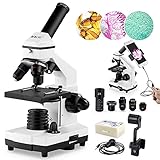 BEBANG YW-3006 BEBANG YW-3006 |
|
Check Latest Price |
 TOMLOV CM101 TOMLOV CM101 |
|
Check Latest Price |
| OMAX M82ES |
|
Check Latest Price |
 PalliPartners SWXWJ-1 PalliPartners SWXWJ-1 |
|
Check Latest Price |
 AmScope M162C Kit AmScope M162C Kit |
|
Check Latest Price |
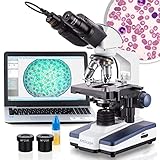 AmScope B120C-E1 AmScope B120C-E1 |
|
Check Latest Price |
| Swift SW380T |
|
Check Latest Price |
 Herwicm WY-462 Herwicm WY-462 |
|
Check Latest Price |
 JECONE ET1 JECONE ET1 |
|
Check Latest Price |
 Woehrsh AS-31 Woehrsh AS-31 |
|
Check Latest Price |
 PALOBIL YQ-M-001 PALOBIL YQ-M-001 |
|
Check Latest Price |
What You Can Actually See at 1000x (and Why 2500x Is Mostly Marketing)
At 1000x total magnification you are usually looking through a 100x oil immersion objective with a 10x eyepiece, and you are seeing individual red blood cells in a smear, the dividing chromosomes in an onion root tip, chloroplasts stacked along a leaf vein, the frustules of diatoms, and the fine hairs and joints of a small arthropod. Below 100x you see tissue architecture. At 400x individual cells fill the field. At 1000x you are at the practical resolution limit of a good achromatic objective, and no amount of eyepiece power changes that.
This is why the 2000x and 2500x figures on budget scopes mean very little. They are reached by stacking a 25x eyepiece, a 2x auxiliary lens, and a 40x or 100x objective. The image gets bigger and blurrier at the same time, which is what sellers mean by empty magnification. If a listing claims 5000x, assume nothing useful is added past 1000x and treat the higher settings as a demonstration feature rather than a reason to buy.
Optical quality also matters more than the number. Achromatic objectives correct color fringing for two wavelengths, which is why stained slides look acceptable rather than perfect. Plan achromats flatten the field of view so the whole view is in focus at once, and infinity-corrected systems are what allow a camera or an extra tube to be added without disturbing the view. Those are real upgrades. Total magnification is not.
1. AmScope M150C — The All-Metal Starter With the Most Owner Feedback
AmScope M150C1000X All-Metal Optical Glass Lenses Cordless LED
Magnification: 40X-1000X
Frame: all metal
Light: cordless LED or AC
Head: 360 degree monocular
Weight: 4 lb
Pros
- All-metal frame feels solid and stable
- All optical glass elements including the condenser
- Works on three AA batteries or the included AC adapter
- Five magnification steps covering most hobby specimens
- Five year manufacturer warranty
Cons
- No mechanical stage so slides move by hand
- Monocular head tires the eye in long sessions
- Single lens condenser with disc diaphragm limits contrast control
- Will not resolve fine intracellular detail at 1000X
More than three thousand written reviews describe the same thing: a metal body that does not flex, a condenser you can actually turn, and images that hold up for pond water, prepared slides, coins and fabric. That volume of evidence is why it leads this list.
The monocular head rotates a full 360 degrees and the 90 degree viewing angle keeps your neck in a reasonable position. Three AA batteries mean it can go out to the garden pond rather than living on one desk.
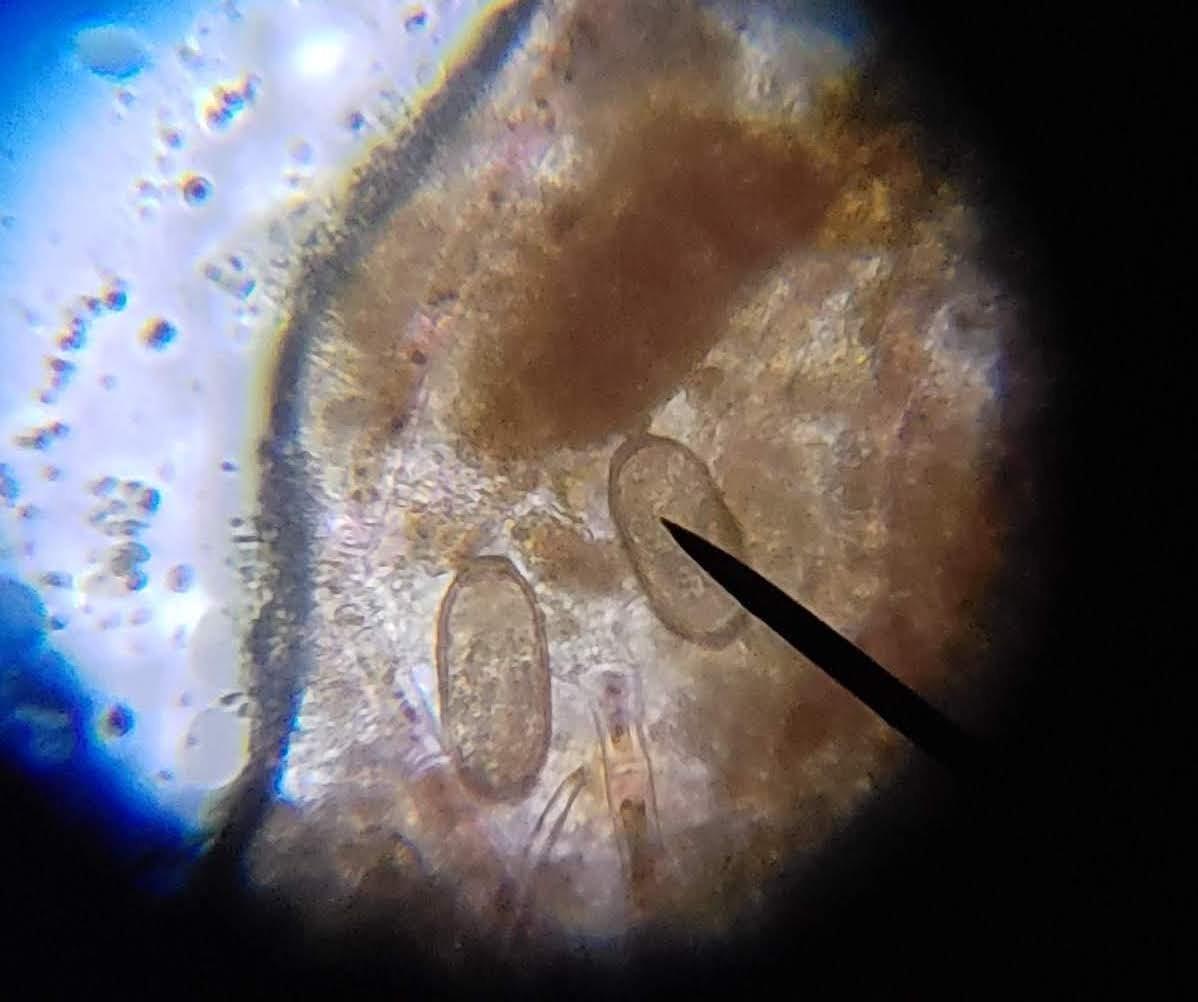
What you give up for that frame is control. The stage is a flat plate with no clips, so a slide shifts the moment you touch the focus knob. Illumination runs through a single lens condenser with a disc diaphragm, giving three brightness steps rather than continuous contrast control.
Owners also note the manual is only reachable through a registration code some buyers cannot locate. Forums that steer beginners toward binocular AmScope or OMAX scopes treat the M150C as the sensible metal-bodied floor, not the destination.
What you get that cheaper scopes skip
The all-metal frame and all optical glass elements, including the condenser lens, are the two real differences against plastic-bodied rivals. A plastic condenser is a common source of dim, uneven light, and the five magnification steps map onto real specimens rather than a doubled eyepiece.
Where it falls short
The missing mechanical stage is the biggest limitation. At 400x a nudge of the slide moves your field of view off target, and one eye closed gets tiring past an hour. If you expect long evening sessions, prioritise a binocular head over everything else at this price.
2. BEBANG YW-3006 — Most Complete Kit for the Least Assembly
2000X Compound Microscope for Kids Adults: Microscope for Biology Education
Magnification: 100X-2000X
Focus: coarse and fine knobs
Light: dual LED top and bottom
Included: 15 slides and phone adapter
Pros
- Comes with 15 slides coverslips a phone adapter and a carrying bag
- Coaxial coarse and fine focus gives genuinely sharp images
- Dual top and bottom LED covers slides and opaque objects
- Solid metal frame at a low price point
- Weighs 2.4 lb so it moves between rooms easily
Cons
- 2000X is empty magnification not added detail
- Monocular viewing only
- Fixed stage with limited slide positioning
- One year warranty is the shortest here
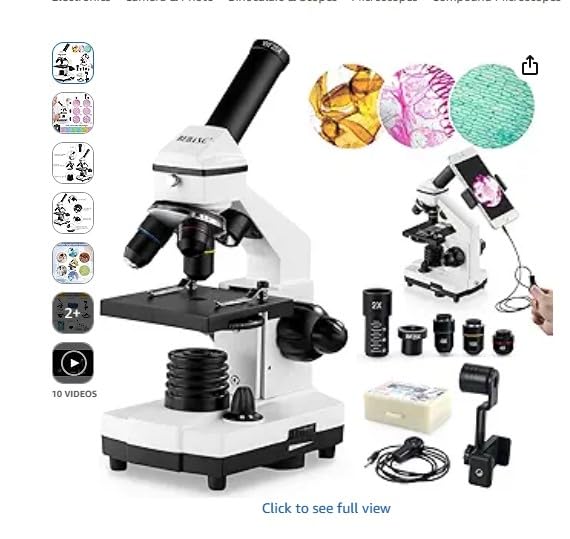
Open the box and you can start: fifteen prepared slides, a phone adapter, a wire shutter and a carrying bag are all included, which removes the single biggest reason a first microscope ends up in a cupboard.
Coaxial coarse and fine focus separates this from the cheapest plastic kits. Owners repeatedly mention the image comes in sharp rather than approximately sharp, which matters more at 400x than any headline number.
Dual illumination is the other quietly useful part. Transmitted light handles prepared slides, incident light handles opaque objects like a coin, a leaf or a solder joint. That flexibility makes it a reasonable first scope for a family rather than a single-purpose student tool.
Be clear-eyed about the top of the range. The 2000X setting comes from the 25X eyepiece plus a 2X lens over a 40X objective, and buyers describe it as blur rather than detail. Judge this scope on its 400X behaviour.
Best for getting started immediately
If the microscope is a gift for someone who has never mounted a slide, the bundled slides do more for engagement than any optical upgrade. Nothing needs buying, nothing needs staining, and the carrying bag makes it the most portable option here for a classroom, a club or an outdoor pond.
Where it falls short
There is no mechanical stage and the head is monocular, so long sessions are uncomfortable and slides wander at high power. The 0.65 NA condenser is also modest, and a one year warranty is short next to the five year coverage on the AmScope models.
3. TOMLOV CM101 — Best Dual Illumination With a Real Color Filter Wheel
TOMLOV Compound Microscope with Coarse & Fine Focus for Students, 40X-2000X
Objectives: 4X, 10X and 40X achromatic
Eyepieces: WF10X and WF25X
Light: dual LED plus 6-position filter wheel
Focus: coaxial coarse and fine
Pros
- Six position color filter wheel improves contrast on pale and stained samples
- Dual LED handles prepared slides and opaque specimens
- Coaxial coarse and fine focus makes high power work smooth
- Includes five prepared and five blank slides with coverslips
- Rotating head and metal frame
Cons
- 2000X headline figure is not optically usable
- Monocular head with no binocular comfort
- Base could carry more weight for stability
- Real useful power is well below the advertised maximum
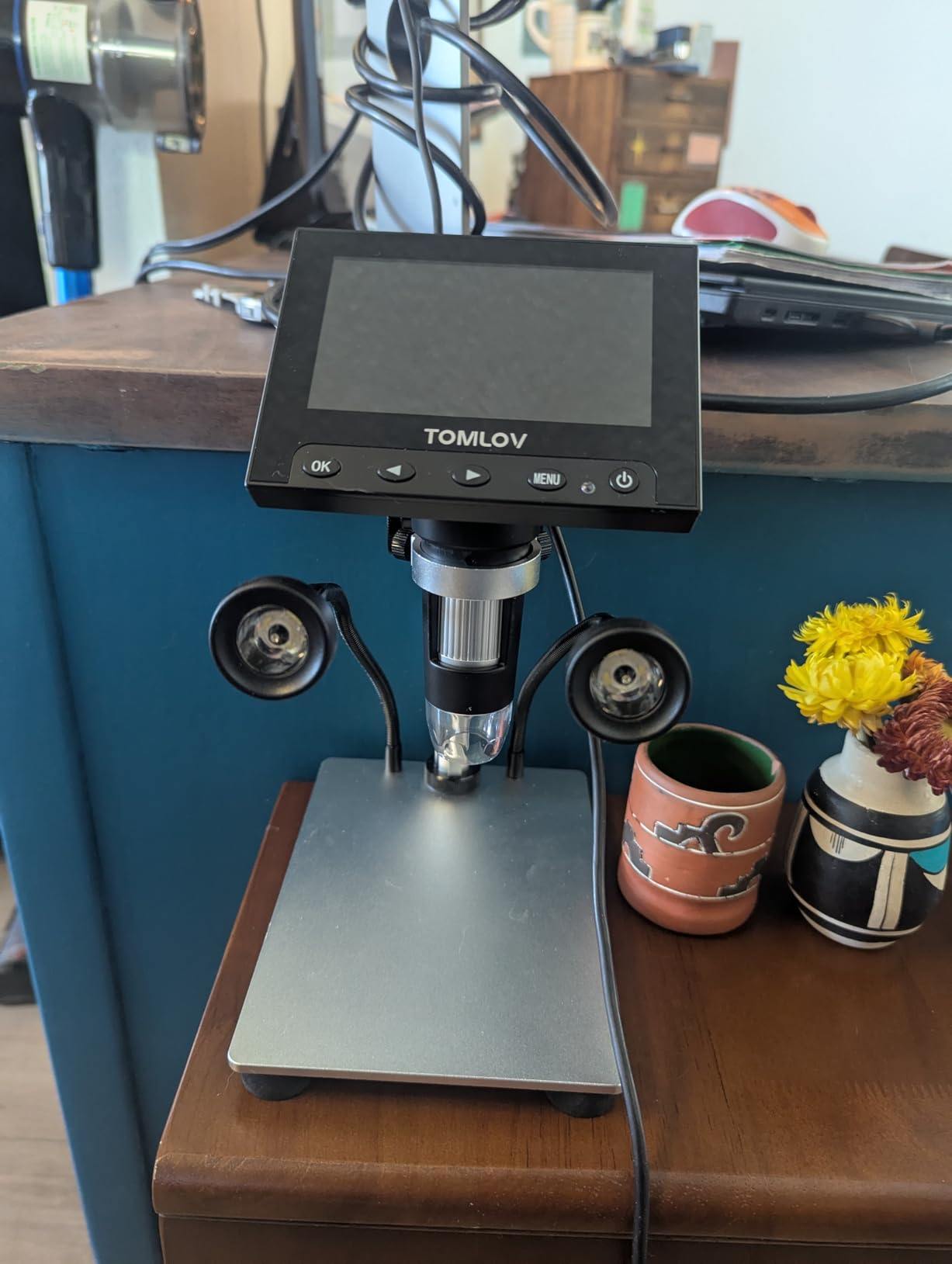
The filter wheel is what separates this from other entry scopes in the same bracket. Six positions covering clear, yellow, purple, blue, green and red let you dial contrast into a nearly invisible specimen, which is exactly the problem beginners hit with pond water.
Dual LED illumination covers both transmitted and reflected viewing, so leaves, hair, insects and coins are all reachable, and owners with science backgrounds rate the achromatic objectives as cleaner than the tier average.
The focus knobs are coaxial, meaning coarse and fine sit together on one axis. That design is normally associated with far costlier scopes, and here it translates into genuinely usable 400X work.
Experienced buyers are blunt about the ceiling: the 2000X claim comes from the 25X eyepiece over a 40X objective, and the result is a larger, softer image. Treat 1000X as the practical limit.
Best for pond water and pale samples
Almost everything in a pond drop is low contrast and nearly transparent. The filter wheel is the cheapest legitimate contrast tool available to a beginner, and five prepared plus five blank slides with coverslips mean you can go from unboxing to a wet mount without a second order.
Where it falls short
The monocular head and a base some owners find wanting in weight mean this is not a scope for long desk sessions, and there is no mechanical stage, so slides are repositioned by hand. That is workable at 100X and frustrating at 400X.
4. OMAX M82ES — The Step Up to Binocular Viewing and Oil Immersion
Awarded Best Compound Microscope 2016 – OMAX 40X-2000X Lab LED Binocular Microscope with Double Layer Mechanical Stage w Blank Slides Covers and Lens Cleaning Paper
Head: binocular with diopter
Stage: double layer X-Y mechanical
Condenser: NA1.25 Abbe with iris
Objectives: DIN achromatic including 100X oil
Pros
- Binocular head with interpupillary and diopter adjustment
- Din achromatics plus a true 100X oil immersion objective
- NA1.25 Abbe condenser with iris gives real contrast control
- Double layer X-Y mechanical stage with scales and a lock
- Solid metal frame with 100 slides and coverslips included
Cons
- Heavier and bulkier than monocular hobby scopes
- Focus knobs on both sides get bumped by accident
- Corded power only with no battery option
- Reaching a sharp 1000X image takes practice
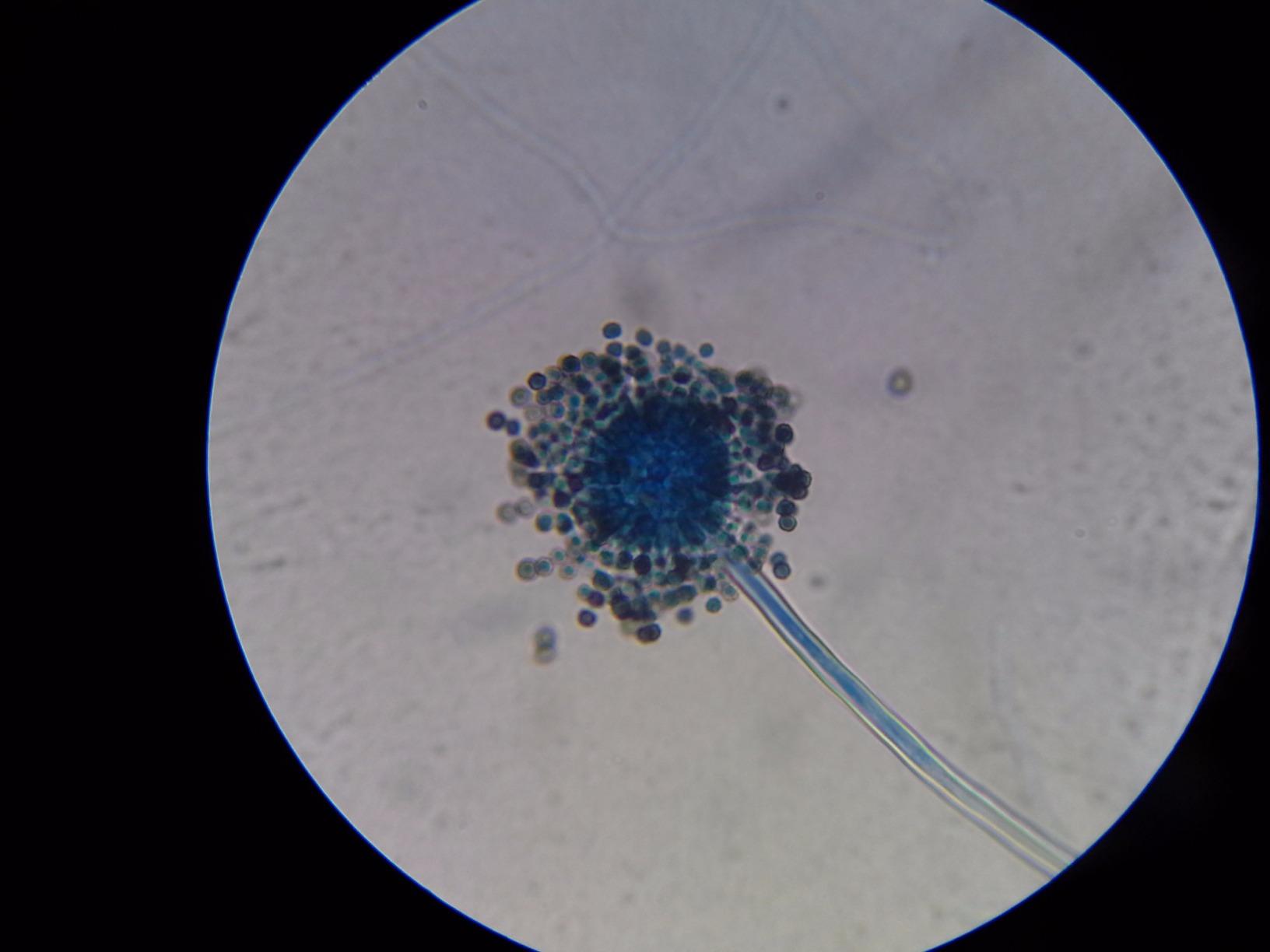
This is where hobbyist microscopy starts to feel like real work, and the jump is mechanical rather than optical. You get both eyes on the specimen, a stage that moves in two axes under knobs, and a condenser with an iris diaphragm instead of a fixed disc.
The DIN achromatic set includes a 100X oil immersion objective, which is the objective that actually reaches 1000X total with the 10X eyepiece. That is genuine resolution.
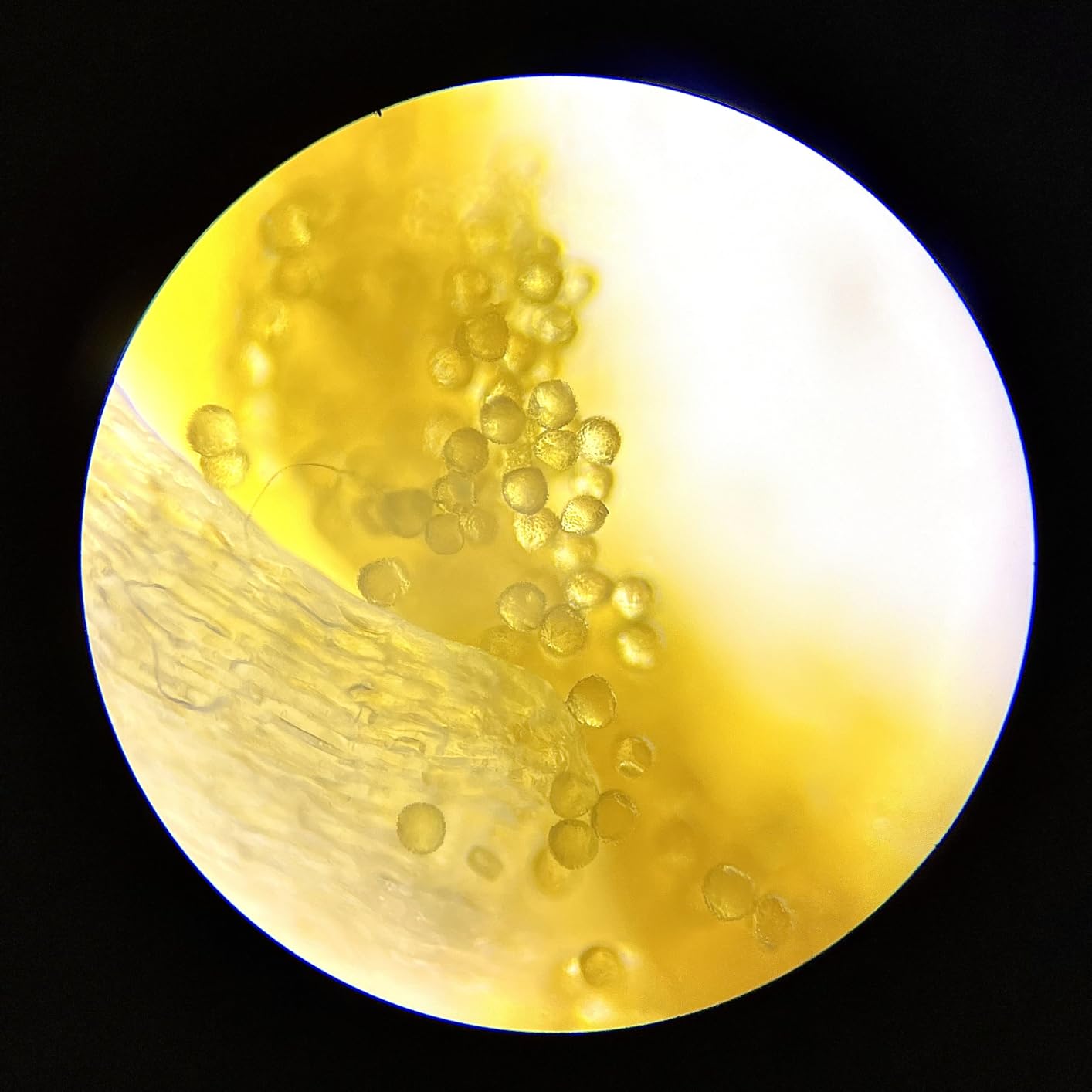
The 45 degree binocular head swivels a full 360 degrees and both eyetubes take diopter adjustment, so two people with different vision can share one scope without refocusing. The box also carries 100 blank slides, 100 cover slips and 50 lens cleaning sheets.
Owners treat this as the serious step up from a toy scope, using it for classroom and lab work as well as hobby specimens.
Best for long sessions and prepared slides
Two eyes instead of one is not a luxury: binocular viewing halves the effort per hour and removes the constant eye-closing that monocular users complain about most. The X-Y mechanical stage is the second reason, because stage knobs bring a cell back to center at 400X without losing it.
Where it falls short
At 9.6 pounds and 13 inches tall, this is a two-person lift rather than a carry-to-the-pond instrument, and it is corded so it lives on a desk. Focus knobs on both sides are convenient until a sleeve catches one, and the first session at 1000X with immersion oil takes real practice.
5. PalliPartners SWXWJ-1 — Safest Starter Kit for Ages 8 and Up
PalliPartners Compound Microscope for Adults & Students, White
Magnification: 100X-2000X
Illumination: top and bottom LED
Focus: coaxial coarse and fine
Included: 28 slides and phone clip
Pros
- Ten prepared and eighteen blank slides plus a phone clip and remote shutter
- Top and bottom adjustable LED for opaque and translucent samples
- Coarse and fine focus gives usable sharpness
- Lightweight and compact for smaller hands
- SGS certified for non-toxic materials and electrical safety
Cons
- Eyepieces can wobble in the housing if handled roughly
- No movable stage so specimens are repositioned by hand
- Achievable magnification is far below the advertised 2000X
- Lenses degrade if left uncovered and uncleaned
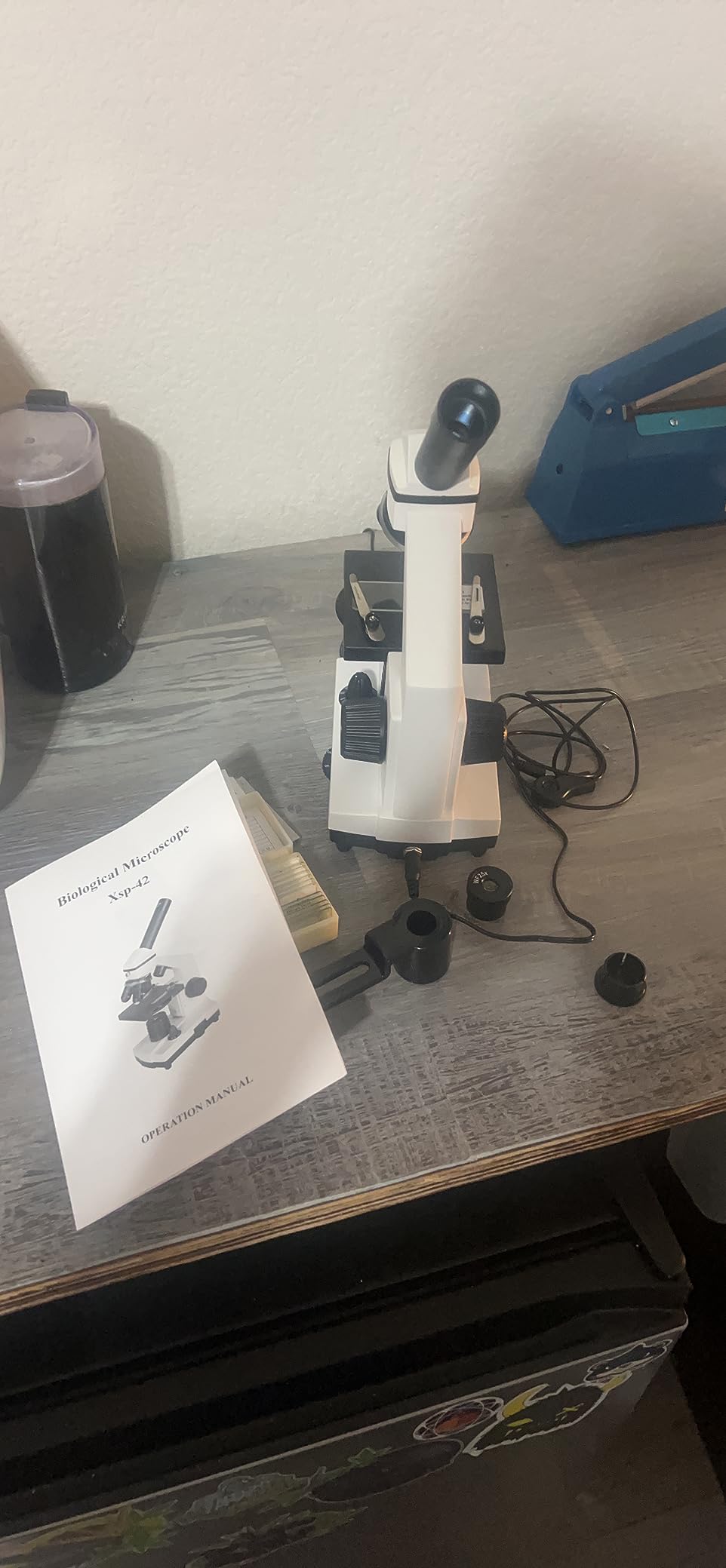
This is the pick for a shared family microscope rather than a serious bench instrument. The enclosure is polycarbonate and polyethylene rather than metal, which is why it weighs 1.65 kg and fits on a kitchen table rather than a stand.
The bundle is genuinely complete: ten prepared slides, eighteen blank slides, a phone clip adapter, a Bluetooth remote shutter and a power adapter, and the shutter removes the shake problem when kids photograph their own cheek cells.
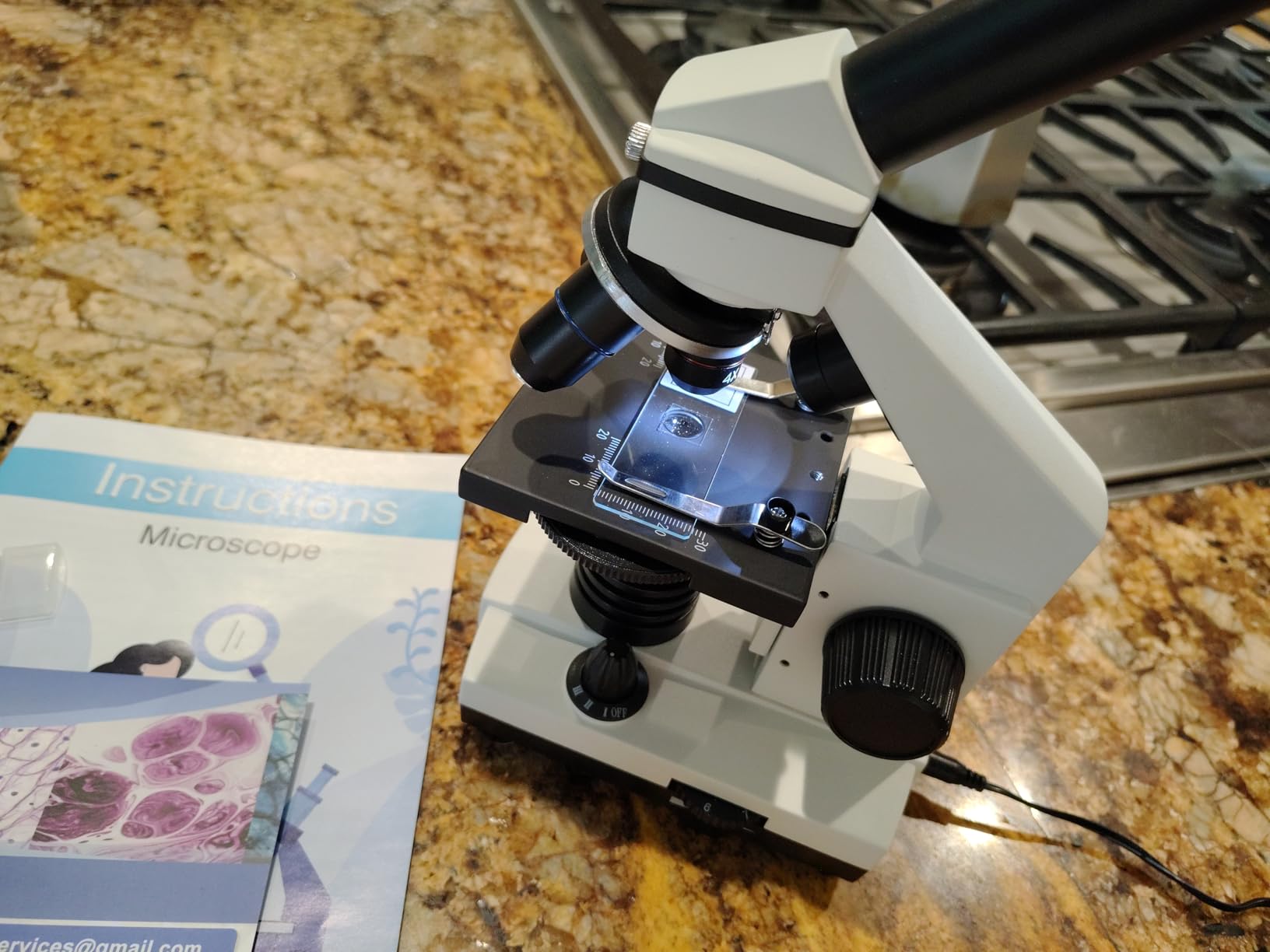
Parents and teachers rate it as a satisfying first experience, and the SGS certification for non-toxic materials is a real consideration when the intended user is eight years old.
More experienced users flag the same two limits the whole tier shares: no movable stage, and a ceiling far below the 2000X claim. The 4X, 10X and 40X objectives are where the real image quality lives.
Best for children and home learning
Twenty-eight slides plus a remote shutter is a full term of experiments with no additional purchases, and the light weight and small footprint mean it can be put away in a cupboard between uses rather than occupying a permanent desk.
Where it falls short
Eyepiece wobble in the housing is the most reported complaint, and it comes from the same light construction. With no mechanical stage and no iris condenser, contrast on a pale specimen depends entirely on the light, so plan photography around the 10X and 40X objectives.
6. AmScope M162C 1000X Kit — Best Starter Set for a Classroom Shelf
AmScope M162C-2L-PB10-WM-SP14-50P100S 1000X Microscope Kit
Magnification: 40X-1000X
Frame: metal
Focus: coaxial coarse and fine
Light: top and bottom LED
Includes: book and slides
Pros
- Book prepared slides cover slips and tools arrive in one box
- Metal frame with coaxial coarse and fine focus
- Top and bottom LED covers slides and opaque objects
- Images are sharp for a starter scope
- Users with science backgrounds rate it above expectations
Cons
- No printed instructions and the manual needs a registration code
- Some slide covers arrive broken due to loose packaging
- Top LED is dim when the objective sits close to the sample
- Stage may not drop low enough for thick opaque objects
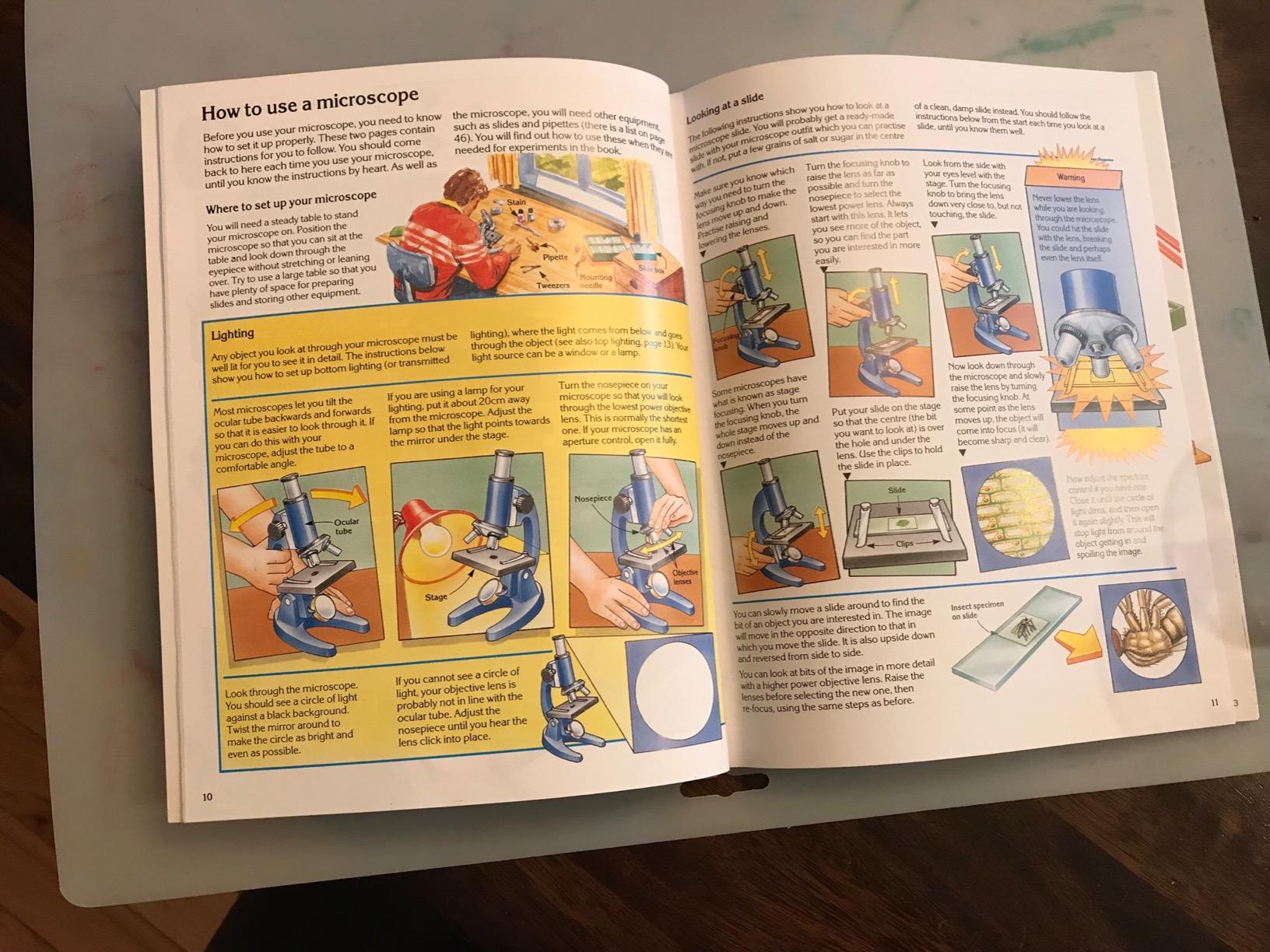
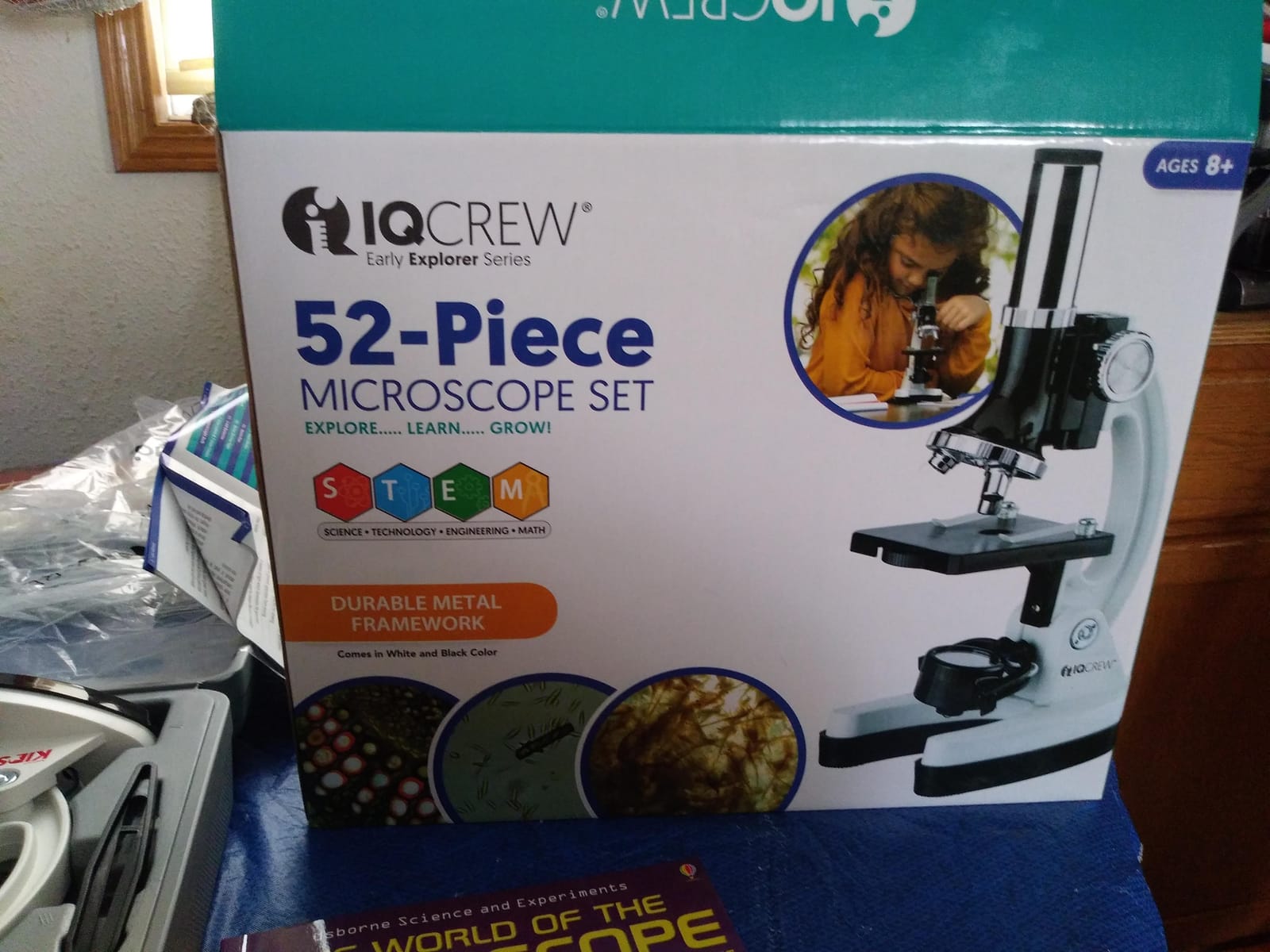
This kit is built around solving the beginner blocker nobody else addresses: having nothing to look at. A booklet, prepared slides, cover slips and tools all arrive together, so the first session can start the same afternoon.
Optically it is the same family as the M150C, with all optical glass and a metal frame, plus coaxial coarse and fine focus that cheaper monocular scopes often lack.
The 40X to 1000X range across five wide-field settings is honest, because it comes from real 4X, 10X and 40X objectives rather than a stacked lens. Owners with science backgrounds describe the image quality as exceeding what they expected at this level.
Best for teaching and self-directed learning
The included material is what turns a scope into a course, and coaxial fine focus means a teacher can hand the same scope to a child without re-teaching focus each time.
Where it falls short
There is no printed manual and the downloadable version sits behind a registration code, which is a bad first impression for a product aimed at students. The top LED is dim when the objective sits close to the sample, and loose packaging sometimes damages slide covers in transit.
7. AmScope B120C-E1 — Binocular Scope With a USB Camera in the Box
AmScope B120C-E1 LED Binocular Compound Microscope, 40X-2500X
Magnification: 40X-2500X
Head: binocular Siedentopf
Stage: mechanical with coarse and fine focus
Camera: 1.0 MP USB with Windows software
Warranty: 5 year
Pros
- Substantial heavy build with a smooth mechanical stage
- Sharp lenses with an Abbe condenser and dimmable fly-eye LED
- USB camera and software included so images start immediately
- Five year warranty with responsive parts support
- 40X to 2500X range is genuinely usable with correct immersion technique
Cons
- Bundled 1.0 MP camera is soft with limited depth of field
- Manual refers to a different model number
- No calibration slide so measurement needs a separate purchase
- Mechanical stage knobs are stiff and can shift the base
This is the version of the AmScope binocular that ships with a camera, and for a hobbyist who wants to start posting images immediately that is a real shortcut. A 1.0 MP USB camera and Windows microscopy software are included, so there is nothing to buy before the first photograph.
The fly-eye lens LED produces bright, daylight-balanced illumination with dimmable output. Paired with an Abbe condenser it handles both pale and stained slides.
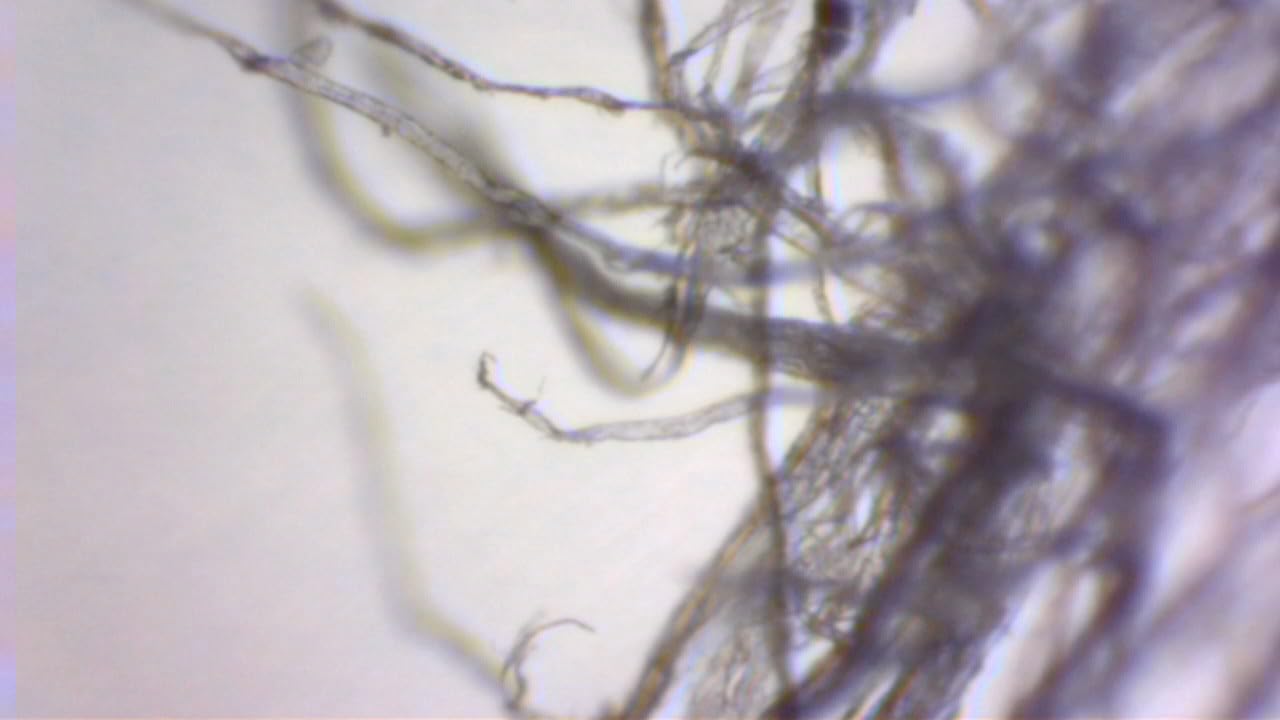
Owners describe this as an excellent student and serious amateur scope whose only weak point is the camera. At 1.0 MP files are soft and depth of field is shallow, so think documentation rather than print. Higher-resolution cameras at 3.0 MP and 5.0 MP exist for this model family.
Best for starting photomicrography
Photographing through an eyepiece with a phone means holding a phone at an angle in a dim room. A dedicated USB camera produces repeatable, centered images in seconds, and for a beginner documenting pond organisms that repeatability matters more than resolution.
Where it falls short
Two documentation problems trip people up: the shipped manual refers to a different model number, and no calibration slide is included, so measurement needs a separate purchase. The mechanical stage knobs are stiff enough that moving the base is a real possibility, and above 400X you can reach empty magnification without adding detail.
8. Swift SW380T — Trinocular Head for Serious Hobbyist Imaging
Swift SW380T 40X-2500X Magnification, Siedentopf Head, Research-Grade Trinocular Microscope Compound Lab with Wide-Field 10X/25X Eyepieces, Mechanical Stage, Ultra-Precise Focusing, Camera-Compatible
Head: rotatable Siedentopf trinocular
Eyepieces: interchangeable WF10X and WF25X
Objectives: 4 DIN achromatics
Stage: mechanical with ultra-precise focus
Port: C-mount camera
Pros
- Thirty degree Siedentopf angle cuts neck and back strain
- Trinocular head stays parfocal with a C-mount camera attached
- Interchangeable wide-field eyepieces and DIN objectives
- Very smooth mechanical stage and ultra-fine focus
- Viewing head rotates fully for shared use
Cons
- No incident illumination so thick opaque samples struggle above 100X
- Built-in LED can look dim at high power with the diaphragm open
- Condenser diaphragm edge enters the field at low power when fully closed
- Camera and extra eyepieces sold separately
- Thin plastic dust cover is inadequate
This is the pick if you intend to photograph, and the reason is the third port. On a trinocular head you look through both eyetubes while a camera occupies a separate photo tube, so the image under the camera stays fixed and parfocal as you focus.
The Siedentopf head holds the eyepieces at a fixed 30 degree tilt and rotates as a unit, which is more comfortable than sliding tubes on a budget binocular. WF10X and WF25X glass eyepieces are interchangeable.
Forum consensus lines up with the specification here: the recurring advice in hobbyist communities is to get one with a trinocular so you can hook up a camera, and the Swifts are named alongside AmScope as the go-to brands at this level. Four DIN achromatic objectives on a revolving turret give six magnification settings from 40X to 2500X.
Best for photomicrography and long sessions
Photomicrography changes what you notice about a microscope. Without a stable photo port you refocus by trial and error through a phone lens held at an angle, and end up with fewer usable frames than you expect. Combined with the 30 degree head angle, this is also the most comfortable scope here for a multi-hour evening.
Where it falls short
There is no incident illumination, so opaque or thick samples above 100X are difficult, and the built-in LED can look dim at higher powers with the diaphragm wide open. The camera and extra eyepieces are sold separately, and the thin plastic dust cover does not protect a metal body from anything.
9. Herwicm WY-462 — Binocular Comfort Below the AmScope Tier
Compound Microscope,40X-2500X ,WF10x and WF25x eyepieces, Dual LED Lighting and Two-Layer Mechanical Stage,Microscope for Adults…
Head: binocular with ultra-wide field
Eyepieces: WF10x and WF25x
Stage: two-layer mechanical
Focus: coaxial handwheels both sides
Light: top and bottom LED
Pros
- Binocular viewing with wide-field eyepieces reduces eye fatigue
- Two-layer mechanical stage helps track and center specimens
- Coaxial coarse and fine handwheels fitted on both sides
- Top and bottom LED covers a wide specimen range
- Telescopic objective protection reduces lens to slide contact
Cons
- Far fewer customer reviews than the established brands
- Corded power with no battery option
- Claimed 2500X depends on a 100X objective the spec list does not confirm
- Highest eyepiece and objective combinations are empty magnification
Binocular viewing plus a mechanical stage, at a price closer to the monocular kits. That combination is unusual at this level and it is the reason this scope is worth a look for anyone who finds monocular viewing uncomfortable.
The ultra-wide-angle eyepieces produce a large field of view, so more of the slide is visible at once. Coaxial handwheels sit on both sides of the base, and the telescopic objective absorbs the lunge that would otherwise push an objective straight into the slide.
Dual LED with an integrated fill light is useful across a wide range of specimens, from translucent slides to opaque objects under top illumination.
Best for comfort on a budget
If your previous experience of a microscope was one eye shut, this is the cheapest way out of that habit, and the two-layer mechanical stage means slides do not wander at 400X.
Where it falls short
With only a few hundred reviews, long-term reliability is poorly documented compared with the established brands, and the published specifications are vaguer: the stated 2500X assumes a 100X objective the spec list does not confirm. It is corded, so judge it on its 40X, 100X and 400X performance.
10. JECONE ET1 — Filter Wheel Contrast in a Lightweight Body
Microscope for Adults & Kids, 40X-2500X High-Power Compound Microscope for Students, School Lab & Home Schooling,Equiped with Slides Set & Phone Holder (White)
Objectives: 4X, 10X and 100X
Eyepieces: WF25X and 10X
Light: dual LED with dimmer knob
Filter: 5-color rotating wheel
Includes: phone holder
Pros
- Five color filters built into a rotating disk under the stage
- Dual incident and transmitted LED with a dimmer knob
- Separate coarse and fine knobs make focusing predictable
- 360 degree rotating head plus a phone holder for sharing views
- Accessory kit includes prepared slides coverslips tweezers and droppers
Cons
- Highest magnification settings deliver empty magnification
- Monocular head only
- Fixed stage limits convenient slide positioning
- Lower review count means less long-term data
The color filter wheel is the reason this scope makes the list. Five filters sit in a rotating disk directly under the stage, and on pond water or unstained tissue they are the difference between seeing faint outlines and not seeing anything.
Unlike most scopes in this bracket, the dual LED lighting has a dimmer knob, and continuous brightness control is what lets you stop down to reduce glare on a dense stained slide. The phone holder and 360 degree rotating head make it easy to let someone else look without moving the specimen.
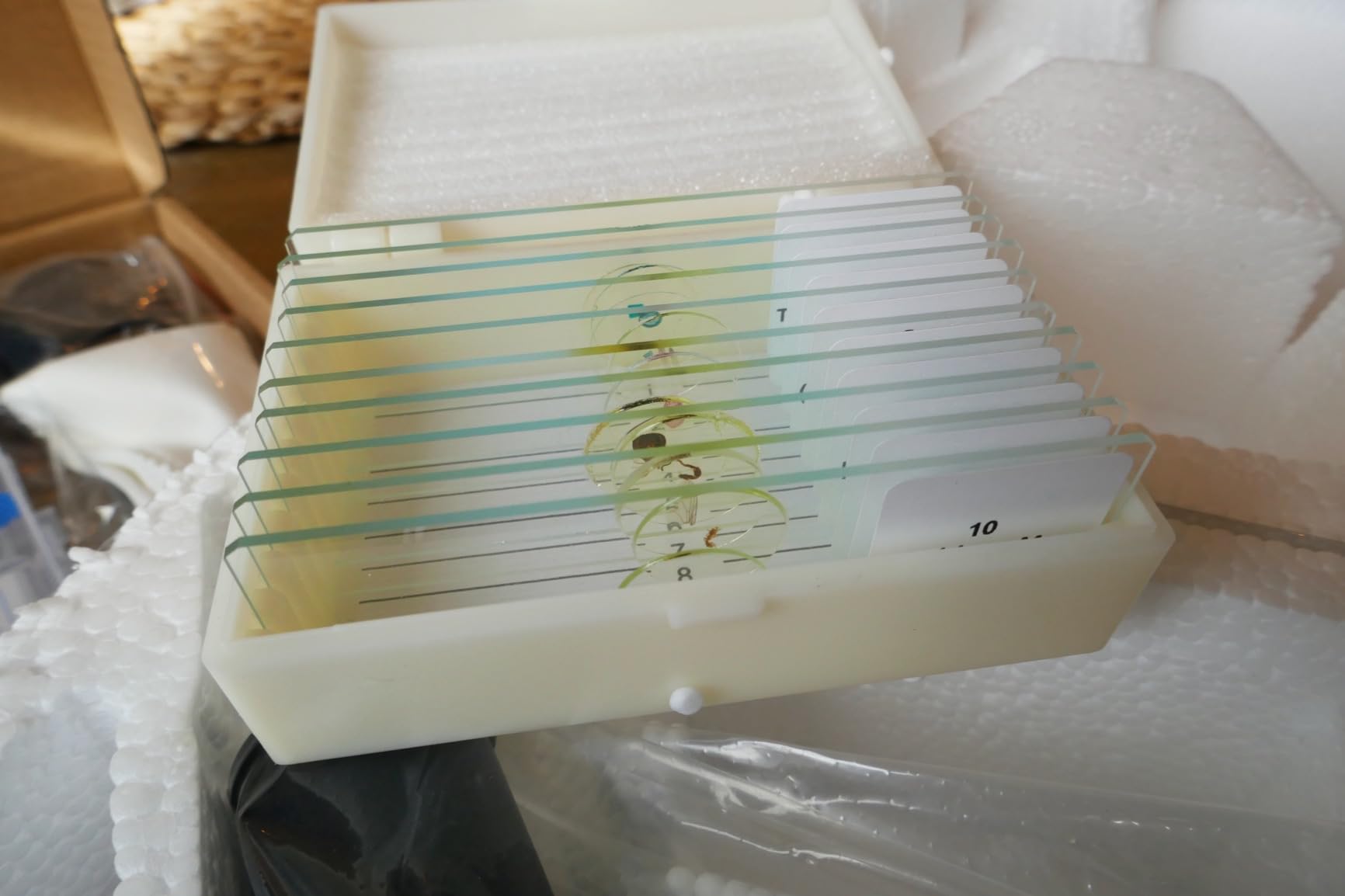
Owners rate the accessory bundle as unusually complete: five prepared slides, five blank slides, coverslips, tweezers and droppers all ship in the box.
Best for low-contrast specimens
Filters work by absorbing light in complementary bands, which raises apparent contrast rather than adding resolution. Pair the wheel with the dimmer knob and you have more control over contrast than most scopes costing several times more.
Where it falls short
It is monocular with a fixed stage, so it shares the standard entry-level limits, and at 1.59 kg it is light enough to tip if you lean on the stage controls too hard. The 2500X headline comes from stacking a 25X eyepiece over a 100X objective, and buyers report the top settings add blur. Judge it at 400X.
11. Woehrsh AS-31 — Biggest Accessory Bundle, Weakest Evidence
Woehrsh Trinocular Microscope 40X-5000X Magnification Laboratory Grade with Dual Mechanical Stage and HD USB Camera Microscopes for Adults(Adult Trinocular Microscope with Electronic Eyepiece)
Head: trinocular, 306 degree swivel
Optical system: infinity-corrected
Stage: double-layer mechanical
Includes: slides coverslips petri dishes and tools
Pros
- Trinocular head supports simultaneous viewing and camera capture
- Very extensive accessory and consumable bundle in the box
- Wide-field eyepieces with adjustable pupil distance and refractive correction
- Double-layer mechanical stage for stable positioning
- Swivel head allows several working positions
Cons
- Lowest average rating in this roundup with a larger share of critical reviews
- 5000X headline comes from stacking eyepieces and objectives
- Corded power only
- Minimal documentation for a scope pitched as laboratory grade
The box is the story here. Ten slides, one hundred coverslips, ten sections, cotton swabs, insect needles, petri dishes, tweezers, a phone holder and a dust cover arrive together, which is more than most hobbyists buy in their first two years.
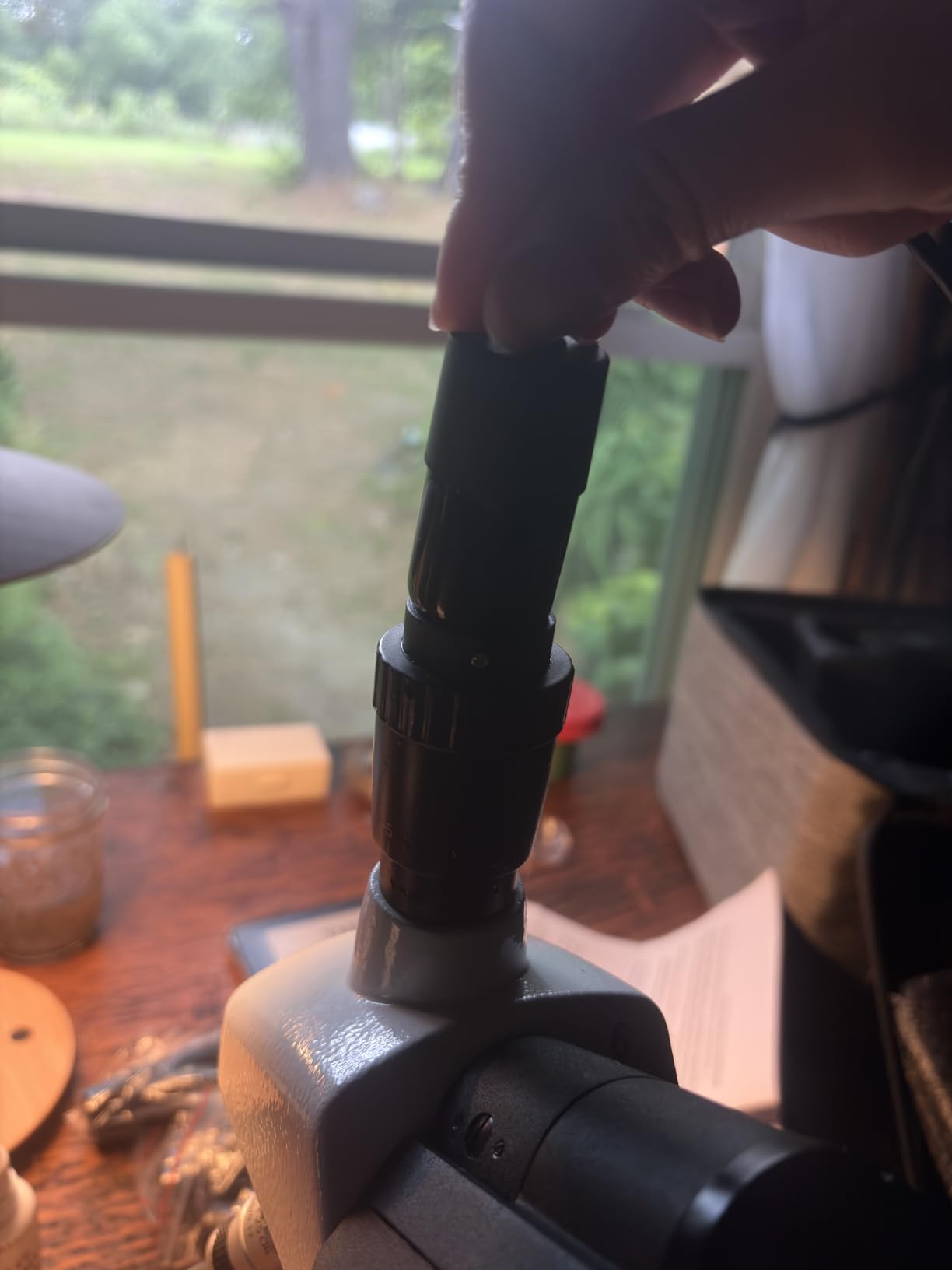
Underneath is a trinocular head with a 306 degree swivel and a 195 achromatic objective on an infinity optical system, plus a double-layer mechanical stage and coaxial coarse and fine focus. That infinity design is a genuine specification, and it is the right architecture if you later attach a camera without disturbing the main image.
Buyers like the versatility and the sheer amount of consumable material in the box. What they do not praise is documentation, which is minimal for something pitched at laboratory use.
Best for equipping a teaching or club room
If you are setting up a shared space where several people will mount their own slides, the consumable count matters more than the specification list, and the trinocular head lets a second person look through a converted port during demonstrations.
Where it falls short
This has the lowest average rating of the twelve and a larger proportion of critical feedback, so treat it as a calculated purchase rather than a safe one. The 5000X figure is stacked eyepieces over stacked objectives, documentation is thin, and if you want a trinocular for photography the Swift is the better-evidenced route.
12. PALOBIL YQ-M-001 — Portable Dual-Illumination Kit for Sharing
Microscope for Adults Professional:Compound Microscope for Kids 8-12,100X-2000X Kids Microscope Kit with Prepared Microscope Slides and Covers,Plant Stereo Microscopes for Kids Homeschool Lab
Magnification: 100X-2000X claimed
Objectives: 4x, 10x and 40x
Light: adjustable dual LED
Focus: metal frame with precise focus
Power: 3 AA batteries or AC adapter
Pros
- Adjustable top and bottom LED brightness suits opaque and translucent specimens
- Five color disk aperture increases contrast and blocks ambient light
- Runs on three AA batteries or the included AC adapter
- Metal frame resists scratching
- Phone adapter plus an eleven piece beginner experiment kit
Cons
- Advertised magnification is not optically achievable at the top settings
- No mechanical stage so slides are moved by hand
- Batteries not included
- Monocular head limits comfort in longer sessions
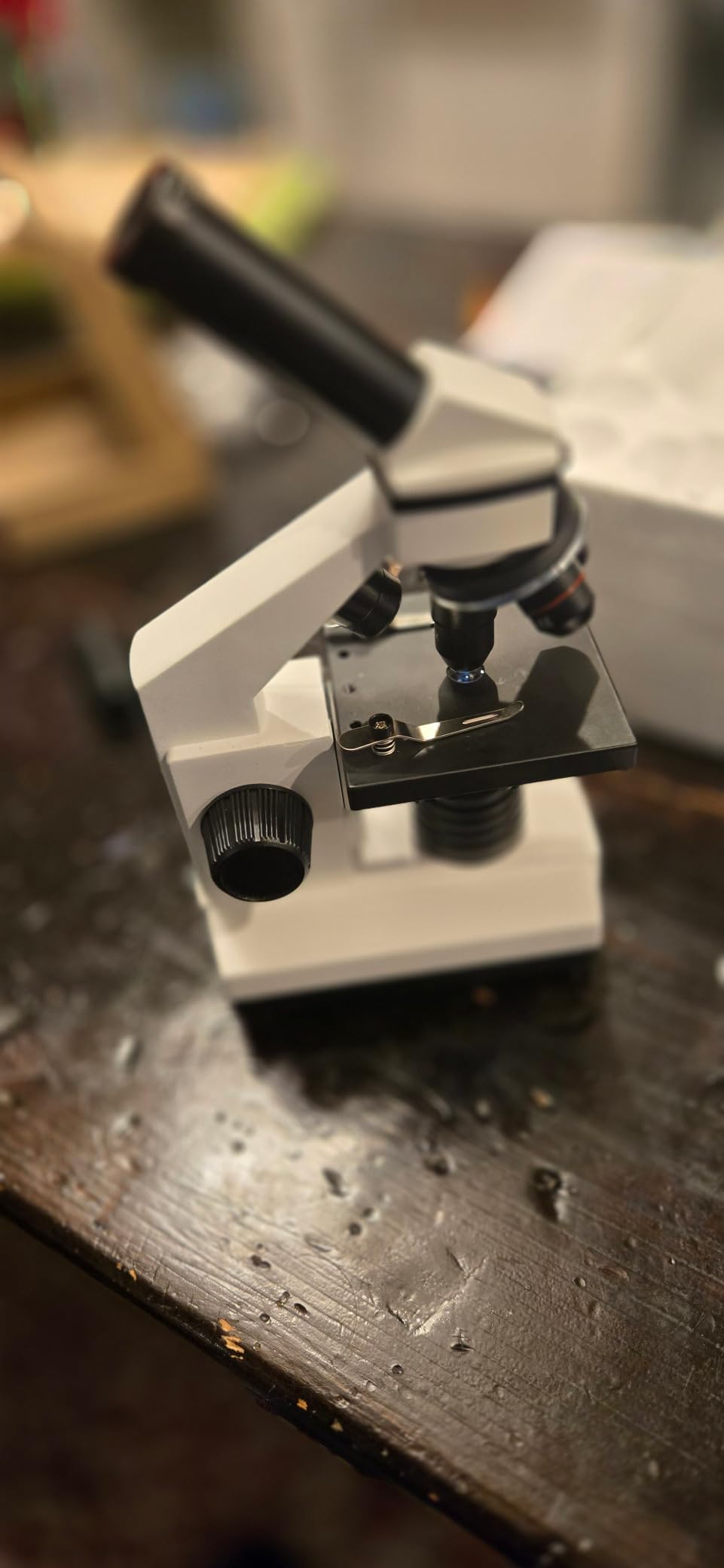
Battery operation is what separates this from the other budget kits. Three AA batteries or the included AC adapter mean it can go to a pond, a garden or a school bench without a mains socket nearby.
The five color disk aperture does two jobs at once, raising contrast on a pale specimen and blocking ambient light that would otherwise wash out a weak LED. That makes outdoor and classroom use noticeably better, and the top incident light handles bark, lichen and seeds without a separate source.
Owners rate the metal frame as sturdy and scratch resistant, which holds up better than the polycarbonate bodies in the same bracket, and the bundled eleven piece experiment kit plus phone adapter cover the first few sessions completely.
Best for taking the hobby outside
Pond water sampling only makes sense where the water is, and a battery-powered dual-illumination scope with a contrast filter is the combination you want for that.
Where it falls short
It is monocular with no mechanical stage, so slides are positioned by hand and long sessions get tiring. Batteries are not included, the 2000X claim is not optically achievable, and with the smallest review base in this roundup, long-term reliability is the least documented of the twelve.
How to Choose: Six Criteria That Decide Your Experience
Head type. Monocular means one eye, and it is fine for occasional use but tiring beyond an hour. Binocular uses both eyes and roughly halves the effort. Trinocular adds a third photo tube, which is the only reliable way to attach a camera. The rule hobbyists repeat in forums is simple: if you might ever want photographs, buy the third tube now, because you cannot add it later.
Optics. Achromatic objectives correct color fringing enough for stained slides and are the sensible entry standard. Plan achromats flatten the field so the whole view is sharp at once. Infinity-corrected systems leave room for extra tubes and cameras without disturbing the image. Focal length matters less than whether the glass is real glass, which is why listings that say optical glass are worth reading carefully.
Stage. A plain flat stage means moving slides by hand, which is workable at 100X and frustrating at 400X. A mechanical stage with X and Y controls and a slide lock is the single biggest comfort upgrade in this list, and it is the main reason to move up a tier.
Focus. Look for coarse and fine controls that are coaxial, meaning both axes on one hub. Non-coaxial knobs are common on cheap scopes and they make high-power work annoying. Fine focus drift over time is a known issue with loose mechanisms on entry models.
Illumination. An LED with adjustable intensity and an iris diaphragm gives real contrast control. A disc diaphragm with fixed brightness gives you three positions and no control at all. Dual illumination, with light from above as well as below, is what lets you look at opaque objects like coins and solder joints, not just prepared slides.
Imaging path. Decide now whether you will photograph. A trinocular port with a C-mount is the durable route. A bundled USB camera is convenient but often low resolution. A phone clip adapter works with any monocular scope and costs almost nothing, but it is fiddly and produces inconsistent framing.
Compound vs Stereo vs Digital USB: Which One Solves Your Problem
A compound light microscope is the tool for specimens thin enough to transmit light: pond water, cheek cells, plant tissue, prepared slides, sand grains thin enough to see through. A stereo microscope is the tool for anything with depth: soldering joints, circuit boards, coins, stamps, insects and seeds. They are not competitors, and owning one of each covers almost every hobby case.
A digital USB microscope looks tempting because it plugs into a laptop and costs little, and for inspecting a solder joint or identifying a coin it genuinely works. Electron microscopes are the instruments never used to observe living cells, since the sample must be coated, dehydrated and vacuum sealed first. For living pond organisms in a wet mount, a compound light scope remains the correct and affordable answer.
Forum hobbyists working on electronics report that a compound scope such as the AmScope SE400X is more than sufficient for inspecting 0402 surface-mount parts, often after trying several digital scopes first. If your interest is purely surface work, skip this roundup and read about stereo scopes instead.
Five Signs of a Microscope You Should Walk Away From
A plastic body with no metal anywhere in the frame. Very cheap scopes bend under the stage pressure and the image swims when you lean in. If the listing photo shows a moulded plastic arm and base, expect exactly that.
An advertised magnification above 1000x with no explanation of how it is achieved. A genuine 1000x comes from a 100x objective with a 10x eyepiece. Anything beyond that without a stated infinity-corrected system is empty magnification.
No fine focus control. Coarse focus alone means you cannot hold a specimen sharp at 400x, which is where beginner interest usually outgrows the instrument.
Single fixed illumination with no brightness control and no iris diaphragm. Without contrast control, pale and transparent specimens stay invisible no matter how good the objectives are.
A listing with star ratings but no written owner feedback. This roundup deliberately uses written review counts, and a scope with few written reviews means you have no evidence about failure rates. Cheaper scopes in the sub sixty bracket usually fail on exactly the criteria above.
Your First Slide: Four Ways to Get Something Under the Glass
Pond or gutter water. Take a clean sample, drop a few drops on a slide, add a coverslip at an angle to avoid air bubbles and wait a few minutes for organisms to slow down. Start at 40X to find movement, then switch to 100X. This is where a color filter wheel pays for itself.
Onion epidermis. Peel a thin translucent layer from the inner curve of an onion scale, drop it in water, add the coverslip and look at 100X to 400X. The cell walls appear as a honeycomb and the nucleus as a darker blob. It is the classic first wet mount.
Cheek swab. Touch a clean cotton swab inside your cheek, roll it gently across a slide, add a drop of water and a coverslip. You will see flat, irregular human cells with visible nuclei within a minute, and children find it the most convincing specimen of all.
Prepared slides. Buy a starter set rather than making everything yourself. They include fixed blood cells, plant sections and insect parts, which are permanent, safe and repeatable. Most of the kits in this roundup include between five and one hundred of them.
Whatever you mount, start at the lowest power, centre the specimen with coarse focus, then switch up and use fine focus only. Going straight to high power is the most common beginner mistake and it is why people conclude their new microscope is broken.
Frequently Asked Questions
What is the best microscope for hobby use?
For most hobbyists the AmScope M150C is the safest starting point: an all-metal frame, all optical glass elements and a 40X to 1000X range with cordless LED lighting. If you will spend hours at the scope rather than minutes, step up to a binocular model with a mechanical stage such as the OMAX M82ES, and add a trinocular head only when you want to photograph.
Which compound microscope is the best?
There is no single best for everyone, so judge by tier. The AmScope M150C is the best entry metal-bodied scope. The OMAX M82ES is the best value binocular with a mechanical stage and a real 100X oil objective. The Swift SW380T is the best trinocular for photomicrography and long sessions. Owners describe this tier of optics as good rather than excellent.
What can you see under 1000x magnification?
At 1000x you can see individual red blood cells in a smear, chromosomes dividing in onion root tip cells, chloroplasts along a leaf vein, diatom frustules, and the fine hairs and joints of small arthropods. This uses a 100x oil immersion objective with a 10x eyepiece, which is the practical resolution limit of good achromatic optics on a hobbyist scope.
What can you see at 5000x magnification?
Nothing useful. Magnification above 1000x is empty magnification, achieved by stacking eyepieces, objectives and auxiliary lenses. The image becomes larger and blurrier at the same time, with no new detail. Scopes advertising 2500x or 5000x are telling you about lens stacking, not about resolving power.
Is a trinocular microscope worth it for a hobbyist?
Yes if you plan to take photographs, because the third photo tube keeps the image fixed and parfocal while you focus through both eyetubes. You cannot add that port to a binocular or monocular scope later, so it is a decision to make up front. If you will never photograph, a binocular head is the better place to spend.
Which Compound Microscope Should You Buy?
Our editor’s choice is the AmScope M150C. It has the largest body of written owner feedback in this roundup, an all-metal frame with optical glass elements, honest 40X to 1000X magnification, and cordless lighting that lets it leave the desk. Its missing mechanical stage and monocular head are real limits, and they are exactly what the next tier fixes.
Spend more only for two things: a binocular head with a mechanical stage, which takes you to the OMAX M82ES as the best value pick, or a trinocular head, which takes you to the Swift SW380T and is the right choice if photographs are likely. Below that, the bundled kits from BEBANG, TOMLOV and PalliPartners are the best way to get a working microscope into the hands of a beginner with nothing to look at.
Set aside one evening for your first wet mount, start at 40X every time, and update this list as new models appear. Specifications here were current as of October 2026, and we revisit every roundup every six months.