
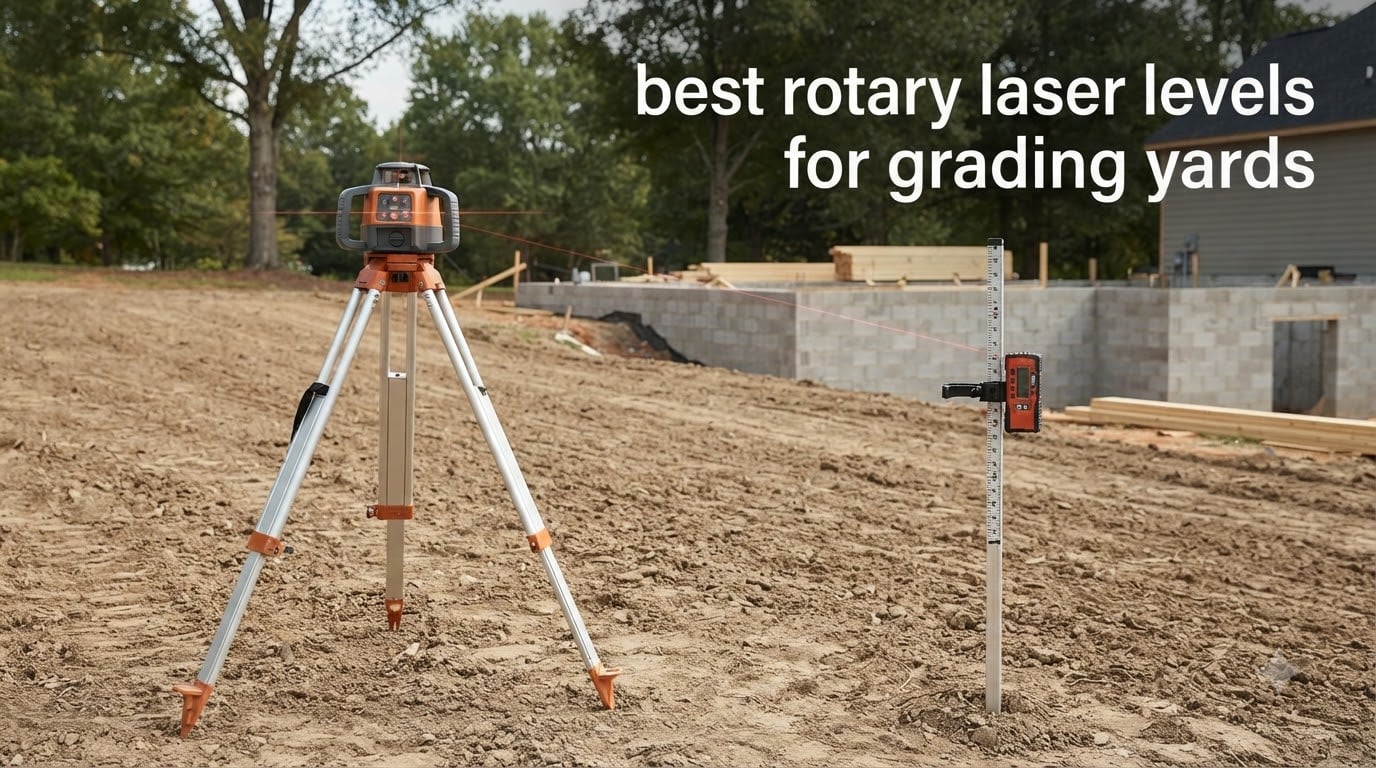
Grading a yard by eye leaves high spots and hollows that hold water long after the grass grows in. A rotary laser level replaces that guesswork with a measured cut or fill depth at every point, and picking the best rotary laser levels for grading yards comes down to range, self-leveling reliability and whether the kit already includes the receiver, tripod and rod you would otherwise have to buy separately. Below I compare ten kits that cover everything from a small residential regrade to a multi-acre site, with the specs and buyer complaints that actually matter on open ground.
I spend a lot of time comparing tools against the work they are actually asked to do, not against a spec sheet written by the marketing department. For laser levels that means reading the range figure alongside the accuracy figure and asking one question: how many times will this person have to move the tripod before lunch?
This roundup was updated for 2026. Accuracy, range, battery, warranty and kit contents come from the manufacturer listings and owner reviews; the yard-grading workflow section reflects how these tools get used in the field. Every product here has at least one owner review to draw on, and I have flagged where a review base is thin so you know how much weight to put on the rating.
Table of Contents
What Is the Best Rotary Laser Level for Grading?
The Spectra Precision LL300N-1 is the best rotary laser level for grading because it pairs a 1,650 foot working range with a turnkey kit that already contains the receiver, tripod, 15 foot grade rod and hard case, so nothing has to be sourced separately. Its automatic self-leveling and five year warranty make it the safest all-round choice for yard work.
That said, the right answer changes with the job. A large open property with a two percent fall away from a house rewards range and dual slope capability, while a small pad or a first-time DIY project cares more about weight and whether the unit self-levels reliably on uneven ground. The ten kits below cover each of those cases.
Top 3 Picks for Grading Yards (October 2026)

Spectra LL300N-1 Kit
- 1650 ft range with HL450 receiver
- 3/32 in accuracy
- IP66 housing
- Five year warranty

Bosch GRL900-20HVK
- 1000 ft range
- Electronic self-leveling both planes
- 1/8 in at 100 ft
- Bundled tripod and rod

VEVOR 1650ft Rotary Kit
- 1650 ft with detector
- Five rotation speeds
- IP66 housing
- Remote to 65 ft
Best Rotary Laser Levels for Grading Yards at a Glance in 2026
Every kit below includes a receiver or detector. The differences that actually change your day on a yard are working range, whether the unit can hold a set slope as well as level, and how the receiver tells you where you are. Accuracy is quoted at a stated distance in most cases, which is the number to read first.
| Product | Specs | Action |
|---|---|---|
| Spectra Precision LL300N-1 Kit |
|
Check Latest Price |
| Bosch GRL900-20HVK |
|
Check Latest Price |
 Johnson 99-028K Dual Slope Johnson 99-028K Dual Slope |
|
Check Latest Price |
 Johnson 99-027K Rotary Kit Johnson 99-027K Rotary Kit |
|
Check Latest Price |
 Spectra Precision LL100N-2 Kit Spectra Precision LL100N-2 Kit |
|
Check Latest Price |
 Topcon RL-H5A with LS-80 Topcon RL-H5A with LS-80 |
|
Check Latest Price |
 Johnson 99-026K Rotary Kit Johnson 99-026K Rotary Kit |
|
Check Latest Price |
 DOVOH H3-360G-KIT DOVOH H3-360G-KIT |
|
Check Latest Price |
| VEVOR 1650ft Rotary Kit |
|
Check Latest Price |
 Bosch GRL2000-40HVK Bosch GRL2000-40HVK |
|
Check Latest Price |
Dual slope is the column that matters most for drainage work. Only three of these kits can hold a programmed slope on two axes, and only two of those three use an electronic slope function rather than manual adjustment.
1. Spectra Precision LL300N-1 Rotary Laser Level Kit Review
Spectra Precision LL300N-1 Rotary Laser Level Kit inc Tripod & Rod Alkaline
1650 ft range with HL450 receiver
3/32 in accuracy
Self-leveling red beam
IP66 housing
Pros
- Complete kit with receiver
- tripod
- 15 ft rod and hard case
- Automatic self-leveling with one-button operation
- IP66 weather and drop protection
- Five year manufacturer warranty
Cons
- 32 lb complete-kit weight is heavy to move between setups
- Red beam is harder to see in bright daylight than green-beam units
The LL300N-1 is the kit I keep coming back to for yard work because it removes the accessory problem entirely. The box holds the laser, an HL450 receiver with C45 clamp, four D-cell alkaline batteries, a Q104025 tripod, a GR151 grade rod in tenths with 15 feet of length, a multi-language manual and an all-in-one hard case. Nothing needs a second order.
Range is the headline figure here: 1,650 feet of working range with the included receiver, with accuracy quoted at 3/32 inch. The housing carries an IP66 rating with hard-hat rotary protection, which matters when the unit lives in a pickup bed through a dusty season rather than sitting on a shelf.
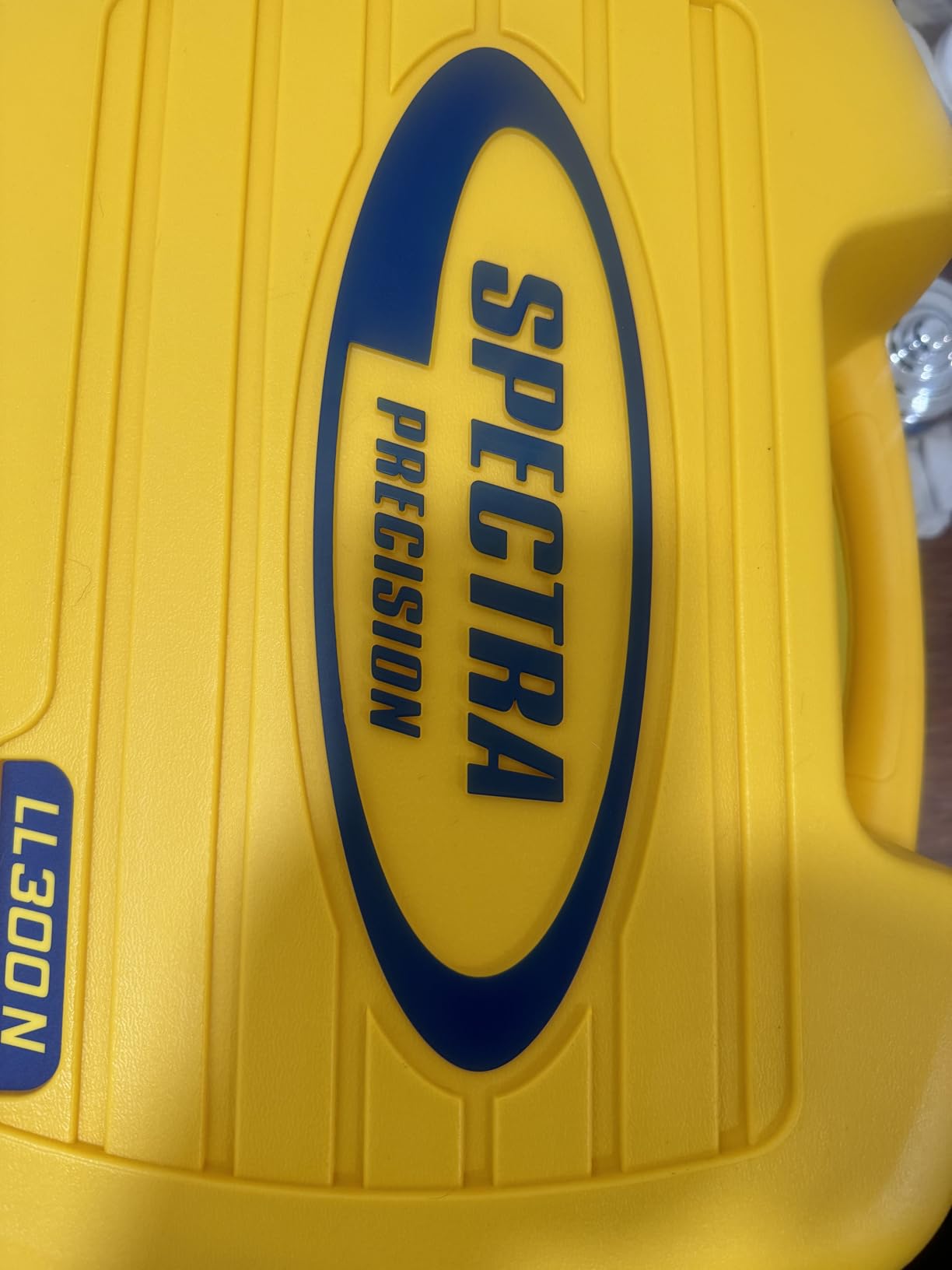
Self-leveling is fully automatic and the operating instructions describe one-button operation requiring minimal training, so a first-time user can get a reference without a calibration routine. The rating sits at 4.7 across 394 reviews, with 86 percent five-star feedback according to the review distribution.
The two things owners mention most are weight and beam color. At 32 pounds for the complete package, moving between setups takes two trips or a second pair of hands, and the red beam loses visibility in direct midday sun at distance. Neither is a defect, both are planning considerations.
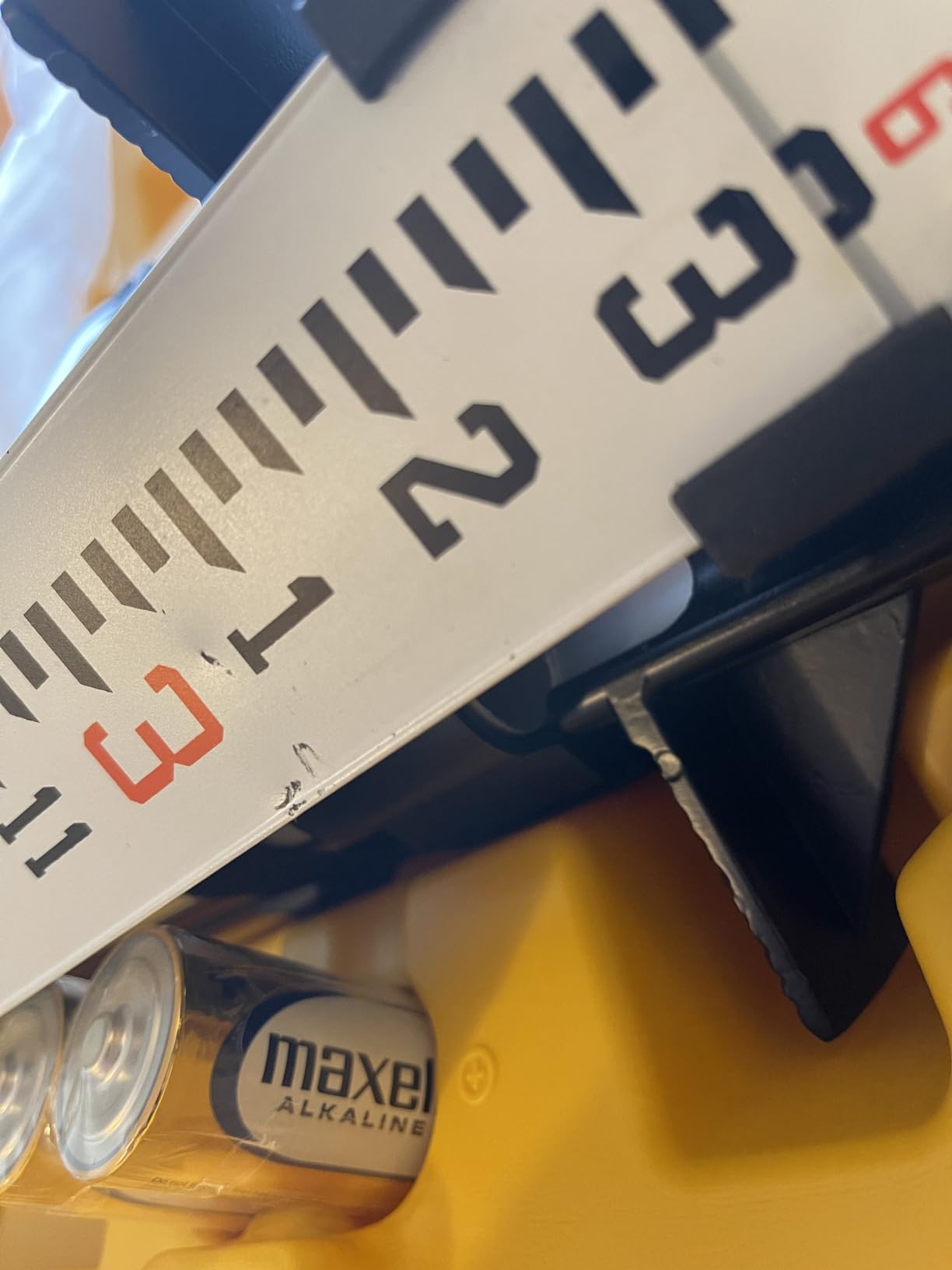
Accuracy and range for uneven natural ground
Yard work punishes any drift, because a quarter inch low in one spot becomes a puddle after a storm. The 3/32 inch spec on this unit gives you enough margin for drainage fall without pushing toward survey-grade pricing, and the 1,650 foot reach means a single setup covers a circle roughly 1,650 feet across. On flat ground that is a large share of an acre-scale property before line of sight and brush reduce it.
When this kit is the wrong choice
It has no dual slope function, so matching an existing fall or holding cross-slope on a swale means working around the instrument rather than programming it. If your project is specifically about drainage on two axes, the Johnson 99-028K below handles that natively. And if you are moving the unit constantly by yourself, the lighter Spectra LL100N-2 will save your back.
2. Bosch GRL900-20HVK REVOLVE900 Self-Leveling Rotary Laser Review
BOSCH PRO GRL900-20HVK REVOLVE900 Self-Leveling Rotary Laser
1000 ft range with LR10 receiver
1/8 in accuracy at 100 ft
Self-levels horizontal and vertical
IP56 rated
Pros
- Electronic self-leveling in both planes
- Verified accuracy near 1/8 in over 100 feet
- Loud receiver beeps and bright target
- Bundled tripod
- rod
- remote and hard case
Cons
- Receiver only beeps
- with no numeric offset display
- Top cover creates blind spots where the receiver loses signal
- Thin printed manual with tiny text
This is the kit I recommend to someone who wants a full working set at a sensible tier, because Bosch bundles an unusually long accessory list: the GRL900-20HV laser, an LR10 receiver, a BT160 aluminum tripod, an 8 foot GR 8 leveling rod, an RC1 remote control, a WM 24 wall mount, red laser glasses, a red target card, batteries and a carrying case.
Technical performance is the draw. The unit self-levels electronically in both the horizontal and vertical planes, adds a 90 degree plumb point for layout, warns you through a disturbance monitor when the tool position changes, and offers variable scan speeds with scan-angle selection. Working range reaches 1,000 feet with the LR10 receiver at an accuracy of 1/8 inch at 100 feet, with the item highlight also listing a 1/16 inch figure.
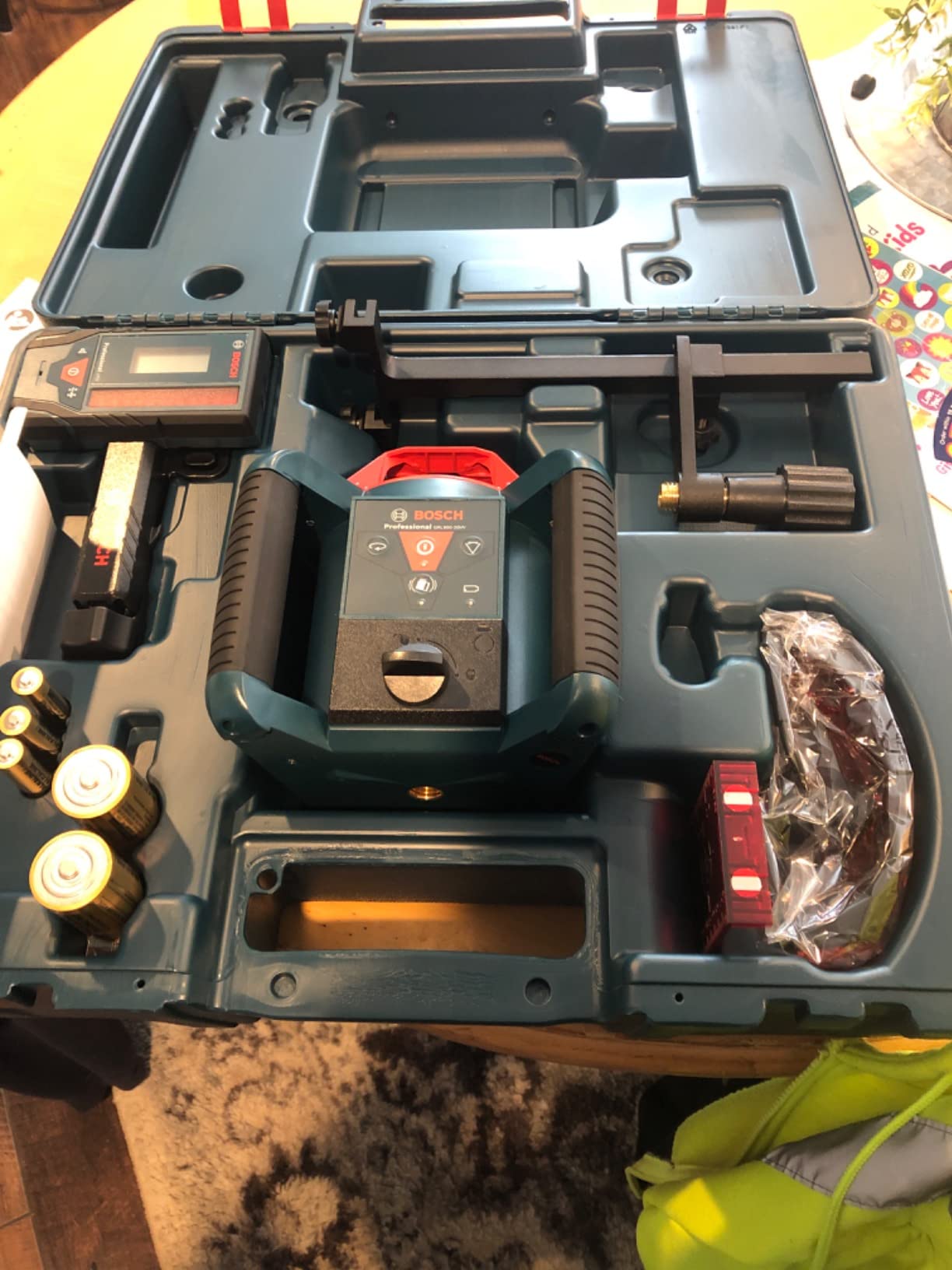
Commercial landscapers, graders and DIY builders describe it as accurate out of the box and fast to set up, and 85 percent of its 445 reviews are five-star. One contractor running a Bosch rotary reports it holding 3/16 inch at 100 feet and calls it super handy for layout and grading work.
Weight is another quiet advantage. The body is listed at 3.9 pounds with dimensions of 7 by 6.7 inches, which makes this the easiest full kit in the roundup to move between setups by one person.
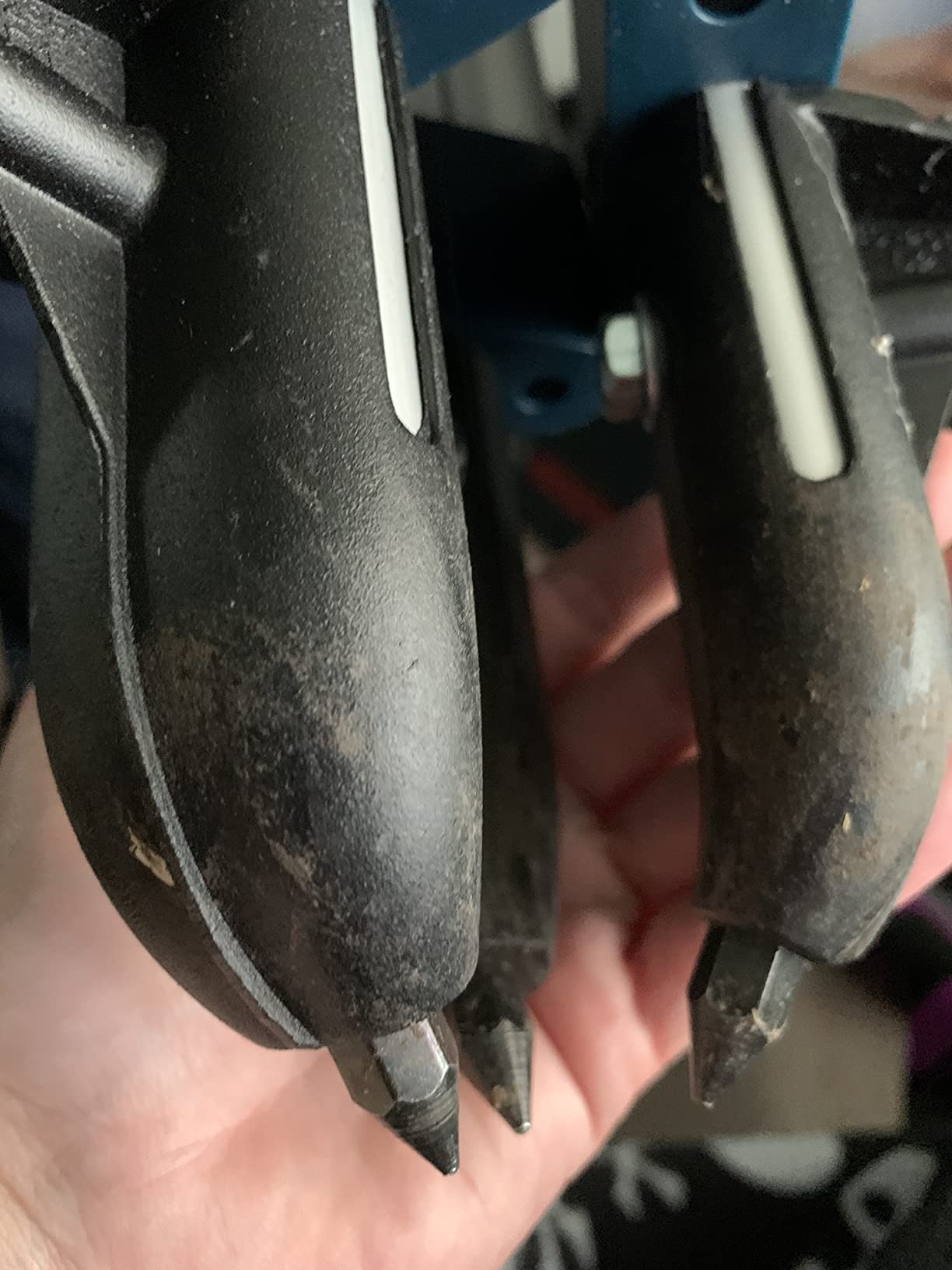
Receiver design and daylight reading
The LR10 receiver beeps rather than showing a number, so you work by tone and arrow direction instead of a numeric offset. For grading that means slower feedback at each stake than an LCD receiver gives you, though the beep volume and bright target are praised for working in full daylight.
Where the accessory list stops short
Owners upgrading from a cheaper unit commonly recommend carrying a better tripod and a separate detector alongside it, which tells you the bundled BT160 and LR10 are serviceable rather than premium. The top protection cover also creates blind spots where the receiver loses the beam, so plan your approach angles. None of this touches accuracy, and 4.7 stars across 445 reviews is one of the strongest rating bases here.
3. Johnson 99-028K Dual Slope Rotary Laser System Review
Johnson Level & Tool 99-028K Electronic Self-Leveling Dual Slope Horizontal/Vertical Rotary Laser System, Red, 1 Kit
Dual slope to 5 degrees in X and Y
Self-leveling horizontal and vertical
Alarms for out-of-range
3 year warranty
Pros
- Programmable dual slope takes the math out of drainage work
- Self-levels both planes for fencing and footings
- Visual plus audible out-of-range alarms
- Nickel-metal hydride pack and charger included
Cons
- Bulky hard-shell case for random transport
- Small accessories have no dedicated case storage
- Included detector described by owners as cheaply made
Most of the confusion first-time buyers hit comes from buying a single-grade unit and then discovering it cannot hold cross-slope or match an existing fall. The 99-028K solves that directly: it offers a programmable dual-slope function up to 5 degrees on both the X and Y axes, which is exactly what a two percent fall away from a foundation or a swale cut along a property line requires.
It also self-levels electronically in the horizontal and vertical planes and adds visual and audible out-of-range security alarms, which matters because a bumped tripod on an active grading site is the fastest way to lose a morning of work. The laser is Class IIIa with maximum output at or below 5mW.
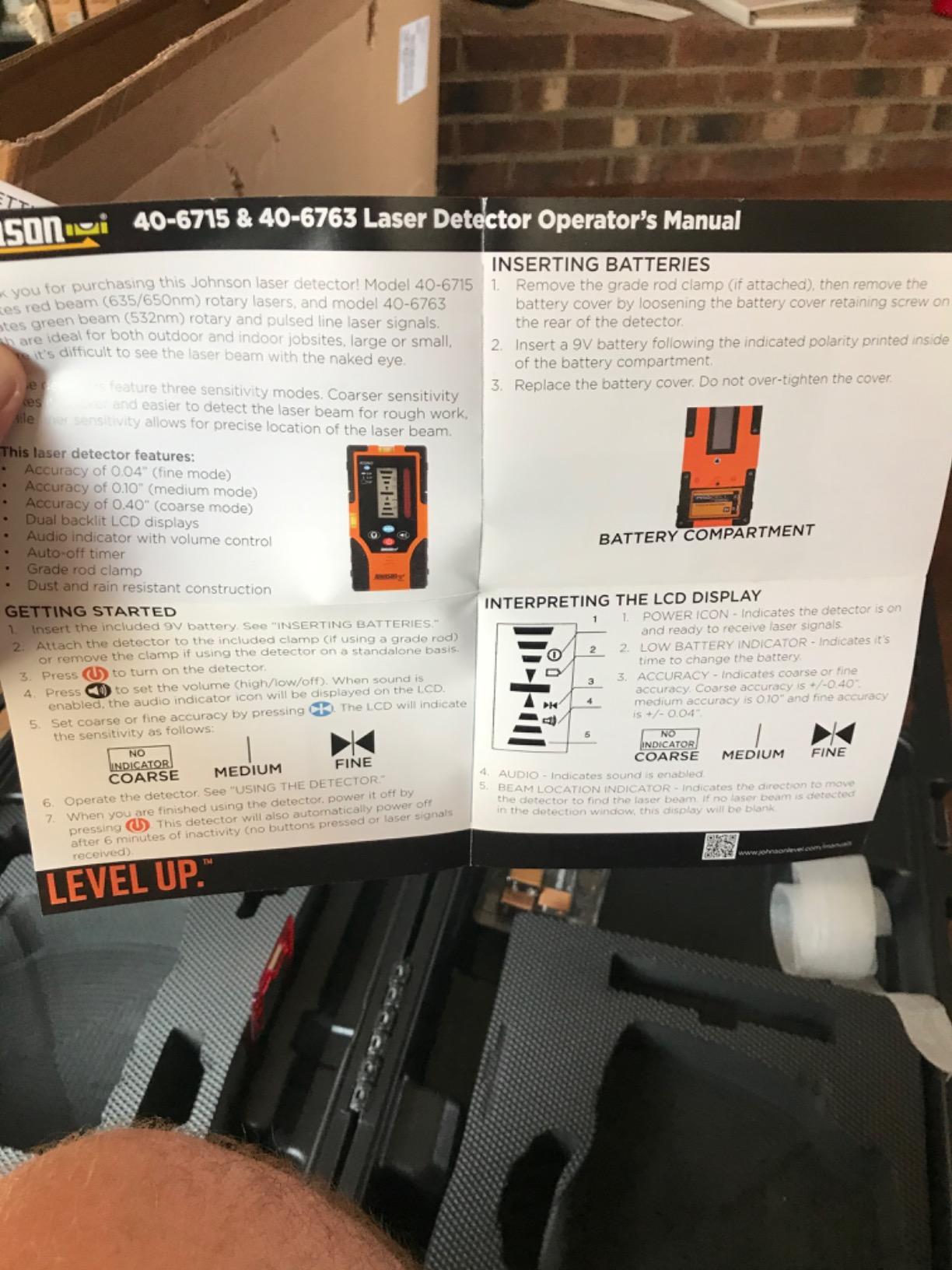
The kit contents are unusually complete: laser, nickel-metal hydride rechargeable battery pack, a 6.4V charger, an alkaline battery compartment (batteries not included), a remote control with a 9V battery, a detector with clamp and 9V battery, a tripod, a 13 foot grade rod, a magnetic target, tinted glasses, a manual and a hard-shell carrying case. That is two power options and a rod, which means you can work a full day without hunting for cells.
Buyers treat this as a capable all-rounder and the dual slope is the decisive feature, with 73 percent of its 362 reviews at five stars and 17 percent at four. The package weighs 35.3 pounds and the case measures 50 by 14.69 inches, which is the single biggest logistics drawback in this roundup.
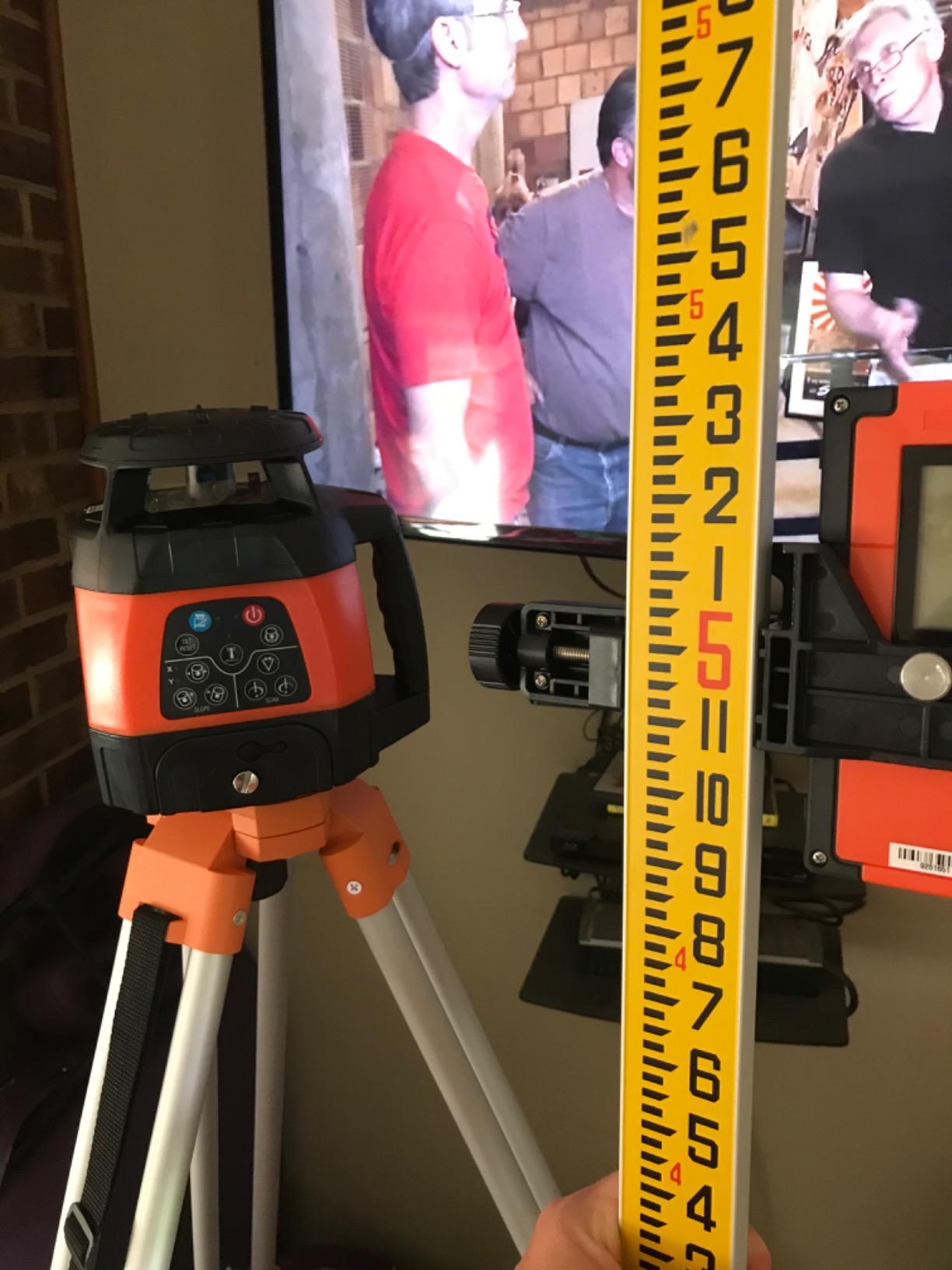
Drainage work on two axes
Programmable slope turns grade work from arithmetic into a setting. Instead of recalculating offsets for every stake, you dial in the fall you want on each axis and walk the yard reading cut or fill against the rod, which is how the Johnson is described by the flatwork and excavation crews who use it.
Handling and accessory trade-offs
Two practical issues come up repeatedly. The hard-shell case is bulky enough that random jobsite transport in a pickup becomes a nuisance, and the small items inside it have no dedicated storage locations, so the remote, clamp and 9V batteries migrate. The bundled detector is also described by some owners as cheaply made, and that is the part most likely to be replaced first.
4. Johnson 99-027K Self-Leveling Rotary Laser System Review
Johnson Level & Tool 99-027K Self-Leveling Rotary Laser System, 8.75″, Red, 1 Kit,Orange
2000 ft working diameter
90 degree split beam
Wash-down rated housing
13 ft rod and tripod included
Pros
- Repeatable accuracy across 200 ft benchmark ranges
- Holds up in bright sun and high heat
- 2000 ft working diameter for area leveling
- Three year warranty
Cons
- Case is roughly 51 by 9 by 15 inches with wasted space
- Calibration instructions unclear and a hex key is called for but not included
- Detector feels cheaply made
Range is the argument for this Johnson. The 99-027K carries a 2,000 foot working diameter for large-scale area leveling, which on a geometric basis is a circle roughly 2,000 feet across. That is the difference between repositioning several times on a large property and setting up once from a high point at the house.
Owner reports describe stable, repeatable accuracy over 100 feet with consistent benchmark elevations across 200 foot ranges, and a measured accuracy of approximately 1/8 inch at 100 feet. The 90 degree split beam function covers vertical and horizontal leveling, and the housing is dustproof and wash-down rated with a Class 3A red beam.
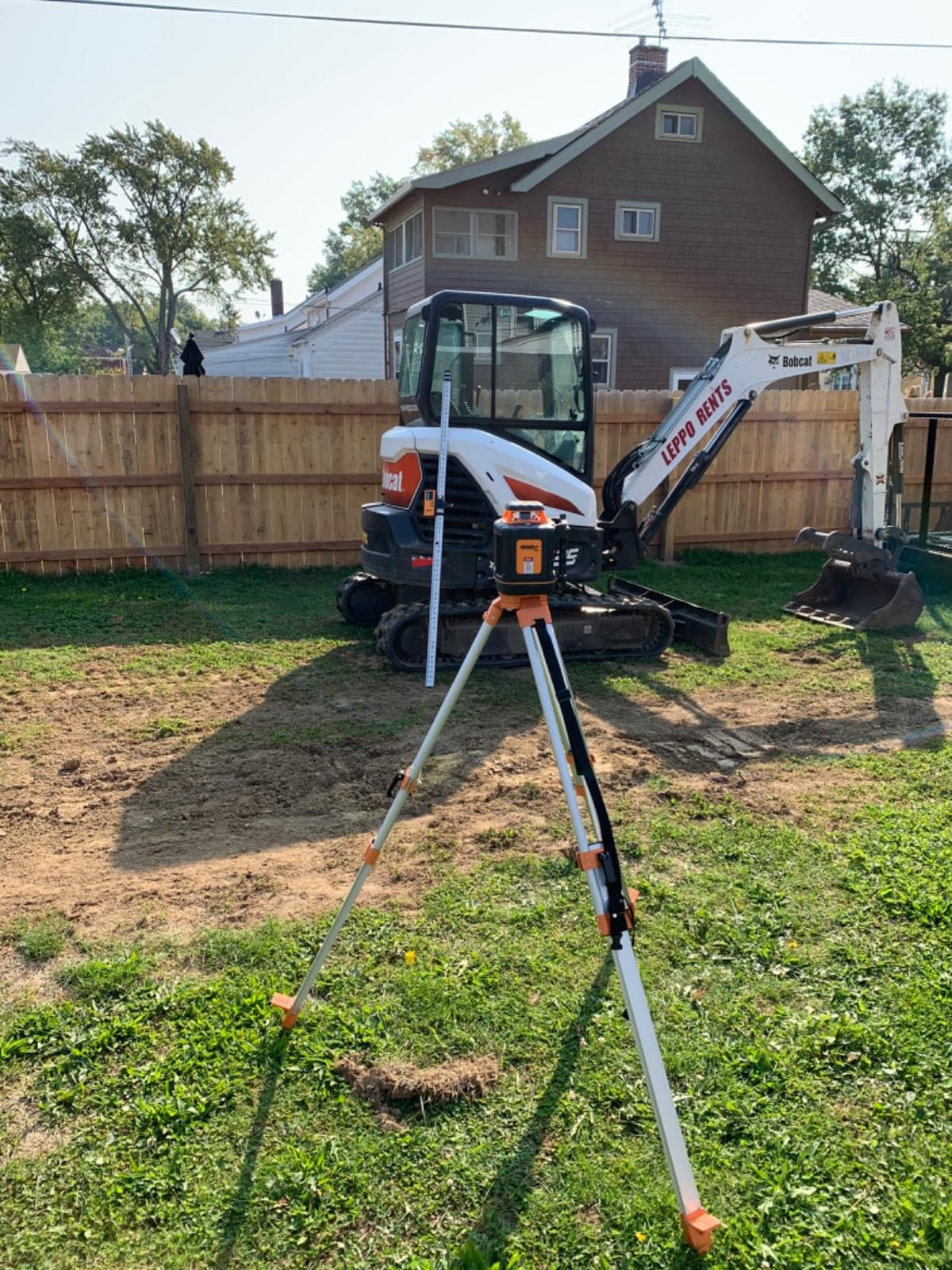
Outdoor performance is where the reviews are strongest. Users working regularly in sun report it stays accurate and stable through high heat and direct sun, and the kit includes a heavy-duty contractor tripod that supports one-person operation plus a 13 foot grade rod, detector with clamp, magnetic target and tinted glasses.
This is the largest review base of the three Johnson kits, at 612 reviews with 75 percent five-star feedback, which makes its 4.6 average one of the better-supported ratings in the roundup.
Getting a single setup to cover a big property
Range only pays off if you have somewhere to set up. On a wide, open lot with a rise at the street, you can often place the unit on the high point and work the whole yard without moving it, and that is where a 2,000 foot diameter genuinely saves hours. Add a 13 foot rod and you can take readings from a fairly steep grade too.
Transport and setup niggles to plan around
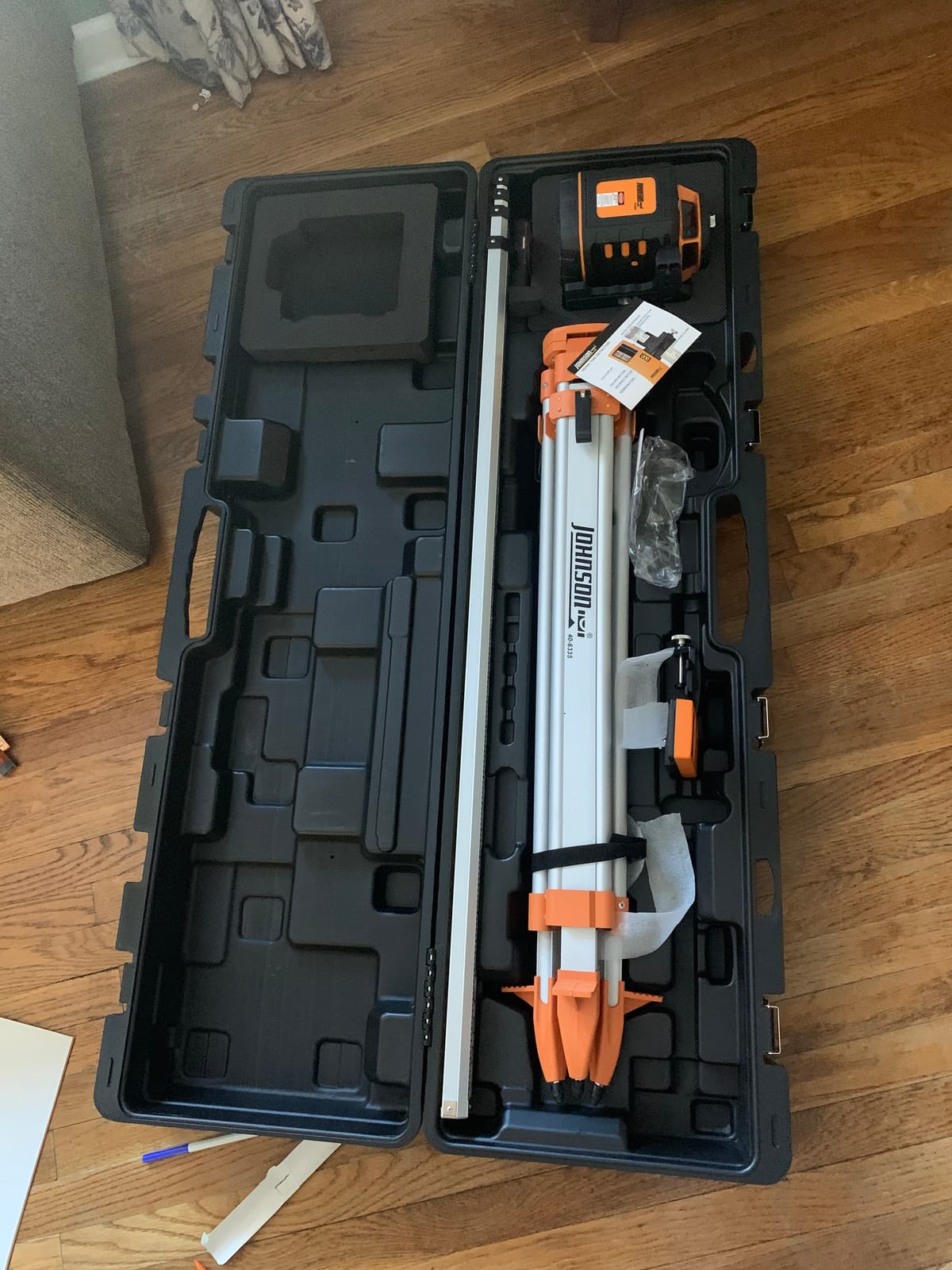
The hard case is the recurring complaint, measuring roughly 51 by 9 by 15 inches with a lot of wasted empty space inside. Calibration documentation is also confusing, with the instructions referring to a 3 mm hex key while a flathead is specified, and some units have reportedly arrived out of calibration. Verify accuracy against a known benchmark before you trust a full yard of readings.
5. Spectra Precision LL100N-2 Laser Level Kit Review
Spectra Precision LL100N-2 Laser Level Kit with HR320 Receiver and Clamp, 15′ Grade Rod (Inches), Tripod, and System Case, Yellow
Complete kit with receiver and rod
Automatic self-leveling
Height of Instrument alert
15 lb package weight
Pros
- Automatic self-leveling gives fast minimal-training setups
- Height of Instrument alert prevents false readings after a knock
- Waterproof and dustproof HR320 receiver
- Only 15 lb for a full crew kit
Cons
- No dual grade capability for drainage or cross-slope
- Highest one-star share among the professional kits here at 7 percent
The LL100N-2 is the sensible first rotary laser for a homeowner or a small landscaping crew because it is a complete crew in a case at a lighter weight than the pro kits: the LL100 transmitter, HR320 receiver, C59 rod clamp, a 15 foot grade rod in inches, an adjustable tripod, a system case, alkaline batteries and user guides.
Fully automatic self-leveling with one-button operation keeps the learning curve short, and the HR320 receiver is waterproof and dustproof. Measurement units read in inches and feet, which matches how most yard rod readings are taken, and the warranty is three years limited.
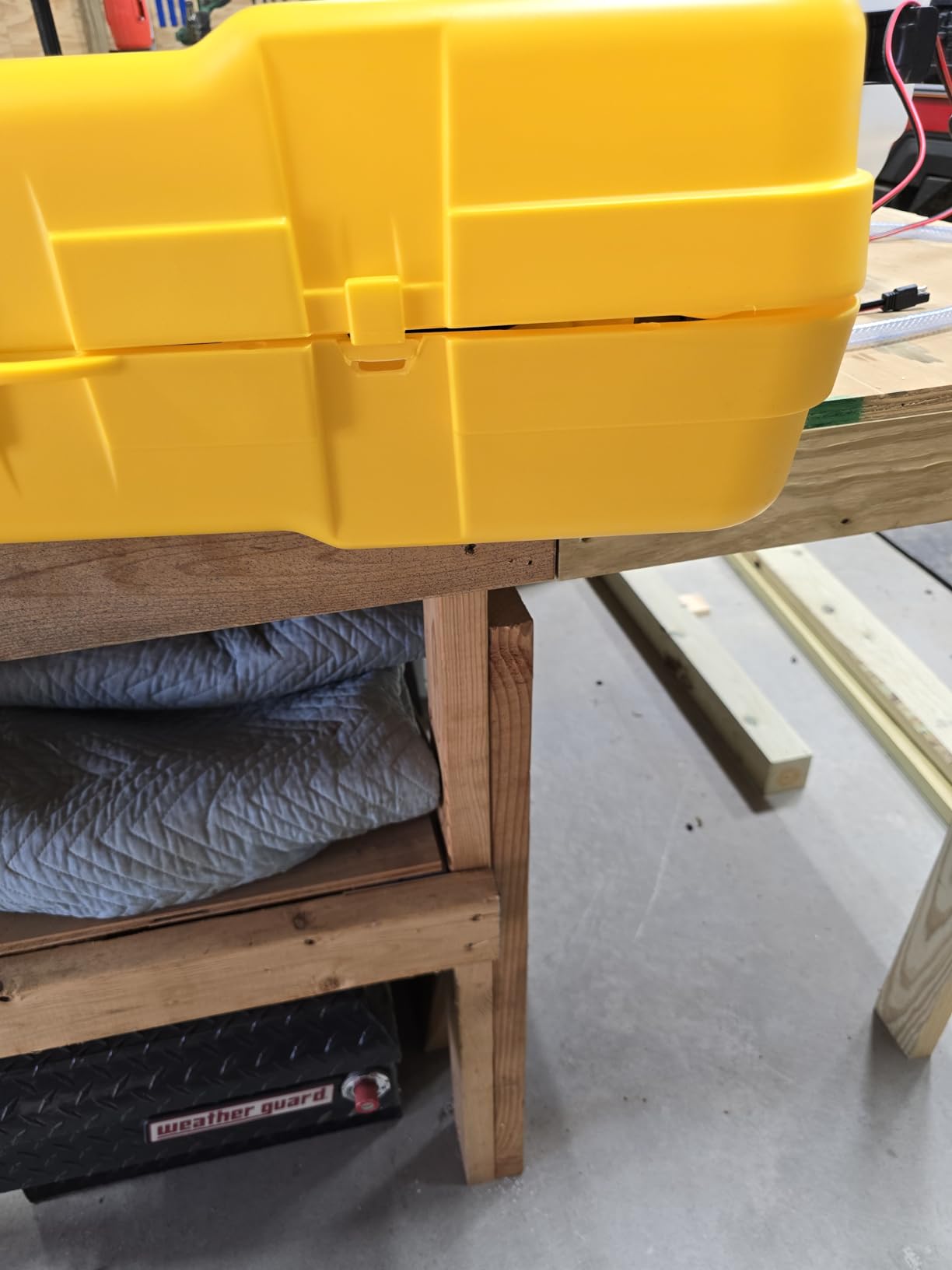
The feature that earns its keep on rough ground is the Height of Instrument alert, which stops rotation when the unit is jarred so you cannot take a reading off a datum that has moved. The package weighs 15 pounds, less than half of the 32 and 37 pound kits in this roundup, so one person can carry it from the house to the far corner of a yard without planning a trip.
Buyers value how much is included and how quickly it self-levels, with 76 percent five-star feedback across 398 reviews. It also carries the smallest one-star share among the professional kits here at 7 percent.
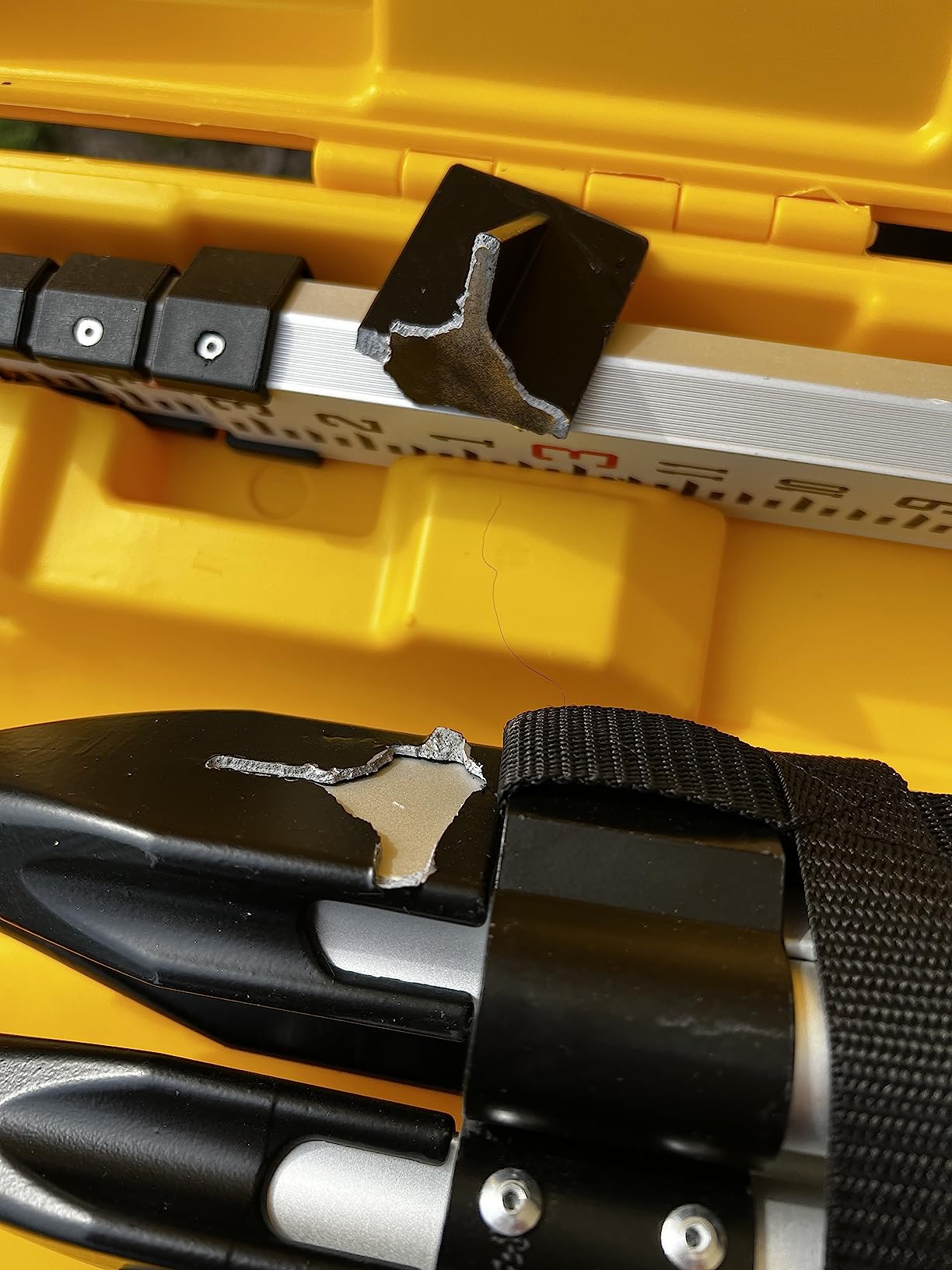
What a single-grade unit can and cannot do
Single grade means you get a level plane and you read cut or fill against it. That covers levelling a lawn, setting a patio base, checking a driveway pad and transferring a benchmark, which is most residential yard work. It does not cover holding cross-slope or matching an existing fall, because there is no second axis to program.
When to step up instead
If your project is drainage rather than levelling, the two percent fall away from a house is a slope job and this is the wrong instrument. Move up to the Johnson 99-028K for programmed dual slope. If instead you want more reach on the same single-grade approach, the Topcon RL-H5A covers a 2,600 foot diameter.
6. Topcon RL-H5A Self-Leveling Laser with LS-80 Receiver Review
Topcon RL-H5A Self-Leveling Construction Laser w/LS-80 Receiver
2600 ft diameter coverage
1/16 in accuracy at 100 ft
Plus or minus 5 degree self-leveling
Up to 100 hours battery life
Pros
- Out-of-box accuracy better than 1/8 in around 150 feet
- Self-levels reliably on out-of-level tripod setups
- Battery life exceeds spec with 80 plus hours reported
- IP66 weatherproof
- drop
- dust and water resistant
Cons
- Needs a separate threaded tripod and grade rod for many setups
- Some units arrive without the included field book
- Red beam is hard to see in daylight without laser glasses
The Topcon RL-H5A is the most-reviewed instrument in this roundup at 666 reviews, and it is the one that shows up constantly when experienced operators compare brands for light construction work. Experienced operators on surveying forums consistently converge on the same trio for light-construction applications, with Spectra Precision, Topcon and Leica named together.
Specifications are strong where it counts: 2,600 foot diameter job site coverage with the included LS-80 receiver, 1/16 inch accuracy at 100 feet, electronic self-leveling across a plus or minus 5 degree range, and an H.I. alert that signals an elevation change if the unit is disturbed. The housing is IP66 rated against weather, drops, dust and water.
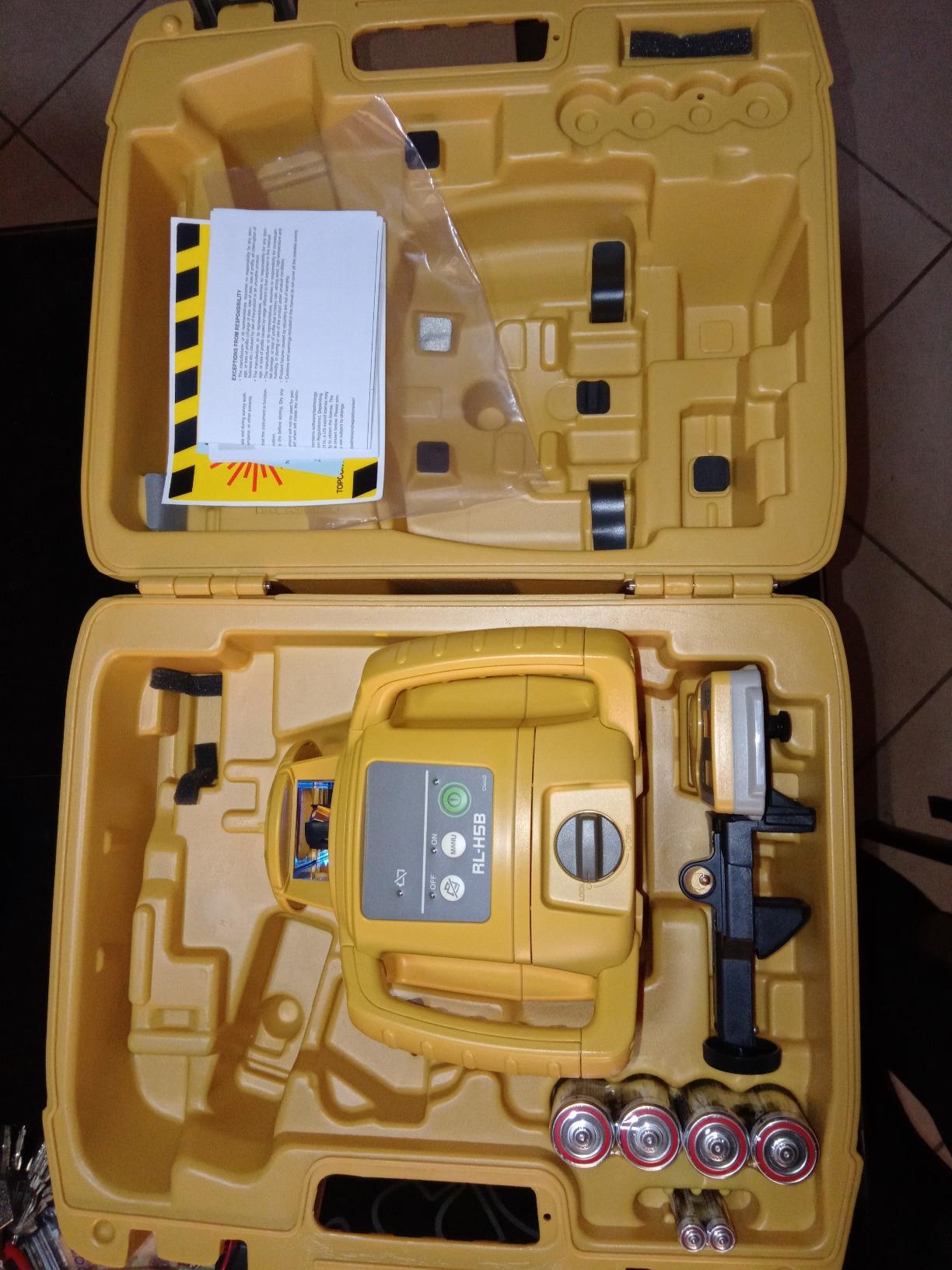
Battery life is the sleeper feature. The listing claims up to 100 hours, and owners report running past 80 hours on a single charge, which means a full grading week without a battery swap. It also self-levels reliably even on noticeably out-of-level tripod setups, and owners confirm accuracy better than 1/8 inch at around 150 feet out of the box.
Long range suits site grading, French drains and riding arenas, and the receiver bracket carries a spirit level and clamps to common measuring rods. The kit includes the laser, LS-80 receiver, sensor holder, a durable carry case with molded storage, and an EDEN Field Book, with 83 percent of reviews at five stars.
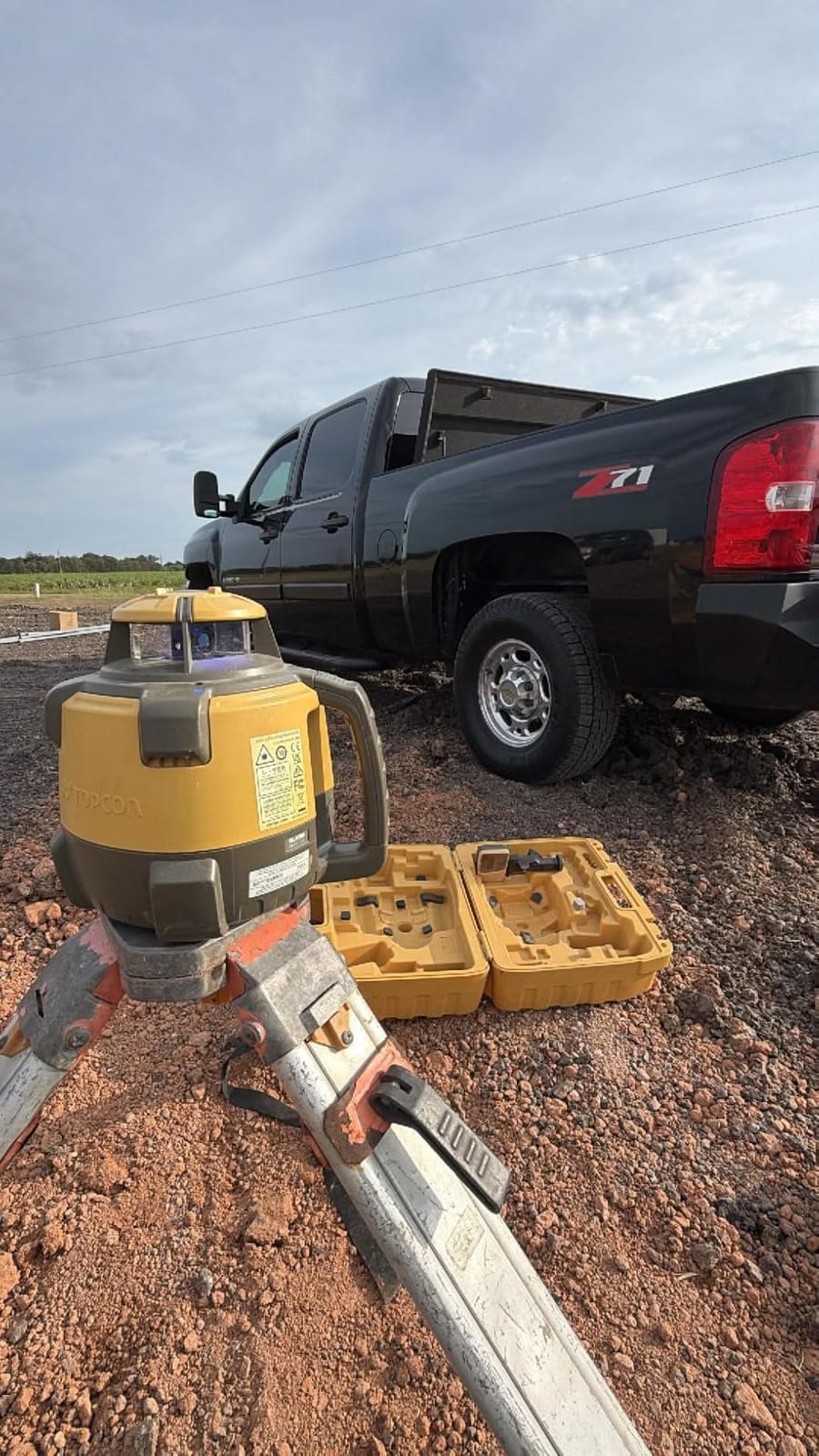
How much yard one setup actually covers
A 2,600 foot diameter is a circle roughly 2,600 feet across, which is the largest working area of any kit here and the main reason acreage properties choose it. In practice, terrain, brush and line of sight cut into that figure, but for an open lot it means the number of setups drops sharply compared with an 800 or 1,000 foot unit.
What arrives and what does not
Owners frequently note that a separate 5/8-11 threaded tripod and grade rod are needed for many setups, so budget for accessories if the included ones are not adequate for your grade. Some units also arrive without the field book and with no clear seller contact path. A few owners also report the exact-level audio tone being hard to hear, and one report of a red laser source failing after careful use.
7. Johnson 99-026K Self-Leveling Horizontal Rotary Laser System Review
Johnson Level & Tool 99-026K Self-Leveling Horizontal Rotary Laser System w/ Hard Case Kit, 50 x 14.5″, Red, 1 Kit,Orange
800 ft working diameter
Rechargeable NiMH pack or alkaline
Locking pendulum for transport
3 year warranty
Pros
- Accurate over an acre of property and on footings
- Works in pouring rain
- bright sun and cold mist
- Charge lasts at least a 12-hour workday
- Visual and audible alarms plus locking pendulum
Cons
- Self-levels only horizontally
- with manual vertical leveling
- Included 13 ft grade rod lacks a bubble level and may not hold extension
- Detector described as cheaply made
This Johnson is the battery answer. It runs on a nickel-metal hydride rechargeable pack with a 6V charger, or on AA and alkaline batteries for flexibility, and owners report a charge lasting at least a 12-hour workday. For a crew that sets up at dawn and grades until dusk, that removes the mid-day battery swap entirely.
Range is an 800 foot working diameter, enough for a large residential yard or a small commercial lot, and the rod sets elevation readings in both feet and inches on one side and tenths on the other. Applications listed include cut and fill checks, foundations, concrete pours, septic tanks, drainage and terracing.
Field reports describe it working in pouring rain, bright sun and cold misty conditions, and being accurate over an acre of property as well as on footings, engineered fill and formwork. The visual and audible out-of-range alarms plus a locking pendulum protect the internal mechanism in transit, and variable rotational speeds run from 200 to 600 RPM with an illuminated vertical vial.
The kit includes the laser, rechargeable pack, charger, detector with clamp and 9V battery, tripod, 13 foot grade rod, a wall and ceiling mounting bracket, magnetic target, tinted glasses and a hard case, all under a three year warranty.
Two power options as a real advantage
Running rechargeable cells during the week and alkaline cells on a weekend job with no charger nearby is a flexibility the single-power kits cannot offer. The charging routine is also predictable, which matters more than raw runtime when a crew is working a fixed schedule.
Where this kit underperforms
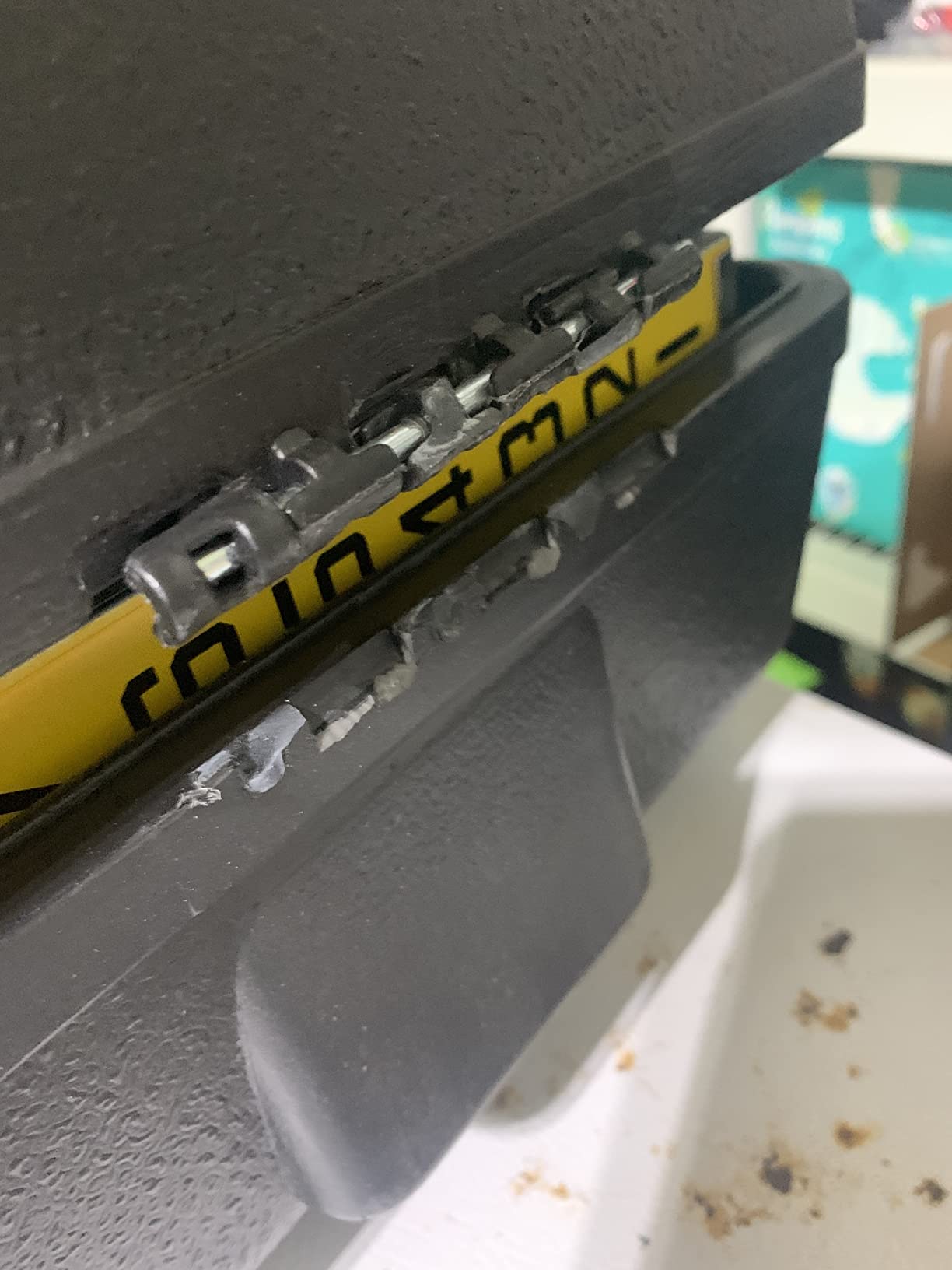
It self-levels only in the horizontal plane, so vertical work such as fencing and footings needs manual bubble leveling. The bundled 13 foot grade rod is the weak point: owners report it lacks a bubble level and tends not to stay fully extended, which caused grade errors for one owner, and the detector is described as cheaply made. It carries the highest one-star share among the Johnson kits at 8 percent across 435 reviews.
8. DOVOH H3-360G-KIT Outdoor 360 Self-Leveling Laser Review
DOVOH Outdoor Laser Level 360 Self Leveling with Receiver, H3-360G-KIT
400 ft range with receiver
Green beam at 3x common output
Dual 2600mAh batteries
5 year accuracy warranty
Pros
- Green beam is bright and easy to see indoors
- Receiver picks up the beam in bright direct sunlight
- Solidly built for the price tier
- Dual batteries with charging while in use
Cons
- Green line not visible at long distances during the day
- No grade rod included and the separately sold rod is short
- One owner measured roughly 7 inches of error over 16 feet
- Out-of-level warning did not trigger as advertised
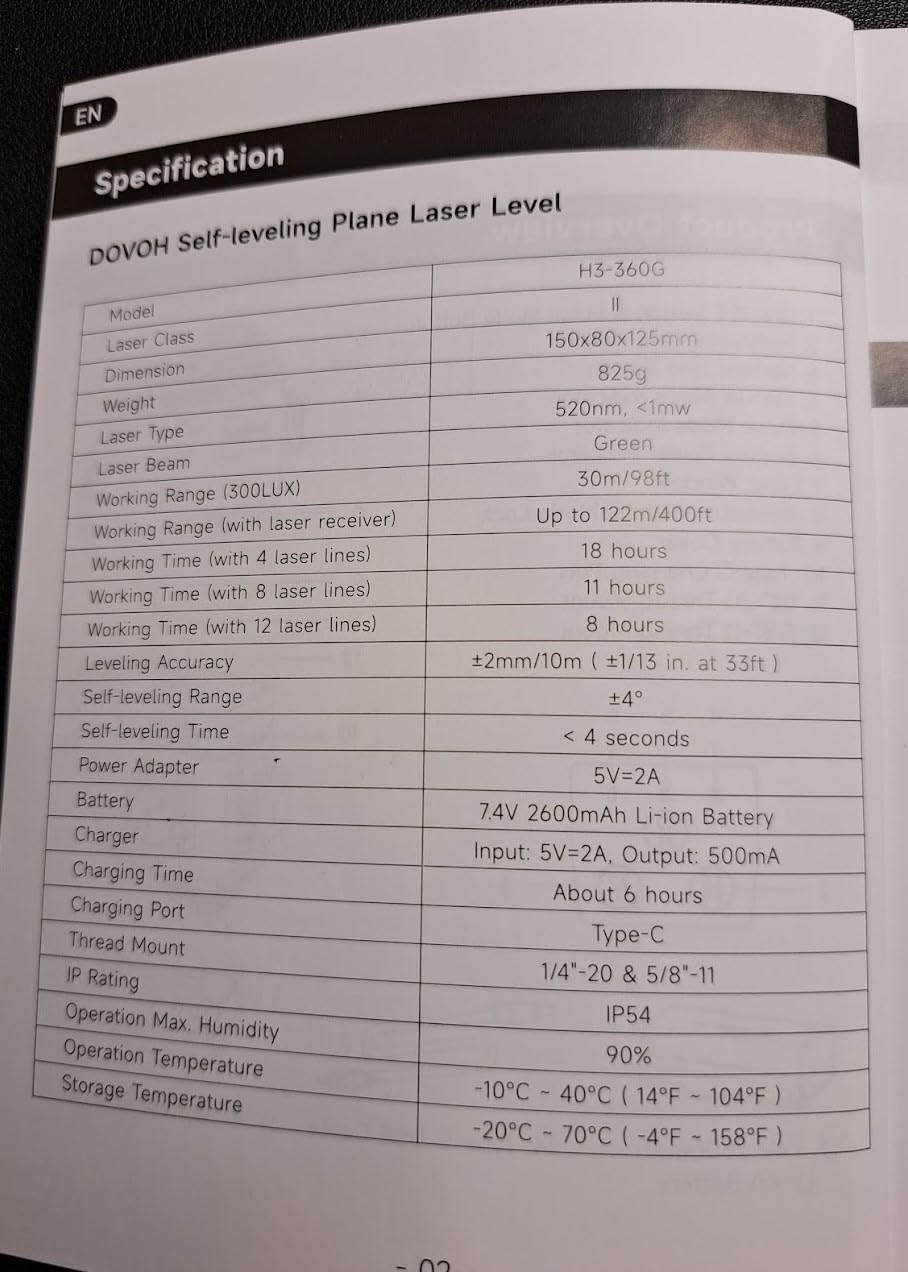
Green beam is the reason to look at this one. The 520nm beam is specified at three times the output power of common laser levels, and the receiver does pick it up in bright direct sunlight, which is more than can be said for the red-beam units that need target cards and tinted glasses to read at distance.
Working range is 400 feet with the included receiver, and the build includes a double shockproof assembly with two layers of cushioning rubber around the core. Two 2600mAh batteries are included and you can charge while the unit is in use. It weighs 825 grams, by far the lightest kit here.
The kit is generous for the tier: adapter, Type-C cable, charger, enhancement glasses, green target plate, magnetic bracket, rotary base, the laser, the receiver, two batteries, a manual and a hard toolbox. Warranty cover includes five years on accuracy and two years on quality, which is generous for a budget instrument.
Reviews are split but lean positive, with 63 percent five-star and 21 percent four-star across 192 ratings. Buyers praise the build quality and receiver performance for the money.
Green beam visibility, and its limit
Green light is roughly four times more visible to the human eye than red at the same power, which is why surveyors working open ground in daylight gravitate to it. Even so, the feedback from owners is that the green line becomes effectively invisible at long distances during the day, so most outdoor layout work happens near dusk or relies entirely on the receiver.
Know what this instrument is and is not
This is positioned as a line laser with a rotary base rather than a full rotary grading instrument, and no grade rod is included, with the separately sold rod described as short. One owner measured roughly 7 inches of error over 16 feet, and an out-of-level warning did not trigger as advertised. Treat it as a layout and light-interior tool, not as the machine that holds your yard grade.
9. VEVOR 1650ft Red Rotary Laser Level Kit Review
VEVOR Red Rotary Laser Level 1650ft,360 Degree Self Leveling Laser Level Kit,with Surveying Tripod&5m Staff,IP66 Waterproof Remote Control,5 Rotation Speeds&4 Angles Adjustment(Ship in Three Packages)
1650 ft working distance
Five rotation speeds and four scan angles
IP66 composite housing
Remote control to 65 ft
Pros
- Lowest entry point while bundling tripod
- staff and detector
- Five rotation speeds and four scan angles
- Remote starts and stops the unit without walking to it
- Lightest full kit here at 6.9 pounds
Cons
- Arrives as three separate packages rather than one box
- Red beam needs the target board or glasses to read at distance
- Nickel batteries need 8 to 12 hours of charging
The VEVOR kit exists because a full 1,650 foot working distance used to sit well above the DIY budget, and this one bundles it with a surveying tripod, a 5m staff, a laser detector, glasses, a target board, a remote, a charger and a carrying case. The remote control alone is a genuine convenience, starting and stopping the unit from up to 65 feet away.
It scans 360 degrees with variable speeds at 0, 60, 120, 300 and 600 RPM and four scan angle options of 5, 45, 90 and 160 degrees, so you can tune visibility to the light. Self-leveling tolerance is plus or minus 3 degrees with a manual alignment option, and the mounting is a standard 5/8-11 thread.
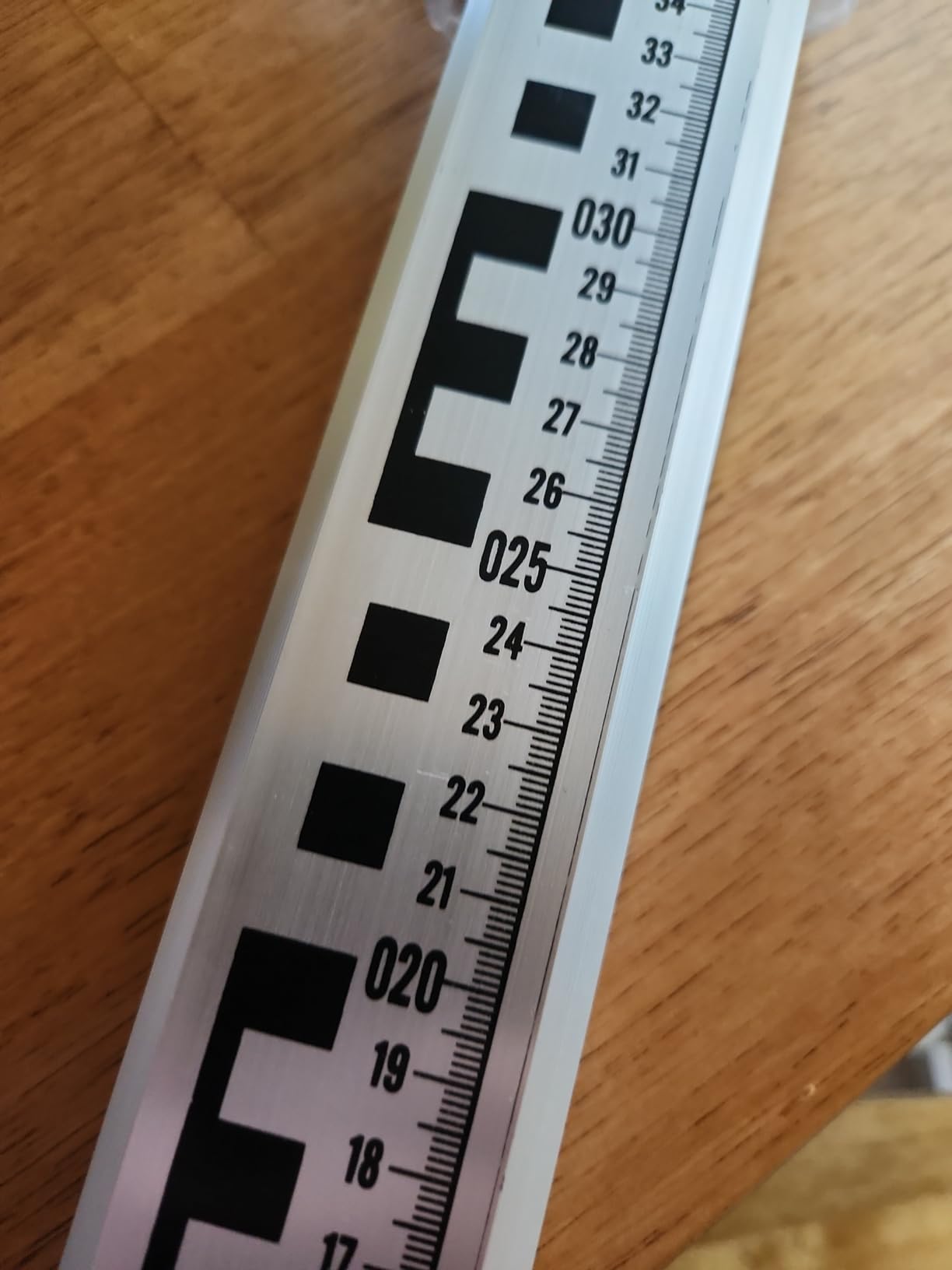
Two details worth weighing. The housing is IP66 rated with a high-impact composite shell at just 6.9 pounds for the package, and the self-leveling tolerance of plus or minus 3 degrees is narrower than the plus or minus 5 degree units above it, which matters on uneven natural grade where the tripod often ends up noticeably off level.
At 88 reviews this is the smallest and newest sample in the roundup, with 66 percent five-star but an 11 percent three-star share that points to mixed satisfaction. Treat the rating as indicative rather than settled.
What you get for the lowest entry point
On paper this is the most complete spec list at the bottom of the range: long working distance, five speeds, four angles, a remote, an IP66 housing and a full accessory bundle. For a homeowner or a small crew learning the workflow, that combination is genuinely hard to argue with, and the 5/8-11 mount means it fits standard survey tripods.
Where the compromises show up
Three things temper the spec sheet. The kit arrives as three separate packages, so plan for parts arriving in stages rather than all together. The red beam requires the target board or the included glasses to read at distance. And four 1.2V nickel-metal hydride batteries give 8 to 12 hours per charge, so an overnight recharge is part of the daily routine.
10. Bosch GRL2000-40HVK REVOLVE2000 Self-Leveling Laser Review
BOSCH PRO GRL2000-40HVK REVOLVE2000 Self-Leveling Horizontal/Vertical
2000 ft working range
Manual dual slope on X and Y
1/16 in accuracy at 100 ft
LR20 receiver with LCD display
Pros
- Longest working range in this roundup at 2000 ft
- Manual dual slope on both axes for drainage
- LR20 receiver LCD is easier to read than beep-only units
- Electronic self-leveling with disturbance monitor
Cons
- Highest price tier here with the lowest average rating at 4.2
- 14 percent one-star share is the highest in the group
- Manual slope adjustment is hands-on rather than electronic
The GRL2000-40HVK is the long-range flagship of this group, reaching up to 2,000 feet of working range at 1/16 inch accuracy at 100 feet. That combination of reach and accuracy is what large sites need, where the far corner of a graded area is far enough from the setup point that drift becomes visible.
It also offers manual dual slope adjustable on both the X and Y axes, electronic self-leveling and a disturbance monitor that warns when the tool position changes. The beam works horizontally and vertically with a 90 degree plumb point for layout, squaring and plumb work.
The kit is the most complete Bosch bundle here: the rotary laser, an LR20 receiver with mounting bracket and LCD dual display, a BT160 lightweight aluminum tripod with quick-clamp leg release, a GR13 13 foot grade rod, red laser glasses, a red target plate, an RC4 remote, a WM4 wall mount, batteries and a hard carrying case.
The LR20 receiver is a real upgrade over beep-only receivers, because the LCD shows how far off you are rather than just the direction to move. Buyers who need very long range and dual-axis slope regard this as the capable option, with 72 percent five-star ratings.
Dual-axis slope for drainage work
Manual dual slope on both axes covers the same ground work as the Johnson 99-028K, just with hands-on adjustment instead of a programmed value. For a yard where you are establishing fall in two directions, either approach works, and the LCD receiver makes the read-back quicker than a tone-based unit.
Durability and value concerns
This unit carries the lowest average rating in the roundup at 4.2 across 126 reviews, and its 14 percent one-star share is the largest, typically citing durability and value. The IP56 rating is lower than the IP66 units here, and the red beam class still requires glasses or a target plate for daylight reading. The warranty is one year limited plus an additional year when registered within eight weeks of purchase, shorter than the three to five year terms carried by the Johnson and Spectra kits.
How to Use a Rotary Laser Level for Grading
Owning the right instrument only helps if the workflow is right. This is the sequence that gets consistent cut and fill readings out of any of the kits above, whether it is a 400 foot budget unit or a 2,600 foot coverage machine.
Choose a setup point with sight lines. Stand the tripod where you can see most of the work area without brush, vehicles or finished surfaces in the way. On a sloped lot the high point usually gives you the longest usable reach.
Level the tripod and let the unit self-level. Center the tripod over the point you want to shoot from and let the laser settle. Wait for the self-leveling to complete before walking away, and watch for any out-of-level alarm if the unit offers one.
Set a benchmark. Before grading anything, take a rod reading on an existing known point such as a slab edge or a finished step. Record the reading. Without this reference you cannot tell later whether the instrument moved.
Set rod height or target grade. If you are levelling to a plane, set the detector to the rod height that represents your finished elevation. If you are grading to a fall, enter the slope percentage you need rather than calculating offsets by hand.
Take control shots. Walk to the low point and the high point of the yard first and confirm the readings make sense against the design. This catches a bad setup in two minutes instead of two hours.
Work the area on a grid. Move the rod in consistent spacing, reading cut or fill at each point and marking significant changes. Write down or flag anything unexpected rather than grading over a mystery.
Reposition deliberately. When the receiver loses the beam, move the laser rather than walking the rod around obstructions. Keep the setup point and rod height identical so the readings stay comparable across setups.
Verify the finished grade. Re-shoot the benchmark to confirm the instrument never moved, then re-read a handful of graded points. A yard that drains after a heavy rain is the real acceptance test.
Two habits separate a clean grade from a frustrating one. Checking the benchmark at the start and end of the day costs a minute and catches a bumped tripod immediately. And reading the rod the same way every time, with the detector held consistently, removes most of the small errors that accumulate across a large property.
Rotary Laser Level Buying Guide for Yard Grading
Most buyers overspend on range and underspend on kit completeness. These are the decisions that actually change your experience on a yard.
What accuracy figure actually means
An accuracy spec is nearly always quoted at a stated distance, commonly 1/16 inch or 1/8 inch at 100 feet. That is the number to read, because an accuracy quoted without a distance is marketing copy. A unit holding 1/8 inch at 100 feet is more than sufficient for yard drainage, where the design target is typically a two percent fall rather than a flat plane.
Be cautious with a figure quoted at maximum range rather than at 100 feet. A manufacturer claiming accuracy at 2,000 feet and one claiming it at 100 feet are making very different promises, and reviewers regularly note that the range printed on budget units falls short of the spec in bright sun.
Rotary laser vs line laser vs pipe laser
A rotary laser spins a beam to create a full 360 degree horizontal plane, which is what grading needs. A line laser projects fixed planes or lines for layout, trim and framing, and is cheaper but does not give you a continuous reference in every direction. A pipe laser centres on the axis of a pipe run for trench and sewer work, which is a different job entirely. For open ground across a yard, only the rotary class applies.
Single grade or dual slope
Single grade gives you one level plane and is enough for levelling a lawn, setting a patio or transferring a benchmark. Dual slope adds a second axis, usually plus or minus 5 degrees, which is what you need for a fall away from a foundation, a swale along a property line, or matching cross-slope on a driveway approach. If you cannot say whether your project needs cross-slope, buy the dual-slope unit anyway.
Red versus green beam in daylight
Green light at 520nm is roughly four times more visible to the human eye than red at the same power output, which is why surveyors working open ground gravitate to it. The catch is that any red or green beam becomes hard to see at distance in full sun, which is exactly why a receiver or detector is mandatory rather than optional. Kits with tinted glasses and a target plate solve this cheaply for red-beam units.
Turning range into setups per yard
Working range is a diameter, and that number tells you how often you move. A 400 foot diameter covers a circle about 1.6 acres in perfect flat conditions. An 800 foot diameter is roughly 6.3 acres, a 1,650 foot diameter about 49 acres, and a 2,000 foot diameter about 72 acres before you discount for slope, brush and line of sight. On a real yard those figures shrink considerably, but the ratio is what matters: doubling the diameter quarters the number of setups.
What the kit should include
A usable kit needs the laser, a receiver or detector with clamp, a tripod, a grade rod, batteries and a case. If any of those are missing, add the cost before comparing two kits, because a bare laser plus separately sourced accessories routinely erases the gap between two tiers. A grade rod with a bubble level and tenths graduations is worth seeking out, since owners of several kits here report rods that will not hold extension.
Buying versus renting for a one-off yard
For a single residential regrade, renting a professional kit from a survey equipment dealer is usually the sensible move, and the same dealers often handle annual calibration. Buying makes sense if you grade regularly, run a landscaping or excavation business, or own equipment such as a skid steer or mini excavator that needs machine control. A rental day cost is small against the cost of a cut and fill error across an acre.
Checking accuracy in the field
Verify any unit against a known benchmark before a long day of work, and re-verify at the end. Set the unit up over a fixed point, take a rod reading, rotate the laser a full turn and confirm the reading returns unchanged. Calibration service is a separate service from the warranty on most brands, so check what your dealer offers before an ownership season rather than after a bad day.
Frequently Asked Questions
What is the best rotary laser level for grading?
The Spectra Precision LL300N-1 is our top pick because it combines a 1,650 foot working range with a complete kit that already includes the receiver, tripod, 15 foot grade rod and hard case. It self-levels automatically, carries an IP66 housing and a five year warranty. For dual slope drainage work, the Johnson 99-028K is the better choice.
What type of laser level is used for grading?
Grading uses a rotary laser level. It spins a beam to project a level plane, or a set slope, in all directions so you can read elevation anywhere in that plane off a grade rod. Line lasers project fixed planes for layout and trim, and pipe lasers centre on a pipe axis for trench work. Neither gives the continuous horizontal reference that yard grading requires.
How to use a rotary laser level for grading?
Set the tripod on stable ground with clear sight lines, let the unit self-level fully, and record a rod reading on a known benchmark before starting. Set your detector to the target rod height or enter the slope you need, take control readings at the high and low points of the yard, then work on a consistent grid. Re-check the benchmark at the end of the day to confirm the instrument never moved.
What is the best rotary laser level for outdoor use?
For outdoor daylight work the deciding factors are IP rating, working range and receiver quality rather than beam colour alone. The Topcon RL-H5A and Spectra LL300N-1 lead here with IP66 housings and 2,600 and 1,650 foot coverage. Green beams such as the DOVOH H3-360G are more visible to the eye in bright light, but every outdoor unit still needs its receiver.
Which dual slope laser is the best?
The Johnson 99-028K is the best dual slope pick in this roundup because its slope is programmed rather than dialled in, up to 5 degrees on both the X and Y axes, with a 13 foot grade rod and rechargeable pack included. The Bosch GRL2000-40HVK offers the same two-axis capability with manual adjustment and a 2,000 foot range, but a lower average rating.
What is the best laser level for landscaping?
For landscaping layout, bed edges and drainage correction, a single-grade rotary with at least 800 feet of working diameter is enough, and the Spectra LL100N-2 is the lightest complete kit in this group. Add dual slope capability such as the Johnson 99-028K when the work involves holding a fall away from a structure. Excavation and machine control work needs more range and a machine-mounted receiver.
The Right Rotary Laser Level for Your Yard
For most people grading a yard, the Spectra Precision LL300N-1 is the right buy: 1,650 feet of working range, 3/32 inch accuracy, an IP66 housing, a five year warranty and every accessory already in the case. If your project is drainage on two axes rather than levelling, choose the Johnson 99-028K for programmed dual slope. If you are working open acreage and want the fewest setups possible, the Topcon RL-H5A reaches a 2,600 foot diameter and runs for weeks on a charge.
Match the tool to the work in three steps. Decide whether you need level or slope, since a single-grade unit will frustrate you on cross-fall. Then decide how much ground one setup must cover, since range is what sets your setup count. Finally, check what is in the box, because a kit missing the tripod, rod or receiver is not cheaper once you add them.
For one-off residential work, renting a professional kit with dealer calibration is the cheaper path. For repeat work, any of the kits above will pay for itself through cut and fill accuracy alone. Whatever you choose, verify the reading against a known benchmark before you move a single bucket of dirt.