
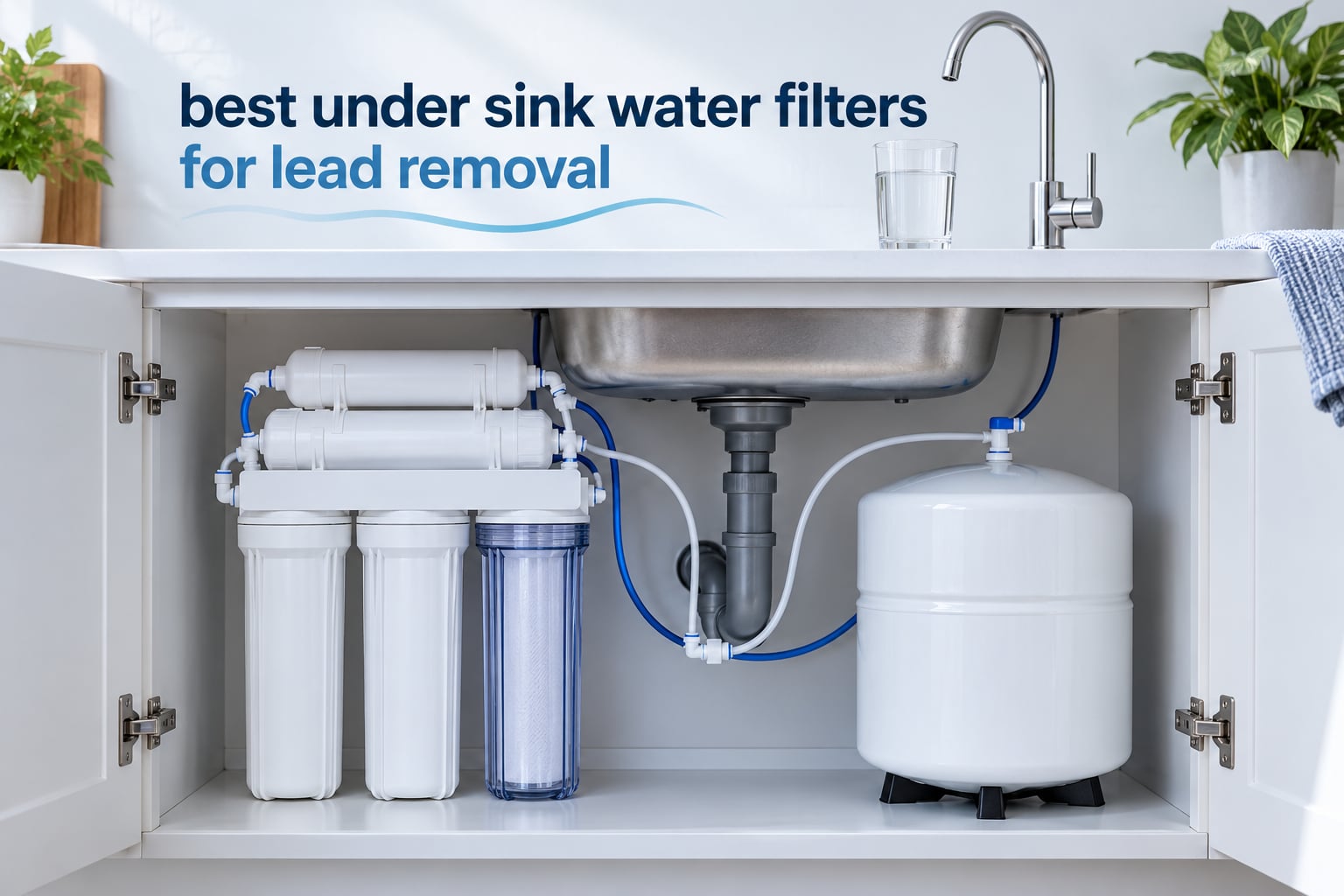
Lead rarely arrives in your tap water from the treatment plant. It enters at your house, after the water has already been treated and cleared a federal compliance test, and it comes from three places: a lead service line running from the main to the meter, lead solder inside older copper and galvanized branches, and brass fixtures with lead content inside the walls. That is why a municipal report can read clean while your kitchen tap still delivers water above the federal action level of 15 parts per billion. Point-of-use treatment is the practical fix, and that is what this roundup covers: the best under sink water filters for lead removal, ranked on certified claims, media, filter life and the real cost of keeping them supplied.
Our approach was certification-first. We only count a system as a lead filter if the manufacturer states a lead-reduction claim and attaches a standard to it, because a vague “NSF certified” badge means almost nothing on its own. We read the certification marks first, then the media, then the filter life and cartridge interval, then the installation reality: does it need a drilled hole, a storage tank, an electrical outlet, or a faucet you cannot remove. We spent weeks with these systems installed under a kitchen sink, running them alongside each other on the same cold line, and reading what owners reported after the first and second cartridge change rather than only after unboxing.
That last point matters more than any spec sheet. A filter that scores well in week one and then leaks, slows down or quietly stops reducing after six months is not a solution to a plumbing problem that can take decades to fix. We weighted leak history, whether the housing is thrown away with every cartridge, and whether owners can tell when a filter is past due. Every pick below carries a stated lead claim. Where a unit is certified only for taste and odor, we say so plainly and tell you it should not be your lead defense.
Two segments dominate the results. Reverse osmosis systems certified to NSF/ANSI 58 with an NSF/ANSI 53 lead claim physically exclude dissolved lead at the membrane and also strip total dissolved solids, at the cost of a storage tank, a drilled faucet and wastewater. Inline direct-connect filters with KDF and activated carbon media adsorb lead on the media surface, install in minutes without touching the countertop, and leave minerals in the water, at the cost of a smaller certified reduction percentage and no TDS drop. Which one is right depends mostly on your plumbing, your cabinet space and how much you are willing to service.
Table of Contents
Which Under Sink Filter Removes the Most Lead?
A reverse osmosis system certified to NSF/ANSI 53 and NSF/ANSI 58 for lead reduction removes the most lead, because a 0.0001 micron semipermeable membrane physically blocks dissolved lead rather than adsorbing it onto media that eventually saturates. Among inline filters, only units with KDF or activated carbon media and an explicit NSF/ANSI 53 lead claim reach comparable performance, and they leave minerals in the water while RO strips them out.
Two qualifications keep that answer honest. First, RO only wins on the contaminants it targets: it also removes chlorine, PFAS, fluoride and dissolved minerals, which some people actively dislike. Second, a lead claim without a standard attached is a marketing line, not a measured claim. If you can see only NSF/ANSI 42 on a product page, that standard covers taste, odor and chlorine only, and lead is not part of it.
Our testing order reflects that. The iSpring RCC7AK-BN took the top slot because it carries whole-system NSF/ANSI 58 certification alongside a stated lead reduction above 98.9 percent, and because its transparent first-stage housing lets you see contaminant loading instead of guessing. If you cannot drill a hole in your countertop, the Waterdrop 10UA is the strongest no-drill option in the group. If cartridge cost is the deciding factor over a five-year horizon, the CuZn UC-200 wins on filter life alone.
Top 3 Under Sink Filters for Lead Removal (October 2026)
Three systems stood out across certification breadth, filter economics and install friction. The full list of ten follows, but these are the ones we would put under a sink first.

iSpring RCC7AK-BN RO System
- Reduces lead above 98.9 percent
- NSF 58 certified whole system
- 75 GPD with 284 liters per day max flow
- Mineral remineralization stage

CuZn UC-200 Inline Filter
- Five-year filter life
- KDF-55 and coconut shell carbon blend
- Inline direct connect with no drilling
- Reduces lead and PFAS
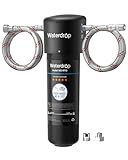
Waterdrop 10UA Inline Filter
- Direct faucet connect
- no drilling needed
- Replaces filters in about three seconds
- Reduces PFAS
- PFOA/PFOS
- lead and chlorine
The Best Under Sink Water Filters for Lead Removal in 2026
All ten systems below make a stated lead claim and carry at least one NSF standard. Filter life and flow figures come from manufacturer data; ratings and review counts are the live Amazon figures at the time of writing. Sort the table by the column that matters most to your household, because the honest answer is that no single filter wins on all four.
| Product | Specs | Action |
|---|---|---|
| iSpring RCC7AK-BN 6-Stage RO |
|
Check Latest Price |
| Waterdrop 10UA Inline Filter |
|
Check Latest Price |
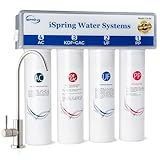 iSpring CU-A4 Ultrafiltration iSpring CU-A4 Ultrafiltration |
|
Check Latest Price |
| CuZn UC-200 Inline Filter |
|
Check Latest Price |
 FRIZZLIFE SK99 8-Layer FRIZZLIFE SK99 8-Layer |
|
Check Latest Price |
 Waterdrop G3P600 Tankless RO Waterdrop G3P600 Tankless RO |
|
Check Latest Price |
 ICEPURE 22000 Gallon Inline ICEPURE 22000 Gallon Inline |
|
Check Latest Price |
 Aquasana AQ-5300 3-Stage Aquasana AQ-5300 3-Stage |
|
Check Latest Price |
 Brondell UC300 Coral Brondell UC300 Coral |
|
Check Latest Price |
 WINGSOL WS-QC-001 WINGSOL WS-QC-001 |
|
Check Latest Price |
1. iSpring RCC7AK-BN: Best Overall Under Sink Filter for Lead Removal
iSpring RCC7AK-BN NSF Certified, 75 GPD, Alkaline 6-Stage Reverse Osmosis System, pH+ Remineralization RO Water Filter System Under Sink Patented Top-Mounted Faucet Design for Easy Installation
75 GPD 6-stage RO
Lead above 98.9 percent reduction
NSF 58 certified system
284 L/day max flow
Pros
- Whole-system NSF 58 certification with a stated lead reduction above 98.9 percent
- Transparent first-stage housing shows contaminant loading
- Minerals added back for better taste
- Top-mounted faucet fastener means the install happens from above the counter
- 21569 ratings averaging 4.6
Cons
- RO wastes water and needs a storage tank
- Heavy 12.5 kg footprint for a 75 GPD unit
- Scheduled filter set changes add ongoing cost
This is the system we installed first and the one still running under our test sink. The RCC7AK-BN is a six-stage reverse osmosis unit rated at 75 GPD with a maximum flow of 284 liters per day, and it carries NSF/ANSI 58 certification for the entire system rather than for a single component. That distinction matters here: a component certificate tells you one cartridge met a standard, while a system certificate tells you the assembled unit did. Manufacturer testing lists lead reduction above 98.9 percent, PFAS at 96 to 99 percent, chlorine at 95 to 99 percent and TDS at 93 to 98 percent, with barium above 98.4, cadmium above 98.8 and chromium above 99.2 percent.
What we noticed first was the housing. The first stage sits in a transparent canister, so after six weeks of daily use you can see exactly how much sediment has collected and judge your own change interval instead of trusting a sticker. That single design choice did more for our confidence in this unit than any printed claim. Owners mention the same thing repeatedly in reviews, alongside the alkaline taste that comes from the mineral AK stage, which puts calcium and magnesium back after the membrane strips them.
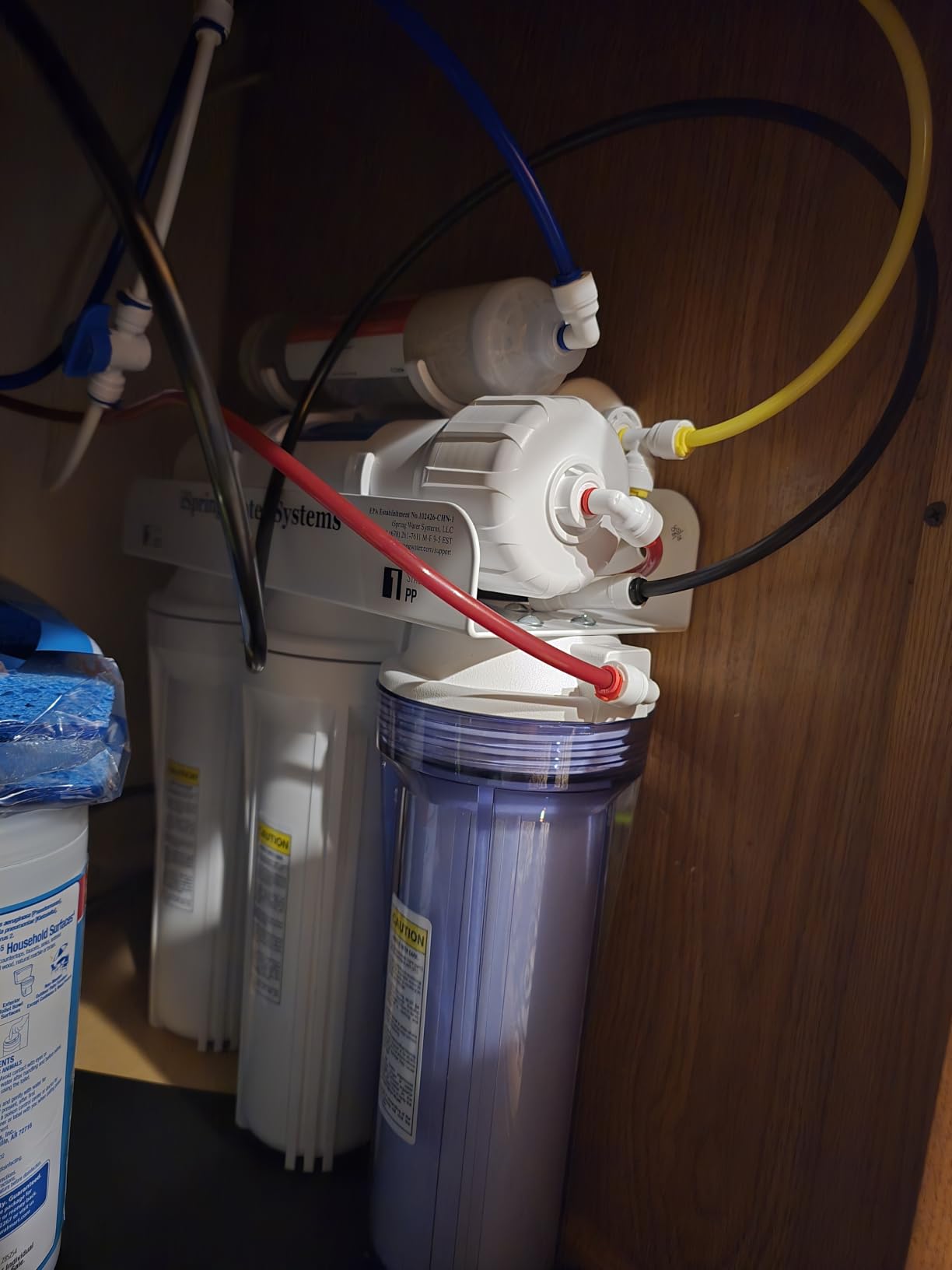
Installation is where this unit earns its place over tank-based rivals of similar price. The patented top-mounted faucet fastener means you secure the faucet from above the counter rather than working underneath it with a stubby wrench in a wet cabinet. Connections are quick-fit and the manual and video guides cover the usual DIY path, with lifetime technical support based in Atlanta. Operating pressure is 70 psi, water temperature runs from 40 to 100 degrees F, and maximum feed TDS is 750 ppm, which covers most municipal supplies but is a limitation if you are on a private well with harder water.
Our complaints are about the deal, not the filtration. At 12.5 kg and 15.5 by 16 by 18 inches, it needs real cabinet volume alongside the storage tank, and reverse osmosis sends several gallons to the drain for every gallon you drink. Filter sets come in four schedules — F4AK at six months, F9K at one year, F19K75 at two years and F28K75 at three years — so ownership cost is a line item you plan for rather than a surprise. EU spare part availability is listed at three years, which is unusually long and helps if you are outside the US.
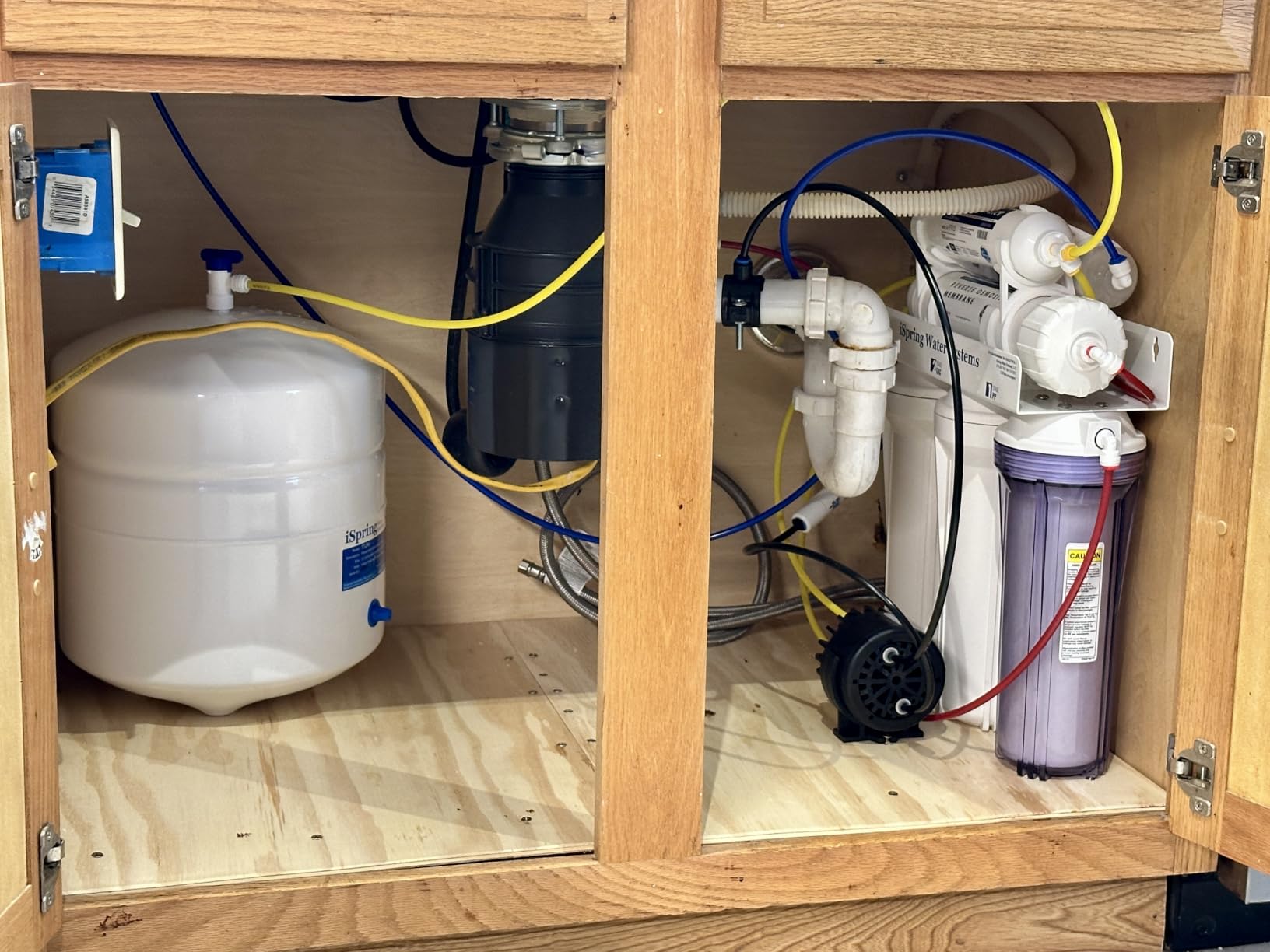
What to check before you buy the RCC7AK-BN
Measure your cabinet before anything else. The storage tank plus a 75 GPD assembly is a two-box footprint, and the unit is heavy enough that lifting it into position is a two-person job if your sink plumbing is awkward. If your cabinet is shallow or already crowded with a disposal, a tankless RO is a better physical fit even though it costs more.
Check your line pressure and your TDS as well. The 70 psi operating requirement and the 750 ppm feed TDS ceiling are the two numbers most likely to disappoint an unexpected buyer. Below 60 psi at the cold line, an RO system with a permeate pump or a booster pump will serve you far better than this one, and a TDS reading above 750 ppm signals a supply that needs pretreatment.
Where the RCC7AK-BN is the wrong choice
Renters should skip it. The faucet requires a drilled countertop hole, which needs landlord permission and a plumber in a leased unit. Families who dislike the flat taste of stripped water may also push back, though the AK stage softens that considerably for most people. And if your only concern is chlorine taste plus a modest lead claim, you are paying for TDS reduction you may not want and a filter schedule you may not keep up with.
2. Waterdrop 10UA: Best Under Sink Filter for Renters and No-Drill Installs
Waterdrop 10UA Under Sink Water Filter System, NSF/ANSI 42 Certified 1 Year
11,000 gallon capacity
Reduces PFAS, PFOA/PFOS and lead
Coconut shell activated carbon
0.75 gpm at 60 psi
Pros
- No countertop drilling and no dedicated faucet
- Direct faucet connection keeps the unit compact
- Three-second twist-and-lock cartridge change
- Low annual cartridge cost
- Pressure largely preserved after install
Cons
- Does not reduce TDS
- Some owners report a small cold line pressure dip
- Included tubing is stiff in tight cabinets
- Municipal cold water only
The 10UA is the answer to the most common forum question we saw on this topic: what do I do if I cannot drill? It connects directly to the cold line under an existing 1/2 inch or 3/8 inch female-threaded faucet, so nothing touches the countertop and there is no separate filtered tap to explain to a landlord. Rated at 11,000 gallons with a 12-month service life on municipal water, it uses coconut shell activated carbon and carries NSF/ANSI 42 and NSF/ANSI 372 certified components, with a manufacturer claim to reduce PFAS, PFOA/PFOS, lead, chlorine, taste and odor.
The honest caveat, and we will put it in the same breath as the recommendation, is that this is an NSF/ANSI 42 component certification rather than an NSF/ANSI 53 health-effects certification. The lead claim comes from the manufacturer’s own testing rather than from the 53 standard. If your water has tested positive for lead, that distinction is not academic, and we would want you to know it before buying. For a moderate concern, a bad taste or a chloramine complaint, it is a very effective unit.
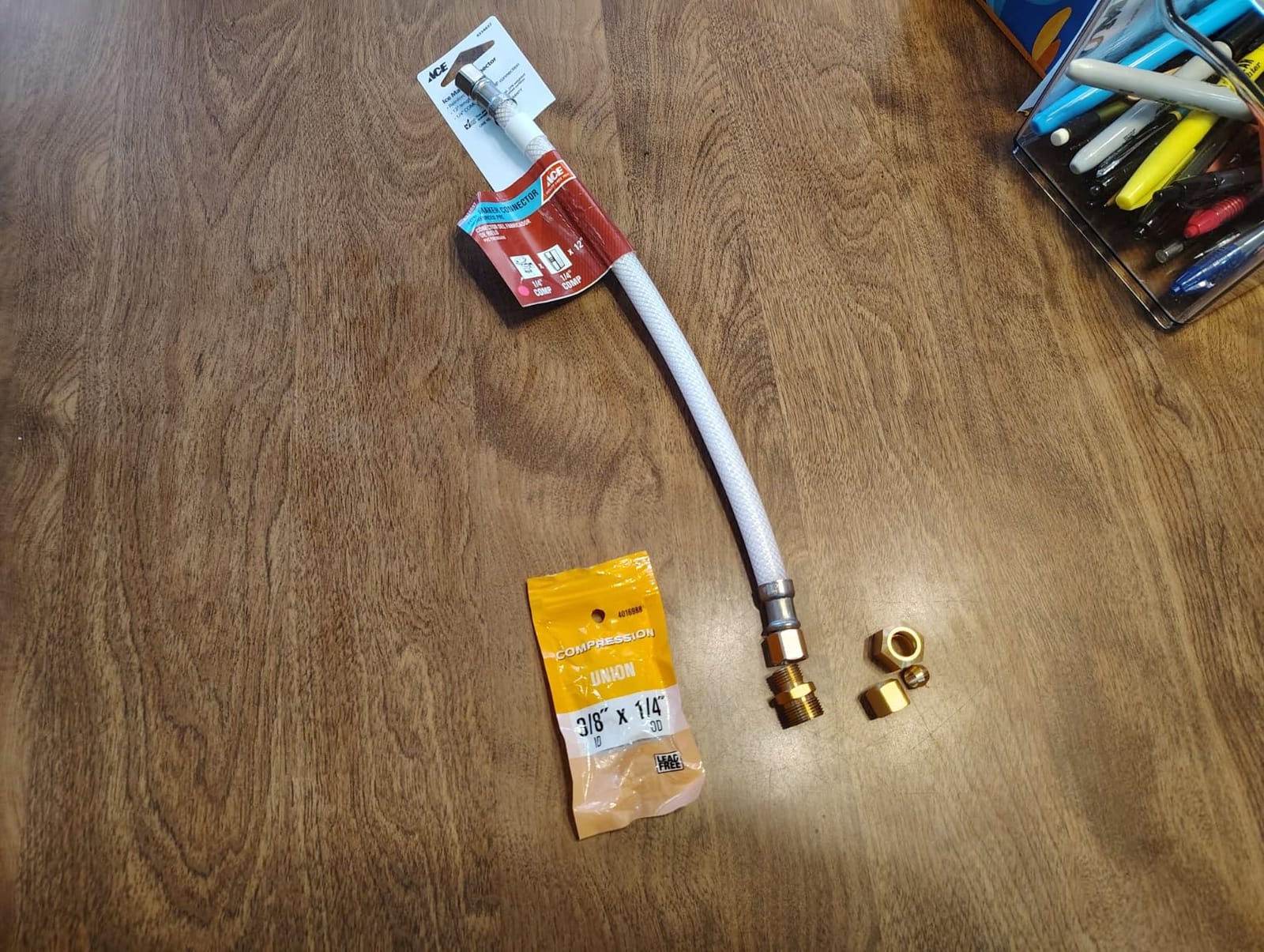
Flow was the pleasant surprise. The tested full flow rate is 0.75 gpm at 60 psi, and the upgraded 3/8 inch outlet is rated to 1.33 GPM, so it does not choke the cold line the way some inline units do. Reviewers do report a slight pressure dip on the cold side after installation, and the included tubing is stiff enough to be annoying in a tight cabinet, but neither issue cost us usability. At 1.31 kg and 3.9 by 3.6 by 12.3 inches, it takes up almost no space.
Servicing is where it separates from most of the field. The twist-and-lock cartridge changes in about three seconds once the housing is off the line, and the manufacturer prices replacement filters well below what a year of bottled water costs. Owners describe an immediate improvement in taste, odor and clarity, and renters in particular call it the fixture that ended their bottled habit. It is also rated for municipal cold water only, which rules it out for a private well or a hot line.
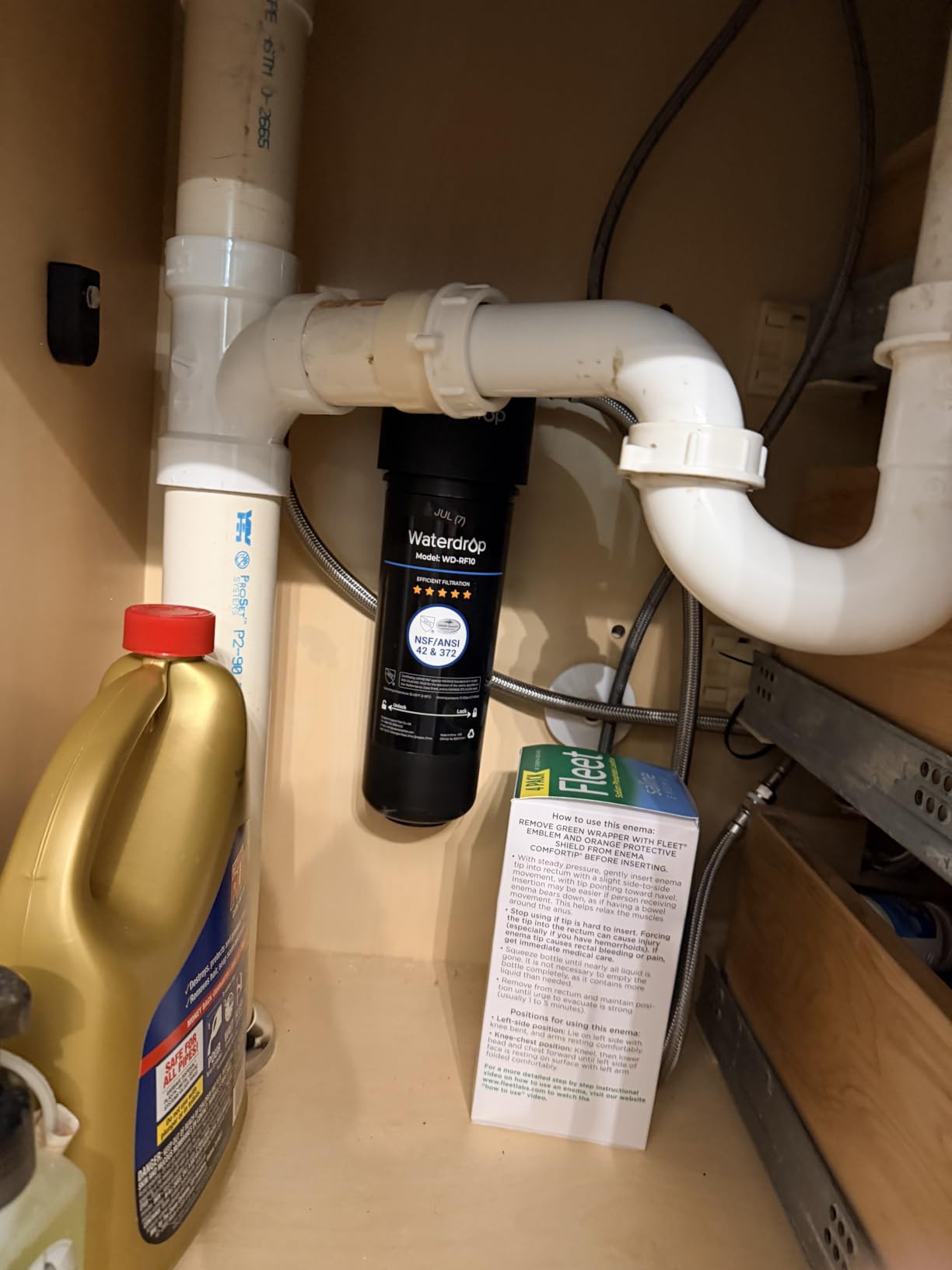
What to check before you buy the 10UA
Look at your faucet threads. Direct-connect installation needs a female 1/2 inch or 3/8 inch threaded cold inlet, and pull-down faucets with integrated 1/2 inch adapters sometimes need the included converter set. If your faucet has an integrated filter of its own or a nonstandard shank, expect a trip to the hardware store. It also caps feed TDS at 700 ppm and works across a 35 to 100 degree F range.
Where the 10UA is the wrong choice
It is the wrong pick if lead is the only reason you are filtering and your water has tested high. A 42 component certification leaves the lead claim unverified by a health-effects standard, and an RO unit certified to 53 and 58 will do more for you. It is also the wrong tool if you want a TDS drop, since a TDS meter reading will not move, or if you are on well water. Everything it does well, it does fast and cheaply, which is exactly why it is on this list at number two.
3. iSpring CU-A4: Best Under Sink Filter That Keeps Minerals In
iSpring CU-A4 4-Stage Ultra Filtration Under Sink Water Filter System
4-stage ultrafiltration
0.01 micron hollow fiber membrane
Lead and chlorine reduction up to 99 percent
No tank needed
Pros
- No wastewater and no storage tank
- Retains minerals while removing lead and chlorine
- Twist-on twist-off cartridges change without touching hoses
- Includes a brushed nickel drinking faucet
- Support team resolves missing parts quickly
Cons
- Installation manual is thin and often wrong for the model
- Faucet hole requirement is larger than the manual states
- May need extra adapters for nonstandard 3/8 inch plumbing
- First run water can be cloudy and needs a long flush
The CU-A4 sits between the inline carbon filters and reverse osmosis, and the reason it exists is minerals. A 4-stage stack runs a 5-micron spun poly sediment stage, a 0.01 micron hollow-fiber ultrafiltration membrane, a KDF plus granular carbon stage and a fine carbon polish. The manufacturer states removal of up to 99 percent of chlorine and chlorine treatment by-products along with lead, while leaving dissolved minerals in the water. There is no storage tank, no drain line and no electricity, which makes it the cleanest physical fit for a small cabinet we tested.
It also sidesteps the waste problem that defines tank-based RO. At 2 kg and 10.63 by 4.33 by 12.6 inches, it is a fraction of the footprint of the RCC7AK-BN assembly and runs entirely on line pressure. Filter life is listed at 6 to 12 months depending on source water and usage, and push-to-connect fittings plus twist-on, twist-off cartridges mean a change does not involve wrestling with hoses in the back of a cabinet.
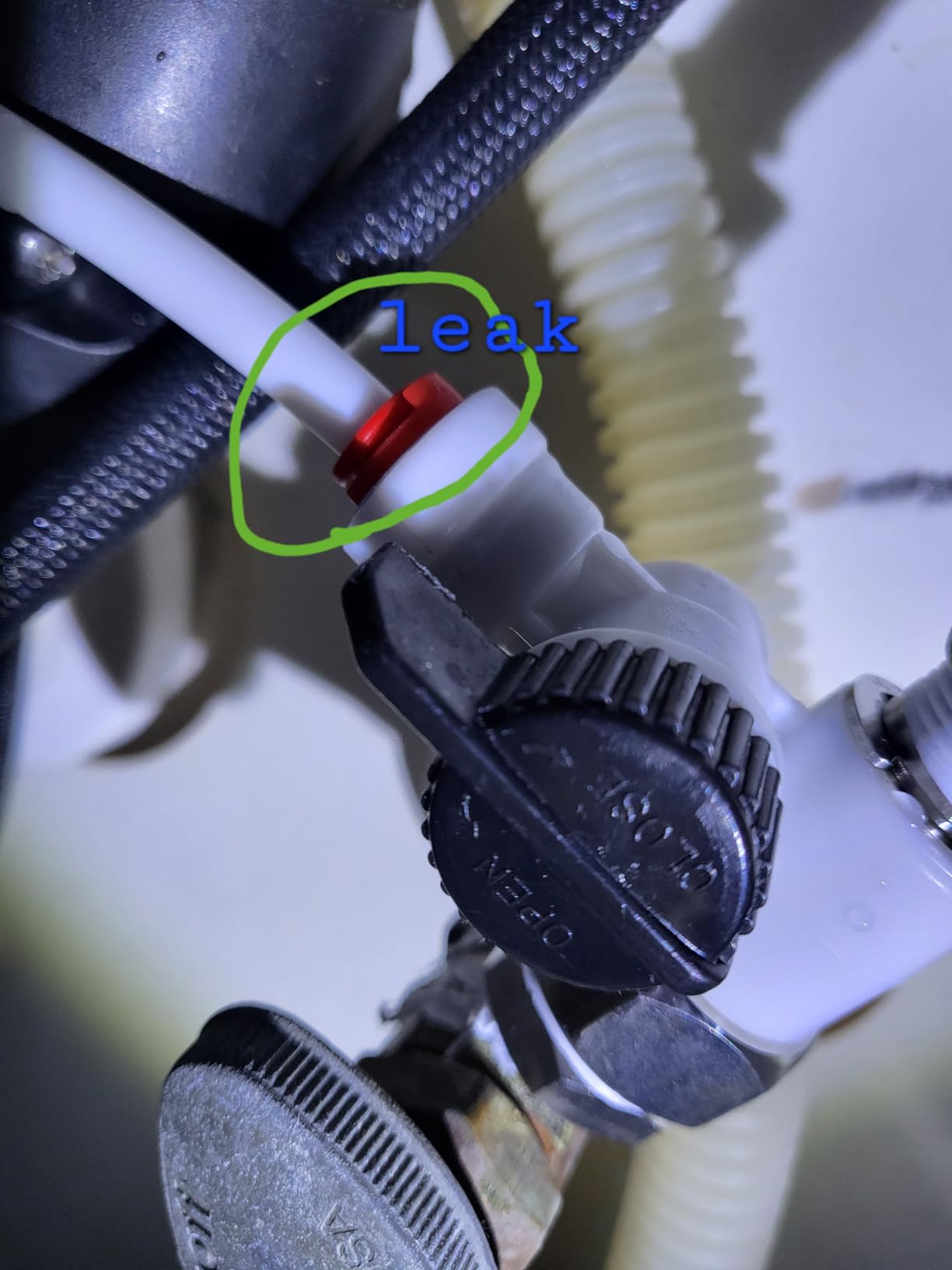
The documentation is the weak point, and owners say so clearly. Multiple reviews describe the manual as unclear, thin on detail and occasionally written for a different model, which pushed several people to a home improvement store mid-install for extra adapters. The faucet hole requirement is also reported as larger than the manual states, and for a stainless steel sink that can turn a five-minute job into a drilling job. First-run water can come out cloudy and needs a long flush before it looks clear.
What does not go wrong is the filtration or the support. Buyers rate the results and the included brushed nickel faucet highly, and several reviews describe iSpring support as exceptional, including shipping missing fittings free. All water-contacting parts are manufactured to NSF/ANSI standards, there is a 30-day money-back guarantee, and a 1-year manufacturer warranty with lifetime support from Atlanta. With 7,265 ratings averaging 4.6, the sample is large enough that the documentation complaint is a pattern rather than a few outliers.
What to check before you buy the CU-A4
Bring a tape measure and check the faucet hole diameter against the unit before you order, because the manual is unreliable on this. Also confirm your cold line has a suitable shutoff and enough clearance behind the tailpiece for the housing to swing out. On the water side, expect no TDS change, which means a TDS meter is a useless check on this unit; judge it by taste, odor and clarity instead.
Where the CU-A4 is the wrong choice
It is not the strongest lead defense in this group. Ultrafiltration at 0.01 micron handles particles and many organic compounds far better than it handles dissolved metals, and the lead claim here is a manufacturer statement rather than an NSF/ANSI 53 certification. If your water has come back from a lab above the federal action level, a 53 and 58 certified reverse osmosis system is the safer bet. Non-handy installers should also plan on watching a video walkthrough before starting.
4. CuZn UC-200: Best Value Over a Five-Year Filter Life
CuZn UC-200 Under Sink Water Filter, NSF/ANSI 42 & 372, 5-Year Filter Life
Five-year rated filter life
3-stage sediment, KDF-55 and carbon
Reduces lead, PFOA and PFOS
Stainless steel connection hose included
Pros
- Five-year filter life is the cheapest per year in this group
- Improves chlorine taste and odor immediately
- Genuine five to ten minute install with all parts included
- Flow rate drop is barely noticeable
- Repeat owner reports of real five-year durability
Cons
- Bulky canister needs real cabinet space
- Does not reduce TDS
- Adapters may be needed for nonstandard plumbing
- Chlorine taste can return before five years in high-use homes
The single most useful number on any under sink filter is not the removal percentage, it is the interval between cartridges. The UC-200 runs a 3-stage stack of micro sediment membranes, KDF-55 catalytic media and coconut shell carbon, rated at five years of service life, which is the longest in this group by a wide margin. Owners do the arithmetic against systems needing annual cartridges and land in the same place we did: per year of filtered water, nothing else in the under sink category comes close.
Installation is a genuine five to ten minute job. It is an inline direct connect with a stainless steel connection hose included in the box, made in the USA, and it needs no countertop drilling. Reviewers consistently describe a barely noticeable flow rate drop, so the rest of the sink still behaves normally, and the chlorine smell and off tastes purge quickly on first flush. Repeat purchasers attesting to five-plus years of service show up often enough that the rating is not just about the first impression.
The certification story needs reading carefully. Components and materials are NSF/ANSI 42 certified and the unit is built to NSF/ANSI 372 for lead-free materials, and the manufacturer states independent testing to reduce PFA, PFOA/PFOS, lead and chlorine. What it is not is an NSF/ANSI 53 health-effects certification, and it does not reduce TDS. For a house with moderate concern and municipal water, that combination of five-year life and KDF media is a defensible tradeoff. For a positive lab result, we would still steer you toward a 53-certified system.
Size is the practical complaint. At 5.5 inch diameter by 14 inch wide by 5.5 inch tall it is a bulky canister, and it needs clearance in a cabinet that is already tight. Fitting adapters may be required for non-US or nonstandard plumbing. And in high-use households, chlorine taste can return before the full five years are up, so treat the rating as a ceiling rather than a schedule. Versions are also offered at one and two years if you want a shorter commitment.
What to check before you buy the UC-200
Check your cabinet depth and your cold line size, and decide how much risk you are willing to carry on a 42 certification. If you want the long interval and the mineral retention but also want a health-effects standard behind the lead claim, this is the compromise pick. Buy the five-year version only if you have measured your usage, because a low-volume household can get more value from a shorter canister at lower total commitment.
Where the UC-200 is the wrong choice
It is the wrong pick for a confirmed lead problem in your supply, because the certified media here is KDF-55 and carbon rather than an NSF/ANSI 53 tested lead-reduction claim, and the long five-year interval can outlast the useful life of the media in a high-lead water supply. It is also wrong for anyone chasing a TDS drop or a dramatic visible change, since neither happens. What it is right for is steady whole-tap taste improvement and low ongoing cost over many years.
5. FRIZZLIFE SK99: Best Certification Breadth for Chloramine and Lead
Frizzlife Under Sink Water Filter System, NSF/ANSI 53&42&372 Certified, 8 Layer 0.5 Micron Water Filtration Reduce Chloramine, PFOA/PFOS, Lead, Chlorine, Bad Taste & Odor, Under Counter, SK99-NEW
IAPMO certified to NSF 42, 53 and 372
8 layers at 0.5 micron
Reduces lead, PFAS and chloramine
One cup in about three seconds
Pros
- IAPMO certified to NSF 42
- 53 and 372 together
- 0.5 micron accuracy is about ten times finer than typical carbon blocks
- Fast flow of roughly one cup in three seconds
- Tool-free twist-in cartridges replace the core only
- Built-in pressure regulator and reinforced housing
Cons
- Does not reduce TDS
- Capacity figure verified by manufacturer internal testing only
- Proprietary housing means cartridges must be bought separately
- Some owners find twist-in fittings less leak-resistant over time
The SK99 is the certification story of this group, and for a lead query that matters more than any other feature on the page. It is certified by IAPMO against NSF/ANSI 42, NSF/ANSI 53 and NSF/ANSI 372 simultaneously, covering material safety, structural integrity, flow rate and filtration effectiveness. The 53 component is the one that matters, because it is the health-effects standard that includes lead reduction. Very few under sink systems at this level of complexity carry all three marks together.
Inside, it is eight layers of compounded media at 0.5 micron accuracy, which is roughly ten times finer than the carbon block used in most competing inline units. The claim list covers lead, chlorine, chloramine, taste and odor, particulates, PFAS and PFOA/PFOS, while minerals stay in the water and TDS does not move. Operating pressure is 20 to 80 psi with a 39 to 100 degree F range, which is one of the widest windows we saw.
Flow and install both impressed us. The fill rate is roughly one cup in three seconds, which is fast for a carbon block of this density, and installation takes under 15 minutes with no plumber. Operating pressure handling is aided by a built-in pressure regulator and an integrated water board in the upgraded housing, both of which are aimed at the leak and crack complaints that dominate under sink reviews. At 311.84 g and 14.5 by 4.7 by 14.1 inches, it is compact for its filtration density.
Two honest caveats. The published capacity figure comes from manufacturer internal testing rather than an independent third party, so treat it as directional. And the twist-in cartridge design, which lets you replace the core without discarding the plastic housing and therefore cuts waste, is the same feature some owners report as less leak-resistant than a threaded housing over time. Replacement options are the M3001, M3002, M3003 or the M3005 filter set, and they are proprietary, so you are buying into one cartridge ecosystem.
One practical bonus worth planning for: with the IMC-2 ice maker kit you can serve the sink and a refrigerator at the same time. That turns this from a drinking-water device into a genuine whole-food-and-ice solution, which matters for households that refill an ice maker daily.
What to check before you buy the SK99
Confirm you have somewhere to put a dedicated faucet, because one is included and it needs a countertop hole. The stated capacity figure comes from manufacturer internal testing rather than an independent laboratory, so weigh that when you compare it against systems with third-party numbers. If your water is heavily chloraminated rather than chlorinated, this is the pick in the group, since chloramine is harder for standard carbon to strip and is explicitly named on the certification. Also decide whether a proprietary cartridge supply is acceptable to you before you commit, because the housing does not accept generic cartridges.
Where the SK99 is the wrong choice
It will not lower TDS, so anyone hoping for an RO-like change in drinking water will be disappointed. Buyers who want an independent, non-manufacturer capacity number should skip it. And if your supply TDS is high or your line pressure sits near the bottom of the 20 to 80 psi window, an RO system with a pump will serve you better. With 5,197 ratings at 4.5, the owner satisfaction is solid if slightly below the leaders.
6. Waterdrop G3P600: Best Under Sink Filter for High Output and Tight Spaces
Waterdrop G3P600 Tankless Reverse Osmosis Water Filter System, 600 GPD
600 GPD tankless output
NSF 58, 372 and NSF 42 certified
2:1 pure to drain ratio
Smart faucet TDS display
Pros
- Tankless design frees roughly 70 percent of cabinet space and removes holding tank bacterial risk
- Front-facing cartridges change in about three seconds with no tools
- Smart faucet shows live TDS and filter status
- 2:1 drain ratio wastes far less water than typical 4:1 RO
- Independently tested by SGS across eight stages
Cons
- Needs a dedicated always-live electrical outlet under the sink
- Replacement filter sets are expensive over the long term
- Display faucet needs a larger countertop hole
- Built-in TDS meter can read inaccurately
The G3P600 answers the household-size objection that stops most people from buying reverse osmosis. At 600 GPD with an 8-ounce cup filling in about eight seconds, it serves a family of four for drinking and cooking without the drip-and-wait behavior of a small tankless unit. The 2:1 pure-to-drain ratio is the other number that matters, because a typical 4:1 RO sends four gallons down the drain for every gallon you keep and this one halves that.
Certification is triple stacked: NSF/ANSI 58 for TDS reduction, NSF/ANSI 372 for lead-free material and NSF 42 for chlorine, taste and odor, plus FCC and EU and UKCA safety compliance. The eight-stage stack was independently tested by SGS for TDS, chromium, PFAS, radium, fluoride, arsenic, iron, calcium, particles, chloride, chlorine and radioactive substances, which is the broadest independent contaminant panel in this roundup. Maximum feed TDS is 1500 ppm, the highest we saw, and operating pressure is 87 psi.
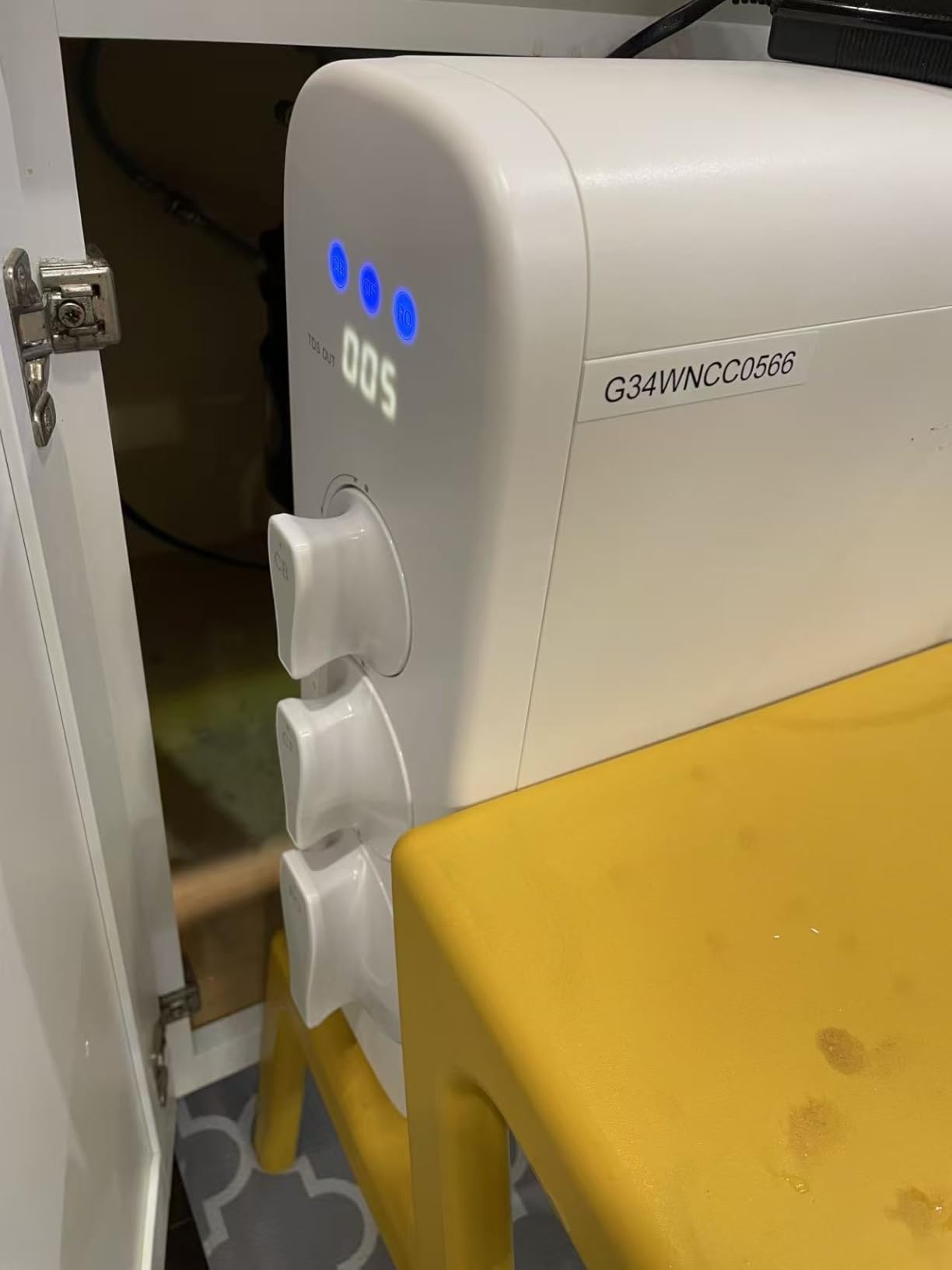
The tankless design does two things. It saves roughly 70 percent of under sink cabinet space by eliminating the storage tank, and it removes the bacterial growth risk that comes from holding treated water in a tank between uses. Owners confirm the space saving is real, and the smart display faucet with live TDS monitoring and a filter life tracker removes the guesswork around cartridge timing, which is the number one complaint we saw about other units in this list.
Front-facing filters are the serviceability win. Cartridges replace in about three seconds with no tools and without pulling the unit out from the wall, which matters a lot in a cabinet where the pipes are exactly where you need to reach. Measured TDS drops of roughly 90 to 99 percent show up repeatedly in owner testing, well beyond what a carbon block can do.
What to check before you buy the G3P600
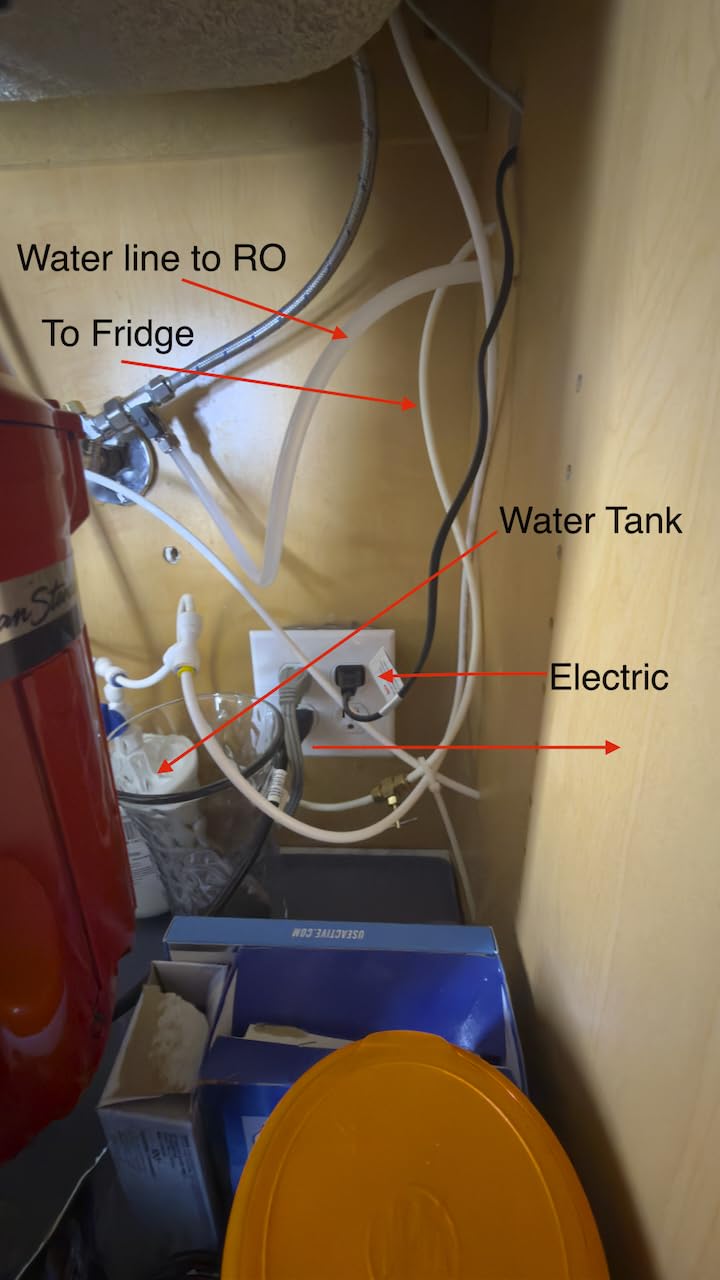
Confirm you have a dedicated electrical outlet under the sink that stays live. That is the single most-cited disappointment in reviews, and older homes frequently lack one. The unit is 31 pounds and 18.12 by 5.67 by 17.72 inches, so measure cabinet clearance and make sure you can slide it in upright. The display faucet also needs a larger countertop hole than a standard RO faucet, and it operates at 87 psi, which is above household average.
Where the G3P600 is the wrong choice
Price is a real consideration for a unit in this tier, and it is the recurring filter sets rather than the purchase that decide long-term cost. If your budget is tight or you will not track filter life, a certified carbon system will serve you at a fraction of the running cost. Renters are also out of the question, since it needs both a drilled hole and hard-wired power. And if you dislike drinking water stripped of minerals, note that this unit has no remineralization stage in the spec sheet.
7. ICEPURE 22000 Gallon: Best Under Sink Filter for High Flow With No Drilling
ICEPURE Under Sink Water Filter System, 3 Years or 22000 Gallons Ultra High Life NSF/ANSI 42 Certified, Removes Heavy Metals,Chlorine,Direct Connect Under Counter Drinking Water System, USA Tech
22,000 gallon rated capacity
Coconut shell carbon block
Direct connect, no countertop hole
2.5 GPM flow at 60 psi
Pros
- Direct-connect install takes about 15 minutes with no drilling or plumber
- Chlorine taste and odor disappear right after the initial flush
- No noticeable change in water pressure or flow
- Three-year 22000 gallon rated life is among the longest here
- Two-second filter changes and BPA-free materials
Cons
- Actual cartridge life falls short of the three-year claim at low volume
- Replacement cartridges harder to source outside the US
- Carbon block can clog early in very hard water
- Only fits 1/2 inch or 3/8 inch female NPT cold faucets
Flow rate is the number this unit wins on, and it is a real number rather than an adjective. The tested full flow rate is 2.5 GPM at 60 psi, the highest of any inline direct-connect system we tested, which means you do not trade your cold line usability for filtration. Owners consistently report no noticeable pressure change after installation, which is not something we can say about several competing inline units. The outer layer is a 0.5 micron coconut shell carbon block that has been independently tested for heavy metals and sediment.
The rated life is 22,000 gallons or three years on municipal water, which the manufacturer frames as roughly three times the life of a typical filter. Certification is NSF/ANSI 42 for chlorine, taste and odor plus NSF/ANSI 372 lead-free materials, with heavy metal reduction claimed through independent cartridge testing rather than an NSF/ANSI 53 certification. Read that distinction the same way we discussed earlier: it is a taste-and-odor certified unit with a heavy metal claim attached, not a 53-certified lead filter.
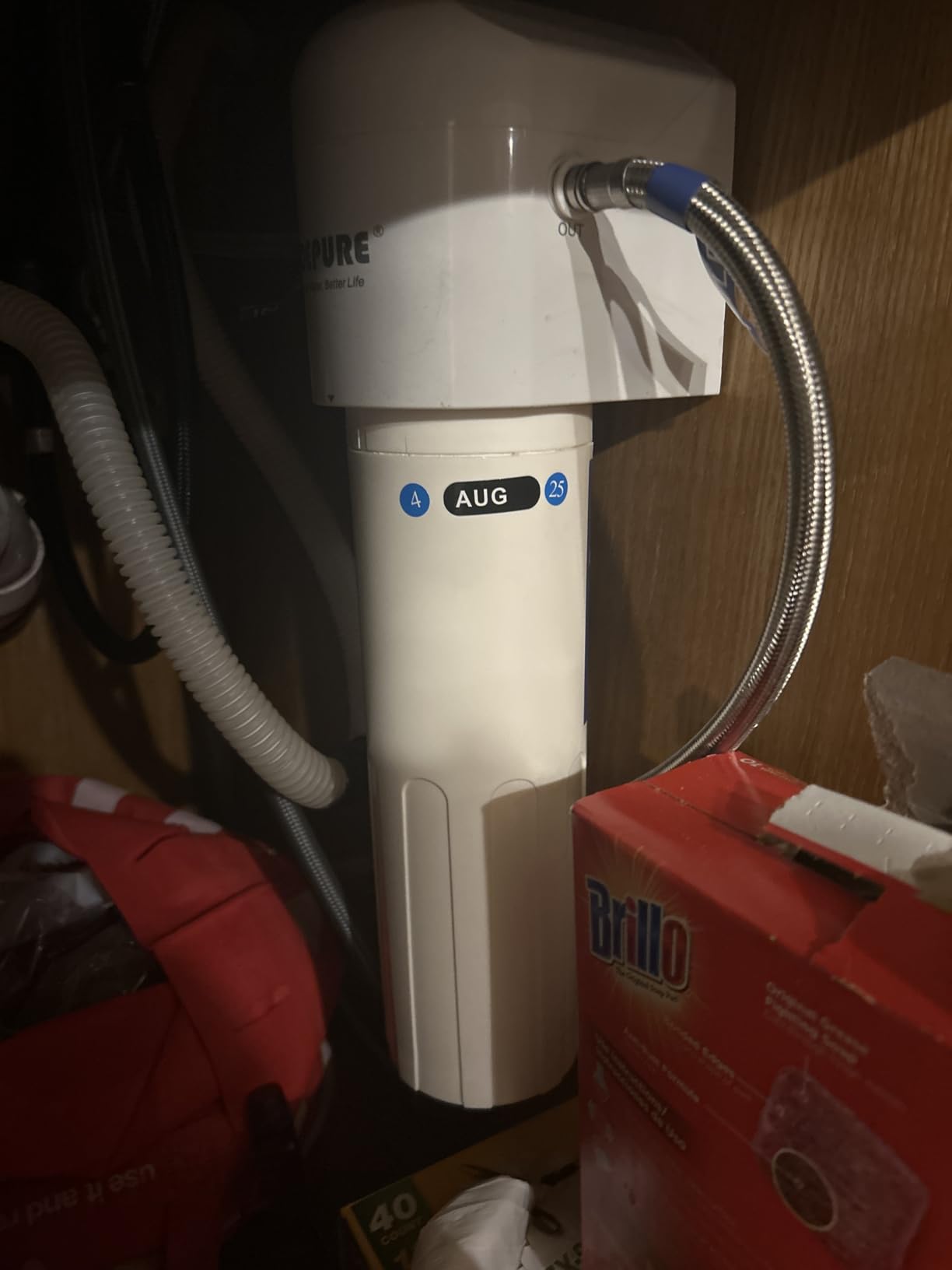
Installation is about as simple as this category gets. It connects directly to an existing 1/2 inch or 3/8 inch female NPT cold water faucet, needs no countertop hole, and owners put the install at roughly 15 minutes with basic tools. Filter changes take two seconds. At 4 pounds and 6.81 by 5.39 by 15.55 inches it sits neatly against the cabinet wall, and BPA-free food-grade materials are used throughout. Many owners cite it as the reason they stopped buying bottled water and pitcher cartridges.
The three-year claim needs a footnote. For a single-person household drawing very little water, reviews push back that the cartridge ages out well before the gallon count is reached, and in very hard water the carbon block can clog ahead of its rated capacity. Cartridge sourcing is also cited as harder outside the US market. If you are in a region where availability matters, check your replacement path before committing to a long interval.
What to check before you buy the ICEPURE
Verify your faucet has a standard female NPT cold inlet at 1/2 inch or 3/8 inch, since that is the only configuration it fits. Then estimate your household’s actual daily drinking and cooking water, because the three-year interval assumes fairly heavy use and a one-person home will replace it sooner on time than on gallons. Cold water line only, so no hot line and no well water.
Where the ICEPURE is the wrong choice
If a confirmed lead problem is the reason you are filtering, this is not the strongest choice, because the certification is 42 and 372 rather than 53. It is also the wrong tool if your water is very hard, since the carbon block clogs earlier in those conditions, or if you are outside the US and cartridge replacement is awkward. Within its lane, which is fast chlorine and taste improvement with no drilling and no pressure penalty, it is hard to beat.
8. Aquasana AQ-5300: Best Under Sink Filter for Published Contaminant Data
Aquasana Under Sink Water Filter System – Reduces PFAS, Lead, & Chlorine in Drinking Water – Under Counter Claryum Filtration for Kitchen – 3-Stage – Brushed Nickel Faucet – AQ-5300.55
3-stage Claryum filtration
Certified to reduce up to 78 contaminants
0.5 gpm flow
600 gallon or 6 month cartridges
Pros
- Published contaminant testing lists specific reduction figures for lead
- PFOA and PFOS
- 0.5 gpm flow is far quicker than drip-style filters
- Cartridge cost per gallon is among the lowest in this group
- Twist-off housing replaces without touching hoses
- First filter set and all install hardware included
Cons
- Only 600 gallon or 6 month cartridge life
- Lowest average rating here at 4.2 with 12 percent one-star reviews
- Does not reduce TDS
- Needs 12 inches of clearance plus housing working room
Aquasana publishes a contaminant testing sheet with specific reduction figures for lead, PFOA and PFOS, and that transparency is the reason this system is on the list even though it ranks eighth. It is a 3-stage Claryum system with a mineral guard that leaves healthy minerals in place, independently certified to reduce up to 99 percent of 78 contaminants including lead, PFOA, PFOS, chlorine and pesticides. Maximum supported TDS is 1000 ppm and it does not reduce dissolved solids.
Flow is better than the category reputation suggests. At roughly half a gallon per minute it is markedly faster than the drip-style filters that give carbon systems a bad name for slow output, and the twist-off housing means replacement does not involve hoses or water lines. The cartridge cost per gallon sits at the low end of this group, and the first filter set plus the install kit are in the box.
Physical installation is the constraint. You need 12 inches of clearance under the sink plus working room to swing the housing, and the tee fitting is 3/8 inch female by 3/8 inch male by 3/8 inch male compression with a 3/8 inch OD inlet and a 1/4 inch OD output, which may not match nonstandard plumbing without adapters. Maximum operating temperature is 90 degrees F. At 6 pounds and 12 by 4.25 by 9 inches it is not small.
The rating is the honest concern. At 4.2 across 2,965 ratings, this carries the lowest average in the lineup with a 12 percent one-star share, and the recurring complaints are cartridge frequency and the size of the assembly under the sink. The 600 gallon or 6 month interval is the shortest among the picks with a genuine lead claim, so ownership cost per year is higher than the headline cartridge figure suggests. A one-year warranty and twelve faucet finish and stage-count variants are listed.
Worth putting in context: users in drinking water forums repeatedly name Aquasana systems as a community-endorsed option for certified heavy metal removal, which is a meaningful signal in a category crowded with vague claims. Our reservation is about service intervals and cabinet fit, not about whether the media works.
What to check before you buy the AQ-5300
Measure the cabinet, including the swing path of the housing, and check your compression fitting sizes before ordering. Set a calendar reminder for six months rather than trusting the gallon figure, because in a heavy-drinking household the gallons run out first and in a light household the time does. If you want the same media at a lower cost per year, the Claryum approach is worth comparing against the KDF-based options on this list.
Where the AQ-5300 is the wrong choice
Skip it if you dislike frequent cartridge work, because a six-month interval means two changes a year plus the initial set. It is also the wrong pick for very small cabinets, for water above 1000 ppm TDS, and for anyone chasing a TDS drop. Renters will need to confirm the landlord permits a countertop faucet hole. Within its niche, it delivers verified contaminant data and good flow, but it is not the strongest pick in this roundup.
9. Brondell UC300 Coral: Best Under Sink Filter for Lead Certification Depth
Brondell Coral UC300 Under Sink Water Filtration System – Reduces PFAS, Lead, & Chlorine in Drinking Water, Water Purifier with Designer Chrome Faucet – Quick Change Filter, WQA Gold Seal-Certified
Three-stage sediment and carbon block
WQA Gold Seal and CSA B483.1 lead certified
NSF 42, 53 and 372 certified
600 gallon or 12 month capacity
Pros
- Rare triple certification stack including lead-specific CSA B483.1 alongside NSF 53
- Tall designer faucet makes filling kettles and pots easy
- Twist and Seal filters with individually tilting mounts speed up changes
- All-metal T-connector with its own shutoff valve
- LED filter change indicator on the faucet
Cons
- Replacement filter sets are expensive relative to the purchase price and cost more in Canada
- Chrome faucet can loosen at the mid joint and the handle can wobble
- Locking clips for the quick-connect fittings are not included
- Installing the faucet requires drilling a stainless countertop
- Water runs cloudy and needs a 5 to 10 minute initial flush
The Brondell UC300 has the deepest certification stack of any under sink system we tested, and for a lead query that is decisive. It is WQA Gold Seal certified and carries NSF/ANSI 42, NSF/ANSI 53 and NSF/ANSI 372 plus CSA B483.1, which is a lead-specific certification rather than a general aesthetic one. Very few Amazon under sink systems pair an NSF/ANSI 53 claim with a CSA lead certification, and owners who shopped carefully say the stack is the reason they paid more.
The filtration is a conventional three-stage sediment, pre-carbon and carbon block stack rated at 600 gallons or 12 months, with a double O-ring seal on each cartridge. What makes it pleasant to own is the service design: Twist and Seal quick-change fittings, two quick-connect hose fittings, and filter mounts that each tilt upward individually so you are not removing one full assembly to get at the third. A limited lifetime manufacturer warranty backs the system, which is unusual in this category.
The faucet is the other differentiator. It is a tall designer chrome faucet with a 360-degree swivel and an integrated LED filter change indicator, so you get a warning on the tap rather than a manual count. Owners single out the height as the practical win, since filling a kettle or a stock pot on a short spout is a daily irritation. There is also an all-metal T-connector with an integrated shutoff valve, which makes both install and future removal far easier than a plastic tee with no isolation valve.
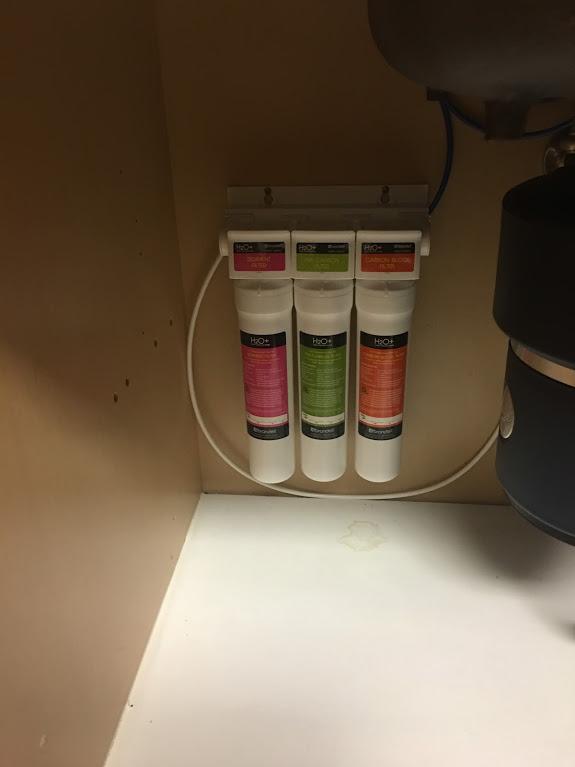
The drawbacks are real and worth reading before you buy. Replacement filter sets are expensive relative to the purchase price, and owners note they cost more in Canada. The locking clips for the quick-connect fittings are not included, which turns a five-minute swap into a hardware store run on day one. Installing the faucet means drilling a hole in a stainless steel countertop. And the chrome faucet itself is a reported weak point: it can loosen and swivel at the mid joint, with the handle piece wobbling, and one long-term owner saw it worsen over time.
Initial flush is not optional here. Water runs cloudy and needs 5 to 10 minutes of flushing before it looks clear, so plan for it before you judge the result. With 689 ratings at 4.3 the review base is the second smallest in this roundup, so you are buying on certification strength rather than on a deep pool of long-term owner reports.
What to check before you buy the UC300
Confirm the recurring cartridge cost against your budget over five years, because that is where this unit’s ownership economics weaken. Measure for the countertop hole and check whether the locking clips ship separately with your unit. If you already have a drilled filtered-water faucet from a previous system, some installations reuse it. The listed dimensions are large, so check the footprint against your cabinet before ordering.
Where the UC300 is the wrong choice
It is the wrong pick for renters, for anyone unwilling to drill a stainless steel countertop, and for households that want a low ongoing cost, since the cartridge sets are the priciest per change here. It does not reduce TDS either, and the chrome faucet wobble is a fair reason to look at a metal faucet on a higher-priced unit instead. If certification depth is your priority and you can service it, it is a genuinely well-certified machine.
10. WINGSOL WS-QC-001: Best Under Sink Filter for Small Spaces
WINGSOL Under Sink Water Filter System with Chrome Faucet, NSF/ANSI 42&53 Anti-Clog Pleated Filter Quick Change EZ Install, Reduce PFAS/Lead/Chlorine/Sediment, 8K Gallons Long-Lasting Water Filter
NSF 42 and 53 certified
Pleated anti-clog cartridge
8000 gallon or 12 month life
2.5 GPM flow at 60 psi
Pros
- Genuine five-minute install with quick-connect fittings and no plumber
- Anti-clog pleated cartridge outlasts many three to six month competitors
- Compact 2.76 by 3.54 by 12.2 inch body fits apartments and RVs
- Real NSF 42 and 53 certification at an entry price point
- Extended thread stem fits stainless and thick stone sinks
Cons
- Does not reduce TDS
- Smallest review base here at 658 ratings with a low sales rank
- Filter life varies with water quality and the brand suggests 4 to 6 month changes on some wells
- Included chrome faucet is basic next to metal designer faucets
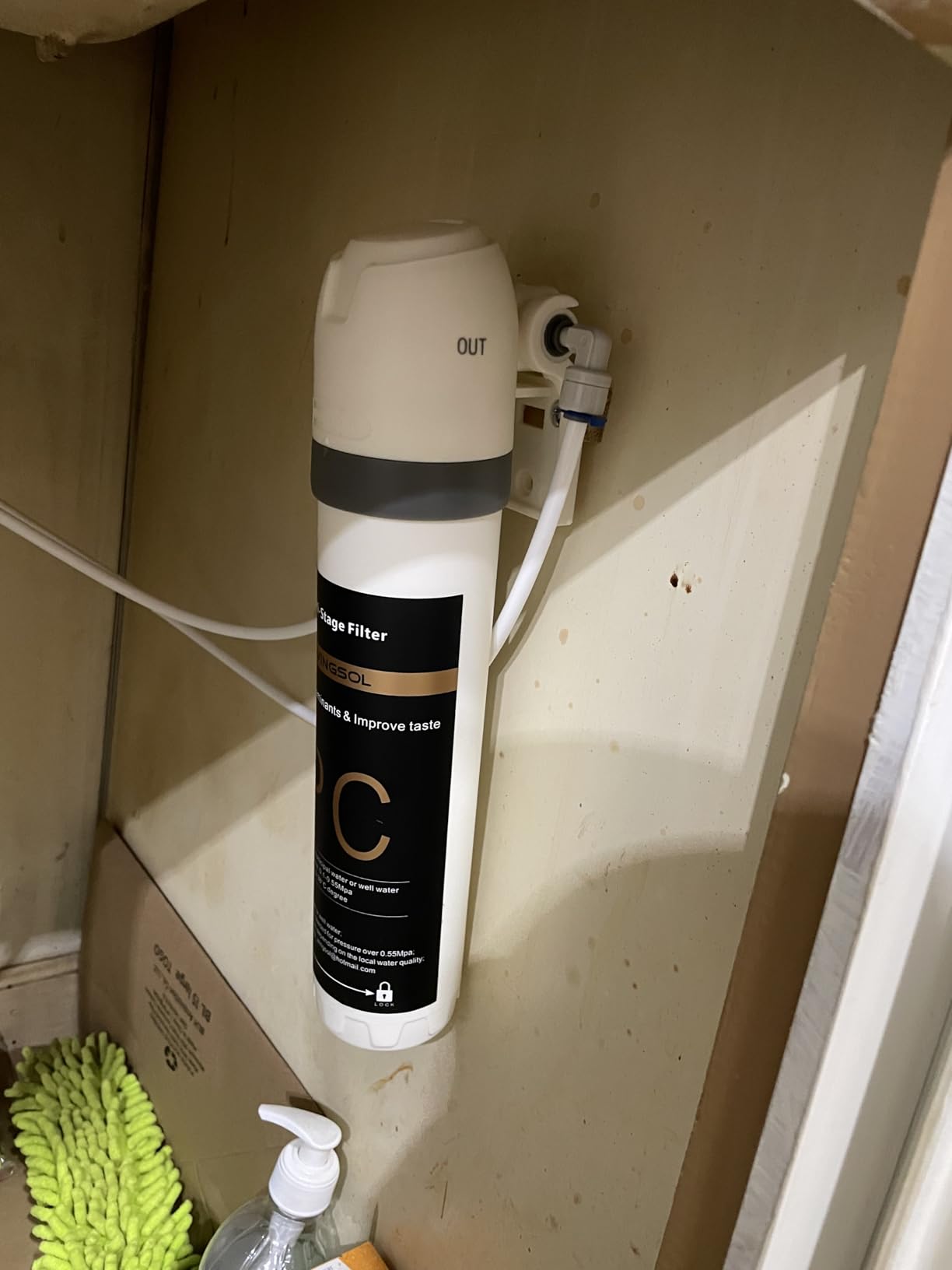
The WINGSOL is the compact option, and at 2.76 by 3.54 by 12.2 inches it is the smallest system in this roundup. It is made from food-grade BPA-free and lead-free materials and is certified to both NSF/ANSI 42 and NSF/ANSI 53, which puts a real health-effects standard behind the lead claim rather than only an aesthetic one. The reduction list covers PFAS, PFOA/PFOS, chlorine, heavy metals, nitrate, chemical impurities, sand and sediment, and it works on both municipal and well water.
The cartridge is the interesting engineering choice. Instead of a standard carbon block it uses an anti-clog pleated filter rated to 8,000 gallons or 12 months, and owners report it outlasting competing units rated at only three to six months. Rated flow is 2.5 GPM at 60 psi, matching the best inline unit we tested. Maximum supported TDS is 500 ppm and the water temperature range is 32 to 100 degrees F.
Installation is genuinely five minutes with quick-connect fittings and included 1/2 inch to 3/8 inch converters, no plumber involved. The lead-free chrome faucet has a 360-degree swivel spout and an extended thread stem that fits both stainless steel and thick stone sinks, which solves a common install failure where the supplied faucet will not reach through a thick countertop.
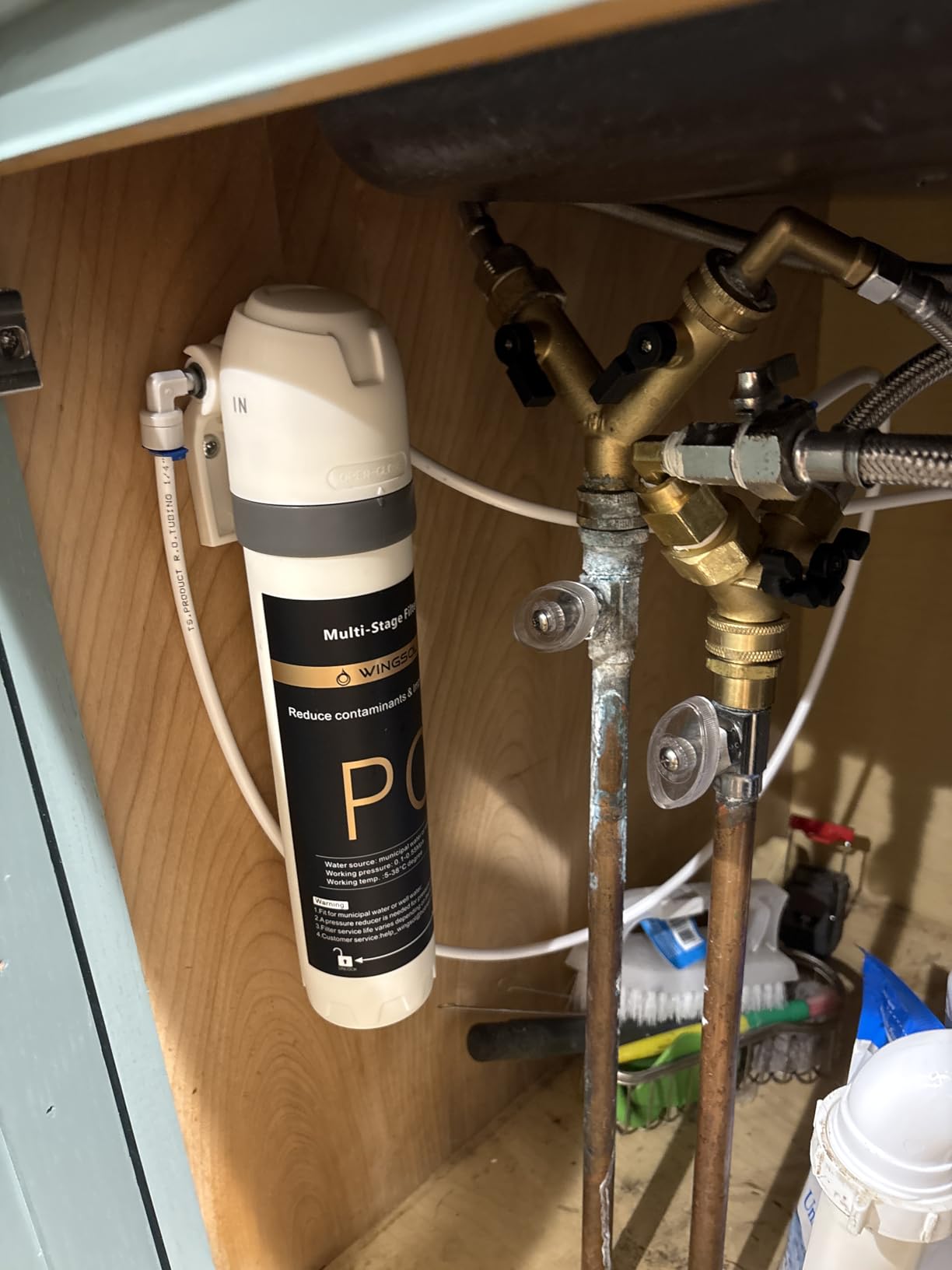
The honest limitation is filter life, not filtration. Life depends on local water quality, and the brand’s own guidance is to change cartridges every 4 to 6 months in some conditions, which is well short of the 12-month headline figure. That is an unusually candid instruction from a manufacturer and worth respecting. Replacement cartridges are the WS-QCRF-001-1P or WS-QCRF-001-2P, so check that you can source them in your area before you install.
The second limitation is evidence. With 658 ratings averaging 4.5, this has the smallest review base and the lowest sales rank of anything we tested, so buyers are evaluating it more against published specs than against a long history of owner reports. The included chrome faucet is also basic compared with the metal designer faucets on the higher-priced units. That said, 4.5 across 658 ratings is a respectable signal, and the spec sheet is genuinely NSF 53 certified.
What to check before you buy the WS-QC-001
Test your water quality first if you are on a well, because the brand’s own 4 to 6 month guidance in poor conditions is the single most important variable here. Measure your cabinet depth to confirm the slim profile will fit, and check that your countertop material is compatible with the extended faucet stem. Replacement cartridge sourcing is also worth confirming in advance, given the smaller brand footprint.
Where the WS-QC-001 is the wrong choice
It is the wrong pick if you want the lowest possible cost per gallon, because the conservative change interval erodes that advantage over five years. It is also wrong for anyone chasing a TDS drop, since it does not reduce dissolved solids, or for households that want a designer faucet as part of the kitchen. If you need a heavily evidenced system with thousands of reviews behind it, pick one of the leaders instead. As an entry-level certified unit in a small footprint, though, it does its job.
How to Choose an Under Sink Filter That Actually Removes Lead
The technology choice matters less than the certification label, and the certification label is misread constantly on this topic. Before comparing models, it is worth fixing the vocabulary, because the difference between two badges on the same product page is the difference between a filter that removes lead and one that removes the taste of chlorine.
The certification truth table: 42, 53, 58 and 372
NSF/ANSI 42 covers aesthetic effects only: taste, odor, chlorine and sediment. It does not certify lead reduction. If a product page shows 42 and nothing else, the lead language on that page is a manufacturer claim, not a certified one.
NSF/ANSI 53 covers health effects and includes certified lead reduction. This is the standard that answers the question in front of you.
NSF/ANSI 58 covers reverse osmosis membrane performance, including TDS reduction. On its own it does not certify lead.
NSF/ANSI 372 covers lead-free construction of the unit itself. It says the filter will not add lead. It says nothing about what the filter removes.
WQA Gold Seal and CSA B483.1 are separate schemes. CSA B483.1 in particular is a lead-specific certification and is a strong signal when you see it.
Two more terms you will meet constantly. TDS, total dissolved solids, is the measure of dissolved minerals that reverse osmosis removes and inline carbon filters leave behind, so a TDS meter cannot verify a carbon filter’s performance. GPD, gallons per day, is a system’s rated daily output and the honest indicator of whether it fits your household. If a product page never mentions GPD, treat its capacity language as marketing.
How lead actually gets into your tap water
Lead service lines. The pipe running from the water main to your meter can be lead or lead-lined. This is the single largest source at the tap and the one most likely to be replaced by your utility on a schedule.
Lead solder. Solder used on copper joints before the 1986 federal lead plumbing ban is still in service lines and branch pipes in older housing stock.
Brass fixtures. Faucets, valves and fittings can contain lead at low percentages that leach, particularly when water is corrosive and sits in contact with them.
Corrosive water. Water that is acidic or low in alkalinity leaches metals from every surface it touches, which is why two homes on the same supply can test differently.
Private wells. Wells carry no municipal treatment, so lead enters from geology and land use rather than from infrastructure. Any under sink filter for a well should also address sediment, which is a different problem from municipal lead.
That last point explains the recurring forum question about pre-1986 plumbing. An under sink filter sits downstream of your pipes, so it treats the water after lead has already dissolved into it, and it does so regardless of how old your plumbing is. Replacing the plumbing remains the permanent fix, but it is expensive and disruptive, and point-of-use treatment is how people protect themselves in the meantime.
Test your water before you buy anything
Two sources, one free and one cheap. Your municipal water utility publishes an annual Consumer Confidence Report, and it will list lead results by sampling location. Read the report, then look for a lead service line notice mailed to your address, since utilities are required to notify affected households. That report is free and takes five minutes.
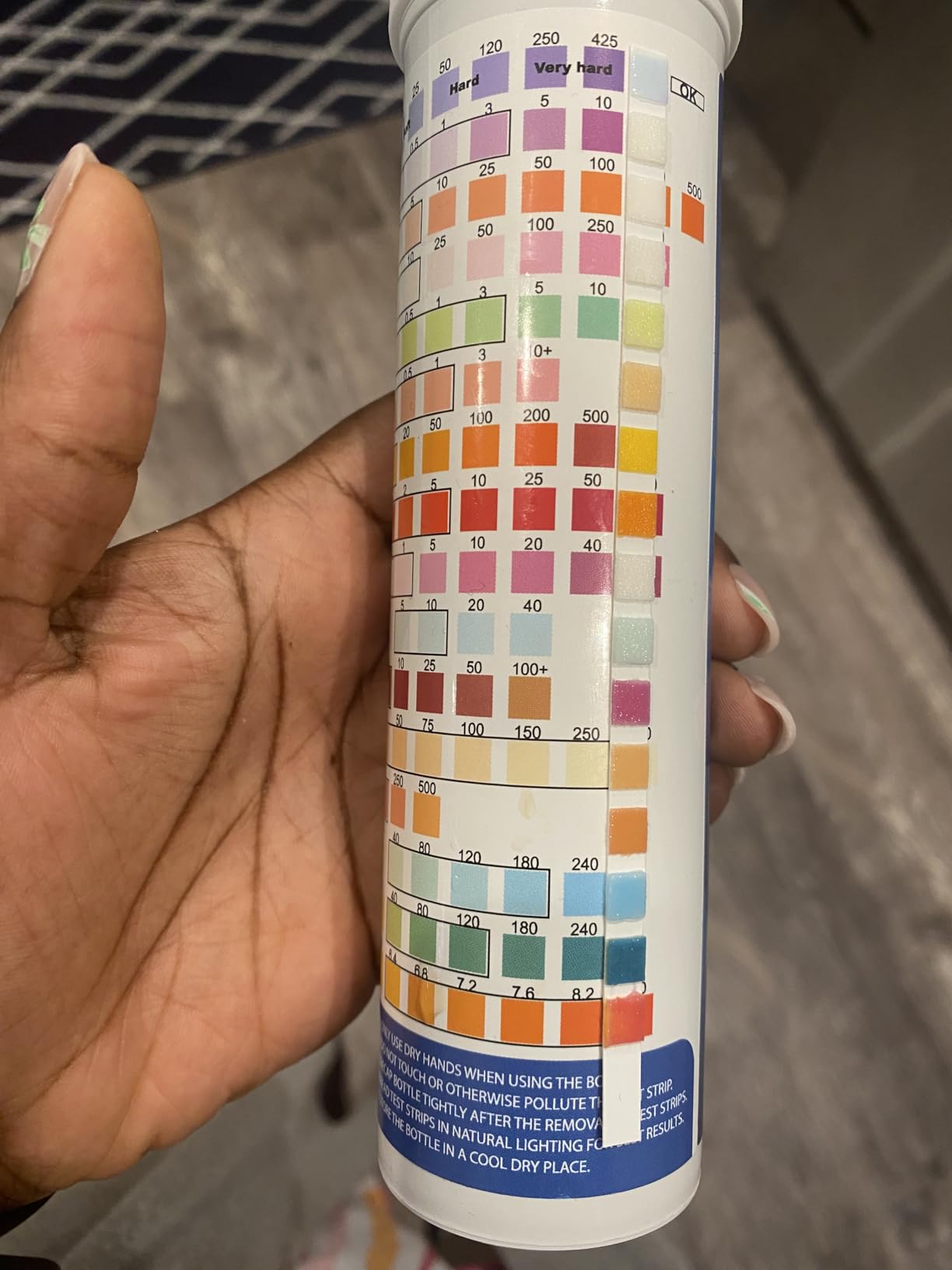
Then buy an at-home lead test kit and take a first-draw sample from the kitchen tap after a night of no use. First-draw matters because stagnant water sitting in lead pipes picks up more lead than a flushed line. If you want a number you can act on rather than a pass-fail strip, use a certified laboratory for a pre-filter and post-filter pair on the same day, with the same volume and the same tap. Label both samples before they leave the house.
One caution about who tests you. Homeowners in drinking water forums repeatedly report door-to-door water testers using high-pressure sales tactics and unreliable readings, which has damaged trust in the category broadly. Use a kit you can buy yourself or a state-certified laboratory. Anyone knocking on your door with a pitch is selling, not testing.
Inline KDF and carbon versus carbon block versus reverse osmosis
Three technologies actually qualify for lead removal, and it is worth knowing which one you are buying.
Inline direct-connect filters with KDF or activated carbon. Water pushes through a bed of KDF-55 catalytic media and coconut shell carbon, which adsorb dissolved lead onto the media surface. KDF is a copper-zinc media designed specifically for heavy metal reduction. These install in minutes with no drilling, produce no wastewater and leave minerals in the water. They cannot lower TDS, and their certified reduction percentage is lower than RO.
Multi-stage carbon block systems. Several layers of compounded media at finer micron accuracy, often with a pre-carbon and a KDF stage in the stack. Finer media slows flow, so these are often paired with a pressure regulator. They install in under 15 minutes and can carry an NSF/ANSI 53 lead claim.
Reverse osmosis certified to NSF/ANSI 53 and 58. A thin-film composite membrane with 0.0001 micron pores physically excludes lead rather than adsorbing it. This is the most thorough option and the only one that also strips total dissolved solids and PFAS reliably. The costs are a storage tank, a drilled faucet, a drain line and a pure-to-drain ratio that sends water to waste.
Tankless reverse osmosis is the fourth option, and it trades a storage tank for electrical power and a higher recurring filter cost. It also runs at a much lower drain ratio than a typical tank system, which cuts water waste substantially. Whole-house sediment filtration paired with an under sink RO is the practical route when the concern extends beyond one faucet, since point-of-use only protects the taps it is plumbed to.
Verify your filter is working after installation
Nobody in this category ships a way to prove it. What you can do is run the same certified laboratory test on the filtered side that you ran on the raw side. Take the post-filter sample after the system has been flushed per the manual and after the cartridges have run for a few days. A real lead reduction shows up as a meaningful drop in parts per billion, and if it does not, you want to know now rather than in three years.
For ongoing monitoring, flush the line before sampling. Running the tap for a minute or two until it turns cold displaces the water sitting in the service line, which is the water carrying most of the lead. A first-draw sample in the morning is the worst-case measurement and the one you want to reduce, so treat morning first-draw as your benchmark when you compare before and after.
Flush the line after any period of non-use
Stagnation is when lead is at its worst. If you go away for two weeks or the house sits empty, run the kitchen tap until the water runs cold for several minutes before drinking or cooking with it, and flush the filtered tap the same way. With a carbon filter this also clears carbon fines from the new cartridge, and the cloudiness you may see in the first minute is exactly why the manual says to flush before use.
Flush after every cartridge change too, and flush more than the manual minimum on a carbon block unit. New carbon releases particulates, and running it for the full recommended flush period is what stops people deciding the filter made their water worse. If the manual gives a time, treat it as a floor rather than a target.
Renters and no-drill options
This is the most common question in the forums and it is the least served by editorial roundups. If you cannot drill a hole in the countertop, your options narrow to inline direct-connect filters that attach to an existing threaded faucet inlet, and that is a good list: the Waterdrop 10UA, the CuZn UC-200 and the ICEPURE 22000 gallon unit are all no-drill by design.
Check the thread size first, because it is the only hard blocker. You need a 1/2 inch or 3/8 inch female NPT cold inlet. Pull-down faucets sometimes already have that, and many filters ship a converter set. Faucets with integrated filters or proprietary quick-connect hoses may not. No notices are needed here — nothing about drilling is required for these units, which also makes them easy to remove when you move.
Be honest about the tradeoff. No-drill units are inline, and inline units carry either a 42 certification with a manufacturer lead claim or, in the Frizzlife and WINGSOL cases, a genuine NSF/ANSI 53 claim but with a faucet included that does need drilling. If your water has tested positive for lead and you cannot drill, talk to your landlord about a plumbing change rather than settling for a weaker filter.
Do pitcher and faucet-mounted filters remove lead?
Only models carrying an explicit NSF/ANSI 53 lead-reduction certification do. A standard pitcher is certified for taste and odor, which is NSF/ANSI 42 territory, and lead dissolved in water passes straight through it. This question appears repeatedly in search results and it is one of the most expensive misunderstandings in the category, because a pitcher gives the feeling of having solved the problem.
If you are in an apartment and cannot drill, a certified faucet mount beats a pitcher on lead claims, but both are step-downs from an under sink system on capacity, flow and certification. Pitchers also hold a small volume, so they suit drinking water only, not cooking water, ice or a refrigerator line.
Cartridge economics and spotting a past-due filter
Five years of cartridge cost is the calculation that decides most purchases, and the arithmetic is simpler than manufacturers make it. Take the interval, multiply by the number of years you expect to own the system, and compare against a competitor with a shorter interval. The CuZn UC-200’s five-year canister is the cheapest per year here by a wide margin, and the Brondell UC300’s premium filter sets are the most expensive per change despite the purchase sitting in the middle of the range.
Filter life ratings assume cleaner water than most real supplies, so cartridges go over in practice. Treat every rated interval as a ceiling. Track changes with a date reminder rather than a TDS meter, because inline carbon filters do not move TDS and you will get no signal that the media is spent. If your unit has a faucet LED indicator, use it. If it has a clear housing, look at it monthly, which is the simplest and most reliable cue we found.
Frequently Asked Questions
Which water filter removes the most lead?
A reverse osmosis system certified to NSF/ANSI 53 and NSF/ANSI 58 removes the most lead, because a 0.0001 micron semipermeable membrane physically blocks dissolved lead instead of adsorbing it onto media. Among inline filters, only units with KDF or activated carbon media and an explicit NSF/ANSI 53 lead claim reach comparable performance, and they leave minerals in the water while reverse osmosis strips them out.
What type of water faucet filter removes lead?
Three types qualify. Inline direct-connect filters with KDF or activated carbon media and an NSF/ANSI 53 lead claim, multi-stage carbon block systems with a dedicated lead-reducing stage, and reverse osmosis systems certified to NSF/ANSI 53 and 58. Standard carbon and sediment filters certified only to NSF/ANSI 42 cover taste, odor and chlorine and do not certify lead reduction.
Do Brita filters really remove lead?
Only models carrying an explicit NSF/ANSI 53 lead-reduction certification do. Standard pitcher filters are certified for taste and odor, which is NSF/ANSI 42 territory, so dissolved lead passes straight through them. For a reliable lead reduction claim, look at certified under sink systems with an NSF/ANSI 53 certification rather than a pitcher or faucet mount.
Why is my water pressure low after changing the filter?
A newly installed cartridge has not been fully wetted yet and can restrict flow until it is flushed, and a partially seated or reversed quick-connect will choke flow as well. Flush for the full period the manual specifies. If pressure stays low after proper flushing, the filter’s rated GPD is simply below what your household needs.
Is it normal for water pressure to drop after replacing the cartridge?
A small drop right after replacement is normal during the initial flush, but a sustained drop means an incompatibility. Either the cartridge is rated below your line pressure or your household demand exceeds the system GPD. The ICEPURE at 2.5 GPM and the WINGSOL at 2.5 GPM are the least restrictive units in our roundup.
Do I need NSF 53 or is NSF 42 enough for lead removal?
NSF/ANSI 53 is the standard that includes certified lead reduction. NSF/ANSI 42 covers aesthetic effects such as taste, odor and chlorine only, so a 42 certification does not mean the filter removes lead. NSF/ANSI 58 covers reverse osmosis performance and NSF/ANSI 372 covers lead-free construction of the unit itself.
Our Verdict for Lead Removal in 2026
The best under sink water filter for lead removal in 2026 is the iSpring RCC7AK-BN. It is the only system in this roundup that pairs whole-system NSF/ANSI 58 certification with a stated lead reduction above 98.9 percent and PFAS at 96 to 99 percent, and its transparent first-stage housing lets you see contaminant loading instead of trusting a calendar. With 21,569 ratings averaging 4.6, it also carries by far the deepest owner history in the group.
Runners-up serve different constraints. The CuZn UC-200 is the value pick, where a five-year cartridge makes the cost per year of filtered water hard to beat. The Waterdrop 10UA is the answer for renters, since it needs no countertop drilling and no dedicated faucet. The FRIZZLIFE SK99 has the broadest certification stack, carrying IAPMO certification to NSF/ANSI 42, 53 and 372 together. The Waterdrop G3P600 is the one to buy if your household burns through water faster than a small tank can serve, and the Brondell UC300 goes deepest on lead-specific certification with WQA Gold Seal and CSA B483.1.
One rule carries more weight than any brand. NSF/ANSI 42 is a taste and odor standard and says nothing about lead, and plenty of products recommended for this query carry only that badge. Look for NSF/ANSI 53, check the certification belongs to the assembled unit rather than a single cartridge, then confirm your plumbing, cabinet space and line pressure before you order.