
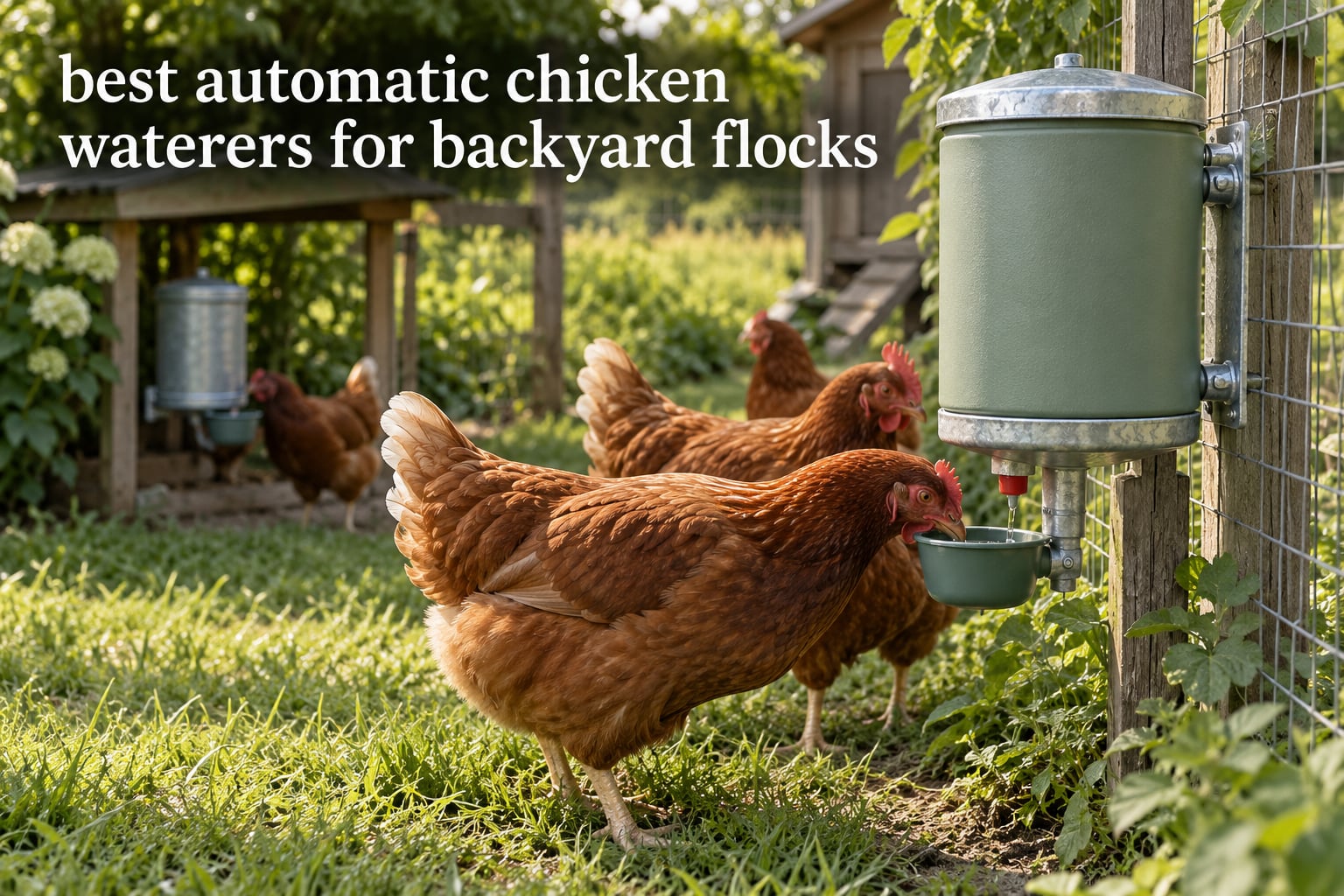
If you keep more than a handful of birds, the best automatic chicken waterer is the RentACoop 2 Gallon High Rise. It carries both cup and nipple drinkers in the box, hangs anywhere you need it, and its opaque body keeps water clean for months without a light-blocking gimmick. For hot climates the Omlet 3 Gallon Insulated waterer is the one to beat, and for anyone facing sub-freezing winters the Premier 1 All-Season heated unit handles up to 35 birds on its own.
The honest truth is that the right pick depends on three things: how many birds you have, how cold or hot your summers get, and how much maintenance you genuinely enjoy. A waterer is not a set-and-forget appliance. Every automatic system on this list can fail, and the most common failure is a float valve that keeps running after the water is gone.
We spent weeks reading keeper experience on BackYard Chickens and Reddit, then matched those reports against the specs, ratings and review counts of eight current waterers. This roundup covers every style bucket that matters for a backyard flock: insulated gravity reservoirs, heated nipple units, plumbed float bowls, and cup feeders that refill themselves. No metal galvanized founts made the cut, and we explain below why that matters if you plan to add apple cider vinegar.
Table of Contents
Top 3 Automatic Chicken Waterers for Backyard Flocks (October 2026)

RentACoop 2 Gallon High Rise
- 2 gallon vertical reservoir
- Cups and nipples included
- Hangs or mounts to wire


All 8 Waterers Compared Side by Side in 2026
Every waterer below is scored on what actually matters in a backyard run: how clean the water stays, how long it holds between refills, and what it does in a hard frost. The table is the fastest way to match a style to your flock size.
| Product | Specs | Action |
|---|---|---|
| RentACoop 2 Gallon High Rise |
|
Check Latest Price |
| Omlet 3 Gallon Insulated |
|
Check Latest Price |
| Farm Innovators HB-60P |
|
Check Latest Price |
 Premier 1 All-Season Heated Premier 1 All-Season Heated |
|
Check Latest Price |
 Lilyang Float Valve Waterer Lilyang Float Valve Waterer |
|
Check Latest Price |
 ZINZINULER Feeder and Waterer Set ZINZINULER Feeder and Waterer Set |
|
Check Latest Price |
 Little Giant Poultry Fount Little Giant Poultry Fount |
|
Check Latest Price |
 Abustle Pig 304 Stainless Bowl Abustle Pig 304 Stainless Bowl |
|
Check Latest Price |
1. RentACoop 2 Gallon High Rise Waterer: Best Overall for Backyard Flocks
RentACoop 2 Gallon High Rise Chicken Waterer with Cups & Nipples
2 gallon vertical reservoir
Two auto-fill cups plus two horizontal nipples
Hangs or mounts to wire
Pros
- Vertical design preserves coop floor and run space
- Opaque heavy plastic keeps interior white and algae free for months
- Full mounting kit with cups
- nipples
- spares and S-hooks included
- Cups remove for cleaning and the anti-roost lid keeps birds off the water
- Holds roughly two days for 20 chickens
Cons
- Spring loaded cup inserts are hard to pull out for deep cleaning
- Some nipple threads do not screw in cleanly
- Cups collect debris if hung below the recommended height
The High Rise is the one I keep coming back to for ordinary backyard flocks. The body is a tall 2-gallon column rather than a wide bowl, so it takes up almost no floor space in a run and hangs neatly on hardware cloth. Inside the box you get two spring-loaded auto-fill cups with inserts, two horizontal nipples with dribble dishes, spare cups and nipples, and a mounting kit with S-hooks.
What surprised me most is how the algae problem largely solves itself. The plastic is opaque and heavy rather than translucent, and owners consistently report the interior still looks clean months later. The anti-roost lid matters more than it sounds, because it is the difference between a waterer that stays sanitary and one that becomes a perching post.
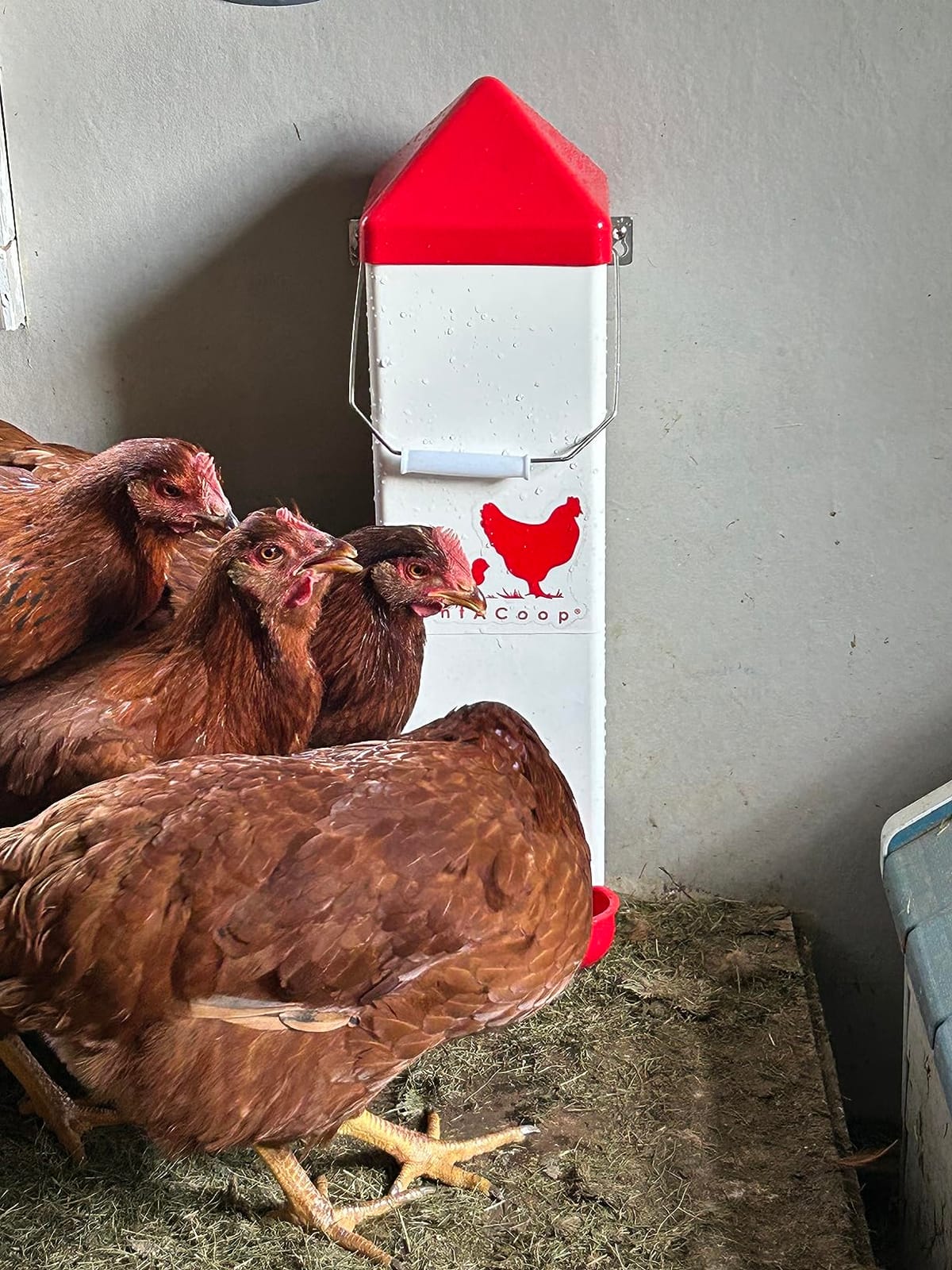
The two-gallon reservoir is genuinely small, and that is the trade-off you accept for vertical design. It works out to roughly two days for 20 chickens in mild weather, less in a heat wave. This is also the single most important reason to run two waterers rather than one oversized model, a point that comes up constantly on BackYard Chickens and that no product page tends to explain.
Cleaning is where the design earns its keep. The cups unscrew and the body opens wide for scrubbing, which is more than can be said for many competitors. The spring-loaded cup inserts are the one stubborn part, and a few owners report an insert that never sealed properly or a nipple thread that would not bite. Customer service has replaced faulty cups for buyers who asked.
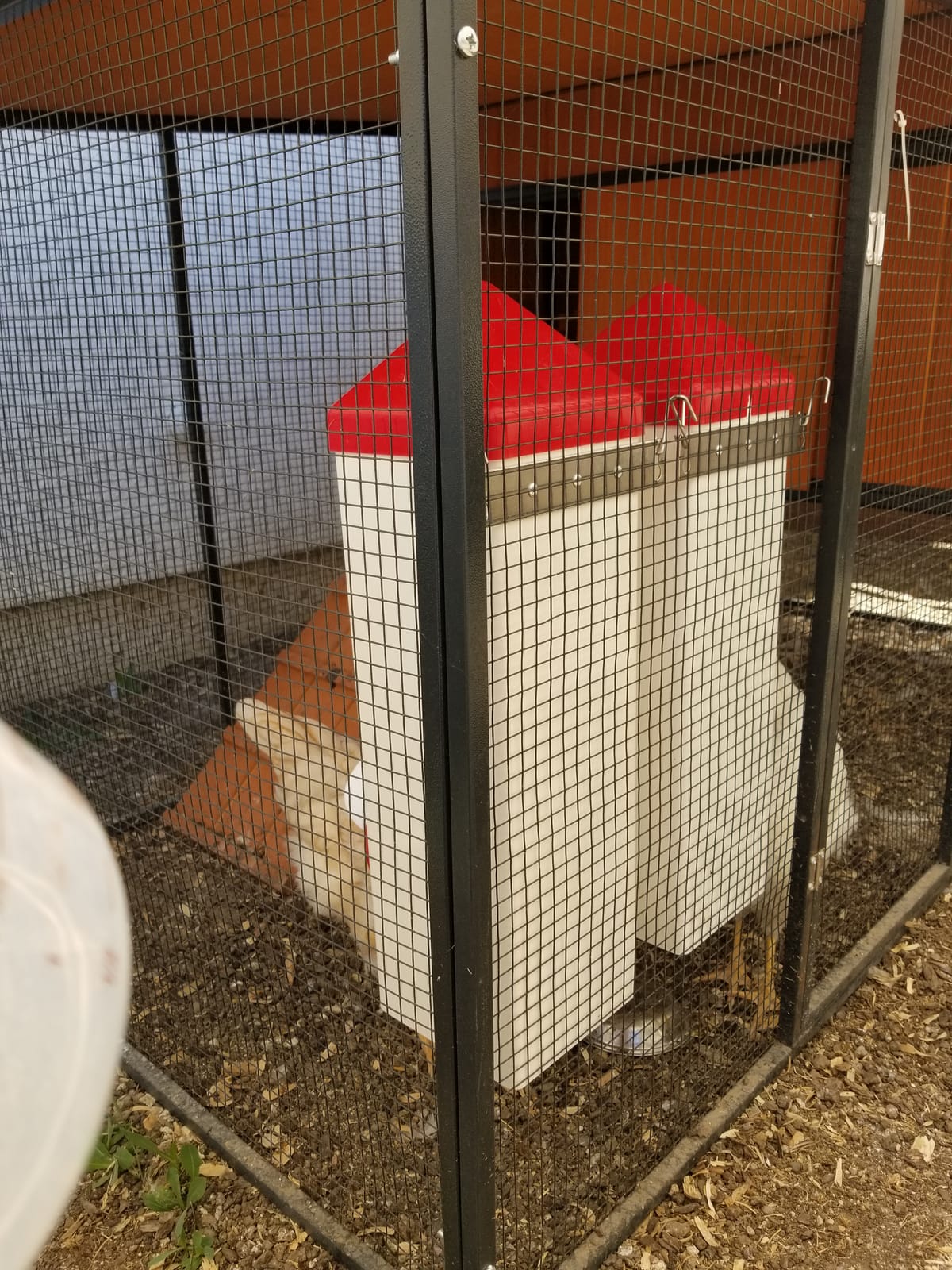
What a 2-gallon vertical body handles well
It solves the two problems that punish small flocks. The narrow footprint means you can hang it on a wall or fence line out of the birds’ way, and the choice of drinkers means you can run cups for nervous older hens and nipples for the rest. A side port accepts a hose or spout if you ever want to feed it from a reservoir.
It also suits a coop that has to work in two climates. A nipple line is drip-free and far less fouled than cups in wet runs, which matters if your birds spend wet days outdoors. Training takes a day or two: hold a bird under the nipple, let it trigger the water, and repeat a few times at the same height.
Where it falls short
Two gallons is not enough for a big flock in summer, and the refills come daily or twice daily. If you run 30 birds or more, plan on two of these, which has the side benefit of giving low-ranking birds a second station they are not bullied away from.
It is also not a heated waterer. In deep cold the plastic body can crack once the water freezes solid, so either bring it inside or pair it with a second heated source. If your winters are the main problem you are solving, look at the Premier 1 instead.
2. Omlet 3 Gallon Insulated Waterer: Best for Hot Climates
Omlet Insulated Chicken Waterer, 3 Gallon | Automatic Poultry Water Dispenser with 5 Cups & Nipples Included | BPA-Free | Anti-Roost Lid | Sage Green
3 gallon insulated reservoir
Blocks 99% of light
Cups and nipples with spares
Pros
- Insulated walls hold water cool for days in extreme heat
- Opaque body blocks 99% of light so water stays clean
- Includes both cups and nipples plus spares of each
- Anti-roost lid and raised legs with hanging option
- Visible water level window
Cons
- 3 gallon capacity needs multiple waterers for large flocks
- Manufacturer notes nipples may not work in freezing conditions
- Nipple fittings can leak when over tightened
Insulation and freeze protection are not the same thing, and the Omlet is the clearest example in this roundup. The insulated walls genuinely keep water cool through multi-day heat, and the manufacturer is candid that the nipples may not function once the water freezes. In other words, this solves August, not January.
The anti-algae story is the one that impressed me. The reservoir blocks 99% of light, which is the actual mechanism behind green water growth, and reviewers repeatedly describe water that still looks clear after weeks in a hot run. A 3-gallon capacity gives you more slack than the RentACoop before a refill is due.
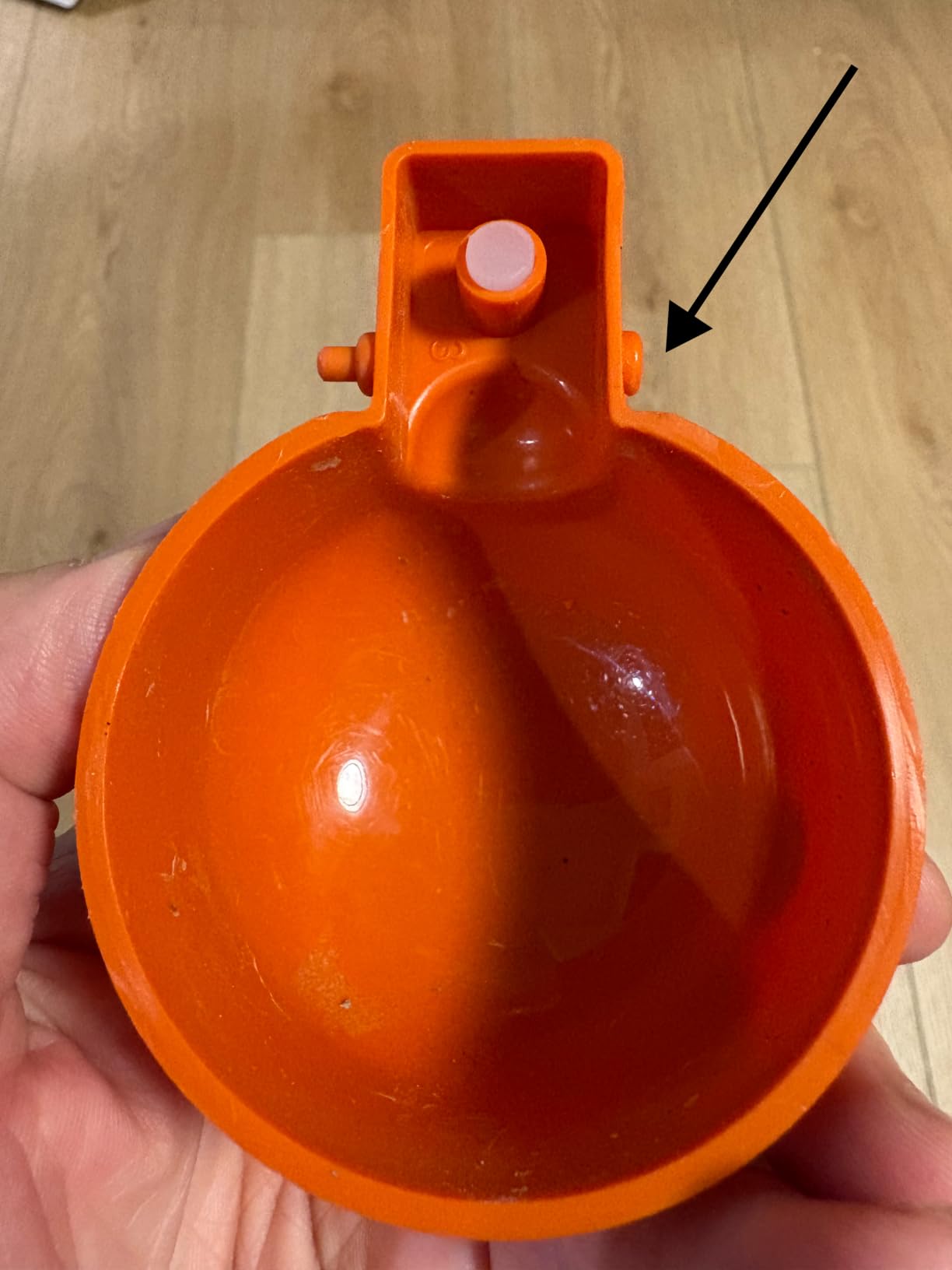
It ships with both cups and nipples, so you can mix drinkers in a single unit and let the flock sort itself out. Birds that are already on cups keep using cups, new arrivals can be put on nipples, and nothing gets excluded. That flexibility is unusual at this level of build quality, and the dome lid with a locking handle keeps determined birds off the top.
Owners also like the small practical touches: a wide lid that opens for scrubbing, a visible water level window, and raised legs with a hanging option. The whole thing weighs 7.72 pounds, which is light enough to lift for a full clean without needing two people.
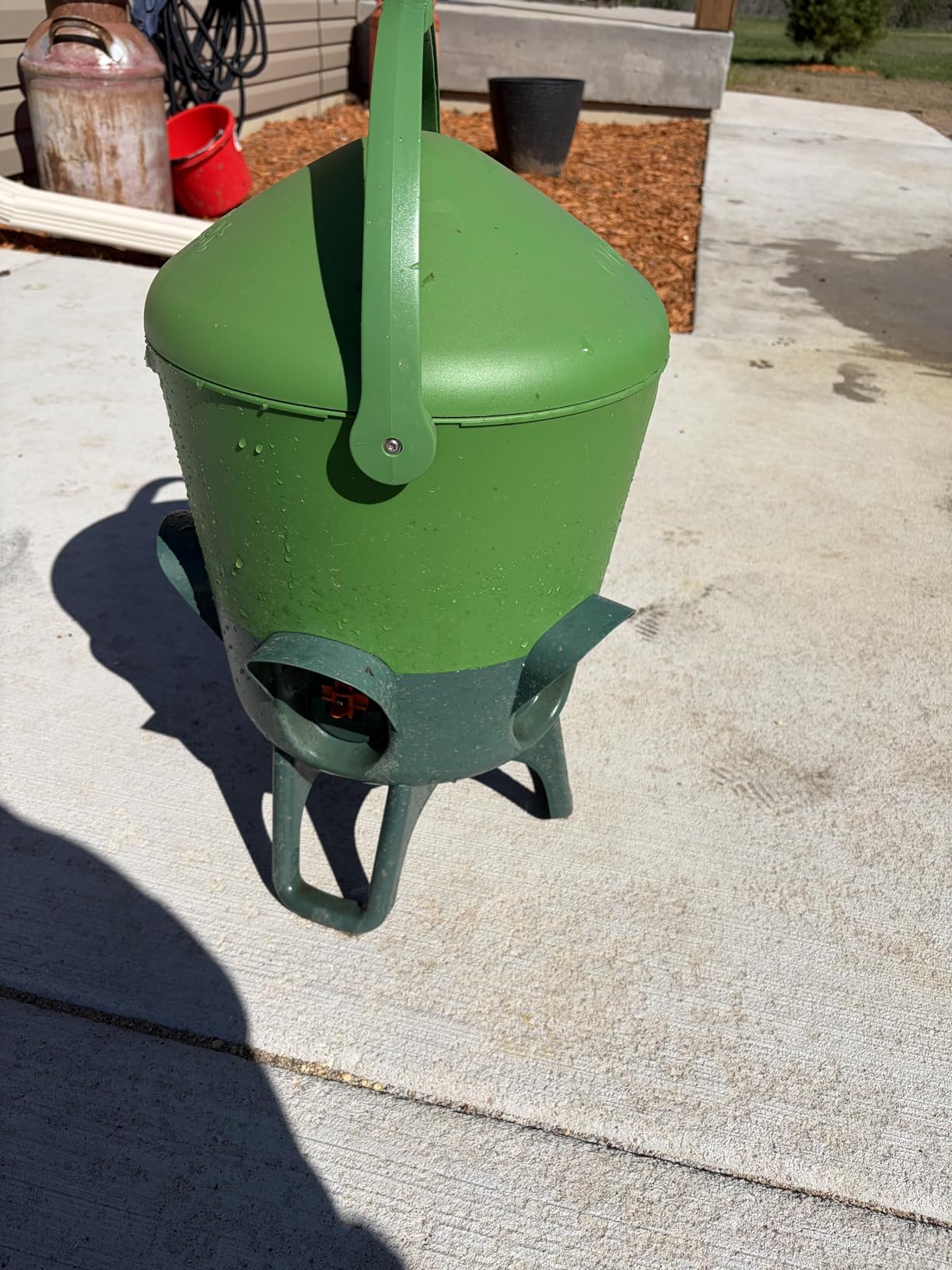
Where insulation earns its keep
Hot, humid summers are where uninsulated plastic reservoirs fail first. Birds drink more as temperatures climb, and warm water goes bad faster, so a cooler 3-gallon unit stretches the safe window between refills and cleans. In shade, with a lid, this is about as close to low-maintenance as gravity watering gets.
It also suits mixed-age flocks well. Because it ships with both drinking styles, you can keep an established hen on cups while training a new pullet onto nipples without running a second waterer for the transition.
Where it falls short
Cold snaps are the limit. Omlet itself says the nipples may not work in freezing conditions, so if you live where water freezes regularly, plan a heated unit for winter and keep this one for the other nine months. Three gallons also means a flock of 25 or more still needs more than one station.
One small mechanical note: nipple fittings can weep if the wing nuts are tightened hard, and a few buyers received a defective nipple on arrival. Spares are included, so it is a five-minute swap rather than a return.
3. Farm Innovators HB-60P Heated Waterer: Best Value for Small Winter Flocks
Farm Innovators HB-60P Heated Poultry Waterer Drinker, 2-Gal, 60W
60 watt thermostat controlled heater
2 gallons for up to 15 chickens
Side mounted drip free nipples
Pros
- Thermostat runs the element only when it is needed
- Side mounted nipples keep litter out of the water
- Metal handle allows hanging or freestanding placement
- Removable top makes refilling simple
- Very large review base shows long term use
Cons
- 2 gallon capacity suits smaller flocks rather than full size coops
- A small share of buyers report freezing in severe cold
Farm Innovators built this one years ago and it has been on Amazon ever since, which is why its review base dwarfs everything else in this roundup. The 60-watt element is thermostatically controlled, so it cycles on only when the water temperature drops rather than running continuously.
For a backyard flock of 6 to 15 birds in a climate that sees hard frost, this is the straightforward answer. The side-mounted nipples are recessed and drip-free, which keeps litter and droppings out of the water and removes the fouling problem that open bowls create in a wet run.
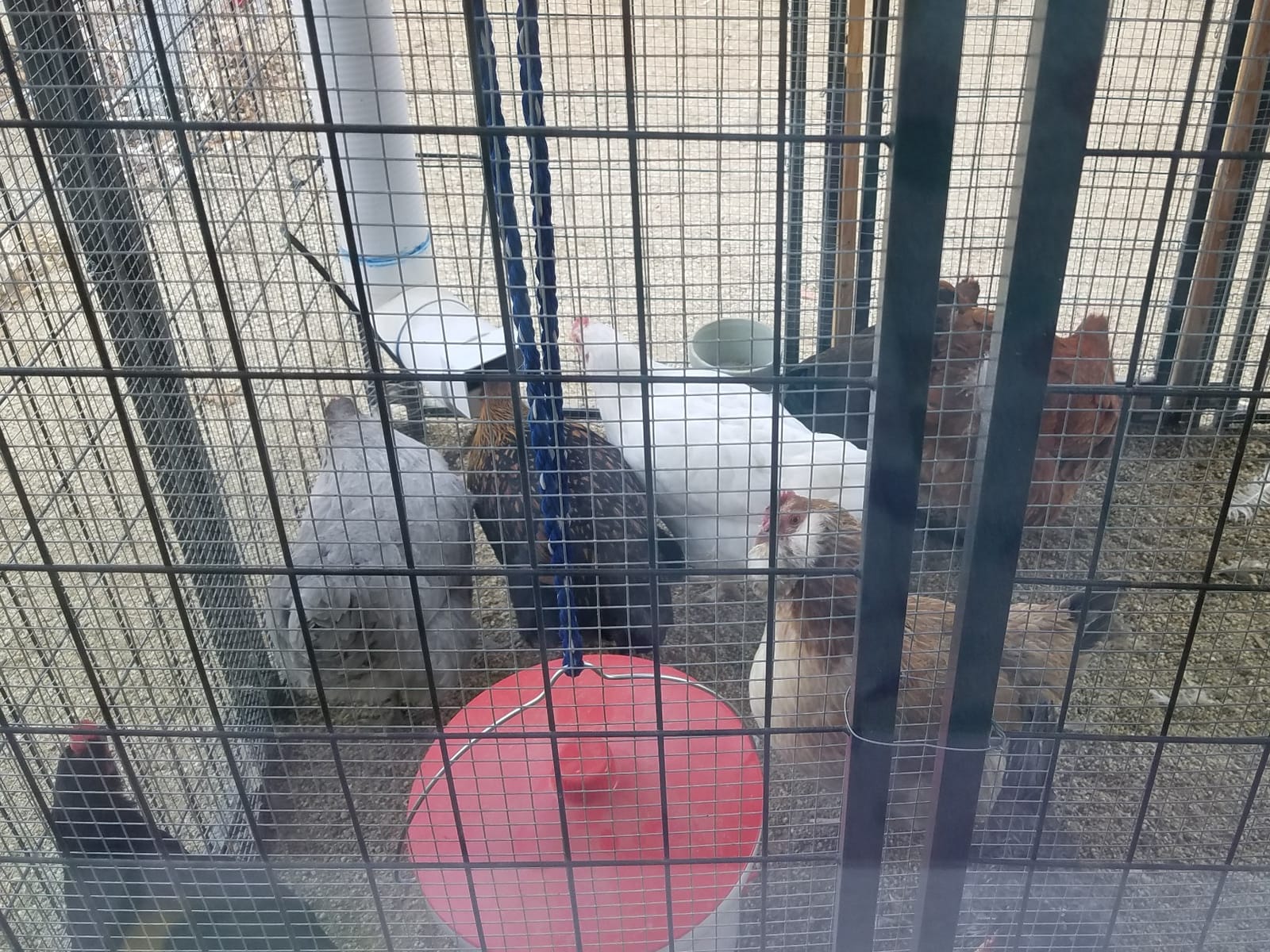
The metal handle gives you real flexibility. Hang it off the wall at nipple height so nothing lands in the water, or set it on the ground for older birds that will not stretch up to a nipple. The removable top makes refilling simple enough that you can do it in the dark before work.
Reviewers consistently point to the same three things: the thermostat works, the nipples stay dry, and the unit has kept going for years. That longevity matters more than any spec here, because a heater that fails at the first cold snap is worse than no heater at all.
Who should buy the small heated unit
First-time keepers in a cold state who want one appliance that covers winter without rewiring anything. The 2-gallon reservoir is sized for about 15 birds, which is the majority of backyard flocks, and the thermostat means you are not paying to heat water you do not need in October.
It is also a good second waterer. Running one heated unit and one gravity unit gives your flock a backup if power goes out mid-cold-snap, which is a real scenario in rural areas with long outages.
Where it falls short
Two gallons is the real ceiling. A flock of 20 or more in deep cold will drain it faster than the element can keep up, and the manufacturer is clear this is not a large-capacity product. Deep-freeze failures do get reported, particularly where the plug was not fully seated in an outdoor outlet.
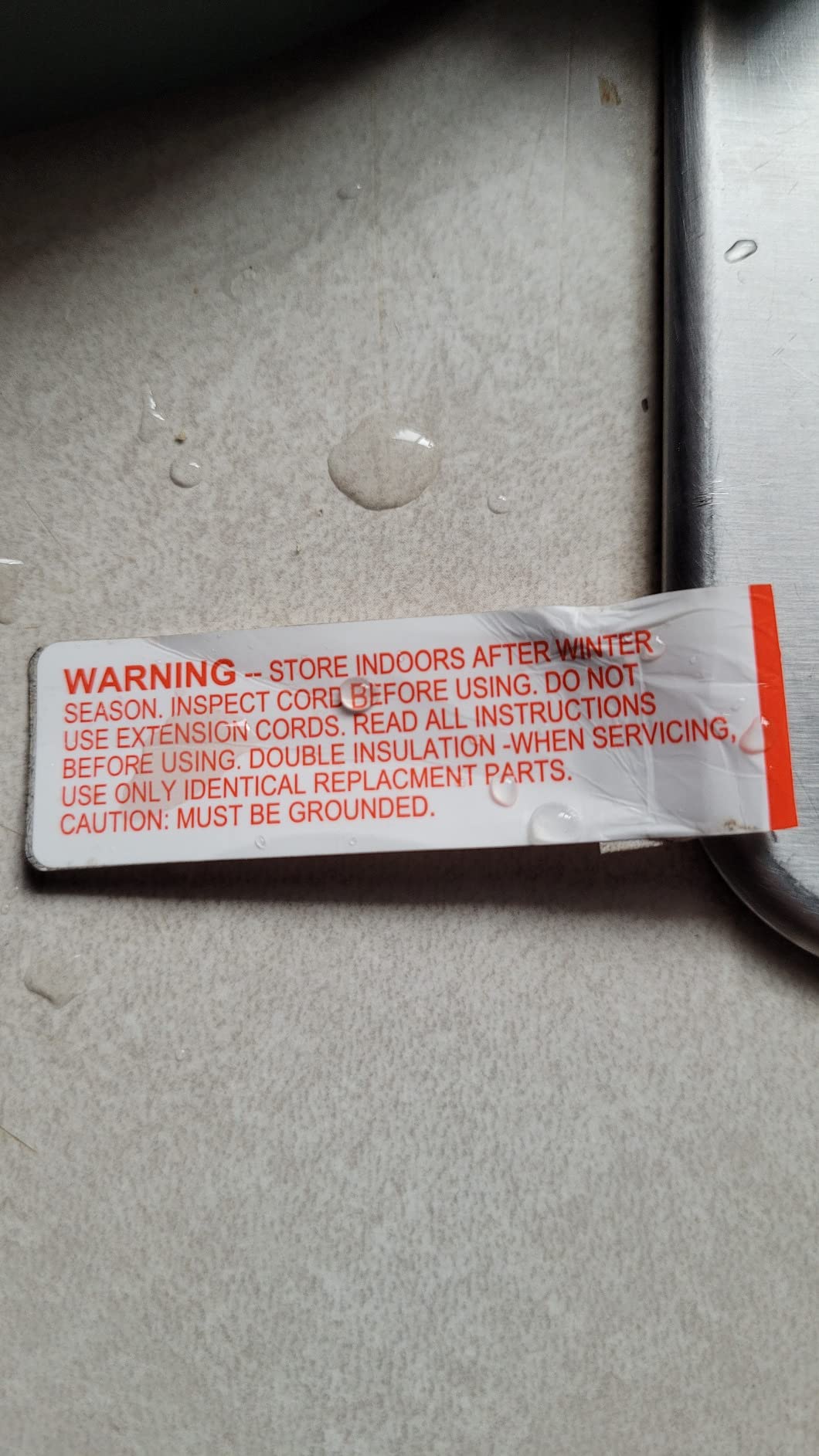
Because it needs mains power, plan the outlet and the cord run before winter. Extension cords are a common shortcut and a common source of both faults and safety problems, so if the reach is too short, move the outlet rather than the waterer.
4. Premier 1 All-Season 3 Gallon Heated Waterer: Best for Larger Cold-Climate Flocks
Premier 1 All-Season Heated Poultry Waterer for Chickens & Ducks – 3 Gallon
100 watt thermostat, on below 40F
3 gallons for up to 35 adult chickens
Hinged quick fill hose cap
Pros
- Keeps water unfrozen through repeated winters
- 100 watt element switches on below 40F and off at 60F
- Hinged quick fill cap accepts a hose or watering can
- Detachable cord turns it into a plain waterer in warm months
- Recessed drip free nipples stay clean
Cons
- Instructions warn against extension cords
- Insulated lid can freeze to the basin in deep cold
- New birds need training to drink from the nipples
This is the heated waterer to buy if your flock outgrew the small heated models or your winters are genuinely severe. The 100-watt element is thermostatically controlled, switching on below 40F and cutting out at 60F, and the manufacturer rates the 3-gallon reservoir for up to 35 adult chickens.
Owners in cold states describe it as a season-long solution that ends the twice-daily frozen-water chore. The detachable 16-foot cord is the detail I like most: unplug it in summer and you have an ordinary waterer, so you are not paying to heat water through July.
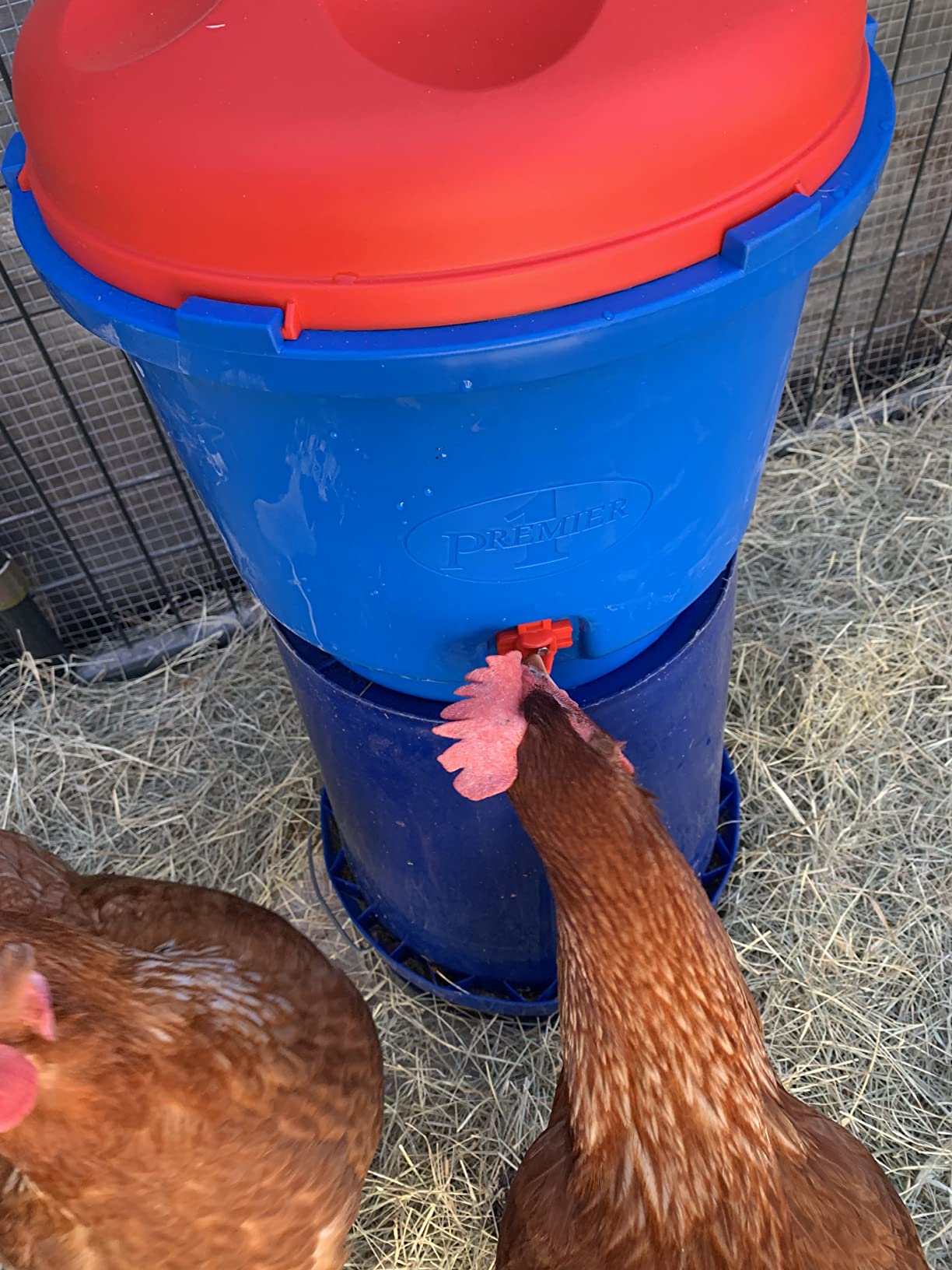
The three recessed nipples keep water clean in a way open bowls cannot, and the interior is easier to scrub than base-mounted heated models because the element sits below the drinking line. A hinged quick-fill cap takes a hose or a watering can without removing the whole lid, which makes top-ups fast in bad weather.
Reported failures cluster in two places: extreme cold beyond the element’s design point, and a plug that was not pushed fully into the socket. One reviewer traced a freeze to a loose plug, which is worth remembering when you install it. A heavy-duty handle lets you hang it or carry it.
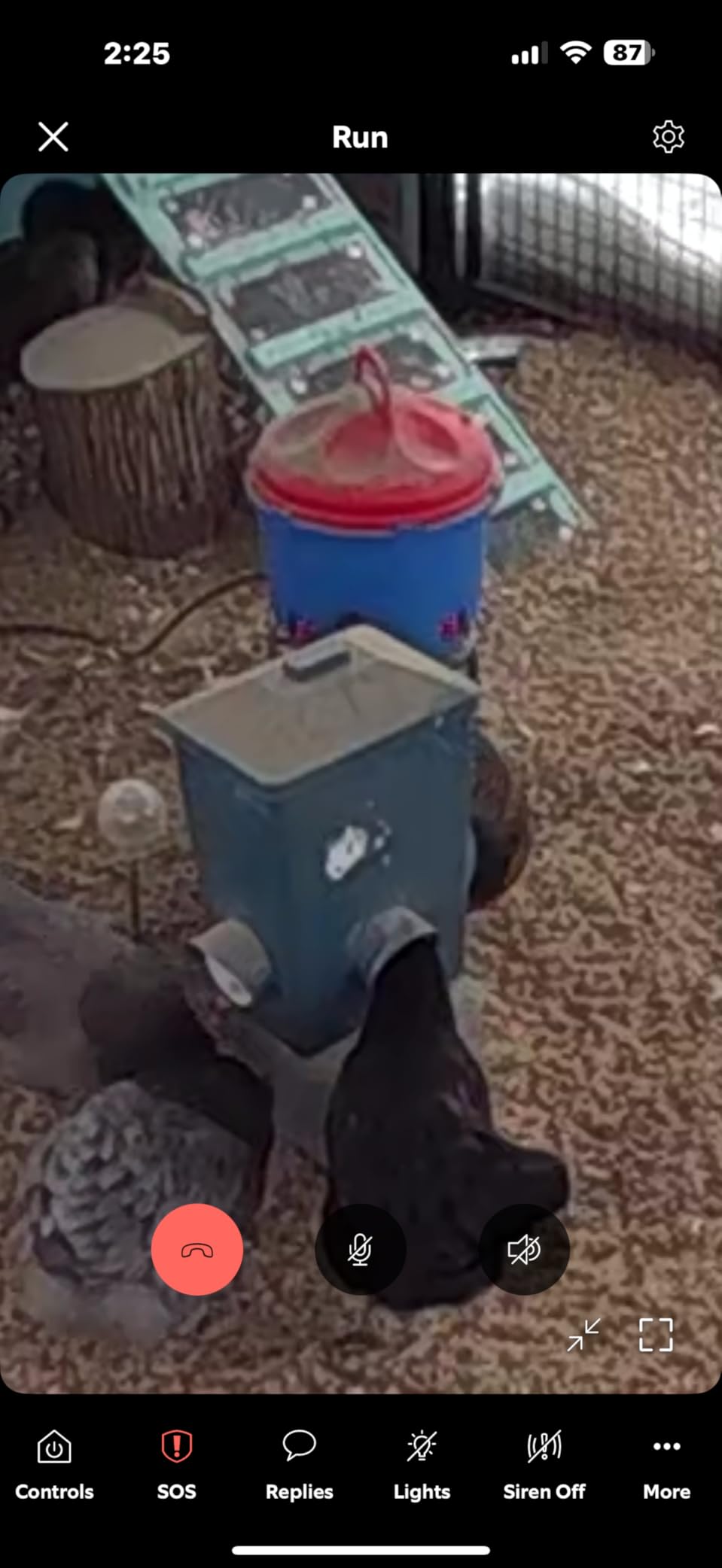
When the larger heated unit makes sense
It is built for the flock that fails with small heaters. Thirty-five birds is well beyond the backyard norm, and at that size you are usually running two waterers regardless. Three gallons with a thermostat buys you days between refills in cold weather, when birds drink more than the 1 pint to 1 quart daily range suggests.
It also suits anyone who has already lost water to freezing once. The recessed nipples and quick-fill cap are both designed around the realities of a cold morning rather than a catalog photo.
Where it falls short
The no-extension-cord instruction is genuinely impractical in many coops. If your outlet is more than 16 feet from where the waterer needs to sit, you are looking at running a proper outdoor-rated line or relocating the outlet.
The insulated lid can freeze to the basin in deep cold, which is annoying rather than dangerous. Nipples also need training, and the manufacturer caps the design at 35 birds with no larger capacity offered, so a homestead flock still runs multiple waterers.
5. Lilyang Float Valve Waterer: Best Plumbed Auto-Fill for Mixed Flocks
Lilyang Automatic Chicken Waterer, Auto Water Refills
Float valve keeps reservoir full
60 inch stainless hose with 3/4 inch end
2.6 inch cups for mixed birds
Pros
- Float valve means owners can leave home for days
- Quick to install with hose
- hooks and instructions included
- 2.6 inch cups suit chickens
- ducks
- geese
- quail
- turkeys and pigeons
- Float knob is hand tightened for leak resistance
Cons
- Frequent reports of leaking at the hose connection
- cup or float
- Legs and lid are friction fit and can detach
- Reservoir is smaller than the product photos suggest
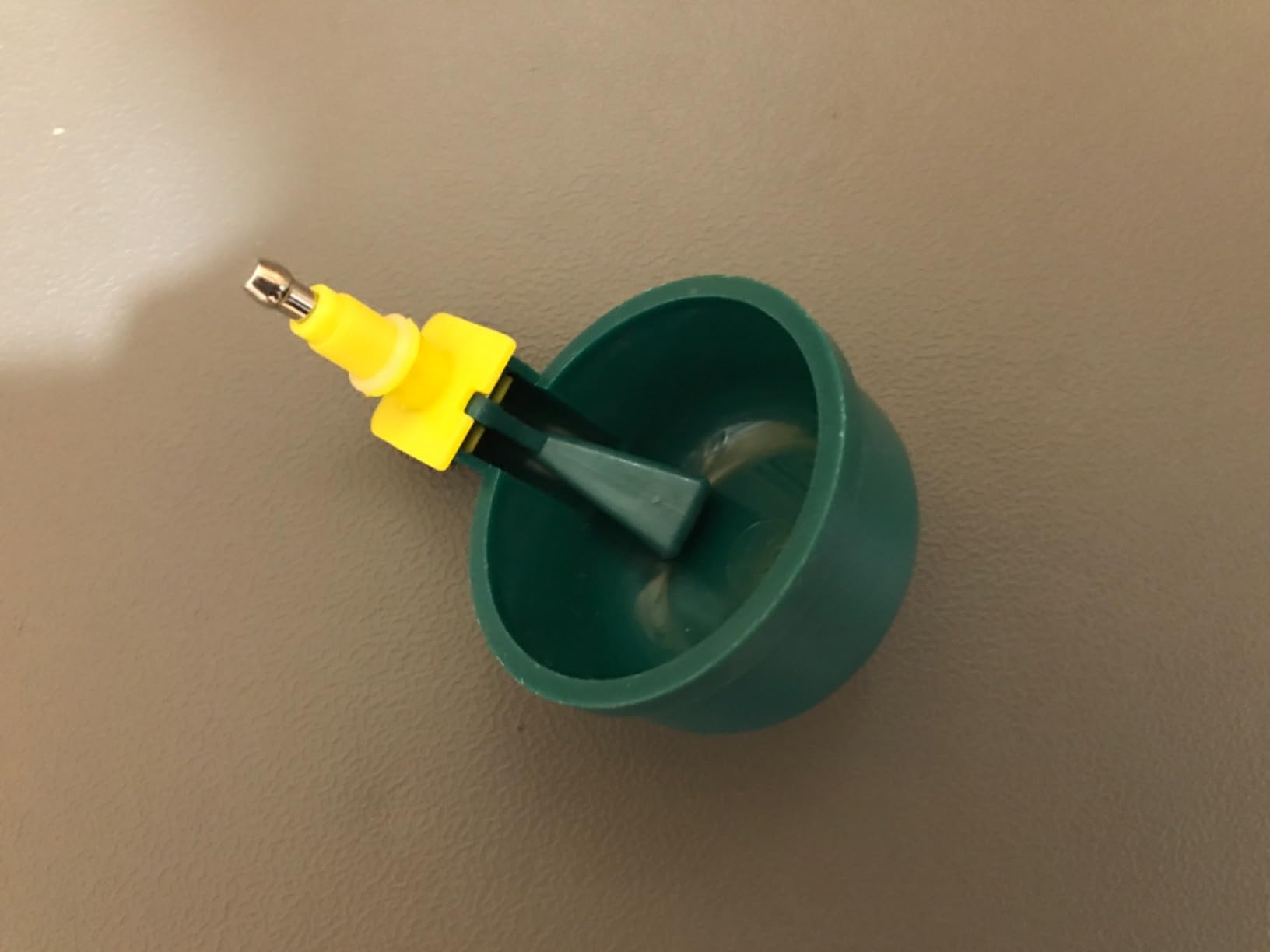
This is the auto-fill answer for anyone who wants to stop carrying water. A float valve opens and closes automatically to hold the level, and the box includes a 60-inch stainless steel hose with a 3/4-inch threaded end, so it connects to a spigot, a splitter valve or a timer-fed line.
The cups are 2.6 inches, which is large enough to suit ducks, geese, quail, turkeys and pigeons as well as chickens. That makes it a genuine multi-species unit if your run is shared, and the included legs let it stand on the ground where hanging is not practical.

The stainless float knob is hand-tightened rather than thread-mounted, which is a sensible design for reducing leaks at the valve. The whole unit weighs under 3 pounds and assembles quickly with basic tools, so installation is an afternoon job even if you have never plumbed anything.
Leak resistance is the honest weak point. Across reviews, the most common complaint is water escaping at the hose-to-reservoir joint or around the cups, and tightening the fittings or replacing a washer is the usual remedy. Owners also flag friction-fit legs and a lid that can detach in wind, and a reservoir smaller than the photos imply.
Who this auto-fill style suits
Anyone who travels. A float valve that holds level means a weekend away does not mean a neighbour checking on your birds, which is the main reason people buy automatic systems in the first place. Pair it with a hose timer and you also limit the damage if the valve ever fails.
Mixed-flock households get more out of it than anyone else. The cup size is the reason, and the small stainless body is easy to move between a chicken run and a duck enclosure.
Where it falls short
If leak-free operation is your top priority, look elsewhere. This is a light-duty plastic unit and its fittings are its weak point, so expect occasional tightening rather than a set-and-forget install.
Cups also foul faster than nipples in a wet run, and the reservoir is small enough that a flock over about 10 birds will need more than one. Run it in shade where you can, and check the hose connections weekly.
6. ZINZINULER Feeder and Cup Waterer Set: Best Budget Bundle
Automatic Port Chicken Feeder and Cup Waterer Set
16 lb automatic feeder plus 3 gallon cup waterer
Cup and nipple drinking options
Hangs on wire or mounts on a wall
Pros
- One order covers both feeding and watering with hardware and spares
- Sealed feeder lid cut feed waste noticeably
- Heavyweight plastic that resists cracking and discolouring
- Water container keeps water cooler than an open bowl
- Cup covers dump debris in seconds
Cons
- Cups and nipples leak in some setups and no back nut is included
- Hooks struggle with the weight of the filled containers
- Feeder locks can be pushed out of alignment
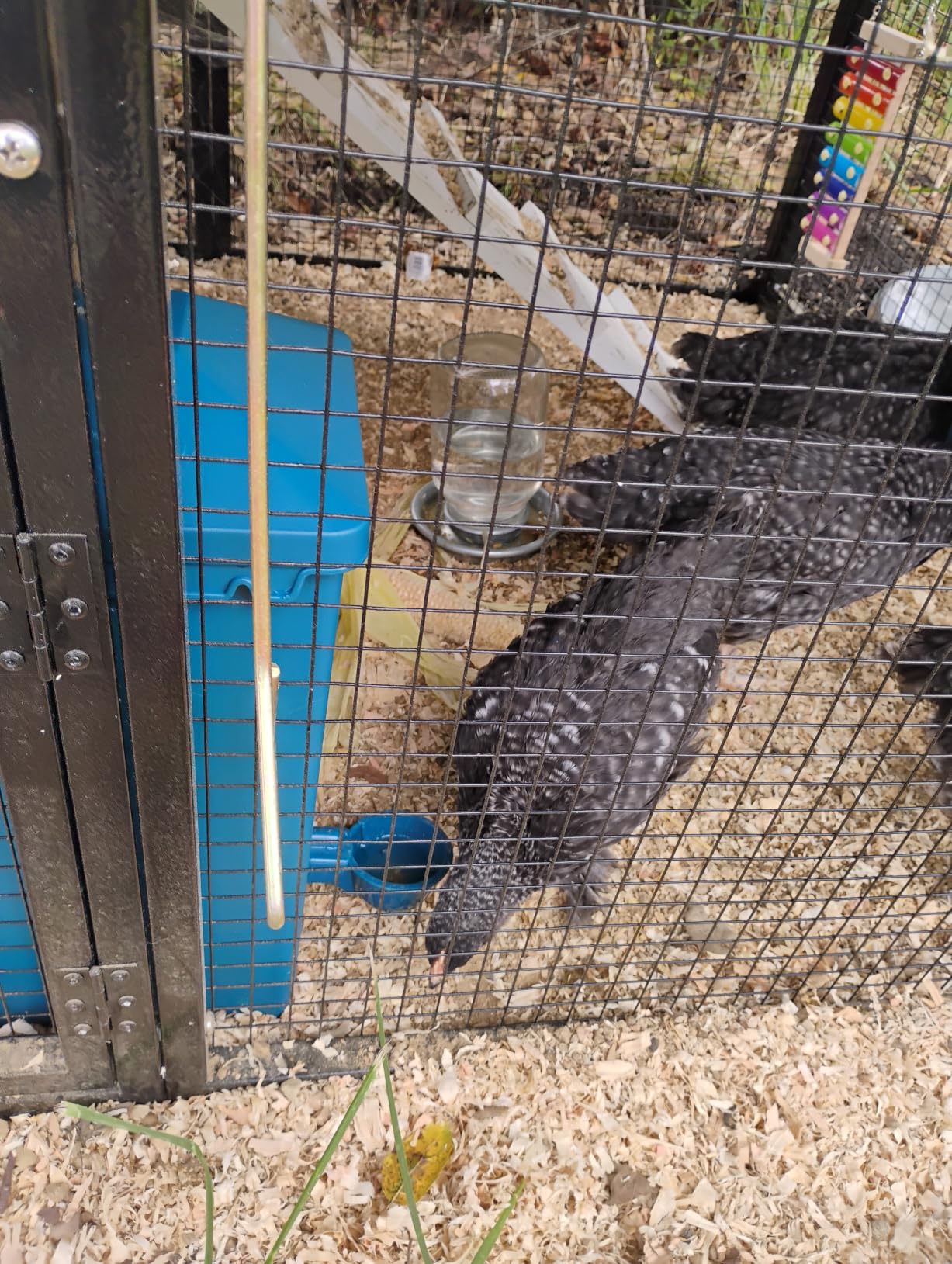
Most new keepers need a feeder and a waterer on day one, and this set bundles both. The feeder holds up to 16 pounds behind a sanitary lid, and the waterer is a 3-gallon unit that takes both cup and nipple drinkers. Mounting hardware, spare parts, and even leg bands come in the box.
The feed results are the strongest part of the review history. Owners report feed lasting close to twice as long because the lid keeps it sanitary and cuts spillage, and the plastic has not cracked or yellowed after a year of outdoor use. The water container is also reported to keep water cooler than an open white bowl.
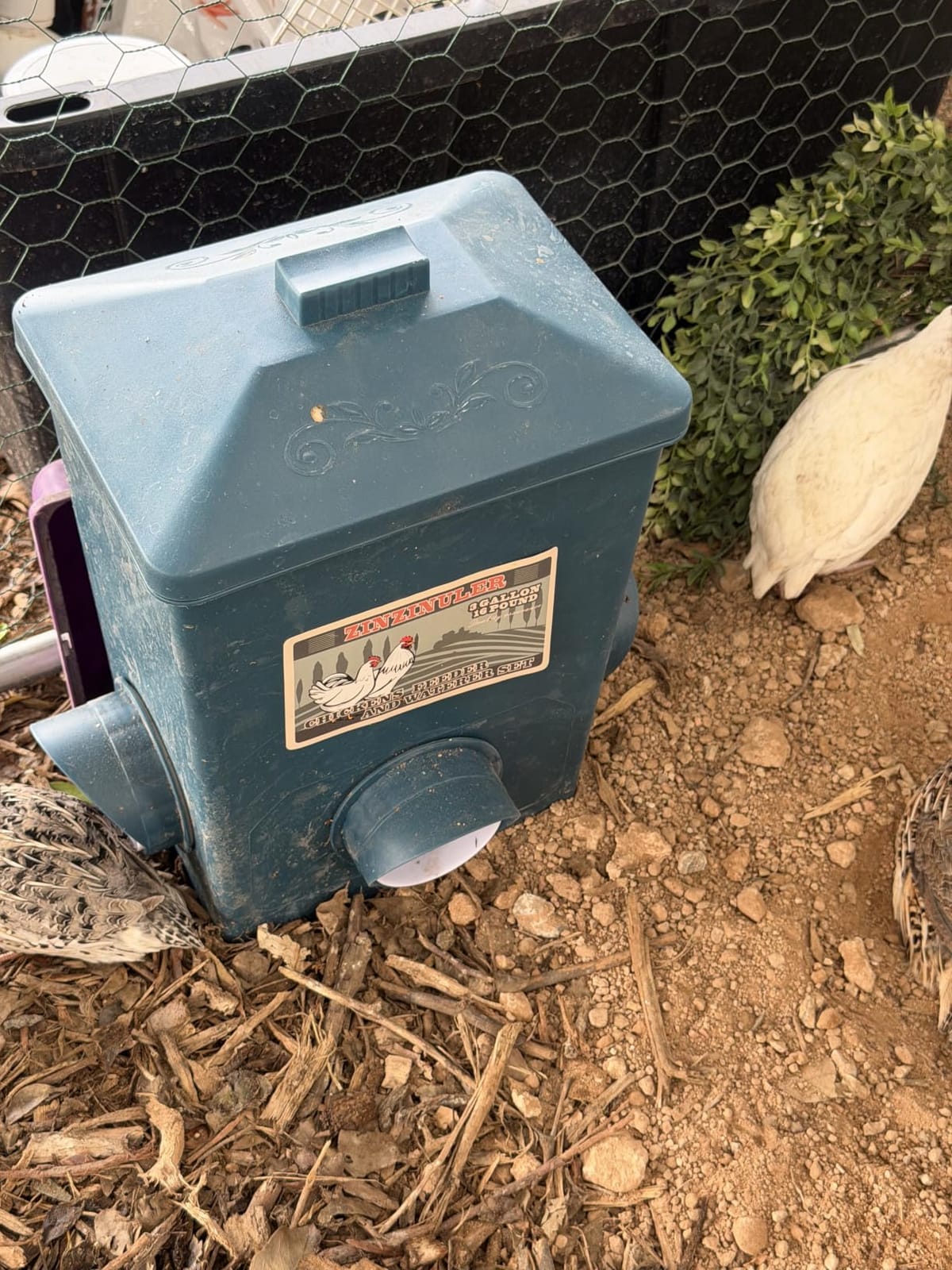
The waterer half is the weaker half, and owners say so directly. Slow leaks around the cups and nipples come up often, the nipples ship without a retaining nut, and the cup butterfly screws do not always fit the nipple fittings. Debris in the bowl can also jam a cup open and pop the spring, which means a daily glance in a dusty run.
Hanging is the other rough edge. The included hooks struggle with the weight of a filled container, and several owners report the feeder locks being pushed out of alignment if inserted at an angle. A screwed-down stand is the more reliable arrangement.
What makes the bundle worth it
It removes the decision. If you are building a first coop and want a working feeder and waterer in one delivery, this is the efficient path, and the spare parts reduce the chance of a small missing component stopping you at the weekend.
It also suits a mixed-age flock during the transition, because the 3-gallon waterer takes both cups and nipples at once. Chicks learn both the feeder and the waterer within days according to owners.
Where it falls short
If your waterer must never leak, this is not it. Fittings without a back nut and jam-prone cups will test your patience in a run where birds kick up dust constantly.
Customer support is the other weak point, with the listed support email going unanswered for some buyers. Check every fitting by hand after a day of use, and expect to tighten rather than replace.
7. Little Giant Automatic Poultry Fount: Best for DIY Igloo Cooler Builds
Little Giant® Automatic Poultry Fount | Game Bird Fount | Heavy Duty Plastic | Waterer Bowl with Hose Attachment | 1.5 Quarts
Plumbs to any 1/2 inch NPT line
1.5 quart bowl
Brass non rusting fountain stem
Pros
- Connects to a standard hose or water line for an endless supply
- Automatic flow valve rated 20 to 50 psi
- Wide shallow bowl suits game birds and small poultry
- Brass stem resists rust for long outdoor service
- Few moving parts and very simple to service
Cons
- Requires a pressurized supply and stores no water
- Shallow open bowl is easy to tip or foul with dust
- Bowl collects debris and needs frequent cleaning
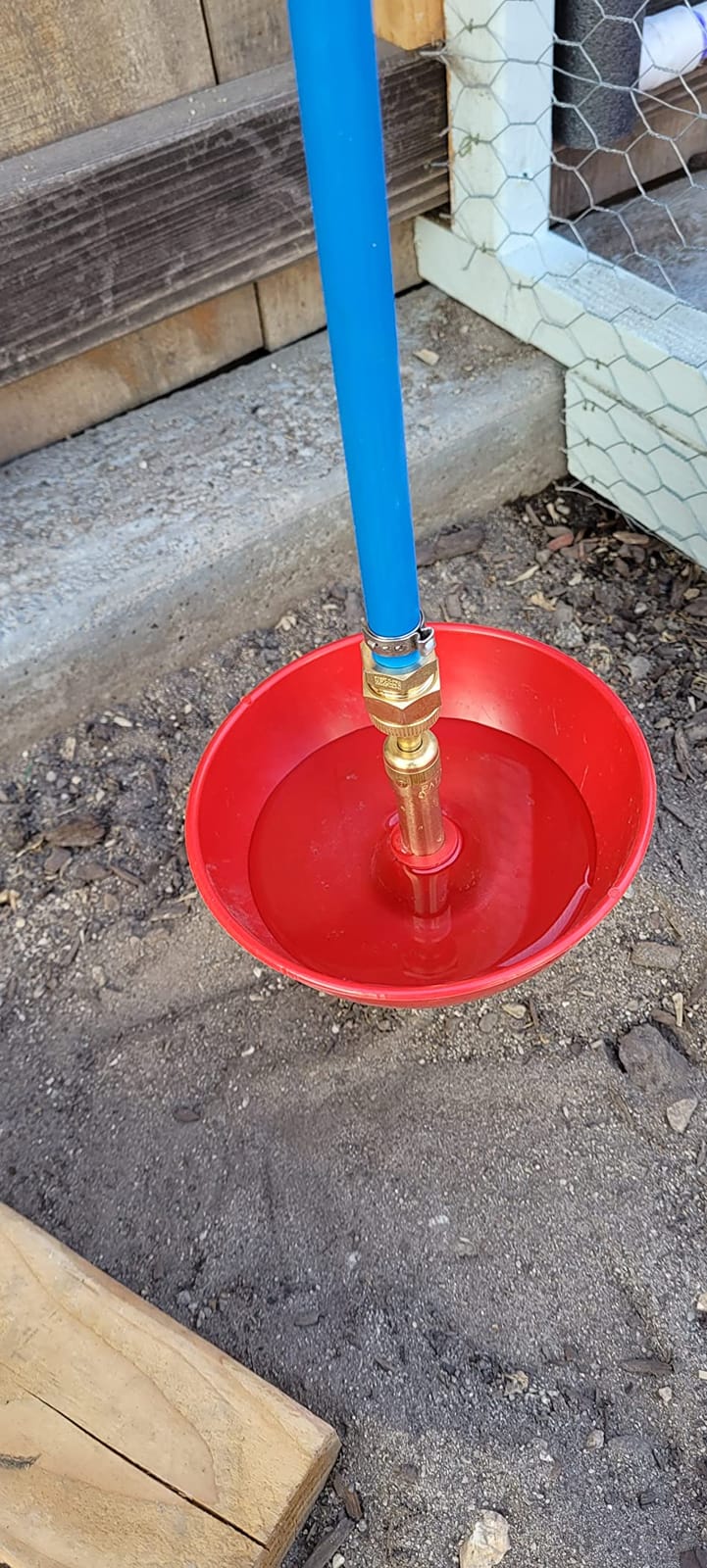
The Little Giant Fount is not a reservoir at all. It is an 8.5-inch plastic bowl with a brass fountain stem that screws into any standard half-inch line, and the internal flow valve meters water as birds drink. On its own it does very little, but inside a larger build it is the component that makes the whole system work.
That build is the one experienced keepers describe most often. Drill a fitting near the bottom of a large insulated cooler, run a short hose to a raised stand, and screw the fount on top. One keeper on BackYard Chickens reports a year of service in Georgia, filling only every couple of months, with water staying cool in summer and never freezing in winter.
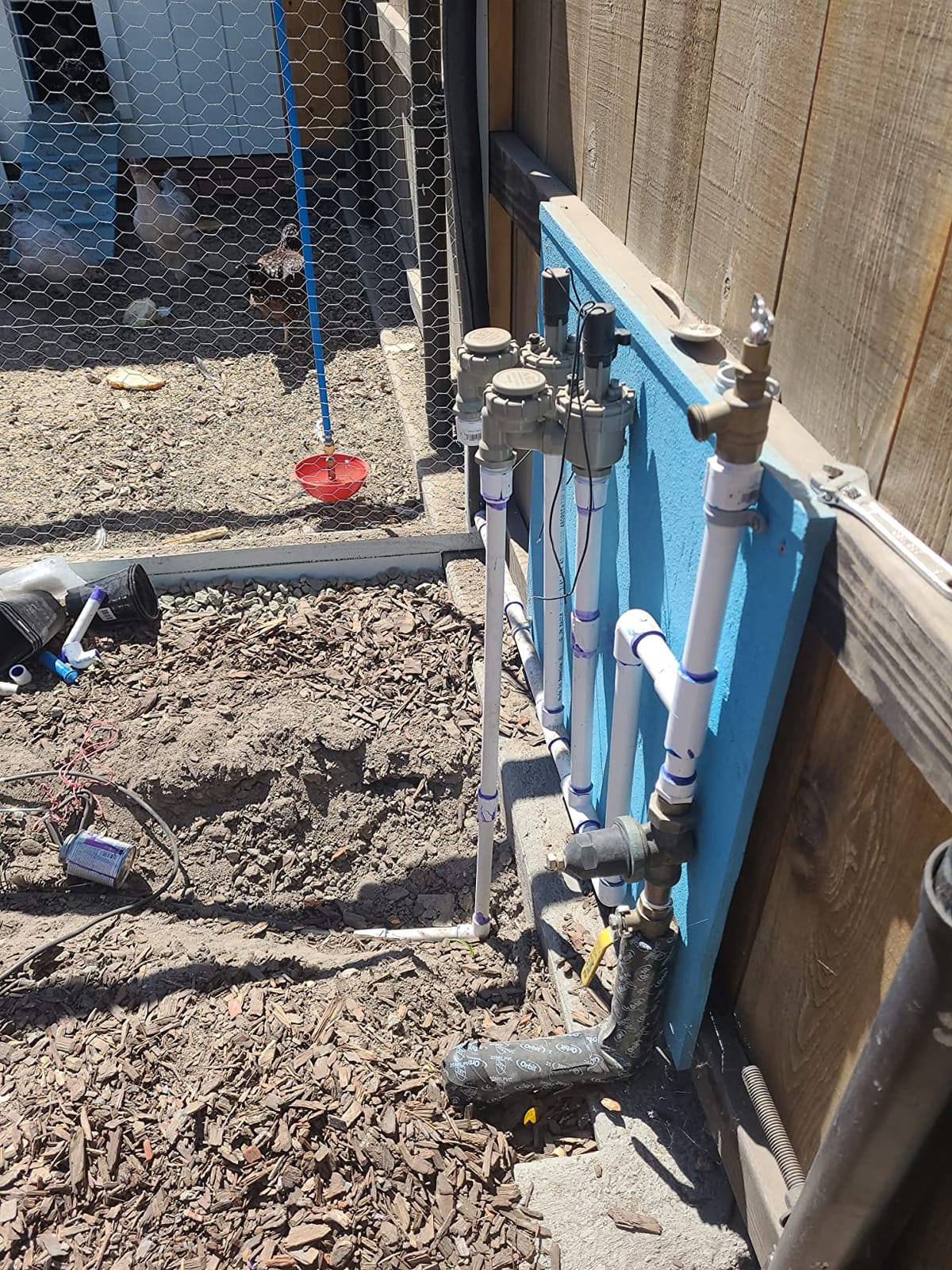
The manufacturer rates the 1.5-quart bowl for up to 250 adult birds, which sounds extraordinary until you remember that it holds no storage of its own. The supply does the work. With a constant pressurised feed, bowl size only dictates how much water sits in front of the birds at any moment.
The brass stem is the detail that makes it last. It will not rust the way a plated steel stem does, and because the design has so few moving parts, a fount that starts dribbling is usually a debris problem rather than a failed mechanism.
Why builders keep choosing it
It solves a problem no store-bought reservoir solves: capacity without staleness. A cooler holds far more water than any plastic fountain, yet birds drink from a small bowl so the water they touch stays fresh, and the rest stays dark and sealed. That is the compromise the highest-authority voices on BackYard Chickens keep recommending.
It is also the natural starting point for an auto-fill line. Add a float switch upstream, or put the line on a daily hose timer, and you have a system that fills itself.
Where it falls short
On its own it is close to unusable, since it needs a pressurised supply and stores nothing. The shallow open bowl is also easy for birds to step into and soil, and it collects dust and droppings faster than a nipple or cup system.
Winter is only solved if the reservoir is insulated, because a bare bowl freezes first. Use it in shade in summer and pair it with a covered reservoir in the cold months.
8. Abustle Pig 304 Stainless Steel Float Bowl: Best Rust-Resistant Bowl
304 Stainless Steel Automatic Livestock Waterer with Float Valve and 39 inch Water Hose(one end 3/4”), Automatic Animal Water Bowl for Dogs,Horse,Calf,Chicken,Goat, Livestock Horse Waterer Dispenser
304 stainless steel bowl
Float ball valve keeps it full
39 inch hose with 3/4 inch end
Pros
- Stainless bowl resists rust and dents and wipes clean easily
- Float valve holds the bowl level automatically
- Works for chickens
- ducks
- goats
- calves
- dogs
- horses and alpacas
- 39 inch hose connects to a tap or outdoor spigot
Cons
- 0.66 gallon capacity needs regular refills for larger animals
- Low profile bowl is easy for birds to soil or tip
- Hose gasket can leak when over tightened
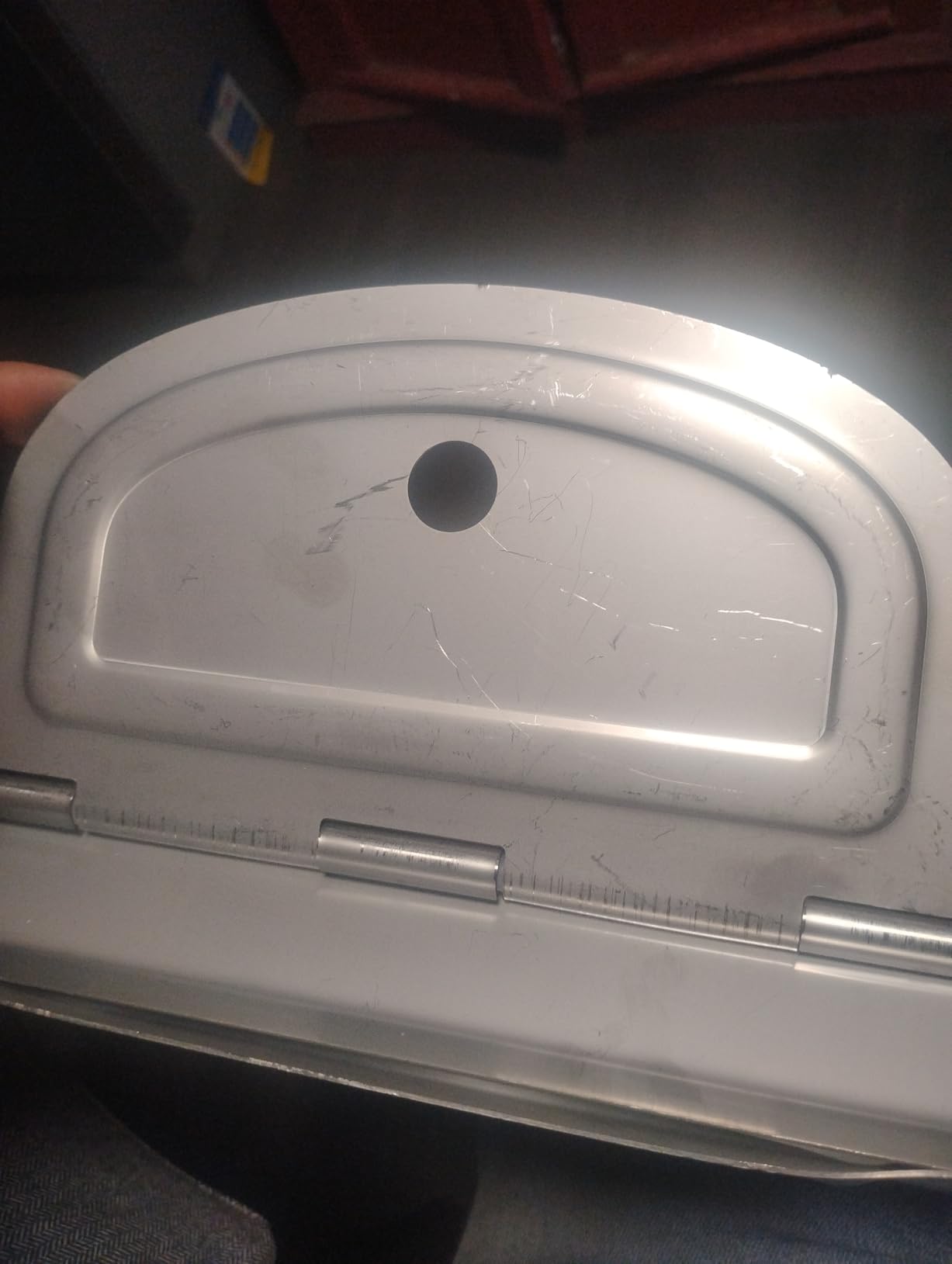
When every plastic body on your list has a hairline crack after three winters, stainless steel starts to look sensible. This 304 stainless bowl holds roughly 2.5 liters and fills itself through a float-ball valve, where a rising float closes the rubber piston and a falling float reopens it.
The material is the whole argument. Stainless resists deformation, will not crack if the water freezes, and wipes clean in seconds, which removes the scrub-and-disinfect cycle that plastics need after a hard winter. For keepers who have replaced a cracked waterer more than once, that is worth a lot.
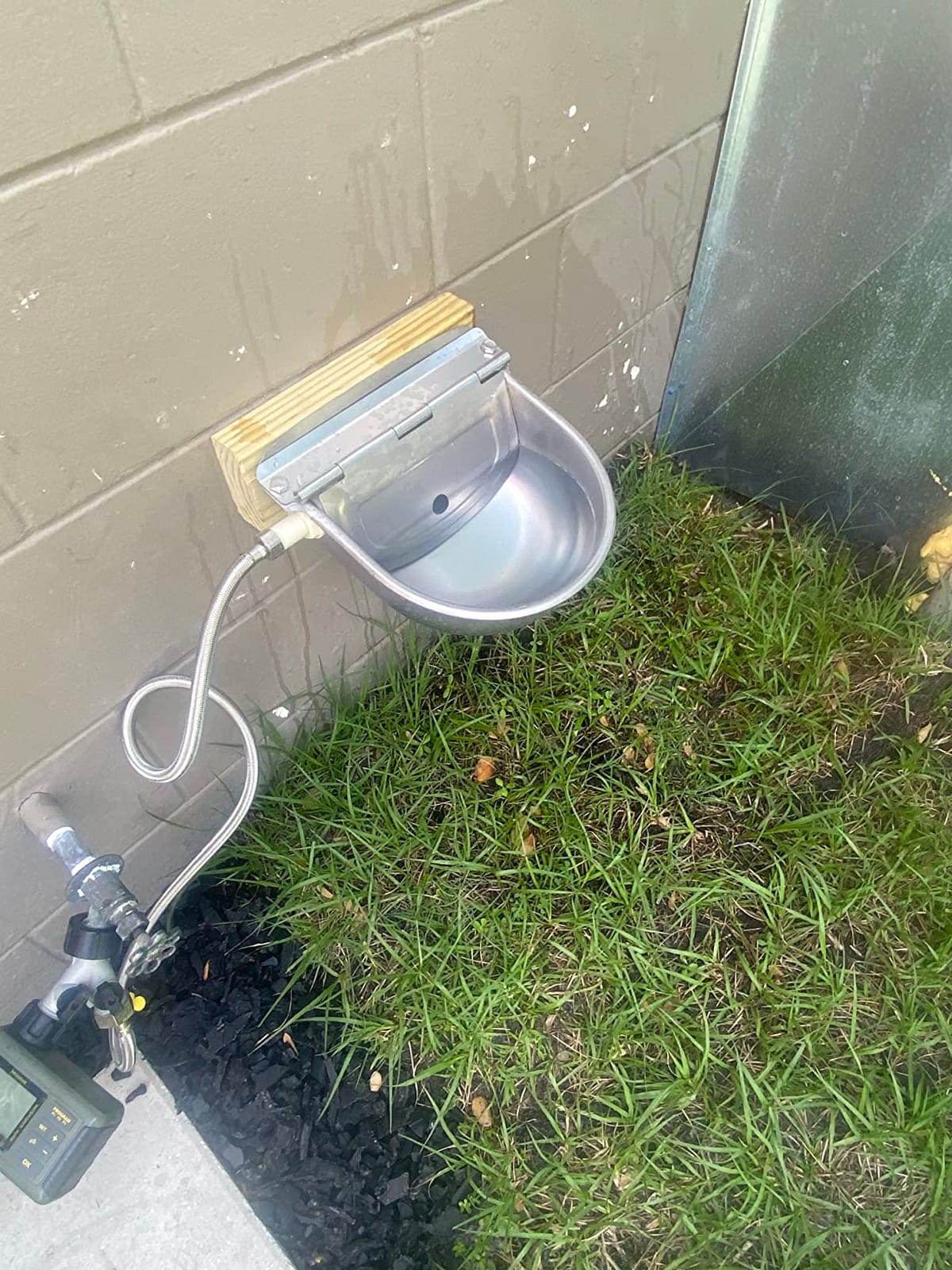
It is not a chicken-specific unit, and that cuts both ways. Buyers use it for goats, dogs, calves, horses and alpacas as readily as for poultry, so if your run is shared with larger animals it becomes a two-purpose asset rather than a niche purchase. The included 39-inch hose has a 3/4-inch female garden hose thread end, so it reaches a spigot directly.
Capacity is the limit. At about 0.66 gallons, it is a bowl, not a reservoir, and larger animals need it refilling frequently. Birds can also soil or tip a low-profile bowl more easily than they can reach a raised nipple.
Where stainless earns its place
Cold climates with a freeze-thaw cycle are the strongest case. A plastic reservoir that has frozen once is often cracked once, and the replacement cycle is where the real cost hides. A steel bowl just thaws and keeps working.
Mixed-species yards are the second case. One bowl on a float valve can serve birds, kids and a goat without a second water line, and the 3/4-inch connection is a standard size you can find fittings for anywhere.
Where it falls short
It is far too small as a sole waterer for more than a few birds, so you are committing to a plumbed supply and a plan for the rest of the flock. The low profile also means frequent cleaning, since droppings land in an open bowl.
Watch the hose gasket. It can weep if you overtighten the connection, and replacement hoses are occasionally needed, which the manufacturer will supply.
Which Waterer Style Fits Your Flock?
Every automatic chicken waterer is one of five designs, and each trades cleanliness against how much attention it demands. Choosing the wrong bucket of ideas is why so many keepers end up rebuilding their system in year two.
Gravity reservoirs
A sealed tank that birds drink from through cups, nipples or a bowl. They hold days of water, need no power, and the good ones are opaque enough to suppress algae. They are also the heaviest thing to lift when full, which is the flaw experienced keepers complain about most. The Omlet and the RentACoop are both in this class.
Cup and nipple systems
These are the actual drinking mechanisms, fitted to a bucket, a reservoir or a plumbed line. Cups refill themselves when a bird pushes the floating disc, so a nudge from the flock tops the unit back up. Nipples are one-way pokes that birds learn quickly and that keep the water sealed from litter. Cups are more visible and more familiar to new birds; nipples keep water cleaner and waste less.
Heated units
A thermostat-controlled element under the water, which is the only reliable answer to a hard frost. The Farm Innovators and Premier 1 models cover the small-flock and larger-flock ends of this category. They need mains power, they cost more, and they are still the single best purchase if your winters freeze water solid.
Plumbed float bowls
A bowl on a pressurized line with a float valve, and no storage at all. These never run dry, they serve mixed-species yards, and they scale to any flock size. In exchange you need a reliable water source and you must accept an open bowl that collects debris. The Little Giant and Abustle Pig units are both built for this.
The insulated option
Insulation is not freeze protection. An insulated reservoir keeps water cool through a heat wave, which is a different problem from a frozen one, and the strongest insulated models on the market still tell you not to expect working nipples below freezing. Solve heat and cold with two products or one heated product, not one hope.
How to Choose an Automatic Waterer for Your Flock
Work out the water math first
An adult chicken drinks roughly 1 pint to 1 quart of water per bird per day, and the high end applies in hot weather. A 10-bird flock at 2 pints each is about 1.25 gallons a day; the same flock in a heat wave can use 2.5. Multiply your bird count by 1.5 to 2 quarts, and treat that as your daily draw.
Then divide by the capacity of the unit you are considering to see how many days you get between refills. A 3-gallon unit serving 10 birds at 1.5 quarts each lasts about two days. A 2-gallon unit for 20 birds is a daily job. This single calculation rules out more bad purchases than any feature list.
Run two waterers, never one giant one
This is the most repeated piece of keeper advice on BackYard Chickens and the least reflected in product marketing. One oversized reservoir holds water long enough to go stale, and a single station lets low-status birds be excluded from drinking entirely. Two smaller waterers in different parts of the run solve both problems at once, and they give you a spare if one fails.
The same rule covers the failure case. Automatic waterers do malfunction, and the highest-authority voices on that forum are blunt about it. Two units mean a leak is an inconvenience rather than a flock emergency.
Nipples or cups: the head-to-head
Nipples keep water cleaner because the wetted surface is tiny and enclosed. Nothing gets kicked into it, litter does not float on top, and there is no moving spring to jam with debris. They cost more training, birds need to stretch up to them, and they are useless if the water freezes.
Cups are easier for new birds, visible to the bird, and self-refilling, so a flock works together to keep the level up. They collect droppings within minutes, they foul in wet runs, and they clog if shavings or mud reach them. Owners who switched from cups to nipples usually cite cleanliness as the reason; owners who stayed with cups usually cite training.
Rank the winter options
Heated waterer first, if you have power and hard winters. A small 60-watt unit covers 15 birds; a 100-watt unit covers 35. An insulated reservoir on a raised stand is second, because cool water in an unheated tank still freezes overnight. Running water through a pipe is third, and only works if it is moving.
The DIY fallback that works is a heat lamp aimed at the water surface from above, combined with a plastic tank that will not shatter. Plastic that cracks when the water freezes is the single most common winter complaint, so buy a unit rated for outdoor winter use or bring it inside.
Wire up auto-fill carefully
Three supply options exist: a hose bib with a splitter valve, a rain barrel with a covered lid, or an IBC tank with a threaded outlet. All three feed the same float valve, and the difference is how much you trust the source. A rain barrel also collects roof debris, so cover it and scrub it out regularly.
Add a hose timer on a short daily cycle. A failed float valve can flood a run and a coop in a night, but if the line only opens for ten minutes a day, the worst case is a puddle instead of a disaster. One keeper on BackYard Chickens runs float-switch waterers on exactly that setup and cleans every month or two.
Place it high, shaded, and in the open
Nipples want to sit around 4 to 6 inches above the litter, high enough that birds cannot kick shavings into the opening but low enough that a hen can reach them without stretching. Cups want to be clear of the ground for the same reason. Never leave a waterer sitting flat in bedding, where it collects droppings within the hour.
In summer, put the waterer in shade. Water temperature matters more than most keepers expect, and a white plastic tank in full sun can be several degrees warmer than one under the run roof. Spreading two waterers between shade and sun also spreads the flock out, which reduces crowding at the door.
Train new birds in two days
Hold a bird up to a nipple and let it trigger the water, then repeat a few times at the same height. Most birds are drinking on their own within a day, and the rest follow within two. For cups, tap the disc so the bird sees water move, and keep a shallow dish of water nearby for the first 24 hours as insurance.
Train at the final height, not a lower test height, because moving a waterer up after the fact means retraining. If you are adding birds mid-season, run a second waterer with the drinking style they already know.
Five mistakes we see constantly
First, buying too small. The math above catches this. Second, leaving the waterer on the ground, where shavings and droppings go straight in. Third, adding apple cider vinegar to a metal or galvanized fount, which reacts with the metal and strips the protective coating.
Fourth, ignoring the power supply for a heated unit, including the extension-cord shortcut that the manufacturers warn against. Fifth, waiting too long to clean. Weekly in summer, monthly in winter, and immediately whenever you see cloudiness.
Keeping an Automatic Waterer Clean and Algae-Free
Algae is a light problem first and a temperature problem second. Cut either one and the green water mostly disappears on its own. The most-cited keeper remedy is diluted apple cider vinegar, with copper pipe and covered containers behind it.
Scrub weekly in warm months. Take the unit apart, scrub every fitting, and rinse until the water runs clear. Weekly beats monthly because biofilm hardens fast in heat.
Wash with soap and dilute bleach after a green flush. One part bleach to nine parts water, soak the parts, then rinse thoroughly before refilling.
Keep it dark. Opaque bodies and lids block the light that feeds algae. A transparent tank in full sun will green in days.
Add acid only to plastic. A tablespoon of apple cider vinegar per gallon slows growth in plastic and stainless units. Never in a galvanized or plain metal fount, where acid strips the zinc coating and leaves a metal taste.
Use copper as a physical brake. A short length of copper pipe sitting in the reservoir releases enough copper ions to slow algae. Keepers running this for a year report steady results without any chemical addition.
Move the water. A plumbed float bowl gets replaced constantly, and moving water does not breed. A still reservoir in July does.
One caveat worth repeating from the forums: moving water does not stop mosquitoes. Keepers running bubbler and float setups in summer still needed mosquito dunks on the surface, so do not assume a working float valve solves that problem.
A simple season calendar keeps it manageable. Weekly scrubs from June to September, monthly checks in spring and autumn, a full disassemble and disinfect at the start of winter, and a full clean before the water goes back on in spring. That is roughly an hour a month for a flock of any size.
Frequently Asked Questions
What is the best automatic water dispenser for a chicken coop?
For most backyard flocks the RentACoop 2 Gallon High Rise is the best all-round automatic chicken waterer, because it ships with both cups and horizontal nipples, hangs on wire or wall, and its opaque body keeps water clean for months. In hot climates pick an insulated 3-gallon reservoir such as the Omlet. Where water freezes regularly, a thermostatically controlled heated unit is the only reliable answer.
What is better for chicken watering, nipples or cups?
Nipples keep water cleaner because almost nothing is exposed to litter, droppings or dust, and they waste less feed-adjacent debris. Cups are easier for new birds to learn, visibly show the water level, and refill when any bird nudges the disc, but they collect droppings fast and clog if shavings reach them. Experienced flocks tend to land on nipples; mixed-age flocks often run both.
How much water does a chicken drink per day?
An adult chicken drinks roughly 1 pint to 1 quart of water per bird per day, and the higher end applies in hot weather. A 10-bird flock at 1.5 quarts each uses about 1.25 gallons daily, rising to 2.5 gallons in a heat wave. Multiply bird count by 1.5 to 2 quarts, then divide by the unit capacity to work out days between refills.
How to keep chicken waterers from getting algae?
Algae needs light and warmth, so attack both. Scrub every part weekly in warm months, keep the reservoir opaque or covered, and run it in shade. For an active flush, wash the parts in soap and dilute bleach at one part to nine, then rinse well. A tablespoon of apple cider vinegar per gallon slows growth in plastic units, but never add acid to galvanized or plain metal.
Can you put copper in chicken water to prevent algae?
Yes. A short length of copper pipe resting in the reservoir releases copper ions slowly enough to inhibit algae without being strong enough to taste bad at normal drinking levels. Keepers report running this for a year with steady results and no chemical additive. Do not use copper in galvanized or bare metal founts, where it accelerates corrosion of the metal instead.
How do I stop my chicken waterer freezing in winter?
Use a thermostatically controlled heated waterer, which is the only dependable answer. Small 60-watt units cover around 15 birds and 100-watt units cover around 35, cycling on only when the water drops. Failing that, an insulated reservoir on a raised stand holds heat far longer, and a heat lamp aimed at the surface helps. Replace any plastic body that has cracked after freezing.
How far off the ground should chicken water nipples be?
Set nipples roughly 4 to 6 inches above the litter, high enough that birds cannot kick shavings into the opening but low enough that a hen reaches them without stretching. Train new birds at that final height, because raising a waterer later means retraining. Cups need the same clearance for the same reason, and a waterer should never sit flat in bedding.
What is a good chicken waterer that doesn’t leak?
Recessed horizontal nipples are the least leak-prone drinking method because the valve opens only when a bird pushes it. Avoid nipple fittings without a retaining nut, and check any hose connection by hand after a day of use. If a float-fed system is a must, hand-tighten the float knob rather than wrenching it, and put the supply line on a short daily timer so a valve failure stays minor.
Final Verdict for Backyard Flocks in 2026
For most backyard flocks, the RentACoop 2 Gallon High Rise is the automatic chicken waterer to buy: cups and nipples in one box, a body that stays clean, and a vertical shape that fits a small run. Add the Omlet 3 Gallon Insulated model if your summers are brutal, and a heated unit such as the Farm Innovators or Premier 1 if water freezes in your run.
Whichever you choose, run two of them rather than one oversized model, hang them clear of the litter, and check the fittings weekly. That habit does more for your flock than any feature on the box.