
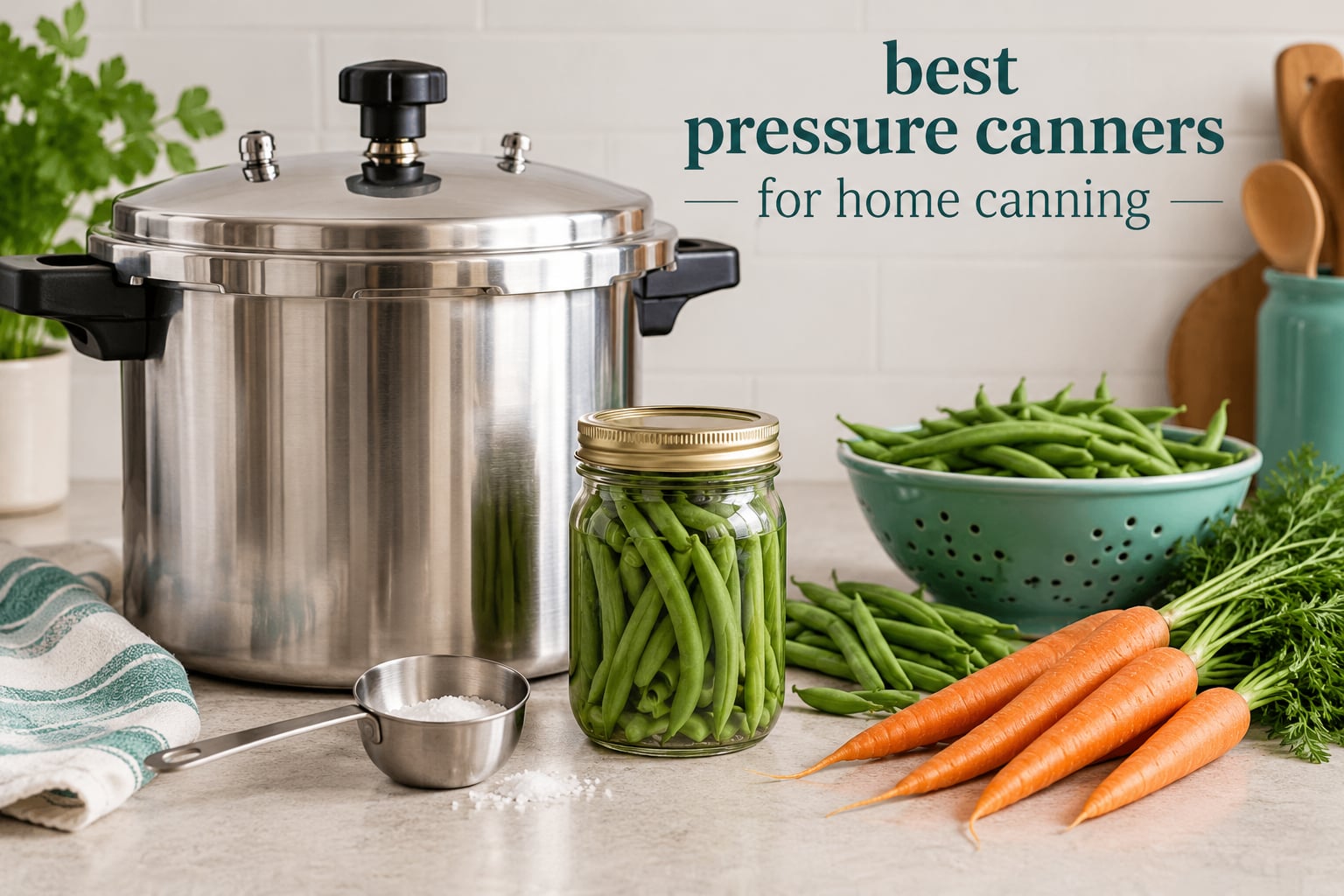
The best pressure canners for home canning are the only safe home method for putting up low-acid foods like green beans, corn, carrots, soups, chicken and tuna. A water bath canner tops out around 212°F, which is not hot enough to neutralize botulism spores, so anything shelf-stable from the garden has to go through a pressure canner at roughly 250°F.
We spent 2026 season working through ten of the most-reviewed pressure canners on the market, weighing real batch sizes, gauge types, seal design and cooktop fit. Ten models, one focused question: which ones hold pressure reliably and which ones fight you? What follows is the roundup, plus the safety mechanics nobody else explains, like headspace, jar placement and how tight the lid actually needs to be.
If you only preserve high-acid foods, fruit jams or pickles, you do not need any of this. If you want vegetables, beans, meat or meals on a shelf with no refrigeration, a pressure canner is the tool that makes that possible.
Table of Contents
Top 3 Pressure Canners for Home Canning (October 2026)

Presto 01781 23-Quart Canner
- Holds 7 quarts
- 20 pints or 26 half-pints
- Dial gauge with full pressure range
- Also a boiling-water canner

All American 1930 (915)…
- Gasket-free metal-to-metal seal
- Machined weighted regulator
- Holds 7 quarts or 10 pints

BreeRainz 5.3-Quart Canner
- Holds a stable 10 PSI
- Induction-compatible clad base
- Triple valve safety system
Quick Picks by Use Case
Best overall: the Presto 01781 23-quart dial-gauge canner, which handles 7 quart jars and 20 pints and carries more than 20k reviews at 4.8 stars.
Best buy-it-for-life: the All American 1930 (model 915), whose metal-to-metal sealing system means you never buy a replacement gasket.
Best for induction cooktops: the Presto 01784, the same 23-quart body with a stainless steel-clad base that works on induction, gas, coil and smooth-top.
Best electric: the Presto 02152 17-quart digital canner, which holds a set canning temperature with no altitude adjustment.
Best large batch on a budget: the T-Fal 22-quart, holding up to 18 pints or 7 quarts per load with built-in pressure weights.
Best for a small kitchen: the NESCO NPC-9 9.5-quart electric canner, which fits on a counter and only processes 4 quart jars or 5 pints at a time.
Gasket-free option: the All American family, the only mainstream sealing approach here that consumes no rubber parts.
All 10 Pressure Canners Compared Side by Side in 2026
| Product | Specs | Action |
|---|---|---|
| Presto 01781 23-Quart Pressure Canner and Cooker |
|
Check Latest Price |
| All American 1930 Pressure Cooker Canner 15.5 qt |
|
Check Latest Price |
 Presto 01784 23-Quart Induction Pressure Canner Presto 01784 23-Quart Induction Pressure Canner |
|
Check Latest Price |
 Presto 02152 17-Quart Digital Pressure Canner Presto 02152 17-Quart Digital Pressure Canner |
|
Check Latest Price |
 T-Fal 22-Quart Aluminum Pressure Canner T-Fal 22-Quart Aluminum Pressure Canner |
|
Check Latest Price |
 NESCO NPC-9 9.5-Quart Smart Electric Canner NESCO NPC-9 9.5-Quart Smart Electric Canner |
|
Check Latest Price |
 Granite Ware 20-Quart Pressure Canner Granite Ware 20-Quart Pressure Canner |
|
Check Latest Price |
 Mirro 22-Quart Aluminum Pressure Canner Mirro 22-Quart Aluminum Pressure Canner |
|
Check Latest Price |
 Wantjoin 23-Quart Pressure Canner with Gauge Wantjoin 23-Quart Pressure Canner with Gauge |
|
Check Latest Price |
| BreeRainz 5.3-Quart Stovetop Pressure Cooker and Canner |
|
Check Latest Price |
1. Presto 01781 23-Quart Pressure Canner and Cooker: Best Overall
Presto 01781 23-Quart Pressure Canner and Cooker
Capacity: 7 quarts or 20 pints
Weight: 12 pounds
Warranty: 12-year limited
Pros
- Holds 7 quart jars 20 pints or 26 half-pints
- USDA-recommended processing method
- Doubles as water bath canner and pressure cooker
- Warp-resistant heavy-gauge aluminum
Cons
- Aluminum reacts with acidic foods
- Manual dial-gauge monitoring
- Stovetop only
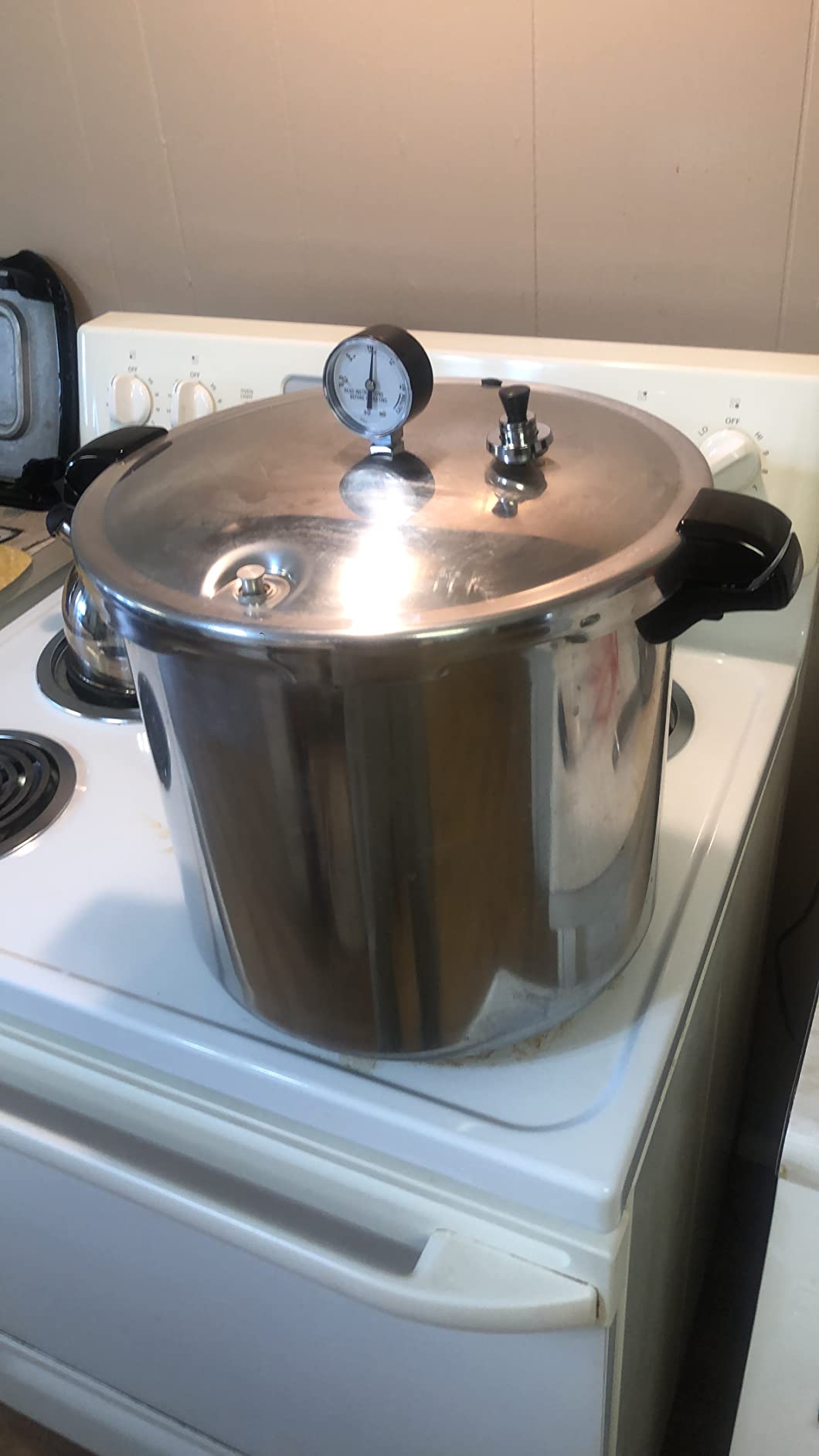
This is the canner we put in the hands of anyone who asks for one recommendation. At more than 20k reviews and 4.8 stars, it is the most-proven dial-gauge canner in the category, and the batch numbers are what sell it: 7 quart jars, 20 pints, or 26 half-pints in a single load.
The 21.8 liter pot weighs 12 pounds, which is light enough to lift onto a counter but still substantial enough to hold steady pressure. Owners credit the deluxe dial gauge with showing the full processing range, which matters above 1,000 feet where water boils cooler and pressure has to be adjusted.
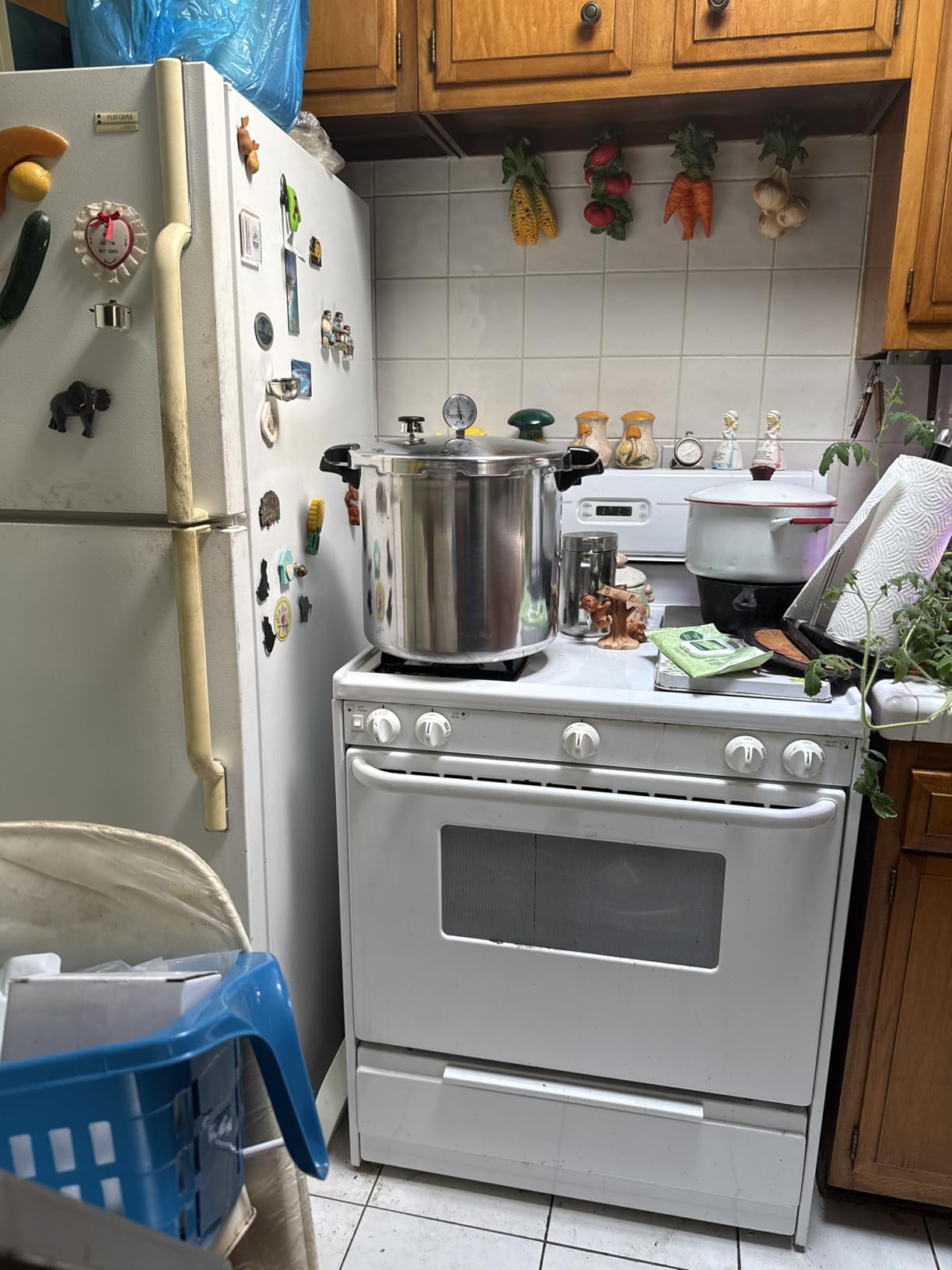
The included rack and the 76-page instruction and recipe book are more than decoration. The rack is what keeps jars off the pot bottom so heat circulates, and the book covers the pressure canning basics in plain language instead of assuming you already have a Master Food Preserver certificate.
Two cautions. The aluminum body is a poor match for very acidic loads, so stick to low-acid vegetables, beans and meats with it. And it is a stovetop tool only, meaning you own the whole heat-adjustment process start to finish.
Why we picked it as the best overall
Every other model here either lacks a documented pressure canning method, has a thinner review history, or caps out at a smaller batch. This one pairs the largest common batch size with the longest safety track record and a 12-year warranty, which is why it earns the top slot in our comparison table too.
Where it falls short
The manual workflow is real. You watch the dial, you turn the burner down when the gauge climbs, and you wait out the cooldown before touching the lid. Buyers who want a set-and-walk cycle find that frustrating, and buyers with a glass cooktop should read the weight limits first.
2. All American 1930 (Model 915) 15.5-Quart Canner: Best Buy-It-For-Life
All American 1930: 15.5qt Pressure Cooker/Canner (The 915) – Exclusive Metal-to-Metal Sealing System – Easy to Open & Close – Suitable for Gas, Electric, or Flat Top Stoves – Made in the USA
Capacity: 7 quarts or 10 pints
Weight: 18 pounds empty
Made in Wisconsin
Pros
- No gasket to replace ever
- Machined weighted regulator is audible and needs no calibration
- Cast aluminum made in the USA
- US-based parts and service
Cons
- Heaviest empty canner here at 18 pounds
- Best kept in place on the stove
- Highest price in the category
- Aluminum reacts with acidic foods
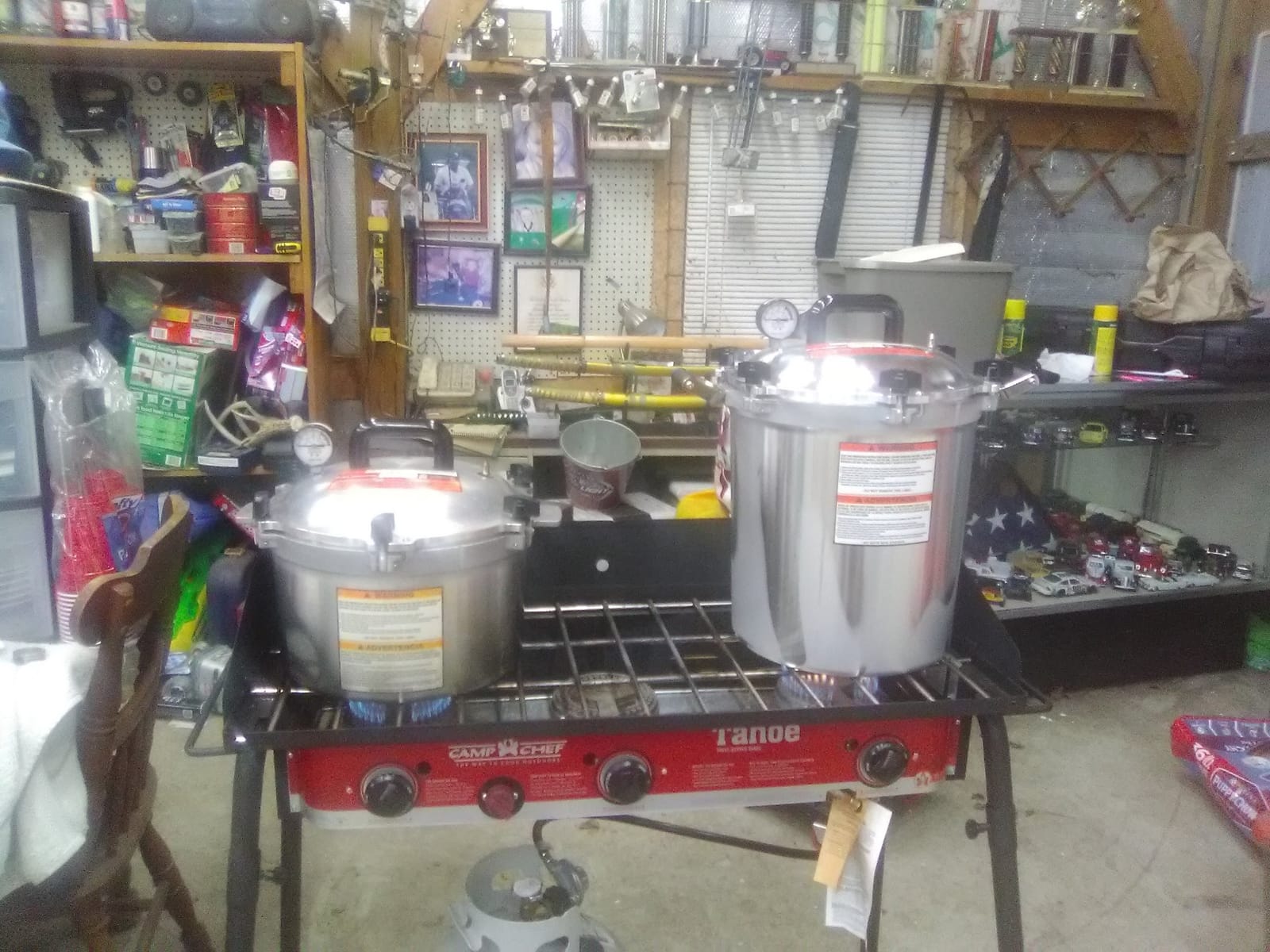
Rated 4.9 across nearly 9,800 reviews, this Wisconsin Aluminum Foundry casting is the model experienced canners name first when they talk about a lifetime purchase. The reason is the exclusive metal-to-metal sealing system, which means the single wear part every other gasket-based canner depends on simply does not exist here.
Pressure control comes from a precision machined regulator weight rather than a dial. You set the weight and listen for the steady rock-and-hiss, which means no annual calibration and no gauge accuracy anxiety at high altitude. It also holds about 10 pint jars or 7 quart jars.
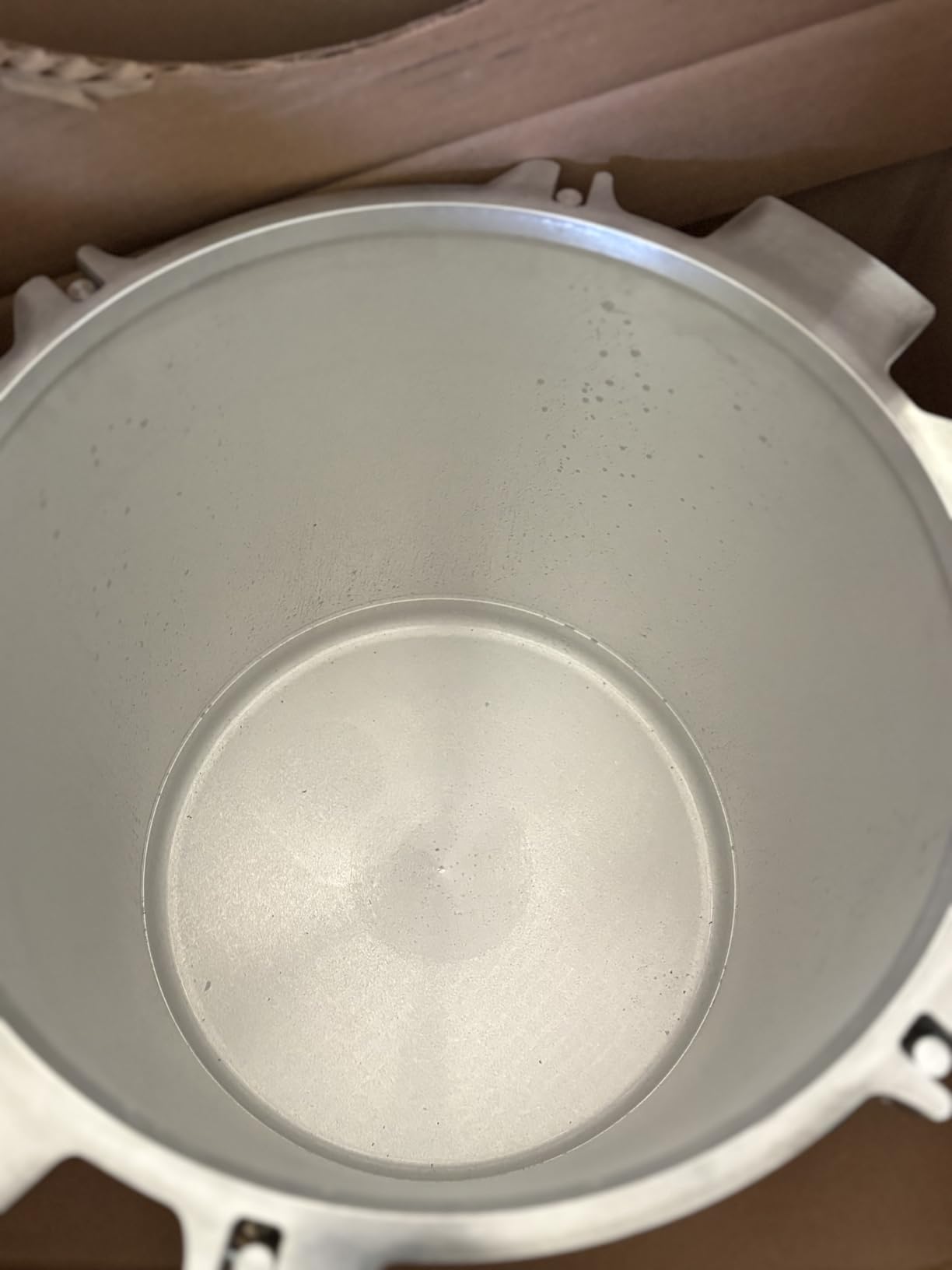
The construction is the other half of the story. Industrial-grade cast aluminum machined in the USA, a sturdy phenolic top handle, double-thickness wear edges and a satin finish that wipes clean. The Wisconsin Aluminum Foundry also handles US-based service, replacement parts and free safety labels.
One maintenance tip that reviewers repeat: lightly oil the lid seal ridge before locking. Do that and the lid opens and closes without fighting you, which is the single most common complaint about this design in general.
Why we picked it as the buy-it-for-life canner
Parts availability is the quiet issue behind every longevity claim, and a cast aluminum vessel with a machined seal and an in-country foundry behind it is the model most likely to still be serviceable decades from now. Long-time canners have named this family the lifetime choice for exactly that reason.
Where it falls short
At 18 pounds empty, it is the heaviest canner in this roundup, and it gains weight fast once loaded. Best practice is to set it on the stove and load it there rather than carrying a vessel full of hot jars. It also costs more up front than any other model here, which is a real barrier for a first batch.
3. Presto 01784 23-Quart Induction Pressure Canner: Best for Induction Cooktops
Presto 01784 23-Quart Induction Compatible Pressure Canner
Capacity: 7 quarts 20 pints 26 half-pints
Weight: 12.5 pounds
Warranty: 12 years
Pros
- Stainless clad base for induction gas coil and smooth-top
- Same large jar capacity as the standard Presto
- Air vent and cover lock blocks opening under pressure
- 12-year limited warranty
Cons
- Aluminum body stains over time
- Manual heat adjustment required
- Heavier and bulkier than a household cooker
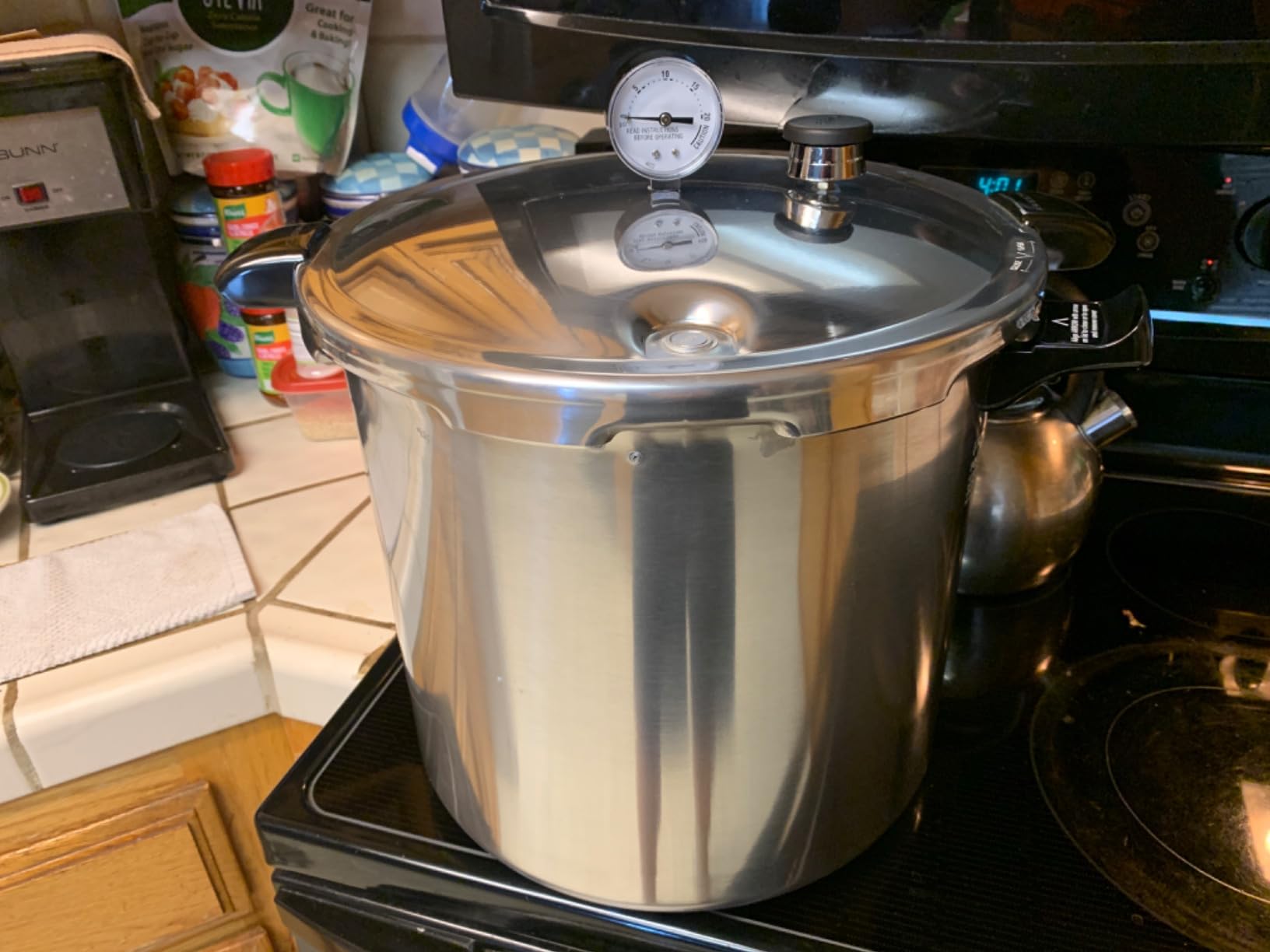
If your kitchen runs on induction, this is the version of the big Presto you actually want. It carries the same body and the same jar capacity as the 01781, with a stainless steel-clad base that adds induction compatibility without shrinking the chamber.
Capacity is unchanged at 7 quarts, 20 pints or 26 half-pints across 23 liters. Buyers switching from a coil range call out the even heating and the fact that the induction base heats faster than the plain aluminum version.
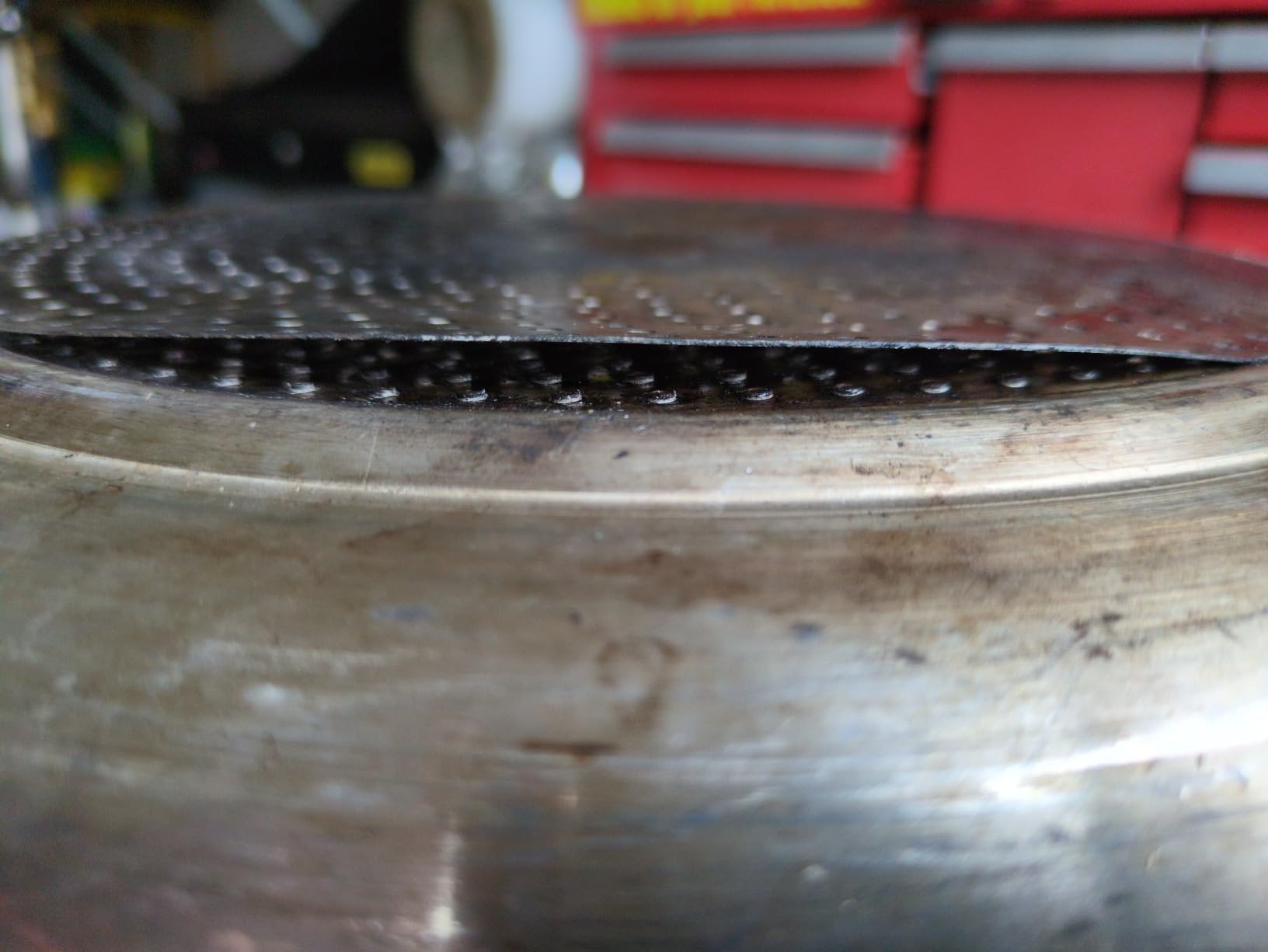
The air vent and cover lock is a genuine safety upgrade over older designs. It will only build pressure when the lid is properly closed, and it mechanically prevents the lid from coming off while the vessel is still pressurized.
It still doubles as a boiling-water canner for fruit, jam, jelly, pickles and salsa, so one pot covers both halves of the pantry. Owners note the usual aluminum trade-off: it is not ideal for highly acidic foods and can stain with use.
Why we picked it for induction kitchens
Most aluminum pressure canners simply cannot sit on an induction burner, which pushes induction households toward a smaller electric unit and a much smaller batch. This keeps the full 7-jar load and the dial gauge, and it works on gas, coil and smooth-top as well, so nothing is lost by choosing it.
Where it falls short
Nothing about the pressure system changes, so you are still watching a dial and adjusting the burner yourself. The dimensions are larger than a typical pressure cooker, so measure your cabinet before committing, especially if you plan to store it with the lid on.
4. Presto 02152 17-Quart Digital Pressure Canner: Best Electric
Presto 02152 17-Quart Digital Pressure Canner
Capacity: 17 quarts
Weight: 24.3 pounds
1485 watts at 120 volts
Pros
- Fully automated canning cycle
- No altitude pressure adjustment needed
- Stainless steel chamber resists corrosion
- Extra-tall chamber fits quart jars
Cons
- Heaviest model here at 24.3 pounds
- Only 12 jars per load
- Needs dedicated counter space
- Programming learning curve
This is the electric answer to stovetop pressure canning, and the pitch is simple: a temperature sensor holds the exact canning temperature, so you do not monitor a gauge, adjust a burner, or compensate for altitude. For anyone who has owned a Presto 23-quart for years without opening the box, the automation is the reason to finally start.
It draws 1485 watts, runs at 120 volts, and comes in 12-quart and 17-quart versions. This is the 17-quart, and the extra-tall chamber is what makes room for standard quart jars rather than forcing half-pints.
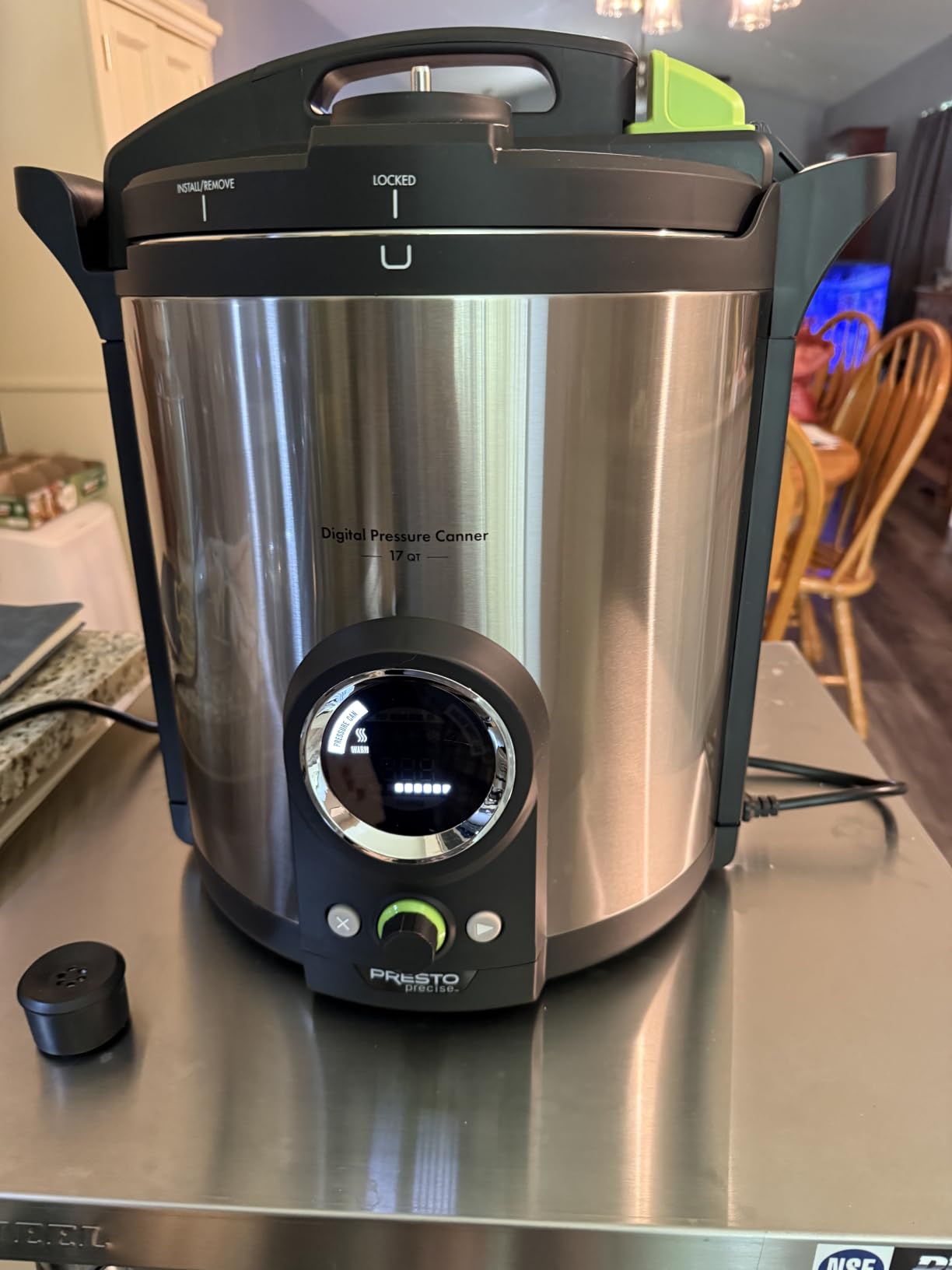
Stainless steel construction is a real step up for maintenance. It wipes clean without the staining you eventually get on aluminum, and it will not react with the acidity in tomatoes or vinegar the way an aluminum vessel will.
The control knob and LED display walk you through each step, and the canning rack is included. At 4.6 stars across more than 5,700 reviews, the recurring complaints are about size and batch count rather than safety or results.

Why we picked it as the best electric canner
Every other electric option in this roundup holds fewer jars or caps out lower. This one keeps quart jars, holds a set temperature automatically, and removes the most common beginner failure mode, which is losing track of pressure while distracted.
Where it falls short
At 24.3 pounds it is the heaviest canner we tested, and it only takes 12 jars per load against 20 pints or 7 quarts for the stovetop Presto models. For a big garden harvest you will run more cycles, and you need dedicated counter space because it is not a burner tool.
5. T-Fal 22-Quart Aluminum Pressure Canner: Best Value Large Batch
T-fal 22-Quart Aluminum Pressure Canner, 3 PSI Settings, Home Canning, Includes Racks & Canning Guide, Large Capacity, Pressure & Water Bath Canning for Vegetables, Meats, Seafood & Fruits, Silver
Capacity: 18 pints or 7 quarts
Weight: 14.8 pounds
Two racks included
Pros
- Built-in pressure weights with no loose parts
- Up to 18 pints 16 wide-mouth pints or 7 quarts
- Handles pressure and water bath canning
- Two racks and a step-by-step guide included
Cons
- Some units auto-vent before full pressure
- Gasket can leak slightly and needs reseating
- Printed manual is poorly made
- Gauge face not clearly calibrated
The T-Fal 22-quart is the middle of this roundup on price and near the top on batch size. Owners like that the pressure weight is built into the lid rather than a separate part you have to track, which removes an easy way to make a mistake.
Per load it holds up to 24 half-pints, 16 wide-mouth pints, 18 pints, or 7 quarts, and the 22-quart wall gives you room for a second rack tier. Two canning racks and a step-by-step guide ship in the box.
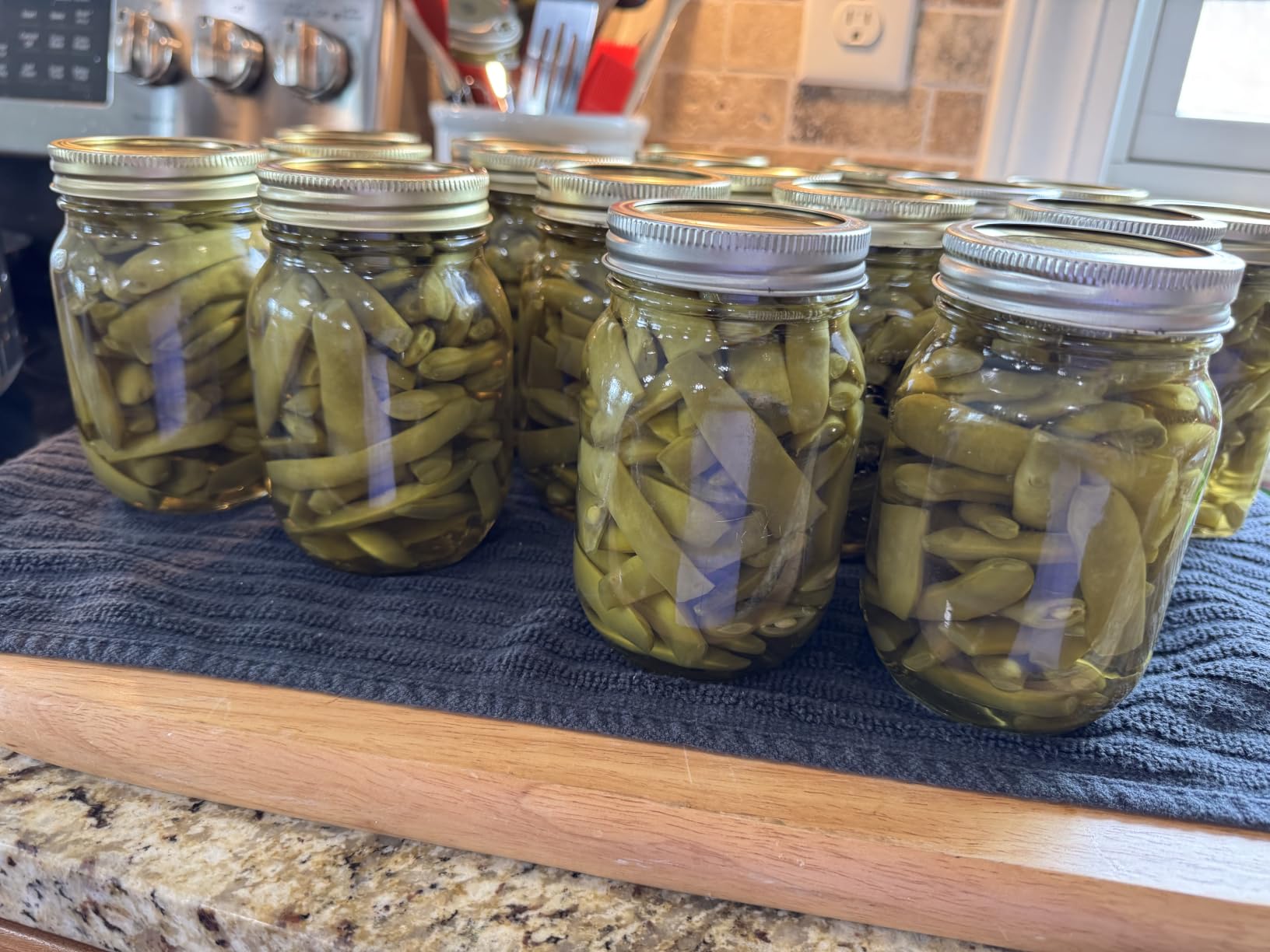
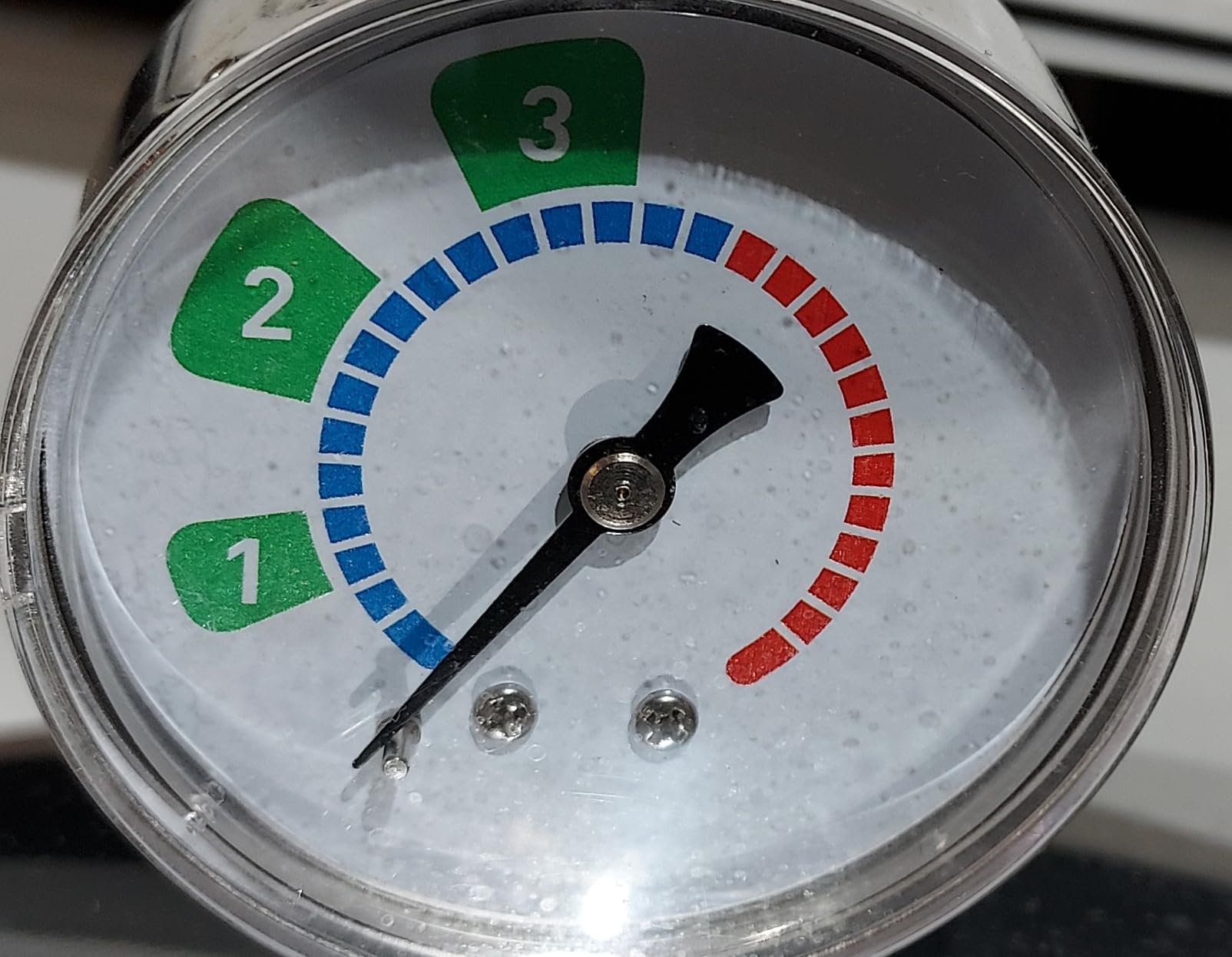
It handles both USDA pressure canning and boiling-water canning, so it covers jams and pickles as well as vegetables. The locking lid, steam release valve and easy-to-read gauge are all straightforward for a first-time buyer.
The caveat worth knowing before you buy: a minority of owners report the unit auto-venting before it reaches 15 PSI and needing very high heat to hold full pressure, plus minor gasket leaks that require depressurizing and reseating the lid. The aluminum body also scuffs and can scratch a glass cooktop.
Why we picked it as the value pick
You get a 7-quart batch with built-in pressure settings and two racks at a fraction of the cost of the models above it. For a first season or a mid-size harvest, that capacity-to-cost ratio is hard to argue with, and experienced canners frequently pick Presto and T-Fal specifically for cheaper parts availability.
Where it falls short
Its 4.4 rating is the second-lowest here, and the complaints cluster around pressure control rather than capacity. If your recipe calls for a precise 15 PSI process at altitude, the manual dial approach takes more attention than a machined weighted regulator.
6. NESCO NPC-9 9.5-Quart Smart Electric Canner: Best for a Small Kitchen
NESCO NPC‑9 Smart Electric Pressure Canner and Cooker for Home Food Preservation, 9.5‑Quart Stainless Steel with Digital Controls
Capacity: 4 quarts or 5 pints per load
9.5-quart stainless inner pot
Digital controls
Pros
- Electric operation with no heat guesswork
- Cooks steams and water baths in one appliance
- Removable nonstick inner pot is easy to clean
- Compact enough for an apartment kitchen
Cons
- Only 4 quarts or 5 pints per batch
- Wide-mouth pints are hard to grip
- Wordy instructions and a learning curve
- Loud beeps during operation
The NESCO NPC-9 answers a question the bigger electric canners ignore: what if you cannot lift, cannot watch a burner, and do not want a pot of steam in a small kitchen? It plugs into a counter outlet and runs a programmed canning cycle, and owners frequently describe it as the canner that finally removed their fear of the process.
It is a 9.5-quart stainless steel machine with a removable nonstick inner pot, and it does pressure cook, slow cook, steam and water bath in one appliance. The chamber fits 4 quart jars or 5 pints per load.
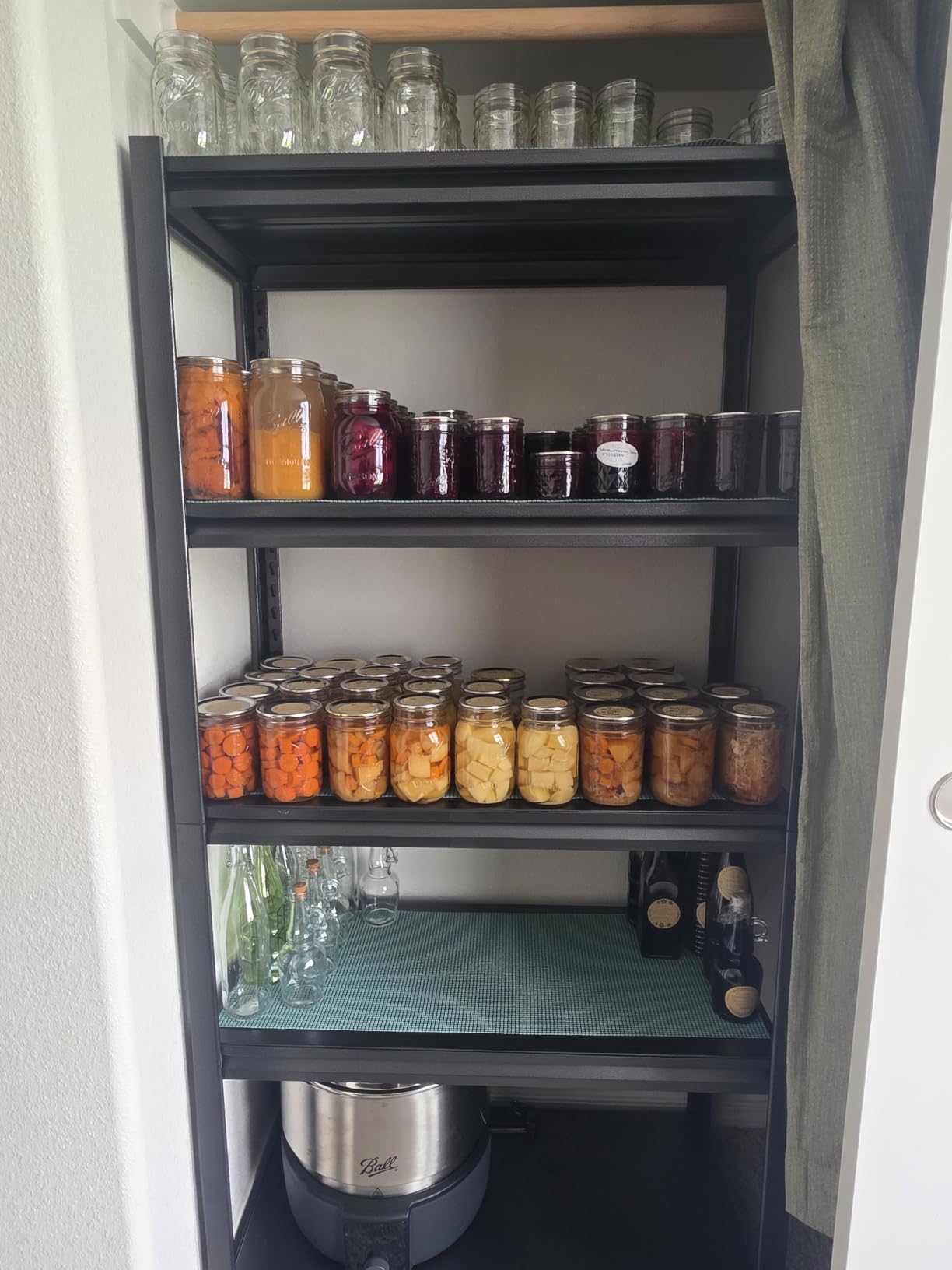
The safety hardware is well thought out: a safety lock lid, an automatic float valve and a pressure regulation system, and it includes both a standard and a high-altitude limiting valve. A removable condensation catcher keeps the finish cleaner after long sessions.
Two things to plan around. Wide-mouth pint jars are genuinely awkward to grip and lift out of the chamber, and you still have to wait for it to come up to pressure before you can step away from the kitchen.

Why we picked it for small kitchens
At this batch size it is the only appliance here you would actually store on a counter, and it doubles as a general pressure cooker so it earns its space even in months you do not can. The 4.7 rating across more than 3,300 reviews reflects how many buyers bought it for exactly that reason.
Where it falls short
A large harvest is not its job. At 4 to 5 jars per cycle, putting up 30 jars of green beans means a long afternoon of repeated batches, and each one carries its own heat-up and cooldown time.
7. Granite Ware 20-Quart Pressure Canner: Best Rust-Resistant Body
Granite Ware Pressure Canner/Cooker/Steamer, 20-Quart
Capacity: 20 quarts
Weight: 10.5 pounds
Hard anodized aluminum
Pros
- Hard anodized body resists rust and staining
- Three-piece regulator at 5 10 and 15 PSI
- Works as canner cooker and steamer
- Lightest large canner at 10.5 pounds
Cons
- Fewest owner reviews among the major brands
- Manual heat adjustment needed
- Bulky footprint at 15.75 inches
The argument for the Granite Ware is material. Its heavy-gauge hard anodized aluminum is treated at the surface level, which is why owners report it resisting rust and staining better than plain aluminum canners that discolor around the vent after a season or two.
Pressure control uses an adjustable three-piece regulator system calibrated at 5, 10 and 15 PSI, so you swap a weight rather than guess with a dial. The same pot works as a pressure canner, cooker and steamer.
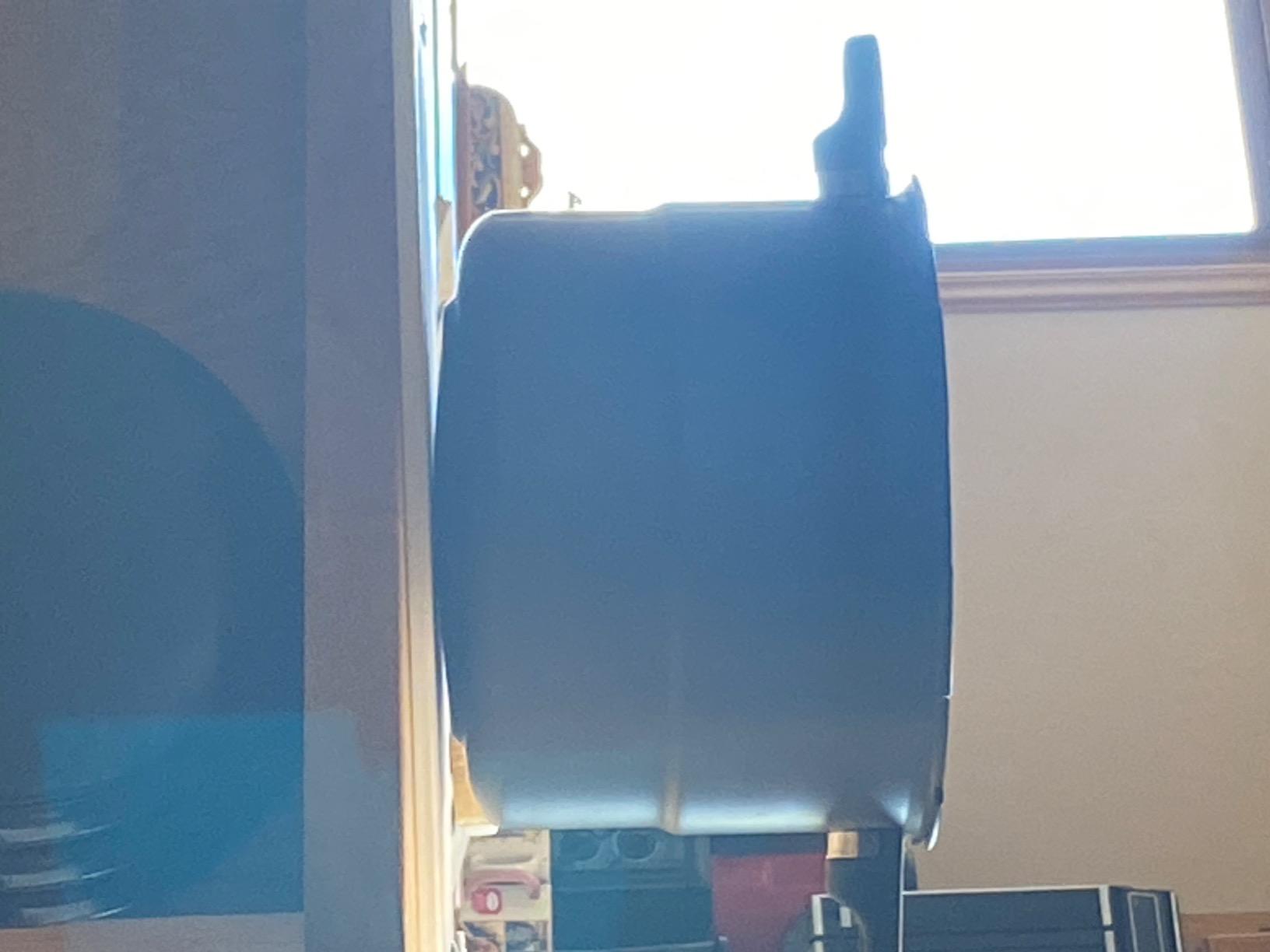
At 10.5 pounds it is the lightest canner here of this size, which makes it easier to move to the stove and to store on a shelf in the off season. Twenty quarts sits between small household cookers and the very large commercial-format pots.
Be honest about the evidence, though. At roughly 800 reviews, there is far less long-term owner feedback than for the Presto or All American models, and the manual dial-based operation still requires heat adjustment to hold pressure.
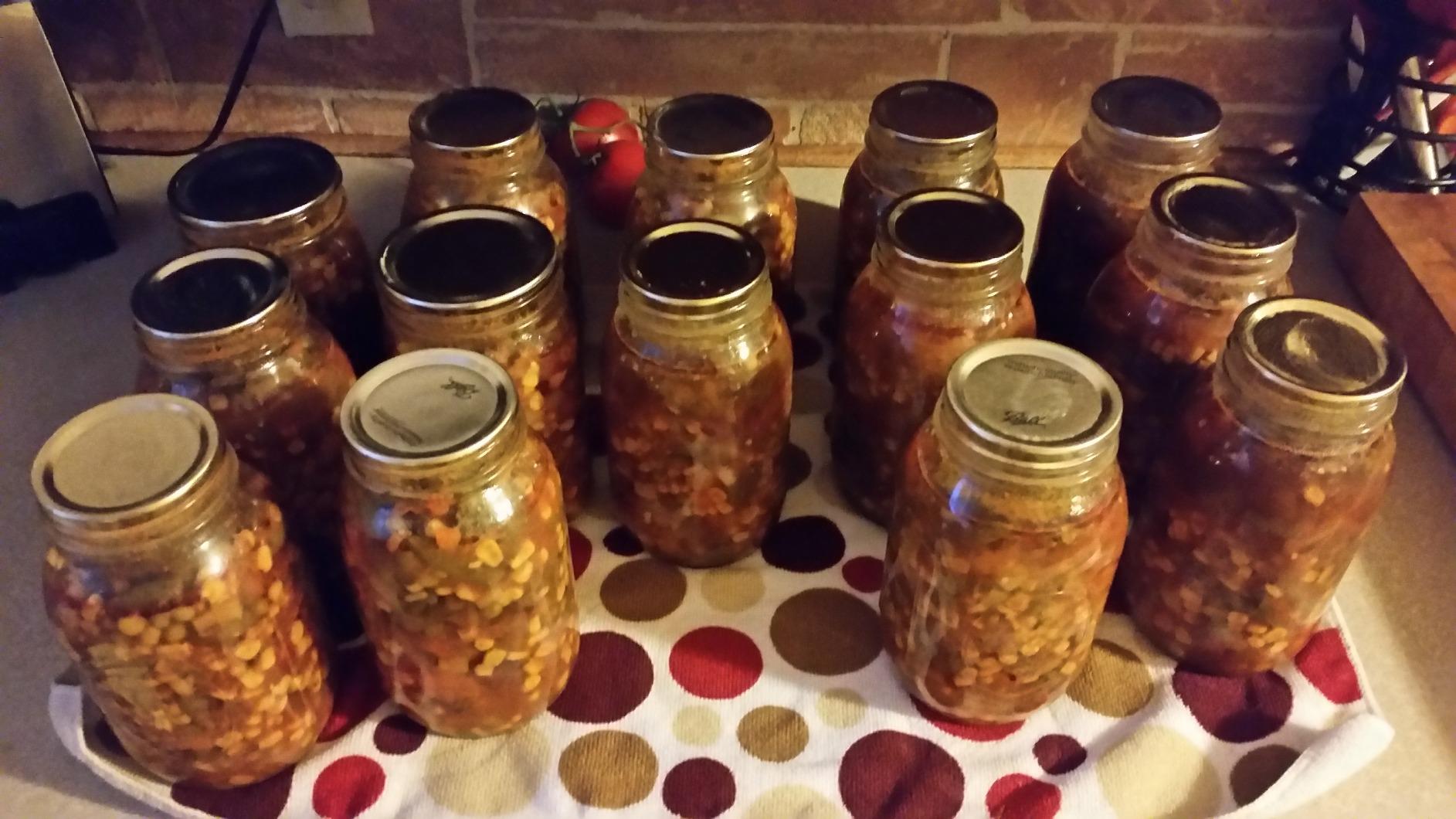
Why we picked it for corrosion resistance
If your concern is a canner that still looks presentable after five years of tomato and vinegar batches, the anodized surface is the differentiator. It also handles more cooking tasks than a canner-only design, which raises its usefulness between harvests.
Where it falls short
Thin review history means less evidence about parts support and long-term seal life, and the 15.75-inch body is bulky enough that burner and counter space matter. If parts availability is your top concern, the brands with the deepest review histories are safer bets.
8. Mirro 22-Quart Pressure Canner: Best Weighted-Gauge Handling
MIRRO 22 Qt Aluminum Pressure Canner with 3 Regulators, 5, 10 & 15 PSI
Capacity: 22 quarts
Weight: 13.7 pounds
Regulators at 5 10 and 15 PSI
Pros
- Listen for the jiggle instead of watching a gauge
- Holds steady heat with little adjustment
- Two racks allow a second jar layer
- Dual cool-touch handles and locking lid
Cons
- Staining can develop around the steam vent
- Regulator needs firm seating with two audible pops
- Not recommended for glass-top stoves
- 16-quart version lacks the stacking rack
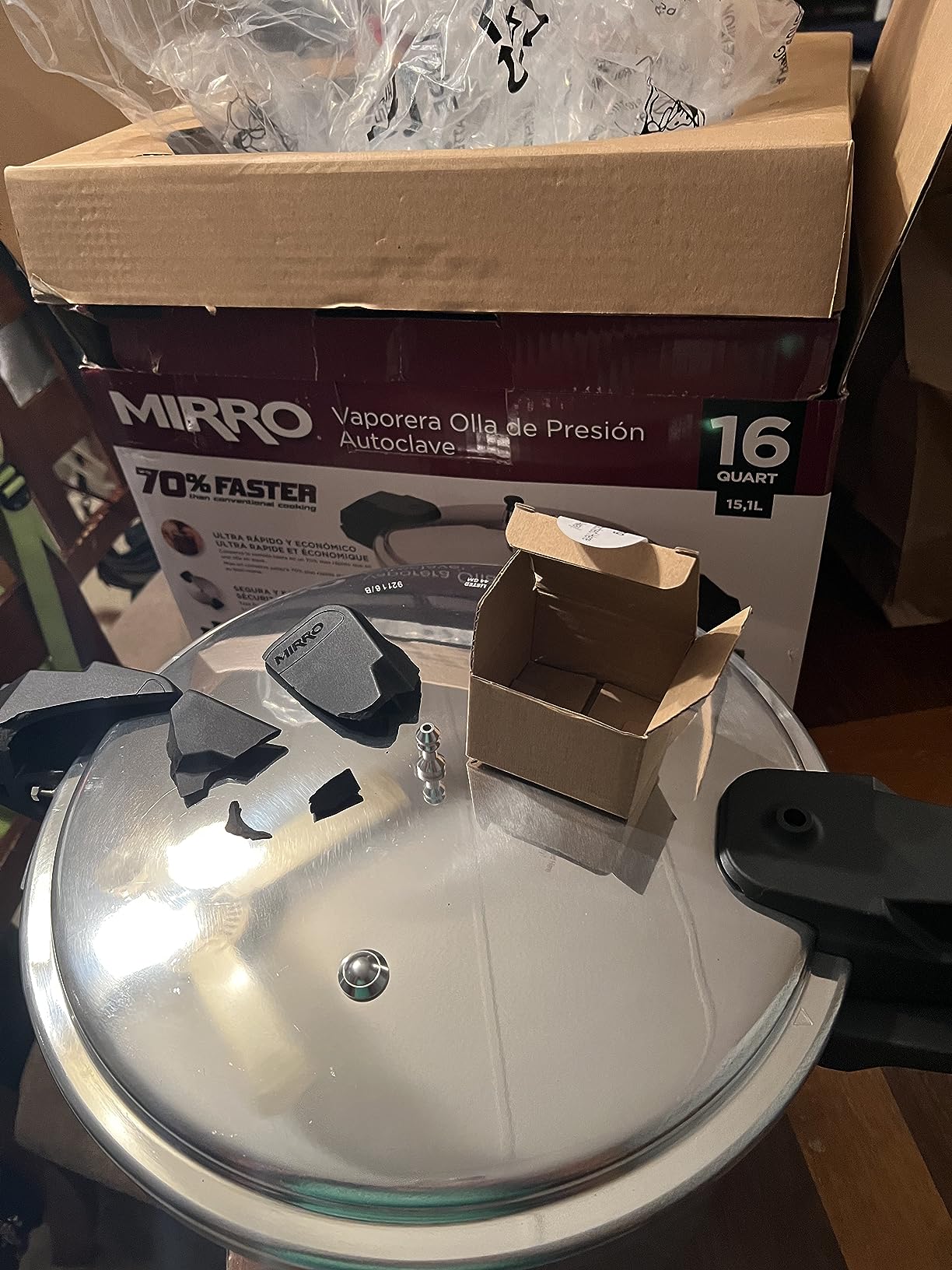
Weighted regulators change the mental model of pressure canning. Instead of watching a needle, you set the weight and listen for the characteristic jiggle, and experienced canners often find that faster and calmer than dial work. The Mirro ships three regulators covering 5, 10 and 15 PSI.
At 22 quarts it is one of the larger pots here, and the included two racks are what allow a second layer of jars, so a load can reach 7 quarts without crowding. It weighs 13.7 pounds.
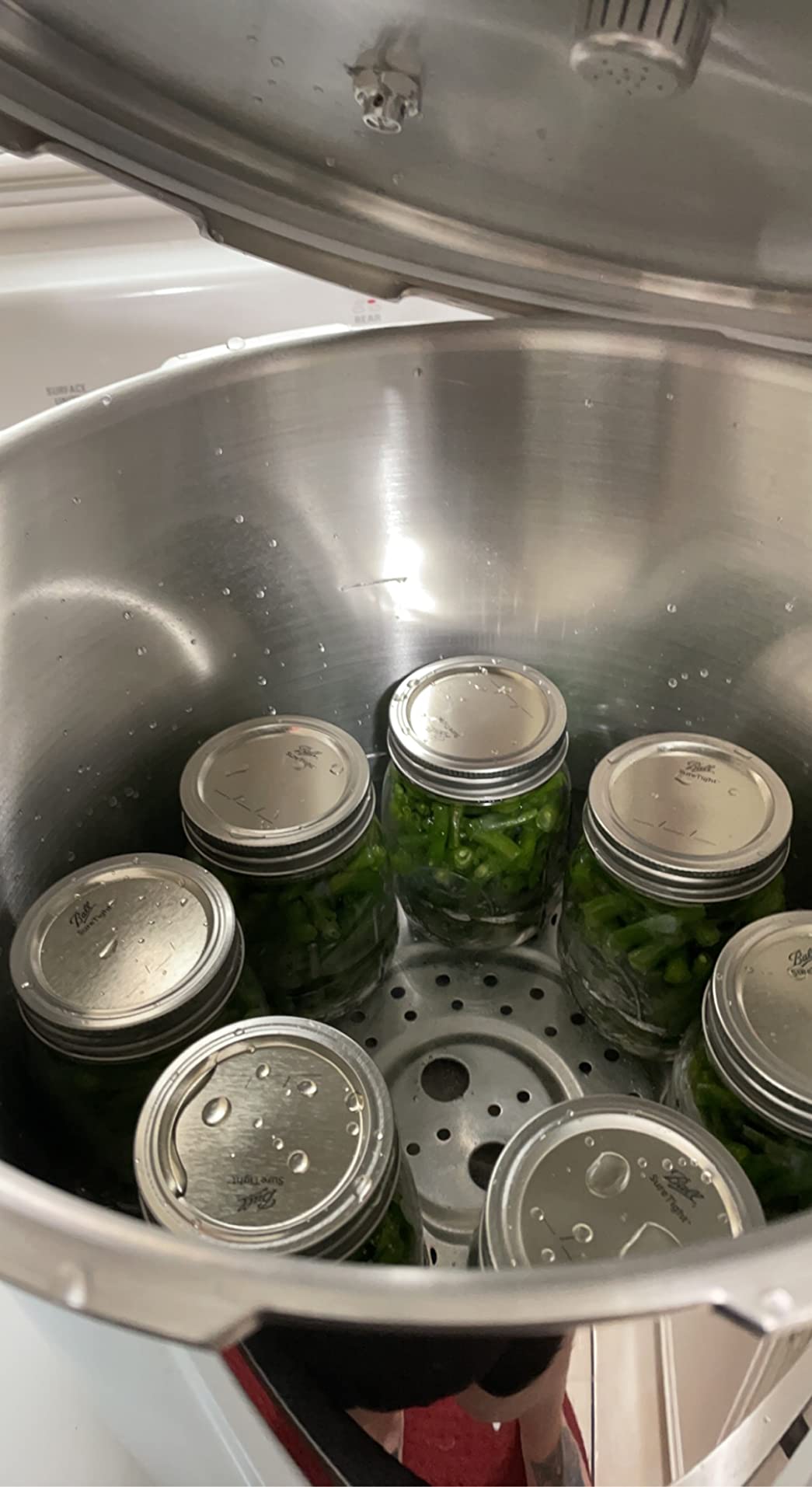
Owners report that it holds heat at a steady temperature with little adjustment, which means jars seal consistently without babysitting the burner. The locking lid and steam release valve are simple and reliable.
Two practical notes. Push the regulator firmly onto the stem until you hear two distinct pops, or the seal will not be right. And skip it if you cook on a glass-top range, since reviewers do not recommend this body for that surface.
Why we picked it for weighted-gauge handling
The 22-quart size plus two racks gives one of the better true batch counts here without moving up to a very large vessel, and the audible weight is easier to trust than a small gauge face. The dual cool-touch handles help when you are moving it empty.
Where it falls short
Aluminum still means a rust-colored stain can develop around the steam vent over time, and the model is not recommended for glass cooktops. At 4.5 stars across roughly 740 reviews, the owner base is also thin compared with the leaders.
9. Wantjoin 23-Quart Pressure Canner: Best Multi-Valve Safety System
Wantjoin Aluminum Pressure Cooker 23Qt Pressure Canner, Pressure Pot with Pressure Control for Home Kitchen or Restraurant, Commercial Pressure Cooker with Gauge
Capacity: 23 quarts
Weight: 13.3 pounds
Thickened composite base
Pros
- Six separate safety protections built in
- Composite base works on gas and induction
- Largest volume at the lowest price here
- Uncoated food-grade contact material
- Storage bag included
Cons
- Lowest rating in this roundup at 4.3 stars
- Uncoated interior scratches more easily
- Less detailed canning guidance than branded models
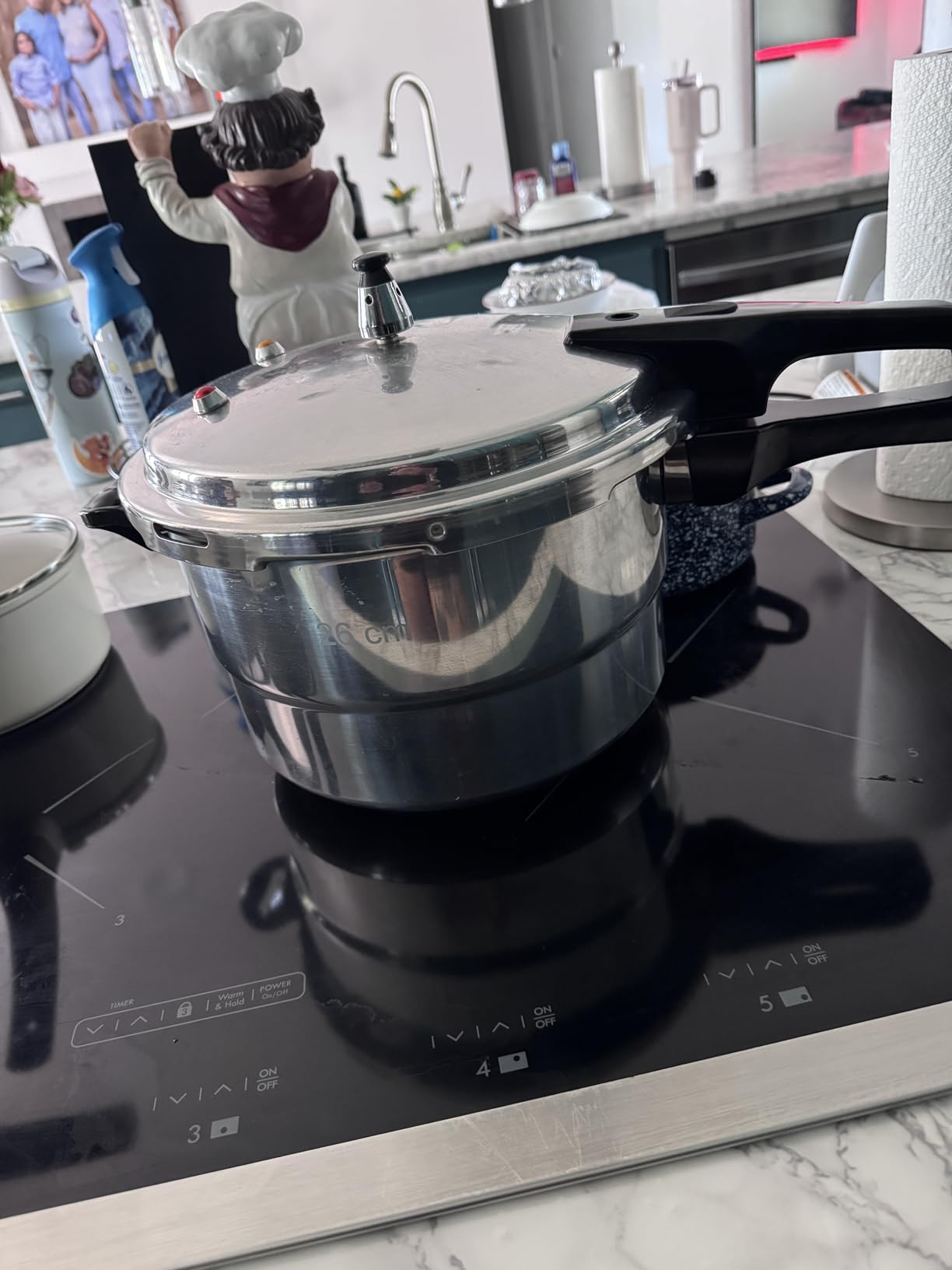
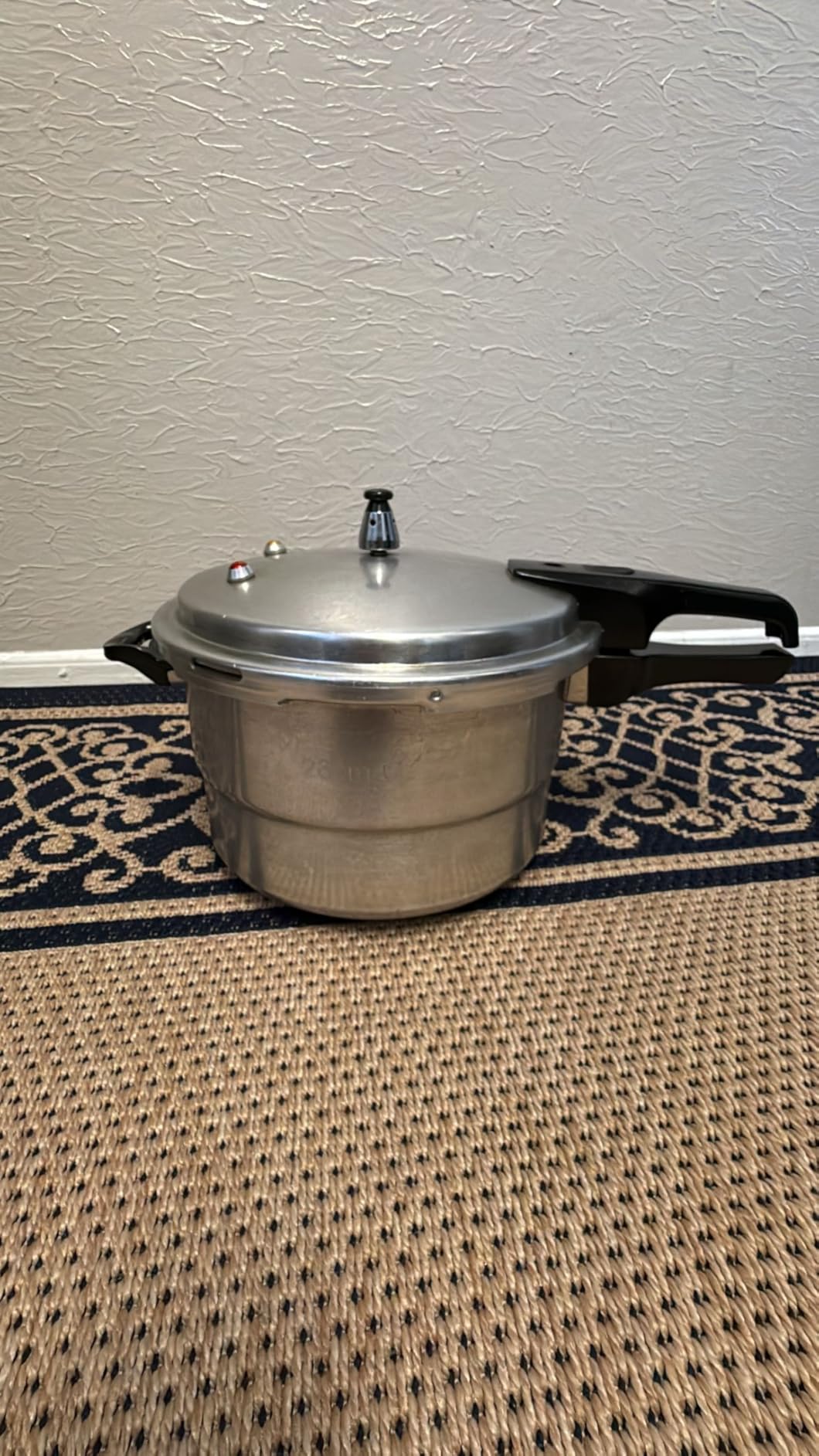
The Wantjoin stands out on hardware. It carries six distinct safety systems: an automatic lock, a check valve, a pressure limiting valve, a safety valve, an alarm valve and an anti-blocking cover. Most rivals in this roundup list two or three.
Volume is 23 quarts, with a thickened composite base rated for gas and induction stovetops and an uncoated food-grade interior. A storage bag is included, which is a small courtesy for anyone with limited cupboard space.
It also offers a wider range of smaller sizes in the same line, so if you start with this and later want a compact model for a second kitchen, the parts language and the design stay familiar.
We want to be straight about the tradeoff. Its 4.3 rating is the lowest of the ten, with 9% one-star feedback, and the marketing leans toward commercial and restaurant use rather than verified home canning. The uncoated interior scratches more easily than a coated or stainless chamber.
Why we picked it for its valve array
If your priority is the widest set of mechanical protections per dollar, nothing else here matches it. The induction-capable base and 23-quart volume also mean it covers both large batches and modern cooktops.
Where it falls short
The rating gap is the honest signal. At 4.3 stars from about 780 reviews, this is the model in the roundup where confidence is lowest, and the canning guidance that ships with the branded models is more detailed than what you get here.
10. BreeRainz 5.3-Quart Stovetop Canner: Best for Small Batches
BreeRainz 5.3 Qt Stovetop Pressure Cooker & Canner, 10 PSI Induction Compatible Aluminum Pressure Canning Pot, Fast Cooking 70% Faster, Safe Triple Valve System, for Home & Small Kitchens
Capacity: 5.3 quarts
Holds stable 10 PSI
Induction-compatible base
Pros
- Compact size for apartments and small kitchens
- Holds a stable 10 PSI for preservation
- Clad base works on gas electric ceramic and induction
- No electronics that can fail
- A rack is included
Cons
- Smallest batch in this roundup
- Smallest review base at 181 ratings
- Aluminum body means less usable volume than dimensions suggest
Most of this roundup assumes a full garden and a stove with room. The BreeRainz 5.3-quart covers the opposite case: a couple, an apartment kitchen, or someone who wants to can sauces and soups rather than 40 jars of beans at once.
It holds a stable 10 PSI, which is the level many electric units struggle to maintain for preservation work, and it uses a mechanical triple safety system: a pressure regulator valve, a safety valve and a self-locking lid.
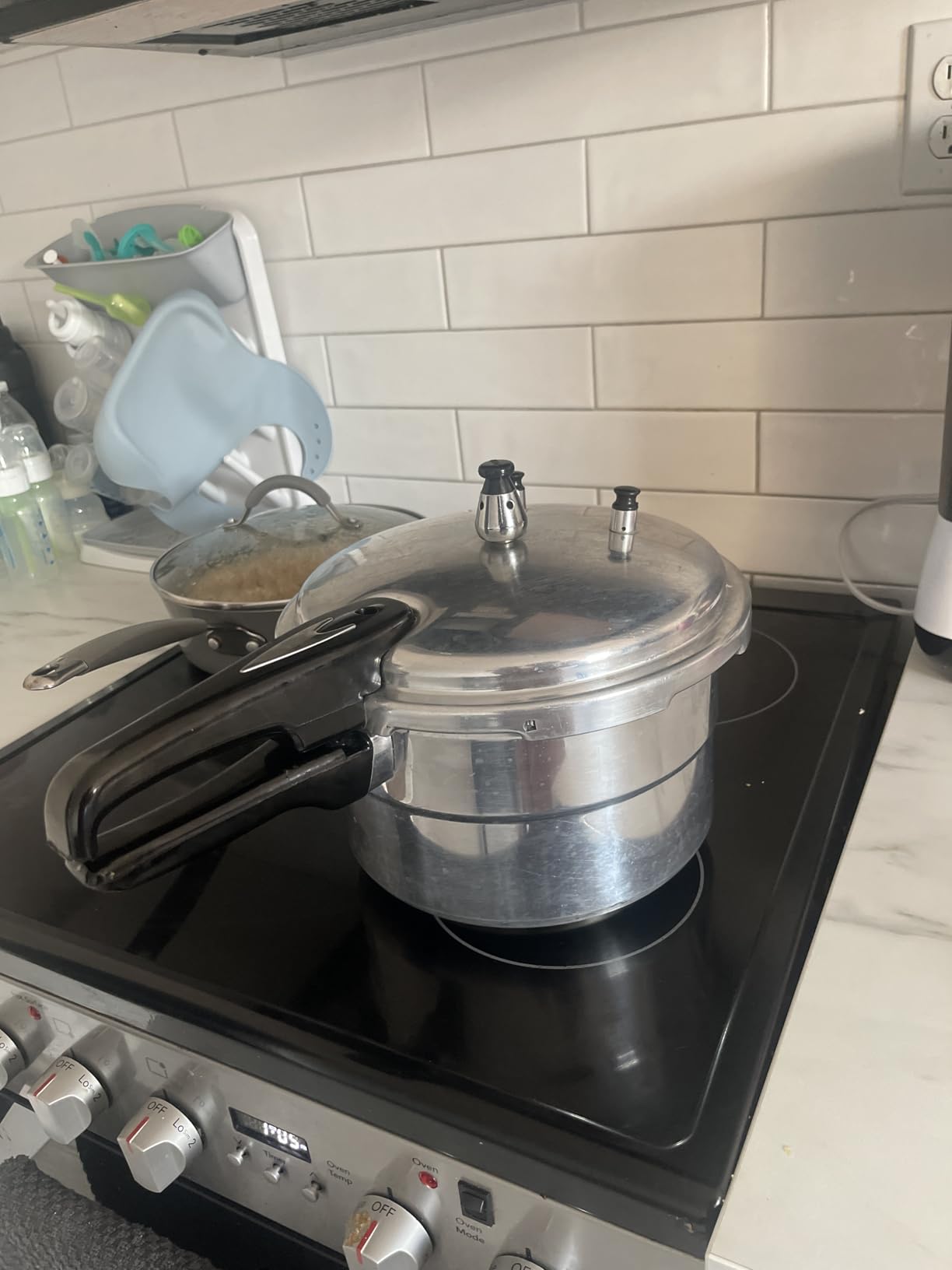
There are no electronics, which removes the most common failure mode of digital appliances entirely. The stainless steel clad base works on gas, electric, ceramic and induction cooktops, and detachable sealing parts make cleaning and gasket replacement simple.
A rack ships in the box for steaming and canning a small number of jars. Treat it as a starter canner for a household of one or two rather than a harvest tool.
Why we picked it for small batches
At 5.3 quarts it is the only genuinely compact stovetop canner here, and a stable 10 PSI from a purely mechanical design is a meaningful safety story. For a first batch or a second kitchen, it is the lowest-commitment way into pressure canning.
Where it falls short
It is not a bulk option. With 181 ratings, it also has by far the thinnest review history in the roundup, and the stainless base reduces the usable pot volume below what the outside dimensions suggest.
How to Choose a Pressure Canner: 7 Factors That Decide It
1. Capacity and jar count, not quart volume
Quart volume is marketing; jar count is what fits your rack. The 23-quart Presto models hold 7 quarts, 20 pints or 26 half-pints. The All American 915 is smaller at 15.5 quarts and holds 7 quarts or 10 pints. The NESCO NPC-9 takes 4 quarts or 5 pints. If you want 14 quart jars, the 23-quart and 22-quart models are the realistic answers.
2. Dial gauge or weighted gauge
A dial gauge shows pressure on a needle and needs periodic accuracy checks. A weighted gauge uses a machined regulator weight and gives audible feedback, needs no calibration, and works at altitude without adjustment. The Presto 01781, 01784, T-Fal, Mirro, Granite Ware and Wantjoin use dials or weights; the All American uses a machined weight only. Experienced canners often prefer the weight for low-attention operation.
3. Gasket or metal-to-metal seal
Most canners here seal with a rubber gasket that ages and needs periodic replacement, and parts availability matters more than people expect. The All American family seals metal to metal and consumes no wear parts. That is the single strongest argument for spending more on that design.
4. Stovetop compatibility and weight limits
Confirm your burner type before buying. Plain aluminum bodies are not induction ready, so you need the Presto 01784 with its stainless clad base, or the Wantjoin and BreeRainz composite bases. On glass or ceramic cooktops, check the manufacturer’s weight limit, because a fully loaded canner is heavy and repeated cycles can stress the surface.
5. Electric or stovetop
Electric removes burner management and heat in the kitchen. The tradeoff is batch size and countertop footprint, and, in the case of automatic units, a separate safety discussion covered below. A stovetop canner is still the fastest route to large batches.
6. Certification and documentation
Look for a manufacturer that documents a USDA-recommended pressure canning method, and check whether the model is UL listed. Vintage and legacy brands can lose parts support over decades, so a brand with a long review history and current service is a safer long-term bet than an obscure listing.
7. What you will actually cook
There is a real never-can list. Do not pressure can pasta, rice, dairy, plain pumpkin butter, bananas, flour, and high-fat red meat, because the fat and starch content interferes with processing. What you should can: green beans, corn, carrots, potatoes, soups, chilis, dried beans, mushrooms, poultry, seafood and properly formulated meat stocks.
Pressure Canning Safety Mechanics: Headspace, Jars and the Lid Lock
Most pressure canning mistakes are mechanical rather than food-related, and they are the same four questions that show up again and again in canning forums. Here are the answers, plainly.
Can jars touch the side of the pressure canner?
Jars may touch each other, but they should not touch the side wall of the canner. The rack has to stay fully seated so heat and pressure reach every jar evenly, and wall contact is exactly how you get an under-processed jar in the middle of the batch. Keep a finger-width of clearance around the perimeter where the jar geometry allows it.
What happens if you leave too much headspace?
Excess headspace means the food may not have received the full heat treatment before the lid is sealed, which raises the botulism risk on low-acid foods. Use the exact headspace the tested recipe specifies for the jar size, no more. If you must choose between too little and too much, follow the recipe rather than eyeballing it.
How tight should the lid be?
Tighten until the lid locks onto the canner’s locking tabs. Hand tight is correct, and over-tightening is its own problem, especially on gasket models where excess thread pressure can distort the seal. On a metal-seal design like the All American, the seal is set by the clamp engagement rather than by thread pressure, so it stops when it stops.
Before your first batch of food
Run a practice batch first. Put jars of plain water in your canner, process them exactly as the manual describes, and time every stage: heat-up, pressure, cooldown and depressurization. It costs one afternoon and it teaches you the sounds, the timings and the release sequence without any risk to food.
Electric Pressure Canners: The Safety Verdict
Electric and automatic pressure canners are the most contradictory corner of this category right now, so here is the direct position we take. Some electric units claim a USDA-recommended canning method, but that claim is not the same as having been tested by the National Center for Home Food Preservation to the standard applied to a stovetop canner with a dial or weighted gauge.
A stovetop canner holds a defined pressure that a tested recipe was validated against. An automatic electric unit holds a temperature the manufacturer programmed. That is a meaningful difference, and it is why some experts advise avoiding electrics for shelf-stable canning entirely.
Our read: if you want to put up food you will rely on in an outage, use a stovetop canner. If you have a small kitchen, no burner headroom, or physical limits on lifting heavy cookware, an electric canner such as the NESCO NPC-9 is still a legitimate choice for canning, and it is included in this roundup for that reason. Whichever you choose, verify current guidance from the National Center for Home Food Preservation and follow the manufacturer’s manual for the exact model.
Frequently Asked Questions
Is there a pressure canner that doesn’t require a gasket?
Yes. The All American family seals metal-to-metal with no gasket consumable, so there is no rubber part to replace on a schedule. Presto, Mirro, NESCO, T-Fal, Granite Ware and Wantjoin all use a rubber gasket that will need replacing eventually.
Can jars touch the side of a pressure canner?
Jars may touch each other but should not touch the side wall. The canning rack must stay seated, and wall contact can leave a jar under-processed. Keep clearance around the perimeter so heat and pressure reach every jar evenly.
What happens if you leave too much headspace when pressure canning?
Excess headspace can mean the food is not fully processed before the lid is sealed, which raises botulism risk on low-acid foods. Use the exact headspace the tested recipe specifies for your jar size.
How tight should the lid be when pressure canning?
Tighten until the lid locks onto the canner’s locking tabs. Hand tight is correct and over-tightening is its own hazard on gasket models. On a metal-seal design the seal is set by the clamp rather than by thread pressure.
Is it worth buying a pressure canner?
Yes, if you want to can low-acid foods such as vegetables, beans, meats, poultry, seafood and soups. It is not necessary if you only can high-acid foods, which a water bath canner handles perfectly well.
What size pressure canner do I need?
For 14 quart jars you want a 22 or 23-quart model. The 23-quart Presto and 22-quart T-Fal and Mirro handle 7 quarts per load, while a 15.5-quart All American 915 holds 7 quarts or 10 pints and a 9.5-quart NESCO holds 4 quarts.
Are electric pressure canners safe for home canning?
It depends on the model and on how you use it. Some electric units claim a USDA-recommended method but have not been tested by the National Center for Home Food Preservation to the standard applied to a stovetop canner. Check current NCHFP guidance and the manufacturer manual for your exact model before canning for shelf storage.
Can I use a pressure canner as a pressure cooker?
Yes. Every stovetop model in this roundup doubles as a pressure cooker and a boiling-water canner for fruit, jam, jelly, pickles and salsa. The shorthand people use: a canner can cook, but a cooker cannot can.
Our Final Verdict
The best pressure canners for home canning depend on how you batch and what you cook. For most households putting up a real garden harvest, the Presto 01781 23-quart is the pick: 7 quarts, 20 pints or 26 half-pints, the deepest review history in the category, and a 12-year warranty behind it.
If you cook on induction, take the Presto 01784 and give up nothing but the burner management. If you want the last canner you will ever buy and do not mind the weight or the up-front cost, the All American 1930 removes the gasket from your life permanently. If your kitchen is small, the NESCO NPC-9 or the BreeRainz 5.3-quart keeps canning within reach.
Whichever one you choose, run a water-only practice batch first, follow a tested recipe exactly, and check current National Center for Home Food Preservation guidance for your altitude before your first jar of food goes in.