
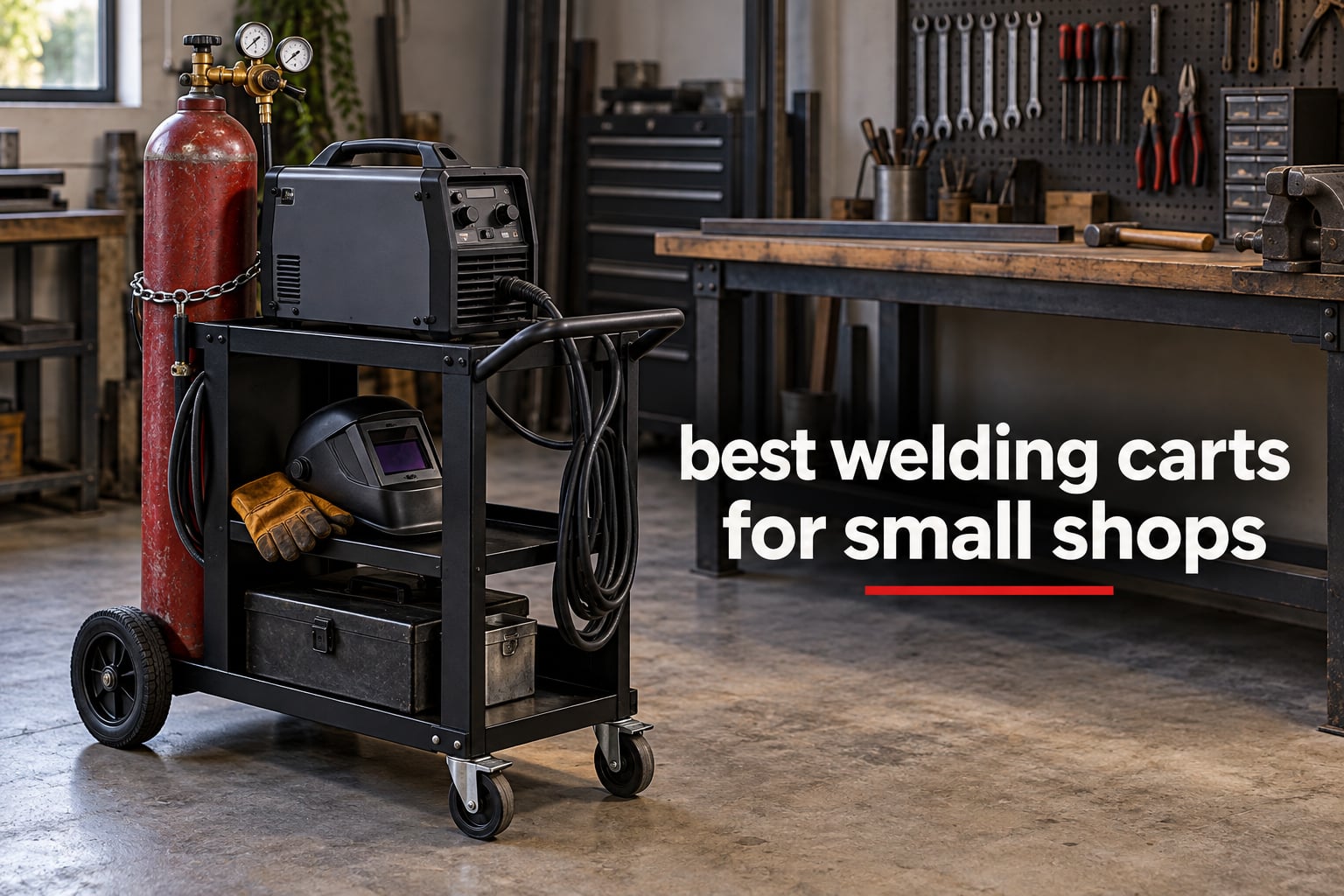
The best welding carts for small shops are the ones that fit your doorway before they impress anyone with their capacity. In a single-car garage or a one-bay unit, the machine has to roll out of the way so you can park, and it has to come back without dragging a gas bottle across the floor.
Our pick for the most small shops is the VEVOR 3-Tier Welding Cart with 400 lb capacity. Its 28-inch-deep, 11.4-inch-wide frame clears a standard garage door opening sideways, two cylinder slots take full-size bottles with stainless steel chains, and the 23.2-pound empty weight means one person can move a loaded setup across a shop floor. The competition mostly fails on one of three counts: a top shelf too small for a real welder, a cylinder chain that lets the tank shift, or casters that quit after a few months.
We compared ten carts across load rating, cylinder retention, caster size, shelf geometry and assembly. Below is the full list, followed by the sizing math that decides whether any of them fits your floor plan.
Table of Contents
Top 3 Welding Cart Picks for Small Shops (October 2026)
VEVOR 3-Tier 400 lb Cart
- 400 lb static and 370 lb dynamic capacity
- Two cylinder slots with stainless steel chains
- 2.9-inch front swivel and 7-inch rear casters
- 28 in D x 11.4 in W footprint

Chicago Electric 100 lb Cart
- Formed steel with powder coat finish
- Tilted top shelf for control access
- Two safety chains for one cylinder
- Torch hook and two lower shelves

YESWELDER 2-Tier 4-Drawer Cart
- 245 lb capacity with four drawers
- Dual cylinder slots with safety chains
- 27.8 in D x 11.02 in W footprint
- Rust-proof painted steel plate
Best Welding Carts for Small Shops in 2026: Quick Overview
Start with the number nobody quotes: your real load. A typical 110V MIG welder runs 40 to 60 lb, a full 125 CF argon/CO2 bottle adds 80 to 100 lb, and a modest pile of consumables, wire and a helmet adds roughly 30 lb. That puts most single-garage setups between 150 and 190 lb before you add a second machine. A 245 lb cart clears that with margin; a 100 lb cart does not.
Then check the footprint against your floor. The narrowest frames in this group measure around 11 to 12.6 inches wide and 28 to 28 inches deep, which slides through a garage door opening without angling. The widest options run 38 to 40.5 inches deep and trade that clearance for a much larger bottom tray, which is fine if the cart lives in a corner and never leaves the bay.
The carts fall into three practical tiers. At the budget end you get imported frames with generous capacity claims and small shelves. In the mid range you get powder-coated steel, better casters and cylinders that actually stay put. At the top you are buying enclosed storage, cabinet locks or raw plate thickness, and paying for it in extra weight to move.
| Product | Specs | Action |
|---|---|---|
| VEVOR 3-Tier Welding Cart 400 lb |
|
Check Latest Price |
 Weldpro 3-Tier Heavy Duty 400 lb Weldpro 3-Tier Heavy Duty 400 lb |
|
Check Latest Price |
| YESWELDER 2-Tier Cart with 4 Drawers |
|
Check Latest Price |
| Chicago Electric 100 lb Welding Cart |
|
Check Latest Price |
 Eastwood 3-Tier Portable Welding Cart Eastwood 3-Tier Portable Welding Cart |
|
Check Latest Price |
 Klutch 2-Tier Cart with Locking Cabinet Klutch 2-Tier Cart with Locking Cabinet |
|
Check Latest Price |
 JEGS Steel Welding Cart with Drawers JEGS Steel Welding Cart with Drawers |
|
Check Latest Price |
 TOOLIOM 3-Tier Cart with Tilted Top TOOLIOM 3-Tier Cart with Tilted Top |
|
Check Latest Price |
 Foxngear Heavy Duty 3-Tier Cart Foxngear Heavy Duty 3-Tier Cart |
|
Check Latest Price |
 AQNIEGEP 400 lb 3-Tier Welding Cart AQNIEGEP 400 lb 3-Tier Welding Cart |
|
Check Latest Price |
How We Chose These Welding Carts
We looked at published specifications first, then read buyer feedback for the same failure patterns. The categories that separated the good carts from the disappointing ones were consistent across the group.
Frame stiffness under load. Owners of light-gauge frames report flexing that shows up as arc instability and loosening bolts a few months in. Heavy-gauge carts cost more up front and hold their fasteners.
Caster survival. The single most common long-term complaint is caster failure, not frame failure. Small 2-inch front casters crack on cracks in the concrete and on gravel driveways. Larger rear wheels of 6 to 7 inches change how a loaded cart behaves.
Chain retention. A cylinder that can lift off its slot when you cross a threshold defeats the purpose of the cart. Stainless steel chains routed through proper slots hold where thin straps do not.
Shelf fit. Several carts advertise 350 or 400 lb and then cannot hold a mid-size inverter. Shelf width, not capacity, decides whether your machine actually sits level.
Community feedback also flags rust and powder-coat chipping in damp garages, plus assembly time as a real factor. Most of these arrive flat-packed, and an hour on a Saturday is the difference between a cart you use and a carton in the corner.
1. VEVOR 3-Tier Welding Cart, 400 lb Capacity – Best Overall for Small Shops
VEVOR Welding Cart, 3-Tier Welder Cart Heavy Duty 400 LBS Weight Capacity
400 lb static and 370 lb dynamic capacity
Three tiers plus two cylinder slots
28 in D x 11.4 in W x 23.6 in H
Pros
- Handles a full machine and gas load without visible flex
- Two cylinder slots with stainless steel safety chains
- 7-inch rear casters clear cracks and gravel
- Lightest frame in the group at 23.2 lb
- Most owner feedback volume of any cart here
Cons
- Flat-pack assembly runs about an hour or more
- Top shelf only suits compact inverter welders
- Soft bolts and thinner-than-expected sheet on some units
This is the cart we keep coming back to for tight shops. The 11.4-inch width and 28-inch depth mean it goes through a garage door without the turn-and-squeeze routine, and the lower tray stretches the full 28 inches so a full-size bottle sits at the back without overhanging the frame.
The load numbers are unusually honest for this class: 400 lb static and 370 lb dynamic. That gap matters because a rolling load is always less than a parked one, and manufacturers who quote only the static figure tend to leave you short.
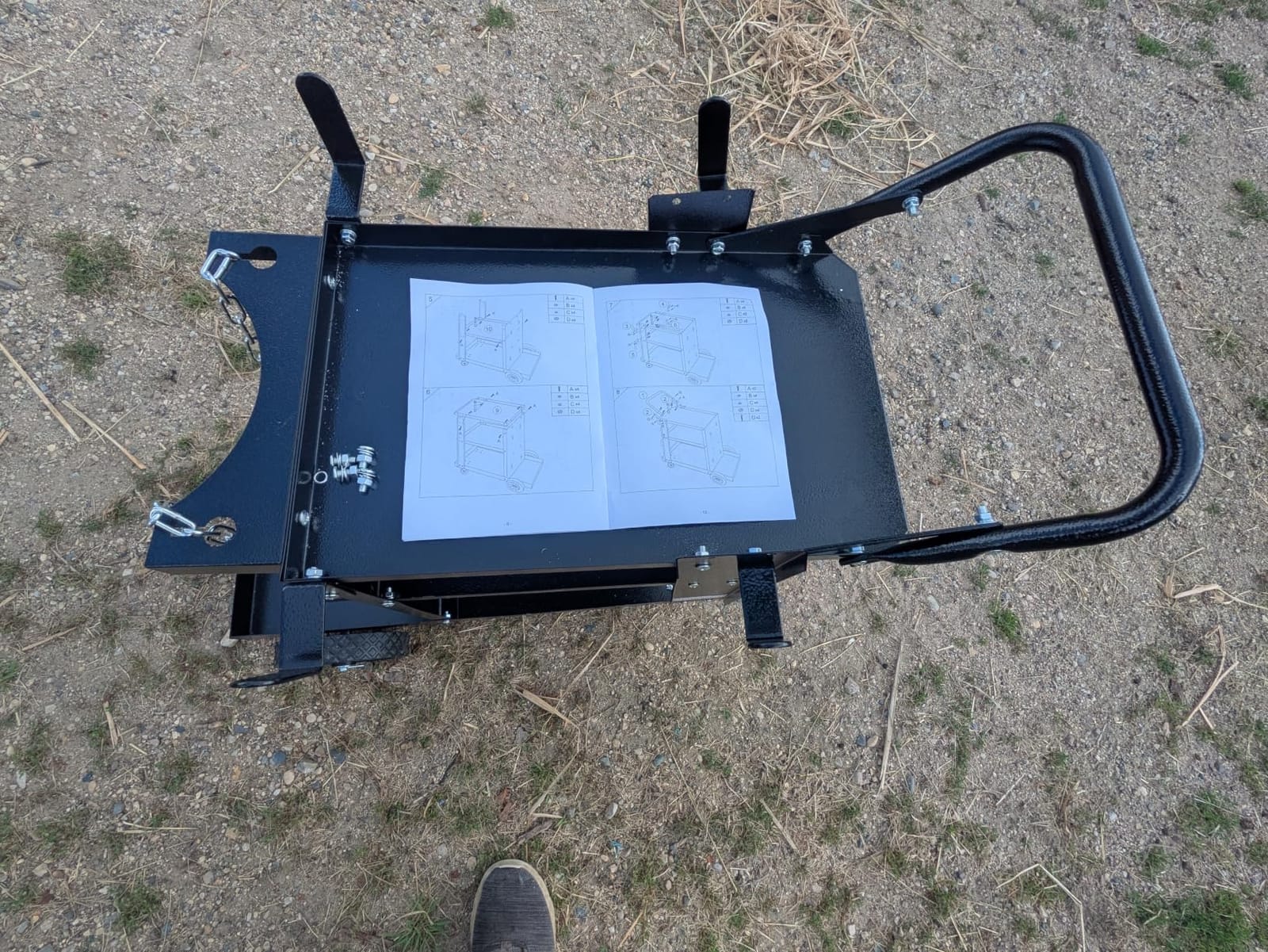
Owner feedback splits neatly. Buyers like the value, the three shelves and smooth rolling. The gripes cluster around assembly, which takes roughly an hour for most people, and the top shelf, which measures 11 by 18.1 inches and only sits a compact inverter level without flipping it or reversing bolts.
The front 2.9-inch swivel casters and 7-inch rear casters are a sensible split. The rear wheels carry the load over cracks, and the swivels let you pivot the cart in a bay that is barely wider than the cart itself.
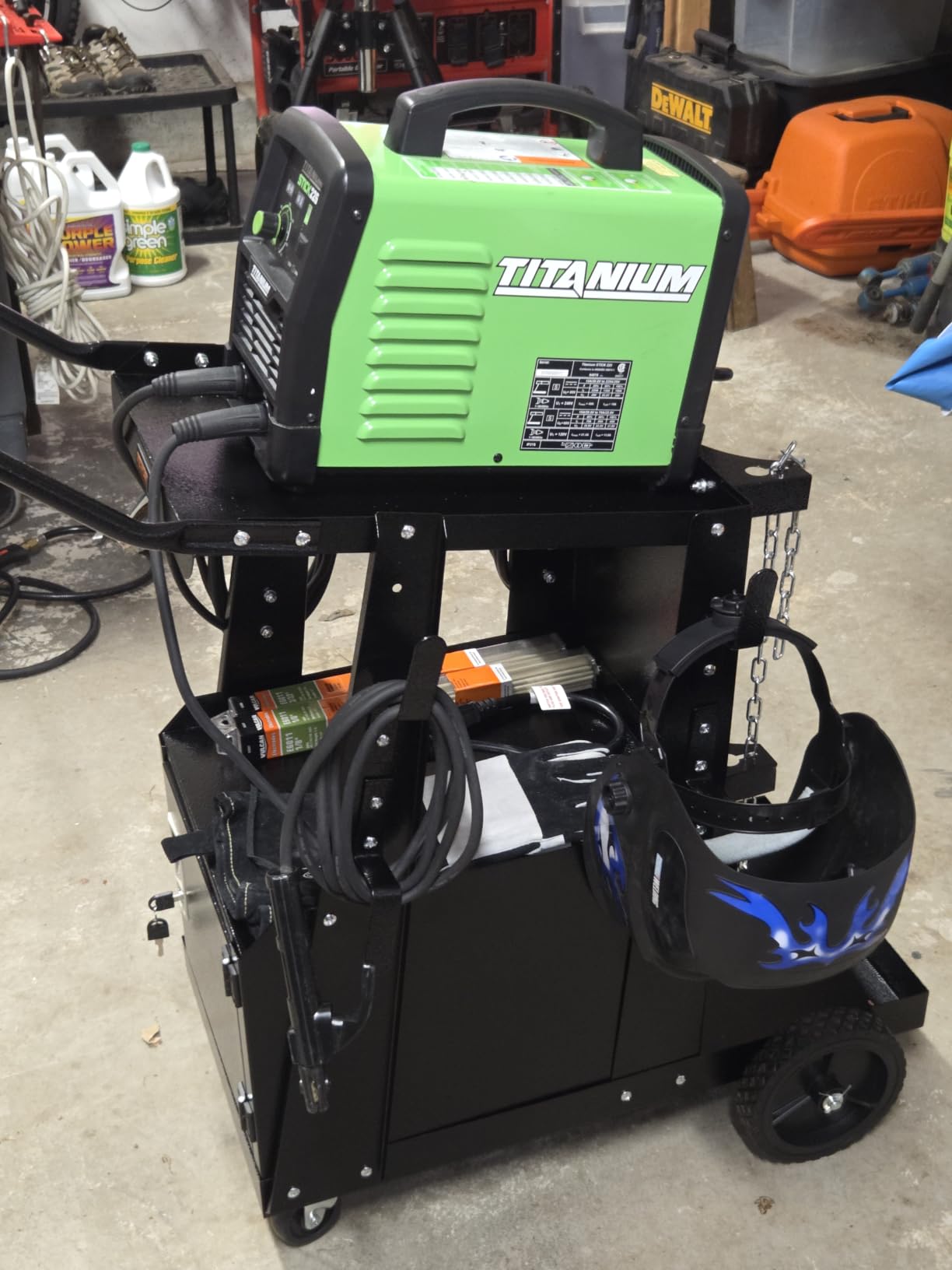
Will it fit your garage door opening?
At 11.4 inches wide and 23.6 inches tall, this cart passes through a standard residential garage door opening straight on, with no angling. That single measurement is why it wins in single-car garages where the cart has to be parked at the wall before the car comes in.
The 28-inch depth still gives you a 28-inch-long bottom tray, so you are not trading away storage for clearance. The adjustable inclined top shelf is a small touch that keeps machine controls readable while you work.
What should you watch before buying?
Measure your welder first. The top tray is 11 by 18.1 inches, and anything wider than that sits crooked or needs modification. Some owners also report thinner sheet metal and soft bolts, so plan to tighten hardware again after the first few months of use.
Wheels and casters are the component most likely to disappoint relative to that 400 lb claim. If you are on rough concrete, add a caster upgrade plan to your maintenance list rather than assuming the rating covers everything.
2. Weldpro 3-Tier Heavy Duty Welding Cart, 400 lb – Best Reinforced Frame
Weldpro 3-Tier Heavy Duty Welding Cart, Welder Cart for MIG/TIG Welder & Plasma Cutter, 400Lbs Capacity Rolling Welding Trolley with 360°Swivel Wheels & Safety Chains
400 lb static on thickened steel plate
Trays up to 33.1 in long
Stainless chains for 125 CF cylinders
40.5 in D x 18.2 in W x 30.7 in H
Pros
- Thickened steel resists deformation at full load
- Oversized bottom tray for helmets gloves and rods
- Chains rated for cylinders up to 125 CF
- Wobble-free swivel front wheels roll quietly
- Assembles in 15 to 20 minutes
Cons
- Longest and deepest footprint in the group
- Highest price of the three-tier carts
- Brackets and hooks tuned to Weldpro machines
This is the cart you buy when a flexing frame is the thing you cannot accept. The construction uses thickened high-strength steel plate with a textured anti-rust finish, and owners consistently describe it as rigid at its full 400 lb rating rather than merely surviving it.
The storage layout is the real story. Upper and middle trays measure 20.9 by 13 inches, and the enlarged bottom tray runs 33.1 by 13.8 inches, which holds a helmet, gloves and a box of rod without stacking anything on the floor.
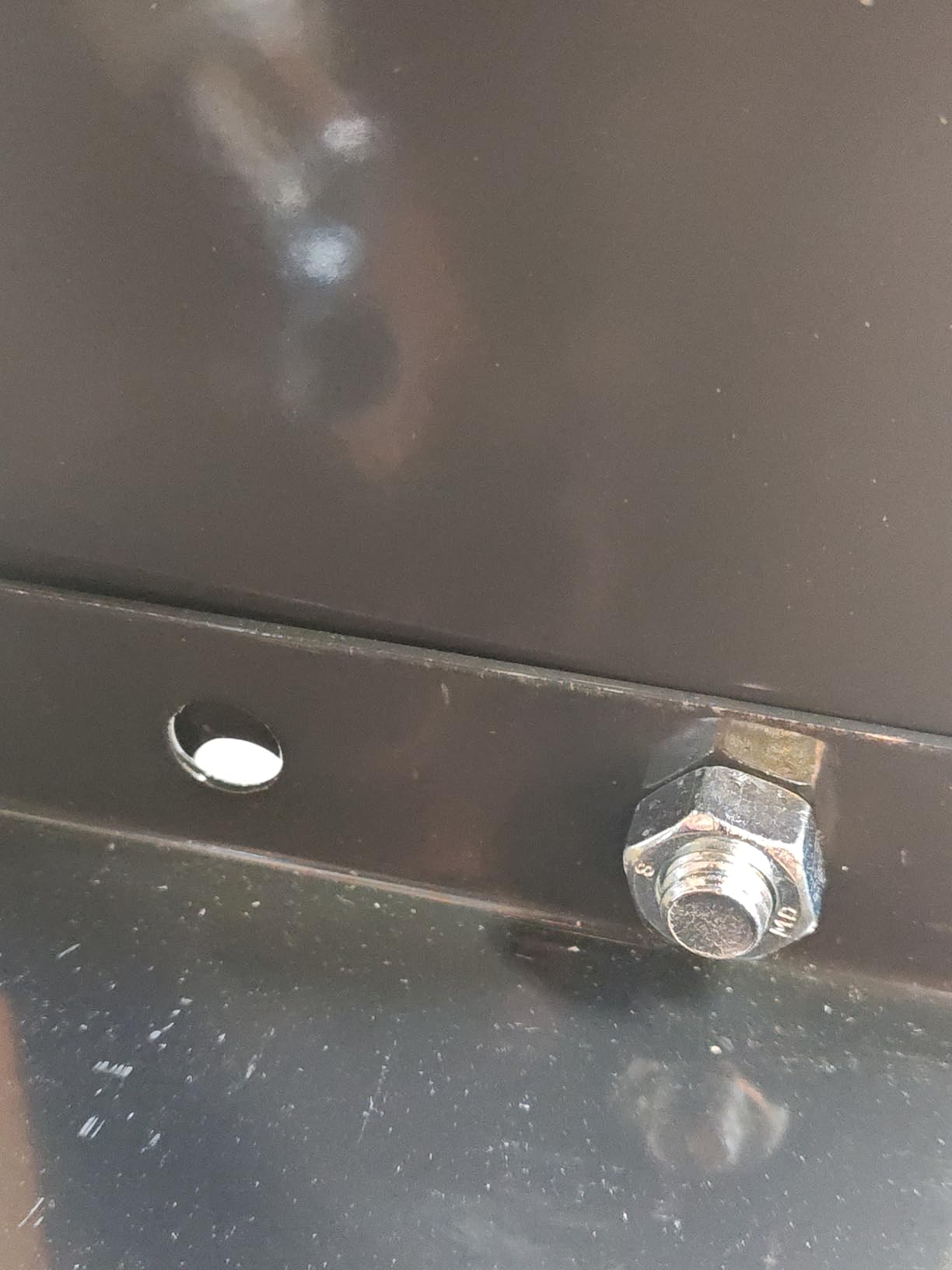
Two stainless steel safety chains hold cylinders up to 125 CF, and the wheel layout pairs 360-degree swivel front casters with fixed heavy rear wheels for stability under a heavy top shelf. Four side brackets and dual side hooks keep torches, pliers and cables off the working surface.
Assembly is the fastest in the group at 15 to 20 minutes with basic tools, which is a genuine advantage if the cart is arriving on a Friday and you want to weld that weekend.
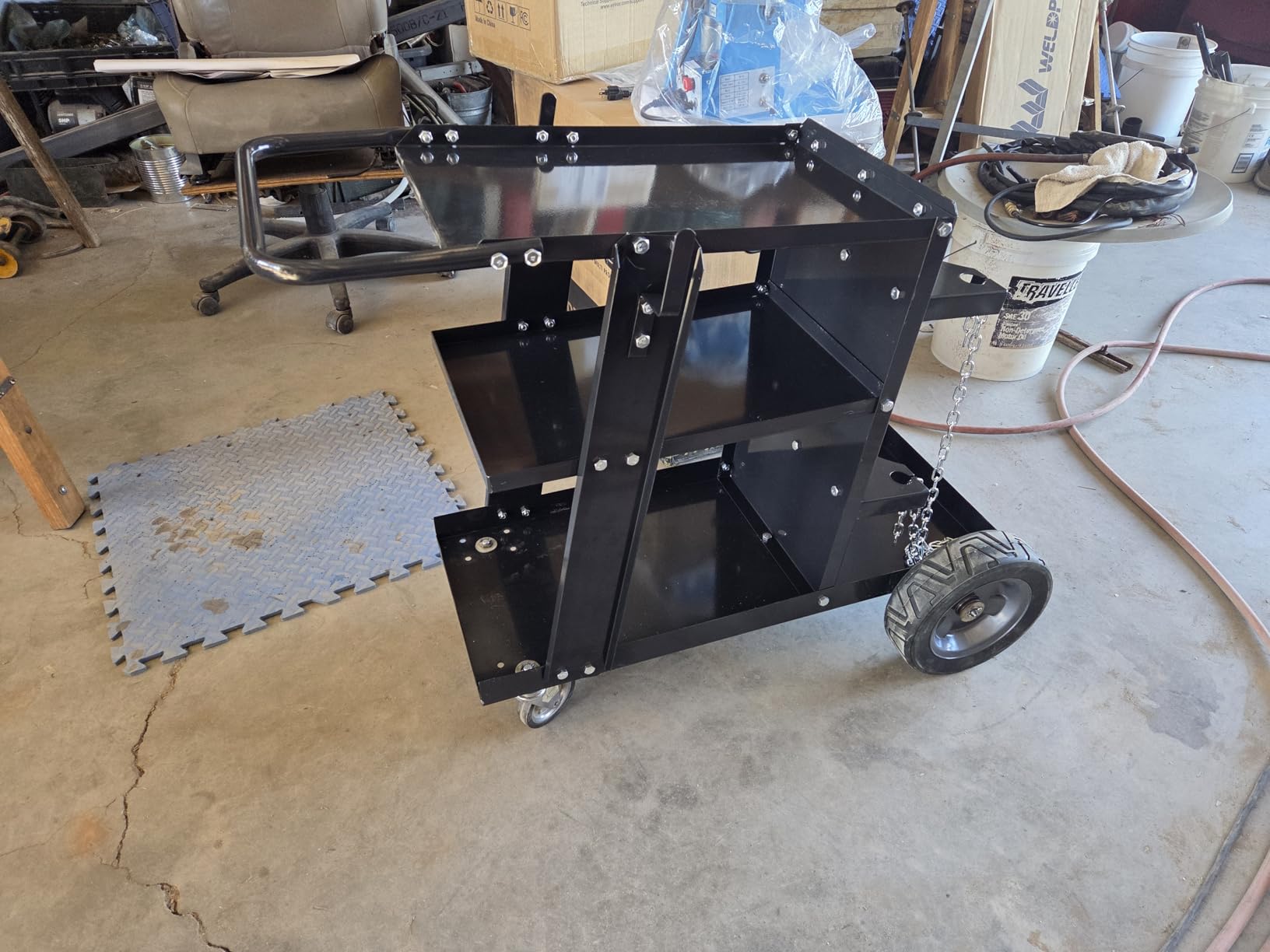
Is 40.5 inches too deep for a small shop?
For a corner of a one-bay shop, no. For a single-car garage where the cart must clear a parked vehicle, yes. At 40.5 inches deep and 18.2 inches wide, it is the largest footprint here and needs a dedicated wall space rather than a parking bay.
If your floor plan has a permanent corner for the setup, the trade is worth it. The bottom tray gives back more usable storage area than the extra depth costs you in mobility.
Which welders does it fit?
The brackets and hook positions are laid out around the Weldpro MMA75, 160GD, 200GD, CUT40H and 416GD models. Other machines fit, but side accessories may not land where the layout expects them.
Treat it as a strong generalist with a brand-specific bias rather than a universal mount. The 20.9 by 13 inch upper tray accepts a broad range of machines regardless of where the hooks are.
3. YESWELDER 2-Tier Welding Cart with 4 Drawers – Best Value with Drawer Storage
YESWELDER 2-Tier Welding Cart with 4 Drawers and Dual Cylinder Slots
245 lb capacity on painted steel plate
Four smooth-sliding drawers
Dual cylinder slots with chains
27.8 in D x 11.02 in W x 27.17 in H
Pros
- Four drawers organize tips nozzles and gloves
- Rated to carry a welder and a 50 lb CO2 tank
- Dual reinforced cylinder slots with stainless chains
- Rolls over shop floors and gravel driveways
- Well below the cost of box-store welding carts
Cons
- Top shelf fits only small inverter welders
- Assembly takes about an hour with many small bolts
- Drawers can pop open over bumps
- Included screws and nuts are soft
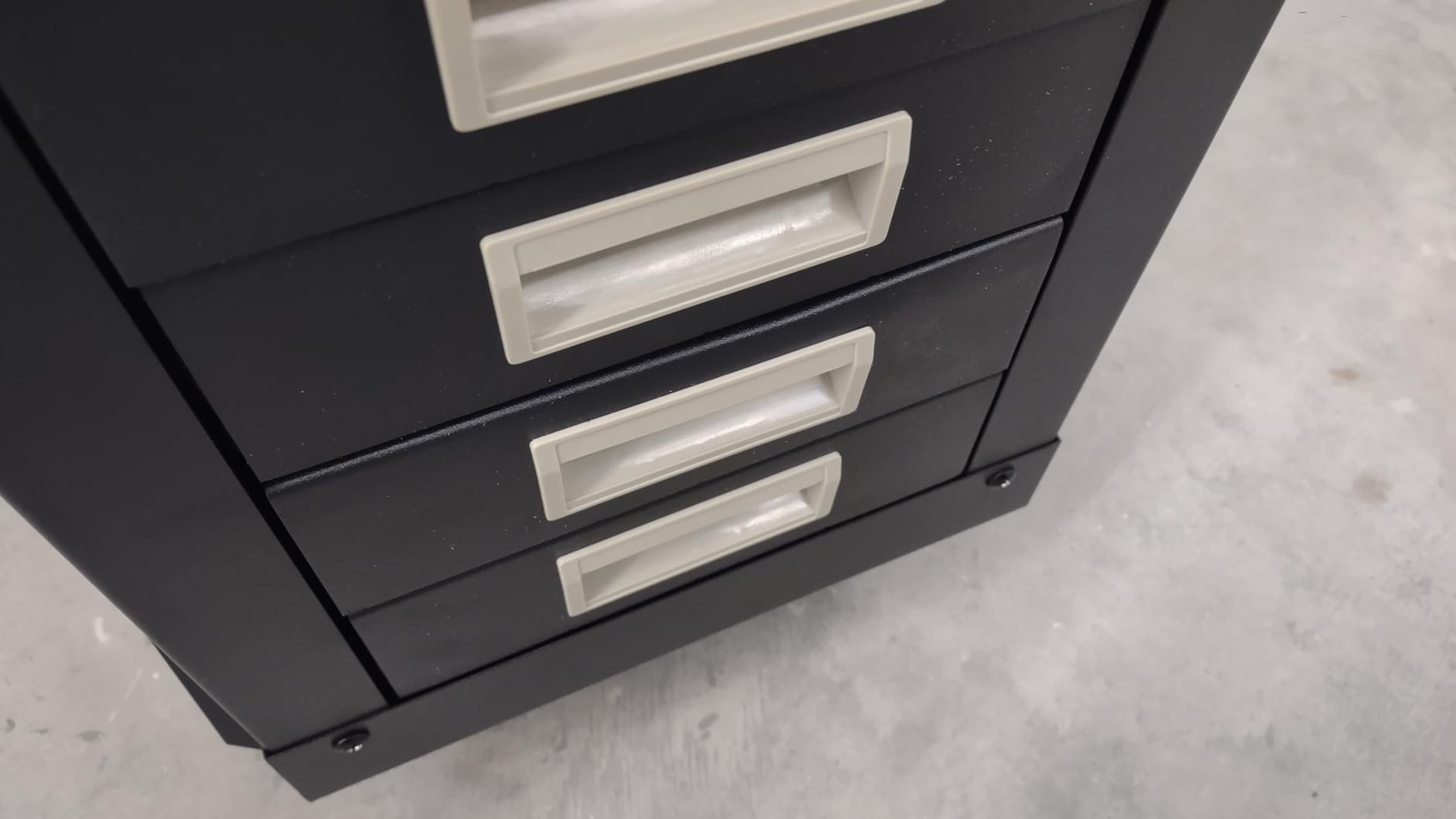
Drawers are the feature that separates this cart from the rest of the three-tier field, and for a small shop they matter more than raw capacity. Tips, nozzles, gloves and tape measure fit in four 11.22 by 8 inch drawers instead of a pile on the bottom shelf.
At 245 lb, the rating handles a typical single-garage setup with headroom, and buyers specifically report running a welder and a 50 lb CO2 bottle together without tipping. Two reinforced cylinder slots with stainless steel chains take bottles up to 10 inches.
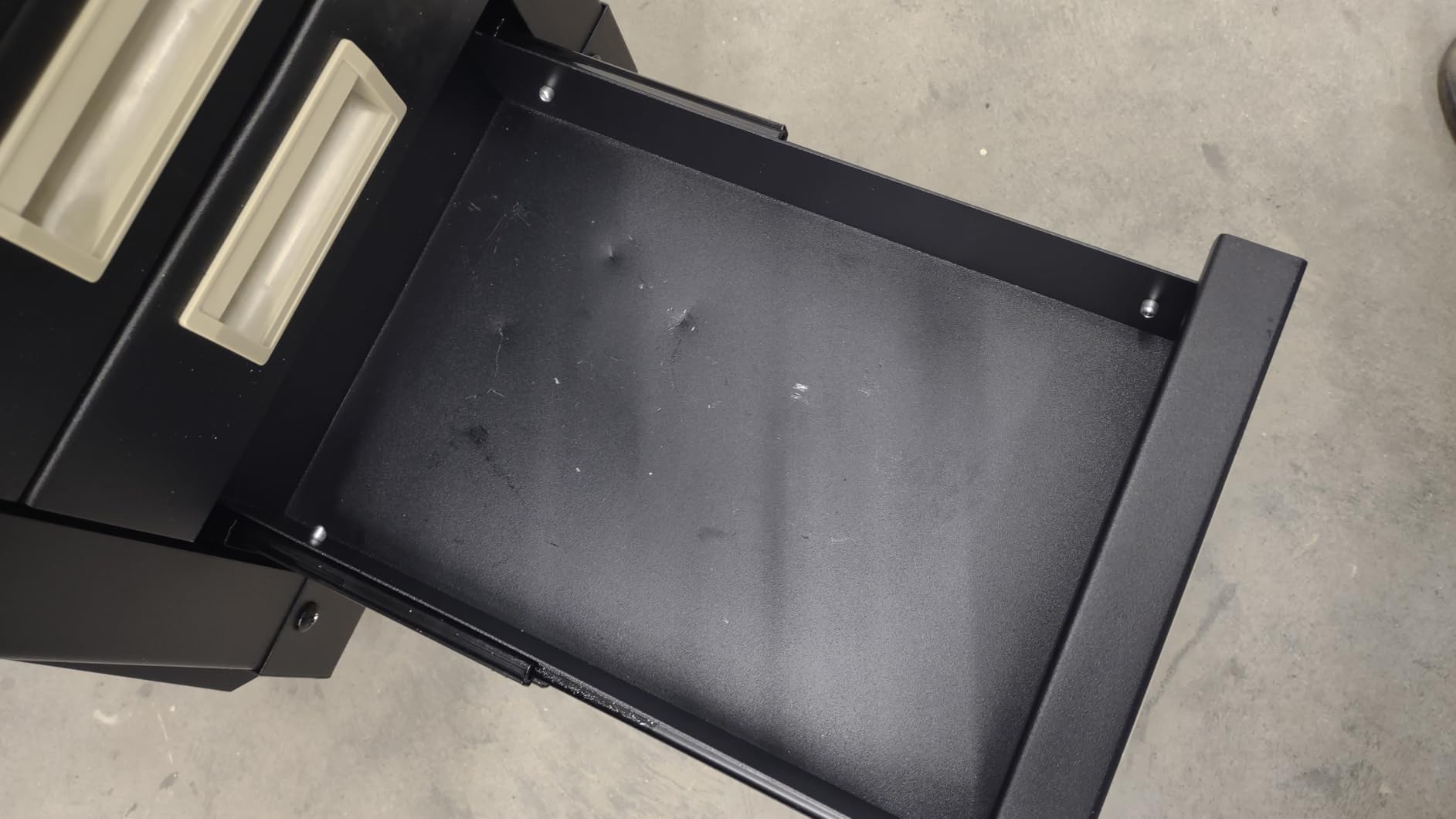
The 27.8 by 11.02 inch footprint is one of the narrowest here, which helps in a tight bay. Two 360-degree swivel casters and two heavy-duty rear wheels move it across shop floors and gravel without complaint.
Owner feedback is consistently positive on sturdiness for the tier. The recurring complaint is the top layer, which measures 11.3 by 17.7 inches with a maximum placement width of 10.6 inches, and fits compact machines such as a PrimeWeld 180 rather than a Miller 141.
Is 245 lb enough for a full gas bottle?
Yes for a single small-shop setup. A 40 to 60 lb welder plus a full 125 CF bottle plus about 30 lb of consumables lands near 170 lb, which leaves comfortable margin. Add a second machine or a plasma cutter and you are at the limit of the rating.
The dynamic reality matters here too. A rolling load stresses the frame more than a parked one, and a 245 lb static rating gives you less cushion than the 400 lb claims on some competitors.
How do the drawers hold up on uneven ground?
Owners report smooth action on level floors, with drawers popping open over large bumps or on uneven ground. If your shop floor is cracked concrete, add a stop or a small latch upgrade rather than trusting the latches alone.
Another recurring note is that the included screws and nuts are soft and can strip with power tools. Hand-tightening or a hand driver avoids the issue entirely during assembly.
4. Chicago Electric 100 lb Welding Cart HFJ14 – Best Rated Two-Tier Cart
100 lb. Capacity Welding Cart HFJ14
100 lb formed steel rating
Powder coat finish
Tilted top shelf
Two safety chains and torch hook
Pros
- Highest average rating in the group at 4.5 stars
- Formed steel holds a Hobart Handler or Lincoln 140
- Tilted shelf keeps welder controls readable
- Two lower shelves plus a torch hook
- Clear instructions and quick assembly
Cons
- 100 lb rating is the lowest here and limits machine size
- Safety chains can slip out of their slots
- Some units arrive with missing or bent hardware
- No cutout for routing gas line to the welder
This cart has the highest average rating of anything we reviewed, and the feedback has held up over time. Buyers report that earlier complaints about flimsy construction and poor instructions did not materialise once the cart was in daily use.
Formed steel construction gives it more rigidity per pound than welded tube at this rating, and the 20.1-pound frame is light enough to reposition empty. The tilted top shelf is a small design choice that keeps machine controls visible while welding.
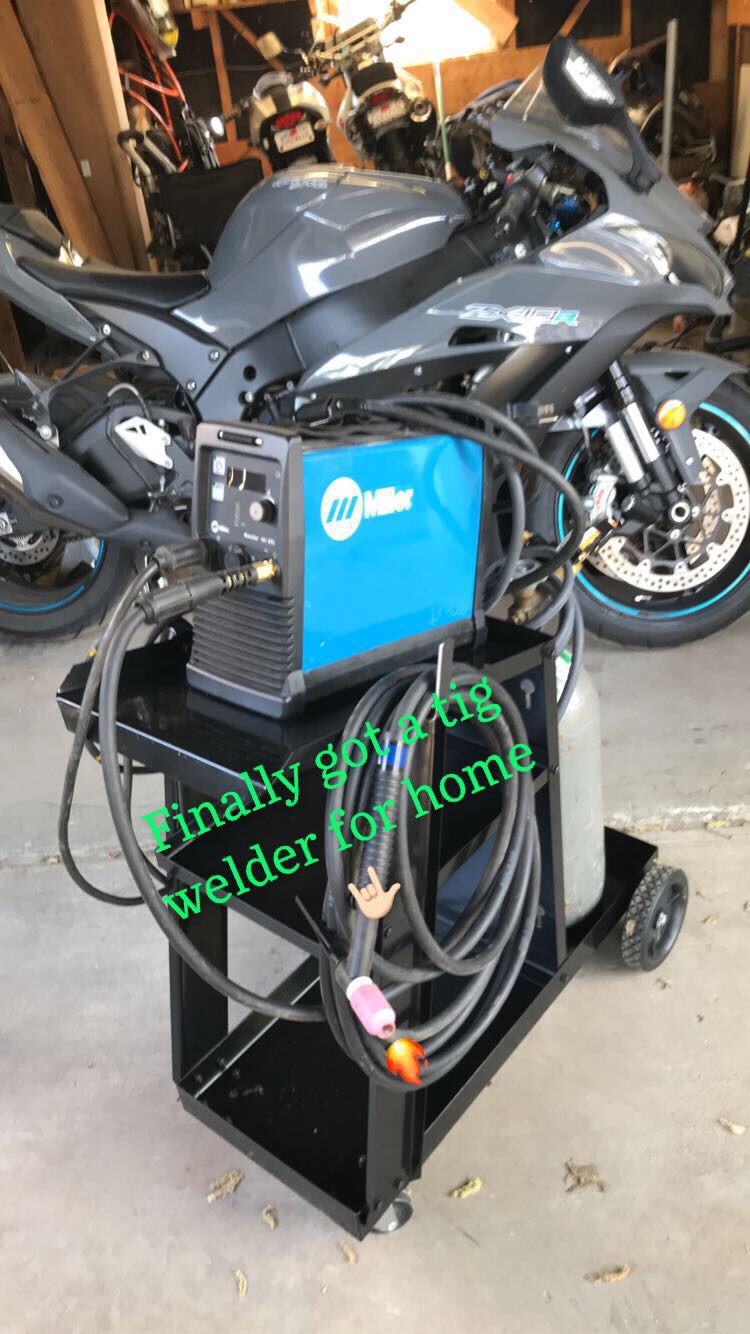
Two shelves below the welder plus a hook for the torch assembly cover most consumable storage. The 27 by 15.13 inch footprint is wider than the narrow import carts, which gives the frame a broader base and better resistance to tipping with a cylinder on board.
Two safety chains secure a gas cylinder, and the powder coat finish handles a damp garage better than bare steel. Buyers cite lifetime tech support from a long-running automotive brand as part of the package.
Can a 100 lb cart carry a real welder?
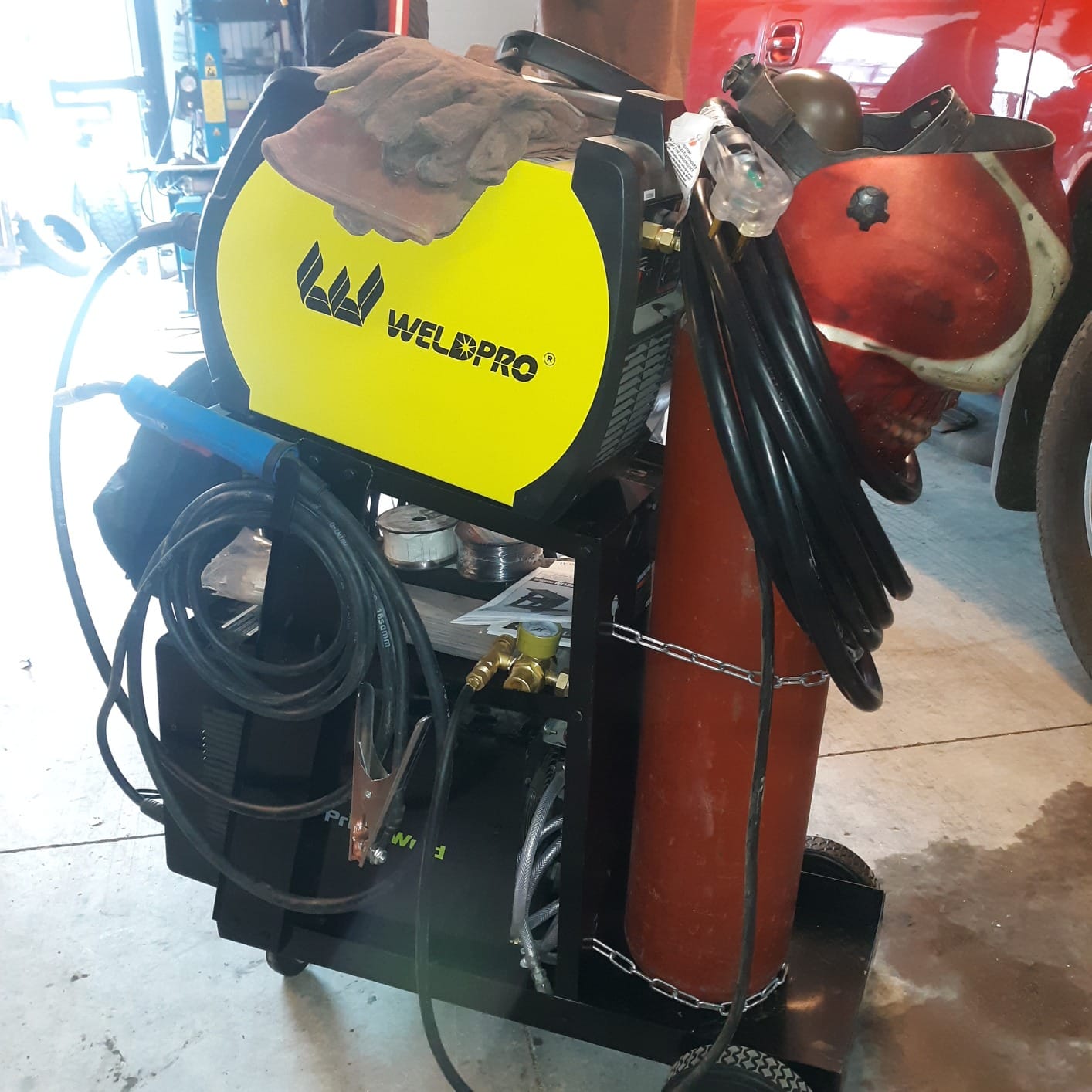
For a small and mid-size shop machine, yes. A Hobart Handler or a Lincoln 140 class welder fits with consumables on the lower shelves. For a 220V multi-process machine plus a full bottle, the rating is the limiting factor, not the shelf size.
This is the honest entry point for a first welding setup. Once you add a plasma cutter or a second bottle, you need one of the 245 lb or higher carts.
Will the gas bottle stay on?
Most of the time, yes, but the chains sit in slots that can release if the tank shifts while you are moving. Route the chains so the bottle is captured on two sides rather than only at the top, and check them each time you move the cart.
One other reported gap: there is no cutout in the top shelf for routing a gas line from the tank to the machine, so the hose runs across the work surface instead of underneath it.
5. Eastwood 3-Tier Portable Welding Cart, 300 lb – Best for Rough Ground
Rockwood 3-Tier Portable Welding Cart | Heavy Duty Gauge Steel | for Mig Welder & Plasma | Utility Cart Storage Organizer | Welding Accessories | Holds up to 125 Cubic ft Tank
300 lb capacity on heavy gauge steel
7-inch rubber rear tires
Front swivel ball bearing casters
Holds cylinders up to 125 cubic ft
Pros
- Durable powder coated heavy gauge steel
- Three levels for welder helmet gloves and tools
- 7-inch rubber rear tires handle outdoor terrain
- Front 360-degree swivel ball bearing casters
- Backed by lifetime tech support
Cons
- Heaviest three-tier cart here at 31 lb
- Shelf widths suit compact to mid-size welders
- Cylinder capacity capped at 125 cubic ft
The 7-inch rubber rear tires are the reason this cart earns its badge. Anyone moving a loaded setup over cracked concrete, gravel driveways or uneven shop floors will feel the difference against a cart on 2-inch casters, and owners single the rear tires out as the standout feature.
Heavy gauge steel with a black powder coated finish gives it a traditional, well-built feel, and buyers rate the finish and steel quality highly for the tier. Three storage levels hold a welder, helmet, gloves and tools in a conventional layout.
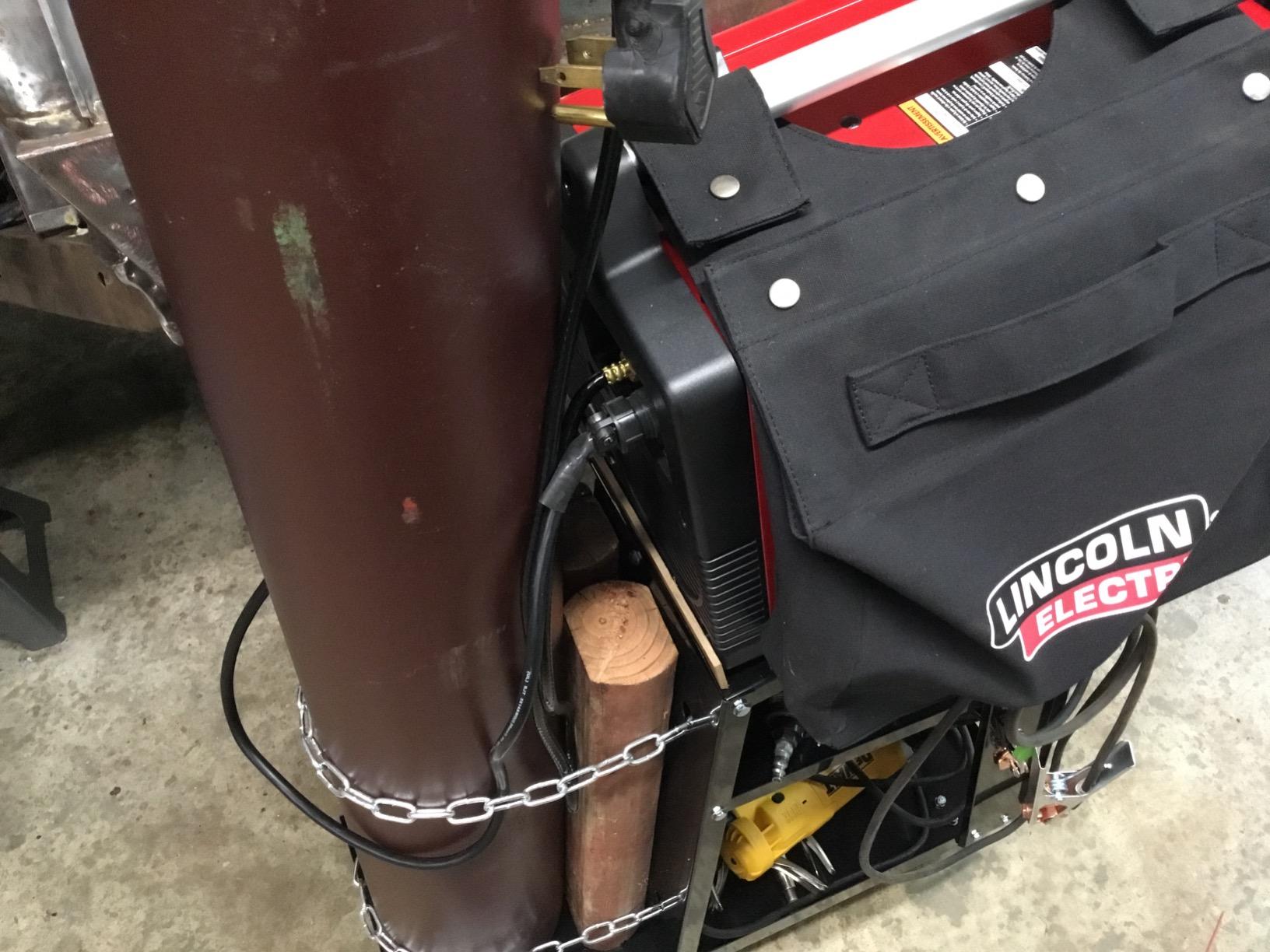
Front 360-degree swivel ball bearing casters pair with the rear tires for tight maneuvering, and two cable and hose clips plus a safety chain keep the consumables side of the cart tidy. Cylinders up to 125 cubic ft fit the frame.
Shelf sizes are 17-3/4 by 11 inches on the top and bottom and 15 by 11 inches in the middle, which fits compact to mid-size machines rather than full-size multi-process units.
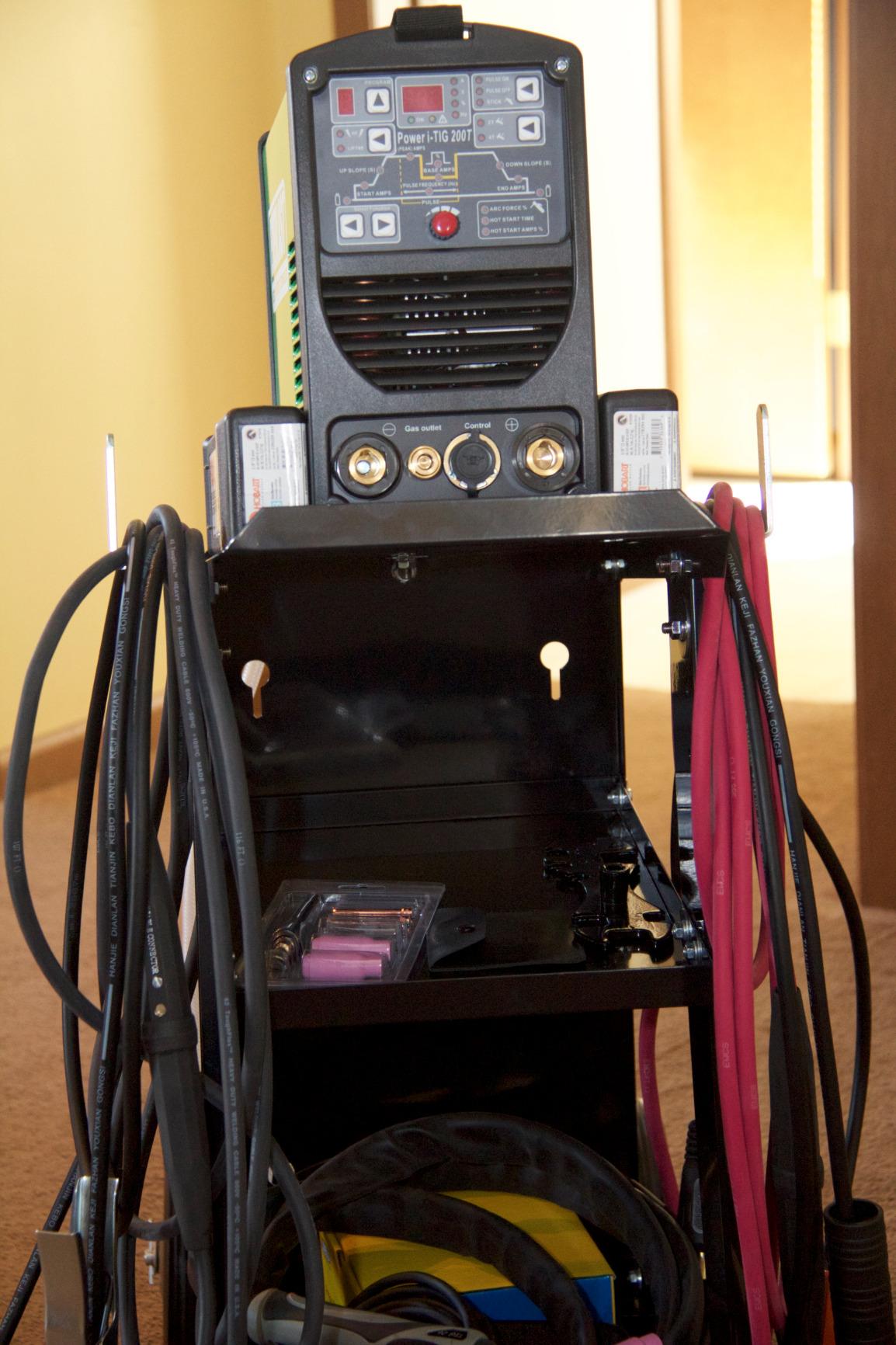
Is the 31 lb frame weight a problem?
Only when the cart is empty and you need to lift it. Loaded, the wheels do the work and the mass actually helps stability over uneven ground. It is the heaviest three-tier option here, so plan its location before you assemble it rather than after.
The 90-day limited warranty and 90-day return window are shorter than some competitors, which is worth knowing if you are still deciding between sizes.
What can it carry and what can it not?
A 300 lb rating is generous for a 17-inch-wide frame, and it handles a mid-size welder with a full bottle plus gear. The limits are shelf width and cylinder size, not the capacity figure.
Measure your machine against the 17-3/4 by 11 inch top shelf before ordering. Anything wider than 11 inches deep or 17-3/4 inches long will overhang, and an overhanging machine is exactly the tipping scenario the cylinder chains are meant to prevent.
6. Klutch 2-Tier Welding Cart with Locking Cabinet, 100 lb – Best for Security
Klutch 2-Tier Welding Cart with Cabinet, 100-Lb., 31.5in.L x 16.1in.W
Locking cabinet with 19-1/2 in x 14 in x 12 in interior
Built-in cylinder rack for one bottle
Four cable wrap sets
31 in D x 19 in W x 38.25 in H
Pros
- Locking cabinet secures consumables and small tools
- Built-in rack keeps the bottle upright with the machine
- Four cable wrap sets keep leads off the floor
- 38.25 in tall frame with a 6 in rear wheelbase
- Steel construction with powder coat finish
Cons
- 100 lb rating suits only compact welders
- Heaviest unit in the group at 43.2 lb
- Tall 31.5 in deep footprint eats floor space
- Cylinder rack limited to 7 in diameter bottles
This is the pick for a shared shop, a rental bay or anywhere you leave consumables unattended. The locking cabinet interior measures 19-1/2 by 14 by 12 inches, which is real enclosed storage rather than a sheet-metal flap.
The built-in cylinder rack is the other differentiator. It holds one shielding gas bottle up to 7 inches in diameter and keeps it upright so the machine and the gas move as one unit, which removes the loose-bottle problem entirely.
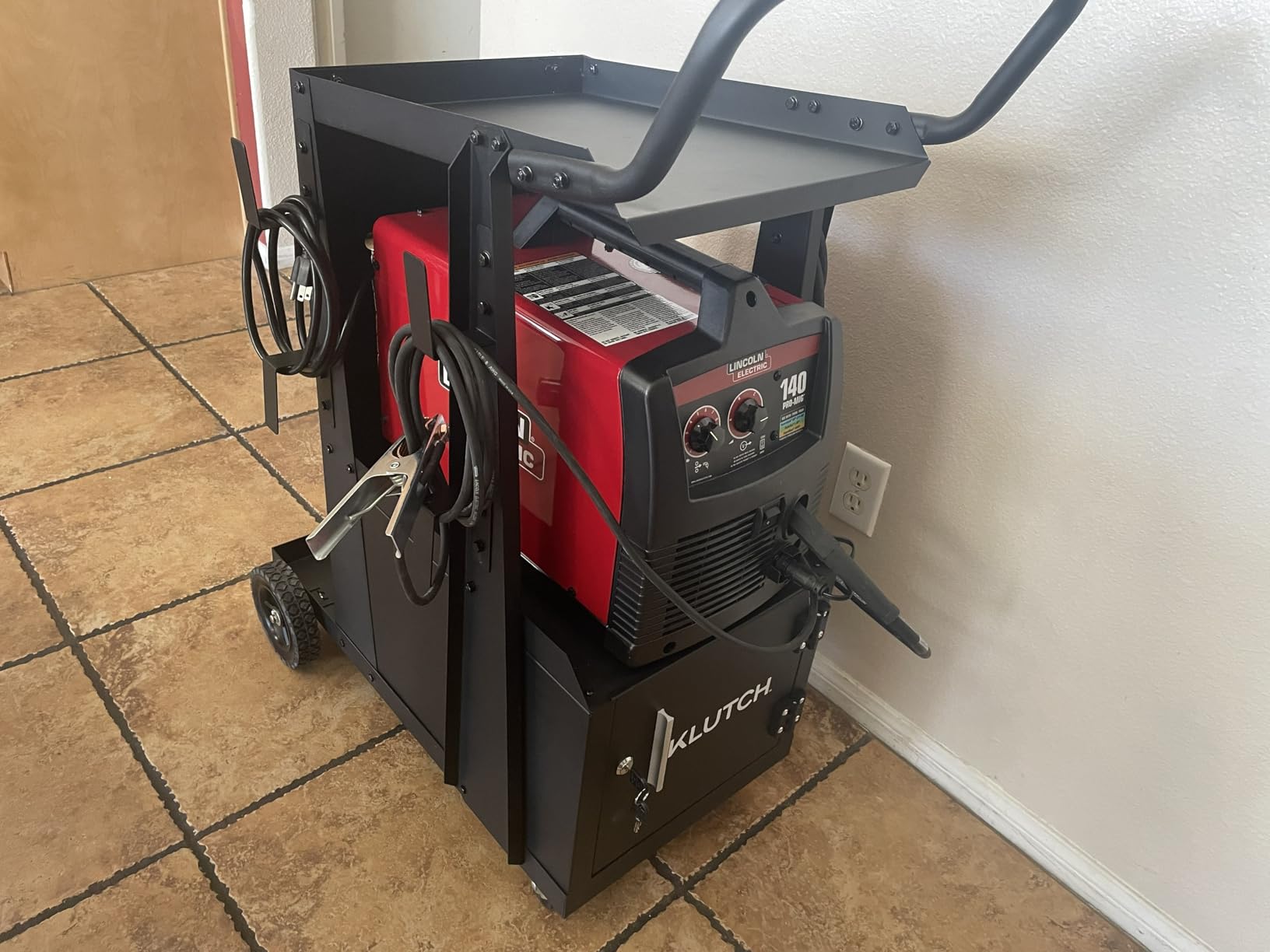
Four cable wrap sets for leads and power cords keep cords off the floor, which matters more than it sounds in a shop where a trailing lead is a trip hazard every time you walk past with a hot work glove on.
At 38.25 inches tall with a 6-inch rear wheelbase, the frame rolls steadily. Two-inch front swivel casters and 6-inch rear wheels are the smallest combination here, so this cart is best kept on a reasonably flat floor.
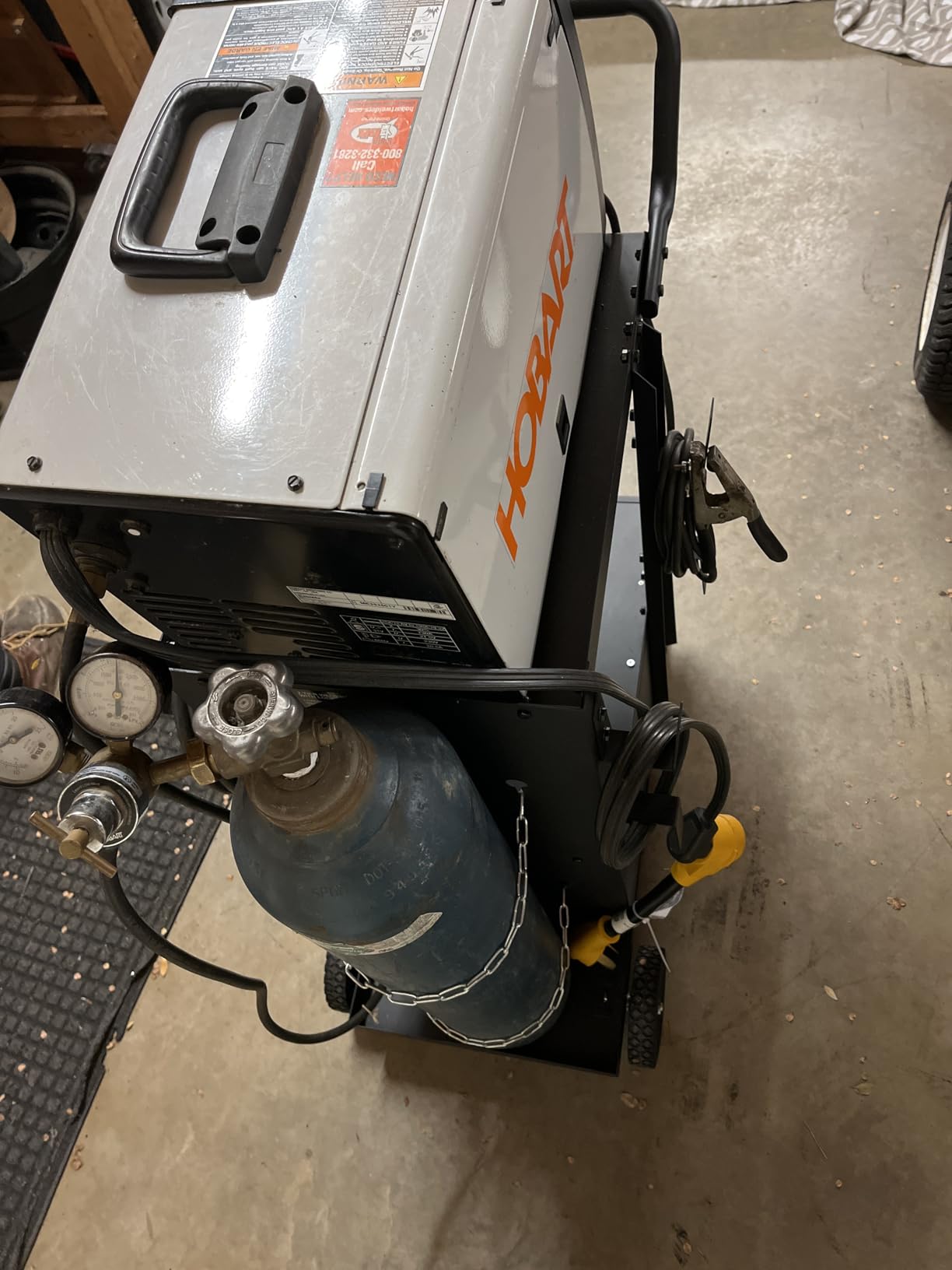
Is this too big for a single-car garage?
Probably. At 31.5 inches long, 16.1 inches wide and 38.25 inches tall, it is one of the taller and deeper carts in the group and needs a wall space that is not a parking bay.
In a one-bay shop where the cart is stationary, that footprint buys you a locked cabinet and integrated cable management that no shelf cart here matches. The height also means you are not crouching to check a lower shelf.
What are the 100 lb and 7 inch limits in practice?
The 100 lb rating suits compact welders, and the 7-inch bottle limit excludes larger 125 CF cylinders. Check your tank diameter before buying, because swapping bottles later is not possible with the built-in rack.
The rating is also low for the frame size, which is worth knowing: you are buying security and storage, not load capacity. If you run a heavier multi-process machine, pair this cart with a separate cylinder stand instead.
7. JEGS Steel Welding Cart with Drawers, 350 lb – Best Enclosed Storage
Steel Welding Cart with Drawers (33 1/2 in. L x 18 1/2 in. W x 33 in. H)
350 lb capacity on alloy steel
Three deep drawers plus lower cabinet bin
Gas cylinder platform and hose hooks
33.5 in L x 18.5 in W x 33 in H
Pros
- Highest rating among drawer-equipped carts at 350 lb
- Three deep drawers plus a lower cabinet bin
- Hose and cable hooks and a dedicated cylinder platform
- Platform holds most MIG TIG and plasma machines
- Powder coat finish built for shop life
Cons
- Most expensive cart in the group
- Very heavy at 86.1 lb to reposition
- Only a 30-day manufacturer warranty
- Bulky 33.5 by 18.5 in footprint
Storage is the reason to look at this one. Three smooth-gliding drawers with deep drawer depth, plus a lower cabinet bin for bulk supply, give you more enclosed volume than any other cart in the group without needing a separate tool chest.
The 350 lb rating is the highest among drawer-equipped carts, and the large welding cabinet platform is sized for most MIG and TIG machines as well as plasma cutters. A dedicated gas cylinder platform keeps the bottle separate from the storage area.
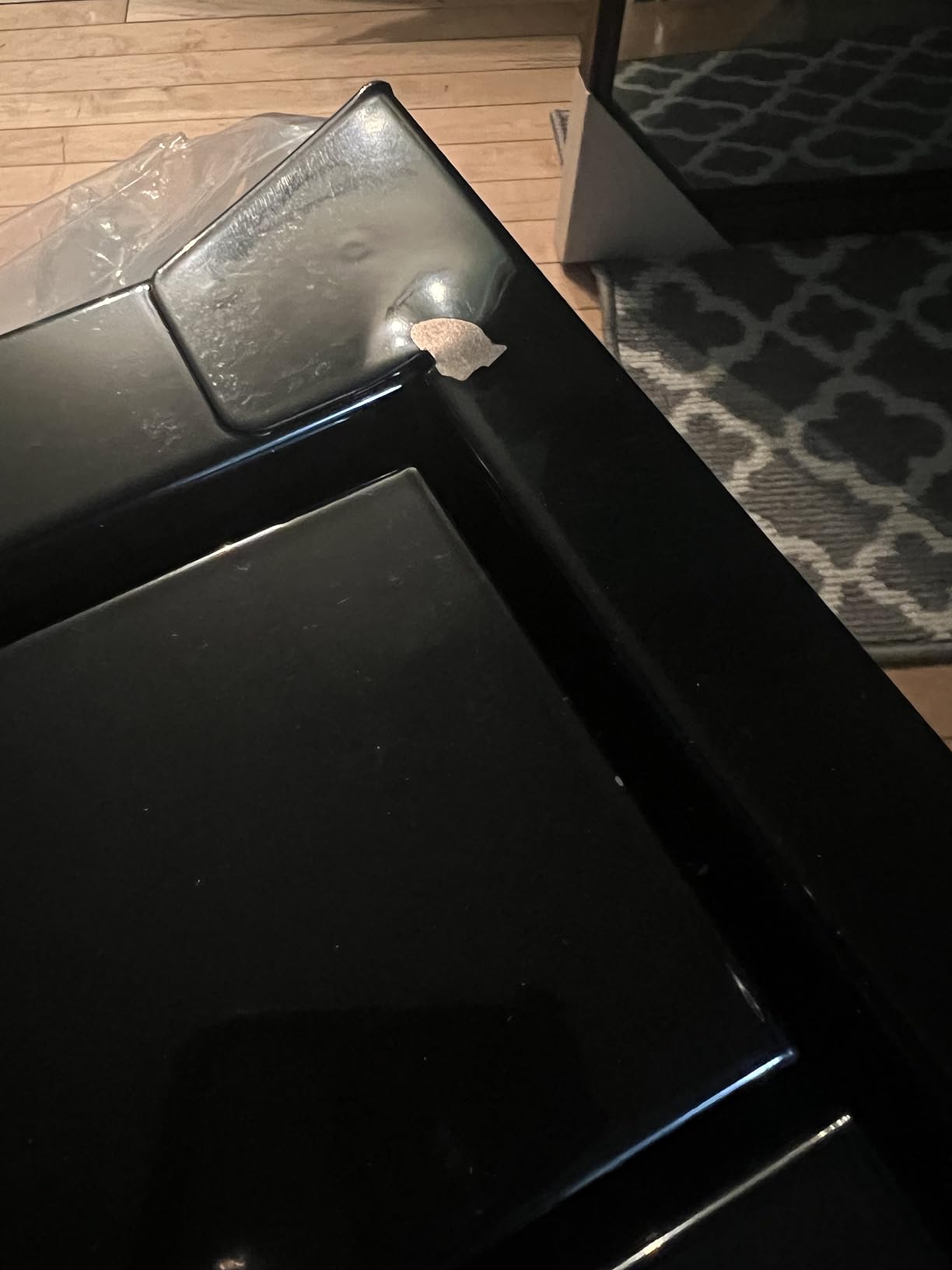
Hose and cable hooks on the side keep leads organized, and the black powder coat finish is built for long shop life. Buyers who need both enclosed storage and a serious load rating tend to end up here.
The trade-offs are physical. At 86.1 pounds, this is by far the heaviest unit we reviewed, and buyers report that repositioning it around a tight shop is genuinely difficult. The 30-day manufacturer warranty is also the shortest in the group.
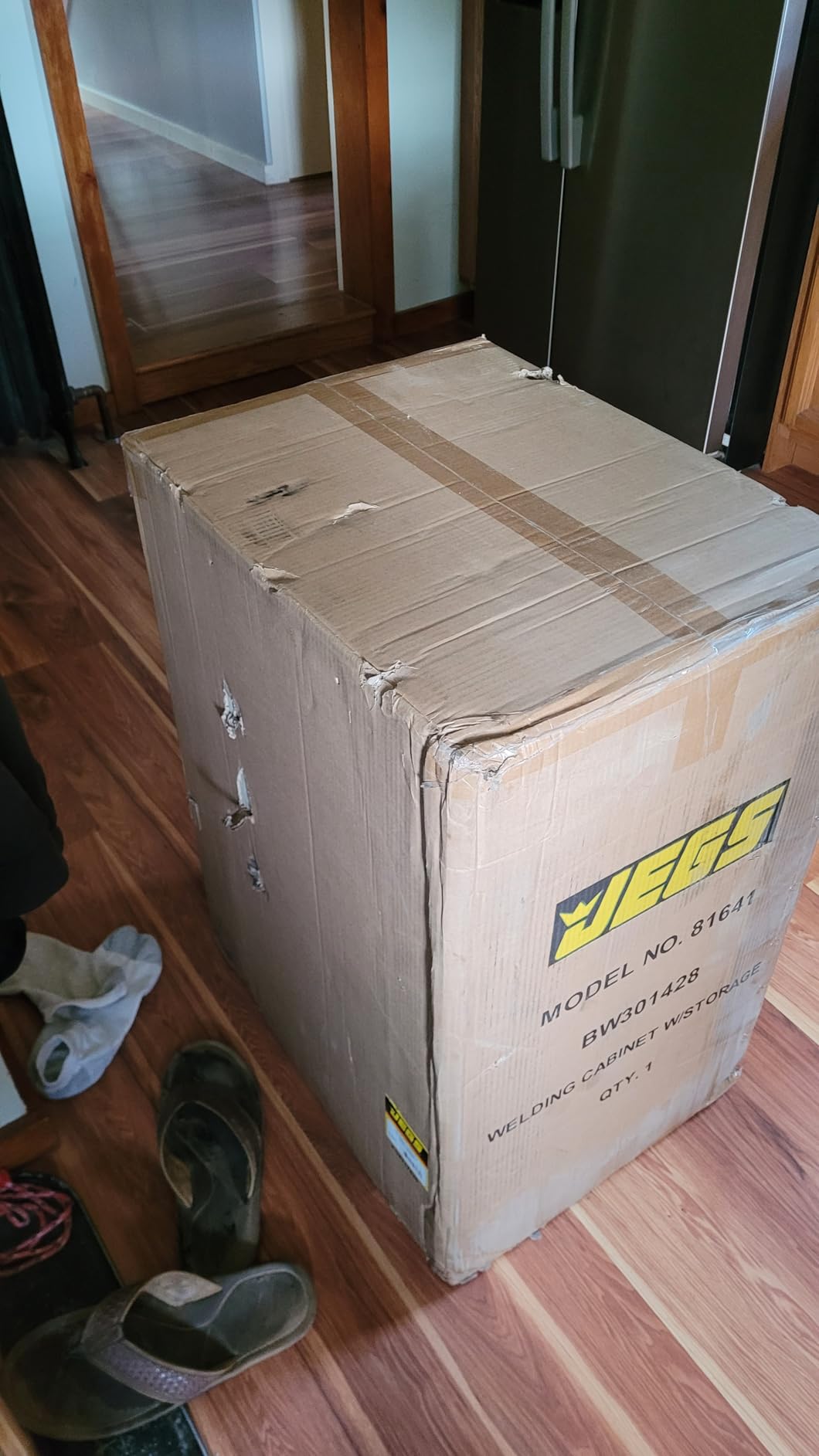
Is 86 lb too heavy to move daily?
For a shop where the cart has a fixed home, that weight is a feature. It is 86 pounds of steel that does not wander when you are dragging an air hose past it, and 350 lb of rating sitting on a rigid base.
For a single-car garage where the cart moves every time you park, it is a real problem. Plan the assembly location carefully, and consider assembling it in place rather than carrying it through a doorway.
How does it compare with a tool chest?
The drawers hold consumables, tips and small parts, not hand tools. A shop that needs both usually ends up with this cart plus a separate tool chest, which is where the 86-pound weight starts to matter against your floor space.
If enclosed storage is the priority and the welder is a compact model, the 100 lb Klutch gives you a lockable cabinet at a fraction of the mass.
8. TOOLIOM 3-Tier Welding Cart with Tilted Top, 260 lb – Best for Narrow Aisles
TOOLIOM 3-Tier Welding Cart with Tilted Top, 260 lb Capacity
260 lb static capacity on alloy steel
Three shelves
Tilted top shelf
Two cylinder slots with chains
Pros
- Three shelves cover welder helmet cylinders and hand tools
- Tilted top keeps controls and readings visible
- Two cylinder slots with heavy-duty safety chains
- Universal front wheels plus heavy rear wheels
- 260 lb rating matches most shop welders
Cons
- Only 60 customer reviews in the group
- Compact shelf sizes suit small to mid-size machines
- Narrow 11.42 in width limits larger welders
The tilted top shelf is the detail that makes this cart pleasant to use. Machine controls and data stay readable while you are welding, rather than sitting at an angle where you have to crouch or look past the gas line.
Three shelves cover a welder, a helmet, cylinders, torches and pliers, and two cylinder slots with heavy-duty safety chains keep tanks from slipping. The 260 lb static capacity is a good match for most shop welders carrying one full bottle.
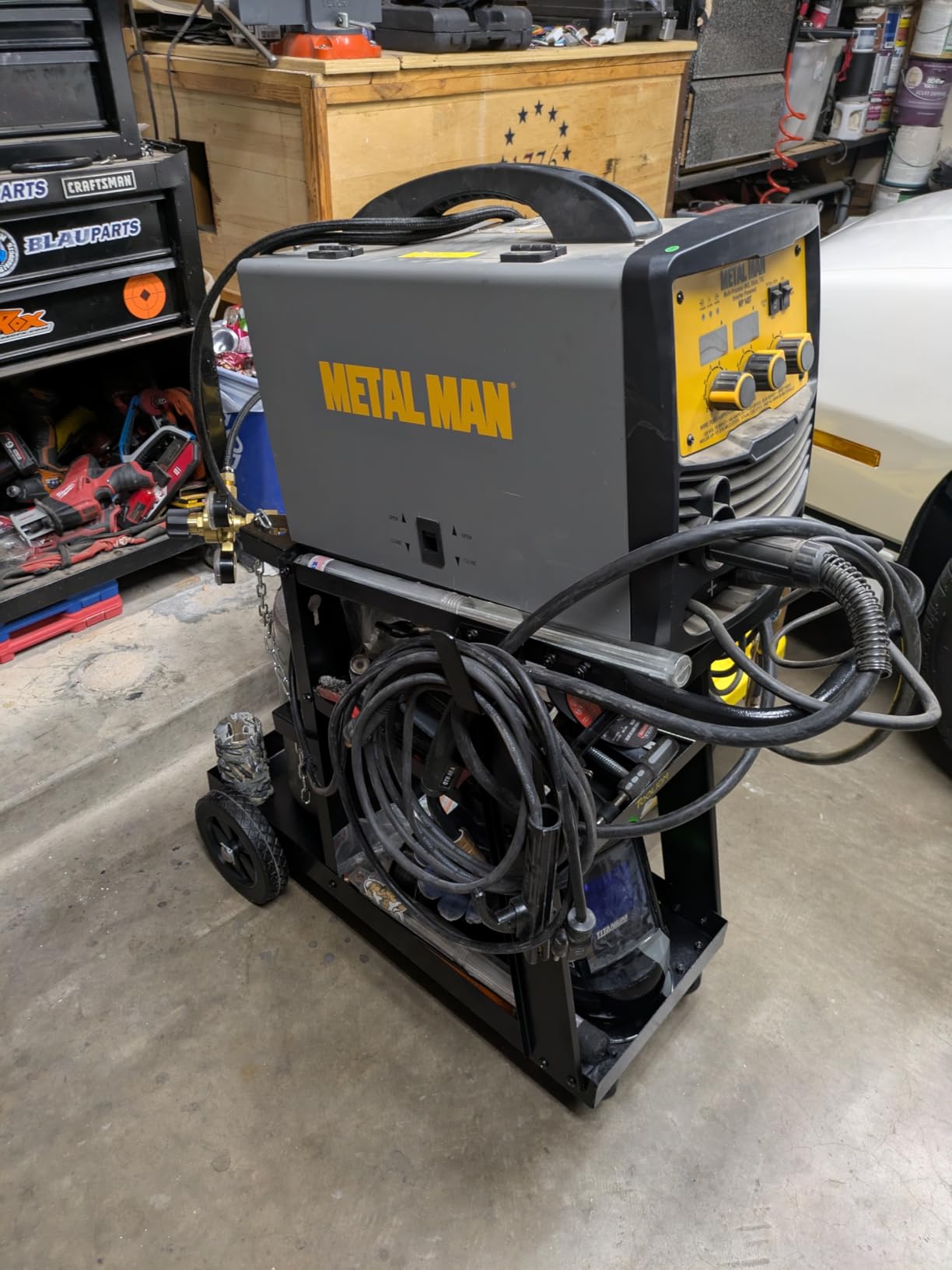
Two universal front wheels and two heavy-duty rear wheels give quiet movement under load. Alloy steel construction keeps the frame rigid for a cart that weighs roughly 26 lb empty, which is easy to reposition.
Owner feedback rates it in line with the better-reviewed models, with the tilted top and cylinder retention singled out. The main caveat is the 60-review base, which means less long-term data than the VEVOR, Chicago Electric and YESWELDER carts.
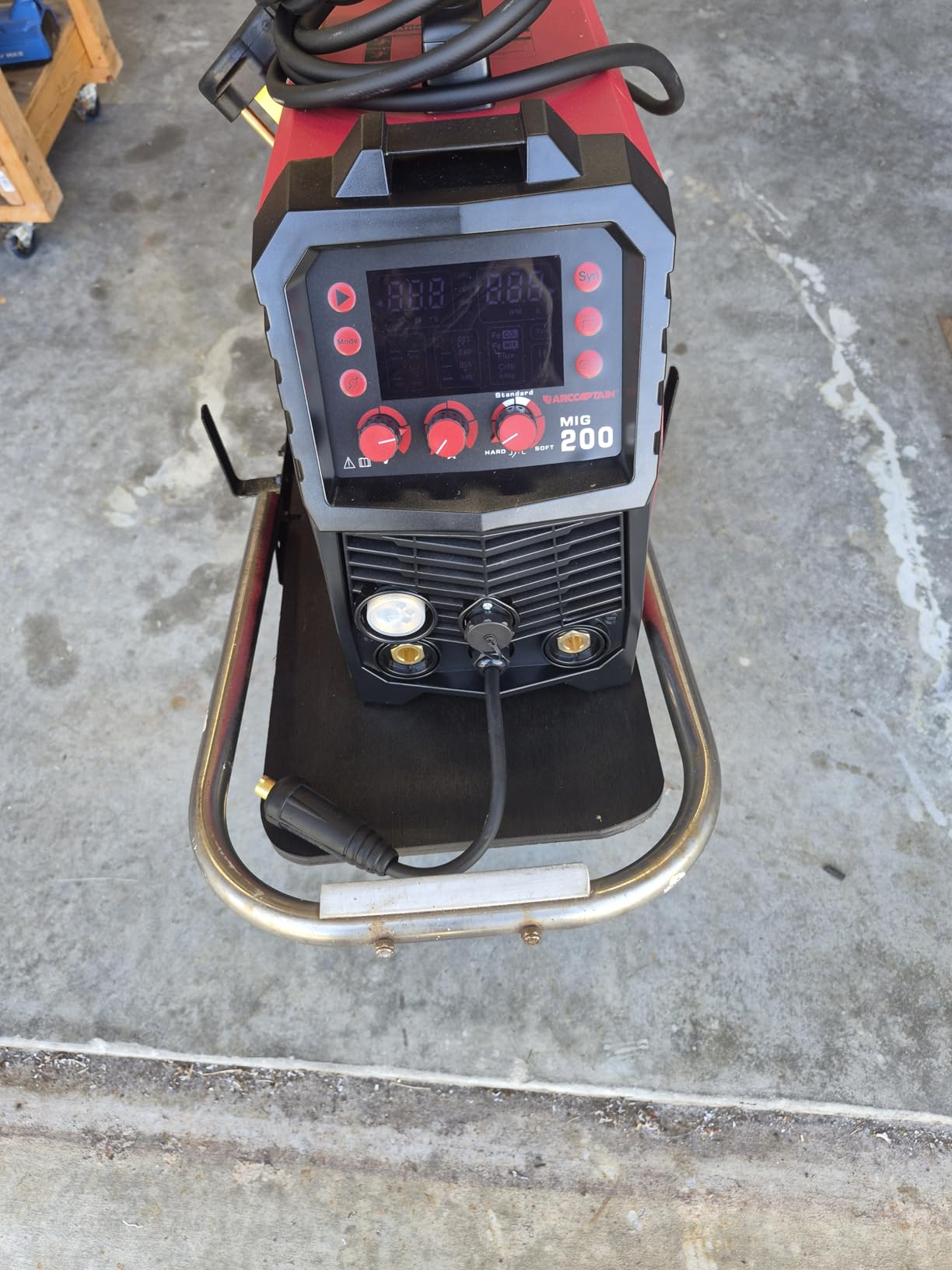
How narrow is narrow enough for a tight shop?
At 11.42 inches wide and 27.95 inches deep, this is one of the narrowest frames in the group, so it slides along a wall or between a bench and a vehicle without much maneuvering. The narrow profile is what makes it viable in a shallow bay.
That width is also the limitation. Owners report that the compact shelf dimensions suit small to mid-size machines, and a wider inverter will overhang the top shelf, which is the exact situation where a bottle on the back can tip the whole frame.
Is the smaller review base a reason to skip it?
Not on its own. The 4.4-star average is in line with the best-reviewed carts here, and the design decisions, tilted top, narrow profile and cylinder chains, are all conservative.
We would simply treat it as a newer option with less long-term feedback. If you want the same narrow approach with a much larger review history, the VEVOR at 11.4 inches wide covers a similar footprint.
9. Foxngear Heavy Duty 3-Tier Welding Cart, 350 lb – Best for Plasma and Multi-Machine Setups
Foxngear Heavy Duty Welding Cart Blue for TIG MIG Welder Plasma Cutter, Large 3-Tier Welder Cart with Gas Bottle Storage, Swivel Caster Wheels, Steel Welding Table, 38.5″ L x 15.5″ W x 26″ H
350 lb capacity on 20-gauge alloy steel
Three tiers with a 27.6 in bottom tray
Cylinder holder for 9.6 in tanks
38.5 in L x 15.5 in W x 26 in H
Pros
- Owners report steel thicker and more rigid than expected
- 350 lb rating holds welder plasma cutter and bottle
- Deep 27.6 in bottom tray for bulky accessories
- Cylinder holder accepts tanks up to 9.6 in
- Rear axle centered under the cylinder for stability
Cons
- Published shelf widths do not always match the product
- Top shelf width is tight for some welders
- Instructions are mostly a parts list and diagram
- One unit had an undrilled hole from manufacturing
This cart is built for the case where a welder and a plasma cutter share one cart. The 350 lb rating covers both machines plus a gas bottle, and the 27.6-inch bottom tray is the deepest usable shelf among the carts we reviewed at this price tier.
Owners report that the 20-gauge alloy steel is thicker and more rigid than expected, and frequently compare it favourably against the Eastwood and Weldpro equivalents on both thickness and value. The powder coated finish holds up well in a working shop.
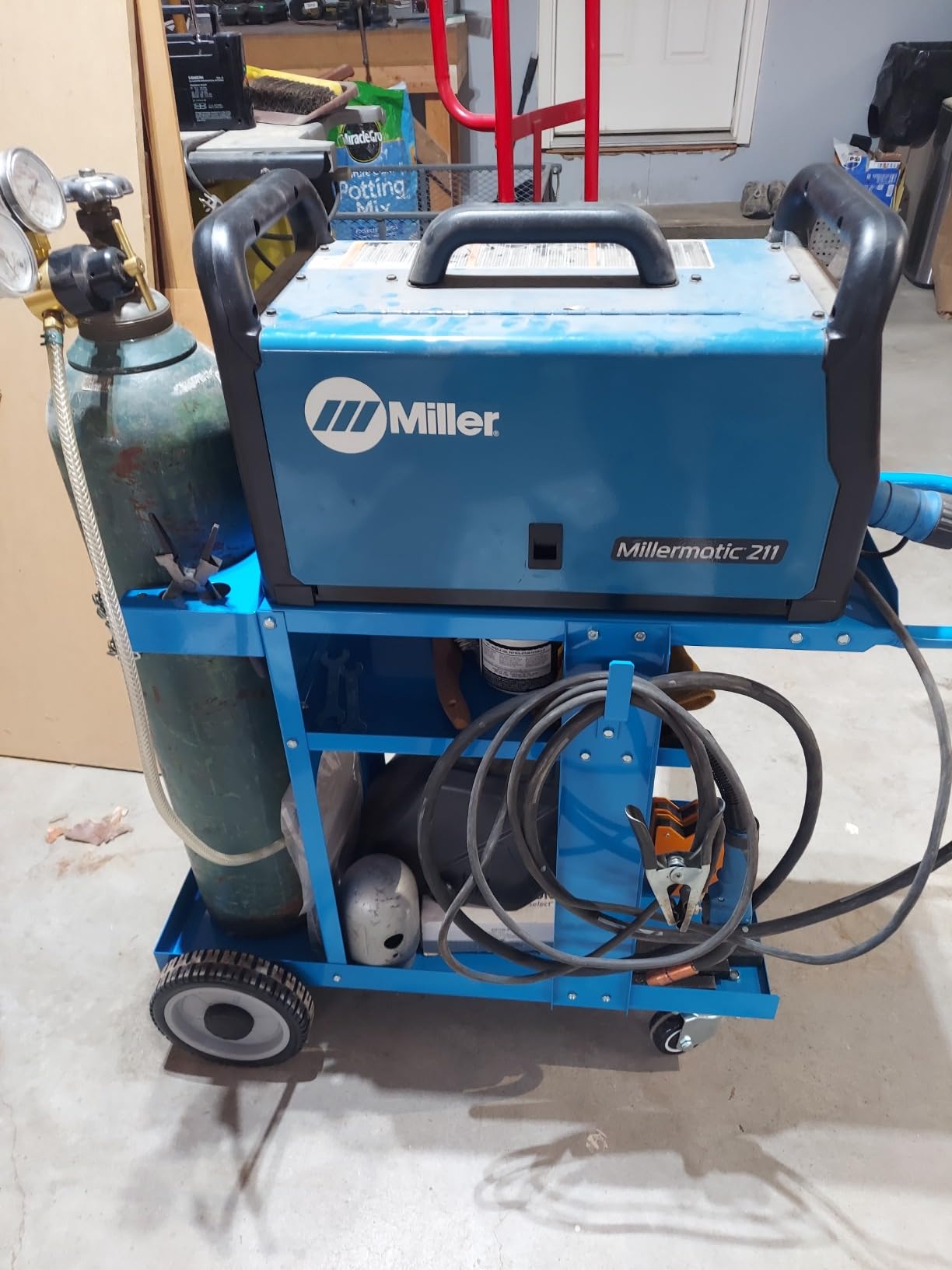
The cylinder holder accepts tanks up to 9.6 inches in diameter with an extended safety chain, and the rear wheel axle is centered under the cylinder, which improves stability when the bottle is full and the shelves are loaded.
Heavy-duty hooks on both sides carry cables and welding torches. Two front 360-degree swivel plate casters and two large rear wheels handle shop floors, and an oversized wide-grip handle makes repositioning easier.
Will your welder actually fit the top shelf?
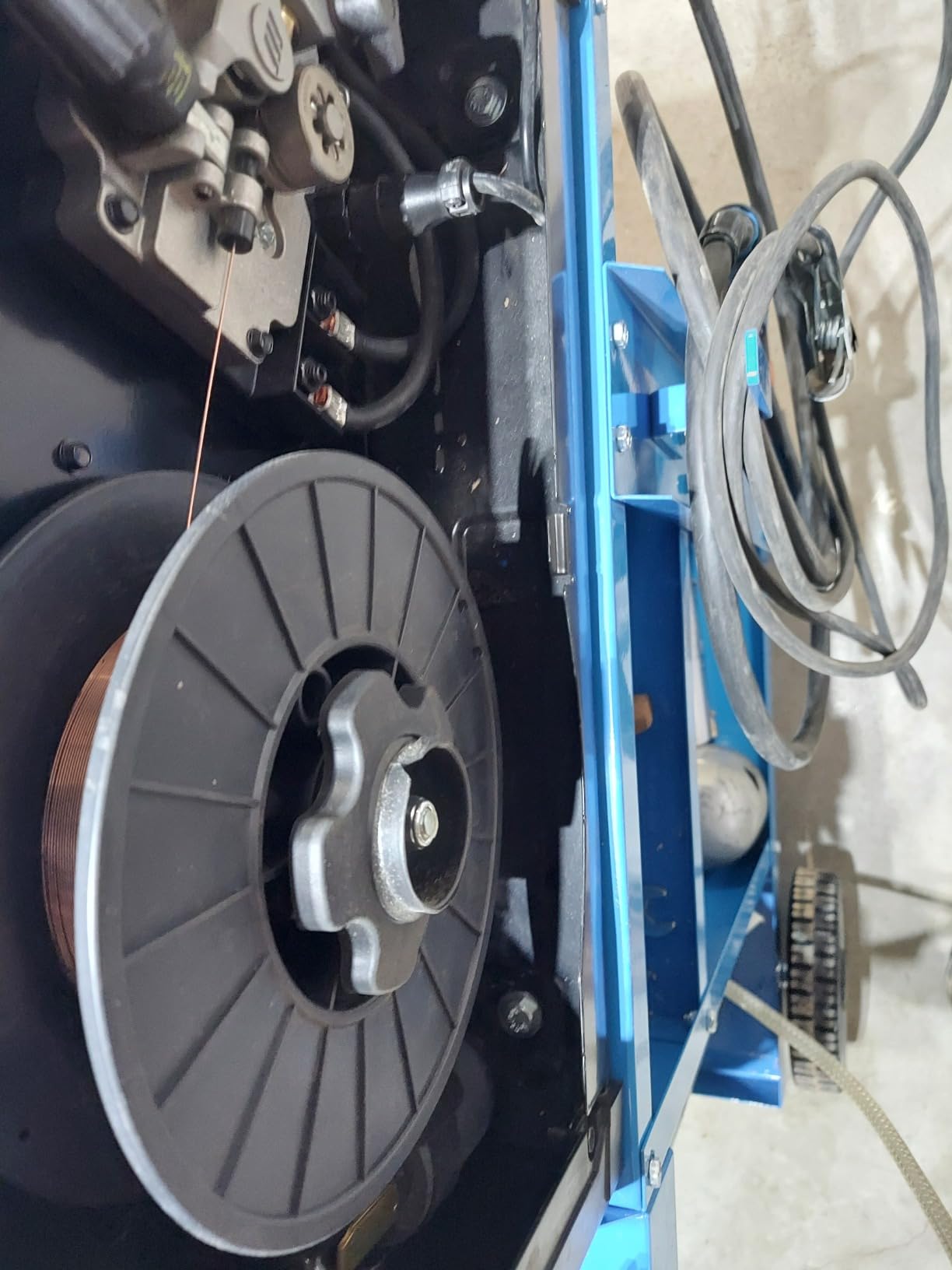
Measure carefully. The published top shelf is 21.7 by 11.8 inches, but the most common complaint is that the real shelf width runs narrower than the listing states, and some owners had to flip the shelf or drill holes to seat wider machines such as the PrimeWeld 225 and Millermatic 211.
The overall footprint of 38.5 by 15.5 inches also means this cart is not a rolling-a-parked-car solution. It wants a corner in a bay, a small shop floor, or a job site where you have room to swing it.
Is it strong enough for commercial job sites?
Owners do not rate it for heavy commercial job-site use, where carts get loaded onto trucks and unloaded onto gravel every week. For a home garage or a small fabrication shop with a concrete floor, the 20-gauge frame and 350 lb rating are adequate.
The instructions are minimal, mostly a parts list and a diagram, so budget extra time for assembly. One unit also arrived with an undrilled hole from manufacturing, so inspect the frame before you start building it out.
10. AQNIEGEP 400 lb 3-Tier Welding Cart – Budget Pick for Compact Machines
AQNIEGEP Welding Cart, Heavy Duty Welding Cart for Tig Mig Welder and Plasma Cutter, Welder Cart with Upgrade Handles and Increase Storage Space Tank Storage 400 lbs 3 Tiers
400 lbs static capacity on steel
Three layers with an inclined top
Cylinder carrier with 2 safety chains
27.9 in L x 12.6 in W x 33.5 in H
Pros
- Lowest price among 400 lb rated three-tier carts
- Inclined top shelf eases welder placement
- Narrow top and wide bottom layout aids stability
- Instructions and tools included in the box
- Matte coat resists scratching and rust
Cons
- Shelves too small for many mid-size welders
- Handle can block the welder side door
- Thin build quality and cheap hardware
- Gas cylinder can shift if chains are misrouted
This is the cheapest way to get a 400 lb rated three-tier frame, and for a compact machine on a concrete floor it does the job. The narrow-top and wide-bottom layout is a genuinely good stability choice, and the four silent universal wheels are a quiet upgrade over steel-on-steel.
Three storage layers with an inclined top, a cylinder carrier with two safety chains, and hooks on both sides for hoses and cables cover the basics. Matte paint resists scratching and rust better than a gloss finish in a damp garage.
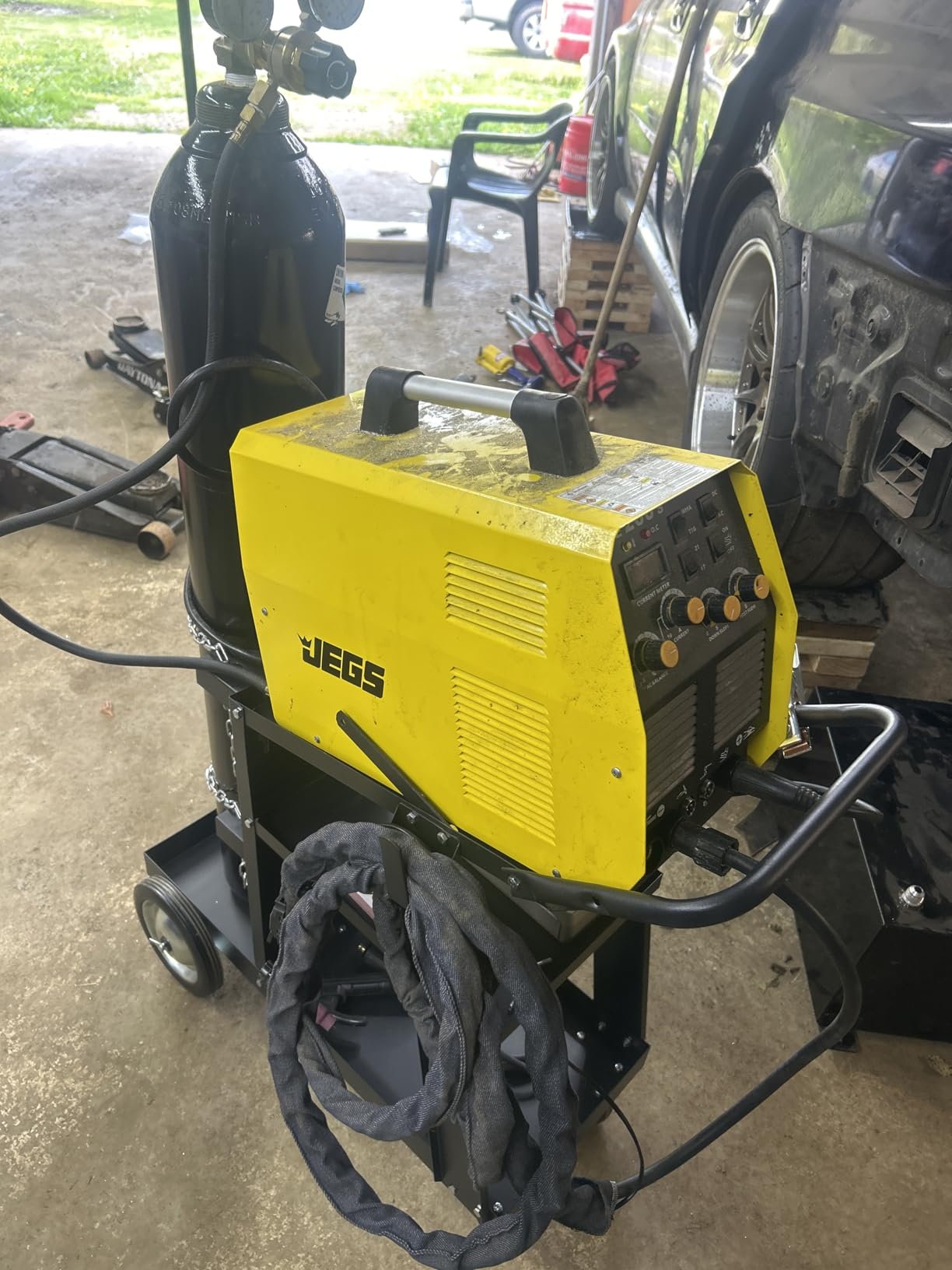
It is also one of the few carts in this group that includes the installation instructions and tools in the box, which removes the most common assembly complaint in this class.
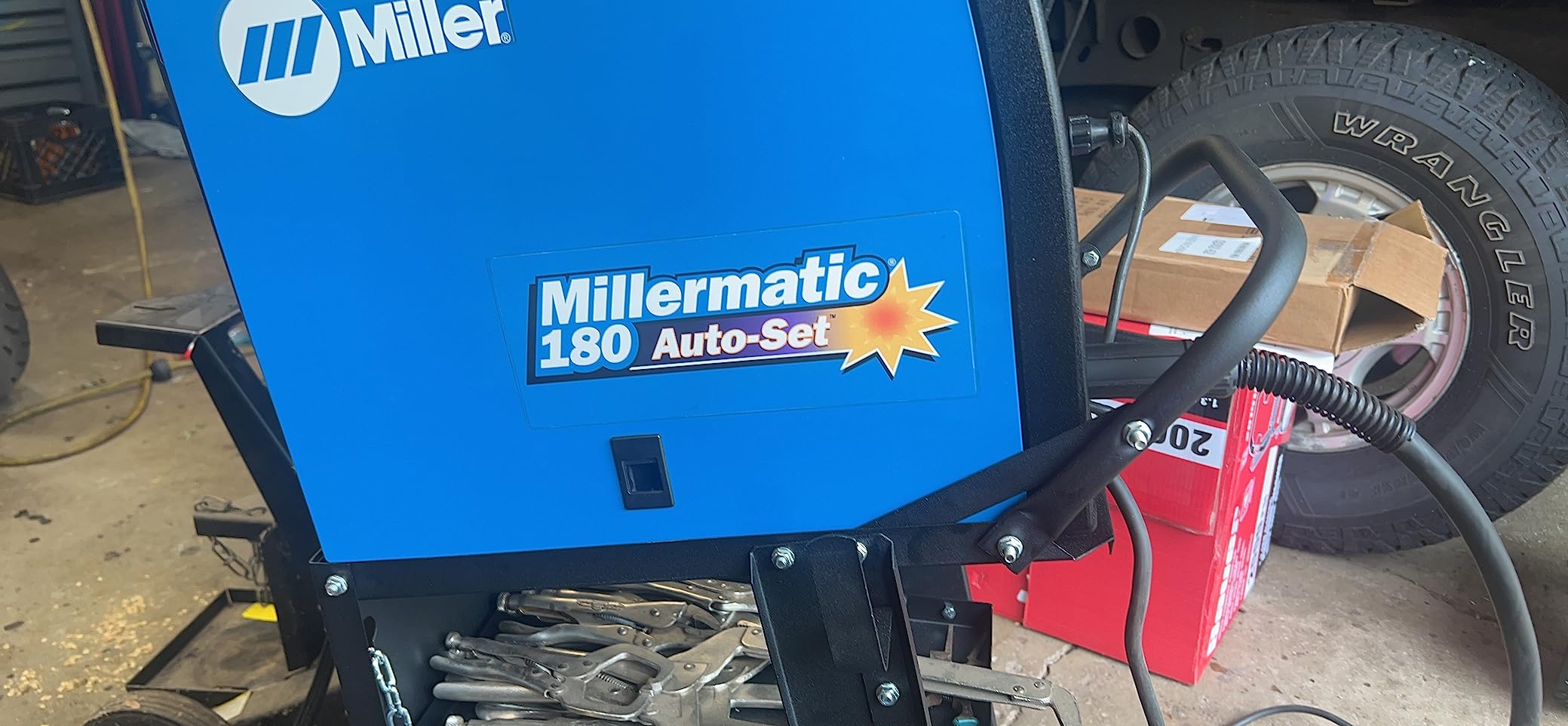
The low rating reflects fit rather than build. Owners running compact machines rate it sturdy and well made for the money, while multiple owners report that average-size welders such as the Millermatic 180 and small plasma cutters do not fit the shelf opening.
Which machines actually fit on this cart?
Compact inverters and smaller stick machines. The shelf opening is the constraint, not the 400 lb rating, and mid-size machines are where the complaints concentrate. Measure the base of your welder and compare it against the shelf opening before ordering.
Also check the handle. Owners report that it can block the welder side door from opening, which means removing the handle before you access the machine controls, an easy fix but an annoying daily one.
Is a budget cart worth it for a first setup?
For a first welder on a level floor, yes, and the review count suggests many people agree. For a shop where the cart will be dragged over cracks, or where a loose cylinder is a real risk, spend the difference on a cart with stainless chains and larger rear wheels.
Route the cylinder chains carefully. Owners report the bottle shifting when the chains are not routed correctly, and a 400 lb rating does nothing for you if a full tank rolls off the frame.
What Makes a Good Welding Cart for a Small Shop
A good welding cart for a small shop is judged on five things: rated capacity that exceeds your real load, cylinder retention that holds through a threshold, casters that survive your floor, a footprint that fits your doorway, and a top shelf your machine actually sits on. Get those five right and the brand matters less than the spec sheet suggests.
How much weight capacity do you actually need?
Add up four numbers. A 110V MIG welder typically runs 40 to 60 lb. A full 125 CF argon/CO2 bottle adds 80 to 100 lb. A consumables load of wire spools, contact tips, a helmet, gloves and a ground clamp runs about 30 lb. That totals roughly 150 to 190 lb for a typical single-garage setup.
Buy the next rating up from your total, and treat a rolling load as lower than a parked one. A 245 lb cart handles a standard setup with room to spare. A 100 lb cart handles a small machine and a small bottle and nothing else. The 350 and 400 lb ratings matter only if you plan to add a plasma cutter or a second machine.
Gas cylinder security and chain material
An unsecured cylinder is the real hazard, not the welder tipping. A full bottle carries enough energy to be lethal, so retention is a safety feature, not a convenience. Carts with stainless steel safety chains routed through proper slots are the safer choice over thin straps or bungee cords.
Check the bottle diameter against the slot. Slot clearances of 9.6 inches accommodate most 125 CF tanks, while a 7-inch rack or slot limits you to smaller bottles. Single-bottle racks keep the machine and gas as one rigid unit, which is tidier; dual slots are more flexible if you switch between gas types.
Casters, wheel diameter and locking brakes
Wheel diameter decides how a loaded cart behaves over cracks, gravel and door thresholds. 7-inch rubber rear tires, as on the Eastwood, are noticeably smoother than 2-inch casters. Front casters between 2 and 3 inches with 360-degree swivel let you pivot in a narrow bay.
Locking brakes are worth having if you work on a sloped driveway or a floor with a grade, because a cart that rolls during a weld ties off your ground clamp at the worst moment. Not every cart here advertises brakes, so check the caster specification before you buy rather than after.
Shelves, drawers or a flat tabletop
Shelves suit bulky gear, drawers suit consumables, and a flat tabletop suits clampable work. A cart with drawers, such as the YESWELDER, keeps tips and nozzles visible and protected. A cart with a cabinet, such as the Klutch, adds lockable storage for an unattended shop. Shelves alone are the simplest and the cheapest.
A welding table solves a different problem. A cart moves the machine; a table gives you a surface to clamp work to. In a small shop you often need both eventually, and a narrow cart parked against a wall plus a fixed table at the bench is a more workable plan than trying to make one unit do both jobs.
Footprint: will it clear your garage door and your car?
Measure before you order, and measure the door opening as well as the cart. Carts between 11 and 12.6 inches wide and roughly 28 inches deep pass through a standard residential garage door opening straight on. Carts at 38 to 40.5 inches deep need a dedicated wall space and will not double as a parking-bay solution.
Add handle height and door track clearance to the measurement. The taller units in this group, around 33 to 38 inches, still pass most openings but feel tight in a low-ceiling bay. In a single-car garage, the roll-out and roll-back workflow is the real test, and a narrow frame with swivel front casters is the difference between a one-person job and a two-person job.
Frequently Asked Questions
What is the best welding cart for the money?
For most small shops, a three-tier cart rated between 245 and 400 lb with two cylinder slots and stainless steel safety chains gives the best balance of capacity, footprint and cost. The VEVOR 3-Tier at 400 lb is the strongest all-round pick, and the YESWELDER 2-Tier with four drawers is the better pick if drawer storage matters more than capacity.
What is the best welding trolley brand?
There is no single dominant brand in this category. VEVOR, YESWELDER, Eastwood, Chicago Electric, Klutch, Weldpro, TOOLIOM, JEGS and Foxngear all compete in the same band, and the meaningful differences are frame gauge, caster diameter and chain material rather than the label. Judge the spec sheet and the buyer feedback, not the badge.
What makes a good welding cart?
Five things matter. Rated capacity above your real load, which is typically 150 to 190 lb for a 110V MIG with a full 125 CF bottle. Cylinder retention with steel chains rather than straps. Casters sized for your floor, with larger rear wheels for cracks and gravel. A footprint that clears your doorway. And a top shelf wide enough for your specific machine.
What is the best welding cart?
The best welding cart for a small shop is the VEVOR 3-Tier with 400 lb static capacity. Its 11.4-inch width and 28-inch depth pass through a standard garage door opening, two cylinder slots with stainless steel chains take full-size bottles, and the split caster layout, 2.9-inch swivel fronts and 7-inch rears, handles cracked concrete well.
Do I really need a welding table?
A cart moves the machine and stores gas and consumables. A table gives you a flat, clampable surface for the work itself. If you only weld occasional small pieces, the cart is enough. If you regularly clamp larger assemblies or need a stable reference surface, a welding table earns its floor space and you will still want a cart to move the machine and bottle.
What size welding cart do I need?
For a single-garage setup, aim for a cart between 11 and 13 inches wide and about 28 inches deep so it passes through the door and parks against a wall without blocking the vehicle. Taller three-tier frames give more storage but take more floor space. Avoid anything over 38 inches deep unless the cart has a permanent home in a corner.
Can I use a regular utility cart for welding?
You can, but a general utility cart lacks the three things that matter most: cylinder retention with steel chains, a top shelf sized and supported for a welder, and casters rated for a concentrated load. A light utility cart carrying a 60 lb machine and a full gas bottle tips easily, and the bottle is the part that cannot be allowed to move.
Should I bolt my welder to the cart?
It is not necessary for normal shop use, but strap or bolt the machine down if you plan to move the cart through a doorway, load it into a truck, or work on an uneven surface. A welded-on bracket is more secure than a strap because it cannot be forgotten, and it stops the machine shifting if the cart tips or crosses a threshold.
Final Verdict: The Best Welding Carts for Small Shops
The VEVOR 3-Tier 400 lb cart is the best welding cart for most small shops in 2026, because it combines the narrowest usable footprint in the group with the highest review volume and honest static and dynamic ratings. Pick the YESWELDER 2-Tier if drawers matter, the Eastwood if your floor is rough, the Klutch if you need lockable storage, and the Weldpro if frame rigidity is your top concern.
Measure your machine, add your bottle, and check the door opening before you order. That thirty seconds of measuring will save you the mistake nearly every buyer in our feedback describes.