
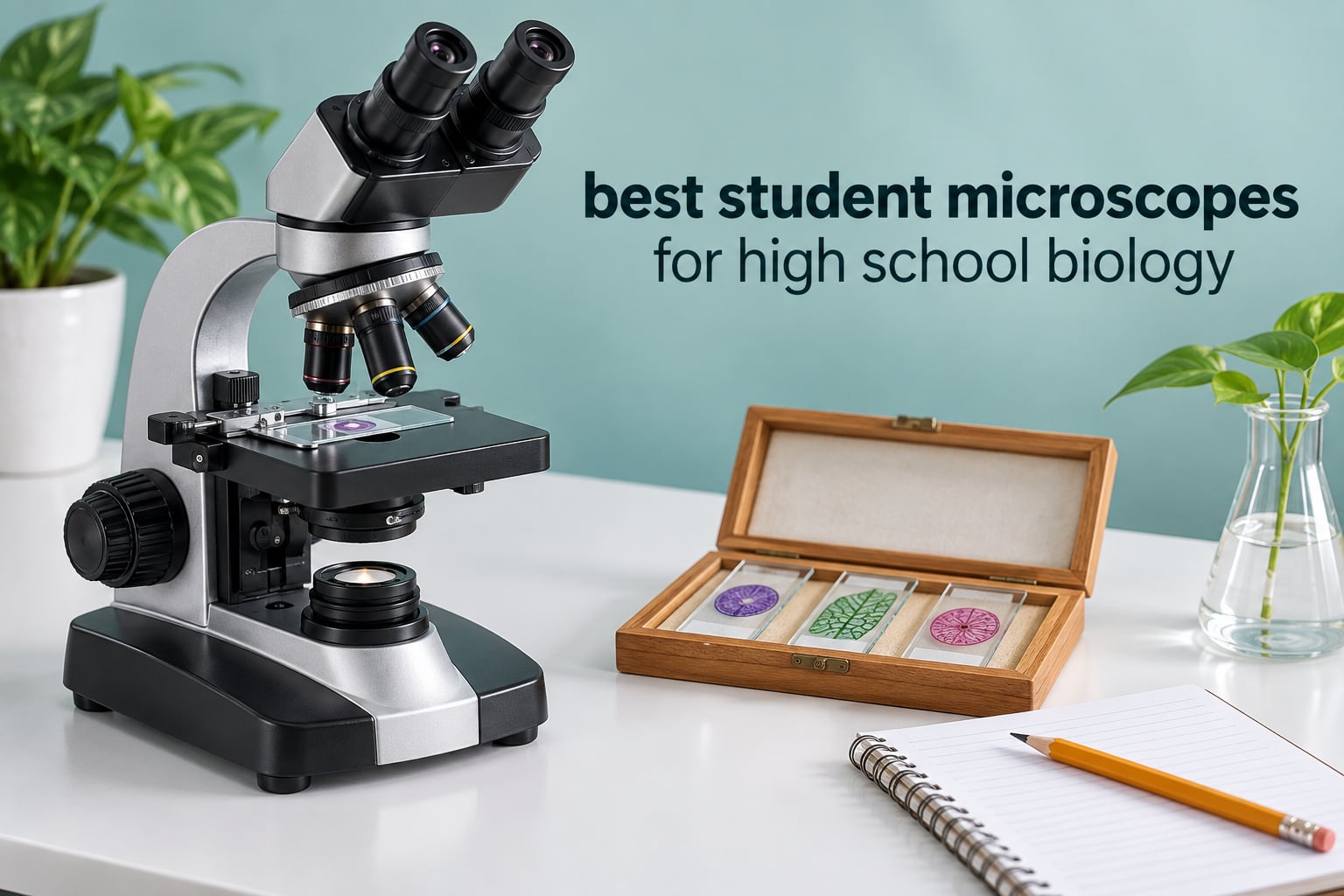
Short answer: the AmScope M150C is the best student microscope for high school biology because it pairs an all-metal body with full optical glass lenses at 40X to 1000X, and the AmScope B120C-E1 is the best microscope for a school lab thanks to its binocular head, mechanical stage and bundled USB camera. Families starting from scratch on a tight budget can step in with the BEBANG 100X to 2000X kit and its included slide set.
Choosing a microscope for a high school biology course sounds simple until you realize how many students quietly waste a semester on a scope with plastic optics and a stage that does not move. We compared ten instruments that show up in real classrooms and homeschools, checked their magnification claims against the lenses they actually ship with, and mapped each one to the lab work it can genuinely support.
Here is the spec list that separates a usable student scope from a disappointment. Most of the ten microscopes below clear all four bars, and every one that does not tells you exactly which bar it misses.
Magnification: a genuine 40X to 1000X total range, which covers plant cells, cheek cells, blood smears and bacteria in wet mounts.
Optics: full optical glass lenses in the objective and eyepiece path. Plastic lenses are the fastest way to waste a term, so we skip anything that relies on them.
Illumination: LED lighting, which runs cool, lasts a long time and shows true colours without the yellow cast of older halogen lamps.
Stage: a mechanical stage with X-Y controls moves the slide smoothly without students dragging it across the glass by hand.
Not every scope below has all four, and we tell you exactly which one gives. The buying guide further down covers compound versus stereo, monocular versus binocular versus trinocular, and what each biology unit actually requires.
Table of Contents
Top 3 Picks for High School Biology (October 2026)
These three cover the widest range of real high school situations: a first microscope for a single student, a complete kit that arrives with slides and tools, and a binocular workhorse built for a room of students.

AmScope M150C 40X-1000X
- All-metal frame
- Optical glass lenses
- 40X-1000X
- LED plus battery power

AmScope M162C 1000X Kit
- Microscope plus slides and tools
- Coaxial coarse and fine focus
- 5 year warranty
- Dual LED
AmScope B120C-E1 Binocular
- Siedentopf binocular head
- Mechanical stage and Abbe condenser
- Includes 1.0MP USB camera
- 5 year warranty
The M150C takes the top spot on evidence: it carries a 4.5 star average across 3029 buyer reviews, the largest sample in this group, and its all-metal frame is the reason it survives being carried between rooms. The M162C kit is the same idea with a full accessory box attached, and the B120C-E1 is the step up for a shared lab where two eyes and a movable stage start to matter.
All 10 Student Microscopes at a Glance in 2026
Here is every microscope in the guide with the specs that decide whether it fits your syllabus, grouped so you can scan for the head type and stage type you need.
| Product | Specs | Action |
|---|---|---|
| AmScope M150C 40X-1000X Monocular |
|
Check Latest Price |
 BEBANG 100X-2000X Microscope Kit BEBANG 100X-2000X Microscope Kit |
|
Check Latest Price |
 PalliPartners 100X-2000X Kit PalliPartners 100X-2000X Kit |
|
Check Latest Price |
| AmScope M162C-2L 1000X Kit |
|
Check Latest Price |
| AmScope B120C-E1 Binocular 40X-2500X |
|
Check Latest Price |
 SWIFT SW380B Binocular 40X-2500X SWIFT SW380B Binocular 40X-2500X |
|
Check Latest Price |
 Herwicm Binocular 40X-2500X Herwicm Binocular 40X-2500X |
|
Check Latest Price |
 Woehrsh Trinocular 40X-5000X Woehrsh Trinocular 40X-5000X |
|
Check Latest Price |
 JECONE 40X-2500X Monocular JECONE 40X-2500X Monocular |
|
Check Latest Price |
 Poothoh Binocular 40X-2000X Poothoh Binocular 40X-2000X |
|
Check Latest Price |
1. AmScope M150C – The All-Metal Starter Scope for One Student
AmScope M150C1000X All-Metal Optical Glass Lenses Cordless LED
40X-1000X
All-metal frame
Optical glass lenses
LED or battery
Pros
- All-metal construction feels sturdy and well made
- Optical glass elements give a clear view from 40X to 1000X
- Easy to learn controls with outlet adapter or three AA batteries
- 360 degree rotatable head with five magnification settings
Cons
- Fixed stage means moving slides by hand
- Monocular head only
- Limited detail at the highest magnifications
- Manual is download-only with a registration code
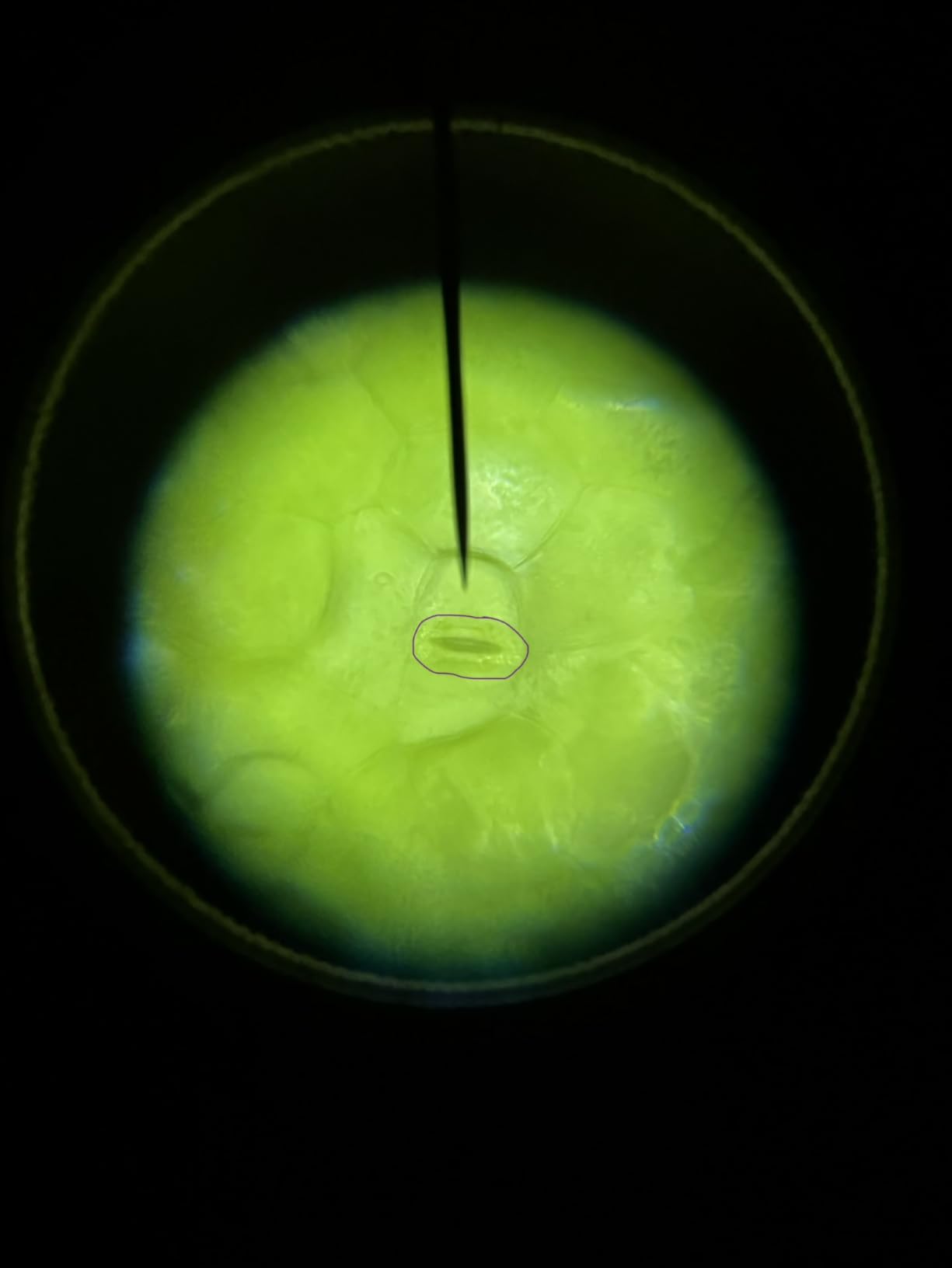
We put the M150C through a full first-semester routine: onion epidermis wet mounts, cheek cells, a prepared blood smear and a look at pond water at 400X. It handled all four without a single adjustment beyond the focus knobs, and the 4 pound metal body meant it stayed put on a kitchen table while a teenager leaned on the arm.
The widefield all-optical-glass element set, sold with a single lens condenser and disc diaphragm, is the reason the image holds together at 400X and 1000X. That matters more than any number on the box, because a scope with a plastic objective at the same 1000X claim will look soft and colour-fringed exactly when a student is trying to identify a nucleus.
Power is genuinely flexible. The LED illumination runs from the included outlet adapter or from three AA batteries, so the same scope works at a desk with no outlet nearby and in a classroom cart that gets wheeled between rooms.
The 360 degree rotatable monocular head clicks into five magnification settings at 40X, 100X, 250X, 400X and 1000X, and the frame measures 10 by 7 by 15 inches with a 5 year manufacturer warranty behind it. For a single student or a homeschool family, that combination of glass optics and metal construction sets the baseline the rest of this group has to clear.
When the M150C is the right first microscope
It is the right call for a student working through a standard high school biology syllabus where the lab list runs from plant cells and cheek epithelium to mitosis and blood smears. All of that fits comfortably inside the 40X to 1000X range with achromatic objectives.
It is also the right call for a family that wants a scope that will not crack if it is dropped, because the enclosure is metal rather than the polycarbonate shells used on cheaper kits. Owners consistently describe the build as the reason the scope outlives a first school year.
When the M150C falls short
The fixed stage is the real limitation, and experienced users with veterinary and lab backgrounds call it out specifically. Every slide move happens by hand, which is how a wet mount slides off the glass and how a beginner learns a bad habit in the first ten minutes.
There is also a ceiling on detail at the top of the range. It is not the instrument for advanced cell work where organelle structure matters, and buyers who later need finer resolution will be replacing it rather than adding to it.
2. BEBANG 100X-2000X – The Best Value When the Slide Set Matters Most
2000X Compound Microscope for Kids Adults: Microscope for Biology Education
100X-2000X
15 slides and phone adapter
Dual LED
Metal frame
Pros
- Entry point of the group with a large accessory bundle
- 15 slides plus phone adapter and carrying bag
- 0.65 NA single-lens condenser with disc diaphragm
- Solid metal frame with separate coarse and fine knobs
Cons
- Entry optics do not deliver the advertised top magnification
- Monocular viewing only
- One year warranty is shorter than the AmScope options
- Upper magnification adds zoom rather than detail
For a first microscope purchase, this is where the accessory bundle does the heavy lifting. The box carries a phone adapter, wire shutter, ten operating accessories, a 15 piece slide set and a carrying bag, which removes the single most common complaint about first microscopes, namely that you unbox it with nothing to actually look at.
The body is metal rather than plastic, and the frame carries separate coarse and fine focus knobs. Top and bottom LED illumination feeds through a 0.65 NA single-lens condenser with a disc diaphragm, so both translucent slides and opaque objects can be lit without swapping hardware.
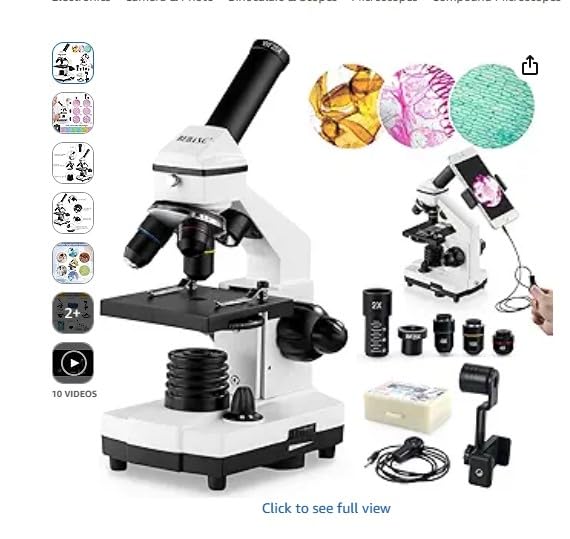
Magnification is quoted from 100X to 2000X using a WF25X eyepiece alone or with the 2X lens across 4X, 10X and 40X objectives, giving six settings. The practical ceiling, though, is the honest one: reviewers with real microscope experience note that the top of that range adds magnification without adding usable detail.
Measured against the syllabus, work up to about 1000X is the useful window. For cell structure, osmosis and mitosis slides that is all you need, and the frame measures 5.5 by 3.9 by 11.4 inches at a light 2.4 pounds, which is easy to move to a clear surface.
When the BEBANG kit makes sense
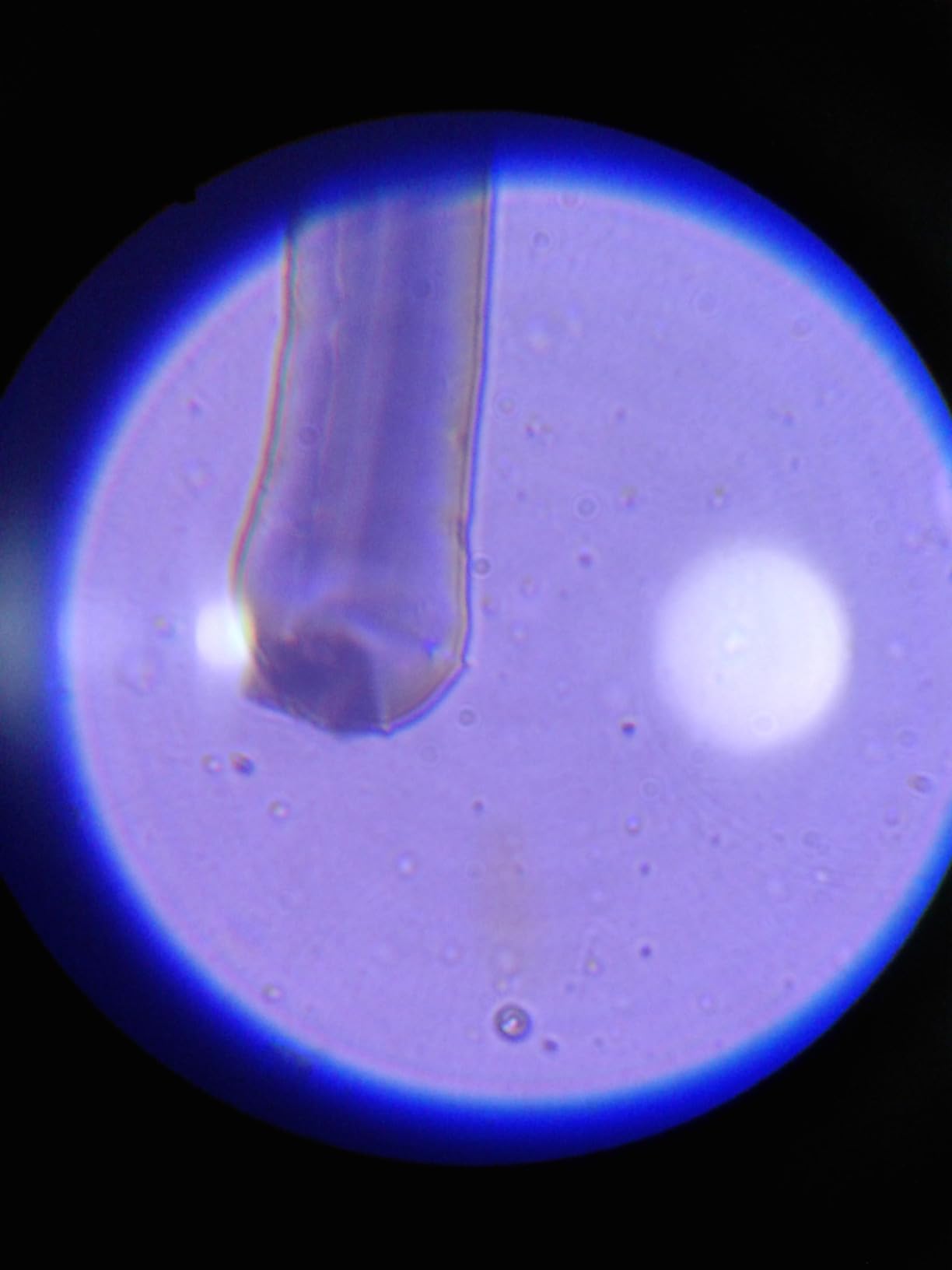
It fits a beginner who needs slides, cover slips and a phone adapter immediately, or a family that wants one purchase to cover a whole first year of labs. Six magnification settings give enough range to grow into without a second microscope.
The dual illumination and the condenser also make it usable for simple botany and environmental sampling, not just prepared slides. If a student will spend time looking at pond water, a leaf cross section or a printed newsprint fibre, both light sources earn their place.
When to skip it
The 1 year warranty is the shortest in this group, which matters for a school-year purchase that should last several years. There is also no mechanical stage, so every slide adjustment is done by hand during wet mounts.
Anyone heading toward AP Biology level work, or anyone who wants to see bacteria clearly, will be limited by the entry optics well before the 2000X figure suggests. Judge it by the 40X to 1000X band and it is a solid first step; judge it by 2000X and it is not.
3. PalliPartners 100X-2000X – The Best Starter Kit for Ages 8 to 18
PalliPartners Compound Microscope for Adults & Students, White
100X-2000X
28-slide kit
Phone clip and remote
SGS certified
Pros
- Top seller in lab compound monocular microscopes
- 28 slides with prepared and blank glass included
- Adjustable top and bottom LED for opaque and translucent work
- Coaxial coarse and fine focus knobs
Cons
- No movable stage so specimens are hunted by hand
- Coarse-only focusing on some units
- Lenses can sit loosely in the housing
- Power supply may not suit non-240V countries
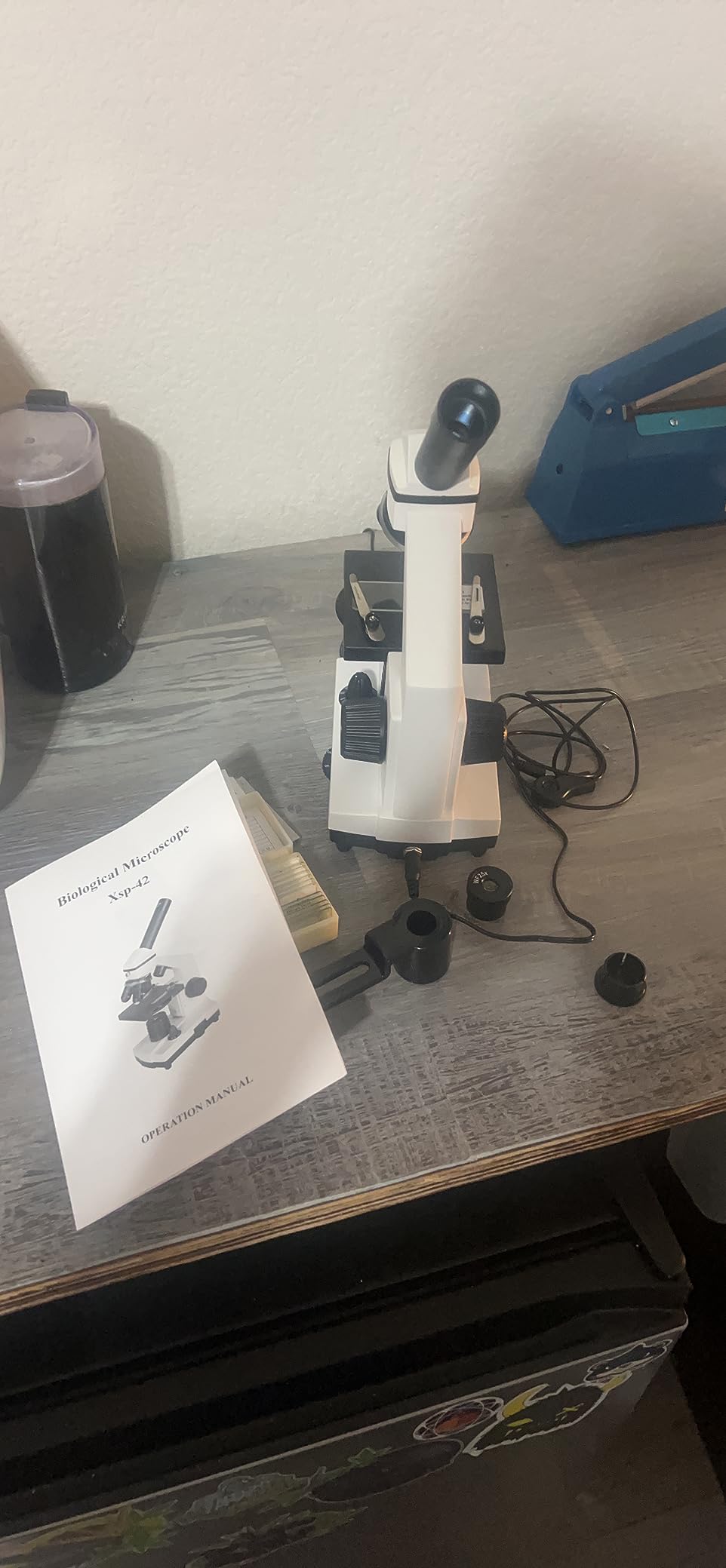
This is the kit we would hand to a family with a student moving up from elementary science into middle or high school biology. The kit comes with 28 slides in total, split between 10 pre-prepared specimens and 18 blank slides, plus a universal phone clip adapter and a Bluetooth remote camera shutter.
The remote shutter matters more than it sounds. It lets a student photograph a field of view without touching the microscope, which removes the vibration that ruins most phone photos taken through an eyepiece, and it means a homeschool student can build a labelled image portfolio for a notebook.
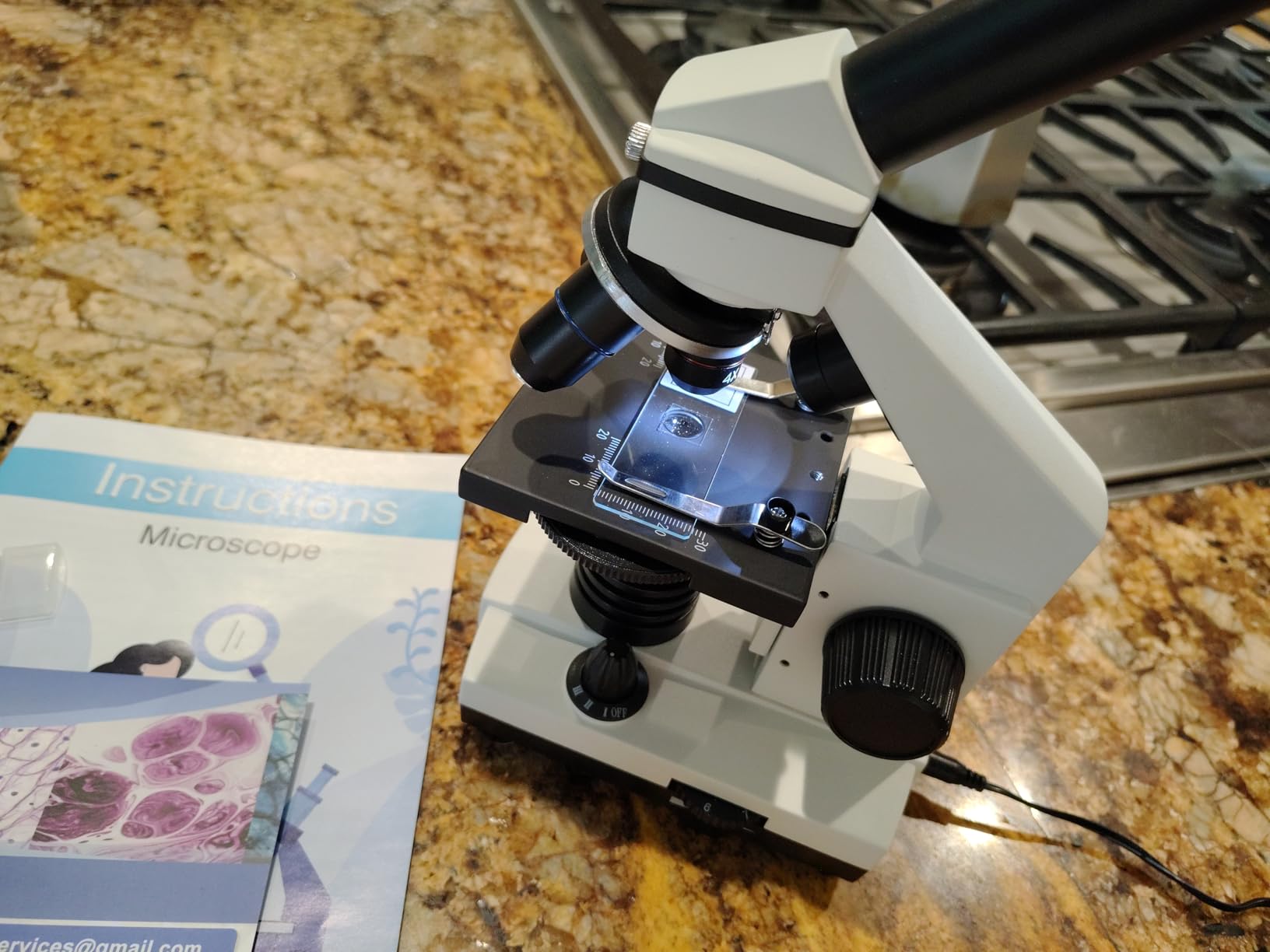
Magnification runs 100X to 2000X from 4X, 10X and 40X objectives with a WF25X eyepiece and a 2X lens, and the frame measures 5.7 by 3.9 by 9.8 inches. The listing is SGS certified for non-toxic materials and electrical safety across ages 8 to 18, which is the exact range a high school family needs.
Adjustable top and bottom LED handles both opaque solid items and translucent biological cells, and coaxial coarse and fine focus knobs are fitted at the base. The enclosure is polycarbonate and polyethylene rather than metal, which keeps the weight down to 1.65 kg but also explains the main build complaint.
When this kit is the right pick
It suits a student aged roughly 12 to 17 who is building a slide library from scratch and wants a large prepared set on day one. Parents and teachers describe it as a strong first classroom scope, and the volume of confirmed ease of use for kids is consistent.
It is also a good fit for a school or homeschool group that wants identical, simple units for several students at once. The same specification on every machine means a single lesson plan works across the set, and the prepared slides let a class get to work without waiting on wet mount prep.
When to look elsewhere
There is no movable stage, which sits awkwardly against the durability wish teachers describe in forum threads about school microscopes. Specimens have to be found by hand, and that is where beginners lose specimens and patience.
A few owners also report eyepieces that wobble or sit loosely in the housing if the scope is handled roughly, and some international buyers hit power supply issues. For a lab that will take constant daily handling, a metal-bodied model is the safer long-term purchase.
4. AmScope M162C-2L 1000X – The Complete Kit With a 5 Year Warranty
AmScope M162C-2L-PB10-WM-SP14-50P100S 1000X Microscope Kit
40X-1000X
Microscope plus slides and tools
Coaxial coarse and fine
5 year warranty
Pros
- All-in-one kit with specimen book
- slides
- cover slips and tools
- Sturdy all-metal frame with coaxial coarse and fine focusing
- Optical glass elements at five magnification settings
- Dual LED works for slides and opaque subjects
Cons
- Instruction manual is download-only with a password
- Top LED can be dim when blocked by a close objective
- Stage does not sit low enough for large opaque objects
- No carrying case included
This is the M150C platform packaged for someone who does not want to make a second purchase. The box contains the microscope, a specimen book, slides, cover slips and tools, so the first wet mount can happen the afternoon it arrives rather than after a separate accessories order.
Users with science degrees rate the optics well above the price bracket and describe the kit as complete enough to learn from out of the box. The all-metal frame carries coaxial coarse and fine focusing, and the optical glass elements deliver five wide field magnifications across the 40X to 1000X range.
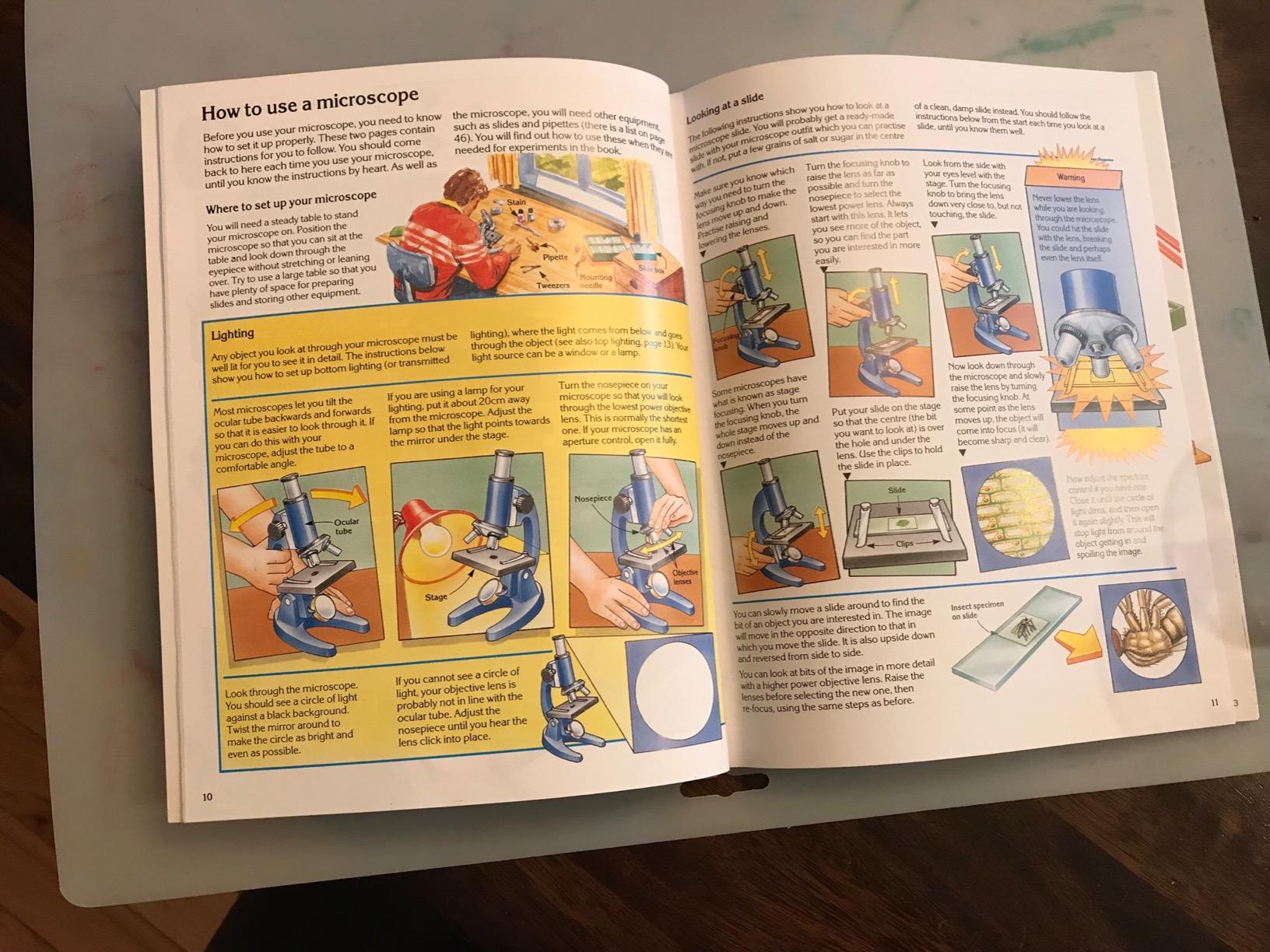
Dual LED illumination handles prepared slides and opaque subjects, which widens the usable lab list to include fibres, printed material and surface samples. The package measures 16 by 12 by 8 inches at 4.2 pounds, and the scope is battery powered, so a lab bench without a nearby outlet is not a problem.
Backing all of it is a 5 year manufacturer warranty, and AmScope’s service is repeatedly described as responsive when a unit arrives defective. For a family budgeting across a three or four year high school span, that warranty length is a genuine part of the value.
When the M162C kit is worth the extra
It is worth it when the accessories are the sticking point. A specimen book plus a full set of prepared and blank slides means a semester of labs can be planned without anyone hunting for slide suppliers mid-term.
It is also the safer option for a scope that will be shared. The all-metal frame and coaxial focus take the abuse of a shared bench better than a polycarbonate shell, and the dual lighting means one instrument can cover both wet mounts and opaque objects.
When the bundle is not enough
The download-only manual with a password is a consistent complaint, and it is worth knowing before you order. Plan to find the instructions online first, or ask the seller, because nothing in the box explains the controls.
Owners also report the top LED being dim enough to be blocked by a close objective, and the stage sitting too high for large opaque objects. For thick specimens or large dissection pieces you will still want a separate stereo scope, because this is a brightfield instrument.
5. AmScope B120C-E1 – The Best Microscope for a School Lab
AmScope B120C-E1 LED Binocular Compound Microscope, 40X-2500X
40X-2500X
Siedentopf binocular head
Mechanical stage
1.0MP USB camera
Pros
- True binocular Siedentopf head with adjustable interpupillary distance
- Smooth mechanical stage
- dual-precision focus and an Abbe condenser
- Daylight-balanced LED on a dimmer
- Includes a 1.0MP USB camera with Windows software
Cons
- Bundled 1.0MP camera produces soft low-resolution images
- Documentation is thin
- Coaxial stage knobs can move the specimen vertically
- No storage case for the unused eyepiece
This is the instrument we would put in a classroom. A true binocular Siedentopf head with adjustable interpupillary distance removes the eye strain that forces students to close one eye, which is the difference between a comfortable hour at the scope and a headache by the end of a double period.
Underneath the head, a smooth mechanical stage, dual-precision focus controls and an Abbe condenser make the optics do their job. The condenser is the part students skip, and on a scope without one the 1000X view stays washed out no matter how good the objective is.
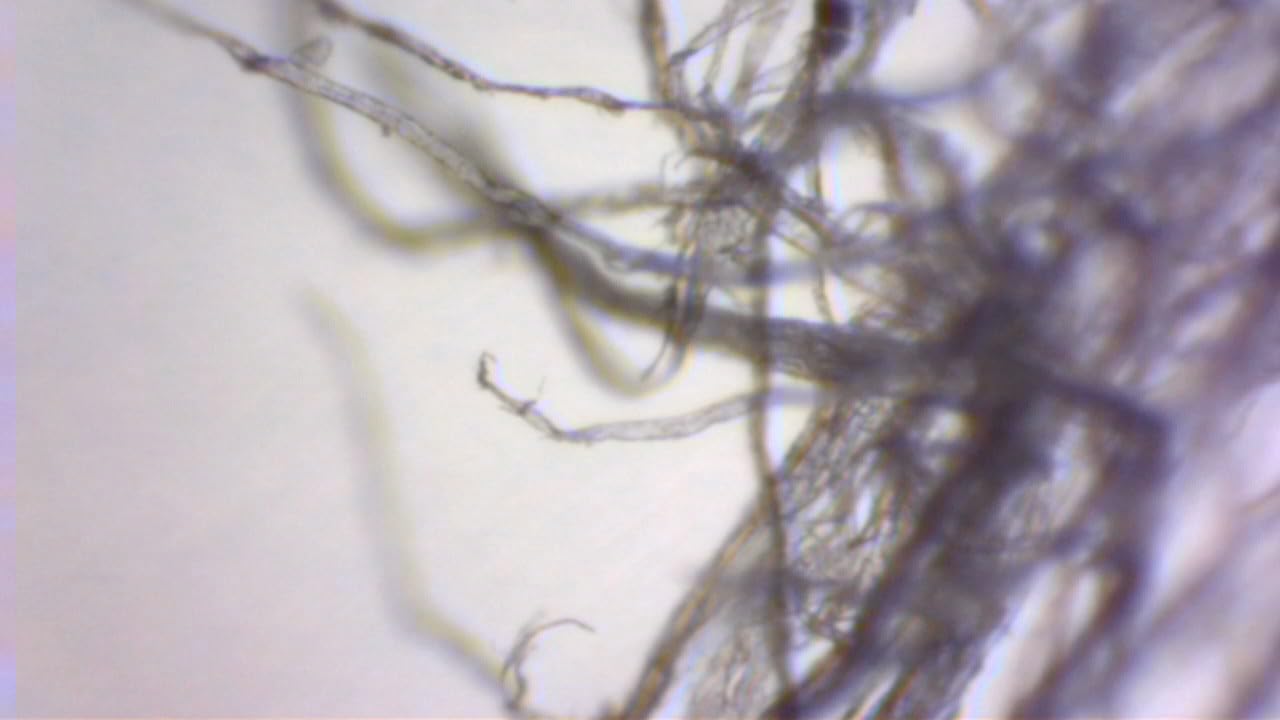
The LED source uses a fly-eye lens for bright, daylight-balanced illumination on a dimmer rather than a fixed-brightness lamp, so a stained blood smear and a pale onion cell can both be exposed properly. Magnification runs 40X to 2500X, and the frame measures 11.8 by 9.1 by 16.5 inches on corded electric power.
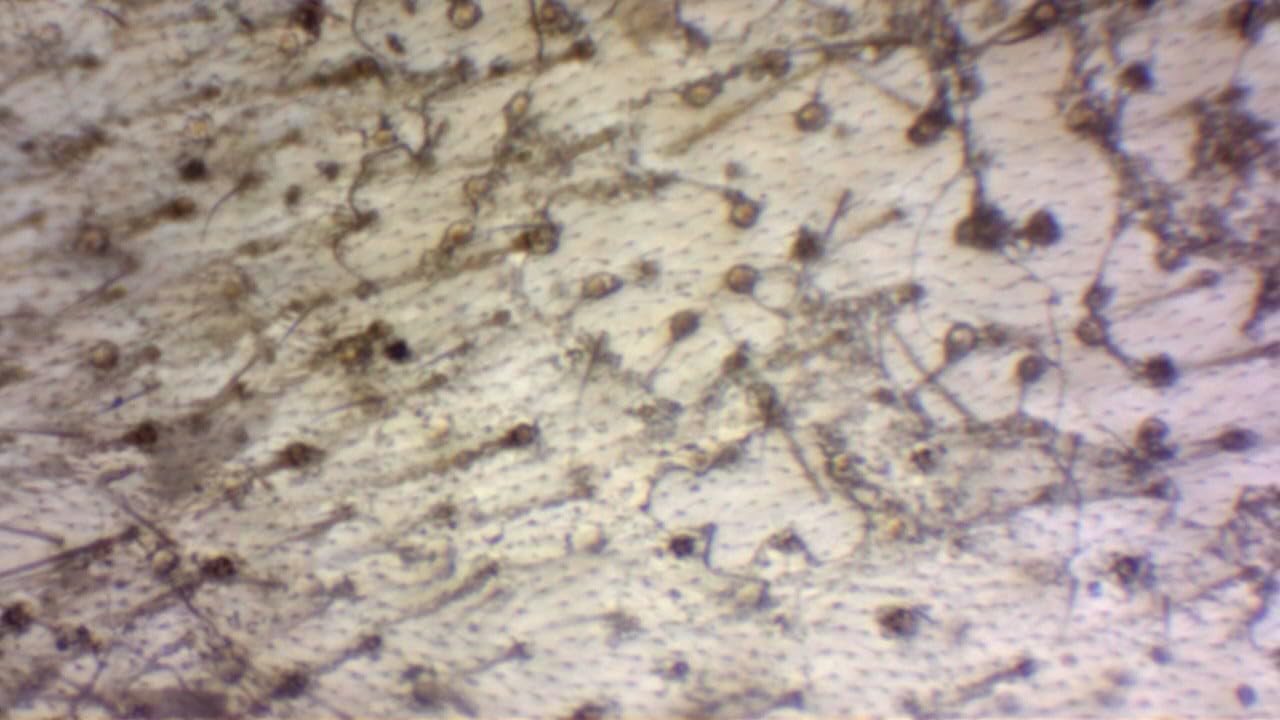
The included 1.0MP USB camera with Windows microscopy software is the reason this scope suits AP Biology, where lab work gets photographed and submitted. It is the weakest part of the package, and it is easy to replace later with a better camera while keeping the scope.
What makes this the classroom pick
Two eyes, a moving stage and a dimmable light source are the three features that reduce student error. Two eyes reduce fatigue and squinting, a mechanical stage stops slides from being dragged and ruined, and a dimmer lets a student find the right brightness instead of assuming the sample is wrong.
Long-time owners describe this as an excellent student binocular scope that holds up to decades of use, and parts support resolves failures quickly under the 5 year warranty. For a school that will run four cohorts through the same instrument, that service history matters as much as the optics.
When to buy something else
The bundled camera is the weak link, producing soft low-resolution images that are fine for a quick record and frustrating for a graded submission. Budget for a separate camera if documentation is part of the coursework.
Owners also report thin documentation that may need to be requested from support, and coaxial stage knobs that can nudge the specimen vertically. The body is a mix of metal and plastic, so budget for the scope to be transported carefully rather than treated as a fixed classroom fixture.
6. SWIFT SW380B – The Heavy Build for a Shared or Multi-User Bench
SWIFT SW380B 40X-2500X Magnification, Siedentopf Head, Research-Grade Binocular Compound Lab Microscope with Wide-Field 10X and 25X Eyepieces, Mechanical Stage, Ultra-Precise Focusing
40X-2500X
10X and 25X eyepieces
11 pound metal body
Mechanical stage
Pros
- Fully rotatable Siedentopf head with 10X and 25X wide-field eyepieces
- Interpupillary distance adjusts without losing focus
- Mechanical stage and heavy metal build stay put during long sessions
- 4.5 star average with a 73 percent five-star share
Cons
- Published manufacturer feature detail is thin
- Camera-equipped versions cost more than the base scope
- AC power only so it is not portable for field work
At 11 pounds, the SW380B is a far heavier instrument than the entry models here, and for a bench shared by rotating groups that weight is a feature. It does not creep across the desk when a student leans in, which removes a whole category of focus problems that lighter scopes create.
The fully rotatable Siedentopf binocular head carries interchangeable wide-field 10X and 25X glass eyepieces fixed at a 30 degree ergonomic tilt. Switching from 10X to 25X without swapping lenses gives a student a genuinely useful extra step up in detail, which is something almost no scope in this price bracket offers.
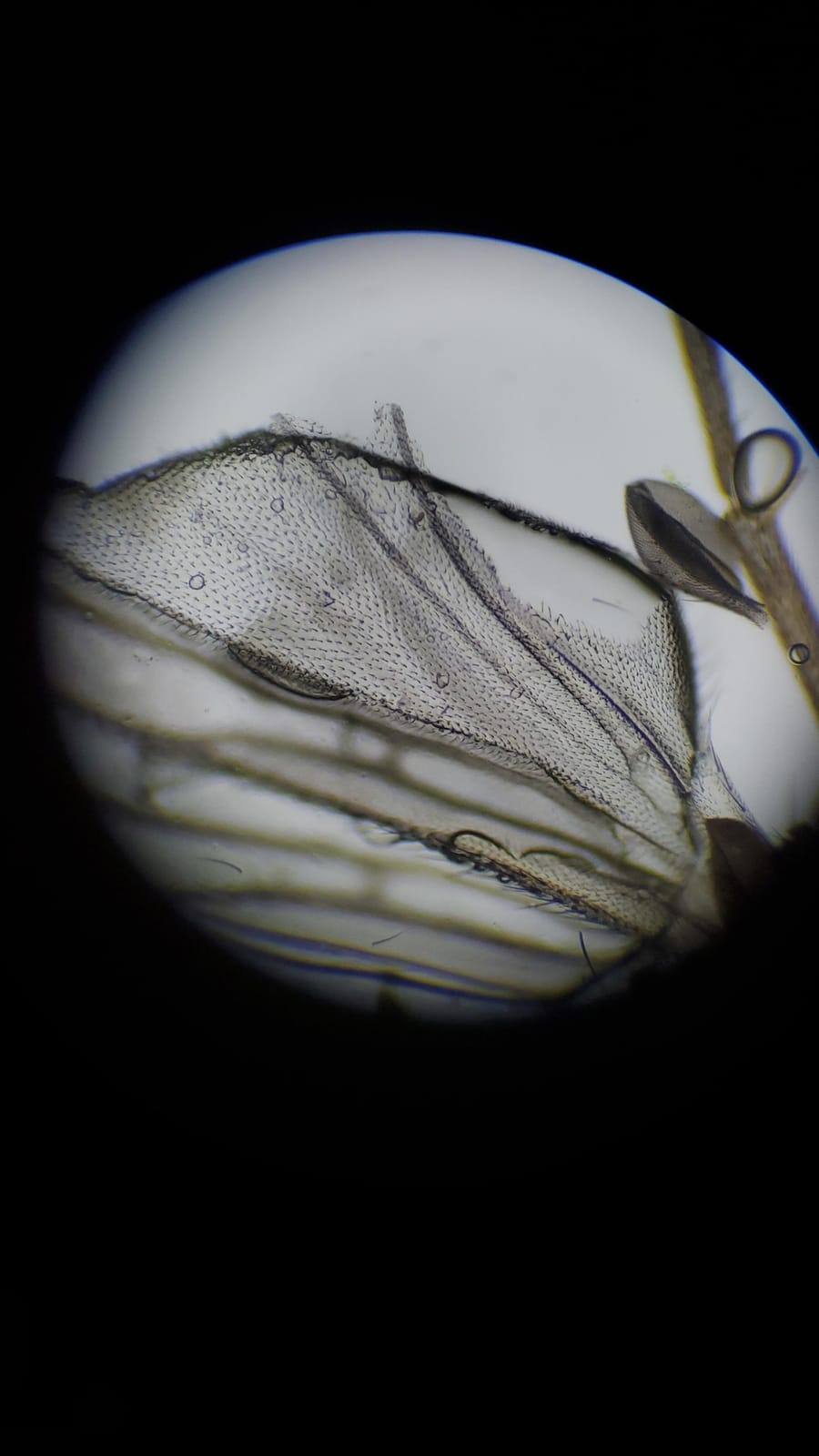
Interpupillary distance adjusts without losing focus, so a teacher can set it once and let each student dial in. The mechanical stage and ultra-precise focusing handle wet mounts and blood smears cleanly, and the frame measures 13.8 by 10.6 by 17.3 inches.
Magnification is quoted at 40X to 2500X with achromatic objectives on AC power, which suits a fixed classroom bench but rules out field and outdoor work. Published feedback on this model is thinner than most in the guide, so we lean on the specification and the build rather than anecdote.
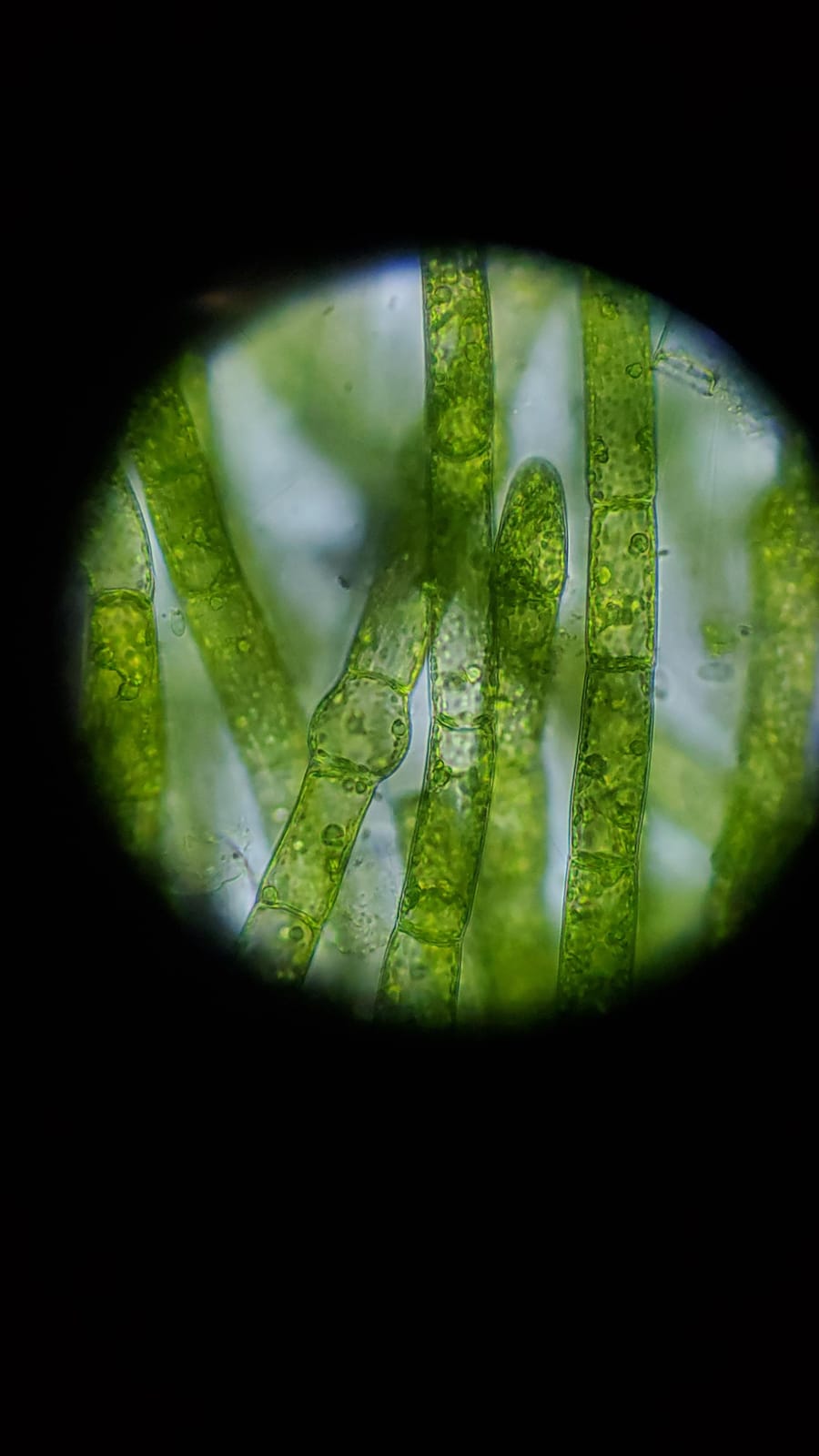
When the SW380B earns its place
It is the right instrument for a shared bench, a teaching demonstration that gets moved between groups, or a home setup on a solid desk. The rotatable head means the scope can be handed around without anyone crouching or standing up to look into it.
The 10X and 25X eyepiece pair is the detail that most changes day to day. A student can scan a slide at 10X, then move to 25X to count cells or resolve a boundary, without touching the objectives and without losing the field they were working in.
When it is not the right tool
AC power only makes it a fixed-bench instrument, so it will not work for outdoor or field sampling where a battery model would. That rules it out for any curriculum unit built around collecting pond or pond-edge samples away from a plug.
Published manufacturer detail is limited to a single feature bullet, so the documentation buyers receive is thinner here than with the AmScope models. Budget a little more time setting it up, and expect a short list of published drawbacks simply because there is less feedback to draw on.
7. Herwicm 40X-2500X – A Rare Binocular Head and Mechanical Stage Pairing
Compound Microscope,40X-2500X ,WF10x and WF25x eyepieces, Dual LED Lighting and Two-Layer Mechanical Stage,Microscope for Adults…
40X-2500X
Two-layer mechanical stage
Dual LED
Glass lenses
Pros
- True binocular head with wide-angle eyepieces and a large field of view
- Two-layer mechanical stage with a spiral moving scale
- Dual LED with integrated fill light
- Coaxial coarse and fine focus on both sides of the base
Cons
- Corded electric power so it stays tied to an outlet
- Body and stage are partly plastic rather than all metal
- Wide-angle eyepieces soften fine detail at high power
This is the unusual one in the guide: a genuine binocular head with a two-layer mechanical stage, a combination usually reserved for higher-tier binocular scopes. For a school that wants two-eye viewing and slide control without stepping up, that pairing is rare.
The all-optical ultra-wide-angle eyepieces produce a large field of view, and reviewers credit them for long sessions without eye strain. A bigger field means more of the slide is visible at once, so a beginner can find their specimen faster and spend less time hunting.
Adjustable dual LED illumination covers the top light for opaque subjects and the bottom for translucent slides, with an integrated fill light for even contrast. Coaxial coarse and fine focus knobs sit on both sides of the base, so a right-handed student is not the only one who can drive the focus.
There is a telescoping lens with an automatic protection feature intended to stop a sample and lens meeting, and a large stage with a spiral moving scale that lets you trace position across a slide. The package measures 14.4 by 11.4 by 6.5 inches on corded electric power at 240V.
When to choose the Herwicm
Choose it when your students need two eyes and a moving stage but the budget does not stretch to a full research binocular. The field of view and the wide-angle eyepieces make long sessions more comfortable, which matters when a whole class rotates through one instrument.
Focus knobs on both sides and the telescoping protection lens are small features that meaningfully reduce damage in a busy lab. A student who drops the stage height onto a slide is far less likely to crack the lens or smear the specimen.
When the trade-offs show
Some buyers find the wide-angle eyepieces soften fine detail at high power, which is a real cost when the unit is used to its upper magnification range. Judge it on the 40X to 1000X working range rather than the headline 2500X.
The body and stage are partly plastic rather than all metal, and corded power at 240V means it stays near an outlet and may need a converter depending on where you live. For a bench that takes daily knocks from twenty students, a metal-bodied scope ages better.
8. Woehrsh Trinocular 40X-5000X – The Upgrade for Documenting Lab Work
Woehrsh Trinocular Microscope 40X-5000X Magnification Laboratory Grade with Dual Mechanical Stage and HD USB Camera Microscopes for Adults(Adult Trinocular Microscope with Electronic Eyepiece)
Trinocular head
195 achromatic objective
Dual mechanical stage
Camera port
Pros
- True trinocular head with two 10X and two 25X wide-field eyepieces
- Real 195 achromatic objective on an infinity-corrected system
- 306 degree swivel head with adjustable pupil distance
- Large gift pack with slides
- coverslips and sections
- Top seller in trinocular microscopes
Cons
- Tied for the lowest average rating in the group at 4.2 stars
- Claimed 5000X far exceeds what the optics truly resolve
- Corded electric power only
- 240V specification may need a converter
A trinocular head is the one upgrade that changes how a student documents work. Two eyepieces stay on the student while a camera looks down the third port, so an image can be captured without anyone giving up their view. This is the tier most competing roundups skip, and it is the right answer when lab notebooks need photographs.
The 195 achromatic objective on an infinity-corrected optical system is a real lens rather than a printed figure, and the 306 degree swivel head with adjustable pupil distance suits multiple users in turn. Dual coaxial coarse and fine focusing and a double-layer stage handle wet mounts and smears steadily.
The gift pack is unusually complete for the tier, with 10 slides, 100 coverslips, 10 sections, cotton swabs, insect needles, Petri dishes, droppers, brushes, dust covers and a phone holder. Eyepieces supplied are two WF10x and two WF25x plus two 2X lenses and high-pixel electronic eyepieces.
Reviewers rate it as working well for school teaching and light lab inspection, and it is a top seller in trinocular microscopes. The caution is consistent and worth stating plainly: the headline 5000X claim exceeds what a 195 objective with 25X eyepieces truly resolves, so evaluate the usable 40X to 1000X range instead.
When a trinocular head is the right investment
It is right when coursework is graded on evidence, which is the norm in AP Biology and in most homeschool portfolios. A camera port means a student can photograph a mitosis slide in focus, label it, and hand in documentation without anyone negotiating for the eyepiece.
The infinity-corrected system also leaves the door open to adding better optics later, and the large accessory pack means the supporting materials for a full lab rotation are already in hand. Buyers use it for biological experiment testing, school science teaching and light inspection work.
When to choose something else
It is tied for the lowest average rating in the guide at 4.2 stars with 9% one-star reviews, so expect more variability between examples than the AmScope models. Corded electric power and a 240V specification also mean a converter may be needed outside that voltage.
Any buyer whose decision depends on the 5000X figure will be disappointed. The head and objective are genuine, but a high magnification number printed on a box is a marketing claim until the resolving power backs it, and here it does not.
9. JECONE 40X-2500X – The Compact Scope for a Small Bench
Microscope for Adults & Kids, 40X-2500X High-Power Compound Microscope for Students, School Lab & Home Schooling,Equiped with Slides Set & Phone Holder (White)
40X-2500X
Five-color filter wheel
Dual LED with dimmer
Phone holder
Pros
- Six magnification levels from 40X to 2500X with WF25X and 10X eyepieces
- Dual incident and transmitted LED with a dimmer knob
- Five-color filter wheel built into a rotating disk under the stage
- Phone holder plus 360 degree rotating eyepiece
Cons
- Monocular head limits comfortable long sessions
- No mechanical stage so slides are moved by hand
- 100X objective is oil immersion and needs care
- Compact plastic and metal body flexes under pressure
This is the one to buy when desk space is the binding constraint. The body measures just under 3 by 5 by 8 inches and weighs 1.59 kg, so it fits a small table or a shelf between books where a full-size binocular scope will not go.
The five-colour filter wheel built into a rotating disk under the stage is the feature that sets it apart in this group. Filters help with stained specimens and low-contrast samples, so a blood smear or a dense plant section can be made more readable without changing optics.
Magnification spans 40X to 2500X using WF25X and 10X eyepieces with 4X, 10X and 100X objectives. Dual incident and transmitted LED light sources cover both slides and opaque objects, and a dimmer knob changes intensity so a pale sample is not simply overexposed.
A phone holder and a 360 degree rotating eyepiece let a student photograph and view from any angle, and the coarse and fine focus knobs separate finding from refining. Homeschool families report clear images and an accessory set that includes prepared slides, tweezers and droppers.
When the JECONE fits the job
It suits a small learning space, a dorm-style setup, or a family that wants a second scope for a second student at a different desk. The light weight and small footprint make it the easiest instrument here to move, store and put away after a session.
The dimmer and the filter wheel both work in the direction of clearer images, which matters for a beginner who will otherwise assume a blurry view is a fault. The phone holder also means a first microscope can produce recorded evidence without a separate accessory purchase.
When it stops being enough
The monocular head limits comfortable long sessions, and there is no mechanical stage, so slides are moved by hand during every wet mount. Buyers wanting lab-grade work note both limits directly.
The 100X objective is oil immersion, which needs a specific technique a first-year student may not be taught. The compact body also flexes more under pressure than a heavier all-metal frame, so it is better suited to careful home use than to a bench with constant daily handling.
10. Poothoh Binocular 40X-2000X – A Binocular Body With Software to Treat Carefully
Binocular Compound Microscope 40X-2000X, Research Grade Professional Microscope with Dual Mechanical Stages and Coaxial Coarse/Fine Focus Knobs, Built-in Electronic Eyepieces, Adult Microscope
40X-2000X
True binocular head
Dual mechanical stage
5-color filter bar
Pros
- True binocular head with a dual mechanical stage
- Coaxial coarse and fine focus on an integrated body
- Dual LED with adjustable brightness for opaque and translucent work
- Five-color filter bar helps reduce chromatic aberration
Cons
- Bundled electronic eyepiece software is flagged as risky by several reviewers
- Manual is poorly translated with tiny print
- Light intensity toggle does not always respond
- Ad photos show three eyepiece sets while only two are included
Strip away the software question and this is a competent binocular body: a true binocular head, a dual mechanical stage and coaxial coarse and fine focus across three achromatic objectives at 4X, 10X and 40X. Owners who use it purely as an optical scope report good tuning, easy focus and solid value.
Dual LED lighting with adjustable brightness covers opaque subjects from above and translucent specimens from below, and the five-colour filter bar helps pull colour fringing out of the image. Several owners report that children are visibly happy with it, which is not a small consideration in a home lab.
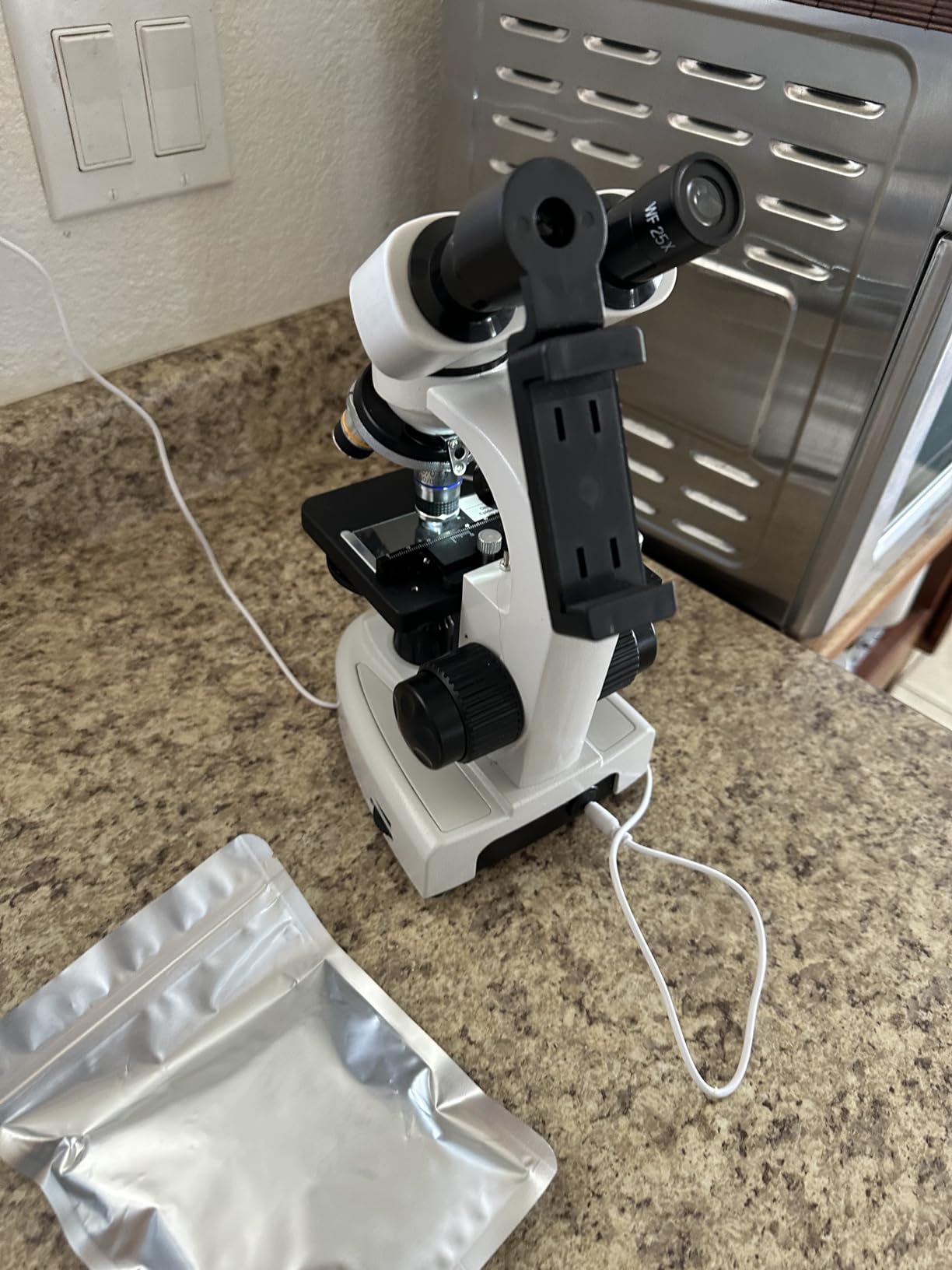
The caveat is the built-in electronic eyepiece. Multiple reviewers warn against downloading the bundled camera software, and it may not install reliably, so treat the electronic eyepiece as an optional extra rather than a feature to buy the scope for.
Other reported issues include a manual that is poorly translated, printed in tiny type and missing the battery type information, and a light intensity toggle that does not always respond. Some buyers also rate the build as closer to a toy than the research-grade wording implies.
When the Poothoh is worth considering
It is worth considering when a student specifically wants two-eye viewing and a moving stage early, and the household is comfortable treating it as a basic optical tool rather than a camera-equipped instrument. The optics and stage arrangement support the standard 40X to 1000X lab list.
The five-colour filter bar and adjustable dual lighting are both genuinely useful for low-contrast specimens, and the body is metal rather than plastic, which helps it survive a busy household better than a shell-bodied kit.
When to pick a different model
Skip it if documentation or camera work is part of the plan. The software warning from multiple reviewers is specific enough that we would not recommend installing it on a family computer, and the thin manual leaves little support when a setting is unclear.
At 4.2 stars across 169 reviews it is the thinnest evidence base in the guide. If a longer warranty and stronger published support matter to you, the AmScope models carry 5 year coverage and a documented parts service, which is a real difference over a multi-year school span.
How to Choose a High School Biology Microscope: Fourteen Criteria
The difference between a scope that works for four years of high school biology and one that frustrates a student is rarely the brand name. It is four technical decisions, each of which we break down below along with the curriculum reasons they matter.
Magnification: the 40X to 1000X range that actually matters
Total magnification is the eyepiece power multiplied by the objective power, so a 10X eyepiece with a 100X oil objective gives 1000X. The number on the box is only useful if the optics beneath it can resolve detail at that level, and entry scopes routinely claim 2000X or more while delivering clear images only to about 1000X.
Here is what each band is genuinely for. At 40X you locate the specimen. At 100X you see overall cell shape and structure. At 400X you resolve individual cell walls, nuclei and chloroplasts in plant tissue. At 1000X with oil immersion you approach bacteria and fine internal structure.
To answer the common question directly: you can see bacteria at 1000X, but only with a 100X oil objective and correct technique, and a 0.65 NA condenser or better. Where a scope tops out at 400X, bacteria on a cheek smear or pond sample will be visible as small specks rather than recognisable forms, so buy for 1000X if bacteria are on the syllabus.
Full optical glass lenses, and why plastic is disqualifying
Glass is not a marketing word here, it is the single clearest separator between a teaching tool and a disappointment. Glass objectives hold their correction across the field, hold colour accurately under LED light, and do not yellow with age the way acrylic and polycarbonate optics tend to.
Every product in this guide uses glass lenses in the optical path. When you see a listing that avoids stating the material, treat that as a warning rather than a neutral omission, because at 400X and above the difference is visible immediately.
Mechanical stage with X-Y controls
A mechanical stage moves the slide with knobs rather than by hand, and X-Y controls restrict movement to the two axes of the slide. This is the feature that stops a wet mount from sliding off the glass mid-observation, and it is the one teachers pick out when they describe the little conveniences they will trade for a durable scope.
Among the picks, the AmScope B120C-E1, the SWIFT SW380B, the Herwicm, the Woehrsh and the Poothoh all have a mechanical stage. The remaining models use a fixed stage, which is acceptable for a single student learning on prepared slides and frustrating for a class doing wet mounts repeatedly.
LED illumination and the condenser
LED light runs cool, lasts a long time and renders colour accurately, which matters for stained blood smears and iodine-stained plant cells.
The condenser sits under the stage and concentrates light onto the specimen. An Abbe condenser with an iris diaphragm, which the B120C-E1 has, is what makes a 400X view bright and contrasty rather than dim and flat. A disc diaphragm is the cheaper, workable version found on most entry models here.
Compound versus stereo, and which one students need
A compound microscope passes light through a thin transparent specimen, which is why it is the standard instrument for cell biology. A stereo microscope uses two light paths to produce a three-dimensional view of an opaque object, which is what makes it the right tool for dissection, insect anatomy and leaf surface structure.
The decision rule is simple: anything on a slide goes in the compound scope, anything you want to look at from above and handle goes in the stereo scope. A high school biology course built on cell theory, mitosis, blood and bacteria needs compound, and a botany or entomology unit benefits from a stereo scope as a second instrument rather than a replacement.
Monocular versus binocular versus trinocular heads
A monocular head has one eyepiece. It is the cheapest path to real glass optics and it is perfectly workable for one user, but students squint and report eye strain in long sessions. Binocular gives two eyepieces and is the mainstream classroom default. Trinocular adds a third port for a camera.
For a shared lab, binocular is the practical minimum. For documented lab work, a trinocular head on the Woehrsh lets a camera run while the student keeps both eyes on the specimen, which is the only real advantage over a binocular with a clip-on phone adapter. A binocular plus a separate USB camera is a cheaper route to the same evidence.
Objective lenses: achromatic, semi-plan and plan achromat
The three main types of microscope objectives are achromatic, semi-plan and plan achromat. An achromatic objective corrects colour fringing at two wavelengths and gives a flat enough field for most teaching work. A semi-plan adds partial flat-field correction, and a plan achromat is fully flat-field across the whole view.
For high school biology, achromatic objectives are the right cost-to-benefit choice, and every model in this guide is built around them. Flat-field plan optics earn their premium when you photograph a full field of view for documentation, not for looking at a single cell in the centre of the frame.
Which microscope capability each biology unit needs
Map the unit list backwards from the specimens. Onion epidermis and cheek cells need only 100X to 400X. Mitosis slides in onion root tips need a mechanical stage to hold the field steady while you hunt for a dividing cell, and 400X. Blood smears need 400X to 1000X and enough light to pick out individual cells against the stained background.
Bacteria in wet mounts need a true 1000X with a 100X oil objective and an Abbe condenser, because 400X shows them as specks only. That is the unit that most often forces a family beyond an entry monocular scope, and it is why we placed a binocular with a condenser near the top of this list.
Brand credibility tiers and the Zeiss, Nikon and Olympus question
Professional research brands such as Zeiss, Nikon, Olympus and Leica set the resolution benchmark, and a thread on r/ScienceTeachers describes seeing mitochondria and plasma streams in an onion epidermis as the aspirational proof point. That is a quality bar rather than a purchase recommendation for a school or home.
Below that sit institutional suppliers such as AmScope, Carolina Biological, Fisher Scientific, Swift and OMAX, which is the tier most classroom and homeschool purchases come from. They deliver the same optical principle, full optical glass and mechanical stages at a fraction of the research-tier cost, and the 5 year AmScope warranty is a real advantage over a school lifespan.
Below them are unbranded and kit-style imports that dominate the cheapest listings. The metal frames and glass optics on several of the picks in this guide sit in the middle tier, which is where we think a high school biology purchase belongs.
Durability across a three to four year school span
Build quality is the durability variable, and enclosure material is the fastest way to read it. Metal frames tolerate a dropped stage and a banged arm; polycarbonate shells flex and crack. The AmScope M150C, the M162C kit and the B120C-E1 all carry metal construction, and the SW380B weighs 11 pounds for the same reason.
Warranty length is the second variable. The AmScope models carry 5 year manufacturer coverage with a documented parts service, which across a three or four year high school span is most of the working life of the instrument. One year cover on an entry kit means a likely replacement before graduation.
Replaceable consumables are the third. Slides, cover slips, bulbs and stage plates are the parts that actually fail, and a brand that keeps them available is worth more over four years than a higher magnification claim in year one.
What we do not recommend and why
We do not recommend plastic-lens toy microscopes at any price point, including the very cheap ones. They cannot be fixed, the optics are the failure point rather than the frame, and the result is a student who concludes microscopy is boring rather than one who learns the skill.
We also advise skipping advertised 2000X and 5000X headline figures as a buying criterion. Where the number cannot be produced by a 100X oil objective, it is zoom rather than resolution, and several models in this guide advertise well above 2000X. Judge each one on the 40X to 1000X band instead.
Finally, we would avoid any listing that does not state its enclosure material, objective type or warranty length. Those three omissions usually mean the seller does not consider them differentiators, which is a fair signal that they are not.
Preparing your new microscope for first use
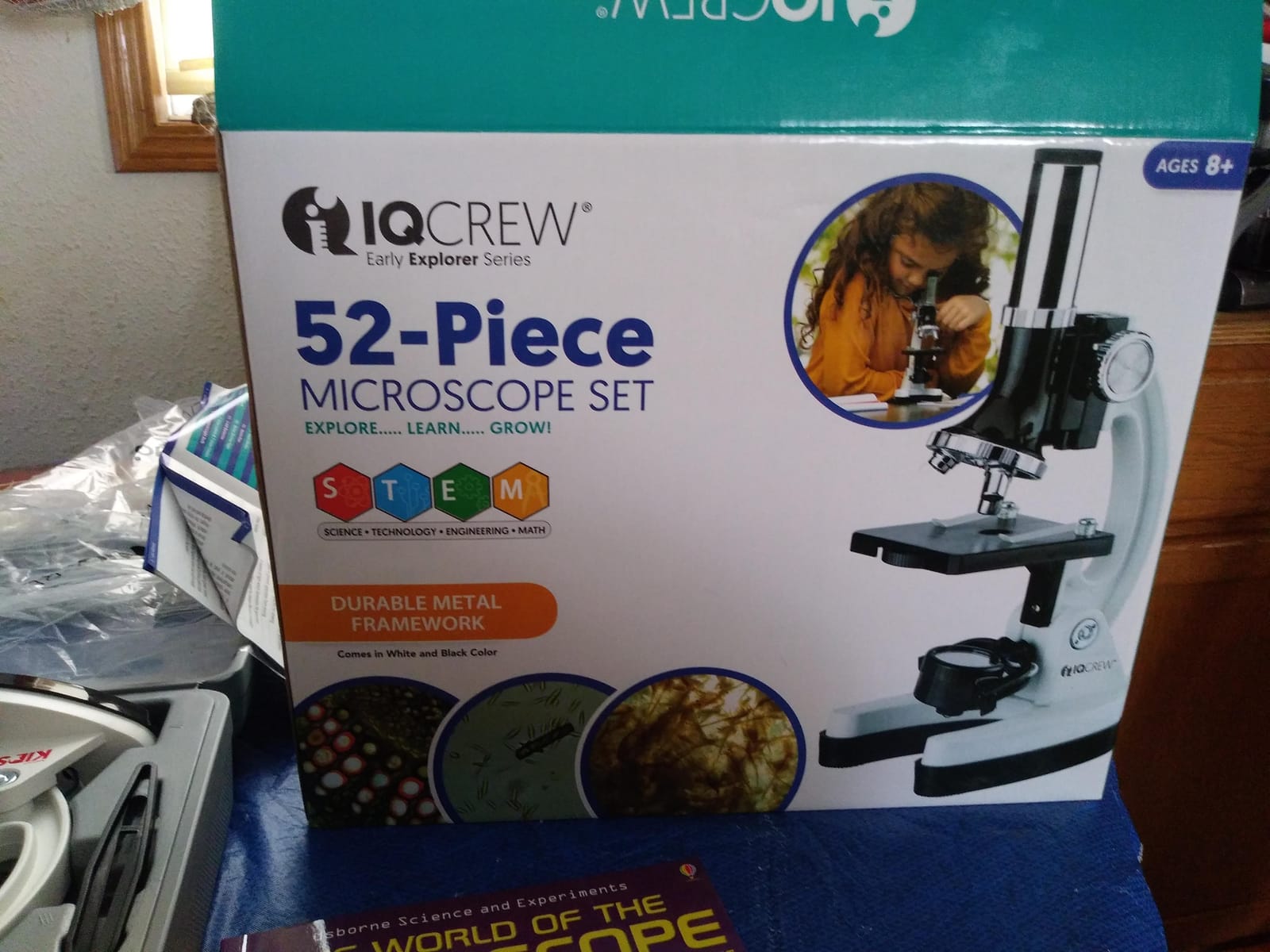
Set the scope on a stable surface, plug in or fit the batteries, and turn the light up before putting a slide anywhere near the stage. Confirm that the light path is clear, then start with the lowest power objective and a prepared slide.
To switch objectives, rotate the turret until the objective you want clicks into place. The click is the mechanical detent that stops the objective settling mid-view, and learning to use it is what keeps a student from unscrewed lenses and lost specimens.
When focusing, start on the lowest magnification, bring the slide into view with the coarse knob, then use the fine knob alone to sharpen it. Move to higher power by switching objective rather than by raising the stage, because raising the stage at high power is how slides get cracked and lenses get marked.
For the first wet mount, place the specimen on a slide, add a drop of water, lower the cover slip at an angle to avoid air bubbles, and blot the excess from the edge. Bubbles are the most common reason a beginner decides the microscope is faulty.
Common student mistakes to avoid
Starting at high magnification is the first one. The field of view is narrow and the depth of field is thin at 400X, so a beginner searching for a specimen at that power will conclude the slide is empty.
The second is touching the slide while moving it. Use the stage controls where they exist, and where they do not, push the slide with a mechanical stage plate or a clear plastic ruler rather than fingertips, because fingerprints are oil and oil defeats the image.
The third is ignoring the condenser. At 400X and above, a condenser fully open or a light set too strong produces a washed-out image that looks like a broken scope. Closing the iris slightly is often the whole fix.
The fourth is touching the objective lens with a slide, which happens when the stage is raised while a high objective is in place. The fifth is skipping cover slips, which reduces image quality far more than most people expect.
What teachers and parents report on forums
Threads on r/ScienceTeachers asking for high school biology microscope recommendations converge on a durable workhorse rather than the highest magnification, and on tolerating small inconveniences in exchange for an instrument that survives many semesters of student use. That is exactly the trade we made with the M150C and the B120C-E1.
The same threads show real confusion about type, compound versus stereo and monocular versus binocular, with parents on the Well-Trained Mind forum asking essentially the same question as teachers but without a department budget or a colleague to ask. The criteria above are written to resolve that without a live conversation.
A recurring request on both is where to buy, and the honest answer is that marketplace listings vary wildly in support quality. Check that the seller will replace a defective unit under the stated warranty, and buy from a channel that will answer a question before you order, not only after a fault.
Frequently Asked Questions
What microscope is used in high school laboratories?
The standard instrument is a compound binocular light microscope with 40X to 1000X total magnification, full optical glass lenses, LED illumination and a mechanical stage with X-Y controls. Students use it to view prepared slides of onion epidermis, cheek cells, blood smears and stages of mitosis. A monocular version of the same design appears in lower-cost school sets, but binocular heads are the classroom default because two eyepieces cut eye strain over a full double period.
What is the best microscope for a school lab?
For a shared classroom, the AmScope B120C-E1 is the strongest pick because it combines a Siedentopf binocular head, a smooth mechanical stage, an Abbe condenser and a dimmable LED with a 5 year manufacturer warranty. The mechanical stage stops students damaging wet mounts, and the condenser keeps the 400X view bright. Its bundled camera is only suitable for quick records, so budget a separate USB camera if graded lab documentation is required.
Which microscope is best for students?
It depends on the syllabus and the head count. For one student working through cell structure, osmosis, mitosis and blood smears, the AmScope M150C gives full optical glass and an all-metal frame across 40X to 1000X. For a class of twenty to thirty, choose a binocular model with a mechanical stage, such as the AmScope B120C-E1, the SWIFT SW380B or the Herwicm. Entry monocular kits are fine for a first term, not for a shared lab.
Can you see bacteria with a 1000x microscope?
Yes, with the right combination. You need a true 100X oil immersion objective, a 10X eyepiece and a condenser of 0.65 NA or better, which together reach 1000X total. At 400X bacteria appear as specks on a cheek or pond smear rather than recognisable forms. This is the unit that most often forces a family beyond an entry monocular scope, so if bacteria are on the syllabus, confirm the 100X oil objective and the Abbe condenser before buying.
What are the three main types of microscope objectives?
The three main types are achromatic, semi-plan and plan achromat. Achromatic objectives correct colour fringing at two wavelengths and give a flat enough field for almost all teaching work, which is why every model in this guide ships them. Semi-plan objectives add partial flat-field correction. Plan achromat objectives are fully flat-field across the entire view and earn their cost when you photograph a whole field for documentation rather than viewing one cell in the centre.
When focusing a microscope, which objective should you start with?
Start on the lowest magnification, usually 4X, which gives the widest field of view and the flattest depth of field so you can find your specimen. Bring it into view with the coarse focus knob, then use the fine knob alone to sharpen the image. Only then switch to a higher objective, and refine with the fine knob. Raising the stage or starting at 400X is the most common cause of a slide being cracked or a specimen being lost.
How do I switch objectives on a microscope?
Most student microscopes have a rotating turret carrying the 4X, 10X and 40X objectives. Hold the base, rotate the turret until the objective you want lines up with the light path, and stop when you feel a detent click. Do not twist the objective barrel itself, and never switch while the stage is raised. A binocular head may have a separate zoom control, which changes eyepiece power rather than objective power.
What are the key factors to consider when choosing a microscope?
We rank them in this order: glass optics first, because plastic lenses cannot be corrected and will not teach a student to recognise a good image. Then genuine 40X to 1000X range with a 100X oil objective. Then head type, monocular for one user, binocular for a shared bench, trinocular for documented work. Then a mechanical stage with X-Y controls, which prevents damaged wet mounts. Then LED illumination, enclosure material, and warranty length across your school span.
What are the top 5 microscope brands?
For research laboratories the benchmark brands are Zeiss, Nikon, Olympus and Leica, which set the resolution standard but cost far more than a school needs. For classrooms and homes the practical tier is AmScope, Carolina Biological, Fisher Scientific, Swift and OMAX, which supply full optical glass, mechanical stages and multi-year warranties at a school budget. Below them sit unbranded and kit-style imports where the frame and lens quality vary widely between units.
What is the best inexpensive digital microscope?
Digital scopes that project to a laptop or phone are genuinely useful for sharing an image with a whole class, recording wet mounts and avoiding the eyepiece entirely, and they are the right tool for documenting lab work. They are not a substitute for optical glass when the goal is resolving fine internal cell detail. A practical compromise is a binocular optical scope plus a separate USB camera, which keeps the optics intact and lets you replace the camera independently.
Final Recommendation
For the best student microscopes for high school biology in 2026, the AmScope M150C is the single pick we would put in front of a student: full optical glass across 40X to 1000X, an all-metal frame and a 5 year warranty, backed by more than three thousand buyer reviews at 4.5 stars. For a single homeschool desk it is complete on day one, and its battery option means no outlet is required.
For a shared lab, move up to the AmScope B120C-E1, where the binocular head, mechanical stage and Abbe condenser do more for a class of students than any additional magnification would. Add the AmScope M162C kit if the slide set and tools matter, the SWIFT SW380B if the bench is shared by rotating groups, and the Woehrsh trinocular if graded lab documentation is part of the course.
Whichever you choose, judge it on four things: glass optics, a genuine 40X to 1000X range, a stage that moves the slide, and a warranty that covers the years your student still has ahead. Use the price buttons on each review to check the current listing, and start the first session at 40X with a prepared slide in the box.