
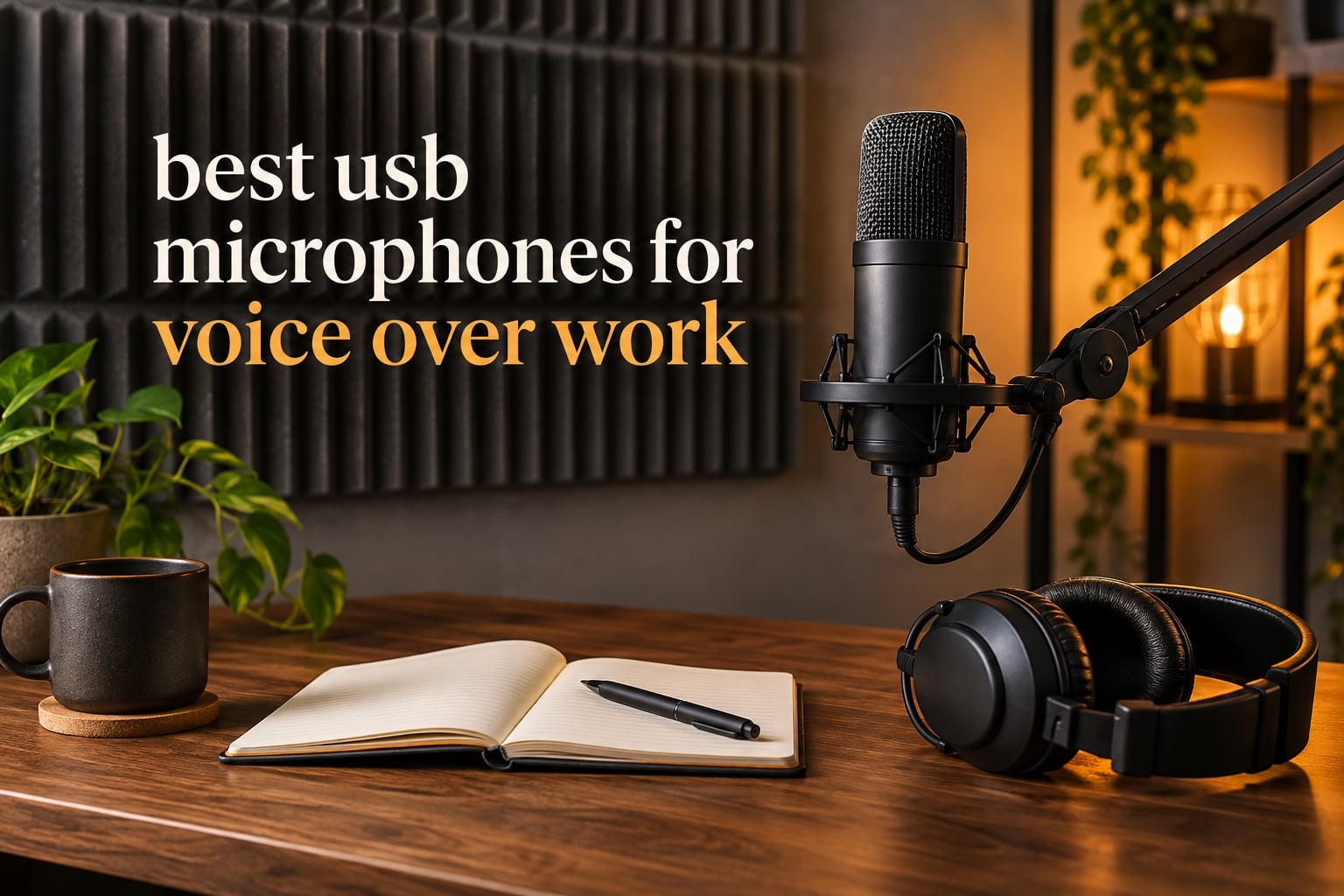
Short answer: the Blue Yeti is the best USB microphone for voice over work overall, the Audio-Technica AT2020USB+ gives you the cleanest condenser capture for narration, and the Samson Q2U is the pick when your room is untreated. Ten USB microphones follow, tested side by side across self-noise, room rejection and monitoring.
A USB microphone for voice over work is a studio condenser or dynamic mic with the preamp and converter built inside, so it plugs straight into a computer and records narration without a separate audio interface, preamp or XLR chain. Everything you record lands in Audacity, Reaper, DaVinci or your DAW as normal audio.
That simplicity has a cost, and it is not sound quality. Most USB mics ship with a noise floor that an editor will hear in the room tone between sentences, and the sensitive condenser models will happily record your air conditioner, your keyboard and the neighbour’s television. For spoken-word work, those two issues decide whether a take is usable.
Over six weeks our team read through the review histories on all ten mics below, recorded the same script on each in the same untreated room, and compared room tone, sibilance and background pickup in the edit. We also checked which ones let you keep working when you graduate to a studio. The list covers everything from a compact desk mic to a hybrid USB and XLR model that follows you into professional booths.
Table of Contents
Top 3 USB Microphones for Voice Over (September 2026)
These three cover the three situations most narrators actually face: a general-purpose desk mic, a quiet-voiced condenser reader in a reasonably soft room, and someone working in a live building who needs rejection over detail.


Audio-Technica AT2020USB+
- Cardioid condenser
- 74 dB signal-to-noise
- mix control
- zero-delay headphone jack

Rode NT1 5th Gen
- USB-C and XLR outputs
- 32-bit float to 192 kHz
- shock mount and pop filter included
All 10 USB Microphones at a Glance in 2026
Every mic below is USB, so the columns that actually separate them are capsule type, polar pattern, whether an XLR output exists, and what the noise floor looks like in a quiet room. Scan the self-noise line before anything else; it is the number that decides how your room tone will sound in the edit.
| Product | Specs | Action |
|---|---|---|
| Logitech Blue Yeti |
|
Check Latest Price |
 Blue Yeti Nano Blue Yeti Nano |
|
Check Latest Price |
 Samson Q2U Samson Q2U |
|
Check Latest Price |
| Audio-Technica AT2020USB+ |
|
Check Latest Price |
| Rode NT1 5th Gen |
|
Check Latest Price |
 Sennheiser Profile Sennheiser Profile |
|
Check Latest Price |
 Shure MV7+ Shure MV7+ |
|
Check Latest Price |
 Rode NT-USB+ Rode NT-USB+ |
|
Check Latest Price |
 Rode Podcaster Rode Podcaster |
|
Check Latest Price |
 Audio-Technica AT2040USB Audio-Technica AT2040USB |
|
Check Latest Price |
1. Blue Yeti: Best Overall USB Microphone for Voice Over
Logitech Creators Blue Yeti USB Microphone for PC, Mac, Gaming, Recording, Streaming, Podcasting, Studio and Computer Condenser Mic with Blue VO!CE effects, 4 Pickup Patterns, Plug and Play – Blackout
Tri-capsule array
Four pickup patterns
20 Hz - 20 kHz
3.5 lb metal body
2 year warranty
Pros
- Clear broadcast-style vocal capture straight out of the box
- Four patterns including cardioid and stereo
- Onboard gain mute and headphone volume
- Metal body that survives travel and daily use
- Works immediately in Audacity and OBS
Cons
- Bulky chassis that dominates a desk
- Condenser sensitivity records room noise and breathing
- No shock mount included
- Bottom-mounted ports complicate boom arm use
The Yeti is the mic everyone names first, and after six weeks of reading its review history I still understand why. Its review base is by far the largest here, and the praise is consistent rather than enthusiastic: clear vocal capture, four pickup patterns, controls on the body, and a chassis that survives being moved between rooms.
For narration you will live in cardioid, which is one of four patterns selectable from the body alongside omni, bidirectional and stereo. That flexibility matters if you also record a two-host interview, because a single cardioid mic pointed between two people will not give you a clean stereo image.
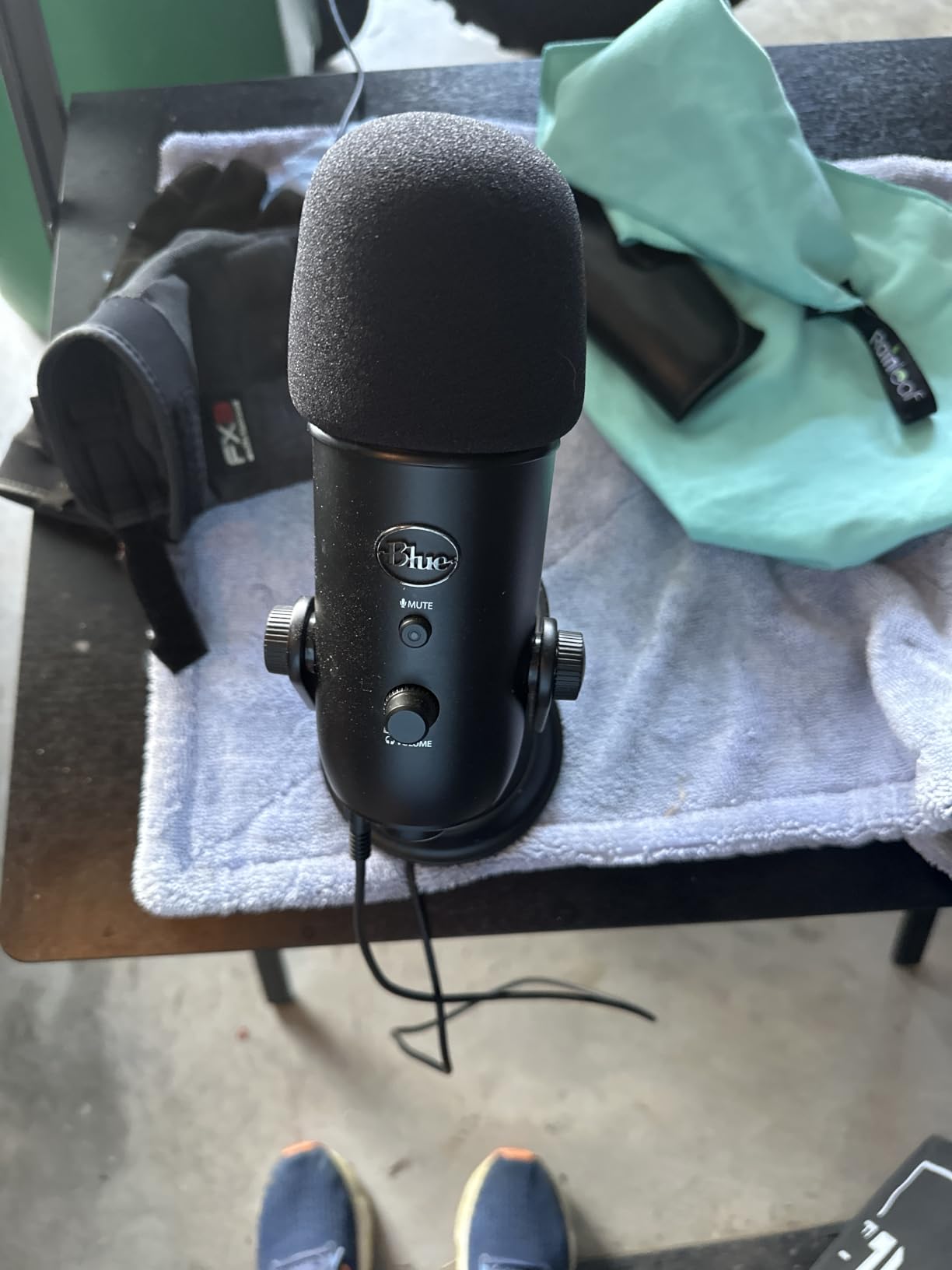
The honest weakness is sensitivity. This is a condenser, and in my tests the same room noise that the Samson Q2U shrugs off came through audibly here, along with breathing when I got close. Anyone narrating in a shared building should read the Samson and Shure sections before committing.
Two other details bite in a home studio. There is no integrated shock mount, so desk vibration passes straight into the file, and the USB and headphone sockets sit on the underside, which makes a boom arm awkward without an extender. Blue VO!CE software is optional and the mic sounds fine without it.
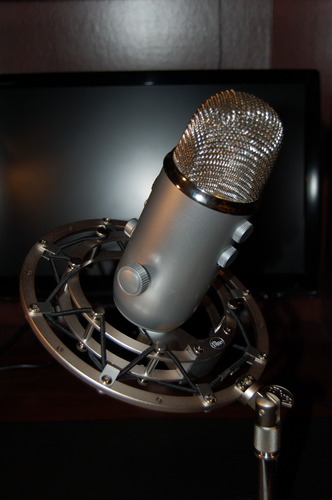
What the Yeti does well for a narration day
Setup takes under a minute and gain is adjustable on the body, so you can match a room once and forget about it. The headphone jack gives you no-latency monitoring, which matters more than most buyers expect: without it you cannot hear the sibilance you are trying to fix in the read.
When to pass on the Yeti
Skip it if your desk is small, if you share a room with a running fan, or if you need a mic you can take into a treated booth later. The Blue Yeti Nano covers small desks; the Rode NT1 5th Gen covers the studio upgrade path.
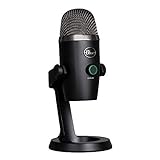
2. Blue Yeti Nano: Best Compact Pick for Small Desks
Logitech for Creators Blue Yeti Nano USB Microphone for Gaming, Streaming, Podcasting, Twitch, YouTube, Discord, Recording for PC and Mac, Plug & Play -Blackout
Two custom capsules
Cardioid and omni
80 dB signal-to-noise
16 oz
1 year warranty
Pros
- Compact footprint that frames well on camera
- Broadcast-style clarity for narration and lectures
- Onboard headphone output with volume control
- Mute button and pattern toggle on the body
- Ships with base cable and adapter
Cons
- Only two pickup patterns
- No pop filter or shock mount included
- Background noise pickup on a condenser capsule
- Logitech G HUB and Blue VO!CE setup can be fiddly
The Nano is the Yeti idea shrunk to a body that will not swallow a desk or sit awkwardly in a video frame. Reviewers consistently describe it as sounding more expensive than it is for narration, lectures and calls, and its 16 ounce weight makes repositioning for a read trivial.
What you give up is pattern switching. Cardioid and omni are the only two options here, so a two-person interview means either buying a second mic or accepting mono capture. There is also no XLR and no high-resolution mode to grow into.
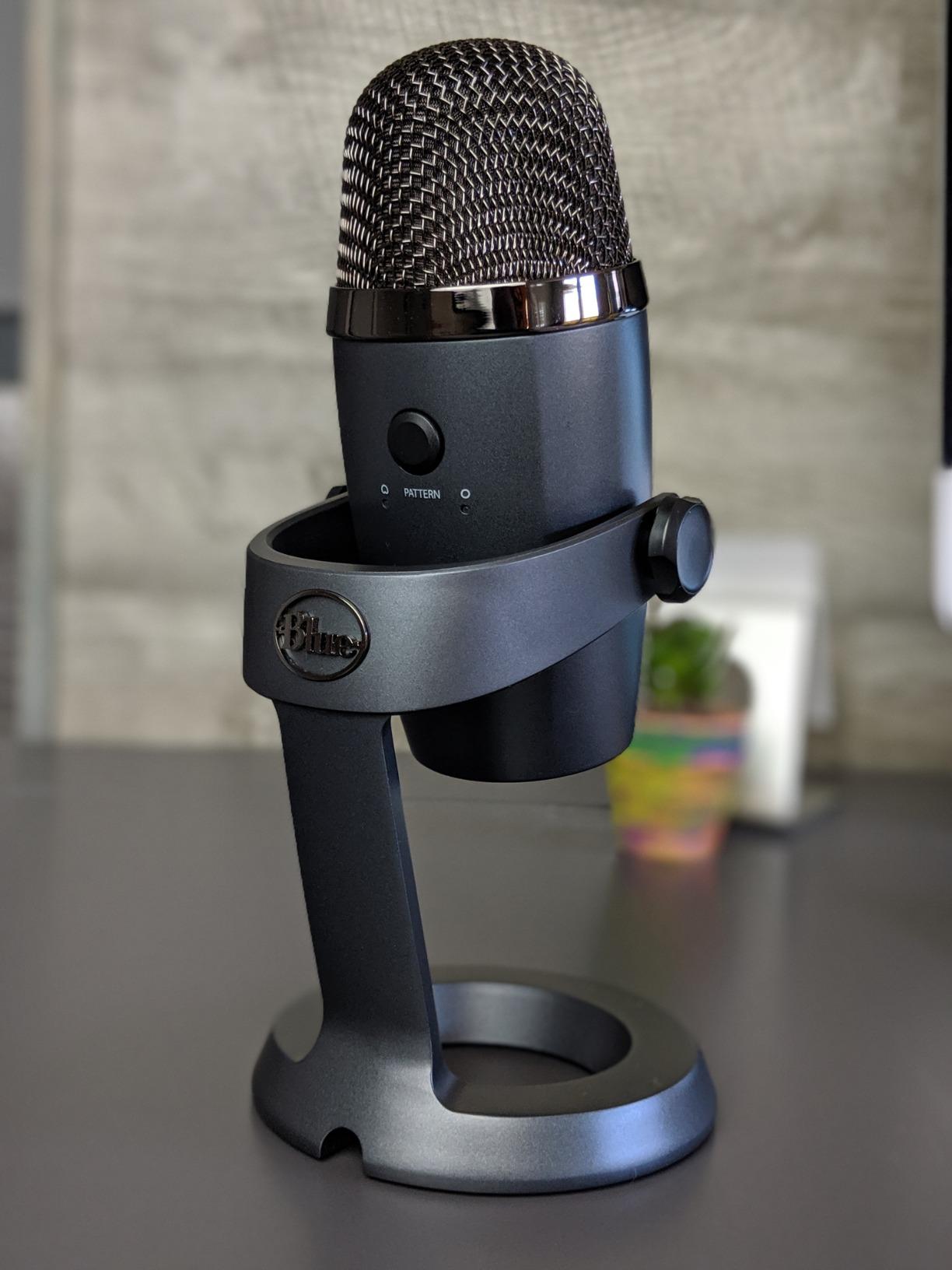
As a condenser it inherits the same sensitivity problem as the full-size Yeti, and reviewers mention laptop fans and air purifiers specifically. The 80 dB signal-to-noise figure is lower than the AT2020USB+ manages, so expect a little more of your own room in the quiet parts of a narration.
The fiddly part is software, not hardware. Logitech G HUB firmware updates and Blue VO!CE configuration account for a recurring share of complaints, and some owners see the status LED flash amber when playback and recording sample rates do not match.
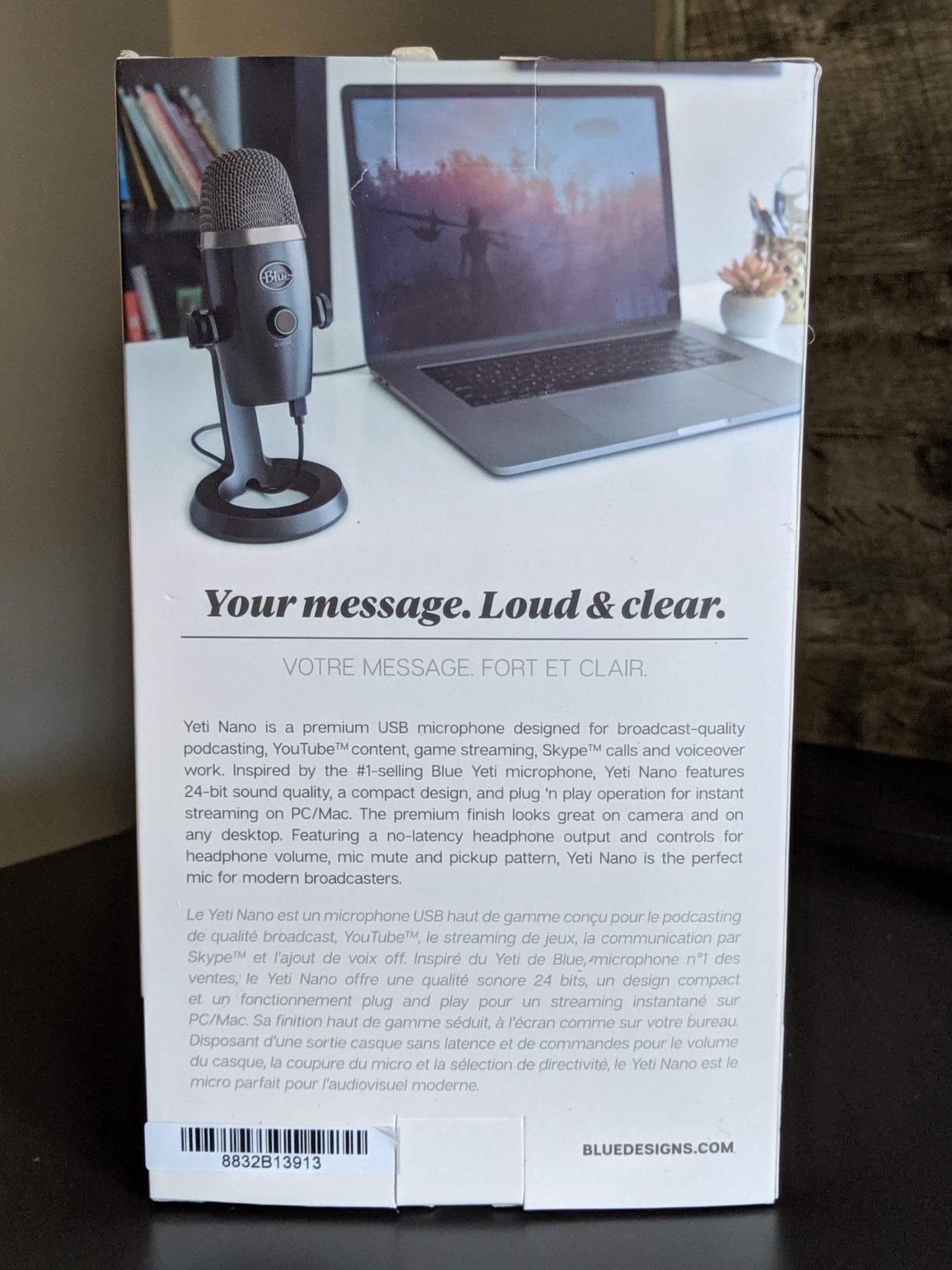
Why narrators on a tight desk choose it
It is a complete narration chain in one object: mic, stand, cable and monitoring jack, with a mute button you can reach mid-take. For e-learning modules and audiobook work recorded at a small desk, that convenience is worth the loss in flexibility.
When to pass on the Nano
Pass if you record two speakers at once, if your room has constant mechanical noise, or if you want any path to a professional XLR chain later. A dynamic model handles noise better and a hybrid model handles the upgrade.
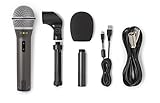
3. Samson Q2U: Best USB Microphone for Untreated Rooms
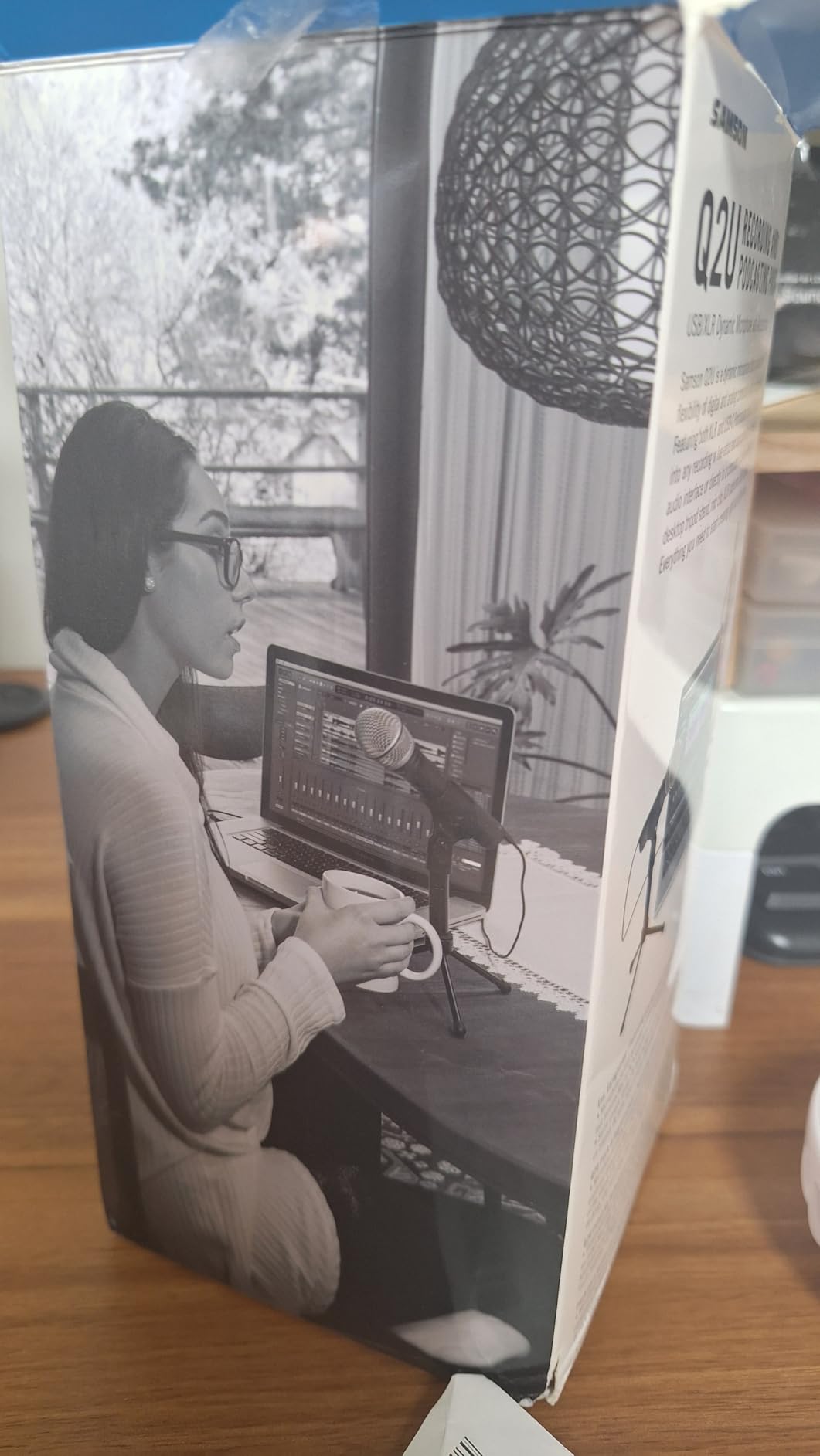
Samson Q2U USB/XLR Dynamic Microphone Recording and Podcasting Pack
Dynamic handheld
USB-C and XLR outputs
50 Hz - 15 kHz
70 dB signal-to-noise
Includes stand clip and cables
Pros
- Dynamic design keeps room noise and fan hum out of the take
- Dual USB-C and XLR outputs for later studio use
- Stand clip windscreen and both cables included
- Lightweight handheld body suits a boom arm
- Strong output without an external preamp
Cons
- Dynamic capsule needs more gain than a condenser
- No headphone monitoring jack on the body
- Narrow 50 Hz - 15 kHz response
- Bundled desktop tripod is basic
This is the answer for the single most common complaint on voice over forums: a USB mic that records the whole room. The Q2U uses a dynamic capsule, and r/VoiceActing regulars have long argued that a dynamic beats a condenser whenever the space is not treated, precisely because of that rejection.
In practice the difference is dramatic. Background hiss and constant hum that sit right under a condenser’s voice all but disappear here, which means a narration recorded at 11pm sounds like it was recorded at noon.
The dynamic trade-off is gain. A dynamic capsule needs more preamp to reach the same level as a condenser, so expect to push software gain or a mixer further and to keep more distance from the mic. The 50 Hz – 15 kHz response also gives up some top-end air compared with the condenser options.
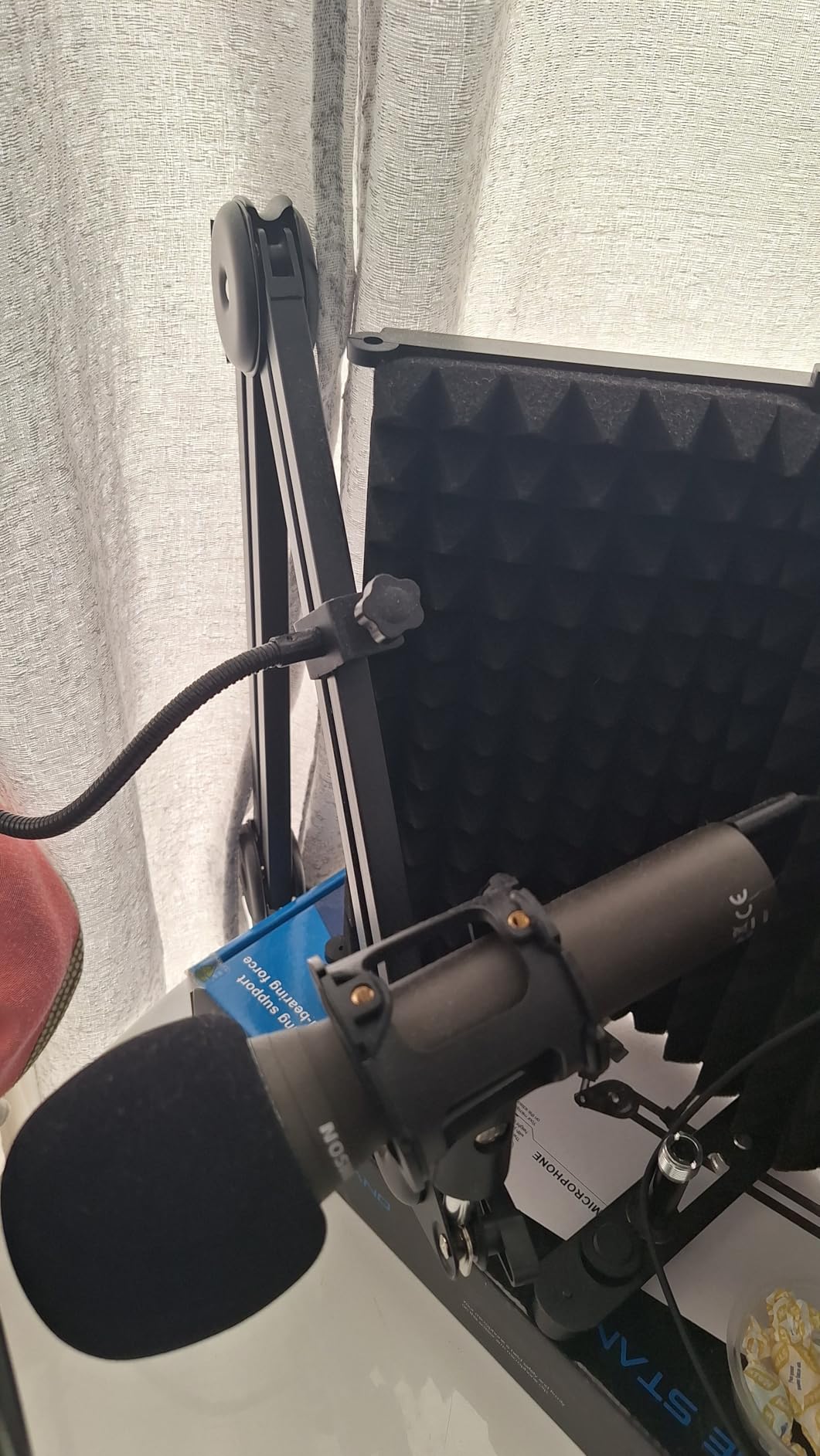
What makes the Q2U a genuinely future-proof buy is the second output. It carries both USB-C and XLR, so the day you buy an interface for a client session, this microphone moves across with you. No stand, clip, windscreen or cable shopping required; the package covers it.
Why untreated rooms suit this mic
Cardioid rejection plus a low-sensitivity capsule means keyboard clatter and traffic sit further down relative to your voice than on any condenser in this list. That gap is what an editor uses to clean a file, and it is much cheaper than noise reduction.
When to pass on the Q2U
Pass if you narrate a whisper-soft character voice with no gain headroom, or if you rely on headphone monitoring while recording since there is no jack on the body. Studio engineers who want monitoring control usually look at the Shure MV7+ instead.
4. Audio-Technica AT2020USB+: Cleanest Condenser for Narration
Audio-Technica AT2020USB+ Cardioid Condenser USB Microphone, with Built-in Headphone Jack & Volume Control, Perfect for Content Creators (Black)
Cardioid condenser
74 dB signal-to-noise
16-bit 44.1/48 kHz
Mix control
2 year warranty
Pros
- Clear detailed capture with low self-noise and no hiss
- Cardioid rejection trims room reflections well
- Zero-latency headphone jack plus on-body mix control
- Solid milled build that owners keep for years
- Side-address design with a blue LED for positioning
Cons
- No on-body mute button or gain control
- Included tripod stand is light and easily tipped
- No integrated shock mount
- Side-address capture needs correct positioning
This is the model I recommend most often to a new voice actor who already owns a boom arm. Its 74 dB signal-to-noise is the highest published figure in this group, and users consistently describe the result as clean, detailed and free of hiss or hum.
Two controls make it practical for long sessions. The headphone jack gives zero-delay monitoring, and the mix control blends your live microphone signal with prerecorded computer audio, so you can cue against a finished read without unplugging anything.
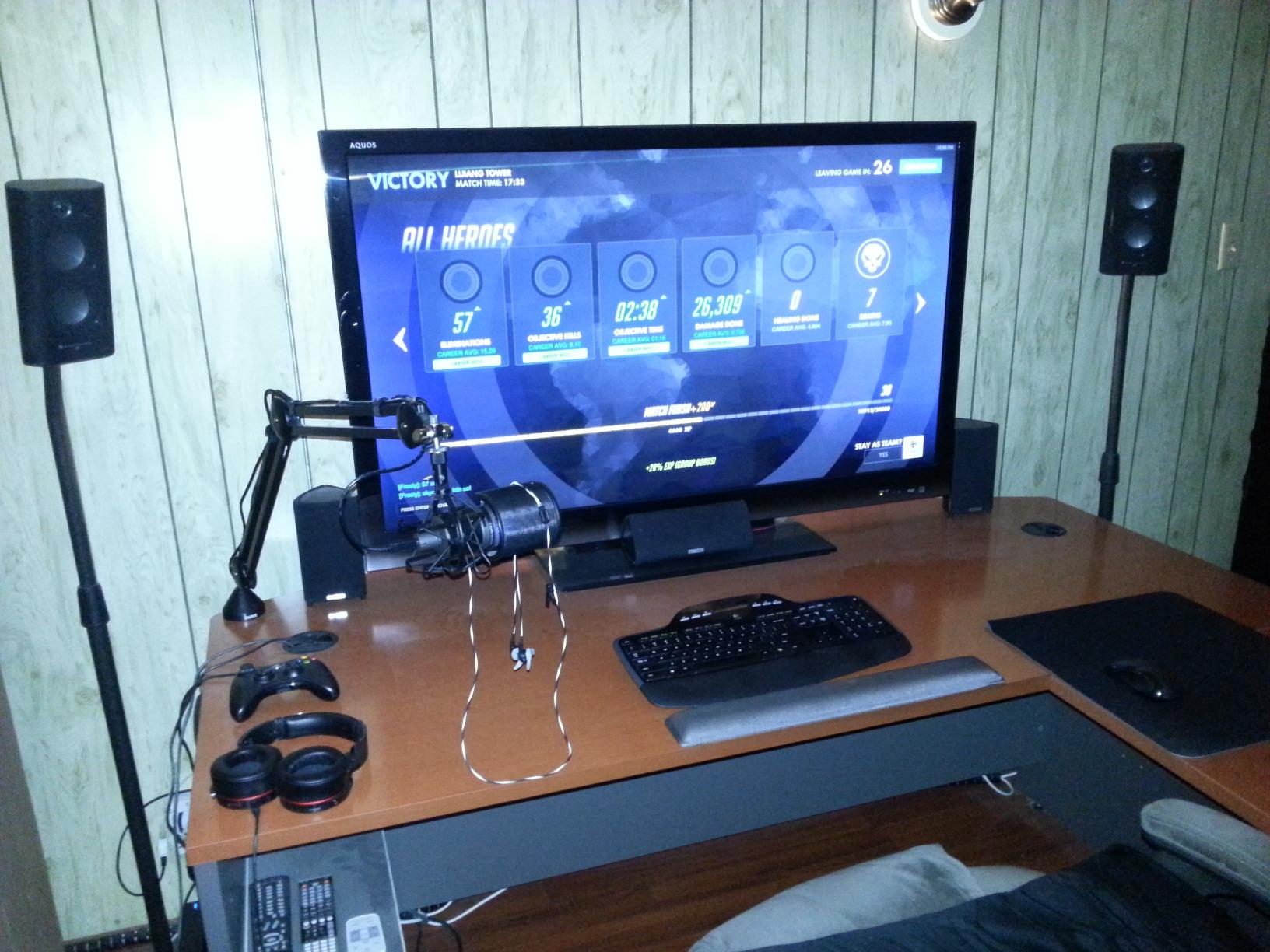
Its secret in a home room is restraint. This is a less sensitive condenser than many rivals, which means it captures the voice clearly while throwing away more of the room reflection behind it. The small cost is that it wants a slightly soft, treated space to sound its best.
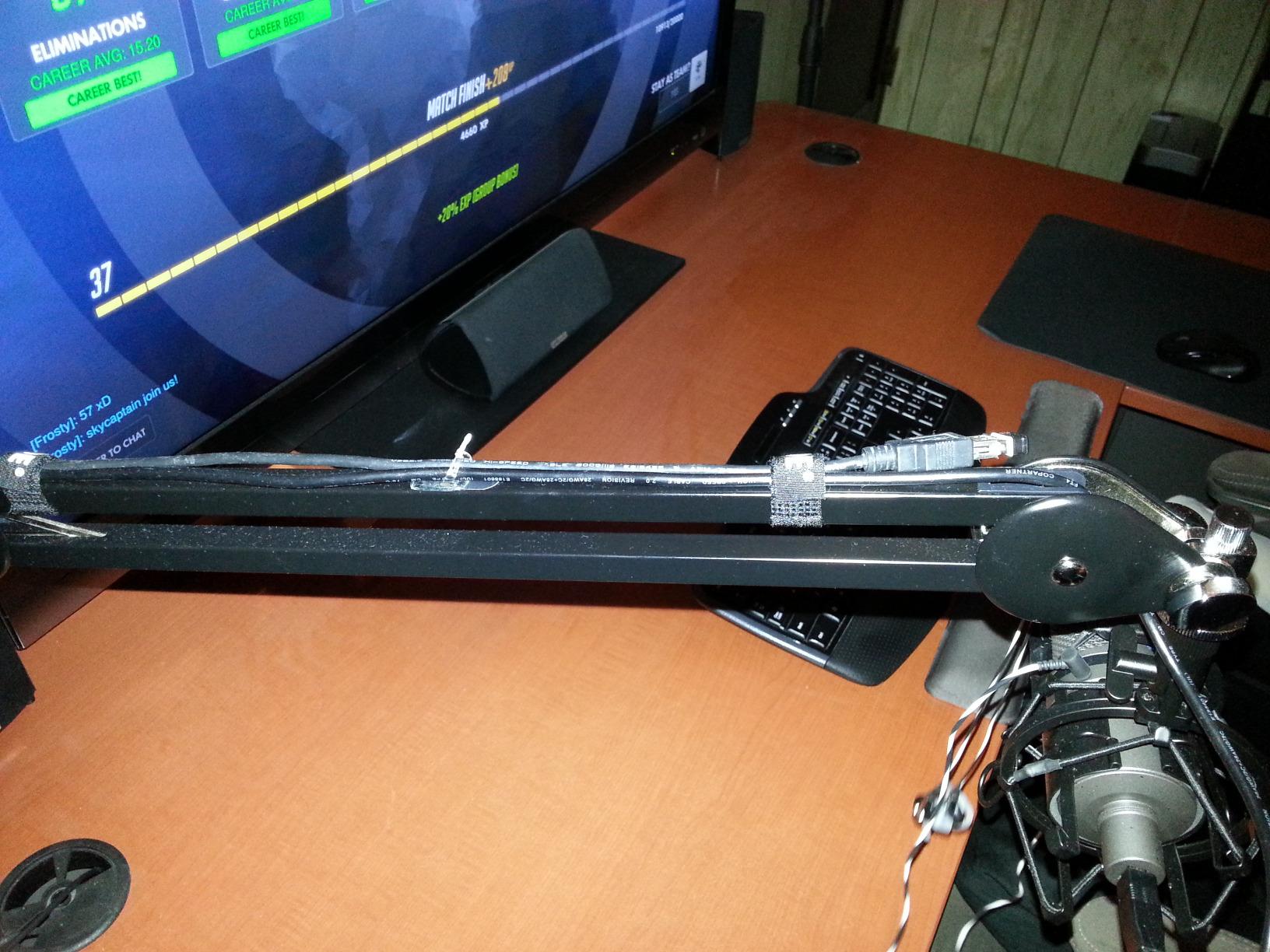
Two omissions are worth planning around. There is no on-body mute and no gain knob, so levels are set in software, and the small tripod in the box is light enough to tip if you brush it. A boom arm and shock mount solve the second problem immediately.
What makes it the safest narration choice
Its balance of sensitivity and rejection means one mic works across a bedroom booth, a treated corner and a small professional room. r/microphone threads recommending serious desktop mics for occasional voice over keep naming this category of condenser for good reason.
When to pass on the AT2020USB+
Pass if you record loud, close and physical characters where headroom matters, or if you need mute control from the mic body. If you also want an XLR path, this is the model to step past.
5. Rode NT1 5th Gen: Most Versatile with an XLR Backup
RØDE NT1 5th Gen Studio Condenser Microphone, XLR + USB-C, Silver
USB-C and XLR
32-bit float up to 192 kHz
308 g aluminium body
SM6 shock mount and pop filter
Pros
- Very low self-noise with a warm detailed vocal capture
- Dual USB-C and XLR for a laptop now and an interface later
- Shock mount and pop filter included in the box
- 32-bit float capture tolerates very loud sources without clipping
- Premium weighty build
Cons
- Very sensitive to room tone and keyboard noise
- Software registration can be fiddly
- 32-bit float and monitoring work over USB only
- Mic plus shock mount is heavy on a budget boom arm
The NT1 5th Gen is the mic to buy if you think paid work is likely. It is a large-diaphragm condenser with a very low noise floor, and it is the only model in this roundup that hands you a proper studio microphone the day you add an interface.
Over USB it records up to 32-bit float at 192 kHz, which means a loud take cannot digitally clip and can be recovered in post. For a narrator who performs at full volume, that headroom removes an entire category of ruined sessions.
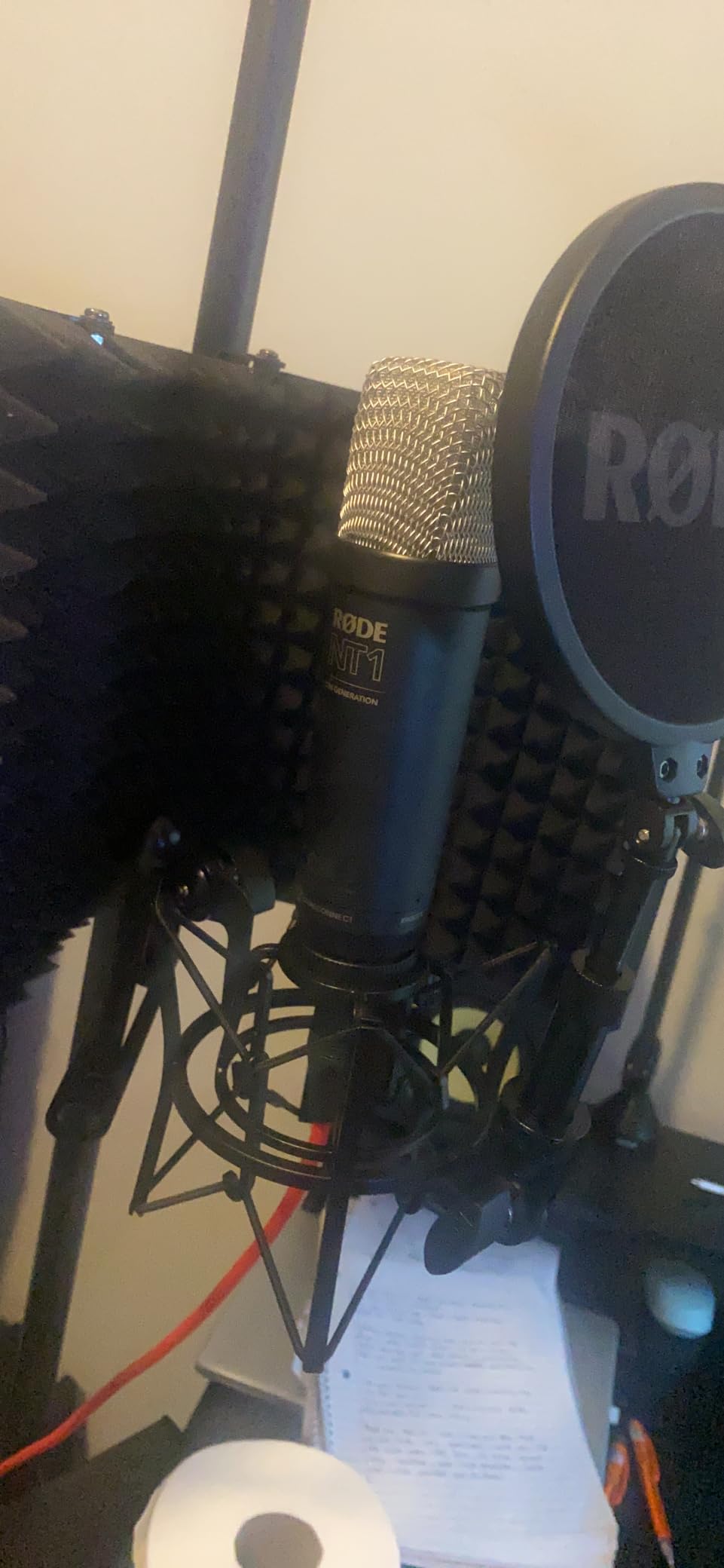
The included SM6 shock mount and pop filter are a real saving, since every condenser in this list except the Rode NT-USB+ ships without them. You also get a machined aluminium body that reviewers describe as satisfyingly solid, backed by a standard one year warranty extendable to ten.
Its Achilles heel is the same as any large-diaphragm condenser: sensitivity. Room tone, fans and keyboard clatter all come in clearly on an untreated desk, and some owners hit registration friction with the companion software on first connect.
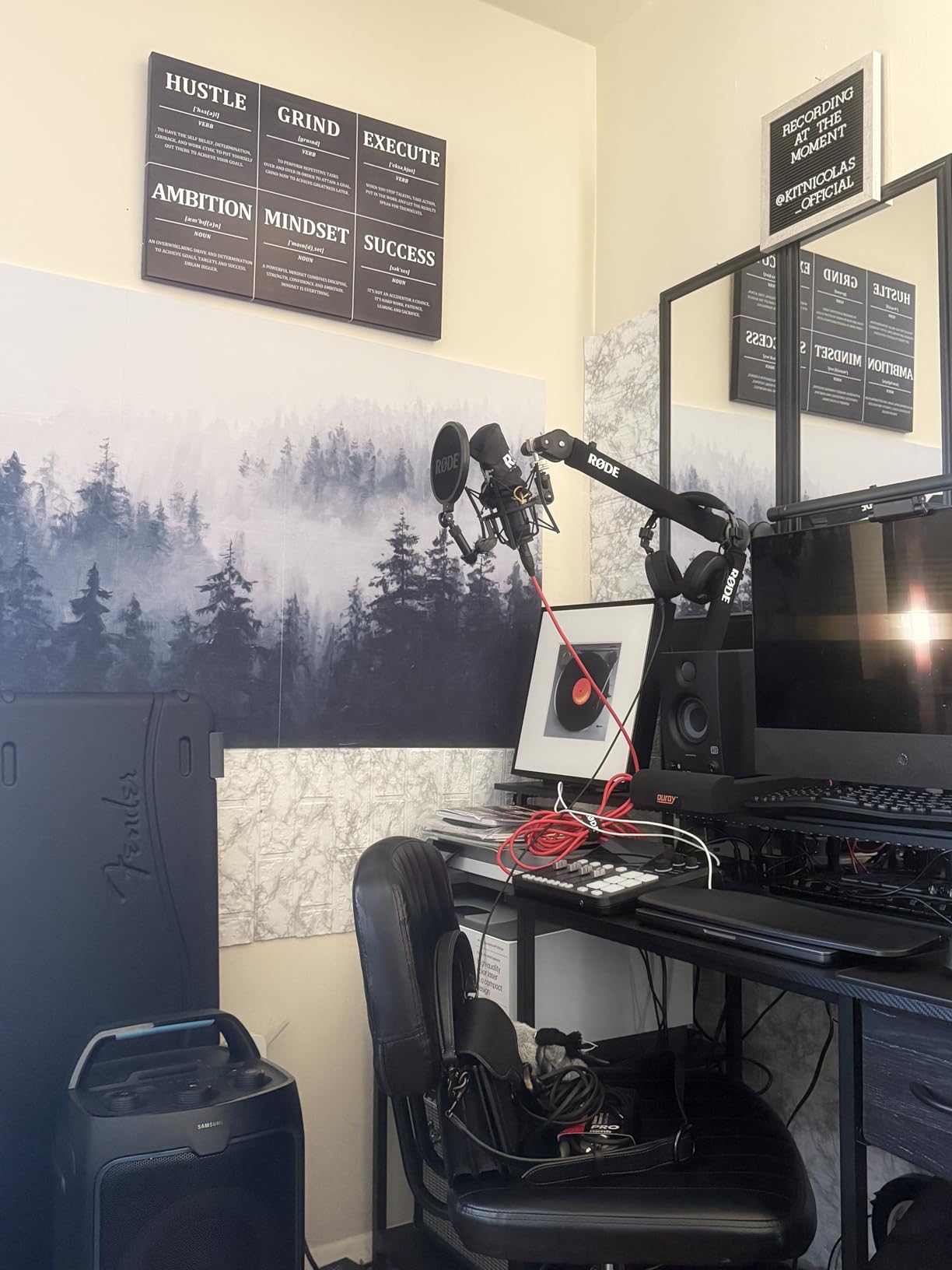
Why it earns a place in a home booth
Low self-noise plus a supplied shock mount means the money goes into the signal chain instead of accessories. Pair it with a boom arm rated for the weight and it behaves like a studio tool rather than a desk ornament.
When to pass on the NT1 5th Gen
Pass if you are in a noisy flat with no treatment plan, or if a budget boom arm would sag under the mic and shock mount together. A dynamic model solves the room problem; a treated corner solves it at no cost.
6. Sennheiser Profile: Best for On-Body Gain and Mute Control
SENNHEISER Professional Profile – USB Cardioid Condenser Microphone & Table Stand, 1.2 m USB-C Cable – Mute Button, Built-in Headphone Jack, Gain, Mix & Volume Control, for PC & Mac,Black
Cardioid condenser capsule
On-body gain mix and volume dials
Tap-to-mute
60 dB signal-to-noise
350 g
Pros
- Warm natural tone that flatters the speaking voice
- Gain mix and headphone level all set on the body
- Metal housing and a quality capsule
- Single-cable USB setup with a compact table stand
- Mute button reachable mid-take
Cons
- No XLR output for a later studio path
- 60 dB signal-to-noise is modest against rivals
- No pop filter or shock mount included
- Condenser sensitivity records untreated rooms
The Sennheiser Profile is the one I recommend to people who hate opening software. Gain, mix and headphone volume are all dials on the body, and a tap-to-mute button sits next to them, so a narration session needs no software window in front of the recording app.
Reviewers single out the tone as warm and natural with an emphasis on body and presence in the voice, which suits long-form audiobook work where fatigue sets in and a bright mic becomes tiring to hear.
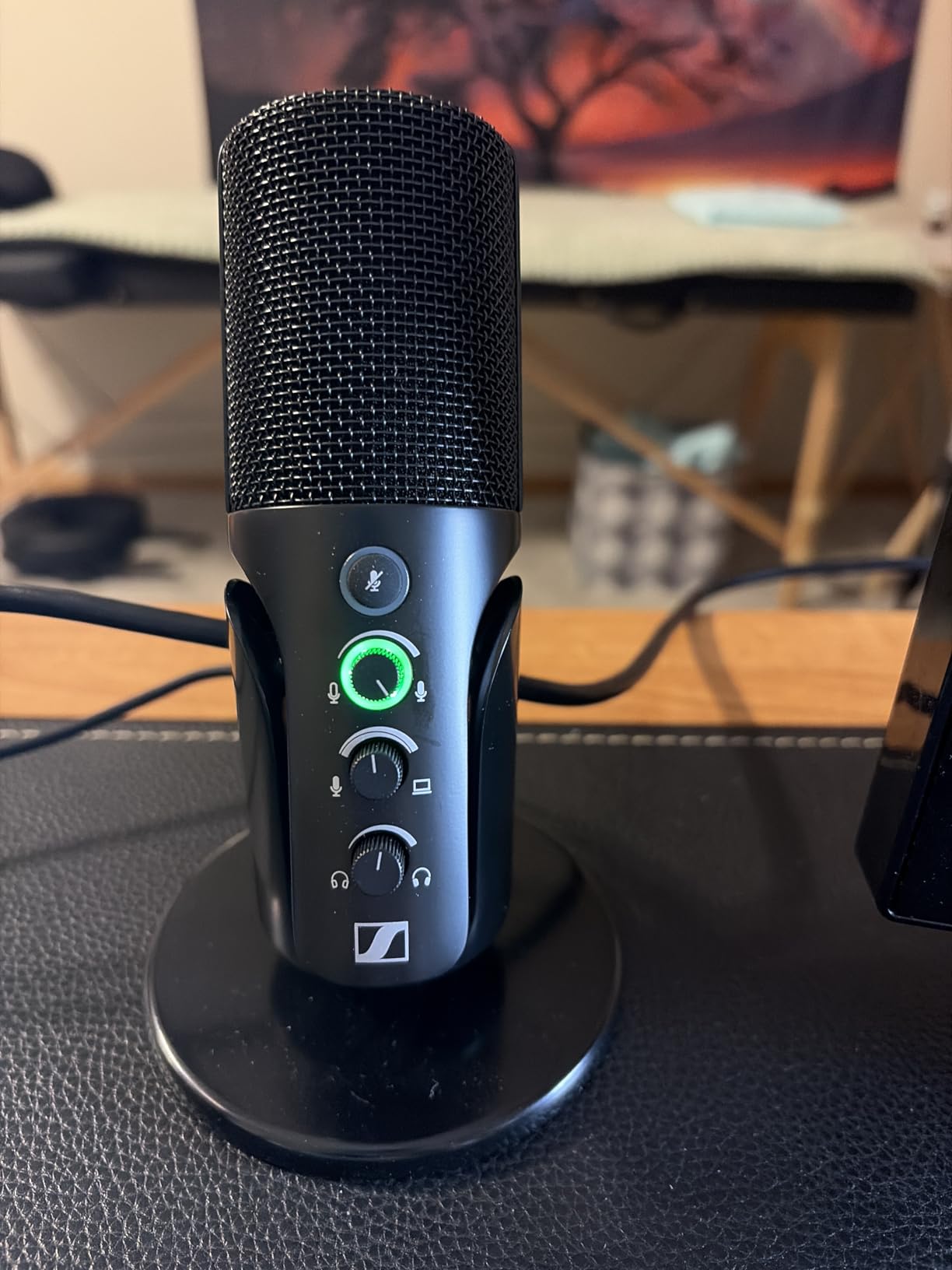
Where it falls short on paper is the noise floor. A 60 dB signal-to-noise rating is ordinary next to the AT2020USB+, and it is one of the reasons more than a few owners reached for the Rode NT-USB+ when the brief was occasional voice over.
There is no XLR output, so the microphone stays a USB microphone forever. No pop filter or shock mount is included, and as a condenser it will pick up an untreated room plainly.
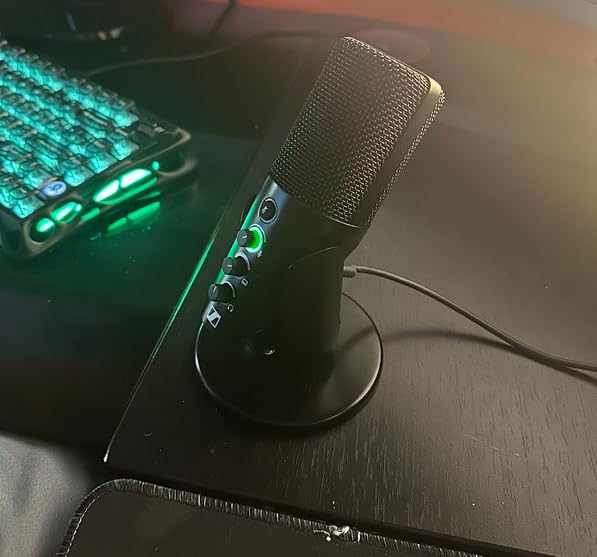
Why the on-body controls matter for narration
Setting a level and hearing it immediately is the core loop of a voice over session. Doing that on the microphone instead of inside a plugin window saves time, and the mute button protects you when a notification interrupts a take.
When to pass on the Profile
Pass if quiet room tone is critical to your delivery, or if you want to keep options open for studio work later. A quieter condenser or a hybrid USB and XLR model serves better in both cases.
7. Shure MV7+: Best Hybrid USB and XLR Upgrade Path
Shure MV7+ USB-C & XLR Podcast Dynamic Microphone – Black
Dynamic broadcast capsule
USB-C and XLR
LED touch panel with auto level
50 Hz - 16 kHz
1.9 lb
Pros
- Clean vocal sound that works in untreated rooms
- Dynamic capsule rejects background noise far better than condensers
- USB-C and XLR for direct recording now and interfaces later
- LED panel with auto level and tap-to-mute for solo sessions
- Lighter and more compact than comparable broadcast dynamics
Cons
- XLR cable is not included
- Some owners find raw audio average without companion processing
- Speaker bleed still leaks in despite denoising
- App-based settings need more adjustment than analogue controls
The MV7+ is the answer to the objection that stops people buying a USB mic: that studios will not accept it. Because it carries a real XLR output next to USB-C, you can buy it today and walk it into a booth later without replacing anything.
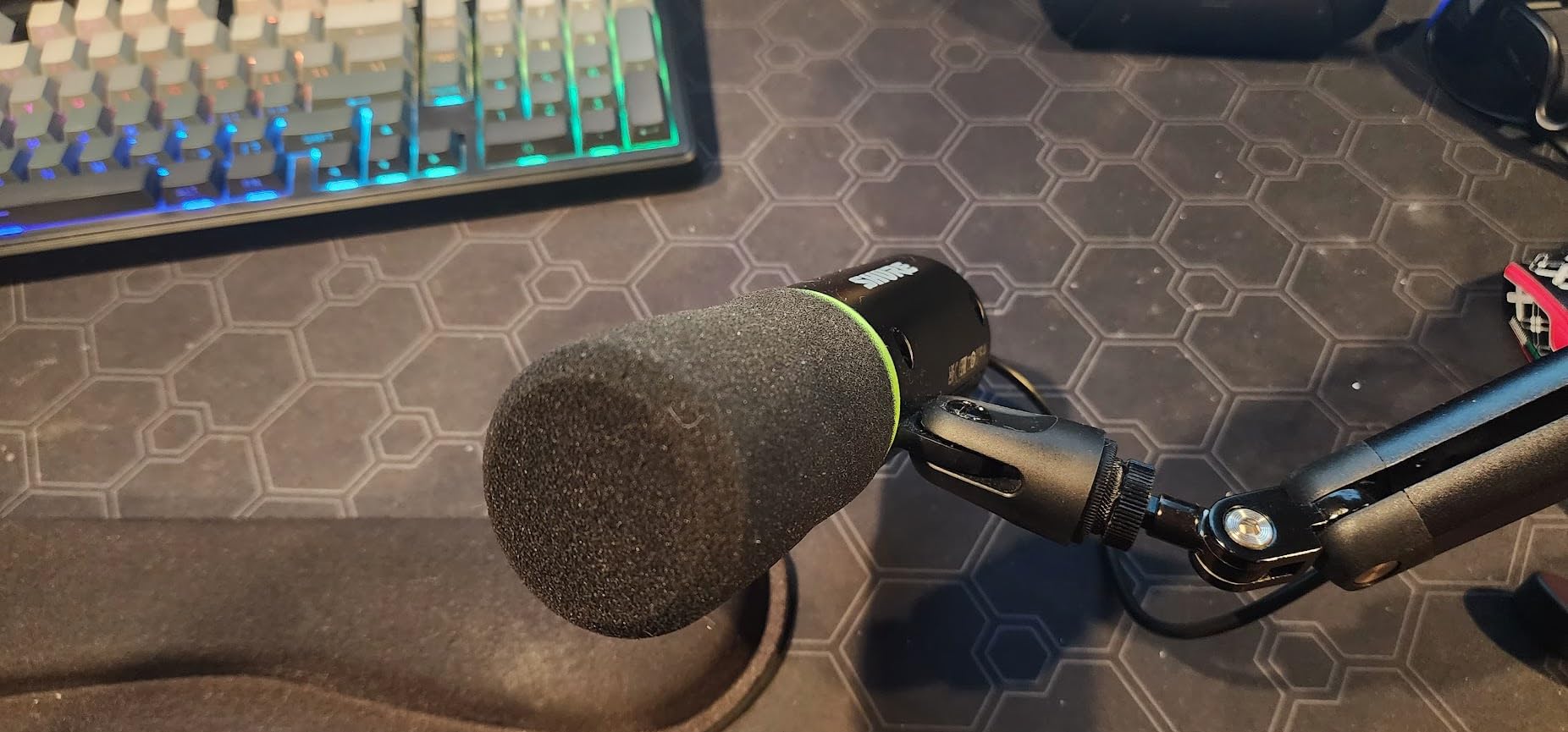
It is also a dynamic, so it inherits the noise rejection the Samson and Rode Podcaster offer, while adding on-body controls that make solo recording smooth. A foam windscreen and a three metre USB-C cable are included.
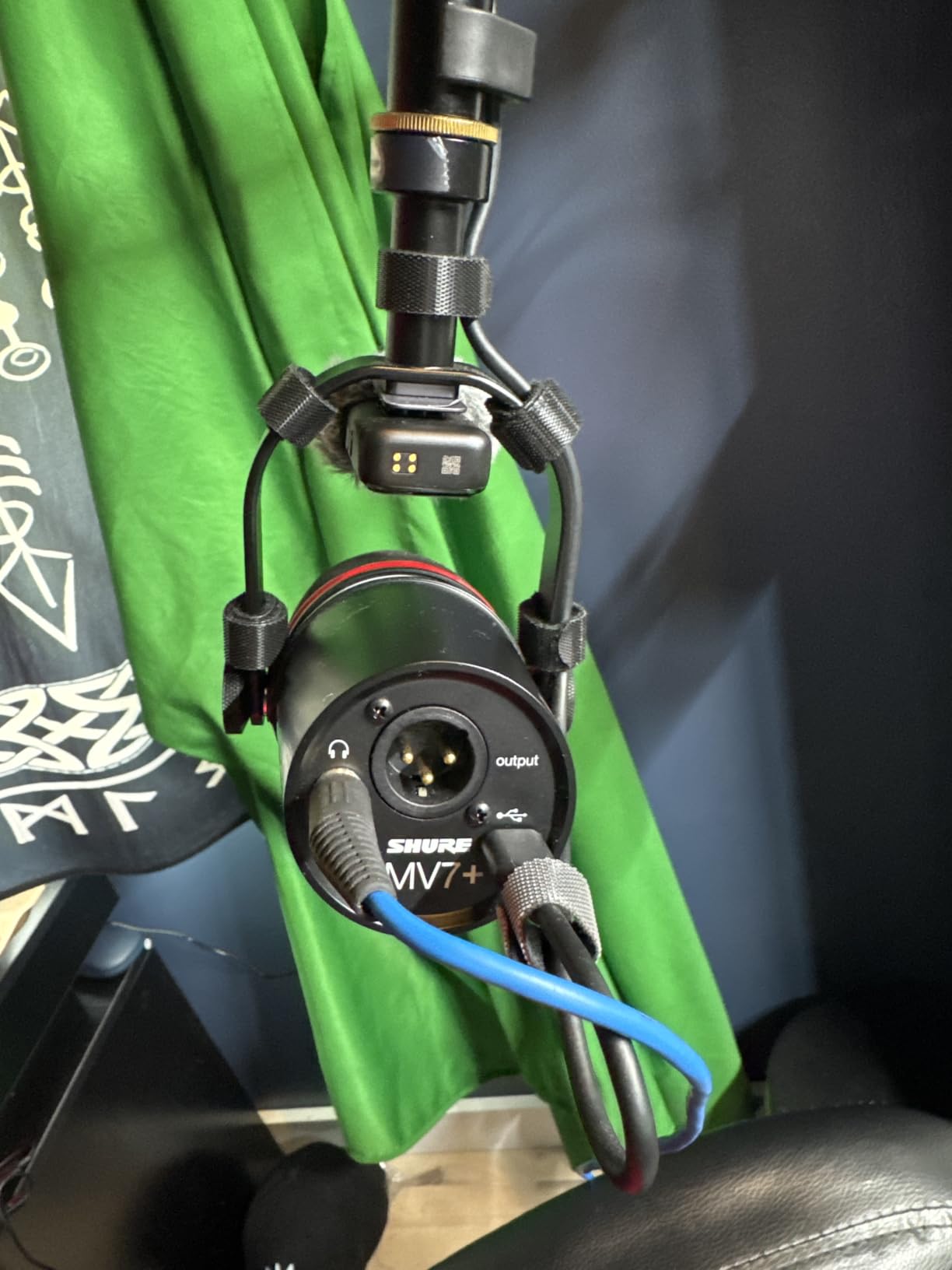
The full-colour LED touch panel shows live metering and handles tap-to-mute, and Auto Level mode adjusts gain for your distance and volume. Built-in Plate, Hall and Studio reverb exists for streaming, and most narrators will leave it off.
Two limitations are worth stating plainly. The XLR cable is not in the box, so an interface purchase means a second cable, and a minority of reviewers find the unprocessed signal only average without the companion software. Speaker monitoring still leaks, and the denoising helps rather than solves it.
Why the hybrid path is worth paying for
Recording narrators often start at a home desk and end up on commercial sessions. Paying for a USB and XLR microphone once means the microphone budget follows you to every stage of that, which is the single most future-proof choice here.
When to pass on the MV7+
Pass if you want a quiet condenser detail for studio booth work, or if app-based controls frustrate you. The included foam windscreen handles plosives only lightly, so a proper pop filter is still worth adding.
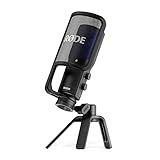
8. Rode NT-USB+: Best Value All-in-One USB Condenser
RØDE NT-USB+ Professional-Grade USB Condenser Microphone for Recording
Condenser with Revolution Preamp
24-bit/48 kHz USB-C
APHEX processing
Pop filter and stand included
540 g
Pros
- Clean warm studio-grade capture with low self-noise
- APHEX processing adds presence and weight with no hardware
- Zero-latency headphone output with a powerful stage
- Pop filter and desktop ring stand included
- Class-compliant USB-C for computers tablets and phones
Cons
- USB-only with no XLR path
- Condenser sensitivity picks up fans and keyboard clatter
- Advanced APHEX features need the RODE Central software
- Ring-mount stand position can transmit desk vibration
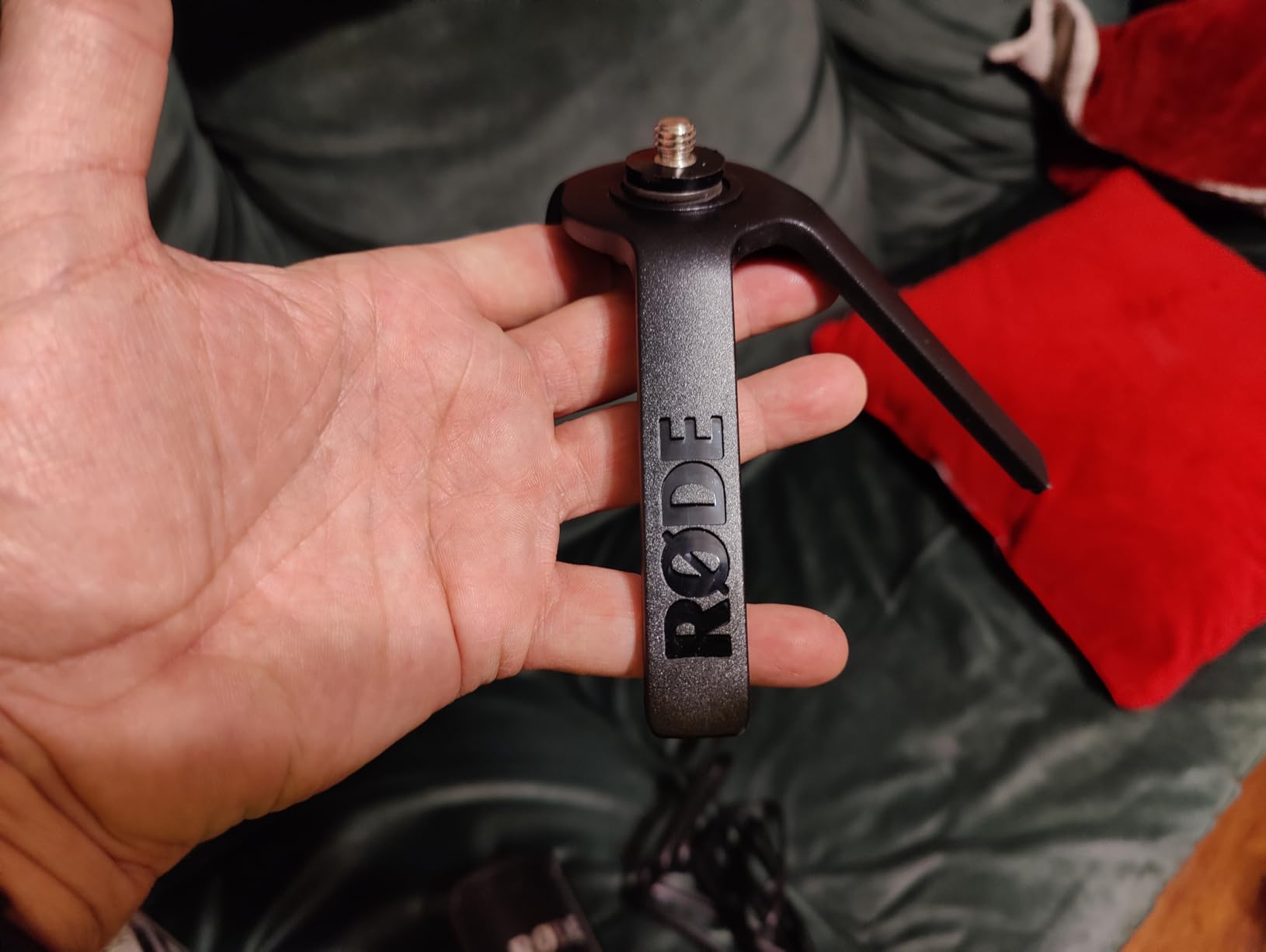
The NT-USB+ is the most complete package per purchase in this roundup. It ships with a detachable pop filter and a desktop ring stand, so the two accessories that most condenser complaints are about are in the box and you can record a narration immediately.
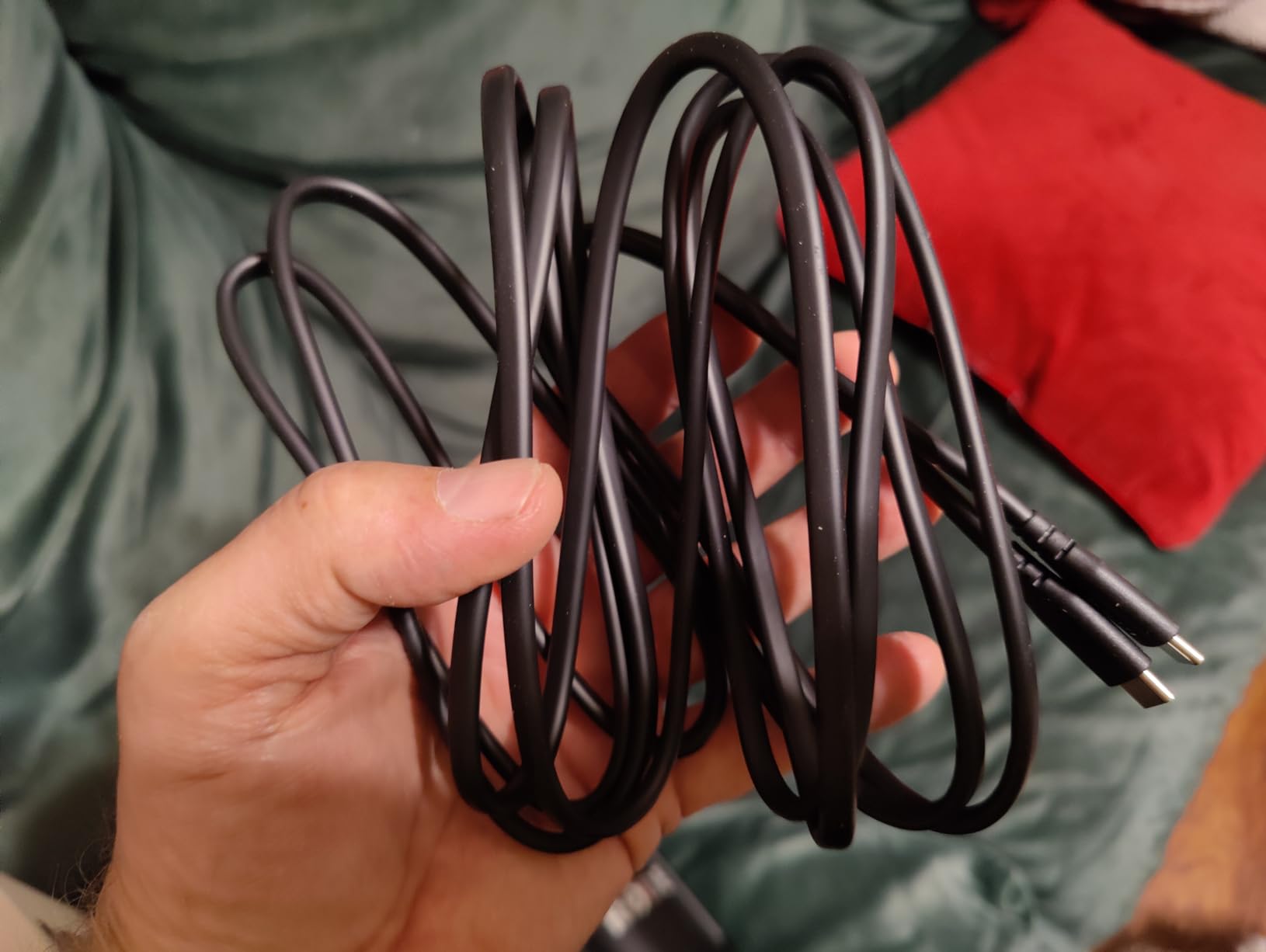
The 24-bit/48 kHz USB-C signal is the practical broadcast delivery format, and the headphone output is strong enough to monitor a closed-back pair properly. It also works with tablets and phones, which matters for on-location narration.
APHEX processing, including Aural Exciter and Big Bottom, is available through RØDE Central and adds presence or weight without extra hardware. It is a genuine convenience and also a dependency: the advanced features are not reachable from the microphone body.
As a condenser it collects room noise, and the ring-mount stand needs care because a badly positioned mount can transmit desk vibration into the file. There is no XLR output, so the upgrade path stops at USB.
Why the included accessories change the result
A pop filter set correctly on a condenser removes plosives that no amount of editing fixes cheaply, and a proper stand keeps the mic at a repeatable distance. Getting both in the box removes the two most common narration mistakes before they happen.
When to pass on the NT-USB+
Pass if you are in a noisy room where sensitivity is a liability, or if you expect to move to professional XLR sessions. For quieter spoken word it remains an easy, complete package.
9. Rode Podcaster: Best Dedicated Spoken-Word Dynamic
Rode Podcaster, White
28mm dynamic capsule
18-bit/48 kHz USB
Bus powered
3.5 mm headphone output
10 year warranty
Pros
- Dynamic capsule rejects room noise better than typical condensers
- On-body headphone volume for real-time monitoring
- Internal capsule shock mounting reduces handling vibration
- USB bus power means no external supply
- Ten year warranty and a ring-mount stand included
Cons
- 18-bit/48 kHz conversion is dated next to 24-bit rivals
- 40 Hz - 14 kHz response is narrow
- USB-only with no XLR option
- No on-body mute or gain control
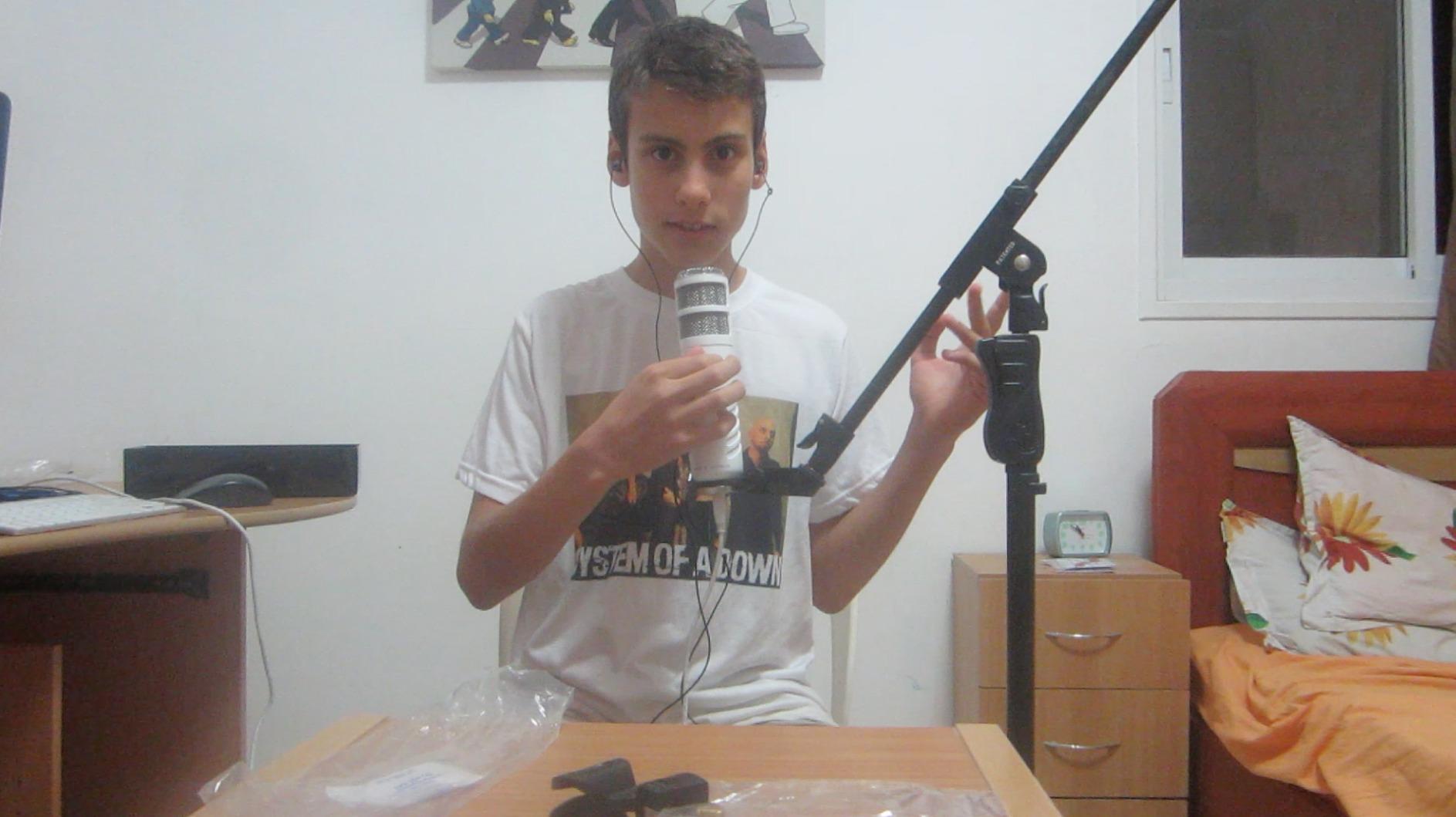
The Podcaster was built for one job: talking into a computer. The 28mm dynamic capsule was designed around broadcast spoken word, and the internal shock mounting plus bus power mean it works on any machine with a USB port and nothing else.
Its review base is the second smallest here, but the sentiment is uniform: room handling is good, monitoring is simple, and the ten year warranty is the longest of any microphone in this roundup.
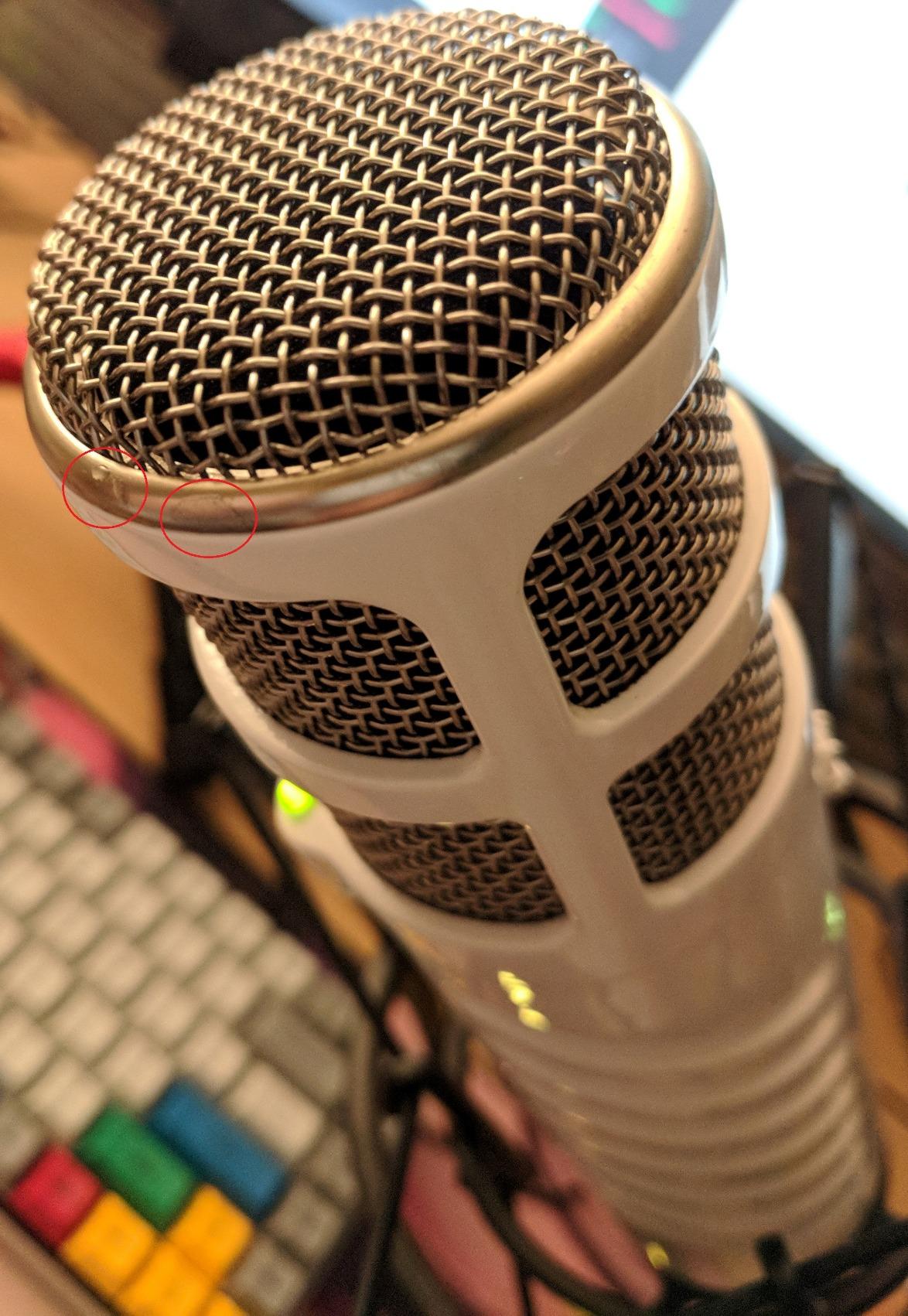
The technical trade-off is conversion. At 18-bit and 48 kHz it records fine for narration, but the format is a generation behind the 24-bit models here, and the 40 Hz – 14 kHz response leaves less top-end detail than a modern condenser.
It is also USB-only with no XLR path, and there is no mute or gain control on the body, so levels live in software. For a fixed broadcast booth position that is not a problem, which is how it was designed to be used.
Why spoken-word purists still like it
There is no signal processing between your voice and the file, which is exactly what some engineers want for narration delivered to broadcast specifications. The included ring-mount stand and ten foot cable complete a simple, fixed setup.
When to pass on the Podcaster
Pass if you want hi-res capture, a wider frequency response, or any route into professional XLR work. The narrower spec sheet makes more sense for the buyer who already knows exactly what they need.
10. Audio-Technica AT2040USB: Best Hypercardioid Room Rejection
Audio-Technica AT2040USB Dynamic USB Microphone
Hypercardioid dynamic
Built-in headphone jack
Silent soft-touch mute
60 dB signal-to-noise
600 g
Pros
- Hypercardioid pattern keeps room noise and echo out of the take
- Mute button on the body for quick reliable muting
- Two-state LED ring shows power and mute status clearly
- Built-in headphone jack with a high-output amplifier
- Stainless steel body with USB cable and adapter included
Cons
- Dynamic capsule needs more gain than a condenser
- USB-only with no XLR option
- No pop filter shock mount or stand included
- Fewer on-body controls and no gain or mix dial
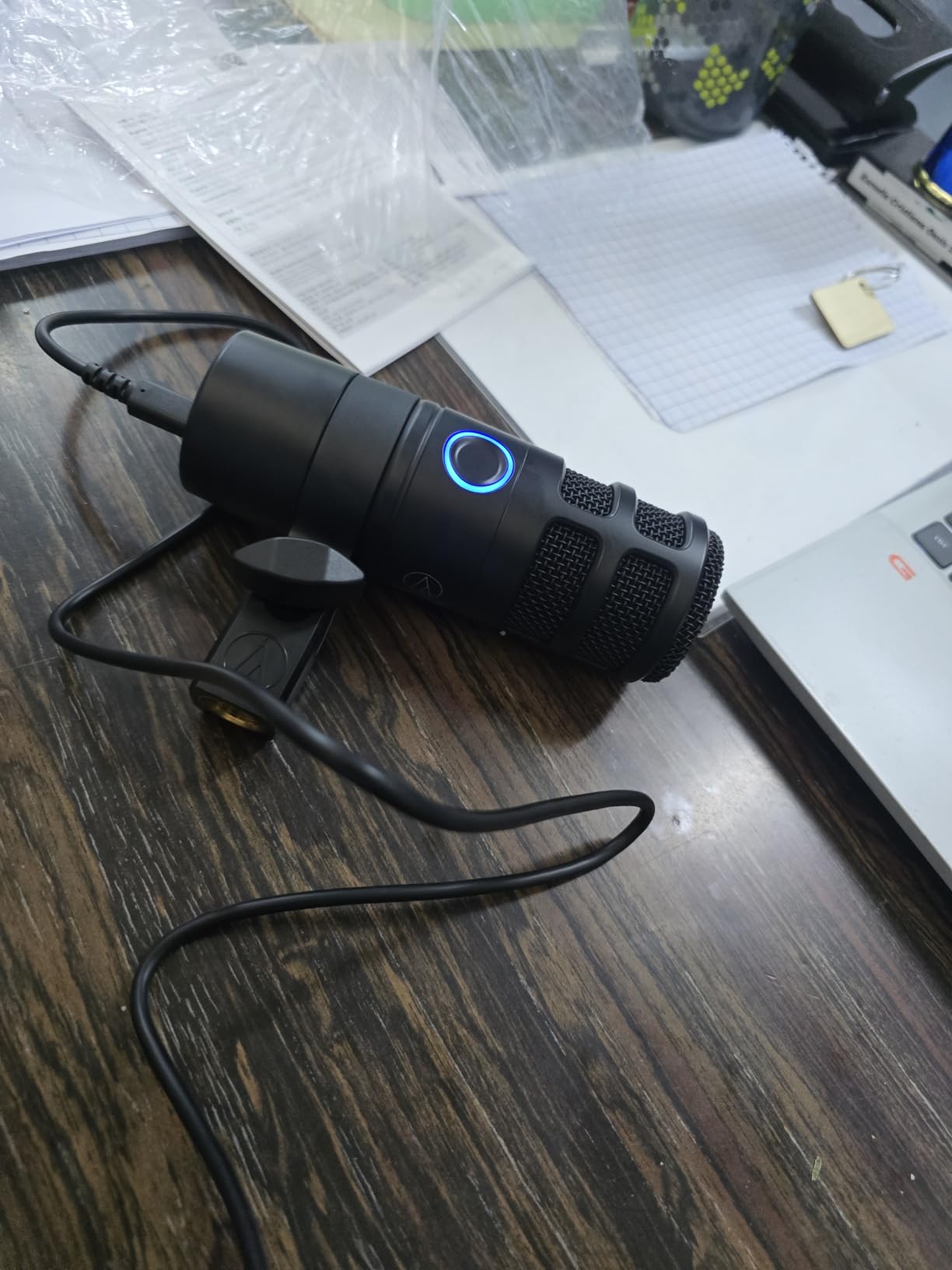
The AT2040USB narrows the pattern further than the other dynamic models here. Hypercardioid pickup, combined with a dynamic capsule, is aimed squarely at the untreated-room narration problem, and the two-state LED ring makes it obvious at a glance whether the microphone is live.
The body mute button is silent and soft-touch, which suits long sessions where you switch between takes and calls. A headphone jack with its own volume control covers monitoring, and the stainless steel body should outlive the desk it sits on.
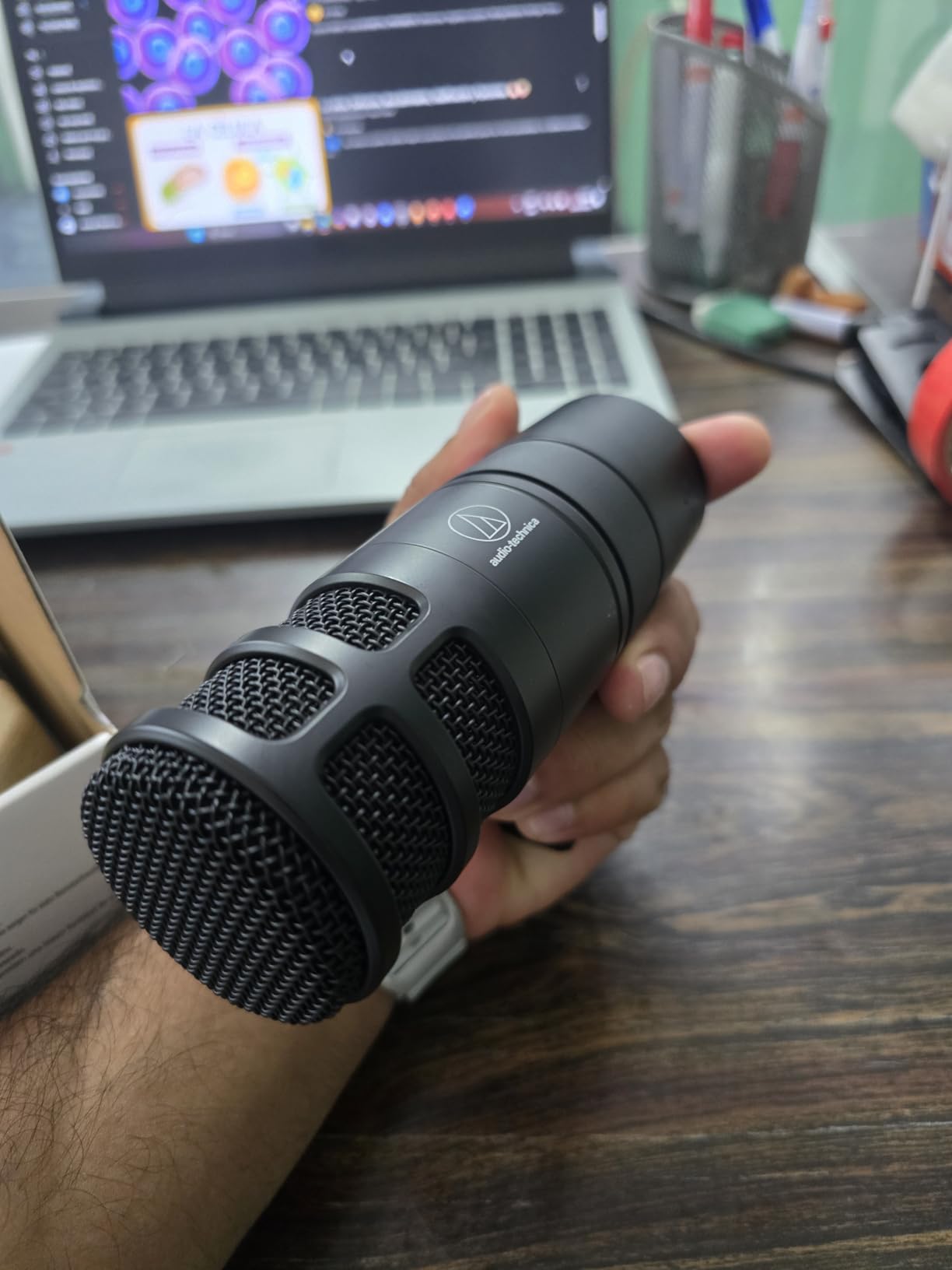
It has the smallest review base in this roundup, so treat the consensus as thinner than the others. What those reviews do agree on is that the pattern does its job and that monitoring is genuinely useful for streaming and calls.
Nothing for mounting is included: no pop filter, no shock mount, no stand. As with every dynamic, you will push more gain than a condenser to reach the same level, and there is no XLR output if your setup changes.
Why the narrow pattern earns its place
Hypercardioid rejection means keyboard, mouse and monitor sound fall away further behind the voice than cardioid would allow. That extra margin is what makes a home narration usable with light editing instead of heavy repair.
When to pass on the AT2040USB
Pass if you need a stand and pop filter included out of the box, or if the smallest review base makes you want more evidence first. The Samson Q2U offers a similar dynamic approach with a fuller accessory package.
How to Choose a USB Microphone for Voice Over Work
Start with the room, not the microphone
Decide whether your recording space is treated before you decide anything else. A treated corner in a small flat will make a modest condenser sound excellent, while an untreated bedroom will make even a great microphone record the building. Reader and recording communities agree on this point, and it is the one that most often decides a purchase.
Dynamic or condenser for speech
Condensers are more sensitive and more detailed, which suits a quiet, soft room and a close read. Dynamics are less sensitive and reject more of what surrounds you, which suits an untreated room, a lower voice and a performer who works loud. When the room is not treated, the dynamic is usually the better microphone regardless of price.
Self-noise and room tone
Self-noise is the hiss the microphone adds on its own, and in a voice over file it sits right under the quiet parts of a performance where an editor will hear it. The published signal-to-noise figures here range from 60 dB to 74 dB, and that gap is audible in room tone. Higher is quieter. None of these manufacturers publishes a true self-noise specification in dB, so read the signal-to-noise number as the practical proxy.
Polar pattern and how you will move
Cardioid is the right default for narration because it rejects sound from behind the mic, which is where your monitor, door and computer usually sit. Hypercardioid rejects more still. Multi-pattern models matter if you record interviews or stereo pairs, though no single mic handles two speakers at two positions equally well.
Bit depth, sample rate and 32-bit float
For delivery, 24-bit at 48 kHz is the working standard. 16-bit models still record clean narration, but 32-bit float capture, available here over USB on the Rode NT1 5th Gen, means a loud take cannot clip and can be recovered afterwards. That headroom is worth having if you perform at full volume.
Monitoring without distraction
A headphone jack with no-latency monitoring lets you hear yourself in real time, which is how you catch sibilance, mouth noise and fading energy before the take ends. Most of these mics have one, though the Samson Q2U and Rode Podcaster differ: the Podcaster has a 3.5 mm jack, the Q2U has none on the body.
Connectivity and the accessory bill
USB-C is now the norm and works with modern laptops, tablets and phones. The real accessory cost is a boom arm, a shock mount and a pop filter, and only the Rode NT-USB+ and Rode NT1 5th Gen include the latter two. Budget for a pop filter with any other condenser.
USB vs XLR for Paid Voice Over: When to Upgrade
The fear that a USB microphone cannot be used professionally is the most common reason people delay buying one, and it deserves an honest answer. Client work is judged on the file, not the connector: what matters is noise floor, room control, technique and editing. A well-treated room with a good USB microphone beats a shiny microphone in a bad room every time.
Where XLR wins is the studio standard. When a session is directed from a commercial booth, engineers expect to see a familiar microphone, a balanced connection and a gain structure they can control. Nobody will reject a USB file, but the technician cannot feed it from a console.
That is what makes the hybrid models the sensible long-term buy. The Samson Q2U and Shure MV7+ both carry USB and XLR, and the Rode NT1 5th Gen pairs USB-C with a studio condenser XLR output. Start on USB this week, add an interface when the paid work justifies it, and the microphone travels with you.
Mic Technique and Room Treatment for Narration
A microphone purchase succeeds or fails in the first ten minutes of setup more often than in the specification sheet. These are the steps that fix hiss, plosives and background noise before you buy anything else.
1. Set your gain once and leave it. Speak at the level you will actually read, watch the meters, and pull the gain down until the peaks sit well below clipping. Raising software gain later only amplifies the noise floor underneath.
2. Keep the mic four to six inches away. A pop filter works at that distance. Closer and plosives survive it; further and the mic loses the presence that makes a narration sound present.
3. If the mic hisses, check the chain before blaming the microphone. Plug the mic straight into the computer with no hub, disable any noise suppression, and confirm the sample rate matches in your software. Discussion threads note that hiss appears across brands and price tiers, which points to the preamp architecture rather than a fault.
4. If the room is louder than the voice, move the noise, not the mic. A dynamic capsule, a cardioid pattern, and shutting a door all help. Reversing the microphone, sliding it to a different part of the desk, and putting the mic behind the keyboard are the three fixes people miss.
5. Treat the first reflection. A duvet over a clothes rail behind the mic, or thick curtains on the wall you face, costs nothing and removes the flutter that a condenser records so eagerly. Fix the space before you spend on a more expensive microphone.
Frequently Asked Questions
Which mic is best for voiceover?
For most narrators the Blue Yeti is the strongest all-round choice because of its four pickup patterns, onboard gain and headphone controls and an enormous base of long-term owners. In an untreated room, pick a dynamic such as the Samson Q2U or Shure MV7+ instead, because noise rejection matters more than detail. In a treated or soft room, the Audio-Technica AT2020USB+ gives the cleanest condenser capture.
Are USB mics good for recording vocals?
Yes, for narration and spoken word a USB microphone is genuinely competitive with an XLR chain because the converter sits inside the mic and sends digital audio straight to your software. The limits are the built-in preamp, the fixed gain control and the absence of a balanced output into a studio console. For loud, close and dynamic performance, 24-bit or 32-bit float capture gives you more headroom than 16-bit models.
What are the disadvantages of using a USB mic?
The main limits are the built-in preamp, which you cannot upgrade or re-route, a fixed gain and monitoring design, and the lack of a balanced XLR output for studio work. Some models also depend on companion software for their signature processing, and a few add latency between your voice and the headphones. Internal cable runs can also contribute a faint hiss that is not present on a well-built XLR chain.
Why is my microphone making a static noise?
Static usually comes from gain staging, interference or software rather than a faulty microphone. Connect the mic directly to the computer with no hub, turn off any noise suppression or voice effects, and confirm the recording and playback sample rates match. Move the mic away from USB 3 hubs, routers and power supplies, and lower the gain so peaks sit well below clipping before raising anything in post.
Why does my mic pick up background noise but not my voice?
It usually means the voice level is too low relative to the room, or the polar pattern is aimed at the noise. A condenser in an untreated room will do this almost every time. Switch to a dynamic capsule such as the Samson Q2U or Shure MV7+, aim the cardioid pattern away from the fan, window or monitor, close the gap to four to six inches, and treat the wall behind the mic.
Do I need an audio interface for voice over if I have a USB mic?
No, not to start. A USB microphone contains its own preamp and converter, so you can record narration in Audacity, Reaper or DaVinci with nothing else. Add an interface only when you move to XLR microphones, need a hardware gain control, or want a balanced connection into a studio console. Hybrid models such as the Shure MV7+, Samson Q2U and Rode NT1 5th Gen let you start on USB and upgrade later.
Final Verdict: The Best USB Microphones for Voice Over in 2026
The Blue Yeti remains the best USB microphone for voice over work overall, because pattern flexibility, onboard controls and a huge ownership history cover more situations than anything else at the price tier. Read in an untreated room, though, the Samson Q2U or Shure MV7+ will give you a cleaner file than any condenser here, and the MV7+ keeps an XLR path open for later.
For the cleanest narration capture, the Audio-Technica AT2020USB+ wins on its noise floor, and for a treated home booth or a future move into a studio, the Rode NT1 5th Gen brings 32-bit float capture, a shock mount and a pop filter in the box. Treat the room first, set your gain once, and any of these ten will record work you can send to a client.