
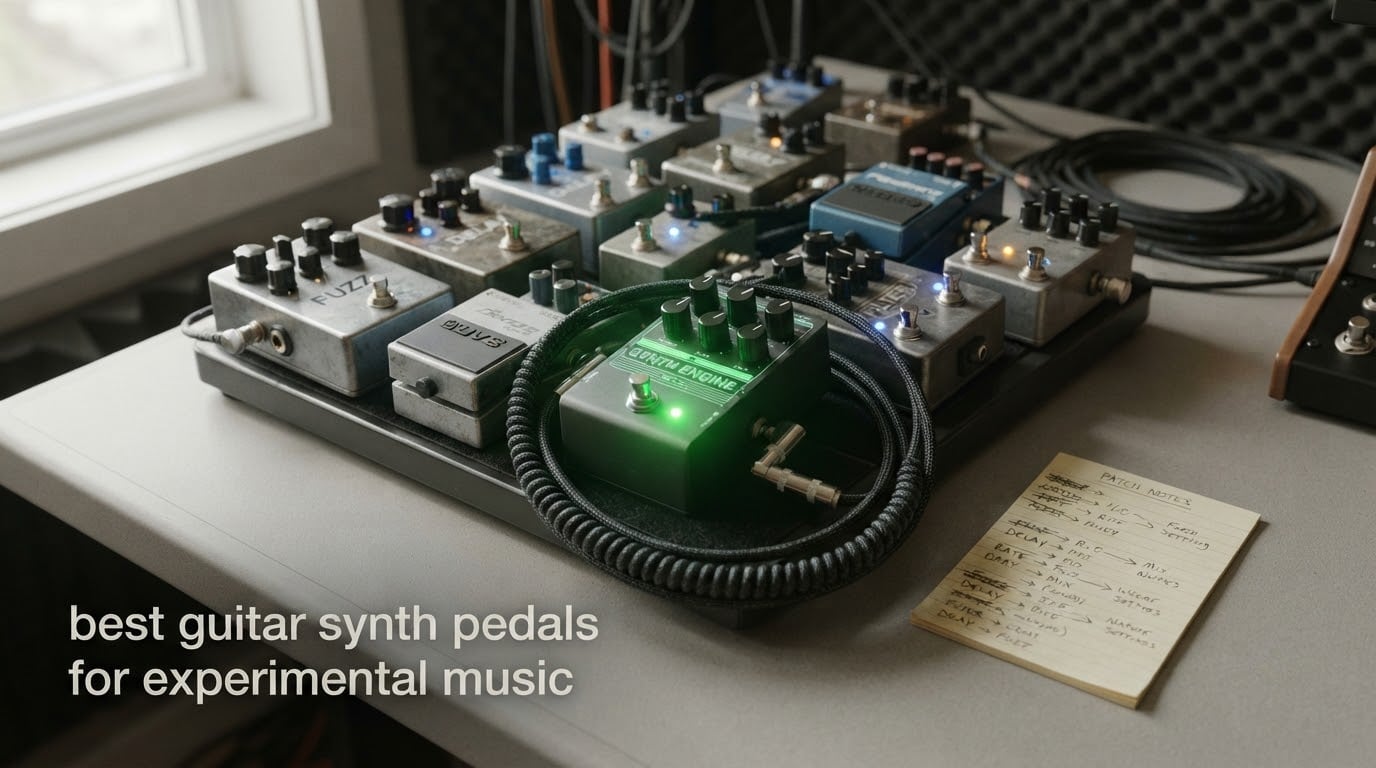
A guitar synth pedal takes the note you play, throws away most of your guitar’s natural tone, and replaces it with a generated voice: an oscillator, a wavetable, a granular cloud, or a vocoder form. The pedal tracks your pitch, filters the result, and usually blends it back over your dry signal so you can still play like a guitarist. For experimental music that is a bigger change than any drive or reverb, because it turns a six-string into a sound-design instrument you can push until it breaks.
That is what separates this list from the usual brand-by-brand synth pedal roundup. We sorted twelve pedals by what they actually do in a noise, drone, glitch or feedback context, not by price or by how many sounds they ship with. The categories that decide everything in this genre are polyphony, tracking behaviour under fast playing, and how much of the signal the pedal gives back to you.
Our team spent six weeks moving these twelve units between a crowded board, a clean DI path and a long chain of delay and reverb pedals, comparing how each responded to a single held note, a fast run, and a full chord. Nothing below needs a special MIDI or hexaphonic pickup guitar. A few need more care with the power supply than others, and we say which.
Table of Contents
Top 3 Picks for Experimental Guitar Synth Pedals (September 2026)


BOSS SY-200
- 171 sounds across 12 categories
- 128 patch memories
- MIDI input and output
- Two footswitches
Empress Effects ZOIA
- 80+ patchable modules
- 64 patch memories
- Envelope followers and bit crushers
- Assignable controls
The Best Guitar Synth Pedals at a Glance in 2026
Twelve units, one row each. Every pedal here works with a standard guitar and none requires a dedicated synth pickup, which is the single most common reason people rule this category out too early.
| Product | Specs | Action |
|---|---|---|
| BOSS SY-1 |
|
Check Latest Price |
| BOSS SY-200 |
|
Check Latest Price |
| Empress Effects ZOIA |
|
Check Latest Price |
 Electro-Harmonix SYNTH9 Electro-Harmonix SYNTH9 |
|
Check Latest Price |
 Electro-Harmonix Superego Electro-Harmonix Superego |
|
Check Latest Price |
 EarthQuaker Devices Data Corrupter EarthQuaker Devices Data Corrupter |
|
Check Latest Price |
 Walrus Audio Fable Walrus Audio Fable |
|
Check Latest Price |
 Walrus Audio Lore Walrus Audio Lore |
|
Check Latest Price |
 Strymon NightSky Strymon NightSky |
|
Check Latest Price |
 BOSS VO-1 BOSS VO-1 |
|
Check Latest Price |
 Electro-Harmonix B9 Electro-Harmonix B9 |
|
Check Latest Price |
 SONICAKE Bitcrusher SONICAKE Bitcrusher |
|
Check Latest Price |
1. BOSS SY-1 – The Polyphonic Pedal That Handles Everything You Throw at It
BOSS SY-1 Guitar/Bass Synthesizer Guitar Pedal (SY-1)
Polyphonic synth engine
Send and return loop
Hold function
9V 300mA draw
Pros
- Exceptionally fast and accurate polyphonic tracking
- Compact rugged BOSS build
- Over 100 synth tones plus hold and send/return functions
- Works inline with other pedals and other instruments
Cons
- No ADSR controls so attack character cannot be shaped
- No MIDI or user presets so sounds must be re-dialled
- Bank of bell and effect sounds limits lead and pad variety
The SY-1 is the one most people meet first, and for experimental work it is still the hardest to argue against. Reviewers consistently single out its polyphonic tracking as the fastest and most accurate in the compact category, and in practice that means the pedal keeps up when you are playing fast, dense things rather than only on slow single-note lines. I found that the difference between this and a monophonic pedal is not subtle once you start moving.
Build quality is BOSS standard metal, and the two-knob control surface means there is almost nothing to learn. The Hold function is the underrated feature here: it freezes a synth voice under your picking so you can play normal guitar lines over a sustained pad without switching anything. For dronescape work that is a genuine differentiator rather than a party trick.
What it does not do is shape the envelope. There is no attack or decay control, so the character of each sound is fixed at the factory, and muted or slow-attack playing translates poorly into the pedal. A user on r/guitarpedals described the common experience better than any spec sheet: work at the pickup position, at the chain position, and with the blend set so the dry signal sits correctly under the synth voice.
The other honest limitation is the preset story. There is no MIDI and no user storage, so if you find a sound halfway through a track you have to remember every knob position. With three controls that is manageable. With a dense board and a live set, it is the reason the SY-200 exists.
When the SY-1 is the right call for experimental guitar
This is the pedal to buy first if you play chords, if you want your existing guitar to sound immediately different, and if you would rather spend your time on sound design than on firmware menus. It needs no special pickup, adds almost no board depth, and runs happily alongside fuzzes, drives and time-based effects. The send and return loop also lets you drop a delay or reverb inside the synth voice rather than after it.
It is a strong choice for live improvisation because the switching is instant and the tracking holds up under movement. If you rely on heavily muted playing, on very soft picking, or on a long list of patches you switch between mid-set, look one step further up the range instead.
When it is not the right call
The absence of ADSR control is the real ceiling here. If your experimental work depends on percussive, enveloped attacks or on velocity doing something musically important, a pedal with editable parameters will outgrow this one quickly. Players who never store a patch and never need MIDI program change will not feel that gap at all.
Muted technique is the other edge. Because the pedal responds to picking dynamics, a guitarist who favours a very soft attack will find synth voices that do not respond the way the same guitarist expects a fuzz to. It is a playing-style adjustment, and it takes an afternoon to adapt.
2. BOSS SY-200 – More Voices, Real Memory, and MIDI
BOSS SY-200 Synthesizer Effects Pedal
171 sounds in 12 categories
128 patch memories
MIDI input and output
9V 300mA draw
Pros
- Large 171-sound library with more tone shaping
- 128 memories for live recall
- Full MIDI I/O plus footswitch and expression support
- Fast latency-free polyphonic tracking with large display
Cons
- Larger and bulkier footprint than compact pedals
- Three adjustable parameters limit deep sound design
- Menu-based editing takes practice
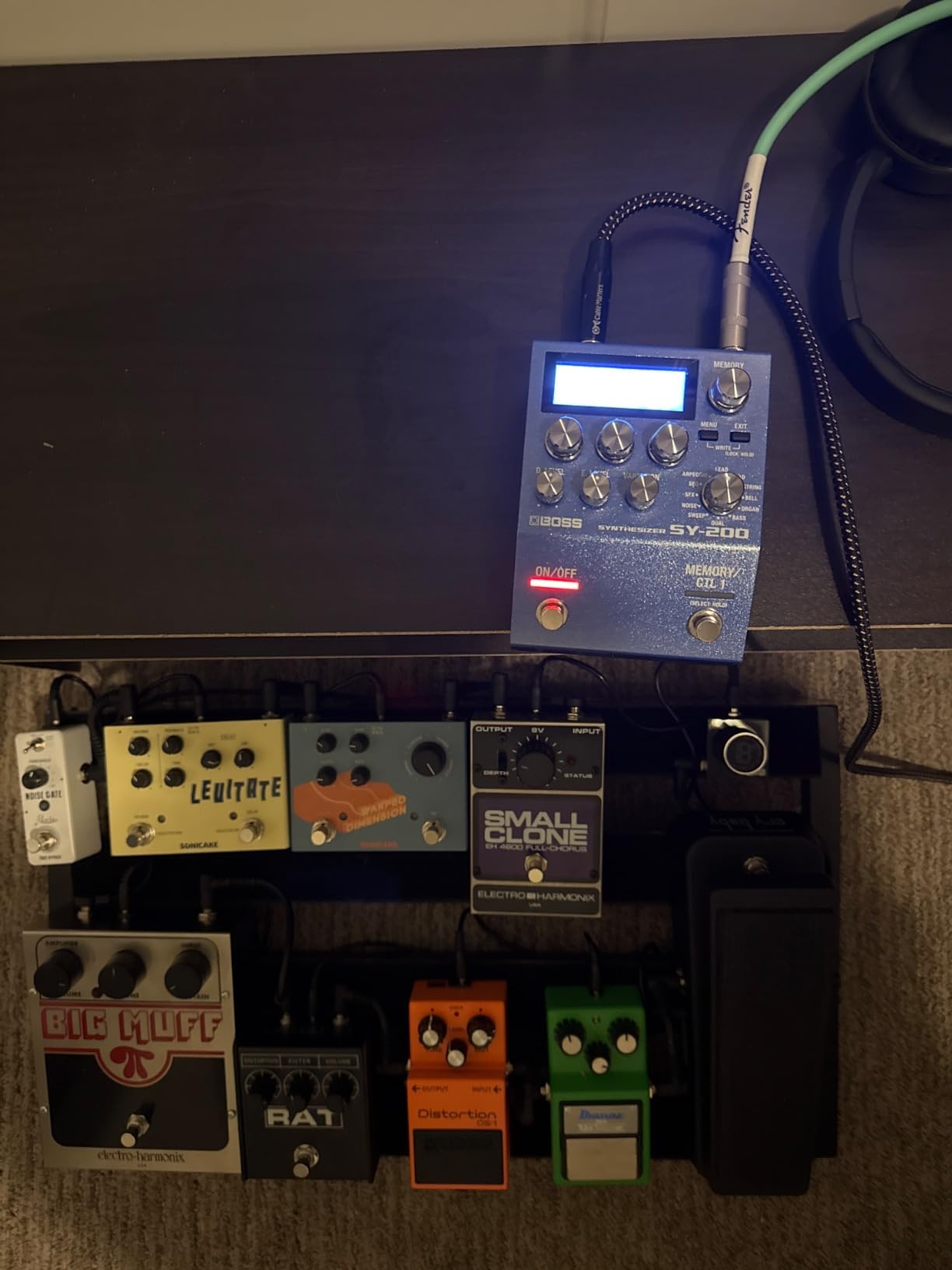
The SY-200 is what the SY-1 would be with a memory and a display. It runs 12 analog-style synth categories for 171 sounds total, and each patch exposes three adjustable parameters. That is enough to build a set of usable experimental voices and, critically, enough to recall them instantly in a live setting instead of hunting for a sound mid-improvisation.
Owners on r/Bass describe the SY-200 as the go-to modern pedal of the compact BOSS line, and the tracking matches that reputation. It is latency-free, it works with any guitar or bass, and it needs no special pickup. The dual footswitches plus external footswitch and expression pedal support mean you can move between two prepared patches and control a parameter with your foot.
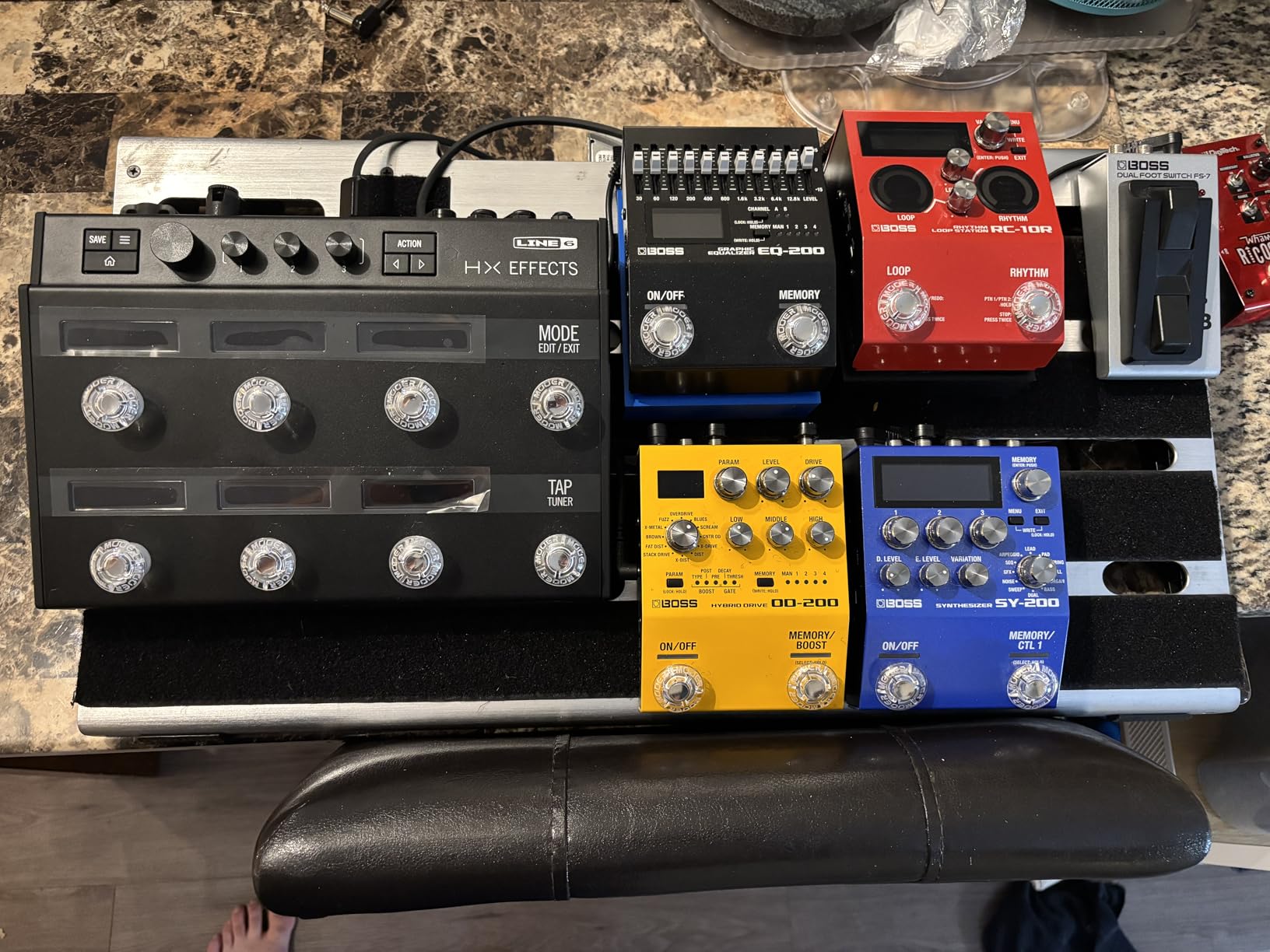
From a sound-design standpoint the three-parameter ceiling is the honest limit. You are choosing from 171 starting points and adjusting a small number of macros, not building a voice from oscillators and envelopes. For textural, chordal and live work that is plenty. For granular or self-oscillating behaviour, you will outgrow it.
The display is the quiet hero. On a dark board, reading a preset name without crouching changes how you use a synth pedal, and this is one of the few in the category that does it well. The menu-based editing does take practice, and it is a slower workflow than knob-per-parameter designs.
Physical size is the other consideration. Compared with the compact series this is a noticeably larger footprint, which matters a great deal on a board that already carries a synth pedal, an ambient delay and a reverb. I would plan the layout before buying rather than after.
Why experimental players pick the SY-200
MIDI is the feature that separates it. If you run a controller, a switcher or a DAW-based rig, program change and continuous control turn this pedal from an effect into an instrument in a set. The 128 memories give you somewhere to put the sounds you actually want to play, rather than a preset you happen to like.
For chordal work it is simply the better BOSS pedal. More voices, more categories and a display make it easier to build a board around. Bass players on forums consistently point to it as a first synth pedal, and the tracking is tight enough for melodic work rather than only drones.
Where the SY-200 falls short
Three parameters is three parameters. Everything you build is a variation on a factory patch, so the raw, unprocessed sound-design possibilities are narrow compared with a patchable platform. If your work is about taking a note apart rather than reskinning it, look at the ZOIA instead.
Size and menus are the other two costs. The learning curve is steeper than the two-knob SY-1, and it is a bigger block of board space. Both are worth it if you play live, and less so if you mostly play at home with the pedal switched on once.
3. Empress Effects ZOIA – The Patchable Platform for Deep Sound Design
Empress Effects ZOIA Modular Synthesizer and Guitar Multi-Effects Pedal
80+ patchable modules
64 patch memories
Assignable controls
9V 300mA draw
Pros
- Highest rating in this group with a large community patch library
- 80+ modules make it a synth and a multi-effects unit
- Ongoing firmware updates and long manufacturer support
- Solid build with responsive grid and encoder
Cons
- Steep programming learning curve
- Small screen and no assignable knobs make live tweaks awkward
- Protruding uncovered microSD slot
- Does not auto-revert to the last patch at power-up
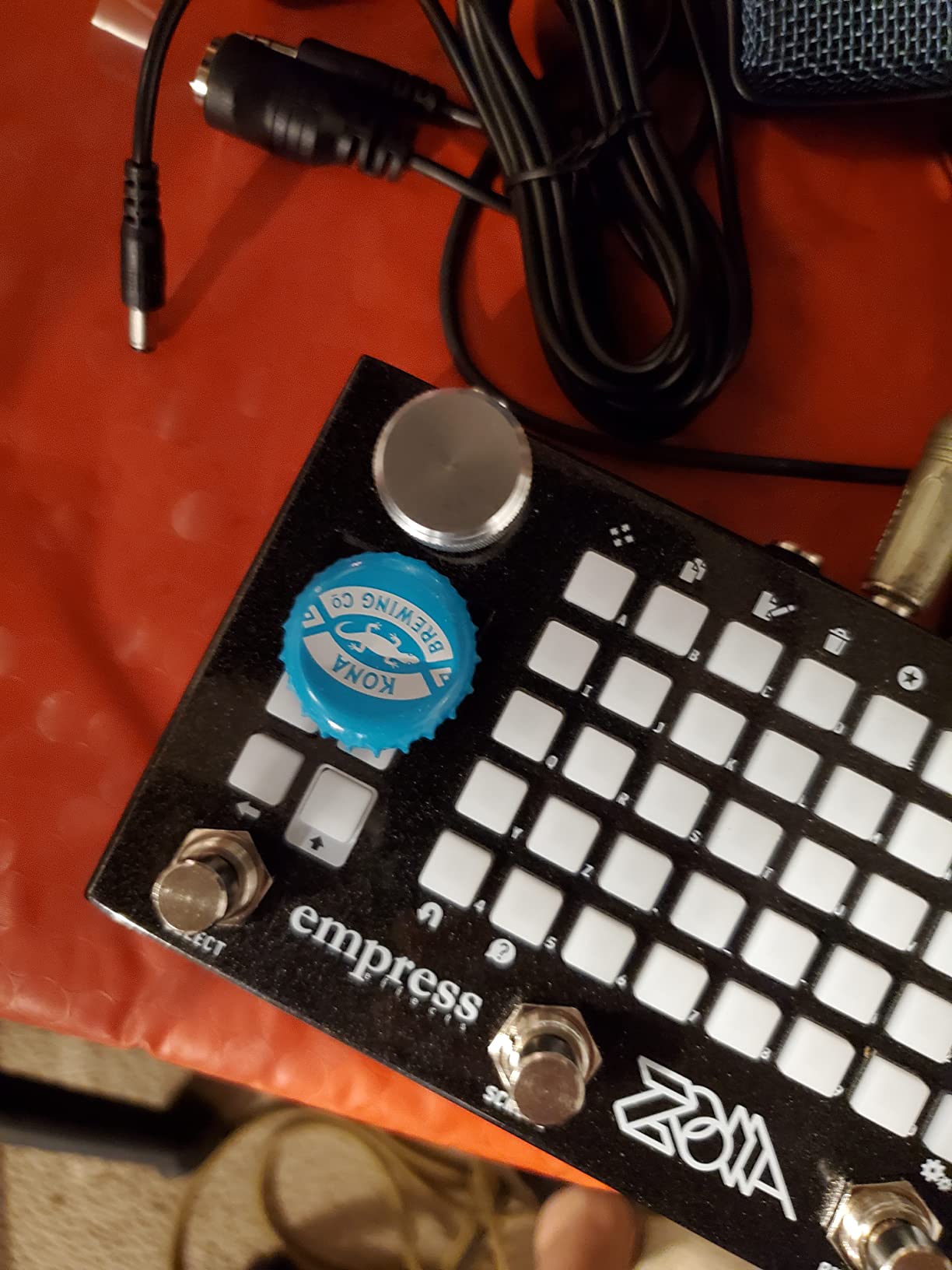
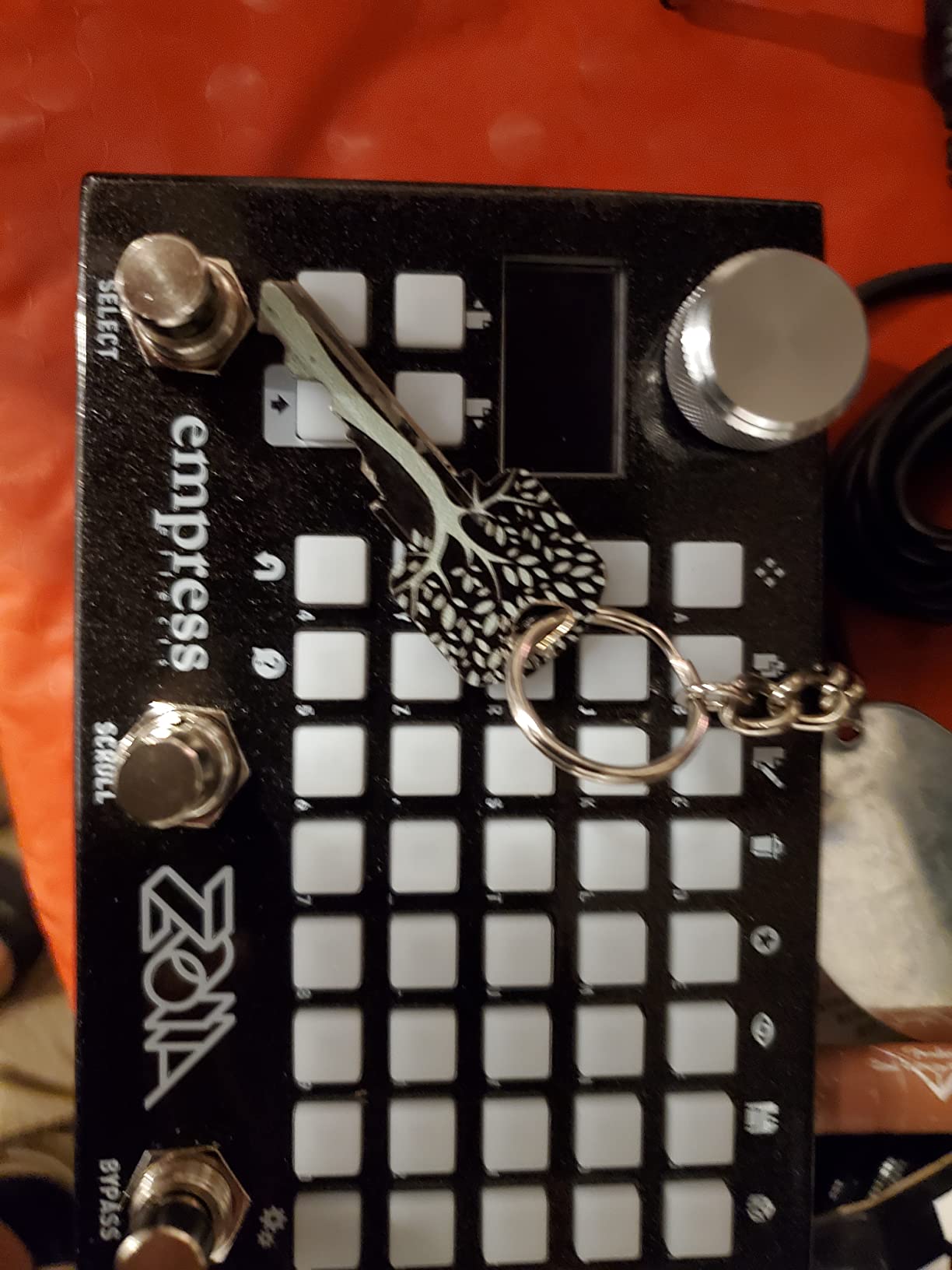
The ZOIA is not really a synth pedal in the way the other eleven are. It is a modular patching platform with more than 80 modules, including oscillators, LFOs, filters, bit crushers and envelope followers, and it will accept a guitar, a synth or an electric cello as an input source. If your experimental practice is about building a sound rather than choosing one, nothing else here comes close.
Reviewers rate it the highest in this group, and the reason they give is rarely the sound on its own. It is that you can patch your own reverb inside a synth voice, feed one filter into a delay, use a sample-and-hold to randomise a waveform, and store the result in one of 64 patch memories. r/guitarpedals frames it well: it can replace a lot of other pedals, and the value-versus-complexity trade-off is the central argument in every thread about it.
The honest consensus is that its built-in drive channels are weak. A widely repeated line on r/guitarpedals is that the ZOIA’s drives are poor, that you can build a convincing fake clean amp with the right patch, and that it works better when you put your favourite drive pedal after it. That is a workaround, not a flaw in the design, but it changes what you need on the board.
Other reservations are practical. The screen is small, there are no built-in assignable knobs, and live parameter tweaks are awkward compared with a pedal built around physical controls. It also does not return to your last patch when powered up, which catches people out on a stage. The protruding microSD slot is easy to knock with a cable.
For live use, the fix is preparation: patch your performance set into the 64 memories, keep the footswitch mapped to what you actually reach for, and treat the encoder as a set-and-forget control. Owners who do that report the ZOIA behaving like a completely different pedal.
Who gets the most out of the ZOIA
If your practice is studio-heavy, granular, textural or improvisational with no fixed plan, the ZOIA is the single most capable instrument in this list. Gearspace ambient players describe it as the default answer for genuinely experimental sound design, and the patch-sharing community means you are not starting from an empty grid.
It also replaces pedals. Twenty-plus ready-made effect modules cover delay, reverb, chorus, flanger and overdrive, so on a small board the ZOIA can take the space three separate effects pedals would need. That is the argument for spending on the platform rather than on another tone pedal.
Where the ZOIA frustrates players
Programming it is a real project, and threads describing it as almost exclusively pros are accurate. It is a little bit cumbersome, it is not a plug-and-play tone machine, and the first month is spent learning rather than playing. If you want a synth voice you can dial in during soundcheck, this is the wrong tool.
Its weakness as a tone source is also worth restating plainly. A patchable platform builds the sound you design, and if you have not designed a sound yet, the pedal does not hand you one. Every owner who loves it says the same thing in different words: treat it as a platform, not a preset source.
4. Electro-Harmonix SYNTH9 – Vintage Keyboard Tones Without the Depth
Electro-Harmonix SYNTH9 Synthesizer Machine Pedal
9 vintage synth presets
No special pickup needed
Wide tracking range
9V 100mA draw
Pros
- Nine instantly usable presets covering 70s and 80s keyboard sounds
- Simple three-knob layout quick to dial in on stage
- Dry and fx blend keeps natural guitar tone
- Stacks with other 9-series machines
Cons
- Sounds skew vintage rather than modern
- Fast playing can swallow individual notes
- Only one expression input so the CTRL knobs cannot both be assigned
- Requires a playing-style adjustment
The SYNTH9 does one thing and does it immediately: it turns a guitar into a recognisable vintage synthesizer voice. Nine presets modelled on classic 70s and 80s sounds, three knobs, and it works on guitar or bass with no special pickup and no MIDI. A recent thread on TheGearPage captures the deciding factor for most buyers, which is that it sounds good and it is very simple to use.
For experimental work the useful part is the dry and fx blend. You can sit the synth voice under your guitar rather than replacing it, which is how you get a textural layer that does not fight the rest of the chain. Reviewers specifically call out noise and drone work as a place the SYNTH9 lands well.
The tracking range is wide. Electro-Harmonix states usable tracking extends to roughly the 23rd fret on the high E string and down to the open A on bass, so you are not fighting the pedal at the extremes of the instrument. It also pairs with the B9, C9, KEY9 and MEL9, which is a real option if you want to build a bigger rig from one family.
Where the SYNTH9 fits in an experimental rig
It is the right pedal when you want a fast, repeatable vintage keyboard colour with no programming. A held note under a long ambient delay, or a bass line under a noise layer, is exactly what this does well, and the low current draw of 100mA makes it easy to power on a crowded board.
Because it stacks with the rest of the 9 series, it is also the natural first purchase for someone building a keyboard-emulation rig gradually. Nine series machines, one expression pedal, and you have a board that covers organ, electric piano, synth and tape replay.
Where it runs out of road
All nine presets point in one direction. Reviewers report that the timbres read as dated rather than modern, and there is no way to push a preset somewhere new because there is no parameter access beyond two CTRL knobs and a blend.
Fast playing is the other limit. Individual notes can get swallowed at speed, which matters a great deal for an improviser, and only one of the CTRL knobs can be assigned to an expression pedal at a time. Like most tracking pedals, it also asks you to change how you play rather than reacting transparently to how you already play.
5. Electro-Harmonix Superego – Endless Pad Textures With a Catch
Electro Harmonix Superego Synth Engine Guitar Effects Pedal
Freezes notes and chords indefinitely
Effects loop in the wet signal
Glissando control
9.6V 200mA draw
Pros
- Turns a guitar into a playable pad synth with long droning sustains
- Momentary
- latch and auto modes for three freeze behaviours
- Effects loop lets modulation and drive sit inside the frozen signal
- Controllable glissando for dramatic transitions
Cons
- Needs a strong input signal and misses some chords and light playing
- Volume can swell unexpectedly as harmonics stack
- Not plug and play
- takes hours of knob work
- Un-detented knobs are easy to bump with a foot
- AC adapter only with no battery operation
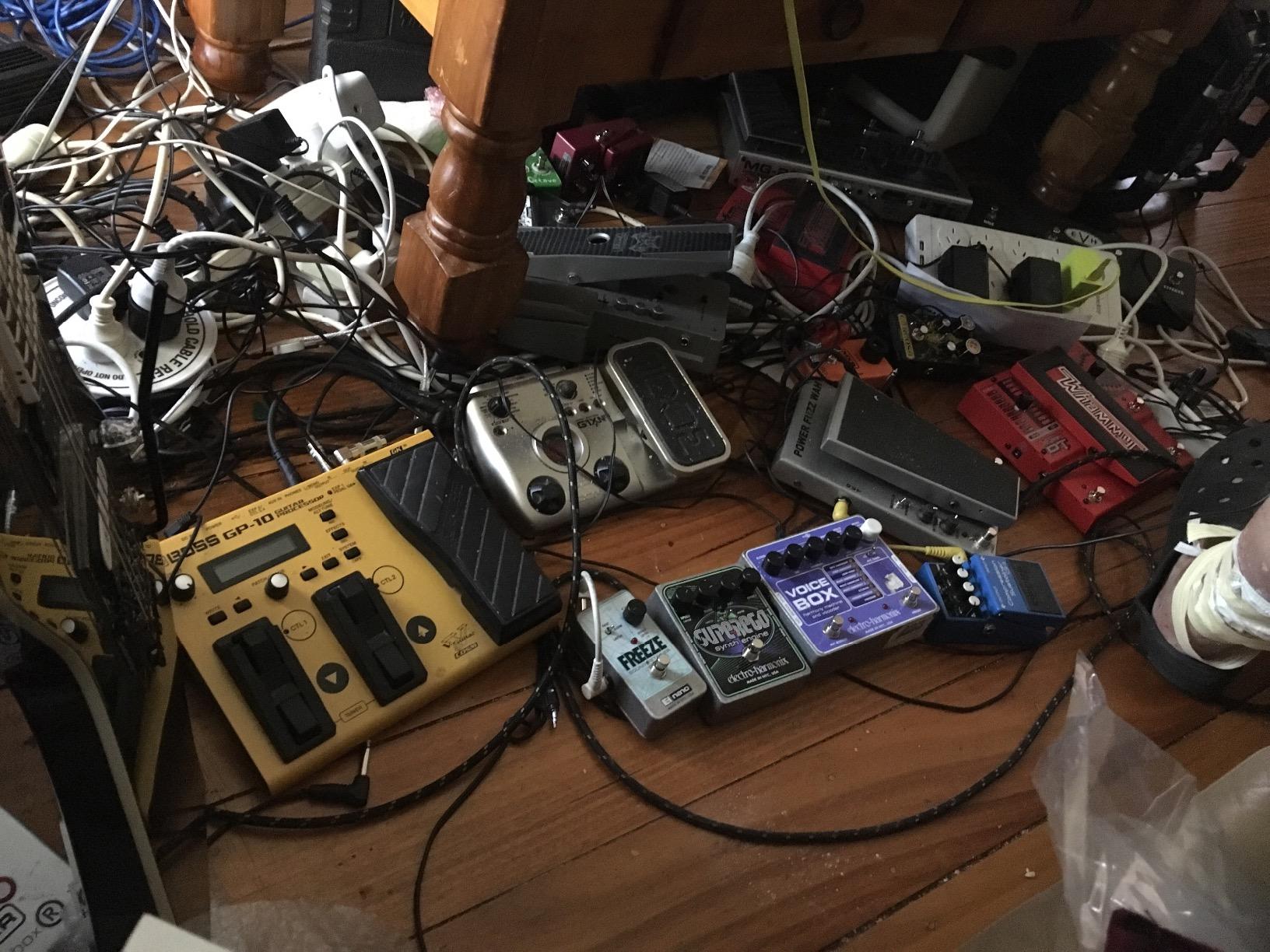
The Superego is the pedal on this list that most directly makes a guitar behave like a pad synthesizer. Feed it a note and it sustains that note indefinitely. Feed it a chord and it holds the chord, layering harmonics on top for as long as you want. The three operating modes, momentary, latch and auto, give you three genuinely different freeze behaviours rather than one trick.
Its effects loop is what makes it interesting for dronescape work. You can put a phaser, tremolo, rotary or drive inside the frozen signal, so the sustained voice keeps moving while it holds. That combination is the single most-cited strength in owner reviews, and it is why ambient players reach for this pedal specifically.
The glissando control sweeps in and out of frozen tones, which gives you a slow, dramatic transition between silence and a swelling drone. Owners describe it as an affordable entry into granular-style guitar synthesis, and the honest version of that claim is that you get sustained, resonant, evolving textures rather than true granular particle clouds.
Why the Superego earns a place in an experimental board
It solves a specific problem: how do you hold a pad indefinitely on an instrument that does not have one. The freeze behaviour, the layering and the loop insertion together turn a guitar into a long-form sound source, and a single held note can run under several minutes of delay and reverb.
For drone and ambient work it is also straightforward. The controls are few, the physical layout is uncluttered, and the sound is musical from the first successful attempt even if that attempt takes a while to find. Nothing else in this list sustains a chord for that long.
Where the Superego frustrates players
Triggering is inconsistent. It needs a fairly strong input signal, and it fails to respond to some chords and to light playing, which means your playing has to change. Volume can also boom unexpectedly as harmonics stack, and that is genuinely awkward in a live setting.
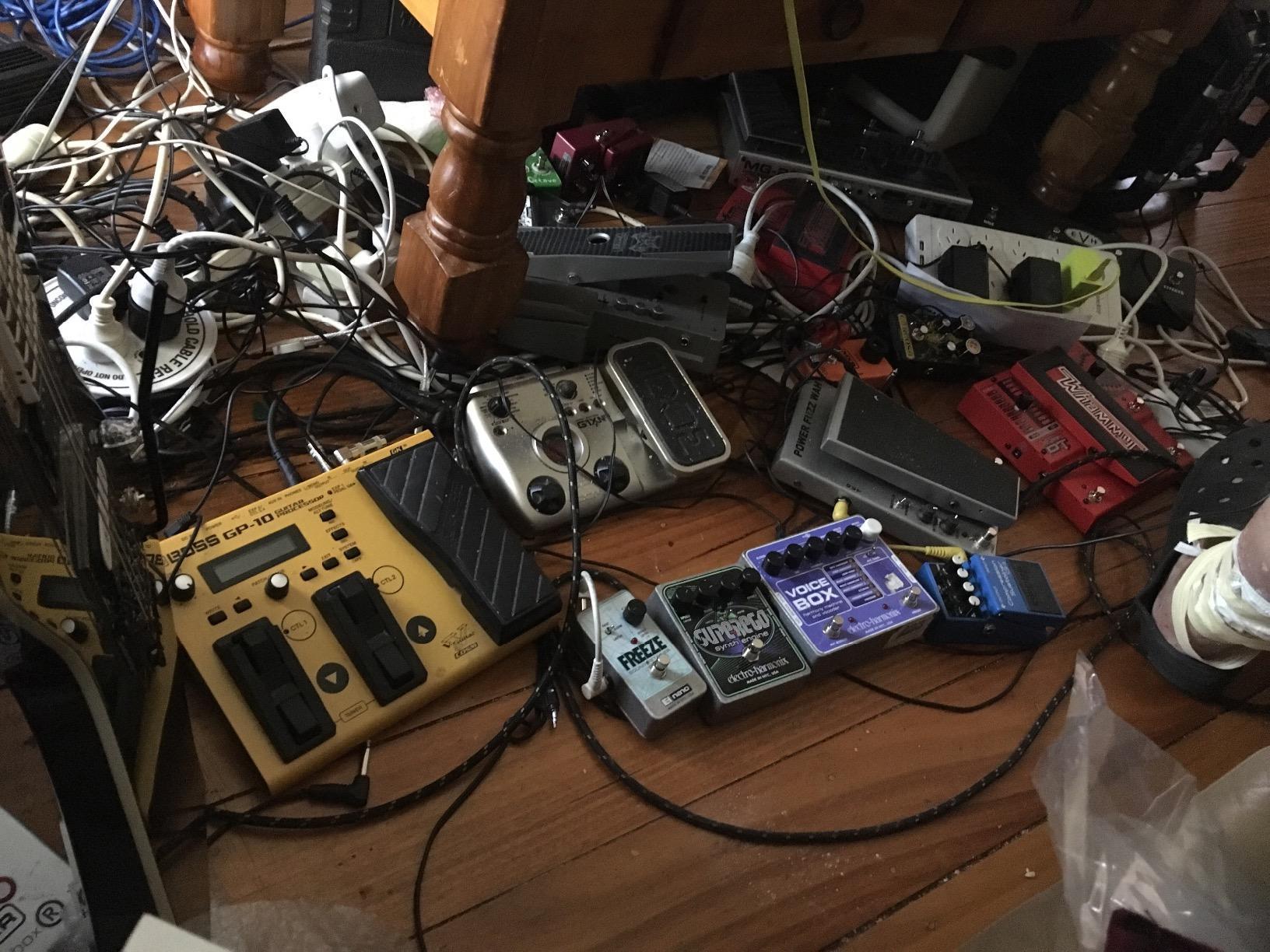
Two more practical issues. The un-detented knobs are easy to bump with a foot and alter volume without you noticing, and it takes hours of knob work before you have a sound you would use in front of anyone. It also requires an AC adapter, so it is never the pedal you put on a battery-powered board.
6. EarthQuaker Devices Data Corrupter – Analog Noise and Glitch You Cannot Predict
Earthquaker Devices Data Corrupter Modulated Monophonic Harmonizing Phase Locked Loop Guitar Effects Pedal
Three-voice phase locked loop synth
Square-wave fuzz core
Touch-sensitive modulation
9V 25mA draw
Pros
- Produces bizarre repeatable three-voice synth sounds from one note
- Touch-sensitive and highly dynamic
- Also works as an octave or fuzz pedal when dialled back
- Solid build with a limited lifetime warranty
Cons
- Monophonic tracking glitches on bright tones and chordal playing
- No dry signal output so a signal split is required
- Bright indicator light makes the knob markings hard to read
- No preset memory across the many parameters
This is the pedal for the player who wants the synth voice to be unstable. Owners who get past the first hour describe it as a one-of-a-kind source of glitchy, sci-fi and noise-friendly synth voices, and the mechanism is a three-voice phase locked loop design inspired by the Electrax Synthax and Ray Marston’s Basic Frequency Synthesizer.
Underneath the synthesis is a crushing square-wave fuzz core that amplifies the input brutally. Dialled back it behaves like an ordinary octave and fuzz pedal, which makes it a much more usable pedal for a general experimental board than its reputation suggests. Touch response is excellent and sustain is long for a PLL design, so dynamics genuinely shape the result.
Seven knobs plus level and two switches is a lot of control for something this strange, and every combination is a different noise source. That is the appeal for glitch and noise work, and it is the reason reviewers describe the pedal as needing a taming process before it becomes playable.
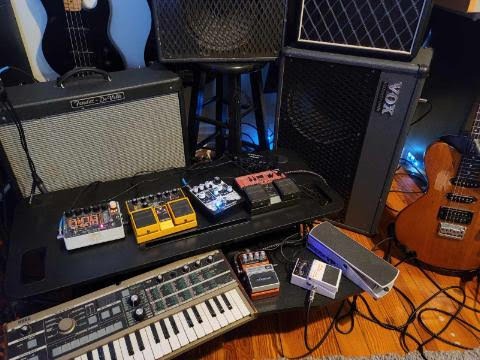
Why the Data Corrupter is unmatched for noise guitar
It is the most honest analog noise generator here. Nothing in the signal path is emulating instability, the instability is what the circuit does, and that is a different character to any granular or bit-crushed effect. Mangle it further with a bit crusher and it becomes genuinely unrecognisable as a guitar.
It also fits anywhere. At 25mA it is the least demanding pedal on the list, it needs no special pickup, and the limited lifetime warranty means the noise source is a long-term part of a board. Bass players on TalkBass describe the established practice of pairing a cheap monophonic synth pedal with a granular pedal underneath it, and this is a strong candidate for the front of that chain.
What gives it away
It is monophonic, and PLL tracking glitches on bright tones and on anything chordal. If your experimental music includes chords, a second guitar part, or a busy riff, that limitation arrives immediately. The pedal takes a single note and makes a three-voice mess of it, which is brilliant once and frustrating repeatedly.
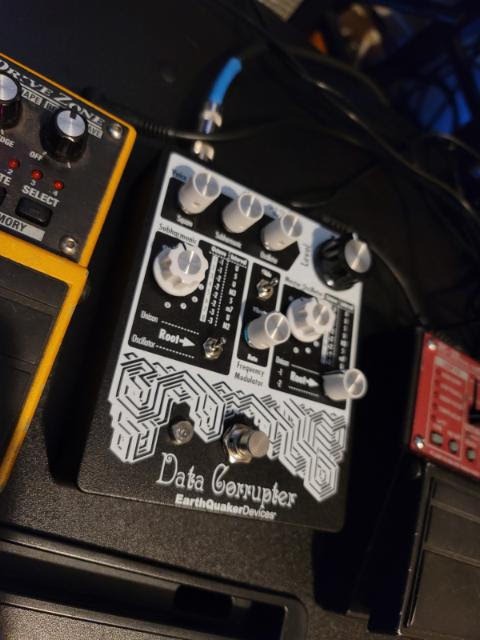
There is also no dry signal output and no mix control, so you need a signal split before the pedal to hear your clean guitar alongside it. On a crowded board that is real extra routing. Add no preset memory, an indicator light that lights up the knob markings, and this is a pedal you will either love or replace within a month.
7. Walrus Audio Fable – Granular Sampling From a Compact Pedal
Walrus Audio Fable Granular Soundscape Generator
Five sample and chop delay programs
Dual DSP with analog feedback
Isolated power recommended
Power supply included
Pros
- Sample and chop delay algorithms create resampled sound networks
- Dual DSP with per-algorithm analog feedback adds movement
- Spans smooth ambience to chaotic glitchy swarms
- Power supply and cables included
- Compact 3.62 by 4.79 inch die-cast footprint
Cons
- Small review base makes long-term reliability harder to judge
- Higher bracket for a mono granular pedal
- Requires an isolated power supply for best results
- Undetented knobs are a common gripe on this generation
The Fable is the only genuinely granular instrument on this list, and that makes it worth the compromise it asks for. Five programs sit around sample and chop delay algorithms, running a dual DSP architecture where delay programs sit in series with granular sampling, and each algorithm has its own analog feedback path.
That analog feedback path is what separates it from a software granular toy. Reviewers describe the range as running from smooth flowing ambience to chaotic glitchy swarms, and the movement it produces is slow and organic rather than steppy. It is a mono pedal, so it samples one note at a time, and the sound it builds from that single note is genuinely difficult to reach any other way on guitar.
It is also one of the few pedals here that ships with a power supply, cables and a manual in the box, which removes one common frustration. The enclosure is the same compact die-cast format Walrus uses across the line, so it fits on a board without redesigning the layout.
Where the Fable earns its space
If you want granular clouds under a drone, this is the pedal. Chop a single sustained note and the pedal reassembles it into a swarm that sits beautifully under a long delay, and the analog feedback path means the swarm keeps evolving without a clock or a sequence.
It is equally good as a texture generator for someone who does not want to program. Five programs with a small control set means you can find something usable quickly, then spend your time on performance rather than patching. For a live set it is a reliable source of movement.
What to know before buying
It wants an isolated power supply for best results, which is worth budgeting for if you already have a multi-digital board. It is mono, which is the same limit the Data Corrupter has for a different reason, and it overlaps conceptually with other granular and delay options you may already own.
The honest caveat is the review base. With 21 ratings and 78 percent five-star scores, the feedback is thinner and less critical than for the other pedals here, so you are buying on a smaller body of long-term experience. Undetented knob behaviour is a recurring gripe on this generation of Walrus enclosures, and the granular engine is digital, so the character is smoother and more processed than the analog neighbours in this roundup.
8. Walrus Audio Lore – Reverse Swells Nothing Else Produces
Walrus Audio Lore Reverse Soundscape Generator
Reverse and swell soundscape generation
Octave and reverse modes
Buffered bypass
9V 300mA draw
Pros
- Genuinely unique reverse swells and trailing tones
- Fills a wide frequency range and thickens sparse arrangements
- Slurred sustained sound is hard to achieve any other way
- Layering distorted guitars on top works well
- Handles movie-score swells and ambient beds
Cons
- Needs careful deliberate dialling in and goes unpleasant quickly
- Less user friendly than the demos suggest
- Output level varies from unit to unit so settings do not transfer
- Plasticky footswitch that does not click
- Mono only with no hold or sampling controls
- Power supply not included
It is not a synth engine and it does not track like one. The Lore captures what you play and replays it backwards, building a swelling, slurred, sustained sound that thickens a sparse guitar part in a way nothing else in this list manages. Buyers are close to unanimous that it creates a sound nothing else on the board does.
It also fills frequency space rather than adding more notes. A single clean note through the Lore becomes a wide, dense layer that sits under distorted guitars, and the reverse swell format is the classic move for ambient beds and drone textures. The buffer bypass keeps the rest of your chain clean when it is disengaged.
For long-form composition it is one of the few pedals here that produces a genuinely cinematic result from an ordinary riff, and it pairs naturally with a synth pedal that supplies the pitched layer. You play a chord, the synth pedal holds the voice, and the Lore supplies the movement underneath it.
Who the Lore is for
Players building ambient beds, film-score textures or drone foundations will get more out of this pedal than anyone else. It is a sound source rather than an effect, and it rewards a sparse playing style. If you play fast, dense and note-specific, it will not follow you.
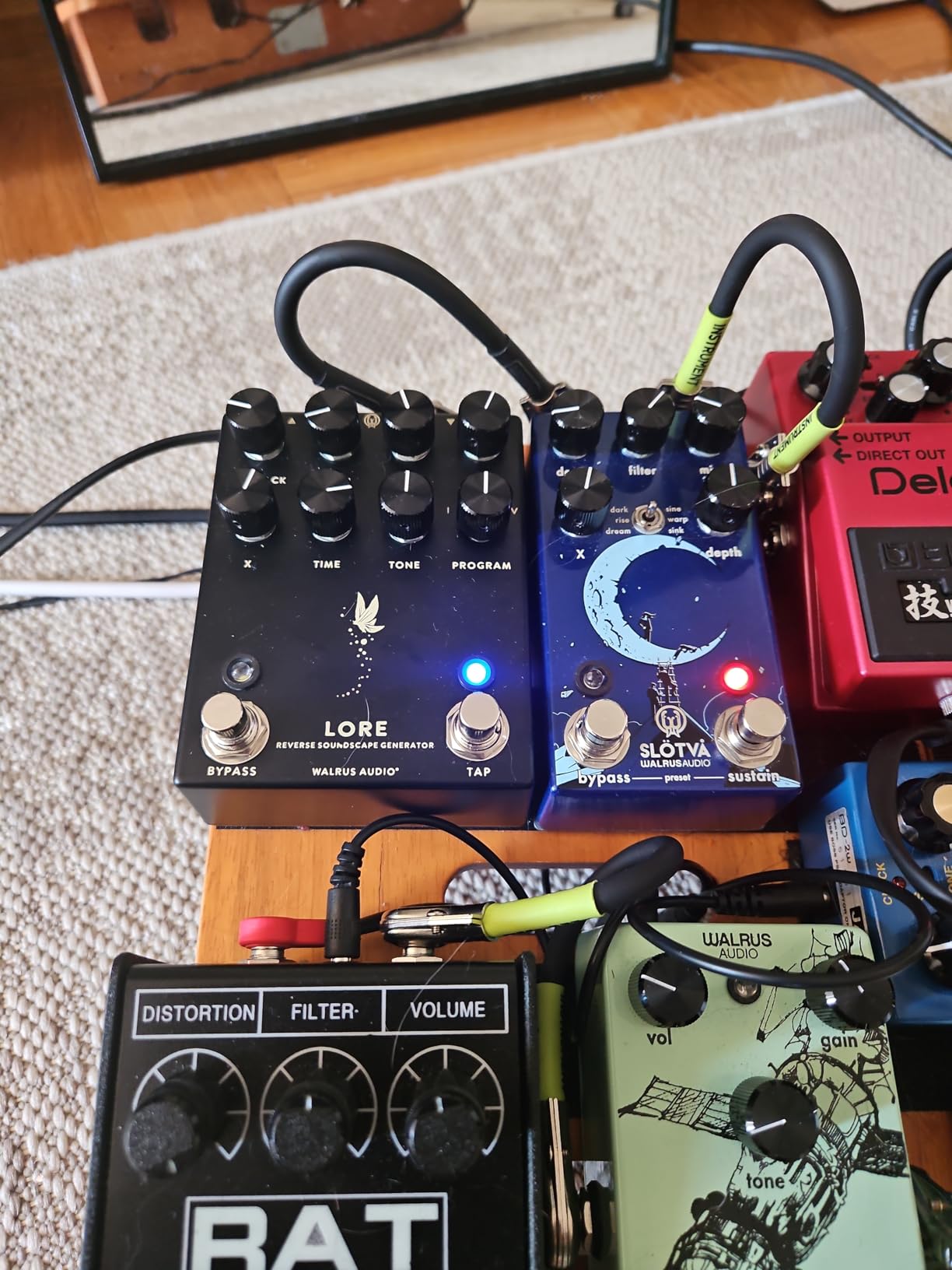
It is also compact. The die-cast enclosure is roughly the same footprint as the Fable, which means you can fit it and a granular pedal on a medium board, and the muted green enclosure with printed art looks at home on a board that has other character pedals on it.
The catch with the Lore
It demands deliberate dialling-in. The critical consensus is that it is easy to land on an overwhelming, unpleasant sound, and that it is not the always-sounds-good pedal the demonstration videos make it look like. Budget time to find the narrow band of settings that work.
Output level varies noticeably from unit to unit, so the settings you read about will not transfer to your pedal, and that makes it a poor candidate for preset-based recall across the collection. It is also mono with no hold or sampling control, and the power supply is not included. Some owners also feel the underlying technology is dated next to newer hardware in the same range.
9. Strymon NightSky – Where the Synth Pedal Actually Lands
Strymon NightSky Time-warped Reverberator Pedal
Stereo modulated reverb
300 presets
8-step modulation sequencer
MIDI controllable
Pros
- 300 presets spanning lush
- eerie and sci-fi textures
- Exceptionally clean sound with no digital acidity
- 8-step sequencer adds movement without menu diving
- MIDI control for integration with a controller or switcher
Cons
- Deep parameter set is a learning curve for beginners
- Not a conventional hall or plate reverb
- Preset recall by direct MIDI program change is awkward without a controller
Any synth pedal on this list will sound more convincing with a modulated reverb behind it, and the NightSky is the one we reach for first. Three hundred presets cover lush, eerie and sci-fi textures that a conventional hall or plate reverb simply does not produce, and owners consistently describe the sound as exceptionally clean with no digital edge.
The 8-step sequencer is the feature that makes it an instrument rather than a setting. It moves the modulation in a repeating pattern, so the reverb evolves over eight steps without you touching anything, which is exactly the behaviour a drone needs. It offers buffered or true bypass switching, and it is MIDI controllable for anyone running a switcher.
It is also the pedal that answers the question of whether a synth pedal is a standalone tone. Put any of the twelve here into a NightSky trail and the cheap-sounding ones stop sounding cheap. That is a bigger practical gain than adding another synthesis engine to the board.
How we use it in a drone chain
Typically it goes last, after the synth pedal and after a delay, so the modulation moves the tail rather than the source. With a slow attack pad underneath, the sequencer turns a static wash into something that has a shape over several seconds, which is what makes a long guitar part hold attention.
It is also the answer for anyone who wants to avoid a long menu dive. Three hundred sounds sounds like a problem until you realise the sequencer is doing the moving for you. You set the character once, then adjust modulation depth and mix live.
Where it disappoints
If you want a simple hall or plate reverb, this is the wrong pedal. The deep parameter set is a genuine learning curve, and buyers who expected a conventional reverb report being disappointed by how unusual the basic sounds are.
MIDI program change is awkward without a dedicated controller, so a stage recall setup needs planning. A few owners have also reported a unit failing to power on, and at 2.1 pounds it is the heaviest pedal on this list, which is worth knowing before you lay out a board.
10. BOSS VO-1 – Vocal Synthesis From a Guitar
BOSS VO-1 Vocoder Guitar Pedal (VO-1)
Vintage and Advanced modes
Talk Box and Choir modes
Effects loop
9V 65mA draw
Pros
- Lush intelligible vocal textures from guitar alone
- Advanced mode gives the clearest and most intelligible speech sounds
- Talk Box mode works without a tube setup
- FX loop and tone controls make external ambience easy
- Handles full chords better than a TC Helicon TalkBox
Cons
- Needs a good microphone for the best response
- Choir mode clips easily at high instrument volume
- No dedicated XLR output so PA routing needs extra gear
- Talk Box emulation is passable rather than a true tube talk box
The VO-1 is the odd one out here because its output is vocal rather than electronic, and that makes it the most immediately recognisable pedal on the list. Four modes cover classic electronic synth voices in Vintage mode, clearer and more modern tones in Advanced mode, a Talk Box mode that works without a tube setup, and a Choir mode that produces vocal sounds with no microphone connected at all.
Advanced mode is where most users end up, because it delivers the clearest and most intelligible speech-like results. Reviewers also find it copes with full chords better than a TC Helicon TalkBox, which matters if your experimental material is harmonic rather than single-note. A good microphone makes a real difference to the response.
The effects loop lets you add external delay and reverb to the vocal output, which is how you get from an intelligible robot voice to something genuinely atmospheric. At 65mA it is also the least demanding powered pedal here, which makes it an easy addition to a crowded board.
Where the VO-1 belongs in experimental work
Vocal synthesis is one of the most under-used experimental guitar tools, and this pedal makes it a two-minute setup. Choir mode with no microphone gives you an instant layered vocal pad, and it is a very fast way to thicken a drone part without a second guitarist.
It is also the answer if you have been trying to reproduce a talk box tone from a recording. The Talk Box mode is passable rather than a true tube emulation, but reviewers rate it as a convincing shortcut, particularly into a delay.
What to watch for
It really does want a decent microphone, and the difference between a cheap one and a good one is obvious. Choir mode clips easily if your instrument volume is left high, so watch your levels before you blame the pedal.
There is no dedicated XLR output, so routing to a PA means extra switching gear, and reviewers recommend sending it to a PA rather than a guitar amp to avoid feedback and tonal dulling. It is a vocal effect more than a synth pedal, so treat it that way when you plan a board.
11. Electro-Harmonix B9 – Organ Tone as an Experimental Foundation
Electro-Harmonix B9 Organ Machine Pedal
9 classic organ presets
Percussive attack control
Separate organ and dry volume
Power adapter included
Pros
- Nine instantly convincing classic organ presets
- Percussive attack control adds dynamic realism
- Independent organ and dry volume for easy blending
- Rugged
- simple and includes a power adapter
Cons
- Limited to organ-style tones rather than broader synthesis
- Compact size with no preset storage or MIDI control
- Sound can feel thin alone without a supporting clean channel
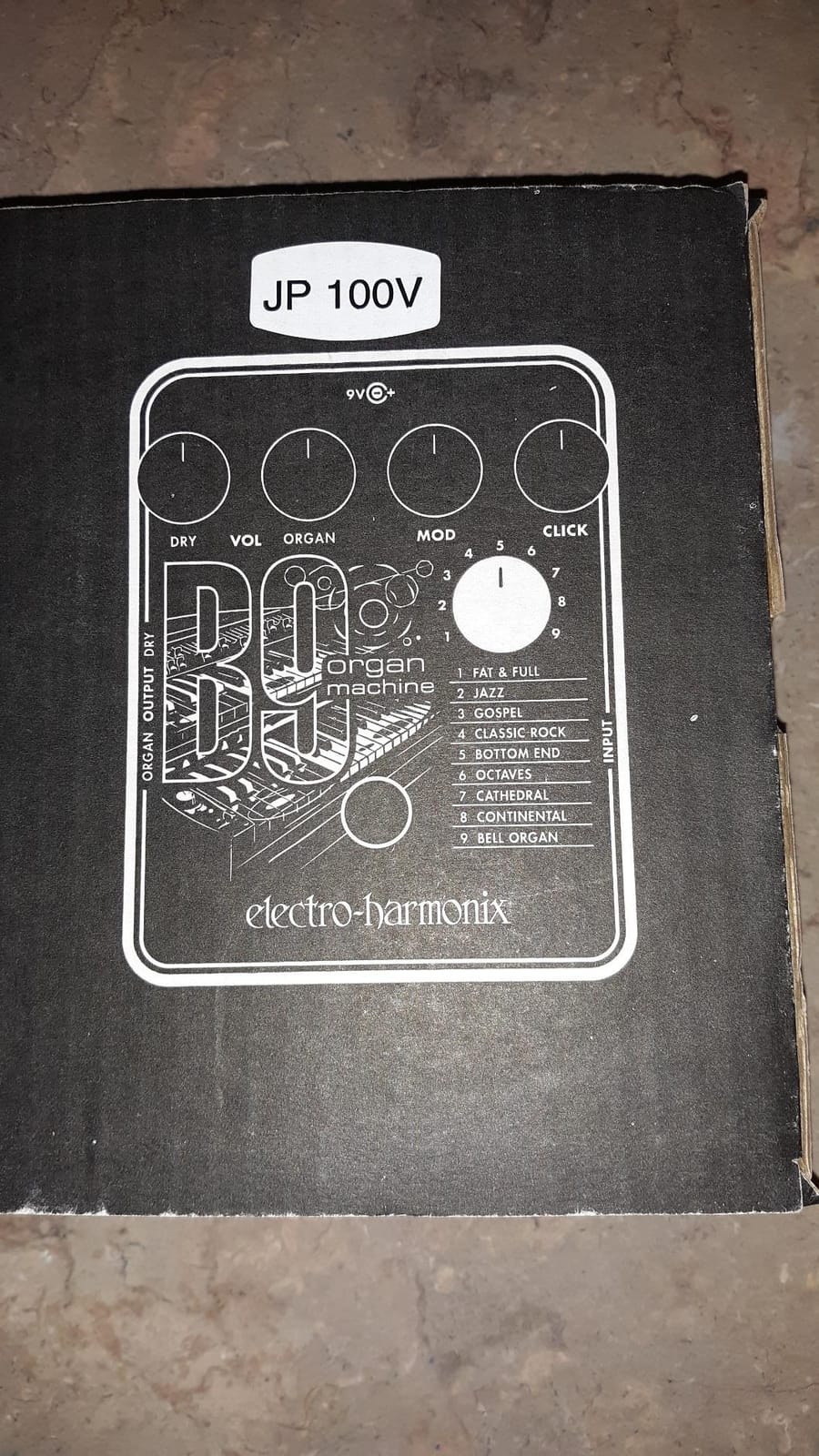
The B9 is a keyboard pedal, not a synth pedal, and we include it because an organ voice is one of the most useful things to put under experimental material. Nine presets tuned to classic electric organ tones, and it does that job instantly and reliably in a way that costs you no thinking time.
Two controls make it more useful than a preset machine. The percussive attack level adds a dynamic click that makes a held chord sound played rather than triggered, and the independent organ and dry volume lets you sit the organ voice under your clean guitar so the arrangement stays in the guitar’s key.
It is also the friendliest thing on this list to power. A power adapter is included, the current draw is modest, and the construction is straightforward metal with a green enclosure that has not changed in decades. For someone building a first experimental board, it is the least risky way to add a keyboard voice.
How the B9 works in an experimental context
It is a sustain instrument. A held chord with a little percussive attack, blended under dry guitar, gives you an organ bed that moves as the guitar moves, and it pairs well with the Superego because one holds the organ while the other freezes a note above it.
Because the B9 stacks with the SYNTH9 and the other 9-series machines, it is a natural part of a larger board. One power approach, one expression pedal, and you have organ, synth and electric piano voices from the same family with consistent controls.
Where it stops helping
It is limited to organ-style tones. If you are chasing oscillators, granular textures or anything unstable, the B9 will not get you there, and no amount of blending changes that.
Reviewers also find the sound thin when it is used alone without a supporting clean channel, which is really a signal-chain observation: it wants a clean guitar voice behind it. There is no preset storage and no MIDI control, so it is a fixed tool rather than a programmable one.
12. SONICAKE Bitcrusher – The Cheapest Way Into Digital Degradation
SONICAKE Bitcrusher Guitar Pedal Wave Crush Bitcrush Digital Bitcrusher Reducer Guitar Effects Pedal Synth Synthesizer LoFi True Bypass
Sample rate 750-44100Hz
Bit depth 5-16 bits
3 lo-fi modes
9V 110mA draw
Pros
- Wide flexible downsampling range for sweet digital degradation
- Three distinct lo-fi modes including radio and gramophone simulations
- Very compact entry point for experimental textures
- True bypass keeps the rest of the chain clean
Cons
- Requires a 9V centre-negative power supply that is not included
- Knob-only control with no memory for recalling settings
- Textures can feel like a preset novelty without companion modulation
This is not a synth, and we include it because a bitcrusher is one of the fastest routes into experimental guitar texture. It is a variable digital downsampler and sample rate reducer running from 750Hz up to 44100Hz, with bit depth variable from 5 to 16 bits. That range covers everything from deliberate radio degradation to a subtle lo-fi grit.
Three lo-fi modes add variety: a radio simulator, a normal mode and a vintage gramophone simulator. Each sounds different enough to be a separate tool, and the true bypass footswitch keeps the rest of the chain clean when you switch it out, which is important on a board full of modulated effects.
It is the most compact pedal here by a distance, which makes it a realistic addition to a full board. At 110mA it is easy to power. It is also the cheapest way to find out whether digital degradation is something you actually want in your sound, which is a worthwhile experiment on its own.
Where it works in an experimental rig
Bitcrushing under a synth pedal is a reliable combination. Take a clean polyphonic synth voice from the SY-1 or SY-200, crush it, and you get a distorted digital artefact that is more interesting than either pedal alone. The same trick works on the Data Corrupter for genuinely unrecognisable noise.
It is also a teaching pedal. The knob is a continuous control, so you can hear exactly what each sample rate does, and that makes it a good way to understand why digital textures behave the way they do before you invest in a more complex processor.
The limits you should know about
You need to supply your own 9V centre-negative power supply, and there is no memory for recalling settings, so it is a knob position rather than a preset. That is fine for a home board and awkward on a stage with a list of settings.
The most important limitation is that on its own it can feel like a preset novelty. Bitcrushing with no modulation and no movement is a static artefact, and the real value appears when something else in the chain is changing while it runs. Reviewers who love it pair it with modulation; reviewers who do not tend to say exactly that.
How to Choose a Guitar Synth Pedal for Experimental Work
Polyphony is the decision variable nobody explains
More than any other spec, polyphony decides whether a synth pedal fits your playing. A polyphonic pedal tracks several notes at once, so chords, double stops and dense riffs all work. A monophonic pedal tracks one note and turns everything else into a single voice, which is destructive by design and completely unusable if your music has harmony in it.
Of the twelve pedals here, the polyphonic options are the SY-1, the SY-200 and the VO-1. The SYNTH9 and the B9 track a chord but present a single preset voice. The monophonic, single-line pedals are the Data Corrupter and the Bitcrusher, and both use their limitation as a texture generator. The Superego, Fable, Lore and NightSky are not tracking synth engines at all, they process what you play.
The practical dividing line is simple. If you play chords, buy polyphonic and pay for it. If you play single-note lines and you want raw analog instability and feedback, monophonic is cheaper, more expressive and a legitimate creative choice rather than a compromise.
Analog grit versus DSP control
The architecture decides what happens when you push the pedal hard. An analog oscillator circuit will self-oscillate, self-feed and drift on its own, and that instability is the entire point if you are making noise. A DSP engine will do exactly what you asked, repeatably, and will not feed back into itself.
Neither is better. For noise, feedback and self-oscillation work, analog wins, and the Data Corrupter is the clearest example on this list. For granular clouds, modulation routing, randomness and repeatability, digital wins, and the Fable and the ZOIA are the clearest examples. The bitcrusher sits in the digital camp, and the fact that it cannot self-oscillate is why it needs something else moving underneath it.
A practical note: the tracking pedals on this list do not produce a dry signal on their own unless they have a blend control. The SYNTH9, the SY-1, the SY-200, the Superego and the B9 all mix the dry signal back in. The Data Corrupter does not, so it needs a splitter or a signal path that already gives you the clean voice elsewhere.
Preset depth and live recall
Ask one question before you buy: how many sounds do you need to recall mid-performance, and how fast. A two-knob pedal with no memory is fine if you have one sound. A pedal with 128 patch memories and MIDI is a completely different proposition when you are playing a set.
The SY-1 has no MIDI and no user presets, which is its single most-cited reservation. The SY-200 solves that with 128 memories and full MIDI. The ZOIA stores 64 patches and will not return to your last one at power-up, so it needs a launch routine on a stage. Everything else on this list falls between those two extremes, with the NightSky relying on MIDI control to be practical live.
Power budgeting on a crowded pedalboard
This is where most digital-heavy boards go wrong, and it is worth planning before you buy. Current draw varies enormously across these twelve. The Data Corrupter draws 25mA and the VO-1 draws 65mA, both trivial. The SY-1, the SY-200, the ZOIA, the Lore and the Fable each draw around 300mA, and four of those on one isolated power supply is a real constraint.
Use an isolated supply rather than a daisy chain. Walrus states directly that daisy-chained power supplies are not recommended for the Lore, and the Fable wants isolated power for best results. Check the total current your board needs before you fill it, and add a second isolated output if the answer exceeds what one brick provides.
Two other practical points. The SONICAKE Bitcrusher needs a 9V centre-negative supply that is not included, and the Superego needs an AC adapter with no battery option, so it is never the pedal you put on a portable battery supply.
What we left out and why
Several obvious names are absent. The Boss GM-800 is a floor unit rather than a pedal and expects a serial interface for a Roland-style guitar, which defeats the point of a list built around working with the guitar you already own. The Source Audio C4 is a genuinely excellent monophonic pedal, but it is monophonic, and that limit changes what music you can make with it.
The Walrus Qi and the MXR Textures are both strong ambient-capable options, and the Mooer E7 is a credible polyphonic alternative to the SY-200. We kept the list to twelve so that each entry could be tested rather than listed. The DigiTech Dirty Robot is discontinued, and a phaser is not a synth pedal no matter how good it sounds.
Where a Synth Pedal Belongs in Your Signal Chain
Routing matters more than people expect here, and the most common question on forums is simply where the synth pedal goes. The order below is the one we came back to, and it answers the tonal mismatch problem that stops clean synth voices from sitting properly on a dirty amp.
Start with your drives and boost pedals first, as you normally would, so the guitar arrives at the synth pedal with a familiar tone.
Place the synth pedal next, as the first effect that treats the signal as a source rather than a tone.
Put your modulated delays and reverbs after it, so the synth voice is what gets washed into the trail.
Place your granular or freeze pedals after that, since they work best fed a moving signal.
End the chain with your cab simulation and your amp or interface.
Two things break this order on purpose. The Superego has its own effects loop, and putting a phaser, tremolo or rotary inside that loop keeps the frozen tone moving, which is the single most useful trick with that pedal. The SY-1 also has a send and return, and routing a delay inside the synth voice gives a smoother result than putting the same delay after it.
One piece of advice from r/guitarpedals is worth repeating because it is true of every pedal here: work at the pickup position, at the chain position, and with the blend. A synth voice only sounds right when the dry signal under it is the right level, and that is a setting problem far more often than it is a pedal problem.
Frequently Asked Questions
What is the best synth for experimental music?
For guitar, the most flexible experimental setup is a patchable platform plus an analog oscillator pedal. The Empress ZOIA gives you granular clouds, modulation routing and repeatable patches, while the EarthQuaker Data Corrupter gives you analog instability that DSP cannot fake. If you only want one pedal, the ZOIA covers more ground, but you need longer to learn it.
What guitar pedal sounds like a synthesizer?
Any pedal that replaces your guitar tone with a generated voice counts. The BOSS SY-1 and SY-200 track your pitch and generate polyphonic synth tones, the Electro-Harmonix SYNTH9 emulates vintage keyboard sounds, and the BOSS VO-1 turns your playing into vocal formants. The practical test is whether you still hear your guitar underneath, which most of them let you blend.
What is the best guitar pedal for creating ambient sounds?
The Electro-Harmonix Superego is the strongest starting point because it sustains a note or chord indefinitely, and its effects loop lets modulation sit inside the frozen signal. The Strymon NightSky is the best partner for it, with 300 modulated reverb presets and an 8-step sequencer that moves the tail without menu diving. The Walrus Fable adds granular movement under both.
What does the Empress ZOIA do?
The ZOIA is a patchable effects platform with more than 80 modules, including oscillators, LFOs, filters, bit crushers and envelope followers, and it can store 64 patches. It can be used as a synth, a multi-effects unit or a sound-design tool driven by your playing. Owners consistently rate the built-in drive channels as its weak point, so plan on using an external drive pedal after it.
Do I need a polyphonic synth pedal to play chords?
If your music contains chords, yes. Monophonic pedals such as the Data Corrupter track a single note and deliberately mangle everything else, which sounds excellent on single-note lines and falls apart the moment you strum. The polyphonic options here are the BOSS SY-1, the BOSS SY-200 and the BOSS VO-1, and all three need no special pickup.
The Verdict on the Best Guitar Synth Pedals in 2026
The BOSS SY-1 remains the best guitar synth pedal for experimental music for one reason: it tracks chords and fast playing properly, it needs no special pickup, and it does not take a weekend to understand. If you want one pedal that works on every existing guitar you own, start there.
Move up to the SY-200 when you need memory and MIDI, to the ZOIA when you want to build sounds rather than choose them, and to the Superego or the Fable when your work is long-form and atmospheric. Whatever you choose, put it before your delay and reverb, blend it properly, and give it an isolated power supply.