
The best vocal effects processors for live singers are the boxes that sit between your microphone and the PA, running compression, EQ, de-essing, reverb, delay and harmony before the sound engineer ever touches your channel. Most working vocalists I have spoken to did not buy one for the effects. They bought one because the vocal they hear in their own ears is not the vocal coming out of the PA.
That gap is where the frustration lives. One night the house engineer gives you a hot, compressed vocal and the next night you are fighting for level under a muddy channel EQ and more reverb than the song can carry. A processor turns that variable into something you control. You walk on stage, step on the footswitch, and the vocal chain travels with you in your case.
We spent weeks with the twelve units below, comparing harmony engines, note tracking, I/O options, control styles and how each one behaves with a plain dynamic mic versus a large-diaphragm condenser. What follows is the honest ranking, the technical detail, and a buying guide that covers the parts most roundups skip: gain staging, mic pairing, wireless compatibility and what to do when the venue engineer disagrees with your settings.
Short answer: the Roland VT-4 is the best vocal effects processor for most live singers because it combines real-time pitch and formant control, layered effects, phantom power for condenser mics and roughly five hours of battery life in a 16-ounce box. Singers who want a serious Auto-Tune engine and automatic harmony should look at the HeadRush VX5. Players who sing and play acoustic guitar at the same time want the BOSS VE-8.
Table of Contents
Top 3 Vocal Effects Processors for Live Singers (September 2026)
These are the three that earned the most attention when we compared them side by side, and the three we would hand to a working singer first. Each one solves a slightly different problem, so the right pick depends on whether you need character effects, pitch correction or a full standalone chain.
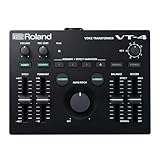
Roland VT-4
- Real-time pitch and formant control
- Layered effects
- Five-hour battery life
- Phantom power switch

The VT-4 takes our top slot on the strength of the highest review count in the group and the sheer breadth of what its two pitch and formant knobs can do in real time. The VX5 is the only unit here running the Antares Auto-Tune algorithm with dedicated Retune Speed and Humanize controls, and it also works as a 24-bit/48kHz USB interface. The Zoom V3 is the most straightforward all-rounder, with sixteen effects, up to three-part harmony and a mic enhancer stage built into the input.
All 12 Vocal Processors at a Glance in 2026
Every processor below was reviewed as a live tool rather than a studio toy. The table gives you the headline capability of each unit so you can narrow the field before reading the full write-ups.
| Product | Specs | Action |
|---|---|---|
| Roland VT-4 |
|
Check Latest Price |
 FLAMMA FV01 FLAMMA FV01 |
|
Check Latest Price |
| HeadRush VX5 |
|
Check Latest Price |
 Zoom V3 Zoom V3 |
|
Check Latest Price |
 TC Helicon Voice Live Play TC Helicon Voice Live Play |
|
Check Latest Price |
 TC Helicon Duplicator TC Helicon Duplicator |
|
Check Latest Price |
 BOSS VE-5 BOSS VE-5 |
|
Check Latest Price |
 BOSS VE-2 BOSS VE-2 |
|
Check Latest Price |
 BOSS VE-8 Acoustic BOSS VE-8 Acoustic |
|
Check Latest Price |
 Roland AIRA E-4 Roland AIRA E-4 |
|
Check Latest Price |
 TC Helicon PERFORM-VG TC Helicon PERFORM-VG |
|
Check Latest Price |
 MOOER MVP1 MOOER MVP1 |
|
Check Latest Price |
1. Roland VT-4 – Best Overall Vocal Effects Processor for Live Singers
Roland VT-4 Vocal Transformer, Black
16 oz
5.24 x 6.85 x 2.28 in
9V or USB power
Phantom power switch
USB capture
Pros
- Compact and lightweight at 16 ounces
- Five hours of battery life plus USB power
- Phantom power switch for condenser mics
- Smooth real-time pitch and formant control
- USB audio capture and playback
Cons
- Menu-driven interface with no display makes preset selection hard to confirm on stage
- Deep features require reading the manual to discover
- Only a single audio input limits carrier-sound and stereo-mix options without a computer
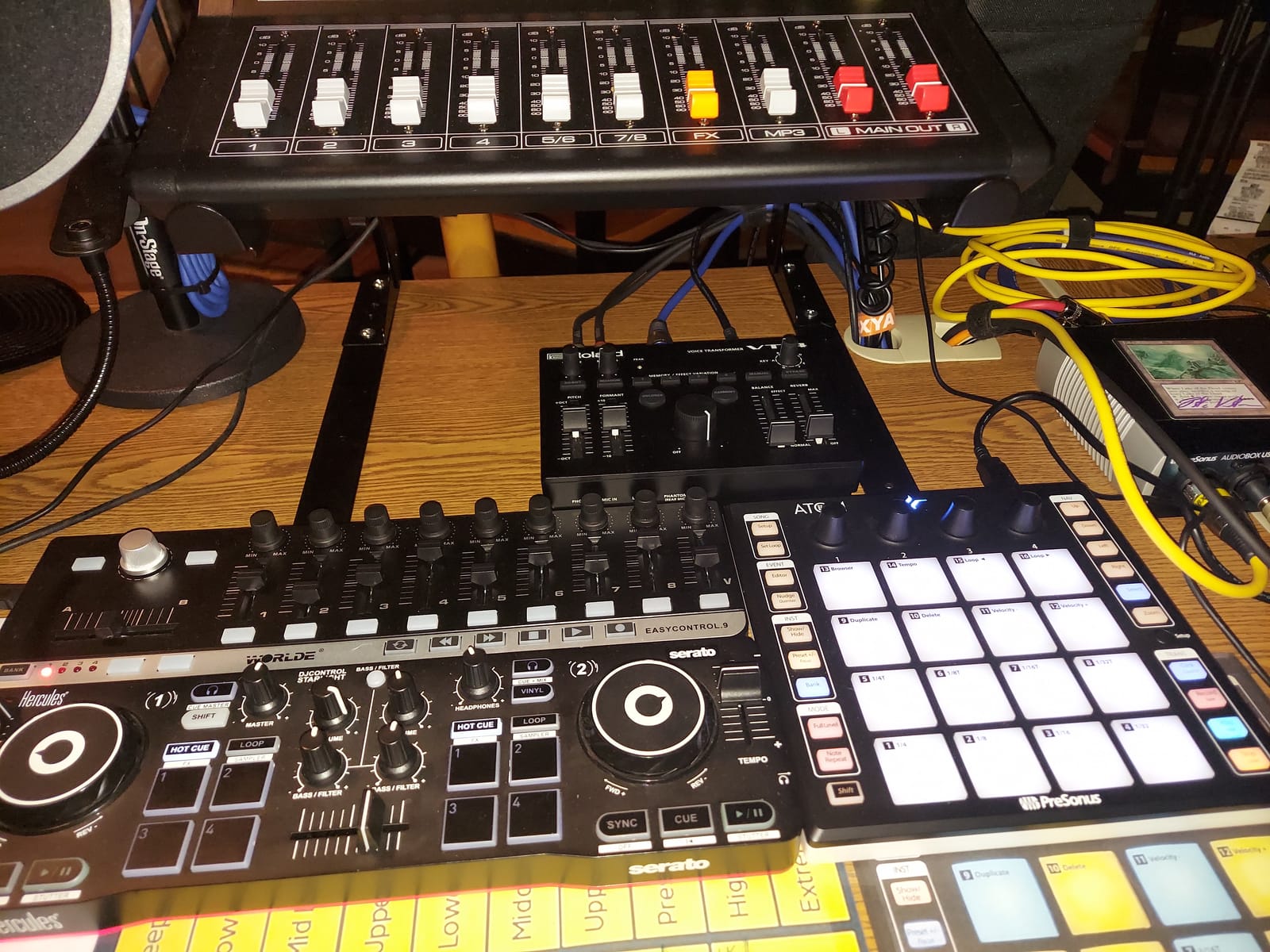
The VT-4 is the best vocal effects processor for live singers who want to sound deliberately different rather than just louder and thicker. At 16 ounces and 5.24 by 6.85 by 2.28 inches, it disappears on a mic stand or a pedalboard, and the five-hour battery figure means you can cover a full evening set without a power drop.
What makes it fun is the pair of smooth pitch and formant controls. Pushing the formant up without changing pitch gives that chipmunk character effect, and pulling it down turns your voice into something bigger. The delay, reverb, vocoder and harmonizer layers can be stacked or chained, so a single patch can carry a whole verse.
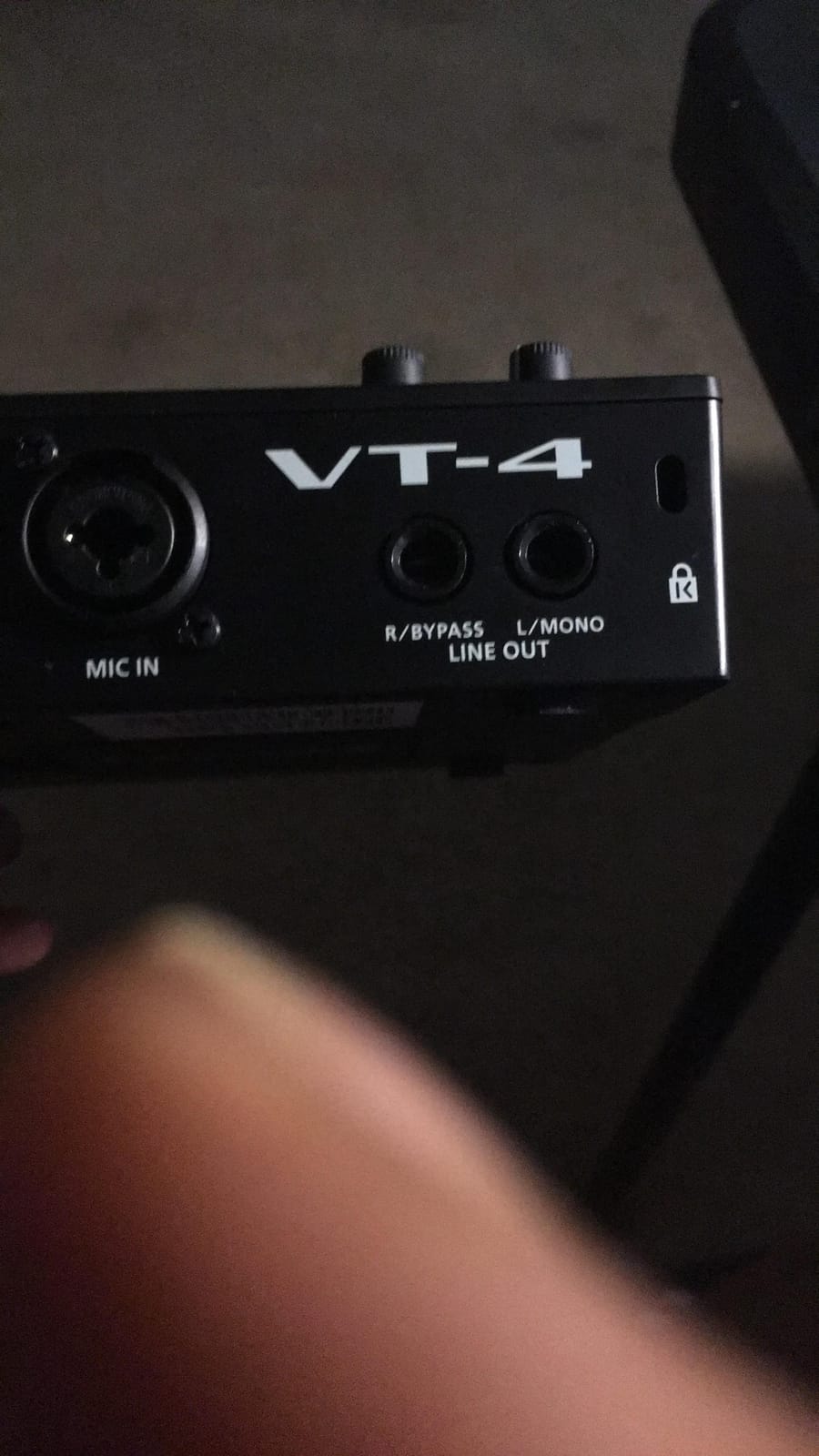
Owners regularly use it for karaoke nights, DJ parties and audiobook character work, which tells you the character side is real and not marketing. The phantom power switch means a condenser mic plugs straight in, and USB audio capture and playback let you record a set without a second interface.
The noise canceling function is worth calling out. It is aimed at feedback loops, and it matters in small rooms where a live mic sits close to a PA. MIDI control is the sleeper feature, letting you trigger harmonies from a controller rather than hunting through a menu mid-song.
How the VT-4 handles gain staging and mic choice
Because there is no display, the interface is a set of buttons rather than a screen, so plan your patches at home rather than on stage. The single audio input means no carrier track or stereo mix without a computer in the chain, which matters if your set relies on backing tracks.
Phantom power is switched rather than always-on, so a dynamic SM58 or Beta 58A works without any setup. Set your preamp gain on the processor so the input LED sits in a healthy range, then let the compression do the level work. Some buyers report the harmony effect sounds robotic or artificial on certain voices, so test it in the room where you will actually perform.
Where the VT-4 is the wrong choice
If your set needs layered effect combinations recalled at a moment’s notice, the no-screen menu will slow you down. Buyers who want three-part harmony or deep preset recall should look at a color-screen unit such as the HeadRush VX5 or the Zoom V3 instead.
The plastic build also feels less premium than earlier metal-bodied units in the Roland line, and reviewers report occasional robotic harmony artifacts. Deep feature discovery means reading the manual, so budget an evening with it before your first paying show.
2. FLAMMA FV01 – Best Budget Vocal Effects Pedal for Live Singers
FLAMMA FV01 Vocal Effects Processor Pitch Correction Voice Pedal Vocal Stompbox Microphone Amplifier for Singer Live Singing Streaming Recording with Delay Reverb Acoustic Guitar Playing
4.9 x 3.4 x 2.4 in
0.37 kg
Pitch correction
Tone LED modes
48V phantom power
Pros
- Very affordable entry point into vocal effects
- Pitch correction with adjustable strength plus delay and reverb
- Three tone modes (WARM / BRIGHT / NORMAL) shape the vocal EQ
- Doubles as a microphone amplifier
- Works with 48V phantom power for condenser mics
Cons
- Feature set is limited compared with larger floor processors
- Tone and effect control relies on a small number of knobs and switches
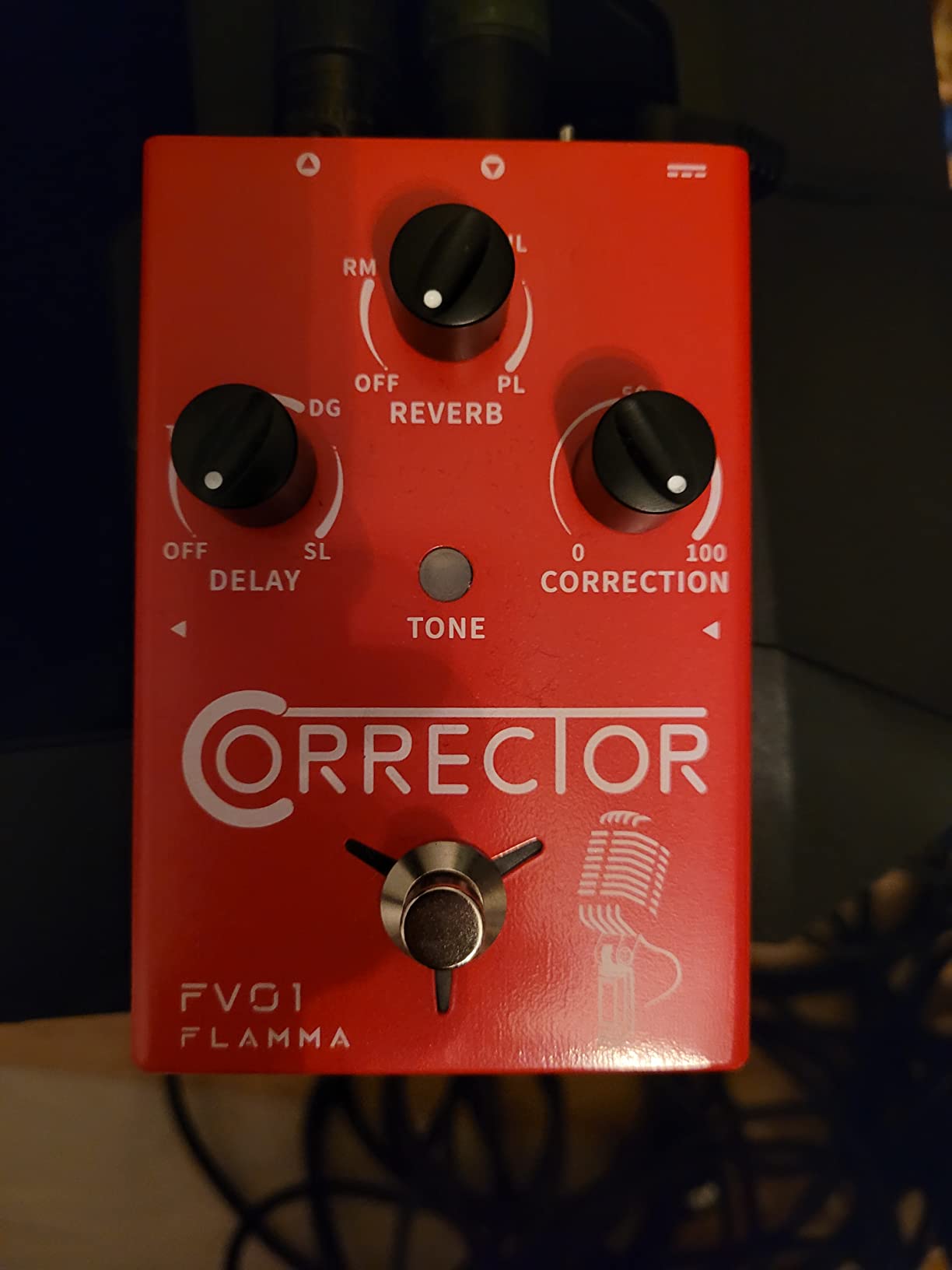
The FLAMMA FV01 is the most compact unit in this roundup at 4.9 by 3.4 by 2.4 inches and 0.37 kg, and it holds the number one best seller rank in Vocal Effects Processors. That combination of size, rank and feature count makes it the first pedal most budget singers will touch.
Inside a tiny stompbox you get pitch correction with adjustable strength, delay and reverb, and a three-position tone selector marked WARM, BRIGHT and NORMAL on the center LED. Those tone modes are the differentiator: most cheap vocal pedals give you one fixed EQ, this one lets you shift the character of the voice with one press.
It also works as a microphone amplifier, which makes it useful for a singer who has no preamp of their own. The optional 48V phantom power opens it up to condenser microphones, and a microphone cable is included in the box so there is nothing extra to buy before a first rehearsal.
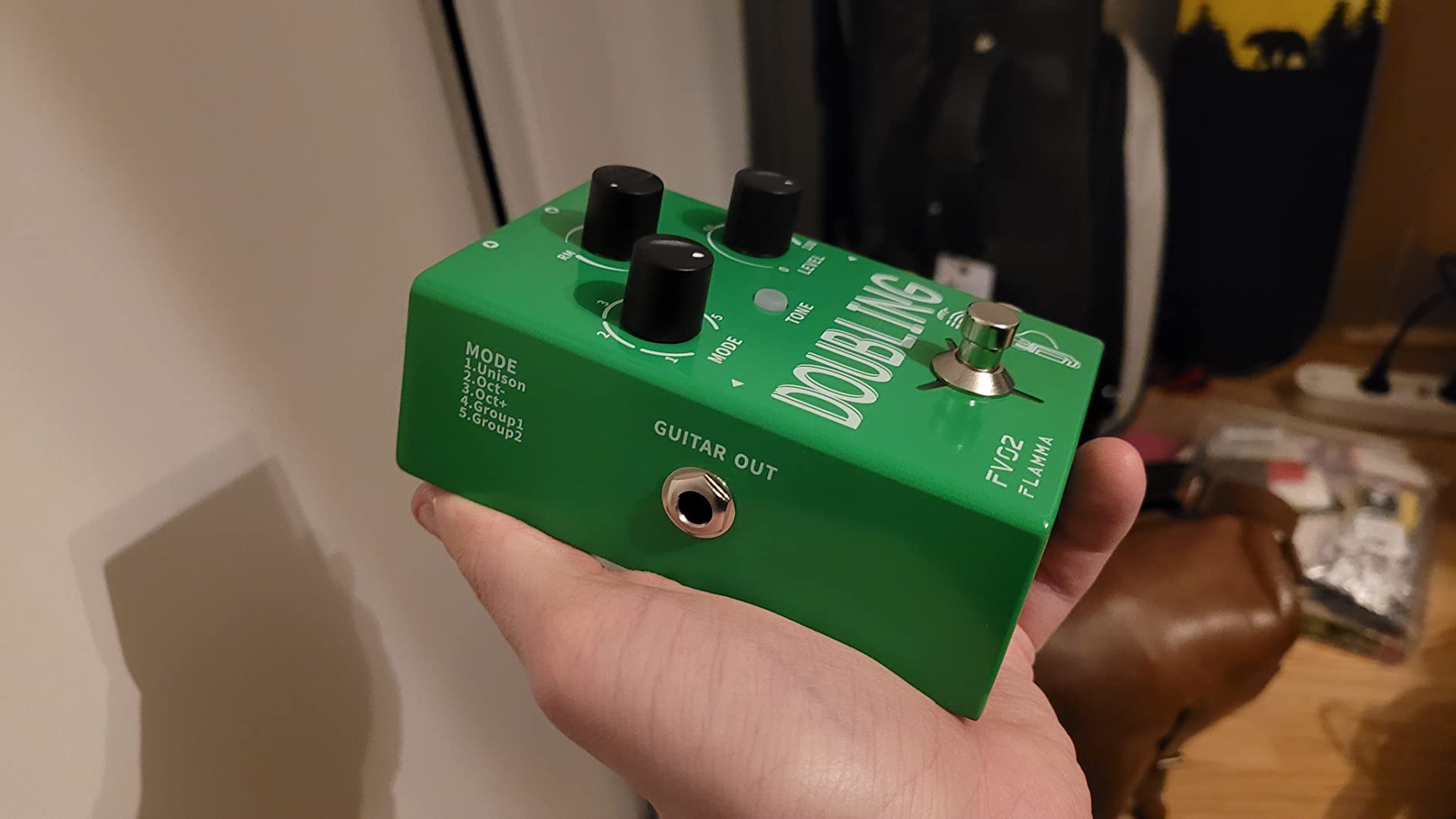
Two output modes let you run a mixed signal or split guitar and mic paths independently, which is handy if a guitarist is feeding the same pedal. The same housing also appears as FV02 Vocal Doubling, FV03 Voice Change and FV04 Vocal Harmony variants if you want to experiment with a different effect later.
What you give up with a pedal this small
There is no harmony engine on this base model, so if you sing alone and want a third voice, the FV04 Harmony variant is the version to consider. Two output modes and a footswitch are the extent of the control, so changing settings mid-song means a knob turn rather than a scene change.
The rating distribution shows a real share of one-star and three-star reviews, and the cause is consistent: limited adjustment depth. A meaningful share of buyers also note that software plugins outdo it for studio work, which is fair. This is a live box, not a recording chain.
How to get the most from the FV01
Start with the tone LED on NORMAL, then try WARM in a small room where the PA is bright and BRIGHT outdoors where air is lost. Because it doubles as a mic amp, set the gain low enough to avoid clipping on a loud belt.
Users report good results in home karaoke and live band settings alike, but they also stress that the knobs are few, so the sound you get is the sound you dialled. Treat it as a first step into vocal processing rather than a permanent touring solution, and check the phantom power switch matches your microphone before you plug in.
3. HeadRush VX5 – Best Premium Vocal Effects Processor with Auto-Tune
HeadRush VX5 Vocal Effects AutoTune Pedal
1.2 kg
6.3 x 5.6 x 1.9 in
Antares Auto-Tune
99 presets
XLR in and out
Pros
- Antares Auto-Tune engine with dedicated Retune Speed and Humanize knobs
- Real-time processing with no perceptible latency for live stage use
- 99 factory presets with storage for up to 250 and two footswitches for hands-free preset changes
- Intelligent vocal harmony mode derives harmonies from a chosen key or from a connected guitar or keyboard
- Doubles as a 24-bit/48kHz USB audio interface with USB MIDI
Cons
- Higher price than most floor-pedal competitors in the category
- Menu-driven color display takes practice to navigate quickly onstage
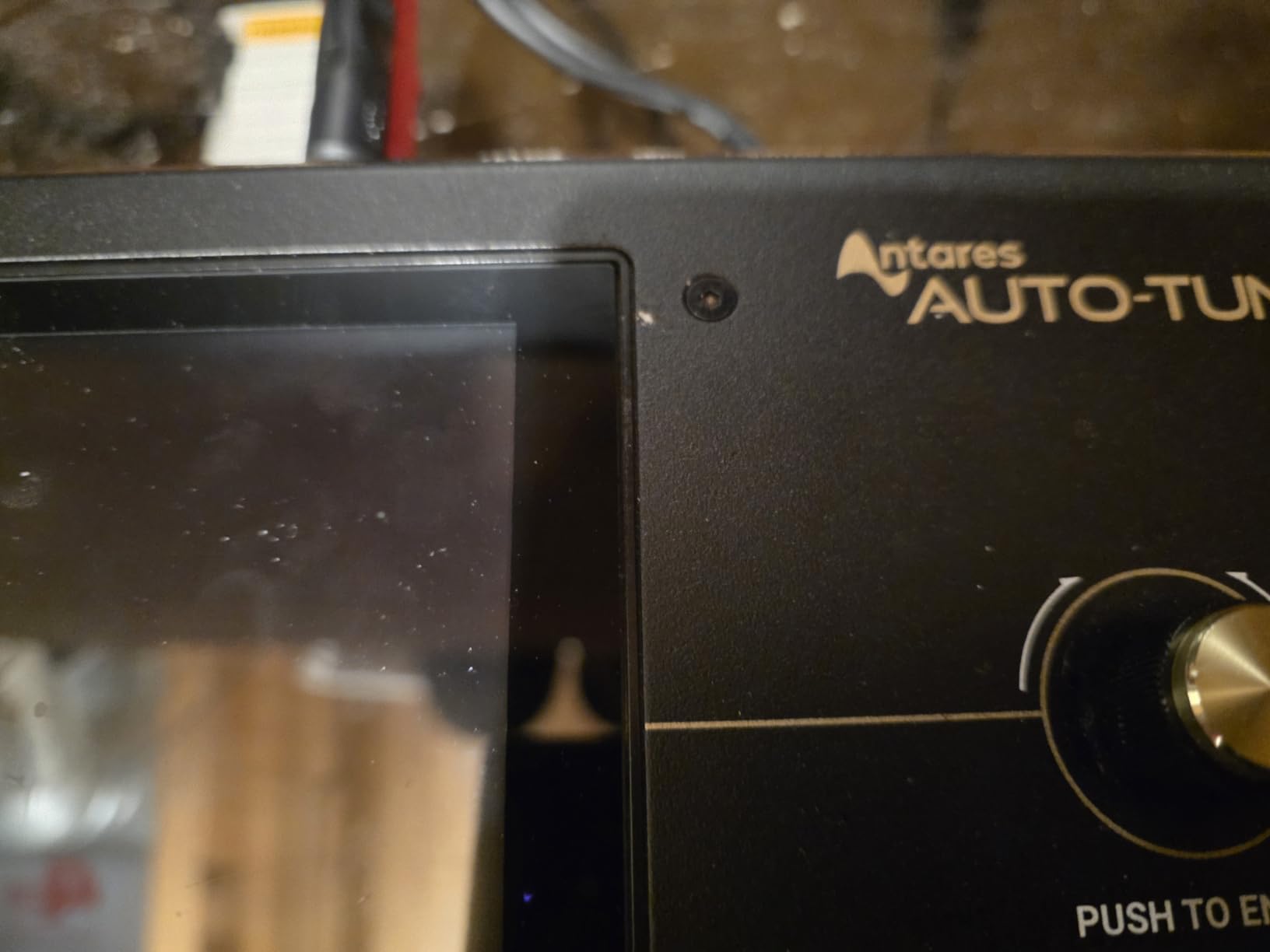
The HeadRush VX5 is the best vocal effects processor for live singers who want real Auto-Tune rather than a basic pitch nudge. It runs the Antares algorithm, and Retune Speed and Humanize get their own physical knobs, so you can dial from a barely-there correction to a hard tuned effect without a computer.
At 1.2 kg and 6.3 by 5.6 by 1.9 inches it is a proper floor unit with two footswitches and a color display. Reviewers single out those footswitches, the Talk Mode and the guitar-derived harmony mode as the features that survive contact with a real stage.
Preset handling is the strongest in the group: 99 factory presets with room to store up to 250 of your own, browsable through up and down preset menus. The onboard compressor, reverb, delay, chorus and flavor effects can be used individually or chained, and A/B Mode lets you compare two patches instantly.
It also doubles as a 24-bit/48kHz stereo USB audio interface with USB MIDI, so you can automate preset changes from a laptop or capture a set straight to a computer. A power adapter is included and there is a one year manufacturer warranty.
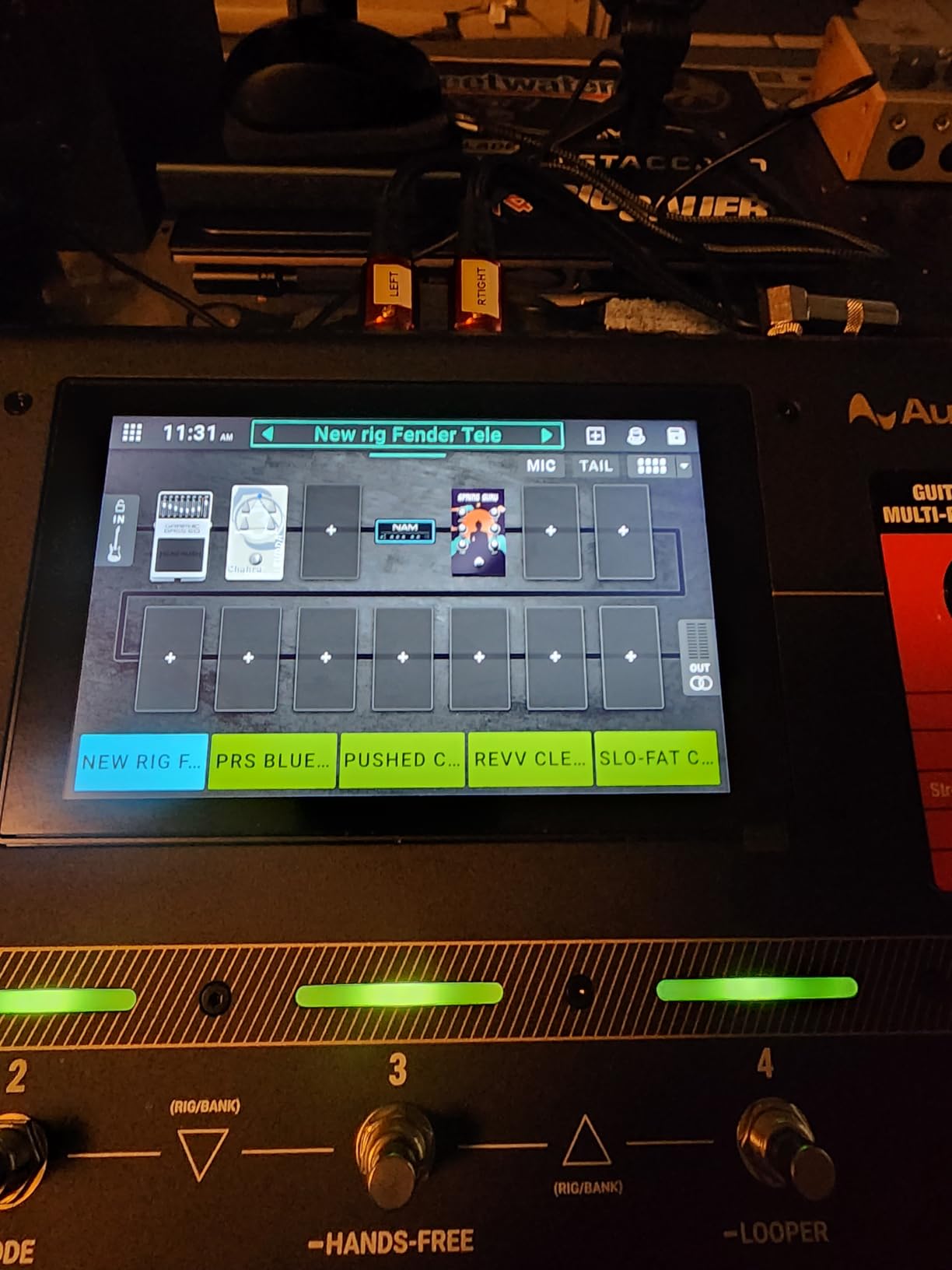
Why the VX5 wins for pitch-driven singers
The dedicated Retune Speed and Humanize knobs are what separate it from every other pedal here. Humanize adds timing and pitch variation back into a corrected vocal, which is the difference between sounding in tune and sounding like a machine singing your lyrics.
Intelligent vocal harmony derives intervals from a chosen key or scale, or from a connected guitar or keyboard, so a solo singer can get a believable third part without dialling a key at soundcheck. Talk Mode ducks the processed signal so you can say something to the band and be heard.
The cost of the premium tier
This is the most expensive unit in the group, and the color display is a menu rather than a set of dedicated knobs, so it takes practice to navigate quickly onstage. Program your recall positions before the show rather than hunting mid-song.
Pro I/O covers the professional cases: an XLR mic input, balanced XLR main out, headphone output and a quarter-inch guitar input with thru, plus a switchable +48V phantom power and a ground lift switch for hum troubleshooting on long cable runs.
4. Zoom V3 – Best Value Vocal Processor for Streaming and Live Performance
Zoom V3 Vocal Processor for Streaming & Live Performance
590 g
5.91 x 7.48 x 1.97 in
16 effects
Three-part harmony
USB to 32-bit
Pros
- 16 professional vocal effects plus up to three-part harmonies in real time
- Built-in enhancer optimizes any microphone input and supports 48V phantom power
- Dedicated compression and reverb controls for quick vocal shaping
- Records up to 32-bit/44.1kHz over USB to a computer or mobile device
- Runs about 3.5 hours on four AA batteries
Cons
- Battery runtime of roughly 3.5 hours may be tight for long sets
- Effects selection is menu-driven rather than knob-per-function
The Zoom V3 is the vocal processor for a singer who does two jobs: plays a live set and records or streams from the same box. Sixteen vocal effects, up to three-part real-time harmonies and a built-in mic enhancer sit in a 590 g unit that measures 5.91 by 7.48 by 1.97 inches.
The dedicated compression, reverb and delay controls are the reason it earns its place ahead of similar priced units. Most competitors bury those three behind a menu, and the fact that they get real knobs is what makes the V3 quick to dial on a dark stage.

The built-in enhancer optimises whatever microphone you feed it and supports 48V phantom power, so a condenser works without an external preamp. For capture, it records up to 32-bit/44.1kHz over USB to a computer or a mobile device, and it is class compatible with DAWs including Ableton Live, Cubase and Pro Tools.
Power is four AA batteries for roughly 3.5 hours of operation, or USB for a longer set. Sixty-nine percent of its reviews sit at five stars, and the recurring praise is for exactly that combination: a portable all-in-one chain for both performance and streaming.
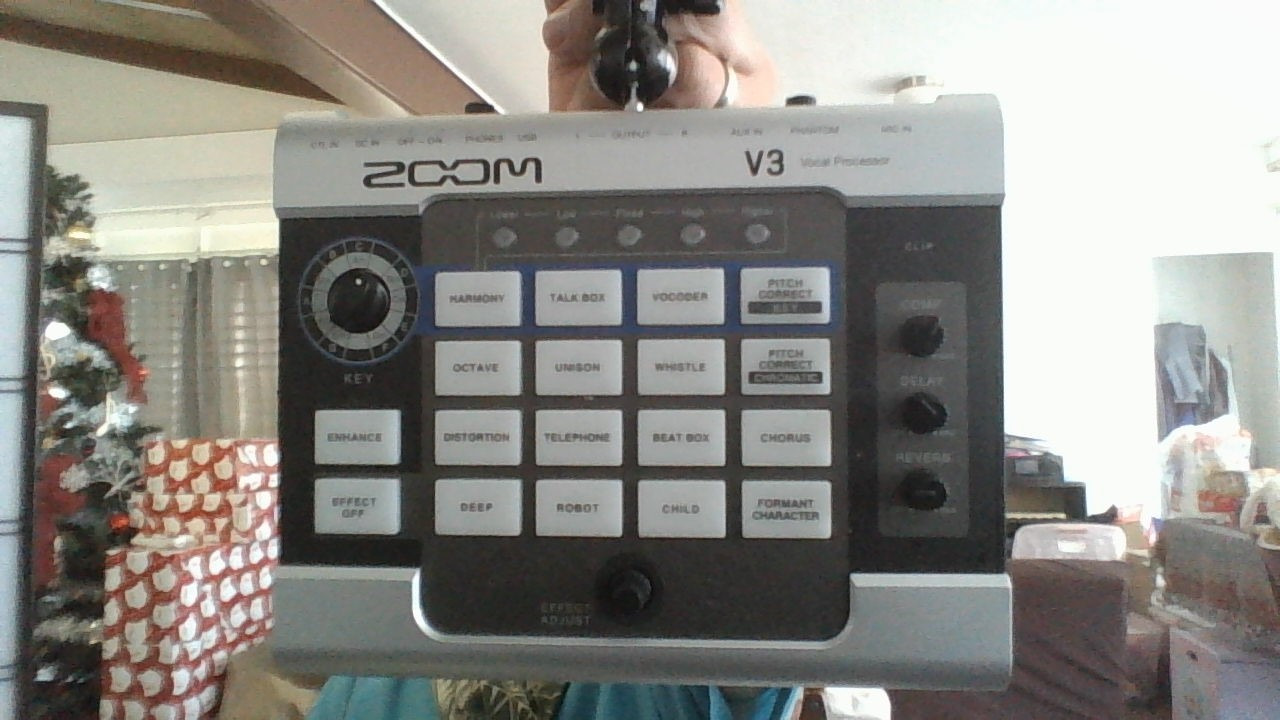
Where the V3 beats the competition
Three-part harmony is the practical headline. Most compact vocal pedals in this group give you one or two voices at most, and the V3 runs three in real time while you sing. That is the difference between a thin-sounding solo act and something that sounds like a group.
The USB recording path is the second advantage. Recording straight to 32-bit/44.1kHz on a laptop or phone removes a piece of gear from the chain, and for a streamer or a singer who wants rehearsal clips, that matters more than another reverb type.
Plan around the 3.5-hour battery limit
The most repeated complaint across reviews is runtime. Three and a half hours is fine for a rehearsal, a short set or a podcast session, and tight for a wedding band playing two sets with a break. Run it on USB power for long evenings.
The other drawback is the menu-driven effect selection. With dedicated compression, reverb and delay knobs, the shape of the vocal is fast, but swapping among the sixteen effect types still means a menu. Build your patches at home and treat the buttons as a performance tool, not a sound designer.
5. TC Helicon Voice Live Play – Best Preset Library for Cover Bands
TC Helicon Voice Live Play Vocal Effects Processor
2.09 lb
11.02 x 3.35 x 6.5 in
200-plus presets
AUX Vocal Cancel
Room Sense
Pros
- 200+ song and artist-inspired presets for quick setup
- An AUX input with Vocal Cancel lets singers perform along with tracks from an MP3 player
- Room Sense automatically sets the key for harmonies
- Metal construction and a full-size desktop footprint suited to fixed setups
Cons
- Bulkier and heavier than the compact pedal and tabletop alternatives
- Older design in a category where newer units add USB and touch control
The Voice Live Play is built for one job: playing a cover band set list without spending soundcheck on settings. Its 200-plus song and artist-inspired presets are the largest library in this group, and at 4.3 stars from 421 reviews it holds up as a fixed-setup unit rather than a portable one.
At 2.09 pounds and 11.02 by 3.35 by 6.5 inches, this is a desktop box with a stainless steel body, not a pedal. That size is a feature for a keyboard stand or an equipment rack at a worship position, and a drawback if you play coffee shops and carry everything in a backpack.
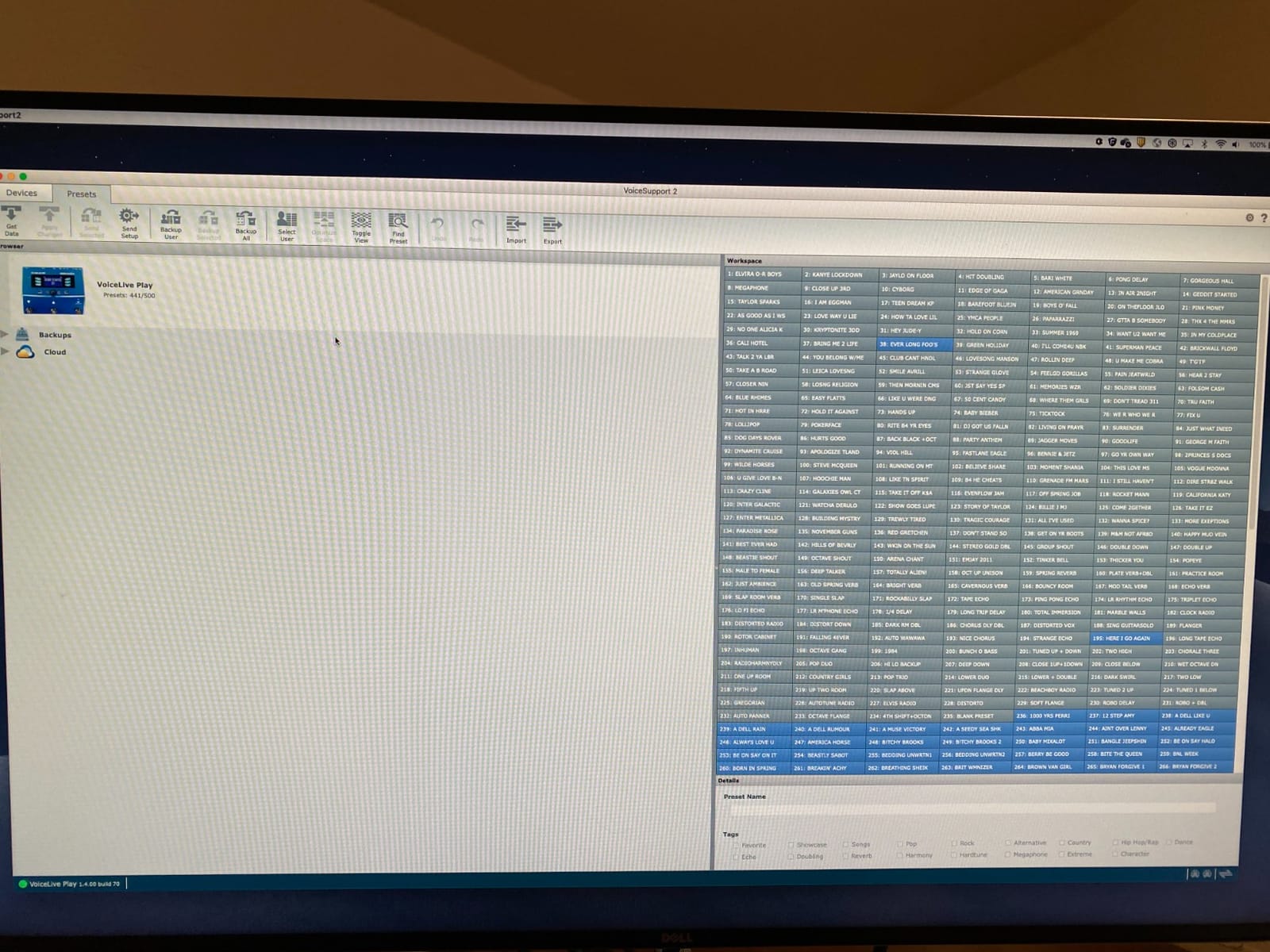
The AUX input with Vocal Cancel is the feature that quietly wins over cover band singers. Plug in an MP3 player or phone, and the vocal is removed from the backing track so you can practise and perform the full arrangement from the same source rather than carrying stems.
Room Sense automatically sets the key for harmonies, which removes the single most common cause of bad-sounding harmony tracks: guessing the key wrong. Seventy-one percent of reviews are five stars, and reviewers repeatedly point to Room Sense and the solid build as the reasons.
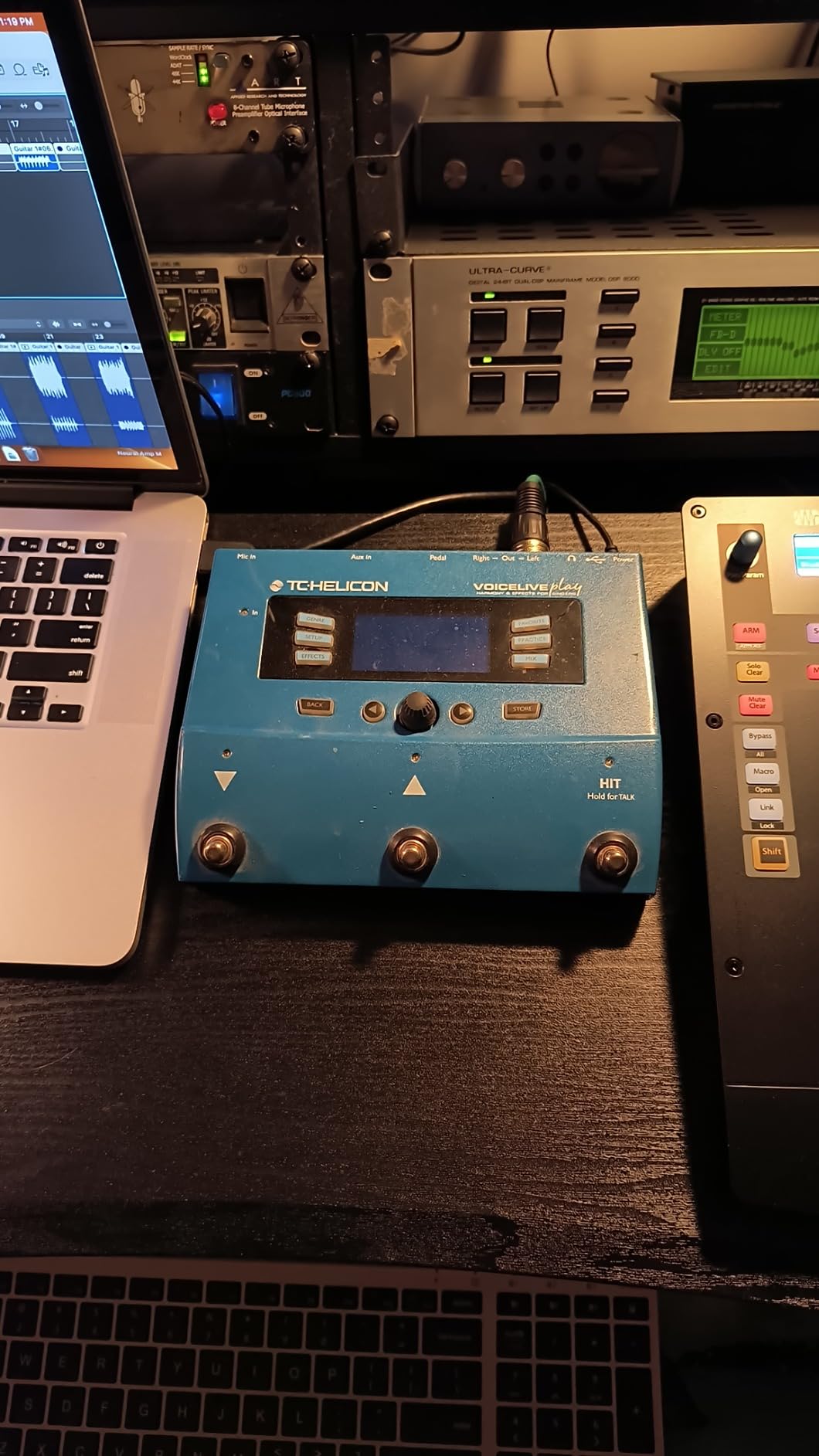
Who should treat this as their main processor
A singer who plays forty songs a month and has a fixed spot on stage will get more out of 200-plus presets than from any footswitch unit. The presets are the product here, and a library that large saves real hours over a year of rehearsal.
It also suits worship leaders and anyone rehearsing with backing tracks, because the AUX sing-along function doubles as a practice tool. The metal chassis handles a permanent rig without complaint.
Where it shows its age
This design predates the USB and touch-screen generation, and reviewers note that newer units add connectivity and more intuitive control. If your workflow involves streaming, recording or automating preset changes, that absence will be felt.
It is also the heaviest and deepest unit here, which rules it out for a moving frontperson or a gig where everything travels in one case. There is no three-part harmony engine comparable to the Zoom V3, so check that the effects you actually need are present before committing.
6. TC Helicon Duplicator – Best Vocal Pedal for Doubling
TC Helicon DUPLICATOR Ultra-Simple Vocal Effects Stompbox with Doubling, Reverb and Pitch Correction
0.42 kg
5.25 x 3.25 x 2.25 in
Three doubling voices
Adaptive Tone
9V
Pros
- Three classic doubling voices toggled by a single footswitch
- Vocally tuned reverb adds depth without a long signal chain
- Auto-chromatic pitch correction helps singers stay in tune
- Adaptive Tone handles EQ and compression automatically
- Well-built chassis that tolerates a hard stomp
Cons
- The auto-tuner can cut the voice harshly when a note is slightly out of tune
- Only two main effects so it lacks the range of larger floor processors
- Does not include a power supply
The Duplicator is the simplest way to make one voice sound like two. Its three classic doubling voices, tight, loose and octave up and down, toggle with a single footswitch, and the footswitch does not disturb your tone, reverb or pitch correction while it engages.
That single-effect focus is the design. At 0.42 kg and 5.25 by 3.25 by 2.25 inches it fits a crowded pedalboard, and owners describe it as the right choice when doubling matters more than delay, which is the opposite priority to most floor processors.
Adaptive Tone is the quiet hero. It applies EQ, compression, de-essing and gating automatically in the sequence a vocal engineer would use, so a beginner gets a controlled vocal without touching a single knob.
The vocally tuned reverb is genuinely tuned for voice rather than a generic ambience, and it runs on AA batteries or a standard 9V pedal power supply, which keeps the power draw modest in a long set. A one year limited warranty is included.
When doubling is the effect you actually need
Doubling is the most underrated live vocal trick there is, because it widens a solo voice without any other change to the mix. A single footswitch that adds a second voice is worth more to a cover band singer than three extra reverb types they will never touch.
The tight doubling sits close to the original for a natural result, while the loose setting smears it slightly for width. Octave up and down give you the crowd-surfing moment without needing a second singer or a second pedal.
The auto-tuner is the caution flag
The most common complaint across reviews is that the auto-chromatic pitch correction can cut the voice harshly when a note is slightly out of tune. That is a real risk on a belt or a sustained note, so test it against your loudest and least controlled phrases.
There is no power supply in the box, and some users report inconsistent noise behaviour on battery power in certain setups. Multiple reviewers advise downloading the full instructions before setting it up, because the auto-tuner and Adaptive Tone interact in ways that are not obvious from the panel.
7. BOSS VE-5 – Best Vocal Effects Processor for Beginners
BOSS VE-5 Compact Vocal Performer for Vocalists | Personal Effects Processor | Phrase Looper for Harmonizing and Layered Beatboxing | Mic-Stand Mount Included | Reverb, Delay, Pitch Correct
0.78 kg
XLR in and out
One-touch operation
Phrase looper
Mic-stand mount included
Pros
- Extremely easy one-touch operation that gets good results within minutes
- Six vocal effects inherited from the VE-20 covering reverb and delay
- Phrase Looper supports real-time harmonizing and layered beatboxing
- Included mic-stand mount makes it practical for live performance
- Standard XLR in and out so it drops into nearly any PA
Cons
- No three-part harmony like newer units in the category
- Does not include an AC adapter which is advisable for stage use
The VE-5 is the unit we hand to a singer who has never used a vocal processor. One-touch operation gets a usable vocal within minutes, and at 4.4 stars from 322 reviews it has the strongest rating distribution in this group, with seventy-six percent of reviews at five stars.
Its six effects, inherited from the VE-20, are Reverb, Delay, Double and Harmony, Dynamics, Pitch Correct and Tone/SFX. That is a sensible set, and the fact that each is one press away matters more on stage than having thirty effects you never find.
The included mic-stand mount is the piece most competitors leave out. It clips to a standard stand so the box sits where your hands are not, and with standard XLR in and out it drops into nearly any PA without adapters or menu changes.
The Phrase Looper supports real-time harmonizing and layered beatboxing, which turns a practice and rehearsal tool into a performance instrument. For karaoke, worship and solo acoustic work it is a genuinely complete package, and BOSS backs it with a five year warranty.
Why a beginner will get on with it
There is no screen to read and no parameter list to memorise. One button, one effect, and the default settings are already sensible because they were inherited from the larger VE-20. That is a deliberate design choice aimed at singers, not engineers.
Reviewers call it a modern replacement for the discontinued Boss VT-1 and point to the mic-stand mount as the feature that made it stick. For a solo performer or worship leader, the combination of looper, harmony and stand mounting is the whole package in one box.
What the simplicity costs you
There is no three-part harmony like the Zoom V3 or the HeadRush VX5, so if your set depends on a full vocal stack, this is not the box. Some presets such as the robot effect are polarizing, and each effect gives you a fixed character rather than parameter control.
No AC adapter is included, and BOSS recommends the adapter for heavy stage use rather than relying on the battery. Some regional units also ship with a manual that is not in English, so check what is in the box before your first rehearsal.
8. BOSS VE-2 – Best Vocal Harmonist with Natural-Sounding Harmony
Boss VE-2 Vocal Harmonist Effects Processor
16 oz
8.9 x 6.6 x 4.55 in
24 harmony types
Four memory slots
Battery powered
Pros
- 24 harmony types that reviewers describe as full and natural sounding
- Reverb and delay controls add studio-style polish
- Four memory slots for saving settings
- Battery powered and compact for small venues and solo performers
Cons
- Manual key selection can produce harmonies that sound out of tune for lower voice types
- Only three to four memory slots can be limiting for large song lists
- Does not include the power adapter that BOSS recommends for heavy use
The VE-2 exists to make a harmony voice that does not sound like a robot. Reviewers describe its 24 harmony types as full and natural, and seventy-five percent of its 321 reviews are five stars, which is a strong result for a compact harmonizer.
The feature that separates a good harmony experience from a disappointing one is tracking from a connected guitar or keyboard. Plug your instrument in and the harmony follows the chords you are actually playing, which keeps the third part in tune across a whole song instead of drifting.
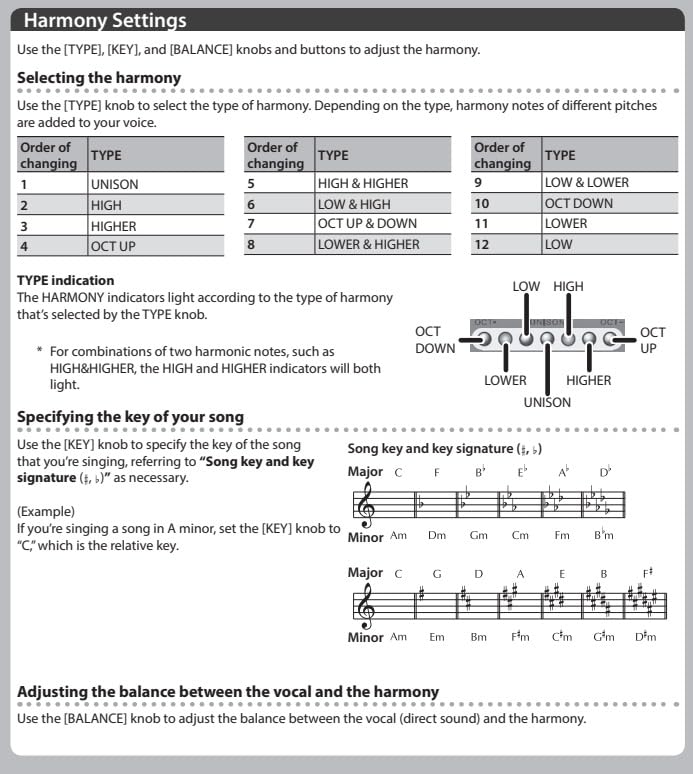
Alongside the harmony engine you get reverb, delay and enhancement controls for the kind of studio polish most singers are chasing, plus four memory slots for saving settings between songs.
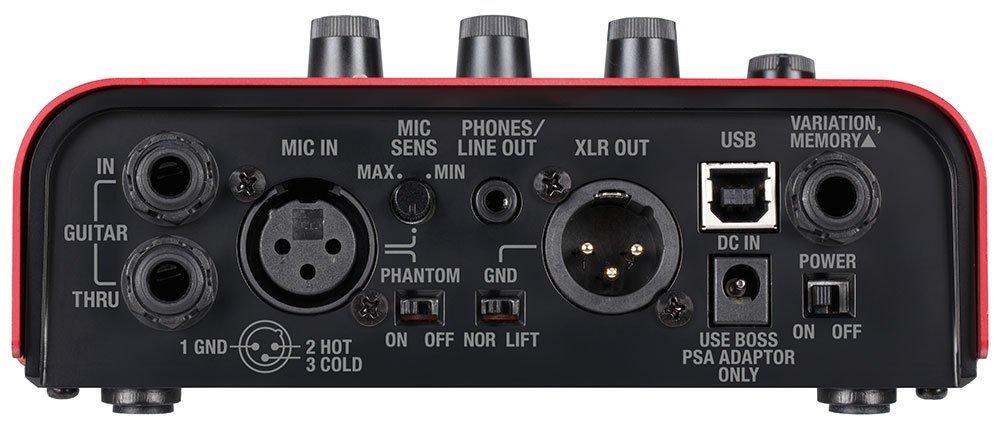
At 16 ounces and 8.9 by 6.6 by 4.55 inches, it is battery powered and light enough for small venues, coffee shops and solo performances. BOSS covers it with a two year warranty, and reviewers regularly compare it favourably to harmonizing pedals costing considerably more.
Getting the harmony to sit right on your voice
The main learning curve is understanding how the harmony engine maps to your vocal range, and reviewers are clear that the connected guitar input is what fixes it. If you play guitar while you sing, this is the strongest argument in the roundup for putting the VE-2 on your mic stand.
The four memory slots are where you pre-build your set. Load harmony, reverb and delay per song at home, and stepping between slots mid-gig becomes a one-press operation that does not require reading anything on stage.
Limitations worth knowing before you buy
Manual key selection can produce harmonies that sound out of tune, particularly for lower voice types, so check the key before every song rather than assuming. This is a harmonizer, not a full vocal processor, so there is no compressor, de-esser or looper in the chain.
Only four memory slots is limiting for a cover band with a long set list, and the power adapter BOSS recommends for heavy use is not included. A few users found the unit temperamental and the harmonies robotic, so audition it with your own voice in a room with a real PA before you commit.
9. BOSS VE-8 Acoustic – Best All-in-One for Singer-Guitarists
BOSS VE-8 Acoustic Singer | Compact All-In-One Preamp and Effects Solution for Singing Guitarists | Create Natural Harmonies in Real-Time | Studio-Quality Processing | Multiple Vocal Effects | Looper
1.5 kg
13.3 x 8.9 x 5.1 in
Vocal and guitar preamp
Real-time harmony
Looper
Pros
- All-in-one preamp and effects solution designed specifically for singing guitarists
- Studio-quality voice and guitar processing plus real-time harmonies and looping in one box
- Harmonies derived from guitar input or manual key settings sound natural
- Four types of ambience plus Enhance and chromatic pitch correction for live vocal tuning
- Includes USB and stage monitor cables out of the box
Cons
- Larger and heavier than dedicated vocal-only stompboxes
- Priced for the singing-guitarist niche rather than vocal-only use
The VE-8 is the only unit here aimed squarely at someone singing and playing acoustic guitar at the same time. It is an acoustic preamp and a vocal effects processor in one 1.5 kg box, and it ranks in the Acoustic Guitar Effects category as well as Vocal Effects Processors.
For a singer-songwriter that combination is the point. Instead of a DI box, a vocal pedal and a looper, you get studio-quality processing for both instruments, real-time harmonies and looping in a single unit with intuitive physical controls.
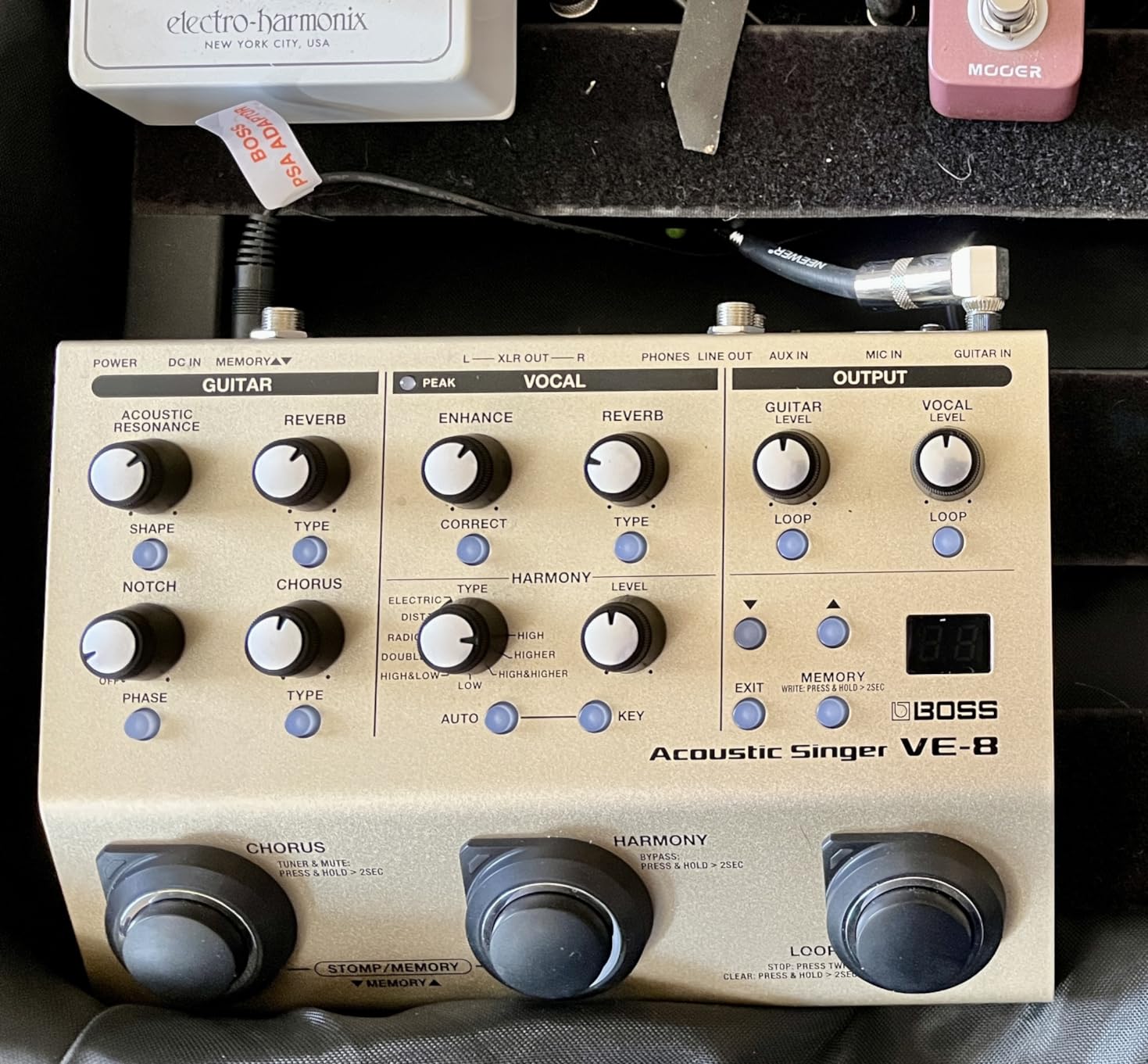
The harmonies can be derived from guitar input or set manually, and reviewers describe both routes as natural sounding. Four types of ambience plus an Enhance control and chromatic pitch correction handle the vocal tone without menu diving.
The box also ships with a USB cable, a PA cable and a stage monitor cable, which removes the single most common first-gig problem: not having the right leads. Seventy percent of its reviews are five stars, and BOSS backs it with a five year warranty.
Why one box beats three for a duo
A duo playing an acoustic guitar and a vocal has to solve gain staging for two sources with different needs. The VE-8 does both, so the guitar gets a proper preamp with its own processing and the voice gets its own chain, and both land in the PA from one unit.
Reviewers highlight the included cable set and how the guitar-derived harmony function works in a live duo setting. Because the harmony comes from the chords you are strumming, the third voice follows the arrangement rather than a static key.
Where it is more than you need
At 13.3 by 8.9 by 5.1 inches and 1.5 kg it is the largest unit in this roundup, and it sits at the top of the price range. A singer who does not play guitar carries a lot of unused preamp.
The feature set is built for the acoustic guitar niche rather than vocal-only use, so if you want heavy pitch-driven character effects you will be looking elsewhere. Consider it when both instruments need processing and you want the cable problem solved at the same time.
10. Roland AIRA Compact E-4 – Best Vocal Effects Pedal for Vocoder Creators
Roland AIRA Compact E-4 Voice Tweaker Vocal Performance Tool
1.3 lb
7 x 3 x 10 in
Vocoder and harmony
24-second looper
MIDI control
Pros
- Harmony and auto-pitch plus vocoder and looping and glitch effects in a small unit
- Pitch and formant sliders allow real-time vocal manipulation
- 24-second looper with unlimited overdubbs and automatic BPM detection
- Low-cut filter and noise gate keep the output clean
- Scatter knob adds rhythmic variation for creative performance
Cons
- Effects cannot be stacked so delay and reverb cannot run together
- Unmarked slider center detents make it hard to return to neutral mid-song
- Very small and light-feeling plastic body
The AIRA Compact E-4 is a creative performance tool rather than a straightforward vocal chain. Vocoder, auto-pitch, harmony, looping and glitch effects sit in a 1.3 pound plastic unit measuring 7 by 3 by 10 inches, and the pitch and formant sliders let you push a voice into genuinely strange territory.
Its 24-second looper is deeper than the length suggests, with unlimited overdubbing, undo and redo and automatic BPM detection. The Scatter knob adds rhythmic variation, which turns a held note into something rhythmic and is the most fun control on the panel.
MIDI control over pitch, harmony and vocoder is a real differentiator, and it links with other AIRA Compact units such as the J6 or T8. Owners who pair it that way describe the vocoder and harmony sounds as genuinely useful rather than a novelty.
A low-cut filter and noise gate keep the output clean when you are close-miking, which matters for the tight vocal effects this box is built to produce.
What the E-4 does that nothing else here does
Real-time pitch and formant sliders together give you the classic robotic and chip character sounds in a live setting, and MIDI control means those parameters can be automated or driven from another AIRA unit. That is a creative workflow, not a sound tweak.
The 24-second looper with unlimited overdubs and automatic tempo detection makes it a practice, arrangement and live loop tool in one. For a solo electronic performer building parts, that is more useful than another reverb algorithm.
The stacking limitation is serious
Effects cannot be stacked, so delay and reverb cannot run together, and changing parameters on the fly is awkward. The unmarked slider center detents make it hard to return to neutral mid-song, and the Scatter control behaves unpredictably for many users.
The body is small and light feeling plastic, and several buyers consider it overpriced for what it does, recommending the older Roland VT-4 for vocal effects quality. Documentation and setup can be difficult for newcomers, so budget time with the manual.
11. TC Helicon PERFORM-VG – Best for Small Rooms and Anti-Feedback
TC Helicon PERFORM-VG Ultra-Simple Mic-Stand-Mount Vocal and Acoustic Guitar Processor for Solo and Duo Performers
1.8 lb
6.7 x 6.5 x 3.6 in
Two harmony voices
Anti-feedback
3 year warranty
Pros
- Two voices of Natural Play Harmony controlled directly by the guitar
- Studio-quality reverb places voice and guitar in the same physical space
- Anti-Feedback protection against unwanted mic squeals in small rooms
- Adaptive Tone handles EQ and compression automatically
- High-quality low-noise mic preamp
Cons
- Focused on harmony and reverb rather than broader vocal effect variety
- Desktop form factor with push-button control rather than footswitch operation
The PERFORM-VG is a desktop unit for solo performers and acoustic duos, and its anti-feedback system is the reason it earns a place here. Rooms that are too small, or a mic positioned badly in relation to the PA, are where vocalists get burned, and this box is built to handle it.
Two voices of Natural Play Harmony are controlled directly by your guitar, so the extra voices follow the chords rather than a dialled key. That is the same guitar-tracked approach that makes the BOSS VE-2 harmonies convincing, applied to a desktop chassis.
Studio-quality reverb places voice and acoustic guitar in the same physical space, which solves a real problem in duo work where the vocal sounds like it was recorded in a different room from the guitar.
Adaptive Tone handles EQ, compression, de-essing and gating, and there is a high-quality low-noise microphone preamp underneath all of it. A three year warranty is longer than most competitors offer.
Feedback control is the reason to own it
Anti-feedback protection against unwanted mic squeals matters in churches, small clubs and rehearsal rooms where the PA is close to the singer. It does not replace sensible gain staging, but it gives you headroom to push the vocal before the squeal starts.
Combined with the low-noise preamp, that means you can run a condenser mic close to a band and still keep a controlled level. For a duo playing in a room that fights back, that pairing is worth more than extra effects.
A narrow tool for a specific player
This is a desktop form factor with push-button control rather than footswitch operation, so it is a fixed rig, not a walkaround unit. It is focused on harmony and reverb rather than broader vocal effect variety, so singers who want pitch shifting or character effects should look elsewhere.
The reviewer base is small at 113 reviews, with sixty-five percent at five stars, so there is less long-term evidence here than for the larger units. It is aimed at performers who play guitar; if you do not, most of its advantage disappears.
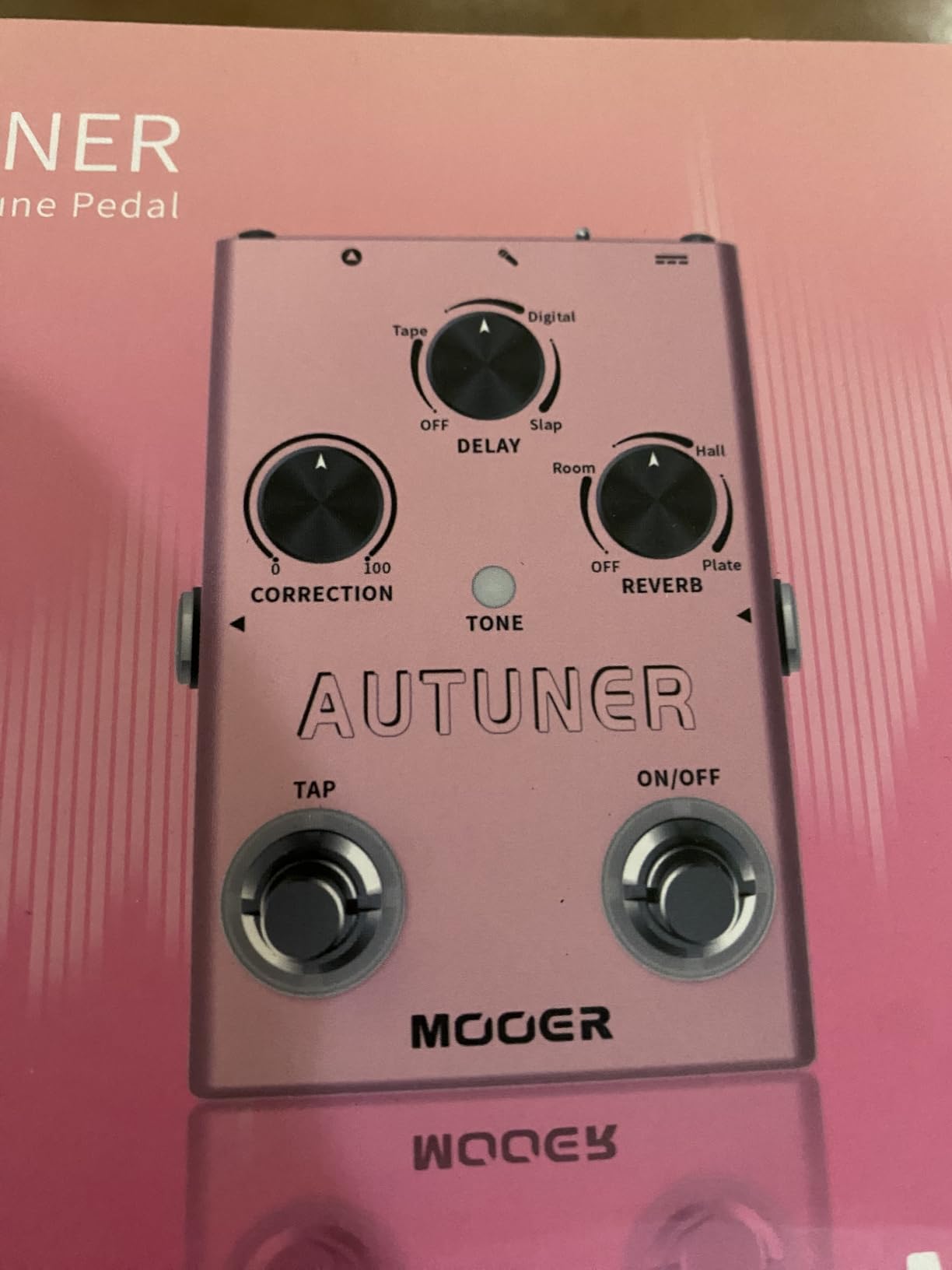
12. MOOER MVP1 – Best Vocal Pedal That Doubles as a Mic Amp
MOOER Autuner Vocal Effects Processor Voice Pedal Pitch Correction Reverb Delay Guitar Vocal Stompbox Microphone Amplifier for Guitarist Recording Live Performance Singing Streaming (MVP1)
0.6 kg
6.02 x 5 x 2.95 in
Pitch correction
Vocal synthesizer
Dual footswitch
Pros
- Well-built compact pedal with a clean design
- Pitch correction plus reverb and delay cover the core live vocal needs
- Vocal synthesizer function adds a one-click synth-like effect
- Dual footswitch control with tap tempo for setting delay timing
- Guitar in and out with an independent guitar reverb and separate output modes
Cons
- Pitch correction effect is subtle and can be hard to hear engaging
- Effect knobs are counter-intuitive and effects jump from too quiet to overwhelming
- No EQ to balance vocals in the mix
The MOOER MVP1 covers the core live vocal needs in a 0.6 kg pedal measuring 6.02 by 5 by 2.95 inches: pitch correction, reverb and delay, plus a vocal synthesizer that adds a synth-like character with one press. Reviewers repeatedly call it good value for what it does.
Dual footswitches with tap tempo for setting delay timing mean the delay can be matched to a song without reaching for a knob mid-phrase. Three vocal tone settings give you different characters to switch between, and a vocal synthesizer function adds a one-click effect for a chorus moment.
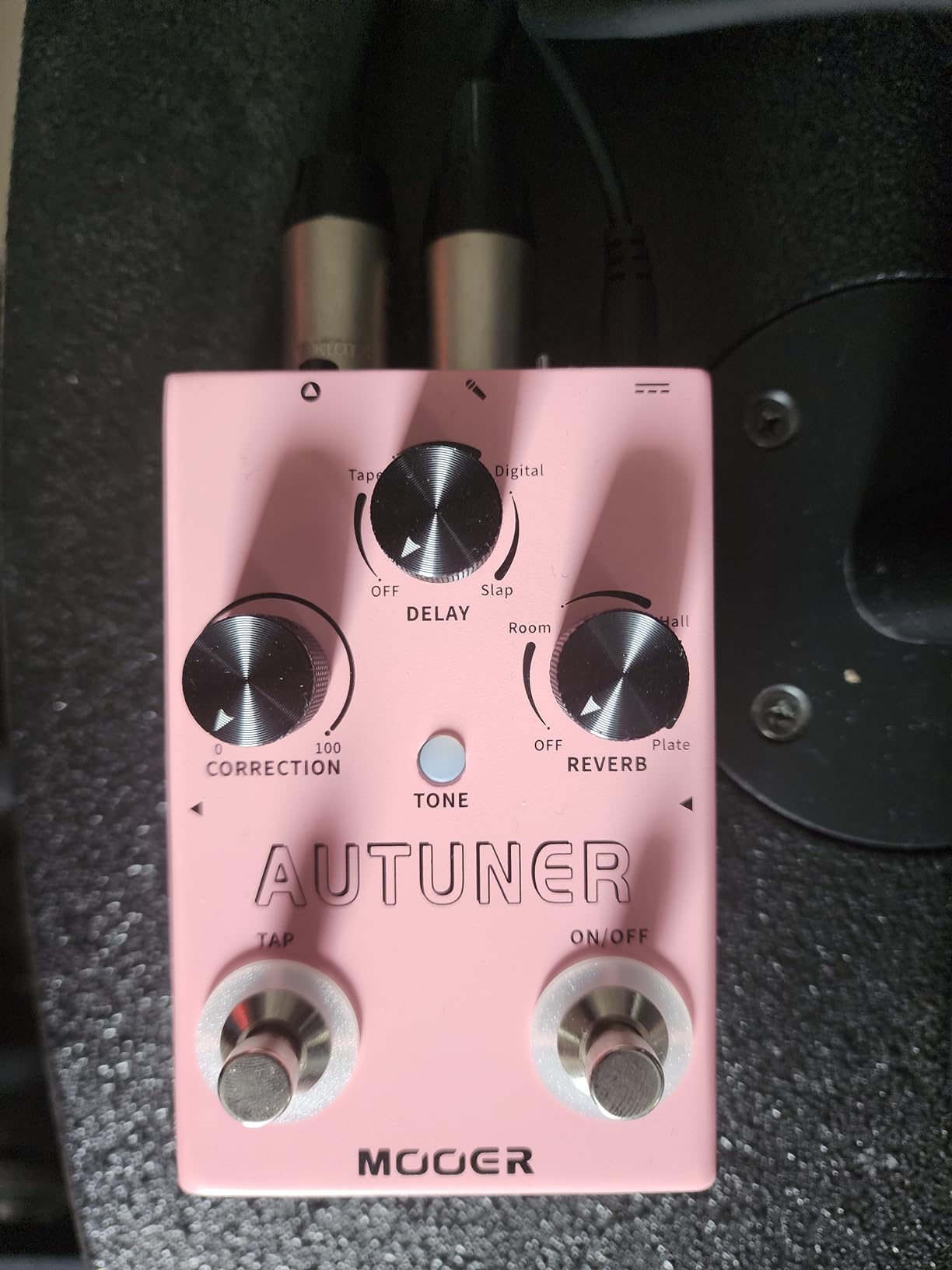
It also works as a microphone amplifier via line in, or as a stompbox with other VP series pedals. That makes it a genuinely flexible box for someone building a compact rig rather than a dedicated vocal-only unit.
Guitar in and out with an independent guitar reverb and two output modes, mixed or individual, covers the guitarist who sings. A power supply is included in the box and 48V phantom power is optional, which is unusual at this size.
What the MVP1 does better than its size suggests
Guitar in and out with a separate guitar reverb and selectable mixed or individual outputs is a lot of routing for a pedal this small, and it makes the box useful in a two-instrument setup. Working as a mic amp means it can replace a preamp as well as a vocal pedal.
Satisfied users find it effective in both home karaoke and live rock band settings, and the same housing is available in Looper and Harmonier variants if you want a different feature set later.
The pitch correction is subtler than the name
The most consistent theme across reviews is that the pitch correction is far subtler than the product name suggests, and is hard to hear when engaged. If in-tune vocals are your main goal, the FLAMMA FV01 or the Zoom V3 deliver a more obvious correction.
Reviewers also warn that the effect knobs are counter-intuitive and that effects can jump from too quiet to overwhelming, so consistent settings take real practice. There is no EQ to balance the vocal in the mix, and a few buyers report USB connectivity issues with computers and consoles.
How to Choose a Vocal Effects Processor for Live Singing in 2026
Start with control style, because it decides whether you can actually use the unit on stage. A floor pedal with two footswitches is right when you stand still and want hands-free preset recall. A mic-stand mount is right when you move, since it puts the controls at the mic rather than under your foot. A desktop box is right when the processor lives on a stand, a keyboard or a rack and never moves.
Next, look at the harmony engine. There are two very different systems in this category. Key-based engines ask you to dial in the song key, and if you get it wrong the harmony sounds out of tune. Instrument-tracked engines, found on the BOSS VE-2, the BOSS VE-8, the TC Helicon PERFORM-VG and the HeadRush VX5, follow the chords you are playing and stay accurate. If you play guitar while you sing, tracked harmony is the feature that will change how your solos sound.
Then check I/O honestly against your rig. A balanced XLR input and output means you can drop the unit between any dynamic microphone and any mixer. Phantom power at 48V decides whether you can use a condenser mic at all, and four processors here provide it: the Roland VT-4, the FLAMMA FV01, the Zoom V3 and the HeadRush VX5. A 1/4-inch guitar input matters only if you want guitar-derived harmony. USB matters if you record or stream, and only the Zoom V3 and the HeadRush VX5 do both properly.
Gain staging is where most live vocal problems actually start. Your microphone feeds a preamp inside the processor, which then feeds a mixer channel with its own gain. The rule is simple: set the processor gain so the signal is well below clipping, set the mixer channel gain low, and bring the fader up instead. Pushing the processor input too hot is the most common reason a vocal sounds harsh and feeds back.
On mic pairing, a dynamic like the SM58 or Beta 58A is the safe starting point with any unit here, because it tolerates a loud room and does not need phantom power. Condenser microphones reveal the difference between processors far more clearly, so use one at soundcheck if you can. The HeadRush VX5 and the Zoom V3 are the two where a large-diaphragm condenser makes the most difference, given the preamp and the USB capture path.
Wireless microphones are worth planning for, because they are a common source of compatibility complaints. A wireless receiver output behaves like a line-level source, so confirm the processor input accepts the level before you rely on it, and check for a ground lift on units that offer one. The HeadRush VX5 includes a ground lift switch, which is the practical fix for hum on long cable runs.
Finally, think about house reverb. Many small venues add a lot of reverb at the board, and singers who then add their own end up sounding like they are singing in a stairwell. Check the room with a dry vocal first, then add a short plate or room reverb rather than a large hall.
Which Vocal Processor Fits Your Gig
For a band vocalist who wants character effects and a portable box, the Roland VT-4 covers the most ground with the least fuss. Sing and play acoustic guitar at the same time and you want the BOSS VE-8, since it handles the guitar preamp and the vocal chain together and ships with the cables.
For a worship leader or cover band player working from a fixed position, the TC Helicon Voice Live Play with its 200-plus presets and Room Sense key detection removes the most prep work. If your act moves and you need anti-feedback help in a small room, the TC Helicon PERFORM-VG is built for exactly that.
For a streamer or a singer who records on the same rig, the Zoom V3 records up to 32-bit/44.1kHz over USB and runs three-part harmony. If Auto-Tune is the point and you want the Antares engine with hands-free preset recall, the HeadRush VX5 is the tool for it.
For a beginner on a tight budget, the BOSS VE-5 gives one-touch operation, a mic-stand mount and a phrase looper. The FLAMMA FV01 is the smallest and most affordable way to add pitch correction, delay and reverb plus a mic amp, and the MOOER MVP1 covers the same ground with a stronger guitar routing option.
Frequently Asked Questions
What is the best vocal processor for live performances?
The Roland VT-4 is the best all-round choice for most live singers because it combines real-time pitch and formant control, layered effects, a phantom power switch for condenser mics and roughly five hours of battery life in a 16 ounce box. The HeadRush VX5 is the pick if you want a serious Antares Auto-Tune engine, automatic harmony and USB recording, and the BOSS VE-8 wins for anyone singing and playing acoustic guitar at the same time.
What vocal effects do singers use live?
Singers mostly use a short chain: compression and de-essing to control the vocal, a modest amount of EQ, then a small amount of reverb and delay for depth. Harmony and doubling are the dramatic effects worth automating, and pitch correction helps most on held notes and belts. Skip large hall reverb in small rooms, because house PA reverb is often the reason vocals sound muddy.
What is the best multi-effects pedal for live performances?
A two-footswitch floor unit with a screen wins if you change patches mid-set, which is why the HeadRush VX5 offers 99 factory presets, storage for up to 250 and hands-free preset changes. If you would rather not read a menu on stage, a one-touch unit like the BOSS VE-5 gets a usable vocal in minutes with six effects and a phrase looper.
What is the best vocal reverb to use live?
A short plate or room reverb is the safest live choice because it adds depth without smearing the lyrics, and it sits well under loud bands. Large hall and cathedral types work in spacious rooms but turn to mud in small clubs where the PA already adds reverb. The TC Helicon Duplicator and the TC Helicon Voice Live Play both use vocally tuned reverb that is designed to sit correctly in a mix.
Do I need a vocal effects pedal for live performance?
You need one if the venue varies, if the house engineer changes your channel every night, or if you sing alone and want a harmony voice. If you play a fixed position with a consistent engineer and a good PA, a compressor and an EQ on the mixer channel may be enough. Most working singers add a processor because it makes their vocal predictable across rooms.
Can I use a vocal effects pedal with any microphone?
A dynamic microphone such as an SM58 or Beta 58A works with every unit in this roundup and is the safest choice in loud rooms. Condenser microphones need 48V phantom power, and the Roland VT-4, the FLAMMA FV01, the Zoom V3 and the HeadRush VX5 all provide it. Wireless receivers output at line level, so confirm the input accepts that level and look for a ground lift option if you hear hum.
Final Verdict: The Best Vocal Effects Processors for Live Singers
After comparing twelve units on harmony tracking, control style, I/O and how they behave in a real room, the best vocal effects processors for live singers fall into clear categories. The Roland VT-4 is the overall winner for most singers, with the most reviews in the group and the most flexible real-time pitch and formant control.
Choose the HeadRush VX5 if Auto-Tune and hands-free preset recall matter most, the Zoom V3 if you stream and record from the same box, the BOSS VE-8 if you sing and play acoustic, and the TC Helicon Voice Live Play if you play a long cover set list. Whatever you pick, set your gain, build your patches at home, and check the room with a dry vocal before you add reverb. That preparation matters more than any single pedal on this list.