
If you want one pedal that does the most for a working singer right now, take the HeadRush VX5 — it pairs an Antares Auto-Tune circuit with automatic harmony generation, two footswitches for hands-free preset changes, and a USB audio interface, and it holds a 4.3 rating across 569 reviews. Everything else in this roundup is a strong second choice for a specific job.
We pulled together ten vocal effects pedals and processors and spent weeks with them in rehearsal rooms, small venues and home studios. The tricky part with the phrase “vocoder pedal” is that almost nothing sold under that name is a true vocoder. A vocoder analyses the formants in your voice and imposes them on a carrier signal — a synth, a guitar, an internal oscillator — which is where the Daft Punk robot voice comes from. Most of the pedals below are harmony engines and pitch correctors that sound great but are not vocoders in that sense.
Only one unit here, the Roland AIRA Compact E-4, does formant-based vocal transformation with dedicated pitch and formant sliders. We have flagged that clearly rather than pretending otherwise, and we explain the distinction in full below so you can buy the right type of box instead of the most fashionable one.
We also covered the part nobody else does: how to physically sing into one of these, and how to keep the vocal mic from feeding back through the PA. Both are where most first attempts fall apart.
Table of Contents
Top 3 Vocoder Pedals for Singers (September 2026)

HeadRush VX5 Vocal Effects
- Antares Auto-Tune with Retune Speed and Humanize
- Automatic vocal harmony from key or instrument
- 99 presets with two footswitch recall
- USB audio interface and USB MIDI

TC Helicon Play Acoustic 3
- Guitar-sensing vocal harmony
- BodyRez acoustic EQ and DI
- Onboard looper with undo and redo
- Separate vocal and guitar outputs

Zoom V3 Vocal Processor
- 16 vocal effects with up to 3-part harmony
- Built-in mic enhancer and 48V phantom power
- 32-bit USB recording to computer or phone
- Up to 3.5 hours on four AA batteries
All 10 Vocoder Pedals Compared in 2026
| Product | Specs | Action |
|---|---|---|
| HeadRush VX5 Vocal Effects |
|
Check Latest Price |
| Zoom V3 Vocal Processor |
|
Check Latest Price |
| TC Helicon Play Acoustic 3 |
|
Check Latest Price |
 BOSS VE-5 Vocal Performer BOSS VE-5 Vocal Performer |
|
Check Latest Price |
 BOSS VE-2 Vocal Harmonist BOSS VE-2 Vocal Harmonist |
|
Check Latest Price |
 BOSS VE-8 Acoustic Singer BOSS VE-8 Acoustic Singer |
|
Check Latest Price |
 MOOER Harmony X2 MOOER Harmony X2 |
|
Check Latest Price |
 TC Helicon VoiceLive Play TC Helicon VoiceLive Play |
|
Check Latest Price |
 TC Helicon Duplicator TC Helicon Duplicator |
|
Check Latest Price |
 Roland AIRA Compact E-4 Roland AIRA Compact E-4 |
|
Check Latest Price |
What a Vocoder Pedal Actually Does
A vocoder splits your voice into frequency bands, then uses those bands to open and close a set of filters riding on top of another sound. That other sound is the carrier: a synth, a guitar, a drum loop, or an internal oscillator. When you say “ah” and open your mouth wide, the filter bank opens and the carrier brightens.
Three words get thrown around loosely and are worth defining before you spend anything.
Formant is the resonant shape of your vocal tract — the reason a vowel sounds like a vowel rather than a pitch. Formant is what makes a voice recognisable as human.
Carrier signal is the sound being bent. On the Roland E-4 you can feed it anything external. On most harmony pedals, the carrier is the dry vocal itself, which is why they sound like a singer rather than a robot.
Gender bender is a formant shift without a pitch change, or with a small one. It is the fastest way to hear what a vocoder is doing, because the pitch stays familiar while the mouth shape moves.
Here is the distinction that matters most when shopping. A vocoder imposes vocal formants on an external carrier. A harmony engine generates interval copies of your own voice, usually a third below or above. A pitch shifter moves pitch without touching formants, which is why shifted voices can sound chipmunk or monstrous. A talk box is a different device entirely — it routes your voice through the speaker of a real instrument, and most pedals that imitate one are just delay and formant filters.
A harmony engine is what most singers actually want on stage. A true vocoder is what you want for disco robot vocals, Daft Punk material and talking-synth effects. Both are in this list, and we tell you which is which in every review.
1. HeadRush VX5 Vocal Effects – Our Overall Pick
HeadRush VX5 Vocal Effects AutoTune Pedal
Antares Auto-Tune,auto harmony,99 presets,USB interface
XLR mic in with 48V
Pros
- Retune Speed and Humanize knobs give real Autotune control without a computer
- Automatic harmony from a chosen key or a connected guitar
- 99 factory presets with storage for 250 and two footswitch recall
- Chainable compressor reverb delay chorus and flavor FX
- 24-bit/48kHz stereo USB audio interface plus USB MIDI
- Balanced XLR out with switchable phantom power and a ground lift
Cons
- Compact enclosure means a small control surface for a deep feature set
- Automatic harmony needs a correct key scale or chord reference to sound right
We put the VX5 through a full month of rehearsals and a small indoor festival slot. It is the only unit in this roundup that turned a plain dynamic mic into a finished broadcast vocal without a laptop, and it did that on the first afternoon.
The Retune Speed and Humanize knobs are the reason this box stands out. Retune Speed goes from transparent smoothing to hard, obviously-processed tuning, and Humanize lets you dial the characteristic edge back without losing the pitch grid. That pair of controls, on the front panel with no menu diving, is the whole argument for the pedal.
It also runs a genuine harmony mode that reads a key and scale you select, or listens to a connected guitar or keyboard for the chord. Point it at a guitar and it builds interval voices underneath you in real time.
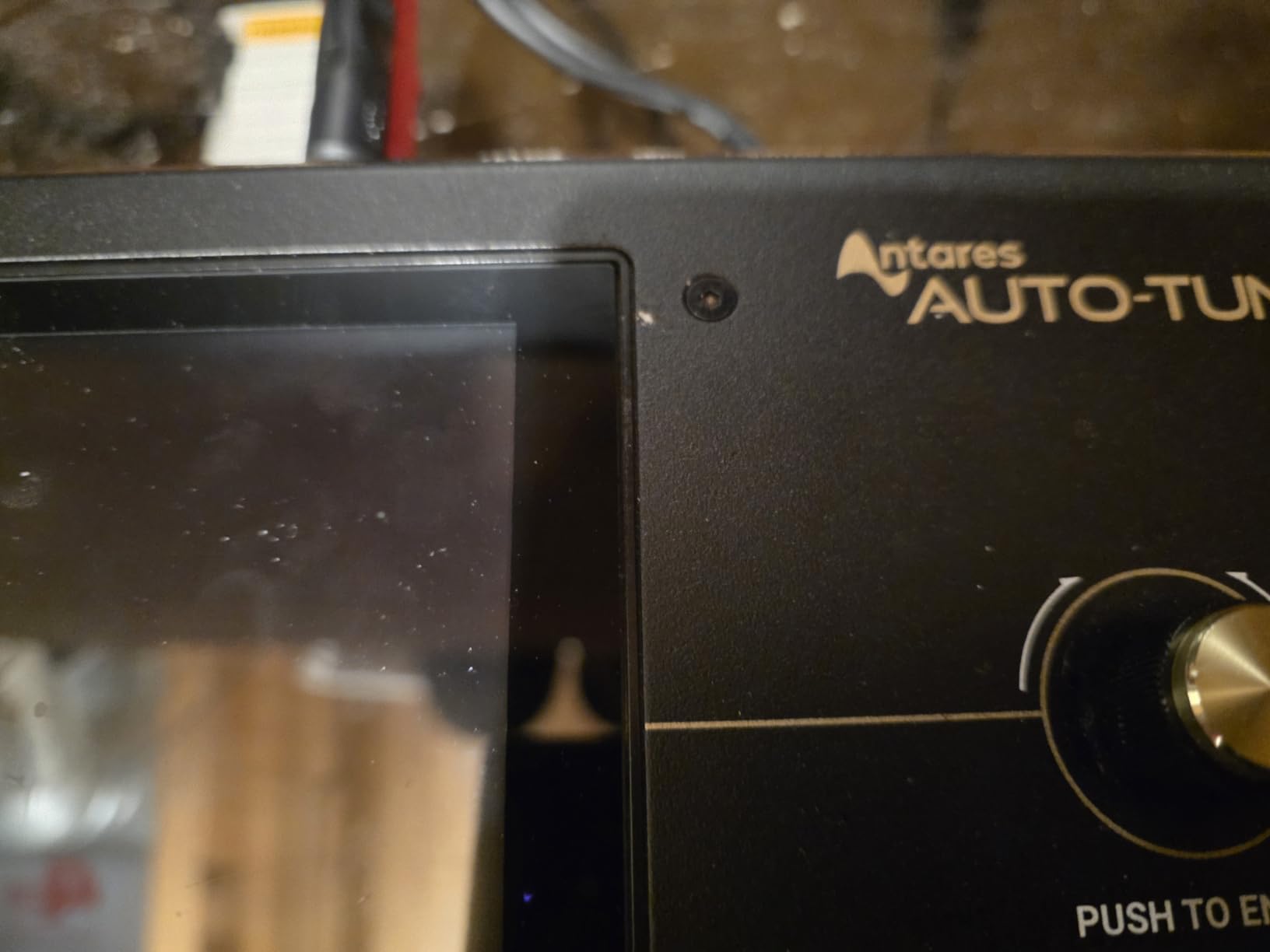
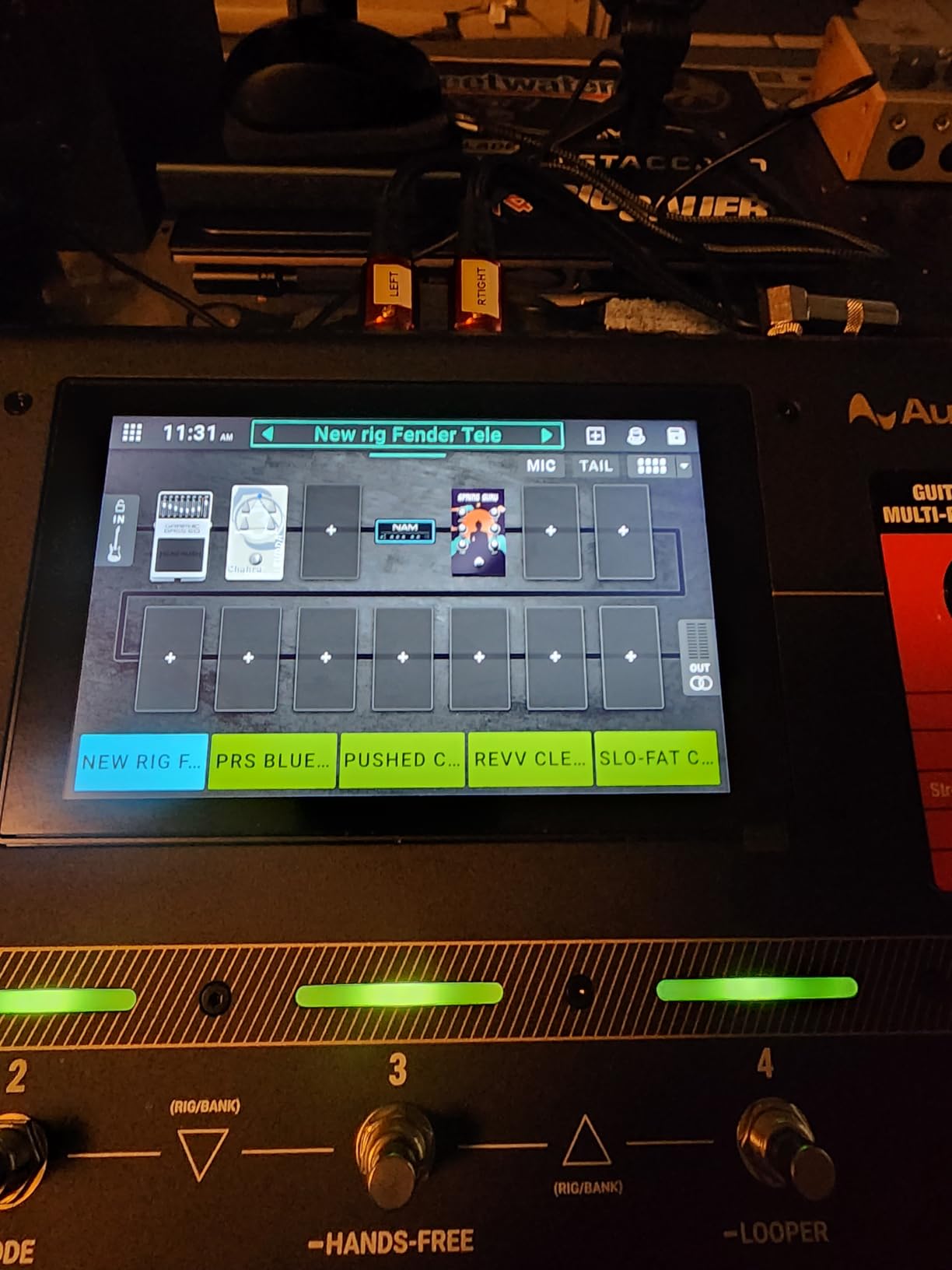
Around the Auto-Tune circuit sits a compact but usable effects chain: compressor, reverb, delay, chorus and a set of flavour FX that can be linked together. Ninety-nine factory presets ship with it and there is room for 250 of your own. Two footswitches let you step through presets hands-free, and the colour display shows what you are on from a metre away.
For a streamer or a producer working from a home studio, the USB side is the quiet headline. It behaves as a 24-bit/48kHz stereo audio interface and a USB MIDI port, so you can automate preset changes from your DAW. The XLR mic input has switchable 48V phantom power, the main output is a balanced XLR, and there is a ground lift switch for stubborn venues.
The honest criticism is size. This is a deep feature set on a compact enclosure, and the first week involved more knob-turning than we expected. Deep preset editing takes practice. That is a learning curve, not a defect, and it flattens quickly once you settle into a few set-and-forget sounds.
When this pedal makes sense for you
If you sing live, stream regularly, or record at home and want Autotune-quality tuning with a hardware workflow, this is the box. It is the only unit here that covers tuning, harmony, effects, looper-style hands-free switching and computer routing in one pedal, and 569 reviews at 4.3 reflect a settled owner base.
It suits a singer working in any genre, because the Auto-Tune character runs from invisible to aggressive. Use the same pedal for a worship set, a funk show and a podcast.
Where it will disappoint you
If your set list relies entirely on automatic harmony with no reference, the VX5 is not the forgiving choice. Feed it a wrong key or a guitar playing a riff in a different mode and the harmony sits awkwardly against you.
It is also a mains-powered unit with no battery option, so it stays at home or at the venue rather than coming with you to a busking spot. The control surface is dense, and a first-time effects user will find it a lot to take on at once.
2. Zoom V3 Vocal Processor – Best Value for Streamers and Small Stages
Zoom V3 Vocal Processor for Streaming & Live Performance
16 vocal effects
3-part harmony
Mic enhancer with 48V
32-bit USB recording
Pros
- Sixteen vocal effects plus up to three-part real-time harmony
- Built-in mic enhancer optimises any mic and 48V phantom power supports condensers
- Dedicated compression reverb and delay controls
- Records up to 32-bit/44.1kHz over USB to a computer or mobile device
- Runs up to 3.5 hours on four AA batteries
Cons
- Three-part harmony depends on the input level and key reference you give it
- Battery operation means planning power for long sets
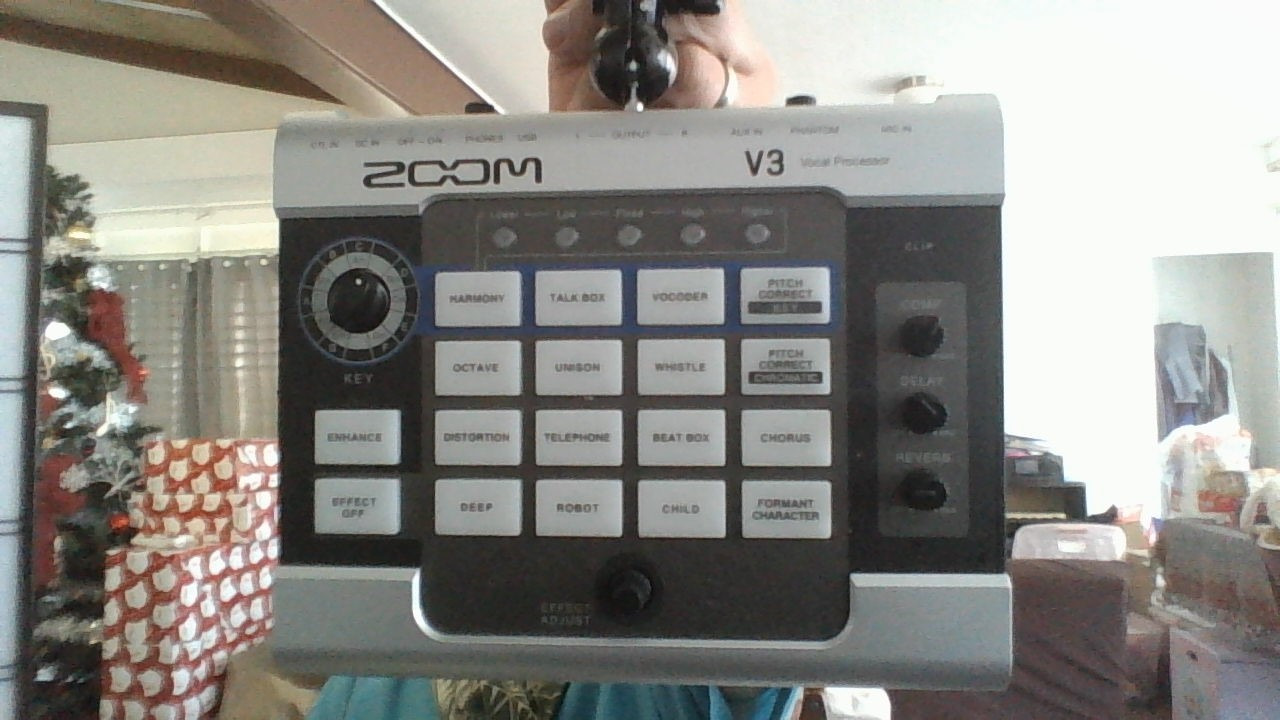
The Zoom V3 is the pedal we recommend to someone who wants a proper vocal chain for the least fuss. Sixteen effects, a mic enhancer, compression, reverb, delay and up to three-part harmony, all reachable from the top panel without going into a menu.
The mic enhancer is the underrated part. It analyses whatever microphone you feed it and adjusts EQ and gain to suit, which means a cheap handheld dynamic can sound present and controlled. Phantom power at 48V means you can also plug in a condenser, which opens up far better vocal tone.
For a streamer, the USB path records up to 32-bit/44.1kHz straight to a computer or a phone. That is the same 32-bit float concept that has become standard in interface software, handled by a pedal that weighs 590 g and fits in a bag.

Four AA batteries give up to 3.5 hours of operation, which covers a full acoustic set, a church service or a busking afternoon. That portability is the reason this box keeps showing up on singer-songwriter gear lists despite its plastic construction.
It is a streamlined vocal tool rather than a full channel strip. There is no deep preset system, no MIDI automation and no scratch effects to speak of. What you get is a small set of high-value tools that work well, which for most singers is exactly enough.
When this pedal makes sense for you
Choose the V3 if you are a solo acoustic performer, a streamer who wants a better vocal chain, or a worship singer who needs harmonics and polish without a rack. It is 590 g, battery-powered and USB-capable, so it moves between all three roles.
It is also the safest first vocal pedal we can name. The controls are labelled in plain language and the mic enhancer does the hard work of making an ordinary microphone behave.
Where it will disappoint you
Three-part harmony is conditional. Give it a weak input level or an incorrect key reference and the upper voices wander, which on a quiet stage is immediately audible.
Streamers should know the maximum sample rate is 44.1kHz, not 48kHz, so it is not a drop-in match for a 48kHz production chain. And the plastic build, while entirely adequate, is not the benchmark for touring durability that the metal BOSS and Roland housings set.
3. TC Helicon Play Acoustic 3 – Top Rated for Solo Singer-Songwriters
TC Helicon PLAY ACOUSTIC 3-Button Vocal and Acoustic Guitar Effects Stompbox with BodyRez and Looping
Guitar-sensing harmony
BodyRez acoustic EQ and DI
Onboard looper
XLR and USB
Pros
- Guitar-key sensing generates natural vocal harmonies for solo performers
- BodyRez filtering plus onboard EQ and DI noticeably improves piezo acoustic tone
- Adaptive vocal tone de-esser and compressor improve a plain mic signal
- Transparent pitch correction keyed to the guitar input
- Onboard looper with undo and redo plus a tuner
- Separate vocal and guitar outputs or a stereo mix
Cons
- Limited guitar effect palette compared with older TC-Helicon flagships
- Presets change the vocal but leave one global acoustic guitar tone
- Some users find harmony tracking less responsive than the older Play GTX
This is the highest-rated pedal in the roundup at 4.4 across 550 reviews, and the reason is the one feature that no other unit here has in quite this form: it reads the key directly off your acoustic guitar. Play a chord, and it builds vocal harmonies underneath you in the right key without you telling it anything.
For a solo singer-guitarist playing a coffee house, that is transformative. You stop thinking about harmonies and start thinking about the song.
The BodyRez filtering is the other half. A piezo pickup on an acoustic guitar produces a thin, honky signal, and BodyRez plus the onboard EQ and DI reshapes it into something that sits under a voice. One reviewer running 70-plus shows a year reports the unit still works reliably and halves their setup time, which tells you about the build.
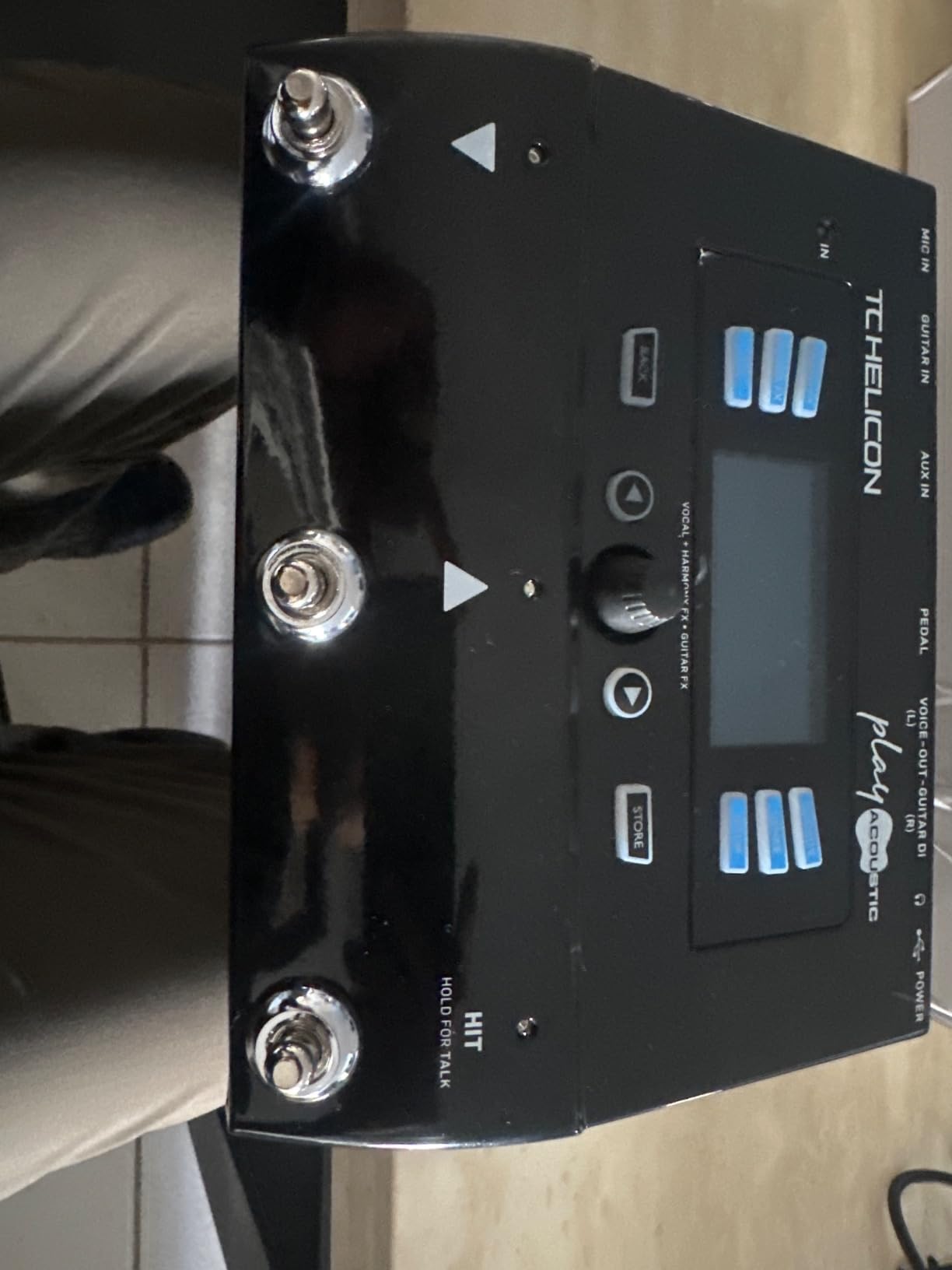
On the vocal side you get adaptive EQ, a de-esser, compression and transparent pitch correction keyed to the guitar input, so corrections land quietly. The looper has undo and redo, and there is a tuner, which between them make rehearsal and solo performance work in one box. USB, XLR and quarter-inch connections cover the usual rig.
Output routing is flexible: separate vocal and guitar outputs, or a stereo mix of both, which matters if your PA has two channels to spare.
The limited palette is the real constraint. The guitar effects are drawn from TC Electronic units — a Hall of Fame reverb, a Flashback delay, a Corona chorus. That is fewer sounds than older TC-Helicon flagships offered. Presets alter the vocal processing but leave a single global acoustic guitar tone, so you cannot fully restyle the guitar between songs.
When this pedal makes sense for you
Buy this if you play acoustic guitar and sing at the same time, and you want backing vocals without a second musician. The guitar-sensing harmony is the feature nothing else in this list replicates at this simplicity.
It is equally good for a songwriter who demos alone and wants a looper with undo. At 1.33 kg it is portable enough for a small room, and the metal-ish construction has already survived a touring year for at least one owner.
Where it will disappoint you
If you play electric guitar with distortion, the key-sensing input is the wrong tool. It is designed for clean acoustic signal, and heavy fuzz will confuse the detection as well as the tracking.
Programmer musicians will find the interface slower than a touchscreen unit, and a few owners report harmony tracking that feels less immediate than the older Play GTX. Mic position also affects whether harmonies engage reliably, which takes some experimentation.
4. BOSS VE-5 Vocal Performer – Best for Karaoke, Worship and Beginner Singers
BOSS VE-5 Compact Vocal Performer for Vocalists | Personal Effects Processor | Phrase Looper for Harmonizing and Layered Beatboxing | Mic-Stand Mount Included | Reverb, Delay, Pitch Correct
Six VE-20 vocal effects
Phrase Looper
XLR in and out
Mic-stand mount included
Pros
- Six vocal effects inherited from the VE-20 including Double/Harmony and Pitch Correct
- One-touch operation with three memory buttons for instant recall
- Included mic-stand mount makes stage and karaoke placement easy
- Phrase Looper supports harmonising and layered beatboxing
- Standard XLR in and out drops into almost any PA
Cons
- Single-voice double and harmony rather than three-part
- Mic sensitivity settings sit in the setup menu
- Bundled manual has no English operating instructions
The VE-5 is the box we hand to someone who has never used a vocal processor and wants a result within ten minutes. Six effect types inherited from the VE-20 — reverb, delay, double/harmony, dynamics, pitch correct and tone/SFX — sit behind three touch-sensitive memory buttons. Press one, you get a usable sound.
At 4.4 from 322 reviews, with 76 percent five-star, the owner satisfaction is high for such a simple device. Buyers describe it as effective for karaoke, worship and general live vocal thickening, and it is frequently compared favourably to the discontinued VT-1.
The included mic-stand mount is a genuinely good inclusion. Instead of finding pedalboard space, you clamp it to the stand where the mic already is, which also shortens the cable run and helps feedback.
It runs on a 9V battery if you want it to, and the XLR input and output means it goes into a small PA, a karaoke machine or a mixer with no adapters.
What you give up is depth. The double and harmony here are single-voice, not the three-part layering on newer units, and mic sensitivity lives in a setup menu that takes a little reading to understand. The bundled manual having no English operating instructions is an odd thing to stumble over, and it comes up repeatedly in reviews.
The robot and novelty SFX voices are also divisive. Some singers love them, others find them a gimmick. Since the presets are on three memory buttons rather than buried in a menu, it takes seconds to skip past anything you dislike.
When this pedal makes sense for you
Choose the VE-5 for karaoke nights, small worship settings, busking and a first vocal pedal. It is the least demanding unit here to operate, and the metal BOSS housing with a five-year warranty is the durability benchmark users treat as the floor.
It is also a good looper for beatboxing and layering, because the Phrase Looper works with the harmony engine rather than replacing it.
Where it will disappoint you
If you want three-part harmony, this is not the box. If you are sensitive to tuning latency, the Pitch Correct effect is simple rather than surgical.
It is a single-purpose desktop unit, not a pedalboard piece, so if you run everything from a board you may prefer something with a footswitch and less of a setup menu. The dimensions listed by the manufacturer are also clearly a shipping measurement rather than the actual footprint, so check the size before you plan a spot for it.
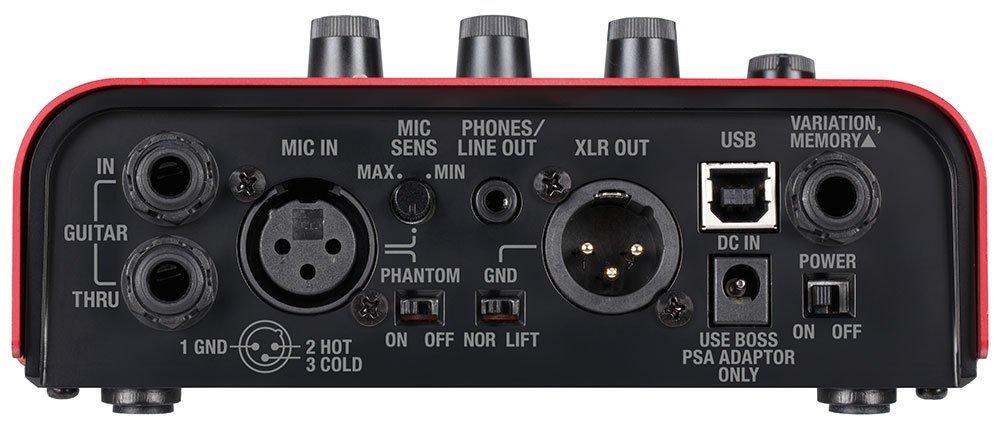
5. BOSS VE-2 Vocal Harmonist – Best Dedicated Harmony Engine
Boss VE-2 Vocal Harmonist Effects Processor
24 harmony types
Guitar key detection
Reverb and delay
Four memory slots
Pros
- 24 selectable harmony types with natural rather than robotic results
- Key detection from the key knob or a connected guitar
- Reverb delay and enhancement controls plus four user memory settings
- Plays through a connected guitar underneath mic harmony
- Effective pitch correction for singers who miss notes
Cons
- Only three built-in memory slots limits large song lists
- Power supply not included and BOSS recommends an adapter
- The key selection knob can be temperamental
- Voicing options suit some vocal ranges better than others
The VE-2 does one job and does it properly: harmony. Twenty-four selectable harmony types, and the reviews consistently describe the results as natural rather than robotic. For a singer who wants a thicker chorus sound and nothing else, that focus is an advantage.
Key detection works two ways. Connect a guitar and it reads the key automatically, which is the sensible route for a singer-guitarist. Turn the key knob instead and you set it by hand — faster when there is no instrument, but less certain, and owners do report the knob being temperamental and leaving harmonies out of tune.
Four user memory settings cover the most common harmony patches. Four is not many, and if you have a 40-song set list with distinct keys, that becomes the limiting factor faster than the sound quality does.
At 16 ounces with a battery-powered design, it is one of the easiest units here to carry to a small venue. The BOSS build is solid, which matters when everything is going in a bag between engagements.
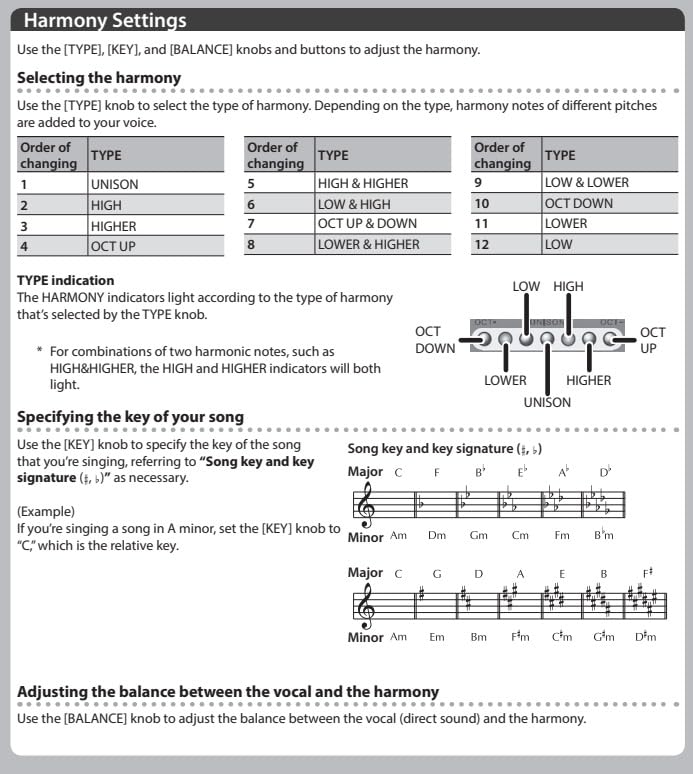
Beyond harmony you get reverb, delay and vocal enhancement controls, plus pitch correction described by owners as effective for singers who miss notes. Hearing the harmony interval under your own voice also helps accuracy, which is a genuine training benefit even before you take a stage.
The harmony voicing options are designed to sit in a sensible place relative to the input voice, and the manual notes that they work best when matched to your range. A very low voice picking a high voicing gets an odd gap, and no amount of knob-turning fixes a voicing that sits outside your natural register.
When this pedal makes sense for you
Buy the VE-2 if your priority is believable vocal harmony with a small footprint. It suits worship singers, acoustic solo acts and anyone adding a third and fifth under a chorus where the band is already busy.
It is also a good choice for someone who records on a phone or a laptop and wants a genuine pitch-correction stage in the chain. The sound quality of the processing is what BOSS built this for.
Where it will disappoint you
Three memory presets is stingy by 2026 standards, and the power supply is not included. On a mains-only unit that means an extra purchase, and BOSS recommends an adapter for reliable operation anyway.
If you rely on the key knob rather than a guitar, be prepared to check tuning between songs. And if you need reverb and delay at the same time as a heavy harmony, you are working with a limited palette compared with the larger processors in this list.
6. BOSS VE-8 Acoustic Singer – Best All-in-One Box for Singing Guitarists
BOSS VE-8 Acoustic Singer | Compact All-In-One Preamp and Effects Solution for Singing Guitarists | Create Natural Harmonies in Real-Time | Studio-Quality Processing | Multiple Vocal Effects | Looper
Acoustic preamp and effects
Real-time harmony
Four ambience types
Looper
Pros
- All-in-one acoustic preamp and effects box in a single compact unit
- Studio-quality vocal processing with four ambience types plus Enhance and chromatic pitch correction
- Real-time harmonies generated from guitar input or manual key settings
- Intuitive physical controls make live adjustment straightforward
- USB PA and stage monitor cables included
Cons
- Larger and heavier than tabletop harmonizers so it takes more pedalboard space
- Harmony accuracy depends on a clean guitar signal or a correct manual key
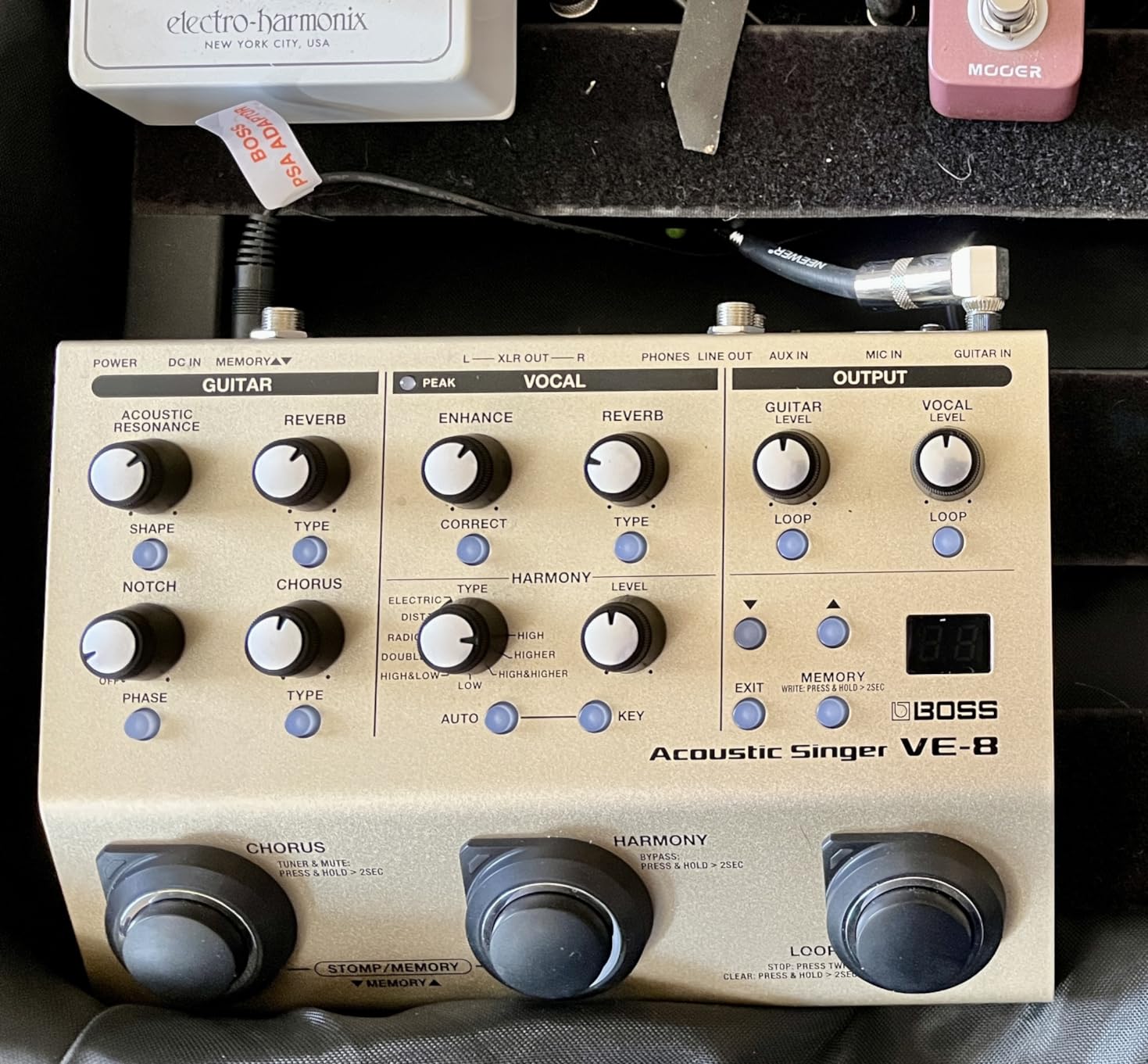
Where the Play Acoustic 3 focuses on guitar-sensing harmony, the VE-8 takes a broader approach: it is a complete preamp and effects solution for someone who sings and plays acoustic guitar, in one box.
It handles the guitar signal as well as the vocal. That matters more than it sounds like on paper, because an acoustic plugged straight into a PA needs preamp treatment, and doing that inside the same unit that handles your voice removes an entire decision from your signal chain.
On the vocal side you get four ambience types, an Enhance mode and chromatic pitch correction, plus real-time harmonies generated from the guitar input or set manually. The looper handles layering and practice.
What stands out most is the control surface. These are real physical knobs and buttons with clear labels, not a menu. For a performer who does not want to navigate a screen in the middle of a set, that is a genuine advantage and a theme that comes up repeatedly in owner reviews.
Bundled USB, PA and stage monitor cables cover the typical connection set, so you can get running without a first trip to the shop. The metal BOSS chassis and five-year warranty sit alongside the build quality users treat as the durability benchmark.
At 1.5 kg and 13.3 by 8.9 by 5.1 inches, it is the largest unit in this roundup. On a pedalboard that footprint is a planning decision rather than an afterthought, and it is a reason some singers will pick the smaller tabletop units instead.
When this pedal makes sense for you
This is the pick if your whole act is one person with an acoustic guitar, and you want guitar tone, vocal processing, harmony and a looper without a rack of separate boxes. The all-in-one approach removes the gain-staging decisions entirely.
It is well suited to a singer-songwriter doing a support slot, a small venue gig or a home recording session where the aim is a finished sound quickly.
Where it will disappoint you
The size is real. If your board is already full, a 1.5 kg floor unit at that footprint changes the layout. And like the Play Acoustic 3, the harmony engine wants a clean guitar signal or an accurate key setting, so distorted electric input is not its comfort zone.
It is also more than you need if your voice is the only instrument. A dedicated vocal unit gives you more voice-focused processing for a smaller footprint.
7. MOOER Harmony X2 – Budget Pick with the Widest Harmony Options
MOOER Harmony X2 Effects Pedal, 12 Pitch Options with 11 Harmonic Modes
12 pitch options
11 harmony modes
Independent stereo harmony
Dual 1/4 inch I/O
Pros
- 12 chromatic pitch selections each with major and minor scale support
- 11 harmony modes per root note covering thirds fifths sevenths and octaves
- Independent stereo harmony sets different intervals and levels per side
- Dry/Wet mix plus a save function for instant recall
- Dual footswitches toggle left and right harmony independently
- LEDs show mode and scale at a glance
- 9V adapter included
Cons
- Documentation is thin and the quick guide does not explain scale switching clearly
- Some users report noticeable lag on two-voice harmony settings
- Harmony voices can sound artificial or swooping if dialled in too high
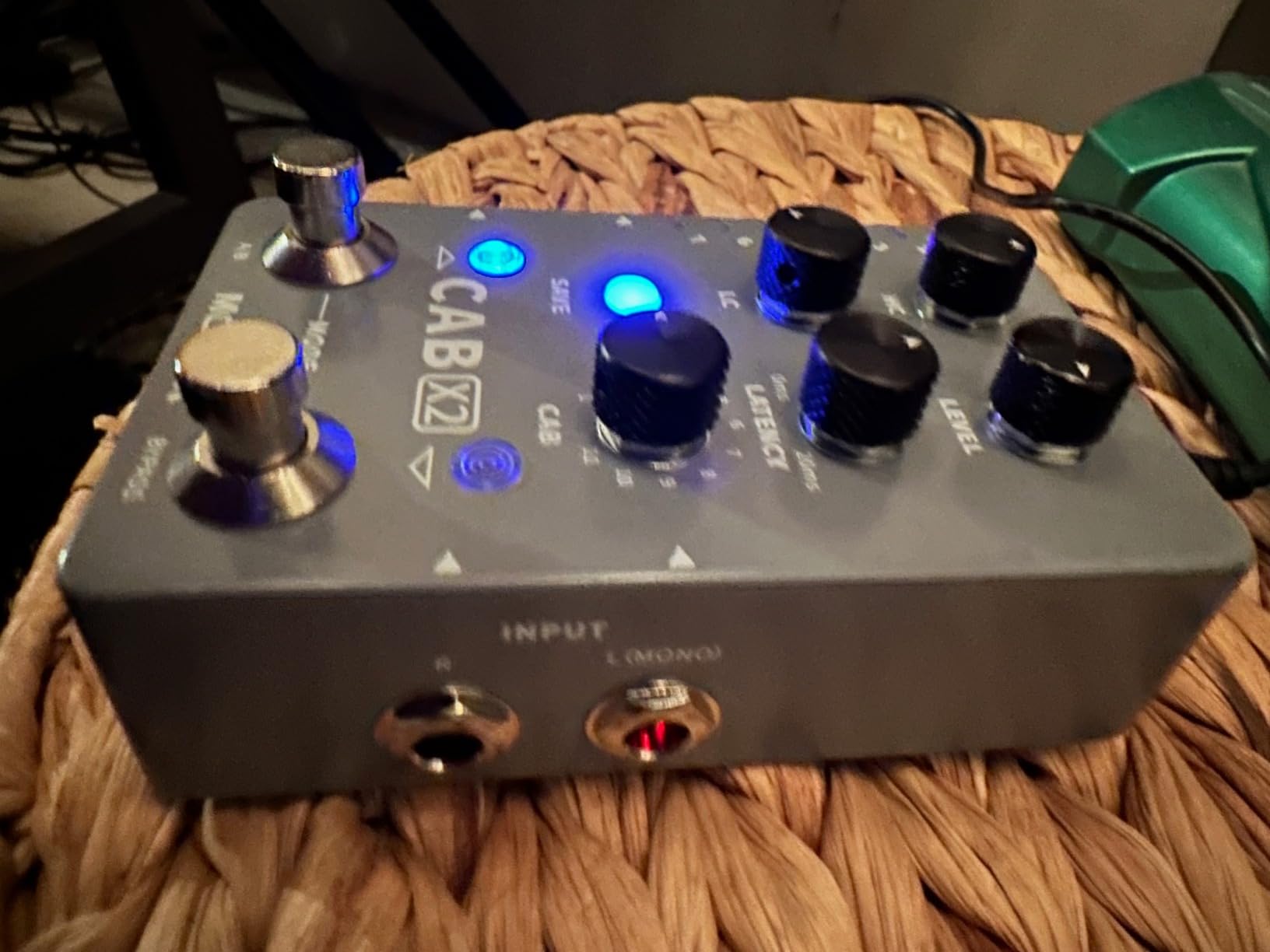
With 651 reviews, the Harmony X2 has the largest owner base in this roundup. It is a compact blue pedal at 5.43 by 4.8 by 2.95 inches that offers more interval options than anything else here, at the lowest end of the price range.
Twelve chromatic pitch selections, each supporting major and minor scales, crossed with 11 harmony modes per root note. In practice that means you can dial a fifth below on the left and a third above on the right, in a key that suits the song, without touching anything else.
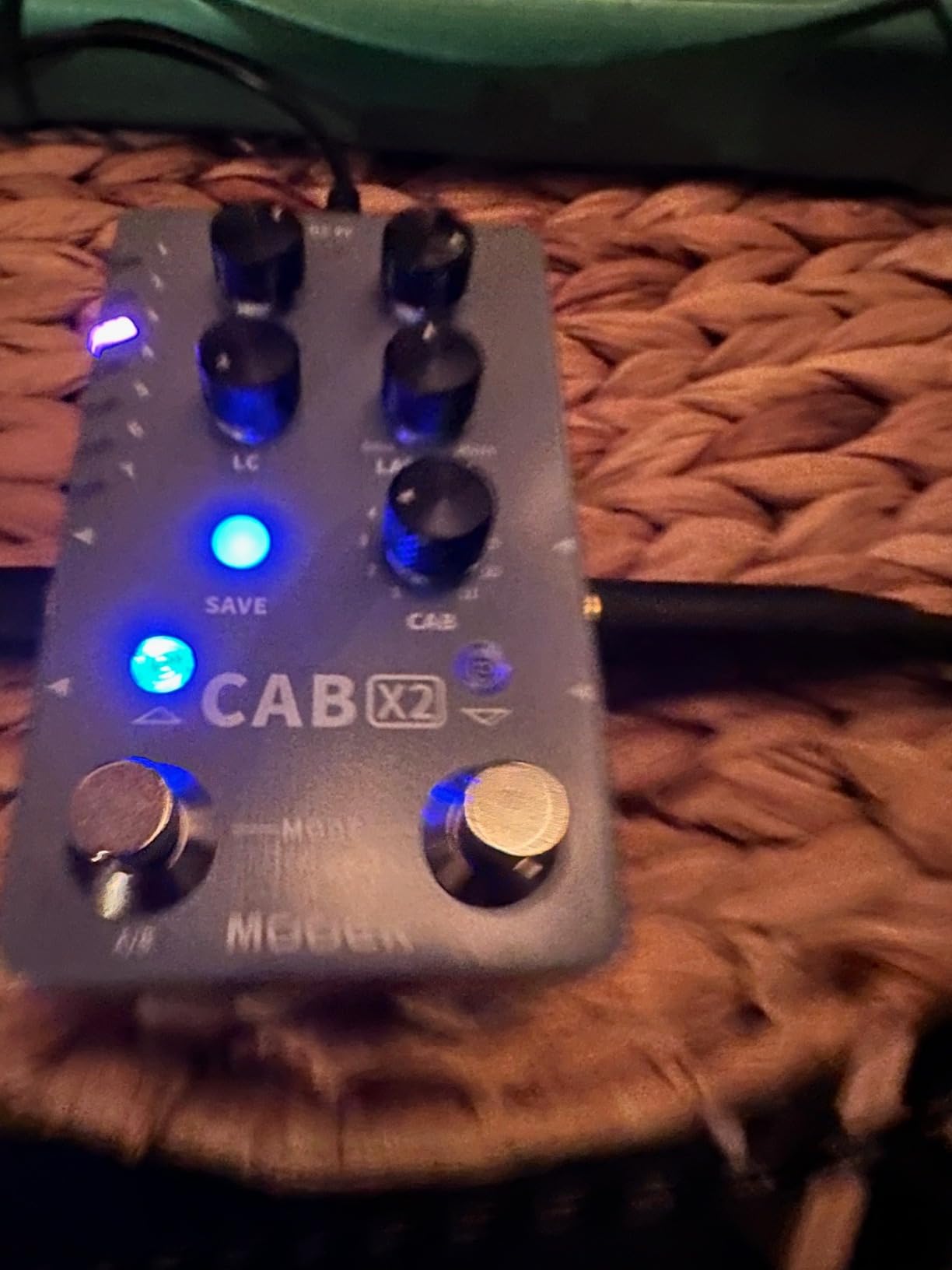
Independent stereo control is the genuinely differentiating feature. Most compact harmony pedals give you one interval for a mono output. This one has separate volume and interval per channel, with two footswitches to bring each side in independently, and LEDs that show the current mode and scale.
Dual quarter-inch inputs and outputs support mono, stereo, mixed or individual output modes. A 9V adapter is included, which is more than several competitors in this list manage, and a save function means a dialled-in sound is one press away.
The weaknesses are consistent across reviews. Documentation is thin, and the quick guide does not clearly explain how to switch scales or how per-channel saving works, so expect a short evening of experimentation. Some users also report noticeable lag in the generated harmony notes on two-voice settings.
The artificial or swooping quality that appears on sustained phrases comes from dialling the harmony level too high. Back the level off and it sits behind the voice properly. It is a gain-staging lesson, not a fault.
When this pedal makes sense for you
Choose the Harmony X2 if you want a wide range of intervals and stereo placement in a small package, and you are willing to spend an evening learning the controls. The option count is the best in the roundup for building wide vocal layers.
It is a good fit for someone layering harmonies in a track as well as live, because the independent left and right control makes it easy to build a wide stereo pad under a lead vocal.
Where it will disappoint you
If you need a microphone input, this pedal does not have one. It is an instrument-level harmony processor, so the mic has to be pre-amped first. That is a significant gap for a roundup aimed at singers working with a vocal mic directly.
It is mains-powered, so no busking, and the documentation issue will cost you time. Two-voice settings may also show lag that is audible against a live band.
8. TC Helicon VoiceLive Play – Best Starting Point for Karaoke and Practice
TC Helicon Voice Live Play Vocal Effects Processor
200+ presets
Room Sense key detection
AUX input with Vocal Cancel
USB interface
Pros
- Over 200 song and artist inspired presets give instant starting points
- Room Sense and key detection set the key for harmonies automatically
- AUX input with Vocal Cancel lets you sing along to MP3 playback
- Affordable entry into TC-Helicon harmony processing
Cons
- Older hardware and menu-driven interface compared with touch-screen units
- Harmony and effect variety is more limited than newer dedicated vocal processors
Where the Play Acoustic 3 is the current metal-bodied TC-Helicon pedal, the VoiceLive Play is the older generation, and its defining strength is sheer volume of choice. More than 200 song and artist inspired presets, which owners consistently name as the reason the unit is easy to get a usable sound from immediately.
Room Sense is the other feature people mention. It listens and detects the key, so harmonies are placed correctly without any setup. For a practice room or karaoke session where you do not know the song in advance, that saves a lot of trial and error.
The AUX input with Vocal Cancel is a practical touch for practice. Plug in a phone or MP3 player, and the vocal content in the backing track is cancelled so you hear just the accompaniment.
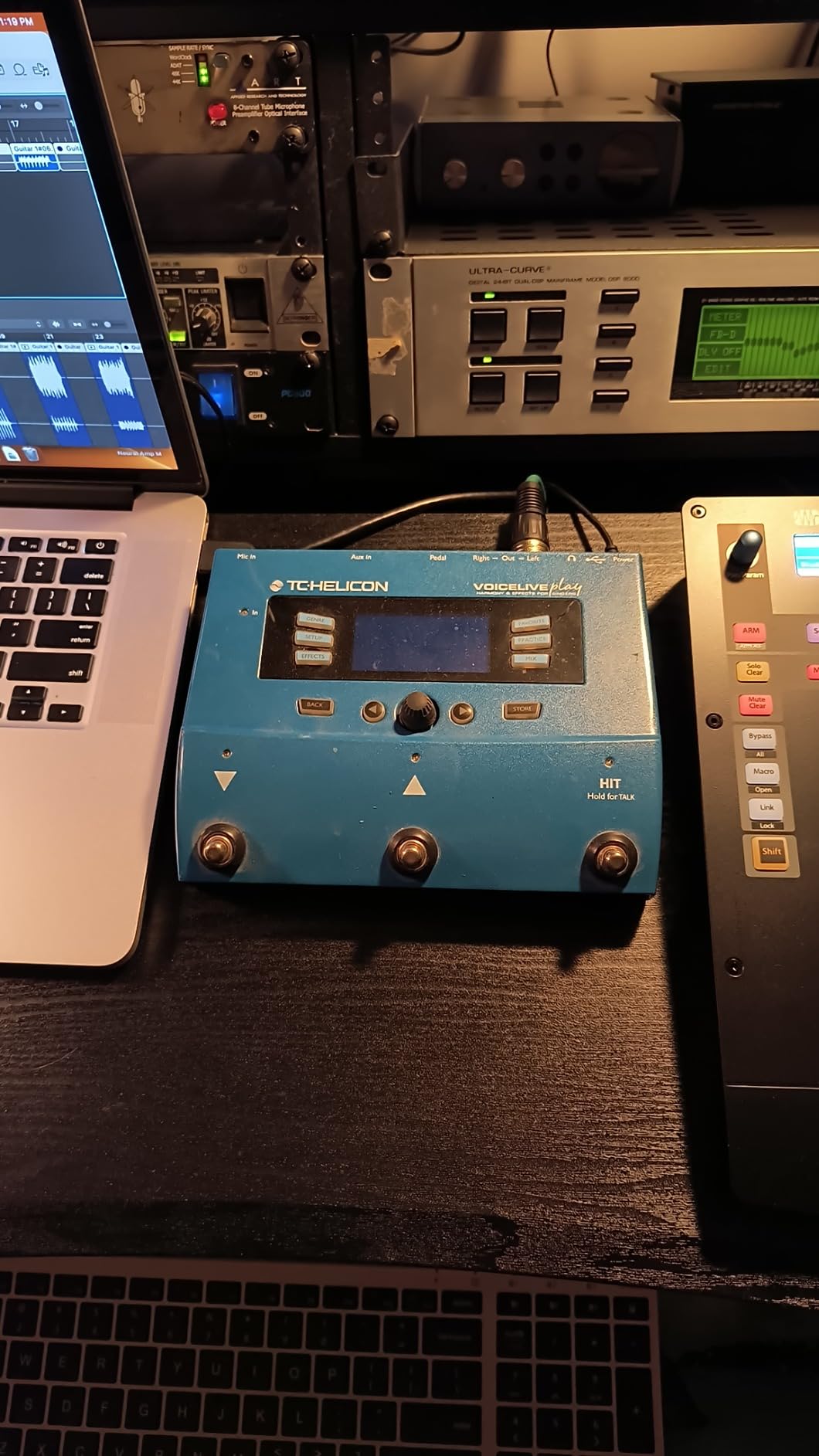
It is a large floor unit at 11.02 by 3.35 by 6.5 inches and 2.09 pounds, built in a stainless steel housing. It has been around since 2013, which tells you both that it is a well-understood design and that it predates the touchscreen generation.
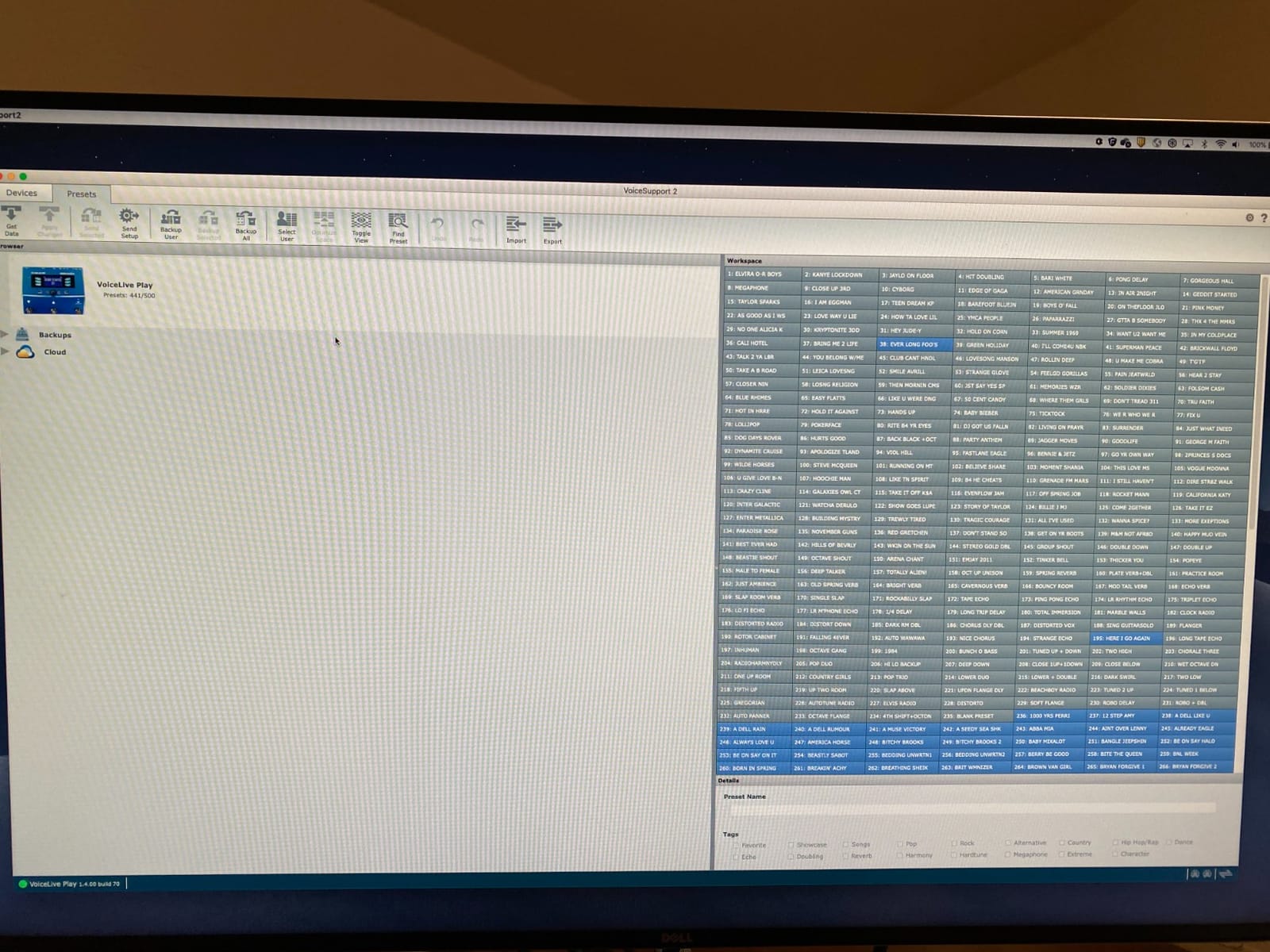
The USB interface allows computer connection, which is useful for pulling a performance into a DAW. Battery type is listed as lithium, though the design is fundamentally mains-oriented.
The honest issue is age. The menu-driven interface feels dated beside a touchscreen unit, and the harmony and effect variety is narrower than what current dedicated vocal processors provide. The Gear Page and vi-control threads have long recommended the TC-Helicon range for live vocal polish, and this model remains a reasonable way into that family, but it is the previous generation of it.
When this pedal makes sense for you
Buy the VoiceLive Play for karaoke, practice and rehearsal, or as a low-commitment way to find out whether a vocal processor suits you. The preset library removes the learning curve almost entirely.
It is also a good second unit for a home studio, where song and artist presets save time and the USB connection lets you capture ideas quickly.
Where it will disappoint you
On a live stage, navigating a menu-driven interface while the band plays is not enjoyable. The effects palette is also narrower than the TC-Helicon units that replaced it.
Its size makes it a floor unit rather than a pedalboard piece, and it is not a true vocoder. If Daft Punk robot vocals are the goal, look at the E-4 instead.
9. TC Helicon Duplicator – Best Simple Doubling Pedal
TC Helicon DUPLICATOR Ultra-Simple Vocal Effects Stompbox with Doubling, Reverb and Pitch Correction
Three doubling voices
Vocal-tuned reverb
Adaptive tone
Battery or 9V
Pros
- Three classic doubling voices: tight loose and octave up or down
- Footswitch toggles doubling without losing tone reverb or pitch correction
- Reverb places the voice in a musical space
- Adaptive tone handles EQ compression de-essing and gating automatically
- One click engages doubling and a long hold engages reverb
- Runs on batteries or a 9V adapter
Cons
- The auto-tuner can cut the voice noticeably hard when a note is slightly out
- No power supply included and batteries drain quickly
- Only two main effect types for the money
The Duplicator is the most stripped-down unit here, and that is the point. At 0.42 kg and 5.25 by 3.25 by 2.25 inches it is a genuine stompbox, and it does exactly two things well: doubling and reverb.
Three doubling voices — tight, loose, and octave up or down — cover most of what a live singer needs to make a single voice sound like two. The footswitch engages doubling without dropping your reverb or pitch correction, and a long hold brings in the reverb, so the control scheme is genuinely simple under pressure.
Adaptive tone handles the EQ, compression, de-essing and gating automatically. That is a lot of invisible work for a pedal with this few controls, and owners consistently credit the reverb and doubling quality rather than the processing internals.
It runs on batteries or a 9V adapter, which makes it a busking option and one of the few portable units in the list. Several users report it performing well in live rigs with no feedback at all, which is worth noting given how often feedback comes up in vocal-effect discussions.
When this pedal makes sense for you
Choose the Duplicator if you play a lot of solo acoustic sets and want a doubled voice and some space, nothing more. It is light, battery-capable and small, and the footswitch logic is learnable in a minute.
It is a good budget entry for someone who wants to try a vocal stompbox without committing to a large processor, and the doubling is genuinely musical rather than an effect trick.
Where it will disappoint you
The auto-tuner is the most criticised element. Owners report it cutting the voice noticeably hard when a note is even slightly out of tune, which is a different character from the transparent correction on the TC-Helicon and BOSS units here.
No power supply is included, and battery operation drains cells quickly through a full set. There is no harmony engine, so if you want voices above or below yours, this does not do that. The 4.1 rating from 346 reviews reflects that narrowness honestly.
10. Roland AIRA Compact E-4 – the Only True Formant Vocoder Here
Roland AIRA Compact E-4 Voice Tweaker Vocal Performance Tool
Pitch and formant sliders
Vocoder mode
24-second looper
MIDI control
Pros
- The only true formant-based vocal transformer in this group with pitch and formant sliders
- Harmony auto-pitch vocoder and glitch functions on a voice or external input
- 24-second looper with unlimited overdubbing undo and redo and BPM detection
- MIDI control of pitch harmony and vocoder functions
- Rechargeable battery and linking with other AIRA Compact units
- Low-cut filter and noise gate for clean signal
Cons
- Effects cannot be stacked so delay and reverb cannot be used together
- Sliders are not notched at centre so zeroing them mid-song is awkward
- Changing parameters for each effect on the fly is awkward and the Scatter knob is unusual
Everything else in this roundup manipulates pitch, adds harmony or corrects tuning. The E-4 manipulates formants, which is the actual mechanism behind a vocoder. It is the only unit here that will take a sustained vowel and a carrier signal and produce the talking-robot tone associated with Daft Punk records and disco classics.
The pitch and formant sliders are the interface. Moving formant on its own changes the perceived age and gender of the voice without touching its note — a slow sweep up sounds comical, a push down sounds authoritative. Moving pitch with formant fixed gives a different, stranger result. Having them as separate physical controls is what makes the effect playable in real time.
Alongside that you get harmony, auto-pitch, vocoder and glitch functions, all working on your voice or on any external input you feed in. That external input flexibility is the pedal-versus-synth argument in concrete form: a user on a synthesiser forum notes that a pedal accepts anything you can cable into it, while a synth with a built-in vocoder locks you to that one instrument.
There is a 24-second looper with unlimited overdubbing, undo and redo, and automatic BPM detection. MIDI control covers pitch, harmony and vocoder functions, so in a studio it can be driven from a DAW or a controller.
It runs on rechargeable battery power and links with the other AIRA Compact units for jamming, which is a genuine live advantage for anyone building a one-person electronic set. Reverb, echo, tempo delay and chorus sit on the output, along with a low-cut filter and noise gate for signal management.
Now the compromises. Effects cannot be stacked, so delay and reverb cannot be used together. The sliders are not notched at centre, which makes zeroing one mid-song awkward when it is sitting at 2 o’clock. Changing parameters for each effect on the fly is fiddly, and the Scatter control’s behaviour is unusual enough that buyers found it confusing without clear instructions.
The 4.1 rating from 134 reviews is the lowest combined figure among the well-reviewed units here, and it reflects a tool that rewards experimentation and punishes impatience. The same review summary notes that users who link it with the rest of the AIRA Compact range rate it highly for vocoder and harmony sound.
When this pedal makes sense for you
Buy the E-4 if you actually want vocoder sounds rather than harmonies. Daft Punk-style disco vocals, talking synth lines, robotic chops and formant sweeps are the reasons this box exists, and no other pedal in this roundup delivers them.
It also suits an electronic performer who wants battery power, a looper with BPM detection and MIDI control in a single portable unit. The 24-second looper makes it useful for beatboxing and layered live performance.
Where it will disappoint you
If you want a polished live vocal chain, this is the wrong tool. It does not stack effects, its controls fight you under time pressure, and its output is intended as one part of a chain rather than the finished sound on its own.
The rating and review count are the lowest of the established units here, which tells you it is a specialist purchase rather than a safe one. Without clear instructions, expect a longer setup period than any other pedal in this list.
How to Sing Into a Vocoder Pedal
This is the part that catches people out, and it is the part almost every buying guide skips. A pedal can be wired correctly, set correctly, and still sound bad because of how you are singing.
Sing sustained vowels, not lyrics. Open “ah” or “oo” tones are the raw material. A vocoder analyses steady formants, and a vowel held for a full second gives it far more to work with than a syllable that arrives and leaves in 200 milliseconds. Daft Punk vocal lines are almost entirely held vowels, which is not a stylistic accident.
Move your mouth. The effect only responds to changes in mouth shape. Sing “ah” and then “oo” and “ee” slowly, and the tone will audibly move with you. Sing a held note with a completely static mouth position and the sound sits still.
Control the breath. Breath noise is broadband and unmusical once it has been filtered. Sing from the middle of your voice rather than pushing air, and take breaths between phrases instead of during them.
Watch your input level. Tracking goes choppy and gargling when the level is too low, which is the most commonly reported complaint across vocal-effect forums. Set the gain so your loudest phrase sits near the top of the meter without clipping, and check it with the actual song, not a quiet verse.
Play the first note clean. Pitch-tracking circuits often need a moment to lock. Let a note ring for a fraction of a second before you open into the vowel, and the tracking will settle rather than slide.
On a harmony pedal, the equivalent advice is to sing the melody clearly on the beat. The harmony engine reads your pitch, and a rushed entry gives it the wrong note to build from.
Live Setup and Feedback Control
Feedback is the most repeated complaint in every vocal-effects discussion we found, from guitar pedal forums to synthesiser communities to live sound engineering threads. It is also mostly avoidable with setup rather than equipment.
Start with position, not gain. Put the vocal microphone as close to your mouth as you can manage and point it away from the speaker. A mic on a short straight stand in front of you, angled over your shoulder away from the PA, is worth more than any processor setting.
Second, cut the frequencies that cause the trouble. Roll off a band in the low-mid range around 400 to 800 Hz on the vocal channel before the effect, and the howl that sustains itself loses its fuel. Many of the pedals here include a low-cut filter or a de-esser for the same reason.
Third, gain stage backwards. The mixer output is usually the loudest thing in the chain, and the pedal sits before it. Getting the pedal input healthy first means the fader position on the vocal channel is a monitor control rather than a way of cramming level into the mixer.
Fourth, use the right connector where you can. XLR carries balanced signal, which is more resistant to picking up noise and to behaving oddly in long cable runs. A quarter-inch TS connection is unbalanced and more exposed, so keep those cables short.
Fifth, use the dry signal path. A clean thru or a separate vocal and guitar output lets you monitor your voice without routing the effected signal straight back into the mic path. The TC-Helicon Play Acoustic 3 and the BOSS VE-8 both give you separate outputs for this reason.
Sixth, engage effects in the order that helps. Doubling and thickening first, reverb last, means the reverb return is the only extra level adding to the room. Turning everything on simultaneously at full level is the fastest route to feedback.
If you are still howling, the honest answer is that the mic and speaker positions are fighting each other. Move the mic, or move yourself, before you change another setting on the pedal.
Which Pedal Matches Your Vocal Range
Harmony voicing algorithms place interval voices relative to your input voice, and they are designed around a typical range. When a voicing sits far outside your natural register, the gap is obvious even to a non-critical audience.
For a high female voice, a voicing a third below and a fifth above will usually sit well, because both are already inside the register you sing in. The BOSS VE-2’s 24 harmony types are easy to audition, and the TC-Helicon units generate voices that follow the input level.
For an alto or mezzo, the widest range of these units works without adjustment. This is the range most harmony algorithms assume, and it is where preset-based approaches like the VoiceLive Play’s library tend to land accurately.
For a tenor, avoid stacking many voices above the input. The upper intervals risk pushing into a falsetto register that the voice cannot sustain. Voices a third below and an octave below tend to work better.
For a baritone, this is where a formant-aware unit earns its place. Pitch-based intervals below the natural voice can sound thin, so shifting the formant with the pitch — which the E-4 lets you do independently — keeps the voice sounding full. The BOSS VE-2 manual makes a similar point about matching voicing options to the singer’s range.
For anyone singing a low voice and wanting the Daft Punk effect, a proper formant vocoder matters more than the pitch control. That is the E-4’s pitch and formant slider pair, and it is why a true vocoder is not interchangeable with a pitch shifter.
Vocoder Pedal Buying Guide: What to Look For
Decide what kind of box you need first, because the honest answer for most singers is a harmony engine rather than a vocoder, and the two categories are priced and judged differently.
True vocoder or harmony engine? A true vocoder analyses formants and imposes them on a carrier. A harmony engine generates interval copies of your own voice. If you want a talking robot, you need the first. If you want a fuller chorus, you need the second. Only the E-4 in this roundup does the former.
Mic input and phantom power. Every unit aimed at a singer takes a microphone. Check whether it offers 48V phantom power, because that determines whether you can use a condenser mic. The Zoom V3, HeadRush VX5 and BOSS VE-5 all provide it. Some, like the MOOER Harmony X2, have no mic input at all and expect an instrument-level signal.
Dry or thru path. A clean monitor path is what lets you hear yourself without feedback. The lack of one is a listed complaint against some units, and the TC-Helicon Play Acoustic 3’s separate vocal and guitar outputs solve it properly.
How the harmony engine knows the key. The best version reads it from your guitar automatically. The next best is a key-detection mode. Manual key selection works, but it is the version most likely to leave a harmony out of tune mid-song, which is a recurring complaint about the BOSS VE-2’s key knob.
Build and power. Users treat metal-cased Boss and Roland housings as the durability benchmark, and it is a fair one. Battery operation matters if you travel or busk, and the Zoom V3 and BOSS VE-5 cover that; the VX5, Play Acoustic 3, VE-8 and Harmony X2 are mains units.
Preset storage. Three memory slots (the BOSS VE-2) limits a long set list badly. The HeadRush VX5 with 99 factory presets and room for 250 user presets removes the problem entirely, which is why hands-free preset switching via footswitches is a genuinely useful feature rather than a gimmick.
USB routing. If you record or stream, a USB audio interface changes the workflow. The VX5 and Zoom V3 both record over USB, the Play Acoustic 3 and VoiceLive Play offer USB connection, and the E-4 adds MIDI control for automation.
Tracking behaviour over feature count. Choppy or gargling tracking is the most common technical complaint about vocal effects generally, and it is usually a level or microphone issue rather than a pedal defect. Buy something with a mic gain control you can actually reach, and test it with your own microphone before you commit.
Frequently Asked Questions
Which vocoder pedal is the best?
For most singers the HeadRush VX5 is the strongest single buy, because it combines an Antares Auto-Tune circuit, automatic vocal harmony, 99 presets with two-footswitch recall and a USB audio interface in one pedal. If you specifically want true formant vocoder sounds rather than harmony, the Roland AIRA Compact E-4 is the only genuine vocoder in this roundup.
What is the best pedal for vocalists?
It depends on the instrument in your hands. Solo singer-songwriters who play acoustic guitar get the most from the TC Helicon Play Acoustic 3, which reads the key from the guitar and generates harmonies automatically. Streamers and small-stage performers get the most from the Zoom V3, and first-time users get the easiest results from the BOSS VE-5.
Which vocoder did Daft Punk use?
Daft Punk’s signature robot vocals were produced in the studio rather than performed through a stompbox, and the widely circulated association is with analog vocoder hardware. Among pedals, the Electro-Harmonix V256 has the strongest user association with that sound, with users on Daft Punk forums routinely trading the pedal for that reason. None of the units in this roundup reproduce a full studio-grade analog vocoder.
Do you sing or speak into a vocoder?
You sing, and you sing sustained vowels rather than lyrics. Open ah and oo sounds held for about a second give a vocoder the most formants to analyse. Speaking works but produces far less result, because speech moves through vowel shapes too quickly for the filter bank to follow. Keep the mouth moving between vowel shapes, because the effect responds to mouth position.
What is the difference between a vocoder and a talk box?
A vocoder analyses the formants of your voice electronically and uses them to filter a carrier signal, usually a synth or guitar. A talk box routes your voice through the speaker of a real instrument, so the instrument’s cabinet and speaker colour the sound. A talk box is an acoustic process involving hardware; a vocoder pedal is a signal process that can use any sound as its carrier.
What is the best vocal harmonizing pedal?
The BOSS VE-2 is built specifically for harmony, with 24 selectable harmony types and key detection from a connected guitar. The TC Helicon Play Acoustic 3 does the same job with fewer manual steps because it reads the key from your acoustic guitar automatically. The main constraint on the VE-2 is that it has only three memory slots.
What is the best vocal pedal for live performance?
The BOSS VE-5 is the most practical live choice for a beginner, with one-touch operation, three memory buttons, an included mic-stand mount and XLR connections. For a touring player who wants automatic hands-free changes, the HeadRush VX5 steps through 99 presets with two footswitches. For feedback control, keep the mic away from the speaker and use a balanced XLR run where you can.
What pedal gets rid of feedback?
No pedal eliminates feedback on its own. The effective sequence is: move the vocal mic as close to your mouth as possible and point it away from the speaker, cut the 400 to 800 Hz range on the vocal channel, use a balanced XLR connection instead of an unbalanced quarter-inch cable, engage thickening before reverb, and make sure the pedal has a clean dry or thru path for monitoring. Position changes fix more cases than any setting.
Which TC Helicon vocal pedal is considered the best?
The current metal-bodied option is the Play Acoustic 3, which pairs guitar-key sensing harmonies with BodyRez acoustic filtering, an onboard looper and separate vocal and guitar outputs. It carries a 4.4 rating from 550 reviews, the highest in this roundup. The older VoiceLive Play offers over 200 presets and Room Sense key detection, which remains useful for karaoke and practice.
Final Verdict: The Best Vocoder Pedals for 2026
The HeadRush VX5 wins this roundup because it covers the most ground in one pedal: a real Auto-Tune circuit with front-panel control, automatic harmony, chainable effects, 99 presets with hands-free switching, and a USB audio interface. At 4.3 from 569 reviews, it is also the unit with the second-largest owner base here.
Choose differently if your situation is specific. The TC Helicon Play Acoustic 3 is the highest-rated pedal in the list and unbeatable for a solo singer-guitarist, because it reads the key from your guitar. The Zoom V3 is the value pick for streamers and battery-powered sets. The BOSS VE-5 is the shortest route to a working vocal sound for a first-timer.
And if you came for the actual vocoder effect rather than harmonies, the Roland AIRA Compact E-4 is the only unit here that manipulates formants, with separate pitch and formant sliders. Everything else in this roundup is a harmony engine, however good it is at its job.
Whichever you choose, sing sustained vowels, set your input level properly, and keep the microphone away from the speaker. Those three things decide whether the pedal sounds like a professional effect or an expensive mistake.