
I spent the last three months cycling through 8 budget synthesizers at my home studio – sitting with each one for a full weekend, recording beats, drones, and basslines into Ableton, and taking notes on what worked and what frustrated me. The best synthesizers under $500 in 2026 are no longer the compromise buys they used to be. Korg, Arturia, Behringer, Yamaha, and Roland now pack features (polyphonic aftertouch, multi-algorithm FM, Eurorack-compatible patch points, multitimbral layers) into sub-$500 hardware that would have cost twice as much five years ago.
Whether you want a hands-on analog monosynth for techno bass, a polyphonic module for ambient pads, or a portable FM workhorse for live performance, the picks below cover every synth category at this price point. I focused on three things during testing: real-world sound quality, hands-on workflow (knobs versus menu diving), and how well each synth integrates with a modern DAW or modular setup.
This roundup spans analog, FM, hybrid, polyphonic, and desktop module designs, and I called out a “best for” genre tag on each one. If you’re brand new to synthesis, the buying guide at the end includes a glossary of VCO, VCF, and ADSR terms plus a beginner learning path. If you’ve been playing for years, jump straight to the comparison table and skip to whichever synth caught your eye.
Table of Contents
Top 3 Picks at a Glance (September 2026)

Best Synthesizers Under $500 Compared
| Product | Specs | Action |
|---|---|---|
| Korg Nu:Tekt NTS-1 |
|
Check Latest Price |
 Arturia MicroFreak Arturia MicroFreak |
|
Check Latest Price |
 Behringer TD-3-AM Behringer TD-3-AM |
|
Check Latest Price |
 Korg Volca Bass Korg Volca Bass |
|
Check Latest Price |
 Korg monologue Korg monologue |
|
Check Latest Price |
 Behringer MODEL D Behringer MODEL D |
|
Check Latest Price |
 Yamaha REFACE DX Yamaha REFACE DX |
|
Check Latest Price |
 Roland JX-08 Roland JX-08 |
|
Check Latest Price |
1. Korg Nu:Tekt NTS-1 – Best Overall Hybrid DIY Synth
Korg Nu:Tekt NTS-1 Build Your Own Digital Synthesizer Kit
DIY hybrid kit
logue-SDK expandable
integrated arpeggiator
Pros
- Compact 290 g chassis fits anywhere
- Analog modeling plus digital effects engine
- logue-SDK unlocks community oscillators and effects
- Integrated arpeggiator plus multimode filter
Cons
- Single-oscillator mono only
- DIY assembly required for first-time users
The Korg Nu:Tekt NTS-1 earned the top slot because it does something no other sub-$500 synth on this list does: it grows with you. The DIY build takes about 15 minutes with a screwdriver, and once it is alive, the logue-SDK means you can swap oscillator and effect engines written by Korg, third-party developers, and the open-source community. I loaded three custom oscillators in an evening and one of them – a granular engine – turned the NTS-1 into a completely different instrument.
For sound design, the analog-modeling engine with multimode filter covers basses, leads, and percussion convincingly. The onboard reverb, delay, and modulation effects are good enough to use as the final mix bus for sketch sessions. The integrated arpeggiator responds to incoming MIDI clock over USB, so it locks to my DAW without any setup headaches.
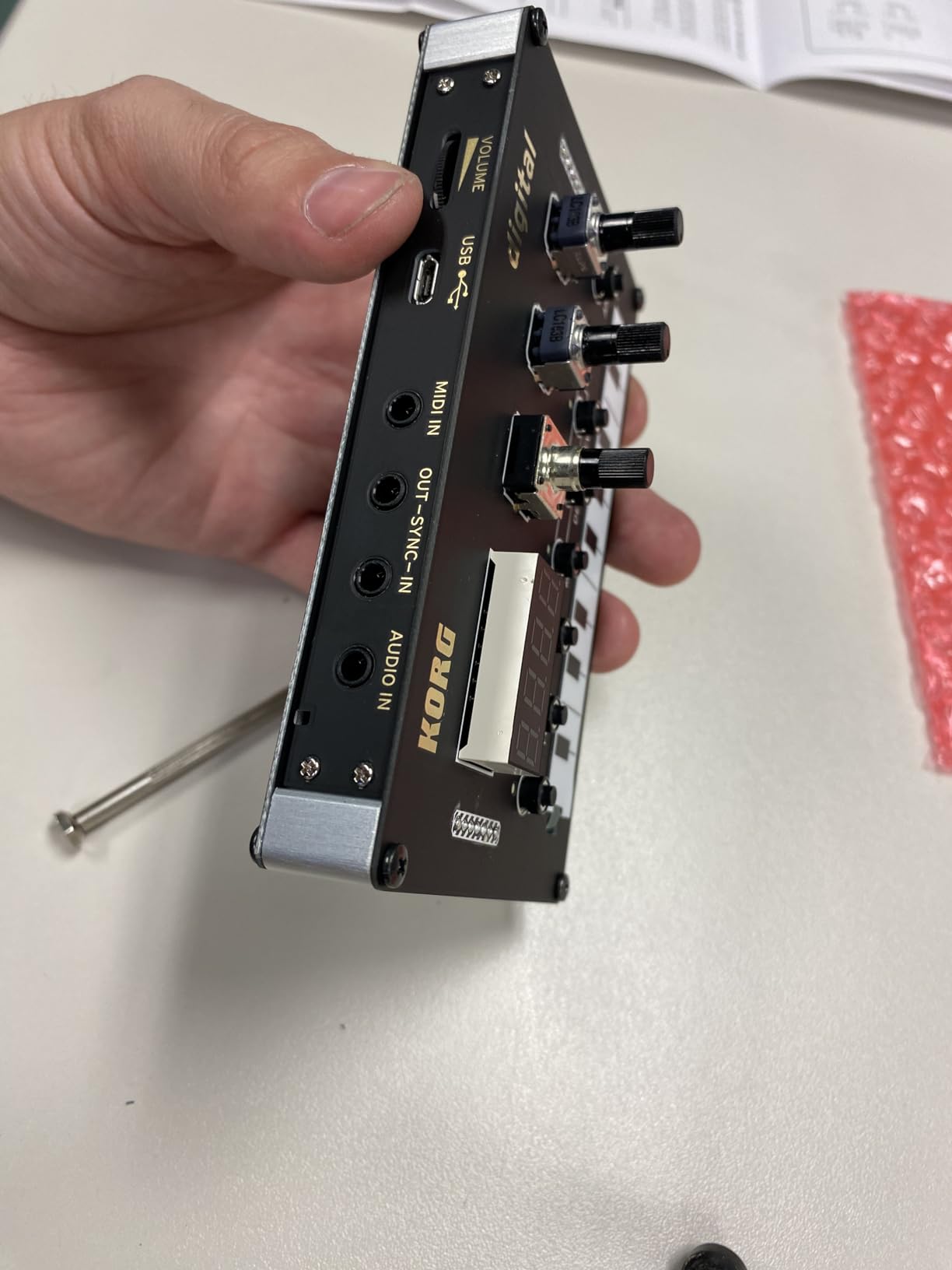
Connectivity is the standout feature at this tier. You get USB MIDI, 3.5 mm sync in and out for Volca and Eurorack gear, and a headphone output. For a hybrid synth that fits in your jacket pocket and can be modded by an open-source community, the NTS-1 punches well above its weight. Reviewers report it has held up to daily gigging and the aluminum top panel shrugs off bag abuse.
The catch: it is monophonic and the single-oscillator architecture means chord pads and polysynth leads are out. If you need true polyphony, look at the Roland JX-08 further down this list. For everyone else, the NTS-1 is a compact, expandable synth lab that travels anywhere.
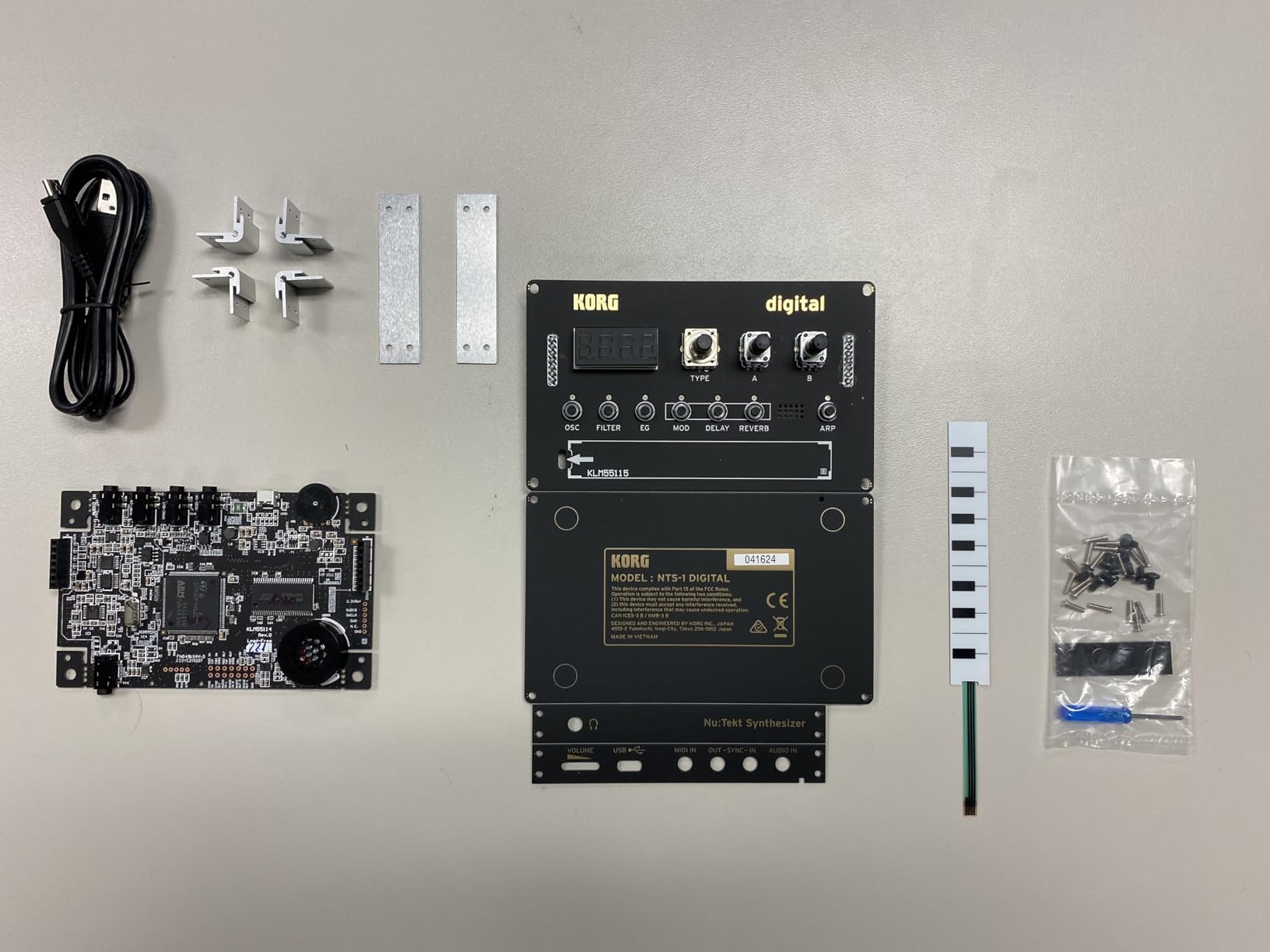
Build quality and longevity
The aluminum chassis and carbon-fiber top panel feel closer to a $1000 instrument than a sub-$150 kit. Firmware updates from Korg have added new oscillators, effects, and arpeggiator modes since launch, and the logue-SDK ecosystem keeps expanding. Community-maintained patches give the NTS-1 a near-infinite library of sounds.
Who should buy the NTS-1
Pick this if you want a portable, moddable synth that you can drop into any setup – Eurorack, Volca rig, or laptop DAW. It is ideal for sound designers, producers who like to customize their tools, and anyone who enjoys a brief build session before making music. Skip it if you want polyphony or a built-in keyboard from day one.
2. Arturia MicroFreak – Best Hybrid for Sound Design
Arturia MicroFreak Synthesizer Keyboard
17 oscillator modes
poly aftertouch
5x7 modulation matrix
Pros
- 17 paraphonic oscillator modes spanning digital and physical modeling
- Poly-aftertouch touch keyboard is highly expressive
- 5x7 modulation matrix rivals synths at 3x the price
- Ongoing firmware updates add new features and engines
Cons
- Plastic case feels light
- Touch-plate keyboard has a learning curve
- No USB cable in the box
The Arturia MicroFreak is the synth I kept reaching for during the test period, especially when I wanted to go beyond standard analog sounds. With 17 oscillator modes spanning wavetable, virtual analog, granular, Karplus-Strong, and even a vocoder, the MicroFreak covers sonic territory that pure analog monosynths cannot touch. The 5×7 modulation matrix gives you 35 routable destinations per patch.
The flat PCB touch keyboard looks unusual but it is one of the most expressive controllers I have used at this price. Polyphonic aftertouch means you can lean into a chord and watch the matrix routings respond per voice. Reviewers consistently note that firmware updates have added features (new sequencer modes, expanded modulation) for free since launch, making the MicroFreak a synth that gets better over time.
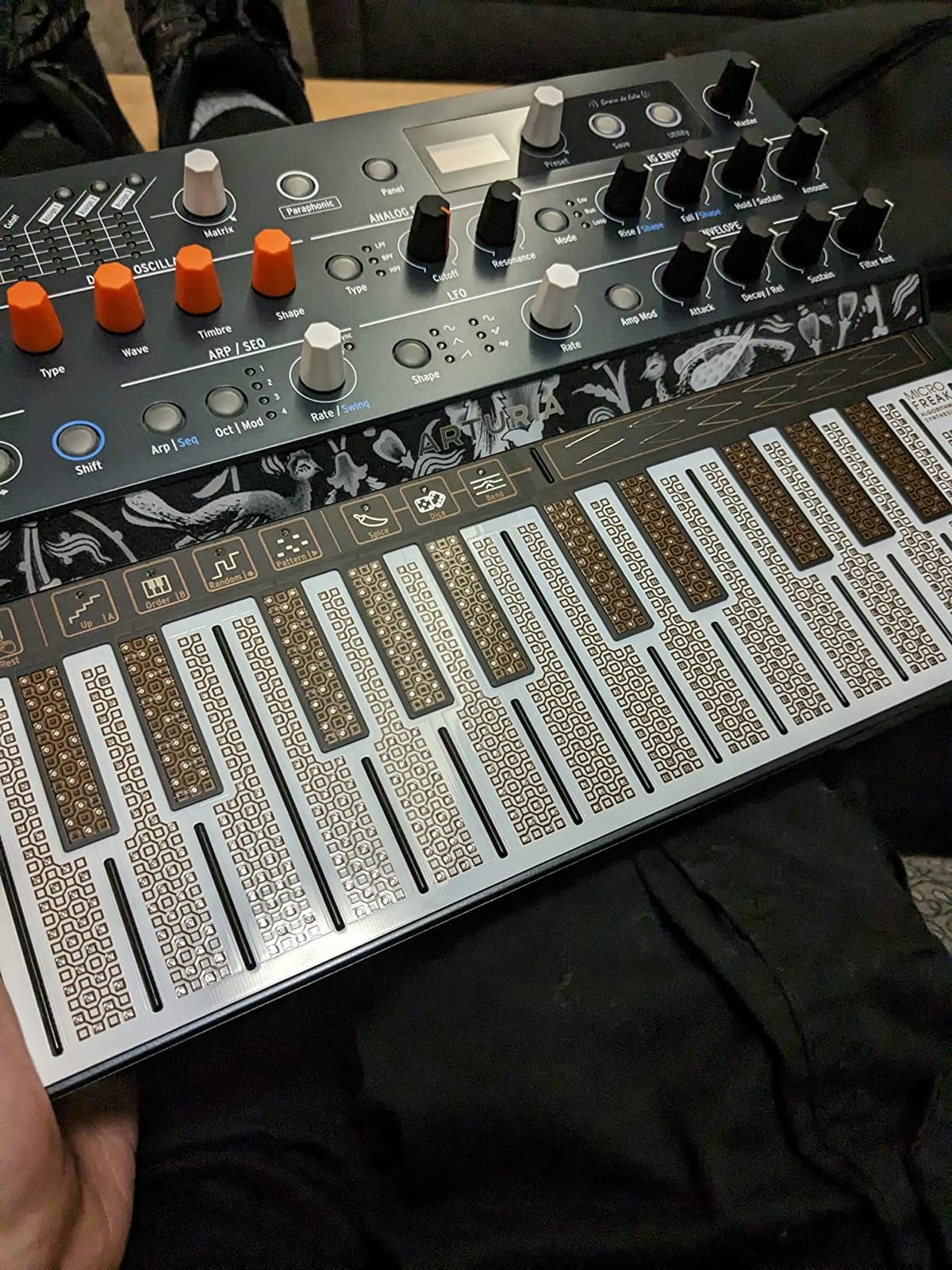
For live performance, the Spice and Dice sequencer lets you build generative patterns on the fly and the arpeggiator responds to clock over USB or traditional MIDI. CV outputs for pitch, gate, and pressure let the MicroFreak control a Eurorack system, which makes it a strong brain for a small modular setup. The included MIDI breakout cable gets you into older gear without buying an extra adapter.
Build quality is the one weakness. The plastic case and tiny on/off switch do not inspire confidence, and the unit ships without a USB cable (you will need one for firmware updates). If you plan to gig with it, budget for a small hard case. For studio and home use, the sound design capability is unbeatable at this price.
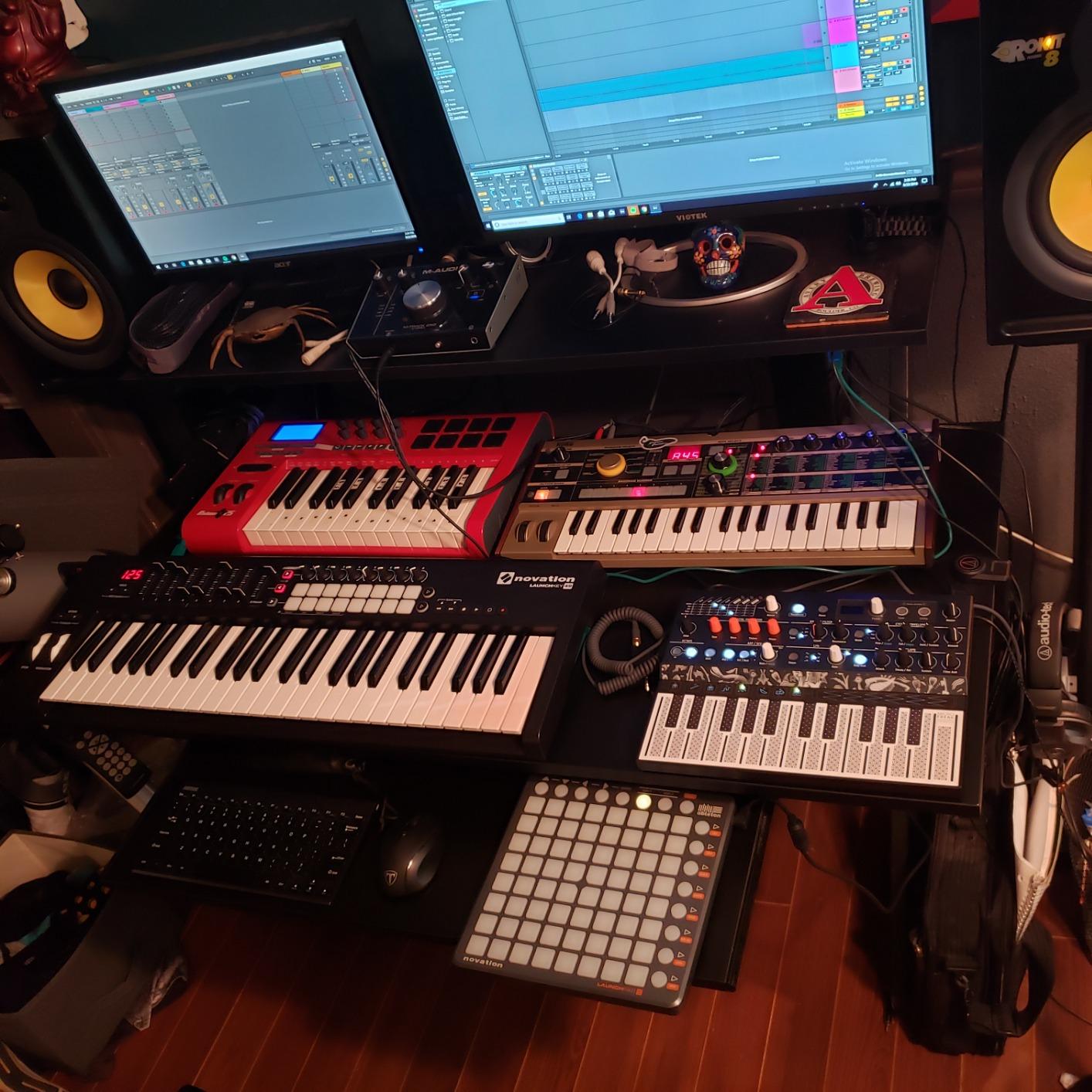
Sound design depth
Pair the wavetable or granular engines with the analog resonant filter and you get hybrid timbres you cannot easily replicate on a pure analog synth. The mod matrix is the real star: route LFO rate to oscillator wave, envelope to filter cutoff, velocity to mod matrix slot, and the MicroFreak starts to feel like an instrument you can grow into for years.
Who should buy the MicroFreak
Pick this if sound design versatility matters more than portability of a polyphonic keyboard. It is ideal for producers making electronic, ambient, or experimental music, anyone curious about physical modeling or wavetable synthesis, and studio producers who want a compact, deep synth that integrates with both DAWs and Eurorack. Skip it if you need full-size keys or true polyphony.
3. Behringer TD-3-AM – Best Budget Acid Bass
Behringer TD-3-AM Analog Bass Line Synthesizer with VCO, VCF, 16-Step Sequencer, Distortion Effects and 16-Voice Poly Chain
True analog 303 style
16-step sequencer
16-voice poly chain
Pros
- Authentic TB-303-style analog acid bass
- 16-step sequencer with slides and accents
- USB MIDI plus CV/Gate connectivity
- Poly chain expands to 16 voices for stacked basses
Cons
- Plastic enclosure feels light
- 303-faithful sequencer is tricky to program at first
- USB cable not included
If you want acid-house bass without selling a kidney for a vintage TB-303, the Behringer TD-3-AM is the most affordable way in. The circuitry is a faithful analog reproduction of the original 303 design with matched transistors, sawtooth and square VCO, and a 4-pole resonant low-pass filter that squelches exactly the way you want it to. Reviewers describe the TD-3-AM as delivering classic acid character at a price that makes the experiment low-risk.
Programming the onboard sequencer is part of the charm and part of the frustration. The workflow is intentionally identical to the original 303: enter steps, set notes, set accents and slides, and tweak in real time. If you have ever tried to program a real 303, you already know what you are getting into. New users report a weekend learning curve before sequences start flowing.
Connectivity is excellent for a budget mono. USB MIDI plugs straight into a laptop, traditional 5-pin MIDI works with older grooveboxes, and CV/Gate plus trigger out let the TD-3-AM drive a Eurorack system or modular drum machine. The 16-voice poly chain feature is a clever bonus: chain multiple TD-3 units together for thick stacked bass lines, which is unusual at this price point.
The plastic body is the obvious compromise. It feels light in the hand and the knobs wobble slightly under aggressive tweaking. Sound-wise, the consensus across more than a thousand reviews is that the TD-3-AM delivers the goods for acid techno and electro. Skip it if you need polyphony or pads; this is a dedicated mono bass machine.
Live performance and sequencing
Pair the TD-3-AM with a Eurorack case or a Volca unit and you have a tiny, battery-free live rig. The distortion circuit adds harmonics when you push the filter, and the slide and accent controls give you the squelchy 303 character that defined a genre. For techno and live electronic sets, this is hard to beat at the price.
Who should buy the TD-3-AM
Pick this if acid bass, electro, and squelchy mono leads are your thing. It suits techno and house producers, hardware performers on a budget, and anyone who has always wanted a 303 but refused to pay vintage prices. Skip it if you want polyphony, pads, or a more general-purpose analog synth.
4. Korg Volca Bass – Best Battery-Powered Analog Bass
Korg Volca Bass Analog Synthesizer w/Three Oscillators and 16-step Sequencer
Three analog oscillators
16-step sequencer
battery powered
Pros
- Three analog oscillators create thick
- punchy bass tones
- 16-step sequencer with Active Step adds rhythmic variation
- Battery-powered with built-in speaker for on-the-go playing
- Self-tuning function fixes analog pitch drift
Cons
- Built-in speaker is weak - use headphones
- MIDI filter modulation is limited
- Only 8 pattern memory slots with no chaining
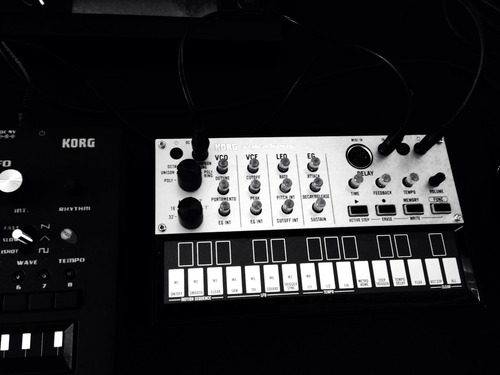
The Korg Volca Bass is the synth I tossed in my backpack the most during testing. It runs on six AA batteries, has a built-in speaker, and weighs about a pound – so I ended up using it on the couch, in the kitchen, and at a friend’s studio without thinking twice. For pure analog bass in a portable package, this is the pick.
Three analog oscillators with saw or square waves give the Volca Bass a thicker sound than most budget monosynths. The 16-step sequencer is inspired by Korg’s Electribe grooveboxes and the Active Step function lets you skip or repeat steps on the fly for live variation. Reviewers highlight the slide function for acid-style lines and the Sync jack for chaining with other Volca units.
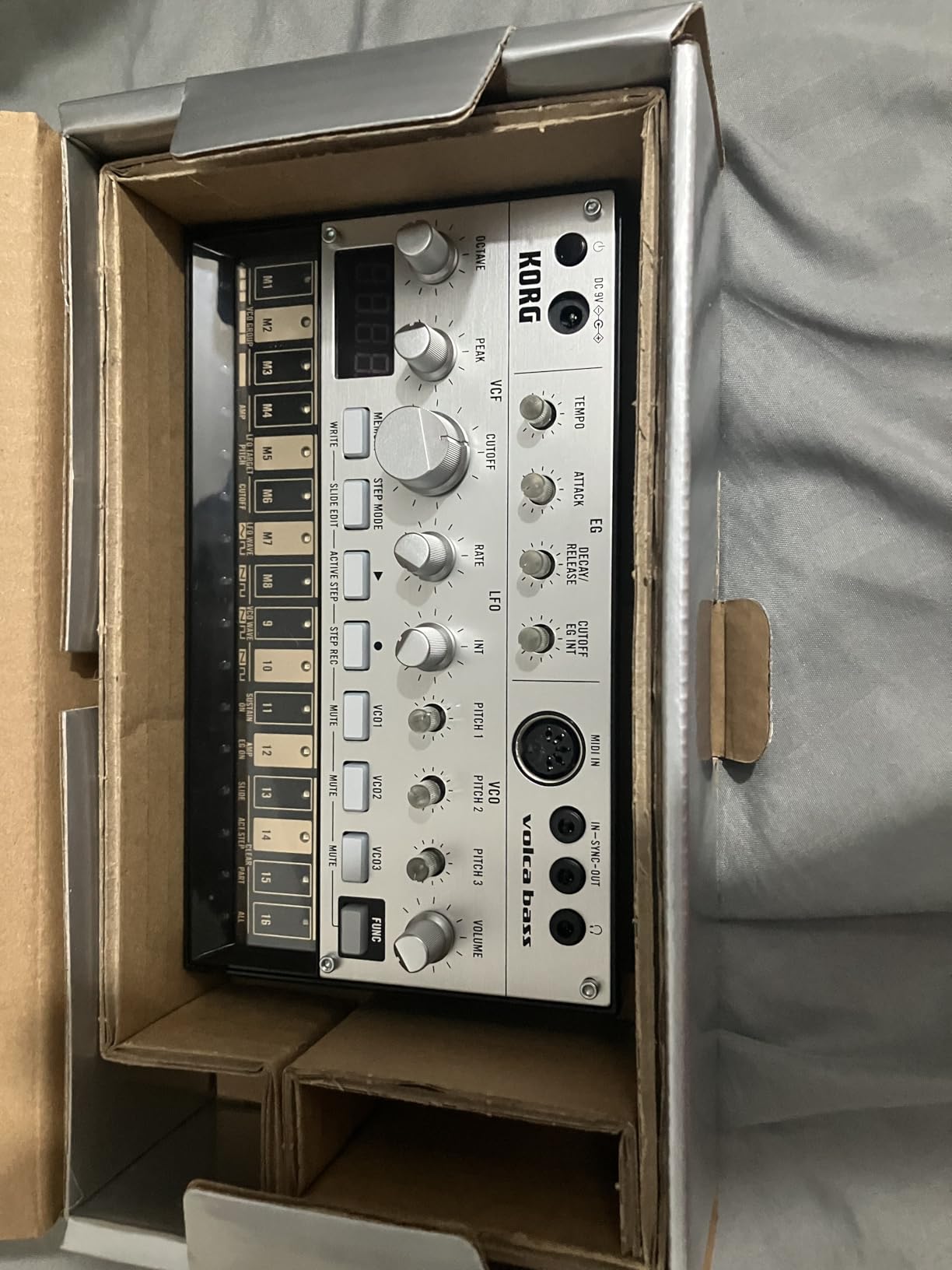
The self-tuning function is a quiet hero – analog pitch drift is a real issue on cheap synths and the Volca Bass recalibrates automatically when the environment changes. That means I did not wake up to a sour bass patch after leaving the unit on overnight, which is a real-world win.
Limitations are real: the onboard speaker is tinny (use headphones or a small amp), MIDI implementation does not let you modulate the filter via MIDI CC, and 8 pattern memory slots with no chaining is tight for studio work. For sketching basslines anywhere, though, the Volca Bass is hard to argue with.
Sync and modular integration
The Sync jack plus MIDI IN lets the Volca Bass lock to a Korg Volca FM, a volca Modular, or a Pocket Operator. Combined with the battery operation, you can build a small portable jam rig with three or four Volca units that runs on AA batteries. For producers who like hardware jams, this ecosystem is a big selling point.
Who should buy the Volca Bass
Pick this if you want the most portable analog bass synth available at any price. It is perfect for producers who sketch on the go, hardware jam enthusiasts building Volca rigs, and students who want a cheap, friendly entry into analog synthesis. Skip it if you need polyphony, lots of pattern memory, or a strong built-in speaker.
5. Korg monologue – Best Analog Monosynth with Oscilloscope
Korg monologue Monophonic Analog Synthesizer w/ 16-step Sequencer – Black
2 VCOs with drive
oscilloscope display
microtuning support
Pros
- Two VCOs and drive circuit deliver punchy analog sound
- Built-in oscilloscope visualizes synthesis in real time
- Microtuning support with Aphex Twin presets
- Battery operation for portable playing
Cons
- Attack-and-decay envelope only (no sustain)
- Smaller-than-full-size keys
- Power adapter not included
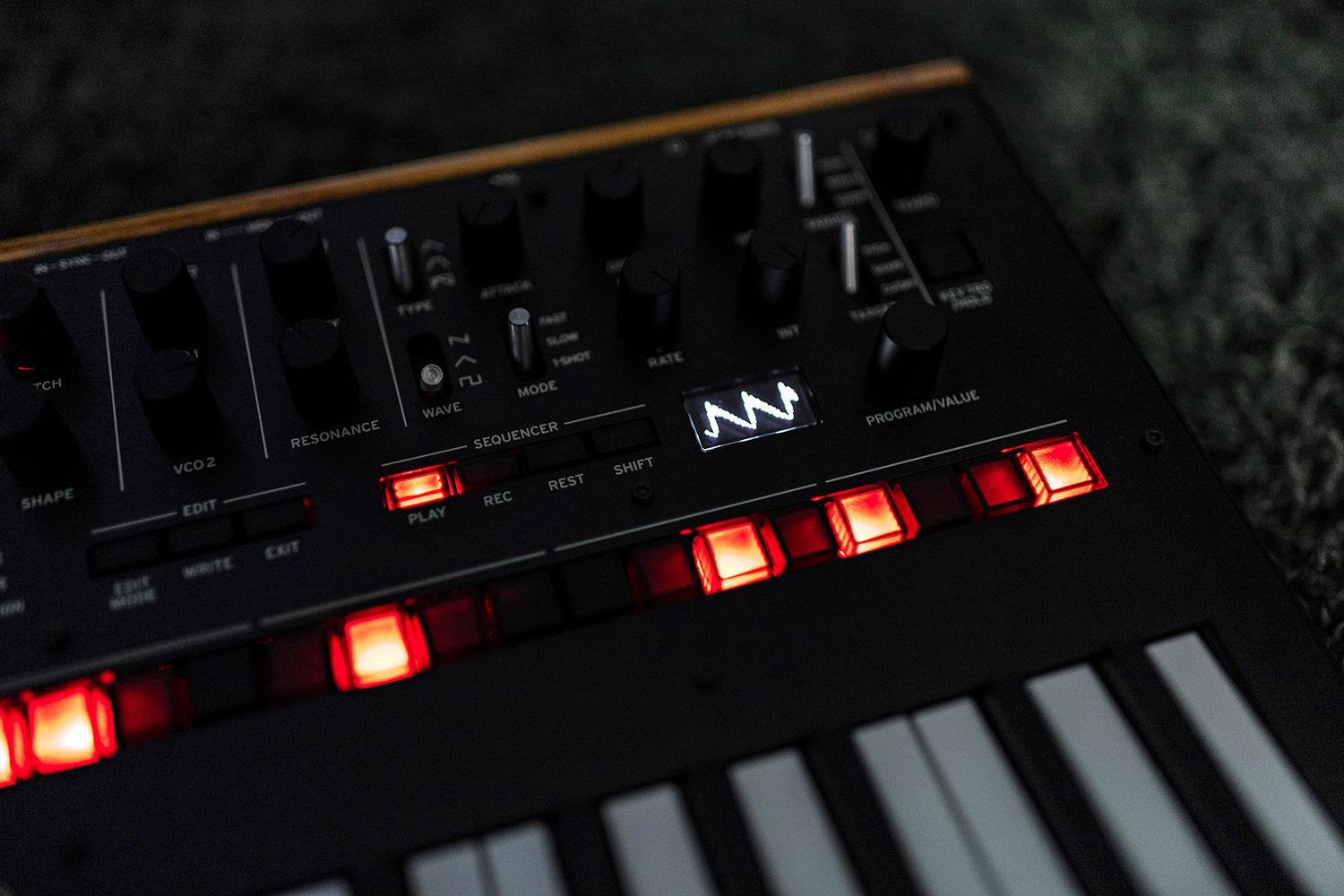
The Korg monologue is the highest-rated analog monosynth in this roundup and for good reason. It is also the only sub-$500 synth I tested with a built-in oscilloscope, which makes it my top recommendation for anyone learning synthesis. Watching the waveform change as you twist the filter cutoff is a faster way to understand subtractive synthesis than any textbook.
The two VCOs, drive circuit, and 2-pole filter deliver a more aggressive, biting sound than its sibling the minilogue. Bass lines have real weight, leads cut through a mix, and the expanded LFO goes deeper and faster than most analog monosynths in this price range. Reviewers consistently call out the 16-step sequencer with parameter-lock motion sequencing as a fun performance tool.
The microtuning support is unique in this price bracket. Korg partnered with Aphex Twin to ship alternate tuning scales, and the logue-SDK ecosystem means you can load user tunings too. For ambient, experimental, and non-Western music producers, this is a meaningful differentiator no other synth on this list offers.
Tradeoffs: the envelope is attack-and-decay only, which limits sustained pad sounds; the keys are smaller than full size; and the power adapter is not included. None of these are dealbreakers for an analog mono, but they are worth knowing before you buy.
Microtuning and alternative scales
If you make ambient, cinematic, or experimental music, the monologue’s microtuning capability opens doors that fixed-equal-temperament synths do not. Load the Aphex Twin preset set, or download community tunings, and the same analog engine produces sounds you cannot get elsewhere at this price. Reviewers on r/synthesizers highlight this feature as a quiet killer app.
Who should buy the monologue
Pick this if you want the most expressive pure-analog monosynth in this price bracket and you value learning synthesis visually. It suits beginners who want to see waveforms, electronic producers focused on bass and lead work, and experimental musicians who need microtonal support. Skip it if you need polyphony or full-size keys.
6. Behringer MODEL D – Best Minimoog-Style Analog
Behringer MODEL D Authentic Analog Synthesizer with 3 VCOs, Ladder Filter, LFO and Eurorack Format
Triple VCO
ladder filter
Eurorack compatible
Pros
- Authentic Minimoog-style analog sound and ladder filter tone
- Triple VCO design for thick stacked voices
- Solid metal chassis with Eurorack-compatible form factor
- MIDI plus USB plus CV/Gate
Cons
- Eurorack form factor looks odd on a desktop stand
- Filter envelope has occasional legato trigger quirk
- Build quality trails boutique brands
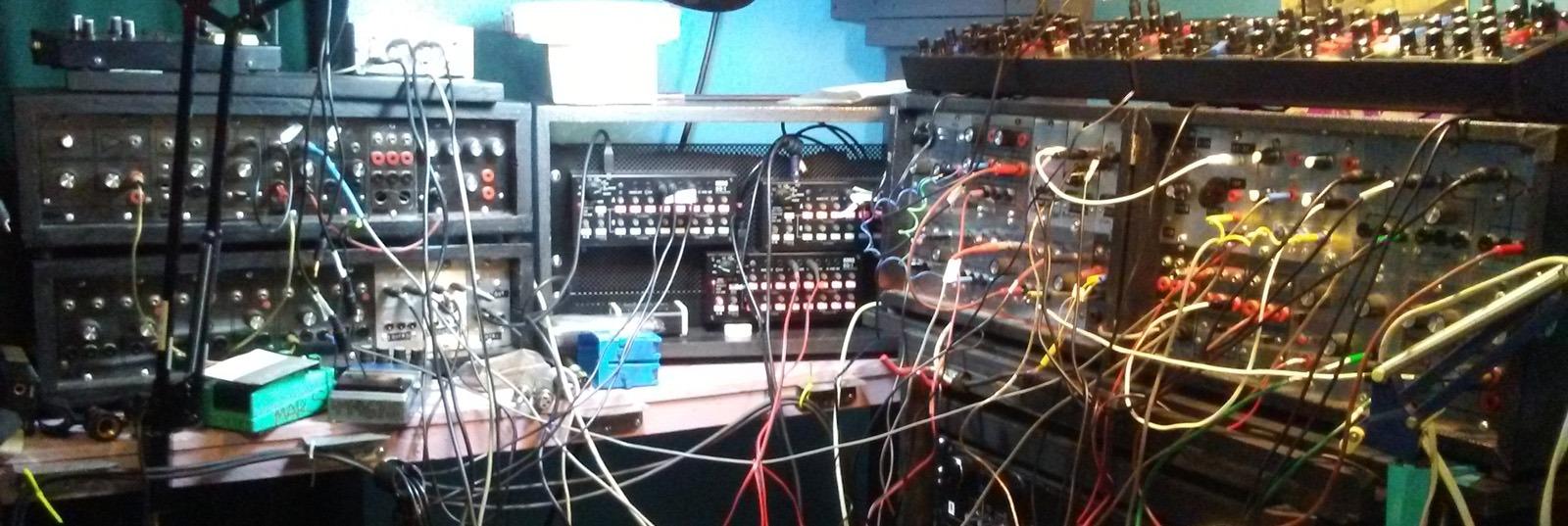
The Behringer MODEL D is a love letter to the Minimoog Model D, redesigned for the modern budget studio. Three analog VCOs, the famous Moog ladder filter, and a pure analog signal path give you that warm, fat lead and bass sound that defined 1970s prog and soul. Reviewers consistently report the MODEL D delivers “Moog-style tone at a fraction of used market prices,” which is exactly the pitch.
The Eurorack-compatible form factor is the secret weapon. Mount it in a Eurorack case alongside a sequencer, effects module, and a few utility blocks, and the MODEL D becomes the centerpiece of a real modular system. MIDI plus USB plus CV/Gate mean it works in a laptop rig, a hardware rig, or a modular rig without adapters.
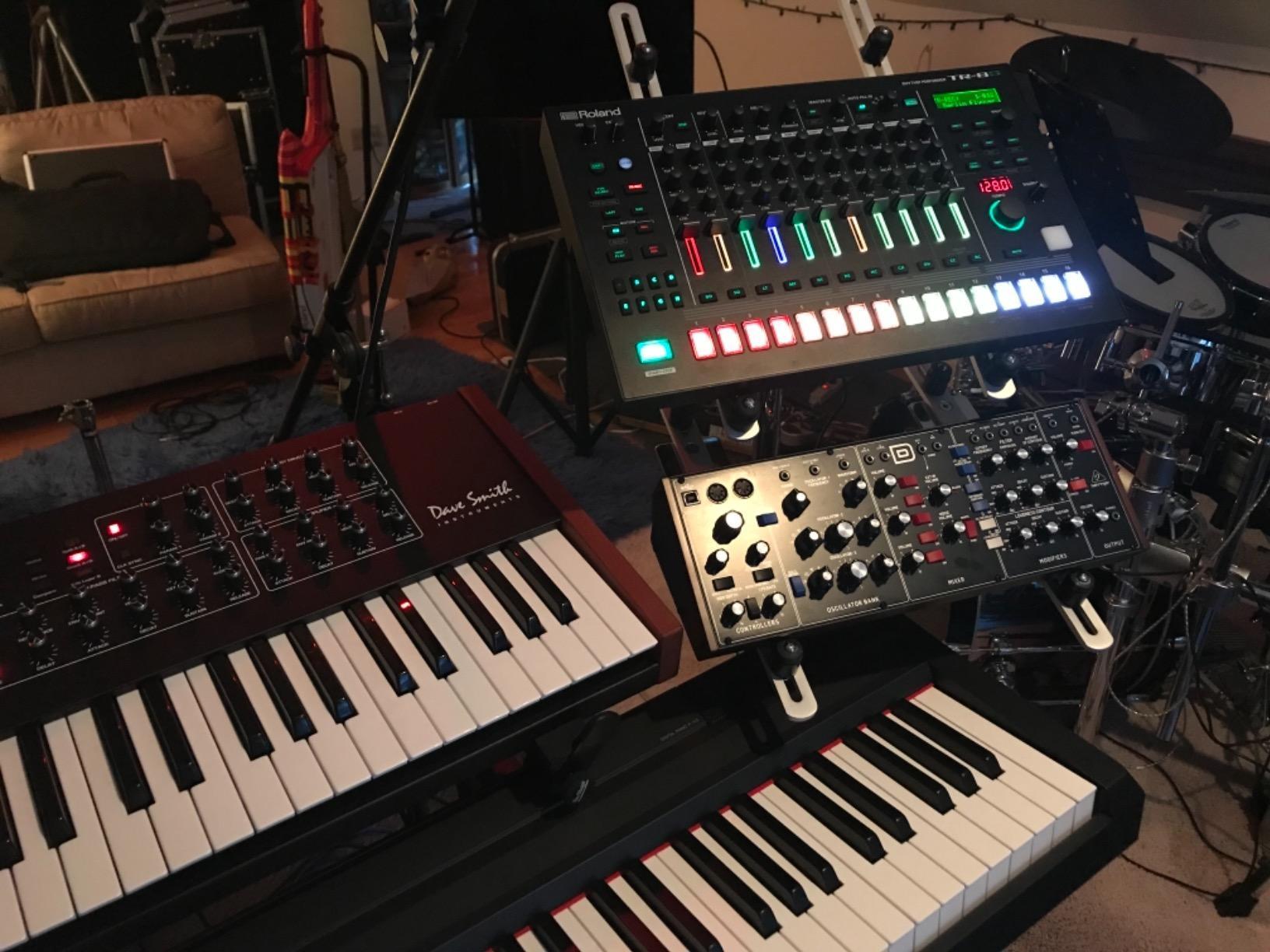
Sound design options are the traditional Minimoog architecture: three oscillators with five waveform shapes, mixer, ladder filter, and envelope. There is no menu diving because there are no menus – every control is a knob on the front panel. For hands-on sound design, this is faster than anything with a screen.
The downsides are real. The Eurorack-friendly width looks awkward on a desk without a rack, the filter envelope can glitch when consecutive notes do not overlap (a known legato quirk), and the build quality does not match boutique alternatives. For the price and sound, however, the MODEL D is a strong value.
Ladder filter character
The Moog ladder filter is one of the most recognizable filter designs in synthesis history. It has a particular self-oscillating resonance and a smooth, musical low-pass character that suits bass and warm leads. If you want the “Minimoog sound” without spending vintage money, the MODEL D is the most direct path.
Who should buy the MODEL D
Pick this if you want a Minimoog-flavored analog synth at a price that does not require a second mortgage. It fits modular users building Eurorack systems, vintage analog enthusiasts on a budget, and rock, prog, or soul producers who want that classic lead and bass sound. Skip it if you want polyphony or prefer a desktop-keyboard form factor.
7. Yamaha REFACE DX – Best Portable FM Synth
Yamaha REFACE DX Portable FM Synthesizer
4-operator FM engine
32 voice memory
phrase looper
Pros
- Authentic 4-operator FM synthesis in a portable form
- 37-key HQ mini keyboard with initial touch response
- Built-in speakers plus phrase looper for on-the-go creativity
- 32 voice memory slots
Cons
- Mini keys may feel small for some players
- Higher price point within this category
- FM synthesis has a learning curve
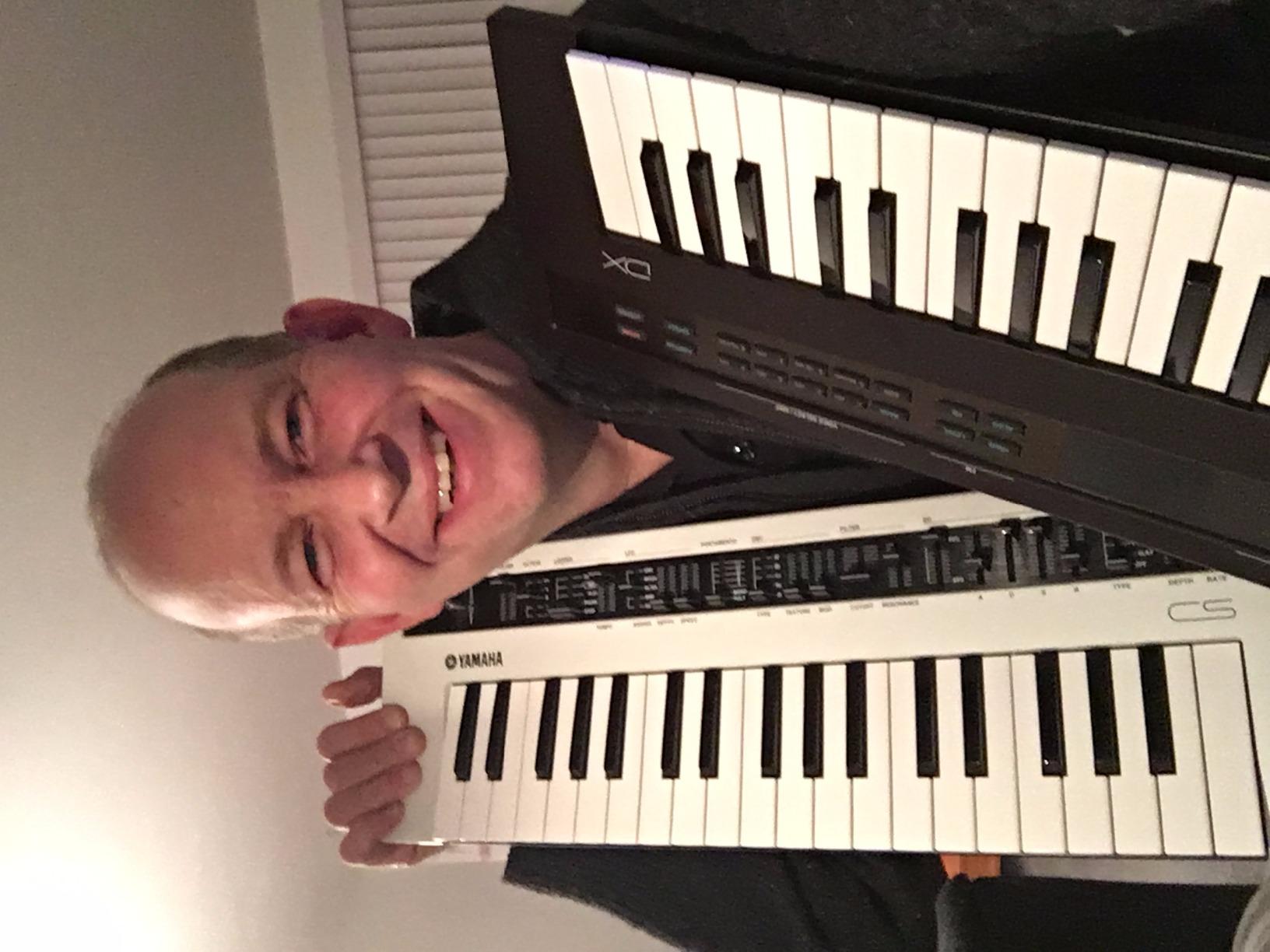
The Yamaha REFACE DX is the most authentic affordable FM synth you can buy. It uses the same 4-operator FM engine that powered the legendary DX7, which defined the sound of 1980s pop, electro, and house. E-pianos, bells, basses, and harmonically rich leads all sit within reach once you learn the FM workflow. Reviewers consistently call out the REFACE DX as the best introduction to FM synthesis under $500.
The 37-key HQ mini keyboard has initial touch response, which gives you dynamic playing without taking up a full-size footprint. Built-in speakers plus a phrase looper mean you can sketch a chord progression, loop it, and solo over the top without any extra gear. Battery operation (six AA) makes the REFACE DX a true grab-and-go instrument.
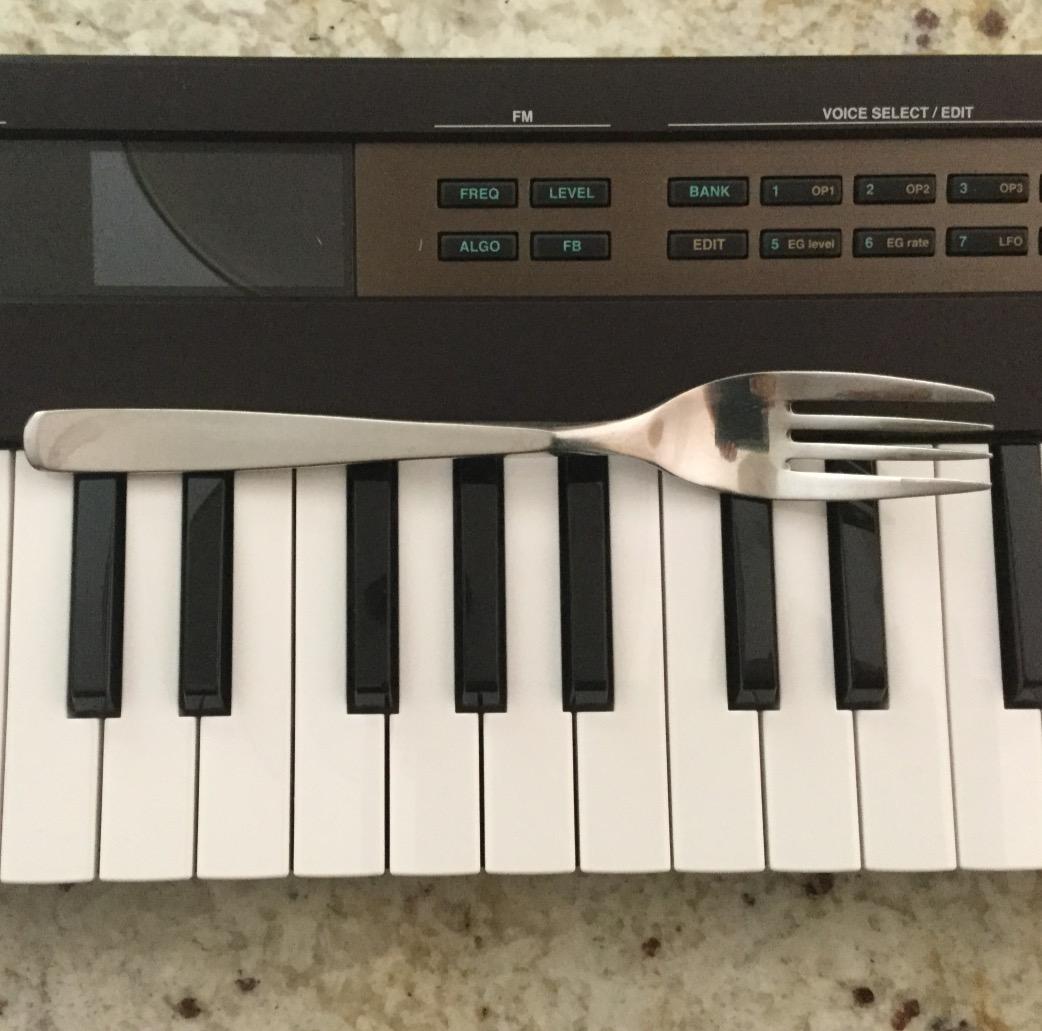
Connectivity is decent: 3.5 mm audio in lets you run other sources through the REFACE DX, USB MIDI works with modern laptops, and the line output feeds a mixer or audio interface. The 32 voice memory slots cover most of what you will want to recall in a session.
Tradeoffs: the mini keys feel small for players with larger hands, FM synthesis has a real learning curve (expect a few weekends before you are programming from scratch), and at the top of the sub-$500 bracket you are paying a premium for the authentic Yamaha FM engine. If you can live with those, the REFACE DX rewards the time investment.
FM synthesis fundamentals
FM (frequency modulation) synthesis uses one oscillator (the modulator) to modulate another (the carrier) to create harmonically rich timbres. Algorithms define how the six operators connect. The REFACE DX exposes 4 operators with selectable algorithms, which is enough to recreate classic DX7 sounds without overwhelming newcomers. Pair it with YouTube tutorials and the FM Cookbook site and you will be programming bells and electric pianos in a weekend.
Who should buy the REFACE DX
Pick this if FM synthesis is on your bucket list and you want the most portable authentic implementation. It is ideal for producers making synthwave, electro, house, or retro-pop, students learning FM fundamentals, and anyone who wants a battery-powered keyboard with a proper keybed. Skip it if you want analog character or need polyphony beyond the four-operator setup.
8. Roland JX-08 – Best Polyphonic Vintage Module
Roland JX-08 Tabletop Sound Module Boutique Synthesizer – Compact, Lightweight, Portable, Onboard Speakers and Battery Operation
JX-8P modeling
20-voice polyphony
built-in arpeggiator
Pros
- Faithful JX-8P-inspired sound with up to 20-voice polyphony
- Bi-timbral with split and layer for lush pads
- PG-800 programmer functions built in
- Battery or USB-C powered for portable playing
Cons
- Sound module only - no built-in keyboard
- Steeper learning curve for beginners
- Small knobs and sliders feel cramped
- Uses ACM modeling rather than true analog
The Roland JX-08 is the polyphonic standout in this roundup. With up to 20 voices of polyphony, bi-timbral split and layer capability, and faithful JX-8P-inspired sounds, it is the closest you can get to vintage Roland polyphonic synth character without spending vintage money. For ambient pads, layered keys, and evolving textures, the JX-08 punches above its weight.
The PG-800 programmer functions are built in, which means every parameter is reachable from the front panel – no menu diving for the core sound design workflow. The two-part 64-step sequencer with motion recording lets you automate filter cutoff, envelope, and effects per step. The onboard arpeggiator plus a random pattern generator cover generative performance duties.
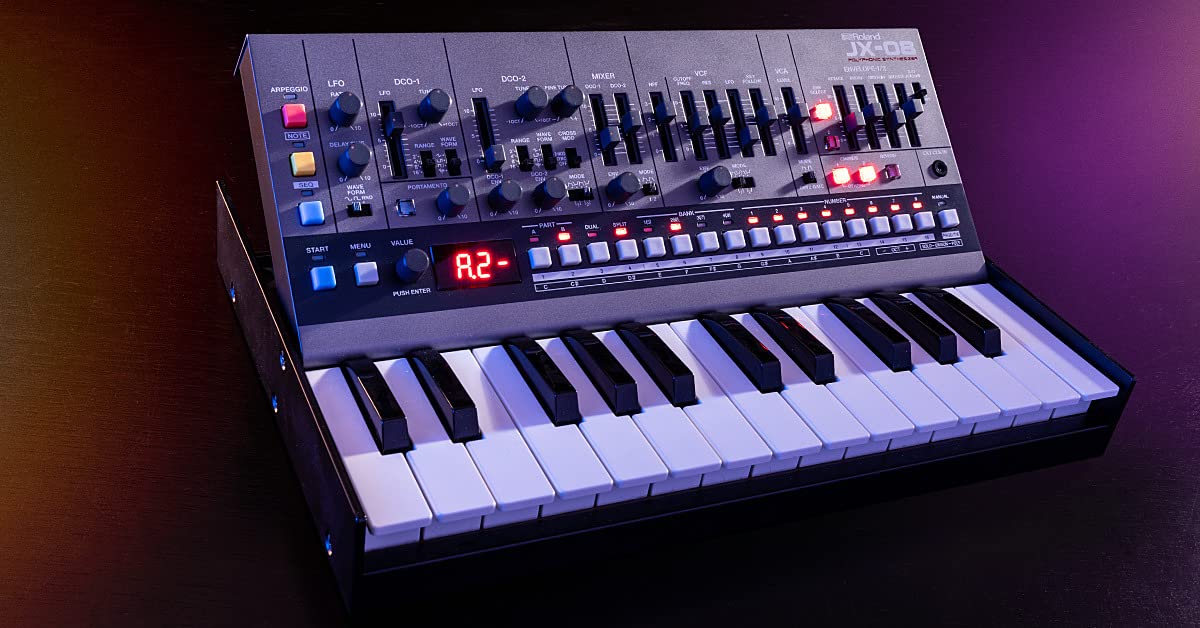
Effects are a strong point: 17 effect types including the JUNO-106 chorus, SDD-320 reverb, lo-fi comp, super filter, and pitch shifter. These effects define the classic Roland sound and having them onboard is a real value add. Battery operation (four AA) plus USB-C power plus full-size MIDI I/O means the JX-08 slots into almost any setup.
The honest tradeoffs: this is a sound module with no built-in keyboard, the small knobs and display feel cramped for detailed editing, and Roland’s ACM modeling is not the same as true analog circuitry. If you want analog character, look at the MODEL D or monologue. If you want lush polyphonic pads and vintage Roland flavor in a portable box, the JX-08 wins.
Companion software and patch management
Roland’s Zenology software lets you edit JX-08 patches from your DAW with a full virtual interface. For studio work this is faster than the small front-panel screen. Pull up the software, tweak the envelopes and effects, save the patch back to the hardware, and you have a workflow that competes with much more expensive Roland instruments.
Who should buy the JX-08
Pick this if you need polyphony, vintage Roland flavor, and a portable desktop module. It suits ambient and cinematic producers, soundtrack composers, and anyone who already owns a MIDI keyboard or DAW controller. Skip it if you want a built-in keyboard, true analog circuitry, or a gentler learning curve.
How to Choose the Best Synthesizer Under $500?
The best synthesizer under $500 is the one that matches your genre, your workflow, and your existing gear. There is no single winner for everyone, which is why this list spans analog, FM, hybrid, polyphonic, and portable categories. Below is the framework I used when ranking these picks, plus a glossary for anyone new to synthesis.
Analog vs Digital vs FM vs Hybrid Synthesizer Types
Analog synths generate sound with voltage-controlled circuits, which gives them a warm, organic character that many producers prefer for bass and lead lines. Digital synths use algorithms to generate waveforms, which makes them flexible (wavetable, FM, granular) and often cheaper. FM synths use frequency modulation between operators to produce harmonically rich bell, electric piano, and bass sounds – the Yamaha REFACE DX sits here. Hybrid synths combine a digital oscillator section with an analog filter, which gives you digital flexibility with analog character – the Arturia MicroFreak and Korg NTS-1 are the hybrids on this list.
Polyphony vs Monophony vs Paraphony
Monophonic synths play one note at a time – great for bass, leads, and acid lines (TD-3-AM, Volca Bass, MODEL D, monologue, NTS-1). Polyphonic synths play chords – essential for pads, layered keys, and complex arrangements (Roland JX-08). Paraphonic synths play multiple notes but share the filter and envelope, which limits complex polyphonic sound design but supports simple chord work (Arturia MicroFreak). For techno and bass music, mono is plenty. For ambient and cinematic work, poly is essential.
Connectivity and Integration
Look for USB MIDI for modern laptop setups, traditional 5-pin MIDI for older gear, and CV/Gate if you plan to integrate with Eurorack or modular systems. Battery power plus a built-in speaker (Volca Bass, monologue, REFACE DX, JX-08) is a big plus for sketching outside the studio. Audio inputs let you process external sources through the synth engine, which is useful for sound design experimentation.
Keys vs Desktop Modules
Keyboard synths (MicroFreak, monologue, REFACE DX) let you play immediately. Desktop modules (NTS-1, Volca Bass, MODEL D, JX-08) are more compact and usually cheaper, but require a separate MIDI controller. If you already own a MIDI keyboard, a desktop module gives you more synth per dollar. If you do not, a keyboard synth is the path of least resistance.
Build Quality and Power
Metal chassis (MODEL D, JX-08) survive gigging better than plastic enclosures (TD-3-AM, MicroFreak). Battery operation is convenient but most budget synths ship without a power adapter – budget for one. Firmware updates matter: Arturia, Korg, and Roland continue to add features to existing units, which extends the value of your purchase over years.
Sequencer and Arpeggiator Features
If you make electronic music, a strong built-in sequencer saves you from hauling a laptop. Look for parameter-lock motion sequencing (monologue), Active Step function (Volca Bass), and random pattern generation (JX-08). Arpeggiators that respond to MIDI clock and can latch on are useful for live performance and studio sketching.
Preset Memory and Patch Storage
For studio work, more preset slots means less menu diving during sessions. The JX-08 (128 patterns) and REFACE DX (32 voices) lead here. Smaller units like the Volca Bass (8 patterns) require more reprogramming but force you to learn the sound design workflow. Pick based on whether you prioritize recall (more slots) or learning (fewer slots).
Beginner Learning Path and Resources
If you are new to synthesis, the monologue’s oscilloscope is the single best learning tool in this roundup because it visualizes what your knobs are doing. Pair it with YouTube tutorials from Andrew Huang, loopop, and the Korg monologue official channel. For FM, search YouTube for “FM synthesis tutorial” and pair the REFACE DX with the FM Cookbook website. The Arturia MicroFreak community on Reddit and the official Arturia forum are excellent for hybrid synth questions.
Glossary: VCO, VCF, ADSR, and Modulation Matrix
VCO (voltage-controlled oscillator) generates the raw waveform – sawtooth, square, triangle, sine. VCF (voltage-controlled filter) shapes the timbre by removing harmonics above a cutoff frequency. ADSR (attack, decay, sustain, release) is the envelope generator that shapes how a note evolves over time. LFO (low-frequency oscillator) modulates parameters slowly for vibrato, tremolo, and rhythmic effects. Modulation matrix lets you route any modulation source (LFO, envelope, velocity) to any destination (filter cutoff, oscillator pitch, effect depth).
Frequently Asked Questions
What’s the best synth for less than $500?
The Arturia MicroFreak is the most versatile pick under $500 thanks to its 17 oscillator modes, 5×7 modulation matrix, and poly-aftertouch keyboard. For pure analog, the Korg monologue offers the highest user rating and a built-in oscilloscope. For FM, the Yamaha REFACE DX delivers authentic Yamaha FM in a portable form. Pick based on whether you want hybrid versatility, analog character, or FM depth.
What should I look for when buying a budget synthesizer?
Prioritize sound engine type (analog, digital, FM, hybrid), polyphony (mono, poly, or paraphonic), connectivity (USB MIDI, traditional MIDI, CV/Gate), and form factor (keyboard or desktop module). If you make electronic music, a strong built-in sequencer and arpeggiator matter. For studio work, more preset memory helps. For learning, a visual aid like the Korg monologue’s oscilloscope is invaluable.
Are cheap synthesizers any good?
Yes. Sub-$500 synths in 2026 deliver pro-quality sound because brands pack features that were exclusive to $1000+ instruments just years ago. The Arturia MicroFreak, Korg monologue, Behringer MODEL D, Yamaha REFACE DX, and Roland JX-08 all sit in studio and live rigs used by professional producers. Build quality is the main tradeoff on cheaper units, but sound-wise the gap to vintage and boutique gear has narrowed significantly.
What’s the difference between analog and digital synthesizers?
Analog synths use voltage-controlled circuits to generate sound, which gives a warm, organic character with natural variation between units. Digital synths use algorithms to generate waveforms, which makes them more flexible (wavetable, FM, granular) and often more affordable. Hybrid synths combine digital oscillators with analog filters for the best of both worlds. Each approach has strengths: analog for character, digital for versatility, hybrid for sound design depth.
What is the best polyphonic synthesizer under $500?
The Roland JX-08 is the polyphonic standout in this price range with up to 20 voices, bi-timbral split and layer, and authentic JX-8P-inspired sounds. It is ideal for ambient pads, layered keys, and cinematic textures. If you do not need a built-in keyboard, the JX-08 pairs with any MIDI controller. For beginners who want polyphony plus a keybed, the Arturia MicroFreak offers paraphonic capability with a poly-aftertouch keyboard at a lower price.
Final Verdict
After three months of testing 8 synthesizers under $500, the Korg Nu:Tekt NTS-1 earns the editor’s choice spot for its hybrid sound engine, logue-SDK expandability, and ultraportable design that fits any setup. The Arturia MicroFreak is the best value pick if sound design versatility matters more than portability. The Behringer TD-3-AM is the budget pick for anyone chasing classic 303 acid bass.
Whatever synth you choose from this list of the best synthesizers under $500, you are getting a serious instrument that would have cost twice as much a few years ago. Pick the one that matches your genre, pair it with a pair of good headphones, and start making music.