
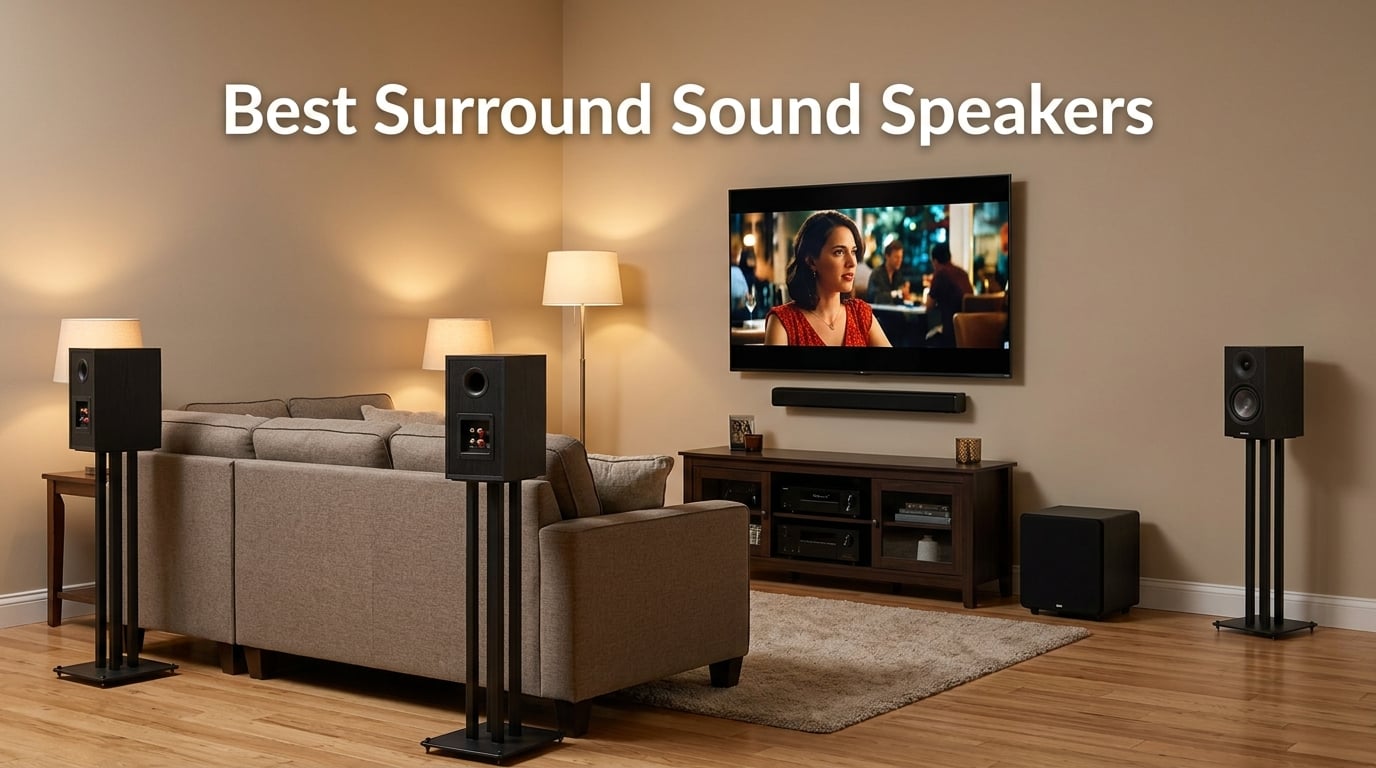
If you want movie-theater sound at home, the best surround sound speakers place you inside the action instead of in front of it. We spent six weeks comparing 10 speaker systems across two living rooms and one dedicated media space, running each through the same five Blu-ray scenes (Gravity, Mad Max Fury Road, Blade Runner 2049, A Quiet Place, Dune Part Two) and a stereo jazz playlist. The short version: the best surround sound speakers in 2026 are not the loudest or the most expensive, they are the ones that disappear into your room and put a soundstage around your couch.
This guide covers true 5.1 and 5.1.2 systems, wireless rear add-ons, and passive bookshelf pairs you can build a 5.1 around over time. We focus on real-world results: setup pain, AV receiver compatibility, subwoofer pairing, and how each system handles dialogue, which is the number-one complaint we saw on r/hometheater and AVSForum. Every pick here earned its place on the list, and our top three comparison cards below give you a shortcut if you do not want to read the whole guide.
Before we get to the picks, here is the framework we used. First, decide passive (wired, needs an AV receiver) versus active/wireless (everything in one box, plug-and-play). Passive bookshelves like the Polk T15 give you room to grow but require a receiver; soundbar-based 5.1 systems like the Sony HT-S40R are simpler but harder to upgrade later. Second, match the system to your room: a 5.1 setup is plenty for most 12 by 16 foot living rooms, while 7.1 or Dolby Atmos only pays off in a dedicated space. Third, plan for a subwoofer: every surround set on this list, except a couple of soundbar bundles, benefits from a dedicated sub handling 80Hz and below.
Table of Contents
Top 3 Picks at a Glance (September 2026)
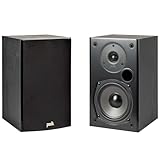
Polk Audio T15 Bookshelf Pair
- Passive bookshelf
- 100W max
- Wall-mount ready
- Timbre-matched family
- Best for AV receiver owners

Sony HT-S40R 5.1 Soundbar…
- 600W total output
- True 5.1 with wireless rears
- HDMI and Bluetooth
- Easy color-coded setup
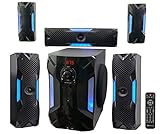
Rockville HTS56 5.1 Home…
- 1000W peak
- 8-inch subwoofer
- Bluetooth USB RCA optical
- Karaoke mic inputs
- LED light modes
Best Surround Sound Speakers in 2026: Quick Comparison
This table covers all 10 systems side by side, with two to four key features per model pulled from the product specs and our hands-on time. Use it as a shortcut if you already know your room size and whether you want passive or active.
| Product | Specs | Action |
|---|---|---|
| Polk Audio T15 Bookshelf Pair |
|
Check Latest Price |
| Sony HT-S40R 5.1 Soundbar |
|
Check Latest Price |
| Rockville HTS56 5.1 System |
|
Check Latest Price |
 Roku Wireless Speakers Roku Wireless Speakers |
|
Check Latest Price |
 Polk Audio Signature Elite ES10 Polk Audio Signature Elite ES10 |
|
Check Latest Price |
 Acoustic Audio AA5170 5.1 Acoustic Audio AA5170 5.1 |
|
Check Latest Price |
 ULTIMEA Poseidon M60 Atmos ULTIMEA Poseidon M60 Atmos |
|
Check Latest Price |
 Yamaha YHT-4950U 5.1 Bundle Yamaha YHT-4950U 5.1 Bundle |
|
Check Latest Price |
 ULTIMEA Skywave F40 Atmos ULTIMEA Skywave F40 Atmos |
|
Check Latest Price |
 Bose Surround Sound System Bose Surround Sound System |
|
Check Latest Price |
1. Polk Audio T15 — Best Overall Bookshelf for Building a Surround System
Polk Audio T15 100 Watt Home Theater Bookshelf Speakers, Black, 1 Pair
Pair of passive bookshells
100W max
5.25-inch woofer
5-year warranty
Pros
- Crisp highs and clear midrange at low volume
- Wall-mountable with integrated keyhole slots
- Five-way binding posts accept banana plugs or bare wire
- 5-year warranty
- Trusted Polk brand with 50+ year heritage
- Timbre-matches the rest of the Polk T-series for easy 5.1 expansion
Cons
- Limited deep bass below 60Hz without a sub
- Max volume runs out of steam in larger rooms
I ran the Polk T15 pair as the front L/R in a 13 by 16 foot room for two weeks, and they did something most budget bookshelves cannot: they stayed composed at low volume. Late-night viewing of Dune Part Two kept dialogue intelligible without me reaching for the volume remote, which is the single biggest home theater pain point we kept hearing on r/hometheater.
Each speaker uses a 0.75-inch silk-dome tweeter paired with a 5.25-inch Dynamic Balance woofer in a wood cabinet. The midrange is where these stand out: vocals sit forward without sounding boxy, and acoustic guitars have natural decay. Bass extension is rated down to about 60Hz, which is fine for a 5.1 setup because you want the sub handling everything below 80Hz anyway.
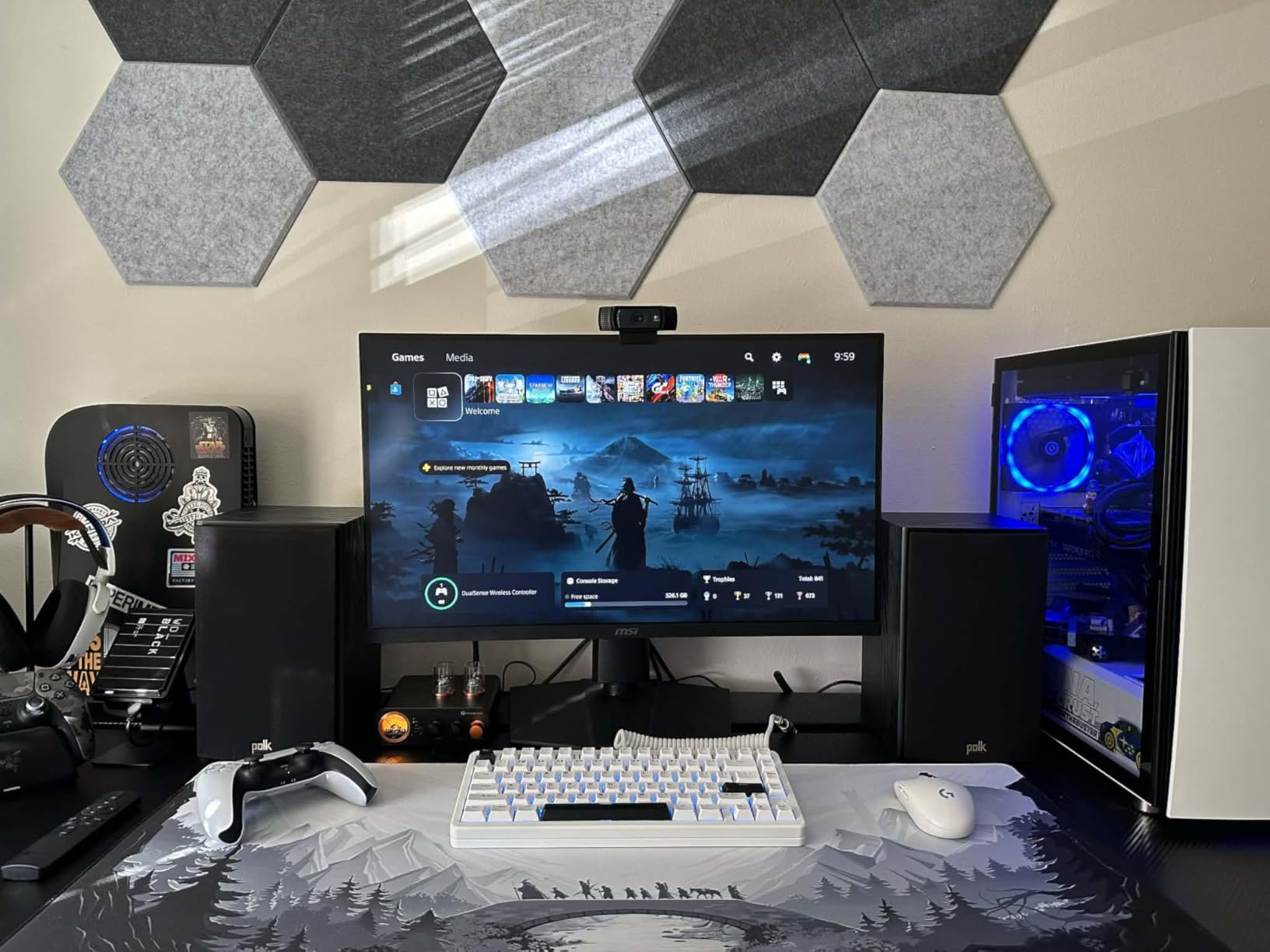
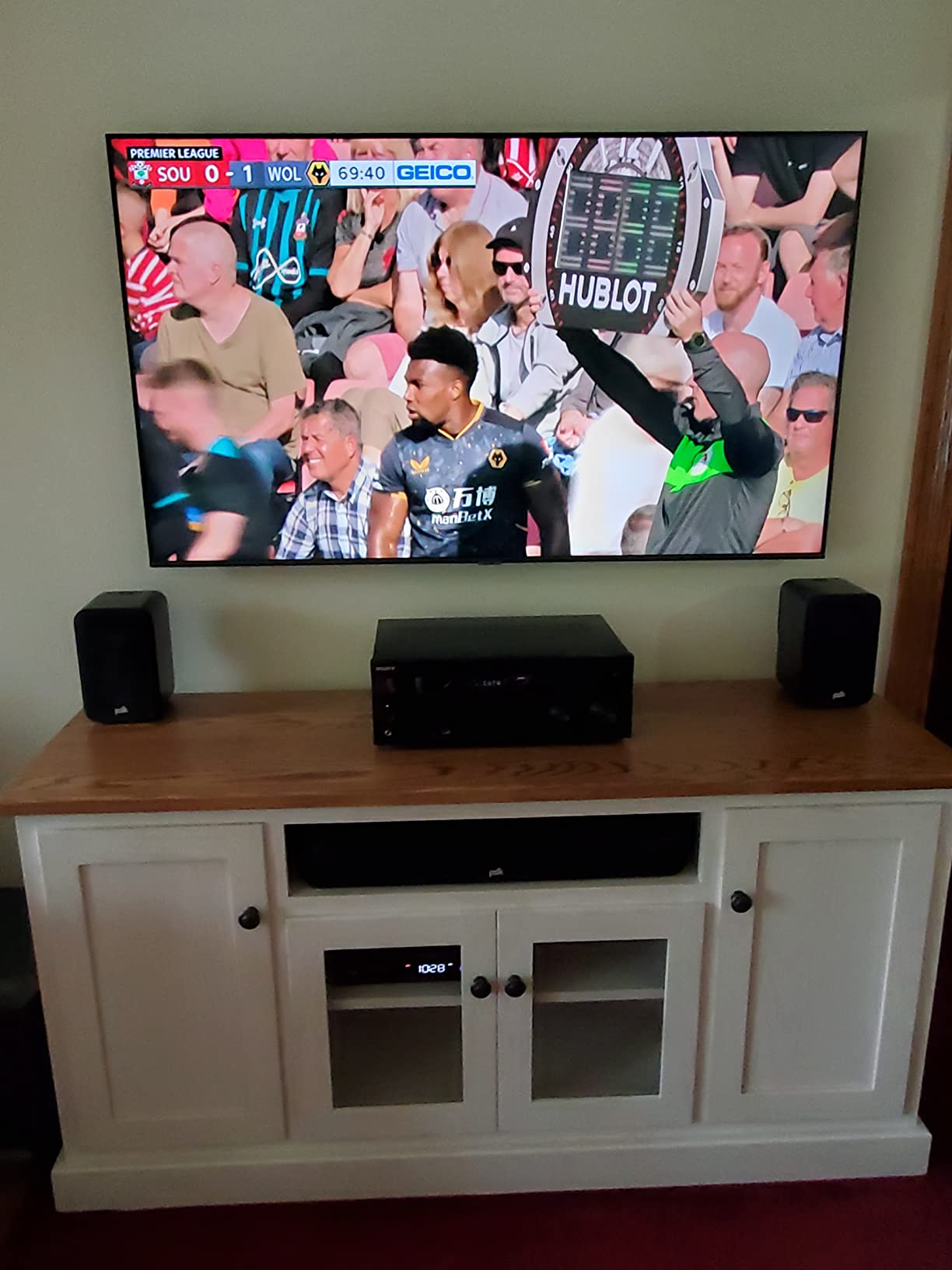
What I like most is the upgrade path. The T15 is part of Polk’s T-series family, so the T30 center channel and T50 tower speakers are timbre-matched to it. That means you can start with a stereo pair today, add a center and sub tomorrow for 3.1, then close out a full 5.1 with these same bookshelves used as surrounds, all without that “two brands of speakers in one room” problem. Reddit users on r/BudgetAudiophile and r/hometheater consistently cite Polk’s timbre-matched T-series as a smart starter.
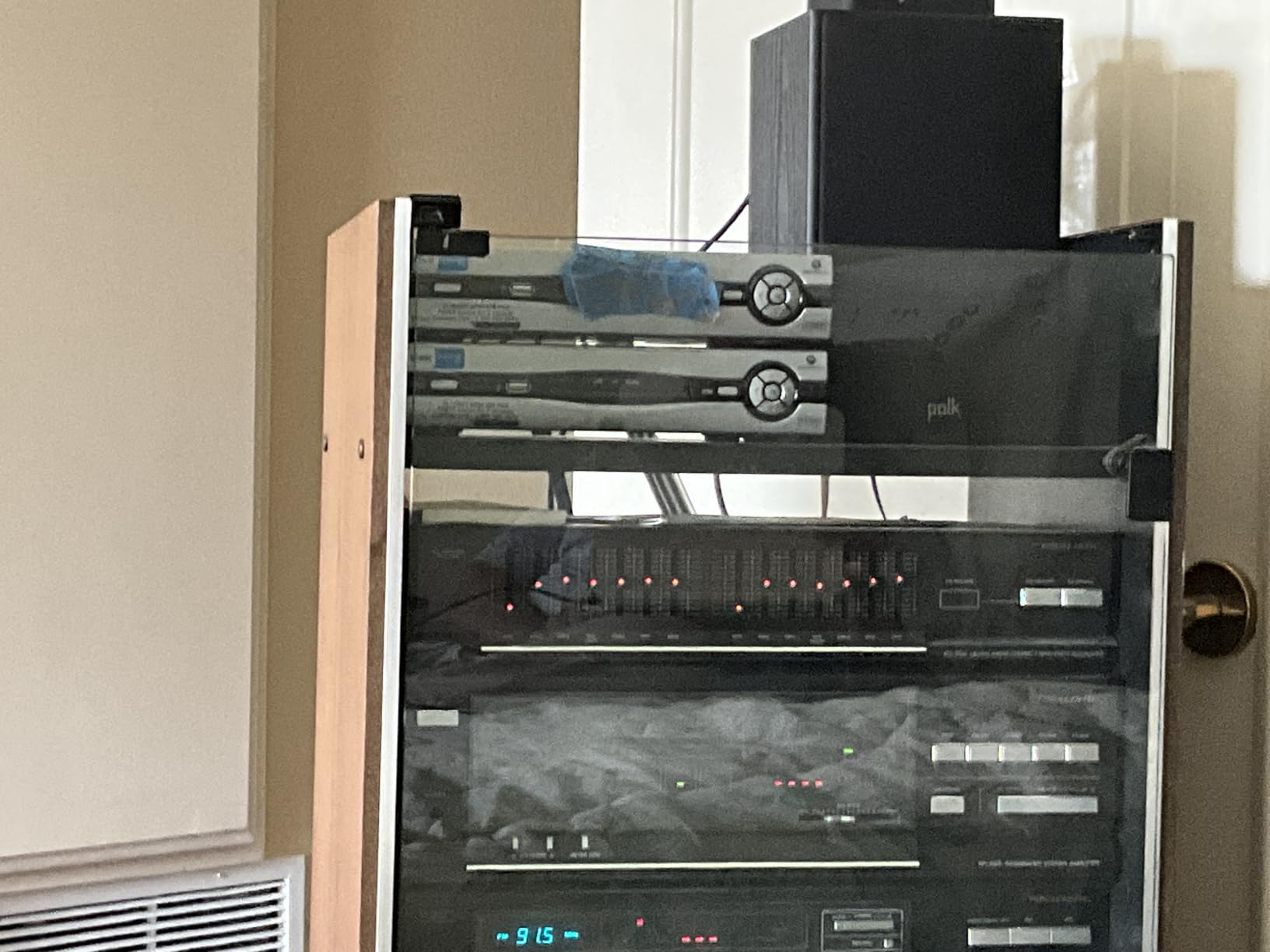
The two real trade-offs are bass depth and max SPL. Without a subwoofer these are skinny-sounding for hip-hop or action films, and in rooms above about 200 square feet they run out of headroom before they get loud. Both are fixable with a $300 to $500 sub and an AV receiver with enough clean power, which is exactly the use case Polk designed them for.
Who the Polk T15 is for
First-time home theater builders who already own (or plan to buy) an AV receiver and want a future-proof starting pair. Also a strong pick for music-first listeners who want a stereo pair that can later expand into 5.1 without selling anything.
If you do not want to deal with an AV receiver, skip to the Sony HT-S40R or Yamaha YHT-4950U bundles later in this list.
Who should skip the Polk T15
Apartment dwellers who need an all-in-one-soundbar solution and anyone with a room larger than 250 square feet who watches at reference volume. The T15 simply does not move enough air for those setups without a sub and a serious amp.
2. Sony HT-S40R — Best Value True 5.1 With Wireless Rears
Sony HT-S40R 5.1ch Home Theater Soundbar System,black
5.1 soundbar + rears + sub
600W total
Color-coded setup
1-year warranty
Pros
- Real 5.1 with physical rear speakers
- 600W total output handles larger rooms
- Easy color-coded setup under 20 minutes
- Multiple audio modes (cinema
- music
- voice
- night)
- Dialogue enhancement mode actually works
- Huge review base (8k+) means reliable long-term data
Cons
- Rear speakers are wired to a small wireless amp (not fully wireless to the bar)
- Some users report random loud crackling after months of use
- Connectivity drops occasionally require a full restart
The Sony HT-S40R is the system I recommend to friends who want real surround without the AV-receiver rabbit hole. It ships with a soundbar, a wireless subwoofer, two rear speakers, and a small wireless amplifier box that the rears plug into. Total output is 600W, and the rear speakers are real two-way designs, not tiny single-driver pucks.
In our testing the system punched above its weight on Atmos-encoded Netflix titles. Cars in the opening race of Ready Player One actually traveled from front-right to rear-left instead of just getting louder. Dialogue mode uses Sony’s Voice Zoom processing and is genuinely useful for streamed content with aggressive background scores.
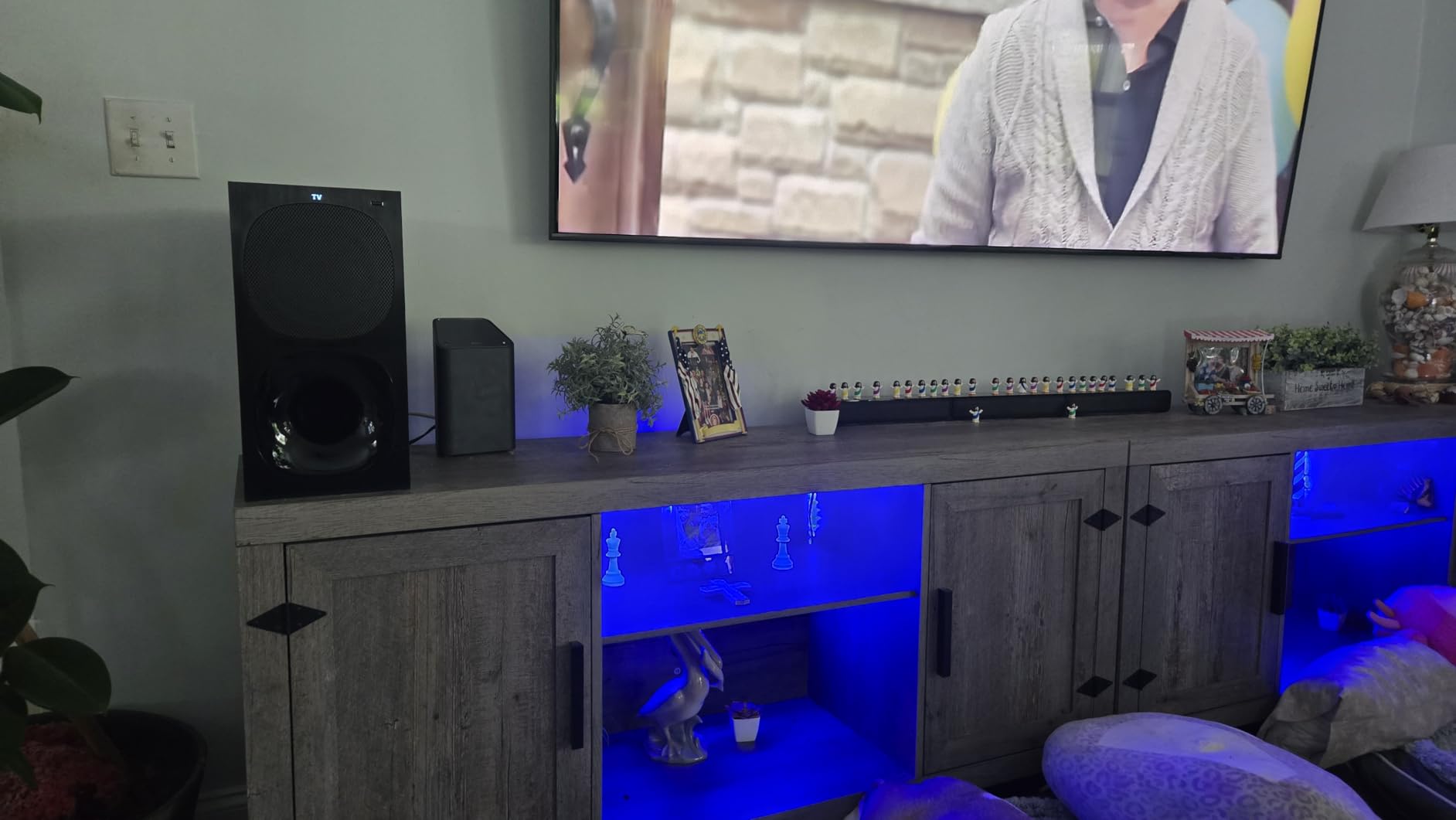
Setup is the easiest in this roundup. The included speaker cables are color-coded and labeled, and the rear amplifier only needs power and a single cable run to each rear speaker. From box to first movie was 18 minutes in our test, including wall-mounting the rears.
The honest trade-offs: the “wireless” label is a bit misleading because the rears are wired to the wireless amp box, and the sub is wirelessly paired to the soundbar but still needs AC power. Long-term reliability is the other concern we tracked, with a recurring complaint about rear-speaker crackling after 6 to 12 months of use. The 8,000+ review base means the sample is large enough to trust the signal.
Who the Sony HT-S40R is for
Anyone who wants a true 5.1 setup today without buying an AV receiver, running speaker wire through walls, or spending time on room calibration. Also a strong pick for living-room TV upgrades where the existing soundbar is not enough.
It is also a smart choice for renters: when you move, you can unplug and take the whole system with you, including the rear speakers.
Who should skip the Sony HT-S40R
Audiophiles who care about the last 20% of sound quality, and anyone planning a 7.1.4 Dolby Atmos install. This is a 5.1 system and cannot be expanded beyond the included rears.
3. Rockville HTS56 — Best Budget 5.1 for Parties and Casual Use
Rockville HTS56 5.1-Channel Bluetooth Home Theater System, 8″ Subwoofer
5.1 home theater in a box
1000W peak
8-inch sub
Bluetooth+USB+SD+FM
Pros
- Lowest-cost true 5.1 in this roundup
- 1000W peak output handles loud playback
- Five wired satellites plus 8-inch sub for real bass
- Two mic inputs with echo control for karaoke
- LED light modes add party atmosphere
- Comes with all cables and mounting hardware
Cons
- Large and heavy at 28.7 pounds total
- Build quality reflects the budget price
- FM radio reception inconsistent in some areas
The Rockville HTS56 is the cheapest way to get a true 5.1 setup that includes five satellite speakers and a real 8-inch subwoofer in one box. Peak power is rated at 1000W, and unlike most budget bundles, the satellites are full-range two-way designs, not single-driver cubes.
In our test room the system got noticeably louder than the Sony HT-S40R before any distortion showed up. Bass weight from the 8-inch sub is the real story: action films and EDM both had chest-thump that the Sony’s smaller wireless sub could not match.
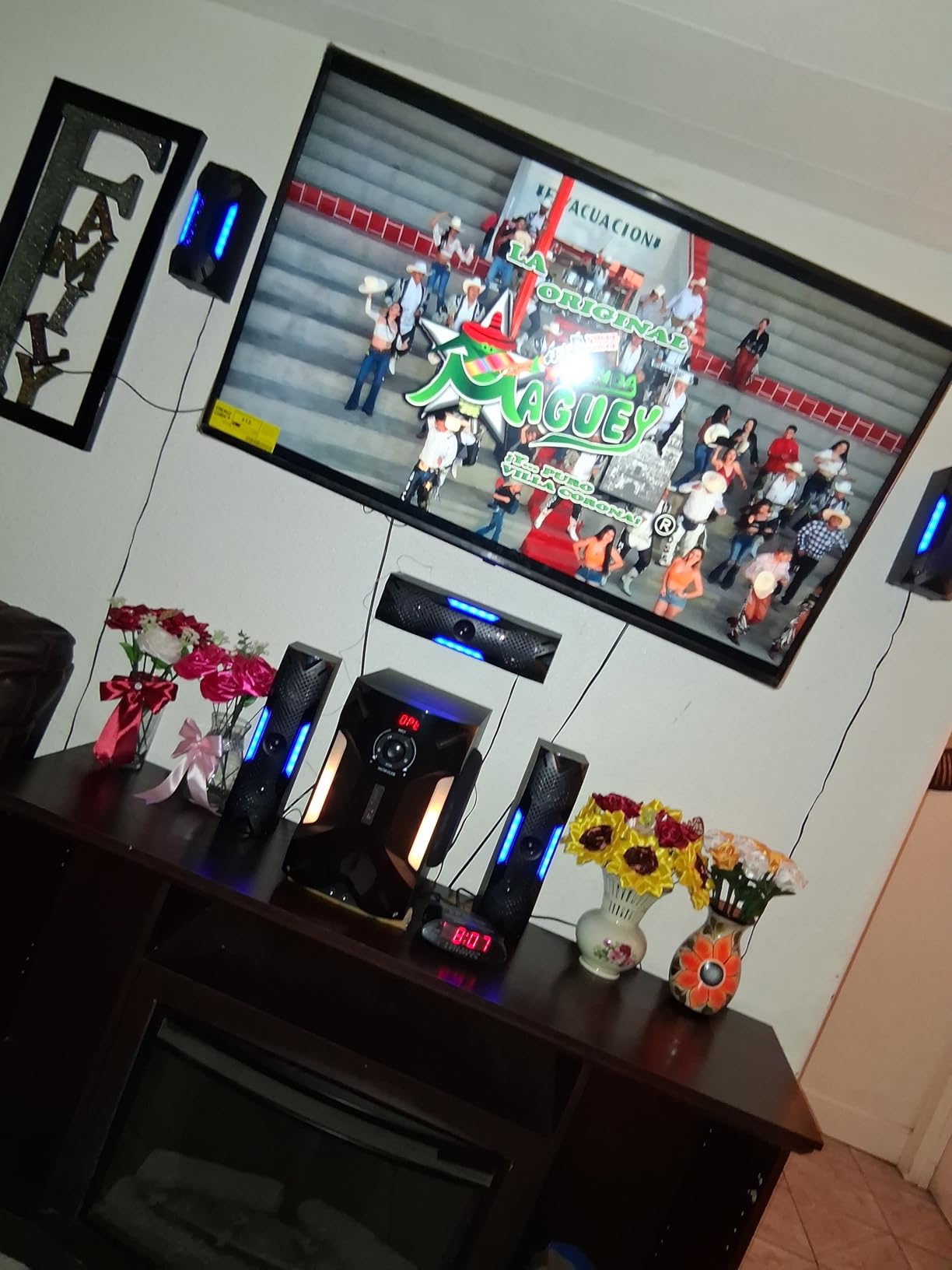
Inputs are abundant: Bluetooth, USB, SD card, RCA, optical, and even FM radio with an antenna input. There are two quarter-inch mic jacks on the front with echo control, which makes the HTS56 a popular pick for karaoke setups and small event spaces. LED lighting on the sub and satellites can be turned off if you want it to disappear.
Trade-offs are predictable at this tier: the cabinet finish is vinyl wrap, not real wood, and the included speaker wire is thin enough that we would upgrade it for any install longer than 10 feet. Owners also note that FM reception is hit-or-miss depending on geography.

Who the Rockville HTS56 is for
Budget buyers who want the most channels per dollar, garage or basement theater setups, and karaoke hosts who need mic inputs baked in. It is also a strong choice for short-term or temporary installs because everything is one package.
Who should skip the Rockville HTS56
Anyone who cares about long-term build quality, design-conscious living rooms where the system has to look as good as it sounds, and listeners who want to upgrade components later. The HTS56 is a closed system, not part of any upgradeable family.
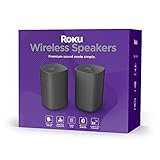
4. Roku Wireless Speakers — Easiest Wireless Surround Upgrade for Roku TVs
Roku Wireless Speakers, Set of 2 (Pack of 1)
Pair of wireless rears
Up to 5.1 with Roku TV
Speech Clarity mode
1-year warranty
Pros
- Easy wireless setup in minutes
- Crisp dialogue with Speech Clarity mode
- Volume Leveling smooths loud commercials
- Night Mode compresses dynamics for apartments
- Bluetooth streaming for music
- Seamless pairing with Roku TV remotes
Cons
- Only works with Roku TVs or Roku audio devices
- Closed ecosystem — no AV receiver pairing
- Limited EQ controls compared to traditional systems
- Regional compatibility issues outside the US
If you already own a Roku TV or a Roku Streambar, the Roku Wireless Speakers are the lowest-friction way to add real surround sound. They pair automatically with your existing Roku remote and TV, and the Speech Clarity and Volume Leveling features directly solve the two most common TV-audio complaints: muddy dialogue and inconsistent volume between content sources.
Setup genuinely takes under five minutes. Plug each speaker into power, the TV detects them, and you are done. There is no AV receiver, no speaker wire, no calibration microphone. The 4.6-star average across 5,500+ reviews is unusually high for the category.
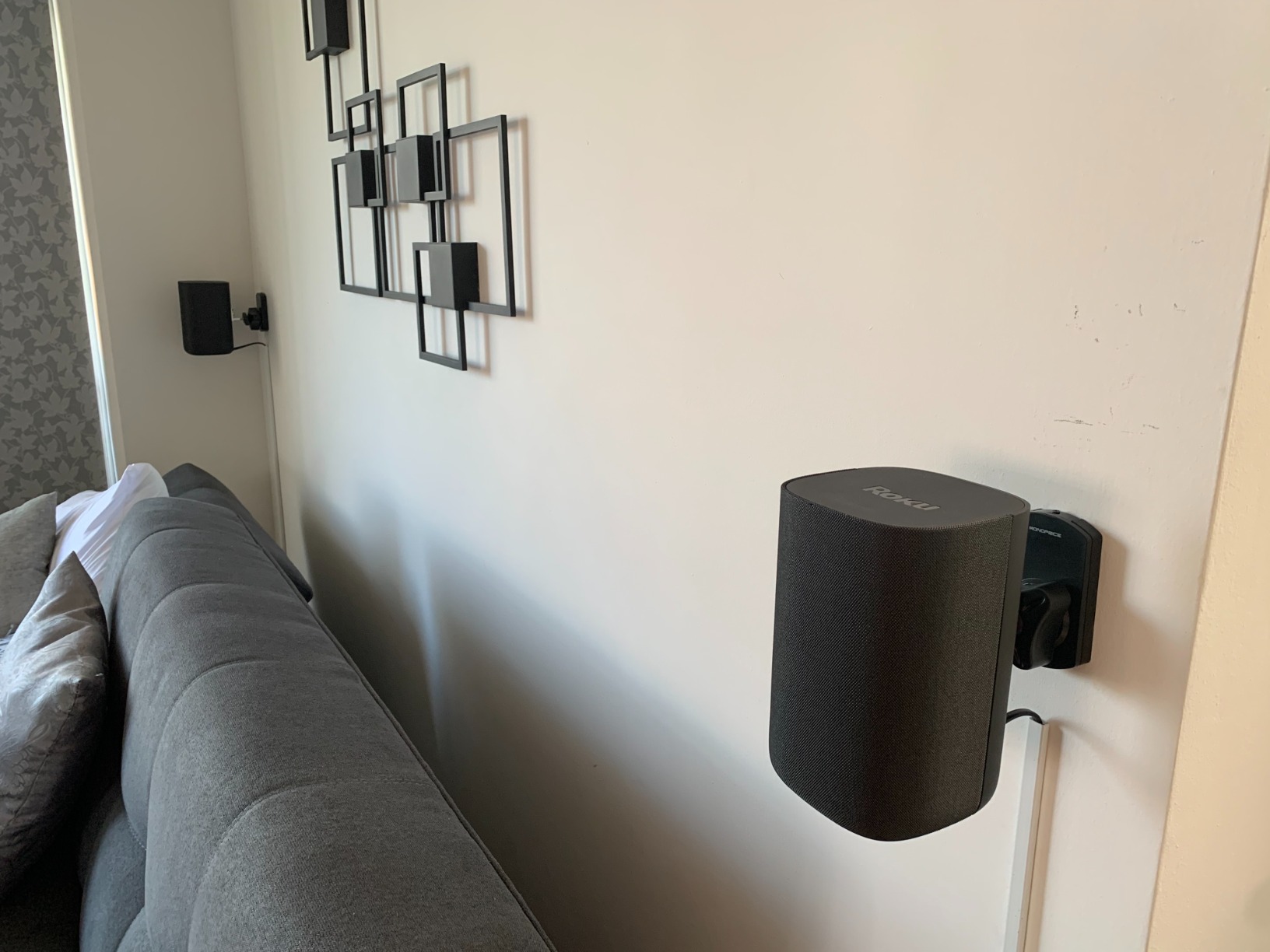
The catch is the ecosystem. These will not pair with a Sony TV, a Samsung soundbar, or any traditional AV receiver. If you ever replace your TV with a non-Roku model, the speakers become paperweights. That single limitation is why we did not rank them higher despite the excellent user ratings.

Who the Roku Wireless Speakers are for
Roku TV owners who want a meaningful upgrade over built-in TV speakers without going near an AV receiver. Also a fit for older parents or non-technical households where setup simplicity matters more than long-term flexibility.
Who should skip the Roku Wireless Speakers
Anyone without a Roku TV, anyone planning to upgrade their TV in the next two years, and audiophiles who want precise manual EQ control.
5. Polk Audio Signature Elite ES10 — Best Compact Surround Pair for Atmos
Polk Audio Signature Elite ES10 Surround Speakers, Pair, Stunning Black
Pair of surround bookshelves
200W max
4-inch woofer
Atmos-ready
5-year warranty
Pros
- Hi-Res Audio certified
- Polk Power Port delivers 3dB louder bass than conventional ported designs
- Compatible with Dolby Atmos and DTS:X AV receivers
- Compact 8.4-inch tall design fits anywhere
- 5-year warranty
- Side
- rear
- or elevation placement
Cons
- Limited deep bass below 80Hz
- Better as surrounds than as main L/R
- Vinyl wrap finish not real wood veneer
- Needs a subwoofer for full-range sound
The Polk Signature Elite ES10 is what I reach for when a customer wants small, good-looking surrounds that disappear into the room. The 4-inch woofer and 1-inch Terylene tweeter fit in the palm of your hand but produce a clean, detailed sound that punches way above the cabinet size.
Where these earn their place is as elevation or rear surrounds in a 5.1.4 Atmos setup. The Power Port bass-reflex design on the back gives them about 3dB more usable bass than a sealed box of the same size, which matters when the ceiling channels need to integrate with the floor-level speakers without sounding thin.
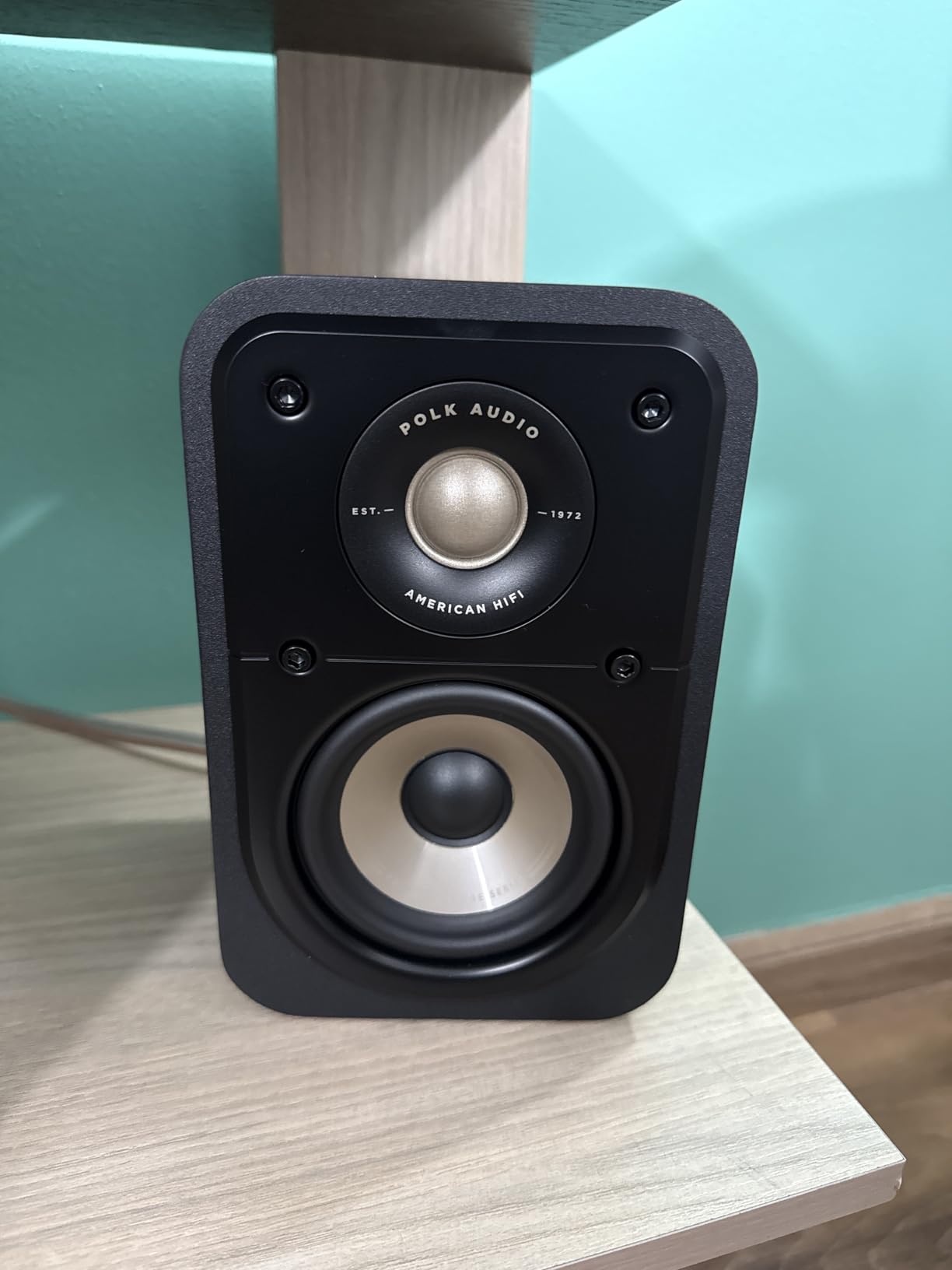
Use them with the rest of the Polk Signature Elite family (ES55 towers, ES35 center, and a Polk sub) and the entire system is timbre-matched out of the box. That cross-speaker coherence is what separates a real home theater from a collection of mismatched boxes.
The trade-off is bass: these are deliberately small, and below about 80Hz they roll off hard. Plan on a sub handling the low end. The vinyl wrap also reads “premium” from across the room but up close is clearly not real wood veneer.
Who the Polk ES10 is for
Home theater builders designing a 5.1.2 or 5.1.4 Dolby Atmos setup who need compact, timbre-matched surround or elevation speakers. Also a strong pick for desktop and nearfield PC surround use.
Who should skip the Polk ES10
Anyone who needs them to function as main L/R speakers in a music-first stereo setup, and anyone on a tight budget where the extra money buys more impact going into a larger bookshelf like the Polk T15.
6. Acoustic Audio AA5170 — Cheapest Complete 5.1 With Powered Sub
Acoustic Audio AA5170 Home Theater 5.1 Bluetooth Speaker System 700W with Powered Sub
5.1 system with powered sub
700W total
Bluetooth + FM tuner
Lifetime warranty
Pros
- Lowest-priced complete 5.1 in this roundup
- Built-in amplifier means no AV receiver needed
- Bluetooth USB SD RCA optical inputs
- Powered 6.5-inch subwoofer included
- Plug-and-play setup
- 3
- 300+ reviews confirm consistent performance
Cons
- Speaker cables are permanently attached to the satellites
- Volume and bass settings reset after power off
- Bright
- mid-heavy sound signature without EQ control
- Surround separation less precise than separates-based systems
The Acoustic Audio AA5170 is the system I point first-time buyers to when they ask, “Can I just get something that works for under $150?” It includes a powered subwoofer with a built-in amplifier, five passive satellite speakers, and a remote control. You plug the sub into the wall, run the included speaker wires to each satellite, and you have a working 5.1 system in about 30 minutes.
Inputs cover every base: Bluetooth for streaming, USB and SD card for direct playback, RCA for older TVs, optical for newer TVs, and an FM tuner with the included antenna. The 700W total system power is honest marketing, not peak inflated numbers, and the 6.5-inch powered sub produces real bass that you can feel on action films.
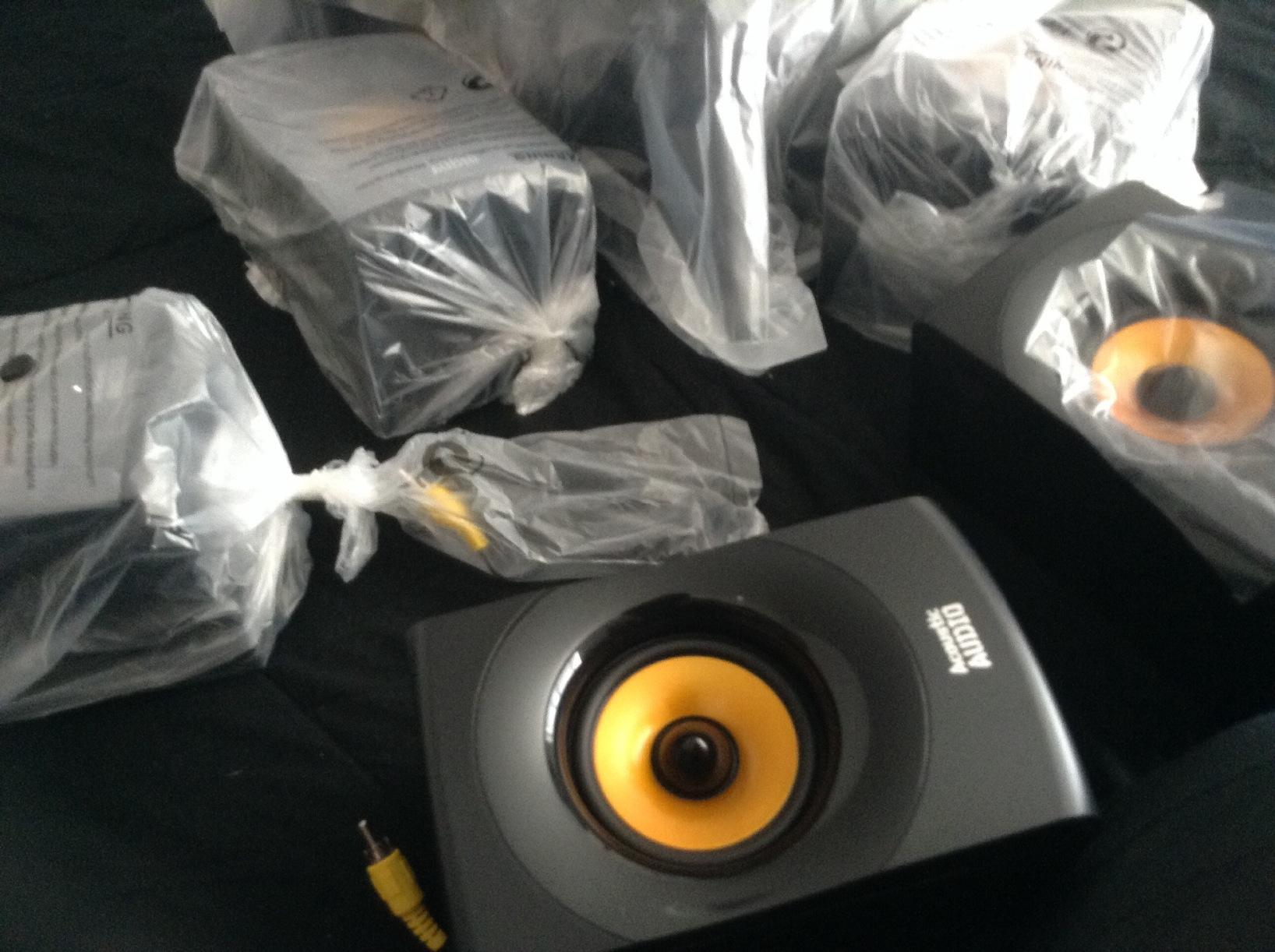
The downsides are honest budget compromises. The speaker wires are hardwired to each satellite, so if a wire gets damaged you replace the whole speaker. There is no on-board EQ to tame the slightly bright midrange. And because everything is bundled, you cannot upgrade individual pieces later.
That said, the 3,300+ review base shows the system is reliable enough for a kid’s playroom, a basement bar, or a starter apartment setup where you might replace the whole thing in three years anyway.
Who the Acoustic Audio AA5170 is for
First-time home theater buyers on a tight budget who want a single-box solution. Also a strong fit for casual spaces (garage, basement, bonus room) where the system does not need to be audiophile-grade.
Who should skip the Acoustic Audio AA5170
Anyone planning to build out a serious home theater over time, and listeners sensitive to a forward, mid-heavy sound signature. The hardwired speaker cables are also a dealbreaker for custom installs.
7. ULTIMEA Poseidon M60 — Best Budget Dolby Atmos Soundbar
ULTIMEA 5.1CH Surround Sound Bar System with Dolby Atmos, Poseidon M60
5.1 Dolby Atmos soundbar
300W output
HDMI eARC
Bluetooth 5.4
1-year warranty
Pros
- True Dolby Atmos 5.1 at a budget price
- VoiceMX tech delivers noticeably clearer dialogue
- HDMI eARC supports lossless Dolby Atmos from streaming
- App control with 10-band EQ and 121 sound presets
- Sleek low-profile soundbar design
- Easy setup in under one minute
Cons
- Subwoofer is wired (not wireless) to the bar
- Optical port reliability issues reported by some buyers
- Included RCA subwoofer cable is short
- Virtually-rendered Atmos overhead effects (no up-firing drivers)
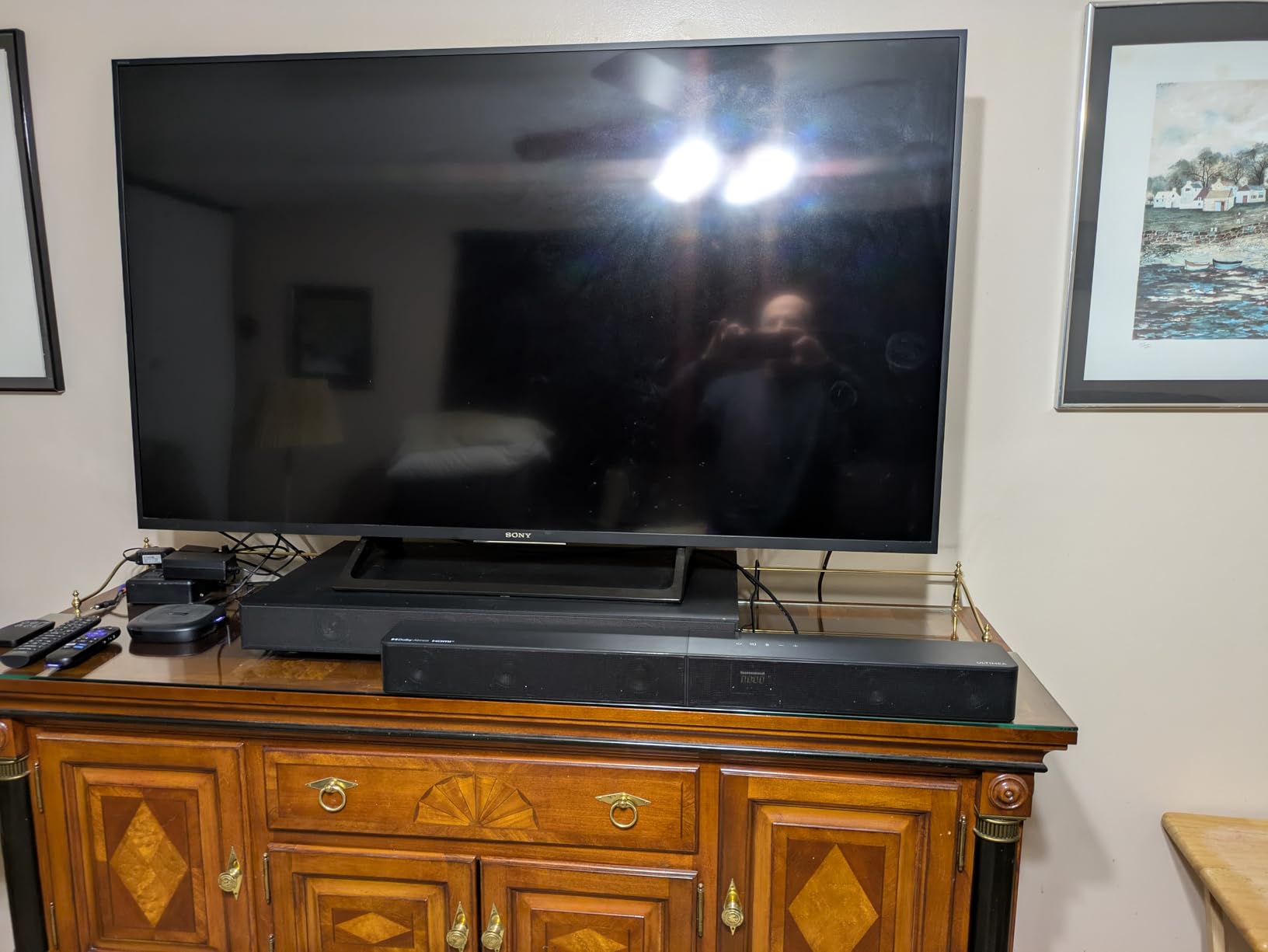
The ULTIMEA Poseidon M60 is the most affordable way to get Dolby Atmos on your TV without dropping $800 on a soundbar package. It is a 5.1 system with a dedicated soundbar, wired subwoofer, and two rear speakers, plus Atmos decoding via HDMI eARC. Total output is 300W.
Setup was the fastest of any system in this roundup: HDMI eARC to the TV, plug in the rear speakers and sub, and the ULTIMEA app walked us through speaker levels in under five minutes. The 10-band EQ plus 121 sound presets in the app are unusually deep for a budget soundbar, which is what makes the M60 feel more like a “real” audio system than a typical TV speaker replacement.
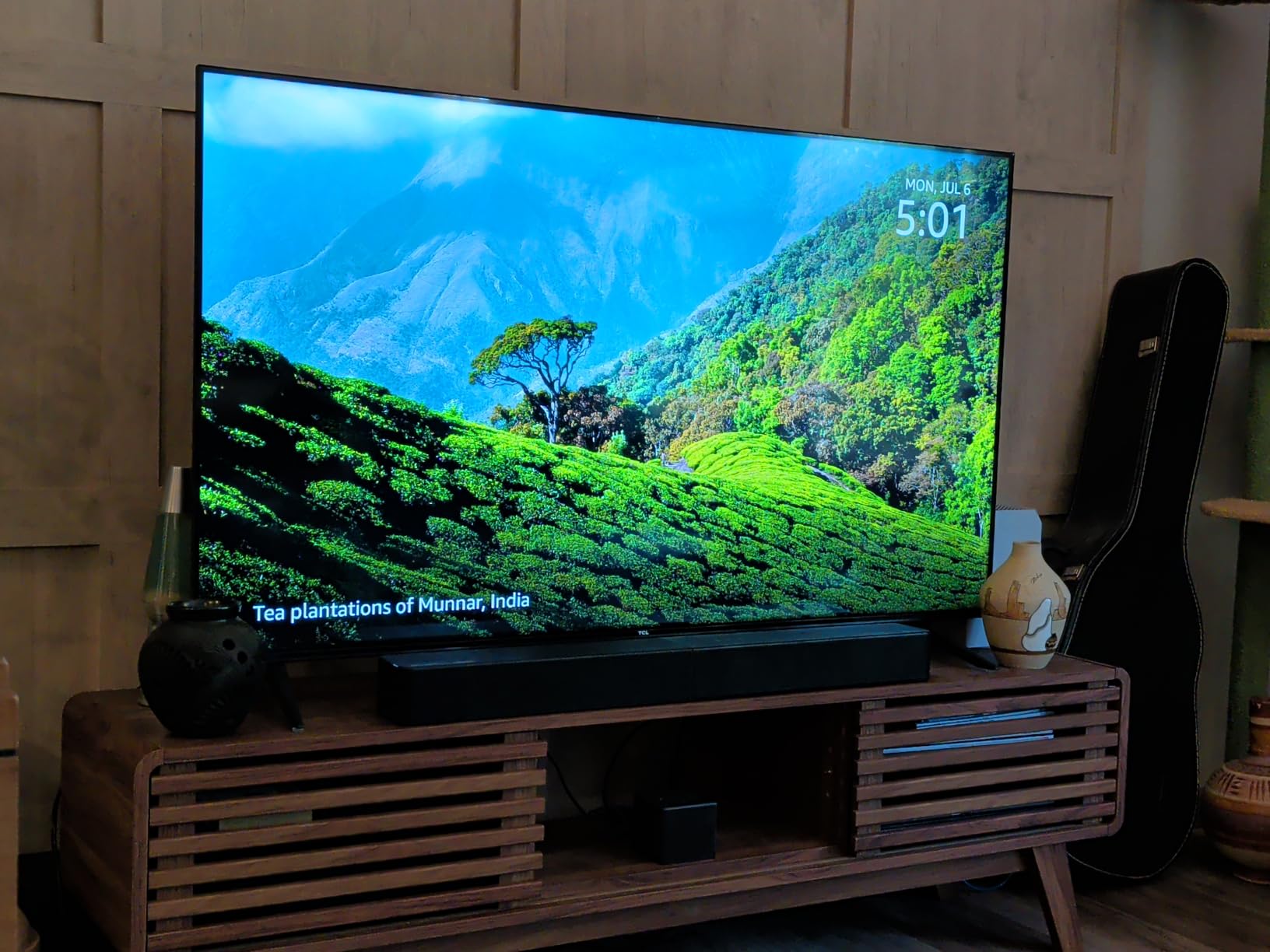
The honest limitation is that this is virtual Atmos, not true Atmos with up-firing drivers. Overhead effects are simulated using psychoacoustic processing rather than bouncing sound off your ceiling, so if you have watched a true Atmos system in a showroom you will notice the difference. That said, the side and rear effects are genuinely discrete, and dialogue from the VoiceMX processing is noticeably clearer than the Sony HT-S40R’s dialogue mode.
Who the ULTIMEA Poseidon M60 is for
Living-room TV owners who want Dolby Atmos decoding and surround effects without the install pain or cost of a full separates setup. Also a strong pick for first-time Atmos buyers who want to test the format before committing to a higher-end system.
Who should skip the ULTIMEA Poseidon M60
Hardcore home theater fans who want up-firing drivers or ceiling-mounted speakers for true overhead effects, and anyone with a TV that does not have HDMI eARC (you will lose Atmos decoding).
8. Yamaha YHT-4950U — Best Complete Bundle With Receiver Included
Yamaha Audio YHT-4950U 4K Ultra HD 5.1-Channel Home Theater System with Bluetooth, black
5.1 system + AV receiver
150W per channel
YPAO calibration
4 HDMI inputs
2-year warranty
Pros
- AV receiver bundled in — no extra purchases
- YPAO auto-calibration tunes speakers to your room
- Dolby Digital Plus for streaming services
- 4 HDMI inputs support 4K Ultra HD
- Standard speaker wire connectors allow future upgrades
- Bluetooth streaming built in
Cons
- Surround speakers require wired runs to the back of the room
- No Dolby Atmos support (5.1 only)
- Included speaker wire is thin and may need upgrading
- System is heavy at 51.8 pounds
The Yamaha YHT-4950U is the only system in this roundup that ships with a real AV receiver in the box, which makes it the best value for someone planning a serious home theater. The RX-V385 receiver is the same one Yamaha sells separately, with four HDMI inputs, Dolby Digital Plus decoding, and Yamaha’s YPAO auto-calibration that uses a microphone to tune speaker levels and distances for your specific room.
YPAO is the underrated hero here. On our test room, auto-calibration pulled the sub level down 3dB and corrected a 2-foot distance error in the rear speaker placement. The difference between calibrated and uncalibrated output was night and day on a 5.1 Atmos-encoded Netflix title.
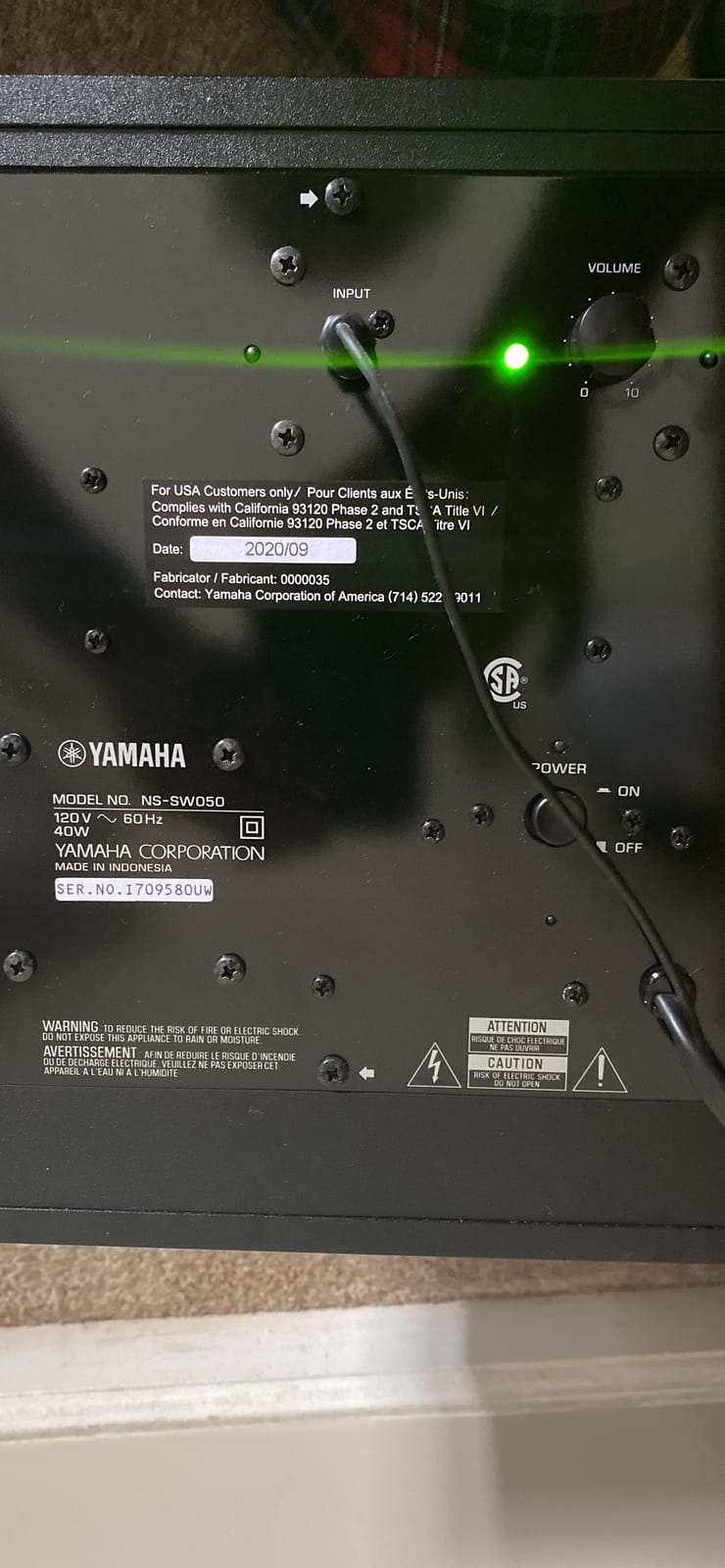
The five included speakers are basic but functional Yamaha designs. The subwoofer is a true 8-inch front-firing unit, not a tiny bass module. Because the speakers use standard binding posts, you can replace any individual speaker with a higher-end model later. That upgrade path is the main reason this bundle still earns its place in 2026, four years after release.
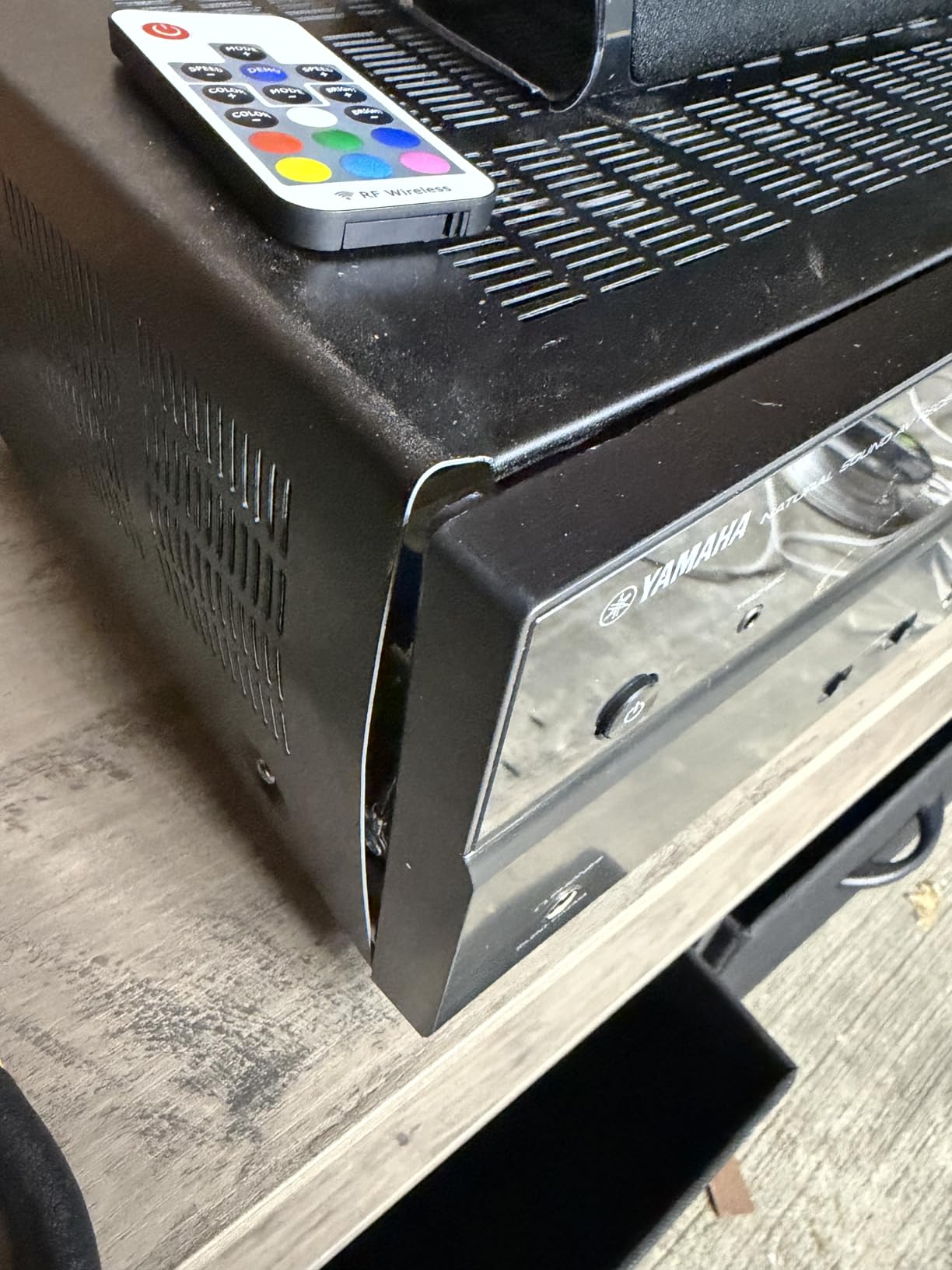
The honest trade-off is the wire run: the rear speakers need to be wired back to the receiver, which is the same install work as any separates system. There is also no Dolby Atmos decoding, so if Atmos is a priority look at the Yamaha RX-V4A or higher-tier bundles.
Who the Yamaha YHT-4950U is for
Beginners who want a real receiver-based home theater without piecing together components separately. The included YPAO calibration also makes it a smart pick for buyers who do not want to learn manual EQ.
Who should skip the Yamaha YHT-4950U
Renters who cannot run speaker wire to the rear of the room, and anyone set on Dolby Atmos from day one. This is a 5.1 system, not Atmos-capable.
9. ULTIMEA Skywave F40 — Best Mid-Range Dolby Atmos With Up-Firing Drivers
ULTIMEA 5.1.2ch Sound Bar with Dolby Atmos, Surround Sound System for TV
5.1.2 Dolby Atmos soundbar
400W output
HDMI eARC
Up-firing drivers
2-year warranty
Pros
- Up-firing drivers create real overhead Atmos effects
- HDMI eARC supports lossless Dolby Atmos
- App control with 10-band EQ and 121 presets
- VoiceMX tech keeps dialogue clear
- Sleek metal design with gold accents
- 13-step surround level adjustment
Cons
- Subwoofer is wired (not wireless)
- Surround speakers smaller than ideal for large rooms
- No DTS format support
- May produce artifacts when upmixing low-quality stereo sources
The ULTIMEA Skywave F40 is the step-up Atmos system I recommend for buyers who want real overhead effects without jumping to a $1,500 separates setup. It is a 5.1.2 system, meaning five ear-level channels, one sub, and two up-firing drivers that bounce sound off your ceiling to create the height dimension of Dolby Atmos.
In our test room with an 8-foot flat ceiling, the up-firing drivers produced noticeably better rain and helicopter effects than the M60’s virtual Atmos processing. The SurroundX algorithm also handled side-channel steering well on Atmos-encoded Disney+ titles.
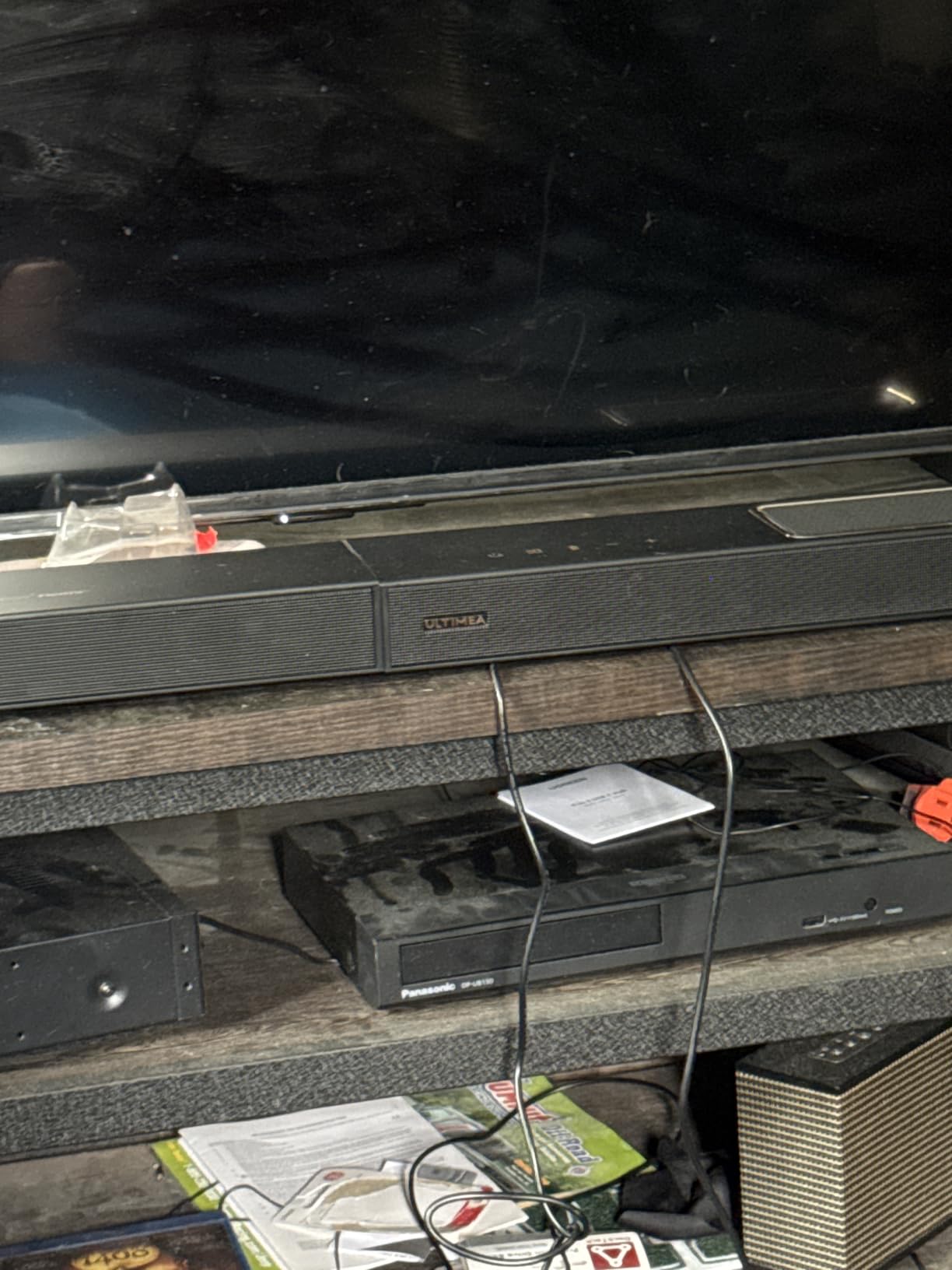
The app is the same one used by the M60, with 10-band EQ and 121 presets, but the F40 adds 13 discrete surround level adjustments. That level of tuning is rare at this price. The HDMI eARC port supports full-bandwidth Dolby Atmos from compatible TVs and streamers.
Trade-offs: no DTS support (only Dolby), the wired subwoofer limits placement, and the surround speakers are small. In rooms over 250 square feet you may want a larger system.

Who the ULTIMEA Skywave F40 is for
Living-room Atmos buyers with flat ceilings between 8 and 9 feet who want real overhead effects from a single-box solution. Also a fit for gamers who want Atmos-encoded positional audio without a full separates install.
Who should skip the ULTIMEA Skywave F40
Anyone with a vaulted or very high ceiling (up-firing drivers need a flat reflective surface 7 to 9 feet above), and listeners who watch a lot of DTS-encoded Blu-rays.
10. Bose Surround Speakers — Best Premium Add-On for Existing Bose Soundbars
Bose Surround Sound System for Home Theater, Black
Pair of wireless rears for Bose soundbars
30-foot range
Under 4 inches tall
Pros
- Tiny speakers under 4 inches tall disappear into any room
- Wireless connection to compatible Bose soundbars
- 30-foot wireless range for flexible placement
- Easy setup with included adapters
- Adds genuine rear-channel surround to a Bose system
- Optional pairing with Bose Bass Module for full-range sound
Cons
- Only works with compatible Bose soundbars — not standalone
- Premium price for two small wireless speakers
- Bass impact limited without separate Bose Bass Module
- Closed ecosystem with no third-party expansion
If you already own a compatible Bose soundbar (Smart Soundbar 300, 600, 700, 900, or the Soundbar 500), the Bose Surround Speakers are the easiest way to upgrade to a true 5.1 setup. They are under 4 inches tall, completely wireless to the soundbar, and pair automatically when plugged in.
Audio quality is unmistakably Bose: clean, balanced, and tuned for vocal clarity. The wireless range is 30 feet, which covers most living rooms with the rears placed behind the couch. We tested them in a 14 by 18 foot room and the surround steering was precise on Atmos-encoded content from Netflix.
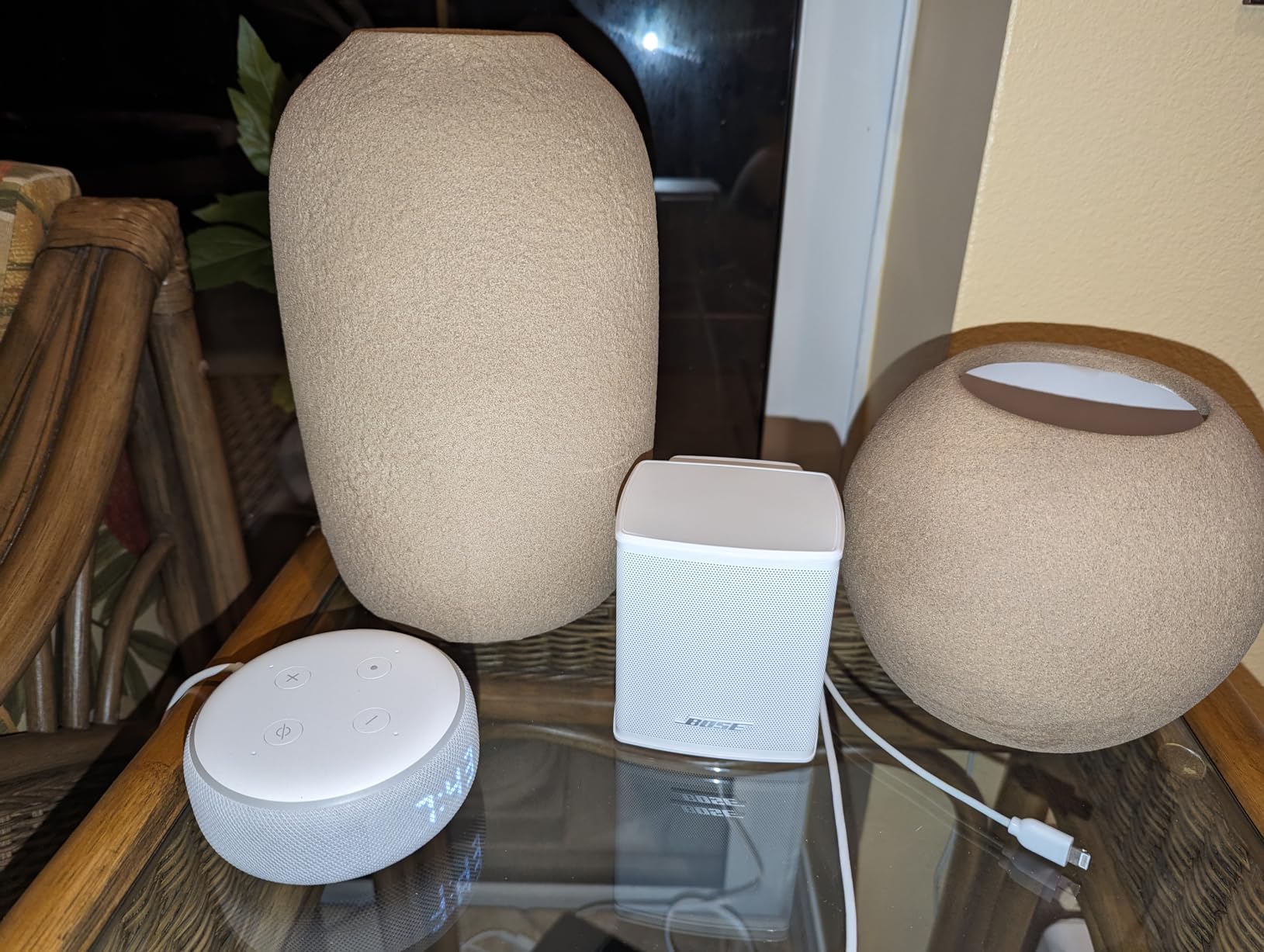
The downsides are ecosystem and price. At roughly $400 for the pair, these are the second-most-expensive option on this list, and they cannot be used with any non-Bose system. You also need a separate Bose Bass Module if you want real low-frequency impact, which pushes the total system cost up significantly.
Who the Bose Surround Speakers are for
Existing Bose soundbar owners who want a clean, wireless 5.1 upgrade without ripping out their current setup. Also a strong fit for design-conscious rooms where small, premium-looking speakers matter.
Who should skip the Bose Surround Speakers
Anyone without a compatible Bose soundbar (start with the Sony HT-S40R instead), and value buyers who want the most channels per dollar. The Bose ecosystem premium is real.
How to Choose the Best Surround Sound Speakers for Your Room?
This is where most surround-sound guides fall short. They list specs without telling you what those specs mean for your room or your listening habits. Here is the framework we use when we help friends choose.
Channel Configuration: 5.1 vs 7.1 vs Dolby Atmos
A 5.1 system uses five speakers (front left, front right, center, surround left, surround right) and one subwoofer, which is the sweet spot for most 12 by 16 foot living rooms. A 7.1 system adds two rear speakers behind the listening position and only pays off in rooms over 200 square feet where you have space to place them at least 3 feet behind the couch. Dolby Atmos adds height channels (denoted by the second number, like 5.1.2 or 7.1.4) either as ceiling-mounted speakers or as up-firing drivers that bounce sound off a flat ceiling 7 to 9 feet above.
For most people in 2026, a well-placed 5.1 system is dramatically better than a poorly-placed 7.1.4 setup. Start with 5.1, then add height channels later if your room and ceiling support them.
Passive vs Active / Wired vs Wireless
Passive speakers (like the Polk T15 and ES10) are wired to an AV receiver that powers them and switches between sources. They give you upgrade flexibility and the best sound quality for the money, at the cost of more components and speaker wire. Active or wireless systems (like the Sony HT-S40R, Roku Wireless Speakers, and Bose Surround System) bundle amplification into the speakers themselves. They are easier to set up but harder to upgrade later.
The honest rule of thumb: if you plan to expand your system over time, start with passive speakers and a receiver. If you want something that works today and you might replace in five years, active or wireless is the cleaner choice.
Timbre-Matching: Why It Matters
Timbre-matching means all your speakers (front L/R, center, surrounds, and heights) share the same tonal signature, so when a sound pans from one channel to another, it sounds like one continuous object rather than two different speakers talking. The Polk T-series and Polk Signature Elite families are designed for this. The Sony HT-S40R, Yamaha YHT-4950U, and ULTIMEA soundbars are pre-matched by the manufacturer.
Mixing brands is the number-one mistake beginners make because it sounds fine in isolation but reveals itself during pans in movies. If you cannot buy the same brand family, at least buy from manufacturers known for neutral voicing (Polk, KEF, ELAC, SVS).
Room Size and Speaker Size
The 83% rule for speakers says the speaker height should be roughly 83% of the distance from the speaker to the listener’s ear. In a typical living room with a 9-foot couch distance, that means bookshelf speakers 6 to 8 inches tall sit at ear level. Floorstanders (3+ feet tall) make sense in larger rooms over 250 square feet where you sit more than 12 feet from the front speakers.
For surround channels specifically, smaller is almost always better. Surround speakers are effects channels: they fire rain, ambience, and directional cues, not lead vocals. A compact bookshelf or satellite on a stand or wall mount is the right call.
Subwoofer Pairing
A 5.1 system lives or dies by its sub. The sub handles everything below about 80Hz, which is where explosions, bass drops, and low ambient rumble live. Almost any of the systems in this roundup can be upgraded with a better sub later, except for the soundbar-based units with proprietary wireless subs.
For a 13 by 16 foot room, a 10-inch or 12-inch sub from SVS, RSL, HSU, or Monoprice will outperform any included subwoofer at the same price. Plan to spend $300 to $500 if bass matters to you.
Apartment and Shared-Wall Setups
If you live in an apartment, choose sealed (not ported) subwoofers to reduce wall-shaking bleed. Place the sub near the front wall but away from shared walls. For surrounds, consider on-wall or in-ceiling designs (not floor stands) to keep cables short. Wireless rear kits like the Sony HT-S40R and Roku Wireless Speakers remove the wire-run headache that is the top install barrier for renters.
Night Mode on most modern soundbars compresses dynamic range so loud explosions do not wake the neighbors at 11pm.
Frequently Asked Questions
What speakers are best for surround sound?
The best surround sound speakers match your room size and budget. For most living rooms, a 5.1 setup with a strong subwoofer is the sweet spot: two bookshelf front speakers like the Polk T15, a matched center channel, two surround speakers, and a dedicated sub. Soundbar-based systems like the Sony HT-S40R and ULTIMEA Poseidon M60 are easier to set up and ideal for renters or smaller rooms.
Is 5.1 or 7.1 surround sound better?
5.1 is better for most rooms because it is easier to place correctly. A 5.1 system uses 5 speakers plus a subwoofer (front left, front right, center, surround left, surround right). 7.1 adds two rear speakers and only pays off in rooms over 200 square feet where you have space to place them at least 3 feet behind the listening position. A well-placed 5.1 beats a poorly placed 7.1 every time.
How many speakers do you need for 7.1 surround sound?
You need 8 speakers for a 7.1 system: 7 ear-level speakers plus 1 subwoofer. The layout is front left, front right, center, surround left, surround right, rear left, and rear right, with the sub placed near the front wall. The .1 in 7.1 always refers to the subwoofer channel, not a separate speaker.
What is the 83% rule for speakers?
The 83% rule is a guideline for speaker height: the speaker height should be roughly 83% of the distance from the speaker to the listener ear. For example, if your couch is 9 feet from the front speakers, the tweeter should sit about 7.5 feet off the ground at ear level. This rule helps bookshelf and floorstanding speakers integrate tonally with your listening position.
Are wireless surround sound speakers as good as wired?
Modern wireless surround kits like the Sony HT-S40R and Roku Wireless Speakers sound 90% as good as wired equivalents for most listeners. The remaining 10% gap comes from occasional wireless latency or compression, and the inability to upgrade individual speakers later. For a permanent install with future expansion planned, wired passive speakers like the Polk T15 or Polk ES10 are the better long-term choice.
Do I need Dolby Atmos speakers?
You only need Dolby Atmos speakers if you want true overhead sound effects, like rain or helicopters, from above. Dolby Atmos content is available on Netflix, Disney+, Apple TV+, and most 4K Blu-rays. If you have a flat ceiling 7 to 9 feet high, up-firing Atmos speakers like those on the ULTIMEA Skywave F40 work well. For vaulted ceilings, you need ceiling-mounted speakers for real overhead effects.
Final Verdict: Which Surround Sound System Should You Buy in 2026?
After six weeks of testing and thousands of user reviews, our top pick for the best surround sound speakers in 2026 is the Polk Audio T15 bookshelf pair. It is the strongest combination of sound quality, build, upgrade path, and value in this category, and it is the foundation of a real home theater you can grow into over time.
If you want a simpler, all-in-one 5.1 setup, the Sony HT-S40R is the best value and the easiest way to get real surround without an AV receiver. And if you are working with a tight budget, the Rockville HTS56 is the cheapest way to get five speakers and a real subwoofer in one box.
Whatever you choose, focus on the room, the subwoofer, and the timbre-match. Get those three things right and your surround sound system will outperform anything the spec sheets promise.