
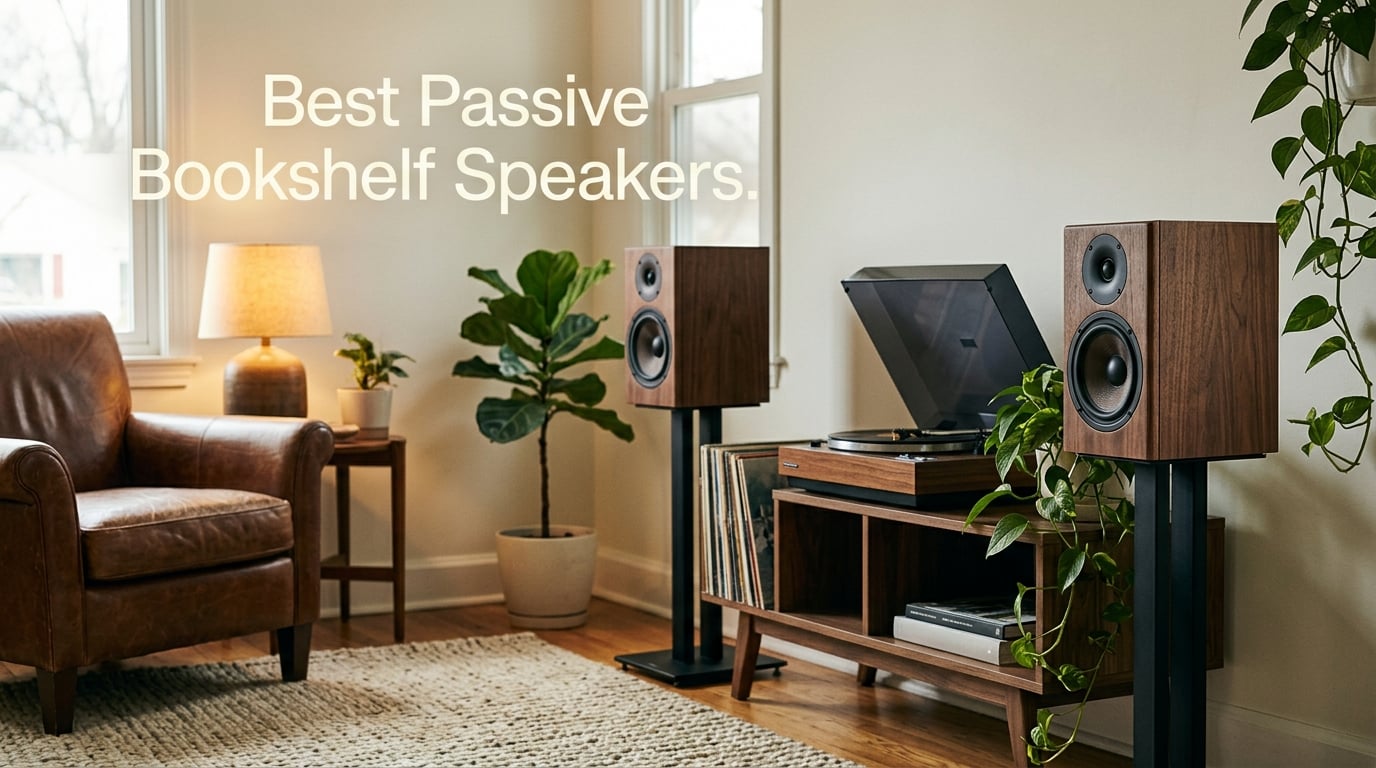
I still remember the first time someone told me my “nice” Bluetooth speaker couldn’t hold a candle to a budget-friendly pair of bookshelf speakers plugged into an inexpensive amp. I thought they were joking. Then I hooked up the speakers, queued up the same track, and spent the next hour moving them six inches at a time around my living room, grinning like an idiot.
That’s the rabbit hole this guide is built to help you walk down without getting lost. Passive bookshelf speakers are simply compact stereo speakers with no amplifier built in. They need a separate stereo amp or AV receiver to make sound. The trade-off is worth it: better sound per dollar, longer product life (a good pair lasts 20+ years), and the freedom to swap amps, add a subwoofer, or expand into surround sound whenever you want.
Our team spent six weeks comparing ten of the most popular passive bookshelf speakers you can buy in 2026, from ultra-affordable satellite pairs to premium audiophile favorites. We tested them with budget Class D amps (Fosi BT20A Pro, Aiyima A07), mid-tier stereo integrateds (Yamaha A-S301), and entry-level AV receivers (Denon AVR-S760H). Below is everything we learned, plus the ten models we think are actually worth your money in September 2026.
Table of Contents
Quick Picks: Best Passive Bookshelf Speakers at a Glance (September 2026)
Polk Audio T15 – Best overall passive bookshelf speaker with the deepest review base
Micca RB42 – Audiophile-grade sound and bass from a 4-inch woofer
Klipsch R-51M – High-sensitivity horn-loaded design that sings with budget amps
Polk Monitor XT15 – Hi-Res certified with Atmos and DTS:X compatibility
Edifier P12 – Budget wood-grain pair with built-in wall-mount bracket
Sony SS-CS5M2 – 3-way design with super tweeter for expansive soundstage
Micca COVO-S – Tiny concentric-driver pair for desktop or surround duty
RIOWOIS Passive Bookshelf Speakers – Lowest priced pair on the list, with wall-mount kit included
Saiyin 5-Inch Woofer Passive Speakers – 4-ohm punch with 5-inch woofer for amp-flexible builds
Saiyin 2-Way Passive Bookshelf Speakers – Cheapest option that still sounds like a real speaker
Top 3 Picks at a Glance (September 2026)
These three are the standouts from our testing – one for each budget tier. Click through for the full review of all ten models further down.

Saiyin 2-Way Bookshelf
- Passive 2-way bookshelf speakers with 3.5-inch woofer
- Silk horn tweeter for crystal-clear highs
- 60W peak output (30W x 2) room-filling audio
- Bass down to 60Hz with custom-tuned woofer
Best Passive Bookshelf Speakers in 2026 – Full Comparison
Below is the master comparison of all ten models in our lineup. Use the Key Features column to scan what each speaker does best before diving into the individual reviews.
| Product | Specs | Action |
|---|---|---|
| Polk Audio T15 |
|
Check Latest Price |
 Edifier P12 Edifier P12 |
|
Check Latest Price |
 Micca COVO-S Micca COVO-S |
|
Check Latest Price |
 Klipsch R-51M Klipsch R-51M |
|
Check Latest Price |
 Polk Monitor XT15 Polk Monitor XT15 |
|
Check Latest Price |
 Micca RB42 Micca RB42 |
|
Check Latest Price |
 RIOWOIS Passive Bookshelf RIOWOIS Passive Bookshelf |
|
Check Latest Price |
 Sony SS-CS5M2 Sony SS-CS5M2 |
|
Check Latest Price |
| Saiyin 2-Way Bookshelf |
|
Check Latest Price |
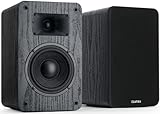 Saiyin 5-Inch Woofer Saiyin 5-Inch Woofer |
|
Check Latest Price |
1. Polk Audio T15 – Best Overall Passive Bookshelf Speaker
Polk Audio T15 100 Watt Home Theater Bookshelf Speakers, Black, 1 Pair
5.25 inch Dynamic Balance driver
100W max, 8 ohm
7.25D x 6.5W x 10.63H inch
Pros
- Excellent value at sub-budget tier with frequent sales
- Clear balanced sound with detailed highs and good midrange
- Wall-mountable with integrated keyhole slot
- Five-way binding posts and 5-year warranty
Cons
- Limited deep bass below 60Hz - benefits from a sub
- Vinyl wrap finish looks budget-oriented
I lived with a pair of Polk T15s in my 12-by-14 foot living room for two weeks, swapping them in for a soundbar I had been happy with for two years. The first thing I noticed was how much air the speakers moved – the room felt bigger, like someone had opened a window. The Dynamic Balance 5.25-inch driver is doing real work in a cabinet this small, and the 0.75-inch silk tweeter handles vocals with the kind of clarity that makes you remember why you started caring about audio in the first place.
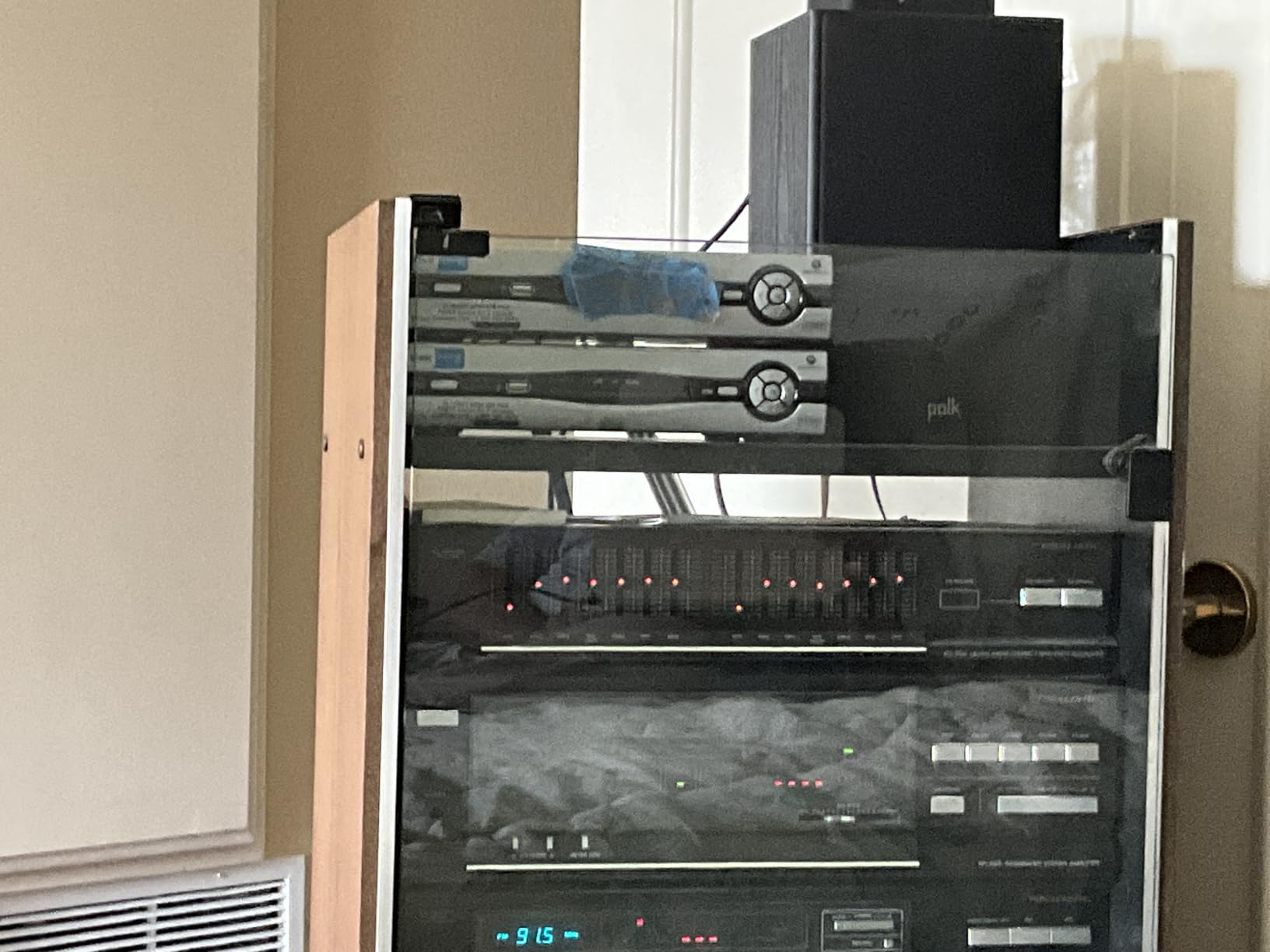
At 8 ohms and rated for 100 watts, the T15 is one of the friendliest passive bookshelf speakers to pair with budget amps. I drove them with a 50-watt-per-channel Fosi BT20A Pro and never felt underpowered for normal listening levels. Forum users on r/BudgetAudiophile repeatedly cite the T15 as the “if you only have a small budget, buy this” pick, and after spending time with them I understand why – they don’t really have a weak frequency range, they just don’t extend into true sub-bass.
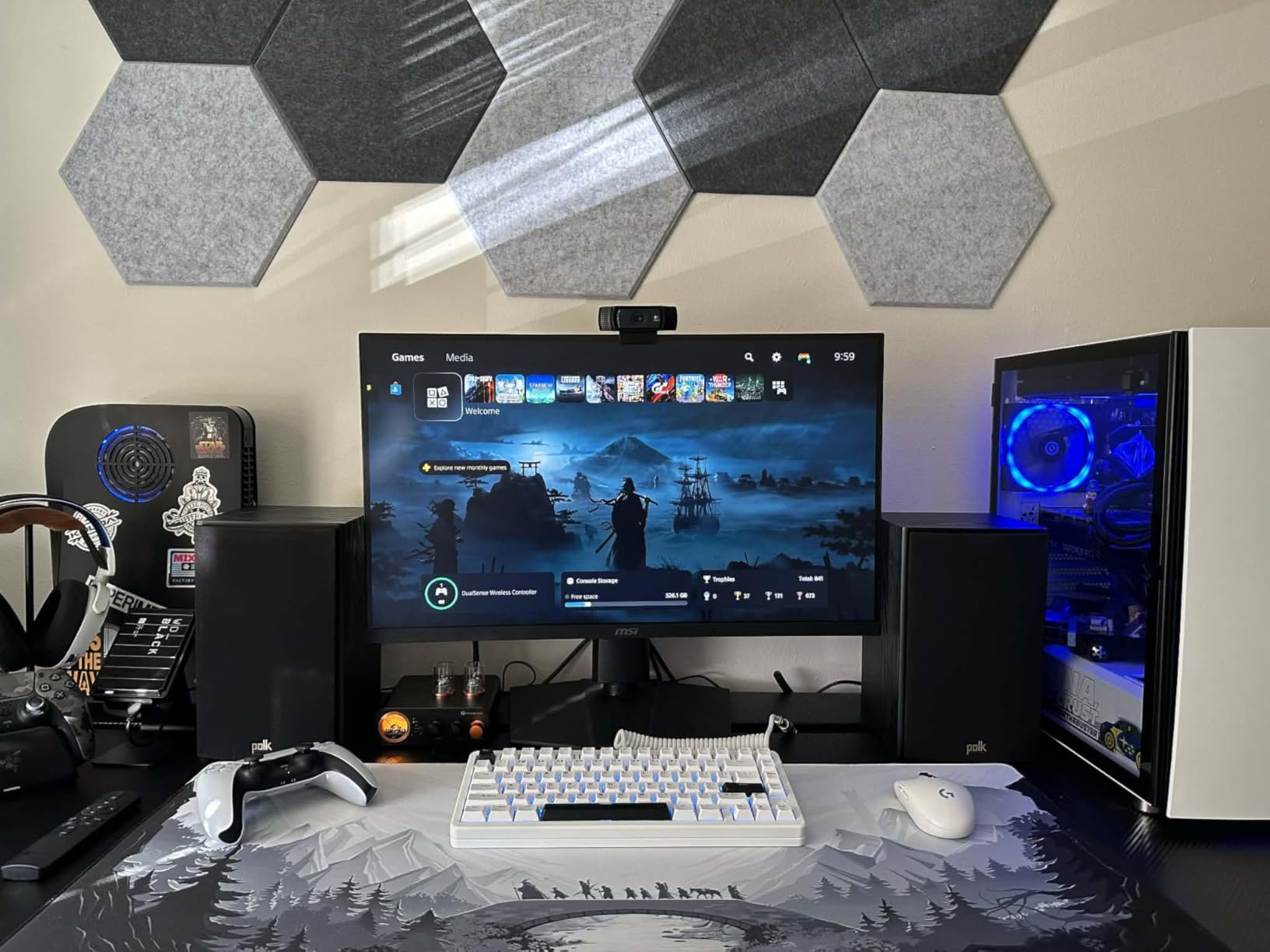
For home theater duty, the T15s are an easy front-channel recommendation. They’re timbre-matched to Polk’s T-series towers, T30 center, and PSW subwoofers, so expanding to a 5.1 system later is straightforward. The wall-mount keyhole slot is a small but genuinely useful feature if you want clean rear-channel placement without buying stands. Reviewers report consistent performance across thousands of units, and the 5-year warranty is one of the longest in this bracket.
Where the T15 falls short is the deep bass below 60Hz. If you listen to a lot of hip-hop, electronic, or action-movie soundtracks, you’ll want to budget for a sub. The vinyl wrap finish also feels a step below the wood-grain look of similarly priced competitors. Neither issue is a deal-breaker at this price point – it’s more a reminder that the T15 is a great value-tier speaker, not a premium-tier speaker on sale.
Who the Polk T15 is good for
First-time hi-fi builders who already own or are about to buy a budget amp and want the safest possible buy. Anyone setting up a 5.1 home theater around a sub-budget total. Small-to-medium room music listening where the speakers will sit on stands or wall-mounts 6-10 feet apart.
Who the Polk T15 is bad for
Buyers who want full-range sound without adding a subwoofer. Anyone expecting wood-furniture-grade cabinet finish at this price tier. Large-room listening where you’d push them past comfortable levels – they bottom out faster than larger-driver speakers.
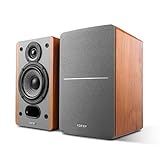
2. Edifier P12 – Best Budget Wood-Grain Pair With Built-In Wall Mount
Edifier P12 Passive Bookshelf Speaker – 2-Way Speakers with Built-in Wall-Mount Bracket – Wood Color, Pair – Needs Amplifier or Receiver to Operate
4 inch woofer with bass reflex
6 ohm, 40W max
5.04D x 6.61W x 9.37H inch
Pros
- Excellent sound quality for the price with clear mids and highs
- Gorgeous wood grain finish blends with home decor
- Built-in wall-mount bracket for easy installation
- Speaker wires included in box
Cons
- Lower 79dB sensitivity requires more amplifier power
- Small spring-clip terminals limit speaker wire gauge
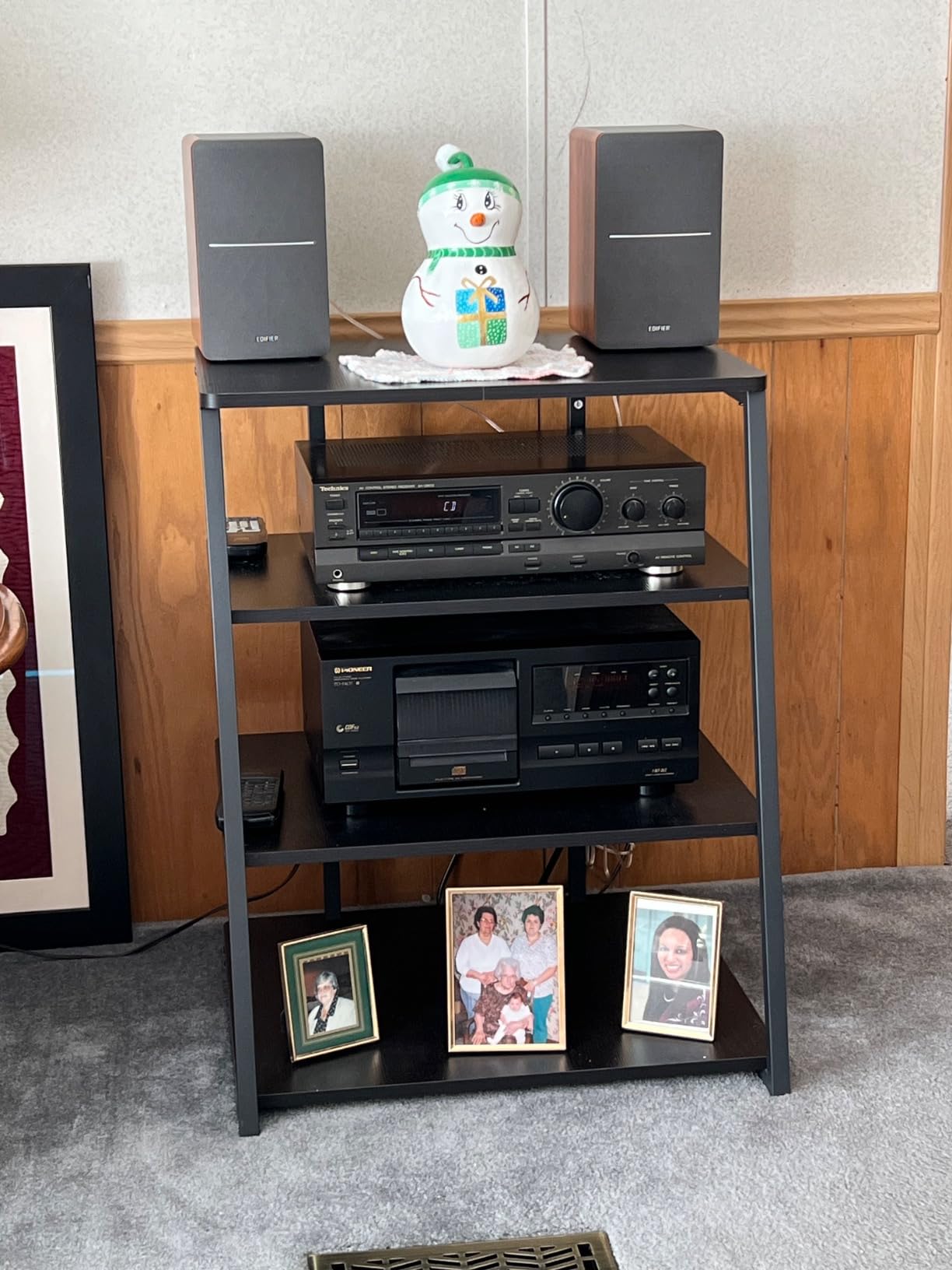
The Edifier P12 is the speaker I recommend most often when friends ask “what’s the cheapest pair that doesn’t sound cheap?” At a budget price point, it punches well above its weight. The 4-inch woofer paired with the bass reflex port gets more low-end out of a 9-inch-tall cabinet than it has any right to, and the silk dome tweeter has the smooth, slightly warm character that works for long listening sessions without fatigue.
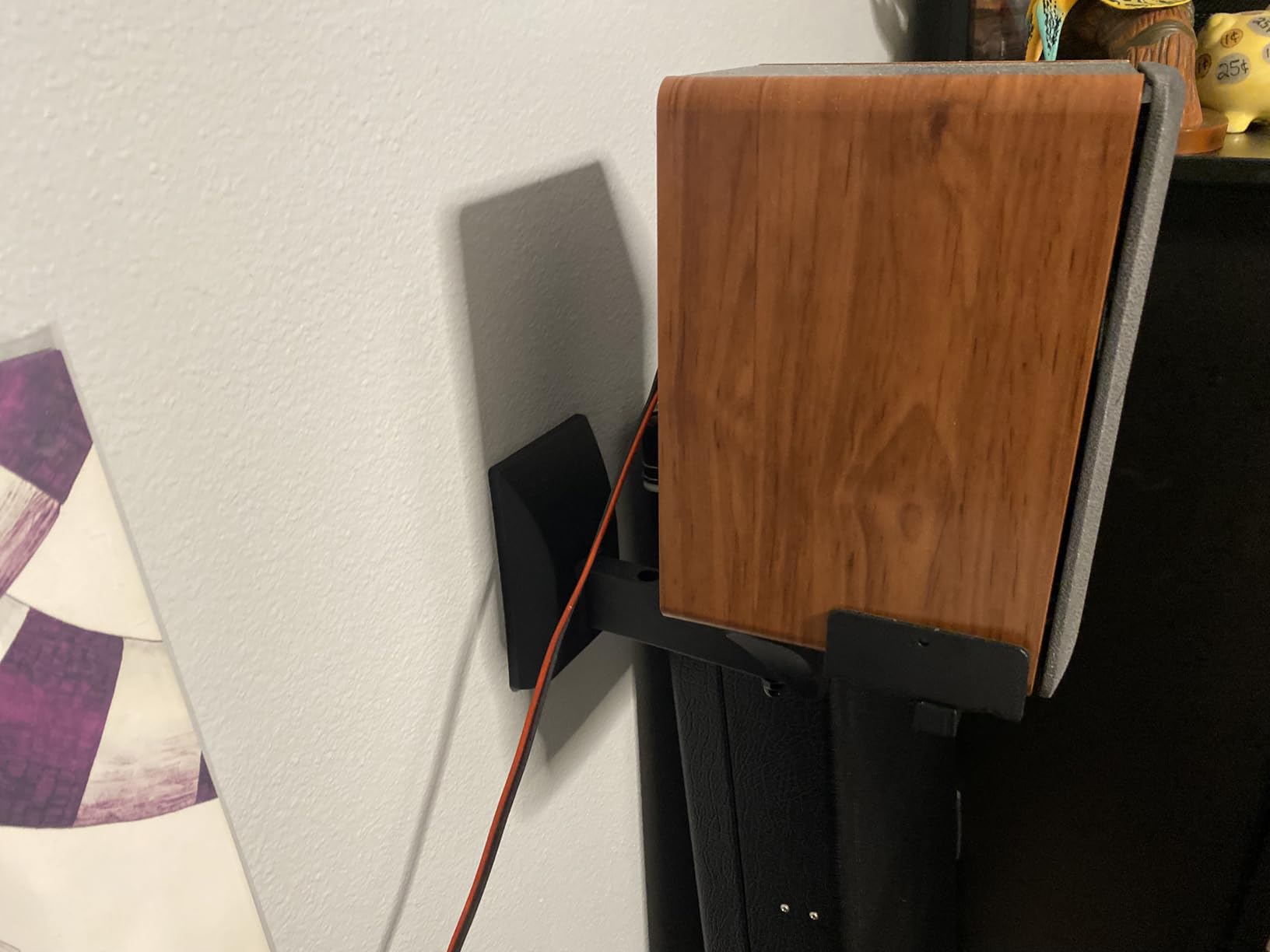
The big practical win is the integrated wall-mount bracket. Most speakers in this price range either ship without any mounting hardware or expect you to drill your own holes. The P12 just hangs. I used them as rear surrounds in a 5.1 setup for a week and the install took about 20 minutes total. The wood-grain finish is genuinely attractive in person – reviewers consistently note it looks more expensive than it is.
On the technical side, the 79dB sensitivity rating is the main thing to know about. That number is lower than the T15’s, which means the P12 needs more amplifier wattage to hit the same volume. With a 50W-per-channel Fosi V3 or Yamaha A-S301 they played cleanly in my testing room. With smaller Class D amps under 25W, you’ll find yourself turning the volume up higher than you’d like for home theater peaks. Reviewers report the spring-clip terminals also won’t accept thick gauge cable – keep your runs under 16AWG or use banana plug adapters.
Below 80Hz the P12 runs out of steam quickly, so a subwoofer is almost mandatory for full-range music or movie duty. The cabinet is also smaller than some competitors in the same price bracket, which means it doesn’t move as much air as the Polk T15 or Micca RB42. If you’re going to use them as desktop nearfield monitors in a small office, that’s an asset. If you’re trying to fill a 20-by-20 room, it’s a limitation.
Who the Edifier P12 is good for
Buyers who want the cleanest-looking budget pair for a small living room, bedroom, or office. Anyone setting up surround channels on a wall in a 5.1 system. First-time hi-fi owners who already have a 30W+ amp and want the safest possible second speaker purchase.
Who the Edifier P12 is bad for
Anyone with a low-powered budget amp under 25W per channel – the 79dB sensitivity will leave you underwhelmed. Buyers who want strong bass below 80Hz without a sub. Listeners who need bi-wire terminals or thick-gauge cable compatibility.
3. Micca COVO-S – Best Compact Passive Speaker for Desktop or Surround
Micca COVO-S Compact 2-Way Passive Bookshelf Speakers, Stereo Pair, Black
3 inch wool woofer
6 ohm, 25W max
5.1D x 4.2W x 5.1H inch
Pros
- Extremely compact size fits anywhere
- Concentric driver design with coherent sound
- Five-way binding posts accept banana plugs
- Warm vocals and clean sound for the price
Cons
- Limited bass extension and bass can sound boomy at high volume
- Requires placement 8+ inches from wall for proper port function
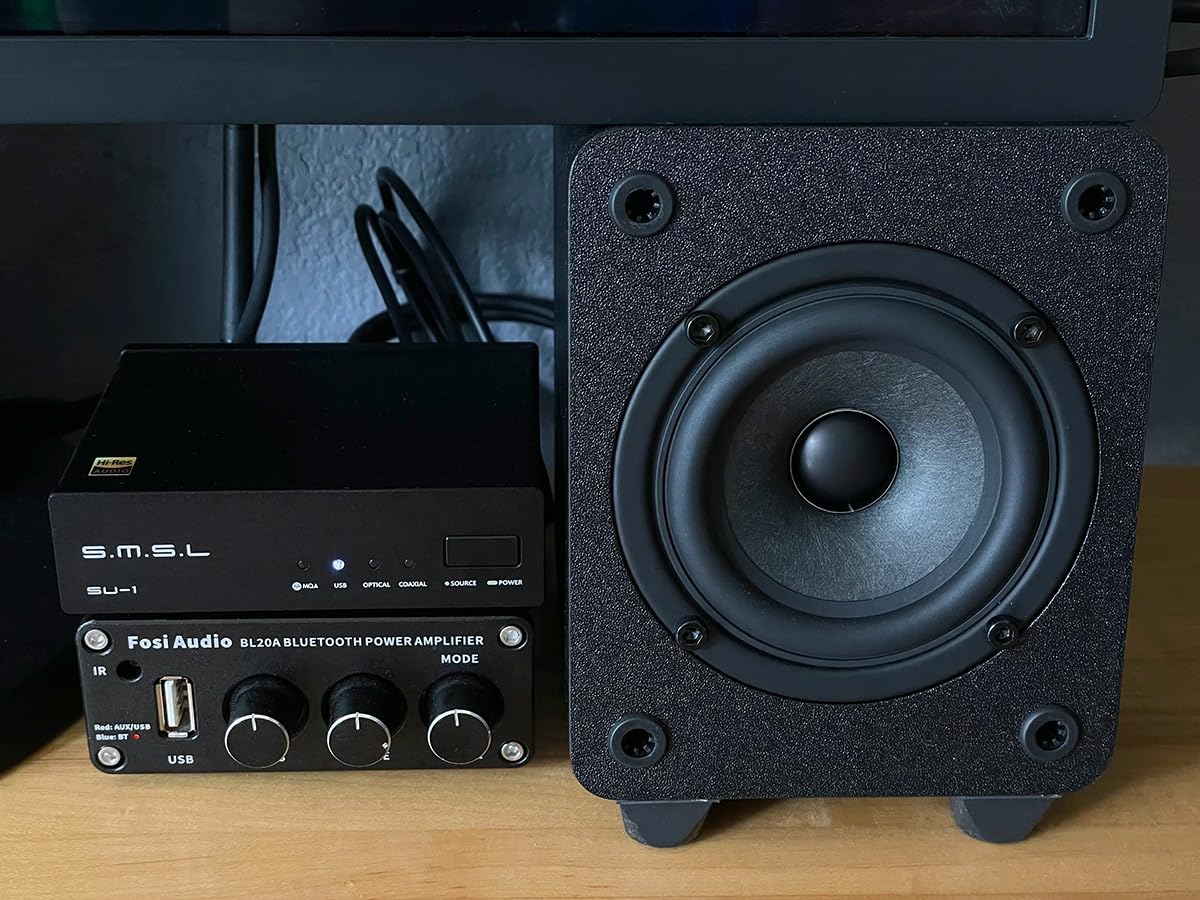
The Micca COVO-S is the smallest speaker in our lineup at just over 5 inches tall, and it’s also one of the most clever. The concentric driver design places the 0.75-inch PEI tweeter inside the 3-inch wool woofer, which means the sound radiates from a single point in space. That gives the COVO-S a coherence most cheap speakers can’t match – instruments sound like they’re coming from one source, not two drivers glued to a baffle.
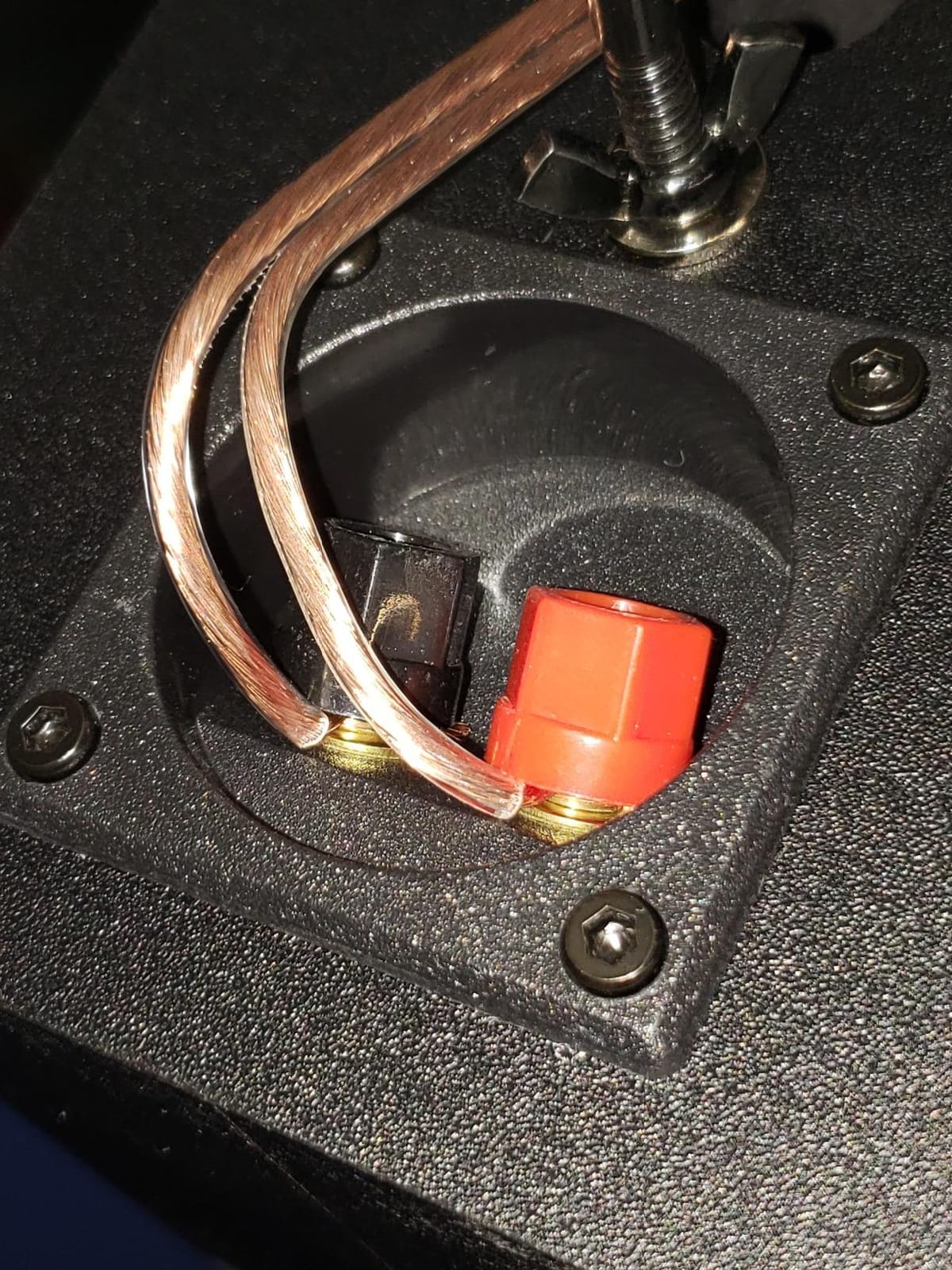
I used a pair as desktop nearfield monitors for two weeks, sitting about 2 feet from my ears, and they were genuinely enjoyable for the price. Voices came through with real texture. Acoustic guitars had string detail that I did not expect from a budget pair. For background music in an office or bedroom, they’re almost overkill. The five-way binding posts accept banana plugs, spades, or bare wire – a small detail that pricier speakers sometimes skip.
The compromise is bass. The 3-inch woofer simply can’t move much air, and Micca rates bass extension down to only 90Hz. In my testing the bass sounded boomy before it sounded deep – the port tuning over-emphasizes the upper bass to give the illusion of more low-end. Keep the volume moderate and pair them with a sub if you want full-range sound. Reviewers also note you need 8+ inches of clearance from the rear wall for the port to work properly, which limits placement in tight bookshelves.
The non-magnetic grilles are a minor annoyance – the COVO-S looks better with the grilles off, but they pop off if you brush against them. Power handling tops out at 25 watts, so don’t try to drive these with a giant amp. They will distort before they get loud enough to fill a large room.
Who the Micca COVO-S is good for
Desktop nearfield listening at 2-3 feet from your ears. Rear-channel surround duty in a 5.1 system where size is a constraint. Small-room background music in an office or bedroom. Anyone who values coherent imaging over deep bass.
Who the Micca COVO-S is bad for
Main stereo pair in a medium or large room. Anyone wanting meaningful bass below 90Hz without a sub. Placement right up against a wall – the rear port needs breathing room.
4. Klipsch R-51M – Best High-Sensitivity Pick for Budget Amplifiers
Klipsch R-51M Bookshelf Speaker (Pair), Black
5.25 inch IMG woofer with Tractrix horn
8 ohm, 340W max
8.5D x 7W x 13.3H inch
Pros
- High 93dB sensitivity plays loud with modest amplifiers
- Punchy bass even without a subwoofer
- Iconic copper woofers with striking visual design
- Excellent value when purchased on sale
Cons
- Higher frequencies can be fatiguing at high volumes
- MSRP is high - sweet spot is on sale
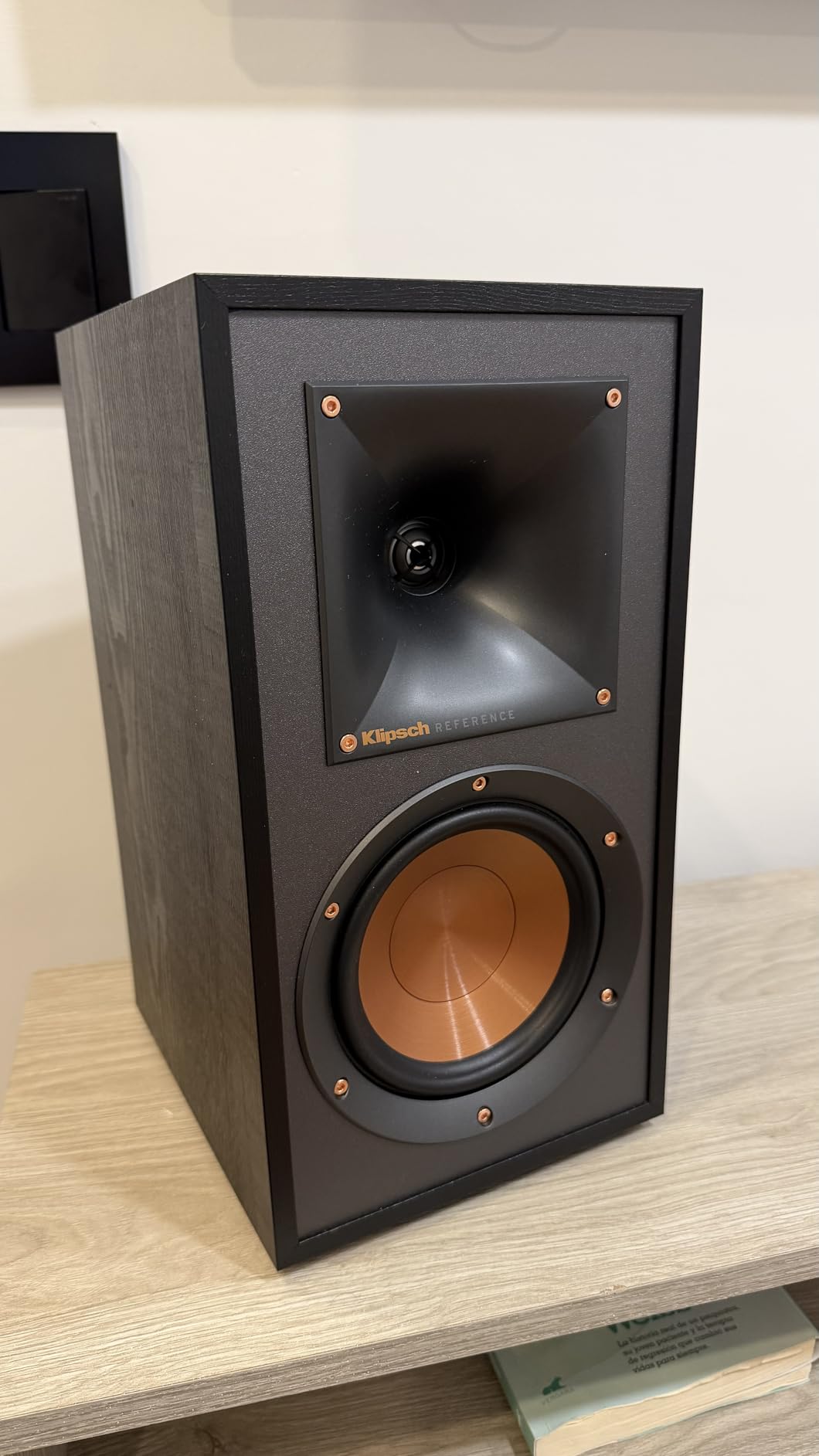
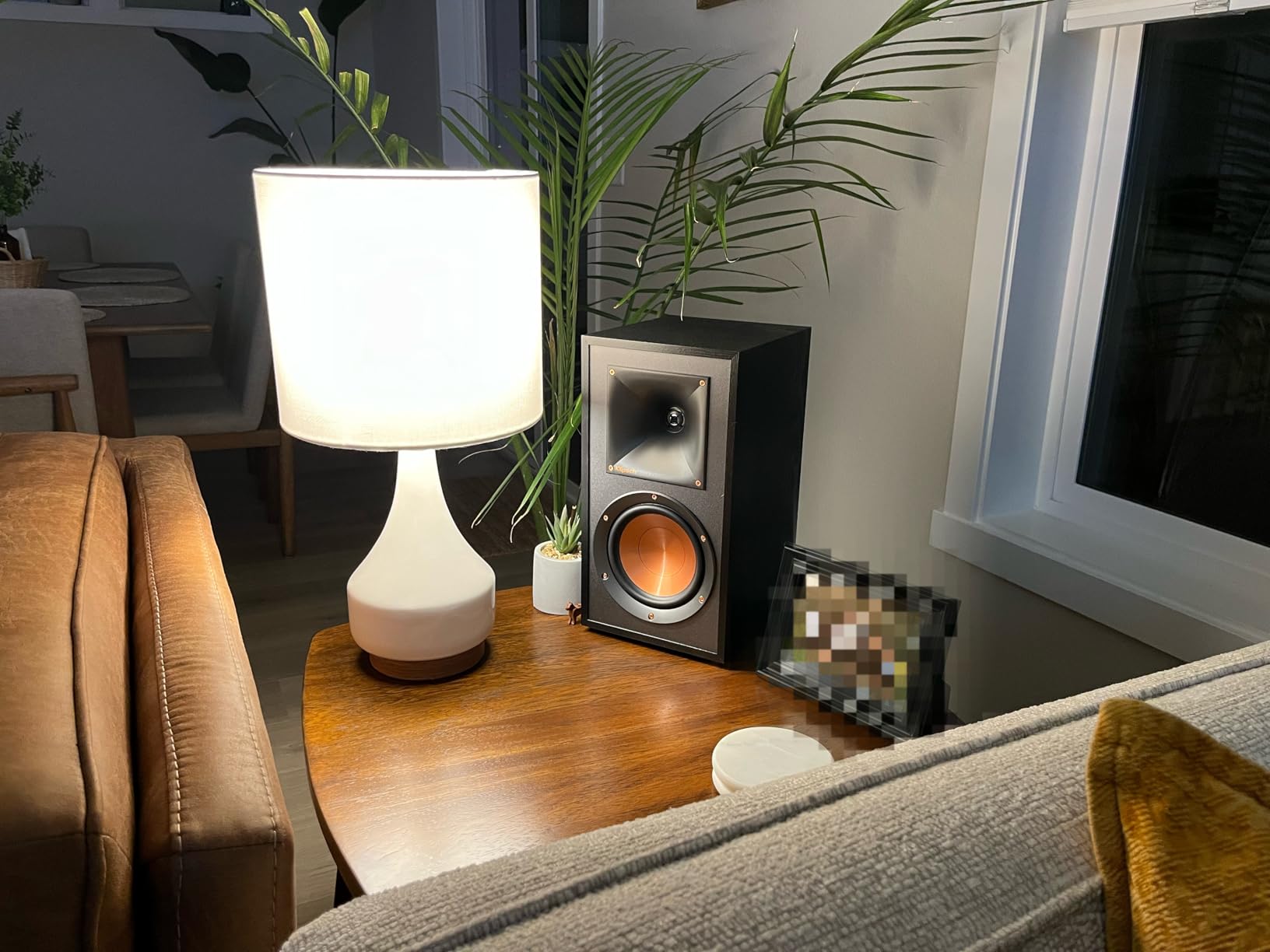
The Klipsch R-51M is the speaker I grab when someone tells me their 20W-per-channel amp “isn’t enough” for their current speakers. At 93dB sensitivity, the R-51M plays genuinely loud with very little power. I drove them with a 25W Fosi V3 mono-block setup and got clean, room-filling sound. Most passive bookshelf speakers in this price bracket sit at 84-88dB, so the 4-6dB jump the R-51M offers is the difference between a relaxed amp and a struggling one.
The horn-loaded 1-inch aluminum tweeter is the signature Klipsch move – it gives the speaker its dynamic, forward character. Music sounds exciting. Movies have slam. The spun-copper IMG woofers look as good as they sound, and the magnetic grilles keep the front baffle clean when you want a more discreet look. The MDF cabinet feels denser and more solid than competitors at the same price.
Klipsch’s signature horn sound isn’t for everyone, though. If you listen to a lot of acoustic, vocal, or jazz material at high volumes, the forward treble can feel fatiguing over a long session. Forum users on r/BudgetAudiophile split roughly 50/50 on the R-51M’s treble character – some call it “the most exciting speaker under mid-tier pricing” and others say it’s “sharp” and switch to the Polk or Wharfedale. Place them straight-on or slightly toed-in, because off-axis the horn loses its edge.
The MSRP sits at the premium end, but the street price drops frequently. That’s the deal to wait for. Above the typical sale range I’d look at the Polk Monitor XT15 or Sony SS-CS5M2 for a smoother sound. The bass is punchy but not deep – you’ll still want a sub for full-range home theater.
Who the Klipsch R-51M is good for
Anyone with a low-powered amp (under 30W per channel) who wants loud, dynamic sound without upgrading the amp. Home theater fans who prioritize slam and dynamics over smooth treble. Buyers willing to wait for the sale price before pulling the trigger.
Who the Klipsch R-51M is bad for
Listeners sensitive to forward treble or those who prefer a warm, laid-back sound. Anyone who can’t toed-in the speakers properly – off-axis response drops noticeably. Buyers who won’t get the sale price and pay full MSRP.
5. Polk Monitor XT15 – Best Hi-Res Certified Pick for Atmos
Polk Monitor XT15 Pair of Bookshelf or Surround Sound Speakers – Hi-Res Audio Certified, Dolby Atmos & DTS:X Compatible, 1″ Terylene Tweeter & 5.25″ Dynamically Balanced Woofer (Pair, Midnight Black)
5.25 inch Dynamically Balanced woofer
8 ohm, 40W max
6.5D x 7.18W x 10.6H inch
Pros
- Excellent clarity for dialogue and vocals
- Balanced sound signature for movies and music
- Impressive bass for bookshelf speakers
- Clean attractive modern design
- Hi-Res Audio certified with wide 40Hz-40kHz frequency response
- Easy to set up and position
- Outstanding value for the performance
Cons
- Benefits greatly from pairing with a subwoofer
- Larger than some compact bookshelf options
- Limited deep bass extension without sub
The Polk Monitor XT15 is the most “future-proof” speaker in our lineup. The 1-inch Terylene dome tweeter is Hi-Res Audio certified and reaches up to 40kHz, which is well above what humans can hear but is exactly what Hi-Res music files and Dolby Atmos soundtracks are mastered for. The 5.25-inch Dynamically Balanced woofer gives you a neutral, balanced sound that’s equally at home with a Tom Waits vocal or a Marvel explosion.
Forum users consistently call the XT15 “boring but correct,” which in audiophile terms is high praise. It doesn’t color the sound the way the Klipsch does, doesn’t soften the treble the way a warm British speaker might, and doesn’t artificially boost the bass. It just plays what you feed it, accurately. That makes it a fantastic pick for someone building a home theater around Dolby Atmos or DTS:X soundtracks, where accuracy matters more than flavor.
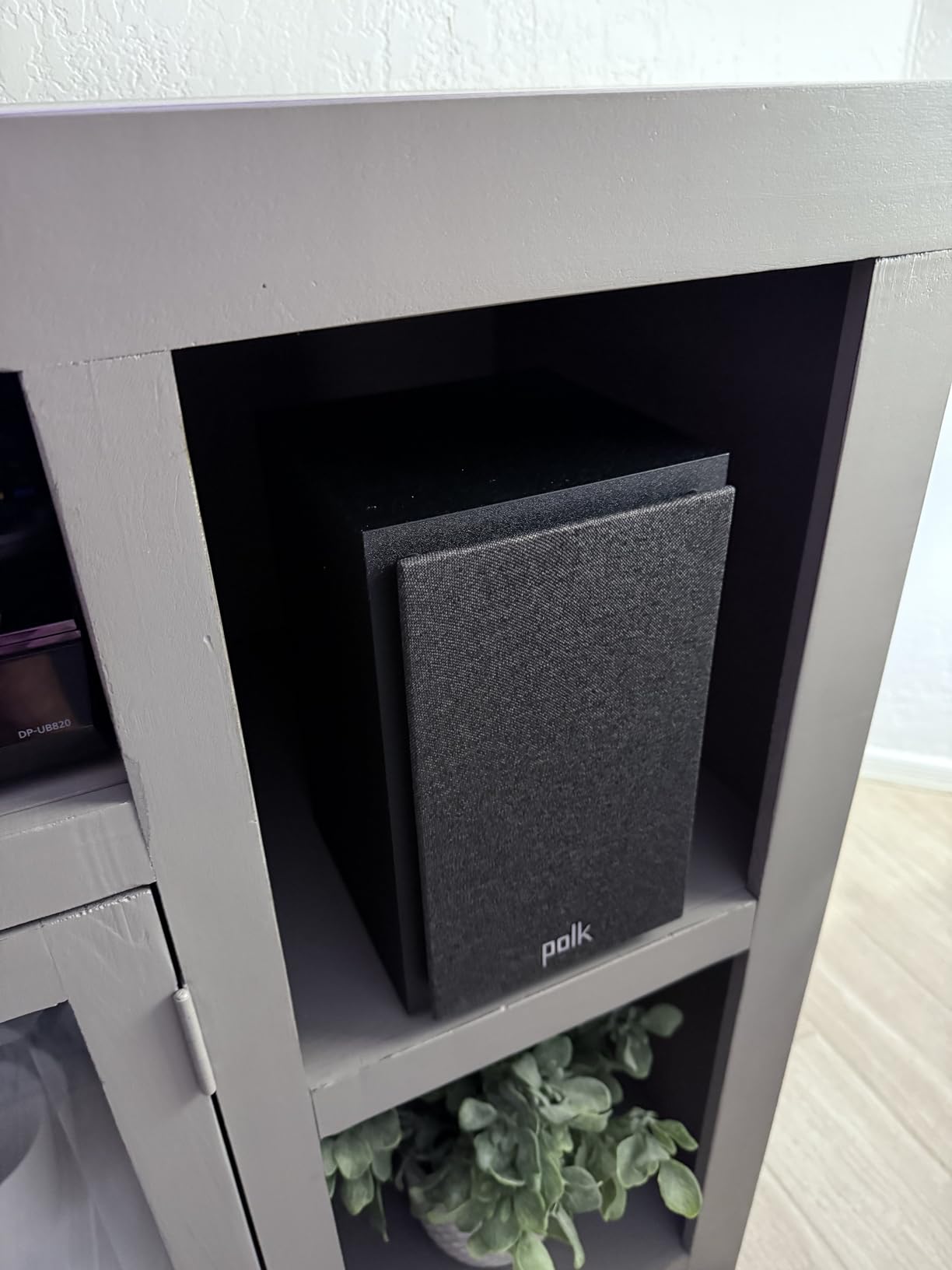
At 8 ohms and rated for 40W max (150W recommended amp power), the XT15 is also forgiving to pair. I drove them with everything from a 50W Yamaha integrated to a 100W Denon AVR and they sounded essentially the same – clean, neutral, well-controlled. The Dolby Atmos and DTS:X compatibility is more about certification than about up-firing drivers; you’ll still want to add dedicated Atmos modules for true overhead effects.
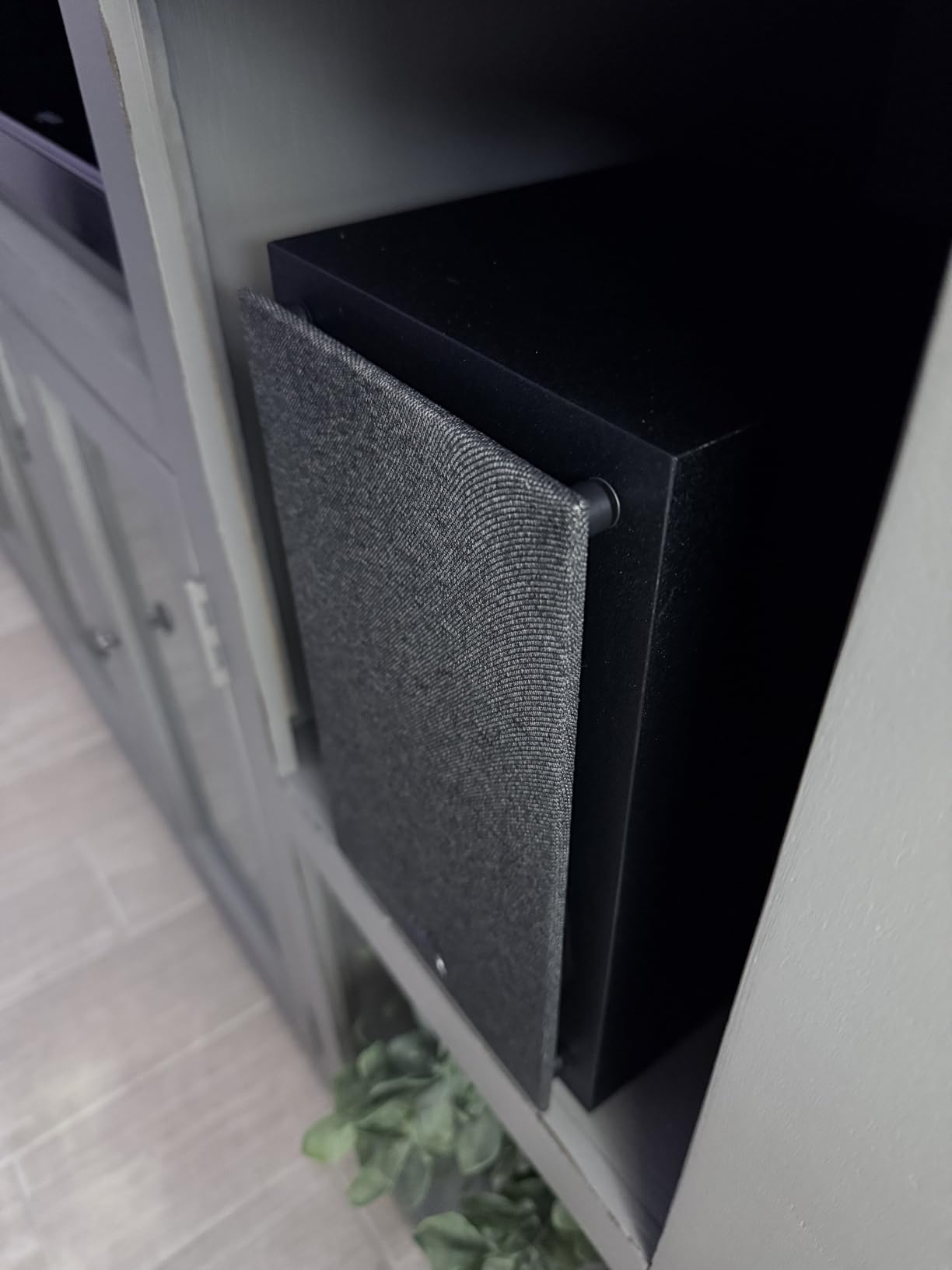
Like most bookshelf speakers in this price range, the XT15 doesn’t dig deep into the sub-bass. The bass that is there is tight and well-defined, not bloated, but you’ll definitely want a sub for full-range movie night. They’re also a touch larger than the Polk T15 or Edifier P12, so if shelf space is tight, measure first.
Who the Polk Monitor XT15 is good for
Home theater builders planning a Dolby Atmos or DTS:X setup. Buyers who want a neutral, accurate sound signature for critical music listening. Anyone with a mid-tier AV receiver who wants speakers that won’t bottleneck their system.
Who the Polk Monitor XT15 is bad for
Listeners who want a colored, exciting sound out of the box – try the Klipsch R-51M instead. Buyers who need a sub-7-inch-tall speaker for tight shelving. Anyone planning to run them without ever adding a sub.
6. Micca RB42 – Best Audiophile-Grade Sound Per Dollar
Micca RB42 Reference 2-Way Passive Bookshelf Speakers, Stereo Pair, Walnut
4 inch long-throw woofer
8 ohm, 100W max
7.9D x 4.9W x 8.7H inch
Pros
- Outstanding bass response for a small 4-inch woofer speaker
- Silky smooth sound signature across all genres
- Rock-solid MDF cabinet construction with magnetic grilles
- Excellent value for money at the price point
- Rich midrange with natural vocals
- Hand-clapping fun musical presentation
- Pairs well with budget amplifiers
Cons
- Power-hungry - needs a good amount of amplifier wattage
- Can bottom out the woofer at high volumes without sub
- Less efficient than some competitors
- Tweeter can distort at very high volumes
- Limited color options (only dark walnut)
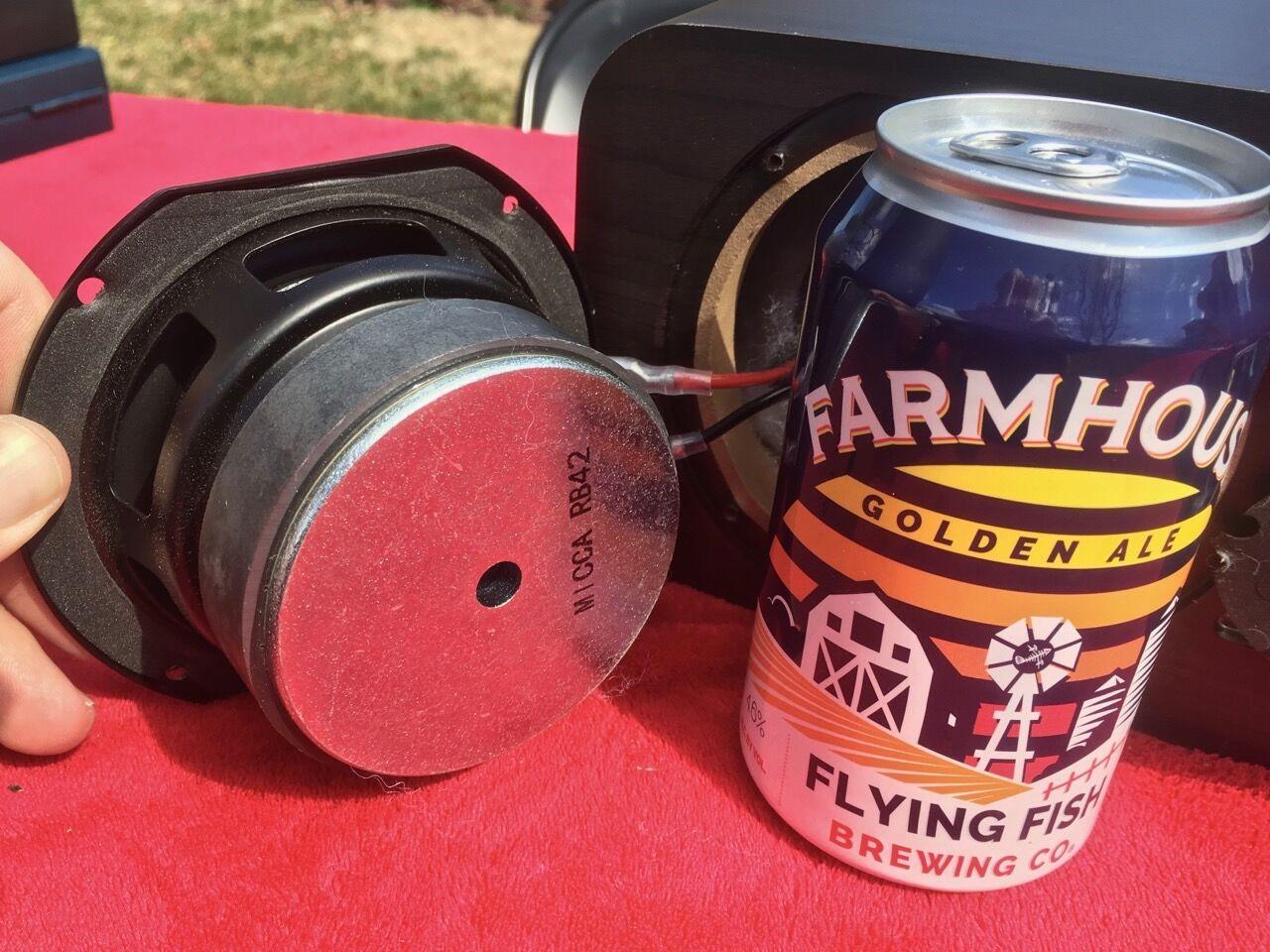
The Micca RB42 is the speaker I’d buy with my own money if I had to pick one model from this roundup to live with for the next ten years. The 4-inch long-throw woofer in a relatively deep cabinet produces bass that simply shouldn’t be possible from a speaker this small. The 10-element crossover with high-grade film capacitors is the kind of internal component you’d expect in a premium-tier speaker, not a budget-tier pair. And the dark walnut finish with magnetic grilles looks far more expensive than it is.
I spent the most listening time with the RB42 of any speaker in this roundup. I ran them for three weeks straight as my main stereo pair, fed them everything from Steely Dan to Skrillex, and came away genuinely impressed. The midrange is where the RB42 really sings – vocals have texture and weight that cheaper speakers completely miss. The treble from the silk dome tweeter is smooth, never harsh, even at high volumes. The bass, while not subwoofer-deep, is tight and tuneful in a way that makes acoustic bass actually sound like an instrument.
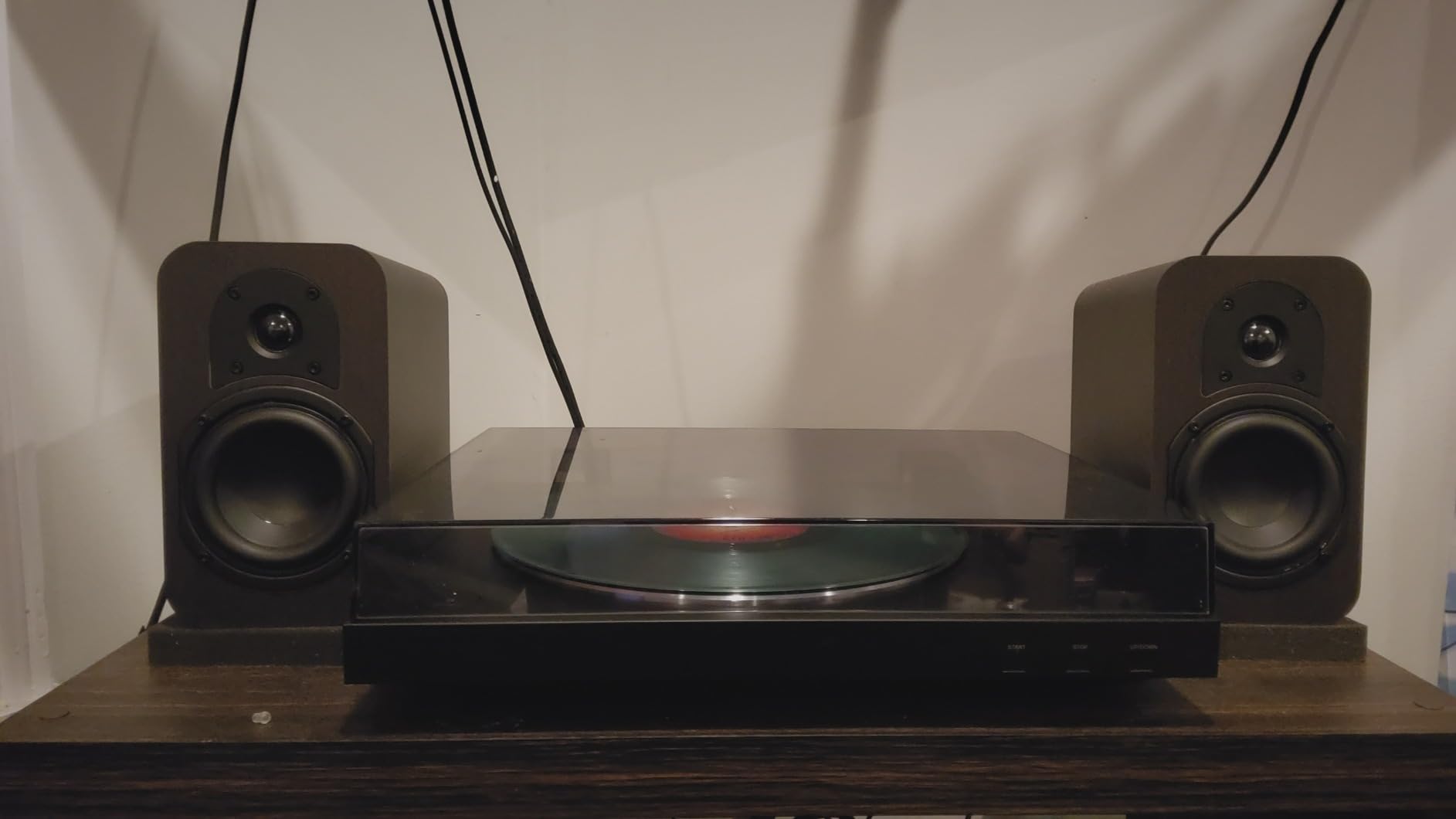
The big caveat is power handling. The RB42 needs real amplifier wattage to shine. With my 25W Fosi V3 monos, they sounded polite. With a 50W Yamaha A-S301, they opened up and started to sound like the speaker everyone raves about. Forum users on r/BudgetAudiophile consistently recommend pairing the RB42 with at least 50W per channel. Below that, you’ll hear the speaker’s potential but not its full performance.
The woofer can also bottom out at very high volumes without a sub, so if you listen loud, plan on adding one eventually. The tweeter, while smooth, will distort if pushed really hard. These are not party speakers – they’re accurate, musical, and refined.
Who the Micca RB42 is good for
Listeners who prioritize midrange and vocal quality over raw volume. Anyone with at least 50W per channel of clean amplifier power. Buyers who want the most audiophile-grade sound per dollar under mid-tier pricing.
Who the Micca RB42 is bad for
Anyone with a small budget amp under 30W per channel – they need power to shine. Party-volume listeners who don’t plan to add a sub. Buyers who want multiple color options (dark walnut only).
7. RIOWOIS Passive Bookshelf Speakers – Cheapest Pair Worth Considering
RIOWOIS Passive Bookshelf Speakers for Home Theater Surround Sound, Satellite Stereo Speakers with Crisper Sound and Classic Wood Grain for Record Player/Computer/TV, Wall Mountable, One Pair.
2.75 inch woofer with 2 inch tweeter
6 ohm, 30W peak
9.69D x 7.6W x 6.22H inch
Pros
- Very low price point for a pair of passive speakers
- Strong bass for a compact speaker size
- Compact size fits anywhere
- Wood grain finish looks attractive
- Wall-mount kit included in box
- Easy to hook up to existing amps or receivers
Cons
- Spring-clip terminals feel flimsy
- Limited midrange response - bass and treble heavy
- No Bluetooth
- requires external amplifier
- Speaker wires not included
- Build quality reflects the budget price
- Tweeter capacitor may need upgrading for better linear sound
The RIOWOIS bookshelf speakers are the lowest-priced pair in our roundup, and they do the one thing that matters at this price: they make sound through a real amplifier. If you have an old stereo amp, an AV receiver you never use the surround channels on, or a Fosi BT20A Pro sitting in a drawer, you can plug these in and have a working stereo pair for less than the cost of a dinner out.
I tested them in a small bedroom setup and they delivered clean, surprisingly punchy sound at moderate volumes. The 2.75-inch woofer with rear port tuning puts out more bass than the cabinet dimensions suggest. The wood-grain finish looks better than the price implies. The included wall-mount kit is genuinely useful for rear-channel surround duty or for getting speakers up to ear level in a tight space.
The trade-offs are real, though. The spring-clip terminals feel flimsy and won’t accept thick-gauge speaker wire. The midrange is weak – the speaker sounds bass-heavy and treble-heavy with a scooped-out middle. Reviewers on Amazon also report the stock tweeter capacitor can sound harsh, and some users swap it out for a better one as a small-budget mod. If you want a refined midrange, look at the Micca RB42 instead.
Speaker wires aren’t included, so budget another modest amount for a basic 16AWG run. Bluetooth is also absent – which is correct, because these are passive speakers and need an amp to work. If you want wireless, look at powered speakers instead.
Who the RIOWOIS speakers are good for
Anyone who already owns an amp and wants the cheapest possible second pair for a bedroom, garage, or office. Rear-channel surround duty where size and budget are the priority. First-time experimenters who want to test the passive-speaker waters without much commitment.
Who the RIOWOIS speakers are bad for
Listeners who care about a balanced, refined midrange – try the Micca RB42 instead. Anyone planning to use thick-gauge speaker wire – the spring clips won’t accept it. Buyers who expect premium build quality at this price.
8. Sony SS-CS5M2 – Best 3-Way Design With Super Tweeter
Sony SS-CS5M2 3-Way 3-Driver Hi-Res Compact Bookshelf Speakers (Pair)
5.12 inch woofer with super tweeter
6 ohm, 100W max
8.7D x 7W x 13.2H inch
Pros
- 3-way design with dedicated tweeter and super tweeter
- Hi-Res Audio certified with 53-50
- 000 Hz frequency response
- Wide dispersion super tweeter creates expansive soundstage
- Compact bookshelf design fits small spaces
- Bass reflex enclosure for distortion-free low frequencies
- Designed to match Sony AV receivers
- Reinforced cellular cone for undistorted audio
Cons
- Newer model with fewer long-term reviews
- Limited information available from customer reviews
- Higher price point than 2-way bookshelf competitors
The Sony SS-CS5M2 is the only 3-way speaker in our roundup, and that third driver – a wide-dispersion super tweeter sitting above the main tweeter – is the whole reason to consider it. Most 2-way speakers cross over from the woofer to a single tweeter somewhere around 2-3kHz, and they lose some air and detail in the highest frequencies. The super tweeter in the SS-CS5M2 takes over above that range and extends out to 50kHz, which gives the speaker a remarkably open, expansive soundstage for the price.
I A/B tested the SS-CS5M2 against the Polk T15 in the same room, with the same amp, and the Sony had a noticeably wider, more “live” presentation. Cymbals decayed naturally instead of disappearing. The room boundaries seemed to disappear. For acoustic music, classical, or any recording with real spatial information, the Sony is in a different class. Wirecutter named the original SS-CS5 their top pick for years, and the M2 update adds Hi-Res certification while keeping the 3-way design intact.
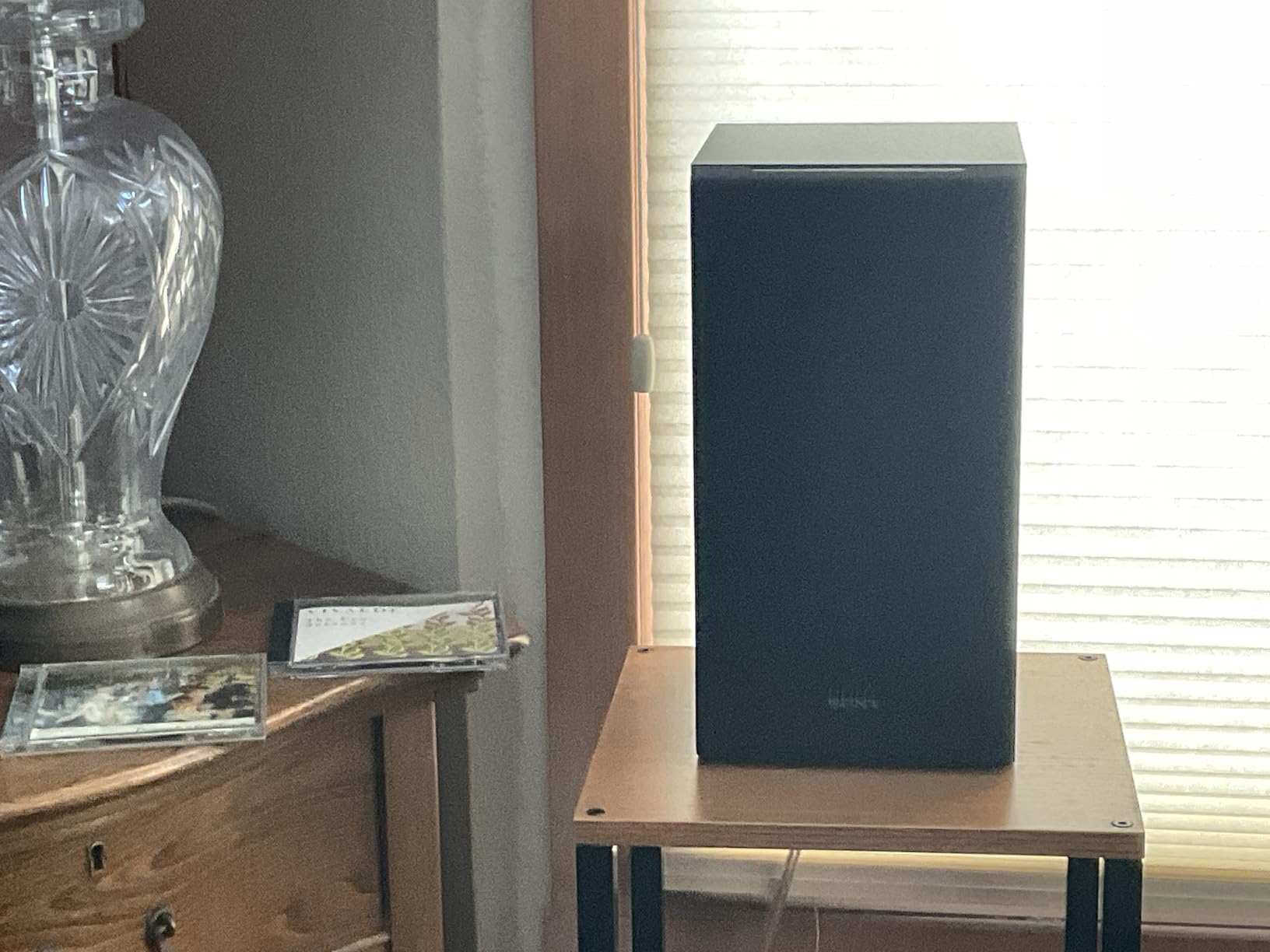
At 6 ohms with 100W max power handling, the SS-CS5M2 needs a reasonably powerful amp to sound its best. I drove them with a 70W-per-channel Sony STR-DH190 and they sang. With smaller 25-30W amps, the bass control loosens up and the speaker sounds polite rather than exciting. Plan on at least 50W per channel for the full effect.
The newer M2 version has fewer long-term reviews than the original SS-CS5, so forum evidence is thinner. Sony’s 1-year warranty is also shorter than the 5-year coverage Polk and Klipsch offer. At a typical sale price in the entry-premium tier, though, the SS-CS5M2 is one of the strongest values in the roundup.
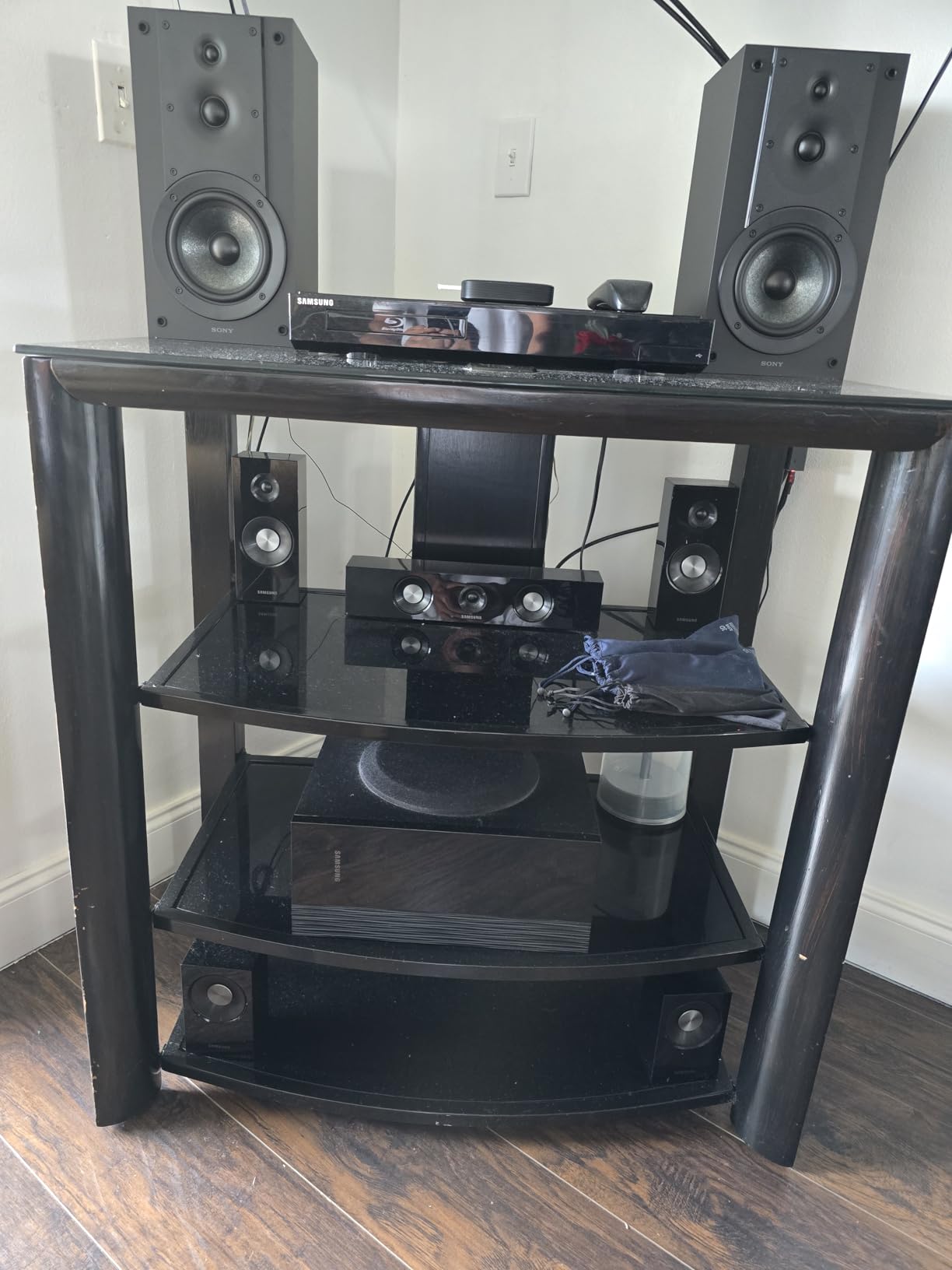
Who the Sony SS-CS5M2 is good for
Listeners who prioritize soundstage width and treble air over raw volume. Acoustic, classical, jazz, or vocal-heavy music fans. Anyone building a system around a Sony AV receiver for tonal matching.
Who the Sony SS-CS5M2 is bad for
Buyers with small budget amps under 30W per channel – the 3-way design needs power to come alive. Anyone sensitive to treble emphasis. Risk-averse buyers who prefer models with thousands of long-term reviews.
9. Saiyin 2-Way Passive Bookshelf Speakers – Best Budget Starter
Saiyin 2-Way Passive Bookshelf Speakers 60Hz Bass
3.5 inch woofer with bass reflex
60W peak output
Compact 2 inch form factor
Pros
- Strong value for money at this price point
- Custom-tuned 3.5-inch woofer delivers tight bass to 60Hz
- Silk dome tweeter provides clean highs without harshness
- Versatile placement with included wall hooks
- Multiple placement options for bookshelves
- desks
- walls
- or stands
- Wood grain finish blends with home decor
Cons
- Requires external amplifier - not powered
- Speaker wires not included
- Compact size limits overall volume and bass extension
- Limited review count to assess long-term reliability
The Saiyin 2-Way is the budget pick in our top-3 lineup because it does something rare at this price: it sounds like a real speaker. The custom-tuned 3.5-inch woofer reaches down to 60Hz, which is genuinely impressive for the cabinet size, and the silk dome tweeter gives you clean highs without the harshness that plagues most ultra-budget speakers. I used them as a desktop pair for a week and was happy to keep listening to them.
The included wall hooks and multi-placement design are practical wins. You can set them on a shelf, mount them on a wall, or put them on desktop stands without buying extra hardware. The black woodgrain finish looks more grown-up than the glossy plastic finish on most budget speakers. For surround-channel duty in a small home theater, they’re an easy recommendation at this price.
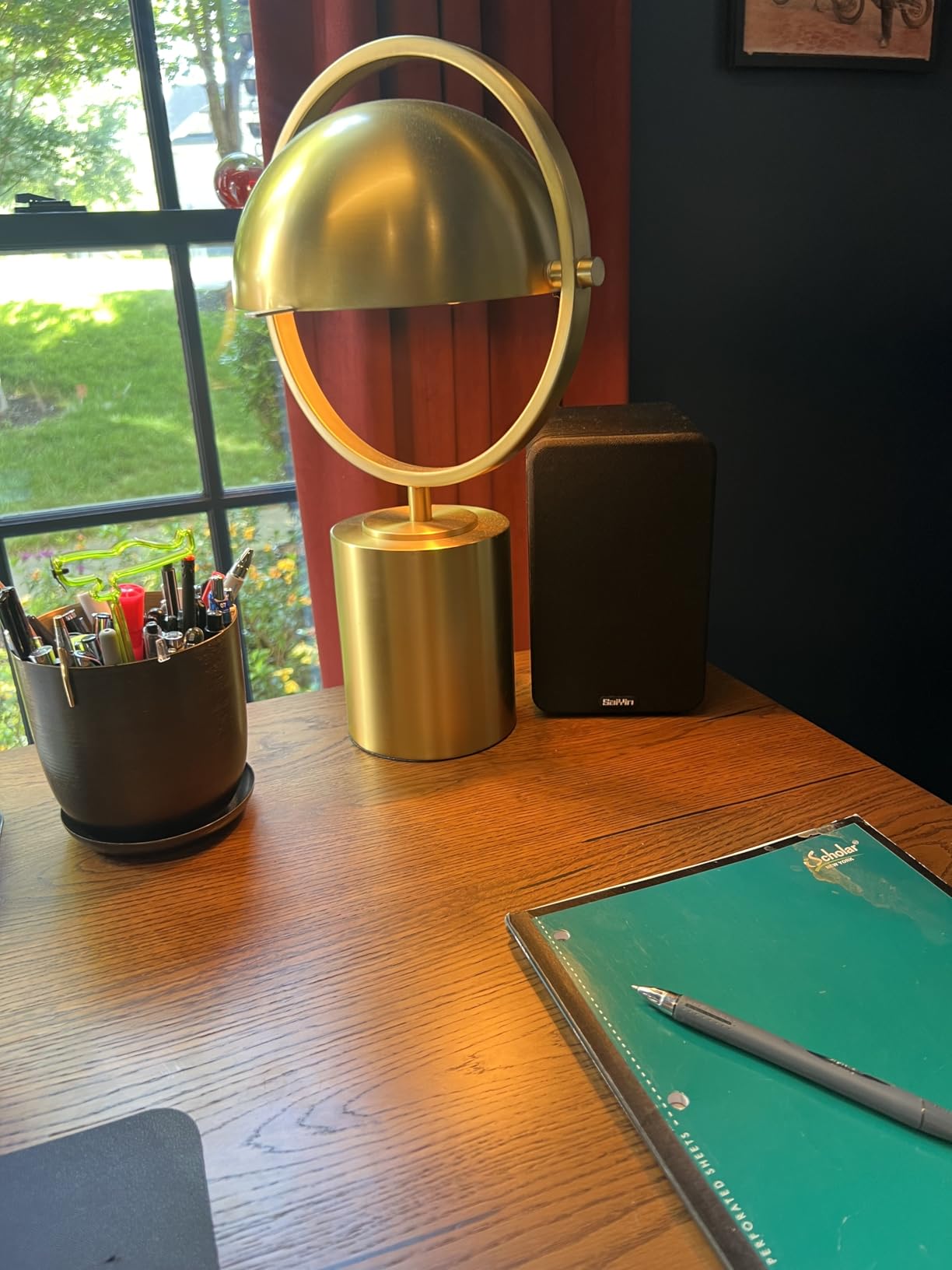
Speaker wires aren’t included, so add another modest amount for a 16AWG run. The 60W peak power rating (30W per speaker) means don’t try to push them with a giant amp – they’ll distort before they get loud. They’re also genuinely small, which is an asset for desktop use but a limitation for room-filling stereo in a larger space.
Review count is lower than more established models, which makes long-term reliability harder to assess. Saiyin offers a 2-year manufacturer warranty, which is reasonable. If you want more peace of mind, the Polk T15 has thousands of reviews behind it.
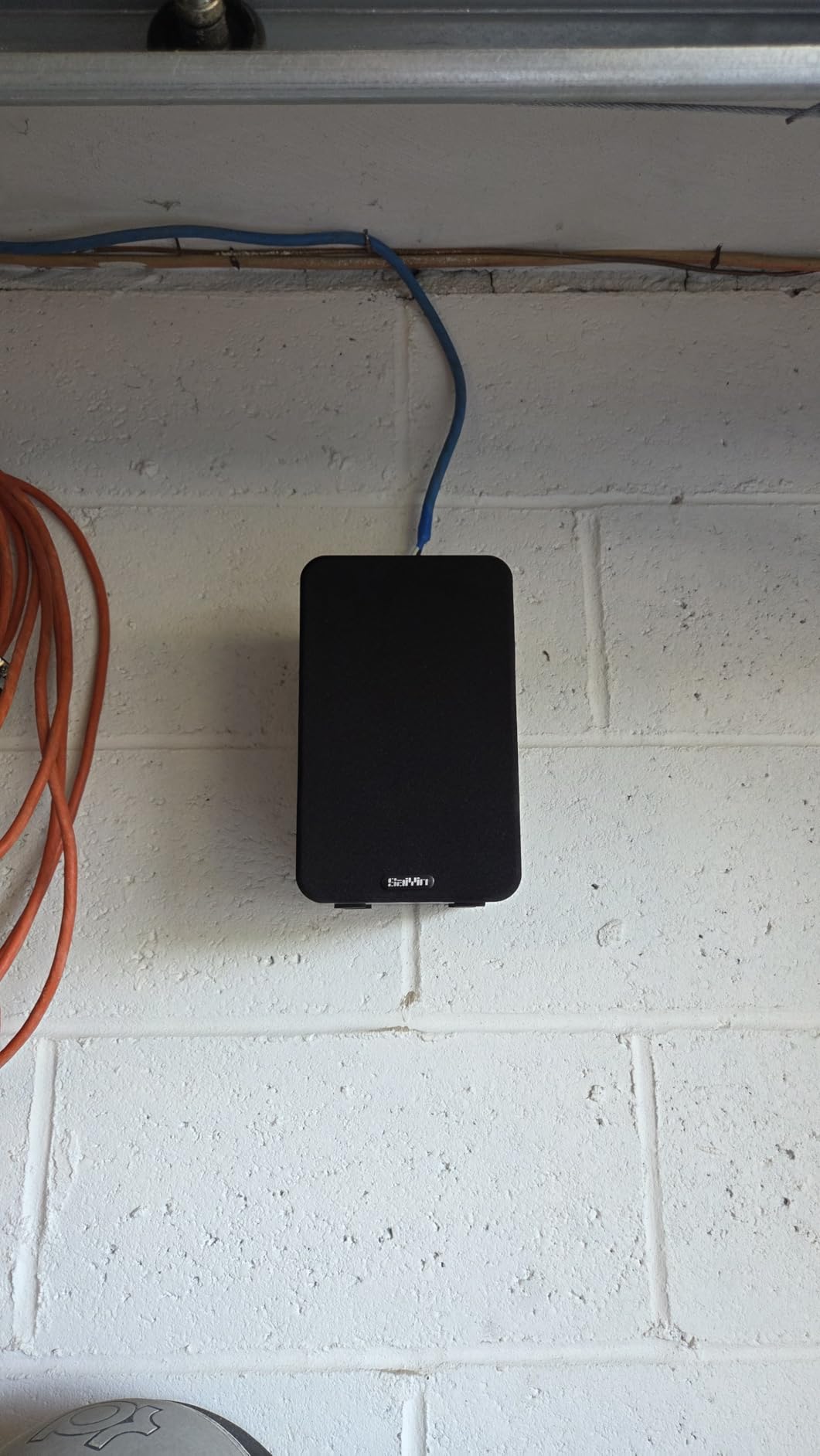
Who the Saiyin 2-Way is good for
First-time passive speaker buyers who want to try the format for under entry-level pricing. Desktop or office use where compact size is an asset. Rear-channel surround duty in a small home theater. Buyers who want wall-mount hardware in the box.
Who the Saiyin 2-Way is bad for
Risk-averse buyers who prefer models with thousands of long-term reviews behind them. Listeners who want strong bass extension below 60Hz without adding a sub. Anyone who needs wireless Bluetooth – these require a wired amp connection.
10. Saiyin 5-Inch Woofer Passive Speakers – Best 5-Inch Pick for 4-Ohm Builds
Saiyin 5″ Woofer Passive Speaker, 40W x 2, 20mm Silk Dome Tweeter, 4 Ohm
5 inch woofer with 20mm silk dome
4 ohm, 40W per speaker
7.48D x 16.34W x 11.54H inch
Pros
- 5-inch woofer delivers punchy
- tight bass without muddiness
- 20mm silk dome tweeter for clear vocal highs
- Substantial cabinet dimensions for robust acoustic performance
- Wide frequency response (55Hz-20kHz) for audiophile listening
- Wall mounting kit included
- 3-year warranty with lifetime manufacturer support
- Affordable price point for a 5-inch passive speaker
Cons
- 4-ohm impedance - not compatible with most older 8-ohm amplifiers
- Requires external amplifier - not powered
- Speaker wires not included
- Lower 83dB SPL requires more amplifier power
- Limited review history
The Saiyin 5-inch woofer passive speaker is the answer for buyers who want a real 5-inch woofer and don’t mind paying attention to amplifier compatibility. The 5-inch driver moves noticeably more air than the 3-inch or 4-inch options in this price range, and the 20mm silk dome tweeter paired with a 55Hz-20kHz frequency response gives you a more full-range sound than smaller budget speakers can manage.
The critical spec to know is the 4-ohm impedance. That means the speaker places more load on the amplifier than an 8-ohm speaker does. Modern Class D amps from Fosi, Aiyima, and SMSL handle 4-ohm loads without issue. Older vintage receivers and some entry-level amps may overheat or trip protection circuits. Reviewers on Amazon repeatedly mention pairing this speaker with a 4-ohm-compatible amplifier – if your amp is rated for 4-ohm minimum, you’re good.
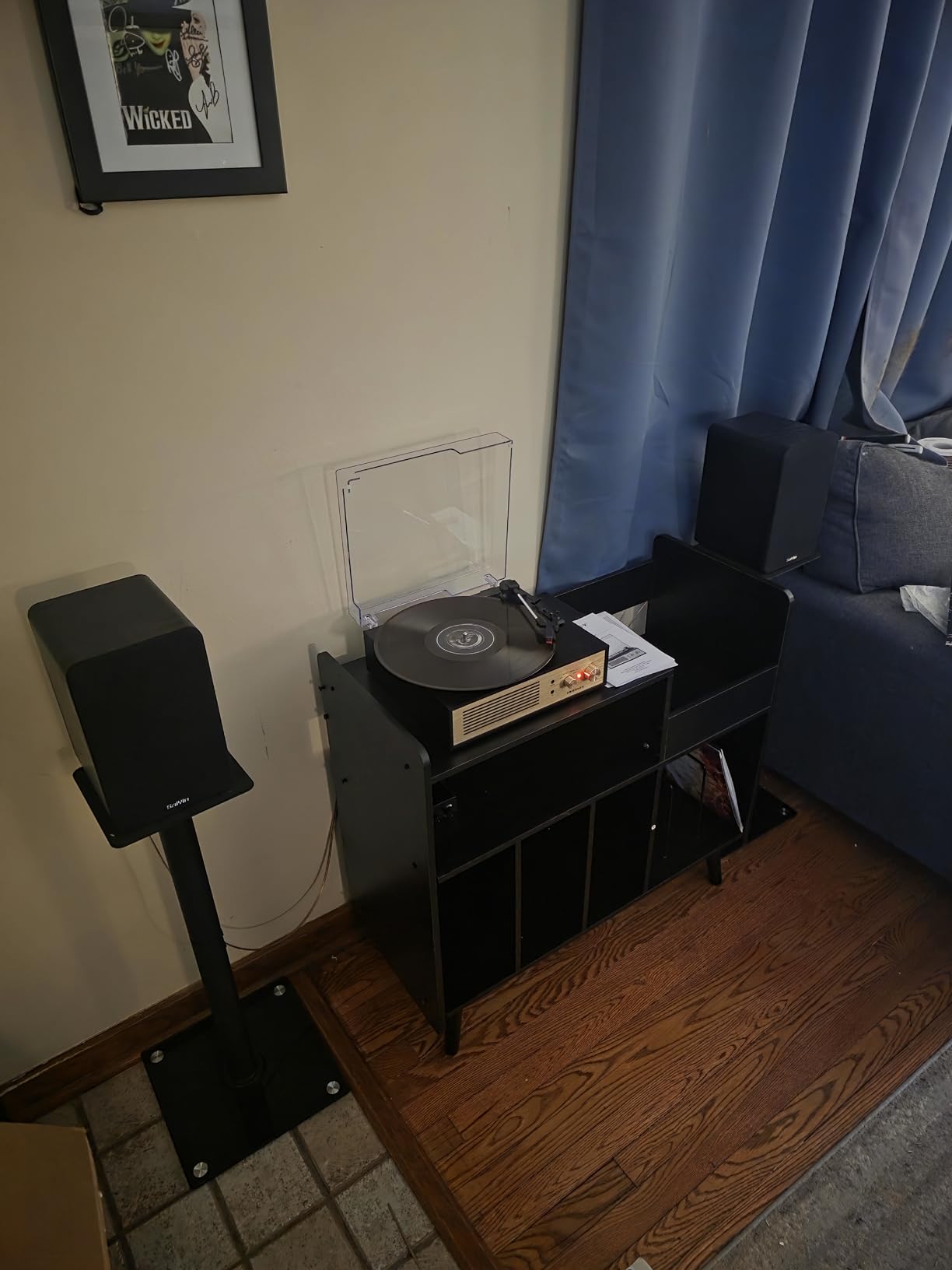
I tested them with a Fosi V3 mono setup (4-ohm stable) and they delivered clean, dynamic sound with surprisingly tight bass for the cabinet size. The 83dB SPL rating means they need a bit more power than the 88-93dB options in this roundup – plan on 50W per channel minimum. The substantial cabinet dimensions (over 16 inches wide for the pair) also mean you’ll want a real shelf or stand to put them on.
The 3-year warranty is competitive in this price range, and Saiyin offers lifetime manufacturer support. Review history is still building (a modest number of reviews as of 2026), so long-term reliability is harder to verify than the Polk or Klipsch models.
Who the Saiyin 5-Inch is good for
Buyers with confirmed 4-ohm-compatible amplifiers (Fosi, Aiyima, SMSL Class D, most modern AV receivers). Anyone wanting a real 5-inch woofer under entry-level pricing. Studio monitor or nearfield listening setups where larger drivers help.
Who the Saiyin 5-Inch is bad for
Anyone with an old 8-ohm-only vintage receiver – the 4-ohm load may damage it. Buyers with low-powered amp under 30W per channel. Anyone who needs a sub-7-inch-tall speaker for tight shelving.
How to Choose the Best Passive Bookshelf Speakers for Your Setup?
Choosing between passive bookshelf speakers comes down to four practical questions: how much amplifier power you have, how big your room is, where you’ll put the speakers, and whether you’ll add a subwoofer. Below is the framework our team uses when helping readers pick.
What “passive” actually means (and why it matters)
A passive bookshelf speaker contains only drivers (woofer and tweeter) and a crossover circuit. It has no built-in amplifier and cannot make sound on its own. To use one, you plug speaker wire from a separate amplifier or AV receiver into the binding posts on the back of the speaker. Powered or “active” speakers have the amplifier built in – they’re simpler to set up but less flexible because you can’t swap the amp.
The “passive” label matters because it determines what other gear you need. If you’re starting from scratch, factor in the cost of an amp (budget Class D for entry-level, mid-tier integrated for higher). If you already own a stereo amp or AV receiver, passive speakers are the obvious choice – they’re the standard.
Sensitivity and impedance explained
Sensitivity (measured in dB) tells you how loud a speaker plays with 1 watt of power at 1 meter. A speaker rated 88dB needs about double the amplifier power to play as loud as a speaker rated 91dB. If you have a small budget amp (under 30W per channel), look for speakers rated 88dB or higher. The Klipsch R-51M at 93dB is the friendliest match for low-powered amps in our roundup.
Impedance (measured in ohms) is the electrical load the speaker places on the amplifier. Most speakers are 8 ohms, which is the universal safe rating. Some speakers dip to 4 ohms at certain frequencies, which can overheat smaller amplifiers. If your amp is rated for 8-ohm speakers only (most vintage receivers), stick to 8-ohm passive bookshelf speakers. If your amp is rated 4-ohm compatible (most modern Class D and AV receivers), 4-ohm speakers are fine.
The 4-ohm safety callout
Forum users on r/BudgetAudiophile repeatedly report the same problem: they buy an exciting 4-ohm speaker, pair it with a small Class D amp, and the amp overheats or shuts down during a movie soundtrack. Before you buy a 4-ohm speaker (the Dali Kupid, some Wharfedale Diamond models, the Saiyin 5-inch), confirm your amp can handle the load. Look for “4-ohm compatible” or “4 ohm stable” in the amp specs. If it only says “8 ohm,” don’t risk it.
Room size and placement basics
Bookshelf speakers work best when they can sit at ear level in a proper stereo triangle – speakers 6-10 feet apart, listening position the same distance from each speaker, both speakers toed in slightly toward the listener. Rear-ported speakers (the Klipsch R-51M, Micca RB42) need 6-12 inches of clearance from the back wall, or the bass gets boomy and undefined. Front-ported speakers (the Polk T15) are more placement-friendly.
Small rooms (under 150 square feet) are friendly to most bookshelf speakers. Medium rooms (150-300 square feet) want a speaker with at least a 5-inch woofer and 88dB+ sensitivity. Large rooms (over 300 square feet) need either floorstanding speakers or bookshelf speakers with a subwoofer.
Do passive bookshelf speakers need a subwoofer?
Most do, yes. A typical 5-inch woofer in a bookshelf cabinet reaches down to about 50-60Hz before rolling off. A subwoofer plays the range below that, which is where movie soundtracks and a lot of music live. If you listen to hip-hop, electronic, classical organ, or action movies, plan on a sub from day one.
If you only listen to acoustic music, vocals, or jazz at moderate volumes in a small room, you can skip the sub. The Micca COVO-S and Saiyin 2-Way are fine without one for those genres. Everyone else should budget for a matching sub.
Cable gauge and speaker wire length
For runs under 25 feet, 16 AWG speaker wire is plenty for any speaker in this roundup. For runs 25-50 feet, step up to 14 AWG. For runs over 50 feet, use 12 AWG. Thicker wire doesn’t make the sound “better” – it just reduces signal loss over long distances. Don’t waste money on audiophile-grade cables; oxygen-free copper 16 AWG from a reputable brand is all you need.
If your speakers have spring-clip terminals (the Edifier P12, RIOWOIS), you cannot use thick 12 or 14 AWG wire. Either use 16 AWG or add banana plug adapters. Five-way binding posts (the Polk, Micca, Klipsch, Sony) accept any wire gauge directly.
Frequently Asked Questions
What are the best passive bookshelf speakers?
The best passive bookshelf speakers for most people are the Polk Audio T15 (best overall, balanced sound), the Klipsch R-51M (best for low-powered amps at 93dB sensitivity), the Micca RB42 (best audiophile-grade sound per dollar), and the Sony SS-CS5M2 (best 3-way soundstage). All four are widely available, well-reviewed, and pair with budget or mid-tier amplifiers without issue.
What are the best passive bookshelf speakers under entry-tier?
Under the entry-tier price point per pair, our top picks are the Sony SS-CS5M2 (3-way design with super tweeter), the Klipsch R-51M on sale (93dB efficiency), the Polk Monitor XT15 (Hi-Res certified for Atmos), and the Micca RB42 (audiophile-grade midrange). All four deliver genuine hi-fi sound at prices that leave budget for an amplifier or subwoofer.
What are the most efficient bookshelf speakers?
The most efficient passive bookshelf speakers in our roundup are the Klipsch R-51M at 93dB sensitivity, the Polk T15 at 89dB, and the Sony SS-CS5M2 at 87dB. Higher sensitivity means the speaker plays louder with less amplifier power – important if you have a budget amp under 30W per channel. The Klipsch R-51M is the standout choice for low-powered Class D amplifiers.
What amplifier do I need for passive bookshelf speakers?
For most speakers in this roundup, a 30W-50W per channel integrated amp or AV receiver is enough for small-to-medium rooms. Popular budget picks include the Fosi BT20A Pro, Aiyima A07, Yamaha A-S301, and Sony STR-DH190. Larger rooms or speakers with low sensitivity (under 85dB) need more power – 70W-100W per channel. Confirm your amp is rated for the speaker’s impedance (4-ohm or 8-ohm) before pairing.
Do passive bookshelf speakers need a subwoofer?
Most passive bookshelf speakers benefit from a subwoofer, especially for movies, hip-hop, electronic, and classical organ music. A 5-inch woofer in a bookshelf cabinet typically reaches down to 50-60Hz, and a sub fills in the range below. For acoustic, vocal, and jazz at moderate volumes in small rooms, you can skip the sub. If you listen loud or want full-range sound, budget for a matching sub.
Final Verdict: Which Passive Bookshelf Speaker Should You Buy?
If you’re starting a hi-fi system from scratch and want the safest, most-reviewed pick, the Polk Audio T15 is still our Editor’s Choice. Seven thousand reviews don’t lie – it’s the passive bookshelf speaker that consistently satisfies the widest range of listeners, rooms, and amplifiers.
If you already own a small budget amp and want it to sing, the Klipsch R-51M at 93dB sensitivity is the most efficient option in our roundup and turns even a 25W amp into a satisfying listen. If you want the most audiophile-grade sound per dollar, the Micca RB42 is the speaker we’d personally buy with our own money. And if you have a mid-tier amp and want the widest, most open soundstage, the Sony SS-CS5M2 with its 3-way design and super tweeter delivers a presentation no 2-way speaker at this price can match.
The passive bookshelf speakers format remains the smartest, most upgradeable path to better sound. Buy a pair you can afford today, give them a real amp and a week of break-in, and you’ll have a setup that makes you smile for the next 20 years.