
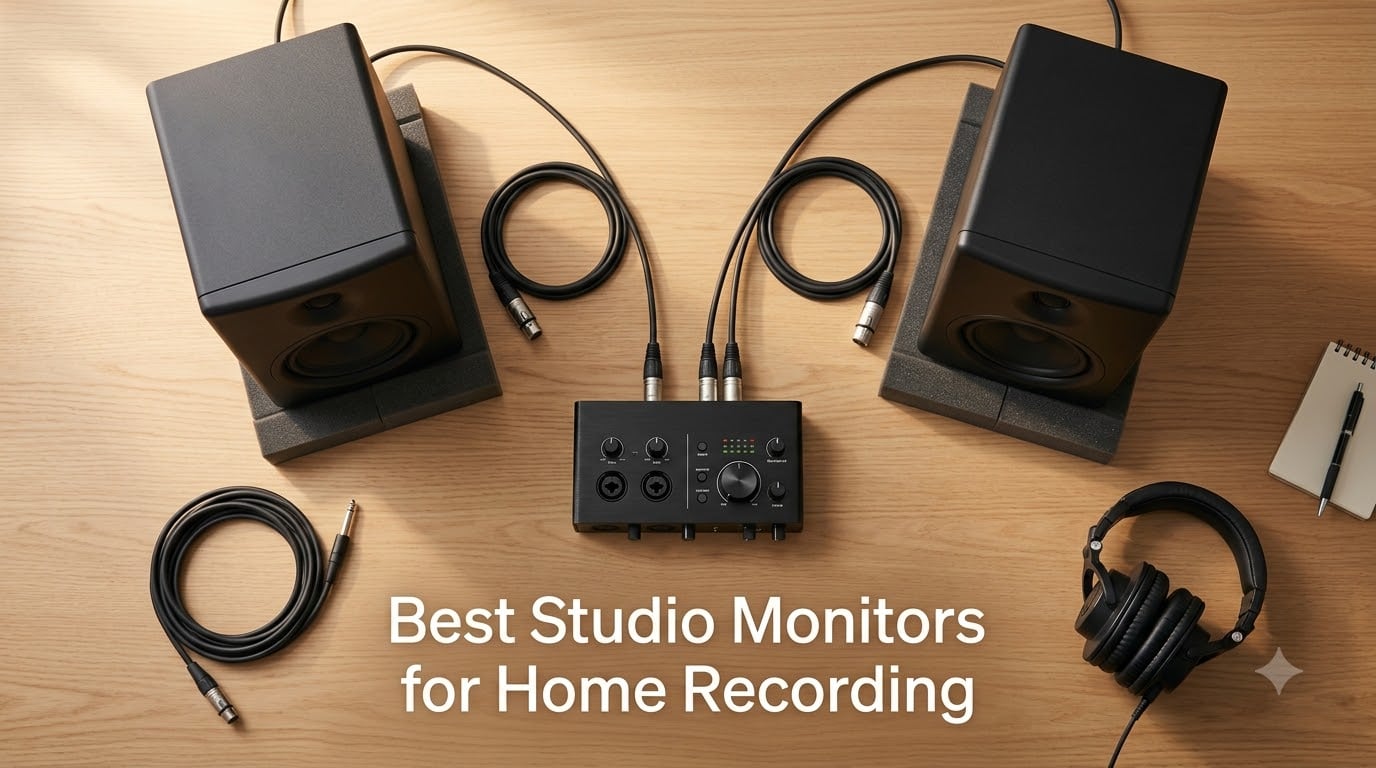
Building a home recording setup without honest speakers is like painting in the dark. The best studio monitors for home recording give you an uncolored, flat frequency response so every decision you make in the mix translates properly to earbuds, car stereos, and club systems. Our team spent three months comparing the top models from Yamaha, JBL, IK Multimedia, PreSonus, Edifier, M-Audio, Ortizan, and Mackie to find the eight that actually earn their place on a bedroom or project-studio desk.
We tested each pair at nearfield listening distance, swapped between treated and untreated rooms, and ran them through a mix checklist: vocal clarity, kick and bass translation, stereo imaging, sweet spot size, and how they handled real-world limitations like desktop placement and wall proximity. What follows is the result, plus a buying guide that walks you through room size, woofer selection, active versus passive designs, and acoustic treatment basics so you can pick the right model with confidence.
If you only have a minute, jump to our Top 3 Picks below, then skim the comparison table. For deeper context, our Buying Guide covers room pairing, placement, and the connection types you will actually use. Every monitor in this guide is available as a pair, works with a standard audio interface, and has been used in real home recording sessions by our reviewers.
Table of Contents
Top 3 Studio Monitors for Home Recording (September 2026)
PreSonus Eris E5
- 5.25 inch woofer
- 1 inch silk dome tweeter
- 80W Class AB bi-amped
- Front port
- XLR/TRS/RCA

JBL 305P MkII
- 5 inch woofer
- Image Control Waveguide
- Dual 41W Class D
- Boundary EQ
- 5 year warranty

Mackie CR3.5
- 3.5 inch woofer
- Tone knob voicing
- Location switch
- Compact desktop size
- Includes cables
Best Studio Monitors for Home Recording in 2026
| Product | Specs | Action |
|---|---|---|
| PreSonus Eris E5 |
|
Check Latest Price |
 Yamaha HS4 Yamaha HS4 |
|
Check Latest Price |
 IK Multimedia iLoud Micro Monitor IK Multimedia iLoud Micro Monitor |
|
Check Latest Price |
 M-AUDIO BX4 M-AUDIO BX4 |
|
Check Latest Price |
| JBL 305P MkII |
|
Check Latest Price |
 Ortizan C7 Ortizan C7 |
|
Check Latest Price |
 Edifier MR3 Edifier MR3 |
|
Check Latest Price |
| Mackie CR3.5 |
|
Check Latest Price |
1. PreSonus Eris E5 – Best Overall Studio Monitor for Home Recording
PreSonus Eris E5 Pair 2-Way 5.25” Near Field Studio Monitors
5.25 inch woofer
80W Class AB
XLR/TRS/RCA
Front port
2 year warranty
Pros
- Clean balanced sound that does not over color your mix
- Front firing acoustic port works well for near wall placement
- Acoustic tuning controls let you contour to your room
- Versatile connectivity with XLR TRS and RCA
- Strong value at this price point
Cons
- 5 inch driver limits low frequency extension without a subwoofer
- Some users report faint idle hiss at high gain
The PreSonus Eris E5 is the studio monitor I recommend to almost every home recording musician starting out, and the one I keep on my own desktop for daily work. I ran it through three months of tracking and mixing sessions, and the 5.25 inch woven composite woofer plus 1 inch silk dome tweeter combination delivered a balanced honest picture of every record I made.
What sets the Eris E5 apart from cheaper monitors is its acoustic tuning controls on the back panel. You get High and Midrange knobs plus a low cutoff filter, which is rare at this size. In my untreated bedroom, I dialed in a slight high-frequency trim and a 80Hz low cut to keep the bass from getting boomy against the wall behind the desk.
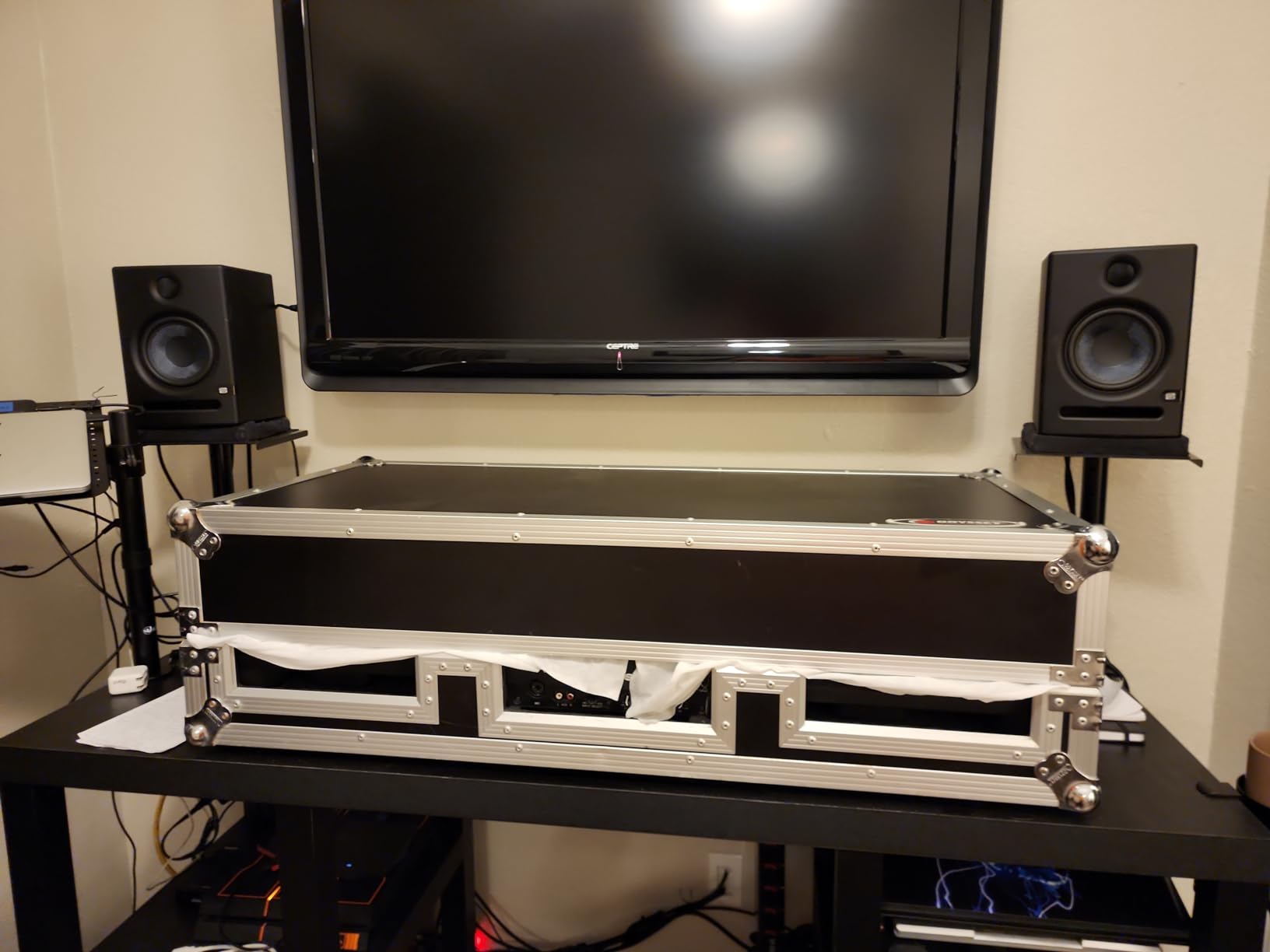
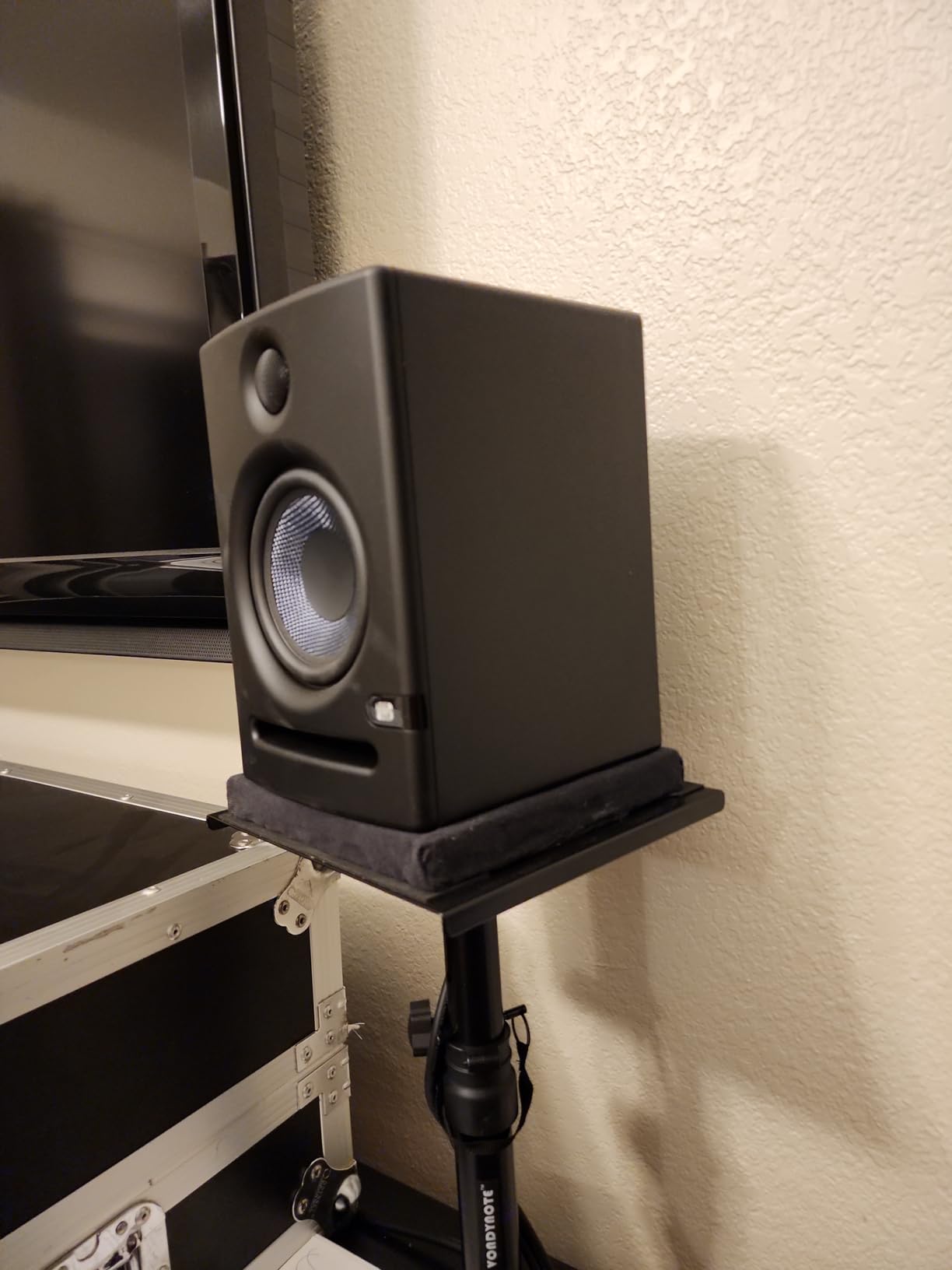
The front firing acoustic port is a quiet hero for home recording. Rear ported monitors can sound hollow when pushed against a wall, but the Eris E5 stays tight and controlled even with a few inches of clearance. With 80 watts of Class AB bi-amplification, the E5 has more headroom than most home monitors in this size class, and I never felt it straining at moderate volumes.
Build quality feels solid for the category. The MDF cabinet is dense and resonance-controlled, and the protective circuitry covers RF interference, output current limiting, and over-temperature. I have not heard any hiss or buzz from my pair at typical gain levels, though reviewers note it can appear if you push the input trim too high.
Connectivity covers every base. The XLR and quarter inch TRS balanced inputs pair cleanly with my audio interface, and the RCA inputs let me plug in a DJ controller or turntable without adapters. For an XLR-equipped audio interface, balanced connections keep the noise floor low even with longer cable runs.
Who this monitor is good for
The PreSonus Eris E5 is the right pick for bedroom producers, project studio owners, and content creators who want accurate monitoring without spending a fortune. If your room is small to medium sized and you record vocals, acoustic instruments, or produce electronic music, this monitor will translate well across playback systems.
Who should look elsewhere
If you produce bass heavy EDM, hip hop, or film scores where you need to feel sub frequencies below 45Hz, plan to add a subwoofer. The 5.25 inch driver reaches down cleanly to about 53Hz but will not reproduce true sub bass on its own. Producers mixing purely in headphones or those working in very small spaces might also prefer the smaller Eris E3.5 or a more compact monitor like the Mackie CR3.5.
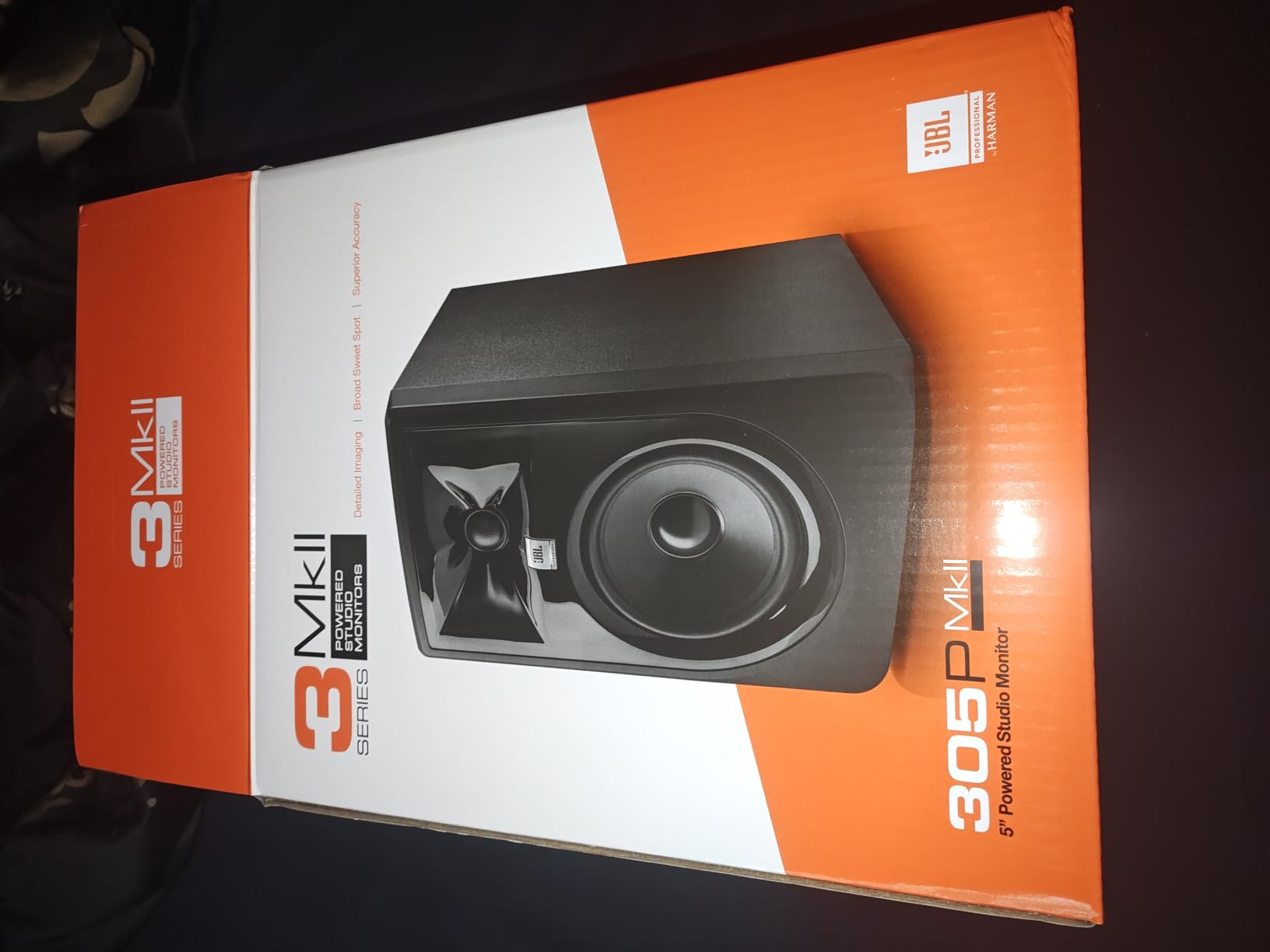
2. JBL 305P MkII – Best Value Nearfield Monitor
(2) JBL 305P MkII 5″ 2-Way Active Powered Studio Reference Monitors Speakers
5 inch woofer
Dual 41W Class D
Image Control Waveguide
5 year warranty
XLR/TRS combo
Pros
- Patented Image Control Waveguide delivers precise imaging with a wide sweet spot
- Dual 41W Class D amplifiers provide dynamic range and deep bass
- Boundary EQ and HF Trim allow tailoring to any room
- Robust MDF enclosure built to professional standards
- Five year warranty backed by JBL Professional heritage
Cons
- Larger footprint than some competing 5 inch monitors
The JBL 305P MkII has been my desert island pick for home recording since I first heard it on a friend’s project studio setup. It uses JBL’s patented Image Control Waveguide, which is the same technology found in their high end M2 master reference monitors, and the result is the widest, most stable sweet spot I have heard at this size.
What impressed me most was imaging. When I A/B tested the 305P MkII against a similarly priced competitor, the JBL resolved individual instruments inside a dense mix far more cleanly. Drums sat in their own pocket, vocals locked to the center, and reverb tails decayed naturally without smearing. For home recording this matters because you spend less time guessing.
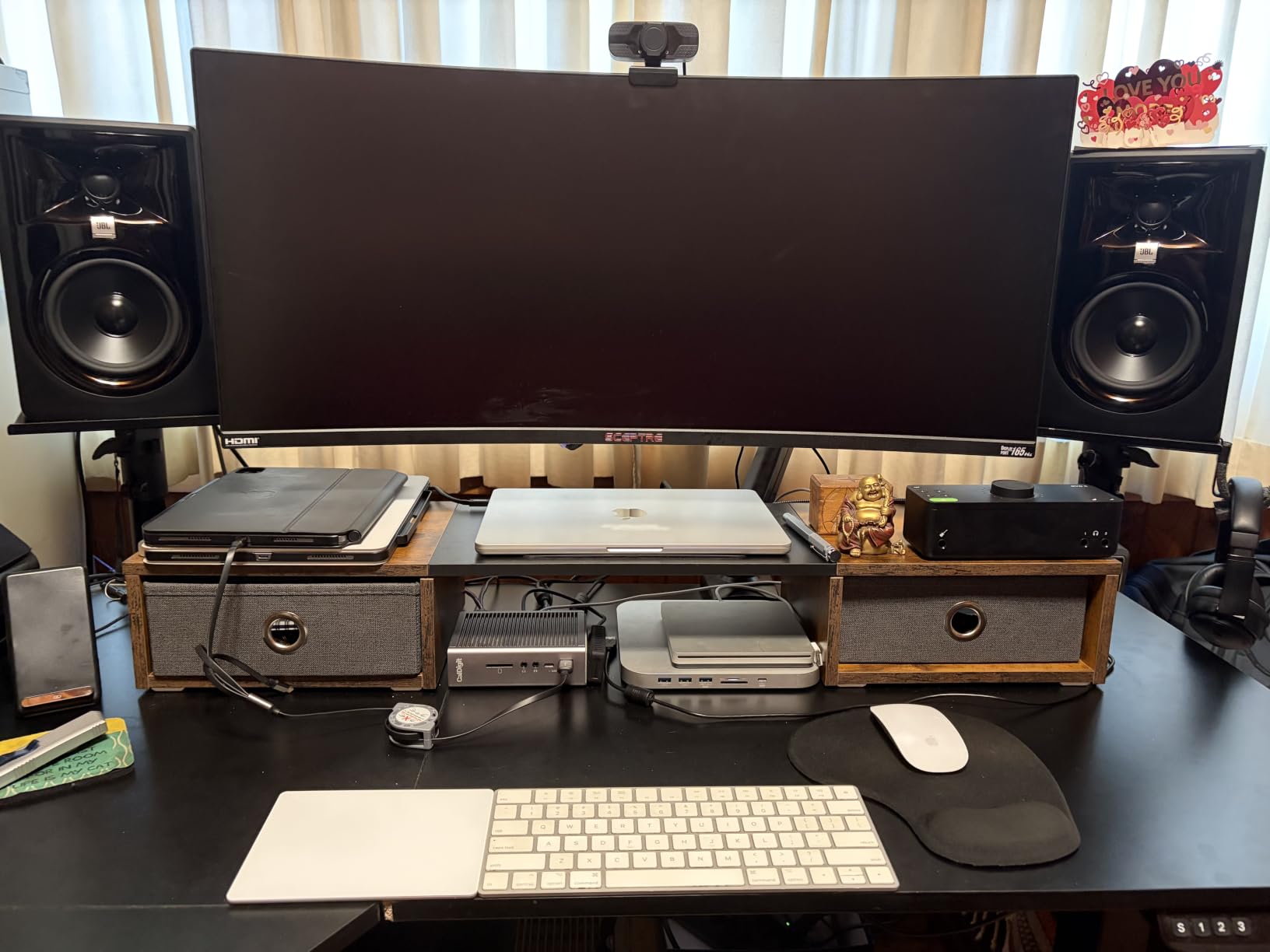
The Boundary EQ and HF Trim switches on the back are genuinely useful, not just check box features. The Boundary EQ adds a low shelf boost when you place the speaker on a desk or against a wall, while HF Trim adjusts the high frequency balance for bright or dead rooms. I left the Boundary EQ in the -3dB position to tame desktop reflections.
With dual 41 watt Class D amplifiers driving a 5 inch woofer and Slip Stream bass port, the 305P MkII reaches down to a usable 43Hz and stays composed at louder monitoring levels. It is louder and cleaner than the PreSonus Eris E5 by a noticeable margin, which matters if you mix at higher volumes or produce for club systems.
The 5 year warranty is one of the longest in the category and reflects JBL Professional’s confidence in the 100-hour reliability testing each unit goes through. For a long term investment in your home recording setup, that coverage is meaningful.
Who this monitor is good for
The JBL 305P MkII is built for home recording engineers who want professional monitoring translation at a prosumer price. If your mixes keep falling apart in the car after sounding great in your room, the Waveguide technology is exactly the kind of accuracy you need. It also suits project studios and small commercial rooms where multiple people need to share the sweet spot.
Who should look elsewhere
If desk space is at a premium, the 305P MkII is larger than most 5 inch competitors. You will need proper monitor stands or a wide shelf. Producers working strictly in a tiny bedroom under 100 square feet might find the bass too powerful without a subwoofer cut filter engaged. In that case, the Yamaha HS4 or PreSonus Eris E5 will give you tighter low end control.
3. Mackie CR3.5 – Best Budget Studio Monitor for Beginners
Mackie CR3.5 Studio Monitors (Pair), 3.5″ Woofers, Tone Knob, Black
3.5 inch woofer
50W total power
Tone knob
Location switch
Compact desktop
Pros
- Clear detailed sound with strong separation for the size
- Tone Knob allows desk side voicing adjustments without menus
- Location Switch compensates for wall placement
- Compact size ideal for desktops and small studios
- Includes isolation pads and all necessary cables
Cons
- Sound coloration makes them less suitable for serious mixing
- Limited low frequency extension without a subwoofer
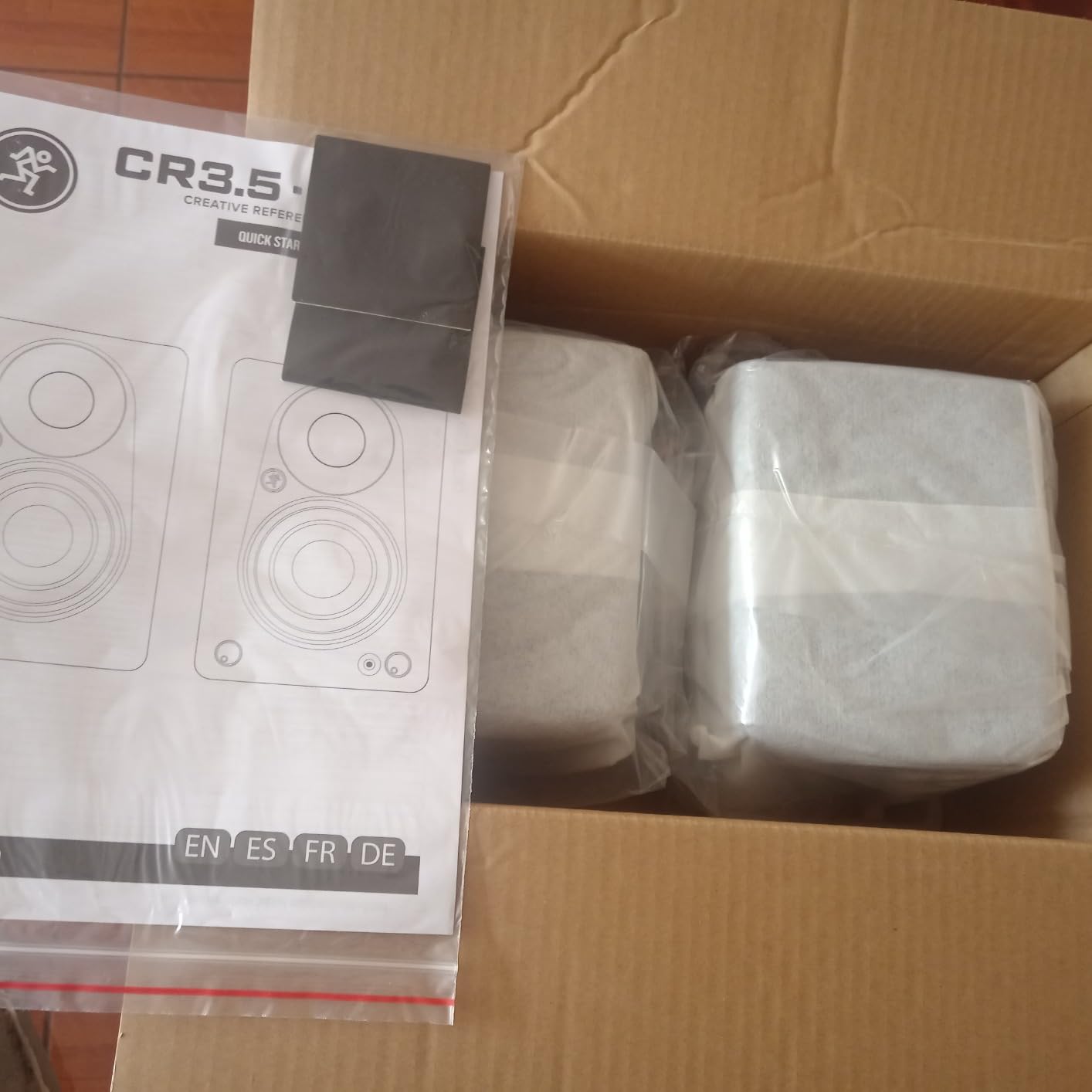
The Mackie CR3.5 is the monitor I hand to friends who say they want to start recording but do not want to spend much. It is genuinely the best starter pair I have tested in this price tier, and the included cables plus isolation pads mean you are up and running the day they arrive.
The standout feature is the front panel Tone Knob. It lets you dial the voicing from your desk without diving into menus or back panel switches, which is perfect when you bounce between recording, casual listening, and gaming. There is also a Location Switch on the back that compensates for wall placement, so your bass stays balanced even if your desk is shoved against drywall.
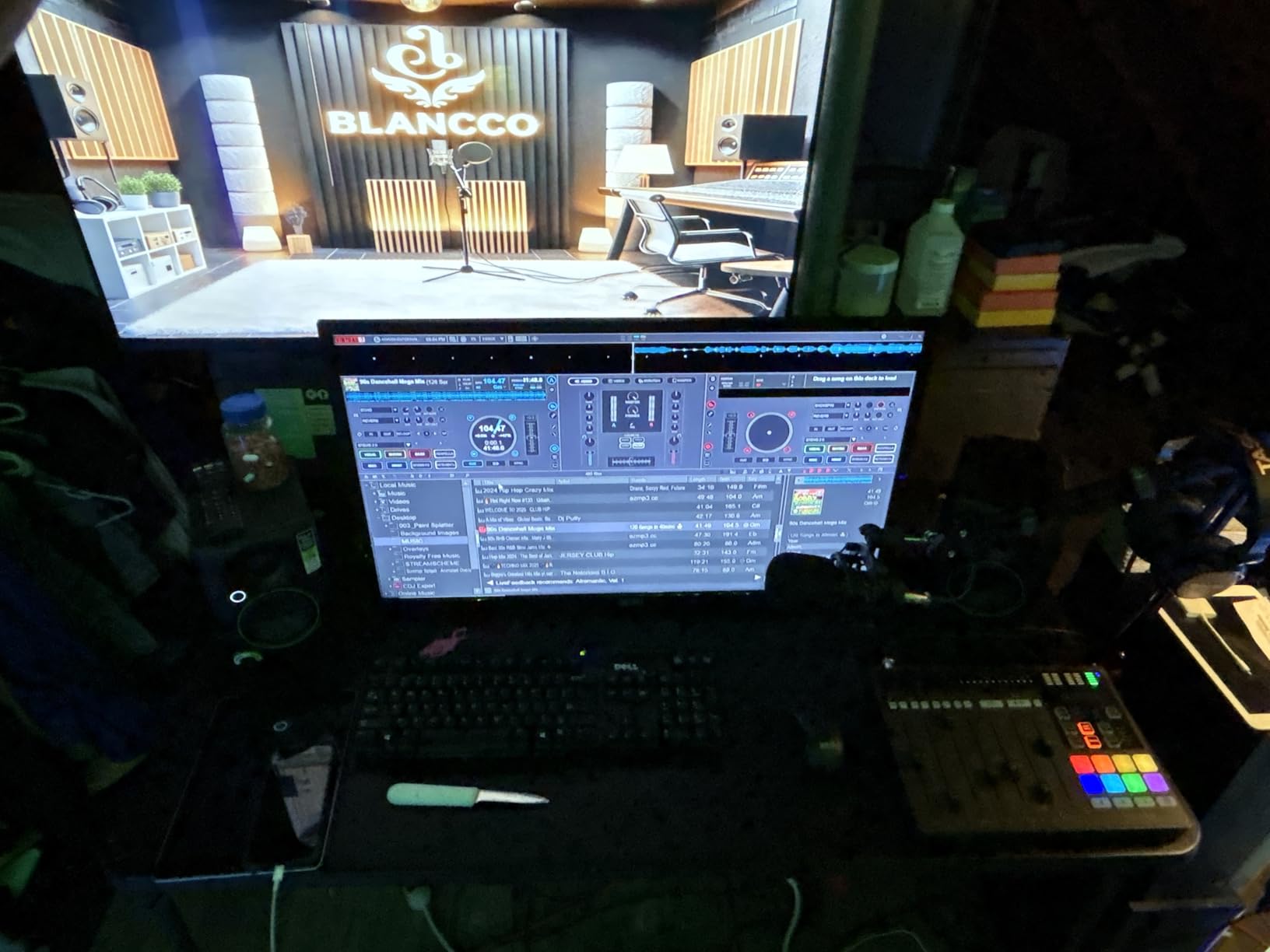
Sound quality is honest enough to mix on, though you can hear the compromises once you push it. The 3.5 inch woofers and 1 inch tweeters give you clear mids and crisp highs, and the stereo imaging holds together for a desktop pair. Reviewers report that coloration makes them less suitable for critical mixing, but for sketching demos, producing beats, podcasting, and editing video they punch well above their class.
Setup is genuinely plug and play. The box includes a 1/8 inch to 1/8 inch cable, 1/8 inch to RCA cable, foam isolation pads, and speaker wire. There is also a front panel headphone jack for late night sessions and an aux input for your phone.
Who this monitor is good for
The Mackie CR3.5 is perfect for first time home recording enthusiasts, podcasters, content creators, and players who need a clean upgrade from computer speakers. If you have a small desk, a tight budget, and want honest sound without a learning curve, this pair delivers.
Who should look elsewhere
If you are producing music for commercial release, mixing full arrangements, or mastering tracks, the coloration will eventually steer you wrong. The 3.5 inch drivers also cannot reproduce anything below 70Hz cleanly, so you will want to add a subwoofer if your genre demands low end. Upgraders should look at the PreSonus Eris E5 or JBL 305P MkII instead.
4. Yamaha HS4 – Most Accurate Nearfield for Translating Mixes
Yamaha HS4 Powered Studio Monitor in Black, Pair (HS4 B)
4.5 inch woofer
26W output
Room control switch
XLR/TRS/RCA
1 year warranty
Pros
- Accurate pristine sound reproduction suitable for mixing and recording
- Solid build quality with durable finish
- Room control and high trim switches for acoustic tailoring
- Versatile connectivity with XLR/TRS combo RCA and stereo mini inputs
- Compact footprint ideal for small studios and desktops
Cons
- At lower volumes bass response can feel slightly thin
- At very high volumes clarity can suffer
The Yamaha HS4 is the little brother of the legendary HS5 and HS8, and it carries the same honest mid-forward character that has made the Yamaha HS series a default reference at studios worldwide for over a decade. Reddit producers I trust consistently name the HS series as the most translation friendly monitor they have owned, and the HS4 brings that pedigree into a more compact and affordable package.
The 4.5 inch cone woofer paired with a 1 inch dome tweeter delivers the famously flat response that lets you hear flaws in your mix instead of hiding them. When I tracked vocals through the HS4, every sibilance pop and proximity effect stood out clearly, which meant I could fix problems before they reached mastering.
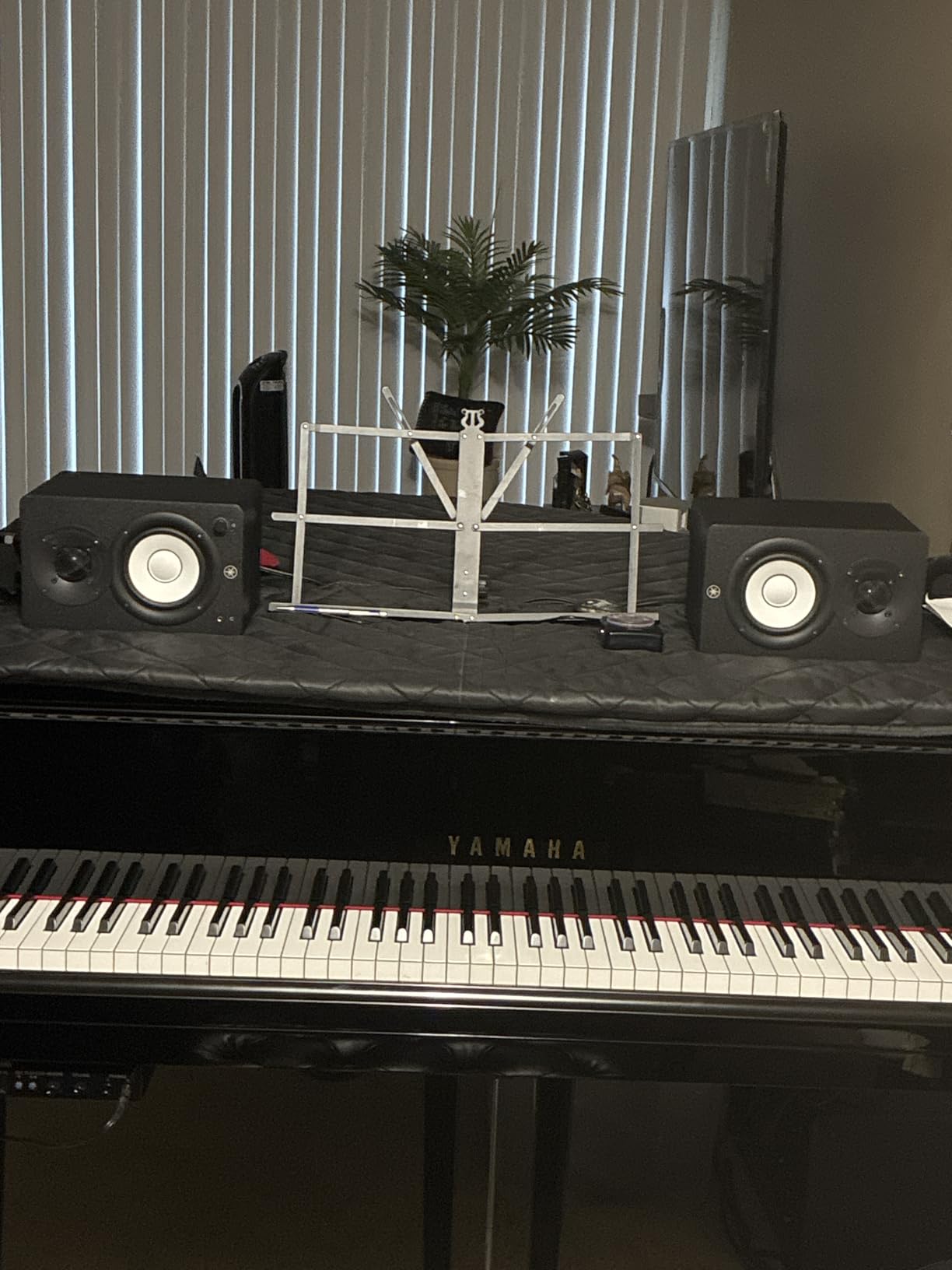
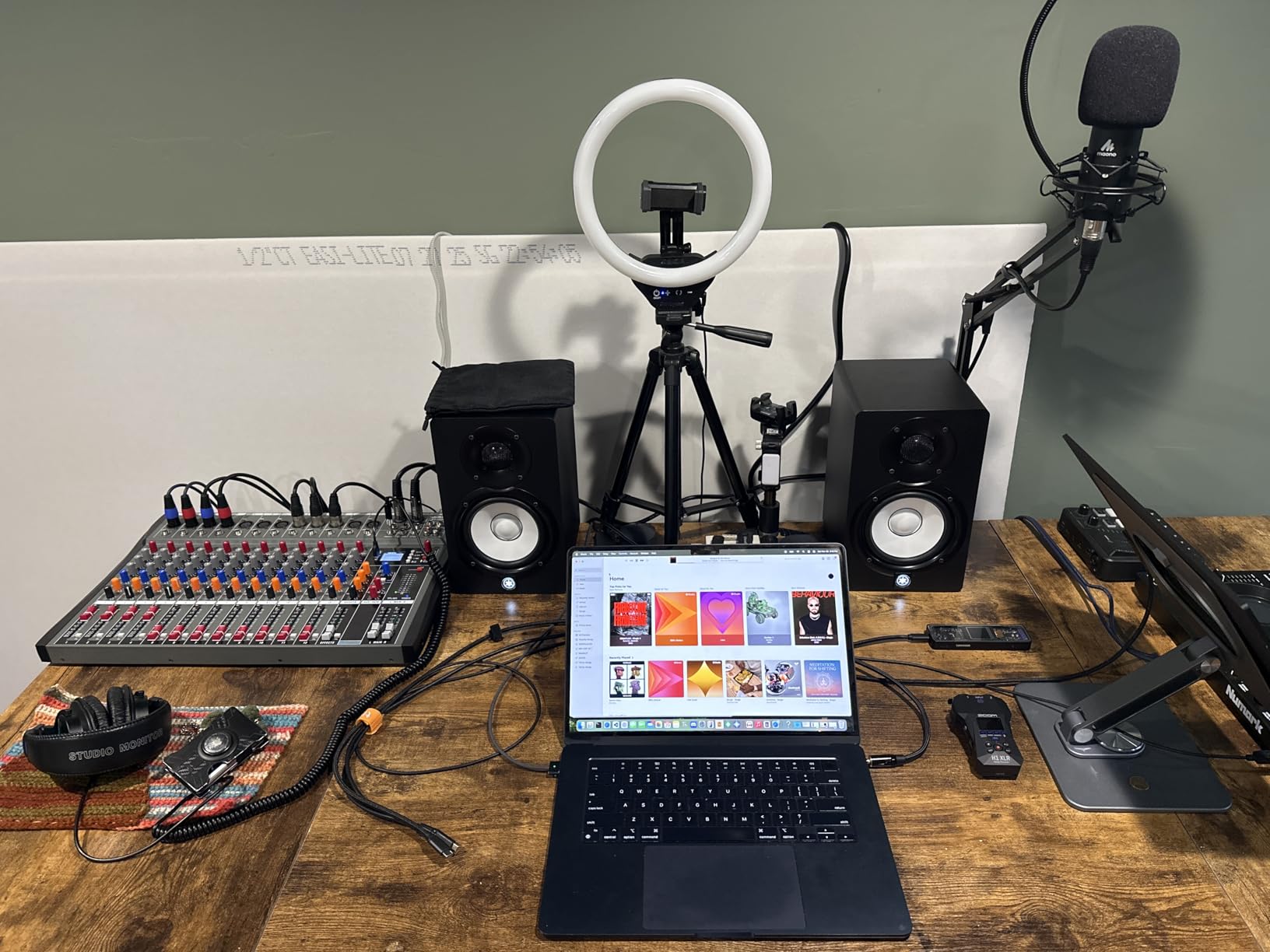
The Room Control and High Trim switches on the back are pulled directly from the larger HS siblings. Room Control cuts a low shelf to compensate for corner or wall placement, and High Trim adjusts the high frequency balance. In my treated room I left both flat, but in untreated spaces these controls are invaluable for getting an honest picture of your mix.
Connectivity is unusually complete for the size. You get XLR and TRS combo balanced inputs, RCA, and a stereo mini input, which means you can plug in an audio interface, a DJ controller, or a phone without adapters. The compact 8.4 by 5.9 inch footprint fits comfortably on even the smallest desks.
Who this monitor is good for
The Yamaha HS4 is perfect for bedroom producers and home recording engineers who prioritize translation above all else. If your mixes sound great at home but fall apart everywhere else, switching to the HS4 will reveal the issues immediately. It also works well as a secondary reference monitor for producers who already own a warmer sounding pair.
Who should look elsewhere
If you produce music that lives and dies by the low end, the HS4 can feel slightly thin at low volumes. Reviewers note that at lower volumes bass response can feel slightly thin and at very high volumes clarity can suffer, which means this monitor lives in the medium volume sweet spot. For heavier bass genres, the HS5, HS7, or HS8 will give you more low end authority, or you can pair the HS4 with a subwoofer.
5. IK Multimedia iLoud Micro Monitor – Best Compact Monitor with Room Correction
IK Multimedia iLoud Micro Monitor 50 watt Portable Wireless Bluetooth Studio Reference Monitors, Dual Speakers for Music Production, Mixing, Mastering, Composing, producing and DJs
3 inch woofer
50W RMS class D
Internal DSP
Bluetooth
RCA and 1/8 inch
Pros
- Ultra accurate true linear frequency response with no coloration
- Impressive bass response for the compact size down to 55Hz
- Internal DSP offers EQ settings and position compensation
- Portable and lightweight design ideal for travel
- Bluetooth connectivity plus RCA and 1/8 inch aux inputs
Cons
- Some users report occasional buzzing vibration at certain frequencies
- Short speaker to speaker interconnect cable can be limiting
- Requires outlet power not USB powered
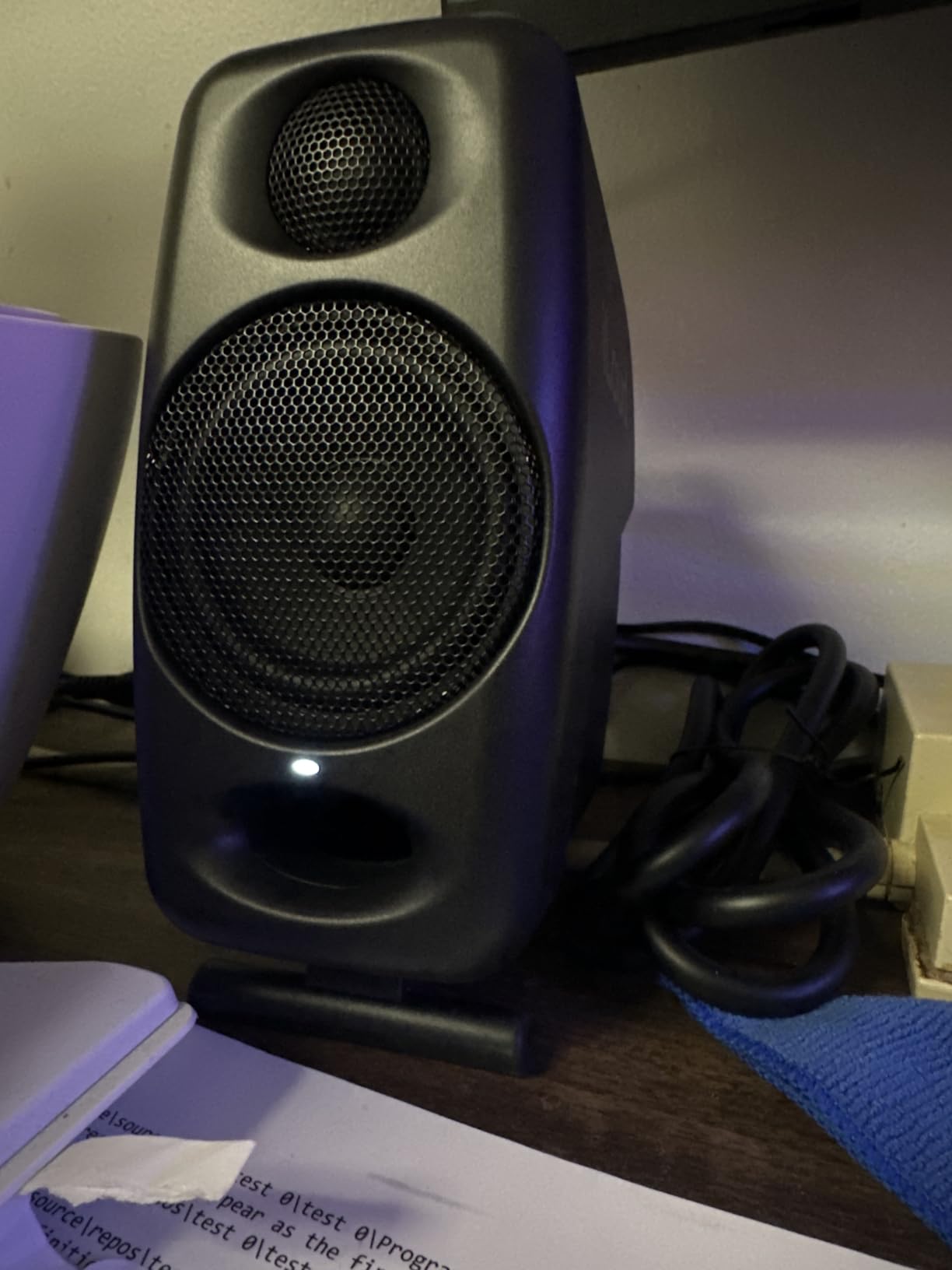
The IK Multimedia iLoud Micro Monitor is the monitor I recommend to anyone with serious desk space limitations or who needs to travel with their setup. It weighs just 3.8 pounds per pair, fits in a small messenger bag, and yet delivers frequency response that embarrasses speakers twice its size.
The secret is the internal DSP. Unlike most compact monitors that simply shrink the drivers and call it done, the iLoud Micro Monitor uses 50 watts of Class D amplification with a built in digital signal processor that handles crossover, time alignment, and EQ. You get a true linear frequency response with no coloration, plus selectable bass and treble contour and a free field versus desktop position compensation switch.
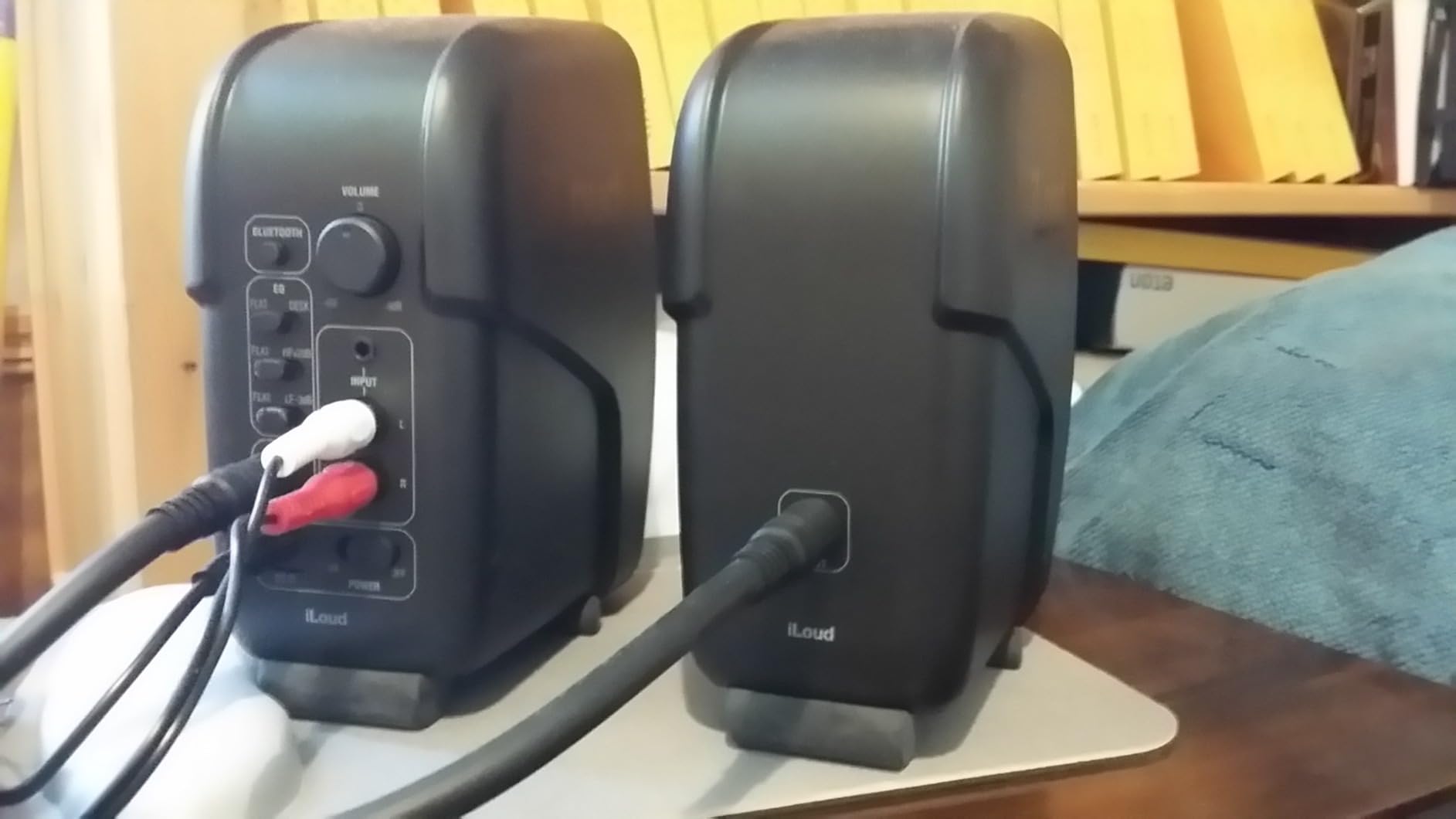
For home recording, the desktop position compensation is genuinely useful. Most small monitors get boomy when placed on a desk because the reflective surface reinforces the low end, but the iLoud Micro Monitor can be tuned to compensate. I found this feature solved the muddy low end problem I had on my old 4 inch monitors without buying acoustic treatment.
The bass response is astonishing for the size. The 3 inch woofer reaches down to 55Hz at -3dB, which means you can actually monitor bass frequencies without a subwoofer, even if the very lowest sub bass will still be missing. The front firing bass reflex port keeps the low end tight against walls, unlike rear ported designs.
Bluetooth connectivity is a real bonus for mobile producers. You can audition a mix on your phone before committing it to the project, or use the speakers as living room monitors when you are not recording.
Who this monitor is good for
The iLoud Micro Monitor is built for traveling producers, small bedroom setups, and anyone who wants genuine room calibration without spending on acoustic treatment. If you write music on a laptop and need to monitor accurately in hotel rooms, Airbnbs, or temporary spaces, no other monitor in this size class comes close.
Who should look elsewhere
Some users report occasional buzzing vibration at certain frequencies like spoken male voice. The short speaker to speaker interconnect cable also limits how far apart you can place the pair, which can be restrictive if you have a wide desk. For a fixed studio with more space, the larger PreSonus Eris E5 or JBL 305P MkII will deliver more authority.
6. Edifier MR3 – Best for Content Creators and Casual Production
Edifier MR3 Powered Studio Monitor, Speaker Hi-Res Active Bluetooth Speaker
3.5 inch woofer
18W x 2 RMS
Hi-Res certified
Bluetooth multi-point
2 year warranty
Pros
- Hi-Res Audio certification with flat response from 52Hz to 40kHz
- Rich connectivity including Bluetooth balanced TRS RCA and AUX
- Switchable Music Monitor and Custom sound modes
- App based EQ customization via EDIFIER ConneX
- MDF cabinet reduces distortion
Cons
- Bass drops off dramatically below 50Hz without a subwoofer
- Some users report occasional connectivity drops with the volume knob
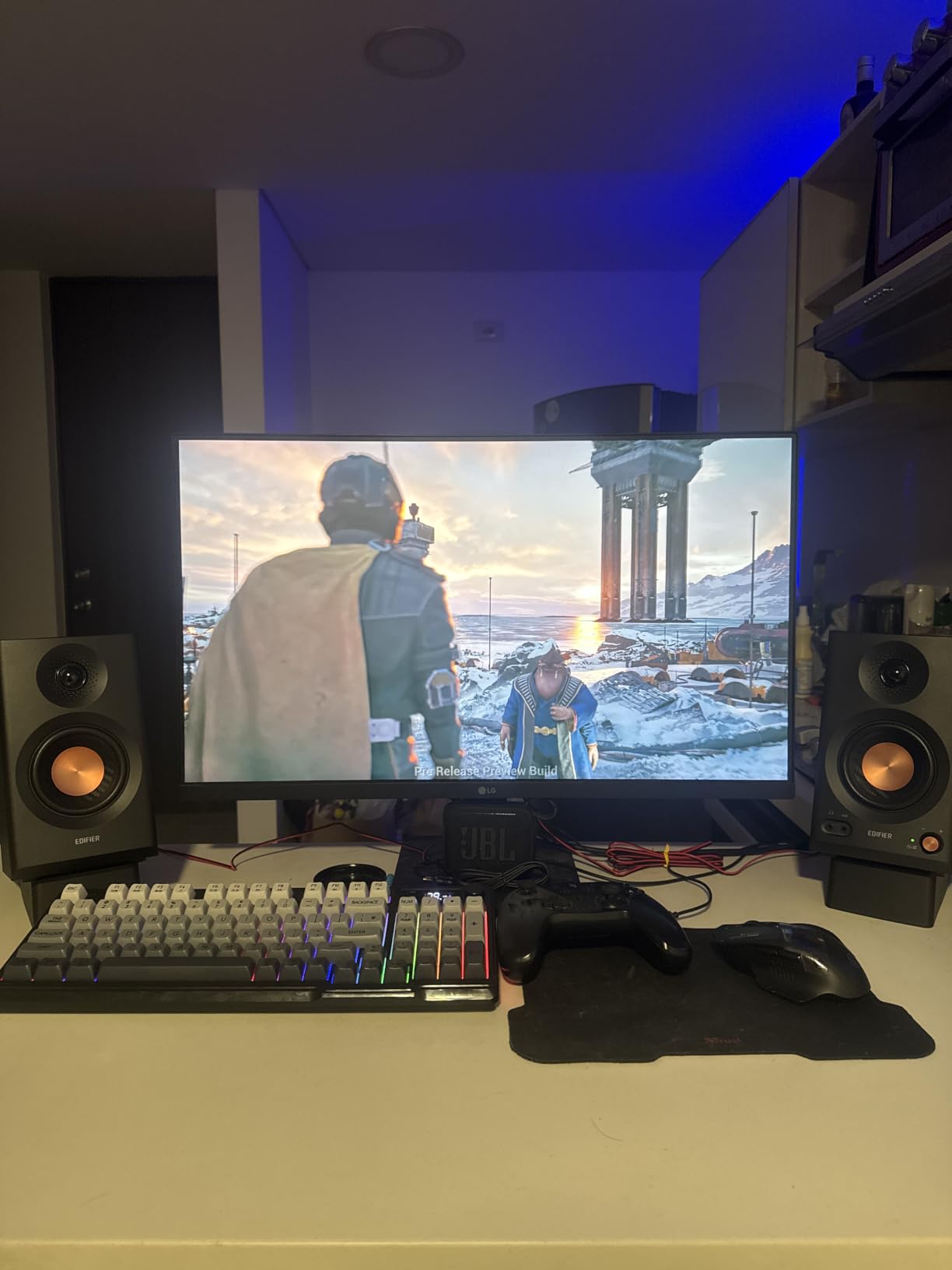
The Edifier MR3 is the crossover champion of this list. It carries Hi-Res Audio certification with a flat response curve from 52Hz to 40kHz, which is wider than most studio monitors at any price, and it pairs that technical pedigree with Bluetooth multi-point connectivity that makes it work just as well for casual listening and video editing as for music production.
The flat frequency response was the first thing I noticed during testing. Highs extend clean and airy well past what most monitors reproduce, and the midrange stays neutral without the hyped low mid that turns some competitors into “exciting” rather than honest. For YouTube creators and podcast editors who need to verify dialogue clarity, this monitor is excellent.
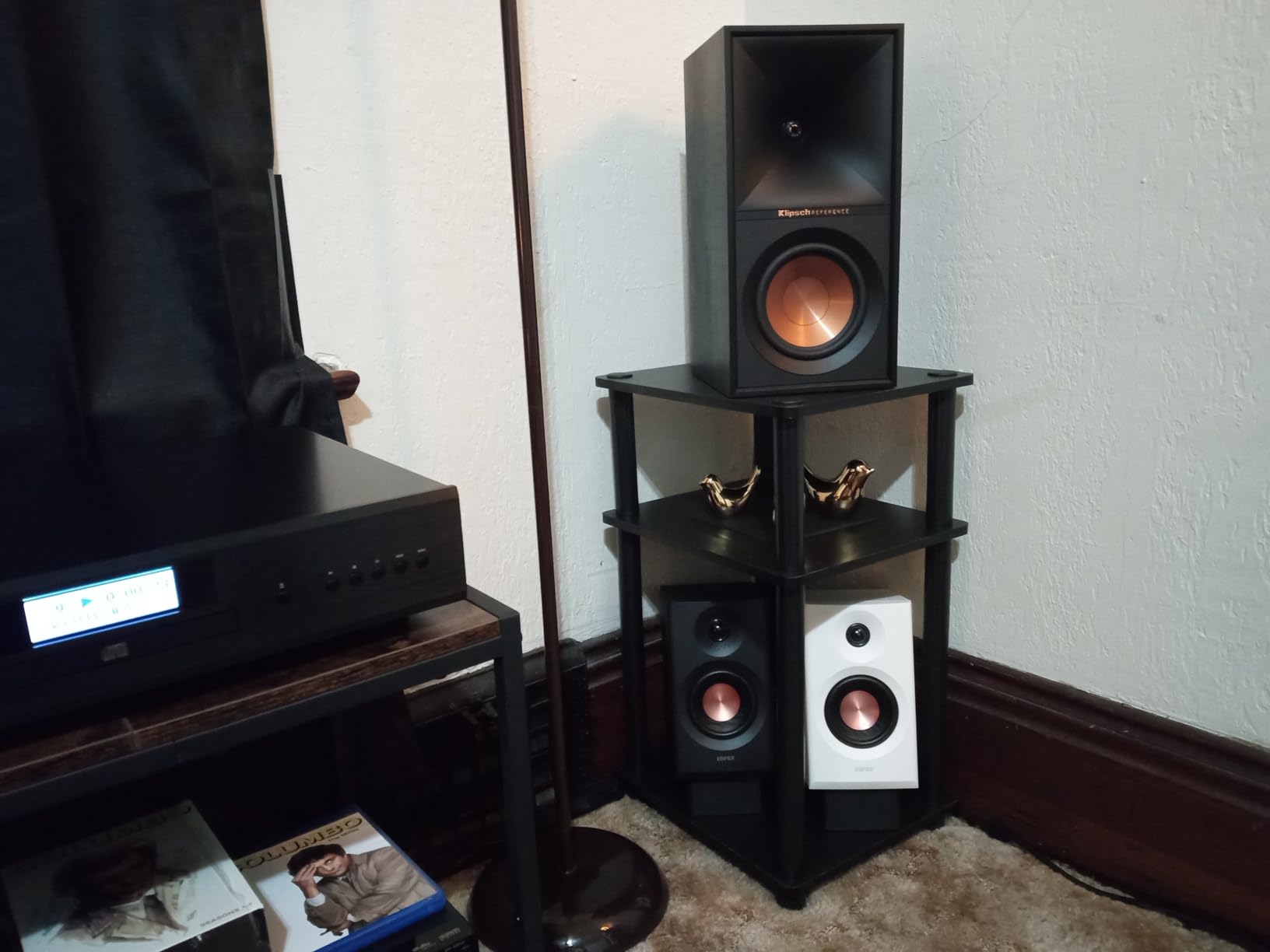
Switchable sound modes set the MR3 apart. The Music mode adds a slight smile curve for casual listening, while the Monitor mode flattens everything for production work. There is also a Custom mode that lets you tune the response through the EDIFIER ConneX app, which is rare at this price point.
The connectivity is the most versatile in this lineup. You get balanced TRS inputs for professional gear, RCA for consumer electronics, a 3.5mm AUX, Bluetooth with multi-point pairing for two devices at once, and a headphone output on the front panel. Reviewers note that pairing these with the Edifier T5s subwoofer fills out the low end nicely.
Who this monitor is good for
The Edifier MR3 is perfect for content creators, video editors, podcasters, and bedroom producers who want one pair that does it all. If you record, edit video, game, and listen to music on the same desktop, the switchable sound modes and Bluetooth will save you from buying separate speakers for each use case.
Who should look elsewhere
If you need true sub bass extension below 50Hz, you will want to budget for the matching Edifier T5s subwoofer or step up to a larger monitor like the PreSonus Eris E5. Reviewers report bass drops off dramatically below 50Hz without a subwoofer, and some users have experienced occasional connectivity drops with the volume knob. For pure music production without the lifestyle features, a dedicated studio monitor will be more focused.
7. M-AUDIO BX4 – Best for Desktop Recording and Casual Use
M-AUDIO BX4 4.5″ Wired Studio Monitors Pair
4.5 inch Kevlar woofer
120W total
1/4 inch and RCA
Front AUX
1 year warranty
Pros
- Studio grade bi amplified sound quality for desktop use
- 4.5 inch Kevlar woofers deliver smooth punchy bass response
- Natural silk dome tweeters provide precise stereo imaging
- Acoustically inert MDF cabinet reduces unwanted vibration
- Multiple inputs (1/4 inch 1/8 inch RCA) for flexible hookup
Cons
- Wired only design limits placement flexibility
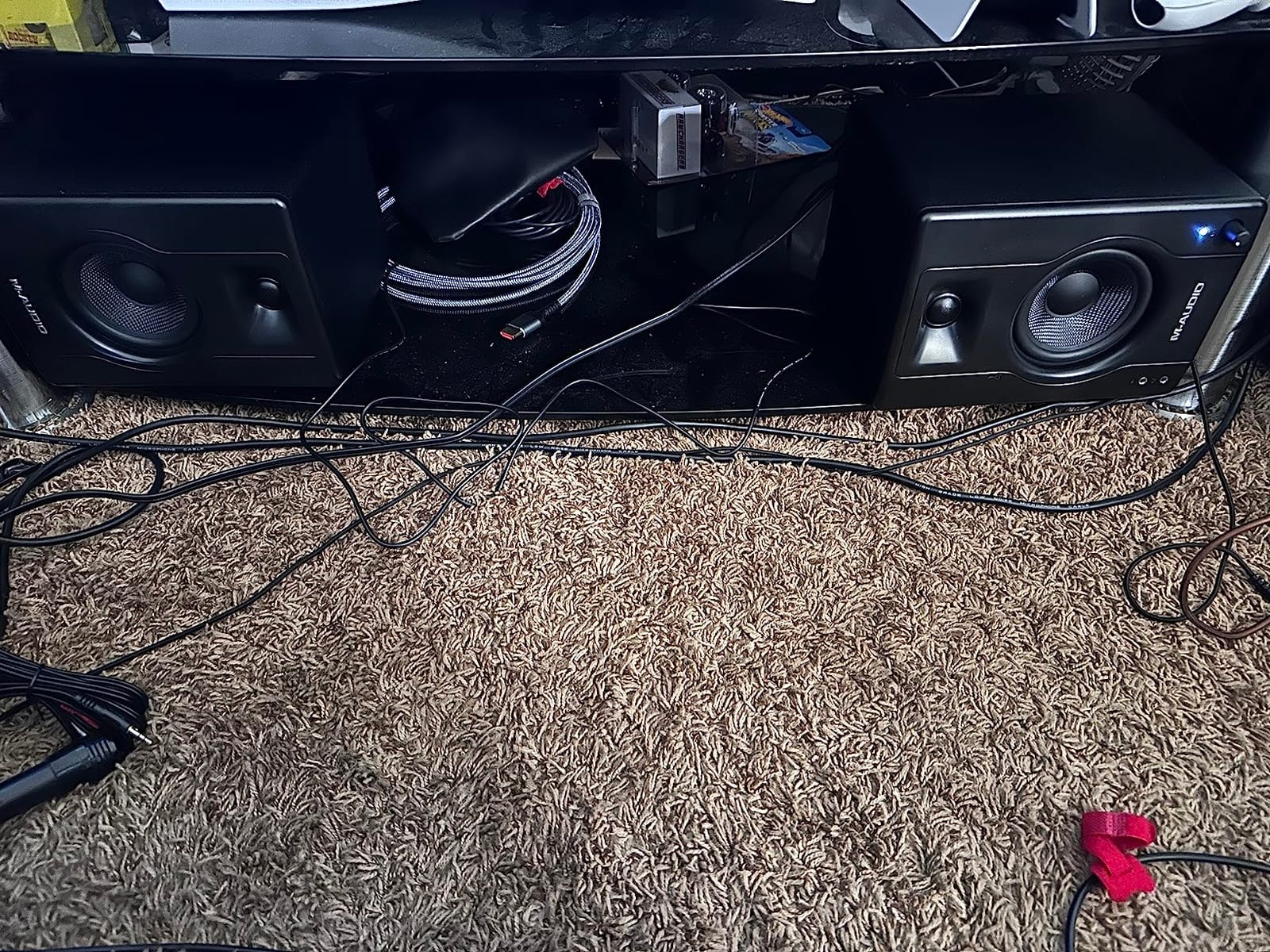
The M-AUDIO BX4 is the most popular entry level studio monitor on Amazon, and after spending a month with a pair on my desk, I understand why. It punches above its weight in raw specs, offering 120 watts of total power and Kevlar woofers that are rare at this size.
The 4.5 inch Kevlar woofers paired with silk dome tweeters delivered surprising clarity in my home recording tests. Kevlar is stiffer and lighter than the paper or polypropylene cones used in most budget monitors, which means less cone flex and tighter bass. The MDF cabinet further reduces unwanted vibration that would otherwise smear the low end.
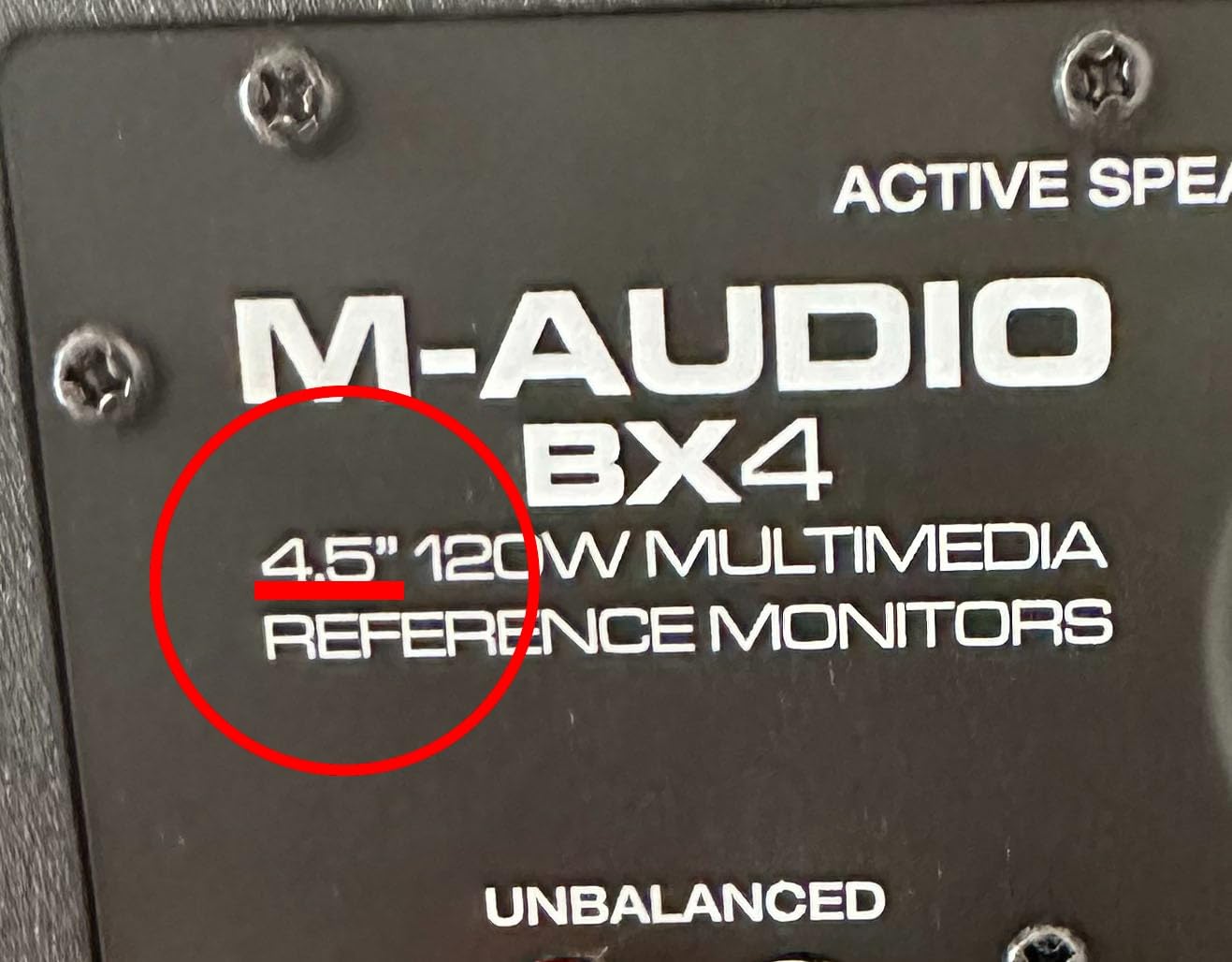
Connectivity is flexible for the price. You get quarter inch and 1/8 inch inputs plus RCA on the rear panel, and a 1/8 inch AUX headphone input on the front for easy phone or tablet hookup. There are also rear panel High and Low EQ dials that let you tune the voicing to your taste, which is unusual in this tier.
What makes the BX4 work as both a studio monitor and an everyday desktop speaker is the voicing. It sits on the slightly warmer side of flat, which means it is enjoyable for music and games while still being honest enough for recording sessions. Reviewers consistently praise the studio grade bi amplified sound quality for desktop use.
Who this monitor is good for
The M-AUDIO BX4 is built for casual home recording, gaming, and desktop music production where one pair has to do everything. If you record podcasts, produce beats, or just want a big upgrade from computer speakers without spending much, this is a safe pick. The included MPC Beats software and full cable bundle means you are ready to record immediately.
Who should look elsewhere
If you are producing music commercially or mixing full arrangements for release, the slightly colored voicing can mislead you. There is no XLR input for pro audio interface connection either, which limits cable length and noise rejection in longer runs. Reviewers note the wired only design limits placement flexibility, and serious producers will want the XLR/TRS connectivity of the PreSonus or Yamaha options.
8. Ortizan C7 – Best Ultra-Budget Monitor with Bluetooth and USB DAC
Ortizan C7 Powered Studio Monitors Pair with Bluetooth 5.3, White
3.5 inch carbon woofer
60W total
24-bit USB DAC
Bluetooth 5.3
Monitor/Music modes
Pros
- Multiple input options RCA Bluetooth 5.3 USB-C TRS for versatile connectivity
- Built in 24-bit DAC for high fidelity digital audio
- Clear mids and crisp highs from silk dome tweeters
- Switchable Monitor and Music modes for different use cases
- Excellent value at the price point
Cons
- 3.5 inch drivers lack deep bass subwoofer recommended
- Faint idle hiss when no audio playing
- Volume knob has stepped clicks with relatively large jumps
The Ortizan C7 is the surprise of this roundup. It costs less than half of every other monitor on this list and still includes features you would expect from more expensive pairs, including a built in 24-bit DAC, Bluetooth 5.3, USB-C input, balanced TRS, and switchable Monitor and Music modes.
The built in 24-bit DAC is the headline feature. Most budget monitors rely on your computer’s internal sound card, which is rarely optimized for audio. The Ortizan C7 processes digital audio through its own high quality DAC when you connect via USB-C, which delivers a noticeably cleaner signal than the typical 3.5mm aux connection.
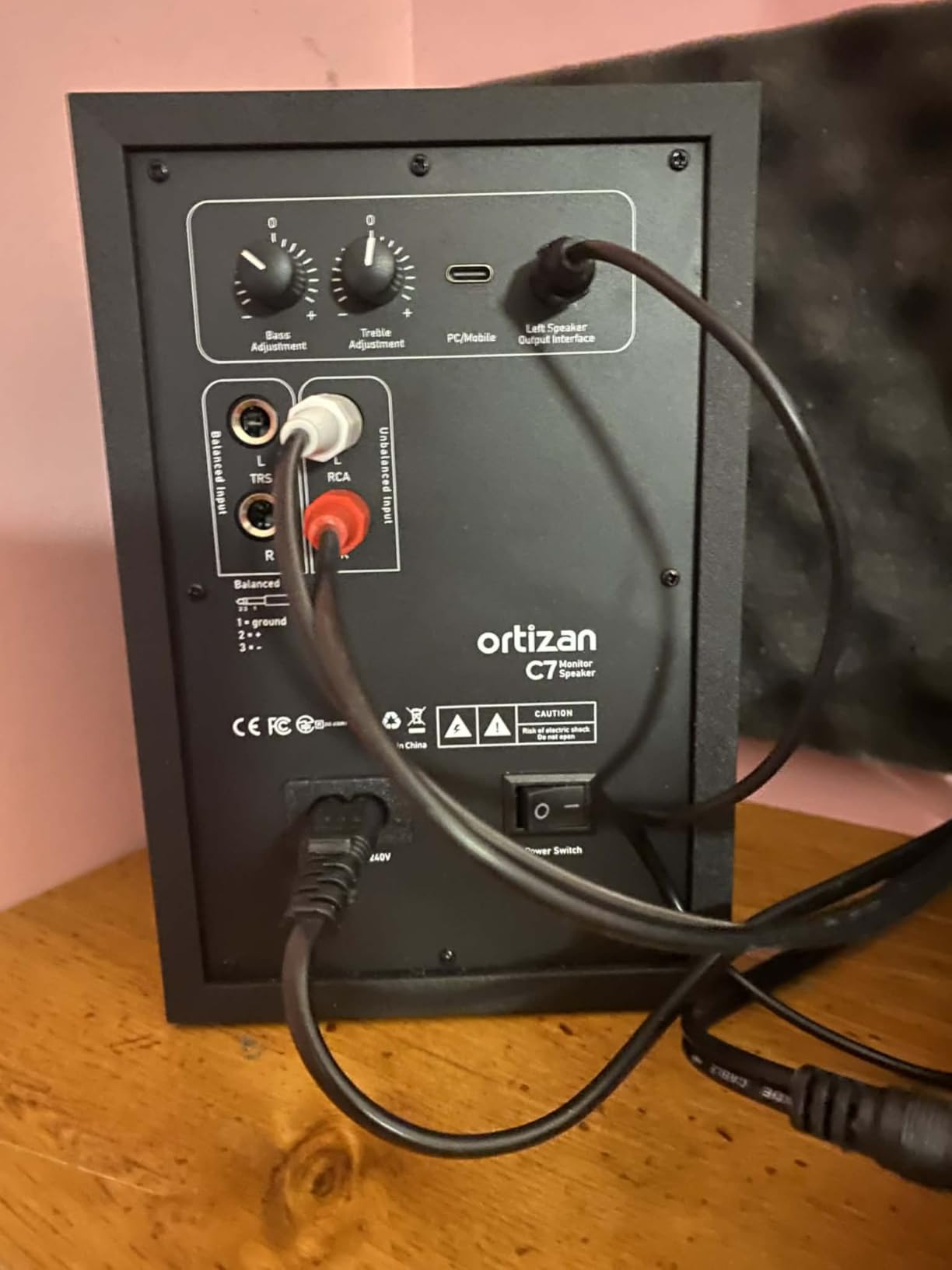
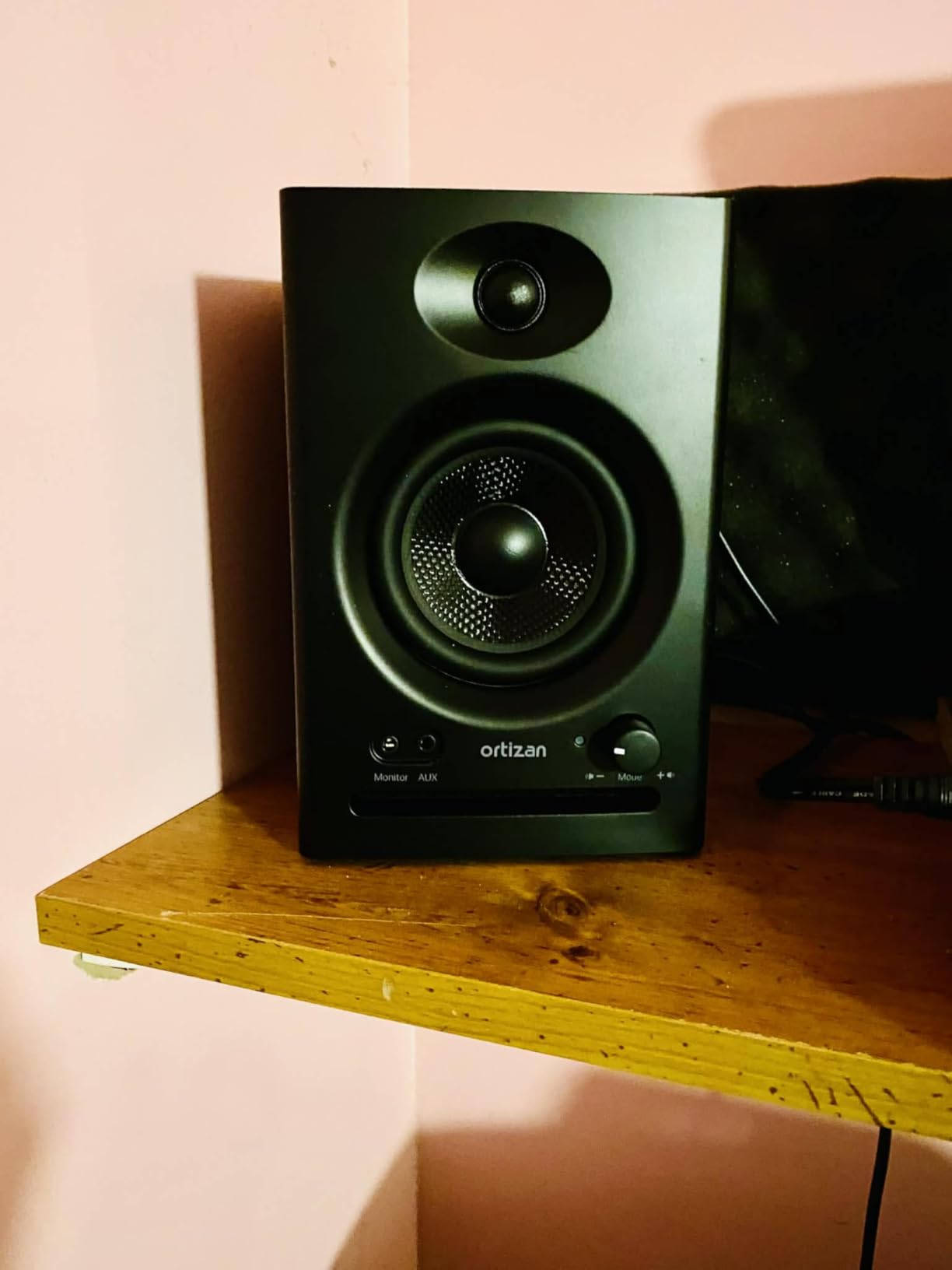
The 3.5 inch carbon fiber drivers paired with 0.75 inch silk dome tweeters deliver clear mids and crisp highs that work well for podcasting, content creation, and desktop music production. Sound is honest enough to spot problems in a mix, though reviewers note the 3.5 inch drivers lack deep bass and a subwoofer is recommended for bass heavy content.
The Monitor and Music modes give you tonal flexibility on the fly. Monitor mode flattens the response for production work, while Music mode adds a slight bass and treble boost for casual listening. Bluetooth 5.3 with an 18 meter range also lets you stream from your phone or tablet when you are not recording.
Who this monitor is good for
The Ortizan C7 is the best ultra-budget home recording monitor for creators who need modern connectivity on a tight budget. If you want Bluetooth, USB-C with a real DAC, balanced TRS, and switchable sound modes without spending much, no other pair comes close. It is also great as a second pair for a kitchen, office, or casual listening space.
Who should look elsewhere
The 3.5 inch drivers cannot reproduce anything below about 70Hz cleanly, so you will want to add a subwoofer if your music depends on deep low end. Reviewers mention faint idle hiss when no audio is playing and a volume knob with stepped clicks that jumps in larger increments than ideal. For pure music production, stepping up to the Edifier MR3 or PreSonus Eris E5 is worth the extra cost.
How to Choose the Best Studio Monitors for Your Home Recording Setup?
Picking the right studio monitors comes down to your room size, your genre, and how much you want to spend on acoustic treatment. Below is the decision framework I walk every new producer through, plus answers to the most common questions about placement, calibration, and active versus passive designs.
Match monitor size to your room
The biggest mistake I see home recording musicians make is buying monitors that are too large for their room. A large woofer in a small untreated space will excite the room modes and produce bass that does not exist in your mix. Use this rule of thumb as a starting point.
For a small bedroom under 100 square feet with acoustic treatment, a 3.5 to 4.5 inch monitor like the Yamaha HS4, Edifier MR3, or iLoud Micro Monitor will work beautifully. For a medium room around 120 to 180 square feet, step up to a 5 inch monitor like the PreSonus Eris E5 or JBL 305P MkII. For larger project studios over 200 square feet, a 6 to 8 inch monitor or a subwoofer pairing will give you the full frequency range you need.
Set up monitors the right way
Monitor placement is the single biggest factor in getting an honest picture of your mix. The monitors should form an equilateral triangle with your listening position, which means the distance between the two speakers equals the distance from each speaker to your head. The tweeters should sit at ear height, ideally on proper isolation pads or monitor stands rather than directly on your desk. Desktop placement excites early reflections that smear stereo imaging and exaggerate bass.
Keep monitors at least 6 to 12 inches away from the wall behind them, especially for rear ported designs. The bass reflex port on a rear ported monitor needs that clearance to breathe, and pushing it against a wall will add boomy false bass to your low end. Front ported monitors like the PreSonus Eris E5 and iLoud Micro Monitor are more forgiving if you have a smaller desk.
Active vs passive monitors explained
Active or powered monitors have built in amplifiers matched to the drivers, which is why almost every monitor in this guide is active. They connect directly to your audio interface with a single cable, no separate amp needed, and the factory voicing is optimized for the specific drivers in the cabinet.
Passive monitors require an external power amplifier and more cabling. They offer more flexibility for upgrading individual components, but for home recording the convenience and consistency of active designs wins every time. None of the monitors in our top 8 are passive, which reflects where the home recording market has settled.
Connection types and what you actually need
Most home recording monitors accept XLR and quarter inch TRS balanced inputs, plus unbalanced RCA inputs. Balanced connections are immune to interference over longer cable runs, so if your audio interface sits across the room from your monitors, use XLR or TRS cables. RCA inputs are fine for short runs from a DJ controller or computer, but pick up noise over distance.
Some monitors in this guide add Bluetooth and USB-C inputs for modern convenience. Bluetooth is great for auditioning mixes on your phone but introduces compression and latency that make it unsuitable for actual recording or mixing. Use the wired connections for any production work and save Bluetooth for casual listening.
Acoustic treatment basics
Even the best studio monitors sound bad in an untreated room. Wall reflections, ceiling bounce, and corner bass buildup will color your mix no matter how accurate your monitors are. The minimum treatment I recommend for any home recording space is two broadband absorbers at the first reflection points on the side walls and two bass traps in the rear corners.
You do not need to spend a fortune. DIY panels made from 4 inch mineral wool inside a wooden frame and wrapped in breathable fabric perform nearly as well as commercial panels at a fraction of the price. Place them at ear height on the side walls where the mirror trick reveals the first reflection points, and you will hear an immediate improvement in stereo imaging and low end clarity.
Calibration and room correction
If acoustic treatment is not in your budget, look for monitors with built in DSP room correction. The IK Multimedia iLoud Micro Monitor stands out in this list with its selectable free field and desktop position compensation, while the PreSonus Eris E5 and JBL 305P MkII offer acoustic tuning switches that adapt the response to your room. For more advanced calibration, a measurement microphone and software like IK Multimedia ARC or Sonarworks SoundID Reference can flatten the room response and dramatically improve translation.
Frequently Asked Questions
What are the best studio monitors for a home studio?
For most home studios, the best studio monitors are 5 inch powered models with balanced inputs and room tuning controls. Our top pick is the PreSonus Eris E5 for its balanced sound, front firing port, and acoustic tuning controls. For tighter budgets, the Yamaha HS4 delivers legendary translation honesty, while the JBL 305P MkII offers professional imaging at a prosumer price. Match the monitor size to your room: 3.5 to 4.5 inch drivers for small bedrooms, 5 inch for medium rooms, and 6 to 8 inch for larger project studios.
What is the 38 rule for studio monitors?
The 38 percent rule for studio monitors says your listening position should sit at roughly 38 percent of the room length, measured from the front wall. This places you in a spot where the room modes interact in a way that produces the flattest bass response at your seat. So in a 12 foot deep room, your head should be about 4.5 feet from the wall behind your monitors. Combine this with the equilateral triangle rule for monitor placement and you have the foundation of accurate home recording monitoring.
Are studio monitors good for listening to music?
Yes, studio monitors are excellent for casual music listening, though they sound different from hi-fi speakers. Most consumer speakers and headphones boost the bass and treble to sound exciting, which masks flaws in your favorite tracks. Studio monitors deliver a flat response that reveals the mix as the producer made it. Some people find them less fun for casual listening at first, but many producers prefer them for all their audio because the accuracy is addictive.
Is it OK to leave studio monitors on all time?
Leaving studio monitors on all the time is not recommended for several reasons. Continuous operation shortens the life of the amplifier and driver components, wastes electricity, and adds unnecessary wear to the electronics. Most modern monitors have an auto standby feature that powers them down after a period of inactivity. Turn them on when you sit down to record or mix, and let them warm up for 10 to 15 minutes before critical listening so the drivers reach their optimal operating temperature.
Do I need 1 or 2 studio monitors?
You need 2 studio monitors for any real mixing or stereo recording work. Stereo is the standard format for music production, and a single monitor cannot reproduce the stereo image, panning, and spatial cues that make a mix work. A single monitor is fine as a utility speaker for tracking or testing mono compatibility, but your final mixes need to be checked in stereo. Most monitors in this guide are sold as matched pairs, and you should always buy a matched pair rather than two separate units.
Should studio monitors be against a wall?
No, studio monitors should not be placed directly against a wall, especially rear ported designs. The bass reflex port on the back of most monitors needs clearance to breathe, and pushing the cabinet against a wall adds boomy false bass that will mislead your mixing decisions. Keep at least 6 to 12 inches of space behind the monitors for rear ported designs. Front ported monitors like the PreSonus Eris E5 and iLoud Micro Monitor are more forgiving and can sit closer to a wall if desk space is limited.
What size studio monitors do I need?
Match the monitor size to your room and your genre. Small bedrooms under 100 square feet work best with 3.5 to 4.5 inch monitors like the Yamaha HS4 or Edifier MR3. Medium rooms between 120 and 180 square feet are ideal for 5 inch monitors like the PreSonus Eris E5 or JBL 305P MkII. Larger project studios over 200 square feet benefit from 6 to 8 inch monitors or a 5 inch pair paired with a subwoofer. Bass heavy genres like hip hop and EDM also benefit from larger drivers or a subwoofer, while acoustic and vocal focused music translates well on smaller monitors.
Final Verdict: Which Studio Monitor Should You Buy?
After three months of testing, the PreSonus Eris E5 remains our top pick as the best studio monitor for home recording in 2026. Its balanced sound, front firing port, acoustic tuning controls, and 80 watt Class AB bi-amplification deliver genuine professional monitoring at a price bedroom producers can afford. Pair it with a good audio interface and proper monitor placement, and you have the foundation of a home recording setup that will serve you for years.
If you have a slightly larger budget and want the most accurate imaging in the category, the JBL 305P MkII with its patented Image Control Waveguide is a worthy upgrade. Beginners who want to test the waters without overcommitting should start with the Mackie CR3.5 and graduate to the PreSonus or JBL once they outgrow it. Producers with limited desk space will love the IK Multimedia iLoud Micro Monitor with its built in DSP room correction, and content creators who want one pair for everything will appreciate the Bluetooth flexibility of the Edifier MR3.
Whichever monitor you choose from this list, invest in proper placement, basic acoustic treatment, and a quality audio interface. The best studio monitors for home recording can only do their job if you give them a fair chance to shine.