
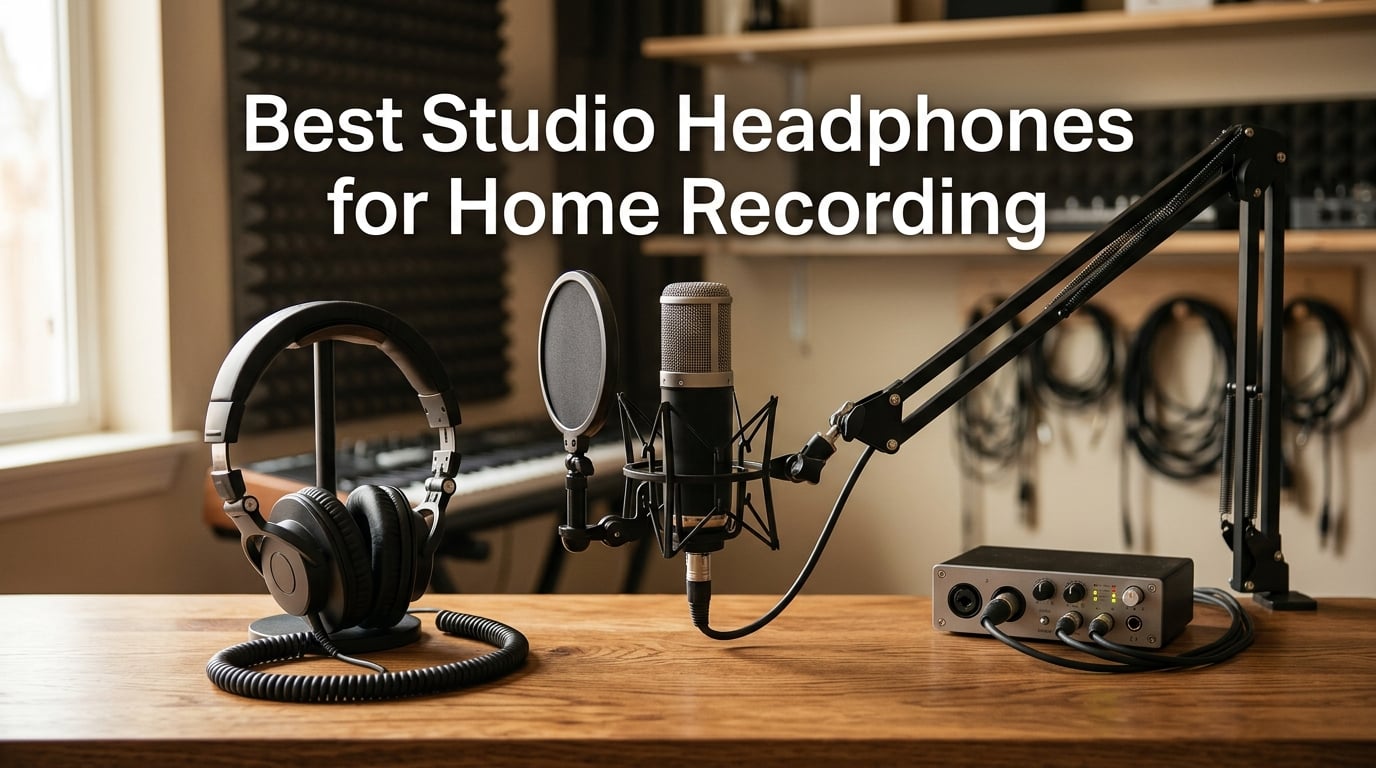
Finding the best studio headphones for home recording comes down to one question first: are you tracking a live performance or mixing what you have already captured? Our team spent six weeks rotating eight over-ear pairs through vocal sessions, guitar re-amps, and mix-down days in untreated home studios, then ranked them on isolation, comfort, frequency response honesty, and how well they pair with entry-level audio interfaces.
This guide covers both ends of the workflow. Closed-back headphones keep headphone bleed out of your live microphones; open-back models give you the airy soundstage that makes mixing decisions feel less claustrophobic. Most home recordists end up buying one of each over time, and we will tell you which pair to grab first based on the room you record in and the gear you already own.
Every pick below has been chosen from real Amazon listings with verified reviews, honest pros and cons, and clear use-case mapping. We lead with a numbered quick-picks list so you can scan the winners in under a minute, then drop into individual reviews if you want the deeper story.
Table of Contents
Top 3 Picks at a Glance (September 2026)
Best Studio Headphones for Home Recording in 2026
| Product | Specs | Action |
|---|---|---|
 Audio-Technica ATH-M50X Audio-Technica ATH-M50X |
|
Check Latest Price |
 Sony MDR7506 Sony MDR7506 |
|
Check Latest Price |
 OneOdio Pro-10 OneOdio Pro-10 |
|
Check Latest Price |
 beyerdynamic DT 990 PRO beyerdynamic DT 990 PRO |
|
Check Latest Price |
 beyerdynamic DT 770 Pro 80 Ohm beyerdynamic DT 770 Pro 80 Ohm |
|
Check Latest Price |
 OneOdio A71 OneOdio A71 |
|
Check Latest Price |
 AKG K240STUDIO AKG K240STUDIO |
|
Check Latest Price |
 Sennheiser HD 280 Pro Sennheiser HD 280 Pro |
|
Check Latest Price |
1. Audio-Technica ATH-M50X — Editor’s Choice
Audio-Technica ATH-M50X Professional Studio Monitor Headphones, Black, Professional Grade, Critically Acclaimed, with Detachable Cable
Closed-back
38 ohm
45mm drivers
Detachable cable
Pros
- Exceptional clarity with balanced accurate sound
- Excellent passive isolation for tracking
- Comfortable for 12+ hour sessions
- Detachable cable with three included
- Durable build with metal components
Cons
- Earpads can shed material over time
- Earpad ear opening is shallow for some ears
The Audio-Technica ATH-M50X is the pair we kept reaching for across vocal takes, guitar re-amps, and late-night mix sessions. The 45 mm drivers deliver a flat, honest frequency response that does not flatter bad recordings, which is exactly what you want when judging whether a vocal sits right in the mix.
Comfort is a real strong suit. We wore these through a 12-hour tracking day and never felt the clamping pressure that some closed-back designs bring. The swiveling ear cups make single-ear monitoring painless when a singer wants to hear their own voice alongside a click track.
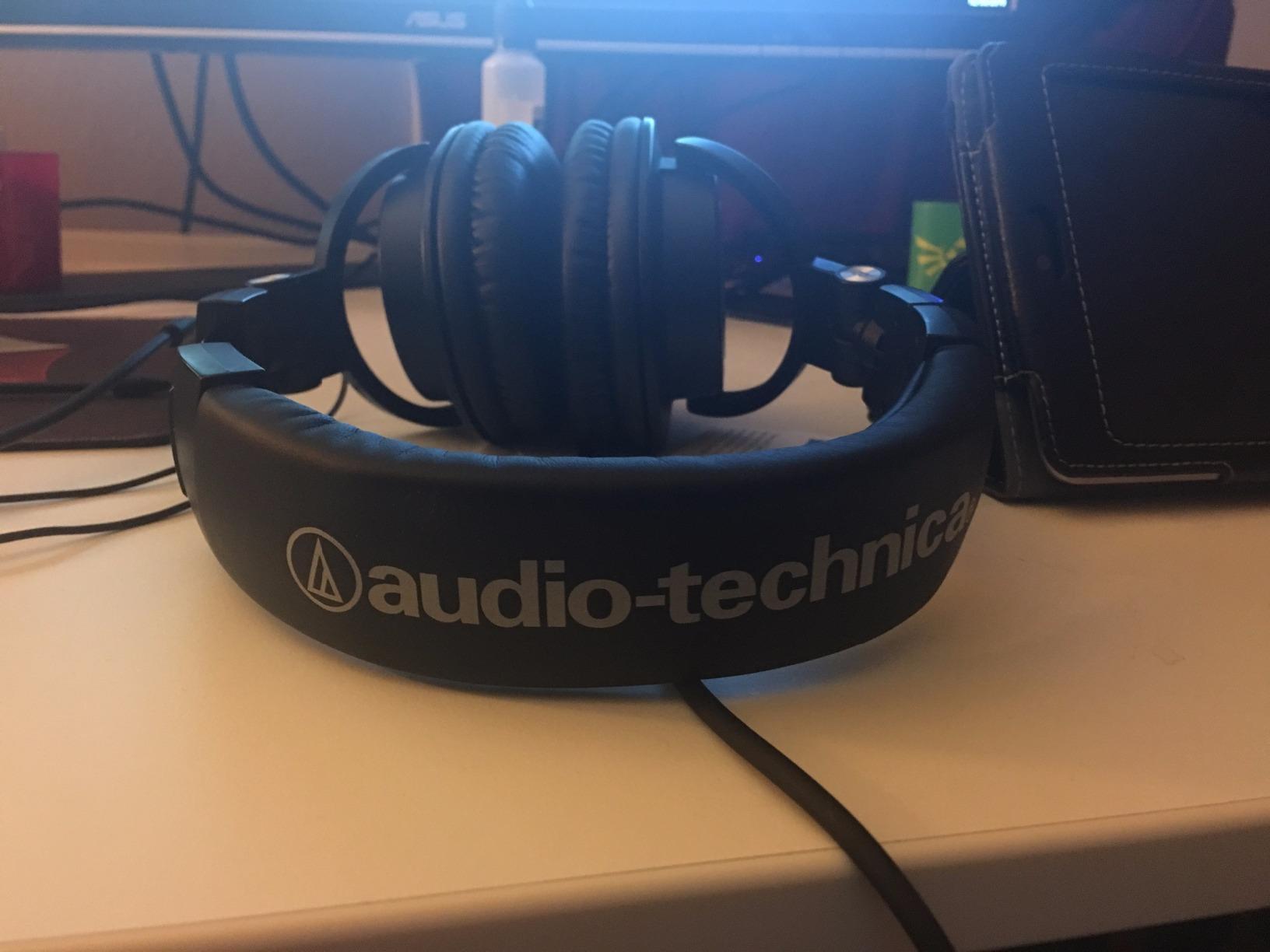
Isolation is excellent for the form factor. In an untreated bedroom with a computer fan and HVAC running, the ATH-M50X kept enough room noise out of the vocal mic that we did not need to chase bleed in post. That alone is worth the price of admission for home recording.
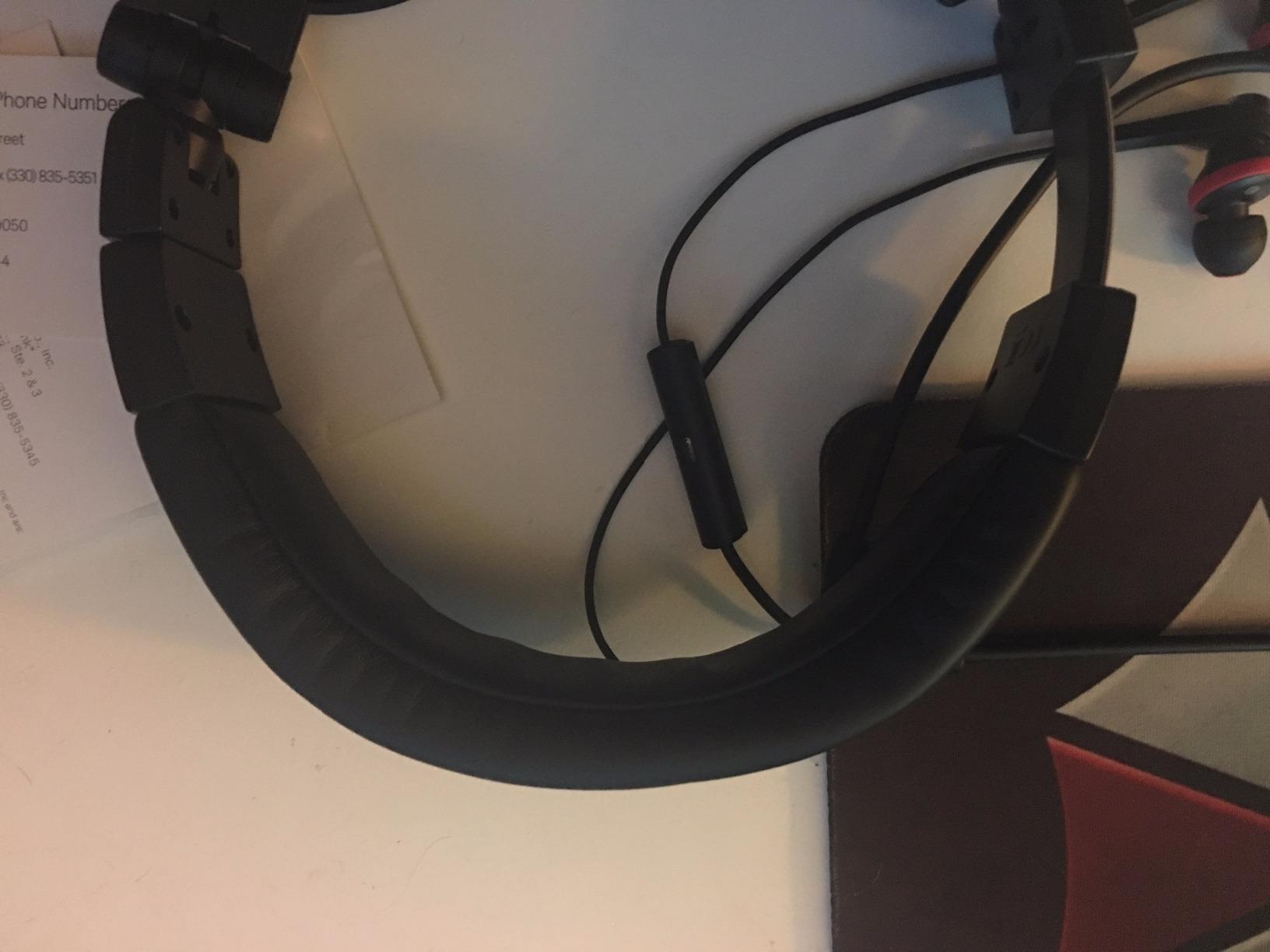
The detachable cable is a small detail that becomes huge once a cat finds it or a chair wheel rolls over it. We have owned two ATH-M50X pairs over six years and both are still in rotation, with one set of replacement pads swapped in around the four-year mark.
Who the ATH-M50X is best for
Vocalists, podcasters, and producers who want a single pair that tracks, edits, and mixes with equal honesty. If you can only buy one pair and your room is not silent, this is the safest starting point.
Who should look elsewhere
If you want the wide, airy soundstage that only open-back headphones deliver for mixing decisions, the M50X will feel boxed in. Pair it with a Sennheiser HD 600 or a beyerdynamic DT 990 PRO down the road instead.
2. Sony MDR7506 — Best Value
Sony MDR7506 Professional Large Diaphragm Headphone
Closed-back
63 ohm
40mm drivers
9.8 ft cable
Pros
- Industry-standard for decades
- Detailed revealing sound
- Lightweight and comfortable
- Rugged foldable construction
- Includes 3.5mm and 1/4 inch jacks
Cons
- Non-detachable cable limits repair
- Bass reproduction is mild
- Plastic hinge can be fragile
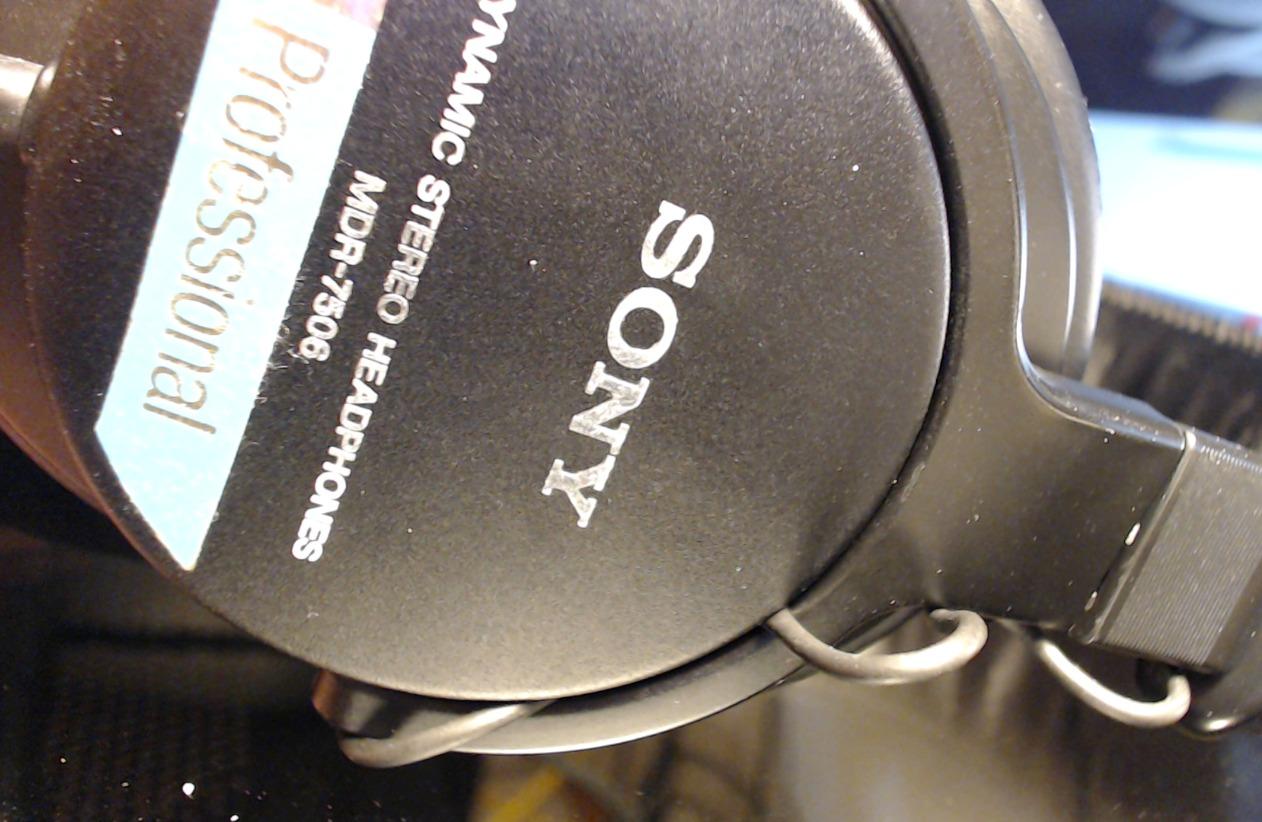
The Sony MDR7506 is the studio headphone you have seen in every recording booth since the early 1990s, and it remains a default recommendation for good reason. We tracked an entire EP with the MDR7506 and the vocal takes required almost no EQ correction, which tells you how honest the frequency response is.
At 8 ounces, the MDR7506 is the lightest closed-back pair in this lineup. The foldable design slips into a desk drawer between sessions, and the gold-plated plug with screw-on 1/4 inch adapter means it plays nicely with everything from a Focusrite Scarlett to a high-end mixing console.
Passive isolation is strong enough that we tracked acoustic guitar in the same room as a drum machine without the mic picking up headphone spill. For a home recordist in an apartment with thin walls, that isolation is the difference between a usable take and a retake.
The 9.8-foot non-detachable cable is the main drawback. If it fails, you are soldering or replacing the headphone. Most reviewers report five years or more of daily use before any cable issue, and many of us have older units still going strong.
Who the MDR7506 is best for
Anyone building a first home studio who wants a proven, time-tested closed-back for tracking vocals, voice-over, and instruments. It is the safest pair you can buy with confidence.
Who should look elsewhere
If you want a detachable cable for permanent installs or you mix more than you track, the ATH-M50X or an open-back alternative will serve you better.
3. OneOdio Pro-10 — Budget Pick
OneOdio Wired DJ Hi-Res Over-Ear Headphones for PC, Keyboard Guitar – Black
Closed-back
32 ohm
50mm drivers
Detachable cable
Pros
- Strong sound for the price
- Comfortable padded cushions
- 90-degree swiveling ear cups
- Dual detachable cables included
- Decent passive isolation
Cons
- Internal wiring can be fragile
- Not truly sound-isolating
- Small ear opening for some users
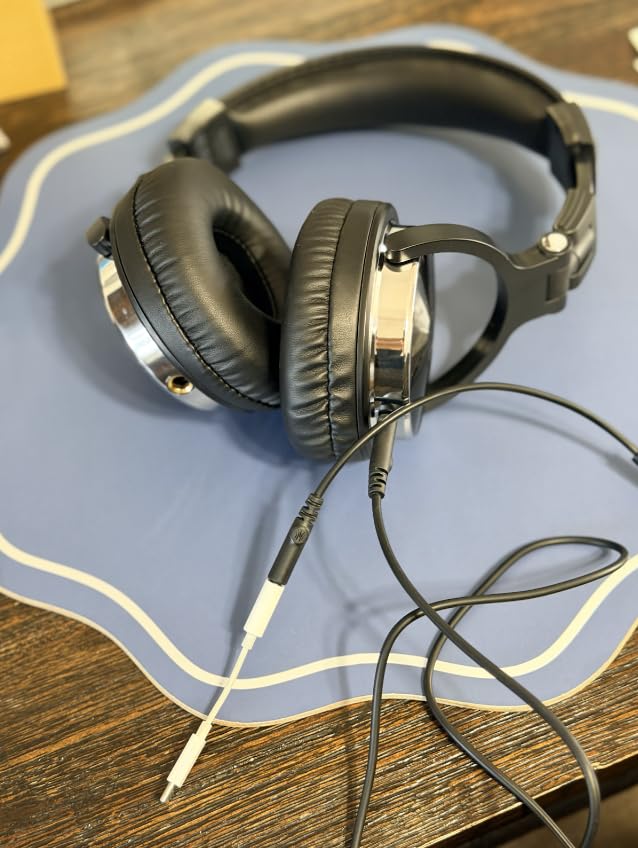
The OneOdio Pro-10 is the surprise of the budget category. With 50 million round drivers and dual detachable cables in the box, it punches well above its class for beginners building a first home studio or for podcasters who need an inexpensive tracking pair.
The 90-degree swiveling ear cups make single-ear monitoring comfortable for vocalists who want to hear their own unprocessed voice. The share audio port on the side is genuinely useful for co-writing sessions where two people want to hear the same playback without a splitter.
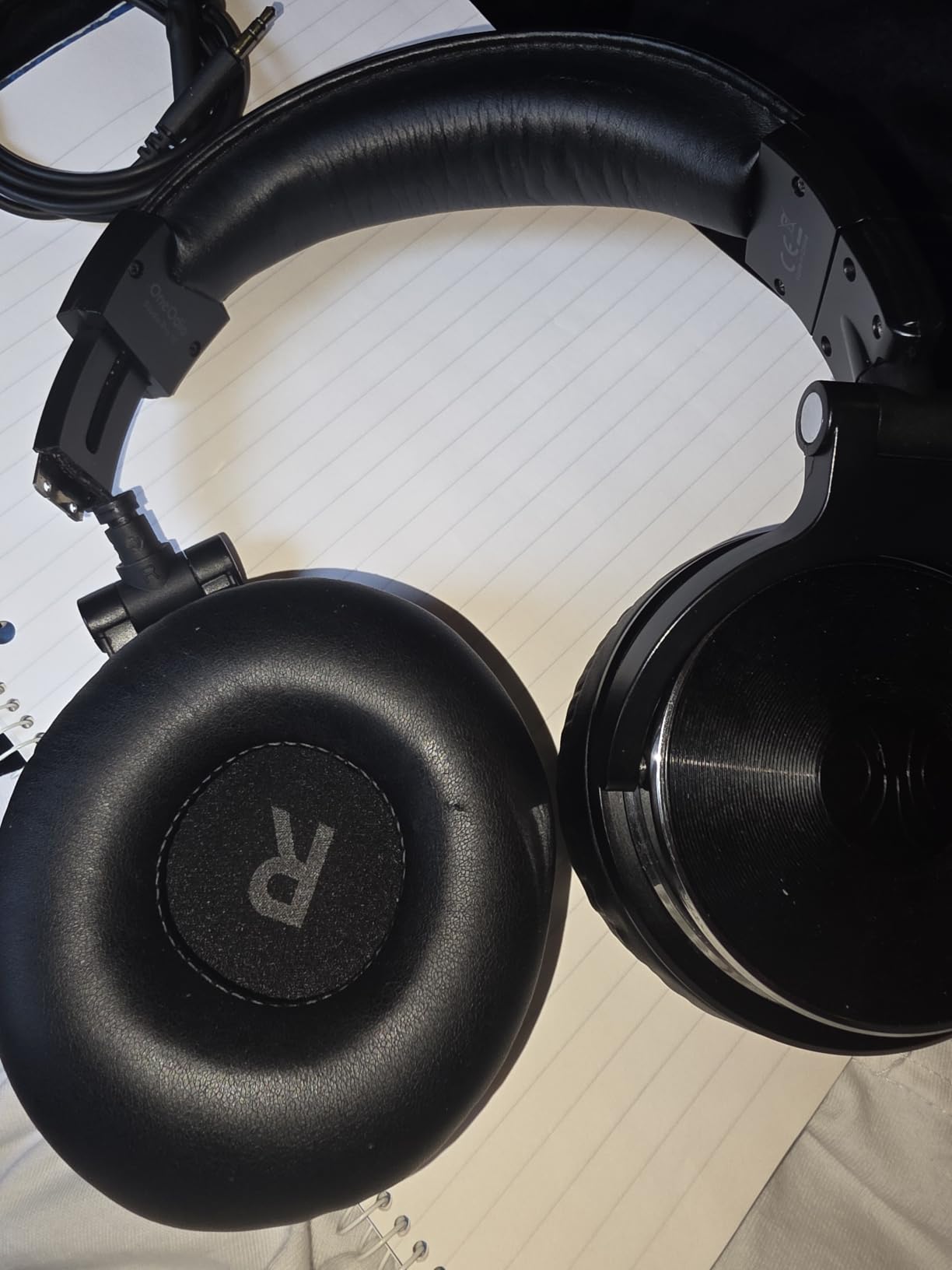
At 32 ohms, the Pro-10 plays nicely with phones, laptops, and entry-level interfaces without needing a dedicated headphone amp. That plug-and-play nature is exactly what a beginner needs.
The build is mostly plastic, and reviewers report that the internal wiring is the failure point over long-term daily use. Treat the cable kindly and you will get solid value out of these for two to three years of moderate home recording.
Who the Pro-10 is best for
First-time home recordists, podcasters, and bedroom producers who want a usable tracking pair at the lowest possible cost. It is also a great backup or travel pair to leave at the studio.
Who should look elsewhere
Engineers mixing critical projects who need reference-grade honesty from their headphones. Step up to the Audio-Technica ATH-M50X or beyerdynamic DT 770 Pro for that workload.
4. beyerdynamic DT 990 PRO (250 Ohm) — Best Open-Back for Mixing
beyerdynamic DT 990 Pro (250 Ohm), Open-Back Studio Headphones, Black
Open-back
250 ohm
5 Hz to 35 kHz
Replaceable parts
Pros
- Wide open soundstage and imaging
- Exceptional detail retrieval
- Velour pads feel pillow-like
- Lightweight yet sturdy build
- Replaceable parts for decades of use
Cons
- Leaks sound in and out
- Treble can be bright on some tracks
- Needs a quality headphone amp
- Bulky for portable use
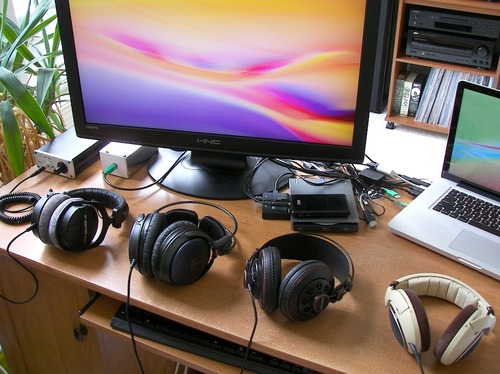
The beyerdynamic DT 990 PRO is the open-back mixing workhorse we recommend to anyone whose main job is sitting down and making decisions about a stereo image. The wide, airy soundstage reveals spatial details that closed-back designs literally cannot reproduce, which is why engineers keep coming back to it.
At 250 ohms, the DT 990 PRO needs a real headphone amp or a serious audio interface output to come alive. Drive it from a phone or a laptop and it sounds thin and quiet. Drive it from a proper amp and the bass tightens up, the midrange opens out, and the imaging becomes almost speaker-like.
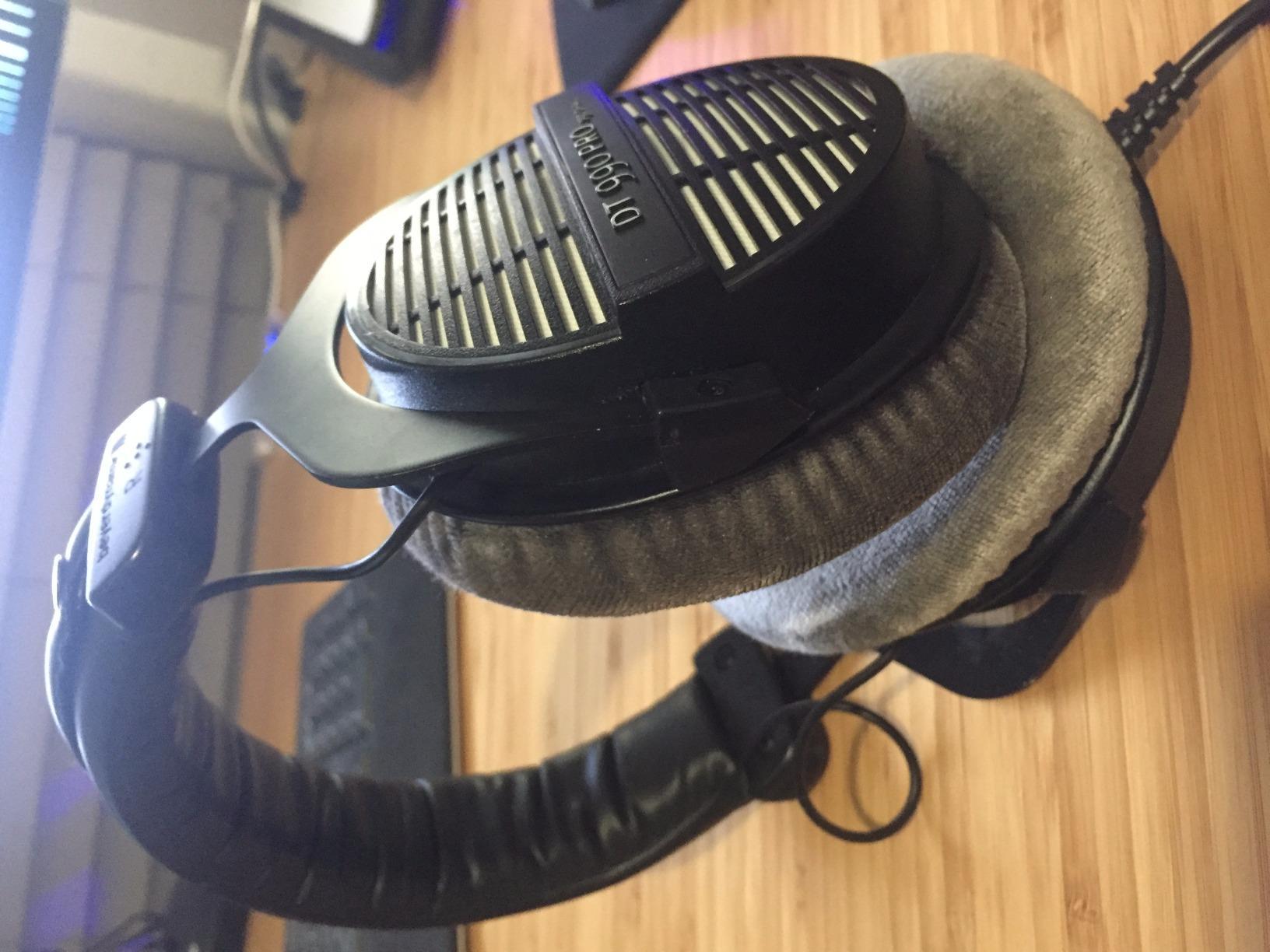
The velour ear pads are the comfort story here. We have mixed four-hour sessions without the heat buildup that pleather pads cause. The clamping force is firm out of the box but relaxes over a week or two of break-in.
Replaceable parts are the secret longevity play. beyerdynamic designs these headphones for service, and pads, headbands, and cables can all be swapped. Many forum users report ten-year-old DT 990 PRO units still going strong after a pad refresh.
Who the DT 990 PRO is best for
Mixing and mastering engineers with a quiet room, a quality amp, and the patience to learn an open-back signature. This is the pair that sits on the mixing desk, not next to the mic.
Who should look elsewhere
If you share a room with other people or record vocals in the same space, the open-back leakage will end up in your live mic. Pick the DT 770 Pro 80 Ohm for tracking instead.
5. beyerdynamic DT 770 Pro (80 Ohm) — Best for Vocal Tracking
beyerdynamic DT 770 Pro Studio Headphones (80 Ohm, Black)
Closed-back
80 ohm
5 Hz to 35 kHz
Replaceable parts
Pros
- Exceptional closed-back isolation
- Velour pads for long sessions
- Balanced sound for mixing too
- German-made build quality
- Strong tight bass response
Cons
- Very long straight cable
- Earcups do not swivel for transport
- High clamping force out of the box
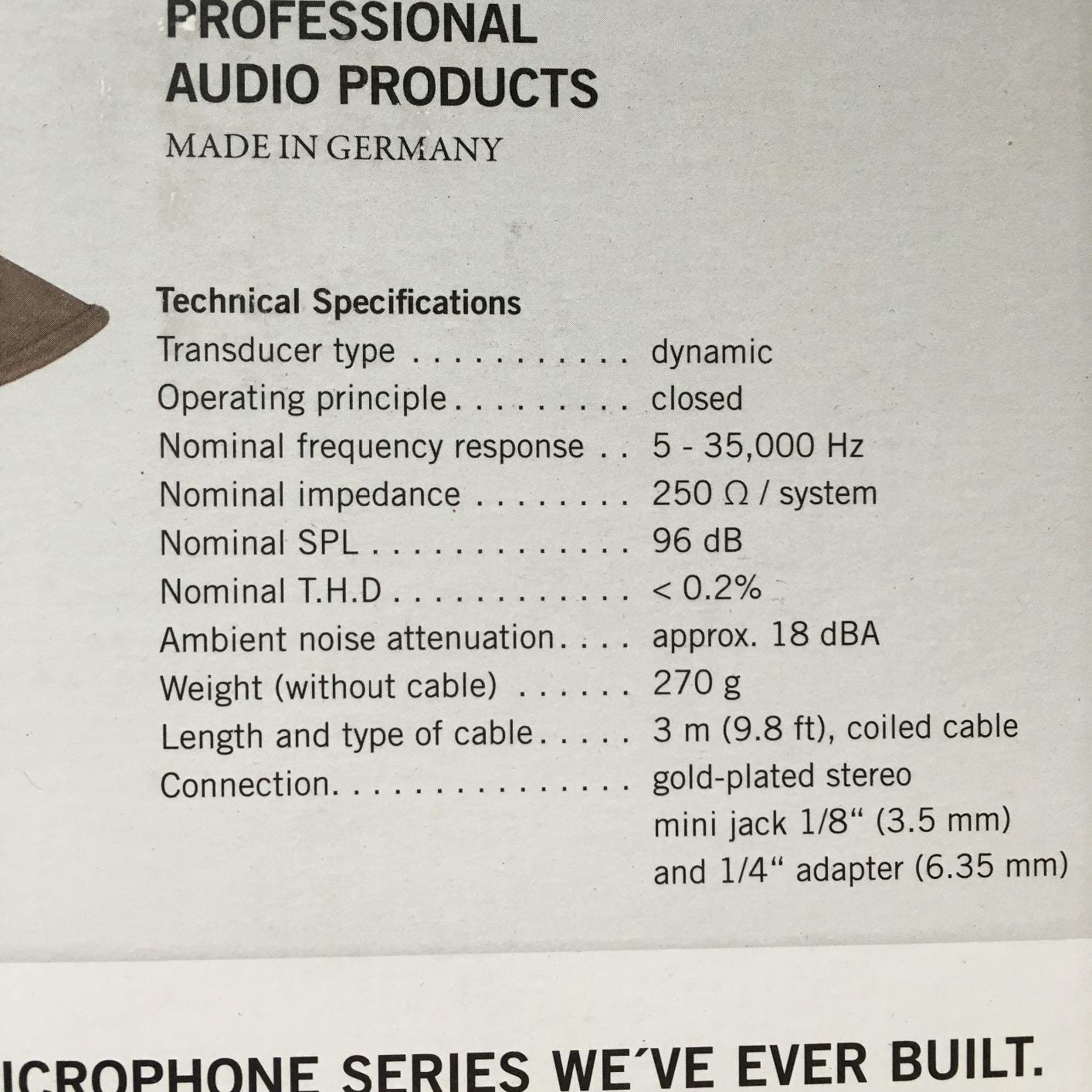
The beyerdynamic DT 770 Pro in the 80 Ohm version hits the sweet spot most home recordists do not know they are looking for. Closed-back isolation keeps vocal bleed out of the mic, the 80 Ohm impedance is friendly to entry-level interfaces without sounding thin, and the velour pads make four-hour tracking sessions bearable.
We tracked a full set of lead vocals in a bedroom with the door closed, computer fan running, and an HVAC vent overhead. The DT 770 Pro blocked enough of that noise that the vocalist could hear the cue mix cleanly and the condenser mic picked up essentially zero spill from the headphones.
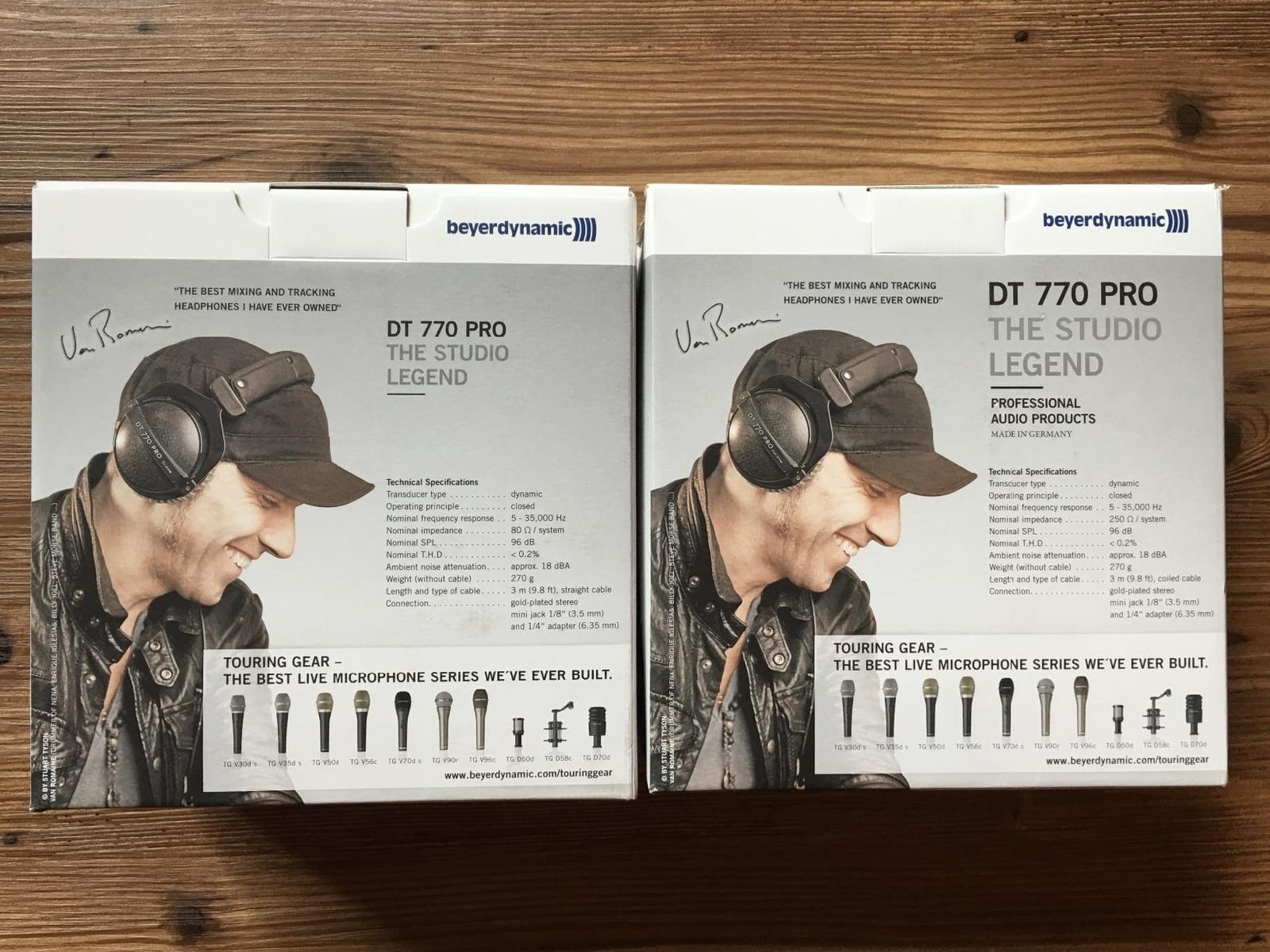
The sound signature is balanced enough that you can also use these for mixing decisions in a pinch. They will not give you the airy soundstage of the DT 990 PRO, but the bass response is tight and honest and the midrange does not hype anything artificially.
Out of the box the clamping force is strong. Plan on a week of break-in before judging the comfort. After break-in, these become the kind of headphones you forget you are wearing.
Who the DT 770 Pro 80 Ohm is best for
Vocalists, voice-over artists, and producers who track live performances in imperfect rooms and want a closed-back pair that doubles as a usable mixing reference.
Who should look elsewhere
If you want wide stereo imaging for mixing-only sessions, the DT 990 PRO is the better tool. Also, if your interface has a weak headphone output, consider the 32 Ohm DT 770 Pro variant instead.
6. OneOdio A71 — Best for DJ-Style Monitoring
OneOdio A71 Hi-Res Wired Over-Ear Studio Headphones for DJ, Mixing – SB
Closed-back
32 ohm
40mm drivers
Detachable coiled cable
Pros
- Rich hi-res sound with punchy bass
- Comfortable for long sessions
- Foldable swiveling design
- Dual detachable cables included
- Lightweight at 250g
Cons
- Plastic frame feels less premium
- Proprietary jack limits cable choice
- Headband tight after multi-hour use
The OneOdio A71 is the pair to grab when you want single-ear cue monitoring and a budget-friendly closed-back that still sounds fuller than the price suggests. The 90-degree swiveling ear cups feel natural for DJ-style tracking and the foldable design slips into a laptop bag.
At 32 ohms and 110 dB sensitivity, the A71 gets loud from any source. We drove it from a phone, a Focusrite interface, and a small DJ controller, and it played the same scale on all three. That flexibility makes it a useful second pair for a mobile rig.
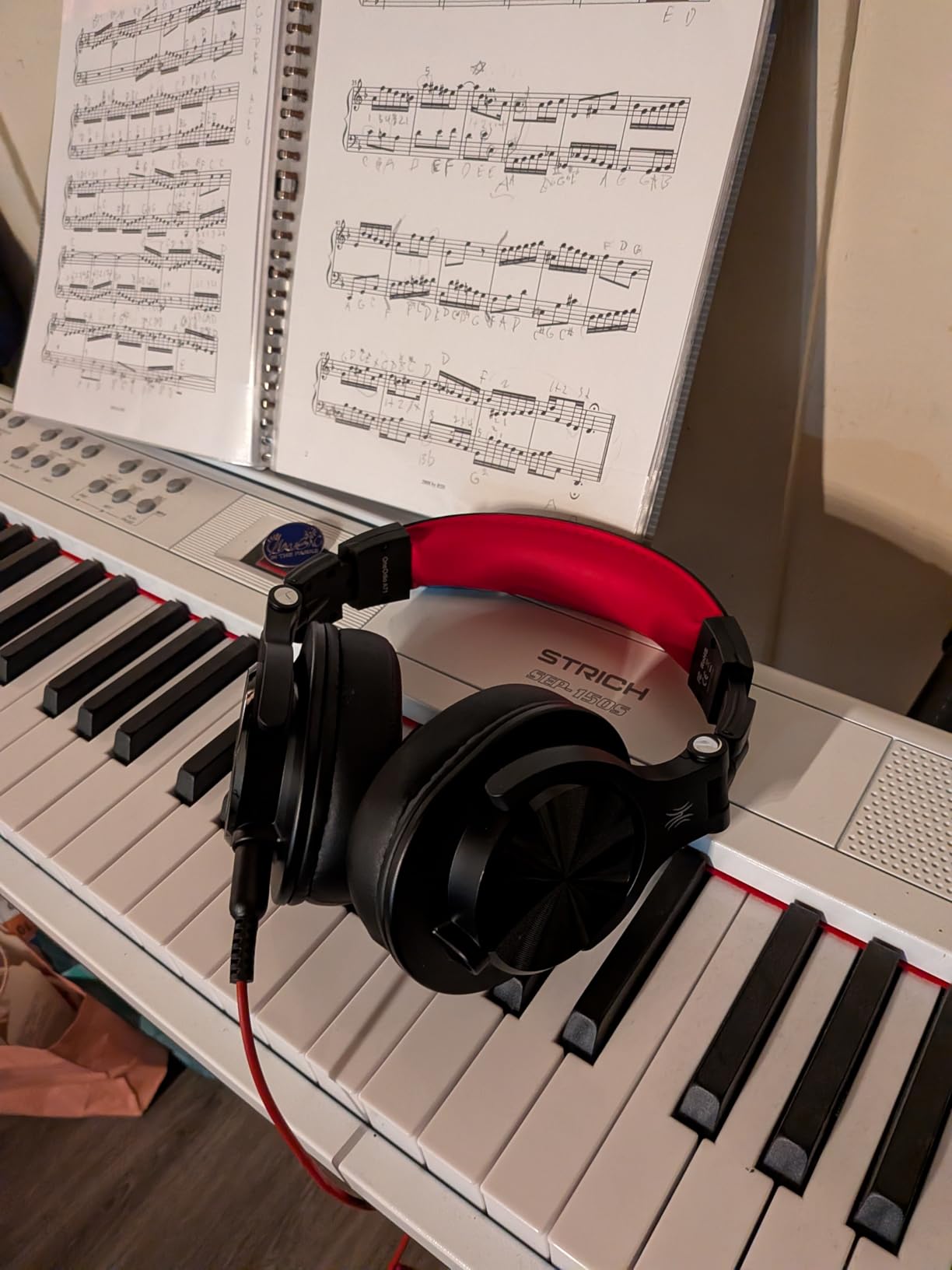
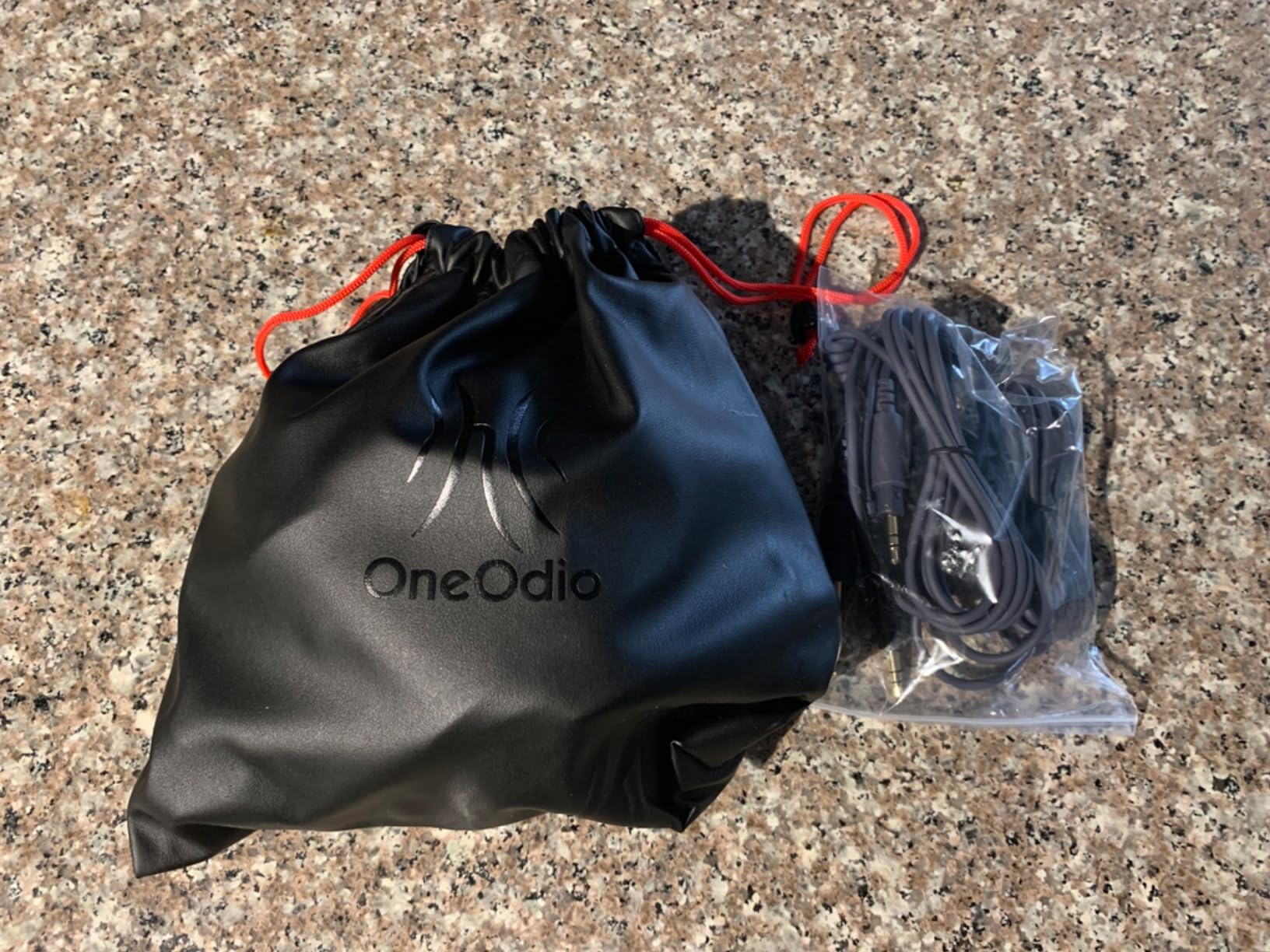
The coiled cable runs 6.6 to 9.8 feet depending on stretch, which is the right length for standing at a mic or working at a standing desk. Both 3.5 mm and 6.35 mm plugs are included, so there is no adapter to lose.
The headband clamp is the main comfort caveat. After three hours the pressure on top of the head becomes noticeable, and a quick break every hour or so keeps things comfortable.
Who the A71 is best for
Home recordists who do a lot of single-ear monitoring, podcasters who want a budget tracking pair with a coiled cable, and anyone who needs a flexible second headphone for a mobile rig.
Who should look elsewhere
Mixing engineers who want a flatter reference signature. The A71 leans slightly consumer-friendly in its tuning, which is great for tracking but can flatter a rough mix.
7. AKG K240STUDIO — Best Semi-Open for Budget Mixing
AKG K240STUDIO Semi-Open Studio Headphones
Semi-open
55 ohm
30mm XXL transducers
Detachable cable
Pros
- Neutral balanced signature for mixing
- Lightweight self-adjusting headband
- Wide soundstage with precise imaging
- Detachable cable for easy replacement
- Trusted by professionals worldwide
Cons
- Semi-open design leaks sound
- Sound shifts after break-in
- Pleather pads can get warm
- Needs an amp to reach full potential
The AKG K240STUDIO is the longest-running semi-open studio headphone in production, and it remains a smart pick for engineers on a budget who still want real reference monitoring. The signature is genuinely neutral, which is exactly what you need when judging EQ decisions.
The semi-open design gives you a wider soundstage than any closed-back at this price, without leaking as much as a fully open-back like the DT 990 PRO. That middle ground is useful for mixing in a reasonably quiet room where total isolation is not critical.
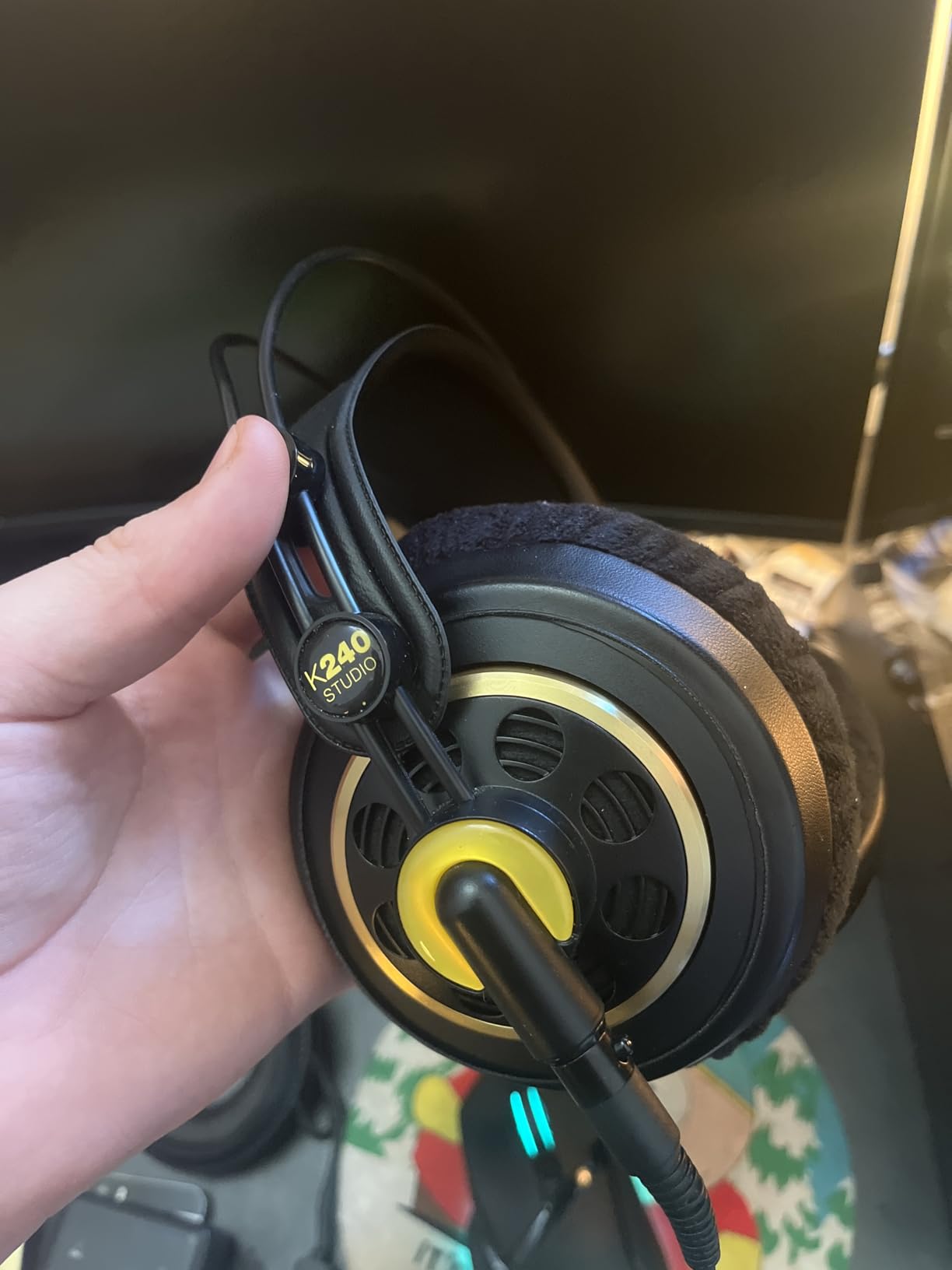
The self-adjusting headband is the comfort highlight. There is no manual sizing to fiddle with, and the lightweight 240 g build disappears on the head during long sessions.
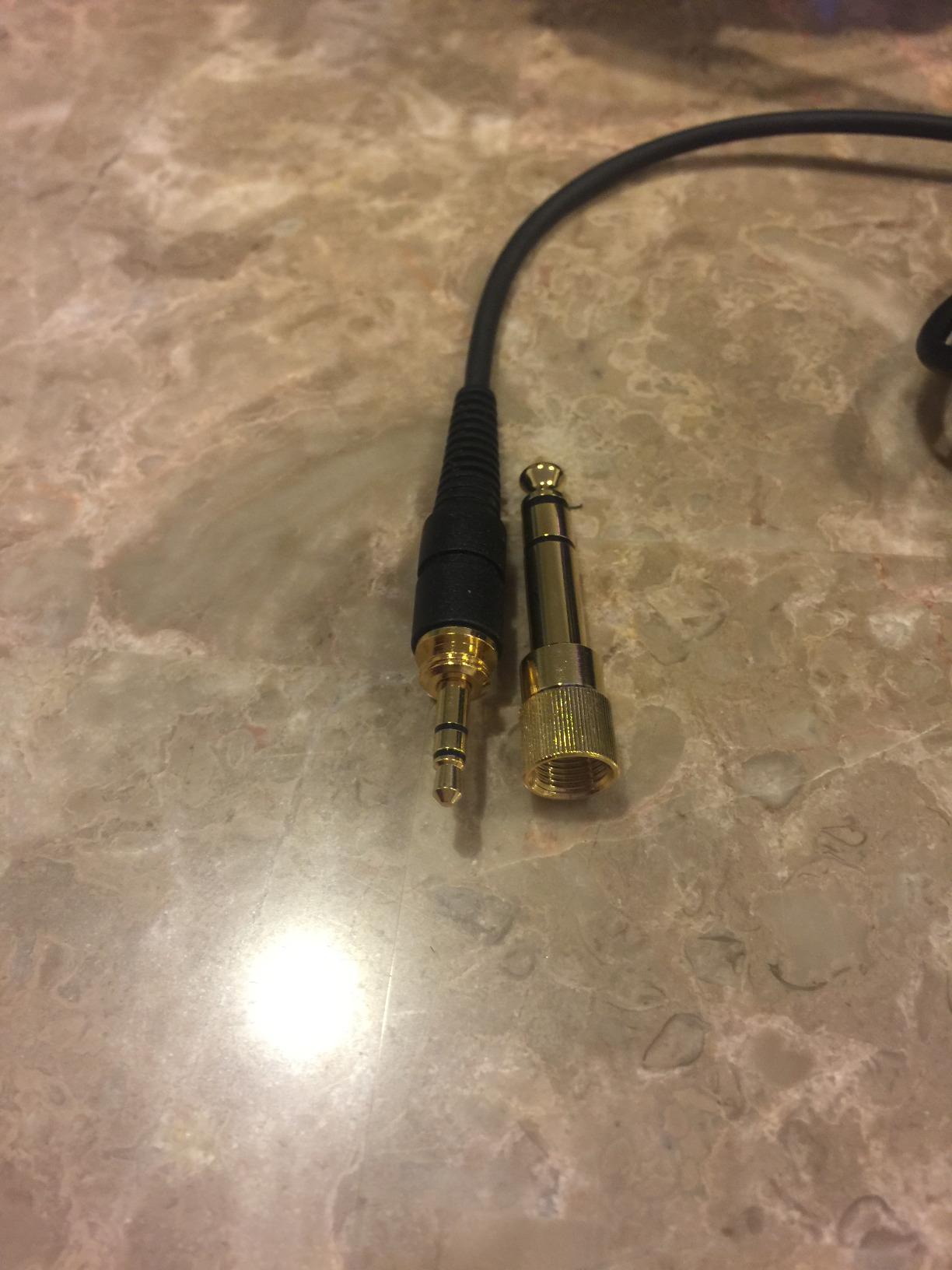
The 55 ohm impedance is friendly to most audio interfaces, but you will hear a real difference when the K240STUDIO is driven by a proper headphone amp. If you own a desktop amp or a high-current interface, this pair scales up nicely.
Who the K240STUDIO is best for
Home mixers and producers who want honest reference monitoring without paying open-back prices, and who record in a room quiet enough that semi-open leakage is not a problem.
Who should look elsewhere
Anyone tracking live vocals in the same room as the mic. The semi-open design will leak into a condenser mic, which is exactly what the DT 770 Pro or ATH-M50X exist to solve.
8. Sennheiser HD 280 Pro — Best for Noisy Rooms
Sennheiser HD 280 Pro Headphone, Black
Closed-back
64 ohm
Up to 32 dB attenuation
Collapsible
Pros
- Up to 32 dB passive noise attenuation
- Detailed natural sound reproduction
- Robust long-term build
- Replaceable earpads and headband padding
- Accurate imaging for closed-back
Cons
- Strong clamping force out of the box
- Stock pads can flake over time
- Coiled cable is heavy and non-detachable here
- Modest bass emphasis
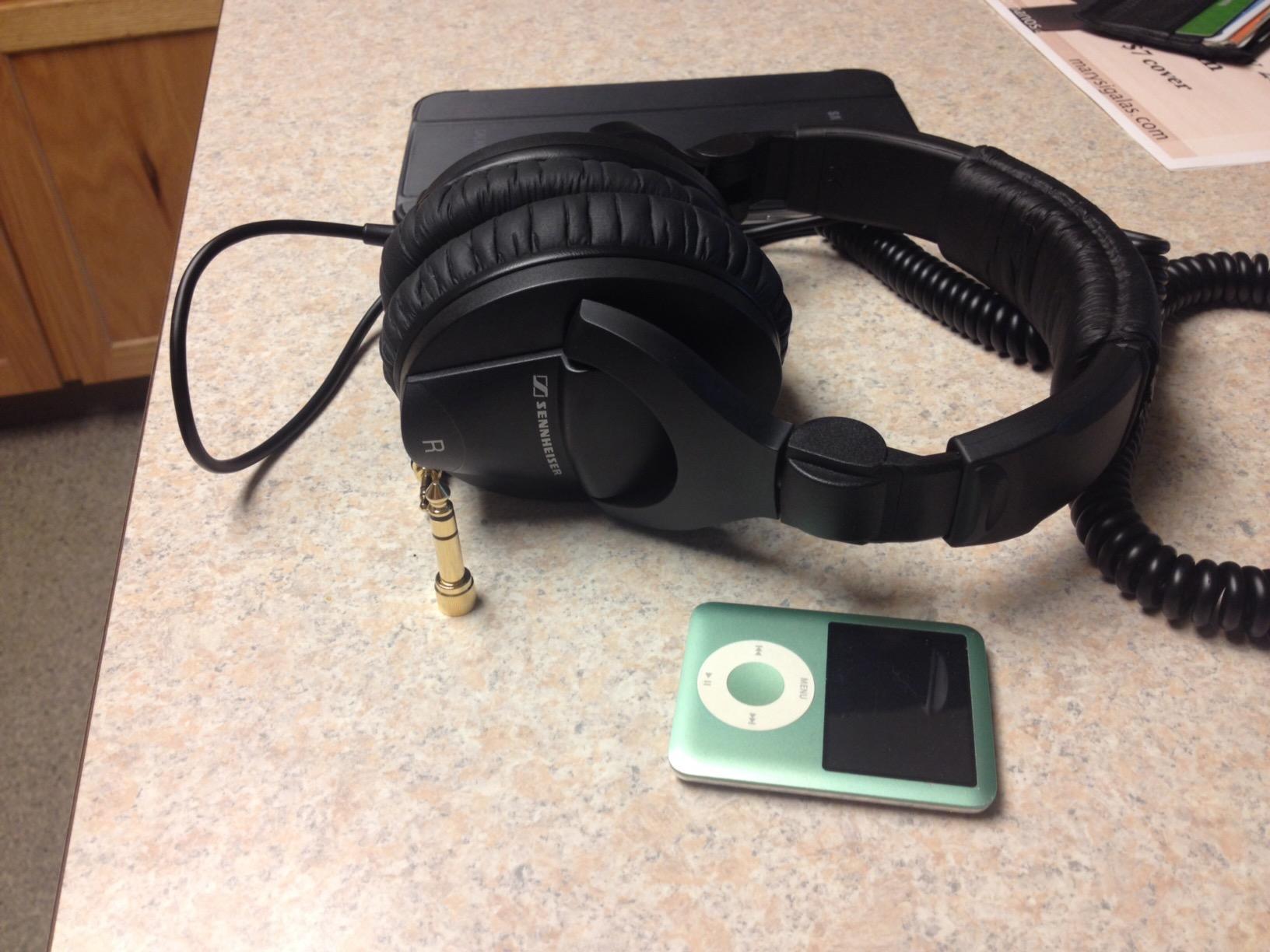
The Sennheiser HD 280 Pro is the pair to reach for when your recording environment is the problem. With up to 32 dB of passive attenuation, it shuts out more room noise than any other closed-back in this roundup, which makes it ideal for apartments, shared spaces, and bedrooms next to busy streets.
We tested the HD 280 Pro in a home office with a loud HVAC system and a computer tower running nearby. The attenuation was strong enough that the vocalist in the booth could hear the cue mix clearly without the mic picking up the room noise. That single factor saves real time during sessions.
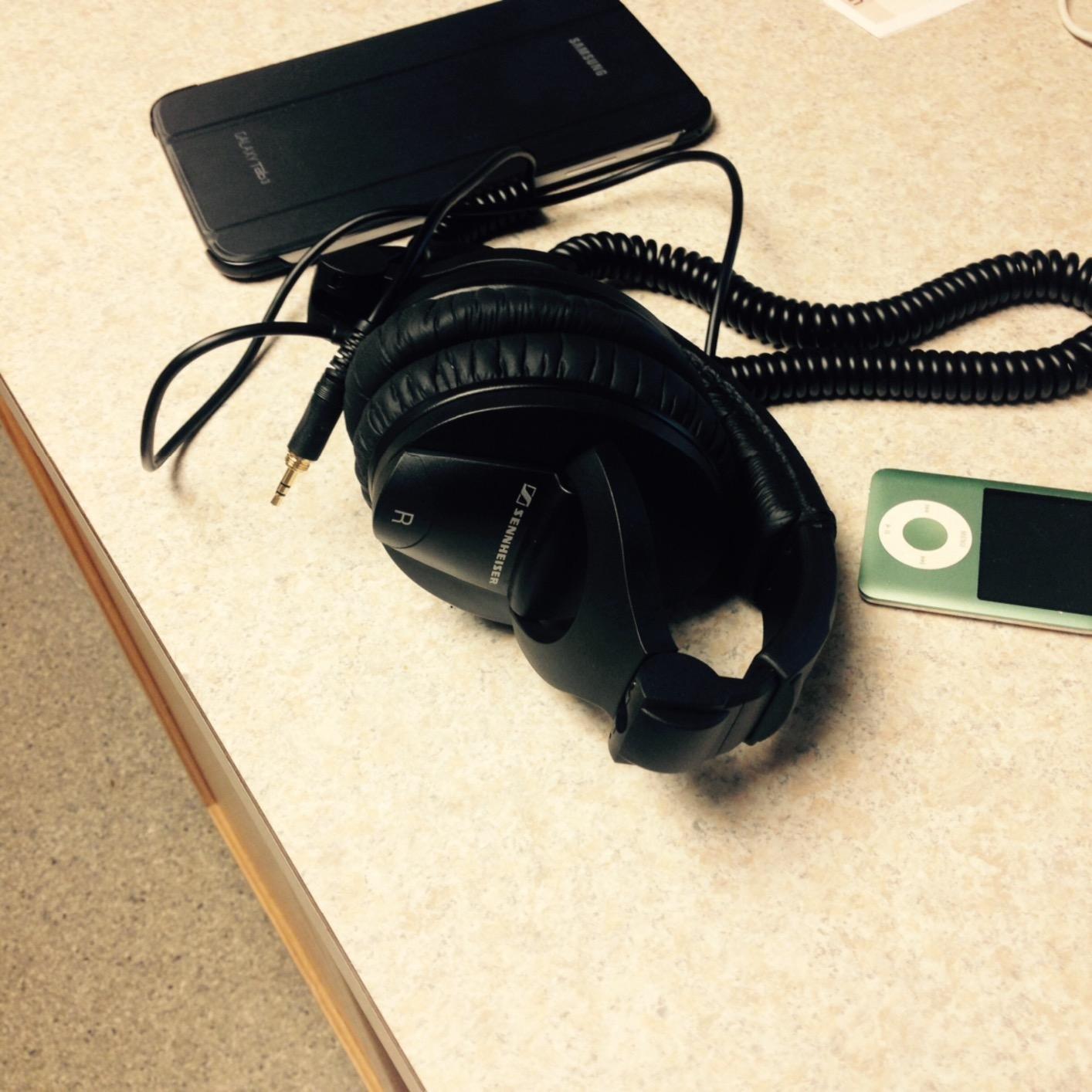
The sound signature is warm and natural rather than clinical, which makes long editing sessions less fatiguing than brighter studio pairs. Imaging is impressive for a closed-back design, even though it will never match the soundstage of an open-back like the DT 990 PRO.
The replacement parts story is strong. Sennheiser sells fresh earpads and headband pads, and the collapsible design makes transport painless. After three years of daily use, swapping in new pads makes these feel like a new pair.
Who the HD 280 Pro is best for
Home recordists in noisy rooms, broadcast and podcast producers who need maximum isolation, and anyone whose recording space is the weak link in their signal chain.
Who should look elsewhere
Mixers who want a wider soundstage. The HD 280 Pro is excellent for tracking and editing, but it is not the tool for final mix decisions. Add an open-back like the DT 990 PRO for that.
How to Choose the Best Studio Headphones for Home Recording?
Choosing the best studio headphones for home recording starts with a workflow question: do you track live performances more than you mix, or vice versa? Tracking requires closed-back isolation so your microphone does not pick up headphone bleed. Mixing benefits from the airy soundstage of open-back designs that reveal stereo depth closed-back pairs cannot reproduce. Most home recordists end up owning one of each.
Closed-Back vs Open-Back at a Glance
Closed-back headphones have sealed ear cups that block outside noise and stop your music from leaking into live microphones. They are the right tool for vocal tracking, podcasting, and recording loud instruments in untreated rooms. Open-back headphones have perforated or grille-covered cups that let air move through the driver, which creates a wider, more speaker-like soundstage but also leaks sound in both directions.
Closed-back — High isolation, narrower intimate soundstage, minimal bleed into mic; best for vocal tracking, podcasting, and live recording.
Open-back — Low isolation, wide airy speaker-like soundstage, significant bleed into mic; best for mixing, mastering, and critical listening in quiet rooms.
Semi-open — Moderate isolation, medium-wide soundstage, noticeable bleed into mic; best for mixing in moderately quiet spaces.
Impedance and Amp Pairing
Impedance (measured in ohms) tells you how much electrical resistance the headphone driver has. Lower impedance headphones (16 to 80 ohms) play loudly from phones, laptops, and entry-level audio interfaces. Higher impedance models (250 ohms and up) need a dedicated headphone amplifier or a high-current interface output to reach their full potential. Plugging a 250 ohm DT 990 PRO directly into a phone gives you quiet, thin sound that does not represent what the headphone can actually do.
16 to 32 ohms — Phones, laptops, and beginner interfaces; works from any source.
38 to 80 ohms — Most home audio interfaces such as the Focusrite Scarlett and PreSonus AudioBox.
150 to 250 ohms — Prosumer and pro studio rigs; a dedicated headphone amp is recommended.
300+ ohms — Reference mastering setups; requires a high-current amp.
Studio Headphones vs Regular Headphones
Studio headphones are tuned for a flat, uncoloured frequency response so you hear what the recording actually contains. Consumer headphones boost bass and treble to make music sound more exciting, which is the opposite of what you want when you are trying to decide whether a vocal needs more low end or whether a cymbal is too harsh. That tuning difference is the single biggest reason studio work calls for dedicated studio headphones rather than the pair you use for Spotify.
Budget Tiers and What You Get
Under one hundred dollars gets you a solid entry-level closed-back like the Sony MDR7506 or the AKG K240STUDIO. The one-hundred-to-two-hundred range unlocks the most popular studio workhorses: Audio-Technica ATH-M50X and beyerdynamic DT 770 Pro. Above two hundred dollars you enter the realm of high-impedance mixing pairs that need amplification, like the beyerdynamic DT 990 PRO. The right tier for you depends on whether your audio interface can drive what you buy.
Comfort, Cable and Replaceable Parts
If you record for more than two hours at a stretch, comfort matters more than frequency response. Velour pads breathe better than pleather. Detachable cables protect you from the single most common failure mode. Replaceable earpads and headband padding turn a five-year pair into a ten-year pair. The beyerdynamic and Sennheiser models in this roundup were chosen partly because their parts catalogs keep them alive far longer than budget pairs with glued components.
Frequently Asked Questions
What are the best studio headphones for home recording?
The best studio headphones for home recording depend on whether you are tracking or mixing. For tracking, the Audio-Technica ATH-M50X and beyerdynamic DT 770 Pro are the most popular closed-back picks because they block headphone bleed from live microphones. For mixing, open-back pairs like the beyerdynamic DT 990 PRO give you the wide soundstage that reveals stereo depth. Most home recordists end up owning one of each.
Are closed-back or open-back headphones better for home recording?
Closed-back headphones are better for the recording side because they keep sound from leaking into your live microphones. Open-back headphones are better for mixing and critical listening because their wider soundstage reveals spatial detail closed-back designs cannot reproduce. If you can only buy one pair, choose closed-back for tracking. Add an open-back later when you want a serious mixing tool.
Do studio headphones need an amp?
Studio headphones with impedance under 80 ohms do not need a dedicated amp and will play well from phones, laptops, and entry-level audio interfaces. Headphones rated 150 to 250 ohms benefit from a dedicated headphone amplifier and sound thin without one. Anything rated above 300 ohms really requires a high-current amp to reach its full potential.
Are Sony MDR7506 good for home recording?
Yes, the Sony MDR7506 remains an excellent choice for home recording in 2026. It is a decades-long industry standard with detailed, honest sound and strong passive isolation for vocal tracking. The non-detachable cable is the main drawback, but the build quality and frequency response make it one of the safest first pairs a home recordist can buy.
What is the difference between studio headphones and regular headphones?
Studio headphones are tuned for a flat, uncoloured frequency response so you hear exactly what is in the recording. Regular consumer headphones boost bass and treble to make music sound more exciting, which is the opposite of what you want when making mixing decisions. Studio pairs also prioritize accurate imaging and often include replaceable parts for long service life.
How much should I spend on studio headphones?
A solid entry-level studio headphone costs under one hundred dollars and covers tracking and basic editing. The one-hundred-to-two-hundred range unlocks the most popular studio workhorses like the Audio-Technica ATH-M50X. Above two hundred dollars, you are paying for open-back soundstage, higher impedance, and amp-friendly designs suited to mixing and mastering rigs.
Which headphones leak the least sound?
Closed-back headphones leak the least sound, with the Sennheiser HD 280 Pro offering up to 32 dB of passive attenuation in this roundup. The beyerdynamic DT 770 Pro and Audio-Technica ATH-M50X also provide strong isolation. Open-back designs like the DT 990 PRO and semi-open pairs like the AKG K240STUDIO leak significantly and should not be used during live recording.
The Final Pick
If you want the single safest choice for the best studio headphones for home recording in 2026, the Audio-Technica ATH-M50X remains our top recommendation. It tracks, edits, and mixes with honest sound, holds up to years of daily use, and pairs with any entry-level interface without needing a separate amp.
Add a beyerdynamic DT 990 PRO down the road when you are ready to invest in a real mixing tool and a quality headphone amplifier. Together those two pairs cover the full home recording workflow from first vocal take to final mix decisions, and they will outlast almost any other gear in your studio.